Banasa

Banasa was an ancient city of the province of Mauretania Tingitana in modern-day Morocco, situated on the road from Tingis to Sala. Its ruins are located on the southern bank of the river Sebou, which Pliny the Elder (5.5) described as “Sububus magnificus et nauigabilis” (a fine river available for navigation). Banasa was one of the three coloniae in Mauretania Tingitana founded by the emperor Augustus between 33 and 27 BC for veterans of the Battle of Actium.

Coordinates: 34° 36′ 6″ N, 6° 6′ 56″ W

The site appears to have been occupied as early as the 4th century BC by pottery workers whose activities continued until the 1st century BC. The Banasa potters produced characteristic painted wares inspired by the Phoenician, Greek and Ibero-Punic models that were exported widely in the region. A Mauretanian village of some size stood there in the 3rd and 2nd centuries BC, and it was on this site that Augustus established the veterans’ colony Iulia Valentia Banasa.

At the start of the reign of Marcus Aurelius, Banasa became Colonia Aurelia Banasa. In AD 285, the Roman province of Mauretania Tingitana was reduced to the territories located north of the Lixus and Banasa was abandoned.

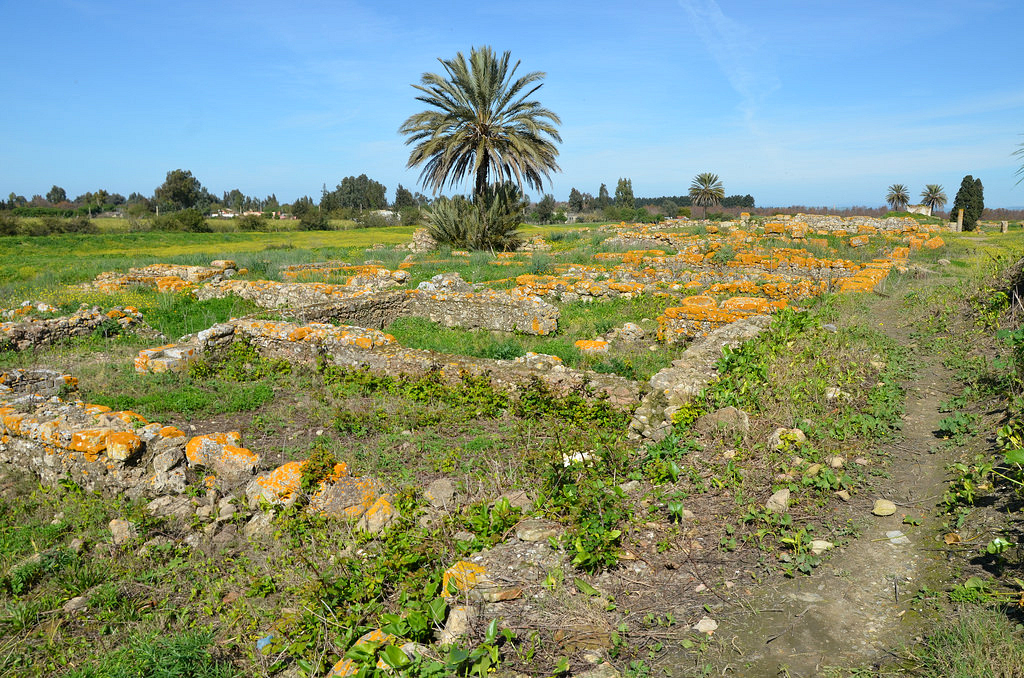
The archaeological excavations undertaken between 1933 and 1956 exposed the remains of the Roman era. The uncovered buildings include a forum flanked to the north by a rectangular basilica, a temple with seven cellae, public baths, a macellum, and streets in a regular pattern. Shops, oil-making installations and several bakeries have also been uncovered. Many of the buildings date from the early 3rd century AD. Beautiful mosaics decorated the buildings, now shown at the Rabat Archaeological Museum.

The epigraphical documents found at Banasa are exceptionally rich, the bronze inscriptions being especially noteworthy. An important legal text, the Tabula Banasitana (see image here), dating from the period of Marcus Aurelius and Commodus, was unearthed in 1957 in the East Baths complex. This inscribed bronze plaque, now in the Museum of Antiquities in Rabat, deals with the conferment of citizenship under Marcus Aurelius on 6 July AD 177; at his own request, Iulianus, a princeps of the Zegrensi tribe, and his family are granted Roman citizenship for extraordinary service (maxima merita), without prejudice to his tribal rights (salvo iure gentis). Another bronze inscription from Banasa deals with the edict of Caracalla, exempting the inhabitants of Banasa from taxes in AD 216.

PORTFOLIO
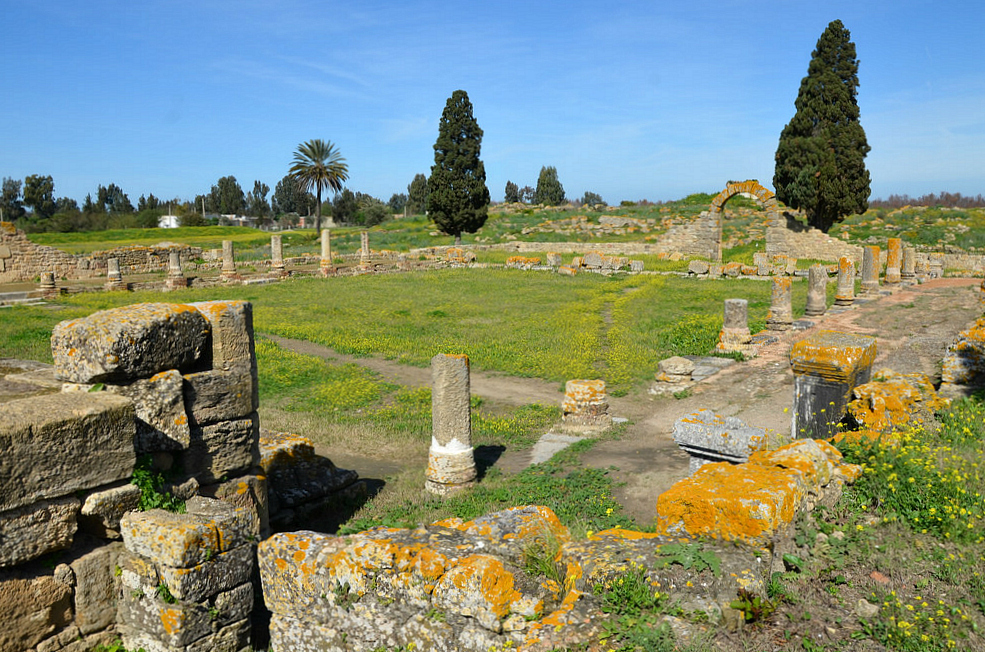
The trapezoidal paved forum (37 x 34 m) of Banasa (also Iulia Valentia Banasa), an ancient city of the province of Mauretania Tingitana (modern-day Morocco). The forum was lined by porticoes and flanked to the north by a rectangular basilica. To the east was a small apsidal hall, and to the south, a temple with seven cellae fronted by a portico.
The forum.
The six cellae standing on a podium in front of a row of stone plinths and statue bases.
Statue base for Marcus Terentius Primulus, freedman, 3rd century AD.
The forum.
The forum.
The ruins of the rectangular basilica to the north of the forum.

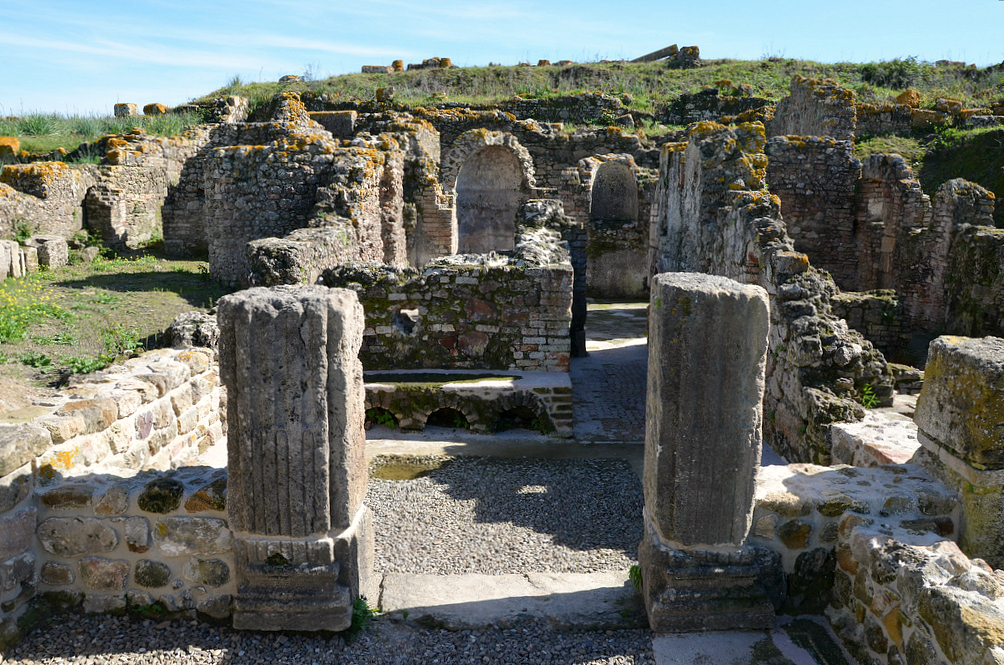
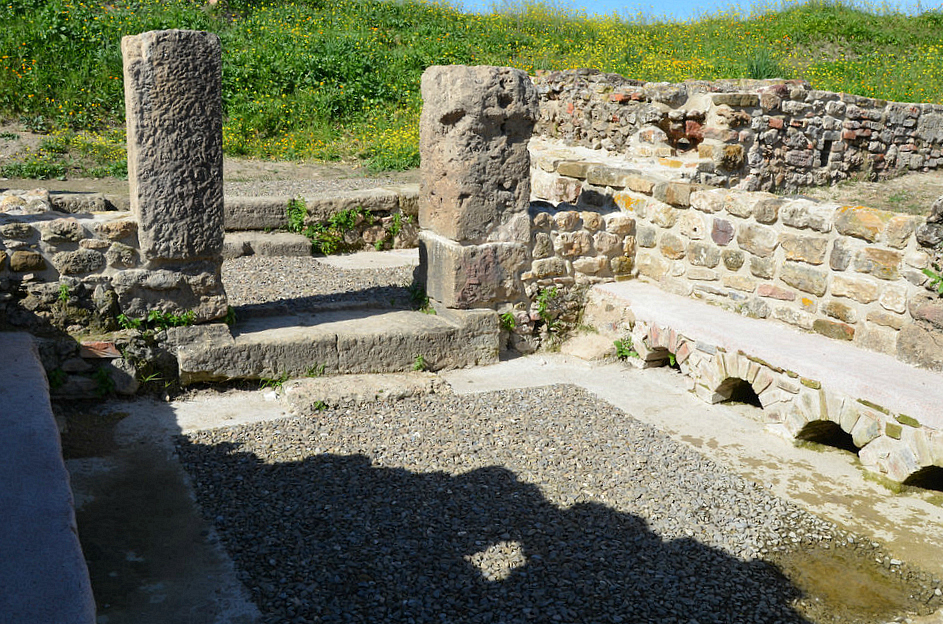
The ruins of the public baths.
The public baths.
Detail of a mosaic found in the public baths depicting a triton, animals and shells. On display in the Museum of Volubilis.
The public baths.

The shops.
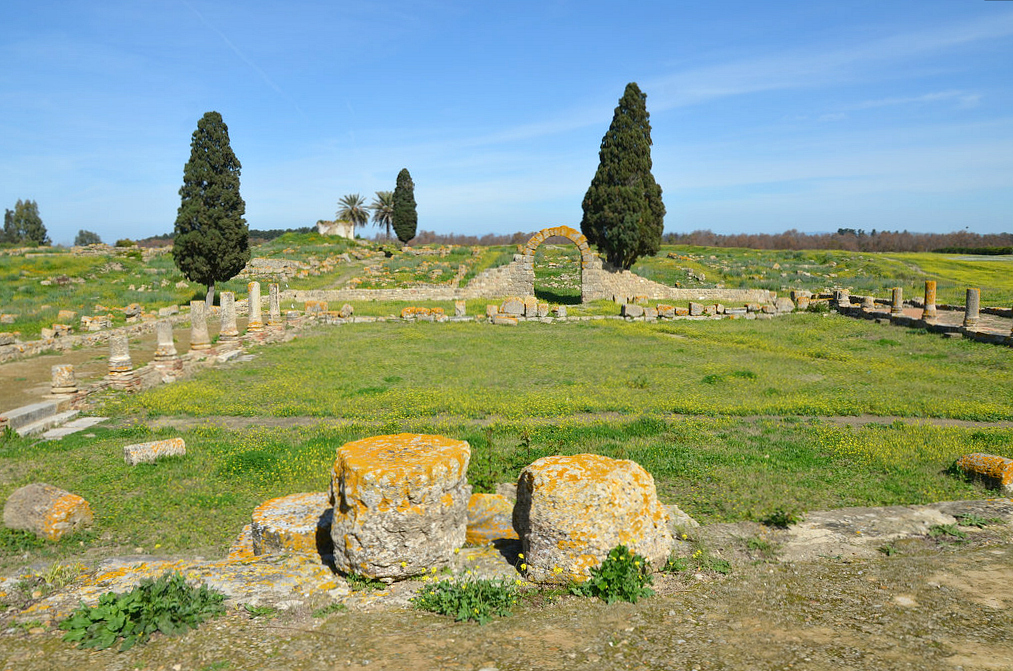
View of the forum.

Links:

Biriciana (Kastell Weißenburg)

Biriciana (also called Kastell Weißenburg) is a former Roman cavalry fort built around AD 90, about six kilometres south of the Upper Germanic-Rhaetian Limes. It lies in the borough of Weißenburg in the Middle Franconian county of Weißenburg-Gunzenhausen in Germany. Together with the Lower Germanic Limes, the Upper Germanic-Rhaetian Limes forms part of the Limes Germanicus, a UNESCO World Heritage site since 2005. The site contains a reconstructed north gateway, large thermal baths and a Roman Museum with an integrated Limes Information Centre.

Coordinates: 49° 1′ 50.99″ N, 10° 57′ 45″ E

Originally made of timber around 90 AD to secure the territory newly conquered by Domitian north of the Danube, the nearly square fort (170/174 x 179 m) was rebuilt in stone in the middle of the 2nd century AD. The fort covered an area of 3.1 hectares, and each external wall was approximately 170 m long. Three V-shaped defensive ditches were situated in front of the perimeter wall, which had four gates flanked by towers in the south (porta praetoria), in the north (porta decumana), in the west (porta principalis dextra) and in the east (porta principalis sinistra). The perimeter wall was rounded at the corners with two defensive towers. Between the gates and the corner towers stood another smaller tower.

Artist’s impression of the Biriciana Roman cavalry fort. Some details are speculative.

Biriciana was the site of the Ala I Hispanorum Auriana from the last years of the 1st century AD to the end of the Limes in the middle of the 3rd century AD. The Ala I Hispanorum Auriana was a Roman cavalry unit originally established in Spain. Alae were well-experienced mobile troops stationed at the Limes as rapid reaction forces that controlled the frontier, carried out military patrols and protected trade routes. In addition to this ala, the Cohors IX Batavorum milliaria equitata was also stationed there between AD 100/110 and 117/125, as recorded on a stone inscription (CIL 03, 11918).

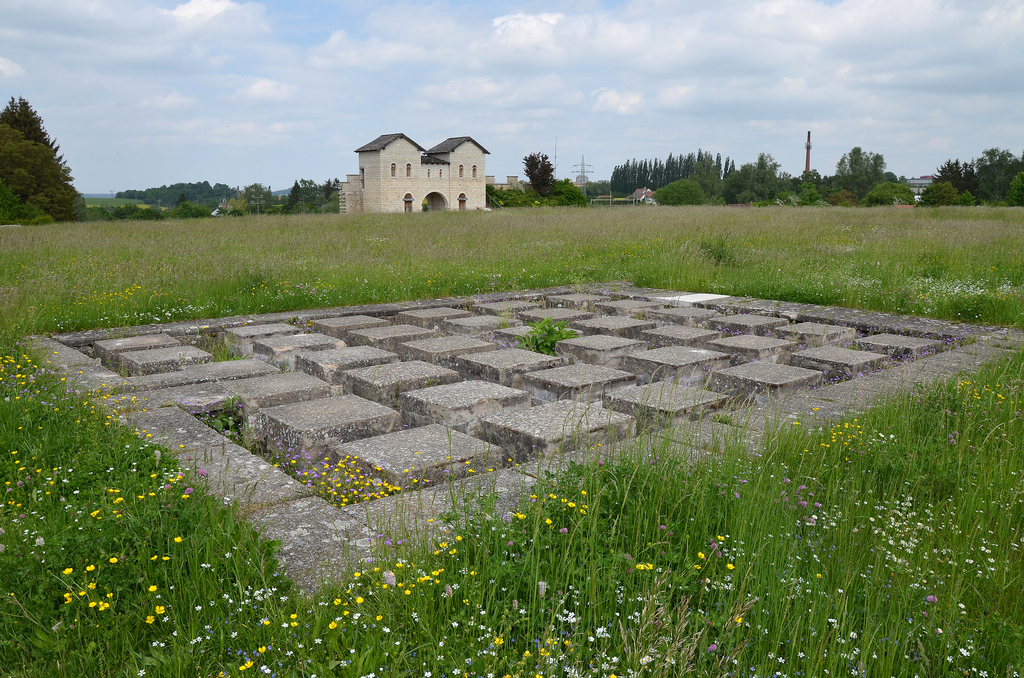
The administrative and utility buildings were all built of stone and were located in the central part of the fort, which included the principia (headquarters) with its aedes (shrine where the signa militaria or standards were kept) and a basilica. Near the principia stood the horreum (granary) and the praetorium (commander’s house). The fabricae (workshops) and the valetudinarium (hospital) were in the western area of the fort. In contrast to these buildings, the barrack blocks were made of timber. The barracks were found in the retentura (rear northern part of the camp), and the stables in the praetentura (front, southern part of the camp). Each contubernium (barrack room) was the home to a squad of eight soldiers who lived in close quarters. There were 14 barracks in the fort at Weißenburg, each housing 30 men. The garrison must have had a total of 420 mounted soldiers.

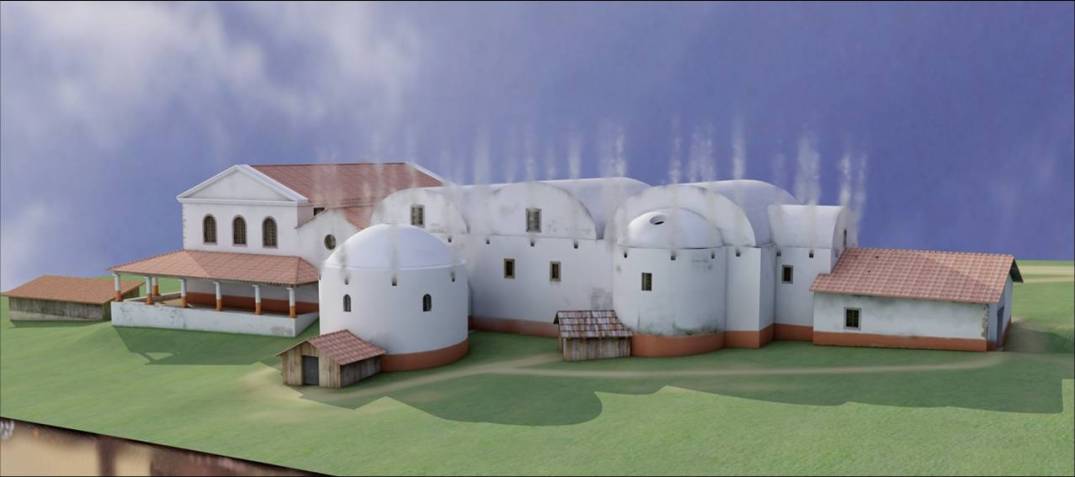
One of the most remarkable relics of the Biriciana Roman fort is the remnant of the large thermal bath complex that served the garrison from 90 BC to 259 AD. Discovered in 1977, west of the Roman fort, the baths were restored and turned into a museum in 1983. The construction of Roman Baths in Weißenburg had three historical phases: building Phase I around 90 AD, building Phase II in 130 AD, and building Phase III around 180 AD.

Historical reconstruction of the Roman Baths in Weißenburg. (www.cyark.org)

A vicus developed in the immediate vicinity of the thermal baths where family members of the soldiers, traders and craftsmen settled. The vicus of Biriciana, whose exact limit can no longer be localised, stretched over a total area of ​​about 30 hectares and probably reached a population of about 2500 inhabitants in the 2nd century AD.

The remains of the Roman fort and vicus at Weißenburg were investigated by the Reichs-Limeskommission (Kohl) between 1890 and 1905 and later again by the State Office for Monument Conservation. The ground plan of the parameter walls and the principia of the fort are preserved. The north gate and the adjoining parts of the parameter walls were completely reconstructed in 1990.

PORTFOLIO

THE FORT

The reconstructed northern gate (porta decumana).
The front side of the porta decumana with the with the first V-shaped ditch.
The porta decumana.
Middle section of the fort comprising of the head-quarters (principia). In the background the northern gate.
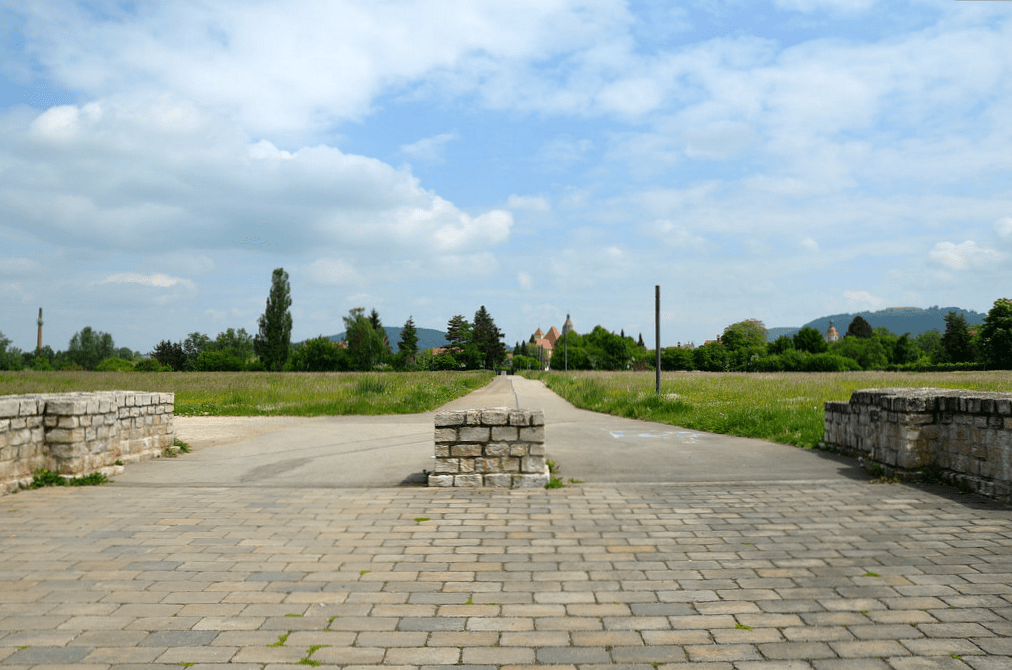
The western gate (porta principalis dextra) and the via principalis.
The via praetoria with the northern gate in the background.
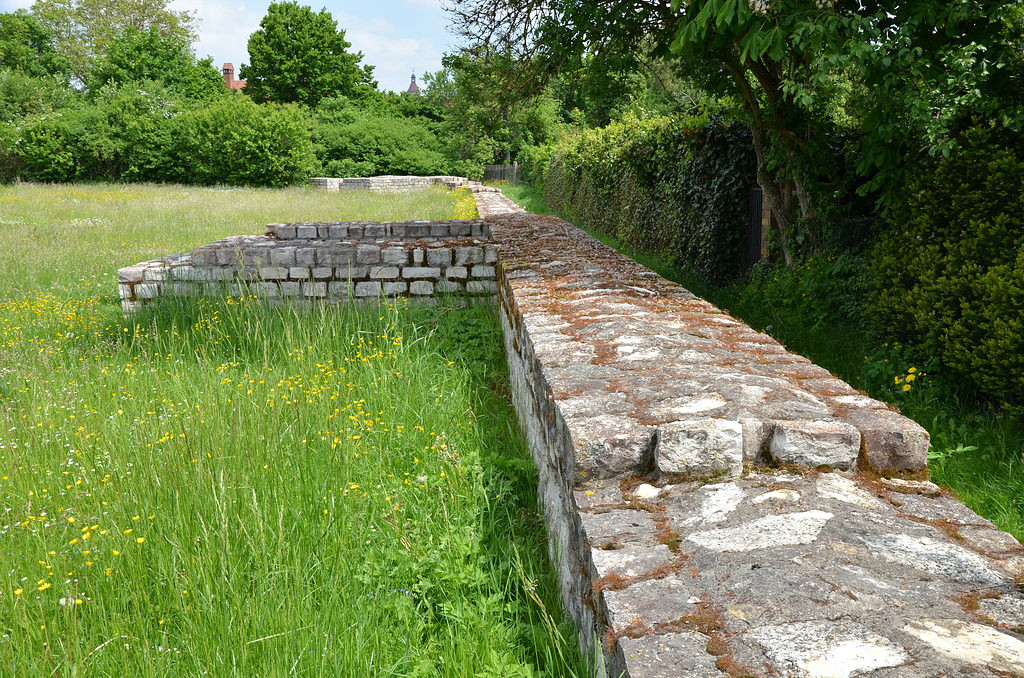
The remains of the perimeter wall.

THE LARGE THERMAL BATH COMPLEX

The cold water basin with original preserved floor. It was the largest pool of the thermal baths (8,80 mx7,70 m).
The tepidarium (warm room).
The heated dressing room with hypocaust.
The second frigidarium.
A square water basin in the caldarium.

Links: