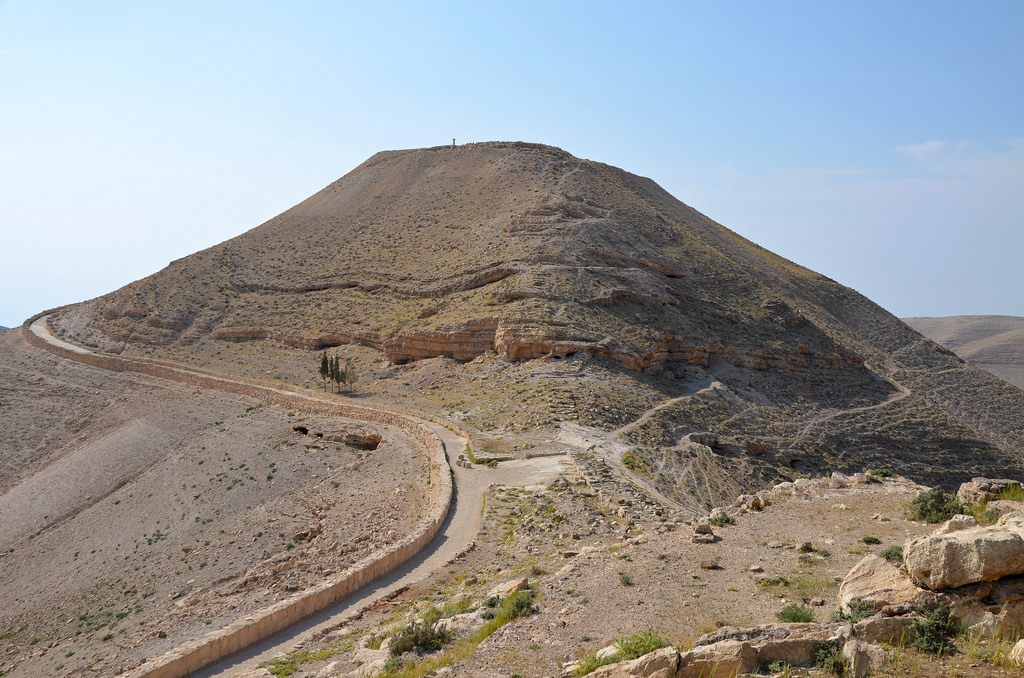
Machaerus is a fortified hilltop palace overlooking the Dead Sea in Transjordan, southeast of the mouth of the Jordan river. The fortress was erected by the Hasmonean king Alexander Jannaeus (103–76 BC) and was destroyed by Pompey’s general Gabinius in 57 BC, but was later rebuilt by Herod the Great. Upon Herod’s death, his son Herod Antipas inherited the fortress where Salome is said to have danced in return for the head of John the Baptist. During the First Jewish Revolt, Jewish rebels took control of the fortress besieged and destroyed by the Romans in AD 72.
Alexander Jannaeus, the second Hasmonean king of Judaea, first built the fortress of Machaerus around 90 BC in southern Perea. It was used as one of the depositories for his treasures and as an important strategic position. Machaerus later served as a base for Aristobulus II in his resistance against the Romans. Pliny the Younger, in his Historia Naturalis, describes it as one of the strongest points in the region after Jerusalem. The Romans conquered the Hasmonean state in the 60s BC, and the fortress was destroyed by the Roman commander Aulus Gabinius in 57 BC after suppressing the revolt led by Aristobulus II and his son Alexander.
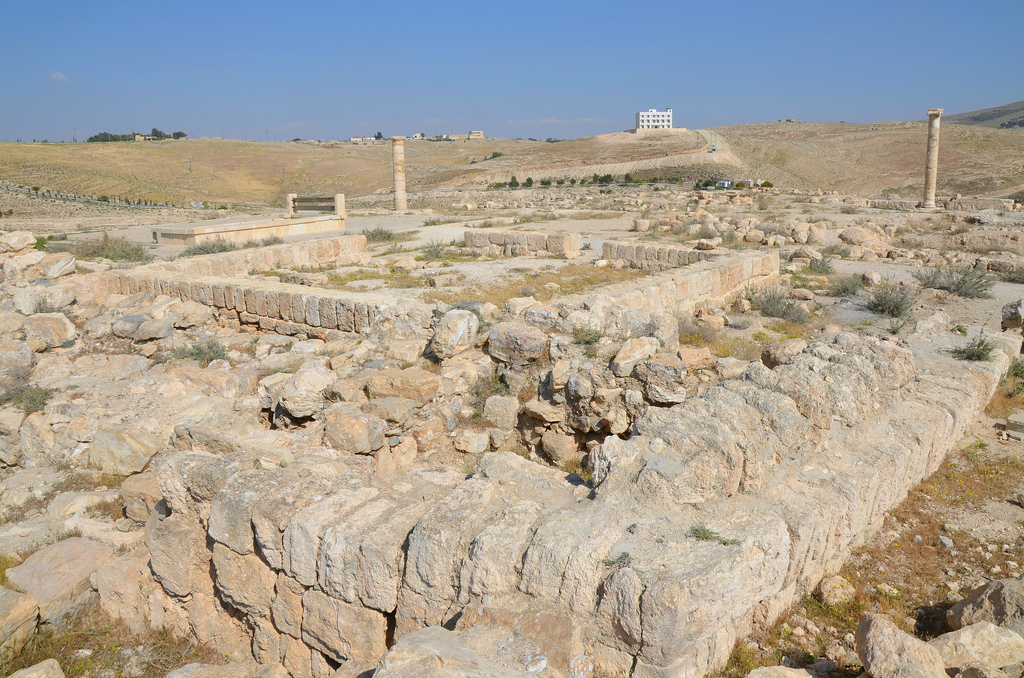
King Herod the Great rebuilt the fortress in 30 BC and turned the originally defensive centre into a lavish palace measuring approximately 110 meters east-west and 60 meters north-south. It was divided into two wings: the eastern wing contained a bathhouse with mosaic floors and five storage rooms. The western wing had a peristyle court surrounded on all sides by colonnades opening onto two halls on the south, triclinia. The wall surrounding the fortress was defended on both sides by a tower (see a reconstruction image here).
Aerial Photographic Archive for Archaeology in the Middle East. Photographer: David Leslie Kennedy. Copyright: Creative Commons Attribution-Noncommercial-No Derivative Works
After Herod’s death, the fortress passed to his son Herod Antipas, who ruled from 4 BC until AD 39. During this time, John the Baptist was imprisoned and beheaded at Machaerus. According to the Bible, Salome is said to have danced for Herod Antipas, who, impressed by her performance, promised her anything she wanted. Encouraged by her mother, Herodias, Salome demanded John the Baptist’s head on a platter. His subsequent execution also took place in the fortress.
After the deposition and banishment of Herod Antipas, Machaerus passed to Herod Agrippa I until his death in AD 44, after which it came under Roman control. At the outbreak of the Jewish Revolt in AD 66, the Roman garrison abandoned the fortress and put it into the rebels’ hands, who held it until AD 72. In that year, the Roman legate Lucilius Bassus besieged the fortress by building a siege ramp on the ridge of the hill before taking and destroying it. The fortress was not rebuilt after that, but the Christians built a church on the eastern hill during the Byzantine period, calling the site Machaberos.
The site was rediscovered by the Frisian explorer Ulrich Jasper Seetzen in 1807. The archaeological excavation of Machaerus began in the 1960s by E Jerry Vardaman, then in the 1970s, 80s and 90s by Virgilio Canio Corbo and Michele Piccirillo. Since Father Piccirillo’s death in 2008, the Hungarian Academy of Arts has conducted archaeological excavations and architectural surveys on the ancient hilltop.
PORTFOLIO
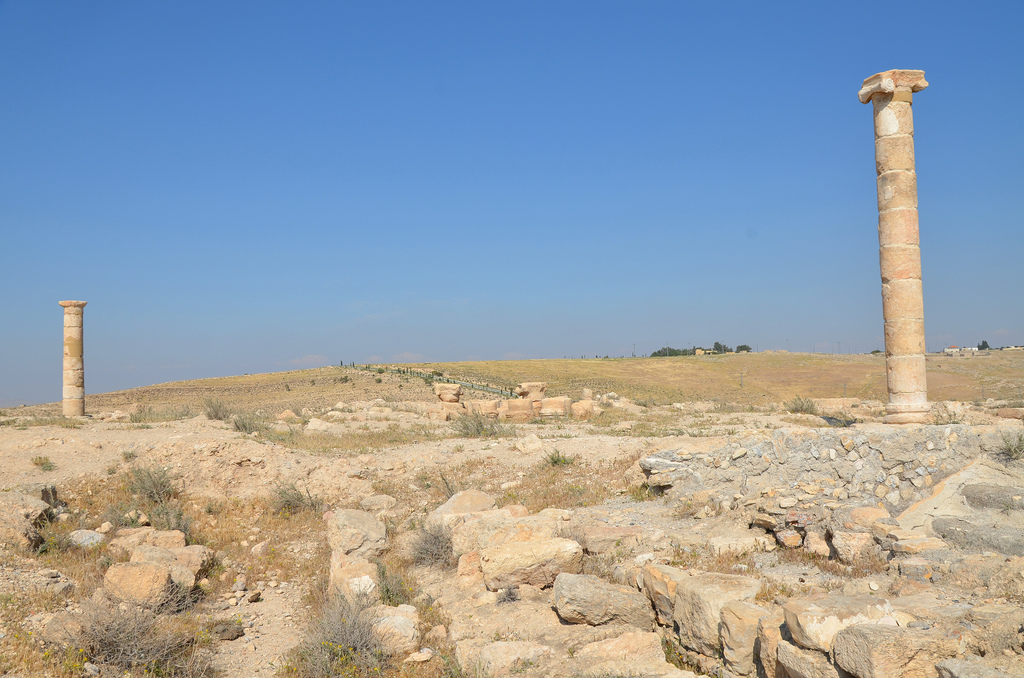
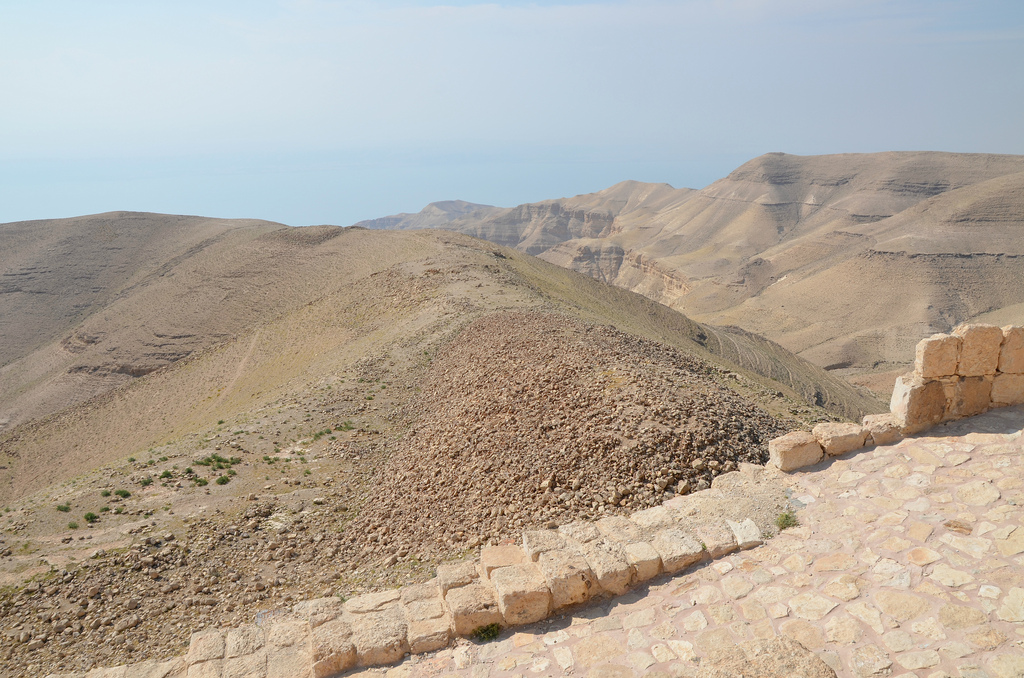
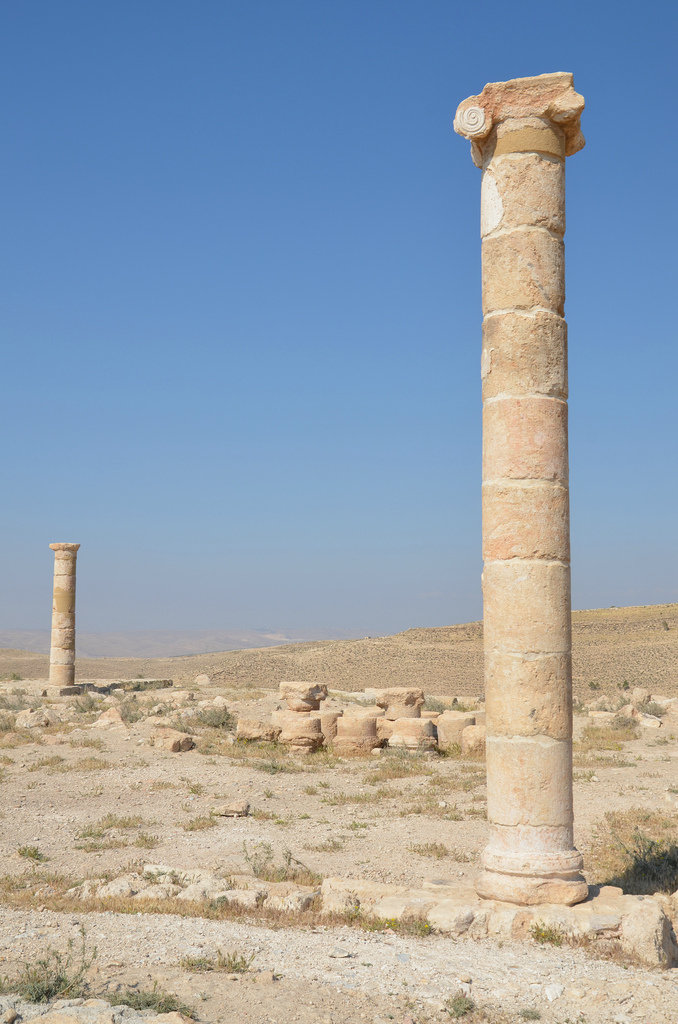
The ruins of Herod’s palace.The partially reconstructed royal courtyard with its apsidal throne-niche and Doric peristyle. There were originally 24 Doric columns (plus the 4 heart-shaped ones at the corners), of which 11 column prints survived on the Stylobate. This is where Salome is believed to have danced for Herod Antipas.The re-erected Doric column and the in situ and reconstructed Herodian Lithostrotos (“stone pavement”) in the royal courtyard.View of the Dead Sea from the top of the mountain. Herod’s two other mountain-top palaces, Herodium near Bethlehem and Alexandrium near Jericho, can be seen. On a clear day, it is possible to see the towers of Jerusalem.The remains of a triclinium for fancy dining.The two re-erected complete Herodian columns of Machaerus, one Ionic and one Doric.The Herodian royal bathhouse was Ionic in style. Inside the Apodyterium hall of the bathhouse, there could have been originally (most probably) 12 similar Ionic columns.The remains of one of the bath pools.A mosaic from the baths of the fortress. This is the most ancient mosaic found in Jordan.The ruins of Herod’s palace.The Roman siege ramp is similar to the one at Masada. However, this one was never completed.The path leading to the fortress. An aqueduct, 15 m in height, brought rainwater from the nearby plateau to a series of cisterns on the mountain’s northern slope. The aqueduct also served as a bridge that connected the fortress to the high plateau.
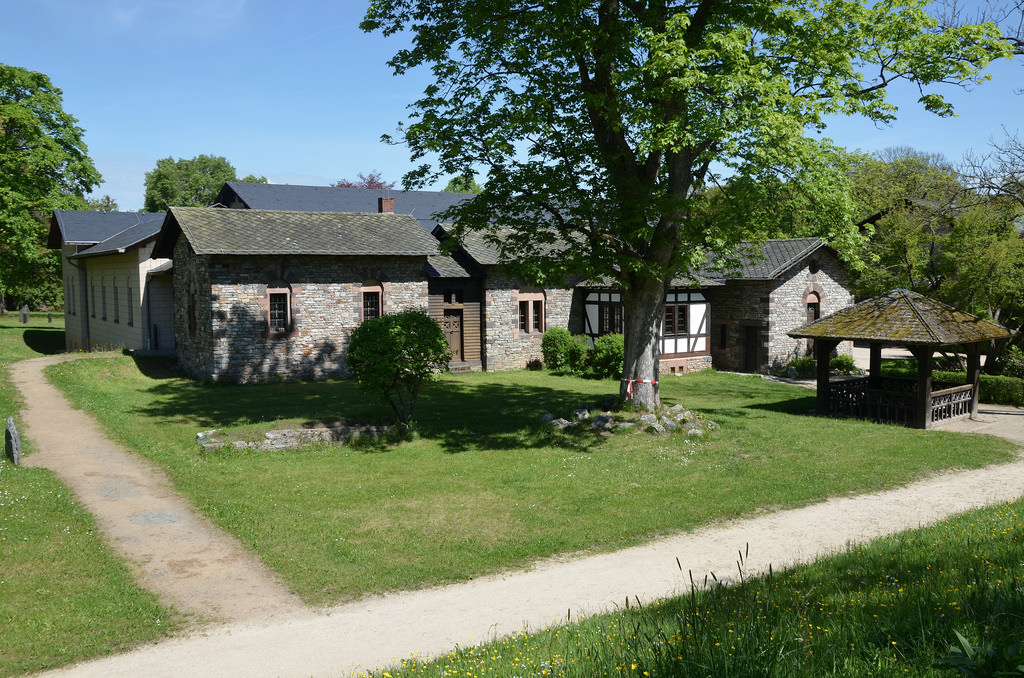
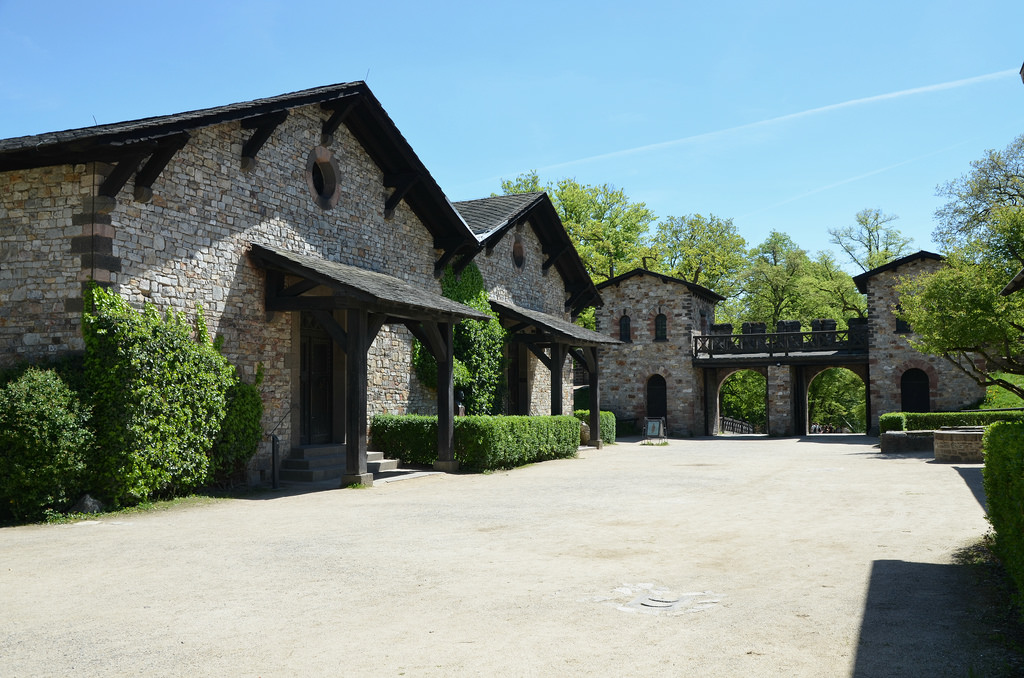
The Saalburg is a former Roman Cohort Fort located northwest of Bad Homburg in Hesse and belonging to the Limes Germanicus. This fort served for 150 years as a base for frontier troops. The Saalburg is the most completely reconstructed Roman fort in Germany and serves as a research institute and open-air museum. It is part of UNESCO‘s “Upper-German Raetian Limes“ World Heritage Site.
Towards the end of the 1st century AD, the Romans occupied the area of the Taunus and erected a simple wood-and-earth fort at the Saalburg Pass to house a numerus (units of barbarian allies) and control traffic on this important route. It had a rectangular ground plan, corner towers, intermediate towers and two gates and was surrounded by a ditch.
Around AD 135, the old timber fort was converted into a larger cohort fort measuring about 147 x 221 m and consisting of walls built from a solid combination of stone and timber beams. The cohort fort was occupied by the Cohors II Raetorum civium Romanorum equitata, an auxiliary unit made of about 480 foot soldiers and 120 cavalrymen. The troops were tasked with monitoring the Limes which can still be seen today north of the Saalburg. In the fort’s interior, wooden barracks were built to accommodate the troops, their animals and supplies. A civilian settlement (vicus) developped along the road leading to Nida (present-day Frankfurt-Heddernheim).
In the middle of the 2rd century, the cohort fort was extended and rebuilt in stone. An earthen ramp reinforced the inner side of the defensive walls and the four gates took their final shape. Inside the fort, the original half-timbered buildings were partly replaced by massive stone structures. Around AD 200, the village reached its greatest extent. As many as 2000 people may once have lived in the fort and the vicus.
In the early 3rd century, the situation along the limes became increasingly unsettled. The fort and the vicus fell into disrepair after an attack by Germanic tribes. Campaigns in the East of the Empire and the Germanic threat to the Roman frontier after AD 260 forced Rome to abandon the limes and with it the Saalburg. After the abandonment of the Upper Germanic Limes, the fort was used as a quarry.
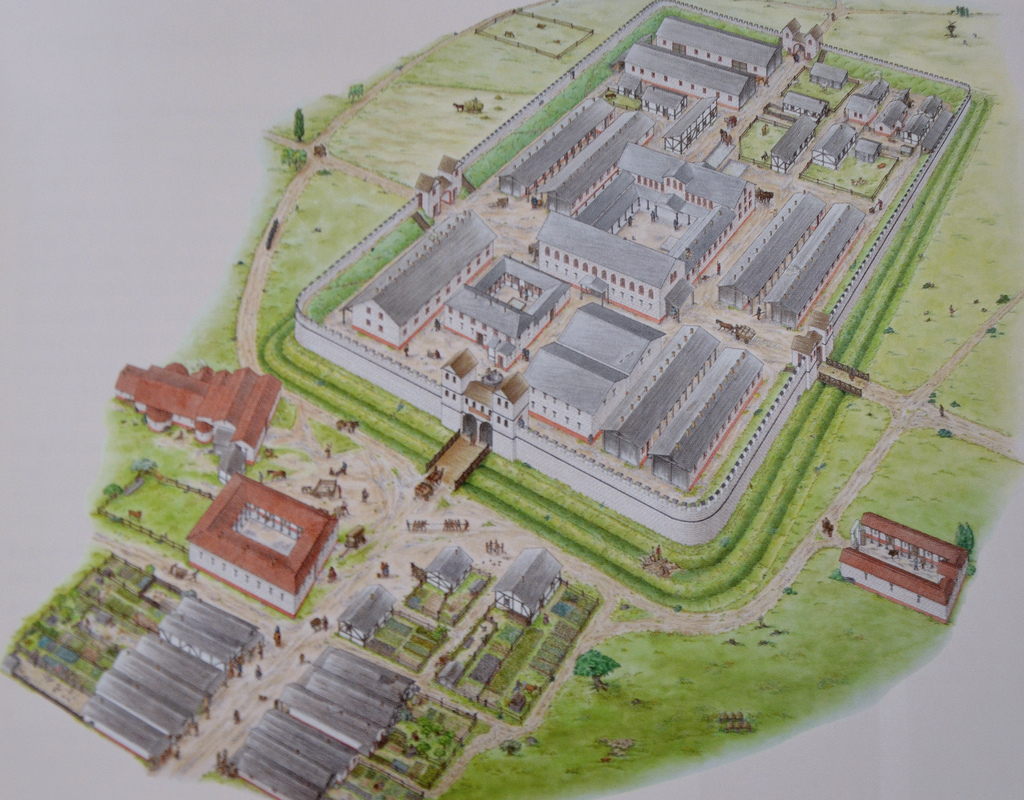
Reconstruction drawing of Saalburg Roman Fort according to the field of archaeology over the past 120 years.
The first archaeological excavations at the Saalburg began in the middle of the 19th century. In 1897, Kaiser Wilhelm II initiated the reconstruction of the ancient Roman fort. Between 1897 and 1907, the fort was rebuilt on its stone foundations; the stone defense wall with the earth embankment behind it and the four gates, the principia, the horrea, parts of the conjectured praetorium, two troop barracks were erected. However, with the insights gained by the field of archaeology over the past 120 years, a different conception of some aspects of Roman military architecture has developed. The buildings erected since 2004 (the praetorium, the fabrica) reflect the modern understanding of the fort.
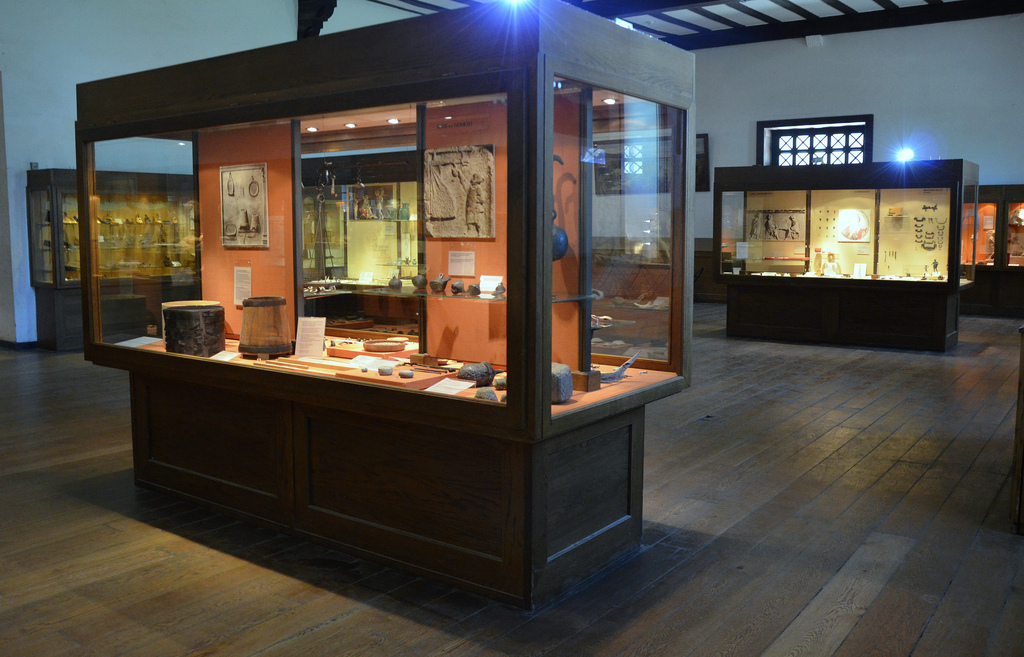
The Saalburg also houses the Saalburg Museum, one of the two most important institutions dedicated to the study of the German Limes (the other being the Limesmuseum of Aalen). Today, the remains of the 550 kilometre-long frontier complex stretching from the Rhine down to the Danube comprise the largest ancient monument in Europe.
PORTFOLIO
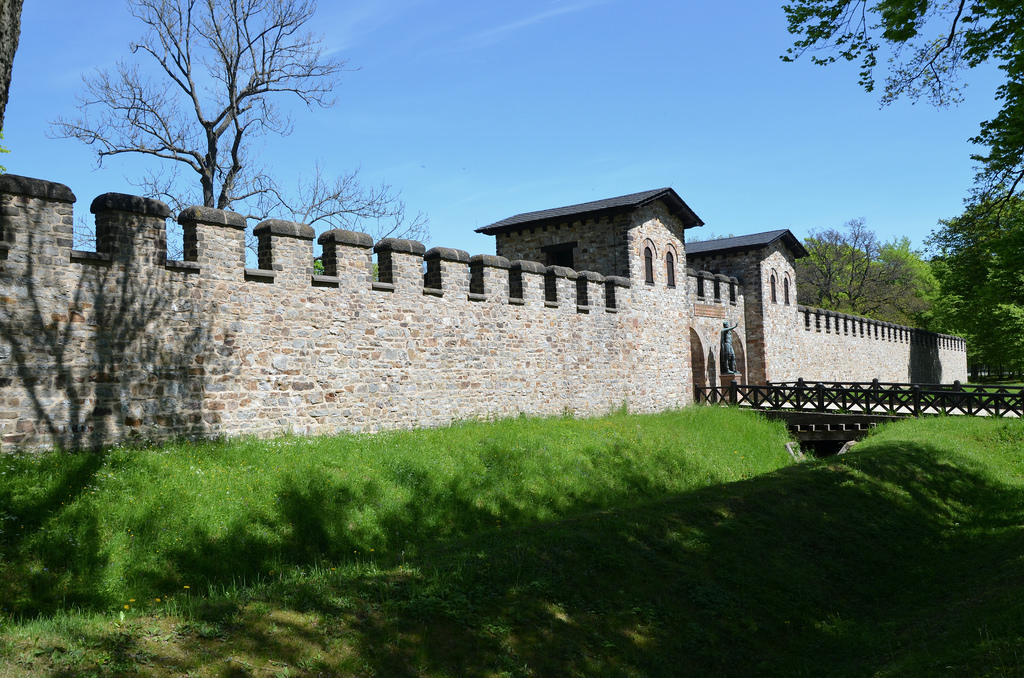
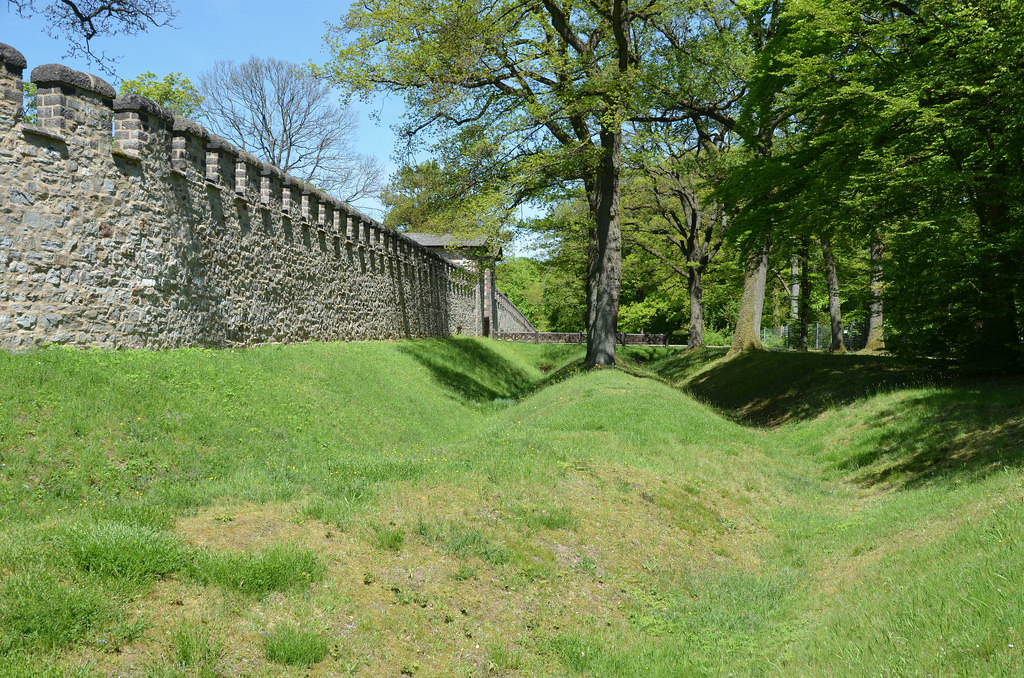
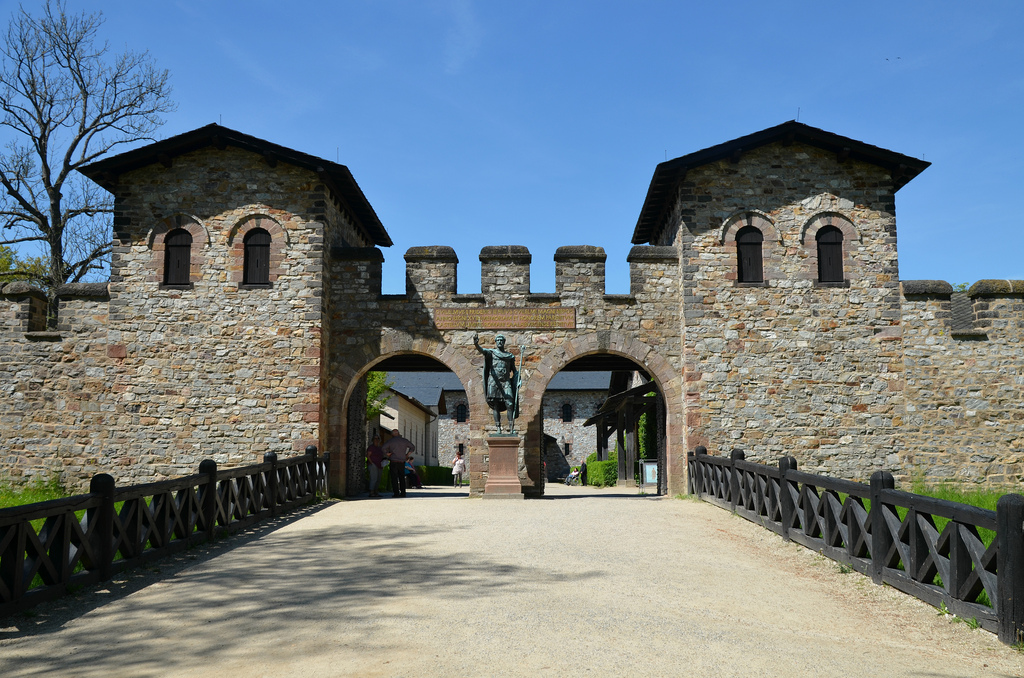
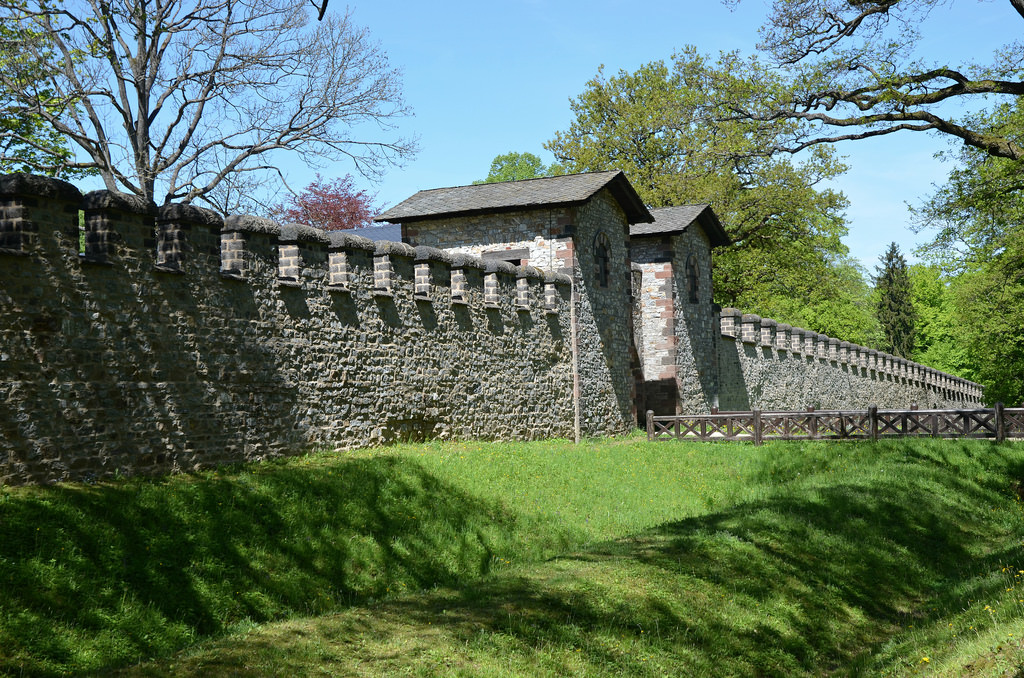
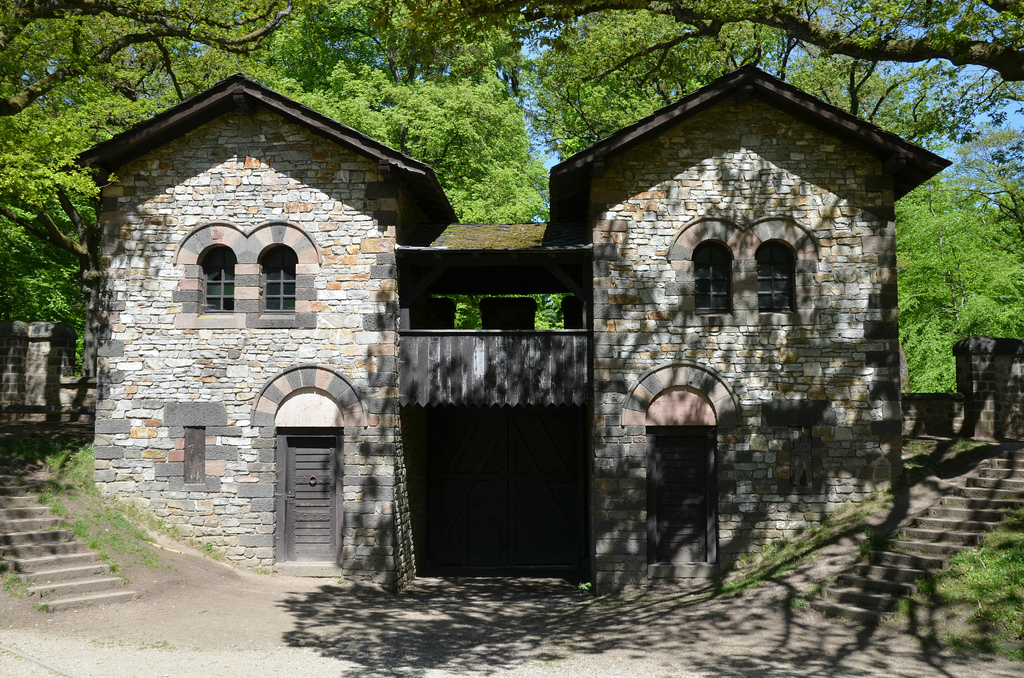
The defensive walls and the Porta Praetoria (main gate). The walls were rebuilt on Roman foundations in the style of the fort’s final construction phase around 220 AD.
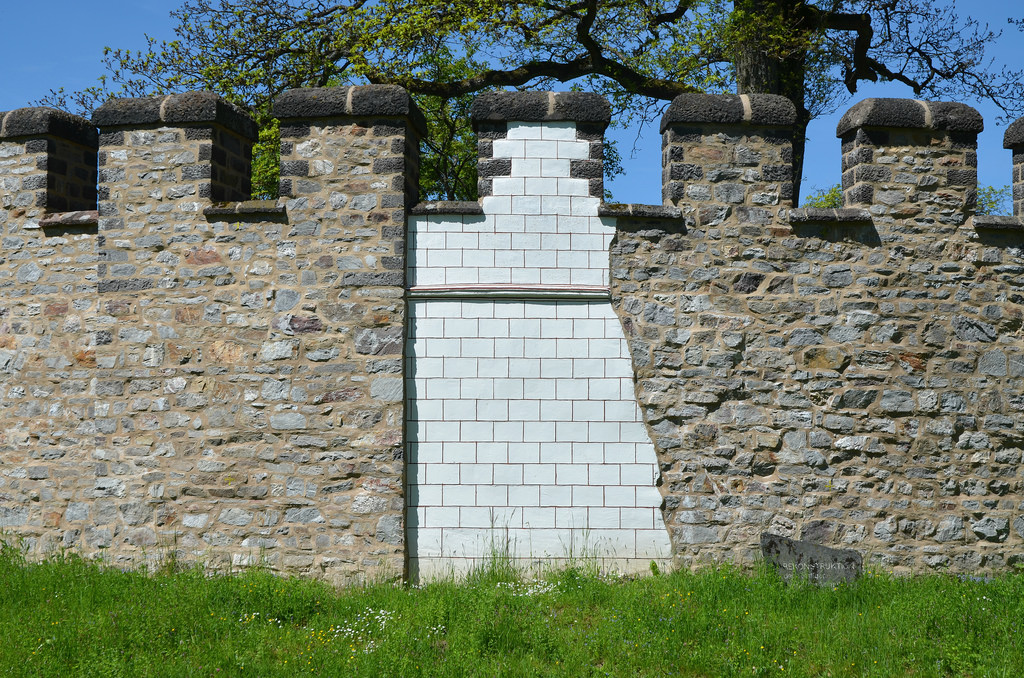
The walls stood about 4.8 m in height. In Roman times, the walls would have been coated with white plaster and then painted with red mortar.
The V-shaped ditches in front of the walls. They served as an obstacle to attack and were filled with water. The inner ditch was about 8.5 m wide and 3 m deep. The outer ditch is broader, but shallower.
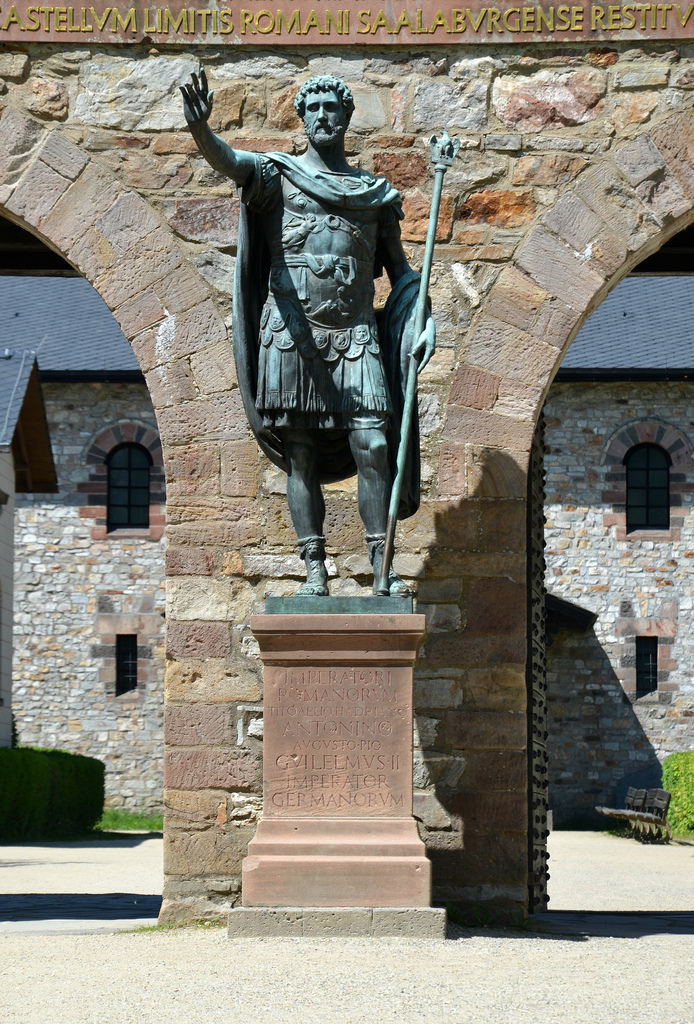
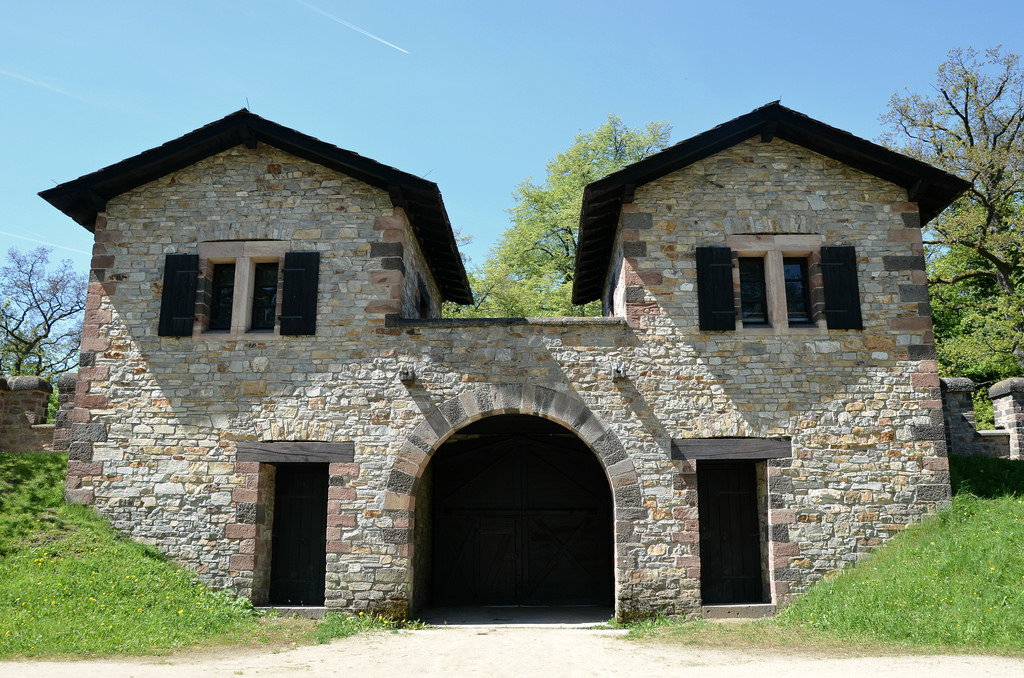
The reconstructed Porta Praetoria, the main gate of the Saalburg fort. The gate takes its name from the Via Praetoria, the camp’s road running in a north-south direction. Between the two gates, a bronze statue of emperor Antoninus Pius greets today’s visitor.
The statue of Antoninus Pius was created by Berlin sculptor Johannes Götz in 1901. The statue rests on a pedestal with the following inscription: To Emperor of the Romans, Titus Aelius Hadrianus Antoninus Augustus Pius, [from] Wilhelm II, Emperor of the Germans [dedicates this monument].
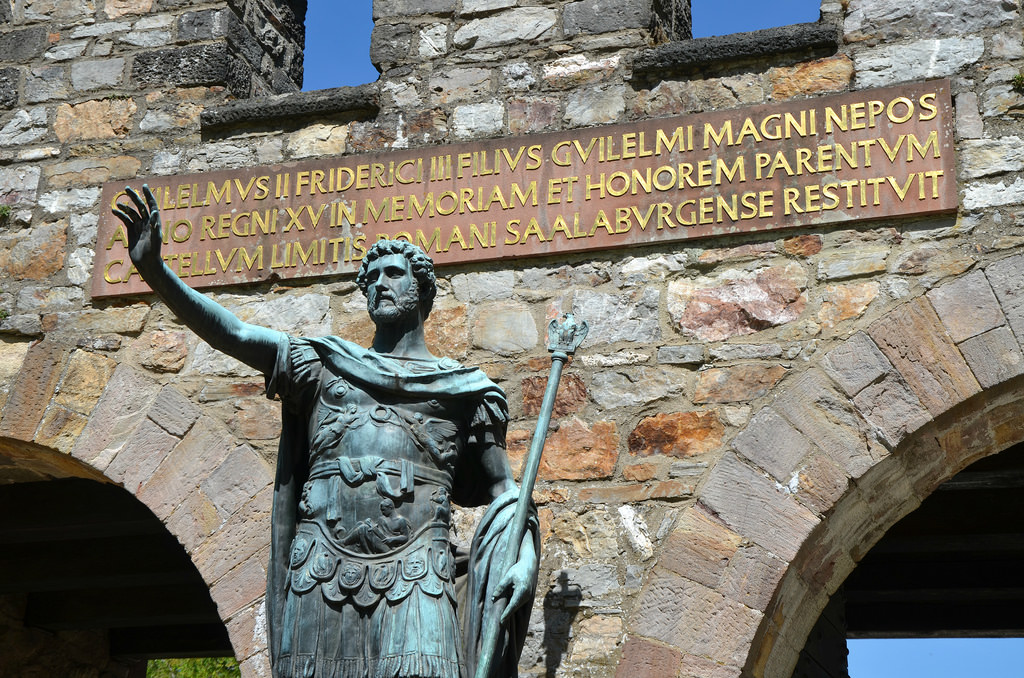
The inscription over the gateway on the plaque proclaims the completion of the restored Saalburg. It reads: Wilhelm II, son of Friedrich III, grandson of Wilhelm the Great, in the 15th year of his reign, in memory and honor of his parents, rebuilt the Saalburg Fort on the Roman Limes.
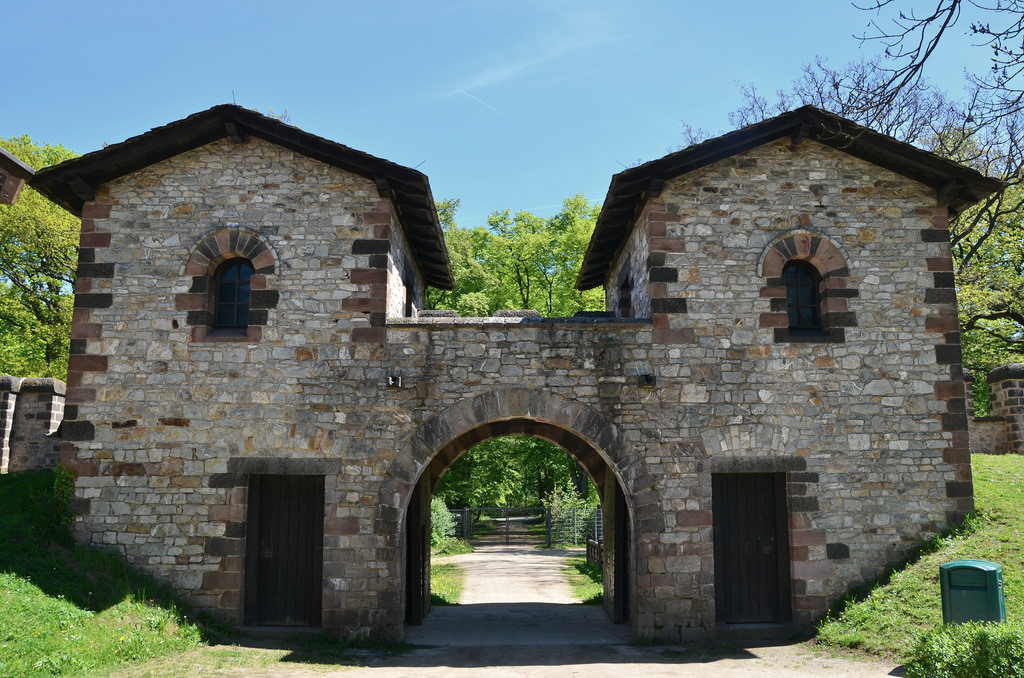
The Porta Principalis Sinistra located on the east side of the fort. The gate takes its name from the Via Principalis, the camp’s road running east-west.
The defensive walls and the Porta Principalis Sinistra.
The Porta Principalis Dextra, located on the west side of the fort. The gate takes its name from the Via Principalis, the camp’s road running east-west.
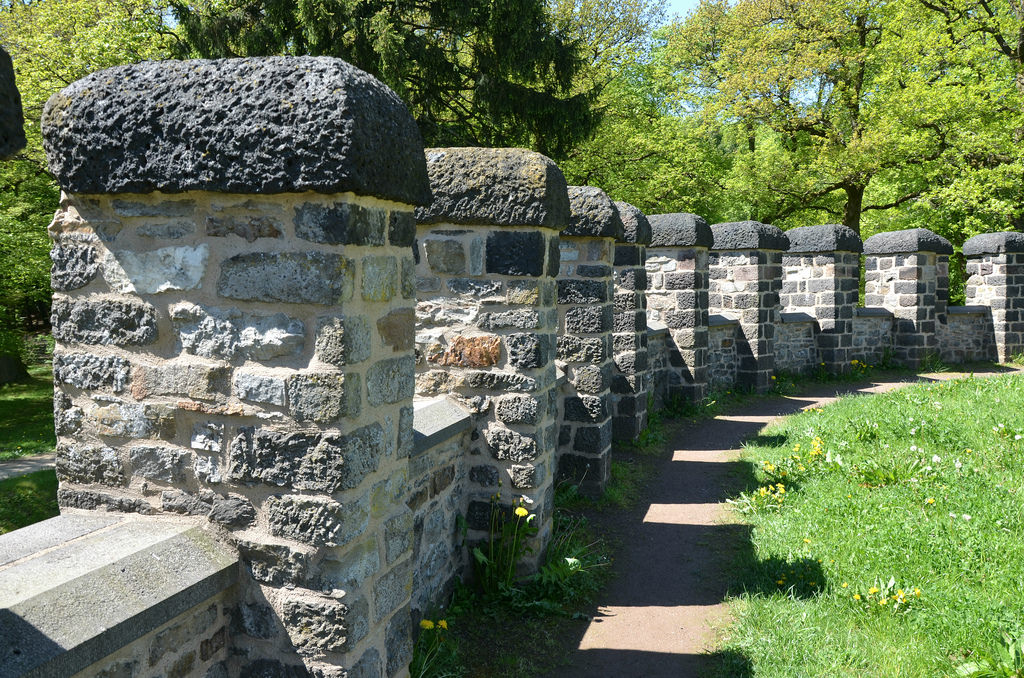
The parapet walkway along the defensive wall which gave access to the gateways’ upper floors.
The Porta Decumana, located at the rear of the fort, facing the Limes. The gate takes its name from the Via Decumana, the camp’s road running in a north-south direction.
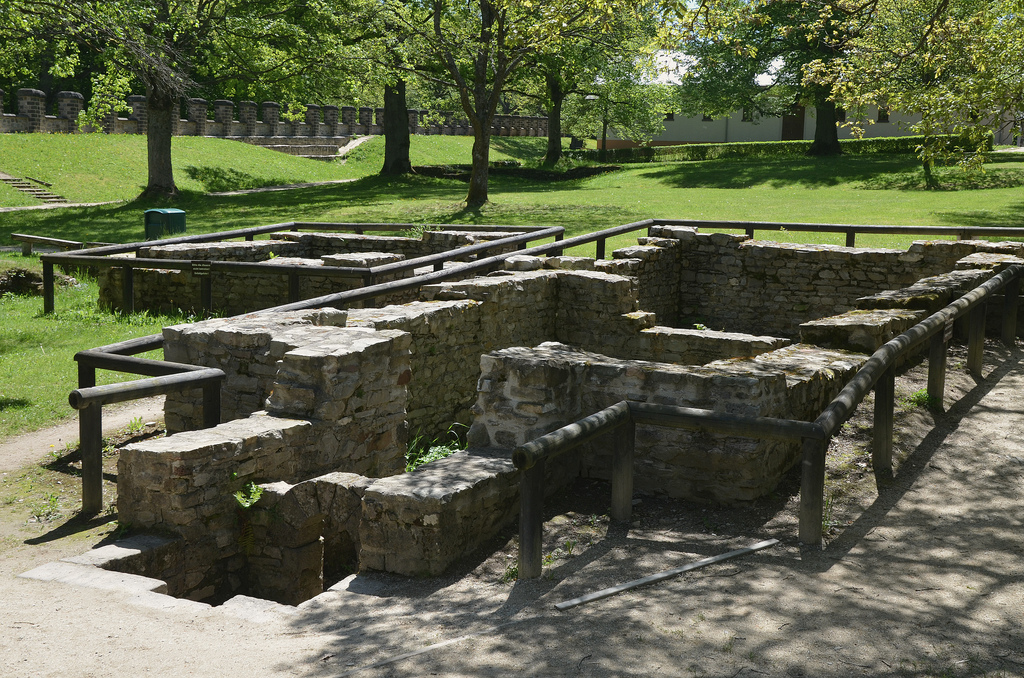
The Bath-House, located at the rear of the fort, near the north gate. It is the bath-house of the small timber fort, the predecessor of the Cohort Fort we see today. The rooms include the Caldarium (hot room), the Tepidarium (lukewarm room) and the Frigidarium (cold bath).
The Great Bath-House (Thermae), located in front of the Fort. The large bathing complex was built around 130 AD at the same time of the Cohort Fort and remained in operation up to about 260 AD.
The Great Bath-House outside of the Fort.
The reconstructed Praetorium, the Commander’s residence. The commending officer lived in a private residence which contained 8 rooms arranged around an open courtyard. Today, the administrative offices of the Saalburg Roman Fort and the Research Institue are housed in the Praetorium.
The reconstructed Principia, the headquarters building of the Roman garrison and the camp’s most important building. It was located in the centre of the fort. The visitor enters the Principia through a great hall, the basilica.
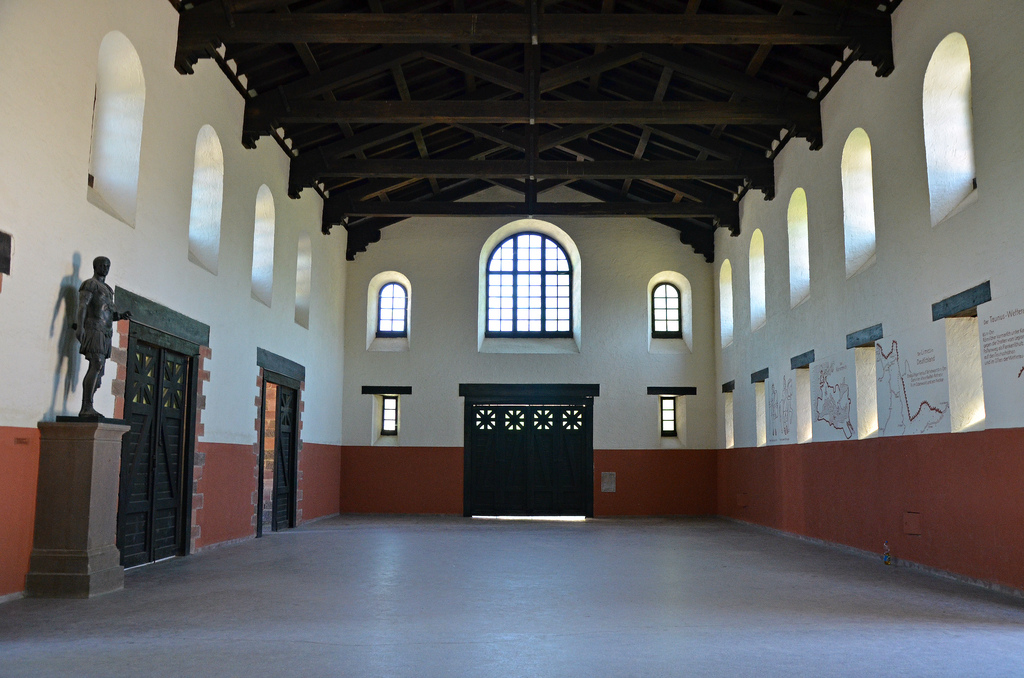
The Basilica served primarily as a public market hall or place of assembly during the Roman era. It consisted of an extended rectangular hall with a roof and large windows.
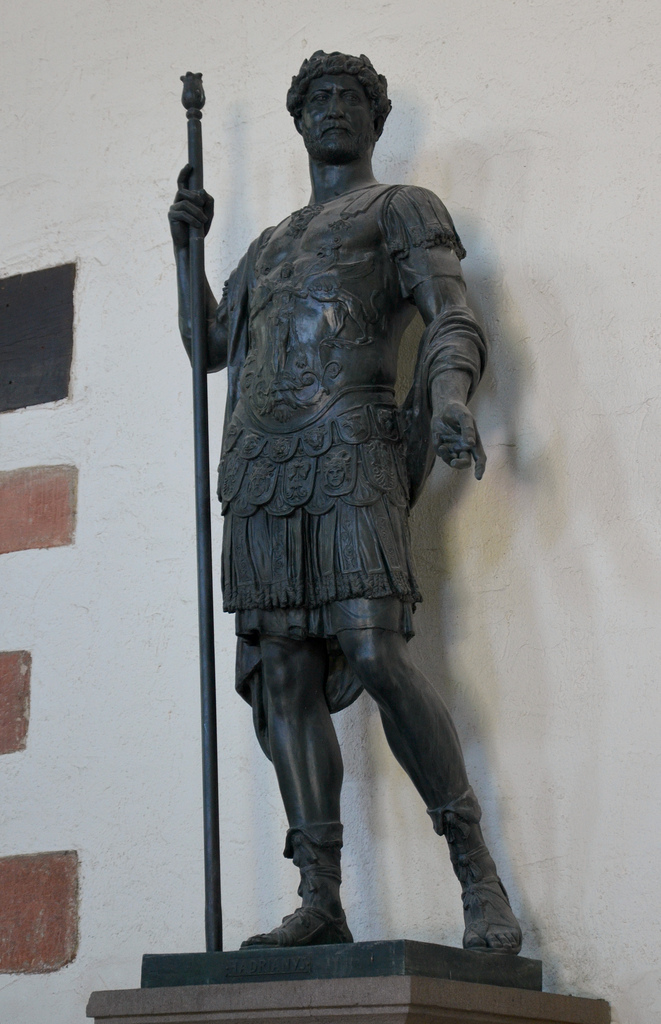
Statue of Hadrian flanking the entrance to the courtyard of the Basilica. The bronze statue is a replica dating to 1904.
The courtyard of the headquarters building. This section of the Principia was not reconstructed with complete authenticity. Originally, there was a second covered hall, not an open courtyard we see today.
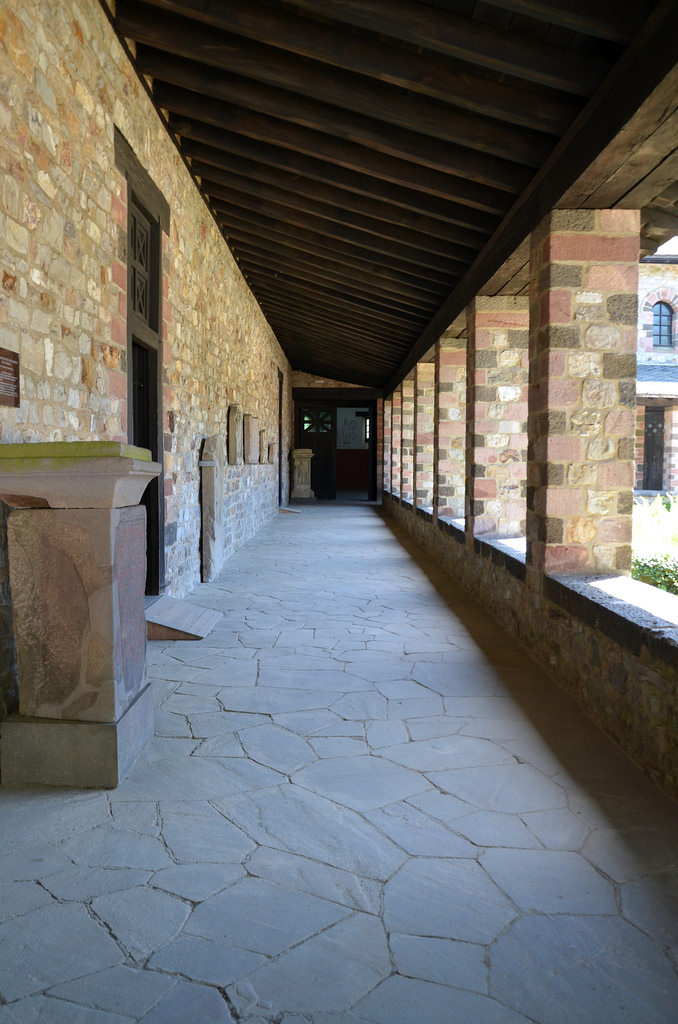
The Porticus of the headquarters building with numerous pedestals and inscribed stones bearing dedications to the Emperor and diverse gods.
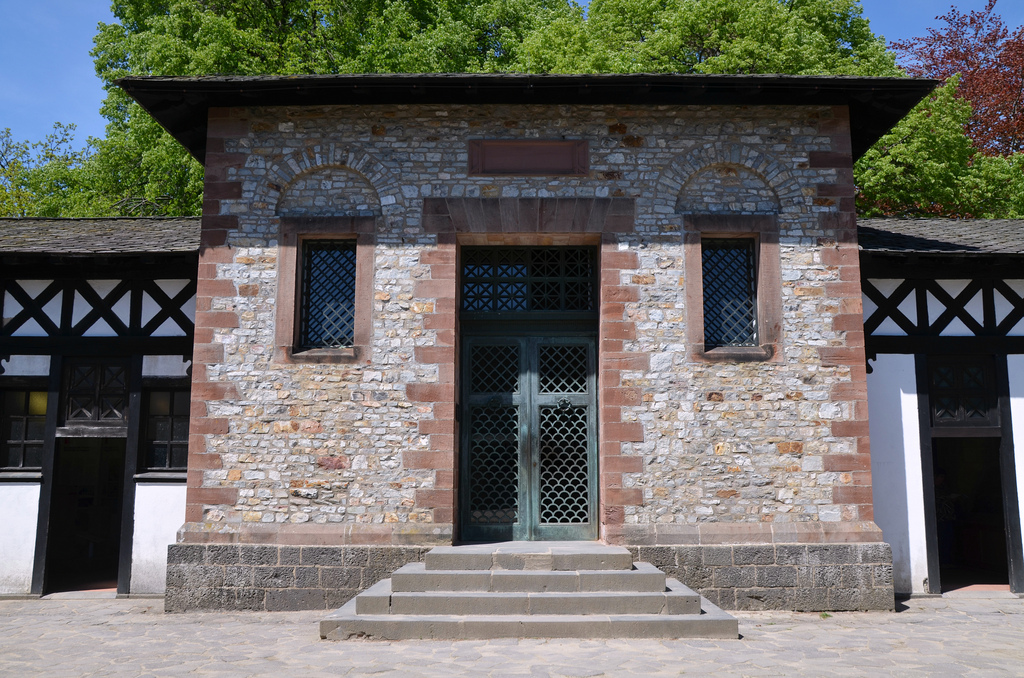
The Aedes, the shrine of the standards located on the rear wall of the Principia. In and in front of the of the Aedes, the soldiers practiced the official cult of the emperor worship. Several steps lead up to the small room, whose interior decoration could be almost completely reconstructed.
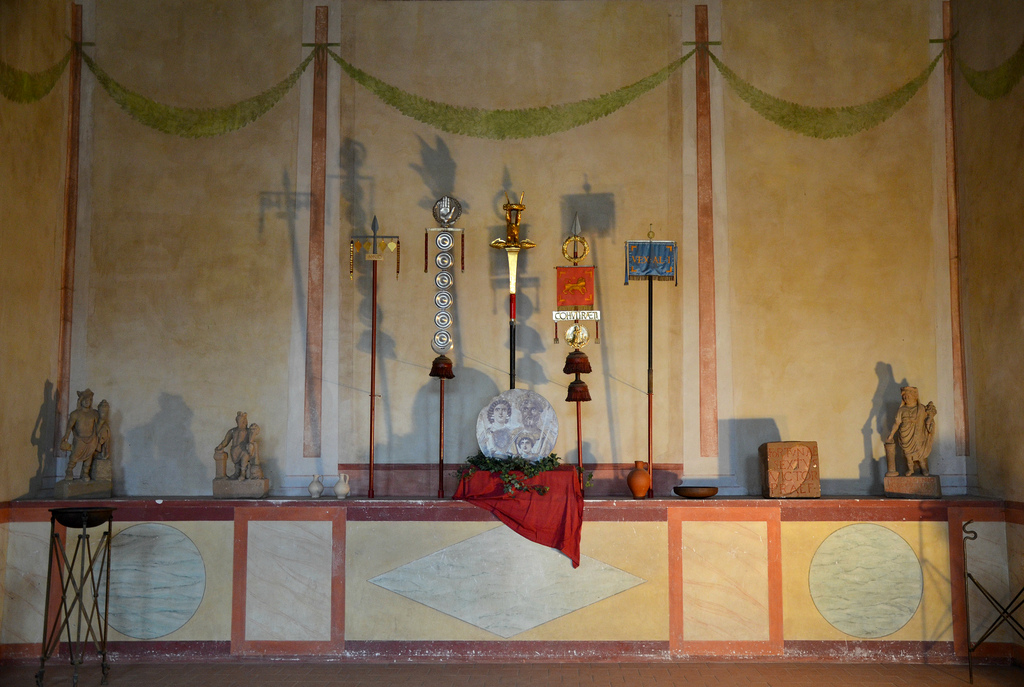
The interior of the Aedes. A raised ledge holds copies of military insignia and small votive offerings.
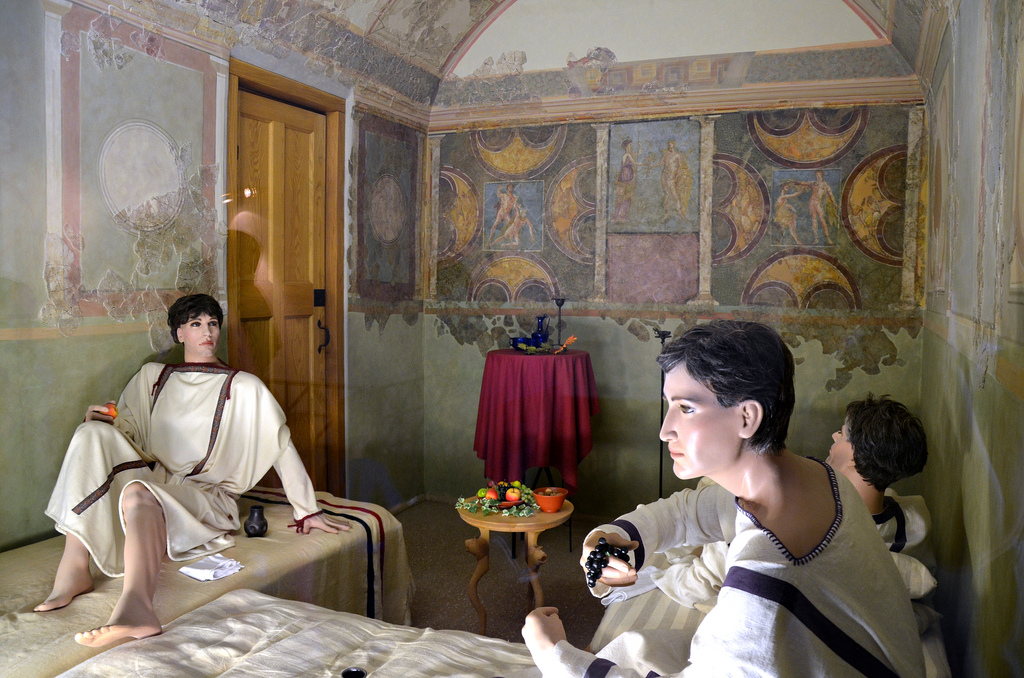
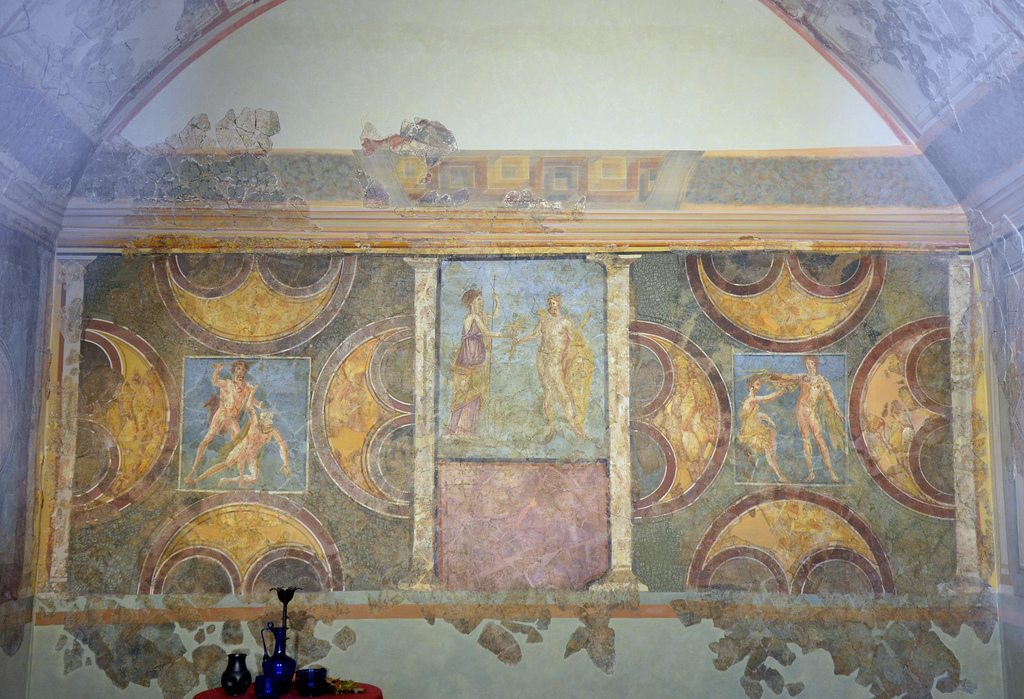
A richly decorated Triclinium (officer’s dining room), the most complete Roman wall-painting of all the limes. It was found in 1965 in the Limes fort at Echzell.
The painted fresco from Echzell was created in the mid-2nd century AD. Figures can be seen within framed spaces between the columns on the rear wall. In the central image, Fortuna, who carries a horn of plenty (cornucopia) and a wheel, greets Hercules. On the right, Daedalus uses wax to attach wings to the limbs of his son, Icarus. On the left, Theseus kills the Minotaur.
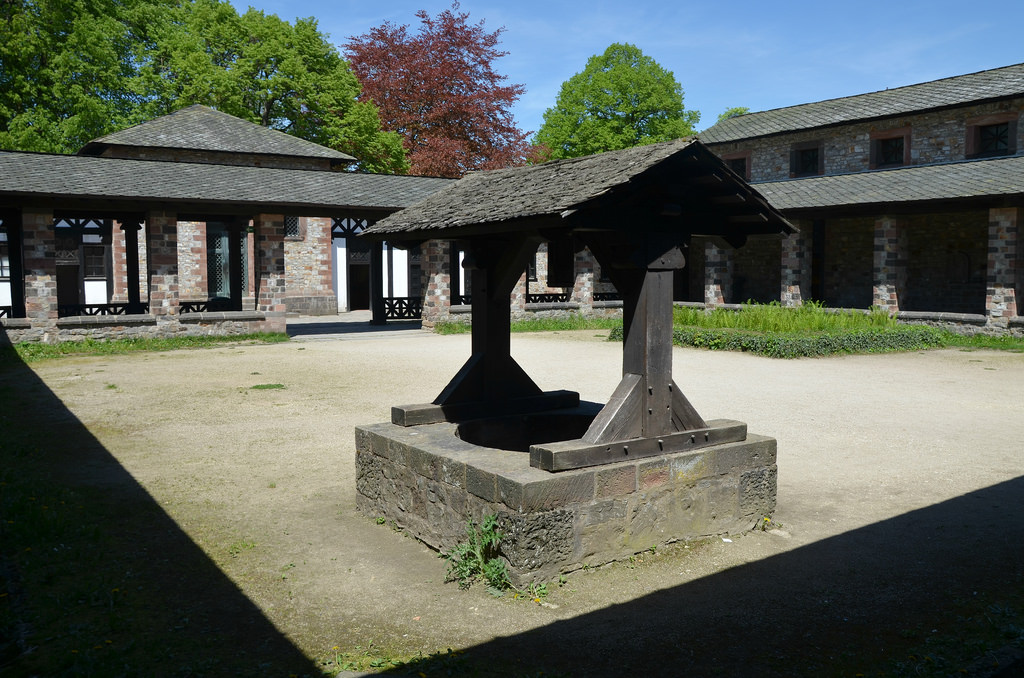
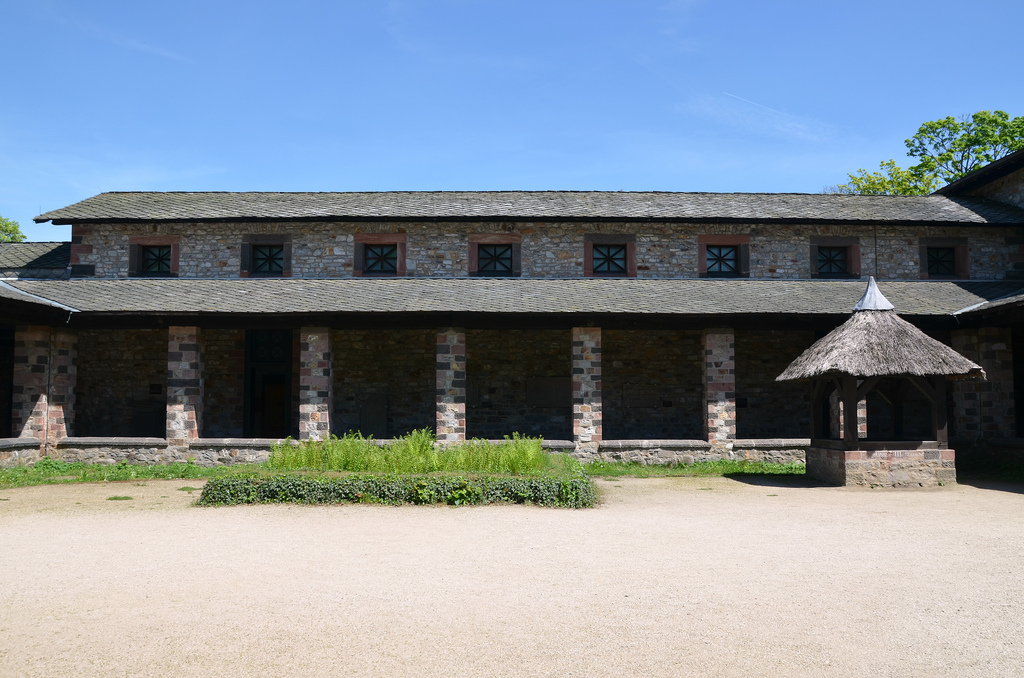
The courtyard of the Principia with one of the two reconstructed wells. The two wings of the Principia were connected by a colonnade. The left-hand wing probably housed offices. The right-hand ring housed an arsenal, an Armamentaria.
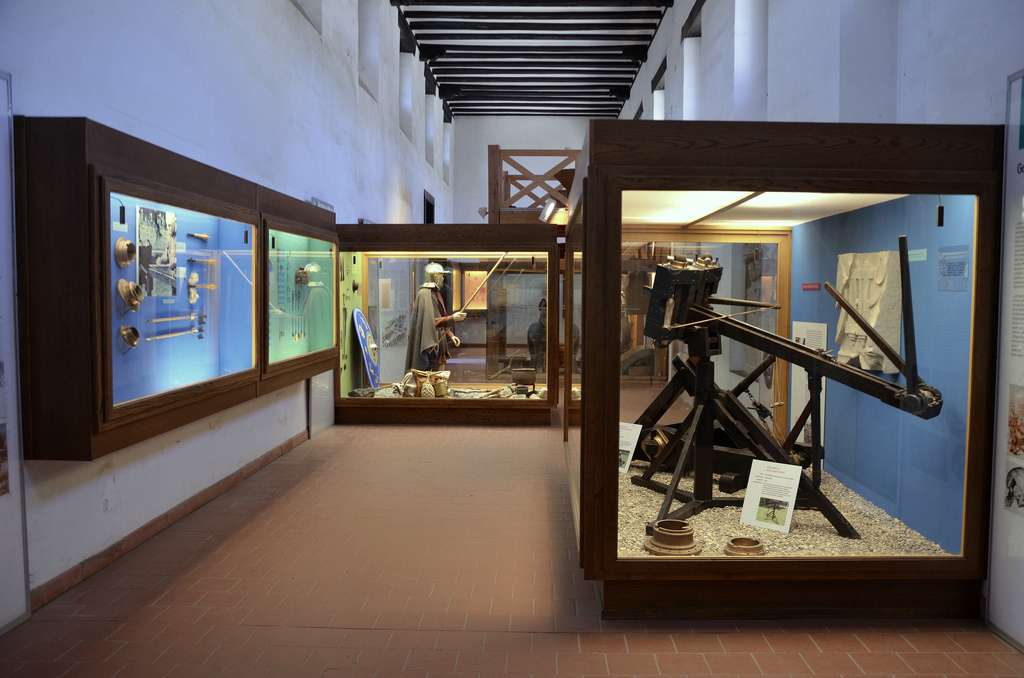
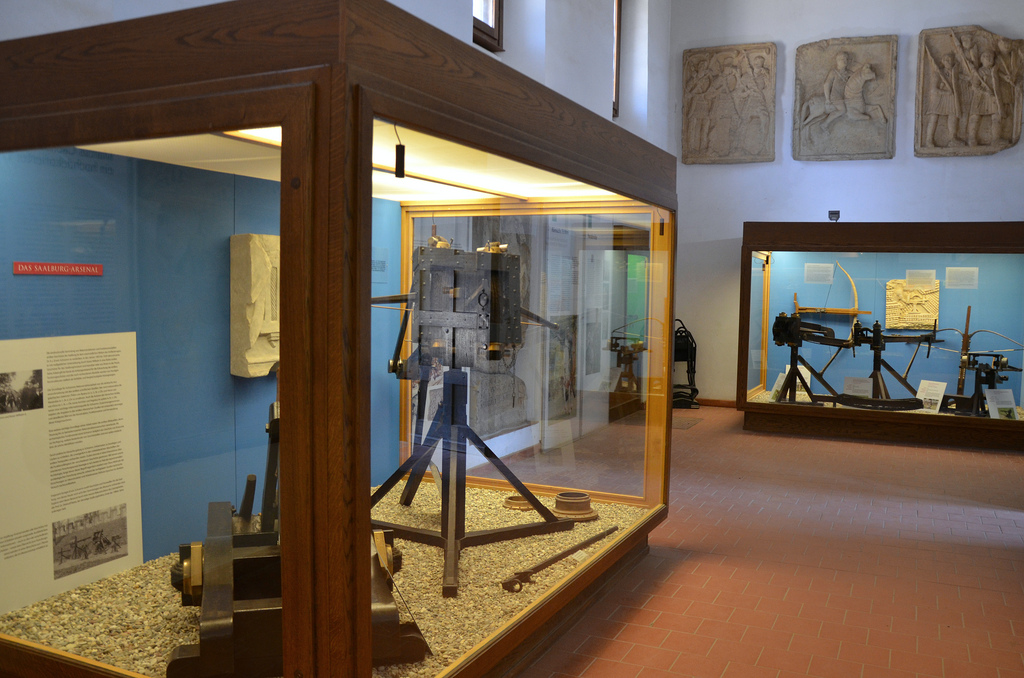
Reconstructed artillery in the right wing of the Principia.
Reconstructions of ancient Roman and Greek mechanical artillery; Polybolos, Catapultae and Ballistae.
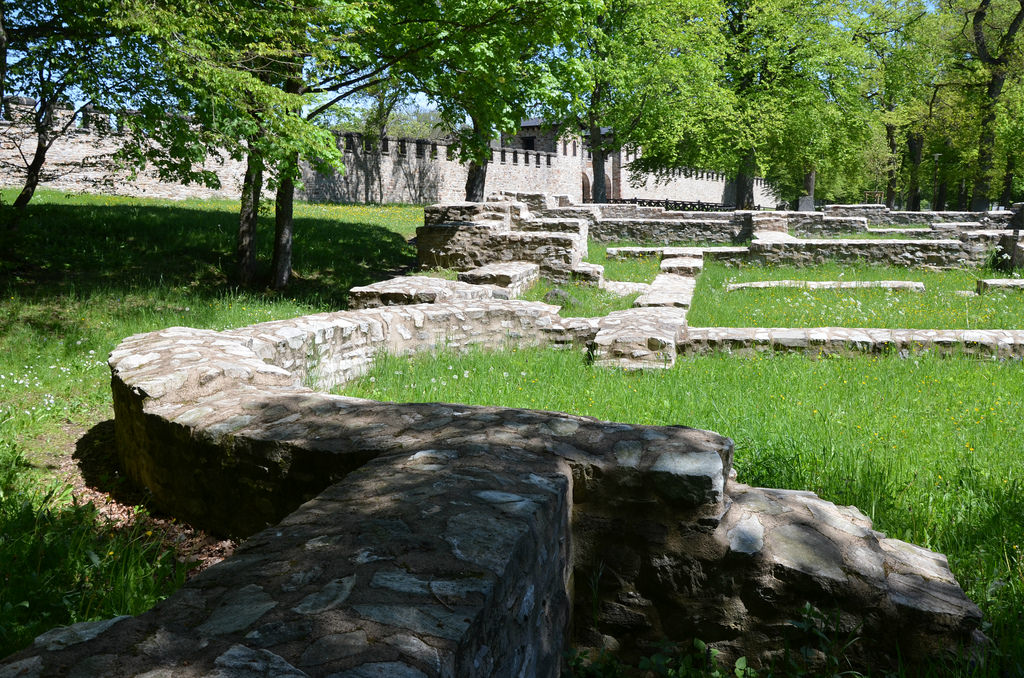
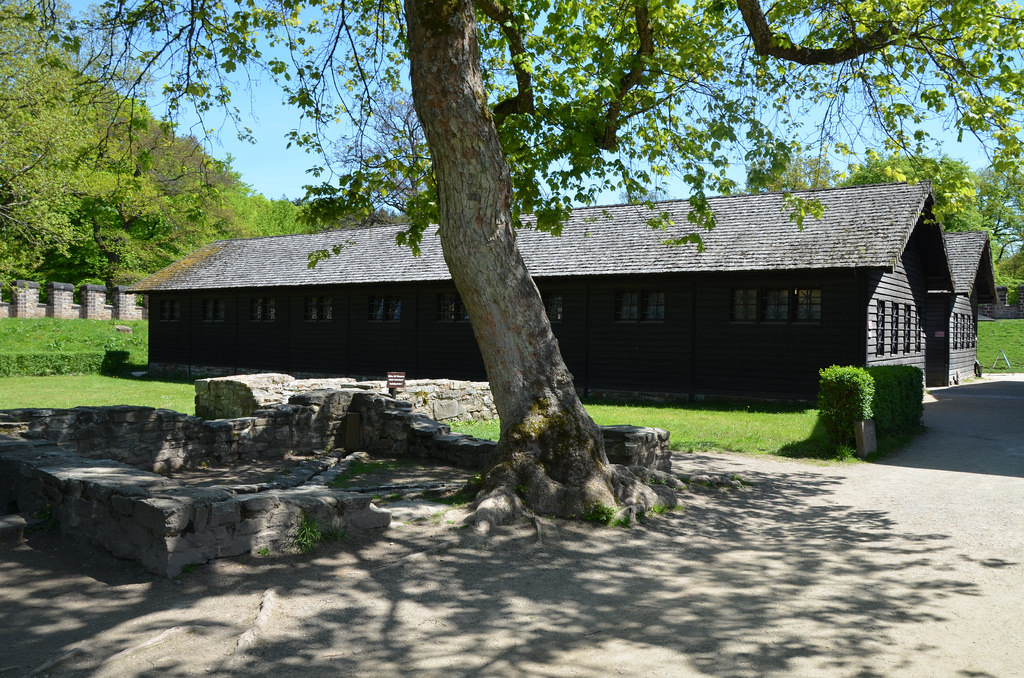
Two reconstructed wooden troop barracks (centuriae) that housed the soldiers. Recent research tells us that these buildings should have faced in a north-south direction and should have also been much larger. Each barrack block housed a Centuria led by a Centurion and was divided into ten rooms known as Contubernia, each occupied by 8 men.
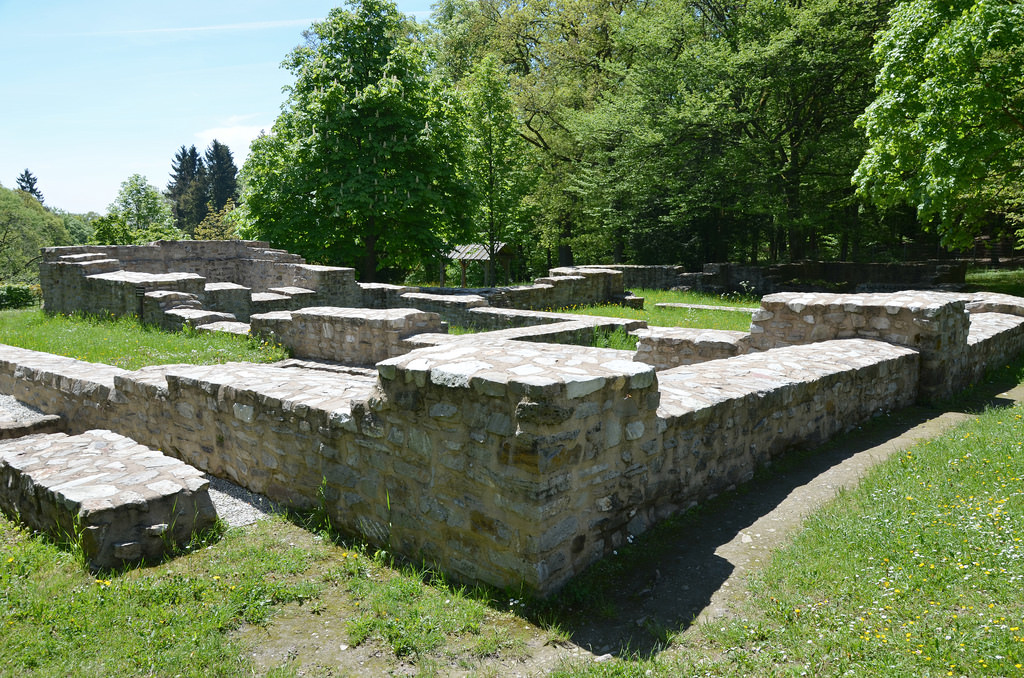
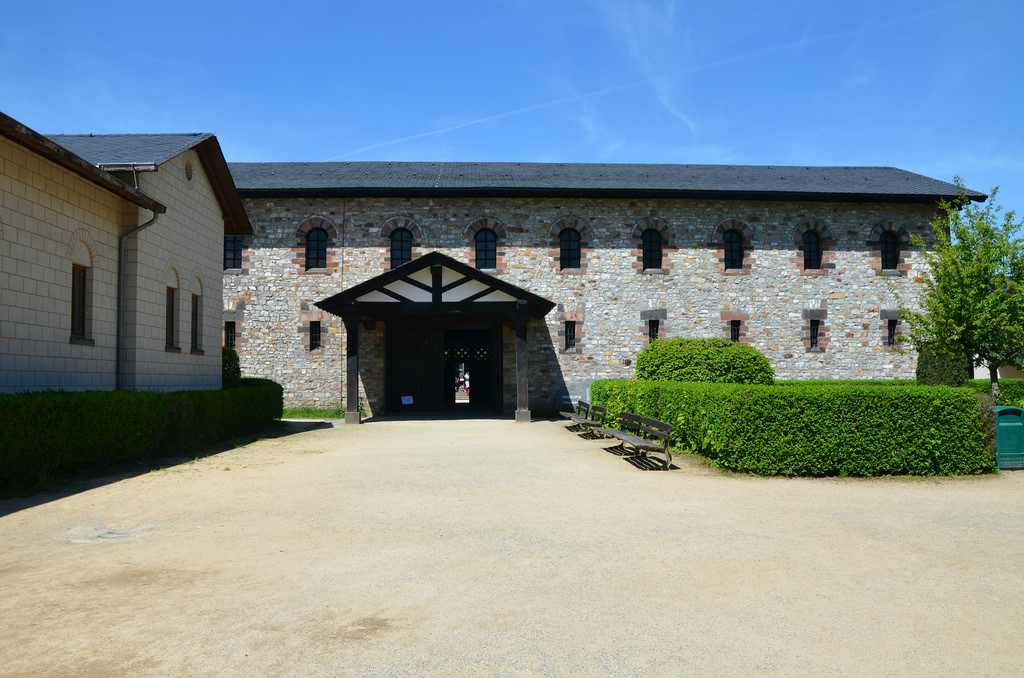
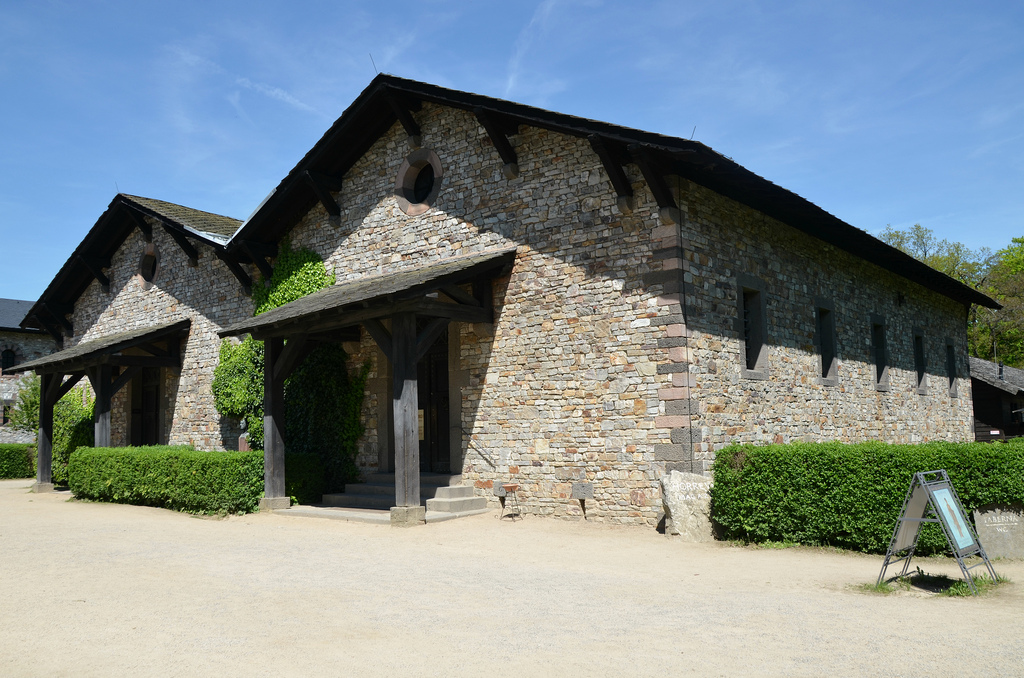
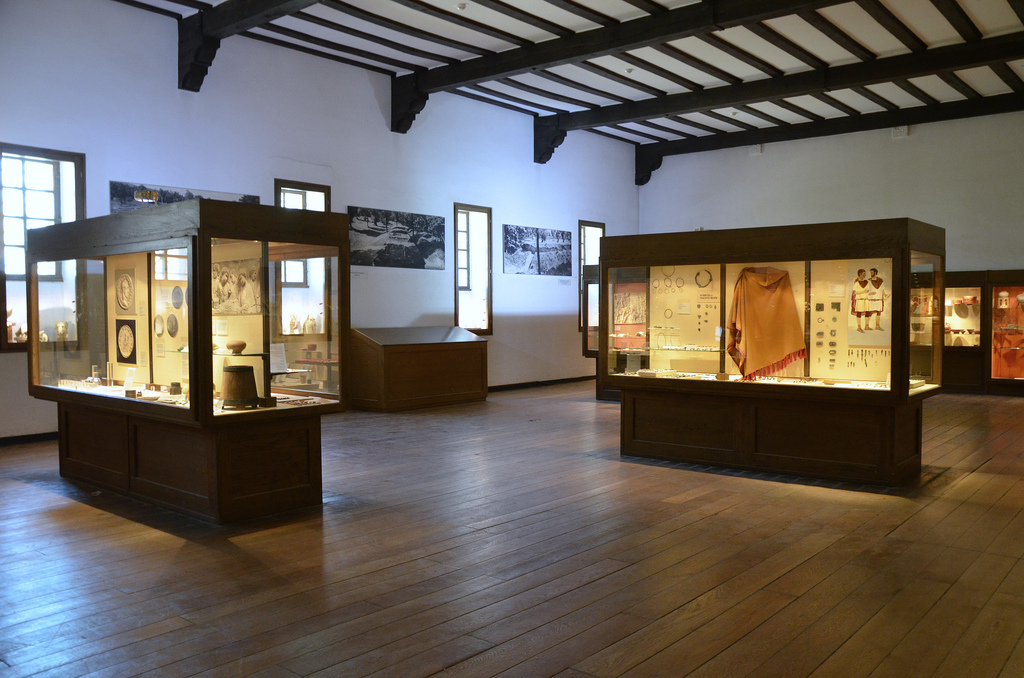
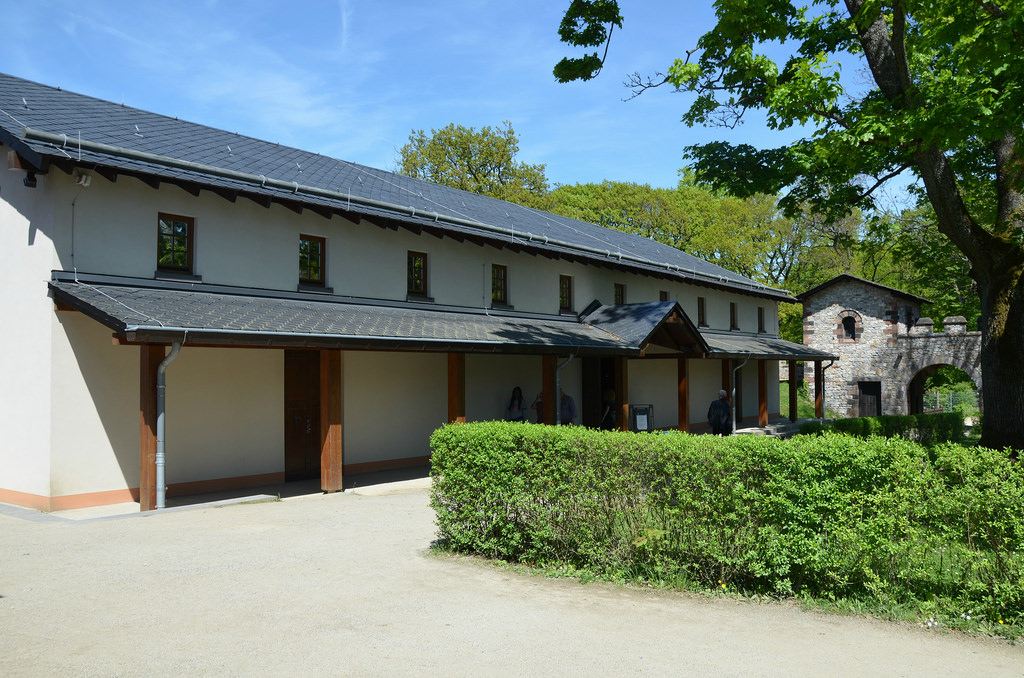
The reconstructed Horreum, the fort’s double granary. Typically, Horrea were very solidly built, with massive stone foundations. Their floors were elevated, raised on timber platforms. Today, the Granary serves as an exhibition room containing many original Roman finds that illustrate varied aspects of daily life.
The Saalburg Museum.
The Saalburg Museum.
The reconstructed Fabrica (workshop). The workshops along the Limes forts assured a constant supply of military equipment to the troops.
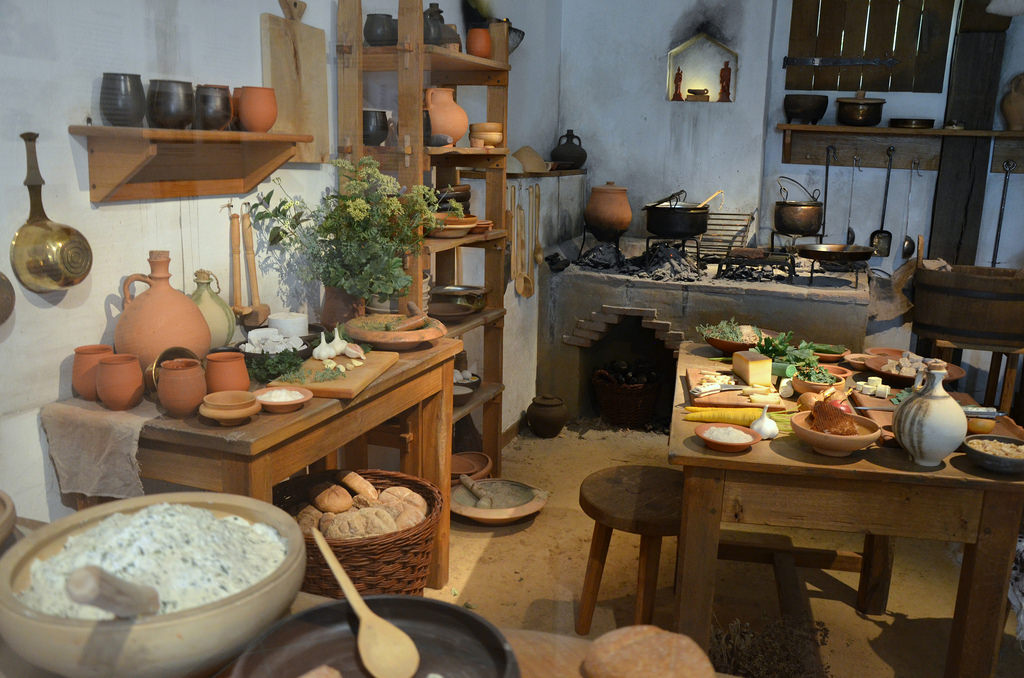
A reconstructed Thermopolium (cook shop) inside the Fabrica.
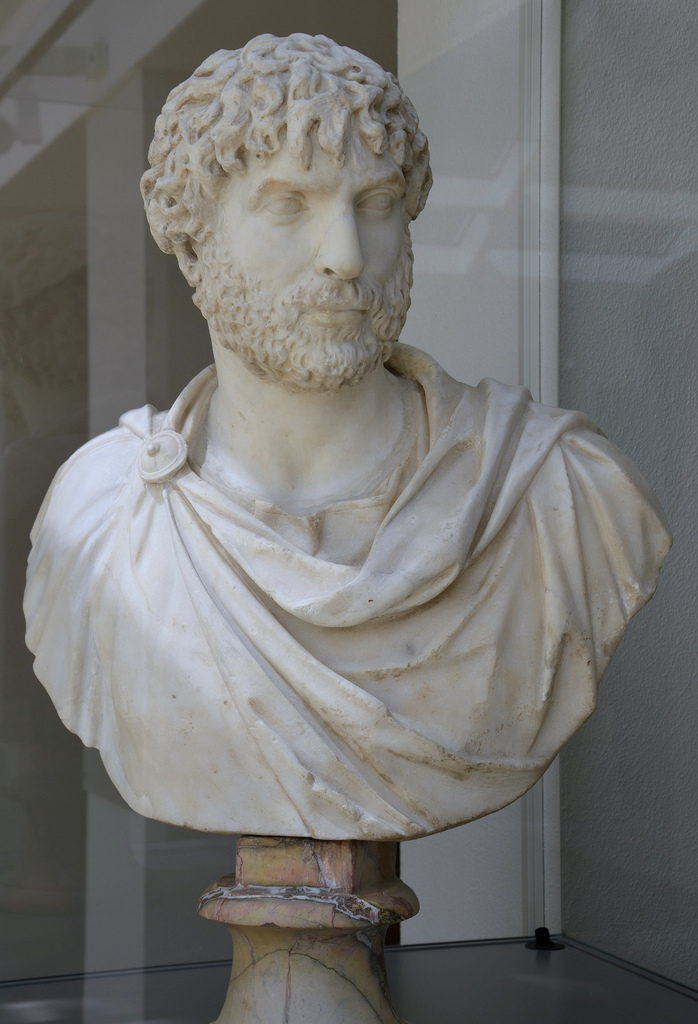
Portrait of a man imitating the appearance of Hadrian, 120-140 AD.
Inside the Fort.
Source: Carsten Amrhein, Elke Löhnig und Rüdiger Schwarz, “Saalburg Roman Fort – Tour of the Archaeological Park“, Nünnerich-Asmus Verlag & Media (2014).