European Archaeological Park of Bliesbruck-Reinheim

The European Archaeological Park of Bliesbruck-Reinheim (French: Parc archéologique européen de Bliesbruck-Reinheim) is an archaeological park stretching on both sides of the German-French border between the towns of Reinheim (Saarland) and Bliesbruck (Moselle). This cross-border project was created in 1989 and combines excavations and reconstructions of Celtic and Roman finds over an area of more than 70 ha. with exhibition and educational facilities. The grave of the famous Reinheim Celtic Princess was found here and visitors can see an impressive walk-in reconstruction of the burial. On the German side are the foundations of what was once an ornate Roman villa and partially reconstructed outhouses. On the French side are the remains of the small Gallo-Roman town and the partially reconstructed public baths.

The first excavations on the site took place between 1806 and 1809, then in 1879 in the area of ​​the Roman Villa of Reinheim. In 1954 the tomb of the Celtic Princess of Reinheim was discovered in a sand pit and was excavated. Further investigations in 1956 and 1957 revealed that there had originally been three large burial mounds (tumuli) dating from the 4th century BC, of which the princess’ tomb was just the smallest with a diameter of 20 metres. The other two mounds had diameters of 22 metres and 36.5 metres respectively. All three mounds were surrounded by circular ditches of 0.6 metres and 1.2 metres.

The grave of the Princess of Reinheim is dated to the early La Tène Iron Age period, at the beginning of the 4th century BC. The tomb was filled with exceptionally rich funerary objects: a bronze mirror in figurine form, a complete dinner service consisting of two simple bronze plates, a fine bronze jug and two openwork gold cuffs. The princess wore a gold torque around her neck and a gold bangle on her right wrist, two gold rings on her fingers and three rings of gold and glass around her left forearm. The reconstruction of the Princess of Reiheim’s tomb is approximately 100 metres west of the original burial site. Inside the mound are copies of the artifacts exhibited (the originals are in the Museum of Prehistory and Protohistory in Saarbrücken).

In the Summer of 1987, systematic excavations work provided evidence of a Roman villa complex consisting of a large palatial residence (pars urbana) and an economic area (pars rustica). This complex was constructed in the 2nd half of the 1st century AD and reached its greatest size during the 1st half of the 3rd century AD. The main building of the pars urbana measured 80 metres from east to west and 62 metres from north to south. It had a rectangular middle section with a wing on either side. One portion of the building in the north end of the west wing was the villa’s private thermal baths with an under-floor heating (hypocaust). The pars urbana was a large courtyard enclosing an area 300 metres long and 135 metres wide and surrounded by a wall. Rectangular buildings which served as workshops stood on either side of the courtyard.
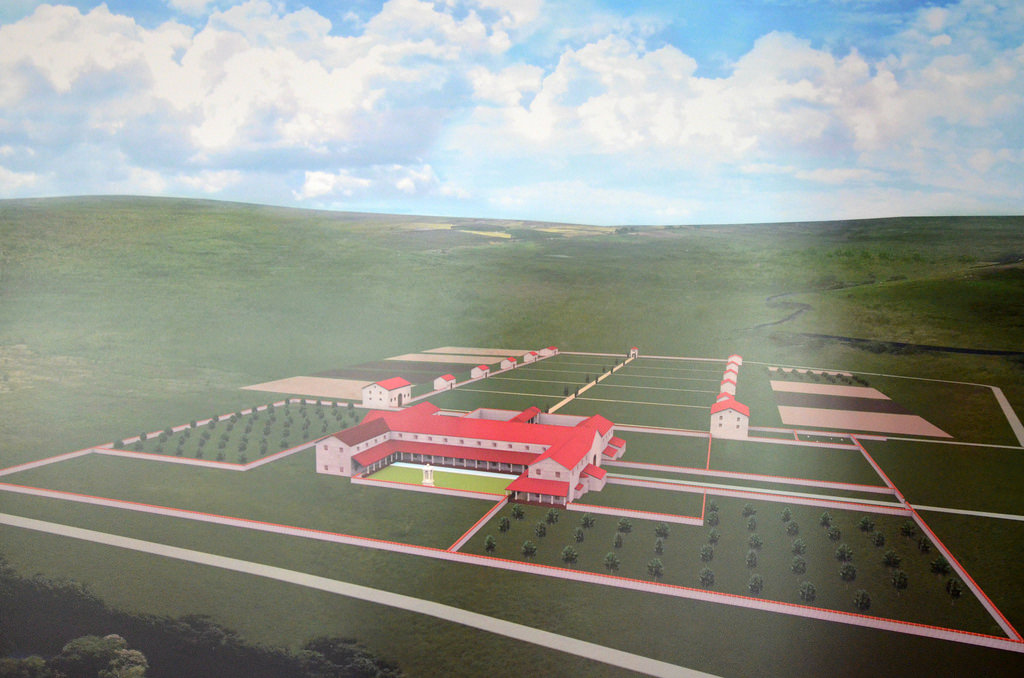
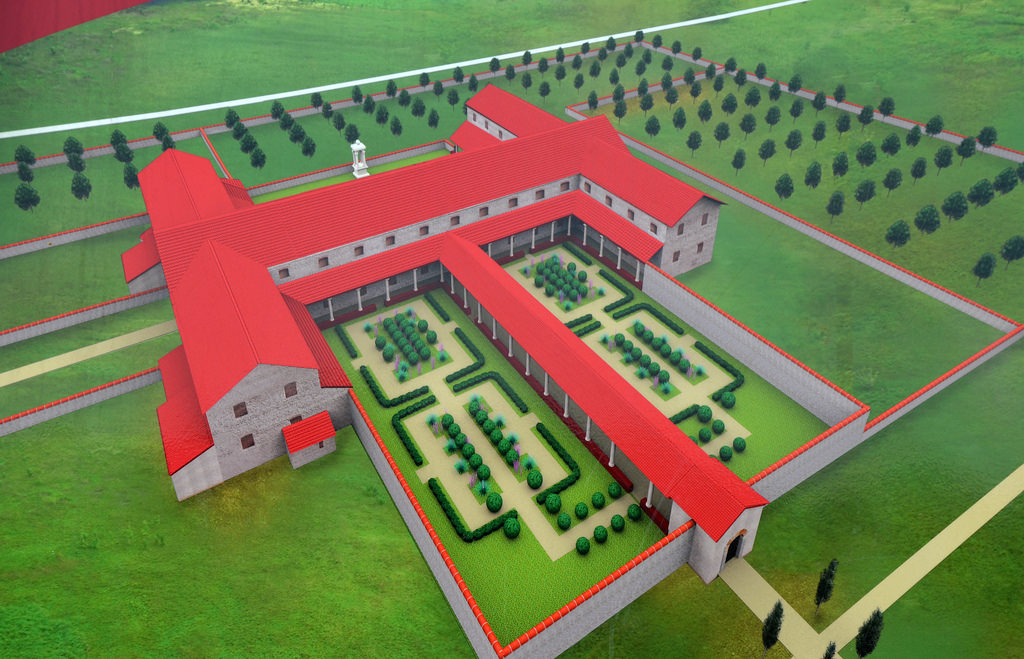
A computer reconstruction of the Gallo-Roman villa of Reinheim by Erik Follain. With a total area of 7 hectares, the villa clearly stood out among the common Roman villae rusticae (countryside villas), farmhouse estates in the surrounding areas.

In 2000 an equestrian iron mask with bronze plating was found at the rear of one of the courtyard’s buildings. Used in ceremonial or sporting events, this hinged-visor was attached to a cavalryman’s helmet.

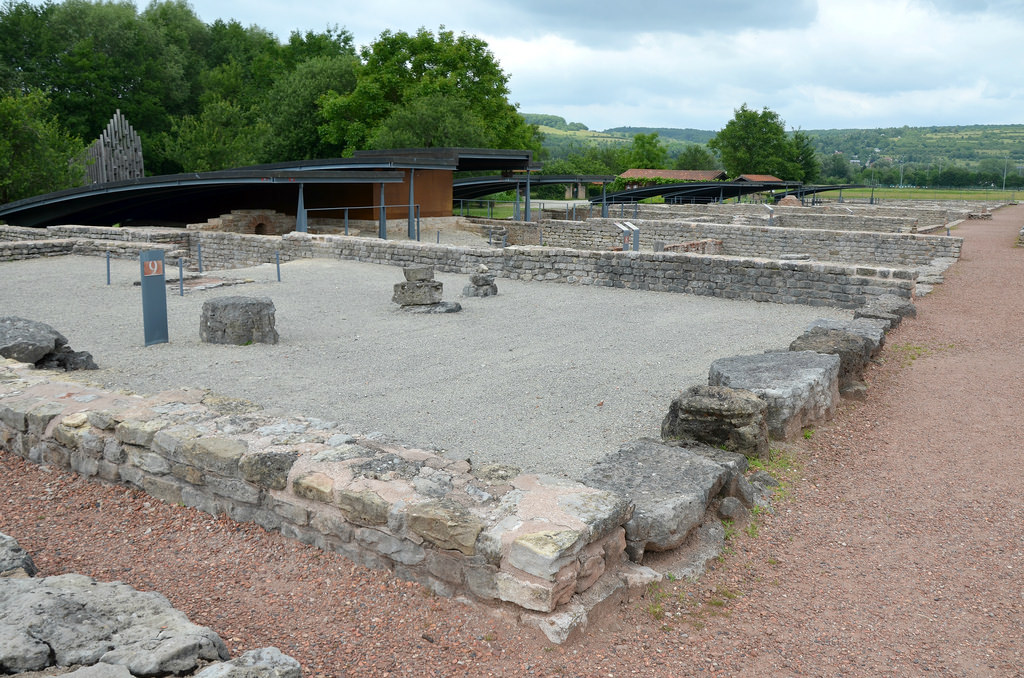
Within 250 metres of the Gallo-Roman villa are the remains of a small settlement or ‘vicus‘ of approximately 20 hectares dating from the middle of the 1st century AD. The excavations revealed that the vicus consisted of a craftsmen’s quarter of 14 terraced-buildings stretching along both sides of a secondary road and used for manufacturing and trade. Here people cooked, baked and produced iron and bronze. The dominant feature of this small city was the monumental public bathhouse complex which has been partially reconstructed and is sheltered by a roof. An eastern artisanal quarter and forum area have yet to be fully excavated. At its peak, the city had more than 100 houses and more than 1,000 inhabitants.

Rendering of the of the Gallo-Roman city by Jean-Claude Golvin.

Coordinates: 49° 31′ 44.56″ N 6° 23′ 5.03″ E

PORTFOLIO
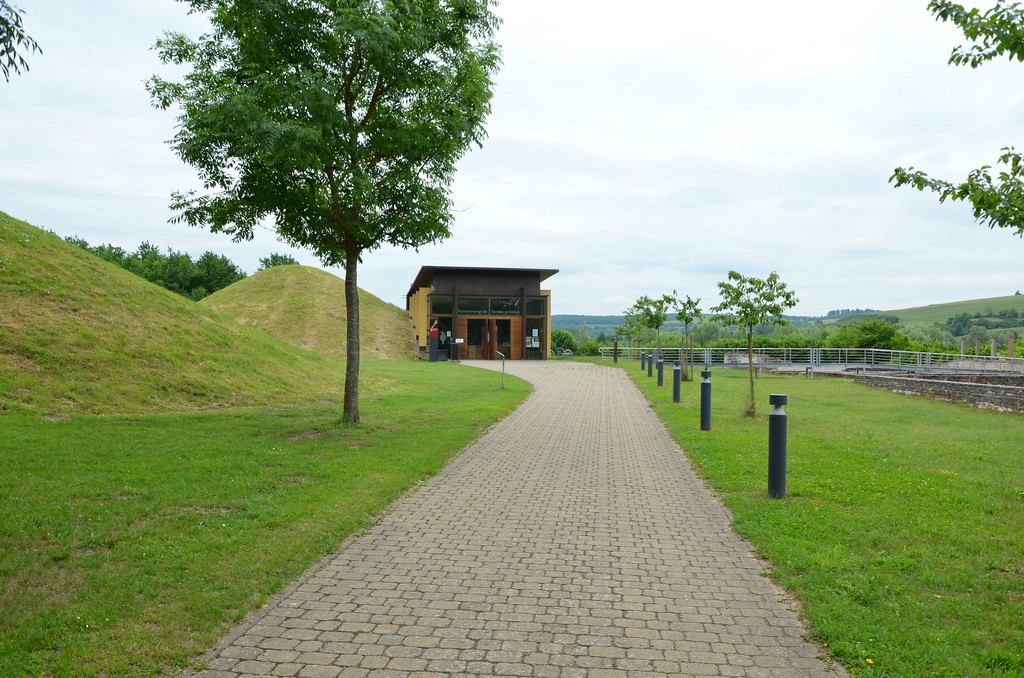
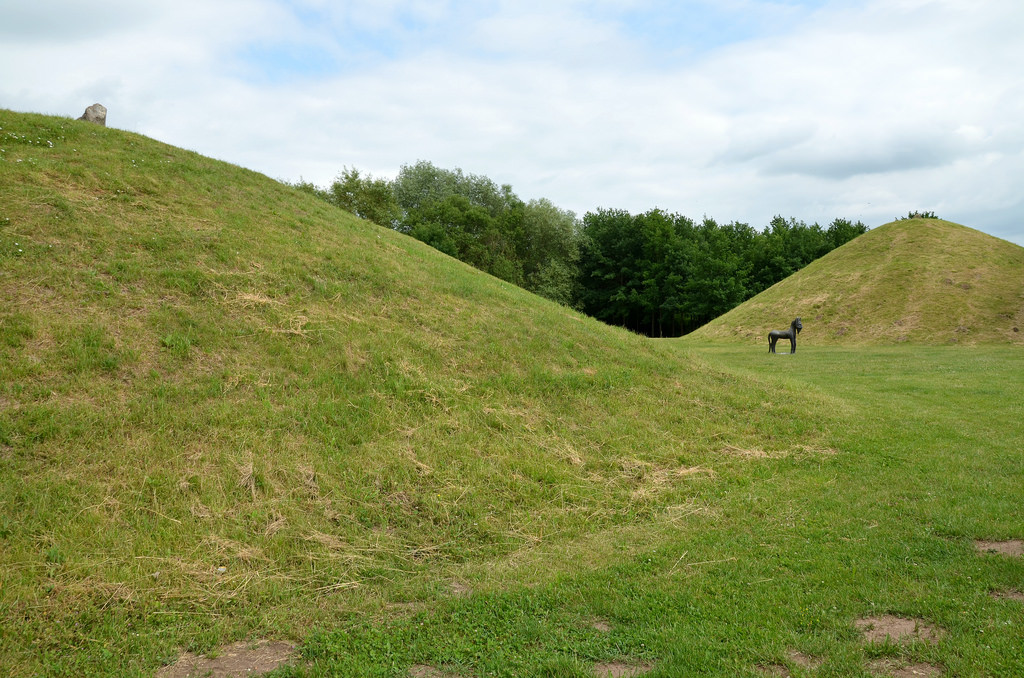
The reconstructed Celtic burial mounds. The museum building displays a recreation of the wooden funeral chamber of the ‘Princess of Reinheim’.
A recreation of the wooden funeral chamber of the ‘Princess of Reinheim’. The body was positioned on in a north to south direction in an oak chamber 3.5 m long and at least 3 m wide. Within the wooden funerary chamber were found many bronze and gold objects, including bracelets, rings, neck torques, and a variety of other accessories such as flagons and masks. The grave and its contents indicate that Celtic women were able to attain positions of wealth and honour.
Replica of the gilt-bronze spouted flagon found at inside the funeral chamber of the ‘Princess of Reinheim’. The original is in the Museum of Prehistory and Protohistory in Saarbrücken
The reconstructed Celtic burial mounds (tumuli). So far, ten Iron Age burial mounds have been discovered in the area of today’s park.
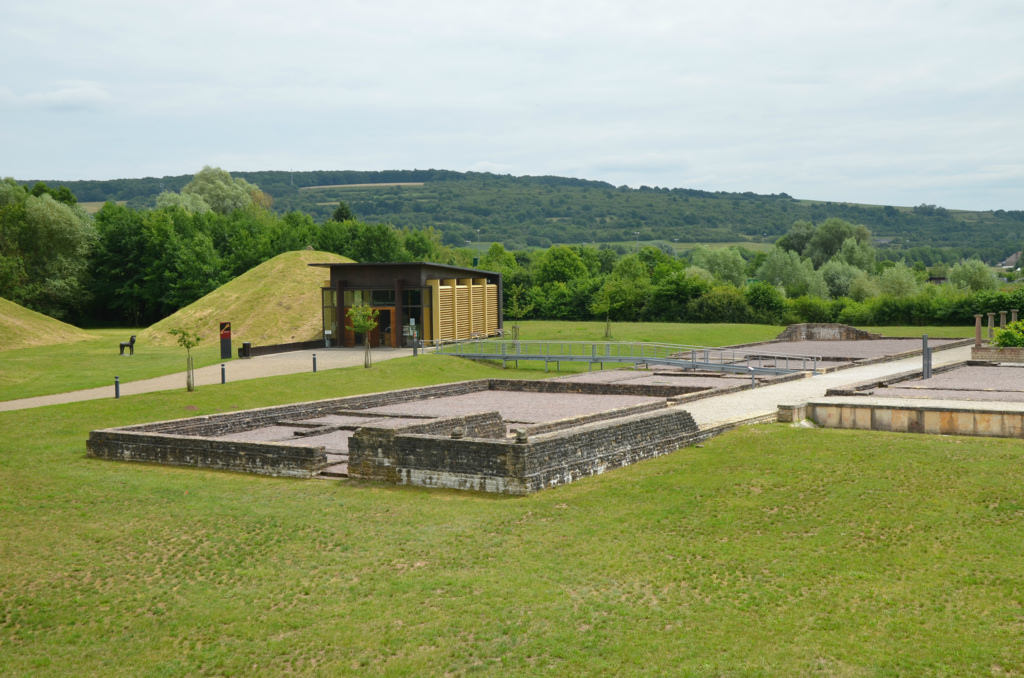
The central hall (or yard) of the large palatial residence (pars urbana) which, due its privileged position and size (33 m x 18 m), must have had a reception, ceremony or banquet function.
The East wing of the pars urbana consisting of 7 small rooms symmetrically arranged around a larger central room.
View of the East wing of the pars urbana.
A computer reconstruction of the pars urbana by Erik Follain.
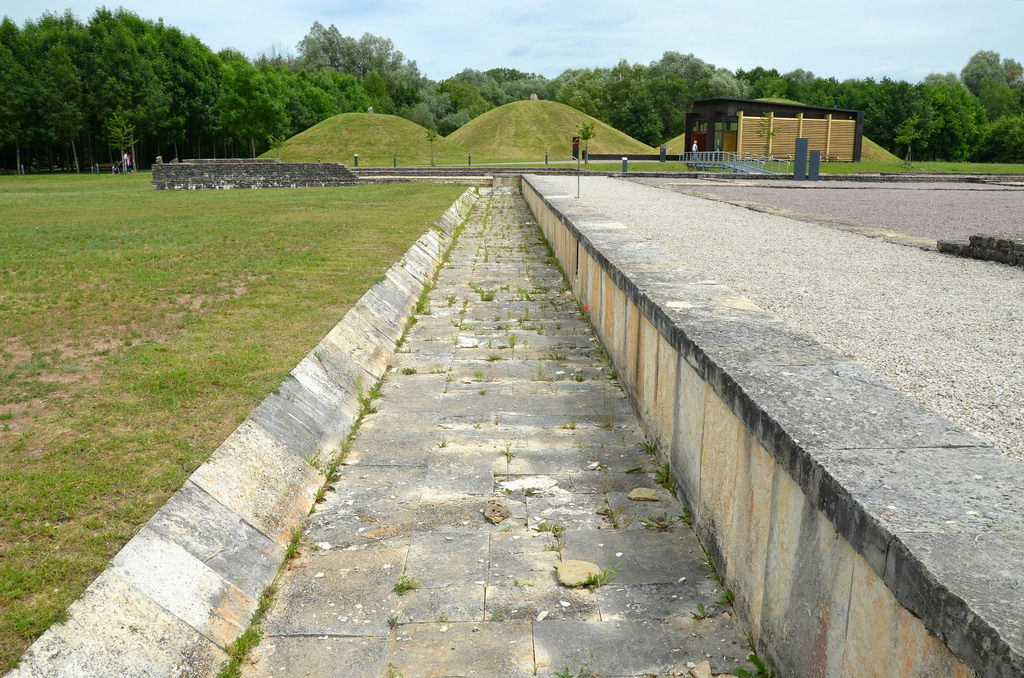
The ornamental basin (40 m x 3 m) made of light coloured limestone slabs. In the 2nd century AD it adorned the north facade of the main building of the pars urbana.
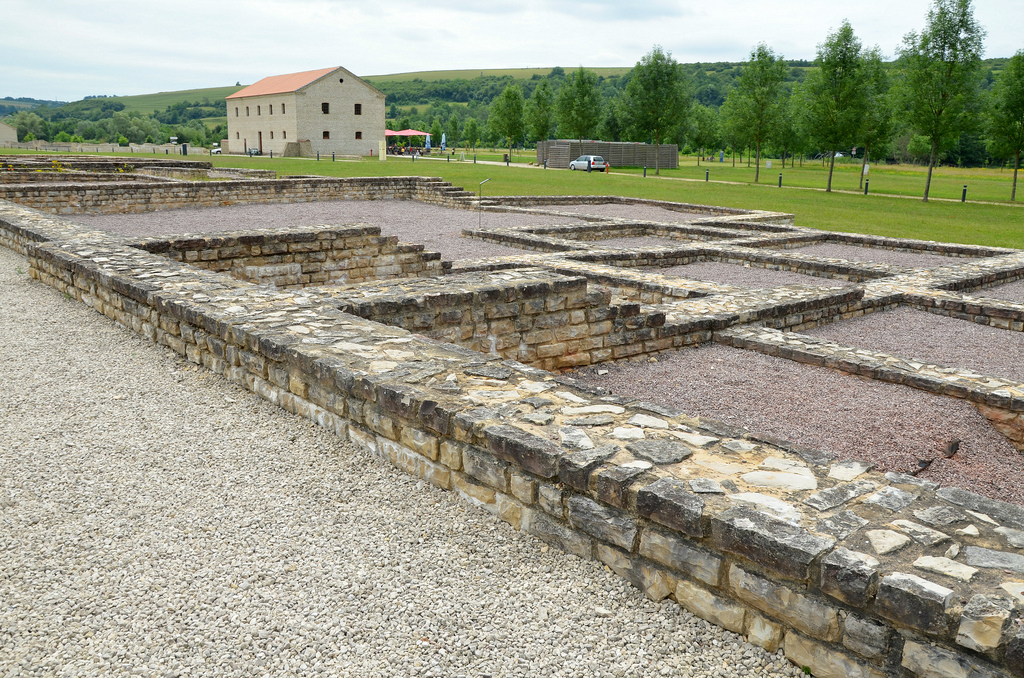
View of the West wing of the pars urbana. It consisted of three buildings: a bathing area to the north and residential spaces to the south accessible by colonnaded porticoes as well as functional areas in the center.
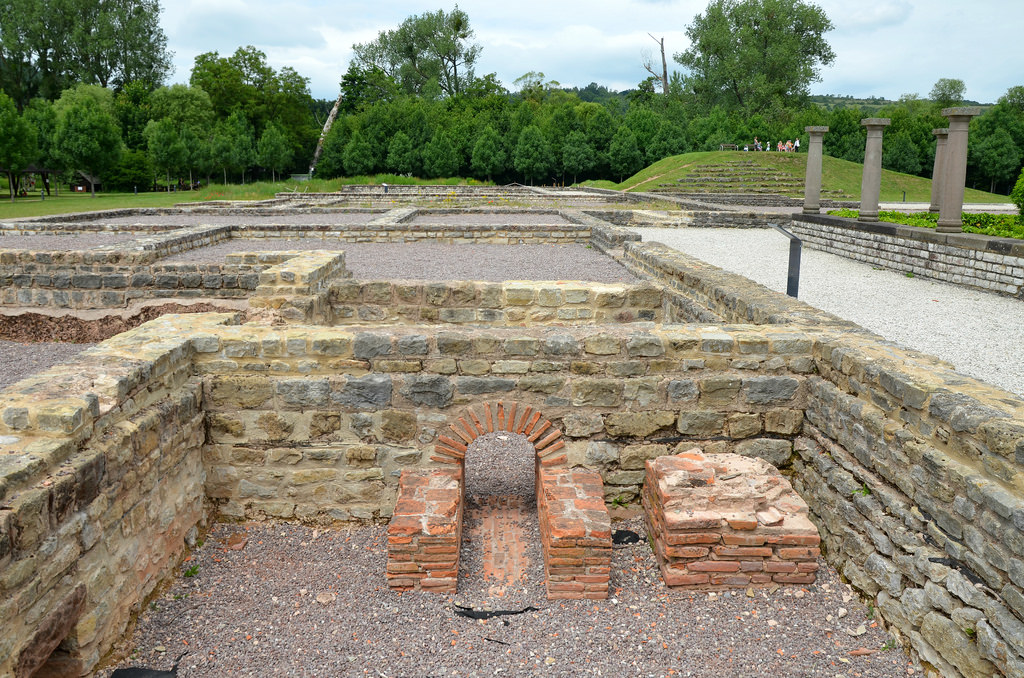
The northern part of the West wing of the pars urbana constituted the bathing area. It consisted of cold baths (frigidarium) and warm baths (caldarium), a lukewarm resting room and a latrine.
The rectangular-shaped cellar in the West wing of the pars urbana which was accessed by wooden steps.
The West wing of the pars urbana.
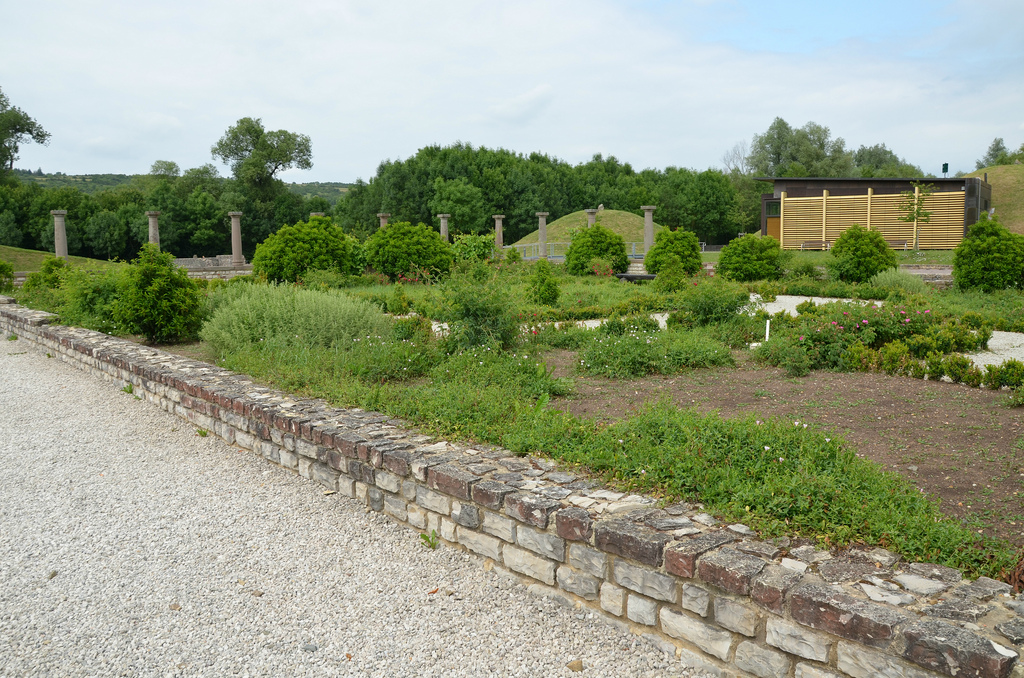
The colonnaded portico bordering the garden of the pars urbana located in front of the south facade of the main building.
The recreated garden of the pars urbana.
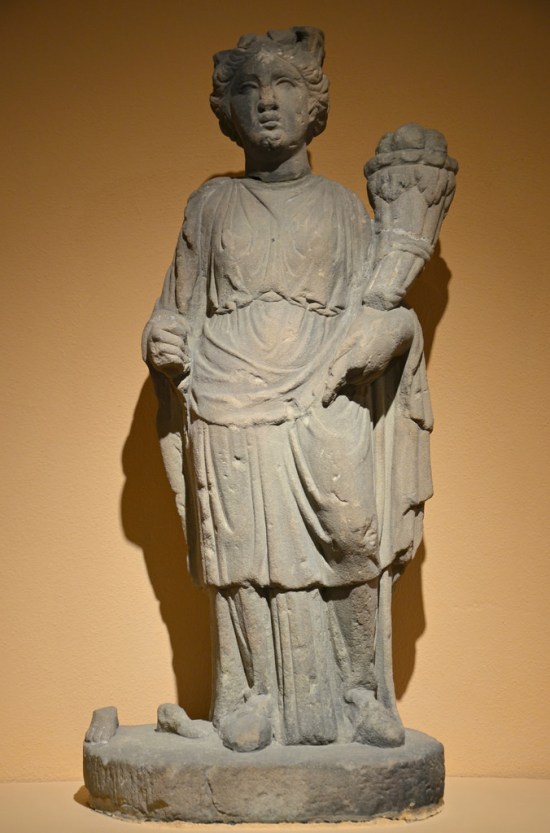
Sandstone statue of Fortuna found in the Villa of Reinheim, 2nd – 3rd century AD. On display in the Historical Museum of the Palatinate in Speyer.
The pars urbana of the villa extended over a rectangular space of 300 metres long by 135 metres wide.
Attached to the long sides of the wall of the pars rustica were five rectangular building, each of different size. They were used as workshops and the function of many of these rooms changed overtime.
This reconstructed building had a gateway on each side with ramps. Inside an oven and a small fireplace made of roof tiles were uncovered.
The exhibition area in one of the reconstructed rectangular buildings of the pars rustica.
Replica of the equestrian iron mask with bronze plating found at the rear of one of the courtyard’s buildings. The original is in the Museum of Prehistory and Protohistory in Saarbrücken.
The reconstructed Gatehouse of the pars rustica which served as a prestigious entrance portal. It was reconstructed in 2006 according to the way it would have appeared in the 2nd and early 3rd centuries AD.
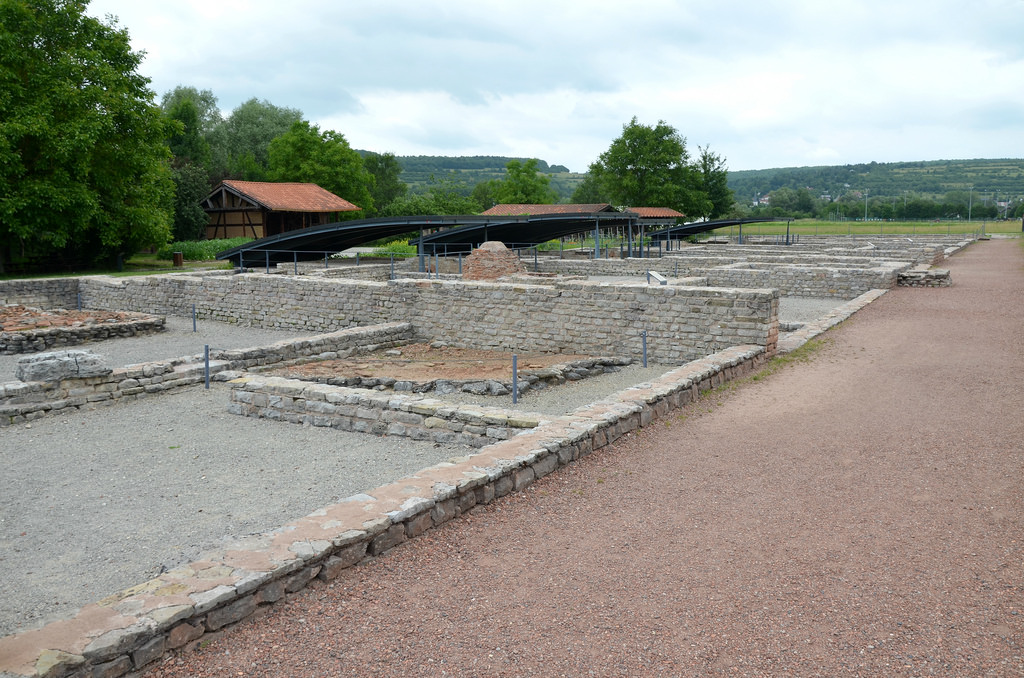
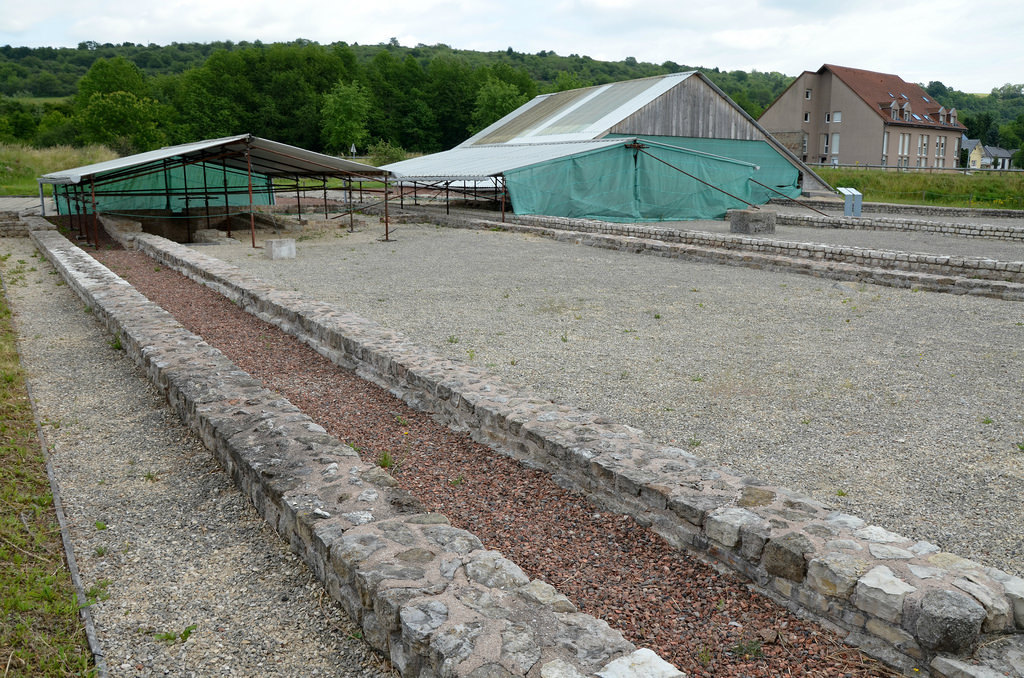
The western craftsmen’s quarter of the provincial Gallo-Roman settlement (vicus).
The northern section of the western craftsmen’s quarter of the vicus consisted of 7 terraced houses used by the artisans. This area was developped in 30/40 AD. Each building had a big central room, a shop at the front opening onto a portico, sometimes with a cellar. Behind were smaller rooms with underfloor heating. Living accommodation was probably on a second floor.
A milling and bakery building with a cave at the front and two circular baking ovens, one of which has been restored.
Rendering of the bakery-milling by Jean-Claude Golvin.
The underfloor heating system in one of the artisan’s buildings.
The southern section of the western craftsmen’s quarter of vicus.
The shops along the portico facing the street. They were supported by masonry pillars.
Rendering of the activity taking place under the portico by Jean-Claude Golvin.
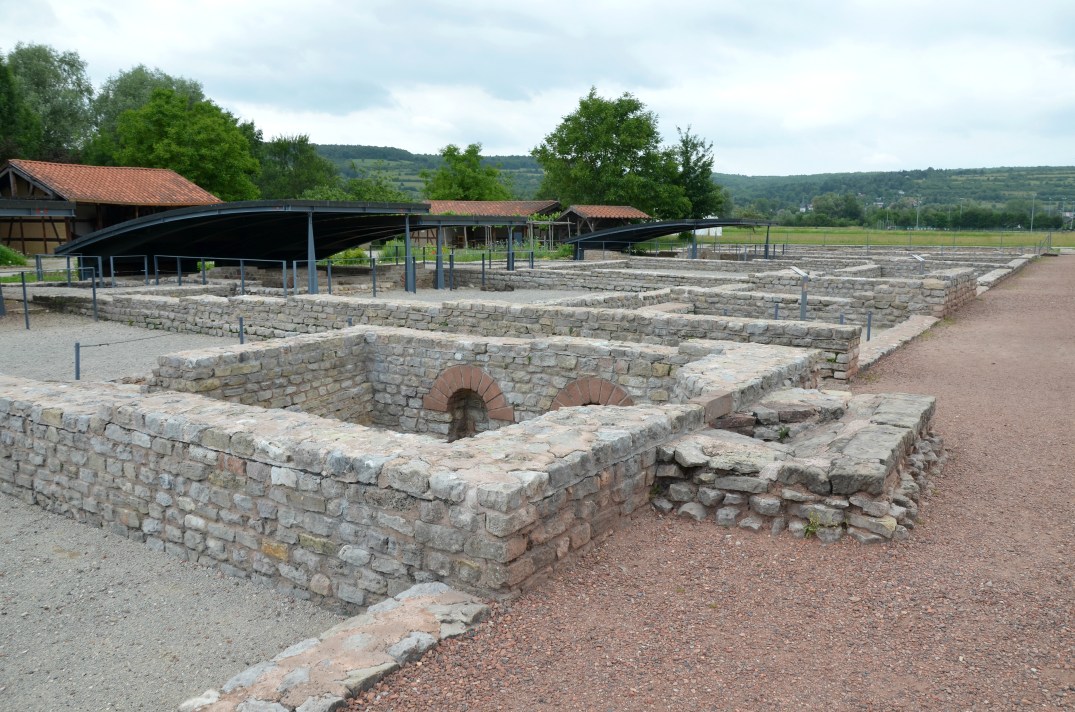
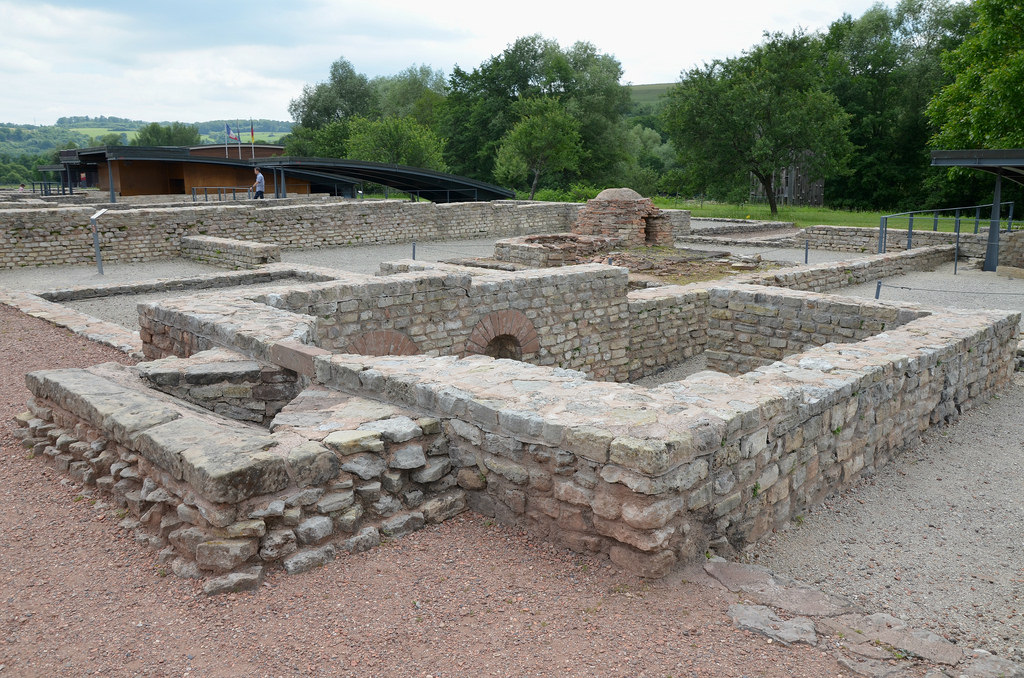
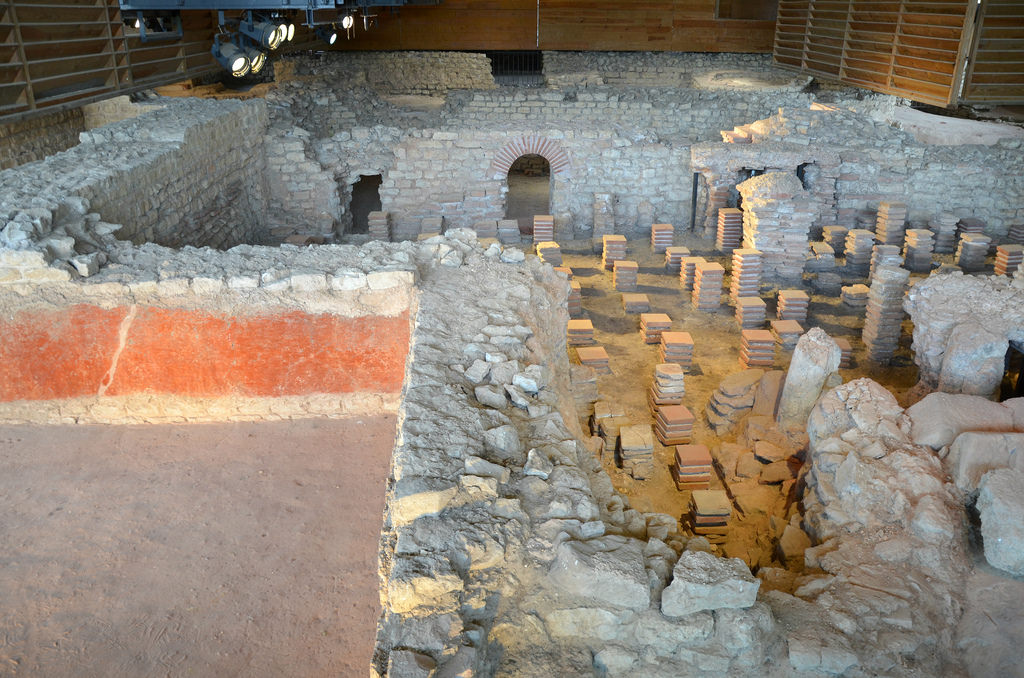
The bath-complex is covered under an elegant modern structure. Stairs and walkways take you through the restored baths.
A row of porticoed shops were located on each side of the bath-complex. Here bathers could by something to eat while along the covered arcade after their ablutions.
The caldarium with heated floor. Its walls were plastered and painted in red.
The furnace of the caldarium made of big stone blocks and brick flooring.
The foundations of building from the monumental public centre.
The eastern craftsmen’s quarter of the provincial Gallo-Roman settlement (vicus).
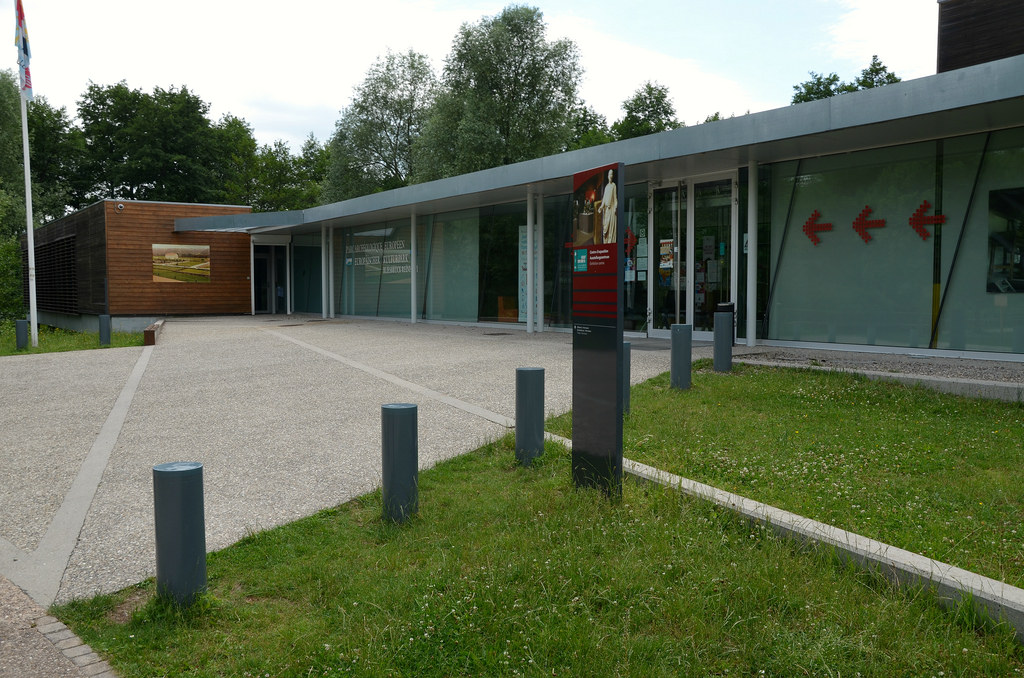
The exhibition centre.
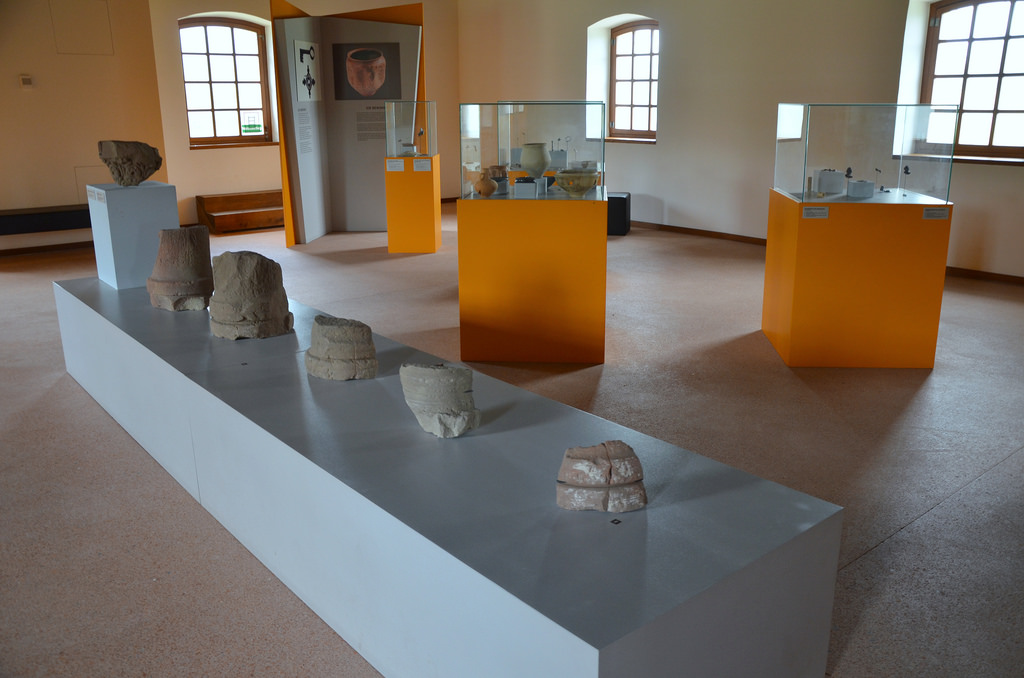
Inside the exhibition centre where finds from the vicus are exhibited.

The Saarland and Moselle Valley’s ancient Roman heritage has a lot to offer to tourists and scholars alike. More than 120 antique sights along the Moselle and the Saar rivers, the Saarland and Luxembourg are testament to the Gallo-Roman era north of the Alps (further information here).

Visiting the Archaeological Park of Bliesbruck-Reinheim: The park is open daily from 15th March to 31st October from 10am to 6pm.

Website: https://www.europaeischer-kulturpark.de/

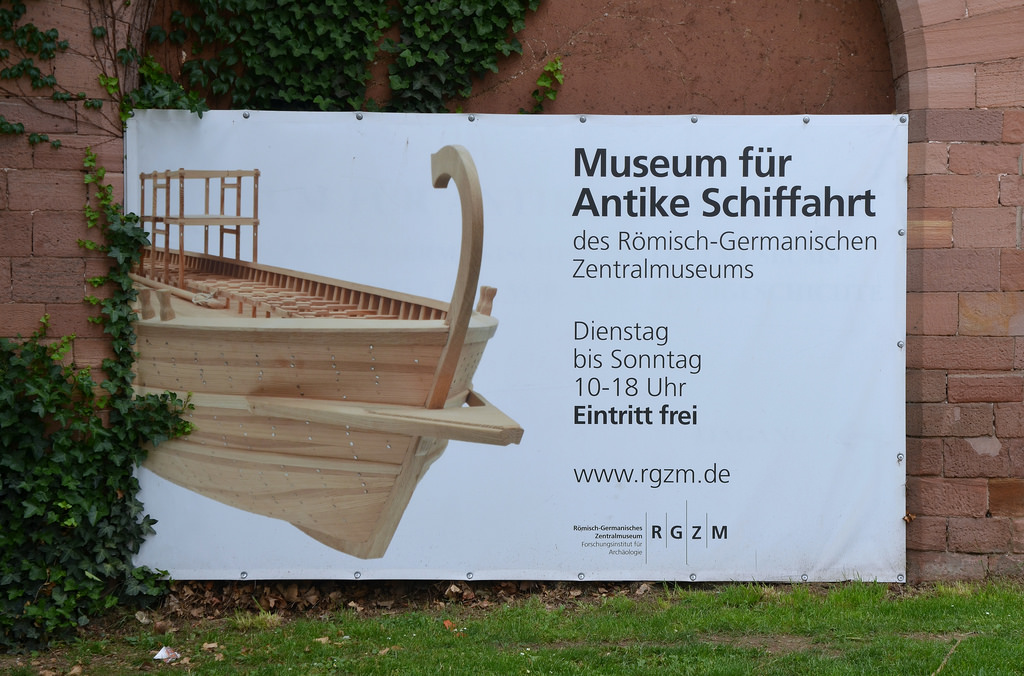
Museum of Ancient Seafaring (Mainz, Germany)

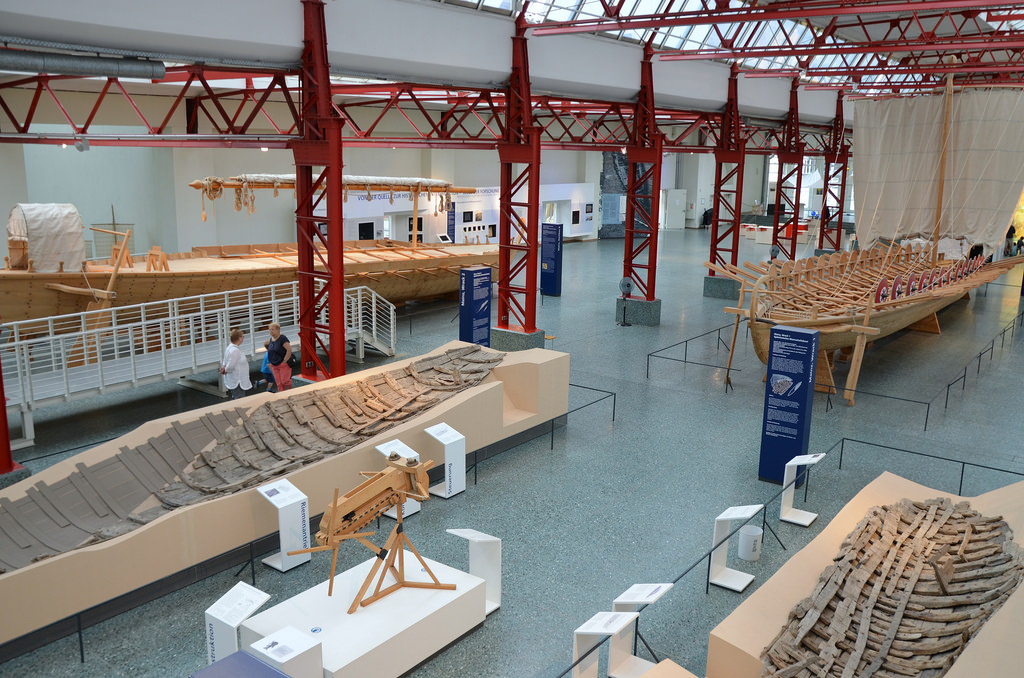
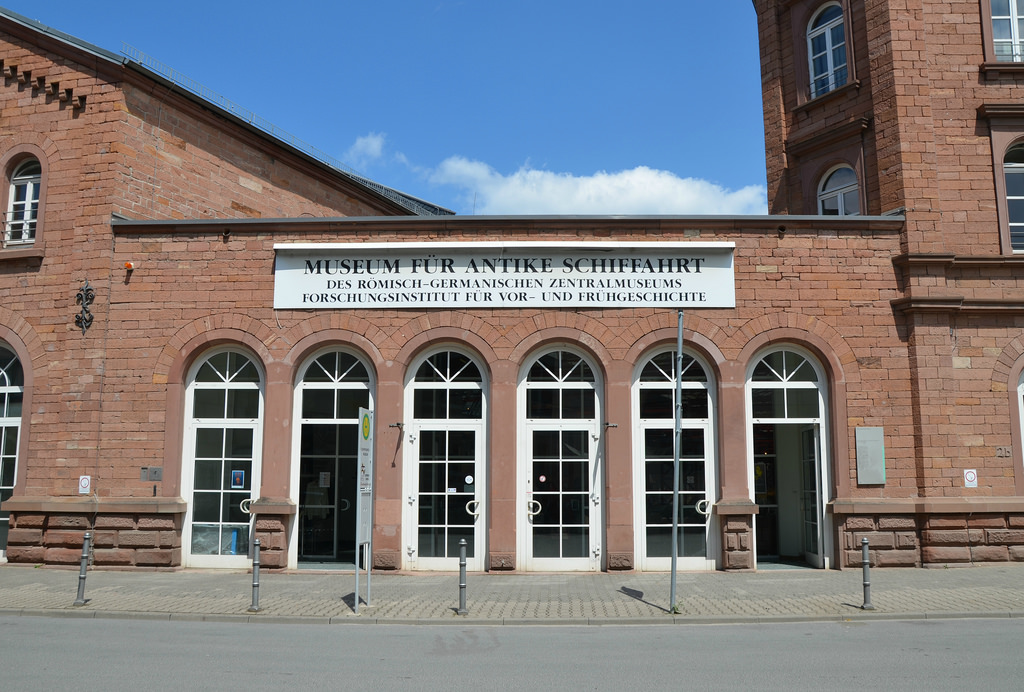
The Museum of Ancient Seafaring (German: Museum für Antike Schifffahrt) in Mainz opened in 1994 in the former 19th century repair shop of the Hessian Ludwig Railway, near the Mainz Roman theatre, as a branch of the Romano-Germanic Central Museum (Römisch-Germanisches Zentralmuseum). The exhibits include the wooden remains of five Roman military ships from the 4th century AD together with full-scale replicas, many reliefs with representations of ships, model reconstructions as well as a gallery dedicated to the history of shipbuilding and construction techniques.

Coordinates: 49° 59′ 38.75″ N, 8° 16′ 49.51″ E

After the establishment of the military castrum (fort) of Mogontiacum (modern Mainz) in 13–12 BC, ships of the Classis Germanica (the Roman fleet in Germania Superior and Germania Inferior) became stationed at its harbor. Mogontiacum soon became the capital of the Roman province of Germania Superior and an important naval base of the Roman fleet on the river Rhine. In November 1981, as workmen dug the foundation of an extension of the Hilton Hotel in Mainz, the remains of at least 10 military wooden ships dating from the last days of the Roman Empire were discovered still in situ on their gravel beds. These survived more than 1,500 years only because they were buried under 7 metres of clay and sand, which kept them away from the destructive effects of oxidation. The ships, all made of German oak, were waterlogged but otherwise fairly well preserved.

The area seemed to have been a part of the ancient harbor where old ships were abandoned by the Romans around AD 400 when their empire had grown weak and they could no longer maintain their garrison at Mogontiacum.

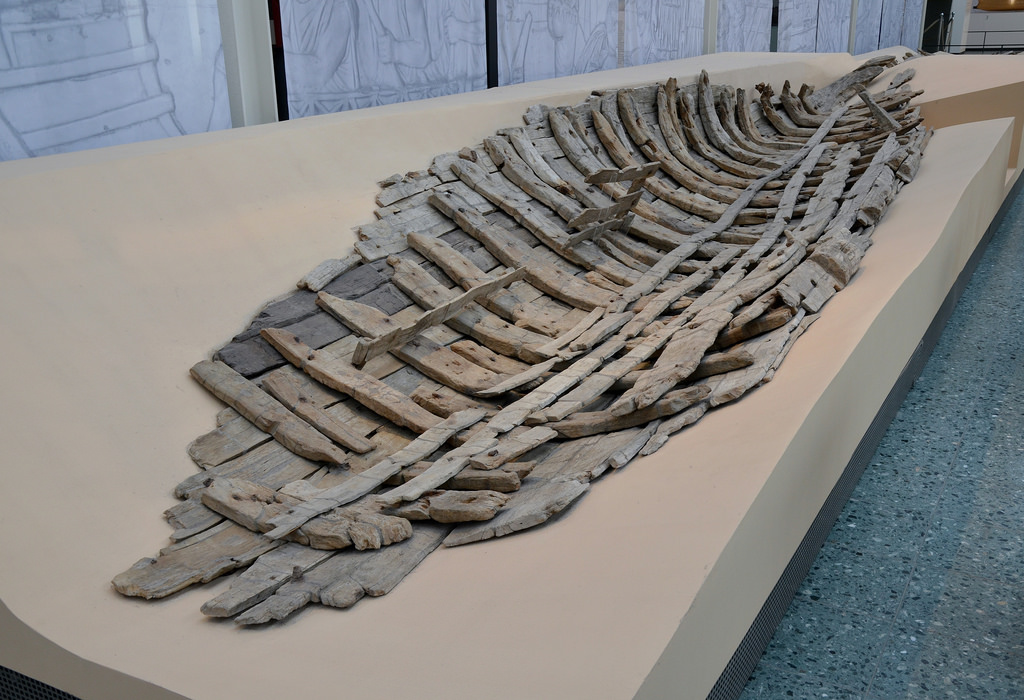
The wrecks were cautiously dismantled, documented, and, in 1992, brought to the Museum of Ancient Seafaring for further preservation and study. They were dated by the use of dendrochronology (tree-ring dating) and were termed Mainz 1, 2, 3, 4, 5 and generally referred to as the Mainzer Römerschiffe, the Mainz Roman ships. They were identified as military vessels that belonged to the Roman flotilla in Germania, the Classis Germanica. The vessels could be classified into two types, namely small troop transporters (Mainz type A – Mainz 1, 2, 4, 5) termed navis lusoria and a multinational patrol vessel called navis actuaria (Mainz type B – Mainz 3). A little later, the remains of two flat-bottomed ships of type Zwammerdam came to light close to the findspot.

The museum has a workshop, where visitors have the opportunity to watch the staff working on the production of antique ship models. A further section of the exhibition is devoted to the explanation of Roman ship construction.

PORTFOLIO

Mainz Type A

The replica of a Roman military troop transporter ship (navis lusoria), Type Mainz A (based on wreck 1 and wreck 5) dating to the 4th century AD. This vessel was 21,6 m long, 2,79 m wide and roughly 1 m high.
Slim, flat-bottomed hulls with flaring sides are characteristics of the Mainz A Type vessel. They were very narrow, fast rowing boats with a row of oars on either side. She had a crew of 30 oarsmen.
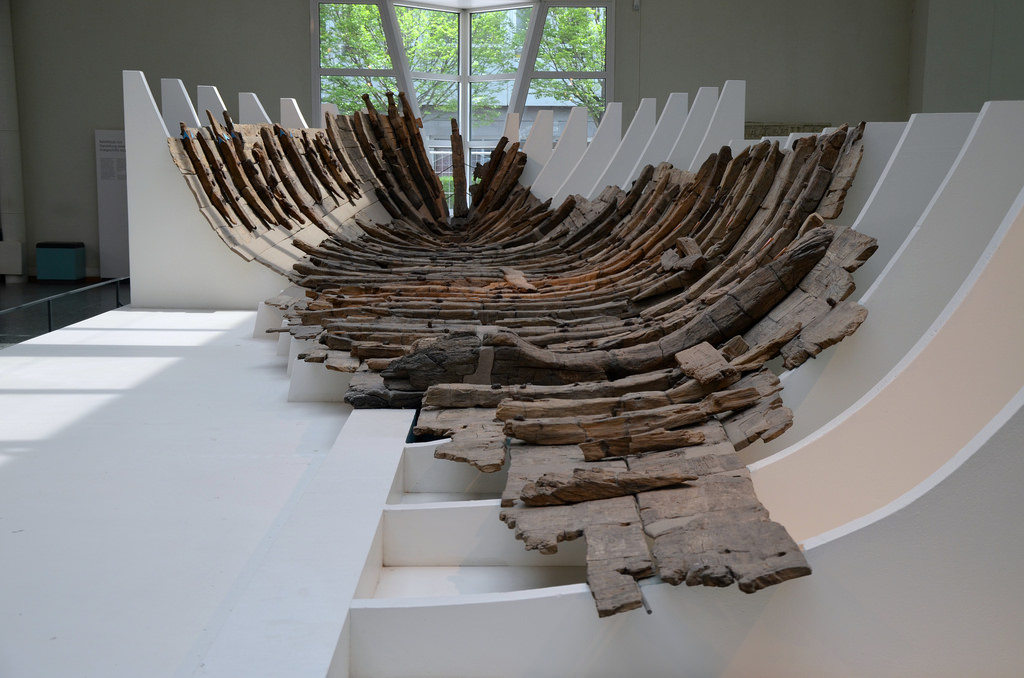
The remains of the Mainz Wreck 1. Dendrochronological analyses of wreck 1 date her to 385 AD. She was used until around AD 400 as a bronze coin struck in the years 388-392 under Emperor Theodosius I was found between the hull and frame 2. The preserved hull with a length of almost 8.3m consists consisting of seven rows of planks up to the gunwale on the port.
The remains of the Mainz Wreck 2. Like all ships discovered in Mainz, Wreck 2 was constructed of oak. She was constructed in the beginning of the 4th century AD and represents a flat-bottomed vessel with flaring sides. It comprises the rear section and part of the midship section of an open plank boat. Her original dimensions were at least 16 me in length, approx. 3 m in width and approx. 1 m in height.
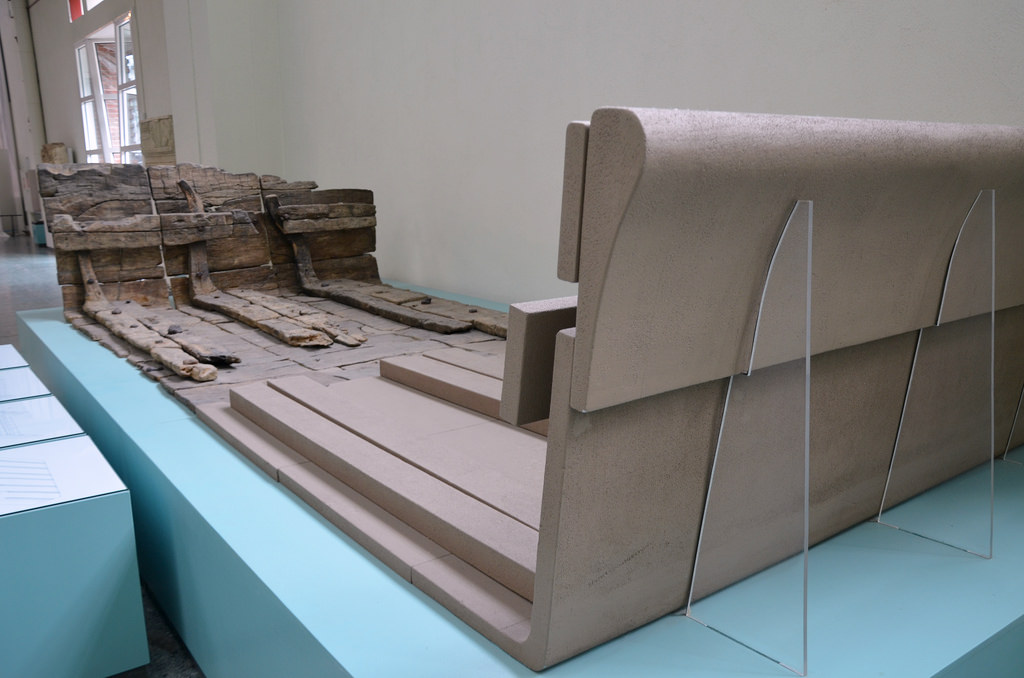
The remains of the Mainz Wreck 4. Only the five uppermost port rows of planking aft survived. Its dendrochronolgical examination revealed only she was constructed at the end of the 3rd century AD. This boat was originally larger and heavier than the other three troop transporters.
The remains of the Mainz Wreck 5. Originally 18 m long, only the front 9 m long section from the bows to just aft the mast-frame was able to be recovered. According to the dendrochronological analyses the oaks employed in the building were felled in AD 390.
The full scale replica of a Roman military troop transporter ship (navis lusoria).

Mainz Type b

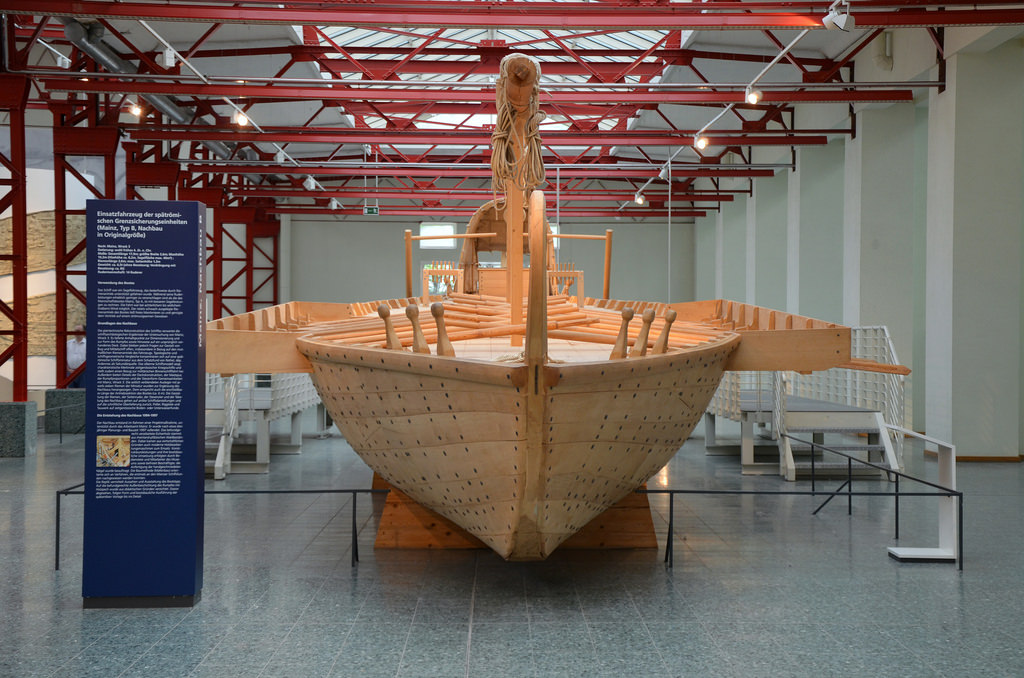
Full scale replica of a transport ship used by the Roman navy (navis actuaria), Type Mainz B. As opposed to reconstruction Mainz A, which represents a troop transporter, reconstruction 2 is a patrol vessel used for border control on the Rhine.
Type Mainz B is a more compact vessel that could also be propelled by oars and had a much better power sail than type Mainz A. The technical reconstruction of the ship is based on the archaeological results of the investigation into wreck 3.
The remains of the Mainz Wreck 3. She was a flat-bottom ship with curved, flaring sides and a sharp stern. The dendrochronological analysis of the oak dated the ship from the end of the 3rd century AD.

Mainz Type Zwammerdam

1:10 model of a flat-bottomed ship with ramp-like sloping ends of the Zwammerdam type. These ships have often been recorded north of the Alps and could measure up to 40 m long, as documented by the ships Zwammerdam 4 and Mainz 6. They were used for transporting heavy loads on rivers.
The remains of the pram of the Mainz Wreck 6. During house-building in early 1982, some 500 m south of the site of the late Roman ships, the remains of two prams were discovered. Analysis of the wood revealed a felling date of AD 81. Her original dimensions were of approx. 40 m long and 5 m wide.

models of other ship types

1:10 model of the Ships of Fiumicino that came to light during the construction of the Leonardo Da Vinci international airport on the site of the ancient harbour basin built in 42 AD by the emperor Claudius. The goods that arrived at the seaport of Portus were unloaded and then transported by smaller inland navigation vessels along the Tiber to the city of Rome. These type of ships are also known from several pictorial representations dating from the 2nd to the 4th century AD such as the Vatican fresco and the Piazzale delle Corporazioni mosaic in Ostia.
1:10 model of a Roman ship as shown on Trajan’s Column.
1:10 models Roman ships.
1:10 models Roman ships, 1: cargo ship based on the London-Blackfriars wreck dated to about 150 AD, 3: model based on the Oceanus mosaic fom Bad Kreuznach.
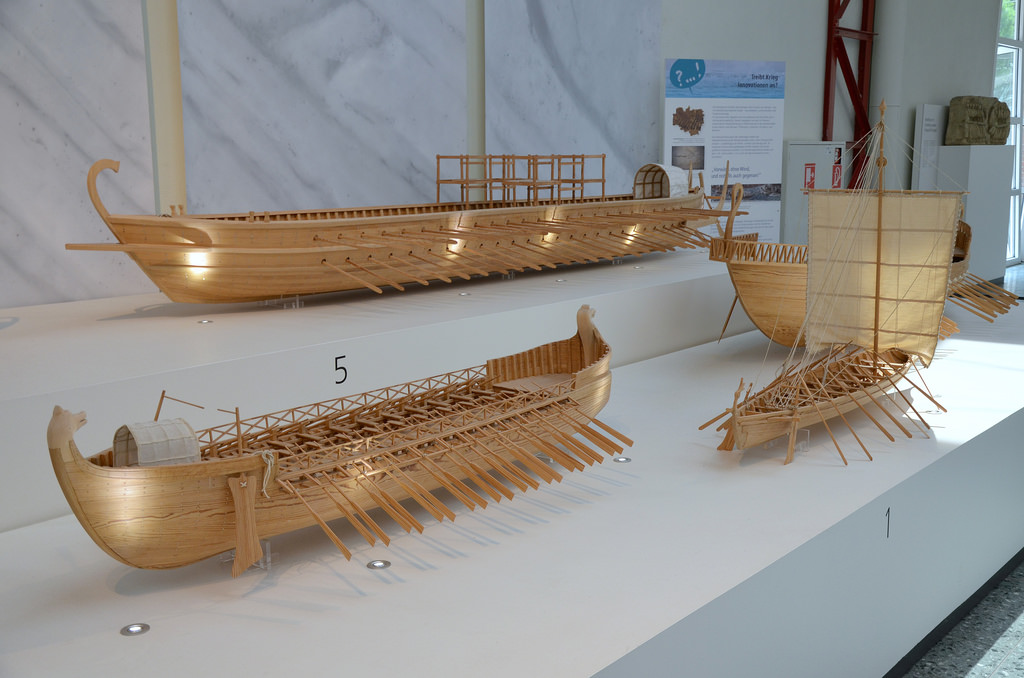
1:10 model reconstruction of a quadrireme (four-banked gallery) according to a graffito from Alba Fucens in Italy. The vessel, dated to the mid-1st century AD, carried 200 oarsmen with two oarsmen operating each oar. The oars were arranged in two rows of 25 per side.
1:10 model reconstructions of Roman ships, 5: Dromon of the Byzantine navy (10-12th centuries AD), left: Bireme of the Neumagen Type (AD 220 / 230).

reliefs with representation of ships

Tombstone from Mainz-Weisenau depicting a warship from the 1st century AD (original at the Generaldirektion Kulturelles Erbe, Direktion Landesarchäologie, Mainz).
Relief depicting soldiers on a ship of the Neumagen type (original in the National Museum in Naples), 1st century BC / 1st century AD.
Relief of a Mediterranean cargo ship, 1st – 3rd century AD.
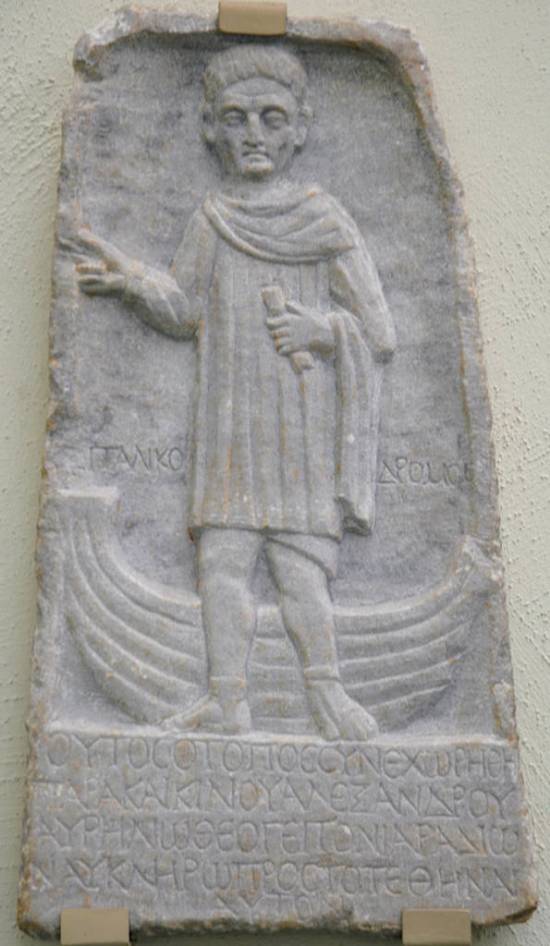
Tombstone of the ship owner (naukleros) and sailor Aurelius Theogeiton from Arados in Syria, early 3rd century AD.
He seems to have been one of those ship owners who navigated their vessels by themselves between the Eastern Mediterranean and Italy.
Relief of a marble coffin depicting a crewship raising the sails of two cargo ships in front of a harbour (original in Allard Pierson Museum, Amsterdam), 3rd century AD.
Museum für Antike Schiffahrt, Mainz.

The museum is open Tuesday through Sunday, 10:00 am – 8:00 pm. The admission is free.

Links: