Severan Bridge

The Severan Bridge (also known as Cendere Bridge) is a Roman bridge located near the ancient city of Arsameia (today Eskikale), 55 km northeast of Adıyaman in southeastern Turkey. It spans the Cendere River, which was known as Chabines in antiquity. Built by the Sixteenth Roman Legion stationed at Samosata (Samsat) in the last years of the 2nd century AD, it replaced an earlier bridge probably built under the emperor Vespasian (AD 69-79). It is one of the best-preserved Roman stone bridges in Turkey.

Coordinates: 37° 55′ 56.64″ N, 38° 36′ 29.52″ E

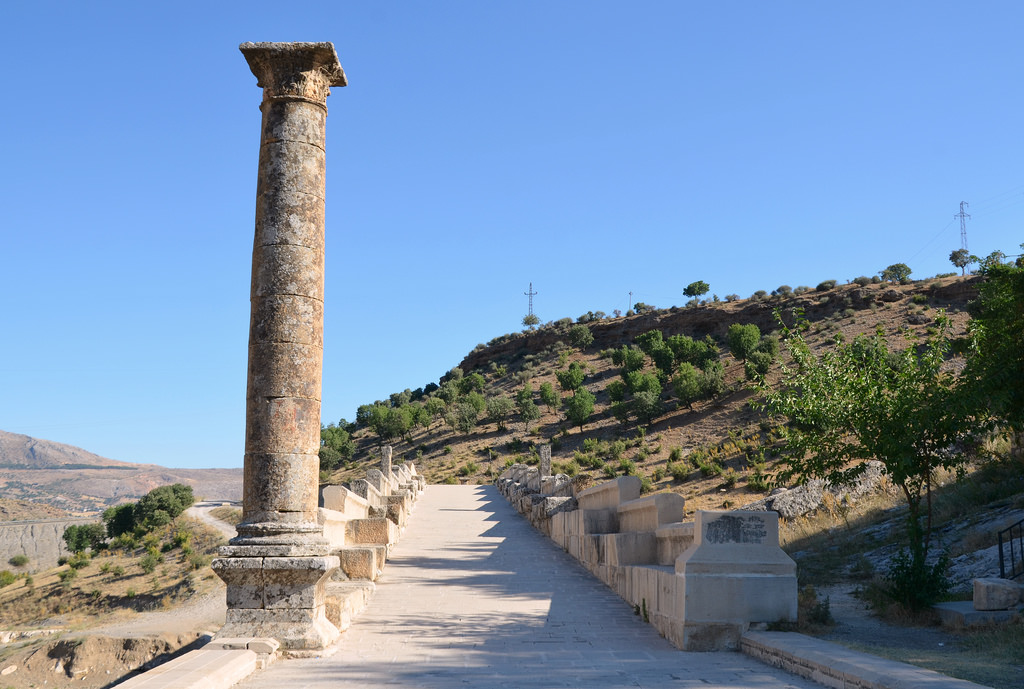
The bridge, part of the road to Nemrud Daği, was constructed as a single-vaulted arch spanning two rocks at the narrowest point of the creek. With a span of 34.2 m, the structure is the second-largest extant arch bridge. It is 123 m long and 7.50 m wide.

Inscriptions on the bridge revealed that it was built by the XVI Flavia Firma, a Roman legion stationed in the ancient city of Samosata. The Sixteenth took part in the two campaigns of Lucius Septimius Severus (194 and 197-198), which culminated in the capture of the Parthian capital, Ctesiphon, and the re-establishment of the province of Mesopotamia. The area was reorganised, and the legion’s soldiers deployed there bridged the river Chabinas.

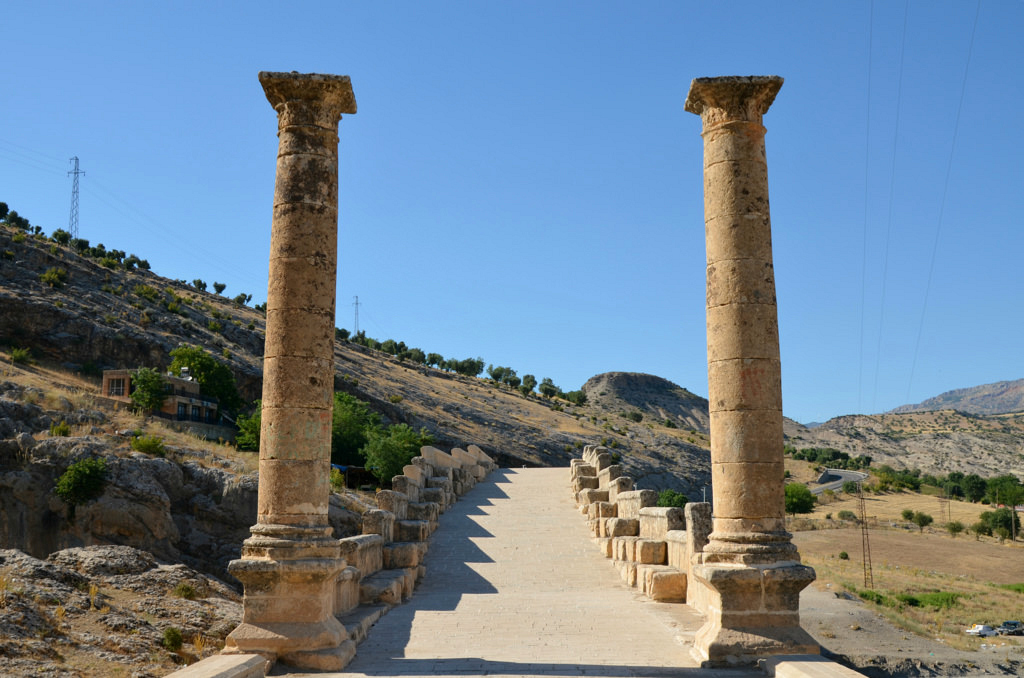
There were originally four columns located at each end of the bridge, erected by the four Commagenean cities (Samasata, Perre, Doliche and Germaniceia). The inscriptions on these columns state that the columns at the southeastern end of the bridge were dedicated to Septimius Severus and his wife Julia Domna, while the columns at the other end of the bridge were dedicated to their two sons, Geta and Marcus Aurelius Severus Antoninus. The latter eventually reigned as Caracalla (211-217), had his brother Geta killed and erased him from history. Geta’s column was, therefore, removed from the bridge after his assassination.

The Severan Bridge is located within one of Turkey’s most important national parks. It contains Nemrut Dağı, with the famous remains of the large statues dedicated by King Antiochus Theos of Commagene. UNESCO declared it a World Cultural Heritage site.

Until recently, cars and small trucks weighing up to 5 tons were allowed to cross the bridge. The bridge was restored in 1997, and another road bridge was built 500 m to the east. The Severan Bridge is now closed to all but pedestrians.

PORTFOLIO
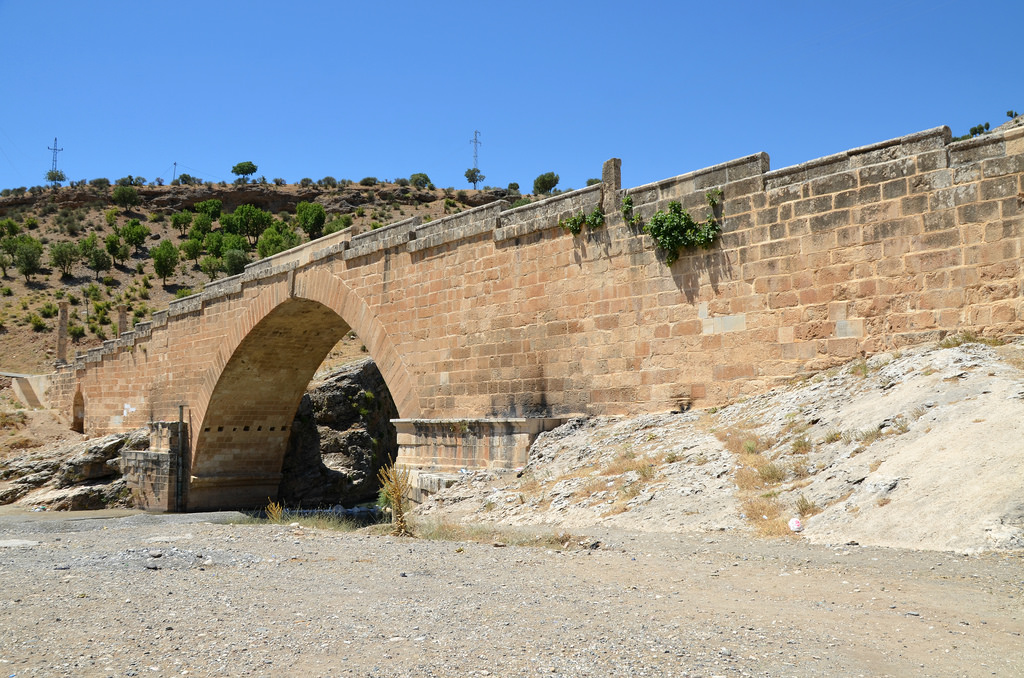
The east side of the Roman bridge at Cendere.
The west side of the Roman bridge at Cendere.
The two columns dedicated to the emperor Septimius Severus and his wife Julia Domna.
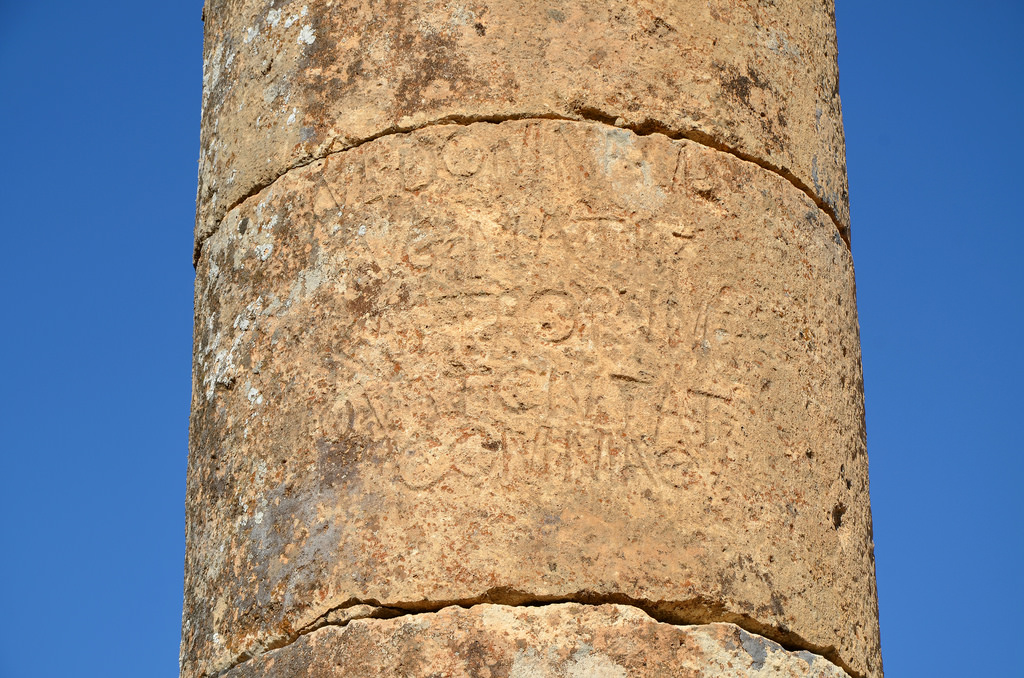
Inscription on the column dedicated to Septimius Severus.
The road on the Roman bridge at Cendere.
Inscription on the column dedicated to Julia Domna.
The east side of the Roman bridge at Cendere.
The column dedicated to Marcus Aurelius Severus Antoninus (Caracalla).

CIL 03, 06709
Imp(erator) Caes(ar) L(ucius) Septi/mius Severus Pius / Pertinax Aug(ustus) Ara/bic(us) Adiab(enicus) Parthic(us) / princ[e]ps felic(um) pon/tif(ex) max(imus) trib(unicia) pot(estate) / XII imp(erator) VIII co(n)s(ul) II / proco(n)s(ul) et Imp(erator) Caes(ar) / M(arcus) Aurel(ius) Antoni/nus Aug(ustus) Augusti / n(ostri) fil(ius) proco(n)s(ul) imp(erator) III / et P(ublius) Septimius [[Ge]]/[[ta]] Caes(aris) fil(ius) et fra/ter Augg(ustorum) nn(ostrorum) / pontem chabi/nae fluvi a so/lo restituerunt / et transitum / reddiderunt / sub Alfenum Senecionem / leg(atum) Augg(ustorum) pr(o) pr(aetore) curante Ma/rio perpetuo leg(ato) Augg(ustorum) leg(ionis) / XVI F(laviae) F(irmae)

CIL 03, 06710
Imp(erator) Caes(ar) L(ucius) Septi/mius Seve[r]us [P]i/us Pe[r]tinax Aug(ustus) / Arab(icus) Adiab(enicus) Par/thic(us) princ[e]ps Felix pont(ifex) m(aximus) / t[r]ib(unicia) potest(ate) XII / imp(erator) VIII [c]o[n(sul)] I[I] / proco(n)s(ul) et [Imp(erator)] / Caes(ar) M(arcus) Aurelius An/toninus Aug(ustus) Au/g(usti) n(ostri) f(ilius) proc[o](n)s(ul) / imp(erator) III et [P(ublius)] Septi/mius [Geta] Caes(ar) / [fil(ius)] et frat(er) Augg(ustorum) / nn(ostrorum) pontem Ch/abinae fluvi a so/lo restituerunt / et transitum red/diderunt / [sub Alfeno S]enecione leg(ato) / [Augg(ustorum) pr(o) pr(aetore) cu]rante Mario Per/[petuo leg(ato)] Augg(ustorum) leg(ionis) XVI Fl(aviae) F(irmae)

The east side of the Roman bridge at Cendere.

Links:

Baelo Claudia

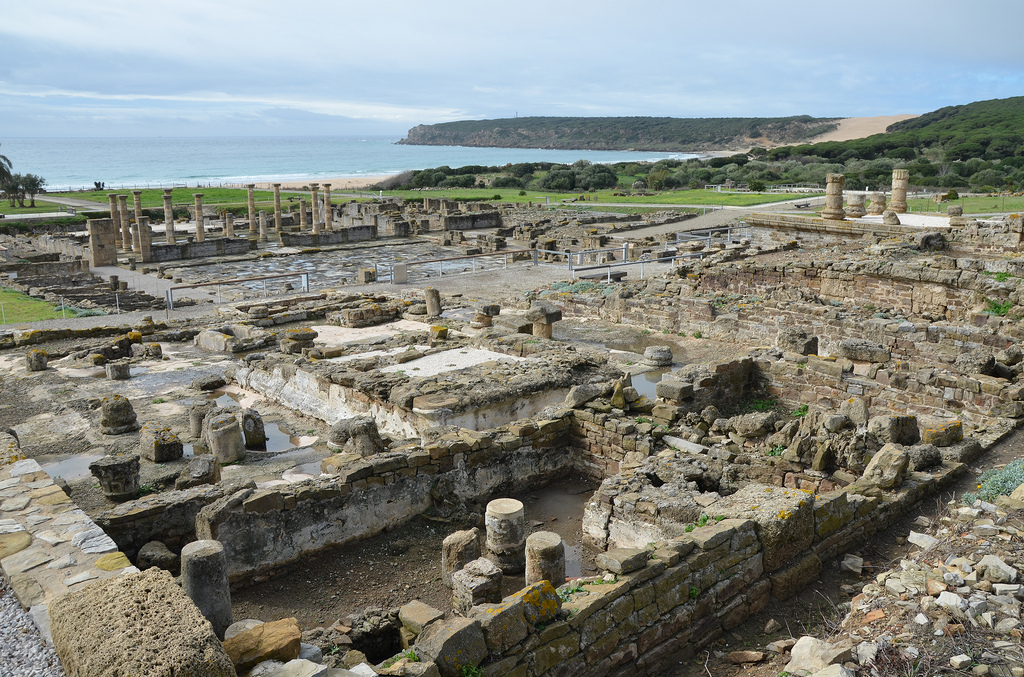
Baelo Claudia is an ancient Roman city lying on the shores of the Strait of Gibraltar in southern Spain. It was settled at the end of the 2nd century BC, and its history and subsequent development are closely associated with the salting industries and its maritime communication with North Africa. The ruins of Baelo Claudia, with its theatre, temples, forum and basilica, and especially its large fish-salting factory, testify to the city’s glory as an important and successful trading centre.

Coordinates: 36° 5′ 23″ N, 5° 46′ 29″ W

The Roman army landed on the shores of the Iberian Peninsula towards the end of the 3rd century AD in an attempt to halt the advancing Carthaginians, with whom they were engaged in a dispute for the control of the Western Mediterranean. The Roman victory at the Battle of Ilipa in 206 BC signified the end of the Second Punic War (218-202). The whole area was annexed under Augustus and became the most Romanised province in the Peninsula.

According to the oldest archaeological finds on this site, the prosperous city of Baelo Claudia was founded towards the end of the 2nd century BC. As shown in the legends of its Republican coins, the city was first known as Bailo. The abundance of fish in the Strait of Gibraltar facilitated the settlement of the coast and the exploitation of resources from the sea. During this period, the fish salting industries were established, and the city’s strategic position facing the North African coast led to its expansion as a trading centre.

Around the dawn of the new era, the city experienced a period of urban expansion while the first salting industries were rebuilt and made larger. Its strongest development was under the rule of Emperor Claudius (41-54 AD), who raised the city to the level of a Roman municipium with Roman rights. It was also at this time that Baelo received the name of Claudia. During this time, the city acquired a large forum with monumental public buildings, three aqueducts guaranteeing water supply to the population and two factories for the production of garum (fish sauce). The city walls that had been built a few years before during the reign of Augustus were also completely rehabilitated. The economic peak was maintained well into the 2nd century AD.

Model of Baelo Claudia.

However, economic activity started to decline at the beginning of the 3rd century AD, perhaps due to a major earthquake that occurred at the time and that may have destroyed most of the city. Also, the general socio-economic crisis that occurred in the empire during the 3rd century may have affected trade and commerce. The city experienced a slight recovery later in the century, but by the 7th century, the town was abandoned.

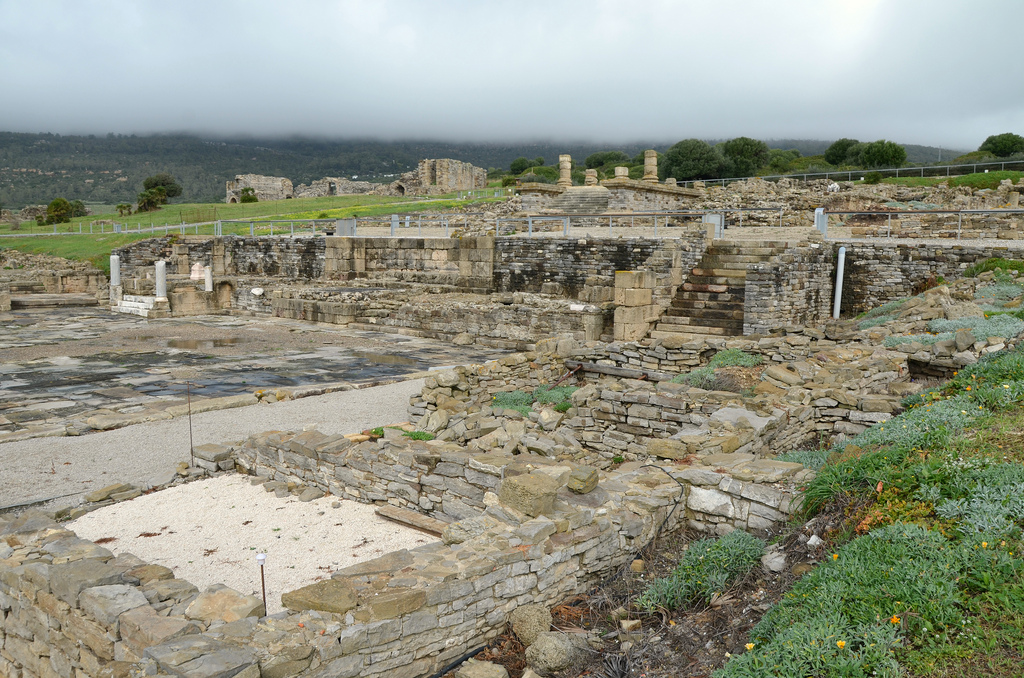
The excavations at Baelo Claudia have revealed the most comprehensive remains of a Roman town in the Iberian Peninsula. The site contains all the representative elements of a Roman city: the forum, temples, basilica, administrative buildings such as the curia, the marketplace, theatre, baths, industrial zone, and aqueducts. A modern Visitor Centre showcases many artefacts and offers a comprehensive introduction to the site.

PORTFOLIO

The Decumanus Maximus maintains its original flagstone paving. Along its length were shops, the public market building and the south side of the Forum. There were porticoes on either side.
View of the Forum, the vital centre where administrative, political, judicial and religious activities were taking place. The Forum occupied a rectangular area of 115 x 87 metres.
Although the original forum in Baelo dates back to the Augustan period, the nucleus of the forum area that we see today was remodelled between the years 50 and 70 AD (reigns of Claudius and Nero). The Forum is in very good condition and is the only completely excavated forum in Hispania.
The Forum had porticoes on the east and west sides, with shops in the east part and administrative buildings in the west. To the south was the basilica, and to the north was a monumental fountain and a staircase leading to the Capitolium.
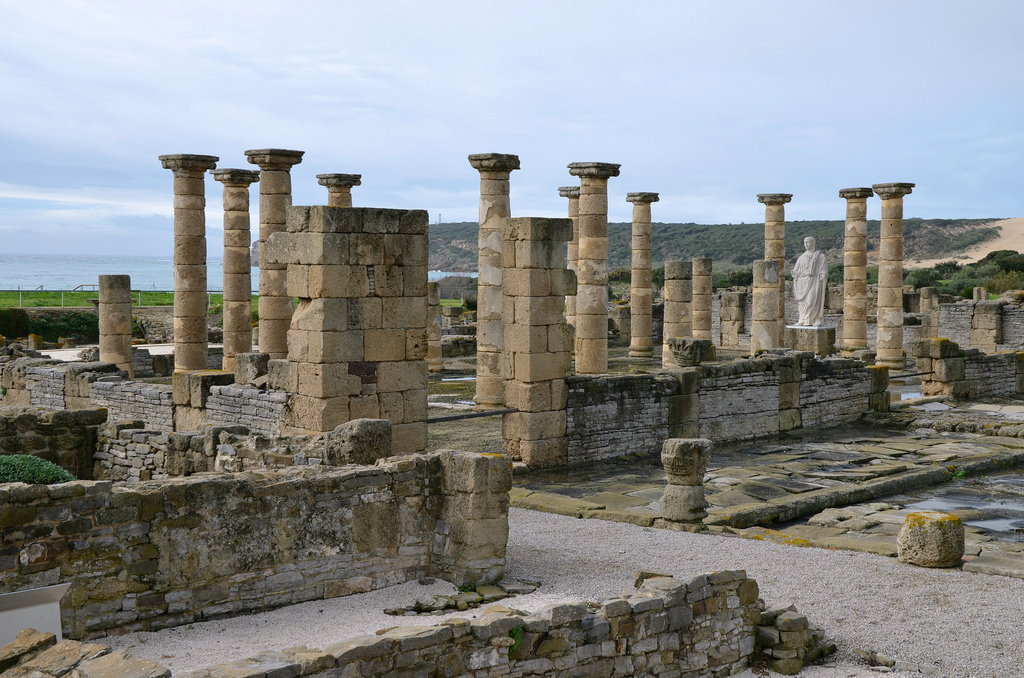
The Basilica was one of the most important buildings in Baelo Claudia. It was built between 50 to 70 AD and was located in the main area where the city’s public life took place.
The Basilica was built of ashlars and masonry walls, which were painted and stucco applied. A peristyle of twenty columns made up the inside space. It had two floors, the ground floor was of Ionic order and the top floor was of composite.
The city of Baelo Claudia erected a colossal statue of Emperor Trajan and placed it in the Basilica on a pedestal clad with marble. The original statue is on display in the Museum of Cádiz.
The South Square of the Forum. Behind the plaza are the Basilica, the Forum and the Capitolium.
View of the Curia and the Macellum (the marketplace).
The three temples of the Capitoline Triad are dedicated to Jupiter, Juno and Minerva. The Capitolium was constructed in the 1st century AD over a broad terrace that dominated the Forum.
The Capitolium.
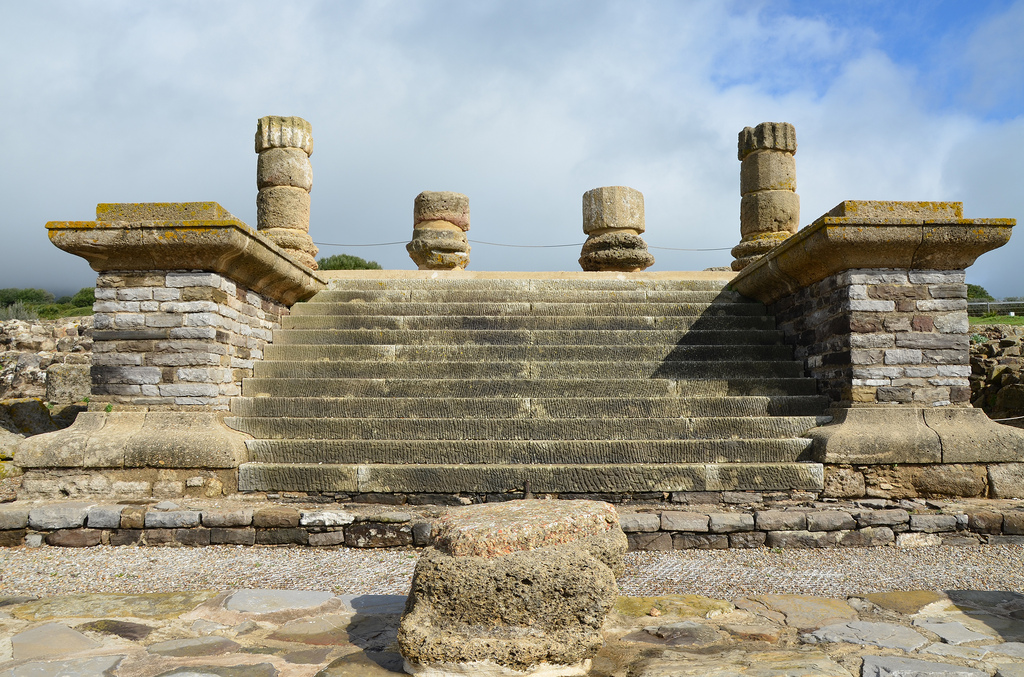
The Temple of Jupiter was part of the Capitolium, the three tetrastyle temples dedicated to the Capitoline Triad (Jupiter, Minerva, Juno). The temples were separated by narrow corridors of similar dimensions. A share altar was in front of each temple.
The podium of the Temple of Jupiter with 12 steps at the front and Corinthian columns.
The thermal baths date to the end of the 1st century or the beginning of the 2nd century AD. They were in use until the end of the 4th century AD.
The baths were accessed from the Decumanus Maximus. They included a “caldarium” (hot room), a “tepidarium” (tepid room) and a”frigidarium” (cold room).
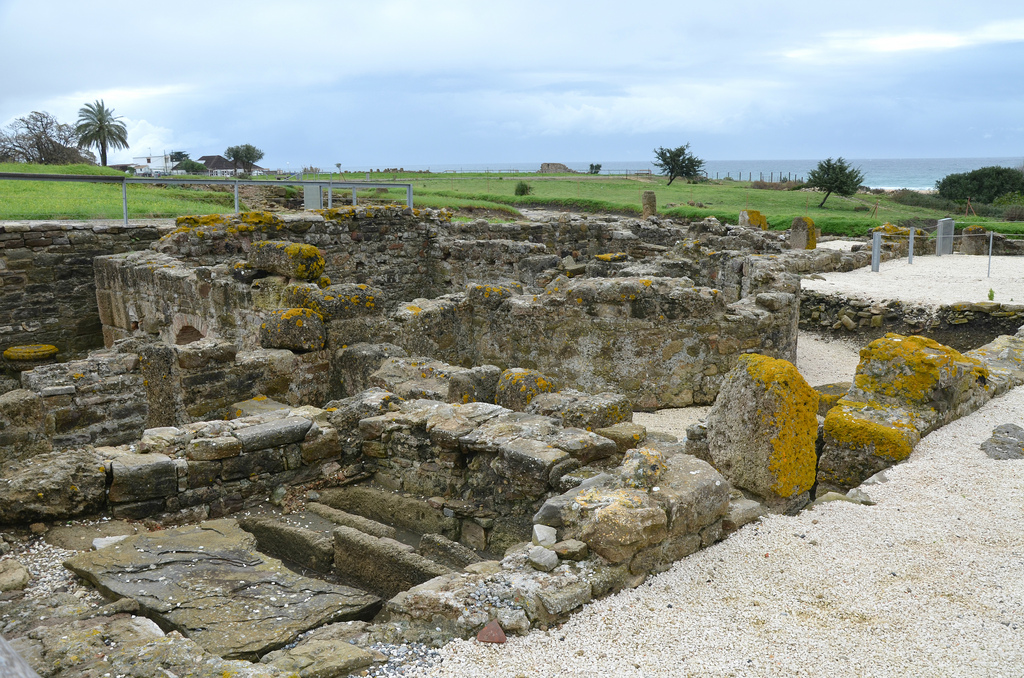
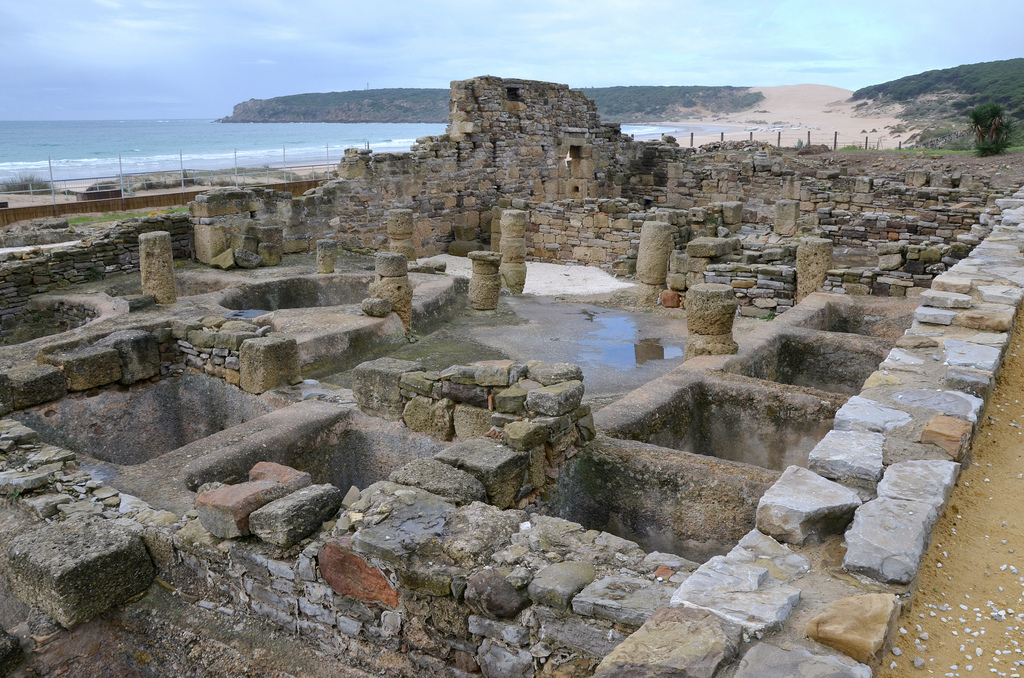
The industrial area is dedicated to the salting of fish and the production of the famous fish sauce, “garum”.
The most valued and expensive product made in these factories was a fish sauce known as “garum”. A similar product, of a lower quality, was “liquamen”. These sauces could accompany all types of meals as a dressing or seasoning. It stimulates the appetite, and doctors usually recommend it due to its nourishing and curing properties.
These are the large basins dug into the ground where the pieces of fish were piled up to be salted. The fish and salt were positioned in successive layers, taking approximately twenty days before the salting process was completed.
The Theatre was constructed on a natural slope in the 1st century AD, around 70 AD. At the end of the 2nd century, it was no longer in use.
The Theatre.
The defensive walls were built during the Augustan period and were repaired and renovated with the same layout during the second half of the 1st century AD.
Within the walls were the main entrances to the city.
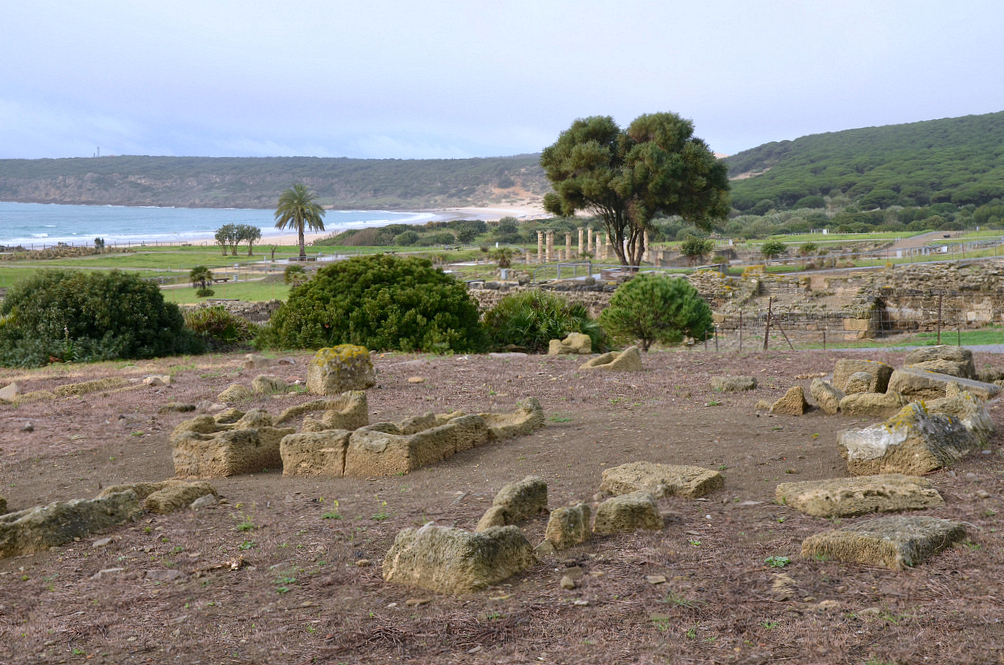
The Necropolis.
The remains of the arches of the North aqueduct that supplied water to the buildings located in this area.

Links: