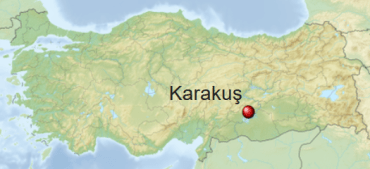
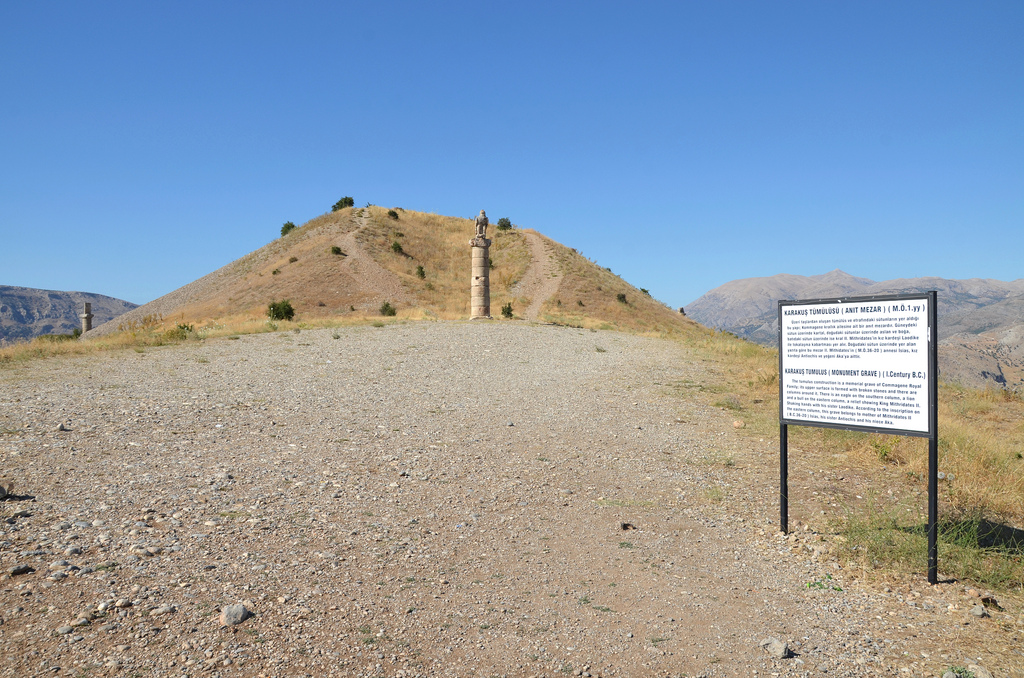
The Karakuş Tumulus is a funerary monument (hierothesion) of the Commagene Royal Family, located in the Kahta district of Adiyaman Province in Eastern Turkey. Like nearby Mount Nemrut, the Karakuş Tumulus is an artificial mound, albeit on a more modest scale. It was constructed by Mithridates II of Commagene, ca. 31–20 BC, as the last resting place of his mother Isias, his sister Antiochis and his niece Aka I, offering evidence of the importance that the Commagene Kingdom placed on women.
The tumulus, about 25 m in height, was originally encircled by three groups of three limestone Doric columns, one group to the northeast, one to the northwest and one to the south. Each column was about 9 m high and was topped with steles, reliefs, and statues of a bull, lion, and an eagle. They comprised six limestone blocks and a low Doric capital and stood on a heavy square plinth.
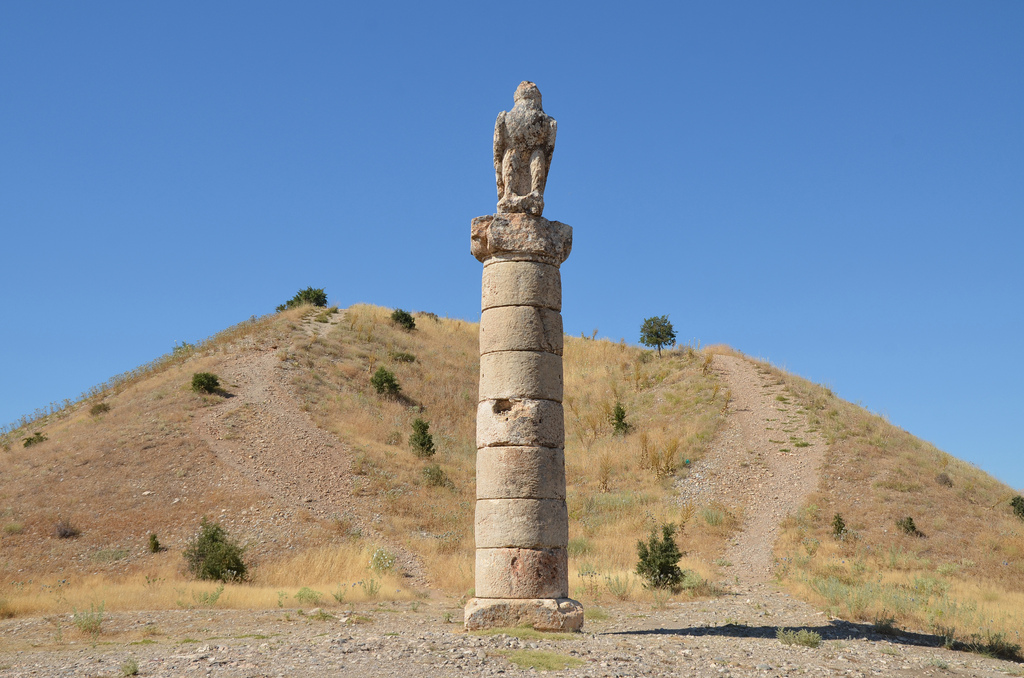
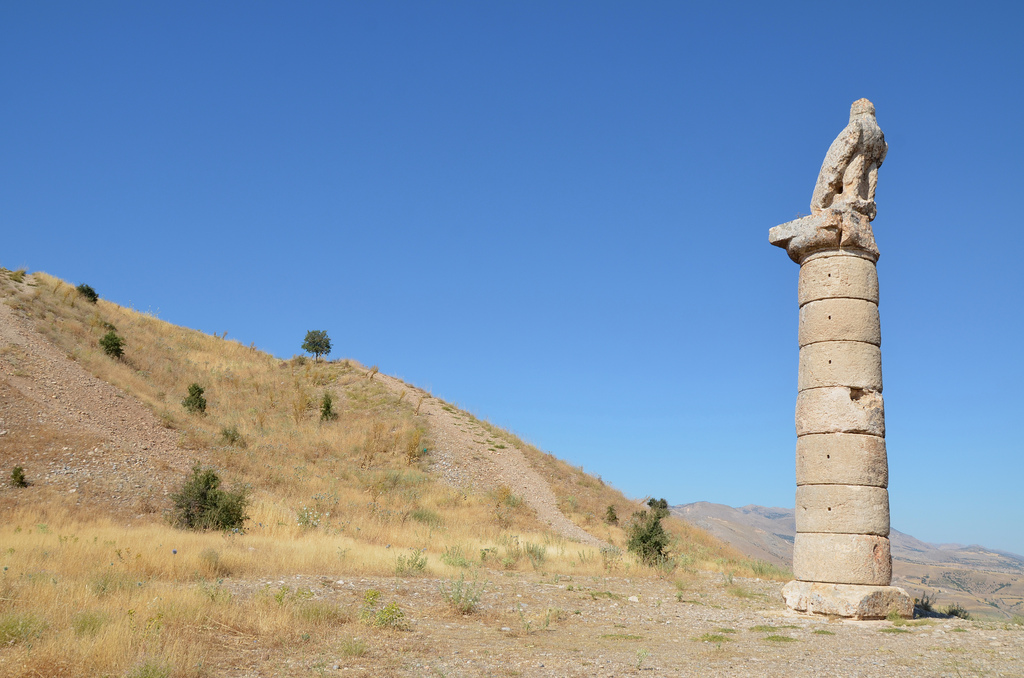
Only one column survived from the group on the south side of the tumulus. It consists of 7 drums and is topped with a 2.54 m high statue of an eagle which gave its name to the place (in Turkish, “karakuş” means “blackbird”). Two of the three columns stand upright from the group on the northeast side. On top, one bears traces of a relief, and the other has a bull whose head is missing. The central column is slightly higher than the left-hand one. It bears an inscription in Greek saying that King Mithridates II erected this hierothesion for his mother Isias, his sister Antiochis and her daughter Aka. Skipping a couple of phrases where restoration has been doubtful, the inscription reads:
This is the hierothesion of Isias, whom the great King Mithridates, she being his own mother, deemed worthy of this final hour. And […] Antiochis lies herein, the king’s sister by the same mother, the most beautiful of women, whose life was short but her honours long-enduring. Both of them, as you see, preside here, and with them a daughter’s daughter, the daughter of Antiochis, Aka. A memorial of life with each other and of the king’s honour.
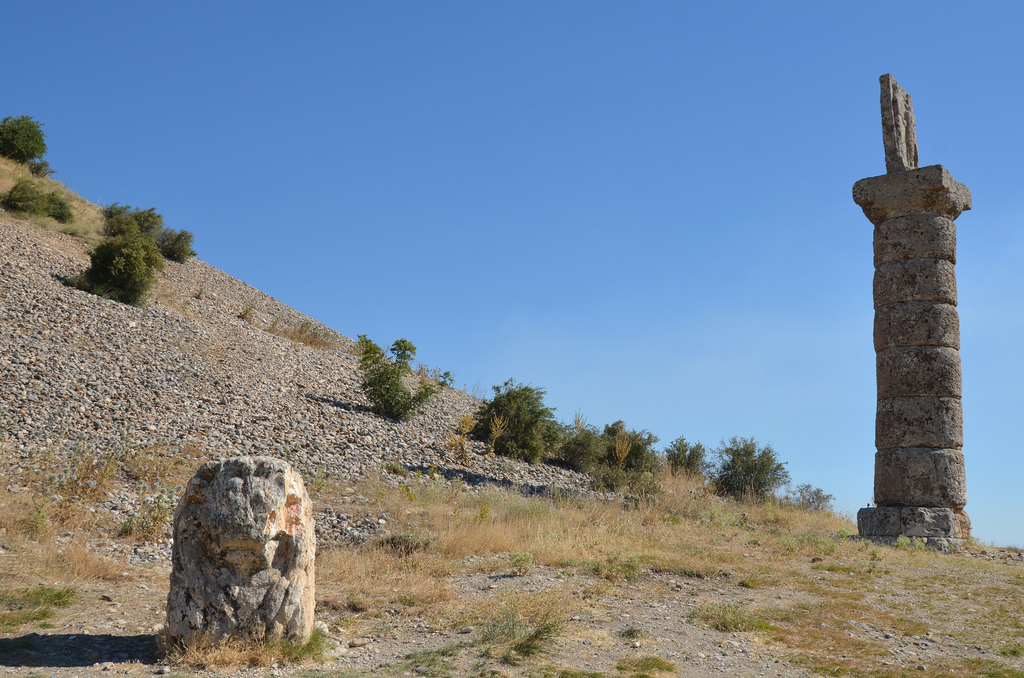
From the last group on the northwest of the tumulus, only one column is still standing with a dexiosis relief of King Mithradates II and his sister Laodice shaking hands in a farewell gesture. Laodice is wearing a Greek chiton, and her head is veiled with part of her mantle. Mithradates is dressed in oriental style, with trousers, a long mantle, and a tiara. Next to the column, the head of a lion lies on the floor. The grave chamber, located inside the tumulus, was later plundered. The stone blocks were believed to be reused in the construction of the first Cendere Bridge.
PORTFOLIO
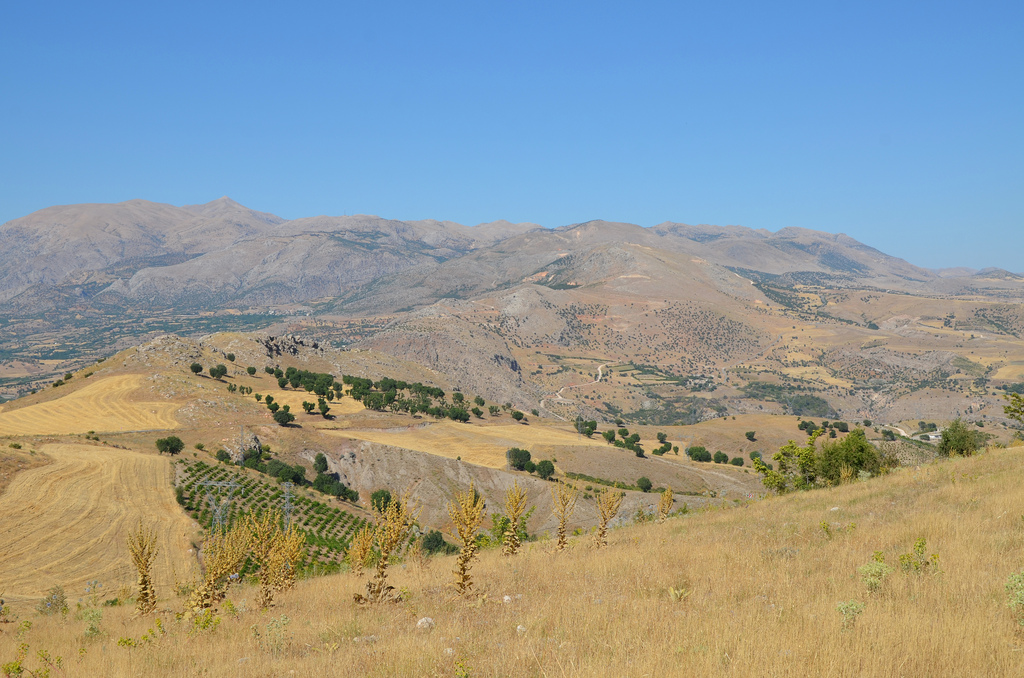
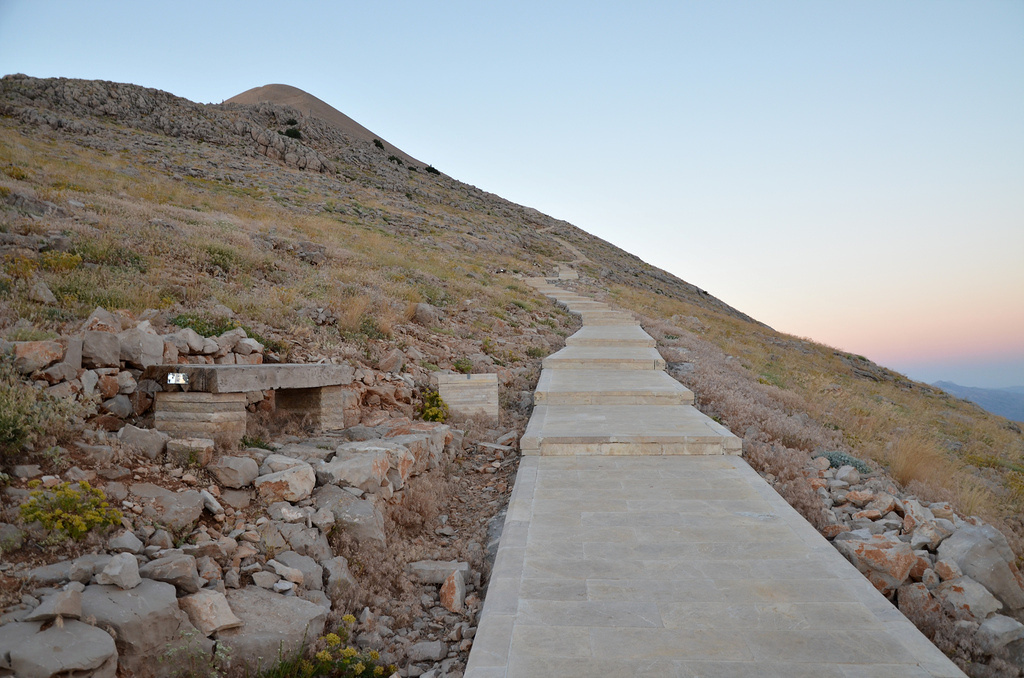
The tomb monument of Karakuş with the eagle column on the right and the column with the dexiosis relief on the left.The eagle column.The column with the dexiosis relief and the lion’s head.The column with the dexiosis relief.Close-up of the dexiosis relief showing King Mithradates II and his sister Laodice shaking hands.The lion’s head and the column with the dexiosis relief.View of the landscape in the northwest. Mount Nemrut is visible on the left as the highest peak.The path leading to the column group on the northeast side of the tumulus.The column group is on the northeast side of the tumulus. One column has traces of a relief, and the other has a bull.View of the same columns and the landscape in the northeast.View of the landscape in the southeast.The eagle column.
Herman A. G. Brijder (ed.), Nemrud Dağı: Recent Archaeological Research and Conservation Activities in the Tomb Sanctuary on Mount Nemrud. Berlin; Boston: De Gruyter, 2014.
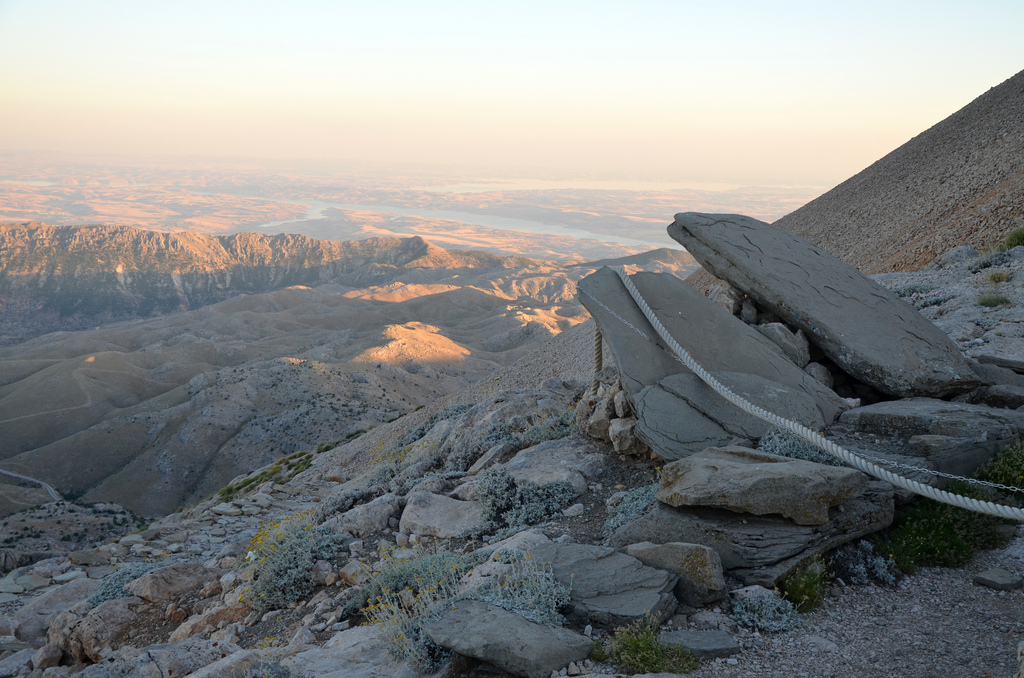
Mount Nemrut is home to the fascinating burial complex (hierothesion) of King Antiochus I, who reigned in the 1st century BC over Commagene, a small kingdom founded north of Syria and the Euphrates after the breakup of Alexander the Great’s empire. Located within the Nemrut Dağı National Park, approximately 75 km east of Adıyaman, Mount Nemrut is one of Turkey’s prime tourist attractions where most visitors come to experience the pure magic of the setting at either sunrise or sunset. The Hierothesion of King Antiochus I is one of the most ambitious constructions of the Hellenistic period, and was thus inscribed on the UNESCO World Heritage List in 1987. It was established as a National Park the following year.
The hierothesion of King Antiochus I is a 50-meter-high man-made burial mound situated on the summit of Nemrut Dağ within the Taurus mountain range of Southeastern Turkey, at an elevation of over 2,150 meters above sea level. The site was rediscovered in early 1881 by Karl Sester, a German engineer assessing transport routes for the Ottomans, who reported the discovery of a large number of colossal statues, which he believed to be Assyrian in origin. Systematic excavations followed in the mid-twentieth century, led by Friedrich Karl Dörner, who collaborated on the site with Theresa Goell, an American archaeologist who devoted herself to excavating Nemrut Dağı.
The monumental tomb is dated to the latter part of Antiochus’ reign, c. 50-36 BC. The sacred complexarea, approximately 500 square metres, comprises a 50-metre-high cone-shaped tumulus flanked by terraces on its north, east, and west sides, as well as a stepped altar. The body of King Antiochus is thought to have been buried in a chamber beneath his man-made mountain, but despite repeated attempts, his tomb has yet to be found.
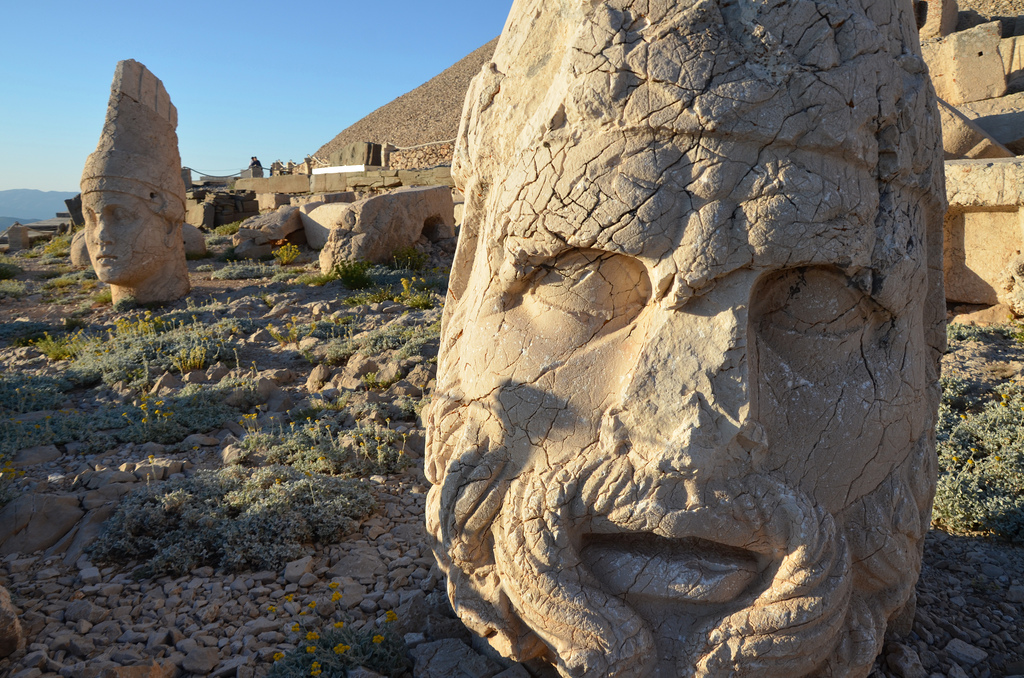
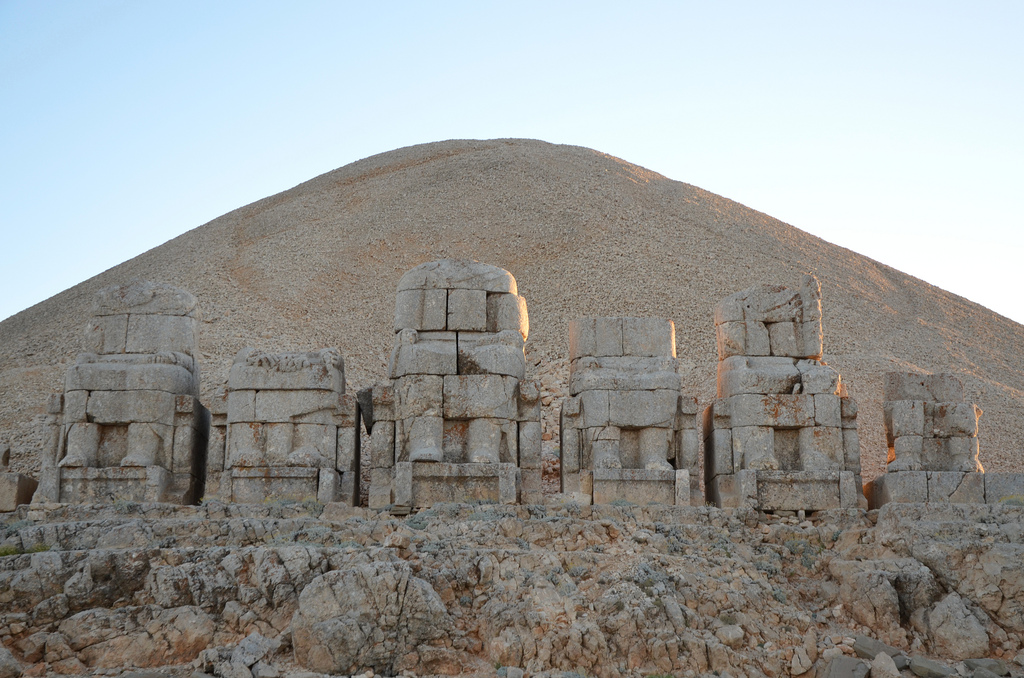
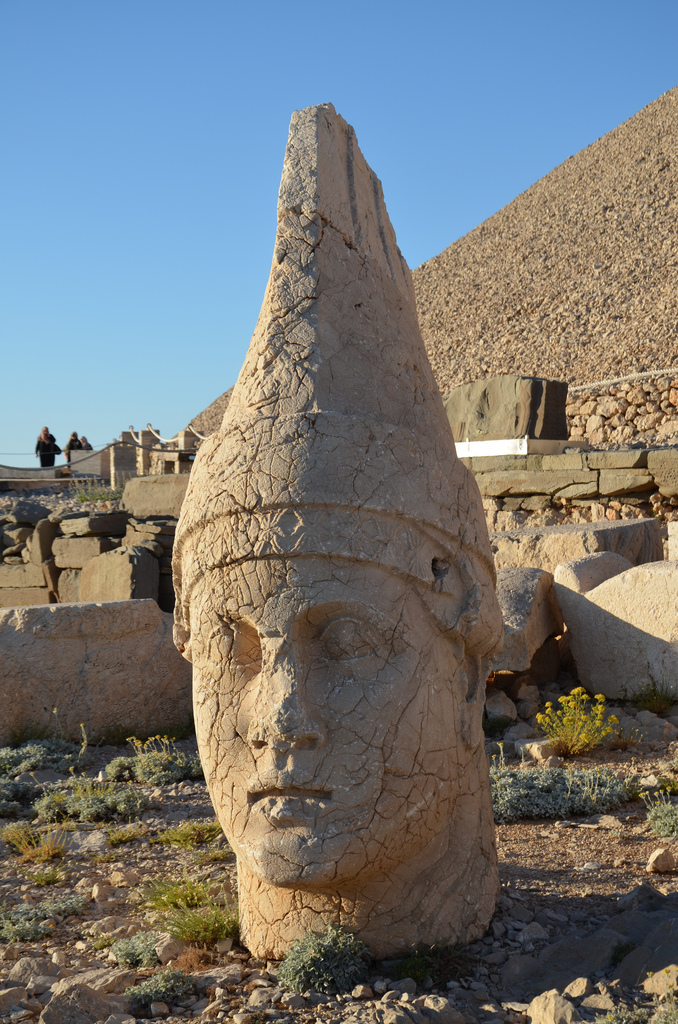
The East and West terraces featured colossal seated statues and rows of relief stelae (orthostates). The statues have been identified as those of Antiochus I and a pantheon of Greek, Armenian, and Iranian deities. The East Terrace is the best-preserved and features mostly intact torsos, with their heads facing forward. This terrace consisted of a high podium with a row of five colossal enthroned figures flanked at each end by eagles and lions intended to protect the sanctuary. The five enthroned figures depicted King Antiochus I and four tutelary gods: Zeus-Orosmasdes-Ahura Mazda, Artagnes-Bahram-Heracles-Ares, Apollo-Mithras-Helios-Hermes, and Commagene-Atargatis-Juno Dolichena. On the back of these statues, Antiochus ordered the inscription of a long Greek text (nomos) that included historical and legal aspects of the hierothesion and the establishment of the new cult. A row of now badly damaged sandstone orthostates depicting King Antiochus’ ancestors once lined the northern and southern sides of this terrace. A square and stepped altar platform is located on the east side.
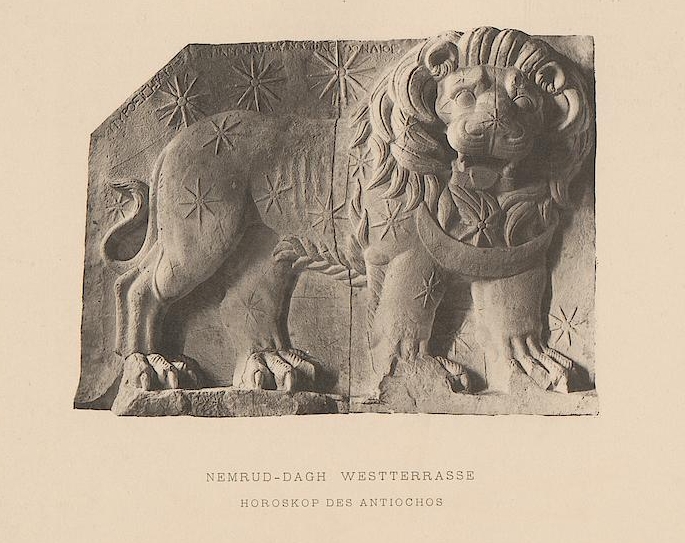
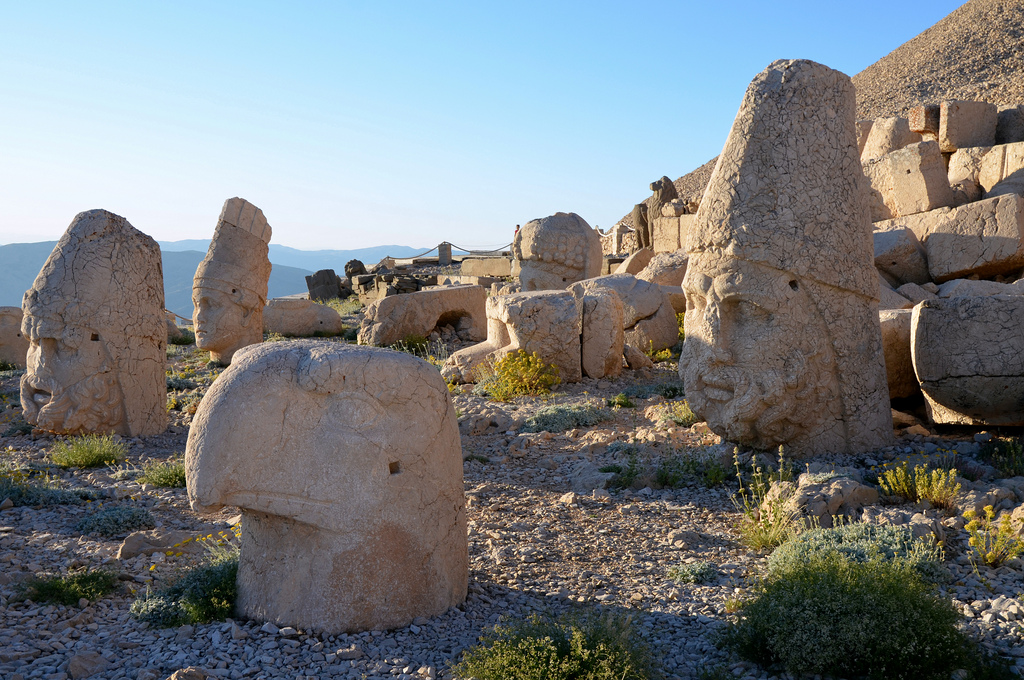
The West Terrace had the same features as those displayed on the East Terrace, but was considerably narrower than its eastern counterpart and lacked a main altar. It is now also more damaged, although the colossal heads are better preserved. The order of the enthroned statues, this time facing the setting sun, is identical to that of the east terrace. The orthostates depicting King Antiochus’ ancestors are also much better preserved. The West Terrace is completed by five reliefs depicting Antiochus shaking hands (dexiosis) with each member of his pantheon. It also included the famous ‘Lion Horoscope’, a relief depicting a lion with stars on its body (probably the constellation Leo) and a crescent moon on its chest. It has been argued that the scene might represent a kind of horoscope, one of the oldest known in the world. Recent research has shown that the lion slab may reflect the state of the skies at specific moments in 49 BC, when the monument’s construction might have begun. The dexiosis reliefs and the Lion Horoscope have been removed from the site and are stored in the Adıyaman Archaeological Museum.
Above the lion’s back, three stars are depicted with sixteen points instead of eight. These are not stars but planets. From left to right, they are Mars, Mercury and Jupiter. Above them, you can read their Greek names: 1. Mars: ΠΥΡOEIΣ HPAKΛEOΣ Pyroeis Heracleos “the flaming one of Herakles” 2. Mercury: ΣTΙΛΒΩΝ ΑΠΟΛΛΩΝΟΣ Stilboon Apollonos “the shining one of Apollo” 3. Jupiter: ΦΑΕΘΩΝ ΔΙΟΣ Phaeton Dios “the radiating one of Zeus”.
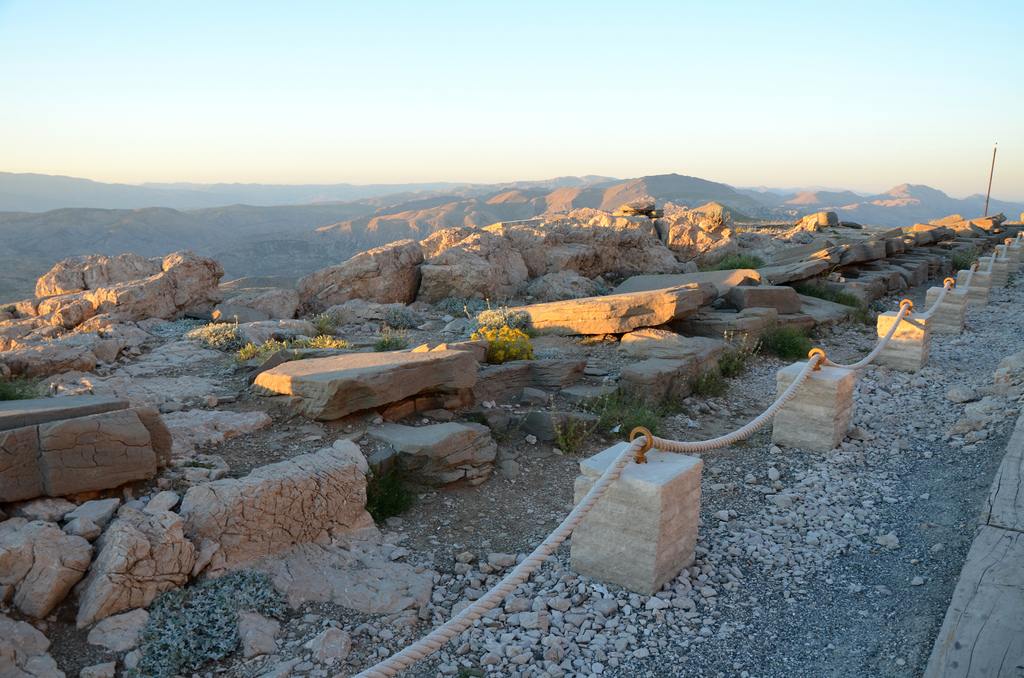
The North Terrace is the least spectacular, and it was probably never finished, as the nearby stelae are unworked, bearing no inscriptions or reliefs. There is also no statue. Some scholars have suggested that this terrace was allocated to kings who would succeed Antiochus.
There are several other important sites in the vicinity of the famous mountain of Nemrut Dagi. These include the Karakus Tumulus that served as the burial place of the female members of the royal dynasty of Commagene (Isias, Antiochis and Aka), the remains of Arsameia on the Nymphaios, where Antiochus built a hierothesion for his father, Mithridates I Callinicus (see here), and the incredibly well-preserved Roman Bridge at Cendere erected by four Commagene cities around AD 200 in honour of the Emperor Septimius Severus, his wife Julia Domna and his sons Caracalla and Geta (see here).
PORTFOLIO
The new Mountain Nemrut Visitor Centre. The building hosts an exhibition of photographs depicting Nemrut.The climb to the top of Nemrut.
The East Terrace
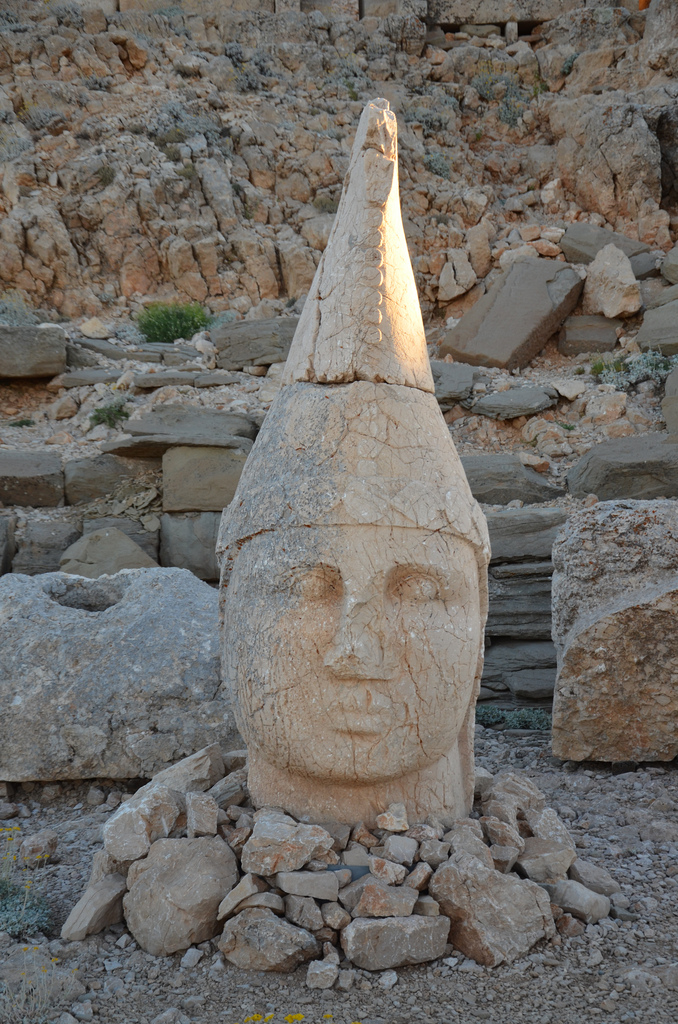
View of the East Terrace.High podium with a row of five colossal seated figures. From left to right: King Antiochus I Theos, Commagene-Tyche, Zeus-Oromasdes, Apollo-Mithras-Helios-Hermes, Artagnes-Herakles-Ares, an eagle.Head of Zeus-Oromasdes.Heads of Apollo-Mithras-Helios-Hermes and Commagene-Tyche.Head of Antiochus.The East Terrace at sunset.Head of Apollo-Mithras-Helios-Hermes.The gallery of the Macedonian ancestors.The square and stepped altar platform located on the east side of the East Terrace.
The West Terrace
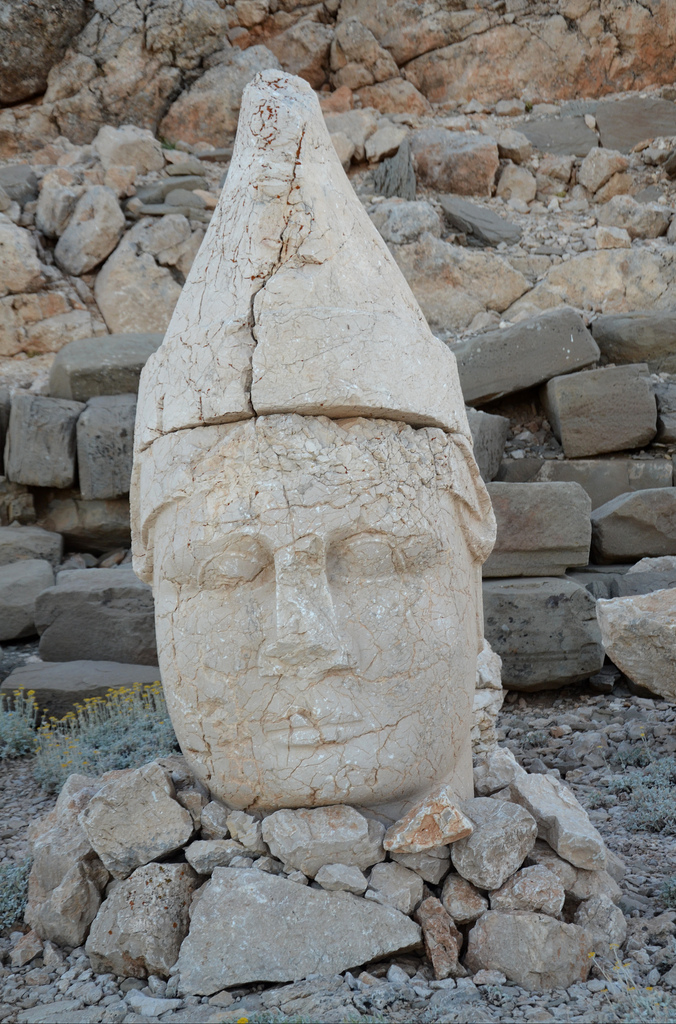
The West Terrace with the tumulus behind.View of the West Terrace.Head of King Antiochus.The heads of an Eagle and Heracles-Artagnes-Ares, Apollo-Mithras and Commagene-Tyche.Head of Heracles-Artagnes-Ares.The West Terrace.Head of Zeus-Oromasdes.The West Terrace.Head of Commagene Tyche.Reliefs of the Persian ancestors of King Antiochus.Relief of one of the Persian ancestors of King Antiochus.
The North Terrace
The North Terrace. The stelae on this terrace bear neither portraits nor inscriptions, as Antiochus probably intended them for his descendants.