Palatium: House of Livia

The House of Livia (domus Liviae) is a building complex on the Palatine Hill, ancient Rome’s most desirable location. It was built in the first half of the first century BC and belonged to the empress Livia, the third wife of Emperor Augustus. It stood next to the House of Augustus (Domus Augusti) alongside a complex of buildings conceived for the ideological propaganda of the emperor’s power and image. The house marks the transition between the 2nd and the 3rd architectural style of the Pompeian wall painting.

First excavated in 1839, the house has been attributed to Livia on the basis of the name IVLIA AVG[VSTA] stamped on a lead pipe on display on the left-hand wall of the tablinum. The two-storey house, built around a central atrium, was decorated with advanced “Second Pompeian Style” wall paintings, reflecting the sophisticated taste of wealthy Romans.
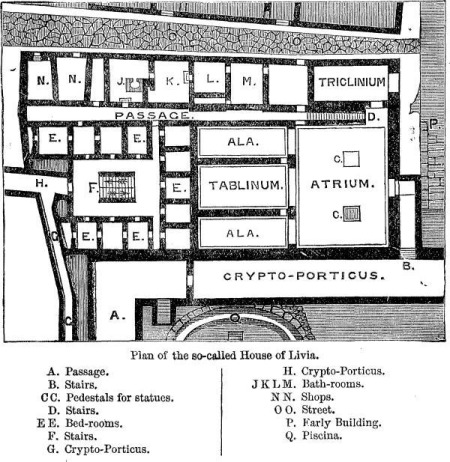
Plan of the House of Livia.

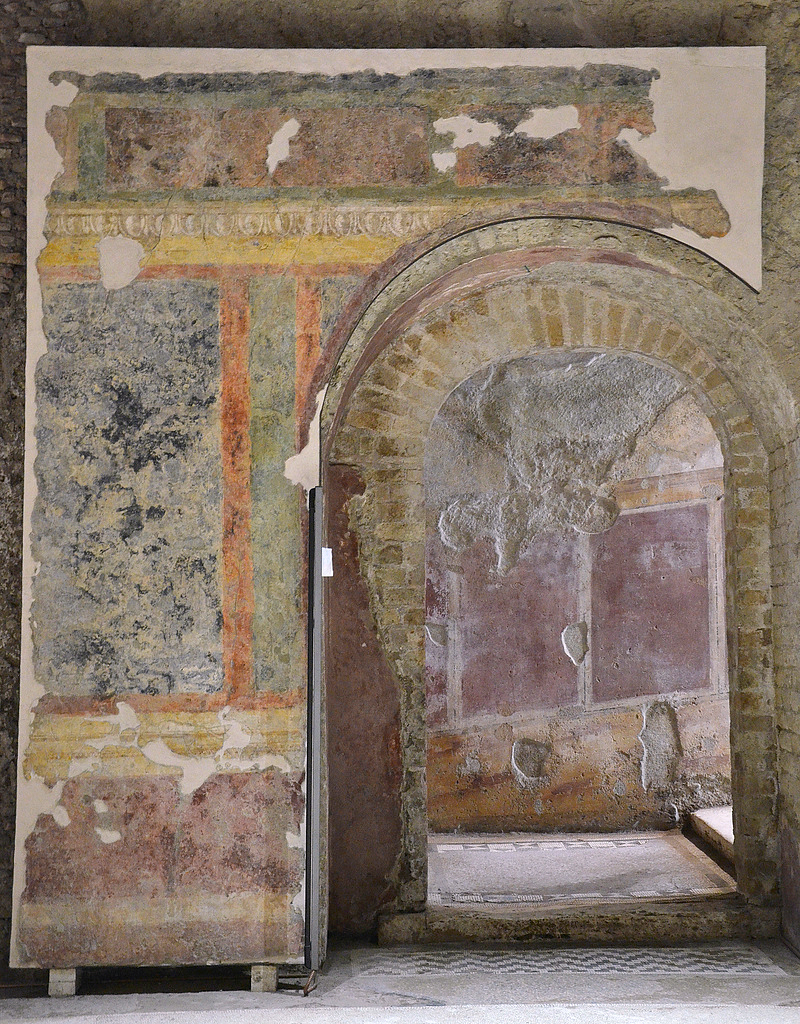
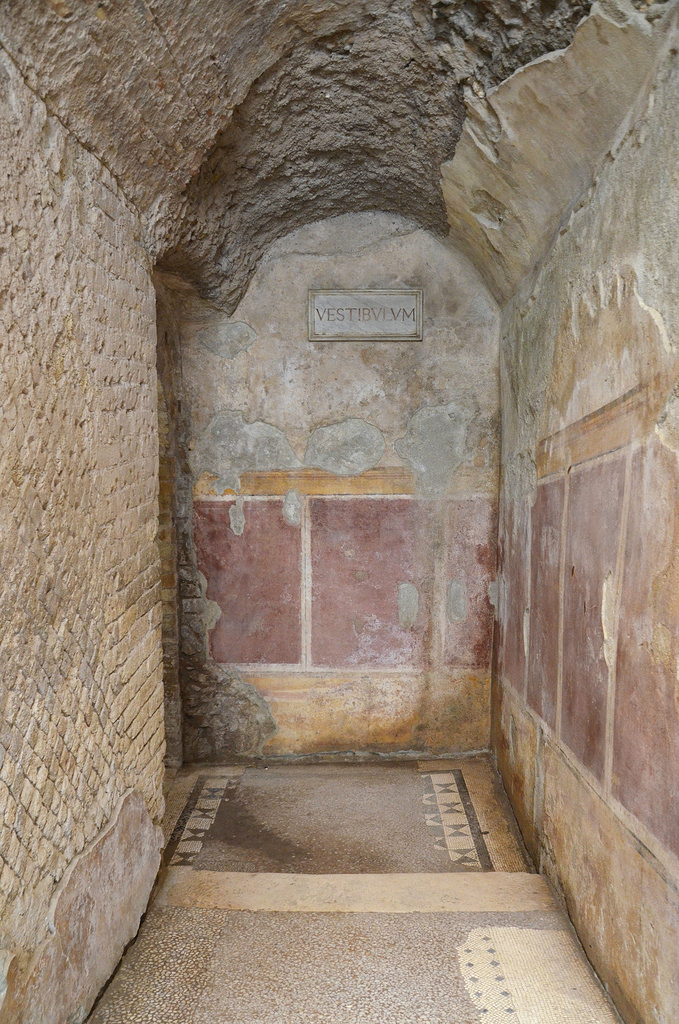
The remains of the house are reached by a sloping hallway whose floor is covered with a black and white geometric mosaic leading into a rectangular atrium. The best-preserved section of Livia’s House consists of a rectangular atrium and three relatively large adjoining rooms (a tablinum and two side rooms). Each room was painted with a mythological subject, and its floor was decorated in black and white geometric mosaic.

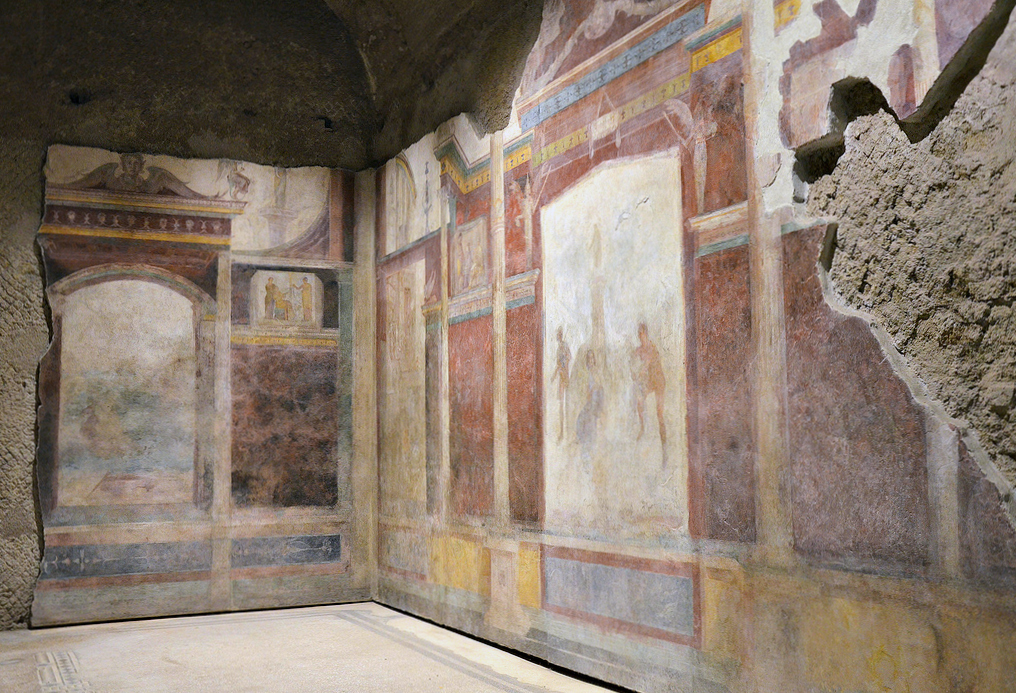
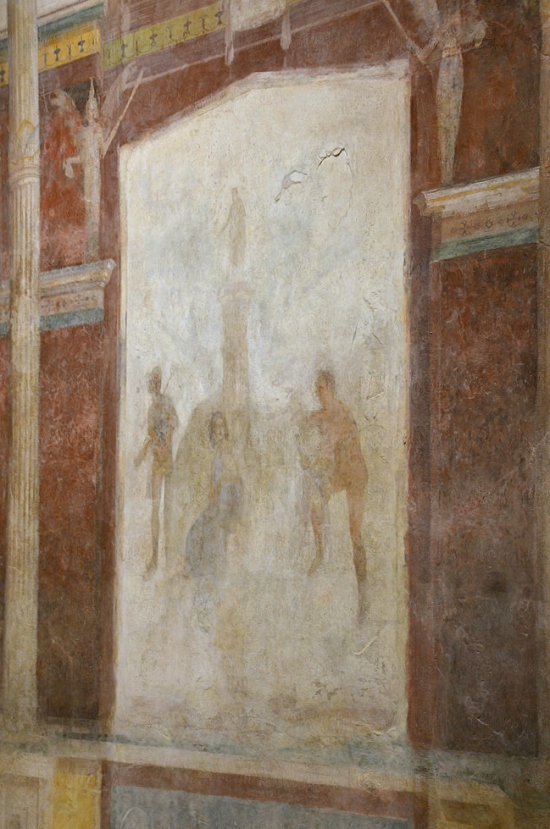
The central room (the tablinum), also known as the “Room of Polyphemus”, was the most richly decorated. Each of its walls had a large mythological picture in the middle, set in a large columnar frame. The mythological picture on the back wall, now totally illegible, showed one of the earliest representations of the story of the monster Polyphemus and the sea nymph Galatea. It depicted Polyphemus immersed in the water with a young Cupid riding on its shoulders, pursuing the nymph Galatea as she rides a sea horse (hippocampus). Still visible, however, is the mythological scene on the right-hand wall of the tablinum depicting Mercury rescuing the mortal woman Io, who had been changed into a white heifer by Zeus in order to disguise his affair with her.

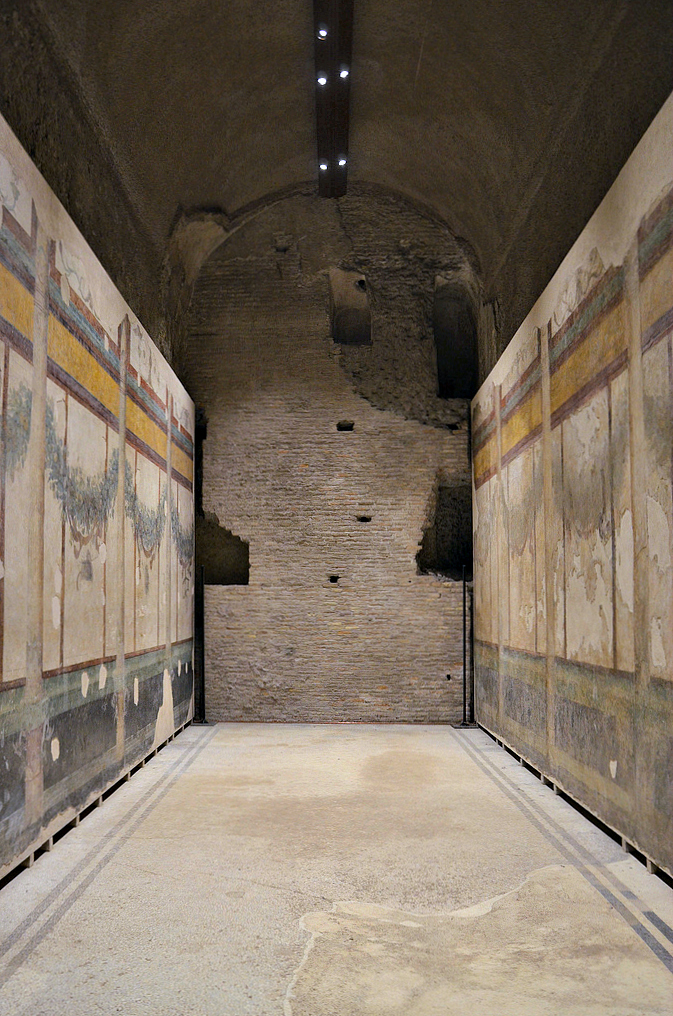
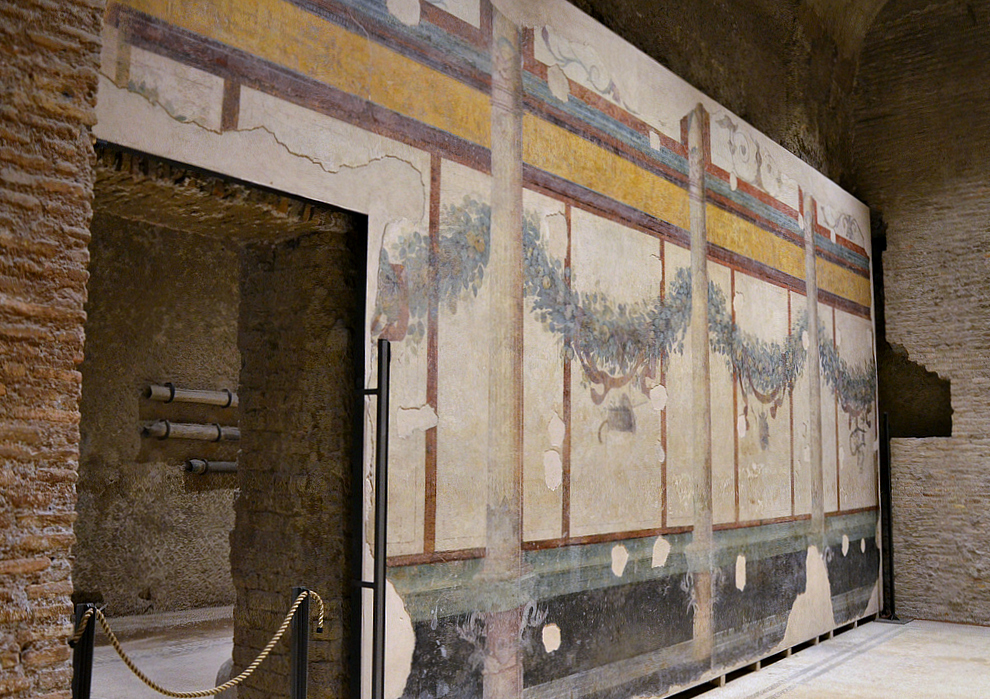
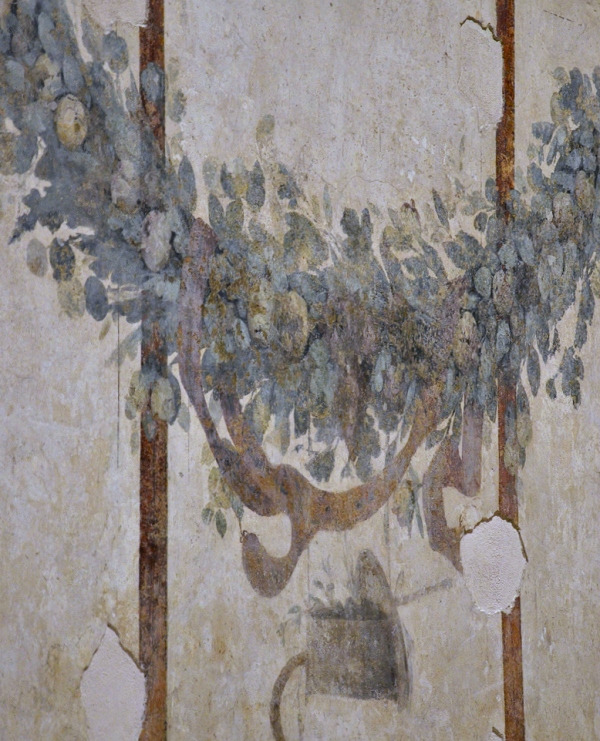
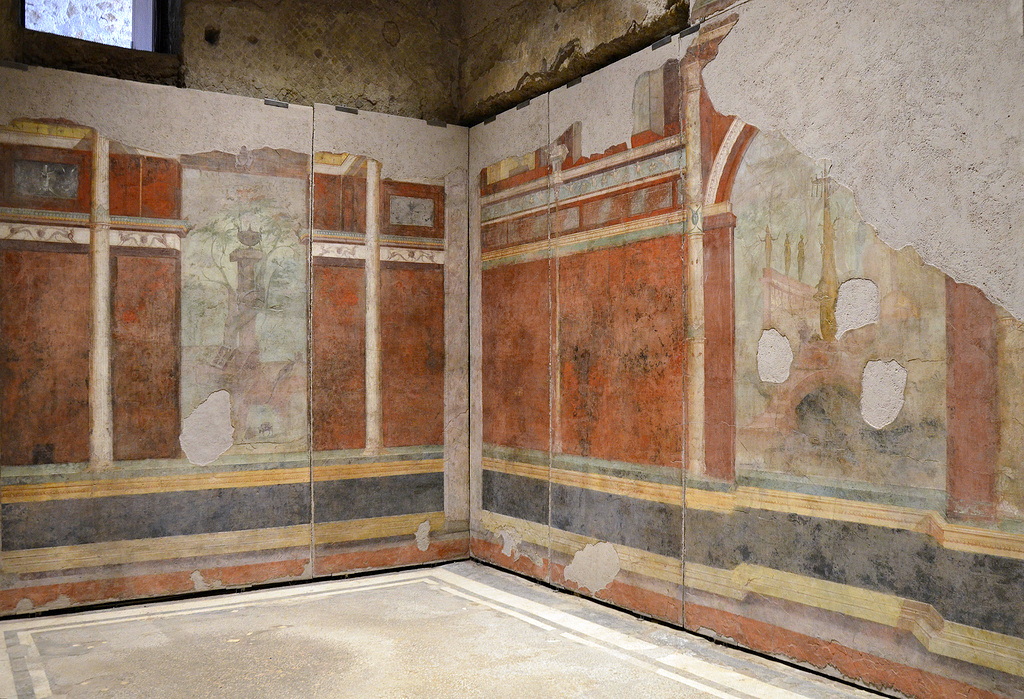
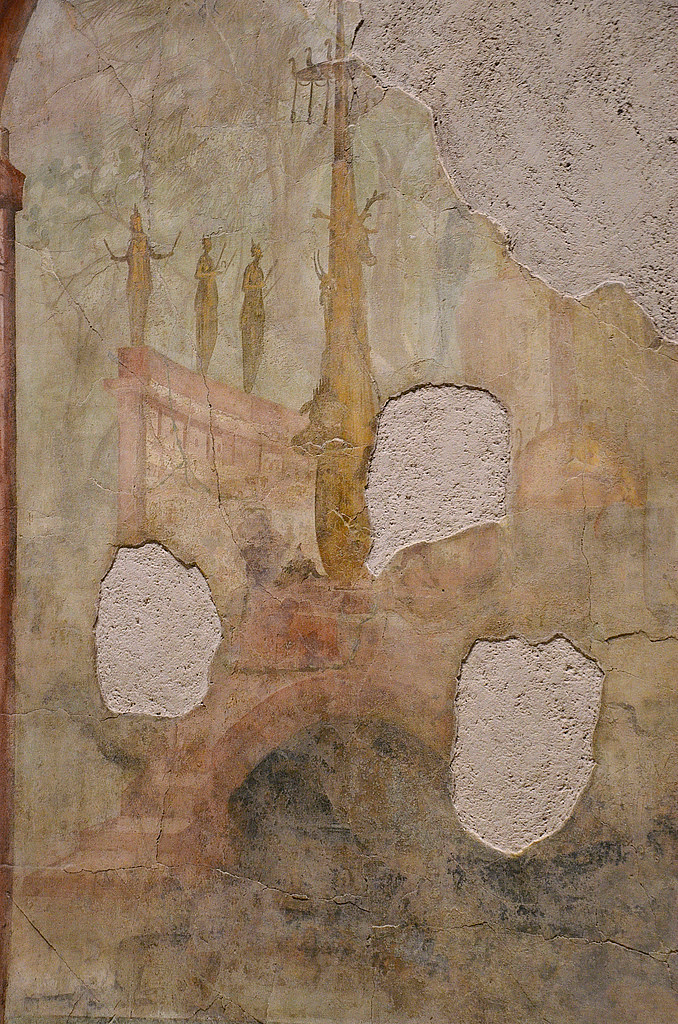
The decoration of the right-hand room is characterized by luxuriant festoons and garlands of fruits, flowers, branches and leaves. A yellow frieze running along the top of the frescoes was filled with scenes of everyday life in Egypt (camels, sphinxes and a statue of Isis can be seen). The triclinium (dining room) is remarkable for its delicate decoration. Each wall was given an elaborate design of illusionistic architecture featuring a large picture of a sacral-idyllic landscape in the centre.

Following recent conservation work, a visit to the House of Livia and Augustus can now be booked with Coopculture.it. Tighter restrictions on the number of visitors who can access the site at any one time have been put in place, and you will need to book to join the 2pm English tour, which runs on Saturdays, Sundays and bank holidays. The guided tour lasts 75 minutes and accommodates a maximum of 20 people. A combined ticket for the Palatine-Roman Forum / Colosseum (valid for one entrance to the two sites for 2 consecutive days) or the Archaeologia Card (valid for 7 days) has to be bought to get access to both Imperial houses.

PORTFOLIO
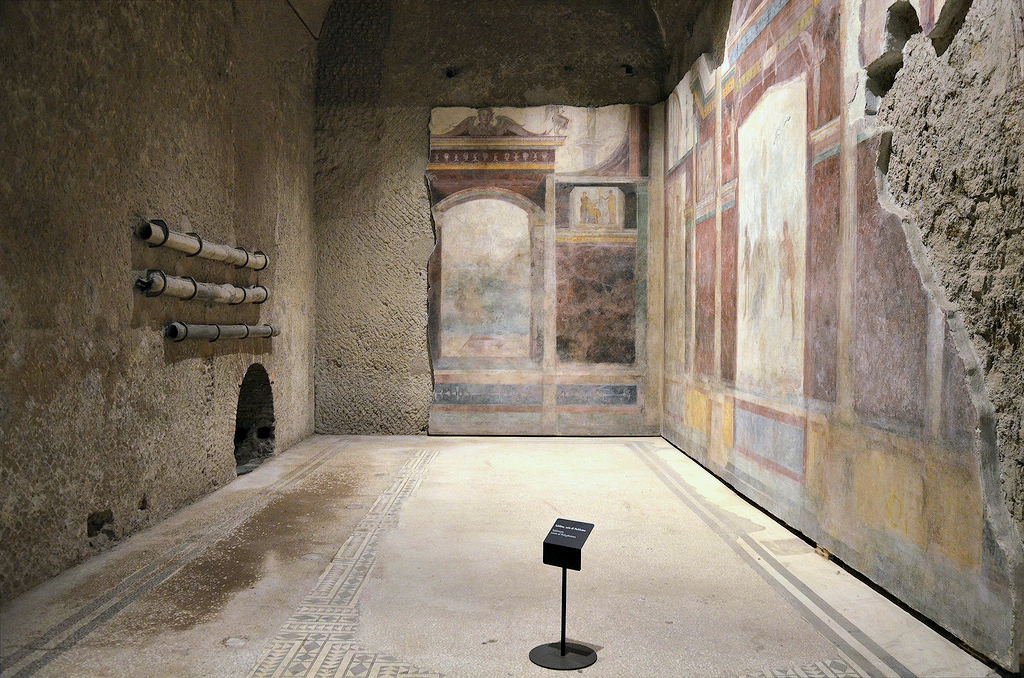
The tablinum of the House of Livia, also known as the “Room of Polyphemus”. The tablinum of the House of Livia, also known as the “Room of Polyphemus”.
The tablinum of the House of Livia, also known as the “Room of Polyphemus”.
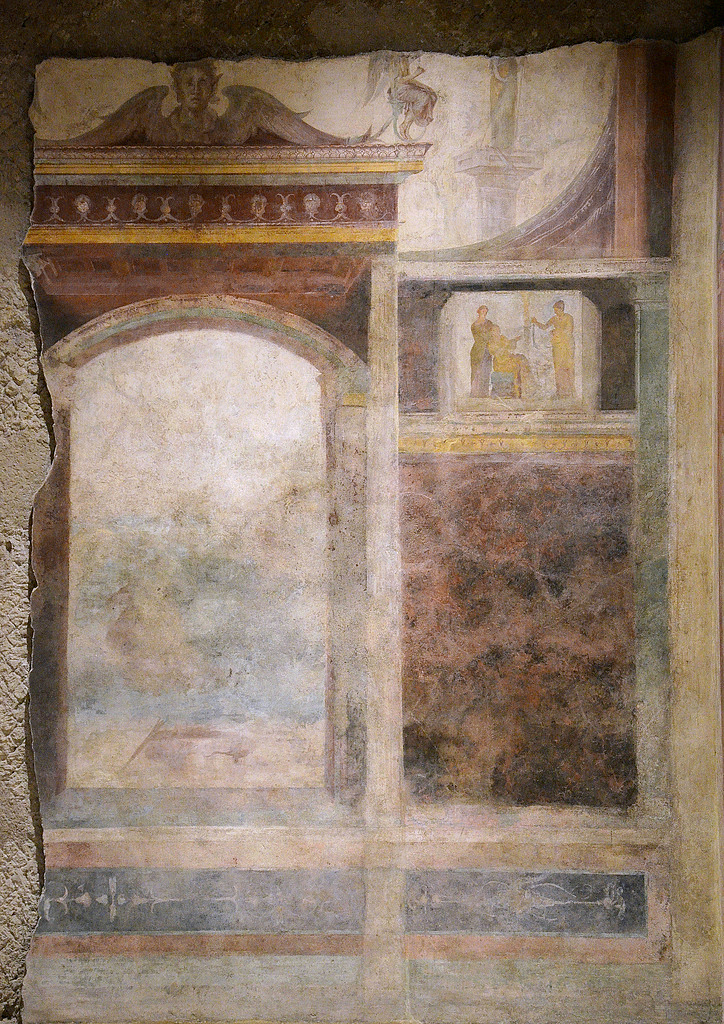
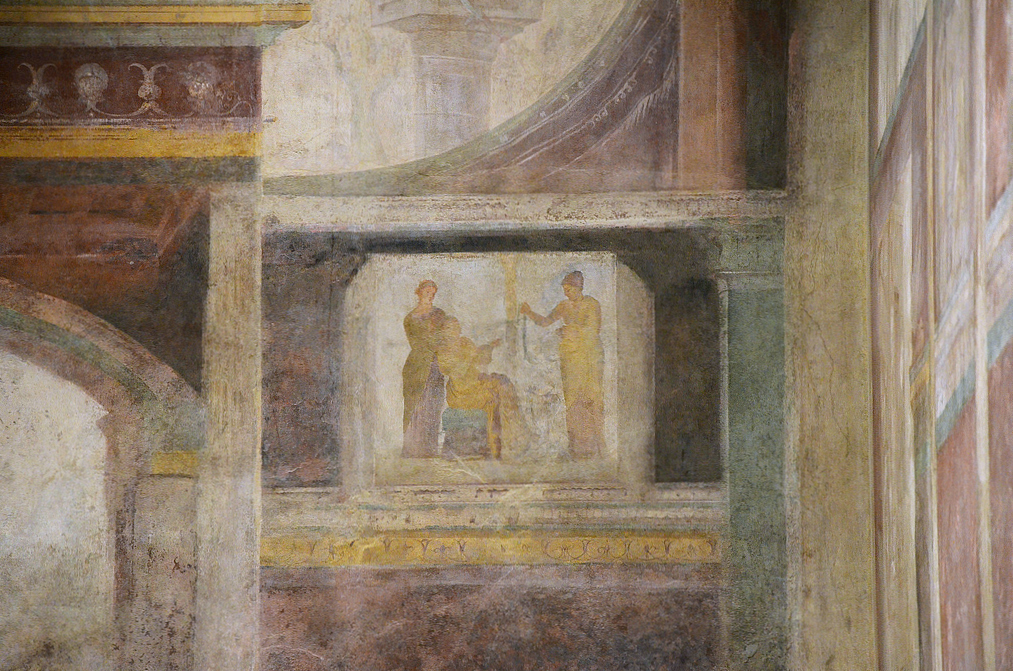
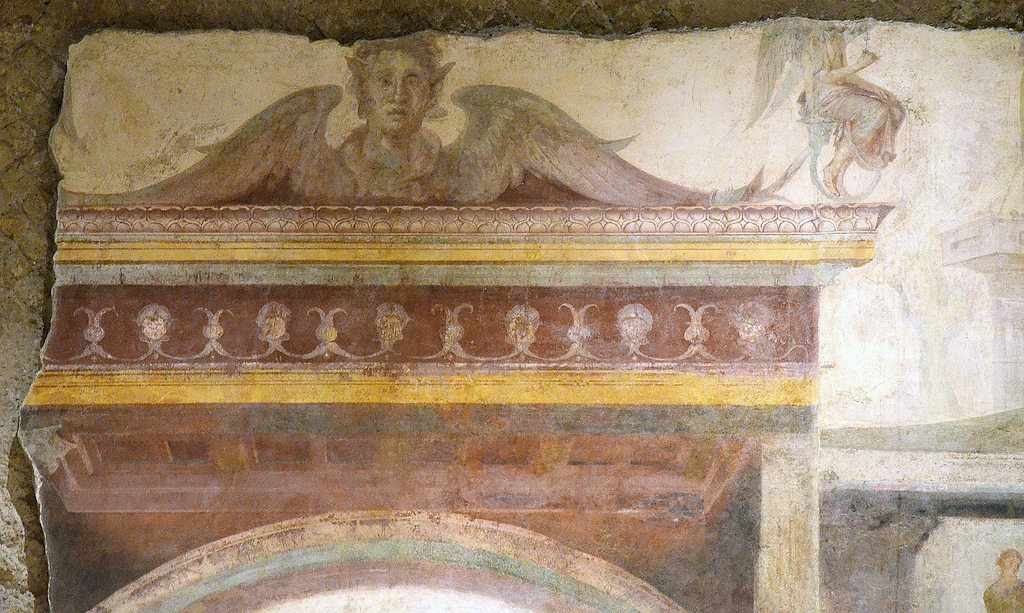
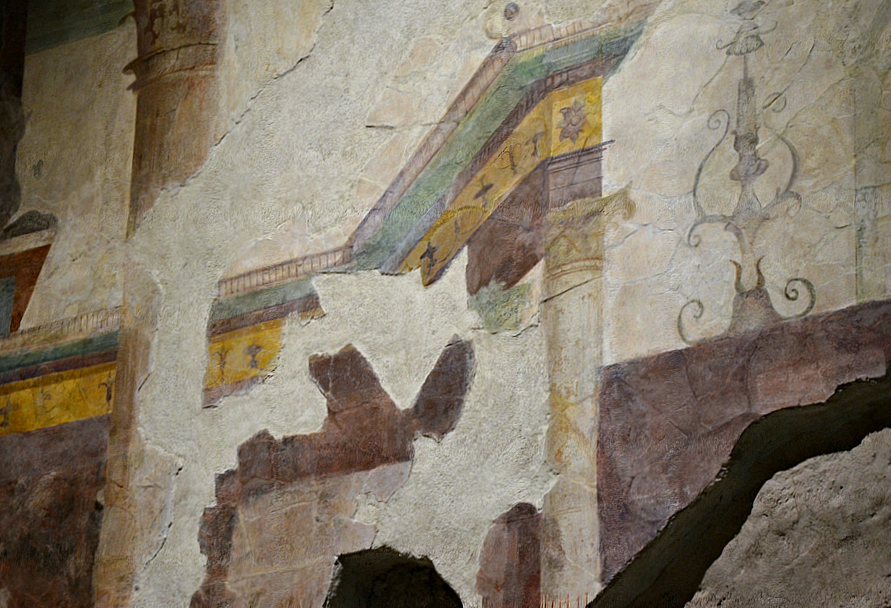
Detail of wall painting on the back wall of the tablinum. Around the central panel (now totally illegible) are backdrops of illusionistic architecture and small panels with ritual scenes.
Detail of fresco on the back wall of the tablinum.
The tablinum with the mythological scenes in the center of both walls. The mythological scene on the right-hand wall of the tablinum is still partly visible.
Mythological scene depicting Mercury rescuing the mortal woman Io, who had been changed into a white heifer by Zeus in order to disguise his affair with her. Io is facing her guardian Argus while Mercury, arriving from the left, is about to free her.
Detail of fresco on the right-hand wall of the tablinum.
The right-hand room of the House of Livia, characterized by luxuriant festoons of fruit and flowers.
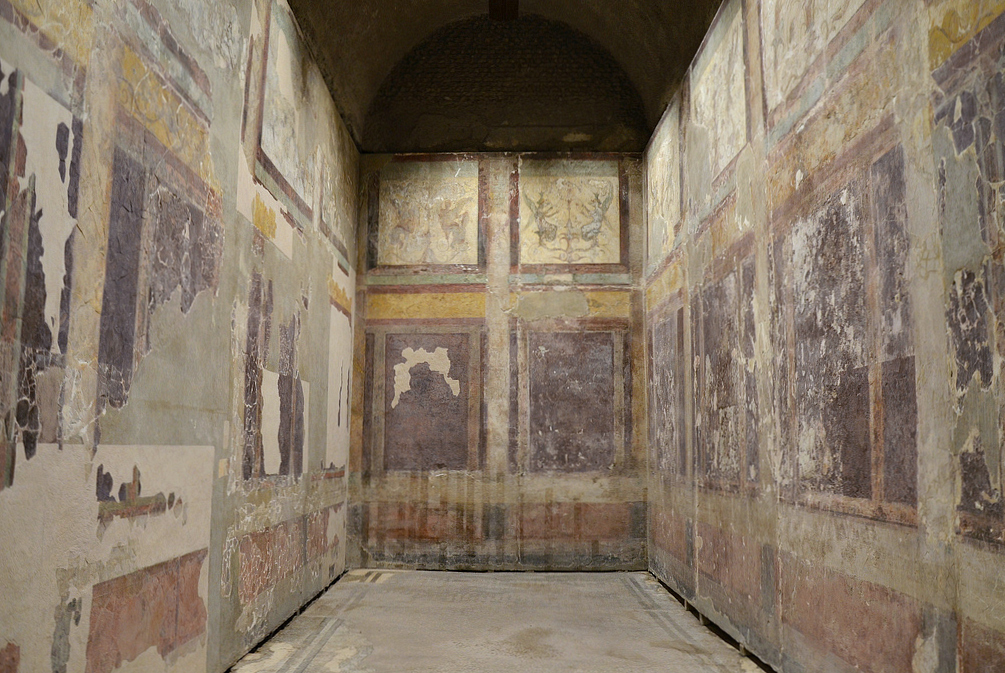
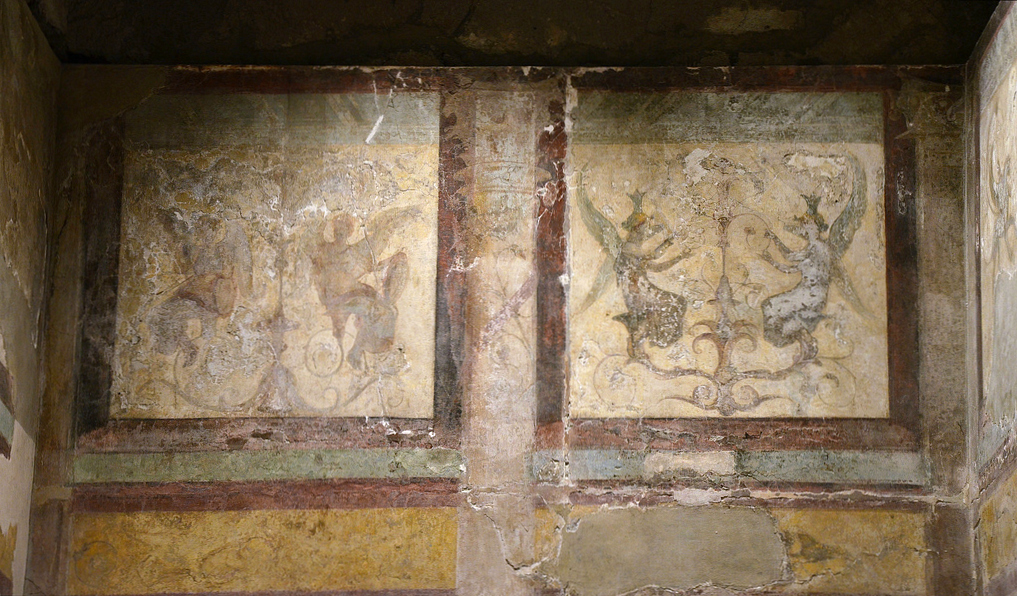
The decorations on the left-hand room show winged fantasy figures, human and animal, ending in elegant plant tendrils.
The right-hand room of the House of Livia, characterized by luxuriant festoons of fruit and flowers.
Fresco detail with luxuriant festoons in right-hand room.
The left-hand room of the House of Livia.
Fresco detail in the upper zone of the left-hand room with winged females figures, perhaps Victories.
The triclinium (dining room) is remarkable for its delicate decoration. Each wall was given an elaborate design of illusionistic architecture featuring a large picture of a sacred and rural landscape in the centre.
The triclinium (dining room) decorated with an elaborate design of illusionistic architecture featuring a large picture of a sacral-idyllic landscape in the centre.
Fresco detail in the right wall of the triclinum depicting a sacred and rural landscape.
Fresco detail in the right wall of the triclinum depicting a sacral-idyllic landscape.
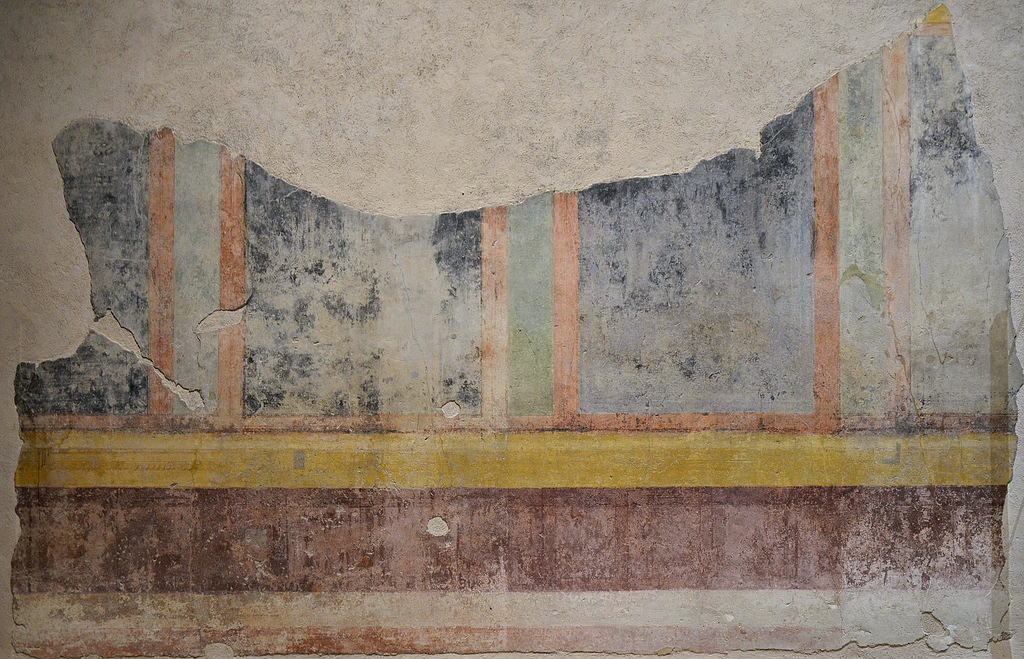
Wall painting fragment alternating wide black and narrow green panels framed in red and bordered above and below in yellow bands.

The vestibulum with imitation veneer adorning the walls.

Links:

Sala Colonia

Sala Colonia is an ancient city situated on the outskirts of Rabat, the present-day capital of Morocco. The site contains the ruins of an ancient port city referred to as Sala by the renowned Greek geographer Ptolemy. Built on a trading post used by the Phoenicians, Sala sits on a hill above the fertile plain of the Bou Regreg river, which flows into the Atlantic Ocean. The first excavations undertaken on the site (1929-1930) unearthed the remains of several buildings from the time of Trajan (AD 98-117), including a forum, a monumental fountain, a capitol, a triumphal arch as well as the decumanus maximus (the main east-west-oriented street). Its Roman remains were later incorporated into a medieval necropolis called Chellah.

Coordinates: 34° 0′ 24″ N, 6° 49′ 13″ W

Phoenician traders were the first to settle on the northern Moroccan coast as early as the 8th century BC. They founded several colonies, including the settlement they called Sala on the banks of the Bou Regreg River. Under the Punic influence, Sala became a city-state with diverse commercial relations with the Iberian peninsula and the Mediterranean and issued its own currency. The Phoenicians were later followed by the Carthaginians from the 3rd century BC onwards. The Romans took control of the area in about AD 40 during the reign of Emperor Claudius, and Sala became part of the province of Mauretania Tingitana. It was the most southwestern outpost of the Roman Empire in Africa. The Romans brought Sala to the status of an important port and thriving economic hub. The city witnessed an important urban development, as evidenced by the layout of the Forum, the capitolium and the curia, the octagonal Nymphaeum, the triumphal arch and the thermal baths. An inscription confirms the city’s status as a Roman municipium, enclosed by a wall in AD 144.

In about AD 250, the Romans lost control of the site to native Berber tribesmen, but Sala remained a trading centre and was still linked to the Roman Empire. Archaeological objects of Visigothic and Byzantine origin found in the area attest to the continuing commercial relations between Sala and Roman Europe.

What remained of the ancient city was abandoned in 1154 in favour of nearby Salé. The site of Sala lay deserted until the 14th century when the Merinids built a holy necropolis (or chellah), a mosque and a minaret on top of the Roman site, enclosed by a wall which still marks its boundaries today. If you visit Chellah in winter or spring, you will get additional wildlife as a large colony of storks inhabits the ruins. As part of the metropolitan Rabat, the site was granted World Heritage Status in 2012.

PORTFOLIO

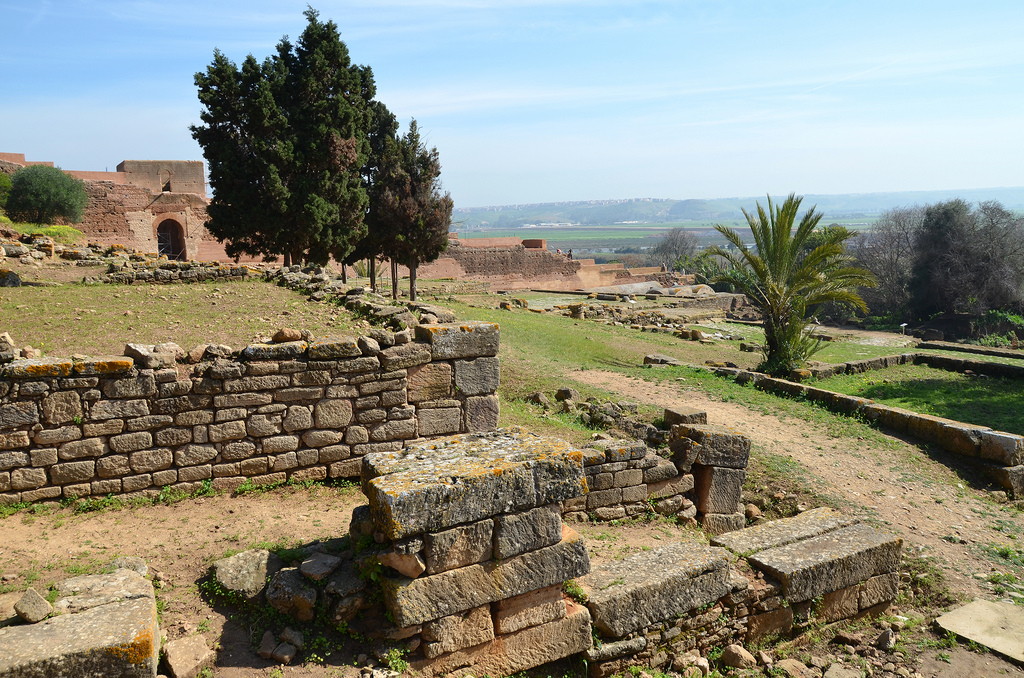
The foundations of the of the triumphal arch, it stood south of the capitol and faced the forum.
The foundations of the three-bay triumphal arch stood south of the capitolium and faced the Forum. It was built during the reign of Antoninus Pius (AD 138-161).
The foundations of the triumphal arch.
The Capitol, the official temple of the Capitoline Triad: Jupiter, Juno and Minerva, built on two terraces arranged on a rectangle 46 m long and 26 m wide.
The Capitolium, the official temple of the Capitoline Triad: Jupiter, Juno and Minerva. It was built in opus africanum on two terraces.
The Capitol was subdivided into several spaces, including a peribole, a covered Corinthian portico, a paved courtyard of blue limestone, with an altar, three adjoining rooms preceded by a pronaos with a staircase and a room reserved for the treasury temple.
Claudius Hosidius Severus, the prefect of a Syrian cavalry squadron of Roman citizens, paid for the Capitolium of Sala. The main building phase of this complex is dated between the end of the 1st century AD to the beginning of the 2nd century AD. It was probably inaugurated at the beginning of Hadrian’s reign in AD 120.
The Capitolium was subdivided into several spaces, including a peribolos (a court enclosed by a wall), a covered Corinthian portico, a paved courtyard of blue limestone, an altar, three adjoining rooms preceded by a pronaos with a staircase and a room reserved for the treasury temple.
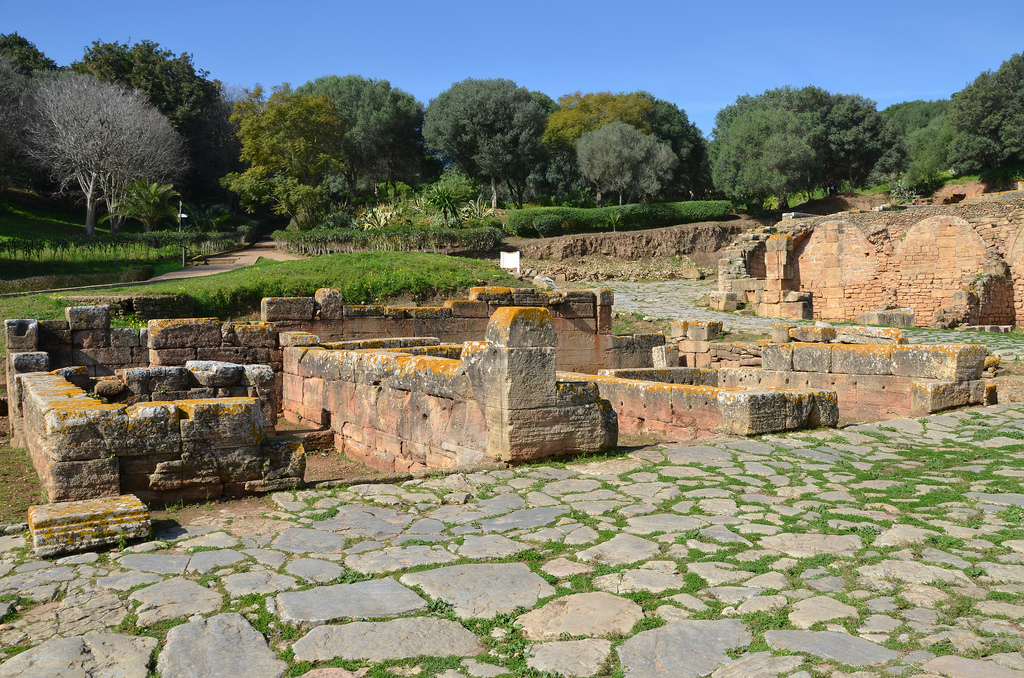
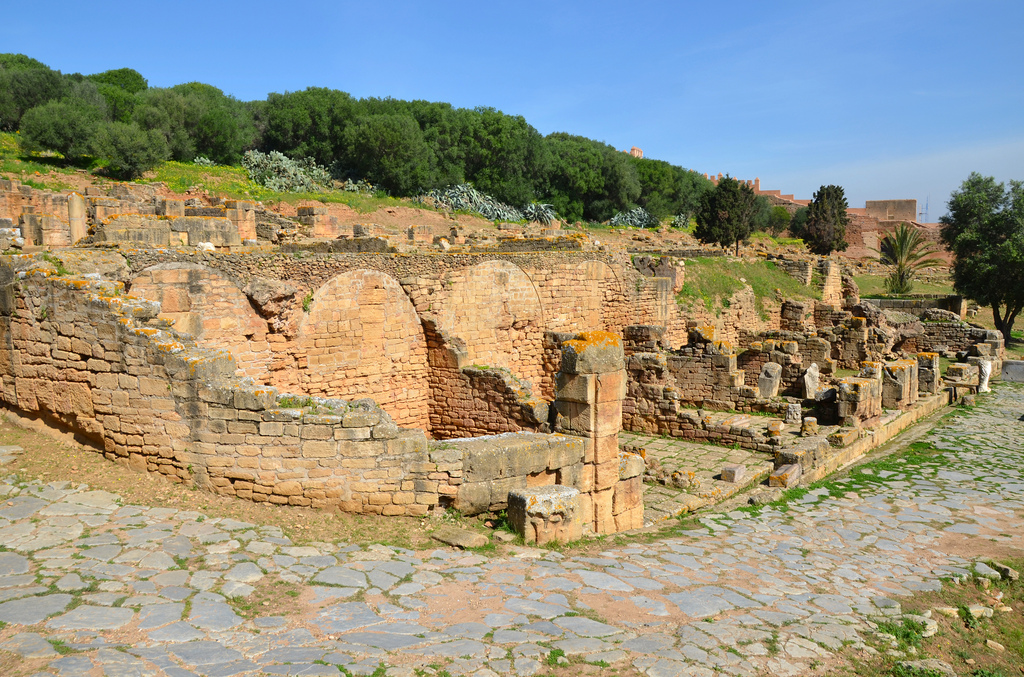
The vaults of nine shops looking out over the decumanus maximus.
The Capitolium was supported by nine vaulted chambers (tabernae?) opening on the decumanus maximus.
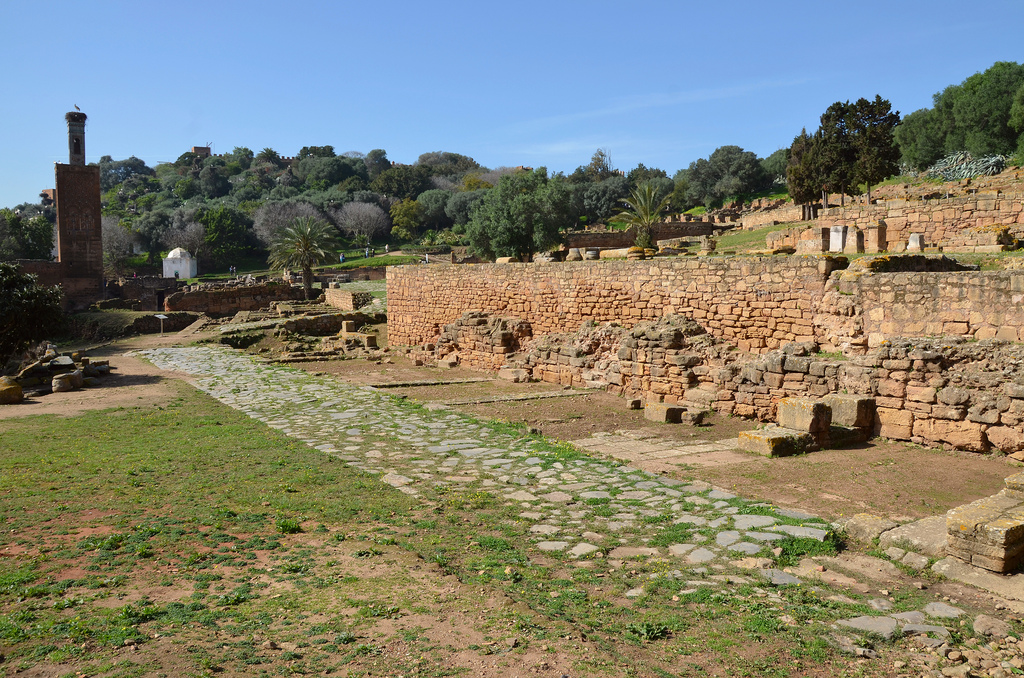
The Decumanus Maximus, bordered on its eastern end by the Forum.
The decumanus maximus is bordered on its eastern end by the Forum.
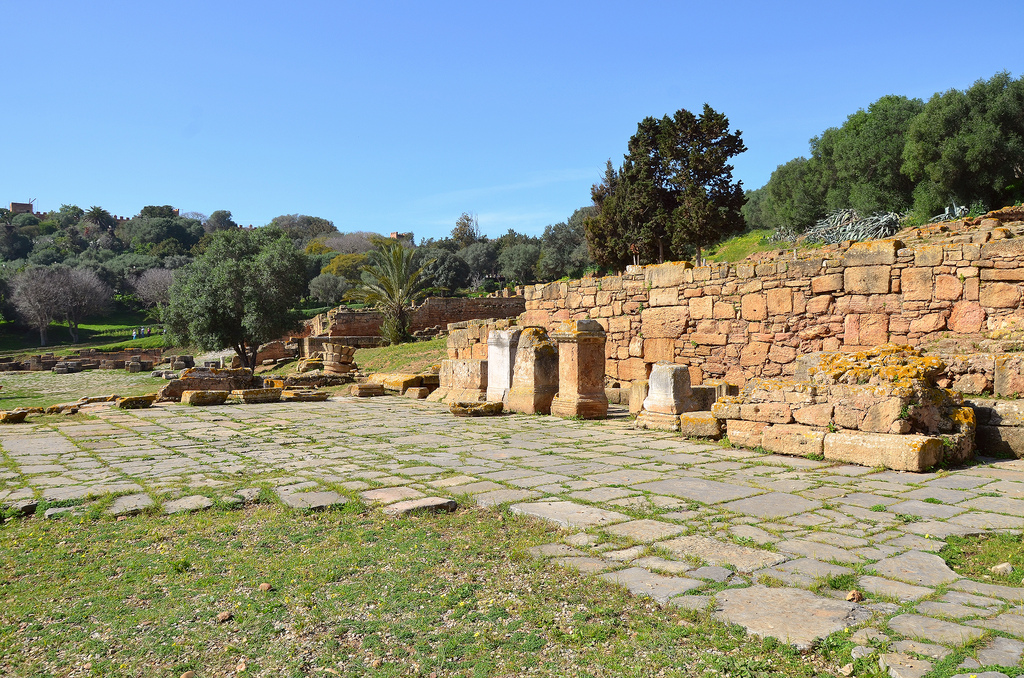
View of the Forum with bases of honorary inscriptions dedicated to the emperors and the great magistrates of the city.
The lower level of the forum with six shops serviced by a secondary road.
The lower level of the Forum with six shops, served by a secondary road.
Trapezoidal, it is covered with large blue limestone slabs kept up to 20.60 m of the podium. Built during the works carried out during the reign of the emperor Trajan, this public square was closed by two monumental gates, of which the powerful foundations still remain.
The Forum was a trapezoidal structure paved with large blue limestone slabs. This public square was closed by two monumental gates whose foundations remain. It was built during the reign of Trajan.
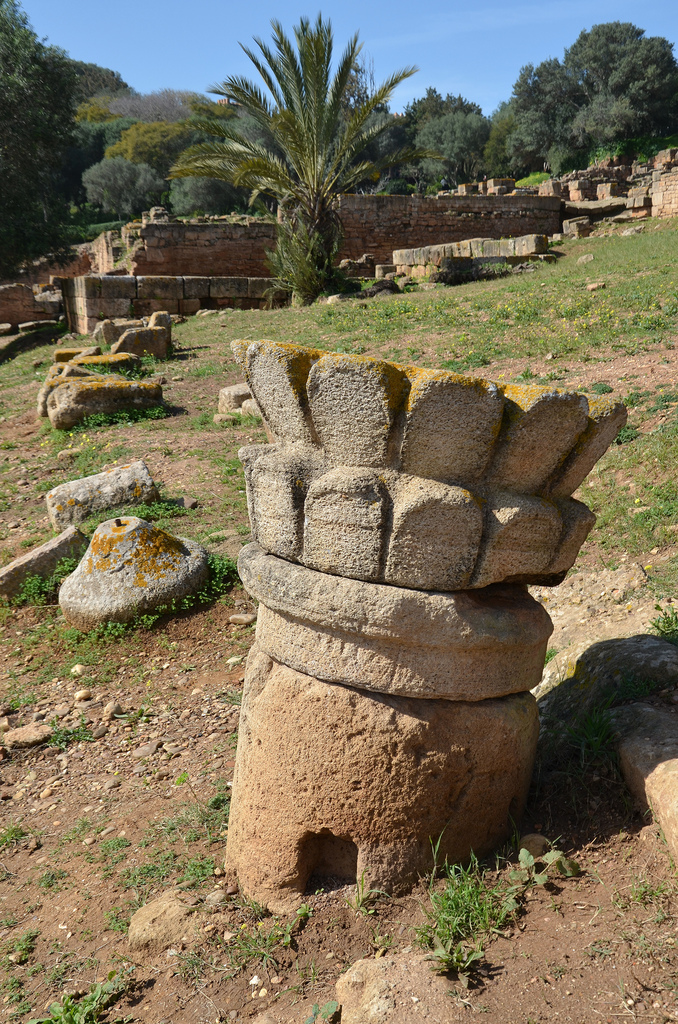
Pseudo-lotus capital outside the forum.
Pseudo-lotus capital outside the Forum.
Roman mosaic in one of the workshops in the artisan quarter.
An apotropaic phallus as a symbol to avert the evil eye inside a workshop.
An apotropaic phallus is a symbol to avert the evil eye inside a workshop.
The ruins of the Curia Ulpia adjoining the basilica. The epithet Ulpia recalls the solicitude of Emperor Trajan, who undoubtedly granted financial aid to the local senate to erect the building.
The ruins of the Curia Ulpia adjoin the basilica. The epithet Ulpia recalls the solicitude of Emperor Trajan, who undoubtedly granted financial aid to the local senate to erect the building.

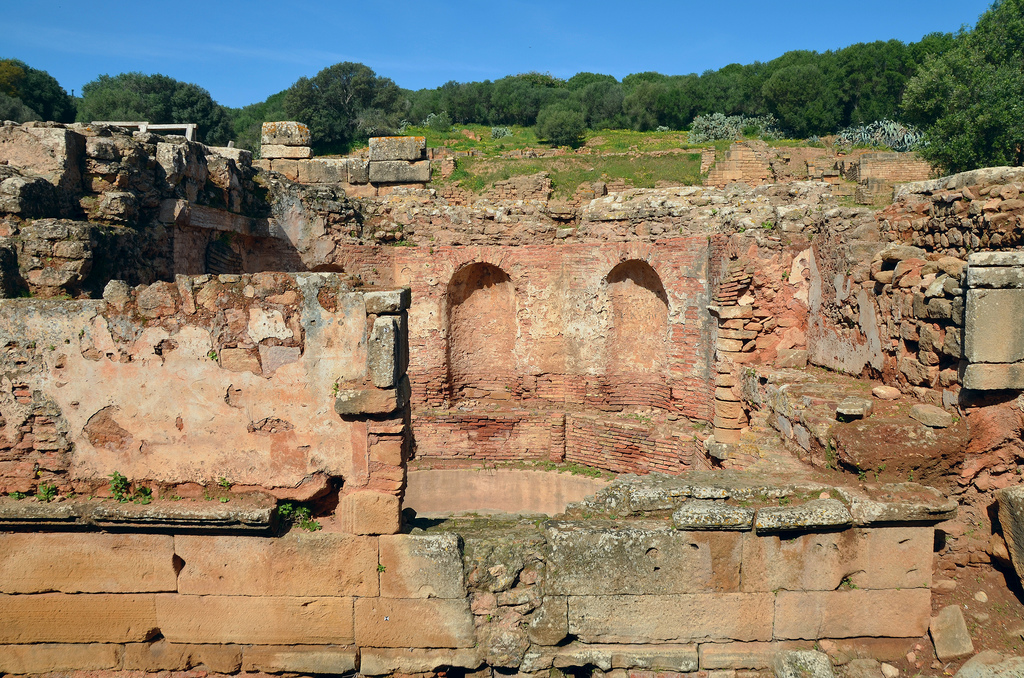
The public baths of Sala located at the intersection of the decumanus maximus and the cardo maximus.
The public baths of Sala are located at the intersection of the decumanus maximus and the cardo maximus.
The octagonal Nymphaeum. It formed a water tower and was supplied by an aqueduct.

Roman ruins of Sala with 13th century minaret.
Roman ruins of Sala with 13th-century minaret.
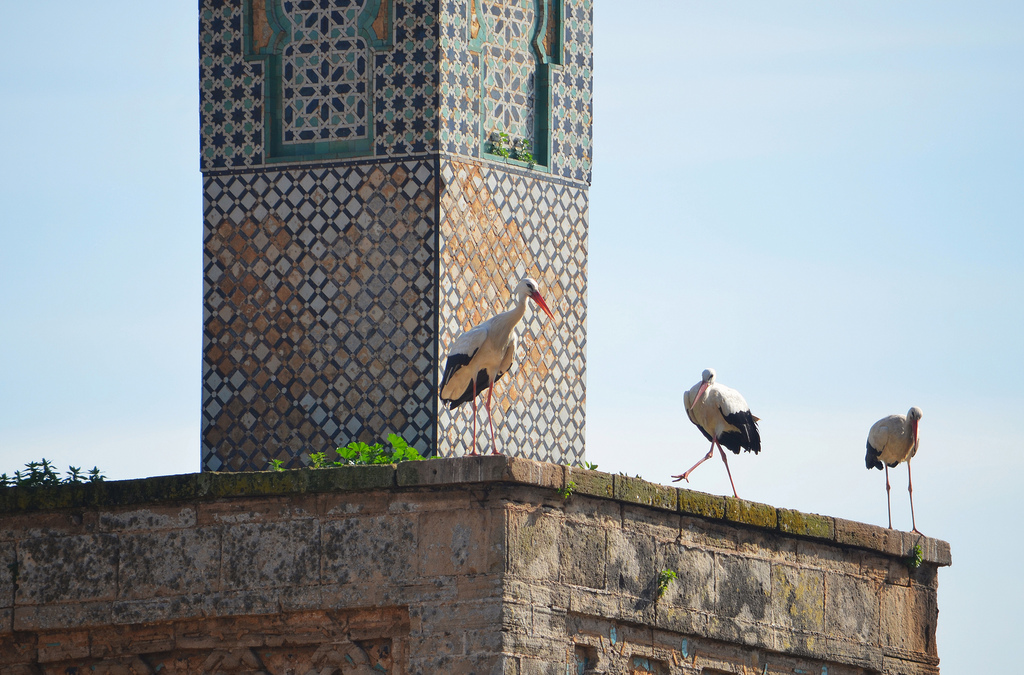
Storks nesting on the 13th century minaret.
Storks nesting on the 13th-century minaret built of stone and zellige tilework.

Links: