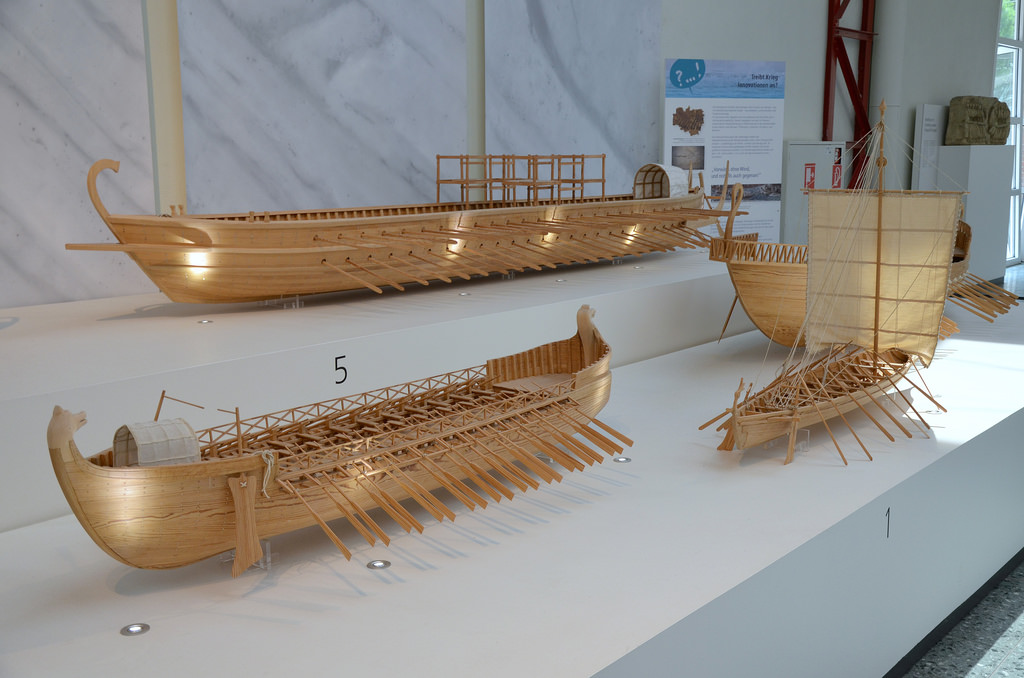
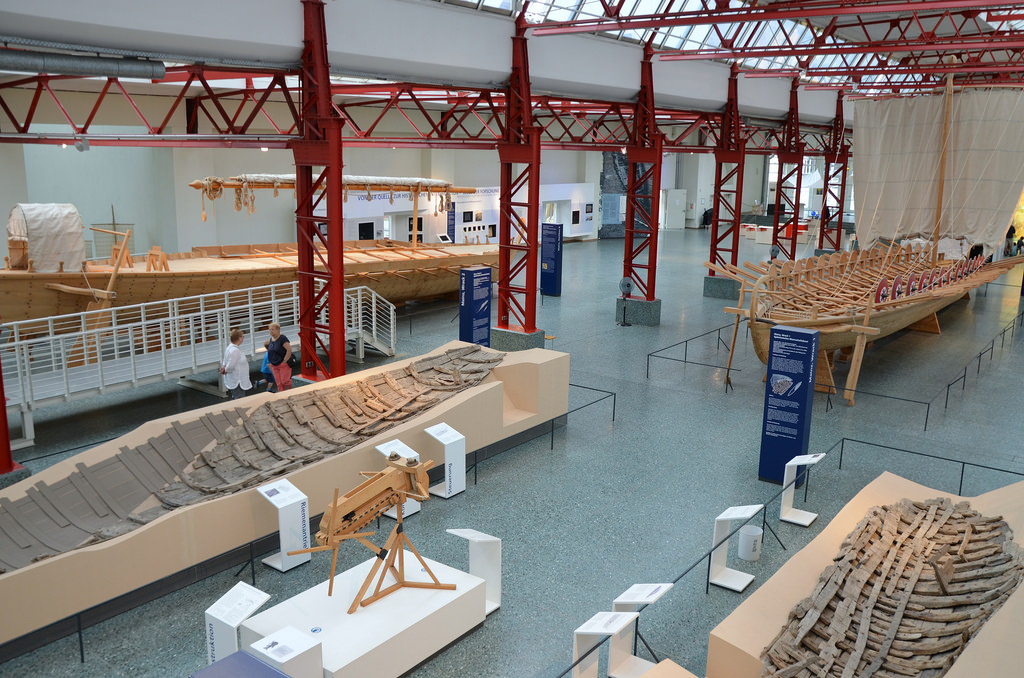
The Museum of Ancient Seafaring (German: Museum für Antike Schifffahrt) in Mainz opened in 1994 in the former 19th century repair shop of the Hessian Ludwig Railway, near the Mainz Roman theatre, as a branch of the Romano-Germanic Central Museum (Römisch-Germanisches Zentralmuseum). The exhibits include the wooden remains of five Roman military ships from the 4th century AD together with full-scale replicas, many reliefs with representations of ships, model reconstructions as well as a gallery dedicated to the history of shipbuilding and construction techniques.

Coordinates: 49° 59′ 38.75″ N, 8° 16′ 49.51″ E
After the establishment of the military castrum (fort) of Mogontiacum (modern Mainz) in 13–12 BC, ships of the Classis Germanica (the Roman fleet in Germania Superior and Germania Inferior) became stationed at its harbor. Mogontiacum soon became the capital of the Roman province of Germania Superior and an important naval base of the Roman fleet on the river Rhine. In November 1981, as workmen dug the foundation of an extension of the Hilton Hotel in Mainz, the remains of at least 10 military wooden ships dating from the last days of the Roman Empire were discovered still in situ on their gravel beds. These survived more than 1,500 years only because they were buried under 7 metres of clay and sand, which kept them away from the destructive effects of oxidation. The ships, all made of German oak, were waterlogged but otherwise fairly well preserved.
The area seemed to have been a part of the ancient harbor where old ships were abandoned by the Romans around AD 400 when their empire had grown weak and they could no longer maintain their garrison at Mogontiacum.
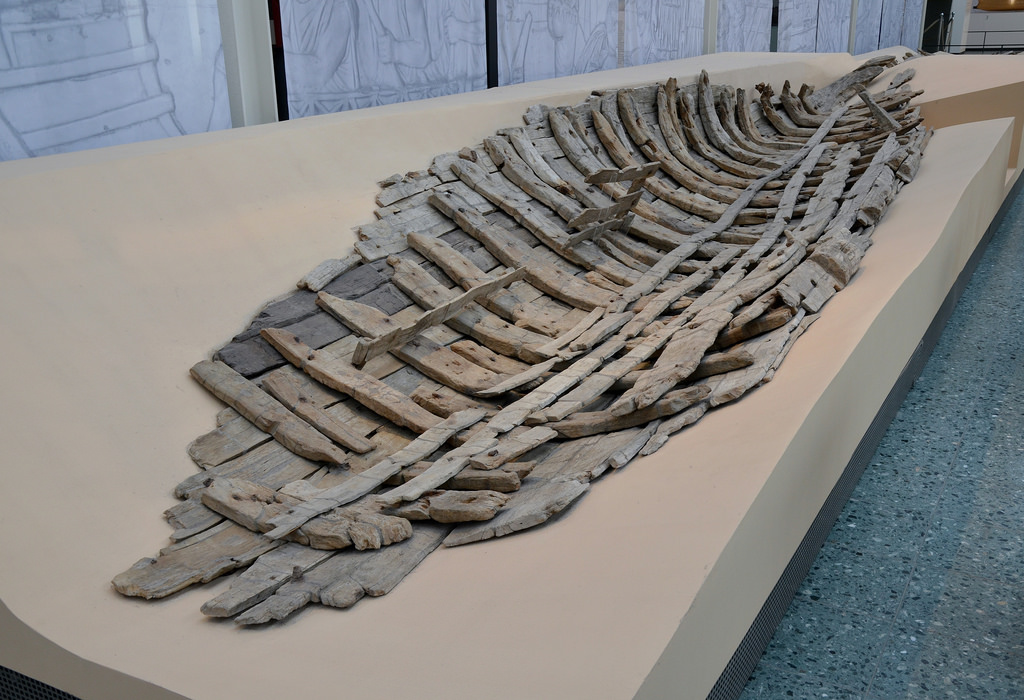
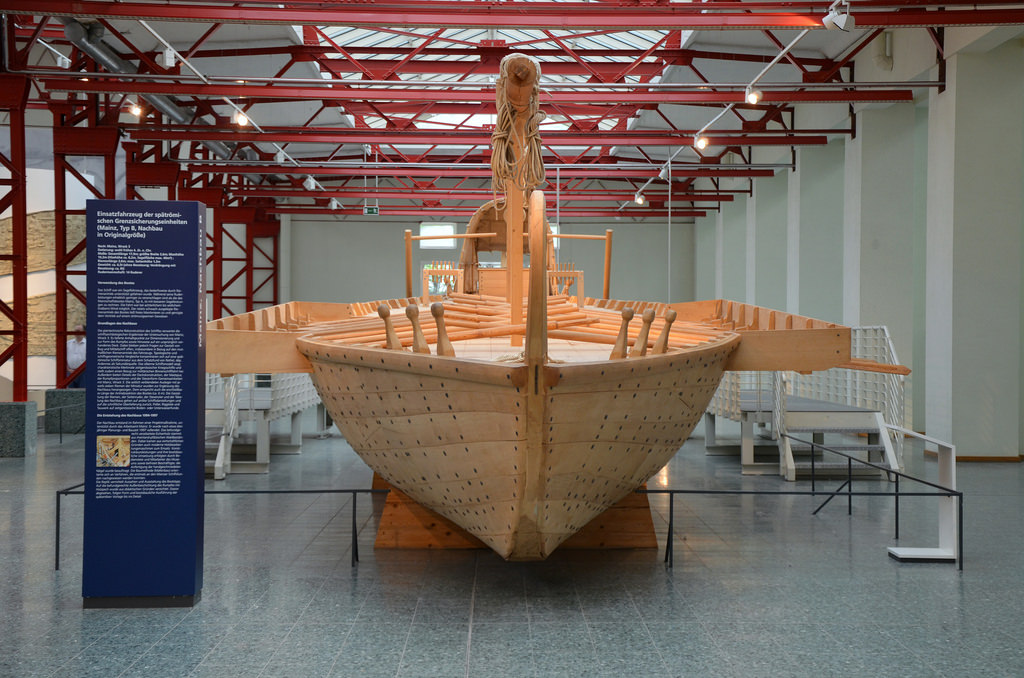
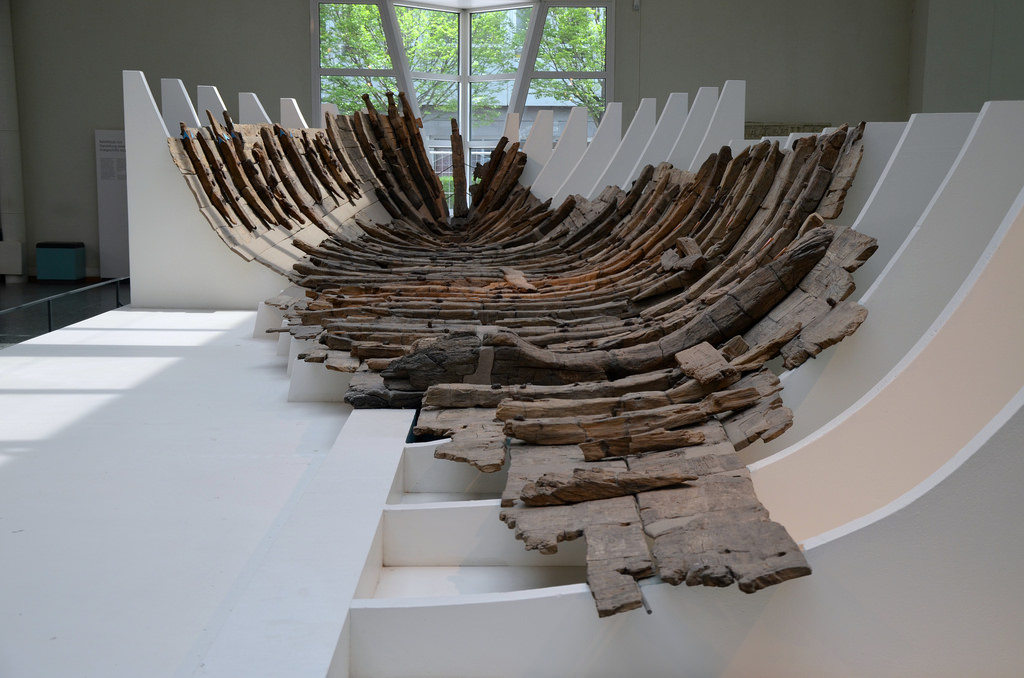
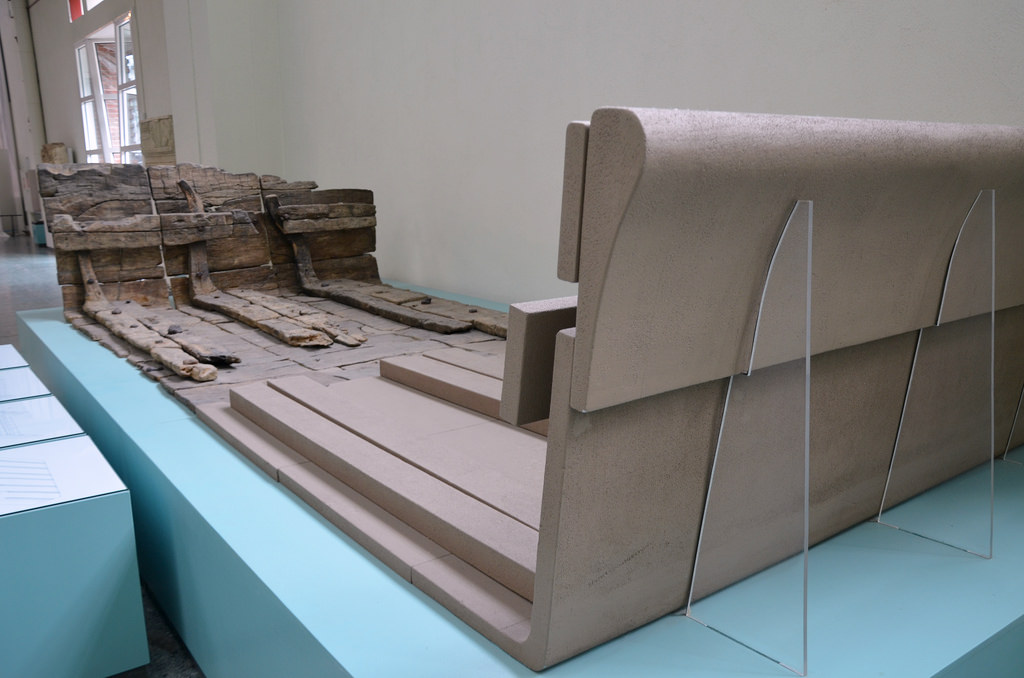
The wrecks were cautiously dismantled, documented, and, in 1992, brought to the Museum of Ancient Seafaring for further preservation and study. They were dated by the use of dendrochronology (tree-ring dating) and were termed Mainz 1, 2, 3, 4, 5 and generally referred to as the Mainzer Römerschiffe, the Mainz Roman ships. They were identified as military vessels that belonged to the Roman flotilla in Germania, the Classis Germanica. The vessels could be classified into two types, namely small troop transporters (Mainz type A – Mainz 1, 2, 4, 5) termed navis lusoria and a multinational patrol vessel called navis actuaria (Mainz type B – Mainz 3). A little later, the remains of two flat-bottomed ships of type Zwammerdam came to light close to the findspot.
The museum has a workshop, where visitors have the opportunity to watch the staff working on the production of antique ship models. A further section of the exhibition is devoted to the explanation of Roman ship construction.
PORTFOLIO
Mainz Type A




Mainz Type b

Mainz Type Zwammerdam

models of other ship types


reliefs with representation of ships


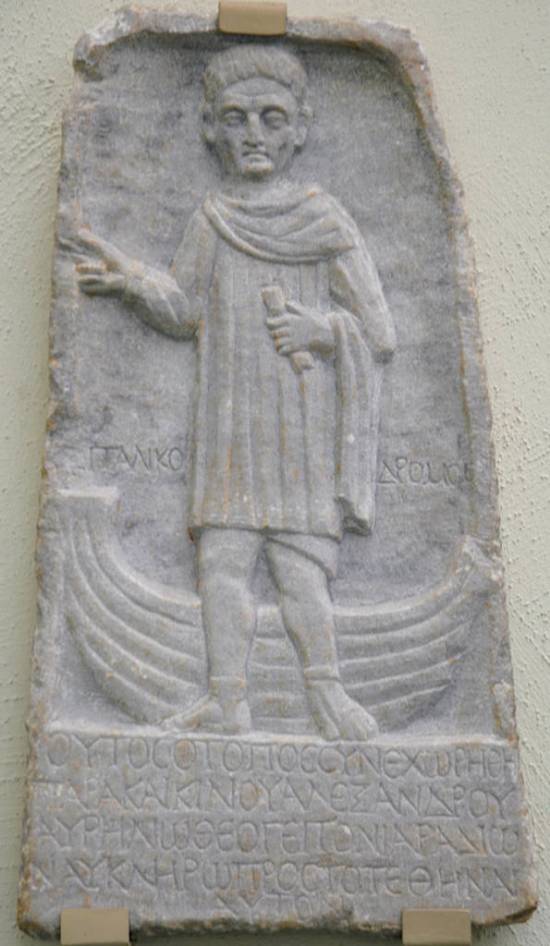
He seems to have been one of those ship owners who navigated their vessels by themselves between the Eastern Mediterranean and Italy.

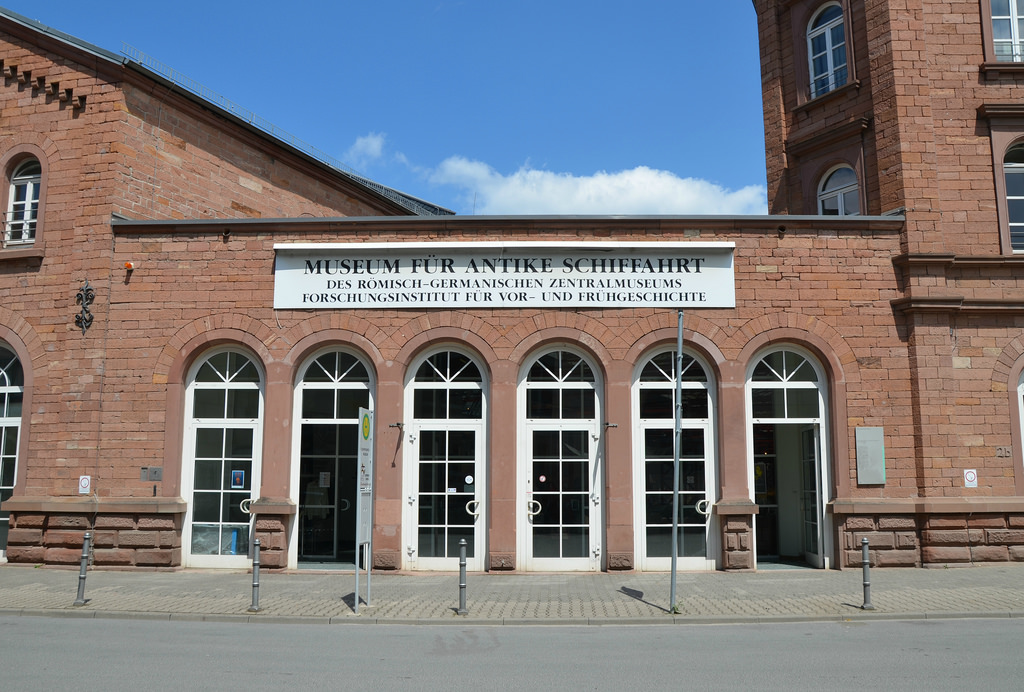
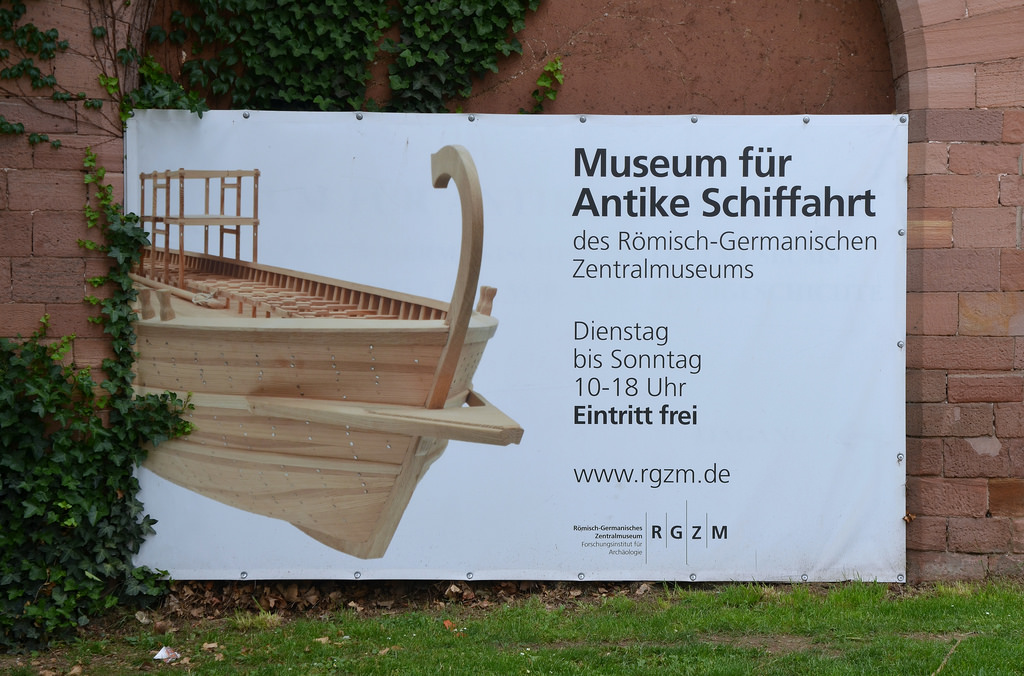
The museum is open Tuesday through Sunday, 10:00 am – 8:00 pm. The admission is free.
Links:





 following hadrian photography