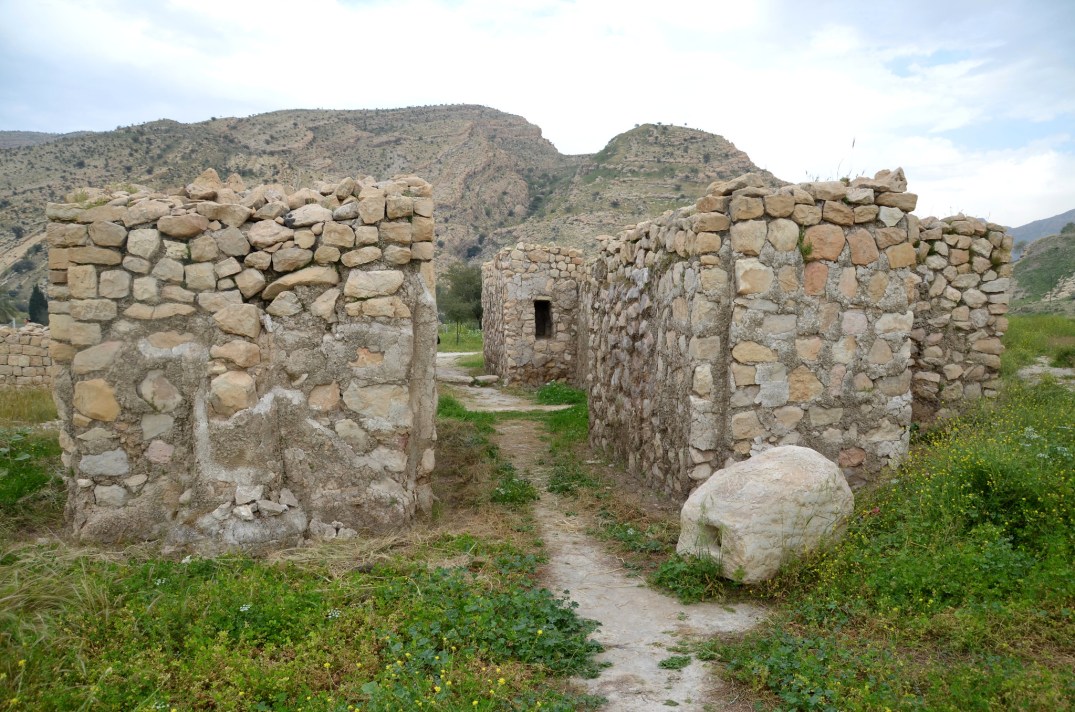
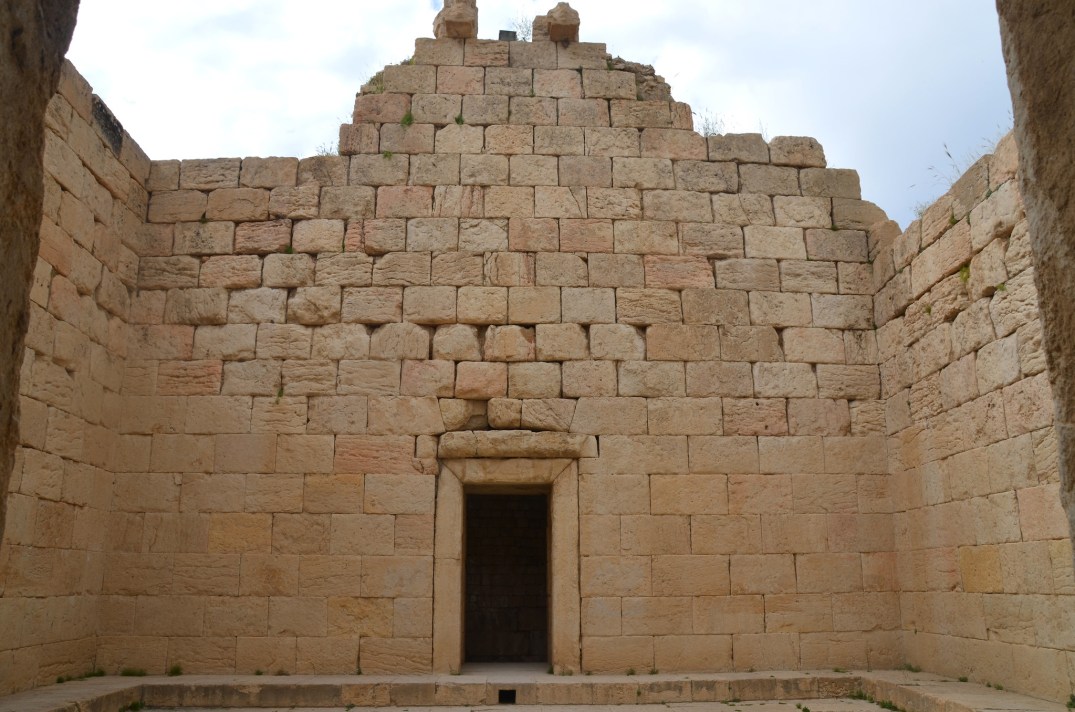
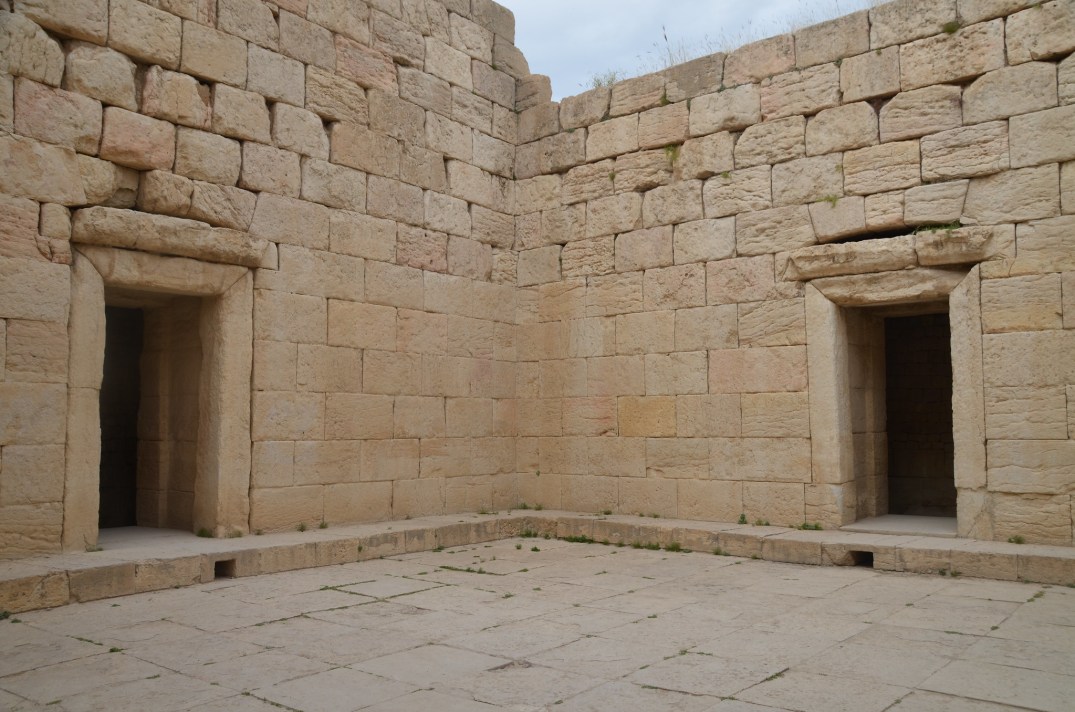
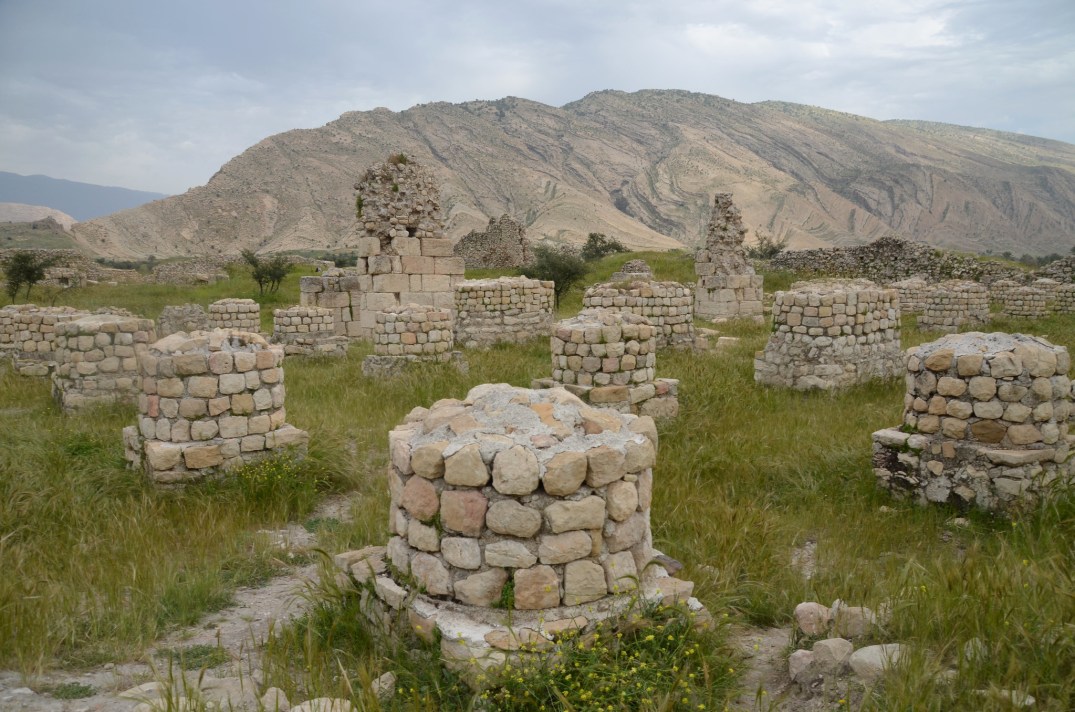
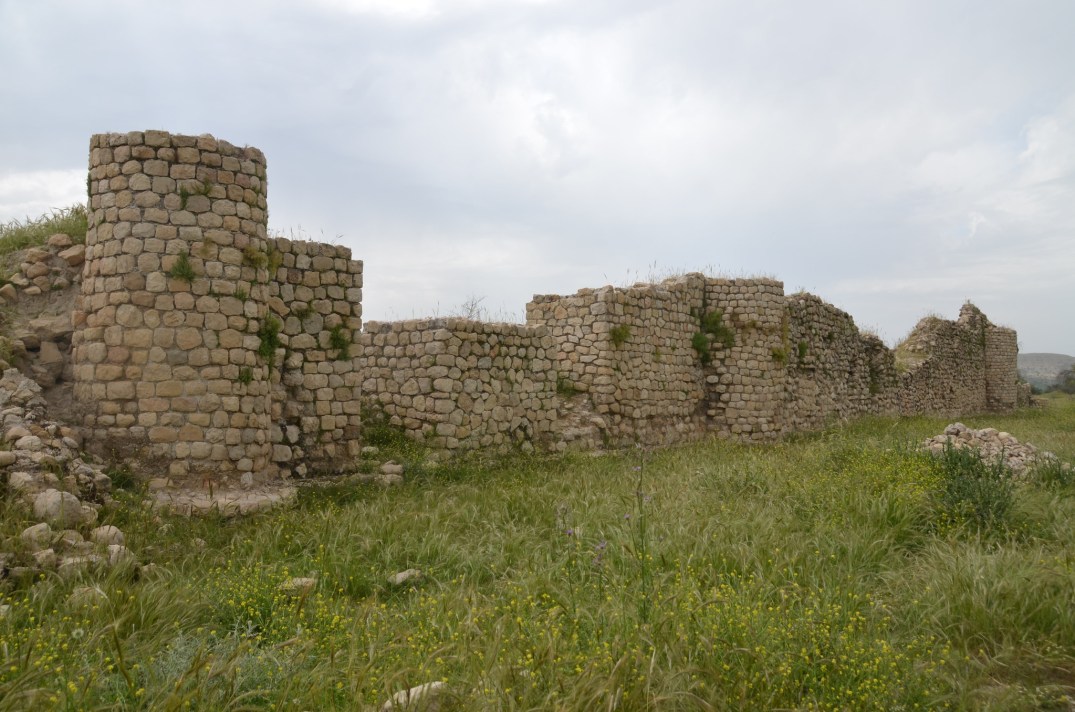
Bishapur was a Sasanian city in the Fars region of Iran, located just off the road connecting the Sasanian capitals of Istakhr (close to Persepolis) and Ctesiphon. The site is known for its Sasanian-era bas-reliefs and the ruins of a royal city. In June 2018, it was declared a UNESCO World Heritage site as part of the Sassanid Archaeological Landscape of the Fars Region.
Bishapur was built near a river crossing in AD 266 on the orders of King Shapur I by Roman soldiers who had been captured after the defeat of the Roman emperor Valerian. The city, surrounded by walls that may have stood some ten metres high, was inhabited by some 50,000 to 80,000 people. It had a rectangular plan with a grid pattern of regular intra-urban streets, resembling Roman city design. The Sasanian king had the sides of the nearby gorge decorated with huge historical reliefs commemorating his triple triumph over Rome.
Bishapur remained an important city until the Arab invasions and the rise of Islam in the second quarter of the 7th century. Under the Umayyads, the city became a centre of Islamic learning (a madrassah and a few mosques have been excavated).
PORTFOLIO
The city
The PALACE
The mosque
The reliefs
The first bas-relief
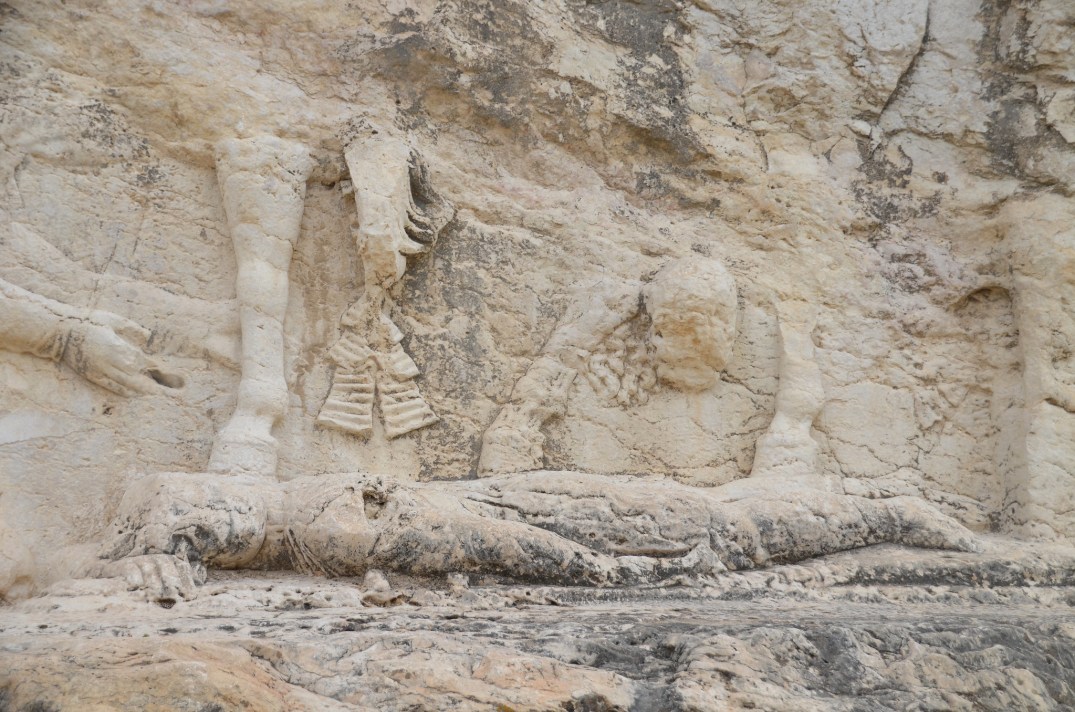
Badly damaged relief depicting the investiture of Shapur I. The king on horseback reaches for the beribboned ring held by Ahuramazda.Detail of Roman emperor Gordian III, who was mortally wounded during his campaign against the city of Ctesiphon in AD 244.Right side of the badly damaged relief depicting the investiture of Shapur. Ahuramazda’s horse tramples upon the devil (Ahriman), and a kneeling Roman emperor (Philip the Arab) is shown pleading for mercy.
The second bas-relief
Relief depicting Shapur I’s investiture and his first victory over the Roman army. On the left were two rows of advancing Persian cavalry, and on the right, the two registers with delegates bringing objects
The third bas-relief
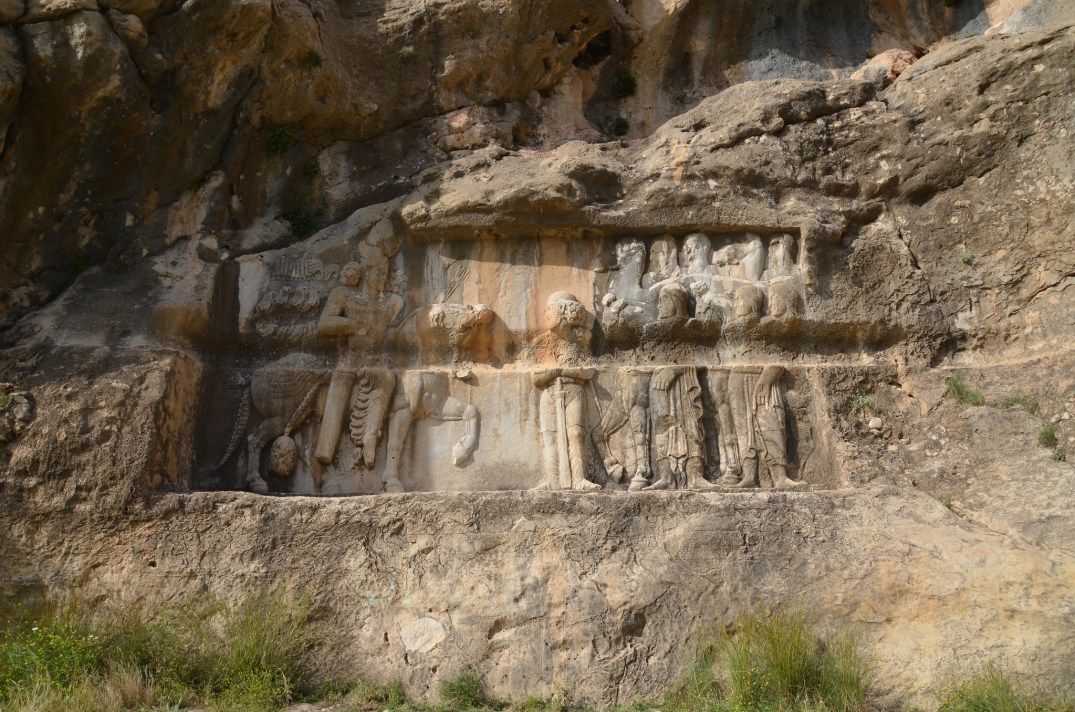
Relief depicting, in five horizontal registers, the triple victory of Shapur I over Gordian III, Philip the Arab, and Valerian. The relief was damaged because of water erosion.
The fourth bas-relief
Relief made under Bahram II (r. 276-293) depicting the king receiving delegation of Arabs (the future conquerors of Iran) accompanied by a dromedary and a horse.
The fifth relief
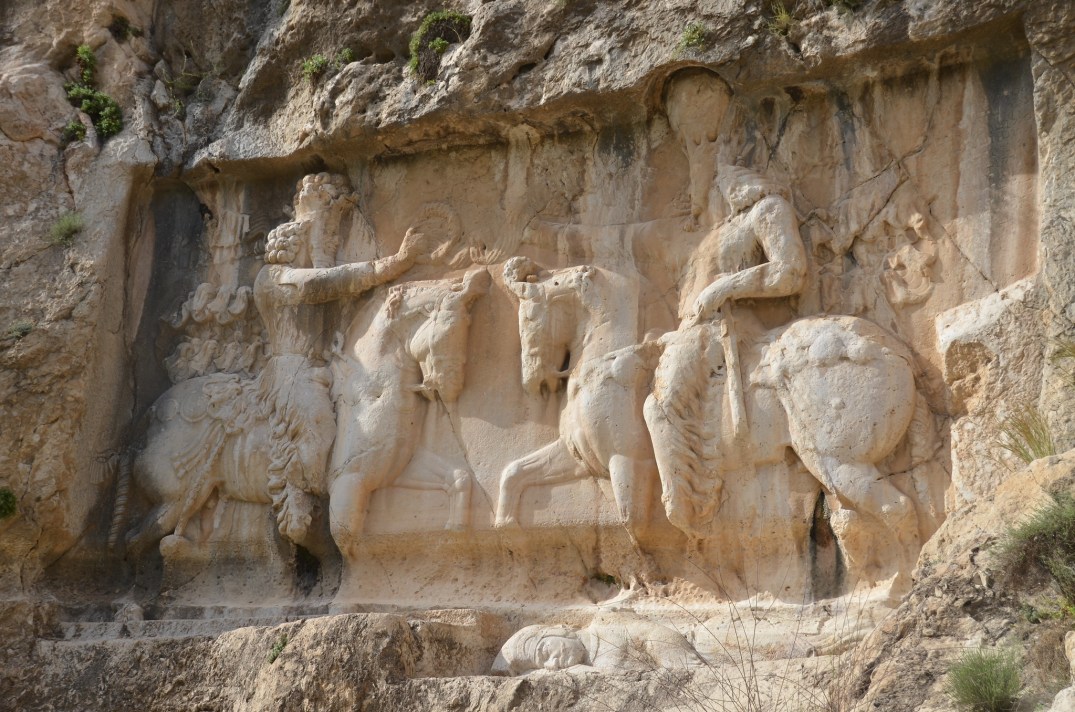
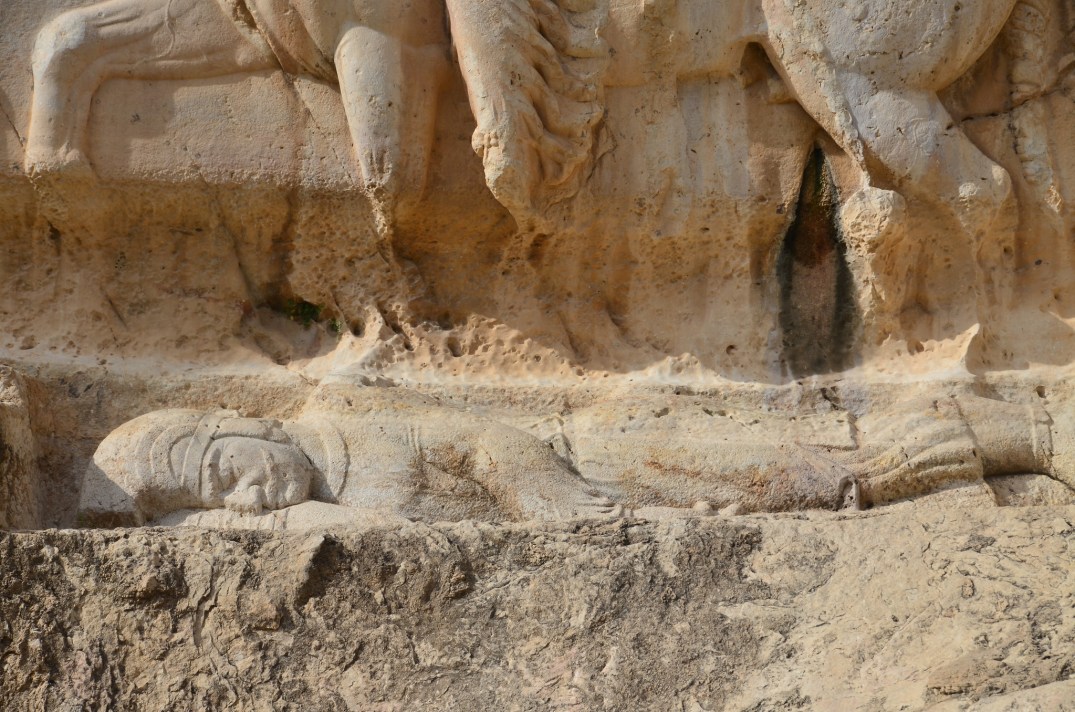
Sasanian relief depicting the investiture of Bahram I (r. 273-276), the fourth Sasanian King of Kings of Iran.Having lost Mesopotamia and Ctesiphon to the Romans, it is surprising to see Bahram depicted as a victorious king trampling a dead enemy beneath his horse. It is likely that the dead man did not belong to the original design and was added by King Narseh (r. 293-303) after a victory.
The sixth relief
Relief with two registers made for King Shapur II (r. 309-379); it depicts a triumph over the Indians or the Kushans, or the representation of the repression of a revolt.