Roman Villa Nennig

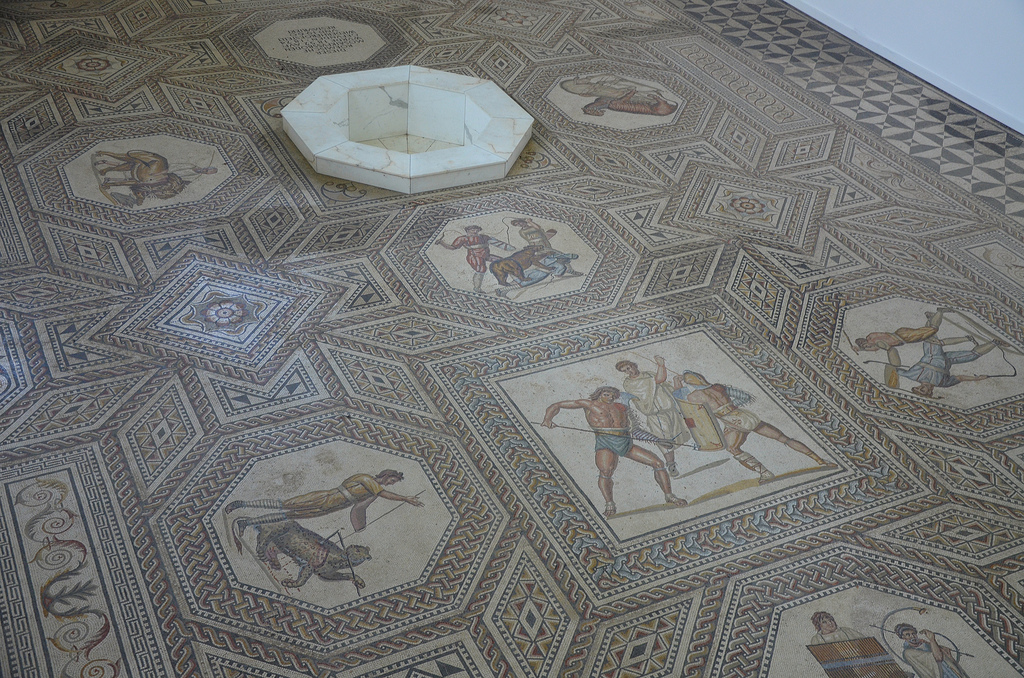
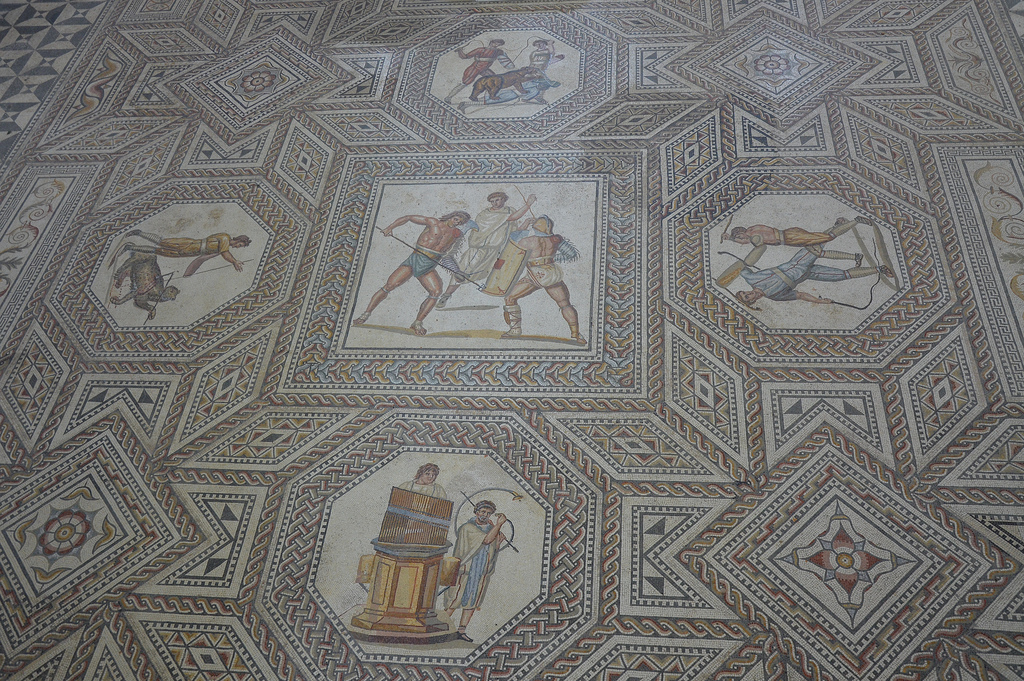
Located in the village of Nennig in the delightful Upper Moselle Valley, the Roman Villa Nennig (German: Römische Villa Nennig) houses a richly illustrated gladiatorial mosaic, one of the most important Roman artefacts north of the Alps. Protected by a dedicated building built about 150 years ago and covering an area of roughly 160m2, the mosaic vividly portrays musicians, hunting scenes and gladiatorial contests.

Coordinates: 49° 31′ 44.56″ N 6° 23′ 5.03″ E

In the 3rd century AD, the mosaic paved the atrium (reception hall) of a large villa urbana which a wealthy Roman had built on the road between Divodurum (Metz) and Augusta Treverorum (Trier). The mosaic later disappeared below ground until it was discovered by chance by a farmer in 1852. The excavations conducted between 1866 and 1876 revealed only a part of the once splendid and extensive ground, the foundation walls of the imposing central building, and several adjacent buildings. A coin of Commodus (struck ca. 192) found under the mosaic during the restorations of 1960 dates the villa’s construction to the end of the 2nd century or the beginning of the 3rd century AD.

The villa complex included a bath house with heated rooms, small pavilions and magnificent gardens. A two-storied colonnaded portico (140 m long) flanked by three-storied tower wings with massive walls ran across the façade of the main building. Beyond these, at either side, two temple-pedimented structures flanked the villa.
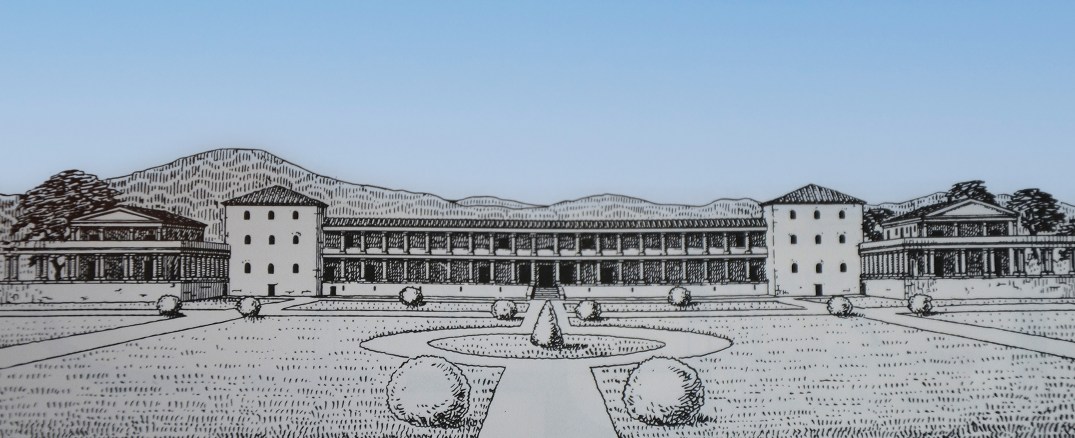
General view of the Roman Villa Nennig (reconstructed according to Mylius).

The mosaic comprises seven octagonal medallions surrounding two central quadrangles, one decorated with a scene of gladiatorial combat, the other occupied by a marble basin. An elaborate pattern of geometrical designs borders each scene. Walking around the interior of the protective building, the entire scene of the mosaic can be viewed from a raised platform.

PORTFOLIO
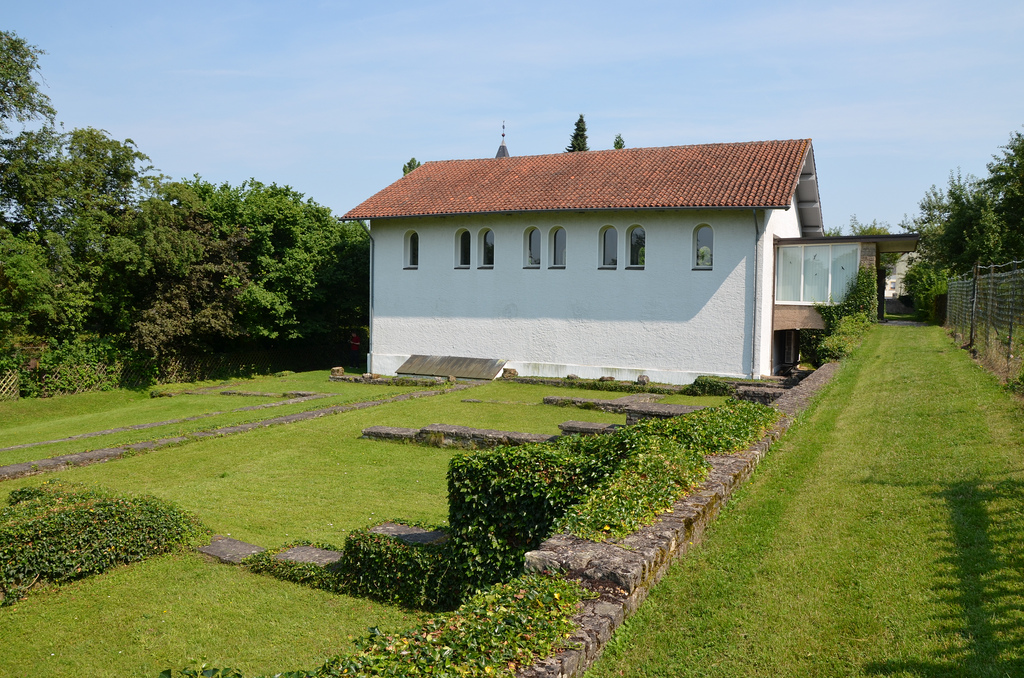
The remains of the Roman villa in Nennig.
The foundation remains of the Roman villa in Nennig.
Medallion depicting a organist and horn player. The beginning and the end of the Roman games were often accompanied by music. The mosaicist has depicted the water organ (hydraulis), know in the ancient world since 300 BC. The 27 organ-pipes rest on a hexagonal podium which also serves to store water for the organ. The organist plays the keyboard situated behind the pipes. The curved horn, which is braced and supported on the shoulder of the player by a cross bar, is a cornu.
Octagon depicting an organist and horn player.
The beginning and the end of the Roman games were often accompanied by music. The mosaicist has depicted the water organ (hydraulis), known in the ancient world since 300 BC. The 27 organ pipes rest on a hexagonal podium that also stores water for the organ. The organist plays the keyboard situated behind the pipes. The curved horn, which is braced and supported on the shoulder of the player by a crossbar, is a cornu.
Octagonal medallion depicting a Javelin thrower with a panther. The games usually began with venationes (beast hunts) and bestiarii (beast fighting) gladiators. Here the beast is wounded by the venator’s spear and tries to pull the javelin out. It succeeds only in breaking it in half. Delighted with his conquest, the proud venator received the acclamation of the crowd.
Octagon depicting a Javelin thrower with a panther.
The games usually began with venationes (beast hunts) and bestiarii (beast fighting) gladiators. Here the beast is wounded by the venator’s spear and tries to pull the javelin out. It only succeeds in breaking it in half. Delighted with his success, the proud venator received the crowd’s acclamation.
Octagonal medallion depicting a tiger attacking a wild ass. Another variety of venatio consisted of pitting animals against animals. The Romans loved to see large and dangerous animals fighting each other. In this scene, a wild ass, laid low by blows from the tiger’s paw, has fallen to the ground. Standing proudly, the victor of this unmatched contest looks around before commencing his bloody feast.
Octagon depicting a tiger attacking a wild ass.
Another variety of venatio consisted of putting animals against animals. In this scene, a wild ass, laid low by blows from the tiger’s paw, has fallen to the ground. Standing proudly, the victor of this unmatched contest looks around before starting his bloody feast.
Octagonal medallion depicting a resentful lion being led away by his aged keeper. This was the first of the illustrated panels to be discovered in 1852.
Octagon depicting a resentful lion being led away by his aged keeper.
This was the first of the illustrated panels to be discovered in 1852.
Octagonal medallion depicting two rogues trying to drive the animal off by lashes from their whips. In this panel, which is in the center of the mosaic, a bear has thrown one of his tormentors to the ground, while the other two attempt to drive the animal off by lashes from their whips. The venatores are wearing knee-breeches and very broad belts in addition to the leg wrappings. Later their clothing was reduced to the tunica.
Octagon depicting two rogues trying to drive the animal off with lashes from their whips.
A bear has thrown one of his tormentors to the ground while the other two attempt to drive the animal off. The venatores are wearing knee-breeches and very broad belts in addition to the leg wrappings. Later their clothing was reduced to the tunica.
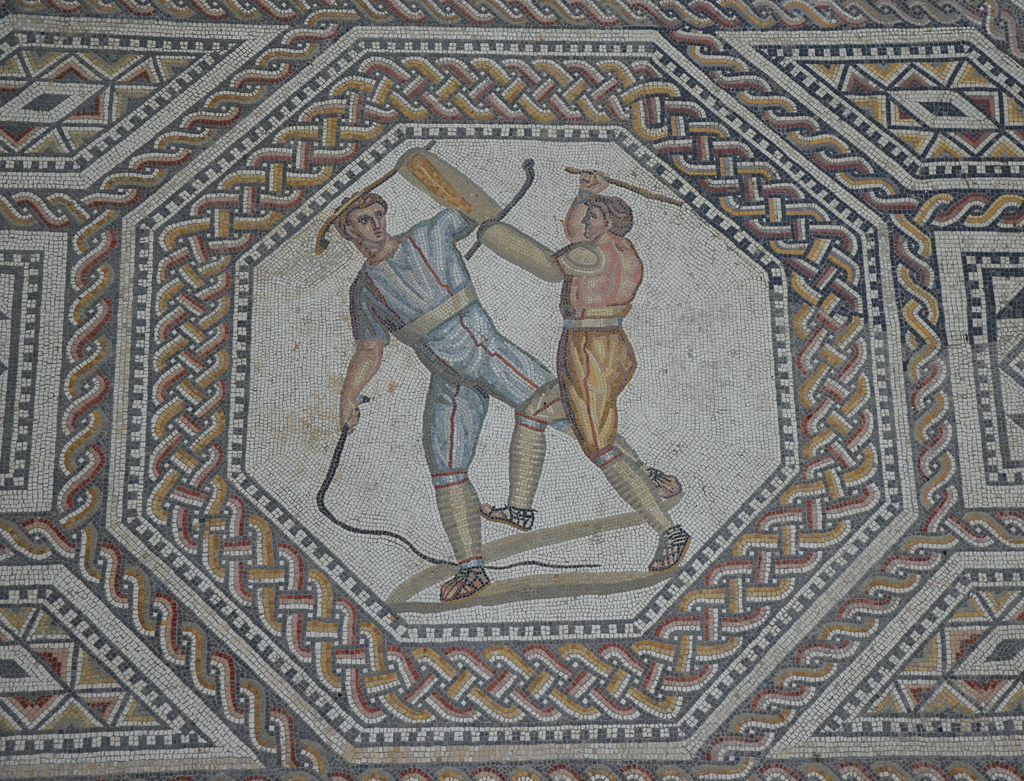
Octagonal medallion depicting two combatants attacking one another with cudgels and a whip. The introduction to the gladiatorial contests consisted of a prolusio (prelude). The various pairs fought with blunted weapons, giving the foretaste of their skills.
Octagon depicting two combatants attacking one another with cudgels and a whip.
The introduction to the gladiatorial contests consisted of a prolusio (prelude). The various pairs of gladiators fought with blunted weapons, giving the foretaste of their skills.
Octagonal medallion depicting a Retiarus armed with trident and dagger fighting against a Secutor while a referee looks on. In the afternoon came the high point of the games, individual gladiatorial combats. These were usually matches between gladiators with different types of armor and fighting styles, supervised by a referee (summa rudis). This scene represents simultaneously the highlight and the conclusion of the games.
Rectangular panel depicting a Retiarus armed with a trident and dagger fighting against a Secutor while a referee looks on.
In the afternoon came the high point of the games; individual gladiatorial combats. These were usually matches between gladiators with different types of armour and fighting styles, supervised by a referee (summa rudis). This scene simultaneously represents the highlight and the conclusion of the games.
Following restorations in 1960/61 the following text was inserted: This Roman mosaic floor was discovered in 1852, reconstructed in 1874 and restored in 1960. The original medallion has been destroyed, perhaps intentionally, by later occupants of the villa.
Following restorations in 1960/61, the following text was inserted: This Roman mosaic floor was discovered in 1852, reconstructed in 1874 and restored in 1960. The original medallion has been destroyed, perhaps intentionally, by later villa’s occupants.
General view of the Nennig Mosaic.

The Saarland and Moselle Valley’s ancient Roman heritage has much to offer tourists and scholars. More than 120 antique sights along the Moselle and the Saar rivers, the Saarland and Luxembourg are testaments to the Gallo-Roman era north of the Alps (further information here).

Opening hours:
April – September: Tuesday to Sunday 8:30 am – 12 noon and 1 – 6 pm
October, November and March: Tuesday to Sunday 9 – 11:30 am and 1 – 4:30 pm
Closed from December to February and on Mondays

Website: http://nennig.de/sehenw/nennig.html

Sources:

  • The Roman Mosaic at Nennig: A Brief Guide (n.d.) by Reinhard Schindler
  • Eckart Köhne, Cornelia Ewigleben, Ralph Jackson, Gladiators and Caesars: The Power of Spectacle in Ancient Rome. Berkeley: University of California Press, 2000
Argive Heraion

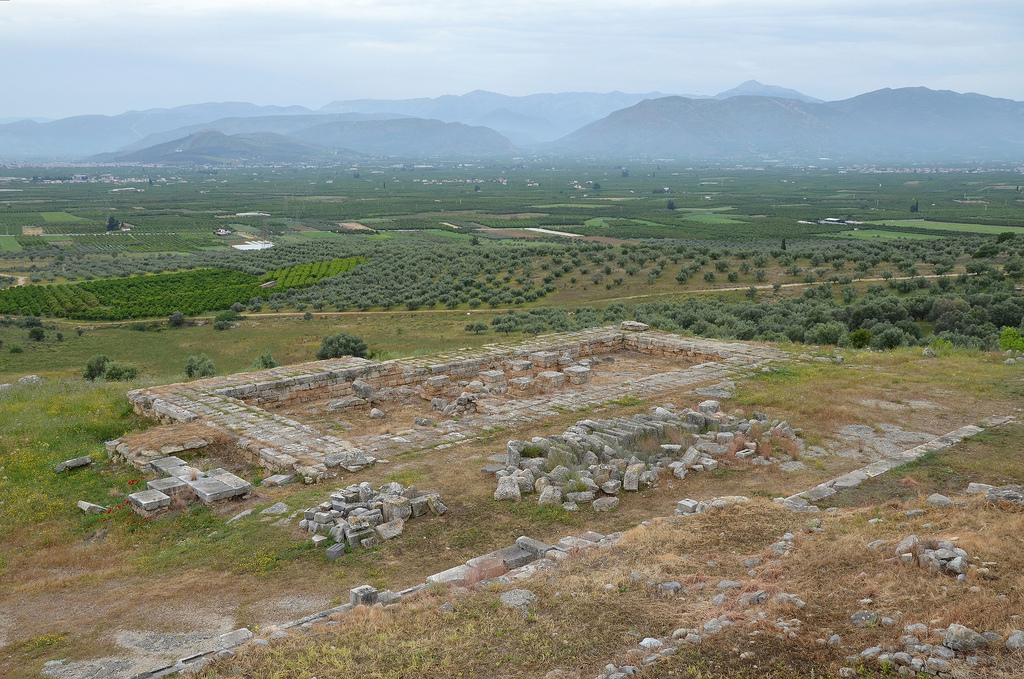
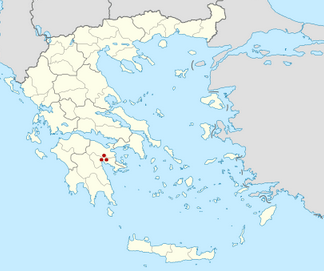
The Argive Heraion served as the main sanctuary of Argos and is regarded as one of the best-preserved and most picturesque sites in the Argolid. Its ruins are located 8 kilometres northeast of Argos on the slopes of Mount Euboea. The goddess Hera, the patron deity of the city of Argos, was worshipped here, and this sanctuary was the most renowned centre for her worship.

Coordinates: 37° 41′ 31″ N, 22° 46′ 29″ E

heraion

The Argive Heraion was built over the remains of a Mycenaean settlement, and archaeological evidence suggests that cultic activity at the site dates back as early as the 10th century BC. The sanctuary occupied three artificial terraces on a site above the Argive Plain. The upper terrace was built using huge Cyclopean blocks of possible late Geometric date (760–700 BC), and shortly thereafter, a temple of mud brick and wood with a colonnade was added. The Old Temple of Hera was one of the earliest colonnaded temples in Greece. It was destroyed by fire in 423 BC and has almost completely disappeared.

heraion_of_argos_reconstruction_on_a_1902_painting

The middle terrace was dominated by the New Temple of Hera, which was built by the architect Eupolemos of Argos c. 420-410 BC following the fire. The famous chryselephantine statue of Hera (made of gold and ivory over a wood core) by Polykleitos was housed in the temple’s cella. The traveller Pausanias, who visited the temple in the 2nd century AD, provided a brief description of the sculptures that decorated the pediment and the metopes of the temple: “over the columns, some sculptures represented the birth of Zeus and the battle of the gods and giants, other the Trojan wars and the capture of Troy”. Some of the sculptures can be seen in the Archaeological Museum in Athens.

Other structures located on the middle terrace included one of the earliest examples of a building with a peristyle court that seems to have served as a dining hall. Stoas were constructed to the south and below the temple terrace. On the lowest terrace was a stoa dating to the 5th century BC and an Archaic retaining wall with a flight of steps that ran the middle terrace’s length. Further west stood the Roman bathhouse and the palaestra.

The sanctuary remained important during the Roman period. According to Pausanias, Hadrian dedicated a peacock in gold and precious stones at the Argive Temple of Hera in 124 AD (peacocks were regarded as birds sacred to Hera). Before him, Nero dedicated a purple cloak in 67 AD.

The Heraion was rediscovered in 1831 by General Thomas Gordon, who dug there five years later. Between 1892 and 1895, the Anglo-American archaeologist Charles Waldstein excavated it in the first archaeological campaign undertaken by the newly founded American School of Classical Studies at Athens.

PORTFOLIO

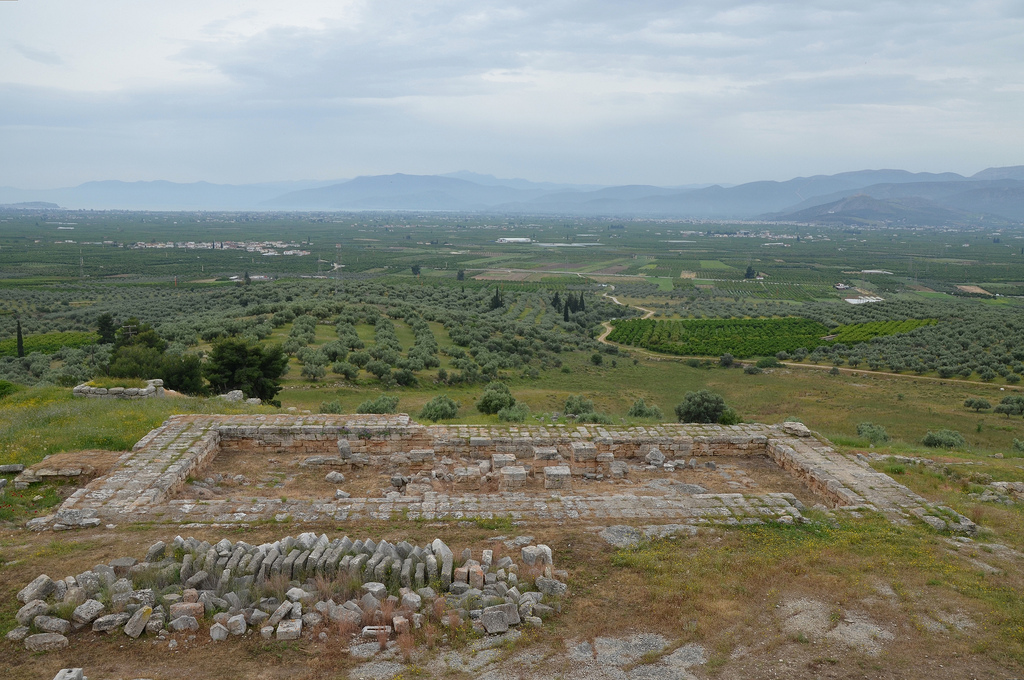
Overall view of New Temple of Hera from the North Stoa.
Overall view of the New Temple of Hera from the North Stoa.
Northeast corner of the New Temple of Hera on the middle terrace.
Central section of New Temple foundations.
The central section of New Temple foundations.
Overview of the North Stoa on the middle terrace,
Overall view of North Stoa.
The North Stoa on the middle terrace.
Overall view of the West Peristyle Building.
East colonnade of West Peristyle Building.
The South Stoa.
The South Stoa on the lower terrace.
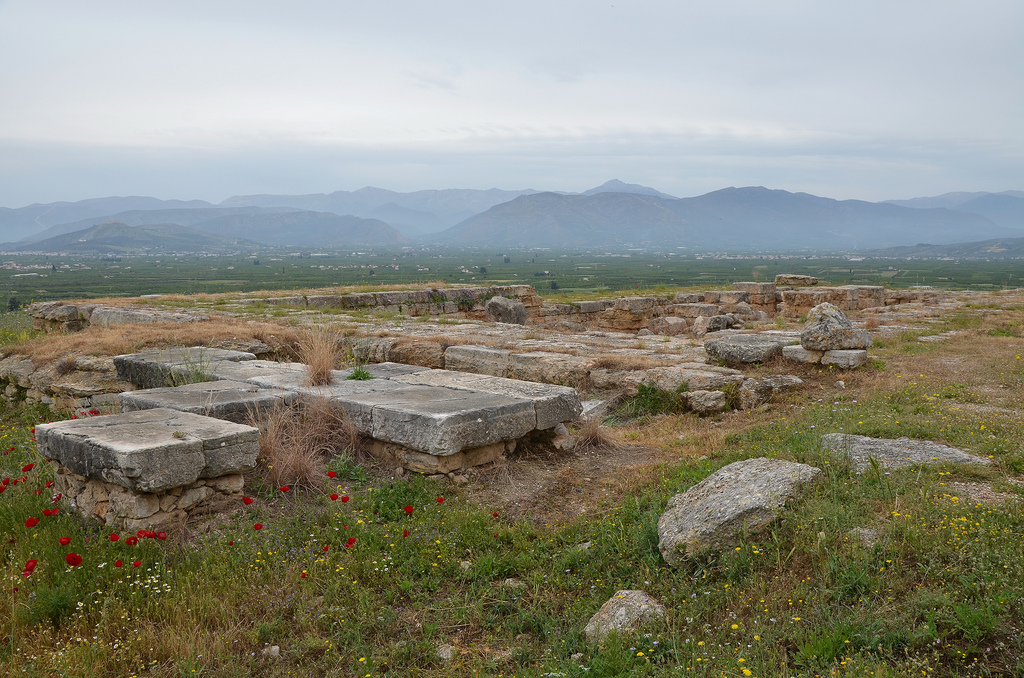
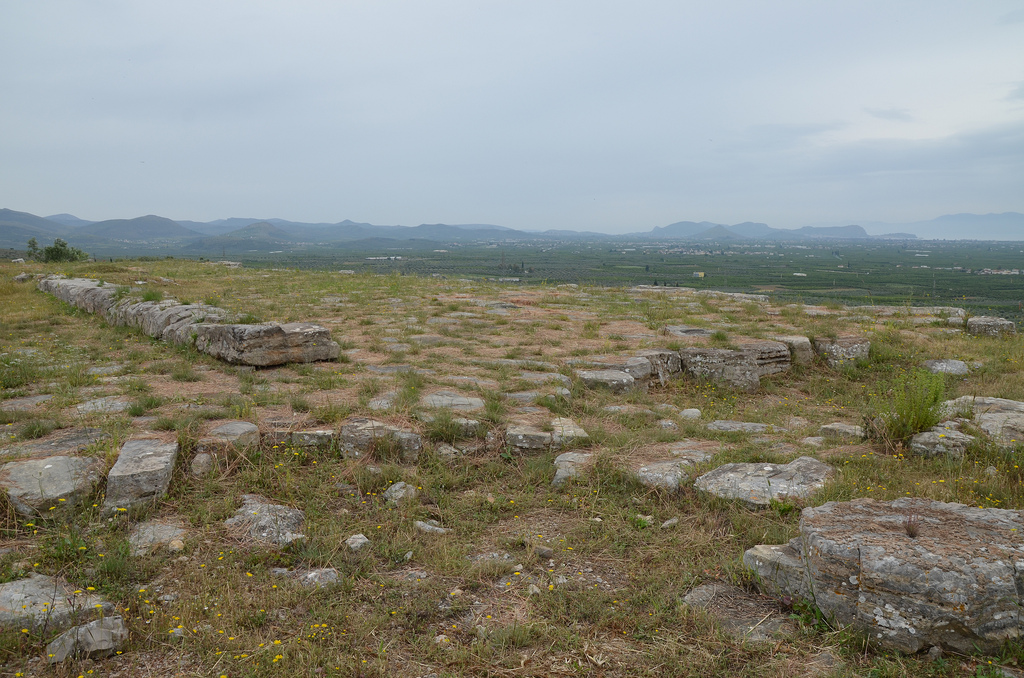
The foundations of the Old Temple of Hera on the upper terrace.
The foundations of the Old Temple of Hera are on the upper terrace.
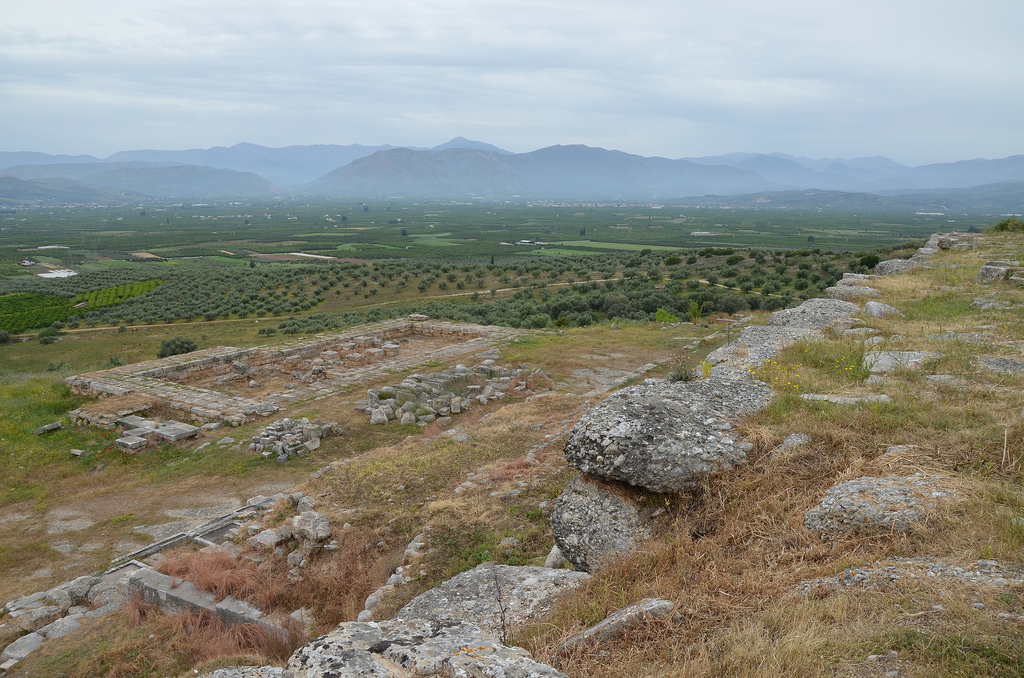
Overall view of New Temple of Hera from the upper terrace.
Overall view of the New Temple of Hera from the upper terrace.
Overall view of New Temple of Hera and the middle terrace from the upper terrace.
Overall view of the New Temple of Hera and the middle terrace from the upper terrace.

Links: