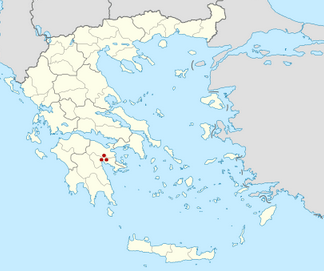
The Argive Heraion served as the main sanctuary of Argos and is regarded as one of the best-preserved and most picturesque sites in the Argolid. Its ruins are located 8 kilometres northeast of Argos on the slopes of Mount Euboea. The goddess Hera, the patron deity of the city of Argos, was worshipped here, and this sanctuary was the most renowned centre for her worship.
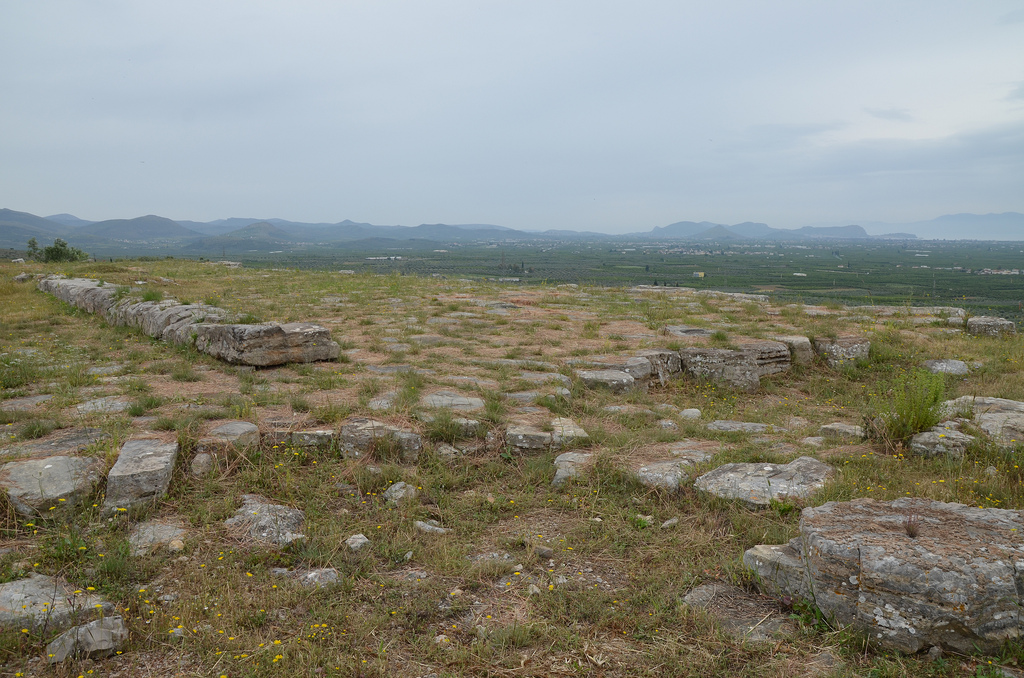
The Argive Heraion was built over the remains of a Mycenaean settlement, and archaeological evidence suggests that cultic activity at the site dates back as early as the 10th century BC. The sanctuary occupied three artificial terraces on a site above the Argive Plain. The upper terrace was built using huge Cyclopean blocks of possible late Geometric date (760–700 BC), and shortly thereafter, a temple of mud brick and wood with a colonnade was added. The Old Temple of Hera was one of the earliest colonnaded temples in Greece. It was destroyed by fire in 423 BC and has almost completely disappeared.
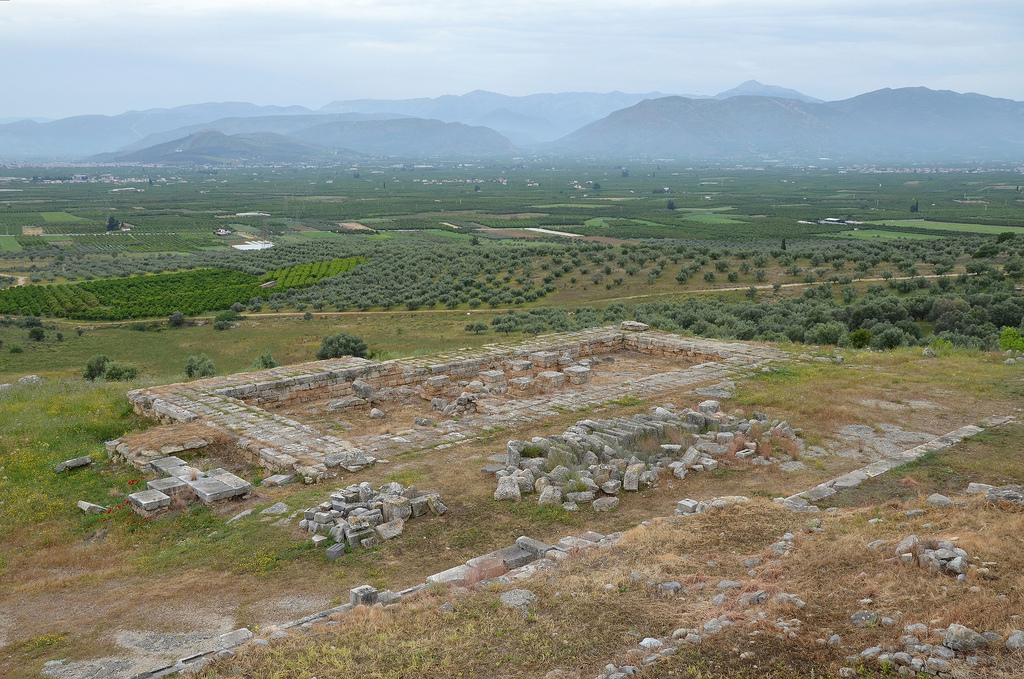
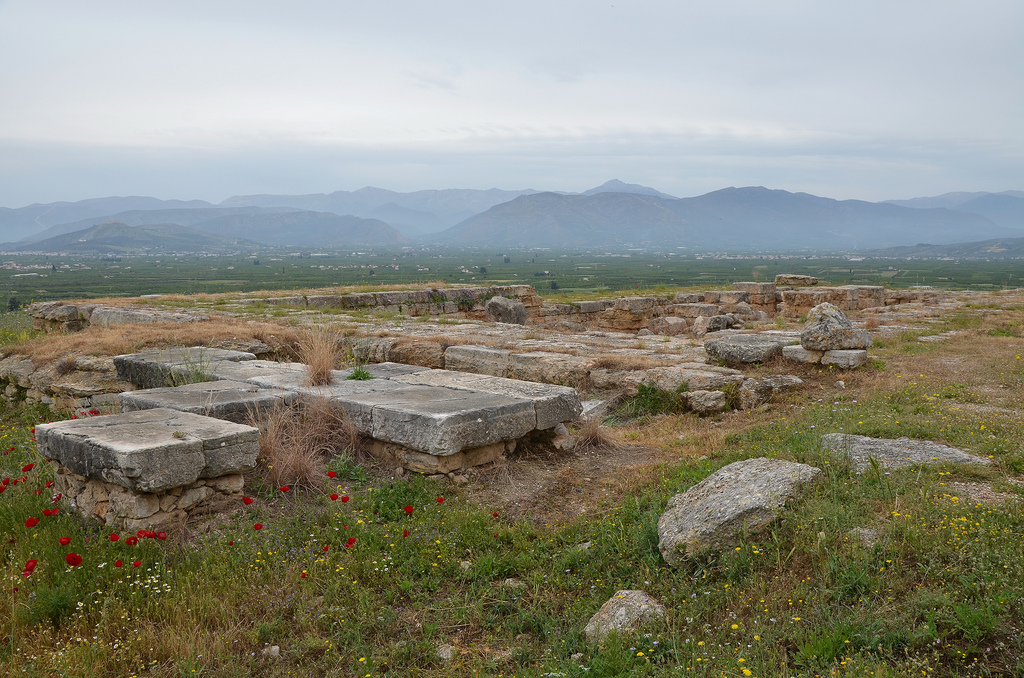
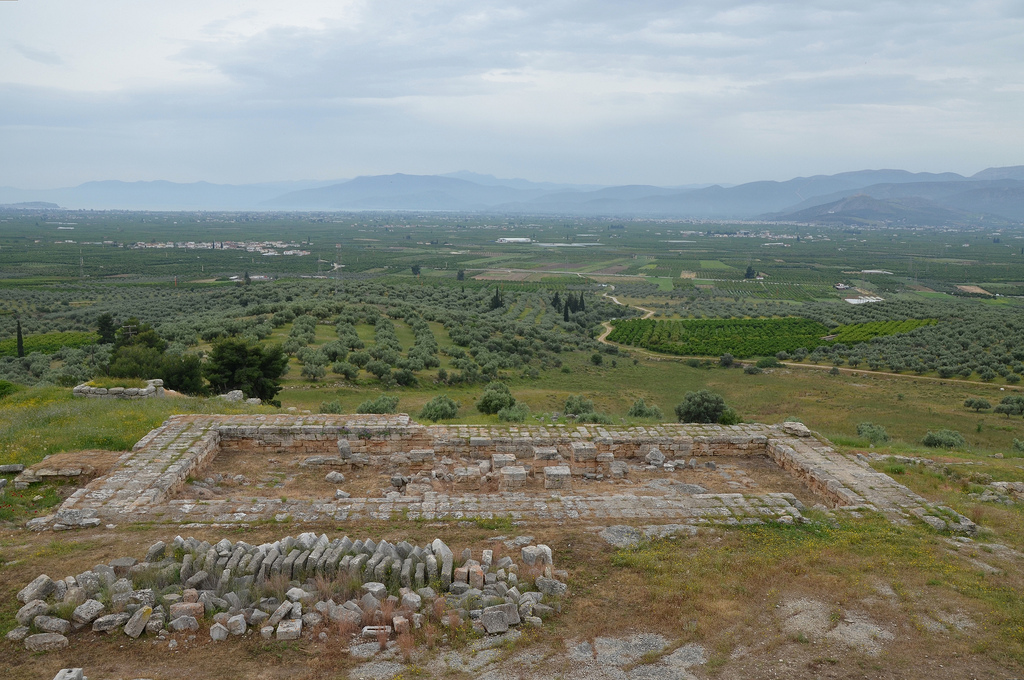
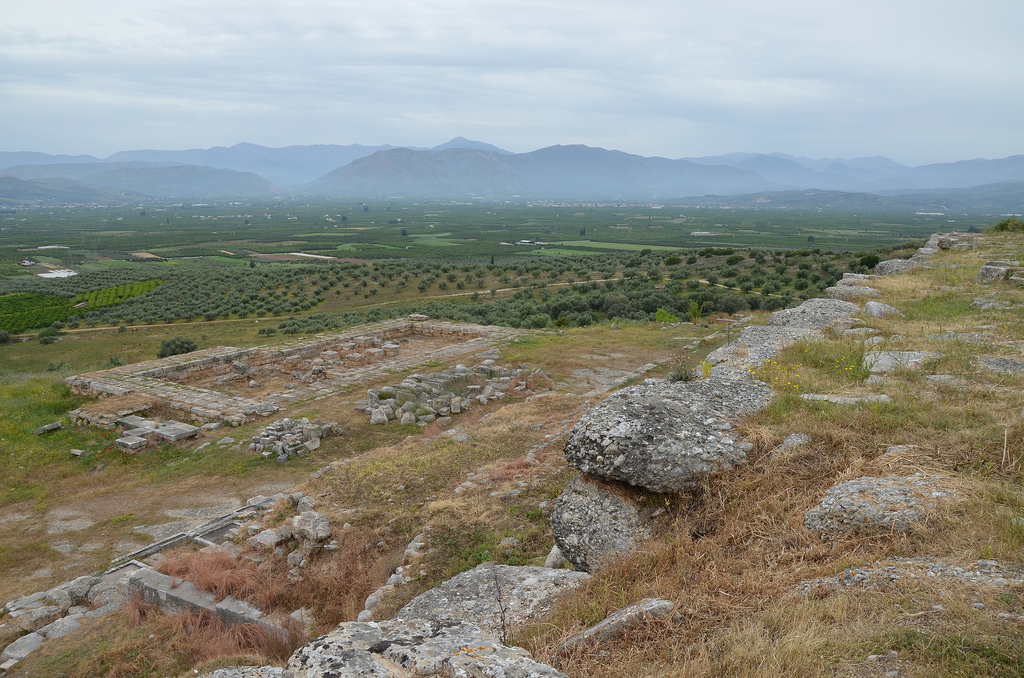
The middle terrace was dominated by the New Temple of Hera, which was built by the architect Eupolemos of Argos c. 420-410 BC following the fire. The famous chryselephantine statue of Hera (made of gold and ivory over a wood core) by Polykleitos was housed in the temple’s cella. The traveller Pausanias, who visited the temple in the 2nd century AD, provided a brief description of the sculptures that decorated the pediment and the metopes of the temple: “over the columns, some sculptures represented the birth of Zeus and the battle of the gods and giants, other the Trojan wars and the capture of Troy”. Some of the sculptures can be seen in the Archaeological Museum in Athens.
Other structures located on the middle terrace included one of the earliest examples of a building with a peristyle court that seems to have served as a dining hall. Stoas were constructed to the south and below the temple terrace. On the lowest terrace was a stoa dating to the 5th century BC and an Archaic retaining wall with a flight of steps that ran the middle terrace’s length. Further west stood the Roman bathhouse and the palaestra.
The sanctuary remained important during the Roman period. According to Pausanias, Hadrian dedicated a peacock in gold and precious stones at the Argive Temple of Hera in 124 AD (peacocks were regarded as birds sacred to Hera). Before him, Nero dedicated a purple cloak in 67 AD.
The Heraion was rediscovered in 1831 by General Thomas Gordon, who dug there five years later. Between 1892 and 1895, the Anglo-American archaeologist Charles Waldstein excavated it in the first archaeological campaign undertaken by the newly founded American School of Classical Studies at Athens.
PORTFOLIO
Overall view of the New Temple of Hera from the North Stoa.Northeast corner of the New Temple of Hera on the middle terrace.The central section of New Temple foundations.Overview of the North Stoa on the middle terrace,The North Stoa on the middle terrace.Overall view of the West Peristyle Building.East colonnade of West Peristyle Building.The South Stoa on the lower terrace.The foundations of the Old Temple of Hera are on the upper terrace.Overall view of the New Temple of Hera from the upper terrace.Overall view of the New Temple of Hera and the middle terrace from the upper terrace.
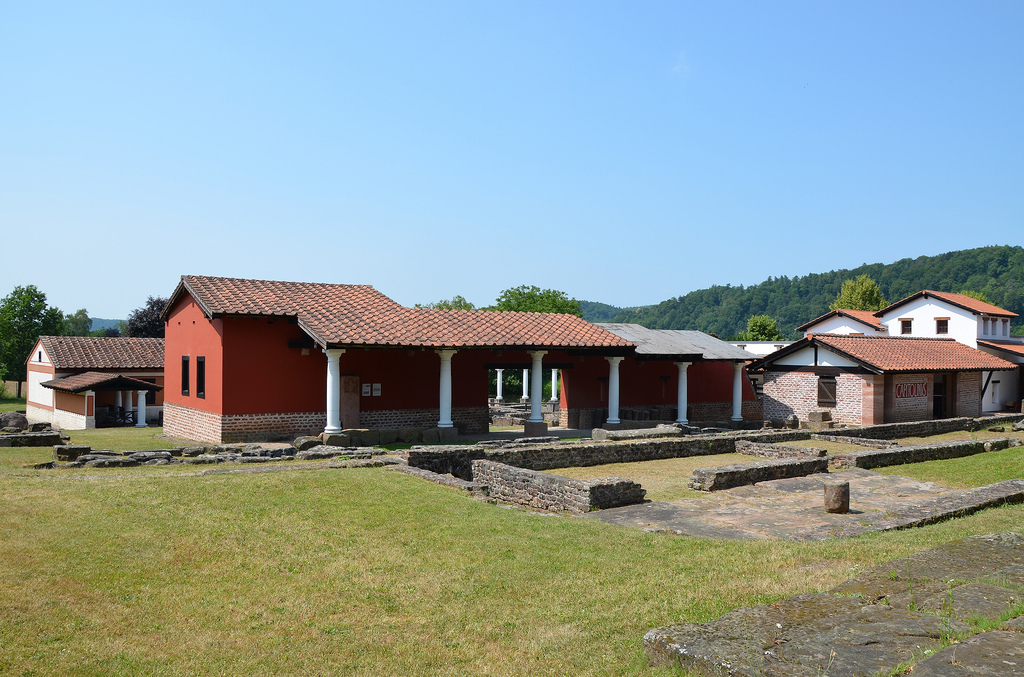
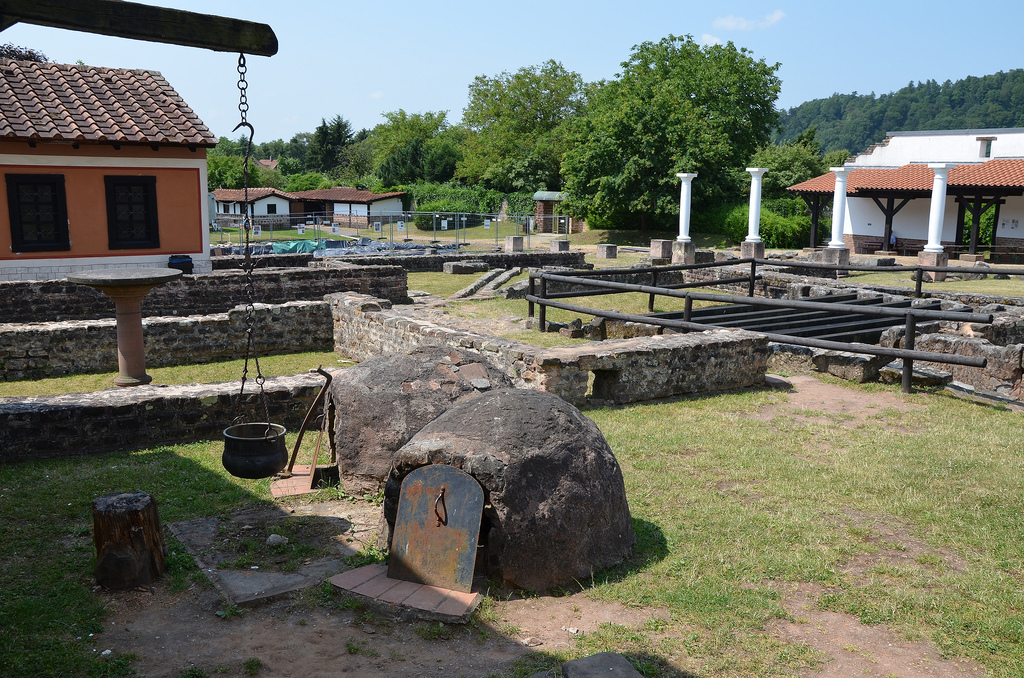
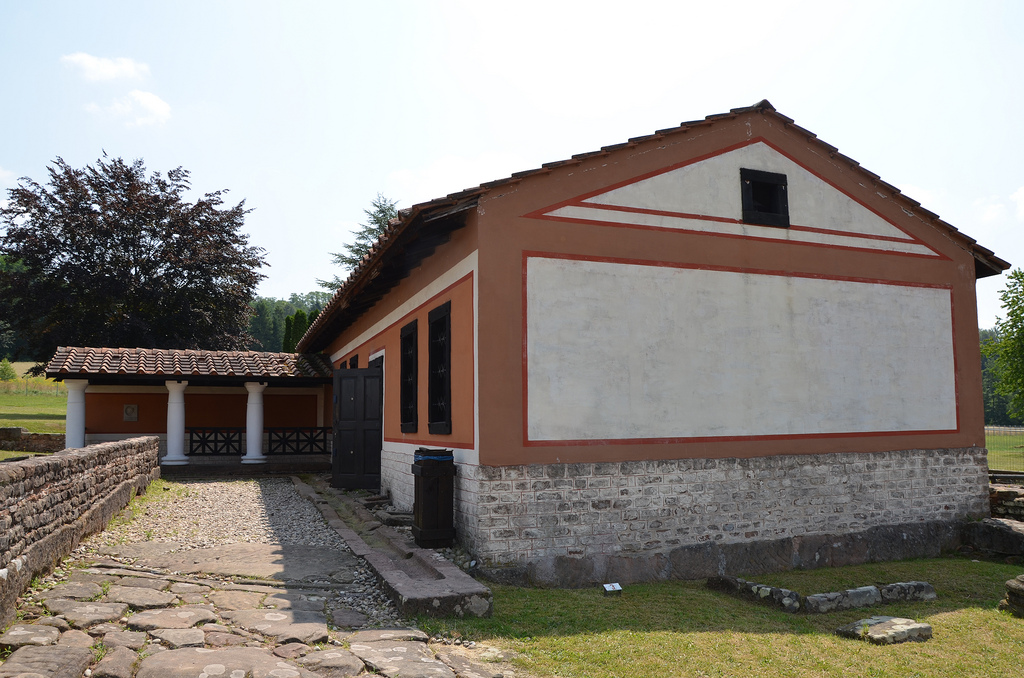
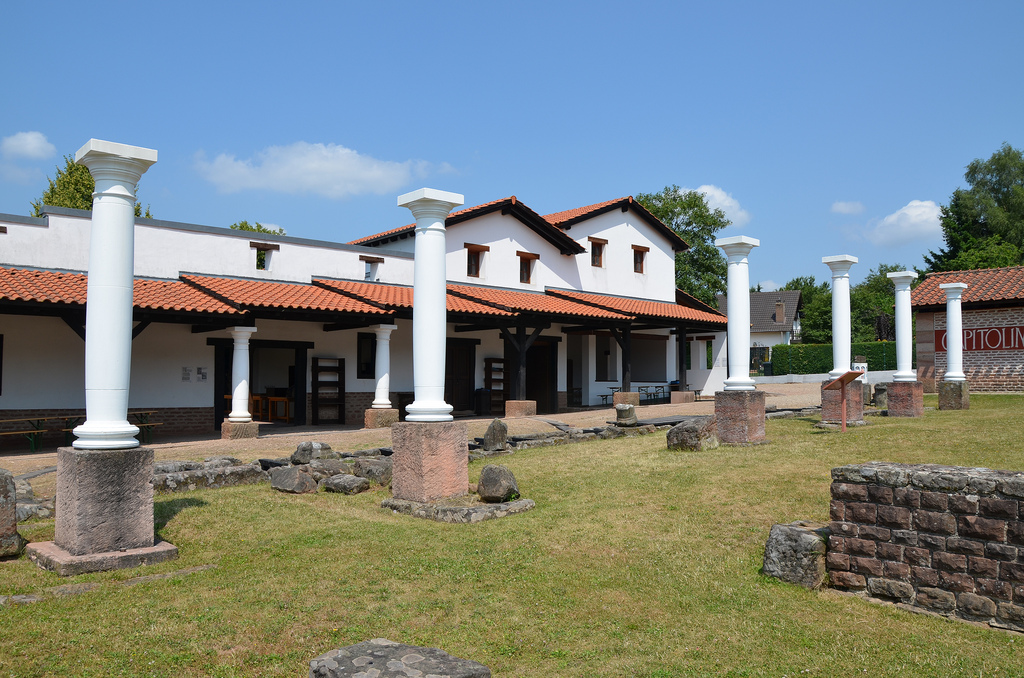
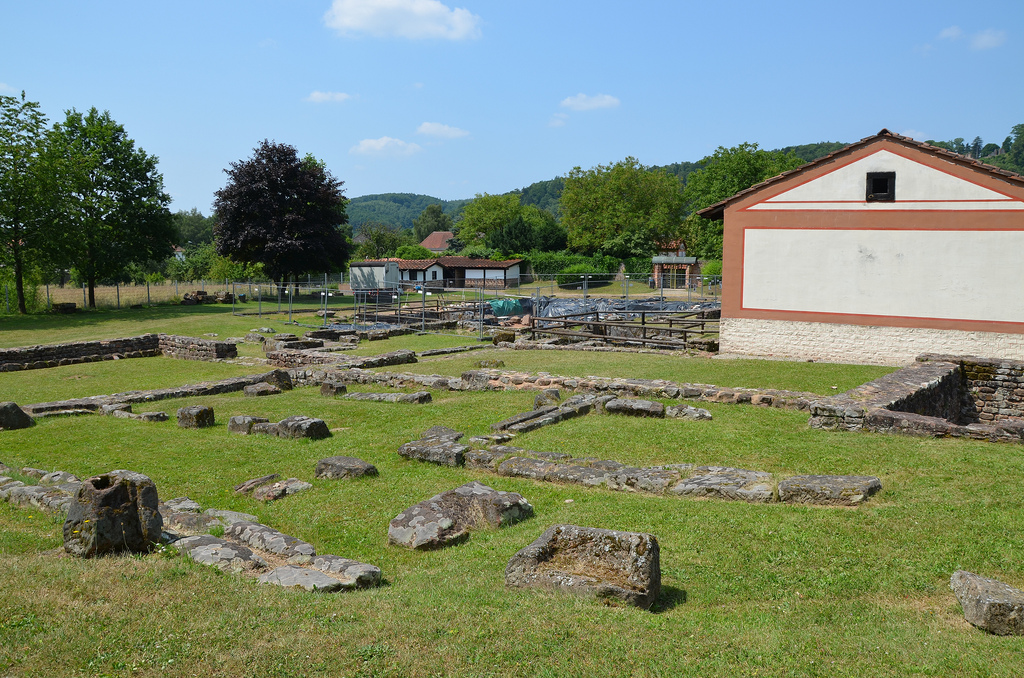
The Schwarzenacker Roman Museum (German: Römermuseum Schwarzenacker) is an open-air archaeological museum in Schwarzenacker in Saarland (Germany) with several partly-reconstructed structures. The museum was built by archaeologist Alfonso Kolling who also led the archaeological excavations at the site. The site shows the remains of a Gallo-Roman settlement (its ancient name is lost) that existed from the beginning of the 1st century AD until its destruction by the Alemanni in AD 275.
Around 2,000 people inhabited the settlement, which covered an area of approximately 25-30 hectares. The inhabitants benefited from the nearby Roman military and trade routes leading from Augusta Treverorum (Trier) to Argentoratum (Strasbourg) and from Divodurum (Metz) to Augusta Vangionum (Worms). This favourable location gave rise to a highly prestigious residential, commercial and administrative centre.
The urban planning of the settlement showed a clear Roman influence with streets intersecting at right angles. The main streets were flanked by large drainage channels, while covered walkways led to the shop counters and workshops. Freshwater, pumped from deep wells, was supplied by pipelines of clay and wood. A stone relief with Venus, Cupid, and the Three Graces was found in one of the wells. The half-timbered houses of varying sizes were sometimes decorated with high-quality frescoes and ceiling paintings. One house differed from the standard types; it had a hall with a large cellar with a row of five columns running along the centre to support the wooden ceiling of the cellar (two of them were table columns with round stone slabs). Life-size figures were represented on one of the walls of the house. Six bronze statuettes were also found in the cellar: a Genius populi Romani, a seated Mercury with a wild boar, a rooster, a standing Mercury, an Apollo, a seated Neptune, and a Victory. The house was probably the seat of a cult.
In the adjoining 18th-century Baroque villa, important finds from everyday Roman life are exhibited (although the most important ones are in the Museum of Pre- and Early History in Saarbrücken). In front of the Baroque Edelhaus stand life-size replicas of two unfinished Roman equestrian sculptures, which were discovered in 1887 in a Roman quarry at Breitfurt. They weigh about 5000 kg each and are considered to be the largest Roman statues found north of the Alps.
PORTFOLIO
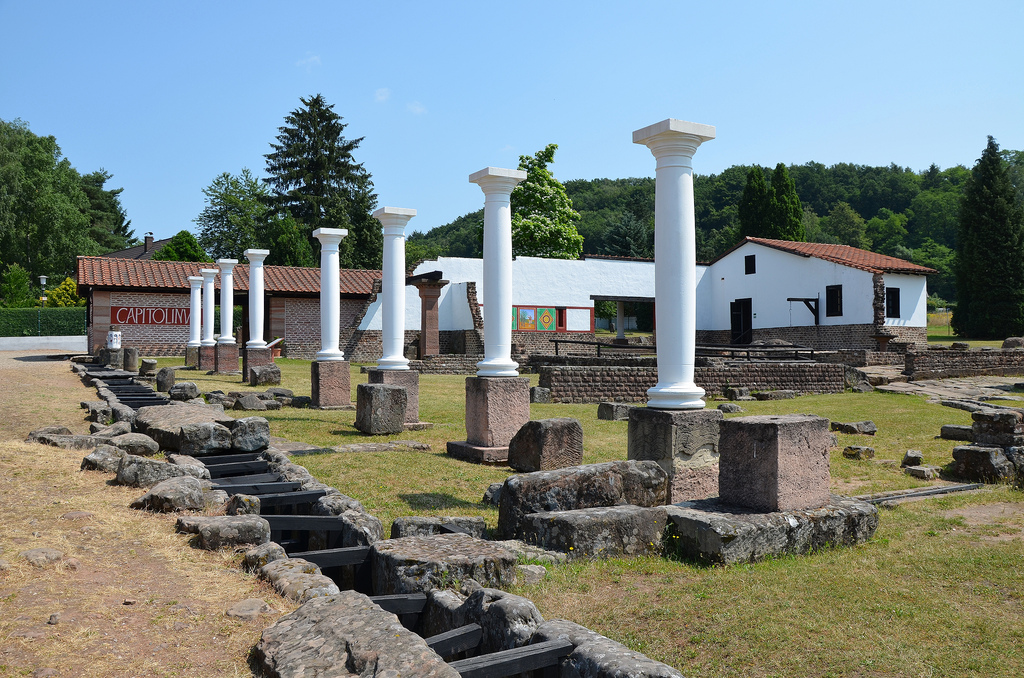
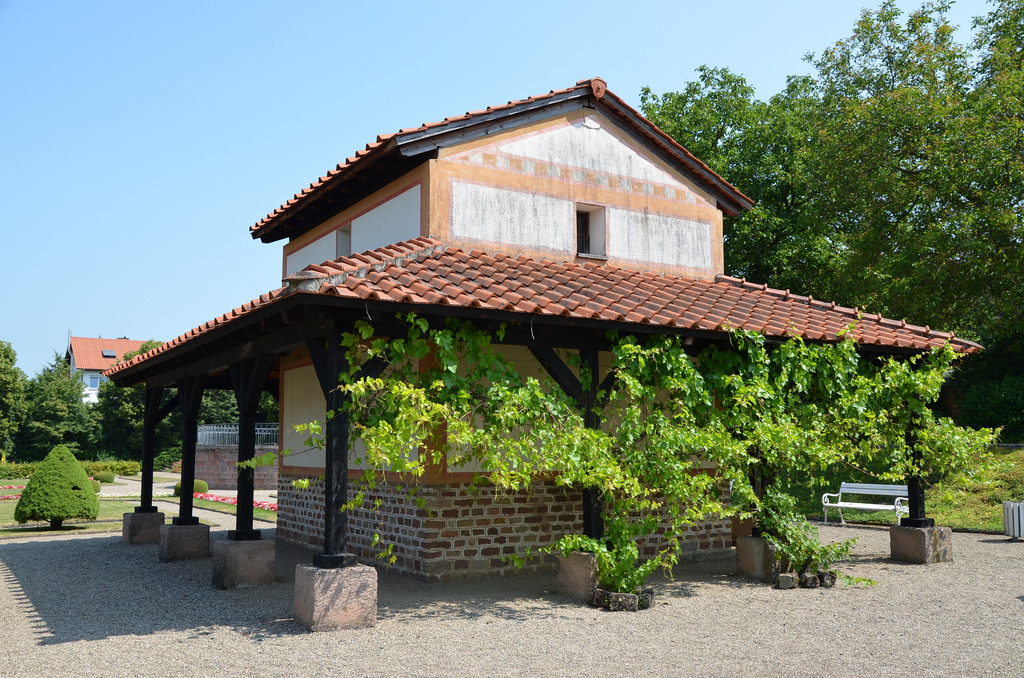
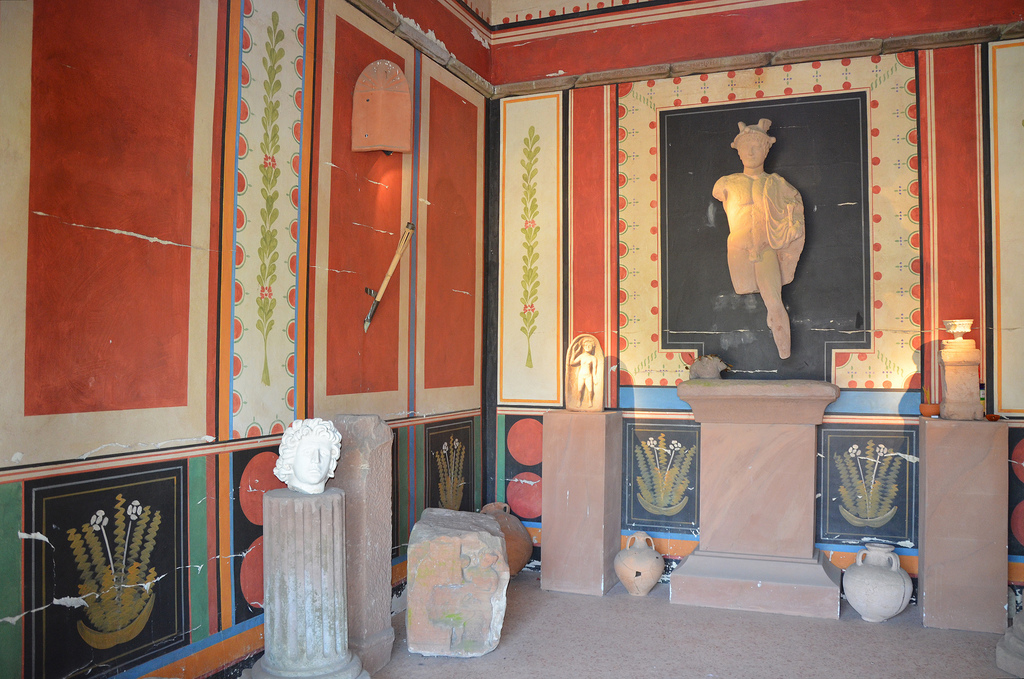
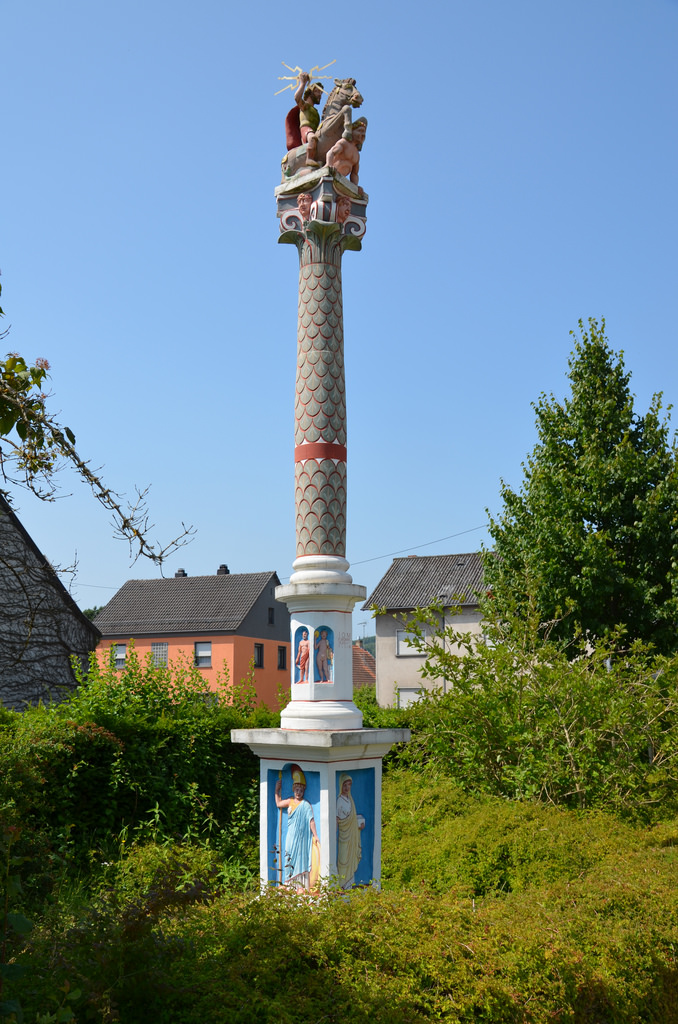
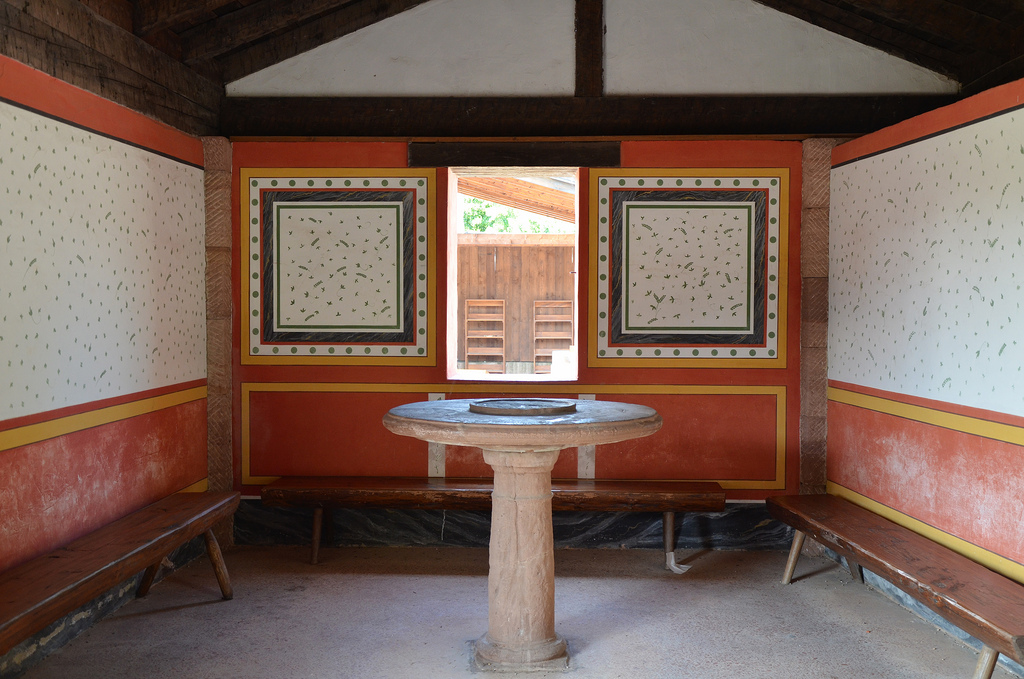
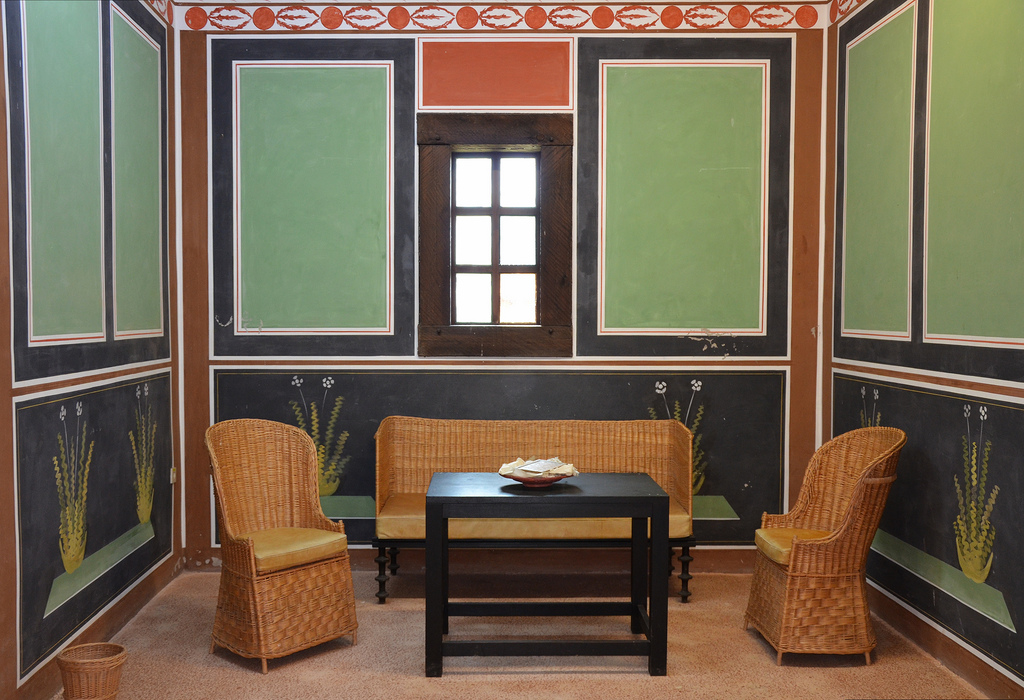
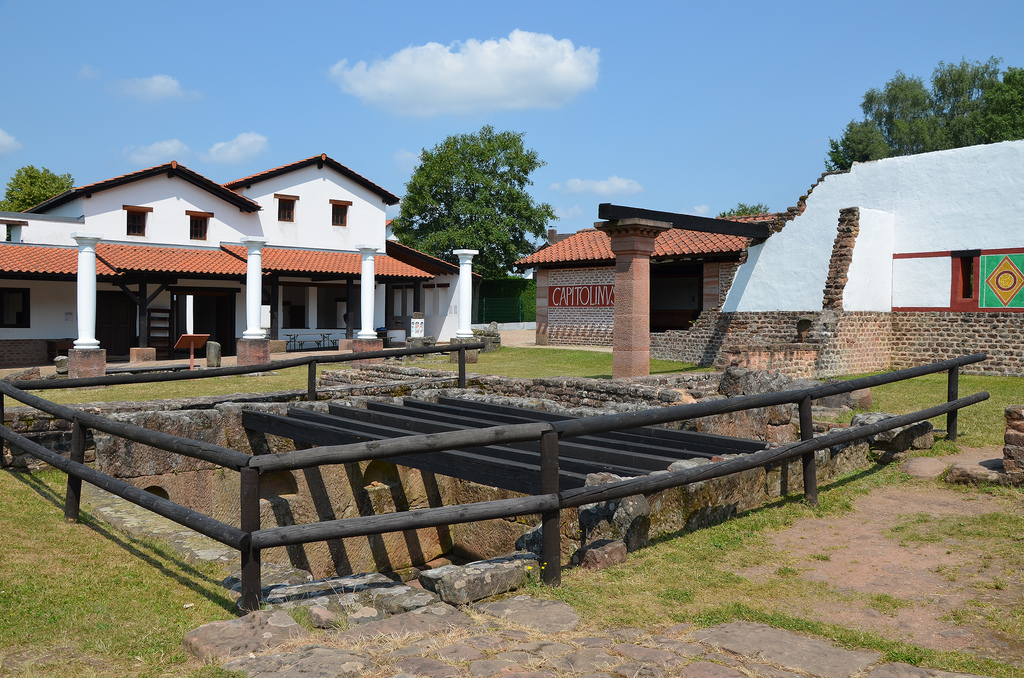
Reconstruction of the Gallo-Roman Temple (fanum) of Mercury from the nearby site of “Tempelbezirk Klosterwald”.Reconstruction of the Gallo-Roman Temple (fanum) of Mercury from the nearby site of “Tempelbezirk Klosterwald”.The interior (cella) of the reconstructed Gallo-Roman Temple of Mercury from the nearby site of “Tempelbezirk Klosterwald”.Complete reconstruction (in colour) of a Jupiter column found in 1922.The north-south main street of the vicus flanked by broad sewers and colonnaded porticoes. In the background is the Taberna of Capitolinus at the intersection with the east-west main street of the settlement.The north-south main street with the Taberna of Capitolinus and the House of the Ophthalmologist in the background.The reconstructed Taberna of Capitolinus.The guest room of the Taberna Capitolinus with an original stone table. Tabernae were the fast-food restaurants of the Romans.The counter the Taberna of Capitolinus with embedded earthenware jars used to store dried food like nuts.The partially reconstructed House of the Ophthalmologist facing the east-west main street of the settlement. The name of the house takes its name from the ophthalmic artefacts found in the house.The reconstructed triclinium of the House of the Ophthalmologist.The reconstructed triclinium of the House of the Ophthalmologist rested on pillars of tiles from the underfloor heating system known as a hypocaust.The reconstructed House of the Ophthalmologist along the east-west main street of the settlement.Rear view of the partially reconstructed House of the Ophthalmologist with the kitchen area with ovens and cooking sets and an underground cellar.The underground cellar of the House of the Ophthalmologist with openings in the stone structure used to support wooden beams on which upper floors were built. The cellar had oval-shaped niches, which were used to display statues of Roman gods.The partially reconstructed House of the Columns.The cellar of the House of the Columns had a row of five columns (two of them were table columns with round stone slabs) that carried the wooden ceiling of the cellar.The partially reconstructed House of the Columns.Fresco with a life-size figure from the House of the Columns.The north-south main street.Foundations of buildings behind the north-south main street.Foundations of buildings behind the House of the Columns.The Edelhaus dating back to the early 18th century (1725) which houses the archaeological finds (mainly replicas, originals in Saarbrücken) and 18th-century paintings from painters of the region. The Baroque-style garden was created after the excavation of the Gallo-Roman settlement.Pair of life-size replicas of two unfinished Roman equestrian statues which were discovered in 1887 in a Roman quarry at Breitfurt (the originals are in the museum in Speyer). They are considered to be the largest Roman statues found north of the Alps.
The site is open daily from 9am to 5pm from April to October (Saturday and Sunday: Closed from 12:30pm to 1pm) and from 10am to 4pm from November to March (Saturday and Sunday: Closed from 12:30pm to 1pm). It is closed in December and January.
The Saarland and the Mosel Valley’s ancient Roman heritage has a lot to offer to tourists and scholars alike. More than 120 antique sights along the Moselle and the Saar rivers, the Saarland and Luxembourg are a testament to the Gallo-Roman era north of the Alps (further information here).















 The Saarland and the Mosel Valley’s ancient Roman heritage has a lot to offer to tourists and scholars alike. More than 120 antique sights along the Moselle and the Saar rivers, the Saarland and Luxembourg are a testament to the Gallo-Roman era north of the Alps (further information
  following hadrian photography