Tawern Temple Complex

The Roman Temple Tawern (German: Römischer Tempelbezirk Tawern) is a reconstructed Gallo-Roman sanctuary on the Metzenberg in Tawern near Trier in western Germany. The original sanctuary was built in the 1st century AD above a major road leading from Divodurum Mediomatricorum (modern-day Metz) to Augusta Treverorum (modern-day Trier). It remained in use until the end of the 4th century AD.

Coordinates: 49° 39′ 51.31″ N, 6° 30′ 34.41″ E

The sanctuary was excavated between 1986 and 1988, and seven buildings of various periods and differing sizes and plans were discovered within the complex. Under the direction of the Rheinisches Landesmuseum of Trier, the temple district and a large building were partially reconstructed on the original foundations. The finds (especially coins) revealed that the temple district was constructed in the first half of the 1st century AD and was used right up until late into the 4th century AD. Travellers on the nearby main Roman road would have stopped at the sanctuary to thank the gods for their successful journey or to invoke blessings as they made their way to Rome.

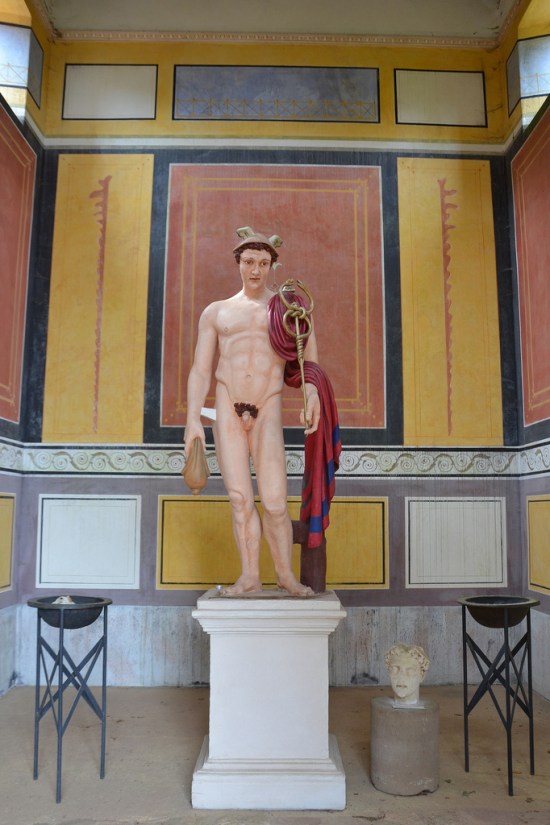
Mercury, the god of trade, commerce, and travel, was the main deity worshipped at the sanctuary. The slightly larger-than-life-size limestone head found in the water well came from a statue of the god. With the help of this find, a reconstruction of the statue was produced in 2002 and is now exhibited in the large Temple of Mercury. Five inscriptions found at the site were also dedicated to Mercury.

The sacred area, surrounded by walls, had a trapezoidal ground plan. It was entered through a small gate. The construction plan consisted of several phases. The first phase shows that five temples were arranged side by side. Various gods were worshipped, among them Mercury, the goddess Epona, Apollo, and Isis-Serapis. The temple district was later extended to cover an area of 48 m in width and 36 m in depth. Three temples were demolished to make way for the great main temple.

At the north-west corner of one temple, a water well originally more than 15m deep was unearthed. It was filled with stones, earth, and architectural parts. There were also fragments of inscriptions and figurative reliefs.

In the village of Tawern, at the foot of the Metzenberg, one can also see the remains of the small Gallo-Roman town (vicus) whose antique name was Tabernae. The name of the vicus was preserved in the modern name of the village, Tawern. The inhabitants of the vicus mainly provided goods and services for travellers. The nearby sanctuary attracted numerous pilgrims. A total of nine buildings were excavated on both sides of the Roman road.

PORTFOLIO
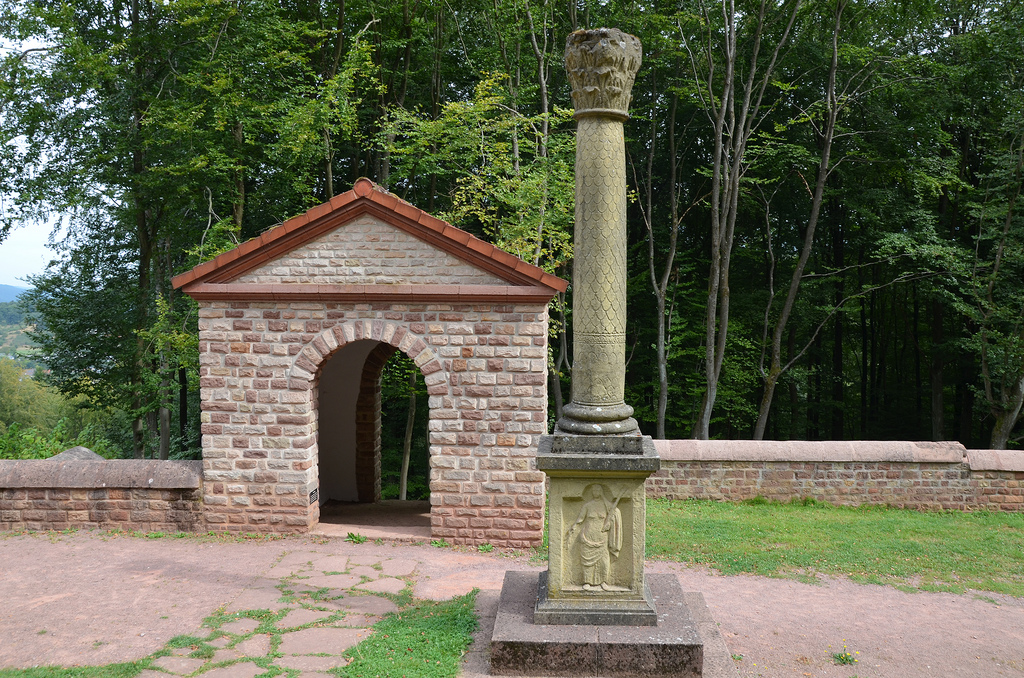
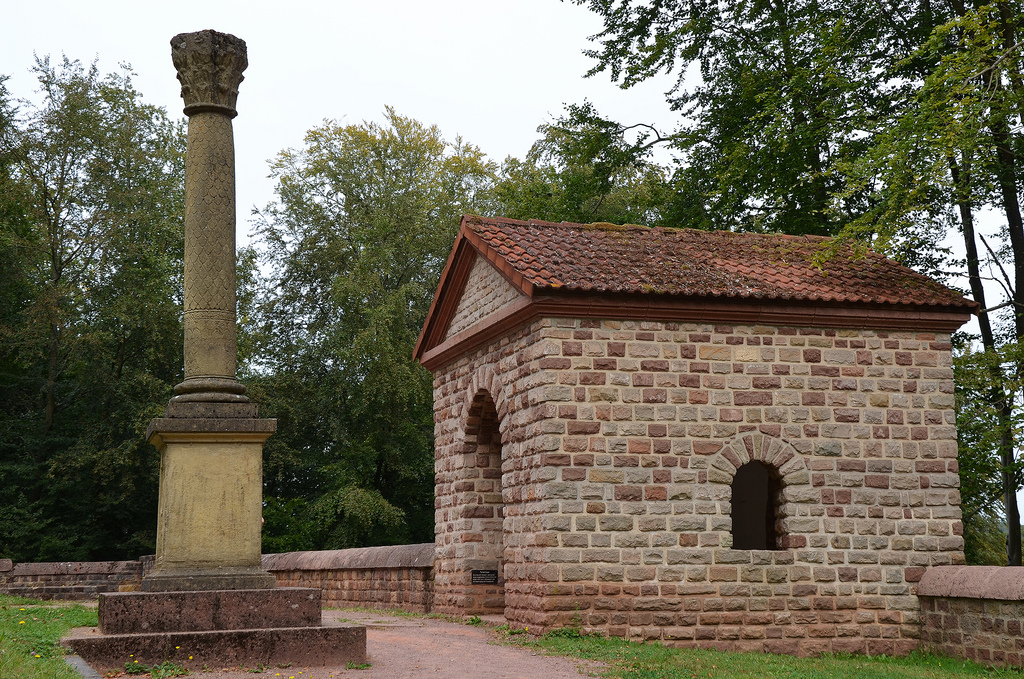
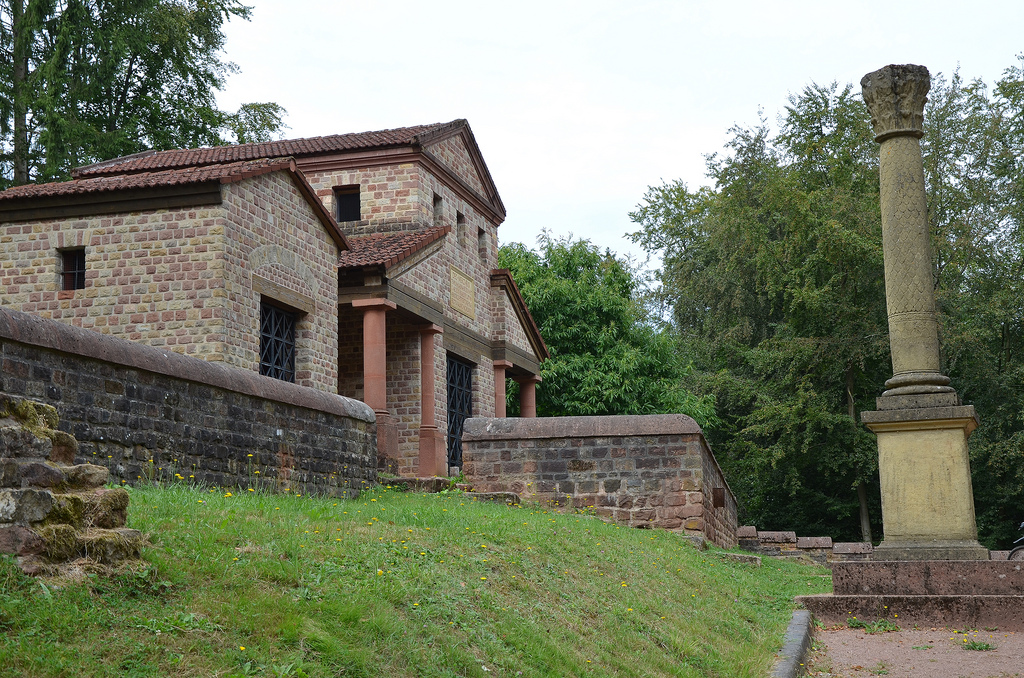
The entrance to the complex, a Jupiter Column.
The main entrance to the sacred complex. A reconstructed Jupiter Column was also added.
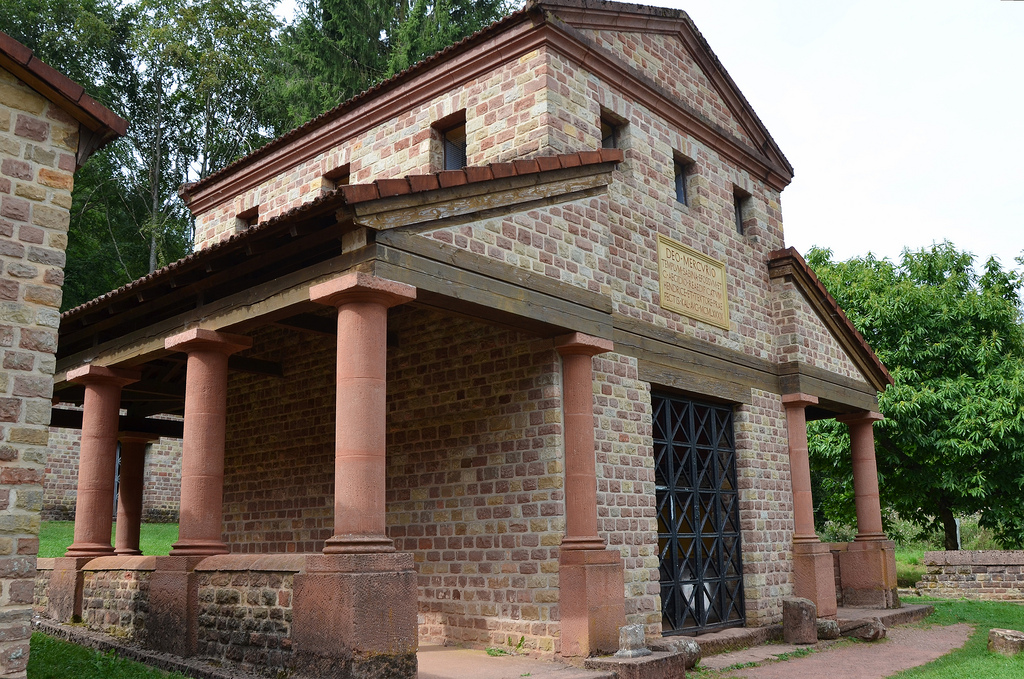
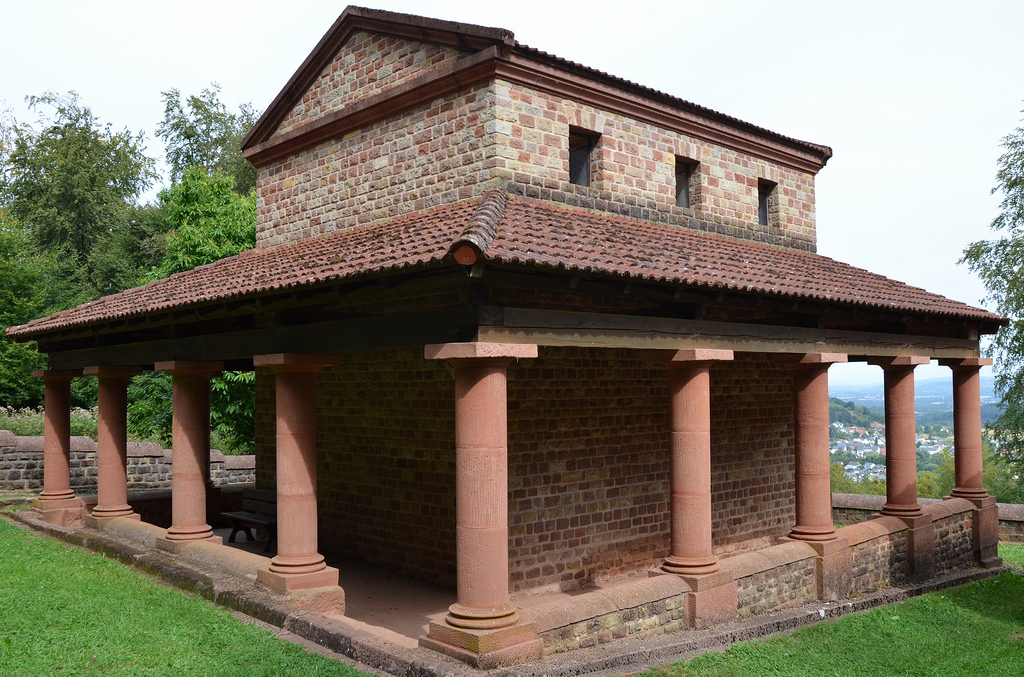
The reconstruction main temple of the sanctuary dedicated to Mercury.
The reconstruction of the main temple in the sanctuary dedicated to Mercury.
The reconstruction main temple of the sanctuary dedicated to Mercury.
The reconstruction of the main temple of the sanctuary dedicated to Mercury, with Tuscan columns on three sides.
Reconstruction of the Mercury statue inside of the main temple dedicated to the god.
Reconstruction of the Mercury statue inside the cella of the main temple dedicated to the god. The cella was 7.50 m long and 5.70 m wide.
The reconstruction main temple of the sanctuary dedicated to Mercury.
The reconstruction of the main temple in the sanctuary dedicated to Mercury. The modern inscription, dated to August 1, 1989, honours the excavators of the site (Dr. Sabine Faust and Dr. Karl-Josef Gilles).
Immediately before handling sandstone channels are laid, which catch and dissipate the rainwater flowing from the roof. Parts are still in the original and original place.
On the floor, sandstone water channels were laid out around and between the temples. They were used to catch and disperse the rainwater flowing from the roof.
The foundations of Temple III.
The reconstructed Temple II, the the only one that has been preserved during all the construction phases of the temple district.
The reconstructed Temple II is the only original temple preserved during the various construction phases of the sanctuary.
In the temple stood a statue of the gods, which was revered here, probably the Celtic horse goddess Epona. She was the goddess of the drivers, the horses and mules. The relief depicted here, which was found in the well, gives a hint. It shows the goddess on a horse.
In the cella of Temple II stood a statue of the god, probably the Celtic goddess Epona. She was a protector of horses, ponies, donkeys, and mules. The relief dedicated to Epona in the cella is a replica of the original found in the well. The wall-painting colours of the cella are based on plaster fragments.
The foundations of the early temples and a well.
The foundations of the early temples and the reconstructed well.
The back entrance to the sanctuary.
The reconstructed building just outside the sanctuary. Its function of the professional building has so far not been very clear. It is hardly a dwelling-house of one or more priests. The large room to the side of the mountain was probably closed by a wall - unlike in the present reconstruction. He might have served as a stable. Perhaps the travelers could strengthen themselves in the Profangebäude and buy souvenirs, sacrificances or Weihengaben.
The reconstructed building just outside the sanctuary. Its function is unclear, but it might have served as a stable.
Profangebäude
The interior of the reconstructed building just outside the sanctuary, which may have served as a stable.
The main entrance to the sacred complex.
The Tawern Temple Complex.
The vicus Tabernae located along the major Roman road leading from Divodurum Mediomatricorum (modern-day Metz) to Augusta Treverorum (modern-day Trier).
The vicus Tabernae is located along the major Roman road leading from Divodurum Mediomatricorum (modern-day Metz) to Augusta Treverorum (modern-day Trier).
Computer reconstruction of the vicus and the four-sided arch.

The Saarland and the Mosel Valley’s ancient Roman heritage has a lot to offer to tourists and scholars alike. More than 120 antique sights along the Moselle and Saar rivers, as well as in Saarland and Luxembourg, are a testament to the Gallo-Roman era north of the Alps (further information here).

The temple area is not fenced, so it can be visited at any time. Admission is free.

Links:
Aptera

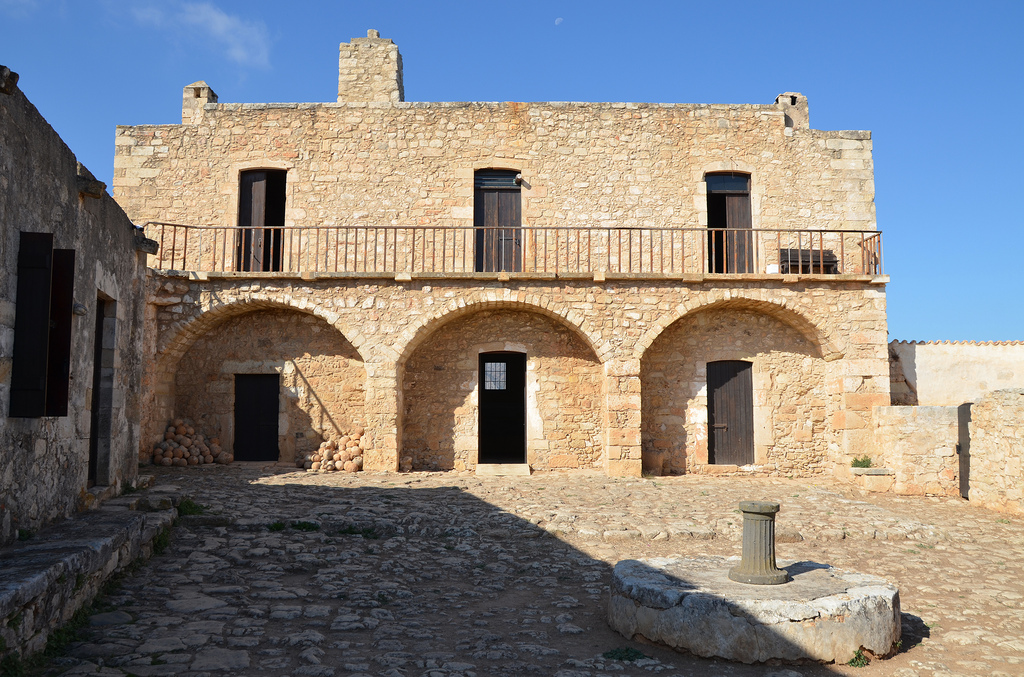
The ancient town of Aptera lies on the northwest coast of the Greek island of Crete, on a low hill dominating the Souda Bay. Archaeological findings suggest that Aptera was founded in the Geometric period (8th century BC) and reached its peak during the Hellenistic period as one of the most important and powerful city-states of ancient Crete. With its two ports, Minoa and Kastelli, Aptera continued to be an important city during the Roman period and the early days of the Byzantine Empire before being destroyed by two earthquakes in the 4th and 7th centuries and then by the Saracens in AD 823.

Coordinates: 35° 27′ 46.44″ N, 24° 8′ 31.2″ E

Comforted by the finding of coins bearing the legend APT, the 19th-century English traveller Robert Pashley was the first to establish a link between the remains discovered on the hill of Paliokastro and the city of Aptera. The name “Aptera” might have been linked to the cult of Artemis Aptera since it was not uncommon for a city to derived its name from a god or a goddess. At Aptera, the city might have, rather unusually, chosen the goddess’ epiclesis (epithet) rather than the actual name of the goddess. However, according to Pausanias, Pteras, the founder of the second temple of Apollo at Delphi, gave its name to the city. Aptera is also mentioned in Greek mythology. It was the site of a contest between the Sirens and the Muses. The Sirens were defeated and as a result, lost their feathers and cast themselves into the sea. Aptera means “without wings”.

Given the lack of texts mentioning Aptera, what is known of the town mainly comes from excavations. Pausanias tells us that hundreds of skilled archers from Aptera were fighting as mercenaries in various places outside Crete, bringing wealth in their home city. Silver, imported from Egypt and Cyrenaica, allowed the city to mint its own coins and thus strengthened its independence and economic power. In the 5th century BC, like all Cretan cities, Aptera did not take part in the Persian wars, and the city prospered. During the Cretan civil wars of the 3rd century BC, Aptera became a great ally of Knossos.

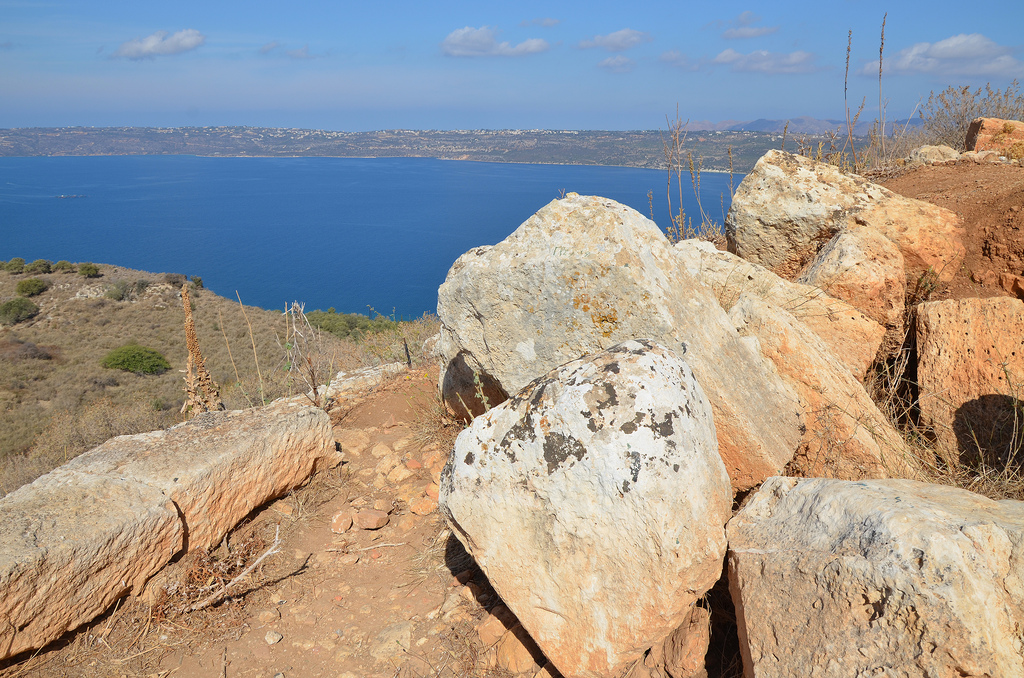
View over Souda Bay from the ancient city of Aptera.

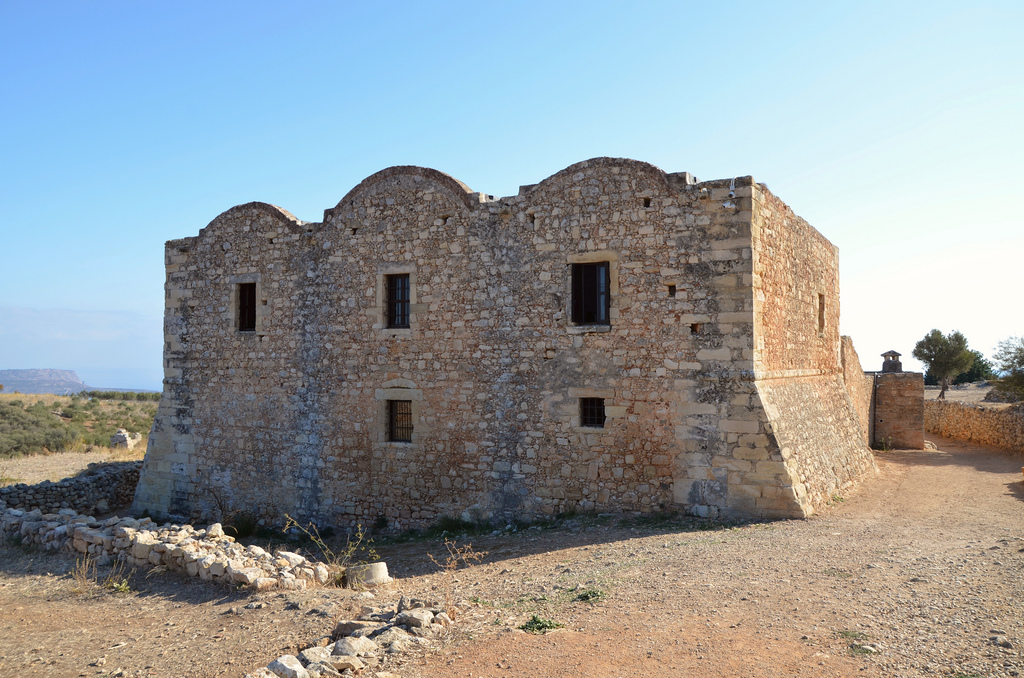
During the conquest of Crete by Metellus, Aptera surrendered without a fight as did Kydonia and Gortyn. This act enabled the city to get the favours of the Romans who lowered the taxes it had to pay. Aptera experienced a new period of peak during the 1st and 2nd centuries AD, according to the impressive public and private buildings that have come to light. From the 3rd century AD, the city’s influence started to fade away, its decline being accelerated by the earthquake of AD 365 that destroyed several cities in Crete. A second earthquake in the 7th century, along with the invasions of the Saracen pirates, marked the abandonment of the city. A Late Byzantine monastery dedicated to St. John the Theologian was built amidst the ruins and continued in operation until 1964.

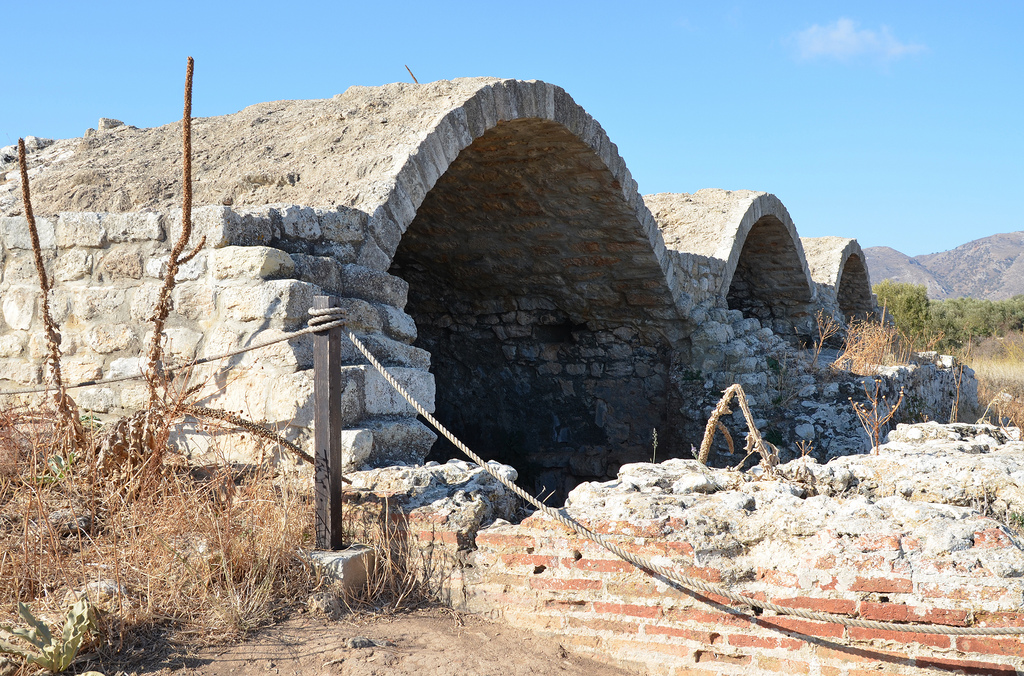
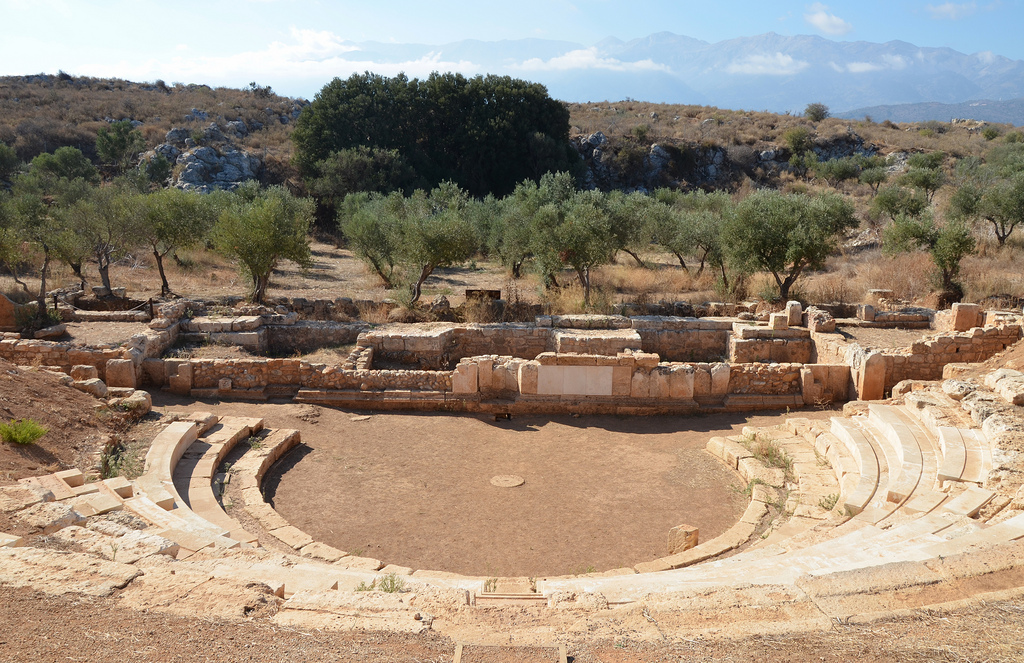
The most impressive of the preserved ancient buildings are the two Roman cisterns that served the needs of the city and supplied the facilities of the public and private baths. The city walls still standing are made of large polygonal stones and echo the walls of Tiryns and Mycenae. One can also see the remains of a small 5th century BC Doric temple dedicated to Artemis and his brother Apollo as well as the preserved ruins of a small theatre. Excavations at the site are still ongoing.

PORTFOLIO

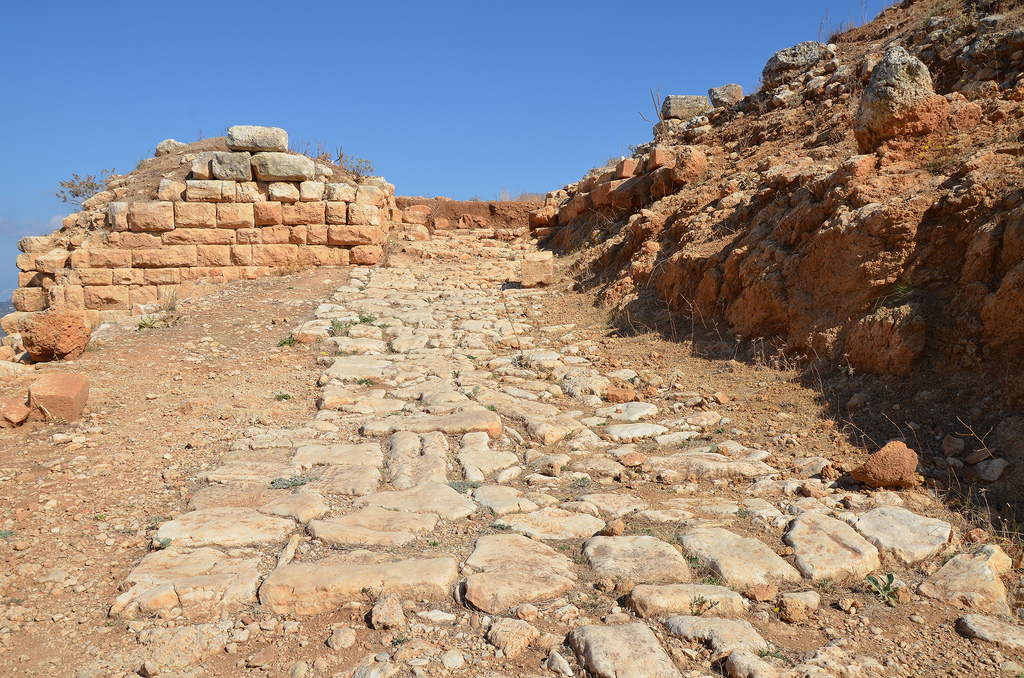
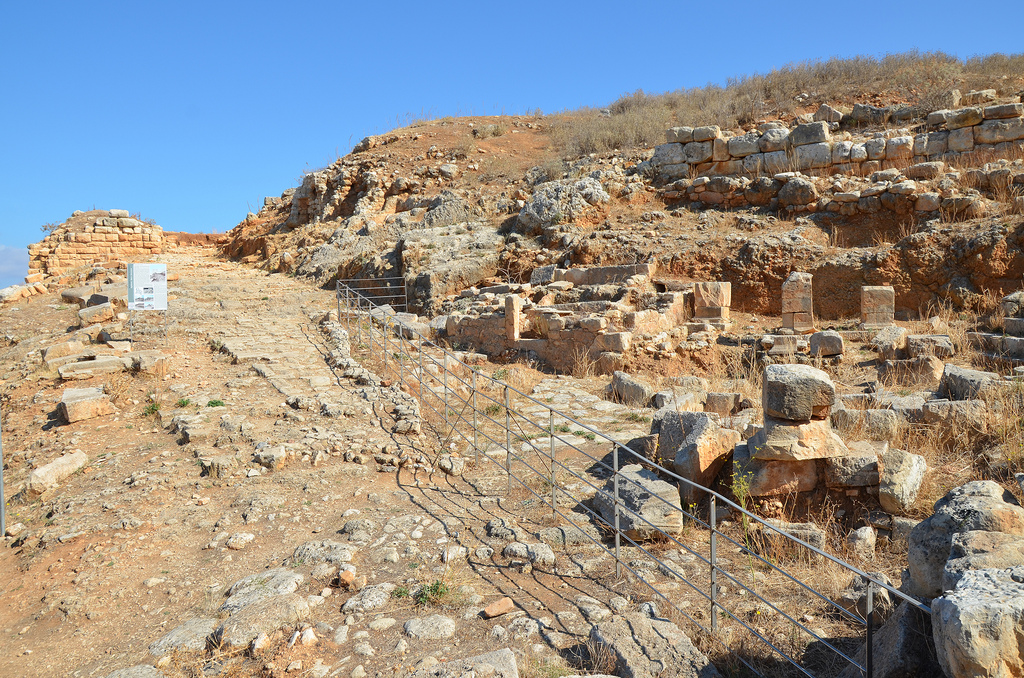
The main entrance of the city and the ancient road built in the mid-4th century BC.
The main entrance of the city with the remains of the ancient road and the fortification tower dating from the mid-4th century BC.
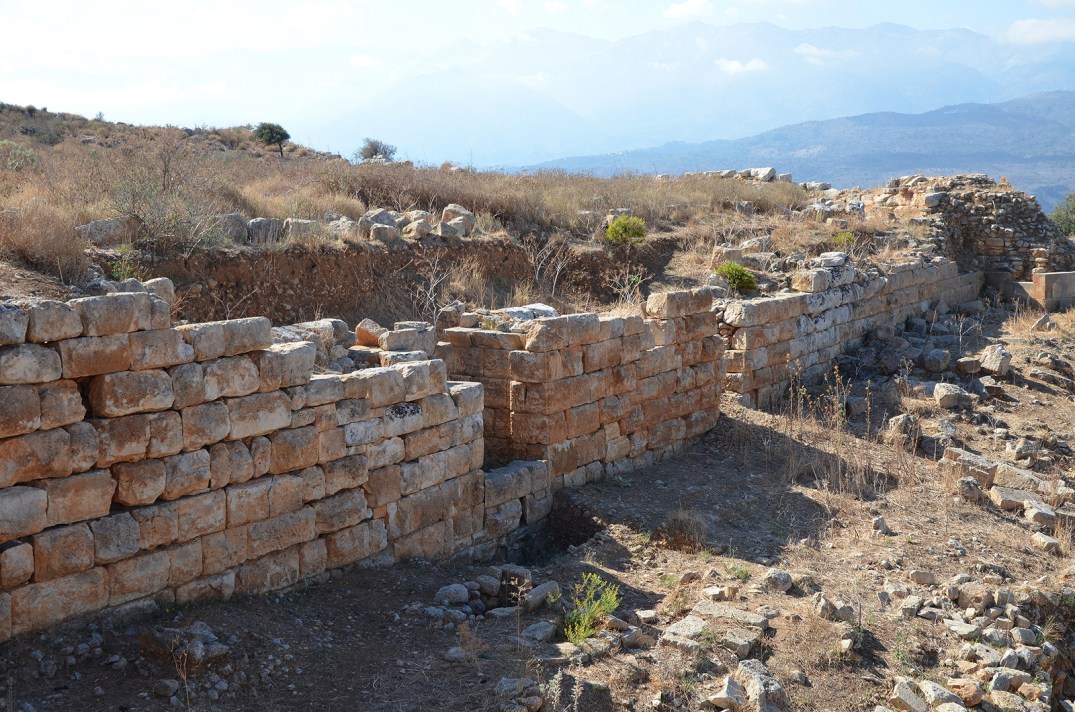
The remains of the massive fortification wall made of large polygonal stones, it was built in the mid-4th century BC with a total circumference of 3.5km.
The remains of the massive fortification wall made of large polygonal stones. It was built in the mid-4th century BC with a total circumference of 3.5km. The defense of the wall was enforced by a series of fortification towers.
The main entrance of the city with the west fortification wall and the west cemetery outside of the city walls.
The main entrance of the city and the west cemetery outside of the city walls. The cemetery includes tombs of all periods, from the 8th century BC until the 3rd century AD.
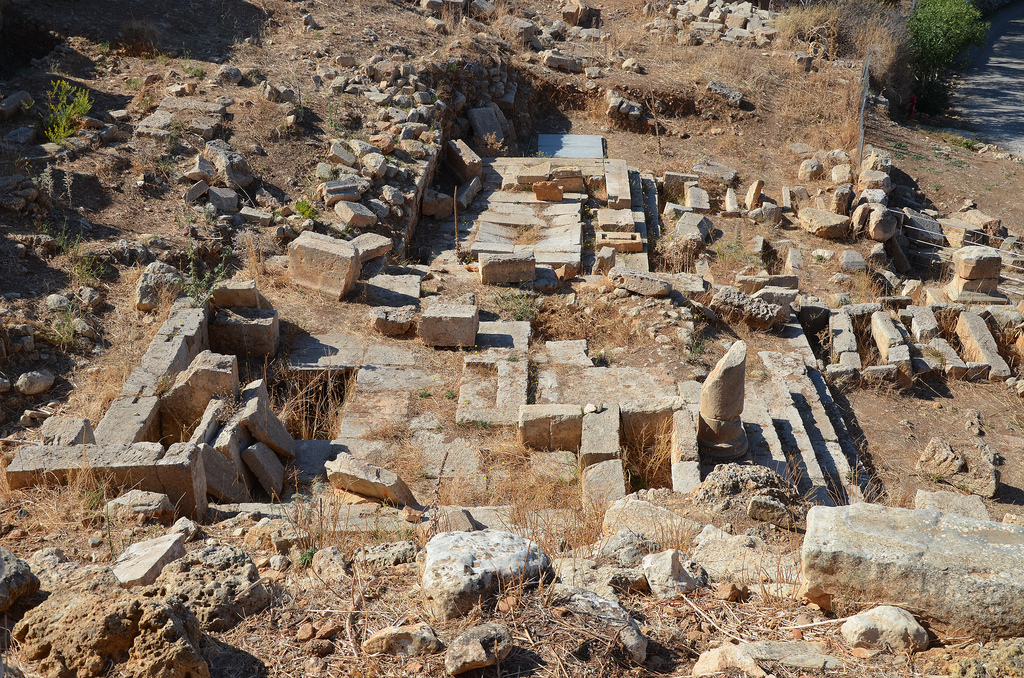
The remains of an Heroon from the 1st -2nd century AD with inscribed pedestals and a mausoleum.
The remains of an Heroon and a mausoleum dating from the 1st -2nd century AD.
The remains of an Heroon with inscribed pedestals located between the ancient road and the west fortification wall.
The remains of the Heroon with inscribed pedestals located between the ancient road and the west fortification wall. The inscription on the pedestal cites a citizen of Aptera, Praxiohos, the son of Filetairos, whom the city honored after his death, perhaps for some public donation.
The gamma-shaped cistern which collected rainwater through openings on the roof, it is 56m long and 25m wide and could store 3050 cubic metres of water.
The gamma-shaped cistern which collected rainwater through openings on the roof. It was 56m long and 25m wide and could store 3050 cubic metres of water.
 Remains of one of the two Roman baths constructed in the Roman period 1st century BC- 4th century AD.
The remains of one of the two Roman baths constructed in the Roman period (1st century BC – 4th century AD).
The remains of one of the two Roman baths constructed in the Roman period (1st century BC - 4th century AD).
The remains of one of the two Roman baths constructed in the Roman period (1st century BC – 4th century AD).
The exterior of three-parted Roman vaulted cistern.
The exterior of the three-parted vaulted Roman cistern.
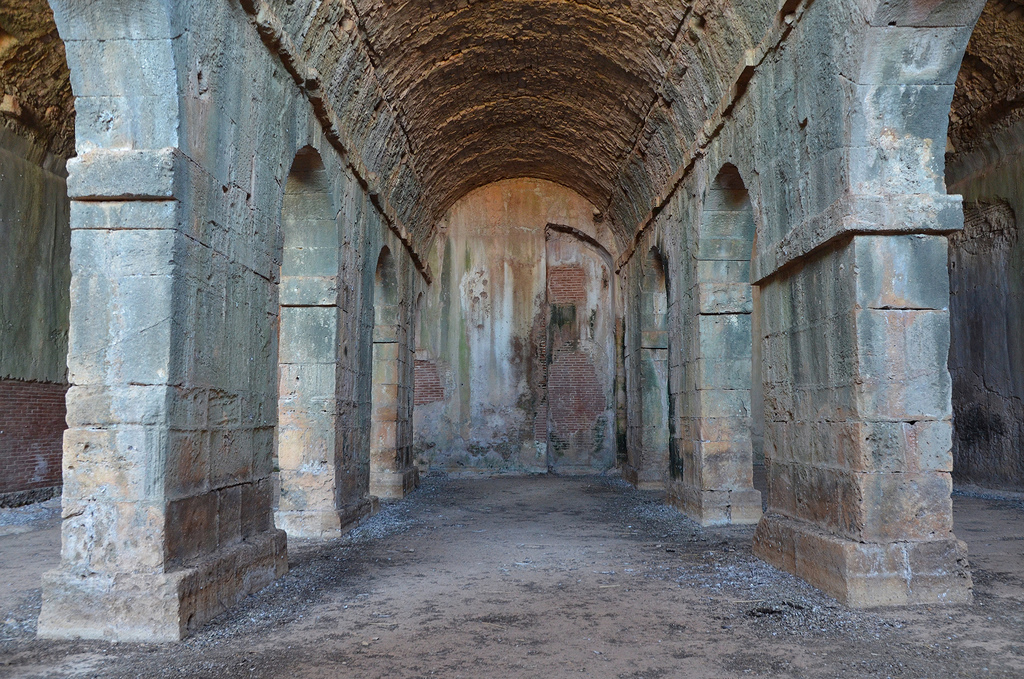
The interior of the three-parted Roman vaulted cistern.
The interior of the three-parted vaulted Roman cistern. It had three barrel-vaulted aisles divided by two rows of four longitudinal arched piers (overall size 24.7 x 18.5 x 8.2 m high). It is of Roman date, at least in its final form.
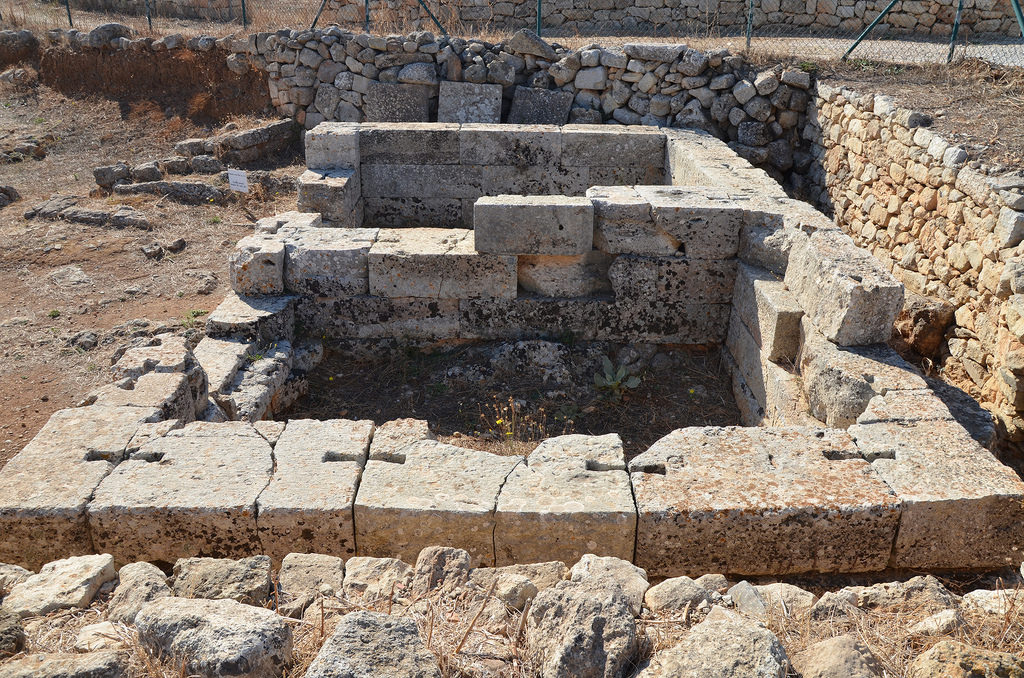
The remains of a small 5th century BC Doric temple dedicated to Artemis and his brother Apollo.
The remains of a small 5th century BC double-cella temple dedicated to Artemis and his brother Apollo.
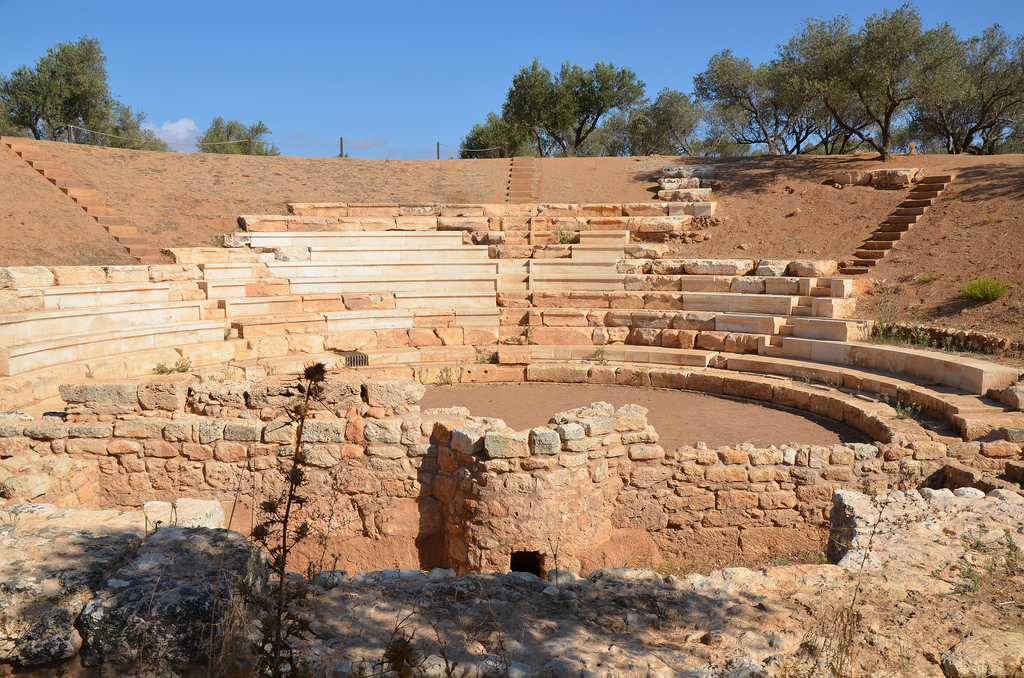
The remains ancient theatre dating back to the early Hellenistic period and modified during the Roman period (from the 1st century AD to the 3rd century AD).
The remains of the ancient theatre. The excavation and architectural information to date indicates that there were three building phases: Hellenistic, Roman I (1st c. AD) and Roman II (3rd c. AD).
The theatre has the typical structure of Hellenistic theatres, consisting of the auditorium (koilon), the orchestra and the scenic building. It was made of the local limestone, like most monuments of the ancient city.
The theatre had the typical structure of Hellenistic theatres, consisting of the auditorium (koilon), the orchestra and the scenic building. It was made of the local limestone, like most monuments of the ancient city.
The preserved lower section of the cavea of the ancient theatre.
The lower section of the cavea of the ancient theatre. Only the seats in the central section remain, along with a sizeable part of their stepped foundations.
The scene building of the ancient theatre built during the Roman period with three large niches corresponding to three entrances.
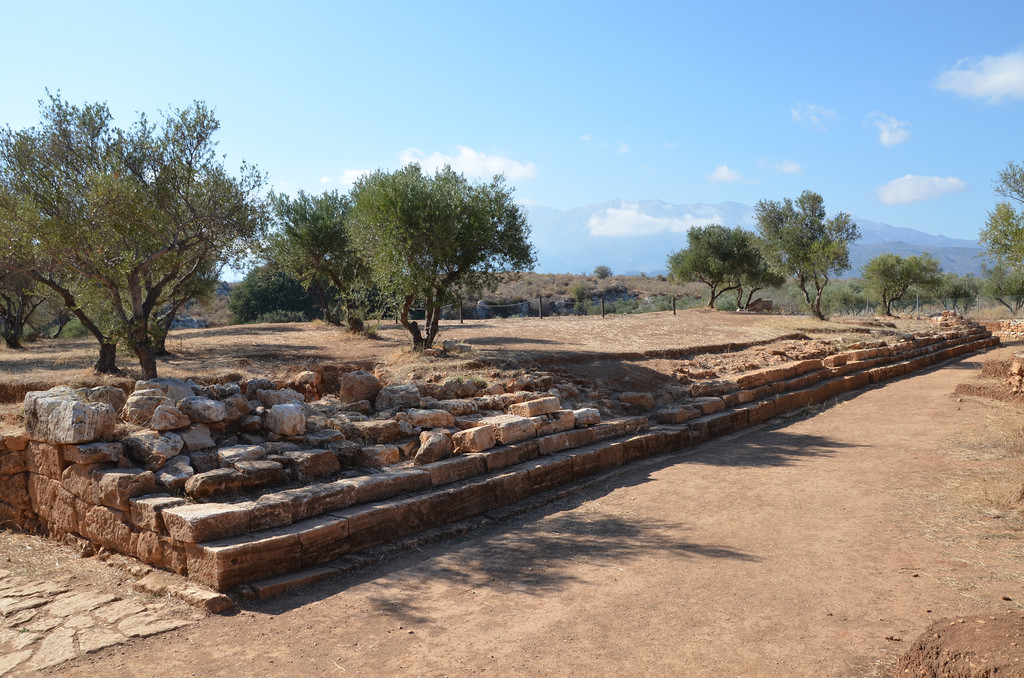
The long stepped construction at the north side of the ancient theatre. Its exact function is not clarified yet but it may have served as stands for event taken place in front of it. It is dated to the Hellenistic period but does not below to the initial phase of construction of the theatre.
The long stepped construction at the north side of the ancient theatre. Its exact function has not been clarified yet but it may have served as stands for event taking place in front of this structure. It is dated to the Hellenistic period but does not belong to the initial phase of construction of the theatre.
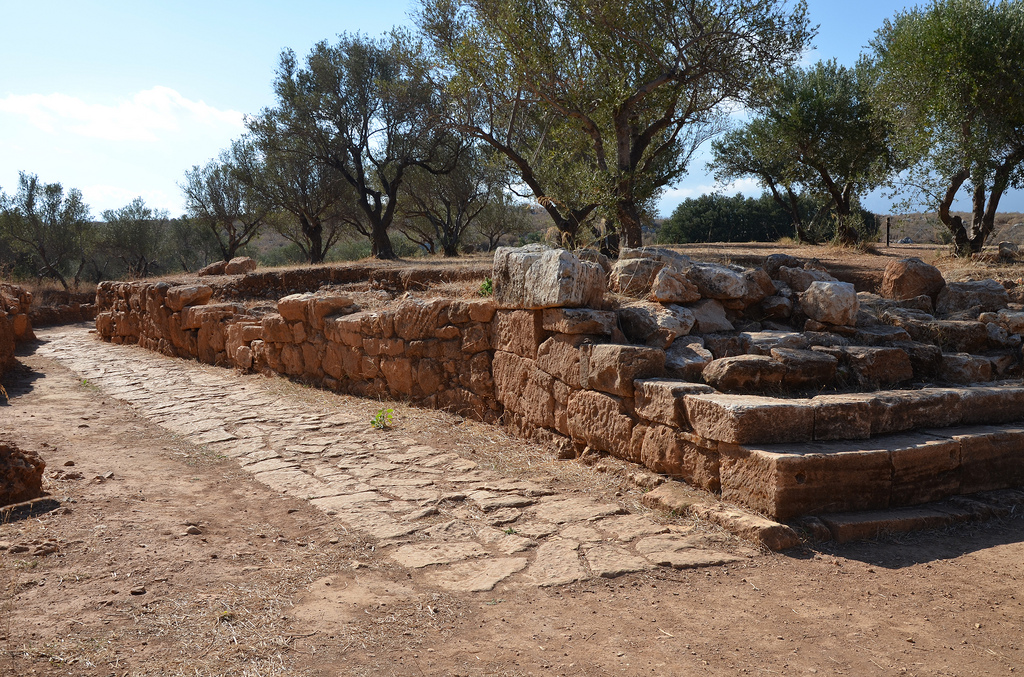
The 55m long paved road dated to the Hellenistic period and leading to the ancient theatre.
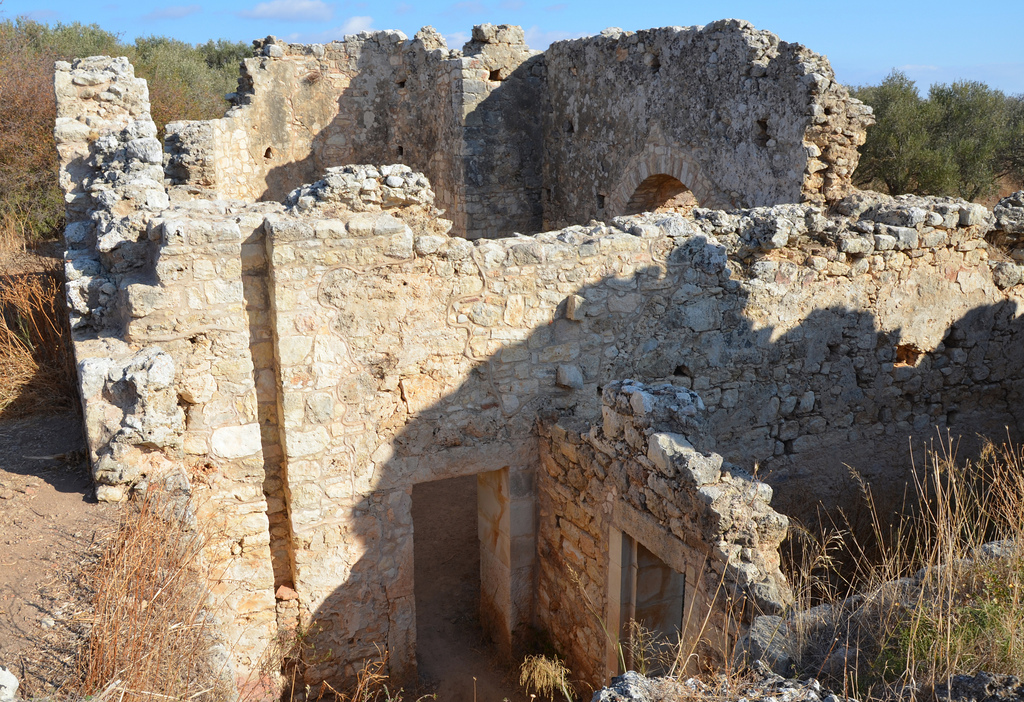
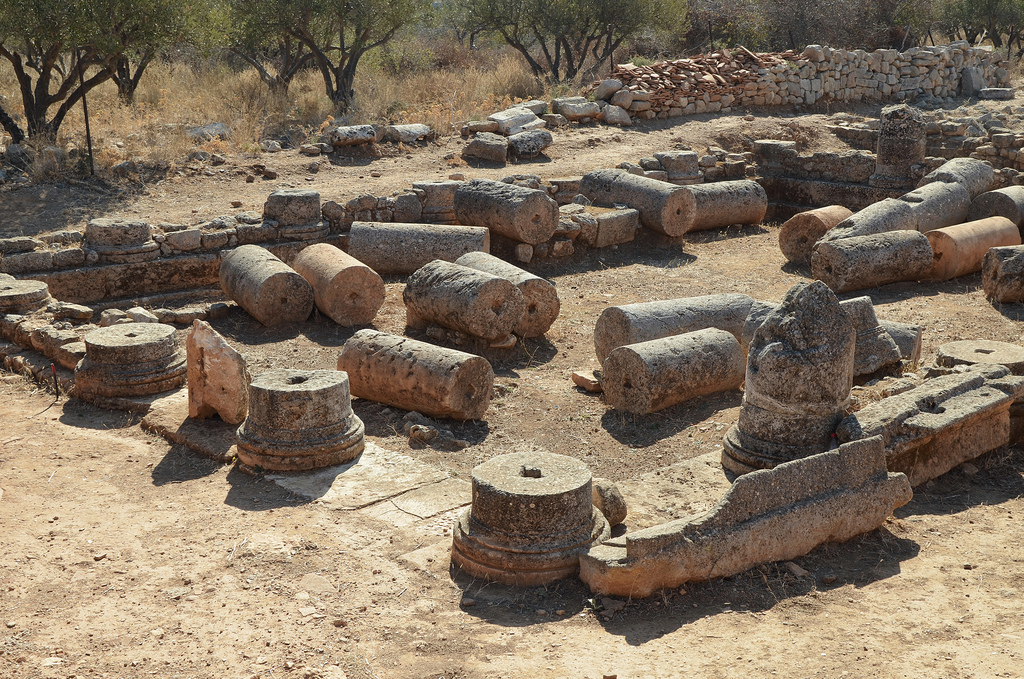
The ruins of the peristyle courtyard (5x7 columns) of a residence dating from the 1st century AD.
The ruins of the peristyle courtyard (5×7 columns) of a Roman residence dating from the 1st century AD.
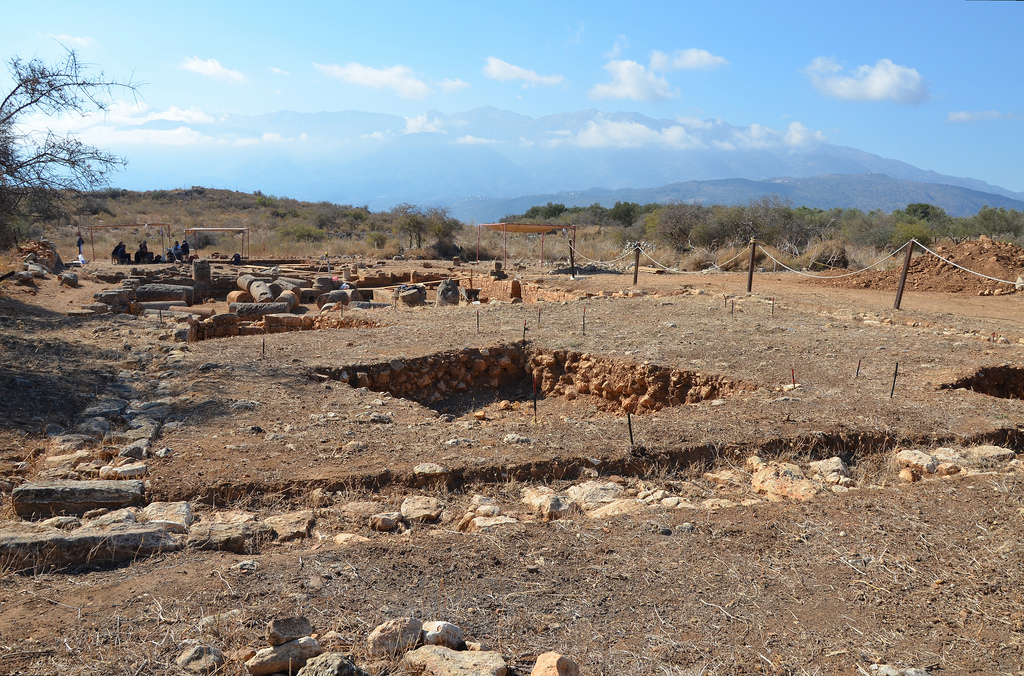
The ongoing excavations at the Roman residence.
built on the site; it continued in operation until 1964
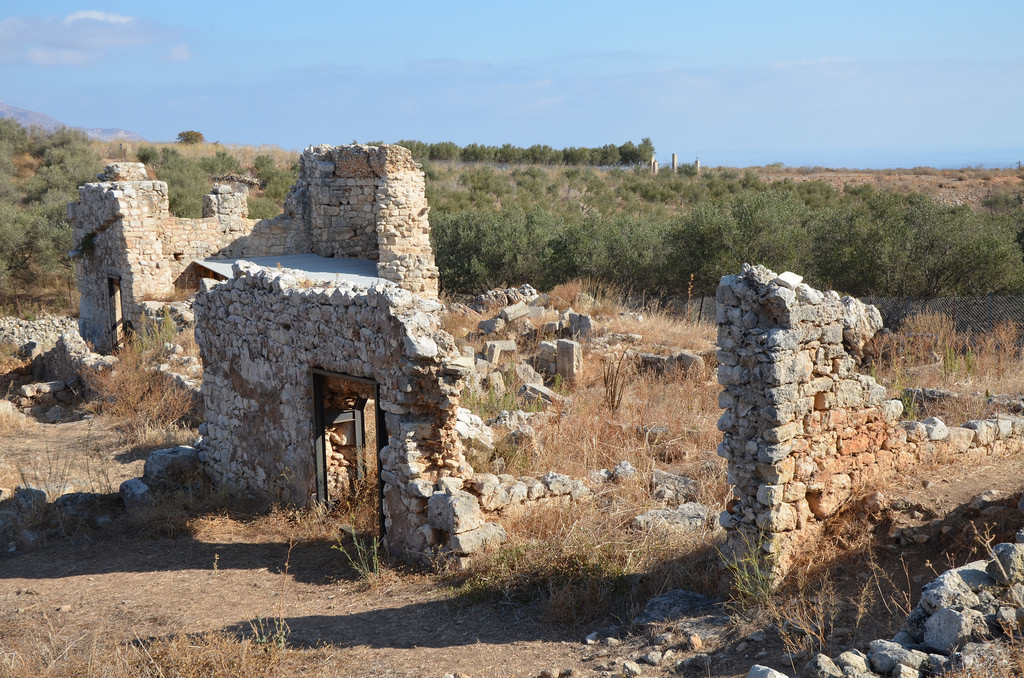
The monastery of Agios Ioannis Theologos. It was built during the 12th century and was in function until 1964.
The monastery of Agios Ioannis Theologos.

Links: