Temple of Antas

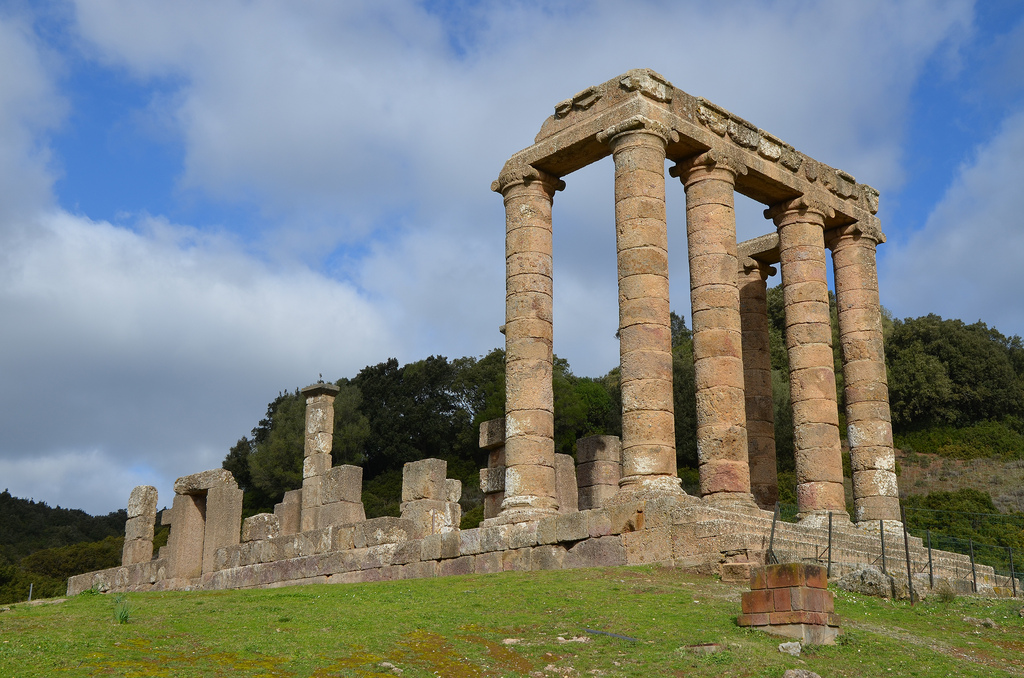
The Temple of Antas is an ancient Punico-Roman temple in the commune of Fluminimaggiore in southern Sardinia. After lying abandoned for centuries, the temple was discovered in 1838 and extensively restored in 1967. The present visible structure dates to the 3rd century AD on a floor plan from the Augustan age. Nestled in the middle of the Iglesiente mountains, the ruins of the temple offer visitors a truly majestic sight.

Coordinates: 39° 23′ 38.4″ N, 8° 30′ 0.72″ E

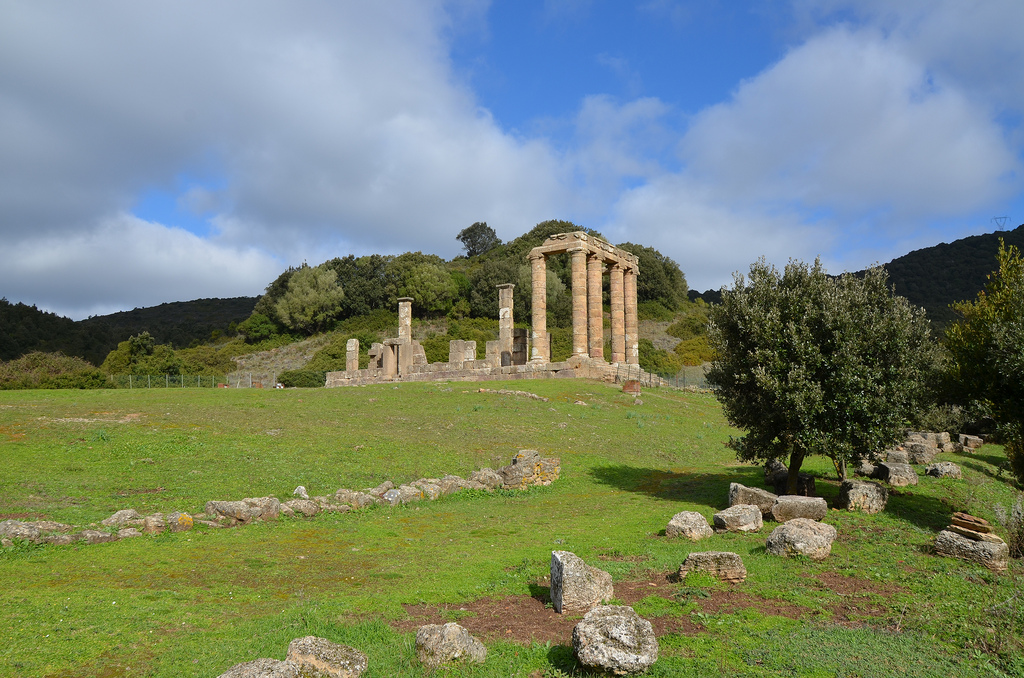
The area, rich in silver, lead and iron, was originally a Nuragic necropolis in use in the early Iron Age (9th-8th century BC) and was identified probably as a sanctuary. The god worshipped here was Babai, the main male divinity of the Nuragic civilisation. Attracted by its metal deposits, the Carthaginians colonised the area at the end of the 5th century BC. They built a temple in honour of the Punic deity Sid Addir, the god of warriors and hunters, who personified the indigenous god worshipped in the nearby Nuragic sanctuary. Its construction was divided into two phases: the more archaic dates back to 500 BC when the place of worship was made up of just a simple rectangular cella (sacred enclosure) where a rock served as a sacred altar. Later in approximately 300 BC, a series of transformations began. The area has produced numerous fragments of Punic sculptures and a large number of dedicatory inscriptions. Some remains of the Punic temple can be seen in front of the temple, which were covered in Roman times by a broad staircase.

The Roman temple was built on the site of its Punic predecessor, and the Romans, in turn, identified the Punic deity as Sardus Pater. Both Sallust and Pausanias record that Sardus was the son of Hercules, who migrated out of the land of Libya to settle on the island of Sardinia, which he called after himself. Under the Roman emperors, the cult of Sardus was encouraged because, in Rome, there was a temple dedicated to Hercules on the Forum Boarium, which made a strong connection between Sardus and Rome.

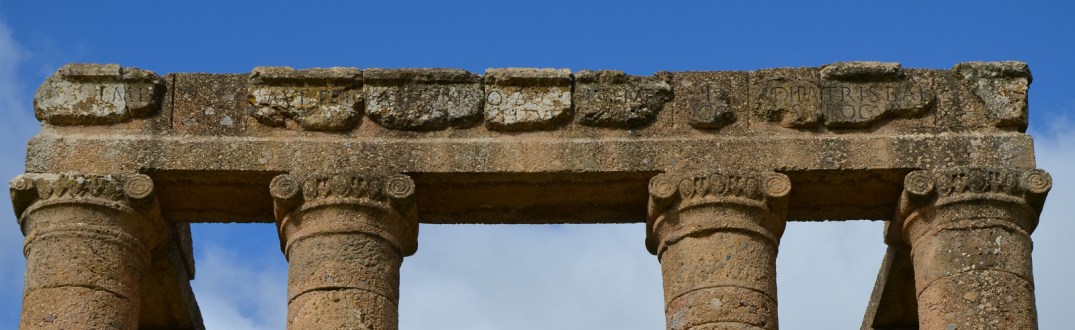
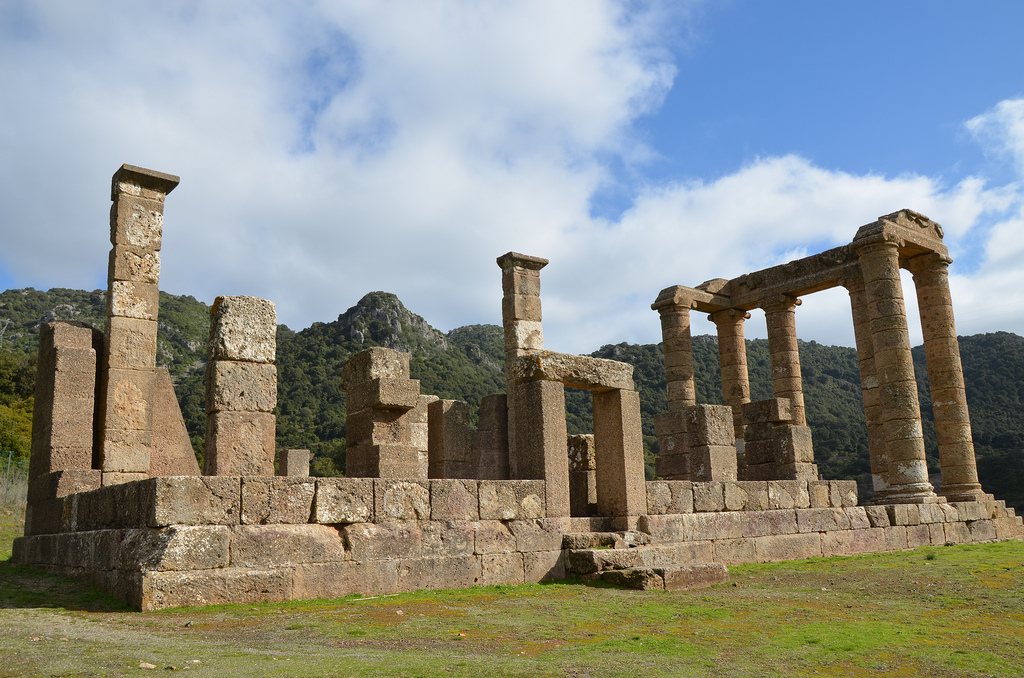
The temple was built on a podium accessible by a broad flight of steps on the front side consisting of various levels. On the fourth level stood the altar, where sacrifices were made according to Roman rituals. The podium was 20 m long and was divided into three parts; the pronaos, cella and adyton. The pronaos had four Ionic columns (tetrastyle) upholding the main beam that contained a Latin inscription: Imp(eratori) [Caes(ari) M.] Aurelio Antonino. Aug(usto) P(io) F(elici) temp[(lum) d]ei [Sa]rdi Patris Bab[i/vetustate c]on[lapsum] (?) [—] A[—] restitue[ndum] cur[avit] Q (?) Co[el]lius (or Co[cce]ius) Proculus

The inscription reveals that the temple was restored under the emperor Caracalla and dedicated to the god Sardus Pater Babi, the forefather of the Sards, by a man called Proculus. This dates the restoration phase to around 215 AD, but the Roman version of the temple could have been built as early as 27 BC under Augustus.

At approximately 1 km from the temple are the Roman quarries from which limestone boulders were extracted and used for the sanctuary’s construction. The work was carried out with a hammer and chisel, while the transport was probably made by carts pulled by oxen. The line cuts followed to extract the limestone blocks are still visible.

PORTFOLIO

In front of the temple are the excavated structures belonging to the Punic phase of the temple.
The columns of the pronaos had a height of approximately 8 meters and were built of local limestone with attic bases. They were surmounted by Ionic capitals.

The Latin inscription in honor of Caracalla.
The Latin inscription in honour of Caracalla.

The cella, the central hall of the temple, had large pillars leaning against the perimeter walls supported by roof beams. Its floor was covered with a black and white mosaic of which only part has survived.
The cella, the central hall of the temple, had large pillars leaning against the perimeter walls supported by roof beams. Its floor was covered with a black and white mosaic of which only part survived.
At the back of the temple was the adyton. It was divided into two rooms, each with their own entrance and in front of their doorway two square water basins on the floor which contained holy water for purification ceremonies (ablution).
At the back of the temple was the adyton. It was divided into two rooms, each with its own entrance, and in front of their doorway were two square water basins on the floor containing holy water for purification ceremonies (ablution).

Roman quarry near the Temple of Antas.

The temple’s isolated position in a fertile valley makes it an enchanted place to visit and offers visitors incredible natural scenery. It is one of the island’s most impressive and exciting archaeological remains.

Opening times:
– from July to September, every day from 9.30 to 19.30
– from April to May and October from 9.30 to 17.30
– June from 9.30 to 18.30
– from November to March from 9.30 to 16.30 except Monday

Links:

Italica

Italica is a well-preserved Roman city located in modern-day Santiponce, 9 kilometres north of Seville in Spain. The city was founded in 206 BC during the Second Punic War (218-202) when the Roman commander Publius Cornelius Scipio settled his Italian veterans on this site following a victory at the Battle of Ilipa. Although the nearby town of Hispalis (Seville) would always remain a larger city, Italica became an important centre of Roman culture and was awarded the title of colonia. The name Italica reflected the veterans’ Italian origins.

Coordinates: 37° 26′ 38″ N, 6° 2′ 48″ W

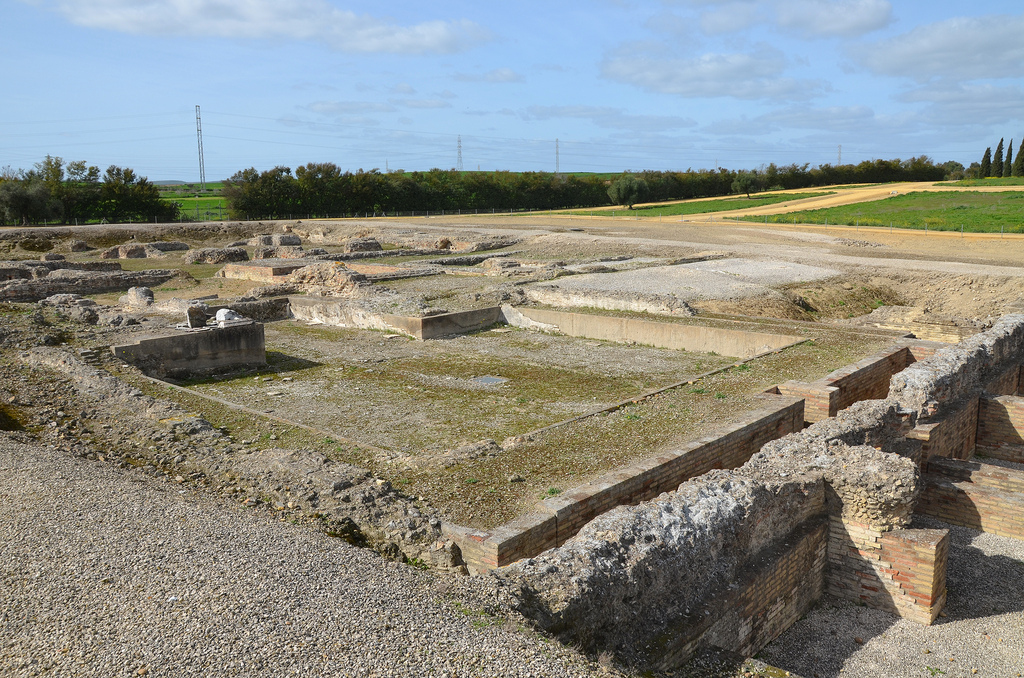
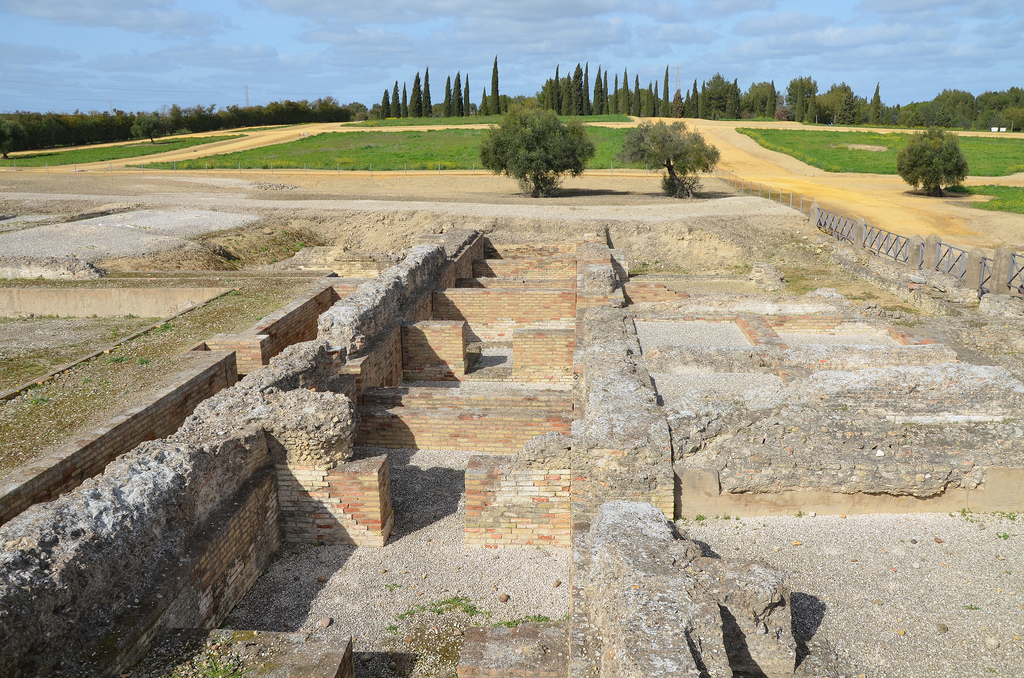
Much of the earliest neighbourhood, the vetus urbs (old city), established by Scipio during the city’s founding, now lies beneath the modern town of Santiponce. The new city, which can still be seen today, known as the nova urbs, was built by Hadrian as an extension of the vetus urbs. In the second half of the 1st century BC, Italica acquired municipal status and, under Hadrian, at the city’s request, it was raised to the rank of colonia, with the title Colonia Aelia Augusta Italica. The families of emperors Trajan and Hadrian originally came from Itálica (the patria of the Ulpii and Aelii), as did many Senators of the time.

Hadrian rebuilt Italica on the scale of an imperial city, comparable to the capital of a whole province. In Hispania, only Corduba, Tarraco, and Emerita surpassed Italica. Under his rule, Italica enjoyed a period of splendour during which its architectural development flourished with the construction of new public buildings such as an amphitheatre, vast baths, and luxurious houses with a rich variety of mosaic floors. About twenty intricate mosaics lie amongst the uncovered ruins still in situ (the remainder are in the Archaeological Museum of Seville or in private hands), and their decorative themes provided the name for many of the buildings that can be visited today.

The whole plan of the city was lavish, the main avenue being nearly 15 metres wide with porticoed pavements. Other streets, of half that width, were flanked by footpaths laid out on an orthogonal plan. Hadrian provided the town with a water supply system and a drainage network. Running water was brought in via an aqueduct to cisterns before being distributed through a network of pipes. The amphitheatre was one of the largest in the Empire, 160 by 197 metres. It was built of large blocks of hewn stone and brick faced with marble and could accommodate some 25,000 spectators.

Italica rose to considerable military importance in the 2nd century AD. However, at the end of the 2nd century AD, the city began to decline for political and economic reasons and was gradually abandoned, with its most emblematic spaces losing their functionality. Throughout the Middle Ages, the ruins were used as a source of stone for Hispalis (Seville).

The archaeological site of Italica is one of the most important sites of Andalusia’s archaeological heritage, allowing the visitor to gain a vital insight into Roman town planning. There is a superb collection of sculptures from the Archaeological Museum of Seville excavations. The smaller finds, carved gems, glass, and ceramics are dispersed among various museums and private collections, notably the Lebrija Collection.

PORTFOLIO

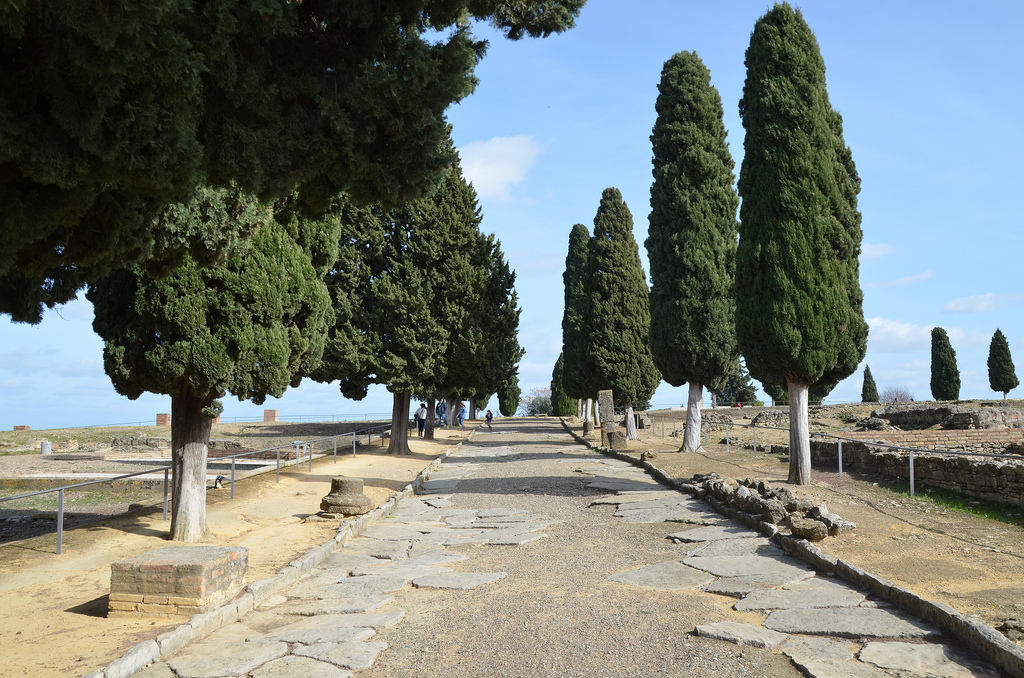
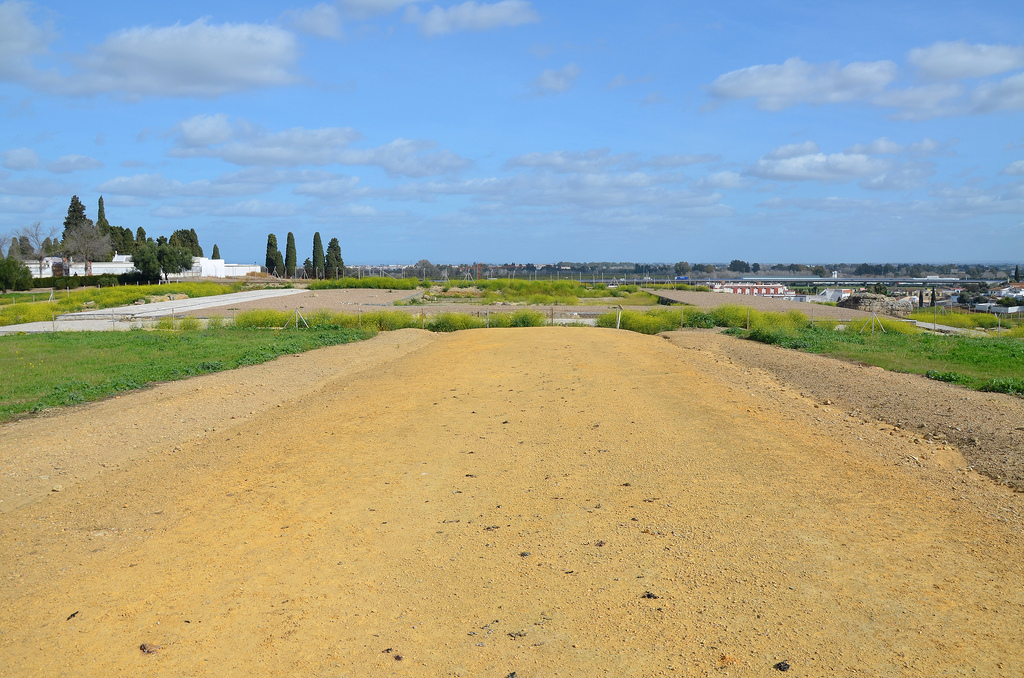
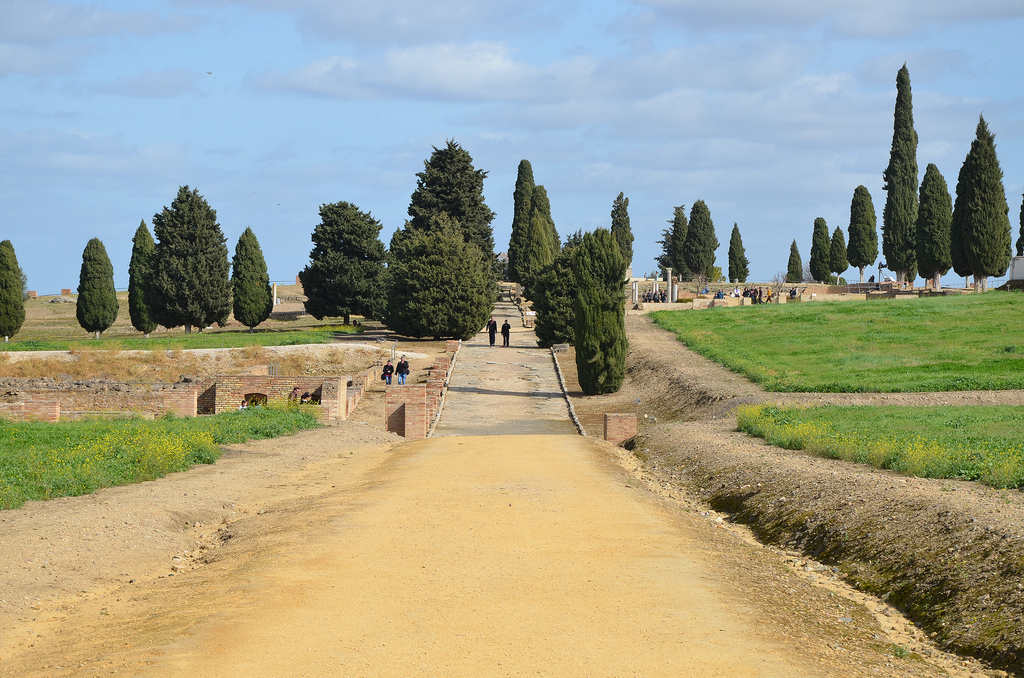
The Cardo Maximus.
The Cardo Maximus.
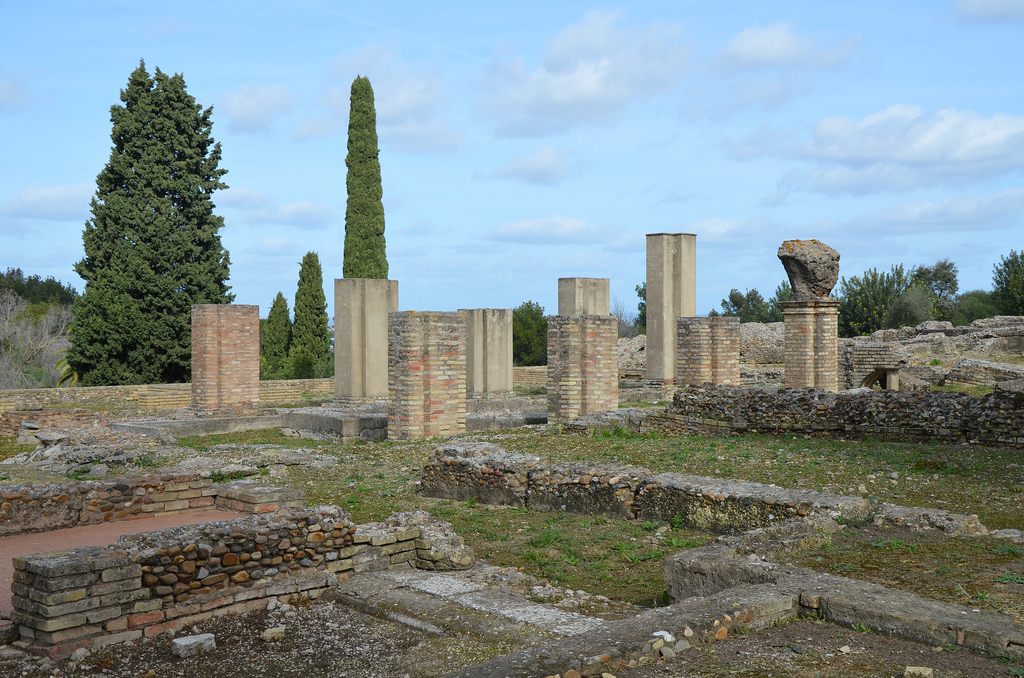
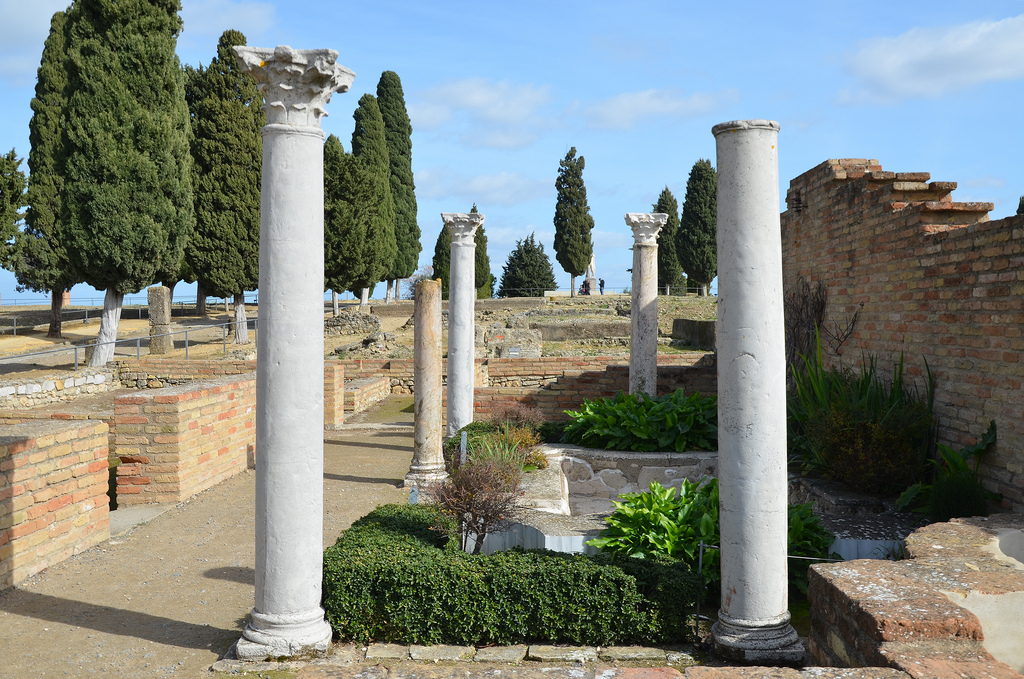
This peristylium of the House of the Exedra. This peristylium is rectangular. It has an oval fountain at its central axis. Portico perimetral supporting does not need columns, as is usual. Instead of them there were big pillars with a plan with a shape of cross.
This rectangular peristylium of the House of the Exedra. The big pillars supported a second storey. The domus covered an area of 3,000 square metres and was built entirely of brick-faced concrete.
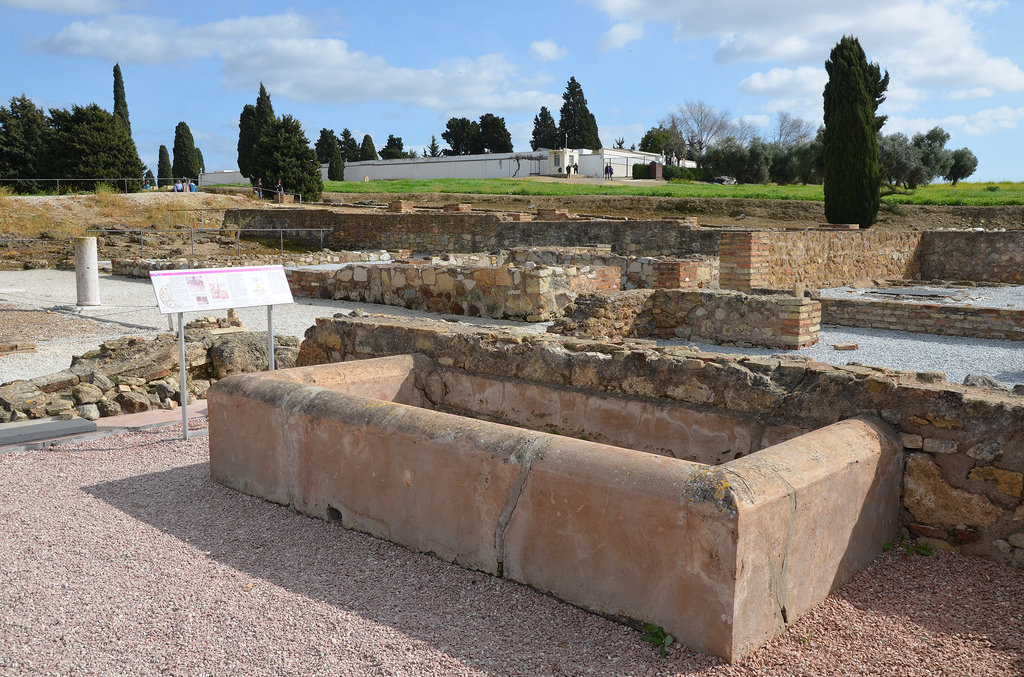
Warm thermal baths in the House of the Neptune.
The warm thermal baths in the House of Neptune.

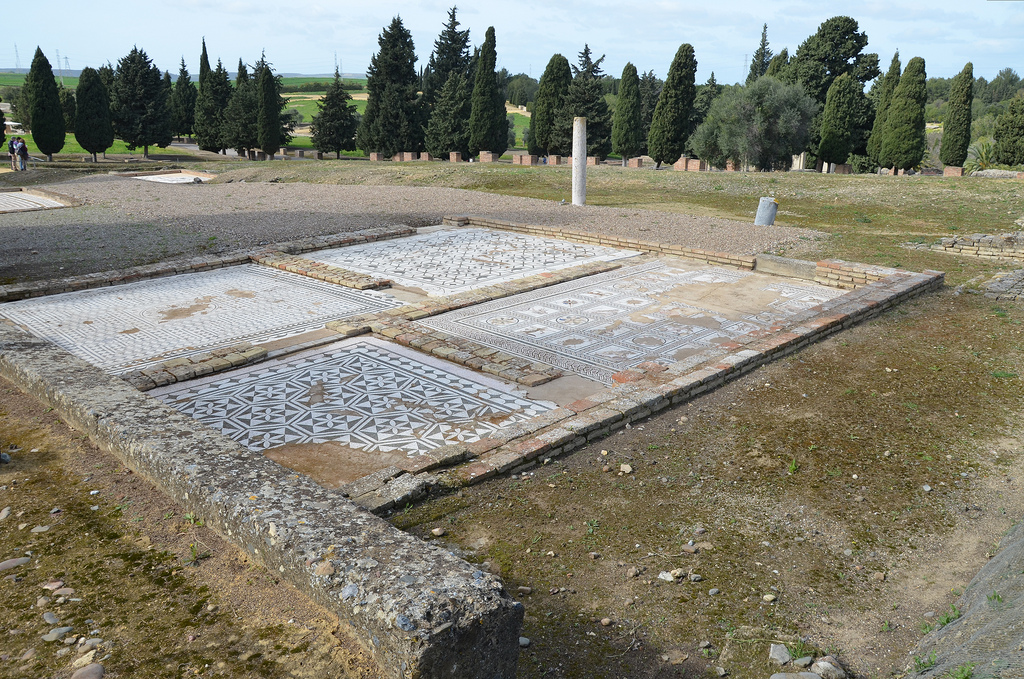
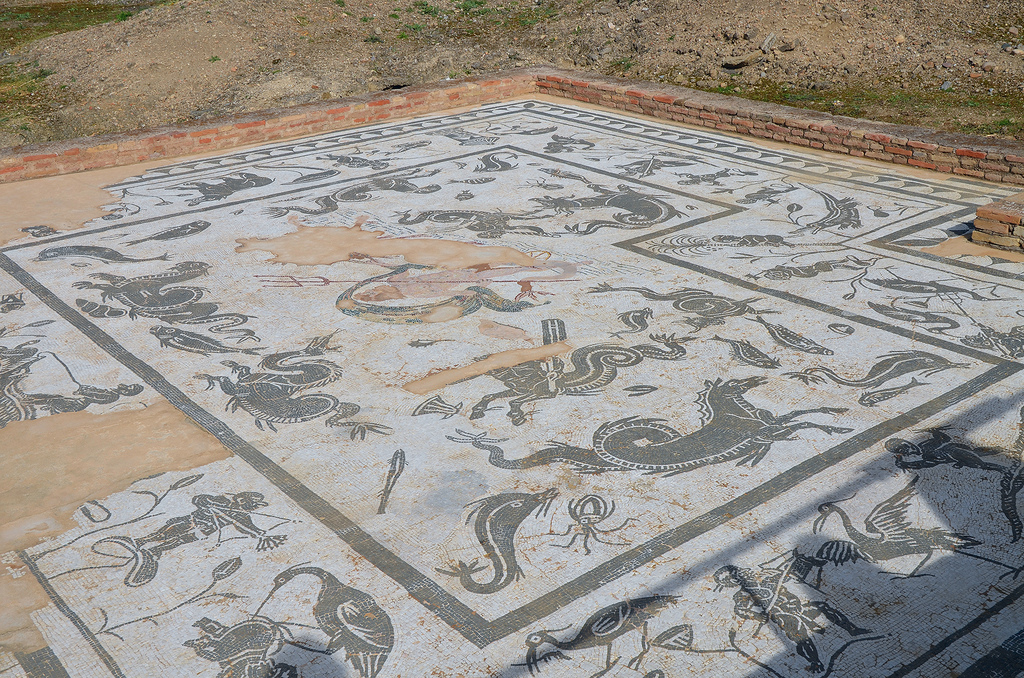
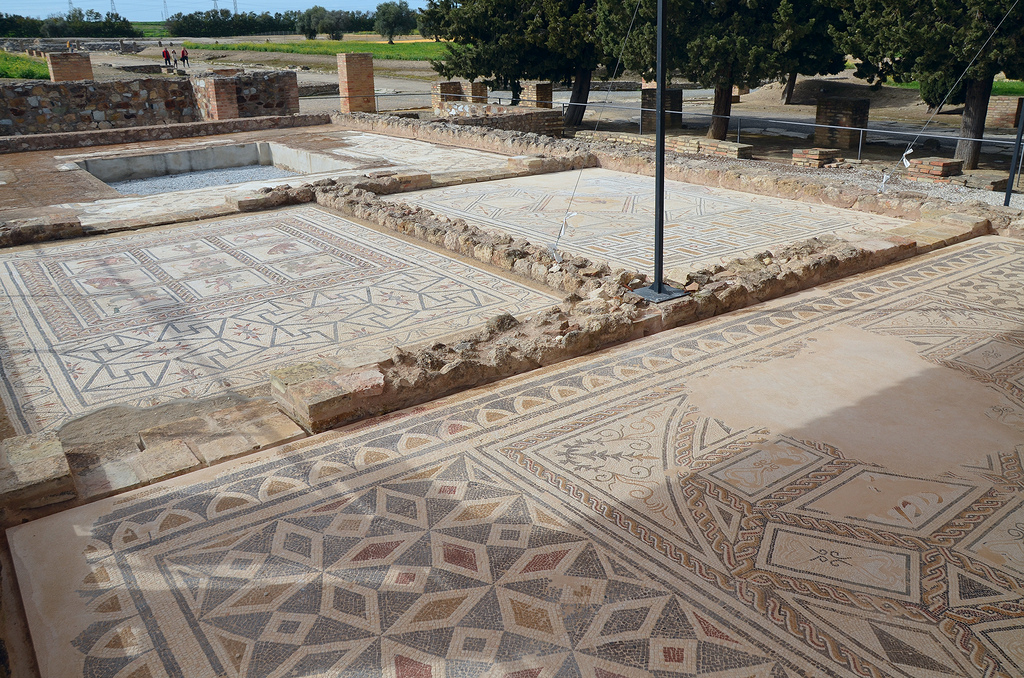
The House of Neptune with Geometric and figurative mosaics. The domus was named after a mosaic with all kinds of aquatic animals.
The House of Neptune with Geometric and figurative mosaics. The domus was named after a mosaic depicting Neptune and aquatic animals.
The Neptune Mosaic in the House of Neptune. Neptune, the god of the sea with his trident. The mosaic is surrounded by a wide edge that is decorated with Nilotic scenes where one can see crocodiles, a hippopotamus, a palm tree, and several pygmies fighting ibises.
The Neptune Mosaic in the House of Neptune. Neptune, the god of the sea, with his trident. The mosaic is surrounded by a wide edge that is decorated with Nilotic scenes with crocodiles, a hippopotamus, a palm tree, and several pygmies fighting ibises.
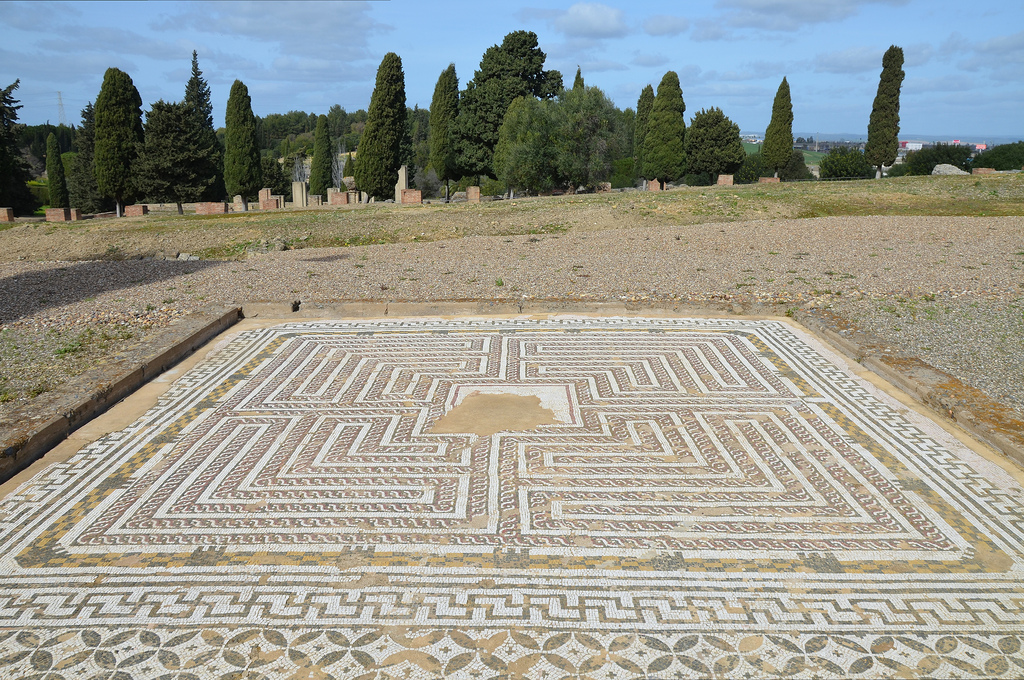
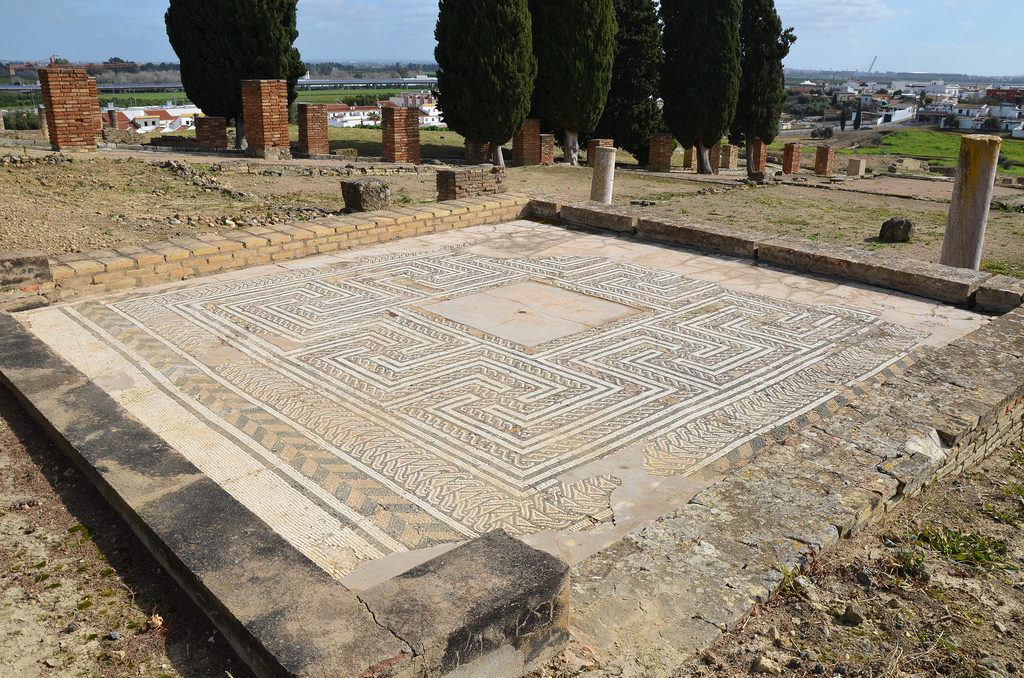
The Labyrinth Mosaic in the House of Neptune.

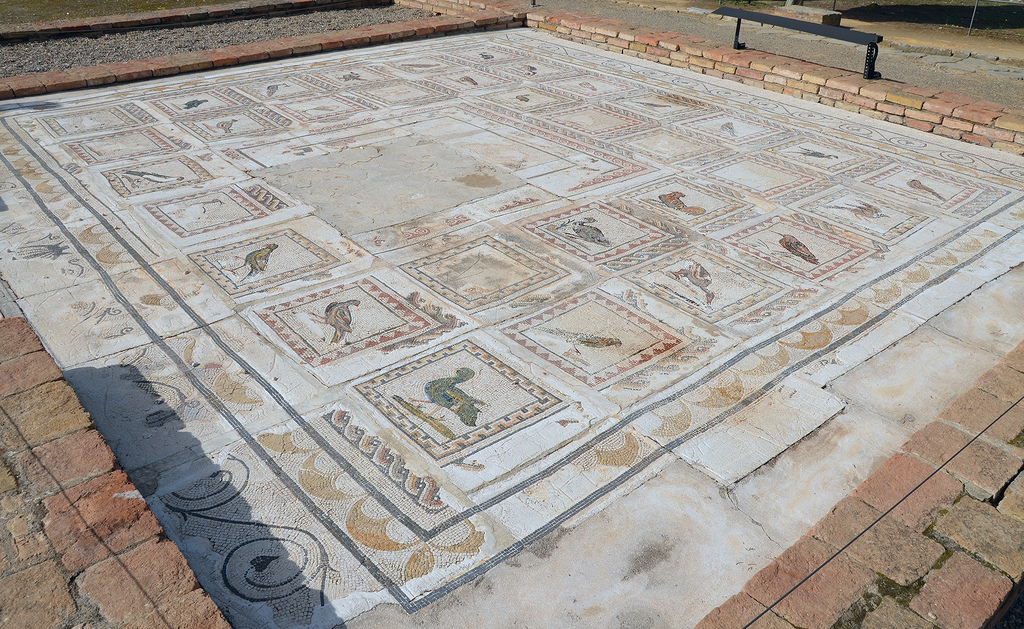
The House of the Birds, a large residence endowed with a good quantity of mosaics of high quality. One of them, the Bird Mosaic, gave its name to the house and consists of a central panel surrounded by 35 small squares representing different species of birds.
The House of the Birds is a large residence endowed with a good quantity of mosaics of high quality. One of them, the Bird Mosaic, gave its name to the house.
The Bird Mosaic consisting of a central panel surrounded by 35 small squares representing different species of birds.
The Bird Mosaic consists of a central panel surrounded by 35 small squares representing different species of birds.
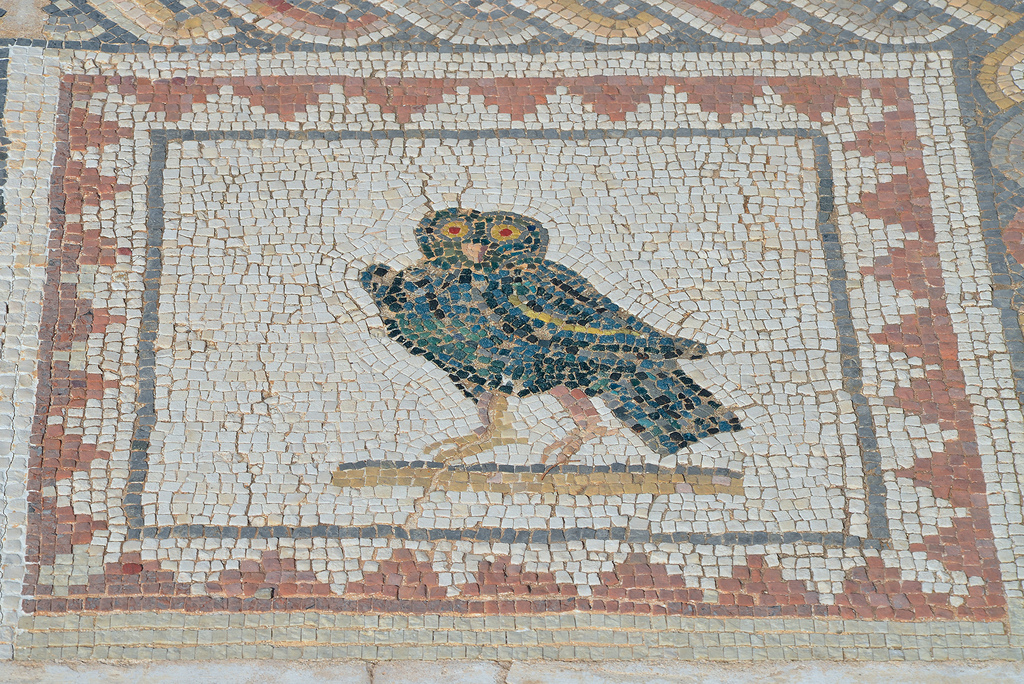
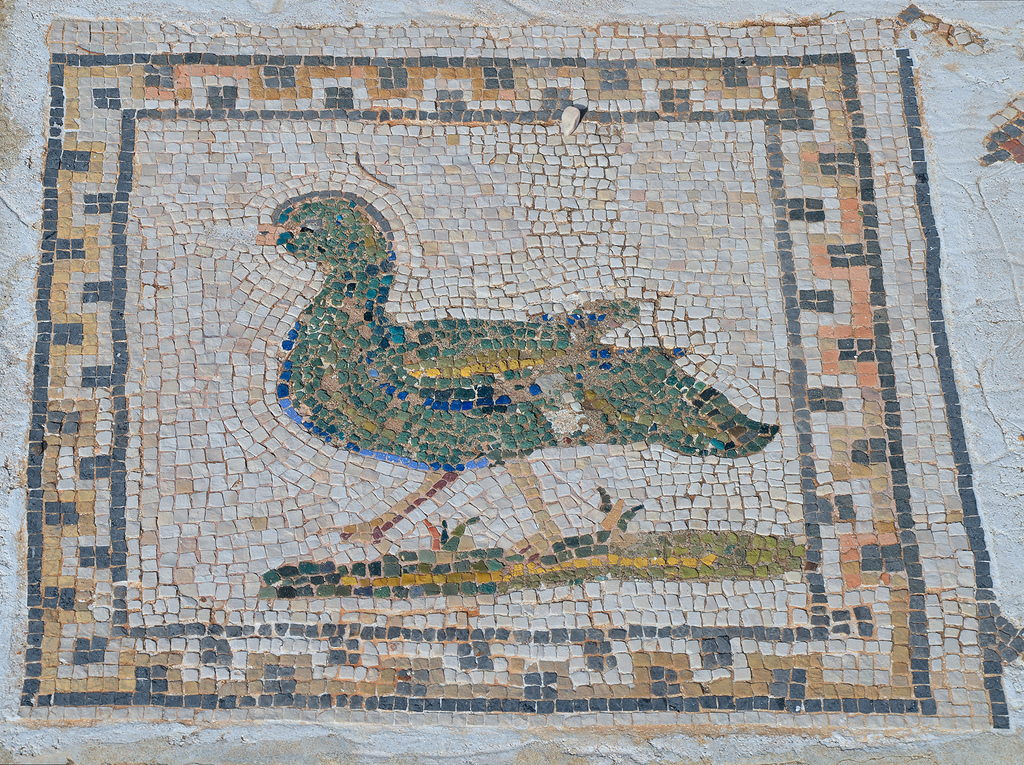
Detail of the Bird Mosaic consisting of a central panel surrounded by 35 small squares representing different species of birds.
Detail of the Bird Mosaic which consists of a central panel surrounded by 35 small squares representing different species of birds.
Detail of the Bird Mosaic consisting of a central panel surrounded by 35 small squares representing different species of birds.
Detail of the Bird Mosaic which consists of a central panel surrounded by 35 small squares representing different species of birds.
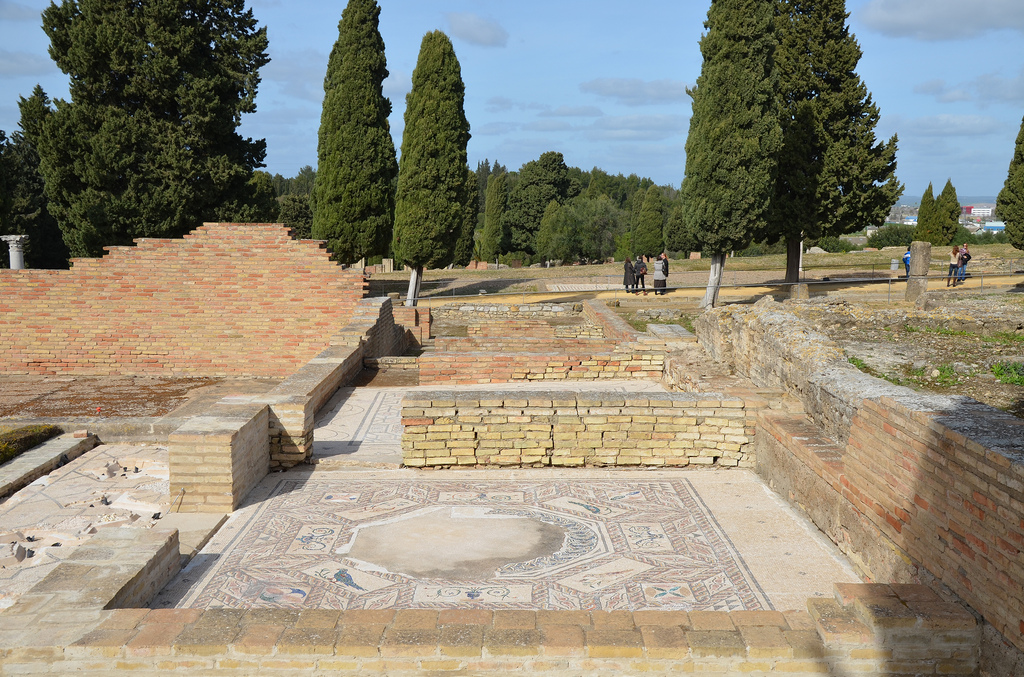
The House of the Birds.
Open patio with a fountain in the House of the Birds.
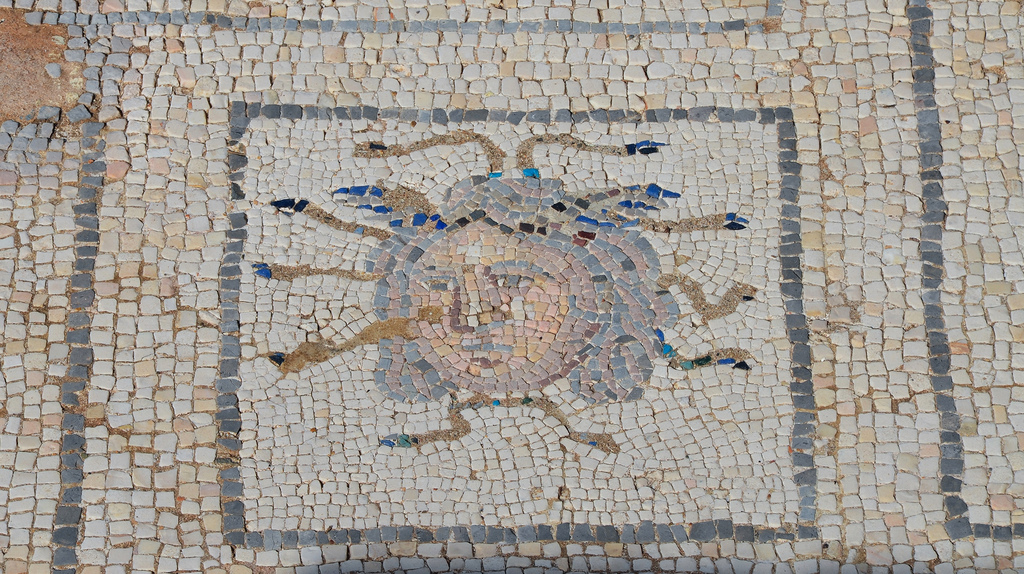
Mosaic detail with head of Medusa in the House of the Birds.
The House of Hylas.
The House of Hylas. The mosaic’s centre panel (emblema) depicts Hercules and his companion and lover, Hylas, which is on display in the Archaeological Museum of Seville.
The House of the Planetarium, so called because of the mosaic that paved one of its rooms.
The House of the Planetarium is so called because of the mosaic that paved one of its rooms.
Mosaic floors in the House of the Planetarium.
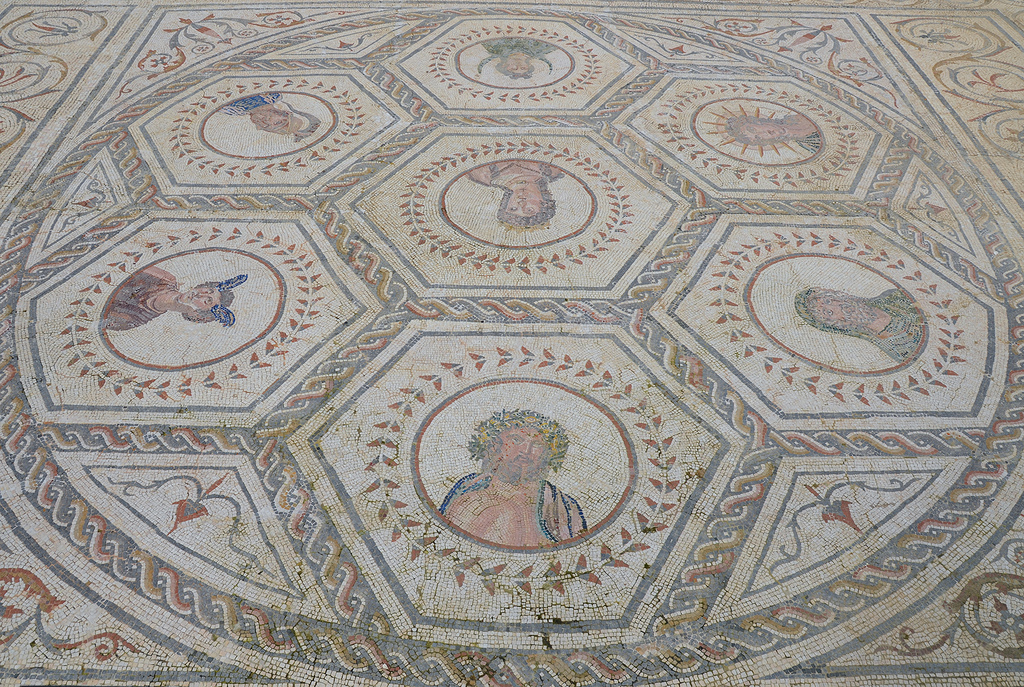
Mosaic with busts of the planetary deities in the House of the Planetarium. who gave their names to the days of the week. In the center is Venus (Friday). Anticlockwise from bottom center are Jupiter (Thursday), Saturn (Saturday), Helios or Sol (Sunday), Luna or Selene (Monday), Mars (Tuesday), and Mercury (Wednesday).
Mosaic with busts of the planetary deities who gave their names to the days of the week in the House of the Planetarium. In the centre is Venus (Friday). Anticlockwise from the bottom centre are Jupiter (Thursday), Saturn (Saturday), Helios or Sol (Sunday), Luna or Selene (Monday), Mars (Tuesday), and Mercury (Wednesday).
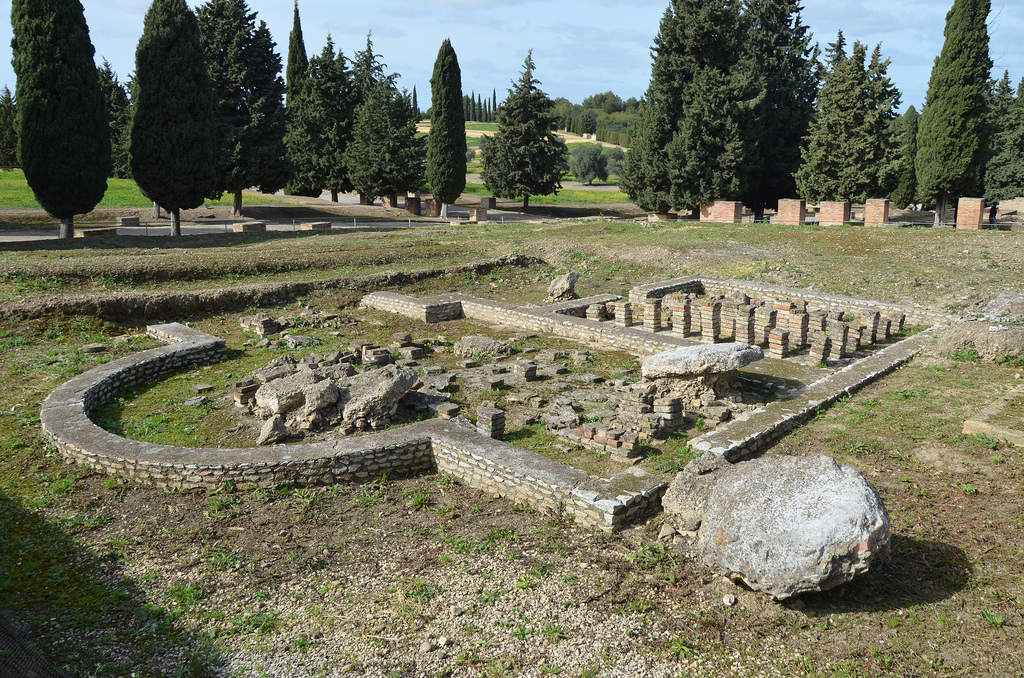
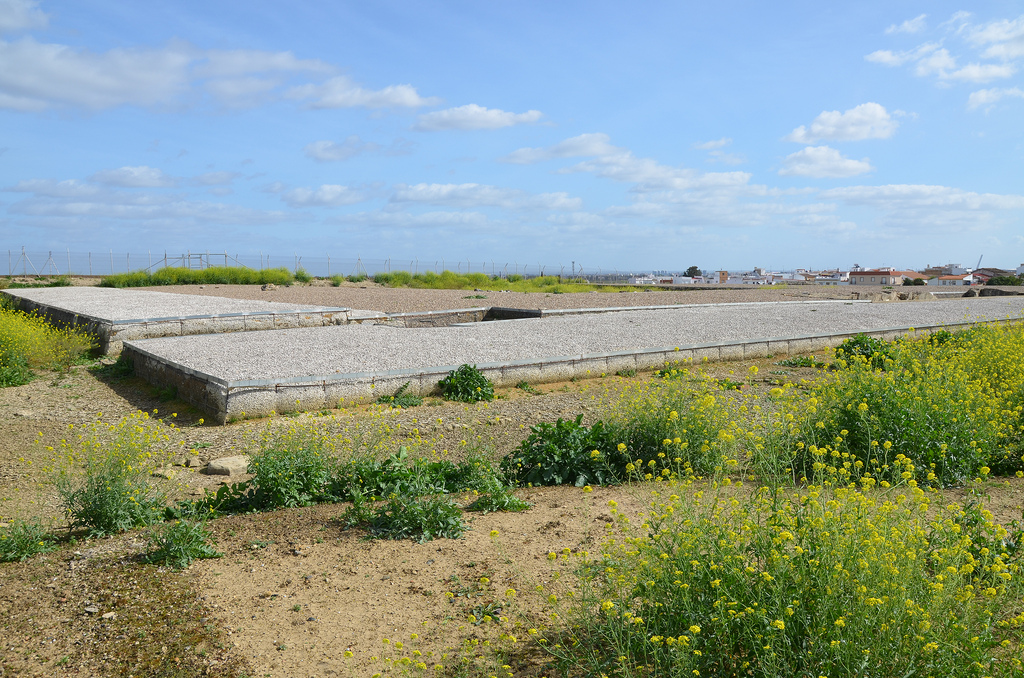
The foundations of the Temple of Trajan (Traianeum). The temple precinct consisted of a quadriporticus around an octastyle Corinthian podium temple and altar.
The foundations of the Temple of Trajan (Traianeum).

The Hadrianic Baths located in the midwestern part of the Nova Urbs.
The Hadrianic Baths are located in the midwestern part of the Nova Urbs.
The Hadrianic Baths display construction techniques dating to the time of Hadrian and lead pipes that bear stamps of Hadrian.
The Hadrianic Baths display construction techniques dating to the time of Hadrian and lead pipes that bear stamps mentioning Hadrian.
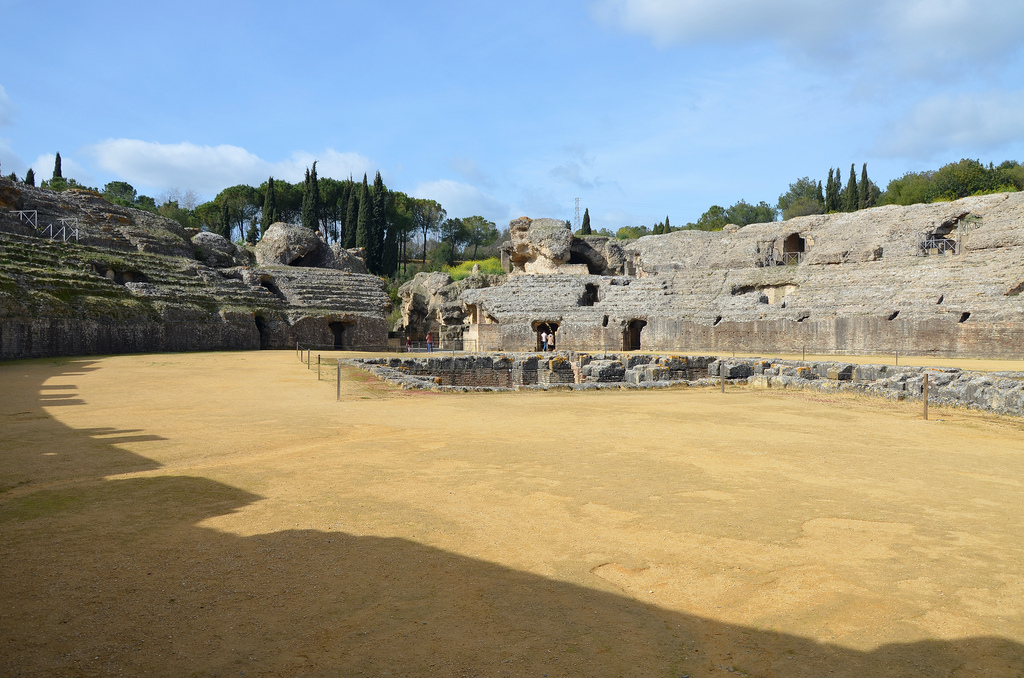
The amphitheater was one of the largest in the Empire, 160 by 197 m. It was built of large blocks of hewn stone and brick faced with marble and could accommodate some 25,000 spectators.
The amphitheatre was one of the largest in the Empire, 160 by 137 m. It was built of large blocks of hewn stone and brick faced with marble and could accommodate some 25,000 spectators.
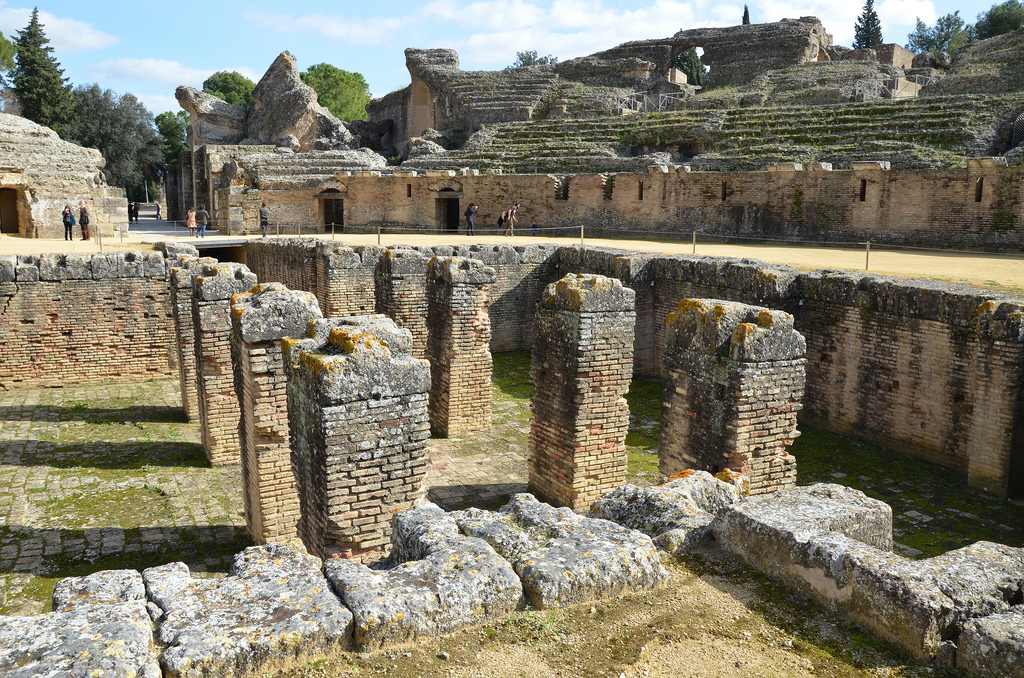
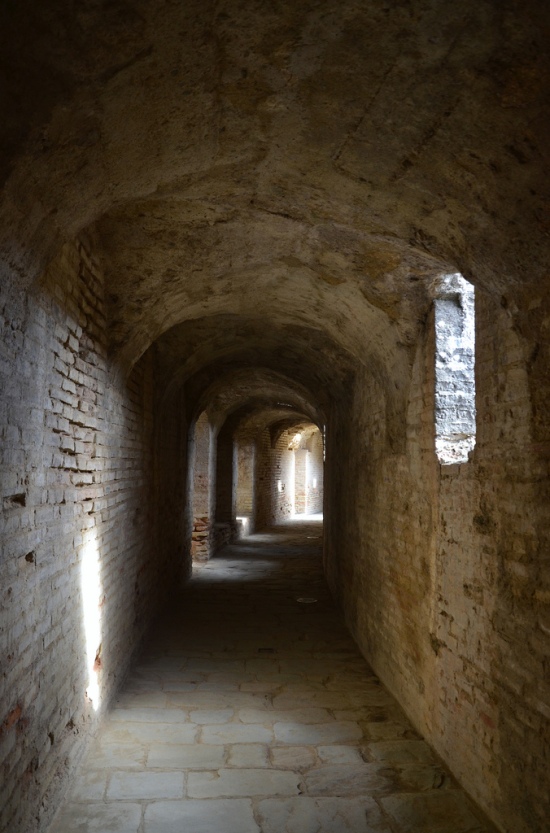
Much of the cavea of the amphitheatre is preserved with its corridors and vomitoria still usable, and the underground service passages of the arena are in perfect condition.
Much of the cavea of the amphitheatre is preserved, with its corridors and vomitoria still usable, and the underground service passages of the arena are in perfect condition.
The wellpreserved corridors of the amphitheatre.
The well-preserved corridors of the amphitheatre.
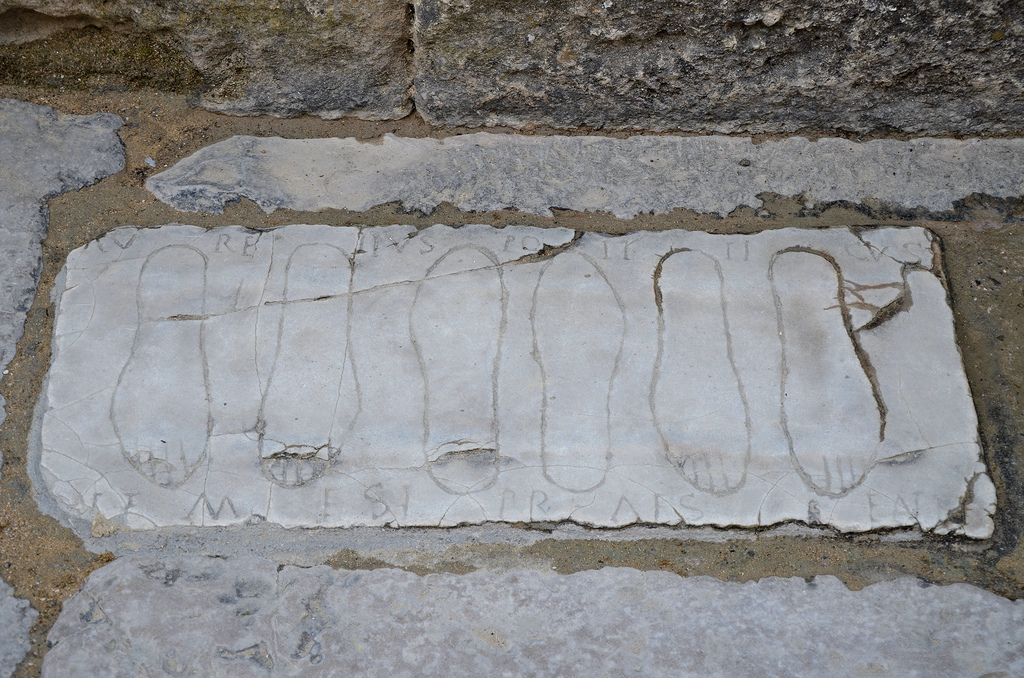
Votive plaque with engraved footprints at the entrance of the Roman amphitheatre.
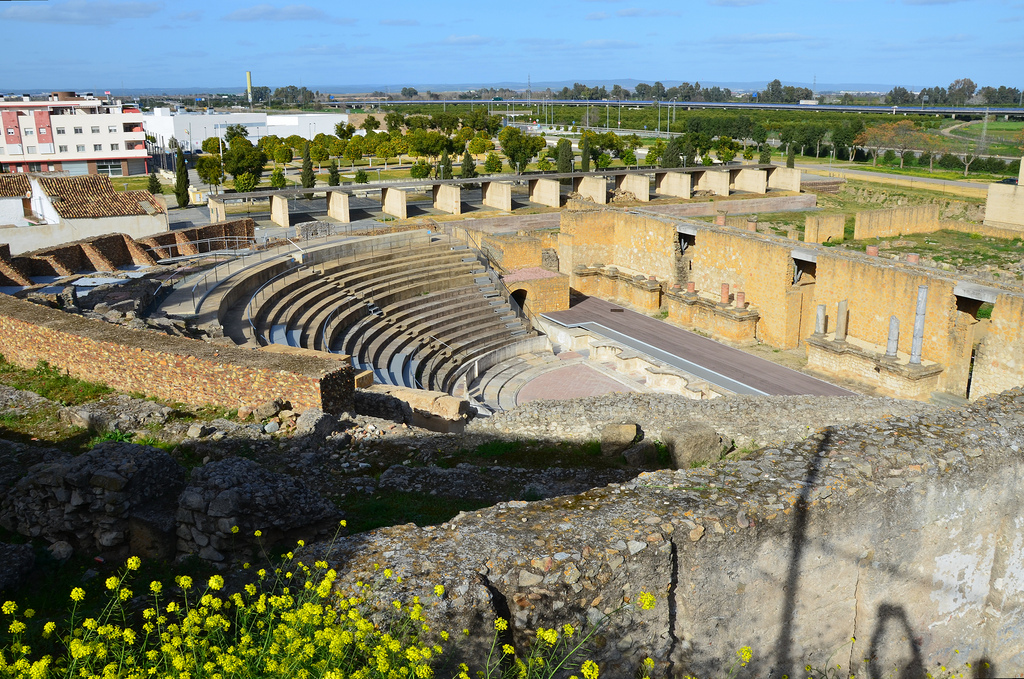
The theatre was built in the old Roman city, the Vetus Urbs. Construction began during the time of Augustus. It was later modified between 60 and 80 AD. Hadrian enriched it with marble sculptures.

Links: