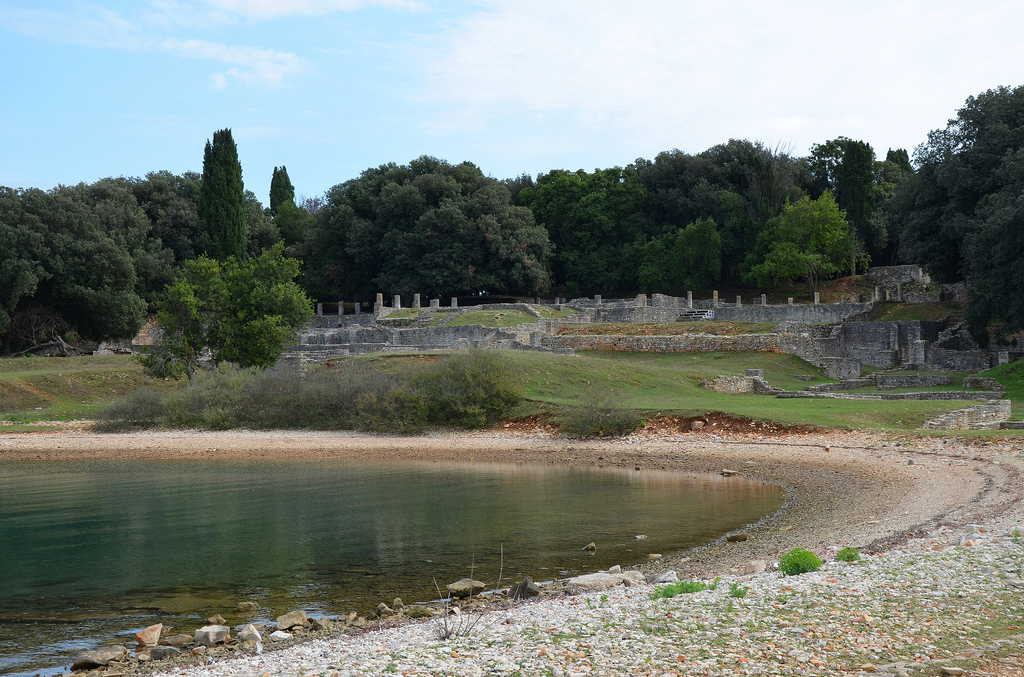
The Verige Roman Villa is a villa rustica located in the bay of Verige off the coast of Istria, within Croatia’s Brijuni National Park. The Brijuni archipelago includes 14 small islands famous for their scenic beauty. In Roman times, numerous villae rusticae adorned the coast of these islands, referred to by Pliny the Elder as Insulae Pullariae. The villa’s construction began in the 1st century BC, reaching its heyday in the 1st century AD. Some parts of the estate were used until the 6th century.
The fall of the Illyrian capital of Nesactium in 177 BC marked the onset of a long period of Roman rule, which brought considerable economic, social and cultural changes to the entire Istrian peninsula, including the Brijuni Islands. The Roman navy found on the Brijuni Islands a safe and natural shelter. The Romans built many luxurious summer residences and palaces where they could relax and live from the products they produced.
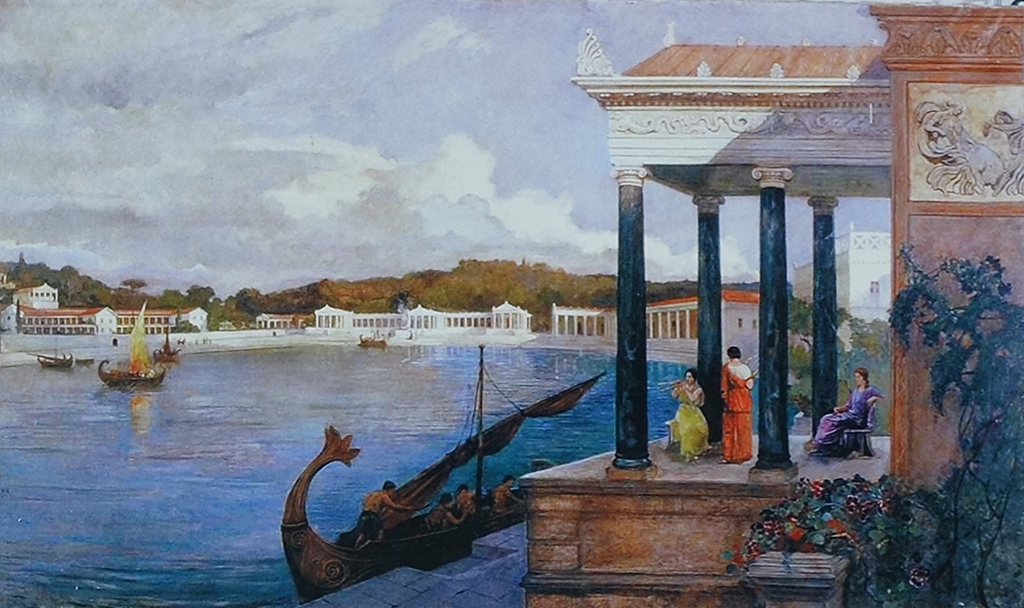
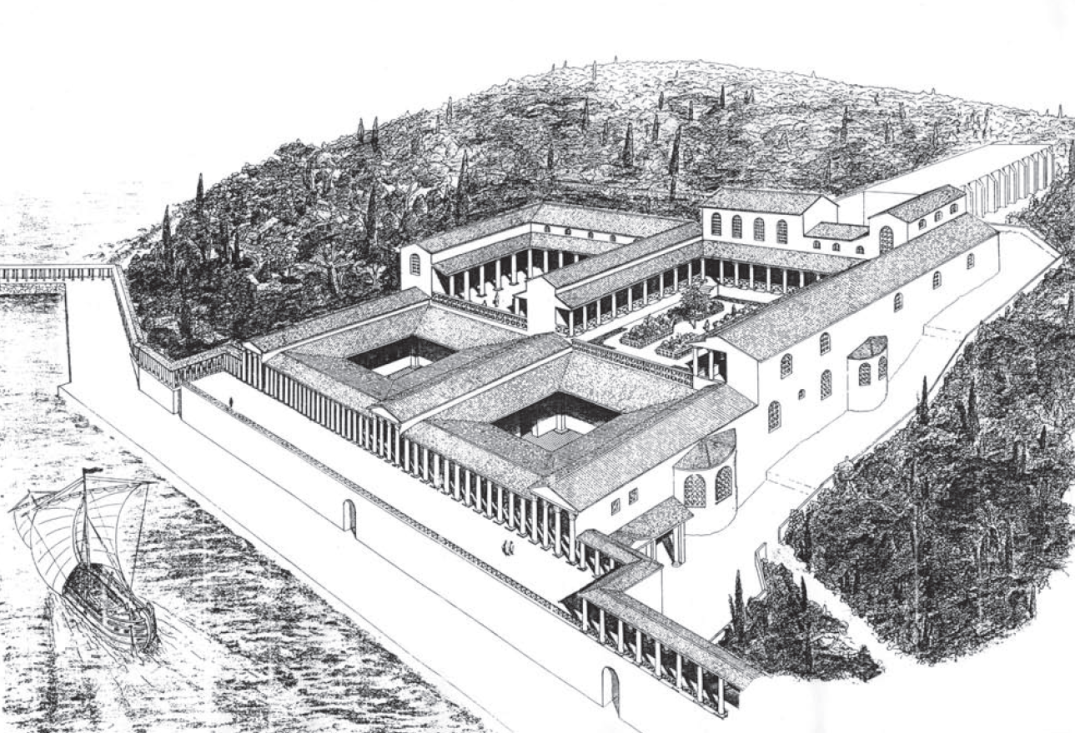
The senatorial Laecanii family owned the villa and probably came under imperial ownership in the 2nd half of the 1st century AD. It is said to be among the three most luxurious villas in the Roman Empire, alongside a Villa in Pompeii and another one on the island of Capri. The villa consisted of several buildings of residential and economic character situated in different parts of the bay. The villa also had a library, three-level terraces and huge gardens. The whole complex covered an area of over six hectares.
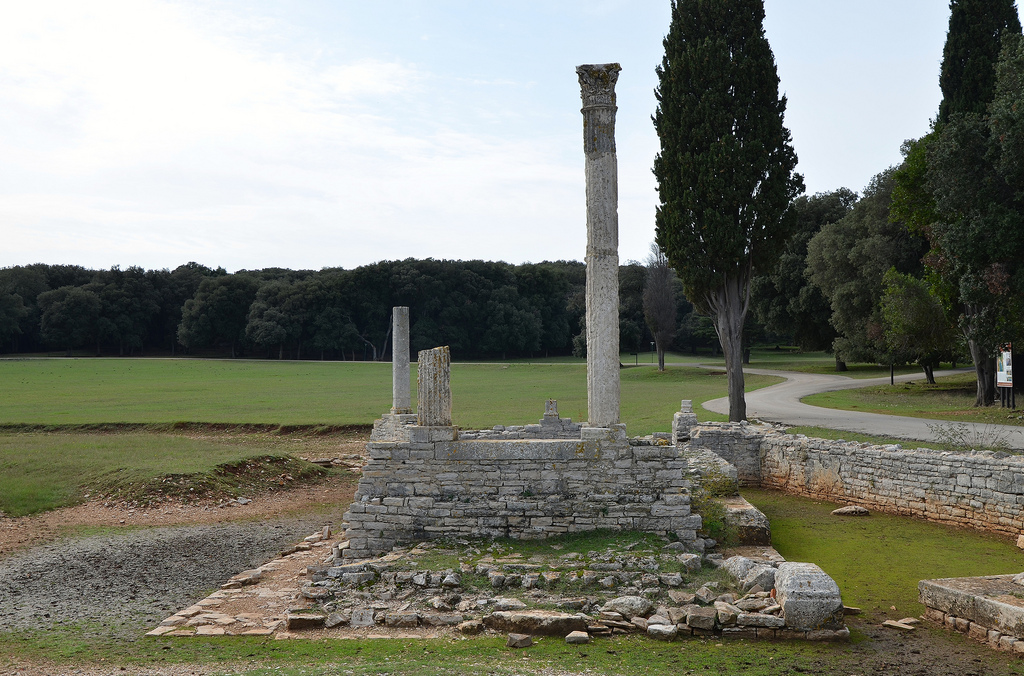
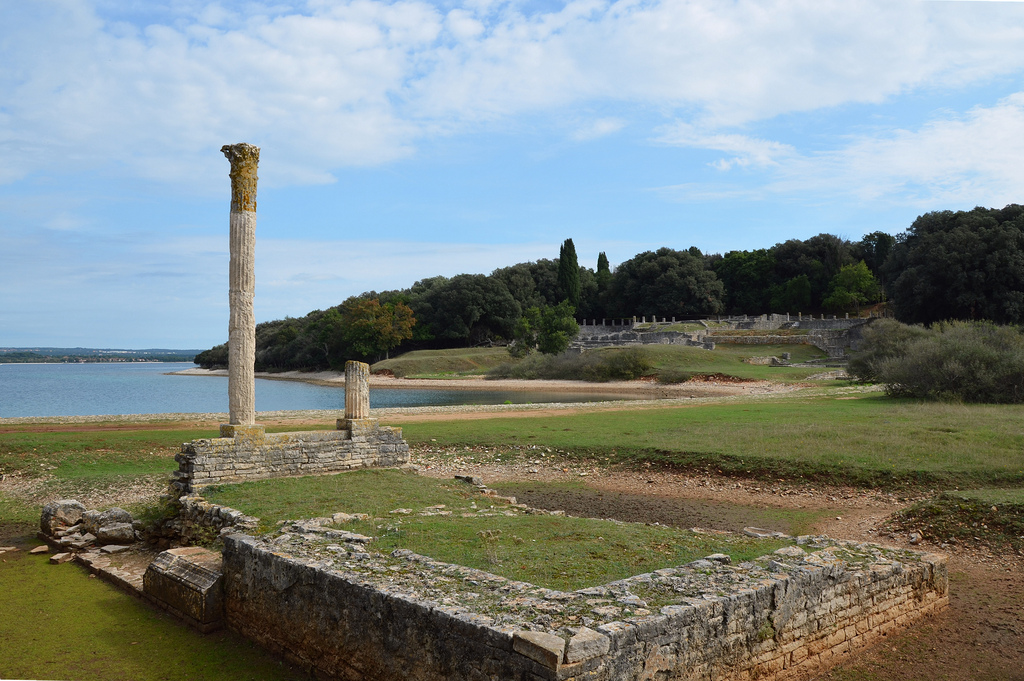
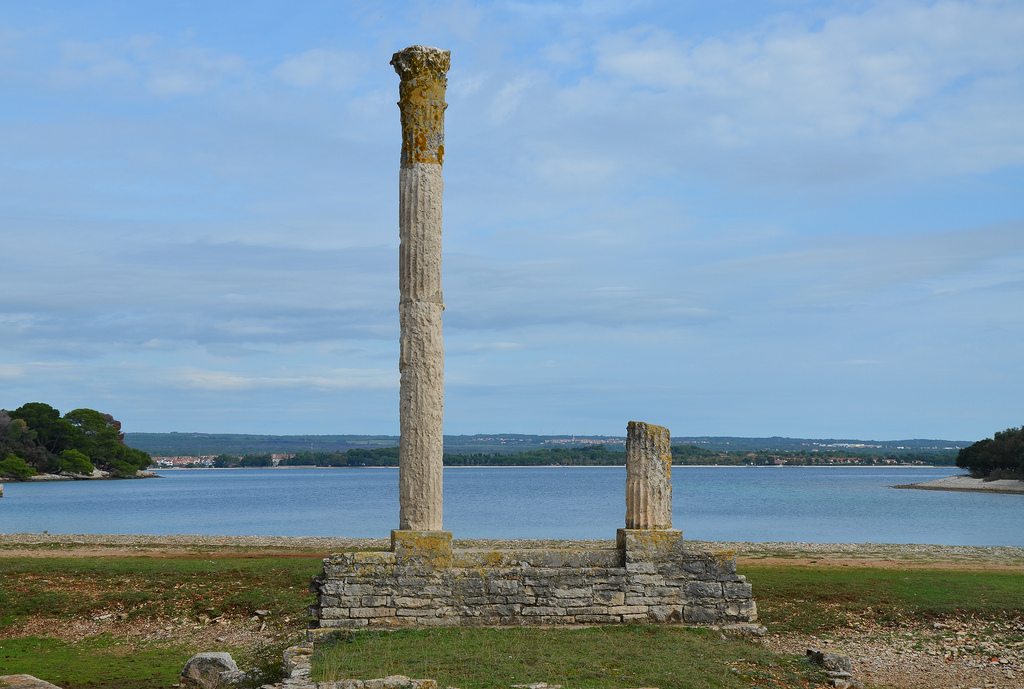
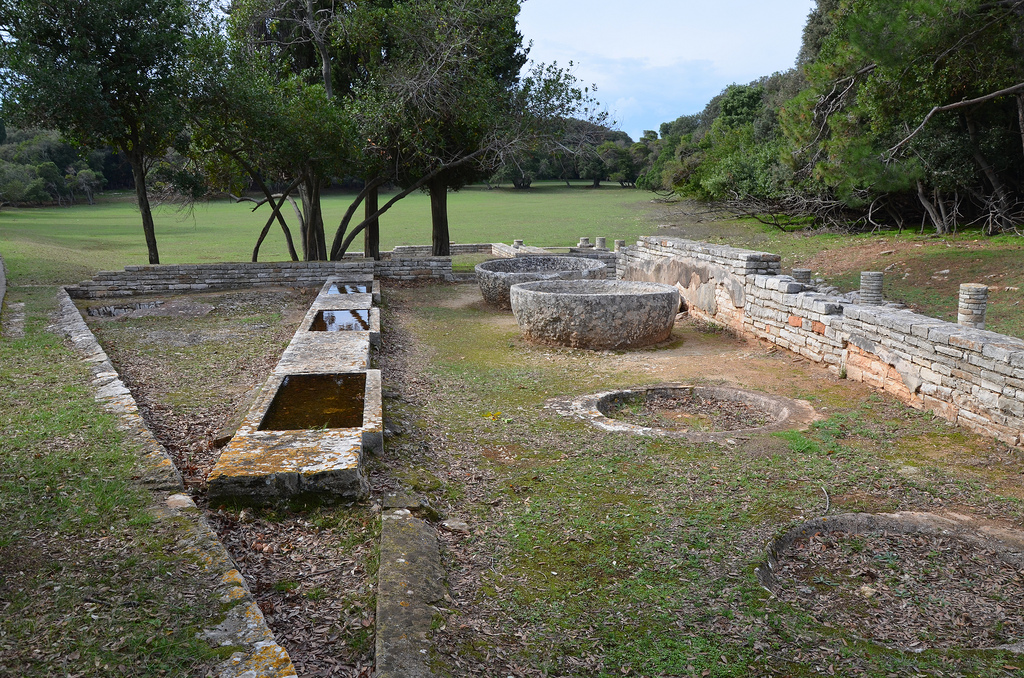
Along with the luxurious villa, constituent parts of the complex also included three temples (to the sea god Neptune, the Capitoline Triad and the goddess Venus) and a palaestra. All these buildings were connected by colonnaded promenades stretching one kilometre along the sea, in harmony with the landscape. The other areas dedicated to production activities and the thermae were on the other side of the bay.
This villa was lavishly decorated with mosaic floors, frescoes, stucco decorations, and precious marble.
PORTFOLIO
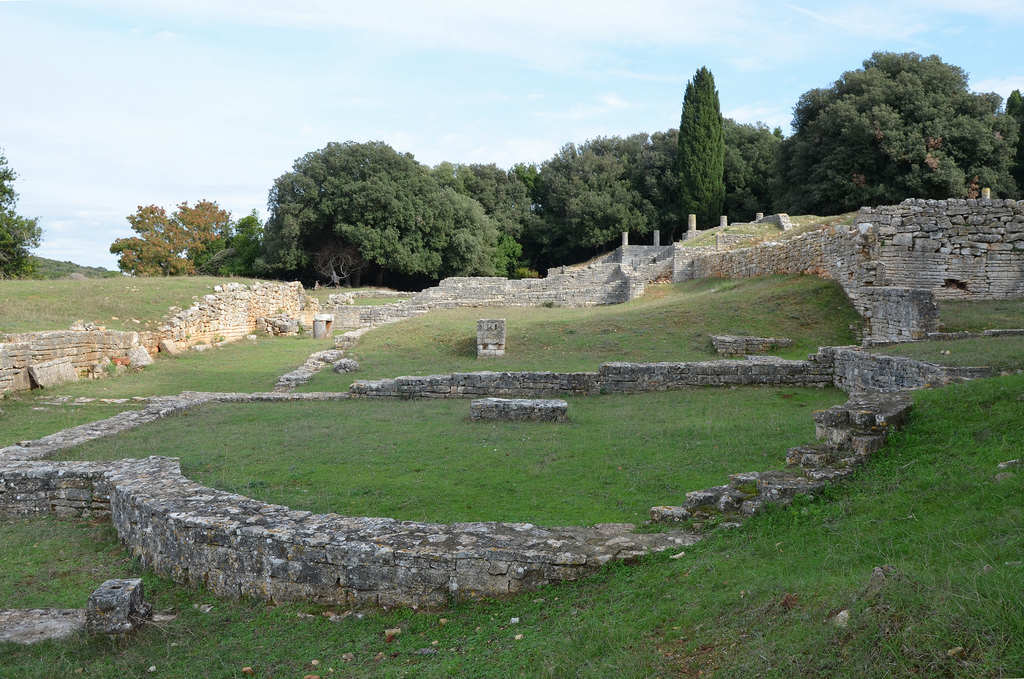
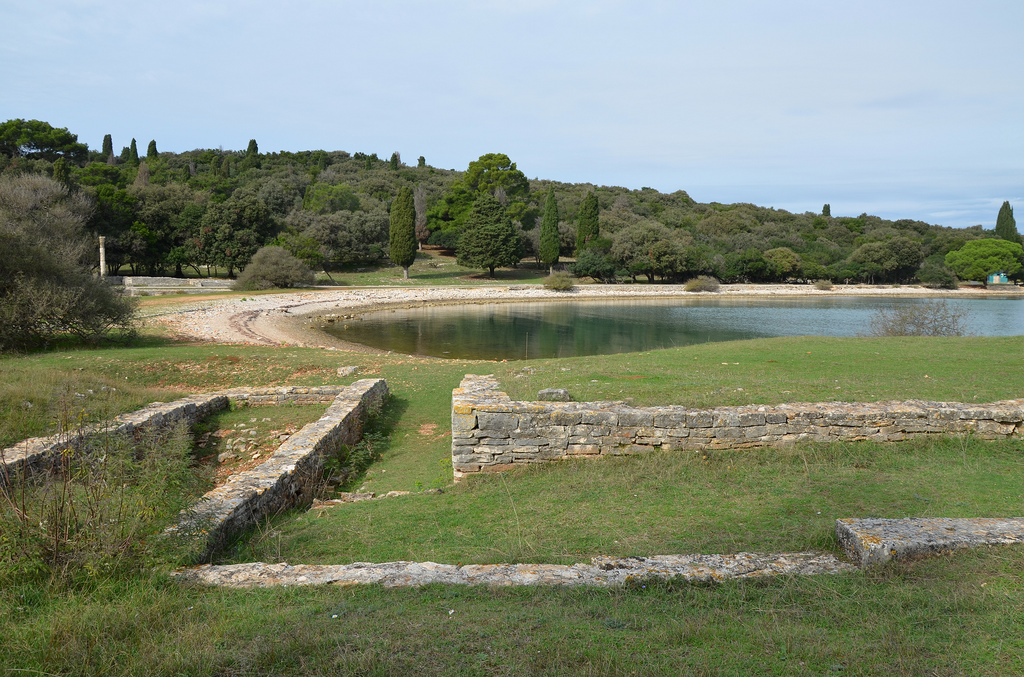
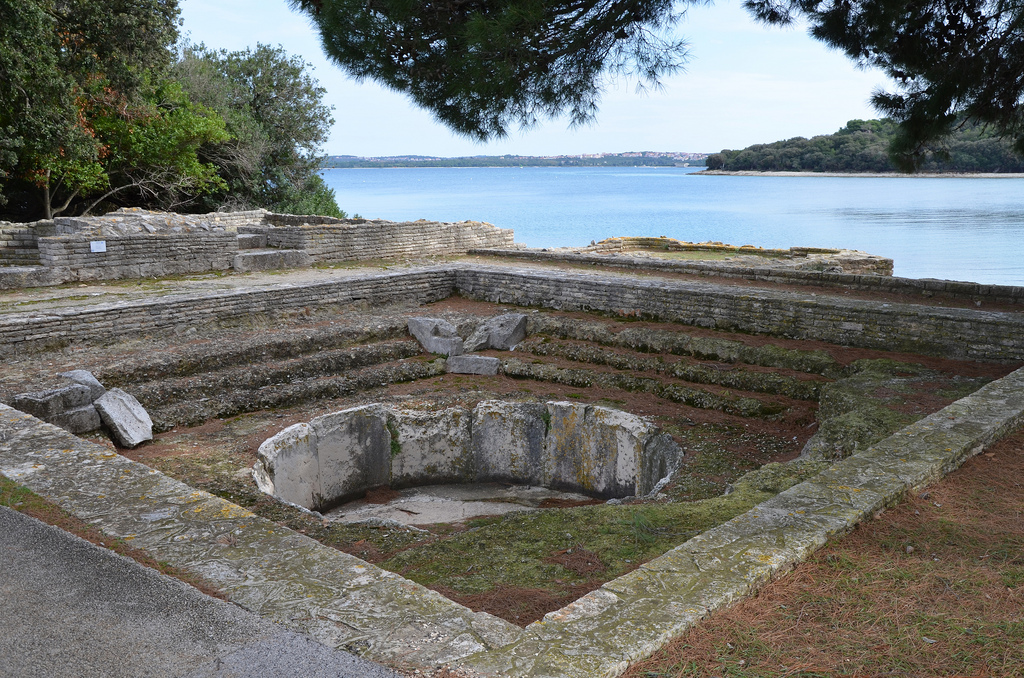
1924 artistic reconstruction of the Verige Roman Villa.The foundations of the Verige Roman Villa.
Brijuni coastal villa and residential area reconstruction (BEGOVIĆ DVORŽAK, 1990).The Temple of Venus.
The Temple of Venus.The columns of the Temple of Venus.The ruins of one of the monumental porticoes facing the bay.The production part of the Villa.The Thermae.The Thermae.
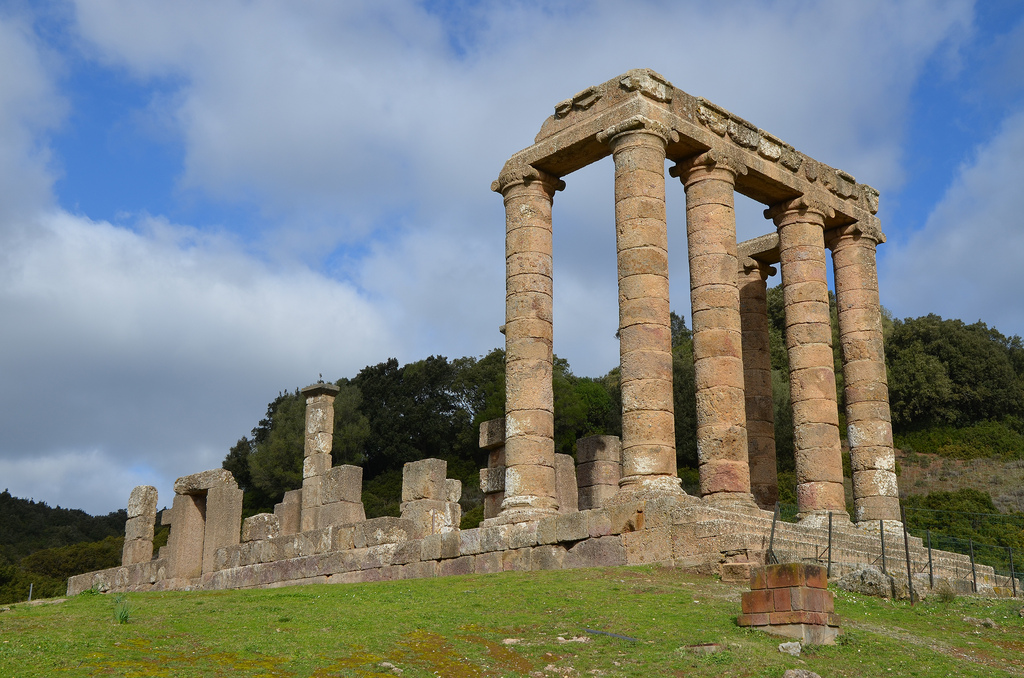
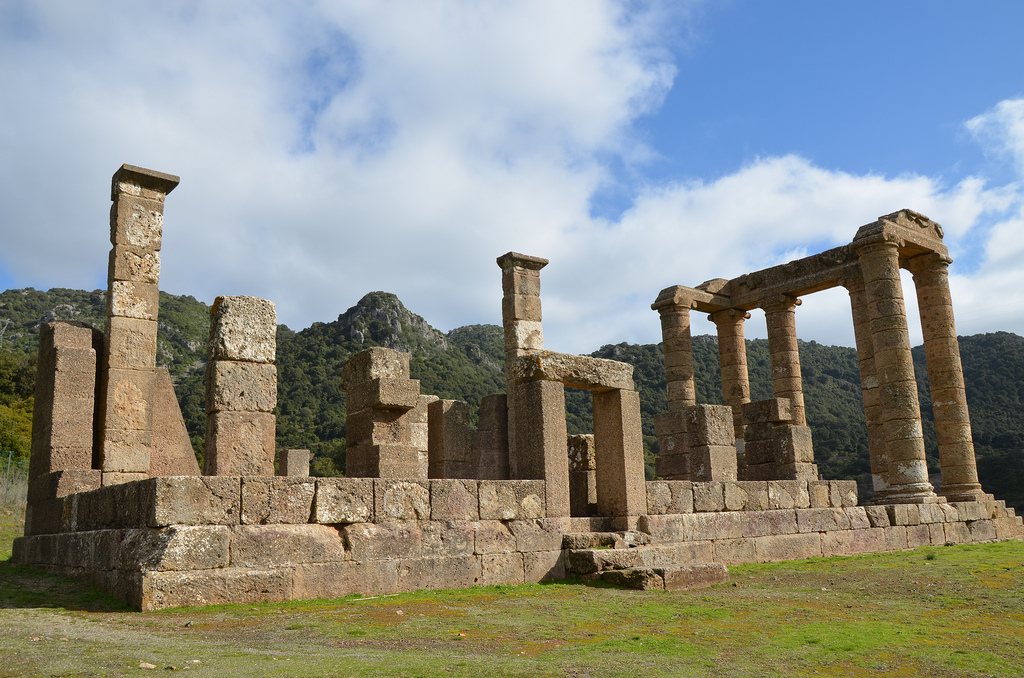
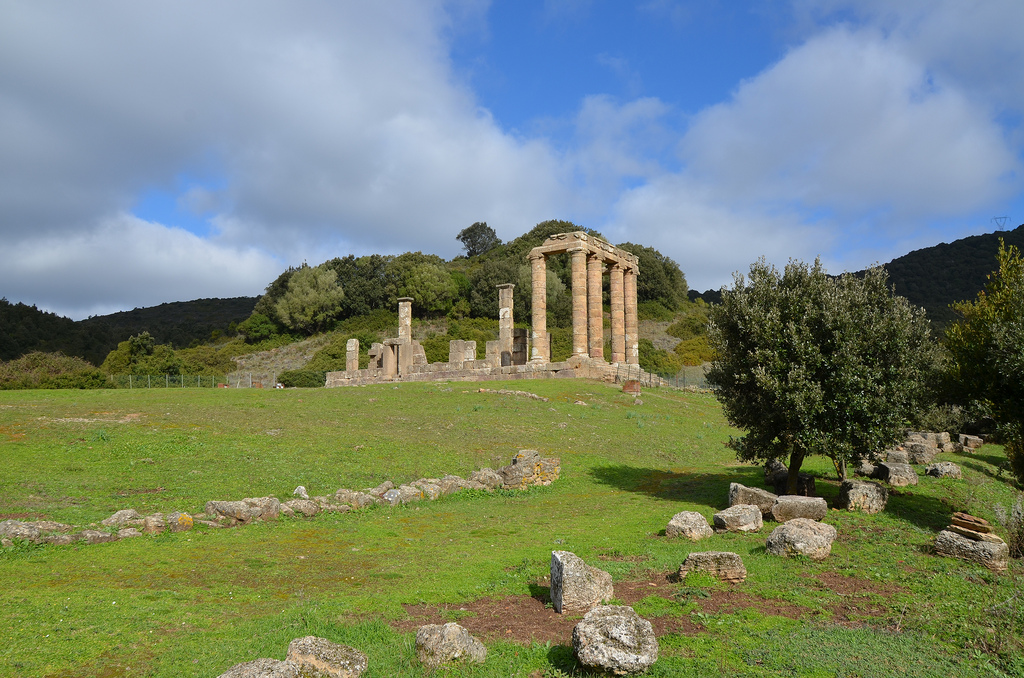
The Temple of Antas is an ancient Punico-Roman temple in the commune of Fluminimaggiore in southern Sardinia. After lying abandoned for centuries, the temple was discovered in 1838 and extensively restored in 1967. The present visible structure dates to the 3rd century AD on a floor plan from the Augustan age. Nestled in the middle of the Iglesiente mountains, the ruins of the temple offer visitors a truly majestic sight.
The area, rich in silver, lead and iron, was originally a Nuragic necropolis in use in the early Iron Age (9th-8th century BC) and was identified probably as a sanctuary. The god worshipped here was Babai, the main male divinity of the Nuragic civilisation. Attracted by its metal deposits, the Carthaginians colonised the area at the end of the 5th century BC. They built a temple in honour of the Punic deity Sid Addir, the god of warriors and hunters, who personified the indigenous god worshipped in the nearby Nuragic sanctuary. Its construction was divided into two phases: the more archaic dates back to 500 BC when the place of worship was made up of just a simple rectangular cella (sacred enclosure) where a rock served as a sacred altar. Later in approximately 300 BC, a series of transformations began. The area has produced numerous fragments of Punic sculptures and a large number of dedicatory inscriptions. Some remains of the Punic temple can be seen in front of the temple, which were covered in Roman times by a broad staircase.
The Roman temple was built on the site of its Punic predecessor, and the Romans, in turn, identified the Punic deity as Sardus Pater. Both Sallust and Pausanias record that Sardus was the son of Hercules, who migrated out of the land of Libya to settle on the island of Sardinia, which he called after himself. Under the Roman emperors, the cult of Sardus was encouraged because, in Rome, there was a temple dedicated to Hercules on the Forum Boarium, which made a strong connection between Sardus and Rome.
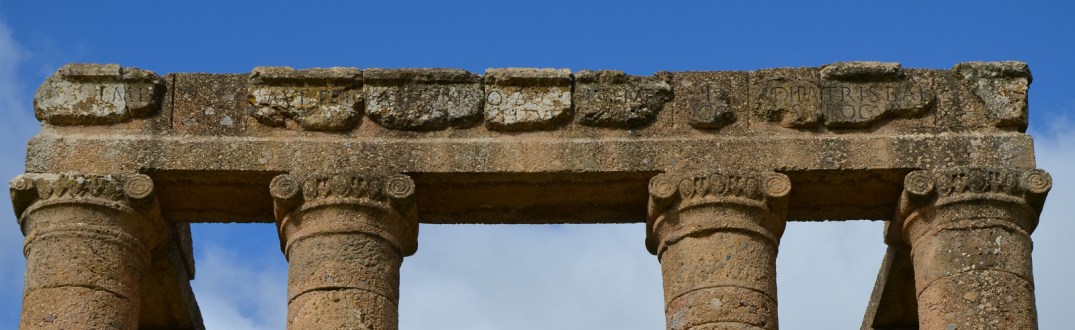
The temple was built on a podium accessible by a broad flight of steps on the front side consisting of various levels. On the fourth level stood the altar, where sacrifices were made according to Roman rituals. The podium was 20 m long and was divided into three parts; the pronaos, cella and adyton. The pronaos had four Ionic columns (tetrastyle) upholding the main beam that contained a Latin inscription: Imp(eratori) [Caes(ari) M.] Aurelio Antonino. Aug(usto) P(io) F(elici) temp[(lum) d]ei [Sa]rdi Patris Bab[i/vetustate c]on[lapsum] (?) [—] A[—] restitue[ndum] cur[avit] Q (?) Co[el]lius (or Co[cce]ius) Proculus
The inscription reveals that the temple was restored under the emperor Caracalla and dedicated to the god Sardus Pater Babi, the forefather of the Sards, by a man called Proculus. This dates the restoration phase to around 215 AD, but the Roman version of the temple could have been built as early as 27 BC under Augustus.
At approximately 1 km from the temple are the Roman quarries from which limestone boulders were extracted and used for the sanctuary’s construction. The work was carried out with a hammer and chisel, while the transport was probably made by carts pulled by oxen. The line cuts followed to extract the limestone blocks are still visible.
PORTFOLIO
In front of the temple are the excavated structures belonging to the Punic phase of the temple.The columns of the pronaos had a height of approximately 8 meters and were built of local limestone with attic bases. They were surmounted by Ionic capitals.
The Latin inscription in honour of Caracalla.
The cella, the central hall of the temple, had large pillars leaning against the perimeter walls supported by roof beams. Its floor was covered with a black and white mosaic of which only part survived.At the back of the temple was the adyton. It was divided into two rooms, each with its own entrance, and in front of their doorway were two square water basins on the floor containing holy water for purification ceremonies (ablution).
Roman quarry near the Temple of Antas.
The temple’s isolated position in a fertile valley makes it an enchanted place to visit and offers visitors incredible natural scenery. It is one of the island’s most impressive and exciting archaeological remains.
Opening times:
– from July to September, every day from 9.30 to 19.30
– from April to May and October from 9.30 to 17.30
– June from 9.30 to 18.30
– from November to March from 9.30 to 16.30 except Monday











 following hadrian photography