Munigua is the site of the Roman city of Municipium Flavium Muniguense, located in the Sierra Morena, 8 km from Villanueva del Río y Minas in the province of Seville. Its origins date back to the pre-Roman period, and evidence of human occupation can be traced back from the mid-4th century BC to the 8th century AD. During the Romanisation of the province of Baetica, Munigua prospered rapidly. It received Latin rights from Emperor Vespasian and was recognised as a municipium, which further strengthened its importance as a centre of commerce, culture, and administration in the region.
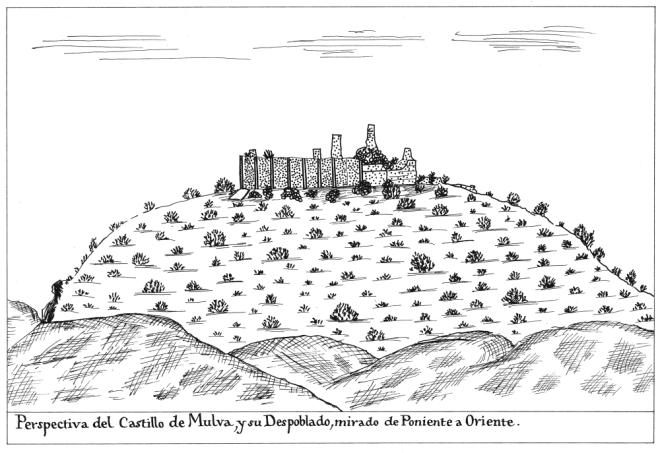
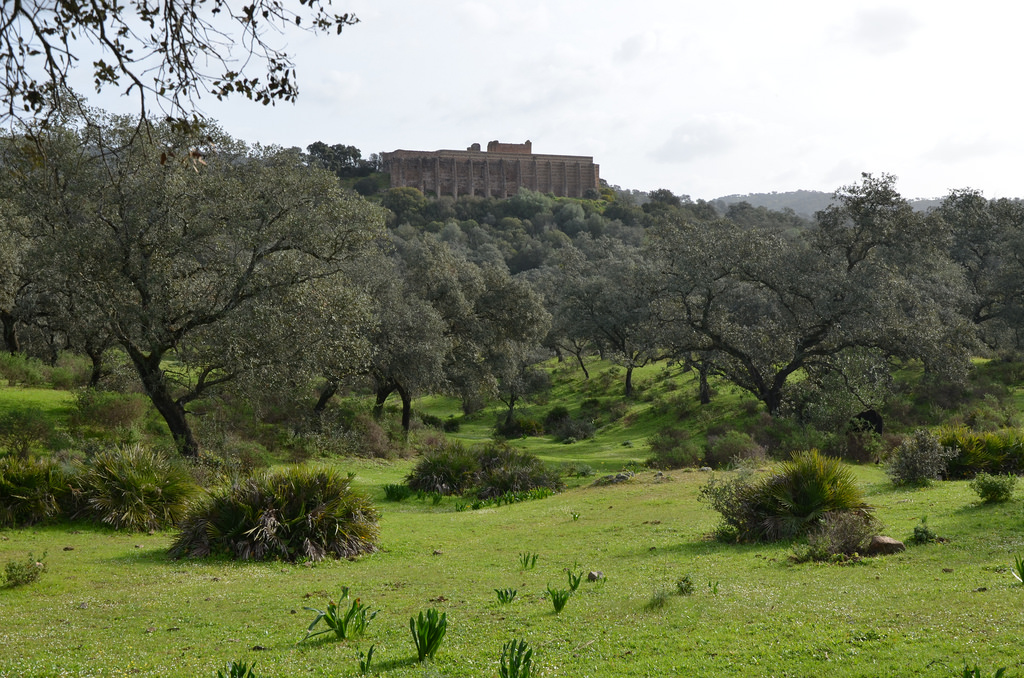
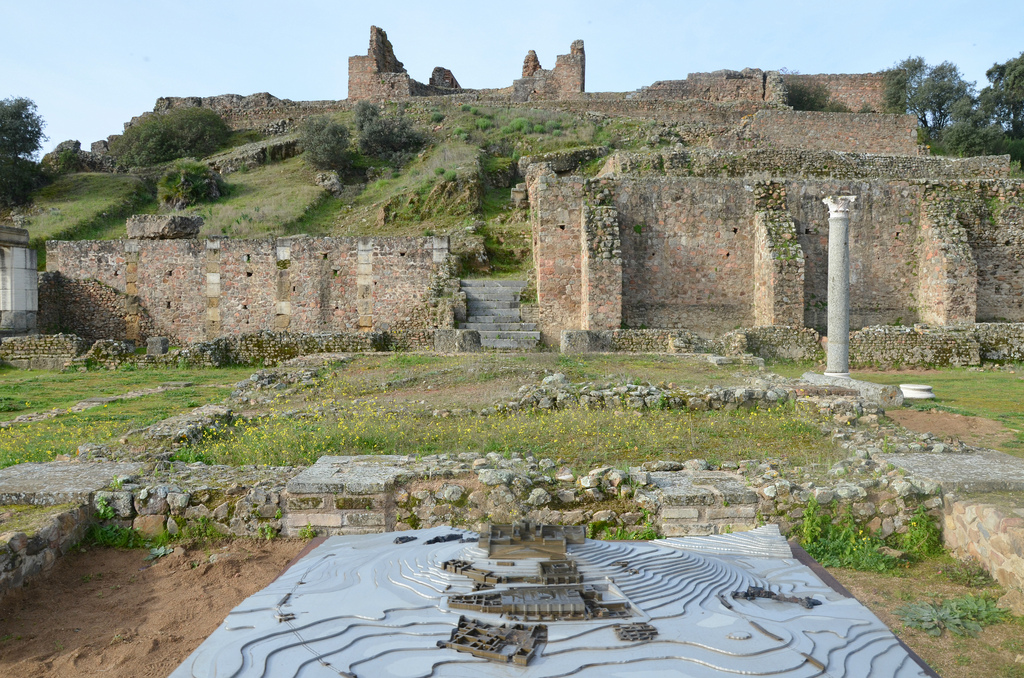
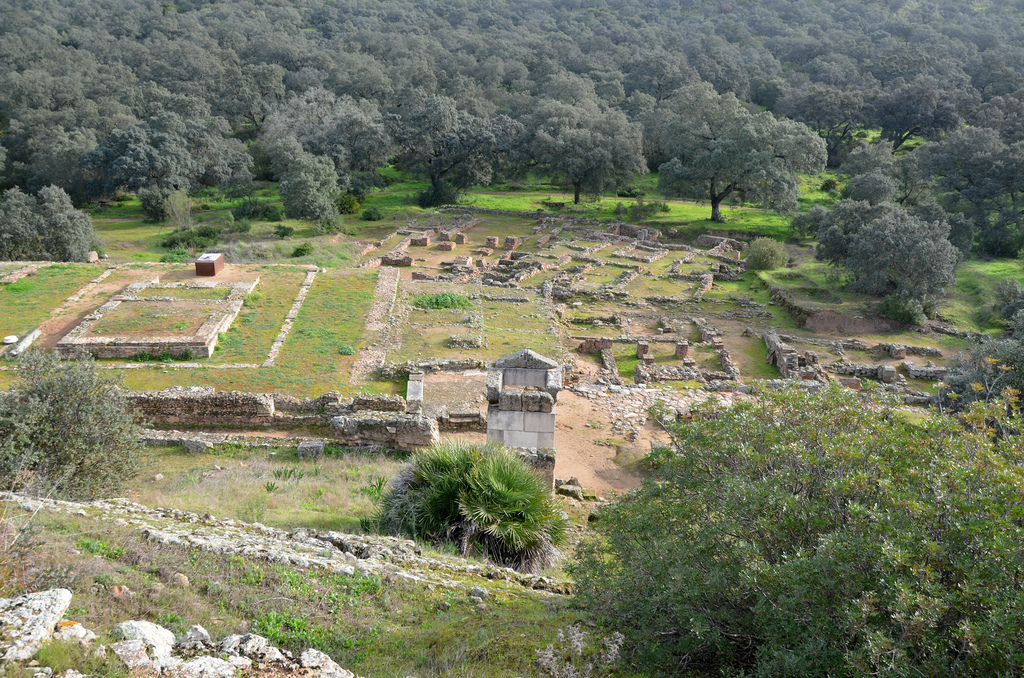
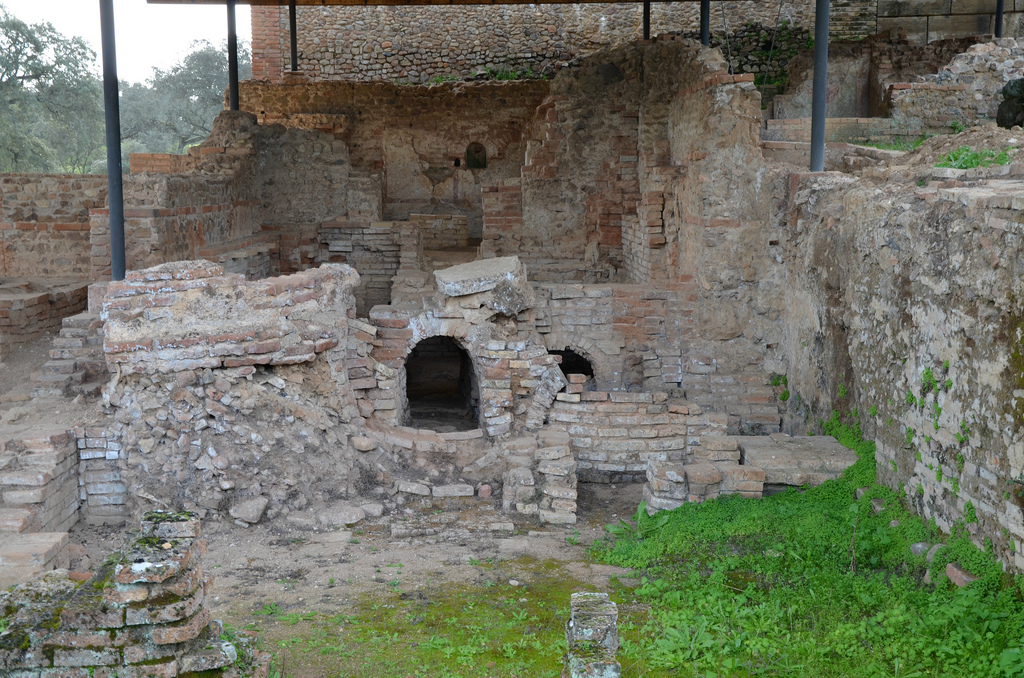
The site of Munigua was first discovered by two researchers from the Academy of Letters in Seville in 1765. However, it was later forgotten until 1956, when the German Archaeology Institute in Madrid studied it once again. Archaeologists have discovered many interesting things here, such as temples, sanctuaries, a two-story porticus, residential houses, a forum, public bathhouses, city walls, and a vast necropolis. The site also features a monumental terrace sanctuary on the slope of the hill, known from 18th-century drawings referred to as the “Castle of Mulva”.
18th-century drawing by Tomás de Gusseme depicting the “Castle of Mulva”.
According to archaeologists, the settlement in Sierra Morena was founded by the Turdetani, an Iberian tribe who lived in the region. The first settlement owed its existence to the mining and metallurgy activities that have long characterised the Sierra Morena, a mountain range rich in copper and iron ore. During the Roman occupation, copper production increased significantly, and the Romans built elaborately ventilated underground galleries, interconnected tunnels, and deep shafts to facilitate mining activities.
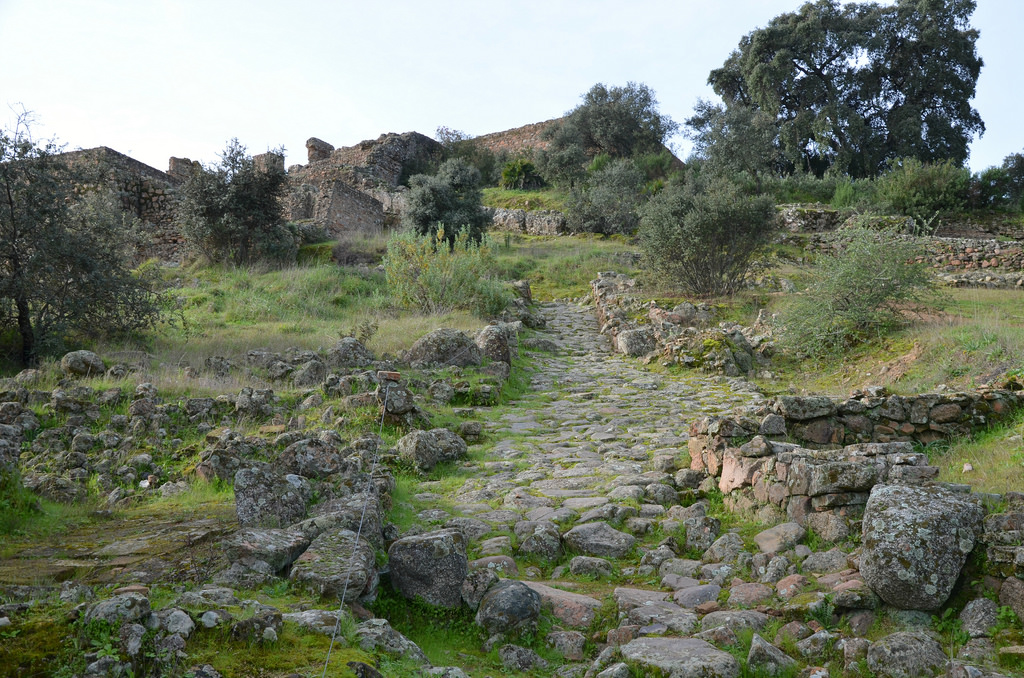
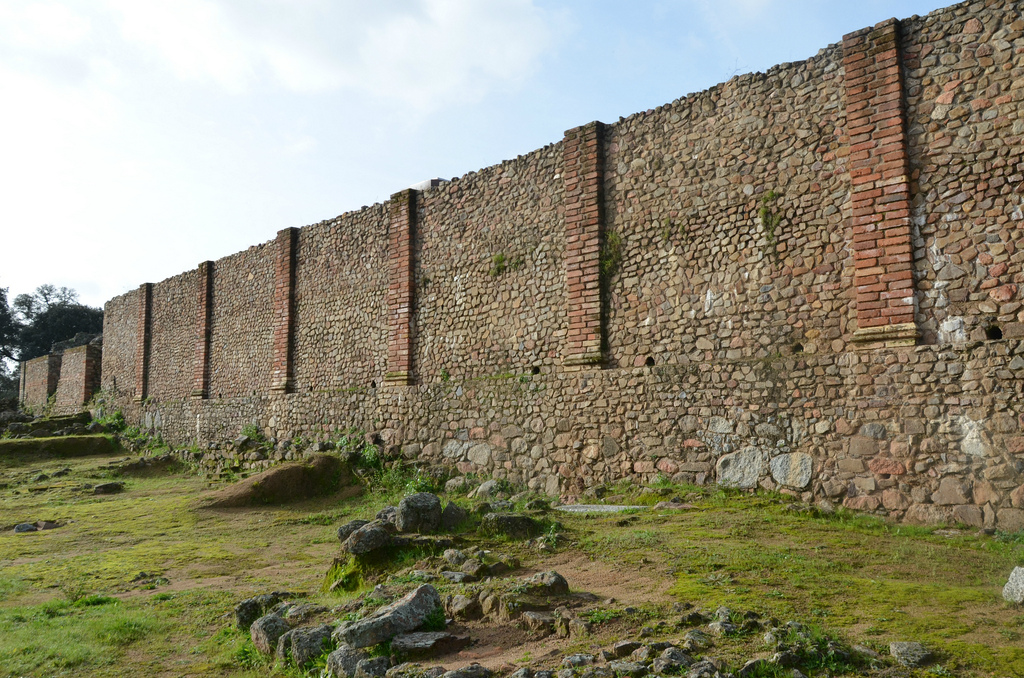
Thanks to the wealth derived from the mines, several monuments were constructed. One of the most remarkable structures was a terraced sanctuary located on the slope of a hill, which dominated the city. The impressive building stood on multiple-tiered terraces and was reinforced by 13 buttresses at the back, giving it the appearance of a fortress. This structure later became known as the Castle of Mulva. The building is characterised by its architectural symmetry, with access ramps and stairs neatly paired on either side of the sacred precinct. The plan seems to have been inspired by the Sanctuary of Fortuna Primigenia at Praeneste or the Temple of Hercules Victor in Tivoli. However, it’s not known which deity was worshipped on the site, though it’s speculated that it may have been Fortuna and Hercules.
The city developed at the feet of the terraced sanctuary. Construction work was accelerated when Vespasian granted Munigua the Latin right around AD 73/74, elevating its status to municipium. Between the mid-1st century and the late 2nd century AD, all the town’s structures, including the forum, the baths, and the houses, were constructed.
Munigua flourished during the reign of Hadrian, but its prosperity declined towards the end of the 3rd century AD due to an earthquake that struck the town. Later, another earthquake during the late antiquity period marked the end of Munigua’s golden era. However, it is known that the site was continuously inhabited, at least until the Almohad period in the 12th century.
The town has yielded numerous archaeological artefacts: some 45 stone sculptures and approximately 160 terracotta pieces. Additionally, a significant number of glass objects have been found in funerary contexts, along with almost 1,500 metal artefacts and various items of jewellery. Over 80 inscriptions have been uncovered at Munigua, including two made of bronze, a tessera hospitalis (which was a hospitality token), and a letter from Emperor Titus.
Hadrian’s Villa (Villa Adriana) in Tivoli near Rome is an exceptional complex of classical buildings created by Hadrian in the 2nd century AD. In ancient times it occupied about 120 hectares of land and was designed as an ‘ideal city’, combing the best elements of the architectural heritage of Egypt, Greece and Rome. Almost immediately after becoming Emperor, Hadrian made plans for an imperial villa in the countryside about 30 kilometres east of Rome. Hadrian’s Villa is a UNESCO World Heritage Site and an important cultural and archaeological site.
Thanks to the abundance of water and the beautiful hilly landscapes, the city of Tivoli, formerly known as Tibur, had been a popular retreat for important individuals and especially senators since the Republican era. Indeed, Hadrian created his Imperial residence on the site of a small Republican villa, possibly built on land owned by his wife, Vibia Sabina (see map of pre-existing Republican and Augustan structures here). Occupying a low plain on the slopes of the Tiburtine Hills, Hadrian’s Villa was the richest and largest Villa of the Roman Empire, generously spread out over 120 hectares (an area larger than Pompeii). The number of buildings and the originality and complexity of the architectural forms makes the complex a unique monument in the history of ancient architecture.
The Emperor travelled frequently, and whenever he returned to Italy, Tibur was his preferred residence, away from the heat and bustle of Rome. The initial construction of the Villa began a year after Hadrian assumed power when he initiated the renovation of the existing structures into something magnificent. The monumental project was completed about 10 years later, in AD 128, when the Villa became Hadrian’s official residence.
Designed for both business and pleasure, the Villa contained many rooms that could accommodate large gatherings. A large court lived there permanently, and many visitors and bureaucrats were entertained and temporarily housed on site. The vast residential complex was, therefore, almost always teeming with people. The servants lived in hidden rooms and moved around the site through a series of service tunnels which allowed them to transport the goods from one area to another, well out of sight of the Emperor.
Archaeologists have identified some 30 buildings, including palaces, thermal baths, a theatre, libraries, living quarters for the elite, lodgings for the servants, extensive gardens, and fountains. Because Hadrian wanted to surround himself with reminders of his travels throughout the vast territories of the Empire, many structures had features and decorative sculptures copied from the various places the Emperor visited.
His villa at Tibur was marvellously constructed, and he actually gave to parts of it the names of provinces and places of the greatest renown, calling them, for instance, Lyceum, Academia, Prytaneum, Canopus, Poecile and Tempe. And in order not to omit anything, he even made a Hades. Historia Augusta
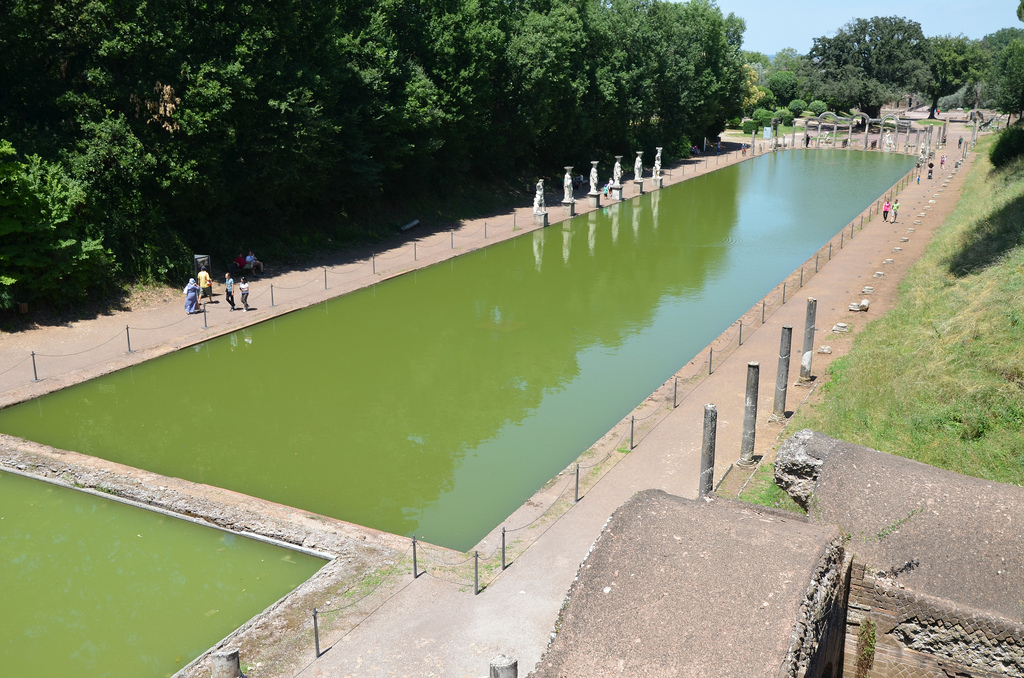
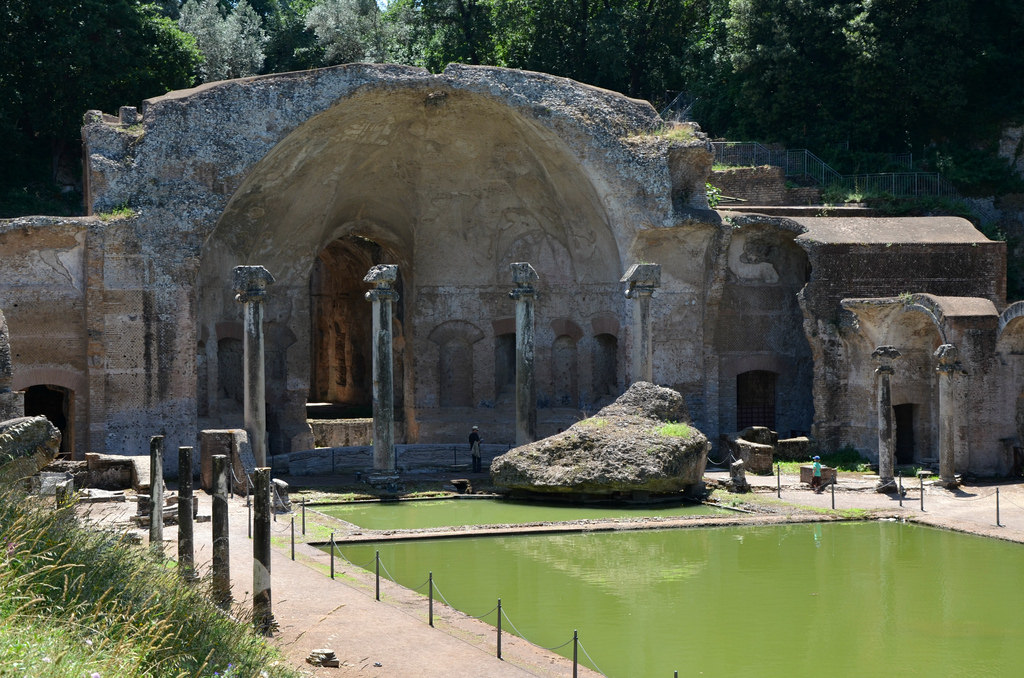
Named for the ancient city near Alexandria in Egypt, the Canopus is believed to represent the Nile Delta that Hadrian visited in AD 130, where his lover Antinous drowned that same year. The colonnade of the Canopus was supported by caryatids like those of the Erechtheion on the Acropolis of Athens. Greek and Egyptian culture and architecture were obviously reflected in his Villa. Since Hadrian was very interested in architecture and was himself a capable architect, he likely took part in the design and planning of the Villa.
A detailed study of the buildings, especially the brick stamps, allowed the reconstruction of the chronology of the Hadrianic buildings. Two construction phases, marked by Hadrian’s travels, have been identified. The first phase of construction, which witnessed the greatest amount of building activity, extended until AD 125 when Hadrian returned from the first of his great journeys in Greece and the East. Hadrian resided at the Villa in the summer of 125 and probably stayed there until he embarked on his second journey in 128.
Phase I (AD 118-125): Maritime Theatre, Hall of the Philosophers, Heliocaminus Baths, Pecile, Nymphaeum Stadium, Small and Large Baths.
Phase II (AD 125-134): Greek and Latin Libraries, Academia, Hundred Chambers, Piazza d’Oro, Canopus, Antinoeion.
After the death of Hadrian in AD 138, his successors occasionally used the Villa. Following the decline of the Roman Empire, the Villa fell into disrepair. It was taken apart piece by piece over the centuries, with one local cardinal stripping off marble in the 16th century to build his own Villa d’Este located nearby. Proper excavations only started in 1870 by the Italian government and continue even today by the Italian archaeological authorities and the various foreign academies in Rome.
Many beautiful artefacts have been unearthed at the Villa, including marble statues, frescoes, mosaics and ornate architecture. Most statues have been removed from the Villa, especially in the 17th and 18th centuries, and are now displayed in major antiquities collections elsewhere in Europe and North America.
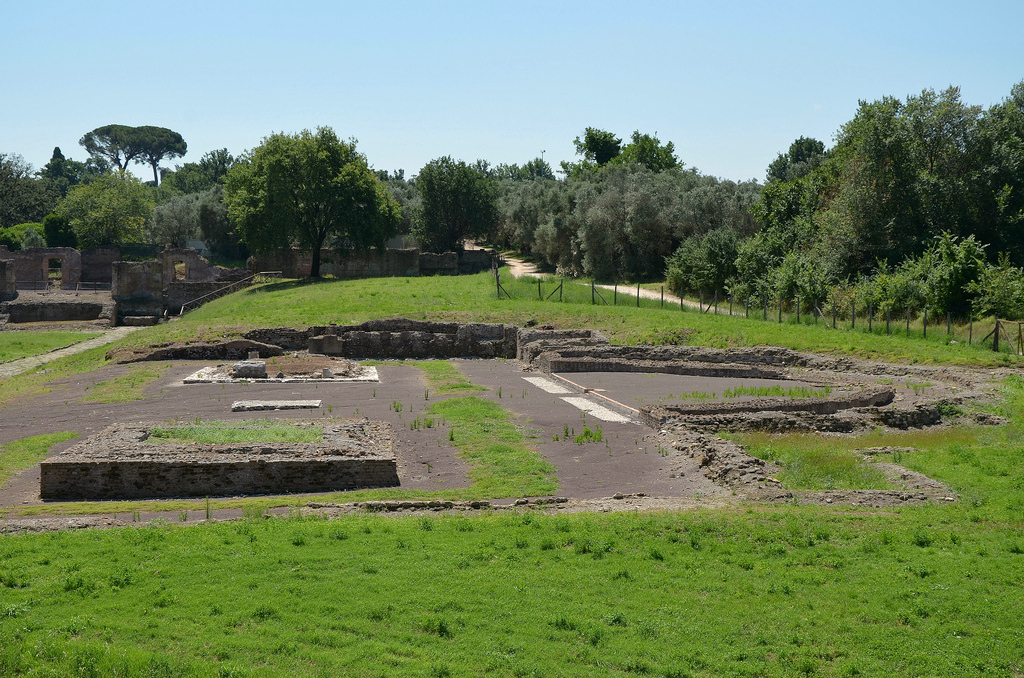
One of the most recent discoveries made in Hadrian’s Villa was the remains of a temple complex devoted to Antinous (the Antinoeion), which consisted of two small twin temples facing each other in front of a semi-circular colonnaded exedra.
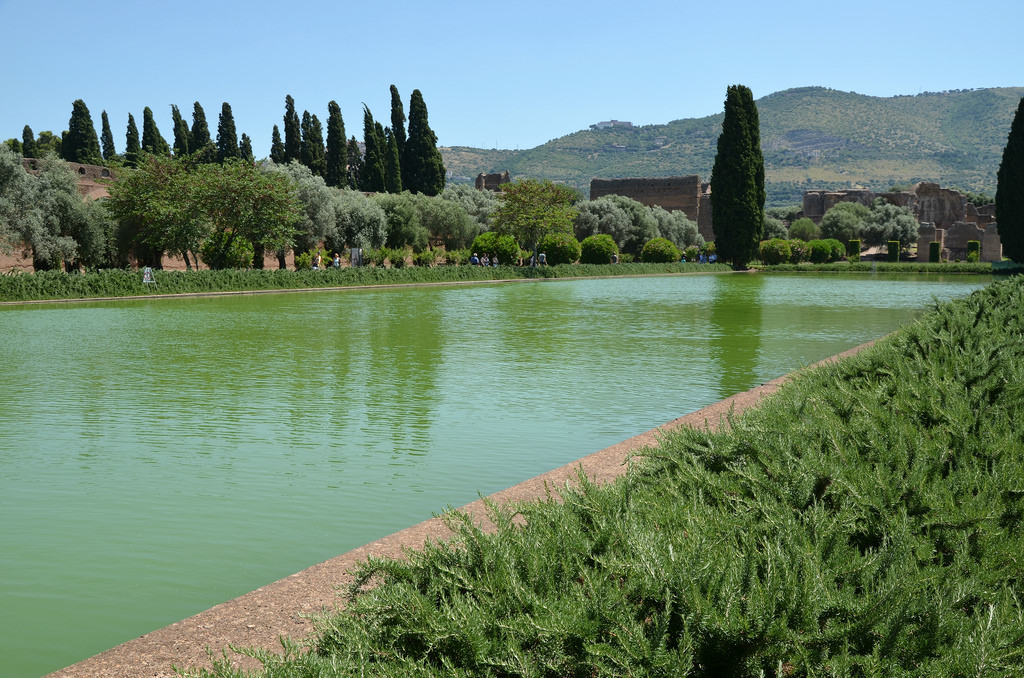
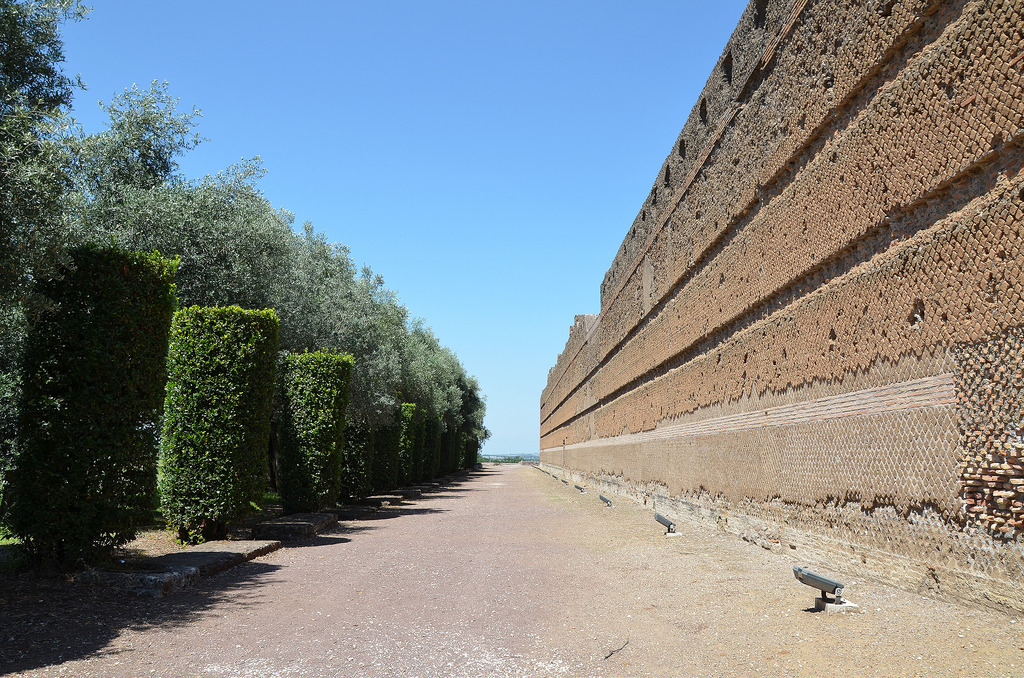
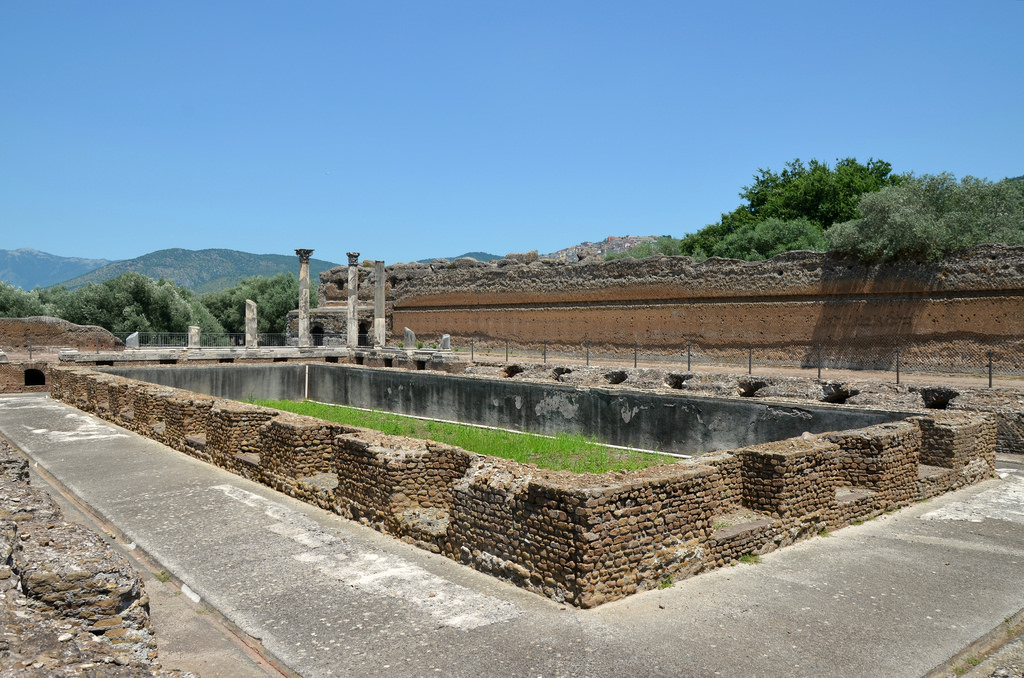
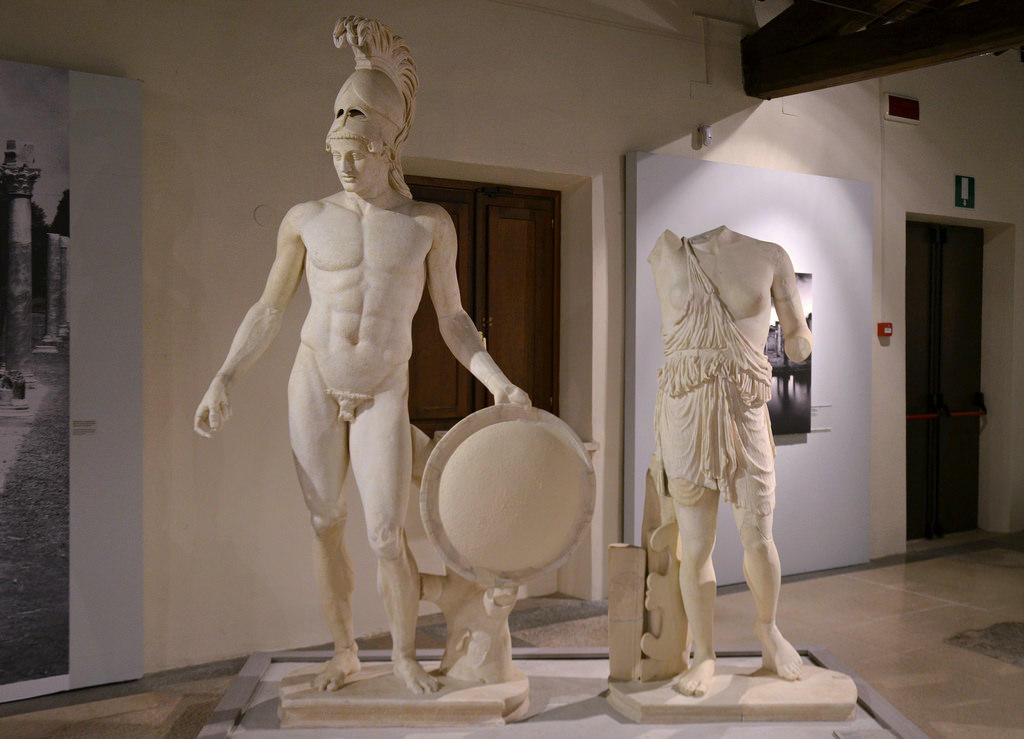
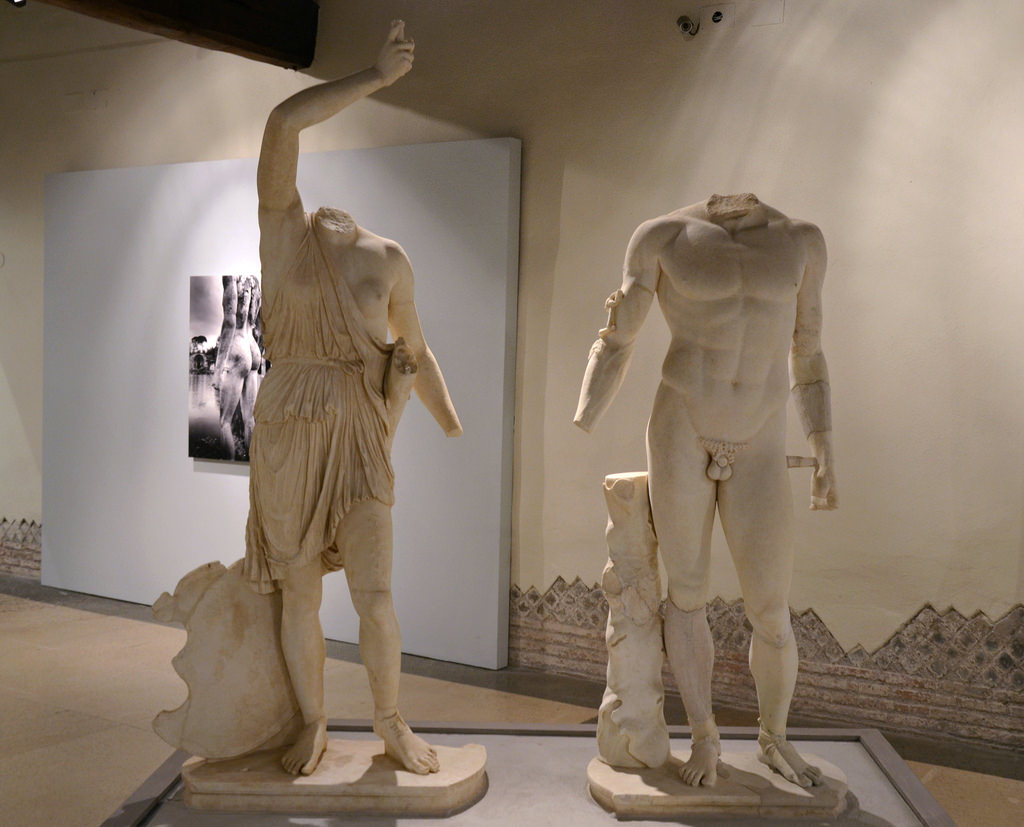
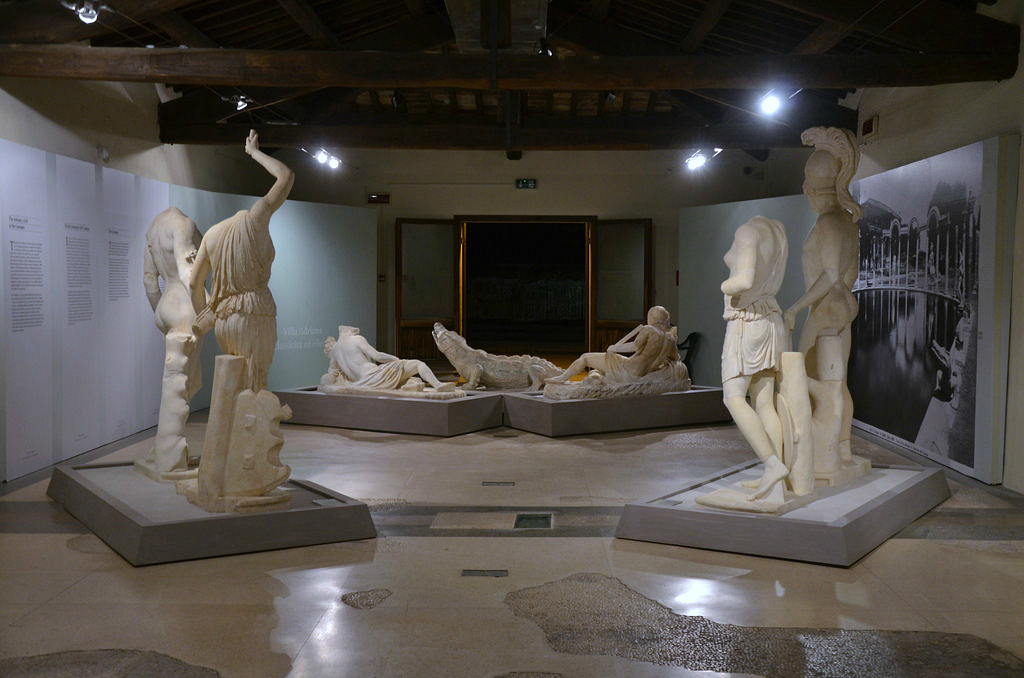
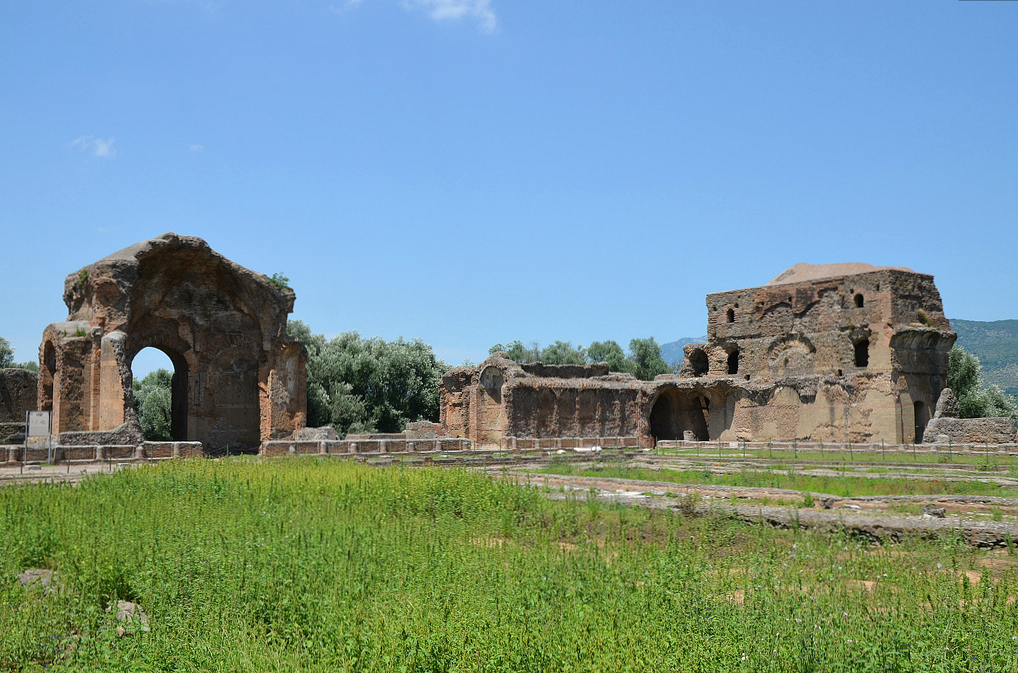
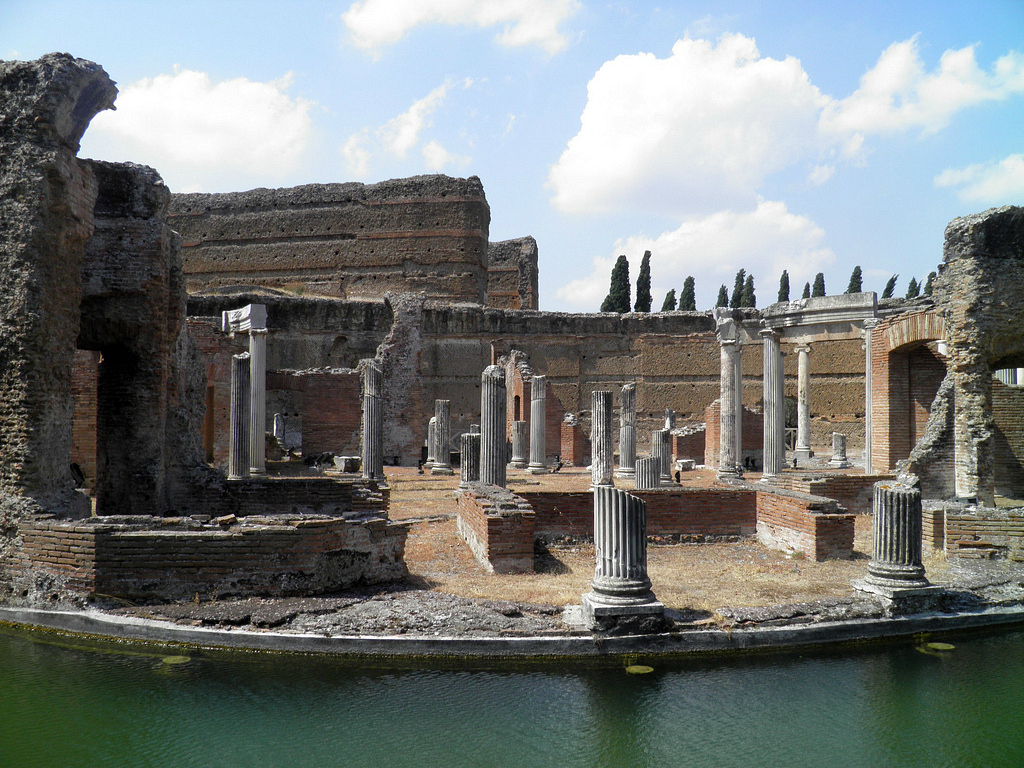
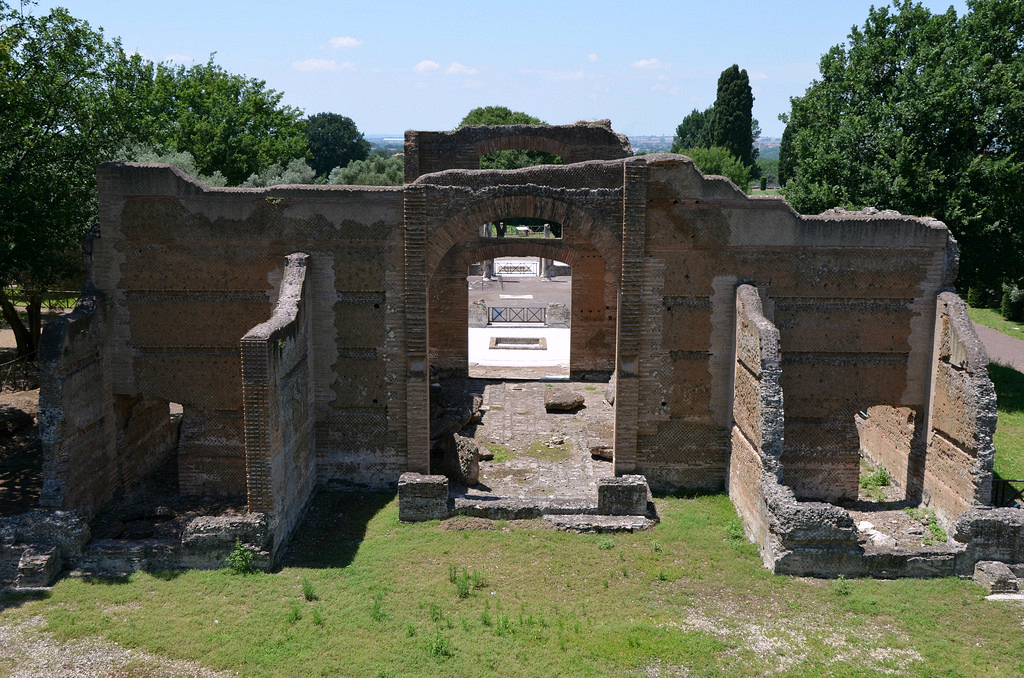
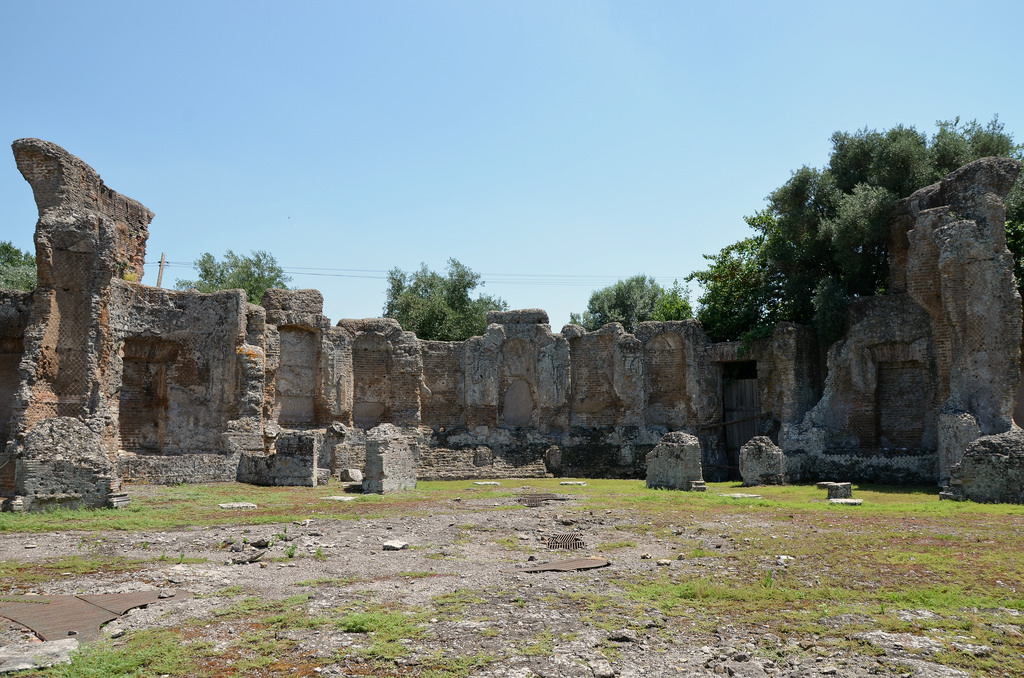
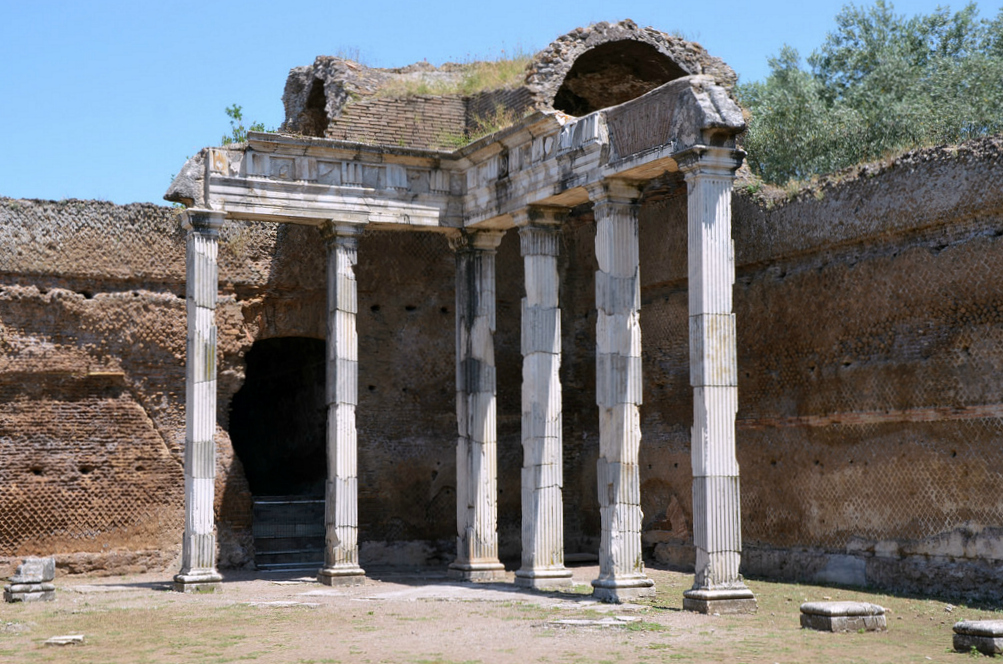
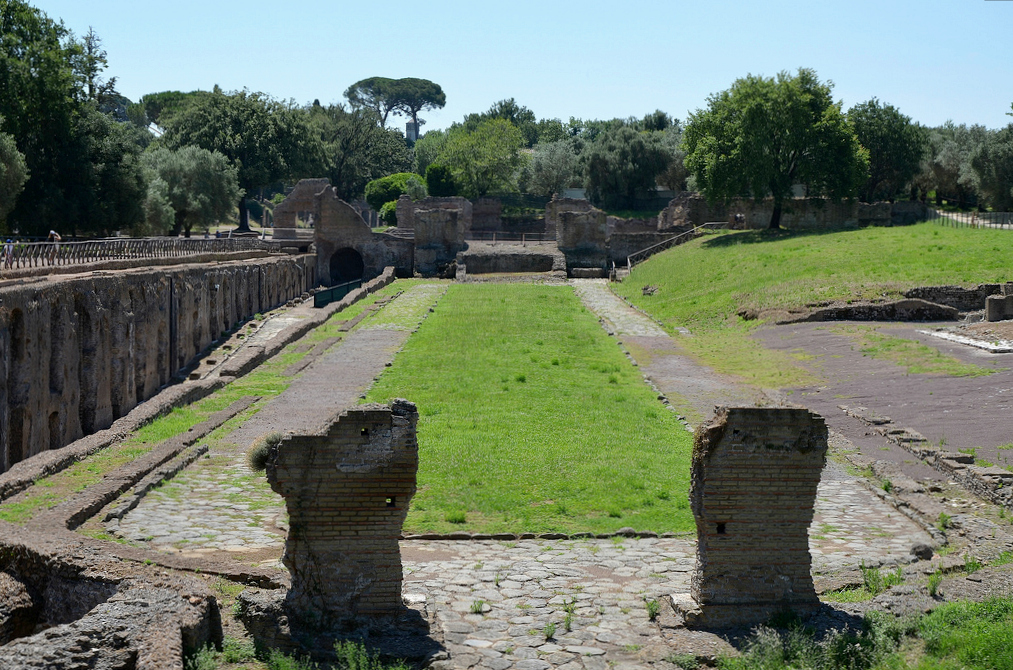
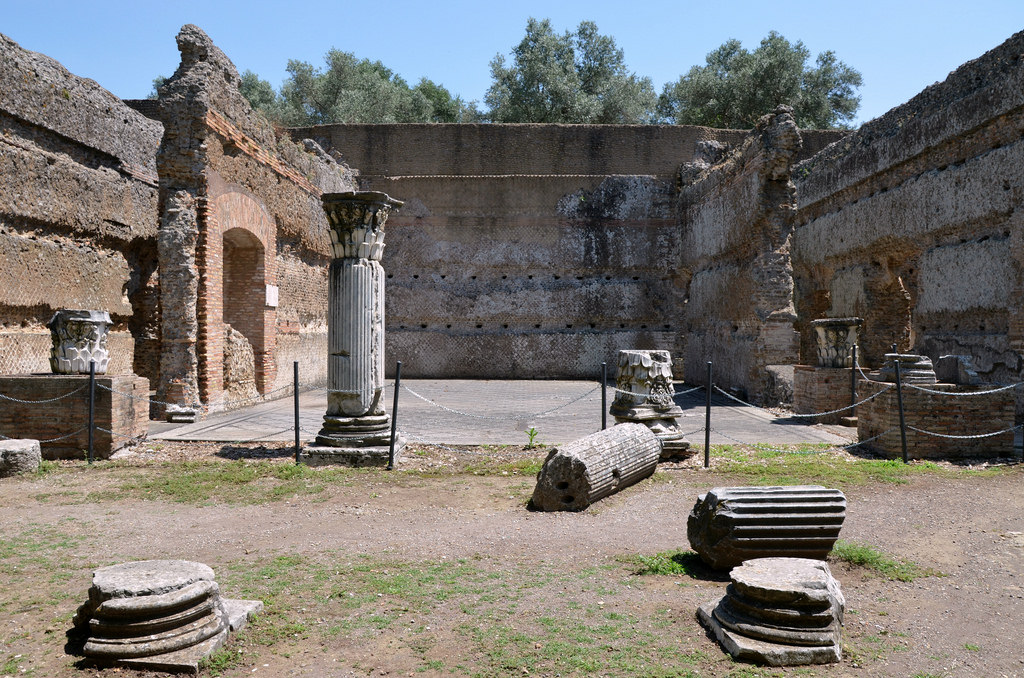
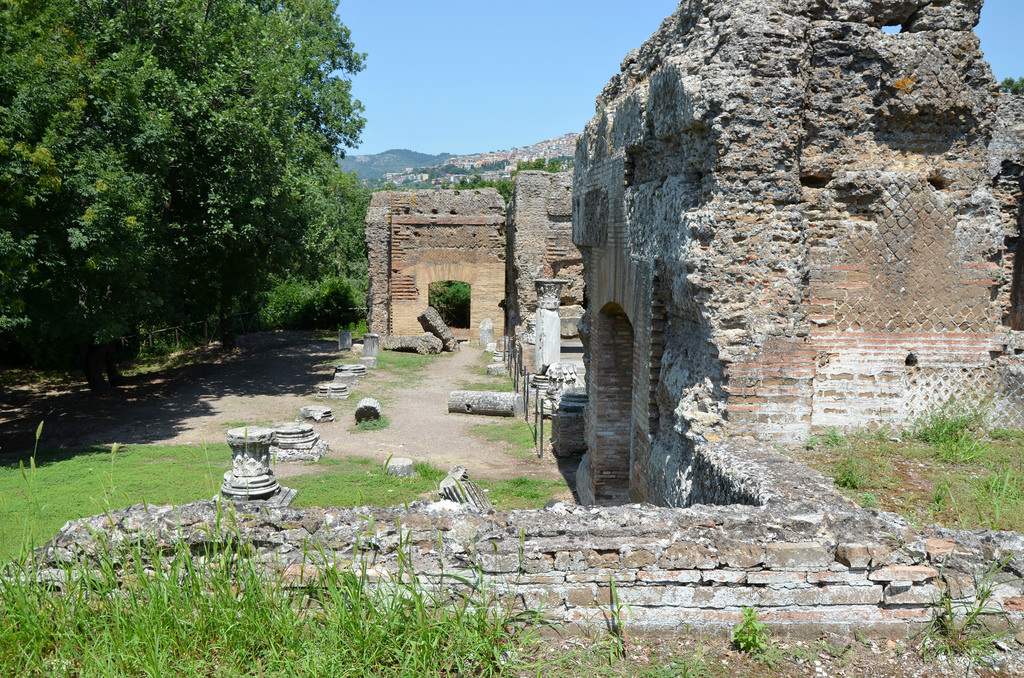
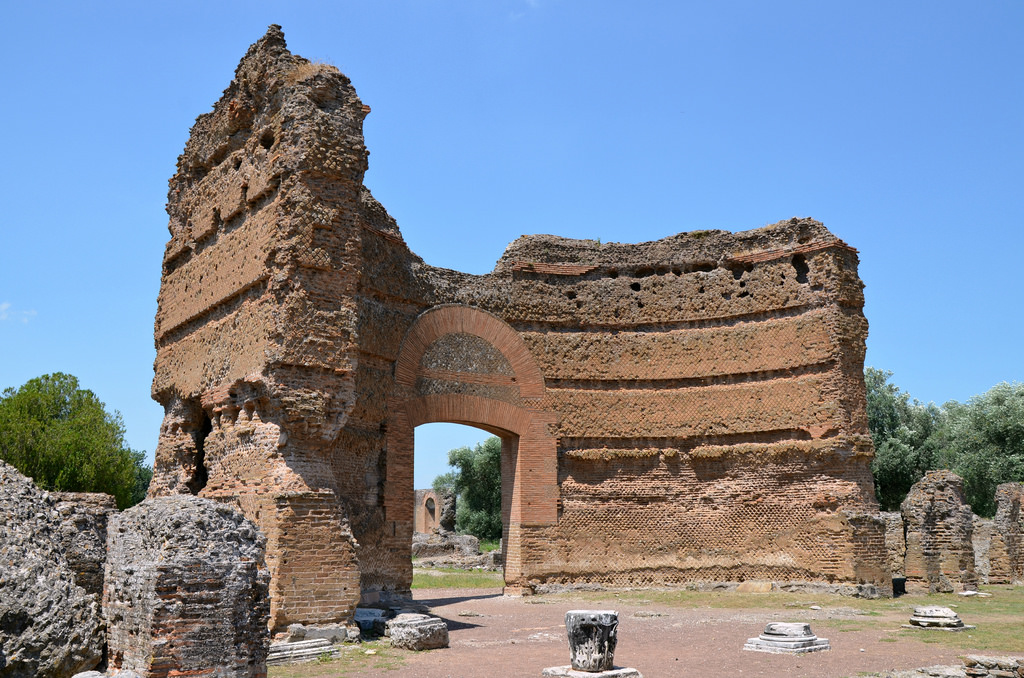
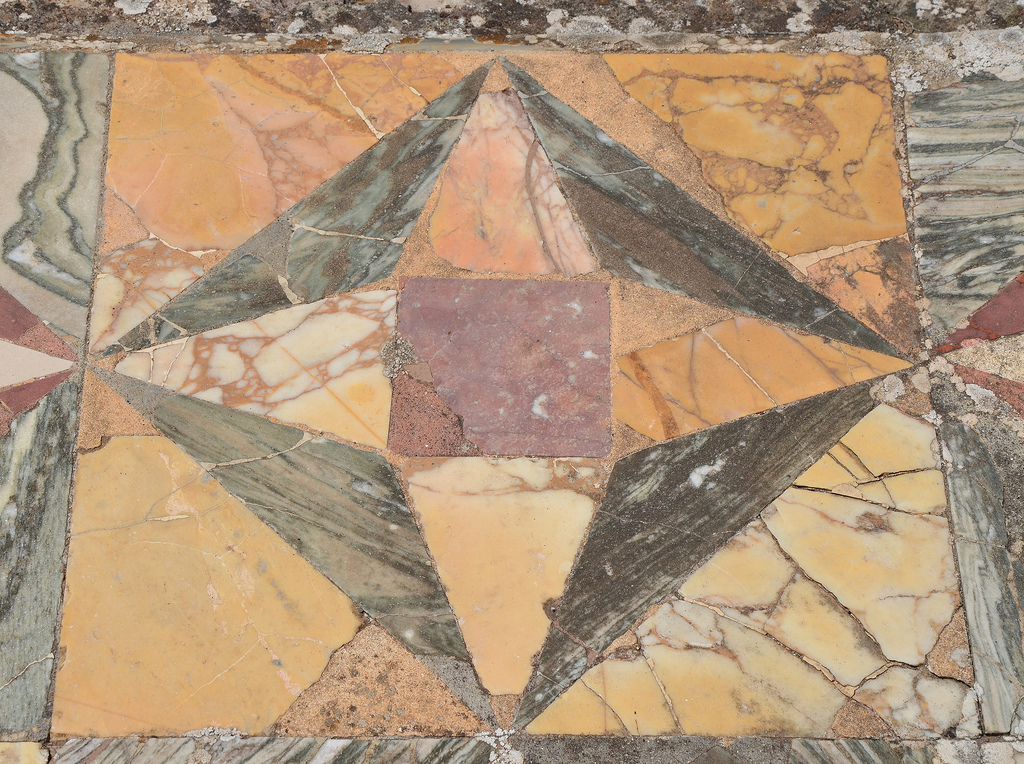
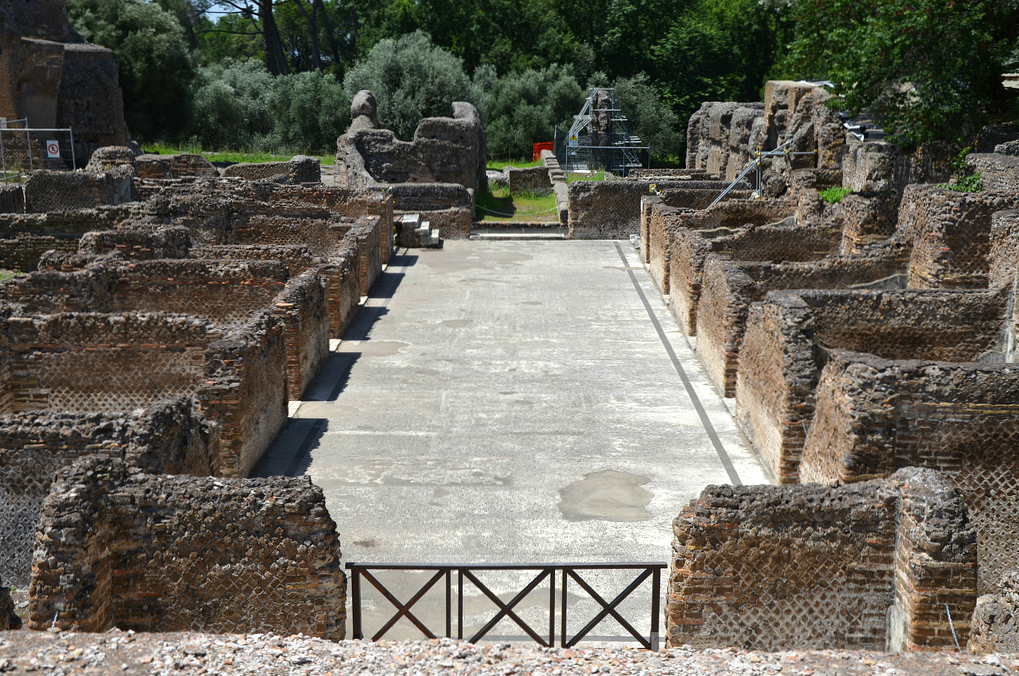
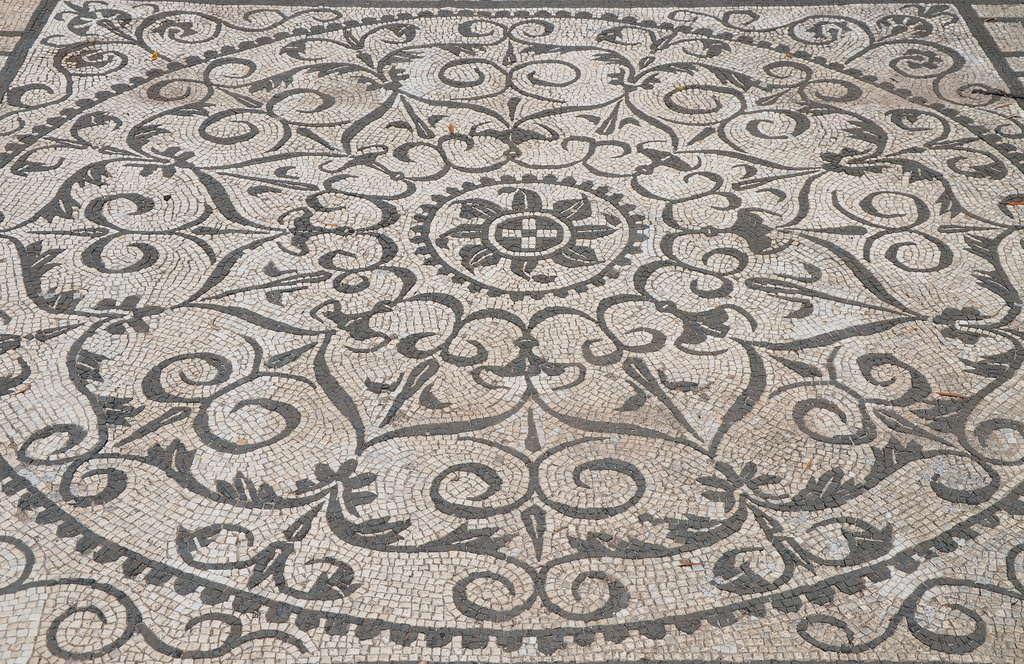
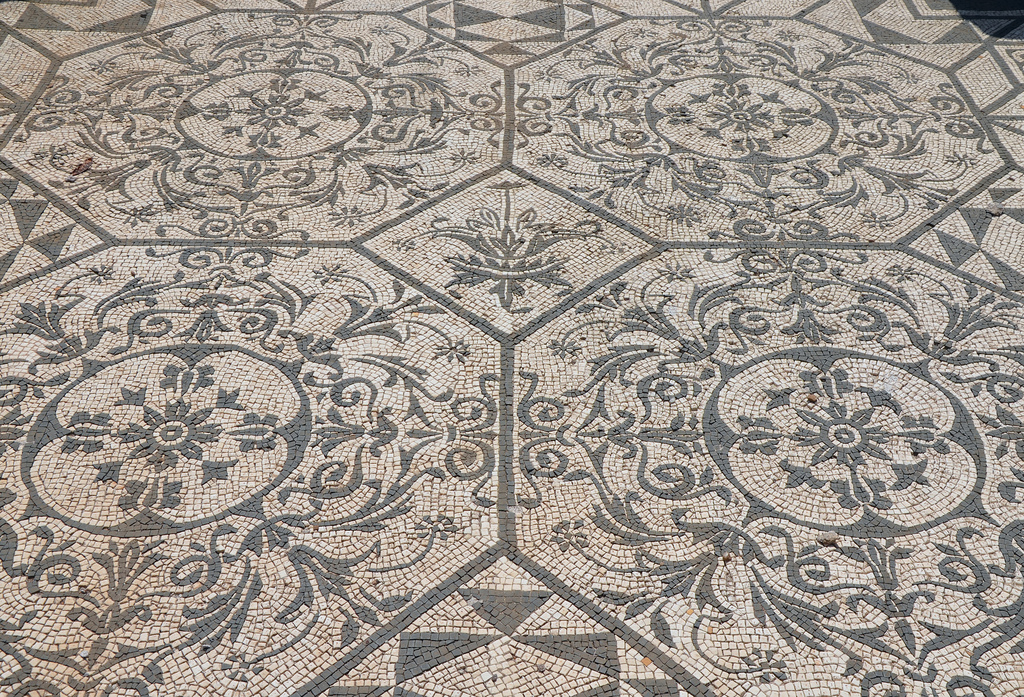
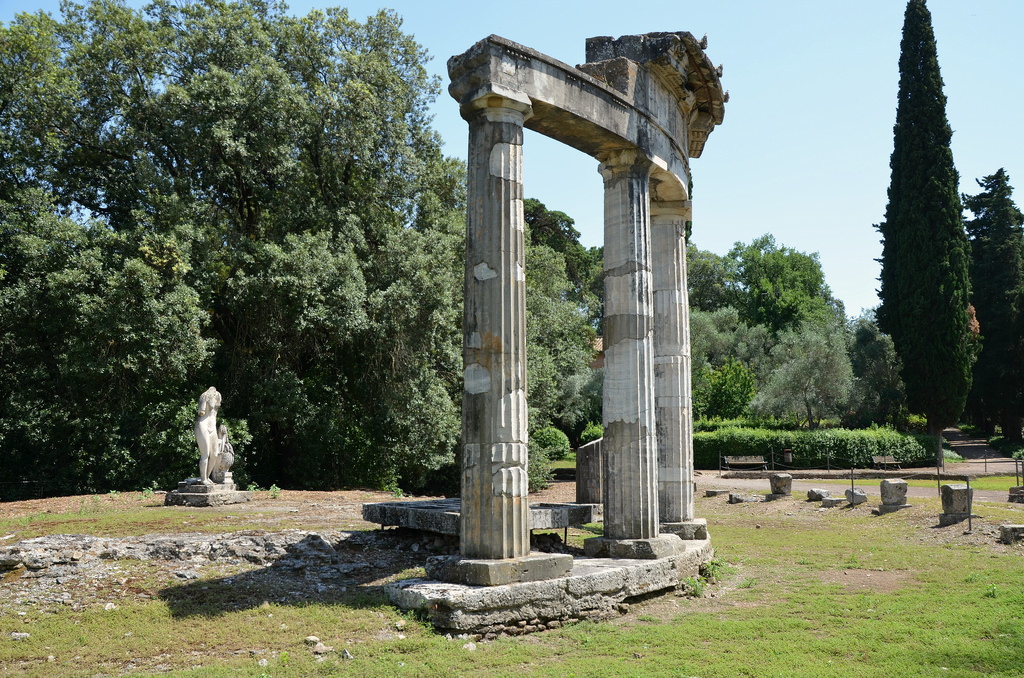
The Pecile is a large artificial terrace with a rectangular pool surrounded by a garden and colonnaded porticoes. It was intended to represent the Stoa Poikile in Athens. Its purpose was to provide an all-weather space for the ambulatio or daily walk.The monumental quadriporticus surrounding the Pecile is a wall standing 9 metres tall with a monumental entrance at the centre corresponding to the road from the north.Model of Hadrian’s Villa showing the Pecile and the Hundred Chambers. The so-called Hundred Chambers created a massive system of substructures for the Pecile, which rose 15 m above the surface on its western side.The Hundred Chambers building was a series of rooms probably used for storing supplies and housing the servants of the Villa. Located along the western side of the Pecile terrace, it consisted of four stories of rooms (between 125 and 200) accessible using a system of external walkways made of wood and concrete stairs.The so-called Three Exedras building was a magnificent structure that probably served as a cenatio, or dining hall, with three semi-circular exedrae open on three sides and internal colonnades.View of one of the three gardens of the Three Exedras building.The entrance of the Three Exedras building was dominated by a large, rectangular fountain around which were found twelve statue bases.The Building with a Fish Pond is a large complex on three levels with a pool surrounded by a colonnade composed of forty fluted white marble columns in the composite order.The Building with a Fish Pond. The structure dates to Phase II (125-133 AD).The Nymphaeum-Stadium was a large garden with fountains and two pavilions separated by a central plaza.The Nymphaeum-Stadium and its long rectangular pool.The Heliocaminus Baths was an elegant bathing complex with opus sectile decorating both floors and walls. It was the oldest bath complex of the Villa, constructed on a portion of the site of the former Republican Villa.The circular hot room of the bath complex was heated by sunbeams (heliocaminus). The room was roofed by a coffered dome with a central oculus and had large windows.One of the Villa’s most striking and best-preserved parts consists of a pool named Canopus and the so-called Serapeum, a monumental summer cenatio with a nymphaeum set at the southern end of the Canopus.The Canopus comprised a terraced valley (ca. 160 m) with a canal (119 x 18 m) along its main axis. Around the canal ran a colonnade, curved on the northern side, single on the western side, and double on the eastern side.The Canopus was an open-air museum consisting of Roman copies of Classical Greek original statues, larger than life-size. These lavish statues provided a feast for the eyes of banqueters dining in the Serapaeum. The Canopus dates to Phase II (AD 125-133).The rounded north end of the Canopus.The middle of the western side of the Canopus, where four Caryatids and two Sileni stood in place of columns. These allude to Athens: the Caryatids to the Erechtheion on the Acropolis, the Sileni to the Hadrianic silenoi decorating the stage of the Theater of Dionysus.The rounded north end of the Canopus.Statues of Ares and an Amazon (Mattei type) in the Antiquarium of the Canopus. The Amazons are copies of statues in the Temple of Artemis at Ephesus.Statues of an Amazon (Sciarra type) and Hermes in the Antiquarium of the Canopus.The Antiquarium of the Canopus. Statues of a crocodile and personifications of the Nile and Tiber have also been found near the Canopus.The so-called Serapeum was dominated by a half-dome under which was constructed a semi-circular stibadium (13) on which banqueters reclined in the open air.The Piazza d’Oro (Golden Hall) is located on the northern edge of the Villa. It was a vast building with a quadriporticus garden and water basins.Side view of the main entrance of the Piazza comprised of a vaulted vestibule and related rooms.The quadriporticus garden of Piazza d’Oro is a rectangular open court filled with flower beds and water basins.The southern side of Piazza d’Oro had a cenatio and perhaps a library suited for a cultured emperor like Hadrian.The Maritime Theatre was a complex with 35 rooms separated by a marble-lined canal from a circular colonnaded enclosure paved in white mosaic.The colonnaded porch of the Maritime Theatre. The “island” rooms, paved in opus sectile, were accessible at entrances using two retractable wooden bridges.The design was inspired by the Roman house with an atrium in the middle centred on a basin comparable to an impluvium.The complex, generally thought to have been dedicated to Hadrian’s personal use, dates to Phase I (AD 118-125).Hadrian’s Villa.The large semi-circular Nymphaeum is located on the southern side of Piazza d’Oro, where water flows from seven niches. A basin collected the water at the foot of the niches, pouring into the long central basin and the garden’s fountains.Model of Hadrian’s Villa showing the Piazza d’Oro (Golden Hall) and the Gladiator’s Arena. The plan of Piazza d’Oro is very similar to Hadrian’s Stoa in Athens, a library built by Hadrian during the same period (AD 123-125).The Triclinium (probably a summer cenatio) is located on the eastern side of the Piazza d’Oro with a vaulted ceiling and niches on the rear wall from which water flows into an ellipsoid basin.The Building with Doric Pillars was located between the Imperial Palace and the Guard Barracks. It was a rectangular space with a portico delimited by pillars connected by an architrave of the Doric order (hence the structure’s name).View of the southeast corner of the Doric portico. The hall may well have been used for imperial meetings and audiences. The structure dates to Phase I (AD 118-125).The Large Baths. The structure dates to Phase I (AD 118-125).One of the frigidaria inside the Large Baths.Model of Hadrian’s Villa showing the Small Baths (left) and the Large Baths (right).The ceiling inside the Large Baths was decorated with stucco, geometric motifs, and figured medallions.View of the remains of the Antinoeion, a sacred precinct devoted to Antinous with two temples. The structure dates to ca. AD 134.The double paved way leading to the Grande Vestibolo next to the Antinoeion.Hadrian’s Villa.The Imperial Triclinium (dining room) of the Terrace Temple.The Imperial Triclinium (dining room) of the Terrace Temple.The Imperial Palace with a series of rooms disposed along the sides of one of the five peristyles of the complex.The exedra of the Nymphaeum is located south of the peristyle in the Imperial Palace.Opus sectile pavement in the Imperial Palace.Model of Hadrian’s Villa showing the Imperial Palace.The Hospitalia was a two-story building with 10 guest rooms on the first floor behind a long and wide central hallway, at the southern end of which was a hall. The structure dates to the first phase (118-125 AD).The surviving rooms have three alcoves for three beds; the floors are paved in black and white mosaic with geometric and floral designs. The rooms had frescoes with mythological scenes.Black and white mosaic in one of the rooms of the Hospitalia with geometric and floral motifs.Black and white mosaic in one of the rooms of the Hospitalia with geometric and floral motifs.The circular Temple of Venus was built in the Doric order. A statue of Venus of the Cnidian type was found in the middle of the cella.The round Temple of Venus.































 following hadrian photography