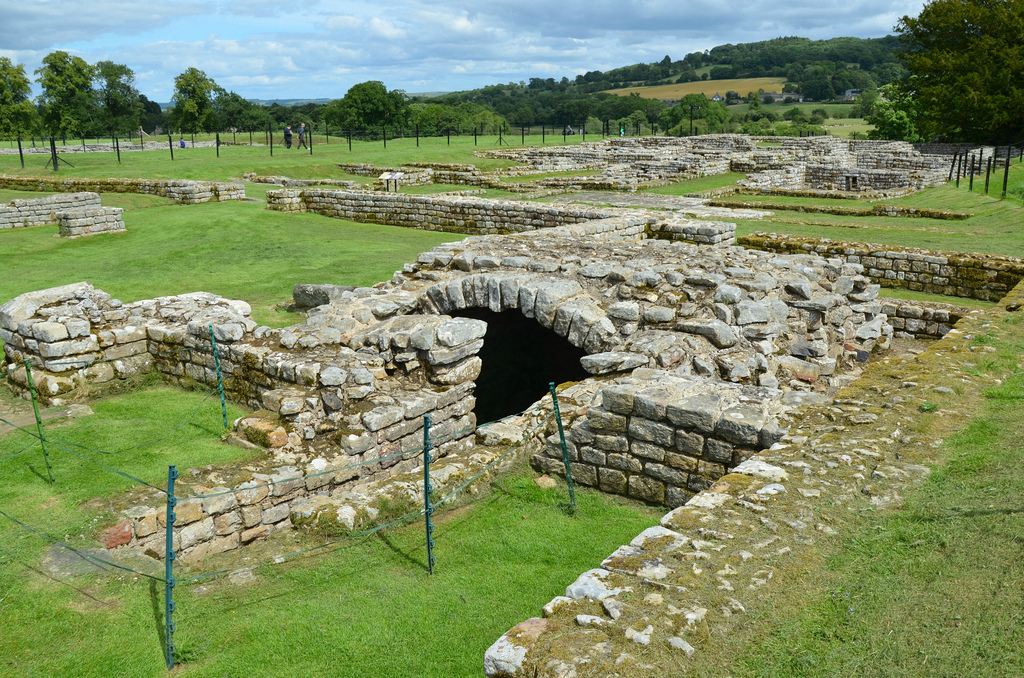
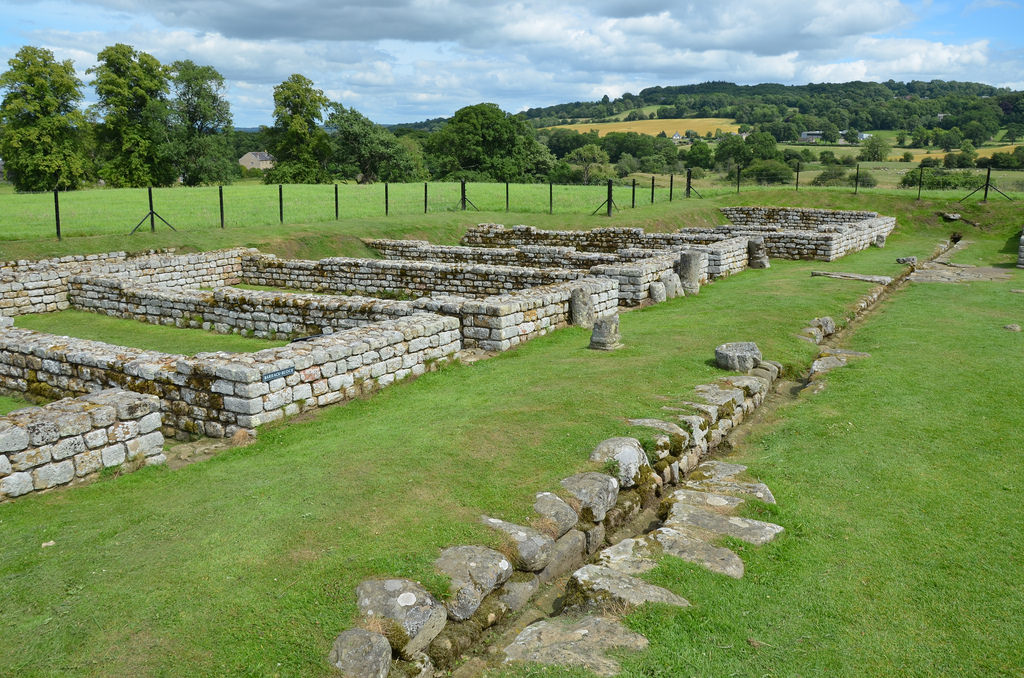
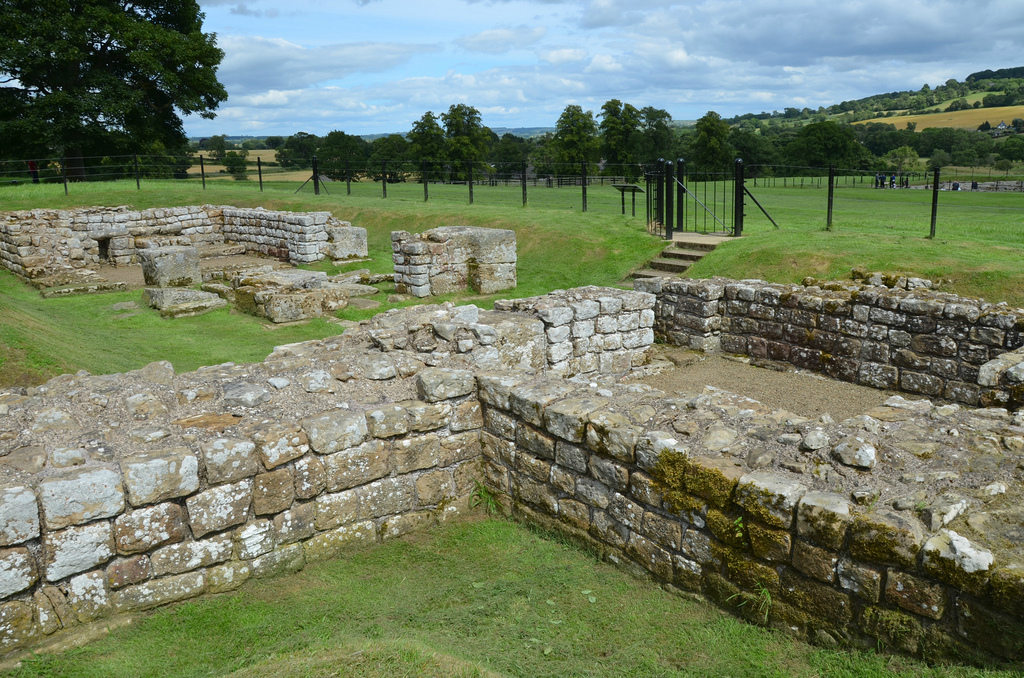
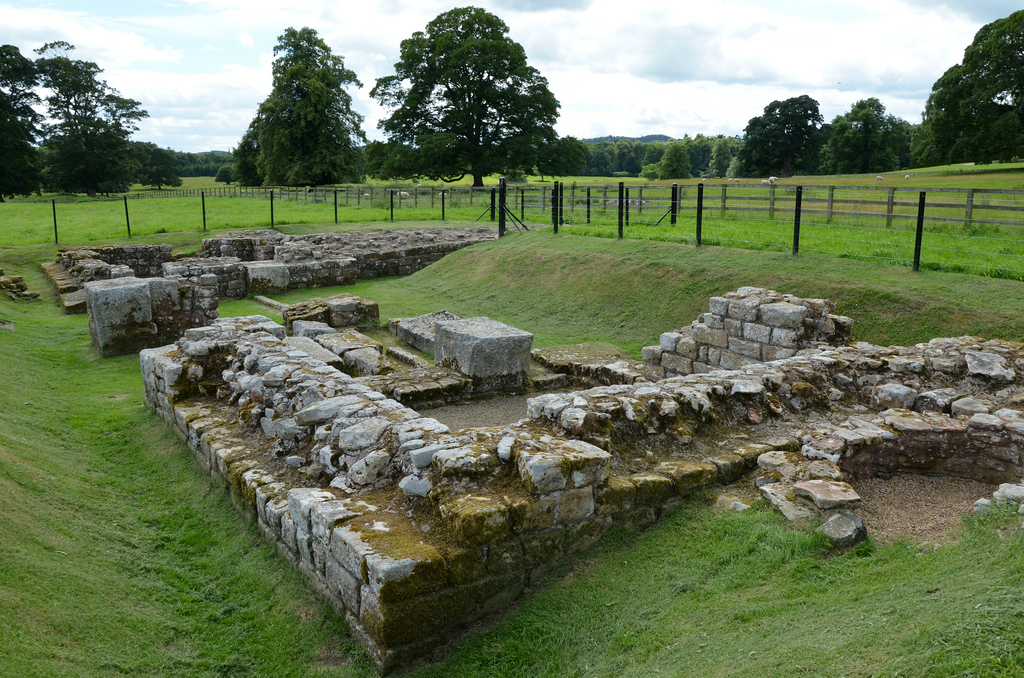
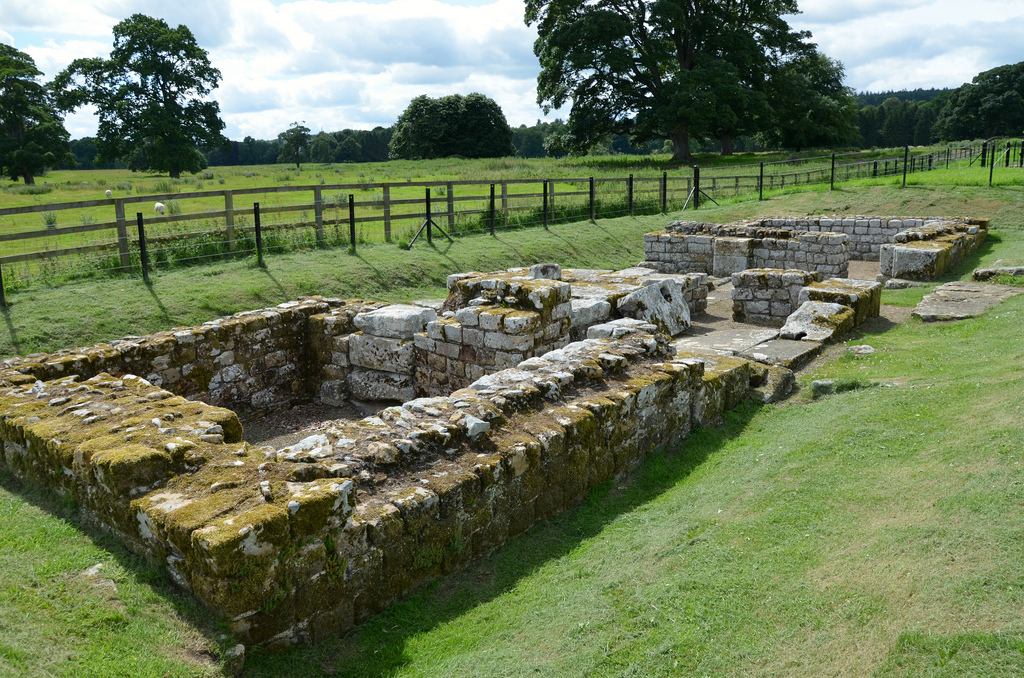
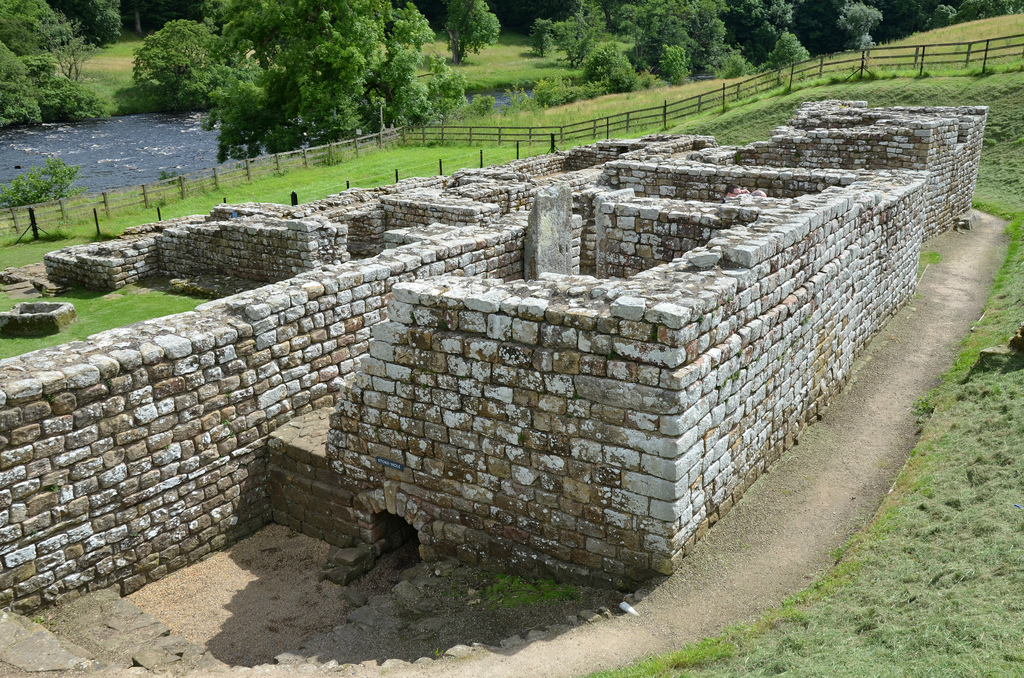
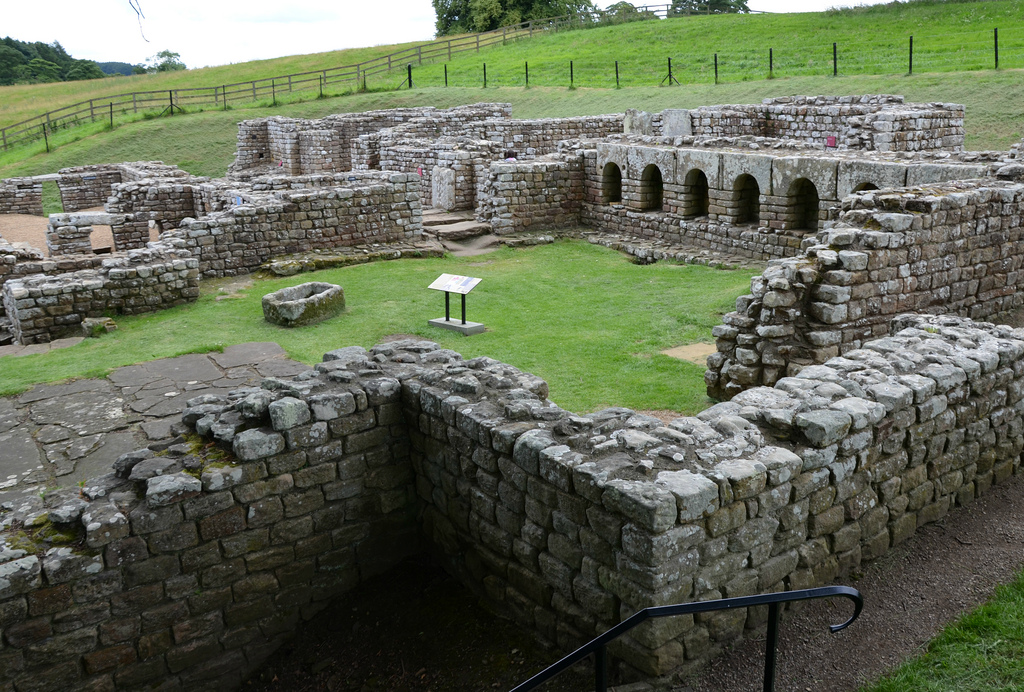
Chesters is one of a series of permanent forts built during the construction of Hadrian’s Wall. The cavalry fort, known to the Romans as Cilurnum, was built in about AD 124 above the west bank of the River North Tyne. It housed some 500 cavalrymen and was occupied for nearly 300 years until the Romans left Britain in the 5th century. Cilurnum is considered to be the best preserved Roman cavalry fort along Hadrian’s Wall. Pioneering excavations in the 19th century exposed the structures visible today. These excavations yielded one of the best collections of inscriptions and sculpture on Hadrian’s Wall.
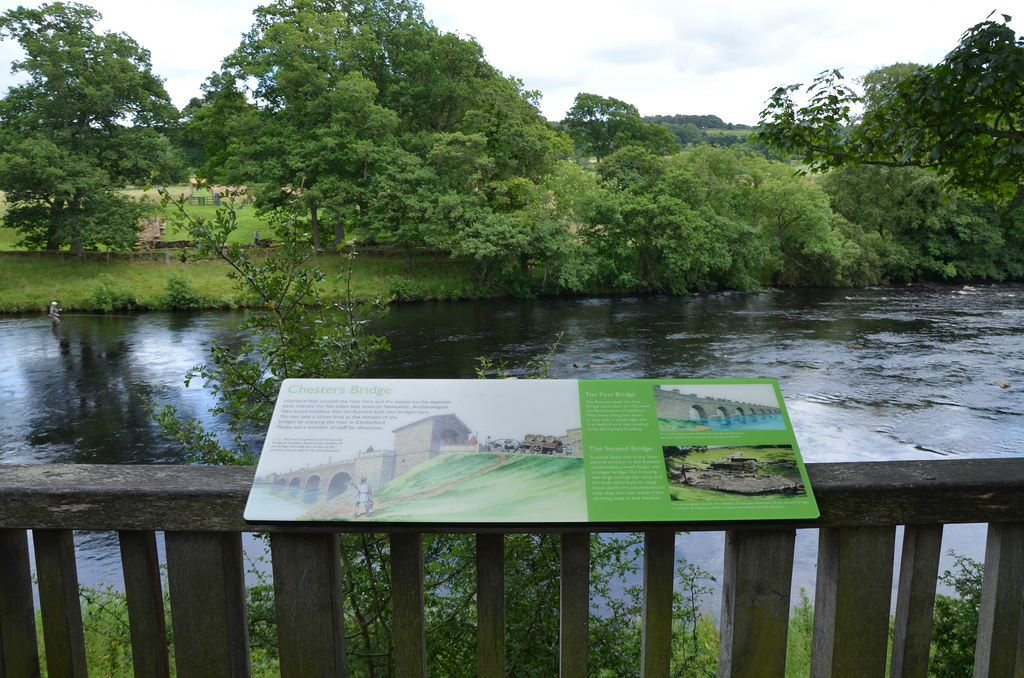
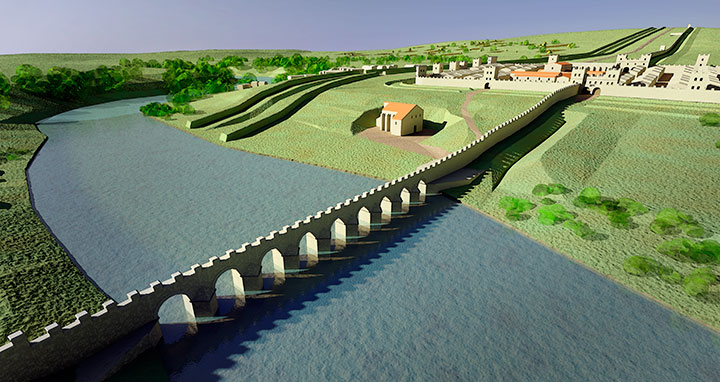
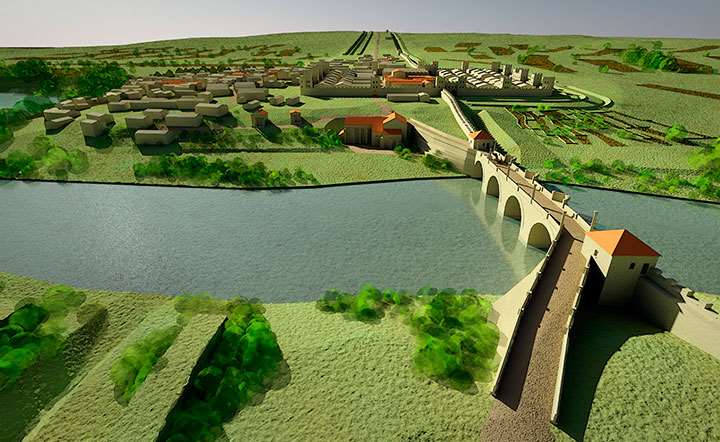
At Chesters, the ditch that fronted the Wall was filled in and a recently built Wall turret demolished to make way for the fort. It marked the point where the Wall crossed the River North Tyne, the first major obstacle on its route from east to west. A large road bridge with stone piers whose abutments survive spanned the river there.
The first attested Cavalry unit at Chesters was the 500-strong ala Augusta ob virtutem appellata – ‘the cavalry regiment styled Augusta for its valour’. It is mentioned on an altar dedicated to Disciplina and dated to Hadrian’s reign (RIB 1496c). By around AD 180 until the end of the Roman period, Chesters Fort was garrisoned by a cavalry regiment originally raised in northern Spain, the ala II Asturum (‘the Second Asturians’).
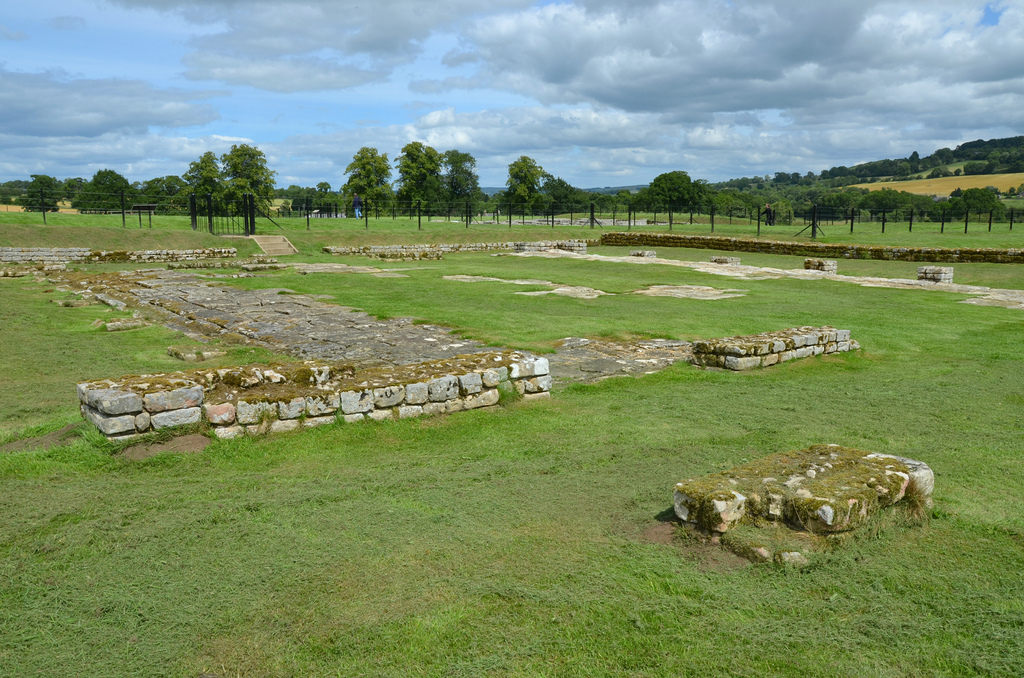
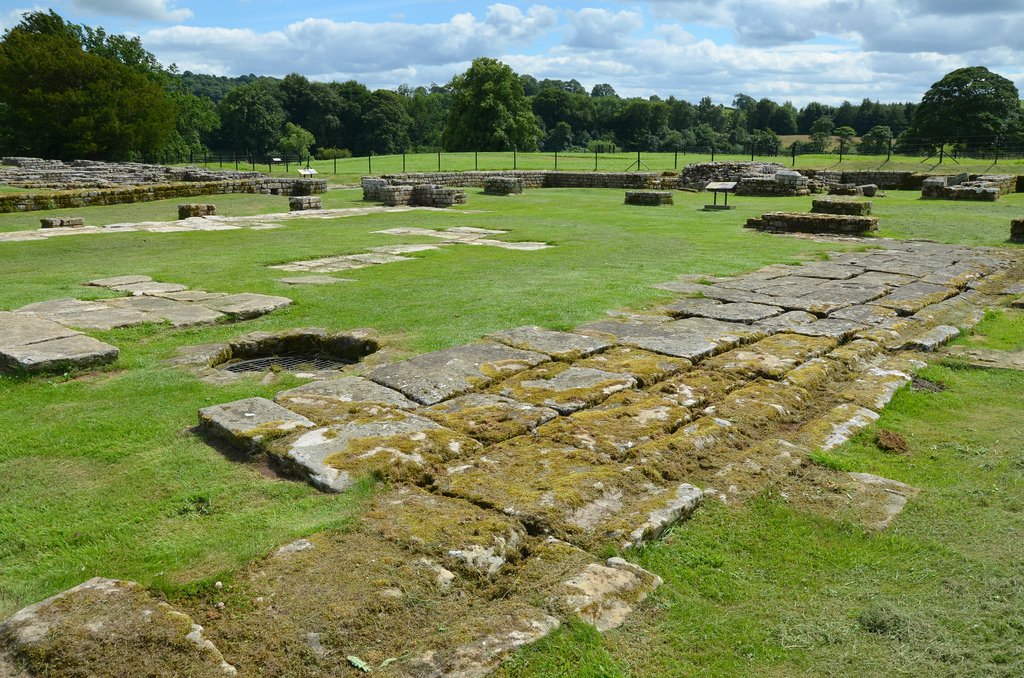
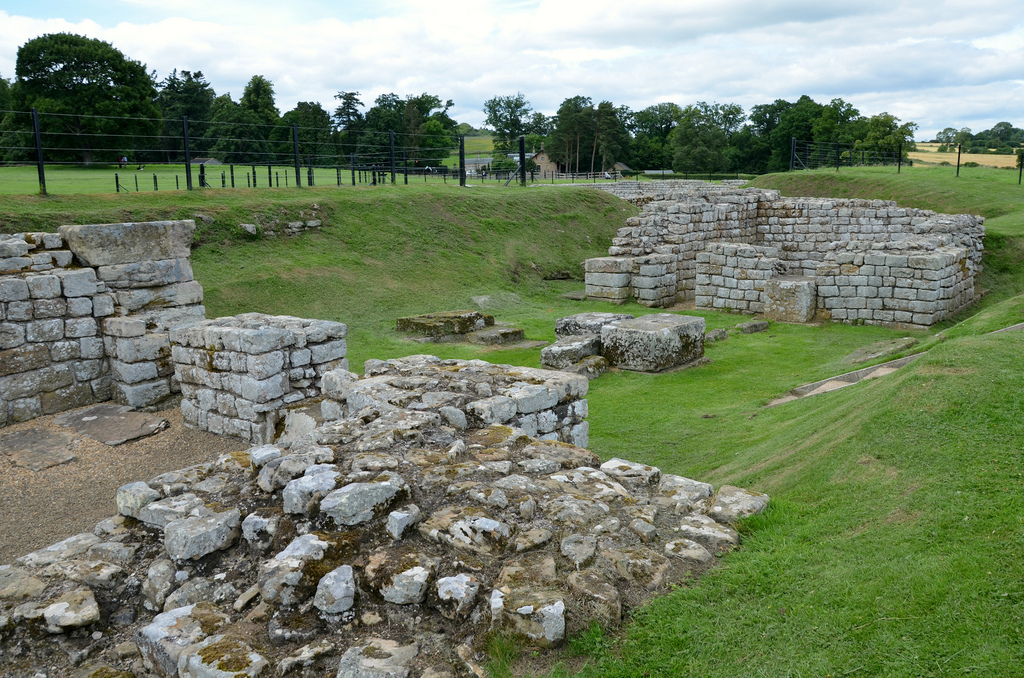
The fort was of the usual rectangular shape, covering 2.3 hectares, with large, double gateway in each side. The walls were of stone, some 1.5m wide, backed by an earthen rampart and fronted by a single ditch on all sides. The defences were completed with four stone corner towers and eight interval towers, two on each face. In addition to the four monumental gateways, two smaller, single gates at either end of the via quintana gave access to the fort on the south side on the Wall.
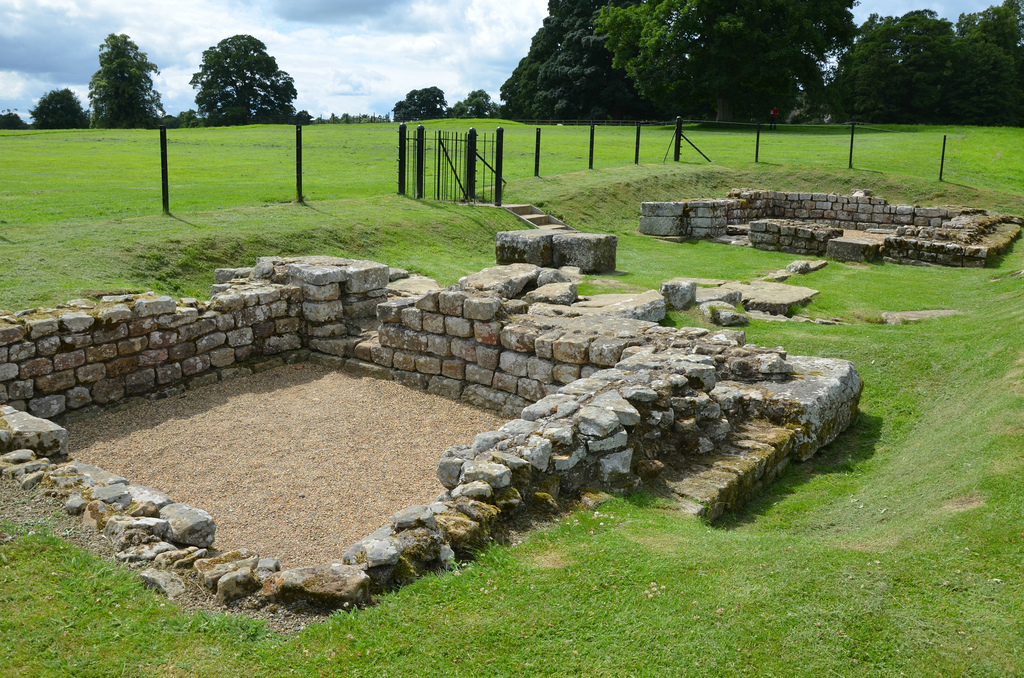
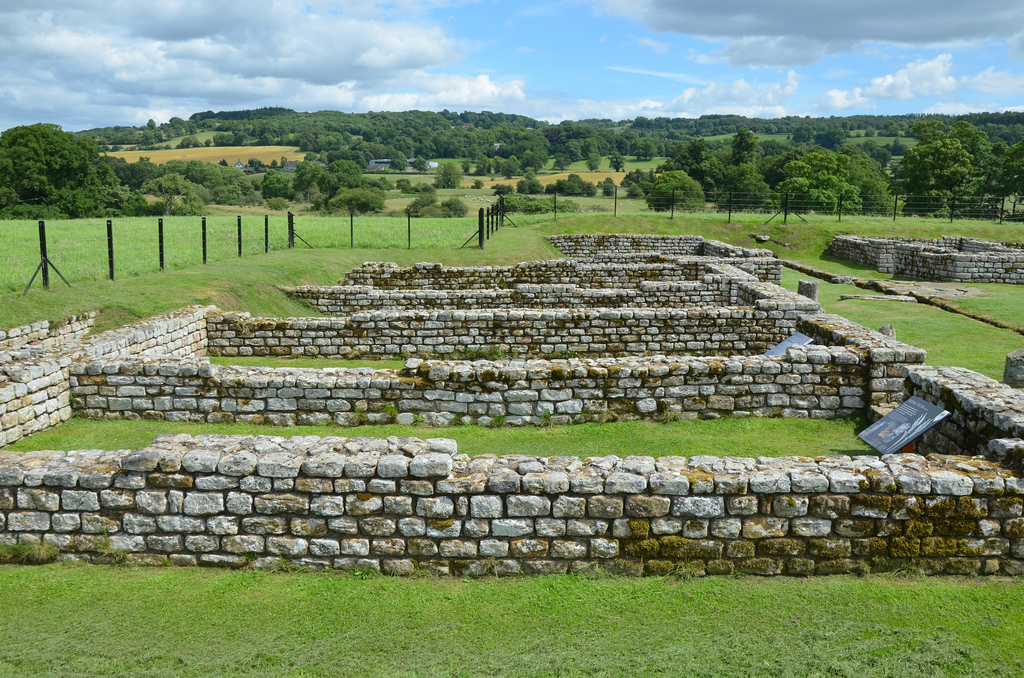
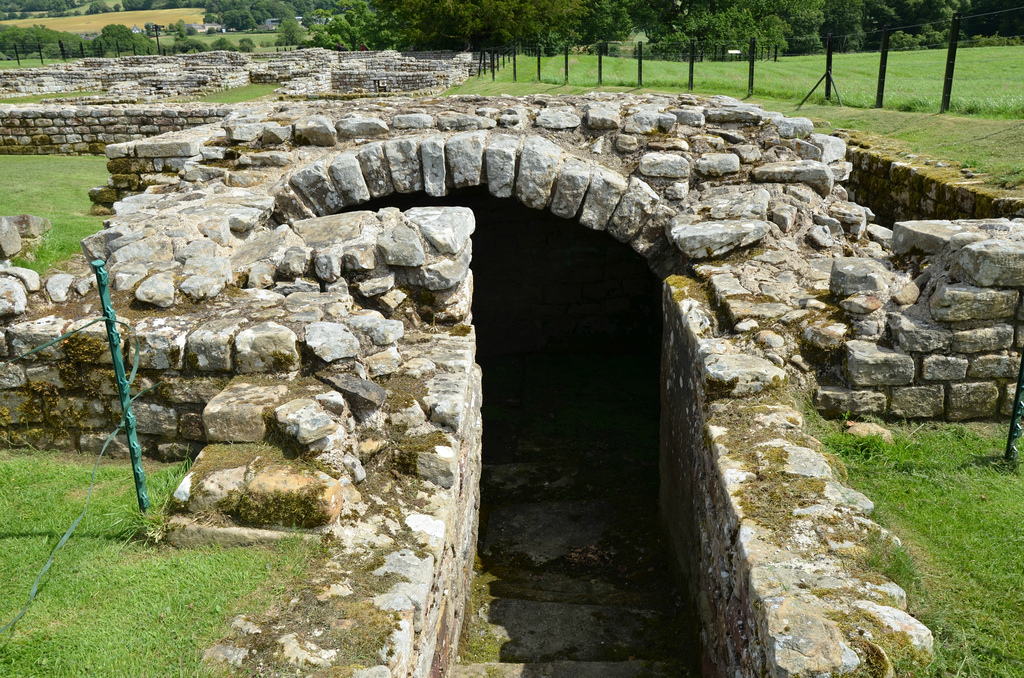
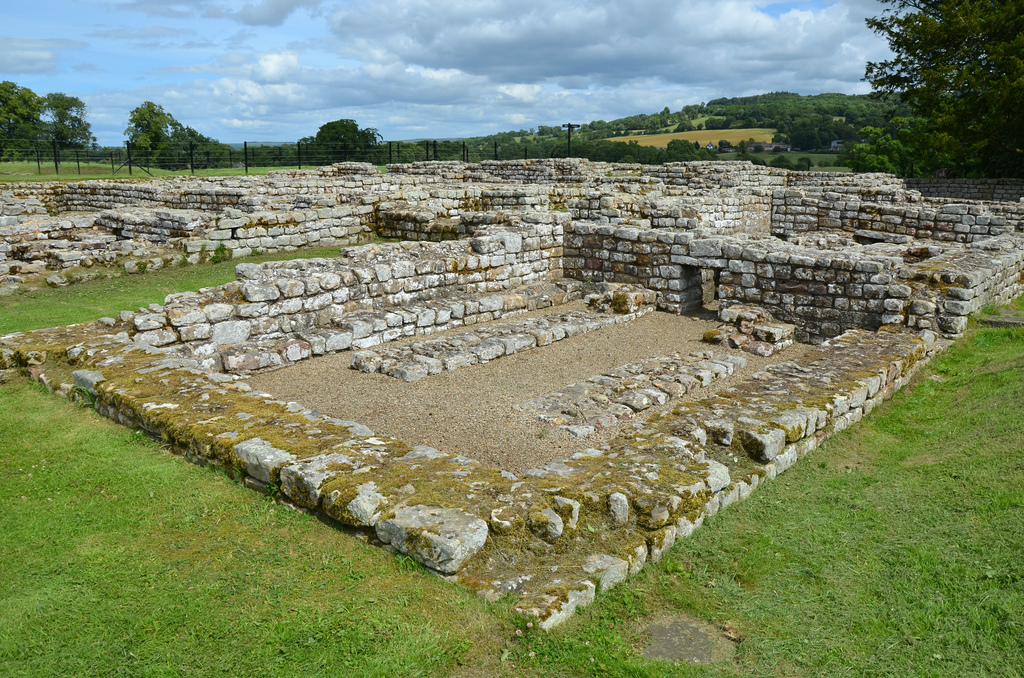
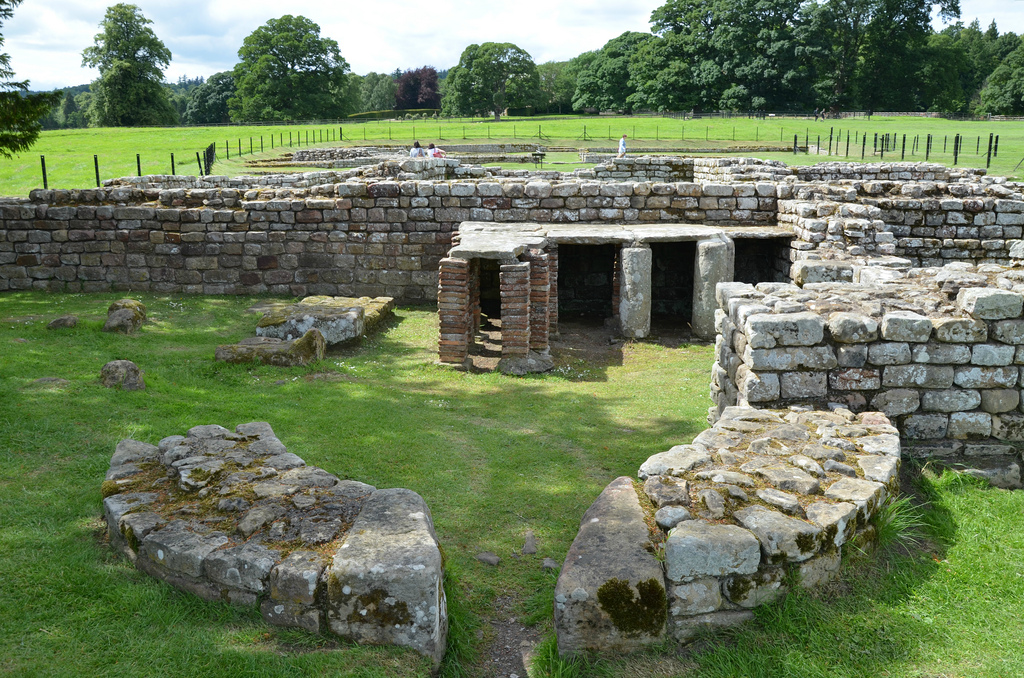
Remains survive from various periods in the 300-year life of the fort but most of its interior is unexcavated and is still buried. The visible selection of buildings result from the excavation campaigns of Nathaniel Clayton, the wealthy land-owner of Chesters House and Estate, between 1843 and 1893. They include all six gateways, the two interval-towers in the southern defences, a small section of the fort wall to the immediate south of the northern interval tower, the headquarters building (principia), the commanding officer’s house (praetorium) with its own central heating system, as well as two barrack blocks that could each accommodate a turma or cavalry troop of about 30 men. The most impressive building remains are those of the headquarters building (principia) in the middle of the fort.
The site museum houses finds from the fort and elsewhere along the wall, including Roman sculptures, inscriptions and altars, many of them collected in the 19th century by John Clayton (see images here). Following his death in 1890, his nephew Nathaniel commissioned the building of a permanent museum (completed in 1896) in order to house the Clayton Collection.
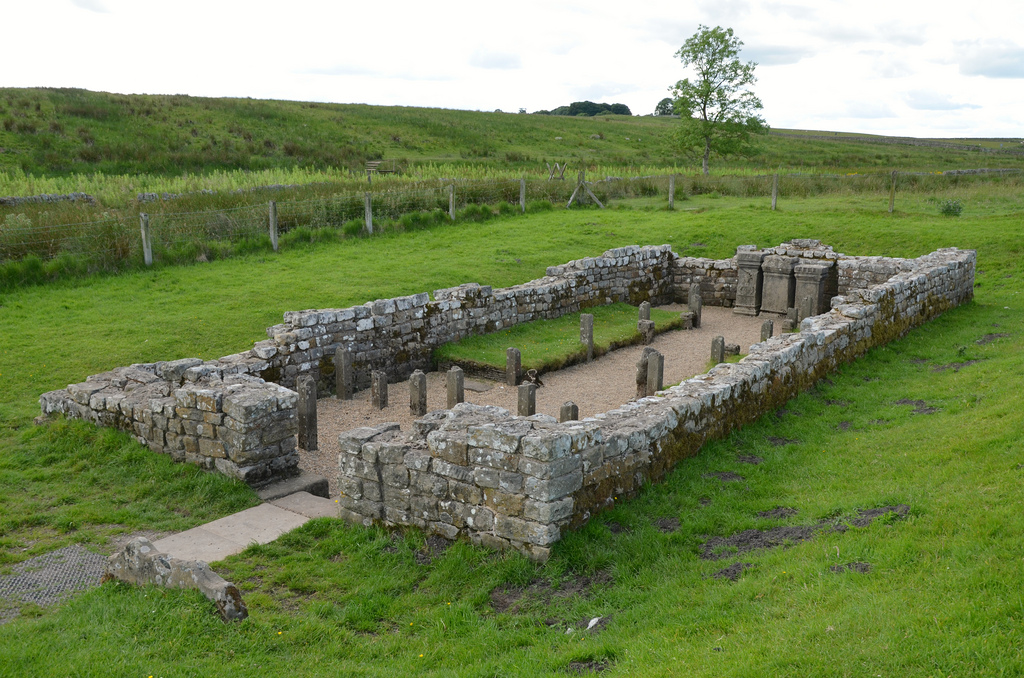
The temple, dedicated to the worship of Mithras and known as a mithraeum, was built by soldiers based at nearby Carrawburgh Fort (Brocolita) in about AD 200. The fort is largely unexcavated and is in private ownership, but the temple has been well studied. Discovered during the dry summer of 1949 and completely excavated the following year, the temple is the second-most northerly mithraeum discovered so far (only the temple dedicated to Mithras at Bremenium –CIMRM 876– is further north). Several other mithraea are known to have existed along Hadrian’s Wall, but Carrawburgh’s is the only one that can be seen today.
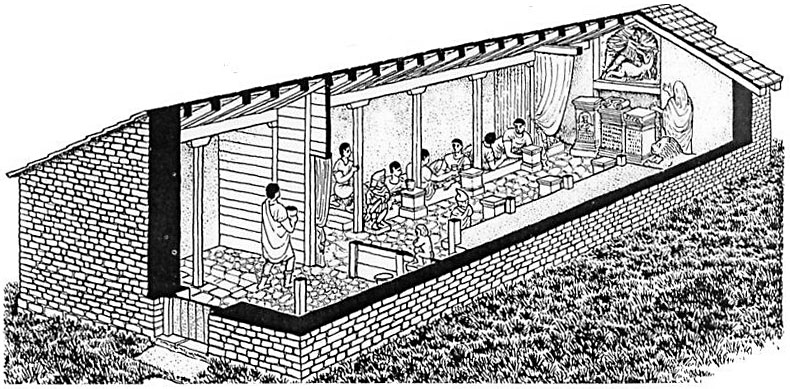
Ceremony reconstruction at the Carrawburgh Mithraeum.
The first mithraeum to be built on the site was erected early in the 3rd century AD and was of a small size. It was later altered several times before being demolished early in the 4th century, quite possibly by Christians who tended to see Mithraism as a threat. Like most other mithraea, the Brocolitia temple was built to resemble a cave. The first building was around 5.5 metres wide and 8 metres long and contained the usual anteroom and nave with benches on either side of a central passage on which worshippers would recline during ceremonies. At the far end of the nave was a platform containing the altars with, behind them, a sculpture depicting Mithras capturing and killing the primaeval bull in a cave. The worshippers had a complex system of 7 grades of initiation, with ritual meals.
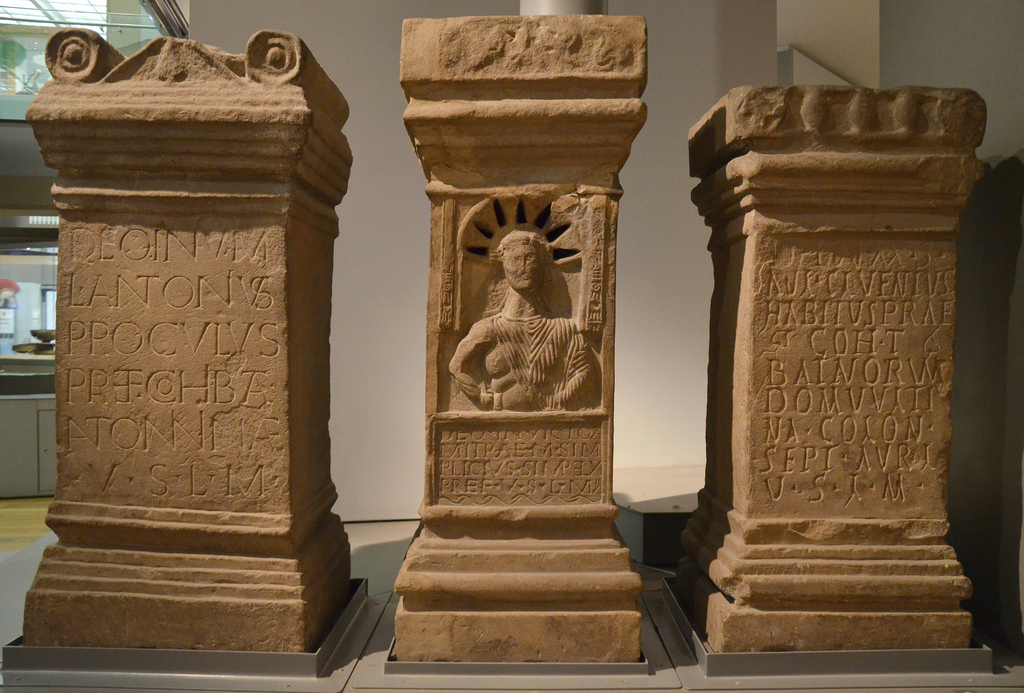
The building was expanded to 11 metres length in a second stage about AD 222 with longer side-benches and statues of Mithras’ attendants, Cautes and Cautopates. Further rebuilding and interior redesign took place during the course of the 3rd century. The temple was destroyed in AD 296-7, then reconstructed at the turn of the 4th century. In the third sanctuary stood three fine altars dedicated to Mithras by commanding officers of the Roman Army unit stationed there, the First Cohort of Batavians from the Rhineland. One of the altars has a notable relief of Mithras with a radiate crown pierced forming openings through which a lamp placed in the recess at the rear would light up the rays. Rituals, including sacrifices, would be conducted in this altar area where two pots with the skull of a fowl and two lumps of charcoal were found. In addition, four little altars lay along the edge of the side benches.
The mithraeum was destroyed for good around AD 330. The statues of Cautopates and Cautes were deliberately destroyed and disfigured while the relief of the bull-killing was removed, leaving only one broken fragment behind. There were also other traces of deliberate desecration. Visitors to the Carrawburgh site today can see the stone temple in its final 4th-century phase. Following the excavations in 1950, the original altars, statues and timber posts were replaced by concrete copies. All the original material is now in the Great North Museum in Newcastle.
PORTFOLIO
The Temple of Mithras from the south west.The interior of the Temple of Mithras looking north west.The Temple of Mithras from the north.Traces of Carrawburgh Fort to the north of the Temple of Mithras.The Temple of Mithras from the south east.Three altars dedicated to Mithras, from Carrawburgh. On display in the Great North Museum in Newcastle.Limestone statues of Cautes and Cautopates, the twin torchbearers who were companions of Mithras. On display in the Great North Museum in Newcastle.









 following hadrian photography