Tawern Temple Complex

The Roman Temple Tawern (German: Römischer Tempelbezirk Tawern) is a reconstructed Gallo-Roman sanctuary on the Metzenberg in Tawern near Trier in western Germany. The original sanctuary was built in the 1st century AD above a major road leading from Divodurum Mediomatricorum (modern-day Metz) to Augusta Treverorum (modern-day Trier). It remained in use until the end of the 4th century AD.

Coordinates: 49° 39′ 51.31″ N, 6° 30′ 34.41″ E

The sanctuary was excavated between 1986 and 1988, and seven buildings of various periods and differing sizes and plans were discovered within the complex. Under the direction of the Rheinisches Landesmuseum of Trier, the temple district and a large building were partially reconstructed on the original foundations. The finds (especially coins) revealed that the temple district was constructed in the first half of the 1st century AD and was used right up until late into the 4th century AD. Travellers on the nearby main Roman road would have stopped at the sanctuary to thank the gods for their successful journey or to invoke blessings as they made their way to Rome.

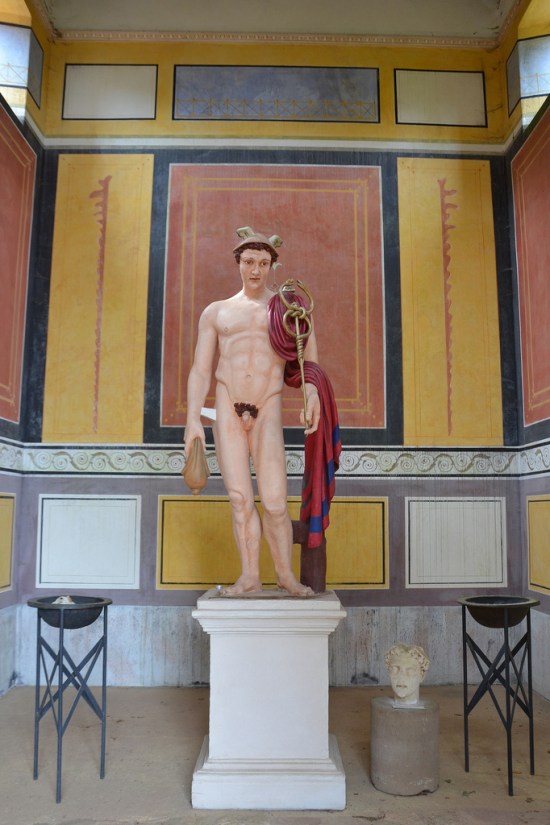
Mercury, the god of trade, commerce and travel, was the main deity worshipped at the sanctuary. The slightly larger-than-life-size limestone head found in the water well came from a statue of the god. With the help of this find, a reconstruction of the statue was produced in 2002 and is now exhibited in the large Temple of Mercury. Five inscriptions found at the site were also dedicated to Mercury.

The sacred area, surrounded by walls, had a trapezoidal ground plan. It was entered through a small gate. The construction plan consisted of several phases. The first phase shows that there were five temples arranged side by side. Various gods were worshipped, among them Mercury, the goddess Epona, Apollo, and Isis-Serapis. The temple district was later extended to cover a total area of 48 m in width and 36 m in depth. Three temples were demolished to make way for the great main temple.

At the north-west corner of one temple, a water well originally more than 15m deep was unearthed. It was filled with stones, earth and architectural parts. There were also fragments of inscriptions and figurative reliefs.

In the village of Tawern, at the foot of the Metzenberg, one can also see the remains of the small Gallo-Roman town (vicus) whose antique name was Tabernae. The name of the vicus was preserved in the modern name of the village, Tawern. The inhabitants of the vicus mainly provided goods and services for travellers. The nearby sanctuary attracted numerous pilgrims. A total of nine buildings were excavated on both sides of the Roman road.

PORTFOLIO
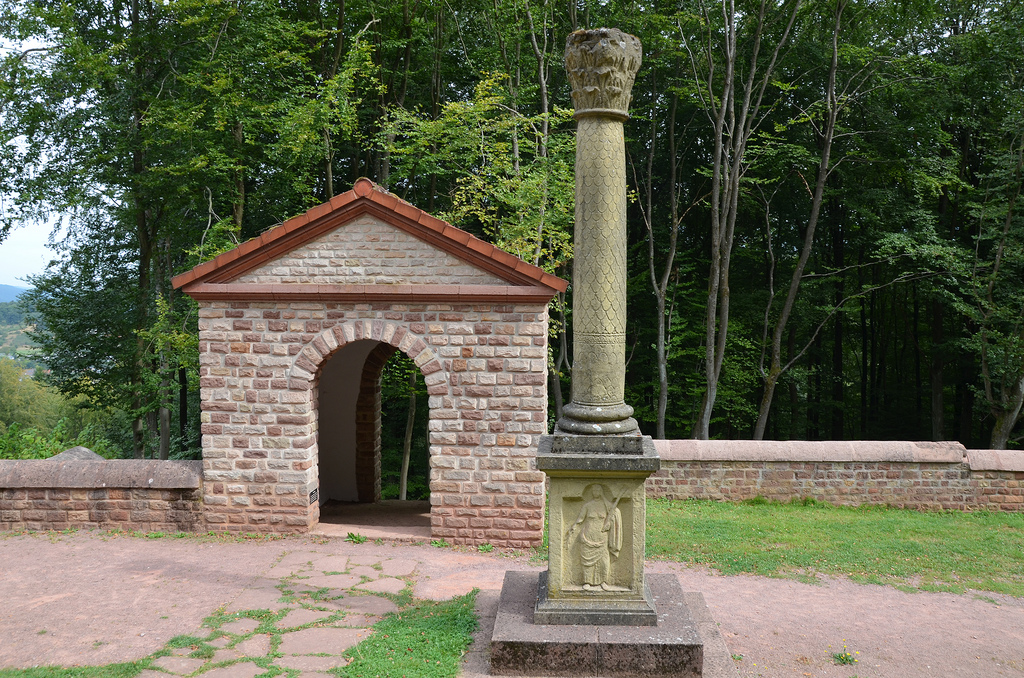
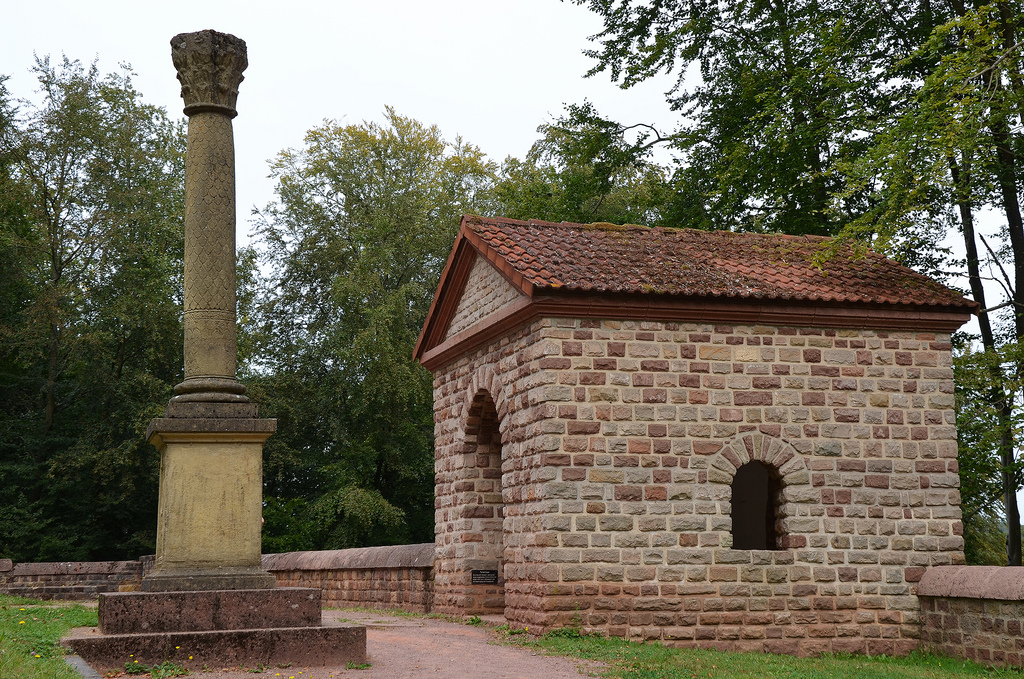
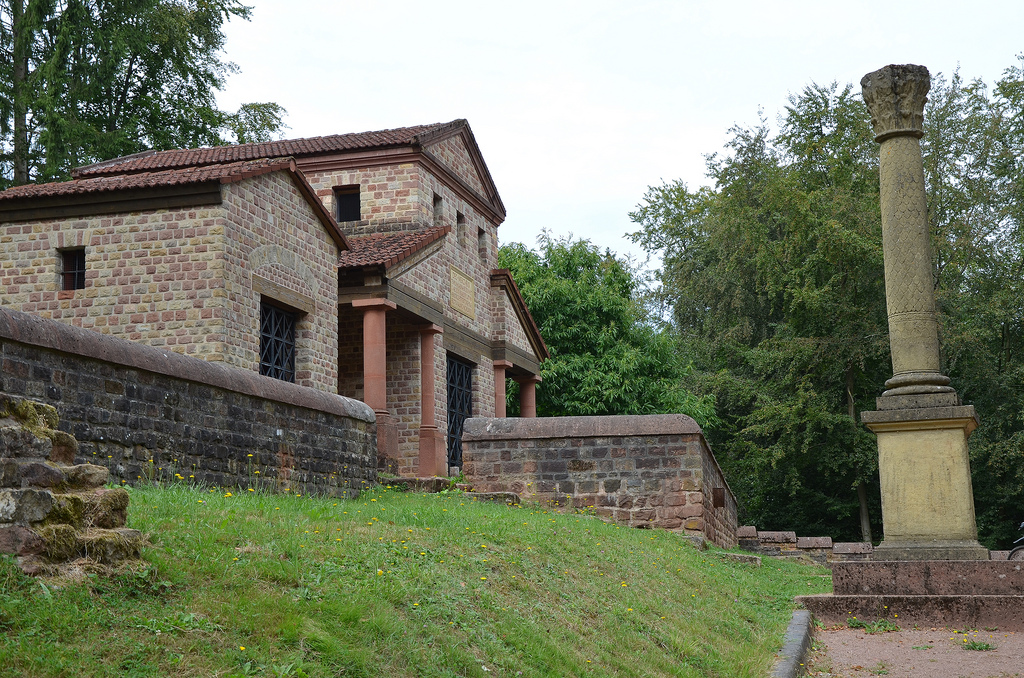
The entrance to the complex, a Jupiter Column.
The main entrance to the sacred complex. A reconstructed Jupiter Column was also added.
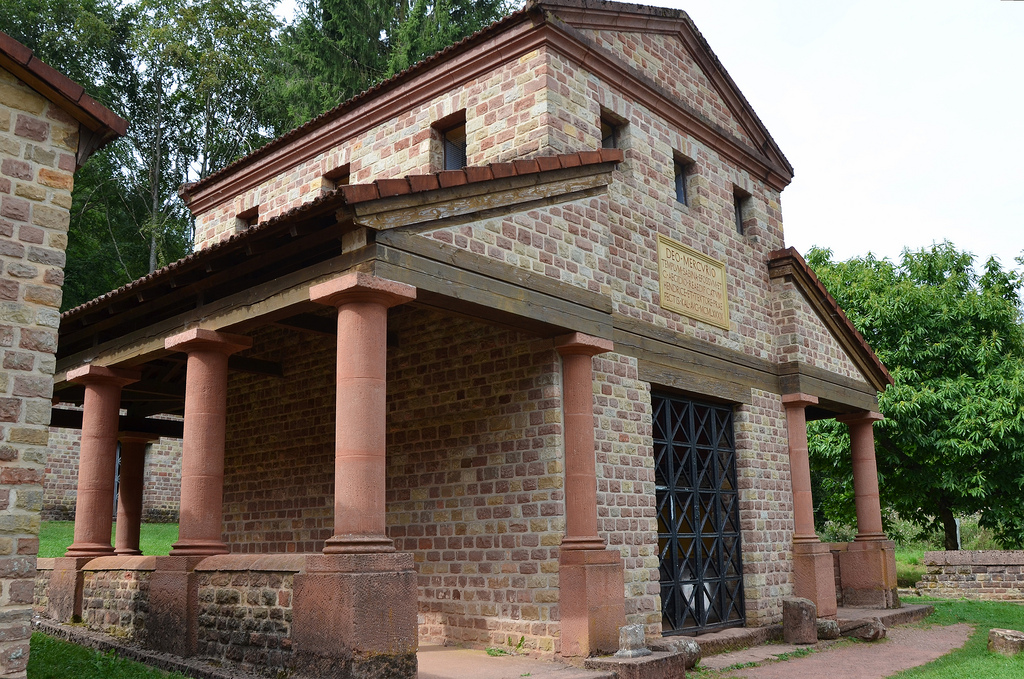
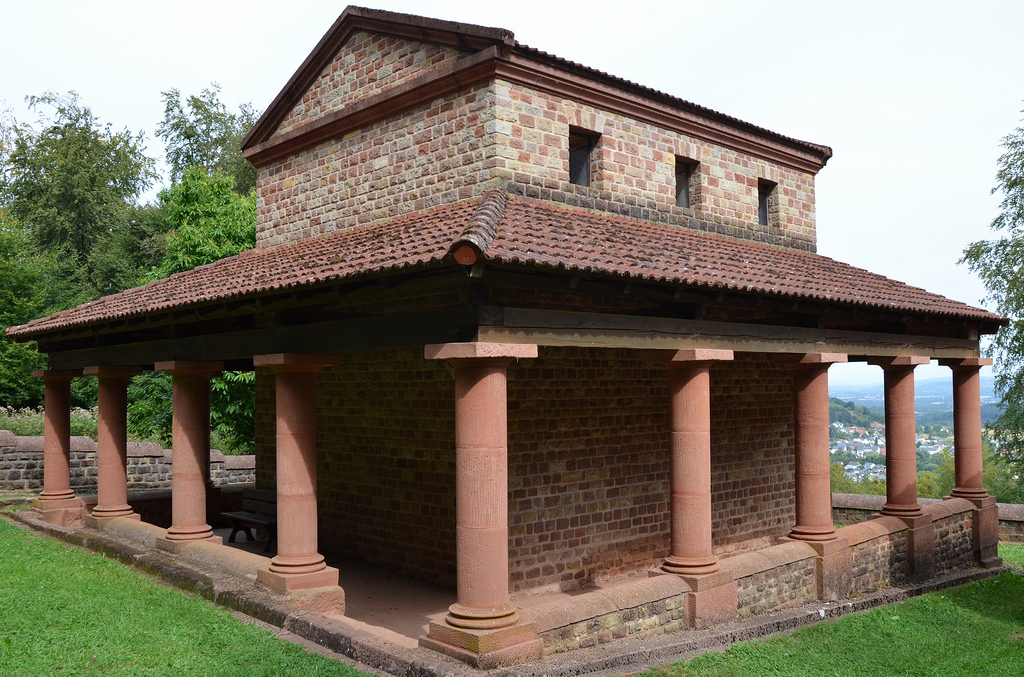
The reconstruction main temple of the sanctuary dedicated to Mercury.
The reconstruction of the main temple in the sanctuary dedicated to Mercury.
The reconstruction main temple of the sanctuary dedicated to Mercury.
The reconstruction main temple of the sanctuary dedicated to Mercury with Tuscan columns on three sides.
Reconstruction of the Mercury statue inside of the main temple dedicated to the god.
Reconstruction of the Mercury statue inside the cella of the main temple dedicated to the god. The cella was 7.50 m long and 5.70 m wide.
The reconstruction main temple of the sanctuary dedicated to Mercury.
The reconstruction of the main temple in the sanctuary dedicated to Mercury. The modern inscription, dated to August 1, 1989, honours the excavators of the site (Dr. Sabine Faust and Dr. Karl-Josef Gilles).
Immediately before handling sandstone channels are laid, which catch and dissipate the rainwater flowing from the roof. Parts are still in the original and original place.
On the floor, sandstone water channels were laid out around and between the temples. They were used to catch and disperse the rainwater flowing from the roof.
The foundations of Temple III.
The reconstructed Temple II, the the only one that has been preserved during all the construction phases of the temple district.
The reconstructed Temple II is the only original temple that was preserved during the different construction phases of the sanctuary.
In the temple stood a statue of the gods, which was revered here, probably the Celtic horse goddess Epona. She was the goddess of the drivers, the horses and mules. The relief depicted here, which was found in the well, gives a hint. It shows the goddess on a horse.
In the cella of Temple II stood a statue of the god, probably the Celtic goddess Epona. She was a protector of horses, ponies, donkeys, and mules. The relief dedicated to Epona inside the cella is a replica of the original one found inside the well. The wall painting colours of the cella are based on finds of plaster remnants.
The foundations of the early temples and a well.
The foundations of the early temples and the reconstructed well.
The back entrance to the sanctuary.
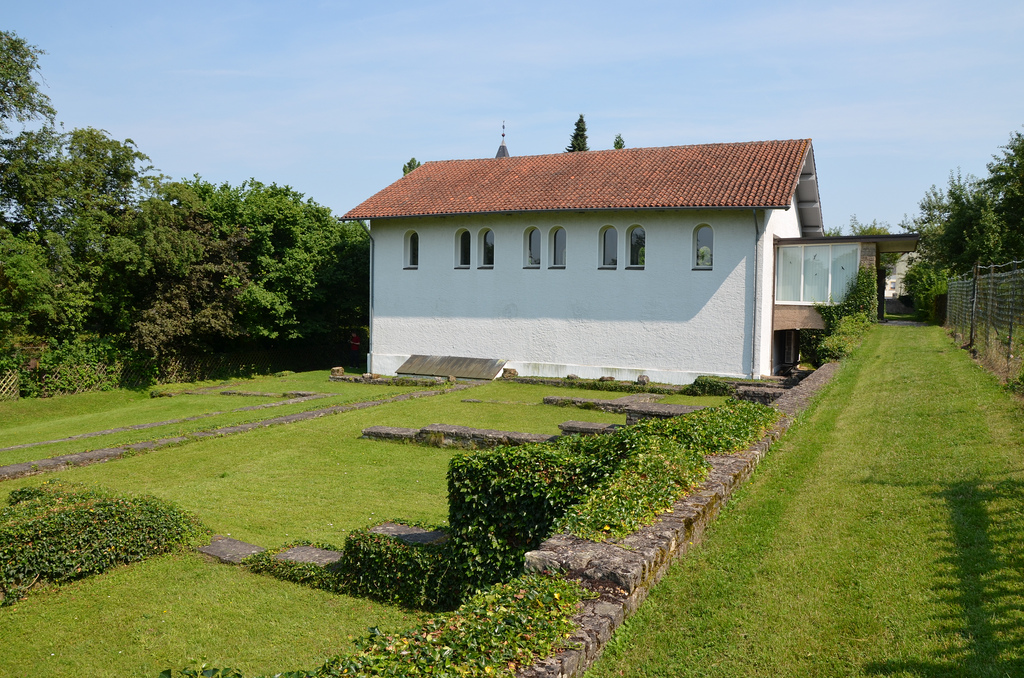
The reconstructed building just outside the sanctuary. Its function of the professional building has so far not been very clear. It is hardly a dwelling-house of one or more priests. The large room to the side of the mountain was probably closed by a wall - unlike in the present reconstruction. He might have served as a stable. Perhaps the travelers could strengthen themselves in the Profangebäude and buy souvenirs, sacrificances or Weihengaben.
The reconstructed building just outside the sanctuary. Its function is not very clear, but it might have served as a stable.
Profangebäude
The interior of the reconstructed building just outside the sanctuary which may have served as a stable.
The main entrance to the sacred complex.
The Tawern Temple Complex.
The vicus Tabernae located along the major Roman road leading from Divodurum Mediomatricorum (modern-day Metz) to Augusta Treverorum (modern-day Trier).
The vicus Tabernae is located along the major Roman road leading from Divodurum Mediomatricorum (modern-day Metz) to Augusta Treverorum (modern-day Trier).
Computer reconstruction of the vicus and the four-sided arch.

The Saarland and Mosel Valley’s ancient Roman heritage has a lot to offer to tourists and scholars alike. More than 120 antique sights along the Moselle and Saar rivers, as well as in Saarland and Luxembourg, are a testament to the Gallo-Roman era north of the Alps (further information here).

The temple area is not fenced and can therefore be visited at any time. Admission is free.

Links:
Roman Villa Nennig

Located in the village of Nennig in the delightful Upper Moselle Valley, the Roman Villa Nennig (German: Römische Villa Nennig) houses a richly illustrated gladiatorial mosaic, one of the most important Roman artefacts north of the Alps. Protected by a dedicated building built about 150 years ago and covering an area of roughly 160m2, the mosaic vividly portrays musicians, hunting scenes and gladiatorial contests.

Coordinates: 49° 31′ 44.56″ N 6° 23′ 5.03″ E

In the 3rd century AD, the mosaic paved the atrium (reception hall) of a large villa urbana which a wealthy Roman had built on the road between Divodurum (Metz) and Augusta Treverorum (Trier). The mosaic later disappeared below ground until it was discovered by chance by a farmer in 1852. The excavations conducted between 1866 and 1876 revealed only a part of the once splendid and extensive ground, the foundation walls of the imposing central building, and several adjacent buildings. A coin of Commodus (struck ca. 192) found under the mosaic during the restorations of 1960 dates the villa’s construction to the end of the 2nd century or the beginning of the 3rd century AD.

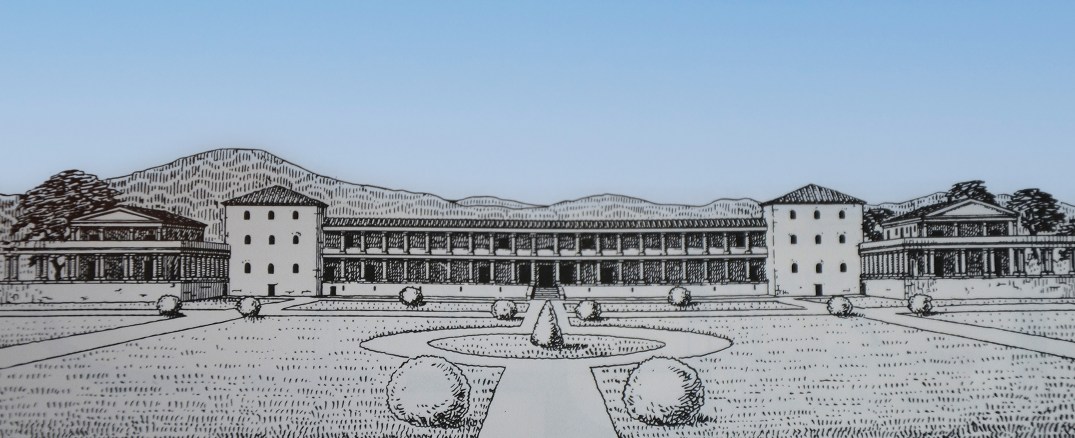
The villa complex included a bath house with heated rooms, small pavilions and magnificent gardens. A two-storied colonnaded portico (140 m long) flanked by three-storied tower wings with massive walls ran across the façade of the main building. Beyond these, at either side, two temple-pedimented structures flanked the villa.

General view of the Roman Villa Nennig (reconstructed according to Mylius).

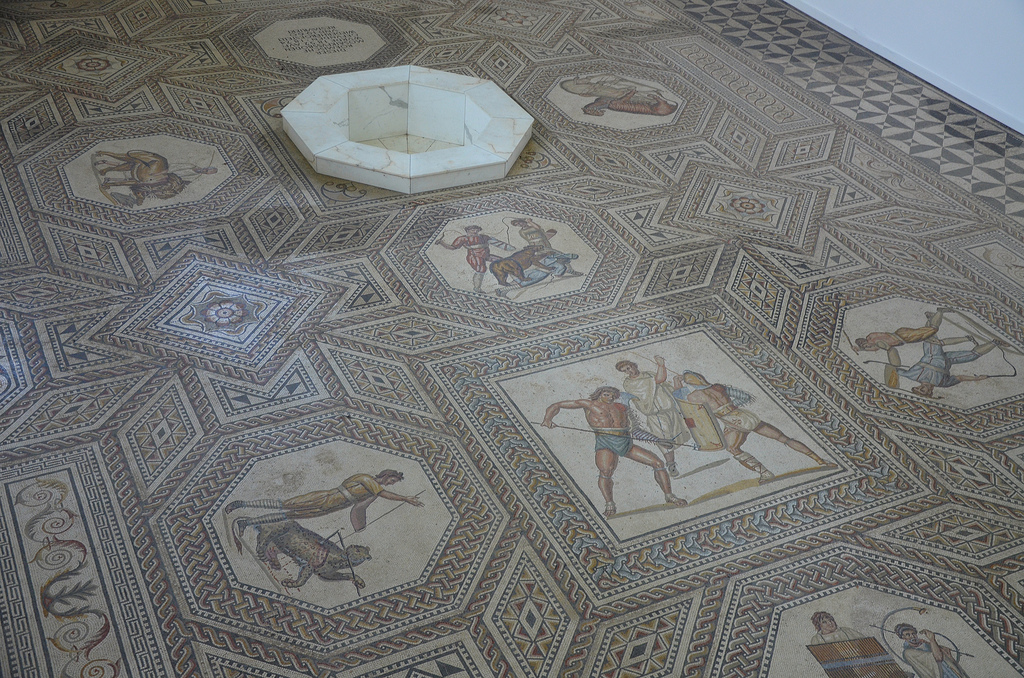
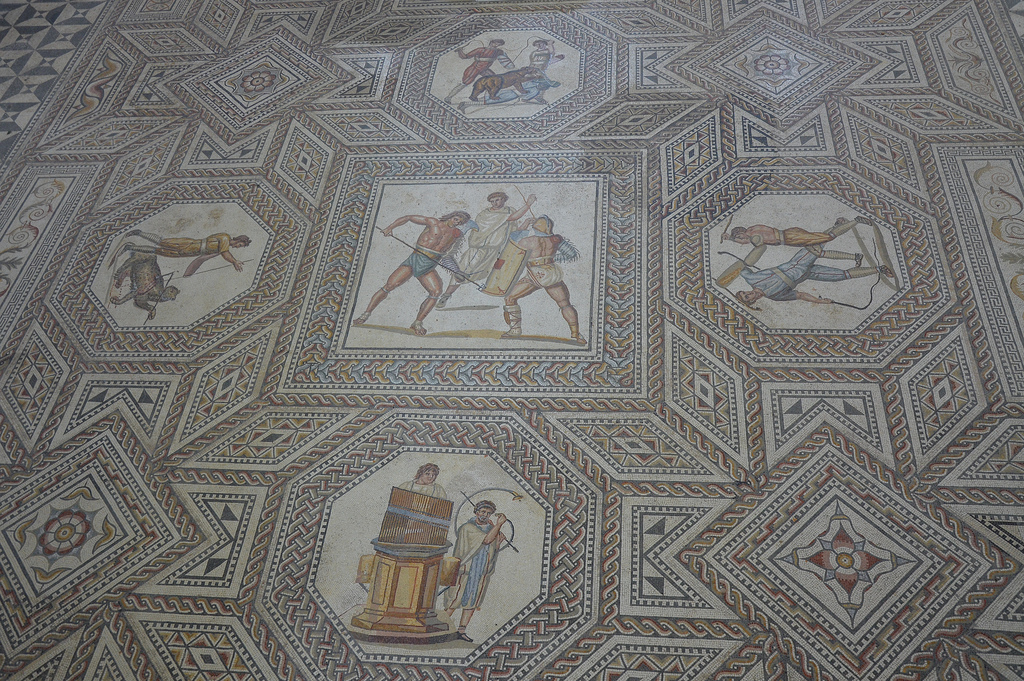
The mosaic comprises seven octagonal medallions surrounding two central quadrangles, one decorated with a scene of gladiatorial combat, the other occupied by a marble basin. An elaborate pattern of geometrical designs borders each scene. Walking around the interior of the protective building, the entire scene of the mosaic can be viewed from a raised platform.

PORTFOLIO

The remains of the Roman villa in Nennig.
The foundation remains of the Roman villa in Nennig.
Medallion depicting a organist and horn player. The beginning and the end of the Roman games were often accompanied by music. The mosaicist has depicted the water organ (hydraulis), know in the ancient world since 300 BC. The 27 organ-pipes rest on a hexagonal podium which also serves to store water for the organ. The organist plays the keyboard situated behind the pipes. The curved horn, which is braced and supported on the shoulder of the player by a cross bar, is a cornu.
Octagon depicting an organist and horn player.
The beginning and the end of the Roman games were often accompanied by music. The mosaicist has depicted the water organ (hydraulis), known in the ancient world since 300 BC. The 27 organ pipes rest on a hexagonal podium that also stores water for the organ. The organist plays the keyboard situated behind the pipes. The curved horn, which is braced and supported on the shoulder of the player by a crossbar, is a cornu.
Octagonal medallion depicting a Javelin thrower with a panther. The games usually began with venationes (beast hunts) and bestiarii (beast fighting) gladiators. Here the beast is wounded by the venator’s spear and tries to pull the javelin out. It succeeds only in breaking it in half. Delighted with his conquest, the proud venator received the acclamation of the crowd.
Octagon depicting a Javelin thrower with a panther.
The games usually began with venationes (beast hunts) and bestiarii (beast fighting) gladiators. Here the beast is wounded by the venator’s spear and tries to pull the javelin out. It only succeeds in breaking it in half. Delighted with his success, the proud venator received the crowd’s acclamation.
Octagonal medallion depicting a tiger attacking a wild ass. Another variety of venatio consisted of pitting animals against animals. The Romans loved to see large and dangerous animals fighting each other. In this scene, a wild ass, laid low by blows from the tiger’s paw, has fallen to the ground. Standing proudly, the victor of this unmatched contest looks around before commencing his bloody feast.
Octagon depicting a tiger attacking a wild ass.
Another variety of venatio consisted of putting animals against animals. In this scene, a wild ass, laid low by blows from the tiger’s paw, has fallen to the ground. Standing proudly, the victor of this unmatched contest looks around before starting his bloody feast.
Octagonal medallion depicting a resentful lion being led away by his aged keeper. This was the first of the illustrated panels to be discovered in 1852.
Octagon depicting a resentful lion being led away by his aged keeper.
This was the first of the illustrated panels to be discovered in 1852.
Octagonal medallion depicting two rogues trying to drive the animal off by lashes from their whips. In this panel, which is in the center of the mosaic, a bear has thrown one of his tormentors to the ground, while the other two attempt to drive the animal off by lashes from their whips. The venatores are wearing knee-breeches and very broad belts in addition to the leg wrappings. Later their clothing was reduced to the tunica.
Octagon depicting two rogues trying to drive the animal off with lashes from their whips.
A bear has thrown one of his tormentors to the ground while the other two attempt to drive the animal off. The venatores are wearing knee-breeches and very broad belts in addition to the leg wrappings. Later their clothing was reduced to the tunica.
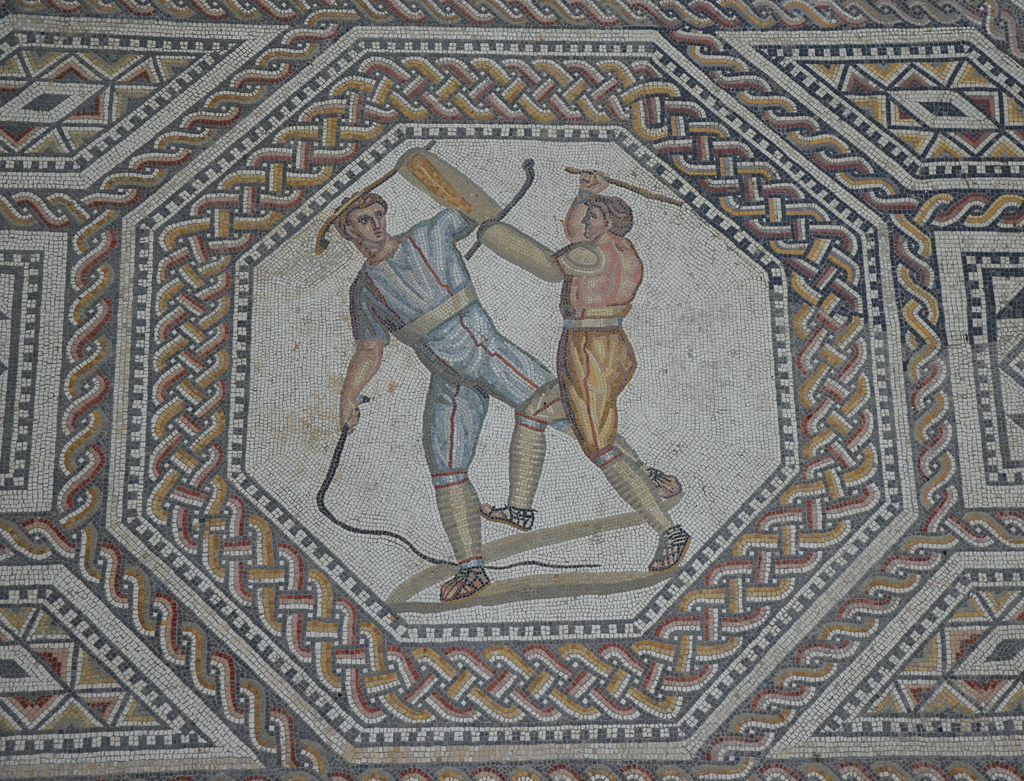
Octagonal medallion depicting two combatants attacking one another with cudgels and a whip. The introduction to the gladiatorial contests consisted of a prolusio (prelude). The various pairs fought with blunted weapons, giving the foretaste of their skills.
Octagon depicting two combatants attacking one another with cudgels and a whip.
The introduction to the gladiatorial contests consisted of a prolusio (prelude). The various pairs of gladiators fought with blunted weapons, giving the foretaste of their skills.
Octagonal medallion depicting a Retiarus armed with trident and dagger fighting against a Secutor while a referee looks on. In the afternoon came the high point of the games, individual gladiatorial combats. These were usually matches between gladiators with different types of armor and fighting styles, supervised by a referee (summa rudis). This scene represents simultaneously the highlight and the conclusion of the games.
Rectangular panel depicting a Retiarus armed with a trident and dagger fighting against a Secutor while a referee looks on.
In the afternoon came the high point of the games; individual gladiatorial combats. These were usually matches between gladiators with different types of armour and fighting styles, supervised by a referee (summa rudis). This scene simultaneously represents the highlight and the conclusion of the games.
Following restorations in 1960/61 the following text was inserted: This Roman mosaic floor was discovered in 1852, reconstructed in 1874 and restored in 1960. The original medallion has been destroyed, perhaps intentionally, by later occupants of the villa.
Following restorations in 1960/61, the following text was inserted: This Roman mosaic floor was discovered in 1852, reconstructed in 1874 and restored in 1960. The original medallion has been destroyed, perhaps intentionally, by later villa’s occupants.
General view of the Nennig Mosaic.

The Saarland and Moselle Valley’s ancient Roman heritage has much to offer tourists and scholars. More than 120 antique sights along the Moselle and the Saar rivers, the Saarland and Luxembourg are testaments to the Gallo-Roman era north of the Alps (further information here).

Opening hours:
April – September: Tuesday to Sunday 8:30 am – 12 noon and 1 – 6 pm
October, November and March: Tuesday to Sunday 9 – 11:30 am and 1 – 4:30 pm
Closed from December to February and on Mondays

Website: http://nennig.de/sehenw/nennig.html

Sources:

  • The Roman Mosaic at Nennig: A Brief Guide (n.d.) by Reinhard Schindler
  • Eckart Köhne, Cornelia Ewigleben, Ralph Jackson, Gladiators and Caesars: The Power of Spectacle in Ancient Rome. Berkeley: University of California Press, 2000