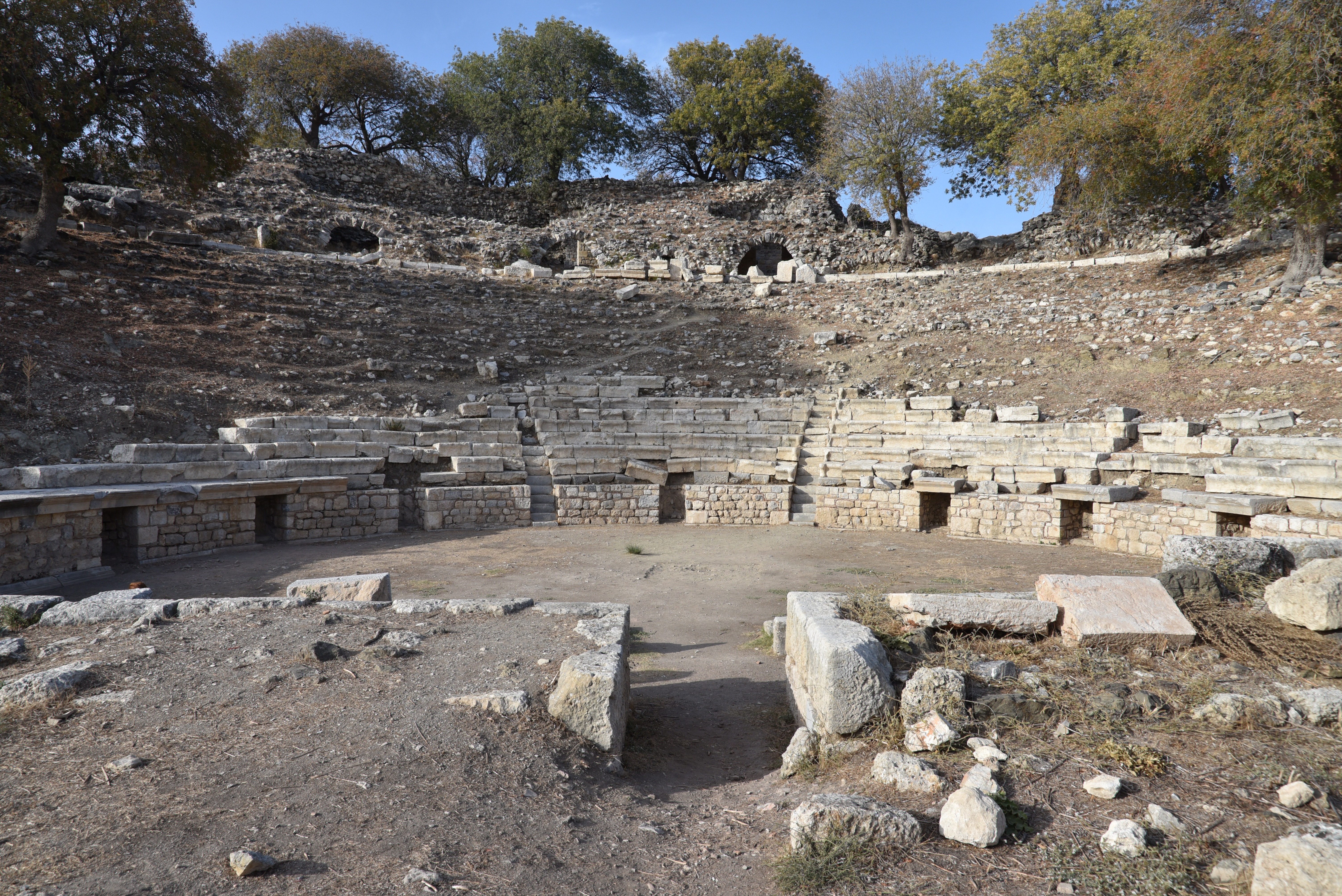
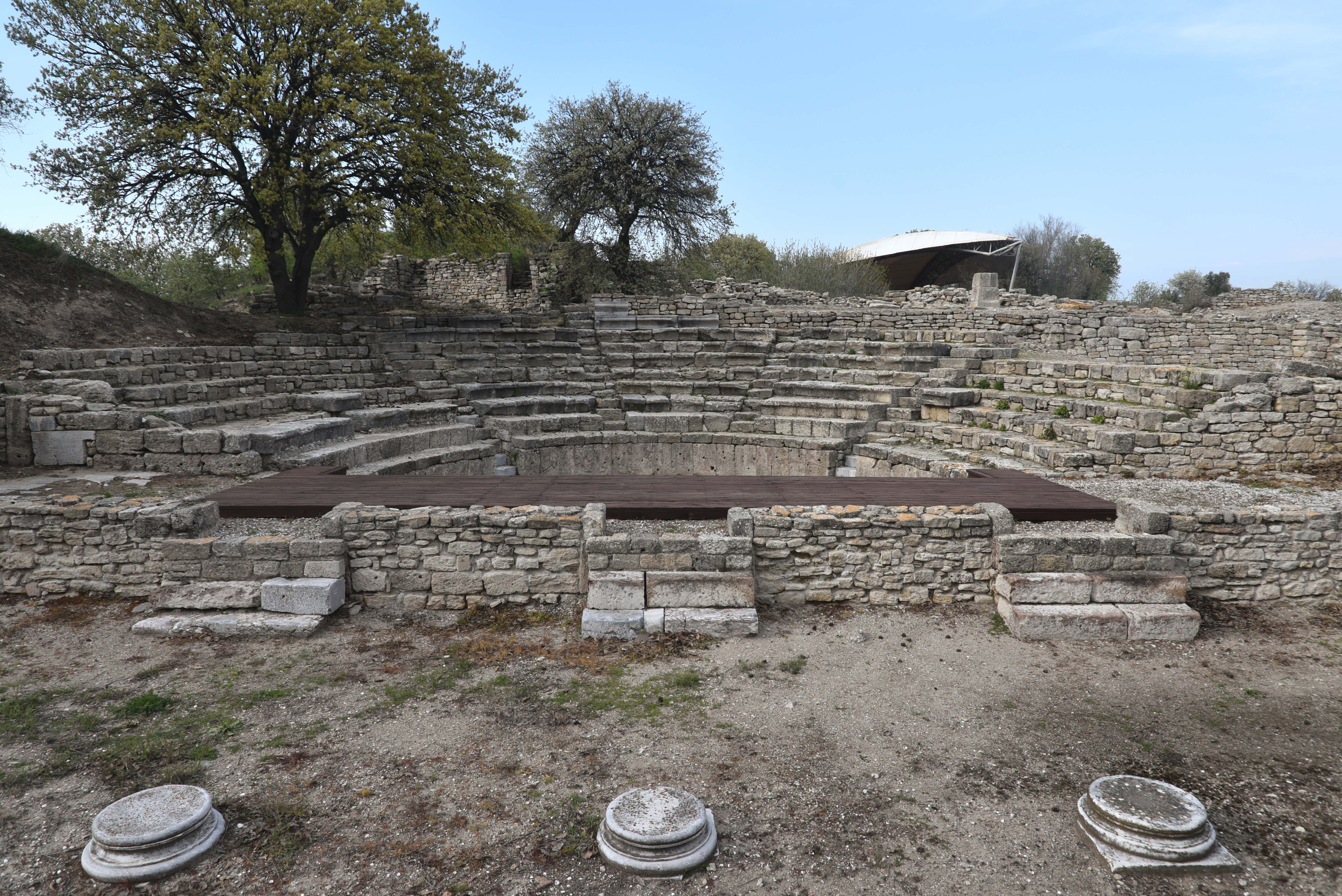
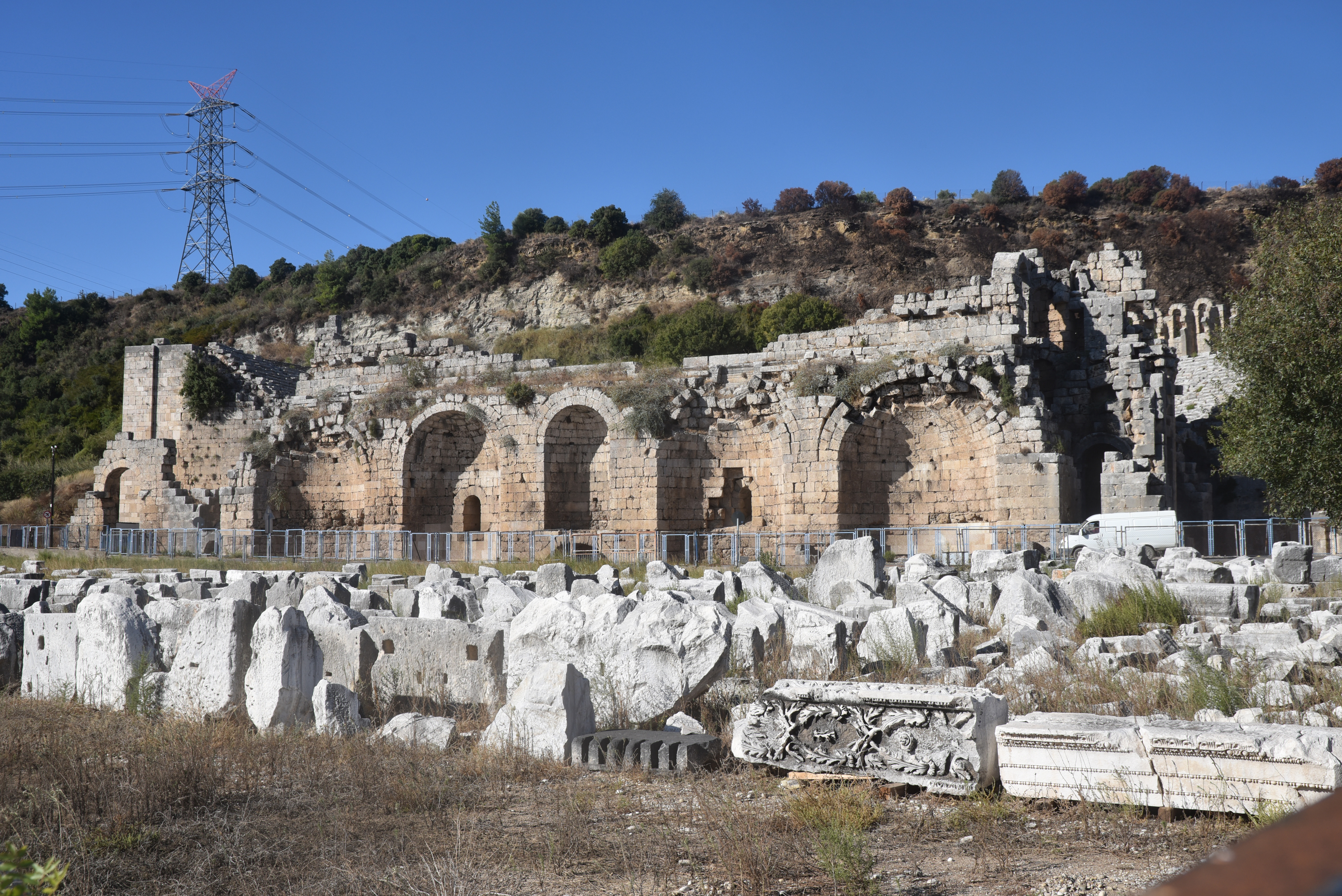
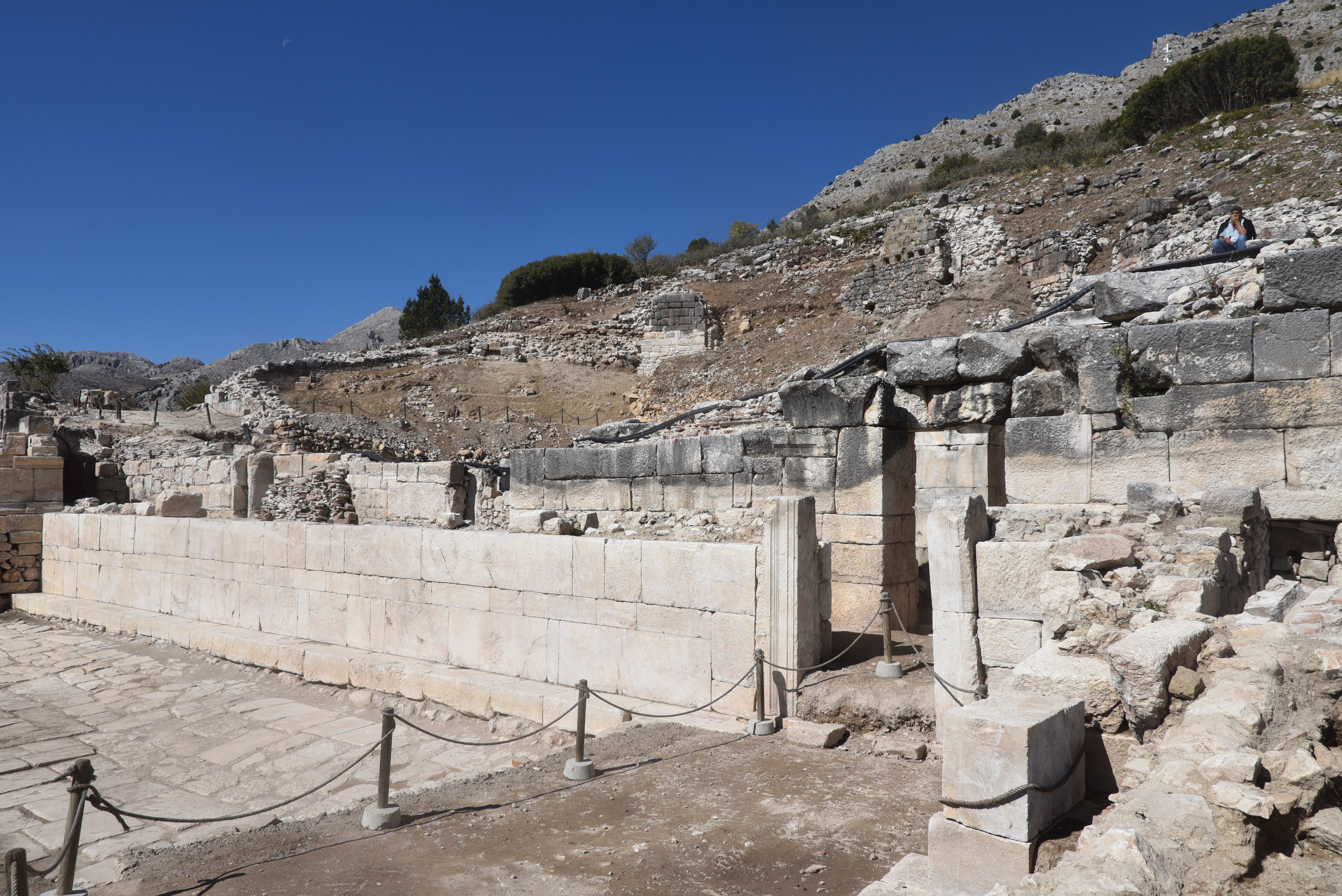
Ancient theatres and odeons were among the most important architectural and cultural spaces of the classical world, particularly in Ancient Greece and later in the Roman Empire. These venues served not only as places for entertainment but also as central hubs for civic life, religious festivals, political expression, and artistic innovation. Over the centuries, their design evolved, reflecting changes in performance styles, engineering techniques, and social organisation.
In ancient Greece, theatres evolved from open-air spaces used for religious festivals that honoured Dionysus, the god of wine and theatre. The Theatre of Dionysus in Athens, built in the 5th century BC, is considered the birthplace of Western drama. It hosted works by renowned playwrights such as Sophocles, Euripides, and Aristophanes. Greek theatres were typically carved into hillsides, creating a semicircular seating area known as the theatron that provided excellent natural acoustics. The circular orchestra served as the performance space, while the skene functioned as a backdrop and changing area for the actors. As Greek culture spread, theatres appeared across the Mediterranean. The Theatre of Epidaurus, built in the 4th century BC, remains one of the best-preserved examples and is still admired for its remarkable acoustics and harmonious proportions. Greek theatres emphasised integration with the landscape, blending architecture and nature into a unified aesthetic experience.
The Romans borrowed the theatre’s architectural form from Greece and adapted it with advanced engineering and new social functions. Unlike Greek theatres, Roman theatres were often freestanding structures built with concrete and arches rather than carved into hillsides. The Theatre of Pompey, completed in 55 BC, was the first permanent stone theatre in Rome. Roman theatres featured a more elaborate stage building (scaenae frons), a fully enclosed semi-circular seating area, and often a large awning (velarium) to shield spectators from the sun. These venues hosted not only plays but also musical performances, speeches, and public ceremonies.
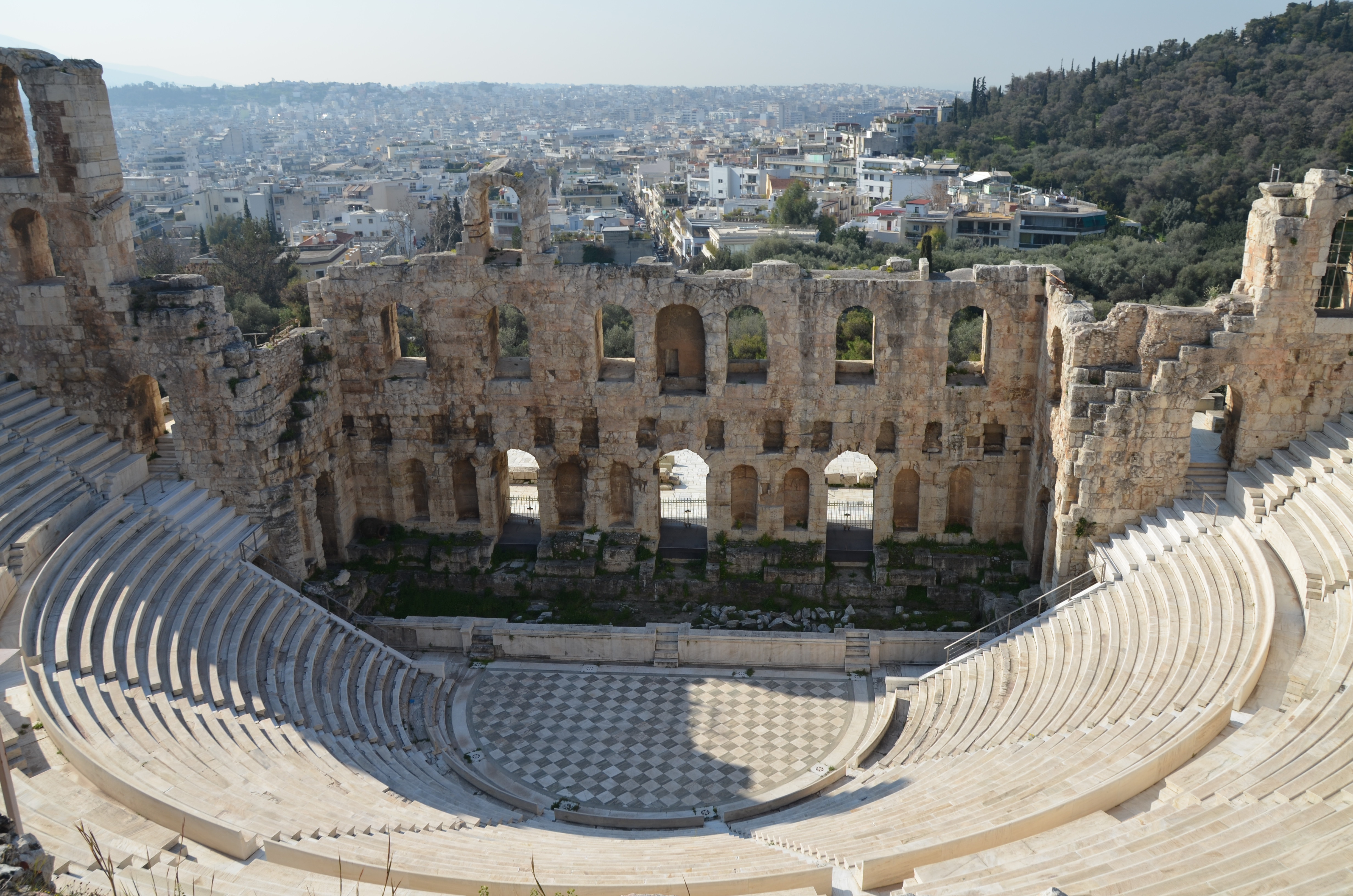
Odeons were related but distinct buildings. Smaller and often roofed, they were designed primarily for musical performances, poetry recitations, and rhetorical contests. The Odeon of Herodes Atticus, built in AD 161, exemplifies the Roman refinement of the Greek odeon tradition. Its stone seating and impressive façade reflect Roman architectural grandeur while preserving the intimate atmosphere needed for acoustic performances.
The Ancient Theatre Archive website (https://ancienttheatrearchive.com/) is an important resource for detailed documentation, research, and reconstructions of ancient theatres and odeons across the Mediterranean world. Also, Frank Sear, in Roman Theatres: An Architectural Study (Oxford University Press, 2006), identified 587 Roman Theatres and odeons in 22 countries: 308 structures with substantial remains and 279 with little or no remains.
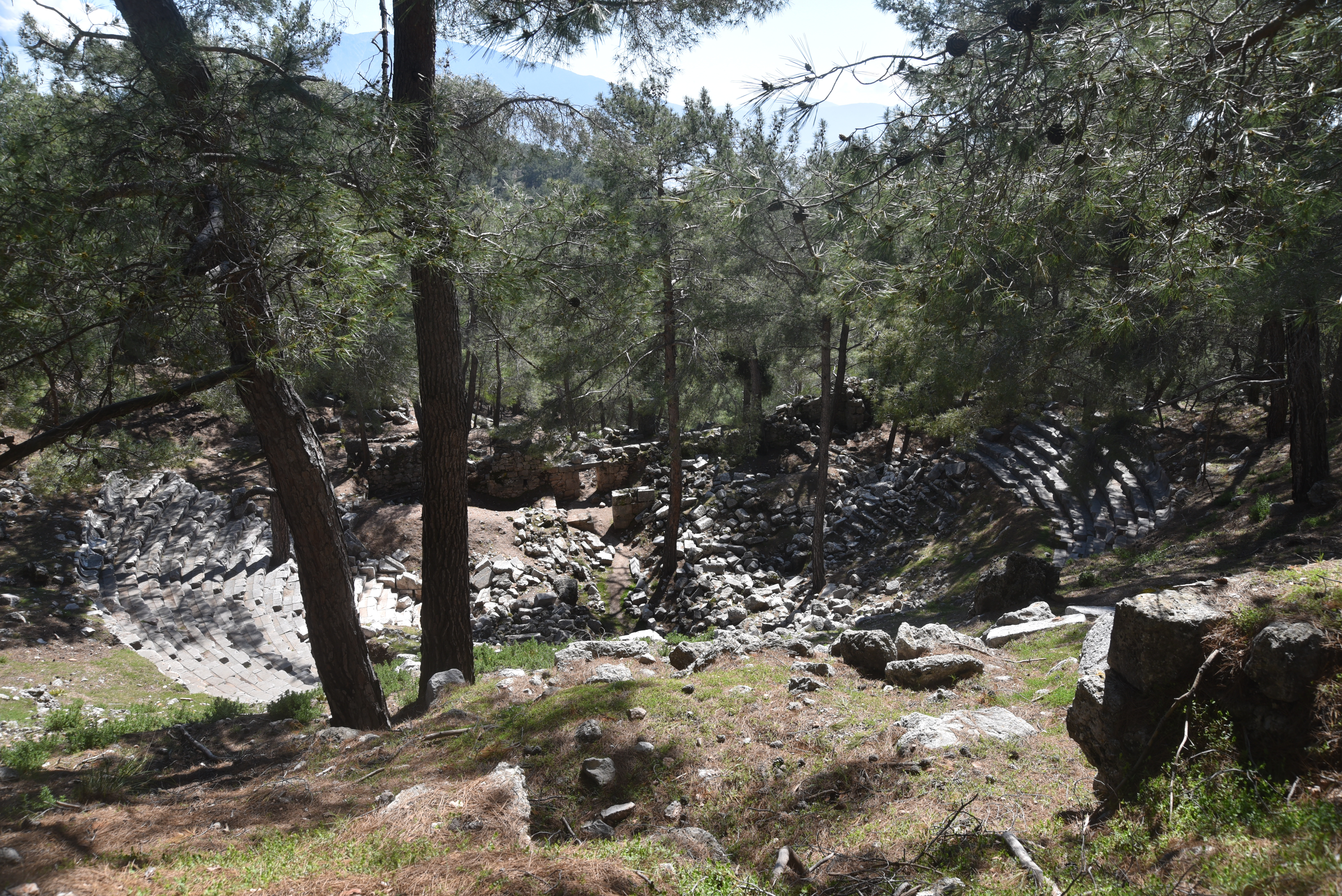
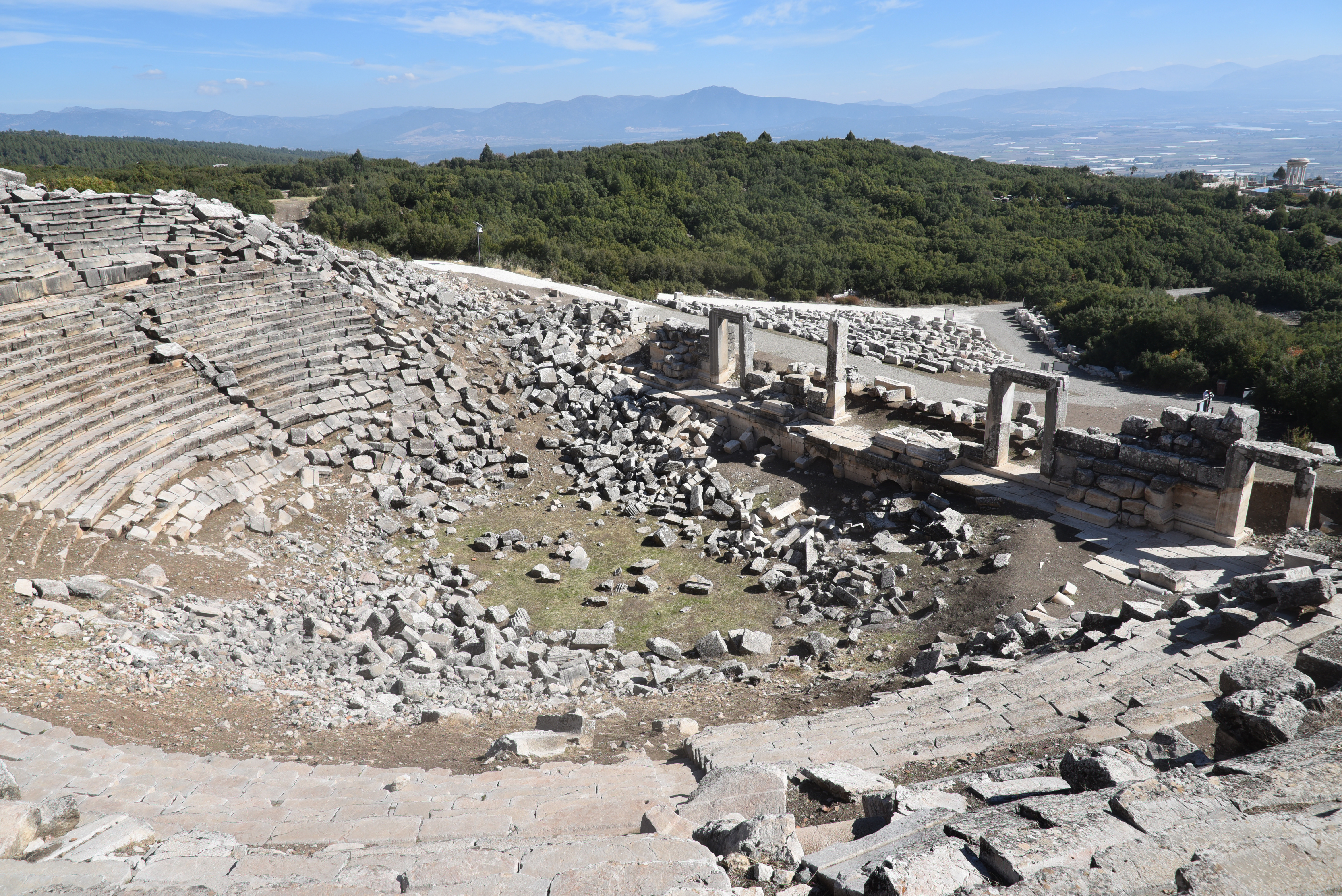
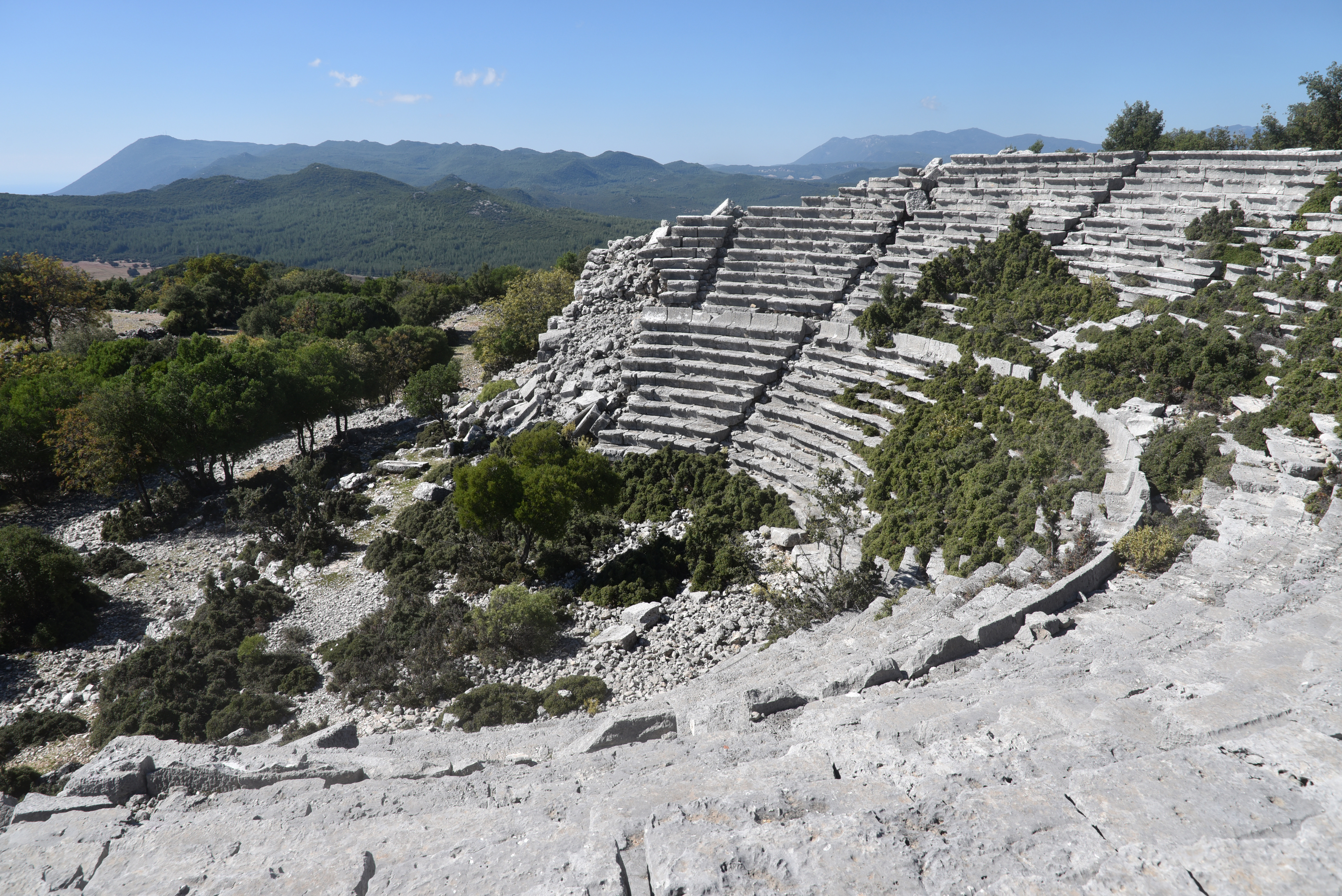
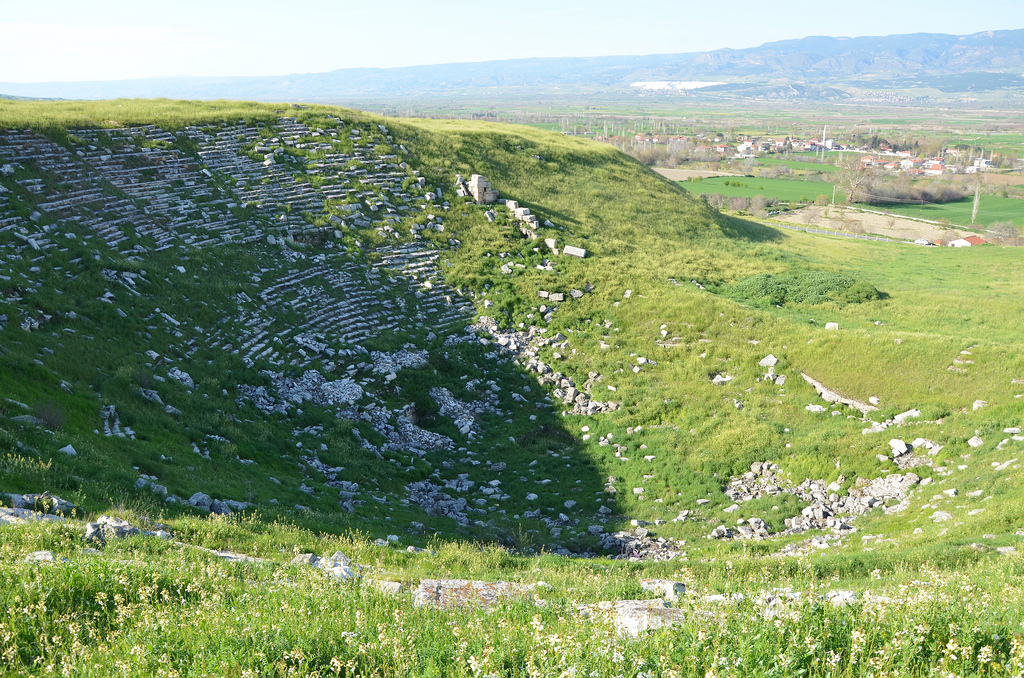
So far, I have photographed 167 theatres and odeons during my archaeological travels, and here they are, compiled for you.
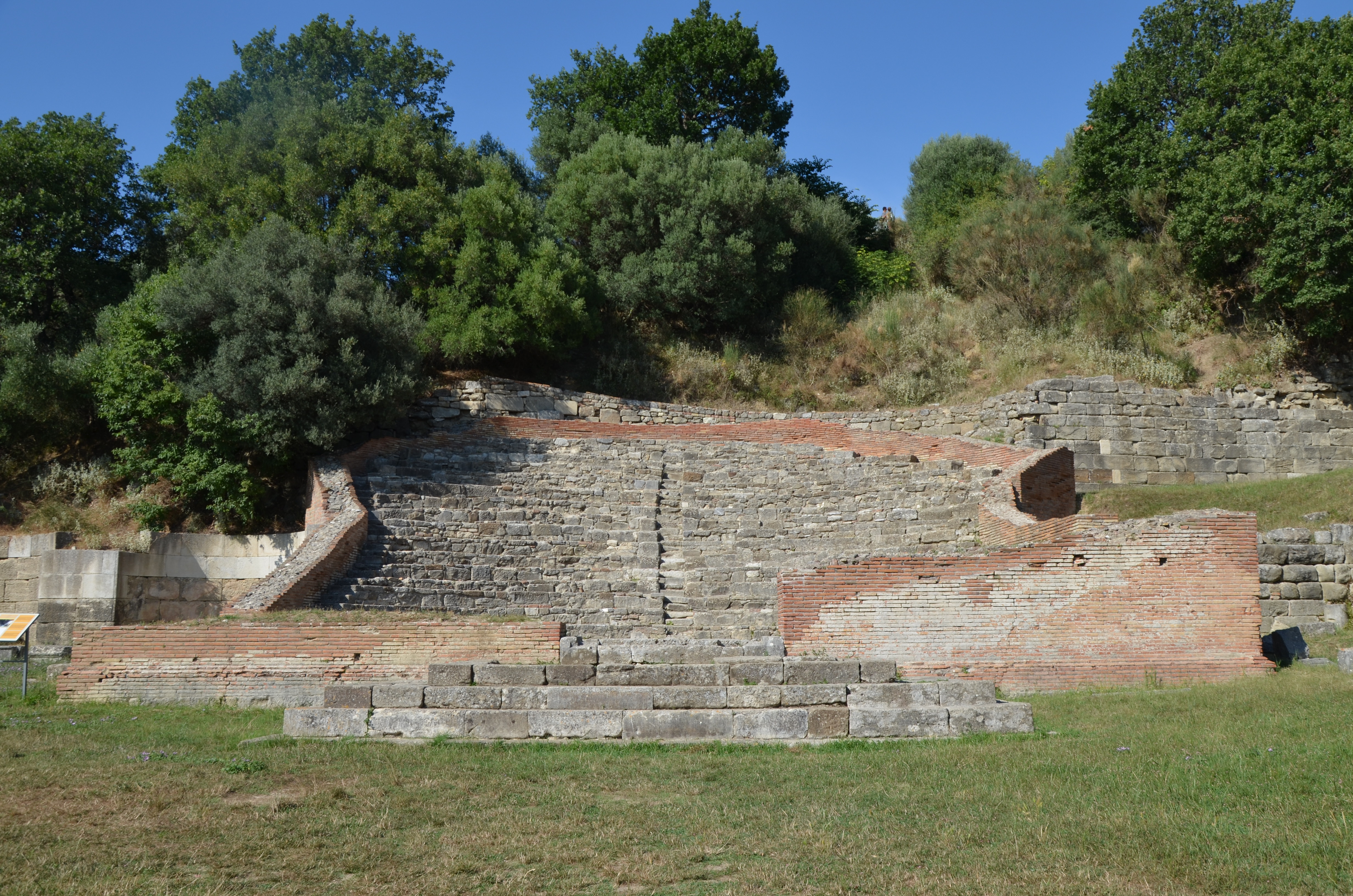
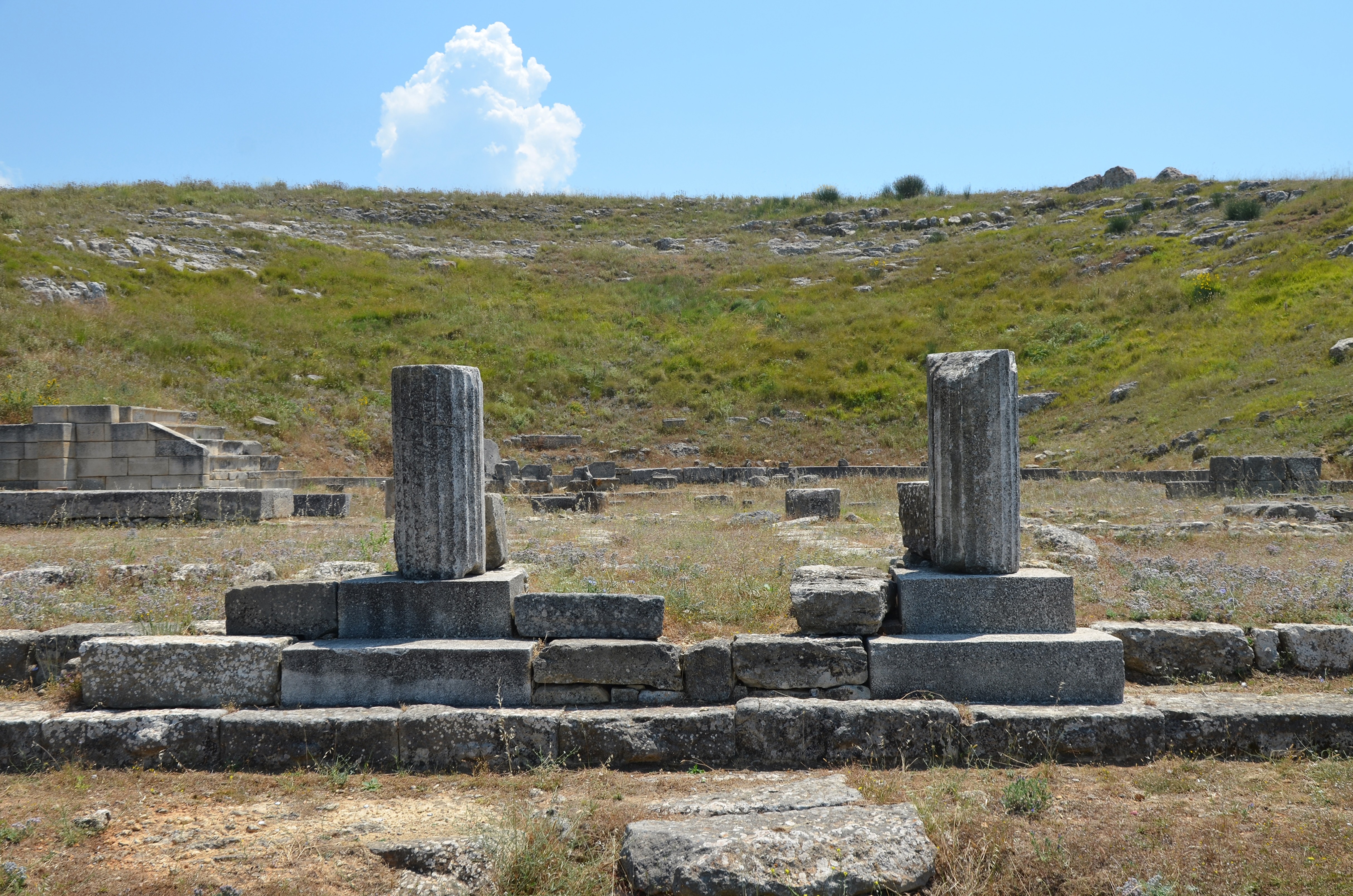
The Theatre at Apollonia marks the westernmost point of the Agora. Built in the first half of the 3rd century BC, it had a diameter of about 100m and could accommodate an audience of 10,000.
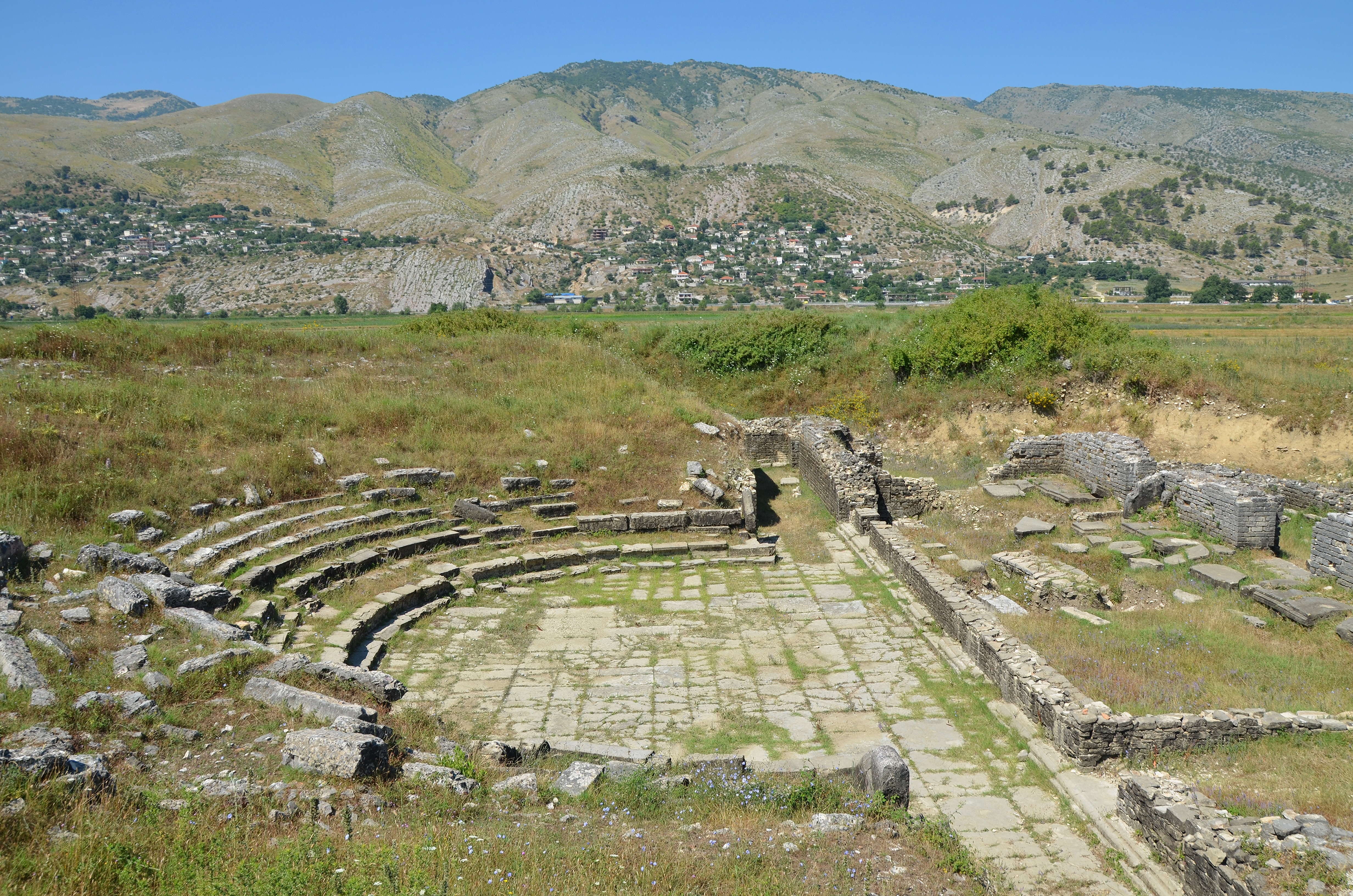
The Odeon, located on the northern side of the Agora, was built in the 2nd century AD and would have hosted cultural and musical events, accommodating an audience of 300.
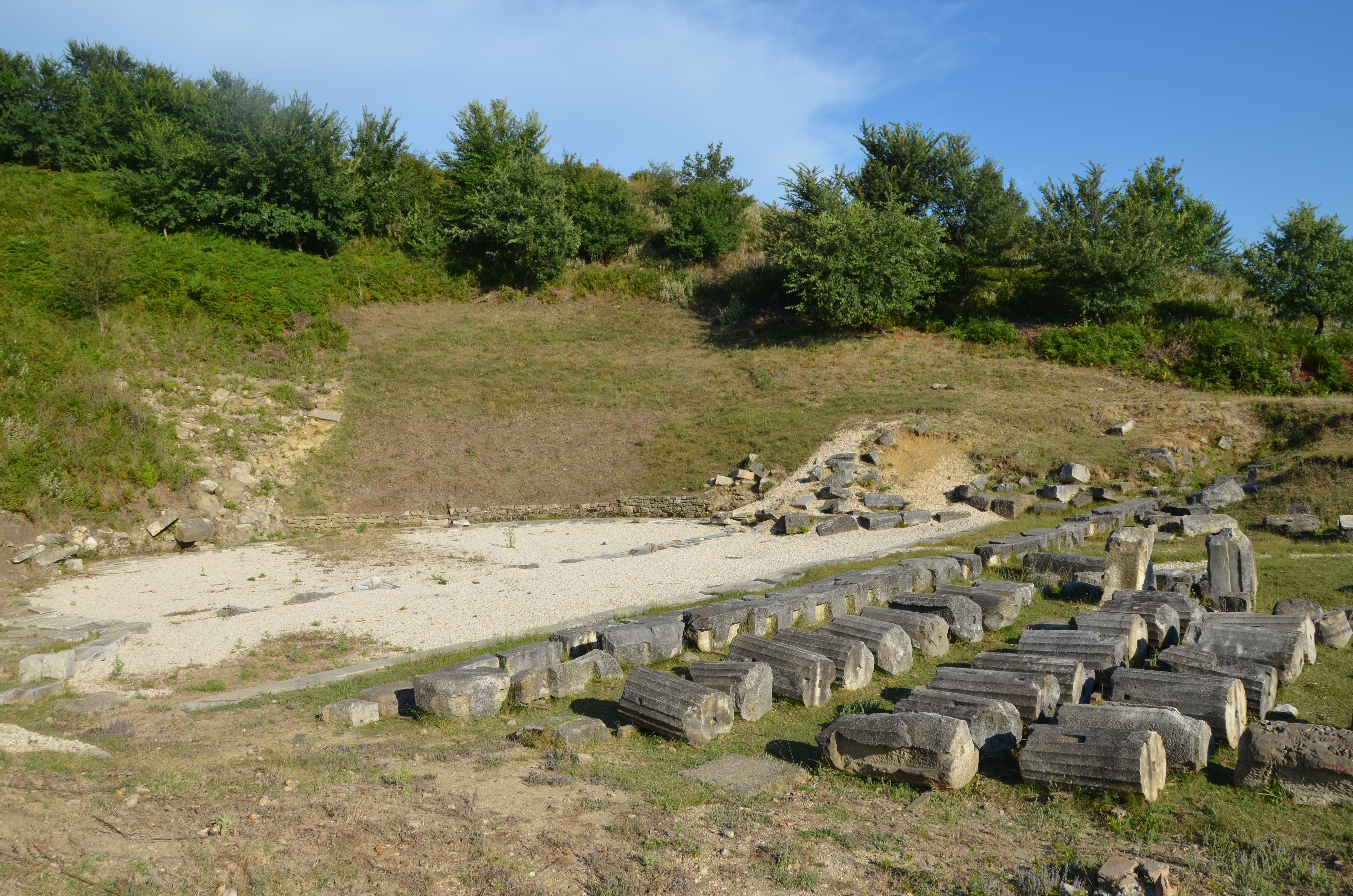
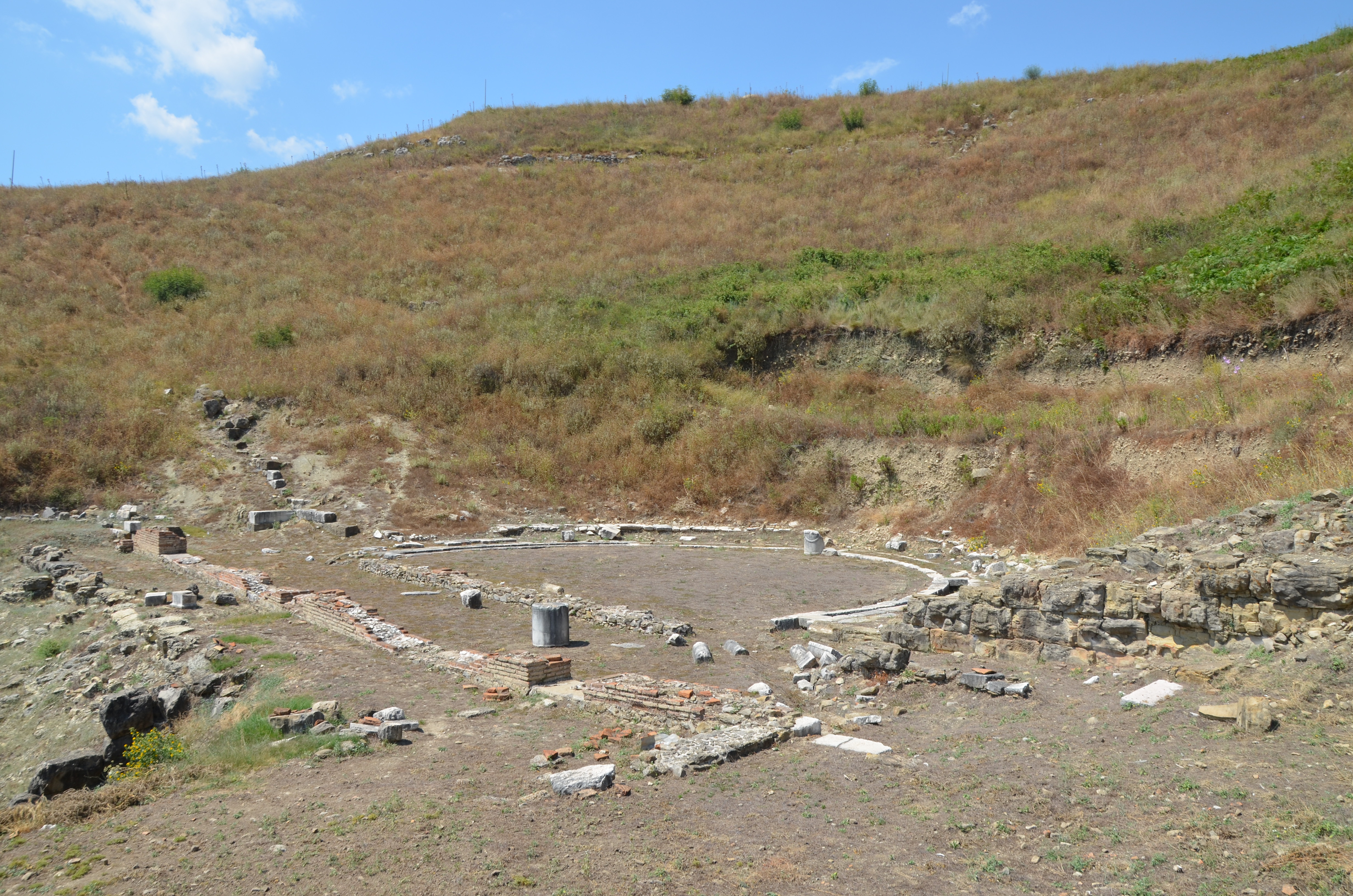
The Theatre at Byllis was built against a natural slope and dates from the middle of the 3rd century BC. With its 40 rows of seats, it had a capacity of 7,500 spectators.
The Roman theatre at Hadrianopolis was built during the reign of Hadrian. It had a cavea with a diameter of 58 meters and included 24 rows of limestone seats, accommodating approximately 3,500 to 4,000 spectators.
The large theatre at Phoenice had a scenae frons 30m wide. It was built in the 3rd century BC and renovated in the 2nd century BC. It was rebuilt in the 2nd century AD under the Romans.
The Theatre, located south of the Forum. Cut into the side of a natural hillock, it had a capacity of 3,500 to 4,000 spectators. The lower part of the cavea of the theatre is reasonably well preserved, as is the orchestra. Nothing, however, remains of the stage building (scaenafrons).
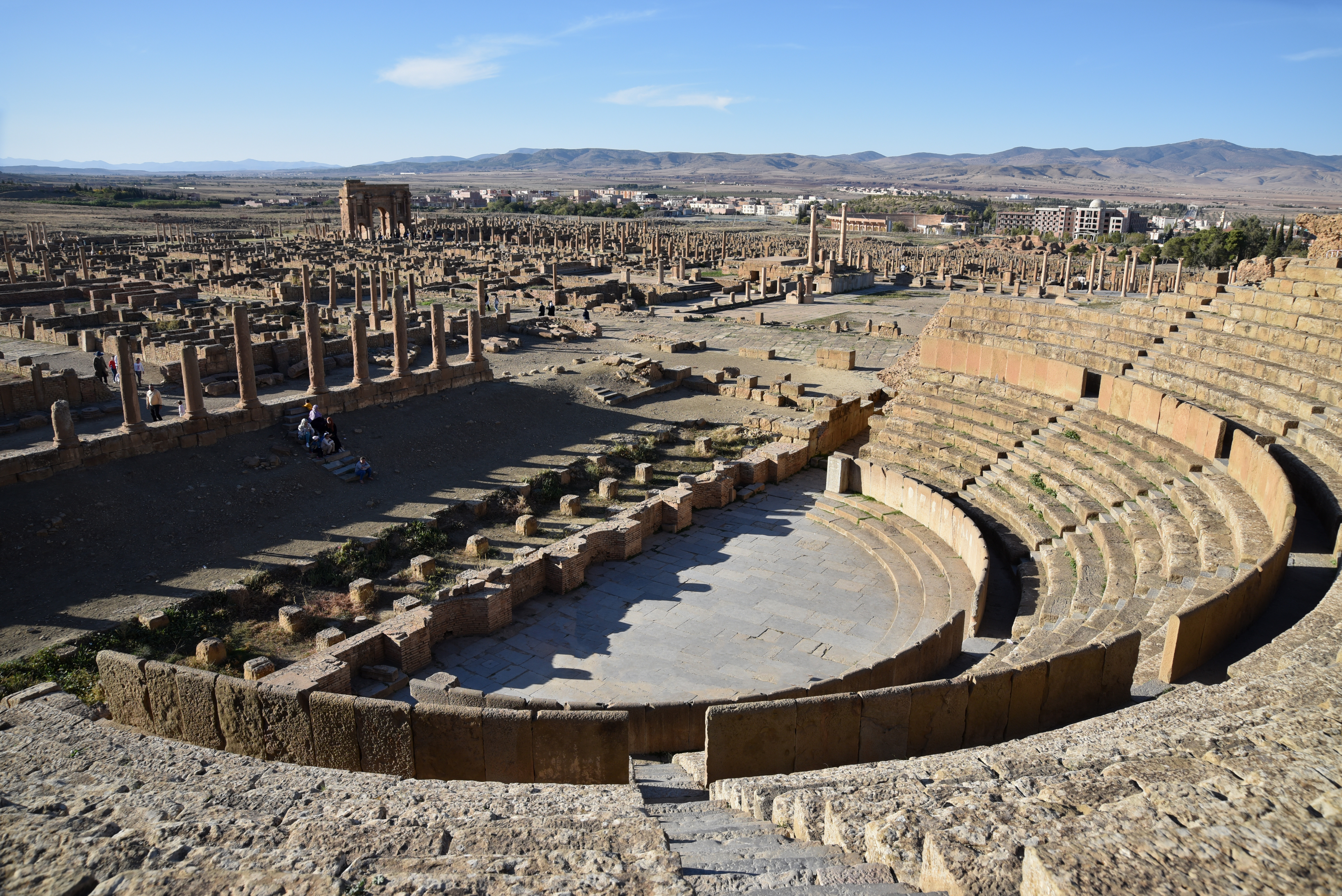
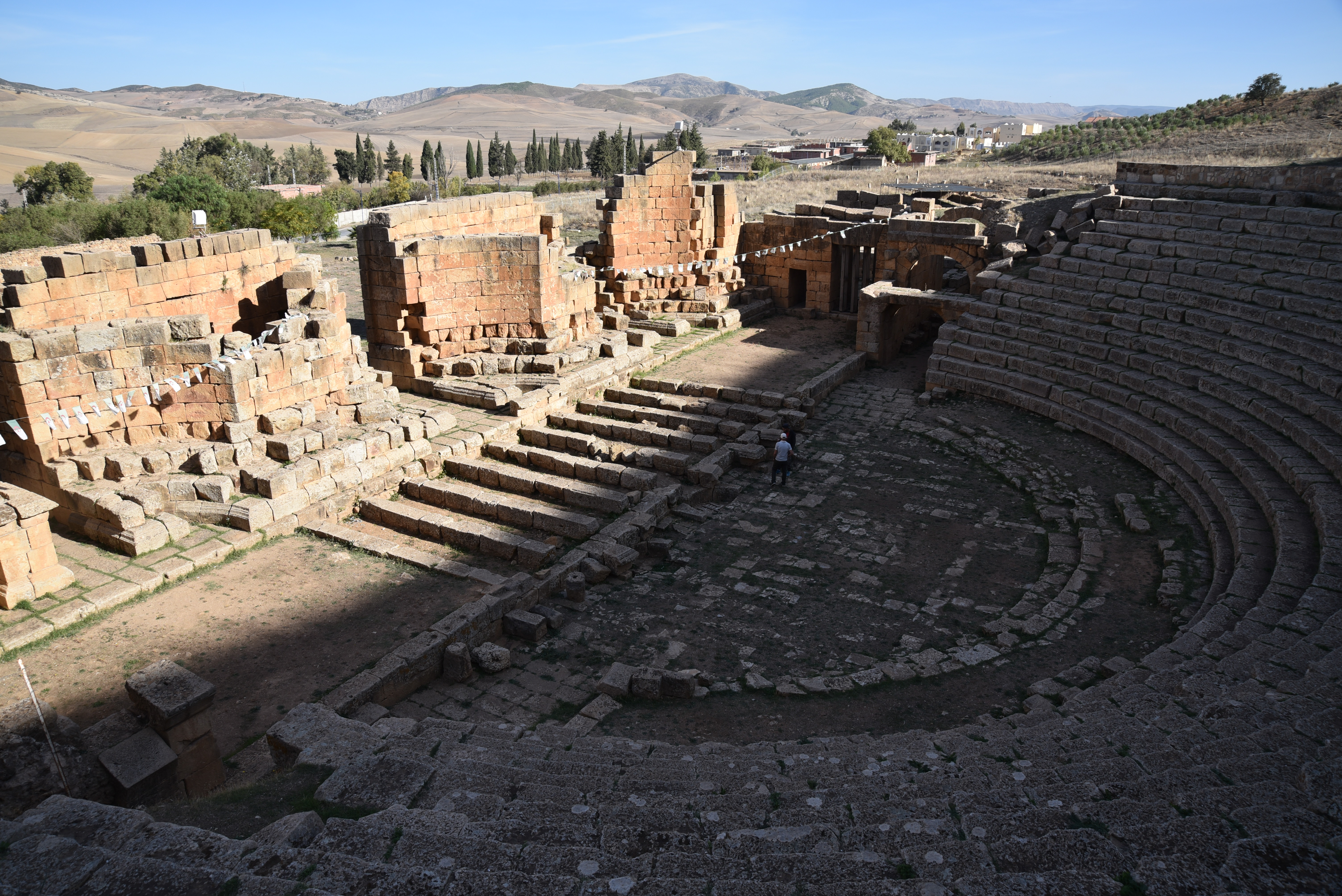
The Roman theatre at Thubursicum Numidarum was constructed on a natural slope in the 2nd or 3rd century AD, during the Trajanic-Severan period. It may not have been completed as originally intended, as there are no traces of columns or entablature.
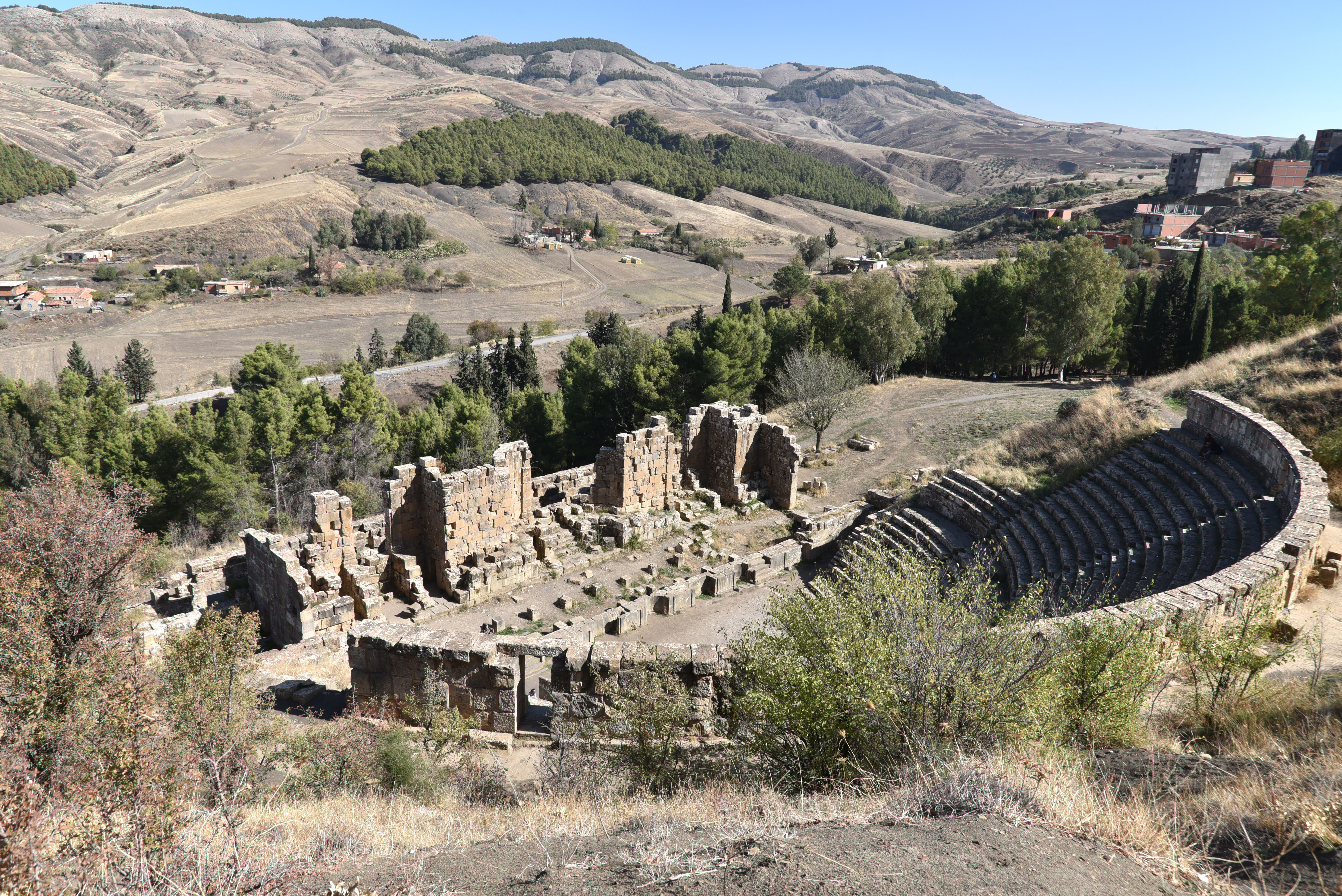
The Roman Theatre of Cuicuil (Djemila) was constructed into the side of the hill overlooking the valley in the 2nd century AD. Its two tiers of seats could have accommodated 3,000 spectators.
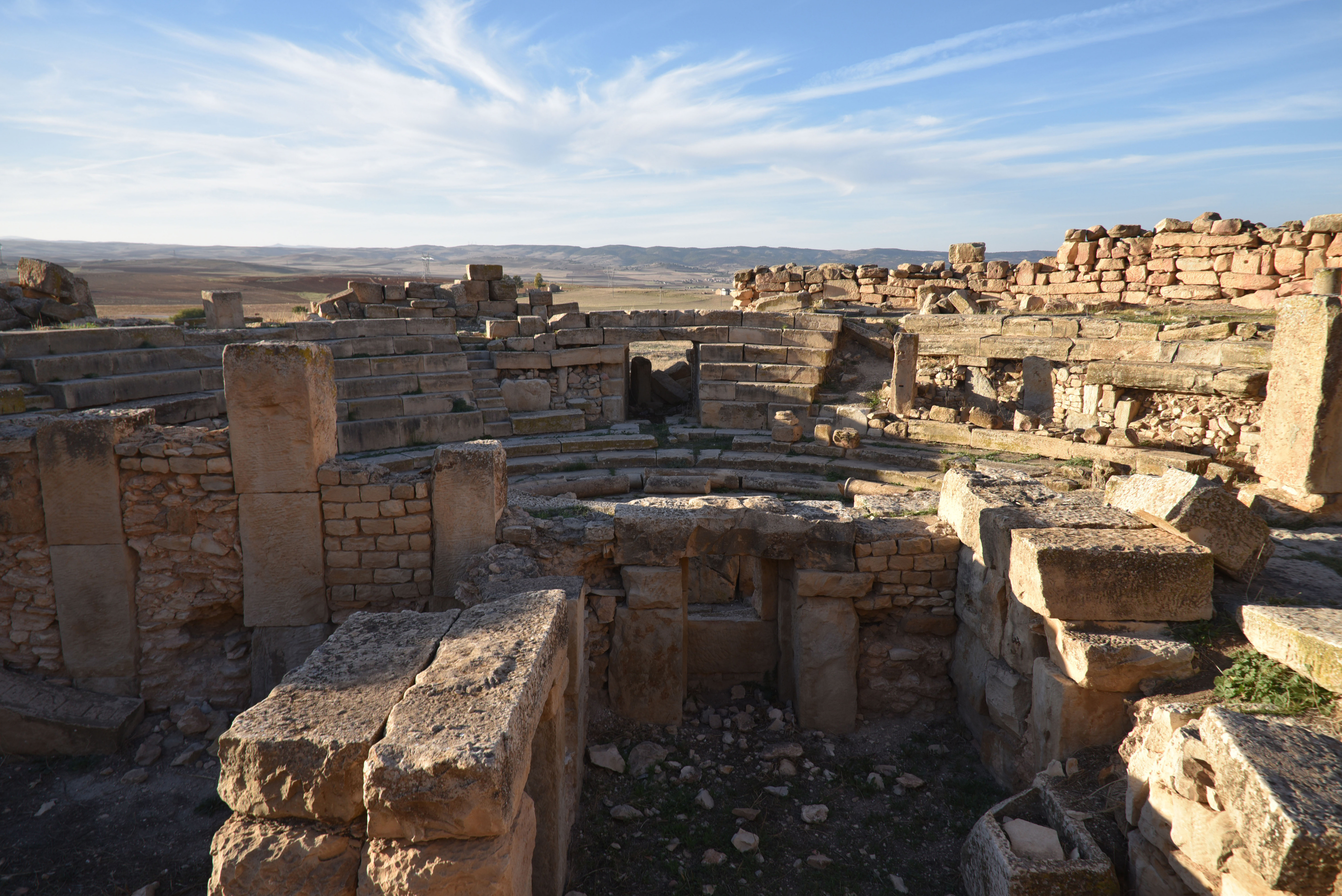
The small theatre at Madauros was constructed during the Severan period, funded by the flamen M. Gabinius Sabinus at a cost of 375,000 sesterces. It was strategically located near the forum, positioned against its west portico, and could accommodate 1,000 spectators.
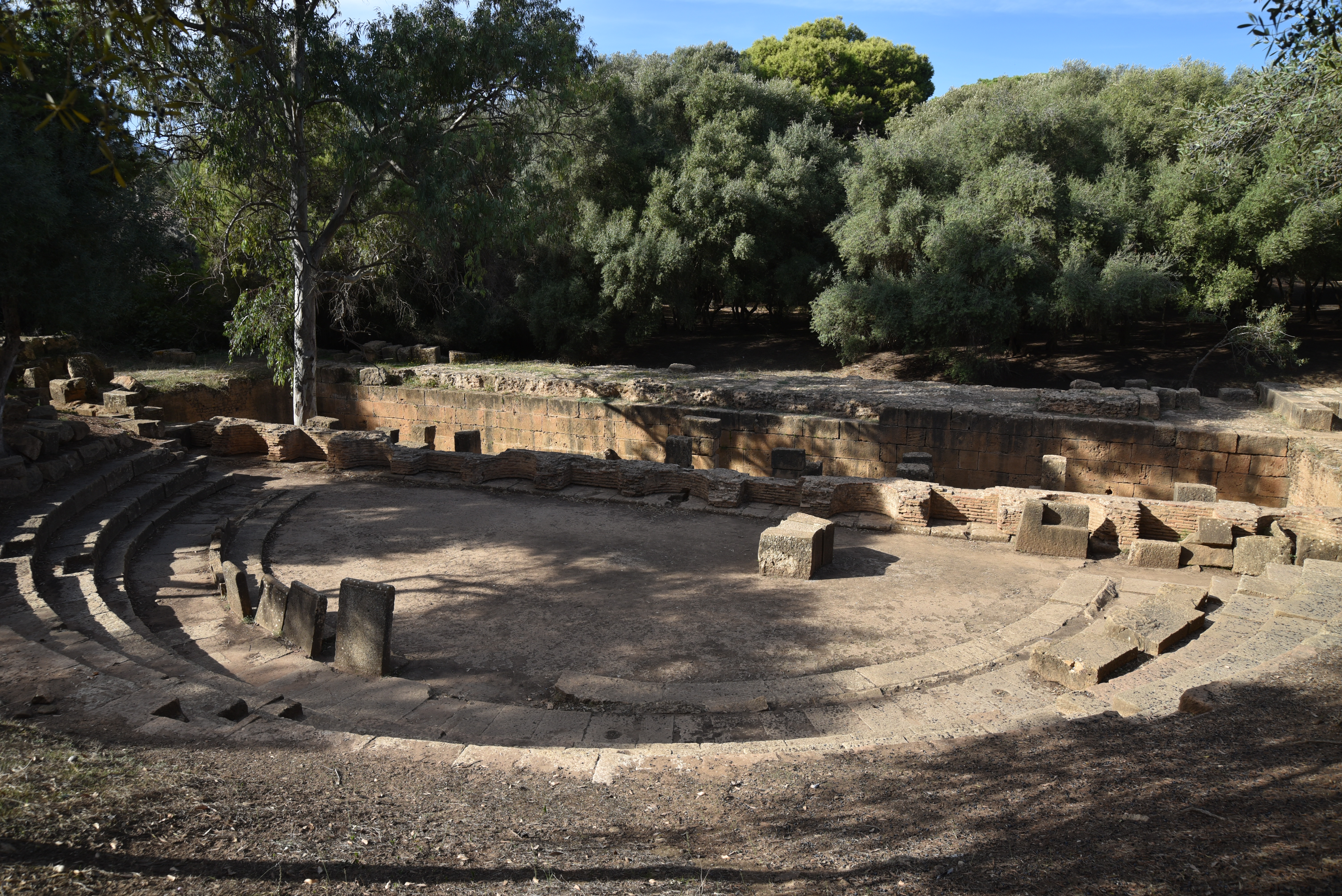
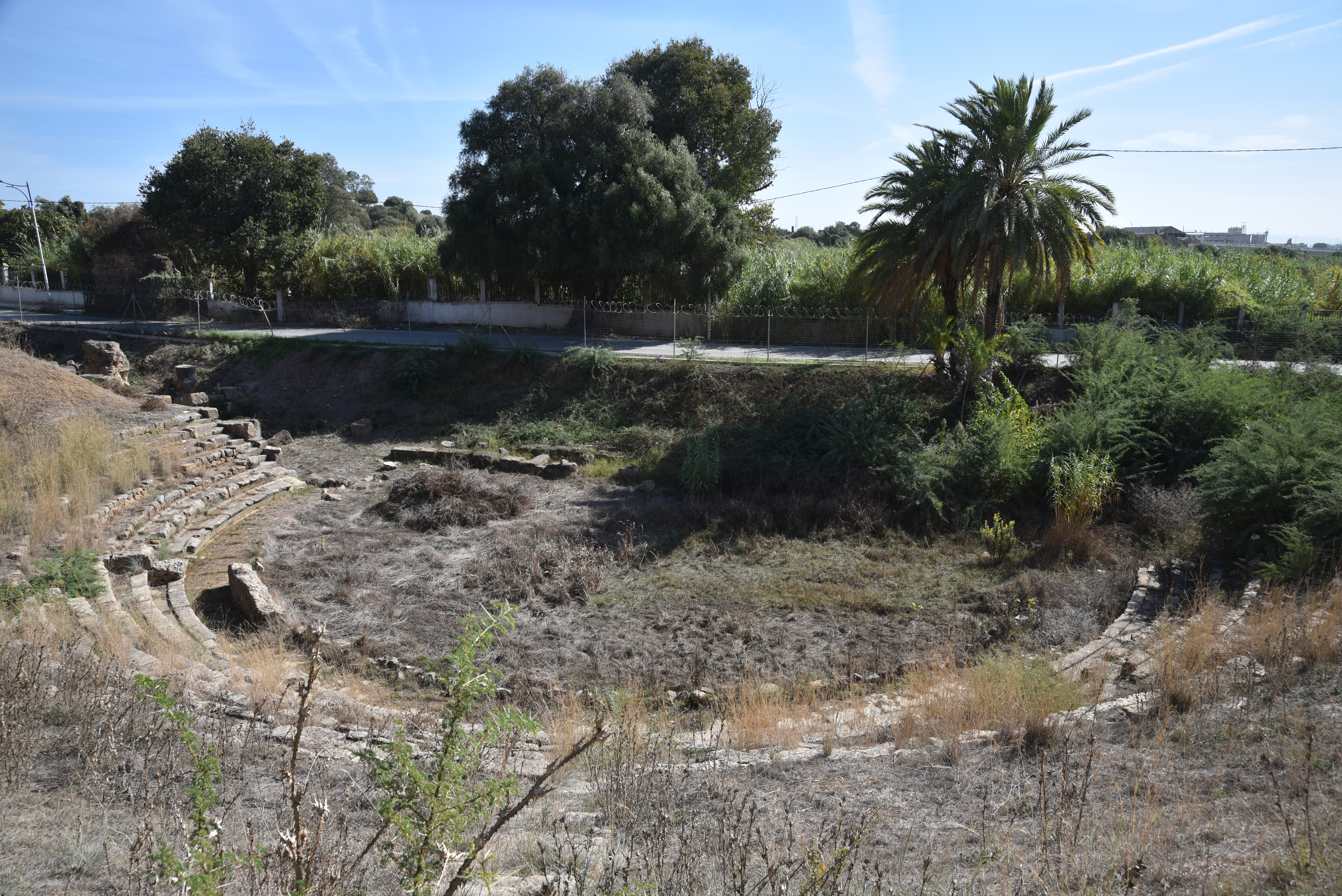
The Theatre at Tipasa was built on flat ground, raised on vaults and piers. It was designed to accommodate 3,000 spectators. Unfortunately, the theatre has been largely reduced to its foundations. In 1847, the French military dismantled the stage and nearly all of the seating to construct a cholera hospital nearby in Marengo (now known as Hadjout).
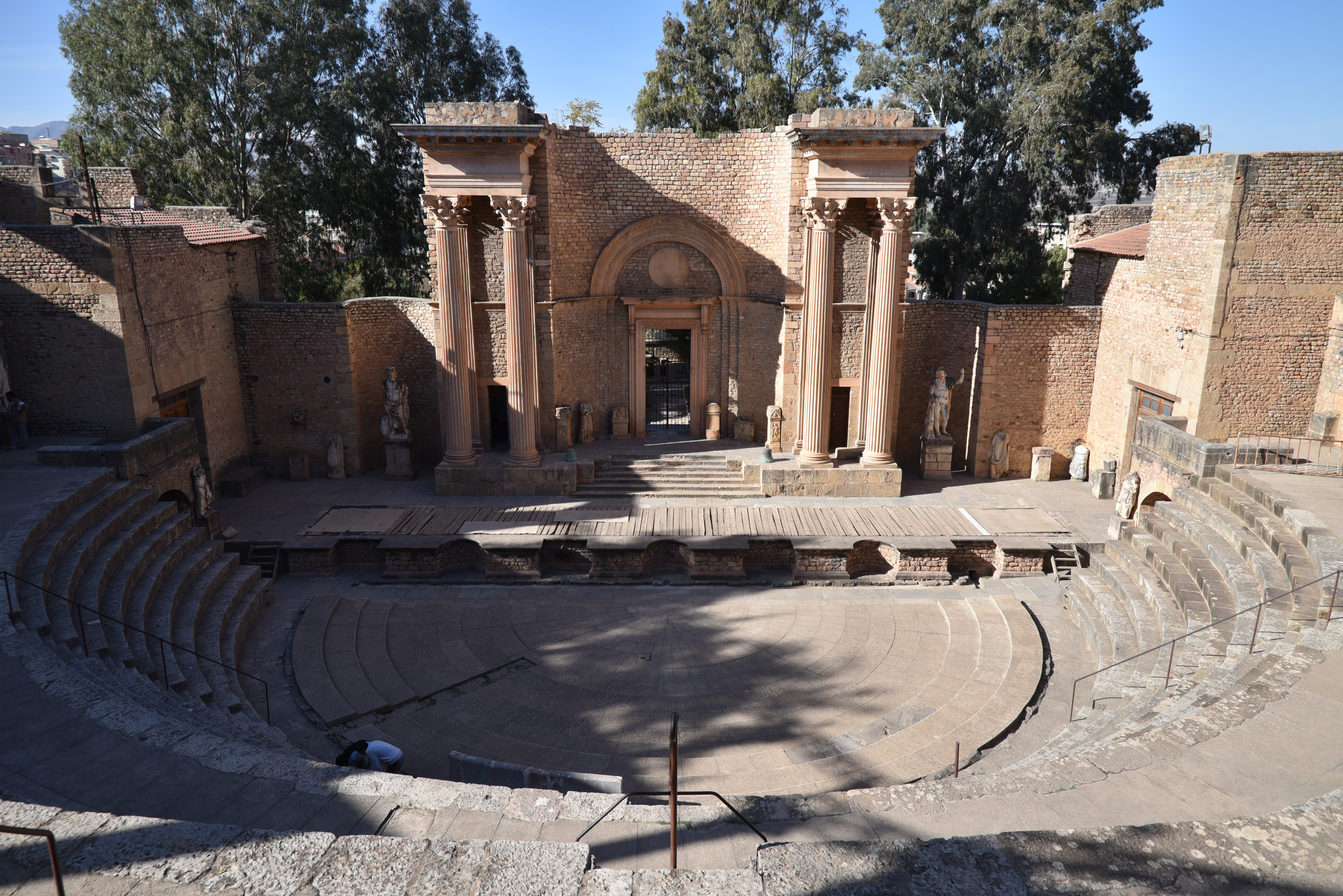
The rebuilt Roman Theatre of Guelma (ancient Calama). It was built at the beginning of the 3rd century AD, thanks to funding of 400,000 sesterces from Annia Aelia Restituta, a priestess of the imperial cult.
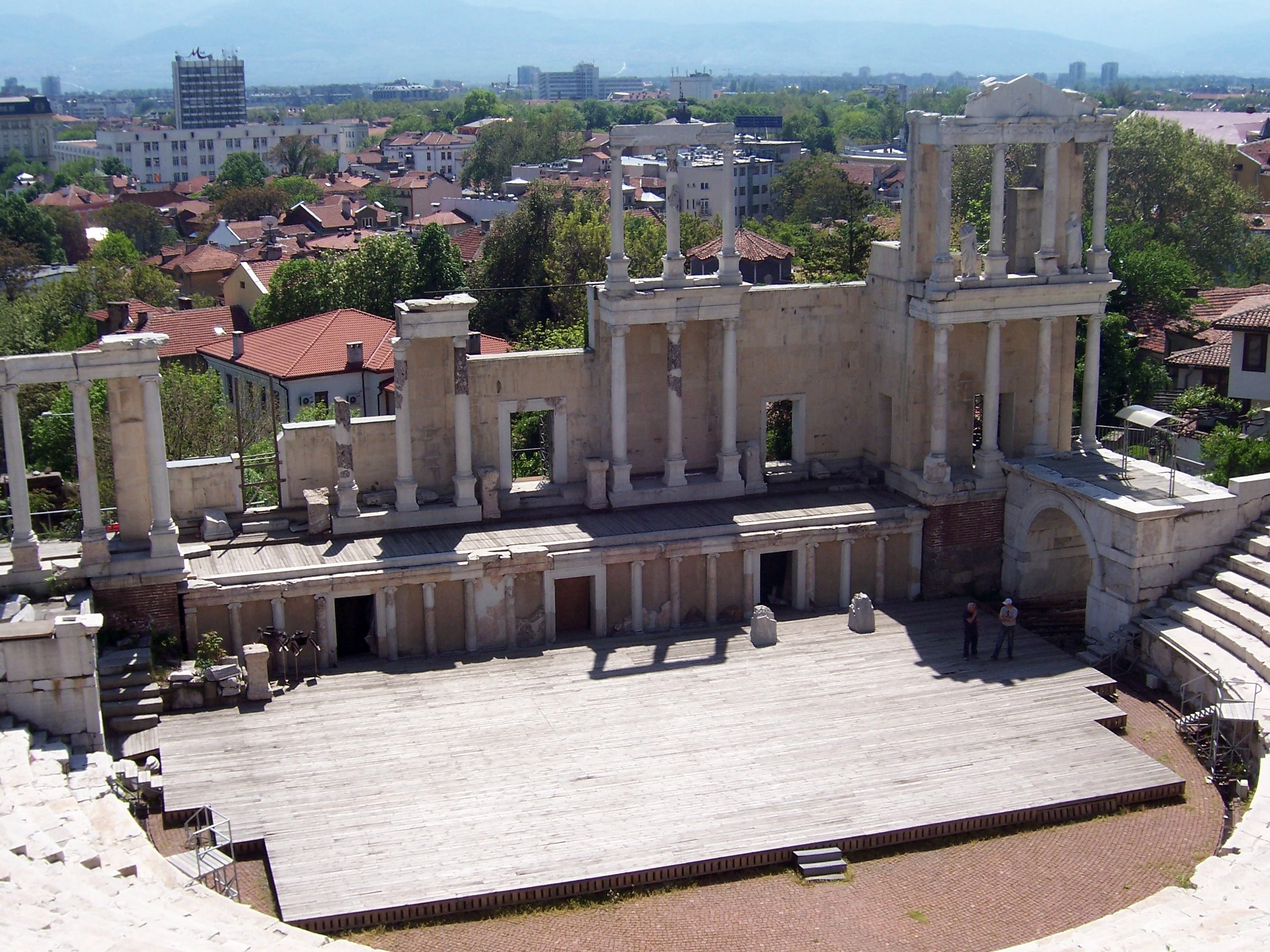
The Roman theatre of Philippopolis was built in the 1st century AD, likely during the reign of Domitian. It could accommodate between 5,000 and 7,000 spectators and is still in use today. The theatre suffered damage in the 5th century AD at the hands of Attila the Hun.
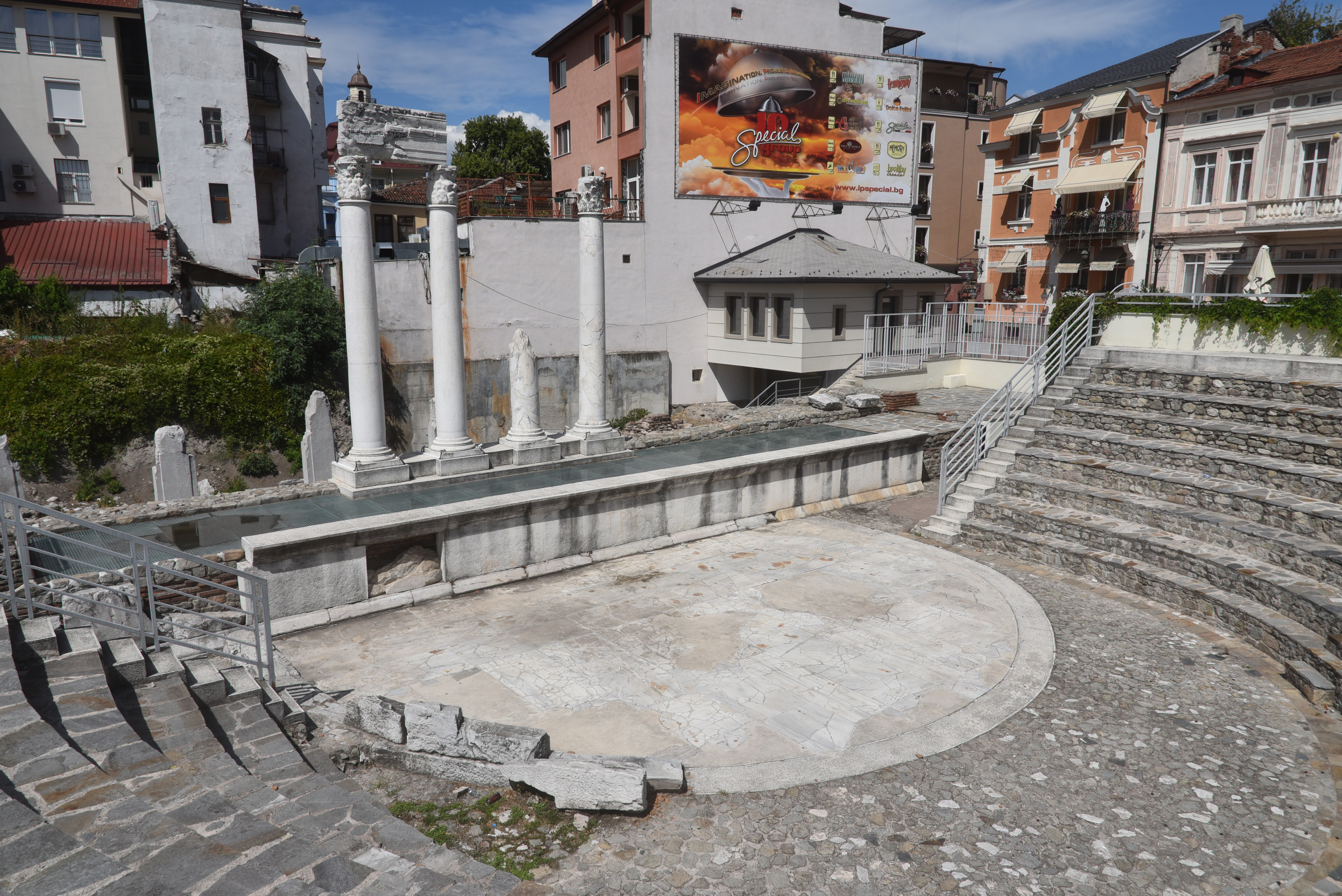
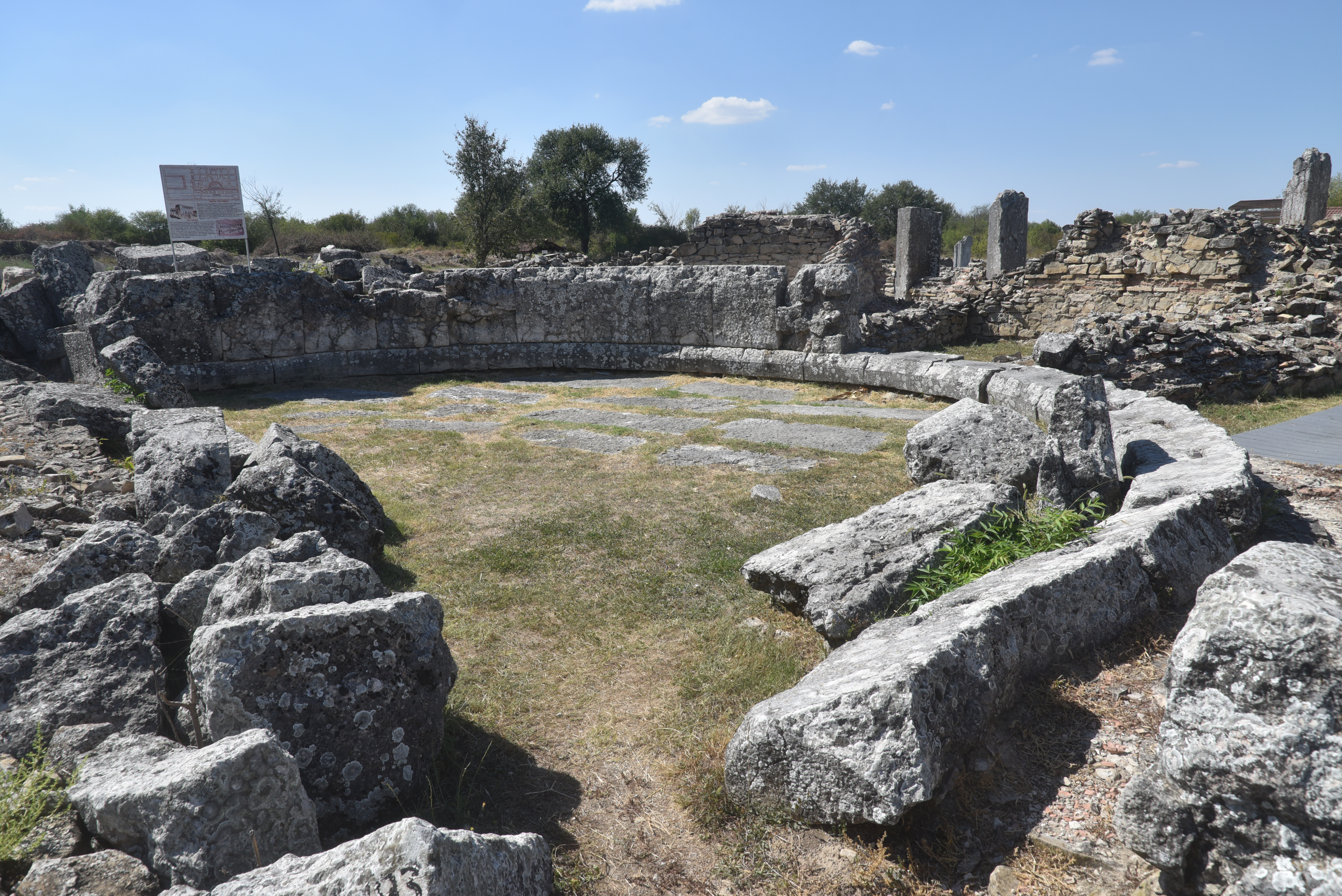
The Roman Odeon of Philippopolis was first built as a Hellenistic Bouleuterion. It underwent four reconstructions between the 1st and 4th centuries AD.
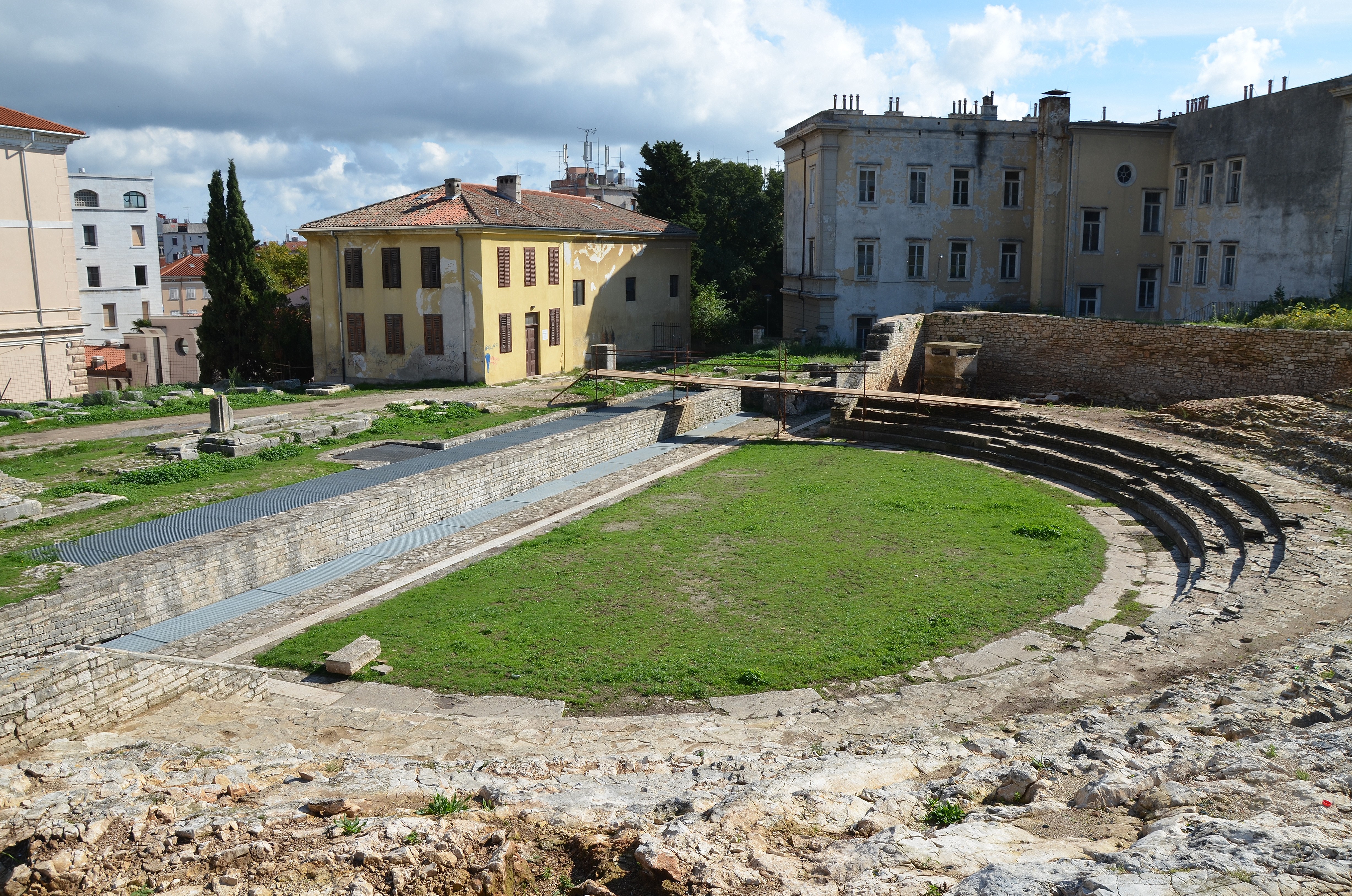
Roman Pula had two theatres. The larger one, now lost, was outside the city walls and could hold about 5,000 people. The Small Roman Theatre, within the city walls, accommodated around 1,000 spectators and was just a few hundred meters from the larger theatre. Today, only the reconstructed foundations of the Small Roman Theatre remain, including the proscenium, semicircular orchestra, and the cavea, or tiered seating area.
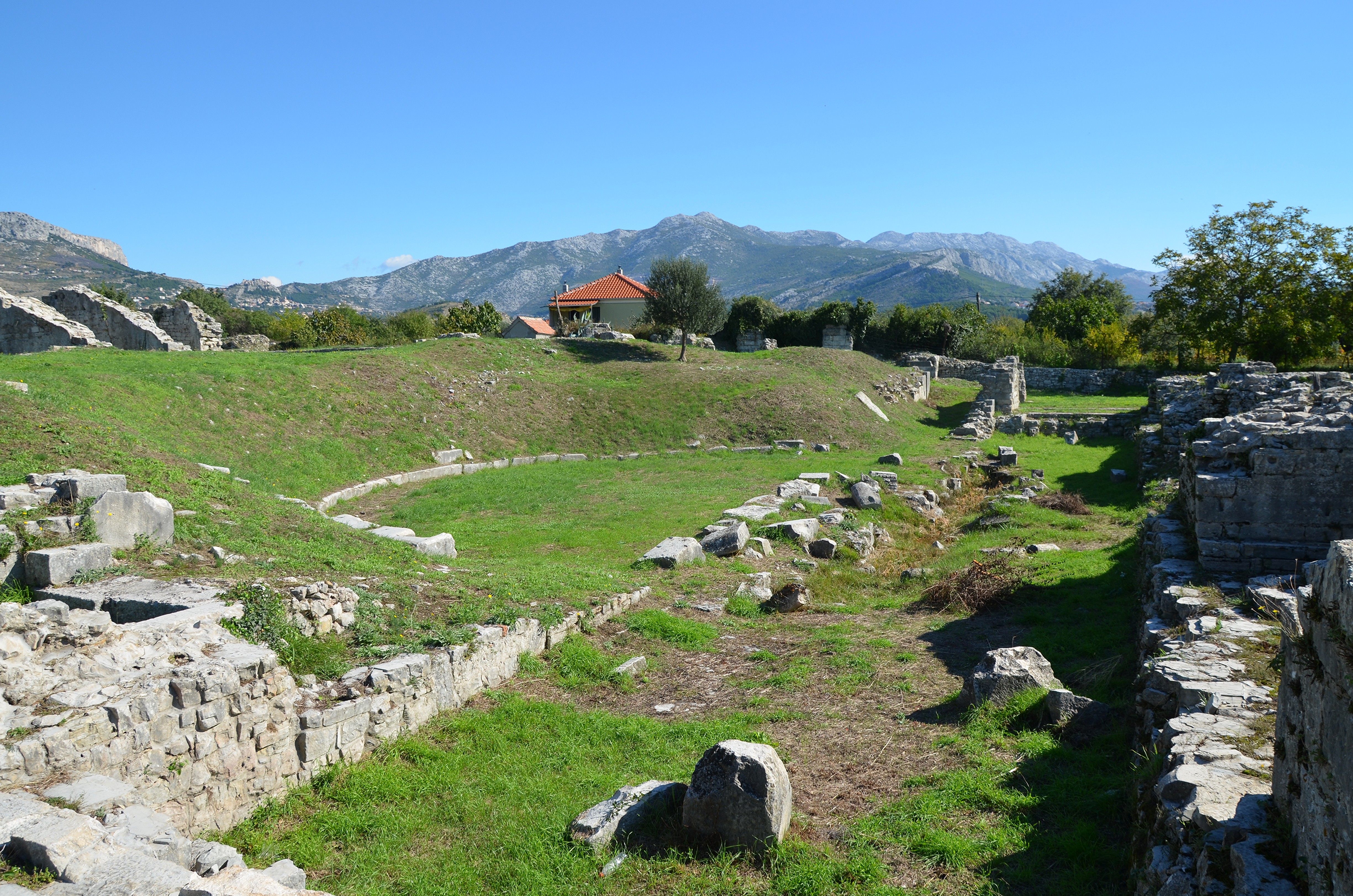
The Roman Theatre at Salona featured a semicircular auditorium (cavea) with two tiers of seats, accommodating up to 3,000 spectators and was constructed in the mid-1st century AD.
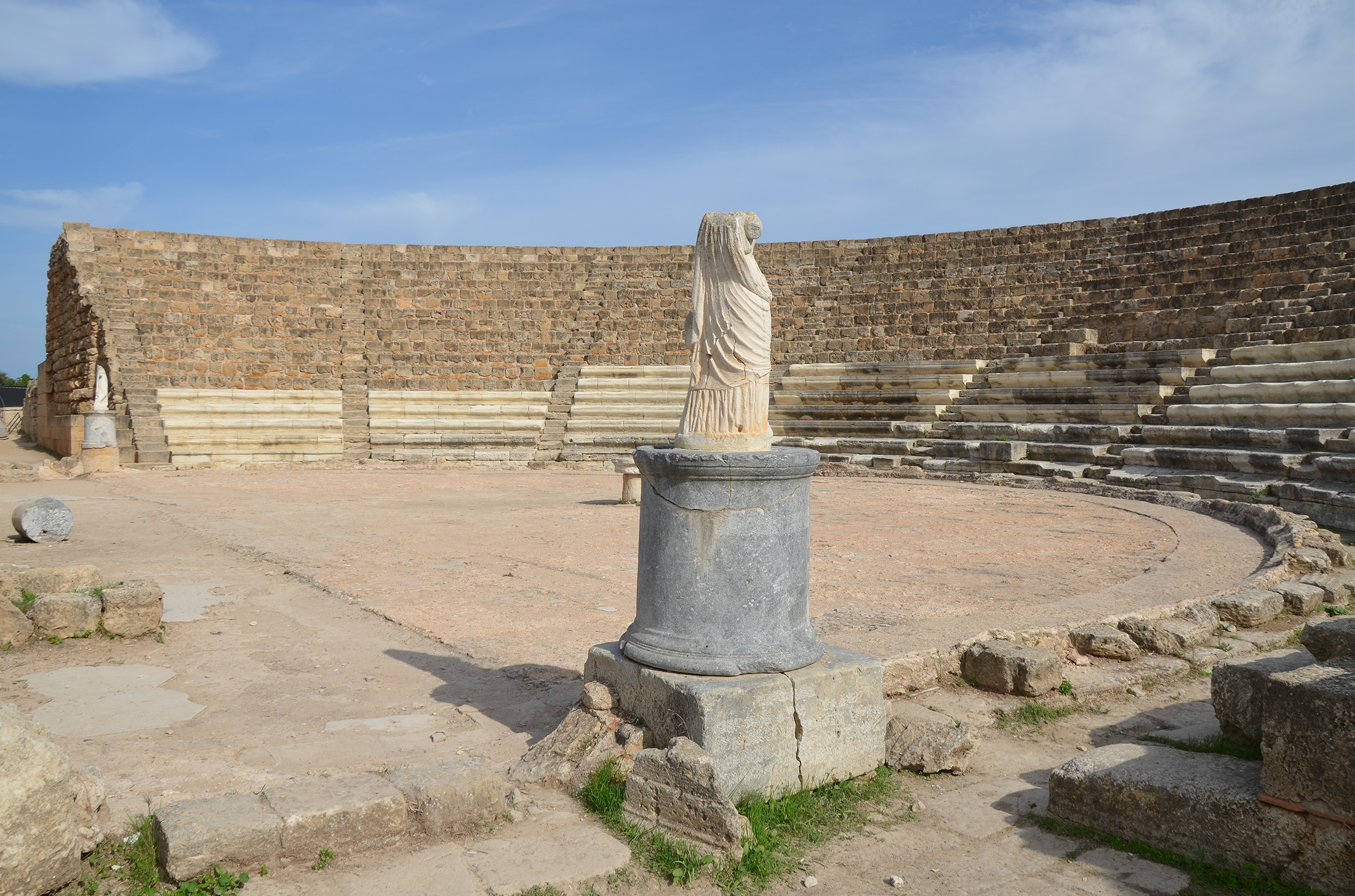
The Roman theatre at Salamis was constructed during the reign of Augustus and completed during the reigns of Trajan and Hadrian. Originally, it had 50 rows of seats, but only 18 remain today. The theatre could accommodate over 15,000 spectators. Its orchestra featured an altar dedicated to Dionysus, as well as two bases honouring Marcus Aurelius Commodus, Caesar Constantius, and Caesar Maximianus.
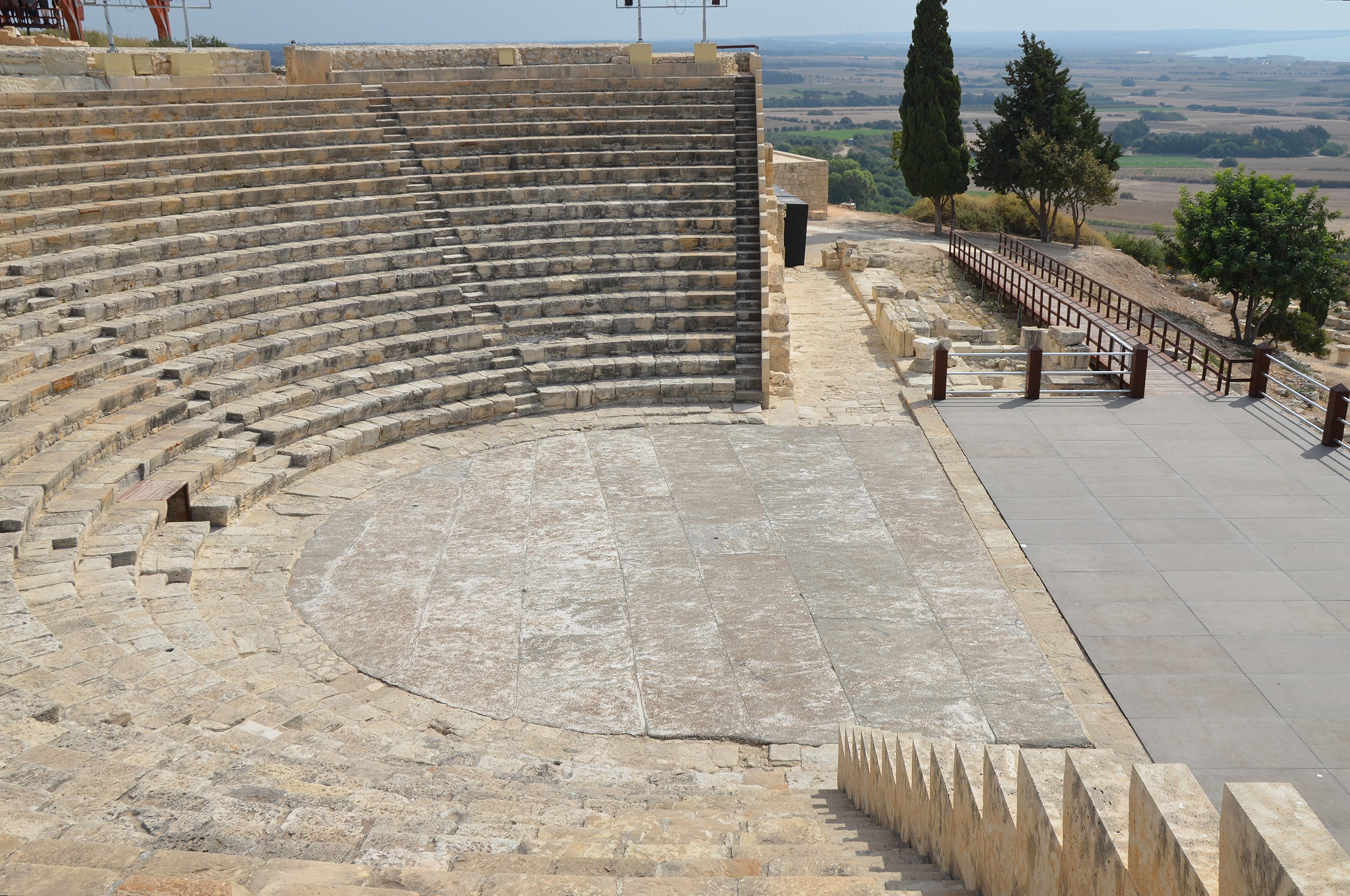
The Roman theatre of Kourion (Roman Curium) was built over an earlier Hellenistic theatre. It was remodelled in the 1st and 2nd centuries, and in the 3rd century it was used as an arena.
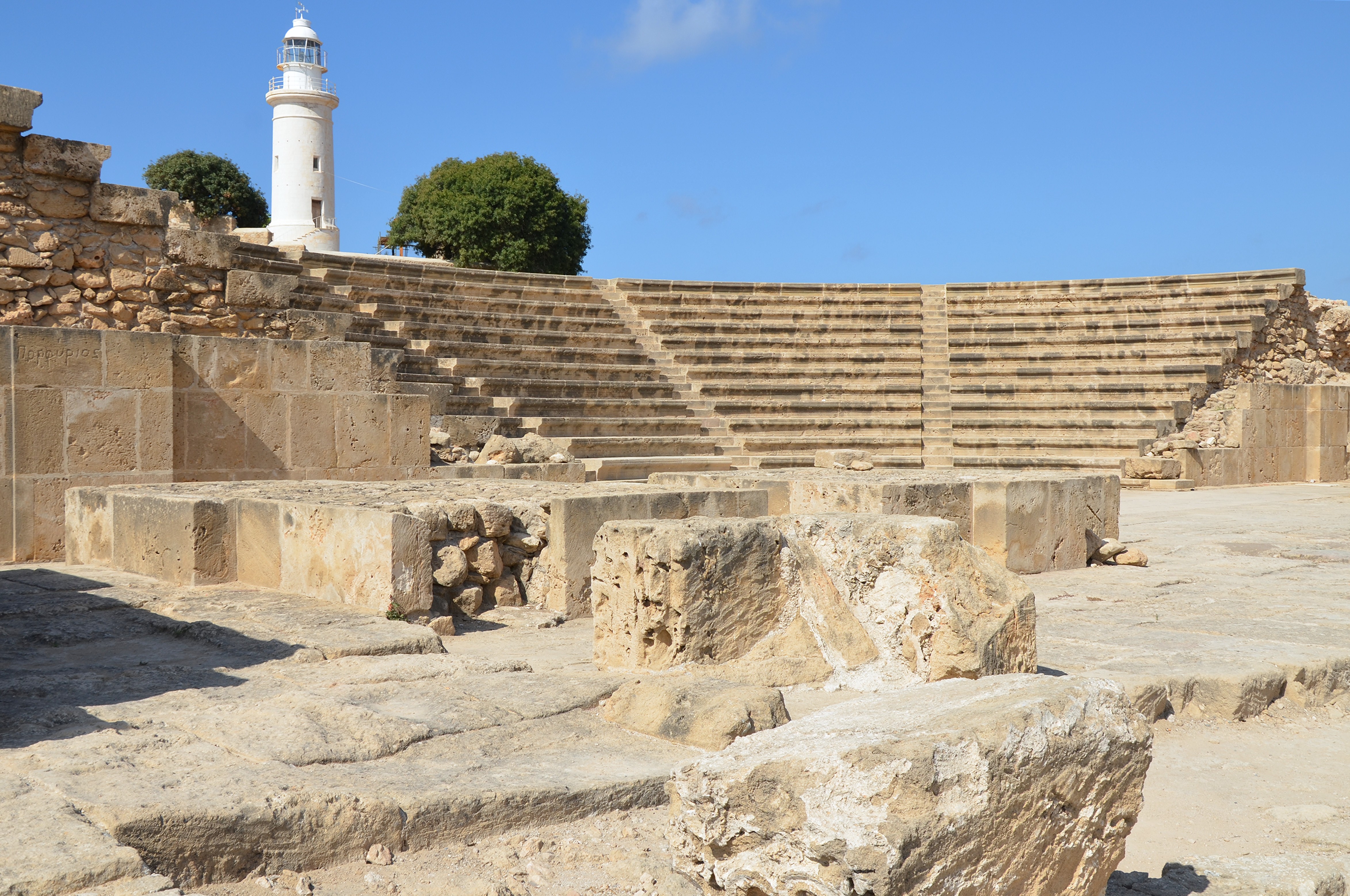
The Roman Odeon of Nea Pafos is located in the northeastern part of the ancient city. It was built in the 2nd century AD and could hold approximately 1,200 spectators.
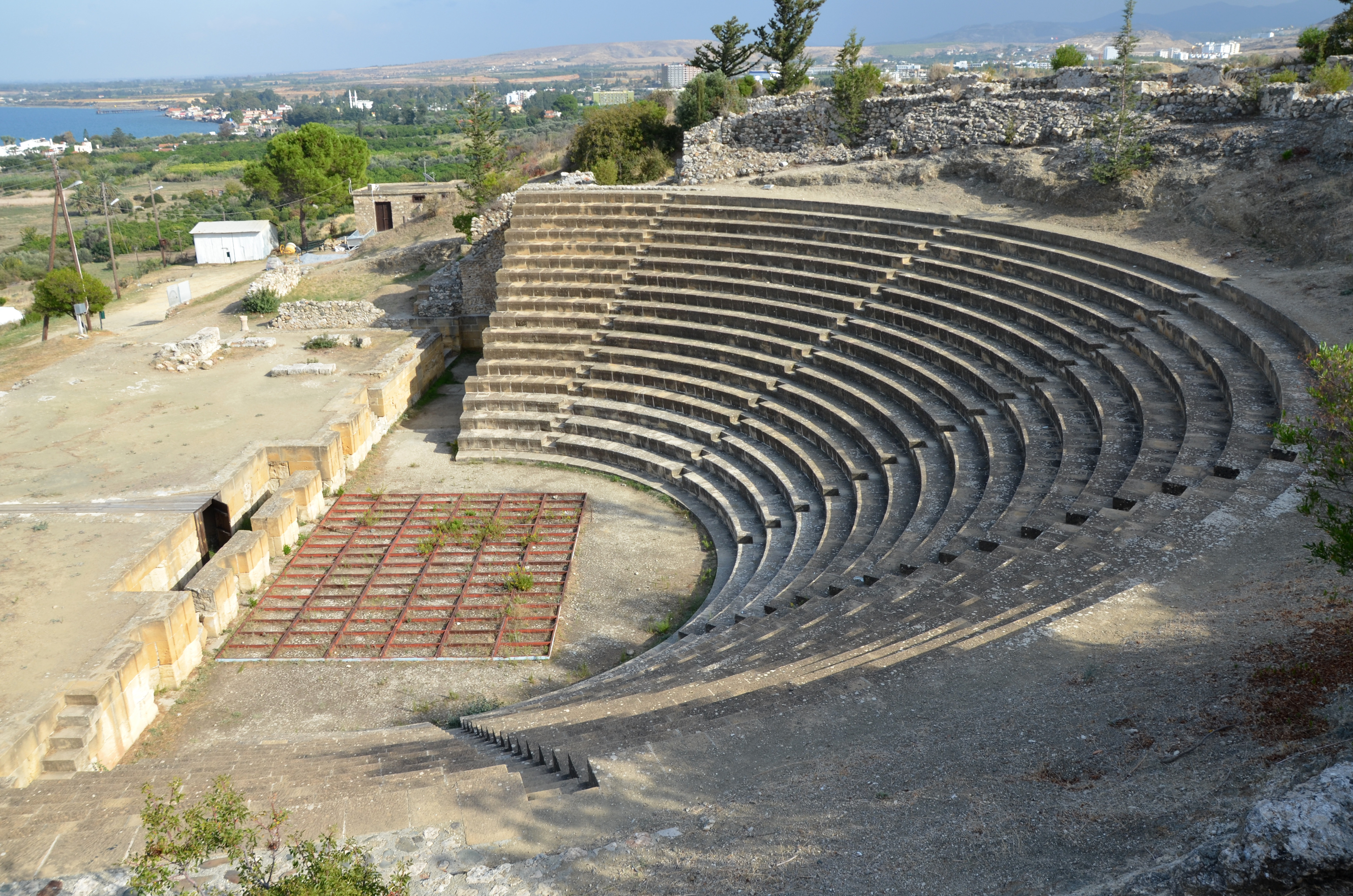
The Roman Theatre at Soli was originally constructed in the 2nd to 3rd century AD. This theatre was built on the site of an even older city that dates back to the 6th century BC. Constructed into a hillside, it offers scenic views of the sea. In 1962, the theatre underwent significant restoration, including rebuilding the seating area to half its original height.
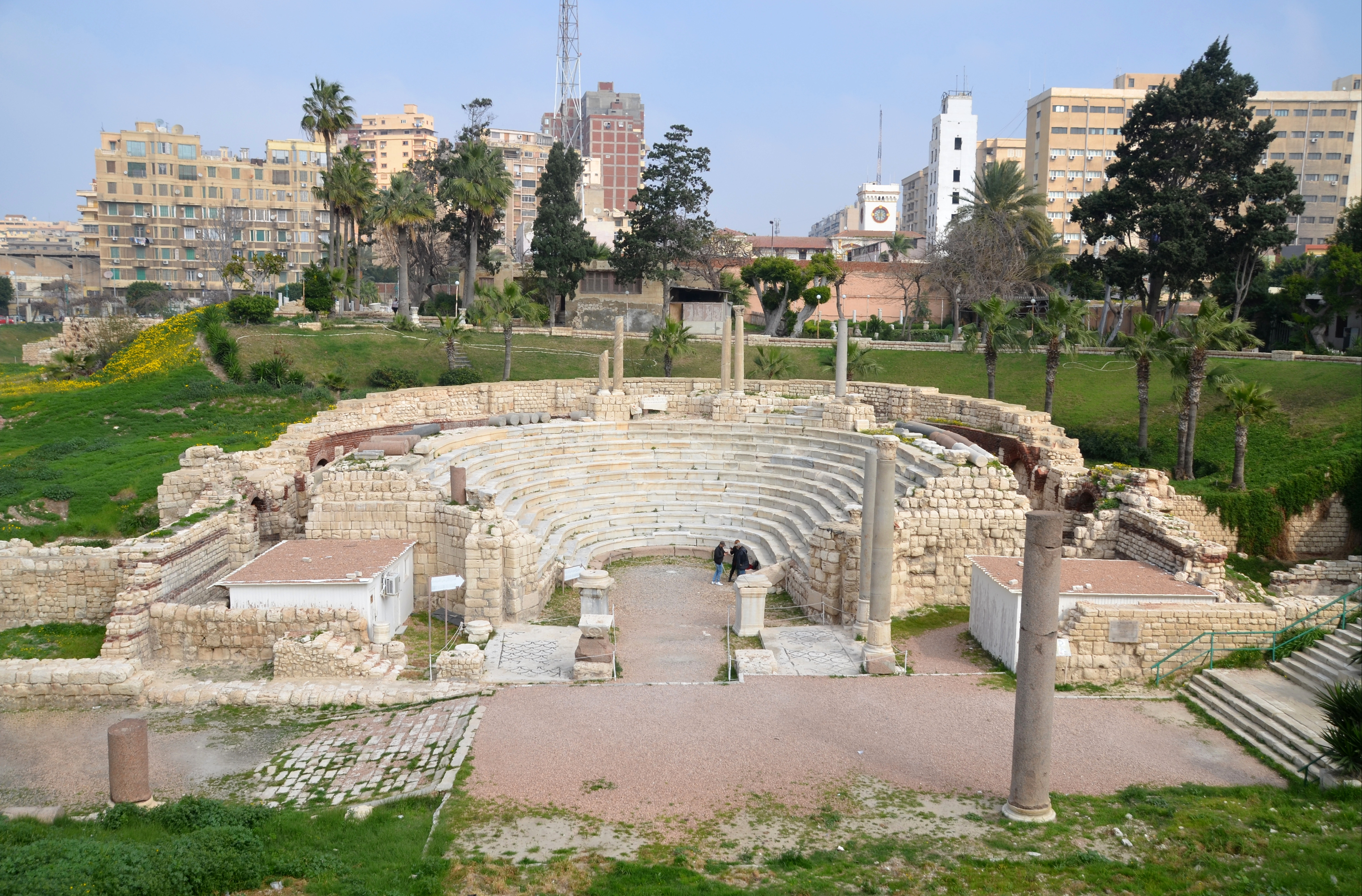
The Odeon at Alexandria was built in the 4th century AD and was later rebuilt in the late 5th to early 6th century AD. In its initial phase, the Odeon functioned as an open-air theatre, with 16 to 17 rows of seating. During the second phase, the seating was reduced to 13 rows, and a dome was added to provide a covered space. The vestibule and main room of the Odeon were adorned with mosaics and wall paintings.
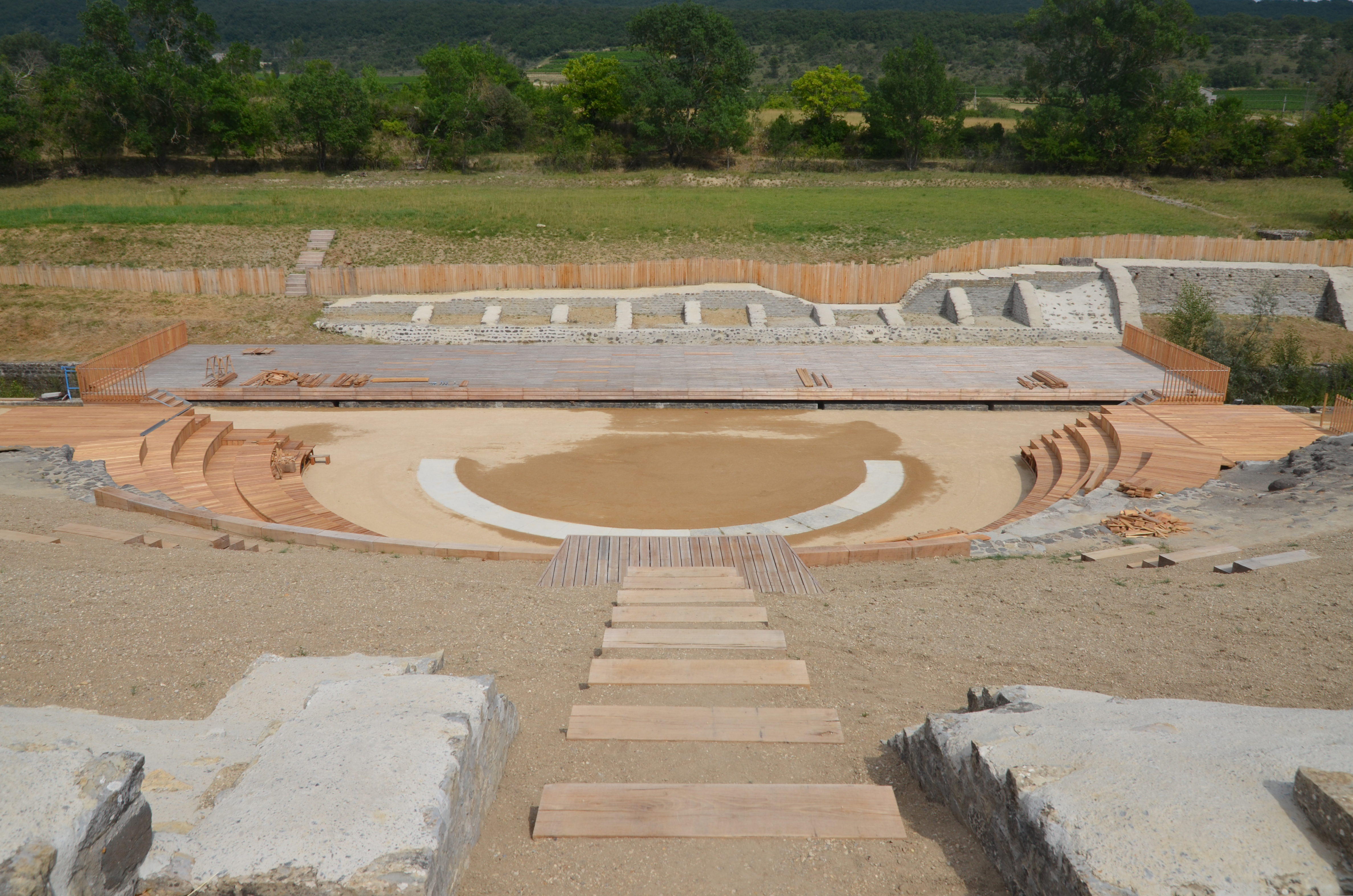
The Gallo-Roman theatre of Alba-la-Romaine was constructed and developed in three successive phases: towards the end of the 1st century BC, at the beginning of the 1st century AD, and at the beginning of the 2nd century AD. Each phase was marked by an expansion and monumental enhancement of the building.
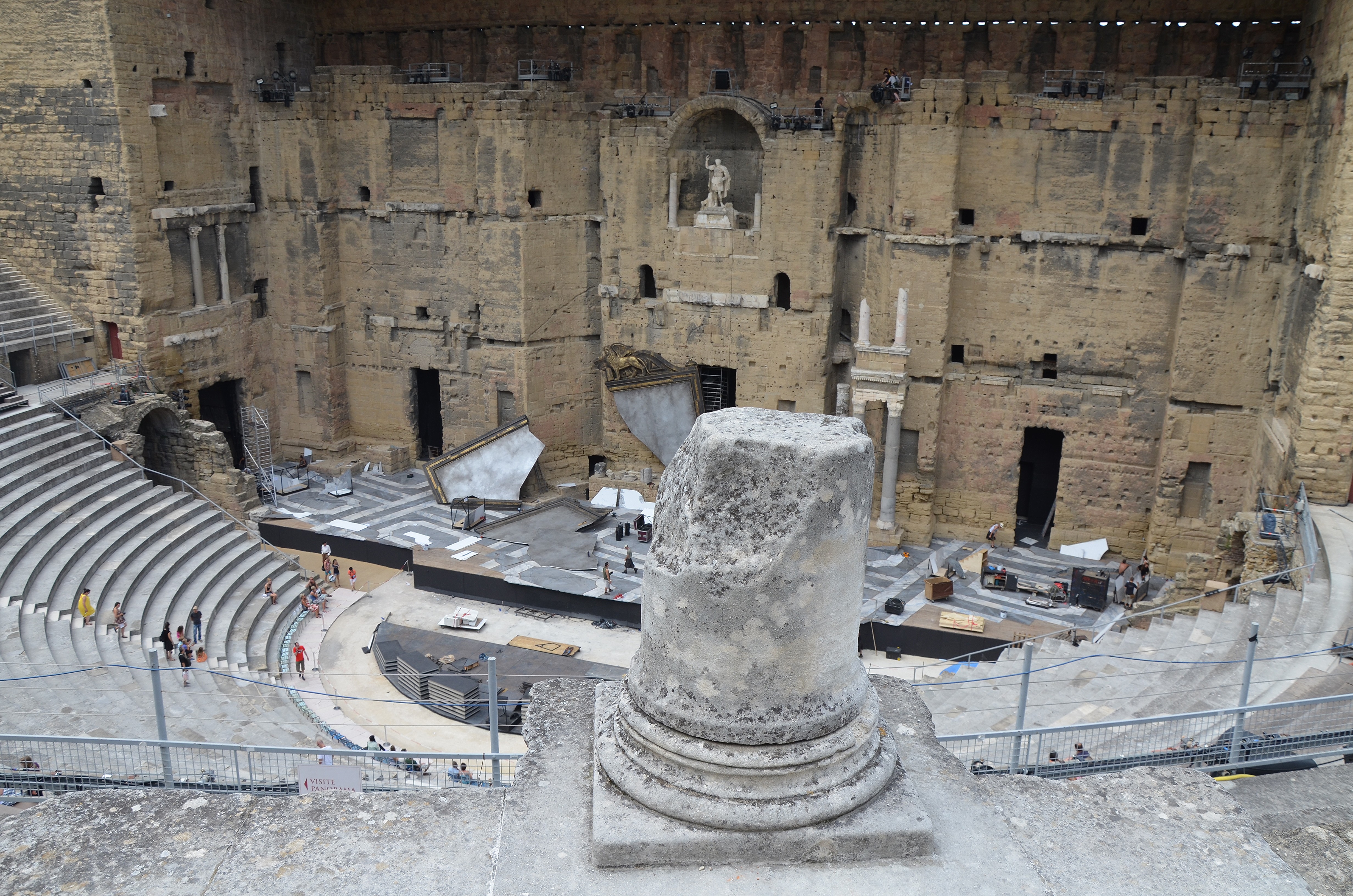
The Roman theatre at Arausio, known today as Orange, was originally constructed in the late 1st century BC during the reign of Augustus. Significant renovations took place during the reign of Tiberius (AD 14-37), which included additions to the stage building and improvements to its decorative elements. During the Hadrianic period (AD 117-138), major enhancements were made to the scaenae frons, including ornate columns and statuary niches, greatly increasing its grandeur.
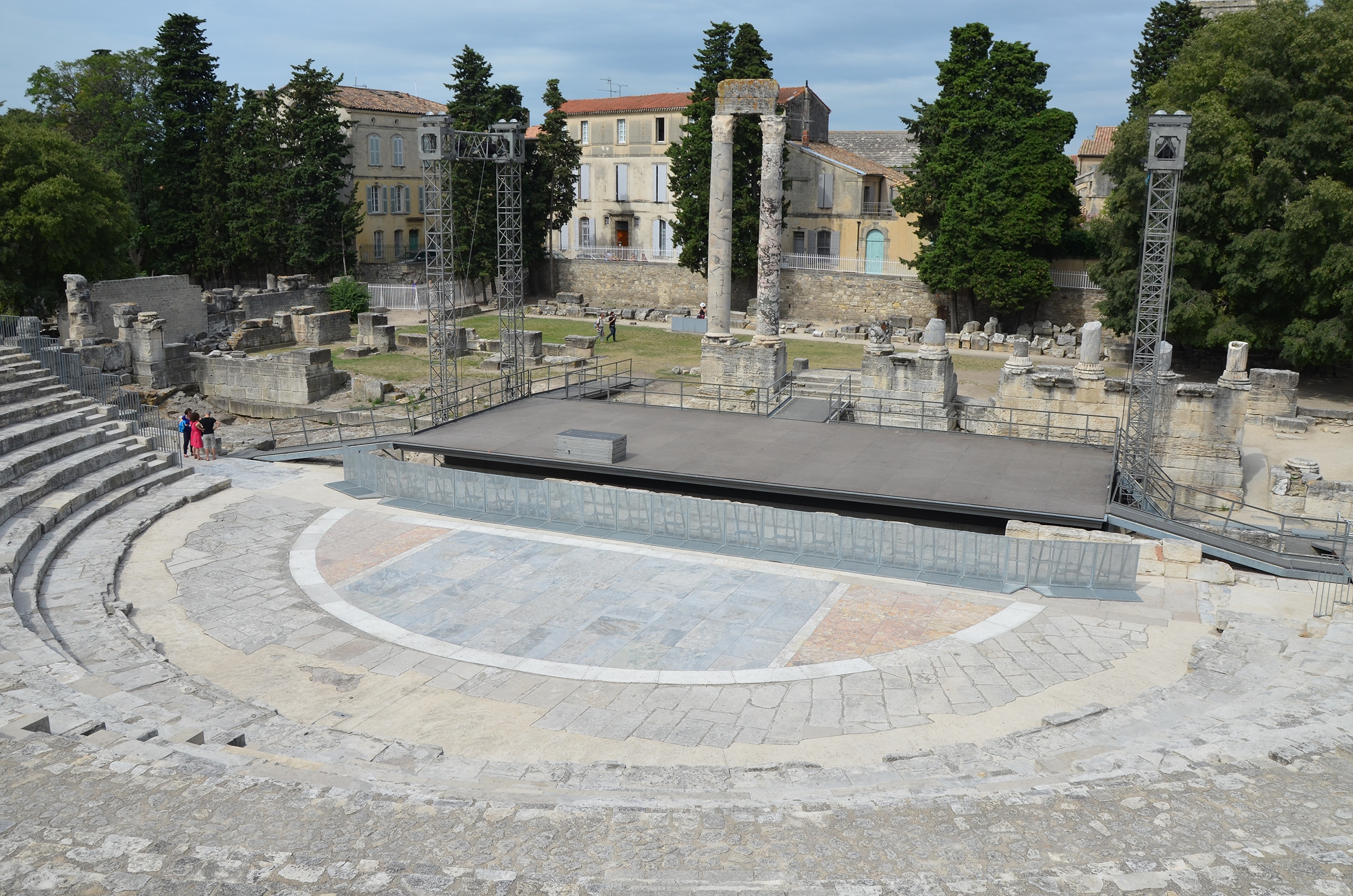
The theatre at Arelate was built between 40 and 30 BC, during the early years of Augustus’ reign, making it one of the earliest stone theatres in Roman Gaul. The theatre had a capacity of approximately 5,800 to 7,250 seats.
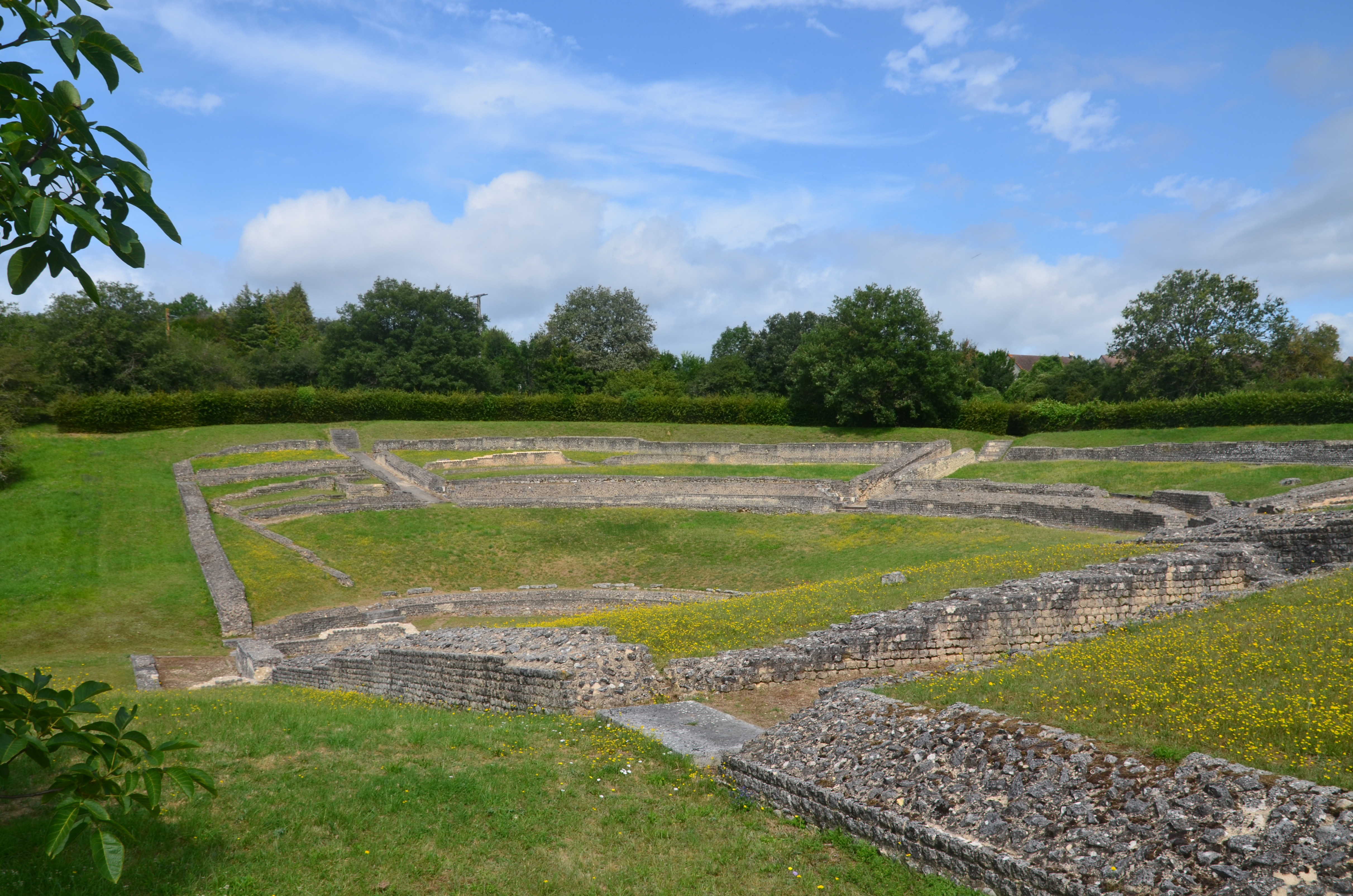
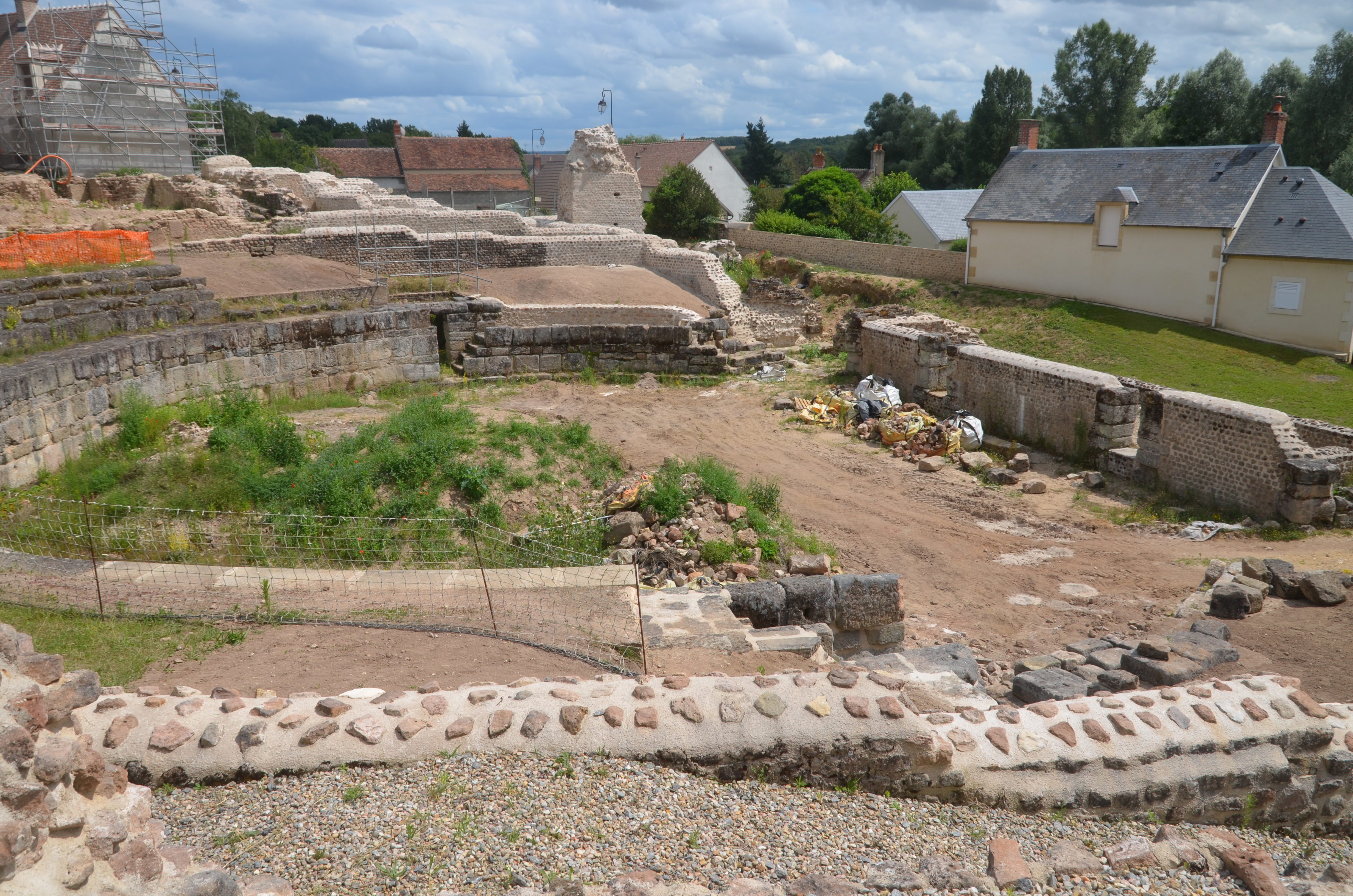
The Gallo-Roman Theatre of Argentomagus was constructed primarily in the 1st to 2nd centuries AD, with an estimated capacity of 6,000 to 7,000 spectators.
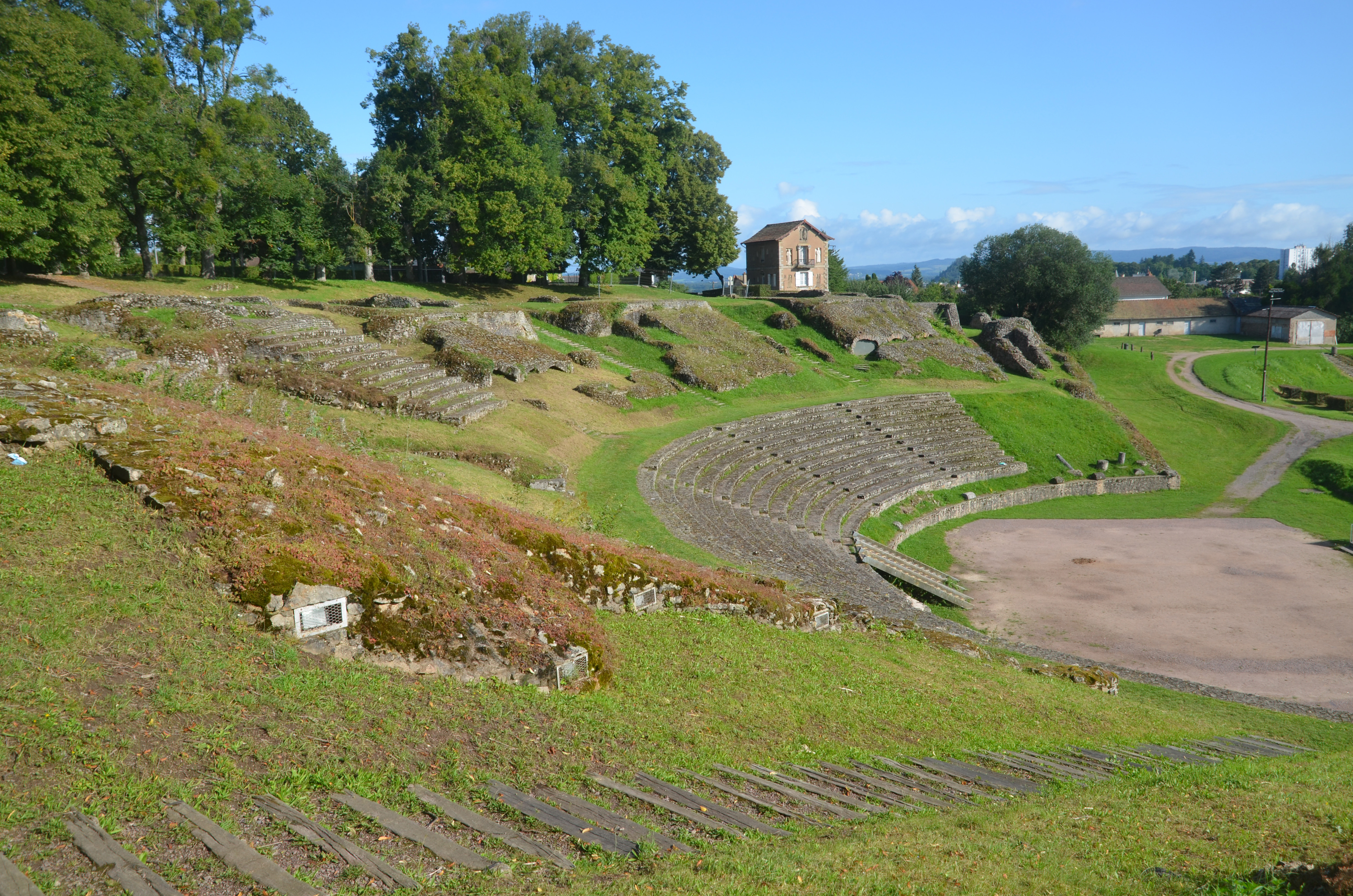
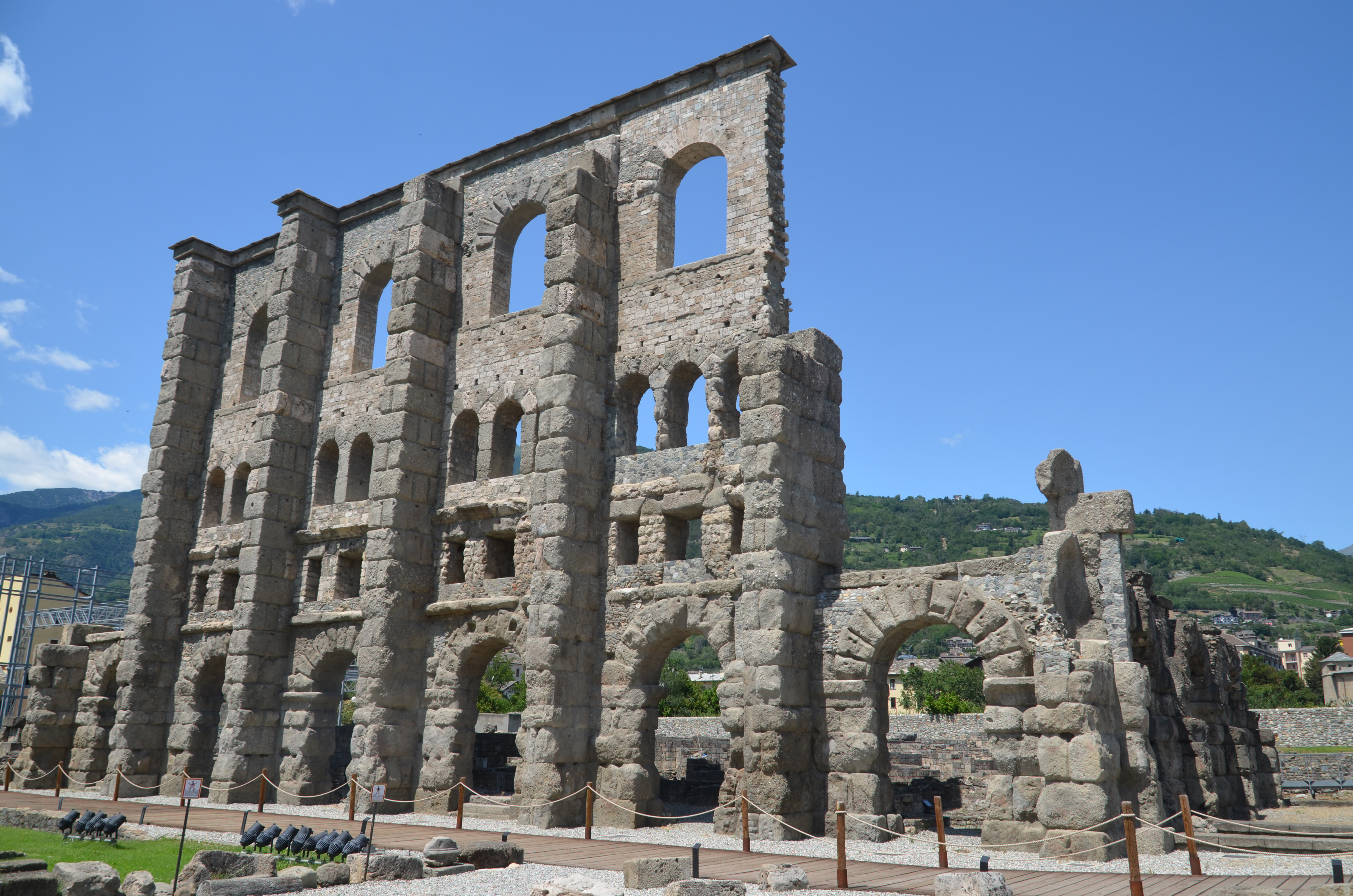
Roman Theatre of Augustodunum (Autun) was constructed in the late 1st century AD during the reign of Vespasian (AD 69-79). With 41 rows of seats, it had a capacity of 11,100-13,800 spectators.
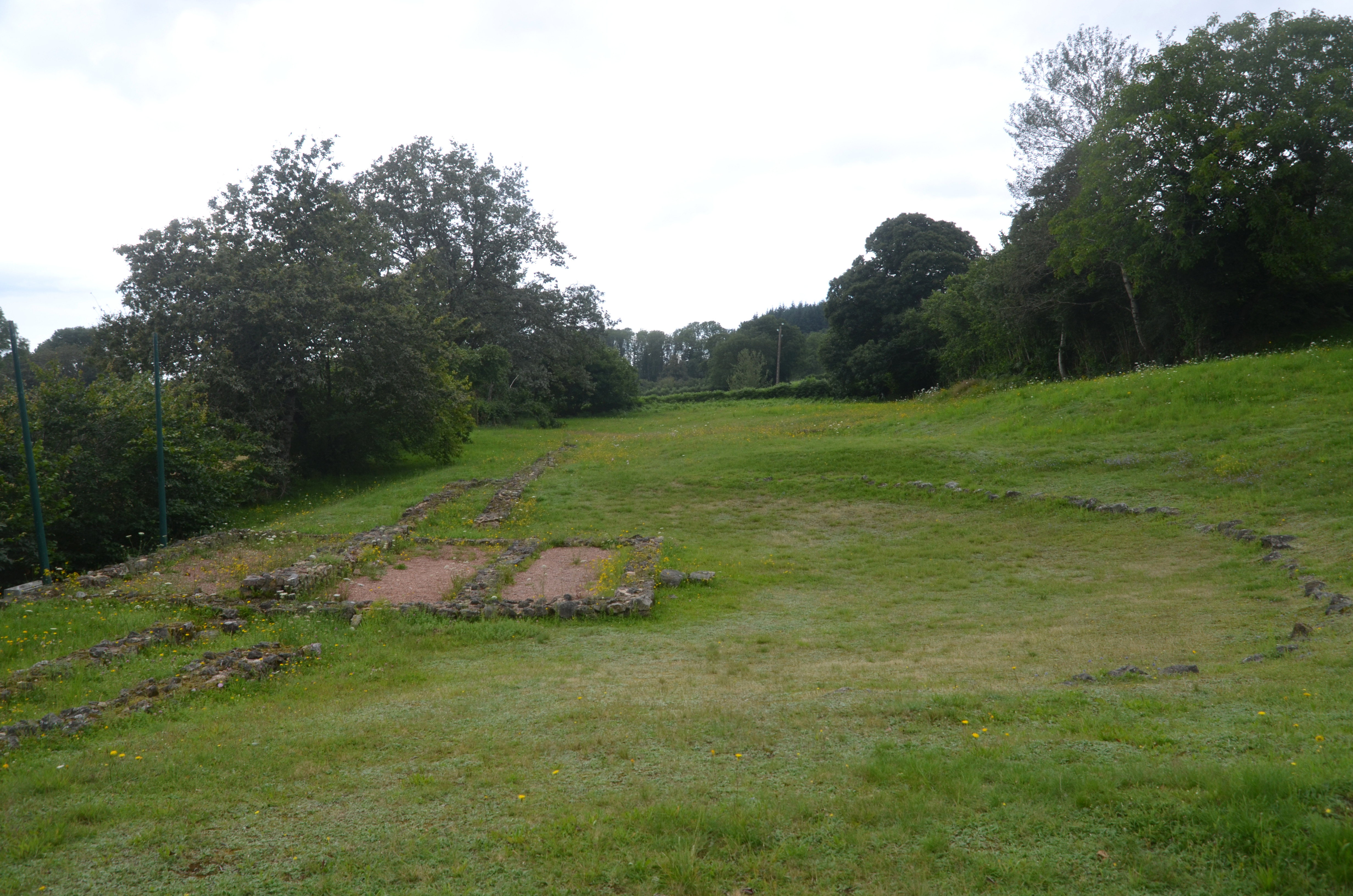
The Gallo-Roman Theatre of Bardiaux was constructed in the late 2nd century AD and was designed to accommodate 600 to 700 spectators, serving as a venue for public meetings and possibly rituals.
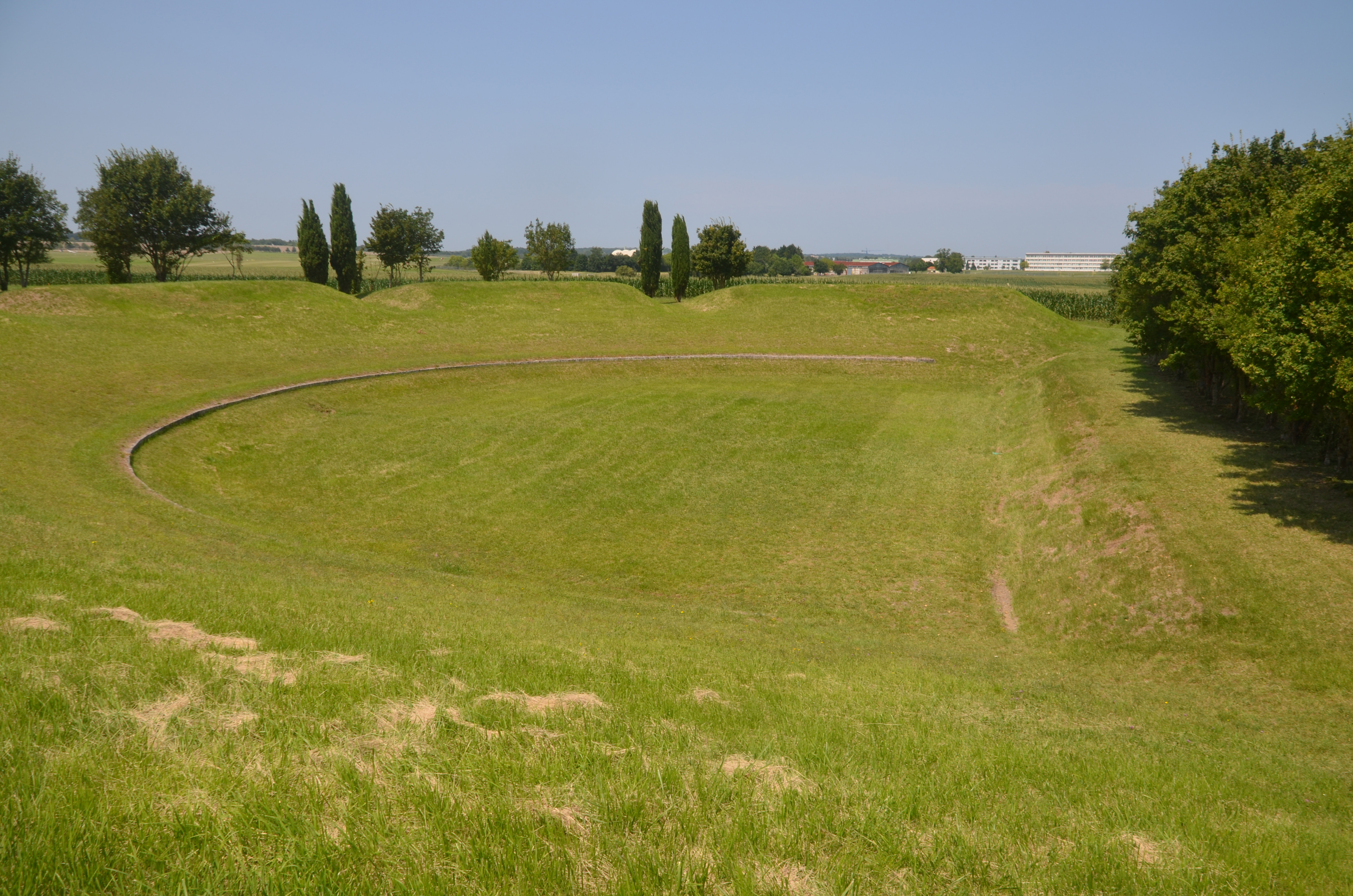
Constructed in the 1st century AD under the reign of Augustus, following the Gallic Wars, the Gallo-Roman Theatre of Drevant was expanded in the 3rd century AD, ultimately achieving a diameter of 85 meters. It featured a 27-meter-wide orchestra area, which was protected by a podium wall standing 2.80 meters high. The theatre was supported by 16-meter-high arches that solely supported the three tiers of seating, allowing it to accommodate up to 5,000 spectators.
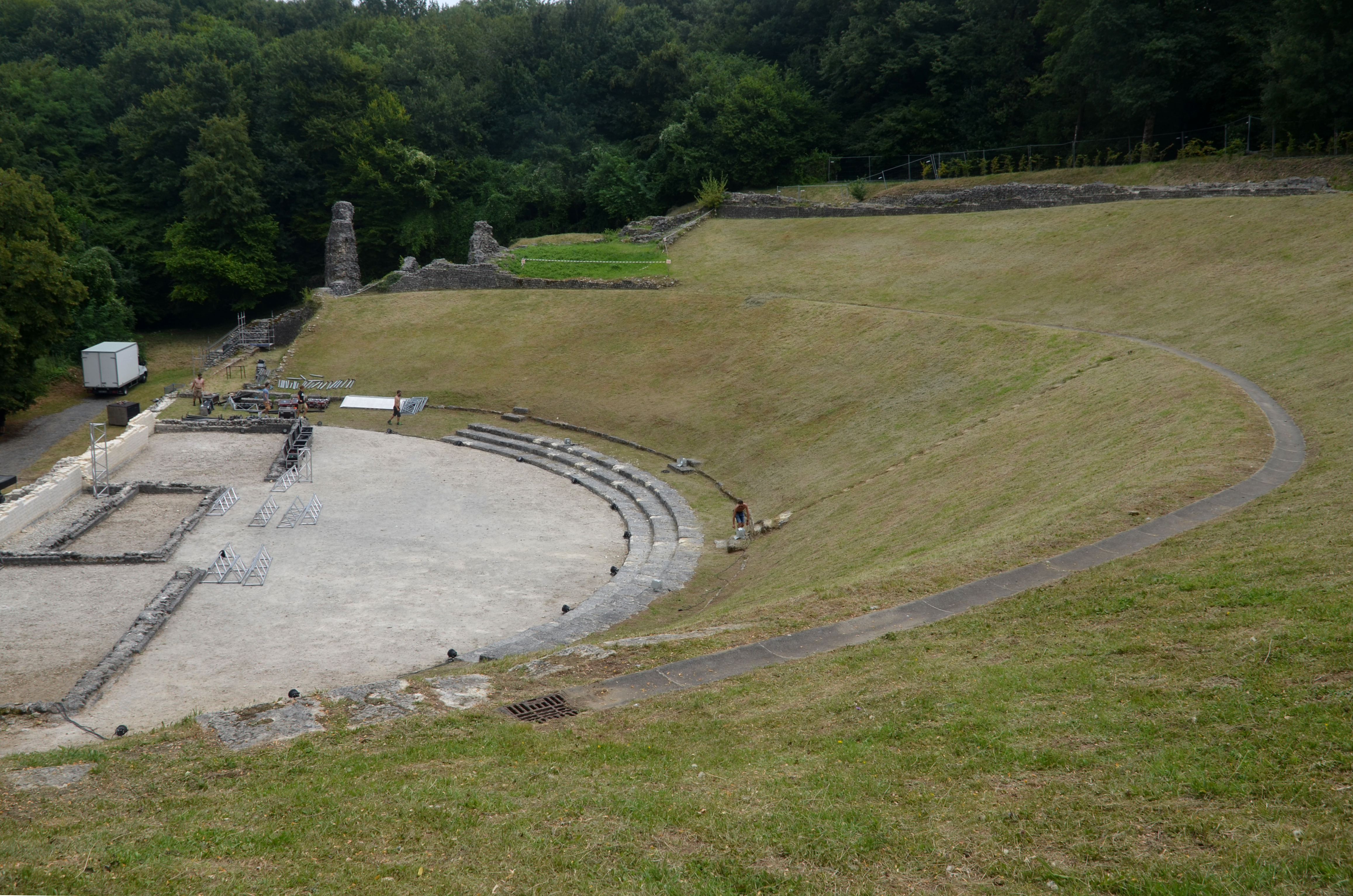
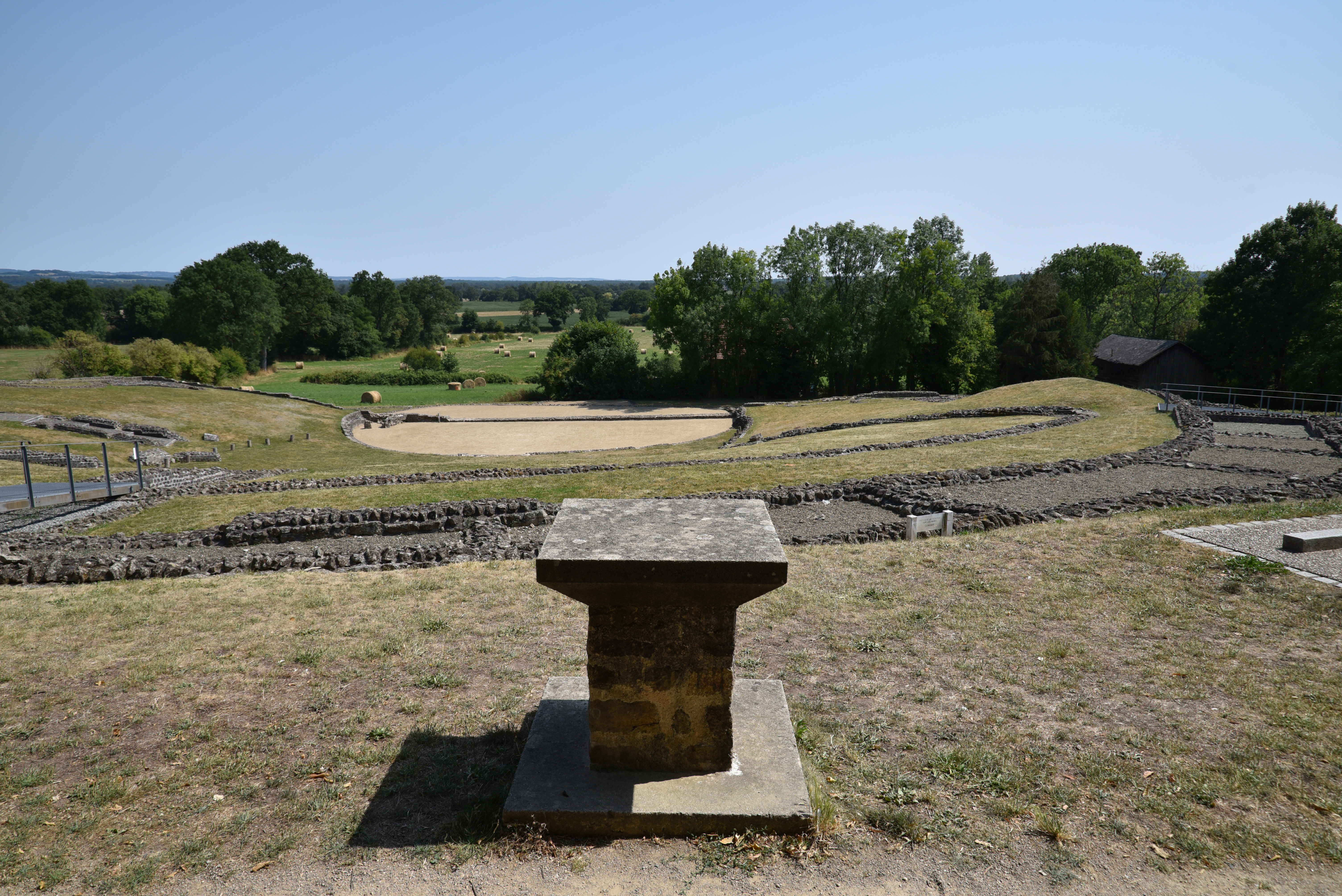
The Gallo-Roman Theatre at Les Bouchauds could seat 5,000 to 6,000 people and was part of a sanctuary in a medium-sized town on the Via Agrippa, linking Lugdunum (Lyon) to Mediolanum Santonum (Saintes).
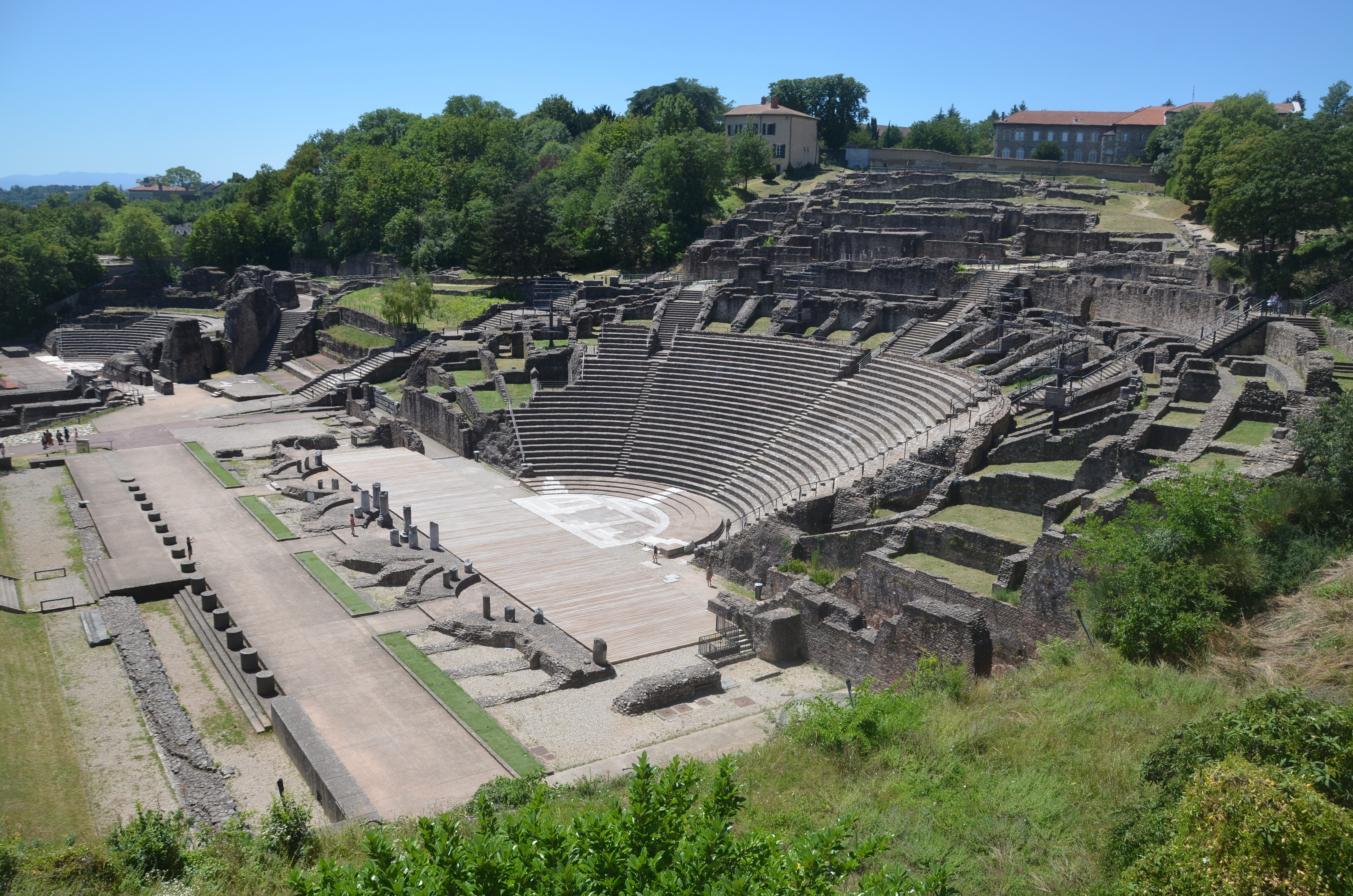
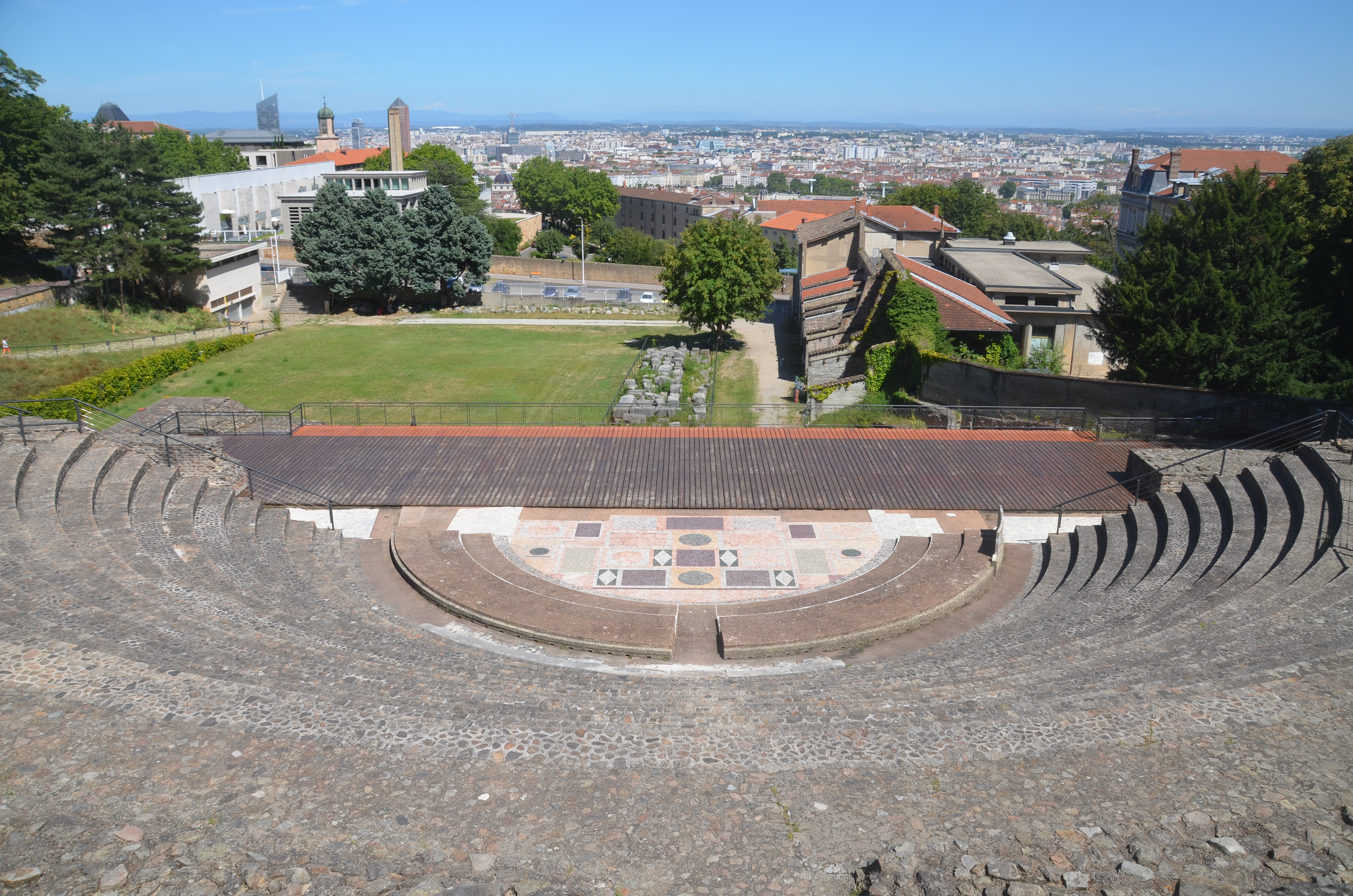
The Theatre of Lugdunum is located on the slope of a hill and is recognised as the oldest theatre in Roman Gaul, built in 15 BC. It is also one of the largest theatres, measuring 108 meters in diameter. Initially, the theatre featured two levels of tiered seating that accommodated approximately 4,500 spectators. However, around AD 120, it was modified to include a third level of seats, increasing its capacity to 11,000 spectators.
The Odeon of Lugdunum was constructed at the end of the 1st century or the beginning of the 2nd century AD. It has a diameter of 73 meters and a seating capacity of 3,000.
The Gallo-Roman theatre of Noviodunum Diablintum (modern-day Jublains) was built around 81–83 in the reign of Domitian and enlarged in the 2nd century, probably during the reign of Hadrian.
The Gallo-Roman Theatre of Thénac was part of an ancient rural sanctuary that included thermal baths and a spring. It was probably built during Nero’s reign and abandoned in the 3rd century AD.
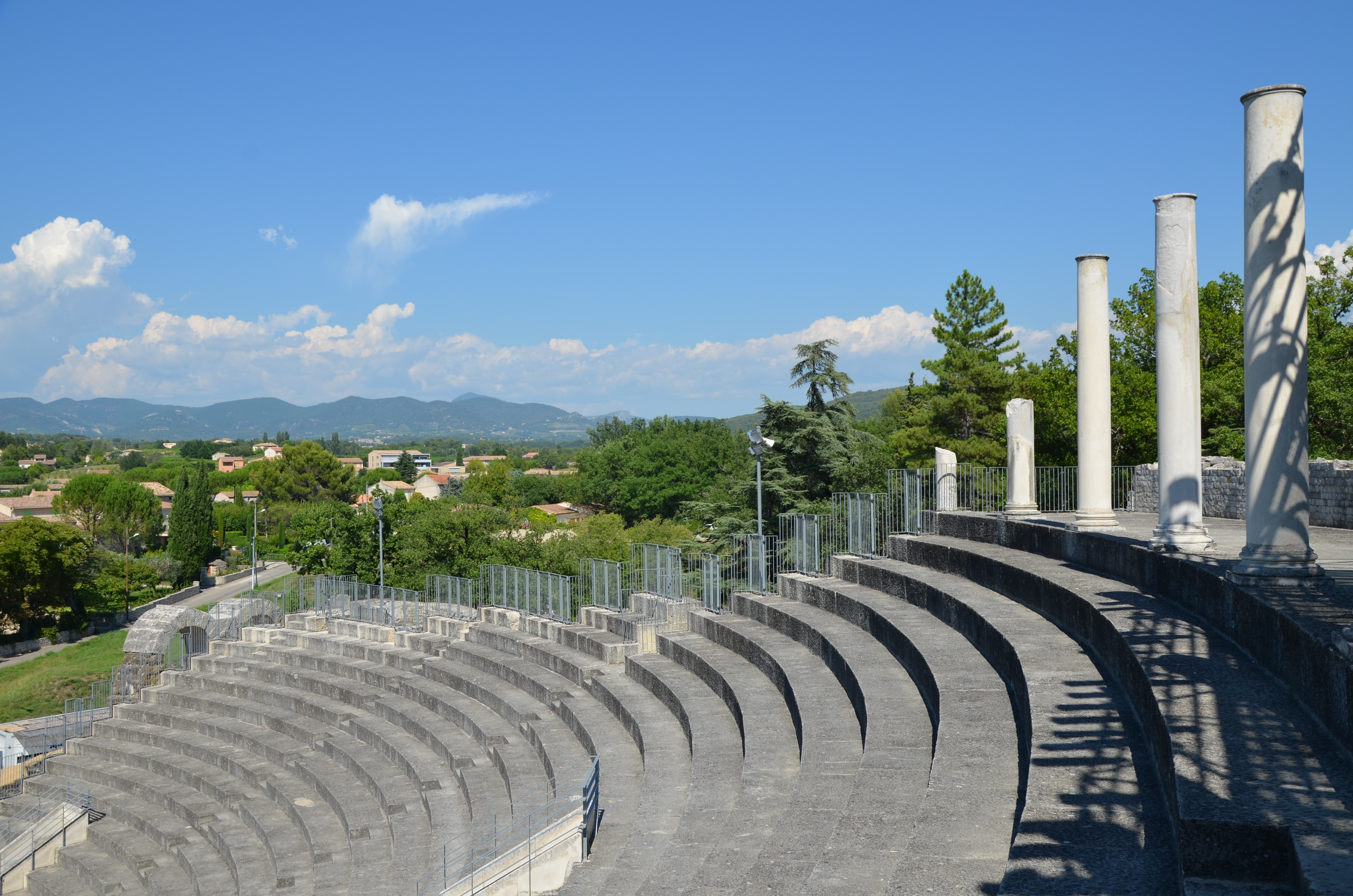
The Roman theatre of Vasio Vocontiorum (Vaison-la-Romaine) was constructed in the second half of the 1st century AD. It was likely initiated under Emperor Tiberius (AD 14-37) and completed during the reign of Claudius, with later modifications during Hadrian’s rule in the early 2nd century AD.
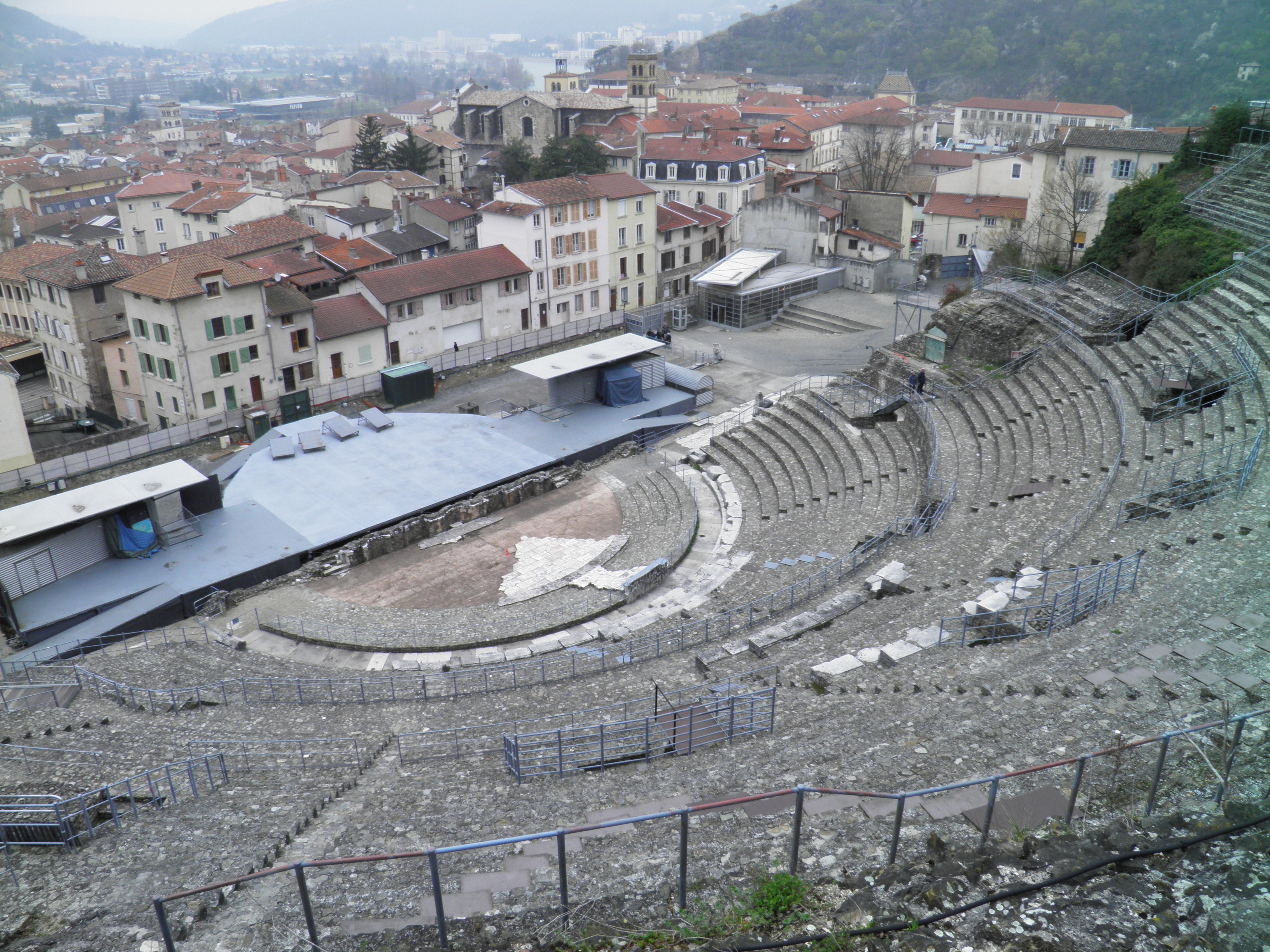
The Vienna Theatre (Théâtre Antique de Vienne) dates from the late 1st century BC to the mid 1st century AD, with alterations and renovations through the Hadrianic period. It was constructed in the Roman colony of Vienna. It was abandoned in the 3rd century AD, rediscovered in 1834, and excavated in the early 20th century.
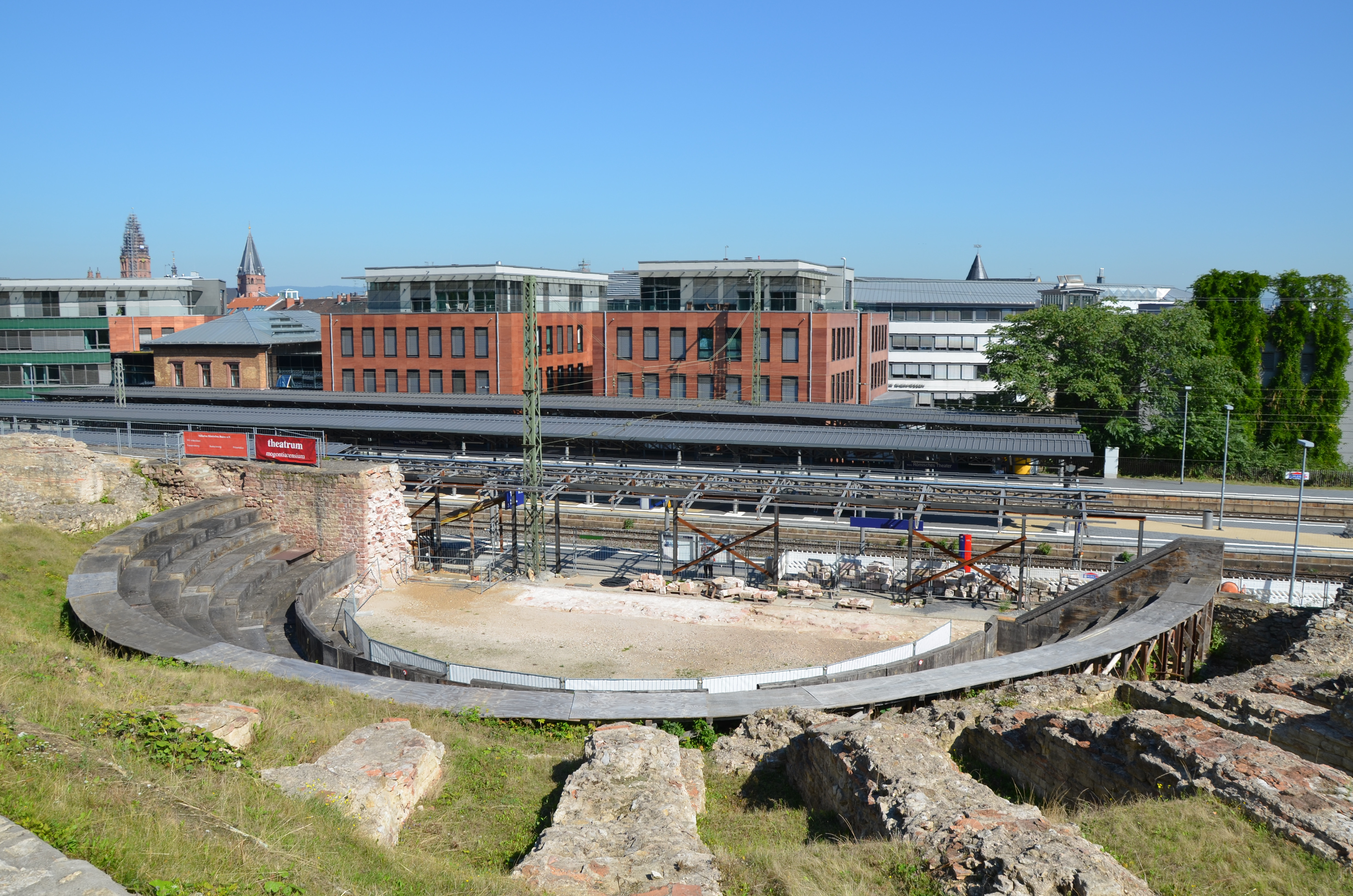
The Roman Theatre in Mogontiacum was the largest Roman theatre north of the Alps, measuring 116 meters in diameter, 42 meters in stage width, and accommodating about 10,000 spectators.
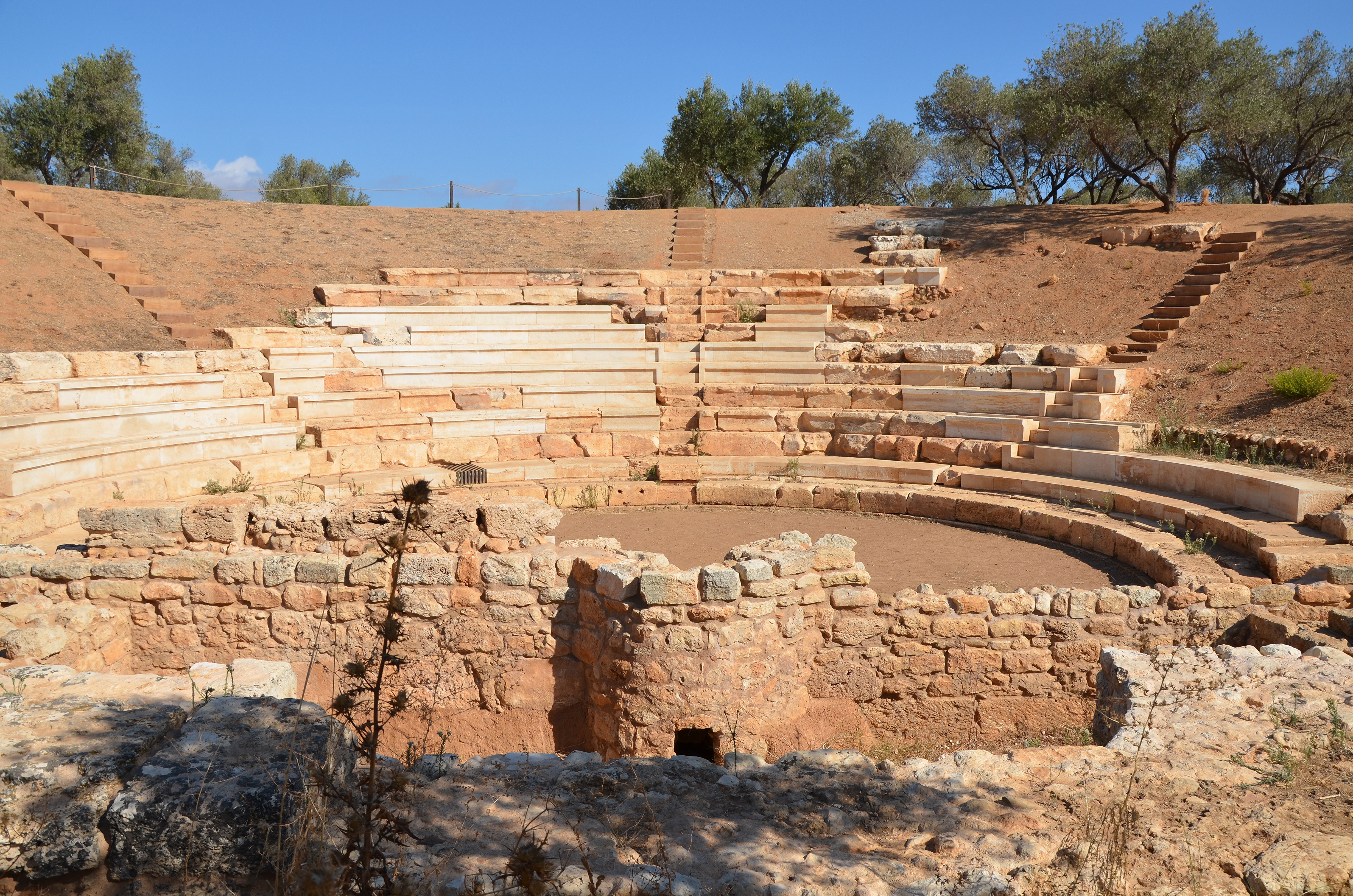
The theatre at Aptera dates back to the early Hellenistic period. It was modified during the Roman period (from the 1st century AD to the 3rd century AD).
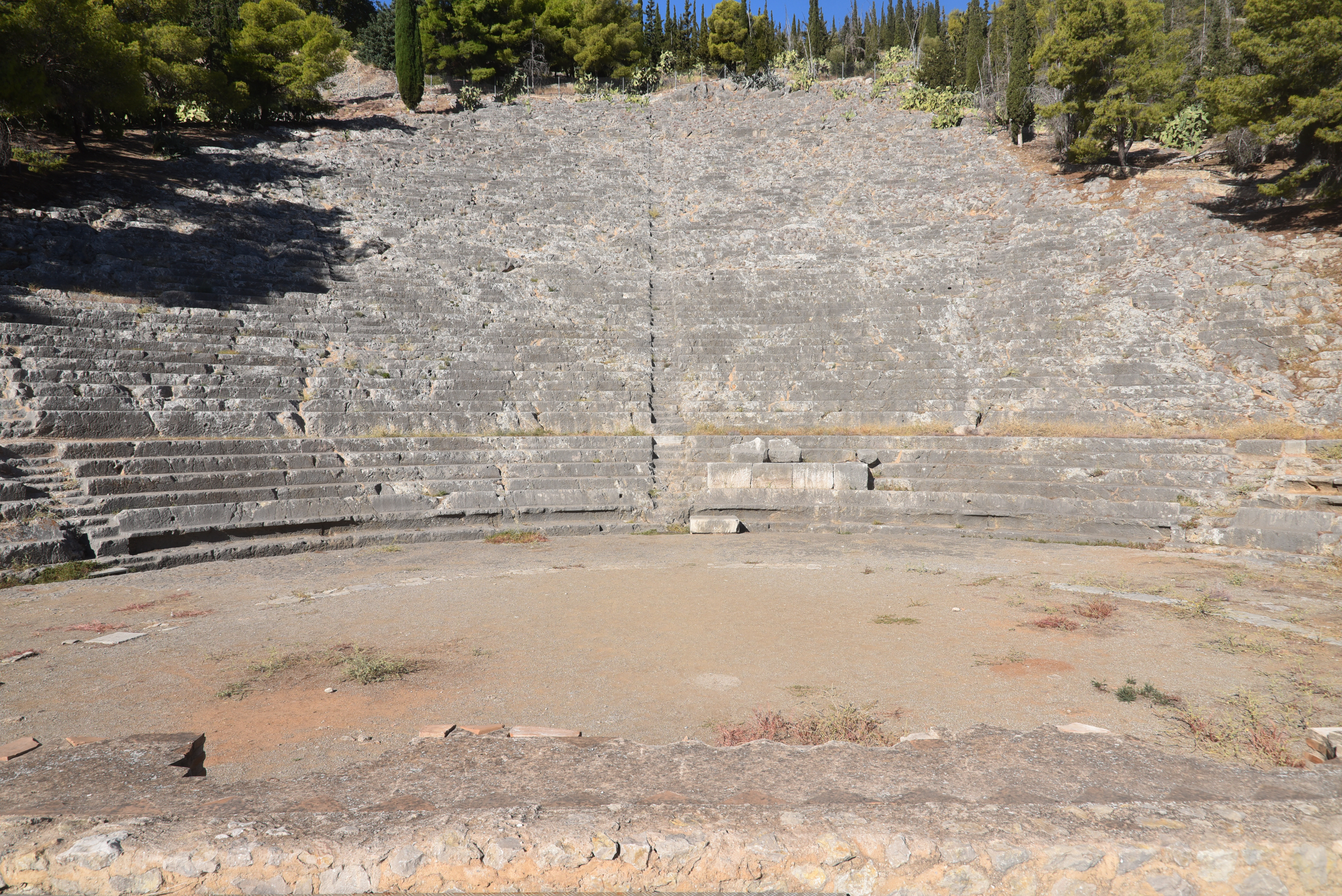
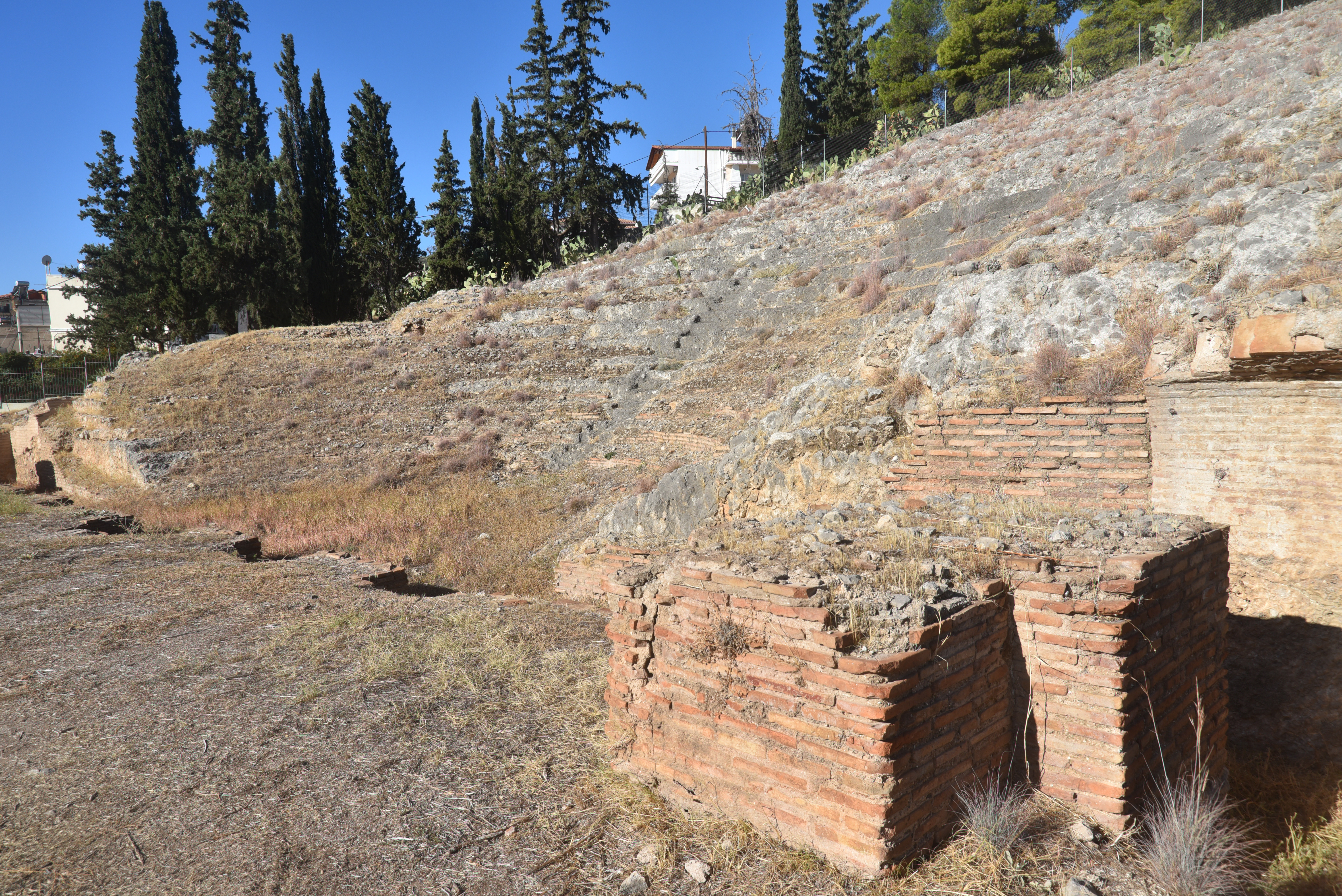
The Archaic Theatre at Argos, carved into the lower rocky slopes of the Larisa in the 5th century BC, was renovated and roofed during the reign of Hadrian to form an Odeon.
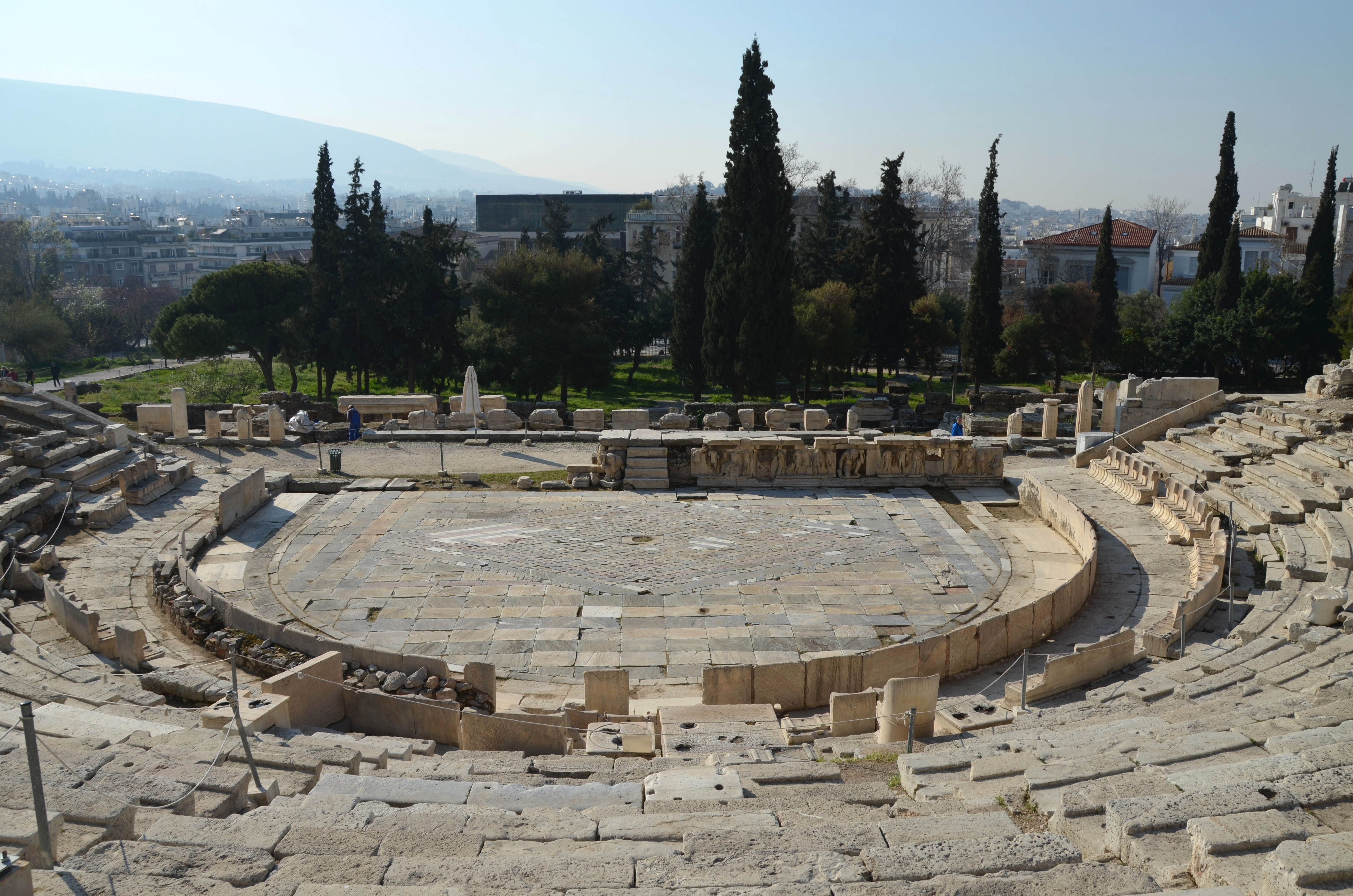
The Greek Theatre of Dionysus in Athens was constructed on the southern slope of the Acropolis hill around the mid- to late-6th century BC. It reached its maximum capacity in the 4th century BC, under the supervision of Lycurgus, accommodating up to 25,000 spectators. The theatre remained in continuous use until the Roman period.
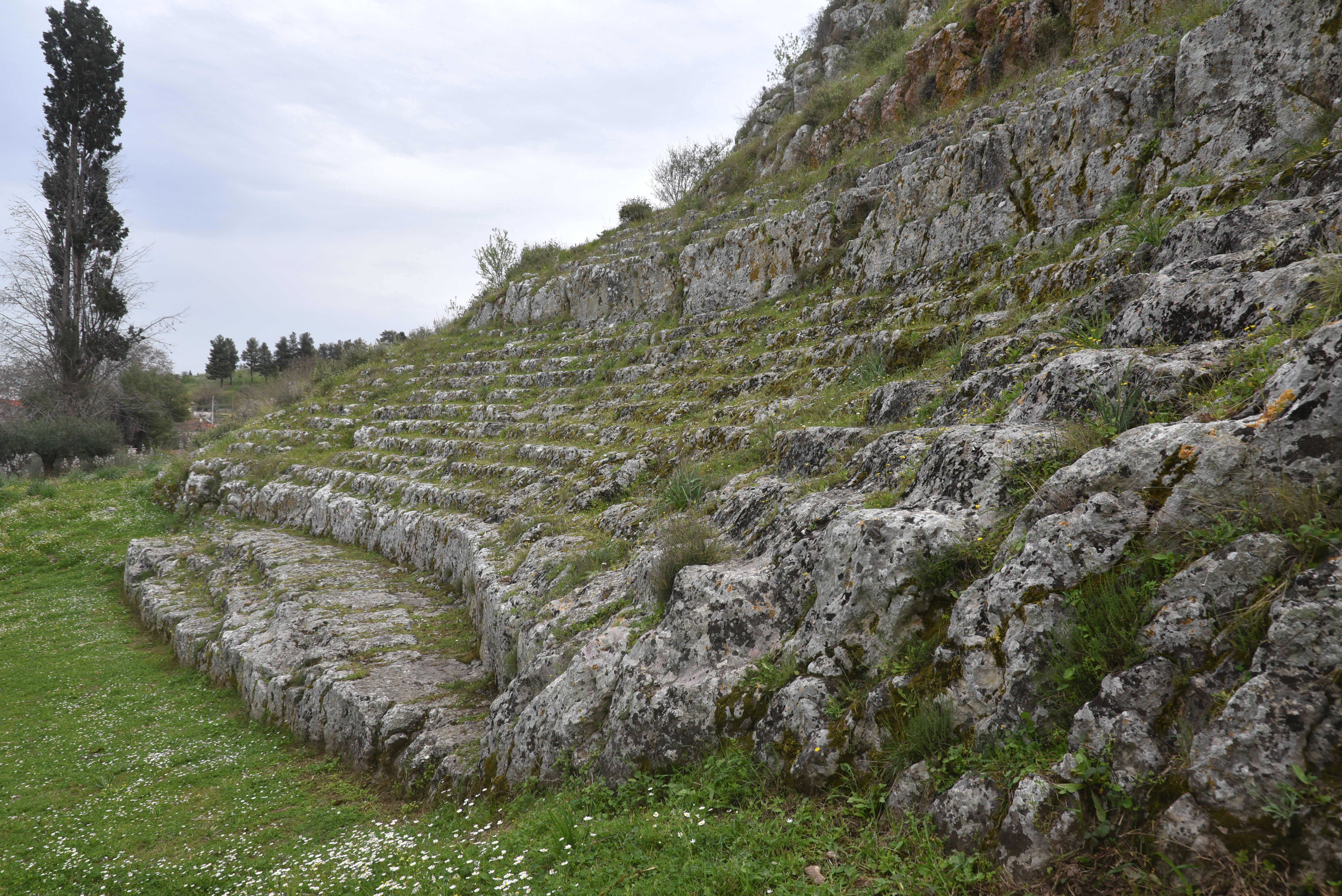
The Greek Theatre of Chaeronea is a small theatre, partially carved into the rock of Petrachos Hill. It dates back to the late 5th century BC, with significant modifications made in the 1st century AD. The theatre is characterised by its early design, which is not strictly semi-circular and can even be described as rectilinear, particularly in the seating area (koilon). It originally featured at least 10 rows of seats. Archaeological findings suggest that the theatre was dedicated to Apollo Daphniforos and Artemis Sodina.
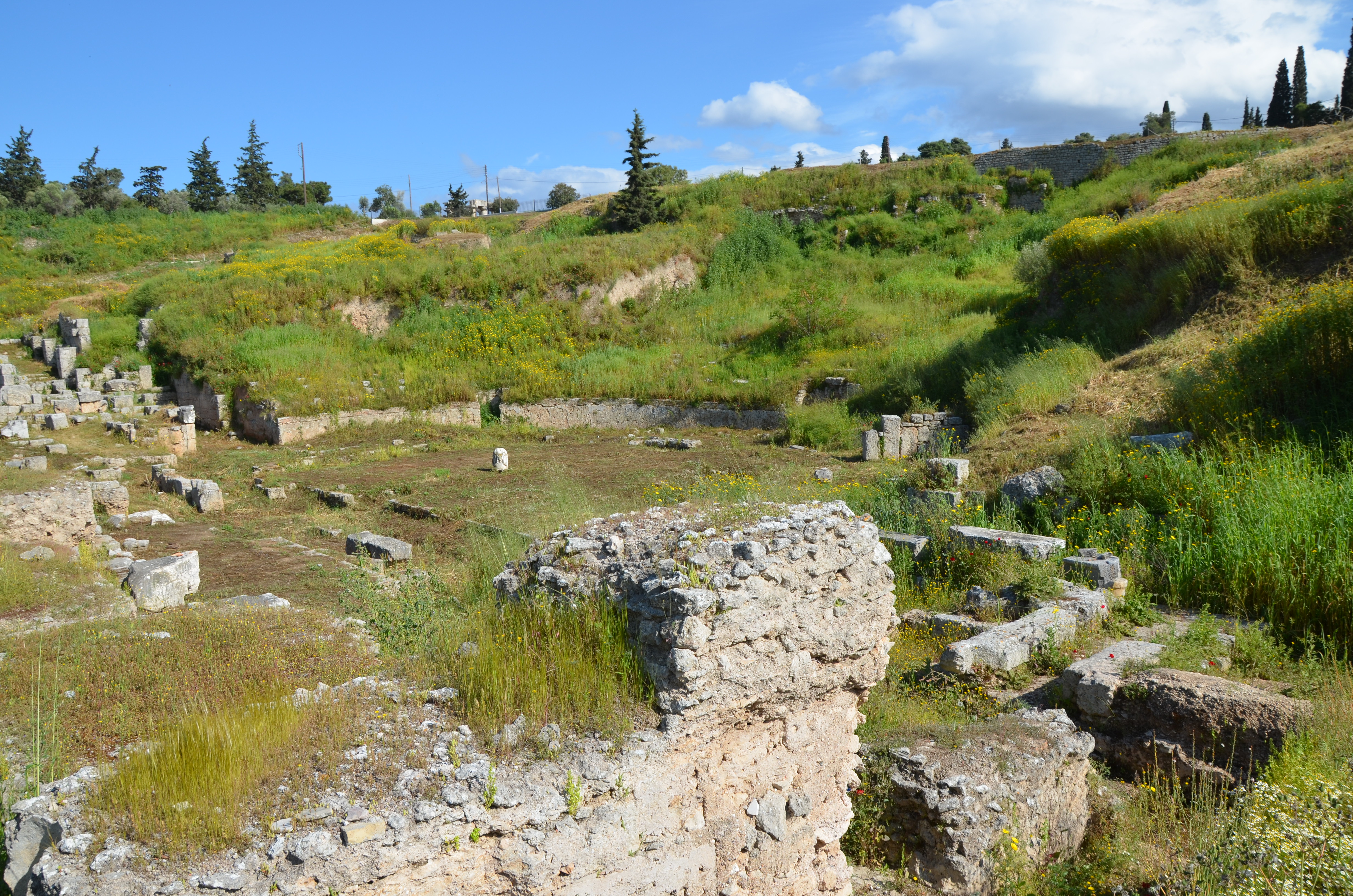
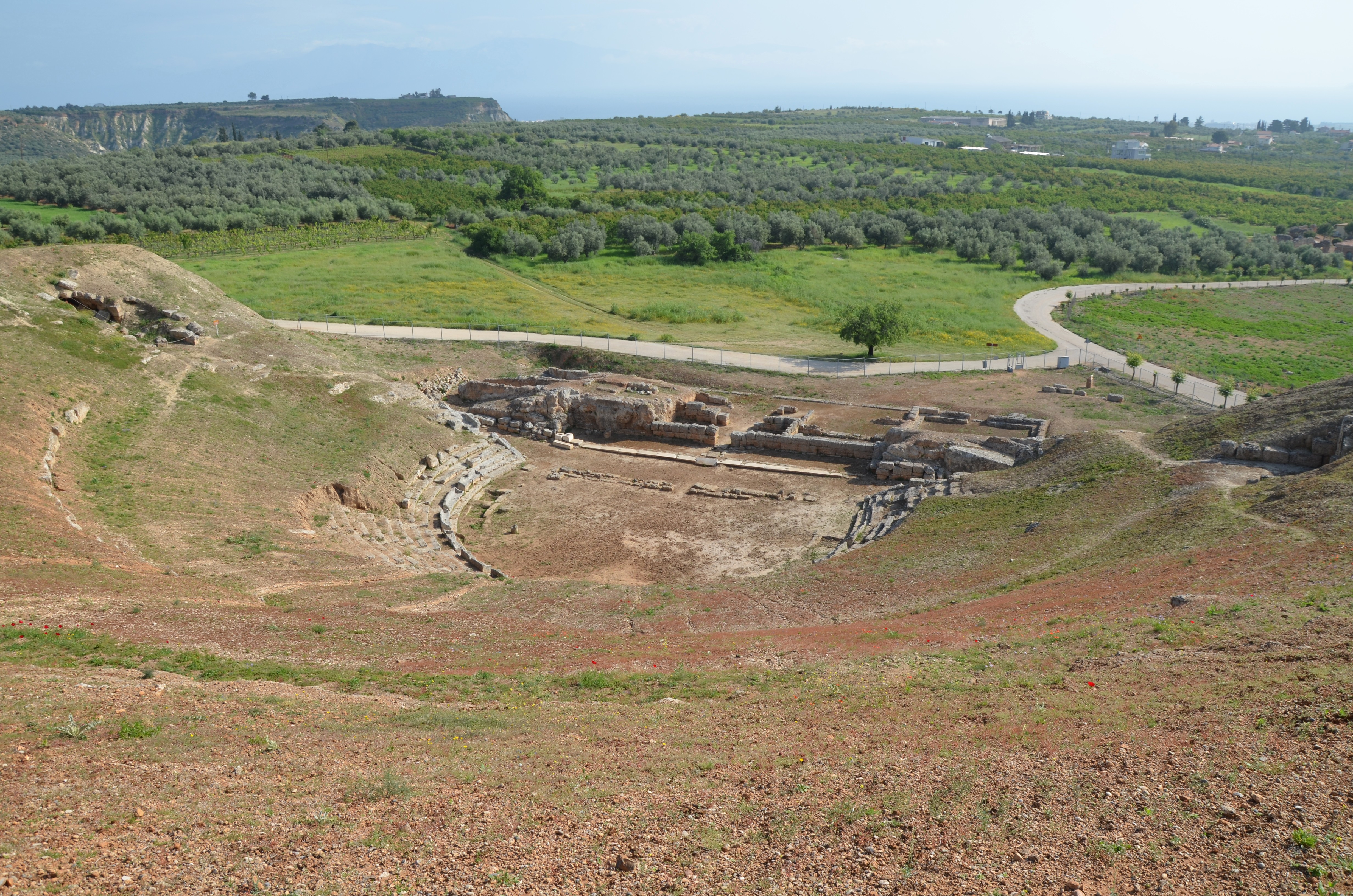
The earliest structure of the Greek Theatre at Corinth dates to the 4th century BC. The theatre underwent its first significant expansion during the late Classical, early Hellenistic, and Roman Imperial periods. The scaenae frons (stage building façade) received a Hadrianic-period update in the early 2nd century AD.
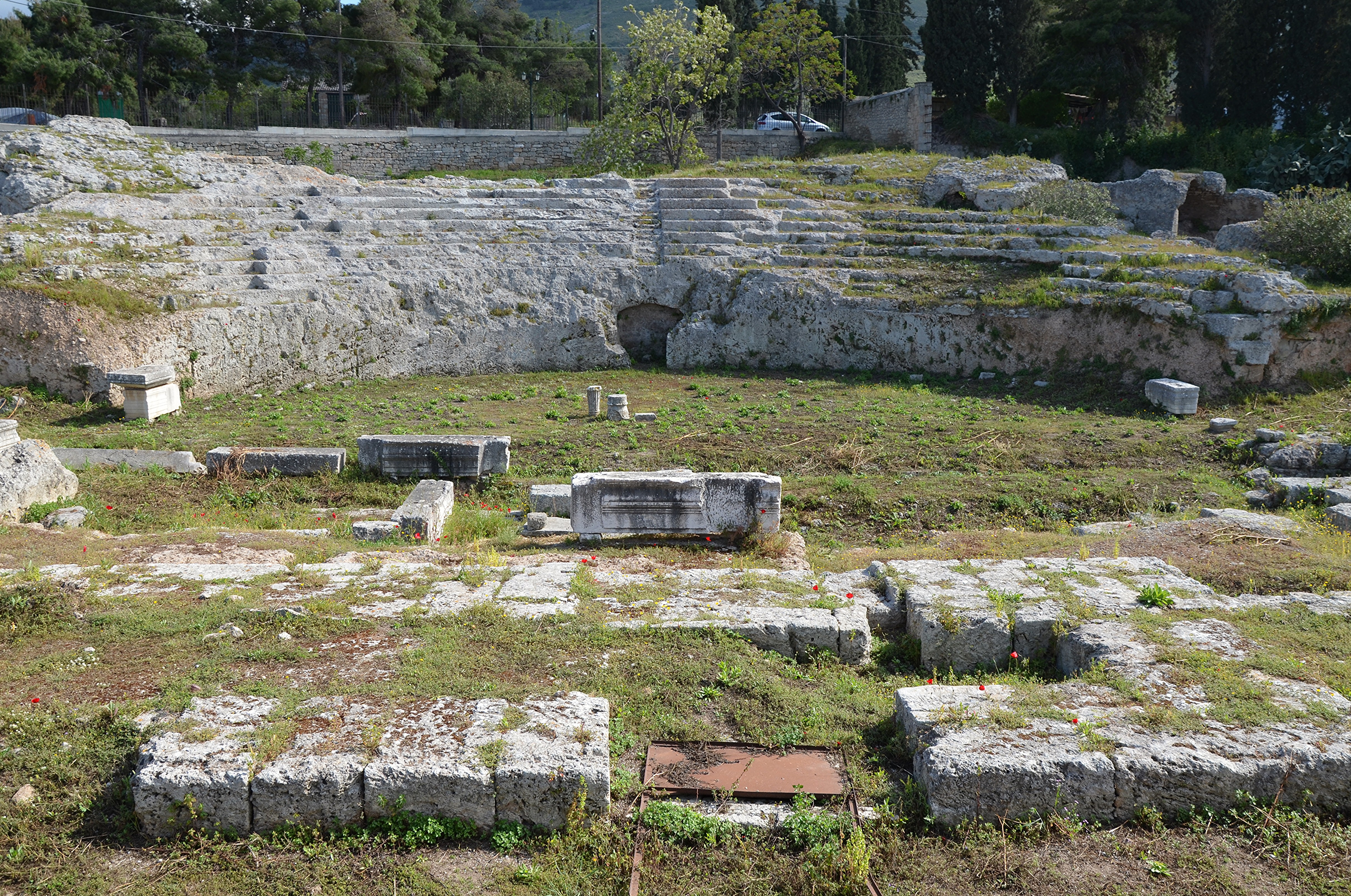
The Roman Odeon, intended for musical events, was built in the 1st century AD and remodelled in the 2nd century AD (probably by Herodes Atticus) and could accommodate 3000.
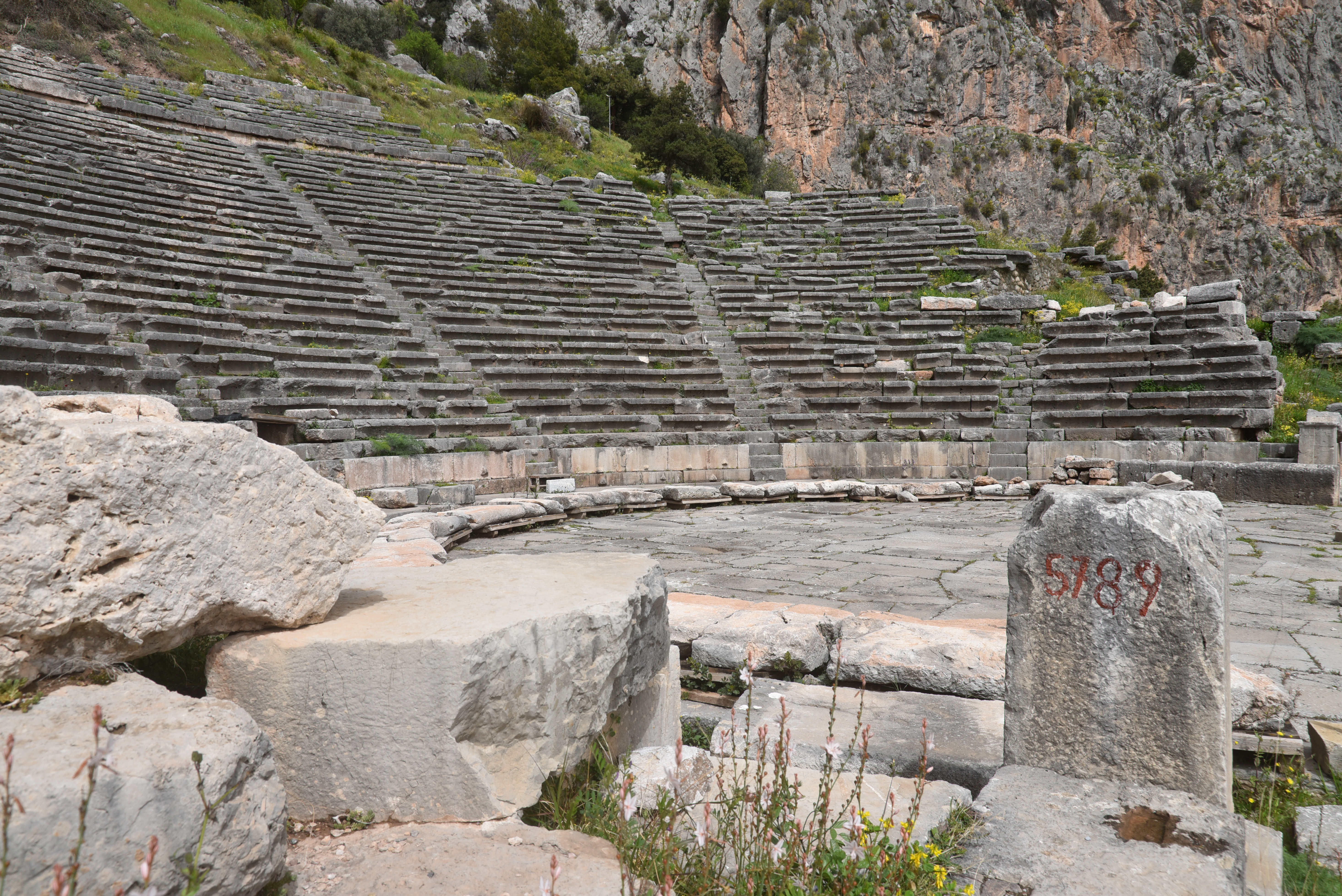
The Theatre of Delphi, built in the 4th century BC on Mount Parnassus, is a Hellenistic-era structure holding roughly 5,000 spectators across 35 limestone rows. Situated above the Temple of Apollo, it hosted Pythian Games musical contests and dramatic performances, later restored by Eumenes II of Pergamon in 160 BC.
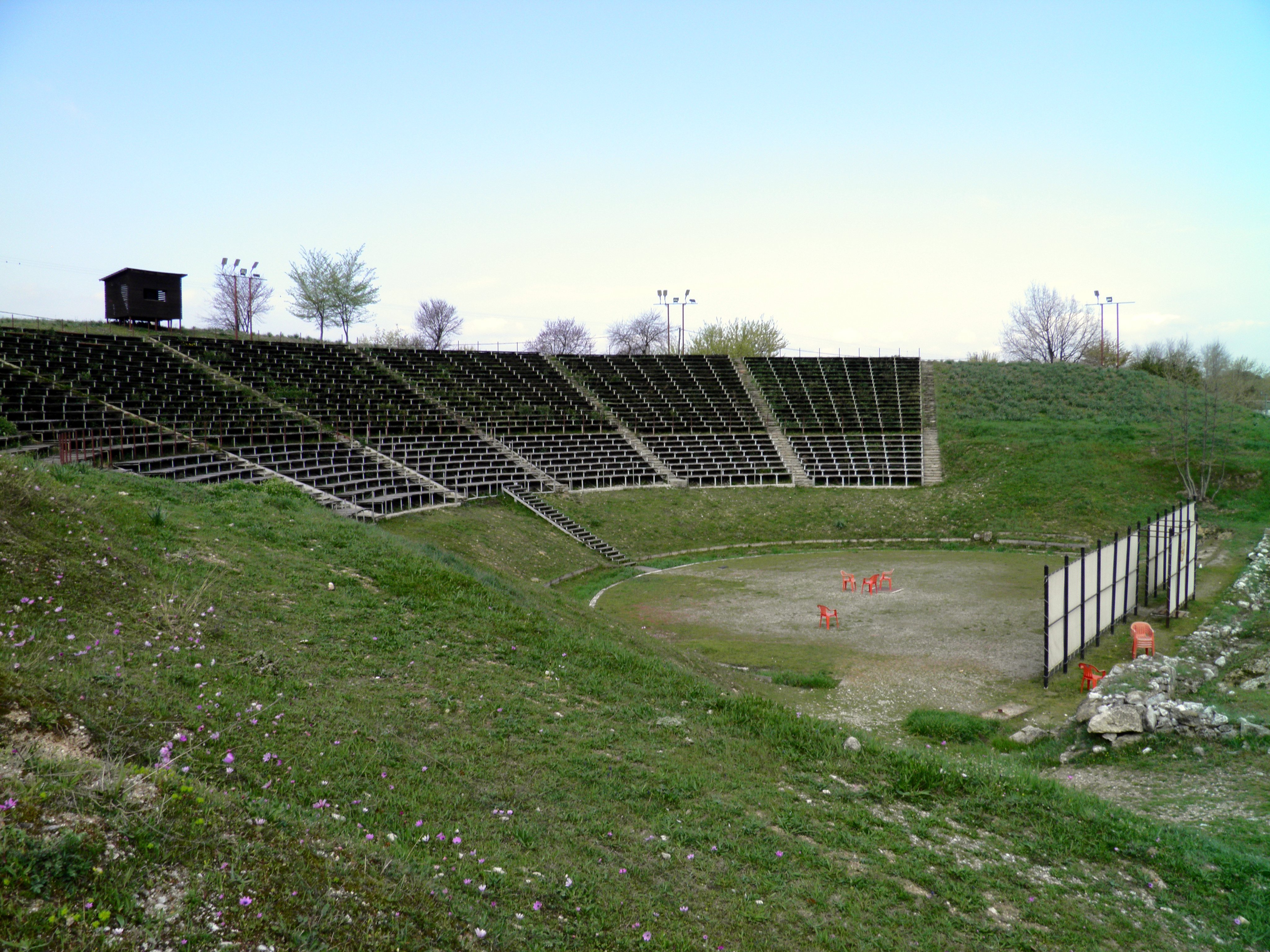
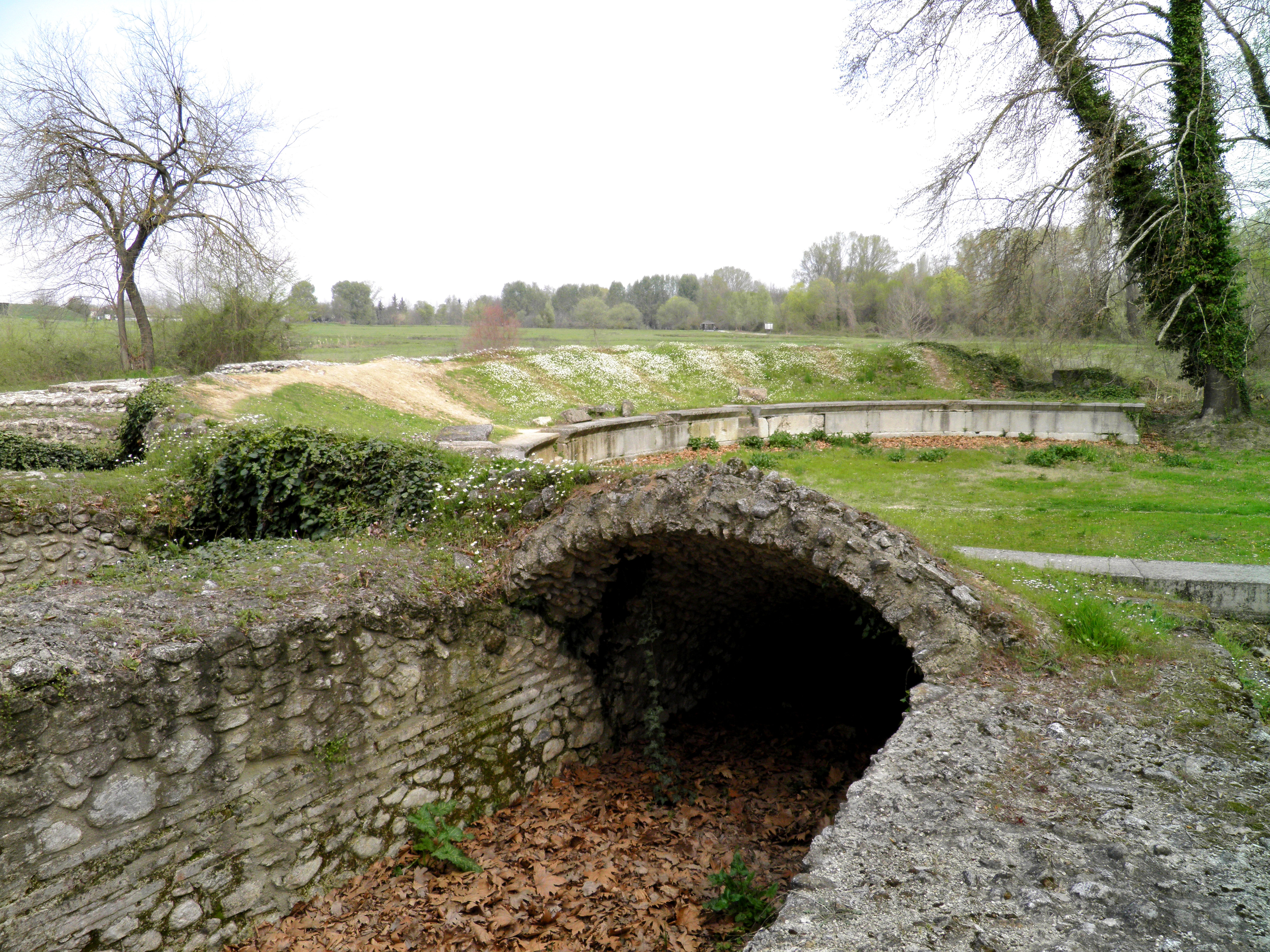
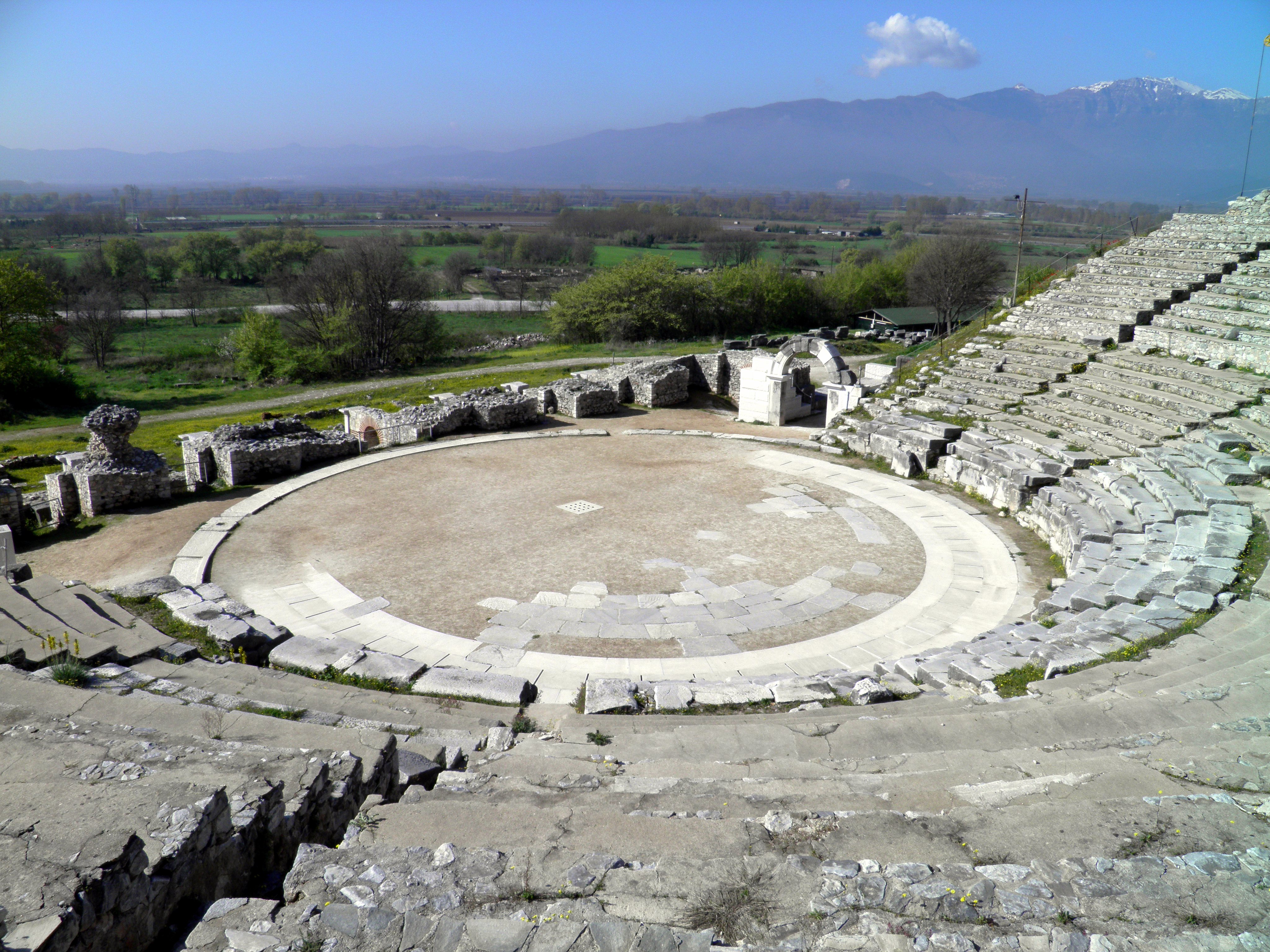
The Theatre at Dion was most probably constructed during the reign of Philip V (221-179 BC). It was built on the slope of a natural hill and oriented northeast, the best for proper ventilation, as Vitruvius later commented. Wooden seats with a capacity of approximately 4,000 spectators were installed, and every summer, the events of the Olympus Festival are performed there.
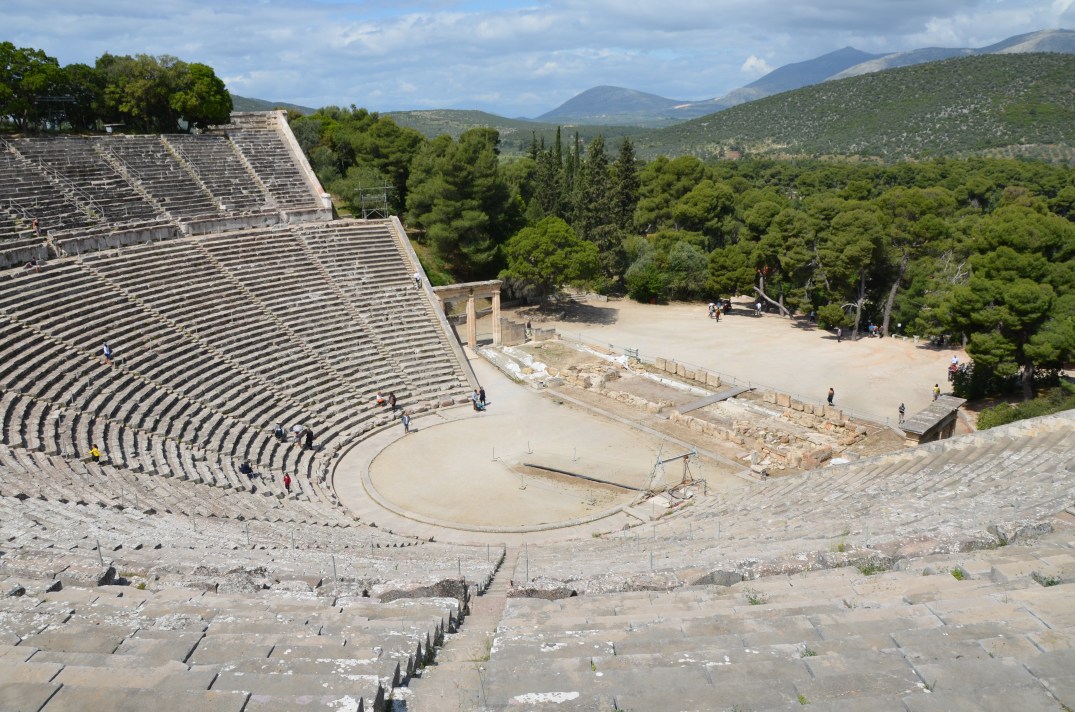
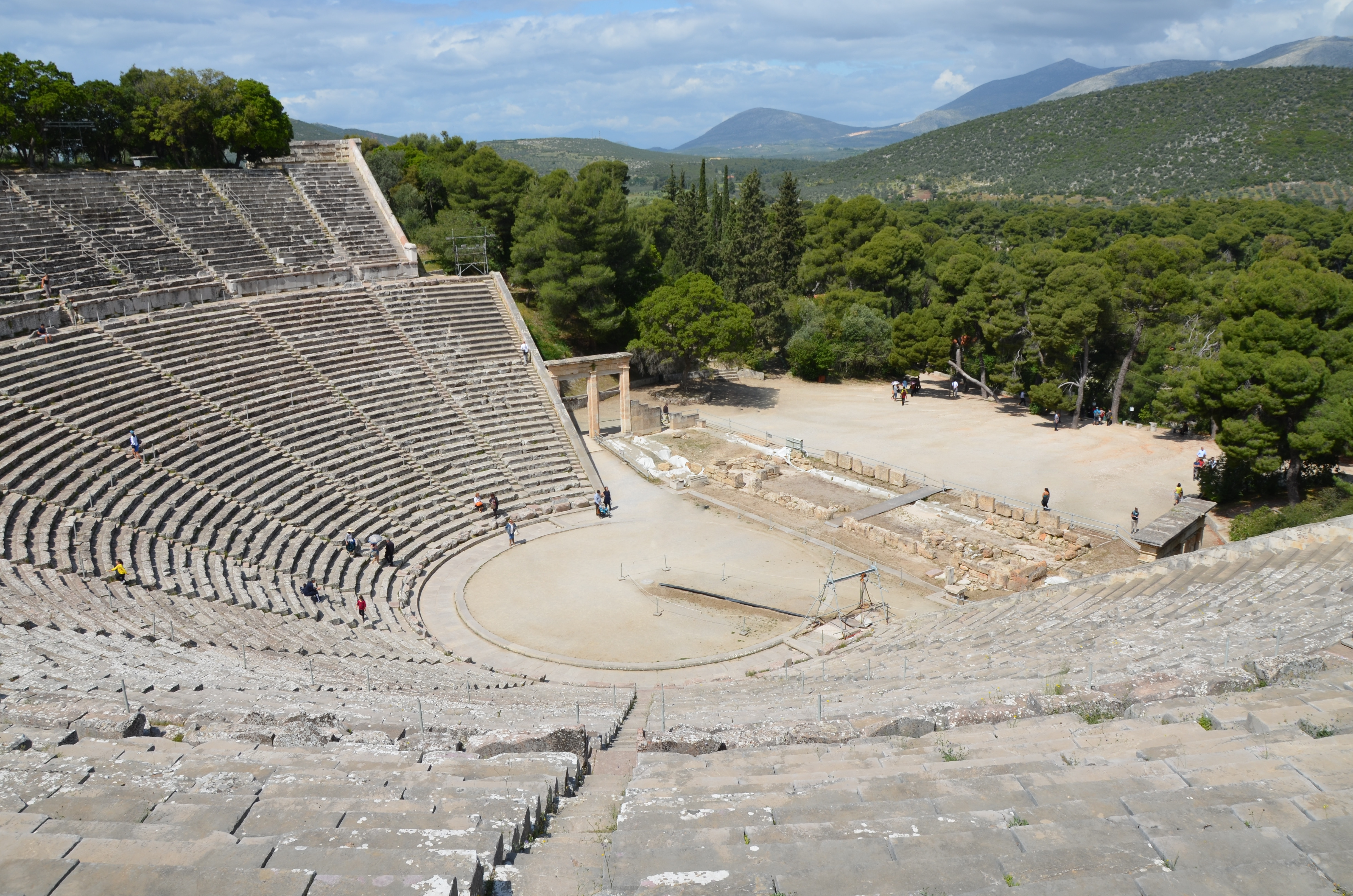
The Greek Theatre of Epidaurus was built in the 4th century BC by the architect Polykleitos the Younger on the southeast end of the sanctuary dedicated to Asclepius. It is considered the most perfect ancient Greek theatre in terms of acoustics and aesthetics. Pausanias praises the theatre for its symmetry and beauty.
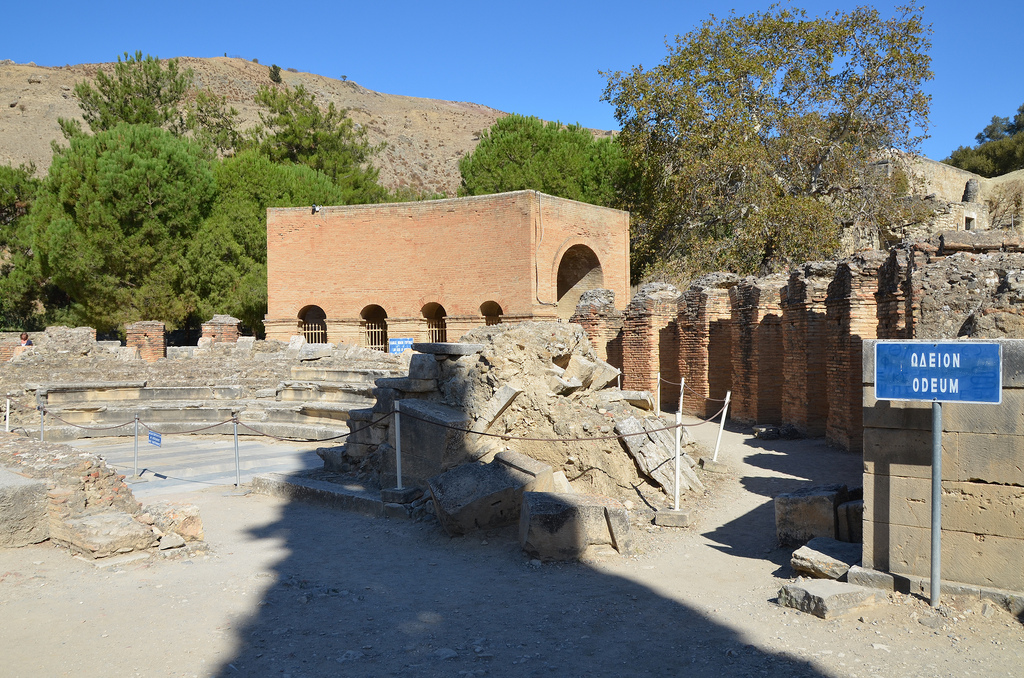
The Roman Odeon of Gortyna was built in the 1st century BC and, after an earthquake damaged it, was restored under Trajan. The Odeon was a roofed building used for musical and theatrical performances. It is one of the best preserved of its kind in Crete.
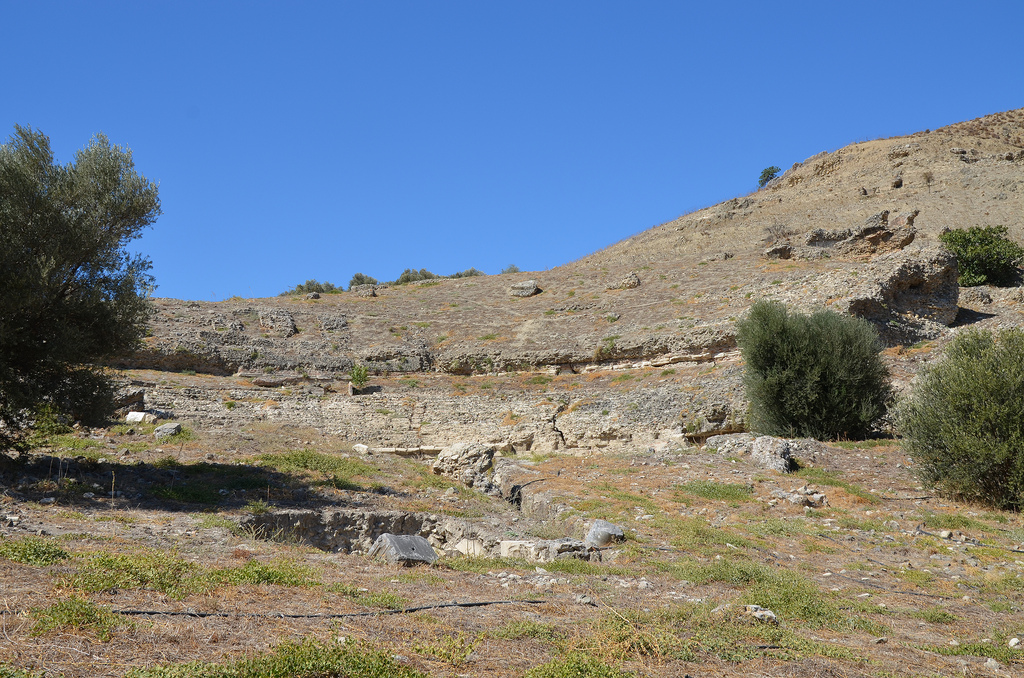
The Great North Theatre was built at the foot of the Acropolis. It is the oldest theatre of Gortyna. The proscenium (front of the scene) was decorated with statues and reliefs, including a statue of Europe on the Bull. This marble group is now kept in the British Museum and is dated to the 2nd century BC.
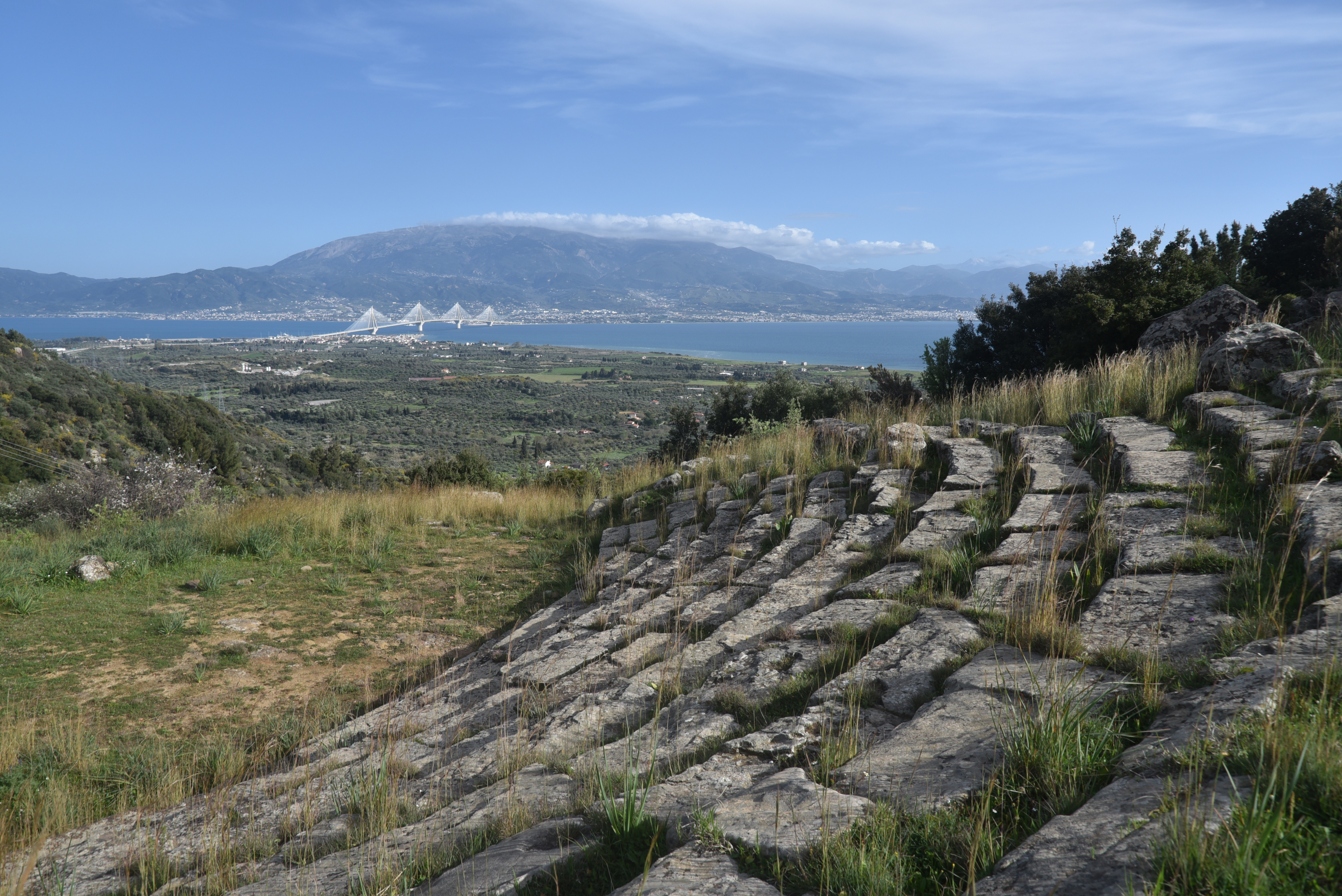
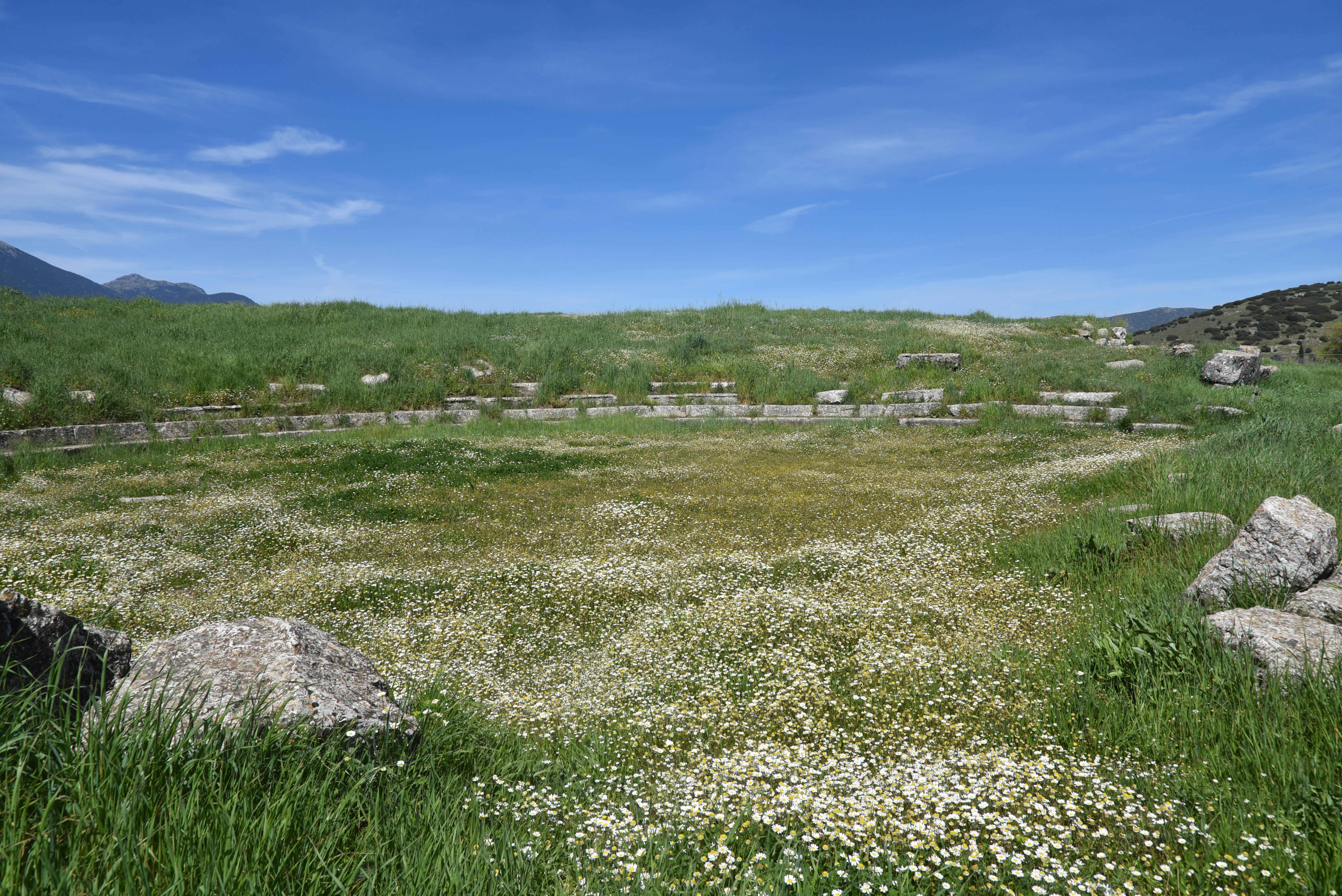
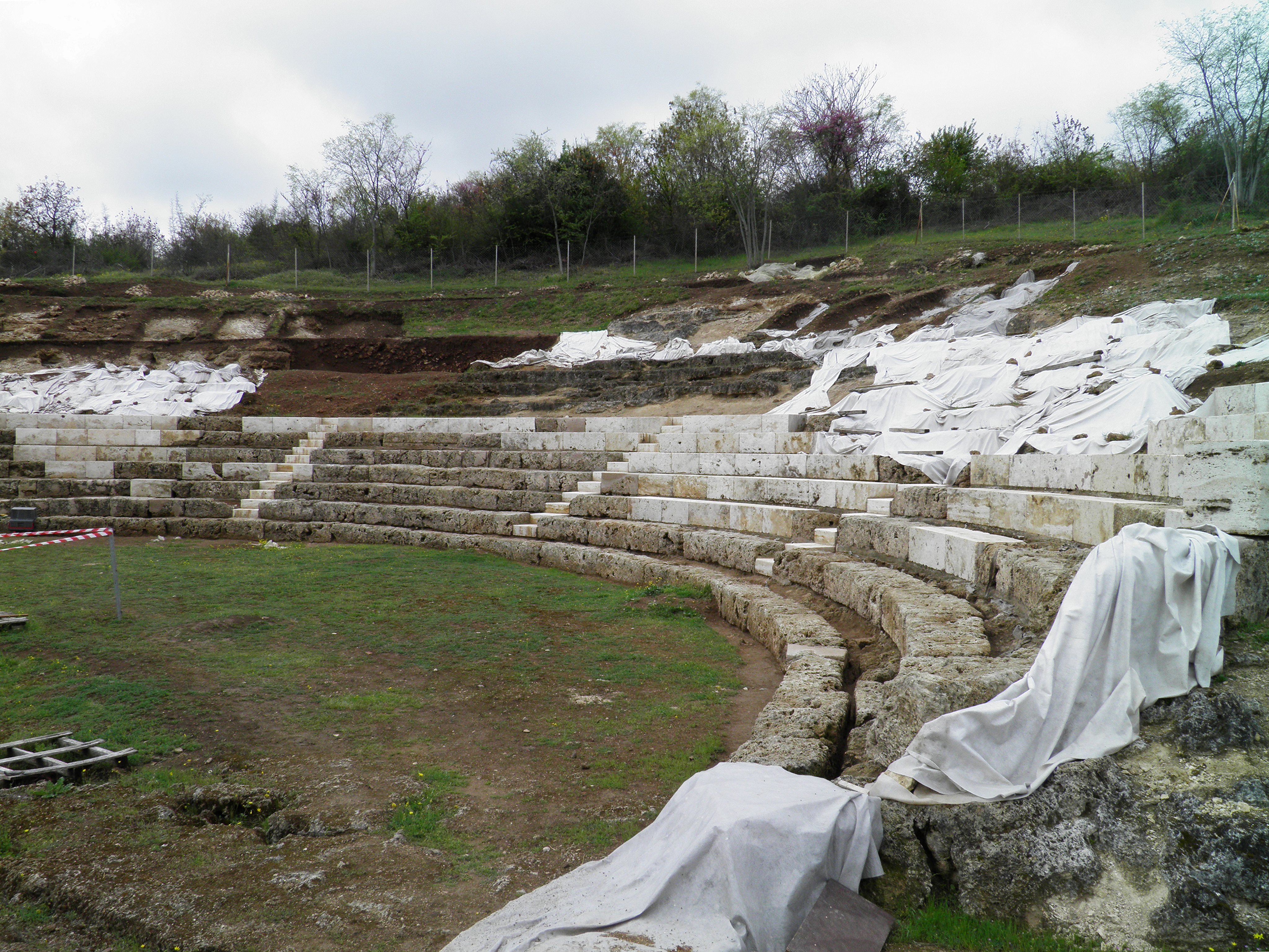
The theatre of Makyneia is a unique, 4th-century BC Greek theatre recognised for its unusual asymmetrical design. Excavated in 1988–1989, it features 14 arcuate rows of seats and a distinct linear wing. It may have served as a bouleuterion (council house).
The theatre at Mantinea dates to the mid-4th century BC. It features a 67-meter-wide cavea, a 21.7-meter-diameter orchestra originally covered in sand, and remnants of a proscaenium. It was a key part of the ancient city, which was rebuilt after 222 BC.
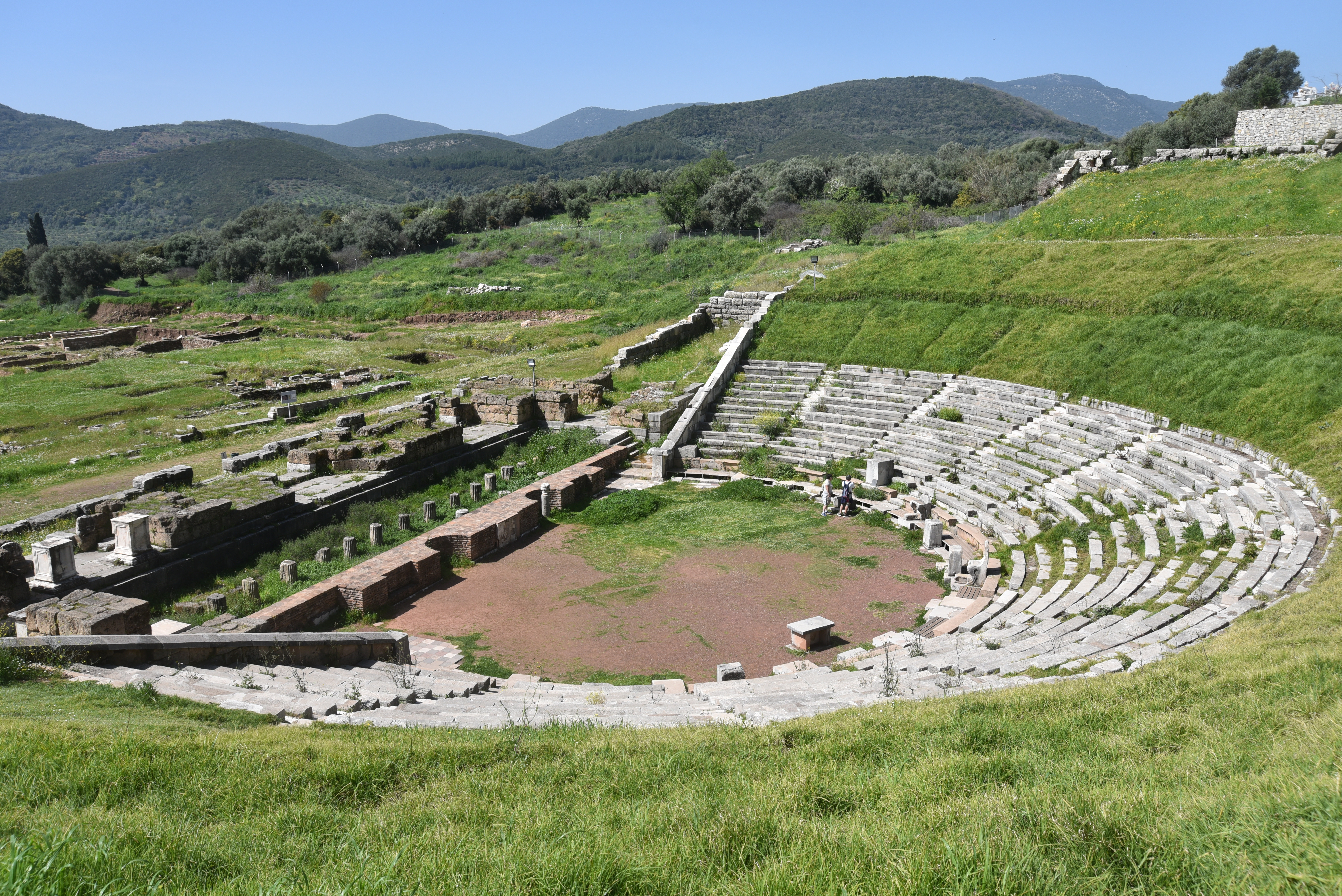
The Theatre of Messene was constructed in the early 3rd century BC. The structure underwent significant renovations during the Roman period, particularly during the reigns of Augustus and Tiberius, with additional large-scale repairs in the mid-2nd century CE funded by the local benefactor Tiberius Claudius Saithidas. It was used until the late 4th century AD.
The Hellenistic Theatre of Mieza was built in the 2nd century BC, with a horseshoe-shaped orchestra. It had a capacity of around 1,500-2,000 spectators.
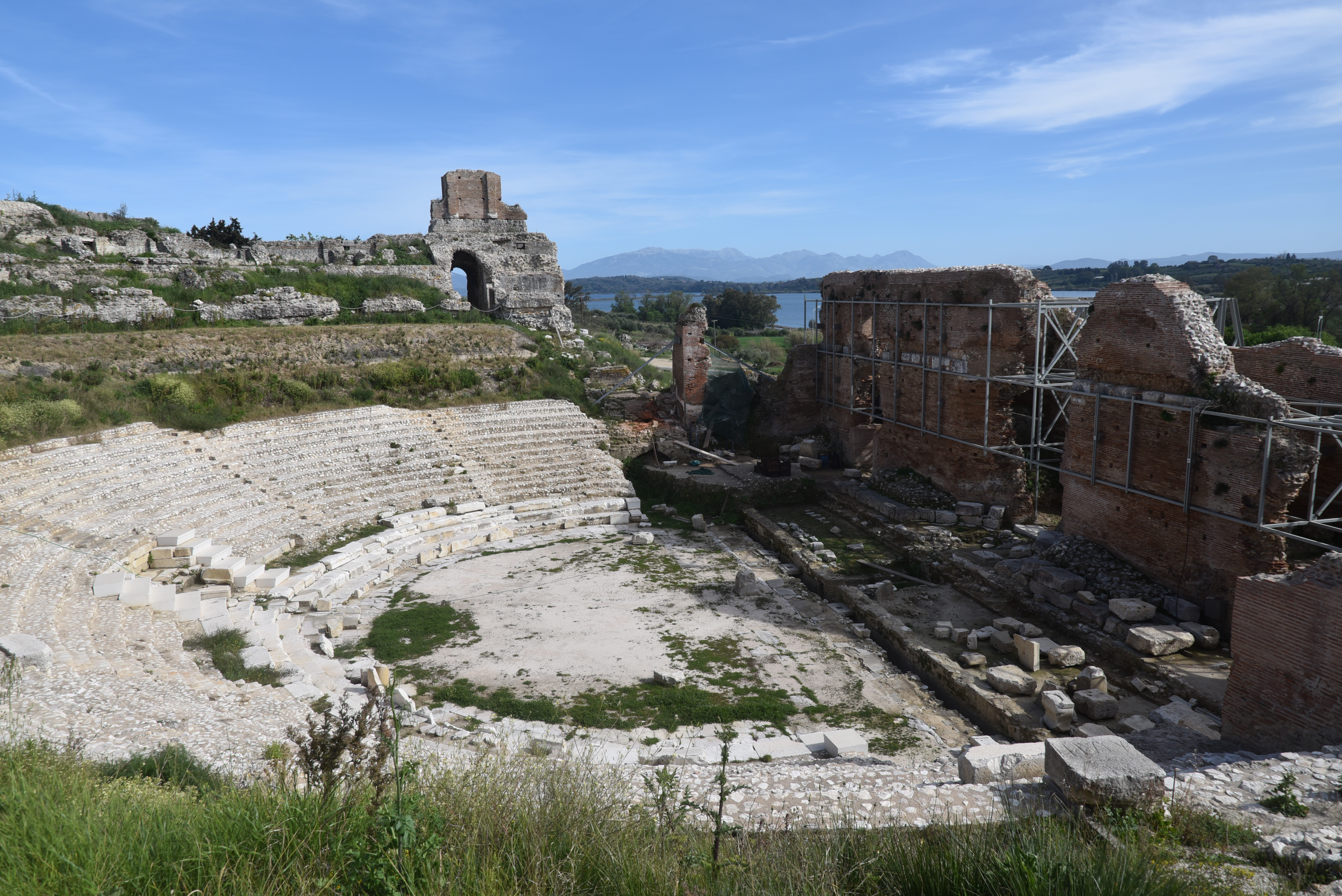
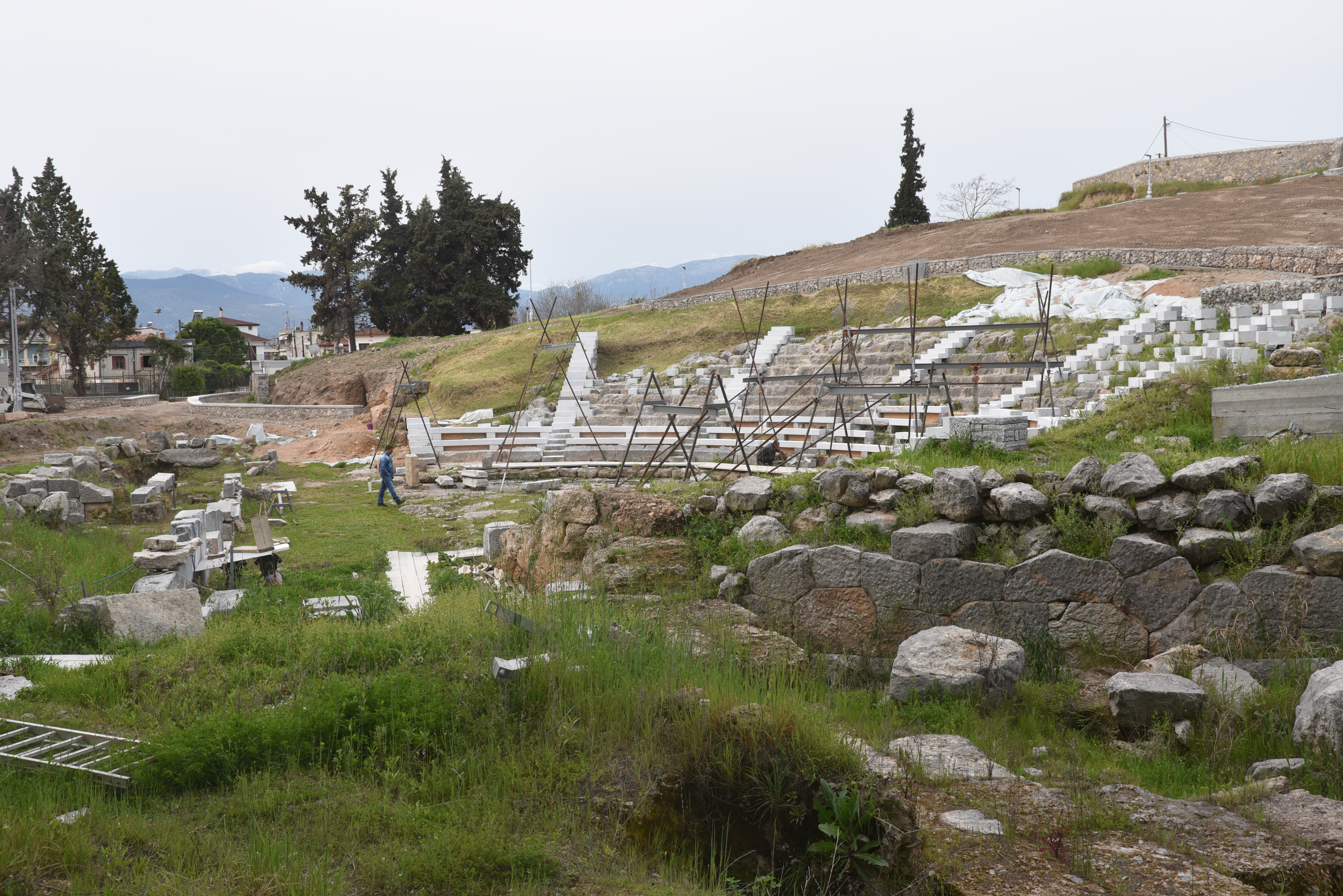
The Roman Theatre at Nicopolis was constructed in the southern foothills of the sacred hill of Apollo. It was built by Augustus to celebrate his victory at Actium. The monument was renovated in the first half of the 2nd century AD and was likely commissioned by Hadrian.
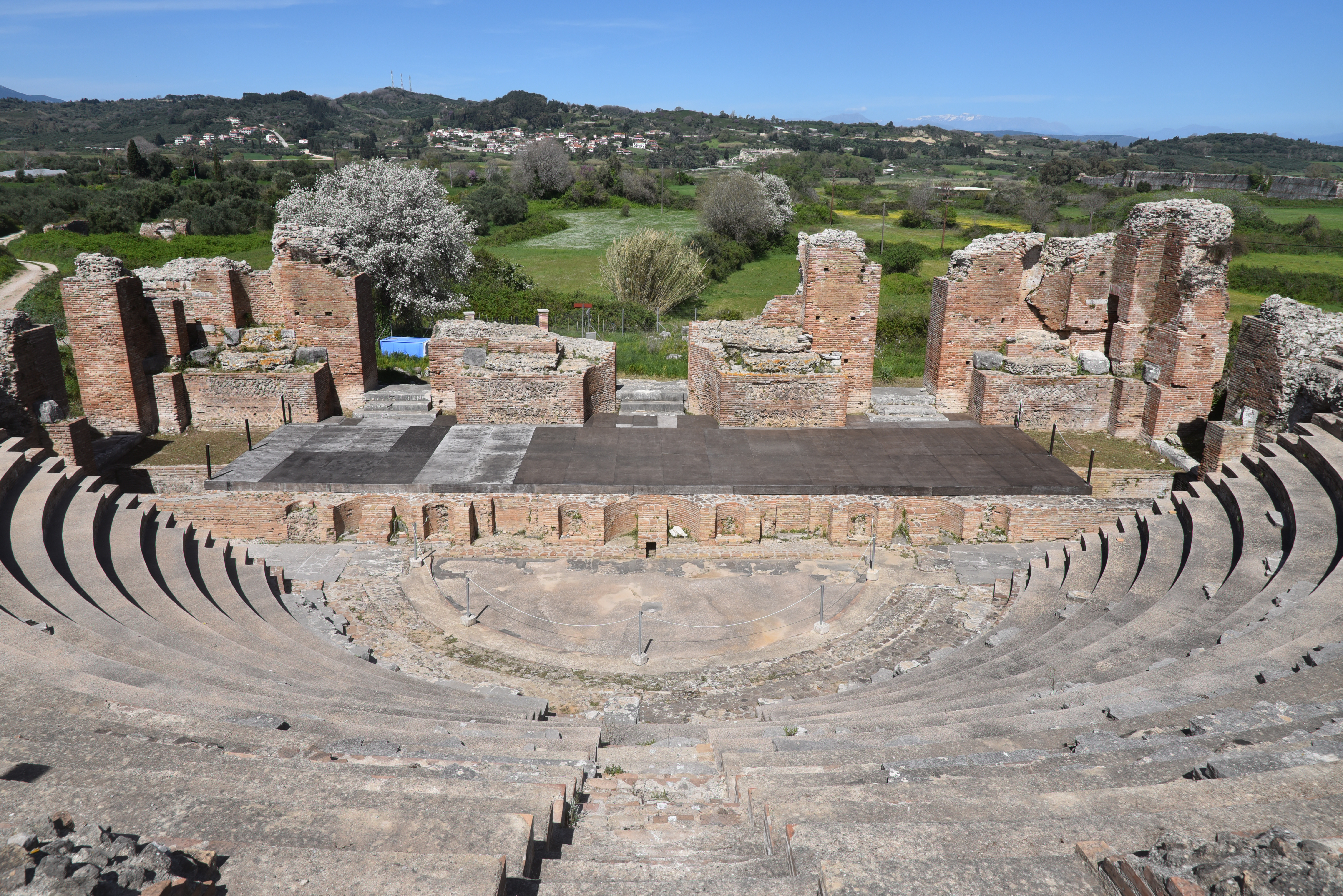
The Roman Odeon at Nicopolis was built in the first half of the 2nd century AD and later restored during the Severan period. It was situated in the centre of the town, next to the Roman Agora. The Odeon consisted of three main parts: the cavea, the orchestra, and the stage. The cavea featured 19 rows of seats and was divided into two sections by a small horizontal corridor.
The ancient theatre of Orchomenos in Boeotia was built in the 4th-century BC near a massive Mycenaean tholos tomb. It served as a venue for musical contests known as the Charitisia and could hold over 4,000 spectators.
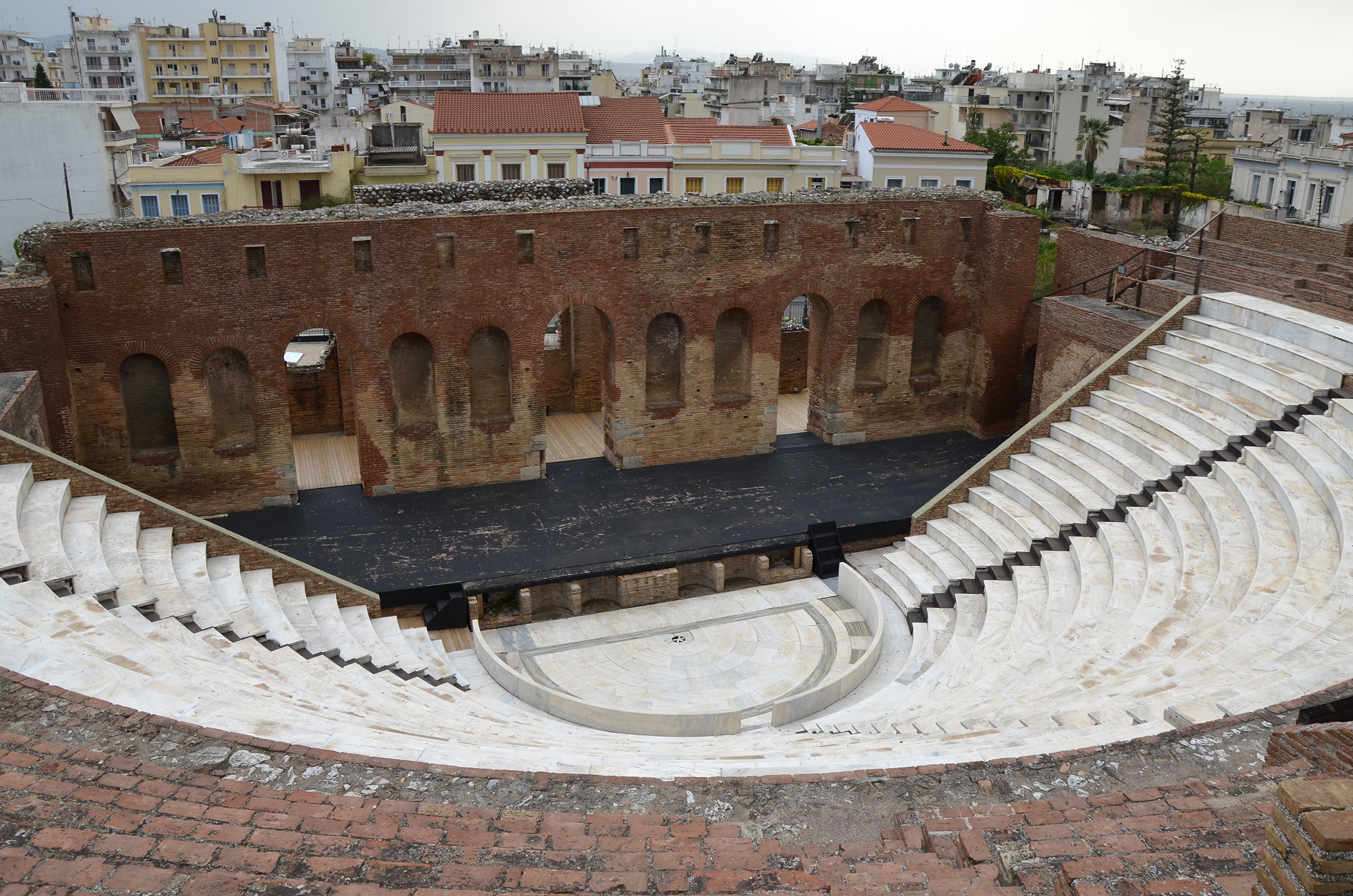
The Roman Odeon of ancient Patrai was visited by Pausanias in AD 160, who rated it with the Odeon of Herodes Atticus in Athens as the most impressive of all the Odeons in Greece. The Odeon could seat approximately 2300 spectators.
The Theatre of Philippi was built by Philip II in the 4th century BC. At that time, the orchestra was U-shaped. It was later reconstructed by the Romans, when the orchestra was floored with marble slabs, and a high wall was built to protect the spectators during beast fights. Eventually, in the 3rd century AD, the theatre became an arena for beast fights.
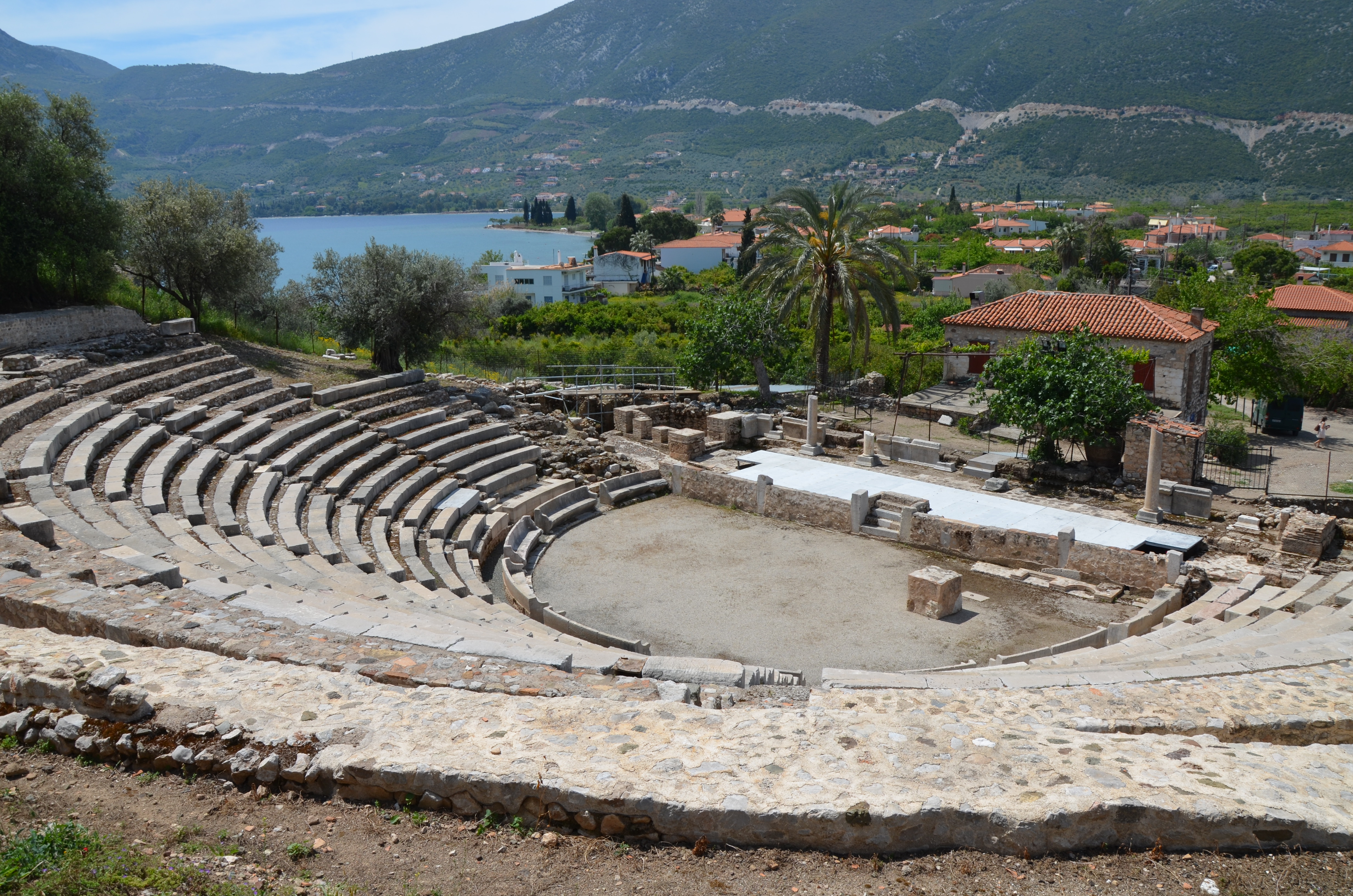
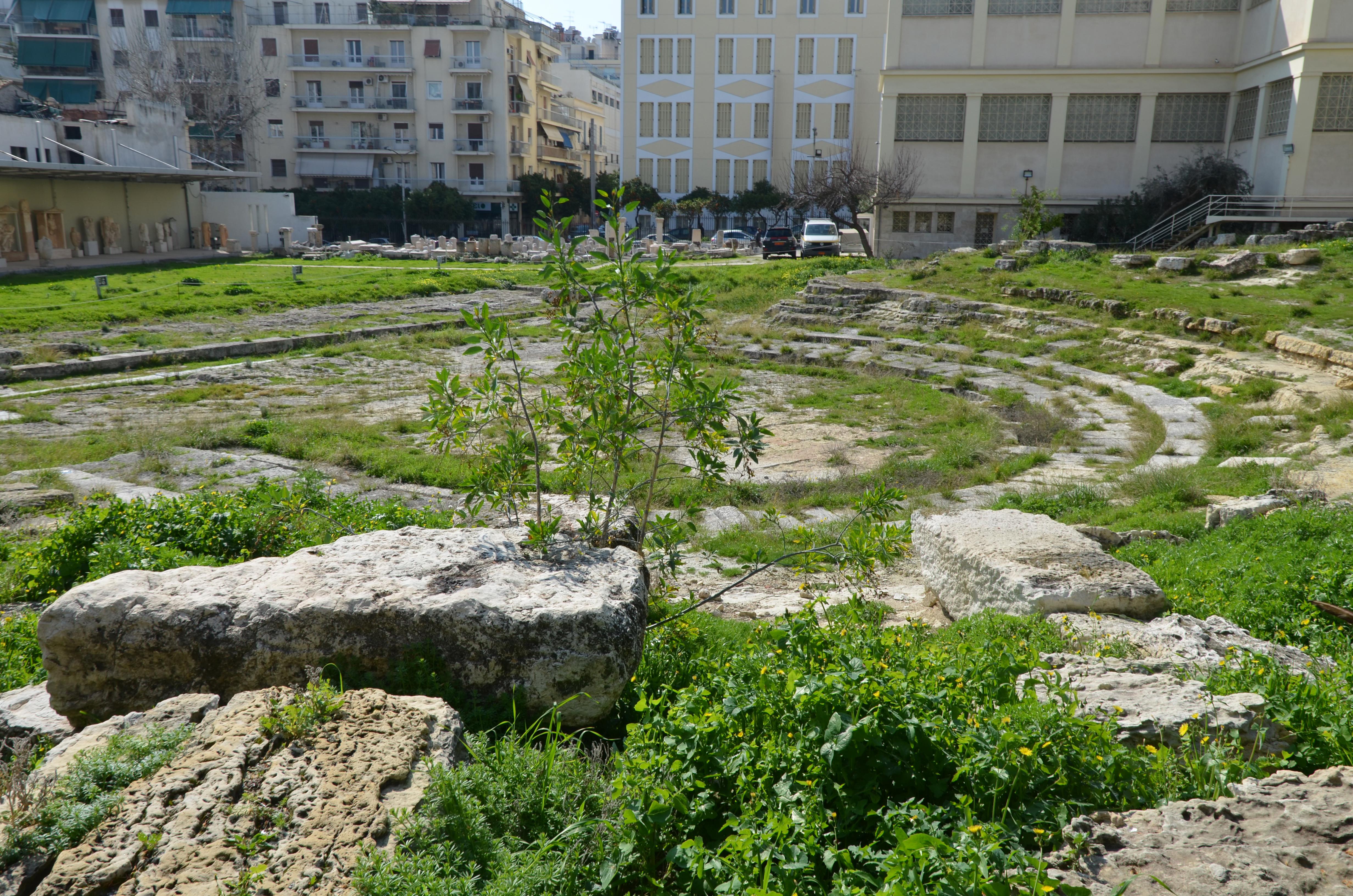
The Hellenistic Theatre in Piraeus was built in the 3rd century BC and was modelled after Athens’ Theatre of Dionysus. Today, only its foundations, including a horseshoe-shaped orchestra and seating area (koilon), remain visible near the Archaeological Museum of Piraeus.
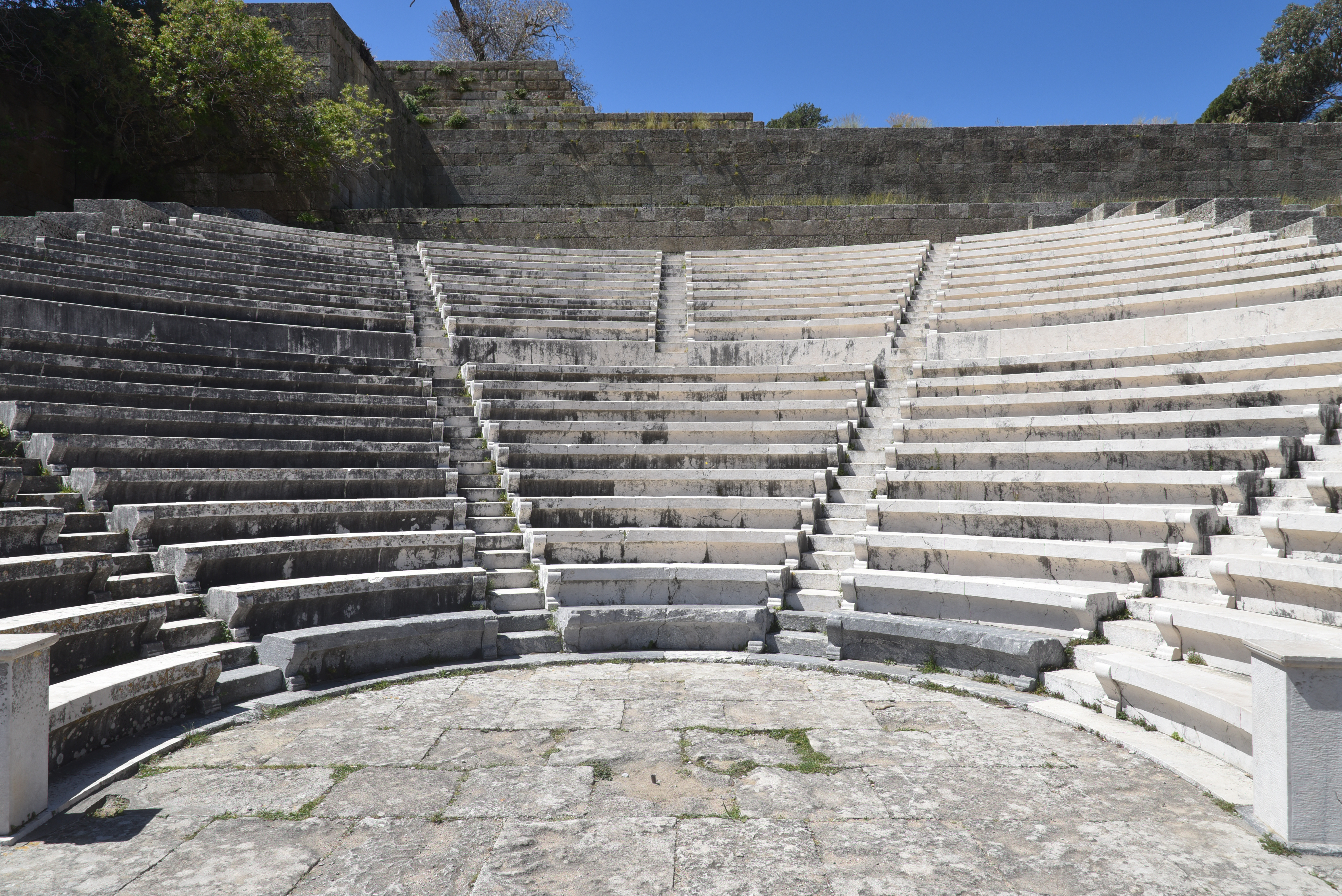
The Odeon of Rhodes is located on the ancient Acropolis. This small marble Odeon, dating to the 2nd century BC, could hold approximately 800 spectators.
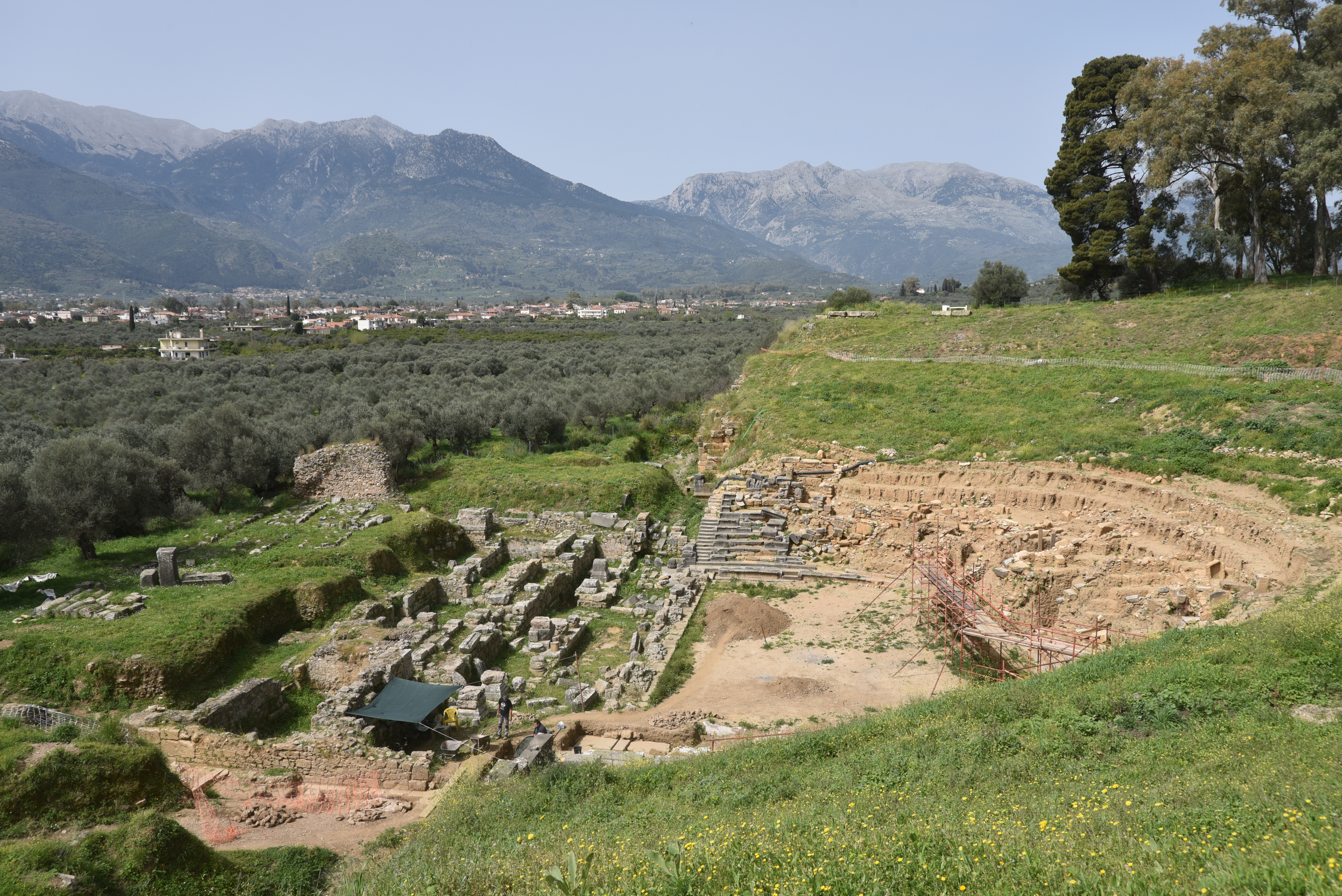
The Roman theatre at Sparta, located on the south slope of the Acropolis, was built in the 1st century BC over the remains of a Hellenistic predecessor. It was rebuilt several times up to the 4th century AD. Its capacity was around 16,000.
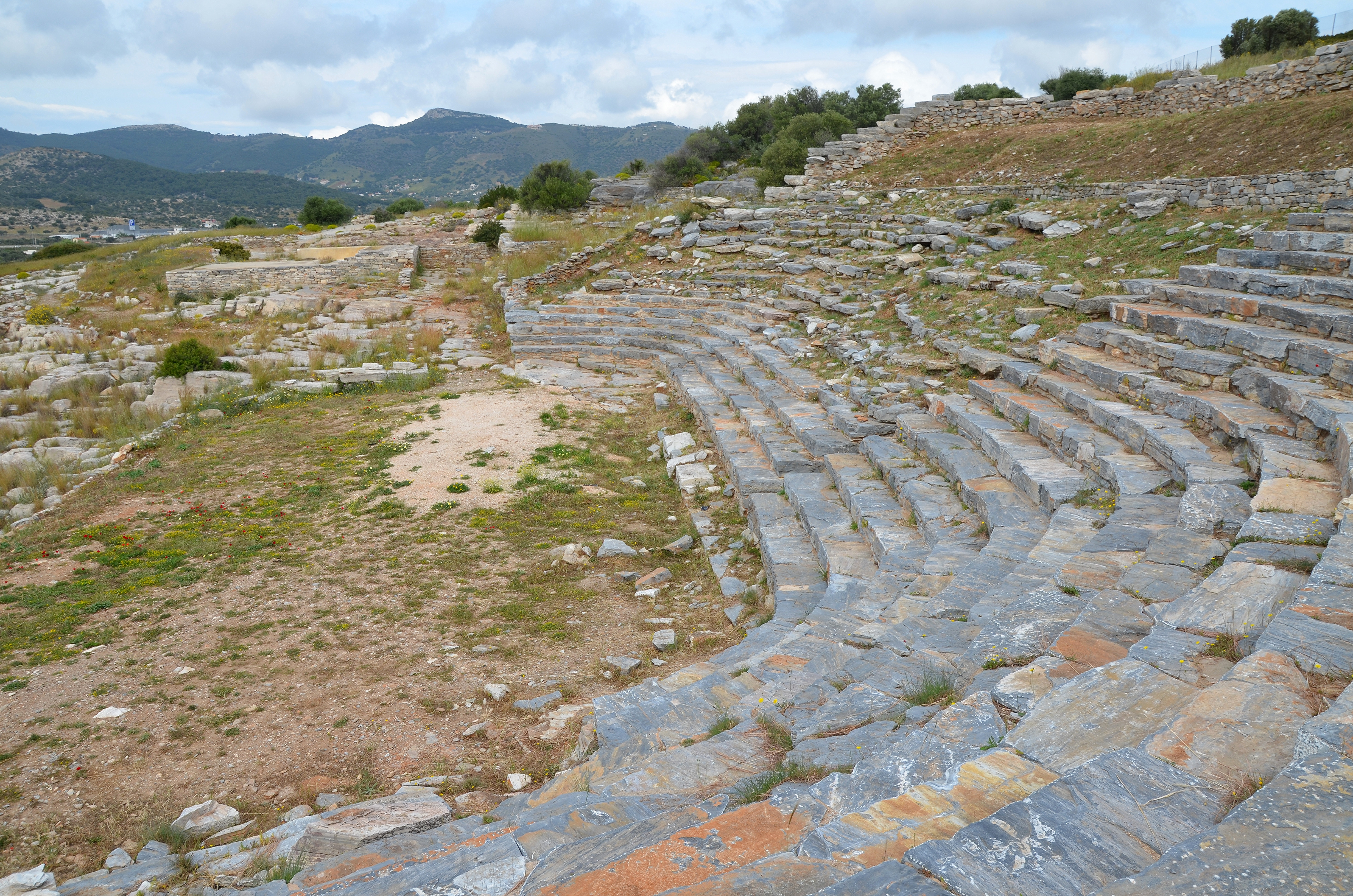
The Theatre at Thoricus was built around 525-480 BC and features a distinctive elongated layout. It is recognised as the oldest known theatre. Situated north of Lavrion, nearly adjacent to the city, it dates back to the end of the Archaic period, specifically to the period between 525 and 480 BC. Unlike later Greek theatres, which are typically circular, the Thoricus Theatre is elliptical and features a rectangular orchestra rather than a circular one. With 21 rows of seats, the theatre can accommodate up to 4,000 spectators.
The Theatre of the Valley of the Muses, located on the slopes of Mount Helicon near Askra in Boeotia, Greece, is an ancient, partly rock-cut theatre from the 3rd or 2nd century B.C. Built for the Mouseia festival, which honoured the nine Muses, the site featured musical and dramatic contests, with spectators sitting on the mountain slope.
The Ancient Theatre was part of the sanctuary dedicated to the Kabeiroi (gods of the underworld). It was built during the Hellenistic period (3rd-1st century BC) to host religious ceremonies related to the initiation of pilgrims.
ISRAEL
Caesarea Roman Theatre (32°29’46.3″N 34°53’27.1″E)
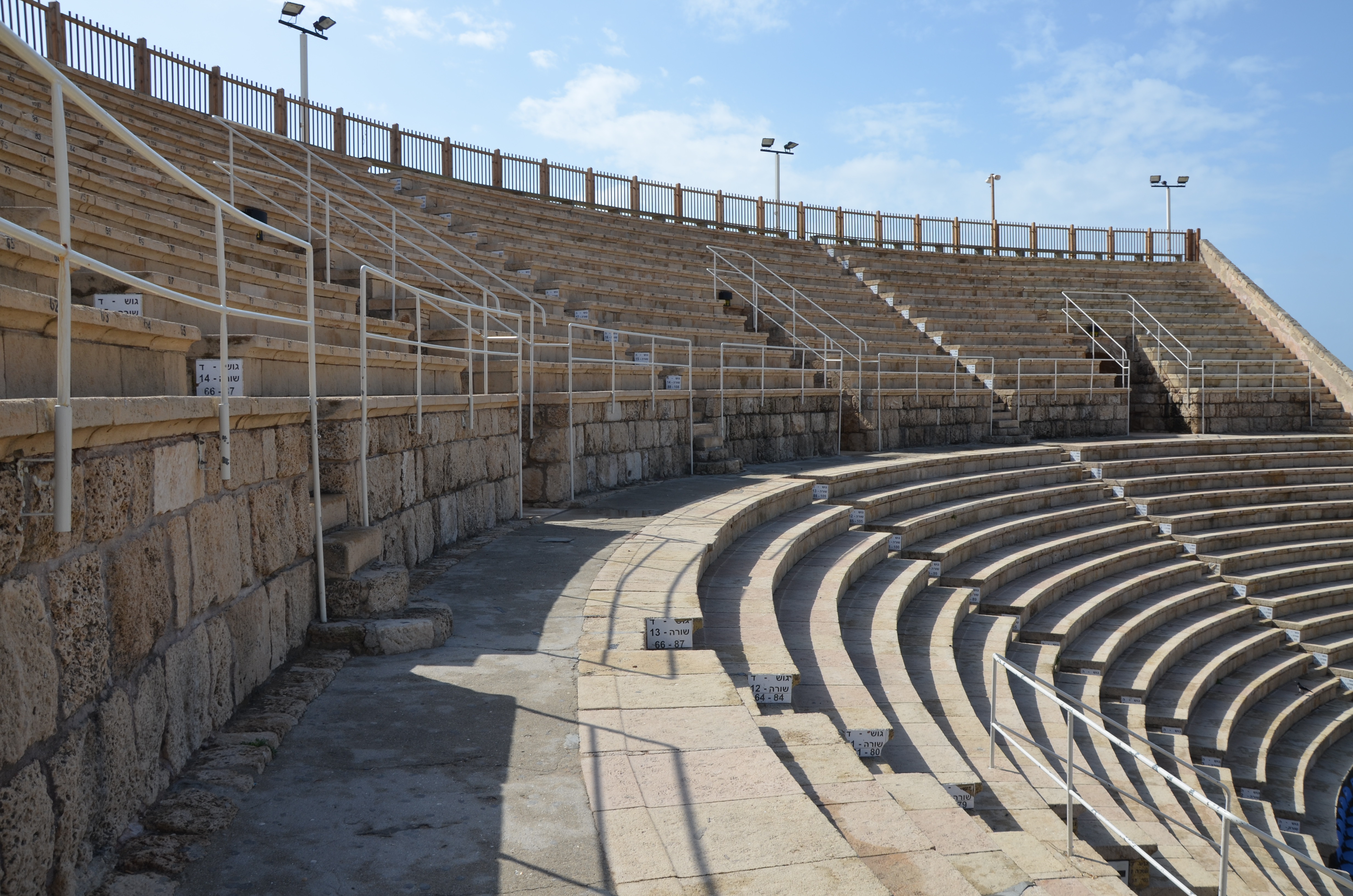
Herod the Great built the Theatre of Caesarea during the city’s early development, and it was renovated in the 2nd century AD. It had a final seating capacity of approximately 4,000. The theatre faced the Mediterranean Sea, providing an impressive open backdrop of columns and stonework behind the stage.
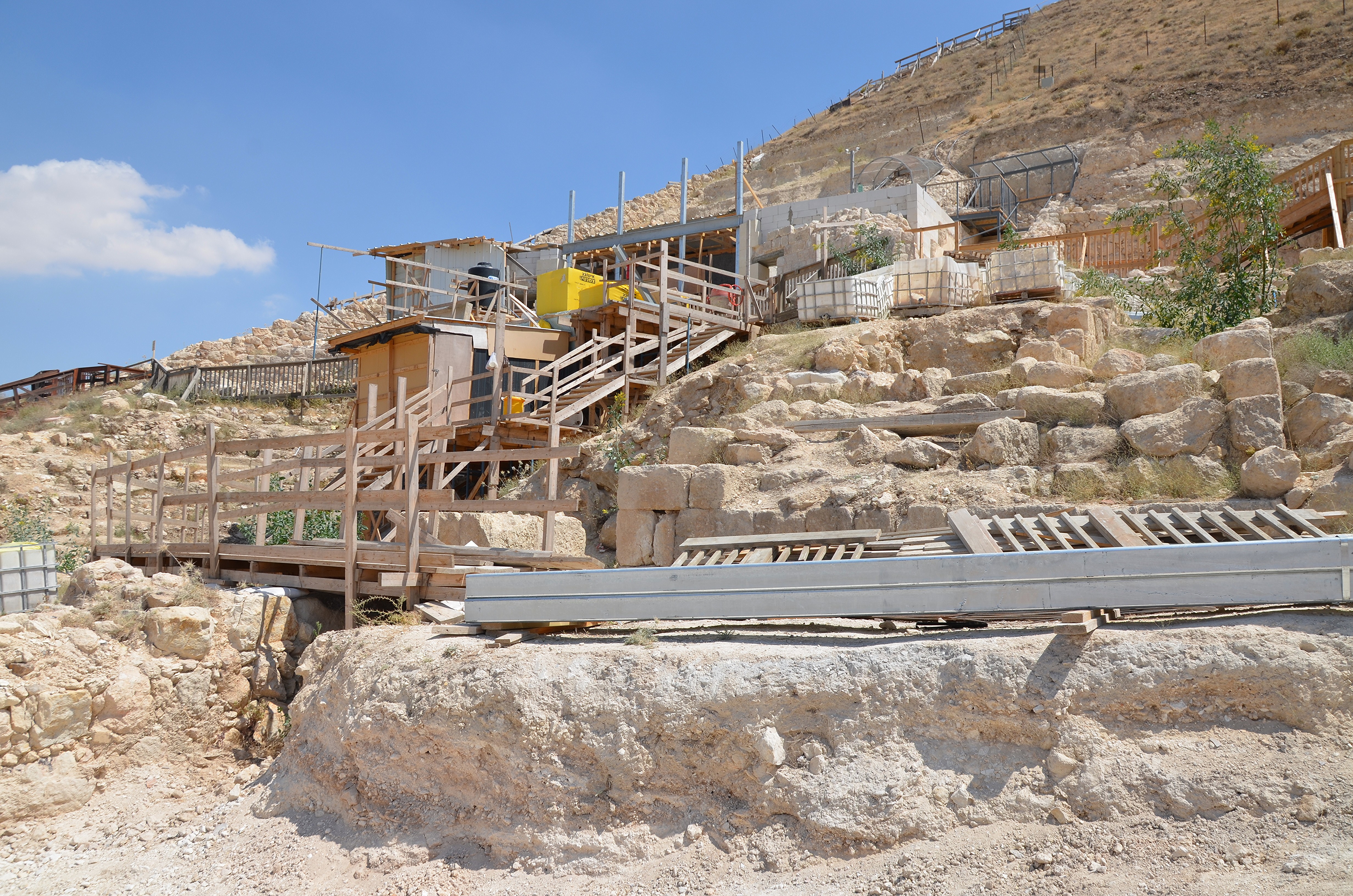
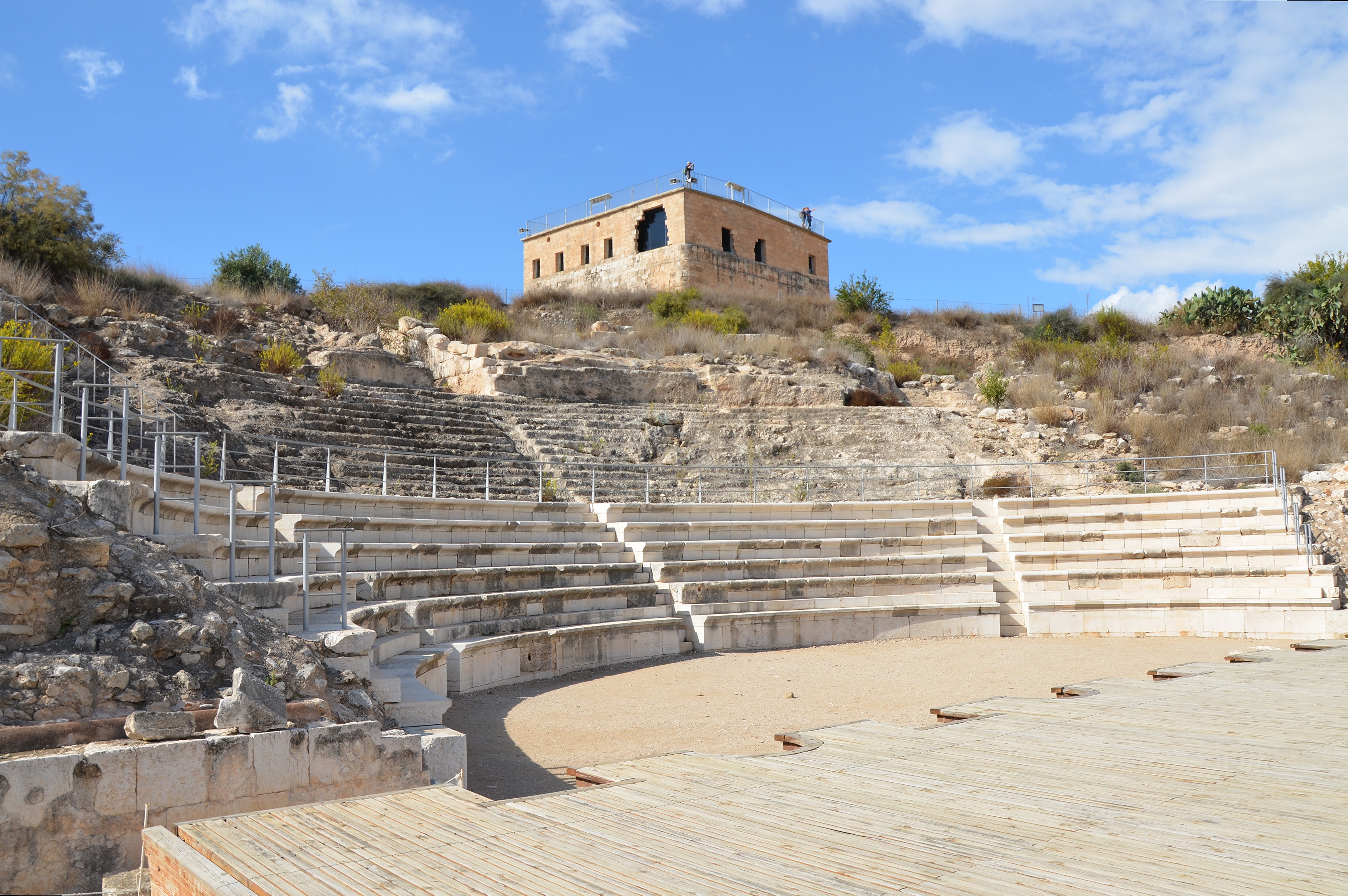
The small royal theatre, about 12 meters in diameter and seating around 400 people, is located west of Herod’s mausoleum. At the top, a private chamber served the King and his guests.
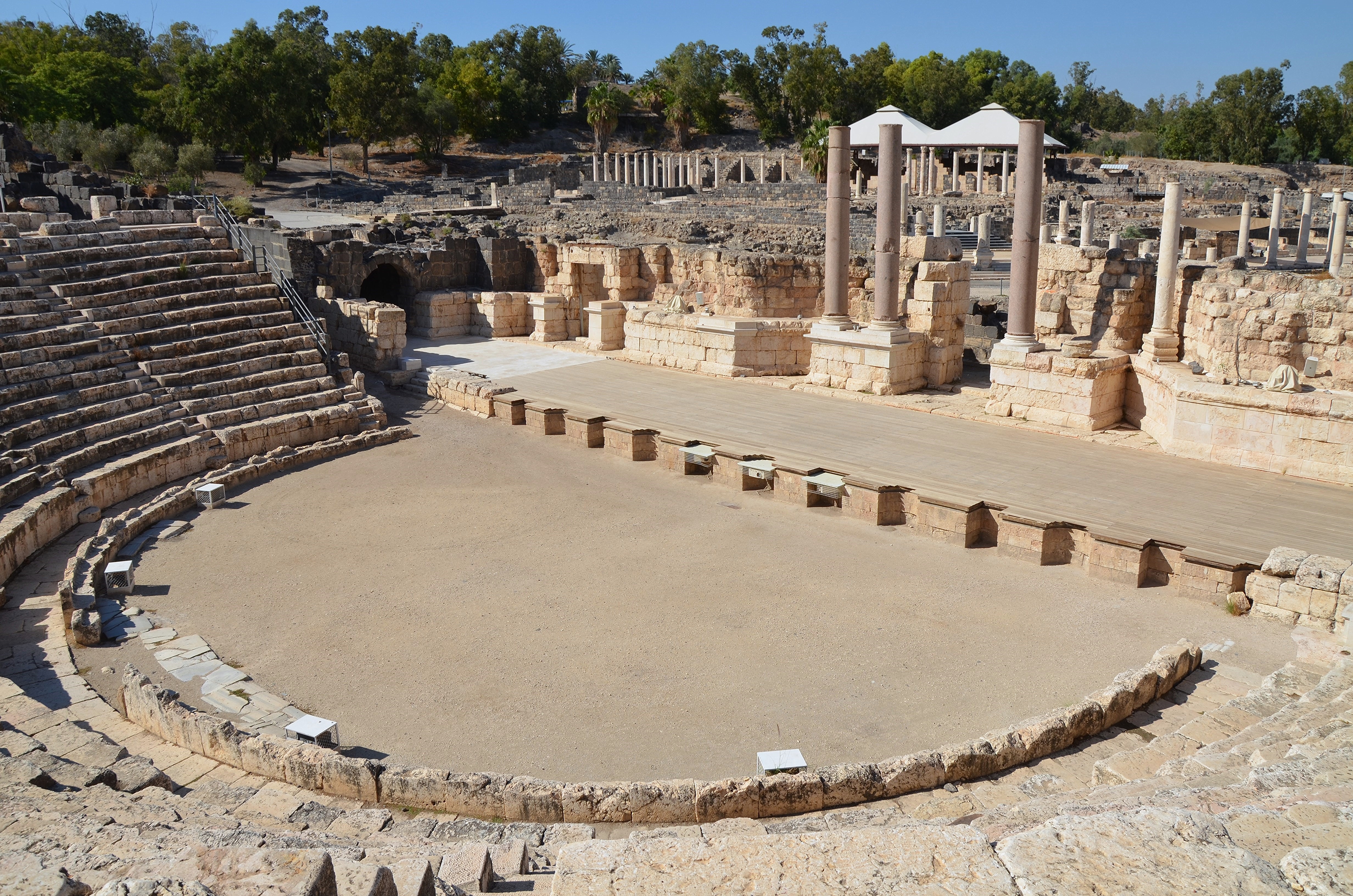
The Roman theatre of Scythopolis was built in the late 2nd century AD, when Scythopolis was a prominent member of the Decapolis league. It held approximately 7,000 spectators and featured an elaborately decorated multi-story architectural backdrop (scaenae frons) built using imported marble and rich stone detailing.Sepphoris Roman Theatre (32°45’12.5″N 35°16’47.0″E)
The Roman Theatre of Sepphoris was built or initiated around the late 1st century AD (or early 2nd century AD) during the urban reconstruction of Sepphoris under Herod Antipas or later Roman expansions, making it one of the earliest Roman theatres identified in the region (first excavated in 1931 by the University of Michigan). It could seat 4,500 spectators, with a cavea (auditorium) diameter of roughly 74 meters (over 200 feet).Tiberias Roman Theatre (32°46’27.8″N 35°32’38.3″E)
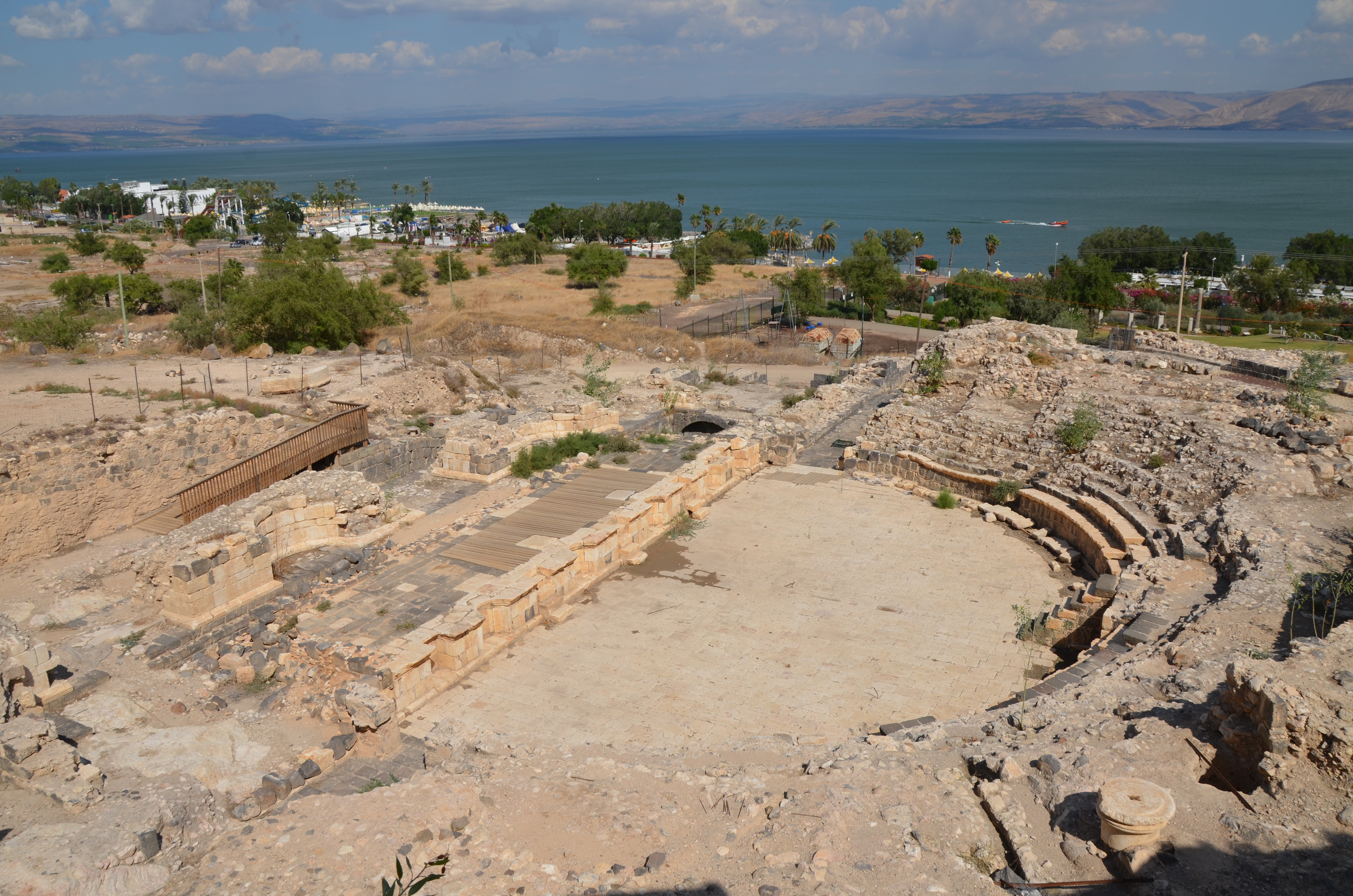
The Roman theatre of Tiberias was initially built in the 1st century AD (around AD 19), expanded significantly in the 2nd century AD, and later modified during the Byzantine period (4th–6th centuries AD) with a central tribune. It could hold an estimated 7,000 to 8,000 spectators, making it one of the largest Roman theatres in the region. Its diameter grew from roughly 60 meters in its early phase to about 78–80 meters later on.
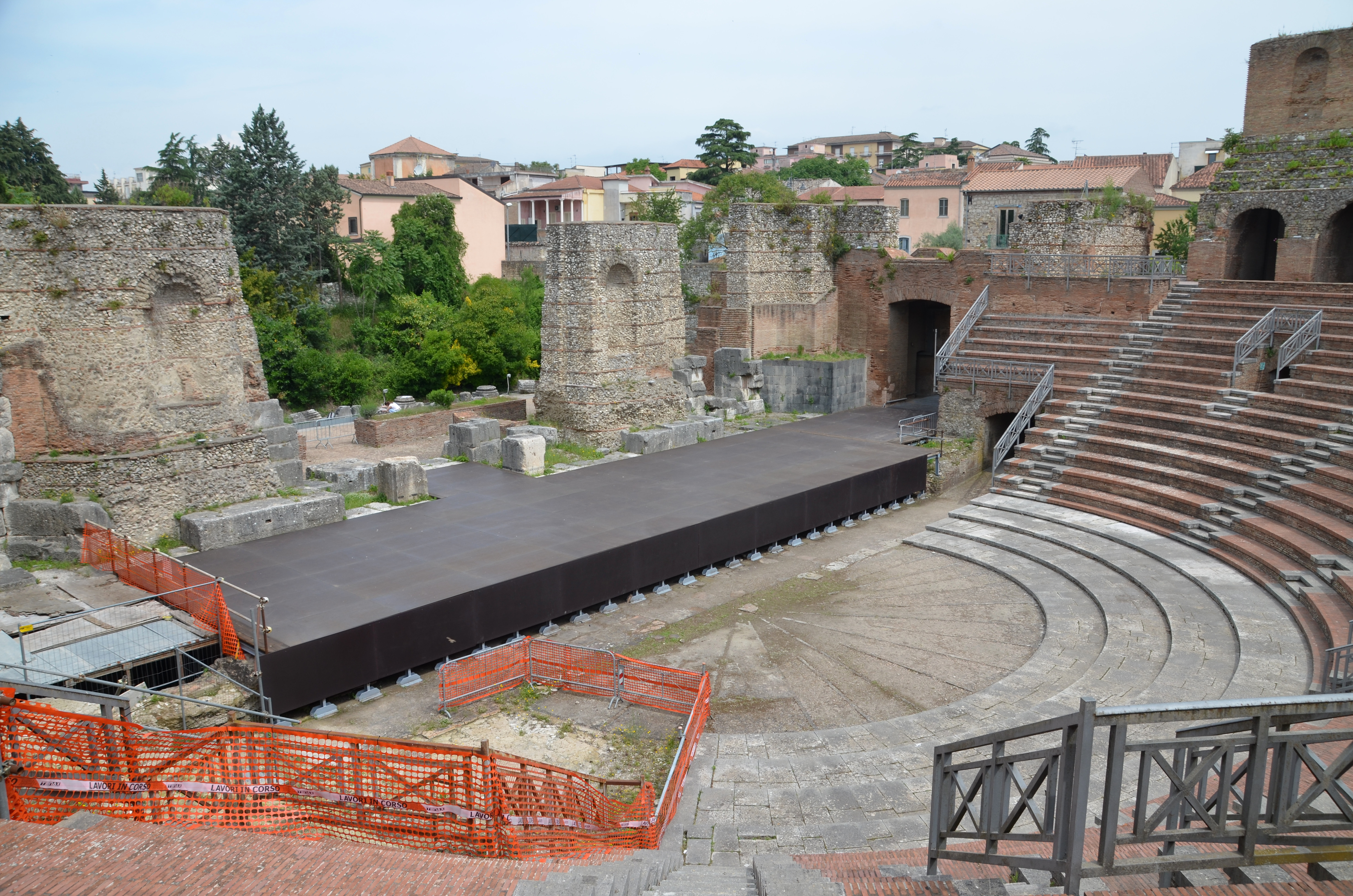
The Roman Theatre in Beneventum was built in the 2nd century AD by Emperor Hadrian, in AD 126, near the city’s cardo maximus. Abandoned in Lombard times, it is now surrounded by the medieval Rione (district) Triggio. The theatre had a semicircular plan with a diameter of 90 metres: it could originally house some 10,000/15,000 spectators.
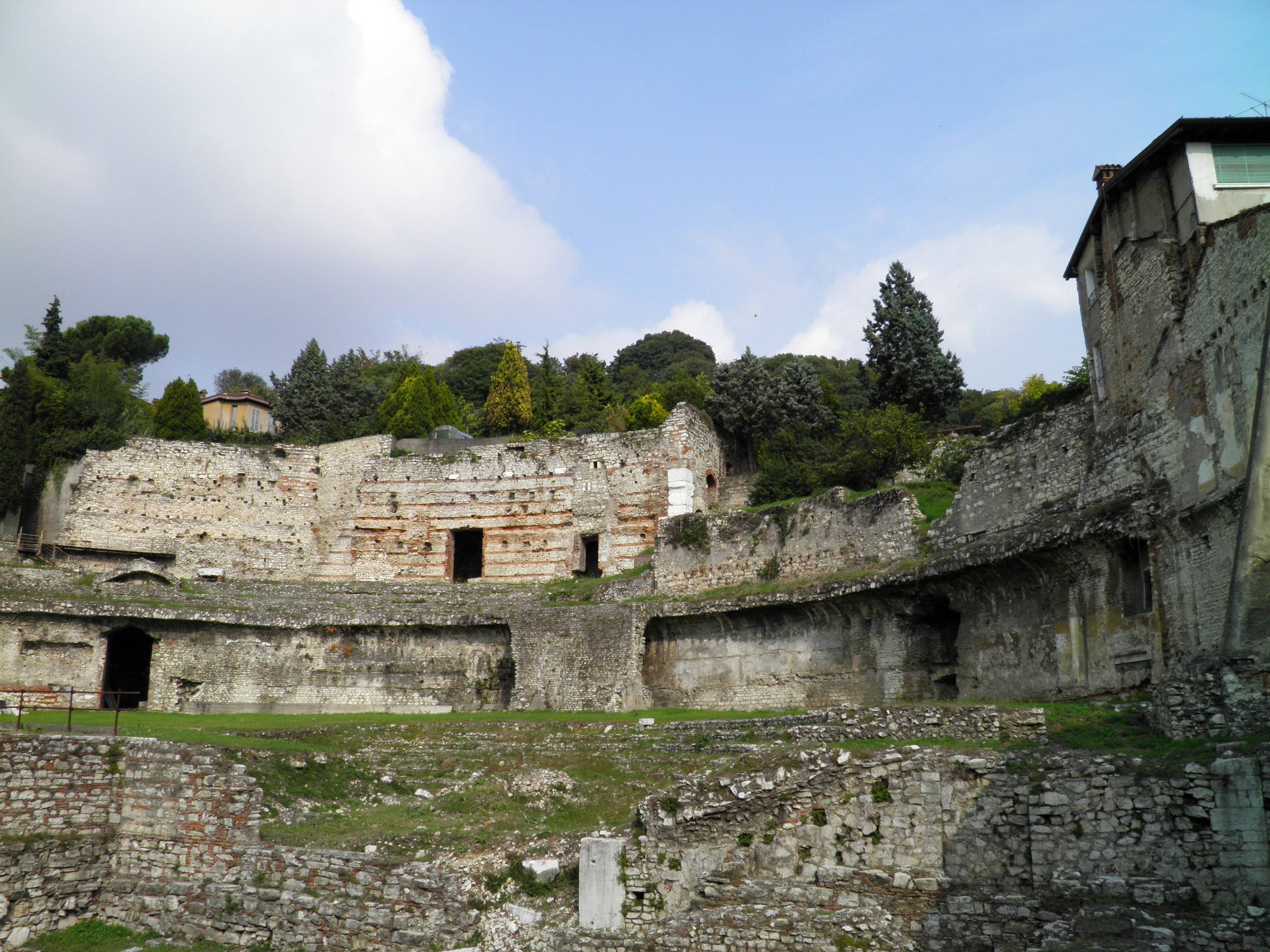
The Brixia Theatre dates to the Severan period (AD 193-235). It was built inside the city walls, against the Cydnean hill, immediately east of the Capitolium. It could accommodate around 15,000 spectators.
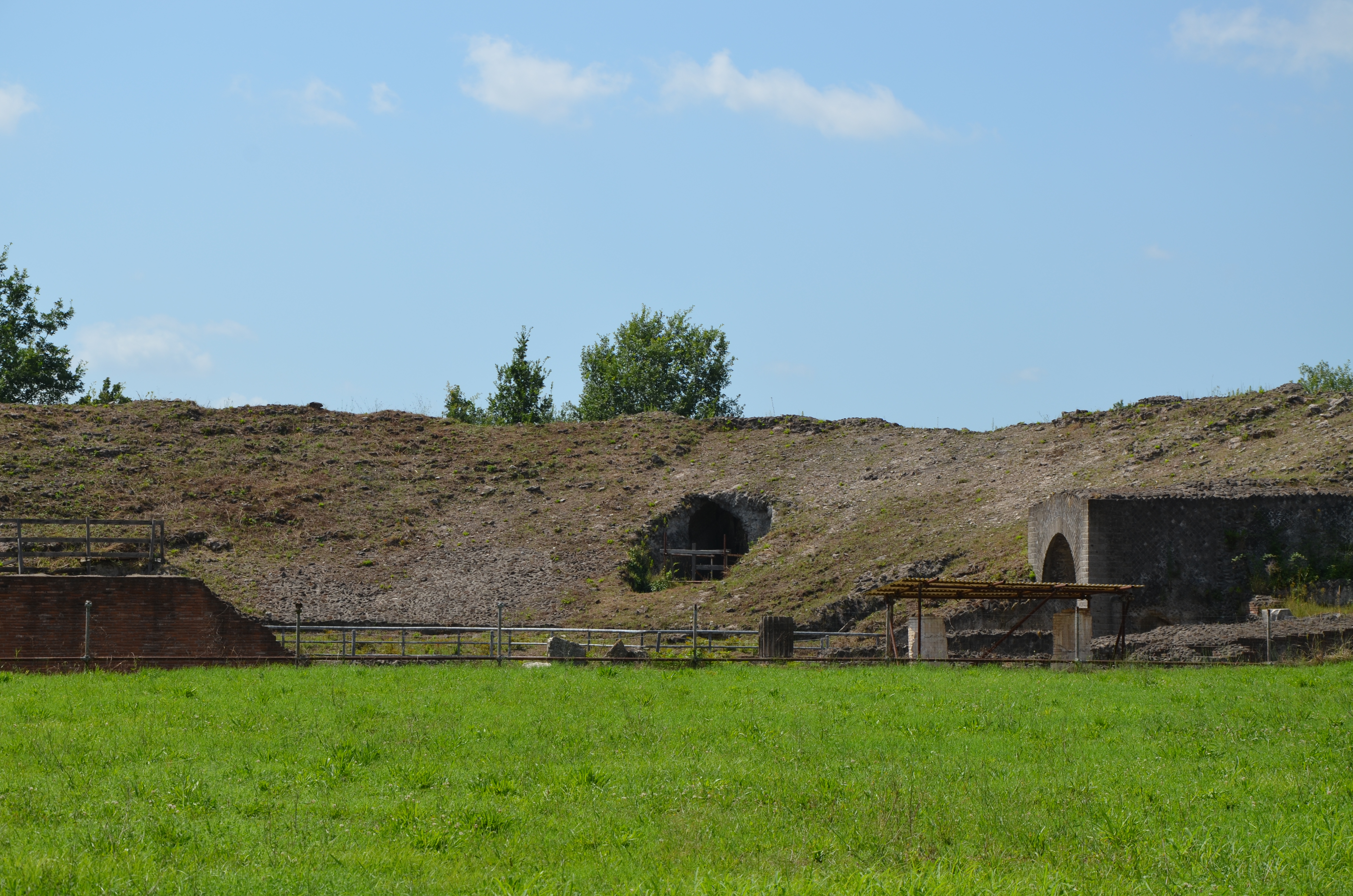
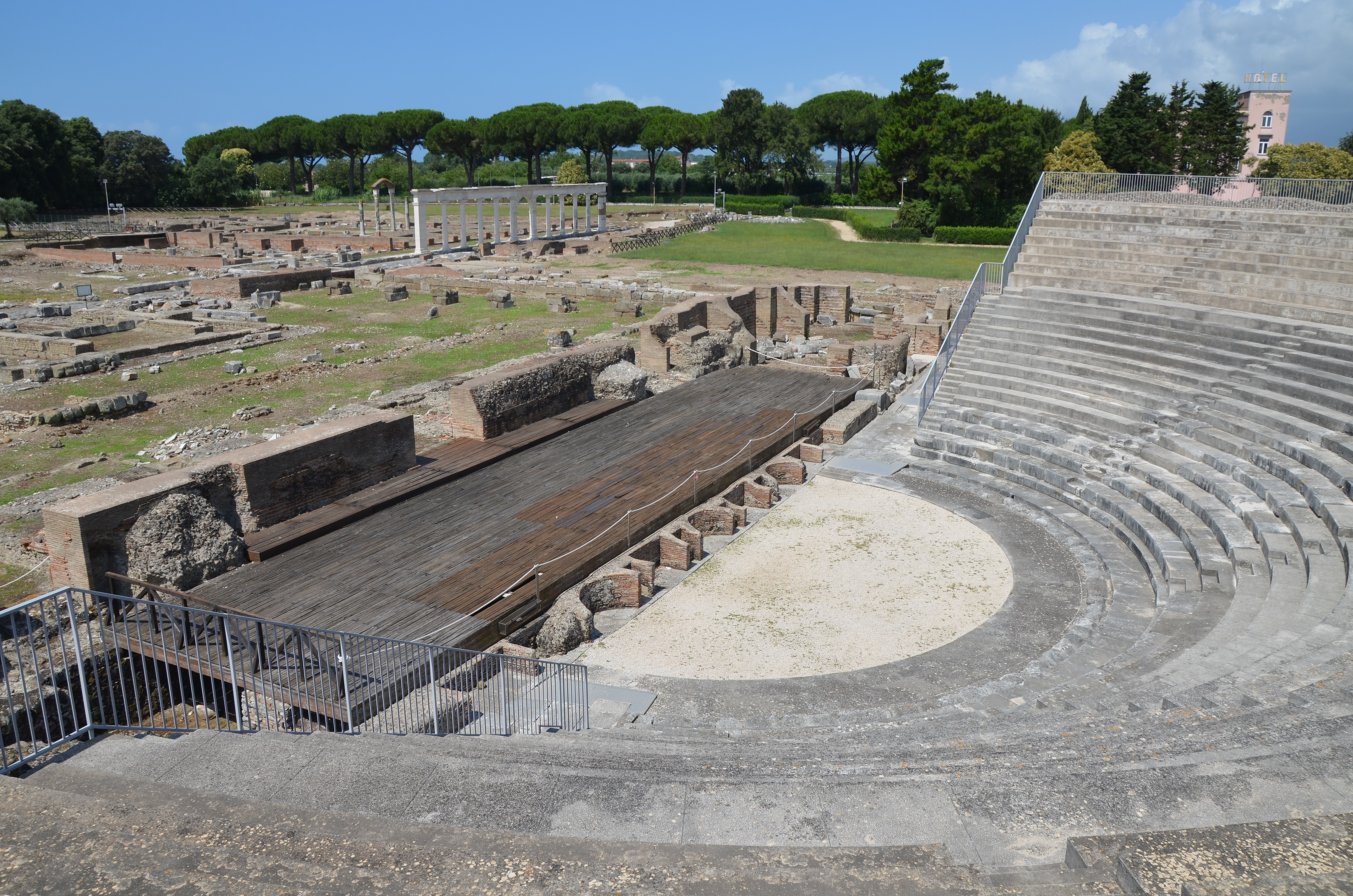
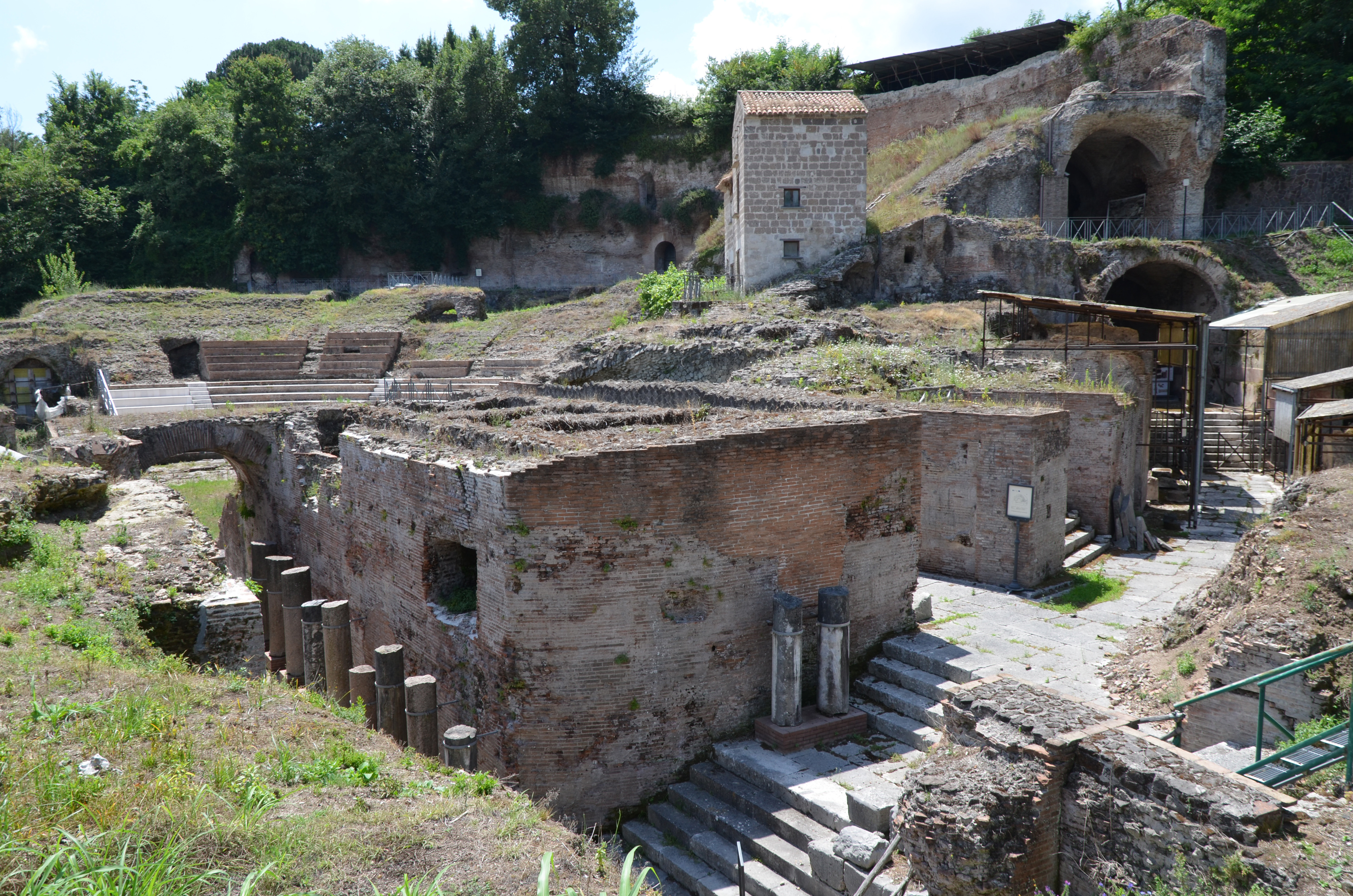
The Roman Theatre of Cales was among the earliest freestanding theatres in Italy, with archaeological evidence indicating that construction began in the 2nd century BC. The structure was significantly enlarged between 90 and 70 BC, following the Social War, during which many Campanian cities initiated extensive building projects to reflect their new status under Roman rule.
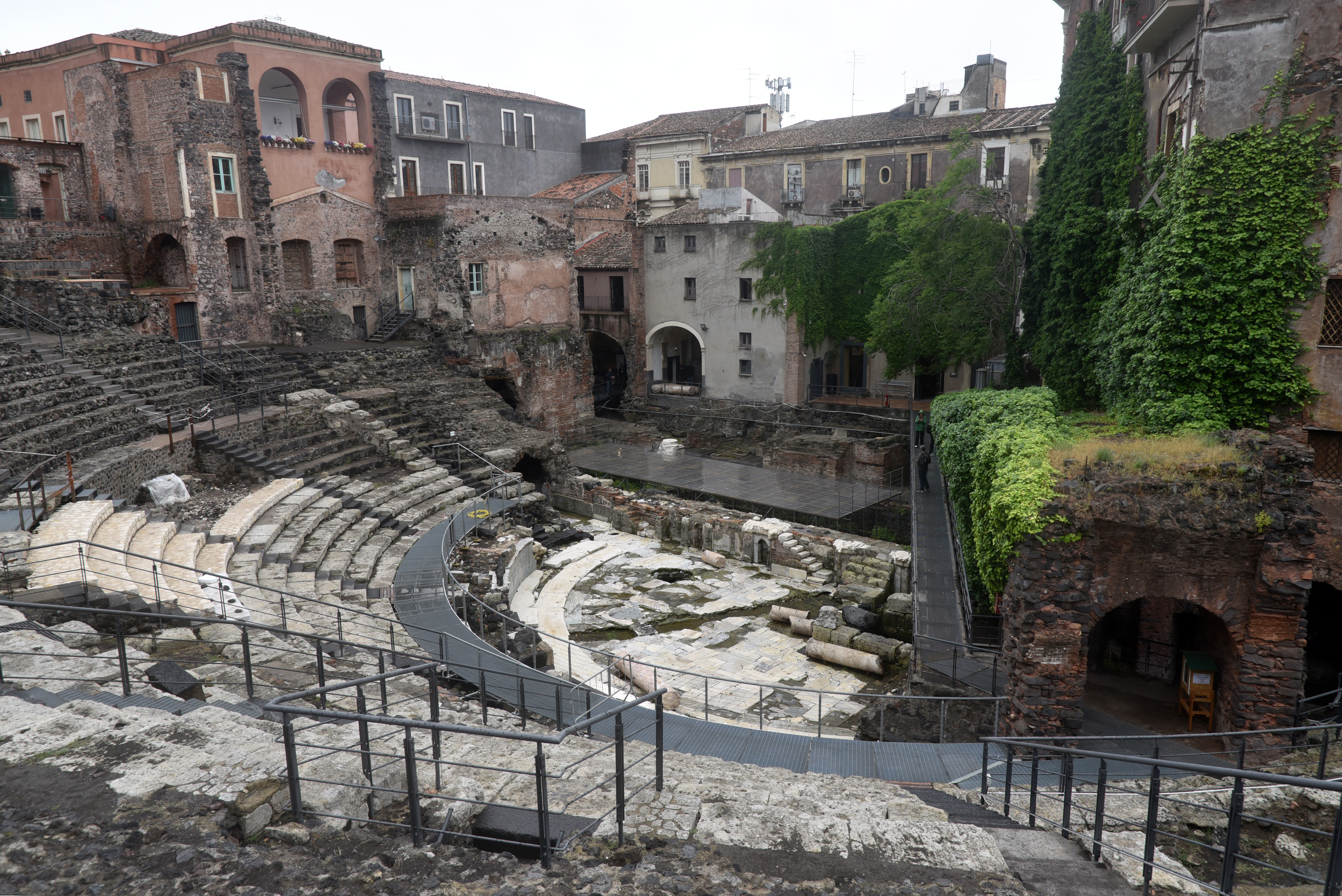
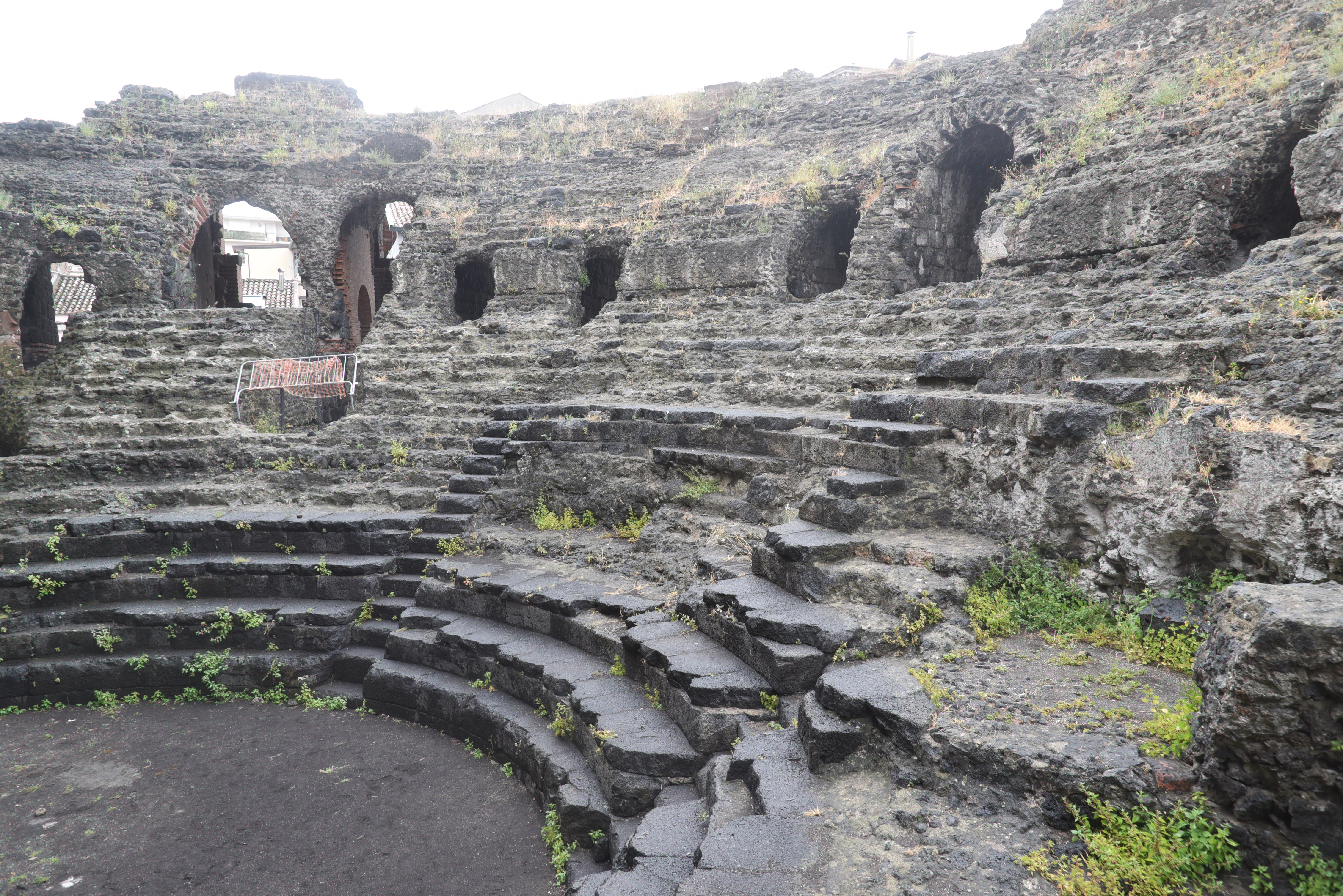
The Roman Theatre at Catana stands on the southern slope of the Montevergine Hill (ancient Acropolis), in what was once the heart of both the Greek colony of Katane and the later Roman city of Catana. This impressive structure is situated near the Roman Odeon, forming a notable cultural complex in the ancient urban landscape.
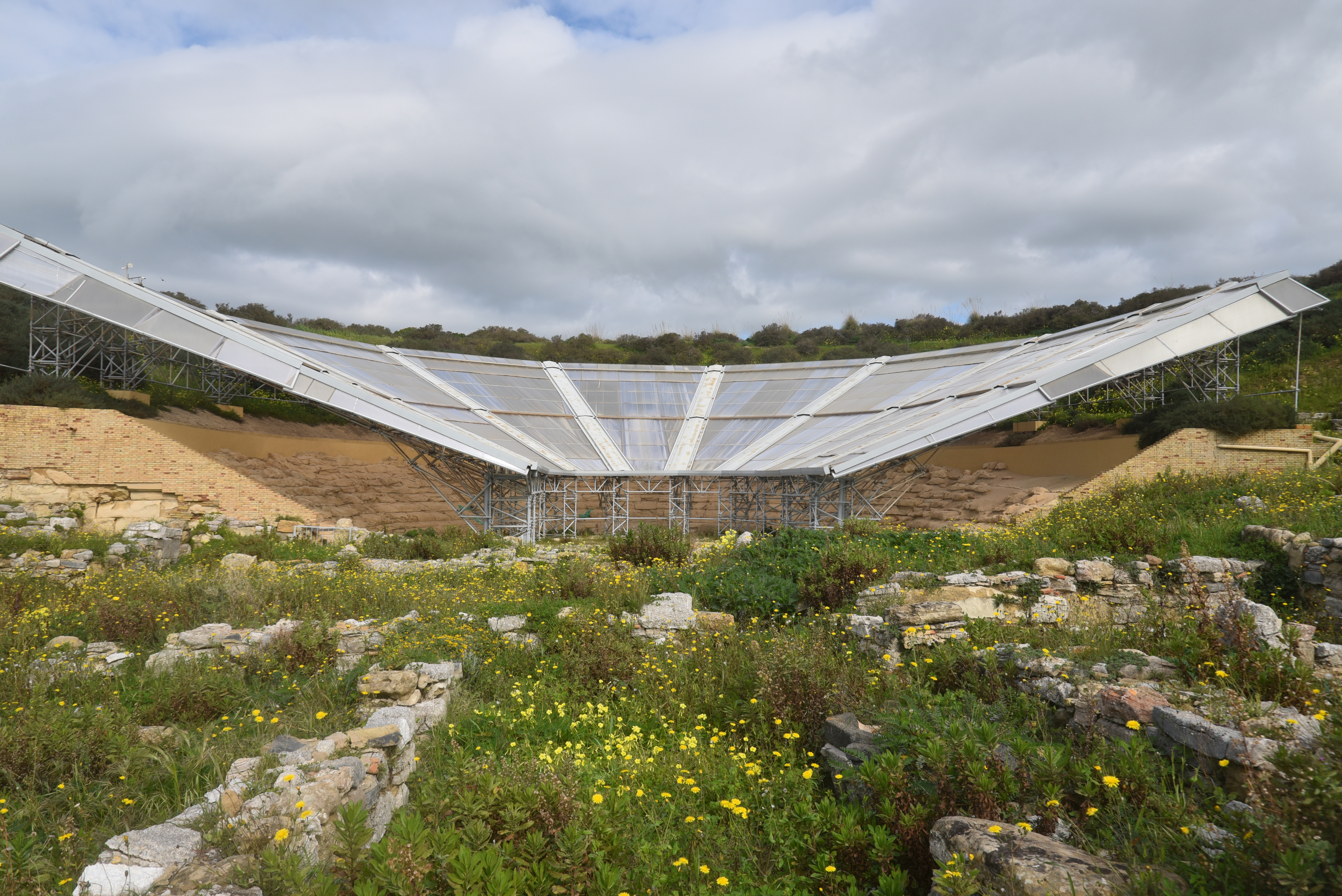
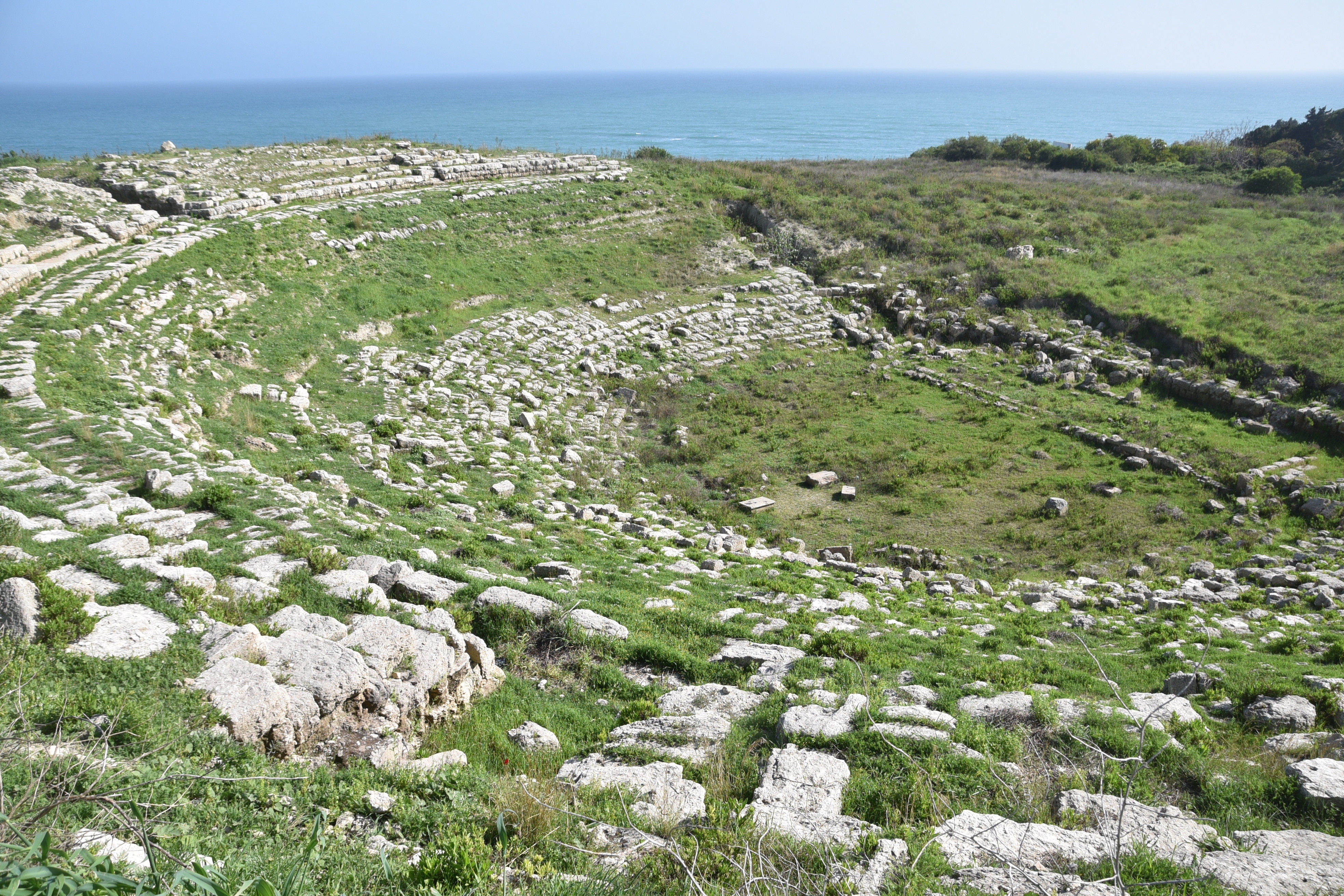
The Greek Theatre of Heraclea Minoa, dating from the mid-4th century BC, was placed in the cavity of a small hill, 700 m from the edge of a limestone bluff overlooking the Mediterranean. Archaeological evidence shows that renovations were made to the original theatre structure during its period of use, including a raised stage and a wooden scene building dating from the 3rd to 2nd centuries BC.
The Roman theatre of Minturnae was constructed during the late Republican or early Augustan period with a capacity for about 4,600 spectators. underwent several restorations throughout its history, with a significant rebuilding of the scene building during Hadrian’s reign (117-138 AD) using brick construction, and a subsequent redecoration during the Antonine period (138-192 AD). The final ancient restoration is thought to date to the 4th century AD.
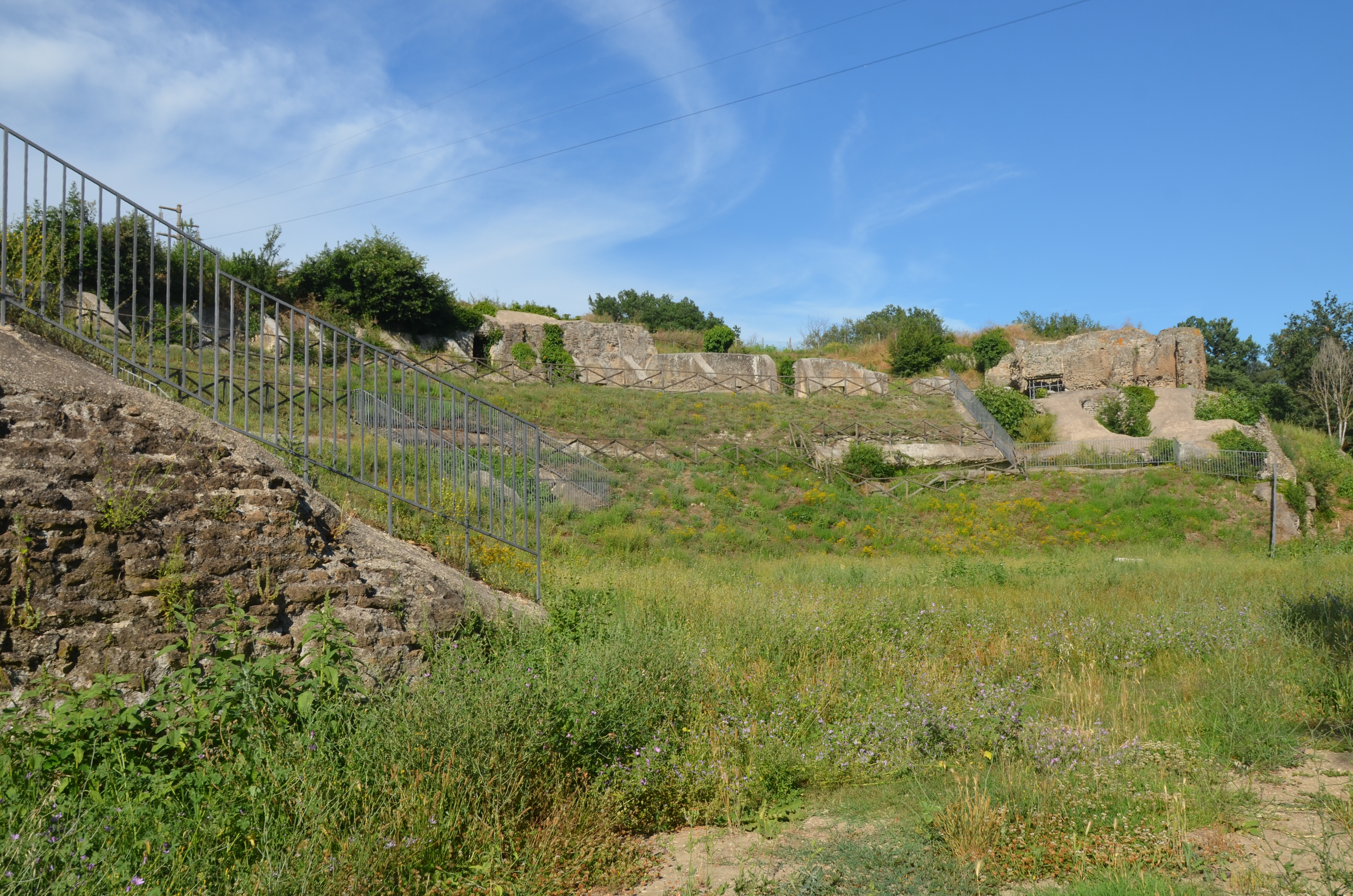
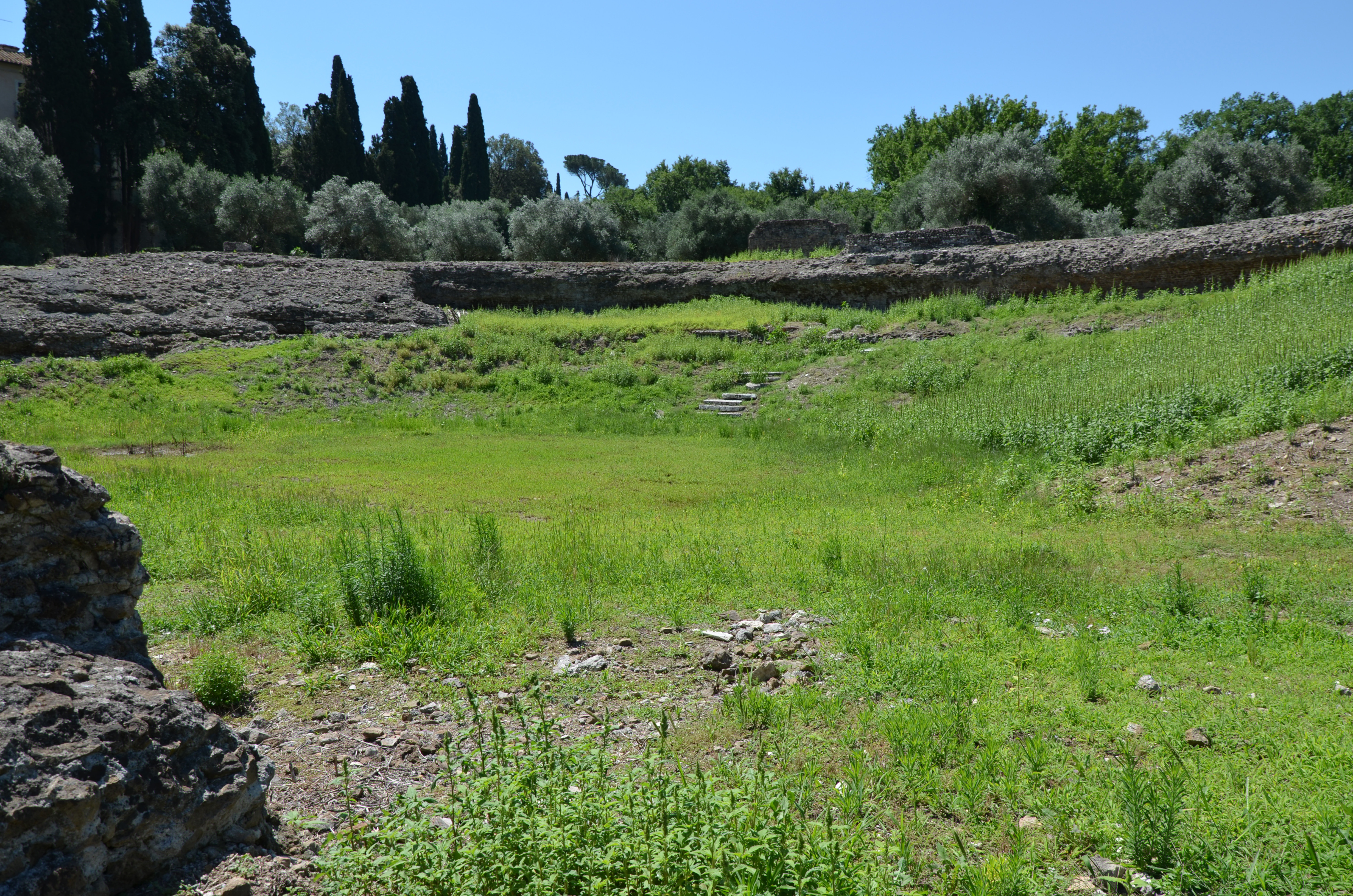
The Roman Theatre at Ocriculum was constructed during the Augustan period (early 1st century AD) and underwent significant renovations during the Antonine period (mid-2nd century AD).
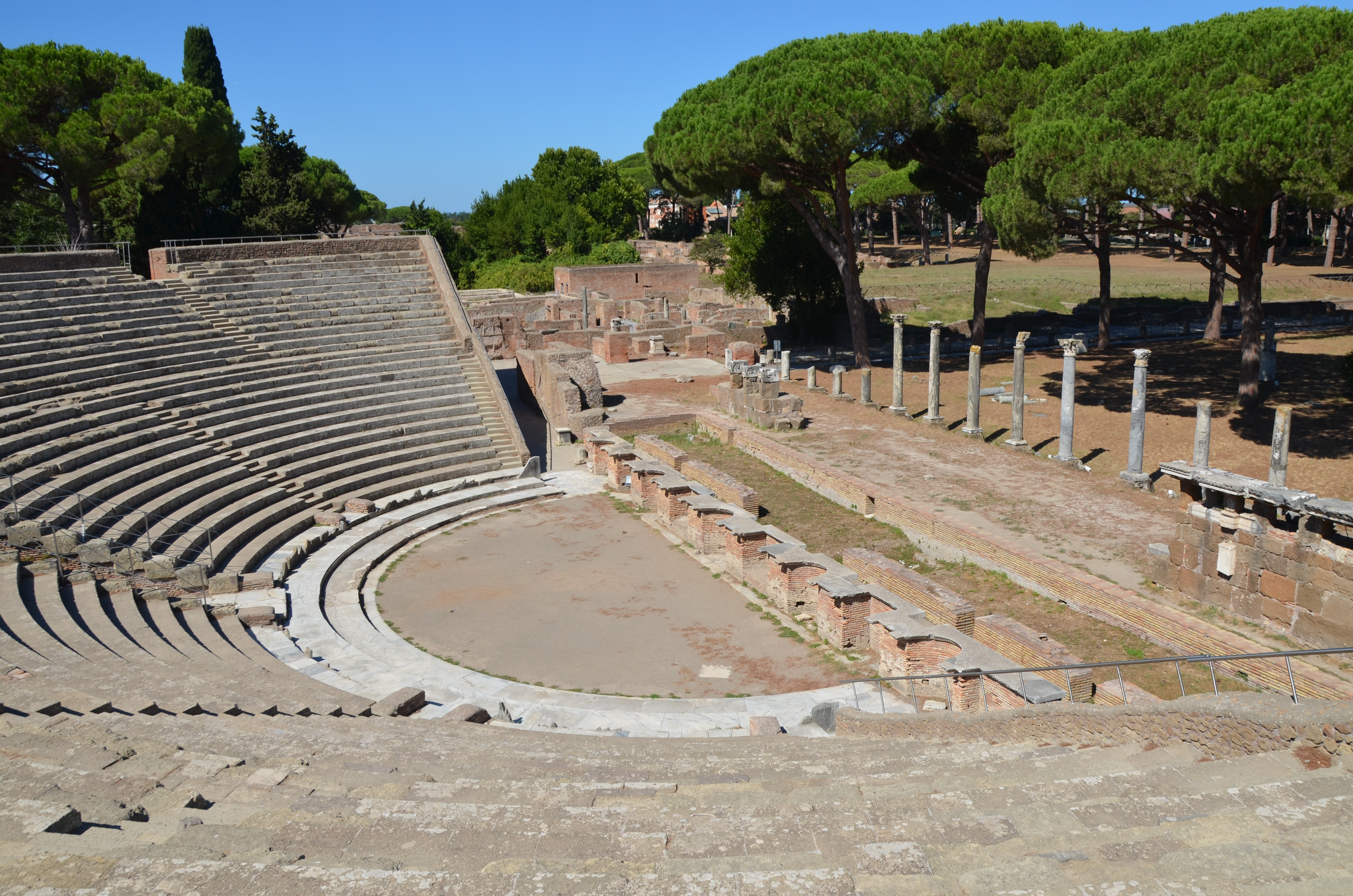
The Roman Theatre of Ostia was built along the Decumanus Maximus. Fragments of an inscription indicate that the first theatre was constructed at the end of the 1st century BC by Agrippa. This original structure, built with opus reticulatum and large tufa blocks, could accommodate 3,000 spectators. However, the masonry of the current theatre has been dated to the late 2nd century AD, when the theatre was enlarged to hold 4,000 people.
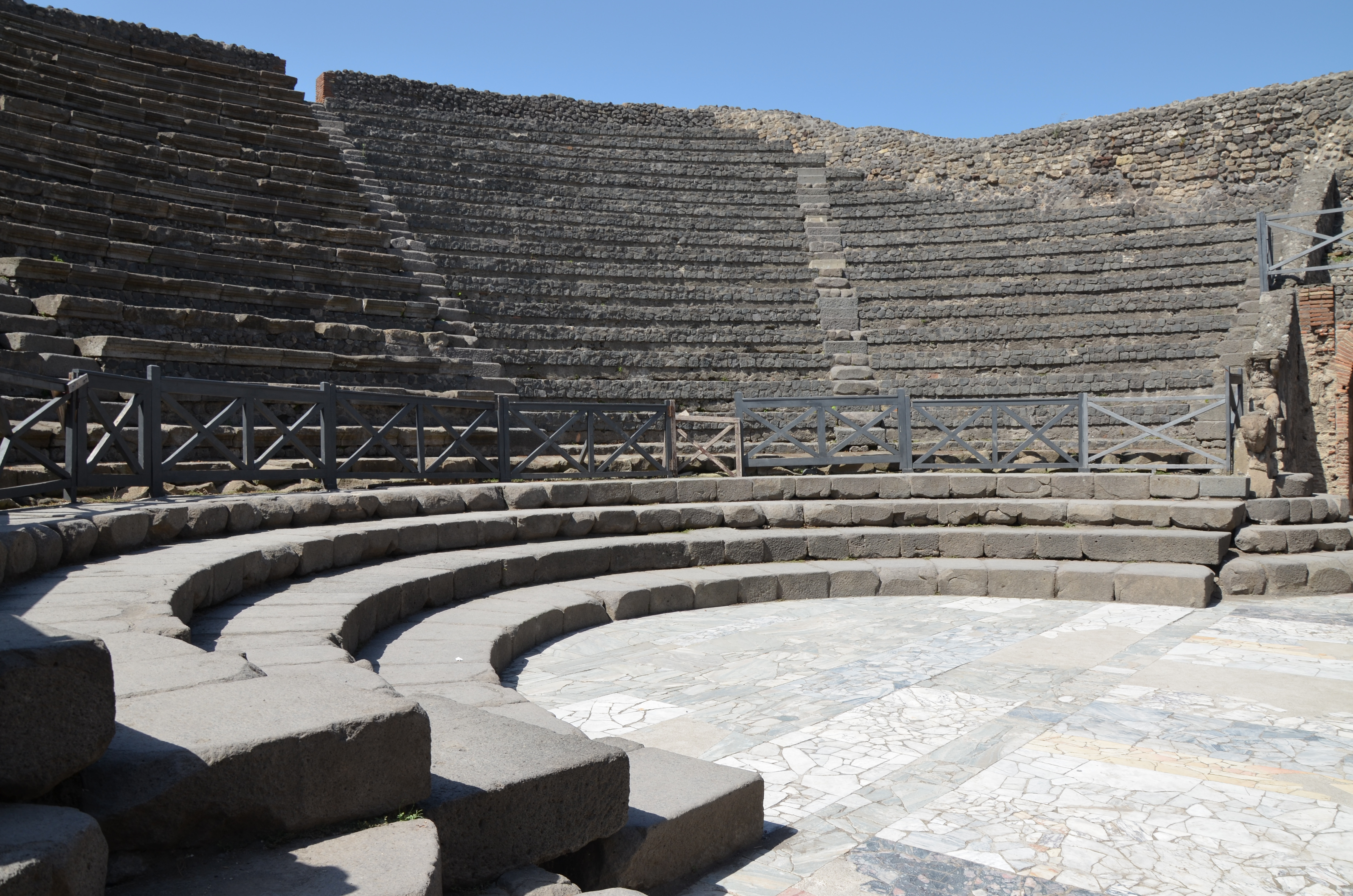
The Odeum of Pompeii was constructed around 75 BC during the early years of the Sullan colony by the duumviri (chief magistrates) Caius Quinctius Valgus and Marcus Porcius, who also financed the construction of Pompeii’s amphitheatre. The estimated capacity is between 1,500 and 1,850 spectators.
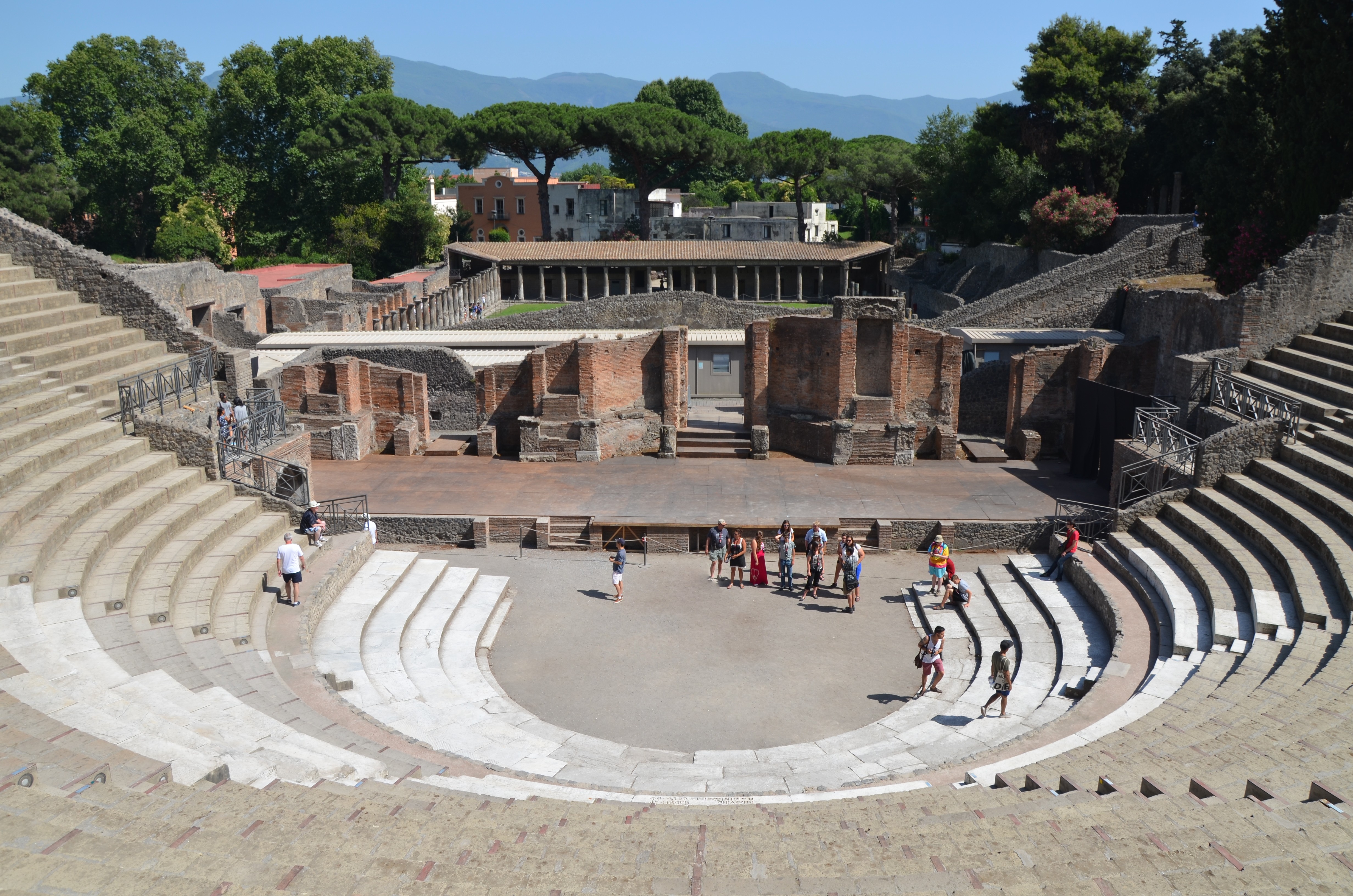
The Great Theatre at Pompeii, originally built during the Samnite period in the 2nd century BC, is one of the oldest surviving stone theatres in the Roman world. After the Roman colonisation in 80 BC led by Sulla, the theatre underwent significant renovations. Further modifications occurred during the Augustan period, supported by the patrons Marcus Holconius Rufus and Marcus Holconius Celer, as noted in inscriptions found at the site.
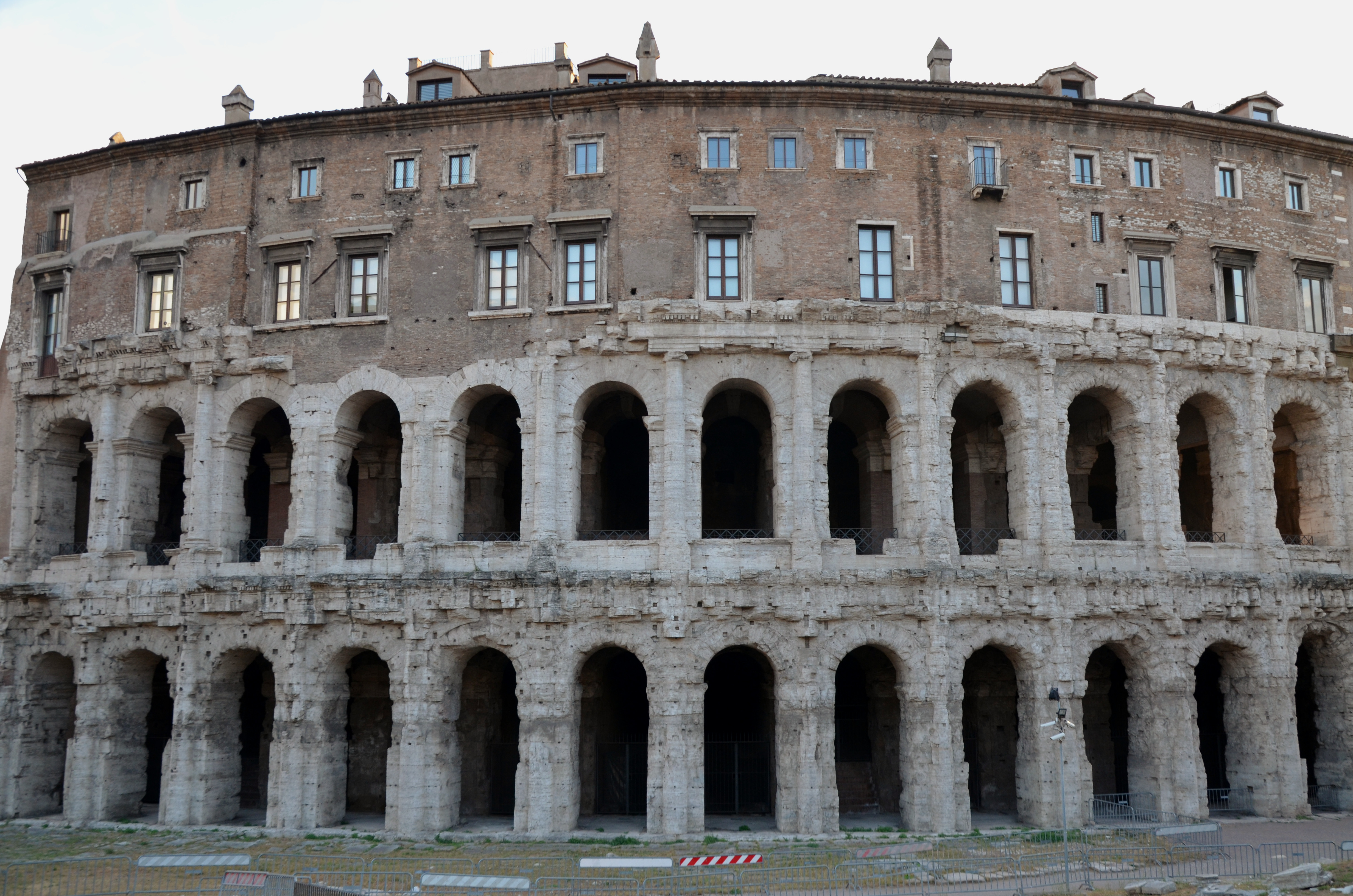
The Theatre of Marcellus in Rome was built in the closing years of the Roman Republic and fortified in the 11th-12th century by the Pierleone family. Its capacity was 20,500.
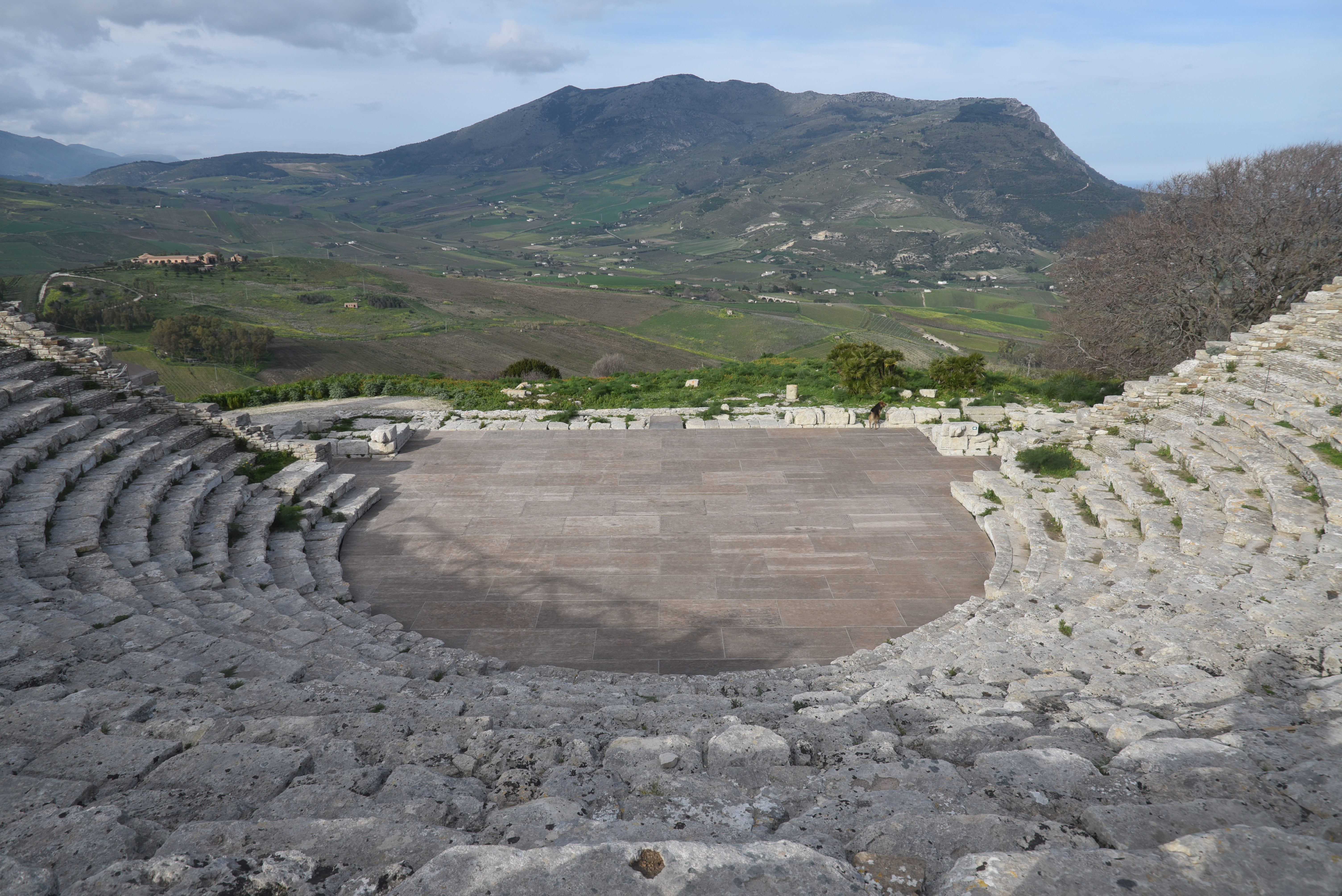
The Greek theatre of Segesta dates from the late 4th to early 3rd century BC, with the structure visible today primarily dating to the 2nd century BC. The theatre underwent several renovations during the Roman period, including modifications to the cavea and parodoi.
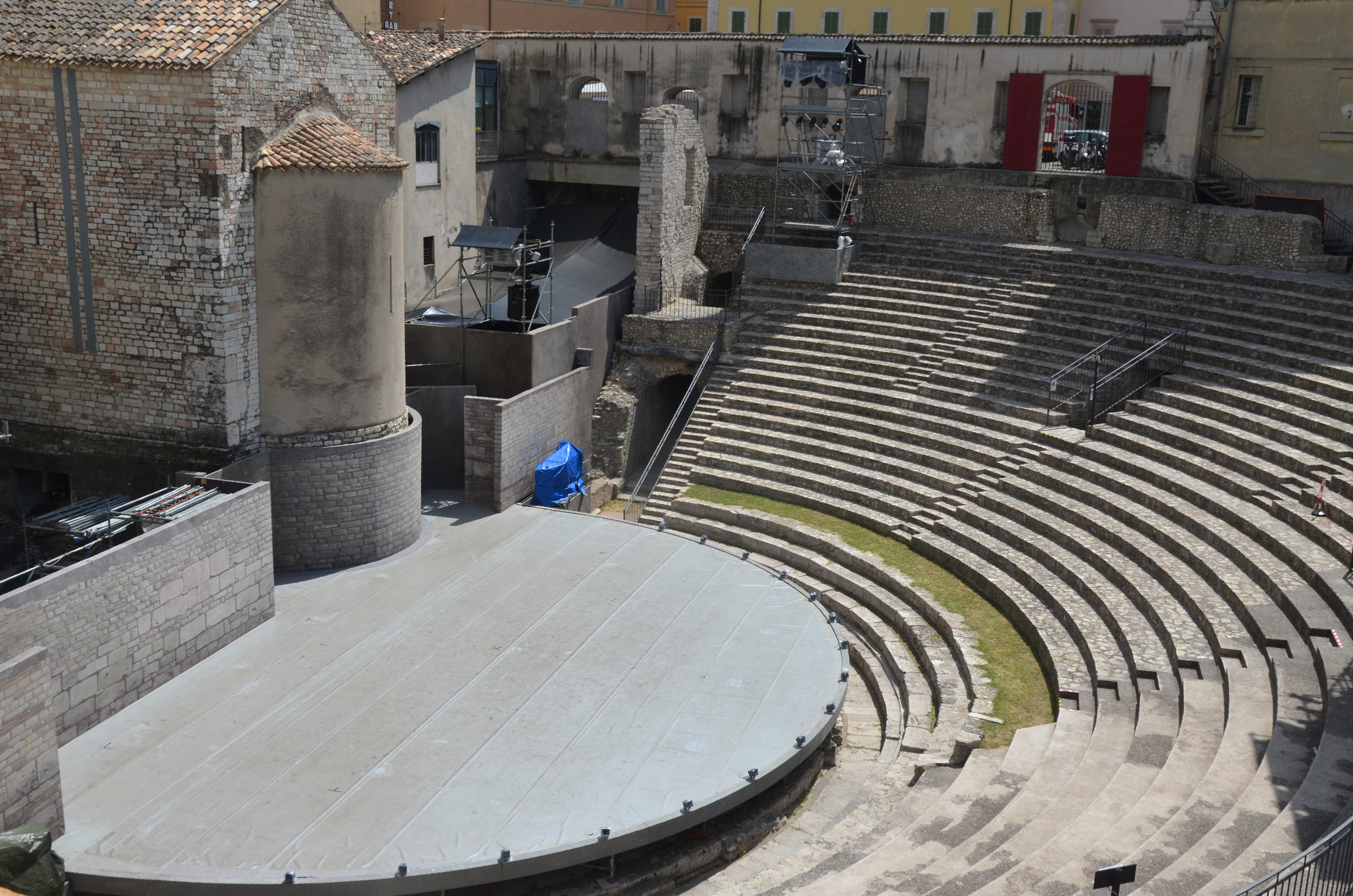
The Roman theatre dates back to the end of the 1st century BC and was constructed by order of Gaius Calvisius Sabinus, who served as consul in 39 BC. It could accommodate 2,800 to 3,500 spectators.
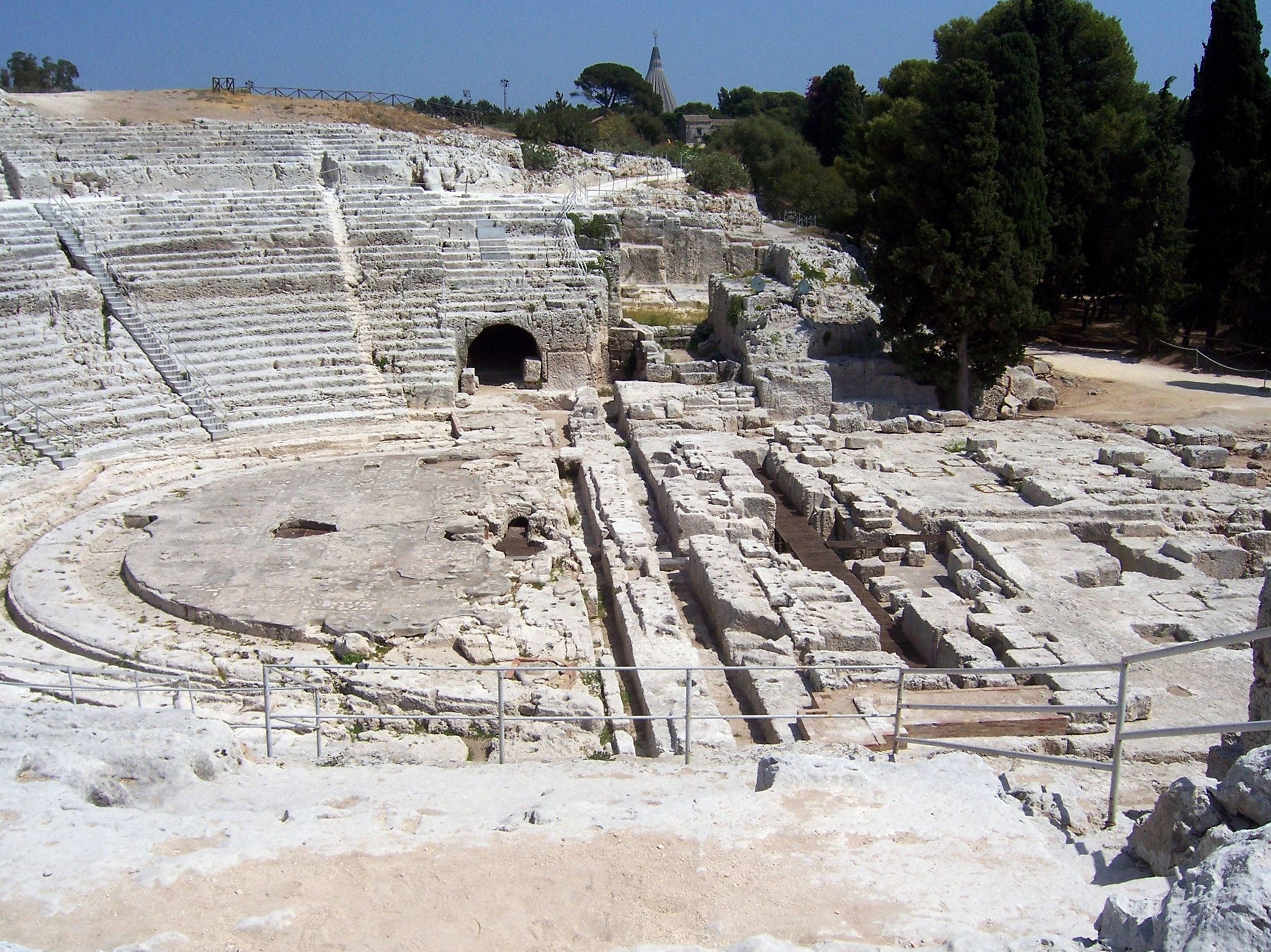
The great theatre at Syracuse was built between 238 and 215 BC and underwent two restorations during the Hellenistic period. In the 2nd century AD, a new stage building was added in the Roman style, and in the 5th century AD, a kolymbethra, an orchestra designed for water spectacles, was introduced.
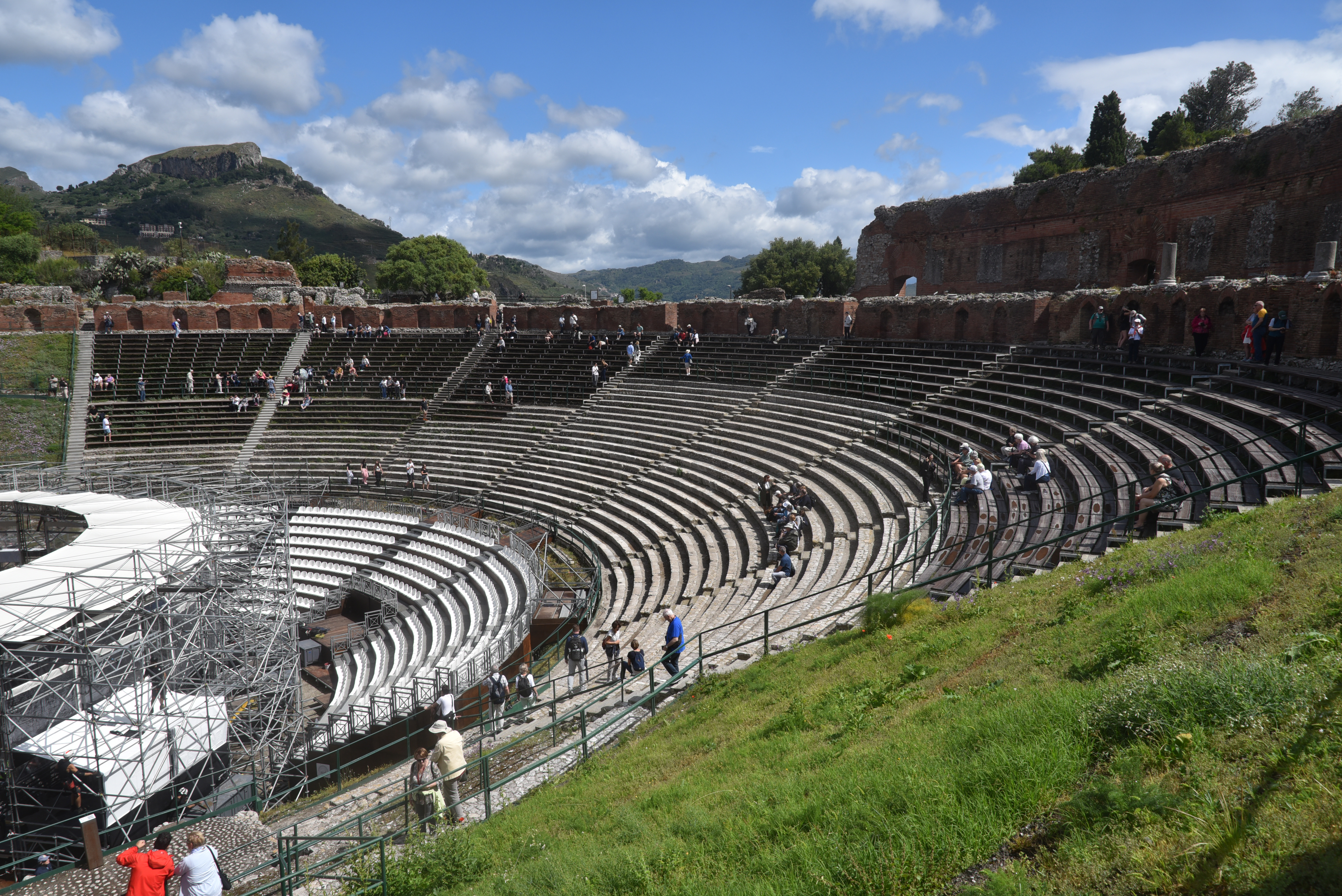
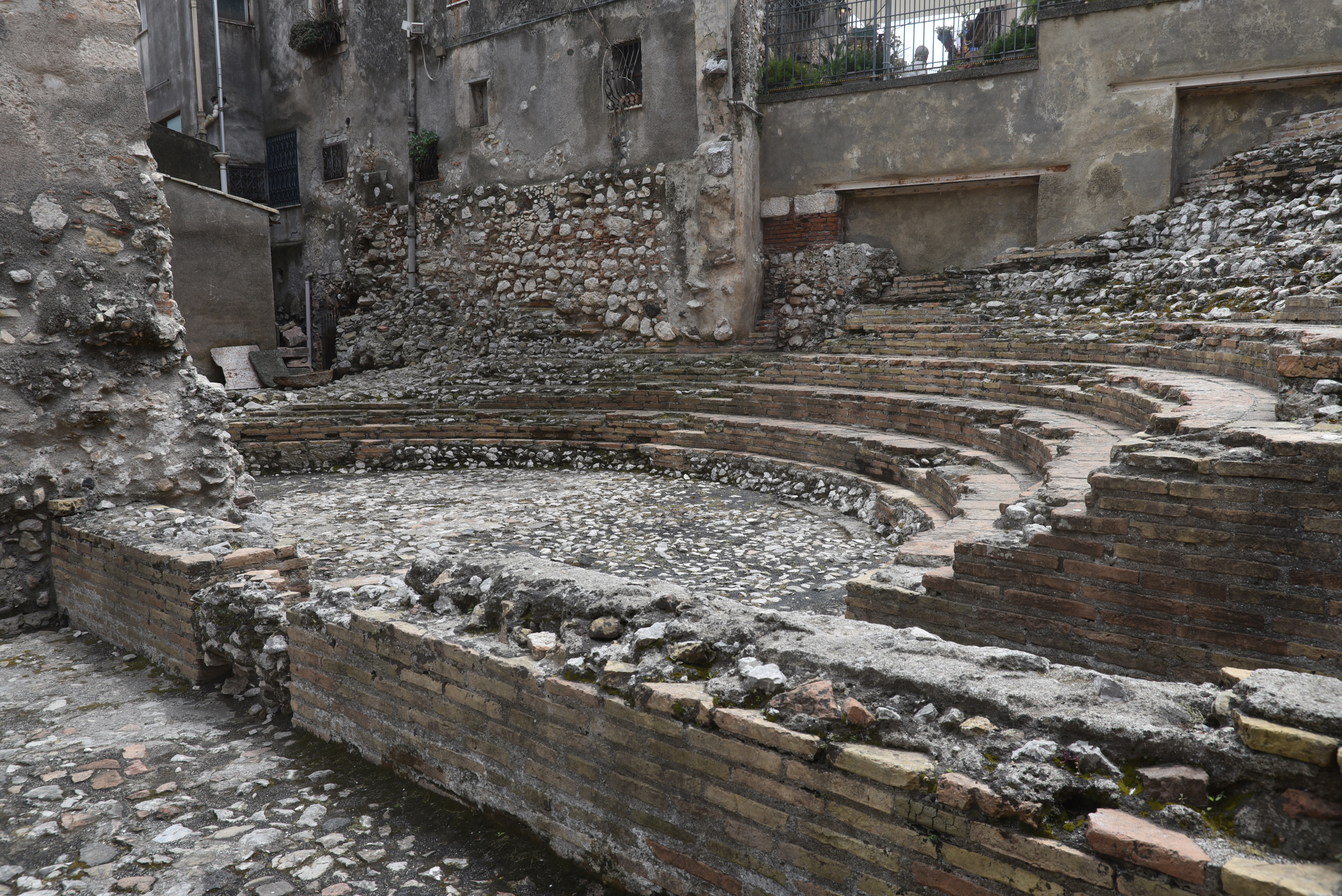
The Theatre at Tauromenium, located in modern Taormina, Sicily, was a Greek theatre subsequently transformed into a Roman theatre and later an arena. Most of the ruins we see today date to numerous Roman reconstructions and additions that began as early as the Trajanic/Hadrianic period (98 to 138 AD), with further additions in the 3rd century AD, when the theatre was transformed into a gladiatorial arena.
The Roman Theatre of Teanum Sidicinum was originally built in the late 2nd century BC and underwent renovations during the second quarter of the 2nd century AD. The cavea had a diameter of 78 meters, which was later expanded to 85 meters. The seating is divided into three sections: the ima, media, and summa cavea, accommodating approximately 6,000 to 7,000 spectators.
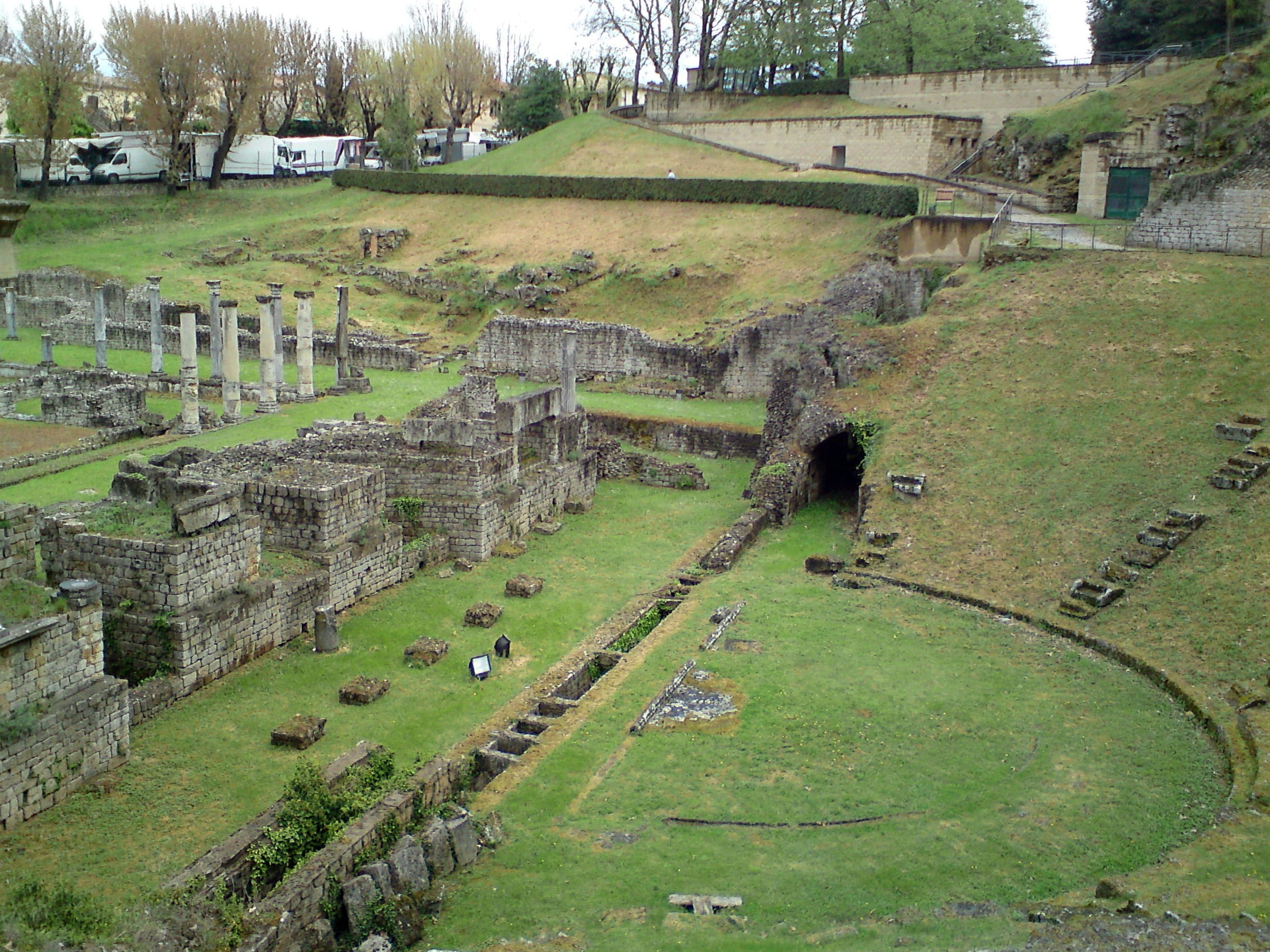
The Roman theatre at Volaterrae was built in the late 1st century BC as part of the larger Augustan building program that transformed many cities in Italy. This monument served the community for about three centuries before it fell into disuse at the end of the 3rd century AD, likely due to economic decline and shifting cultural preferences.
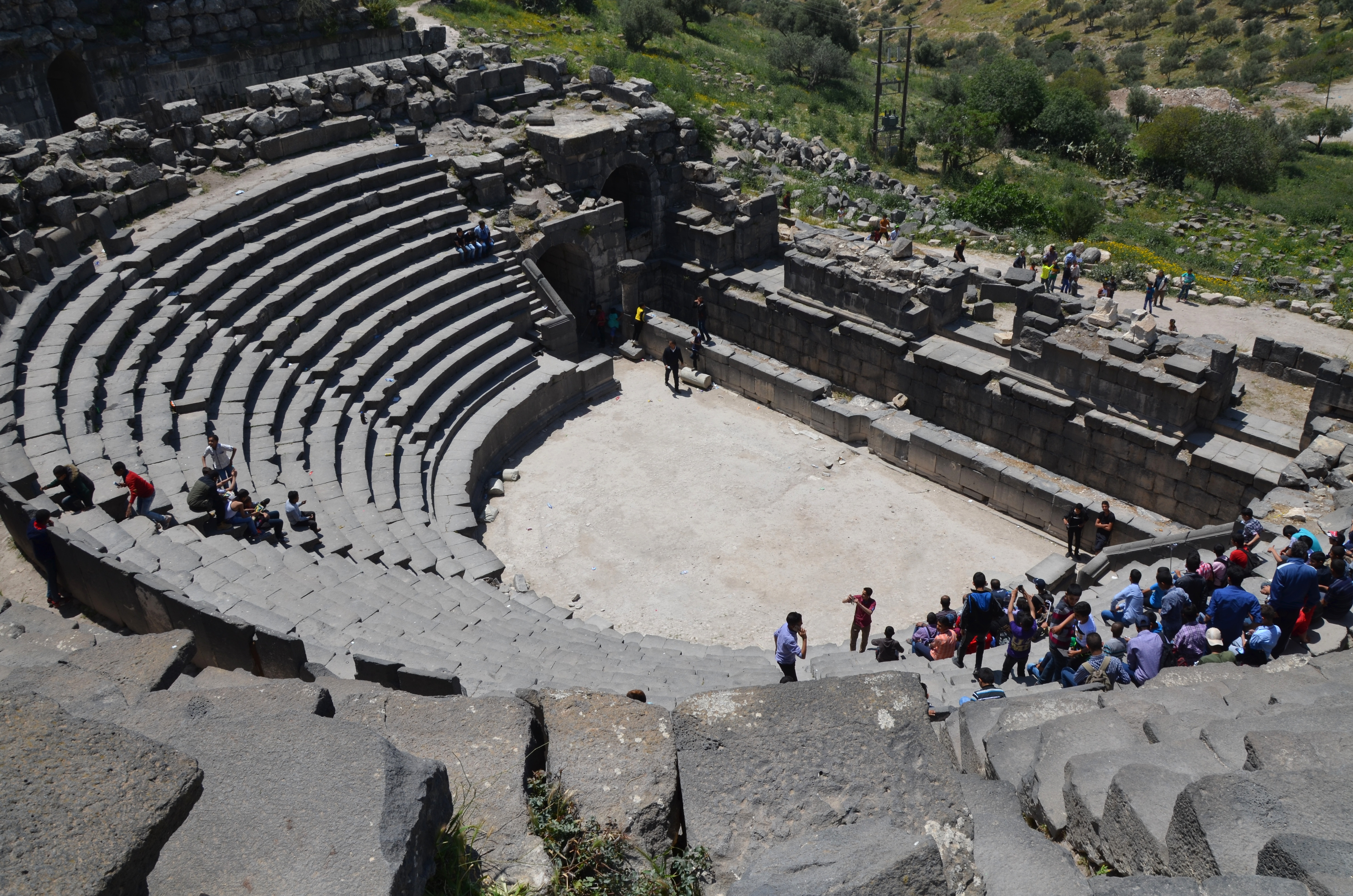
The Western Theatre of Gadara was built in the late 2nd to early 3rd century AD and is made of basalt, with a seating capacity of around 3,000 spectators.
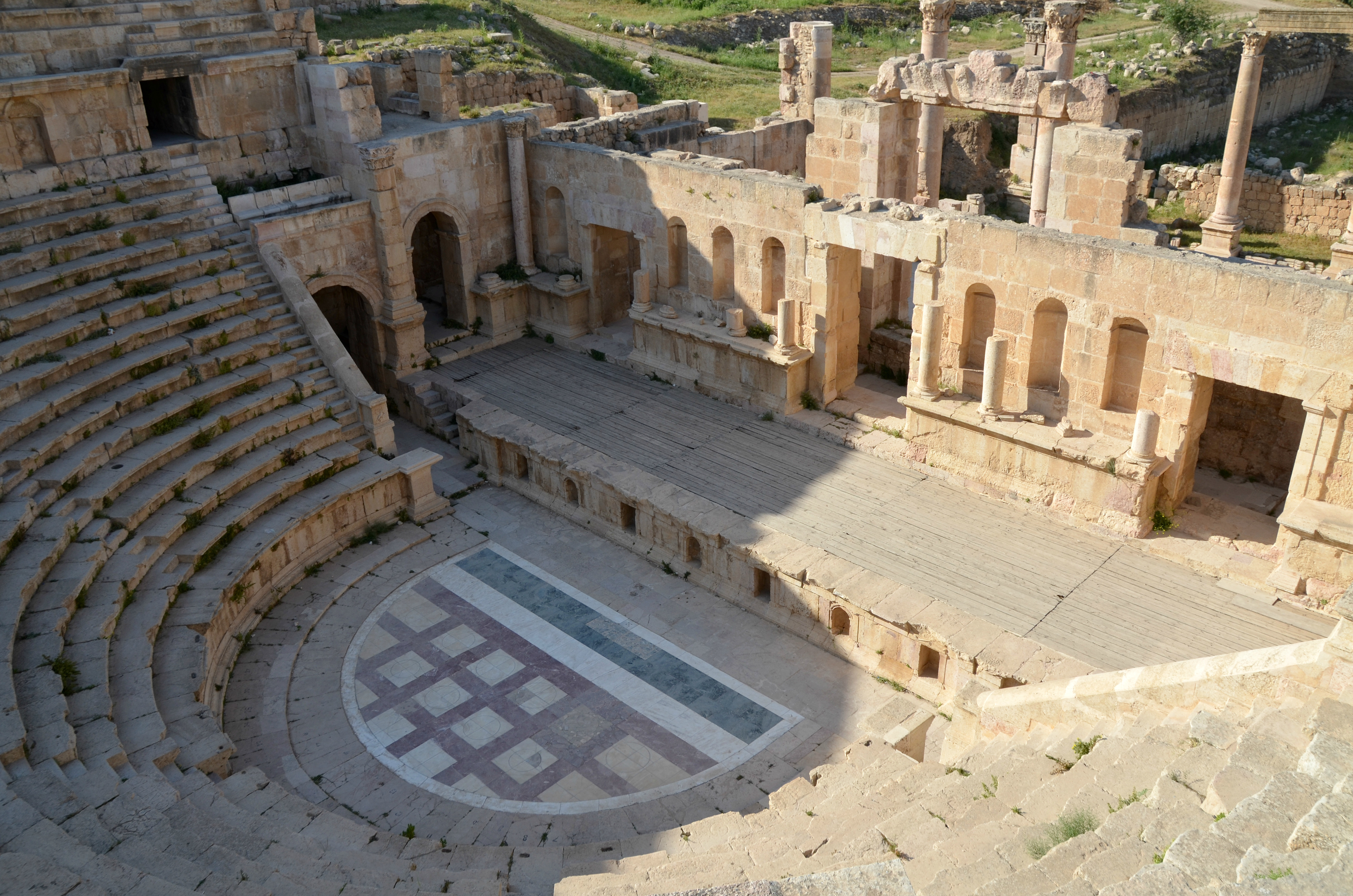
The North Theatre of Gerasa was initially built as a bouleuterion, a council meeting place, during the reigns of Hadrian or Trajan. It was converted into an odeon in AD 165 and expanded in AD 235. The cavea, or seating area, of the North Theatre could accommodate around 2,000 people. In recent years, the theatre has undergone magnificent restoration.
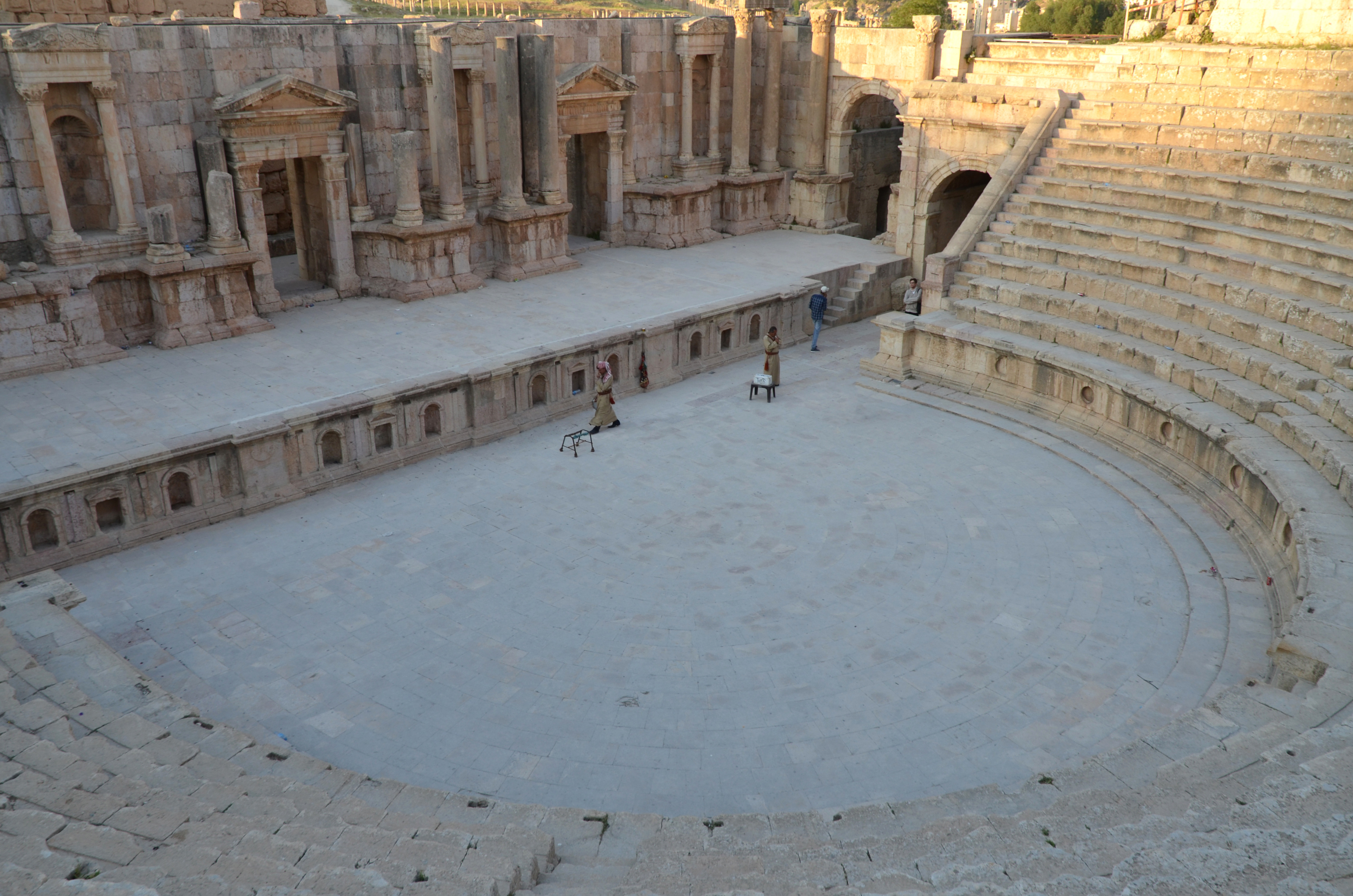
The South Theatre was the largest and oldest of the three theatres in Gerasa. It was constructed between AD 80 and 96 and is estimated to have seated 3,000 people. The theatre was funded by several generous benefactors, including a former legionnaire.
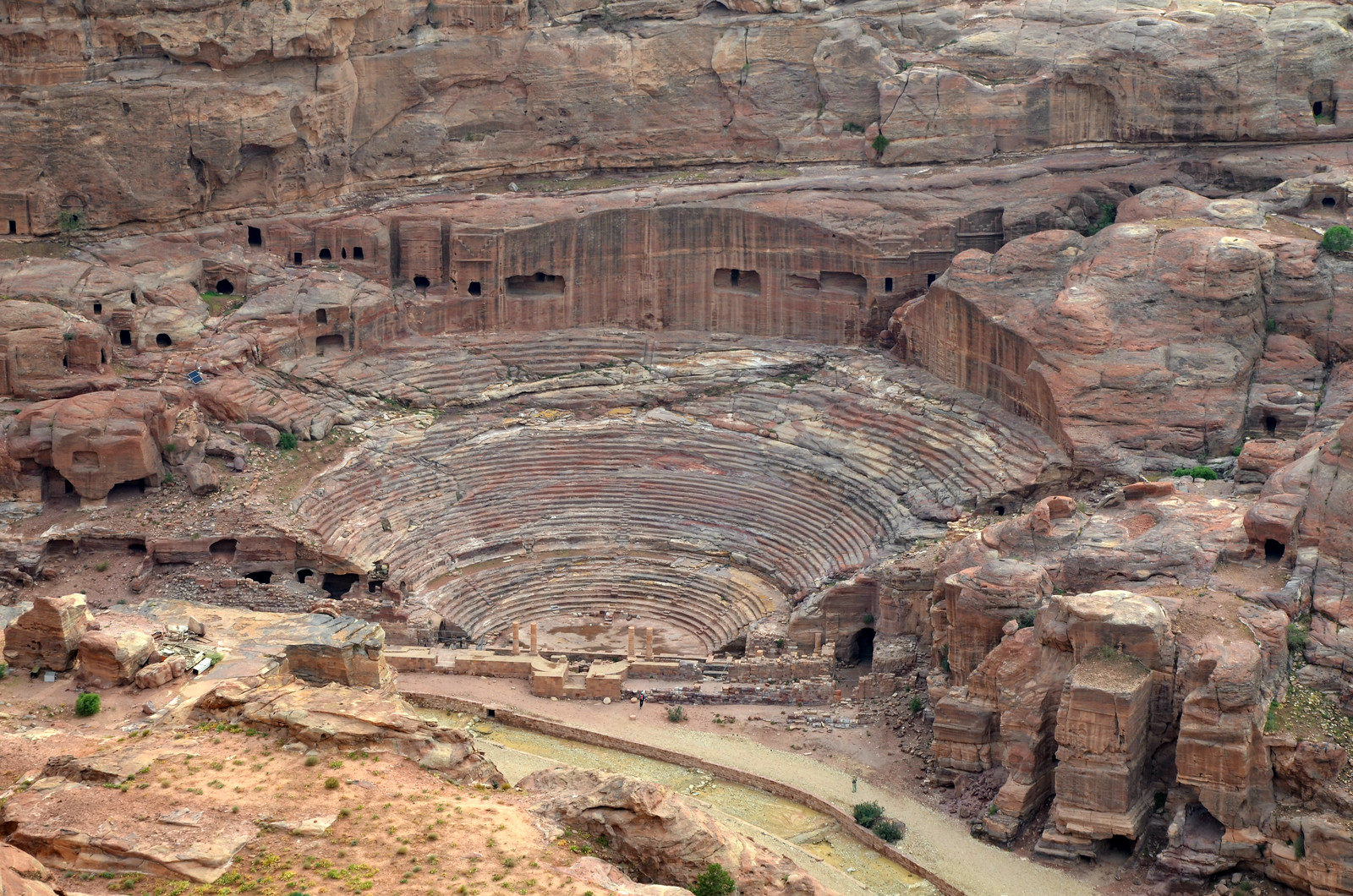
The Theatre of Petra was carved into the mountainside and consisted of three horizontal sections of seats, separated by corridors, with a total capacity of 8,500 people. The monument was originally built by the Nabataeans and was later enlarged by the Romans.
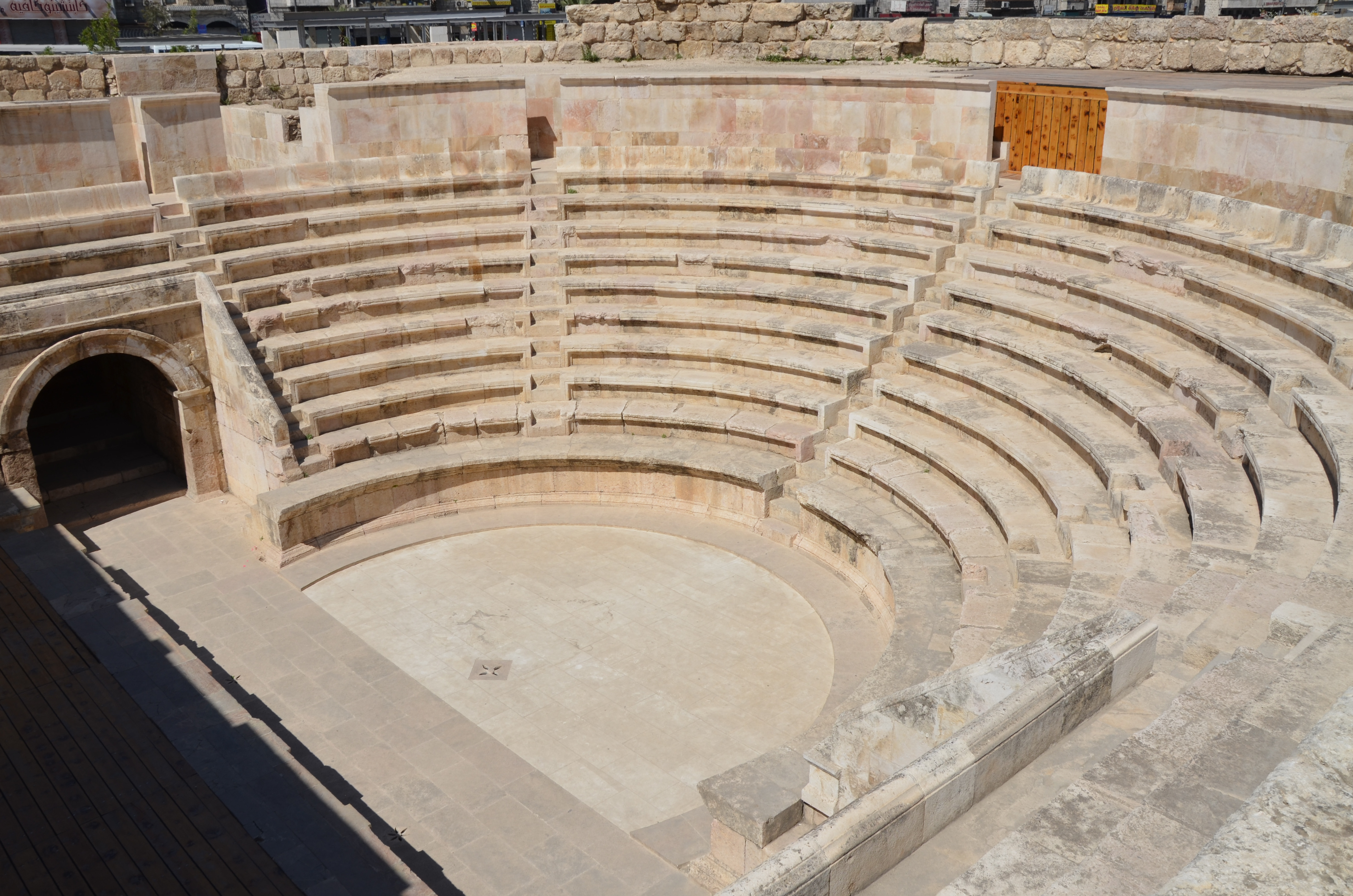
The Roman Odeon of Philadelphia (located in Amman) is a smaller-scale auditorium from the 2nd century AD, situated next to the main Roman Theatre. Constructed around AD 138 and 161 during the Roman Empire, it was specifically designed for musical performances, poetry readings, and intimate gatherings.
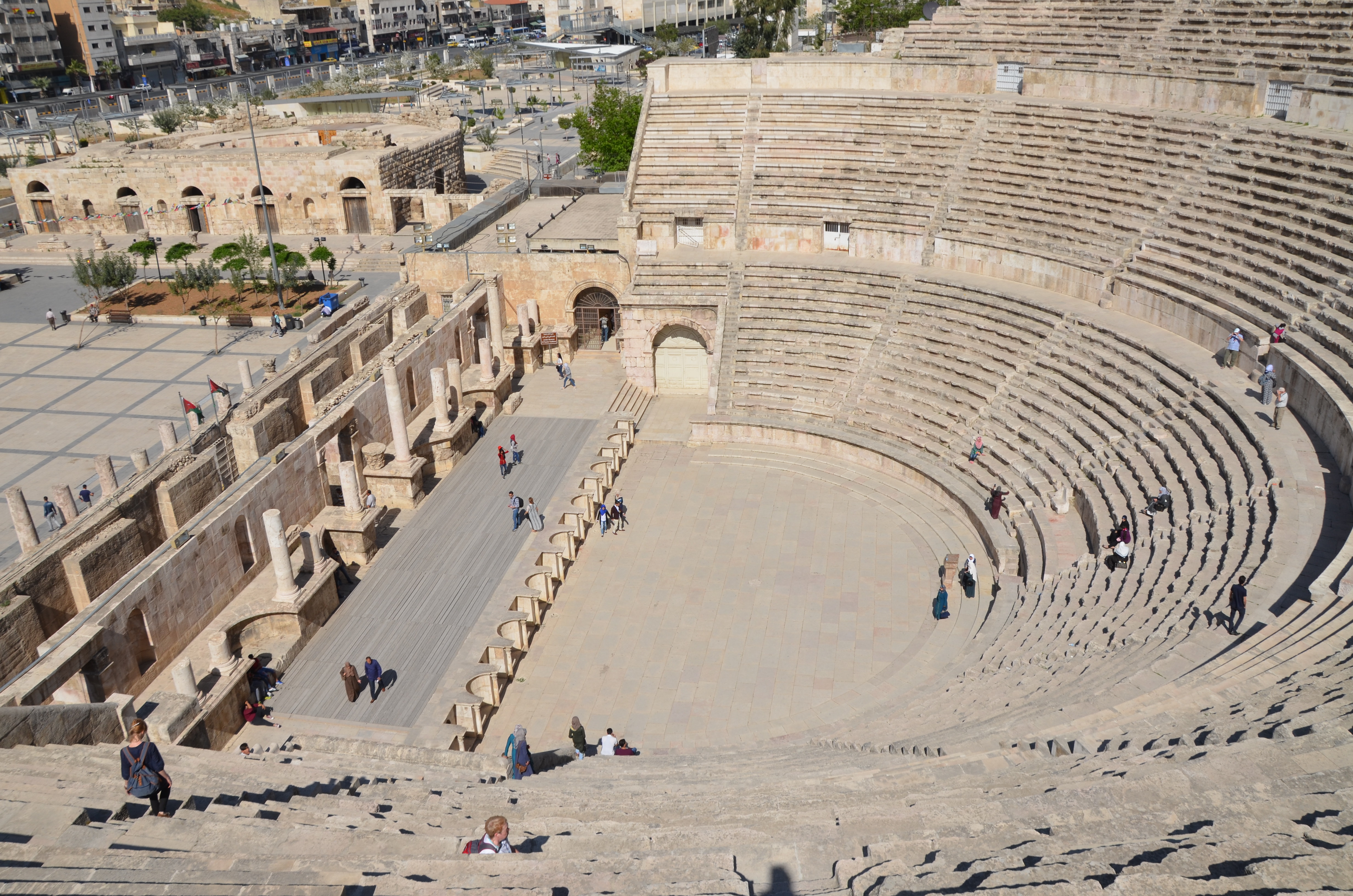
The Roman Theatre of Philadelphia (Amman) is a large structure built between AD 138 and 161, during the reign of Antoninus Pius. This well-preserved theatre seats 6,000 and is carved into a hillside, with its north orientation designed to shield spectators from the sun. The seating is divided into three distinct sections, each designated for different social classes.
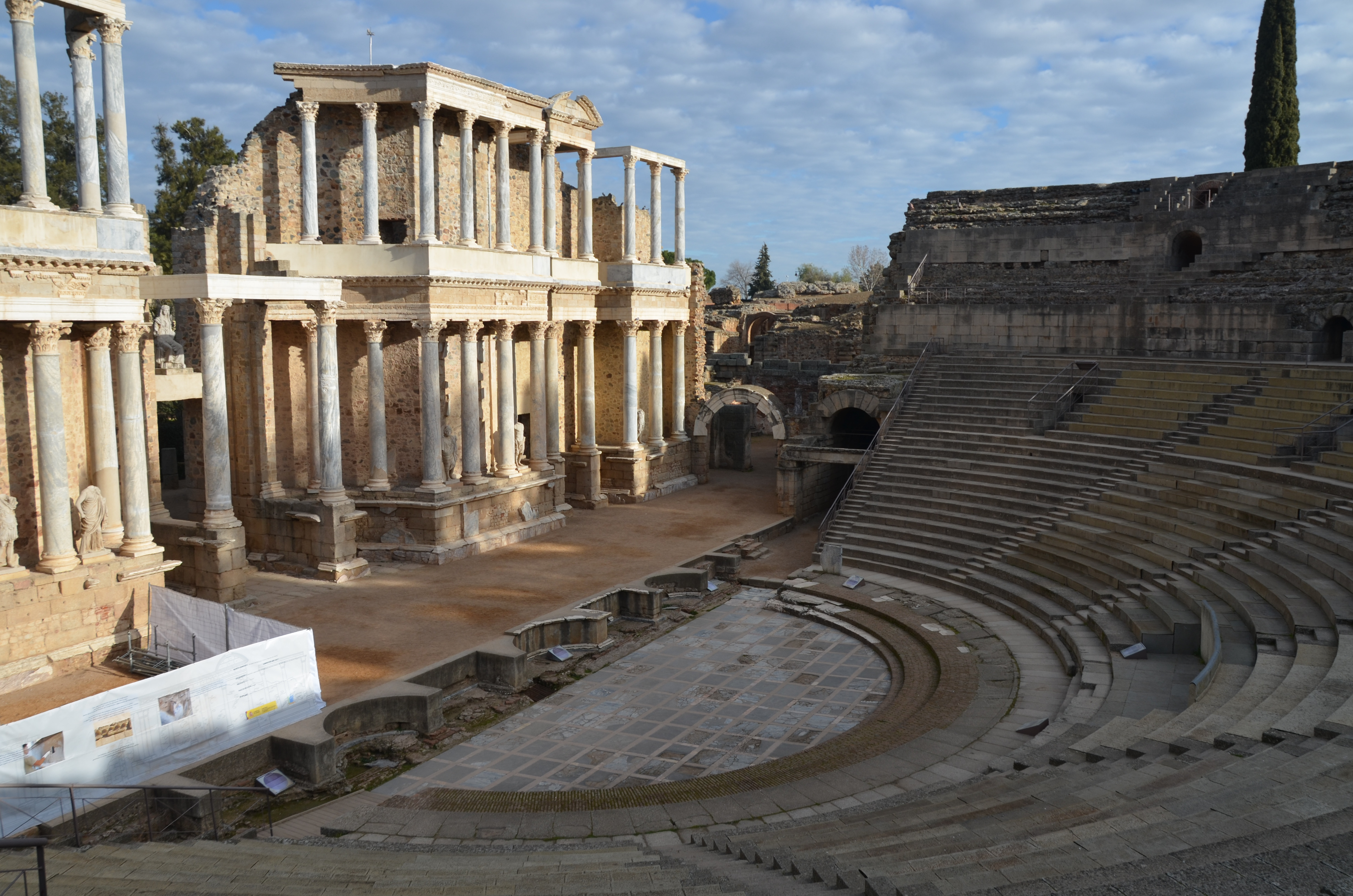
The Roman Theatre of Augusta Emerita (Mérida) was built between 16 and 15 BC under Roman consul Marcus Vipsanius Agrippa, shortly after Augustus founded the colony of Augusta Emerita in 25 BC. Designed to hold around 6,000 spectators, the seating (cavea) was split into three tiers based on social class (ima, media, and summa cavea).Baelo Claudia Roman Theatre (36°05’27.4″N 5°46’31.5″W)
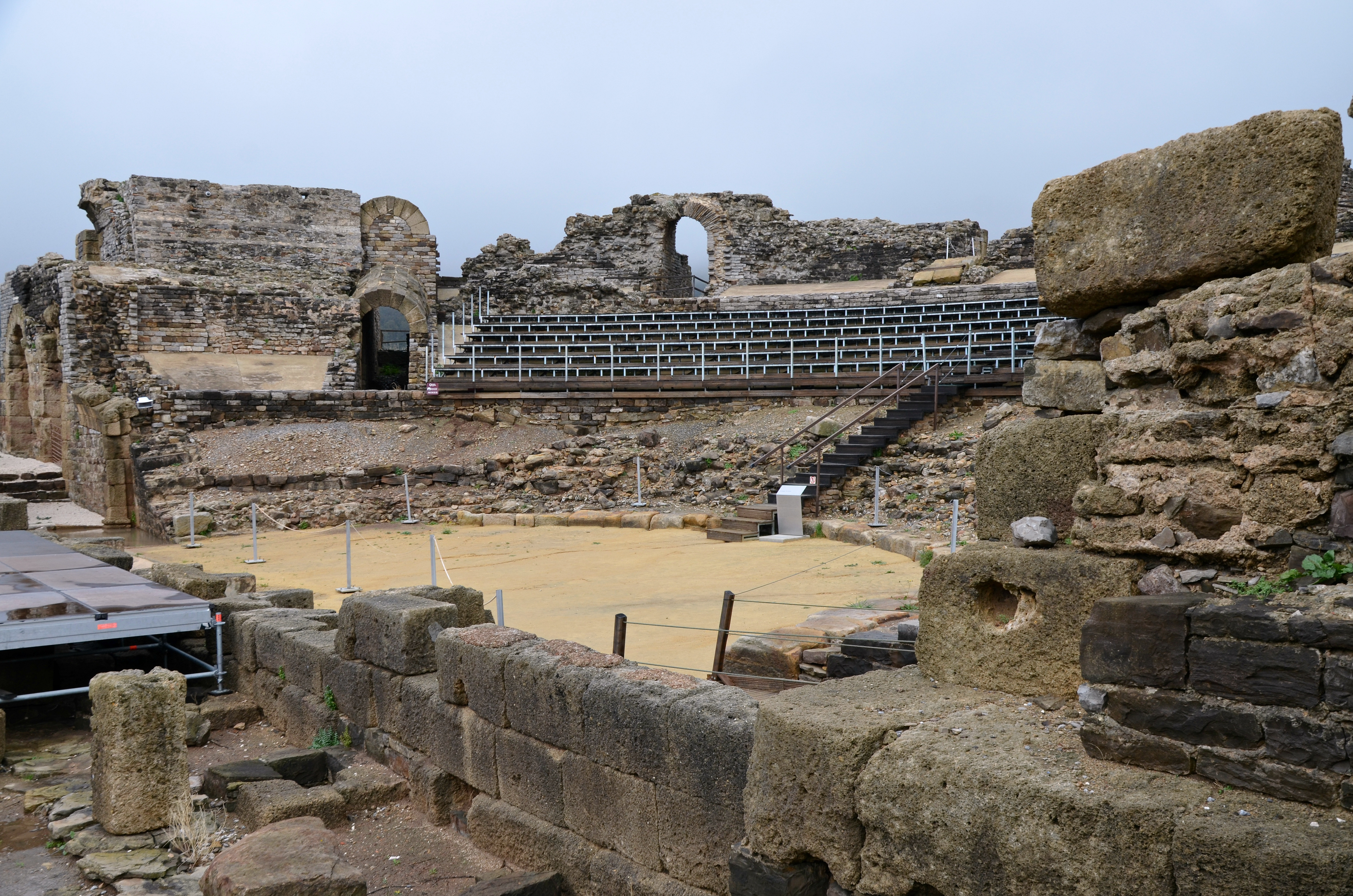
The Roman theatre at Baelo Claudia (near Cádiz) was built during the reign of Claudius (AD 41–54) and could accommodate between 1,500 and 2,000 spectators. Its south-facing cavea, about 70 m wide, was built into the hillside and overlooked a marble-paved orchestra 20 m in diameter. The lower seating area was divided into four wedge-shaped sections (cunei), while the stage, measuring 35 m in length, featured a proscaenium decorated with seven alternating curved and rectangular niches.
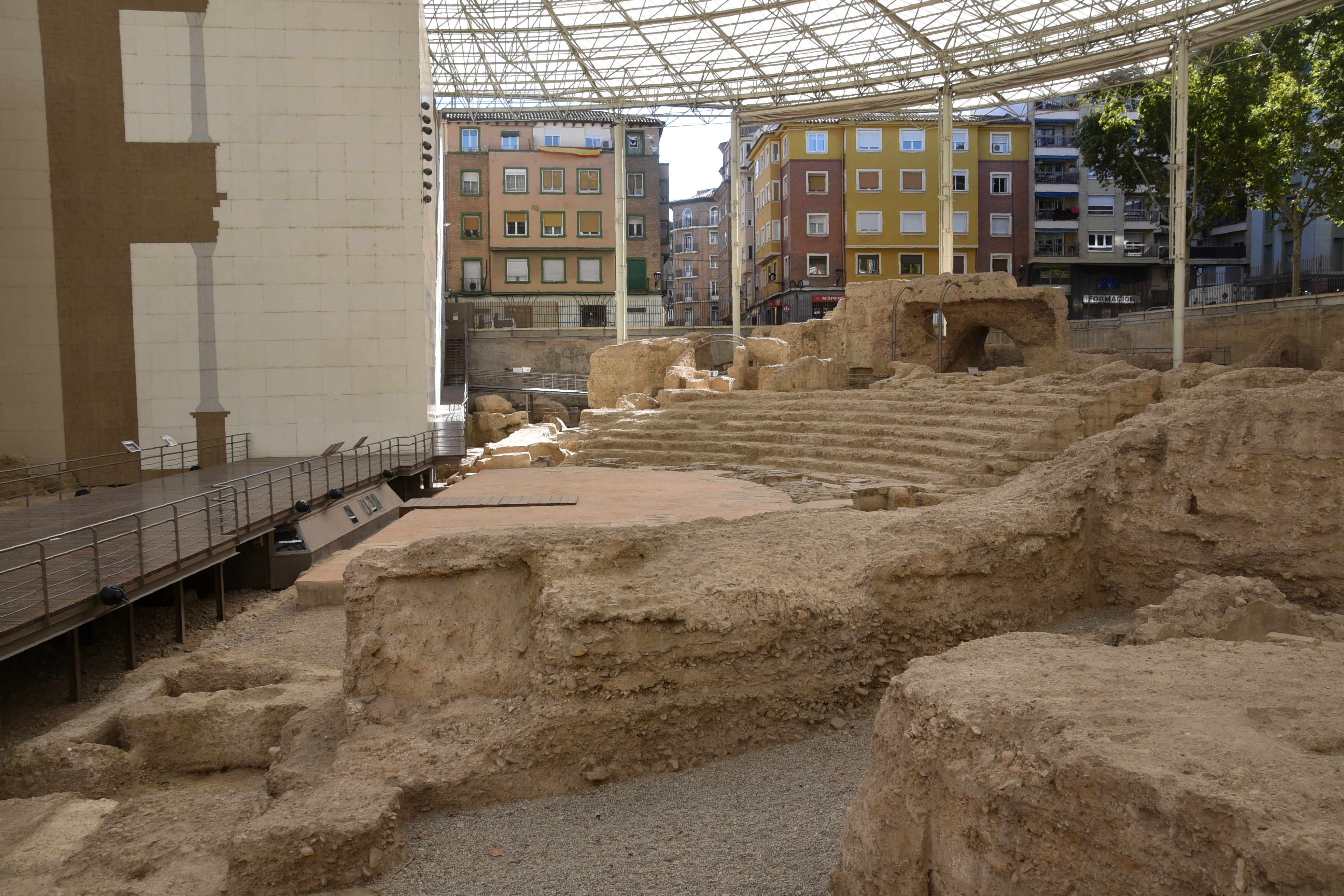
The Roman Theatre of Caesaraugusta, located in Zaragoza, was constructed in the first half of the 1st century AD during the reigns of Tiberius and Claudius. It had a seating capacity of 6,000 spectators, which was significant for a city with a population of only 18,000 at the time. The theatre’s design was inspired by the Theatre of Marcellus in Rome. It remained in use until the 3rd century AD.
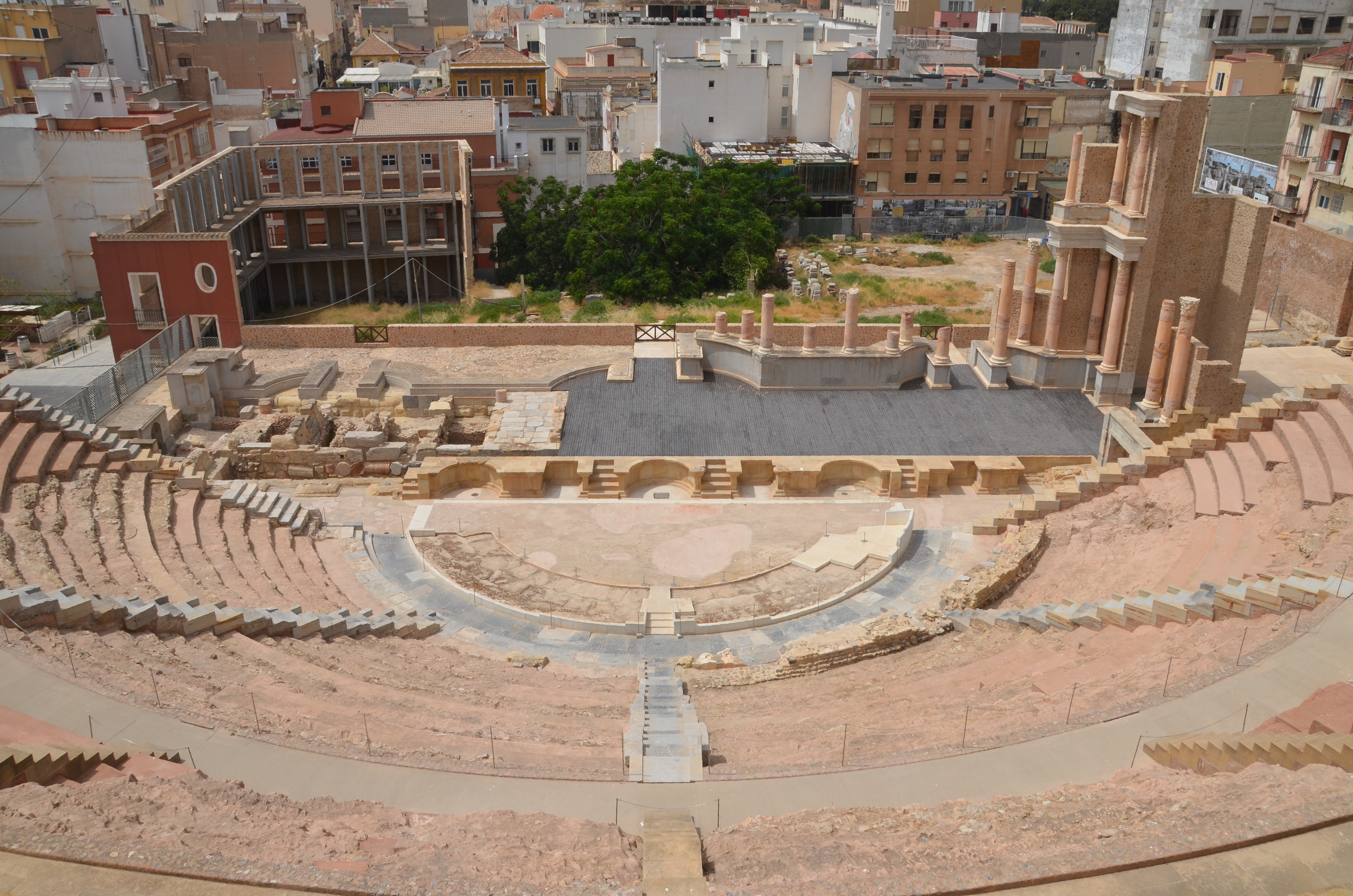
The Roman Theatre in the Roman colonia of Carthago Nova (Cartagena) was built between the years 5 and 1 BC under the rule of Augustus. It had a capacity of some 6,000 spectators. The ancient structure remained buried under the city for centuries and was only accidentally rediscovered in 1988.
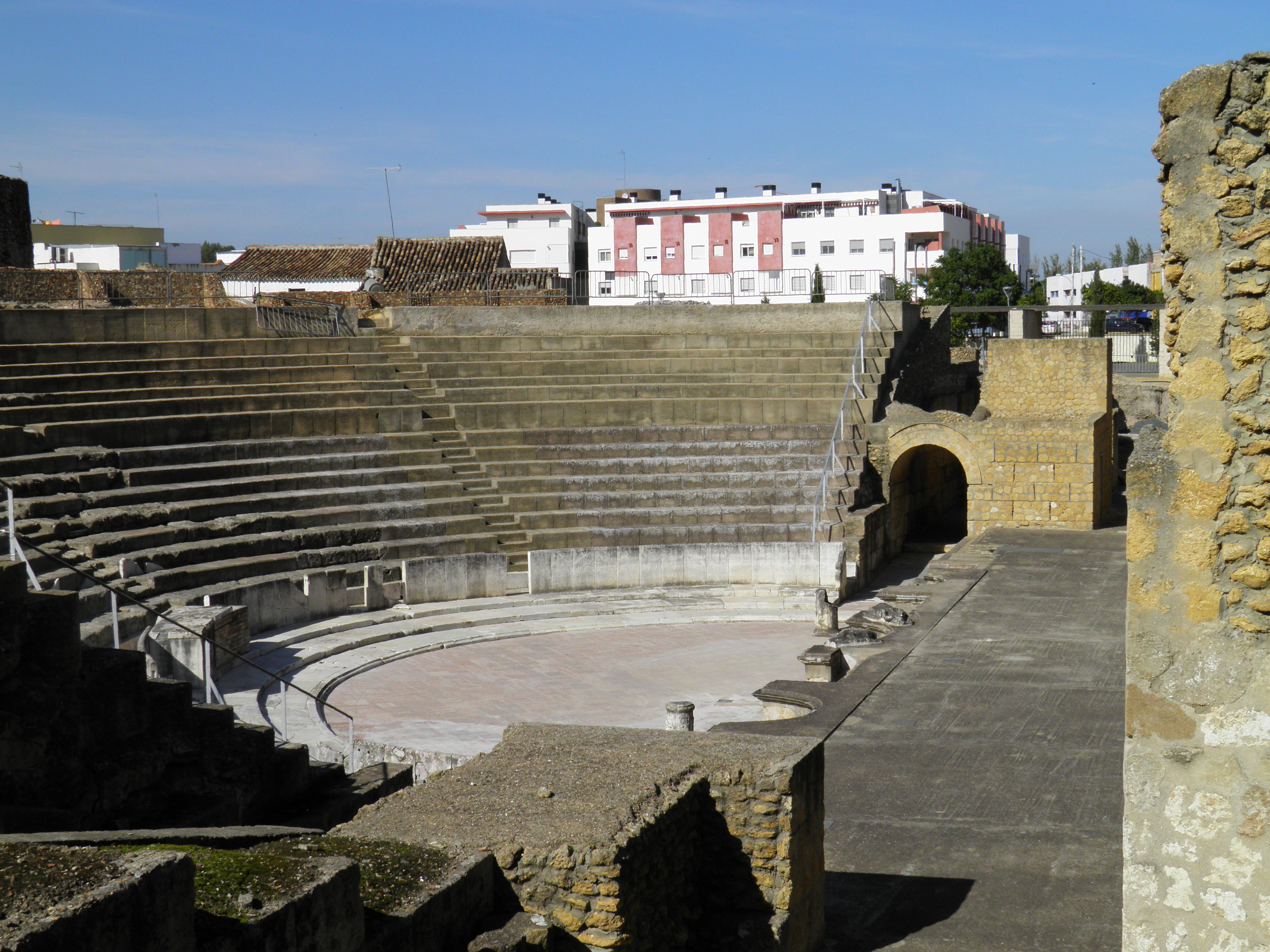
Built in a natural hollow during the reign of Augustus between AD 30 and 37, with later renovations during the 1st century AD. It was rediscovered in 1937 and excavated later in the 20th century. It could hold about 3,000 spectators and features a semicircular cavea (seating area), an orchestra, and a decorated stage wall (scaenae frons).Metellinum Roman Theatre (38°57’58.4″N 5°57’21.2″W)
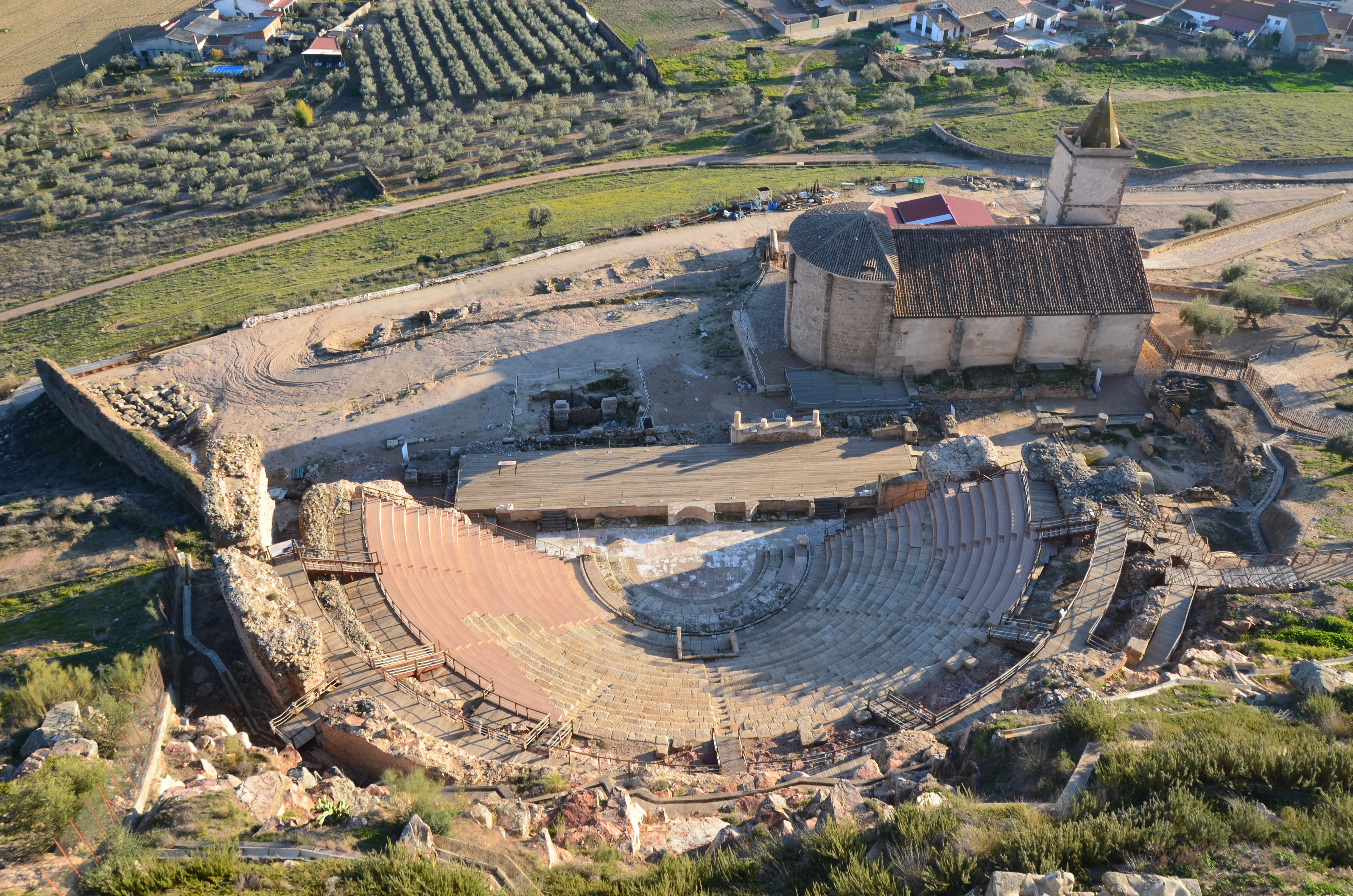
The Roman Theatre of Metellinum, located in Medellín, was built in the last quarter of the 1st century BC. The theatre features a cavea, or seating area, that measures approximately 62 meters in diameter. It is divided into two sections: the ima cavea (lower seating), with 8 rows arranged in 4 cunei, and the summa cavea (upper seating), with 8 rows arranged in 7 cunei. In front of the stage is the orchestra, a semicircular space about 22 meters in diameter. The theatre could accommodate between 3,000 and 3,500 spectators.
Construction began during the reign of Tiberius and was officially inaugurated around AD 78–79 during the Flavian dynasty. It is celebrated for having one of the best-conserved seating bowls (cavea) in ancient Hispania and continues to host classical theatre performances today.Tarraco Roman Theatre (41°06’46.4″N 1°14’57.9″E)
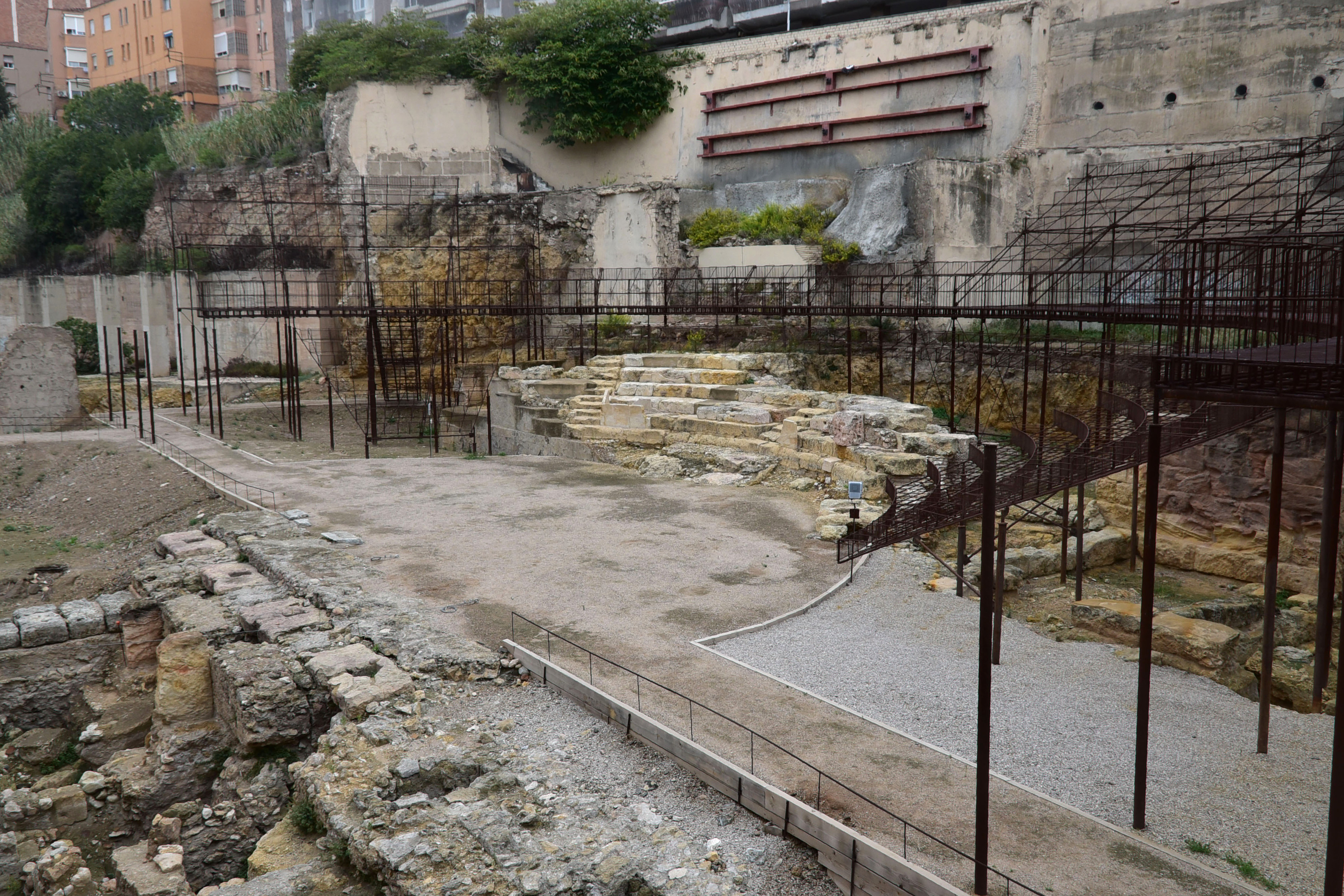
The Roman Theatre of Tarraco (Tarragona) was built around 10 BC during the time of Augustus. The building was in use until the end of the 2nd century AD, when it ceased to function as a theatre and was repurposed for other uses.
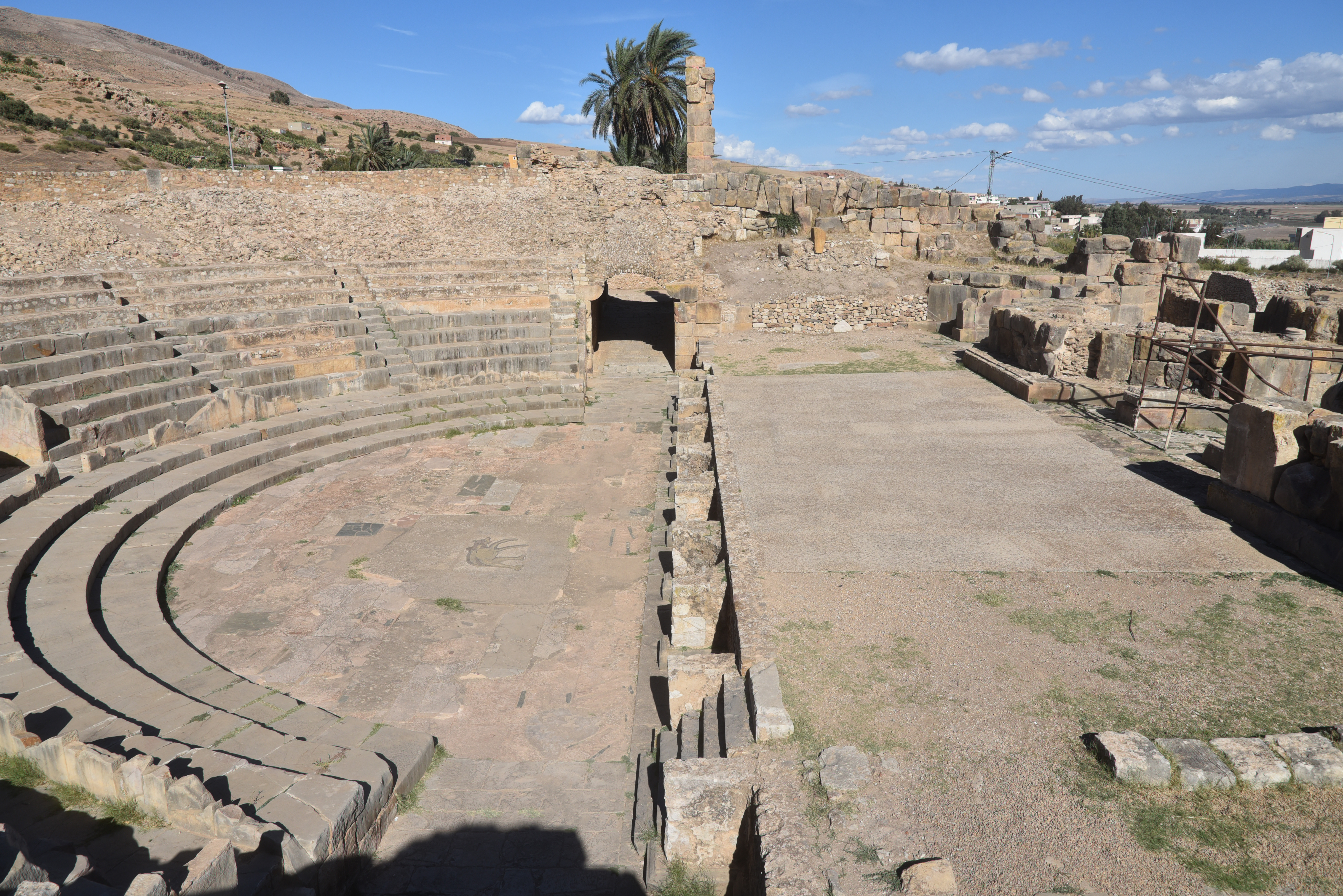
The small but beautifully preserved Roman theatre of Bulla Regia was built during the co-rule of Marcus Aurelius and Lucius Verus (AD 161–169). It stands at the eastern end of the town, near the forum, and features a 4th-century CE bear mosaic on the orchestra pavement. In AD 399, Saint Augustine visited Bulla Regia and delivered a sermon in the theatre. He chastised the citizens for selling their souls and spending too much time at the theatre.
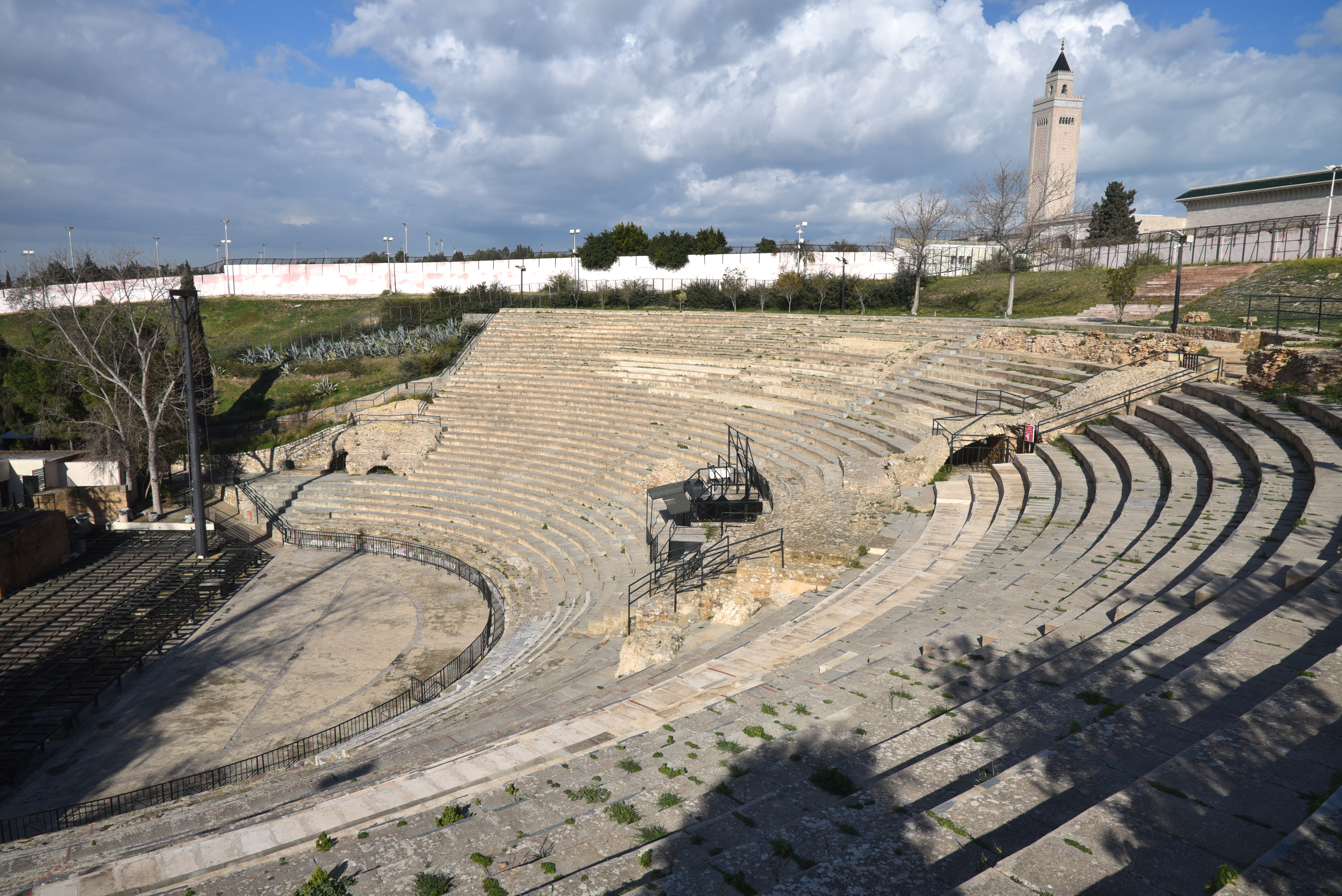
Originally constructed in the 2nd century AD, the Theatre of Carthage was a massive structure that once held thousands of spectators. Though heavily reconstructed with modern concrete, it remains an active, open-air cultural venue that hosts the annual International Festival of Carthage.
Sufetula Roman Theatre (35°14’22.5″N 9°07’20.4″E)
The Roman Theatre of Sufetula (Sbeitla) was built in the 2nd century AD with a seating capacity for over 3,500 spectators.
The Theatre of Thugga (Dougga) was completed around AD 166 during the reign of Antoninus Pius. Publius Marcius Quadratus, a member of one of the city’s wealthiest families, funded the construction. Modest in size, the theatre could accommodate 3,500 spectators across its 19 semicircular tiers, which were carved into the hillside. The stage featured a central semicircular niche flanked by square niches on either side. Barriers and stairways divided the seating area, allowing access from the top or the sides.
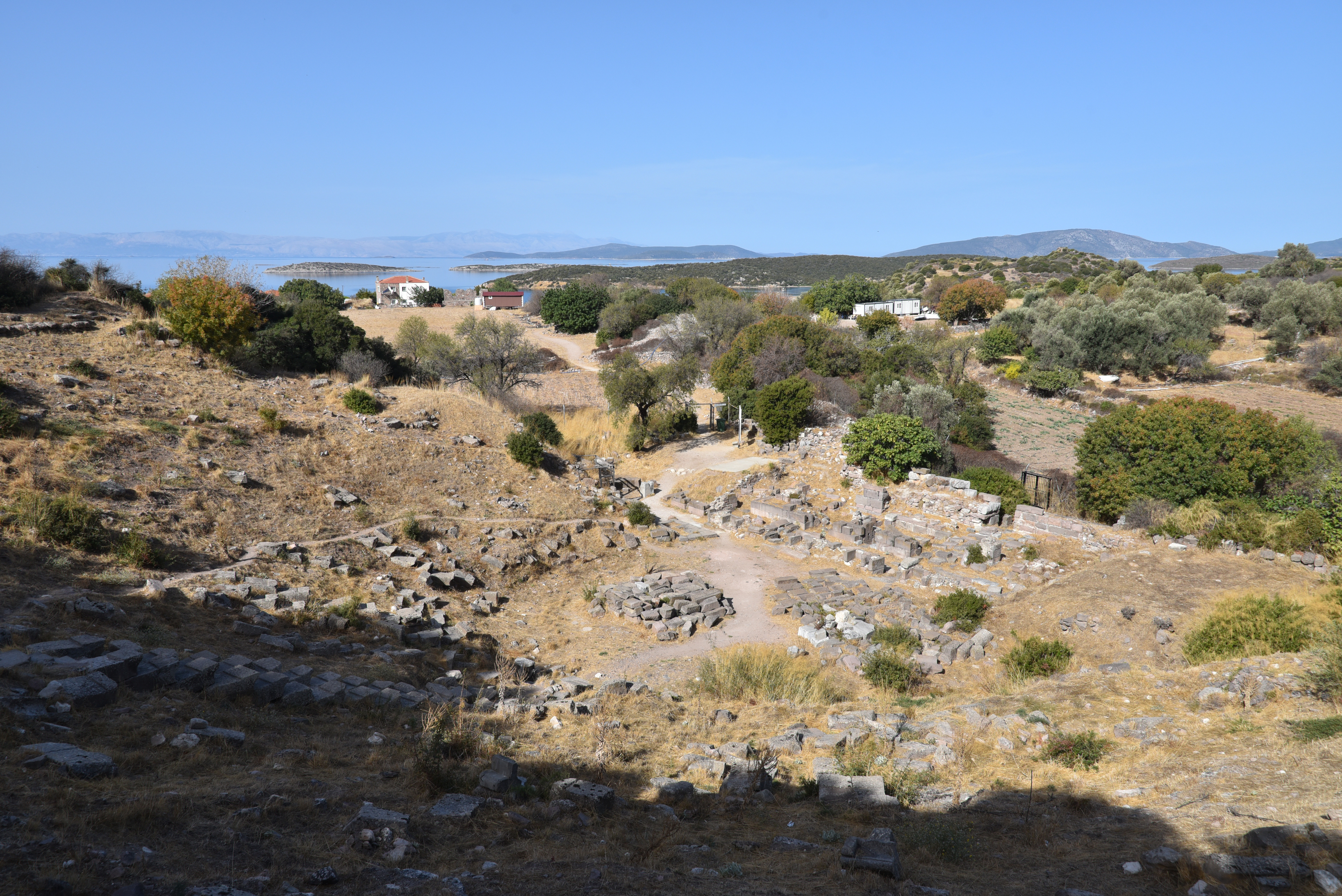
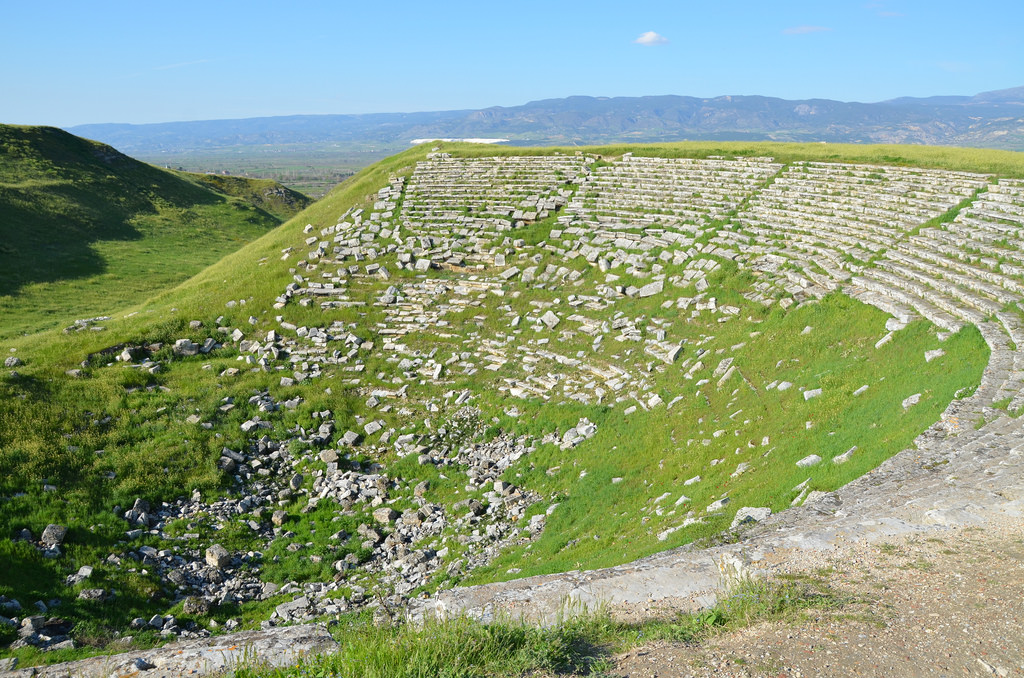
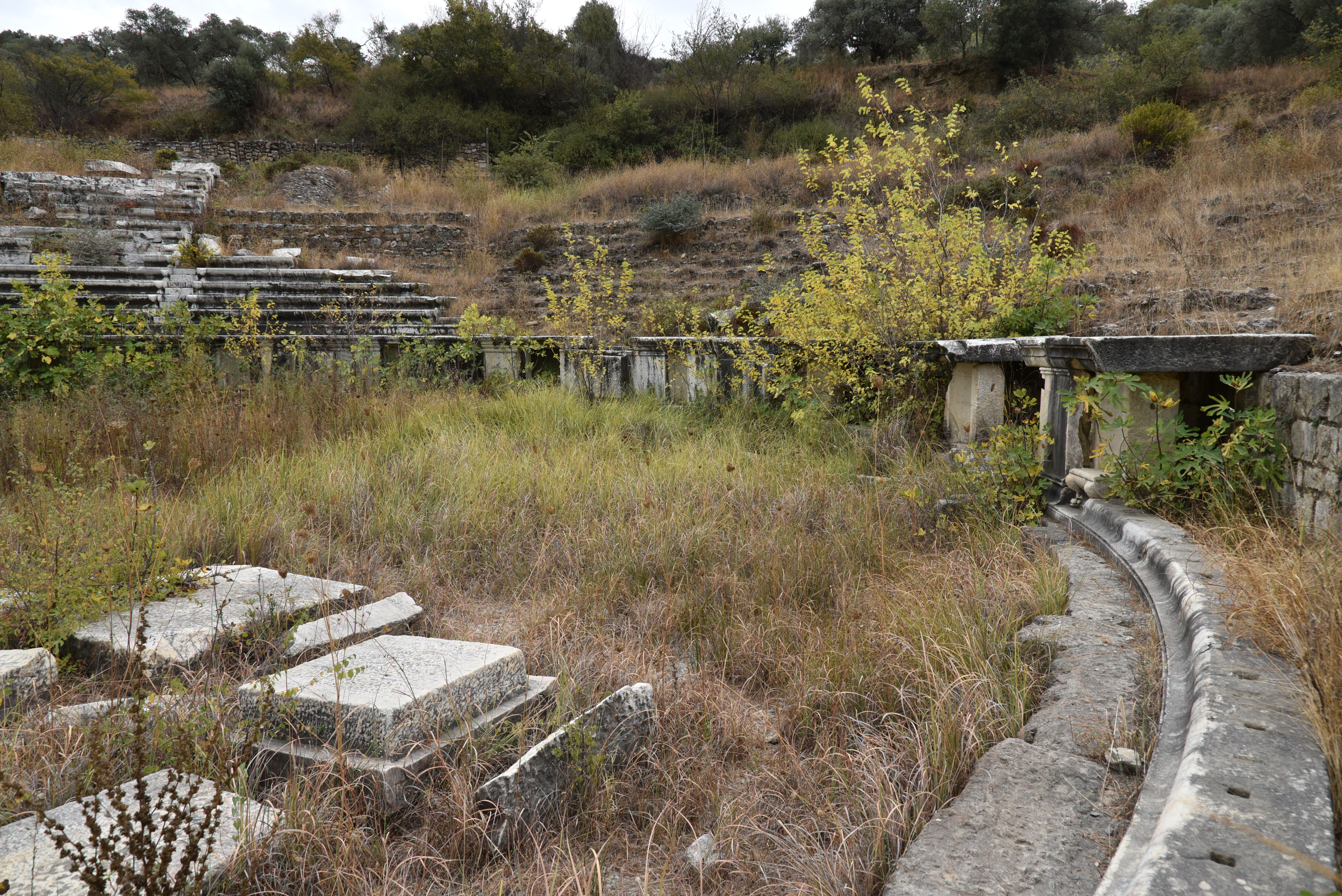
The Hellenistic Theatre at Alabanda was situated on a natural south-facing hillside. In the 4th century AD, repairs were made using stone blocks from the Temple of Zeus Chrysaoreus.
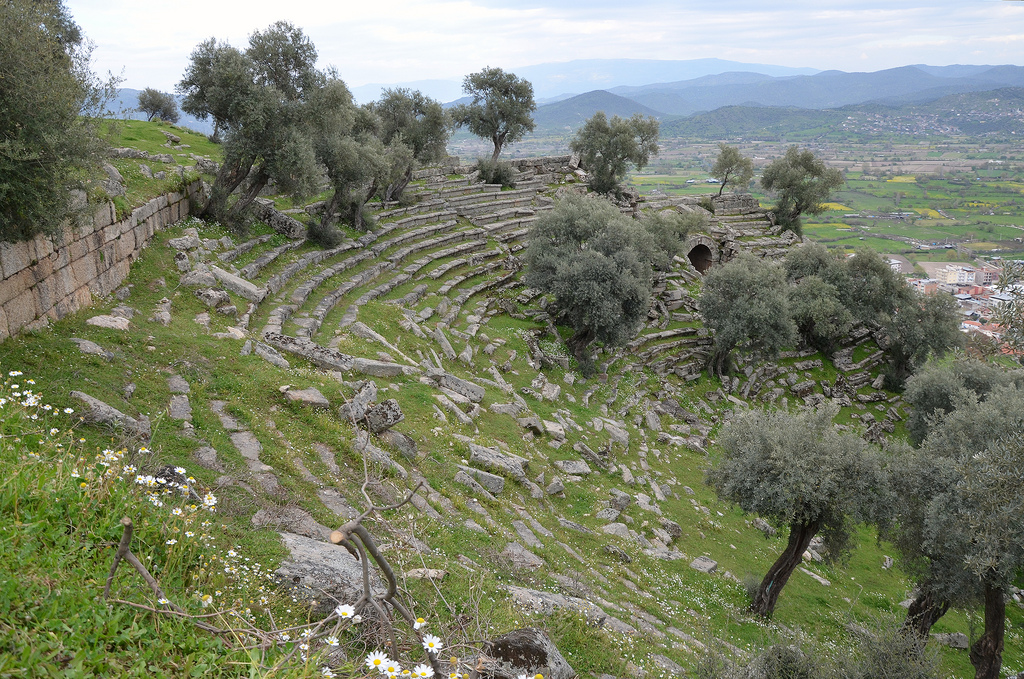
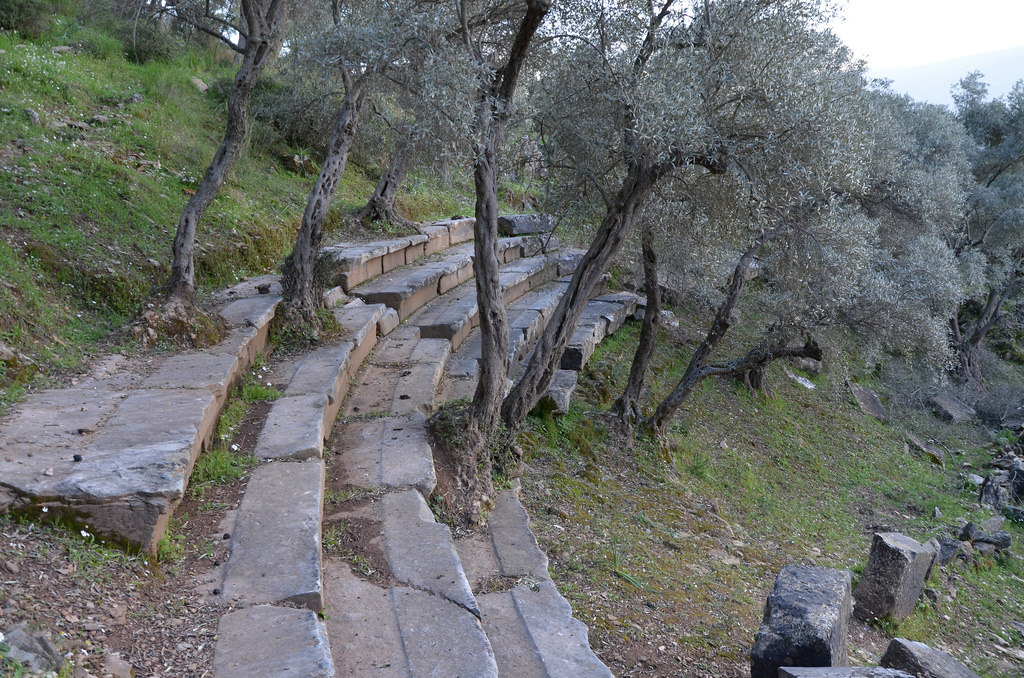
The theatre at Alinda was built around the early 2nd century BC during the Hellenistic period, with later Roman-era expansions and a stage-building rebuild.
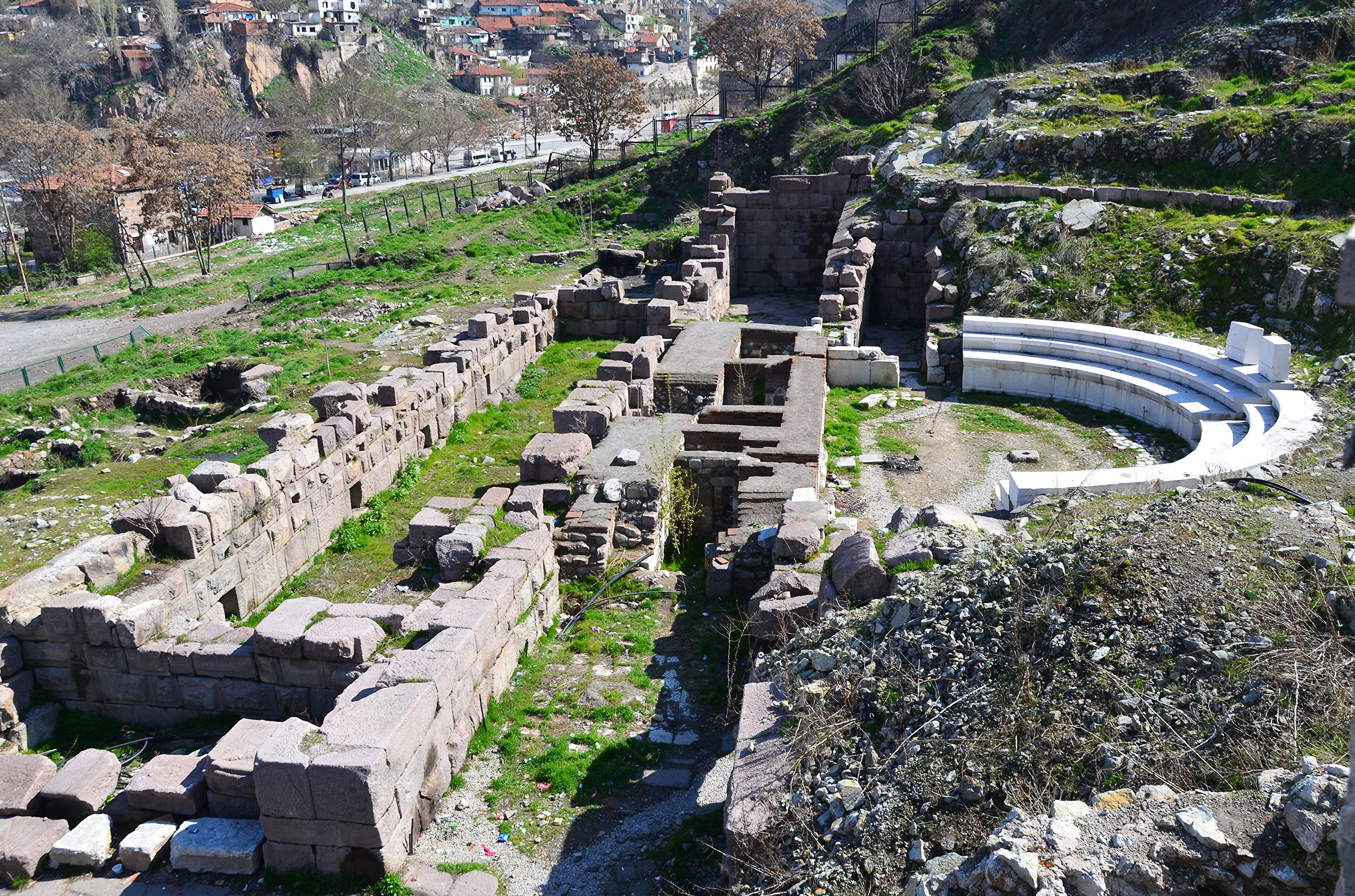
The Roman Theatre of Ancyra was constructed in the early to mid-1st century AD, during the Julio-Claudian or Augustan period. It underwent renovations during the reign of Hadrian in the 2nd century AD. The theatre had an estimated capacity of 3,000 to 5,000 spectators and hosted various theatrical performances, as well as significant regional events such as the Aktia games, Mystic games, and Pythian games. The site was rediscovered during excavations conducted between 1982 and 1986, which uncovered important finds, including 26 pieces of an imperial cuirassed statue of Hadrian and various sculptural fragments.
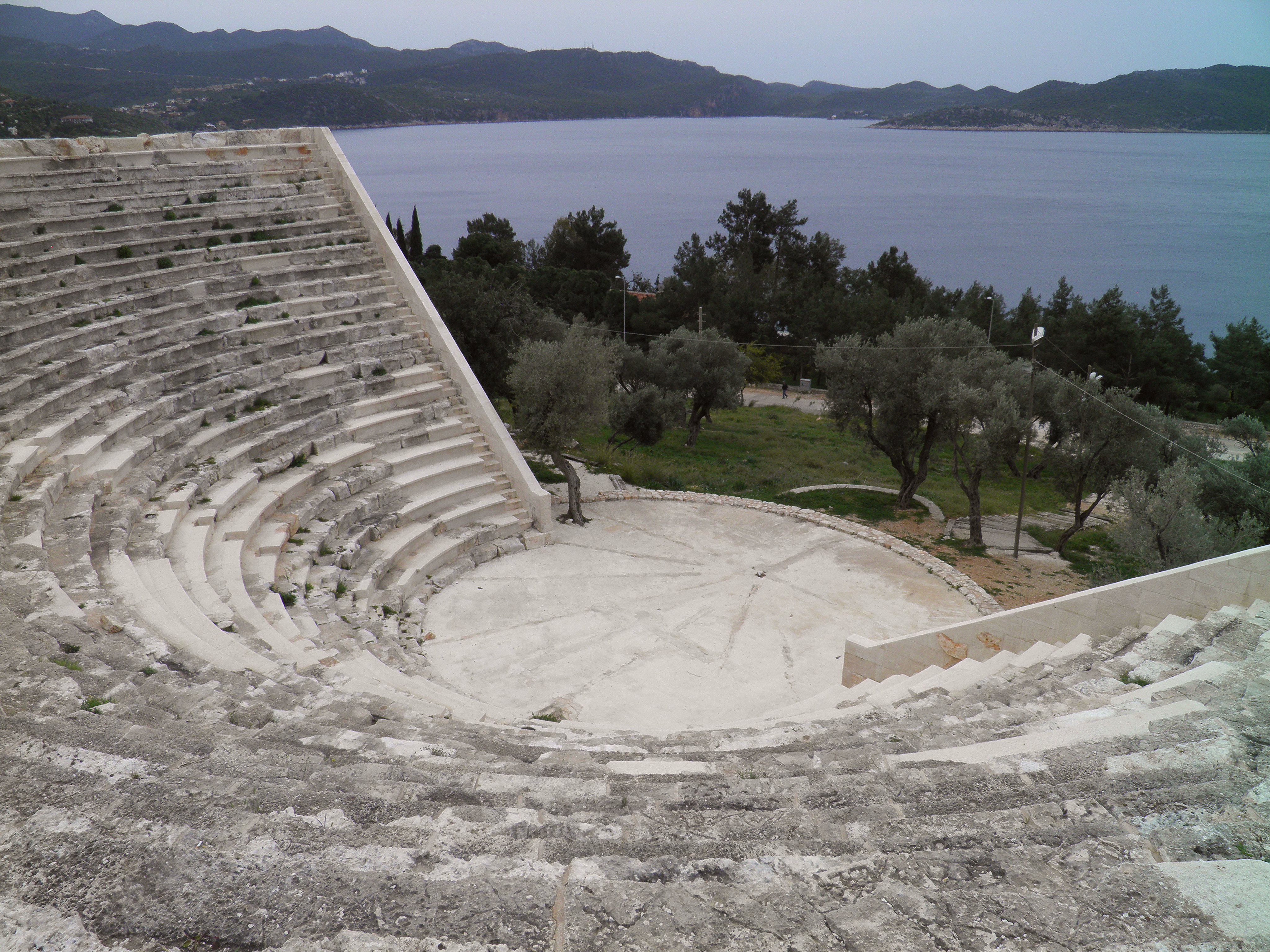
The Antiphellos Ancient Theatre was built in the early 1st century BC and features 26 rows of local limestone seating tiers, with a capacity of roughly 4,000 spectators. Unlike most ancient Anatolian theatres, it has no permanent stone stage building (skene) blocking the view, opening directly out to the Mediterranean Sea and the Greek island of Kastellorizo.Aphrodisias Roman Theatre (37°42’25.4″N 28°43’30.5″E)
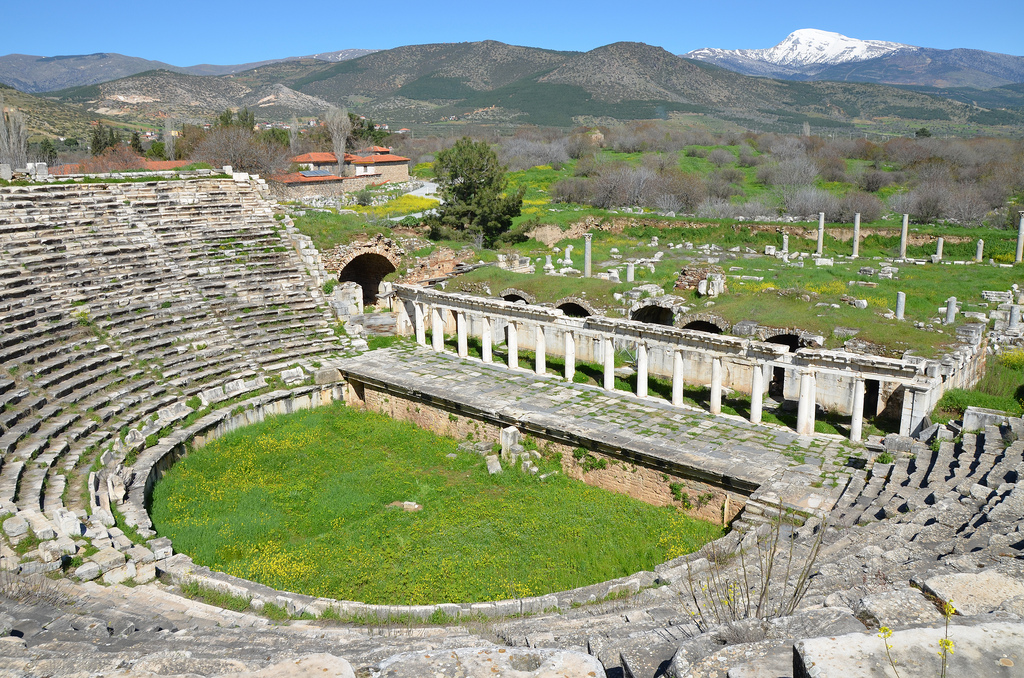
The Roman theatre at Aphrodisias was built in the second half of the 1st century BC on the eastern slope of the Acropolis. It was dedicated to Aphrodite and the people of the city by Julius Zoilos, a former slave of Octavian.
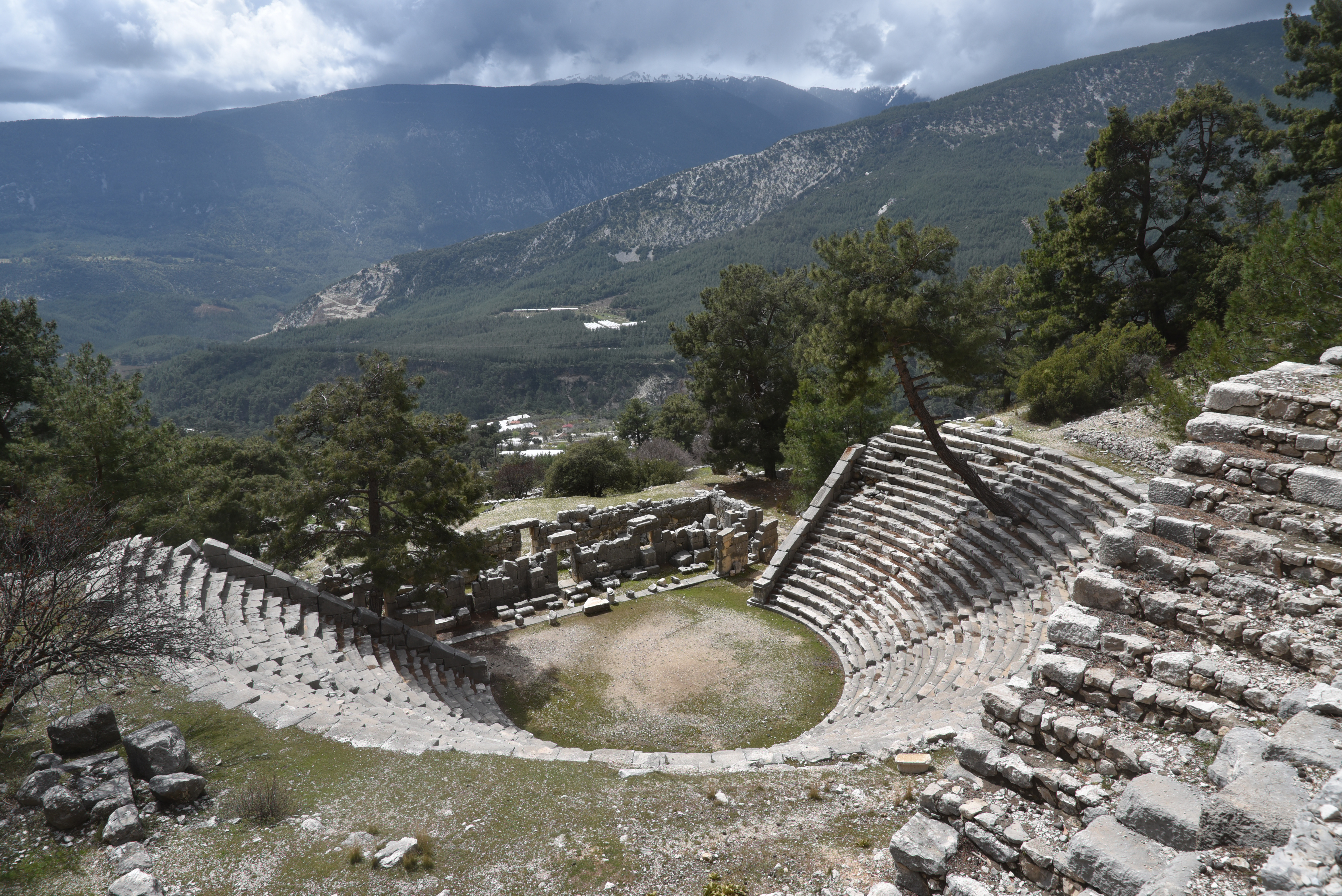
The Theatre of Arykanda was built during the 1st century BC and was designed to accommodate approximately 2,500 to 3,000 spectators. Most of the seating is supported by the hillside, while the lower sections are reinforced with vaulting. The theatre features a semicircular cavea divided into sections and a stage building that was later modified during the Roman Imperial period.
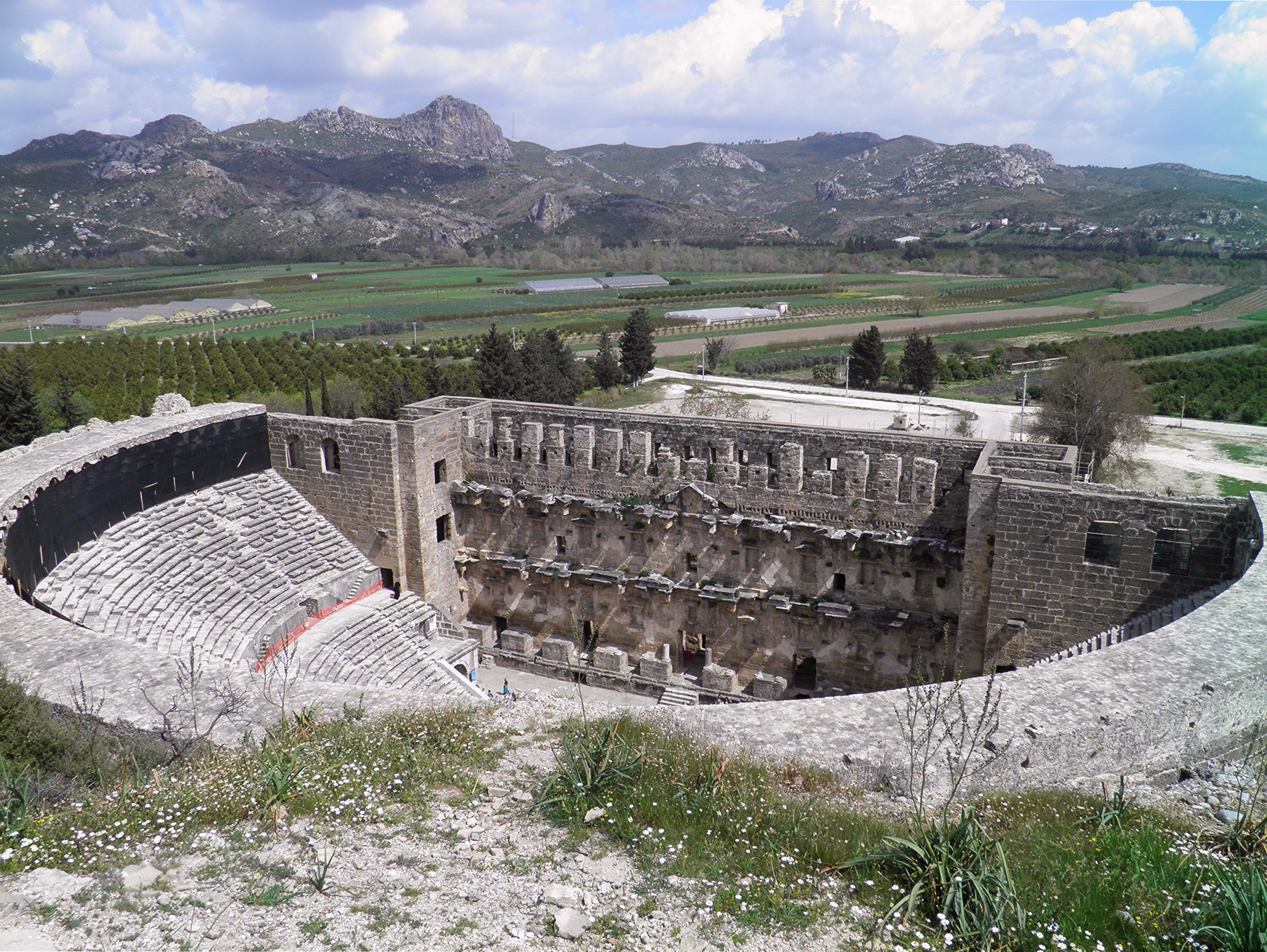
Aspendos Roman Theatre (36°56’20.2″N 31°10’19.9″E)
The Roman Theatre of Aspendos, constructed in the 2nd century AD, is one of the best-preserved ancient theatres from the Greco-Roman era. With a diameter of 96 meters, the theatre has a seating capacity of 7,000 to 13,000 people. It was built by Zenon, a Greek architect native to the city, during the reign of Marcus Aurelius.
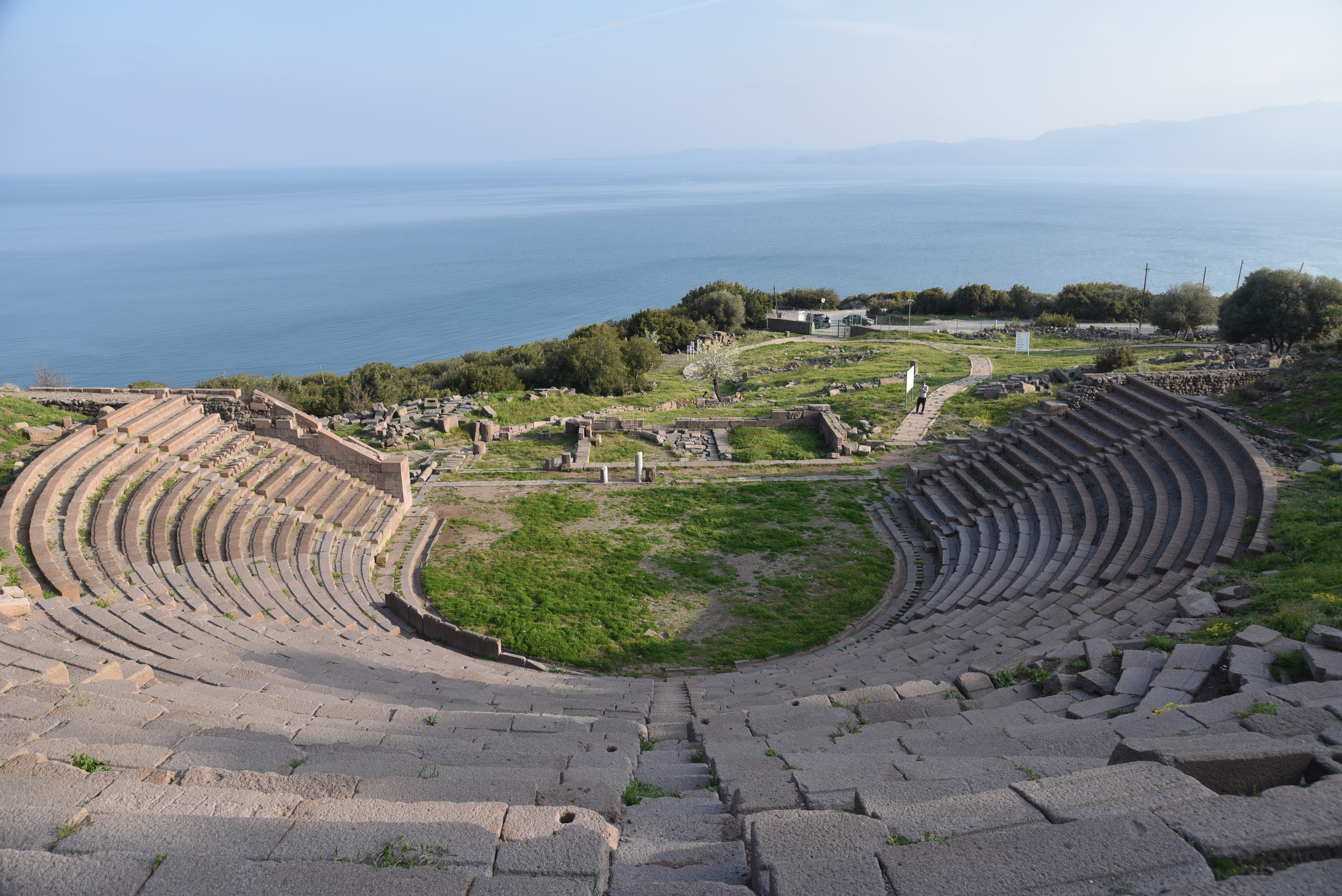
The theatre at Assos was originally built in the 3rd century BC during the Hellenistic period (with origins or foundations tracing to the 4th century BC) and later modified under Roman occupation. Carved into a natural rock slope south of the agora, it could seat 5,000 spectators.
The Roman theatre of Diocaesarea was constructed during the joint reign of the emperors Marcus Aurelius and Lucius Verus. The theatre had a capacity of around 2000 spectators.
The theatre at Elaiussa Sebaste was built in the first half of the 2nd century AD, while its final stage may be dated to the reigns of Marcus Aurelius and Lucius Verus (AD 161-169). It held about 2,300 spectators, and its orchestra was originally paved with marble slabs.
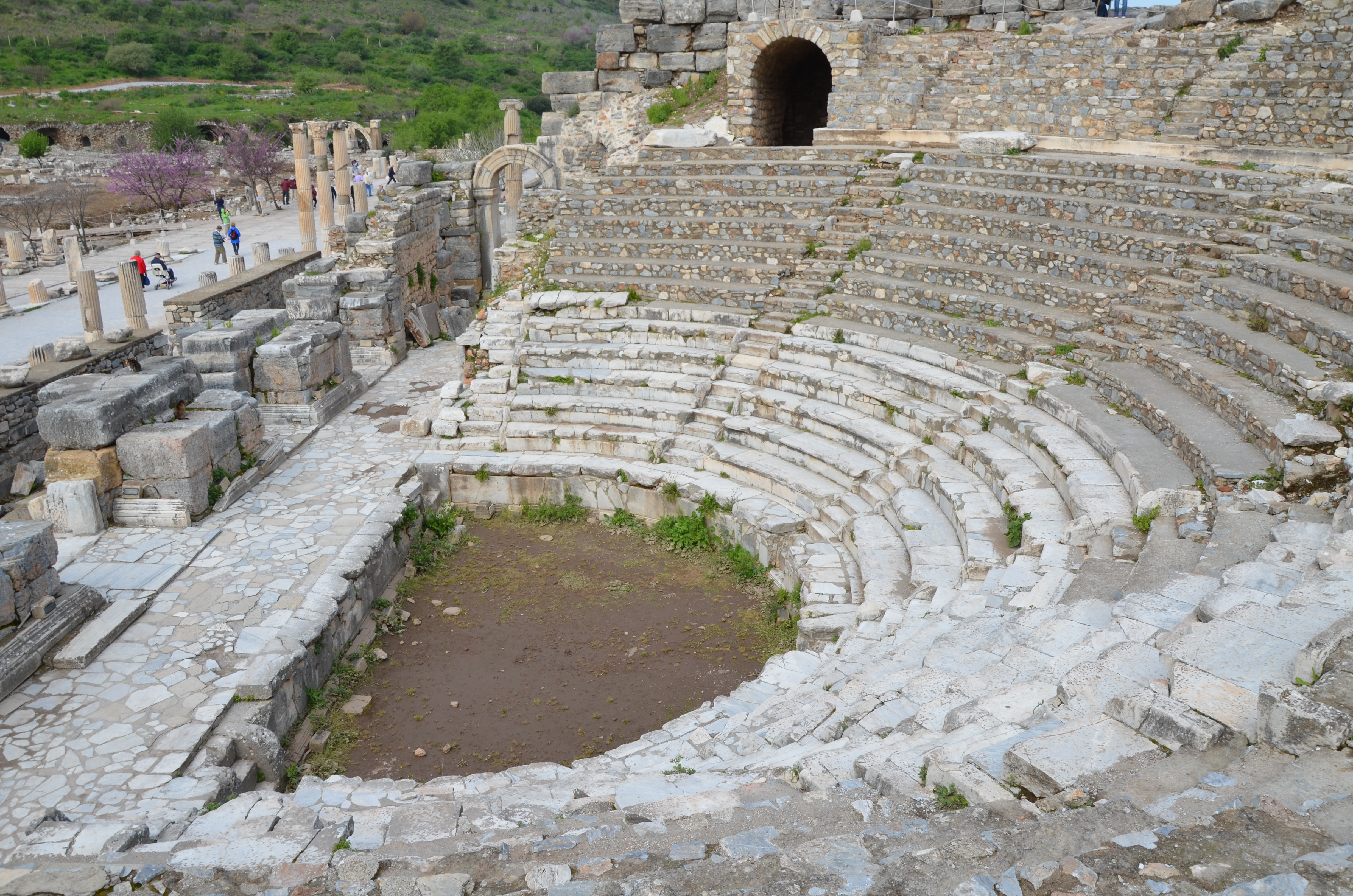
The Bouleuterion (council chamber), originally built during the Hellenistic period and remodelled as an Odeon in AD 150 by Publius Vedius Antoninus, who financed the building of a new skene.
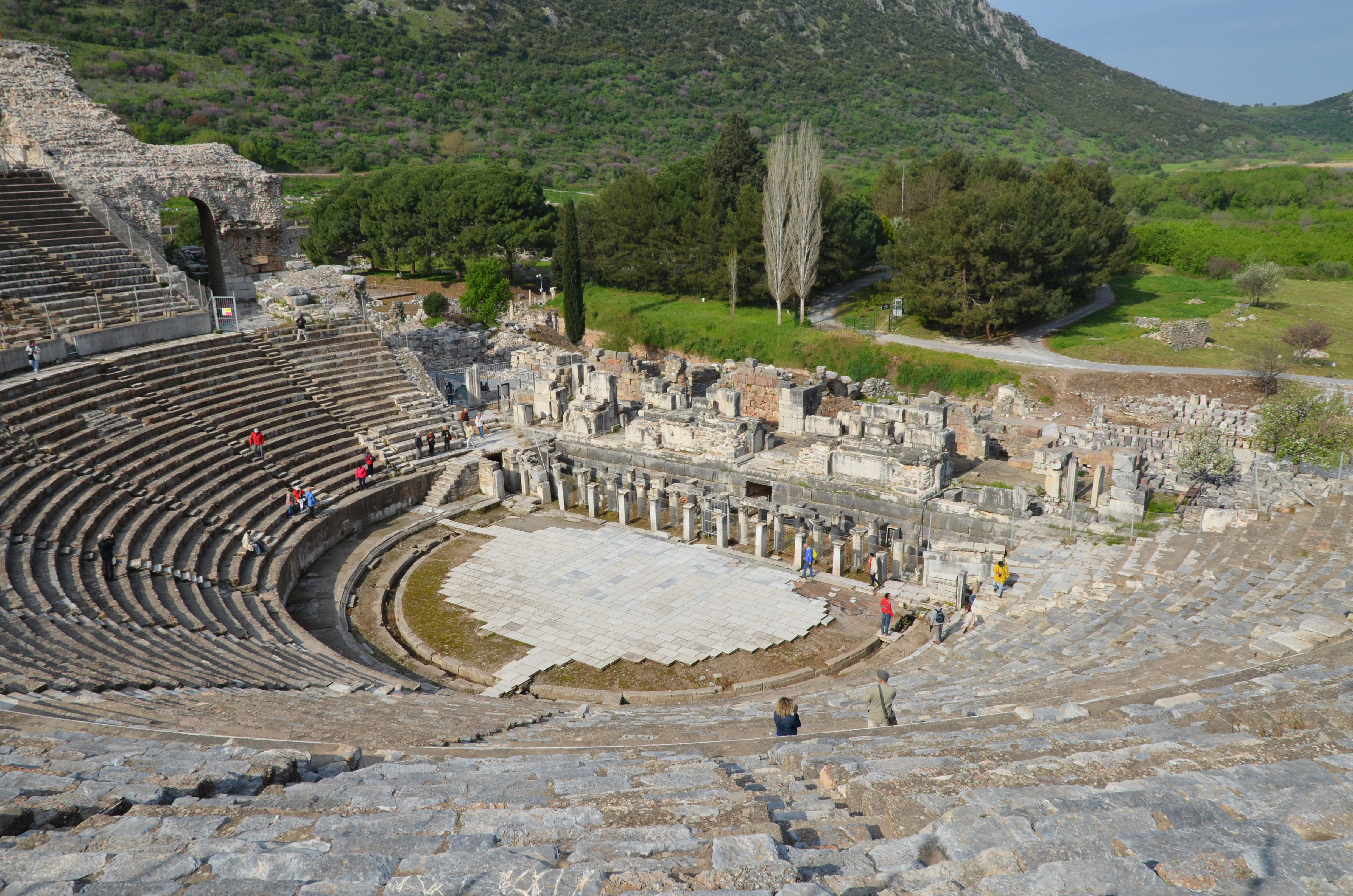
The Great Theatre of Ephesus originally began during the Hellenistic period in the 3rd century BC (roughly between 300 BC and 250 BC) and was carved into the slope of Mount Panayir. The structure was later expanded and transformed into a Greco-Roman-style monumental theatre over several centuries, with major additions under Emperors Claudius and Nero, when the two-storey stage was built, and under Trajan, when the third storey was added, bringing it to its full scale and capacity of 24,000 to 25,000 spectators.
Originally built in the 4th century BC, the open-air theatre was further developed and reconstructed around the 3rd century BCE as part of the prosperous Ionian city-state of Erythrai (one of the twelve members of the ancient Pan-Ionian League). Like many Greek theatres in Asia Minor, it was modified and repaired during the Roman imperial era, notably around AD 124 during the visit of Roman Hadrian.
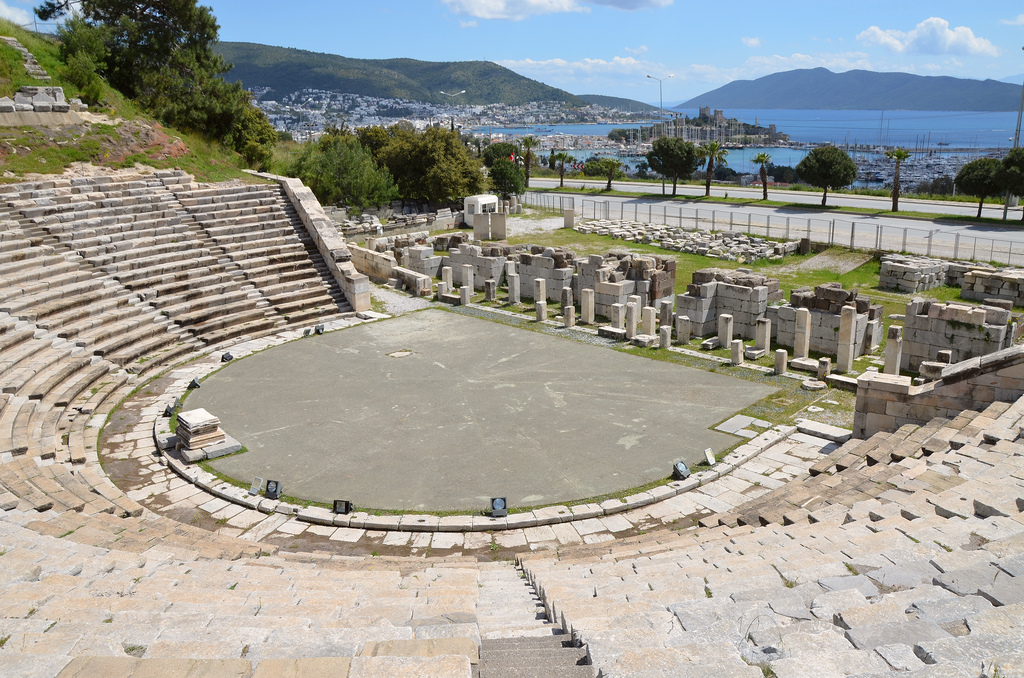
The theatre of ancient Halicarnassus was built in the 4th century BC during the reign of King Mausolus and enlarged in the 2nd century AD. The theatre’s original capacity was 10,000.
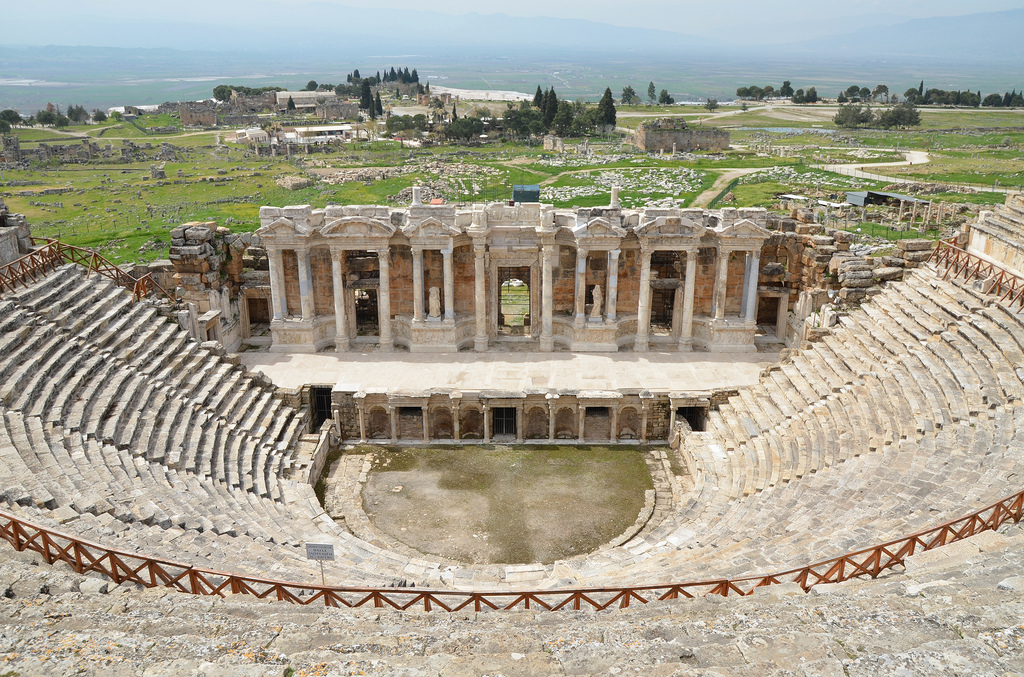
The Roman Theatre at Hierapolis was built in the 2nd century AD under Hadrian during a period of extensive rebuilding following the devastating earthquake of AD 60. It was later renovated under Septimius Severus, when the old scaenae frons was replaced by a new, more monumental one, organised on three storeys and flanked by two imposing side-entry buildings. Sculptural reliefs displaying mythological subjects were placed on the different storeys, while dedicatory inscriptions ran along the entablatures. The theatre underwent important restorations between 2004 and 2014.
Constructed around the 2nd century BC, this 15-row stone theatre was later expanded by the Romans. Like most traditional Greek structures, it was built into the natural hillside to efficiently shape its seating area. The stage building (skene) is largely in ruins. However, distinct claw-motif decorations and stone masonry can still be spotted among the scattered architectural blocks.Kibyra Hellenistic/Roman Theatre (37°09’38.9″N 29°29’20.0″E)
The Theatre at Kibyra was built on a natural slope with a capacity of around 8,000 people; it dates to the Hellenistic period, but the upper cavea and the two-storey stage building were added in the 2nd century AD. Traces of wooden posts used to carry a velarium to protect spectators from the sun and rain can be seen on the cavea.
The Odeon was built in the 1st century AD and enhanced in the 3rd century AD. It has a seating capacity of 2,500. The Odeon’s orchestra floor features the Medusa mosaic.
The theatre at Kyaneai was carved directly into a natural hillside north of the plain west of the acropolis. It was carved directly into a natural hillside north of the plain west of the acropolis. It features a classic Greek-style seating arrangement equipped with a double diazoma (horizontal walkway dividing the seating tiers) and accommodated approximately 2,500 spectators.Laodicea on the Lycus Hellenistic/Roman Theatres (37°50’19.6″N 29°06’27.4″E)
The West Theatre at Laodicea on the Lycus was originally constructed during the Hellenistic period, around the 3rd century BC, and underwent significant alterations during the Roman Imperial era. The theatre seated approximately 8,000 to 10,000 spectators. A major, long-term excavation and restoration project led by Prof. Celal Şimşek from Pamukkale University successfully revived this 2,200-year-old theatre for public use (see here).The North Theatre at Laodicea on the Lycus was constructed in the 2nd century AD and made entirely of marble, with a seating capacity of approximately 12,000. It was built during Hadrian’s reign and completed in the Early Antonine period. The theatre was designed for elite and paid events, including elaborate water spectacles. It sits directly on the hewn natural ground, facing north toward the Lycus plain and a nearby lake.
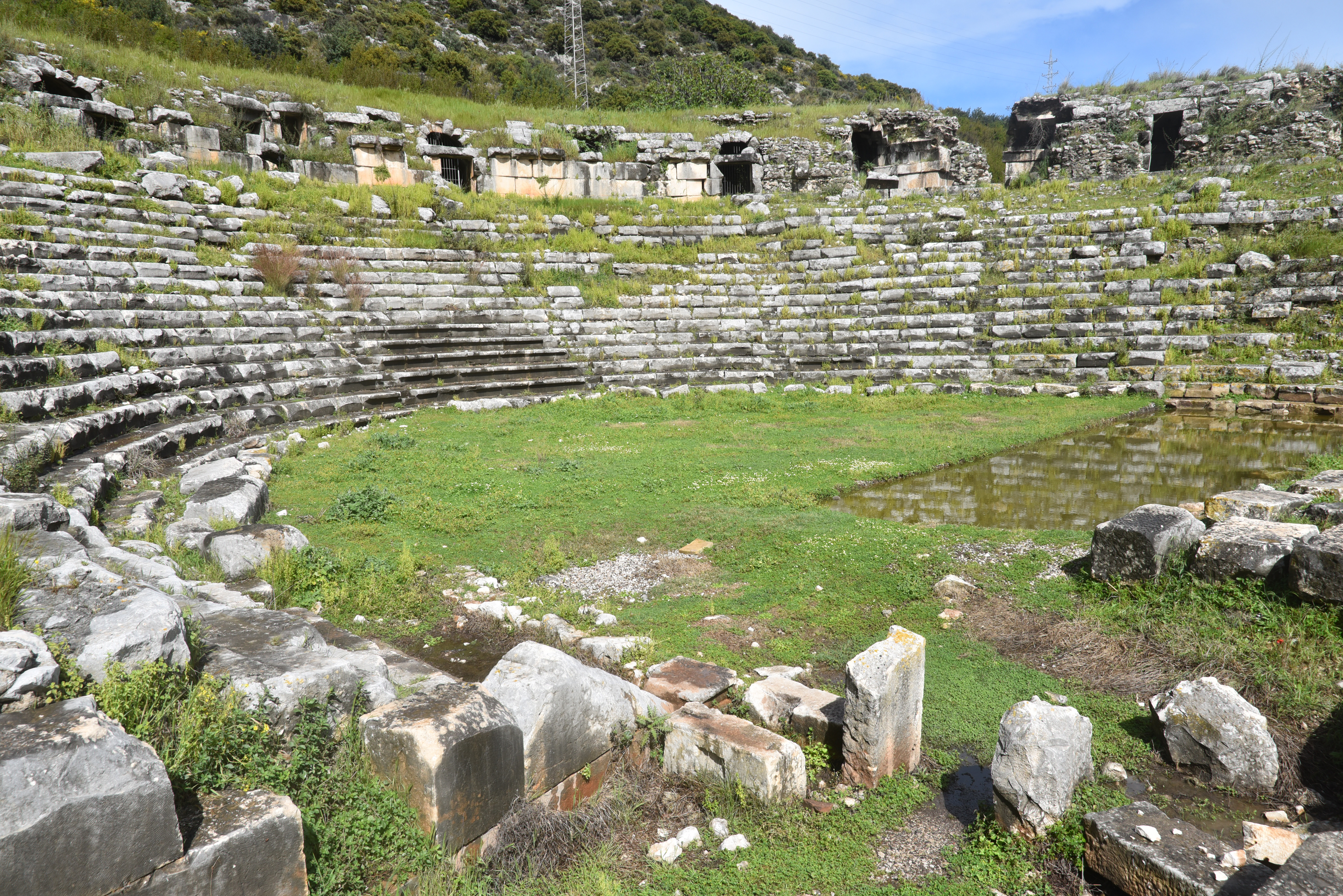
The Hellenistic theatre of Letoon was built into the slope of Tümtüm Tepe during the 2nd century BC. It underwent a major Roman-era reconstruction in the 2nd century AD, likely triggered by a regional earthquake around AD 141.
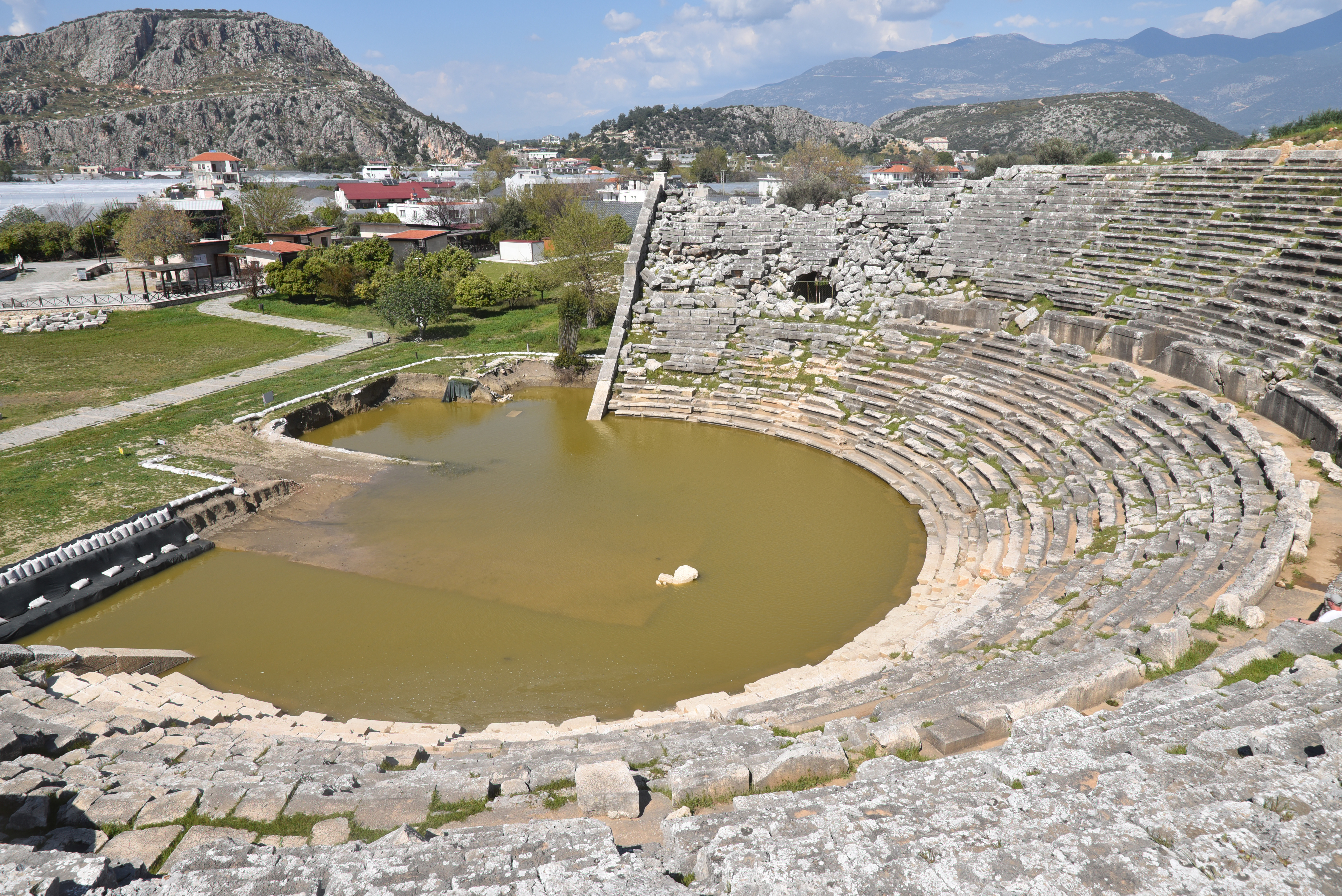
The Theatre of Limyra was cut into the base of the hill, with seating for 8,000 spectators. After a devastating earthquake in 141 AD, the stage building was extensively rebuilt with financial backing from the famous benefactor Opramoas of Rhodiapolis.
The Hellenistic Theatre at Magarsus (later Antiochia ad Pyramum) measures about 150 meters long and 30 meters wide, with an estimated seating capacity of around 3,000 spectators. It is renowned as one of the rare ancient theatres oriented directly toward the sea, meaning the stage building (skene) sat between the performers and the Mediterranean Sea, giving audiences a view out to the water.
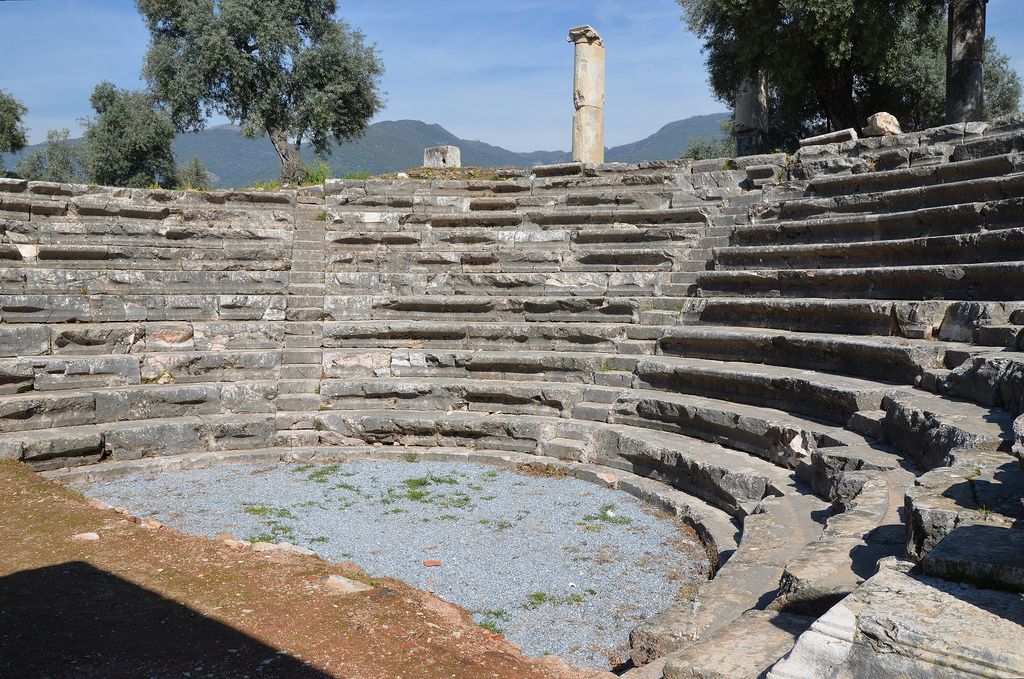
The small theatre at Magnesia ad Maeandrum, which dates to the late Hellenistic or early Imperial period, features a cavea (seating area) with a diameter of 67.5 meters, facing north. The orchestra has a diameter of 25.5 meters, and the lower cavea consists of 14 uncovered rows arranged in 7 cunei (wedge-shaped sections). It was originally planned to accommodate 4,700 spectators. However, construction was never completed.
The Theatre at Miletus is one of the largest theatres in Anatolia. Built into a hill in the Hellenistic period, it seated 5,300 spectators and was significantly enlarged during the Roman period to extend seating capacity to ca. 15,000. The front face of the theatre is 140m wide today, and the present-day auditorium reaches a height of 30m. In the Roman period, the auditorium was 40m high with three tiers of 20 rows each.
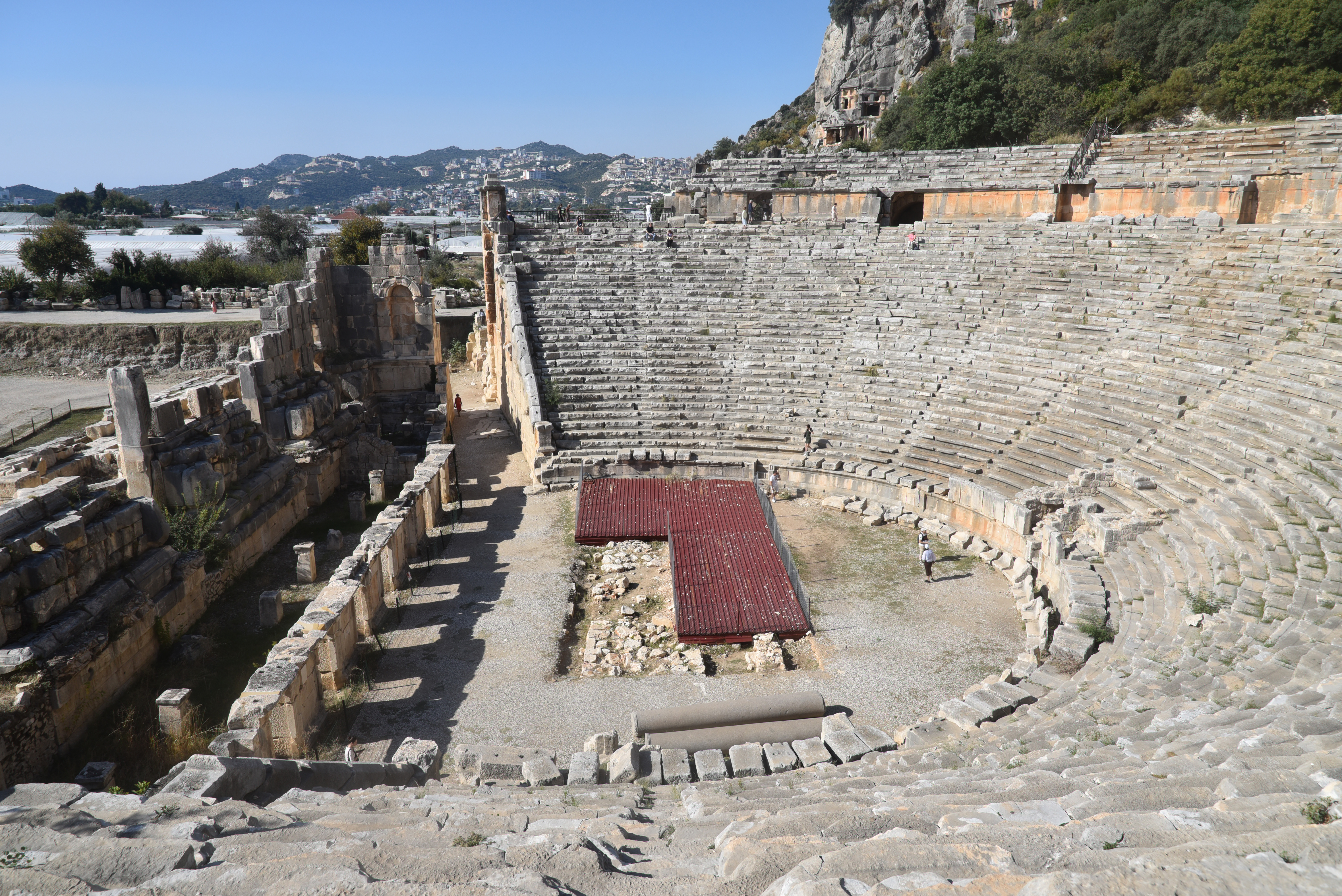
The theatre of Myra is a well-preserved, large theatre originally built during the Hellenistic period, then expanded and rebuilt during the 2nd century AD, with a capacity of roughly 10,000–13,000 spectators. The structure spans roughly 111 meters wide, with an orchestra measuring 30 meters in diameter and 38 rows of stone seating carved directly into the hillside.
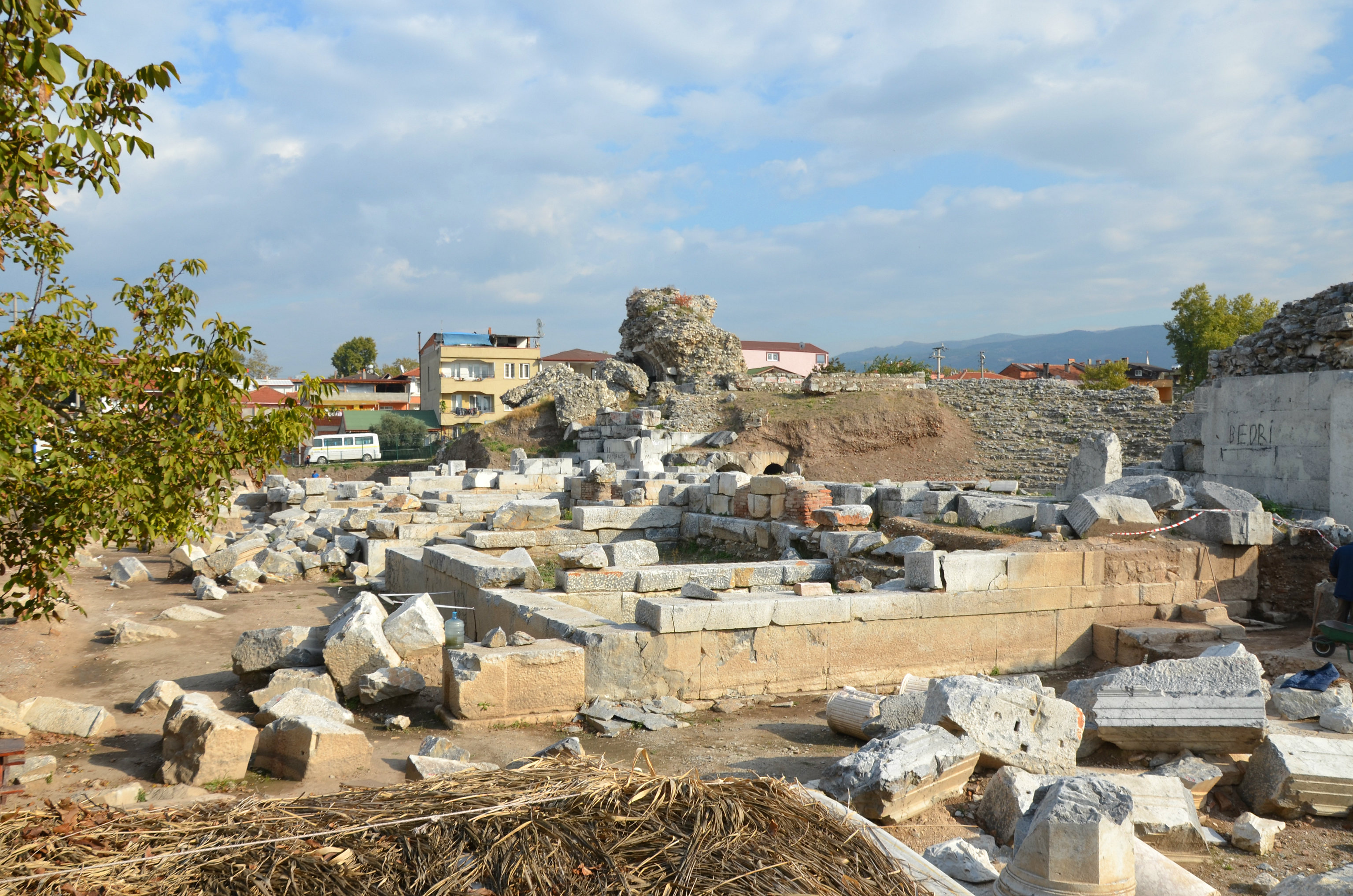
The Roman Theatre of Nicaea was built during the reign of Trajan. Archaeological excavations revealed a church, palace, Ottoman ceramic workshops and tile kilns were constructed within it. Located in the southwest part of the city between the lake and Yenişehir Gate, the theatre was largely built on vaulted substructures in opus caementicium and was faced with marble.
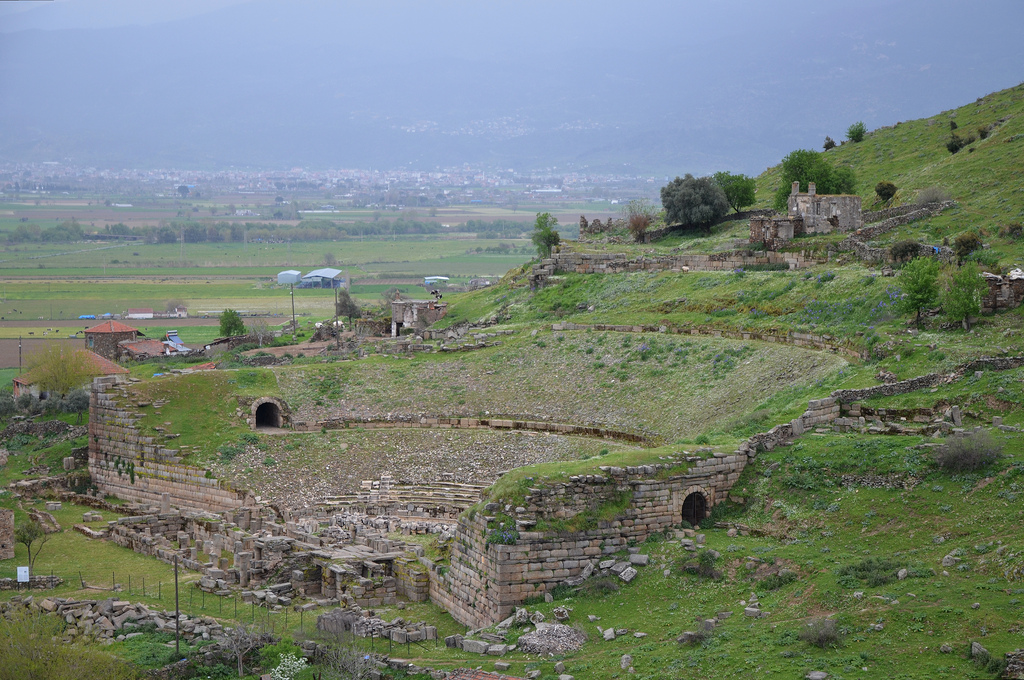
The theatre of Nysa on the Maeander was first built in the Late Hellenistic period, but the current architectural features date to the 2nd century AD. The scaenae frons of the theatre had 5 doors and was decorated with friezes depicting the life of Dionysus.
The odeon of Nysa on the Maeander was built in the 2nd century AD with a two-storey scaenae frons over the ruins of the Hellenistic gerontikon (Council House of the Elders).
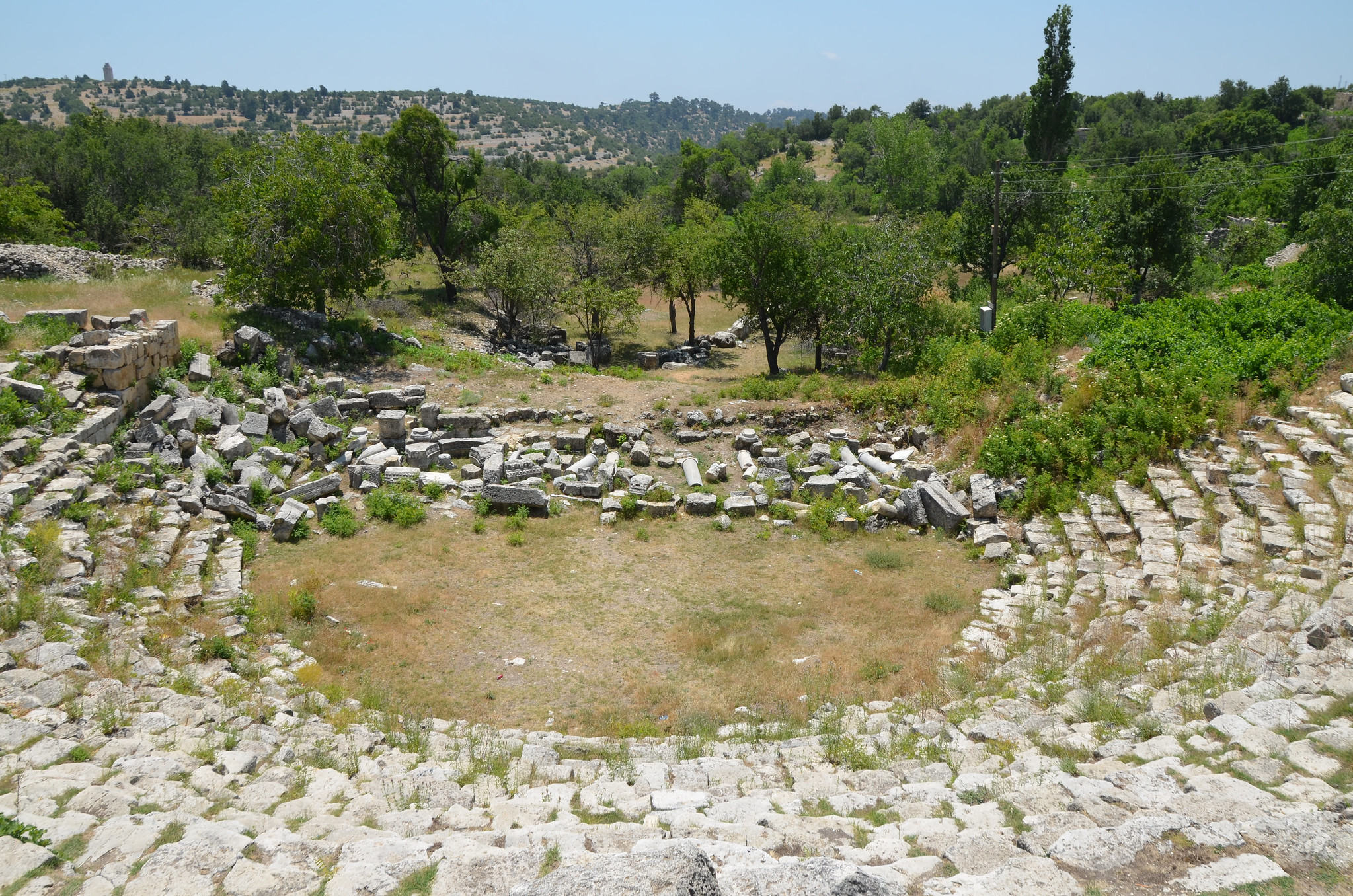
The Roman theatre at Olba was originally constructed in the 1st century AD and later remodelled or expanded around the 3rd century AD. It was a relatively intimate provincial theatre, holding an estimated capacity of around 2,500 spectators.
The Roman Odeon of Parium was constructed in the 2nd century AD and had a seating capacity of 1,050. Its semicircular orchestra was paved with opus sectile.
The excavated architectural elements of the Parium theatre and highly decorated structures date back from the 2nd century to the early 3rd century AD. Excavations at the theatre began in 2006, revealing a grand structure that reflects the city’s immense wealth, civic ambition, and engineering capability at the height of Roman rule.
The theatre at Patara, with a diameter of around 80 metres, could accommodate approximately 6,000 spectators, arranged across 38 rows of seating divided by a central diazoma. The seating was organised into two tiers, with stairways creating wedge-shaped sections, while a removable awning (velarium) once provided shade. The cavea was completed under Tiberius (AD 14-37). The stage building (skene), about 41.5 metres long, featured a two-storey façade with elaborate decoration, including columns and architectural ornamentation.
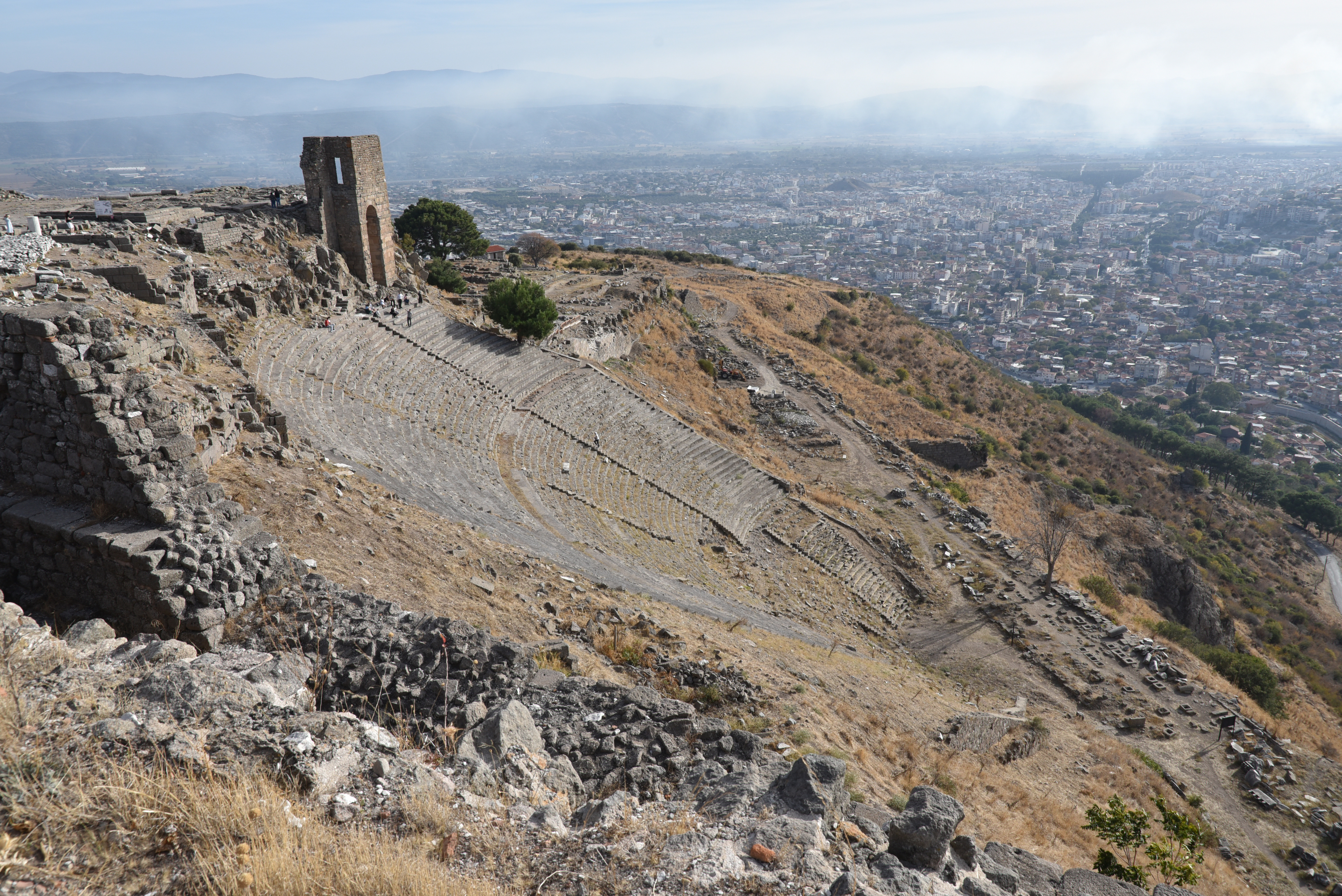
The Hellenistic Theatre of Pergamon is an ancient Greek architectural marvel carved into the steep western slope of the Acropolis of Pergamon. It is widely recognised as the steepest ancient theatre in the world, with a seating angle of around 70 degrees and a height of roughly 36 meters. The cavea (seating area) accommodates about 10,000 spectators across 78 to 80 rows of seats.
Pergamon Greek Odeon (39°07’37.6″N 27°11’11.3″E)
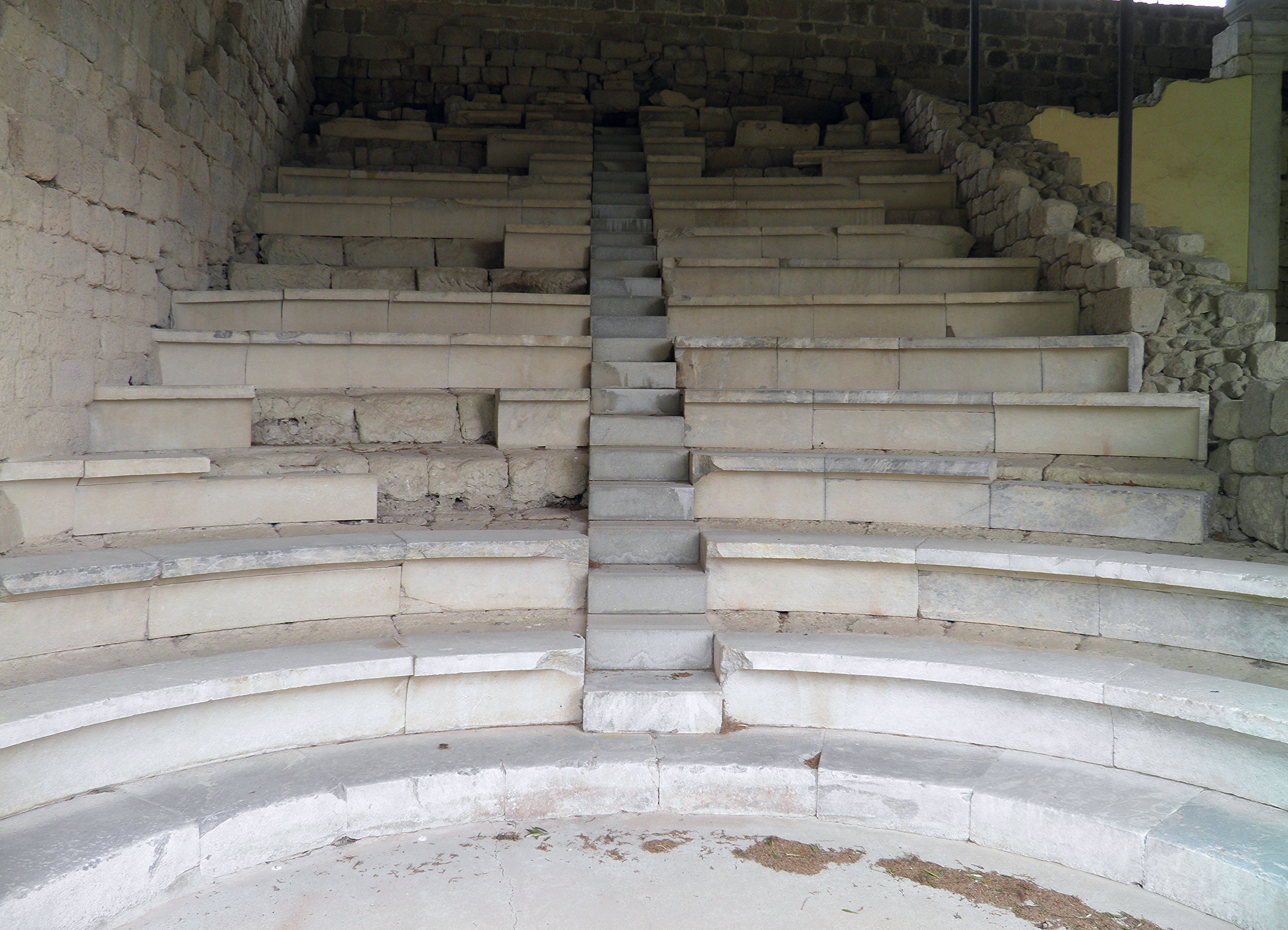
The restored section of the small Gymnasium’s Odeon on the Lower Acropolis.
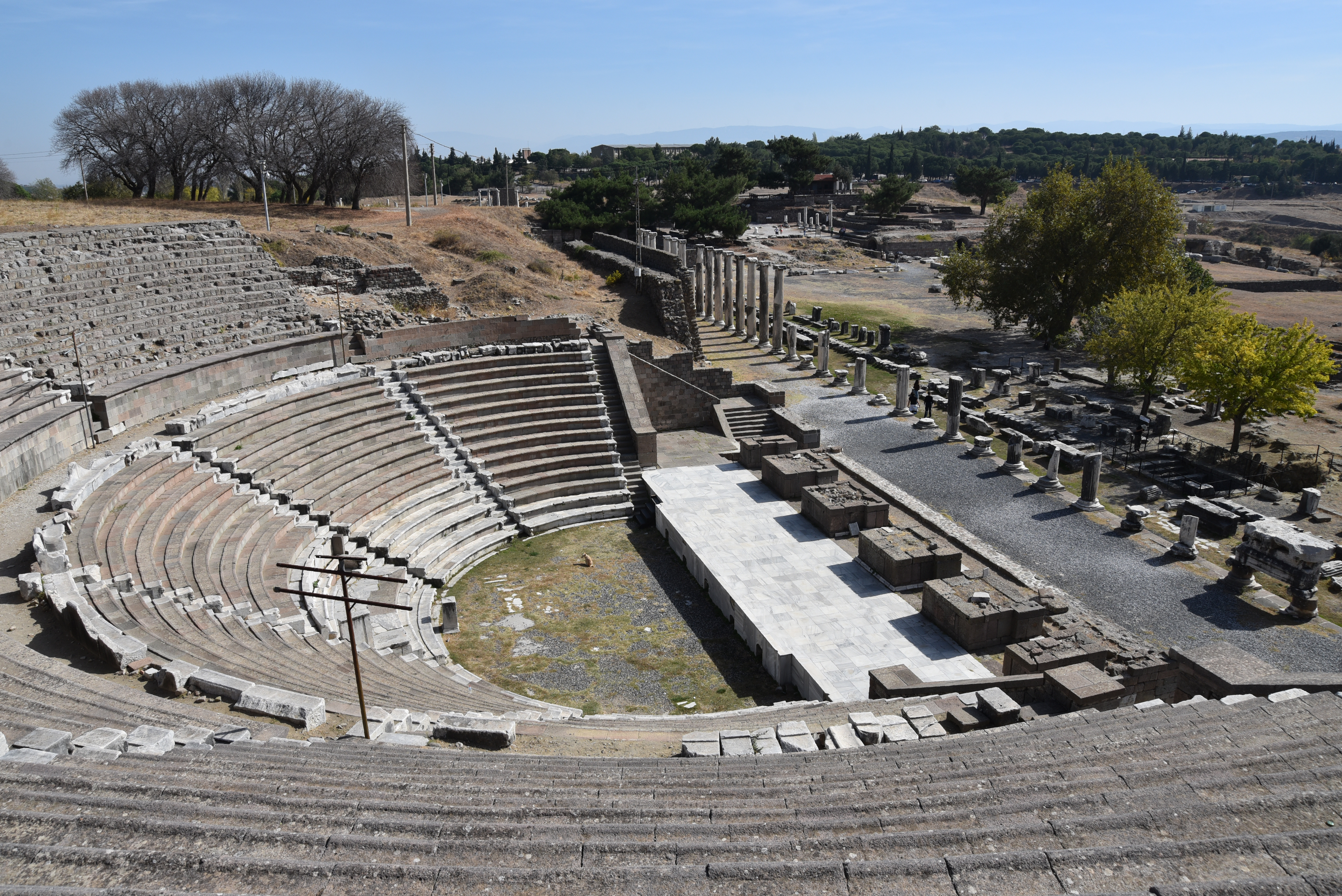
The Roman theatre at the Asclepieion of Pergamon is a well-preserved ancient structure that was built during the reign of Hadrian. It can accommodate approximately 3,500 spectators. The seating area, known as the cavea, is about 71 meters wide, while the orchestra measures 15.67 meters wide.
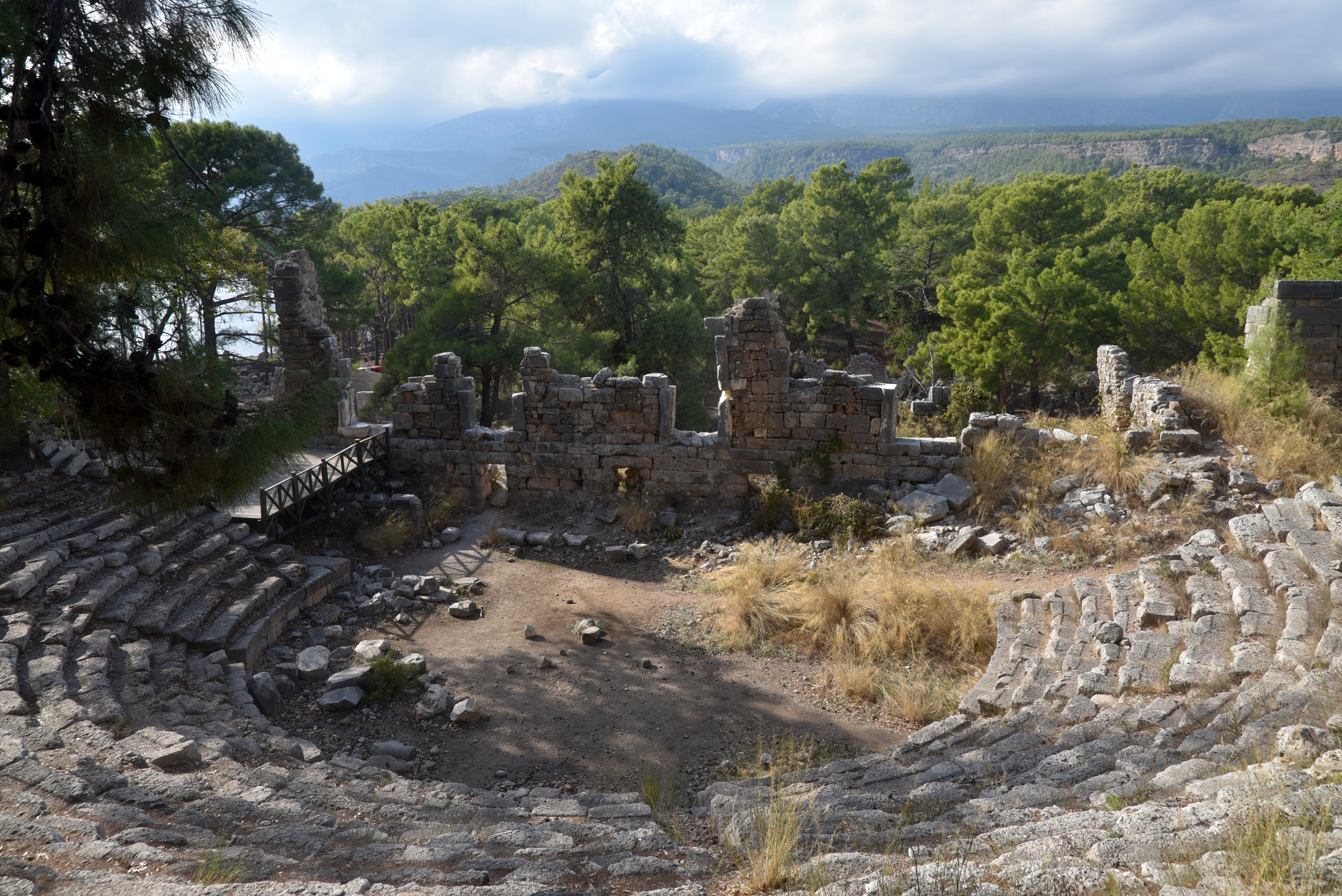
The Roman Theatre at Phaselis was built in the 2nd century on the foundations of the earlier Greek Hellenistic theatre; it had a capacity of around 2,000 people. With its twenty rows of seats, the cavea is divided horizontally into five wedges by six stairways, each with 44 steps
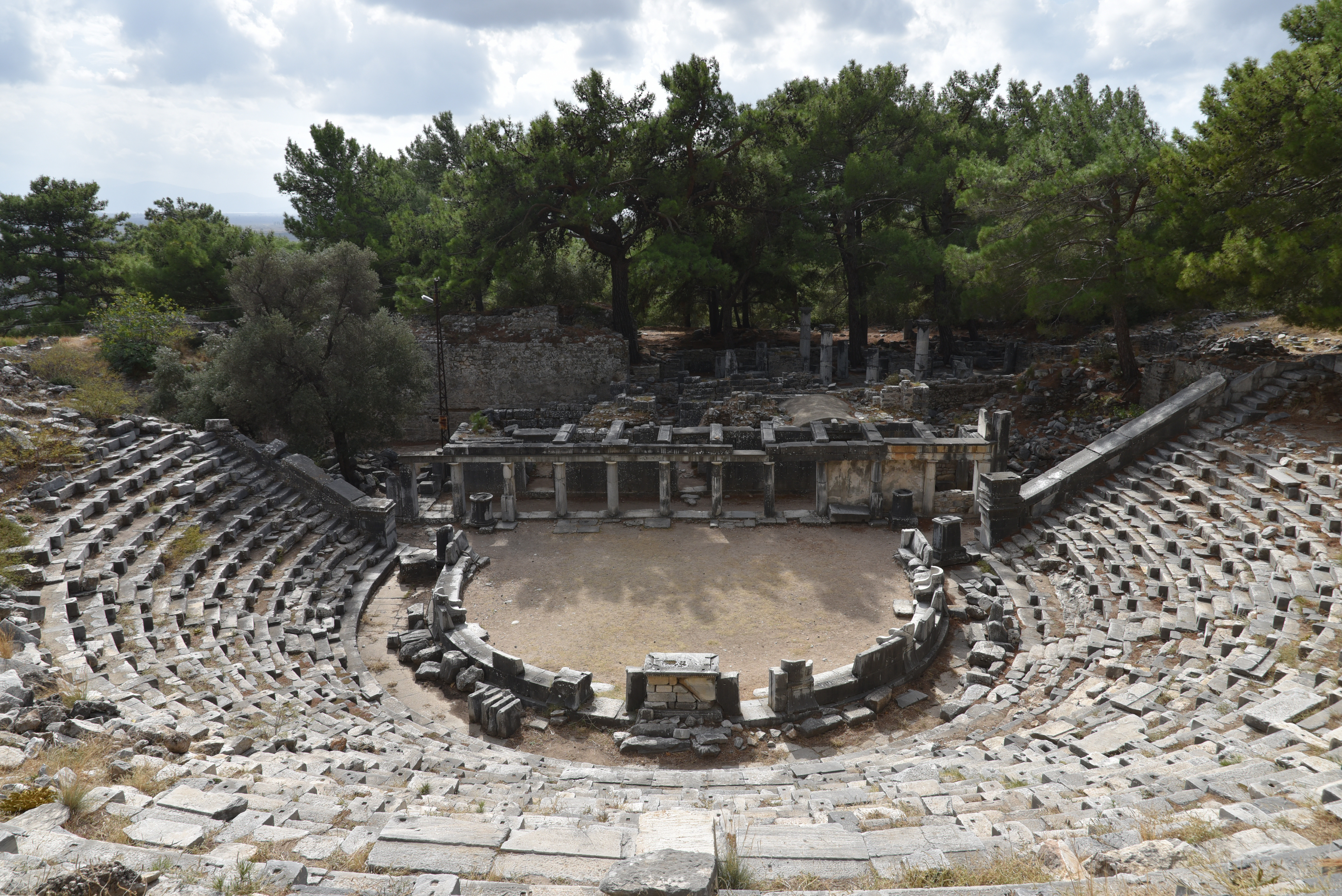
The Hellenistic Theatre at Priene was constructed between the mid-4th and 3rd centuries BC and could accommodate approximately 5,000 to 6,500 spectators. In the 1st century BC (around 50-25 BC), Roman modifications were made to the stage area. By the 2nd century AD, the stage building underwent further development and featured a two-story facade.
The theatre of Rhodiapolis features a late-Hellenistic cavea (tiered seating carved into the hillside) paired with a Roman-period stage building (skene) constructed using mortar masonry.
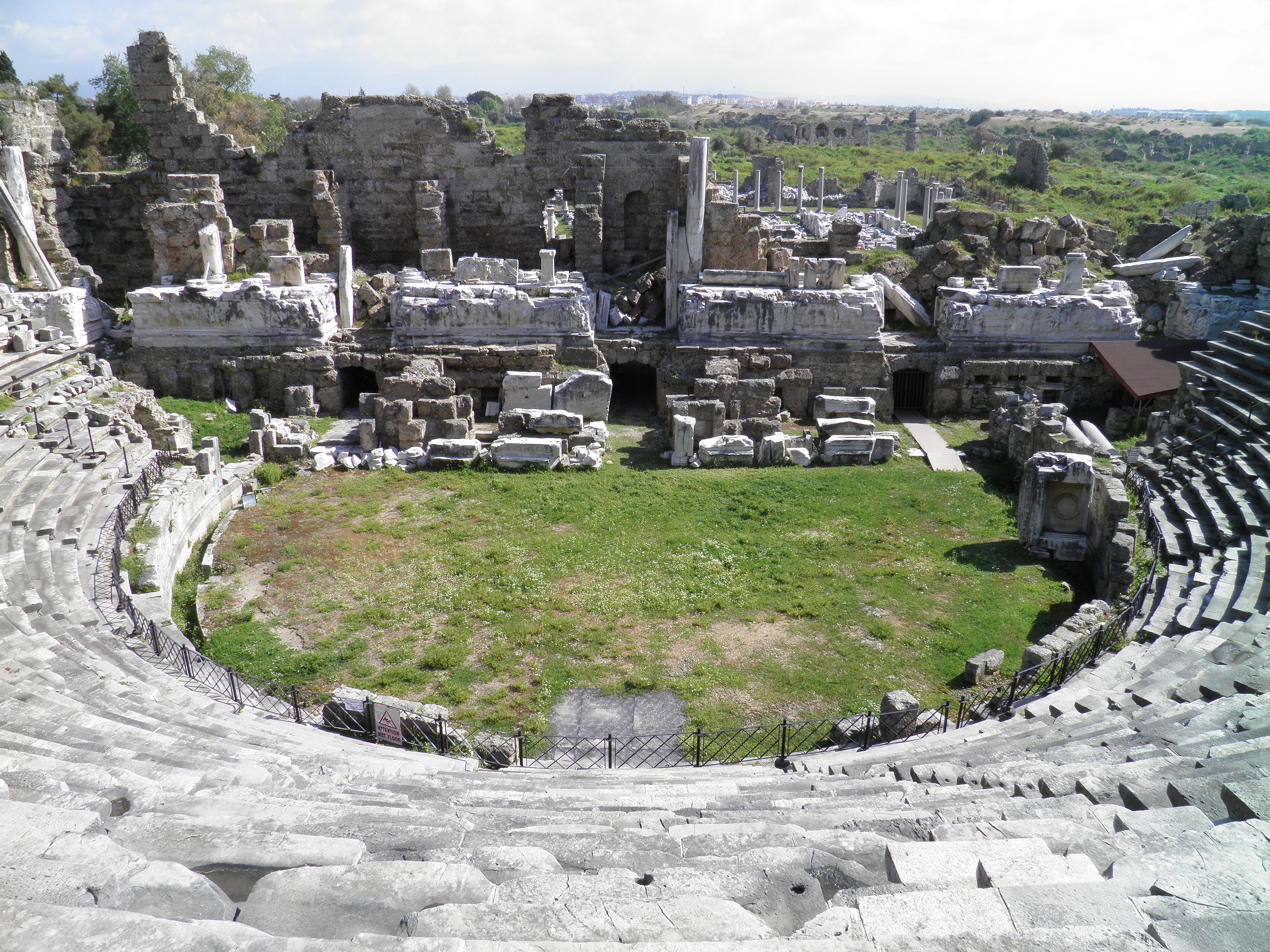
The Roman Theatre at Side (Turkey) was built in the 2nd century, c. AD 175. The theatre is the most complete ruin at Side and the largest Roman-style theatre in the region. It could seat around 15,000 people.
Selge Roman Theatre (37°13’46.2″N 31°07’37.7″E)
The Roman Theatre at Selge was built in the mid-2nd century AD and restored in the 3rd century AD. It held approximately 9,000 to 10,000 spectators. It features a semicircular cavea (tiered seating) divided into two main tiers by a horizontal walkway (diazoma) and built into the natural hillside.Selinus Hellenistic Odeon (36°15’32.4″N 32°16’57.4″E)
The odeon of Selinus dates to the Hellenistic era and was built into the natural slope of the Apropolis hill.
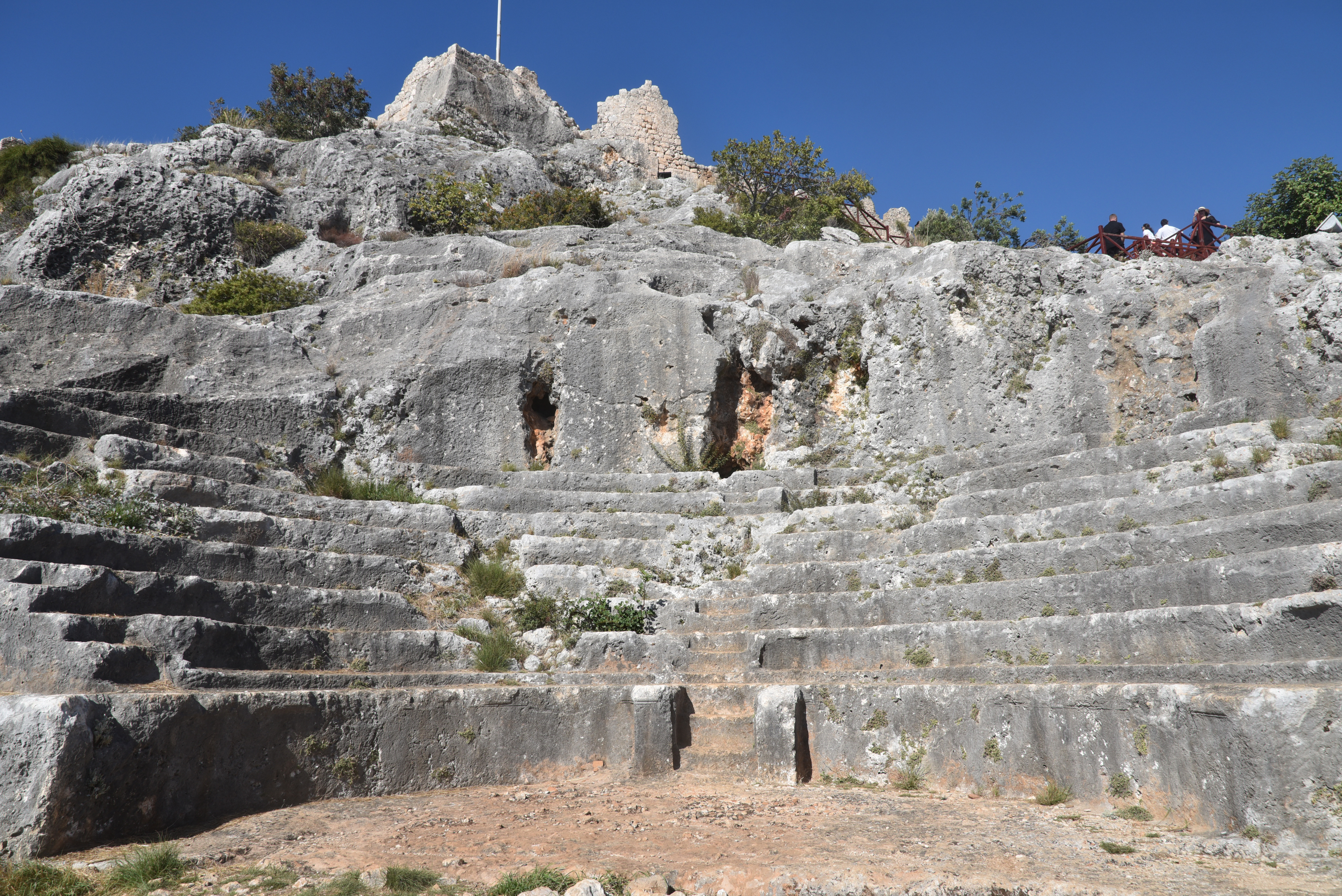
The ancient Simena theatre is a small theatre carved directly into the bedrock inside Simena Castle. It is the smallest known theatre in Lycia, with a capacity of 300-350. The remains of the cavea (seating area) consist of a 21-meter-wide cavea with 6 rows of seats (0.60 m deep), divided into 2 cunei by 3 staircases.
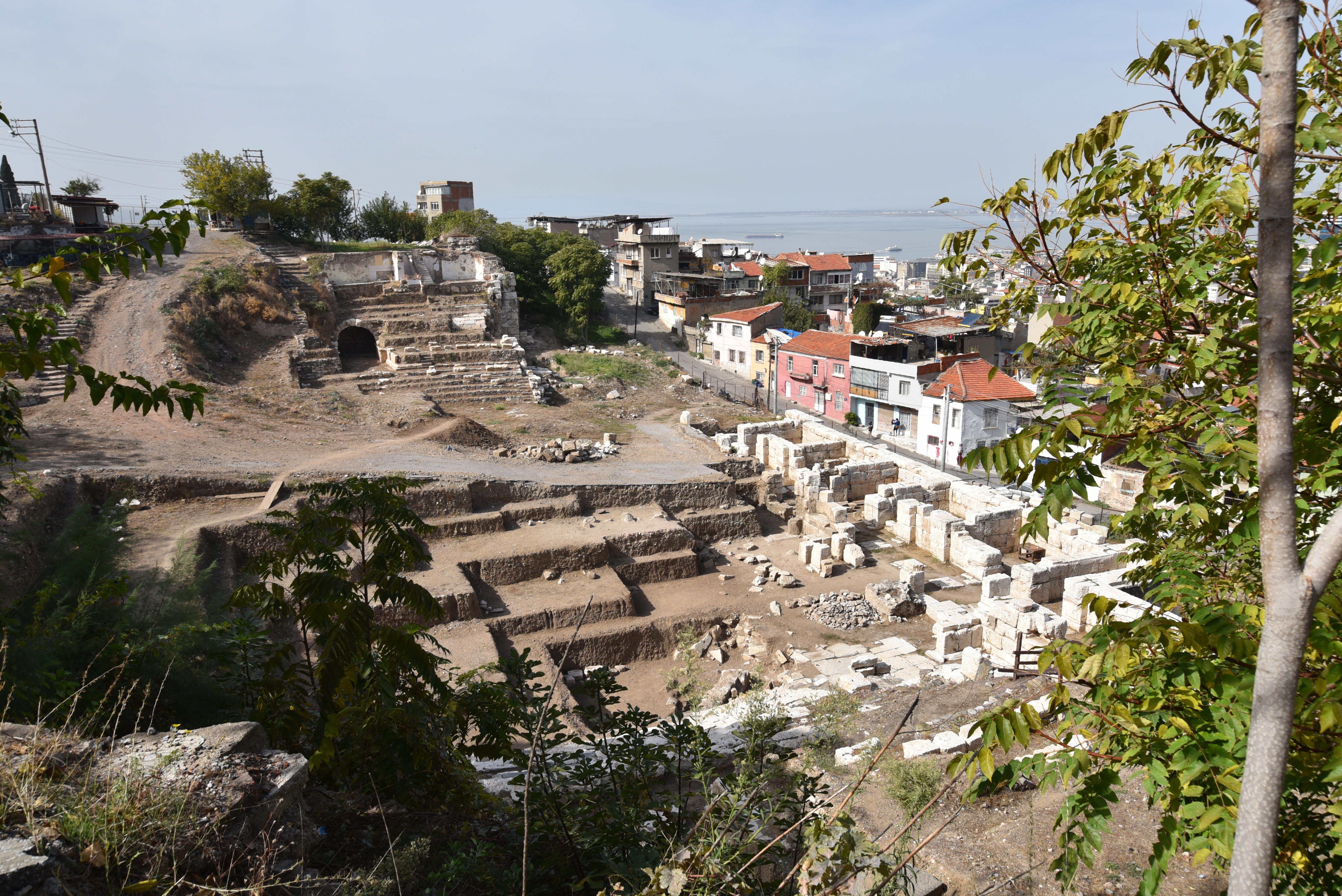
The Theatre of Smyrna, built in the 2nd or 1st century BC, expanded during the reign of Trajan or Hadrian and repaired after the AD 178 earthquake. The theatre had a three-storey stage building and a three-tiered cavea with a diameter of 152 m, divided by two diazomas rising 30 m above the semicircular orchestra.
The theatre of Stratonicea was erected in the Hellenistic period on the north slope of the south hill. Its capacity was approximately 10,000 spectators.
The Roman Theatre of Teos is situated on the southeastern slopes of the Acropolis. The lower cavea was built with opus incertum, while the upper cavea sat on a vaulted substructure. The decorated architectural blocks of the scaenae frons (stage building) and the facade of the proscaenium, along with the inscribed column bases, indicate construction at the end of the 1st century AD during the Flavian period.
The Theatre of Perge, located outside the city walls on the western side, was probably built around AD 120 and could accommodate approximately 15,000 spectators.
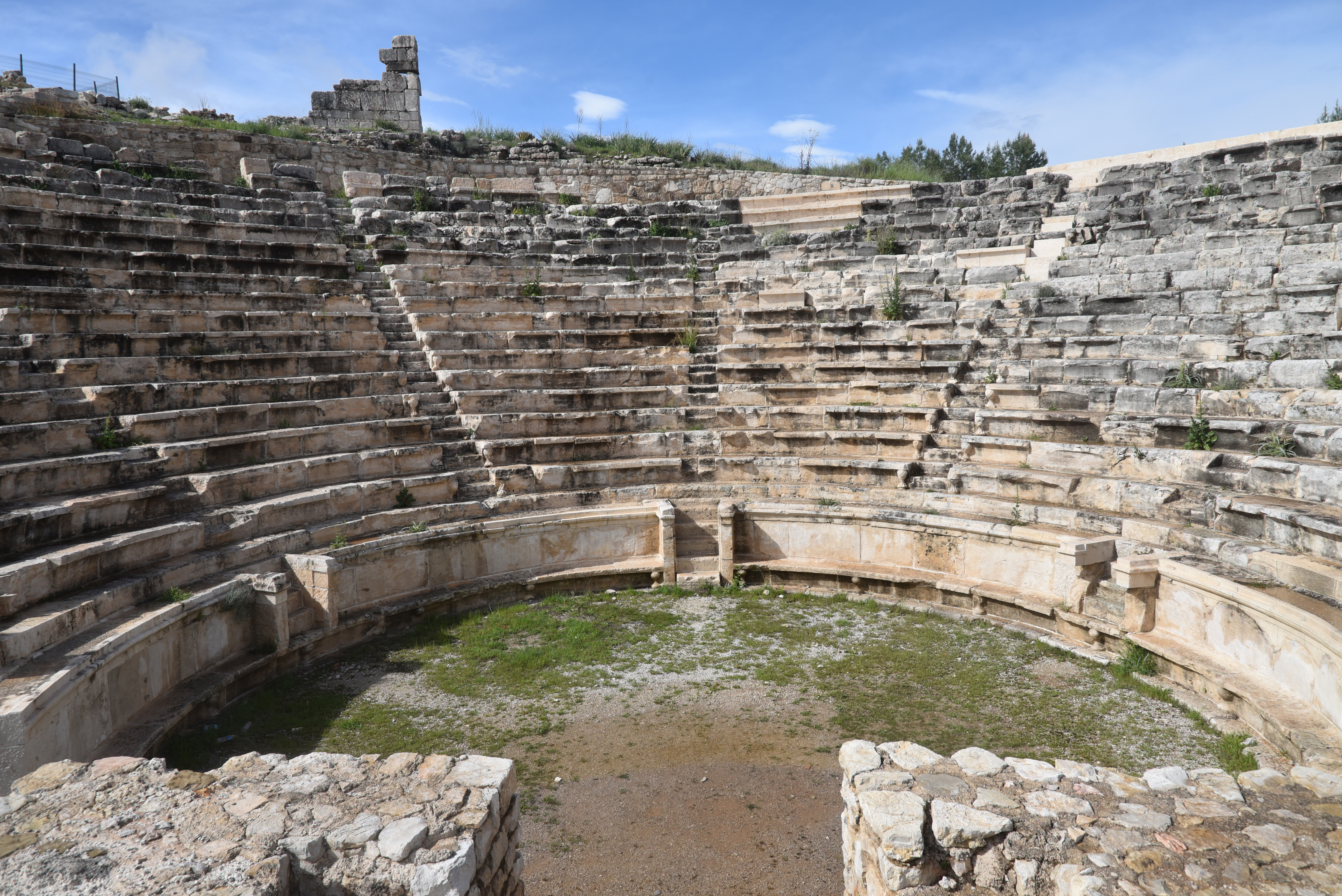
The Odeon at Sagalassos was constructed during the early Imperial period. It could accommodate around 2,500 people. By the 4th century AD, the Odeon was repurposed as a more comfortable meeting place for councillors, replacing the early Imperial bouleuterion.
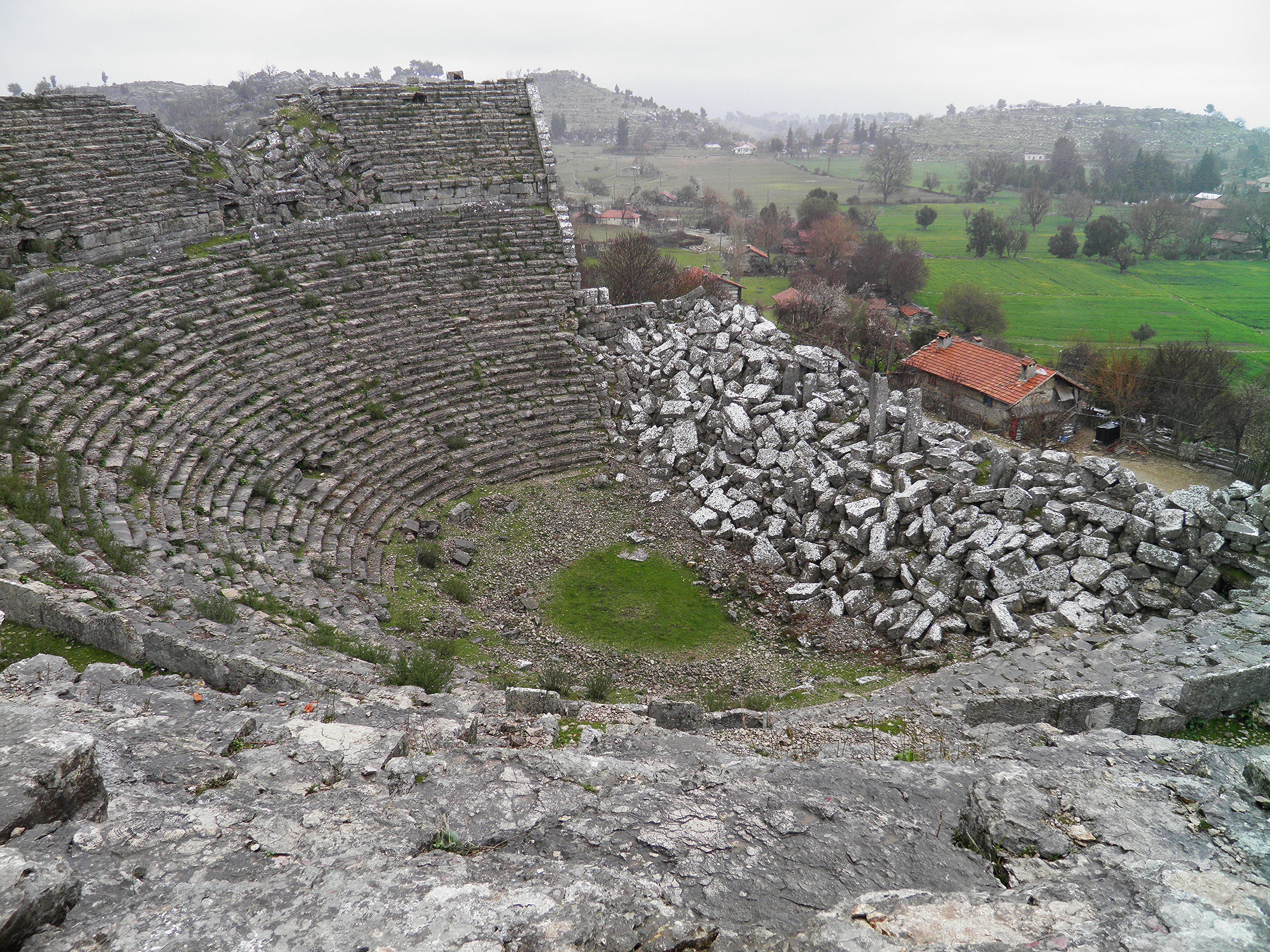
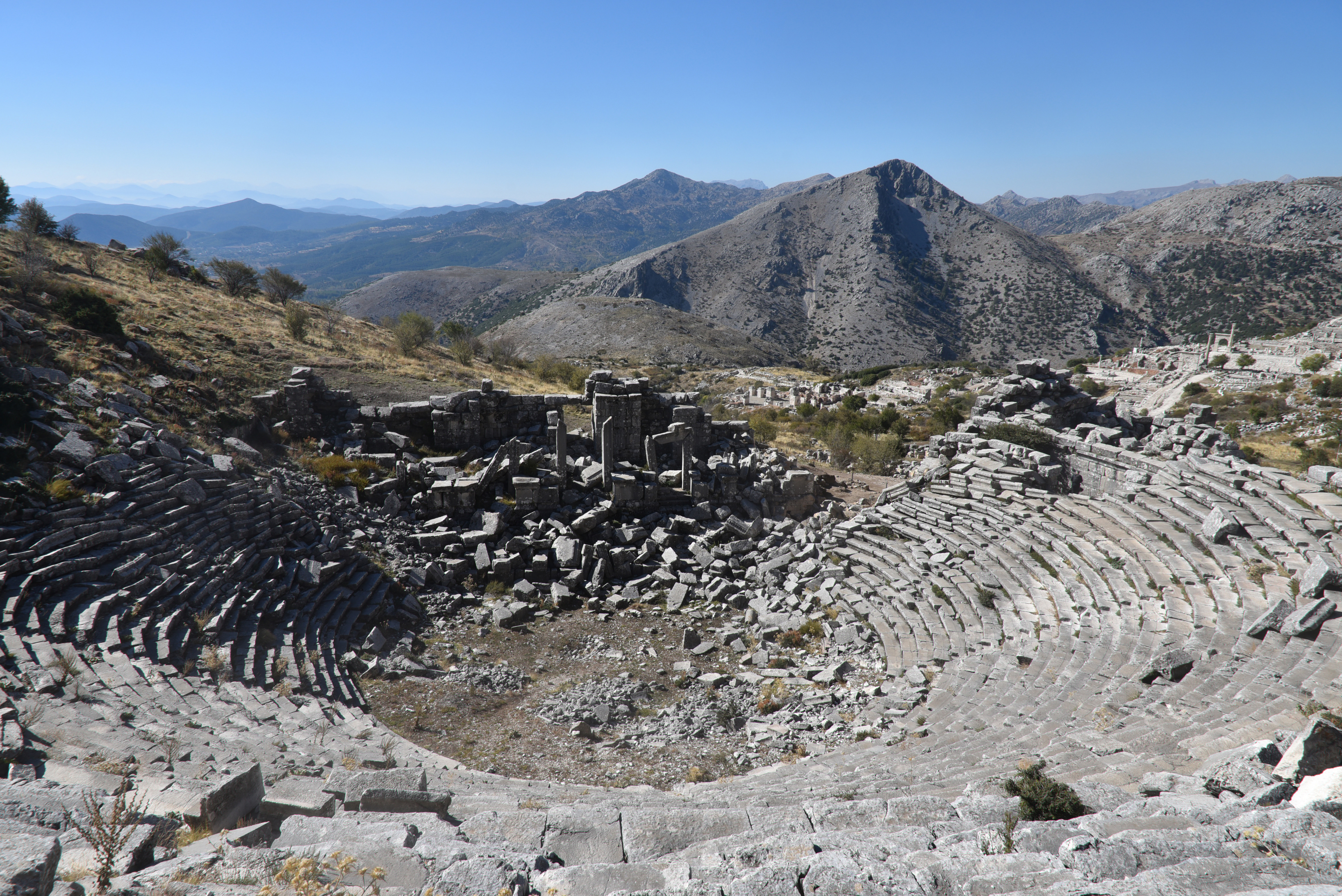
The Roman Theatre, constructed between AD 120 and 200 at an altitude of 1,574 meters, is situated on a sloping plane and was built over the remains of a smaller predecessor. The theatre’s stage area, known as the skene, was designed to be one story high, giving the audience an exceptional view of the scenery, dominated by Alexander’s Hill.
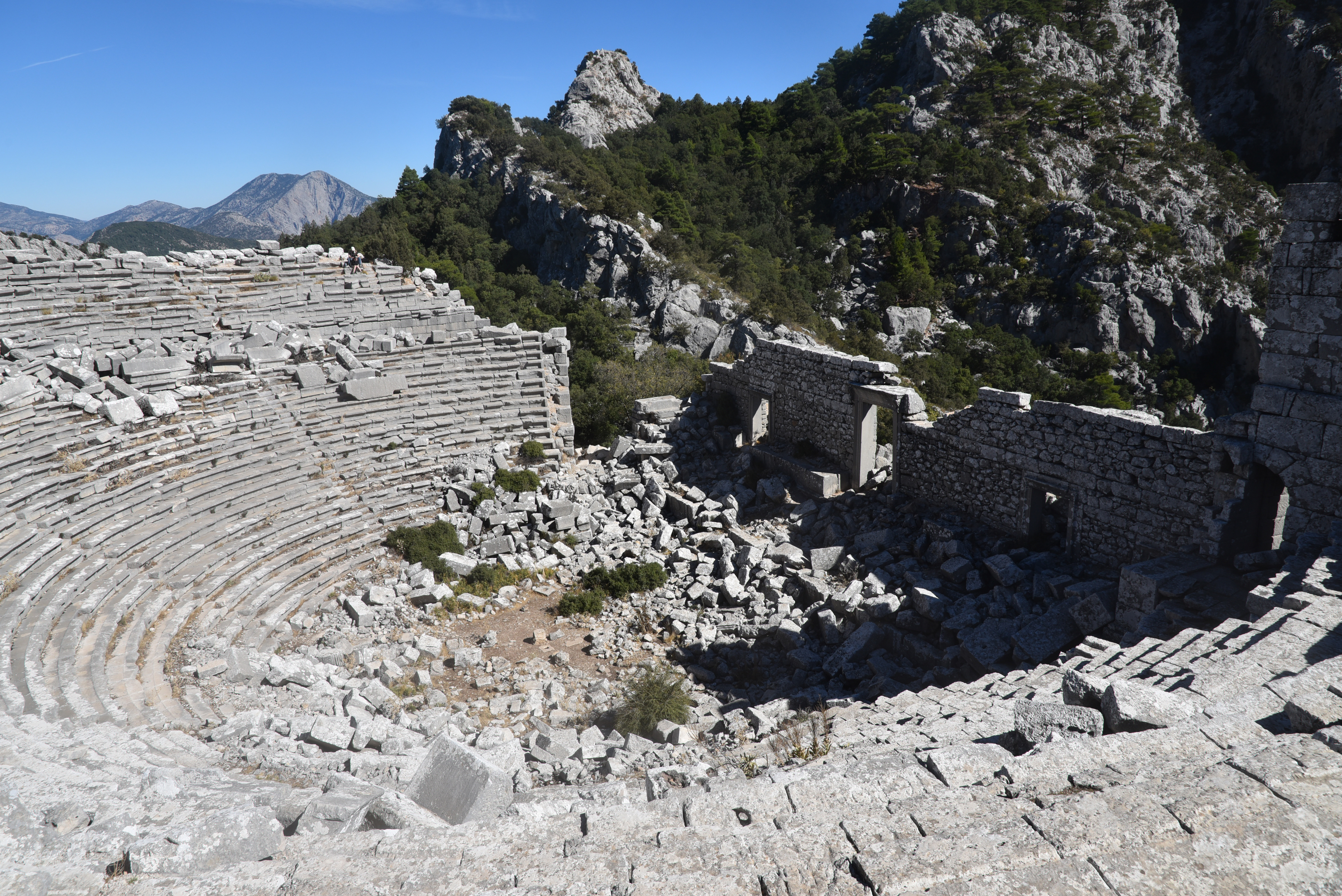
The theatre of Termessos was built in the Hellenistic style and dates back to the early 2nd century BC. It underwent later restorations in the late 2nd century AD and the mid-4th century AD. The theatre has a capacity to accommodate between 3,900 and 4,850 spectators.
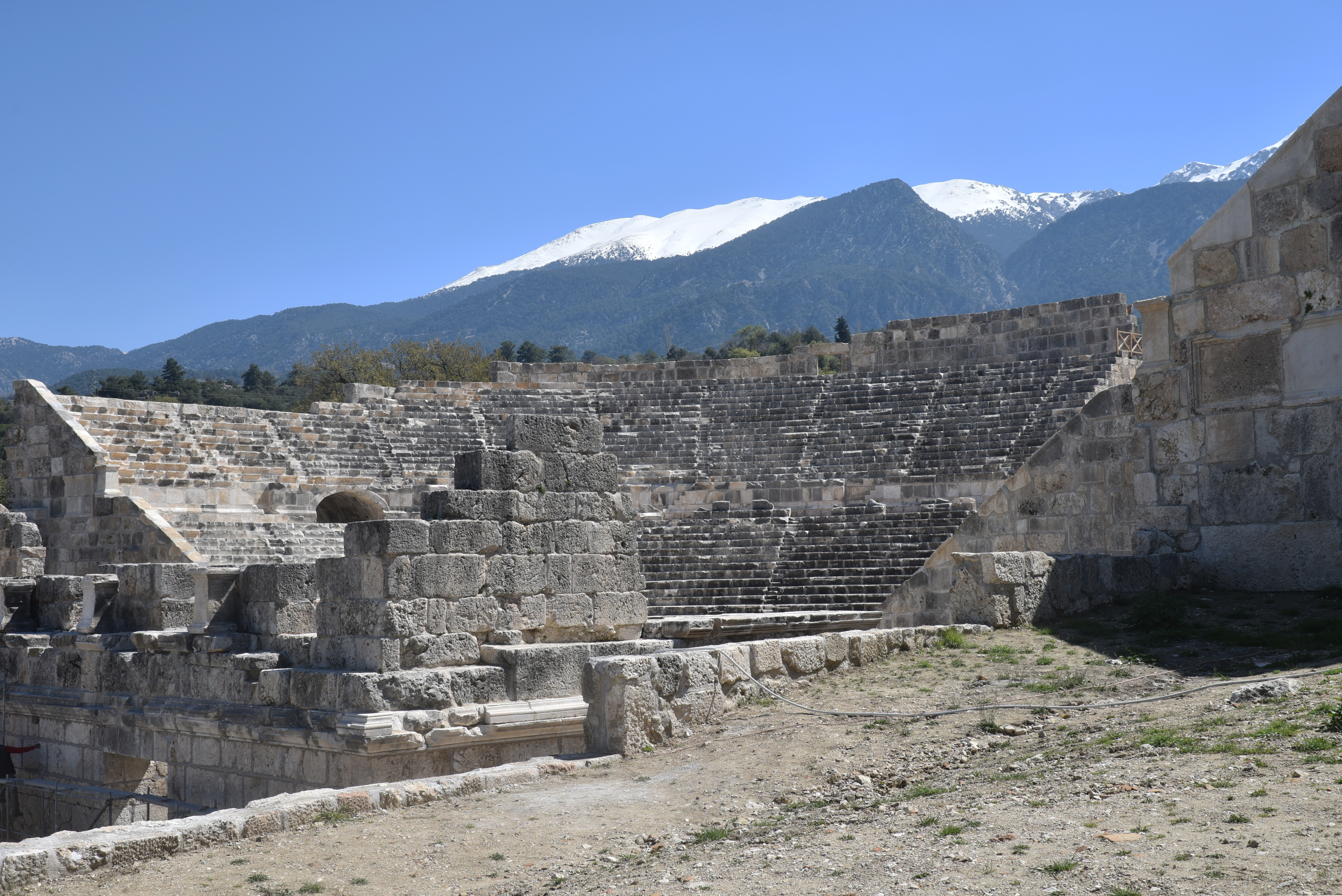
The theatre at Tlos was originally built in the 2nd century BC, with major Roman-era construction and expansions around ca. AD 75–100, followed by renovations in the 2nd and 3rd centuries AD. It includes a multi-tiered cavea (seating capacity of roughly 8,500) and a unique Doric-order temple integrated into the structure.Tripolis ad Maeandrum Hellenistic/Roman theatre (38°02’14.5″N 28°57’08.2″E)
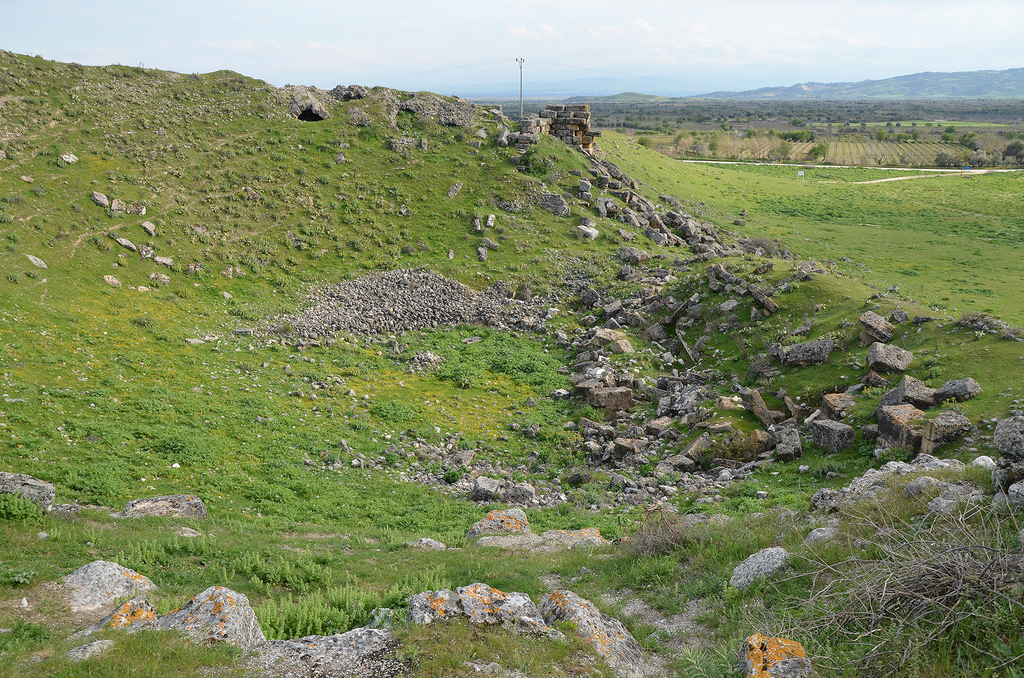
The theatre at Tripolis ad Maeandrum dates to the Roman period in the 2nd century AD, though its origins trace to earlier Hellenistic and Greek influences. It was built on a natural hill with a 50-degree slope and had a seating capacity of 8,000.
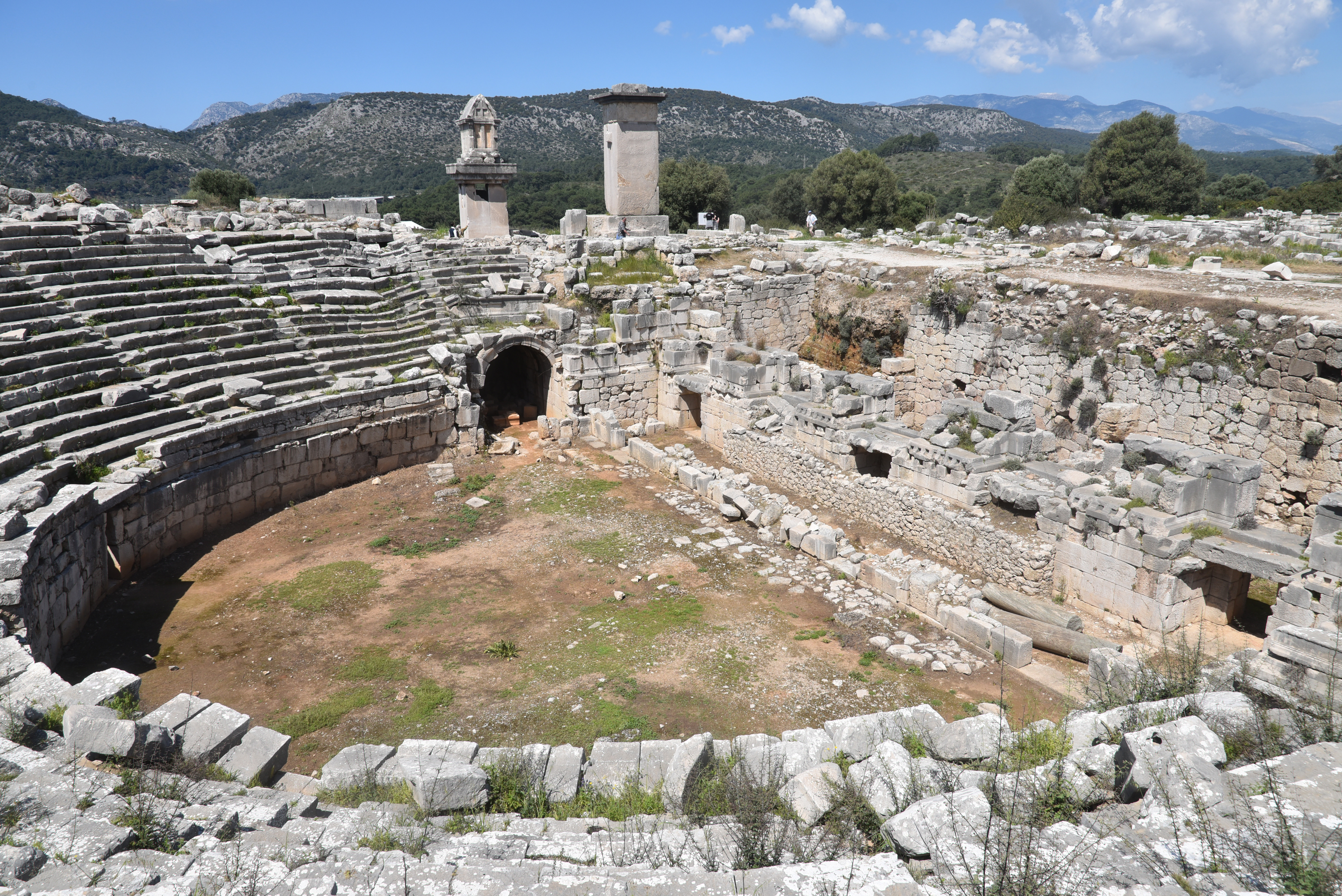
The theatre of Xanthos was located on the northern slope of the Lycian Acropolis and was originally built during the Hellenistic period, likely in the 2nd century BC. After an earthquake in AD 141, the theatre was significantly rebuilt during the Imperial period. The remaining seating and stage primarily showcase these later modifications.