Alinda was an ancient inland city in Caria, located near the site of ancient Alabanda in western Turkey. Alinda is where the famous encounter between Alexander the Great and Ada of Caria occurred in 334 BC. With this event, Alinda made a dramatic appearance in the history of Caria. Alinda is recorded in Byzantine lists of bishoprics and is now a Latin Catholic titular bishopric.
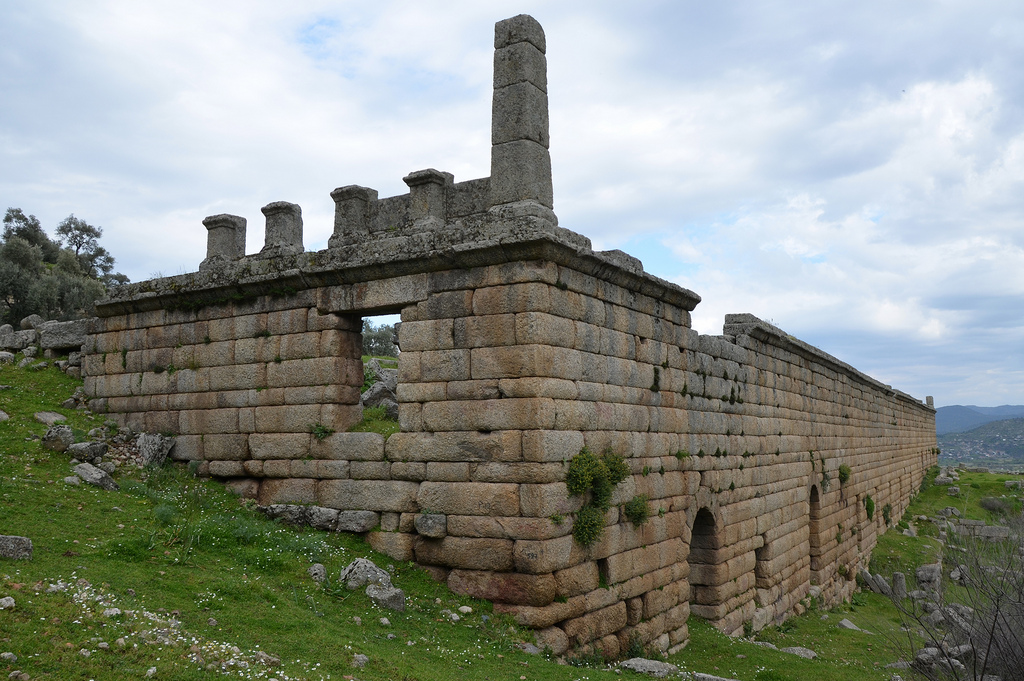
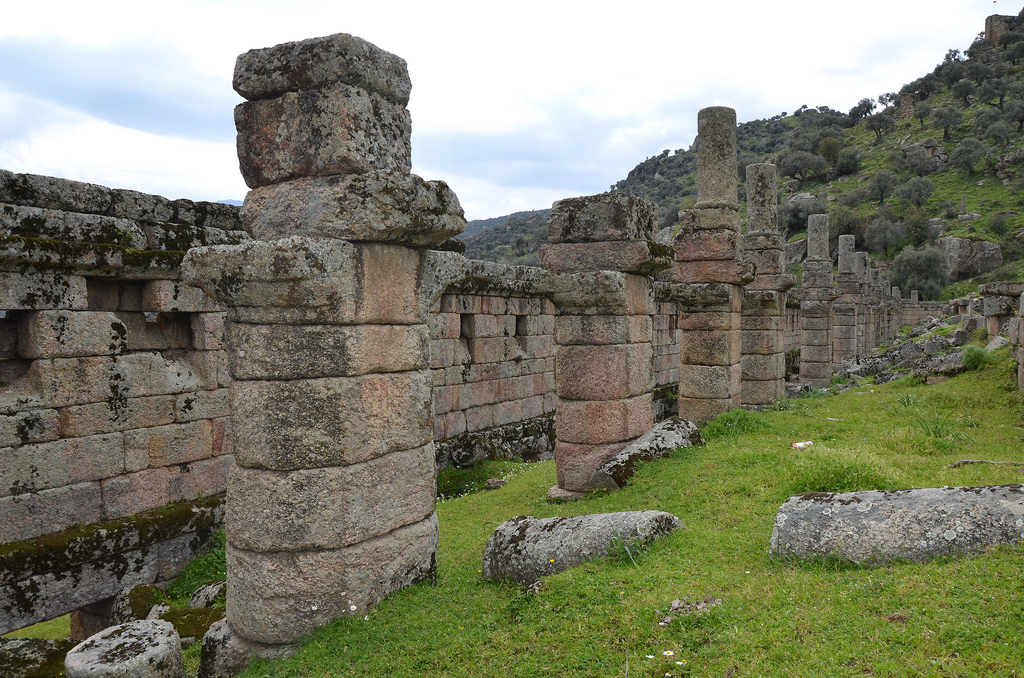
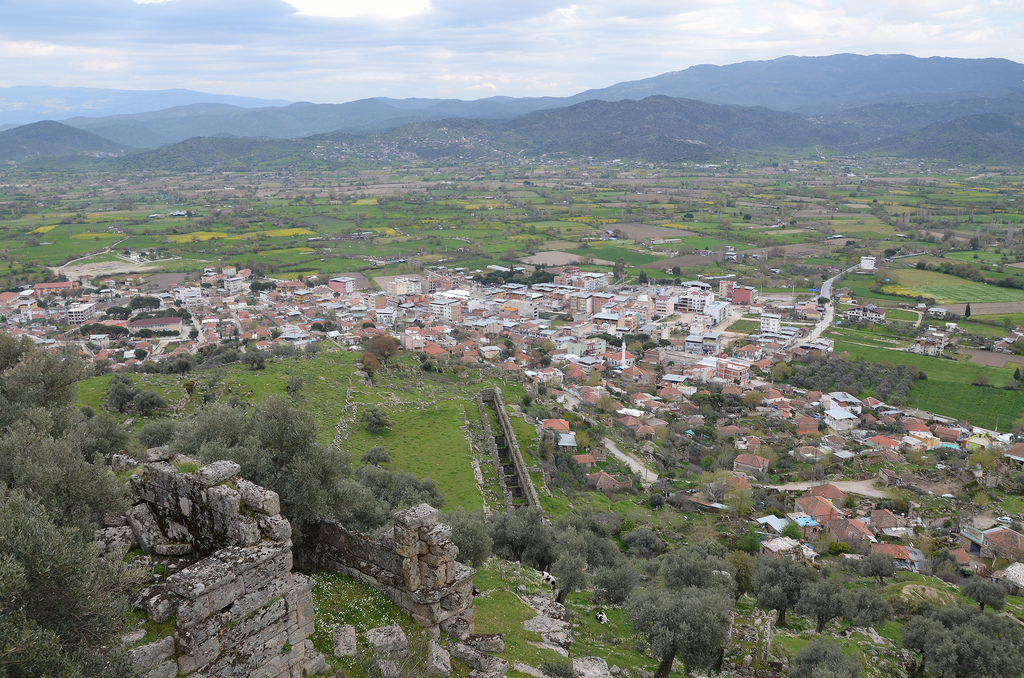
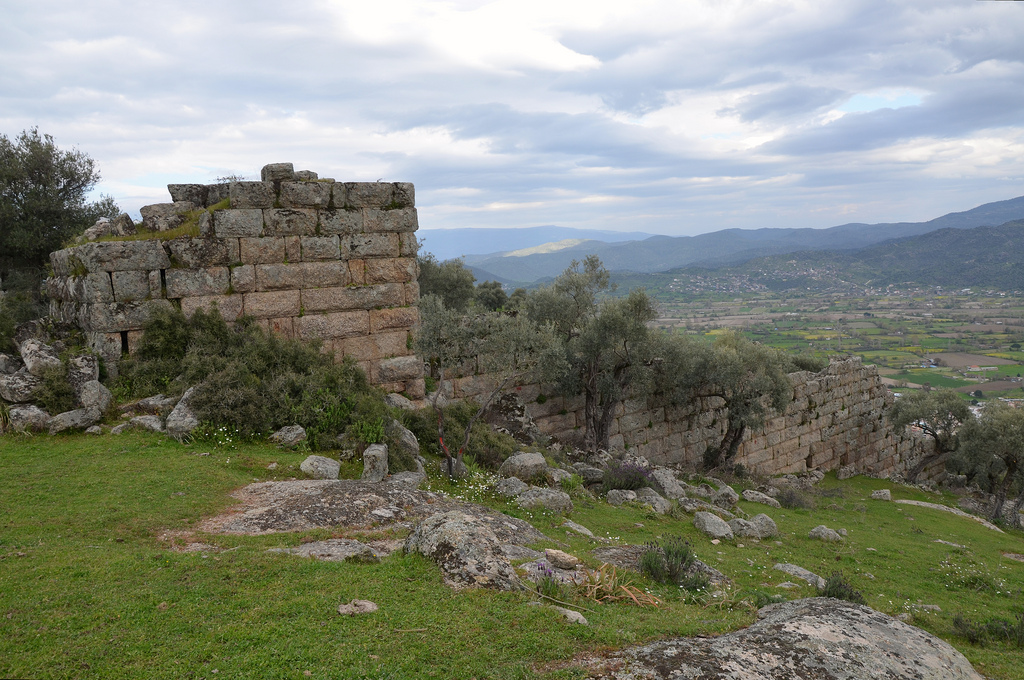
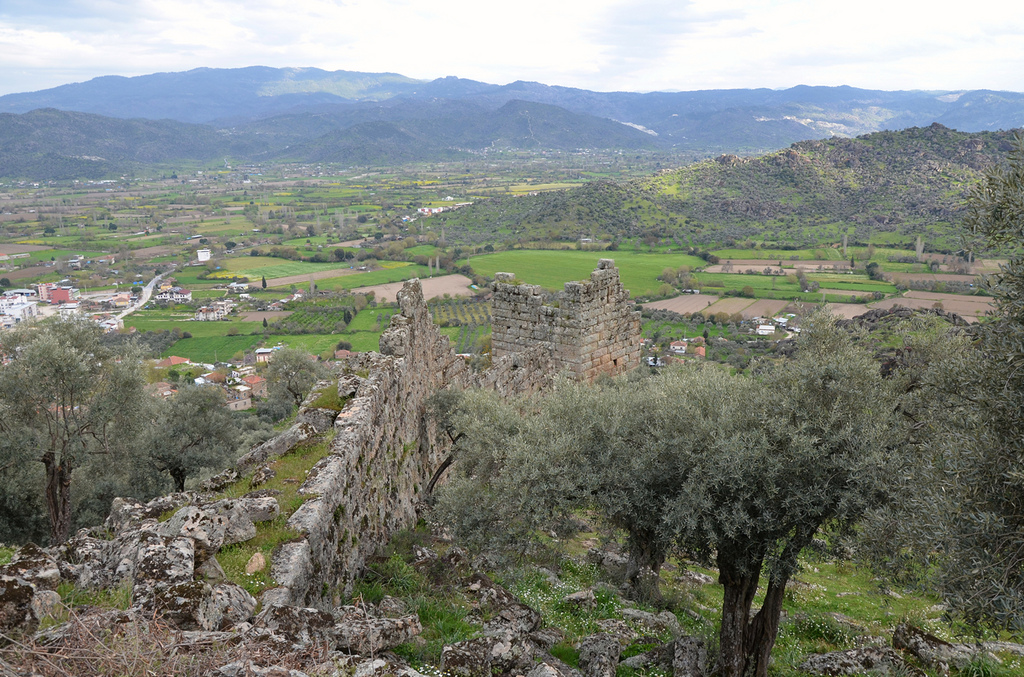
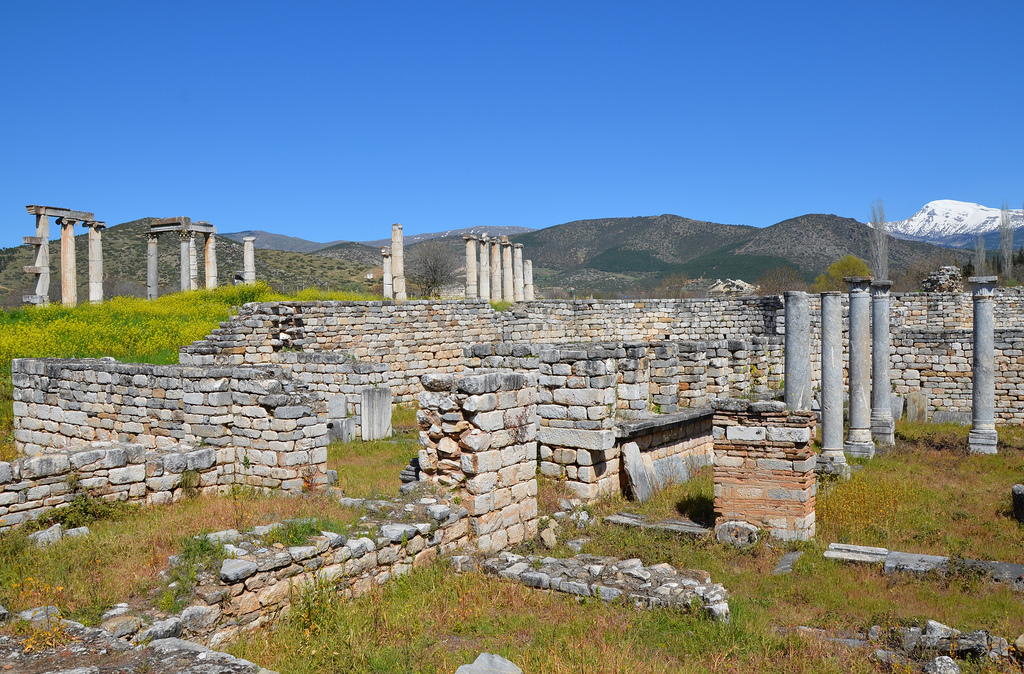
The ruins of Alinda are situated on a hilltop overlooking a fertile plain above the village of Karpuzlu. Several parts of the city walls, the theatre and some of the towers are in a good state of preservation, but the most outstanding of Alinda’s ruins are the remains of its massive Hellenistic Agora. It is over 90 meters long and originally comprised three storeys, of which the lower two are well-preserved.
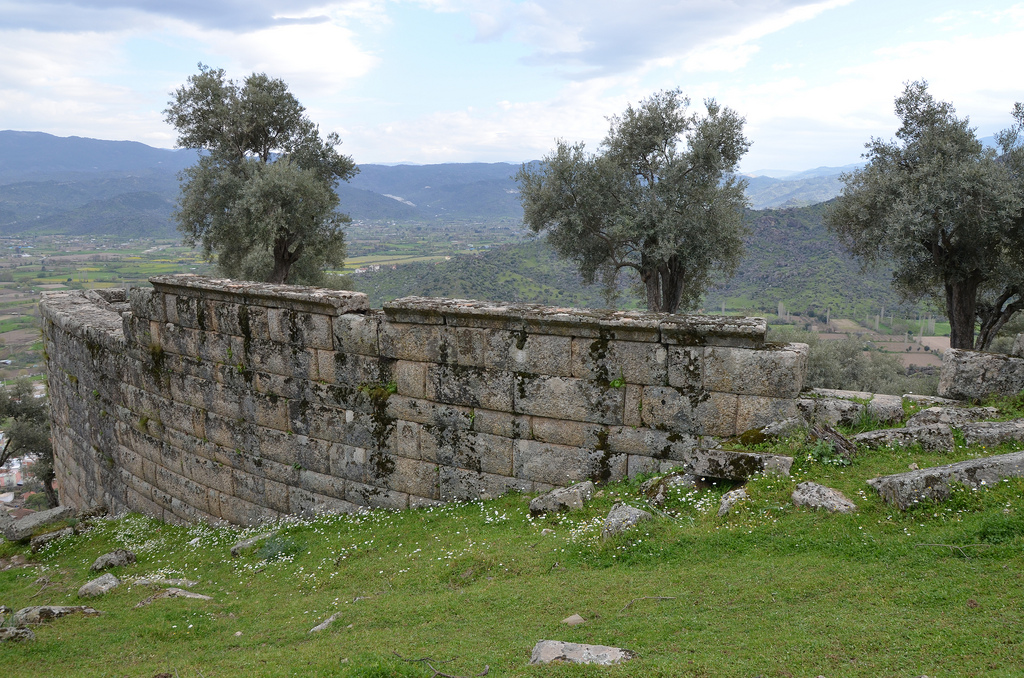
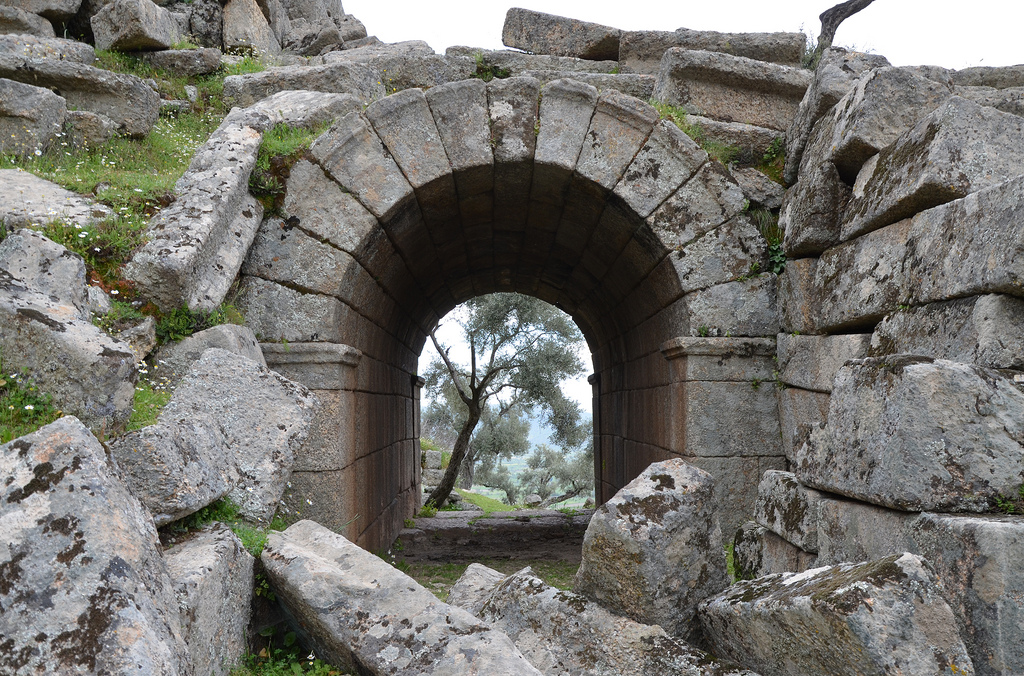
The Hellenistic theatre, retaining two galleries and most of its seats, is also in a good state of preservation but mostly overrun by vegetation and olive trees. It had a seating capacity of approximately 5,000 people. Facing south, the theatre gives an outstanding view over Karpuzlu and the valley below.
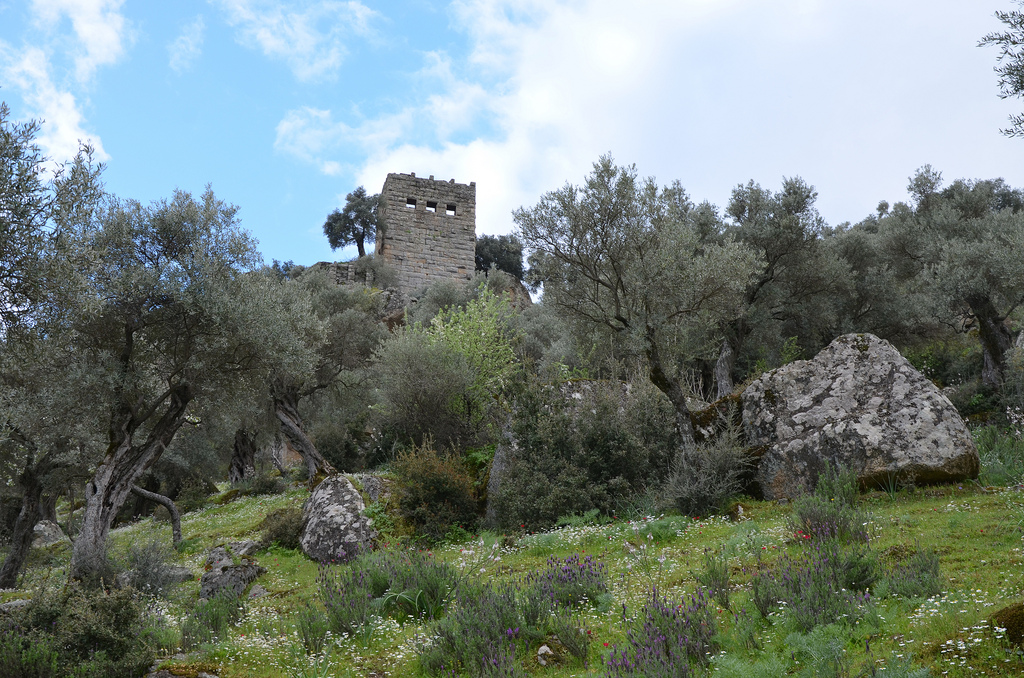
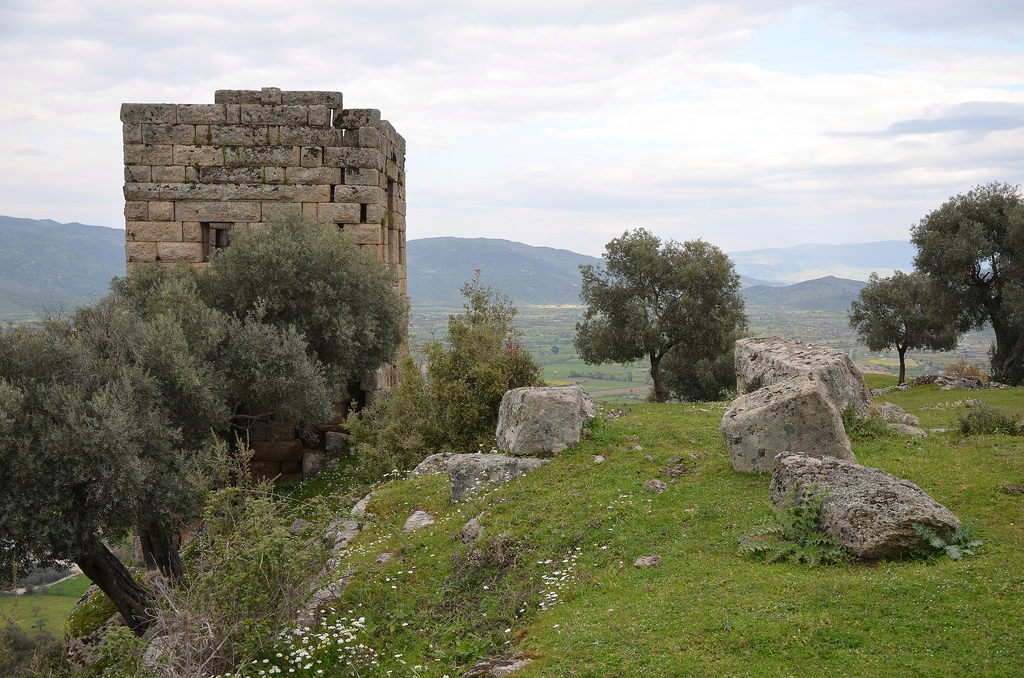
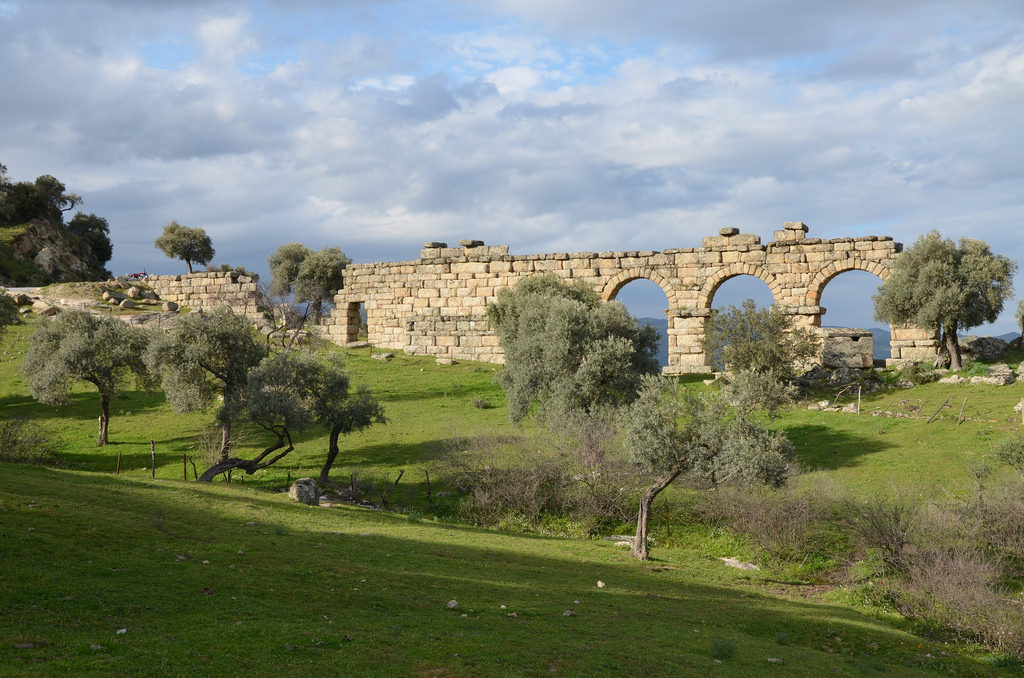
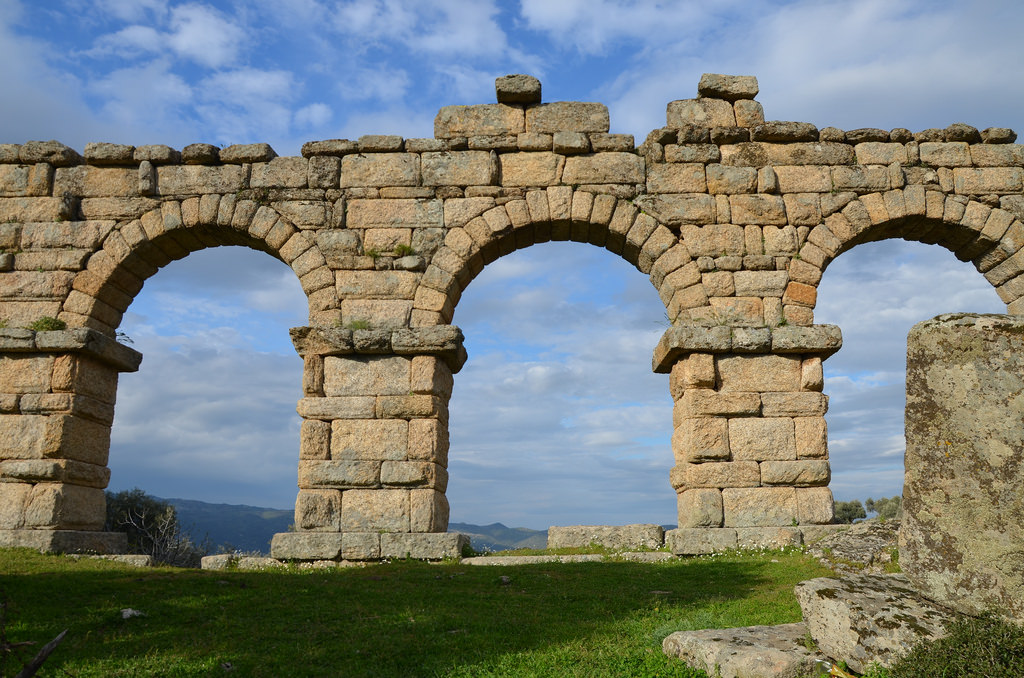
At the summit of the hill stands an imposing two-storey Hellenistic watchtower, the foundations of a small temple and substantial remains of a Roman aqueduct supported by four arches.
PORTFOLIO
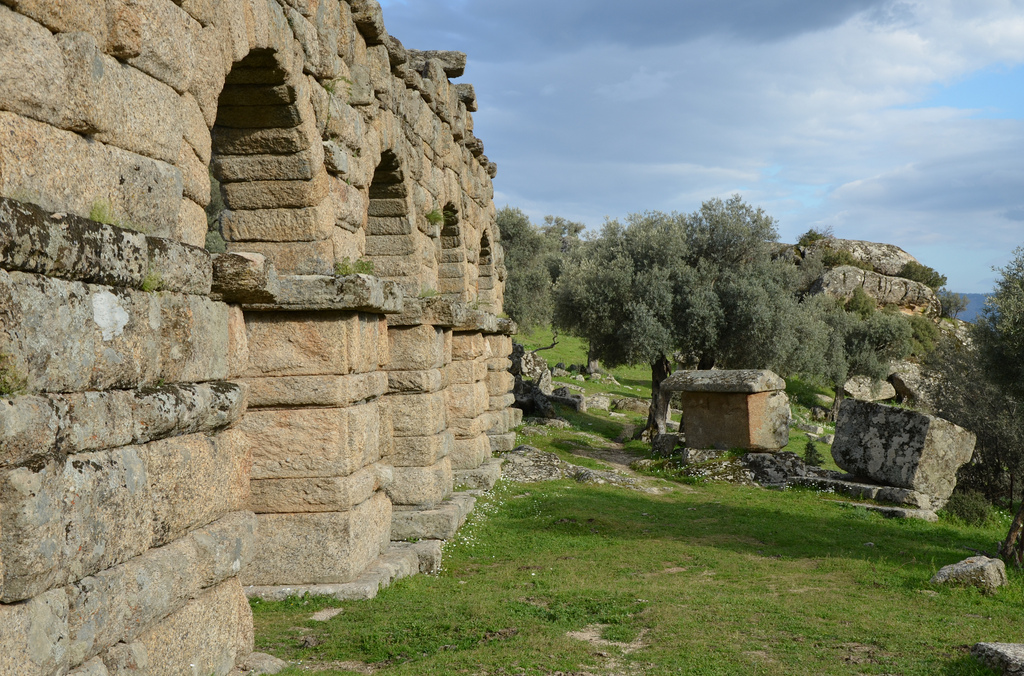
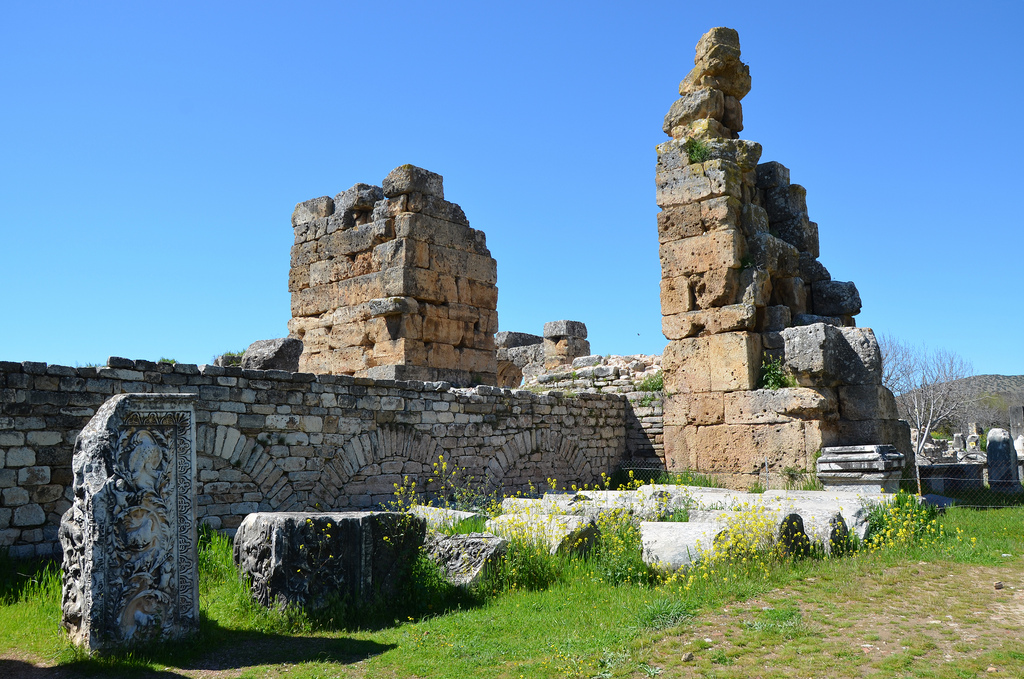
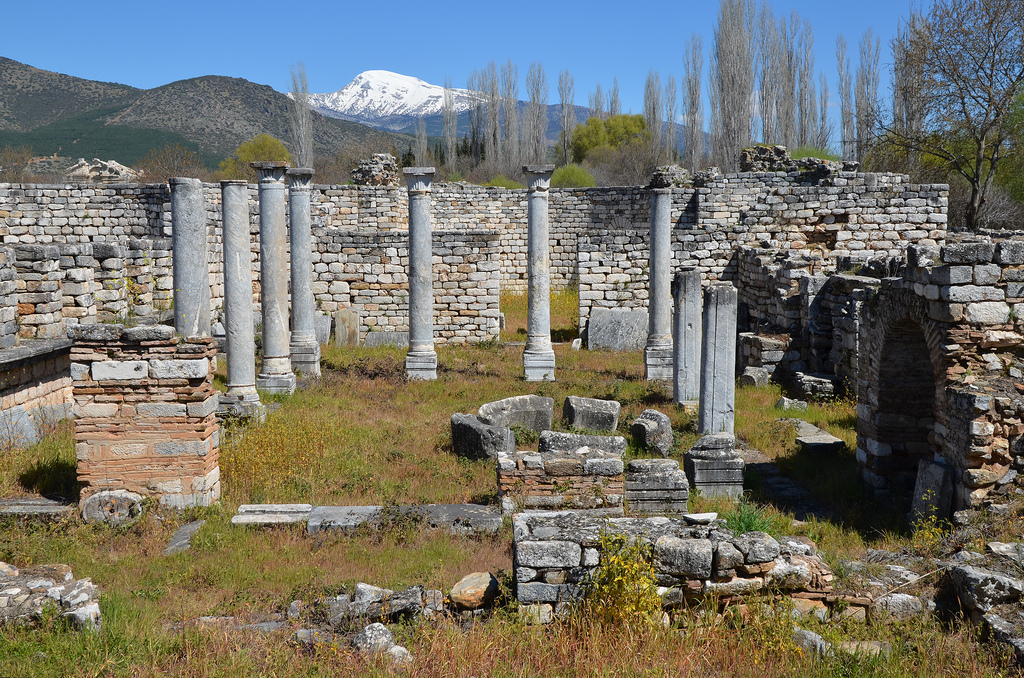
The south hall of the Hellenistic three-storey Agora of Alinda.The interior of the south hall of the Hellenistic Agora. The lower part of the building was probably filled with small shops.Above the first storey, a long line of columns still survives, dividing up what was originally a second storey.View of Alinda’s lower town with the Agora and the western analemma ( retaining wall) of the theatre in the foreground.The ruins of the Hellenistic Theatre that has yet to be excavated.The retaining wall of the cavea of the Hellenistic Theatre with the arched entrance leading to the diazoma.The retaining wall of the cavea of the Hellenistic Theatre.The arched entrance leading to the diazoma of the Hellenistic Theatre.The small temple’s foundations, located at the lower town’s highest elevation.The Hellenistic city walls.The Hellenistic city walls.The Two-storey Hellenistic watchtower.The Two-storey Hellenistic watchtower.The 45-meter section of the Roman aqueduct of Alinda with 4 remaining arches.The 45-meter section of the Roman aqueduct of Alinda with 4 remaining arches.The aqueduct and sarcophagi from the late Classical necropolis.Over the aqueduct’s arches is the water channel, with some of its covering stones still in position.
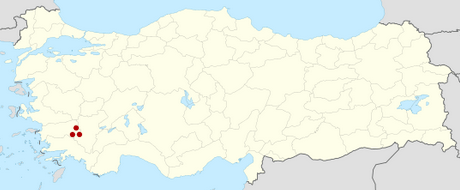
The beautiful ancient city of Aphrodisias, still partly excavated, is one of Turkey’s most important archaeological sites of the late Hellenistic and Roman periods. The town was located in Caria on a plateau 600 meters above sea level. Today, its ruins lie near the village of Geyre, about 80 kilometres west of Denizli. The city was founded in the 2nd century BC on the site of an earlier shrine. It was famous for its sanctuary of Aphrodite, the city’s patron goddess, and its sculptural school, which rose to prominence under the emperor Hadrian (AD 117-138).
Aphrodisias enjoyed a long period of prosperity from the 1st century BC onwards, when it came under the protection of Augustus. In the 5th century AD, it gradually faded into obscurity and later became the Turkish village of Geyre. The ruins that remain today reflect this wealthy past. Twentieth-century excavations have unearthed most of the major public monuments of Aphrodisias: the Temple of Aphrodite, the theatre, the large Agora with its associated bouleuterion (council house), the bath complex, the stadium and the Sebasteion, a temple complex dedicated to Aphrodite, Augustus and the Julio-Claudian dynasty.
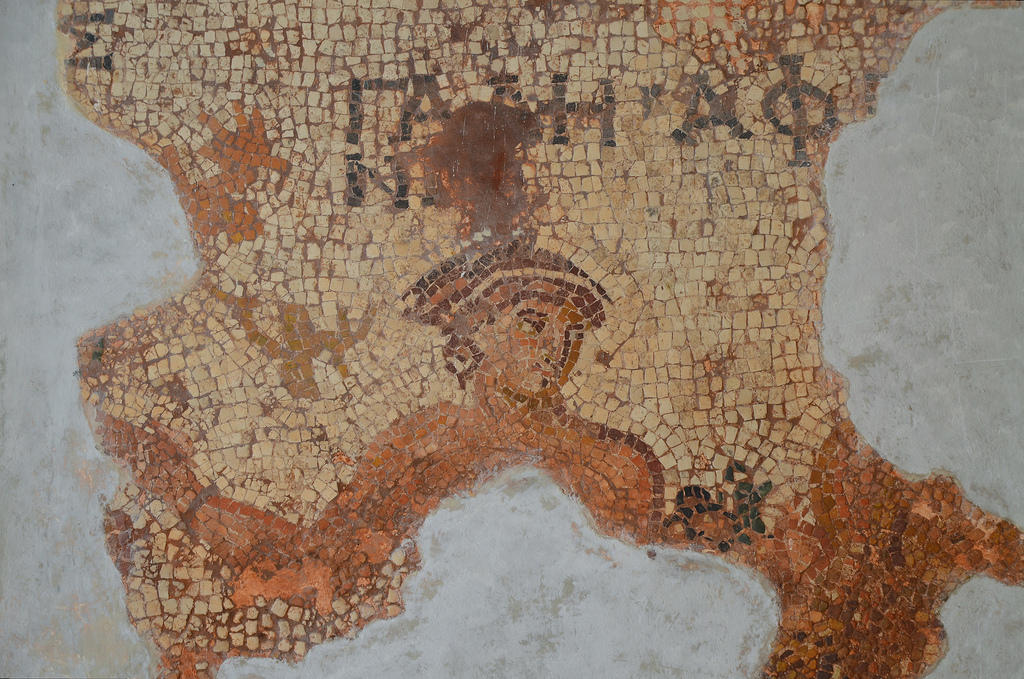
Mosaic depicting Aphrodite (Aphrodisias Museum)
Many statues and sculptural elements unearthed during excavations bear the signatures of Aphrodisian sculptors. They are housed in the Museum of Aphrodisias. Opened to the public in 1979, a new hall was added in 2008 to display the fascinating works that once stood on the portico of the Sebasteion.
PORTFOLIO
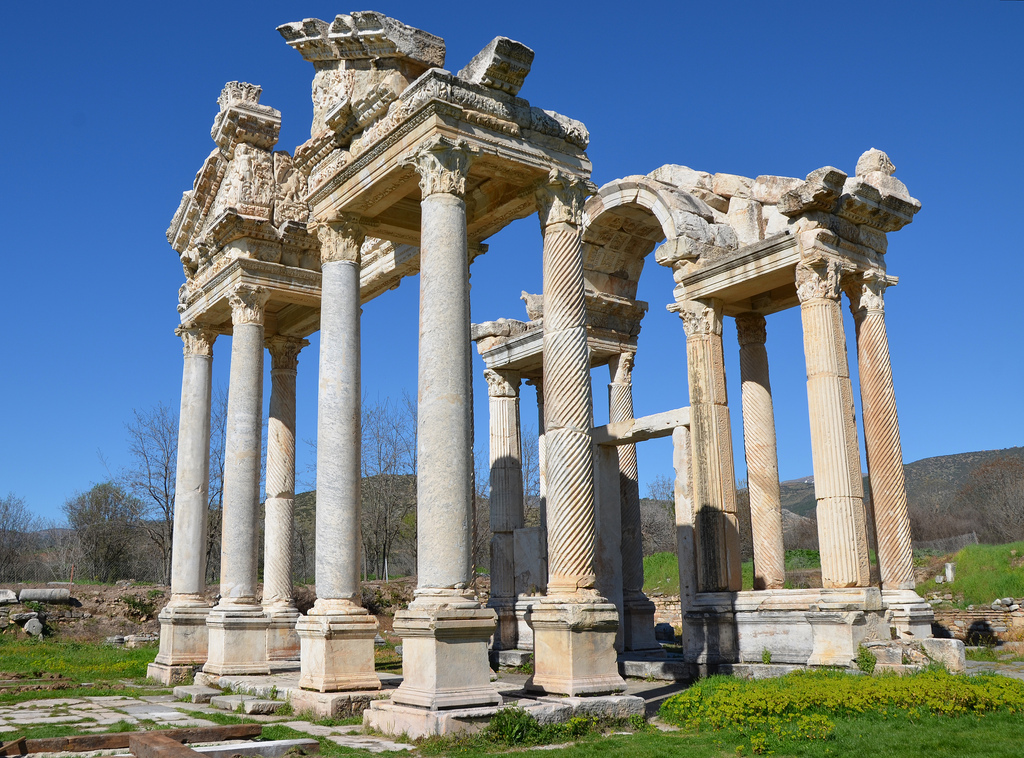
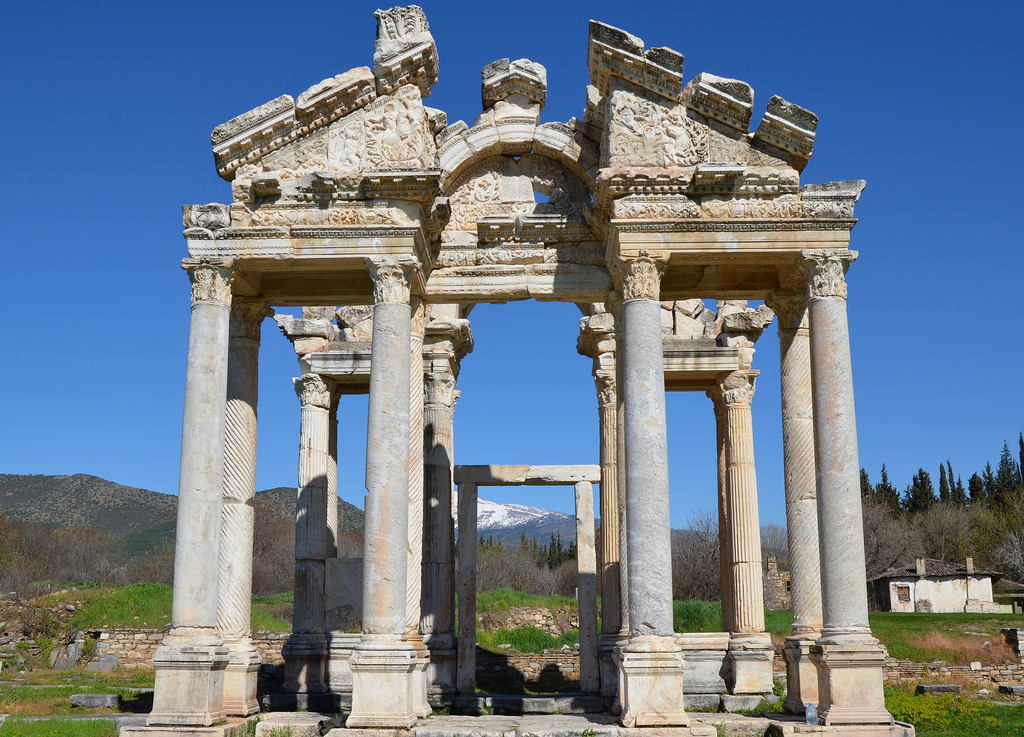
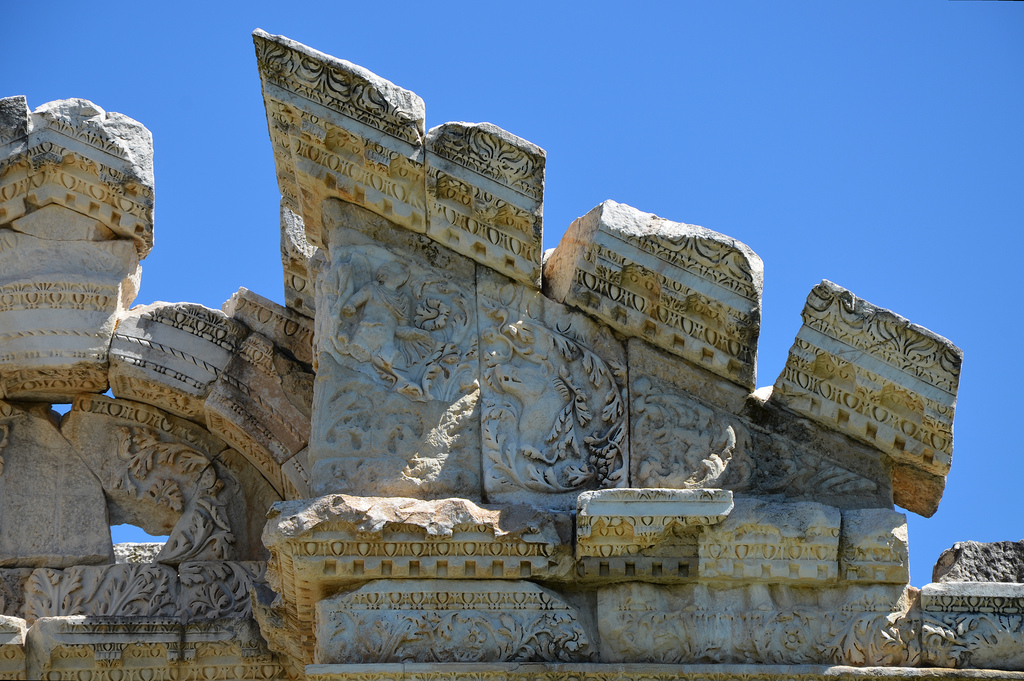
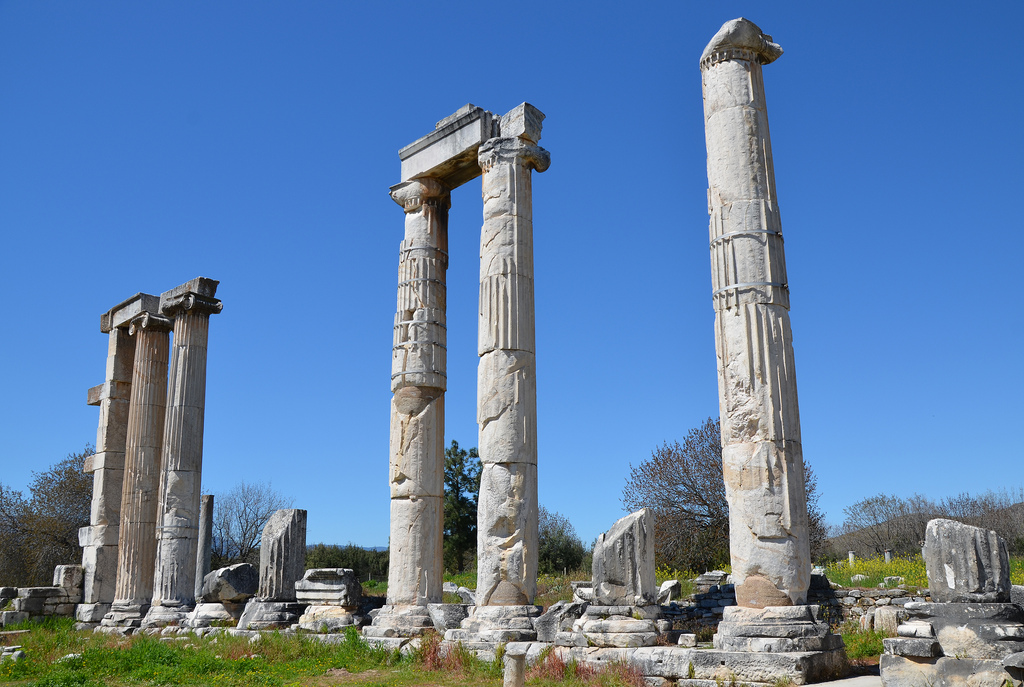
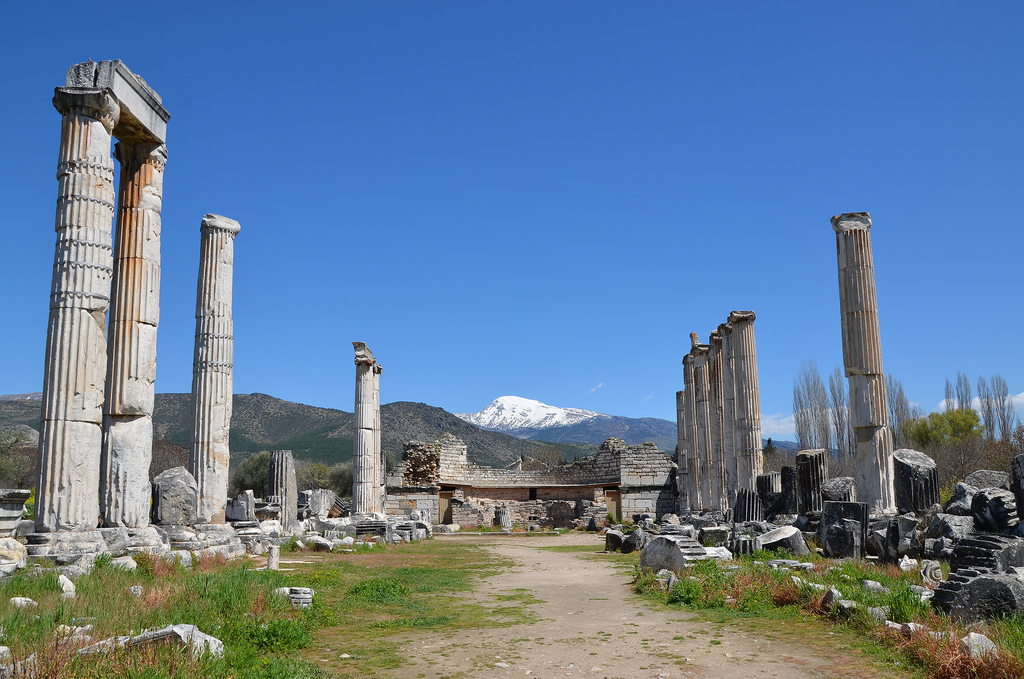
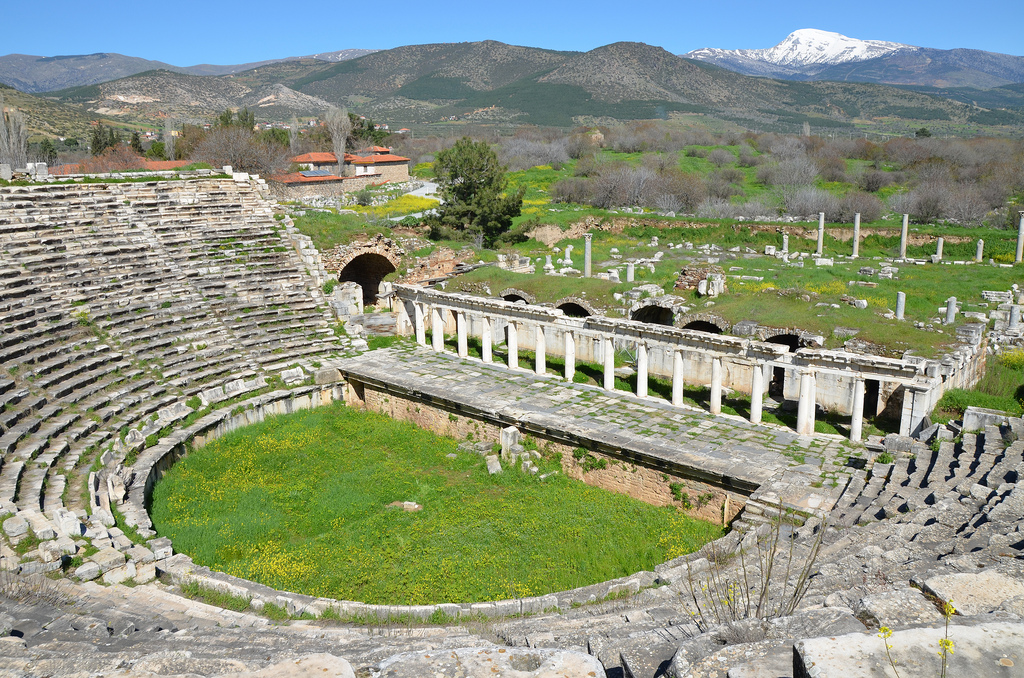
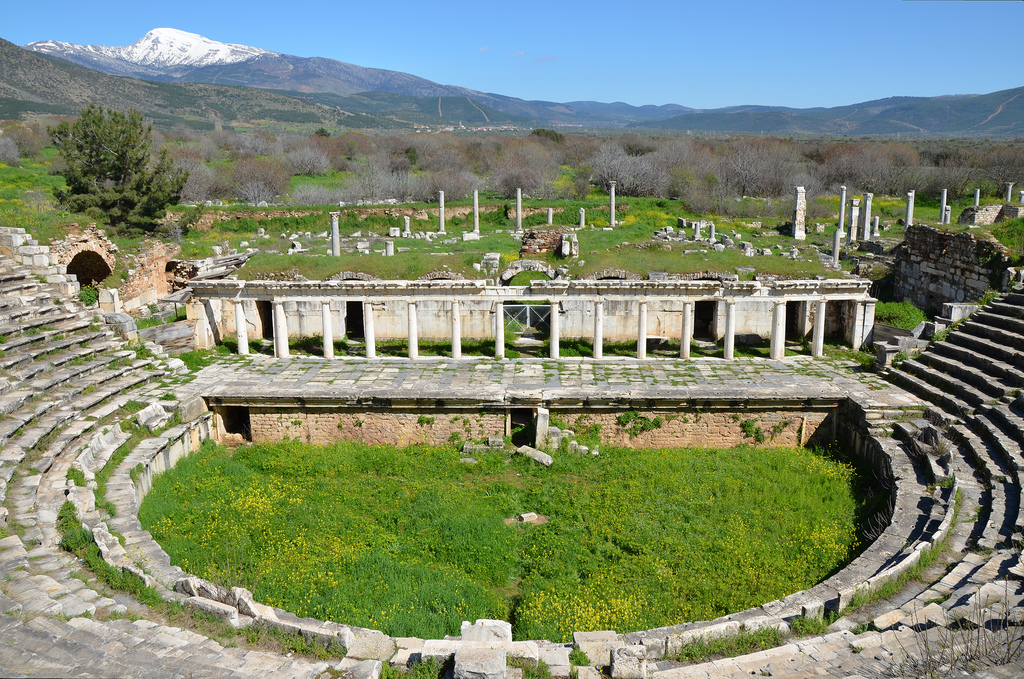
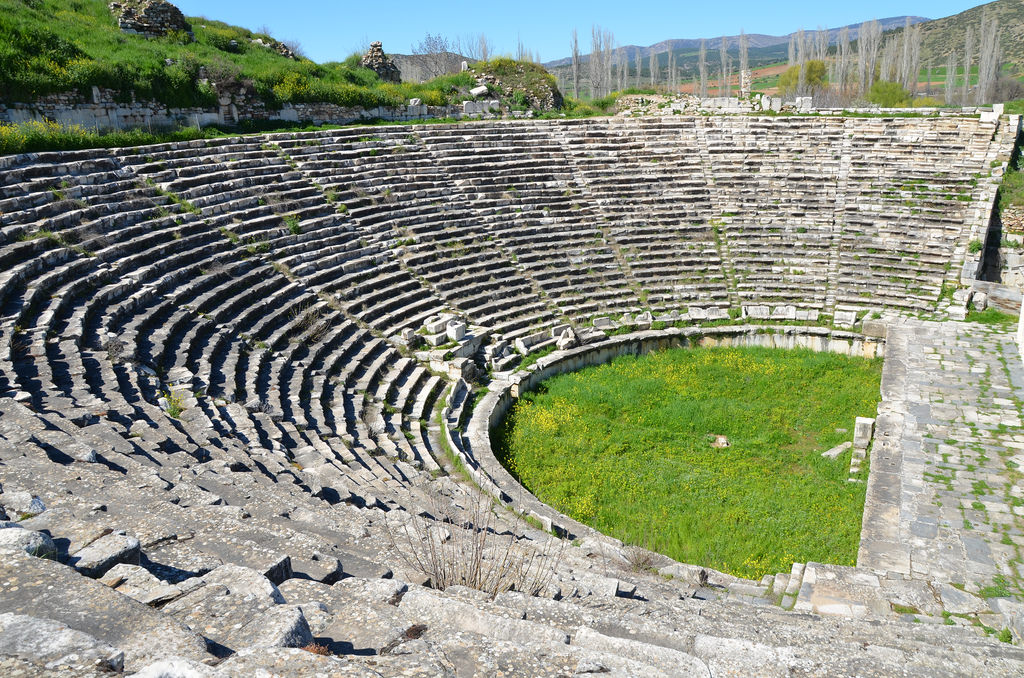
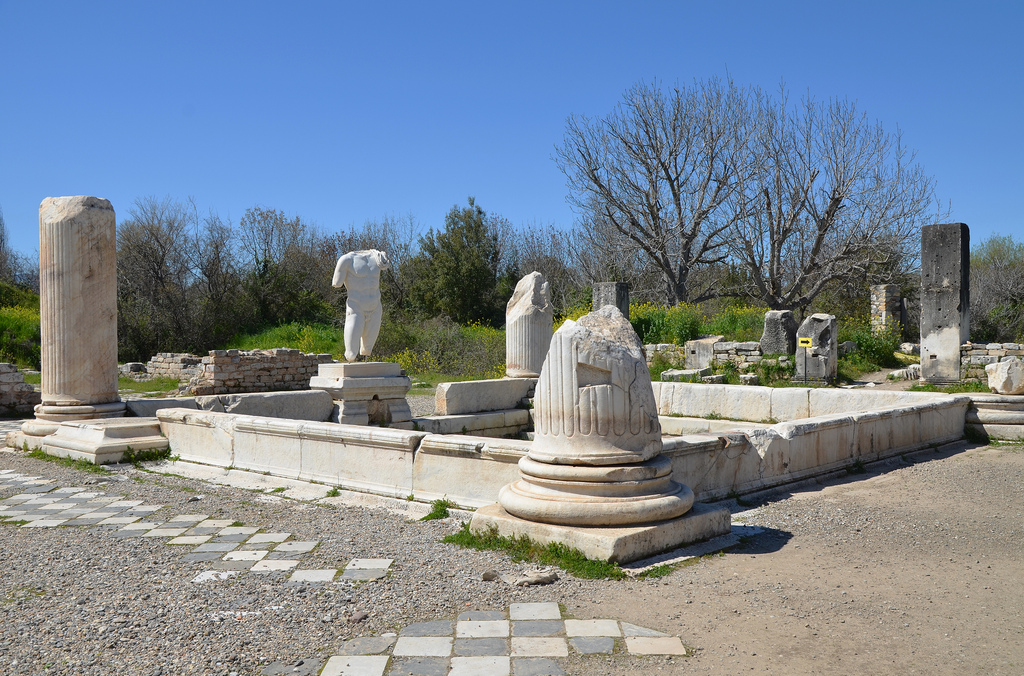
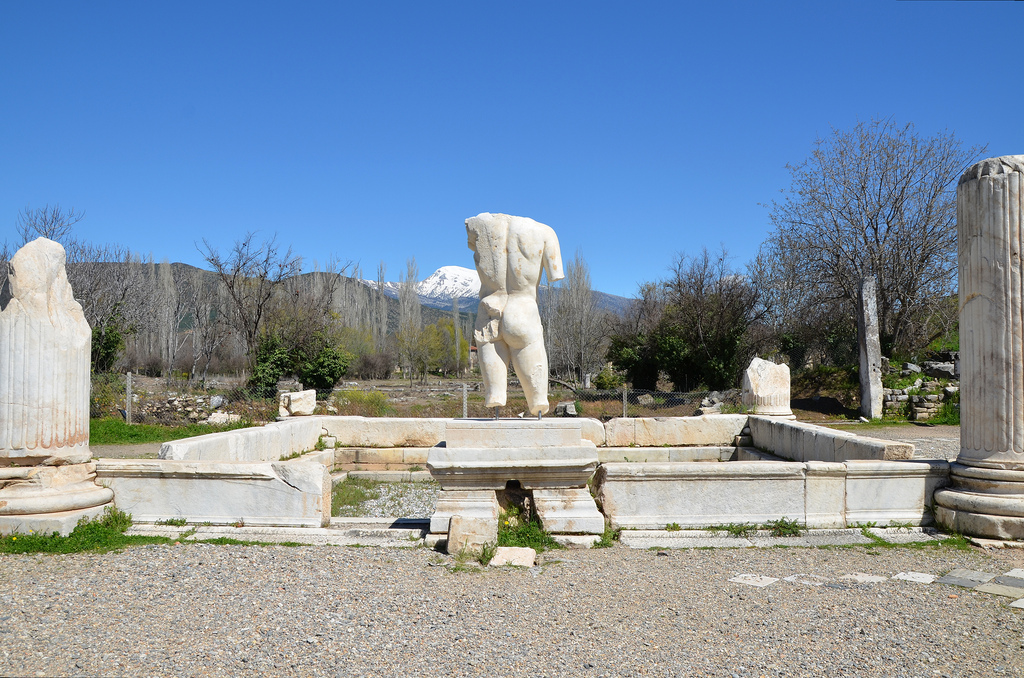
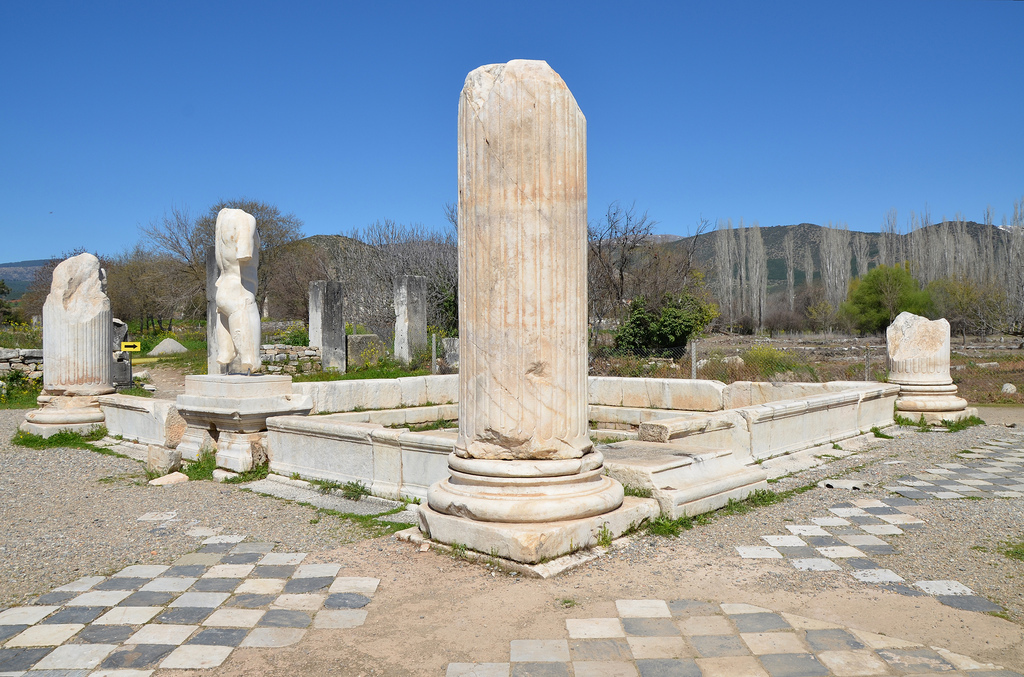
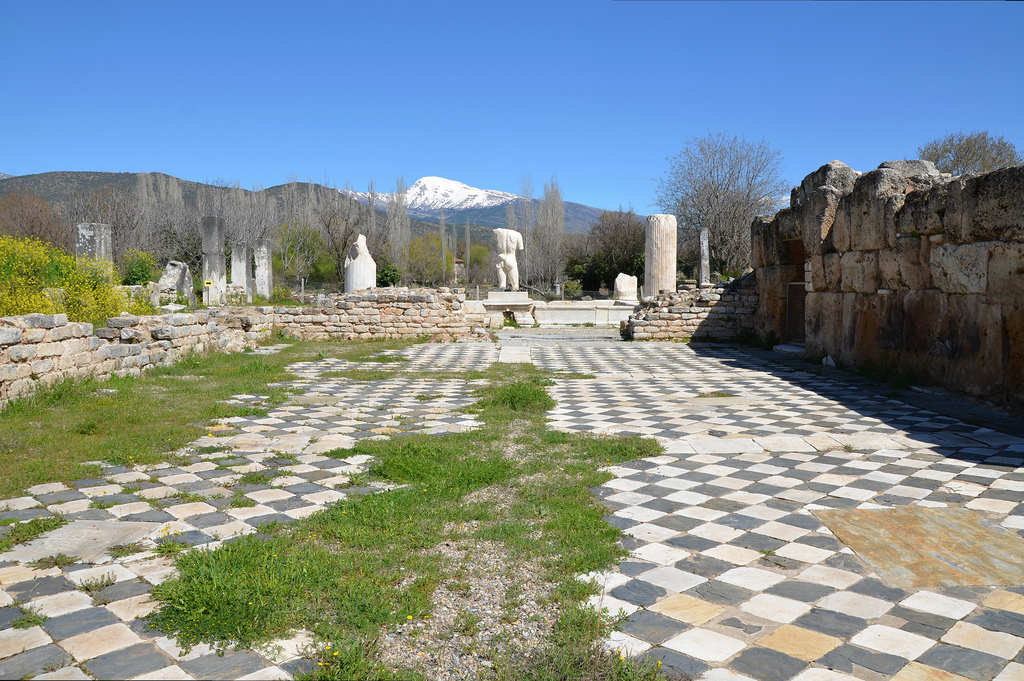
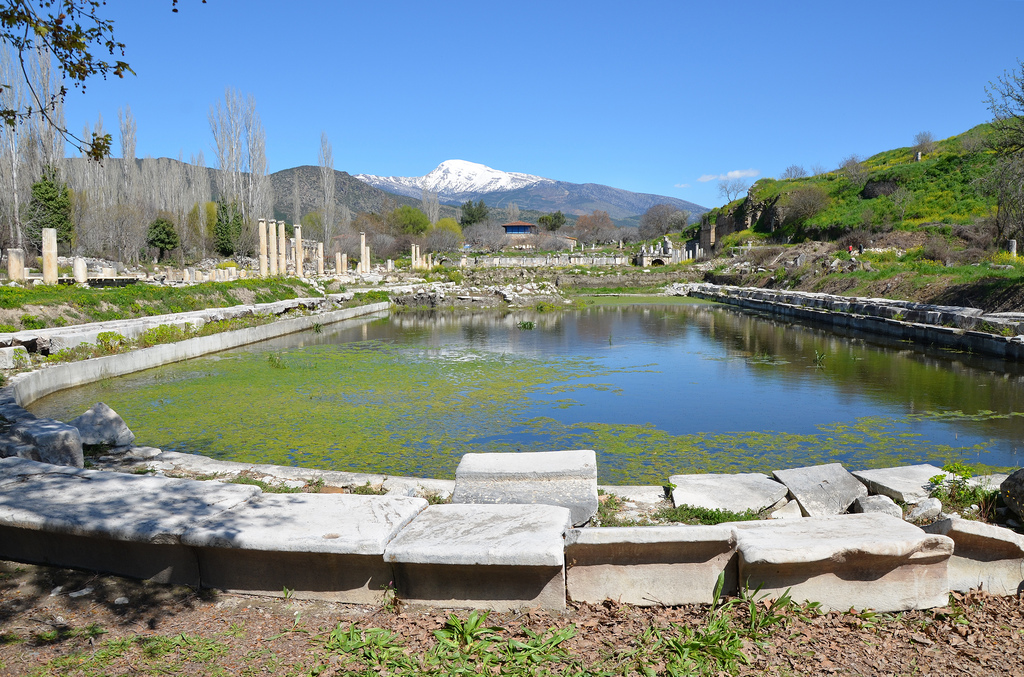
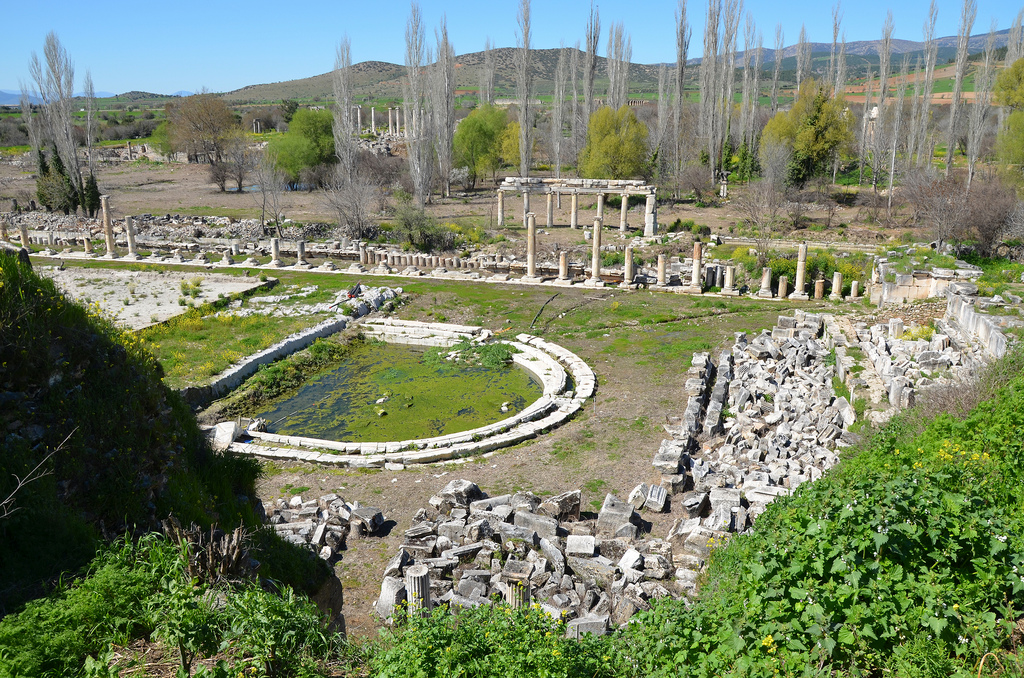
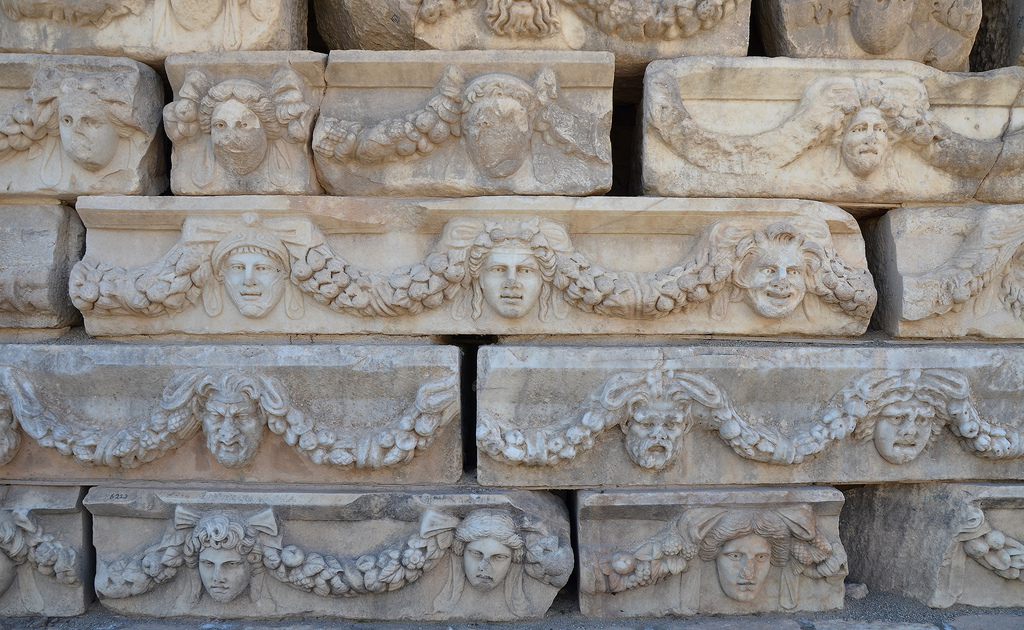
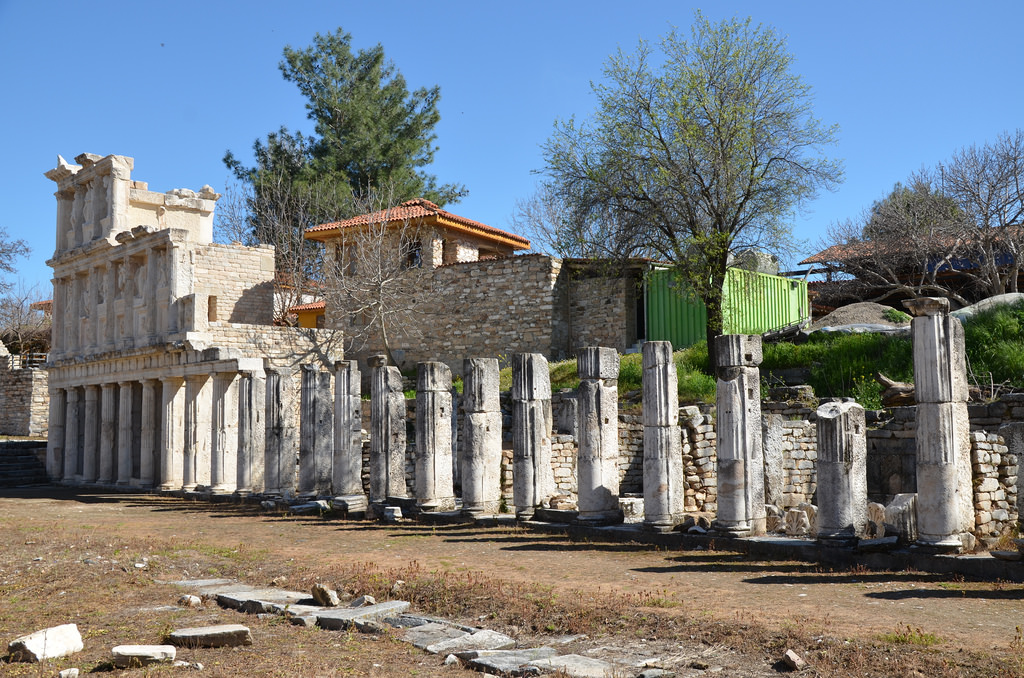
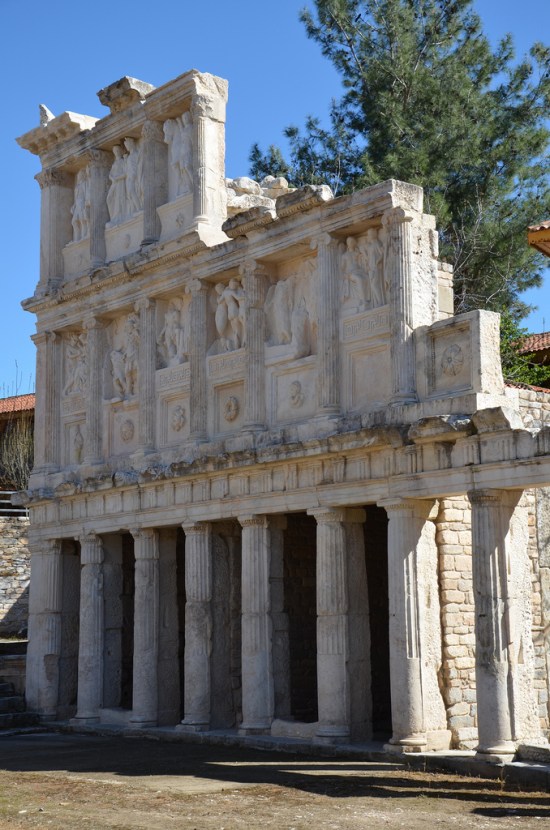
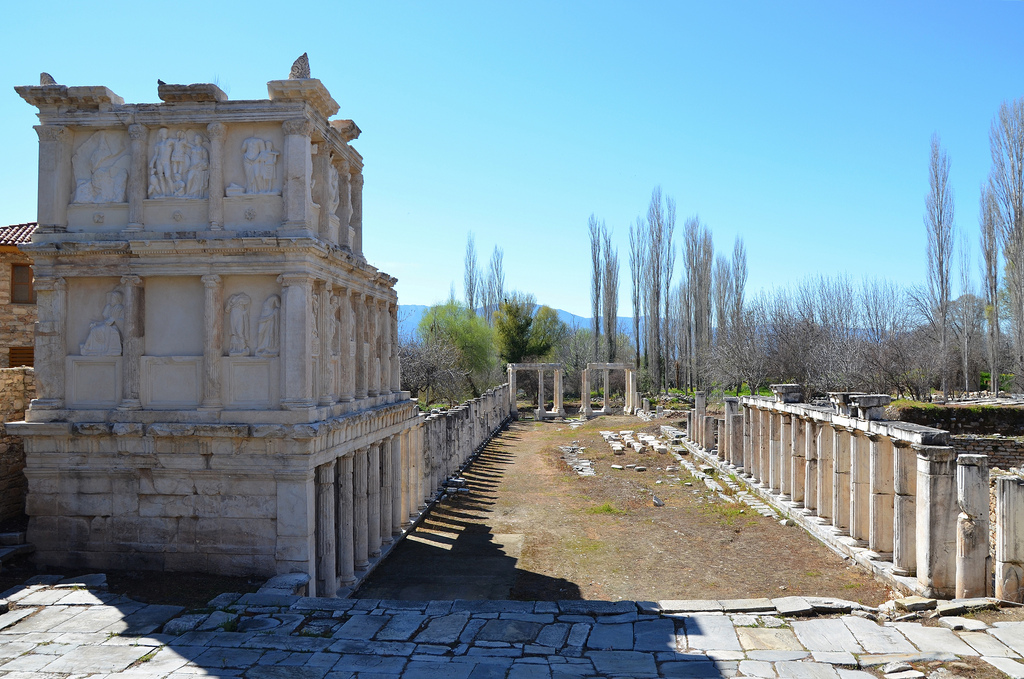
The Tetrapylon was a monumental gateway leading from the town’s main north-south street into a large forecourt in front of the Temple of Aphrodite. It was built ca. 200 AD.The Tetrapylon is one of the jewels of Aphrodisias. It greeted pilgrims visiting the Sanctuary of Aphrodite.The pediment of the Tetrapylon was decorated with relief figures of Eros and Nike hunting among acanthus leaves.The Temple of Aphrodite was built in the Ionic order during the Roman period (from the 1st century BC to the 2nd century AD).The ruins of the Temple of Aphrodite. Fourteen columns of the temple have been re-erected.The Temple of Aphrodite was later converted into a Christian basilica.The Roman theatre was built in the second half of the 1st century BC on the eastern slope of the Acropolis. It was dedicated to Aphrodite and the people of the city by Julius Zoilos, a former slave of Octavian.The ruins of the Roman theatre. Completed in 27 BC, the building underwent structural alterations in AD 200 to accommodate gladiatorial spectacles.The theatre seated 7000 spectators and was used in Roman times for gladiatorial spectacles.The ruins of the Hadrianic Baths. These baths were built in the early 2nd century AD and were dedicated to Hadrian. The open-air pool was decorated with columns at its corners and marble statues.The open-air pool inside the Hadrianic Baths.The open-air pool inside the Hadrianic Baths.The Hadrianic Bath complex was paved with marble.The Hadrianic Baths were constructed on the Roman model, with a series of parallel vaulted halls, each serving a different function, such as a cold room, changing room, or hot room.The Bishop’s Palace was built in the 5th and 6th centuries AD. It consisted of several rooms with blue-grey columns in its courtyard. It may have been the residence of a Roman governor or of the Christian bishop of Aphrodisias.The Bishop’s Palace with the Temple of Aphrodite in the background.Overview of the South Agora and Portico of Tiberius with its 260 m long pool.In the centre of the Portico of Tiberius is a pool 260 metres in length and 25 metres in width. The exact function of this structure (gymnasium, promenade) is still debated among archaeologists.The Portico of Tiberius and the eastern edge of the pool. On the right lie the ruins of the Agora Gate.Friezes with theatre masks and portrait heads of various gods and goddesses linked by garlands. They adorned the 1st century AD Portico of Tiberius.The restored southern portico of the Sebasteion, a building complex dedicated to Aphrodite, Augustus (Sebastos) and the Julio-Claudian dynasty.The Sebasteion at Aphrodisias is a work without parallel in the ancient world. Built entirely of marble, the Sebasteion complex was lined on both sides by three-storey porticoes, whose floors were also marble.The three storeys of the Sebasteion were built in the Doric, Ionic, and Corinthian styles. The first floor consisted of rooms with a door and a window, while the second and third storeys were decorated with rich reliefs depicting mythological scenes and members of the Julio-Claudian Dynasty.
Relief from the Sebasteion depicting Nero and Agrippina (Aphrodisias Museum).
Relief from the Sebasteion depicting the Three Graces in a typical Hellenistic style (Aphrodisias Museum).
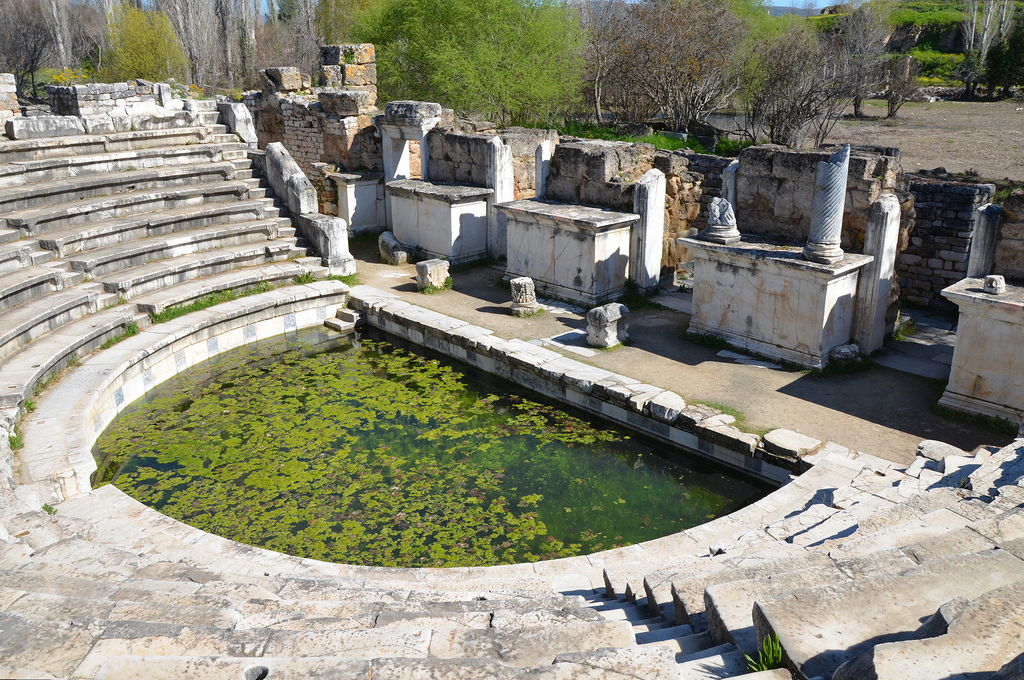
The restored southern portico of the Sebasteion.The Bouleuterion (Council House) was constructed in the 2nd century AD and was built on the north side of the AgoraSeveralof statues representing philosophers and portraits of leading citizens stood in the niches of the two-storey stage building.
Statue of Lucius Antonius Dometinus Diogenes, priest of Aphrodite and the imperial cult, ca. 200 AD (Aphrodisias Museum).
Statue of Claudia Antonia Tatiana, closely modelled on that of Julia Domna,from the Bouleuterion, 200 AD (Aphrodisias Museum).
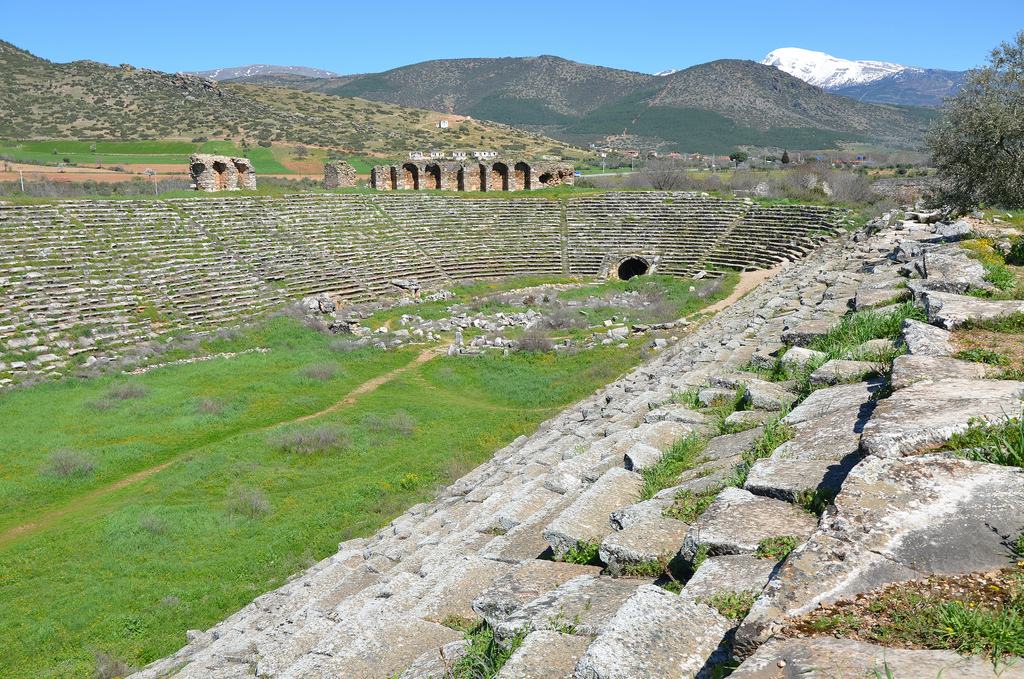
The lower seating area and the orchestra of the Bouleuterion. It had a capacity of 1,750 spectators.Located in the city’s north end, the stadium dates to the first half of the 1st century AD. It was 262 m long and 59 m wide.The marble seats of the stadium. With 22 rows of seats, it had a capacity of 30,000 spectators.The stadium was used until the 7th century. In the late 4th century, the east side was walled off and turned into an arena for animal fights.Bull carvings in the stadium of Aphrodisias.














 following hadrian photography