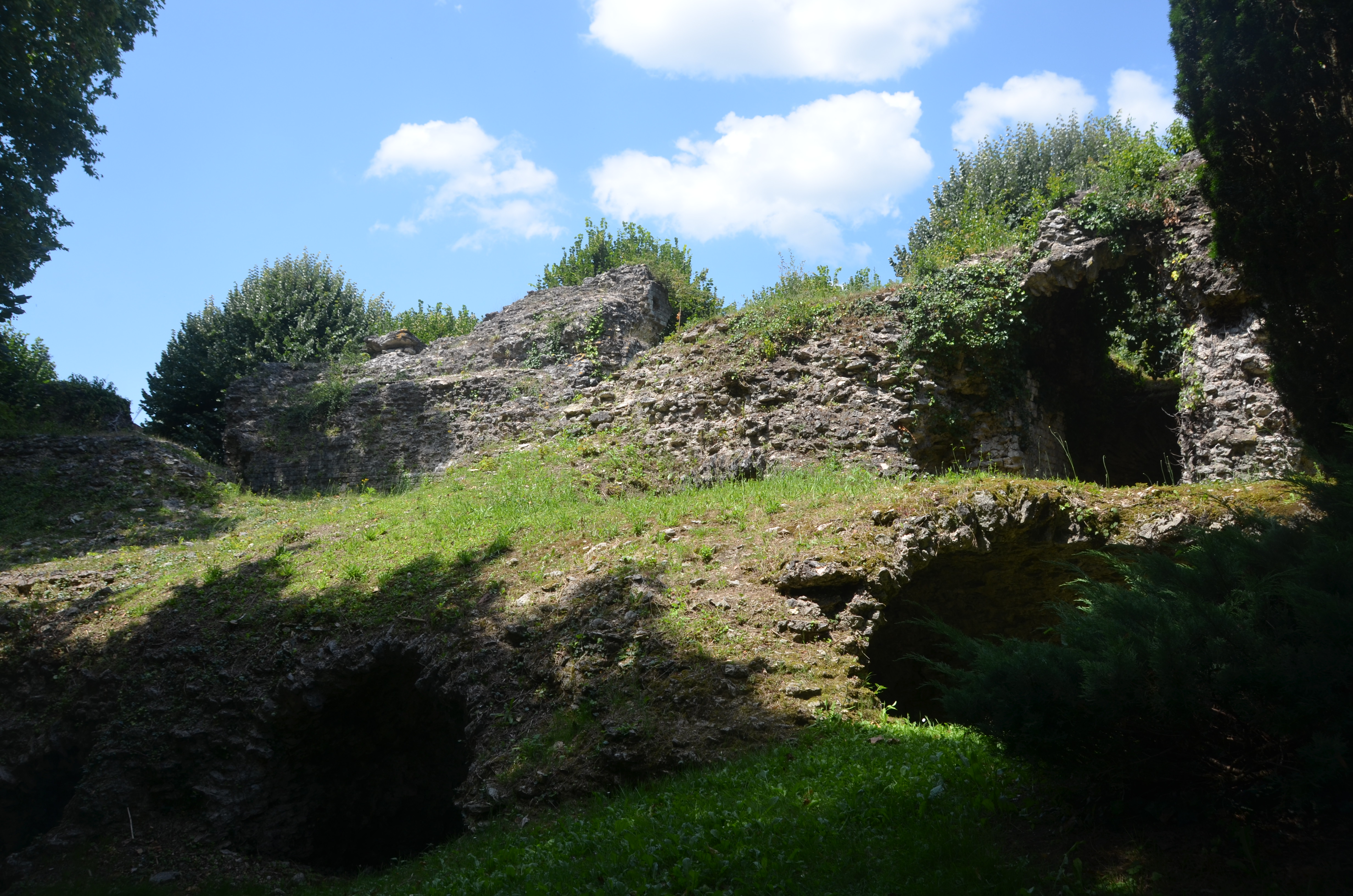
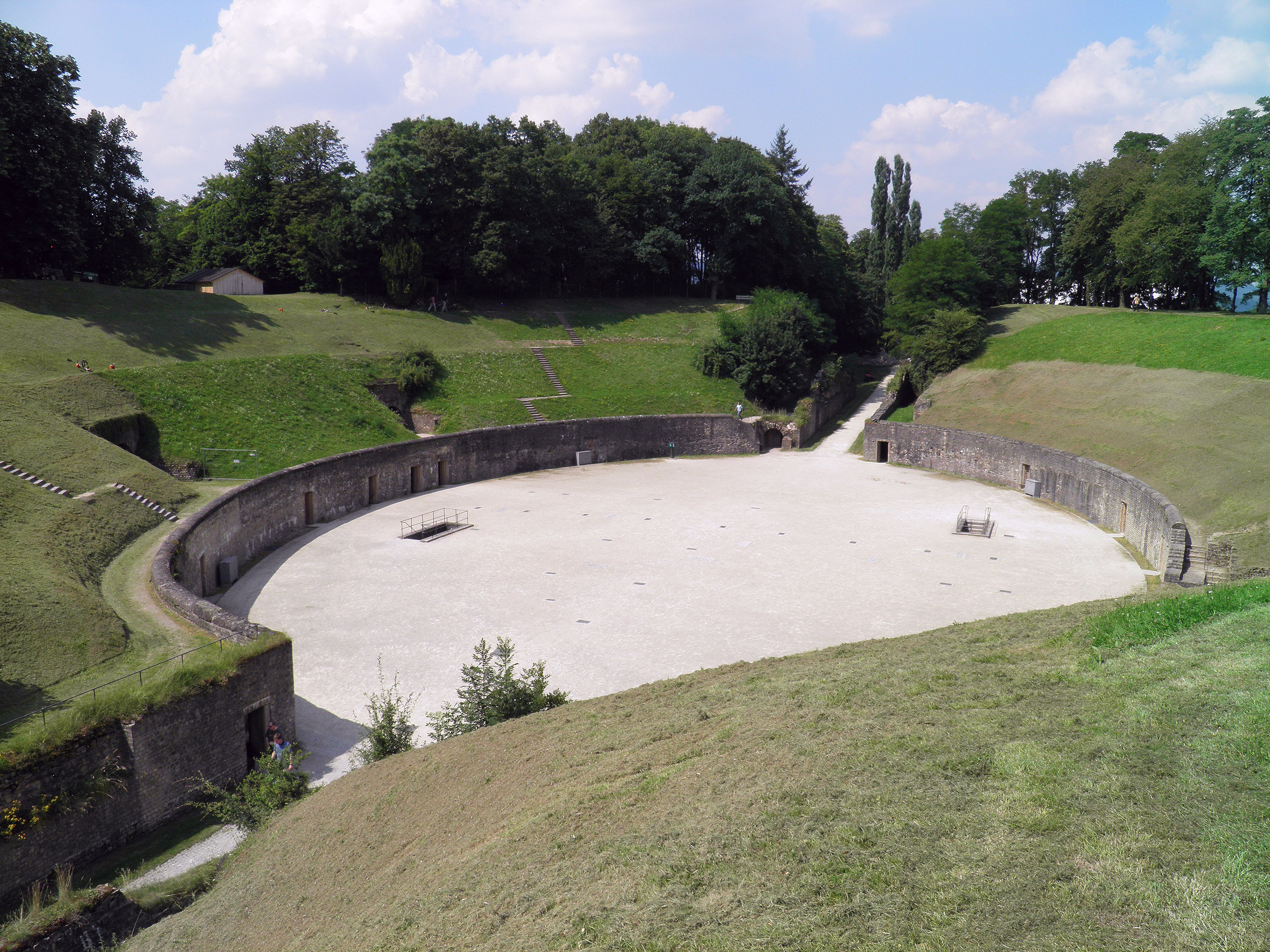
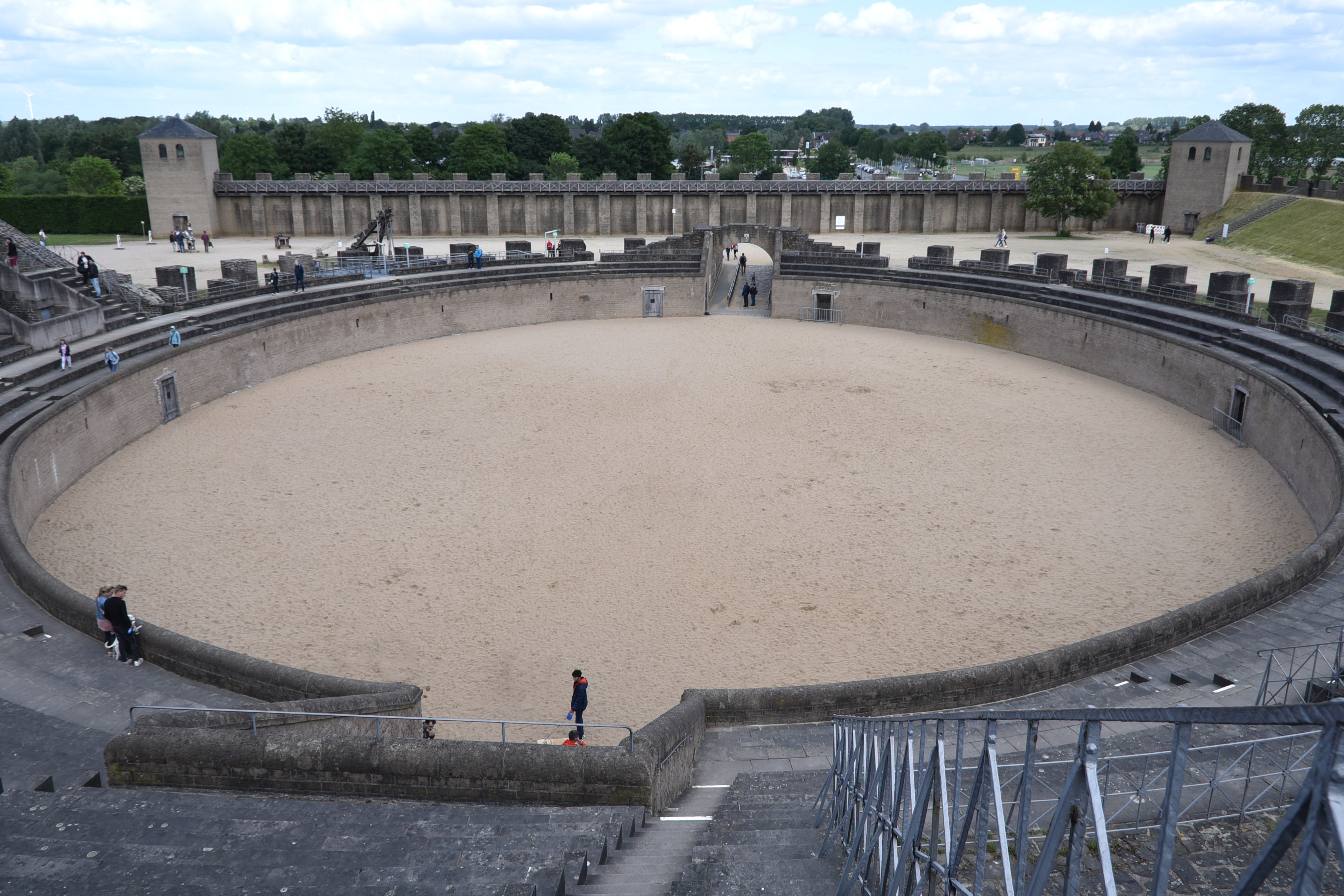
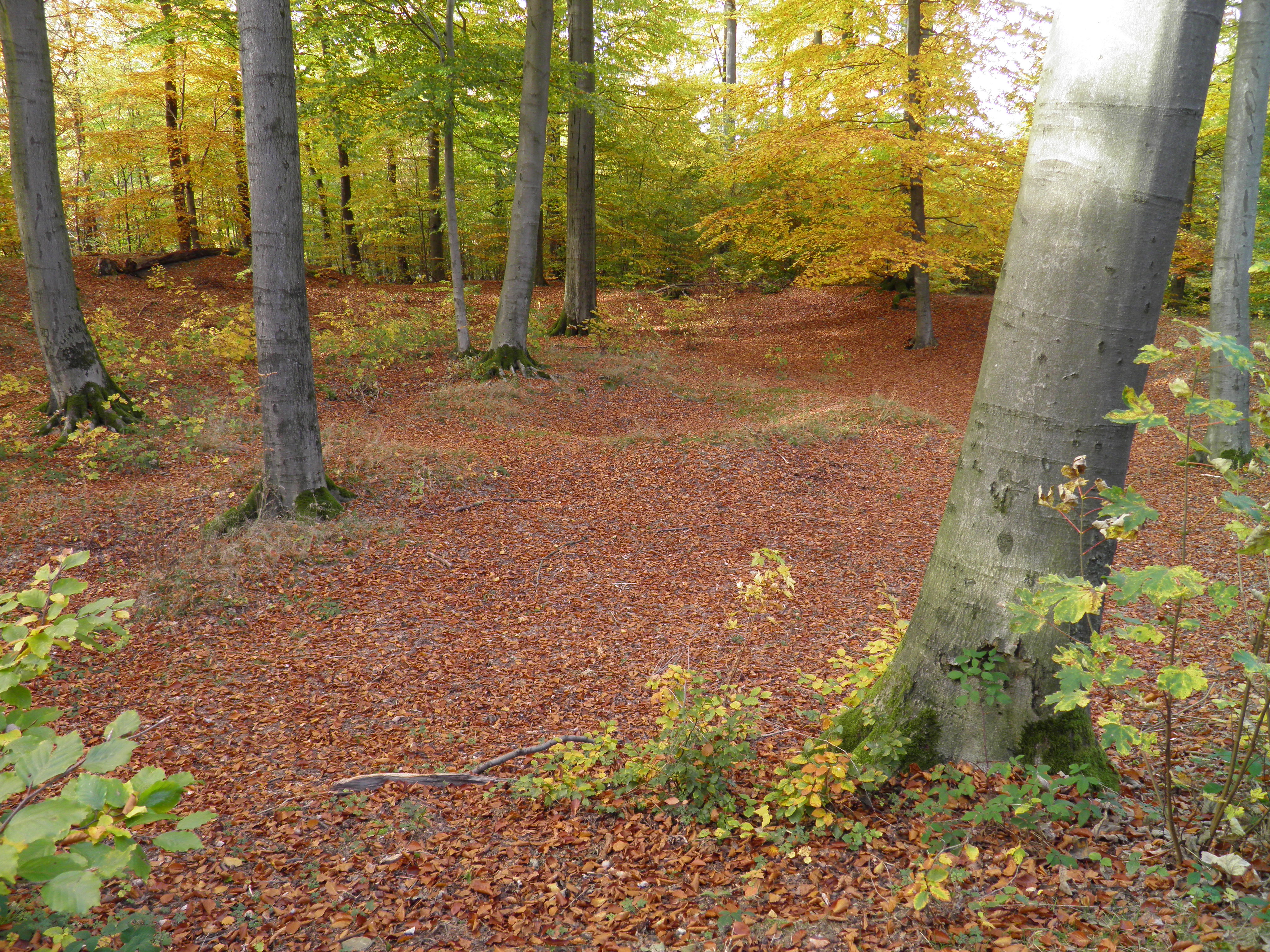
Roman amphitheatres were among the most distinctive and imposing public buildings of the ancient world. Designed primarily for gladiatorial combats (munera), wild-animal hunts (venationes) and other public spectacles, they became powerful symbols of Roman culture, civic identity and imperial authority. From modest timber-and-earth structures to the monumental stone arenas of the imperial period, amphitheatres spread throughout the Roman Empire, from Britain and the Rhine frontier to North Africa and the eastern Mediterranean.
Unlike Greek and Roman theatres, which generally featured a semicircular seating area facing a stage, amphitheatres featured an elliptical or oval arena surrounded on all sides by tiered seating (cavea). This arrangement brought spectators close to the action and provided clear views of the spectacles. The arena, whose name derives from the Latin harena (sand), was typically covered with sand to absorb blood and make cleaning easier. Beneath some of the larger amphitheatres, elaborate underground chambers and passages (hypogea) housed animals, equipment and machinery used during performances.
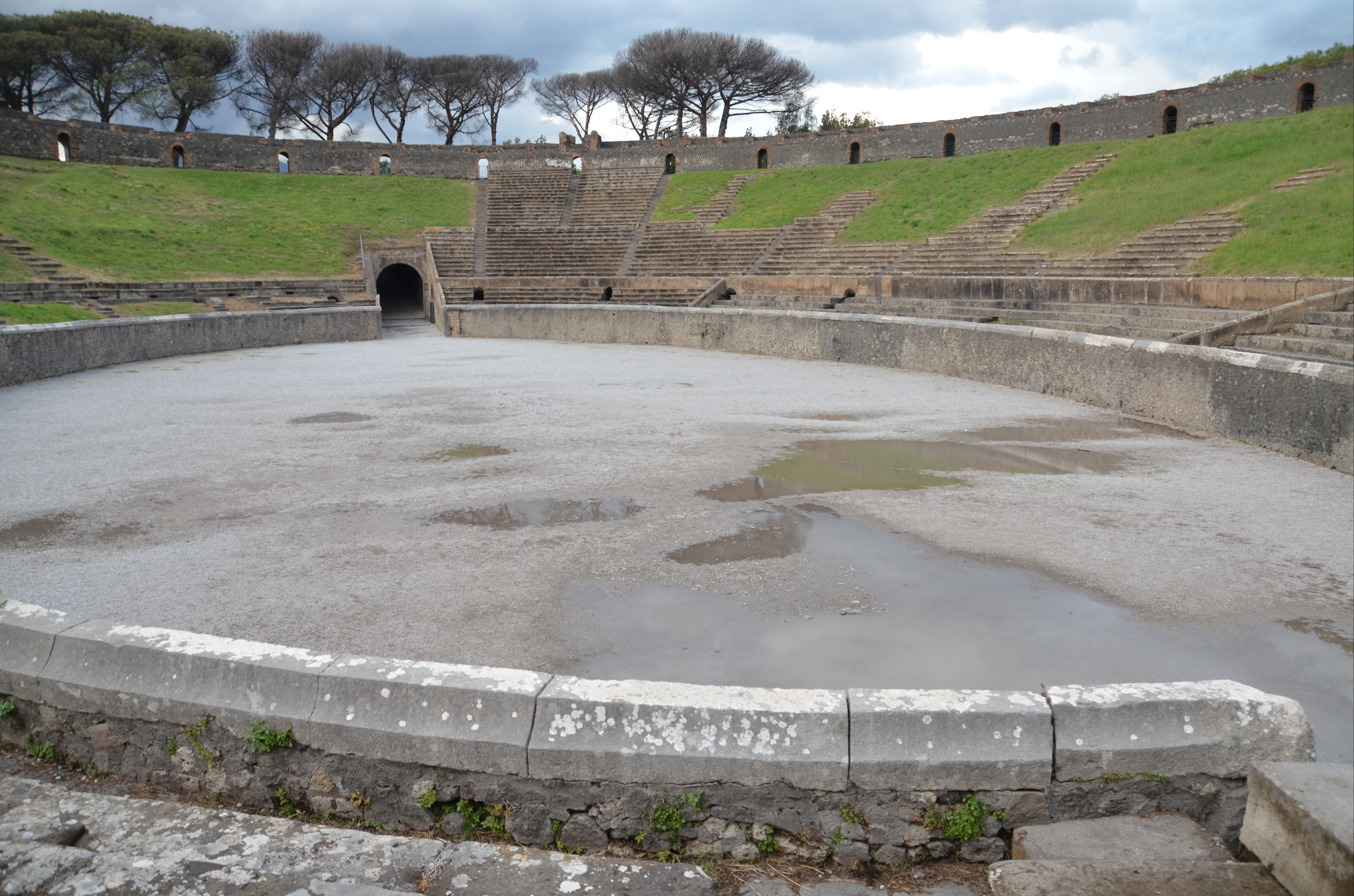
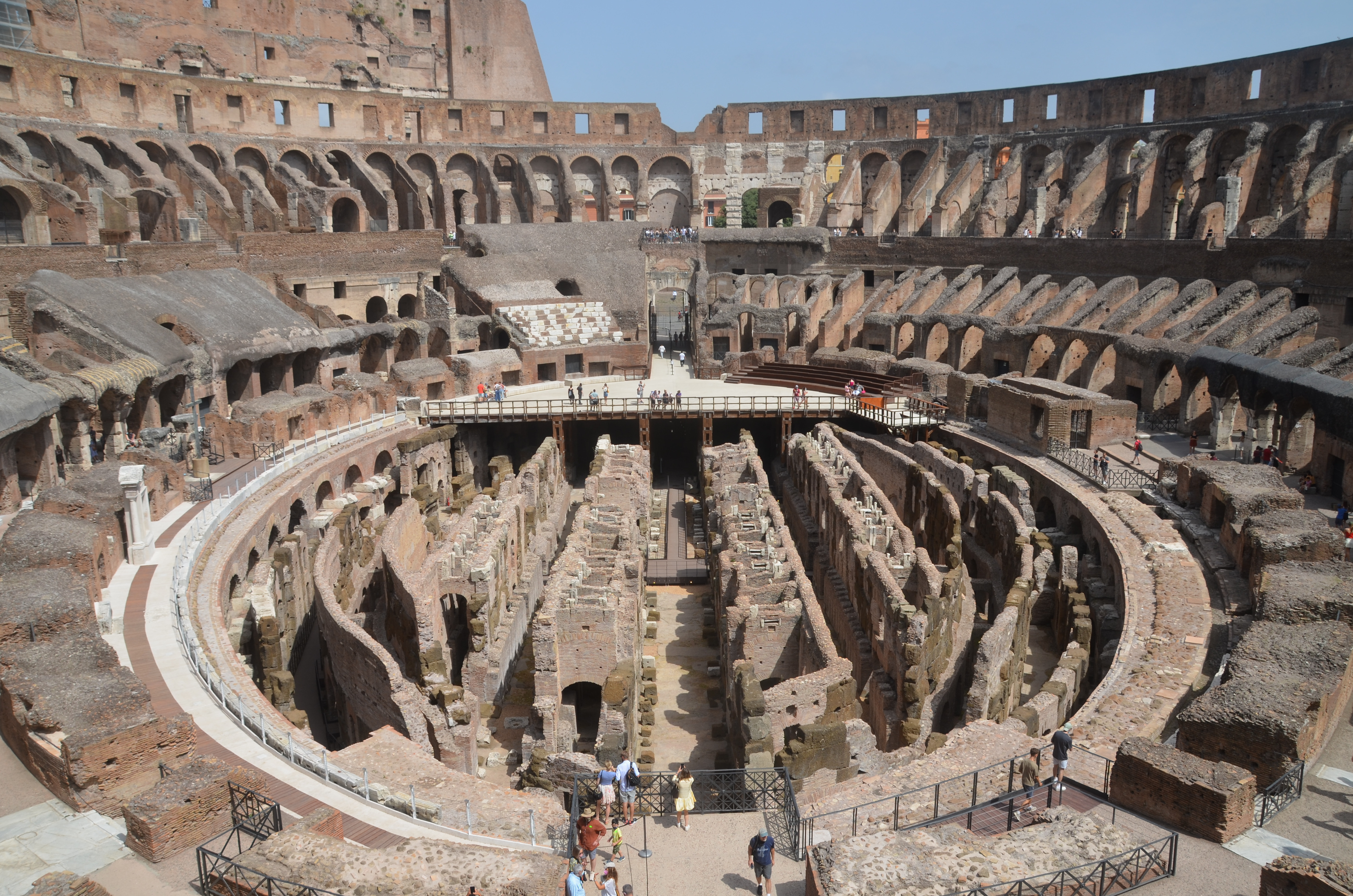
The earliest permanent amphitheatres appeared in Italy during the late Republican period. The amphitheatre at Pompeii, built around 70 BC, is the oldest surviving example and illustrates the early development of this distinctively Roman architectural form. During the imperial period, amphitheatres became increasingly monumental, culminating in the construction of the Flavian Amphitheatre, better known as the Colosseum, inaugurated in AD 80. Its sophisticated system of vaulted corridors, staircases and seating arrangements represented a remarkable achievement in Roman engineering and served as a model for many later buildings.
Amphitheatres varied considerably in size, design and construction according to local circumstances. Some, such as those at Pompeii and Italica, were built partly into the natural terrain, while others, including the Colosseum and the amphitheatres at Arles and Nîmes, relied on extensive systems of arches and concrete vaults to support their seating. Along the military frontiers, amphitheatres often stood near legionary fortresses and auxiliary forts, providing entertainment for soldiers and nearby civilian communities. In parts of Gaul, distinctive theatre-amphitheatres combined features of both architectural types, accommodating theatrical performances as well as arena spectacles.
Beyond their entertainment function, amphitheatres played an important role in Roman society. Public spectacles were often sponsored by emperors, magistrates, and wealthy benefactors, who used them to demonstrate generosity, reinforce social hierarchies, and gain political prestige. Seating arrangements reflected the divisions of Roman society, with places allocated according to rank and status. Amphitheatres were also settings for public executions and, on occasion, the persecution of Christians, as recorded at Carthage and Lyon.
From the 4th century AD onwards, changes in imperial legislation, religious attitudes and urban life contributed to the gradual decline of gladiatorial spectacles. Many amphitheatres fell into disuse, while others were transformed into fortifications, quarries, housing complexes or Christian places of worship. Their subsequent histories often explain their present state of preservation. Some, such as the arenas at Pula, Verona and Nîmes, remain remarkably intact, while others survive only as foundations, earthworks or traces embedded within modern cities.
This photographic collection brings together 80 Roman amphitheatres and related arena buildings that I have visited across the former Roman Empire, from the monumental arenas of Italy and North Africa to the more modest structures along the imperial frontiers. It includes well-preserved monuments, partially excavated remains and sites where little of the original building is visible today. The photographs highlight the architectural diversity of these remarkable structures and their enduring place in the archaeological landscape.
The collection is organised alphabetically by country and by ancient site name, with brief descriptions providing historical and architectural context. For related monuments, see my Ancient Theatres, Odeons and Bouleuteria photographic collection. As with my collection of ancient theatres and odeons, it is an ongoing project, and I will add further sites after future travels.
Constructed in the early 2nd century AD, probably during the reign of Trajan, the amphitheatre is the largest known in the Balkans. Built partly into a hillside, it measured approximately 132 × 113 m according to traditional estimates and could accommodate some 15,000–20,000 spectators. Its surviving remains include vaulted galleries, staircases and sections of the seating. After the abandonment of gladiatorial spectacles, a Christian chapel decorated with mosaics was established within the structure. The amphitheatre was rediscovered in 1966.
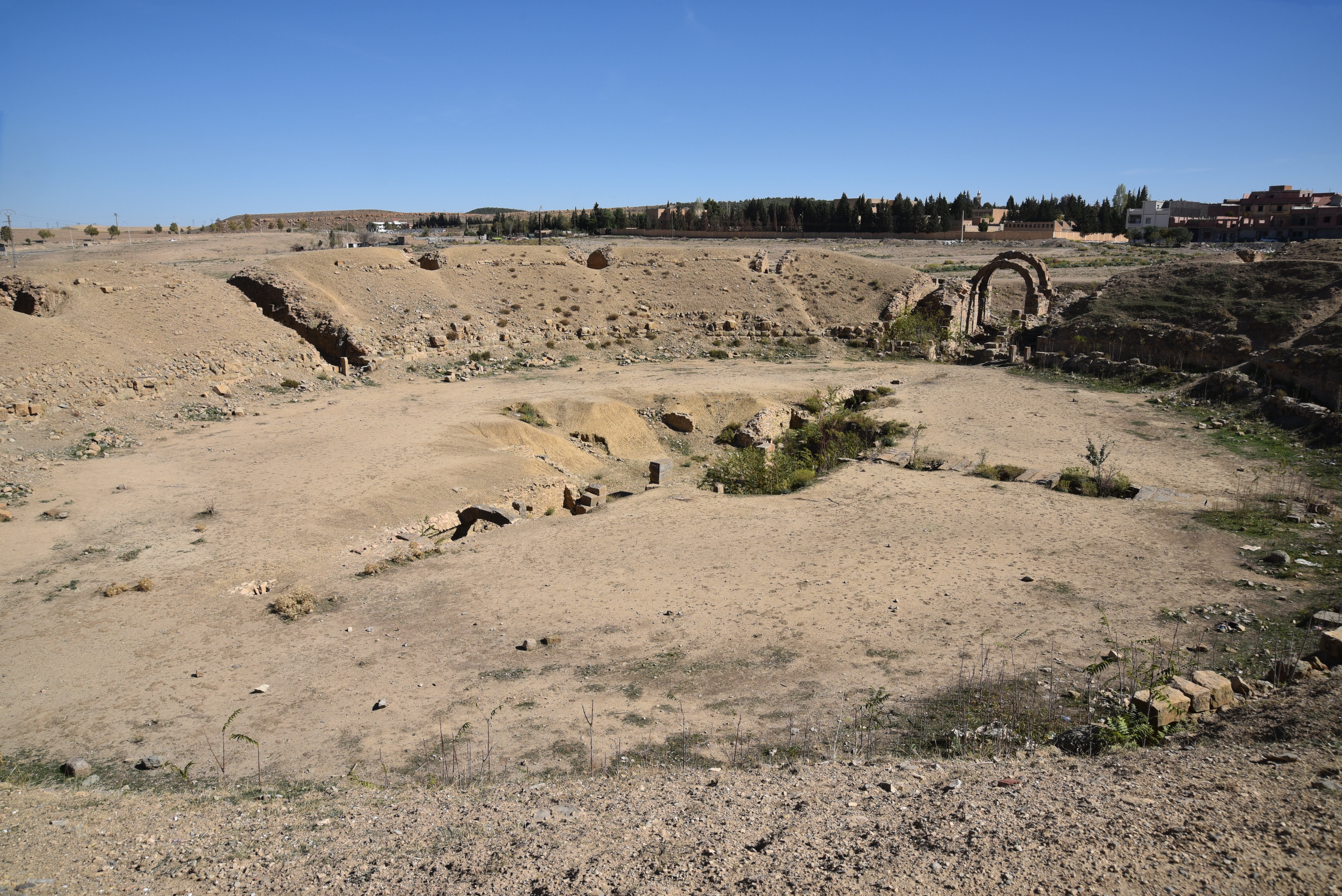
Originally established in the early 2nd century AD, possibly during Hadrian’s reign, the military amphitheatre at Lambaesis was substantially enlarged under Marcus Aurelius in the later 2nd century. Inscriptions record repairs and alterations in AD 169, 176–180 and 194. Situated near the fortress of Legio III Augusta, the enlarged structure could accommodate approximately 12,000 spectators. Much of its stone seating was subsequently dismantled, particularly during the 19th century.
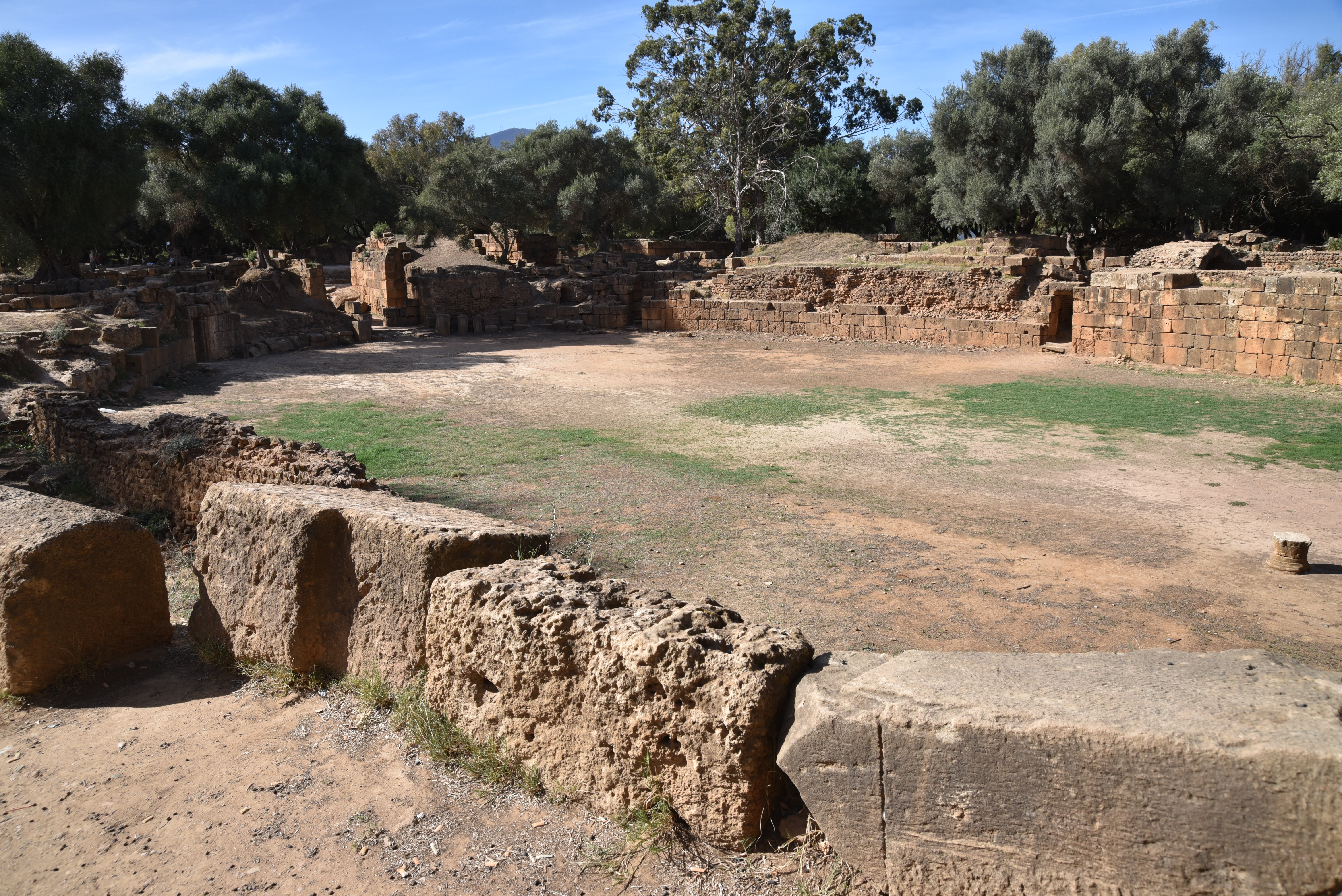
Constructed in the late 2nd or early 3rd century AD, probably during the Severan period, the amphitheatre at Tipasa was built over an earlier cemetery, incorporating reused funerary monuments into its masonry. Measuring approximately 77 × 55 m, the building featured an elliptical arena, vaulted seating substructures and an underground service gallery. The structure underwent restoration during the early 4th century AD.
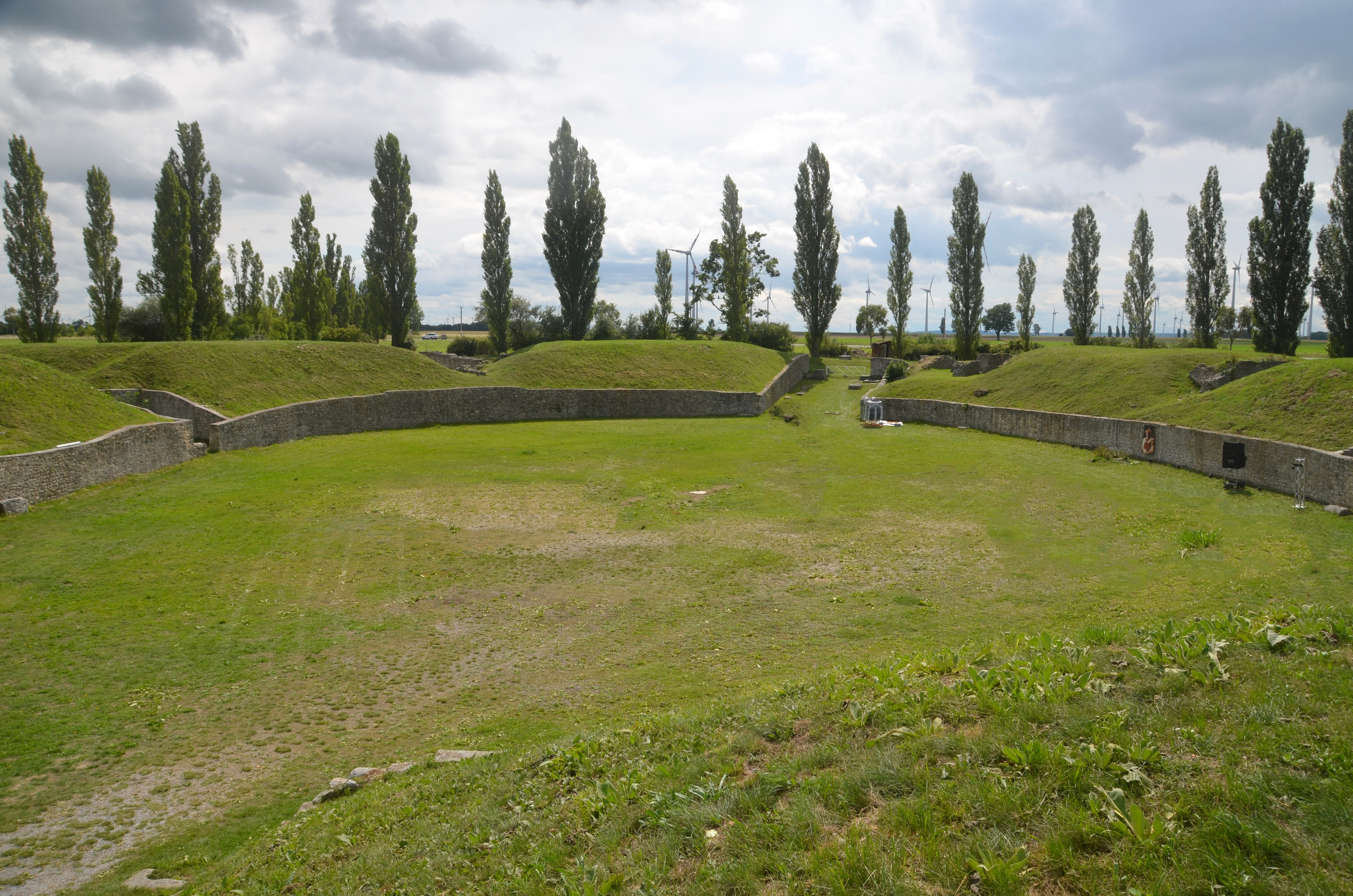
Constructed in the 2nd century AD outside the civilian city of Carnuntum, the amphitheatre could accommodate an estimated 13,000 spectators. Its elliptical arena was surrounded by stone seating and an enclosing wall, with entrances along the principal axis. The monument served the inhabitants of the prosperous Roman town, which developed into an important urban centre in the province of Pannonia Superior.
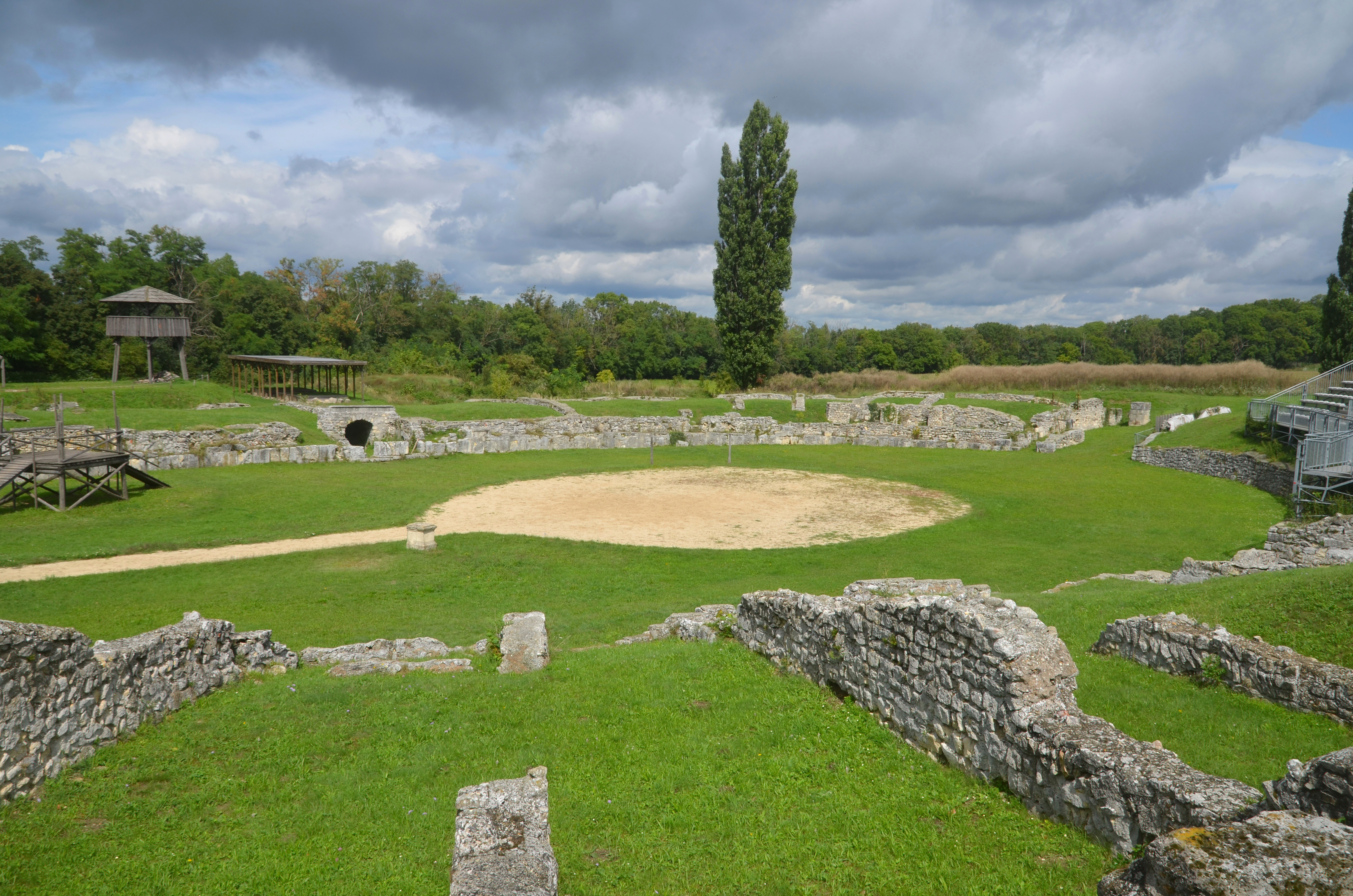
Located near the legionary fortress of Carnuntum, this amphitheatre was originally constructed in the late 1st century AD and subsequently rebuilt in stone. With an estimated capacity of around 8,000 spectators, it provided a venue for gladiatorial combats, animal hunts and public spectacles attended by soldiers and civilians. The surviving remains include the elliptical arena, entrances and sections of the surrounding walls.
BULGARIA
Diocletianopolis Roman Amphitheatre (Hisarya) (Google Maps)
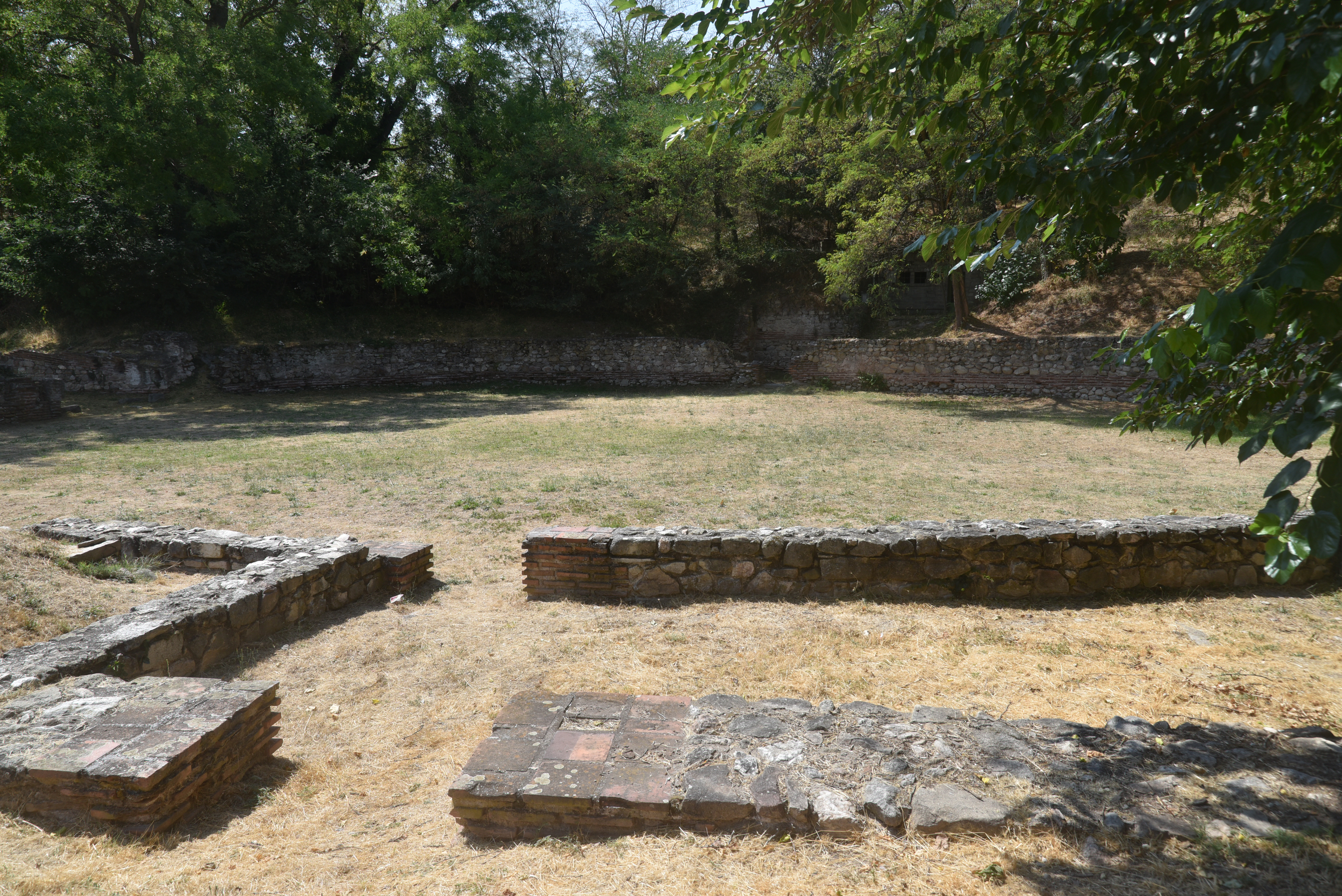
The amphitheatre of ancient Diocletianopolis was a modest entertainment building situated within the Roman settlement, celebrated for its mineral springs. Its surviving remains include the arena and portions of the seating arranged around it. The monument is associated with the development of the town during the Roman imperial period, particularly its monumental expansion in Late Antiquity.
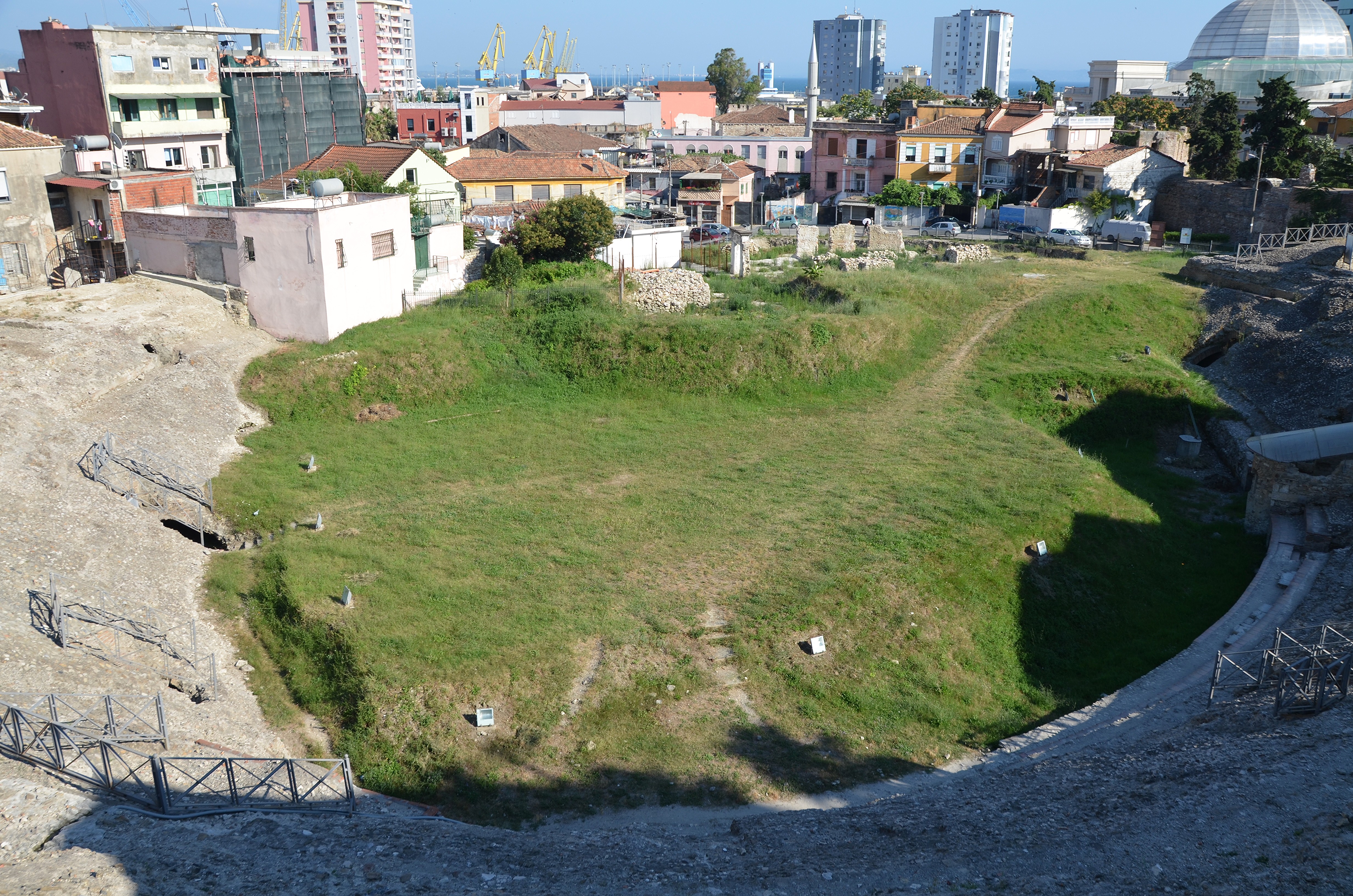
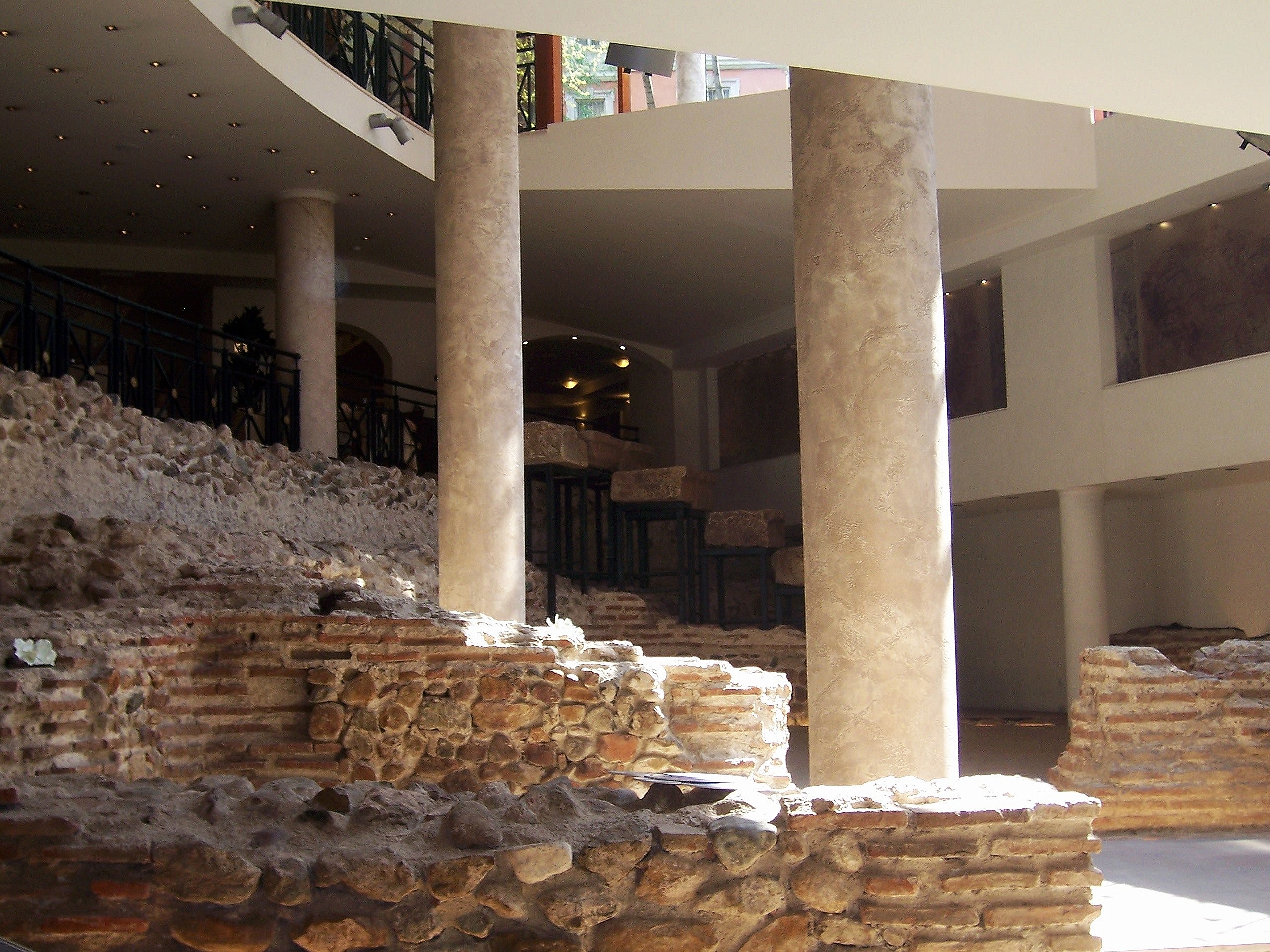
Built in the late 3rd or early 4th century AD over the remains of an earlier Roman theatre, the amphitheatre formed part of the monumental centre of Serdica. Its elliptical structure was discovered beneath modern buildings in central Sofia during excavations beginning in 2004. Portions of the arena walls and seating foundations survive, together with archaeological evidence of gladiatorial spectacles.
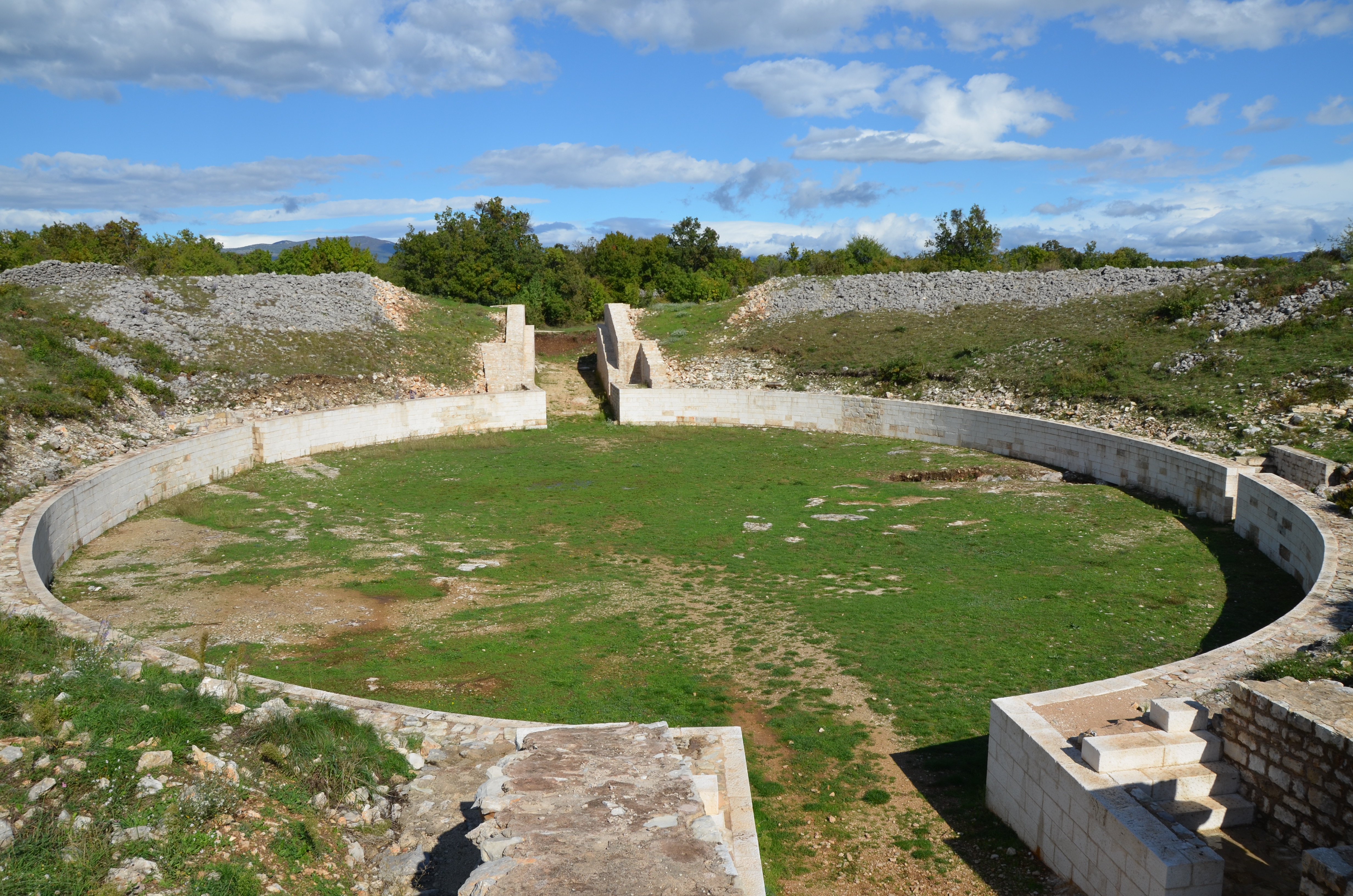
Situated near the Roman legionary fortress of Burnum, the amphitheatre was constructed during the 1st century AD and subsequently modified. Its elliptical arena was surrounded by seating supported partly by the natural terrain, with substantial masonry entrances providing access to the arena. The monument was closely associated with the military community stationed at Burnum and is among the most important surviving military amphitheatres in Dalmatia.
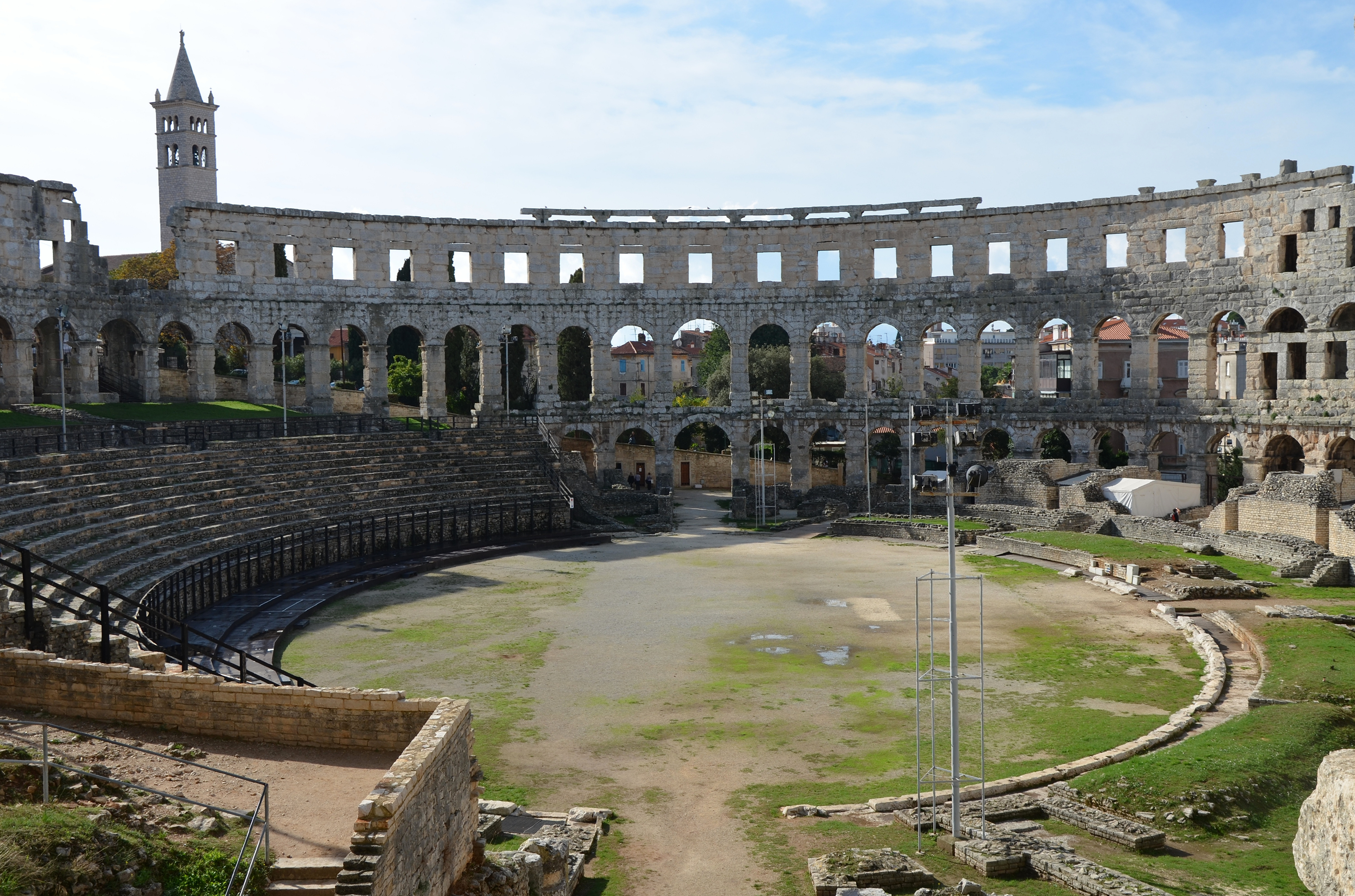
Constructed principally during the 1st century AD, the amphitheatre at Pula is one of the best-preserved Roman arenas in the world. Measuring approximately 132 × 105 m, it could accommodate more than 20,000 spectators. Its exterior wall, rising through three architectural levels on the seaward side, remains almost completely intact. Four rectangular towers incorporated staircases and facilities associated with the seating and awning system.
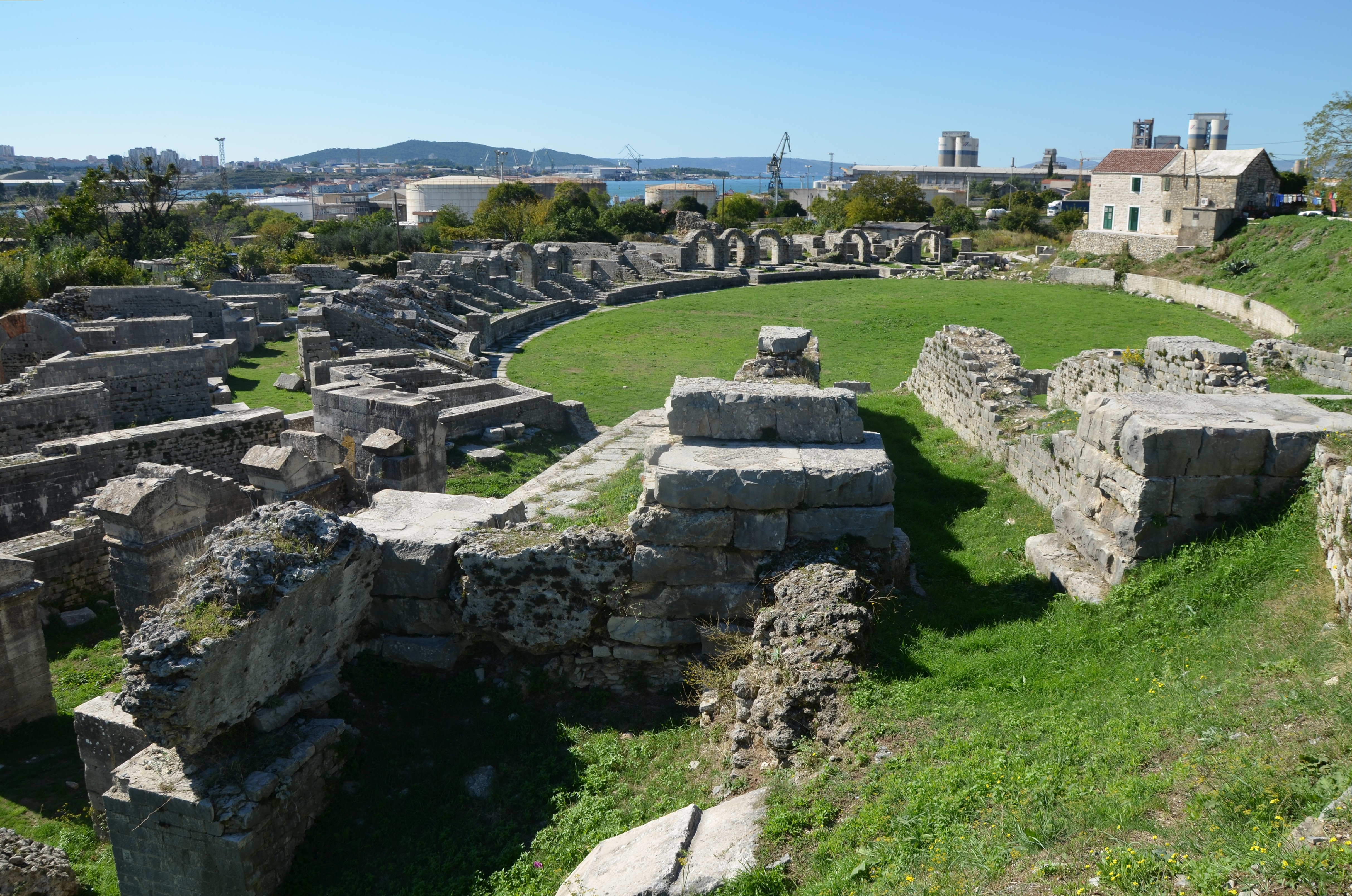
Constructed during the 2nd century AD, the amphitheatre of Salona was incorporated into the city’s western fortifications during a later phase of development. Measuring approximately 125 × 100 m, it could accommodate an estimated 15,000 spectators. Its remains include the elliptical arena, sections of the seating substructures and entrance passages. The building was associated with gladiatorial spectacles and, according to Christian tradition, the martyrdom of Christians during the persecutions of the early 4th century AD.
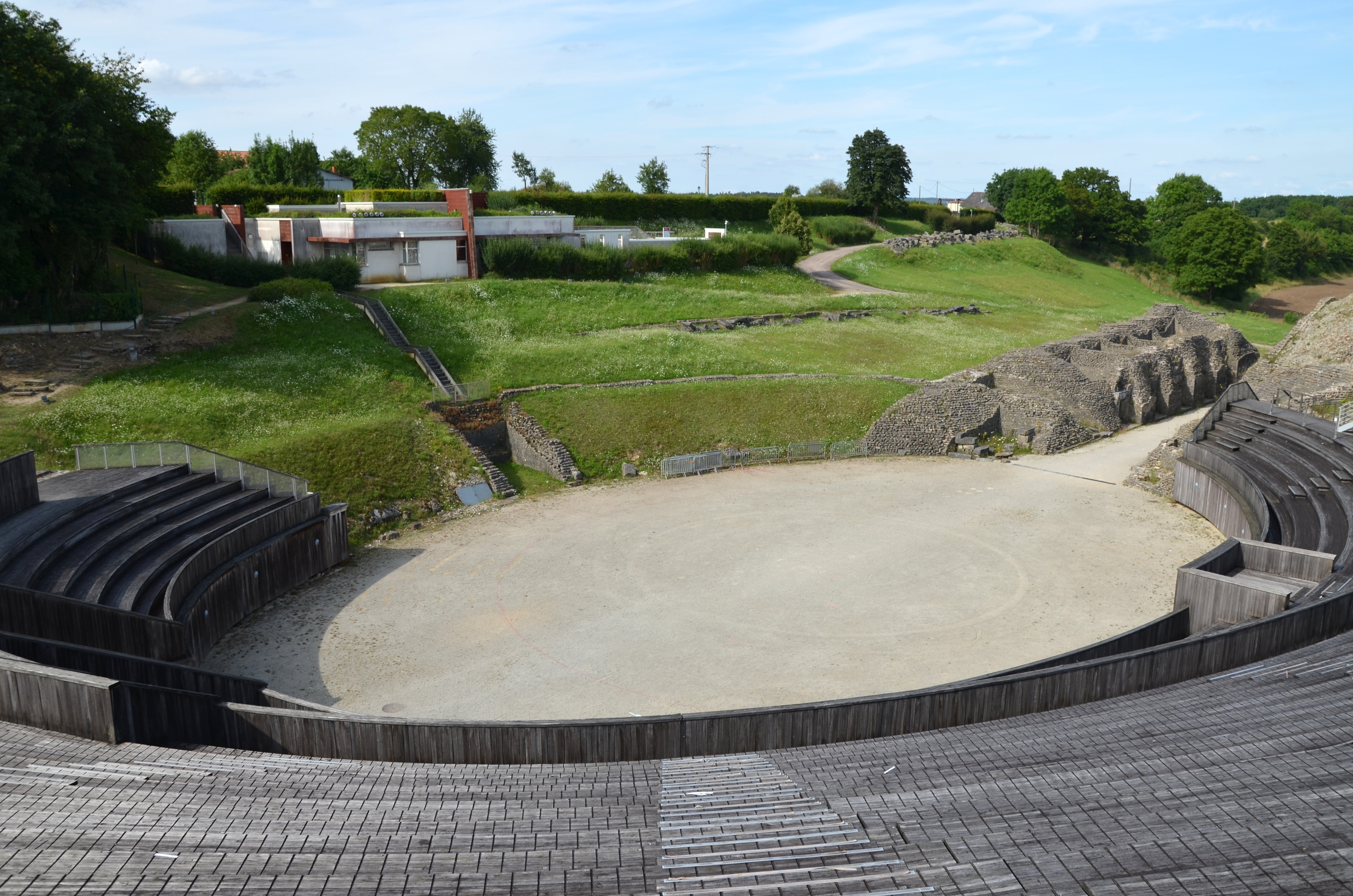
Constructed between approximately AD 80 and 140, the amphitheatre at Grand was built against a natural hillside near an important Gallo-Roman sanctuary. Combining features of a theatre and an amphitheatre, its broad arena and surrounding seating accommodated an estimated 16,000–17,000 spectators for various forms of public entertainment. Its substantial masonry remains and partially reconstructed seating illustrate the distinctive architectural development of entertainment buildings in northeastern Gaul.
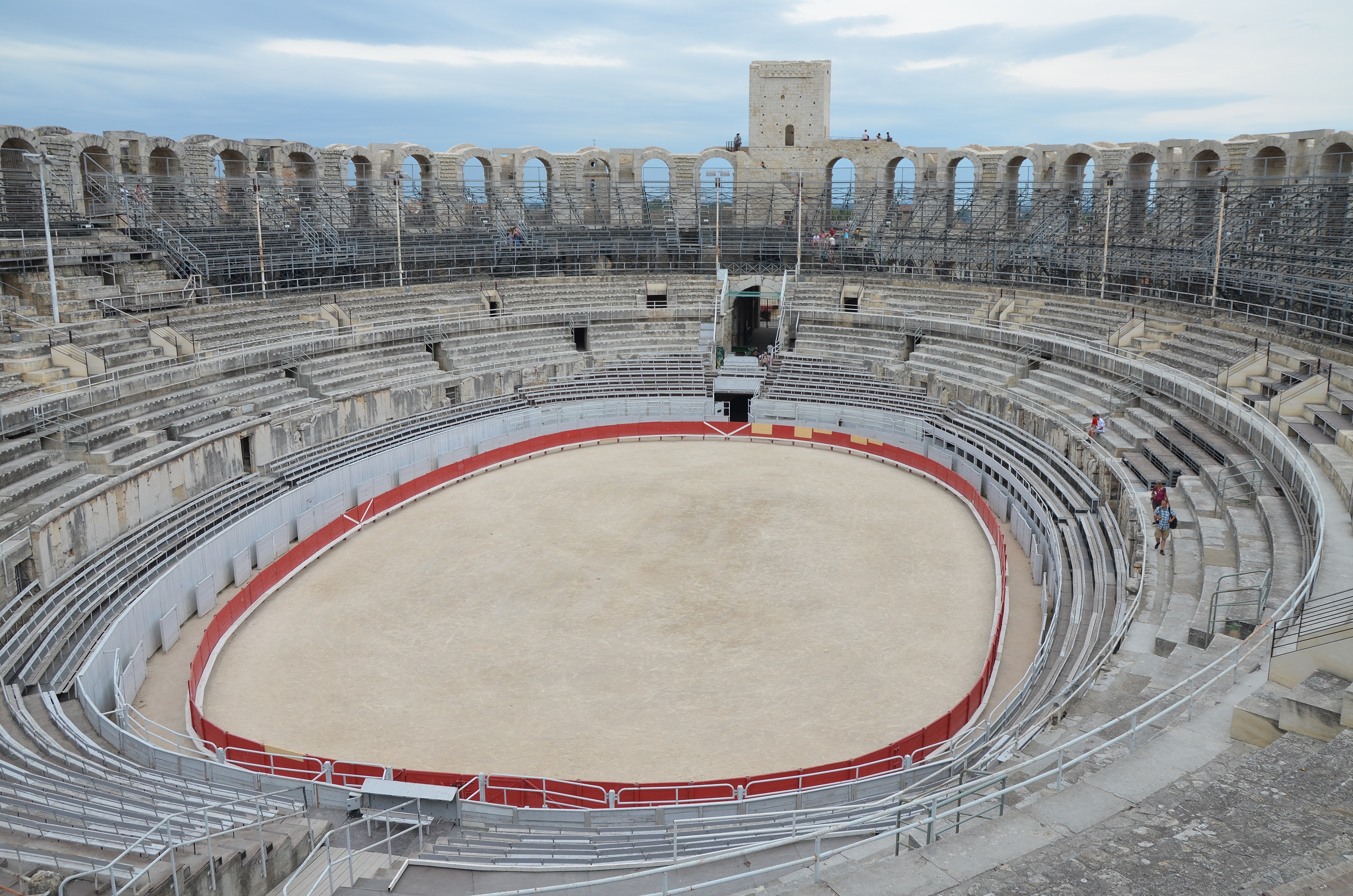
Built around AD 90, the amphitheatre of Arles measured approximately 136 × 107 m and could accommodate some 20,000–25,000 spectators. Its two-storey arcaded exterior originally featured 60 arches on each level, supporting the seating and circulation galleries. During the Middle Ages, the structure was transformed into a fortified settlement, with houses and defensive towers constructed within the arena.
Baeterrae Roman Amphitheatre (Béziers) (Google Maps)
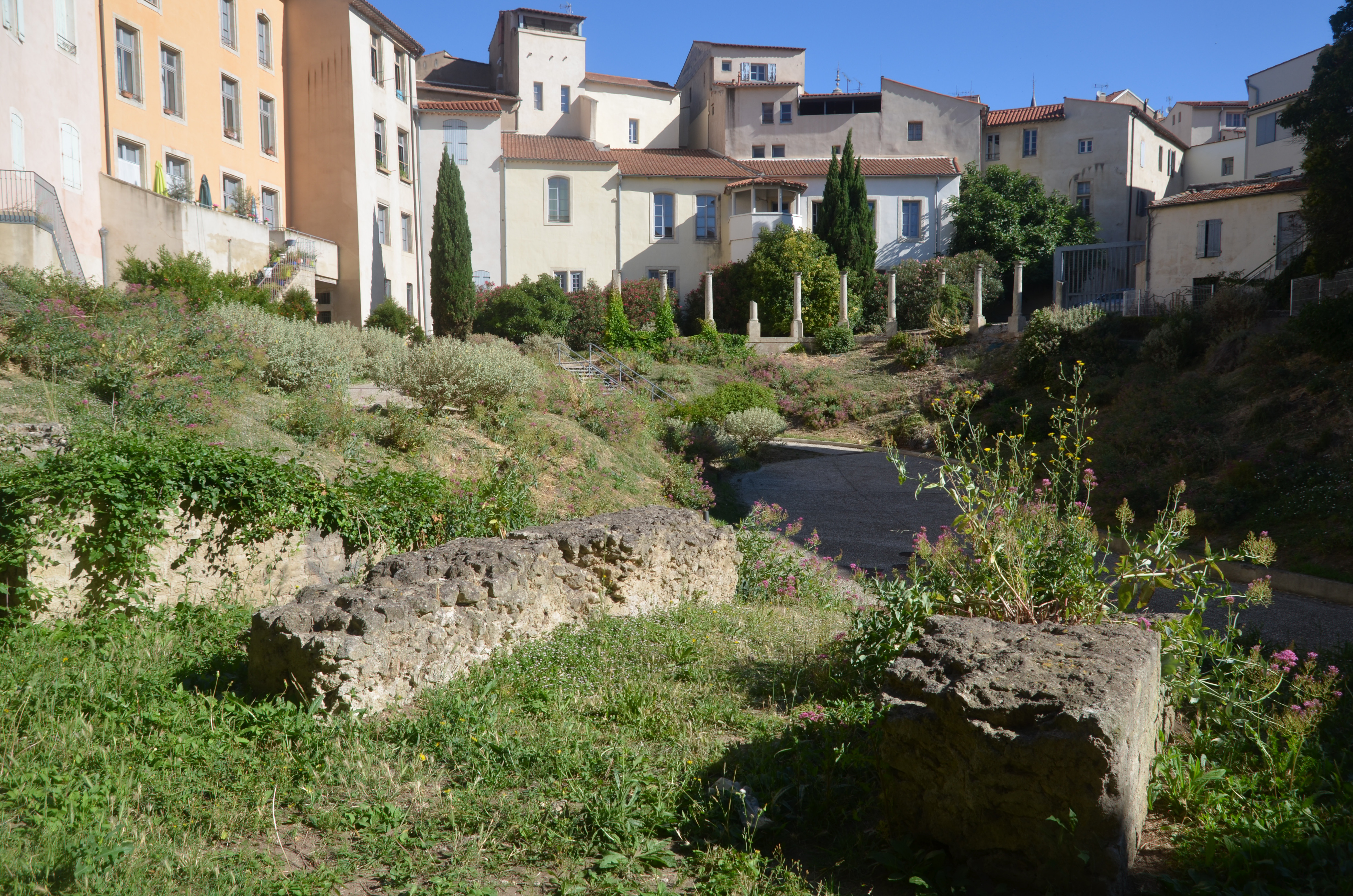
Constructed during the Roman imperial period, probably in the 1st century AD, the amphitheatre of Baeterrae occupied a hillside outside the ancient town centre. Much of its structure was dismantled or incorporated into later buildings, but the elliptical outline of the monument remains discernible in the urban topography. Surviving masonry and archaeological investigations have helped establish its original arrangement.
Burdigala Roman Amphitheatre (Bordeaux, France) (Google Maps)
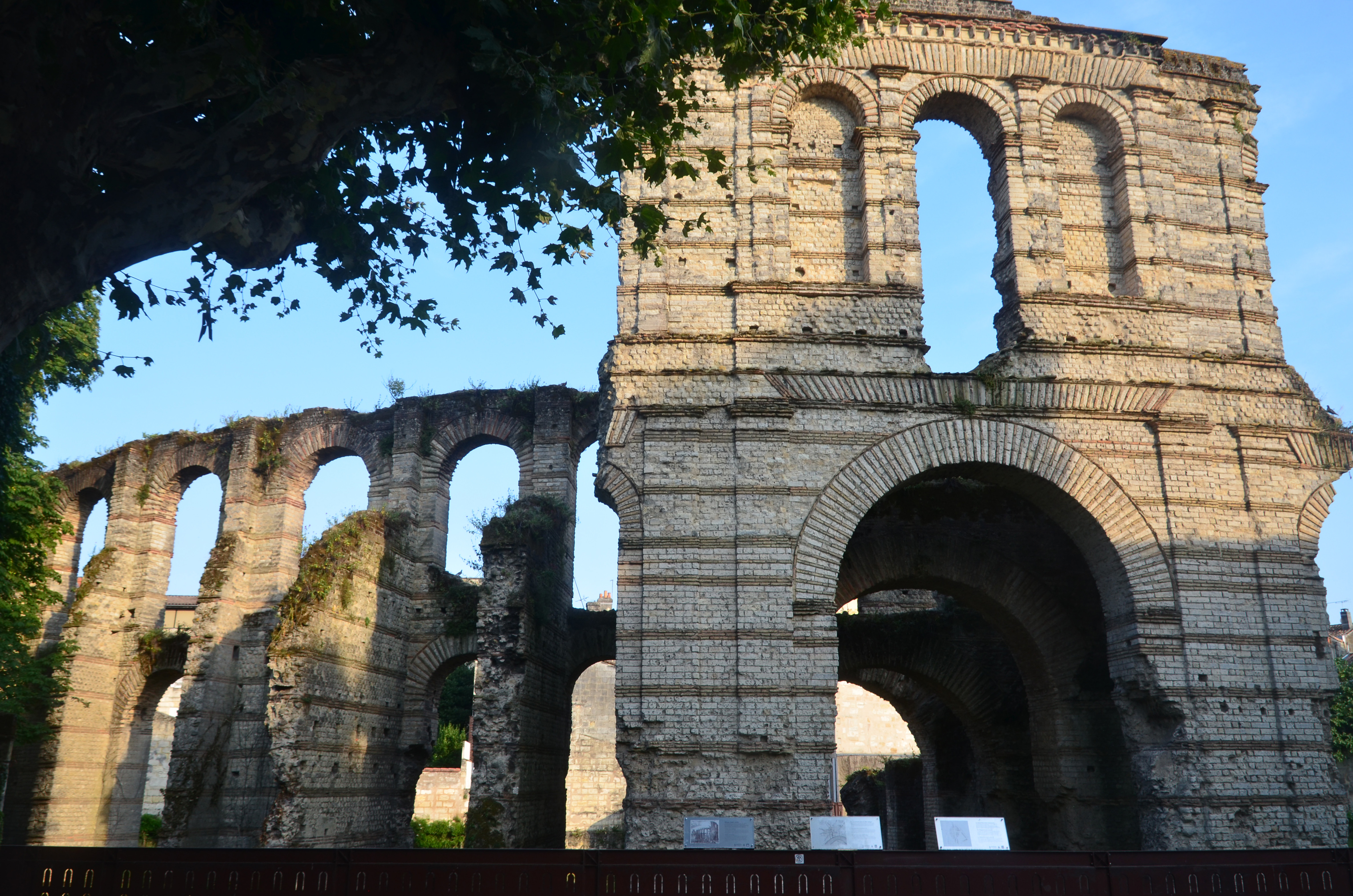
Known today as the Palais Gallien, the amphitheatre was constructed during the Roman imperial period, probably in the 2nd or 3rd century AD. Measuring approximately 132 × 111 m, it was one of the largest public entertainment buildings in Roman Aquitania. Its surviving remains include a monumental entrance with superimposed arches and sections of the radial walls that supported the seating.
Cemenelum Roman Amphitheatre (Arènes de Cimiez, Nice) (Google Maps)
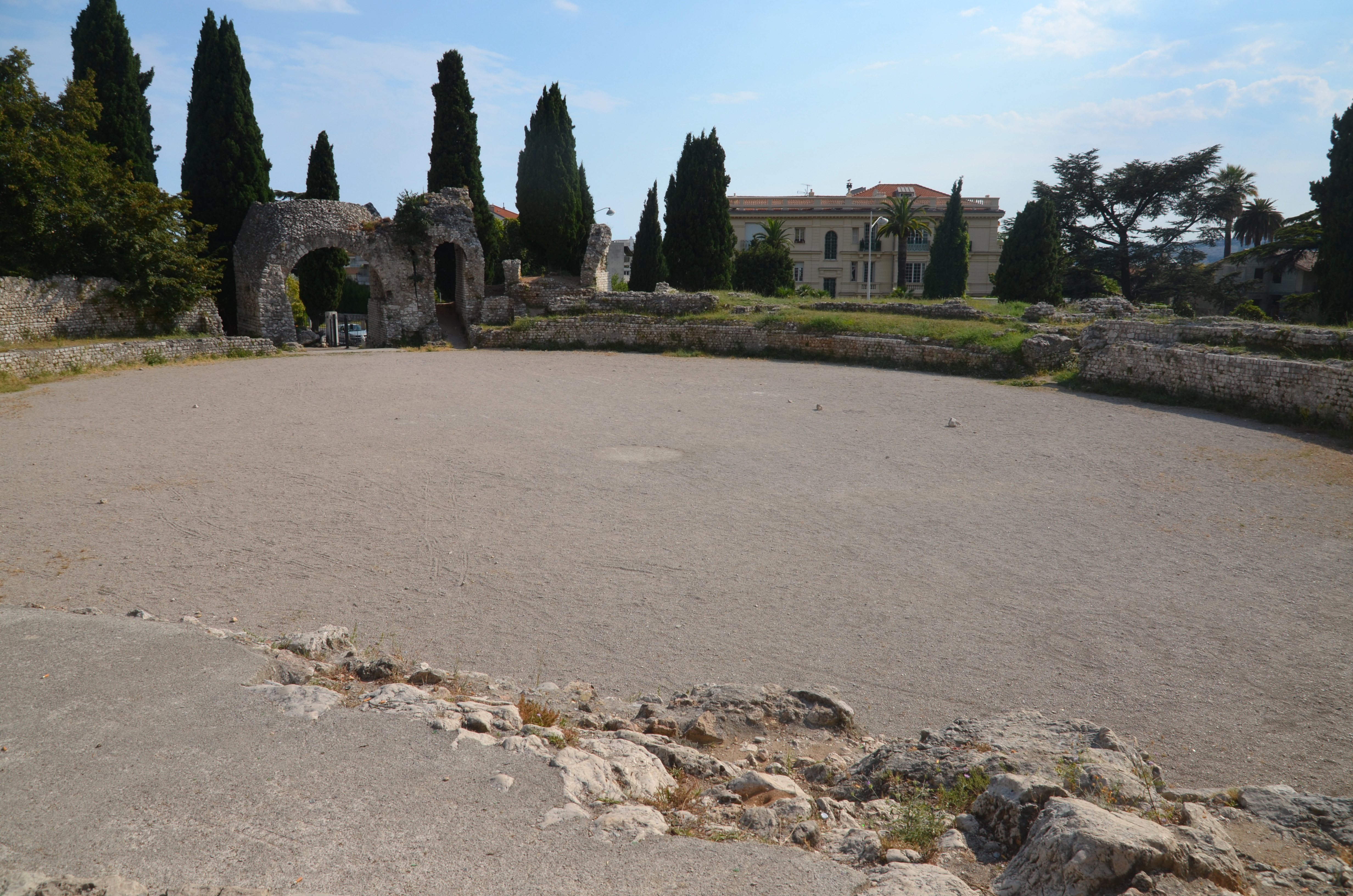
Originally constructed between AD 70 and 80, during the Flavian period, the amphitheatre of Cemenelum served the capital of the province of Alpes Maritimae. The building was subsequently enlarged, probably during the 3rd century AD, to accommodate a growing audience. Measuring approximately 65 × 54 m in its final form, it could accommodate approximately 4,000–4,500 spectators, making it relatively small compared with the great provincial amphitheatres. Its surviving remains include the oval arena, masonry seating supports and entrance passages.
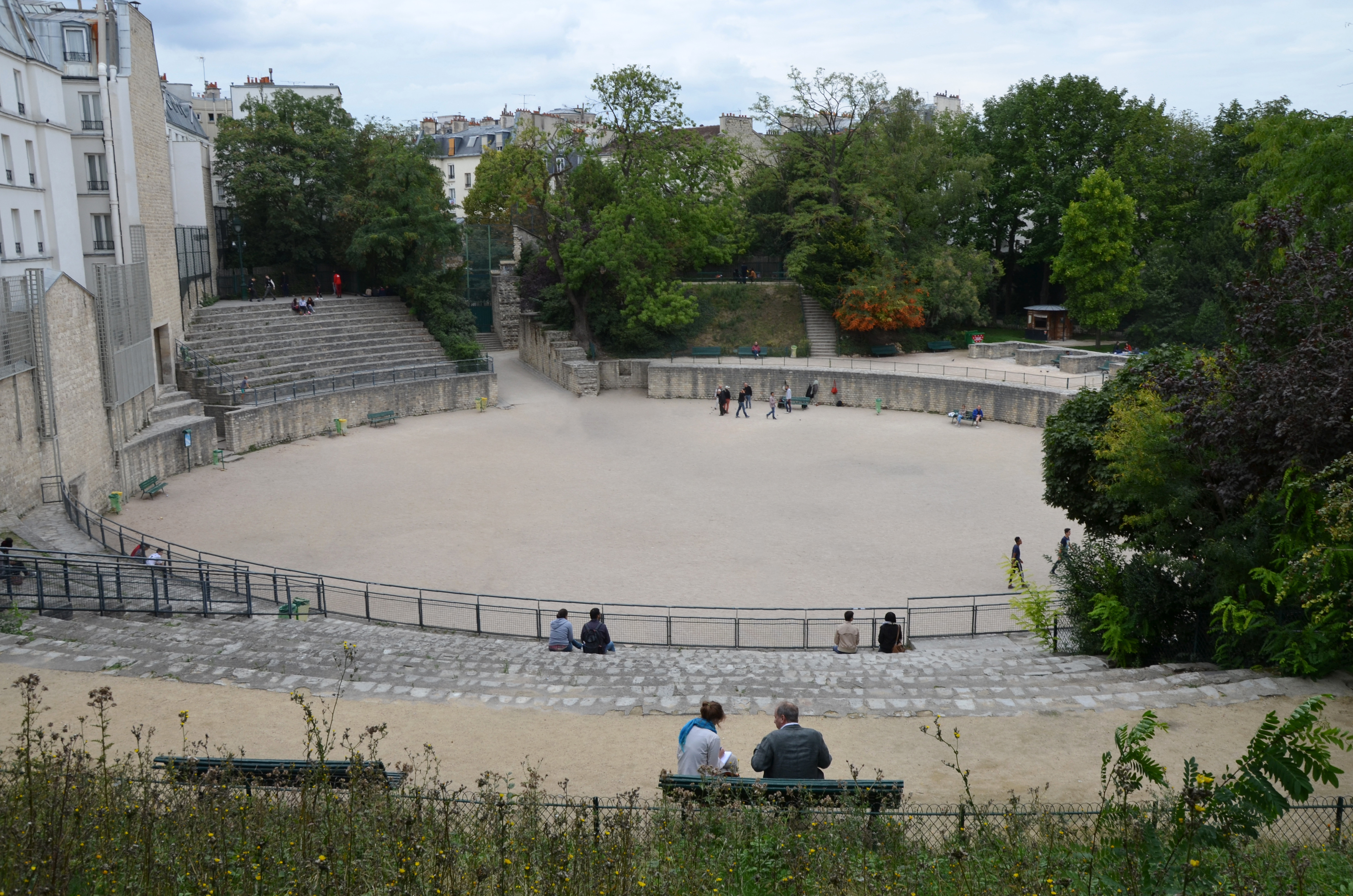
Lutetia Gallo-Roman Amphitheatre (Arènes de Lutèce, Paris) (Google Maps)
Constructed during the late 1st century AD, the Arènes de Lutèce combined the functions of a theatre and an amphitheatre. Its semicircular seating faced an arena and a theatrical stage, allowing the building to accommodate as many as 17,000 spectators for dramatic performances, gladiatorial combats and animal hunts. The monument was rediscovered in the 19th century and partially restored.
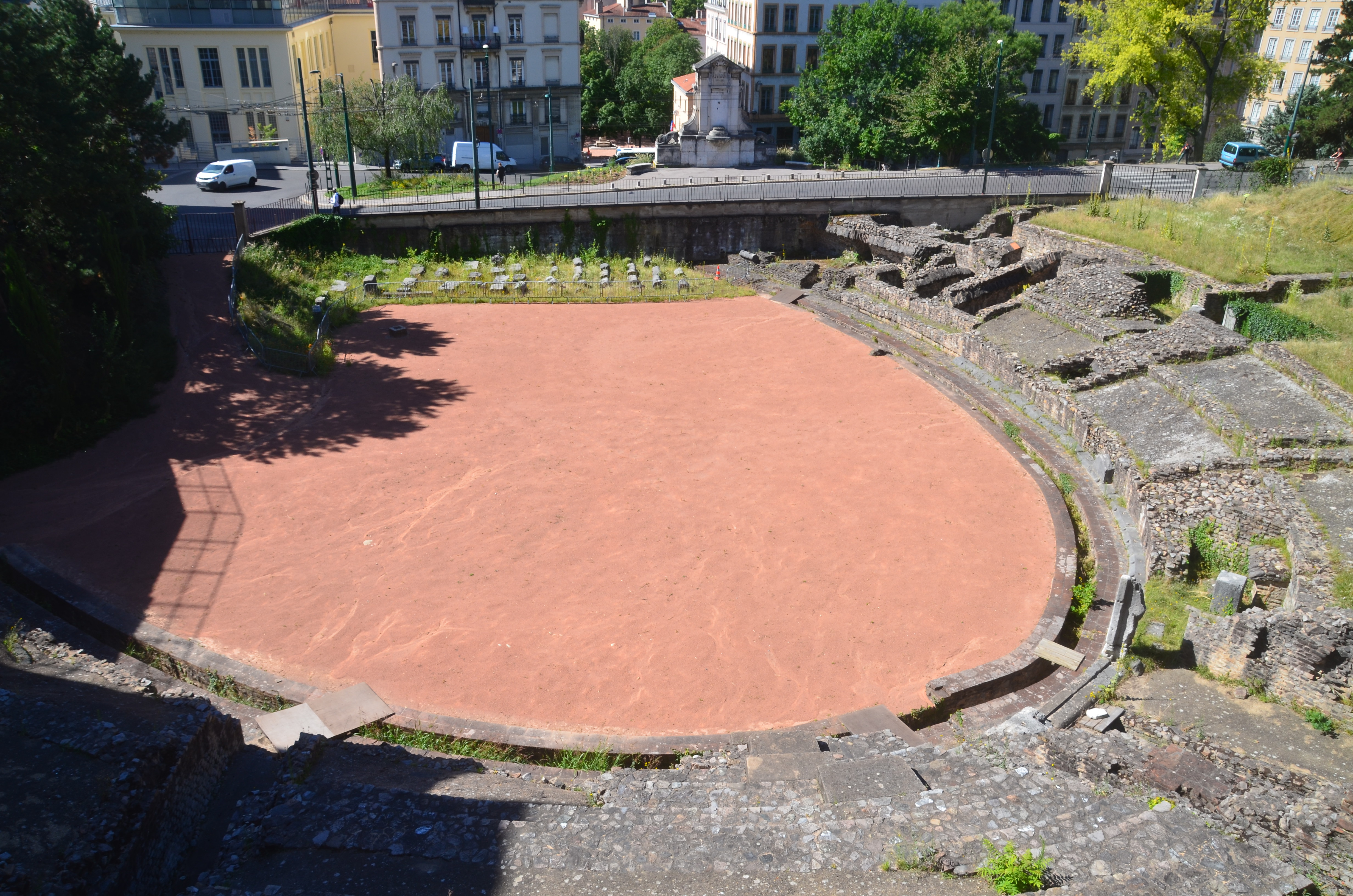
Lugdunum Amphitheatre of the Three Gauls (Lyon) (Google Maps)
Originally constructed in 19 BC during the reign of Augustus, the amphitheatre formed part of the federal sanctuary of the Three Gauls, where representatives of the Gallic communities assembled for the imperial cult. Enlarged in the 2nd century AD during the reign of Hadrian, its estimated capacity rose to around 26,000 spectators. It is traditionally associated with the persecution of the Christians of Lyon in AD 177.
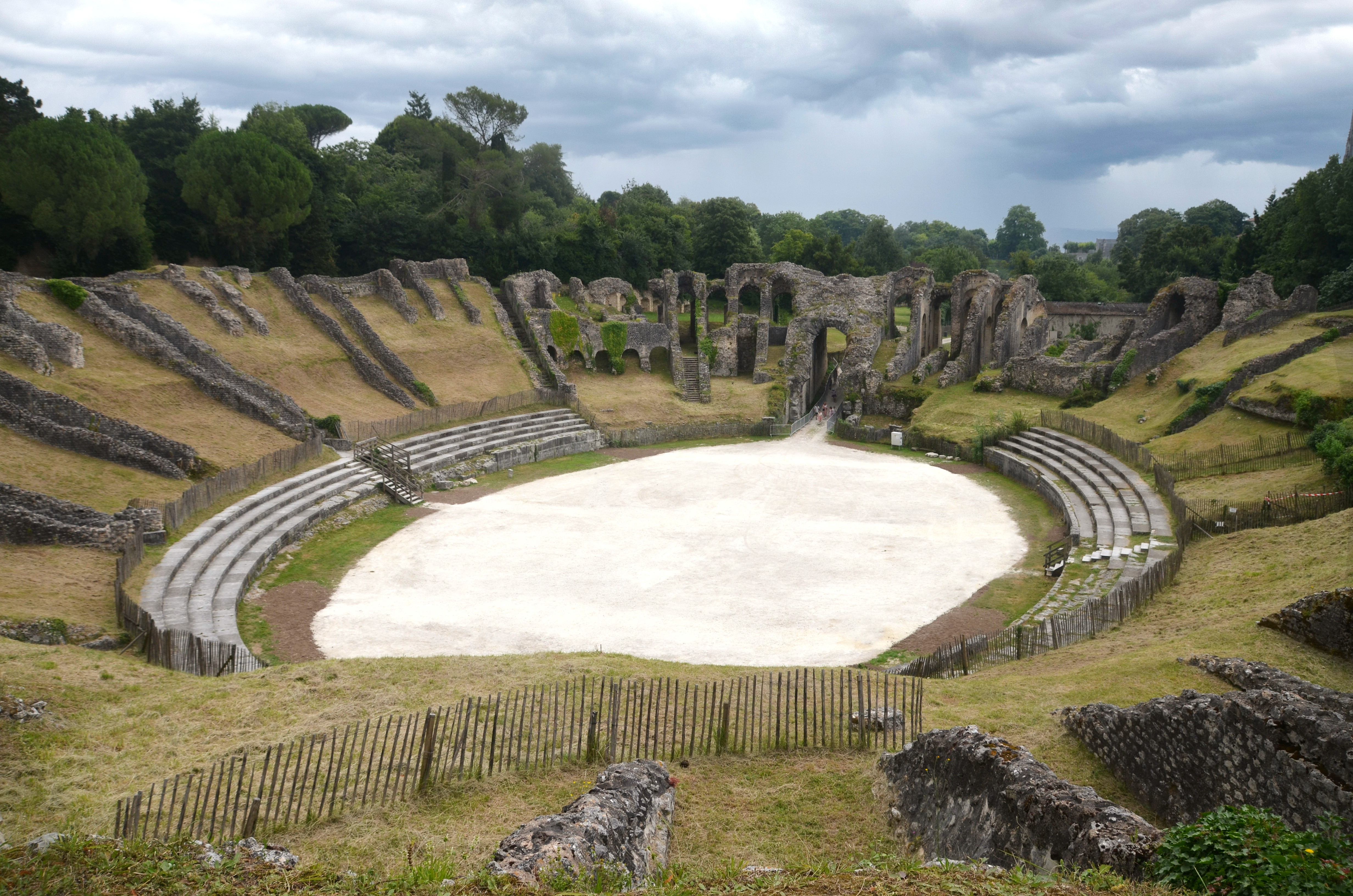
Mediolanum Santonum Roman Amphitheatre (Les Arènes de Saintes) (Google Maps)
Constructed during the reign of Claudius in the mid-1st century AD, the amphitheatre at Saintes was built into a natural depression between two hillsides. Measuring approximately 126 × 102 m, it could accommodate an estimated 15,000 spectators. Much of the seating has disappeared, but the arena, principal entrances and substantial sections of the supporting masonry remain visible.
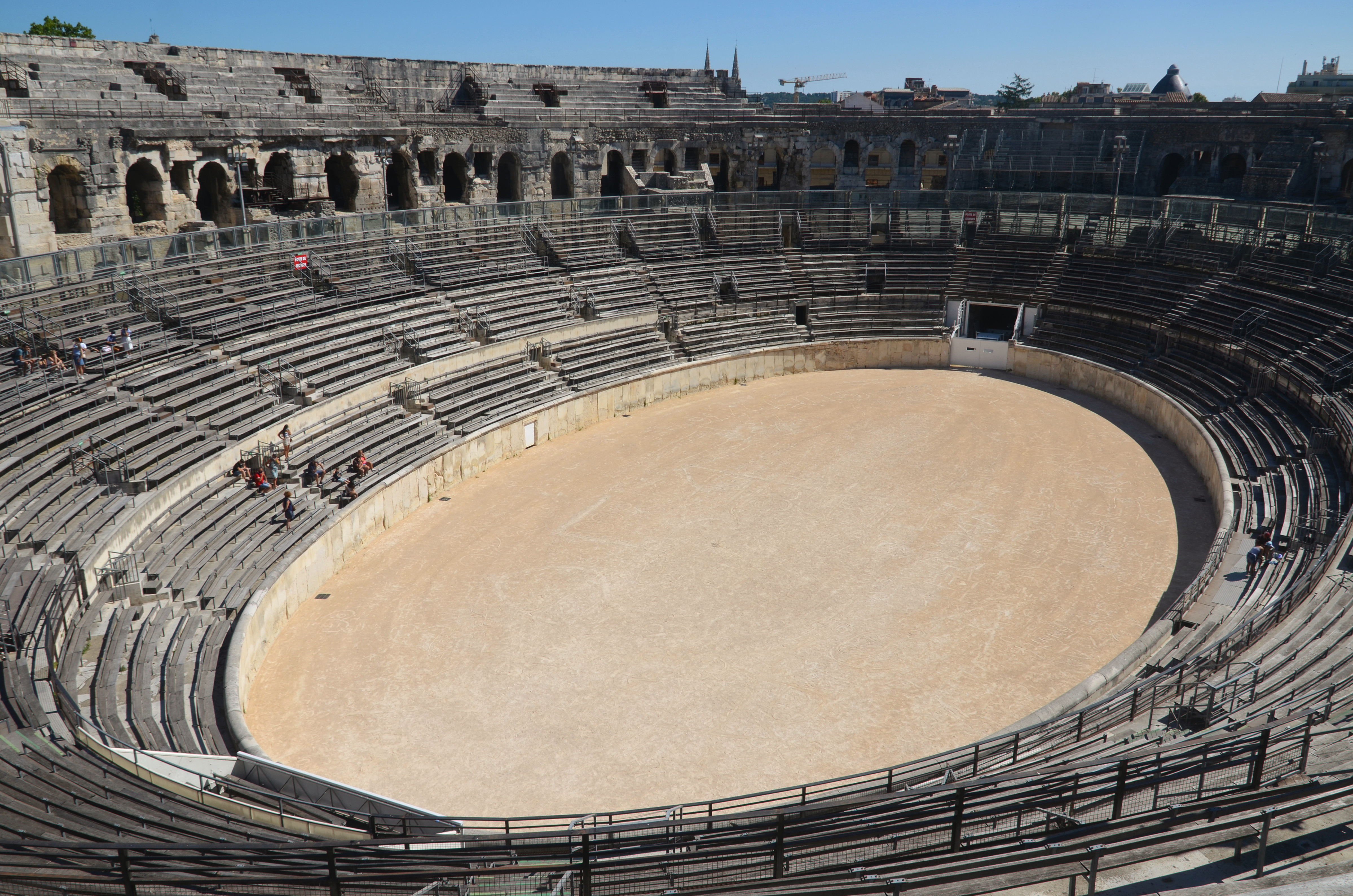
Nemausus Roman Amphitheatre (Nîmes) ()
Built towards the end of the 1st century AD, the amphitheatre at Nîmes is among the best-preserved Roman arenas. Measuring approximately 133 × 101 m, it could accommodate more than 20,000 spectators. Its exterior consists of two levels of arcades crowned by an attic, while a complex system of corridors and staircases allowed spectators to reach their seats efficiently.
Vesunna Roman Amphitheatre (Périgueux) (Google Maps)
Constructed during the 1st century AD, the amphitheatre at Vesunna was one of the principal monumental buildings of the Roman city. Measuring approximately 140 × 116 m, it could accommodate many thousands of spectators. Much of its masonry was reused in the medieval period, and its surviving remains now form part of a public garden, where sections of the radial walls and supporting structures can still be seen.
GERMANY
Augusta Treverorum Roman Amphitheatre (Trier) (Google Maps)
Built around AD 100 against the slopes of the Petrisberg, the amphitheatre of Augusta Treverorum could accommodate approximately 18,000 spectators. Its elliptical arena was surrounded by seating partly supported by the hillside, while a subterranean chamber beneath the arena provided space for equipment and stage machinery. In Late Antiquity, the amphitheatre was incorporated into the city’s defensive walls.
Augusta Treverorum Roman Amphitheatre (Trier) (Google Maps)
Constructed during the 2nd century AD, the amphitheatre formed part of Colonia Ulpia Traiana, the Roman city established under Trajan near the Rhine frontier. The structure hosted gladiatorial combats and public spectacles. Its surviving foundations and reconstructed elements can be seen within the LVR Archaeological Park Xanten, where the ancient urban layout has been partially recreated.
Zugmantel Roman Amphitheatre (Hühnerstraße) (Google Maps)
Located north of the Roman auxiliary fort of Zugmantel on the Upper Germanic Limes, this probable amphitheatre survives as a roughly circular earthwork measuring approximately 50 m in diameter. Its enclosing bank rises to around 1.5 m and appears to have entrances on opposite sides. The identification as an amphitheatre remains tentative, but the structure may have served soldiers stationed along the Roman frontier.
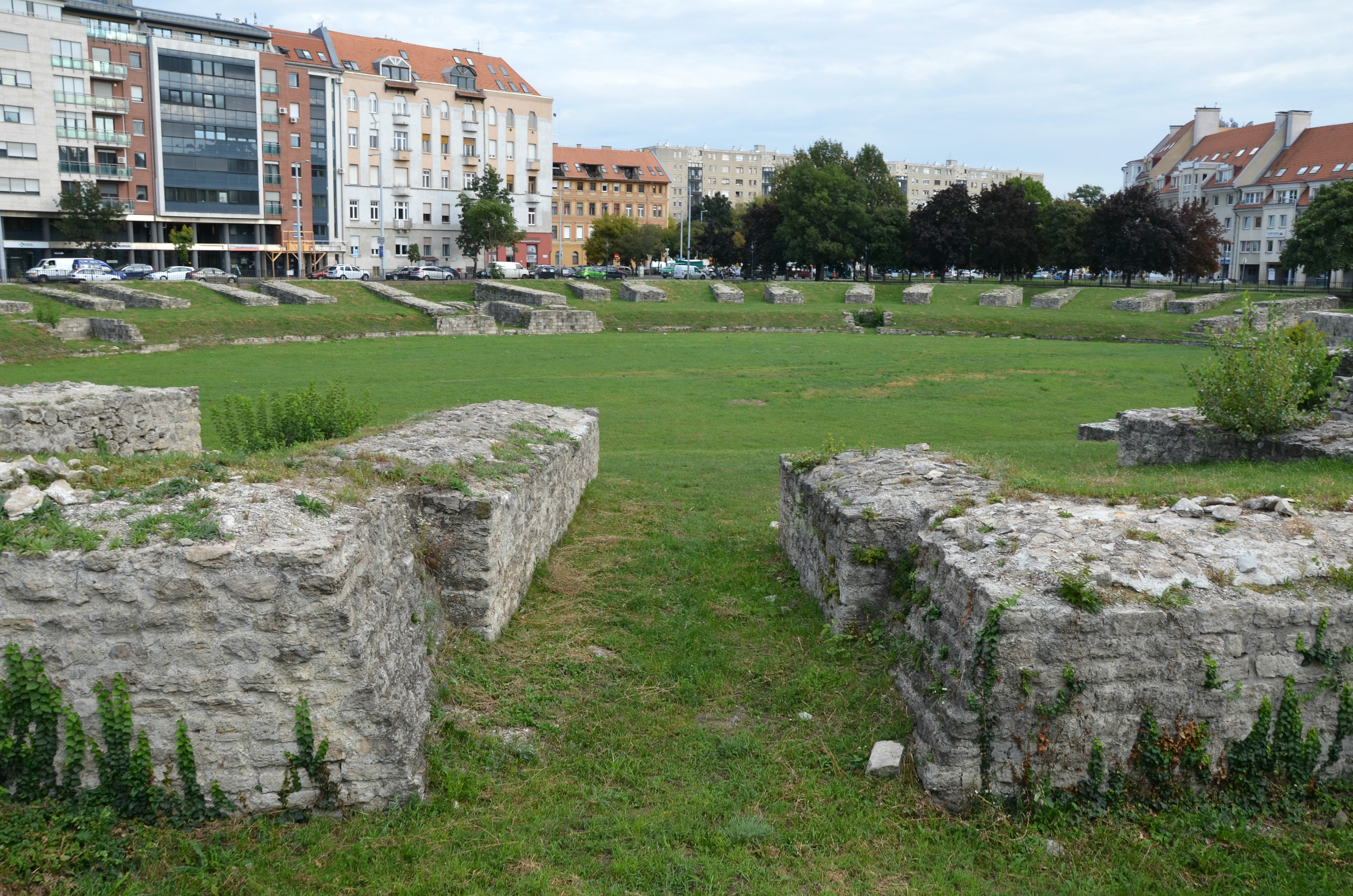
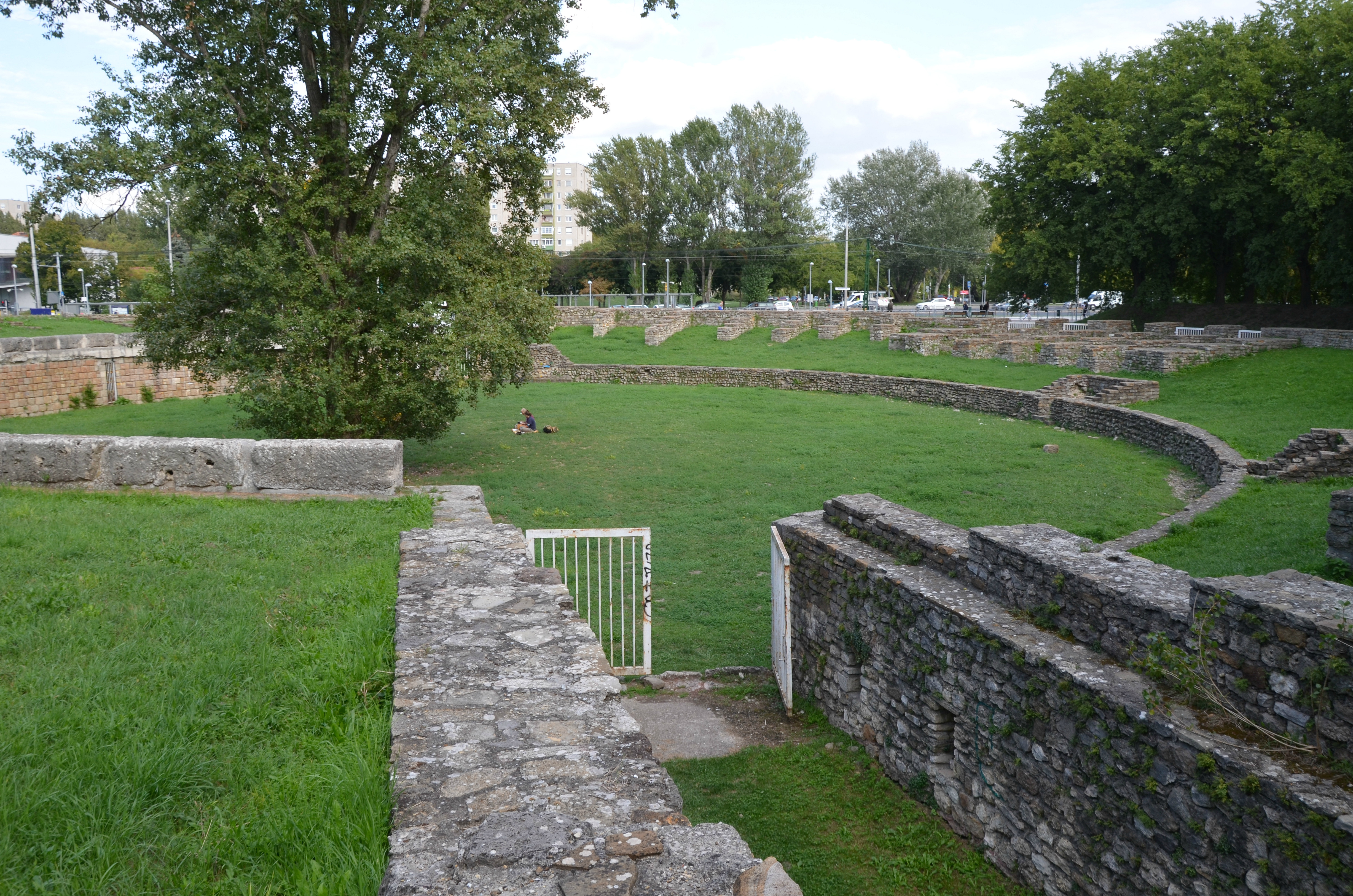
Constructed in the 2nd century AD and later modified, the civilian amphitheatre of Aquincum stood outside the walls of the Roman civilian town. Smaller than the military amphitheatre, it could accommodate an estimated 8,000–9,000 spectators from the provincial settlement and surrounding communities. The remains preserve the elliptical outline of the arena, its enclosing wall and sections of the seating foundations.
Constructed around AD 145 during the reign of Antoninus Pius, the military amphitheatre of Aquincum served the soldiers stationed at the legionary fortress and the surrounding military settlement. Measuring approximately 131 × 108 m, it was the larger of the city’s two amphitheatres. Its surviving remains include the extensive elliptical arena, entrances and portions of the stone seating structures.
ITALY
Ariminium Roman Amphitheatre (Rimini) (Google Maps)
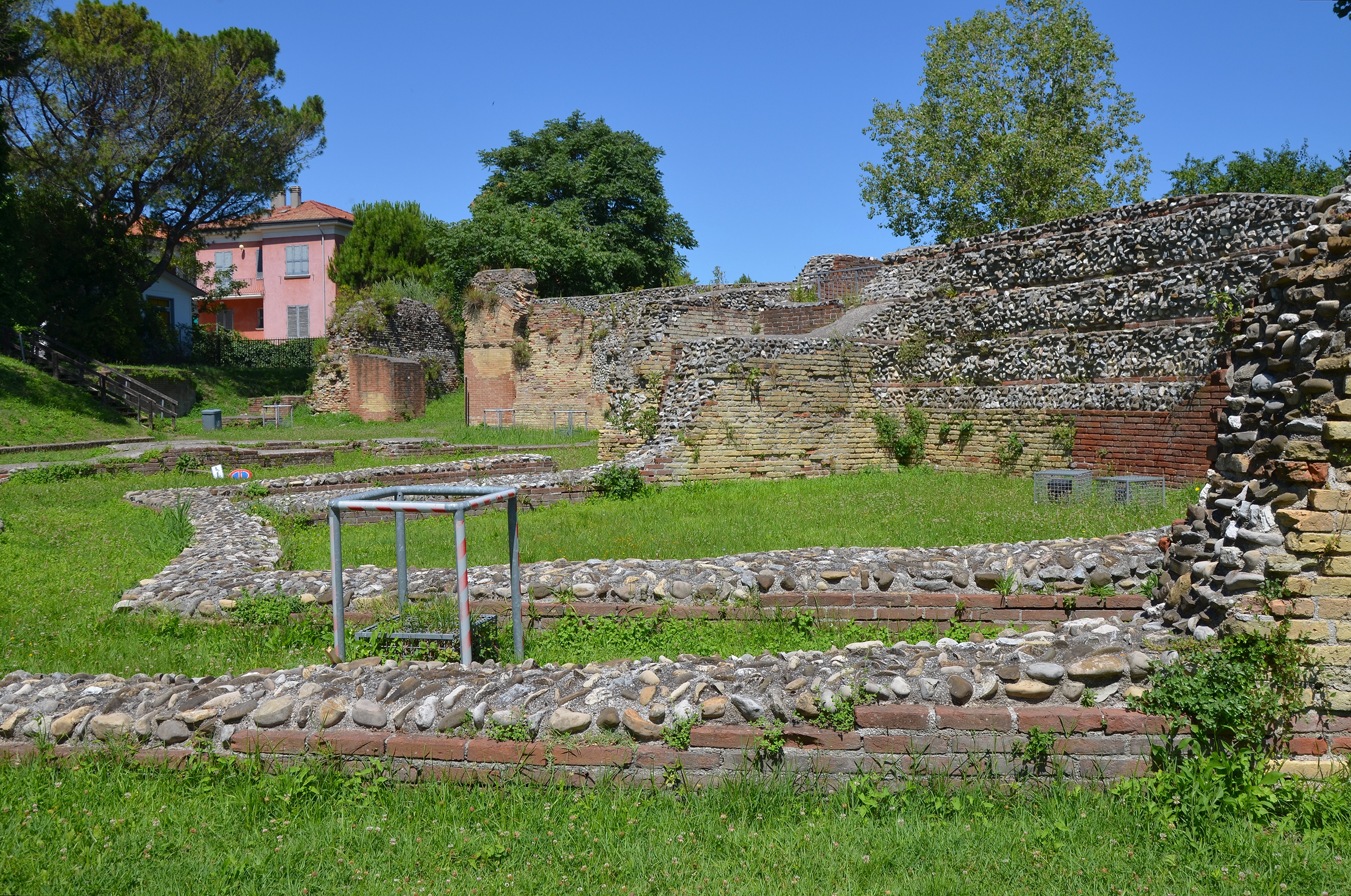
Built during the 2nd century AD, probably under Hadrian, the amphitheatre of Ariminum measured approximately 118 × 88 m. Located near the Adriatic coast, it could accommodate at least 12,000 spectators attending gladiatorial spectacles and other entertainment. Sections of the exterior walls, entrances and supporting structures survive, while much of the building was incorporated into the city’s later fortifications and urban development.
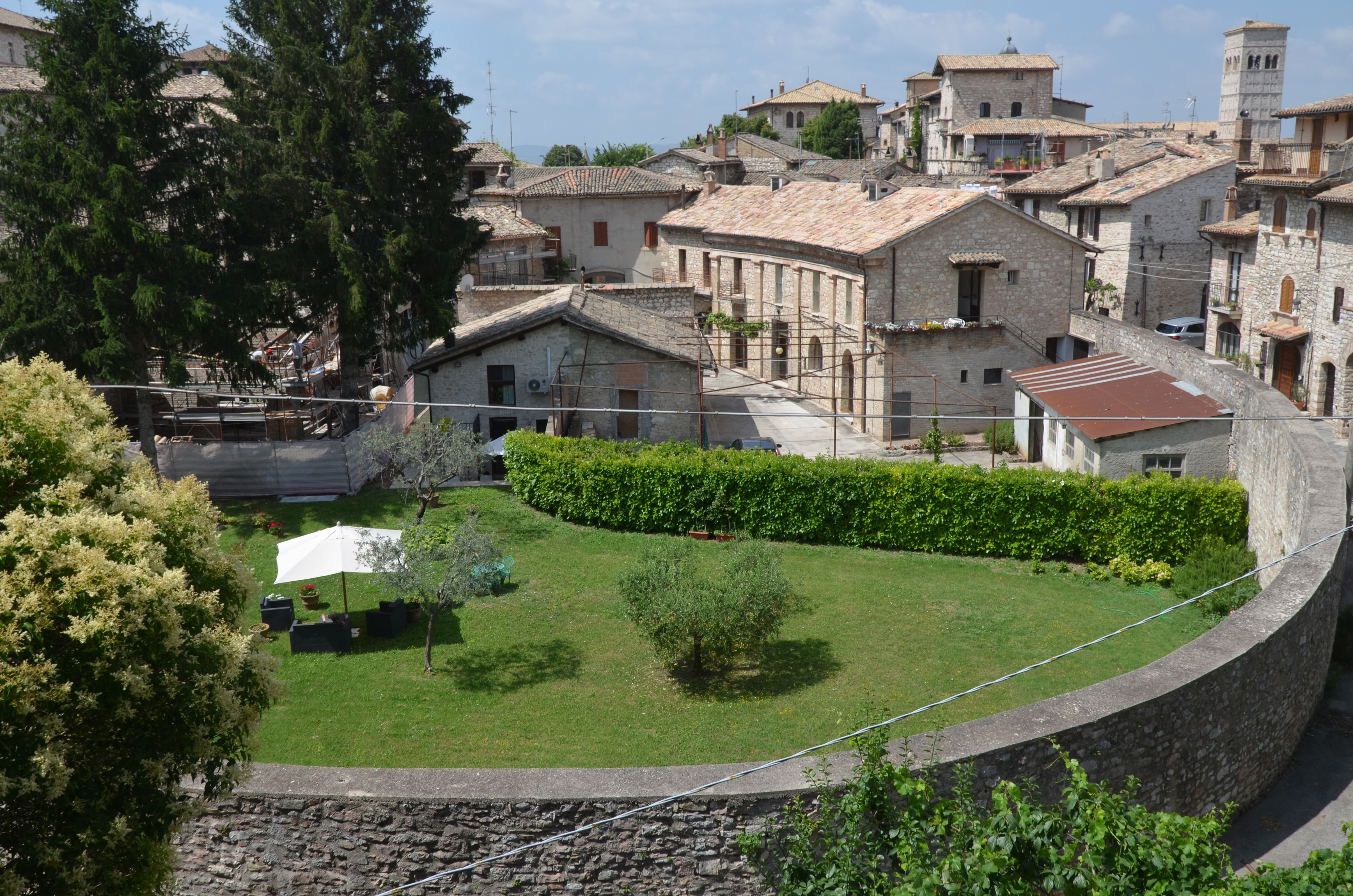
Constructed during the early Roman imperial period, the amphitheatre of Asisium was situated outside the ancient town centre. Although most of the original masonry has disappeared, its elliptical outline survives in the arrangement of medieval houses and streets built over the seating foundations. The site is a striking example of the preservation of an ancient monument through subsequent urban development.
Augusta Praetoria Salassorum Roman Amphitheatre (Aosta) (Google Maps)
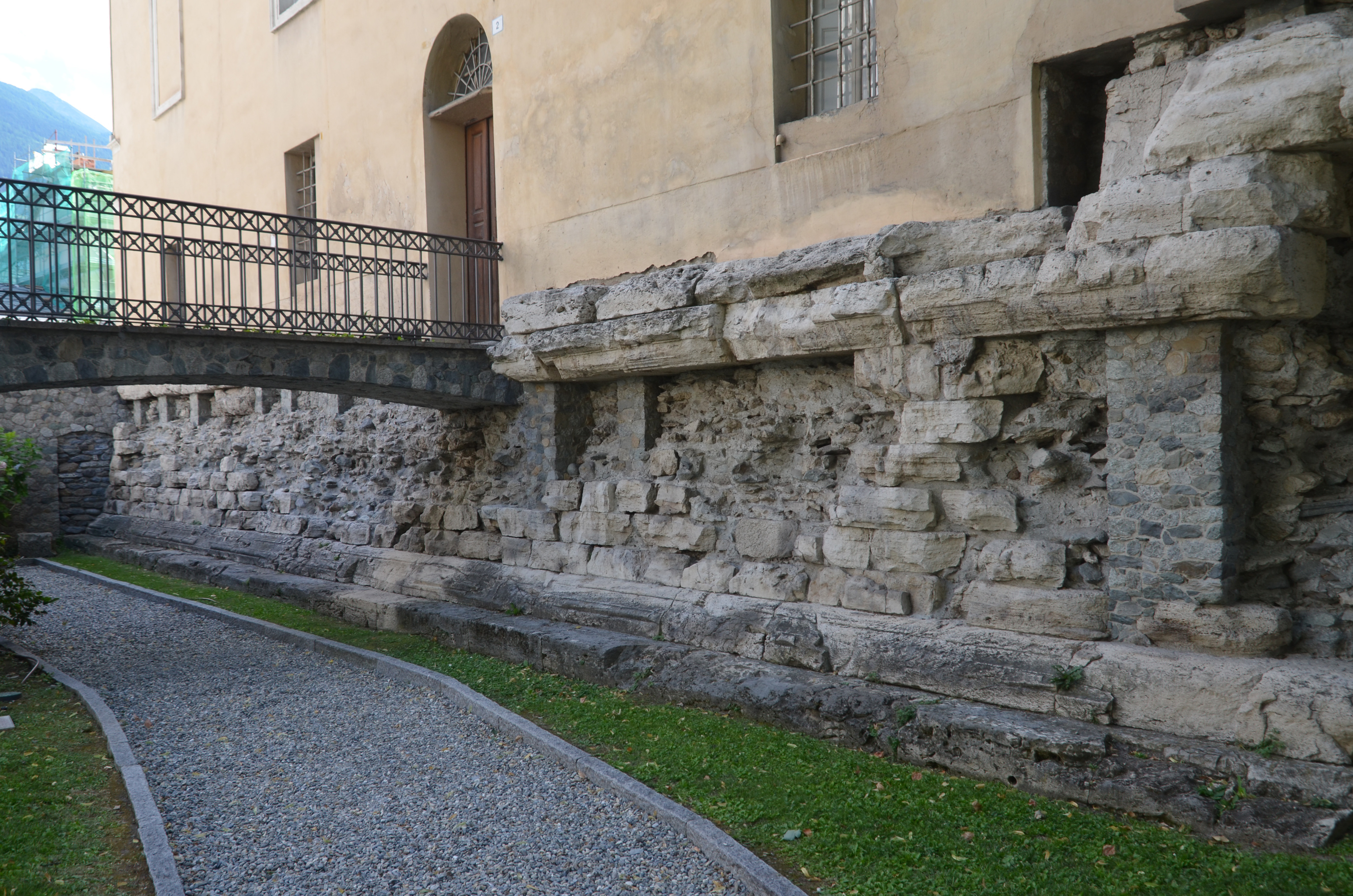
Constructed during the 1st century AD, the amphitheatre of Augusta Praetoria occupied a position within the Roman colony, near its northern fortifications. Its surviving remains, partly incorporated into the medieval convent of Santa Caterina, include sections of the external arcades and supporting walls. The monument reflects the importance of public entertainment in this strategically situated Alpine settlement.
Capua Roman Amphitheatre (Santa Maria Capua Vetere) (Google Maps)
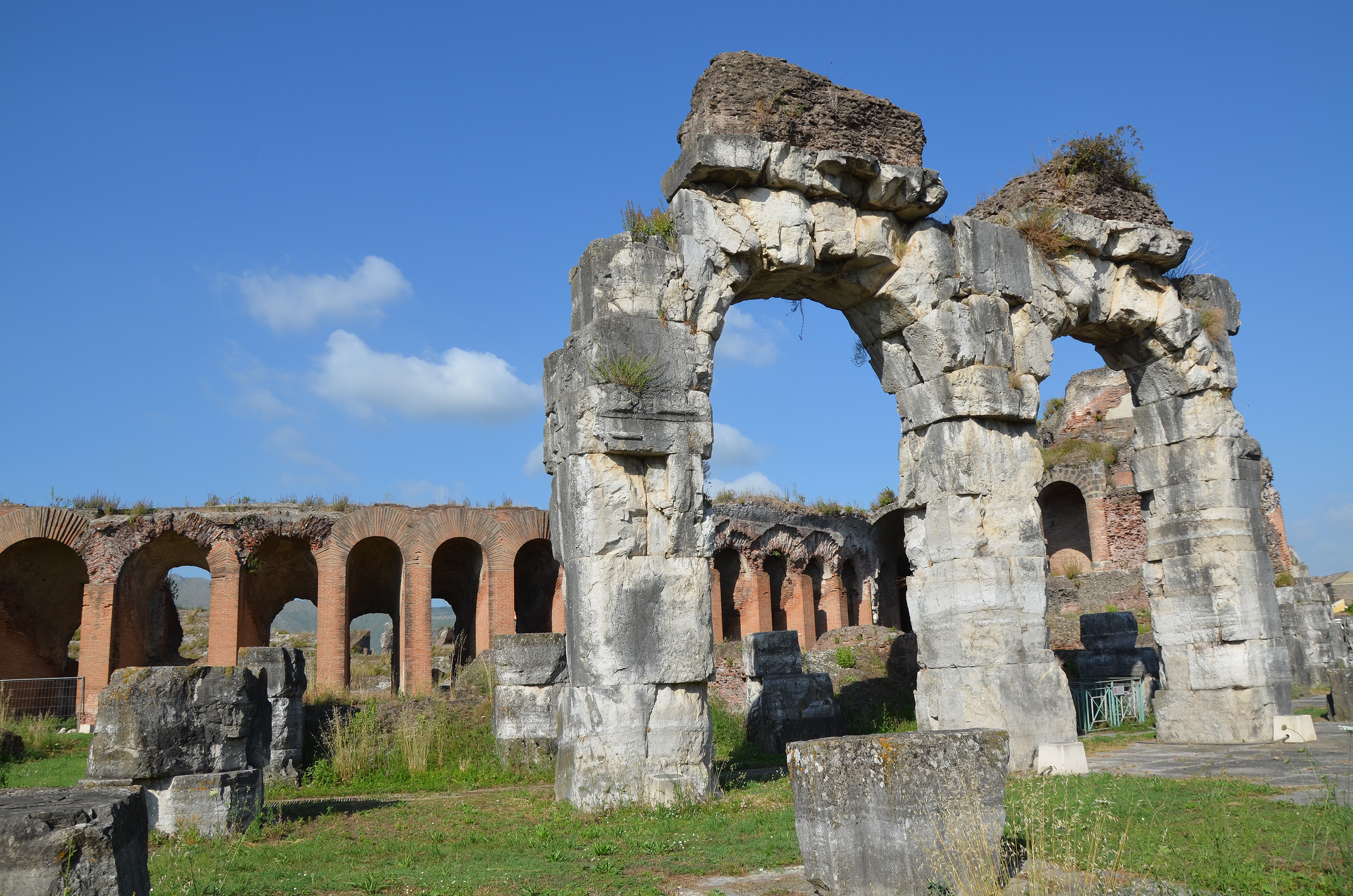
Constructed during the late 1st and early 2nd centuries AD, the amphitheatre at ancient Capua was one of the largest in the Roman world. Measuring approximately 170 × 140 m, it was second in size only to the Colosseum among the great surviving amphitheatres and could accommodate as many as 60,000 spectators. The remains include monumental entrances, sections of the exterior arcades and an extensive network of underground corridors and chambers beneath the arena.
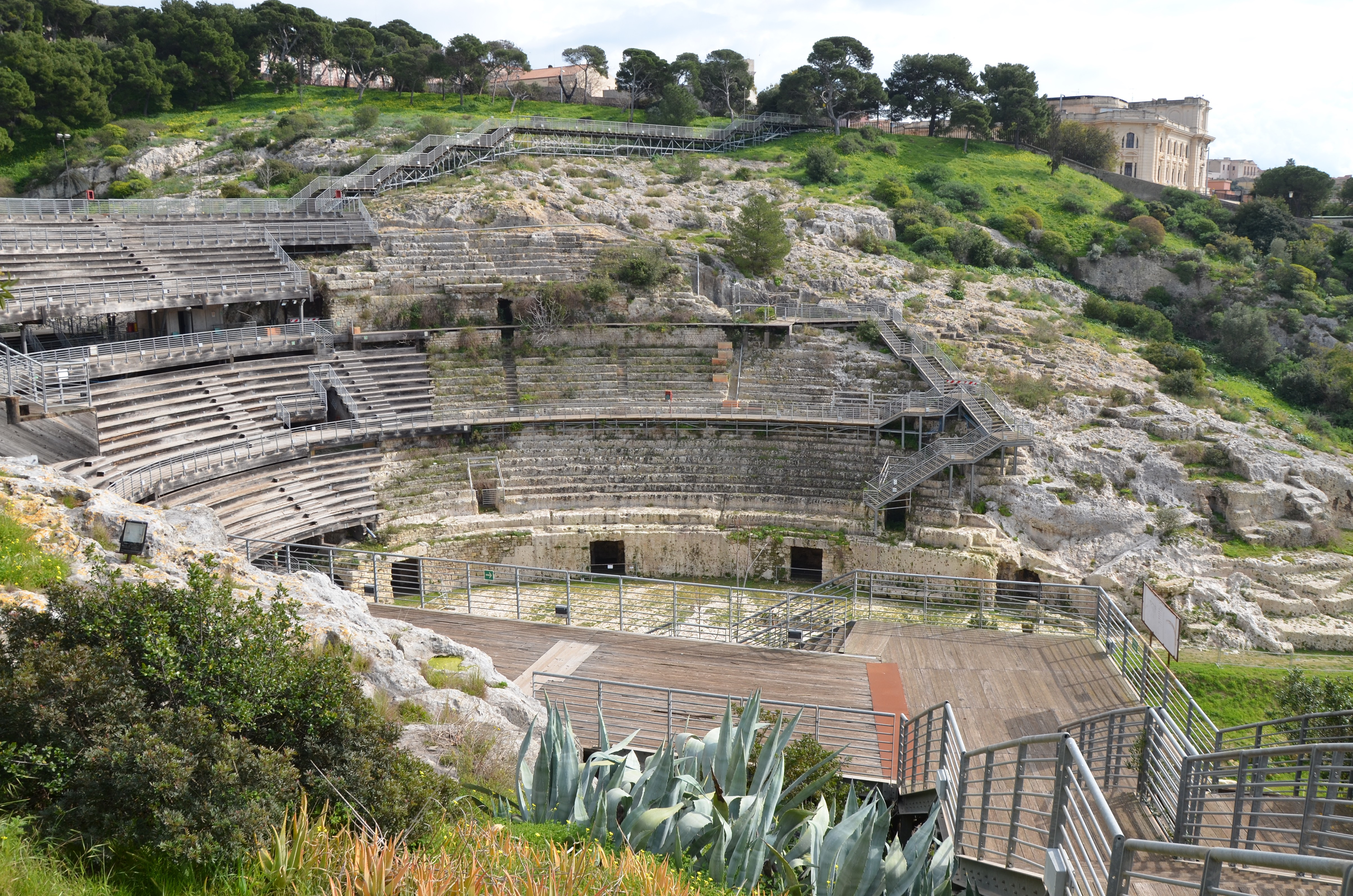
Constructed during the late 1st or early 2nd century AD, the amphitheatre of Caralis was partly excavated into the limestone slopes of the Buoncammino hill. Its elliptical arena was surrounded by seating carved from the natural rock and supplemented by masonry structures. The monument could accommodate several thousand spectators and is one of the most impressive surviving Roman public buildings in Sardinia.
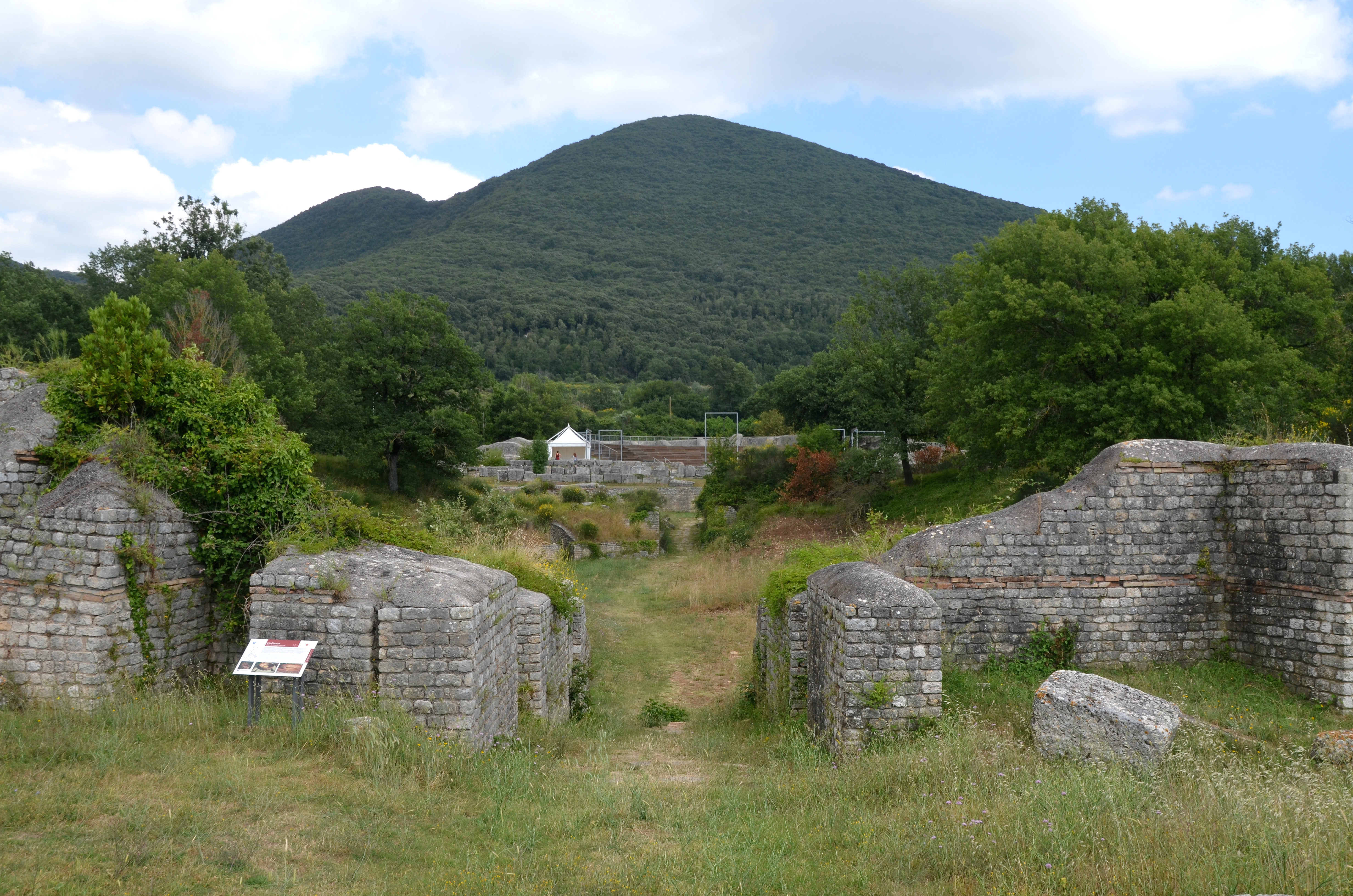
Built during the 1st century AD outside the monumental centre of Carsulae, the amphitheatre was constructed using local limestone and incorporated natural earth embankments to support the seating. Its elliptical arena and surrounding walls remain clearly visible beside the Roman theatre. The two entertainment buildings demonstrate the importance of public spectacles in this prosperous settlement along the Via Flaminia.
Catina Roman Amphitheatre (Catania, Sicily) (Google Maps)
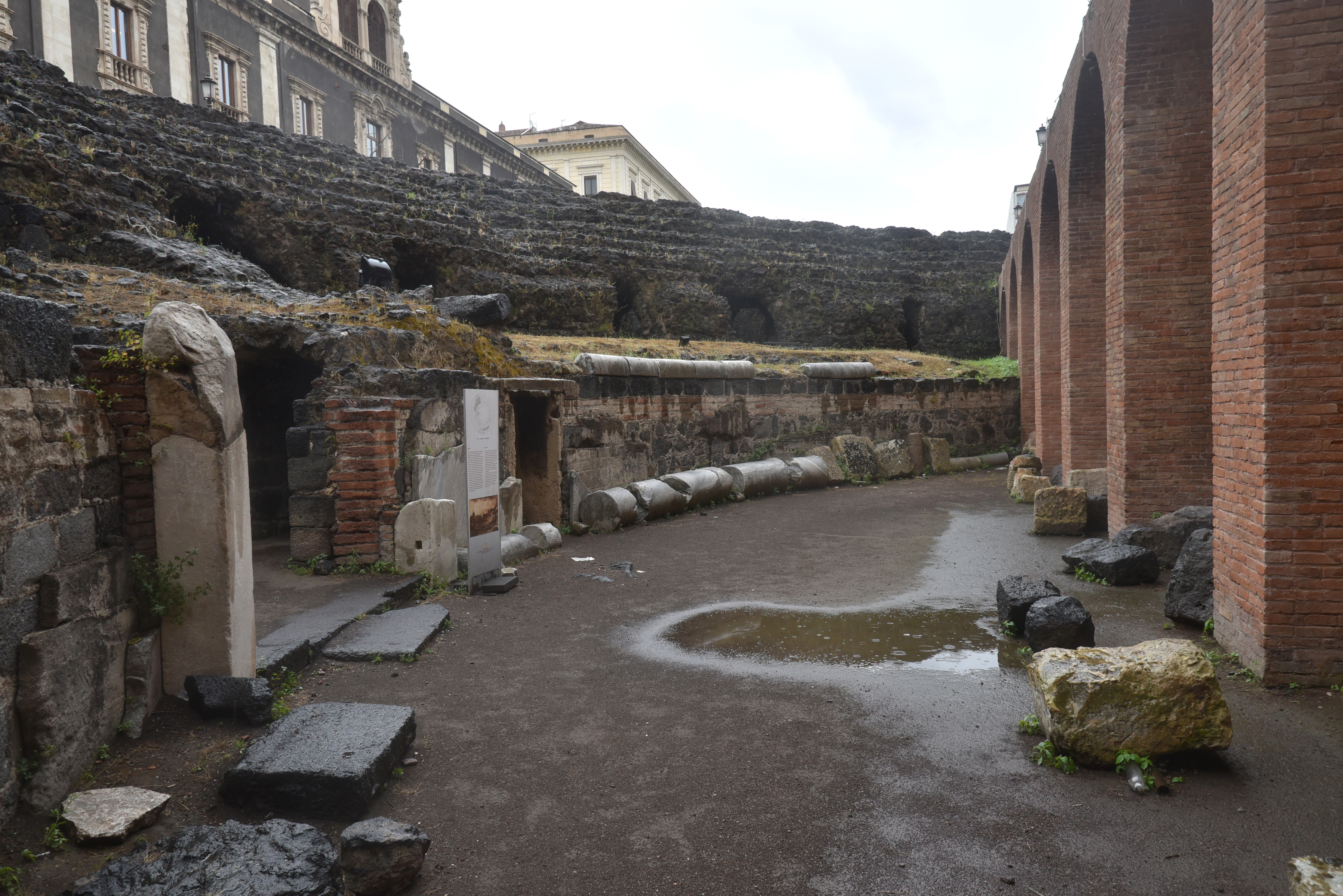
Constructed during the Roman imperial period, principally in the 2nd century AD, the amphitheatre of Catina was one of the largest in Roman Sicily. Built from lava stone and other local materials, its elliptical structure featured vaulted galleries supporting several tiers of seating for more than 15,000 spectators following its enlargement in the mid-2nd century AD. Only part of the monument is exposed today in Piazza Stesicoro, while much of the original amphitheatre lies beneath the modern city.
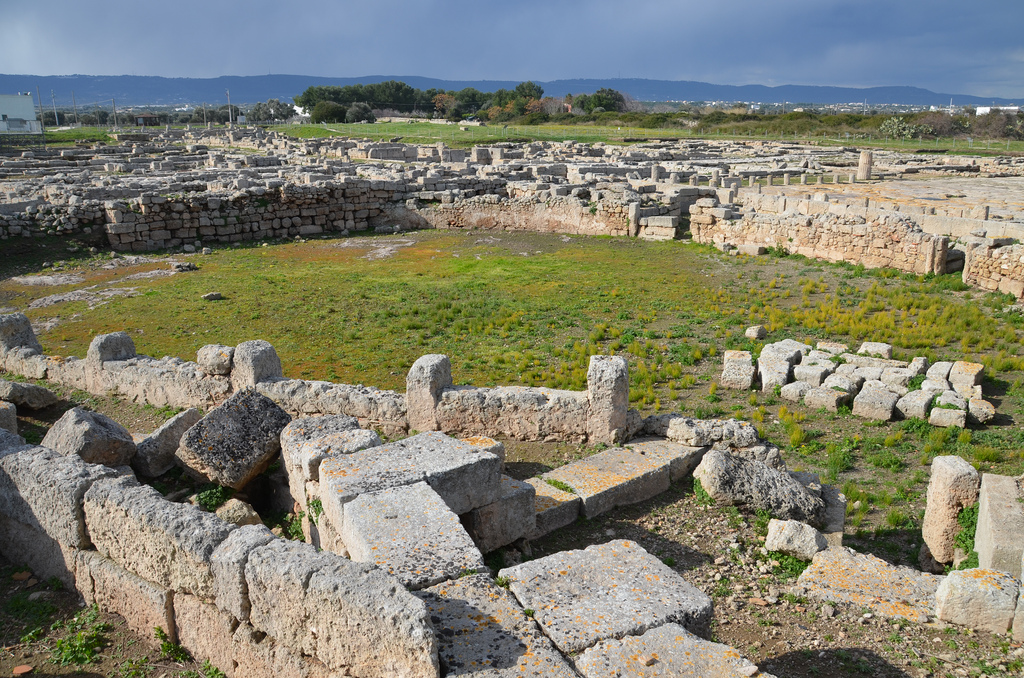
The amphitheatre at Egnatia was relatively small, with an irregularly elliptical arena measuring approximately 37 × 25 m. Built with walls incorporating the opus africanum technique, it may date to the Augustan period, although a later date has also been proposed. Its precise function and chronology remain debated, particularly because of its proximity to the sanctuary of Cybele.
Forum Traiani Roman Amphitheatre (Fordongianus, Sardinia) (Google Maps)
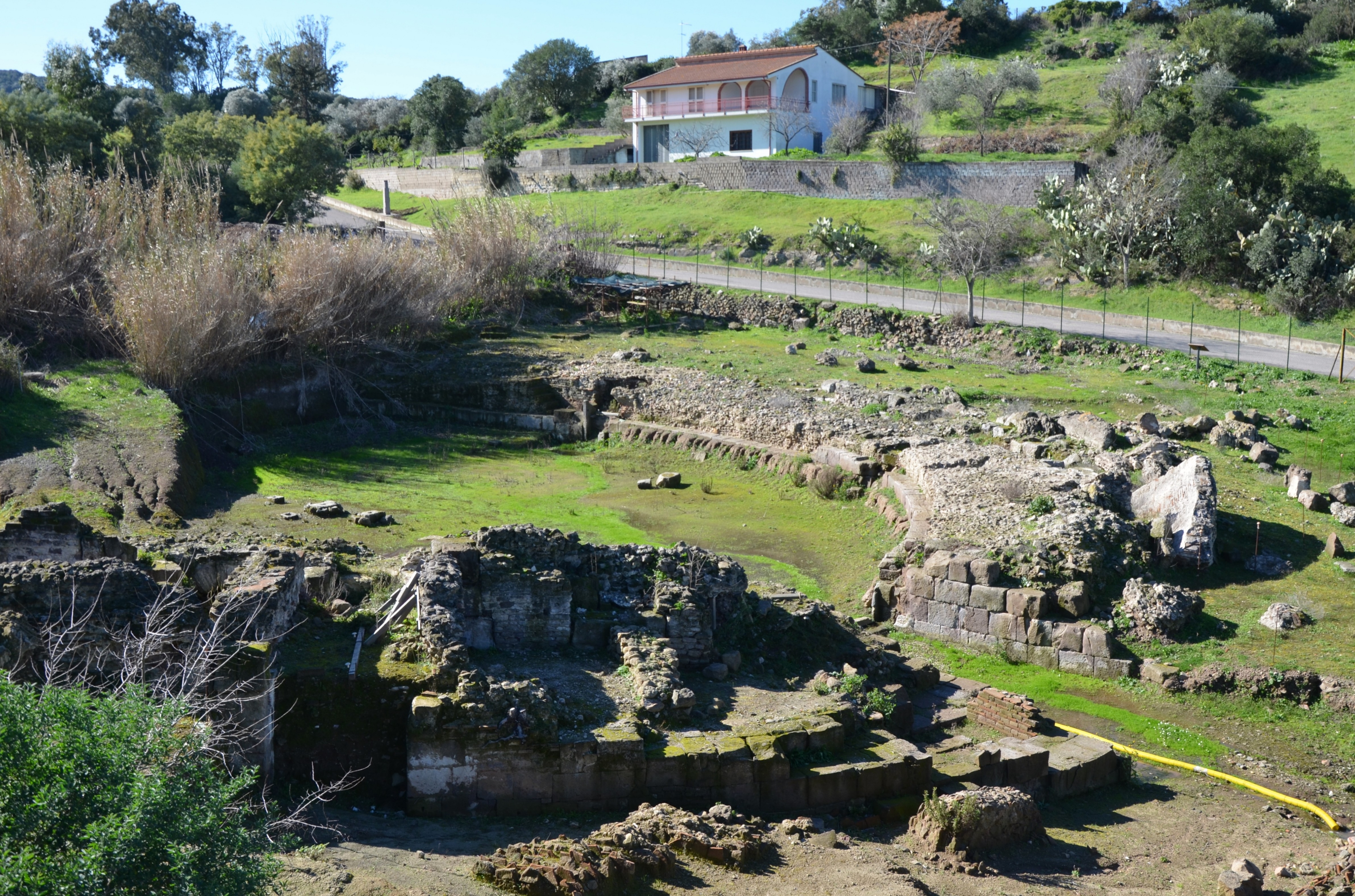
Constructed probably during the reign of Trajan and enlarged in the Severan period, the amphitheatre occupied a small valley outside the Roman settlement of Forum Traiani. Its original seating was supported by earth embankments and masonry retaining walls, while the later enlargement introduced arcaded galleries and additional seating. The capacity is estimated to have increased from around 2,000 to more than 3,000 spectators.
Hispellum Roman Amphitheatre (Spello) (Google Maps)
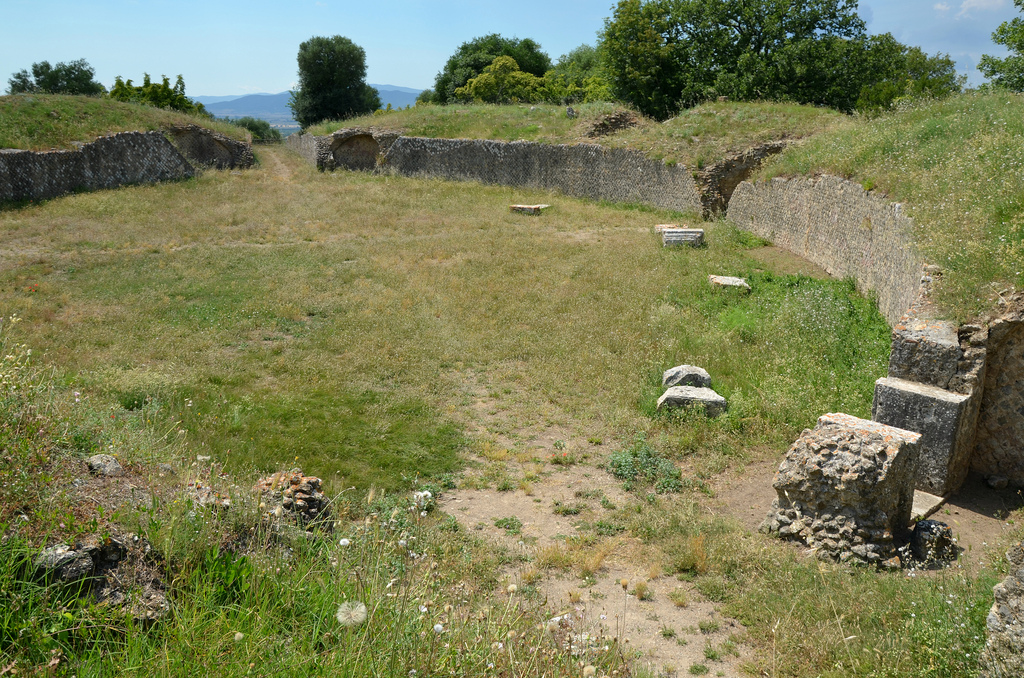
Constructed in the 1st century AD by the local magistrate, the duovir quiniquennalis Gaius Alfius Rufus, the amphitheatre of Hispellum stood outside the ancient city walls. Its elliptical arena was surrounded by masonry seating supports and vaulted substructures, of which substantial sections survive. The building formed part of the monumental development of Hispellum, an important Roman centre in Umbria associated with the imperial cult.
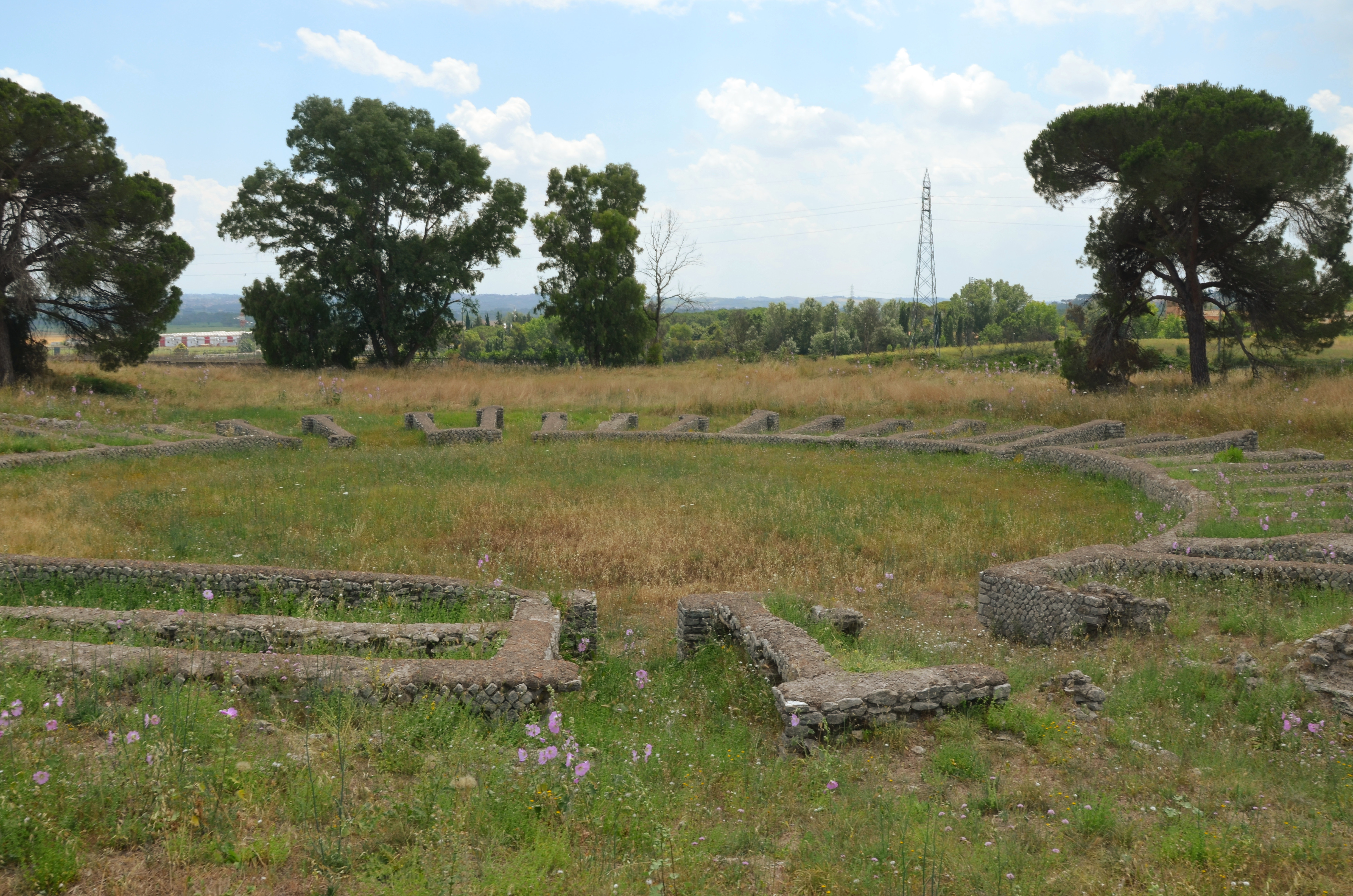
Probably constructed in the early 1st century AD, the amphitheatre at Lucus Feroniae was situated west of the forum, near the sanctuary of the goddess Feronia. Its construction employed opus reticulatum with tufa quoins, providing evidence for its early imperial date. The modest structure served the inhabitants of this Roman settlement north of Rome.
Mediolanum Roman Amphitheatre (Milan) (Google Maps)
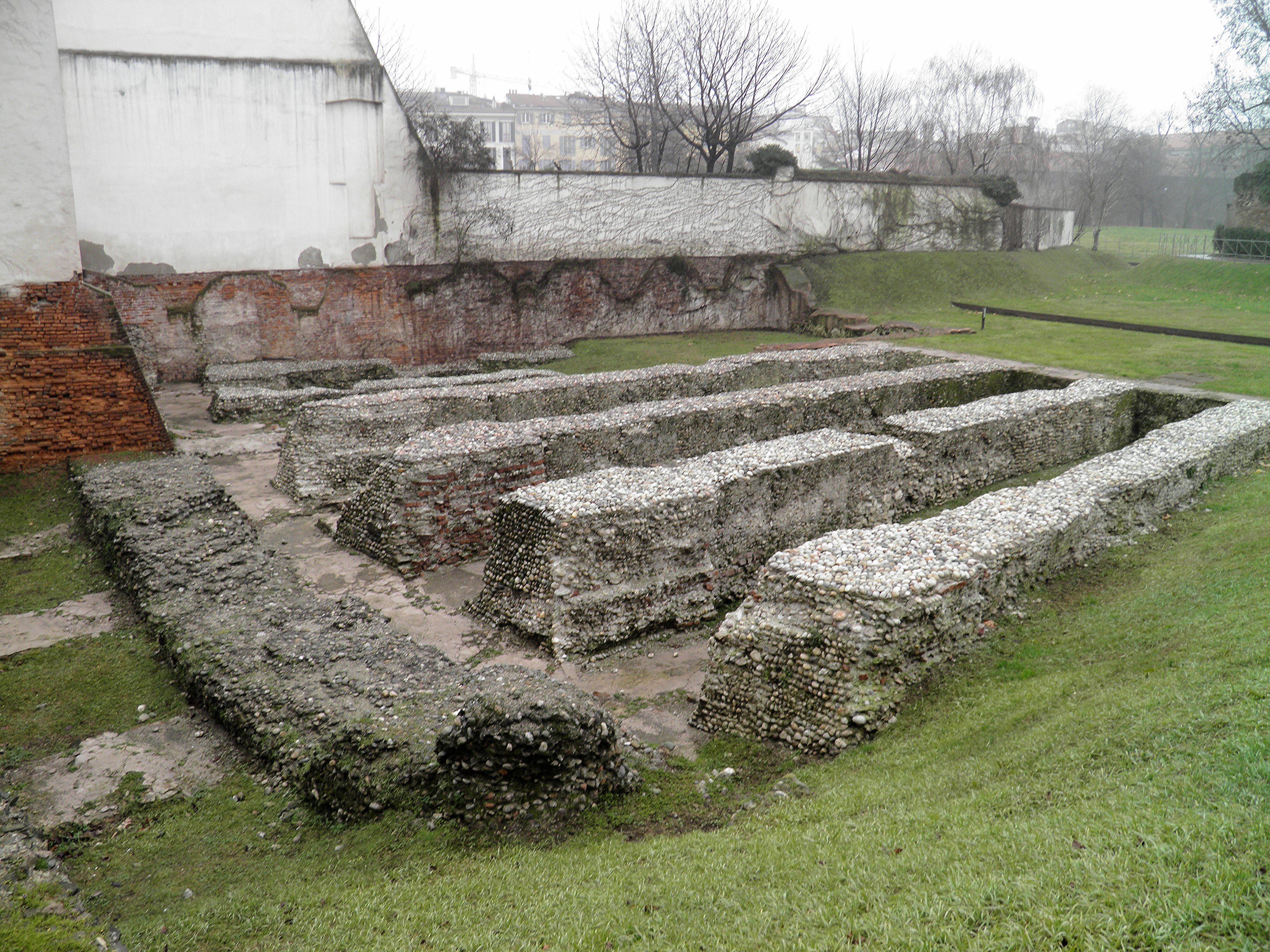
Built during the 1st century AD, the amphitheatre of Mediolanum was among the largest in northern Italy, measuring approximately 155 × 125 m. Situated outside the original Roman city walls, it could accommodate an estimated 35,000 spectators for gladiatorial combats and animal spectacles. The monument was progressively dismantled during Late Antiquity, and its surviving foundations are now preserved within an archaeological park in Milan.
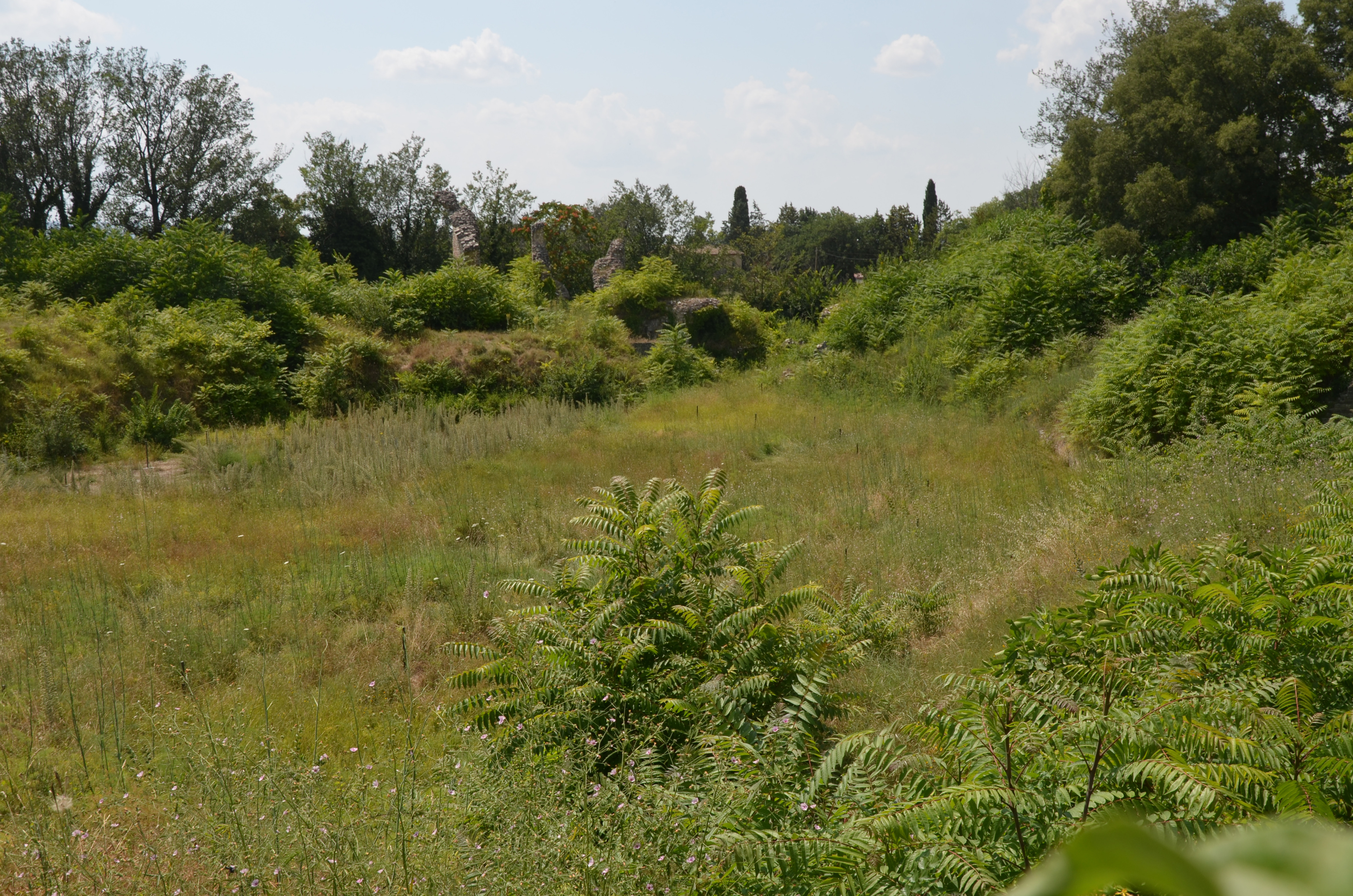
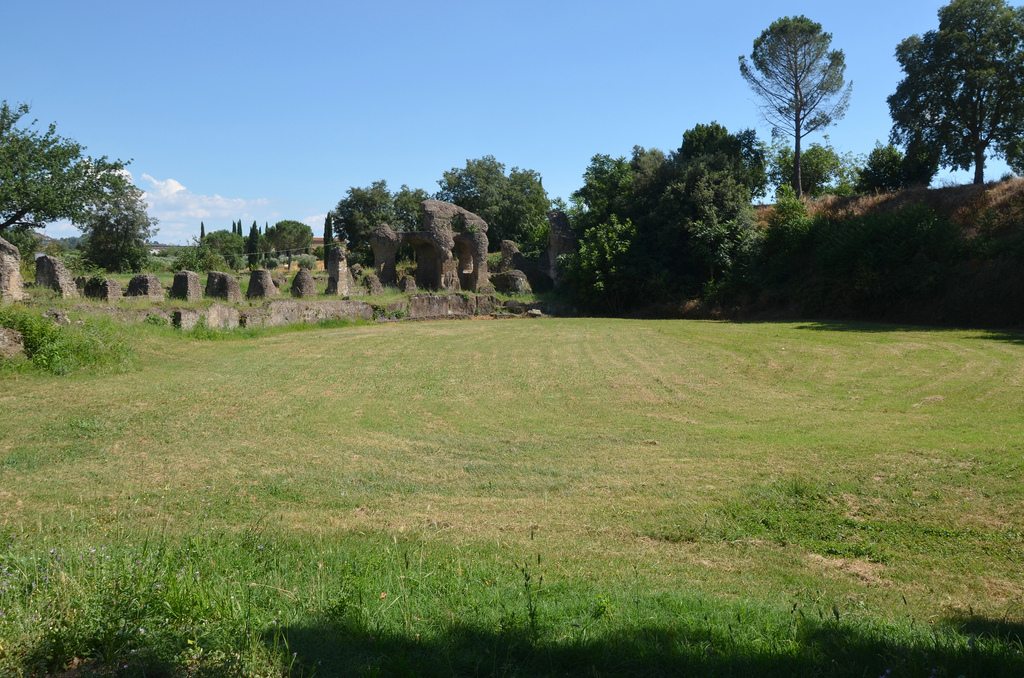
Constructed during the early Roman imperial period, the amphitheatre of Ocriculum was situated outside the ancient town near the Tiber. Its elliptical structure was built partly into the natural terrain and surrounded by masonry seating supports. The surviving remains include sections of the arena enclosure and supporting walls, demonstrating the development of monumental public entertainment facilities in this Umbrian settlement.
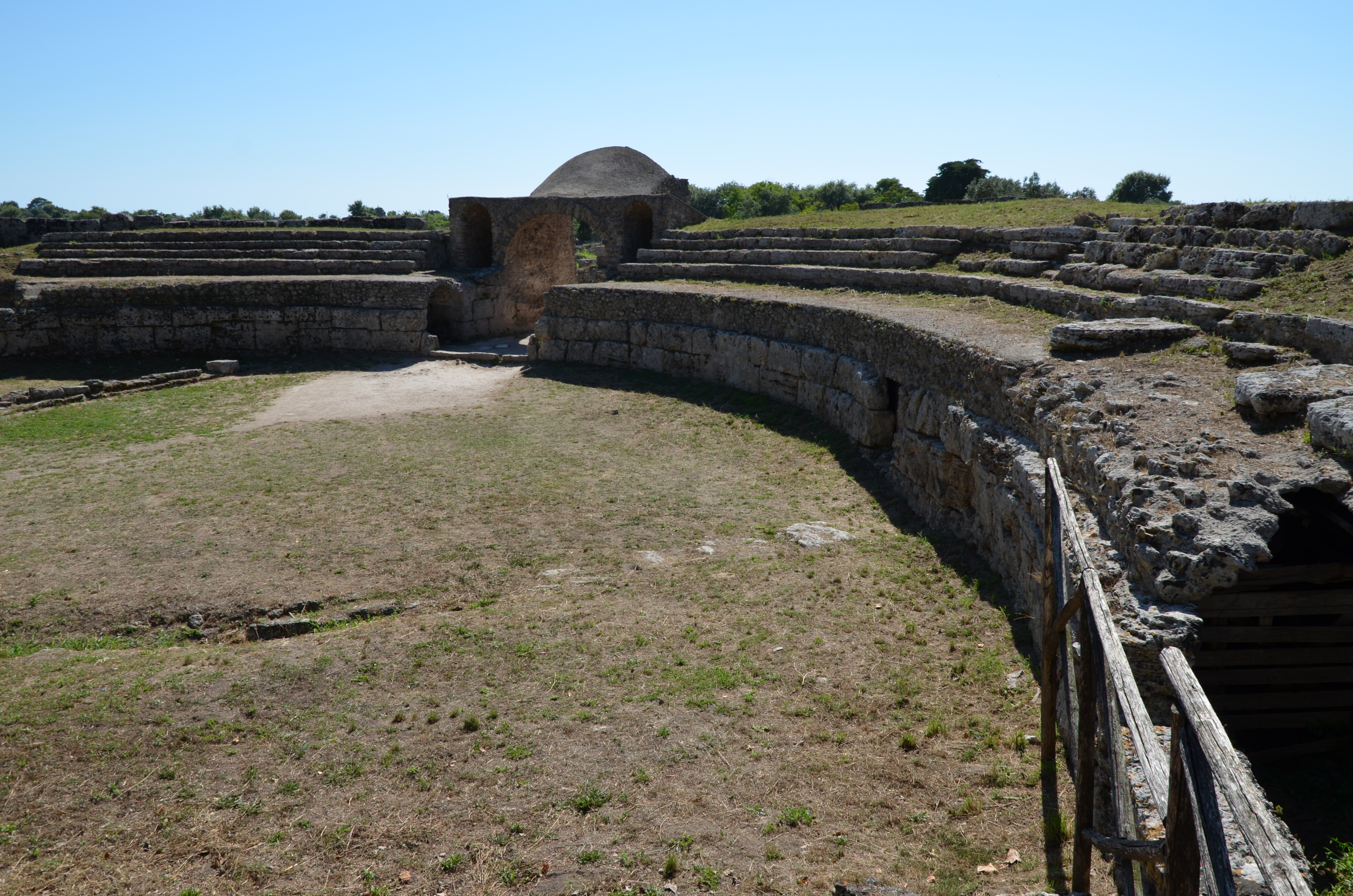
Constructed during the late Republican or early imperial period, the amphitheatre at Paestum occupied a position within the ancient city, near the forum. It replaced or incorporated an earlier entertainment structure and was subsequently enlarged. Only part of the elliptical building remains visible, while the remainder lies beneath the modern road that crosses the archaeological area.
Constructed around 70 BC by the magistrates Gaius Quinctius Valgus and Marcus Porcius, the amphitheatre of Pompeii is the earliest surviving permanent Roman amphitheatre. Measuring approximately 135 × 104 m, it could accommodate an estimated 20,000 spectators. Built partly below ground level with earth embankments supporting the seating, the monument was the scene of a notorious riot between Pompeians and Nucerians in AD 59.
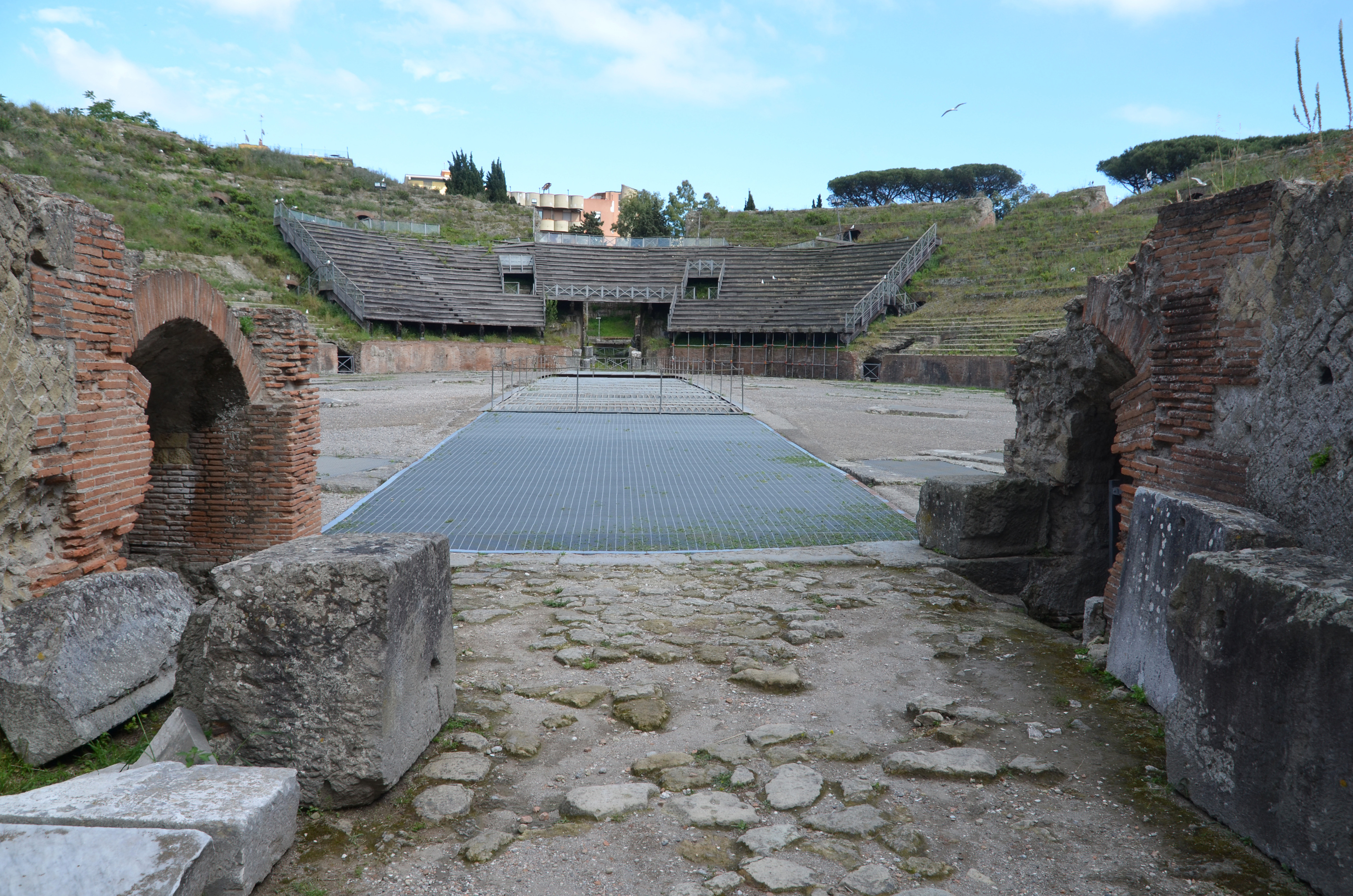
Constructed during the second half of the 1st century AD, probably under the Flavian emperors, the amphitheatre of Puteoli was one of the largest in Roman Italy. Measuring approximately 149 × 116 m, it could accommodate up to an estimated 40,000 spectators. Particularly impressive are its exceptionally well-preserved underground galleries, chambers and mechanisms used to move animals and equipment into the arena.
Neapolis Roman Amphitheatre (Syracuse, Sicily) (Google Maps)
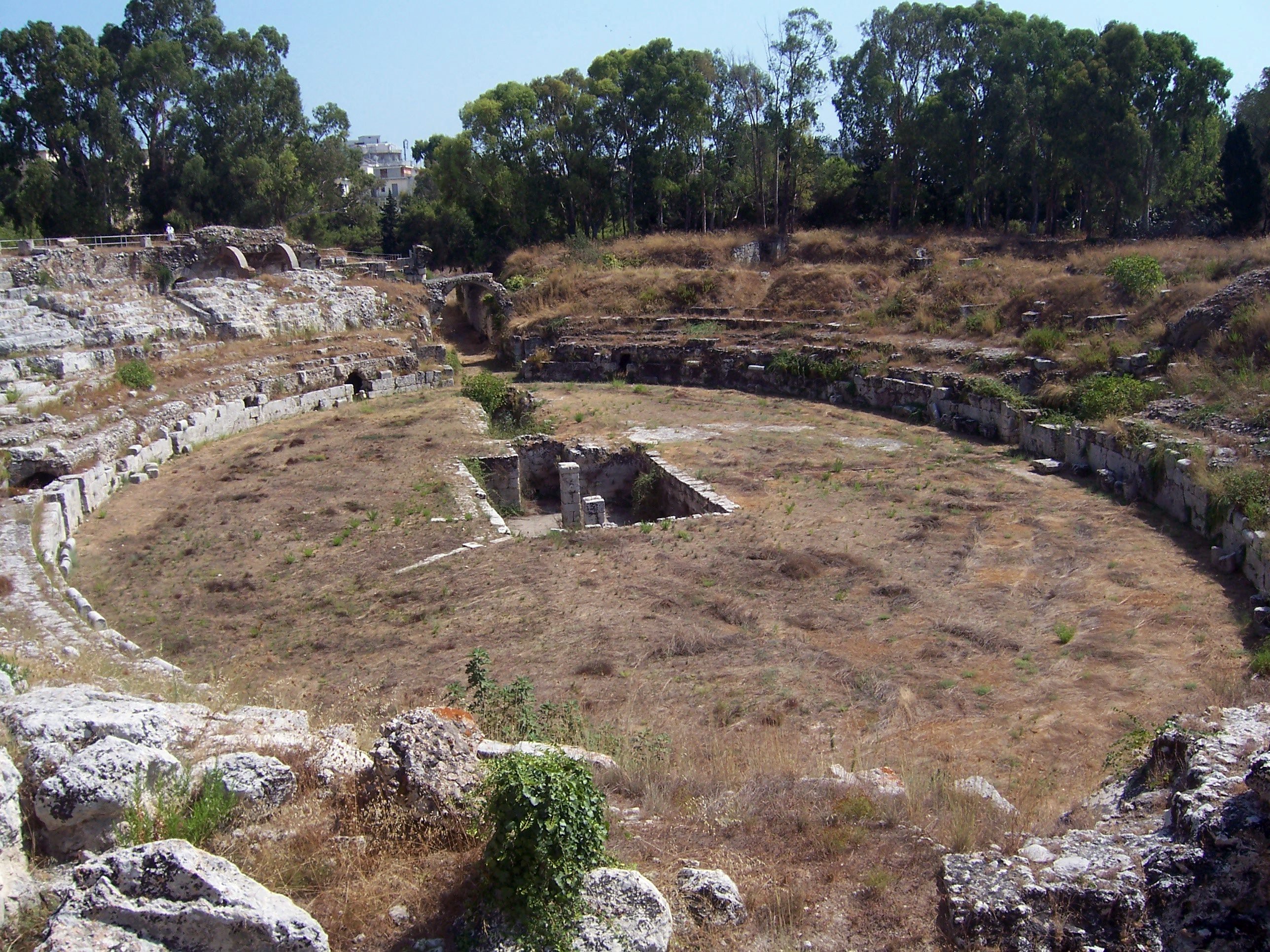
Constructed during the Roman imperial period, probably in the 1st century AD, the amphitheatre of Syracuse was partly excavated into the natural limestone bedrock. Measuring approximately 140 × 119 m, it ranks among the largest Roman amphitheatres in Sicily. The surviving remains include the elliptical arena, entrances and sections of the seating, much of which was later dismantled for building materials.
Constructed between AD 70 and 80 under emperors Vespasian and Titus, and later modified under Domitian, the Colosseum was the largest amphitheatre in the Roman world. Measuring approximately 189 × 156 m, it could accommodate tens of thousands of spectators. Its monumental exterior combined three levels of arcades with an upper attic, while the arena featured an elaborate underground network of corridors, chambers, and lifting mechanisms.
Built during the 1st century AD on the northern hill of the ancient Etruscan and Roman city, the amphitheatre of Rusellae was relatively small and followed the contours of the natural terrain. Its elliptical arena was surrounded by seating supported by earth embankments and masonry structures. The monument remains one of the principal public buildings visible within the archaeological site.
Tharros Roman Amphitheatre (Sardinia) (Google Maps)
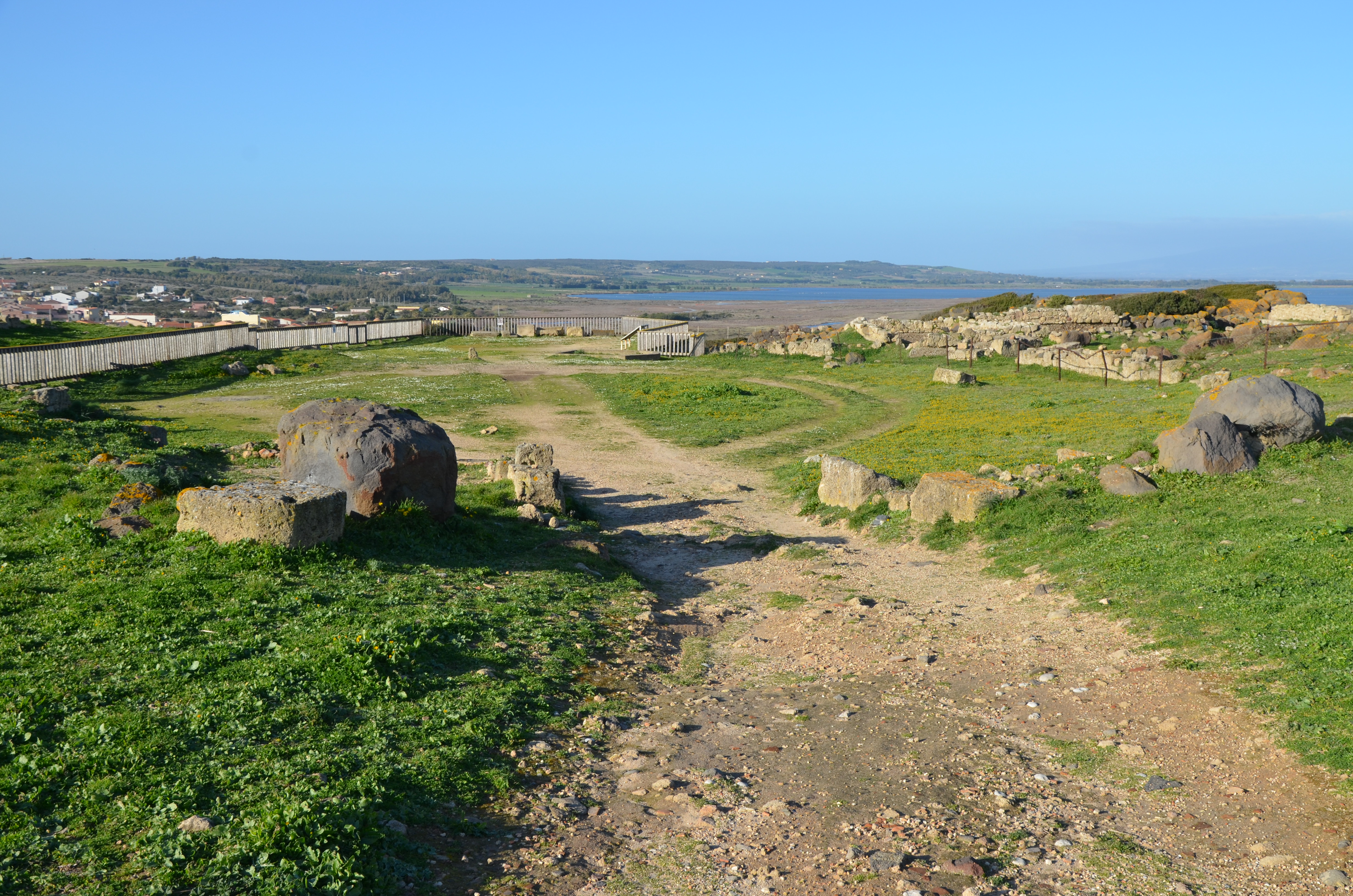
A small amphitheatre was constructed during the middle Roman imperial period near the northern edge of Tharros, just east of the ancient fortifications on the hill of Su Muru Mannu. Only limited traces of the structure survive, but archaeological investigations have identified its approximately circular arrangement. The monument formed part of the Roman development of this important coastal settlement.
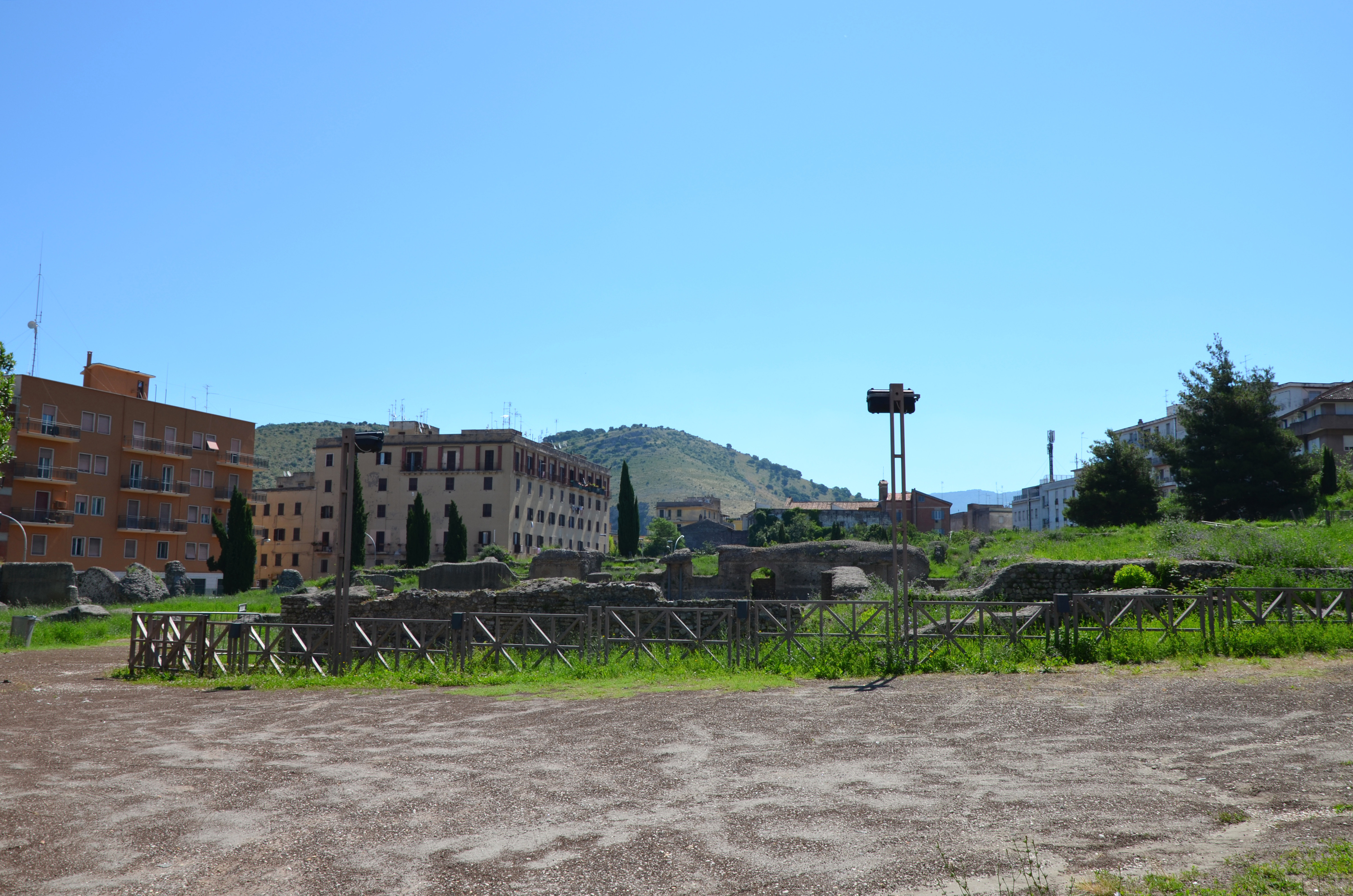
Known as the Amphitheatre of Bleso, the monument was constructed during the 2nd century AD, probably in the Hadrianic period. Situated close to the ancient town centre, it featured an elliptical arena surrounded by masonry seating structures. Much of the amphitheatre was later incorporated into the fortifications and buildings of medieval Tivoli, and its remains were exposed during modern excavations.
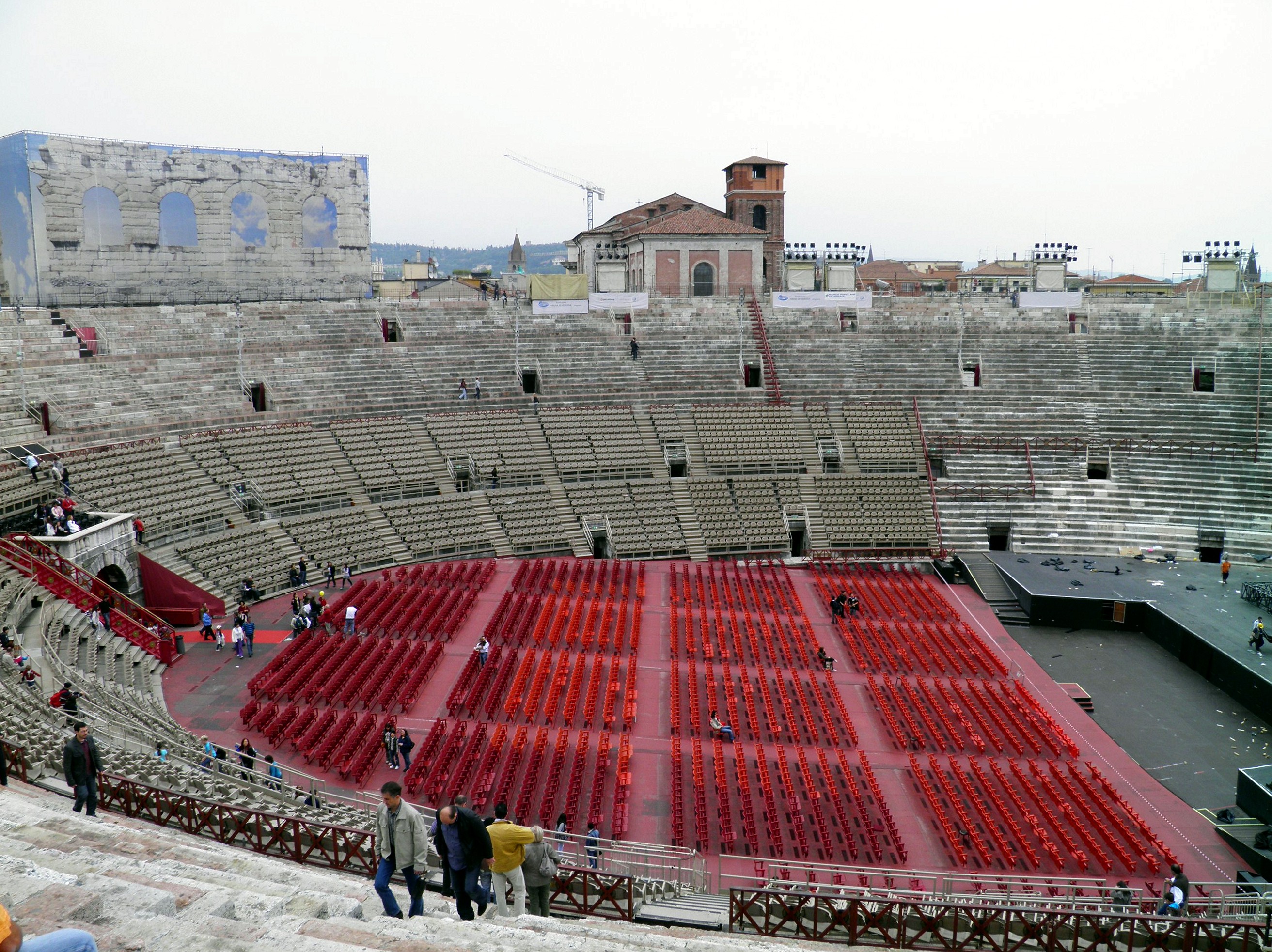
Constructed during the 1st century AD, probably around the middle of the century, the amphitheatre of Verona is one of the largest and best-preserved Roman arenas. Measuring approximately 152 × 123 m, it could accommodate some 25,000–30,000 spectators. Although most of its outer ring was destroyed by earthquakes, the interior seating and vaulted circulation passages remain remarkably well preserved.
ISRAEL
Eleutheropolis Roman Amphitheatre (Beit Guvrin) (Google Maps)
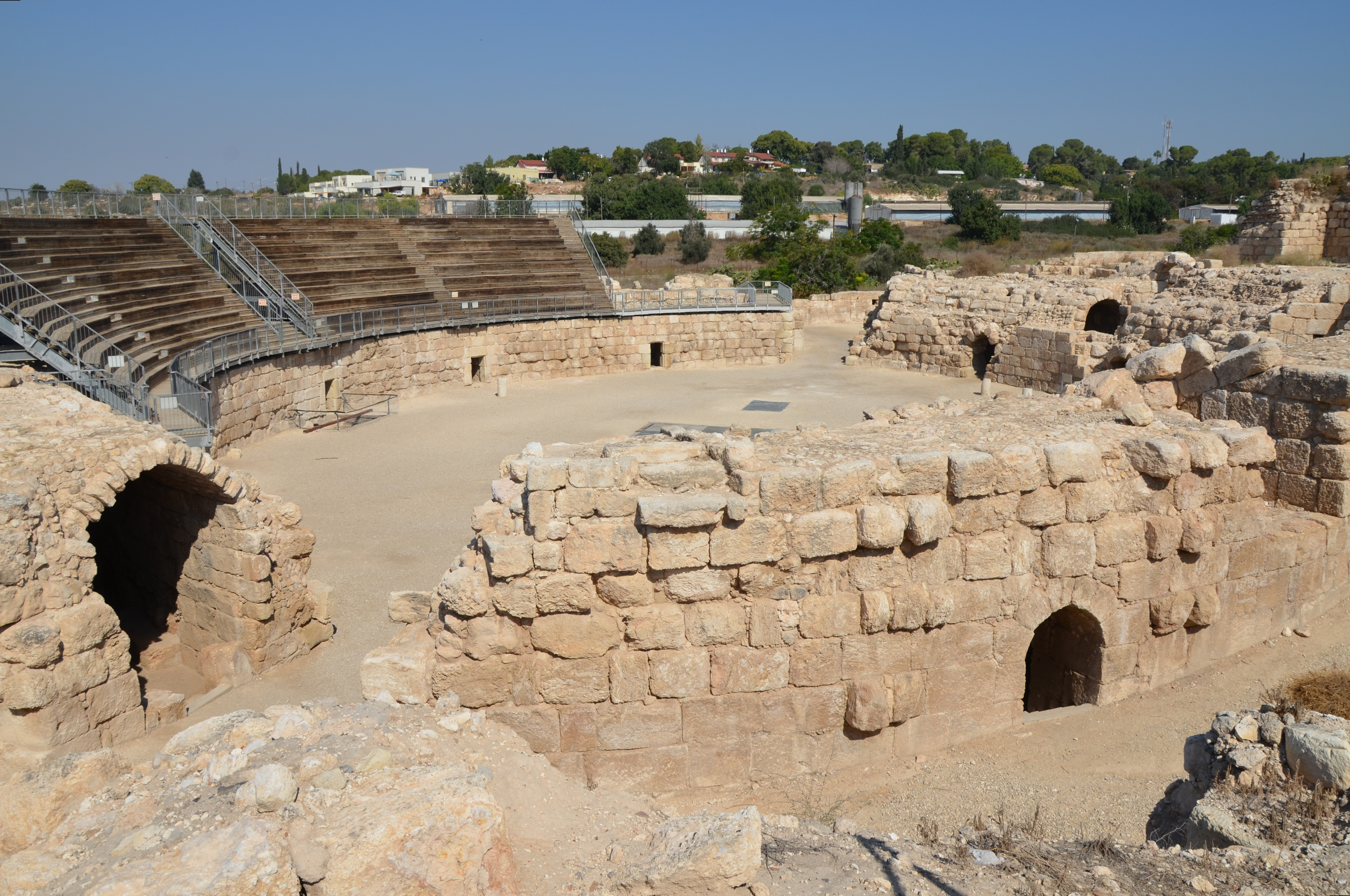
Constructed during the Roman imperial period, probably in the 2nd century AD, the amphitheatre at Eleutheropolis was built alongside the Roman settlement and military presence in southern Judaea. Its elliptical arena was surrounded by stone seating and passages providing access for spectators and performers. The well-preserved remains include the arena walls, vaulted corridors and sections of the seating.
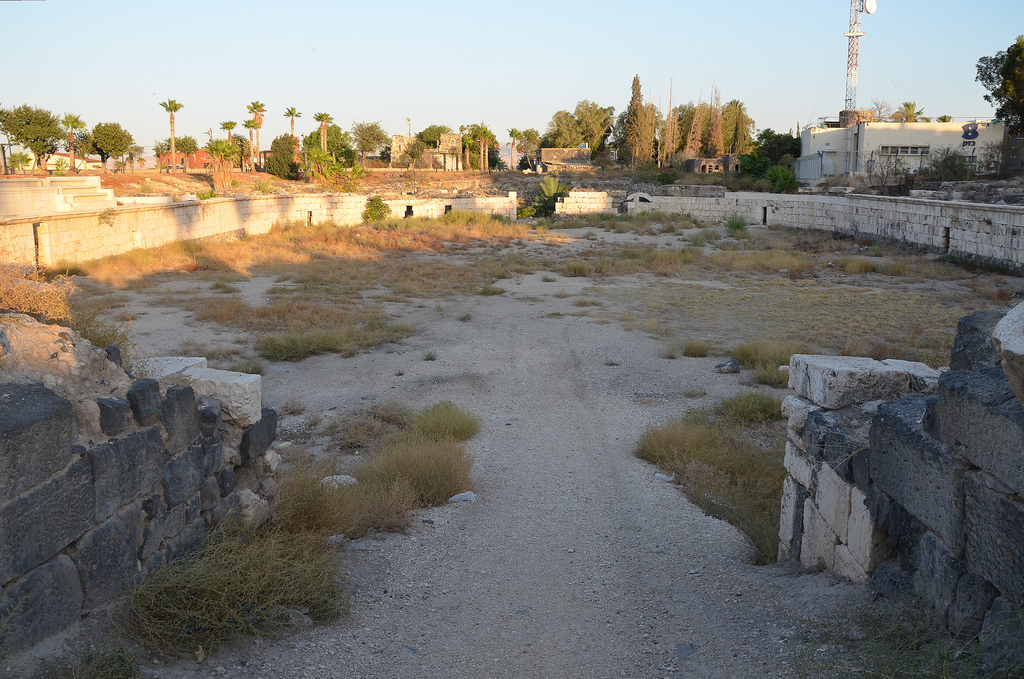
The amphitheatre of Scythopolis developed from an earlier Roman hippodrome, probably during Late Antiquity. Part of the elongated racing structure was shortened and adapted to form an enclosed arena for gladiatorial combats and animal spectacles. The surviving remains preserve the unusual stadium-like plan, the arena enclosure and several rows of stone seating, reflecting the adaptation of existing entertainment buildings to new purposes.
Built during the 1st century AD and subsequently adapted for arena spectacles, the monument at Lixus is the only known Roman theatre-amphitheatre of its kind in Morocco. Built against a natural hillside, it originally had a semicircular cavea and a theatrical stage. During its conversion to an arena for spectacles, builders modified the lower seating and removed the stage structure. Several rows of stone seats survive beside the remains of the adjoining Roman baths.
ROMANIA
Ulpia Traiana Sarmizegetusa Roman Amphitheatre (Google Maps)
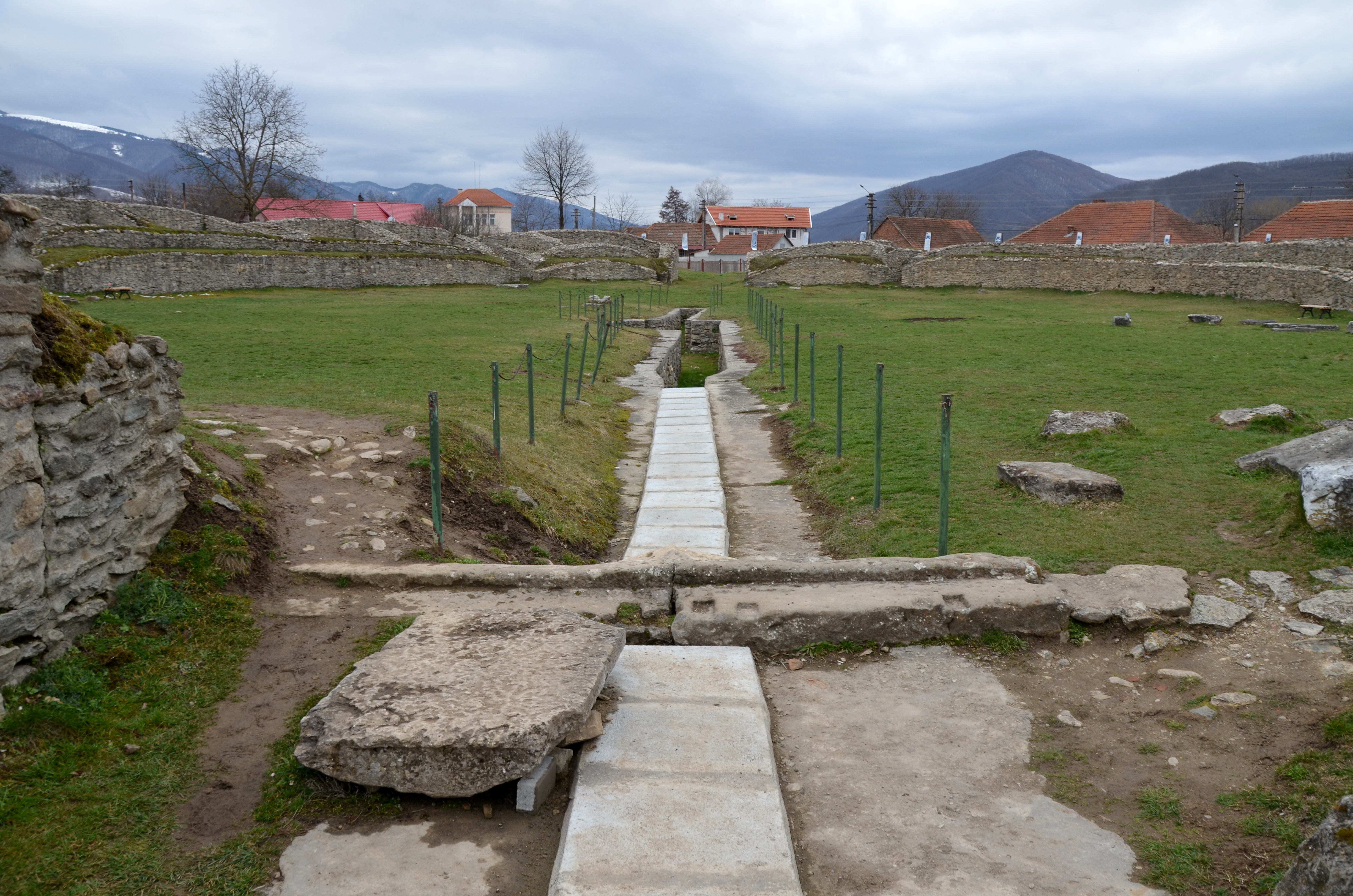
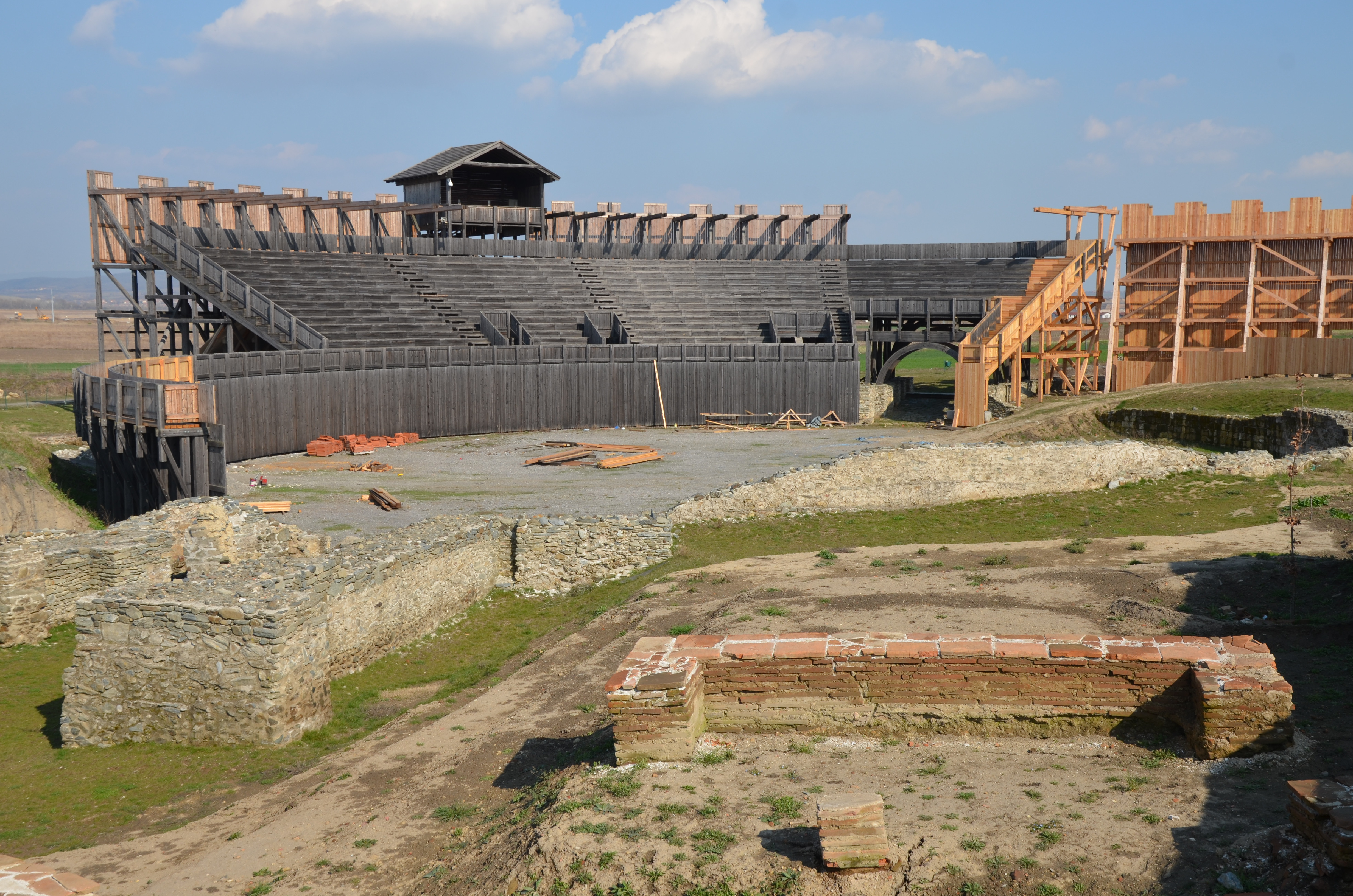
Constructed during the early 2nd century AD, following Trajan’s conquest of Dacia, the amphitheatre formed part of the new Roman colony of Ulpia Traiana Sarmizegetusa. Its elliptical arena was surrounded by seating supported initially by timber and earth structures, later replaced or reinforced with stone. The monument could accommodate several thousand spectators and served as an important centre of public entertainment in Roman Dacia.
SERBIA
Ulpia Traiana Sarmizegetusa Roman Amphitheatre (Google Maps)
Built in the 2nd century AD near the legionary fortress and civilian settlement of Viminacium, the amphitheatre was initially constructed of timber and earth, with later modifications. Its elliptical arena was enclosed by seating structures supported by substantial foundations. Archaeological investigations have revealed several construction phases, illustrating the development of public entertainment facilities in this important military centre on the Danube frontier.
SPAIN
Carmo Roman Amphitheatre (Carmona) (37°28’10.6″N 5°39’02.6″W)
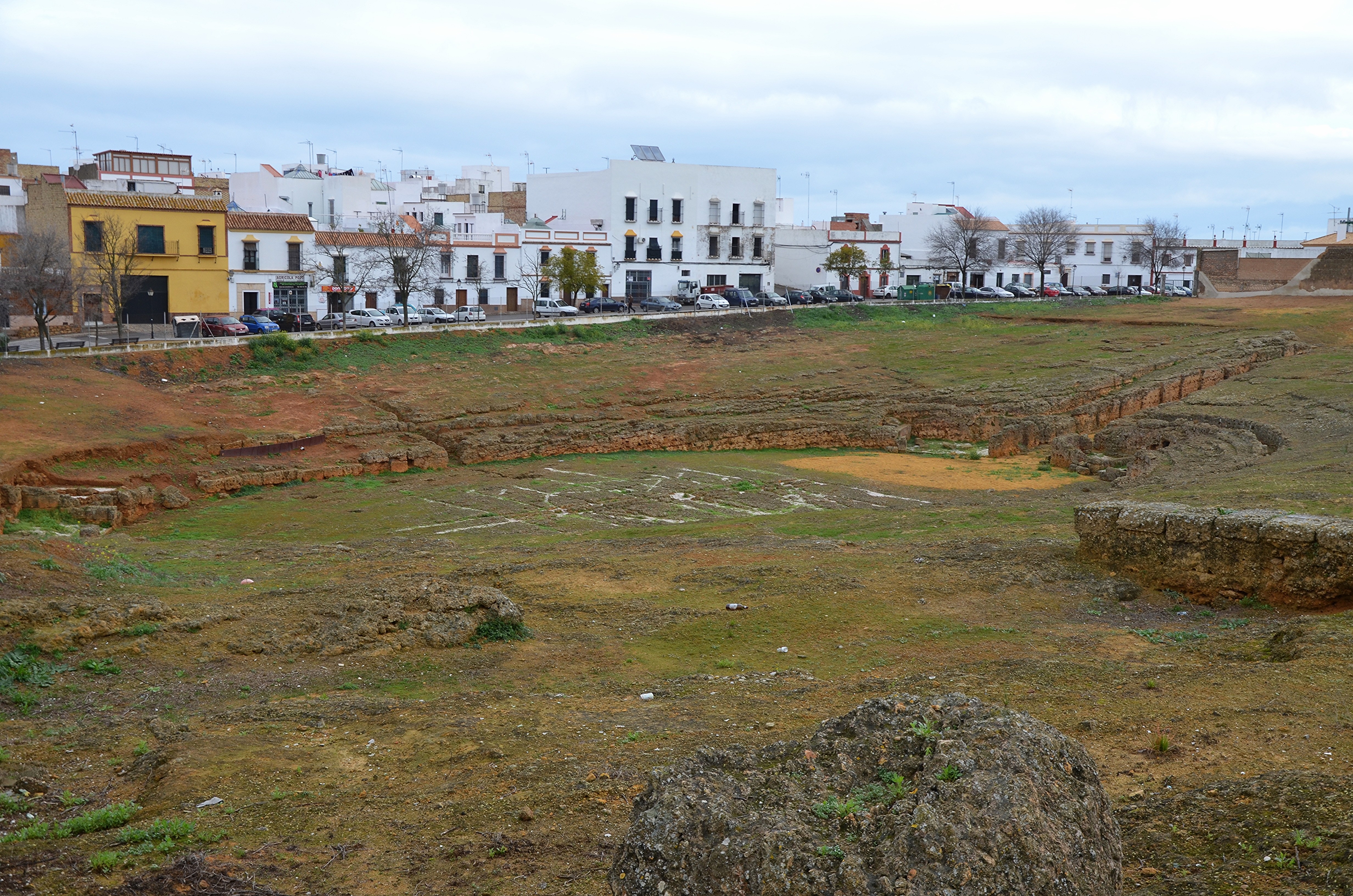
Constructed during the 1st century BC or early Roman imperial period, the amphitheatre of Carmo was excavated partly into the natural bedrock outside the ancient city walls. Its elliptical arena and surrounding seating structures were supplemented with masonry where required. The monument belongs to the early development of Roman amphitheatres in Hispania and is located close to the extensive Roman necropolis of Carmona.
Emerita Augusta Roman Amphitheatre (Mérida) (Google Maps)
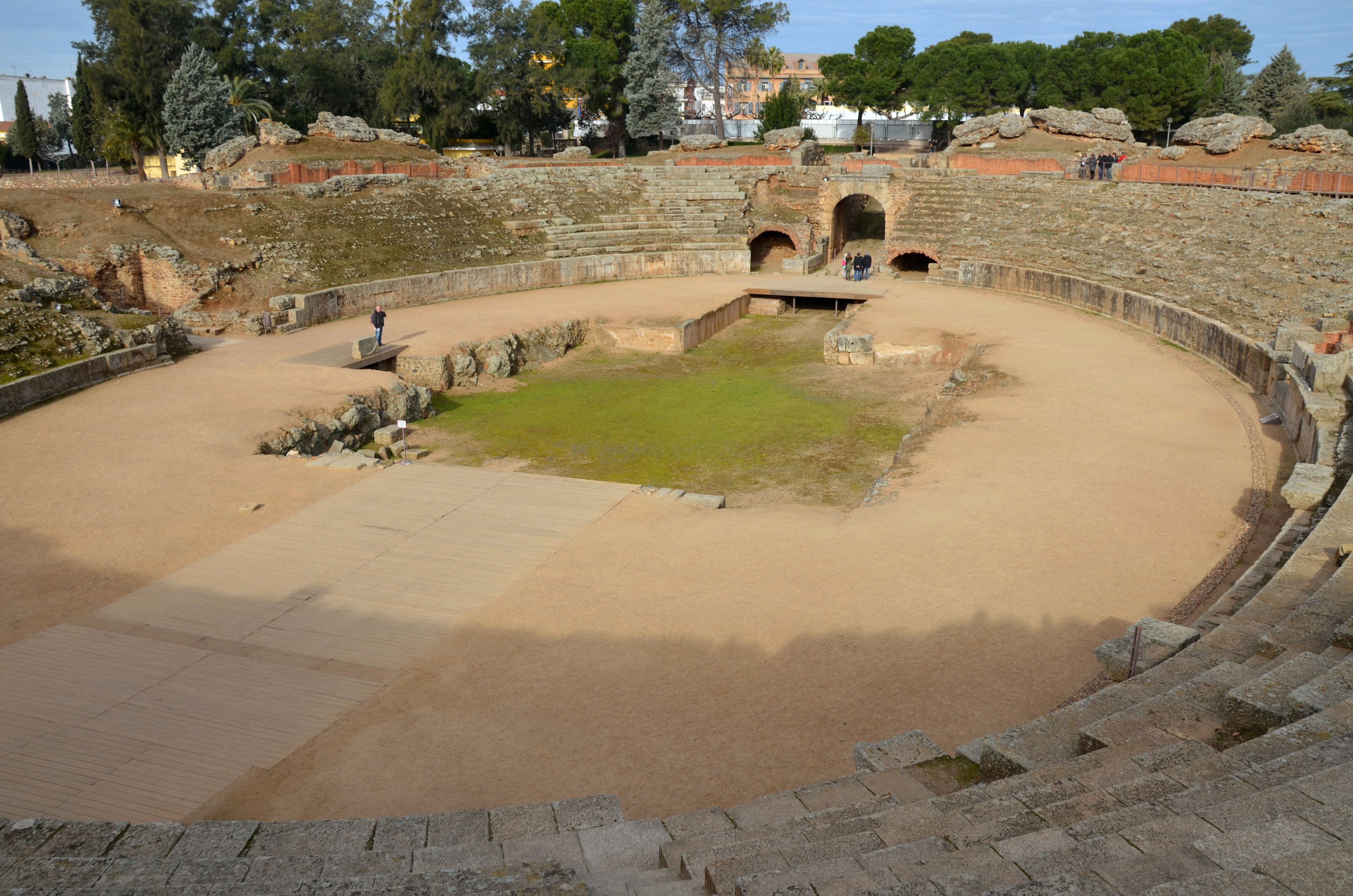
Inaugurated in 8 BC, the amphitheatre of Emerita Augusta was constructed near the city’s Roman theatre as part of the monumental development of the Augustan colony. Measuring approximately 126 × 102 m, it could accommodate an estimated 15,000 spectators. The surviving remains include the elliptical arena, entrances, seating, and chambers used to organise gladiatorial and animal spectacles.
Emporiae Roman Amphitheatre (Empúries) (Google Maps)
Built during the Roman imperial period outside the walls of the Roman city of Emporiae, the amphitheatre was a relatively modest structure made mainly of earth embankments and timber. Little of the original building survives beyond its foundations and elliptical outline. The monument reflects the adoption of Roman public entertainment traditions in this important coastal settlement of northeastern Hispania.
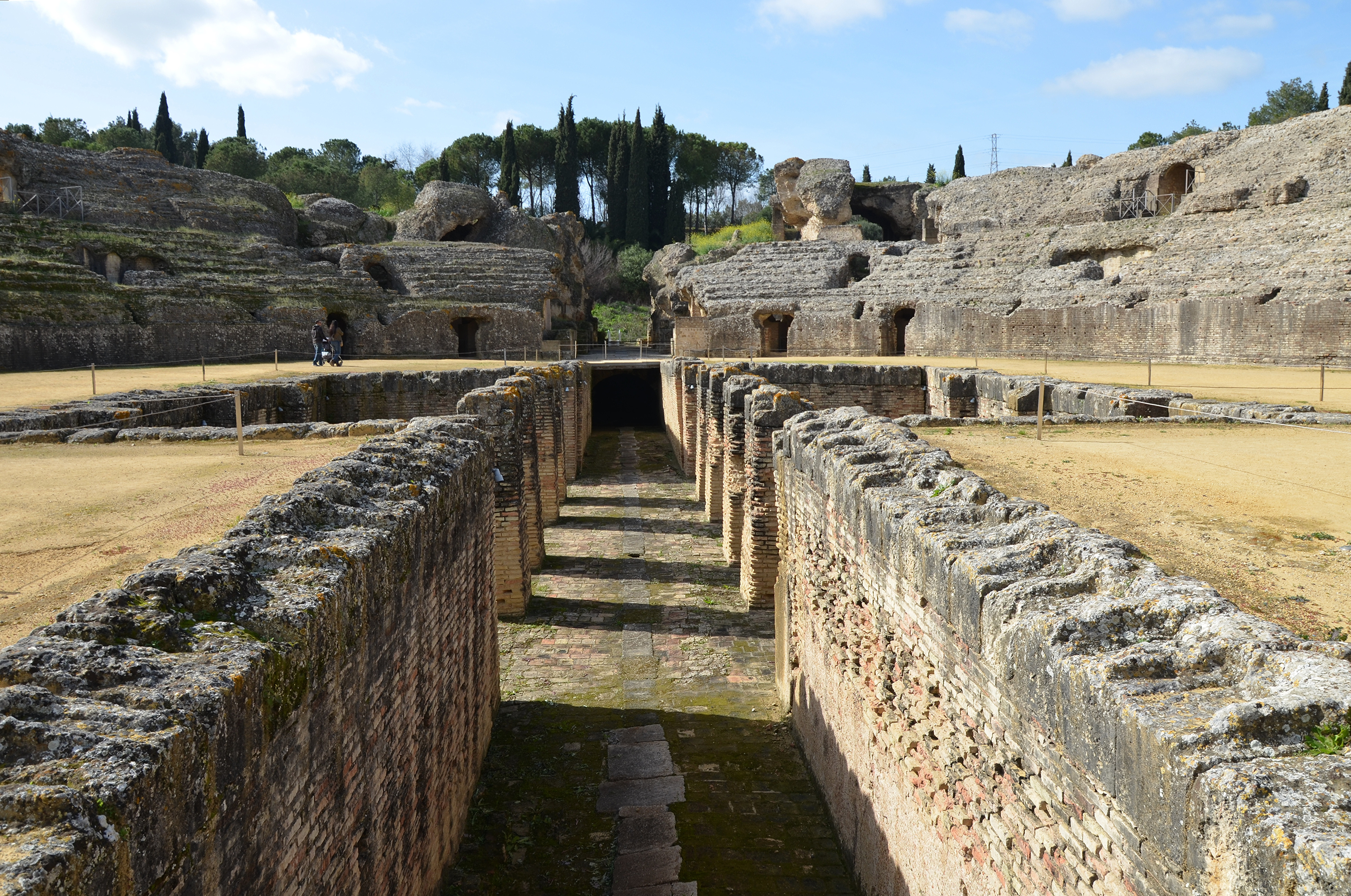
Constructed during the reign of Hadrian in the early 2nd century AD, the amphitheatre of Italica was one of the largest in the Roman Empire. Measuring approximately 160 × 137 m, it could accommodate an estimated 25,000 spectators. Its extensive ruins preserve the arena, monumental entrances, seating substructures and underground galleries, reflecting the prosperity of the city during the Antonine period.
Segobriga Roman Amphitheatre (Saelices) (Google Maps)
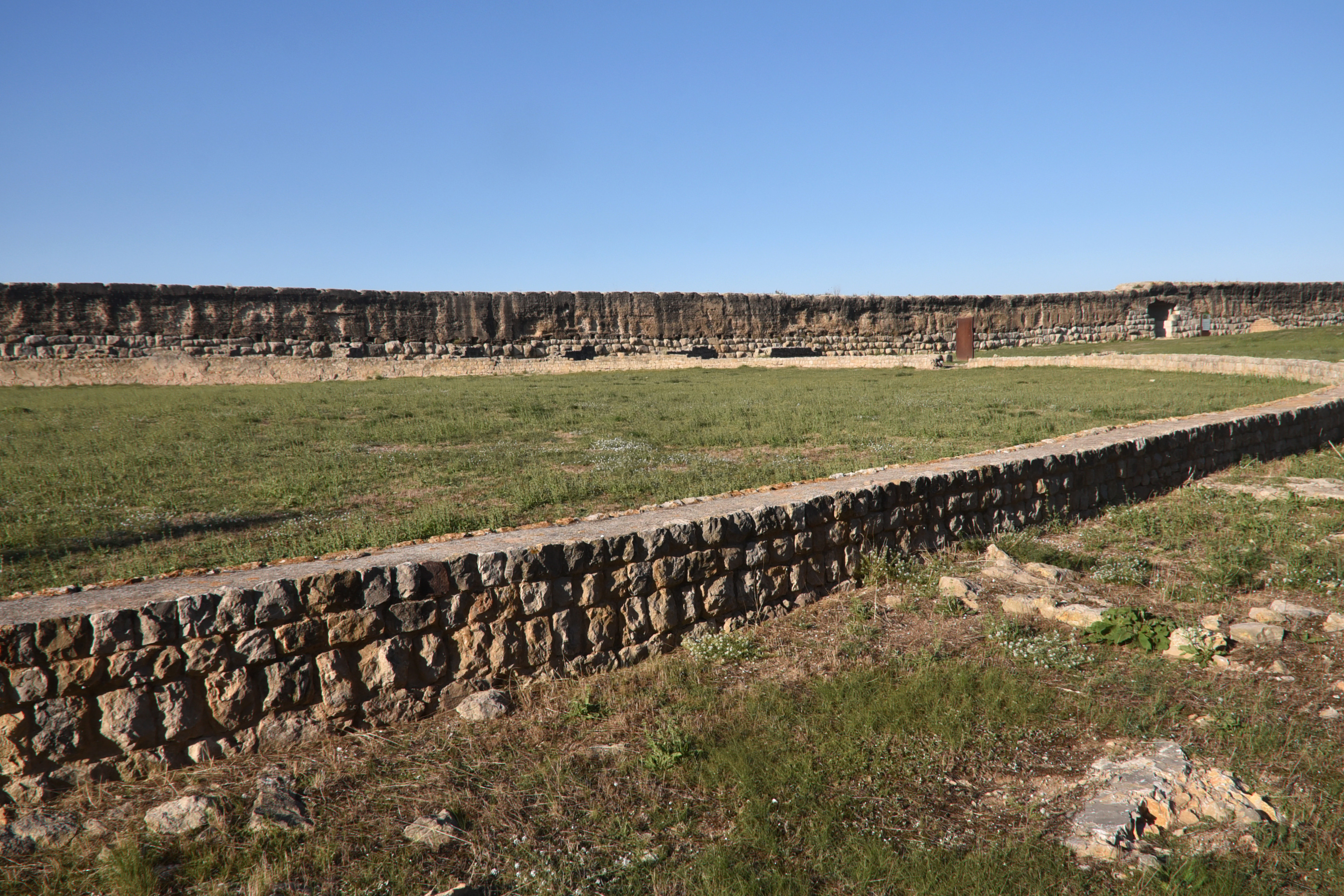
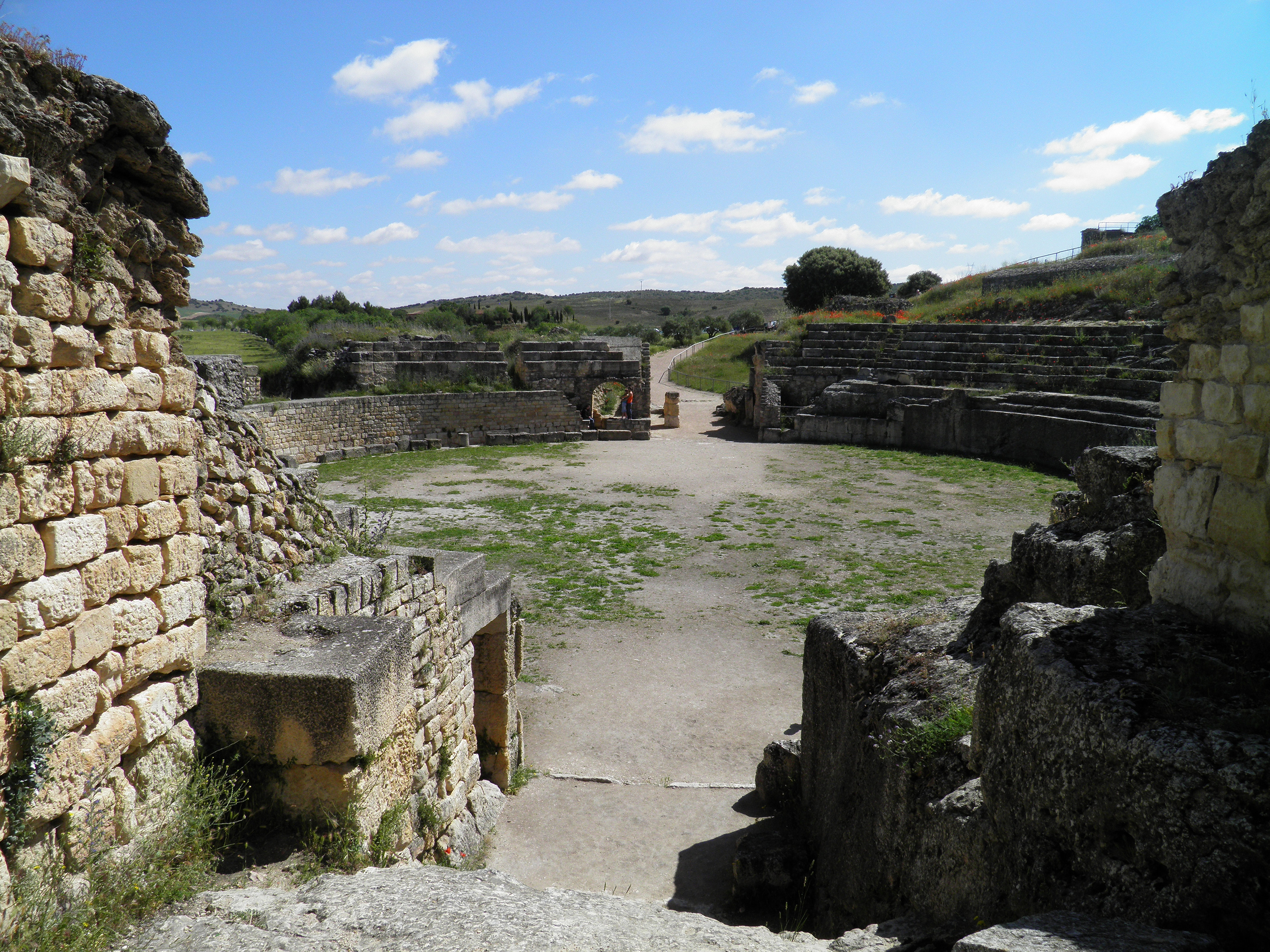
Constructed during the 1st century AD, the amphitheatre of Segobriga formed part of the city’s monumental public centre, immediately adjacent to the theatre. Measuring approximately 75 × 66 m, it could accommodate several thousand spectators. Its seating was supported partly by the natural terrain and partly by masonry substructures, while the arena was enclosed by a substantial podium wall.
Tarraco Roman Amphitheatre (Tarragona) (Google Maps)
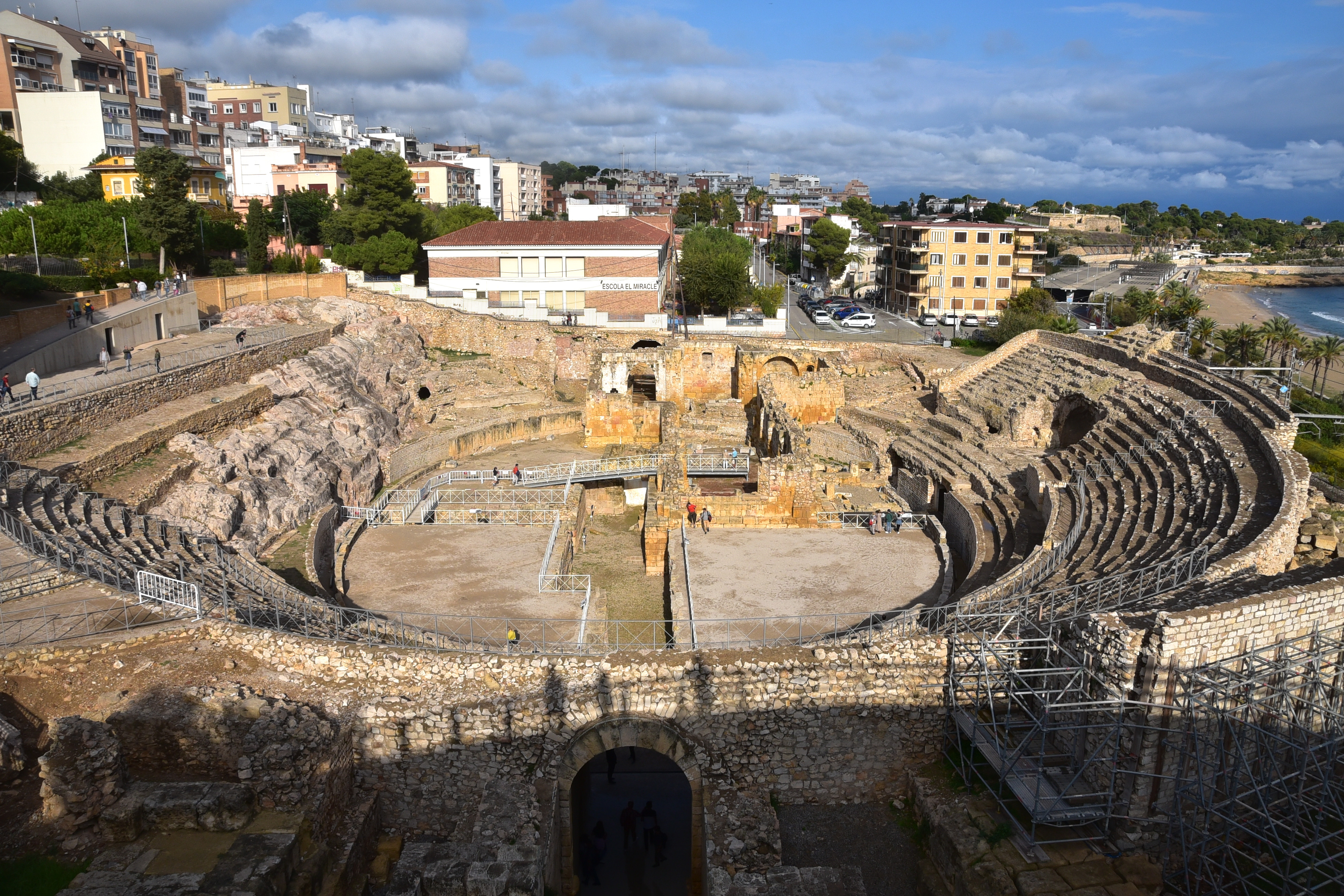
Constructed during the early 2nd century AD beside the Mediterranean coast, the amphitheatre of Tarraco could accommodate an estimated 14,000 spectators. Its arena contained underground passages and service chambers used for gladiatorial spectacles and animal hunts. The monument is traditionally associated with the martyrdom of Bishop Fructuosus and his deacons in AD 259, and an early Christian basilica was subsequently built within the arena.
SWITZERLAND
Augusta Raurica Roman Amphitheatre (Augst) (Google Maps)
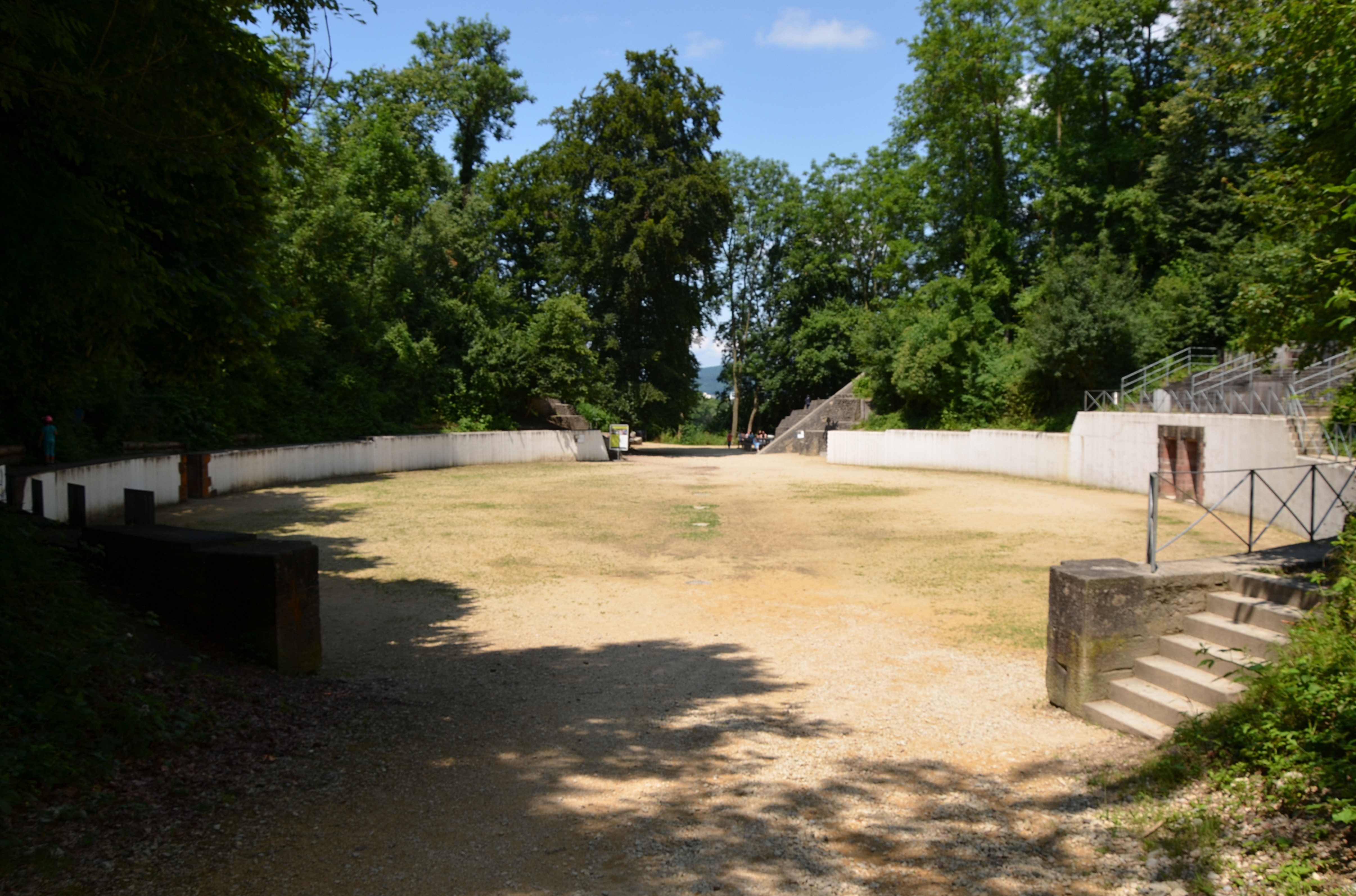
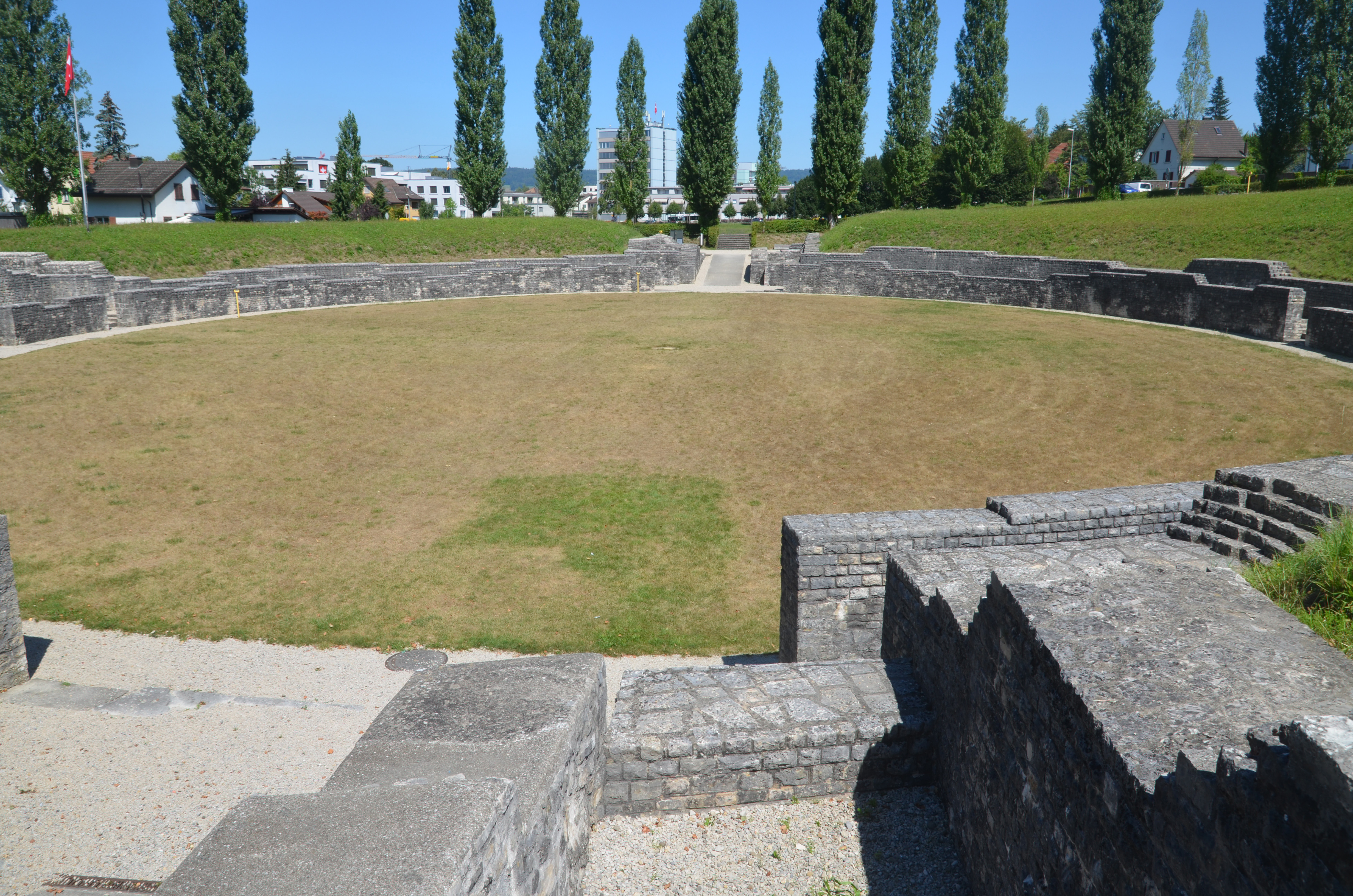
Constructed during the 2nd century AD, the amphitheatre of Augusta Raurica replaced or supplemented earlier public entertainment facilities in the Roman colony. Built in a natural depression outside the principal urban centre, its arena was surrounded by seating for as many as 13,000 spectators, supported by earth embankments and masonry structures. The surviving remains include the arena enclosure, entrances and portions of the cavea.
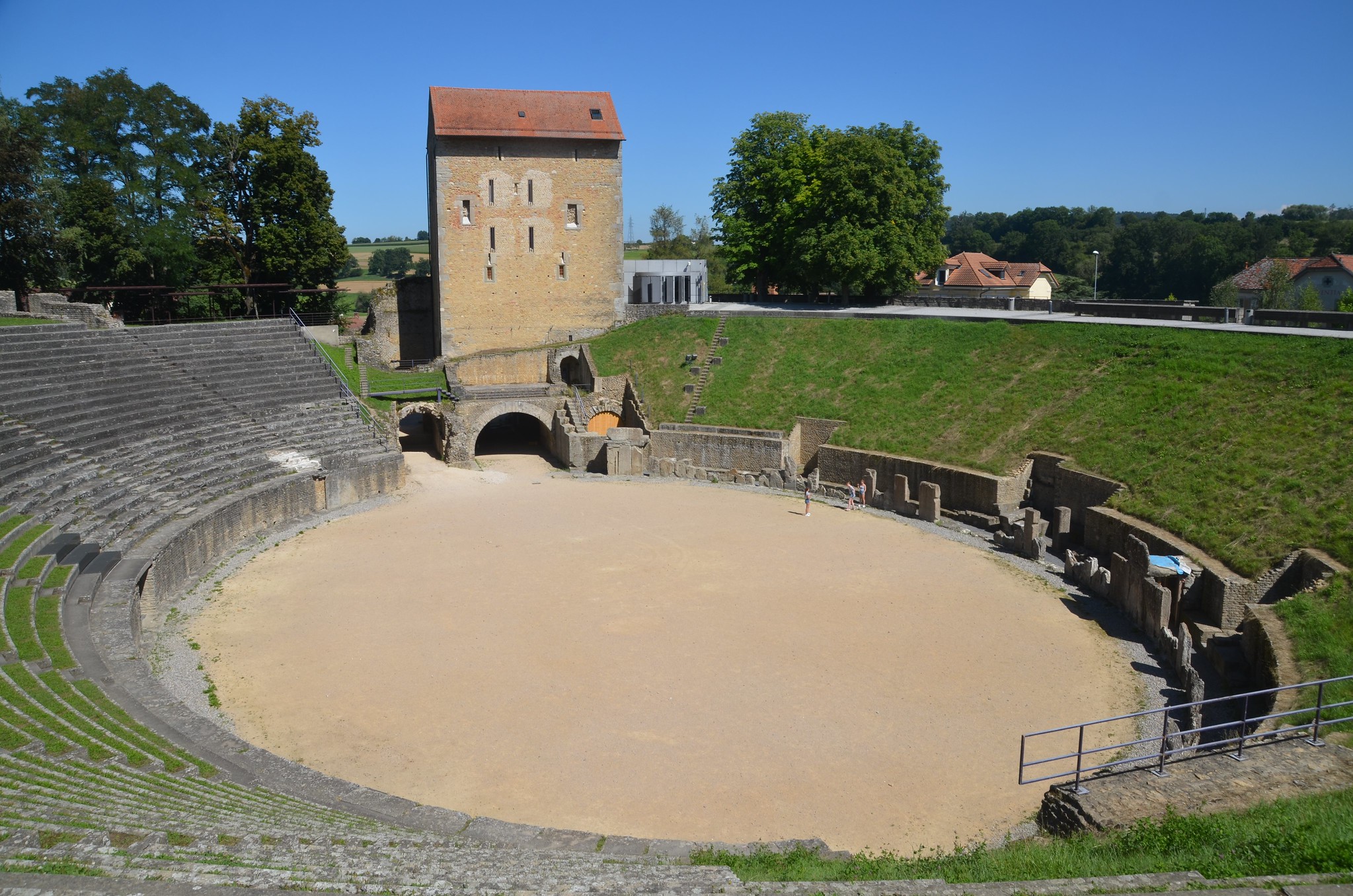
Constructed during the late 1st or early 2nd century AD and subsequently enlarged, the amphitheatre of Aventicum was one of the principal monumental buildings of the Roman provincial capital. Measuring approximately 115 × 87 m, it could accommodate more than 10,000 spectators. The surviving structure includes substantial seating remains and a monumental entrance later incorporated into medieval fortifications.
Octodurus Roman Amphitheatre (Martigny) ()
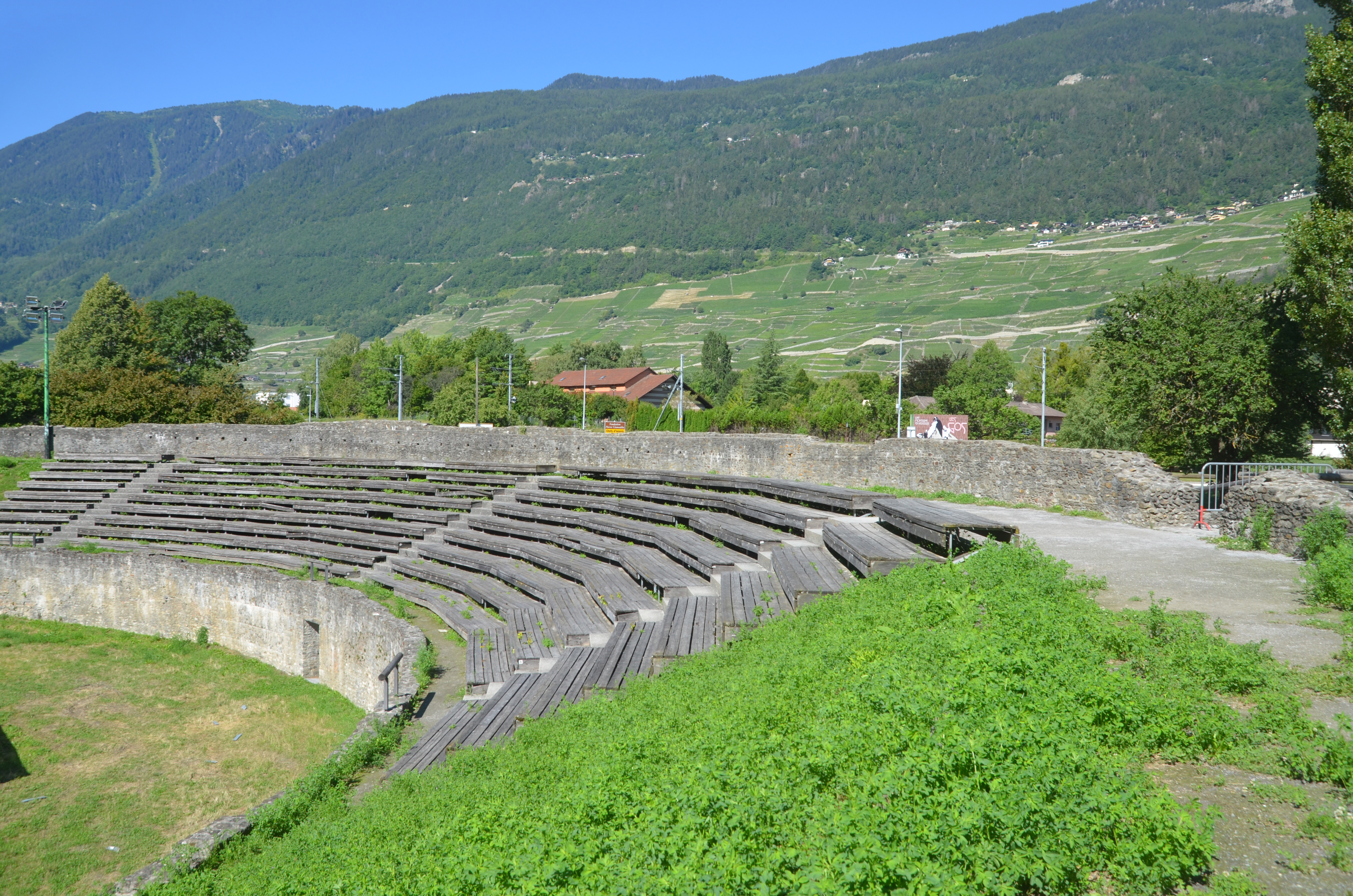
Constructed during the 2nd century AD outside the Roman town of Forum Claudii Vallensium, the amphitheatre of Octodurus was built using earth embankments and masonry retaining walls. Its elliptical arena was surrounded by seating accommodating several thousand spectators. The well-preserved outline of the monument remains visible near the archaeological centre of ancient Martigny.
Noviodunum Roman Amphitheatre (Nyon) (Google Maps)
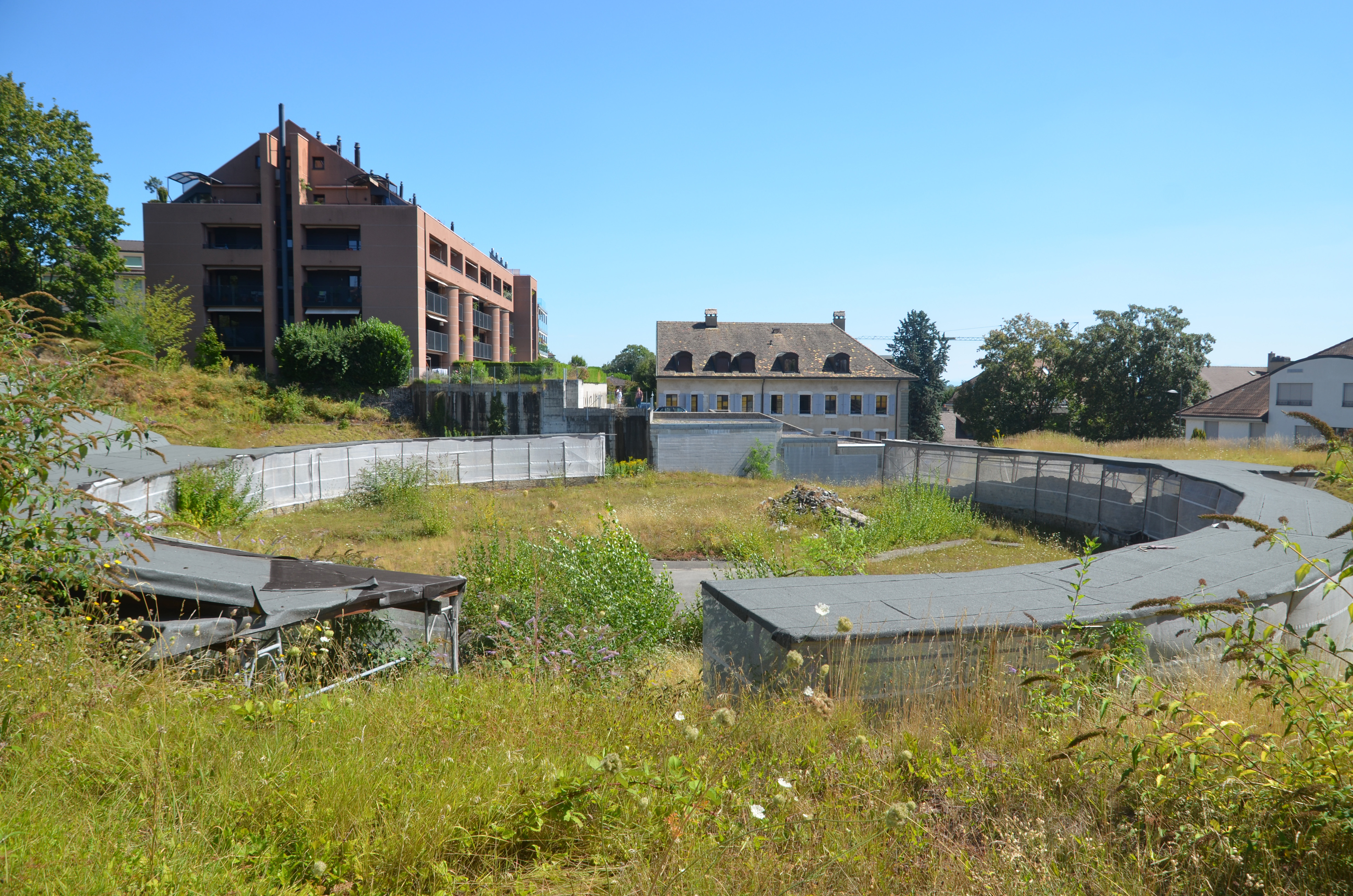
Constructed in the early 2nd century AD, probably during the reign of Trajan, the amphitheatre of Colonia Iulia Equestris was situated outside the principal urban centre of Noviodunum. An inscription honouring Trajan, dated to AD 111, found at the site provides important evidence for its chronology. Reconstructed seating suggests that several thousand spectators could have attended, although a precise capacity is not established. Discovered in 1996, the monument survives principally as foundations and sections of its arena enclosure beneath the modern town.
Vindonissa Roman Amphitheatre (Windisch) (Google Maps)
Constructed during the 1st century AD near the legionary fortress of Vindonissa, the amphitheatre provided entertainment for the soldiers stationed at this important military base. Its elliptical arena was surrounded by seating for approximately 11,000 spectators, supported by earth and timber structures that were later modified during subsequent phases of use. The monument is among the largest surviving Roman military amphitheatres in Switzerland.
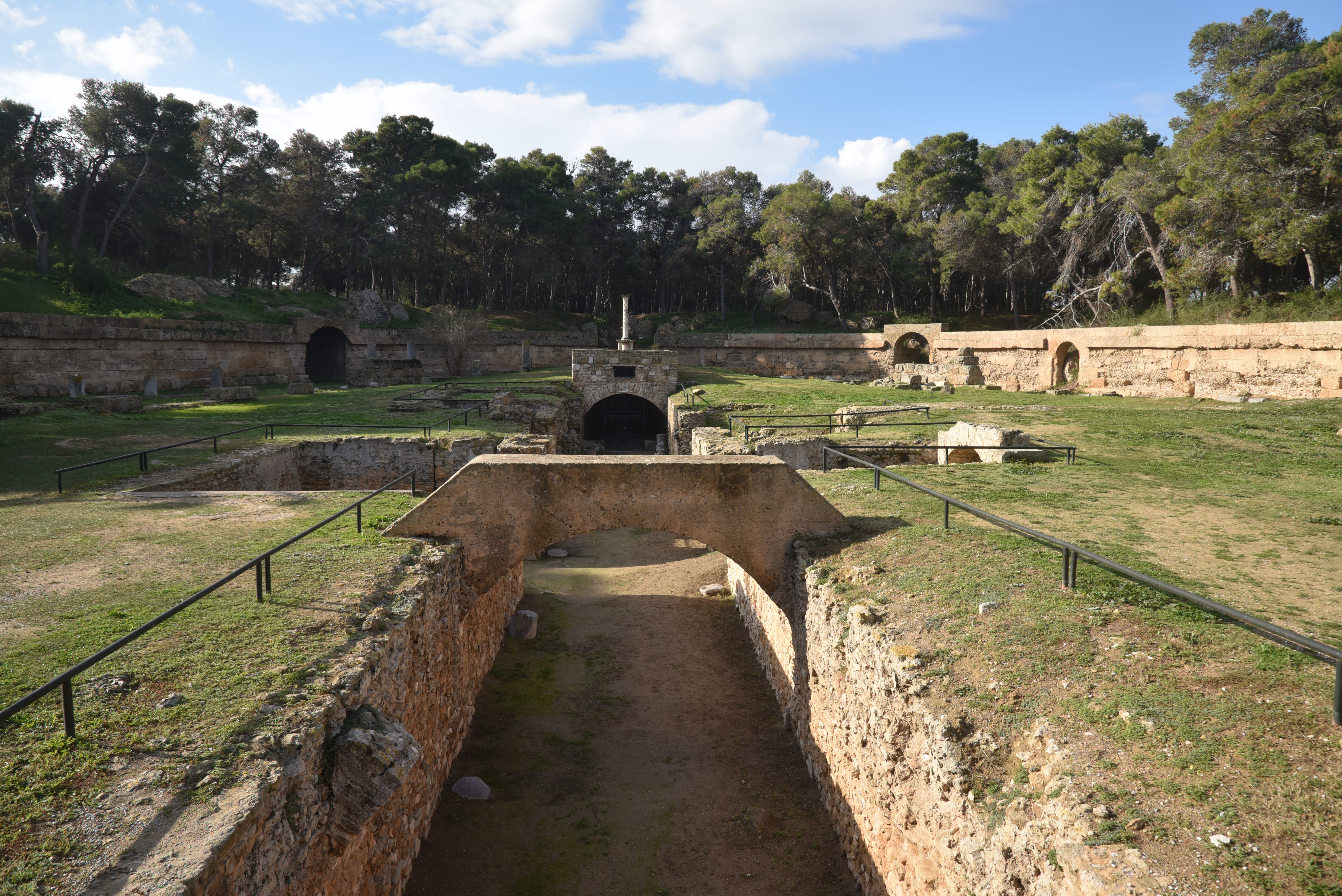
The earliest phase of the amphitheatre at Carthage may date to the Augustan period (27 BC–AD 14), although its initial chronology remains debated. The building was substantially enlarged during the 2nd century AD, becoming one of the principal entertainment venues of Roman Africa. Its extensive arena and seating accommodated large crowds attending gladiatorial combats and animal spectacles. The site is traditionally associated with the martyrdom of Perpetua and Felicitas in AD 203.
Probably constructed in the late 2nd or early 3rd century AD, the amphitheatre of Mactaris was a relatively modest entertainment building accommodating several thousand spectators. Its masonry construction closely resembles that of the city’s Great Baths, dedicated in AD 199, suggesting a similar date. The surviving remains preserve the outline of the arena and portions of the seating substructures.
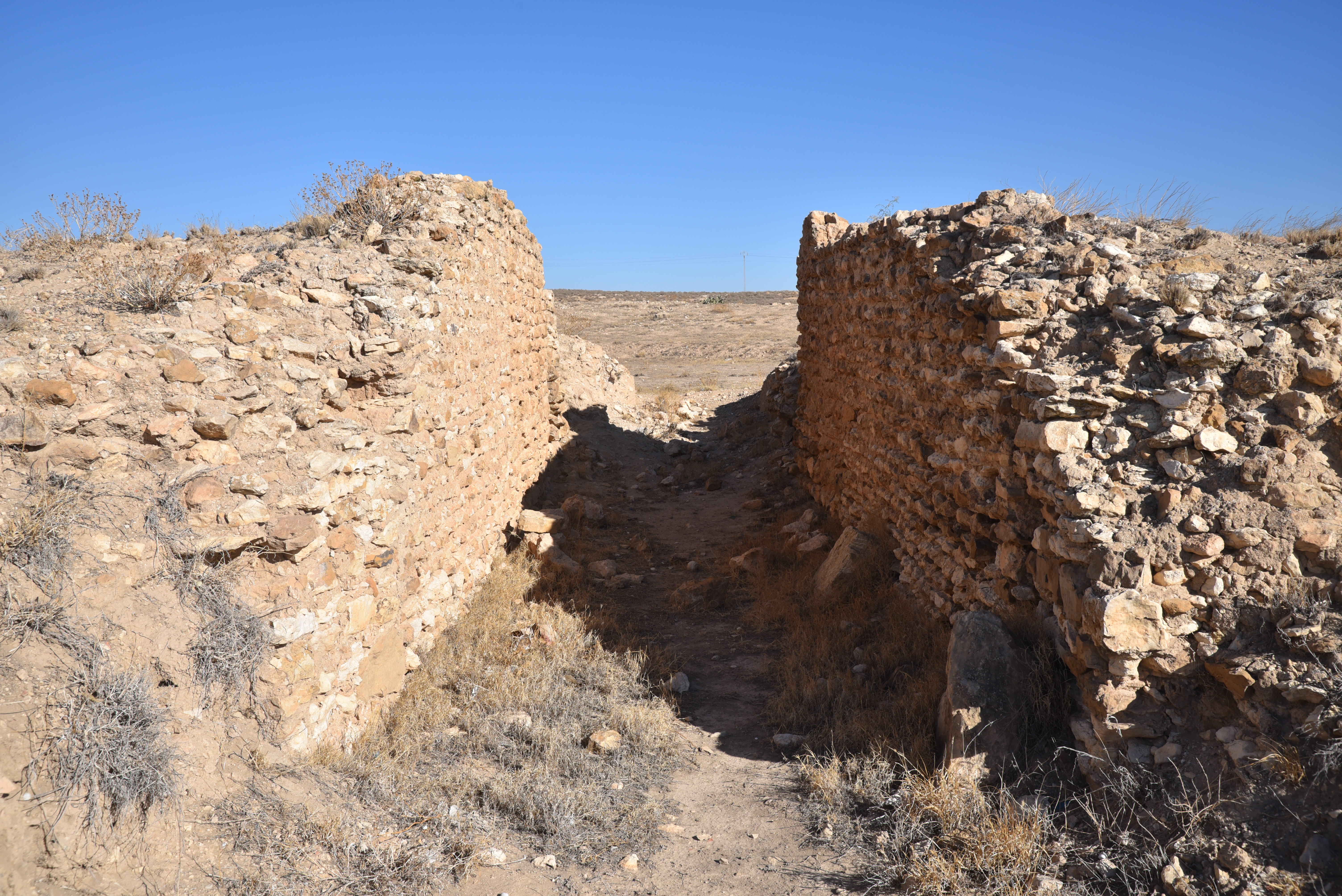
The earliest phase of the amphitheatre at Sufetula may date to the Flavian period (AD 69–96), while an enlargement of the seating is generally assigned to the mid-2nd century AD, possibly around AD 160. Situated northwest of the ancient city centre, the building accommodated several thousand spectators. Its surviving remains include the arena and portions of the masonry structures that supported the seating.
Probably constructed in the late 2nd or early 3rd century AD, during a period of considerable urban prosperity, the amphitheatre of Thuburbo Majus accommodated gladiatorial combats and animal spectacles. The building subsequently underwent alterations, possibly during the 3rd and 4th centuries AD. Its surviving remains preserve the elliptical arena and sections of the structures that supported the seating.
Thysdrus Great Amphitheatre (El Jem) (Google Maps)
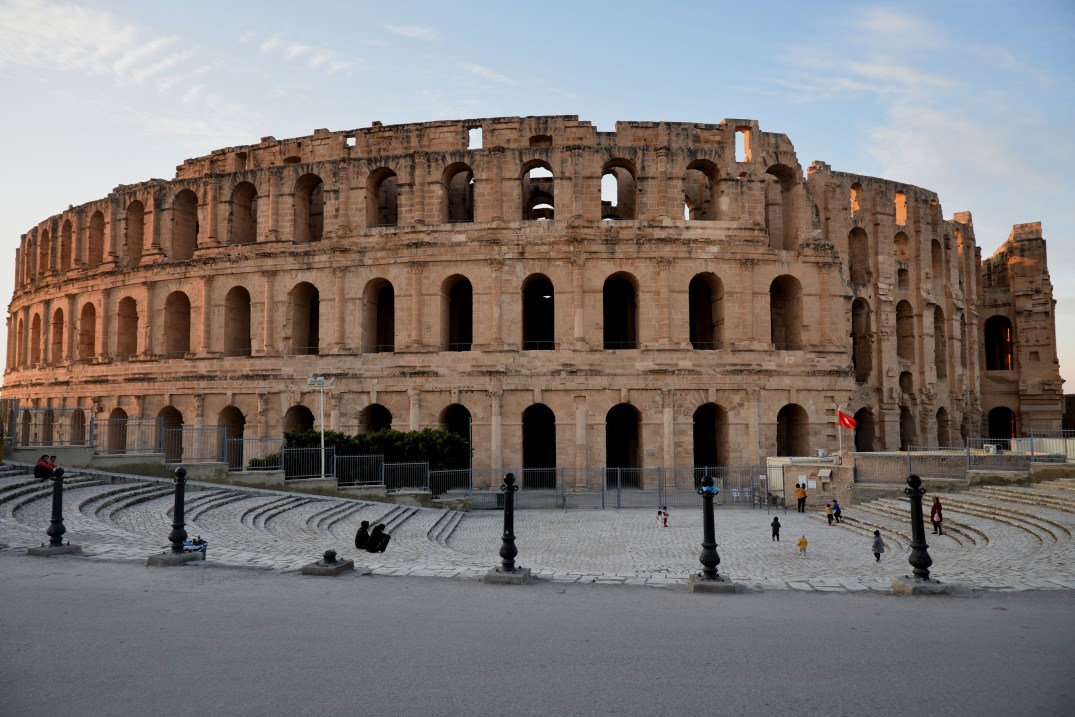
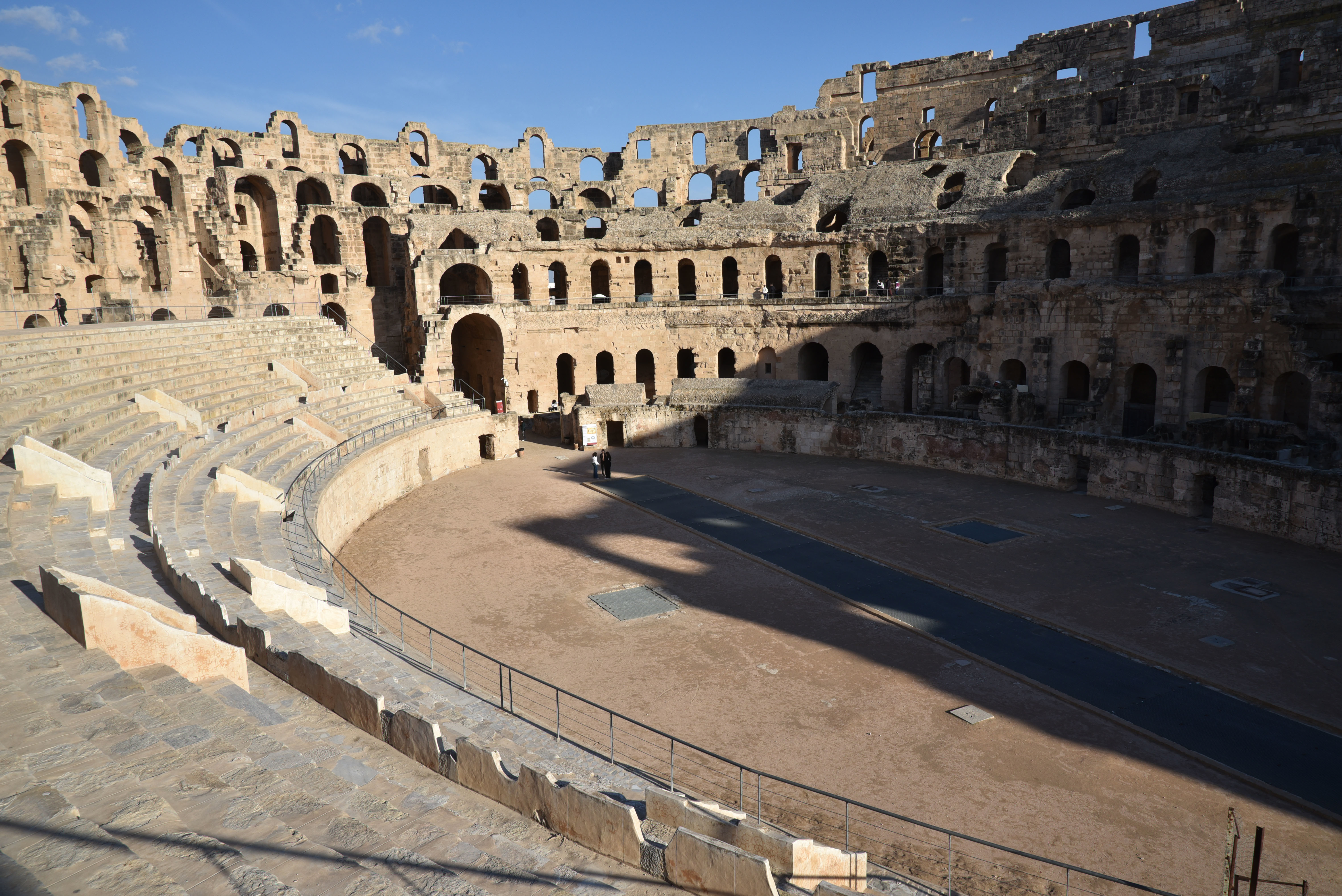
Constructed during the first half of the 3rd century AD, the great amphitheatre of Thysdrus is one of the largest and best-preserved Roman arenas in the world. Measuring approximately 148 × 122 m, it could accommodate an estimated 30,000–35,000 spectators. Its monumental exterior originally rose through three levels of arcades, while an extensive underground gallery system beneath the arena provided facilities for animals, performers and equipment.
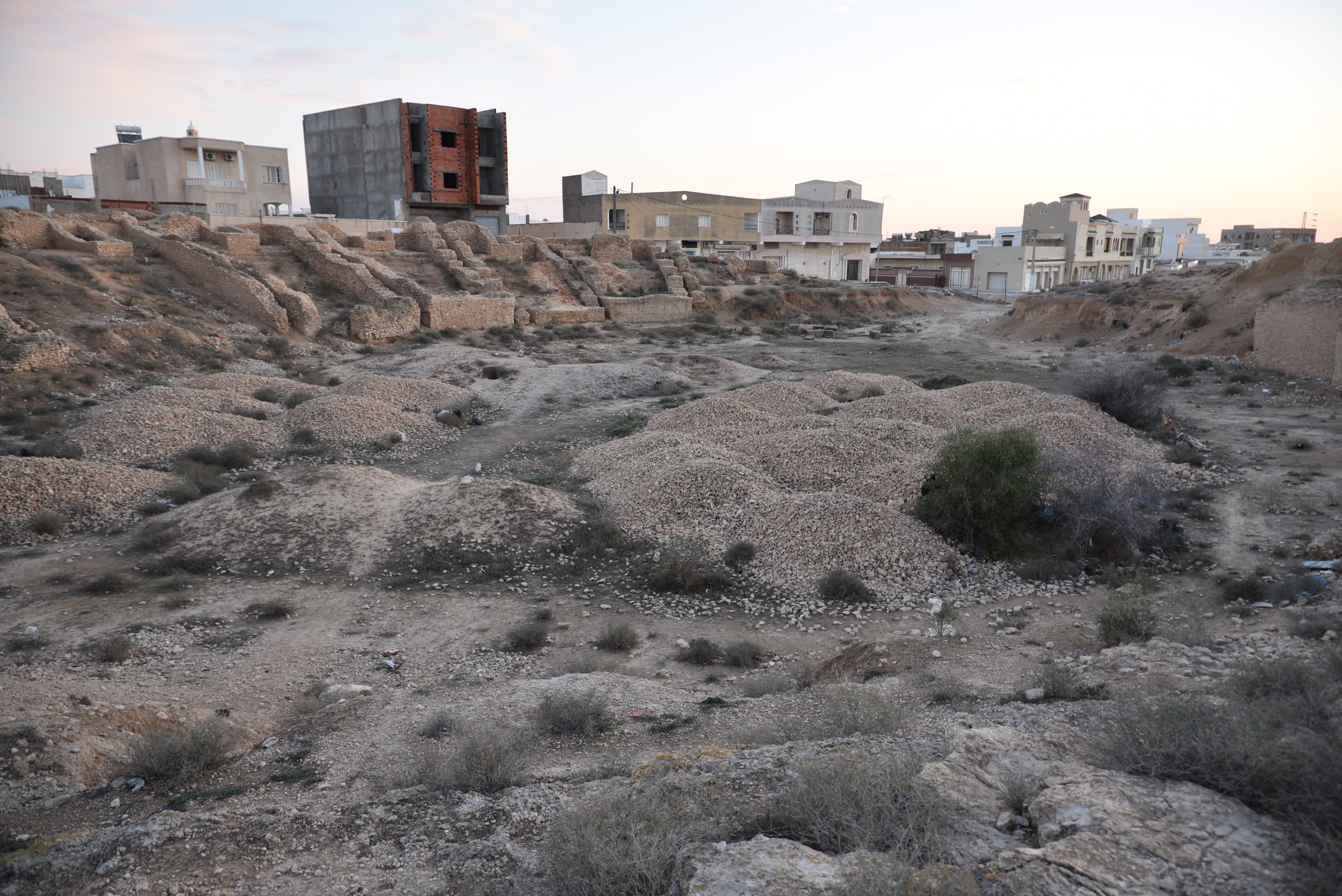
Situated near the great 3rd-century amphitheatre, the earlier amphitheatre of Thysdrus developed through successive construction phases, beginning with a relatively simple arena excavated into the natural ground. Later modifications enlarged the structure and added more substantial seating. The remains illustrate the architectural evolution of amphitheatres at Thysdrus before the construction of the monumental arena for which the city is famous.
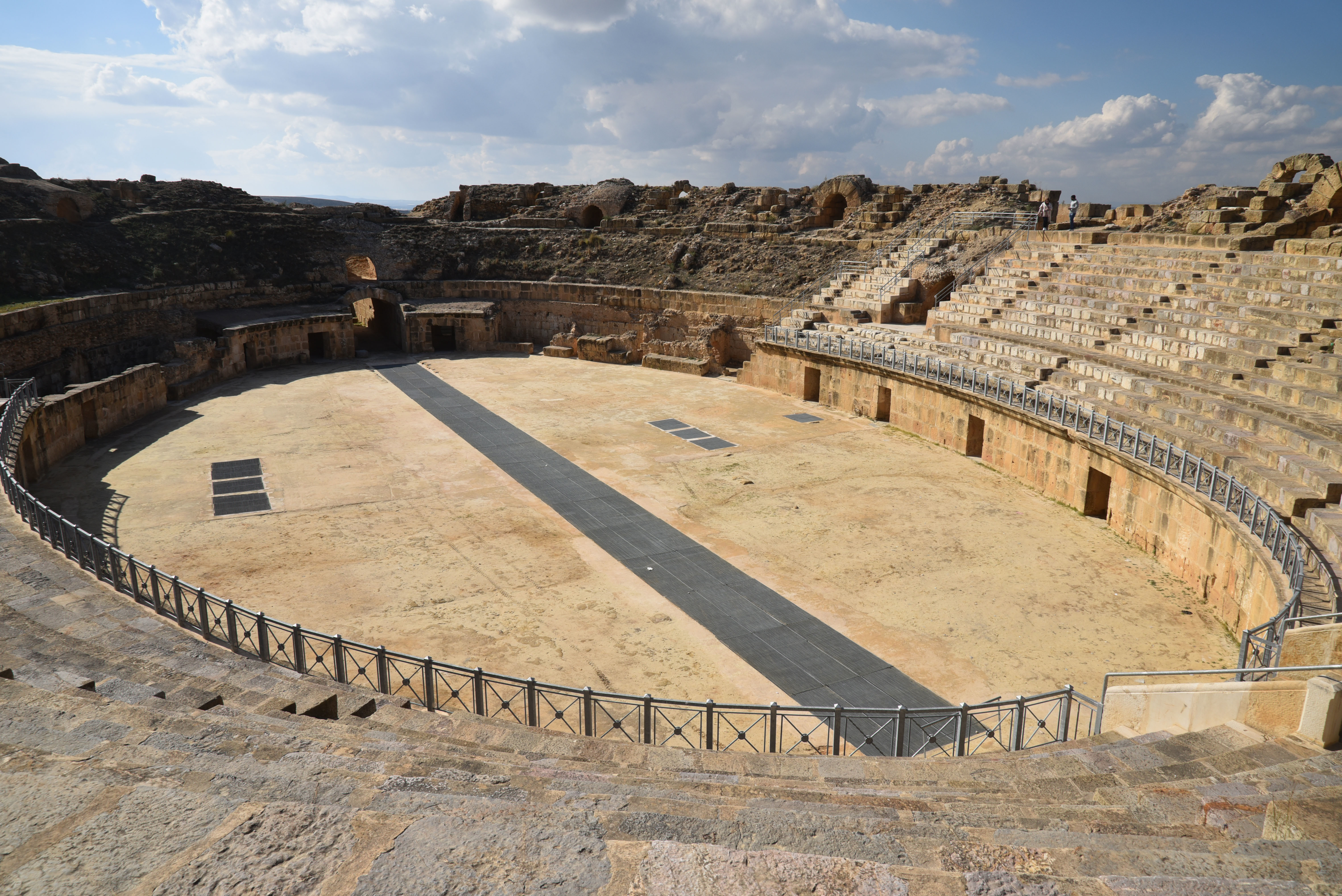
Probably constructed in the early 2nd century AD, possibly during Hadrian’s reign, the amphitheatre of Uthina was built partly into the natural hillside. Its elliptical arena was surrounded by seating supported by substantial masonry structures and vaulted corridors. Subsequent enlargement increased its capacity, and the surviving remains rank among the most impressive amphitheatres in Roman Tunisia.
TURKEY
Anazarbus Roman Amphitheatre (Anavarza) (Google Maps)
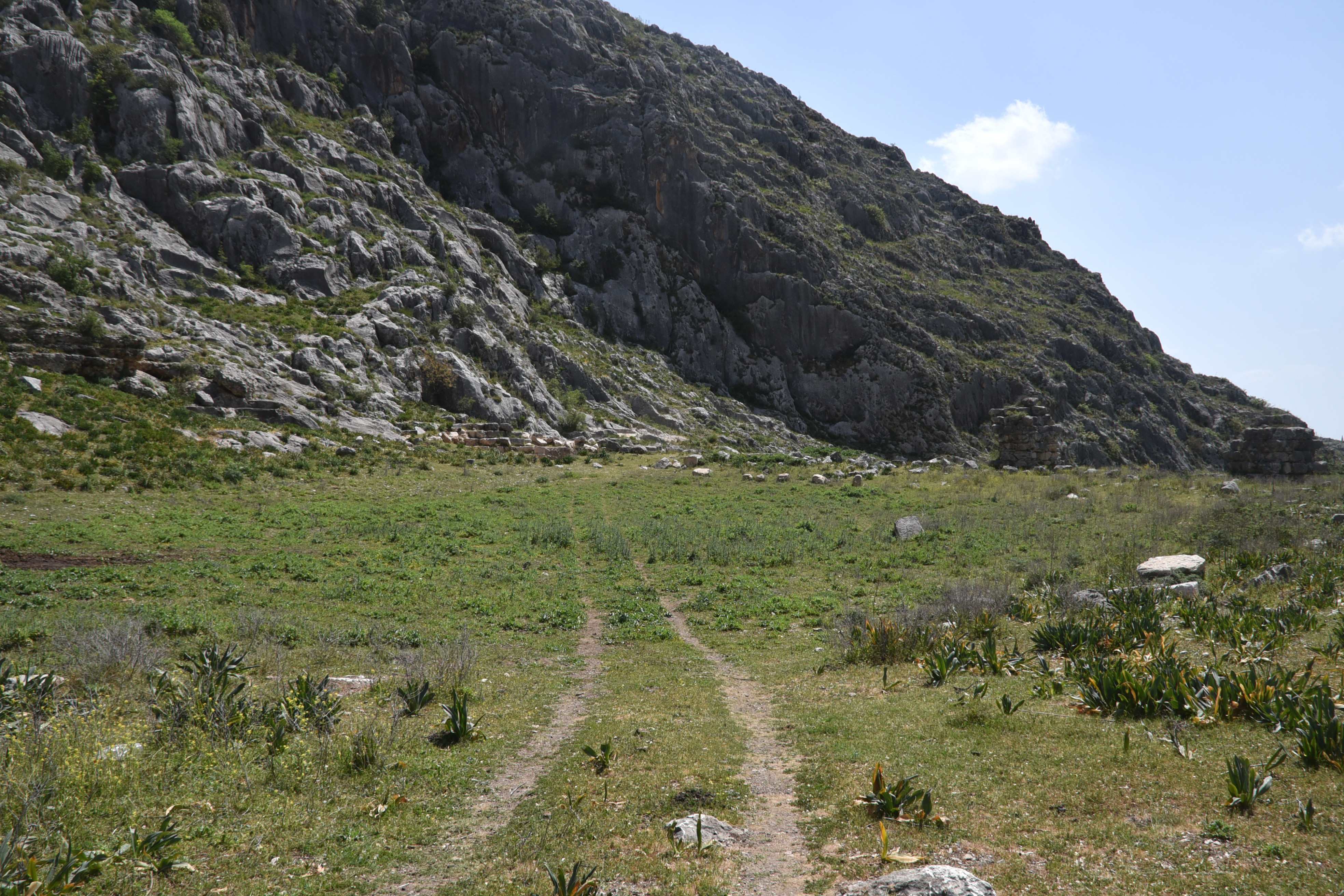
Located outside the southern city walls of Anazarbus, the amphitheatre formed part of an extensive entertainment complex that also included a theatre and hippodrome. Its surviving remains consist principally of masonry substructures and sections of the arena enclosure. The monument is an important example of a purpose-built Roman amphitheatre in Asia Minor, where such structures were comparatively rare.
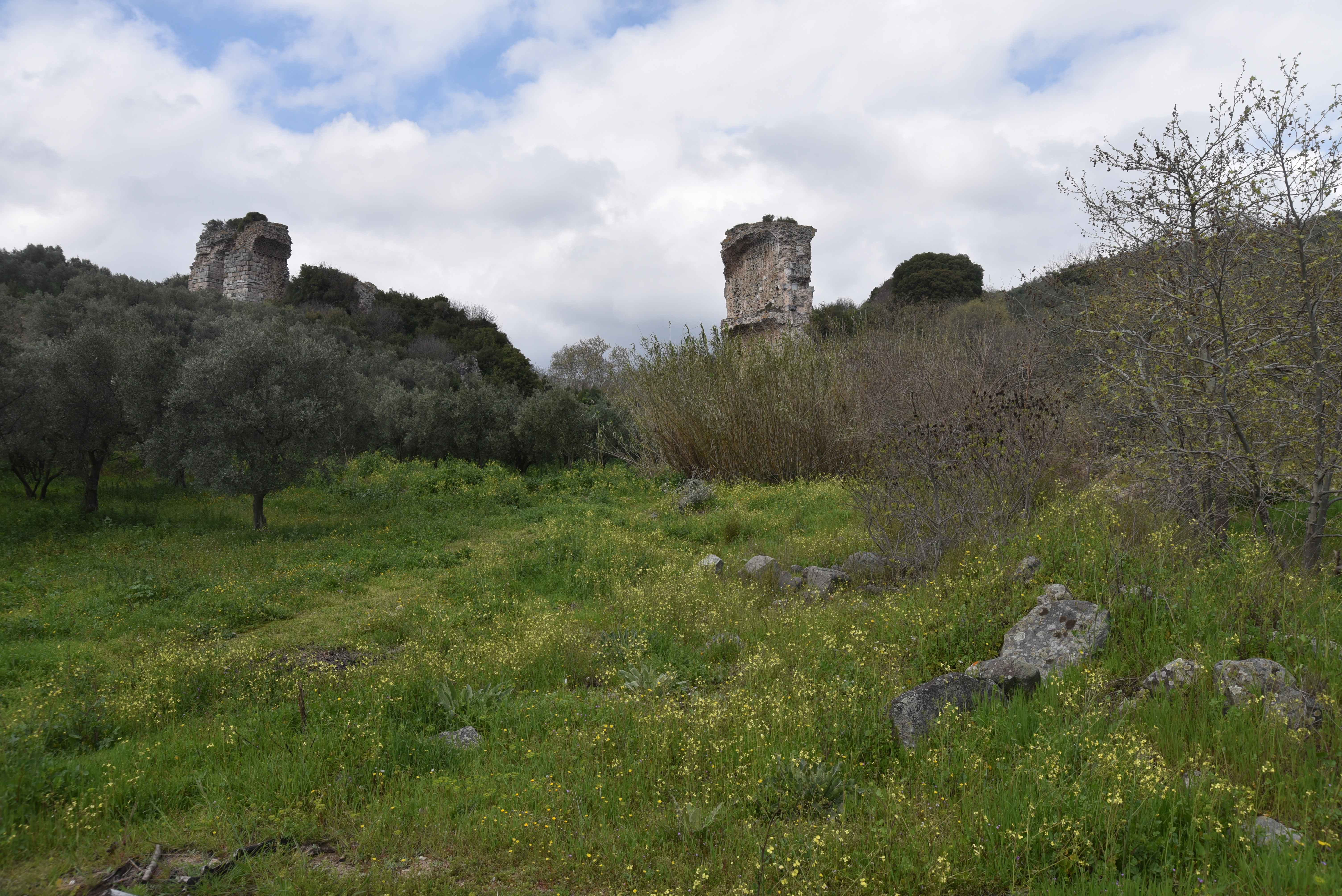
Constructed during the Roman imperial period, the amphitheatre of Cyzicus occupied a natural valley near the ancient city. Its builders exploited the surrounding slopes to support the seating, while substantial masonry arches and vaulted substructures spanned the valley floor. Although much of the monument has disappeared, the surviving foundations and arches attest to the scale of public entertainment at this important city on the Propontis.
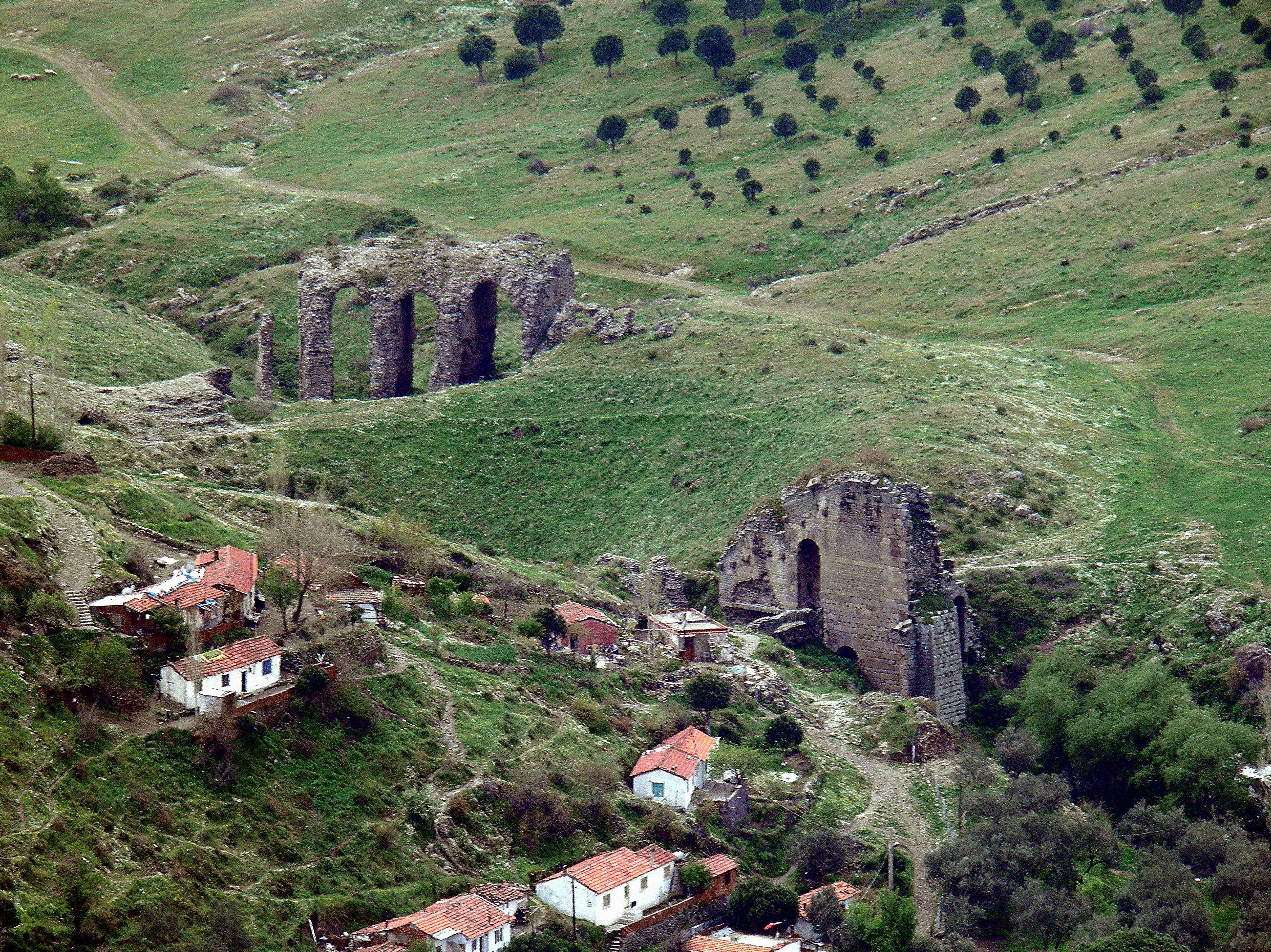
Constructed in the early 2nd century AD, the amphitheatre of Pergamon occupied a natural valley beneath the city’s acropolis. Its builders used the opposing hillsides to support the seating, supplementing the terrain with substantial vaulted masonry substructures. The surviving arches and retaining walls are among the most distinctive amphitheatre remains in Asia Minor. The monument was still associated with spectacles and Christian martyrdom traditions in Late Antiquity.
UNITED KINGDOM
Calleva Atrebatum Roman Amphitheatre (Silchester) (Google Maps)
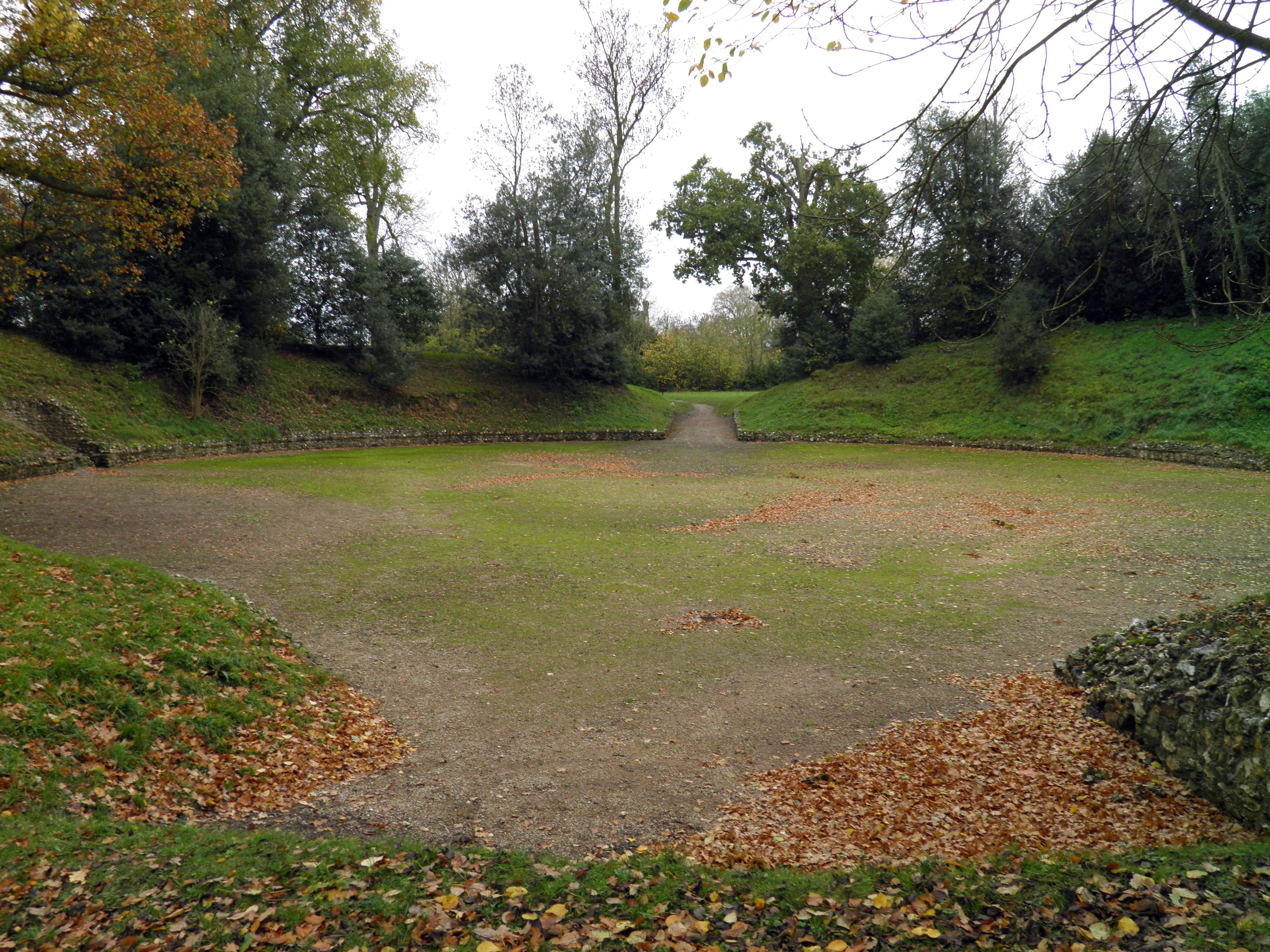
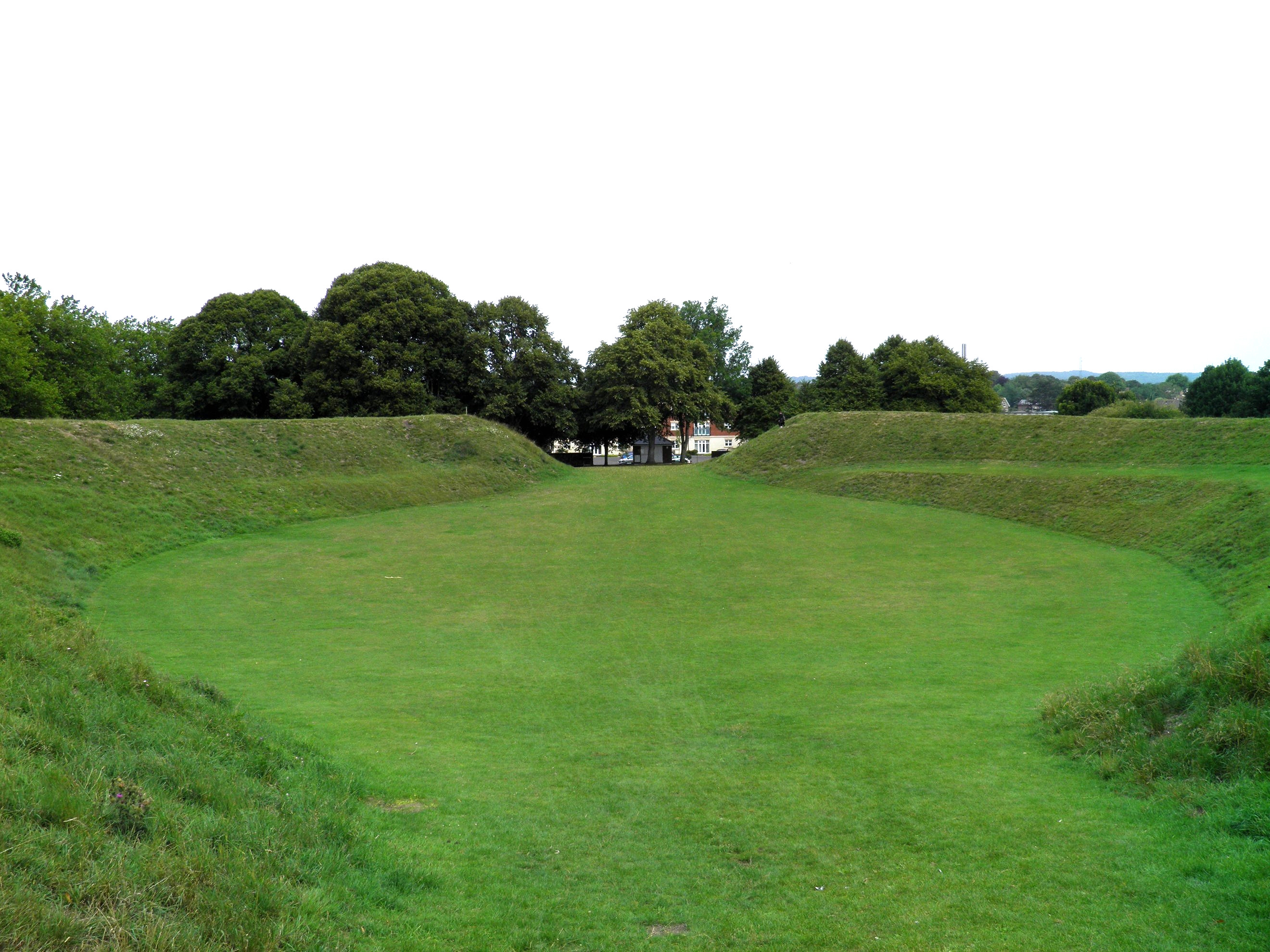
Built during the 1st century AD outside the walls of the Roman town, the amphitheatre at Calleva Atrebatum originally featured earth embankments that supported wooden seating. Later modifications and expansions occurred during the Roman occupation. The well-preserved earthworks still maintain the elliptical shape of the arena and the surrounding seating area, known as the cavea, which could accommodate an estimated 4,500 or more spectators.
Corinium Dobunnorum Roman Amphitheatre (Cirencester) (Google Maps)
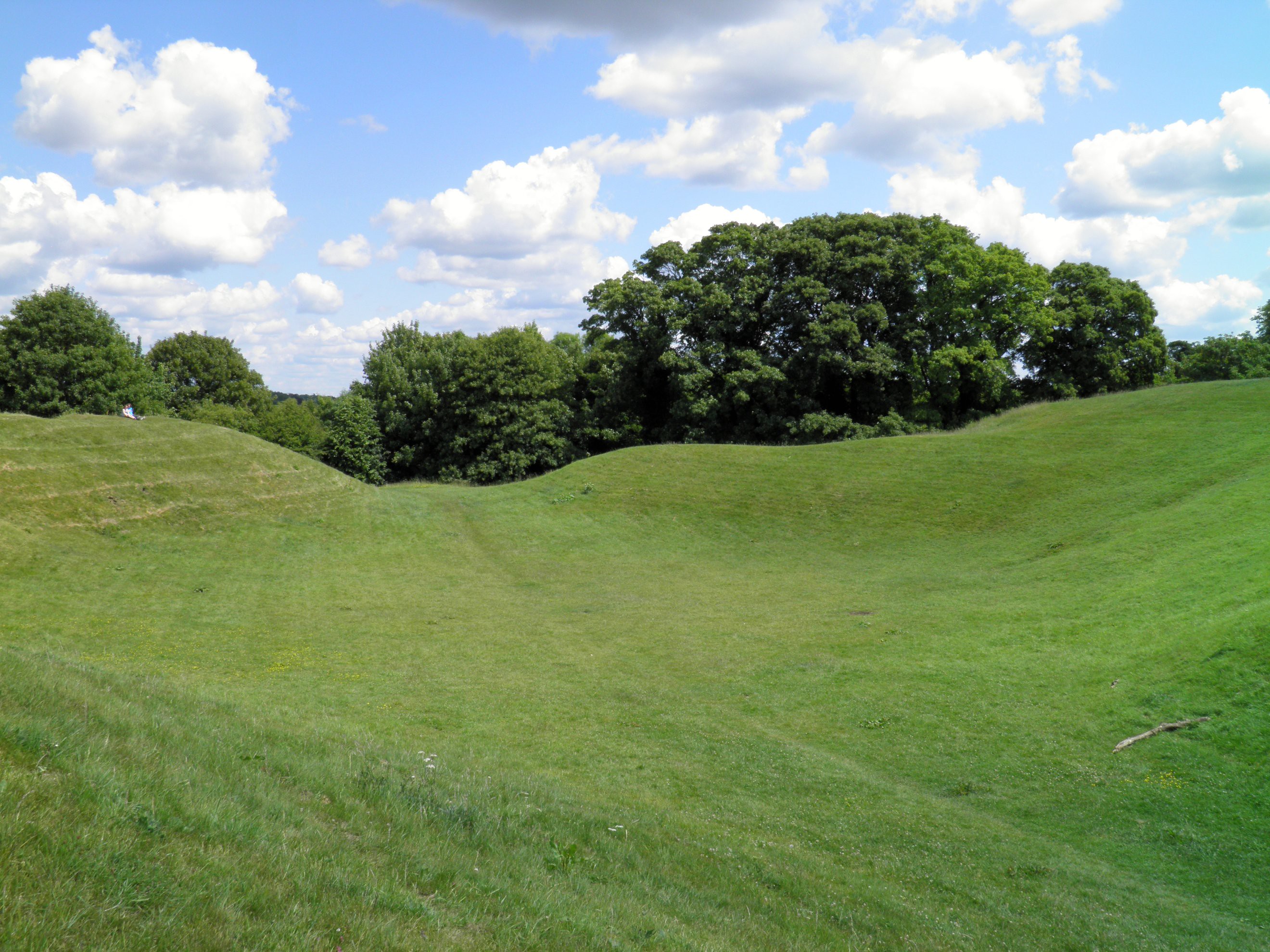
Constructed during the 2nd century AD outside the Roman town of Corinium, the amphitheatre was formed primarily from earth embankments supported by stone and timber structures. Its elliptical arena was surrounded by seating for an estimated 8,000 spectators. Although the original seating has disappeared, the substantial earthworks remain clearly visible and preserve the overall shape of the monument.
Deva Victrix Roman Amphitheatre (Chester) (Google Maps)
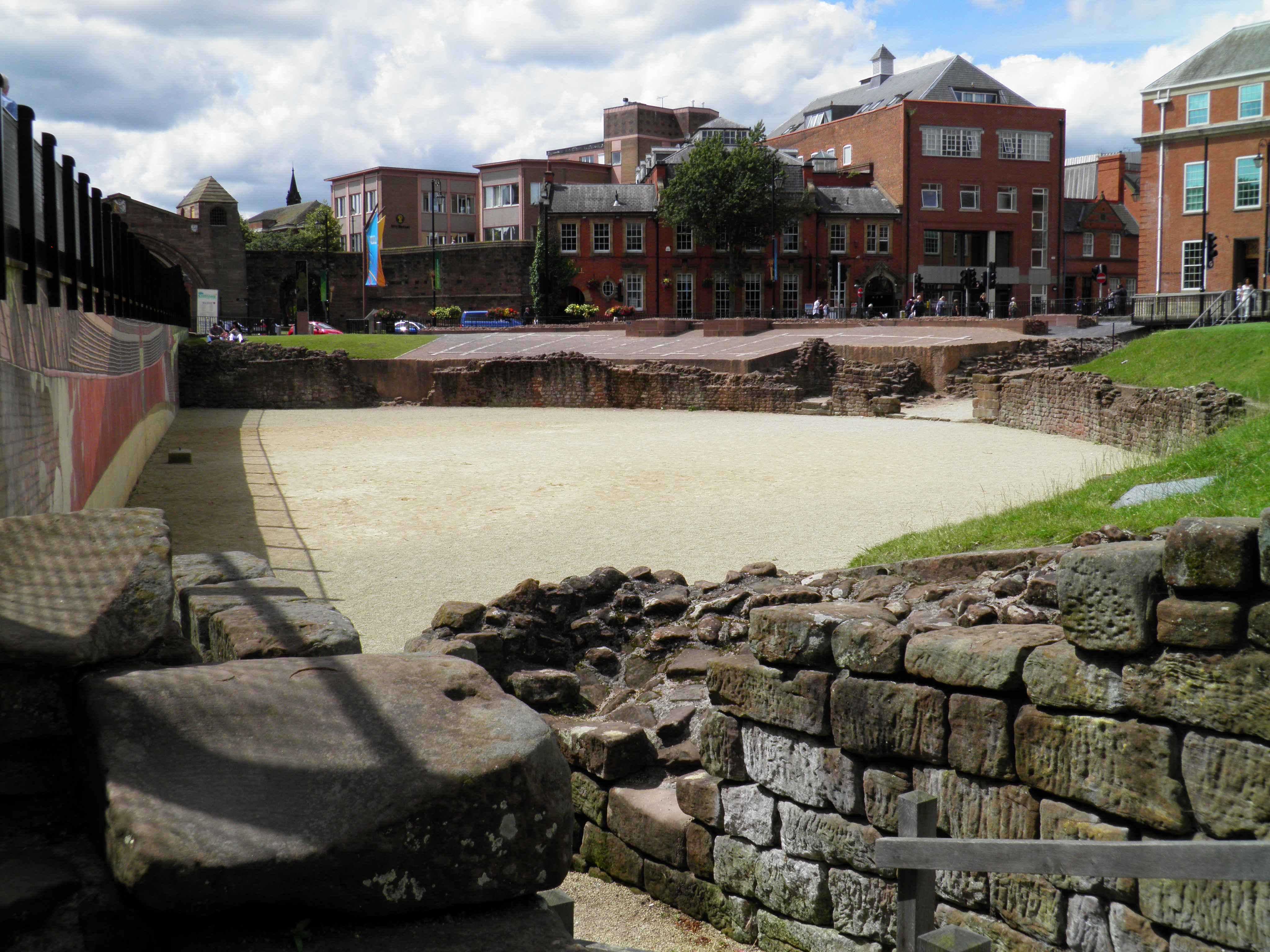
Constructed during the late 1st century AD near the legionary fortress of Deva, the amphitheatre was subsequently enlarged and rebuilt in stone. It was one of the largest Roman military amphitheatres in Britain and could accommodate several thousand spectators. Excavations have revealed two main construction phases, along with entrances, arena walls, and remains of the supporting structures. The monument served the soldiers of Legio XX Valeria Victrix and the surrounding civilian population.
Durnovaria Roman Amphitheatre (Maumbury Rings, Dorchester) (Google Maps)
Originally constructed as a Neolithic henge monument, Maumbury Rings was adapted during the Roman occupation into an amphitheatre serving the town of Durnovaria. The prehistoric earthwork was remodelled to create an elliptical arena surrounded by seating banks, with entrances providing access to the performance area. Its surviving form is a remarkable example of the Roman reuse of a much older ceremonial monument.
Isca Augusta Roman Amphitheatre (Caerleon) (Google Maps)
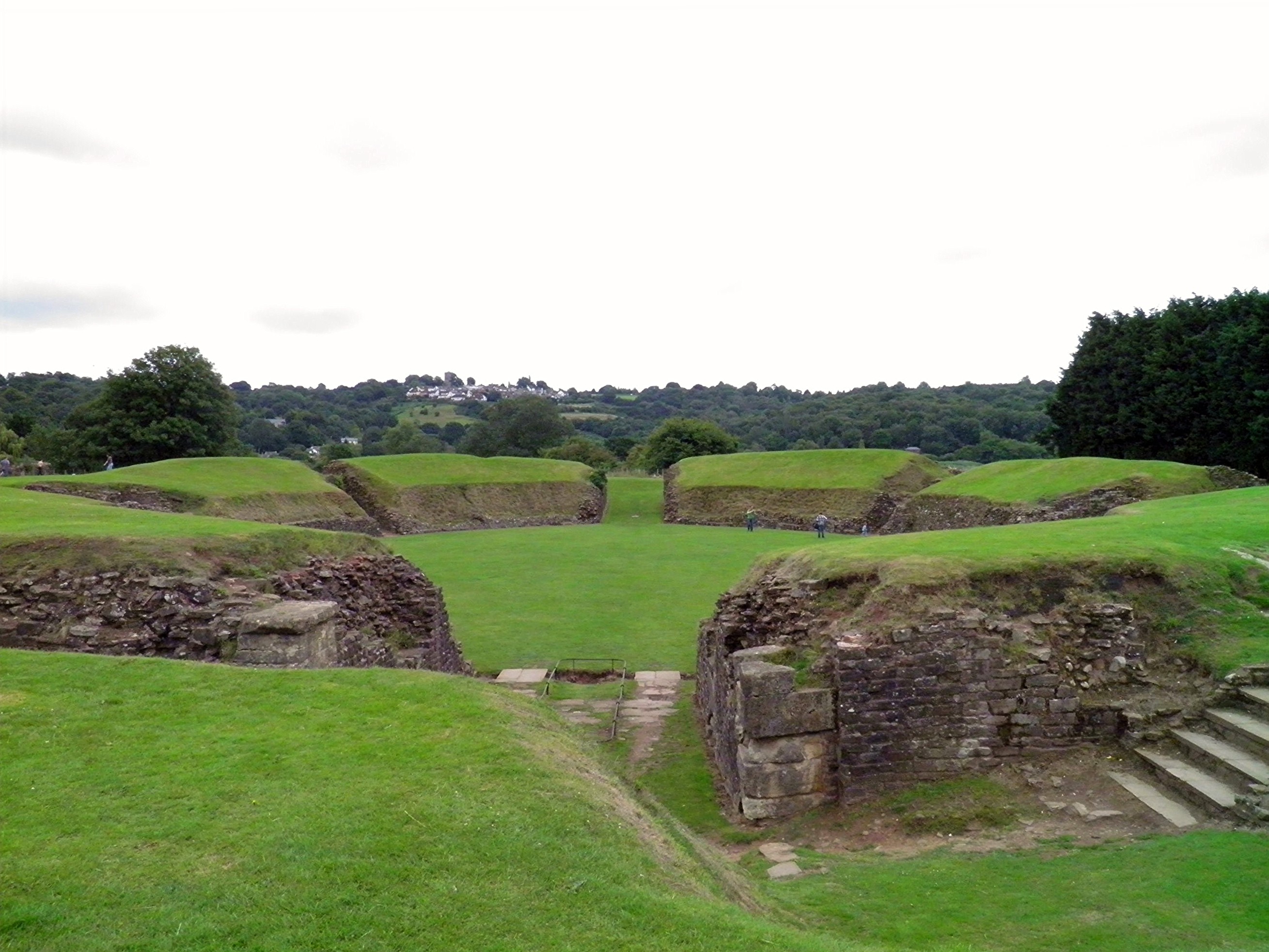
Constructed around AD 90 outside the legionary fortress of Isca Augusta, the amphitheatre provided entertainment for soldiers of Legio II Augusta. Its elliptical arena was surrounded by stone seating supports and could accommodate approximately 6,000 spectators. The surviving remains preserve the arena enclosure, monumental entrances and portions of the seating structures, making it one of the best-preserved Roman military amphitheatres in Britain.
Londinium Roman Amphitheatre (London) (Google Maps)
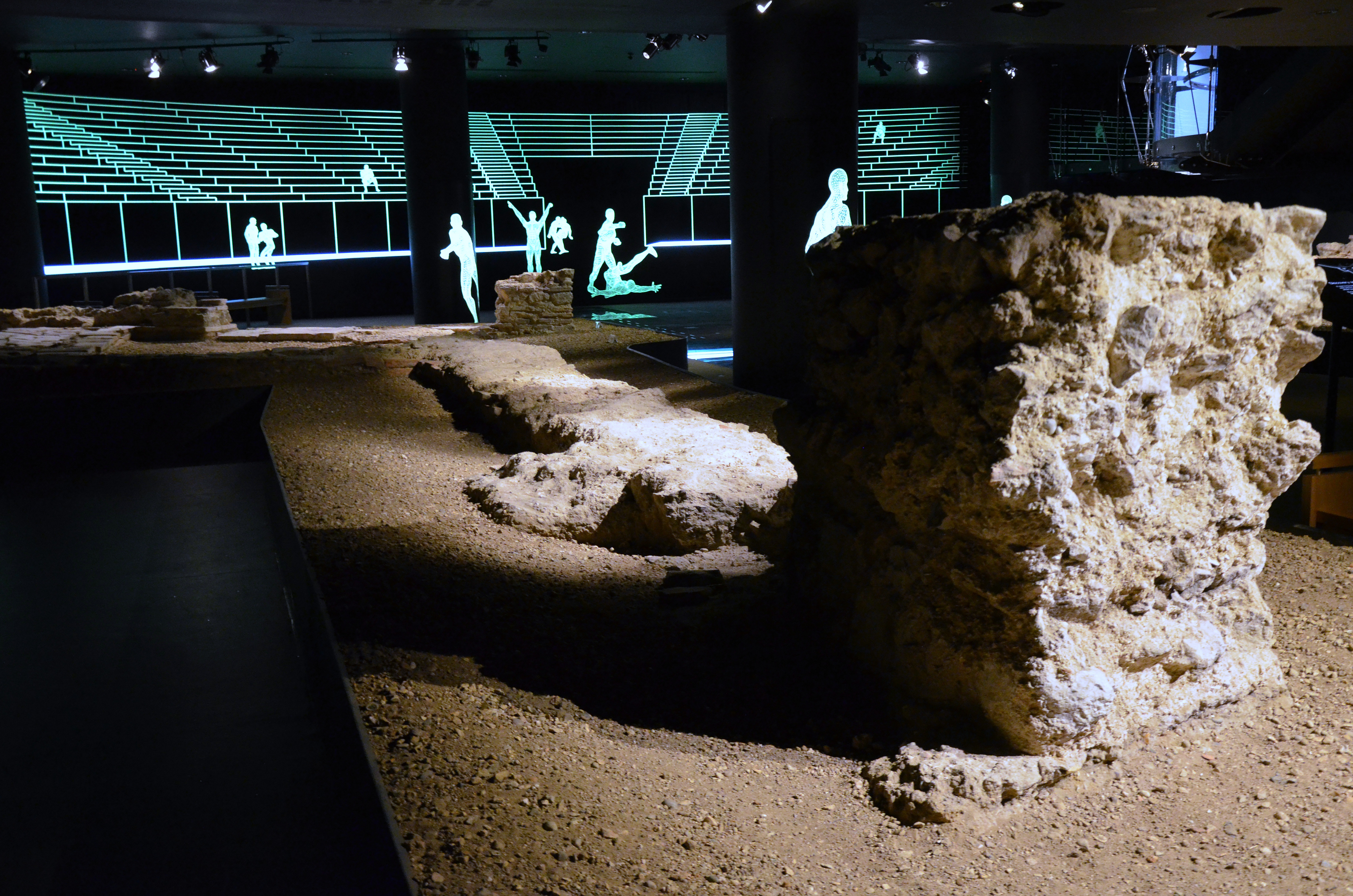
Constructed around AD 70 as a timber structure and later rebuilt in stone in the 2nd century AD, the amphitheatre of Londinium stood beside the Roman fort. With an estimated capacity of around 7,000 spectators, it hosted gladiatorial combats, animal spectacles and public gatherings. The monument was discovered beneath Guildhall Yard in 1988, and its surviving eastern entrance and arena walls are preserved within the Guildhall Art Gallery.
Selected Bibliography
Bomgardner, David L. The Story of the Roman Amphitheatre. Routledge, 2000.
Golvin, Jean-Claude. L’Amphithéâtre romain: essai sur la théorisation de sa forme et de ses fonctions. Paris: De Boccard, 1988.
Welch, Katherine E. The Roman Amphitheatre: From Its Origins to the Colosseum. Cambridge University Press, 2007.