Roman Villa Nennig

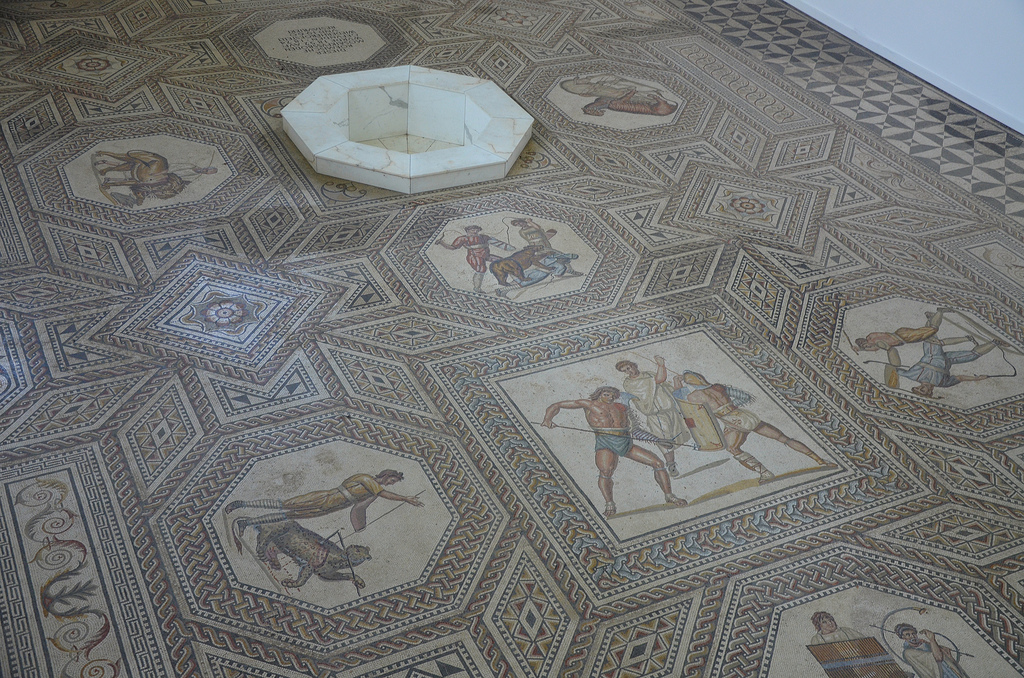
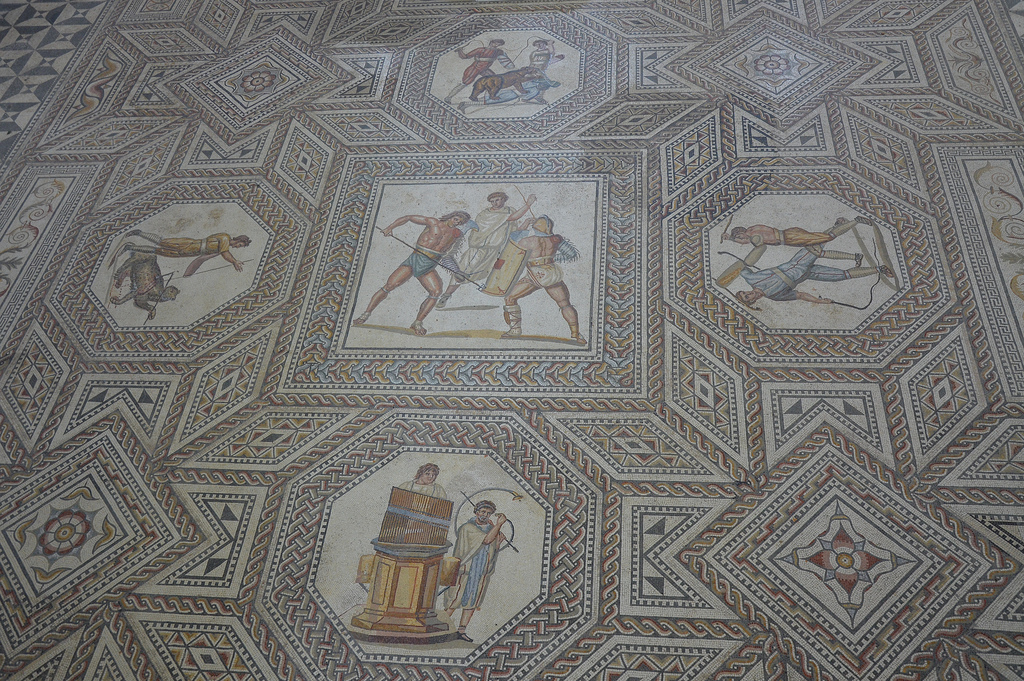
Located in the village of Nennig in the delightful Upper Moselle Valley, the Roman Villa Nennig (German: Römische Villa Nennig) houses a richly illustrated gladiatorial mosaic, one of the most important Roman artefacts north of the Alps. Protected by a dedicated building built about 150 years ago and covering an area of roughly 160m2, the mosaic vividly portrays musicians, hunting scenes and gladiatorial contests.

Coordinates: 49° 31′ 44.56″ N 6° 23′ 5.03″ E

In the 3rd century AD, the mosaic paved the atrium (reception hall) of a large villa urbana which a wealthy Roman had built on the road between Divodurum (Metz) and Augusta Treverorum (Trier). The mosaic later disappeared below ground until it was discovered by chance by a farmer in 1852. The excavations conducted between 1866 and 1876 revealed only a part of the once splendid and extensive ground, the foundation walls of the imposing central building, and several adjacent buildings. A coin of Commodus (struck ca. 192) found under the mosaic during the restorations of 1960 dates the villa’s construction to the end of the 2nd century or the beginning of the 3rd century AD.

The villa complex included a bath house with heated rooms, small pavilions and magnificent gardens. A two-storied colonnaded portico (140 m long) flanked by three-storied tower wings with massive walls ran across the façade of the main building. Beyond these, at either side, two temple-pedimented structures flanked the villa.
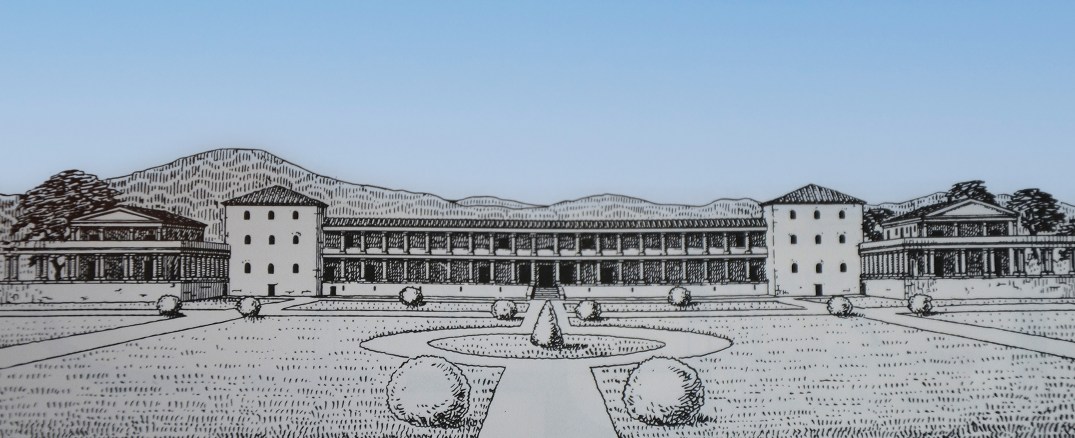
General view of the Roman Villa Nennig (reconstructed according to Mylius).

The mosaic comprises seven octagonal medallions surrounding two central quadrangles, one decorated with a scene of gladiatorial combat, the other occupied by a marble basin. An elaborate pattern of geometrical designs borders each scene. Walking around the interior of the protective building, the entire scene of the mosaic can be viewed from a raised platform.

PORTFOLIO
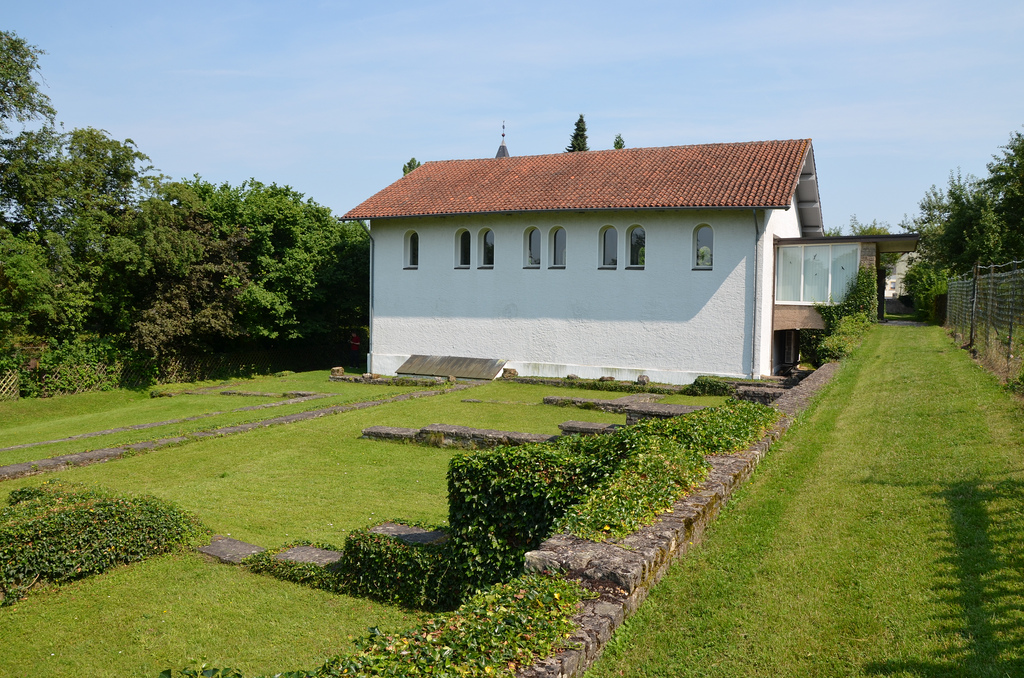
The remains of the Roman villa in Nennig.
The foundation remains of the Roman villa in Nennig.
Medallion depicting a organist and horn player. The beginning and the end of the Roman games were often accompanied by music. The mosaicist has depicted the water organ (hydraulis), know in the ancient world since 300 BC. The 27 organ-pipes rest on a hexagonal podium which also serves to store water for the organ. The organist plays the keyboard situated behind the pipes. The curved horn, which is braced and supported on the shoulder of the player by a cross bar, is a cornu.
Octagon depicting an organist and horn player.
The beginning and the end of the Roman games were often accompanied by music. The mosaicist has depicted the water organ (hydraulis), known in the ancient world since 300 BC. The 27 organ pipes rest on a hexagonal podium that also stores water for the organ. The organist plays the keyboard situated behind the pipes. The curved horn, which is braced and supported on the shoulder of the player by a crossbar, is a cornu.
Octagonal medallion depicting a Javelin thrower with a panther. The games usually began with venationes (beast hunts) and bestiarii (beast fighting) gladiators. Here the beast is wounded by the venator’s spear and tries to pull the javelin out. It succeeds only in breaking it in half. Delighted with his conquest, the proud venator received the acclamation of the crowd.
Octagon depicting a Javelin thrower with a panther.
The games usually began with venationes (beast hunts) and bestiarii (beast fighting) gladiators. Here the beast is wounded by the venator’s spear and tries to pull the javelin out. It only succeeds in breaking it in half. Delighted with his success, the proud venator received the crowd’s acclamation.
Octagonal medallion depicting a tiger attacking a wild ass. Another variety of venatio consisted of pitting animals against animals. The Romans loved to see large and dangerous animals fighting each other. In this scene, a wild ass, laid low by blows from the tiger’s paw, has fallen to the ground. Standing proudly, the victor of this unmatched contest looks around before commencing his bloody feast.
Octagon depicting a tiger attacking a wild ass.
Another variety of venatio consisted of putting animals against animals. In this scene, a wild ass, laid low by blows from the tiger’s paw, has fallen to the ground. Standing proudly, the victor of this unmatched contest looks around before starting his bloody feast.
Octagonal medallion depicting a resentful lion being led away by his aged keeper. This was the first of the illustrated panels to be discovered in 1852.
Octagon depicting a resentful lion being led away by his aged keeper.
This was the first of the illustrated panels to be discovered in 1852.
Octagonal medallion depicting two rogues trying to drive the animal off by lashes from their whips. In this panel, which is in the center of the mosaic, a bear has thrown one of his tormentors to the ground, while the other two attempt to drive the animal off by lashes from their whips. The venatores are wearing knee-breeches and very broad belts in addition to the leg wrappings. Later their clothing was reduced to the tunica.
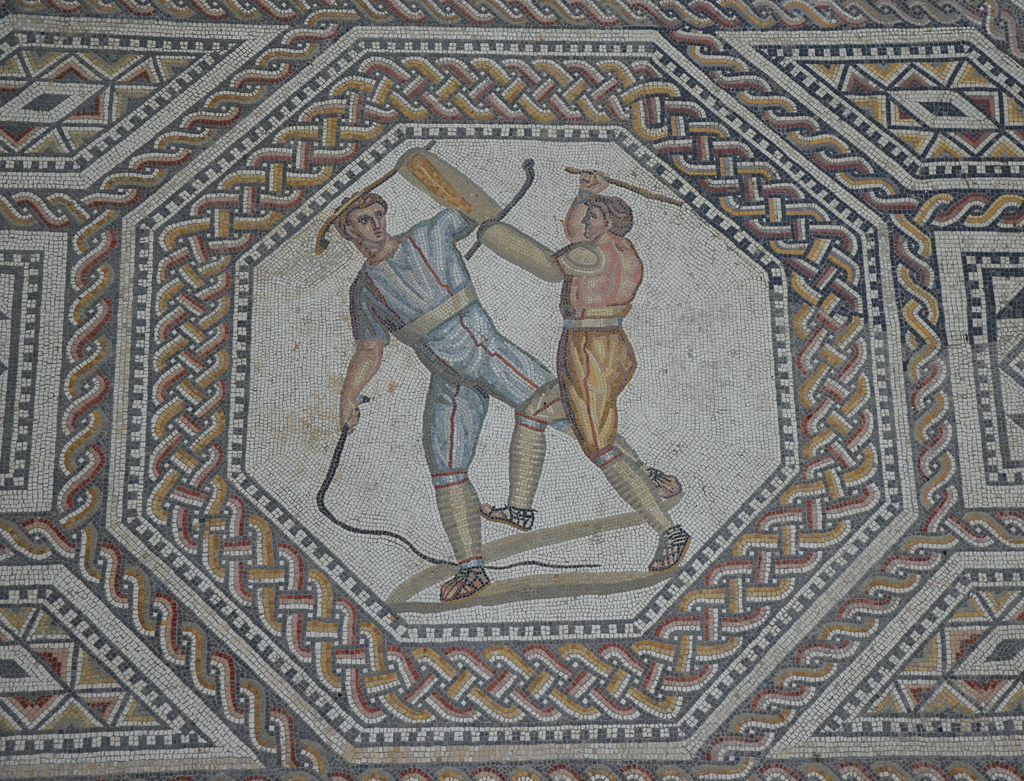
Octagon depicting two rogues trying to drive the animal off with lashes from their whips.
A bear has thrown one of his tormentors to the ground while the other two attempt to drive the animal off. The venatores are wearing knee-breeches and very broad belts in addition to the leg wrappings. Later their clothing was reduced to the tunica.
Octagonal medallion depicting two combatants attacking one another with cudgels and a whip. The introduction to the gladiatorial contests consisted of a prolusio (prelude). The various pairs fought with blunted weapons, giving the foretaste of their skills.
Octagon depicting two combatants attacking one another with cudgels and a whip.
The introduction to the gladiatorial contests consisted of a prolusio (prelude). The various pairs of gladiators fought with blunted weapons, giving the foretaste of their skills.
Octagonal medallion depicting a Retiarus armed with trident and dagger fighting against a Secutor while a referee looks on. In the afternoon came the high point of the games, individual gladiatorial combats. These were usually matches between gladiators with different types of armor and fighting styles, supervised by a referee (summa rudis). This scene represents simultaneously the highlight and the conclusion of the games.
Rectangular panel depicting a Retiarus armed with a trident and dagger fighting against a Secutor while a referee looks on.
In the afternoon came the high point of the games; individual gladiatorial combats. These were usually matches between gladiators with different types of armour and fighting styles, supervised by a referee (summa rudis). This scene simultaneously represents the highlight and the conclusion of the games.
Following restorations in 1960/61 the following text was inserted: This Roman mosaic floor was discovered in 1852, reconstructed in 1874 and restored in 1960. The original medallion has been destroyed, perhaps intentionally, by later occupants of the villa.
Following restorations in 1960/61, the following text was inserted: This Roman mosaic floor was discovered in 1852, reconstructed in 1874 and restored in 1960. The original medallion has been destroyed, perhaps intentionally, by later villa’s occupants.
General view of the Nennig Mosaic.

The Saarland and Moselle Valley’s ancient Roman heritage has much to offer tourists and scholars. More than 120 antique sights along the Moselle and the Saar rivers, the Saarland and Luxembourg are testaments to the Gallo-Roman era north of the Alps (further information here).

Opening hours:
April – September: Tuesday to Sunday 8:30 am – 12 noon and 1 – 6 pm
October, November and March: Tuesday to Sunday 9 – 11:30 am and 1 – 4:30 pm
Closed from December to February and on Mondays

Website: http://nennig.de/sehenw/nennig.html

Sources:

  • The Roman Mosaic at Nennig: A Brief Guide (n.d.) by Reinhard Schindler
  • Eckart Köhne, Cornelia Ewigleben, Ralph Jackson, Gladiators and Caesars: The Power of Spectacle in Ancient Rome. Berkeley: University of California Press, 2000
Schwarzenacker Roman Museum

The Schwarzenacker Roman Museum (German: Römermuseum Schwarzenacker) is an open-air archaeological museum in Schwarzenacker in Saarland (Germany) with several partly-reconstructed structures. The museum was built by archaeologist Alfonso Kolling who also led the archaeological excavations at the site. The site shows the remains of a Gallo-Roman settlement (its ancient name is lost) that existed from the beginning of the 1st century AD until its destruction by the Alemanni in AD 275.

Coordinates: 49° 16′ 58″ N, 7° 19′ 0″ E

Around 2,000 people inhabited the settlement, which covered an area of approximately 25-30 hectares. The inhabitants benefited from the nearby Roman military and trade routes leading from Augusta Treverorum (Trier) to Argentoratum (Strasbourg) and from Divodurum (Metz) to Augusta Vangionum (Worms). This favourable location gave rise to a highly prestigious residential, commercial and administrative centre.

The urban planning of the settlement showed a clear Roman influence with streets intersecting at right angles. The main streets were flanked by large drainage channels, while covered walkways led to the shop counters and workshops. Freshwater, pumped from deep wells, was supplied by pipelines of clay and wood. A stone relief with Venus, Cupid, and the Three Graces was found in one of the wells. The half-timbered houses of varying sizes were sometimes decorated with high-quality frescoes and ceiling paintings. One house differed from the standard types; it had a hall with a large cellar with a row of five columns running along the centre to support the wooden ceiling of the cellar (two of them were table columns with round stone slabs). Life-size figures were represented on one of the walls of the house. Six bronze statuettes were also found in the cellar: a Genius populi Romani, a seated Mercury with a wild boar, a rooster, a standing Mercury, an Apollo, a seated Neptune, and a Victory. The house was probably the seat of a cult.

In the adjoining 18th-century Baroque villa, important finds from everyday Roman life are exhibited (although the most important ones are in the Museum of Pre- and Early History in Saarbrücken). In front of the Baroque Edelhaus stand life-size replicas of two unfinished Roman equestrian sculptures, which were discovered in 1887 in a Roman quarry at Breitfurt. They weigh about 5000 kg each and are considered to be the largest Roman statues found north of the Alps.

PORTFOLIO

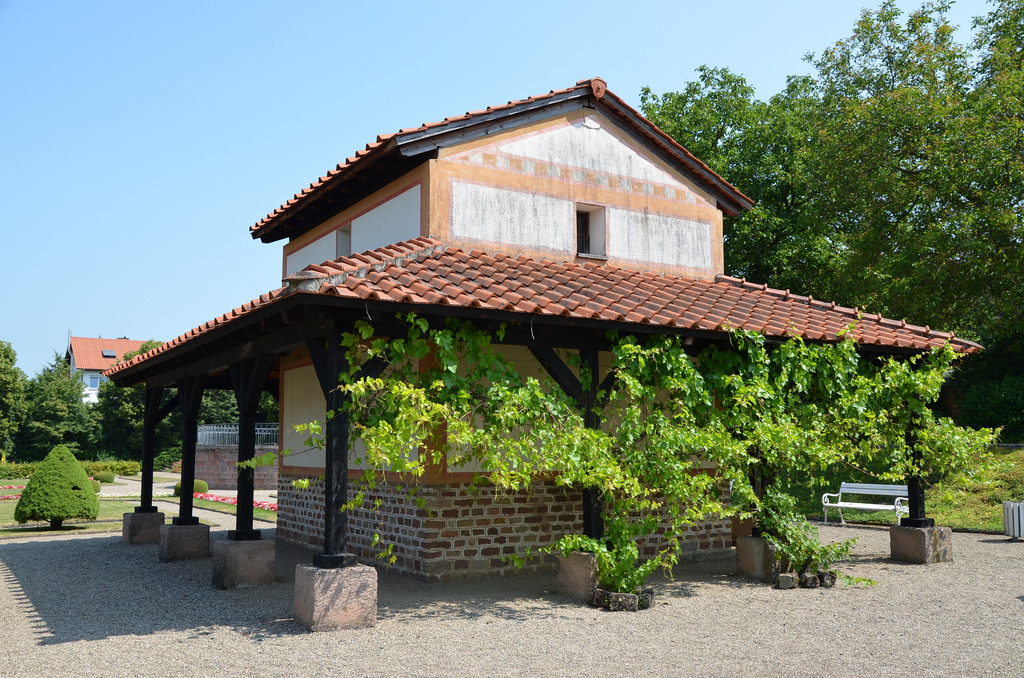
Reconstruction of the Gallo-Roman Temple of Mercury from the nearby site of "Tempelbezirk Klosterwald".
Reconstruction of the Gallo-Roman Temple (fanum) of Mercury from the nearby site of “Tempelbezirk Klosterwald”.
Reconstruction of the Gallo-Roman Temple of Mercury from the nearby site of "Tempelbezirk Klosterwald".
Reconstruction of the Gallo-Roman Temple (fanum) of Mercury from the nearby site of “Tempelbezirk Klosterwald”.
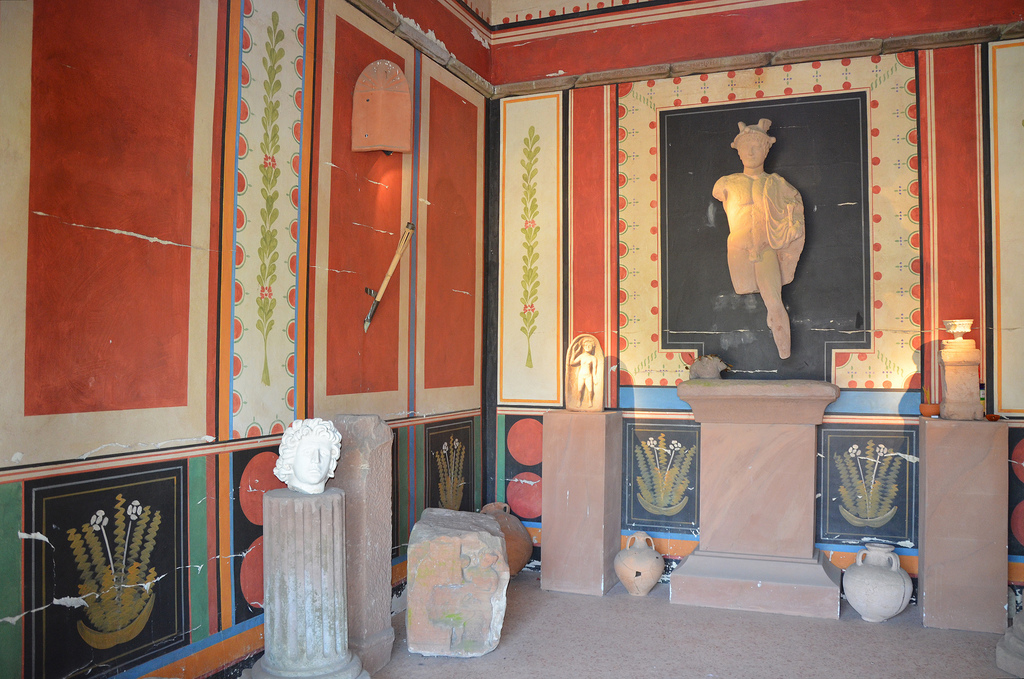
The interior (cella) of the reconstructed Gallo-Roman Temple of Mercury from the nearby site of "Tempelbezirk Klosterwald".
The interior (cella) of the reconstructed Gallo-Roman Temple of Mercury from the nearby site of “Tempelbezirk Klosterwald”.
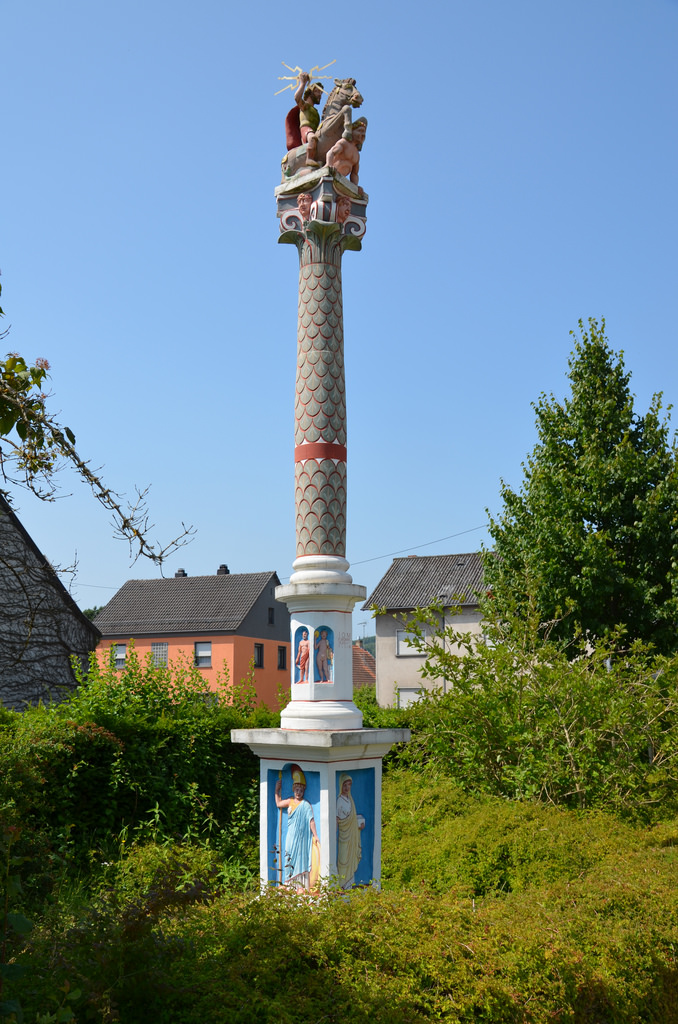
Complete reconstruction (in colour) of a Jupiter column.
Complete reconstruction (in colour) of a Jupiter column found in 1922.
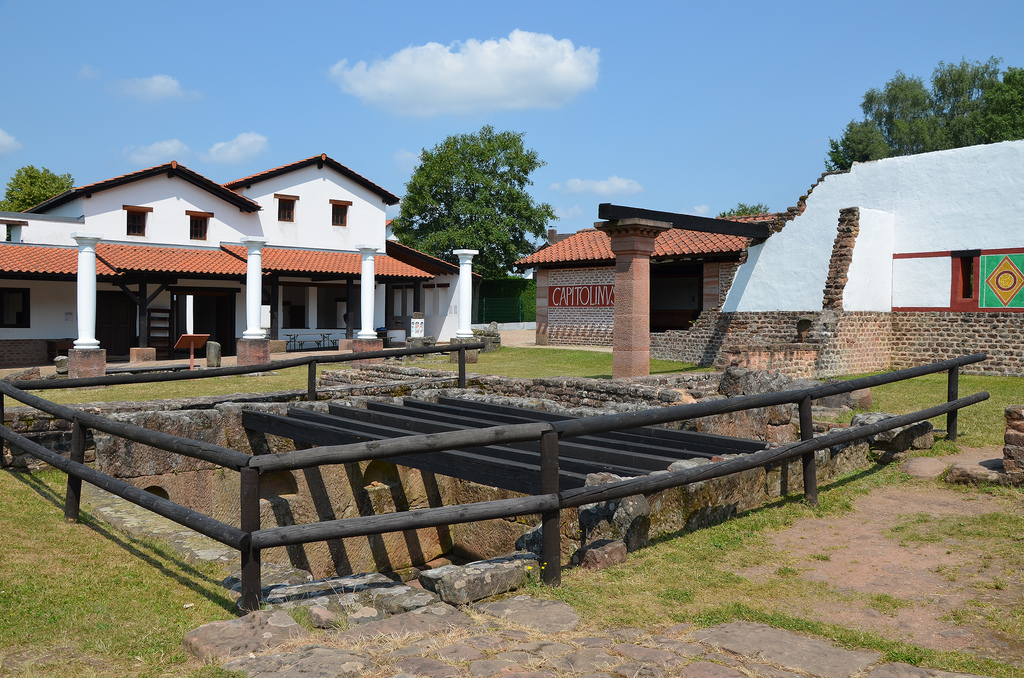
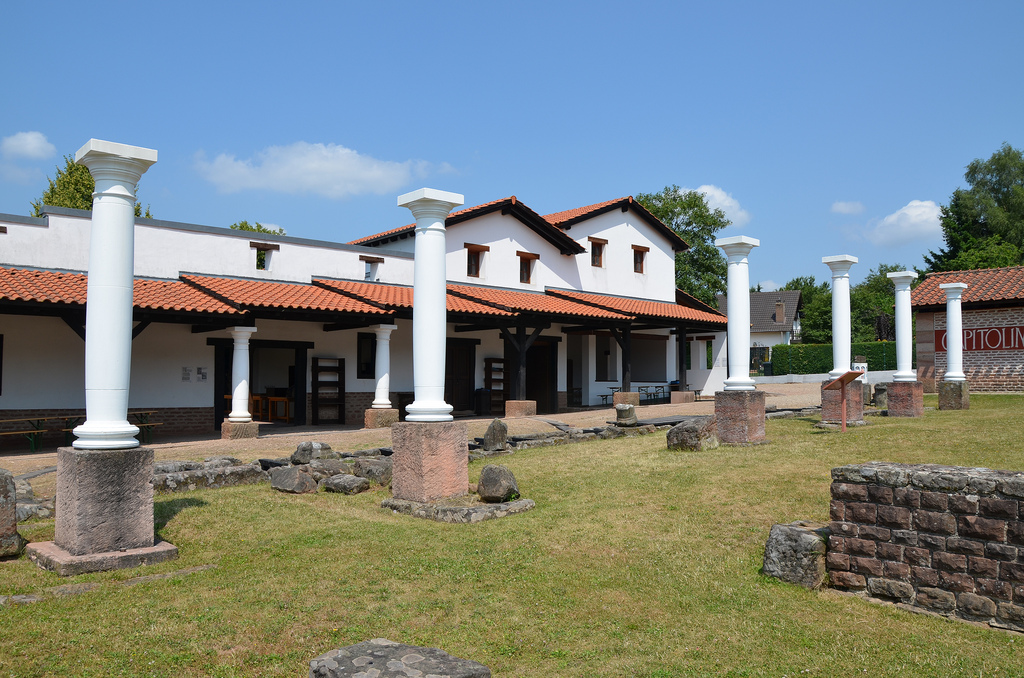
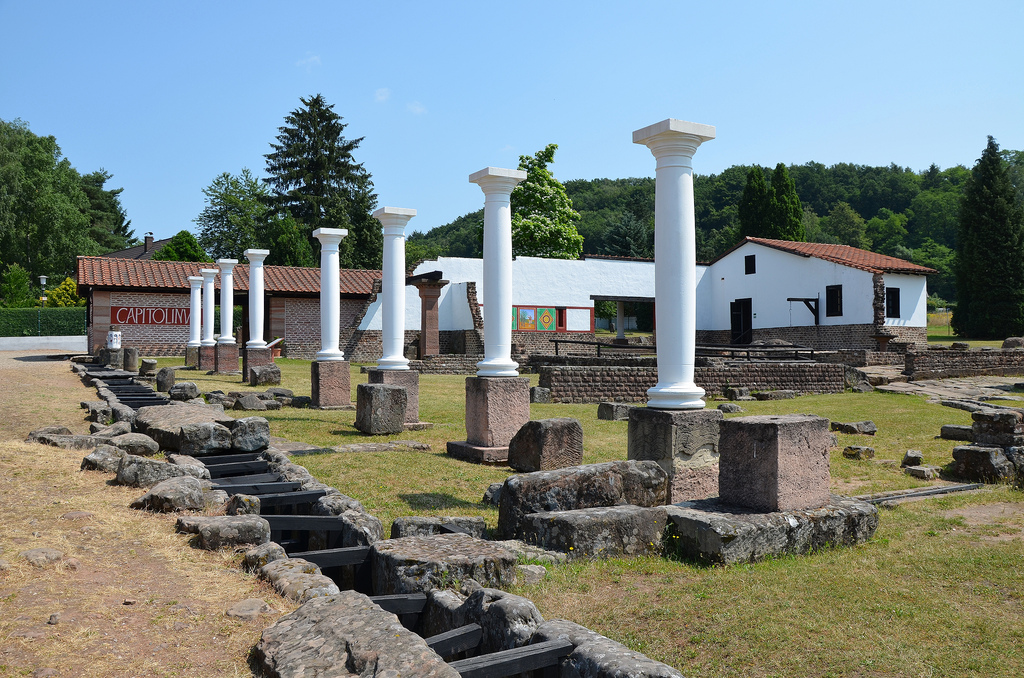
columns of the arcades on the north-south main road. In the background is the Taberna of Capitolinus at the intersection with the east-west main street of the vicus.
The north-south main street of the vicus flanked by broad sewers and colonnaded porticoes. In the background is the Taberna of Capitolinus at the intersection with the east-west main street of the settlement.
The north-south main street with the Taberna of Capitolinus and the House of the Ophthalmologist in the background.
The reconstructed Taberna of Capitolinus.....
The reconstructed Taberna of Capitolinus.
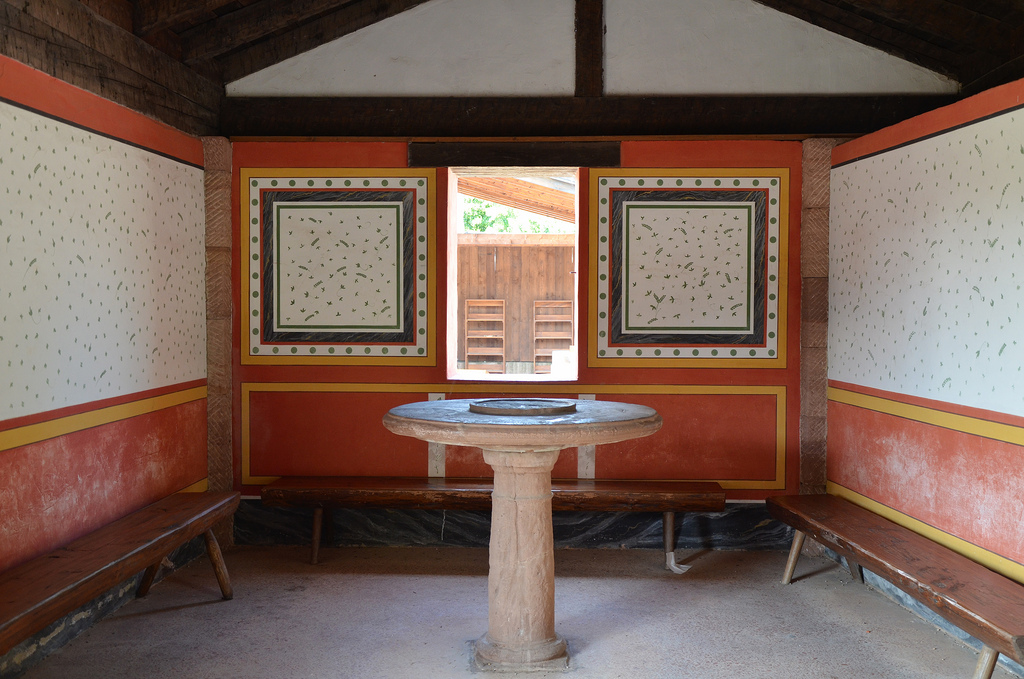
The guest room of the Taberna Capitolinus with original stone table. Tabernae were the fast food restaurants of the Romans.
The guest room of the Taberna Capitolinus with an original stone table. Tabernae were the fast-food restaurants of the Romans.
The counter the Taberna of Capitolinus with embedded earthenware jars used to store dried food like nuts.
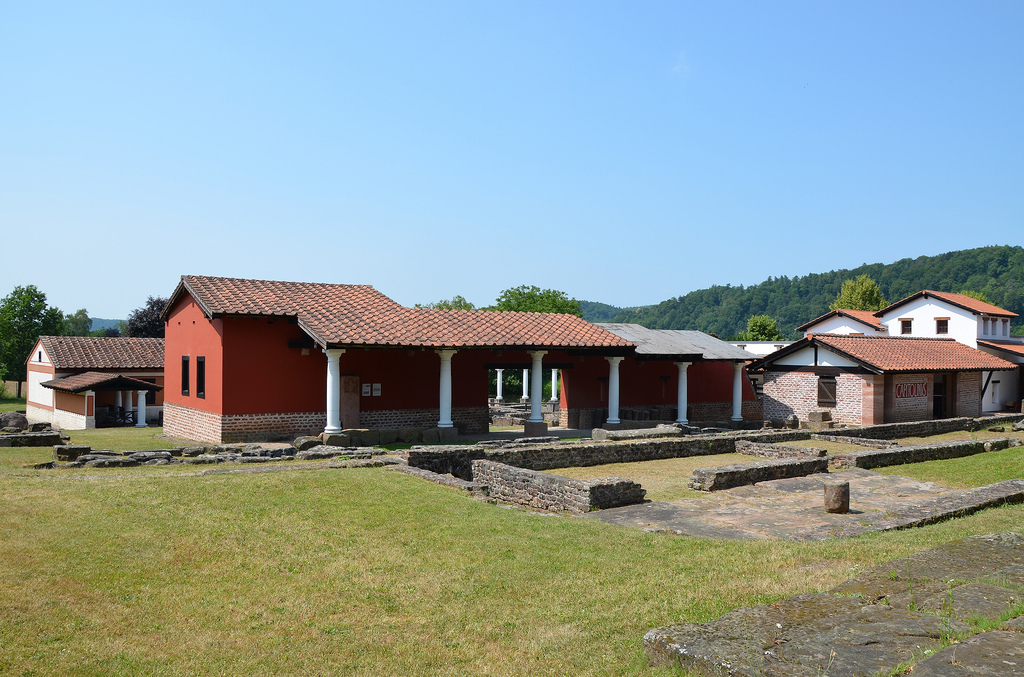
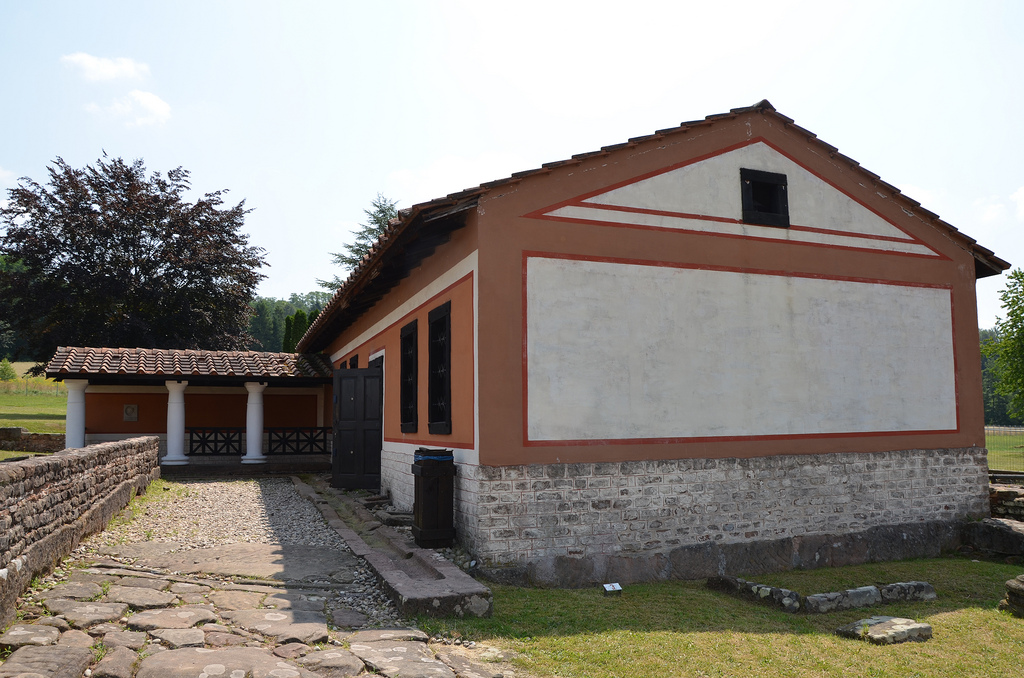
The reconstructed House of the Ophthalmologist along the east-west main street of the vicus.
The partially reconstructed House of the Ophthalmologist facing the east-west main street of the settlement. The name of the house takes its name from the ophthalmic artefacts found in the house.
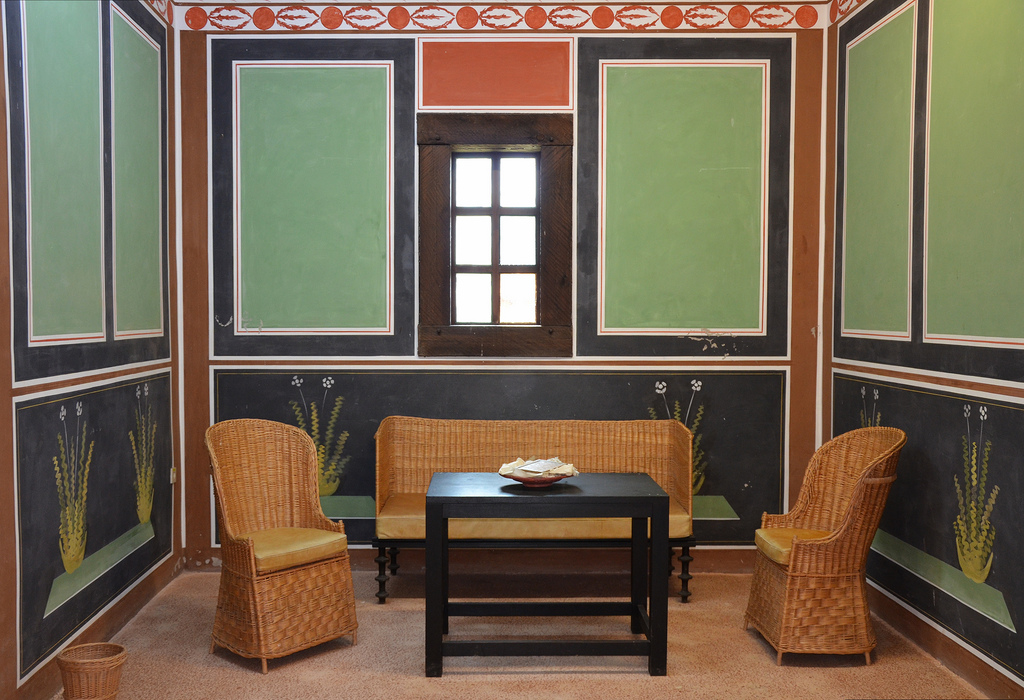
Reception Room of the Hous of the Ophthalmologist.
The reconstructed triclinium of the House of the Ophthalmologist.
room which rested on many small supports bathed in warm air (hypocaust)
The reconstructed triclinium of the House of the Ophthalmologist rested on pillars of tiles from the underfloor heating system known as a hypocaust.
The reconstructed House of the Ophthalmologist along the east-west main street of the vicus.
The reconstructed House of the Ophthalmologist along the east-west main street of the settlement.
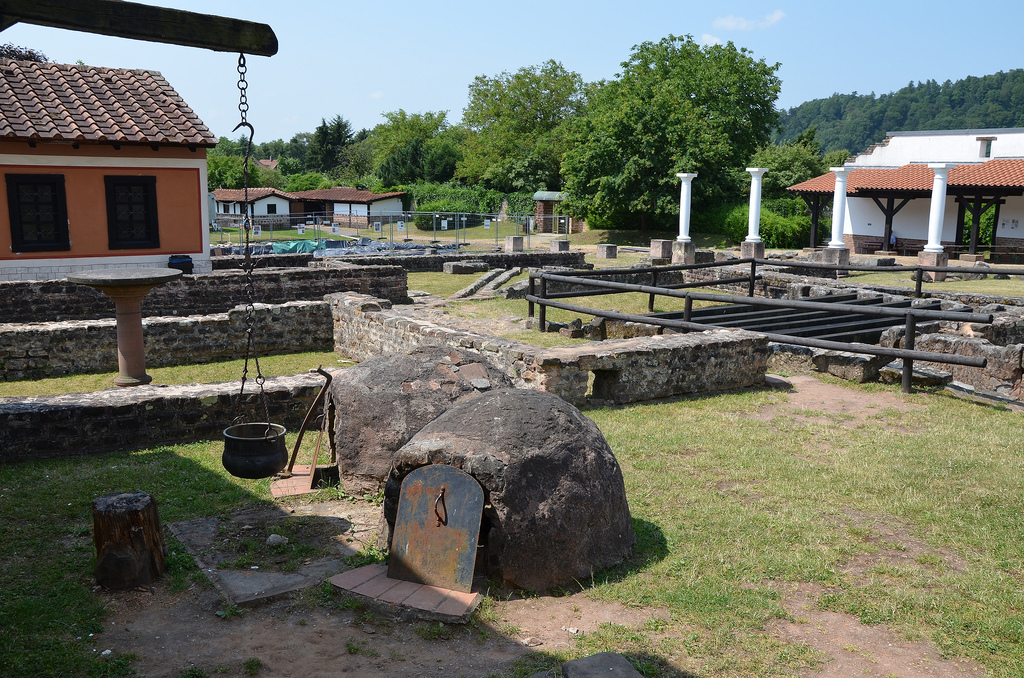
Rear view of the partially reconstructed house. The ditch is a drainage channel. The painted wing of the building is the reconstructed dining area of the house.
Rear view of the partially reconstructed House of the Ophthalmologist with the kitchen area with ovens and cooking sets and an underground cellar.
The underground cellar of the House of the Ophthalmologist with openings in the stone structure used to support wooden beams on which upper floors were built. The cellar had oval-shaped niches, which were used to display statues of Roman gods.
The reconstructed House of the Columns.
The partially reconstructed House of the Columns.
The cellar of the House of the Columns with a row of five columns (two of them were table columns: round stone slabs) that carried the wooden ceiling of the cellar.
The cellar of the House of the Columns had a row of five columns (two of them were table columns with round stone slabs) that carried the wooden ceiling of the cellar.
The partially reconstructed House of the Columns.
Fresco with a life-size figure from the House of the Columns.
The north-south main street.
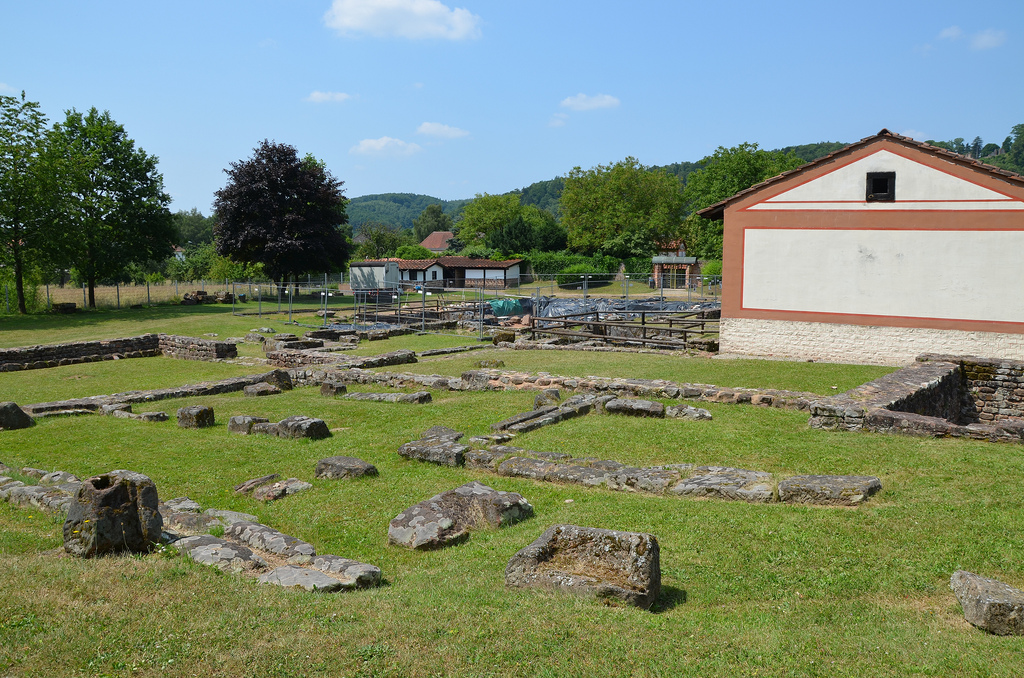
Foundations of buildings behind the north-south main street.
Foundations of buildings behind the House of the Columns.
The Edelhaus dating back to the early 18th century (1725). It houses the museum archaeological finds (mainly replicas, originals in Saarebrucken) and and other paintings from contemporary painters of the region. For noble house is designed in the Baroque style garden, which was created after the excavation of the Vicus.
The Edelhaus dating back to the early 18th century (1725) which houses the archaeological finds (mainly replicas, originals in Saarbrücken) and 18th-century paintings from painters of the region. The Baroque-style garden was created after the excavation of the Gallo-Roman settlement.
Pair of life-size replicas of two unfinished Roman equestrian statues which were discovered in 1887 in a Roman quarry at Breitfurt (the originals are in the museum in Speyer). They are considered to be the largest Roman statues found north of the Alps.

The site is open daily from 9am to 5pm from April to October (Saturday and Sunday: Closed from 12:30pm to 1pm) and from 10am to 4pm from November to March (Saturday and Sunday: Closed from 12:30pm to 1pm). It is closed in December and January.

Website: www.roemermuseum-schwarzenacker.de

The Saarland and the Mosel Valley’s ancient Roman heritage has a lot to offer to tourists and scholars alike. More than 120 antique sights along the Moselle and the Saar rivers, the Saarland and Luxembourg are a testament to the Gallo-Roman era north of the Alps (further information here).