Located at the Southern tip of the Istrian peninsula, Pula sits at a location highly appreciated by ancient civilizations. It is a town of extraordinary beauty and culture with a three-thousand-year long history. This important Istrian port boasts a rich and varied cultural heritage that has attracted visitors for centuries.
Pula was originally founded as a fortified settlement of the Histri, the pre-Roman inhabitants of Istria after whom the peninsula is named. In the Illyrian period, until the arrival of the Romans in 177 BC, Pula was no more than the surroundings of nearby Nesactium, the political, administrative, military and religious centre and capital of the Histri. As a result of intensive colonization, trade routes as well as the importance of its military position, Pula took over the leading position. Numerous trades developed in that period: agriculture, viticulture, olive-growing, fishing and pottery for the transport of olive-oil, wine, wheat and fish.
Pula was elevated to colonial rank between 46–45 BC under Julius Caesar as the tenth region of the Roman Empire. During that time the town grew and peaked at about a population of about 30,000. During the civil war that followed Caesar’s assassination in 44 BC, Pula took the side of Cassius, since the town had been founded by Cassius Longinus, brother of Cassius. After Octavian’s victory, the town was demolished. It was soon rebuilt at the request of Augustus’ daughter Iulia and was then named Colonia Pietas Iulia Pola Pollentia Herculanea. Pula was transformed into an imperial city where some of the best examples of Roman architecture were built.
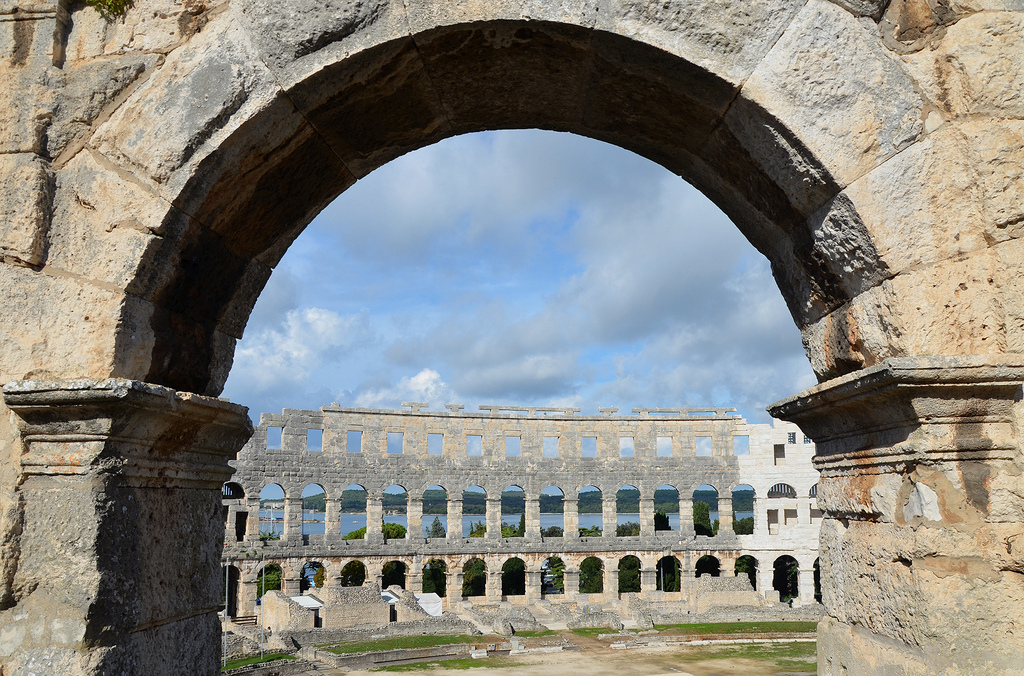
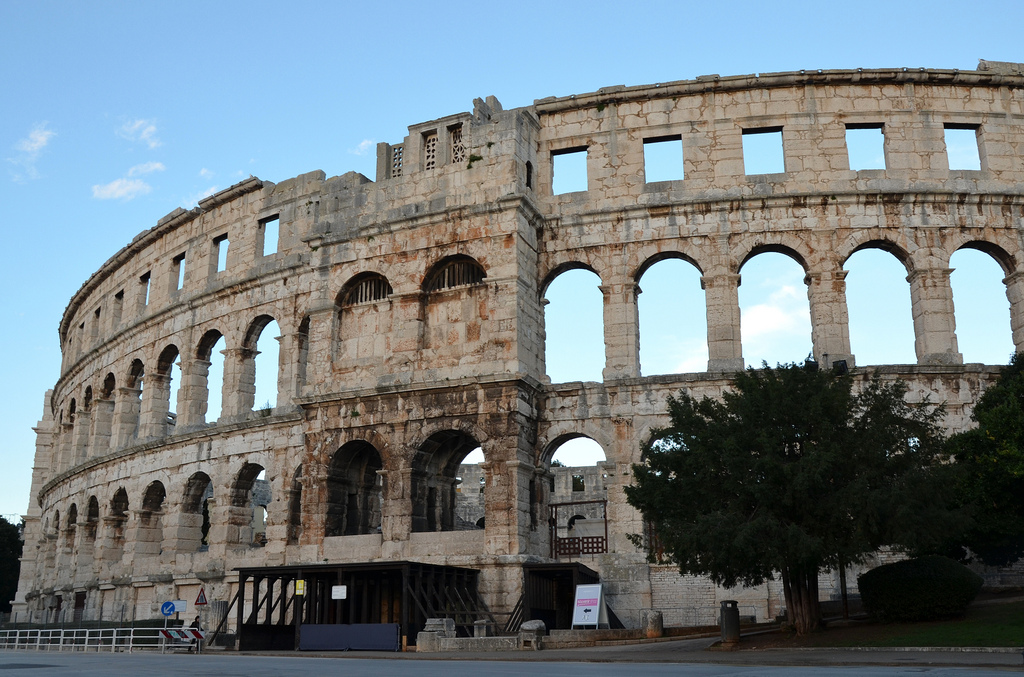
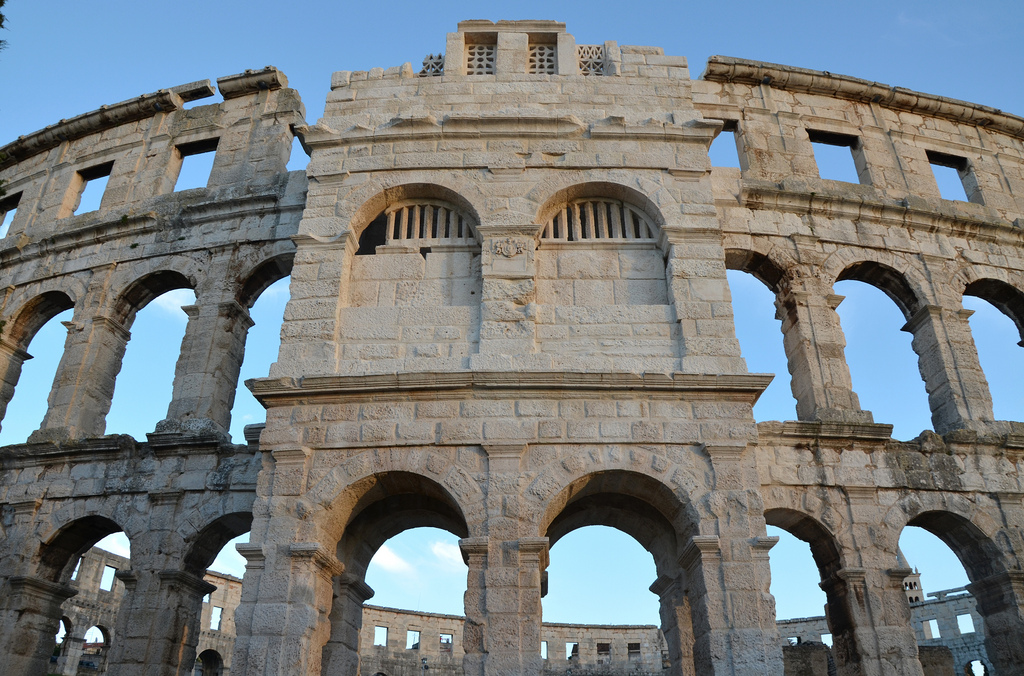
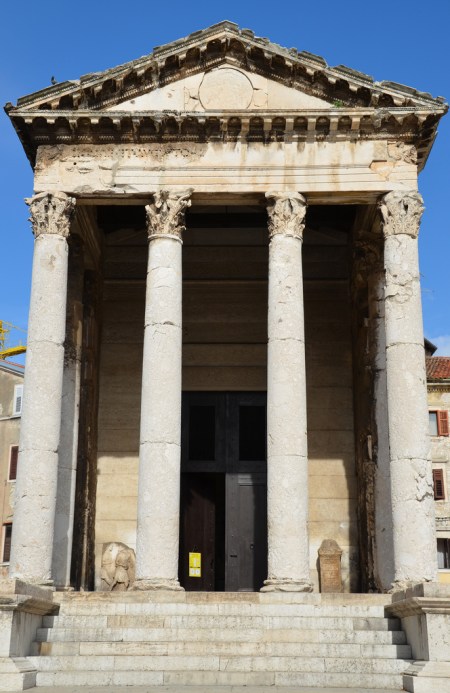
Pula is well known for its many surviving ancient Roman buildings, the most famous of which is its 1st-century amphitheatre, one of the best preserved from antiquity. Two other notable and well-preserved ancient Roman structures are the 1st-century AD Arch of the Sergii and the Temple of Rome and Augustus.
PORTFOLIO
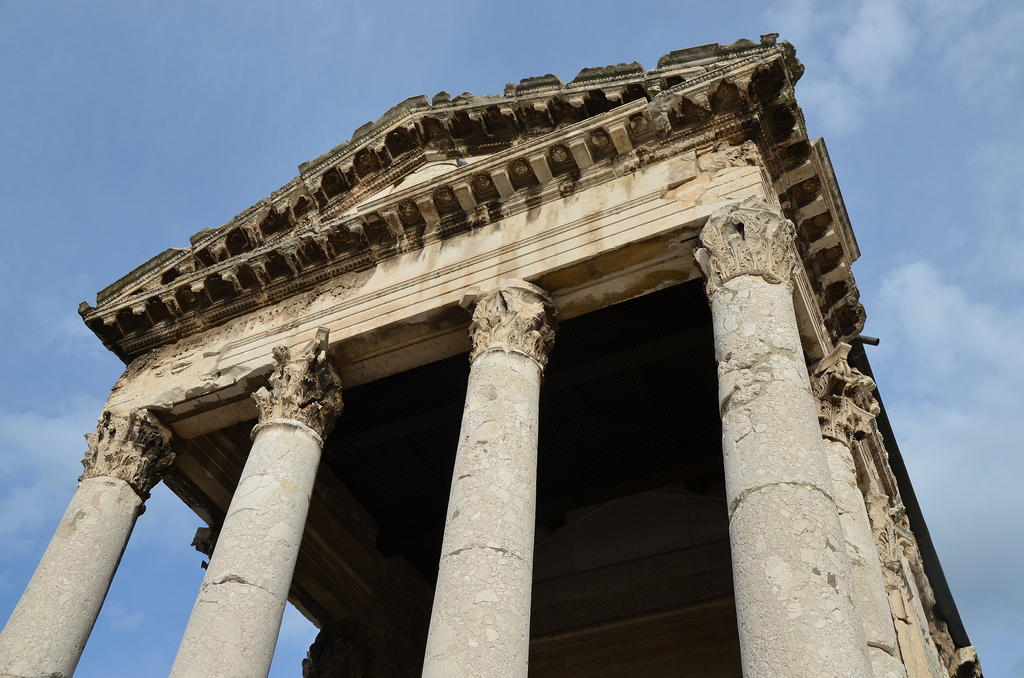
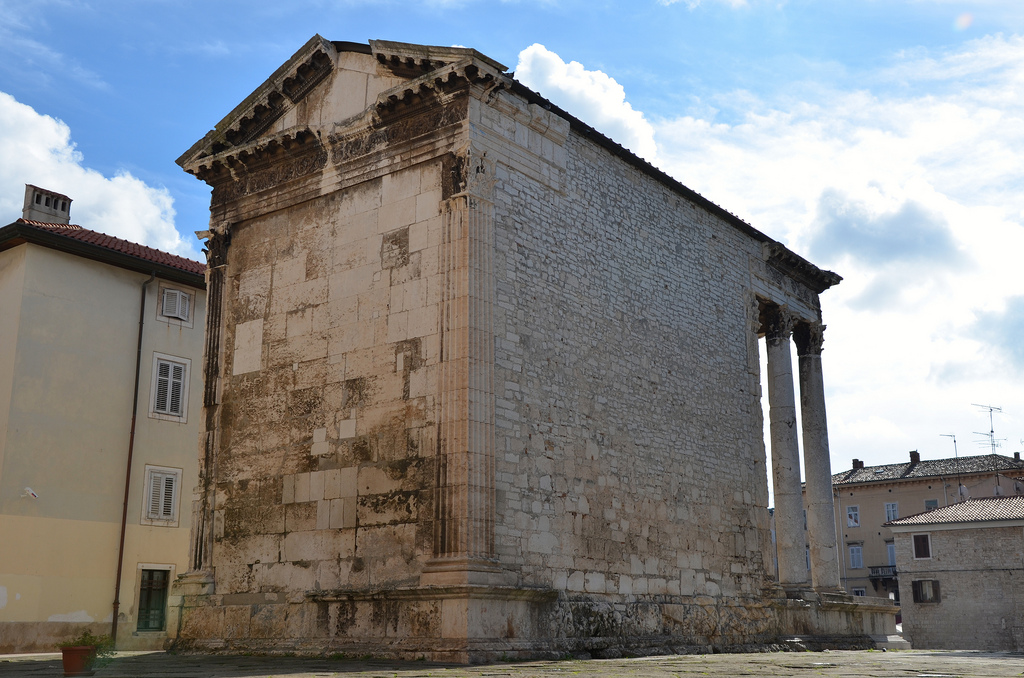
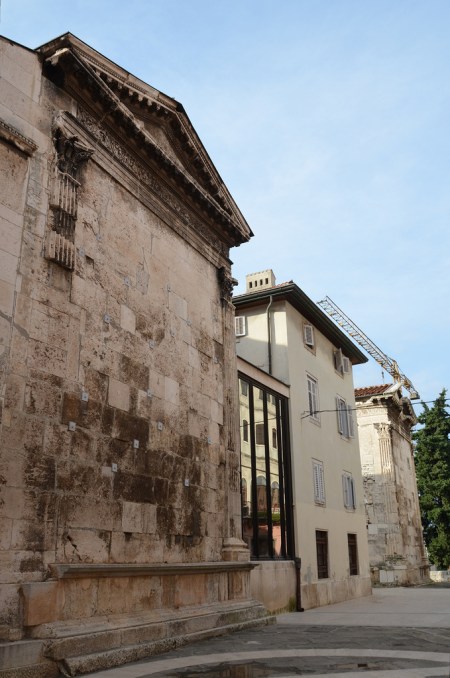
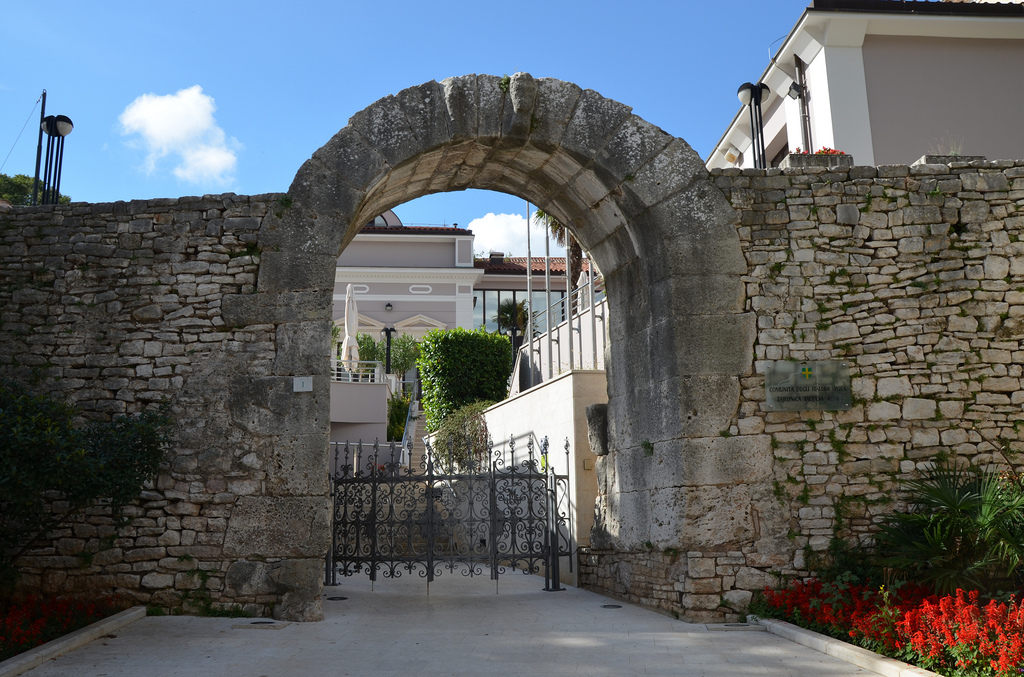
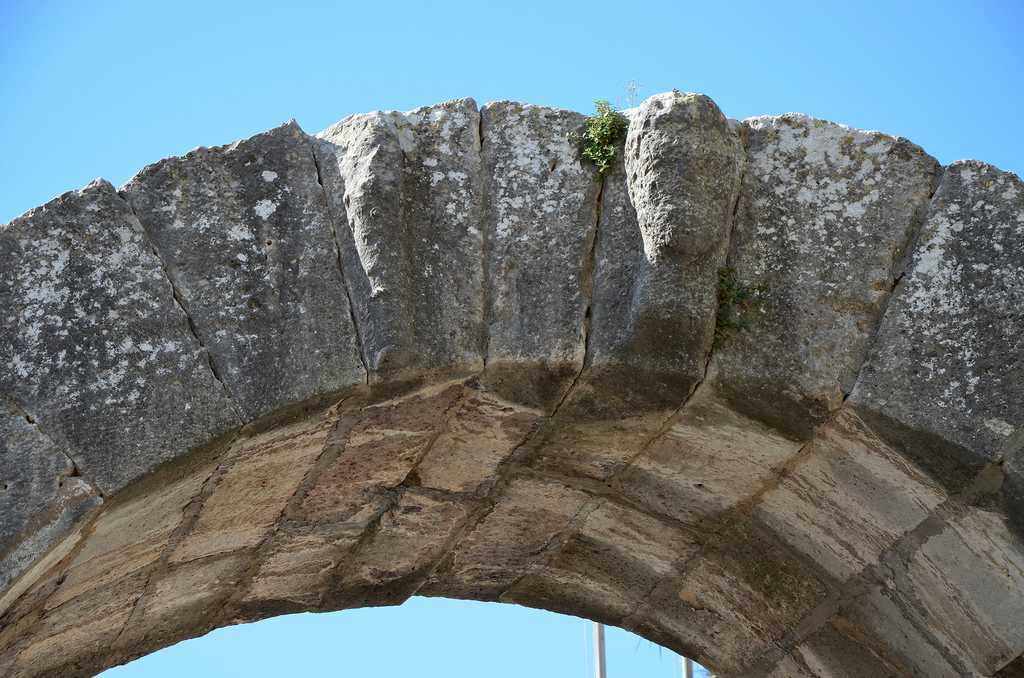
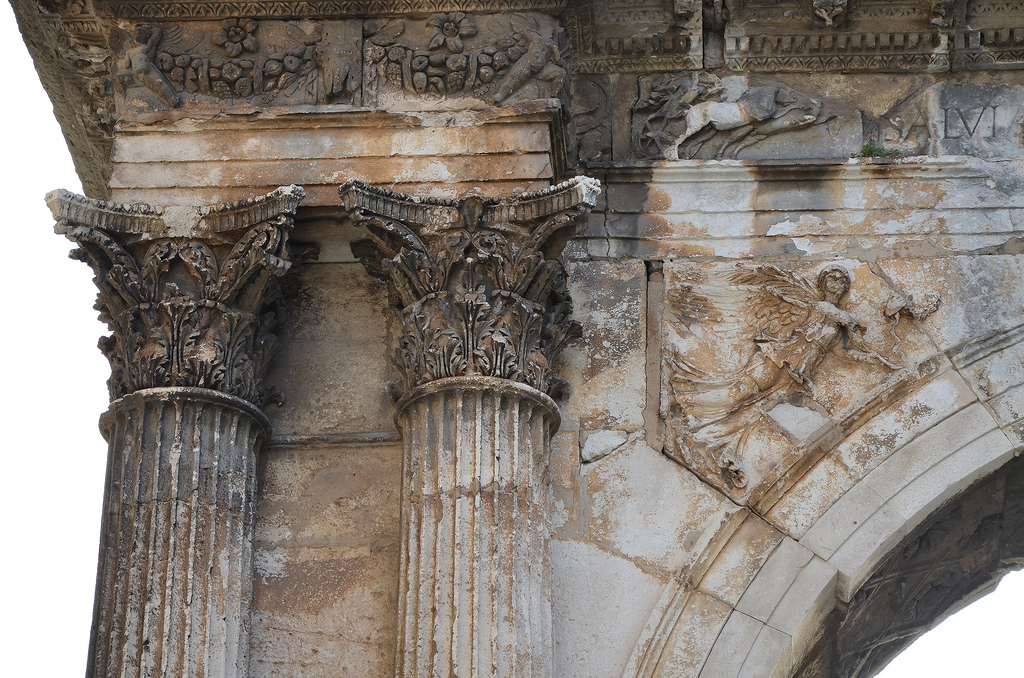
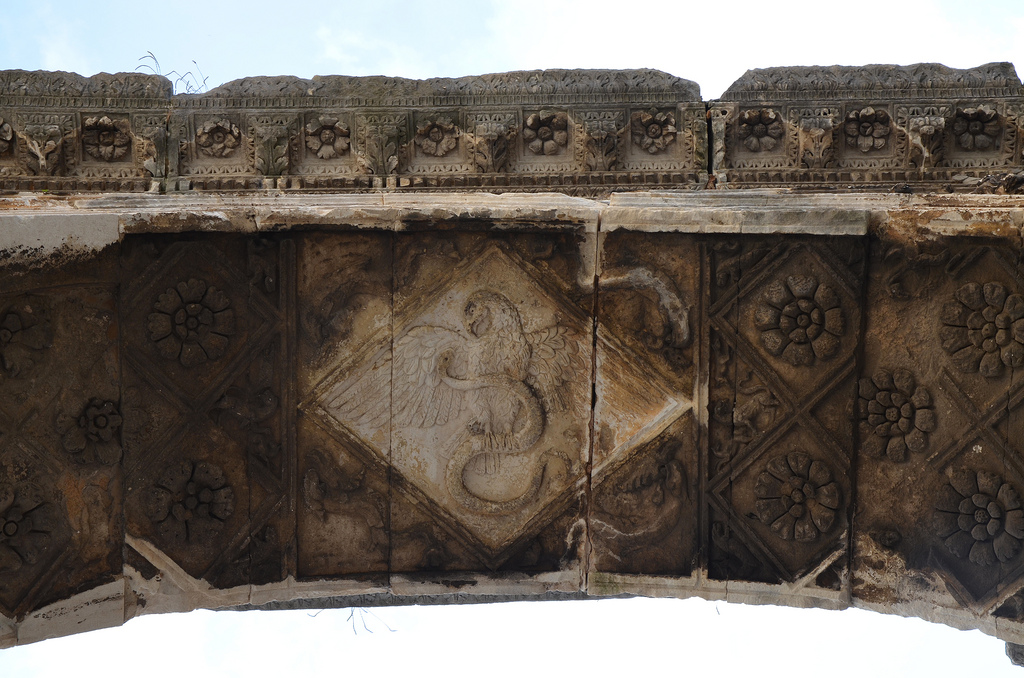
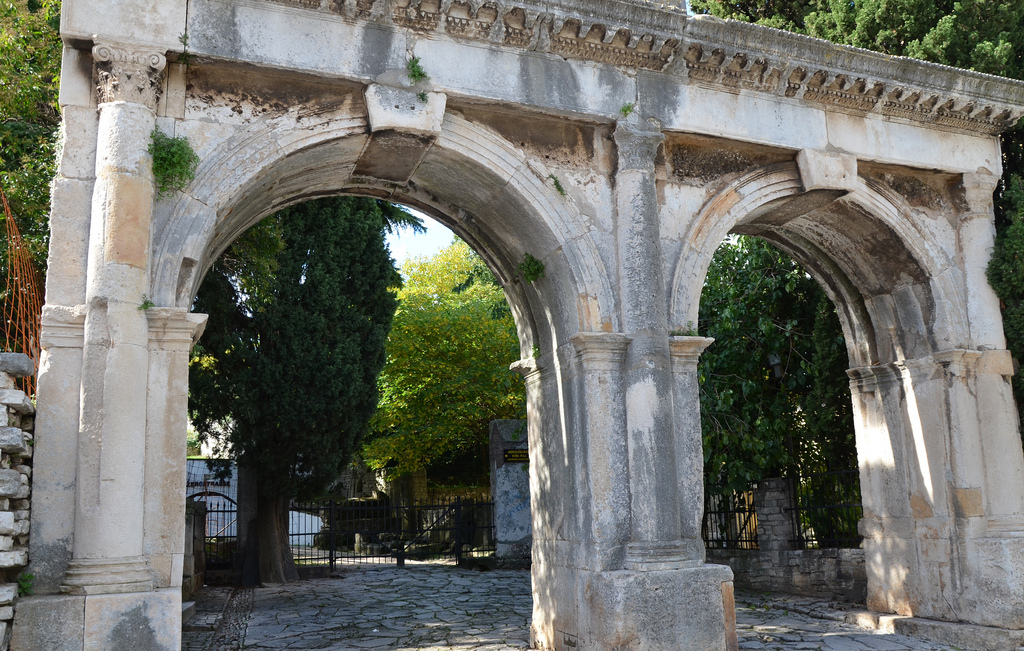
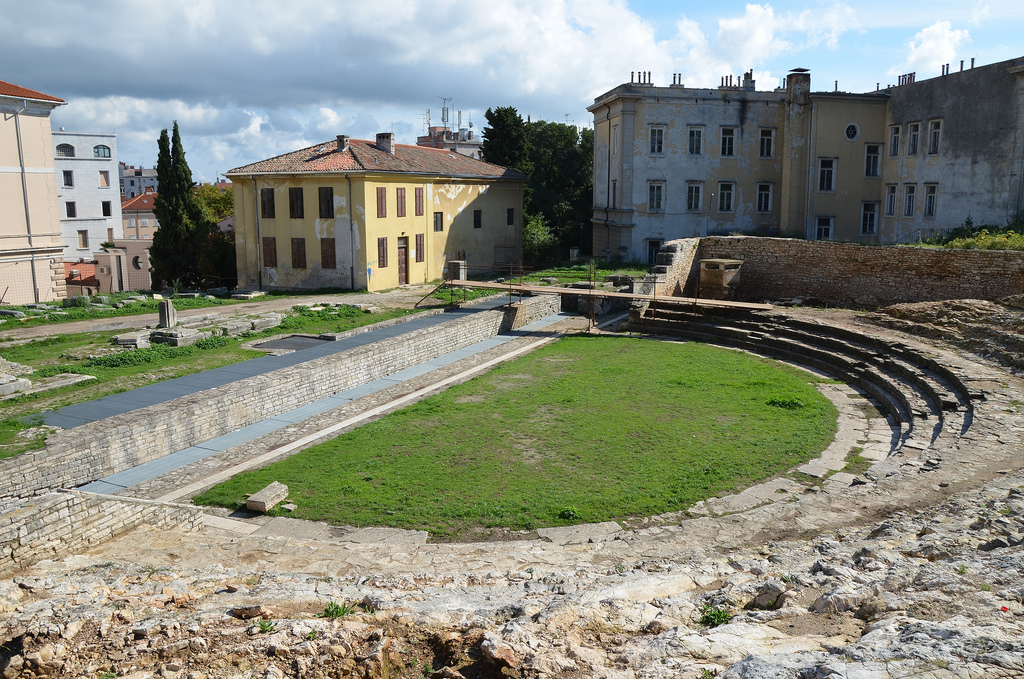
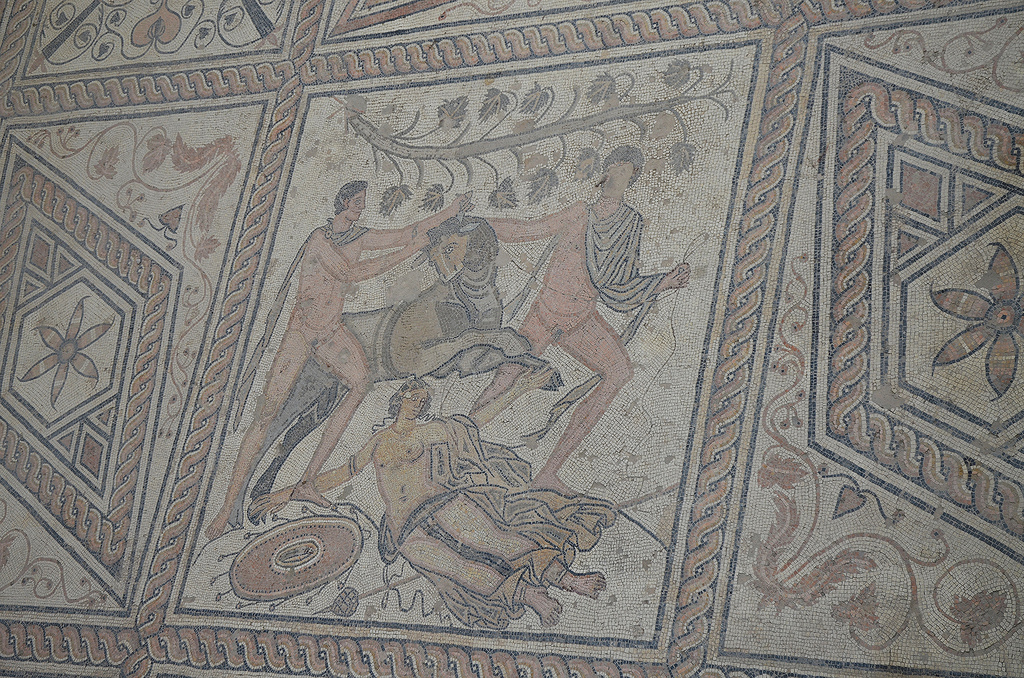
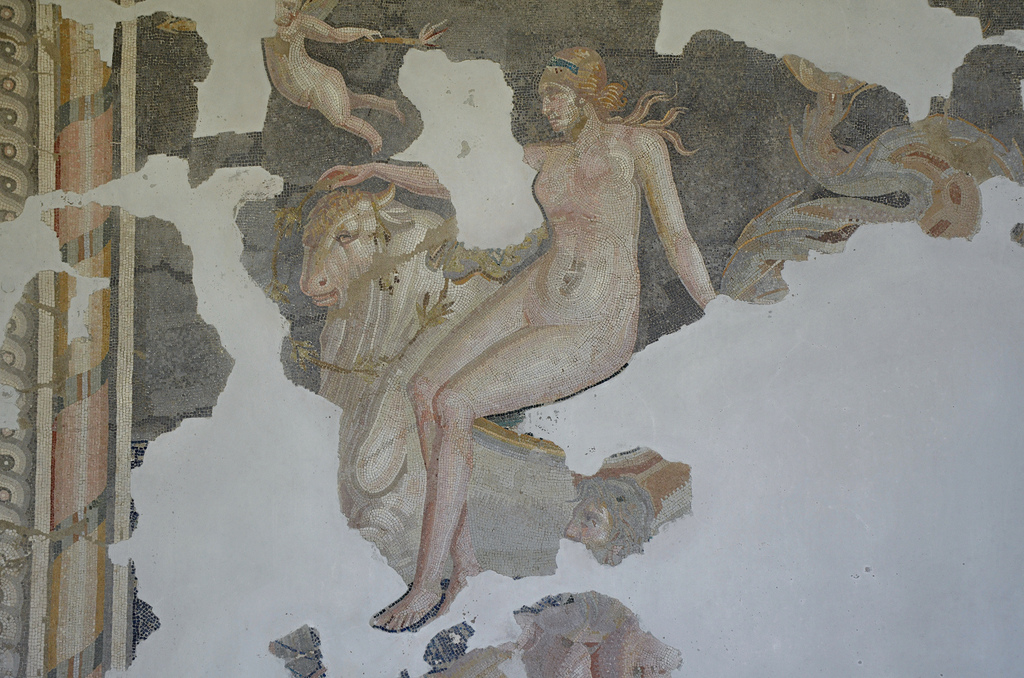
The Pula Arena, one of the best preserved amphitheatres of the Roman world. It was completed during the reign of Vespasian and could hold about 20,000 spectators.The amphitheatre of Pula was built outside the city walls along the Via Flavia, the road from Pula to Aquileia and Rome.The amphitheatre at Pula is unique as it features four rectangular towers that had been included into the outer wall mantle. Each of them held a wooden staircase leading to the top rows and to a water reservoir. The reservoirs were filled with rainwater that feed a fountain used to refresh the spectators in the heat.The Temple of Augustus, situated in the Forum, was dedicated to the goddess Roma and the Emperor Augustus. It was constructed between the year 2 BC and AD 14.The temple of Augustus was built on a podium with a tetrastyle portico of Corinthian columns. It is one of the most beautiful examples of early Roman imperial temple architecture.The back of the Temple of Augustus.The temple of Augustus was part of a triad consisting of three temples. The Temple of Augustus stood at the left side of the central temple whilst the similar Temple of Diana stood on the other side.The Gate of Hercules, the oldest surviving Roman structure in Pula. A carving of the head of Hercules and his club is clearly visible at the top of the arch.The Gate of Hercules with head of Hercules and his club.The Arch of the Sergii, a famous patrician family in ancient Rome. It was built at the end of the 1st century BC (around 29 and 27 BC) by Salvia Postuma Sergii with her own money, in honour of the three members of her family who took part in the battle of Actium.Detail of the Arch of the Sergii. Standing 8 meters high, the arch was constructed in Corinthian style with strong Hellenistic influences. It is richly adorned with relief decorations of grapevines. Two winged victories stand between the inner half columns.Detail of the Arch of the Sergii. Central arch relief depicting a scene of an eagle fighting a snake.The Porta Gemina built between the end of the 1st and the beginning of the 2nd century AD. It was once the entrance to the city.The Roman Theatre built in the 2nd century AD. The remains of the scene, semicircular orchestra and cavea have been partly reconstructed.The Roman Theatre.The Punishment of Dirce mosaic discovered after the bombing of World War II. It is preserved in-situ.Central panel of the mosaic of Dirce. The mosaic covered the floor of a central room of a Roman house, probably from the 3rd century.
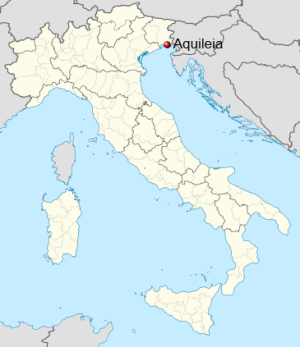
Aquileia is an ancient Roman city in Italy at the head of the Adriatic. Nowadays, the city is small (about 3,500 inhabitants), but in antiquity, it was the fourth Roman town in Italy and the ninth in the whole Empire. Aquileia is one of the main archaeological sites of Northern Italy and has been inscribed on the UNESCO World Heritage List since 1998 for its well-preserved remnants from the early Roman Empire and its Patriarchal Basilica.
Aquileia was founded as a colony by the Romans in 181 BC along the Natiso River. The town protected the territories that bordered areas subject to the influence of the Veneti (faithful allies of Rome) to the west, tribes of the Alpine Gauls to the north and the Histri to the east. In 90 BC, Aquileia obtained Roman citizenship and was used as a base for the military campaigns of Julius Caesar in Gaul and in Illyria. With the administrative reform of Augustus, Aquileia became the capital of the tenth region, “Venetia et Histria”. The town underwent a period of prosperity and soon became a centre of important trade exchanges thanks to the navigable river that crossed it and the efficient network of roads that linked the town to the Po Valley and Central Europe.
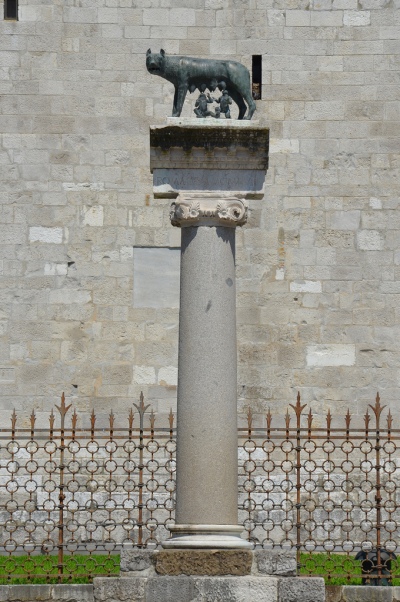
The Roman column in Piazza Capitolino, with the Capitoline She-Wolf donated by the city of Rome in 1919 to mark the twentieth centenary of the foundation of Aquileia. The She-Wolf stands on a section of architrave, a column shaft and a base (all ancient).
Destroyed by Attila in the mid-5th century, Aquileia rose again in the 6th century AD to become a powerful Episcopal seat with one of the most beautiful basilica complexes of Christianity. The Patriarchal Basilican Complex played a decisive role in the spread of Christianity into central Europe in the early Middle Ages.
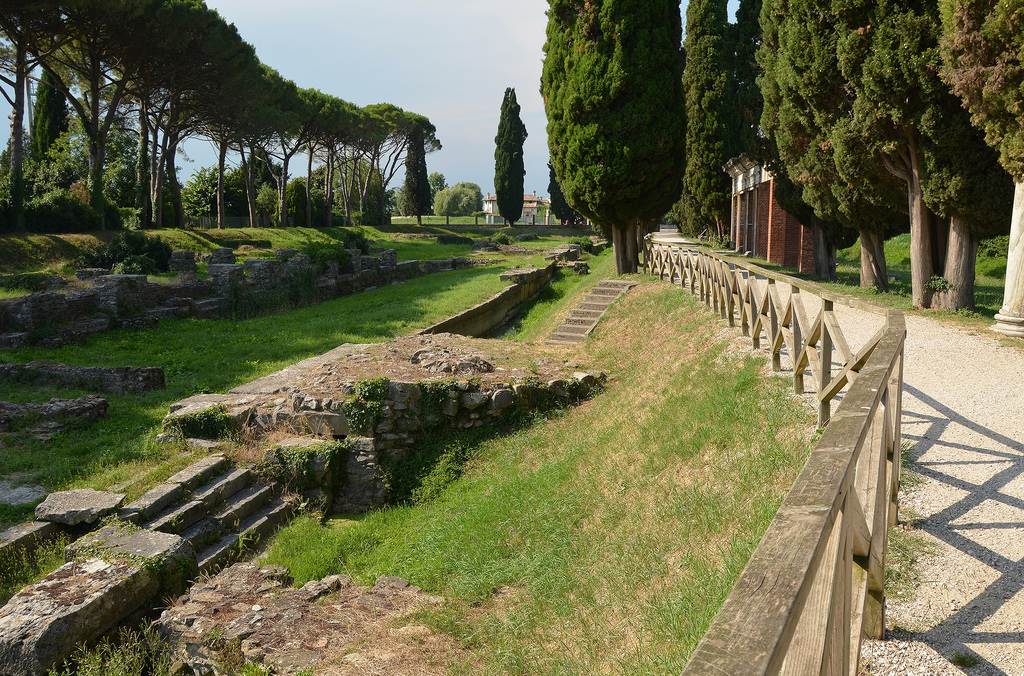
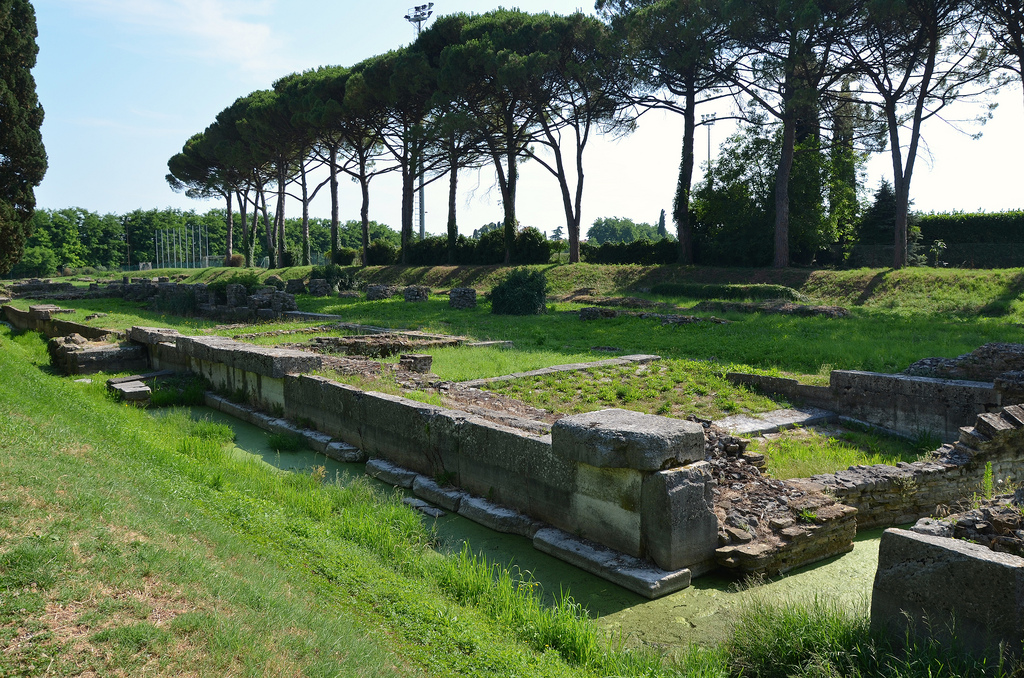
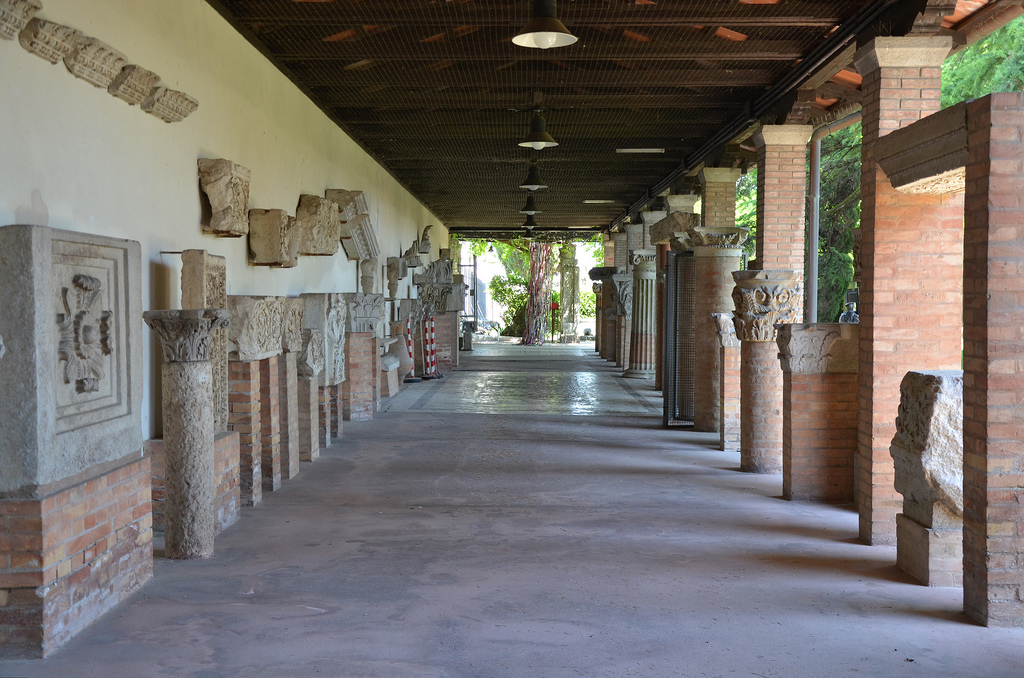
The site of Aquileia is believed to be the largest Roman city yet to be excavated. Excavations, however, have revealed some of the layouts of the Roman town, such as the remains of the Forum, a segment of the decumanus, some impressive funerary monuments, two luxurious residential complexes, baths as well as the former locations of an amphitheatre and of a circus. The most striking remains of the Roman city are those of the river port installations, a long row of warehouses and wharfs that stretched a long distance along the bank of the river. But the dominant feature of Aquileia is the Basilica with its magnificent 4th-century mosaics. The National Archaeological Museum and its lapidary galleries contain over 2,000 inscriptions, statues and other antiquities, mosaics, glasses of local production and a numismatics collection.
PORtFOLIO
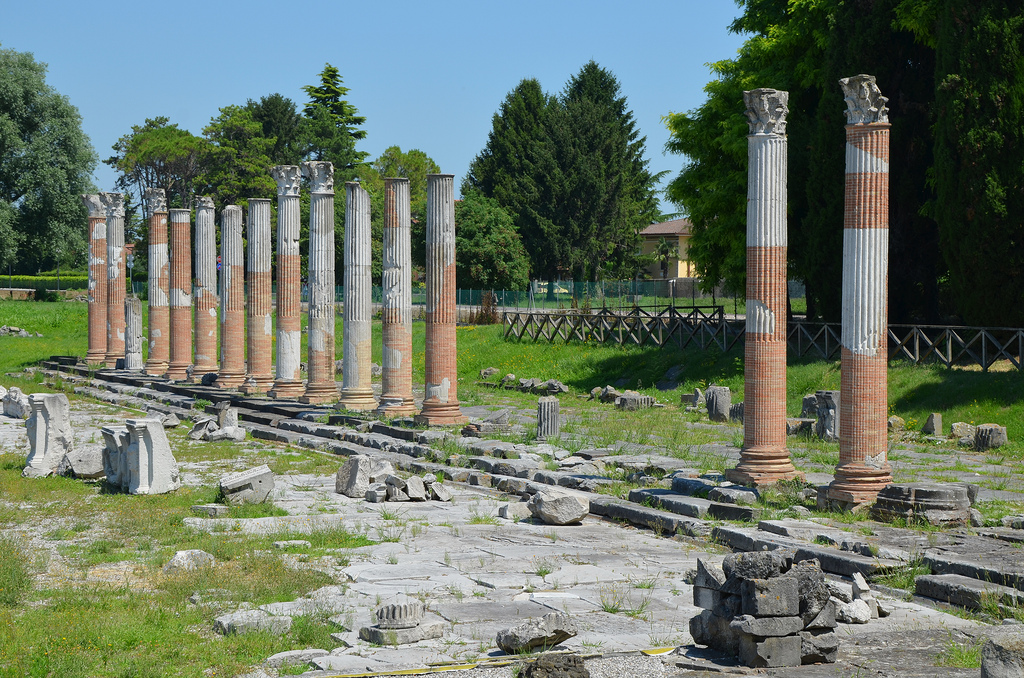
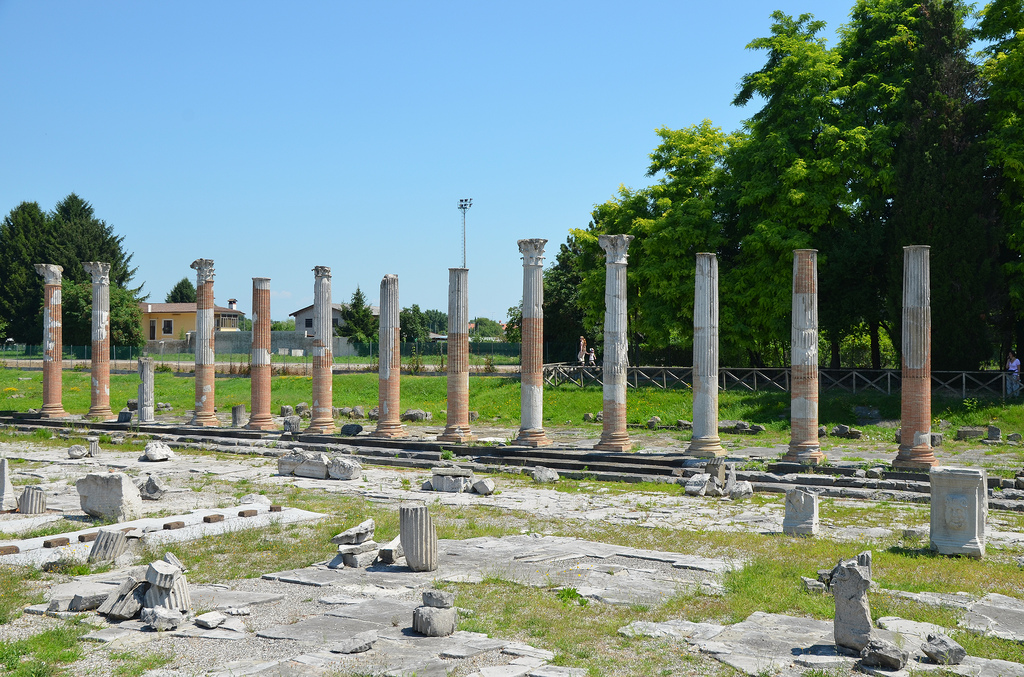
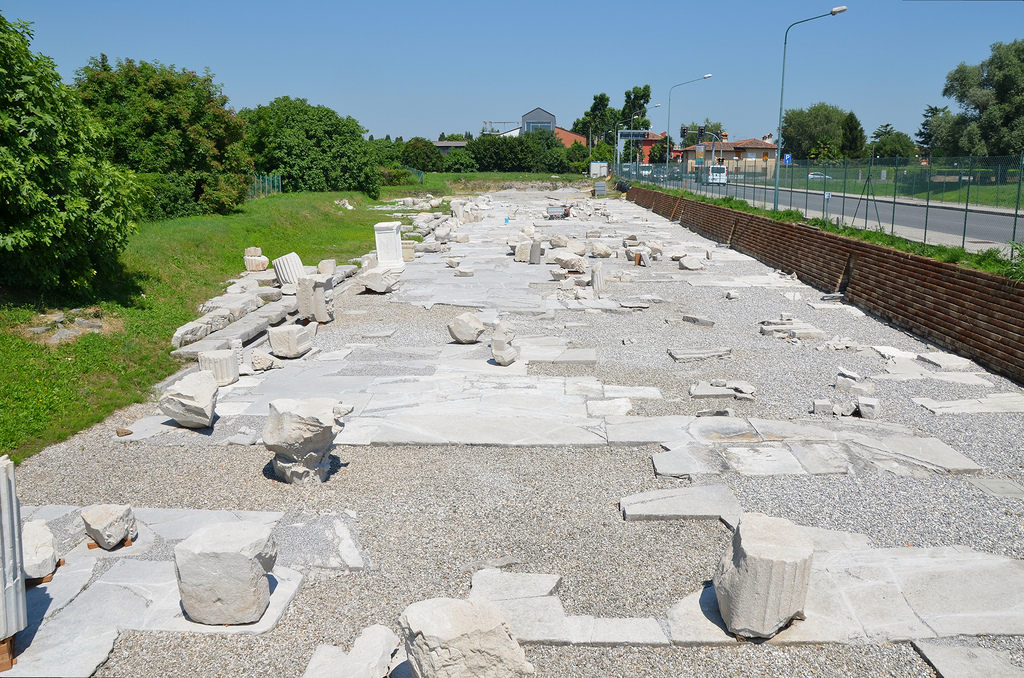
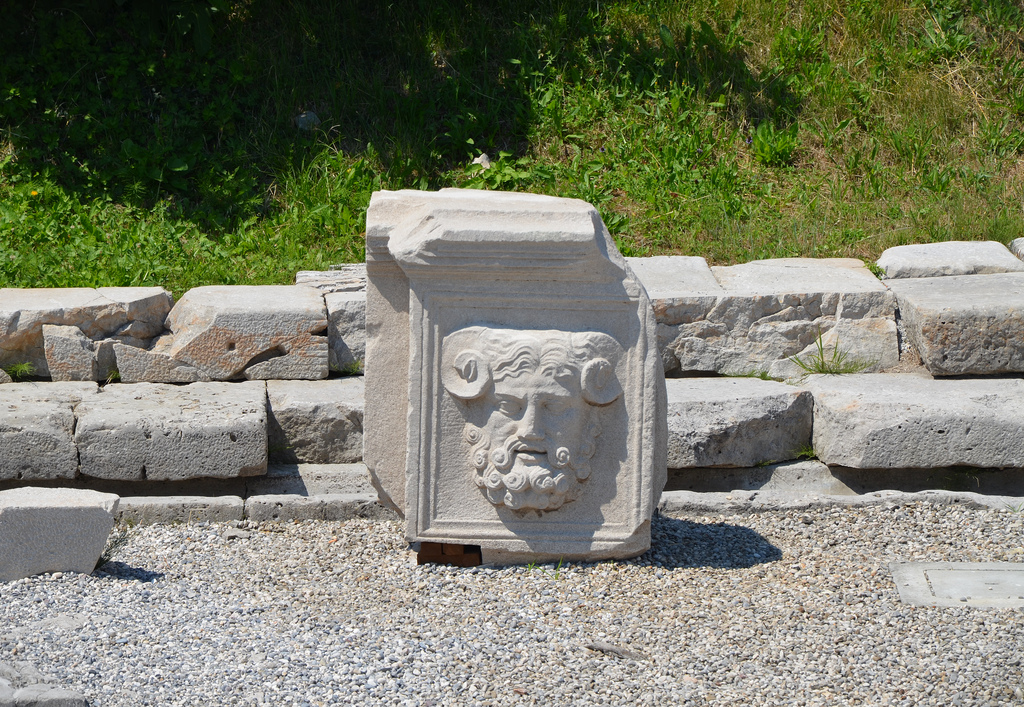
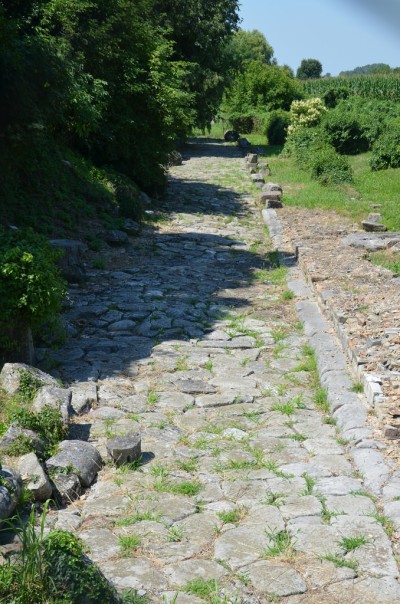
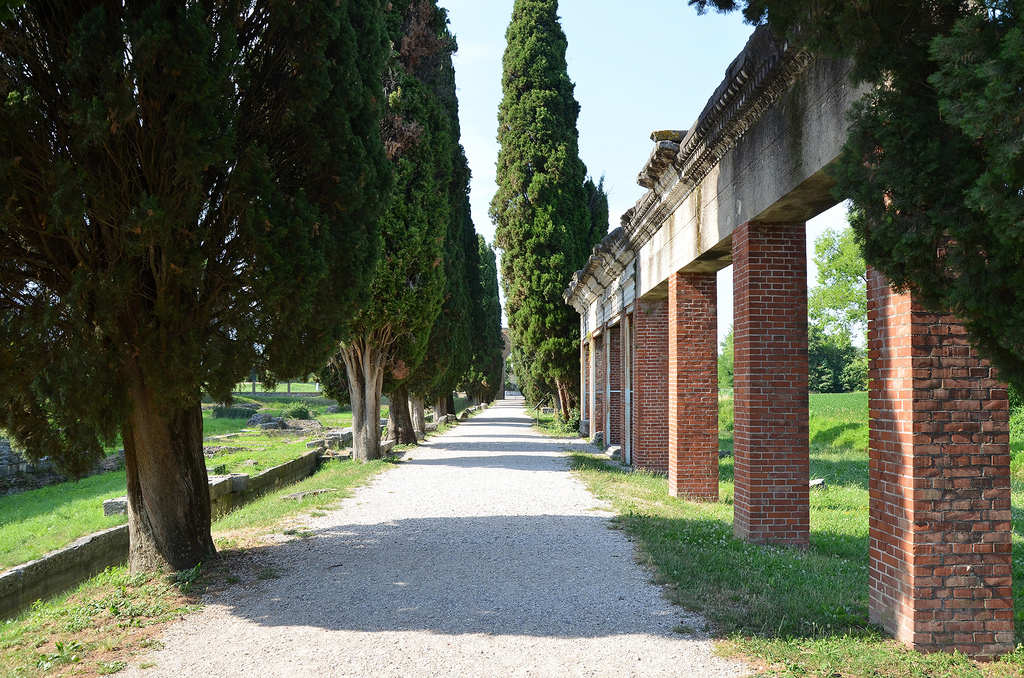
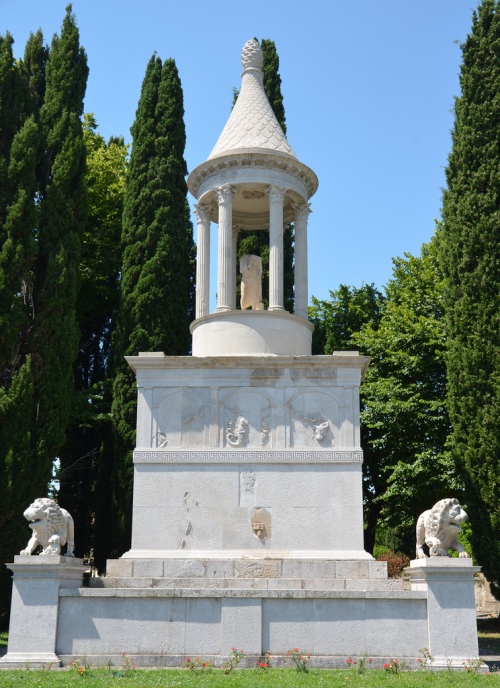
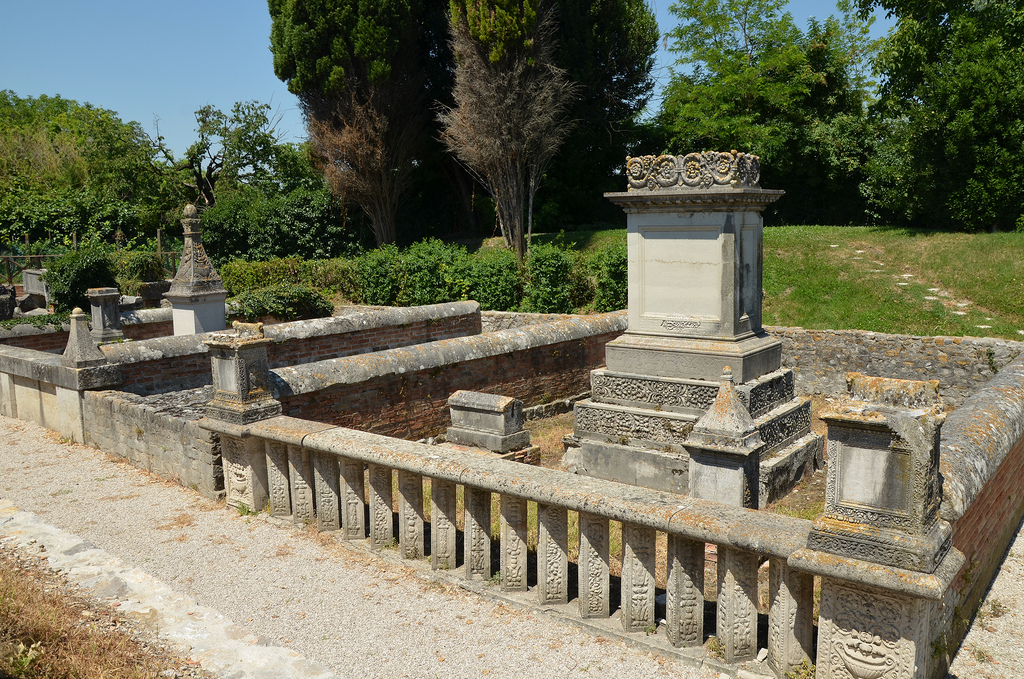
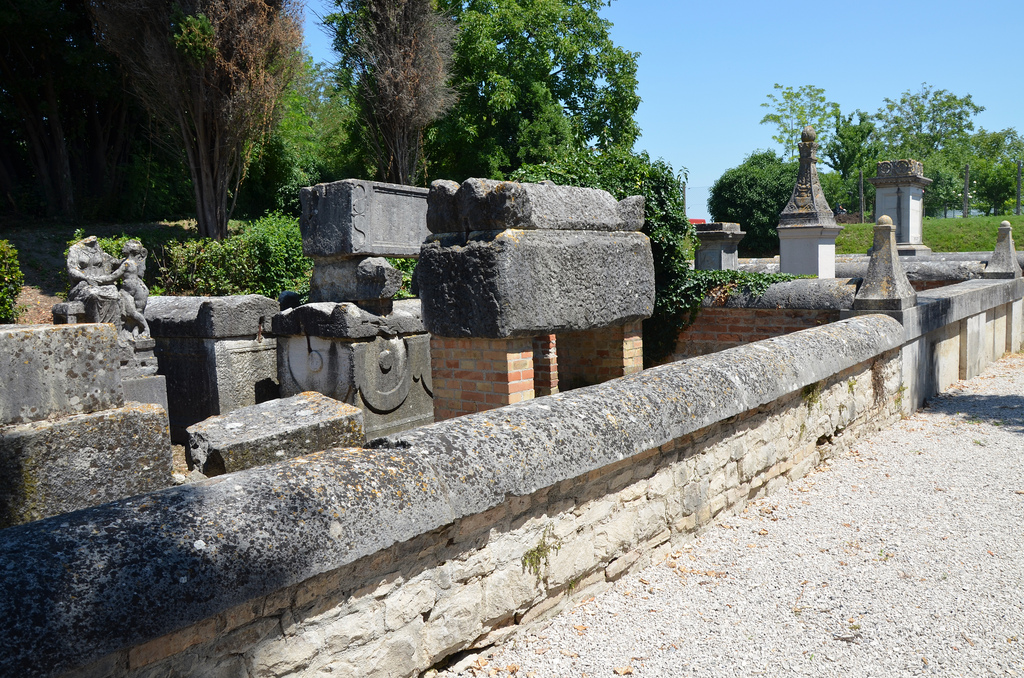
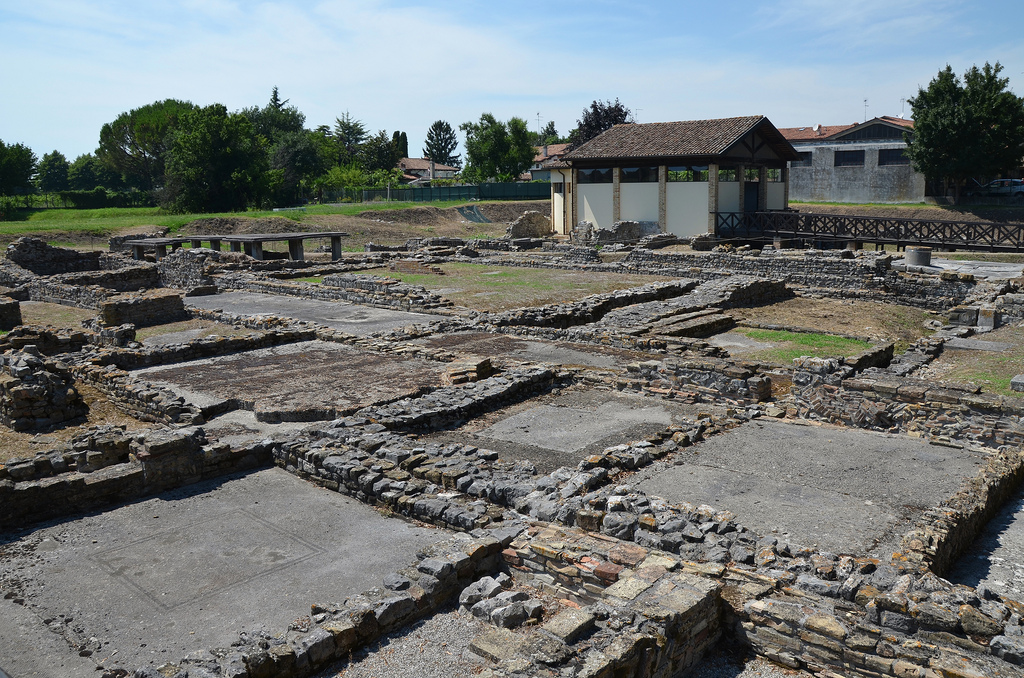
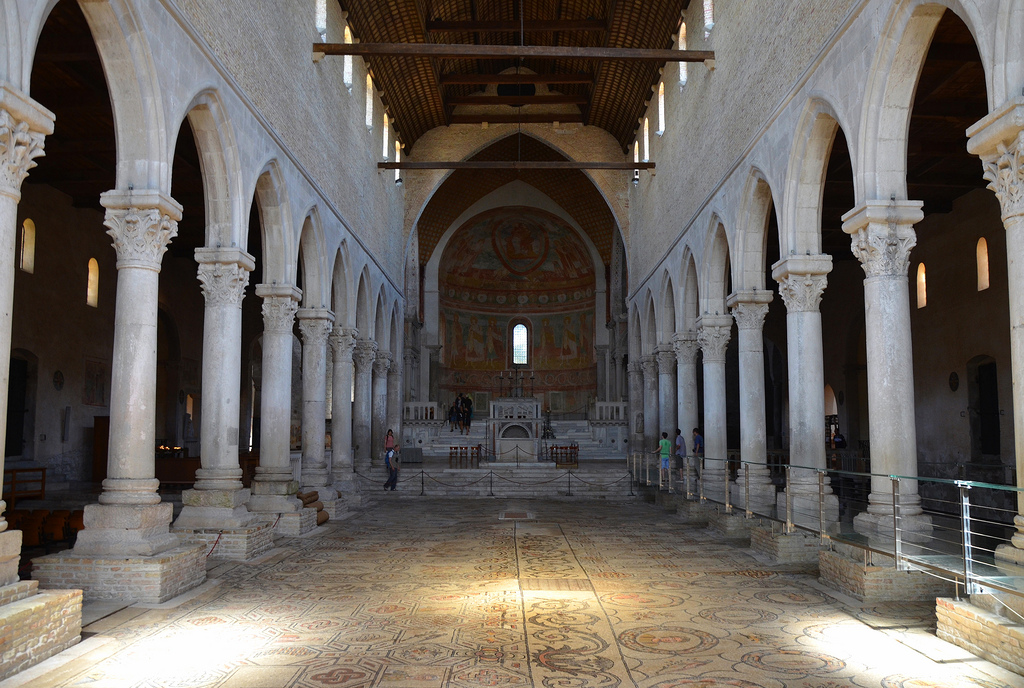
The imperial Forum of Aquileia, the colonnade of the eastern portico of the Forum, was restored and partially reconstructed in 1936-1937.In the first half of the 1st century AD, the Forum was a large rectangular pedestrian area covered in Aurisina limestone and lined by porticoes that led to shops (tabernae) and the Civilian Basilica.Plinth supporting a protome of Jupiter Ammon, it decorated the attic of the Forum’s portico.A stretch of the decumanus, the street goes south of the Forum in an east-west direction.The western side remains of the fluvial port of Aquileia, one of the best-preserved surviving Roman ports. It was rebuilt entirely in the Julio-Claudian age over Republican foundations with a new complex of wharfs and a long warehouse behind that opened onto the river.The western wharf of the river port with a ramp leading up to the storerooms. The wharfs had three ramps that led to port facilities and a long portico. Three paved roads stretched towards the market areas and were used to transport goods.Along the so-called Via Sacra set up in 1934 and which follows the ancient watercourse, remarkable architectural elements and decorations are on display; they belonged to various monuments in the town.The so-called Grand Mausoleum dates back to the Augustan era. It was found on the edge of the town at the end of the 1800s and rebuilt in 1955 (inappropriately) along Via Giulia. It comprises an enclosure protected by two lions, with a high base with relief decorations, surmounted by a circular, temple-like structure that guards the statue of the toga-clad deceased.The Roman necropolis dates to between the 1st and the 3rd century AD. It comprises five burial enclosures of different lengths but equal depths containing numerous cremation and inhumation burials. They belonged to different Aquileian families (Stazius, anonymous, Julius, Trebius and Cestius).In the burial ground owned by the Trebii, a small sculpture (original in the Archaeological Museum) portrays a deceased woman being comforted by Psyche, a very young girl with wings who accompanied the dead to the underworld.The archaeological ruins of the Fondo Cal, one of Aquileia’s residential districts.Inside view of the Basilica with the mosaic floor uncovered at the beginning of the 20th century. The mosaic dates back to the first stage of Christian construction of the Basilica, which started soon after the Edict of Milan in 313 AD. Over 760 square metres, The Bishop Theodore’s mosaic is the largest mosaic floor in the western Roman Empire.
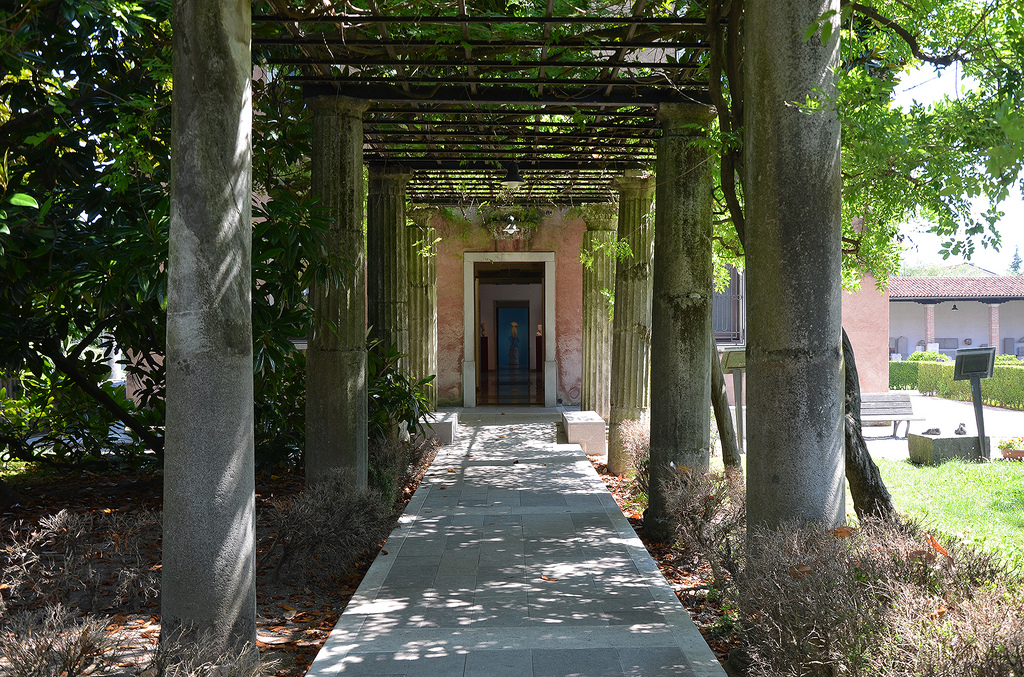
The Museo Archeologico Nazionale di AquileiaThe lapidarium of the Museo Archeologico Nazionale di AquileiaThe lapidarium of the Museo Archeologico Nazionale di Aquileia






 following hadrian photography