Yazilikaya Hittite Rock Sanctuary

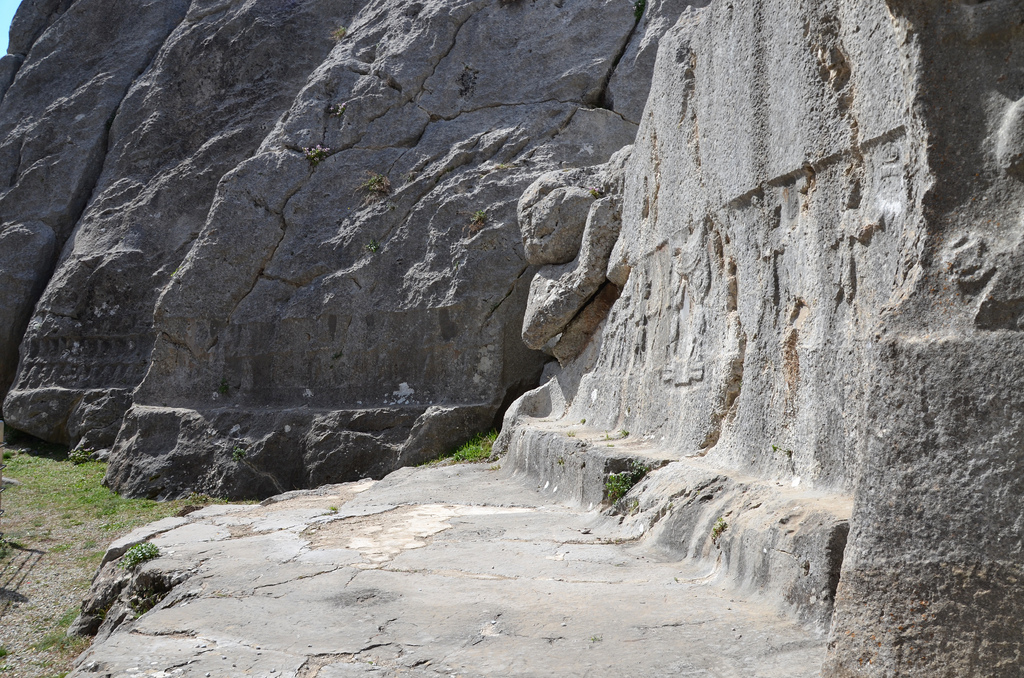
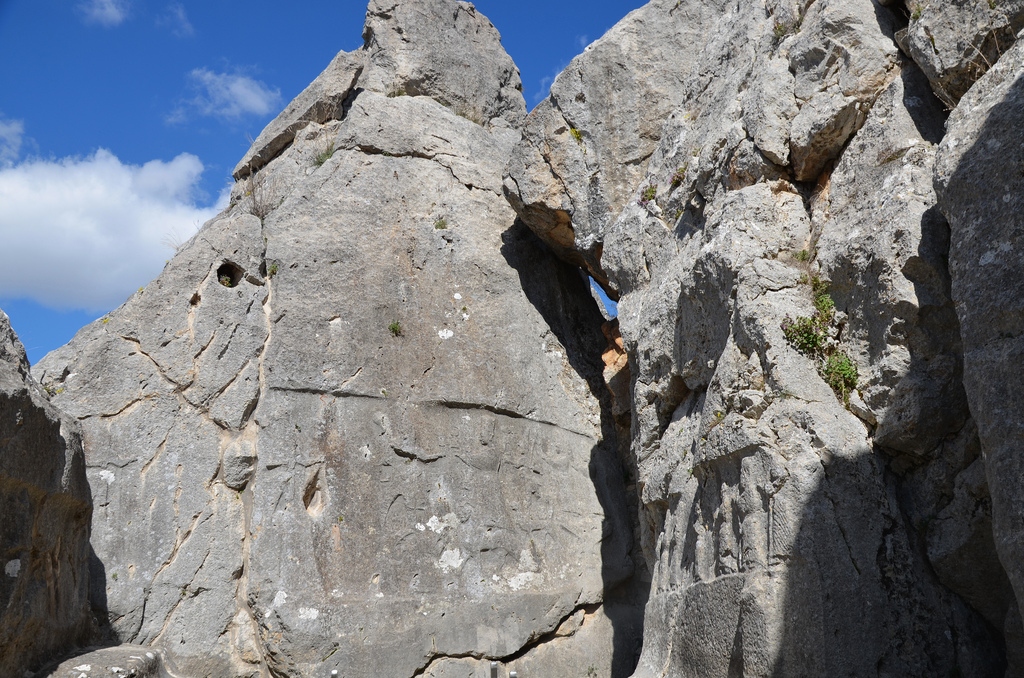
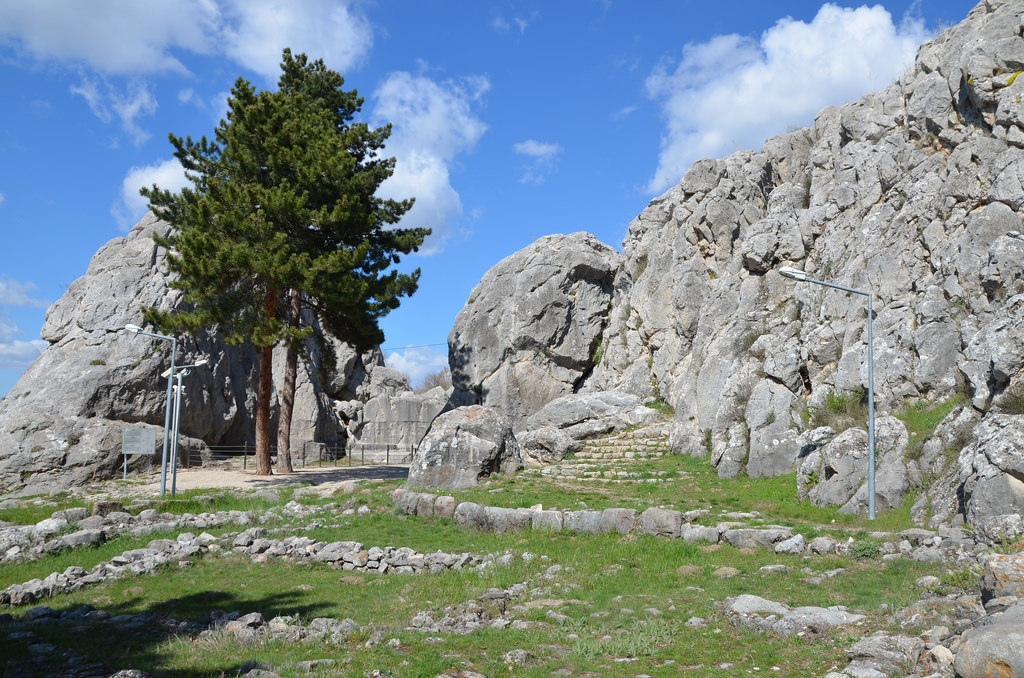
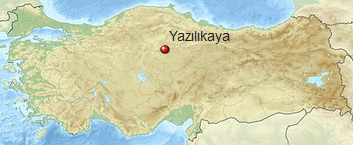
Yazılıkaya (“Inscribed Rock”) is a Hittite rock sanctuary located about 1.5 kilometres northeast of Hattusa, the capital city of the Hittite Empire. It is the largest known Hittite rock monument. The sanctuary consisted of a temple-like building and two open-air chambers cut into the bedrock.

Coordinates: 40° 1′ 30″ N, 34° 37′ 58″ E
Yazilikaya

The Yazılıkaya sanctuary served as a place for the celebration of the arrival of the New Year each spring. These ceremonies took place in the open air in front of the Hittite Pantheon. The sanctuary was made of two rock chambers, later labelled Chamber A and Chamber B, by archaeologists. The walls of each chamber were covered with the richest and most striking samples of Hittite relief art. They featured gods and goddesses and the figures of the Great King Tudhaliya IV (ca. 1237 – 1209 BC). There are a total of 83 images, 66 in Chamber A and 17 in Chamber B.

Human activity on the site probably began in the 16th century BC, although what we see today is probably the result of modifications made in the late 13th century BC, not long before the Hittite Empire began its steep and mysterious decline.

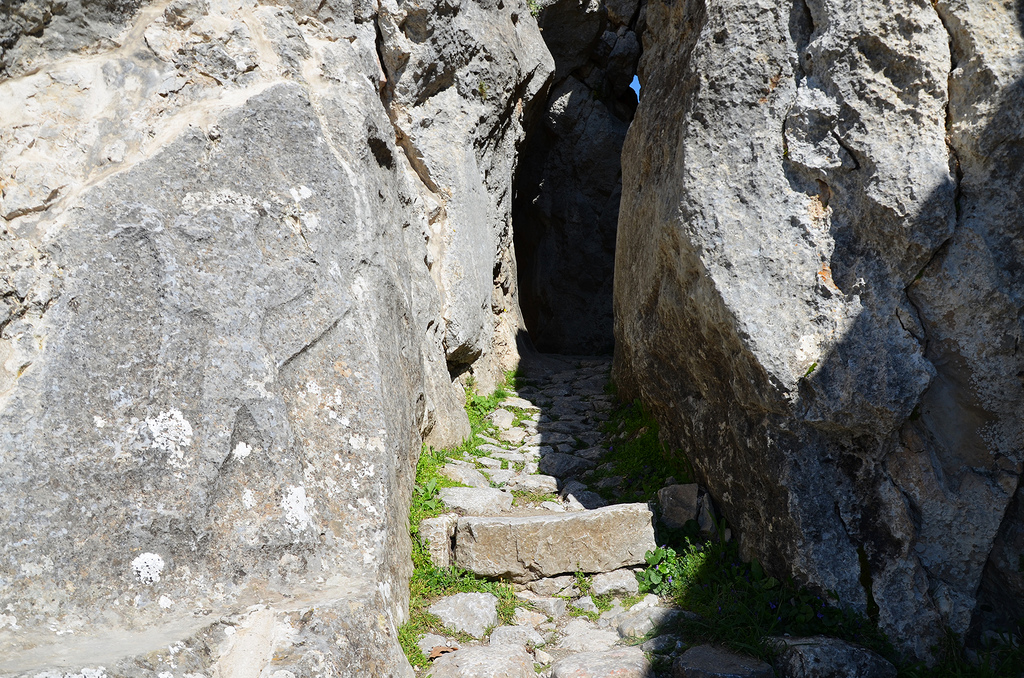
The entrance to Yazılıkaya sanctuary.

Chamber A, the largest of two chambers, is 30 metres long and about 20 metres wide. Its walls are almost entirely decorated with reliefs running horizontally. The deities are aligned in two rows, perhaps in procession, with male figures on the left wall (with two female attendants) and female figures on the right wall. The name of each deity is given in Luwian hieroglyphs above their raised hands, but due to natural deterioration, some parts of these names have disappeared. These two rows are directed towards the main scene in the middle, where the Storm God Teshup and the Sun Goddess Hepat meet.

Engraving from a relief at Yazilikaya by French archaeologist Charles Texier (1882).
Teshub stands on two deified mountains (depicted as men) alongside his wife Hepatu, standing on the back of a panther. Behind her, their son, daughter and grandchild are carried by a smaller panther and a double-headed eagle.

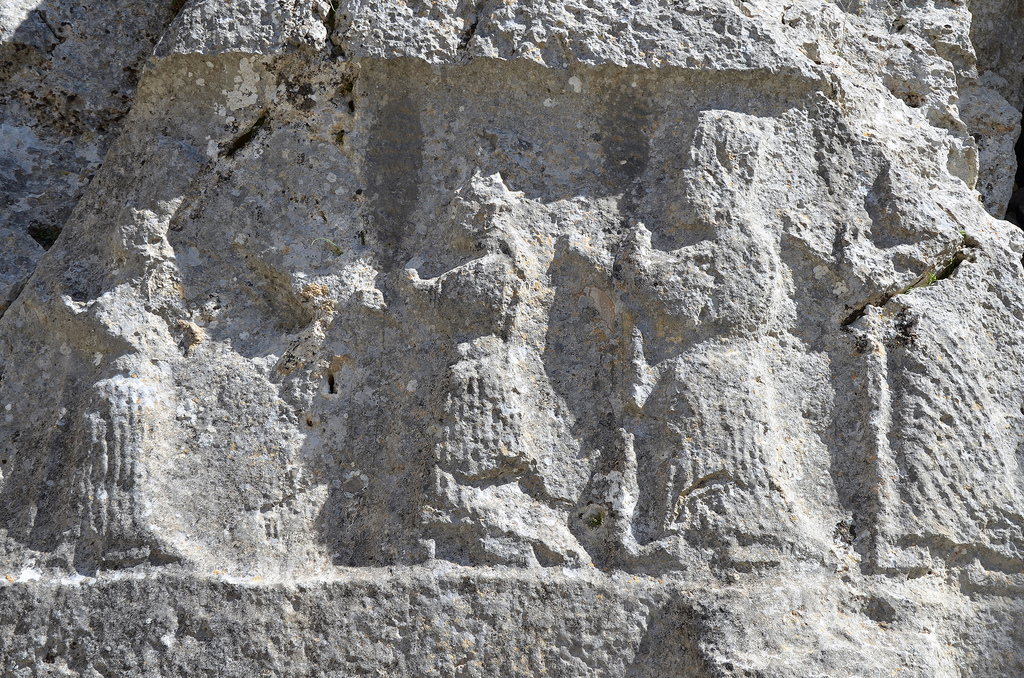
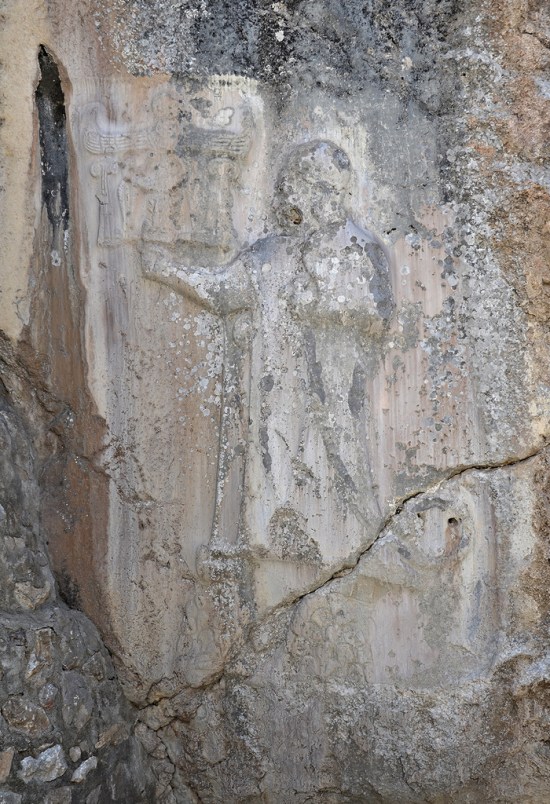
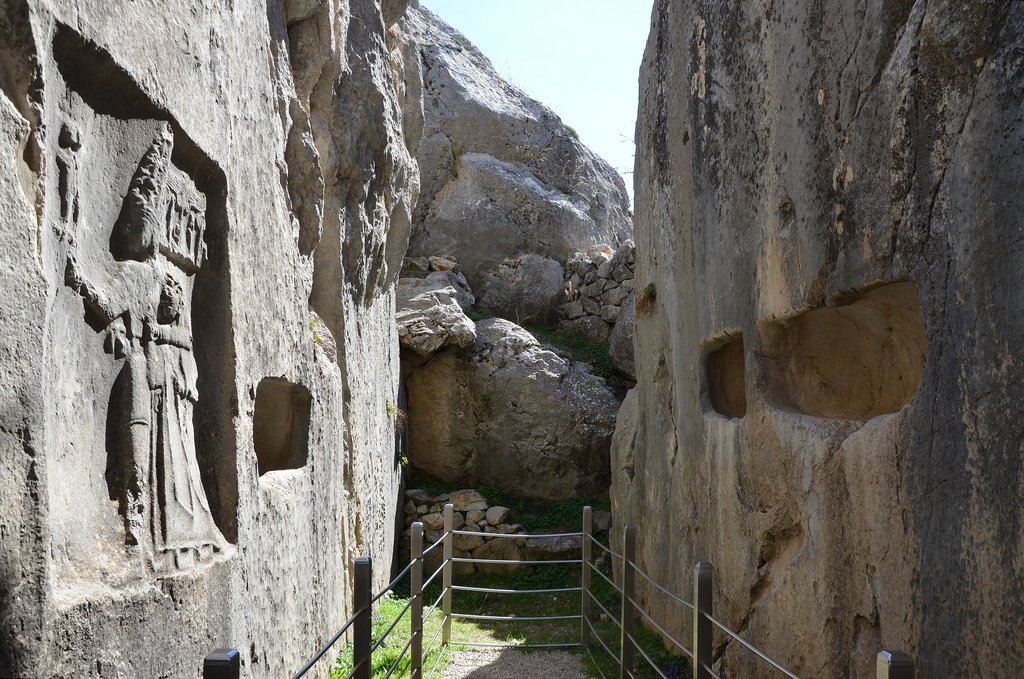
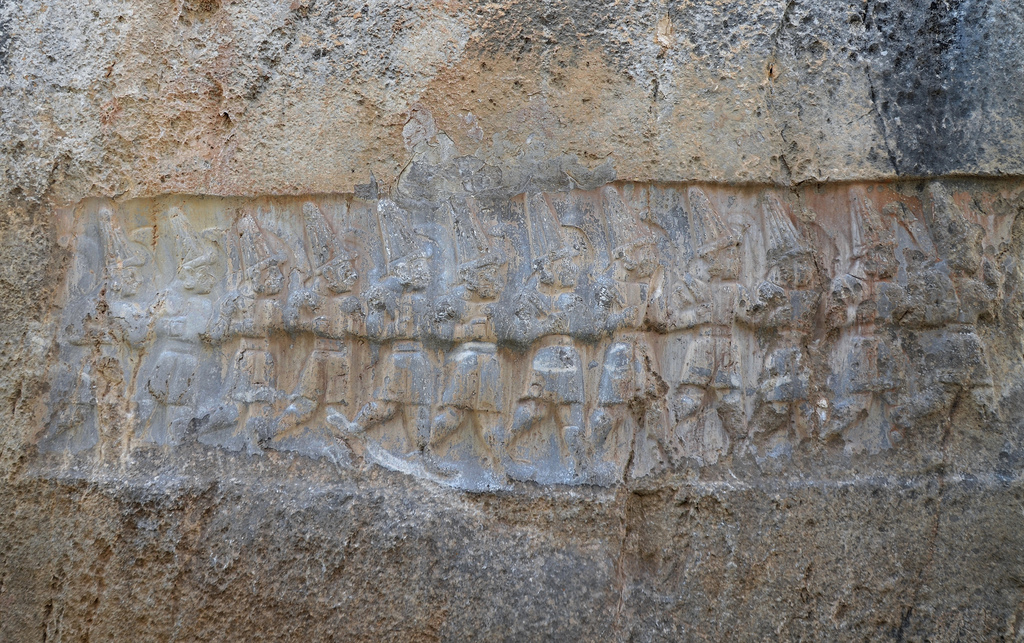
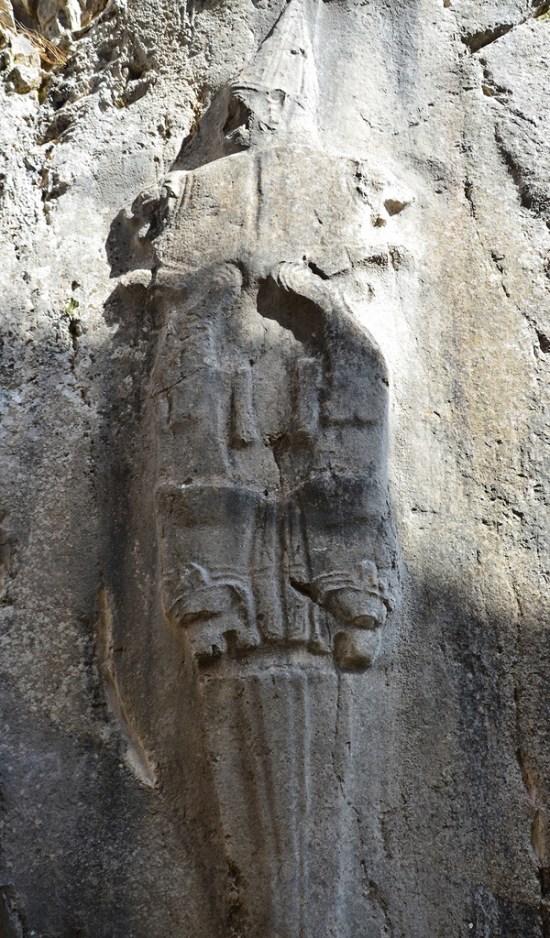
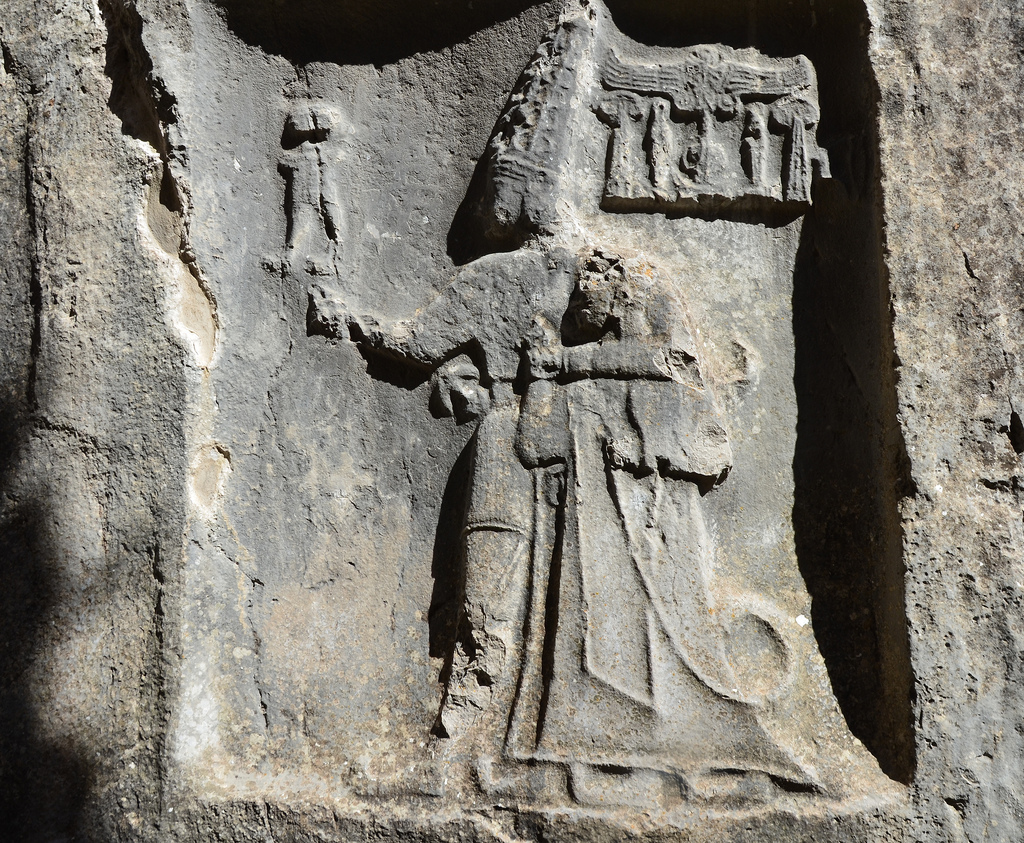
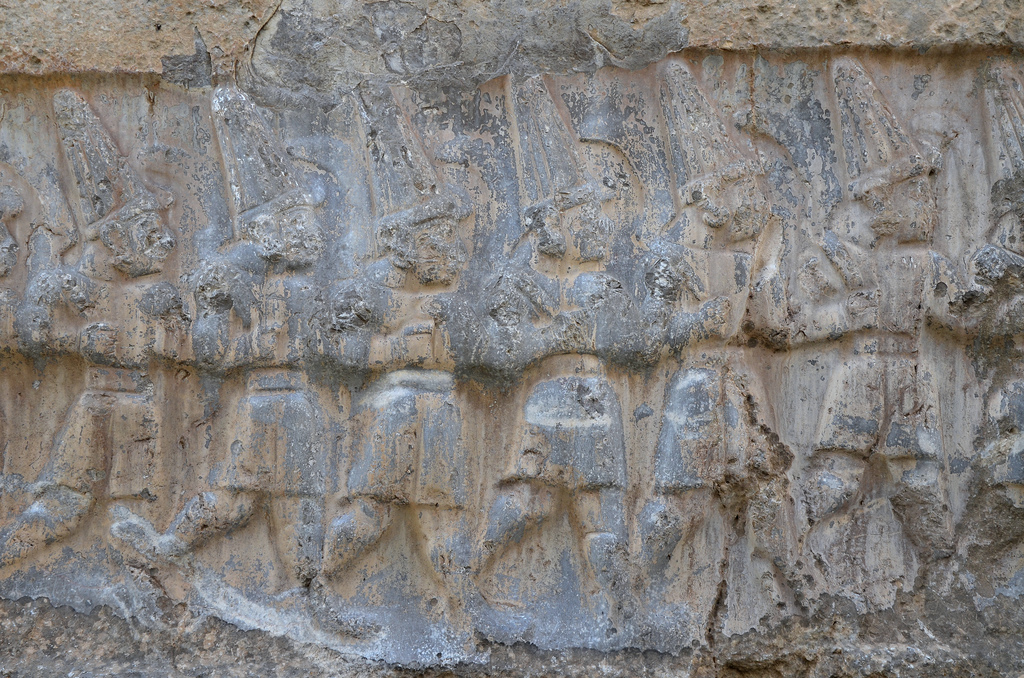
Chamber B is accessible via a narrow passage with winged demons on both sides. Chamber B was believed to have been built as a memorial chapel for Tudhaliya IV, dedicated by his son Suppiluliuma II at the end of the 13th century BC. Buried until the mid-19th century, the reliefs on the walls are much better preserved than those in Chamber A. A line of gods of the Underworld is pictured on the wall immediately to the right of the entrance. On the opposite wall is a representation of Nergal, the God of the Sword and the Underworld. To the left of this relief, a cartouche with the name of Tudhaliya IV is visible, and this same king is shown embracing the Thunder God Teshub on the right side.

PORTFOLIO

Chamber A
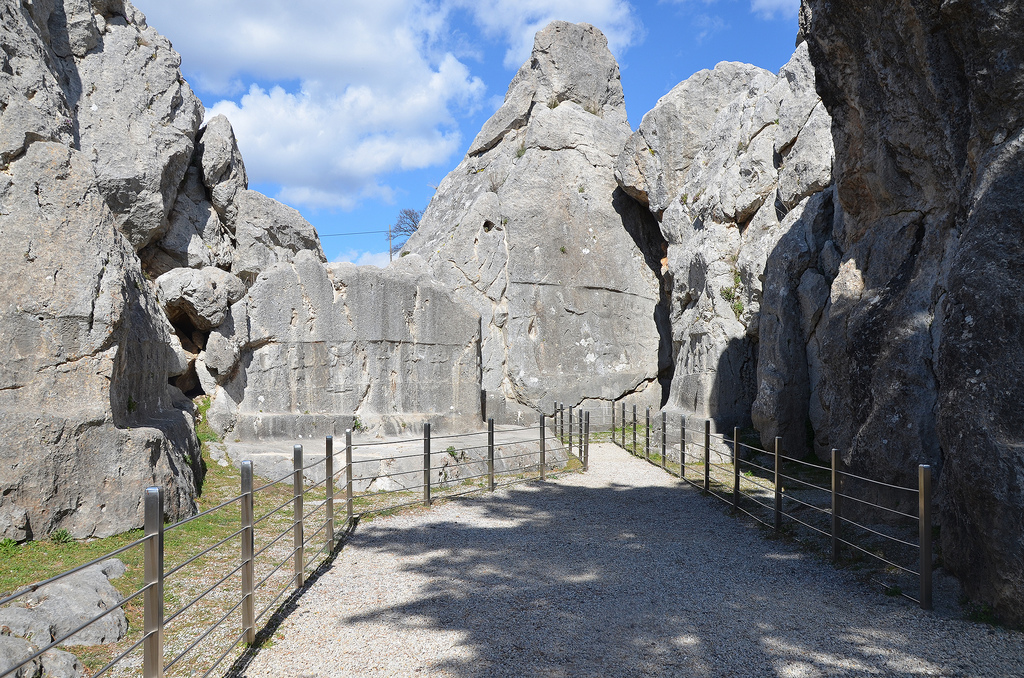
Overview of Chamber A.
Chamber A, rock relief depicting a procession of male deities.
Chamber A, two bull men stand between male gods on the hieroglyphic symbol of the earth and supporting the sky.
In Chamber A, two bullmen stand between male gods on the hieroglyphic symbol of the earth and supporting the sky.
Left wall of Chamber A depicting male gods.
The left wall of Chamber A depicts male gods.
Chamber A, main relief scene with
Chamber A, main scene in the middle of the chamber where Teshup and Hepat meet and female goddesses in procession on the right wall.
Chamber A, goddesses in procession.
Chamber A, main scene depicting (left to right) the God Kumarbi (chief god of the Hurrians), the weather and storm god Teshuba, the earth goddess Hepat, Sharumma (son of Teshuba & Hepat) and Alanzu (daughter of Teshup Hepat).
Chamber A, relief depicting the sanctuary's founder, King Tudhaliya IV, standing on two mountains.
Chamber A, relief depicting the sanctuary’s founder, King Tudhaliya IV, standing on two mountains.

Chamber B

Entrance to Chamber B with a relief of a winged, lion-headed demon.
Entrance to Chamber B with the relief of a winged, lion-headed demon.
Chamber B.
Chamber B. The narrow gallery is thought to be a memorial chapel for Tudhaliya IV, dedicated by his son Suppiluliuma II
Chamber B, the niches were probably used for offerings.
West wall of Chamber B depicting the twelve Gods of the Underworld.
The west wall of Chamber B depicts the twelve Gods of the Underworld.
East wall of Chamber B with a depiction of Negal, the Sword God and God of the Underworld.
The east wall of Chamber B has a depiction of Negal, the Sword God, and the God of the Underworld.
Chamber B, cartridge showing the name and title of King Tudhaliya IV.
Chamber B, cartouche showing the name and title of King Tudhaliya IV.
The East wall of Chamber B depicts in a niche the God Sharruma (son of the Thunder God Teshub) embracing King Tudhaliya IV. The god has his left arm over the king’s shoulders while holding the king’s right wrist. The god wears a short tunic and has pointed shoes. The king wears a long coat and carries a sword and a lituus.
West wall of Chamber B depicting the twelve Gods of the Underworld.
The west wall of Chamber B depicts the twelve Gods of the Underworld.

Links:

Sources:

Musée Les Sources d’Hercule (Deneuvre, France)

Logo_RVB_PhotoshopA unique Gallo-Roman sanctuary of Hercules was discovered by chance in 1974 in a field on the outskirts of the city of Deneuvre (Meurthe-et-Moselle in eastern France) when a local farmer looked for a source of water for his flock. He called on a local dowser, Gilbert Hellé, who advised him on where to start digging. They soon realised that there was more than just a spring under the earth when a Roman column came to light.
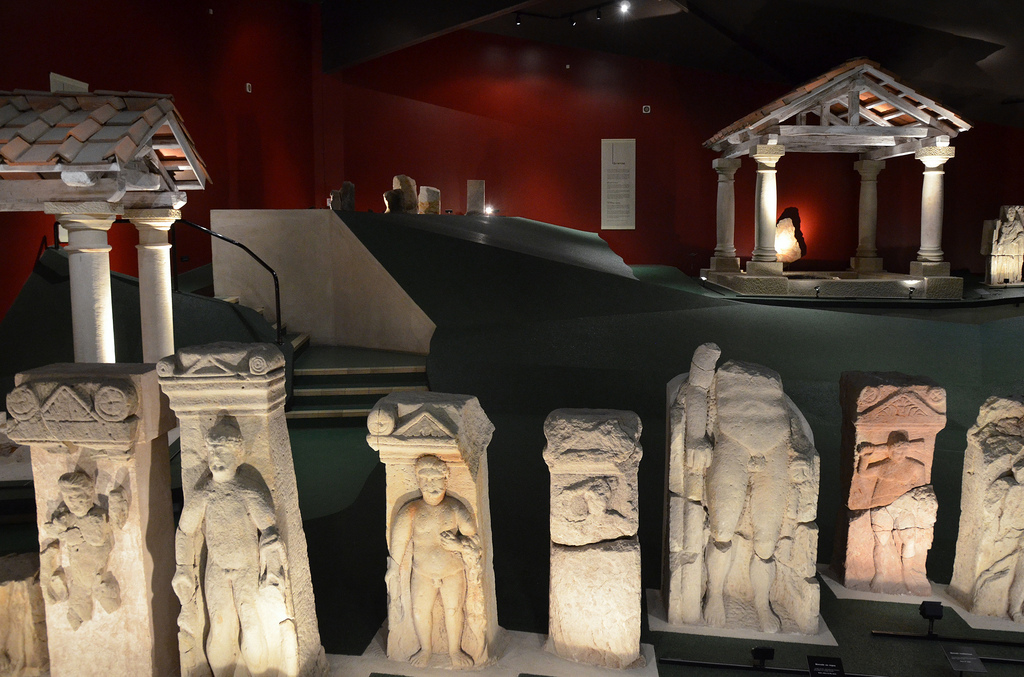
This rare spring sanctuary, which has no equivalent in Roman Gaul, is organised around two sources dedicated to Hercules. Indeed, traces of hundred of carved representations of Hercules were unearthed in Deneuvre, making it the largest concentration of such representations in the Roman West. After twelve years of extensive excavations led by Gérard Moitrieux, a dedicated museum was built in the centre of the city. It was designed around a scale re-creation (400m²) of the sanctuary as it was in the middle of the 4th century AD. The museum officially opened its doors in 1996.

The spring sanctuary was established in 150 AD. At this time the sanctuary consisted of only a few wooden basins installed to capture the water sources with a network of pipes. Quickly the sanctuary grew in wealth and at the end of the 2nd century the wood basins were gradually made of stone. It is also at this time that roofs were raised above the basins and that the first stelae carved in the effigy of Hercules were erected. The end of the 2nd century saw the sanctuary reach its heyday after which came alternating periods of almost total abandonment and rebirth. The sanctuary was destroyed around 375 AD, probably by the first Christian community in Deneuvre. The sources were blocked, the statues were destroyed and sometimes mutilated (severed heads, hammered faces).

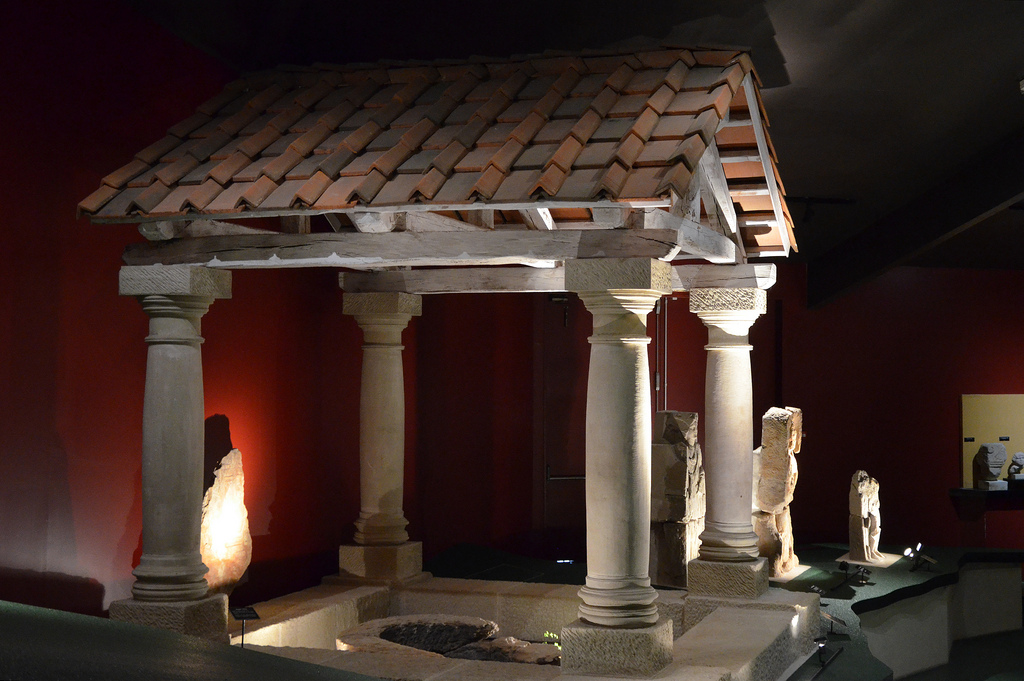
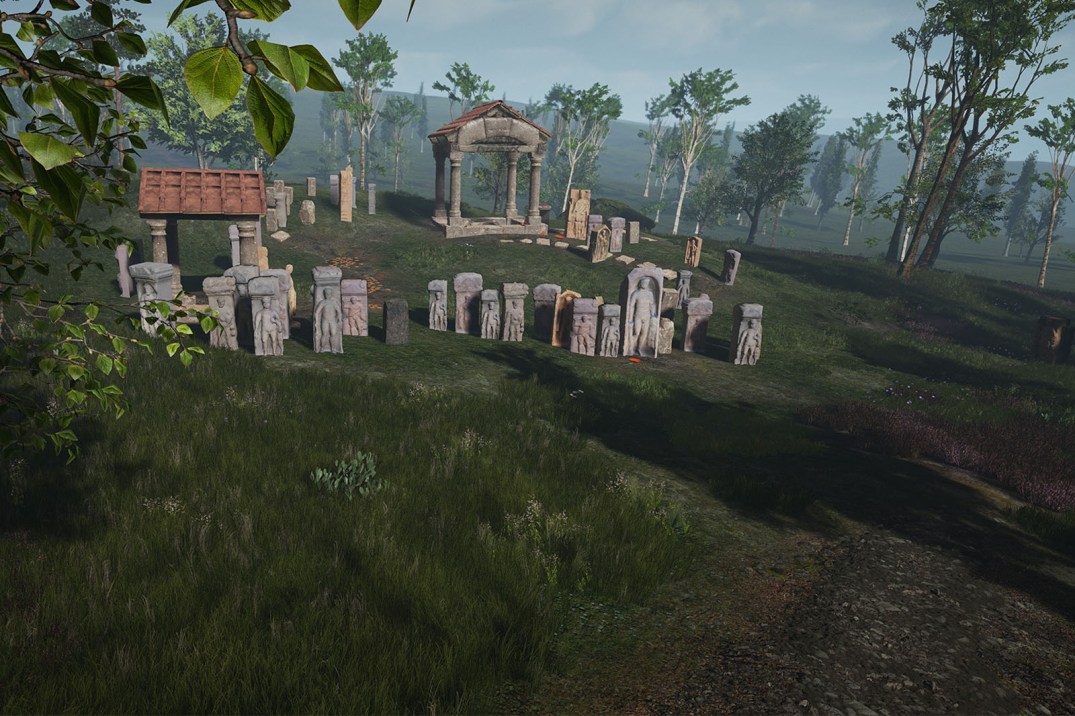
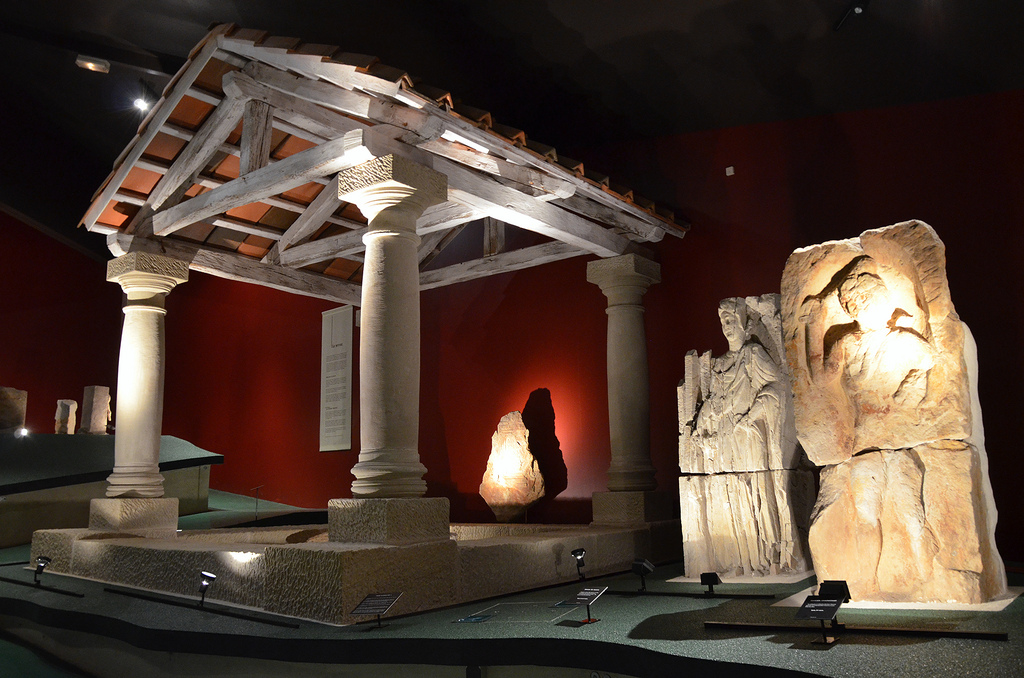
The re-creation of the sanctuary of Hercules. A path line with Hercules reliefs, presumably paid for by the hopeful pilgrims seeking his support, approached the pools.

At Deneuvre, Hercules is mainly depicted in three different attitudes. Hercules at rest, leaning on his club. Hercules the fighter, brandishing his club behind his head in a threatening way. Finally, Hercules walking, the rarest attitude of the three, with the club on his shoulder. All the statues found in the sanctuary are made of the same stone, the Voltzia Sandstone, a stone quarried locally. They were carved between the end of the reigns of Antoninus Pius (138-160 AD) and Valentinian I (364-375 AD).

Four
Four stelae and one altar dedicated to Hercules. Two stelae show Hercules fighting while two others show Hercules at rest.

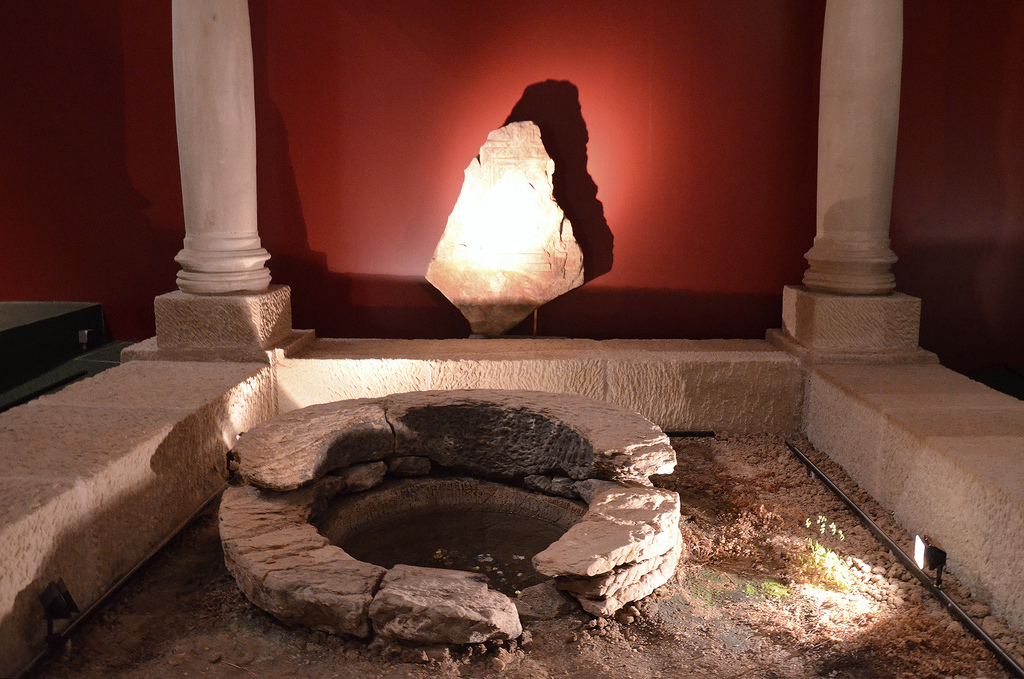
The springs were channeled using wooden pipes and organized into three pools; two of these were protected with roofs, each supported by four columns.

pools; two of these were protected with roofs, each supported by four columns
One of the water basins which was protected with a wooden roof supported by four columns.
Stone water basin protected with a wooden roof supported by four columns.
The second stone water basin protected with a wooden roof.
3D reconstruction of the sanctuary of Hercules by Damien Vurpillot (Digital archaeology and cultural heritage specialist).

At Deneuvre, pilgrims were making vows to Hercules. People came seeking a healing cure for their illnesses, success in trade, a good war booty or a good harvest. They came from all over the region and beyond, as far as from the Limes along the Rhine. Archaeological finds show that pilgrims cleansed and purified themselves using pottery bowls before making an offering. 

The re-creation of the sanctuary of Hercules.
Hercules at rest with Celtic characteristics.

The offerings were not necessarily significant, some coins or a little food could do the trick. They were placed on the altars. Then the pilgrim waited patiently for the vow to be fulfilled. If the wish of the pilgrim was granted, a second gift was offered to the God in gratitude. These gifts could take many forms depending on the wealth of the pilgrim. The richest gave a stone statue, a stela or an altar on which a dedicatory inscription was engraved to give thanks for the request fulfilled. The poorest gave smaller ex-voto like stones or pieces of tiles on which they expressed their thanks. Pilgrims also left offerings of food, white clay figurines, money and jewellery. Votive offerings are attested by the phrase Votum Solvit Libens Merito (“He willingly and deservedly fulfilled his vow”),commonly abbreviated to VSLM, which was found on some of the altar’s inscriptions.

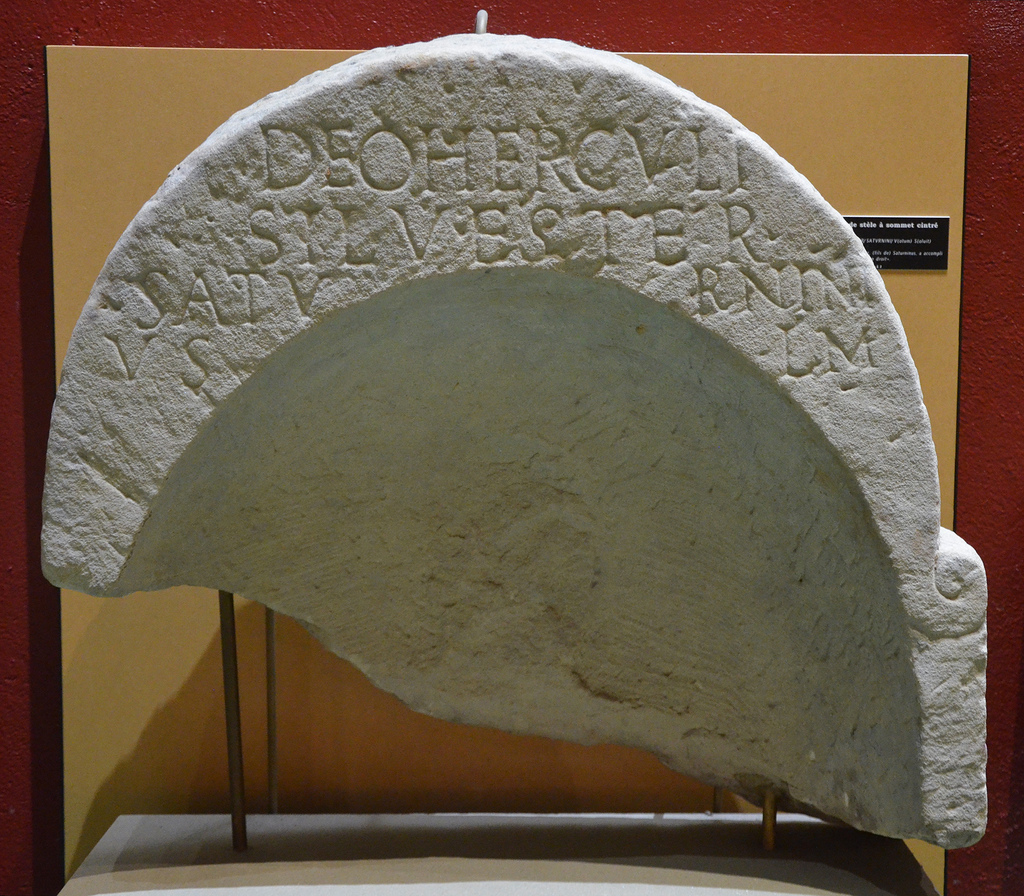
Top of stela with dedicatory inscription. DEO HERCVLI/SILVESTER/SATVRNINI/ V(otum) S(olvit) L(ibens) M(erito). To the god Hercules; Silverster, (son of) Saturninus,
Top of stela with dedicatory inscription.
DEO HERCVLI/SILVESTER/SATVRNINI/ V(otum) S(olvit) L(ibens) M(erito).
To the god Hercules; Silvester, (son of) Saturninus, willingly and deservedly fulfilled his vow.

The springs of Deneuvre were thought to be sacred and pilgrims purified their bodies with water (however recent chemical analysis have shown that the water had no special mineral properties and was unsafe for human consumption due to its high level of acidity). The water was also used as libation, by pouring out water into the fire on the altar.

The re-creation of the sanctuary of Hercules.

The village of Deneuvre is rich in archaeological remains and the site of the sanctuary has not yet been fully excavated. Archaeologists are hoping to find a temple dedicated to Jupiter, other religious sanctuaries as well as pottery workshops.

Information

Musée Les Sources d’Hercule
1 Place Jean Marie Keyser
54120 Deneuvre
France

Official website: http://www.museehercule.com/

Opening hours

Closed from 1 November to 28 February.
From 1 May to 30 September: daily from 10 am to 12 am and 2 pm to 6 pm.
From 1 March to 30 April and from 1 to 31 October: weekends, public holidays and school holidays from 2 pm to 5 pm.

Prices

Adult: 3.50 € (2.10 € reduced price)
Groups: all year by appointment (1.50 € for school groups).