Pompeii was a large Roman city in the Italian region of Campania which was destroyed, together with Herculaneum, Stabiae, Oplontis and other communities, by the violent eruption of Mount Vesuvius in AD 79. Buried for centuries beneath tons of volcanic ash and debris, Pompeii was finally re-discovered late in the 16th century, offering an invaluable insight into the Roman world. Pompeii is a UNESCO World Heritage Site and is one of the most popular tourist attractions in Italy, with approximately 2.5 million visitors annually.
Thanks to its strategic position near the Sarno River, Pompeii was an important commercial centre, a trading hub noted for exporting goods such as olives, olive oil, wine and fish sauce (garum). Once home to approximately 12,000 people, the city boasted an assortment of baths, houses, temples, public buildings, markets, brothels, taverns and cafes, and a 20,000-seat arena. Probably originating from an amalgamation of five small towns, Pompeii’s first city plan developed in the 6th century BC when Italic people called the Oscans inhabited the area.
Over the next centuries, the city fell to the Greeks and the Samnites before becoming a Roman colony in 80 BC. Pompeii prospered until it was struck by a massive earthquake in AD 62, damaging most of its buildings. The fatal blow came upon the city in AD 79 when Mount Vesuvius violently erupted.
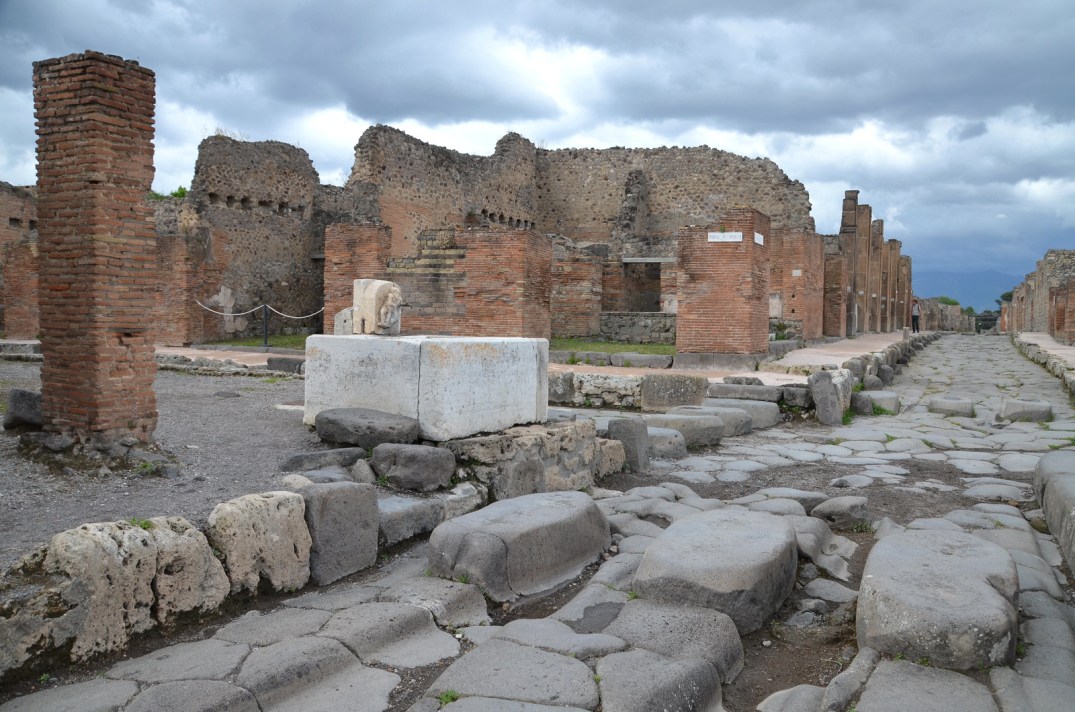
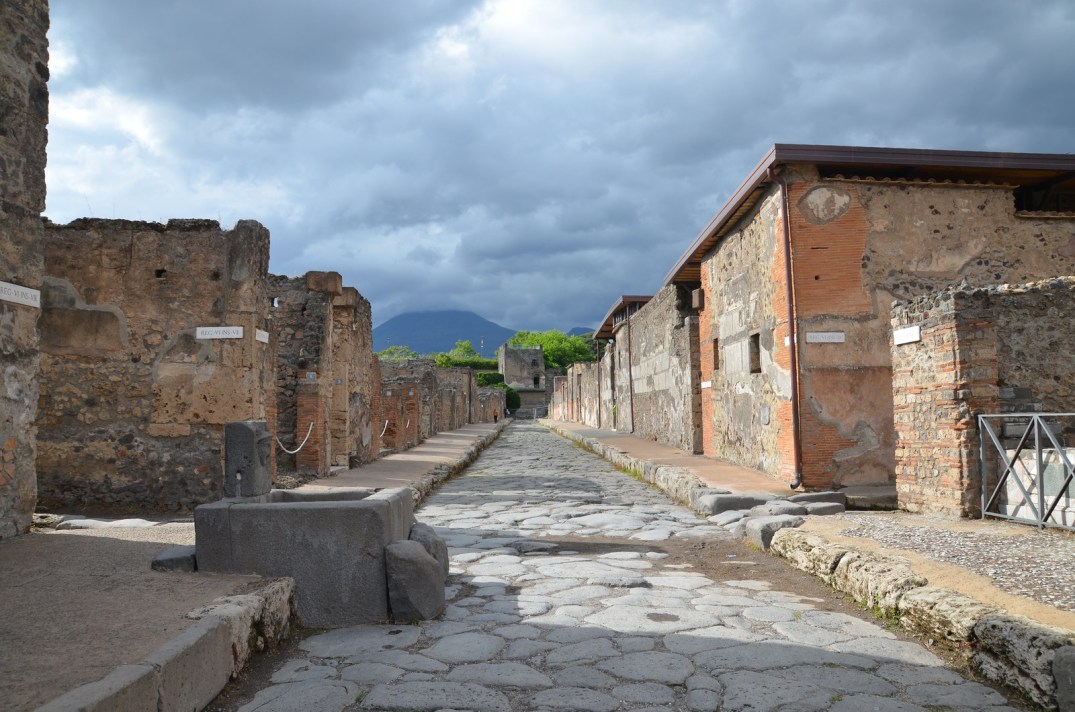
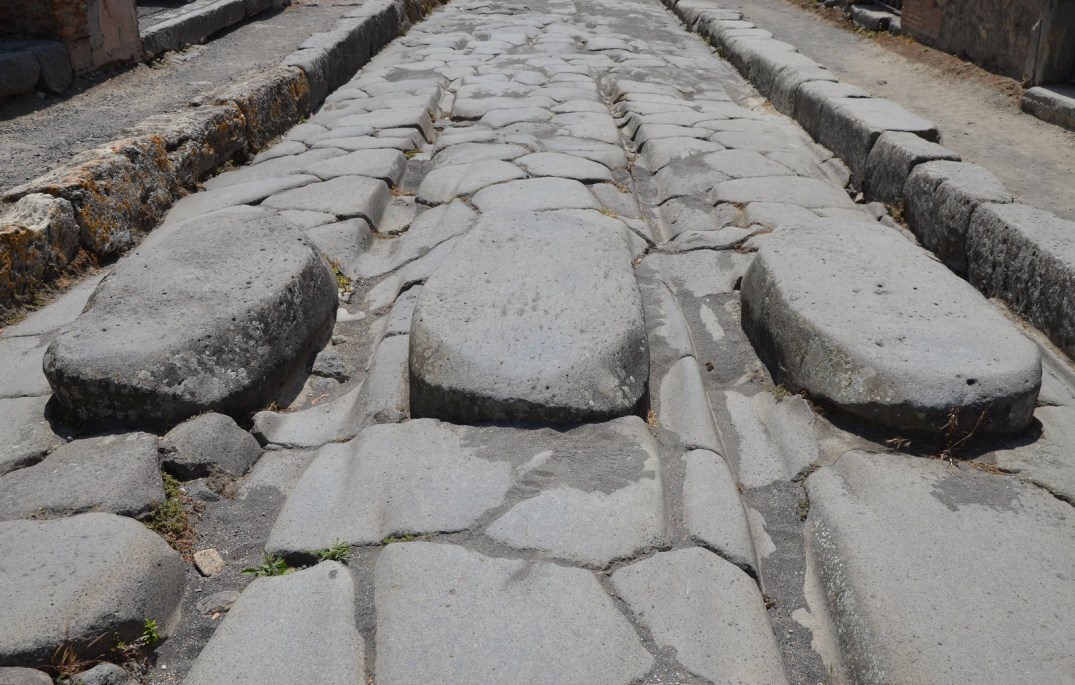
The streets of Pompeii were paved during Roman times with large polygonal blocks of stone. The stepping stones kept Romans’ feet dry and out of the rainwater, slops, and animal waste that would have filled the streets of Pompeii.
The powerful eruption completely smothered the cities on the foothills of Vesuvius. The volcano, which had been dormant for hundreds of years, erupted with tremendous force sending a tall mushroom cloud of rock and gas over 30 km into the sky. The cloud then collapsed and triggered a massive pyroclastic surge down the slopes of Vesuvius, killing everyone who had not yet fled. At Pompeii, most of the houses lay under a blanket of pumice and ash up to 5 metres deep. It would be some 1700 years before these Roman cities were rediscovered by archaeologists, and the extent of their preservation was extraordinary.
Official map of Pompeii site.
After its catastrophic demise, centuries of history were sealed away until 1594, when an architect stumbled across the ruins while digging a canal. However, it wasn’t until the appointment of archaeologist Guiseppe Fiorelli in 1861 that systematic excavations were undertaken. Fiorelli was responsible for making the famous plaster casts of the victims of the eruption which you can now see around the site. Of Pompeii’s original 66 hectares, 44 have now been excavated, and excavations are continuing to this day.
270 years after the discovery of Pompeii, large scale archaeological excavations have resumed in Pompeii in part of Regio V, an area of over 1,000m² that was still buried under volcanic debris. More than 200 experts and technicians are at work on the Great Pompeii Project, the €105 million conservation, maintenance and restoration program launched in 2012 and largely funded by the European Union. New structures (including a brightly coloured snack bar), colourful frescoes and mosaics of mythological figures, and historic graffiti were among the discoveries emerging from the archaeological dig. Pompeii has come a long way since UNESCO threatened Italy to take it off its World Heritage list. The threat followed several incidents that caused international alarm, including the collapse of the School of Gladiators and several walls in 2010 and 2011.
The School of Gladiators in Pompeii after Restoration.
Another recent discovery was the scrawled piece of text on a wall of a house suggesting that the eruption occurred in October of AD 79, two months later than previously thought. According to Massimo Osanna, the head of the Pompeii site, the correct date of the eruption may, in fact, be 24 October. After almost two millennia, the ruins of Pompeii continue to astound us with its rich archaeological legacy. The new excavation areas are yet to open to the public.
Since the first planned excavations in the mid-18th century, Pompeii has astonished scholars and tourists alike. Its ghostly ruins make for one of the world’s most gripping and exhilarating archaeological experiences.
PORTFOLIO
REGIO I
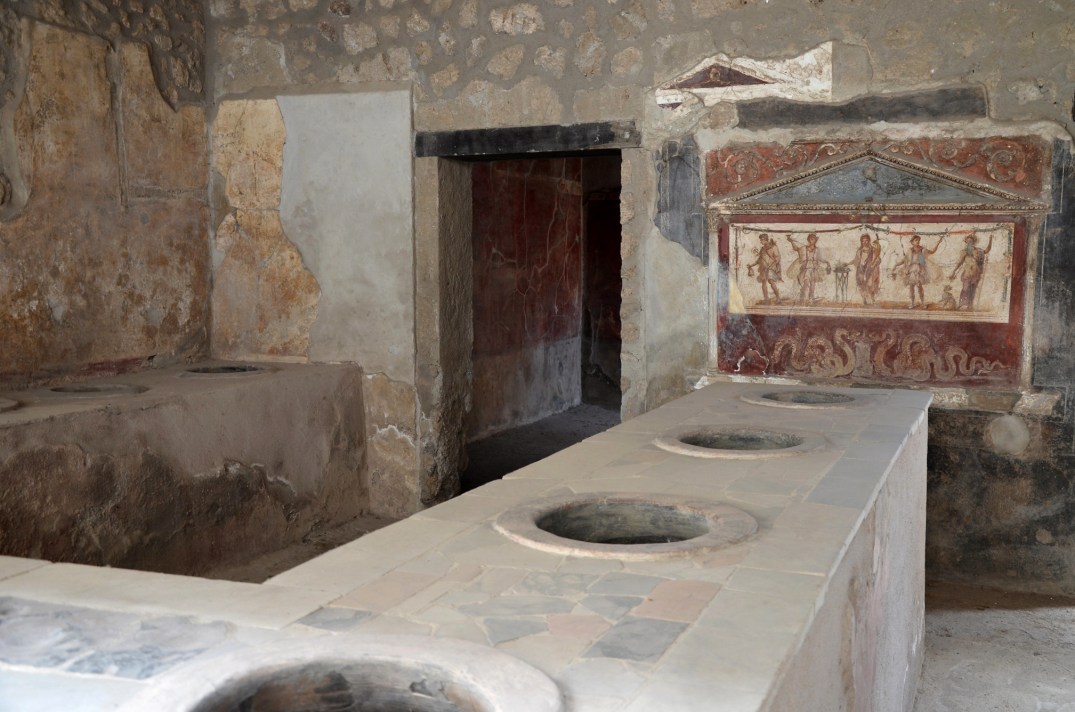
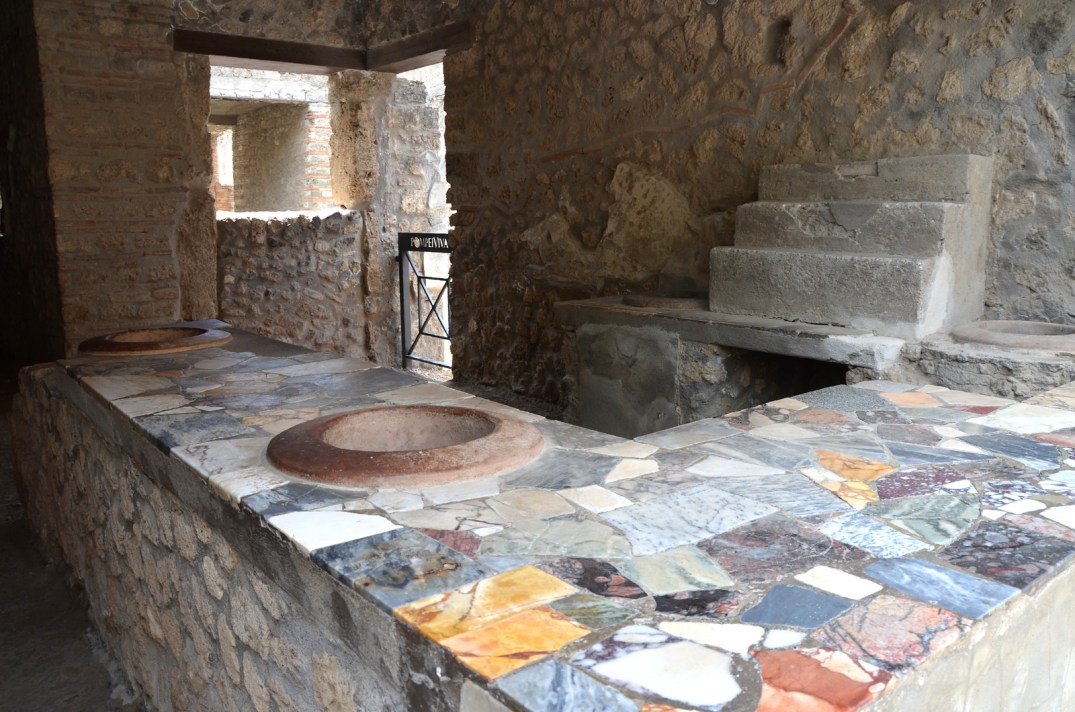
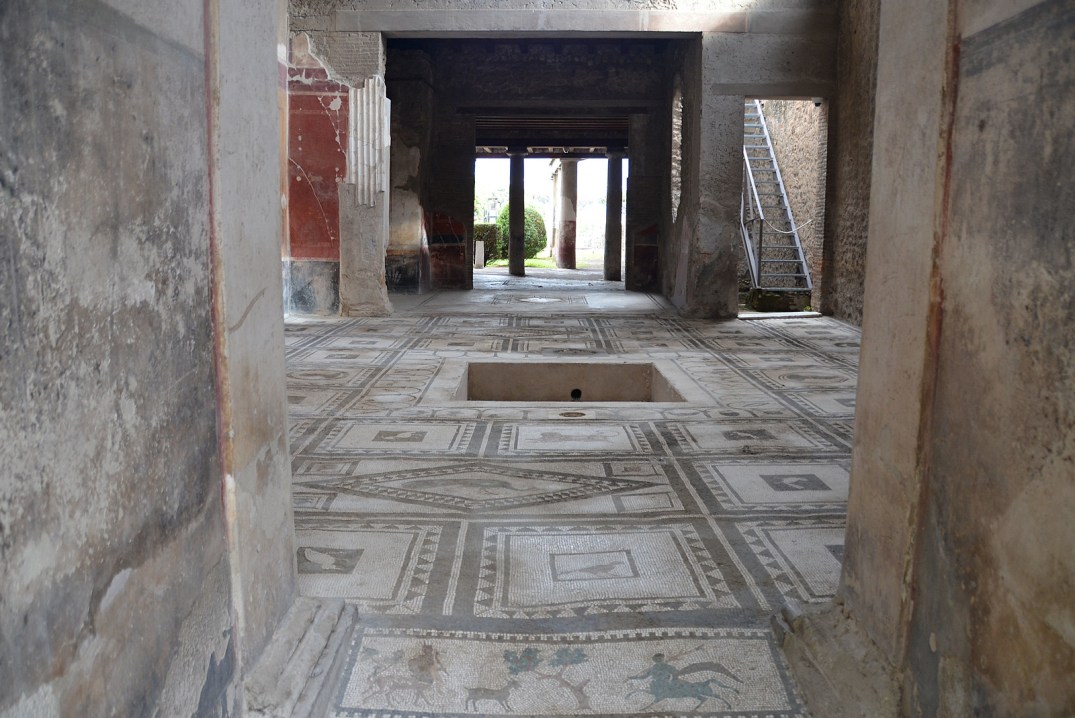
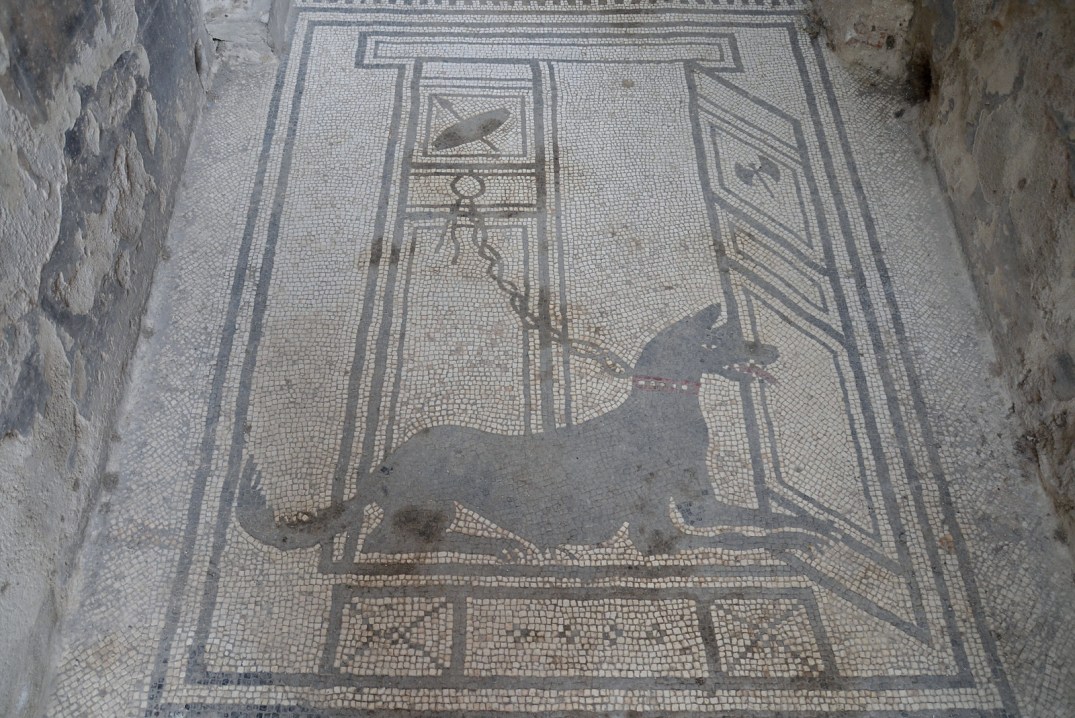
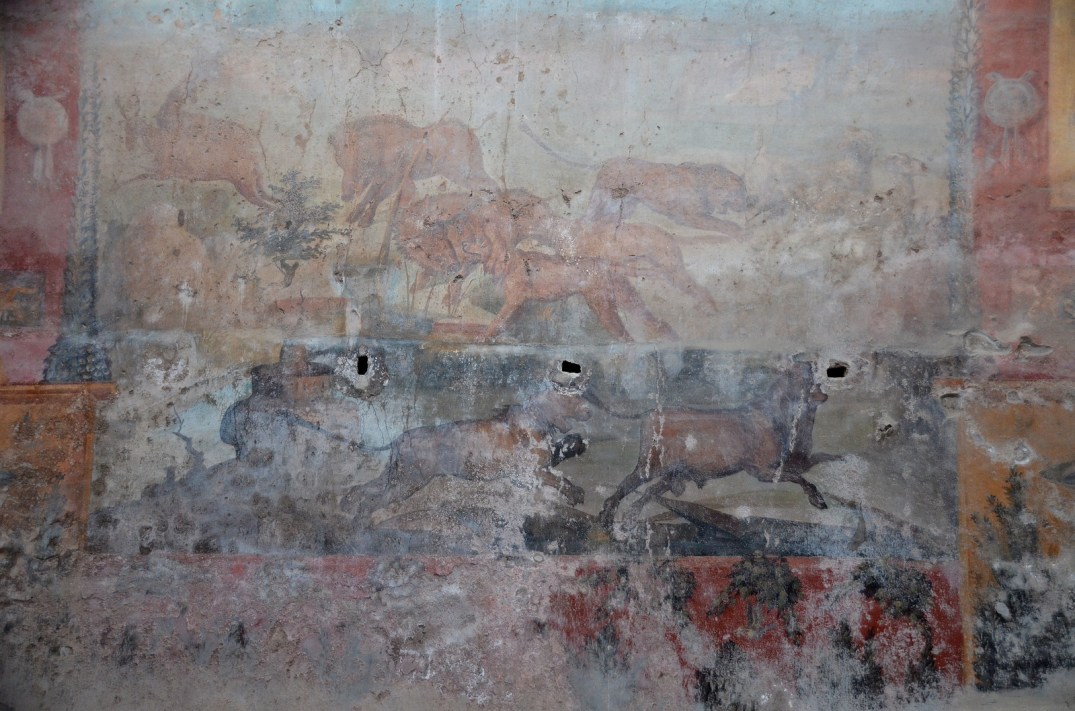
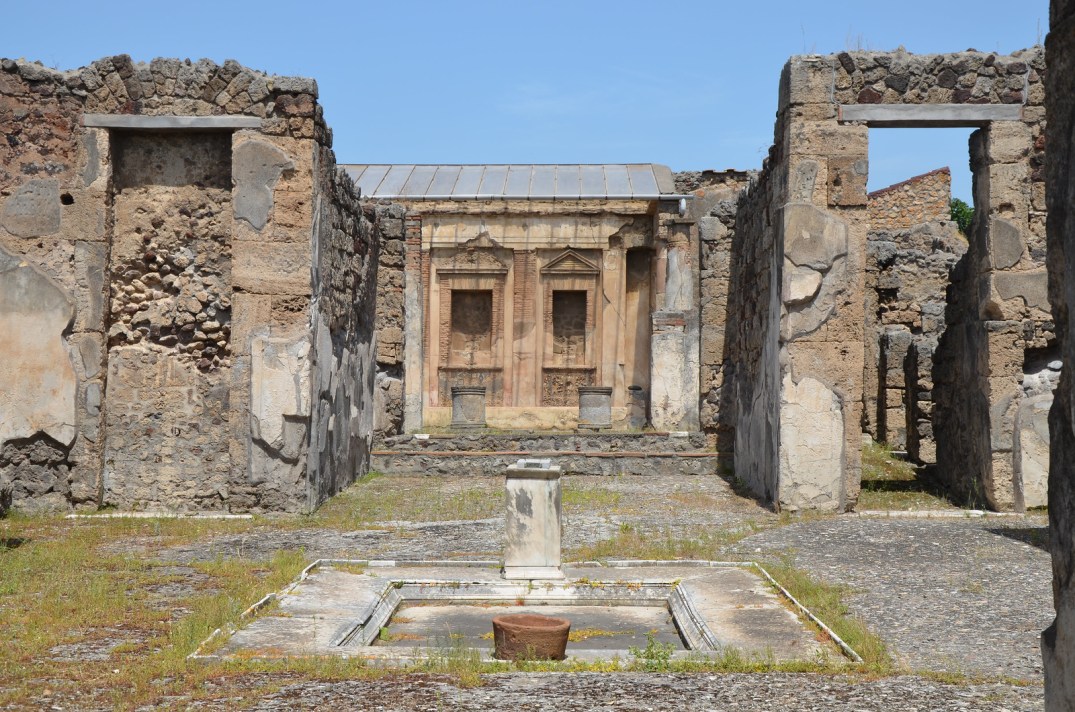
The Fullonica of Stephanus. It is one of the most important and complete laundries found in Pompeii where the manufactured cloth was washed and stain removed.Stephanus’ laundry was built just after the earthquake of AD 62, transforming a private house into a modern factory. The building has recently undergone extensive restorations.The Thermopolium of Vetutius Placidus. The ‘L’ shaped masonry counter has large storage jars which were used to hold food.On the rear wall of the Thermopolium of Vetutius Placidus is a painted lararium with a scene depicting the Genius of the household performing a sacrifice over a small folding altar. On the far left side is Mercury, the god of commerce, while on the far right stands Bacchus, the god of wine.A marble surfaced counter of a thermopolium.The atrium of House of Paquius Proculus wholly covered with mosaic panels of animals framed with decorative borders.The vestibule floor of the House of Paquius Proculus in Pompeii is paved with a fine mosaic depicting a guard dog chained to a door. The House of Paquius Proculus lies on the south side of the Via dell’Abbondanza.The columned atrium of the House of the Ceii with an impluvium in its centre.The back wall in the small garden of the House of the Ceii was decorated with a large hunt scene painted in the Fourth Pompeian Style.The atrium of the House of Menander, one of Pompeii’s most impressive homes.The small atrium of the House of Menander. The house, extending over 2,000 square metres, was owned by Quintus Poppaeus, possibly a relative of Poppea Sabina, the second wife of Emperor Nero.The peristyle of the House of Menander. The peristyle is porticoed on all four sides with twenty-three Ionic columns supporting the inner margins of the roof.
REGIO II
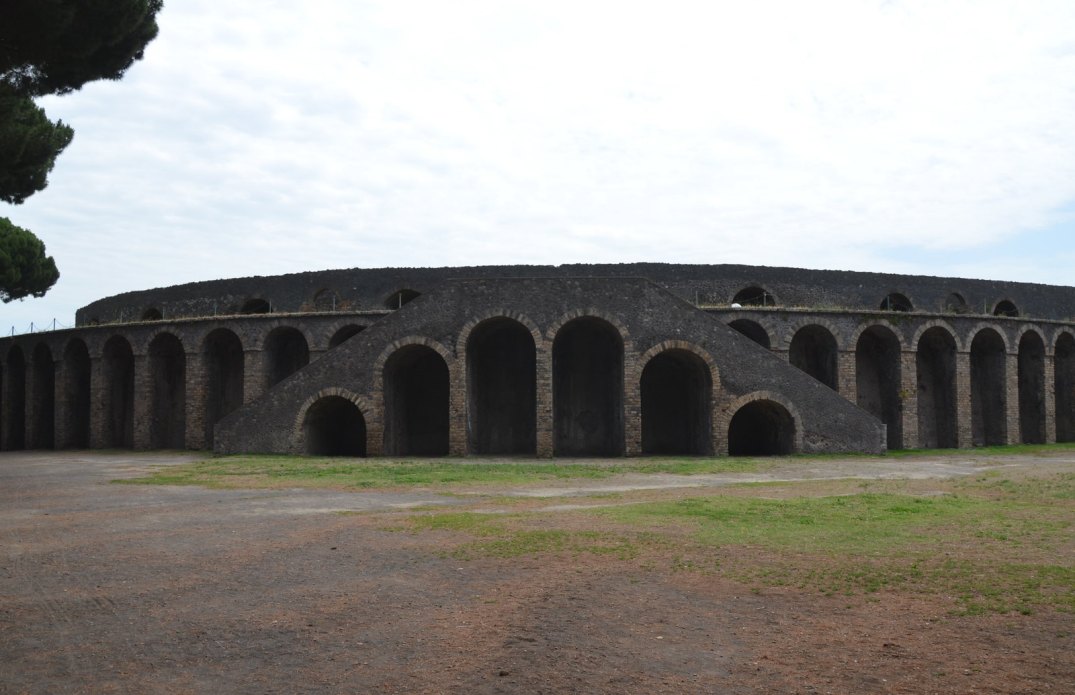
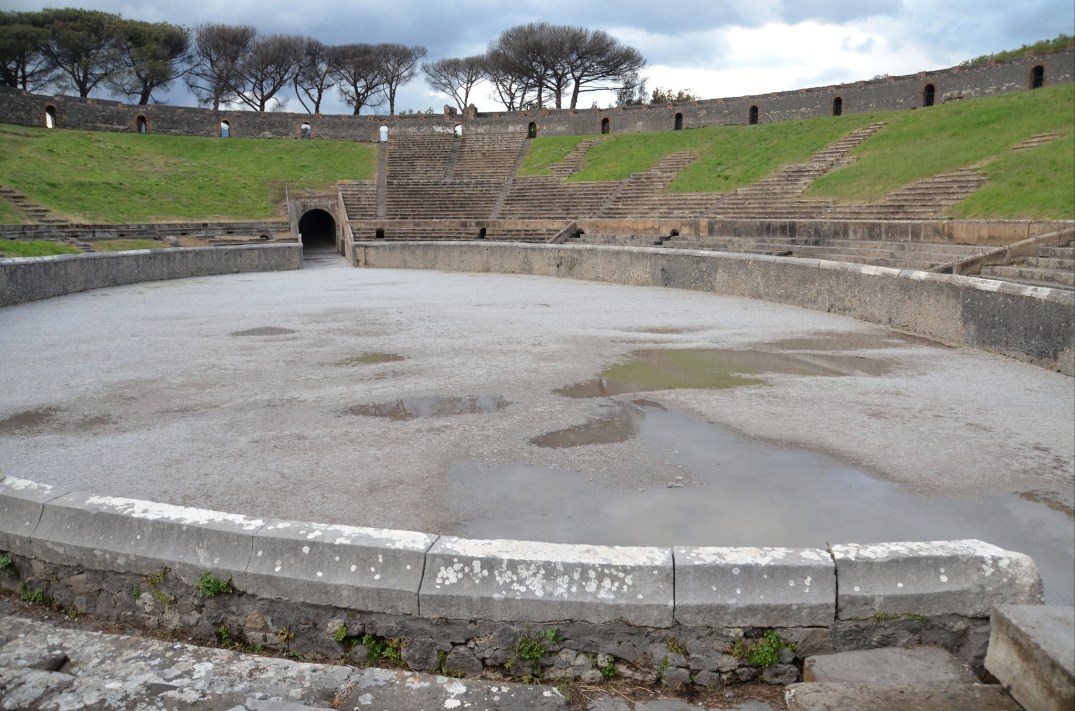
The amphitheatre of Pompeii was used for gladiatorial combat and is the oldest one of its kind in existence.Built 150 years before the Colosseum in AD 70, the amphitheatre could hold up to 20,000 spectators not only from Pompeii but also from neighbouring towns.The Praedia of Julia Felix is one of the largest houses in Pompeii. Its owner, Julia Felix, converted portions of it to apartments available for rent and other parts for public use.View of the garden area of the Praedia (estate) of Julia Felice.Fresco in the House of Venus in the Shell depicting of a statue of the god Mars standing on a garden plinth. He wears a crested helmet and holds a spear and a shield.Fresco in the House of Venus depicting Venus reclining naked in the hollow of a cockle shell with a Nereid Nymph and Eros at her side.
REGIO III
The School of Gladiators (Schola Armaturarum) in Pompeii was probably the headquarters of a military association of gladiators, a place used for meetings and social gatherings.The School of Gladiators suffered heavy damage from bombing during World War II and caused outcry when it collapsed in November 2010 following heavy rainfall. The restoration interventions began in 2016 and the building reopened to the public in January 2019.
REGIO V
The atrium, tablinum and peristyle of the House of Bronze Bull.Fountain with a relief of Silenus resting on a wineskin on the corner of Via della Fortuna and Via del Vesuvio.
REGIO VI
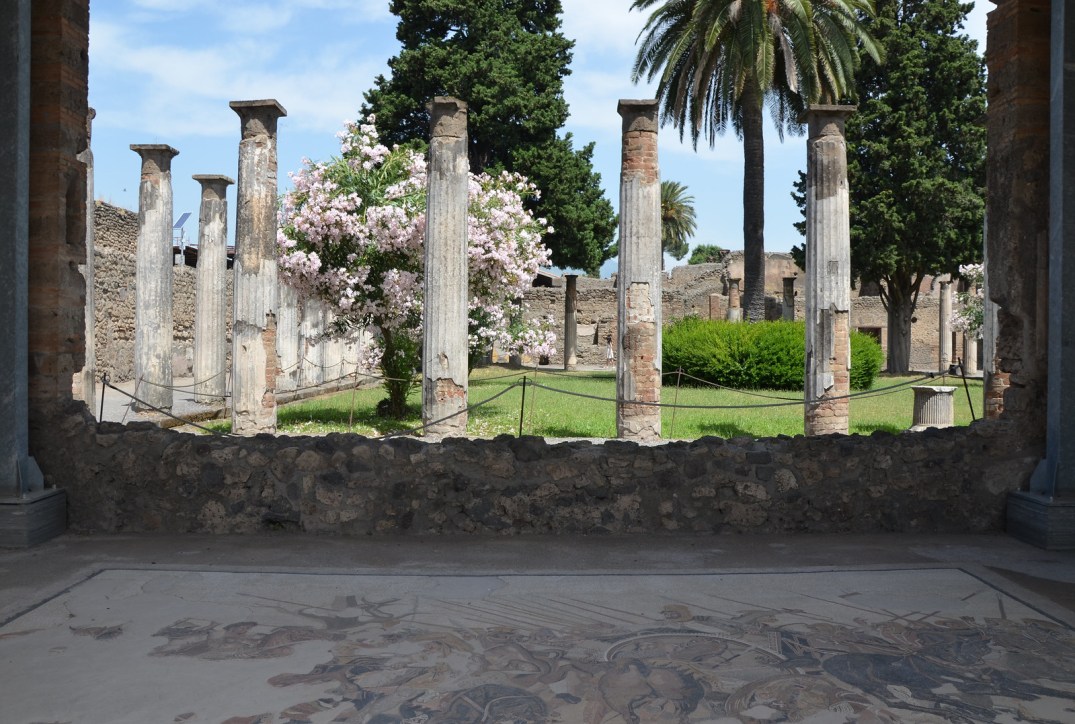
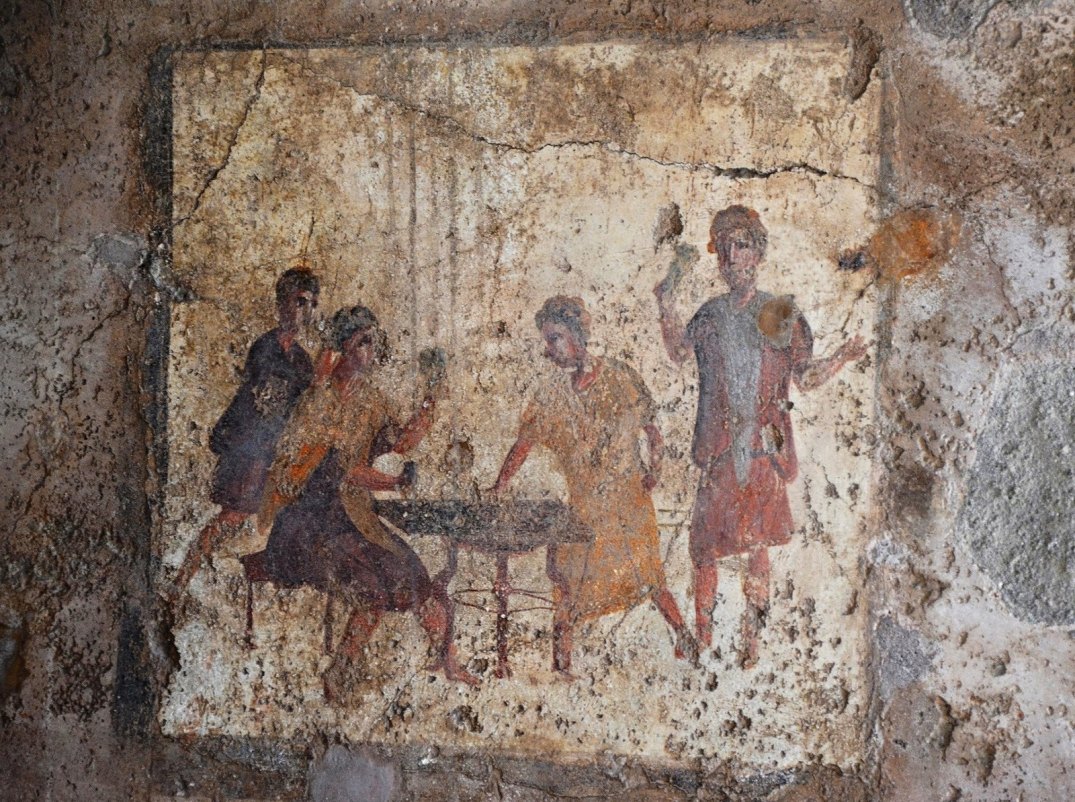
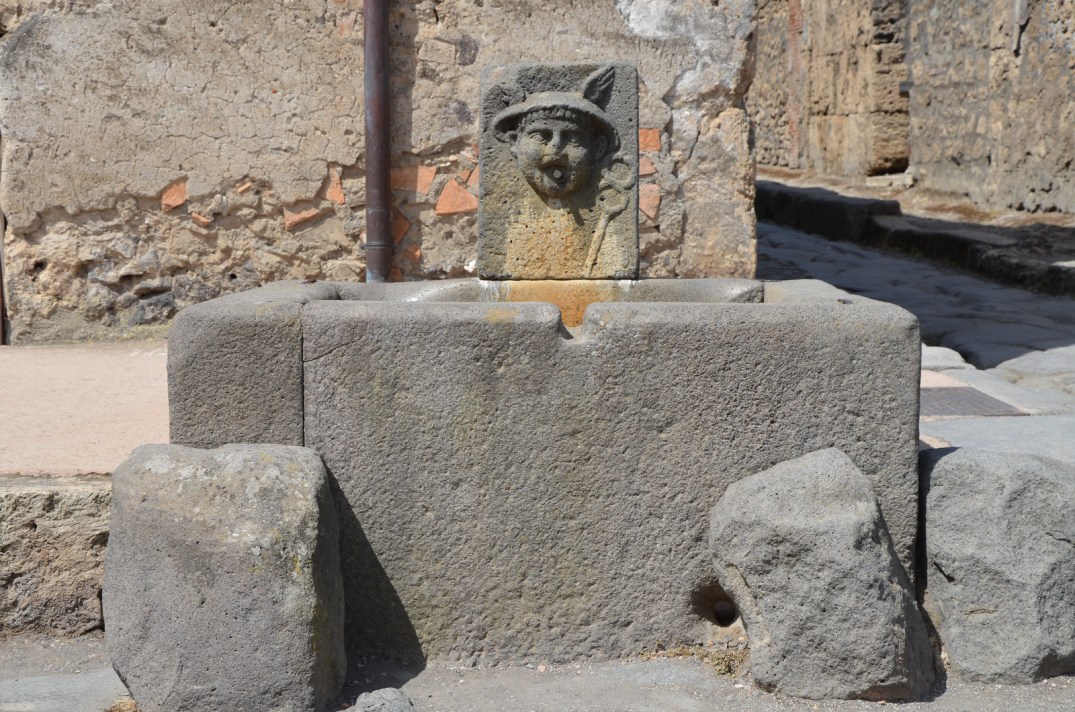
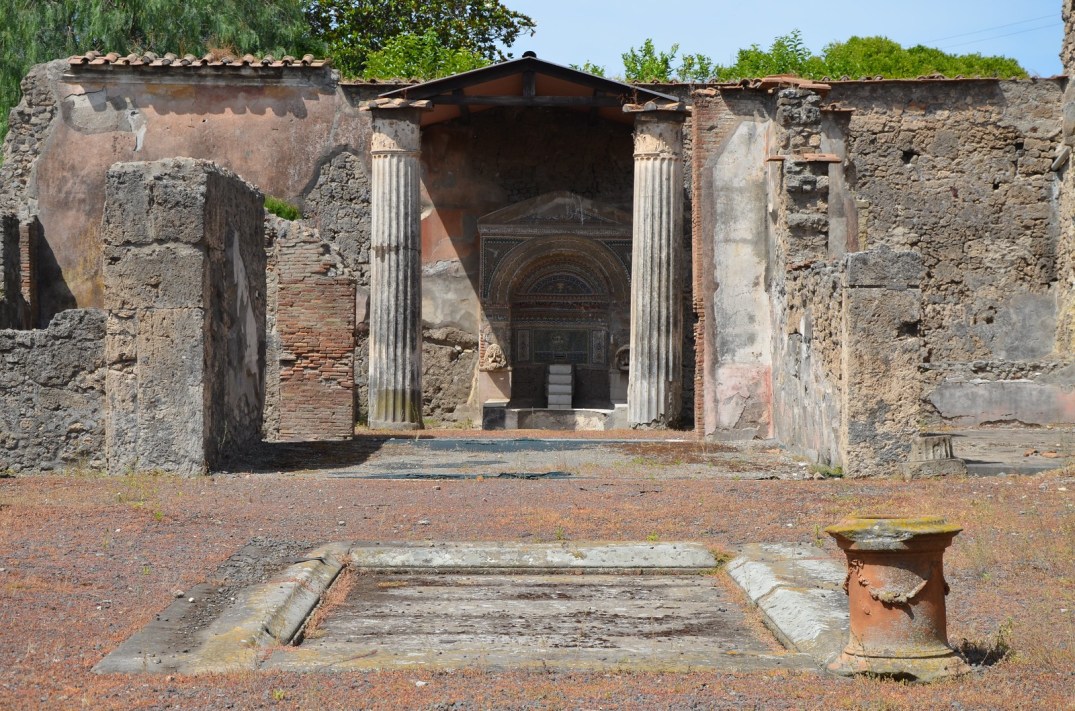
View of the large atrium of the House of the Faun in Pompeii with a central impluvium (rainwater basin) and the bronze statue of the Dancing Faun.The exedra of the House of the Faun with a copy of the Alexander Mosaic.The second peristyle of the House of the Faun which occupied more than a third of the insula.The House of the Prince of Naples. The atrium has an impluvium and a marble table with richly carved supports.The walls of the House of the Prince of Naples are decorated in the Fourth Pompeian Style with life-size images of Bacchus and Venus painted on the walls of the summer triclinium.The Castellum Aquae was the water distributor of Pompeii. It guaranteed the water supply to the entire city.Dice players fresco from the Osteria della Via di Mercurio.Fountain with a relief of Mercury.
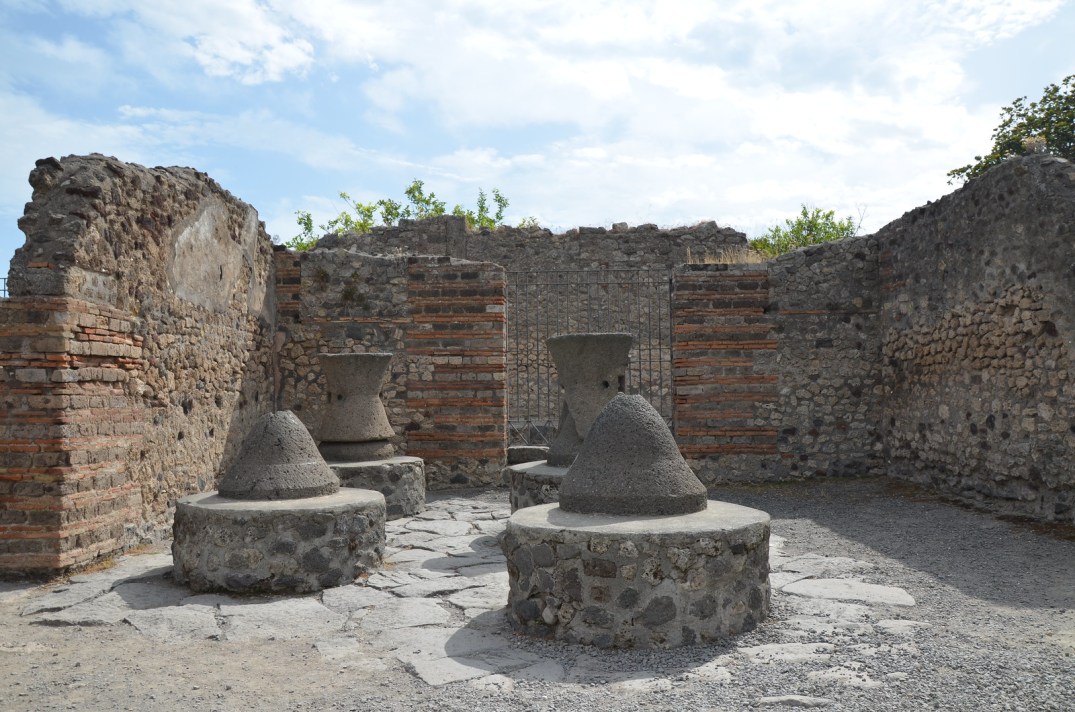
Bakery mills for grinding grain (catullus) from a pistrinum (bakery).
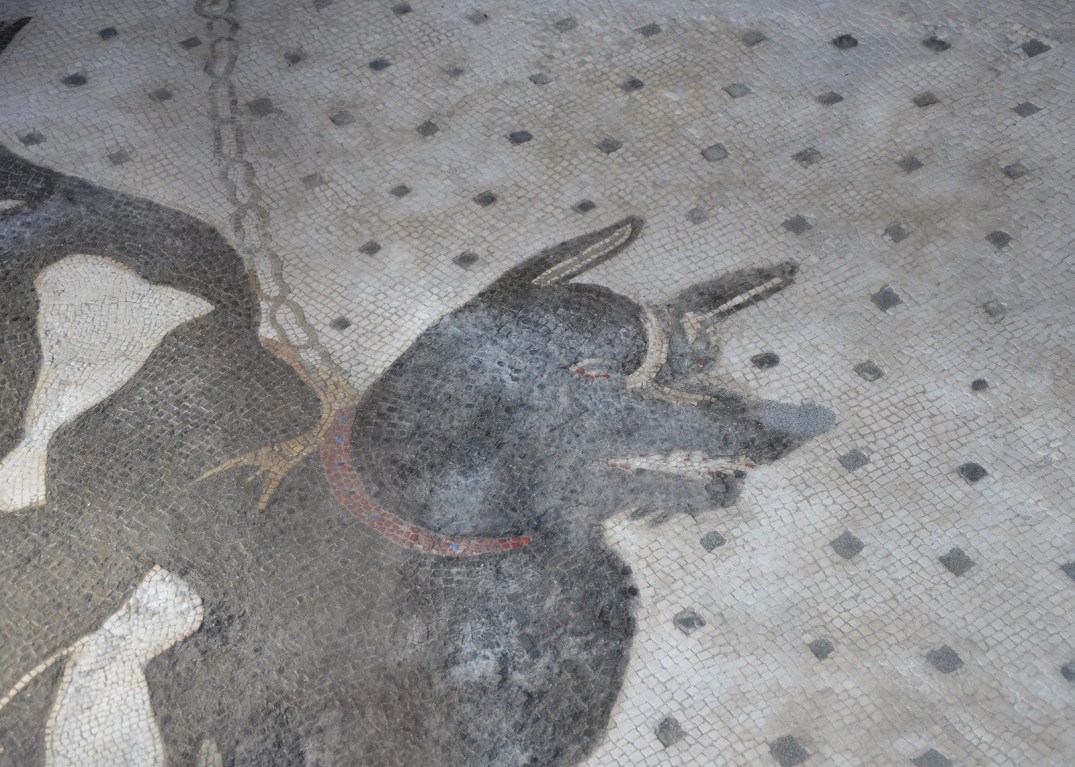
One of the 89 thermopolia, small cook-shops, found at Pompeii. The lower classes frequented such places.Fresco of the god of fertility Priapus depicted weighing his very large phallus against a bag containing money. Painted to the right of the vestibule of the House of the Vettii in Pompeii, the fresco probably symbolised the economic prosperity of the owners, the Vettii brothers, who became wealthy through trade.The atrium of the House of the Tragic Poet which was richly decorated with six large frescoes depicting scenes from the Illiad.Black and white mosaic floor in the House of the Tragic Poet featuring the well-known mosaic of a dog on a chain, bearing the warning cave canem, ‘beware of the dog’.
REGIO VII
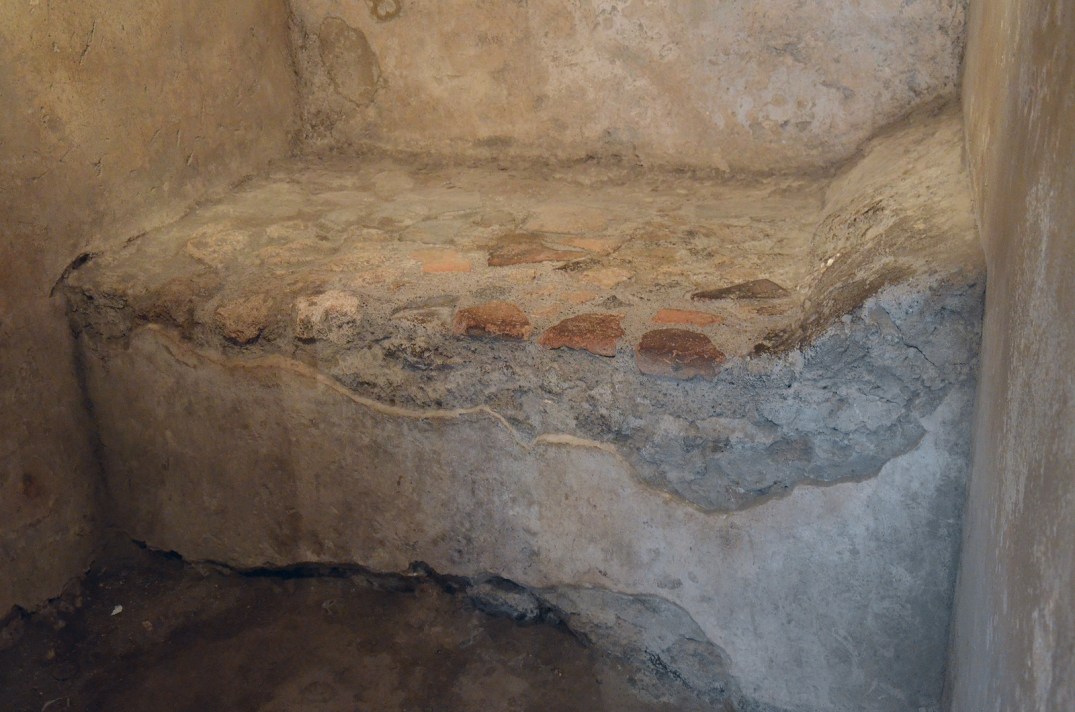
The Lupanar of Pompeii, the most famous brothel in the ancient city.Erotic fresco from the south wall of the Lupanar of Pompeii.A roughly carved stone bed in one of the rooms of the Lupanar.In situ wall fresco with an erotic scene in the Lupanar.The Stabian Baths are the oldest baths in Pompeii.The apodyterium (dressing room) of the Stabian Baths.The atrium of the House of the Large Fountain.The Forum Baths were also subdivided into men’s and women’s sections, each with their own independent entrance.The north wall of the tepidarium (tepid bathroom) of the Forum Baths with telamons separating the niches.The walls of the Forum Baths are beautifully decorated with frescoes of garden scenes, and the vault ceilings are embellished with stucco friezes.North view of the Arch of Caligula at the start of the Via Mercurio. In the background is Mount Vesuvius.
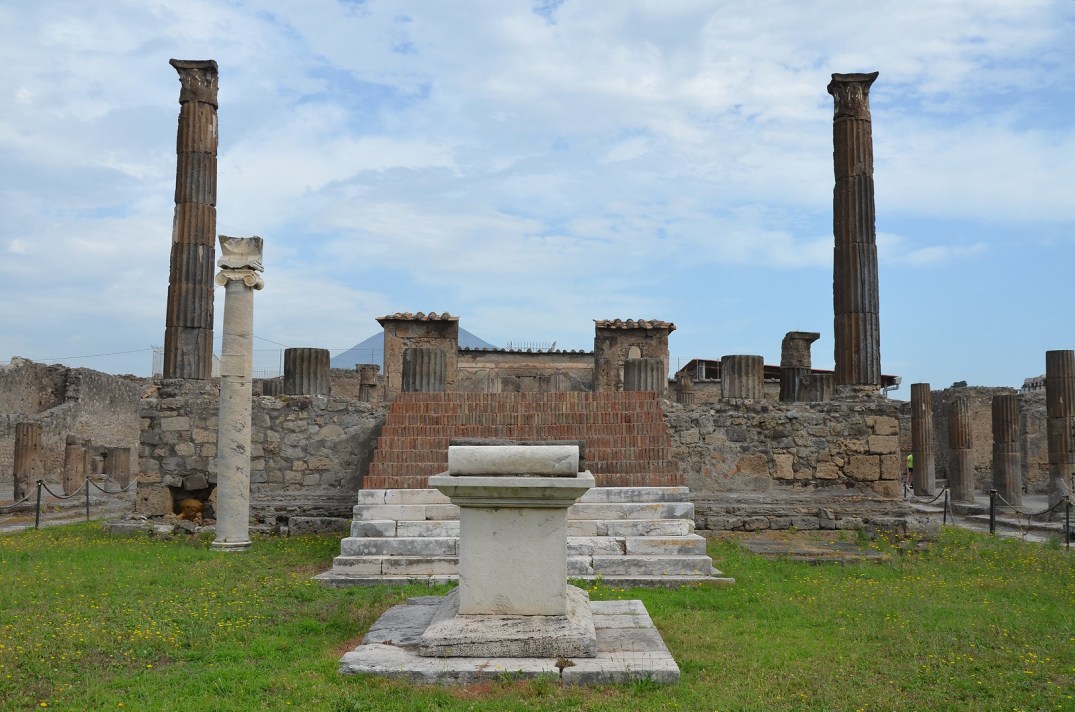
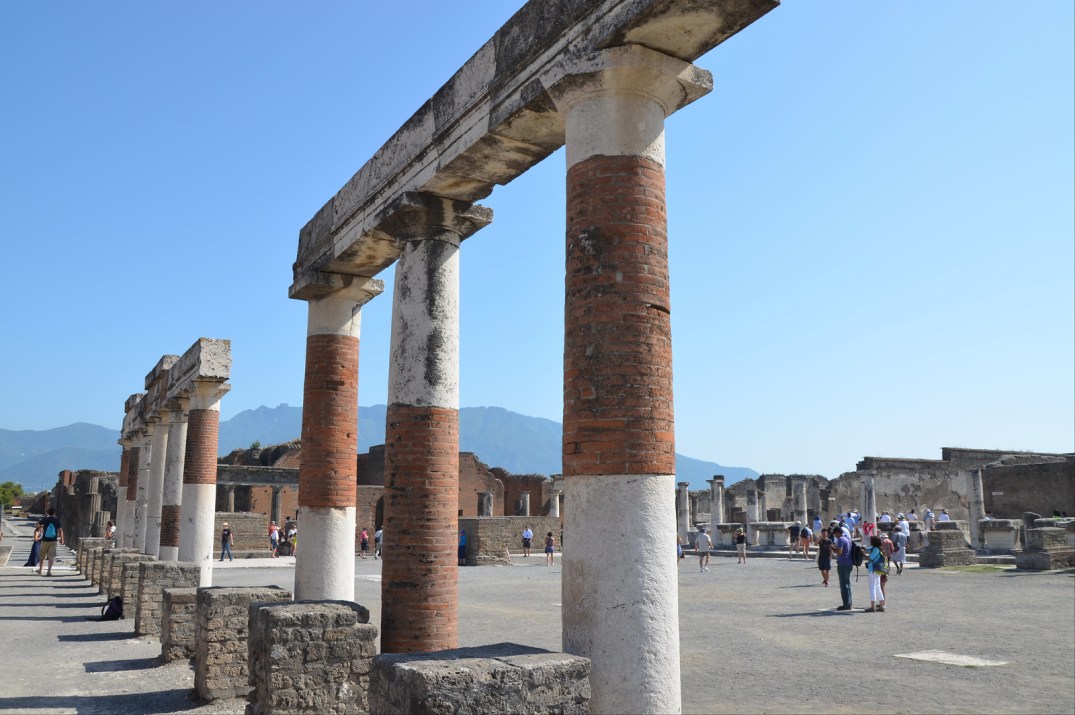
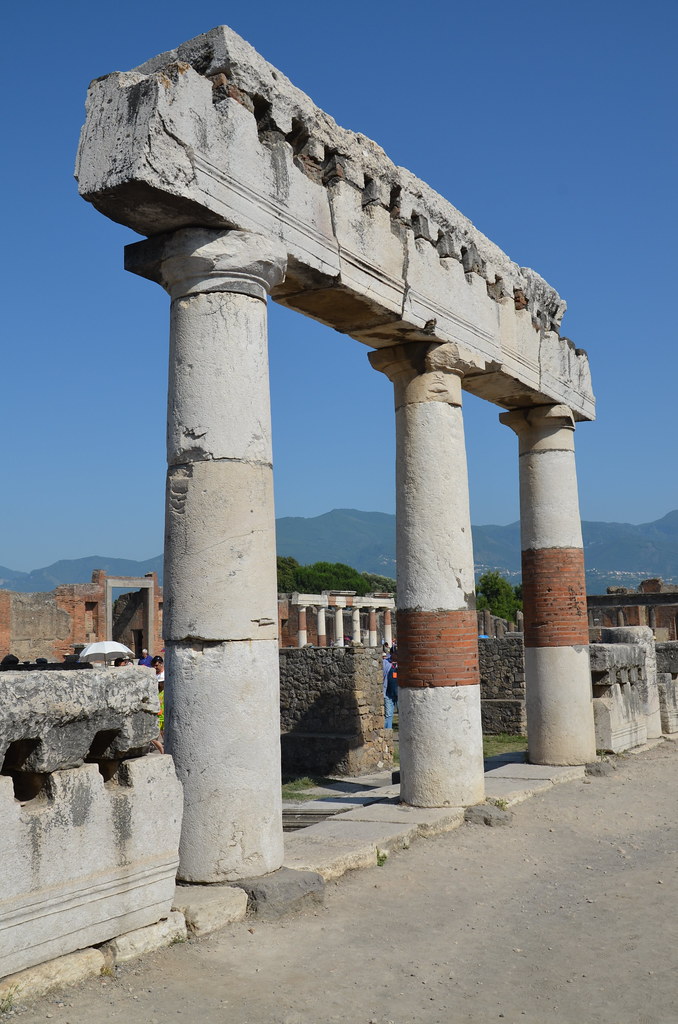
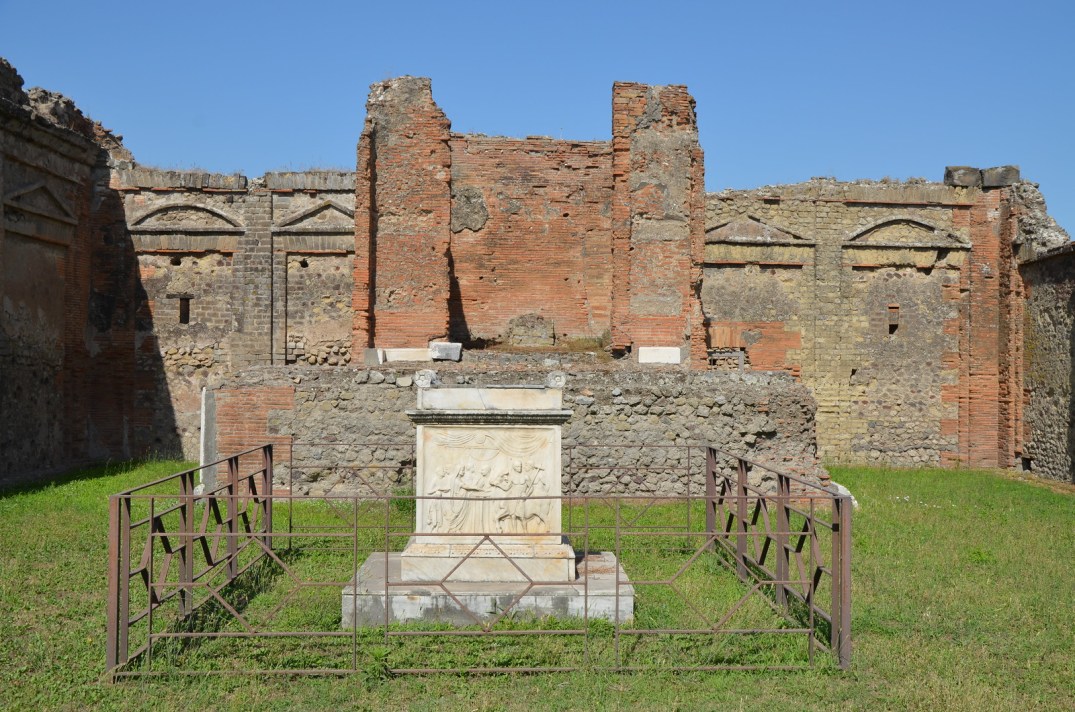
The Temple of Apollo in Pompeii, looking north towards the altar, podium and cella. Etruscan bucchero were found in the area of the temple testifying the existence of the cult of Apollo in Pompeii as early as the 5th century BC.The ground plan of the Temple of Apollo we see today dates from the 2nd century BC. It was frequently remodelled up until its final restoration after the earthquake of AD.The Forum was the centre of public life, and the oldest part of Pompeii. It was also the site of gladiatorial games before the amphitheatre was constructed.The Temple of Jupiter dominates the north side of the Forum.The Forum.The Temple of Vespasian.About 35 bakeries have been found, each supplying their local area. The Bakery of Popidius Priscus contains four large millstones, traces of a stable, four storage rooms, and a large oven which was used for baking the bread.
REGIO VIII
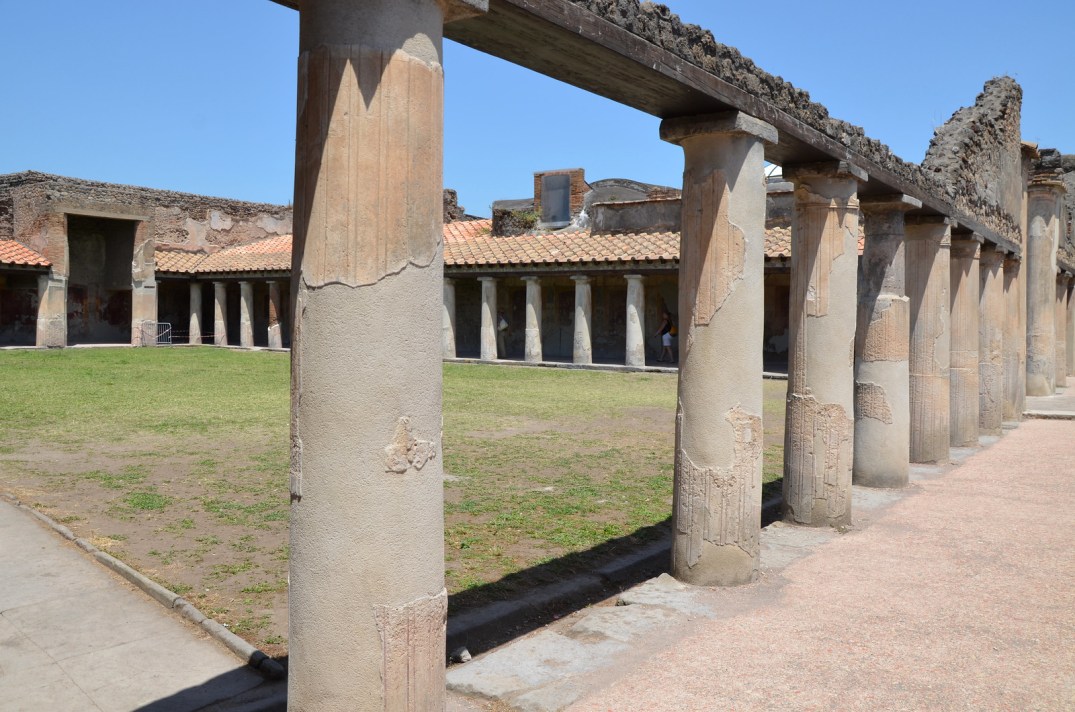
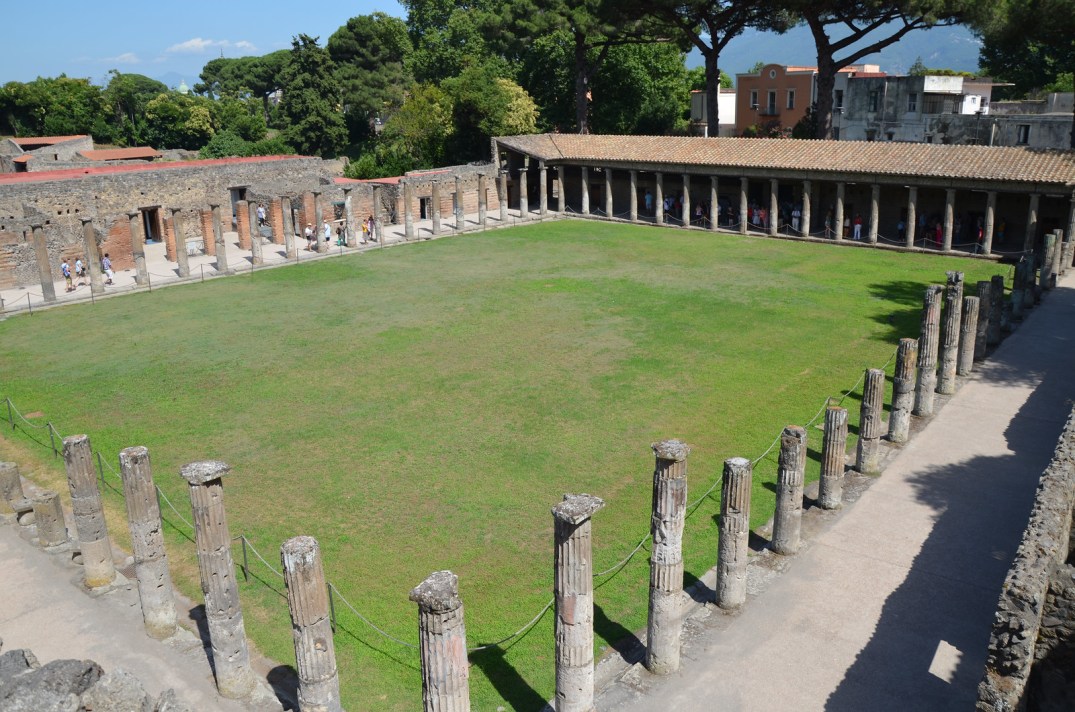
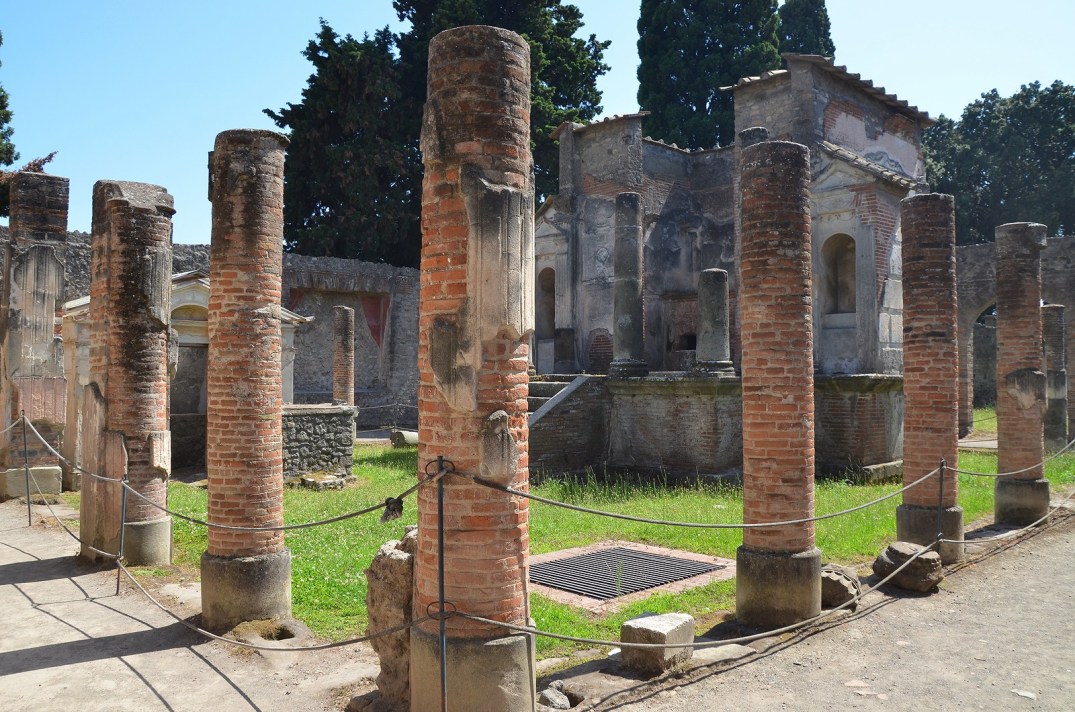
The Basilica stands near the west corner of the Forum and is the oldest and most important public building in Pompeii. It is also one of the oldest examples of this type of building in the entire Roman world.The Large Theatre was a huge 5000-seat theatre built in the Greek type and carved into the natural slope of the hill.The quadrangular portico located behind the stage of the Large Theatre was originally designed as a space for the audience to stroll in during the intervals of the theatre shows. After the earthquake of 62 CE, the building changed its function and was turned into barracks for the gladiators.The Small Theatre, a small roofed theatre (odeon) used for musical and singing performances as well as for miming, the most popular theatrical genre at the time. The building had a seating capacity of about 1,500.The temple was dedicated to the Egyptian goddess Isis whose cult was widespread throughout the Roman Empire. It is situated in the centre of a porticoed courtyard and stands on a raised podium.The Purgatorium of the Temple of Pompeii was the place where purification rites were performed.The Sanctuary of Venus overlooked overlooking the bay where the harbour was to be situated. Venus was the patron goddess of Pompeii.
REGIO IX
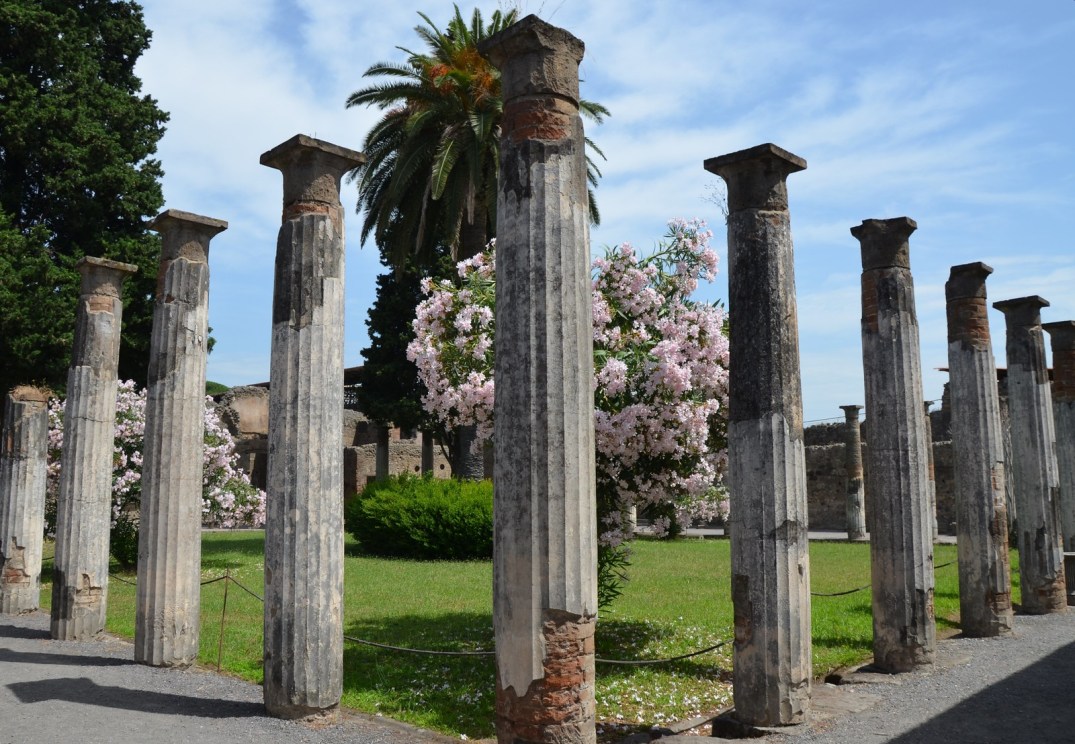
View of the raised garden of the House of Marcus Lucretius in Pompeii. The garden features an elegant fountain supplied by a jet of water that gushed from a statue of Silenus.Stepping stones for pedestrians to cross the streets without having to set foot on them.The atrium of the House of the Diadumeni was dominated by 16 Doric columns 4.3m high set around a central impluvium.The ala lying on the south side of the atrium of the House of Marcus Lucretius. It is decorated in the fourth style.
Outside the City Walls
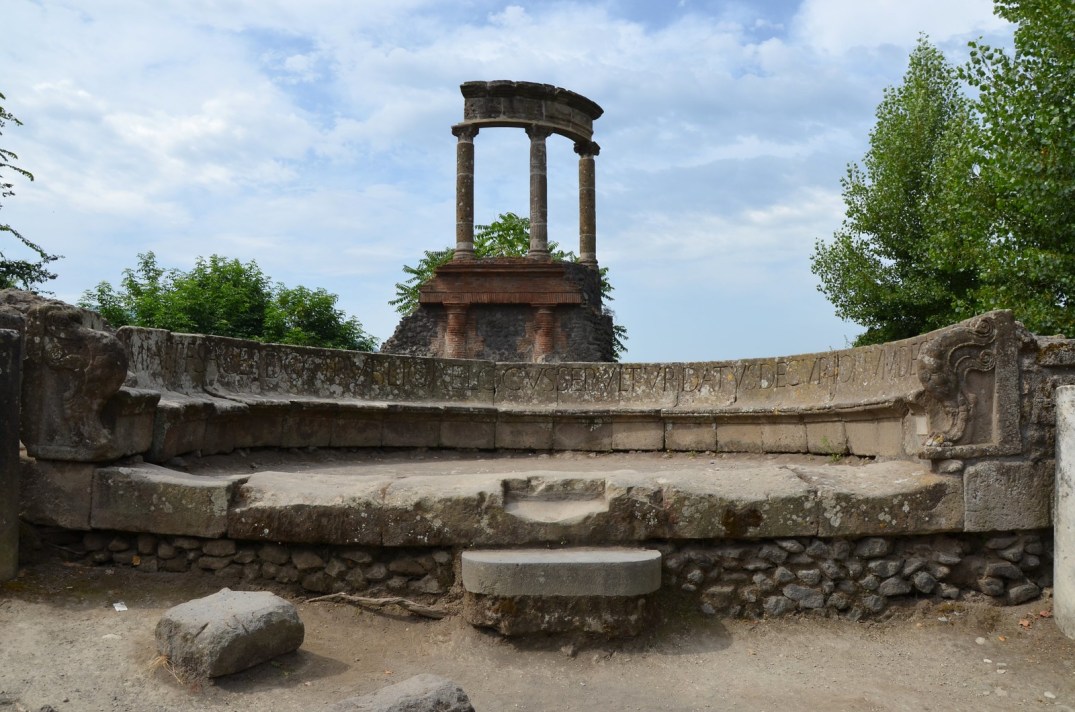
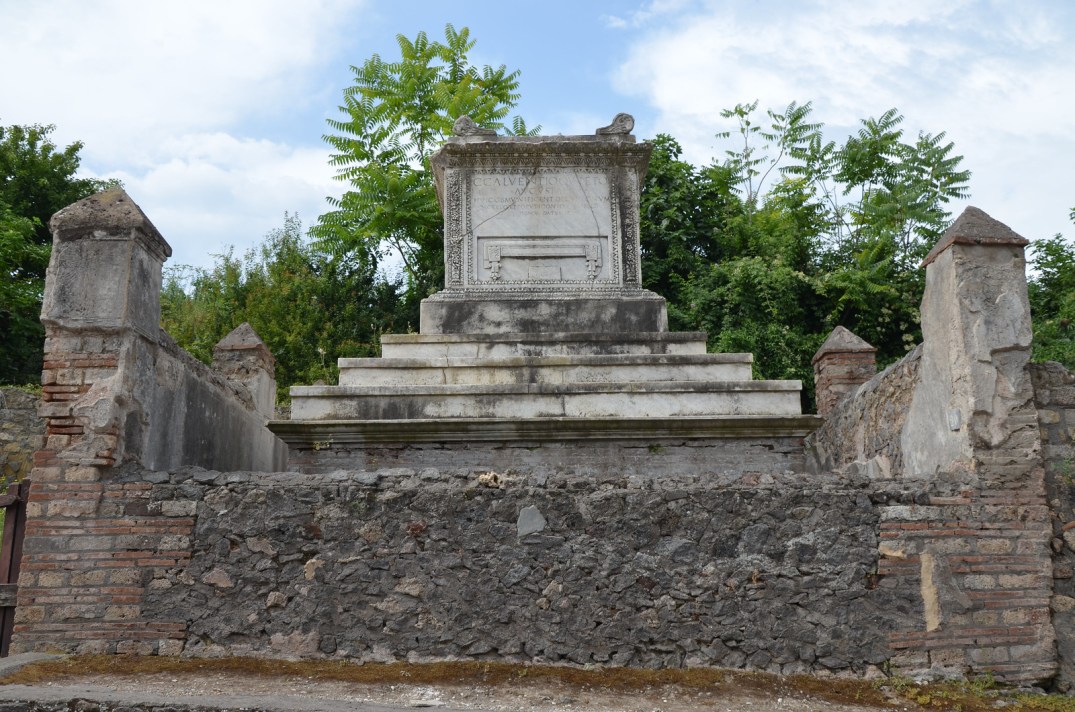
The Exedra tomb in the Necropolis of the Herculaneum Gate.A tomb in the Necropolis of the Herculaneum Gate.The Villa of the Mysteries is regarded as one of the best-preserved country villas in the area of Vesuvius.The Villa of the Mysteries owes its fame to the very fine wall paintings that cover the walls of one of its reception rooms.A mysterious scene with life-size figures in the Second Pompeian Style seems to depict the initiation rite of a young girl into the Dionysian mysteries.The other rooms of the Villa of the Mysteries also preserve beautiful examples of Second Style wall decoration with imitation marble decoration.
Epidaurus was a small city (polis) in ancient Greece on the Argolid Peninsula in the Peloponnese. A sanctuary to Asklepios, the god of medicine and healing, developed as the official cult of the city-state and became an important sacred centre of healing. The prosperity brought by the Asklepieion enabled Epidaurus to construct some of the purest masterpieces of Greek architecture, including the huge theatre that delighted Pausanias for its symmetry and beauty. The site is listed by UNESCO as a World Heritage Site.
Long before the cult of Asklepios was established, the area around Epidaurus was the site of ceremonial healing practices, later associated with the worship of the deity Apollo Maleatas. The Apollo sanctuary was located on a low hill on Mount Kynortion, above the later Asklepieion. Asklepios, whom the Epidaurians claimed to be from their city (although the cult began in Thessaly), took precedence from the 6th century BC when the sanctuary was developed into the most important therapeutic centre of the ancient world where ill people went in the hope of being cured. Inscribed slabs recorded that the sick undertook ritual sleep in the sanctuary, during which the god appeared to them in dreams.
Statue of Asklepios found in Epidaurus.
Asklepios, son of Apollo (god of healing, truth, and prophecy) and the mortal princess Koronis, learned medicine and the art of healing from the centaur Chiron. Credited with possessing great healing powers, Asklepios brought prosperity to the sanctuary and peaked in the 4th and 3rd centuries BC when the Epidaurians launched a lavish building programme. The new facilities included healing cults and rituals, a library, temples to Artemis and Asklepios, baths, a stadium, a hospital and a theatre. The sporting and artistic buildings were used in the Asklepieia festival, founded around 400 BC and held every four years to celebrate theatre, sport and music.
The Epidaurian cult was exported throughout the ancient world so that more than 200 new Asklepieia were built, the most notable being in Athens, Kos, Pergamon, and Rome, all under the patronage of the sanctuary in Epidauros.
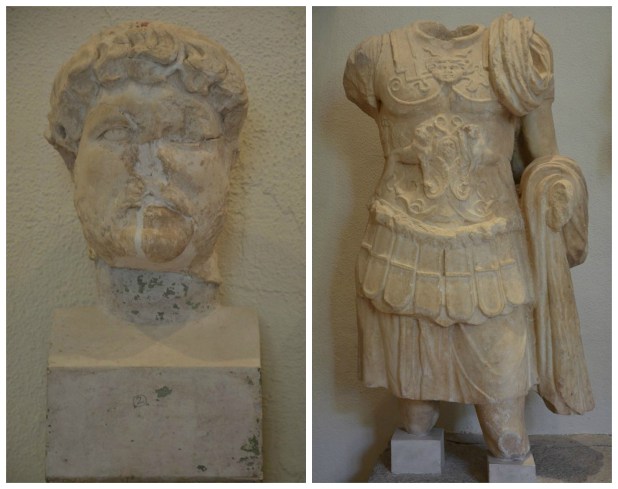
Hadrian visited Epidaurus during his first trip to Greece in AD 124. His visit had a definite effect on the sanctuary as the emperor enforced new regulations concerning the appointment of religious ministers and the recurrence of the Asklepieia. Most Epidaurian coins minted after Hadrian’s visit had Asklepieia as part of the reverse legend. Hadrian’s visit is attested in at least three inscriptions (IG IV²,1 606, IG IV²,1 607,AE 1974, 611) in which he is called “saviour and benefactor”. The city erected a statue of him in AD 124, and a new era in the local calendar began this year (IG IV²,1 384).
A portrait head and a loricated torso have been identified as belonging to a statue of Hadrian.
The sanctuary enjoyed a new flowering in the mid-2nd century AD when Sextus Iulius Maior Antoninus Phytodorus, an aristocrat from Nysa in Asia Minor, funded a rebuilding programme. New gods were also introduced into the sanctuary: Ammon, Sarapis, and Isis, as evidenced by the discoveries of dedicatory inscriptions. In AD 395, the Goths under Alaric raided the sanctuary. Emperor Theodosius II definitively ended the sanctuary’s rites in AD 426. However, even after Christianity’s introduction and the oracles silencing, Epidaurus was still known as late as the mid-5th century as a Christian healing centre. A five-aisled early Christian basilica was built at the end of the 4th century AD, making it one of the earliest churches known in Greece.
Excavations at the ancient site began in 1881 under the auspices of the Greek Archaeological Society and continue to the present day. Today, the magnificent theatre, renowned for its exceptional acoustics, is still used for performances in an annual traditional theatre festival.
PORTFOLIO
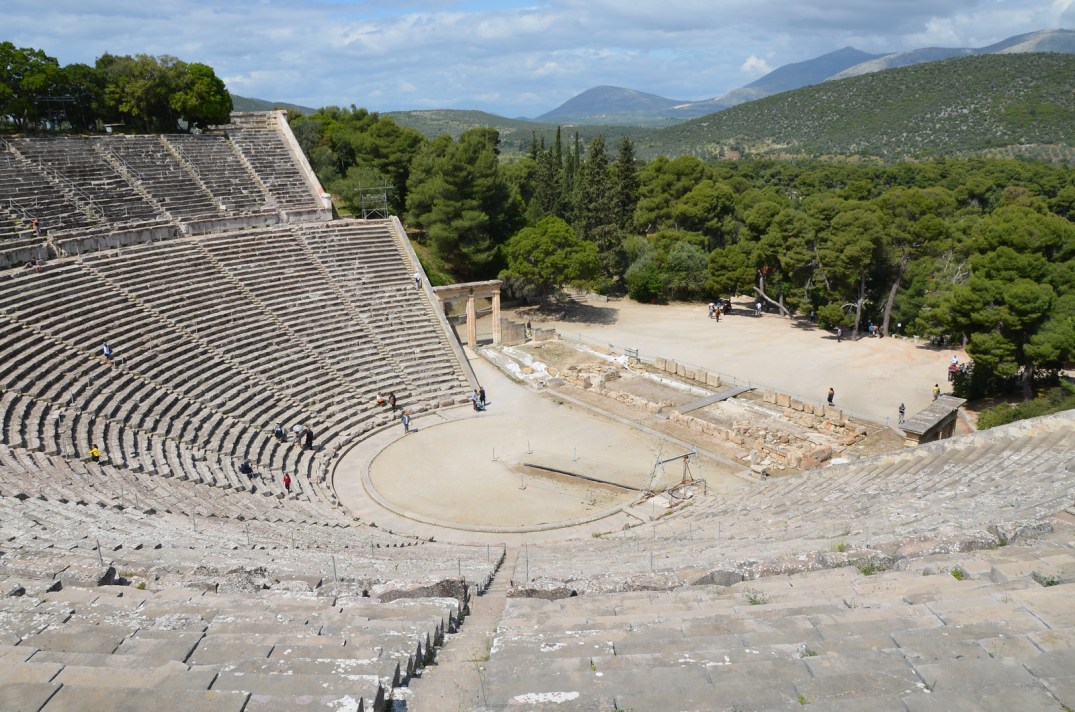
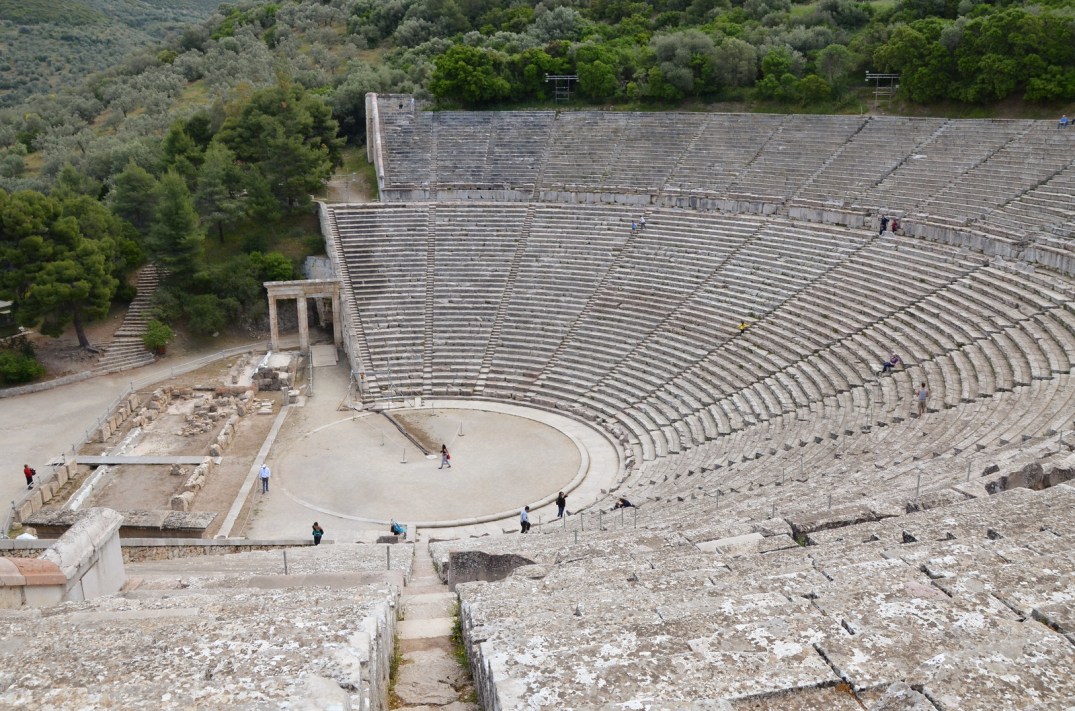
The theatre is one of the best-preserved in Greece. It was celebrated in antiquity for its beauty and harmonious proportions.The 55 rows of theatre seats, taking about 14,000 spectators, rest on a natural slope, except at the northwest end, where they are held up by artificial fill.The elliptical cavea, the entrances to the paradoi, the proskenion, and scene-building and the orchestra in the form of a full circle were built of local limestone in the second half of the 4th century BC.The remains of the Gymnasium, a square building with an inner peristyle court and porticoes and rooms along the four sides. An odeum was constructed in Roman times on the site of the Gymnasium.The monumental propylon served as the main entrance of the Gymnasium.
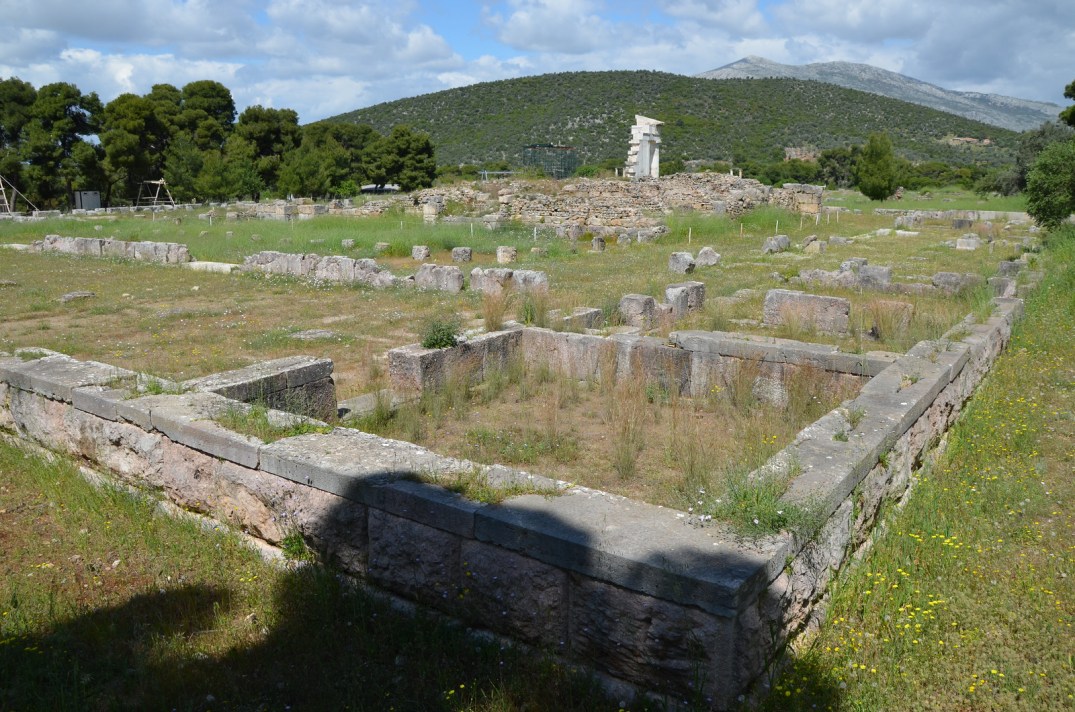
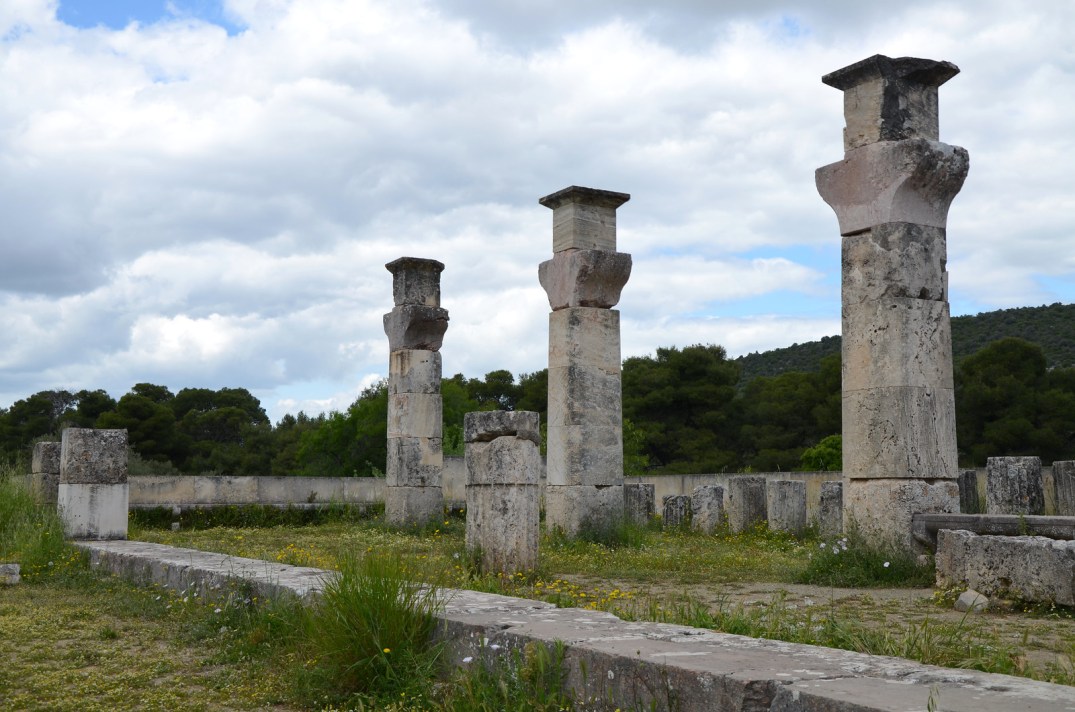
The 181 m long stadium, built ca. 480 BC – 338 BC, held athletic games every four years at the sanctuary of Asklepios.The foundations (overgrown) of the Temple of Asklepios.The oblong Αbaton or Enkoimeterion was the centre stage in the healing process. It was used as a dormitory for those awaiting Asklepios’ advice.The Stoa of the Abaton (or Enkoimeterion) had 29 Ionic columns on the southern face and 13 inner columns.A stone balustrade filled the openings between the Ionic columns of the upper level.
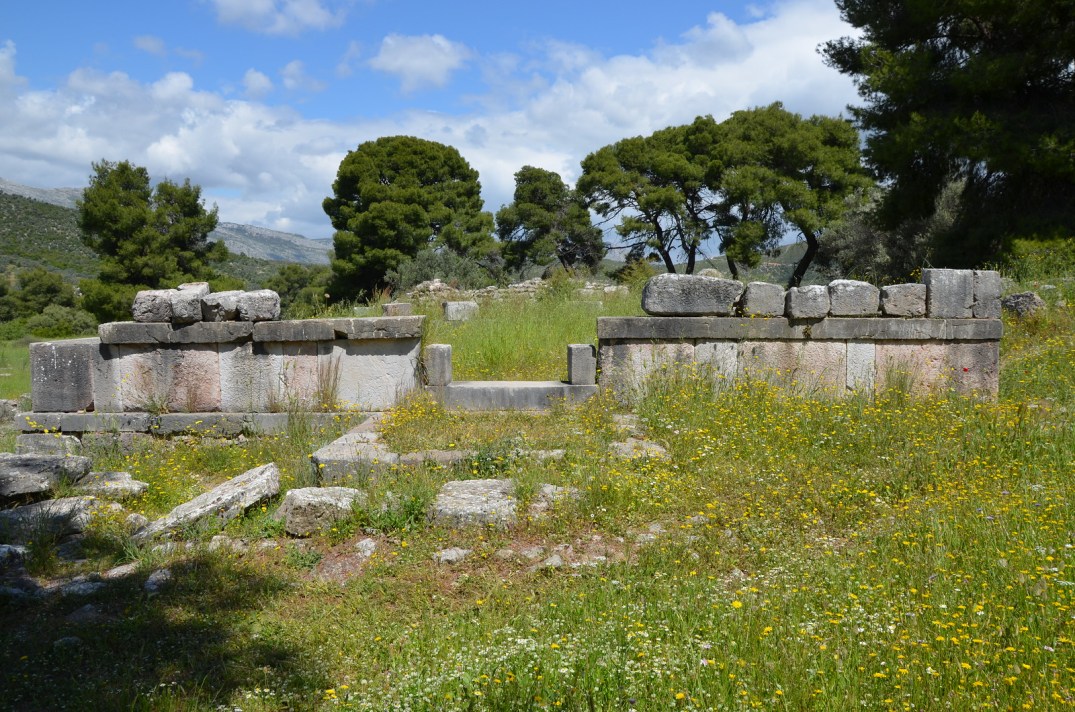
The circular foundations of the Tholos, ca. 360 BC – ca. 320 BC. The activities of the cult of the Hero Asklepios took place here. It also may have held Asclepius’ sacred snakes, symbols of rebirth and rejuvenation.The Roman baths had a therapeutic function.The Roman baths.A Hellenistic cistern.The foundations of a Propylon outside the central Sanctuary of Asklepios.




































 following hadrian photography