The original island of Philae was the site of an Egyptian temple complex in the Nile, now submerged beneath the waters of Lake Nasser south of Aswan, Egypt. It was originally located near the First Cataract of the Nile in Upper Egypt but was dismantled and moved to nearby Agilkia Island when the Aswan High Dam was built in the 1960s. This beautiful temple complex was the cult centre of Isis, who was venerated from the Pharaonic era until at least AD 550. Philae, together with Abu Simbel and other nearby ruins, was designated a UNESCO World Heritage site in 1979.
The island of Philae was an important sacred site dedicated to Isis and, by extension, to her husband-brother Osiris. The adjacent island of Bigeh was said to be one of the burial places of Osiris, and both islands formed a temple complex in which the ritual focus was the tomb of Osiris on Bigeh. Every tenth day and on festival days, the statue of Isis travelled, accompanied by priests, by boat or bark across from Philae to visit the tomb of Osiris.
Statuette of Isis nursing the young Horus, Nubian Museum.
The myth of Isis and Osiris dates back to the very beginning of pharaonic civilisation. It tells the story of Isis, the great goddess and wife of Osiris, and her journey throughout the country in search of the pieces of her husband’s body after he had been assassinated and dismembered by his brother Seth. She put Osiris’ body back together, mummified him and magically brought him back to life. She then copulated with him, conceiving their son, Horus. Rulers in Egypt and Nubia built temples dedicated primarily to Isis, and her temple at Philae was a religious centre for Egyptians and Nubians alike, where she was described as the protectress of the entire nation. Isis’ popularity increased over time, and her worship was greatest during the Graeco-Roman period, spreading to other parts of the Roman Empire.
Construction on the island of Philae began around 690 BC during the reign of Pharaoh Taharqa of the 25th Dynasty. The first religious building was likely a shrine, which was probably dedicated to Amun. The earliest known evidence of Isis worship was a small kiosk built by Psamtik II of the 26th Dynasty (595 BC – 589 BC), which was found dismantled and reused in the Ptolemaic structures. However, the oldest structure still standing dates from the time of Nectanebo I of the 30th Dynasty (circa 370 BC), who constructed the enclosure walls and a monumental gate. He also built a kiosk and began the construction of the Mammissi (the birth house).
David Roberts’ watercolour view of the Island of Philae as it appeared in 1838, with Bigeh in the foreground.
The complex structures of the Temple of Isis were completed under the reigns of Ptolemy II Philadelphus, Ptolemy V Epiphanes, and Ptolemy VI Philometor (282-145 BC) and continued through the Roman period. Several Roman emperors made artistic and architectural contributions to Philae. While most of the architectural additions date to the Julio-Claudian dynasty, the island continued to receive contributions to its temples up to the time of Diocletian. Augustus built a temple at the northern end of Philae in 9 BC Tiberius and Nero added reliefs and inscriptions, and Hadrian added a gate west of the complex leading to the island of Bigeh.
The main building complex of Philae is the Great Temple of Isis, located in the centre of the island. It was erected during the third and second centuries BC and decorated from the time of Ptolemy II onward. There are also several smaller temples and shrines dedicated to other deities and Pharaohs, and at least two Nilomemters.
Philae is the site of the last known inscription in Egyptian hieroglyphs, written in AD 394, and the last known Demotic inscription, written in 452. So strong was the popularity of Isis on Philae that her cult continued there for centuries until at least AD 55,0 when the Byzantine emperor Justinian had the priests arrested and the statues taken to Constantinople. However, Philae was not destroyed; it was converted into a church, and two other Coptic churches were built.
As part of the UNESCO Nubia Campaign project, the whole temple complex was dismantled and moved from its original location on Philae Island to its new location on Agilkia Island after the flooding of Lake Nasser. The reconstruction at the current site painstakingly preserved the complex’s original appearance and layout and even landscaped the island to match its former location.
PORTFOLIO
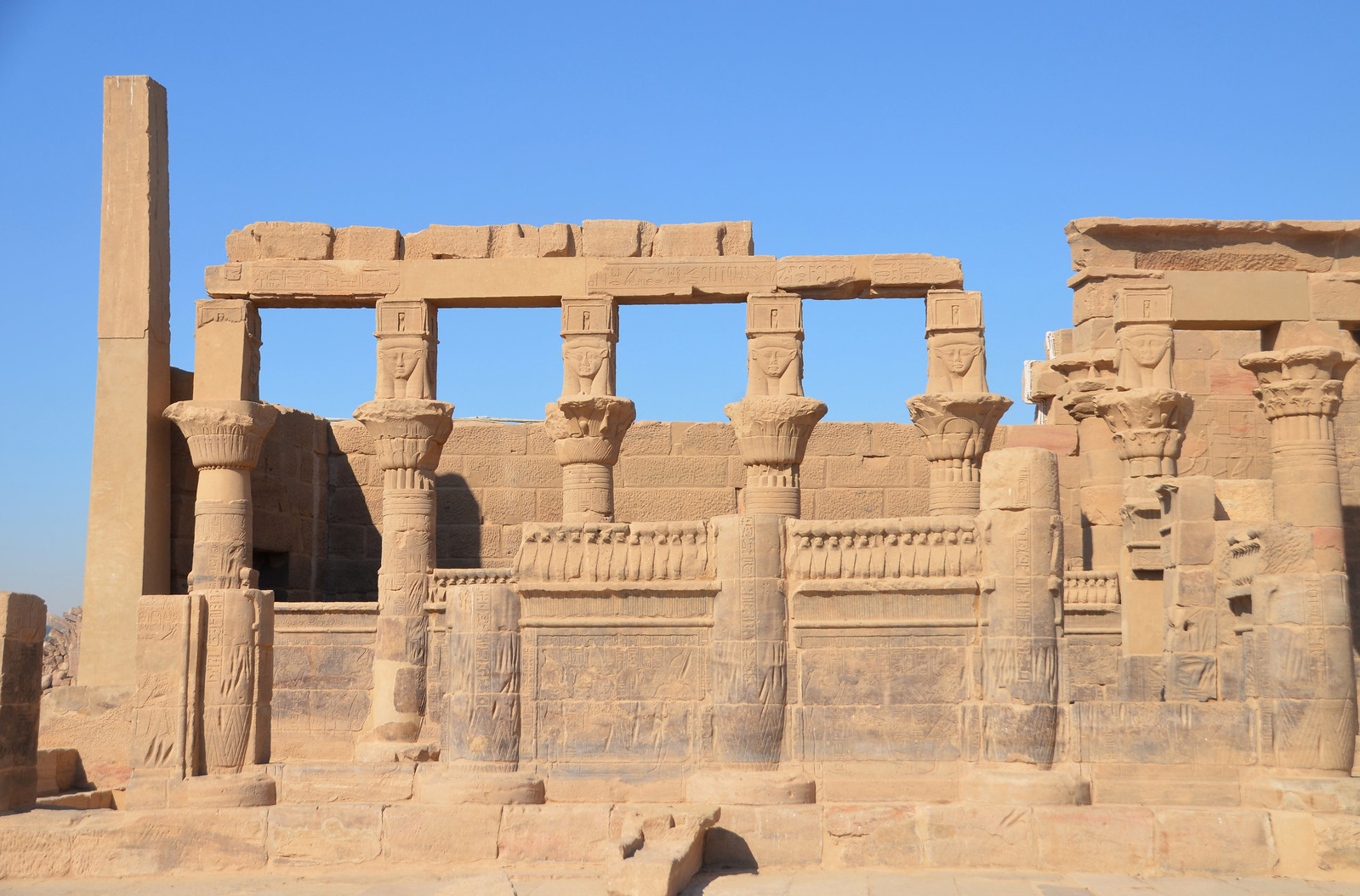
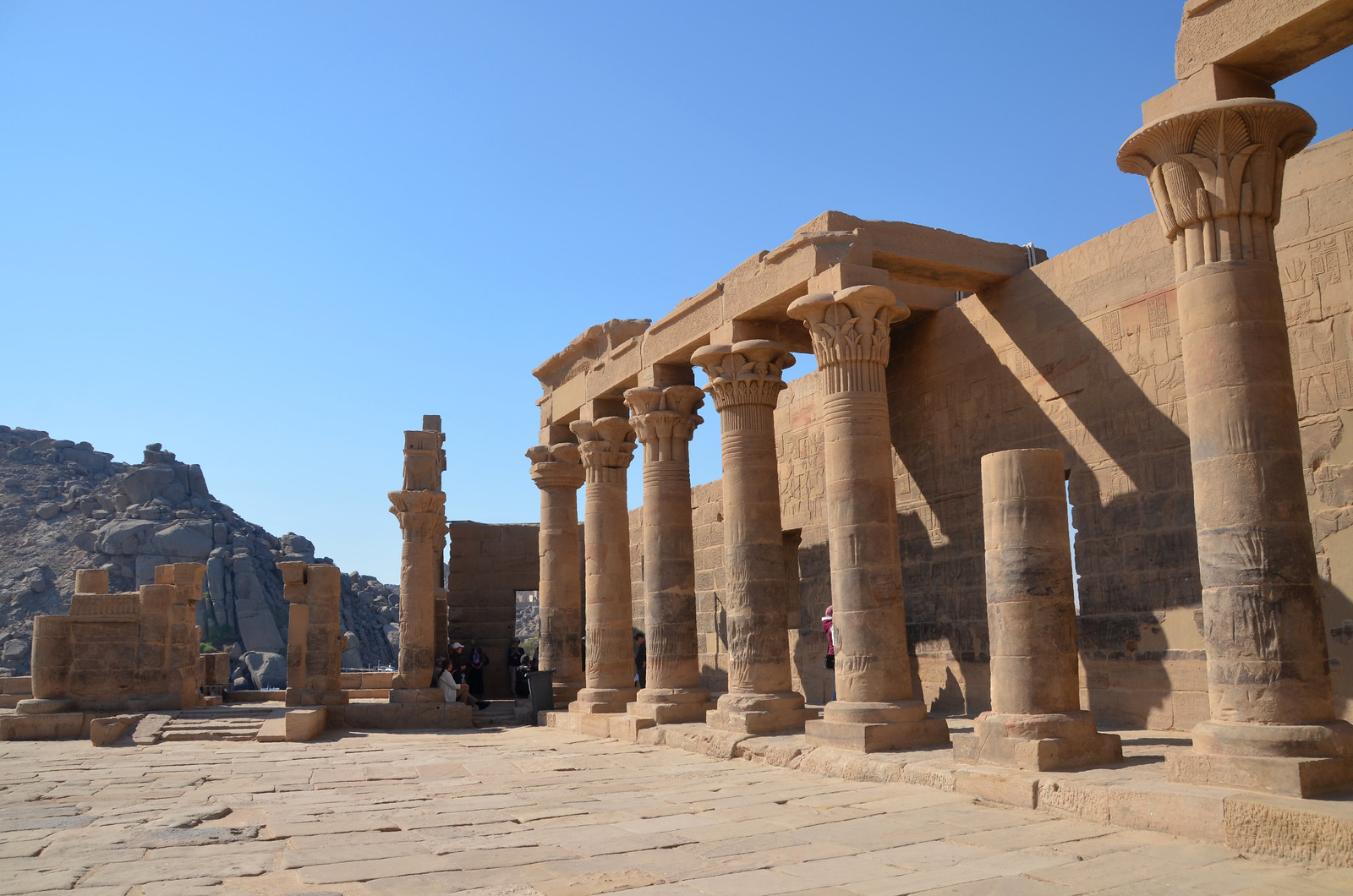
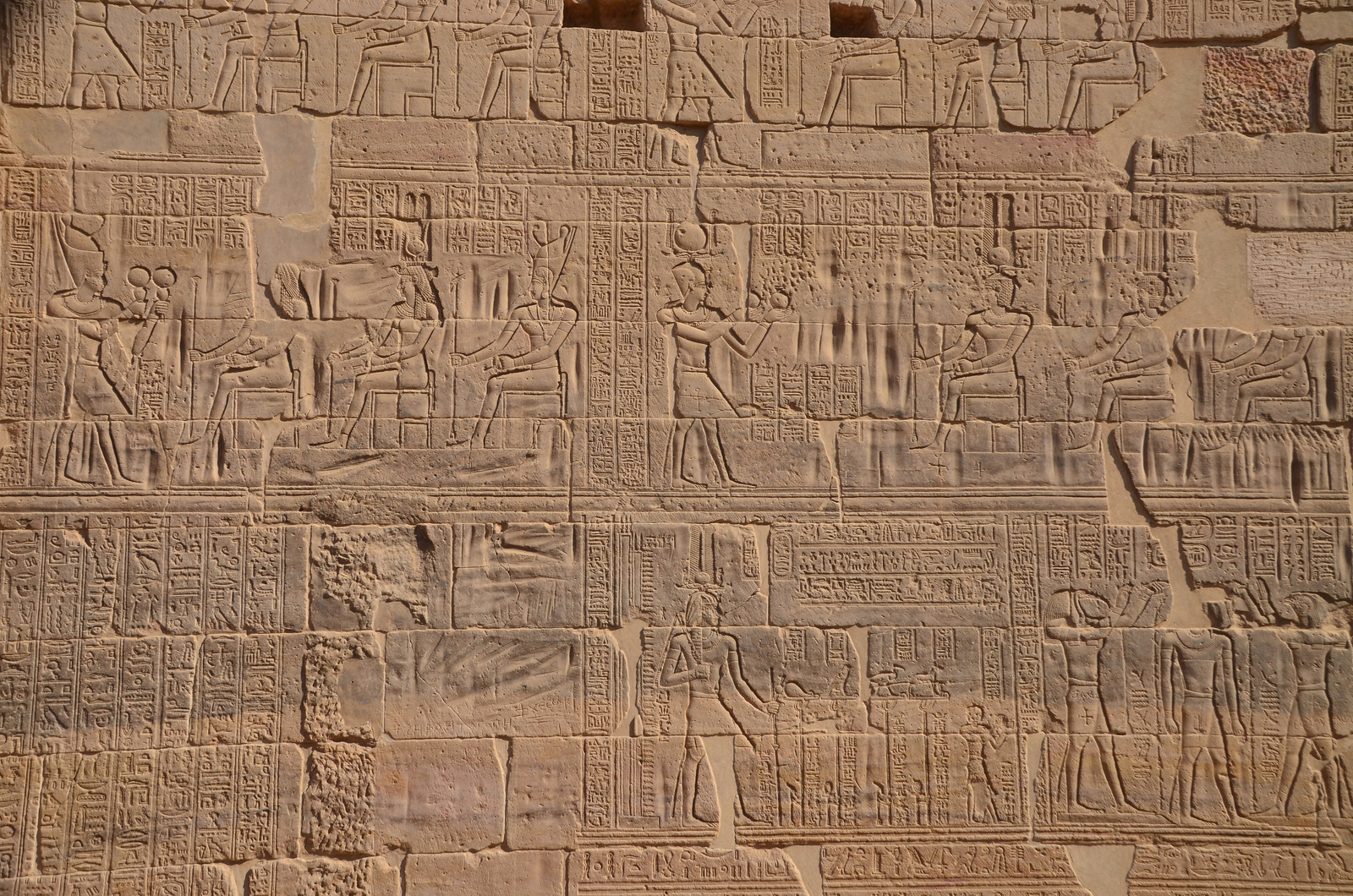
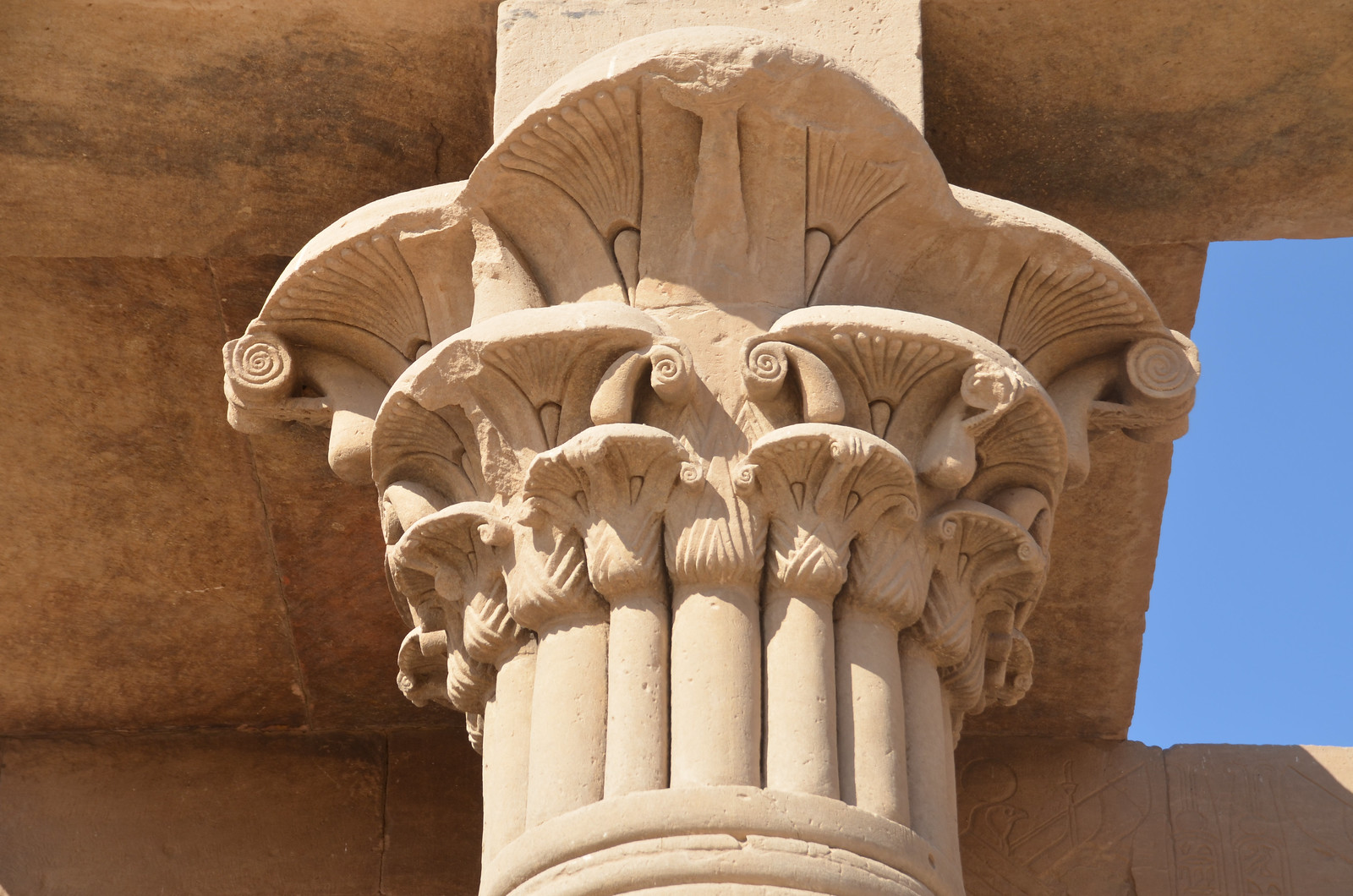
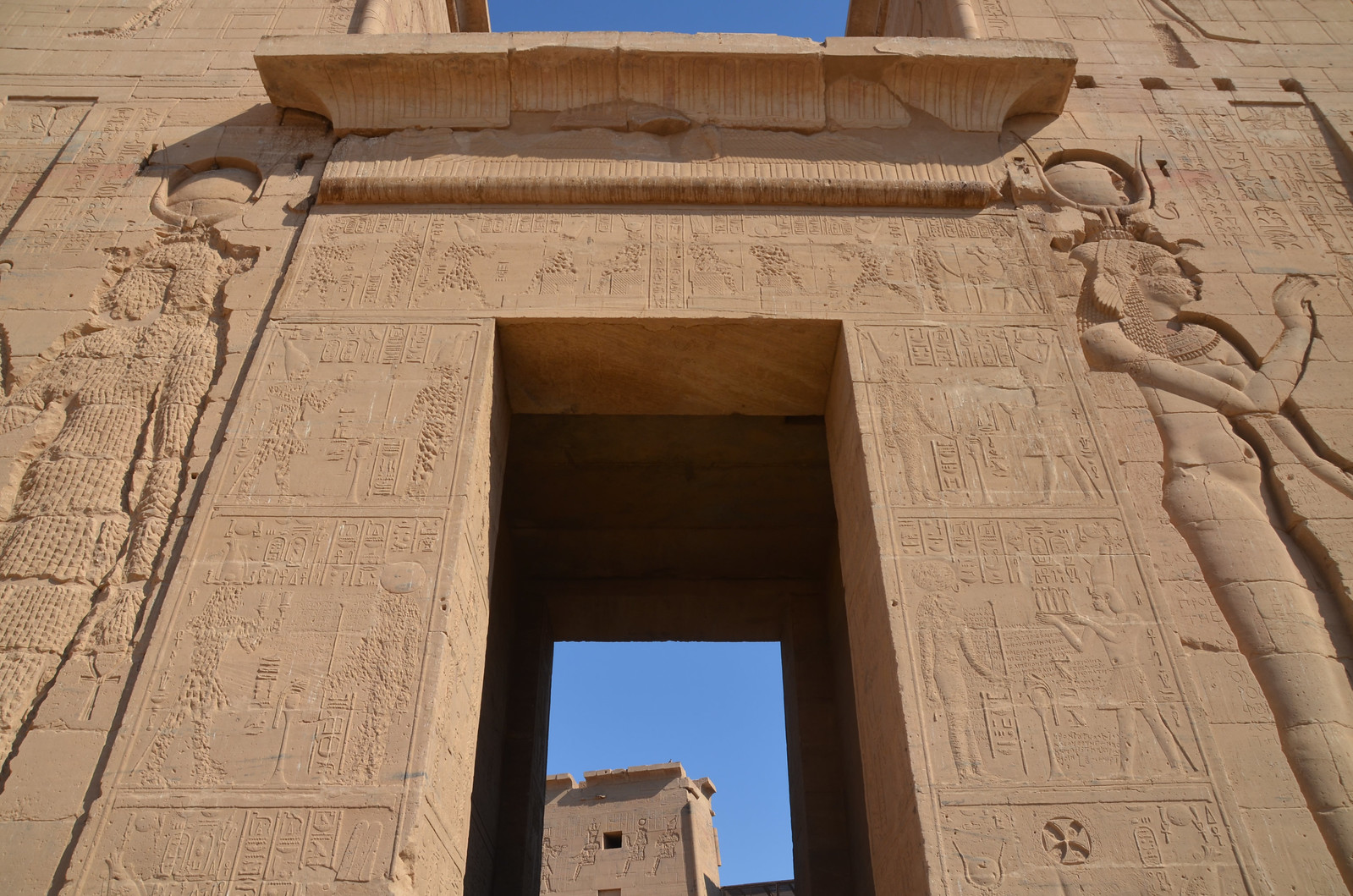
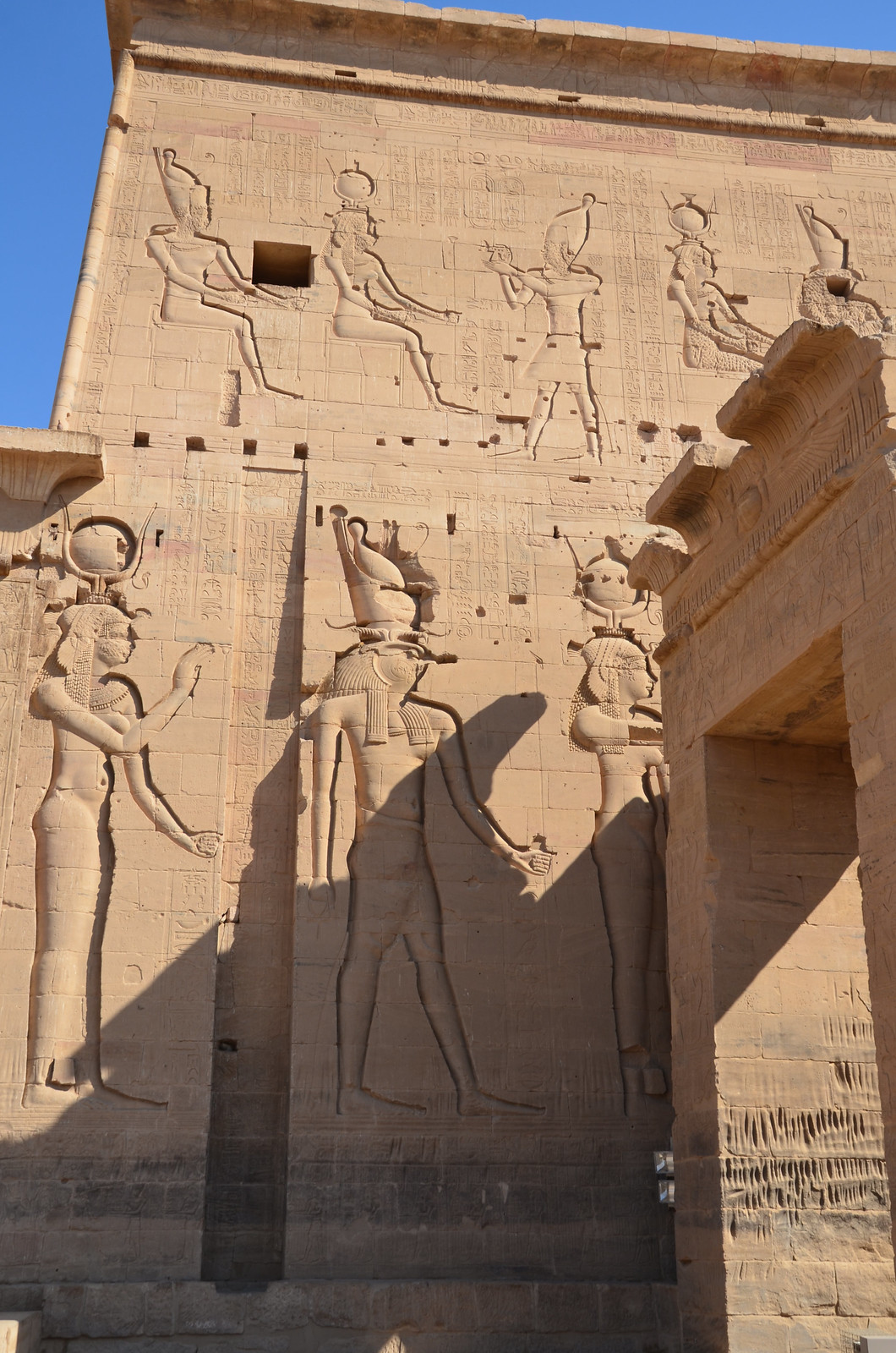
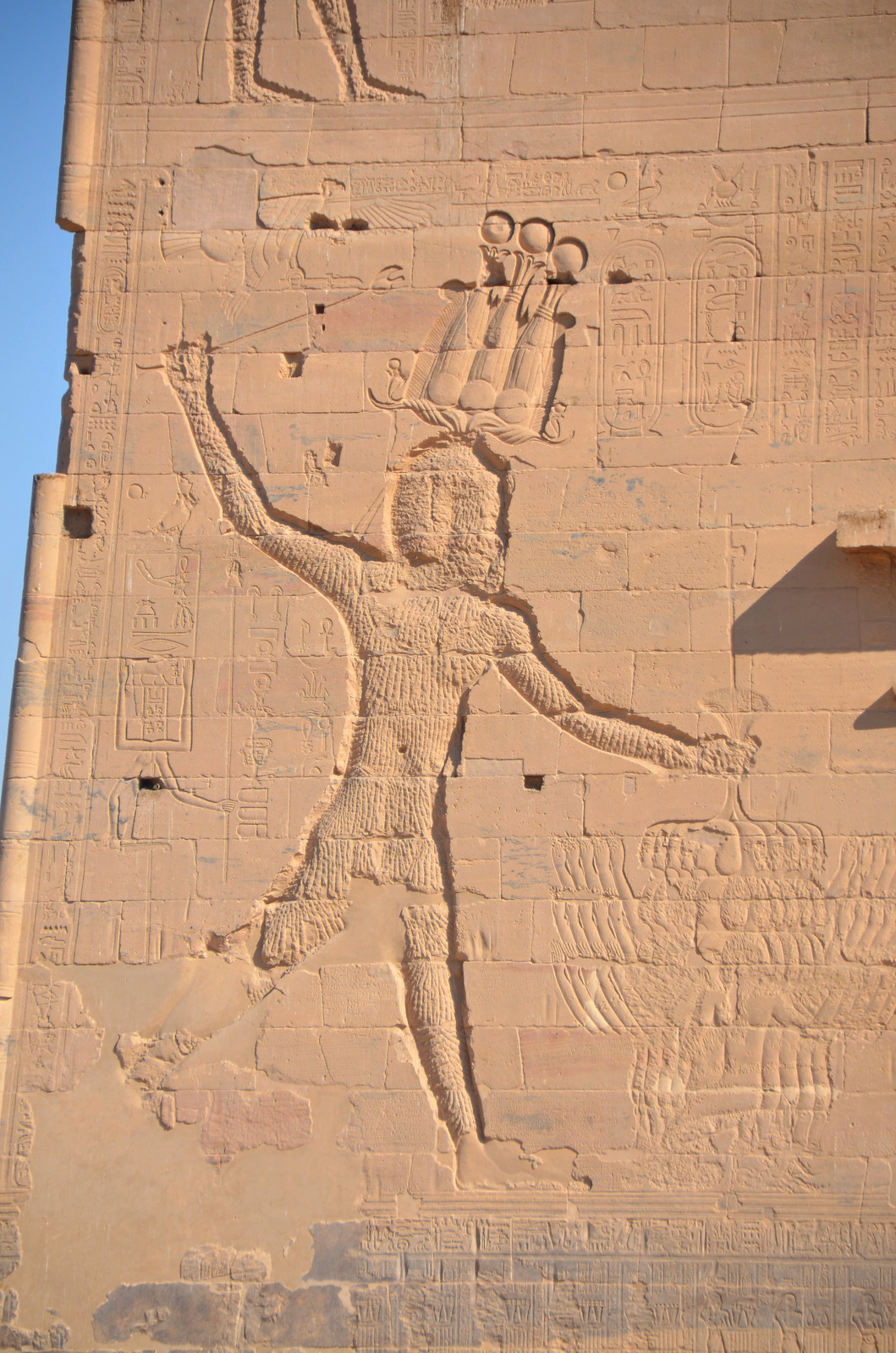
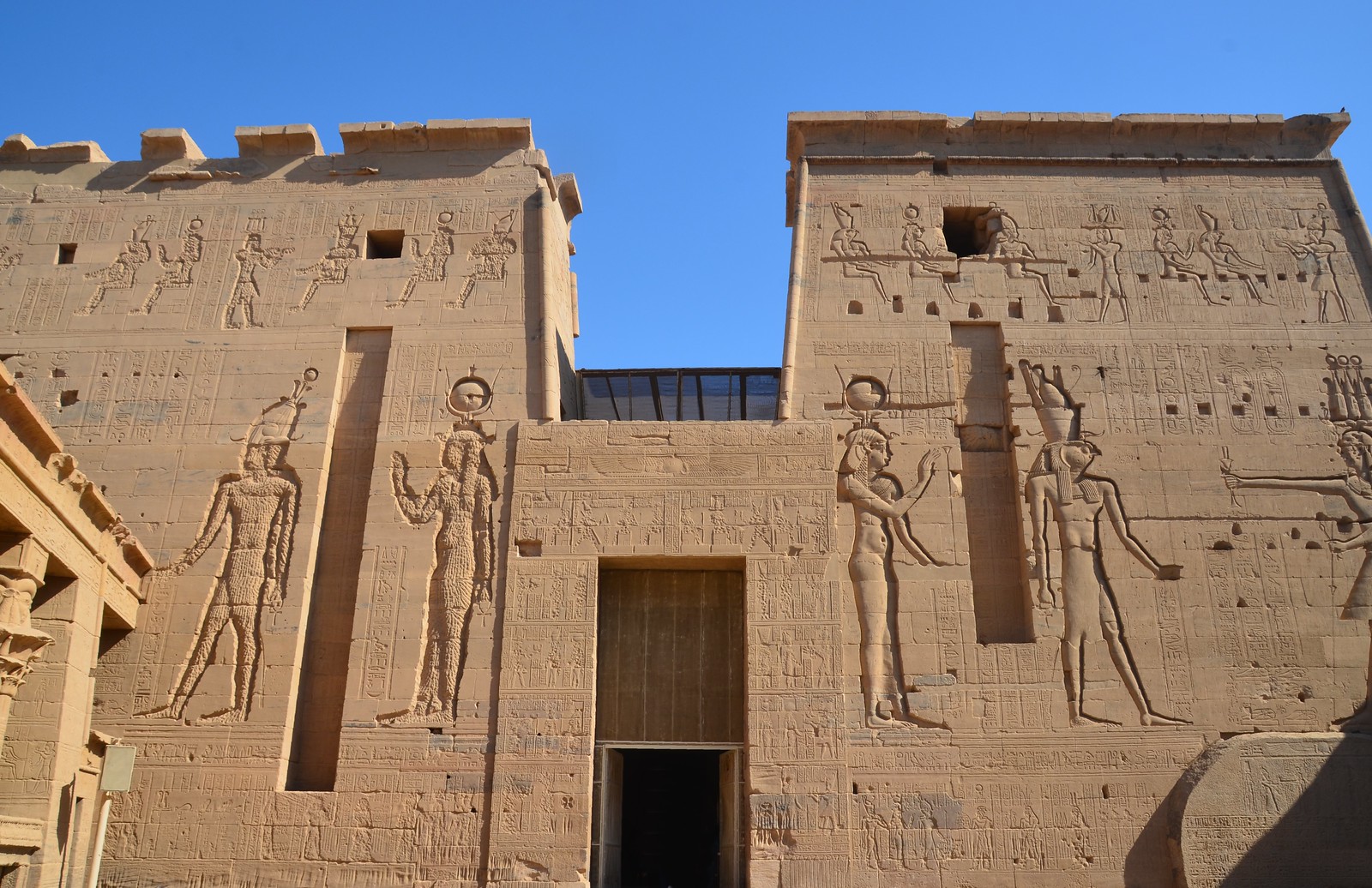
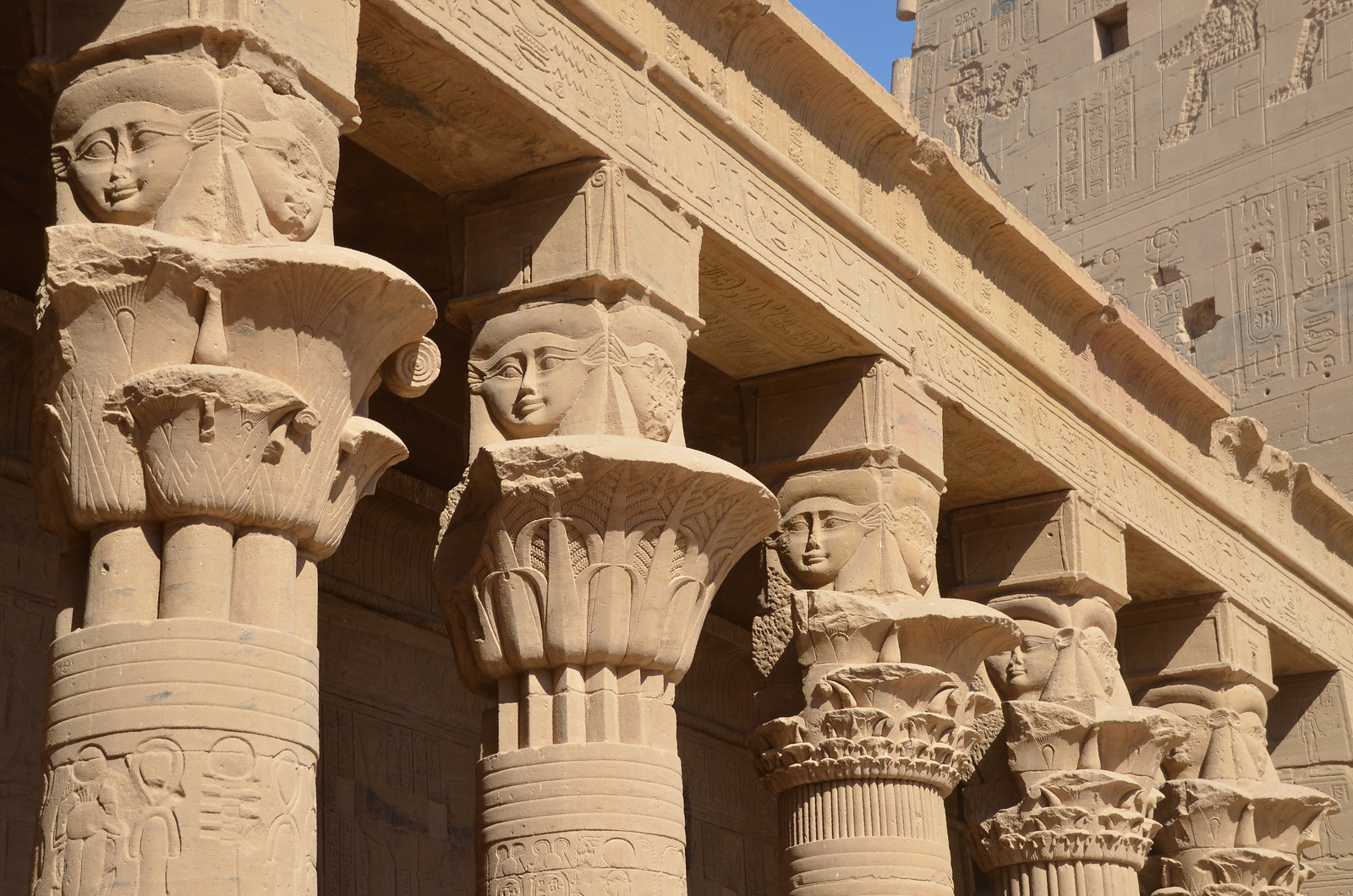
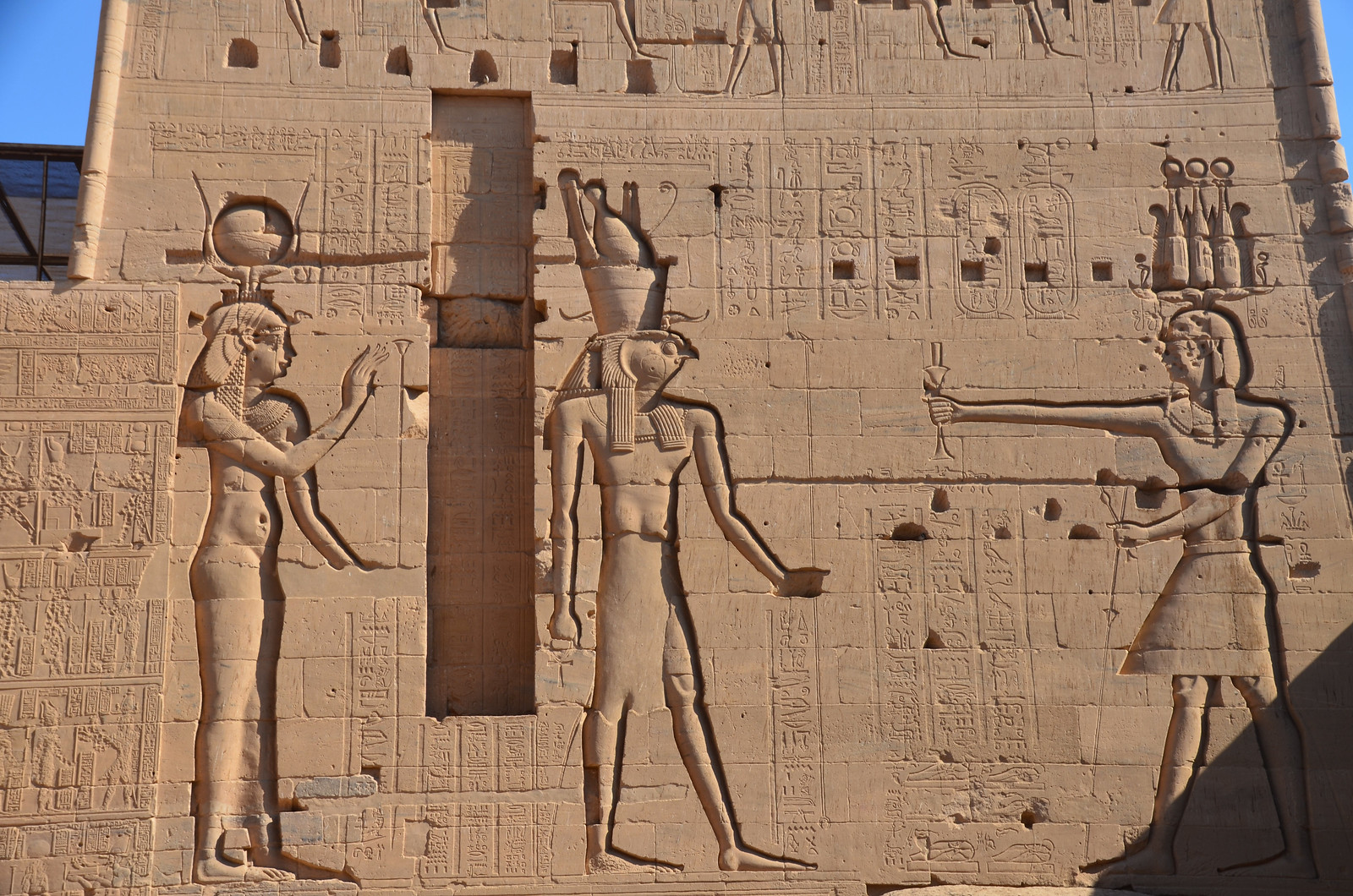
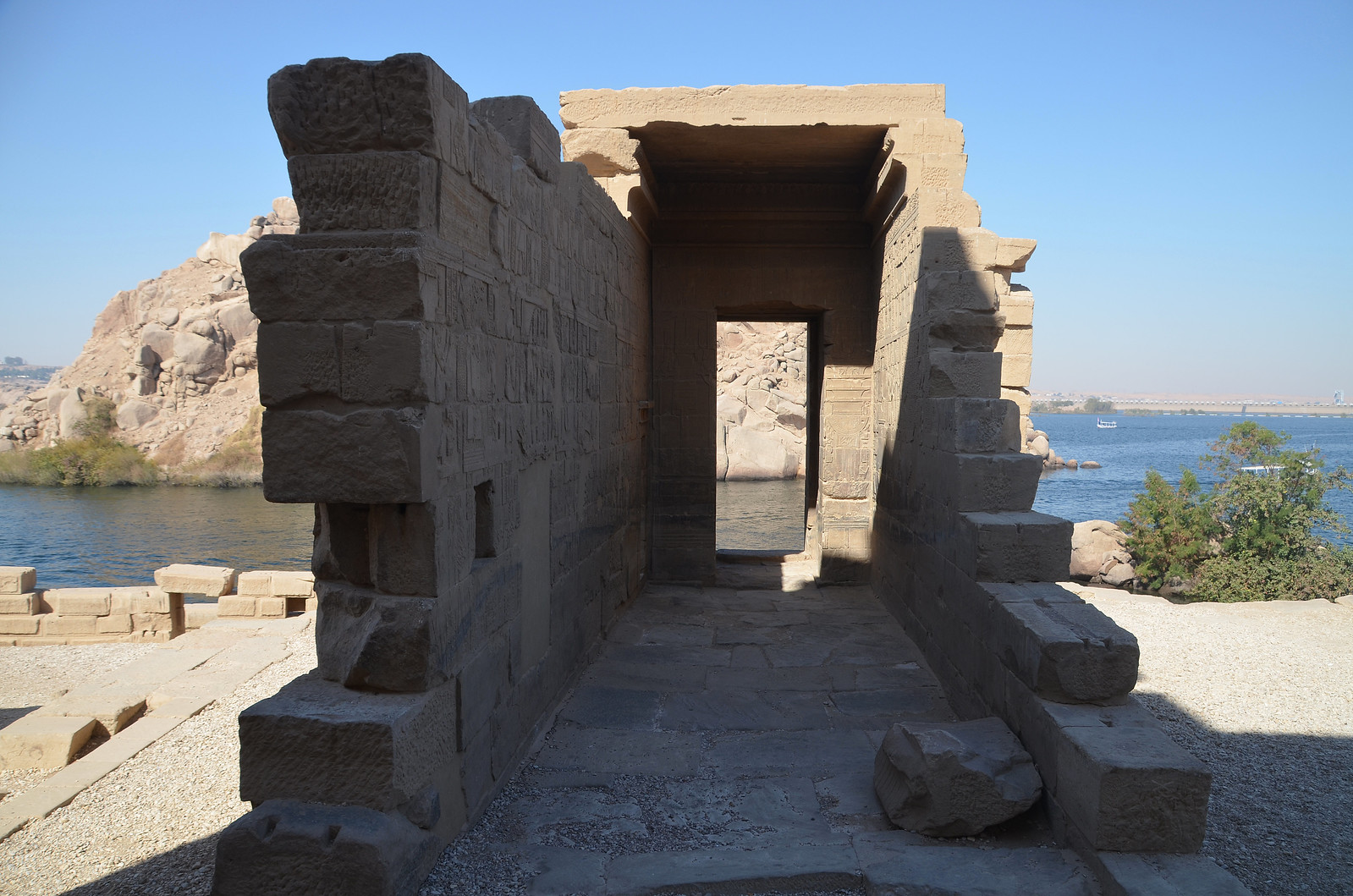
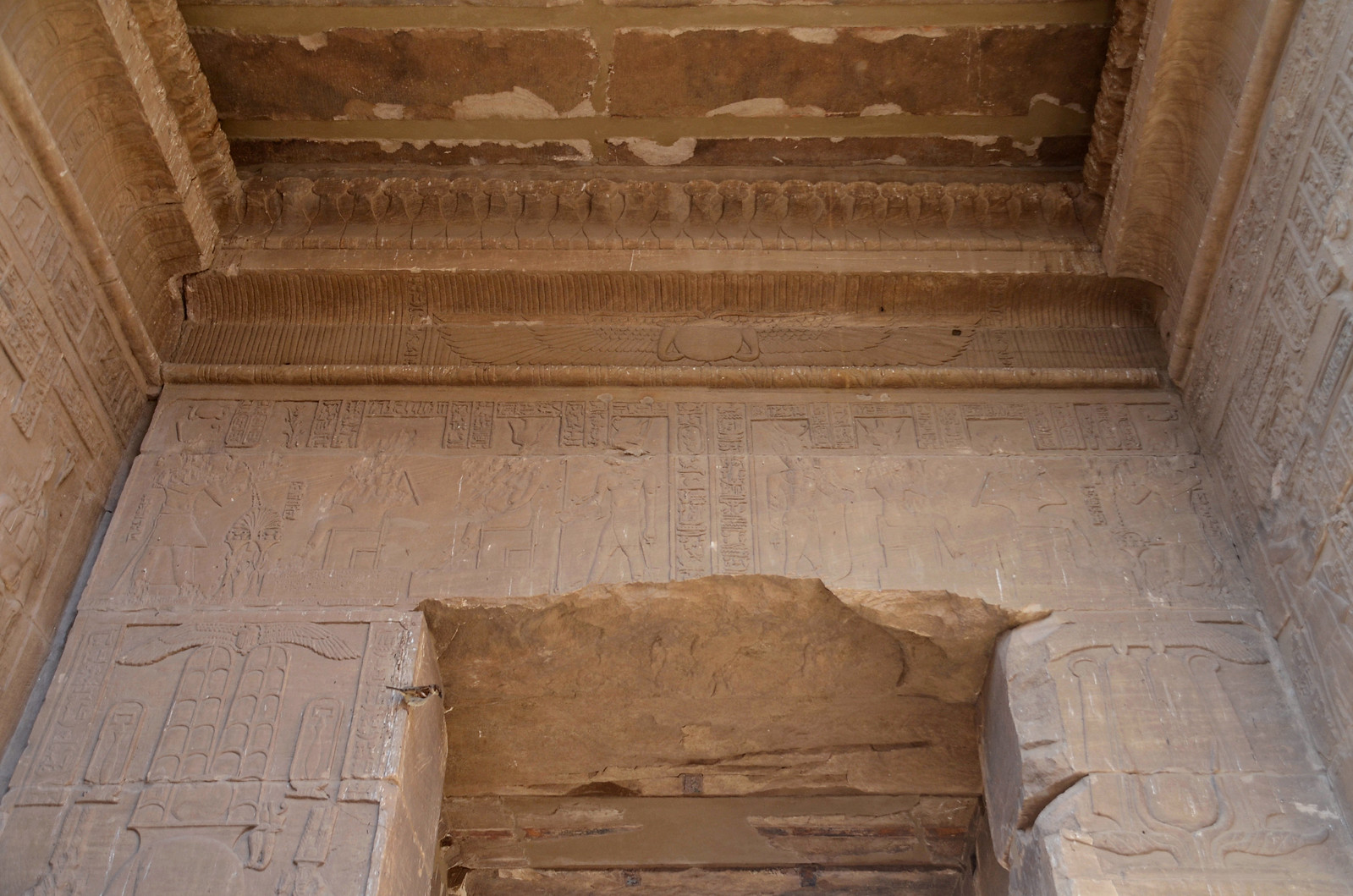
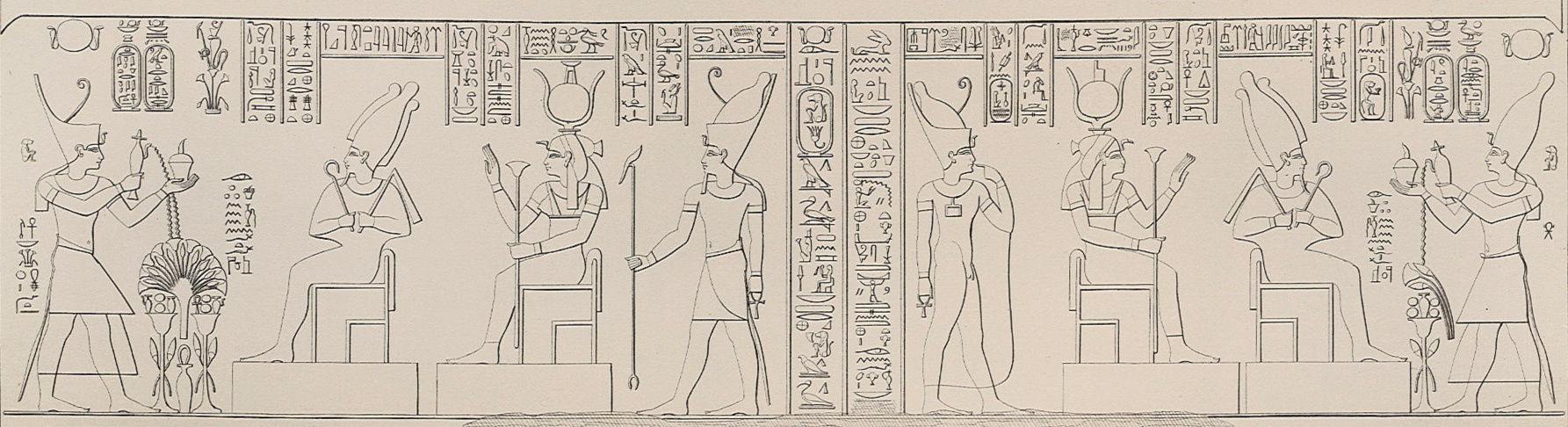
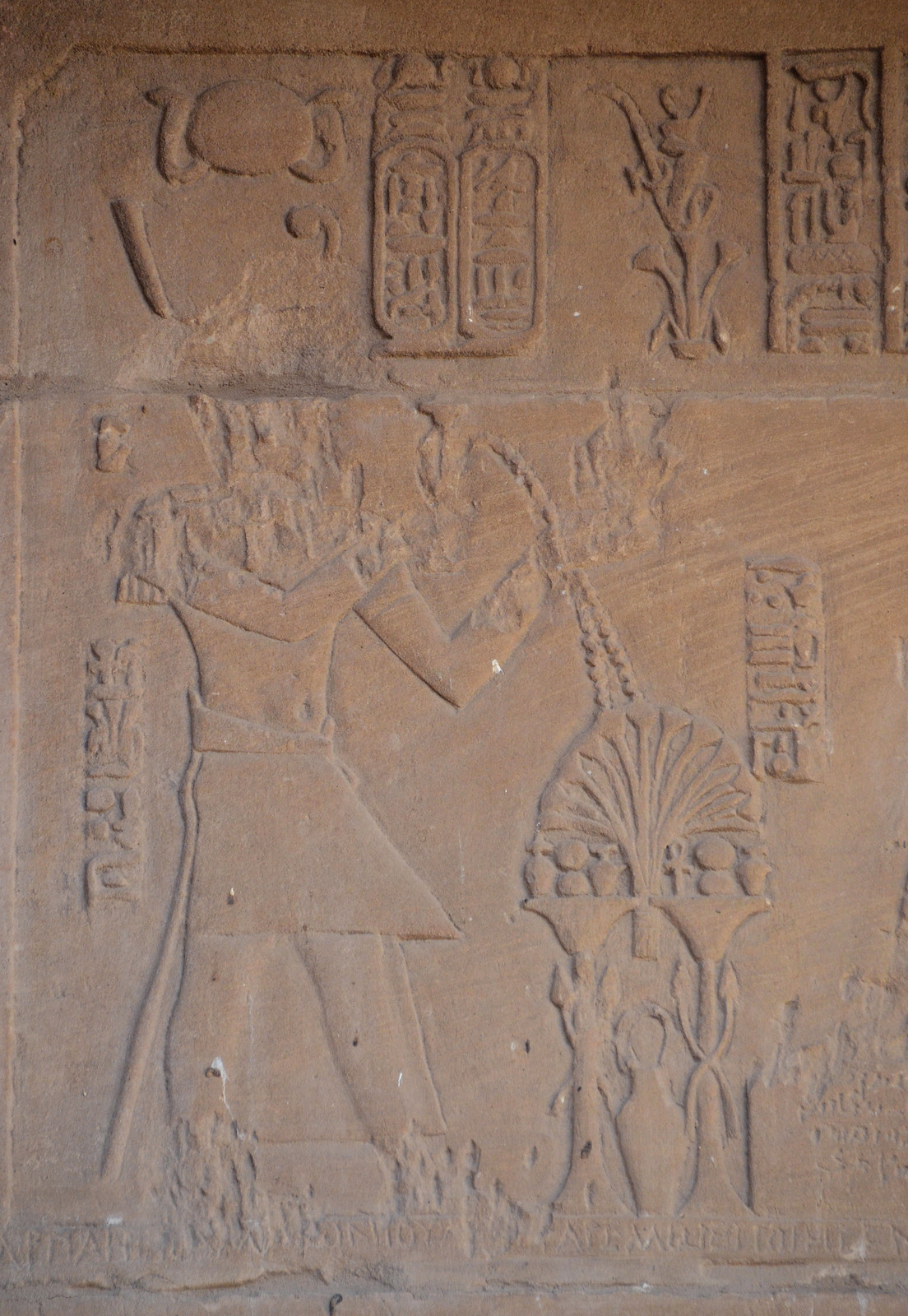
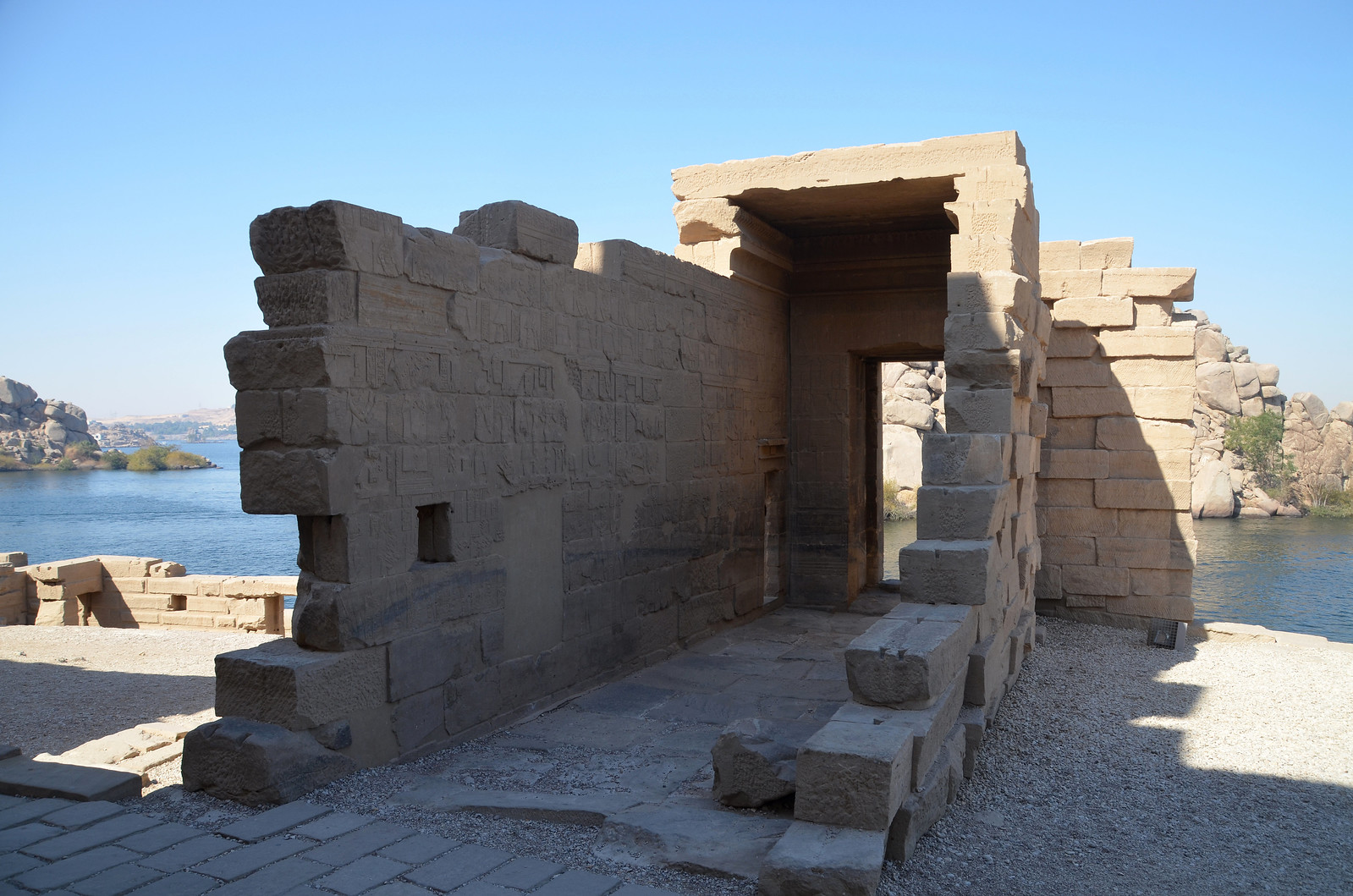
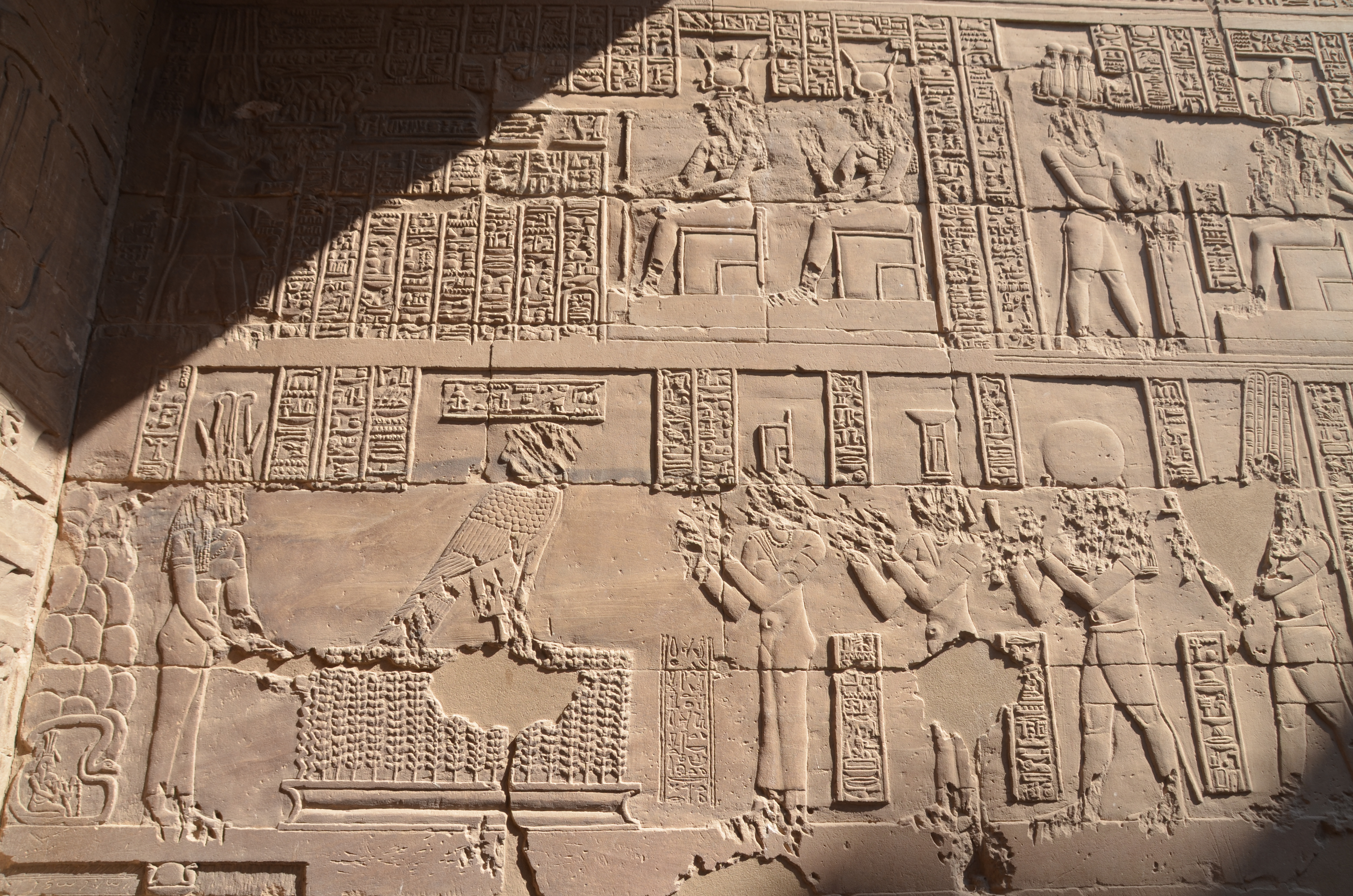
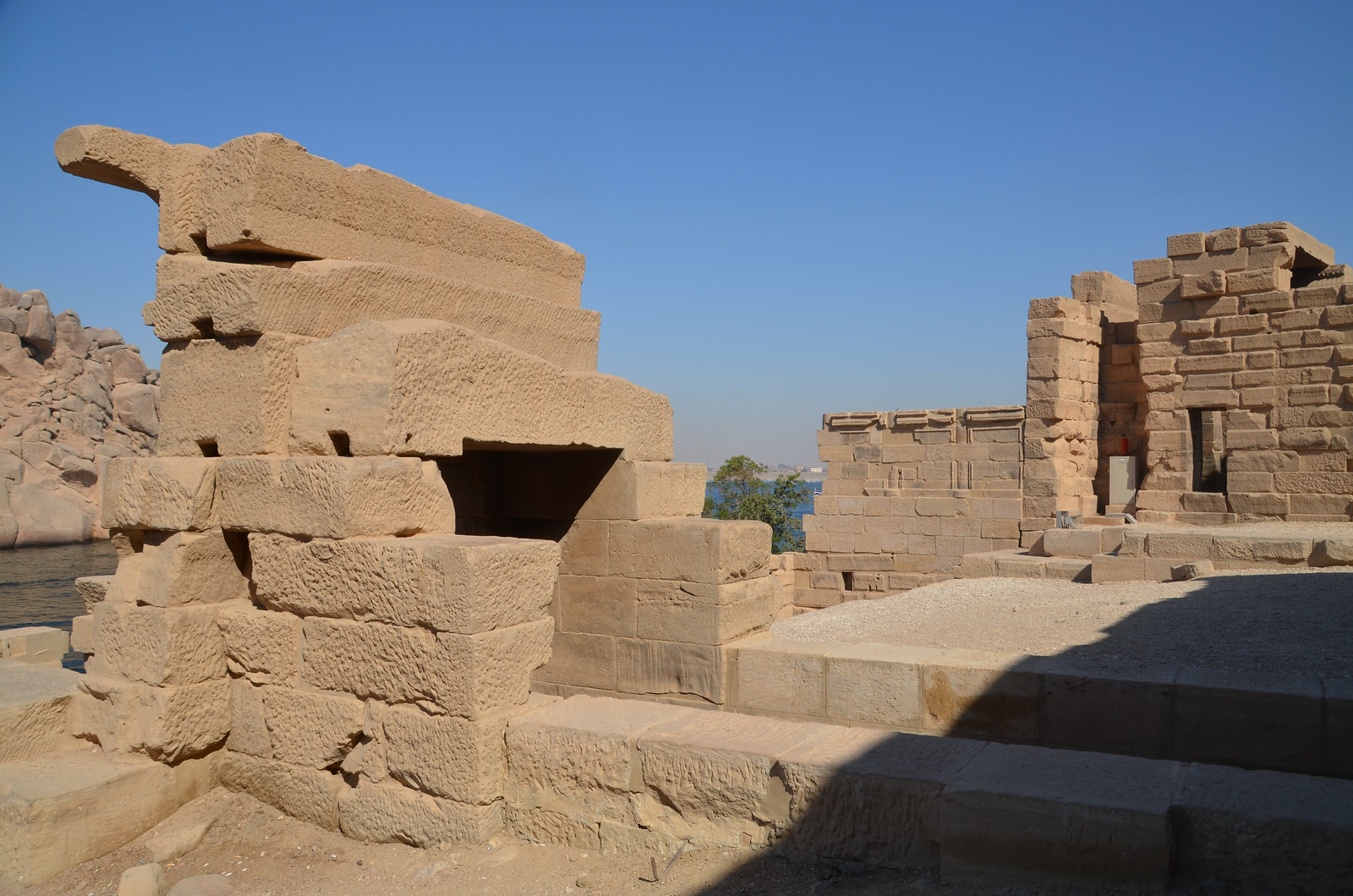
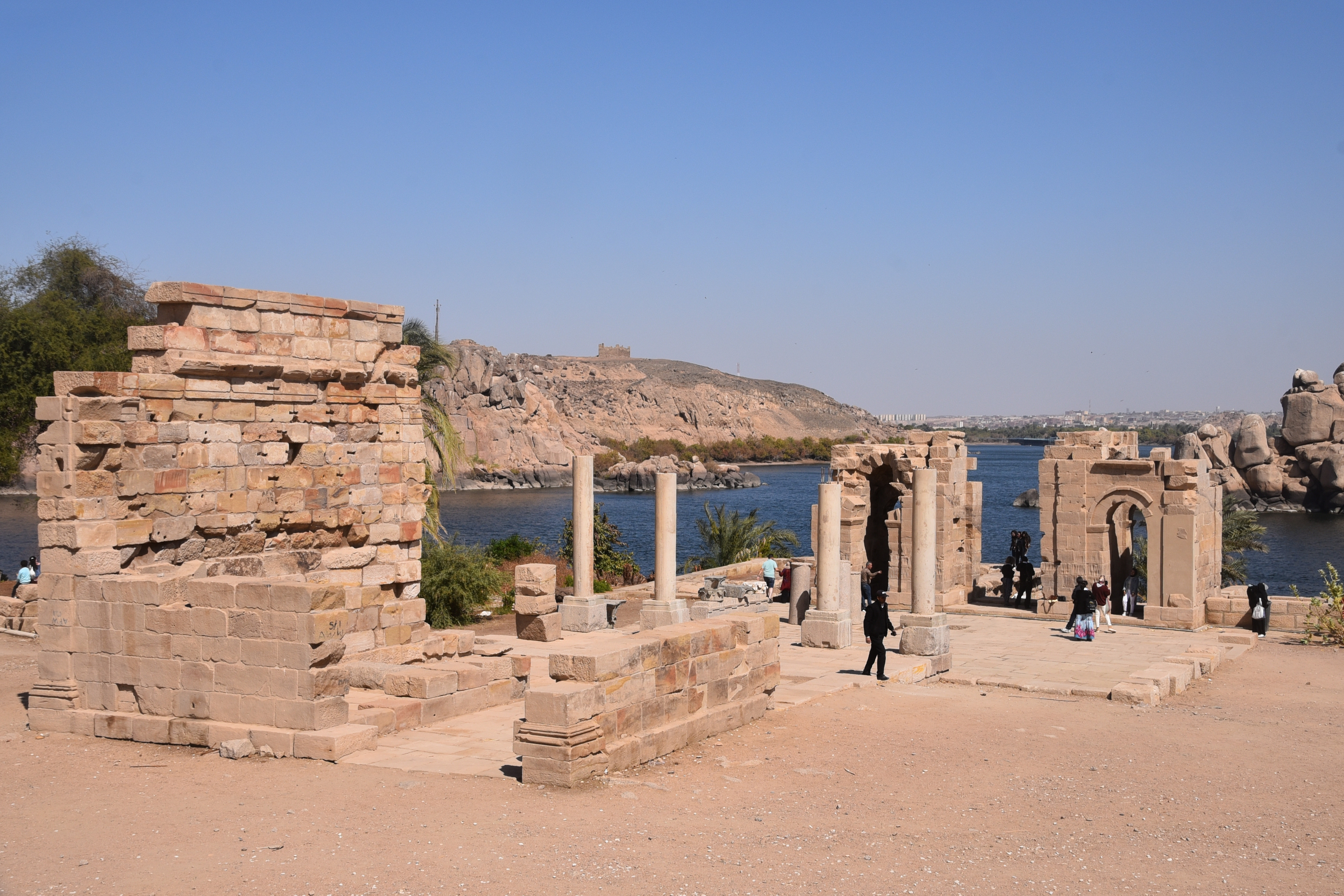
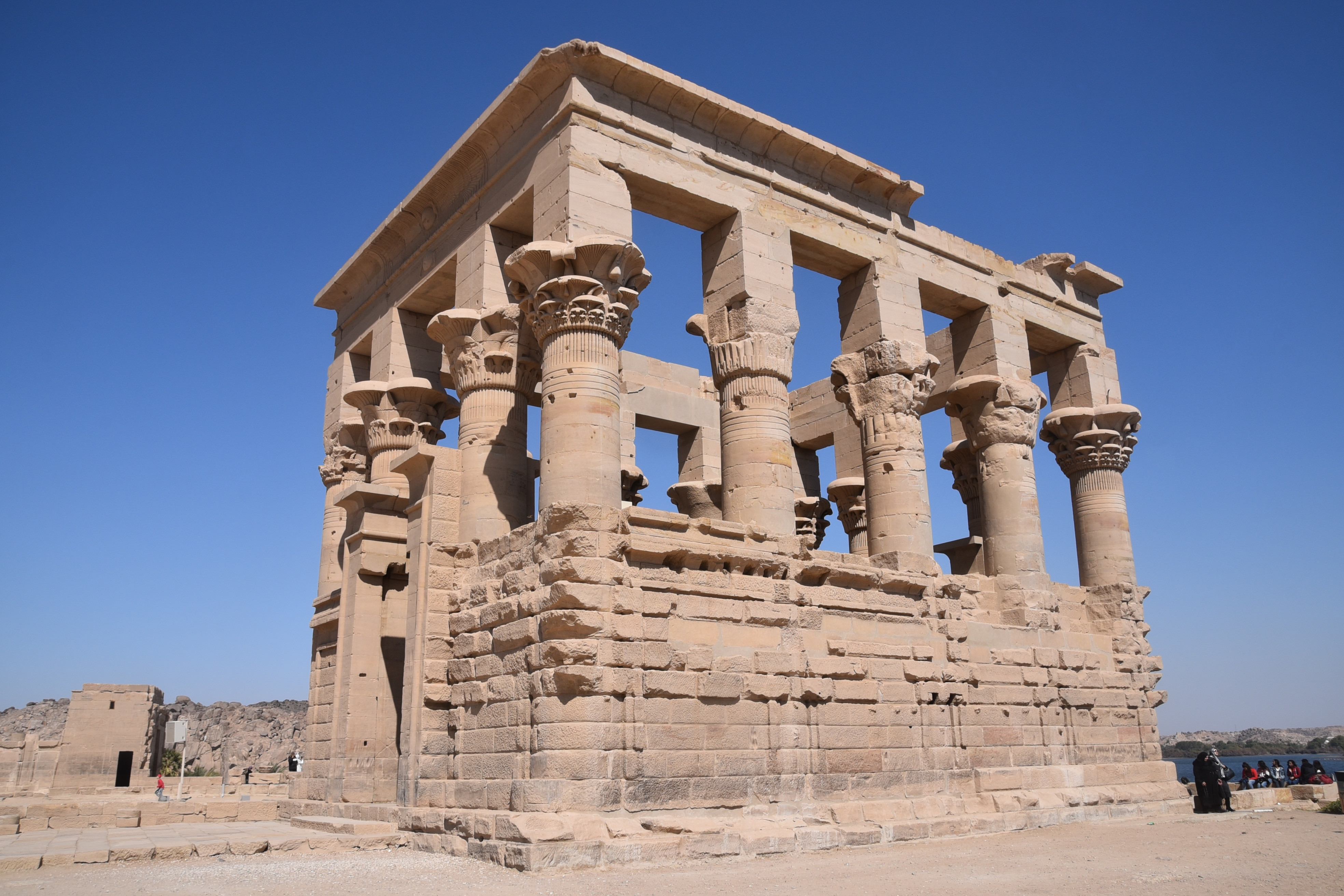
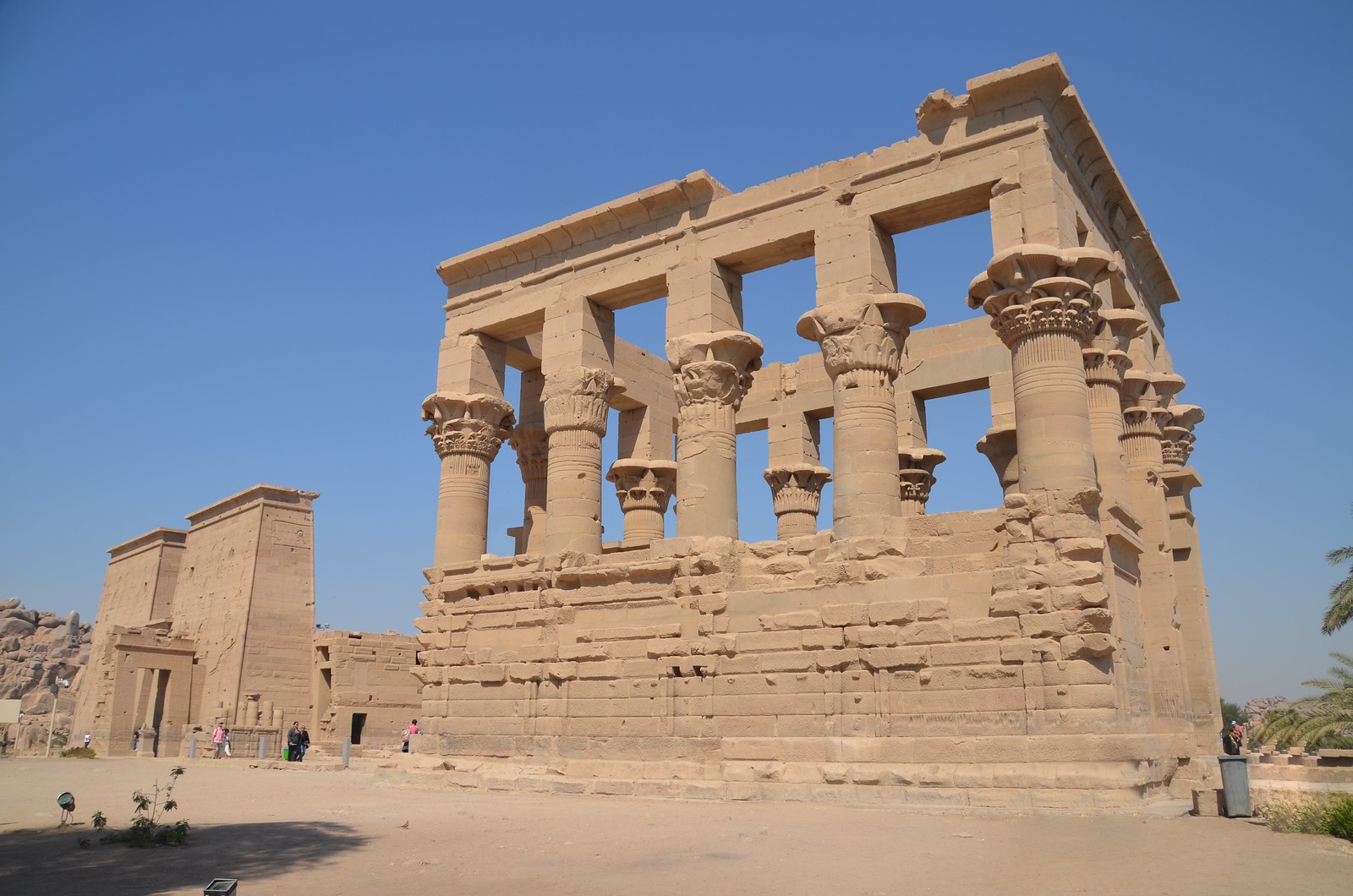
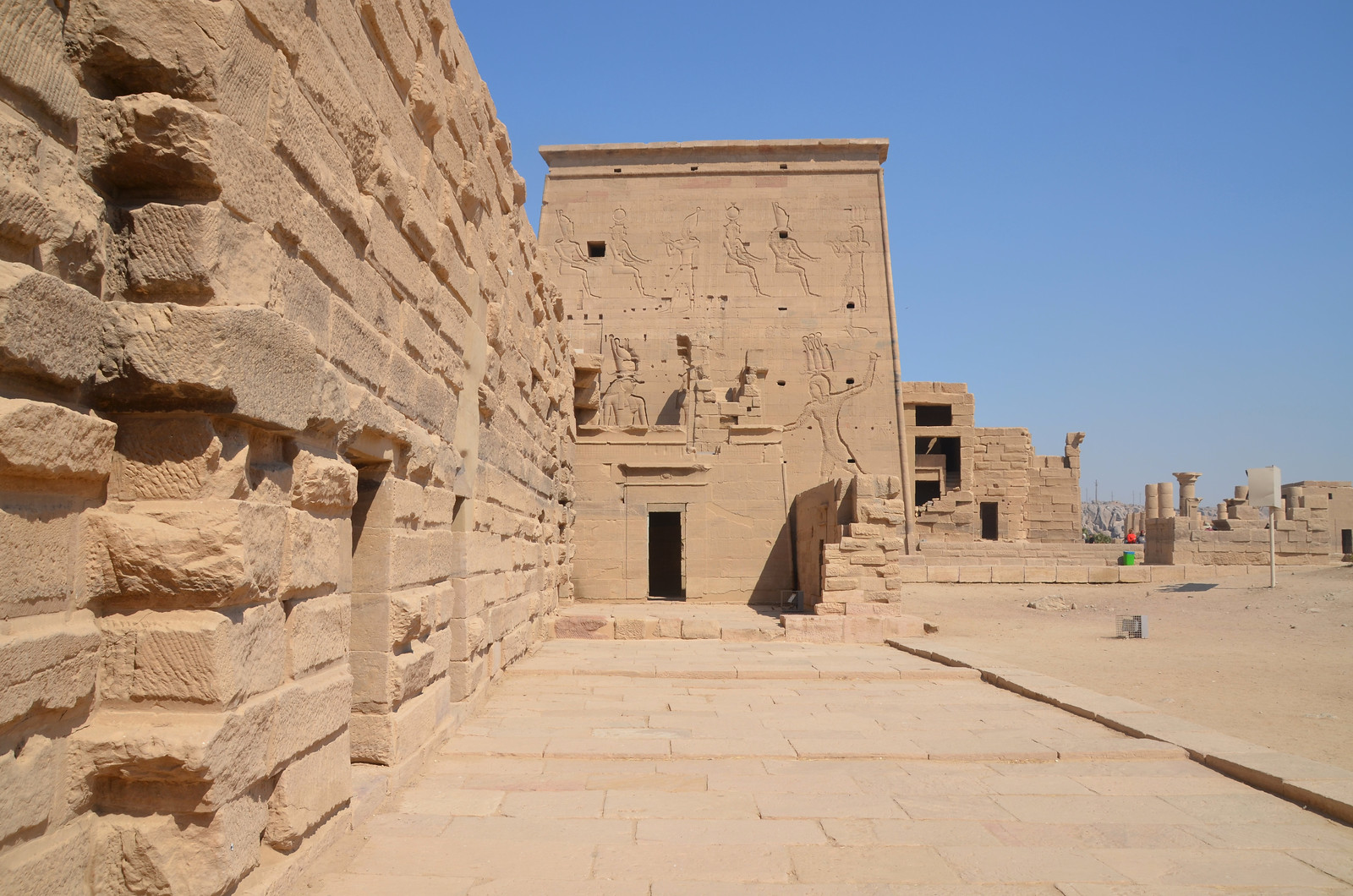
The Kiosk of Nectanebo I was built in the 30th dynasty to honour Isis. This pillared, roofless hall originally had fourteen Hathor-headed columns, of which only six remain. It is the oldest still-standing temple structure at Philae.The walls of the Kiosk of Nectanebo I are decorated with reliefs of the king sacrificing to the gods.The Kiosk of Nectanebo I and the western colonnade of the forecourt of the Temple of Isis.The Temple of Arensnuphis was built during the reign of Ptolemy IV Philopator, around 2250 BC, and was later extended by Ptolemy V Epiphanes. Arensnuphis was an anthropomorphic Nubian deity from the Kingdom of Kush.Reliefs on the walls of the Temple of Arensnuphis depicting Ptolemy IV Philopator and Ptolemy V Epiphanes offering gifts before Isis, Horus and other gods.The large, paved, trapezoidal forecourt of the Temple of Isis with the eastern colonnade and first pylon of Isis. Construction of the first pylon began under Ptolemy II Philadelphus and was completed by Ptolemy III Euergetes I, but decorations were also added by their successors.The forecourt of the Temple of Isis, with its western colonnade, was established in Augustan time.The 77 m-long western colonnade, with 32 columns and 12 openings in the rear wall, was decorated under Augustus, Tiberius, Claudius, and Nero. Most of the columns show carvings of Tiberius offering gifts to the gods.A column in the western colonnade of the forecourt with a bas-relief depicting Tiberius making offerings to the fertility god Min.A floral column capital with bundled papyrus stalks and volutes from the western colonnade of the forecourt of the Temple of Isis.View of the First Pylon of the Temple of Isis and the Gate of Ptolemy II Philadelphus. The first pylon consists of two 18 m high towers with a gate between them.The middle gate of the first pylon of the Temple of Isis with representations of Nektanebos I in front of Isis, Osiris-Onnophris, Nephthys and Hathor. On either side of the gate are large representations of the goddess Hathor.The right facade of the first pylon with reliefs showing King Ptolemy XII before Isis, Osiris, Horus and Hathor (upper register) and Horus between Hathor and Isis (lower register).The upper register of the western tower of the first pylon shows Ptolemy XII offering a mirror to the gods Osiris and Isis (left) and a menat to Isis and Horus (right).The lower register of the western tower of the first pylon shows Ptolemy XII beating a group of enemies of Egypt.The second pylon of the Temple of Isis.The colonnaded Mammisi (birth house) and left facade of the second pylon showing Ptolemy XII hidden by the back of the Mammisi in front of Osiris-Onnophris and Isis.The Hathor-headed columns of the Mammisi. The birth house occupies the western area of the second courtyard.The Mammisi at Philae was associated with the birth of Harpocrates (Horus the Child). The birth house was begun under the Ptolemies and improved upon by the Romans.The right facade of the second pylon with reliefs showing Ptolemy XII in front of Horus and Hathor. The vertical groove between Hathor and Horus was designed to hold a flagpole.The Dodekaschoinos stele of Ptolemy IV, which records the grant of tax revenues of the Dodekaschoinos region (“Land of the Twelve Schoinoi”) in 157 BC to the Temple.Behind the second pylon was the hypostyle hall of the Temple of Isis with several annexed chambers.Bas-relief with scenes of sacrifice inside the Temple of Isis.On the west side of Philae lies the Gate of Hadrian, a corridor-like passage with decorated side walls which served as a departure point for the ritual barge procession of Isis to the tomb of Osiris on the island of Bigeh.The Gate of Hadrian features several scenes from the famous Osirian myth, as well as reliefs commissioned by Roman emperors Hadrian, Marcus Aurelius, and Lucius Verus.On the lintel of the doorway, Hadrian is depicted making offerings to Osiris, Isis, and Horus (right) and to Osiris, Nephthys, and Harendotes (left).Hadrian making offerings to Osiris, Isis, and Harsiesis (right) and to Osiris, Nephthys, and Harendotes (left).Hadrian as a pharaoh making offerings to the gods.Hadrian making offerings to Osiris, Isis, and Harsiesis (Horus the child).The Gate of Hadrian.The Graffito of Esmet-Akhom is the last known inscription written in Egyptian hieroglyphs. It was inscribed on Hadrian’s Gate in AD 394. Translation: “Before Mandulis, son of Horus, by the hand of Esmet-Akhom, son of Esmet, the Second Priest of Isis, for all time and eternity. Words were spoken by Mandulis, Lord of the Abaton, great god.”North wall of the Gate of Hadrian with a representation of the Nile god Hapi crouched in his cave. This scene relates to the source of the Nile.The northwestern Nilometer is next to the Gate of Hadrian. It is reached via an underground staircase.The Temple of Harendotes (the name of the god Horus in his role as the avenger of his father, Osiris, who was slain by Seth). The temple, which was built under the emperors Claudius and Nero, had four front columns and stood on a platform with a central staircase.The Gate of Diocletian is a freestanding triumphal arch dedicated to Emperor Diocletian.The Temple of Augustus and the Gate of Diocletian.The Temple of Augustus was built by the prefect P. Rubrius Barbarus.The Temple of Hathor was decorated under Ptolemy VI, Ptolemy VIII, and Augustus. The cult of the temple focused on Hathor as the embodiment of the Sun’s Eye that was brought back from Nubia.The Kiosk of Trajan. This structure is a rectangular chamber surrounded by 14 columns with floral capitals, supporting a wooden roof. It is usually attributed to Trajan, but the actual building may date to the reign of Augustus.The Kiosk of Trajan.
The Kiosk of Trajan was never finished, as only the southern wall was decorated with two offering scenes depicting the emperor Trajan.Relief depicting Trajan offering wine to Isis and Horus.The Kiosk of Trajan.
The First Pylon (left) and the Kiosk of Trajan (right).The Temple of Imhotep was located behind the northern end of the rear wall of the first eastern colonnade. It was dedicated by Ptolemy V, possibly in gratitude for the birth of his son Ptolemy VI.The outer courtyard of the Temple of Philae.Philae.View of Philae from Lake Nasser.View of Philae from Lake Nasser.
Petra is an ancient metropolis carved into a canyon and established by the Nabataeans, a nomadic tribe from Western Arabia skilled in trade and engineering. It was the capital of the Kingdom of Nabatea, strategically located along major ancient trade routes. Sacred sculptures, monuments and around 800 tombs cover the 264 square kilometres of ruins, the most famous of which is the Treasury, believed to have been the mausoleum of Nabataean King Aretas III in the 1st century AD. Petra lay for centuries until it was rediscovered in 1812, and has now become Jordan‘s most popular tourist attraction. Referred to as the “Rose City” because of the colour of the stones used in its buildings, Petra was named a UNESCO World Heritage Site in 1985, and in 200,7 it was named one of the New Seven Wonders of the World.
Some of the earliest settled communities in the world were located in the Petra area. Between 8,500 BC and 5,000 BC, farmers settled intermittently and lived in small villages of stone houses in the surrounding wadis and hillsides of Petra. The remains of the most famous of these villages, Baydha, were excavated in the 1950s, located just north of Petra. During the Bronze Age (c. 3,000 BC to 1,200 BC), there was limited evidence of human activity in the Petra region. The Iron Age (1,200 BC to 539 BC) then brought significant historical events, as the Edomites were thought to have established their kingdom there (Edom). Edom collapsed in the 6th century BC and was destroyed by the Babylonians in 552 BC.
The Nabataeans arrived in the region of modern-day Jordan from the Negev Desert sometime before the 4th century BC. Their empire encompassed southern Jordan and extended eastward to the Sinai Peninsula. They gained their wealth through trade on the Incense Routes, travelling between the Kingdom of Saba in southern Arabia and the port of Gaza on the Mediterranean Sea. Using advanced engineering skills, they eventually created their capital city of Petra, which was half-built, half-carved into the rock. This Nabataean caravan city, situated between the Red Sea and the Dead Sea, became a major caravan centre for the incense of Arabia, the silks of China, and the spices of India, serving as a crossroads between Arabia, Egypt, and Syria-Phoenicia.
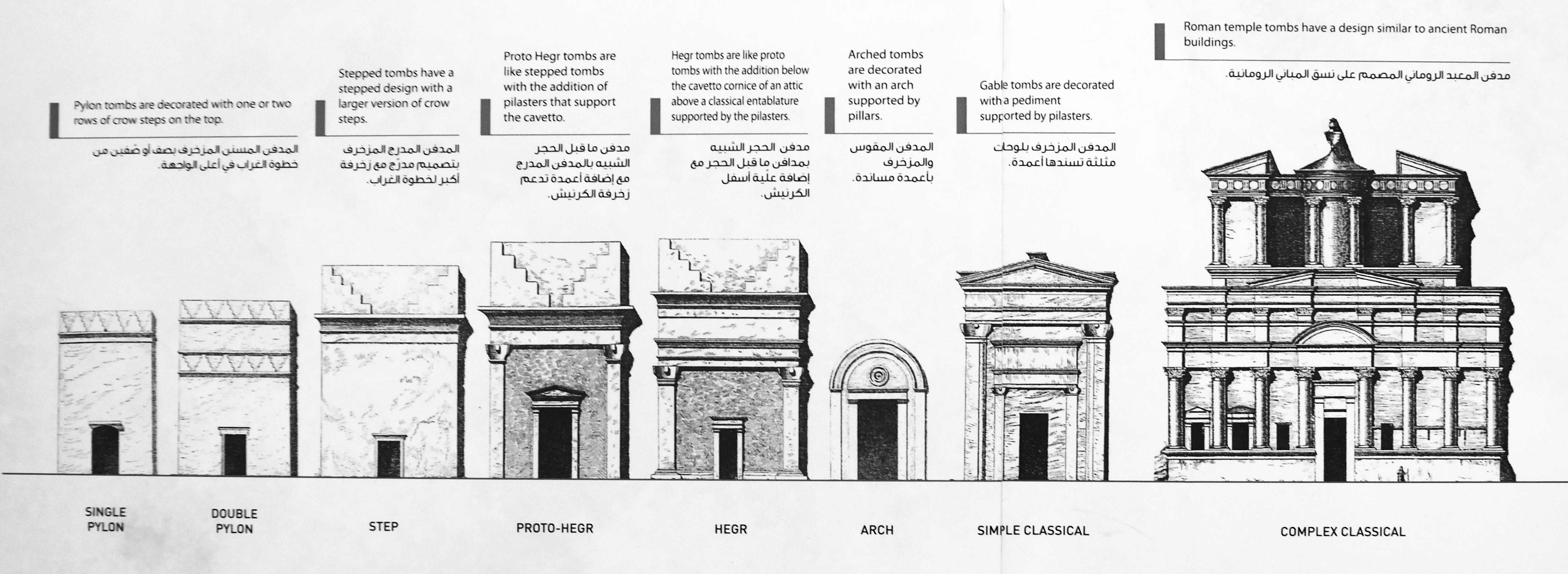
Types of Tomb Facades.
Petra is surrounded by mountains riddled with passages and gorges with an abundance of freshwater. The inventive Nabataeans used water to build their city and became masters in water engineering, creating a highly sophisticated system of reservoirs and irrigation channels. Rain and spring water were collected in individual deposits, from which it was then distributed across the city. The water was sufficient to support a nymphaeum, pools, and elaborate gardens. These irrigation systems are still found throughout the area to this day.
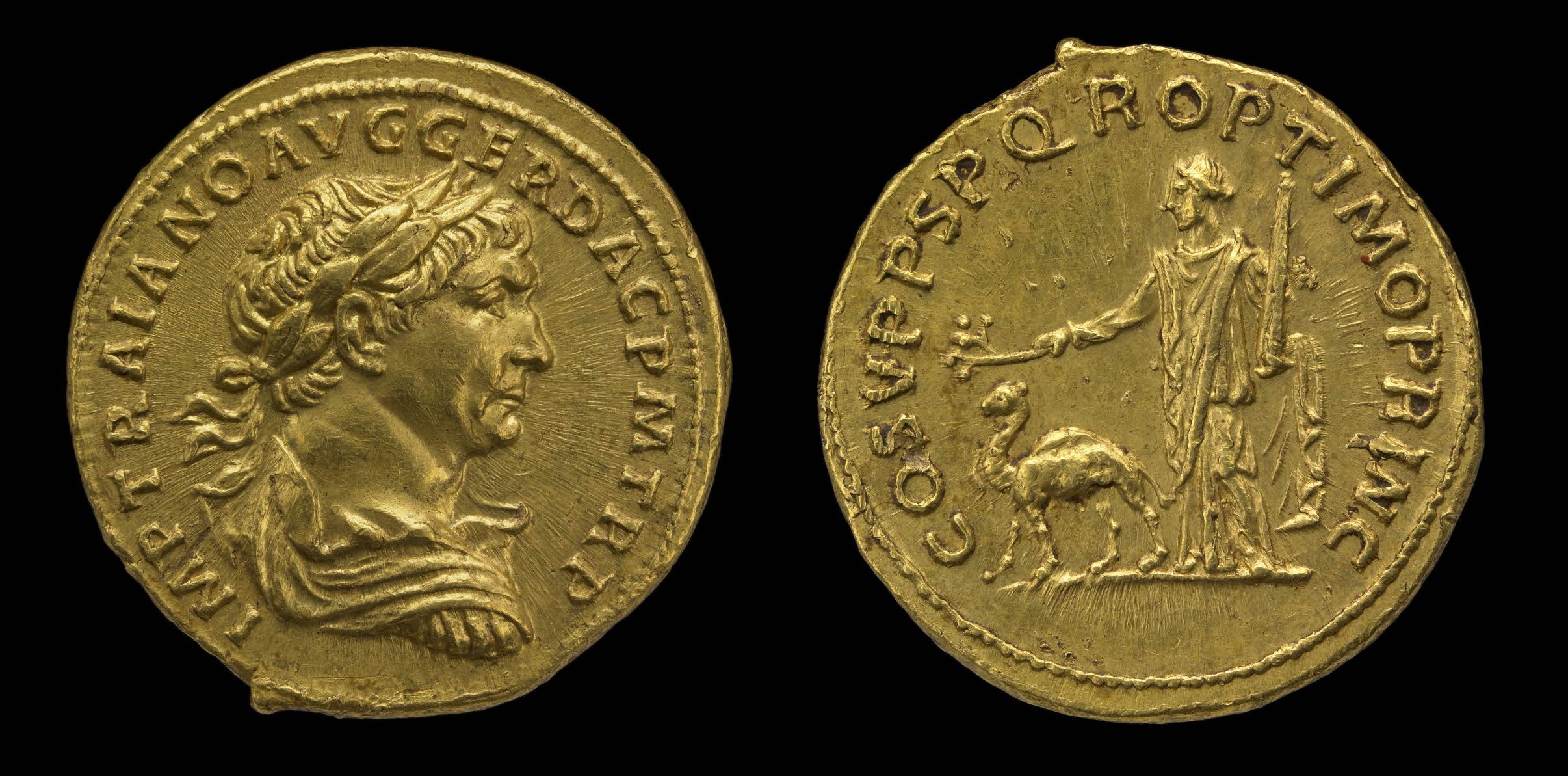
Many of Petra’s incredible monuments were constructed during the reign of King Aretas IV, between 8 BC and AD 40 and may have grown to house 20,000-30,000 people during its heyday. The city reached its height in AD 106 when Emperor Trajan annexed the Nabataean kingdom and turned it into a province, known as Arabia Petraea. Around this time, the Via Traiana Nova, an ancient Roman road, was constructed to link Bostra in the north to the seaport of Aila (present-day Aqaba) in the south. Petra obtained the title of metropolis (chief city) of Arabia from Trajan and was called Hadriana Petra after Hadrian’s visit in AD 129/30. At the beginning of the 3rd century AD, Elagabalus honoured the city with the status of a Roman Colony.
Roman city planning was adopted, and new structures were built, including the colonnaded street, the Roman Soldier Tomb and the Sextius Florentinus Tomb. Petra continued to flourish for more than 250 years until the middle of the 4th century AD, when an earthquake destroyed many of its buildings. The Byzantines eventually took control of the region and governed Petra for some 300 years. Some of Petra’s population converted to Christianity, while others maintained their Pagan beliefs. The city became the seat of a bishopric, indicating its importance during the Byzantine period. Another major earthquake in AD 551 brought further devastation. Then, trade routes shifted, and by the middle of the 7th century, what remained of Petra was largely deserted.
Petra went unentered by outsiders for nearly 600 years. Only the local Bedouin tribes knew of its existence until Swiss explorer Johann Ludwig Burckhardt became the first modern European to lay eyes on the ancient Nabataean city on August 22, 1812. The Scottish painter David Roberts visited Petra in 1839 and returned to England with sketches and stories of his encounter with local tribes. On December 6, 1985, Petra was designated a UNESCO World Heritage Site. In 1989, the city’s carved rose-red sandstone facades were featured in the blockbuster film “Indiana Jones and the Last Crusade”. In a popular poll in 2007, it was also named one of the 7 New Wonders of the World. The Petra Archaeological Park became an autonomous legal entity in charge of managing this site in August 2007.
In the Indiana Jones and the Last Crusade film, the Treasury served as a stand-in for the temple housing the Holy Grail.
Visitors today can see a mix of Nabataean and Graeco-Roman architectural styles in the city’s tombs, many of which were looted by thieves, and their treasures were thus lost. Many people think that Petra begins and ends with Al Khaznah – The Treasury – but there is so much more to explore within this ancient city.
PORTFOLIO
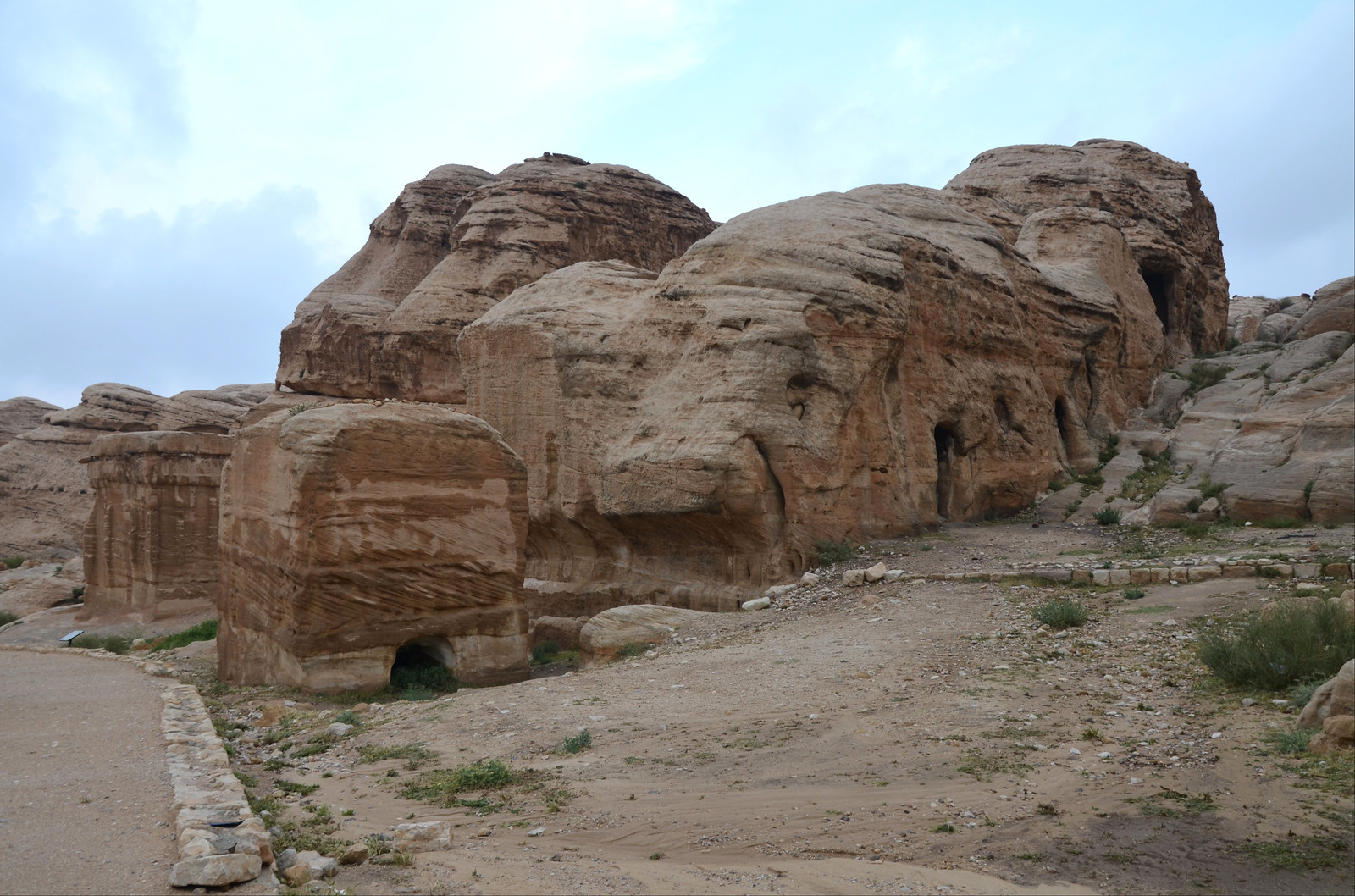
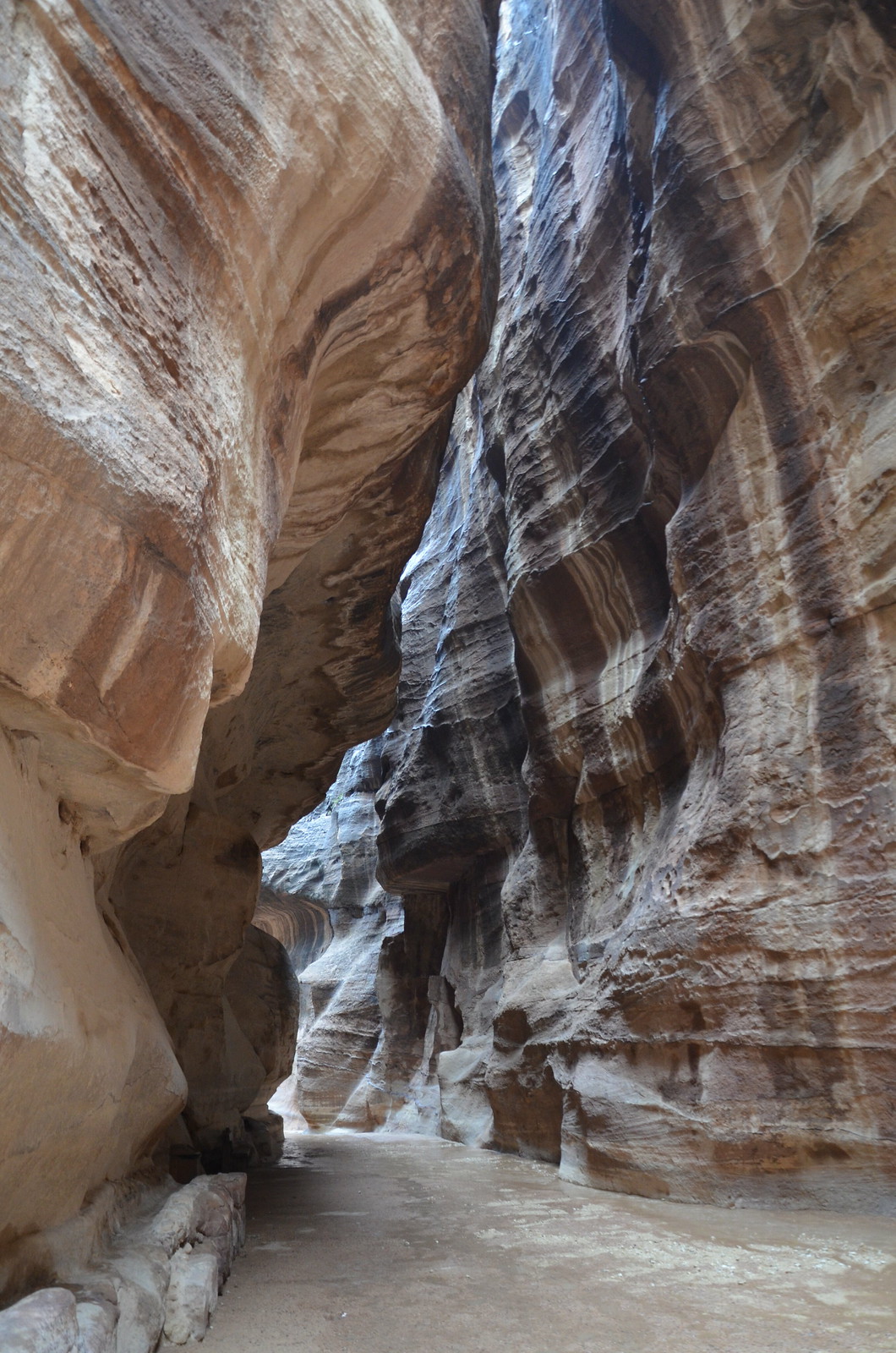
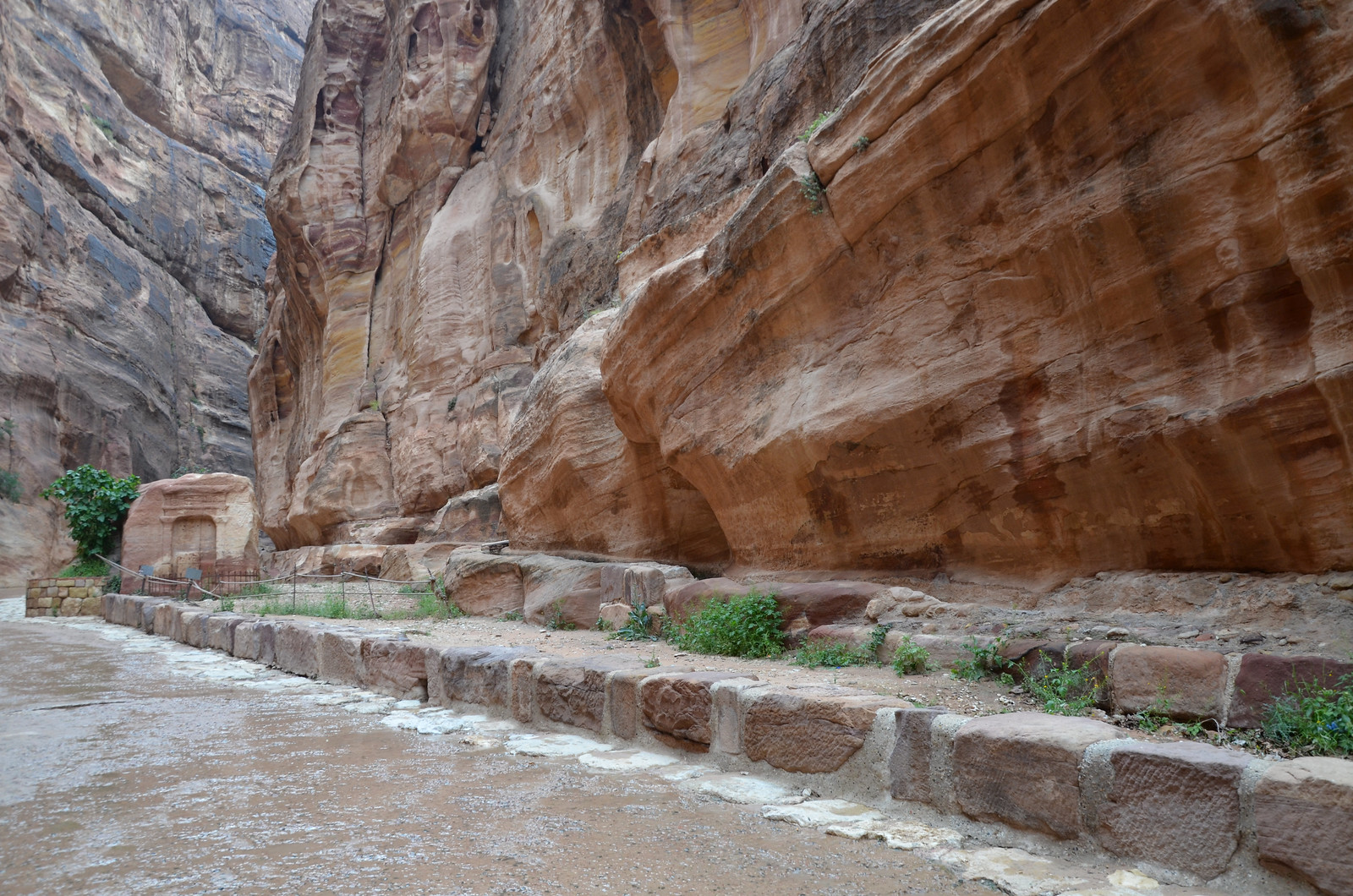
The Bab as-Siq, the gateway to the Siq. This path features several rock-hewn monuments, known as Djinn Blocks or God Blocks, as well as the rock-cut funerary complex of the Obelisk Tomb and the Bab el-Siq Triclinium.These free-standing cube-shaped monuments are known as Djinn Blocks. They were built by the Nabataeans from the end of the 2nd century BC to the 1st century AD and may have served as tombs and memorials to the dead.
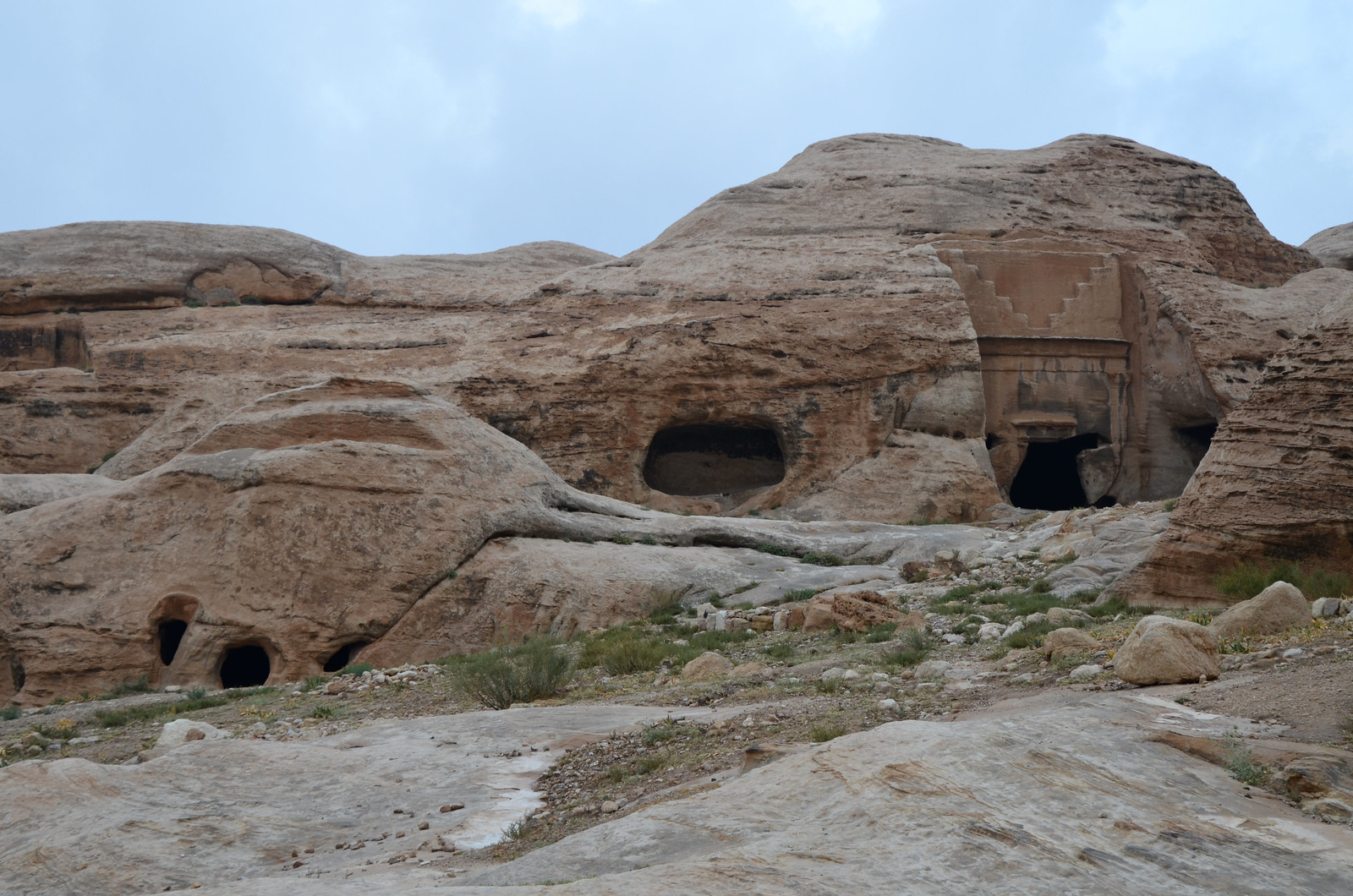
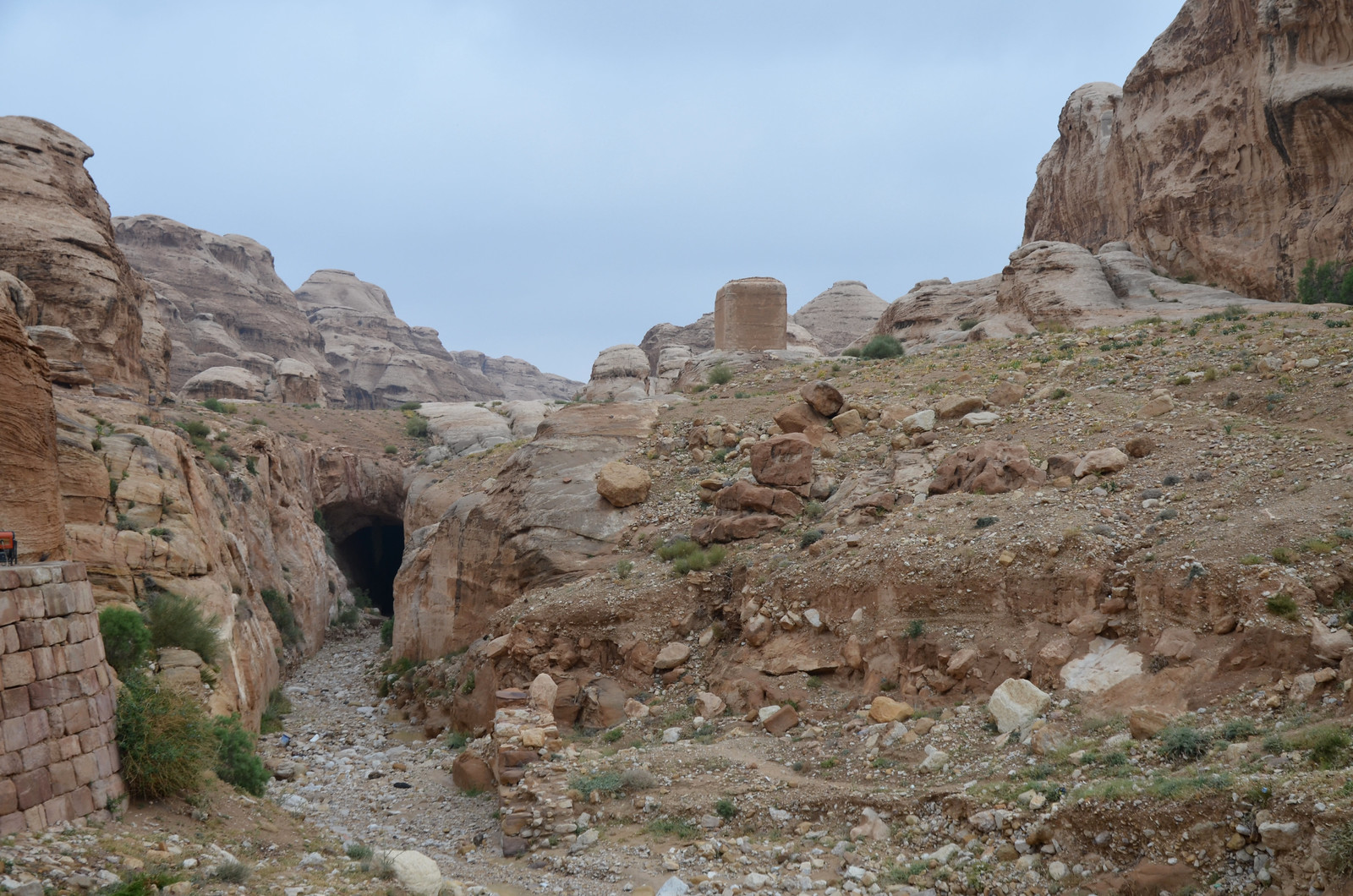
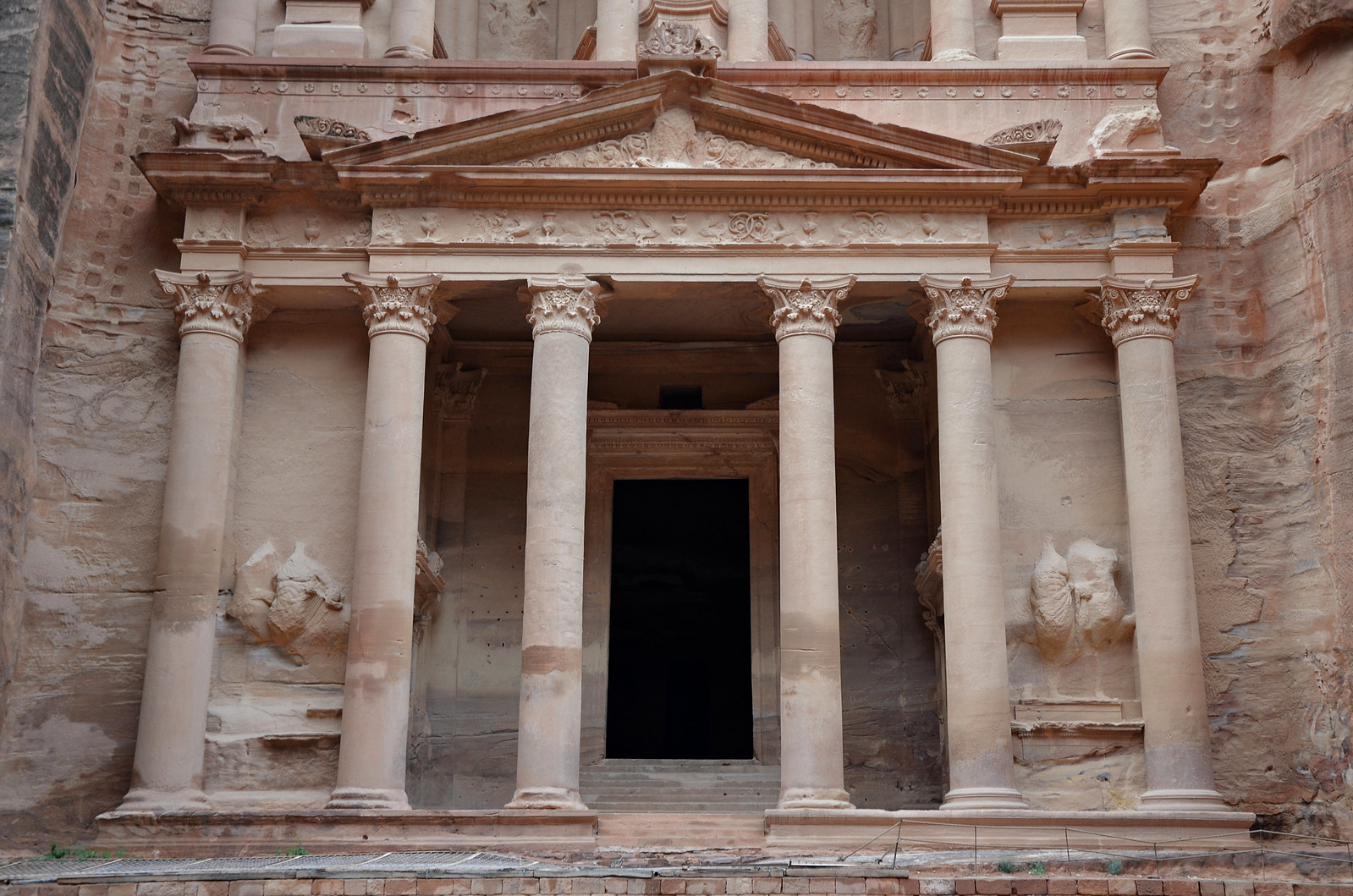
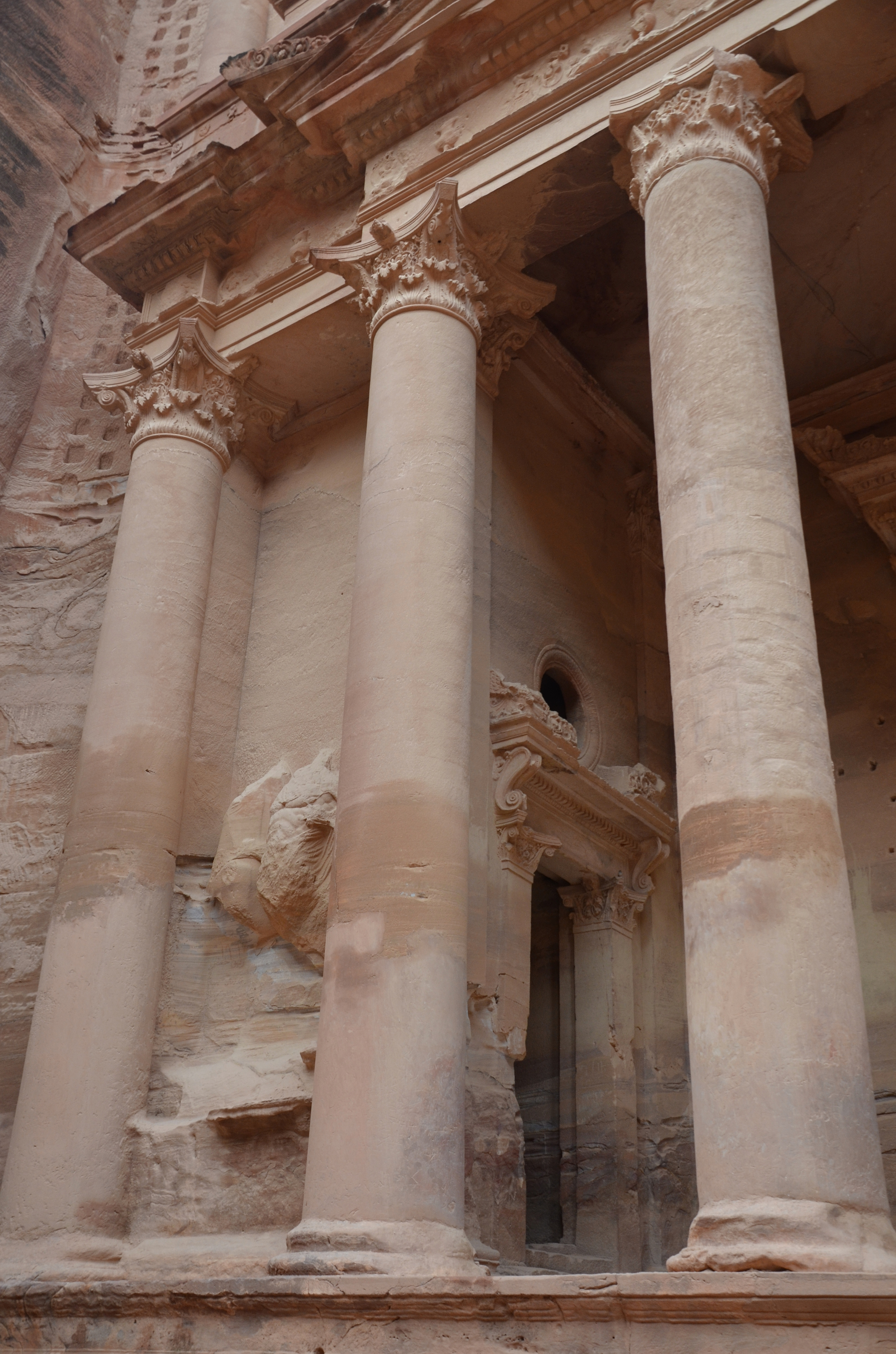
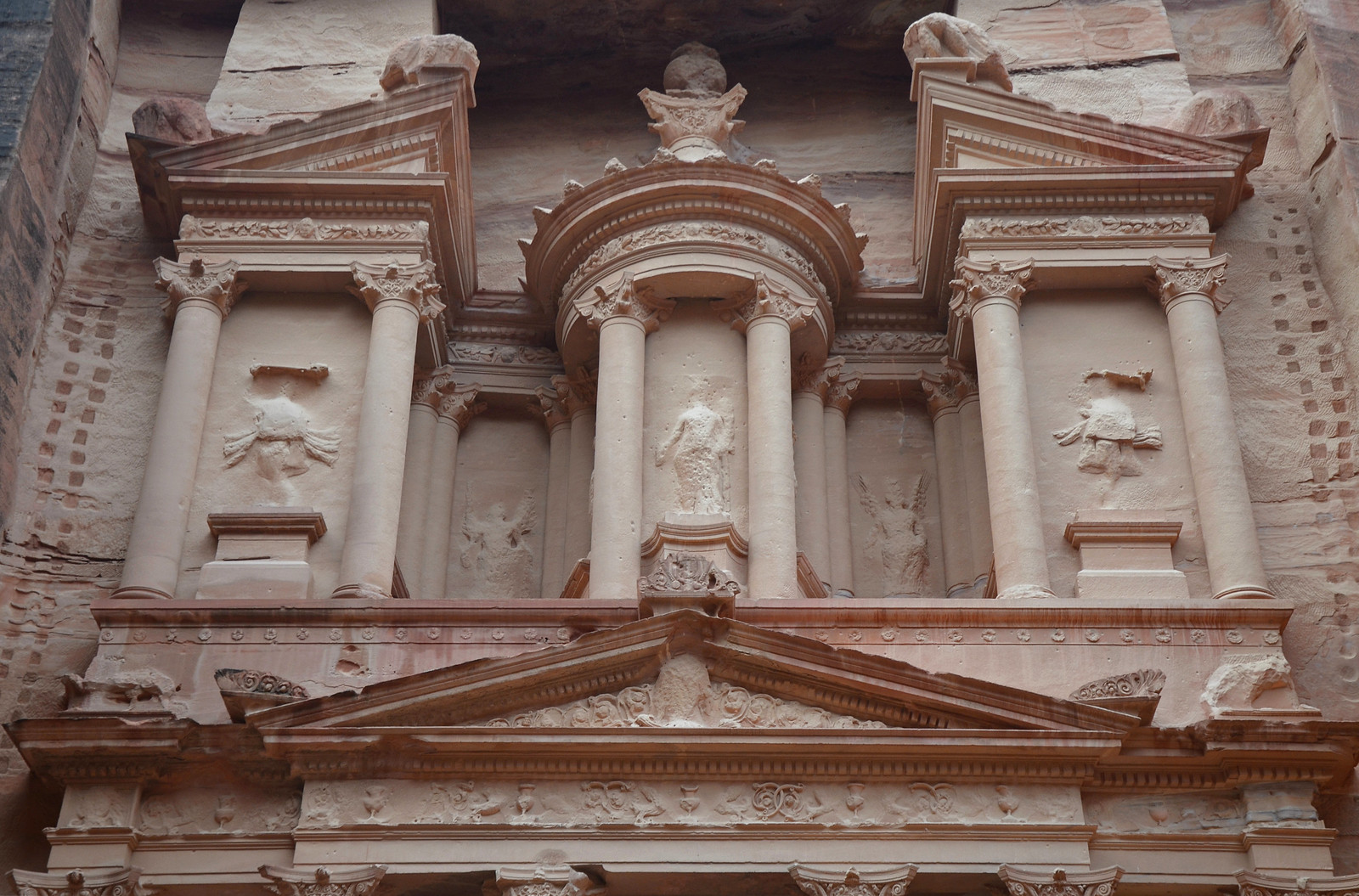
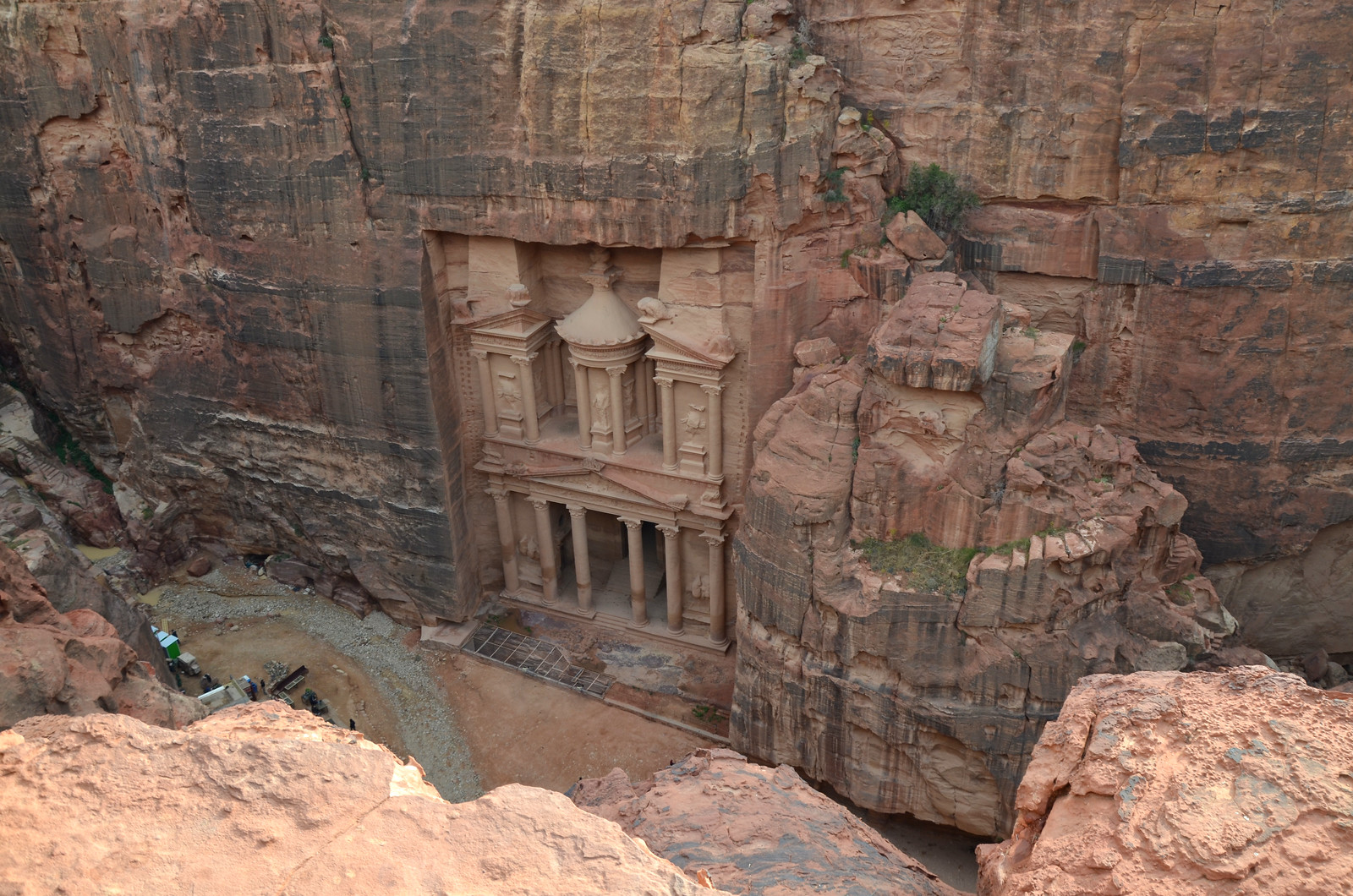
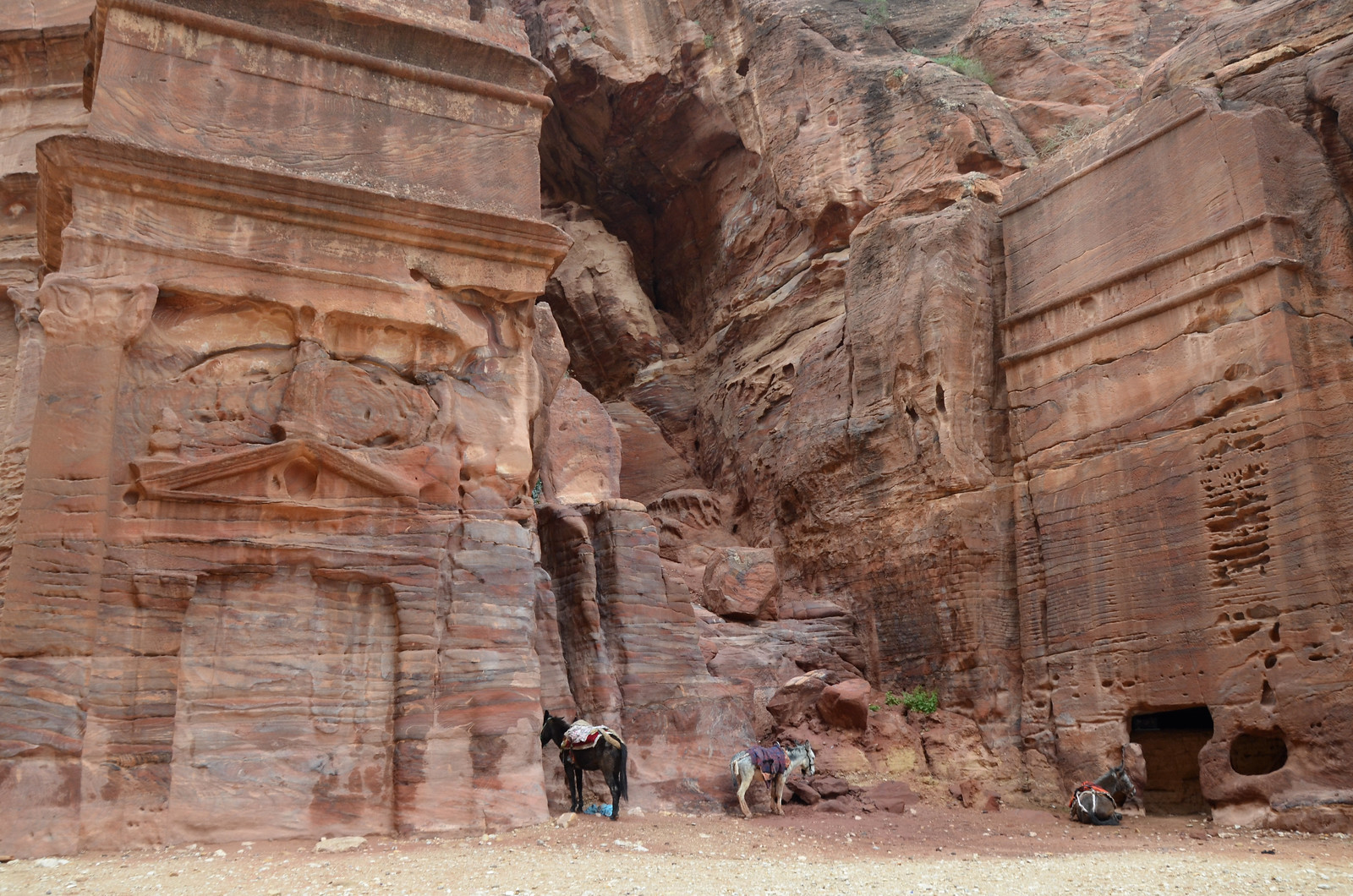
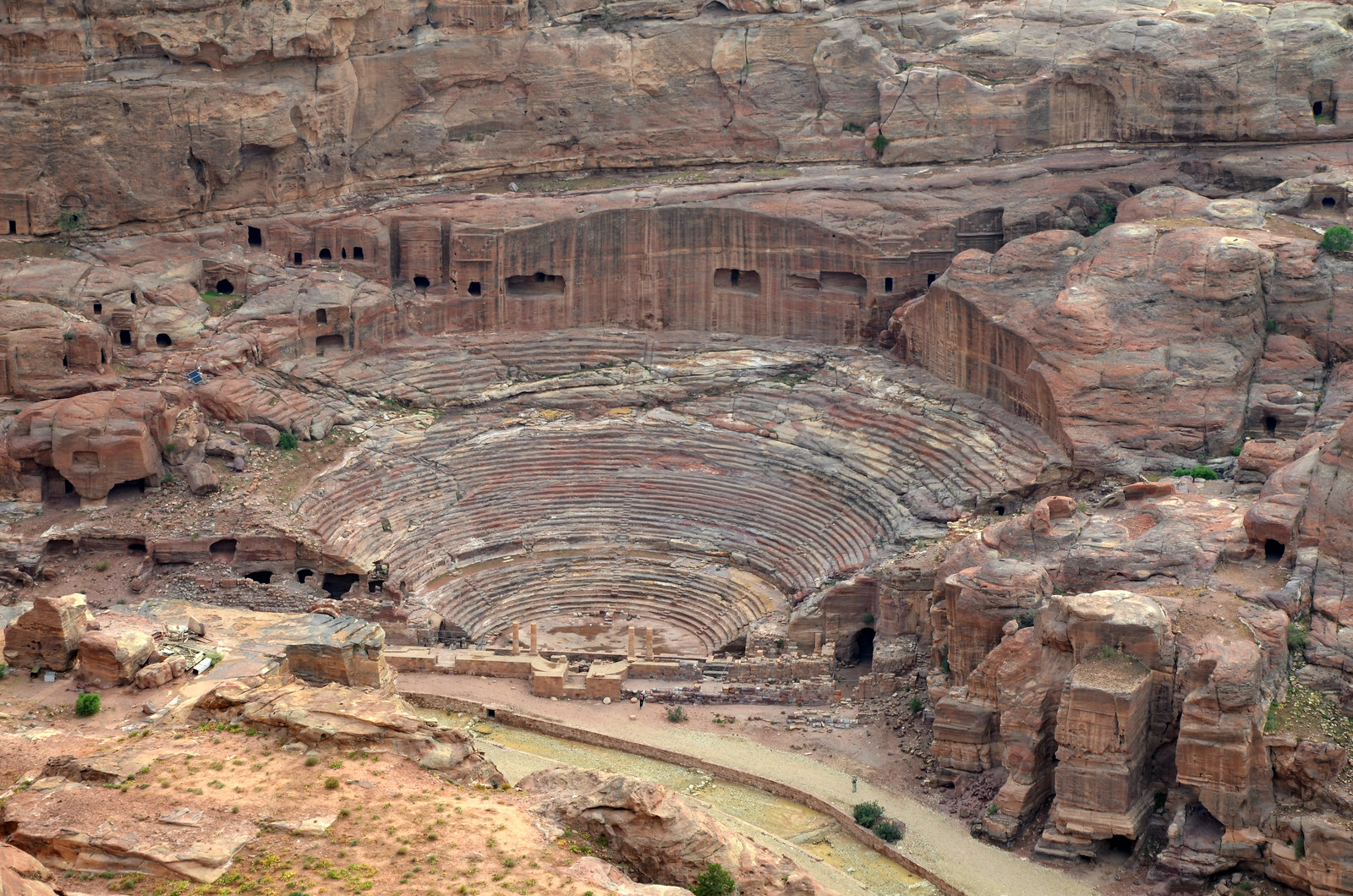
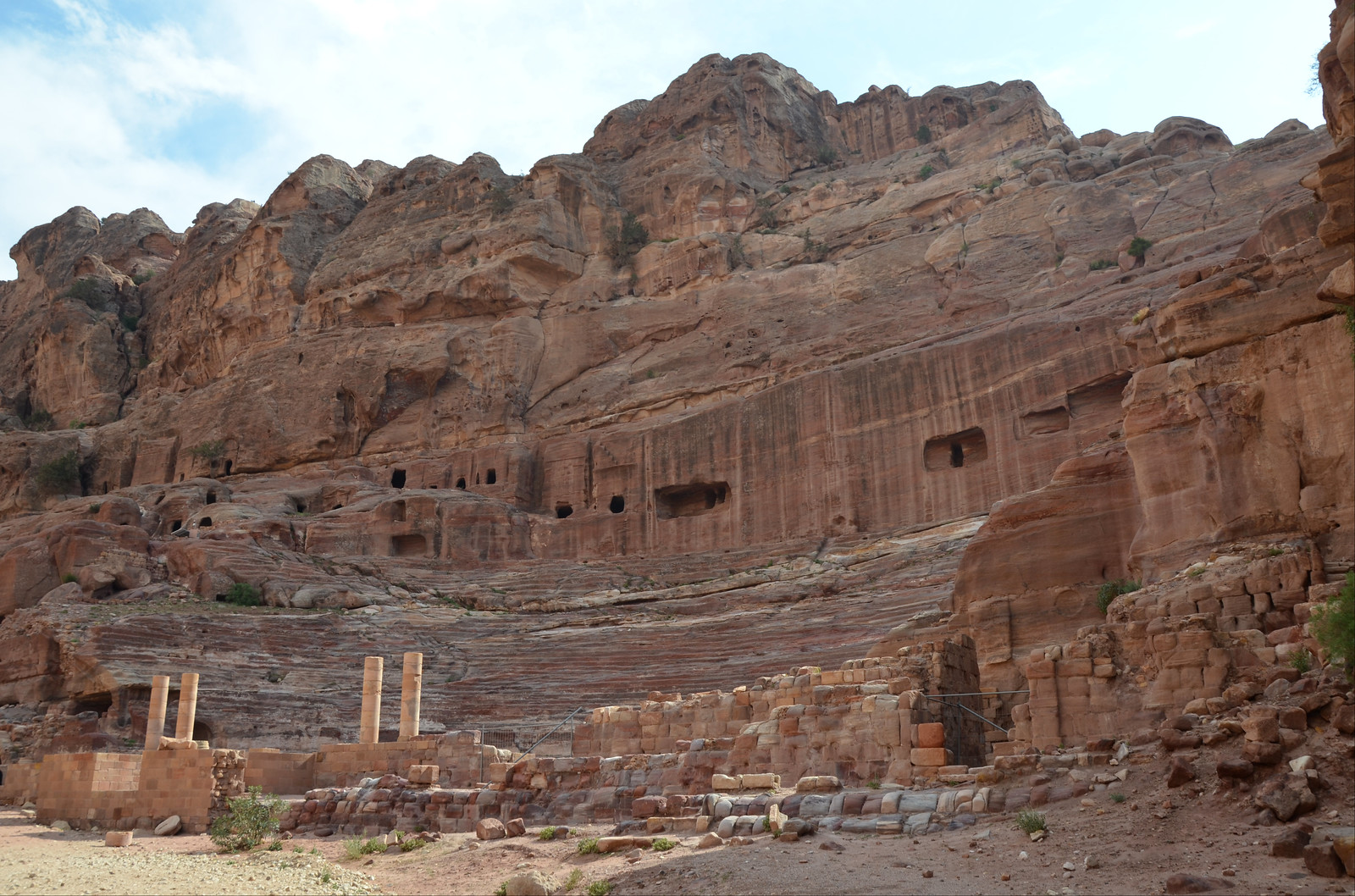
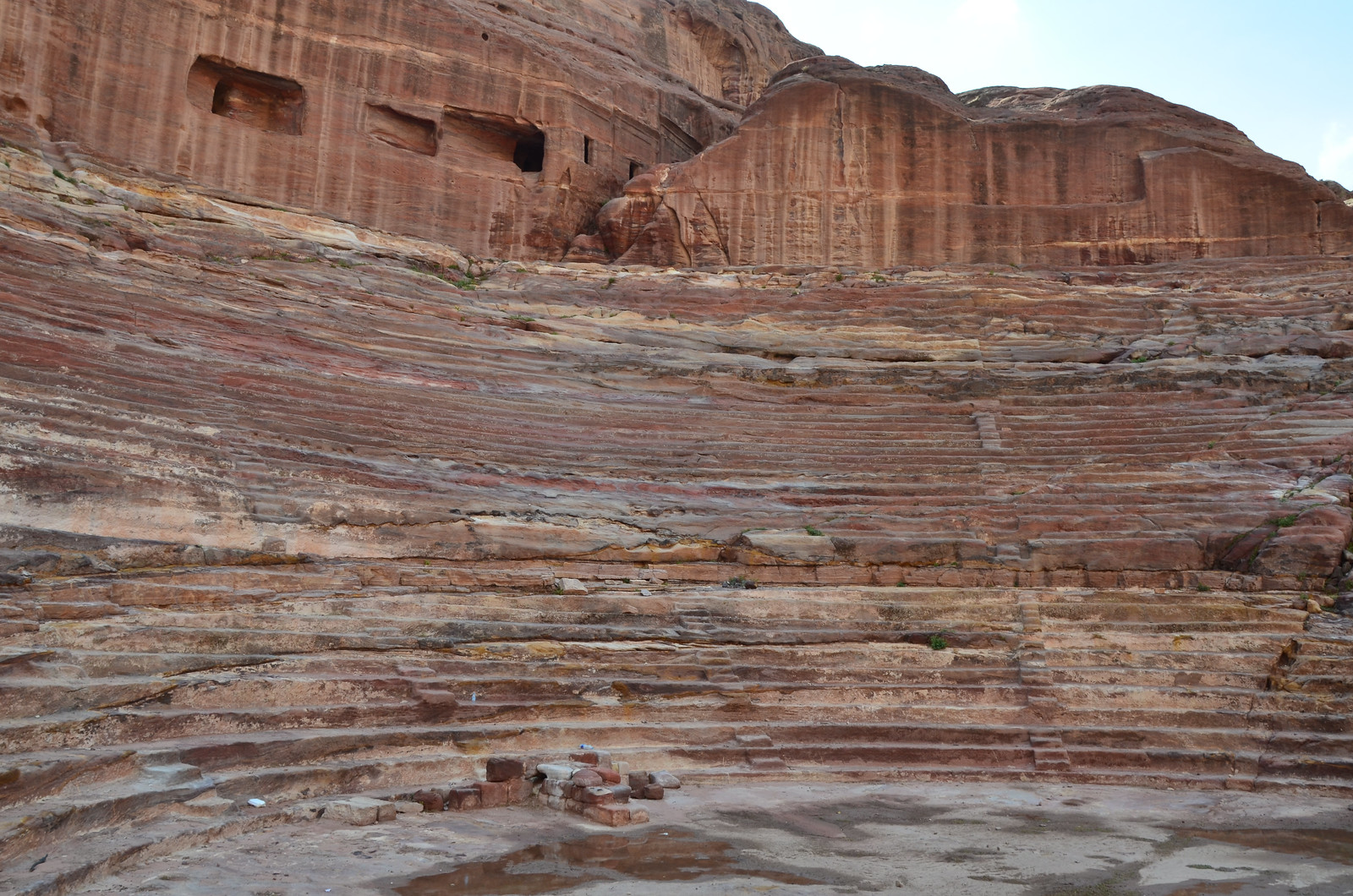
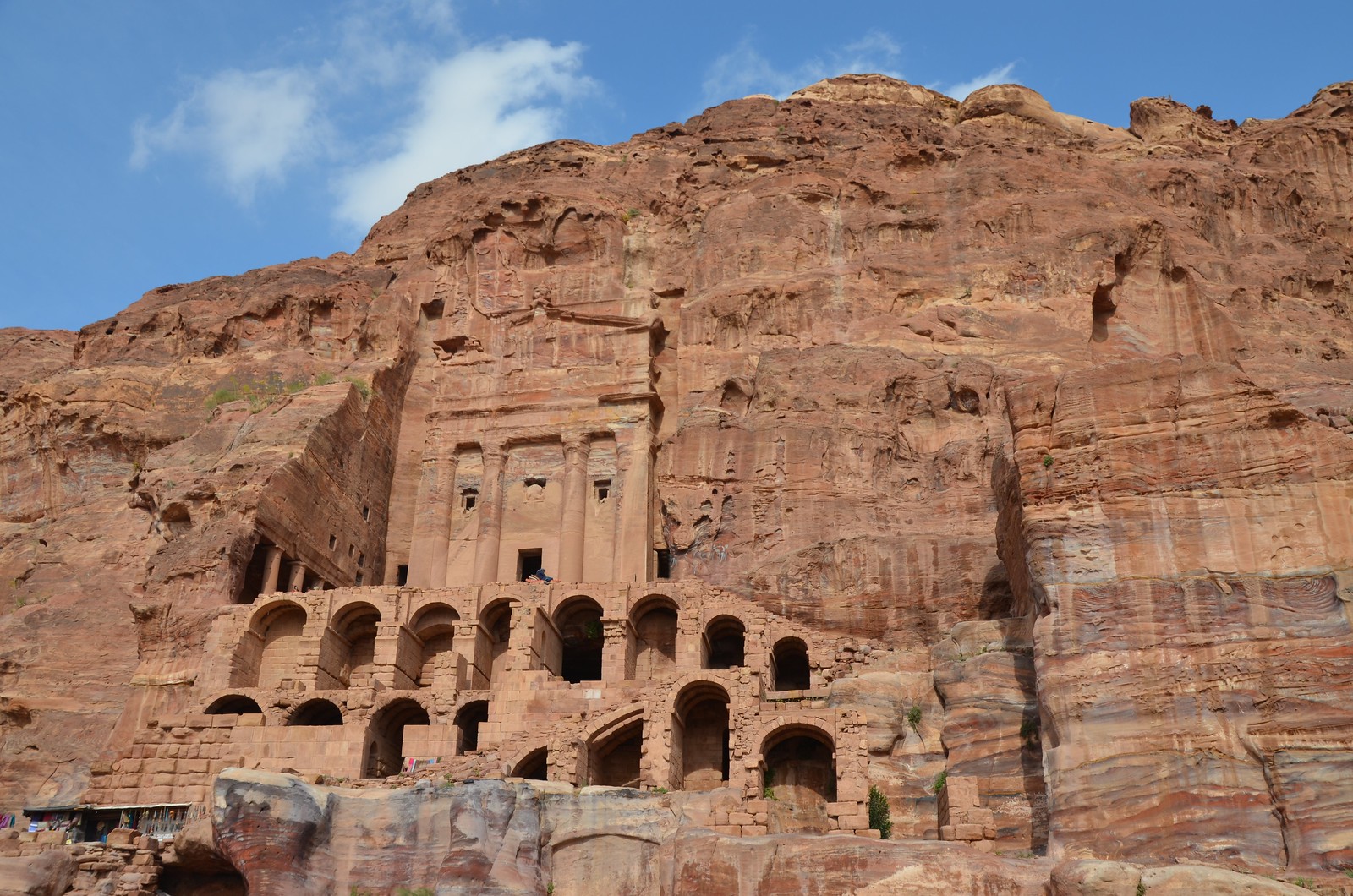
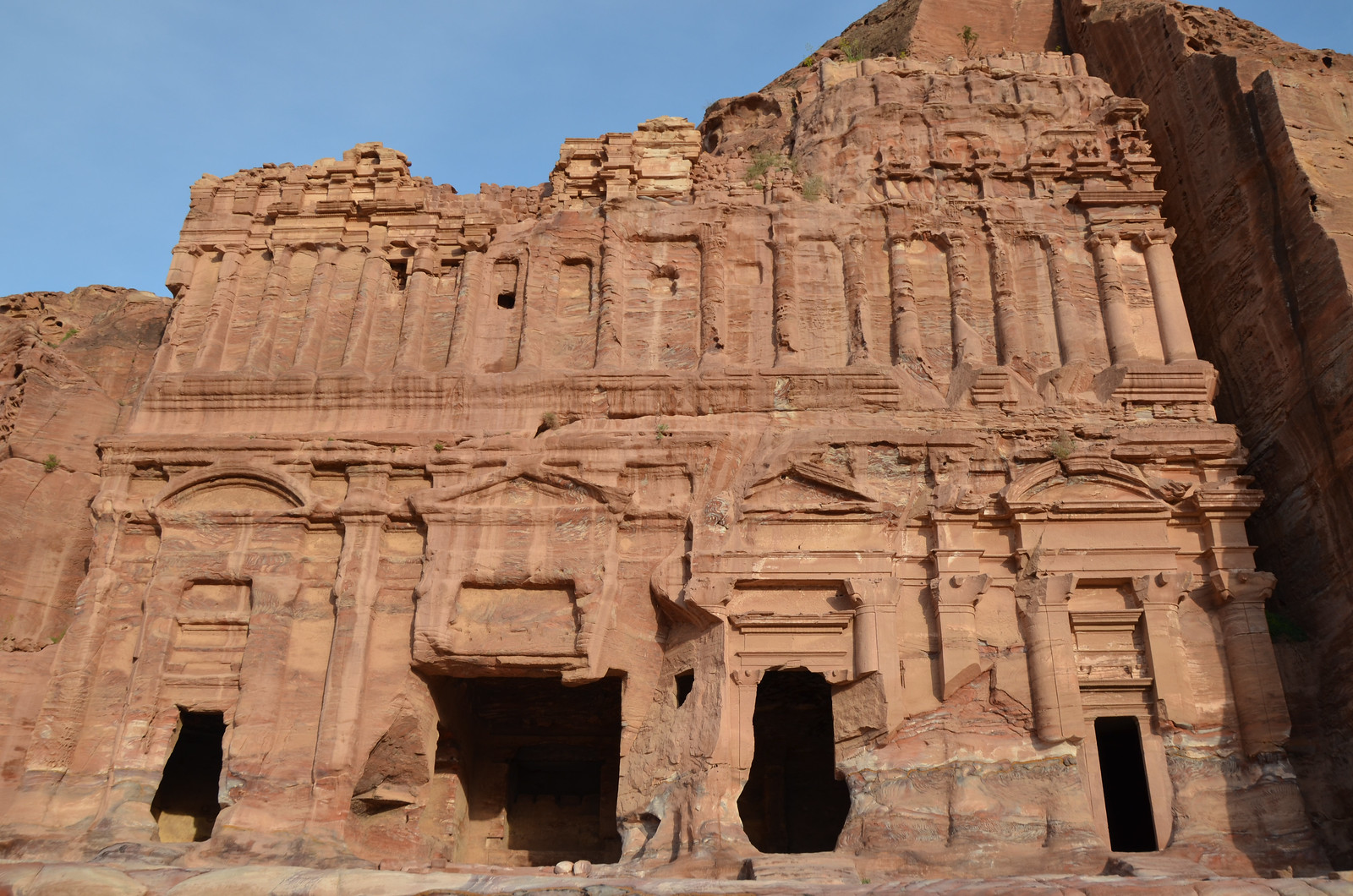
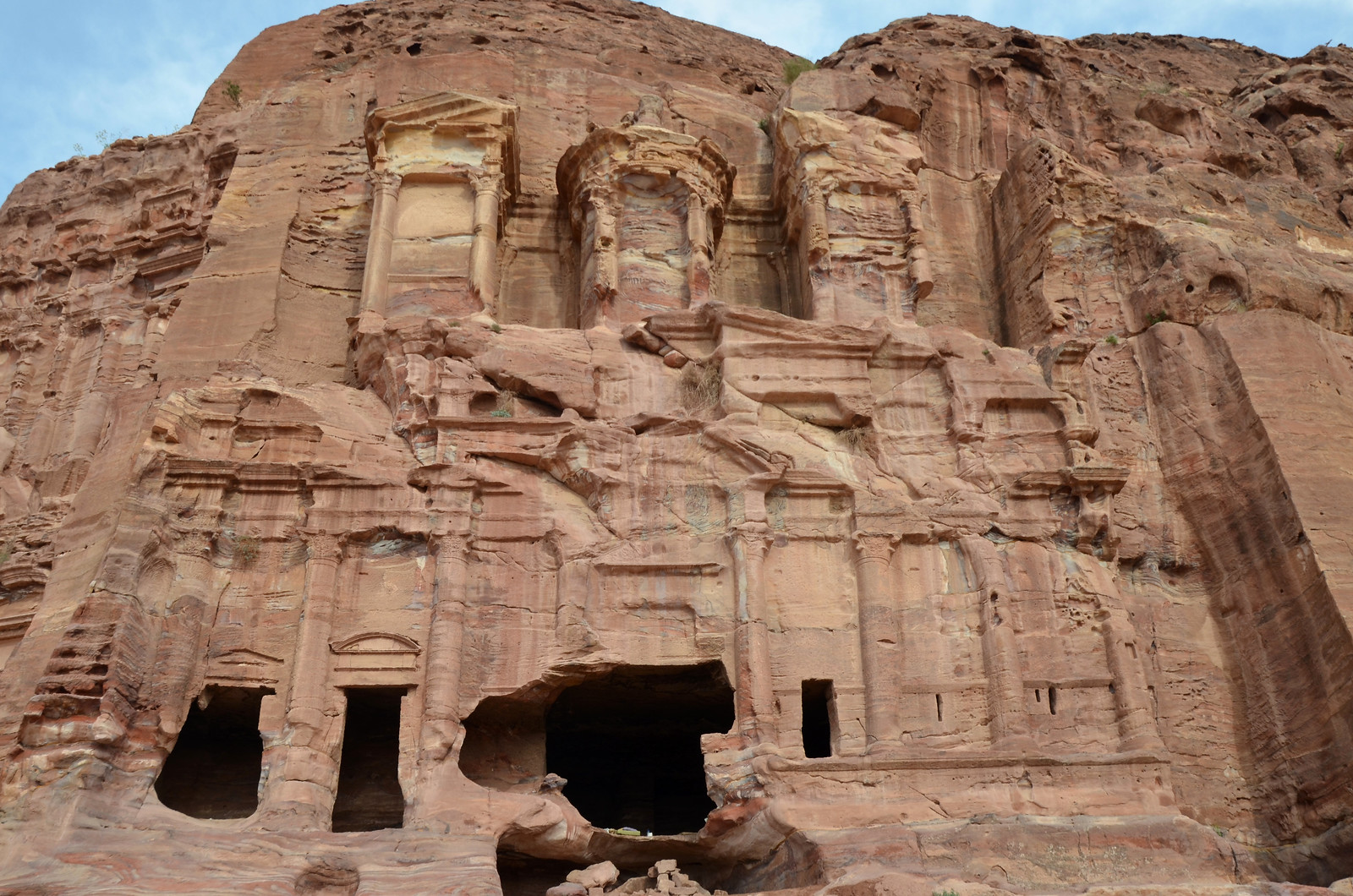
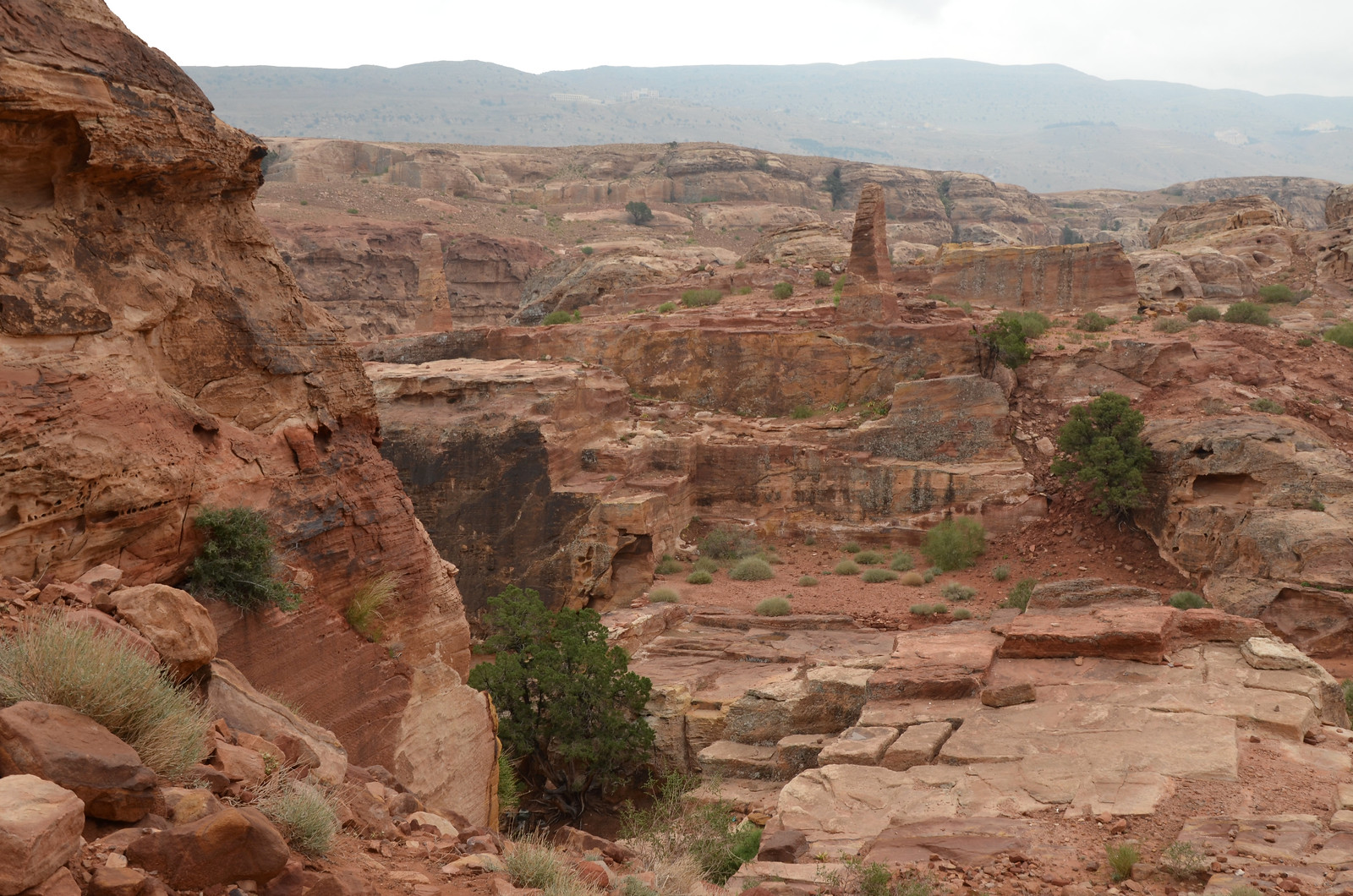
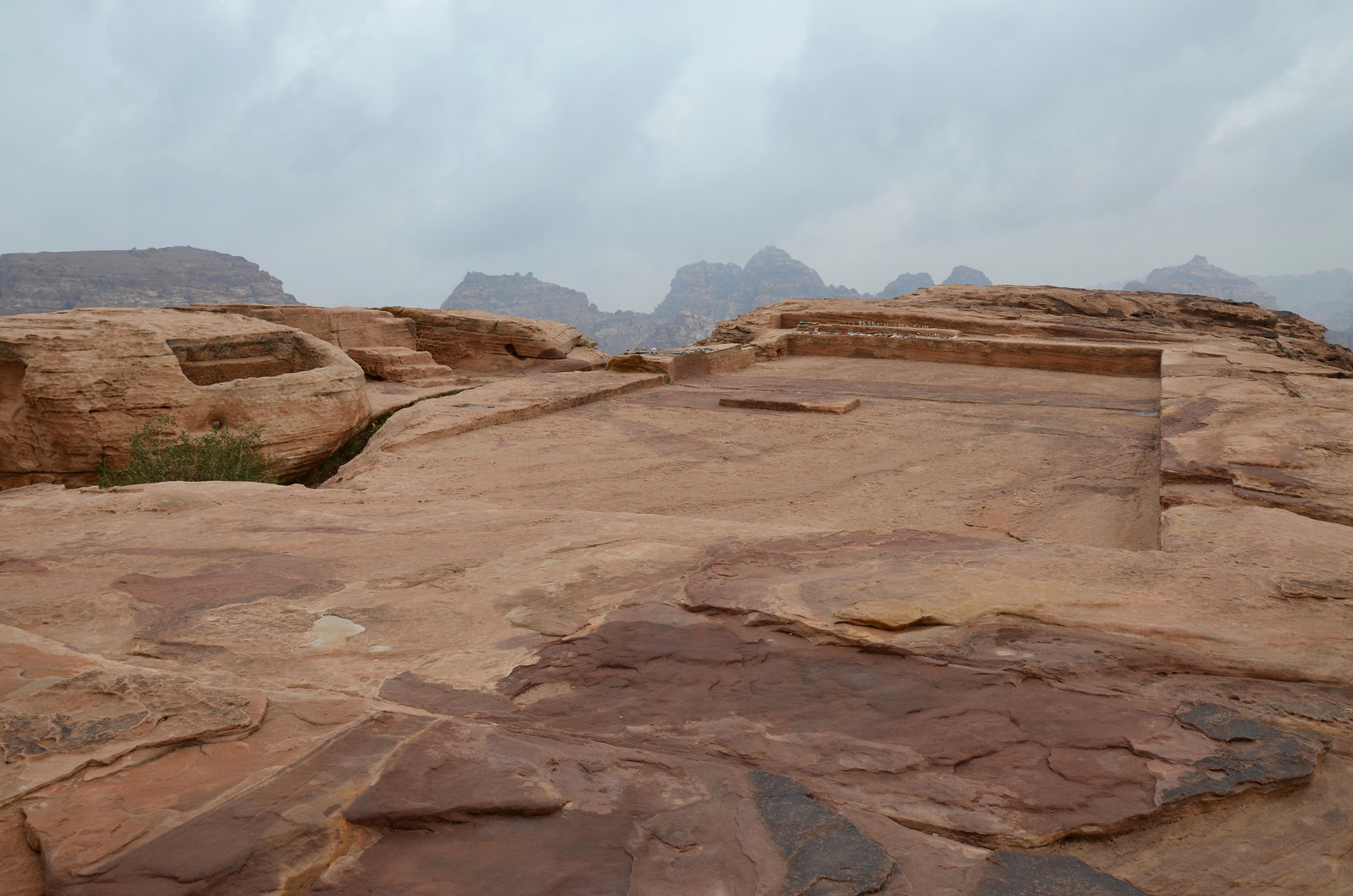
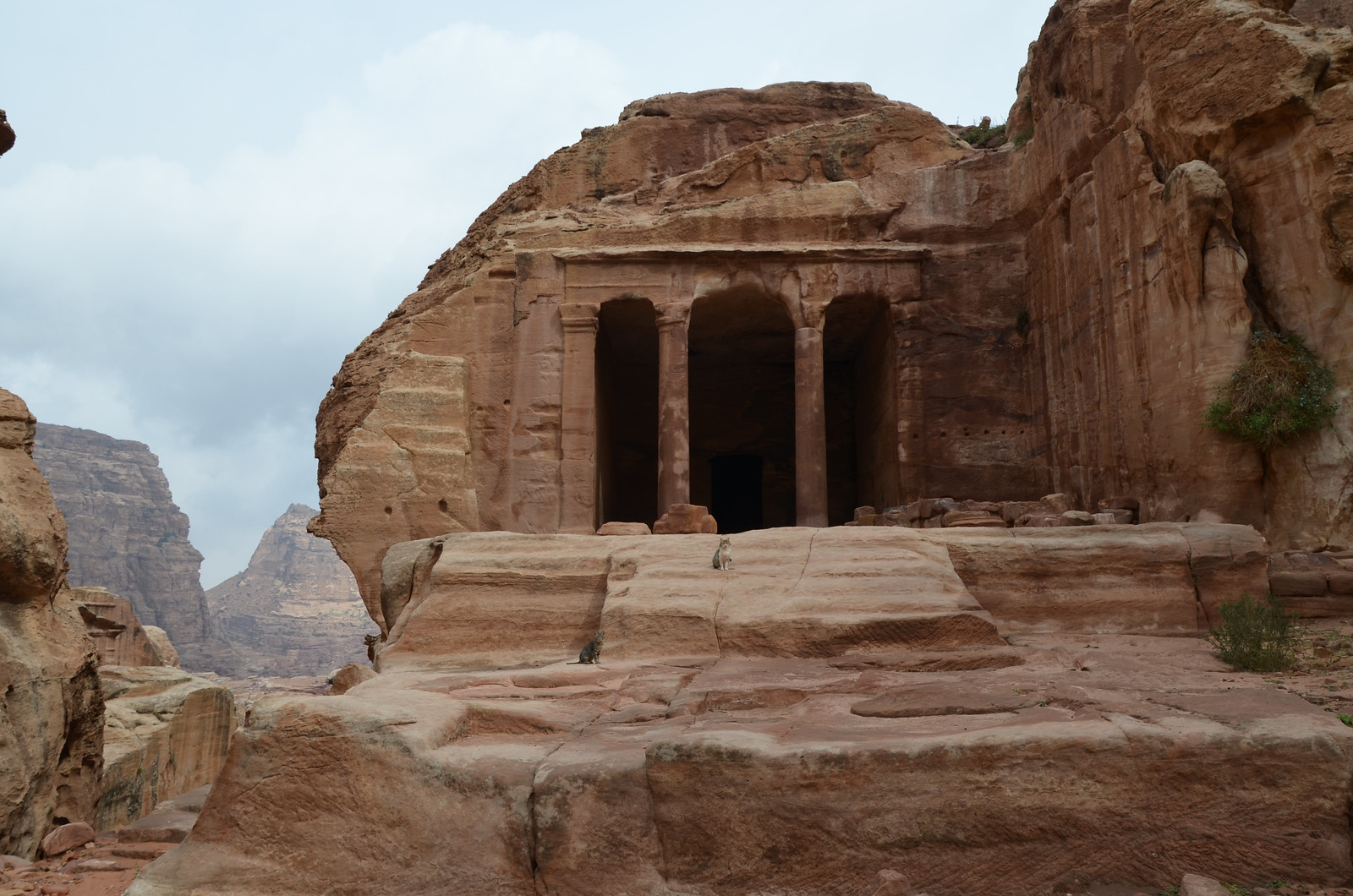
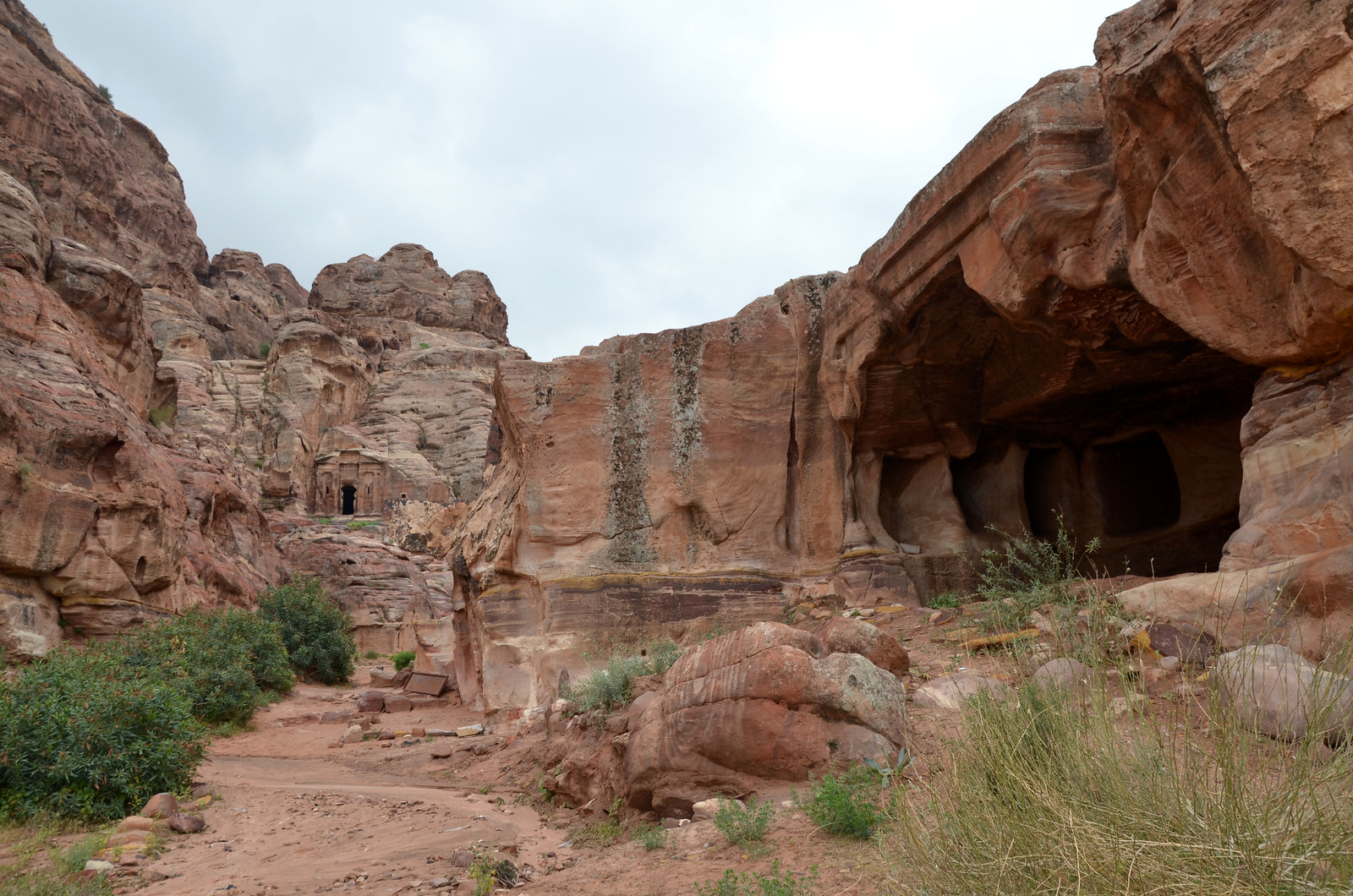
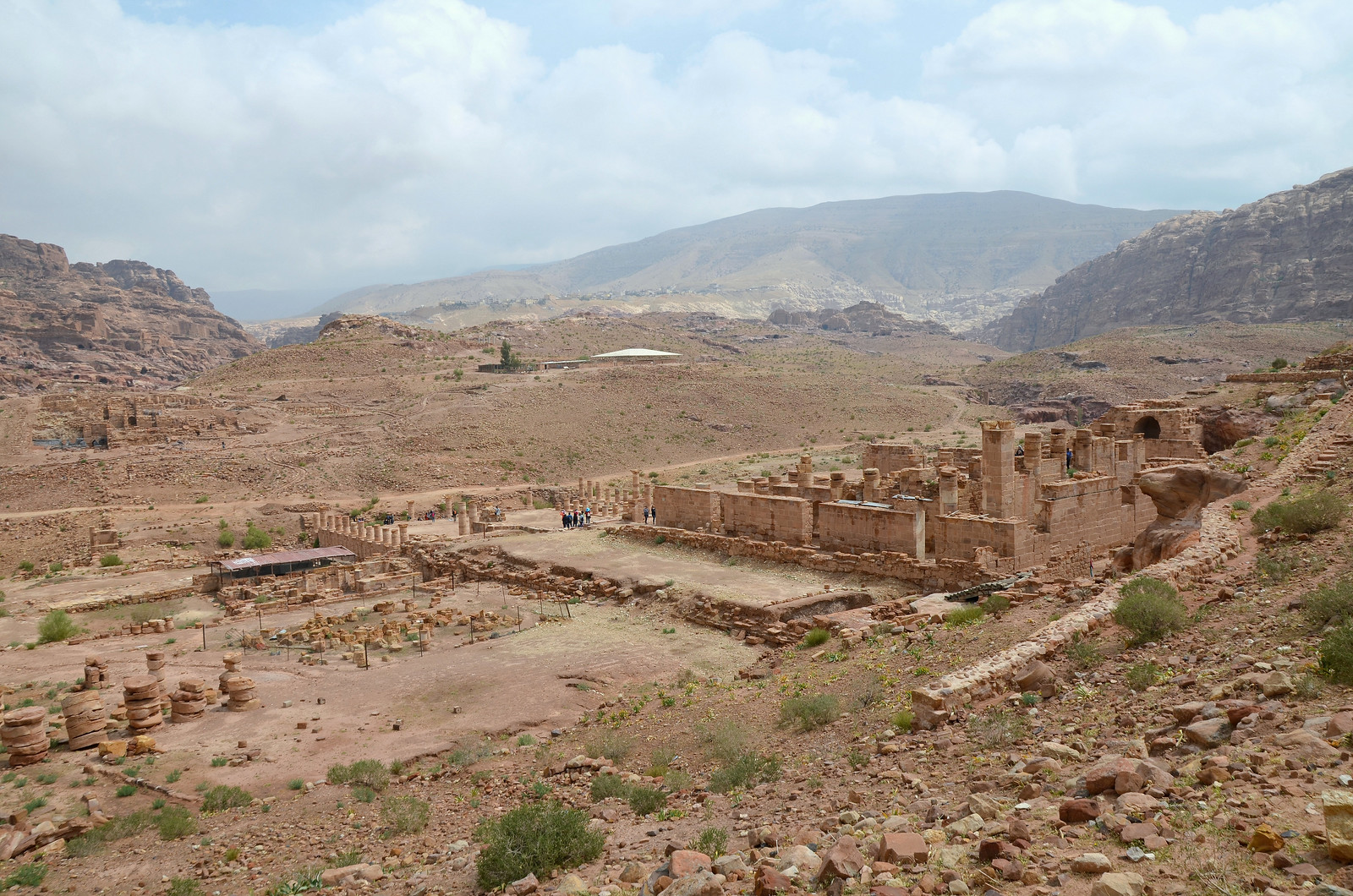
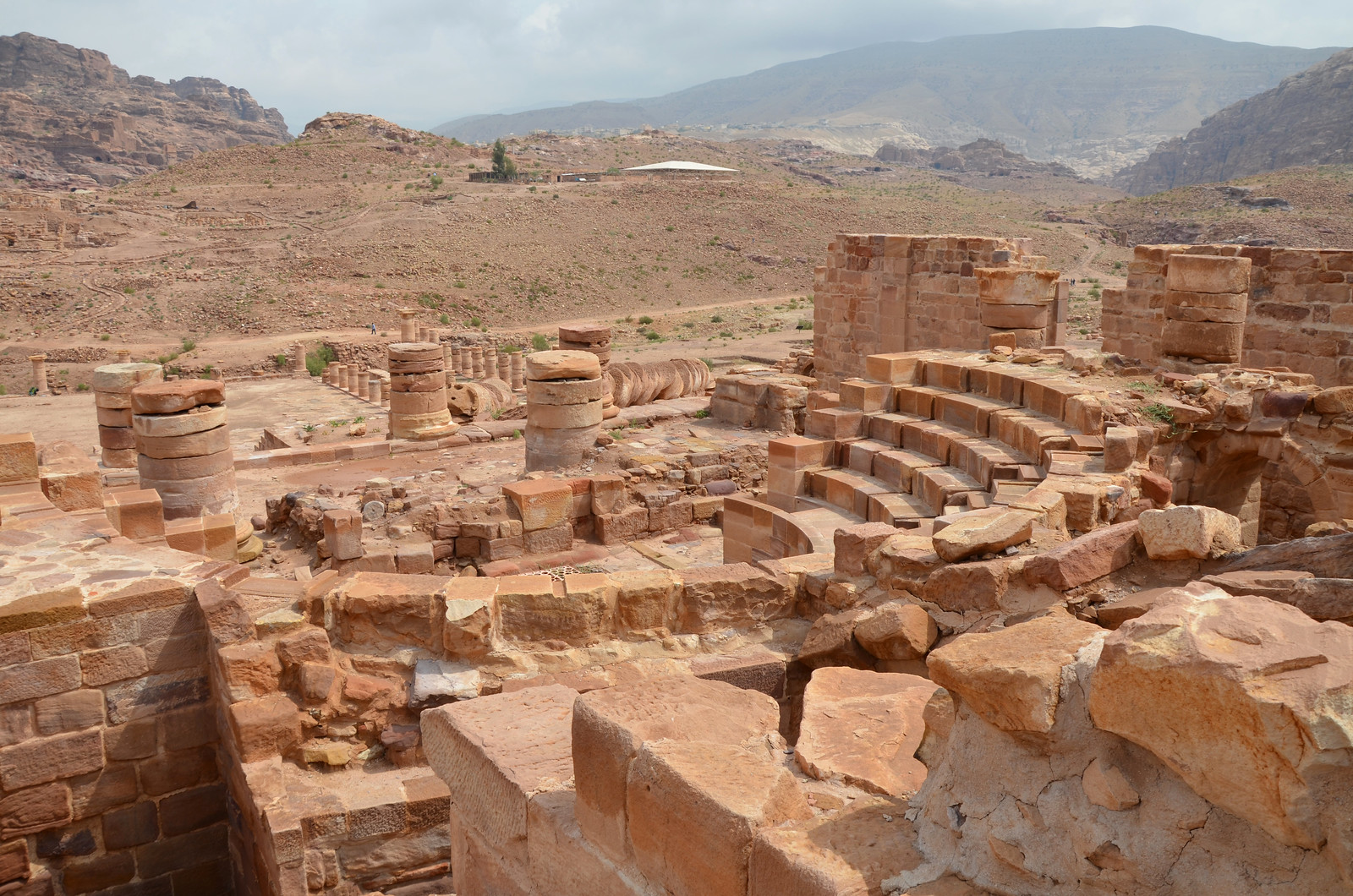
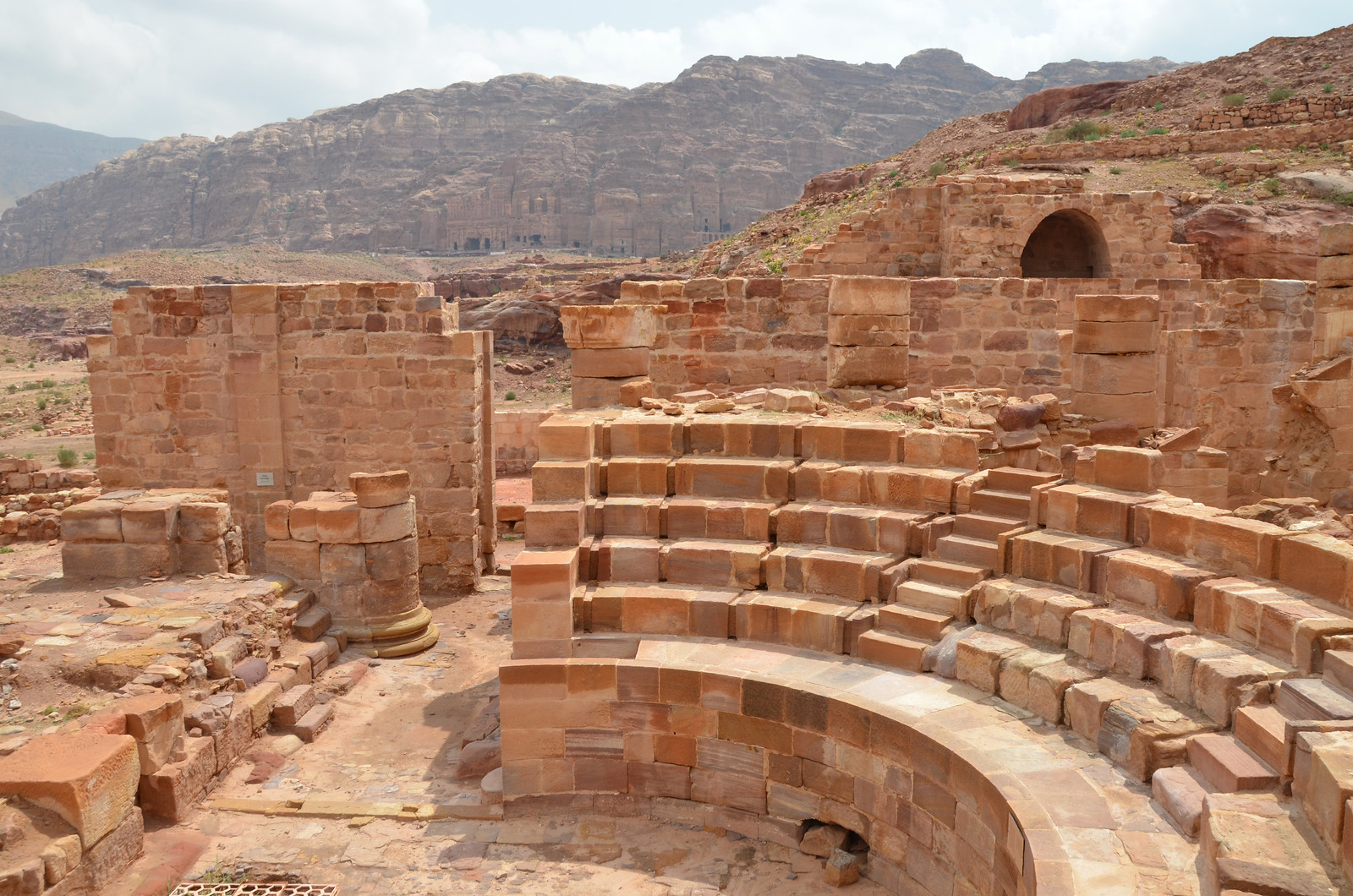
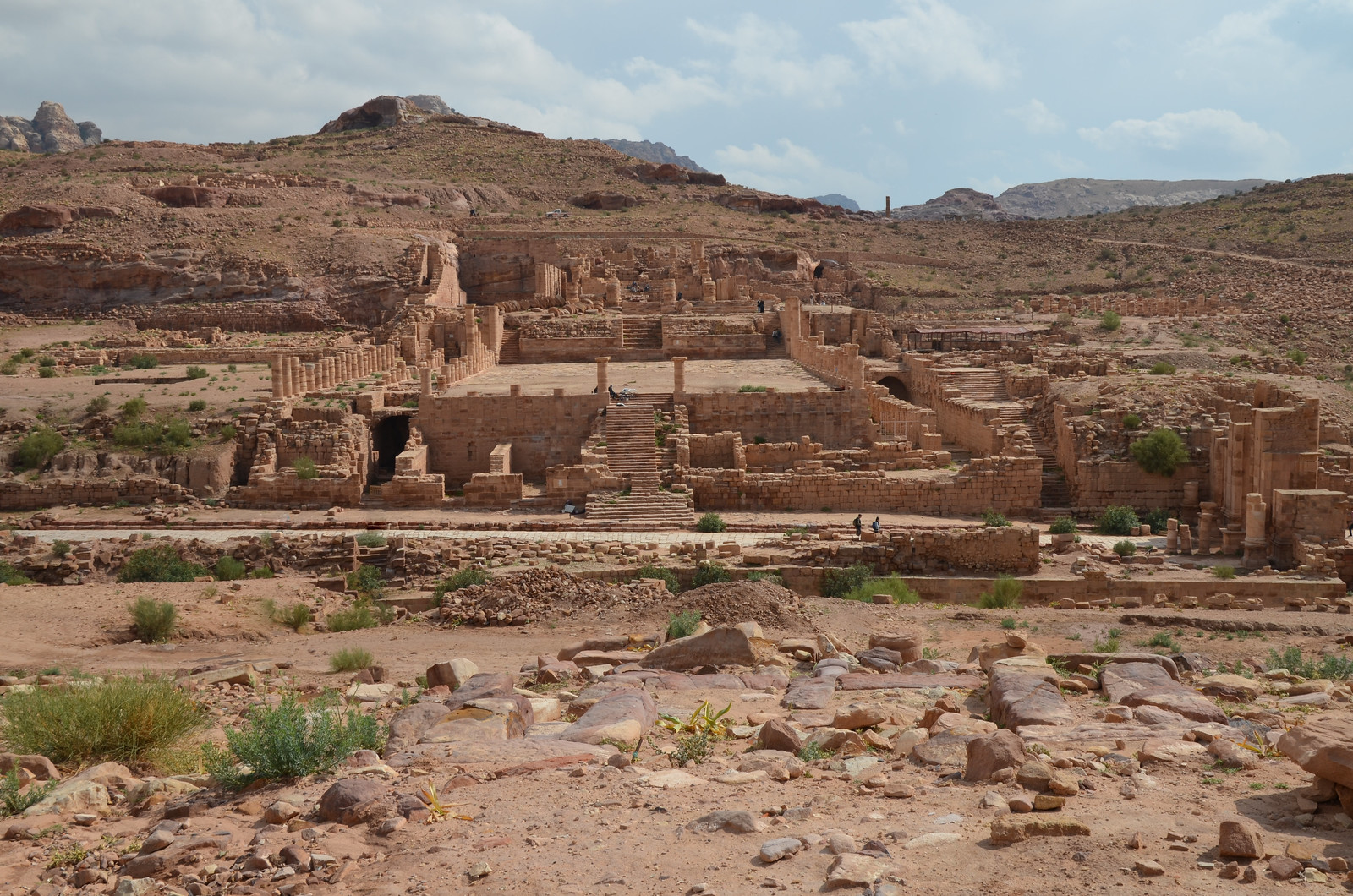
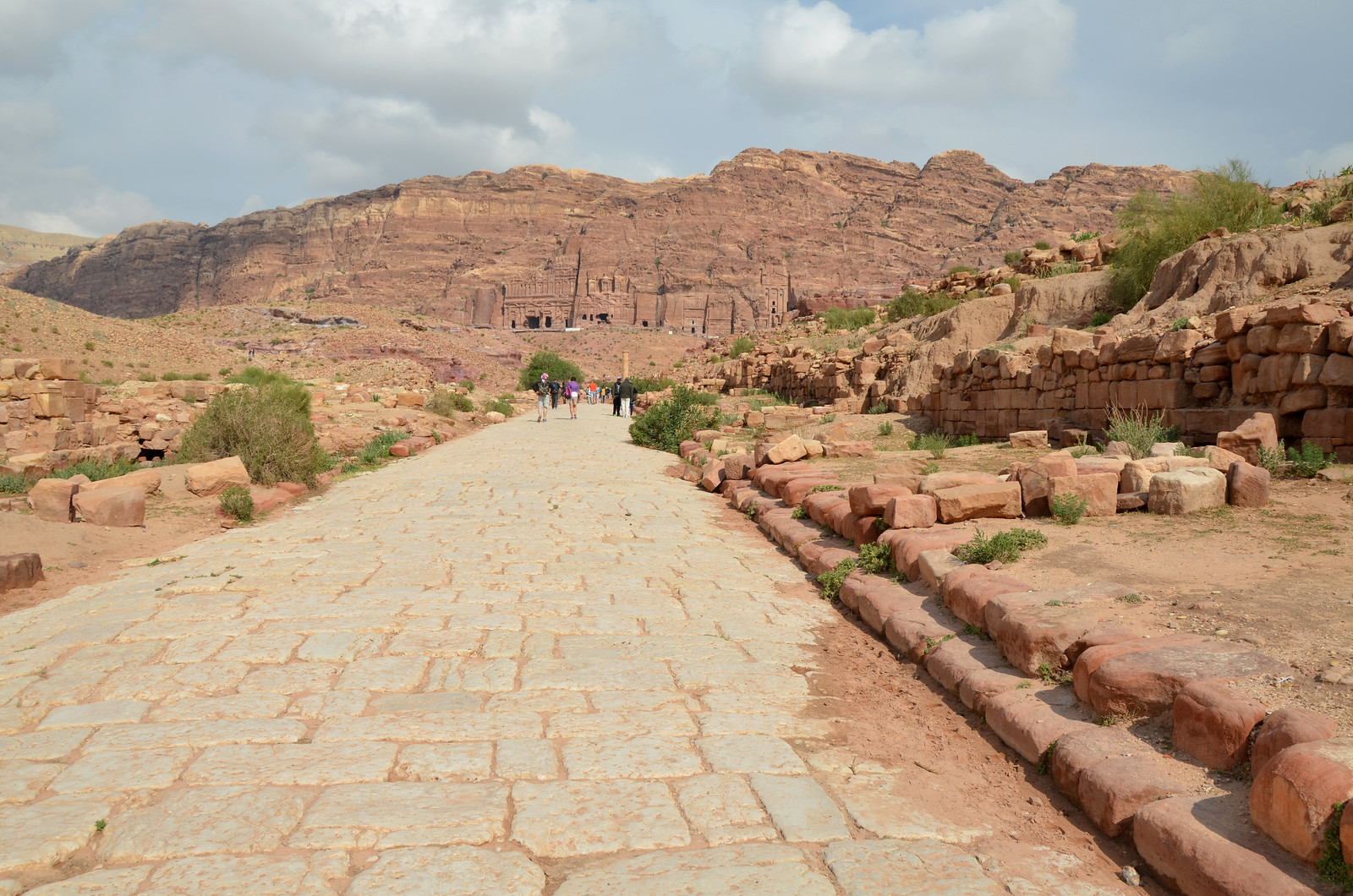
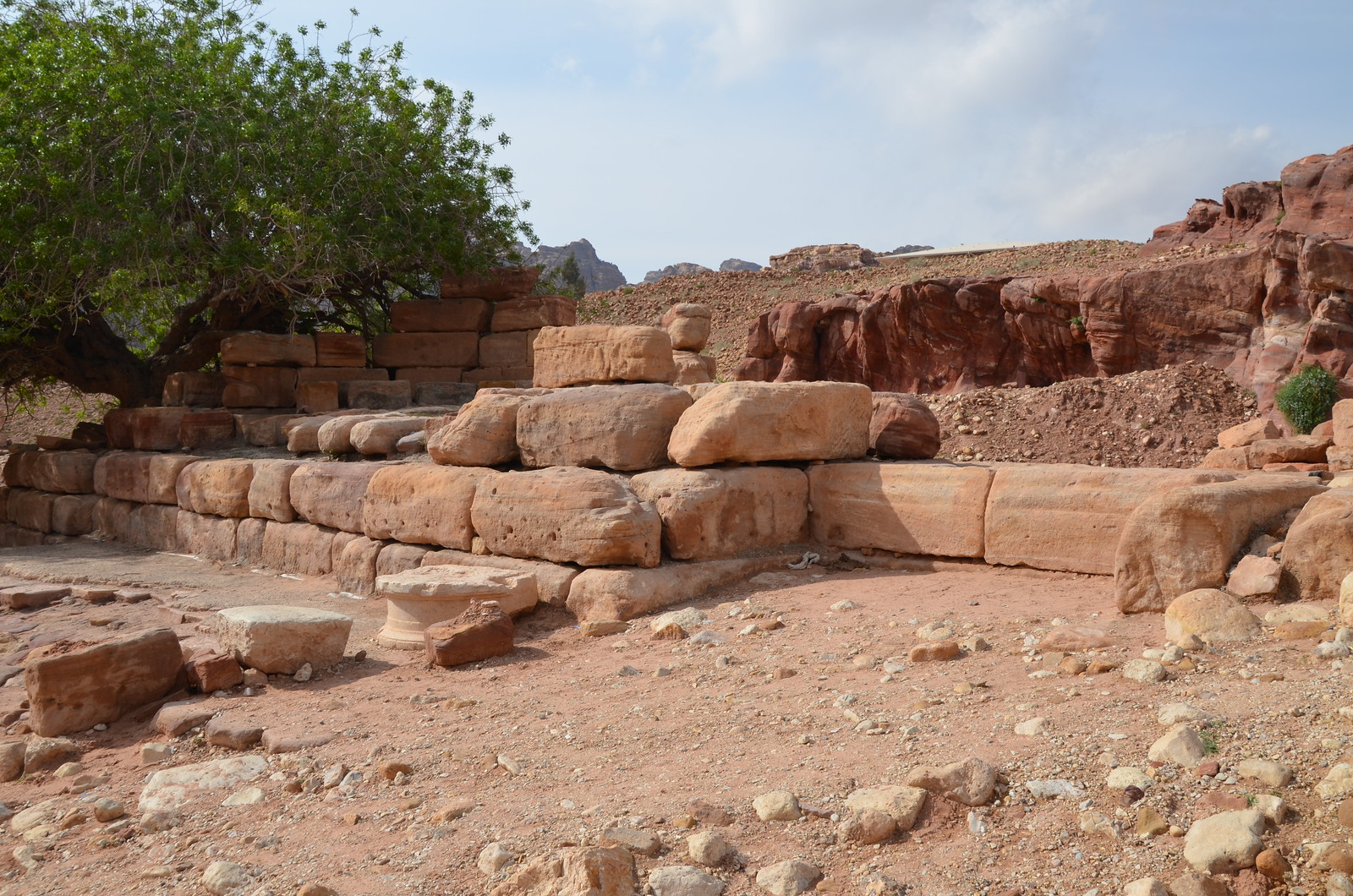
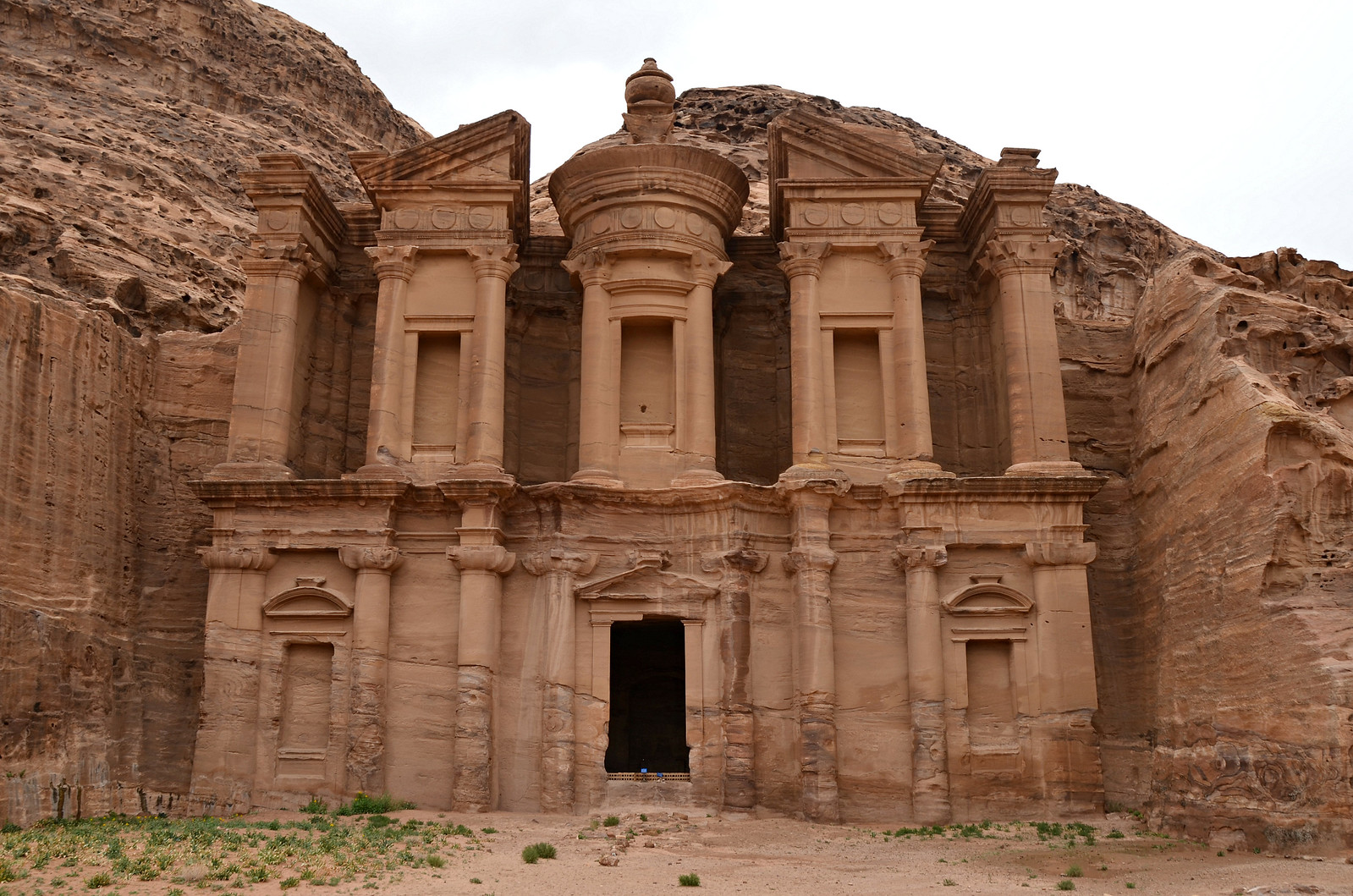
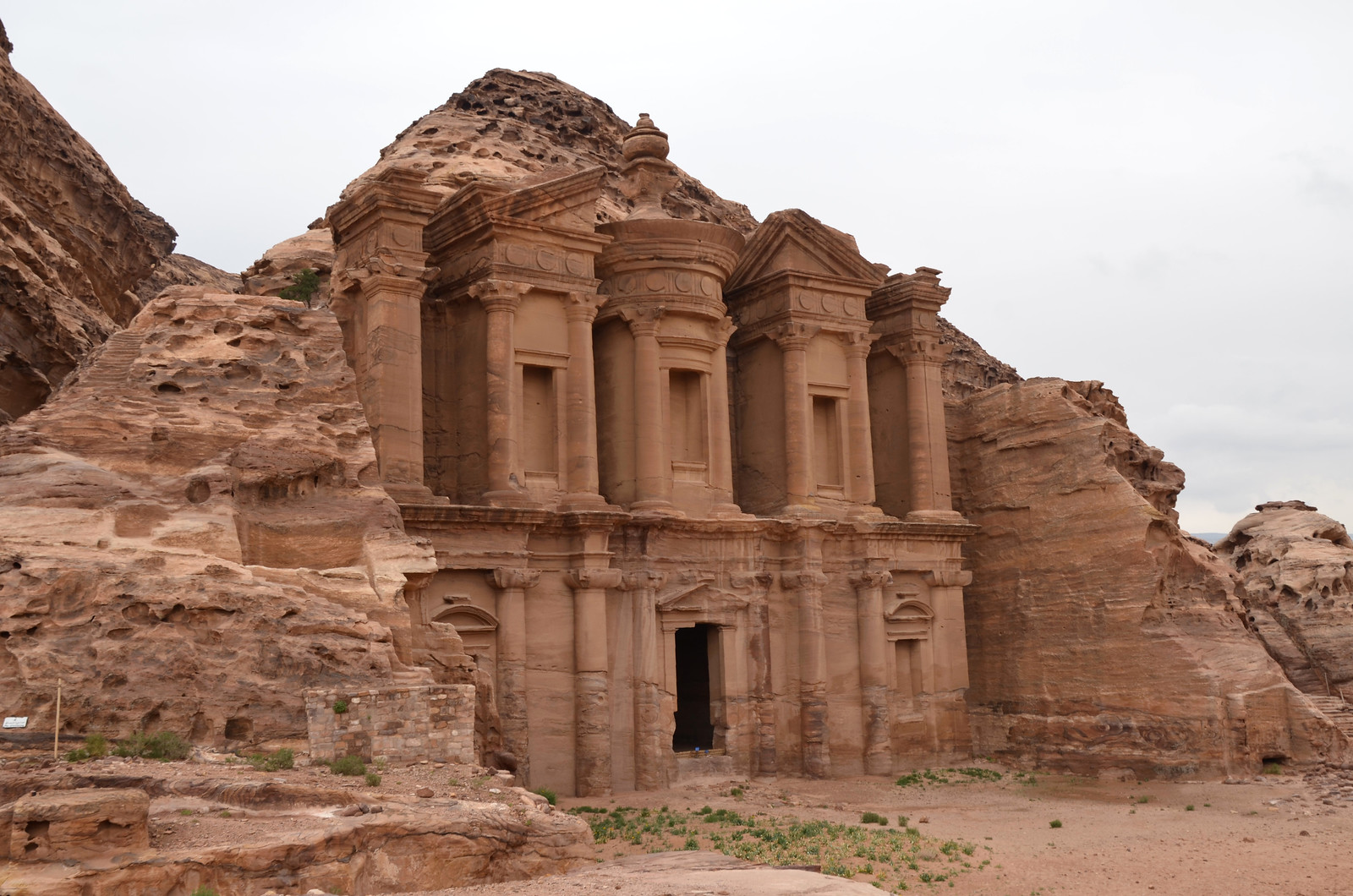
The Obelisk Tomb and Bab as-Siq Triclinium. This burial complex is unique in its design and architecture. It consists of two distinct rock-cut structures, both of which were built between AD 40 and 70. A triclinium is a dining room widely used in Antiquity with three benches (or sofas) on which the guests reclined while feasting. In Petra and across the ancient world, it was customary to hold an annual feast in such places to honour the dead.An 88-metre-long Nabataean tunnel was constructed in the third quarter of the 1st century BC to prevent floodwater from Wadi Musa from flowing through the Siq.The entrance to the Siq. It was once marked by a Nabataean arch. It survived until the end of the 19th century, and some remains can be seen on either side of the entrance.The Siq, with its 200m-high wall, winds over 1.2 km through a cleft in the sandstone massif, which in some places is only 2m wide.The paved road in the Siq. The Nabataeans fortified the former gravel road with a paved road and sidewalks in some places. The road was completed around 30 to 20 BC.Some of the most important rituals of Petra’s spiritual life began as a procession through. At this broad point, there was a shrine designed like a temple gate and framed by pilasters with Nabataean horn capitals.The Sabinos Alexandros Station. Many of the wall niches that are still visible today along the Siq’s walls were designed to hold figures or representations (called baetyls) of the main Nabataean god, Dushara. This cult site in the Siq is named after Sabinos Alexandros, one of the donors mentioned by name.A larger-than-life sandstone relief of a camel caravan was carved into the rock of the Siq. It depicts four camels with their guide entering Petra. Early 1st century BC.On both sides of the path through the Siq, the remains of water conduits can be seen. They were built together with the protection system against flash floods and paved roads in the last decades of the 1st century BC.The first glimpse of Petra’s Treasury (Al-Khazneh) upon exiting the Siq.Another view of the first glimpse of Petra’s Treasury.The Treasury (Al-Khazneh) is the most famous monument in Petra. It is a 39-metre-high mausoleum for a Nabataean king or queen, carved deep into the rock face during the first half of the 1st century AD.The lower level of the Treasury (Al-Khazneh). Four steps lead up to the vestibule, and another seven steps lead to the elevated entrance of the main portal. Of the six columns of the 25 m wide facade, only the middle two are free-standing. The other four remain connected to the background.The lower level of the Treasury has 5 m high reliefs depicting the Dioscuri, the twin brothers Castor and Polydeuces (or Pollux) from the Greek myth. The portals to the two lateral chambers are richly decorated with floral capitals.The upper level of the Treasury (Al-Khazneh). A circular temple structure with columns (monopteros) stands in the middle of an open pediment.View of the Treasury from Jabal al-Khubtha.The road that leads to the centre of Petra and the Street of Facades.The Street of Facades with large tomb facades carved out of rock.The Street of Facades. On the left is Tomb BD 70. A heavily weathered freestanding tower of over 15 m in height, carved out of the rock on three sides.The Theatre Necropolis with tomb facades has been carved out of the northeast face of the Jabal Al-Madhbah in several rows, one above the other.The theatre of Petra was carved into the side of the mountain at the foot of the High Place of Sacrifice.Despite its distinctly Roman vibe, the theatre was actually built before the Romans arrived in Petra.The cavea has about 45 seat rows divided into three horizontal galleries separated by a semicircular walkway and accessed through seven radial stairways. It could seat up to 8,000 spectators.The scaenae or stage building of the theatre was built of ashlar and faced with marble.The “Royal Tombs,” a series of large mausoleums with impressive façades, were sculpted out of the western slope of the Jabal al-Khubtha rock massif.View of the Royal Tombs, from left to right: the Palace Tomb with three distinct stories; the Corinthian Tomb and the Silk Tomb.The most distinctive of the Royal Tombs is the Urn Tomb, recognisable by the enormous urn on top of the pediment. It was built in about AD 70 for King Malichos II (AD 40–70) or Aretas IV (8 BC-AD 40).The Palace Tomb was meant to resemble a palace. It has one of the largest facades in Petra, with part of the upper levels built instead of carved out of the rock.The Corinthian Tomb.The Royal Tombs.View of the Street of Facades from the hiking trail to the High Place of Sacrifice.Two six-metre-high obelisks at Zibb Atuf are entirely carved out of the rock and stand some 30m apart. The mountain has been cleared away, and a flat surface surrounds the obelisks.The ceremonial platform on the High Place of Sacrifice. The High Place is located at the very top of a mountain. The ceremonial platform has remains of a triclinium (benches for festive meals), a circular altar where animals were sacrificed as well as a stone block as the repository of the god statue.Panoramic view from the High Place of Sacrifice.The Lion Monument. A water channel on top of the lion’s head indicates that it has been a fountain figure. In the Nabataean cult, the lion is related to the goddess Al-Uzza.View of Wadi Farasa East with the Garden Hall at the centre.The Garden Hall may have been part of the Nabataean water system, as to the right of the structure, there is an immense retaining wall that creates a natural water reservoir.View from inside the Garden Hall onto the upper part of Wadi Farasa East.A large colourful triclinium in the Wadi Farasa. The hall with three benches for annual banquets in honour of the deceased is approx. 11 x 11 metres big. With its fluted columns and window-like sculpture niches, it is the most richly decorated triclinium in Petra.The Tomb of the Soldier was carved out of red sandstone. Its niches contained male figures dressed in military attire.The Tomb of the Soldier was originally part of a unified complex with a colonnaded courtyard built at the end of the 1st century AD. On the right is the Roman Soldier Tomb, and directly opposite it is the large colourful triclinium.Remains of the colonnaded courtyard of the Tomb of the Soldier.The Renaissance Tomb, with its elegant facade, evokes elements of Italian Renaissance architecture. The tomb was carved around AD 129.View of the Broken Pediment Tomb in the Wadi Farasa.Tombs at the western slope of Zibb Atuf, Petra.View of the Great Temple. The Great Temple is one of the major architectural components of metropolitan Petra.This is a view of the Lower Temenos (sacred courtyard) of the Great Temple. It is paved with hexagonal stones and enclosed on the east and west sides by triple colonnades containing more than 100 columns.View of the Upper Temenos of the Great Temple from the Lower Temenos.The Theatron, a semi-circular place of assembly, used to have 13 seating rows.The Theatron had as many as 20 original courses of seats and a seating capacity of a minimum of 565 and a maximum of 620 persons.
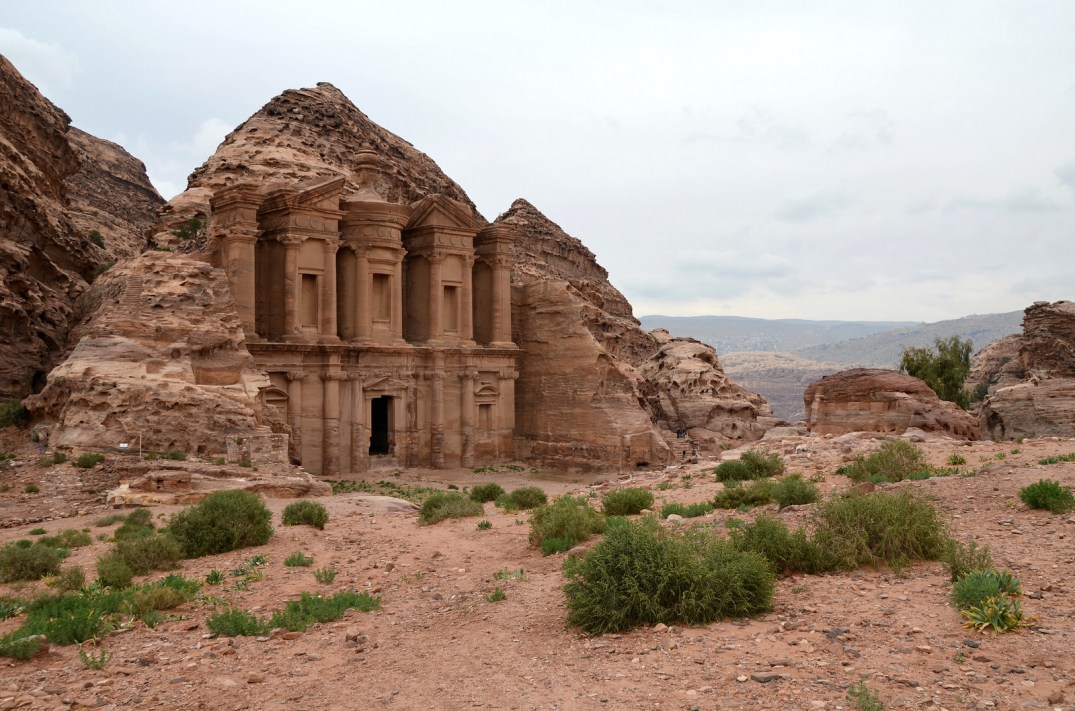
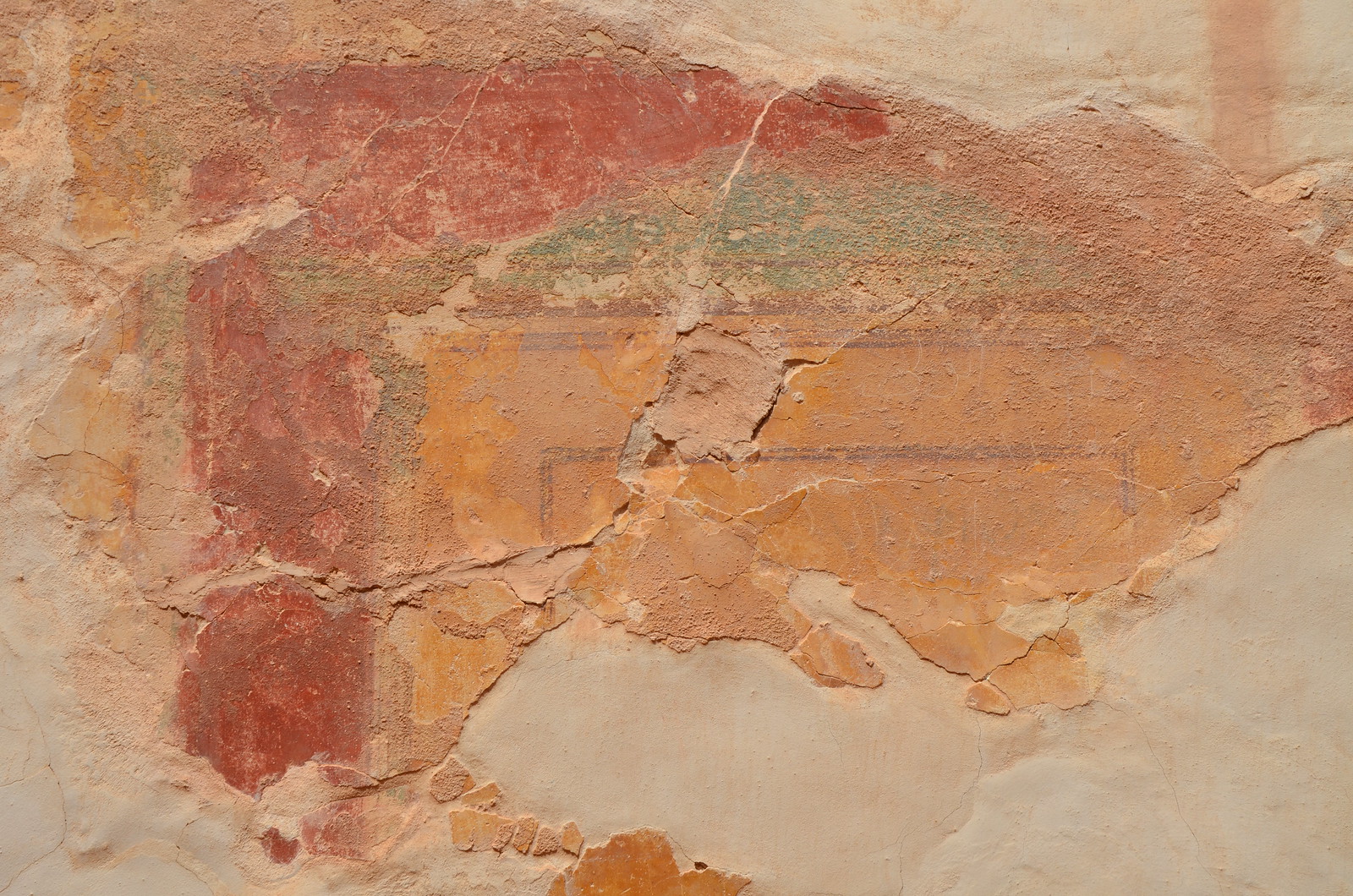
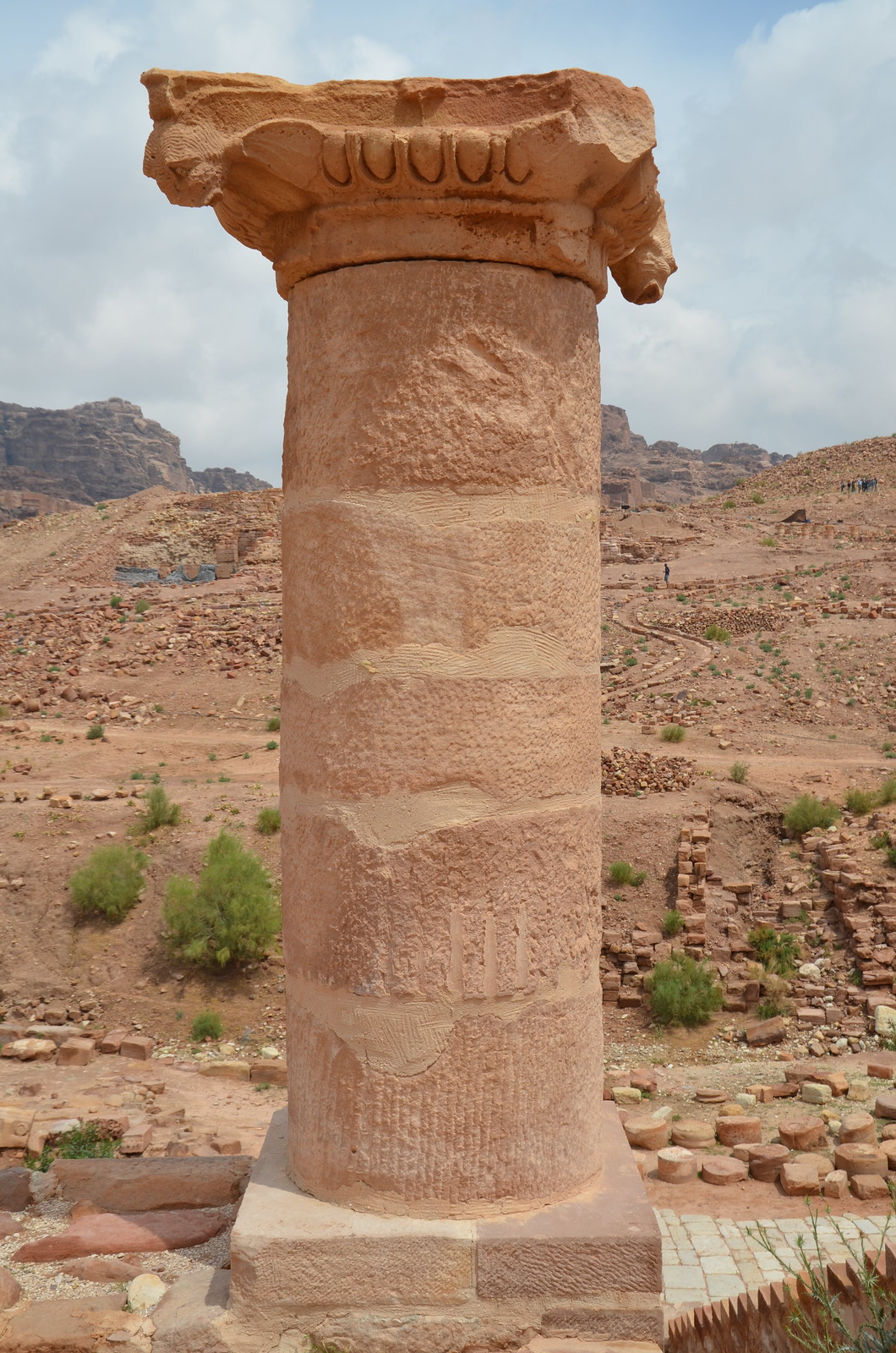
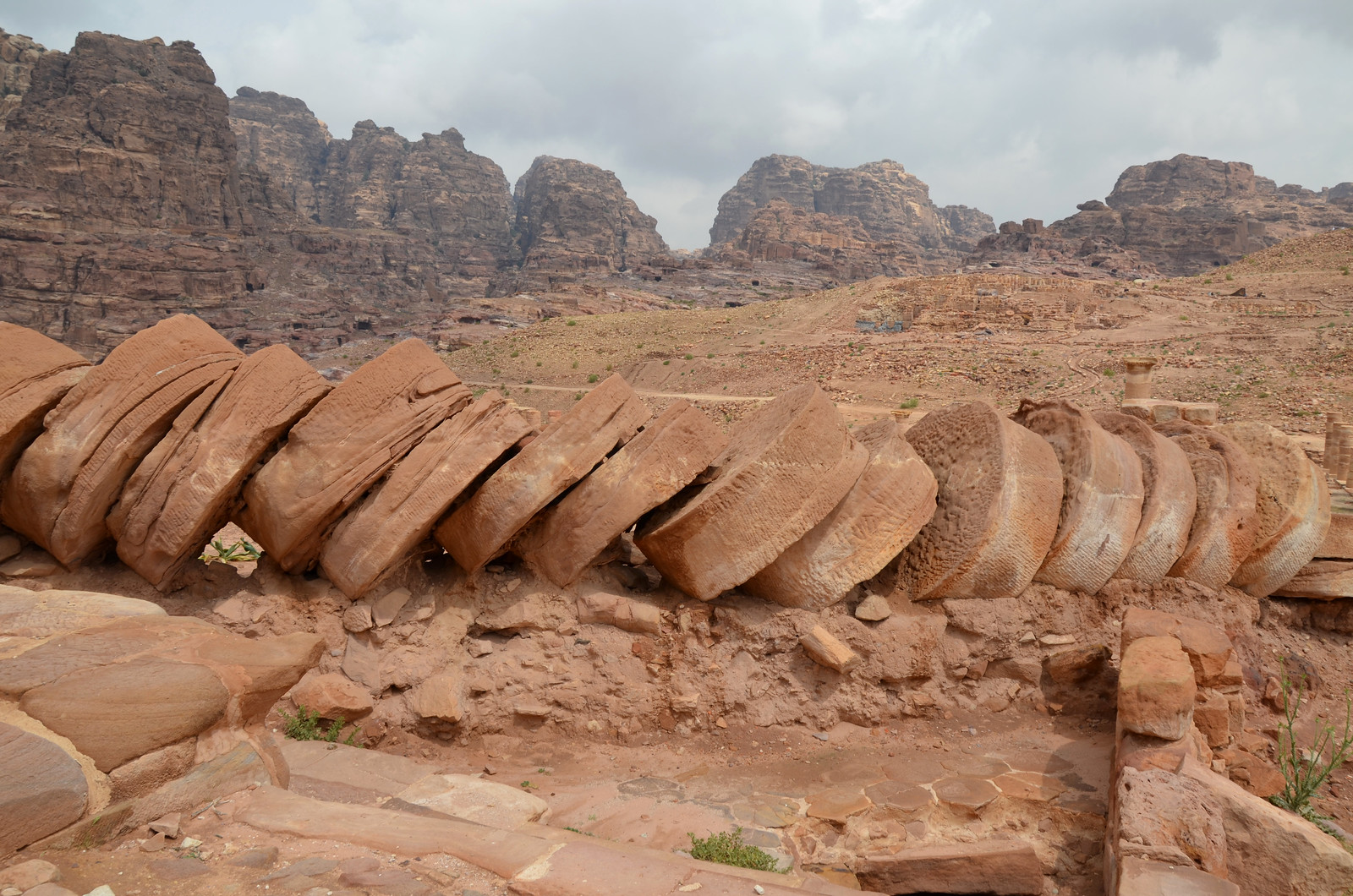
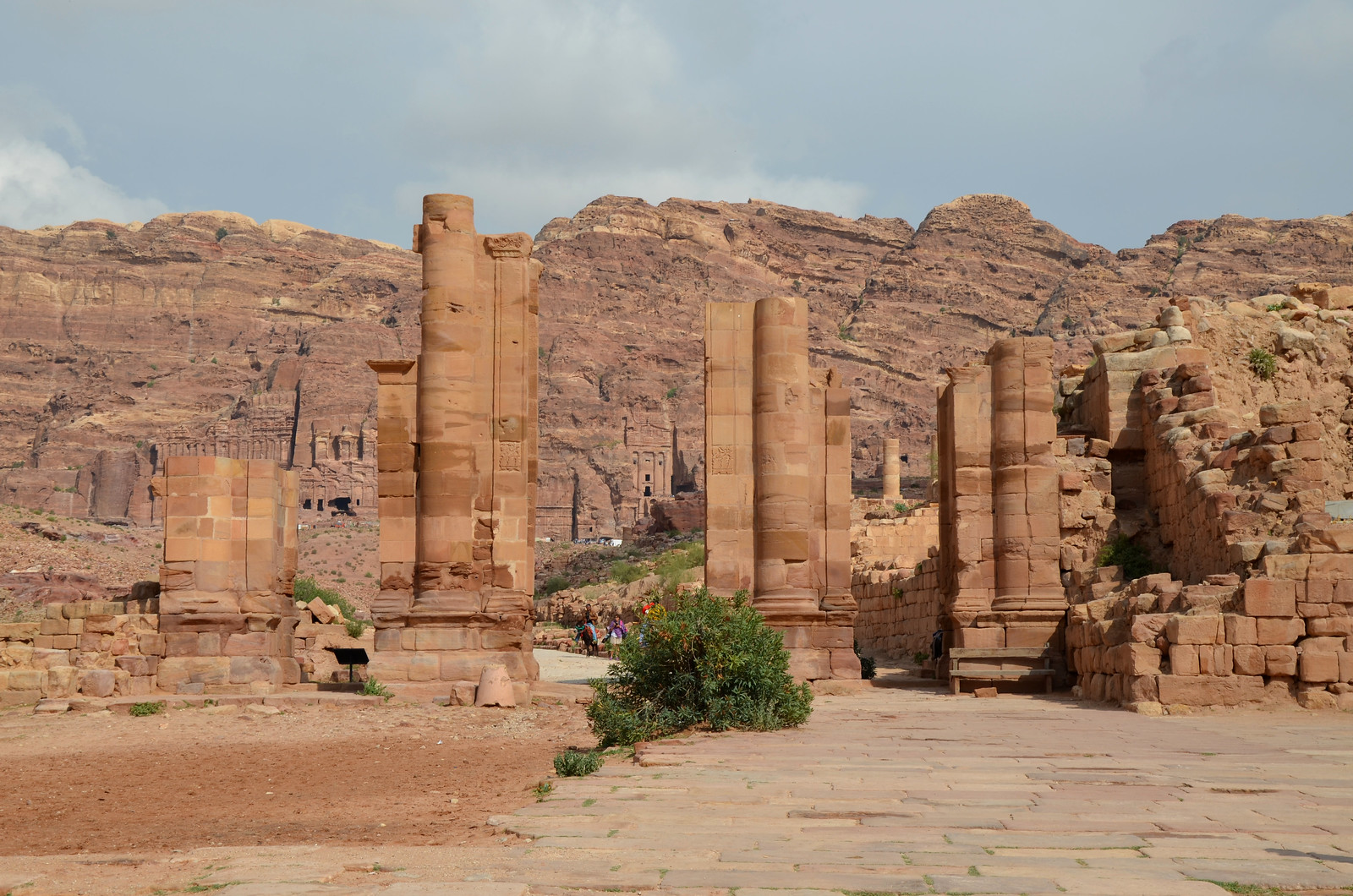
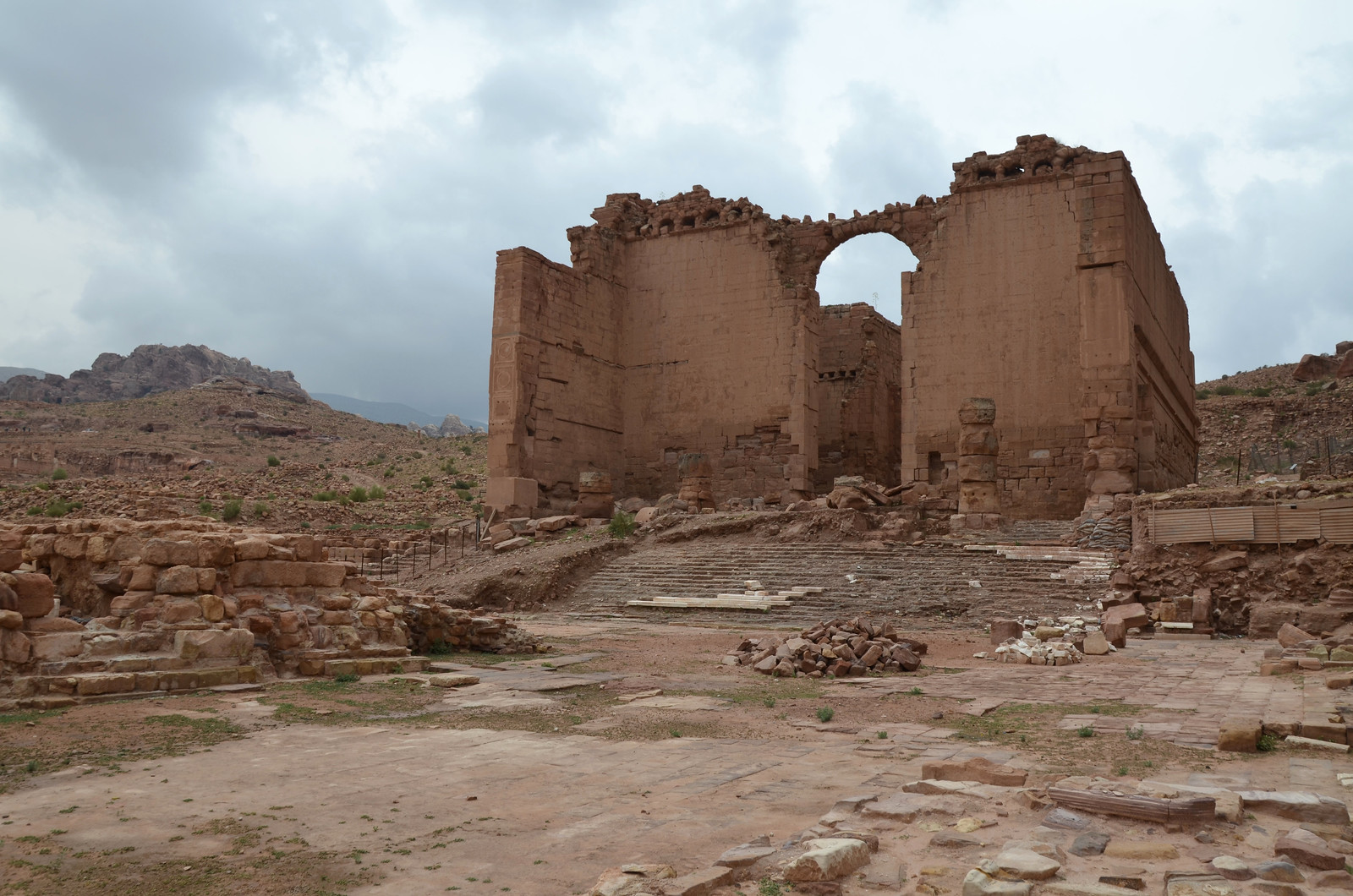
Staircases leading up to the proper temple.Inside the Upper Temenos of the Great Temple.Remains of plaster decoration with original colours inside the Great Temple.The West Exedra of the Great Temple.Column base inside the Upper Temenos of the Great Temple.Corinthian capital inside the Great Temple.A capital decorated with an Asian elephant head inside the Great Temple:The Asian elephant-headed capitals are found in the triple colonnades of the Lower Temenos and are sculpted from limestone.Fallen columns of the Upper Temenos of the Great Temple.The ornamental garden and pool complex of the Great Temple was built during the reign of King Aretas IV.Frontal view of the Great Temple, which rises about 25 m above the Colonnaded Street.The Colonnaded Street that ran through Petra’s city centre was built by the Romans in about AD 106.The remains of a nymphaeum at the eastern end of the Colonnaded Street. Elevated upon a stepped podium, this nymphaeum consisted of a freestanding wall decorated with porticoes and featured a large central exedra that contained the fountain proper, whose waters emptied into a shallow pool below.The Colonnaded Street had a double row of columns and commercial shops on its south side.The Colonnaded Street.At the end of the Colonnaded Street, a monumental triple-arched gate marked the access to the sacred open precinct of the Qasr Al Bint.Built in the 2nd century AD, the monumental triple-arched gate originally had huge wooden doors and side towers.View of the Qasr al-Bint, one of the main temples in Petra located to the northwest of the Great Temple. The temple was probably the cult centre of the city’s patron deity, Dushara (“Lord of the Shara Mountains”).The Qasr al-Bint was used only by priests and dignitaries. It’s especially unusual because it’s the only one built from brick and not carved from red rock.This bust of Zeus-Dushara was discovered in the courtyard enclosure of the Qasr al-Bint. Dushara, the chief deity of Petra and the head of the Nabataean pantheon, was identified with the Greek god Zeus. This massive bust illustrates the meeting of Hellenistic conventions with those of Syrian and Arabian art.The temenos (sacred precinct) of Qasr al-Bint, Petra’s main temple, had an altar in the centre where worshippers made their offerings. The temple itself was accessed through a wide staircase.The hiking trail to the Monastery. The trail to the Monastery takes about 40 minutes.Along the way of the hiking trail to the Monastery are numerous tomb facades, places of worship, and niches.Rock façade tombs along the hiking trail to the Monastery with the Lion Triclinium on the right.The Lion Triclinium was built around the middle of the 1st century AD. The name comes from the two now strongly weathered lions on both sides of the entrance door.The Monastery (Ad Deir) is one of Petra’s most fascinating landmarks. The monumental rock building is 47 m wide and 48 m high.While the Monastery might look like the Treasury, its carvings are less intricate. The upper storey consists of a broken (open) pediment, in the middle of which stands a Tholos (circular structure) with a conic roof.The façade of the Monastery, like most buildings in Petra, was probably covered with a light stucco layer and was painted in several colours.The Monastery is deeply carved into a cliff face in breathtaking scenery.The Petra Church is a triple basilica with three apses to the east and three entrances to the west and accessed from a stone-paved atrium.The Petra Church was built starting in AD 450 in several phases, using stones from Nabataean and Roman buildings that had been destroyed by the 363 AD earthquake.The northern aisle of the Byzantine Church, with 84 medallions arranged in three columns and surrounded by a guilloche border.A mosaic medallion depicting a giraffe is in the Petra Church. Around AD 600, the basilica burned down and was later hit by several earthquakes, burying the floor mosaics, which saved them from iconoclast destruction.Located just above the main church is the Blue Church, named after its impressive columns.The Temple of the Winged Lions, located at the end of the Colonnaded Street, is a sacred complex thought to have been built by the Nabataeans during the 1st century AD.
LITTLE PETRA
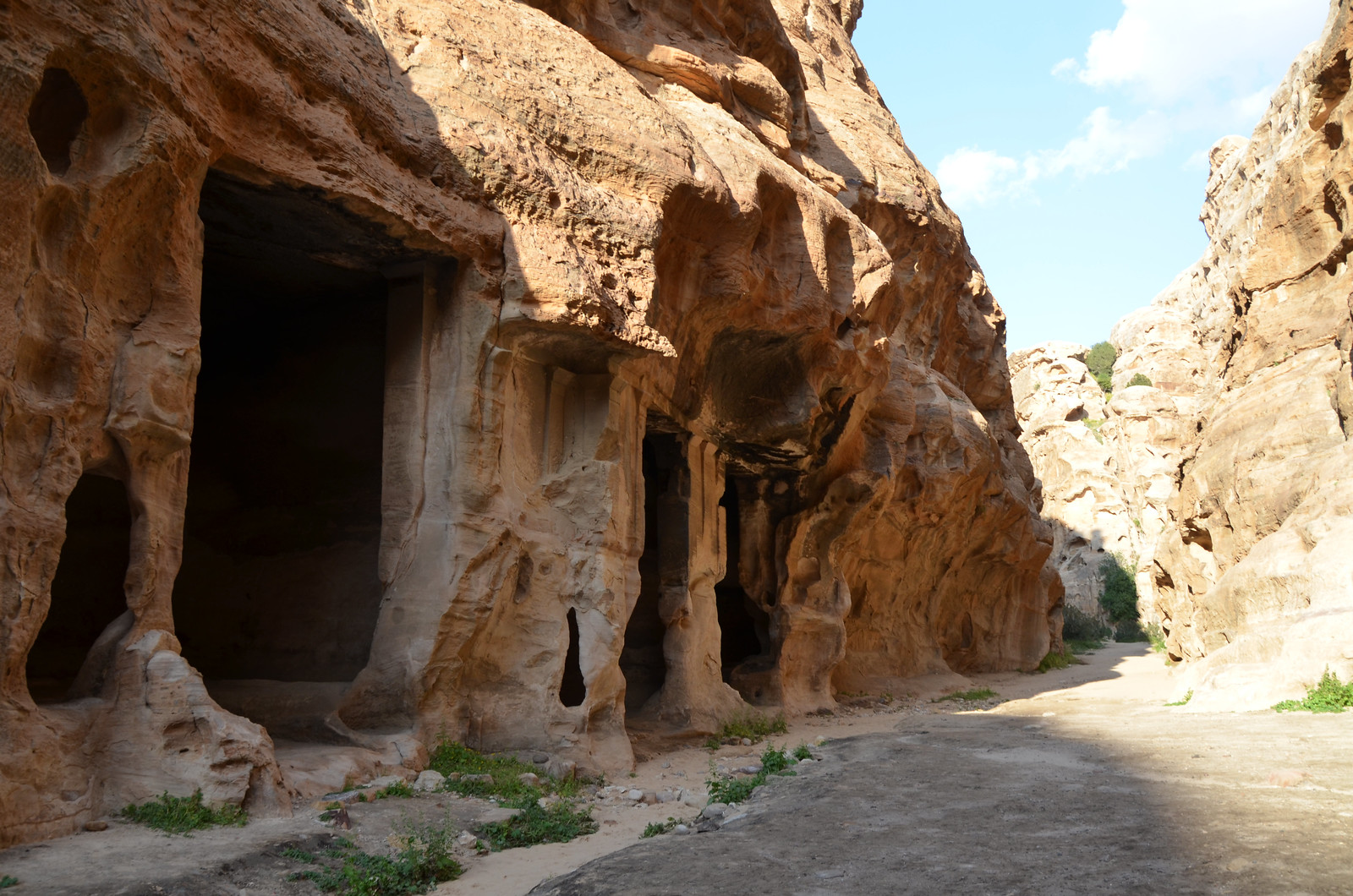
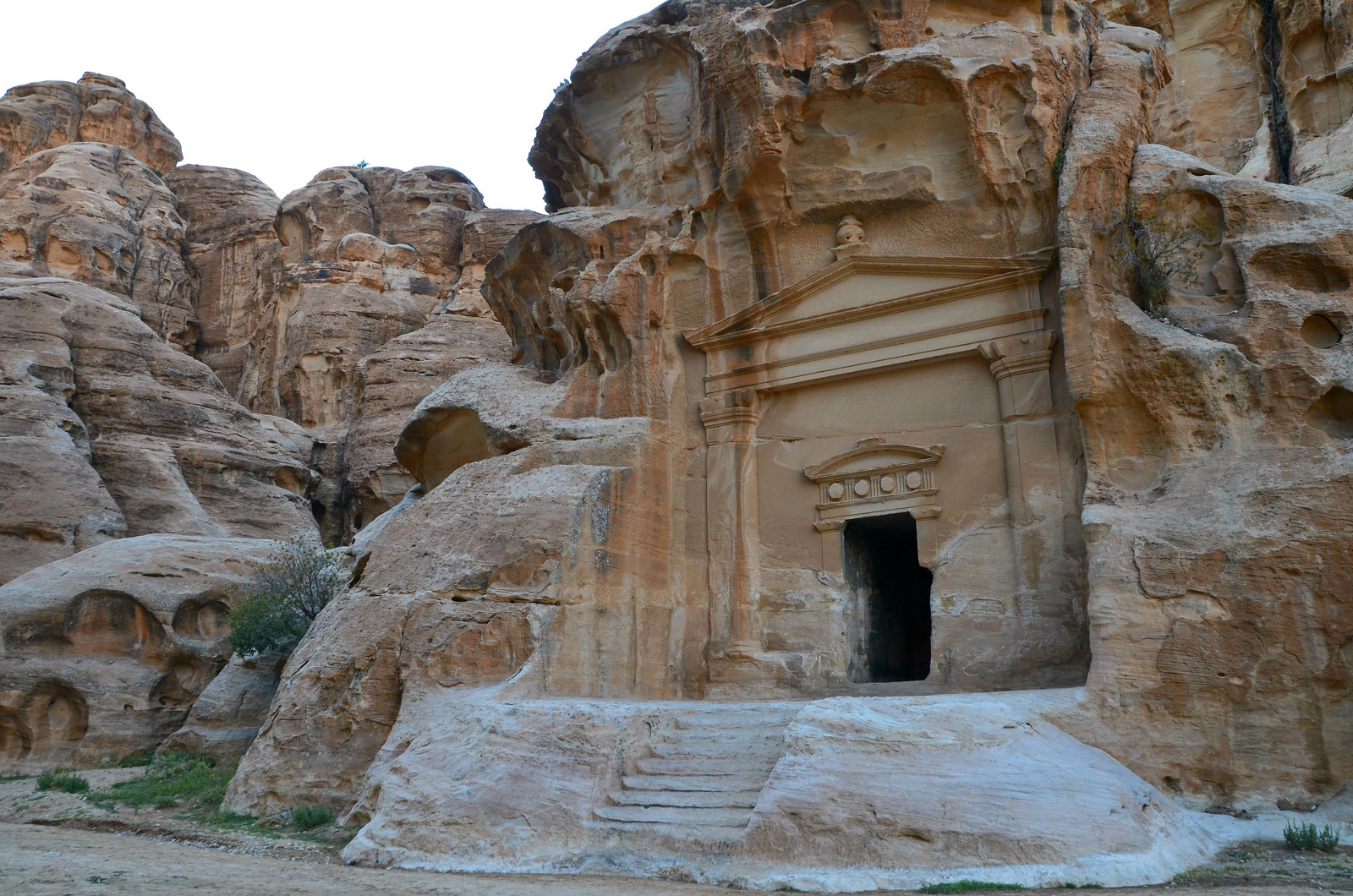
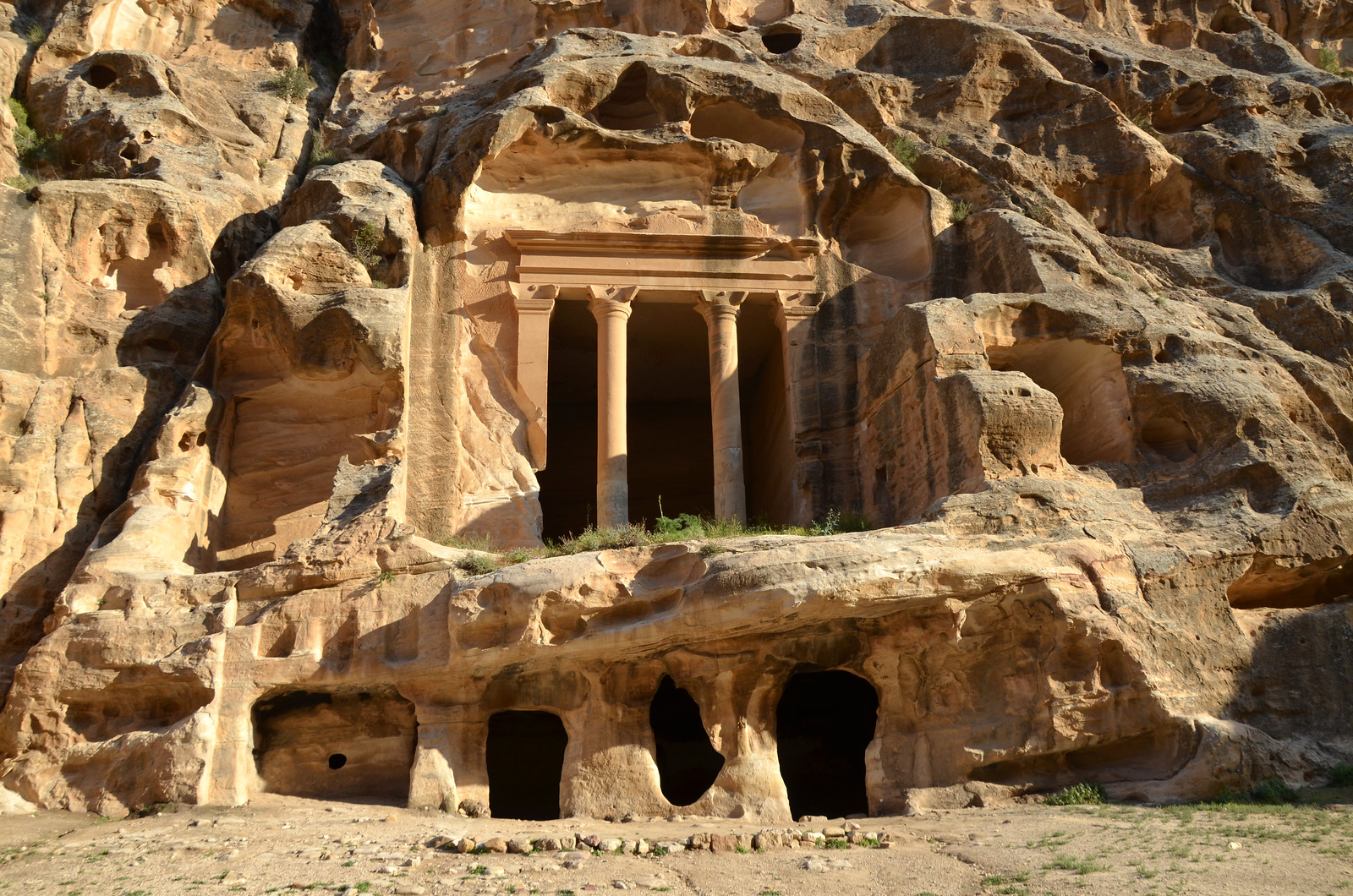
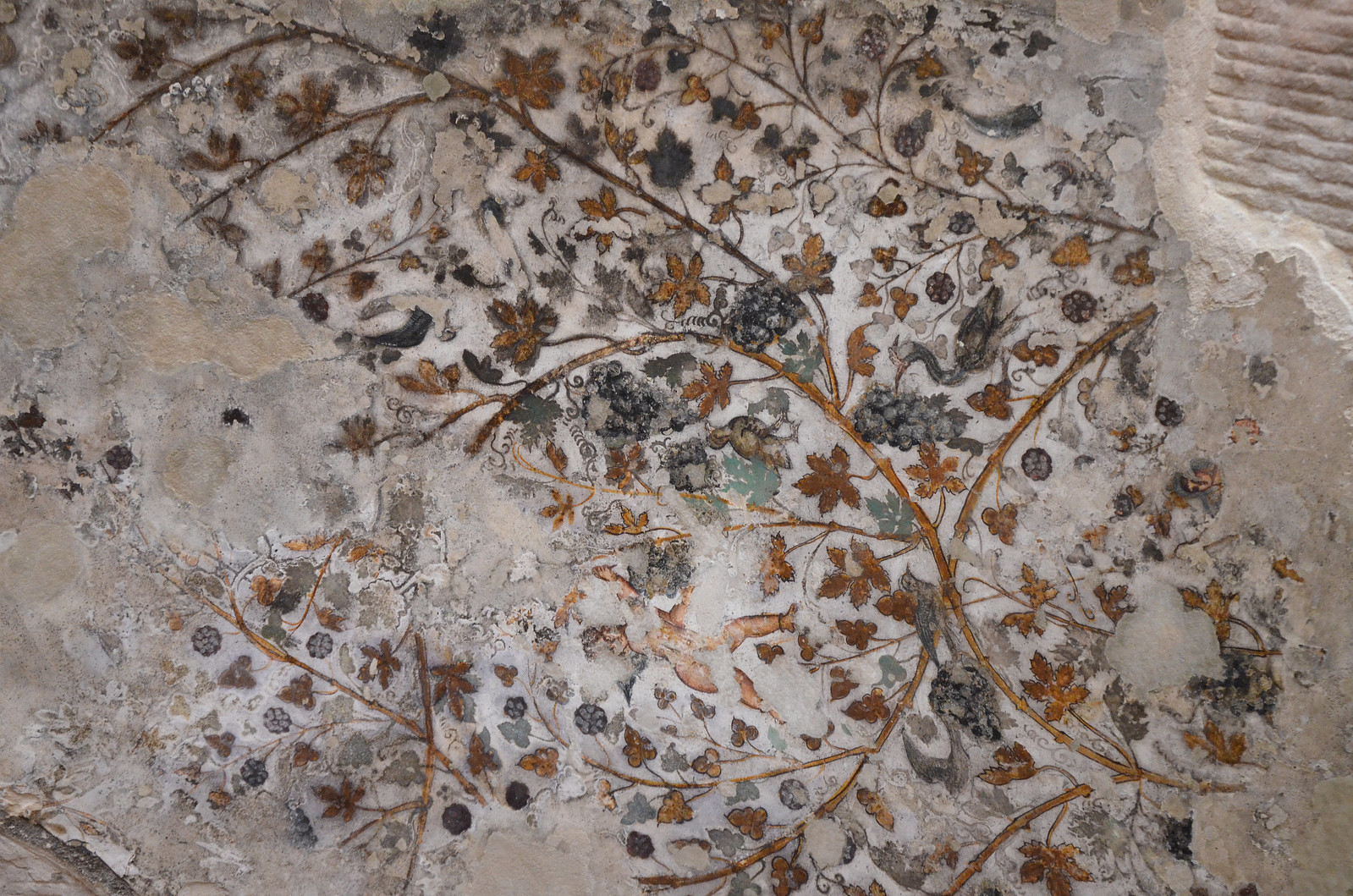
Little Petra lies just 6 km north of the centre of the Nabataean capital. It was thought to have served as an agricultural centre, trading suburb and resupply post for camel caravans visiting Petra.A rock-cut tomb with a classical façade was built between the 1st century BC and the 1st century AD.A Temple above cave rooms.Ceiling painting inside the Biclinium depicting a web of intertwined grape and ivy vines and a Cupid.Little Petra.


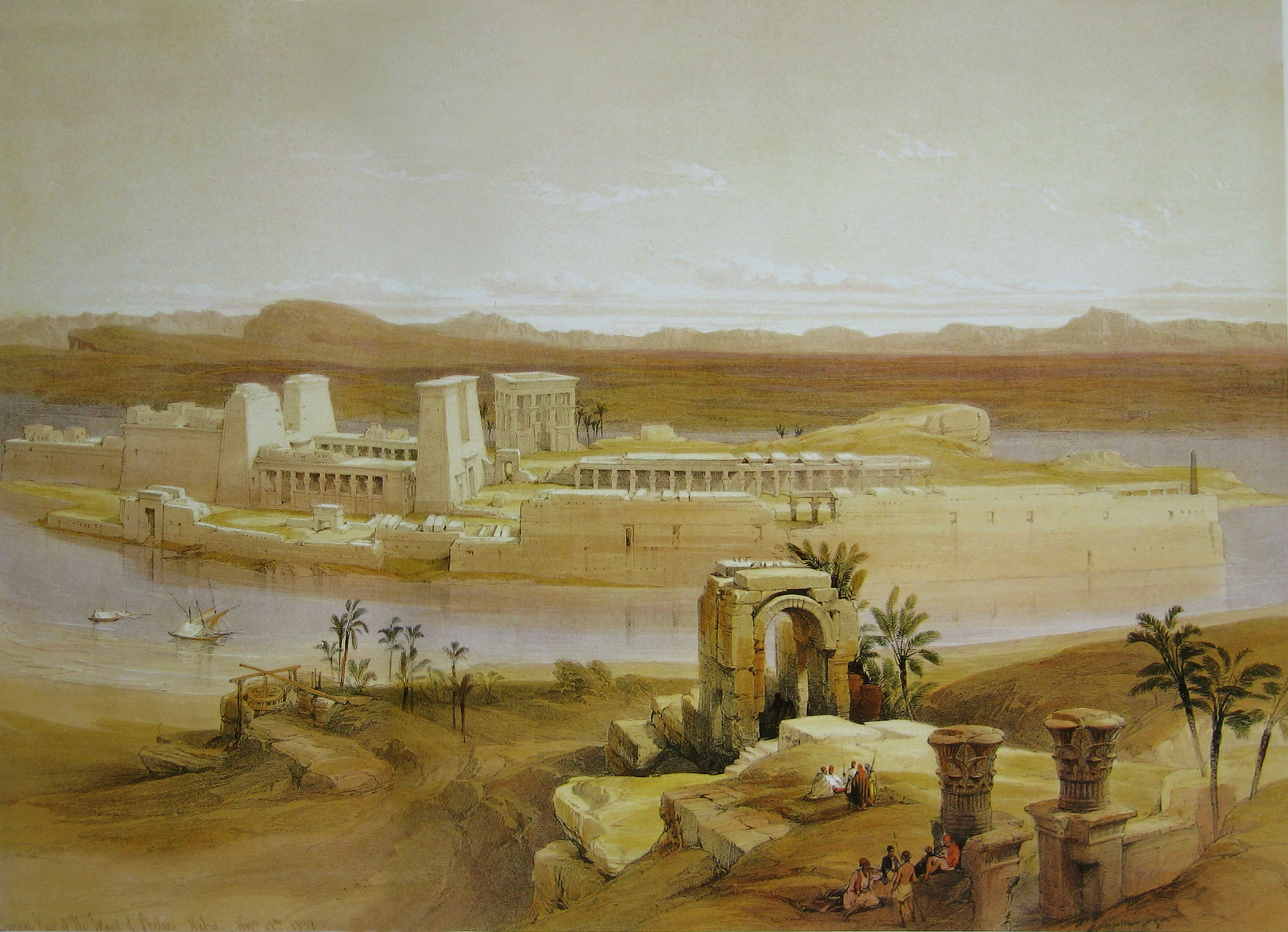
 The main building complex of Philae is the Great Temple of Isis, located in the centre of the island. It was erected during the third and second centuries BC and decorated from the time of Ptolemy II onward. There are also several smaller temples and shrines dedicated to other deities and Pharaohs, and at least two Nilomemters.

























































 following hadrian photography