Porte Mars (Reims)

The Porte Mars is an ancient Roman arch in Reims in the Champagne-Ardenne region, north of France. It dates from the early 3rd century AD and is the largest arch of the Roman world and one of the most impressive Roman monuments north of the Alps. Its name derives from a nearby temple dedicated to the god of war, Mars. At the time of its construction, the Porte Mars would have been one of four monumental arches erected as entrances to the Gallo-Roman settlement of Durocortorum.

Coordinates: 49° 15′ 38.2″ N, 4° 1′ 47.8″ E

The Arch, relatively well preserved, stands 32 metres long and 13 metres high, but its height must have been equally impressive with its attic and the statue group on top. It consists of three arches with eight Corinthian columns surmounted on undecorated plinths, between which are pedimental niches. Above the niches are shield-like medallions –clipei– with high relief heads supported by cupids. The central and largest arch is about 37 feet tall.

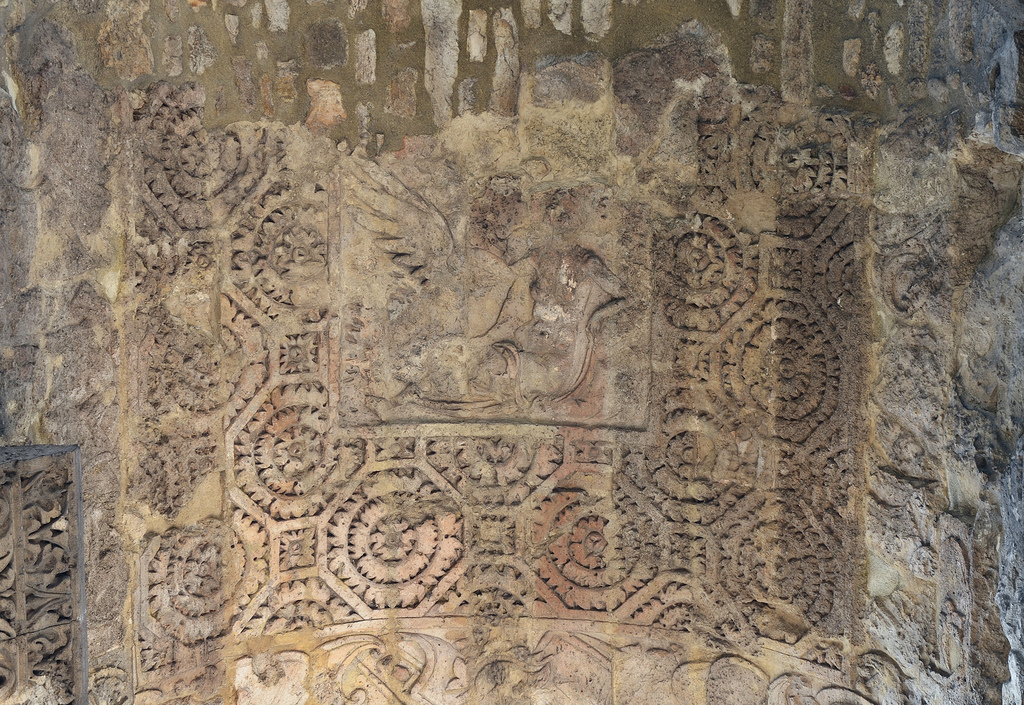
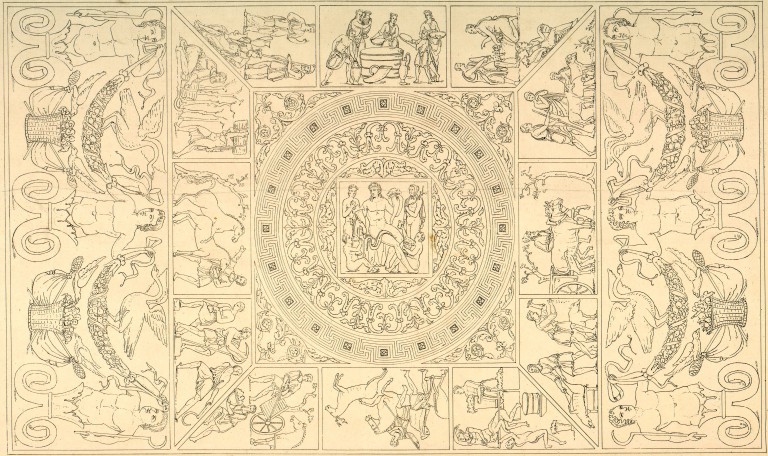
The arch has many highly detailed carvings on its exterior and on the ceilings of its three passageways. The ceilings of the side arcades are adorned with friezes portraying ancient legends and myths such as Remus and Romulus and Leda and the Swan. The ceiling of the central arch is of the most interest. It is decorated with reliefs depicting a harvest calendar and scenes of labourers, harvesters, reapers and millers. The seasons and the months of the year are illustrated by agricultural activities. One of the reliefs offers a rare and interesting illustration of a Gallic harvesting machine called a vallus, a reaping machine described by the historian Pliny the Elder in AD 77 (HN 18.72): “on the vast estates in the provinces of Gaul very large frames fitted with teeth at the edge and carried on two wheels are driven through the corn by a donkey pushing from behind; the ears torn off fall into the frame”.

Before the Roman conquest of northern Gaul, Reims founded circa 80 BC as Durocortōrum  (“round fortress”), served as the capital of the tribe of the Remi, the first Belgic people north of the Matrona river (Marne). In the course of Julius Caesar’s conquest of Gaul (58–51 BC), the Remi allied themselves with Rome, and the city later became one of the leading cities in the province and the residence of the governor of Belgica. At its height, the Gallo-roman city, with its 30 000 inhabitants, was the most populated in the North of the Alps.

Model of Durocortorum in the Musée Saint-Rémi, Reims.

Reims is most famous for its cathedral, Notre-Dame de Reims, formerly the place of coronation of the kings of France. The Frankish king Clovis was baptised by Remi, bishop of Reims, on Christmas Day AD 498 in a baptistery today situated where the Notre-Dame Cathedral of Reims stands. Thanks to Clovis’ baptism, Reims became the seat of the coronation of the kings of France.

The Porte Mars was included in the fortification wall of the late Roman Empire and, in 1228, in the wall of the castle of the Archbishops and served as a city gate until 1544. In 1854 the buildings around the arch were removed, bringing the arch into full view. Most of the finds from Durocortorum are in the Musée Saint-Rémi.

Dégagement de la porte de Mars, vers 1845-1850. Gravure d'Adrien Dauzats, éditée par Lemercier (Paris). L'arc est encore pris dans le rempart médiéval (BM Reims 22-060).
Dégagement de la porte de Mars, vers 1845-1850.
Gravure d’Adrien Dauzats, éditée par Lemercier (Paris).
L’arc est encore pris dans le rempart médiéval (BM Reims 22-060).

PORTFOLIO

The North side of the Porte Mars.
The western end pier of the north side of the arch.
The South side of the Porte Mars.
The eastern end pier of the north side of the arch. It is decorated with a pedimental niche. clipeus (shield-like disk) with high-relief head supported by cupids.
The eastern end pier of the north side of the arch.
It is decorated with a pedimental niche, a clipeus (shield-like disk) with a high-relief head supported by cupids. Above are two crossed caducei (the staffs carried by Mercury) and two further cupids drawing back curtains.
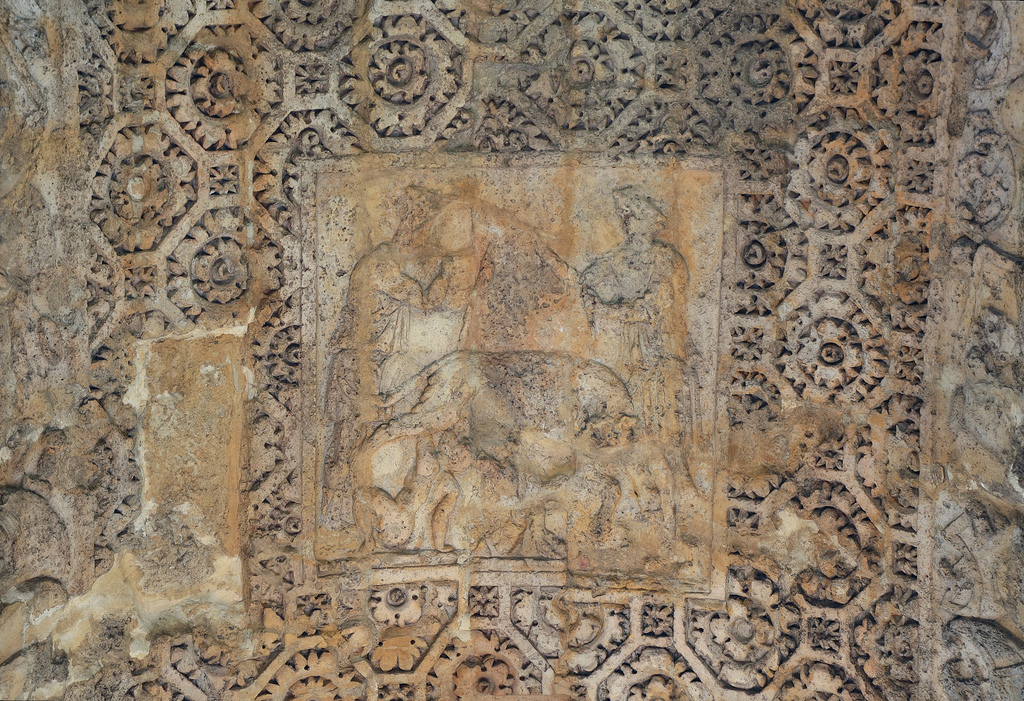
Ceiling of the middle arch of the Porte Mars depicting Remus and Romulus in the presence of the shepherd Faustulus and his wife Acca Laurenti.
The ceiling of the east arcade depicting Remus and Romulus in the presence of the shepherd Faustulus and his wife Acca Laurenti, who raised the children.
Ceiling of the west arcade depicting Leda and the Swan.
The ceiling of the west arcade depicting Leda and the Swan.
The ceiling of the central arch is decorated with reliefs depicting a harvest calendar and showing scenes of labourers, harvesters, reapers and millers. The seasons and the months of the year are illustrated with agricultural activities.
Drawing (circa 1850): restitution of the motifs of the central vault. At the center perhaps Bacchus; Around: calendar of months and seasons (BM Reims).
Drawing (circa 1850): restitution of the motifs of the central vault. At the centre, perhaps Bacchus; Around: calendar of months and seasons (BM Reims).
The North side of the Porte Mars.

Links:

Tawern Temple Complex

The Roman Temple Tawern (German: Römischer Tempelbezirk Tawern) is a reconstructed Gallo-Roman sanctuary on the Metzenberg in Tawern near Trier in western Germany. The original sanctuary was built in the 1st century AD above a major road leading from Divodurum Mediomatricorum (modern-day Metz) to Augusta Treverorum (modern-day Trier). It remained in use until the end of the 4th century AD.

Coordinates: 49° 39′ 51.31″ N, 6° 30′ 34.41″ E

The sanctuary was excavated between 1986 and 1988, and seven buildings of various periods and differing sizes and plans were discovered within the complex. Under the direction of the Rheinisches Landesmuseum of Trier, the temple district and a large building were partially reconstructed on the original foundations. The finds (especially coins) revealed that the temple district was constructed in the first half of the 1st century AD and was used right up until late into the 4th century AD. Travellers on the nearby main Roman road would have stopped at the sanctuary to thank the gods for their successful journey or to invoke blessings as they made their way to Rome.

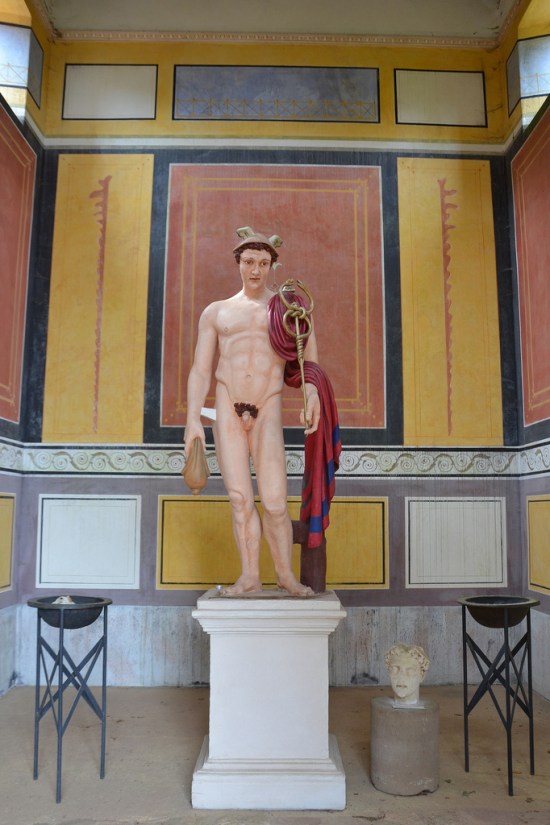
Mercury, the god of trade, commerce, and travel, was the main deity worshipped at the sanctuary. The slightly larger-than-life-size limestone head found in the water well came from a statue of the god. With the help of this find, a reconstruction of the statue was produced in 2002 and is now exhibited in the large Temple of Mercury. Five inscriptions found at the site were also dedicated to Mercury.

The sacred area, surrounded by walls, had a trapezoidal ground plan. It was entered through a small gate. The construction plan consisted of several phases. The first phase shows that five temples were arranged side by side. Various gods were worshipped, among them Mercury, the goddess Epona, Apollo, and Isis-Serapis. The temple district was later extended to cover an area of 48 m in width and 36 m in depth. Three temples were demolished to make way for the great main temple.

At the north-west corner of one temple, a water well originally more than 15m deep was unearthed. It was filled with stones, earth, and architectural parts. There were also fragments of inscriptions and figurative reliefs.

In the village of Tawern, at the foot of the Metzenberg, one can also see the remains of the small Gallo-Roman town (vicus) whose antique name was Tabernae. The name of the vicus was preserved in the modern name of the village, Tawern. The inhabitants of the vicus mainly provided goods and services for travellers. The nearby sanctuary attracted numerous pilgrims. A total of nine buildings were excavated on both sides of the Roman road.

PORTFOLIO

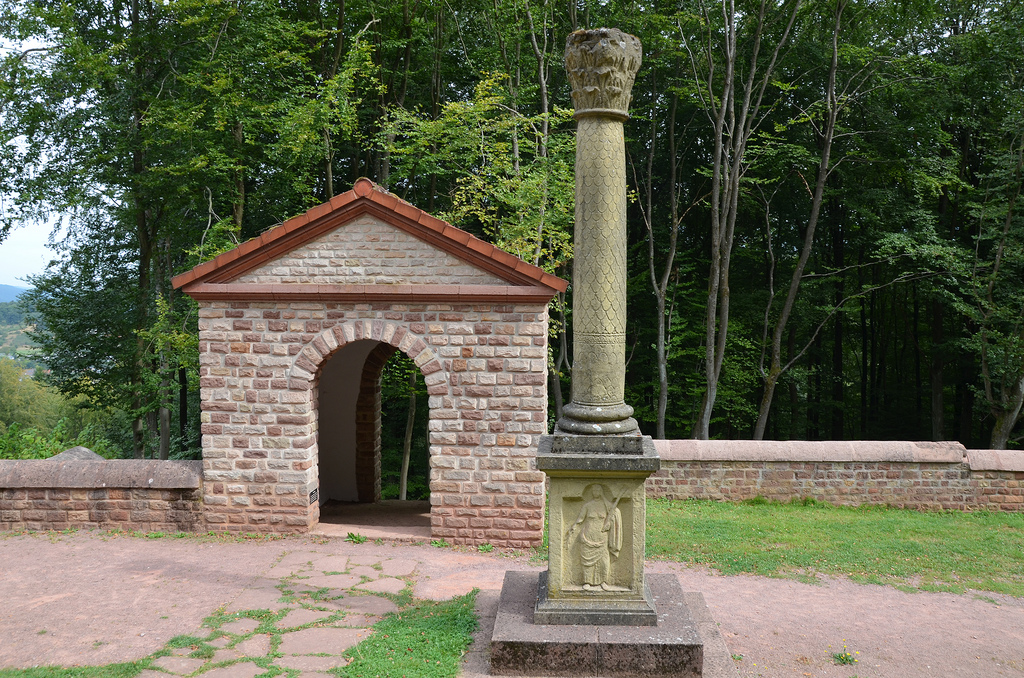
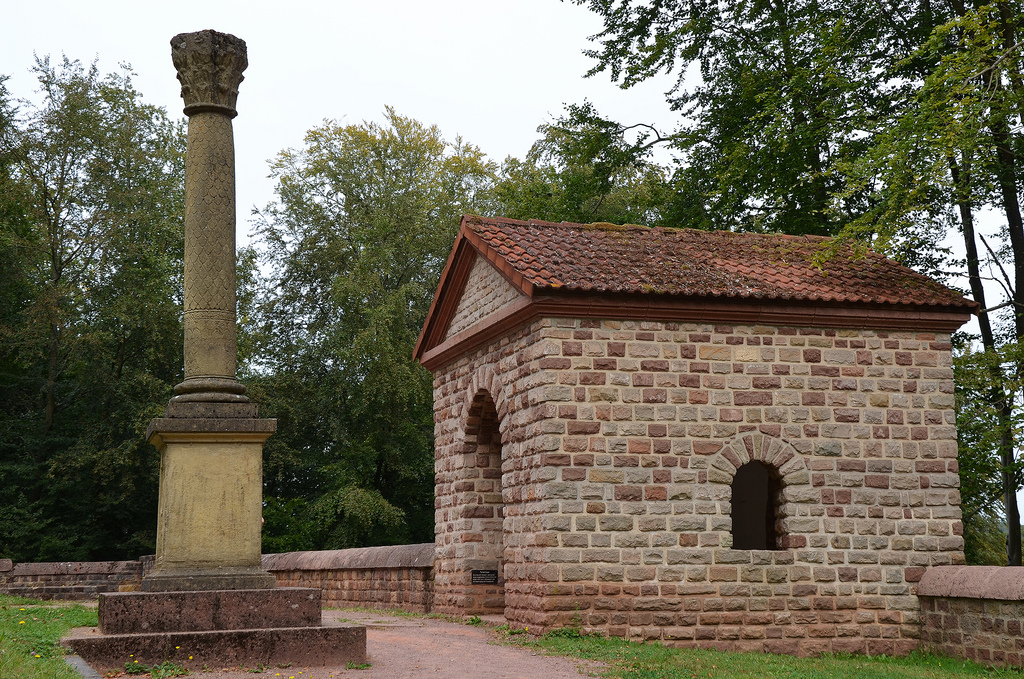
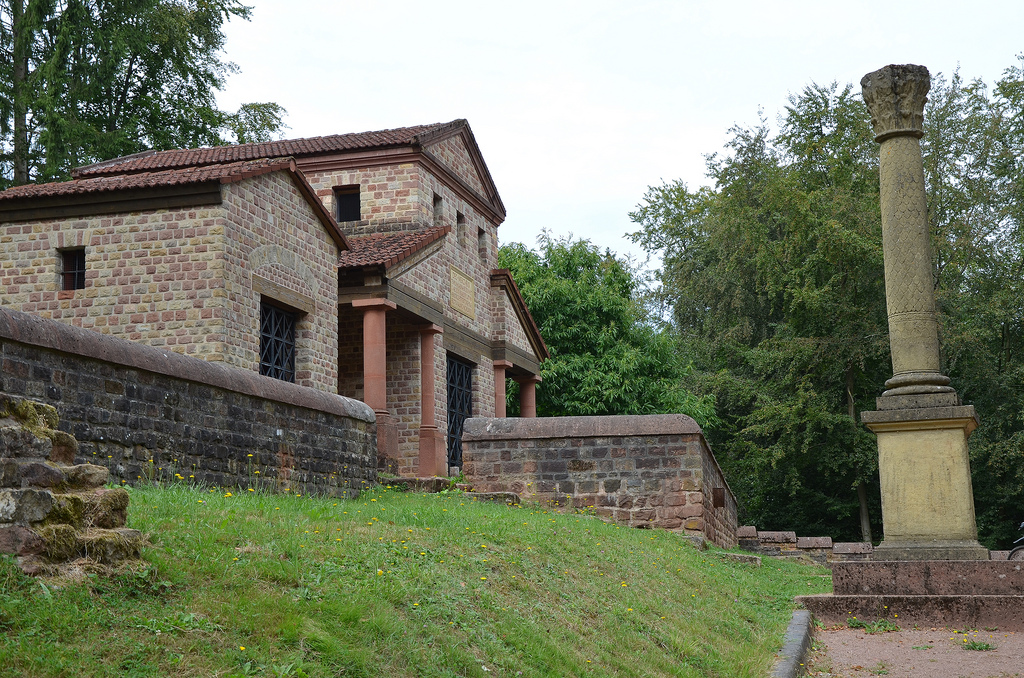
The entrance to the complex, a Jupiter Column.
The main entrance to the sacred complex. A reconstructed Jupiter Column was also added.
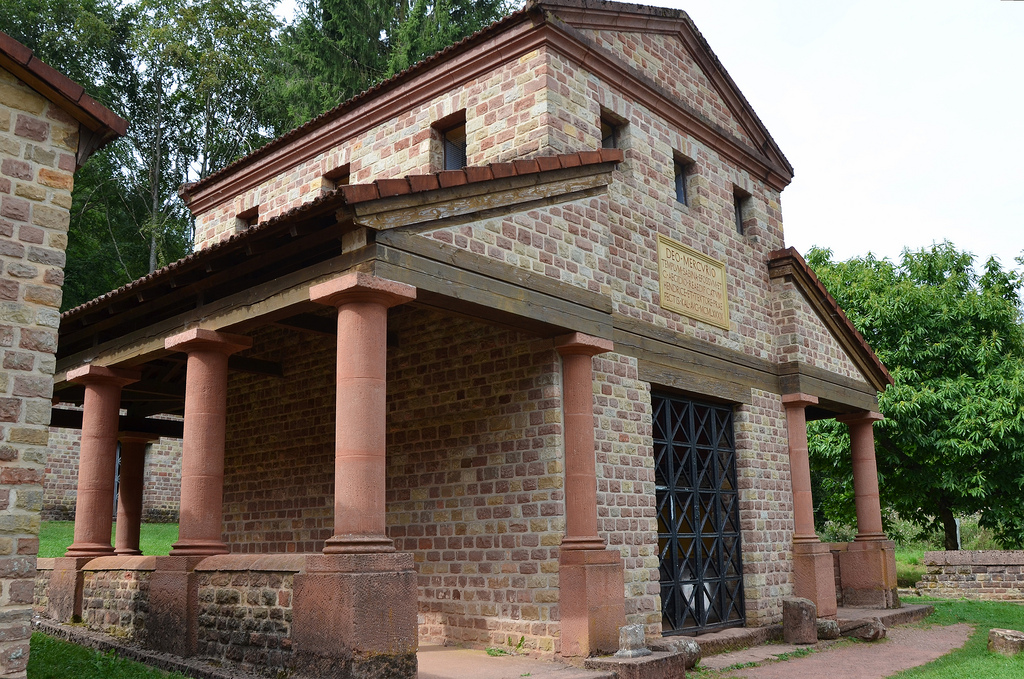
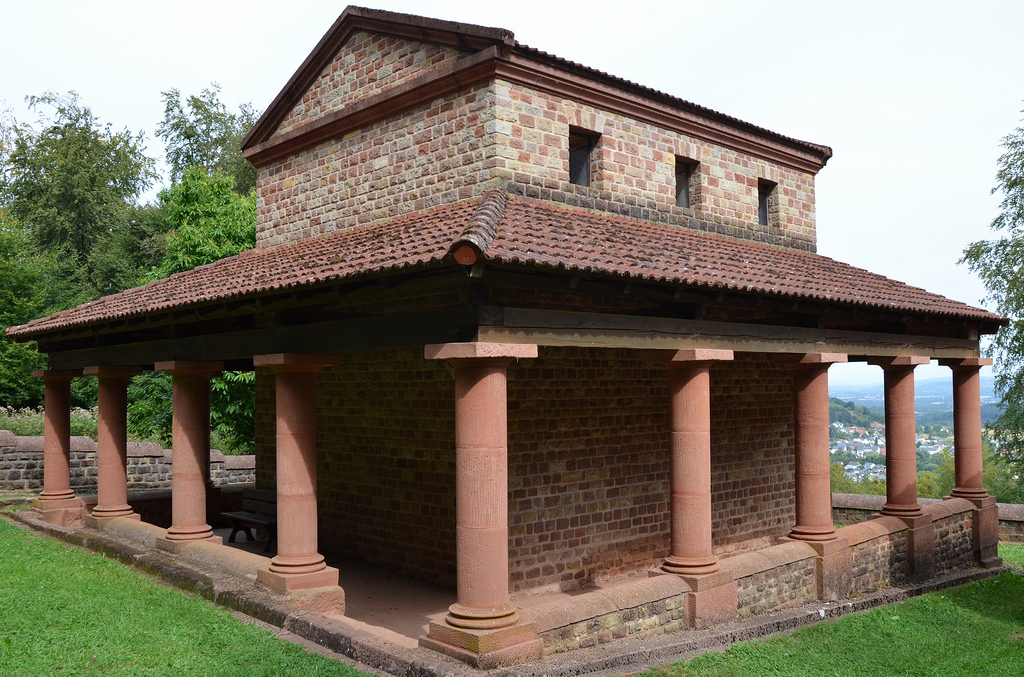
The reconstruction main temple of the sanctuary dedicated to Mercury.
The reconstruction of the main temple in the sanctuary dedicated to Mercury.
The reconstruction main temple of the sanctuary dedicated to Mercury.
The reconstruction of the main temple of the sanctuary dedicated to Mercury, with Tuscan columns on three sides.
Reconstruction of the Mercury statue inside of the main temple dedicated to the god.
Reconstruction of the Mercury statue inside the cella of the main temple dedicated to the god. The cella was 7.50 m long and 5.70 m wide.
The reconstruction main temple of the sanctuary dedicated to Mercury.
The reconstruction of the main temple in the sanctuary dedicated to Mercury. The modern inscription, dated to August 1, 1989, honours the excavators of the site (Dr. Sabine Faust and Dr. Karl-Josef Gilles).
Immediately before handling sandstone channels are laid, which catch and dissipate the rainwater flowing from the roof. Parts are still in the original and original place.
On the floor, sandstone water channels were laid out around and between the temples. They were used to catch and disperse the rainwater flowing from the roof.
The foundations of Temple III.
The reconstructed Temple II, the the only one that has been preserved during all the construction phases of the temple district.
The reconstructed Temple II is the only original temple preserved during the various construction phases of the sanctuary.
In the temple stood a statue of the gods, which was revered here, probably the Celtic horse goddess Epona. She was the goddess of the drivers, the horses and mules. The relief depicted here, which was found in the well, gives a hint. It shows the goddess on a horse.
In the cella of Temple II stood a statue of the god, probably the Celtic goddess Epona. She was a protector of horses, ponies, donkeys, and mules. The relief dedicated to Epona in the cella is a replica of the original found in the well. The wall-painting colours of the cella are based on plaster fragments.
The foundations of the early temples and a well.
The foundations of the early temples and the reconstructed well.
The back entrance to the sanctuary.
The reconstructed building just outside the sanctuary. Its function of the professional building has so far not been very clear. It is hardly a dwelling-house of one or more priests. The large room to the side of the mountain was probably closed by a wall - unlike in the present reconstruction. He might have served as a stable. Perhaps the travelers could strengthen themselves in the Profangebäude and buy souvenirs, sacrificances or Weihengaben.
The reconstructed building just outside the sanctuary. Its function is unclear, but it might have served as a stable.
Profangebäude
The interior of the reconstructed building just outside the sanctuary, which may have served as a stable.
The main entrance to the sacred complex.
The Tawern Temple Complex.
The vicus Tabernae located along the major Roman road leading from Divodurum Mediomatricorum (modern-day Metz) to Augusta Treverorum (modern-day Trier).
The vicus Tabernae is located along the major Roman road leading from Divodurum Mediomatricorum (modern-day Metz) to Augusta Treverorum (modern-day Trier).
Computer reconstruction of the vicus and the four-sided arch.

The Saarland and the Mosel Valley’s ancient Roman heritage has a lot to offer to tourists and scholars alike. More than 120 antique sights along the Moselle and Saar rivers, as well as in Saarland and Luxembourg, are a testament to the Gallo-Roman era north of the Alps (further information here).

The temple area is not fenced, so it can be visited at any time. Admission is free.

Links: