The rock of Masada, located at the eastern edge of the Judean desert, is a place of majestic beauty. With a sheer drop of more than 400 m (1,300 ft) overlooking the Dead Sea, Masada is the most spectacular site in Israel and the scene of one of the most dramatic episodes in the country’s history.
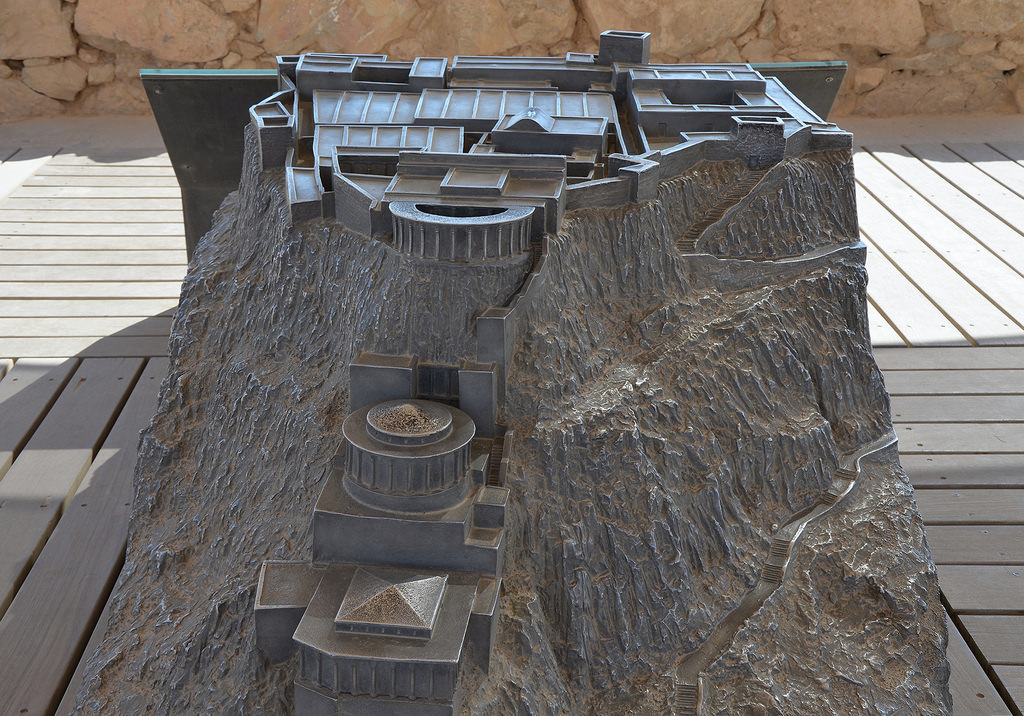
Masada (which derives from a Hebrew word for “fortress”) was first fortified by Alexander Jannaeus (103-76 BC), one of the kings of the Hasmonean dynasty. The only written source on the history of Masada comes from Flavius Josephus‘ The Jewish War. Herod the Great captured it during the power struggle which followed the murder of his father, Antipater, in 43 BC. Under the influence of Rome, King Herod the Great built a series of palaces and buildings for himself and planned the fortress as a last refuge in the event of a revolt. Masada’s most impressive structure is his Northern Palace, constructed against the northern cliff face. It was built on three rock terraces, each containing grand rooms and supported by gigantic retaining walls to expand their size.
Model of Masada.
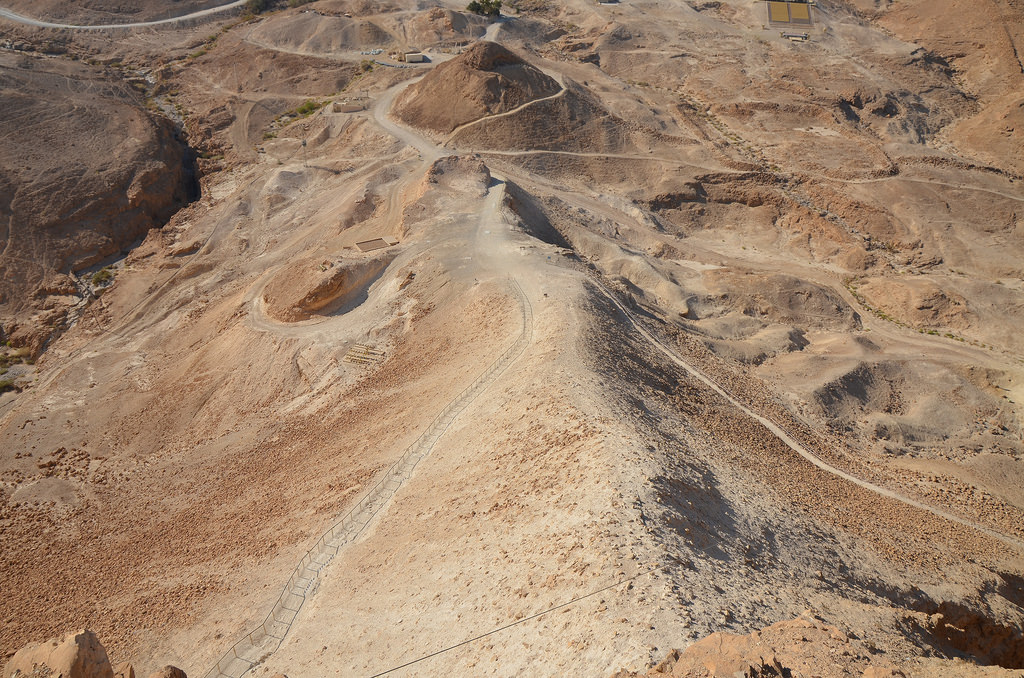
From AD 6, the Romans controlled Masada, but in the summer of AD 66, it became a place of refuge for Jewish rebels during the Great Jewish Revolt. The rebels turned the palaces into command posts and used them as public buildings. In AD 73, the Roman governor of Judea, Lucius Flavius Silva, headed the Legio X Fretensisand laid siege to Masada. The Romans reached the steep fortress after constructing a huge earthen ramp on its western side. The remains of the Roman siege are the most complete examples of such a siege in the world. The siege ended tragically for the zealots, who decided to commit suicide rather than be captured by the Romans.
Declared a World Heritage Site in 2001, Masada National Park features a Visitors’ Center, a fascinating interactive museum showcasing archaeological finds unearthed at Masada, and a thrilling audiovisual production.
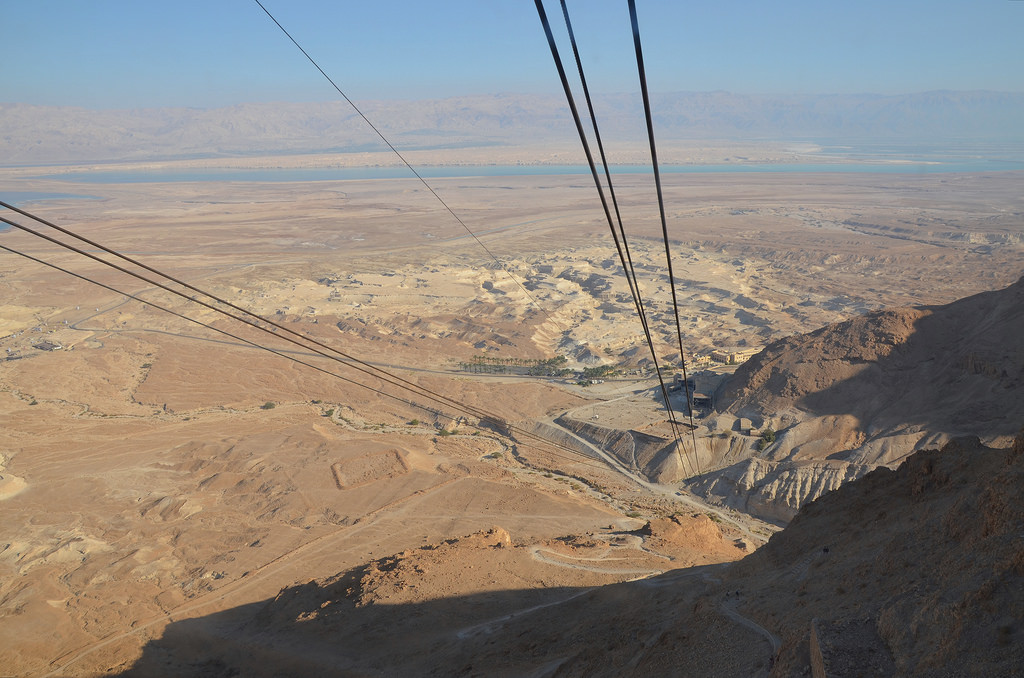
Visitors to Masada will find three ways to reach the fortress; on foot by hiking up the steep “snake path” on the east side, via the siege ramp on the west side or by cable car.
The Masada cableway lifts visitors from well below sea level up to the top of the plateau. The original cable car was constructed in 1971 and later replaced in 1998 by an aerial tramway system.
PORtFOLIO
THE WESTERN PALACE
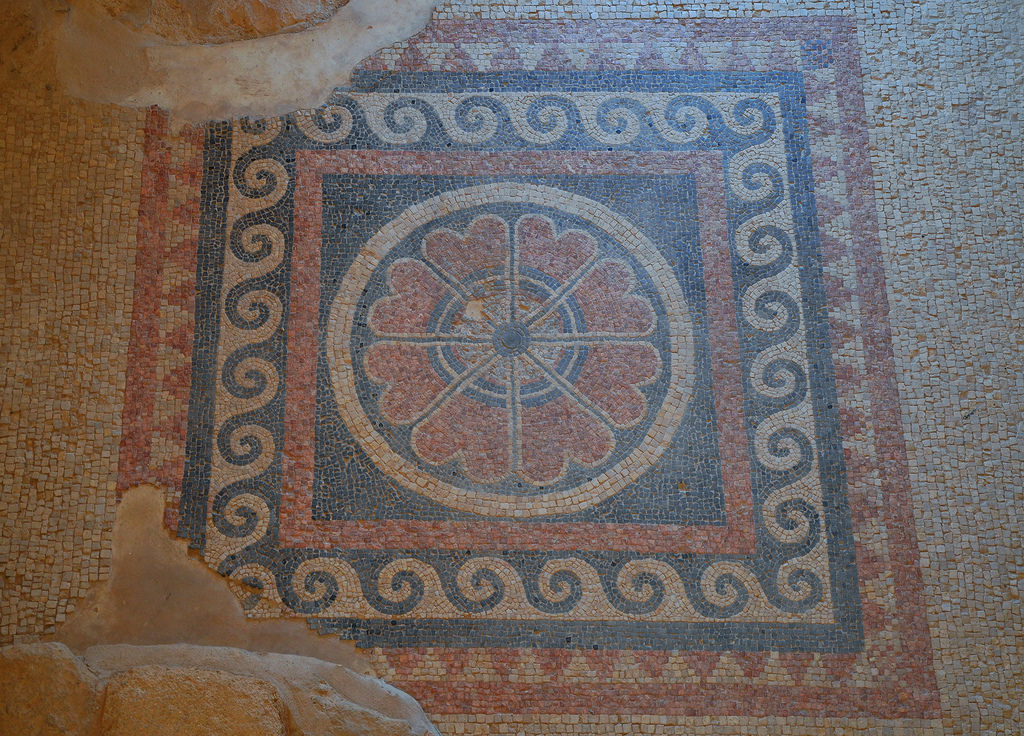
The entrance to the Western Palace. It was the largest structure in Masada, covering 3,700 square metres and the main ceremonial and administrative building.The entrance to the Western Palace with Hellenistic-style wall painting featuring painted stucco panels imitating the facings of a real wall.Overview of the Western Palace.Mosaic panel featuring a single rosette in the centre of a polychrome mosaic in the bathhouse of the Western Palace.
THE NORTHERN PALACE
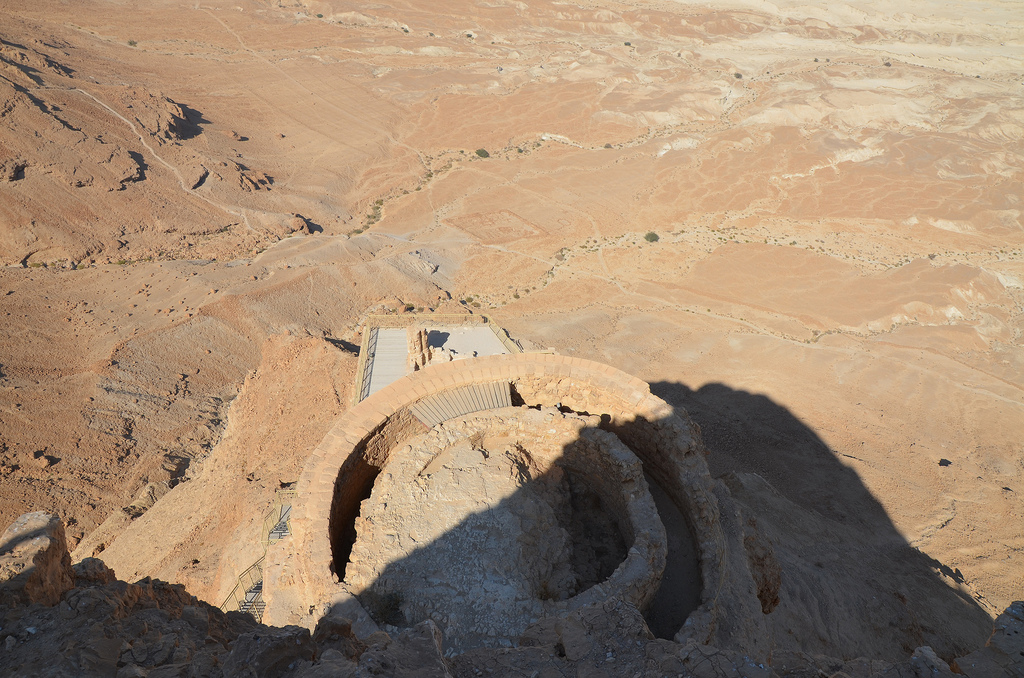
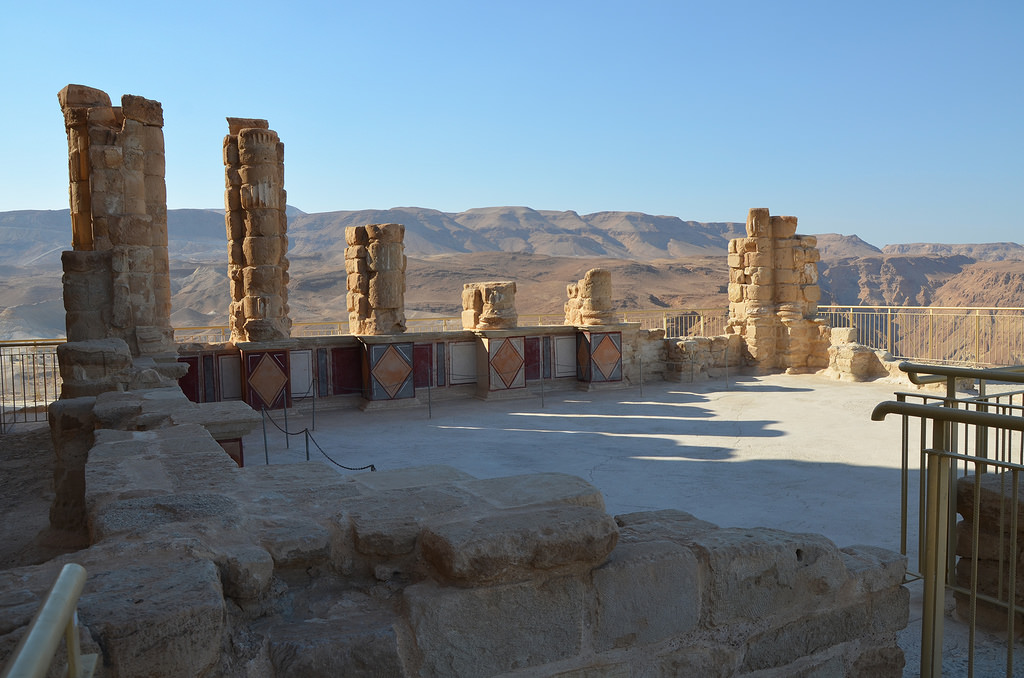
Looking down on Herod’s spectacularly situated Northern Palace.View of the three terraces of the Northern Palace. Square staircase towers linked the three levels. Herod designed this palace for personal use.The lower terrace of Herod’s Northern Palace. It was used for receptions and banquets, enclosed on all four sides with porticoes, and included a bathhouse.The magnificent frescoes on the southern part of the lower terrace of Herod’s Northern Palace.Close-up of the corners of the inner row of columns. The artists’ efforts to imitate the marble veins are characteristic of the period.The middle terrace of Herod’s Northern Palace. It was founded on concentric circular walls with an outer diameter of 15.3m. Two rows of columns supported a pointed roof.The upper terrace of Herod’s Northern Palace, where a small courtyard separated the semicircular balcony from mosaic-floored rooms.
THE LARGE BATHHOUSE
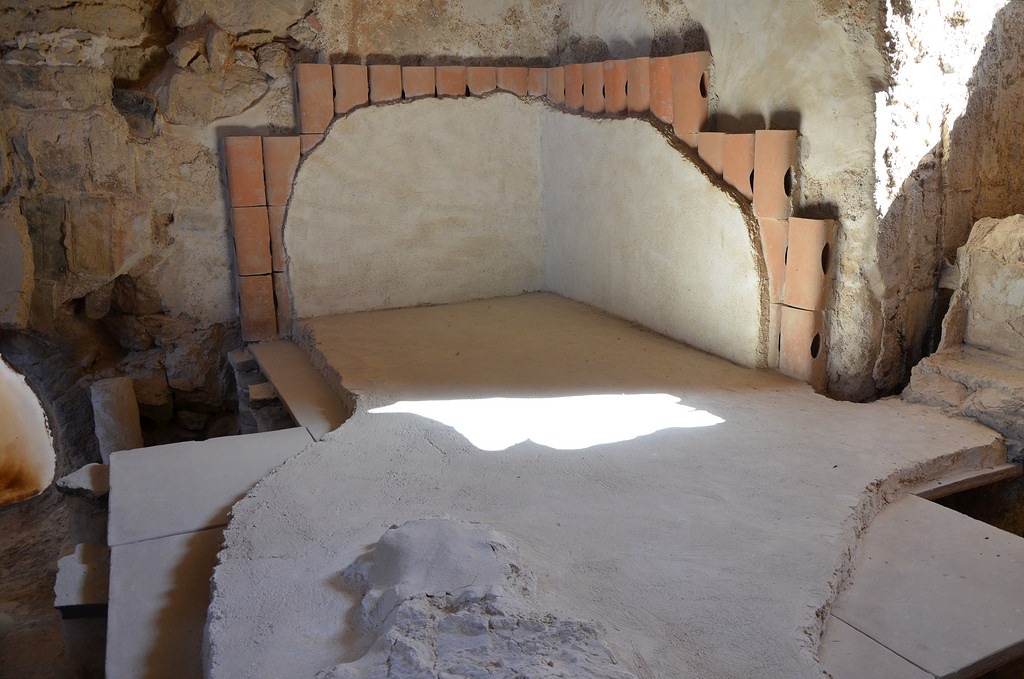
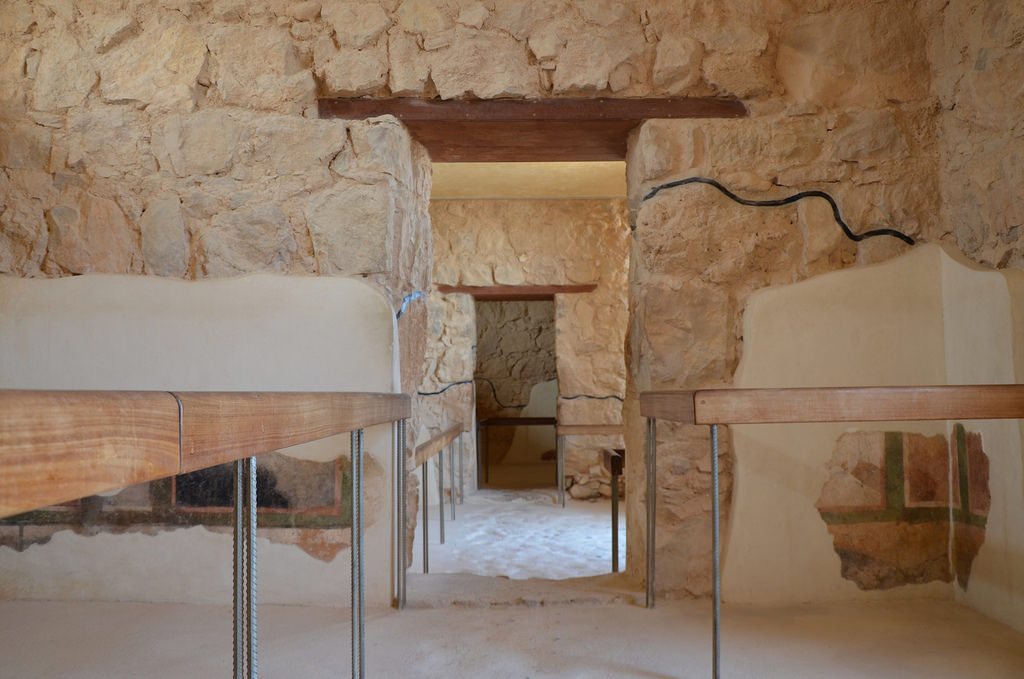
Herod’s large bathhouse is located on the north side of the plateau. It was composed of several rooms; cold (frigidarium), warm (tepidarium) and hot baths (caldarium), and a dressing room (apodyterium).North-east corner of the apodyterium (dressing room). The lower parts of the original frescoes have been covered by a tiny bathing pool added later by the Jewish Zealots.A section of the hot room (caldarium) in Herod’s large bathhouse with a double floor suspended over small stones and clay pillars.A reconstructed section of the hot room (caldarium) in Herod’s large bathhouse with clay pipes along the walls that were used to allow the hot air to warm up the side of the pool.
THE COMMANDANT’S RESIDENCE
The Commandant’s Residence consists of several rooms arranged around a central courtyard.Fresco decorating one of the rooms inside the Commandant’s Residence.The Commandant’s Residence consists of several rooms arranged around a central courtyard.
THE STOREROOMS COMPLEX
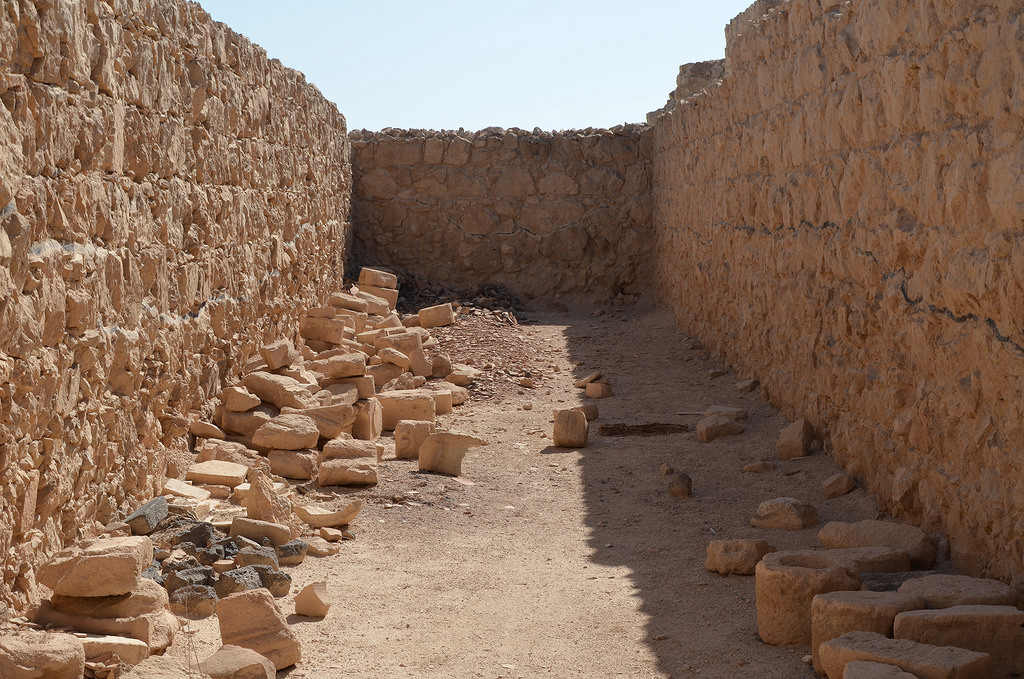
The storeroom complex is located near the northern side of the hill. The complex included 29 long halls built side by side in long rows. Each storeroom was 27m long and 4m meters wide.The storeroom complex. Each storeroom held a different commodity, including food essentials like olive oil, grains, nuts, seeds and wine (imported from Italy). In addition to food, the storerooms would have held weapons.View of the storeroom complex and the large Bathhouse.
THE OFFICERS BARRACKS
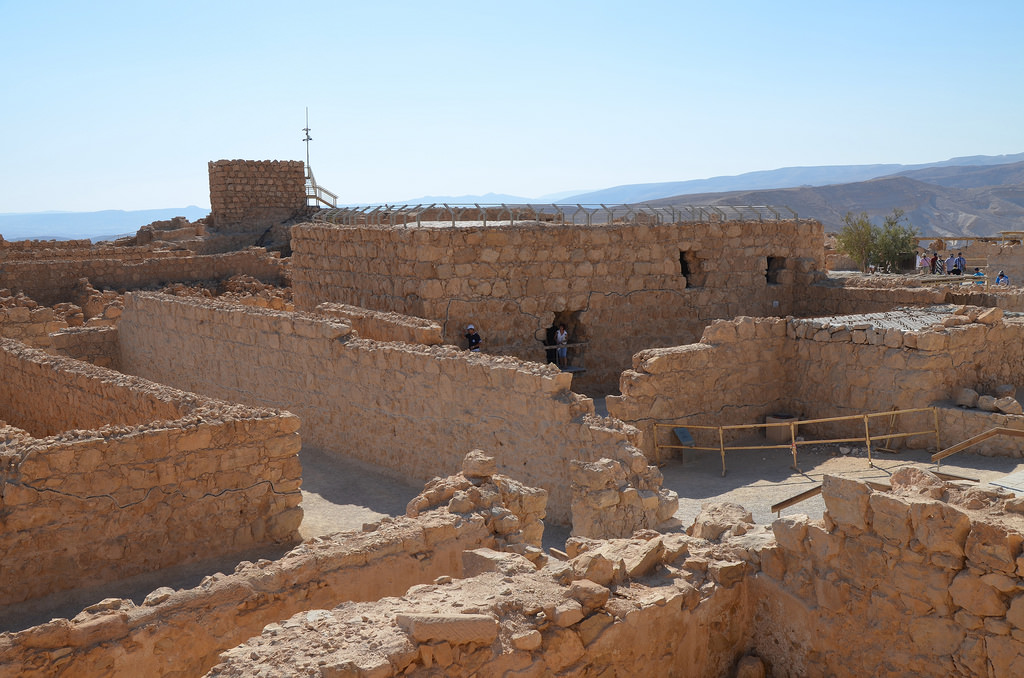
The Officer’s Barracks is located in the centre of the hill.
THE CISTERNS
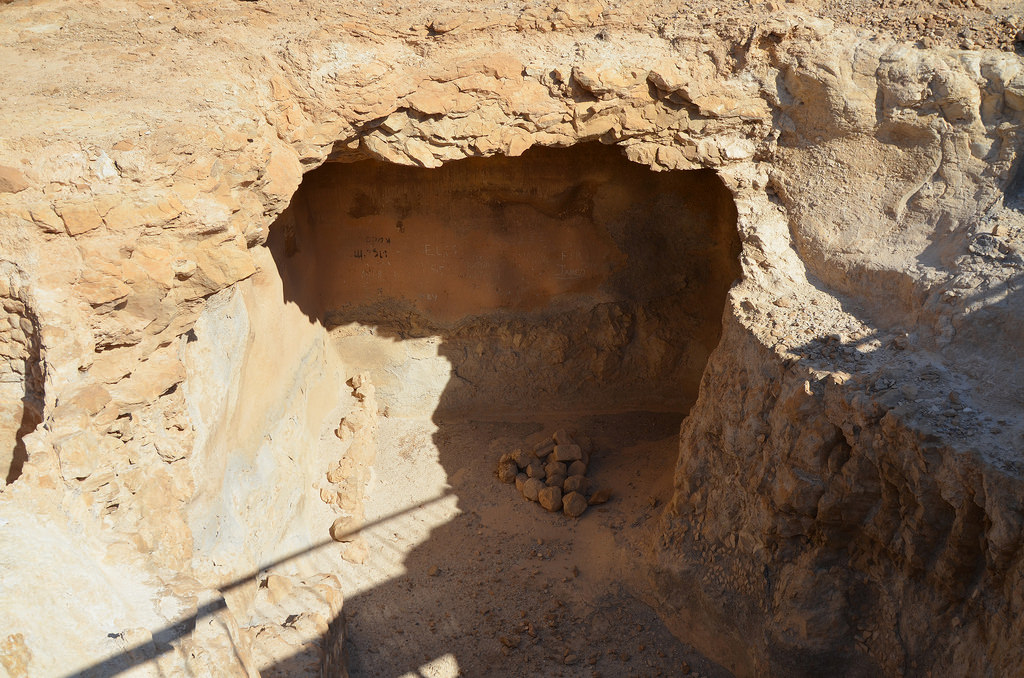
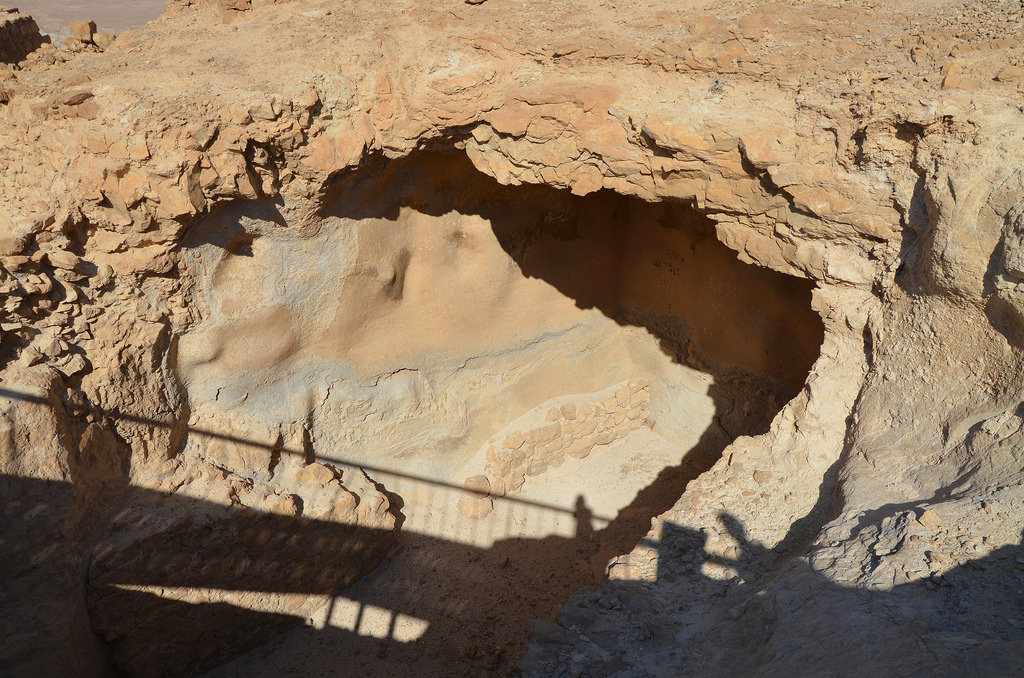
One of the cisterns was built at the top of Masada to preserve water during times of siege and to supply the king’s swimming pools and baths.Herod had a vast network of 12 cisterns dug out of the stone at the mountain’s base on the northwestern slope, each holding roughly 3,450m3 of water. One of the cisterns was built at the top of Masada. Donkeys would transfer the water to other cisterns on the top of Masada.
THE COLUMBARIUM TOWERS
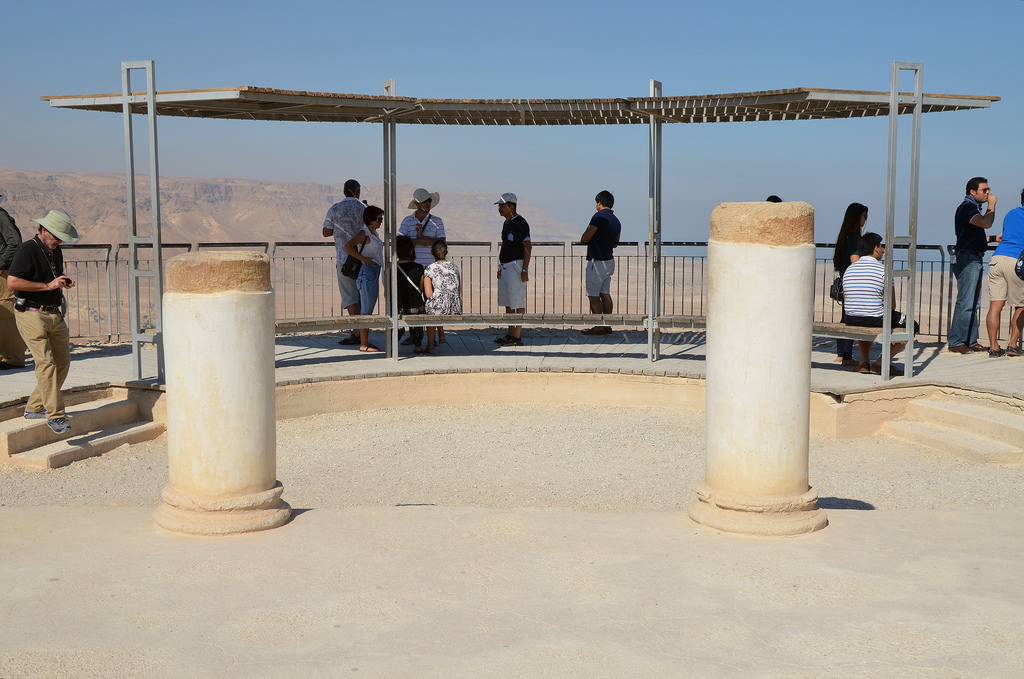
The circular columbarium with niches for doves and pigeons is located on the south side of Masada.One of the columbarium towers with niches for raising doves and pigeons. Bird droppings were used as agricultural fertilizer. These birds were also used to send messages and supply meat to the Masada’s inhabitants.
THE DEFENSE WALLS AND GATES
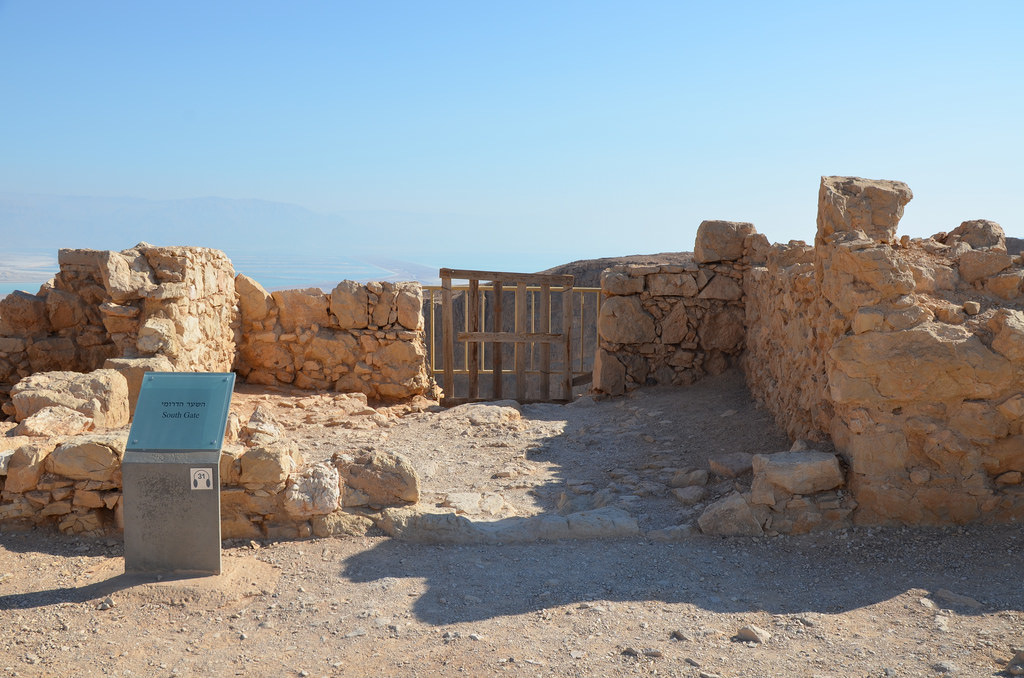
The defence wall surrounding the mountain top and built by Herod. It was 4m wide and 6m high with 37 towers 25m high every 70-80 metres.The South Gate.
THE ROMAN SIEGE RAMP AND CAMPS
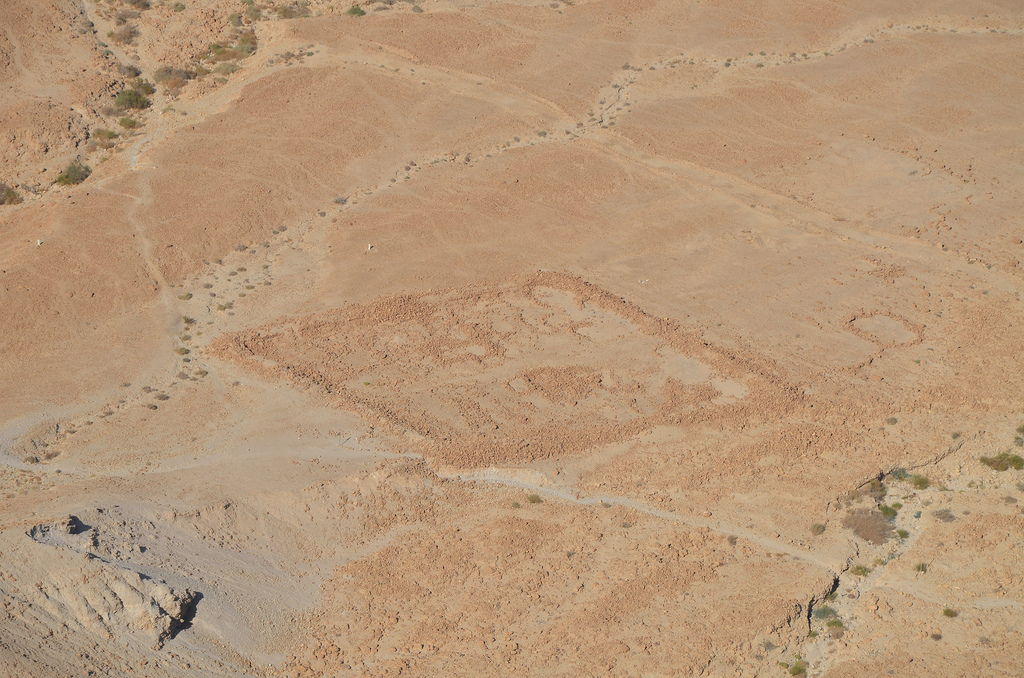
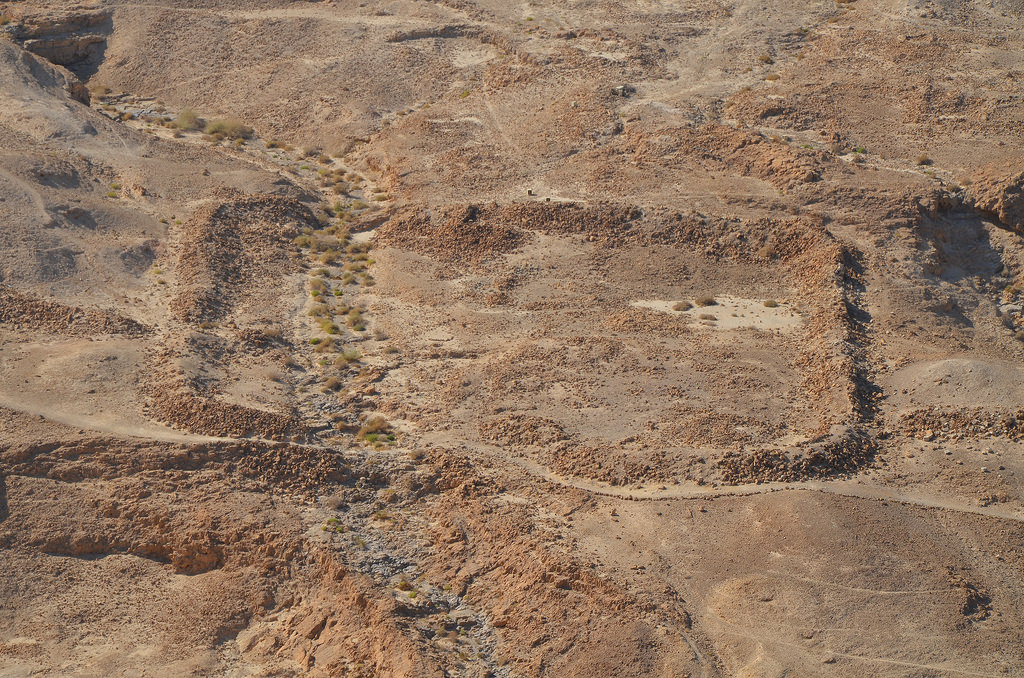
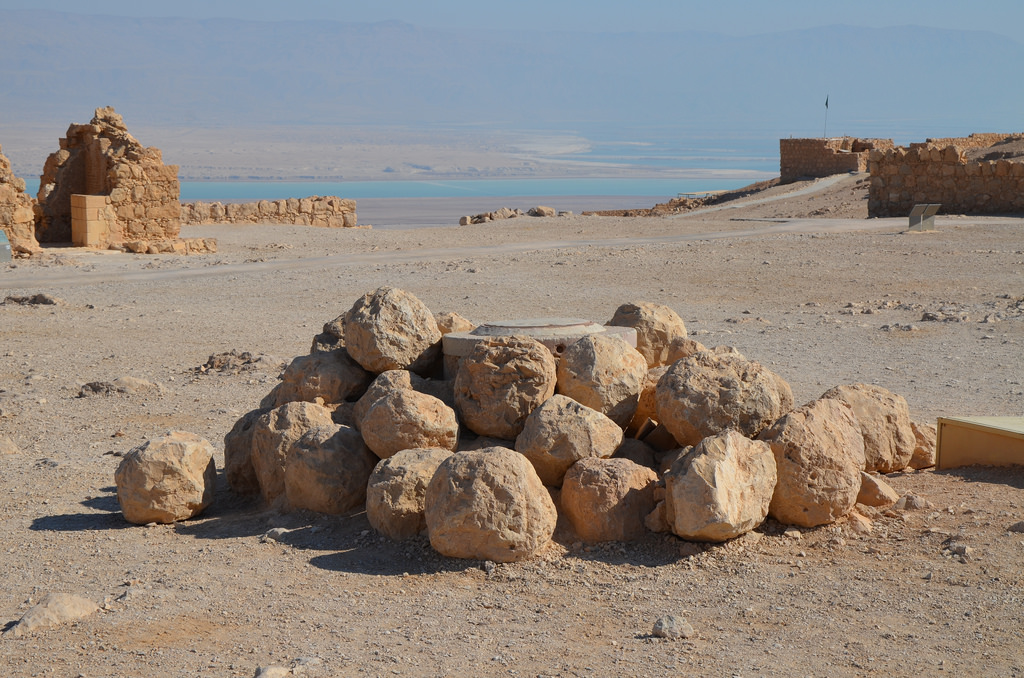
View from the hilltop of Masada of the Roman siege ramp and remnants of Camp E, one of several legionary camps.Remnants of Camp A, one of several legionary camps seen from the hilltop.Remnants of Camp B, one of several legionary camps just outside the circumvallation wall around Masada, seen from the hilltop.Remnants of Camp C, one of several legionary camps just outside the circumvallation wall around Masada, seen from the hilltop.Remnants of Camp D, one of several legionary camps just outside the circumvallation wall around Masada, seen from the hilltop.Remnants of Camp E, one of several legionary camps seen from the hilltop.Remnants of Camp F, one of several legionary camps just outside the circumvallation wall around Masada, seen from the hilltop.Remnants of Camp F, one of several legionary camps just outside the circumvallation wall.Roman catapult stones dating from the First Jewish Revolt.
Carole, thank you so much for this post and wonderful photos of Masada. This has been one of my favourite archaeological interests for a very long time. Such a sad story. There was a film on T.V. some years ago starring Ben Cross. called, of course “MASADA” it was excellent and very touching. Maybe you can see it on U tube.
Carole, Thank you so much for capturing some of the most important images of Masada in very good light and without the mass of tourists that usually are found on the site. You have captured the sense of place that is so difficult to achieve. Well done!

















 following hadrian photography
I can just imagine what a wonderful palace it must have been!
LikeLiked by 1 person
Carole, thank you so much for this post and wonderful photos of Masada. This has been one of my favourite archaeological interests for a very long time. Such a sad story. There was a film on T.V. some years ago starring Ben Cross. called, of course “MASADA” it was excellent and very touching. Maybe you can see it on U tube.
LikeLiked by 1 person
Carole, Thank you so much for capturing some of the most important images of Masada in very good light and without the mass of tourists that usually are found on the site. You have captured the sense of place that is so difficult to achieve. Well done!
LikeLiked by 2 people
Pingback: Machaerus – following hadrian photography