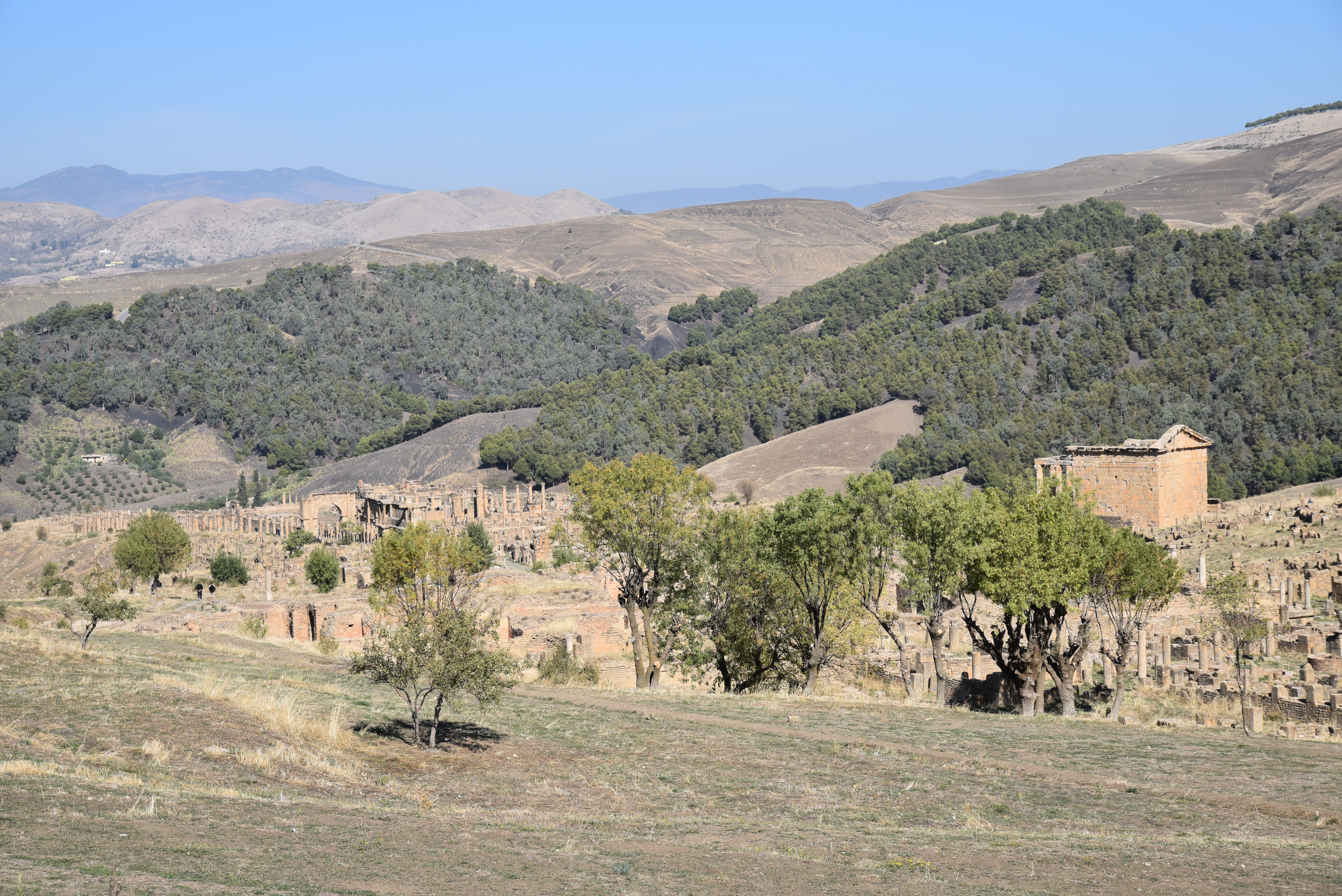
The UNESCO World Heritage site of Djémila, meaning “beautiful” in Arabic and also known by its Berber name Cuicul, is located near the northern coast of Algeria, east of Algiers. Nestled between two deep ravines at an elevation of 900 meters above sea level, Djémila features streets with wheel ruts that are lined with elaborate houses, a forum, temples, markets, and triumphal arches. The site exemplifies Roman town planning adapted to its mountainous location.
Cuicul was a veteran colony founded under Nerva (r. AD 96-98). It was a prosperous commercial city during the 2nd and early part of the 3rd centuries AD, outgrowing its original defensive wall and reaching a population of over 12,000. Under the Antonine Dynasty (AD 96-192), the town had a forum, a capitol, several temples, a curia (town hall), a market, and a theatre. Under the Severan dynasty (AD 193-235), new districts were laid out around a new forum. Cuicul became a city where retired soldiers enjoyed a comfortable lifestyle.
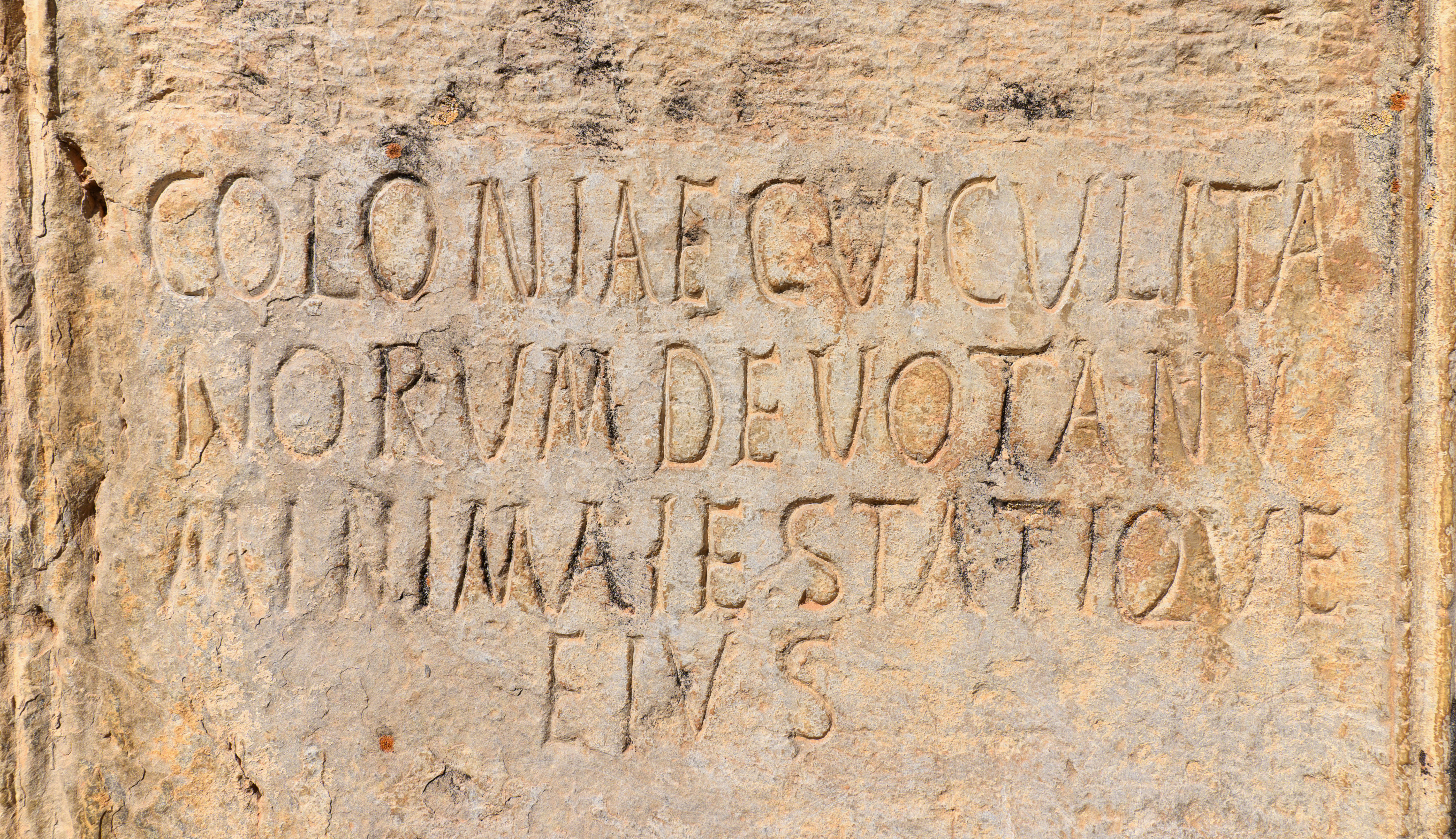
Latin inscription mentioning the Numen Caesaris of Cuicul and the name of the colony. ILAlg II.3
Christianity came to Cuicul early, with the first bishop recorded in AD 255. Religious buildings appeared by the end of the 4th century AD as the southern extension of the city, known today as the Christian quarter, with its baptistery, chapels, and basilicas. The city fell to the Vandals and had a brief renaissance under the Byzantines during the first half of the 6th century AD, only to be abandoned after the Arab invasion of North Africa.
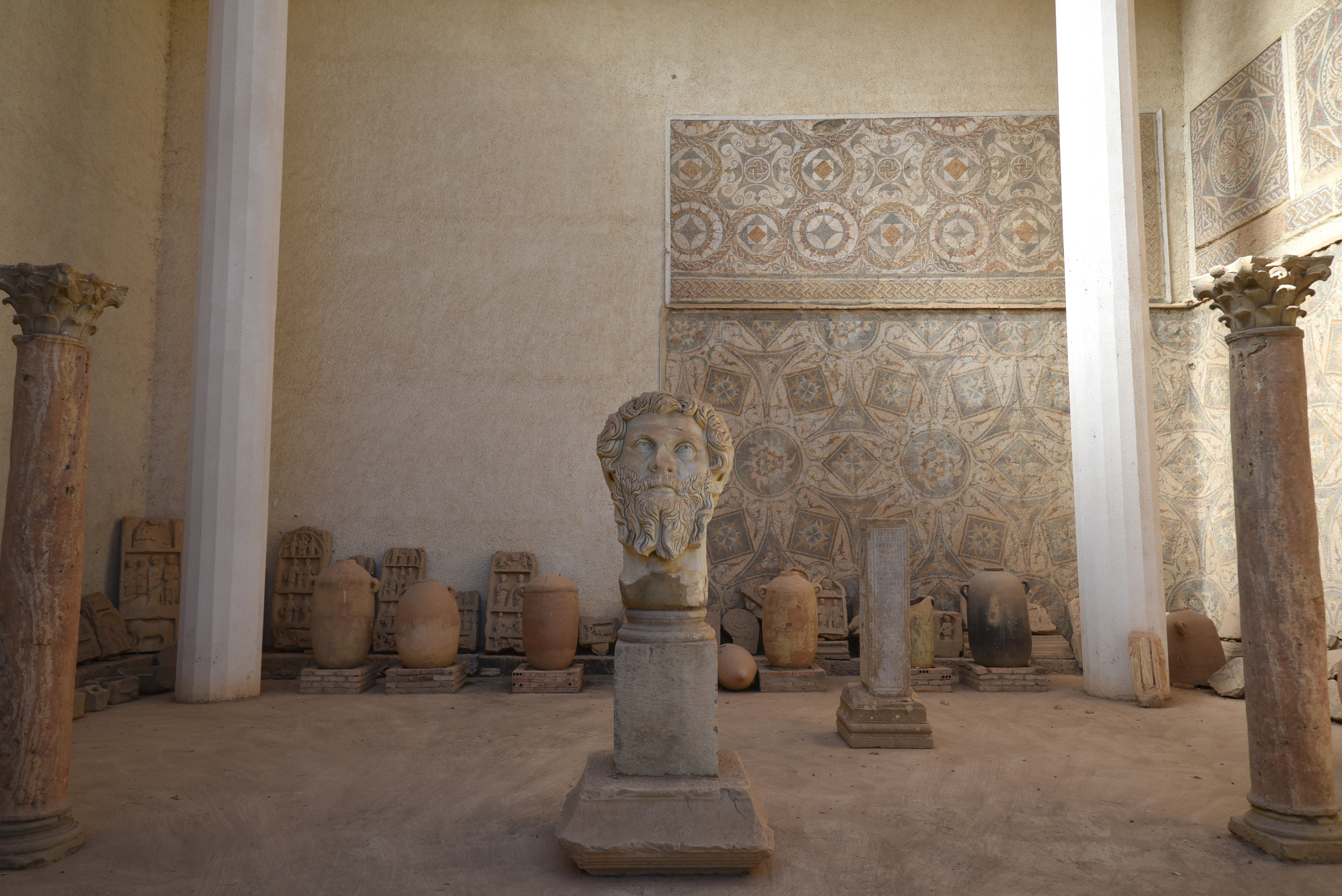
The Museum of Djémila is located within the site and contains beautiful Roman mosaic pavements found on the site. They cover around 1700 m², almost the whole of the wall space of the museum. Highlights include a hunting scene mosaic – the 10-metre-long so-called Mosaic of the Ass and the Toilet of Venus.
PORTFOLIO
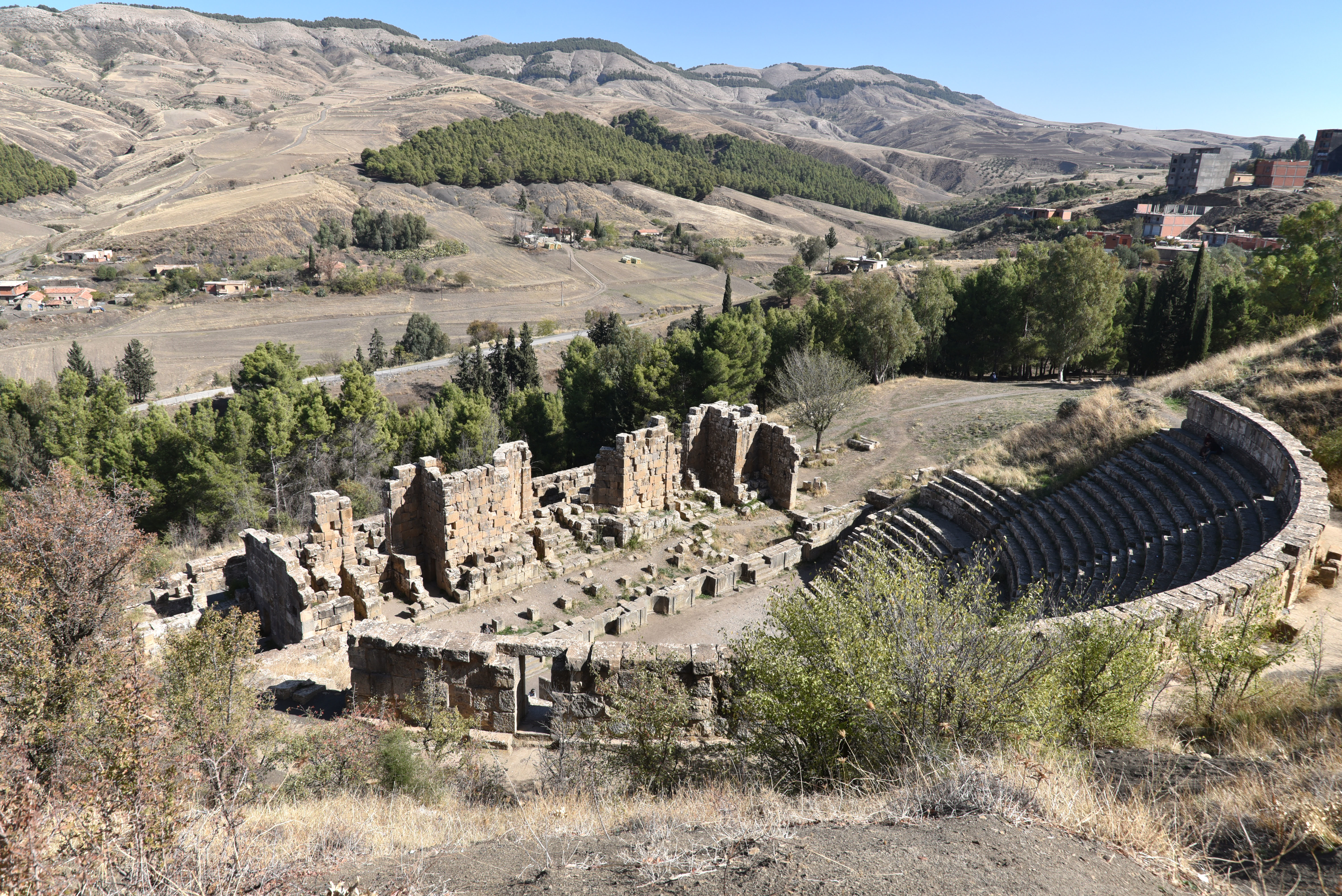
View of Cuicul from above.The Roman theatre, constructed into the side of the hill overlooking the valley, was built in AD 161 at the initiative of Caius Julius Crescens and Caius Julius Didius Crescentianus, who decorated it with statues of Fortuna and Mars, patrons of Cuicul. Its two tiers of seats could have accommodated 3,000 spectators.
The Old City/Forum
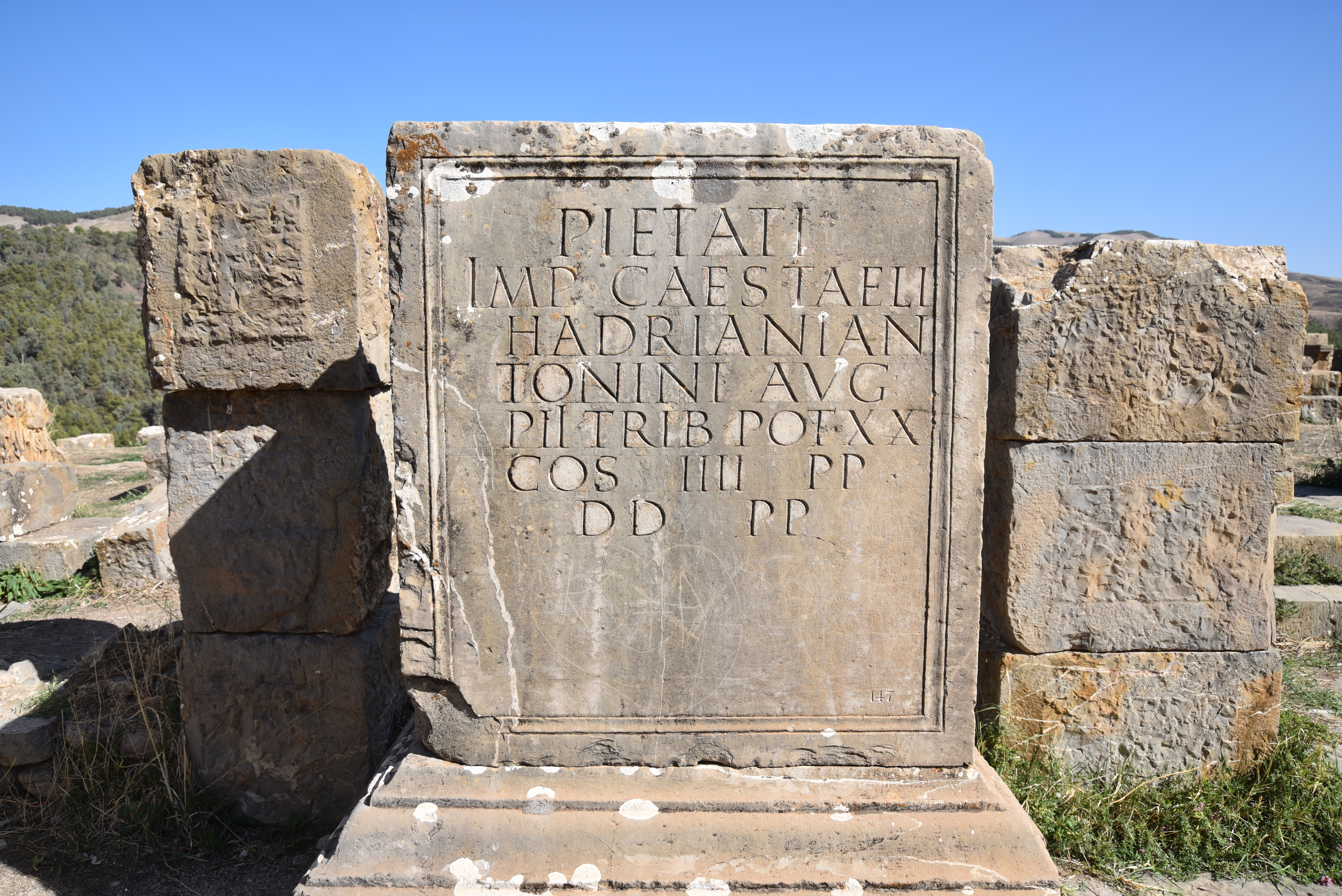
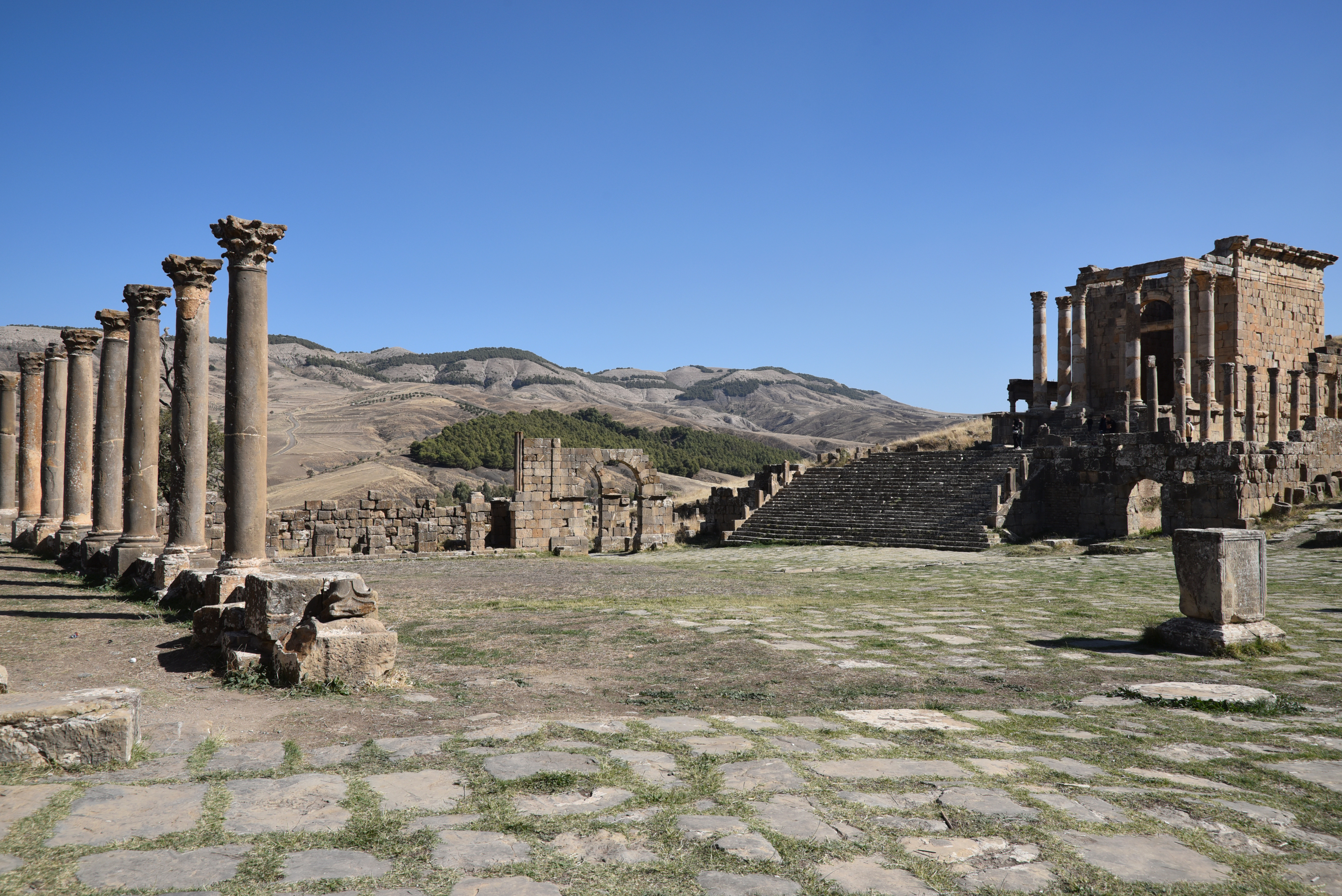
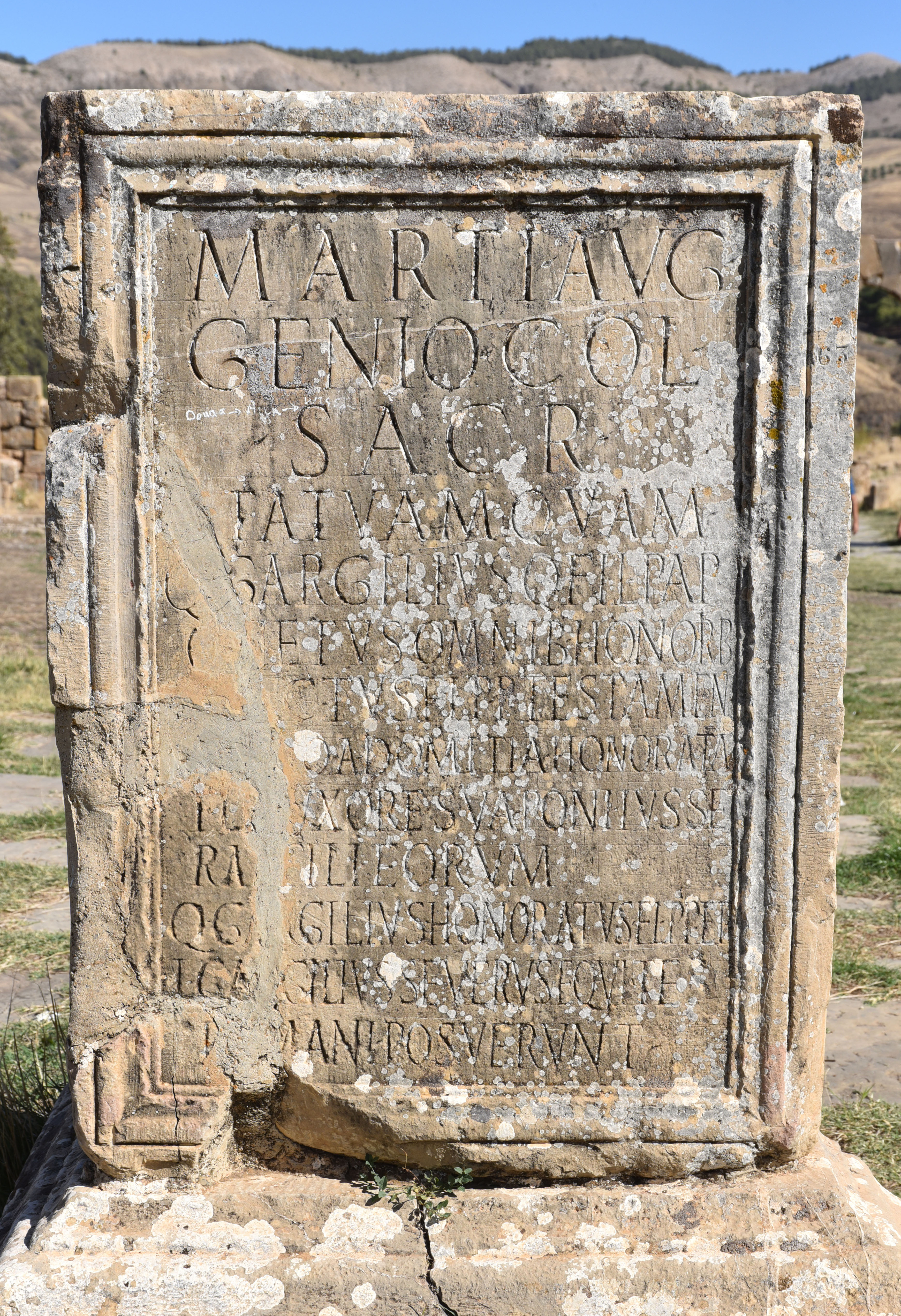
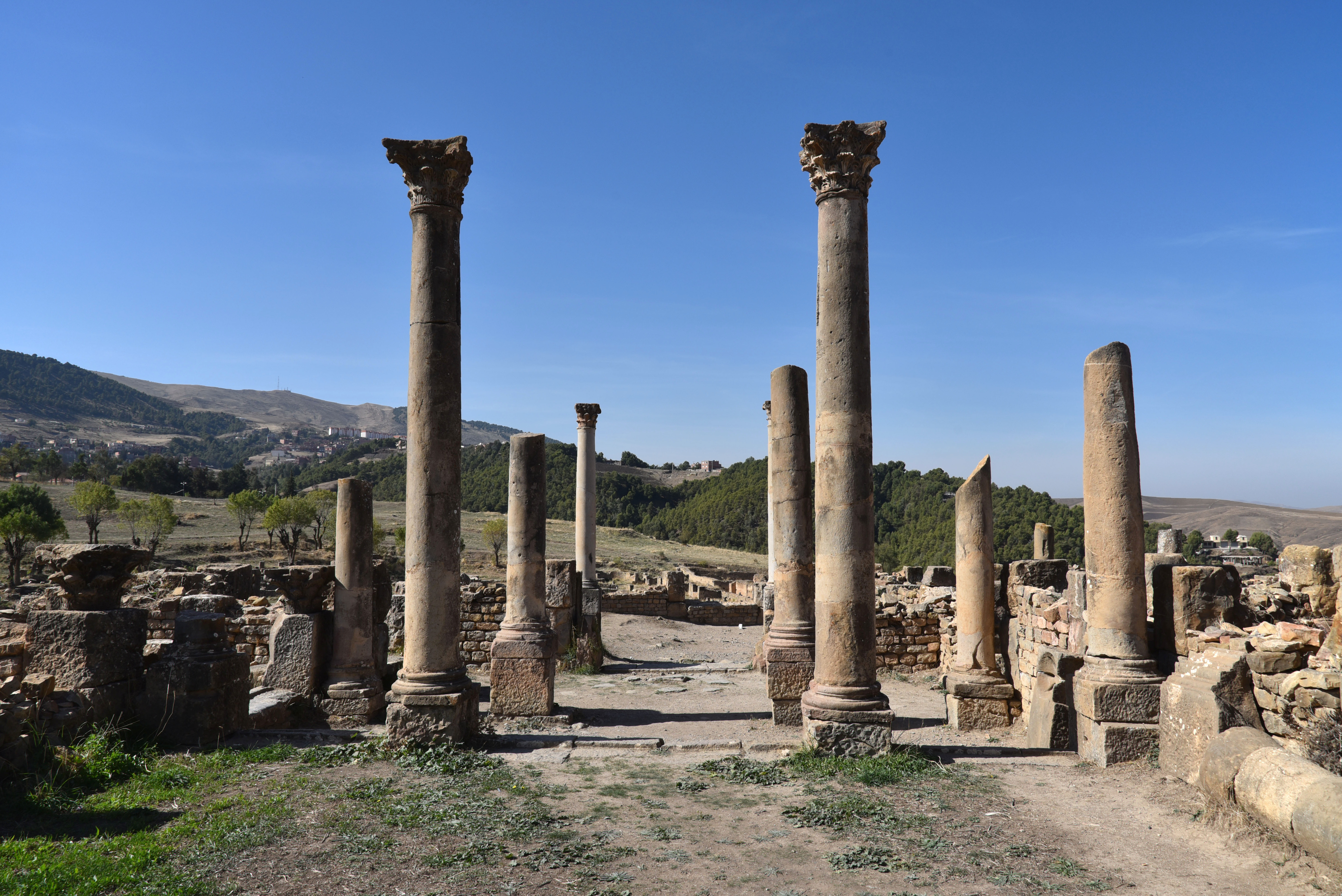
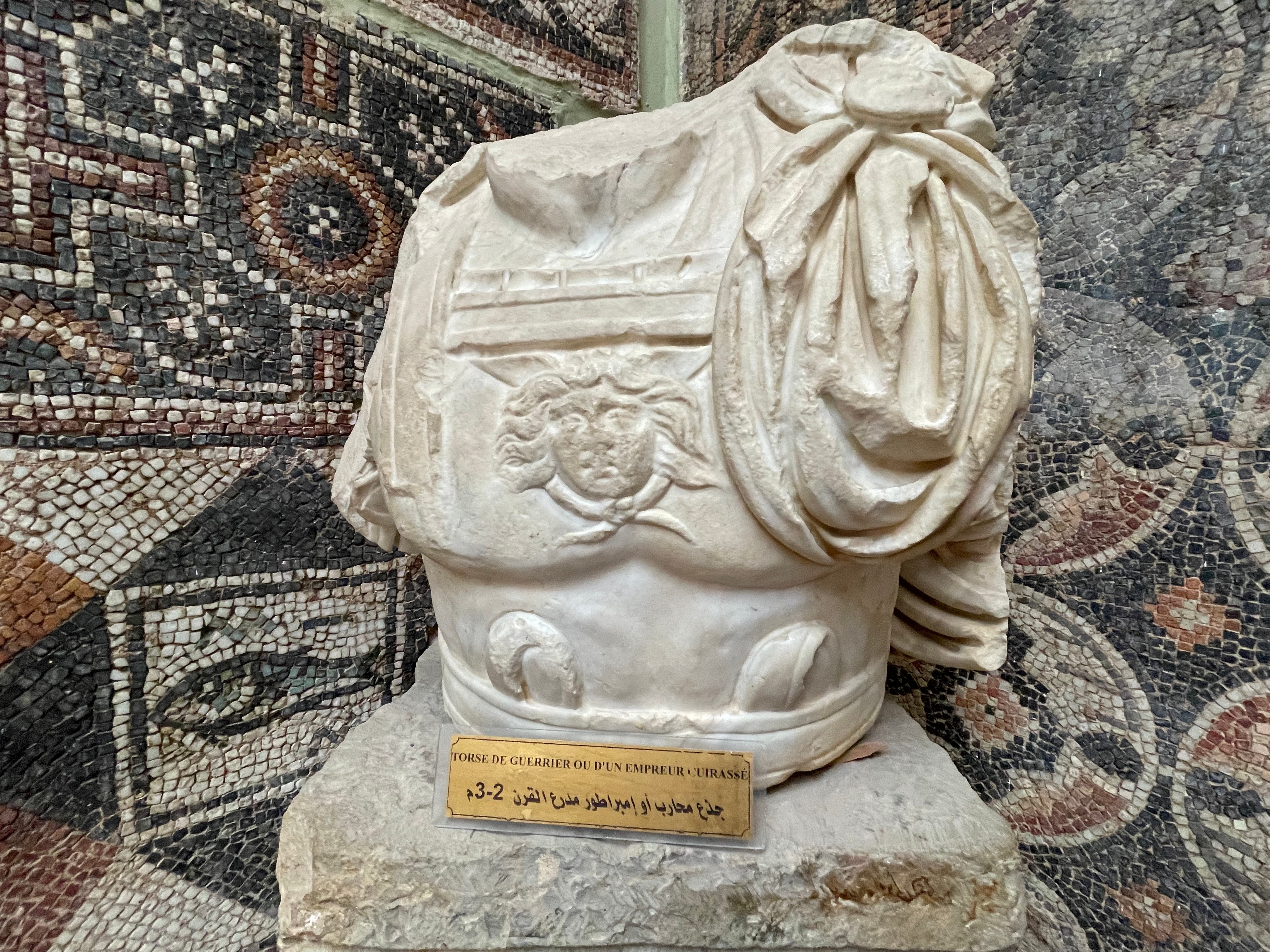
The Cardo Maximus leading to the North Gate. This street, which averaged 5 m wide, was bordered on both sides by a 3.50 m wide pavement sheltered by porticoes and a Tuscan Doric colonnade.The Tuscan Doric colonnade of the Cardo Maximus.An arch on the Cardo Maximus next to the Temple of Genetrix. Crowned by an elaborately carved cornice, this monument features a single archway flanked on either side by two engaged Corinthian columns.The Temple of Genetrix. This sanctuary is enclosed within a trapezoidal courtyard surrounded by porticoes on three sides.The Temple of Genetrix stands on top of a podium approached by twelve steps.The Forum was located at the heart of the original settlement. It was a paved square measuring 48×44 m with porticoes on two sides. It included the curia, judicial basilica and Capitoline Temple.Dedications in the Forum dedicated to Hercules (AE 1914, 0236) and the Genius of Cuicul (AE 1908, 0241).Purification altar in the Old Forum decorated with carving in relief. One side shows the requirements for a sacrifice, the other a winged genius from whom sprouts vine tendrils and ears of corn.Dedication set up and paid for by the city of Cuicul to the Pietas of Antoninus Pius. AE 1916, 0017Building dedication to Hadrian. ILAlg-02-03, 07777The Market of Cosinius was put up by the brothers C. and L. Cosinius, who spent 30,000 sesterces for its construction during the reign of Antoninus Pius (AD 138-161).The Market of Cosinius was a square building with a portico on all sides and a circular tholos in the middle of its central courtyard. There was a circular kiosk in the courtyard’s centre and eighteen shops around the market perimeter fronted with stone counters adorned with animal heads and garlands.Torso of a statue of Jupiter from the Capitolium. This temple was dedicated to the Capitoline Triad: Jupiter, Juno, and Minerva. Due to the slope’s decline, the temple was built on arches and piers of a massive basement, which is the only part that remains today. The Capitolium was probably built in the second half of the 2nd century.
The New Severan City/Forum
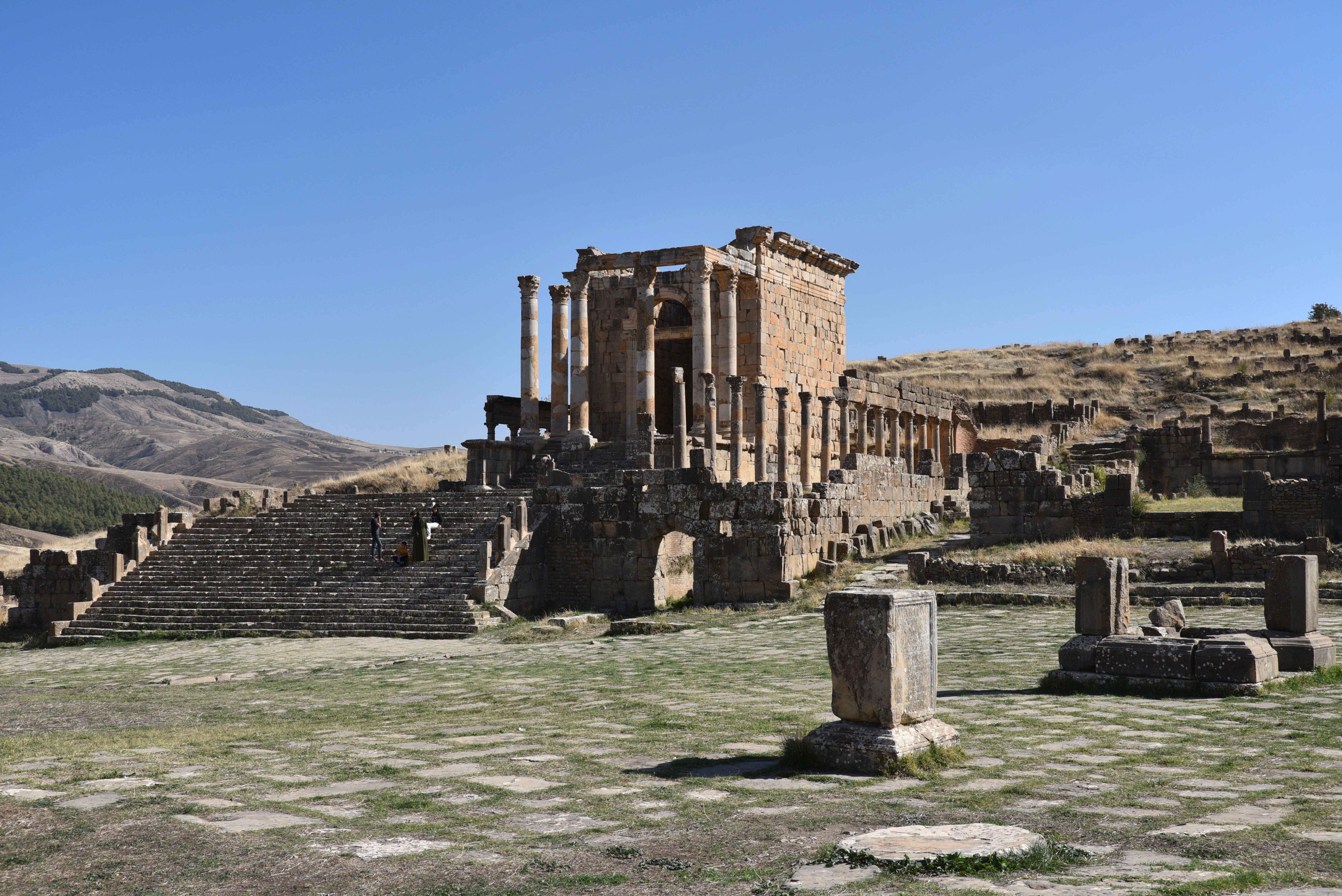
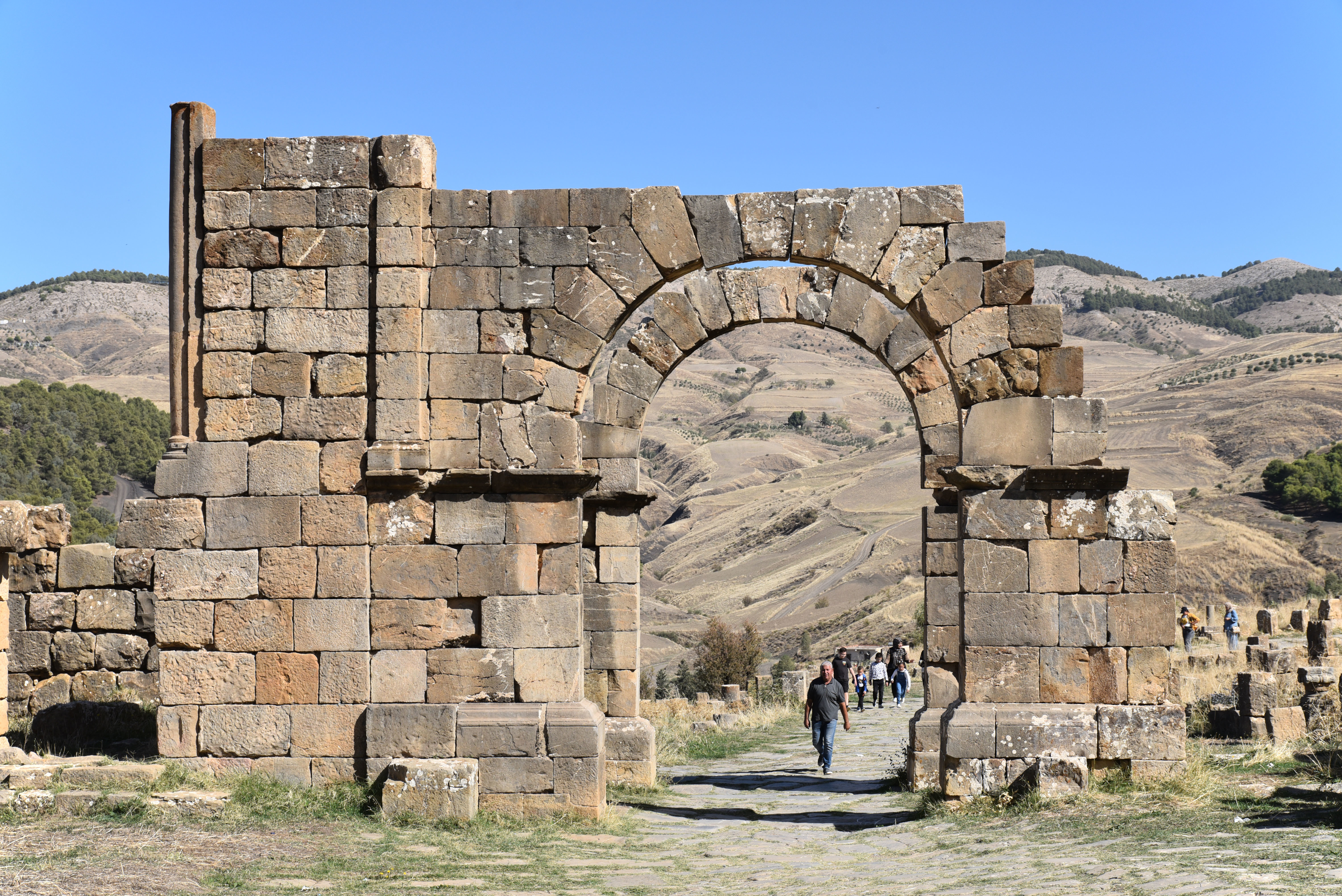
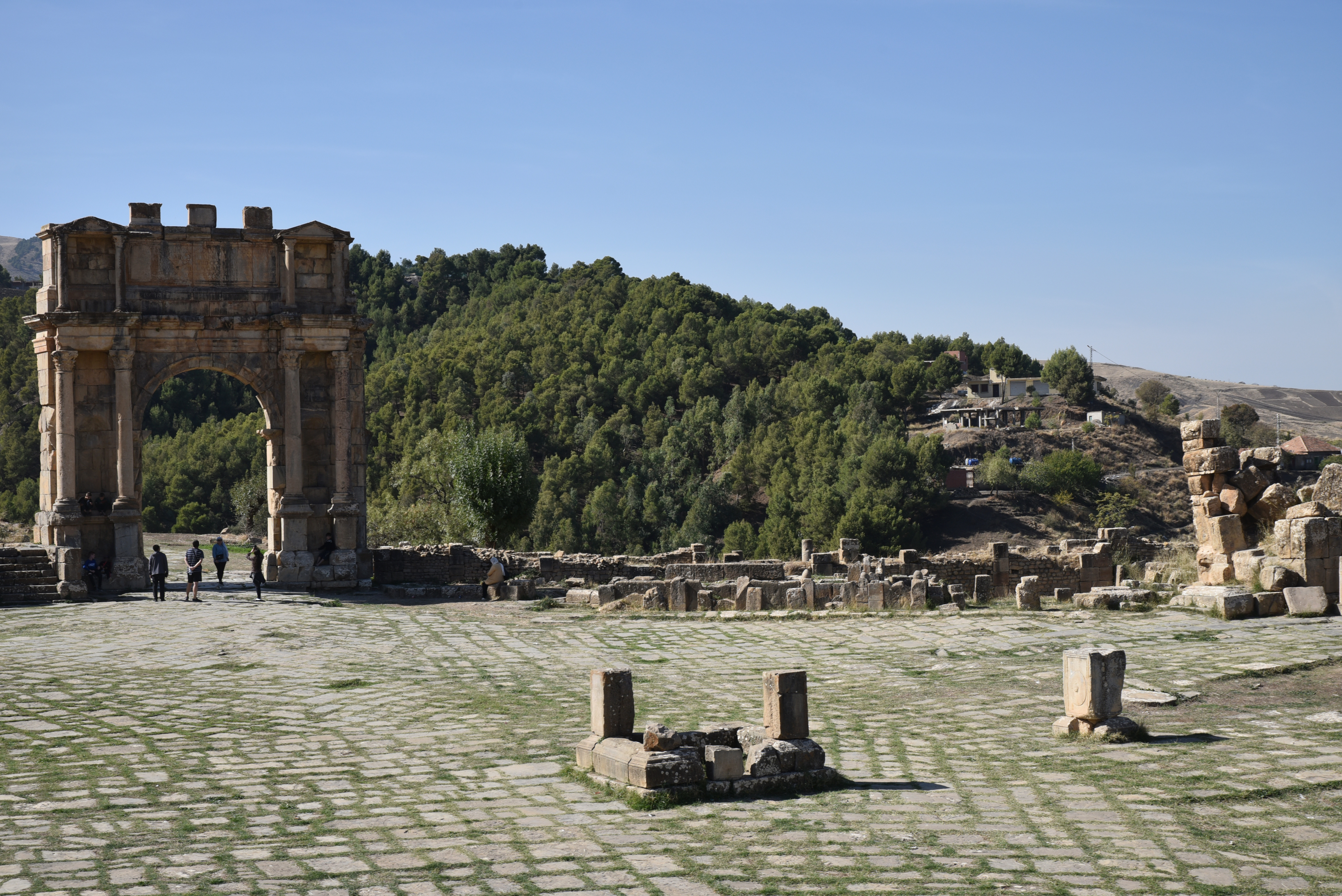
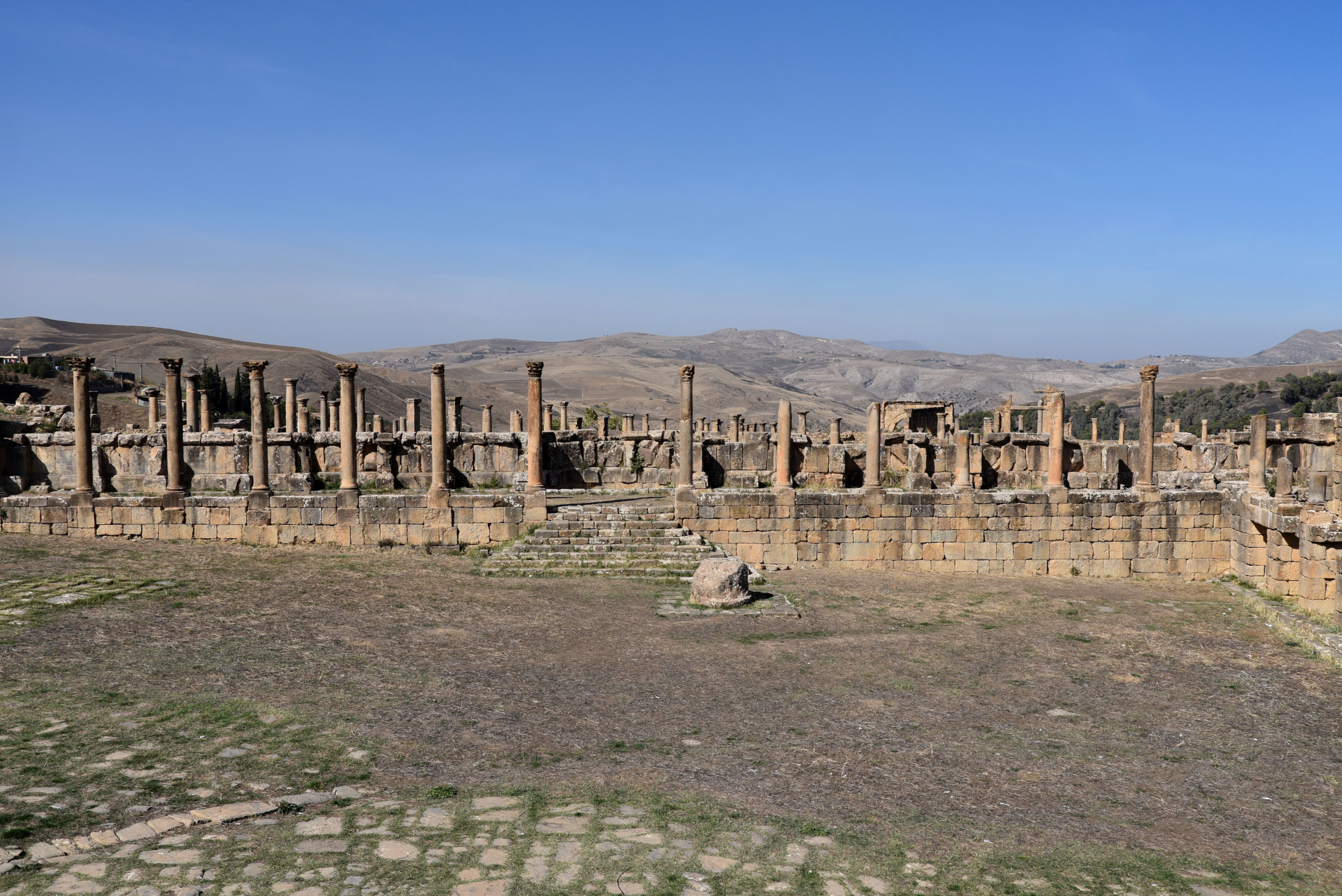
View of the New Severan Forum from above.The back side of the Temple of the Gens Septimia in the Severan Forum and the western colonnade.The Severan Forum was located in the heart of the new city of the 3rd and 4th centuries AD. The new Forum was a large quadrilateral square covering 3,200 sq.m, dominated by the Temple of the Gens Septimia.The square had porticoes on its two long sides. It was paved throughout; in front of the basilica, a dedication records that the god Mars was the natural protector of this city founded by military veterans.The dedicatory inscription recording that the god Mars was the protector of the city founded by military veterans. AE 1912, 0026The Severan Forum.The Temple of the Gens Septimia was dedicated in AD 229, during the reign of Alexander Severus, to the gens Septimia (the imperial family of the Severii).The Temple of the Gens Septimia stood on top of a podium approached by a second flight of 13 steps, the uppermost of which passed between the four columns of the pronaos. The interior of the building was adorned with marble. Inside, colossal heads of Septimius Severus and his wife, Julia Domna, were discovered.Colossal head of Septimius Severus found inside the Temple of the Gens Septimia.The North portico of the Severan Forum.The double eastern entrance to the Severan Forum along the road leading to the theatre and eventually to Cirta.The western side of the Severan Forum with the Arch of Caracalla.The Arch of Caracalla. The monument was erected in AD 216 by the people of Cuicul in honour of the reigning emperor Caracalla, his mother Julia Domna and his deceased father, Septimius Severus.The north portico of the Severan Forum that separated the old and new city.
The Christian Quarter
The entrance to the Christian Quarter.The entrance to the Basilica of Cresconius.The Basilica of Cresconius, a huge church (40x28m) with a central nave flanked on either side by two aisles.The Basilica of Cresconius.The North Basilica. Measuring 30x15m, it has a nave with two aisles separated by reused columns.The Baptistery, a circular pavilion built of bricks and surmonted by a dome.The interior of the Baptistery, an annular corridor with a square basin surmounted by a ciborium of stone, provided for baptism.The seating recesses inside the Baptistery. Originally rendered with stucco, recesses (36 in total) provided the neophytes with seats and space for clothing.
The Western Quarter
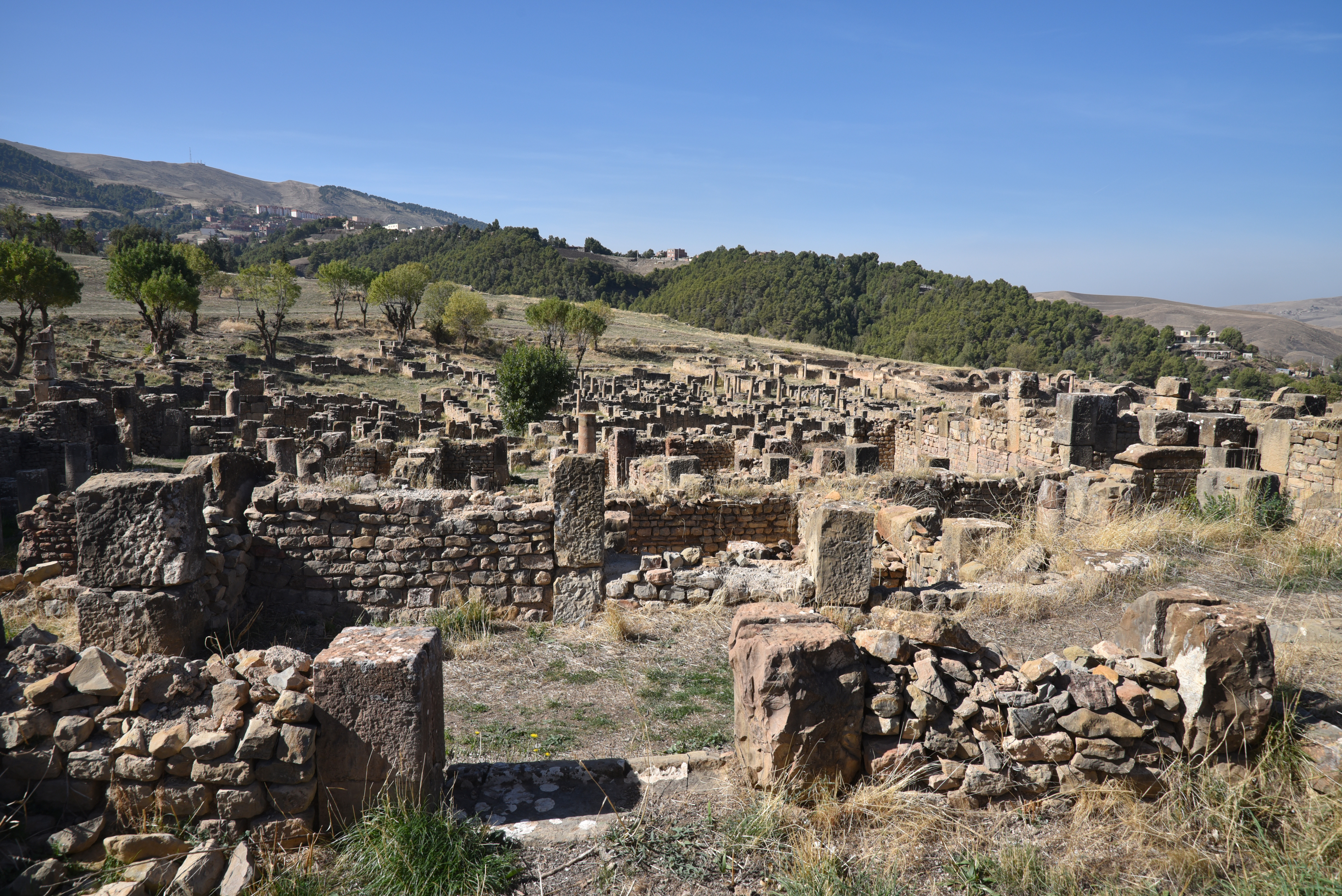
The Western Quarter with the House of Bacchus. The lavish middle-fifth-century House of Bacchus included a peristyle court embellished with four basins and mosaics, a huge banqueting hall paved with a mosaic of hunting in the amphitheatre, two gardens, and a fish pond.View of the Western Quarter with the House of Bacchus (left) and the Great Baths (right).The northern side of the Cardo Maximus.The southern side of the Cardo Maximus.A conical fountain on the Cardo Maximus. This monument takes the form of a 5 m high cone. A lead pipe delivered water into a circular basin adorned with pinecone finials on its rim.
The Djemila Museum
The courtyard of the museum housing the colossal head of Septimius Severus, geometric mosaics, architectural fragments, votive stelai dedicated to Saturn and other inscriptions.The interior of the museum with mosaic pavements covering almost the whole of the wall space, from floor to ceiling.Two funerary statues of a couple.
Model of the ruins of Cuicul.Mosaic depicting the Toilet of Venus from the House of the Ass. Crowned with a diadem and sitting in a shell supported by two tritons, Venus gazes at her reflection in a mirror. At the four corners, nereids riding marine creatures escort the goddess. Dated to the late 4th or beginning of the 5th century AD.The Rape of Europa, mosaic from the House of Europa. Dated to the late 4th century or 5th century AD. Above a sea inhabited by dolphins, fishes and other marine creatures, Jupiter, disguised as a bull, is carrying off Europa on his back.Great Hunt Mosaic, from the banqueting hall in the House of Bacchus. Dated to the mid-4th century AD.
Blas de Roblès, Jean-Marie; Sintes, Claude; Kenrick, Philip. Classical Antiquities of Algeria: A Selective Guide (p. 127). Society for Libyan Studies. pp. 100-137
The imposing and impressive ruins of the Roman town Ulpia Oescus are located near the village of Gigen in northern Bulgaria, at the confluence of the Iskar River and the Danube. The city was established in AD 106 in the province of Moesia Inferior. It was granted the status of a colony by Emperor Trajan in honour of his victory over the Dacians. Ulpia Oescus was built on the former camp of the Fifth Macedonian Legion, which was positioned at this place with a canabae (civilian settlement) in late-Augustan times.
In the 1st century AD, Oescus was an important military post that protected the Danube Limes road to Trimontium (modern-day Plovdiv). At this time, the Romans began to build a strong defensive system of fortresses on its northern border to protect them from attacks by barbarian tribes. Oescus thus became a main military point and the camp of two Roman legions, the Legio IV Scythica and the Legio V Macedonica. It maintained its permanent military encampment at this site until AD 101.
L(egio) V M(acedonica) Oes(ci)
The early military camp of the 1st century is now localized precisely under the ruins of the colony built over the subsequent century. The epigraphic monuments of veterans of the necropolis of Oescus also provide information about the early military camp, the canabae and the presumed vicus. In AD 96, the future emperor Hadrian served the fifth Macedonian legion as tribunus militum in Oescus.
The earliest inscription from Oescus, set up in memory of Resius Chronius, liberated slave of centurion Resius Albanus from Legio V Macedonica. Dated 9 AD. Pleven Regional Historical Museum.
After his victory over the Dacian tribes, Trajan turned the military camp into a town centre and directly elevated it to a colonia, the highest rank of provincial government. The name of the colony – Colonia Ulpia Oescensium – is mentioned for the first time in an inscription from the time of Hadrian.
Ulpia Oescus flourished in the 2nd-3rd century AD as a major city in the Roman province of Moesia Inferior during the times of the Antonines (r. AD 117-192) and the Severans (r. AD 193-235) dynasties. The town had a typical Roman urban planning with a rectangular shape and streets oriented east-west and north-south, covering an area of about 28 hectares. The streets were covered with stone slabs, under which lay a water supply system and sewage channels. About one-third of the city was occupied by public buildings and the rest by workshops and houses. At its peak, Ulpia Oescus had a population of about 100,000.
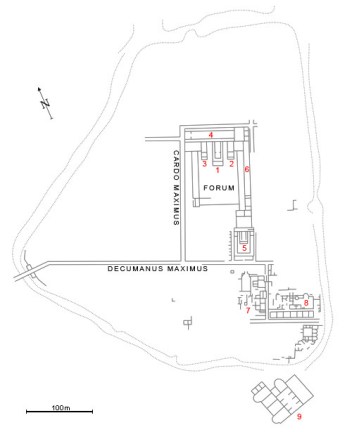
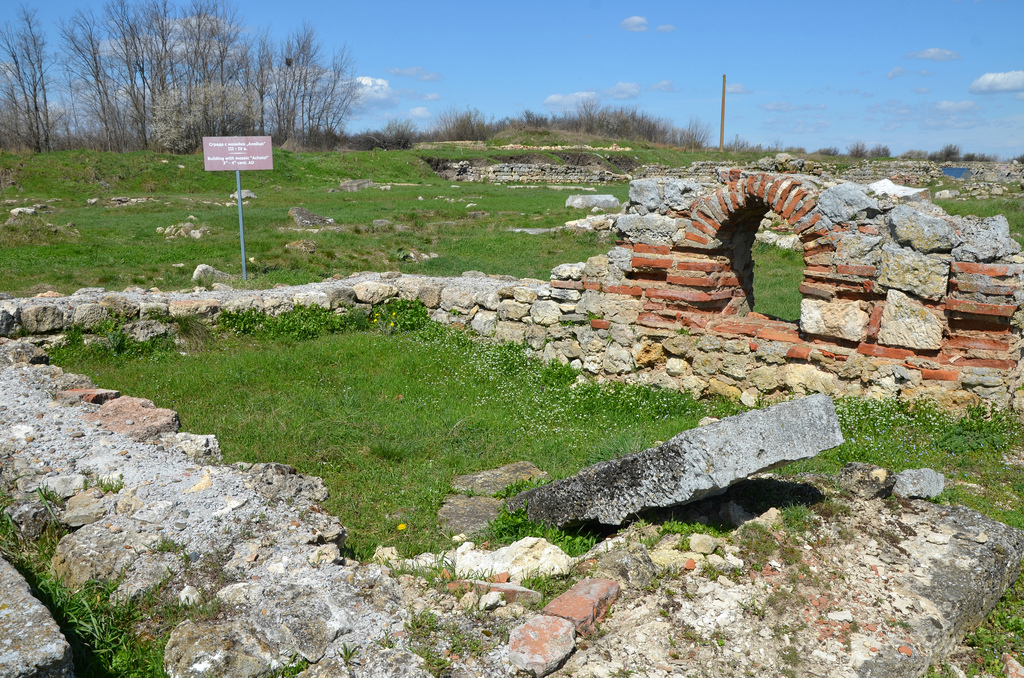
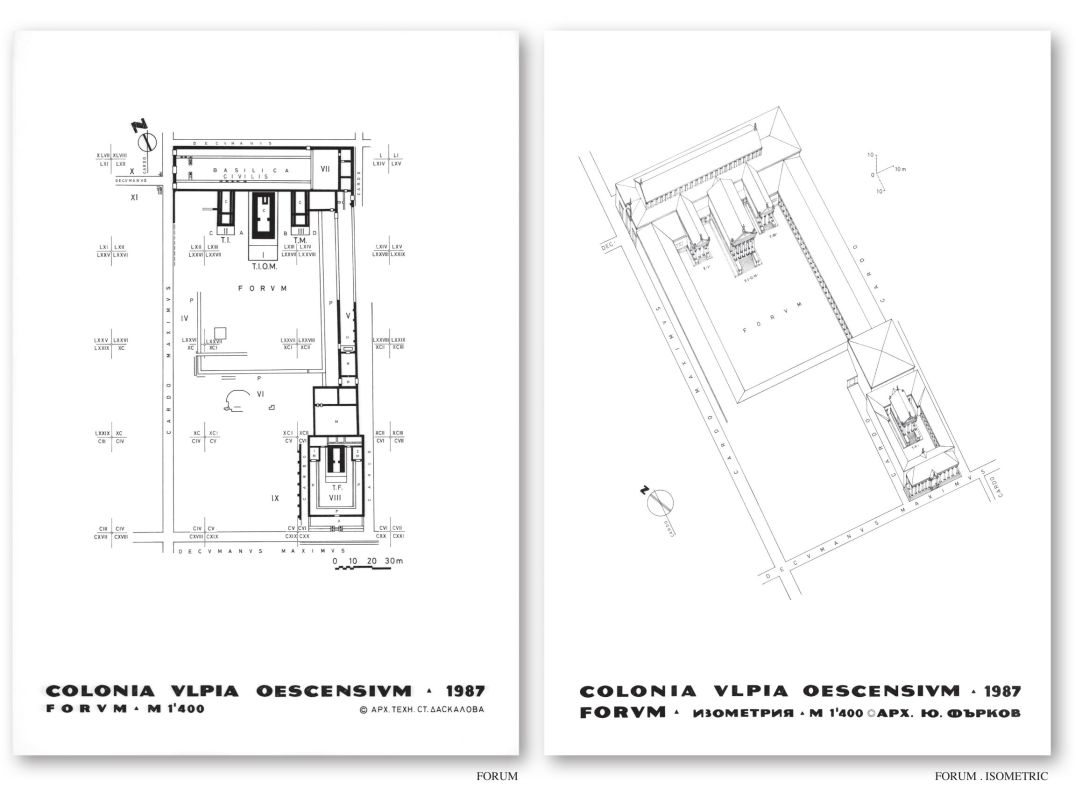
Plan of Ulpia Oescus: 1- 3. Temples of the Capitolian Triad (Jupiter, Juno and Minerva), 4. Civic basilica, 5. Temple of Fortuna, 6. Building for the walking during the winter, 7. Building with the mosaic “Acheioi”, 8. Late Roman Bath, 9. Extra muros building.
The town flourished again at the beginning of the 4th century AD during the reign of Constantine the Great when the capital of the Roman Empire was moved to Constantinople. A stone bridge was erected over the Danube (officially inaugurated on 5 July AD 328 in the emperor’s presence) between Sucidava (present-day Romania) and Oescus. The town was partly destroyed in the 5th century AD by the Huns and rebuilt under Justinian in an attempt to re-establish Oescus as the stronghold of the Danube defence system. However, all the efforts were stopped in late AD 585 and early 586 by the invasion of the Avars.
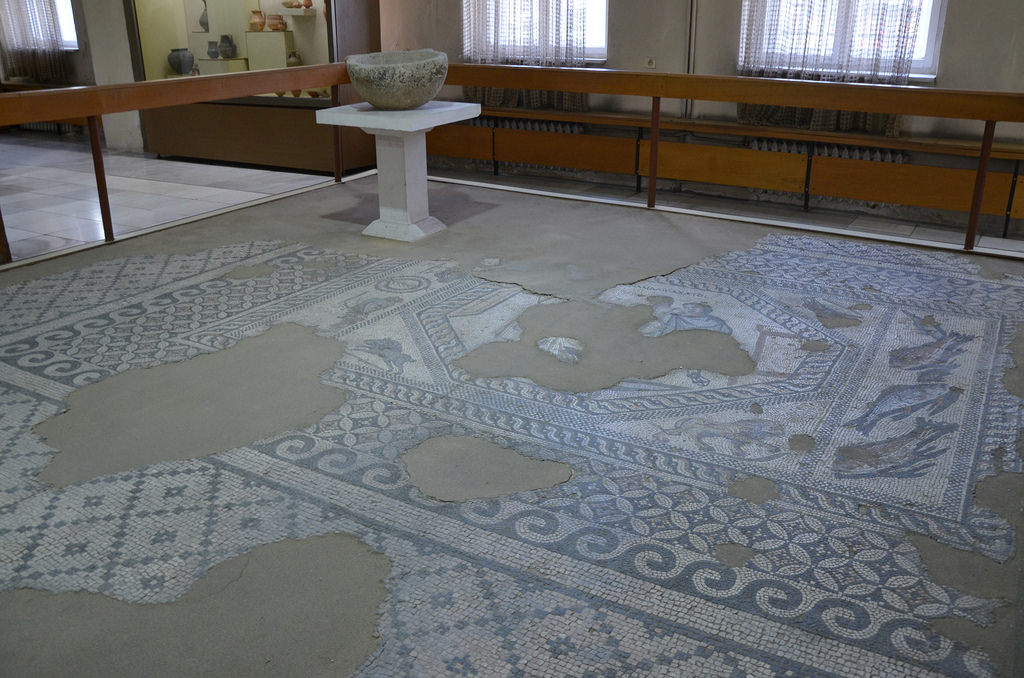
The archaeological excavations have revealed the city’s Forum, the temples of the Roman deities from the Capitoline Triad (Jupiter, Juno, and Minerva), built in AD 125 during the reign of Hadrian, a large basilica (built in AD 135), thermae, and other public buildings. In 1948, the mosaic known as “The Achaeans” was discovered. It is currently on display, along with many other of the site’s artefacts, at the Pleven Regional Historical Museum. Other artefacts from the site, such as a statue of the goddess Fortuna, are on view at the National Archaeological Museum in Sofia. Most of the inscriptions and monuments belong to the 2d century AD and give evidence of people coming from Asia Minor and Gaul, the city’s establishment, and numerous religious cults, including Mithras.
PORTFOLIO
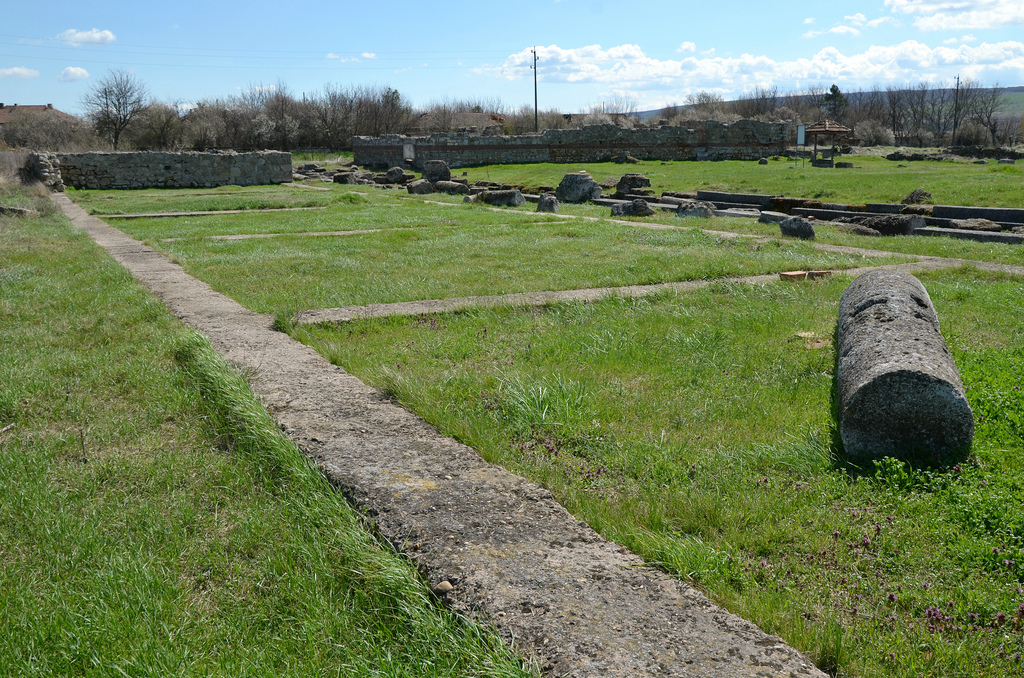
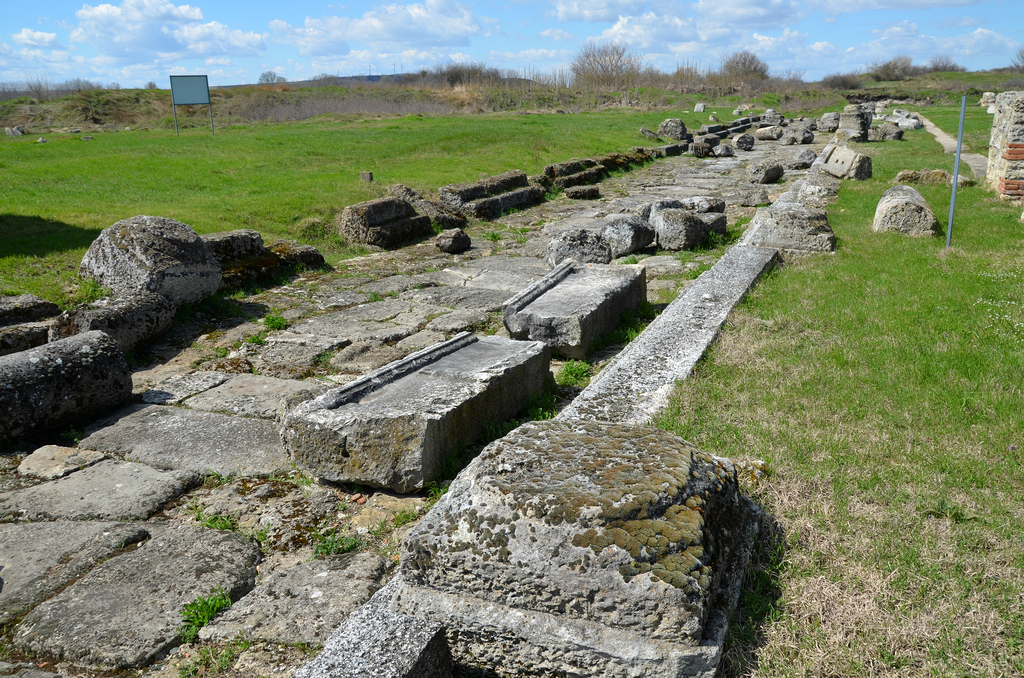
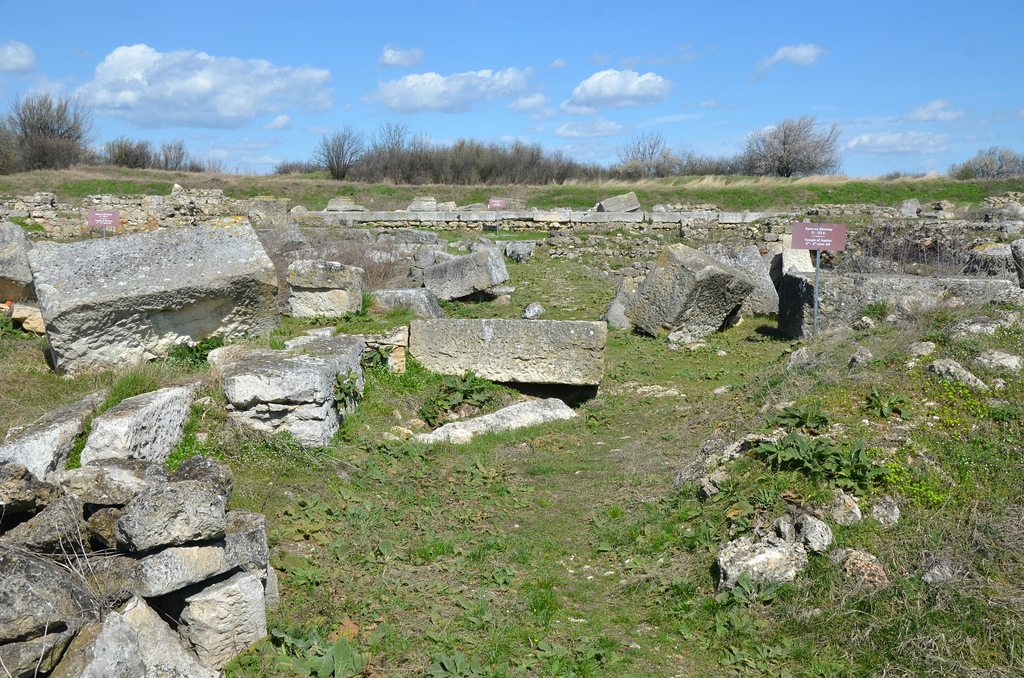
View of the public baths built during the last quarter of the 3rd century AD when the V Macedonica returned to Oescus following Aurelianus’ retreat from Dacia. The baths occupied an area of 700 sq.m, were built in opus mixum (mixed masonry), and had 8 separate rooms.The remains of stores with 7 rectangular rooms arranged side by side with entrances from the south. The stores were built at the end of the 2nd century AD. In one of them, fine glazed pottery was sold from big ceramic centres in Lower Moesia.The street between the public baths and the stores.The street between the public baths and the stores.The Building with the “Achaeans” Mosaic. This was the praetorium of the Roman colony. In one of the rooms was found a coloured floor mosaic depicting a scene of the play The Achaeans by Menander.The mosaic “The Achaeans of Menander” depicting a scene of Menander’s The Achaeans with the inscription MENANDROU ACHAIOI. It is dated to the time of the Septimius Severus. The play was unknown before the mosaic’s discovery in 1948. Pleven Regional Historical Museum.Overview of the Decumanus Maximus and the Temple of Fortuna.The Decumanus Maximus.The ruins of the Temple of Fortuna. The temple area, which adjoined the southeast corner of the forum complex, consisted of a portico facing the south, a peristyle courtyard and the temple itself, occupying an area of 50 x 29 m.The ruined Temple of Fortuna is one of the emblematic buildings of Ulpia Oescus. It was erected in AD 190-192 AD, with funding provided by Commodus. The temple area was destroyed by fire during the Goth invasion in 376/78.
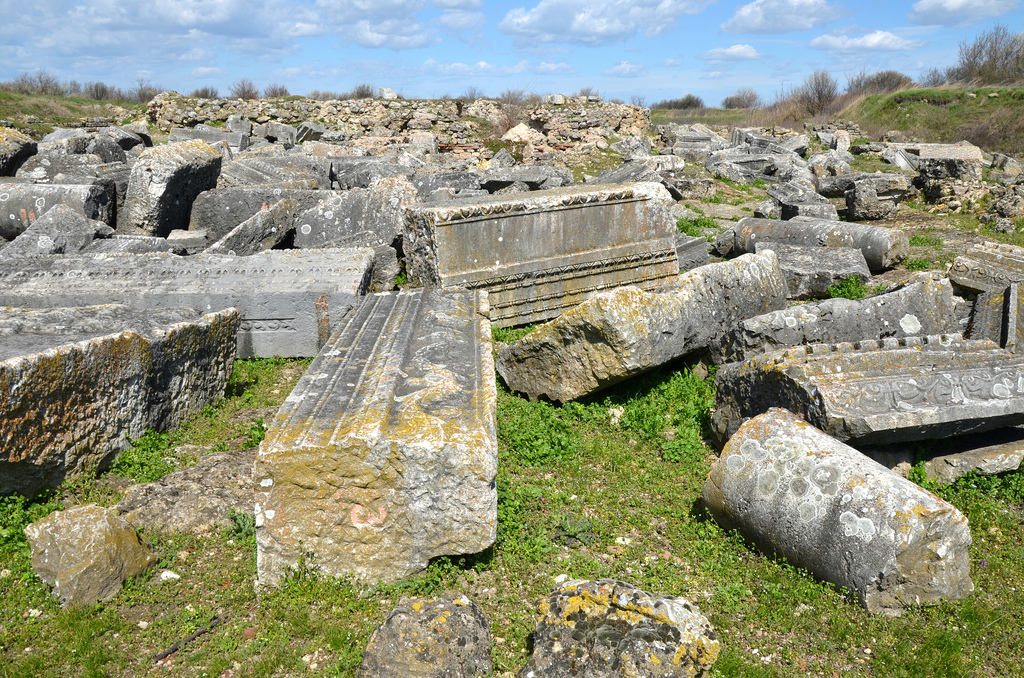
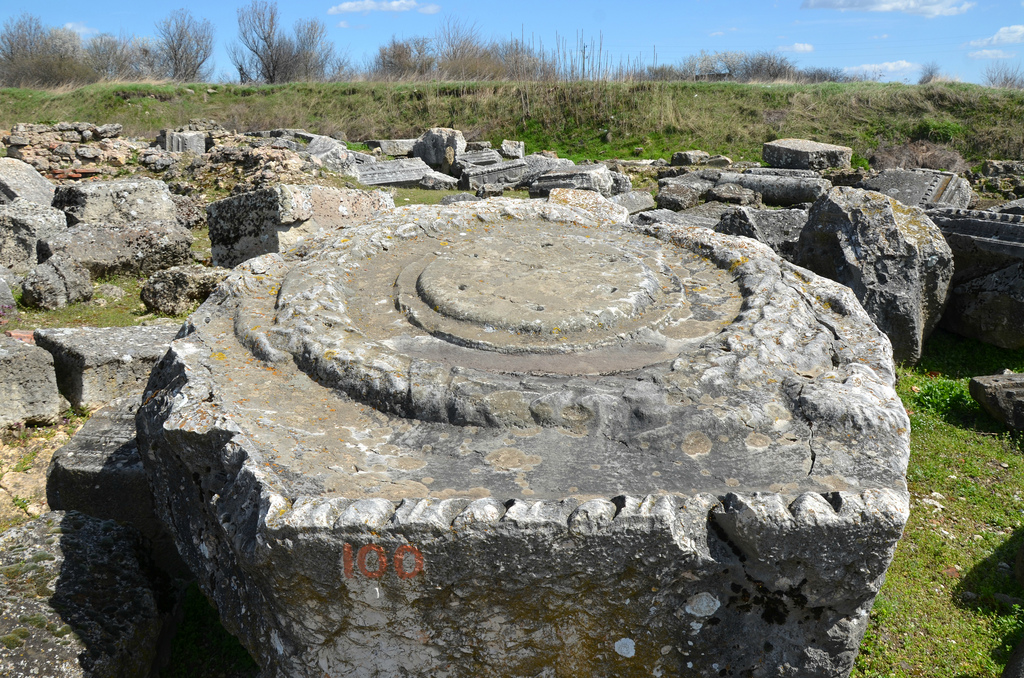
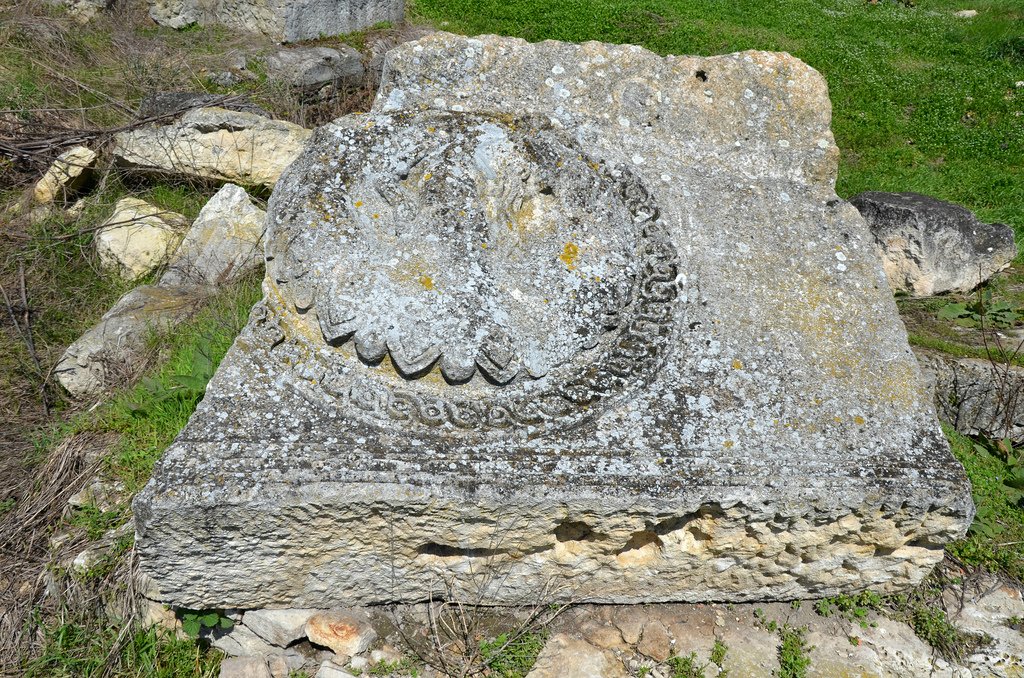
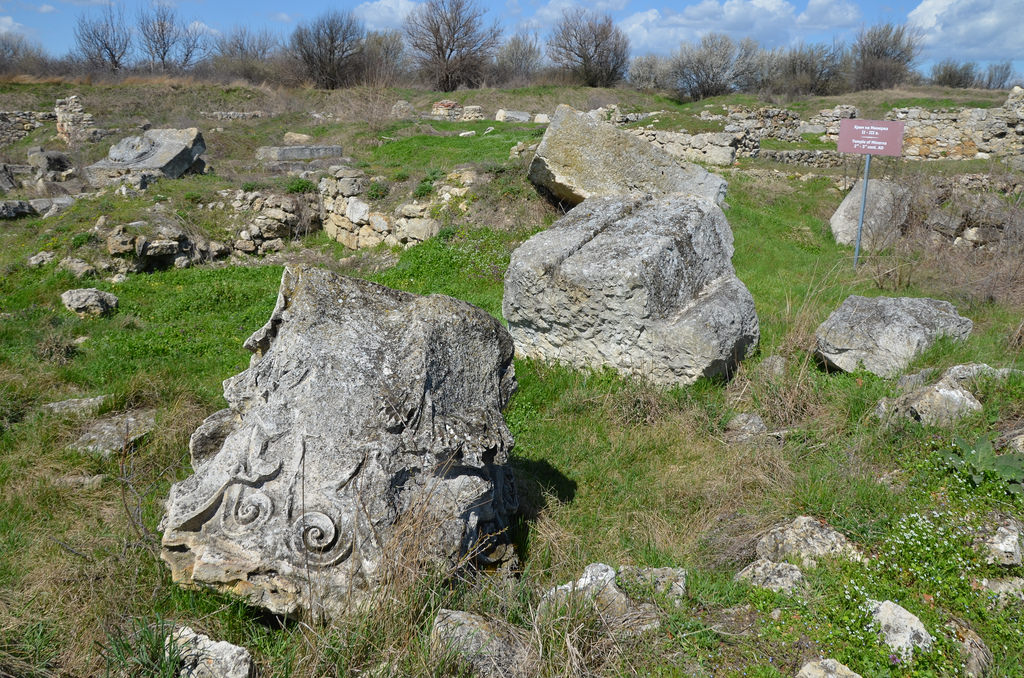
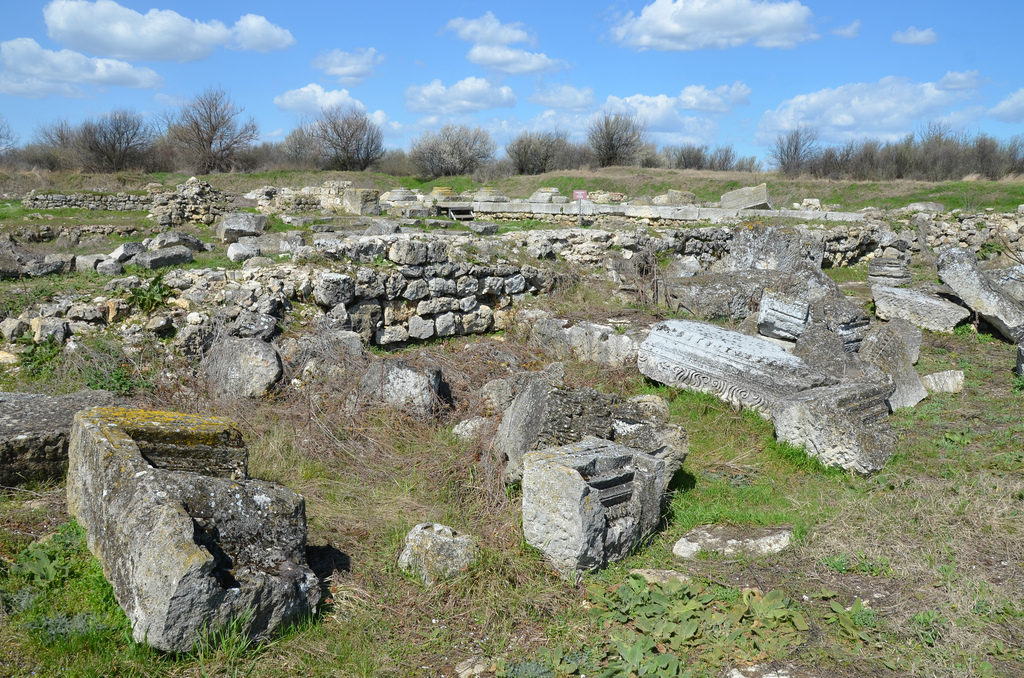
Architrave from the Temple of Fortuna with garlands, medusa heads and bucrania.Scattered architectural elements from the Temple of Fortuna.Scattered architectural elements from the Temple of Fortuna.View of the Forum was made out of limestone in the Corinthian style. It occupied an area of 96 x 58 m and was surrounded by porticoes to the east, south and west. At the north end of the Forum stood the three temples of the Capitoline Triad and the Basilica Civilis.
Pediment with a Latin inscription from the eastern portico of the Forum.The northern end of the forum complex was flanked by a three-aisled civic basilica of impressive dimensions (100 х 24 m). The basilica was the last building to be erected in the Forum during the reign of Hadrian.
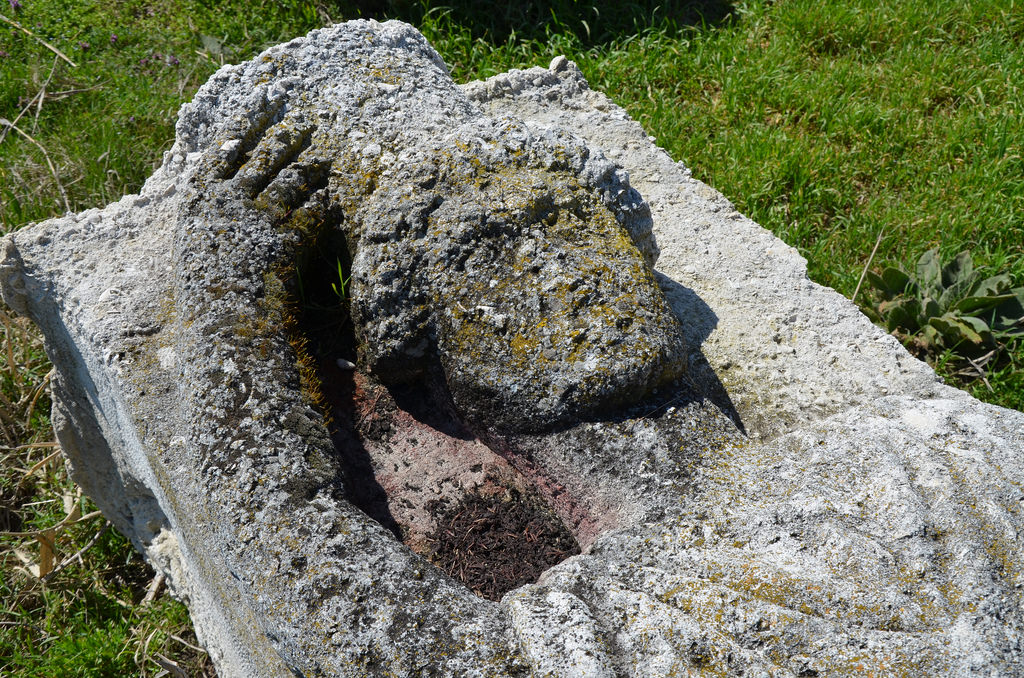
Scattered architectural elements from the civil basilica.A caryatid, one of the sculpted female figures that served as architectural elements and supported the pillars of the basilica. The use of relief caryatids in public buildings has been without parallel in the Roman cities of Thrace and Moesia.Fragment of fresco from the civic basilica. Pleven Regional Historical Museum.One of the medallions with portrait busts decorated the basilica and was placed beneath the caryatids.Scattered architectural elements from the civil basilica.Scattered architectural elements from the civil basilica.
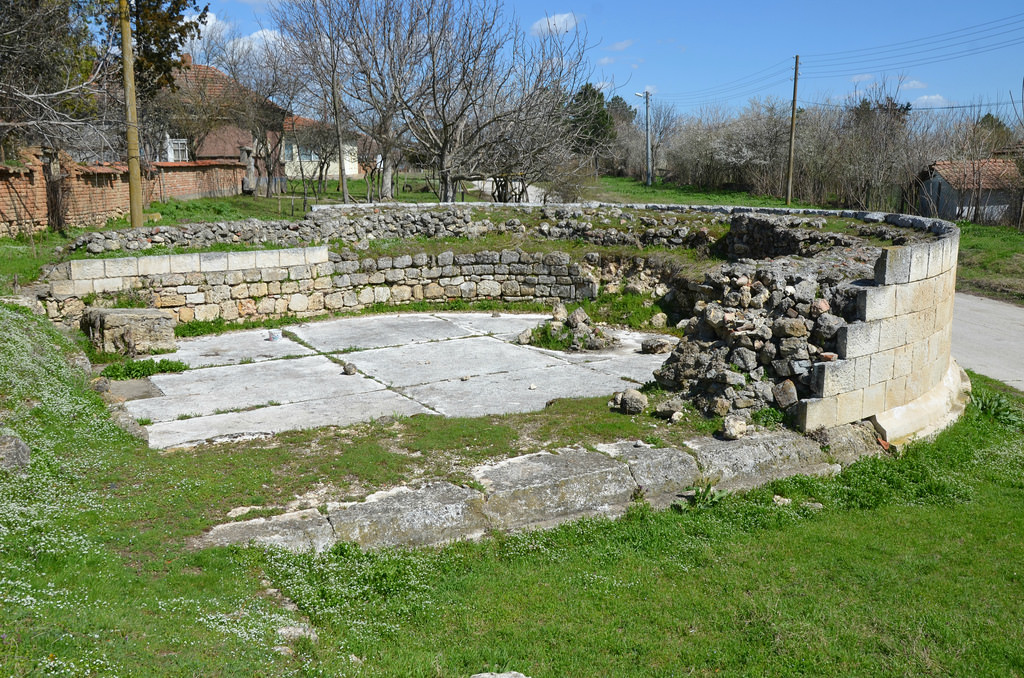
Scattered architectural elements from the Temple of Minerva.Scattered architectural elements from the Temple of Jupiter.Scattered architectural elements from the Temple of Juno.The Extra Muros building dates to the middle of the 3rd century AD and covers an area of 52 x 64 m.U – U-shaped tower dating to the 4th to 5th century AD.






























 following hadrian photography