Minturnae

The Archaeological Area of Minturnae (Comprensorio Archeologico di Minturnae) is a remarkable yet relatively unknown archaeological site situated along the Appian Way. It is located in the town of Minturno in southern Lazio, approximately 160 kilometres south of Rome and 75 kilometres north of Naples.

Coordinates: 41° 14′ 31.7″ N, 13° 46′ 5.38″ E

Minturnae was originally an Auruncian city, although no archaeological traces of it have been found. It was one of the three towns of the Aurunci, which allied with the Samnites to wage war against Rome in 314 BC. After being defeated, the city suffered severe repression and was burned to the ground. The Romans then settled in the area, recognising its strategic and commercial importance due to its proximity to the sea. They built a castrum along the river Liris, and this military settlement evolved into a Roman colony in 296 BC. Minturnae became an important trading port in the Mediterranean and served as a fortified commercial centre along the Appian Way.

In the 1st century BC, Minturnae was a flourishing city with a Capitolium (temple dedicated to the triad of Jupiter, Juno and Minerva), a forum and a theatre. During the Imperial era, a new forum was built, surrounded by public buildings such as a Basilica, thermal baths, an amphitheatre and a macellum (market).

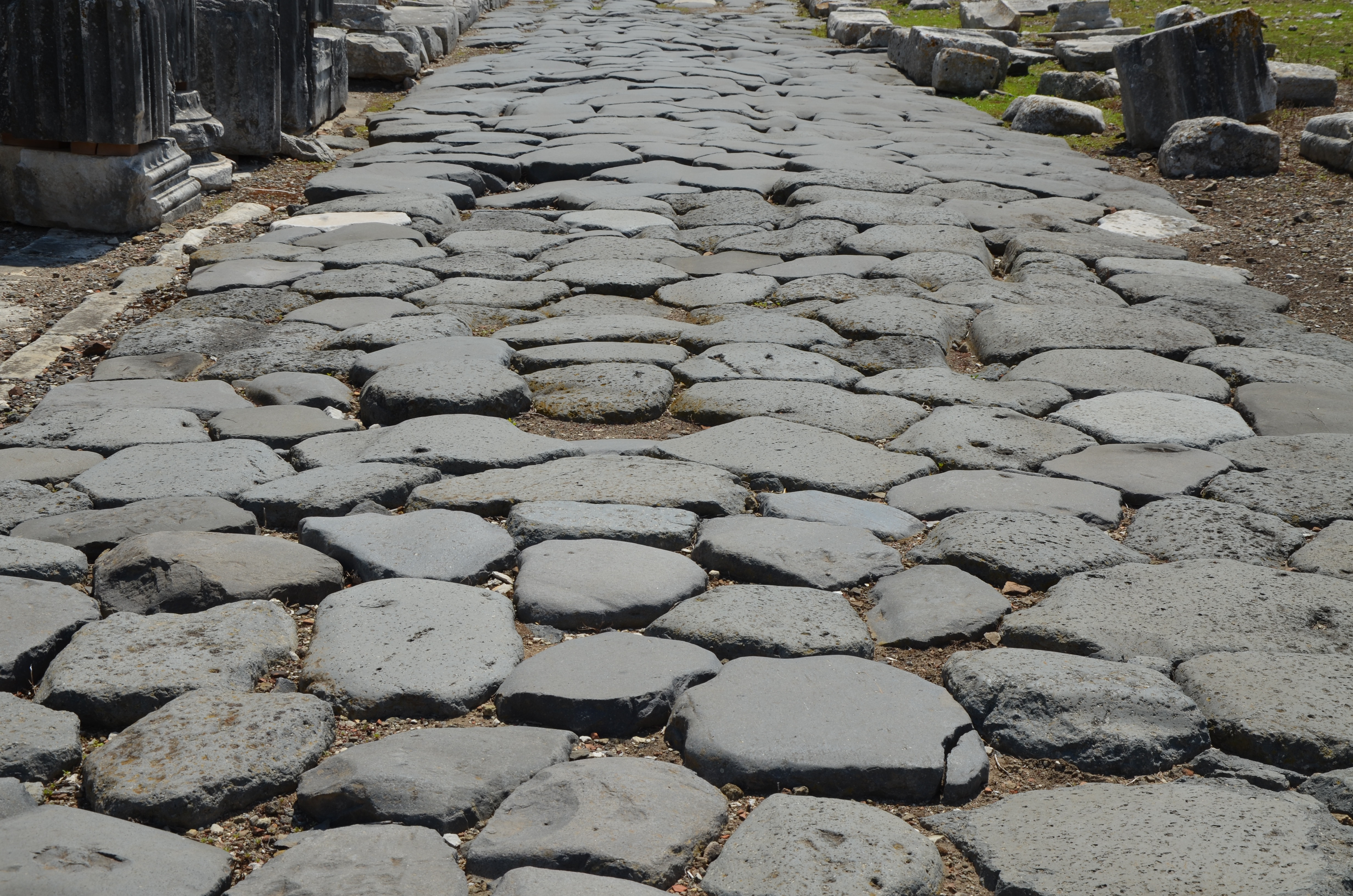
Today, significant Roman remains are scattered on both sides of the Appian Way.

PORTFOLIO

The Republican forum and the Roman theatre, built in the late Republican ear or at the beginning of the Empire, Minturnae, Minturno, Italy
The Republican forum and the Roman theatre were built in the Late Republican era or at the beginning of the Empire.
The Roman theatre, built in the late Republican era or at the beginning of the Empire, Minturnae, Minturno, Italy
The Roman theatre was built in the Late Republican era or at the beginning of the Empire.
The podium of the Temple of Augustus, built at the beginning of the Imperial age right alongside the Capitolium, Minturnae, Minturno, Italy
The podium of the Temple of Augustus was built at the beginning of the Imperial age, right alongside the Capitolium.
The podium of the Temple of Augustus, built at the beginning of the Imperial age right alongside the Capitolium, Minturnae, Minturno, Italy
The Republican forum and the Temple of Augustus podium.
The ruins of the Capitolium (temple dedicated to the triad Jupiter, Juno and Minerva), an Etrusco-Italic type temple built ca. 191 BC, Minturnae, Minturno, Italy
The ruins of the Capitolium (temple dedicated to the triad Jupiter, Juno and Minerva), an Etrusco-Italic type temple built ca. 191 BC.
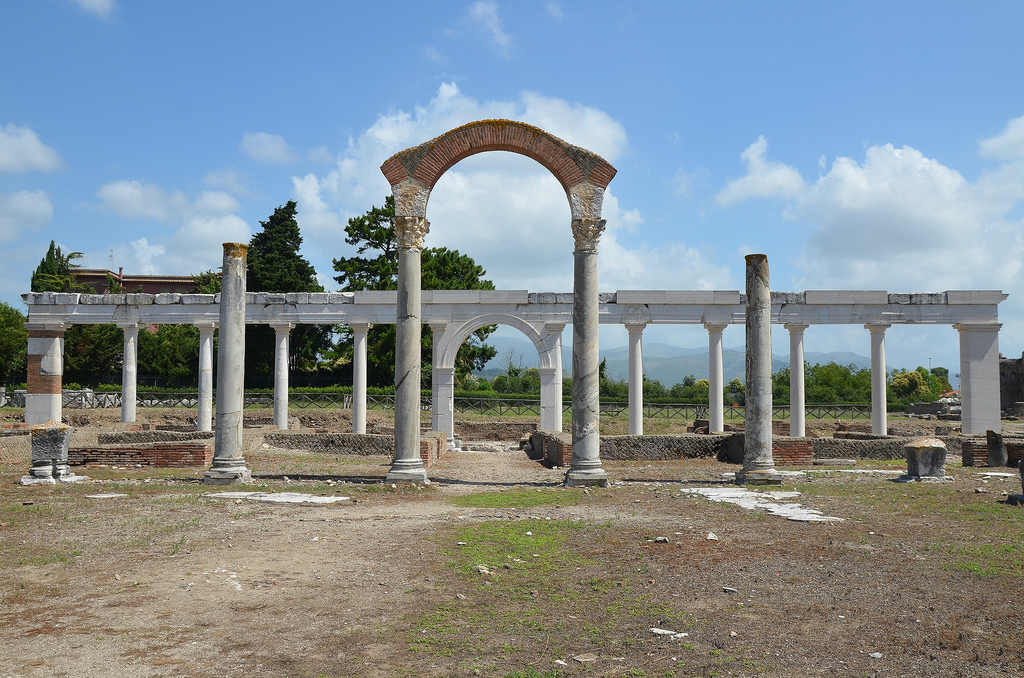
The reconstructed monumental colonnade along the Appian Way with the macellum behind, Minturnae, Minturno, Italy
The reconstructed monumental colonnade along the Appian Way with the macellum behind.
The Via Appia.
The macellum (market) and the tabernae dating to the Hadrianic period (117-138), Minturnae, Minturno, Italy
The macellum (market) and the tabernae dating to the Hadrianic period (117-138 AD).
The macellum (market) and the tabernae dating to the Hadrianic period (117-138), Minturnae, Minturno, Italy
The macellum (market) and the tabernae dating to the Hadrianic period (117-138 AD).
Black & white mosaic in the caldarium of the thermae depicting cupids pressing grapes, Minturnae, Minturno, Italy
Black & white mosaic in the caldarium of the thermae depicting cupids pressing grapes.
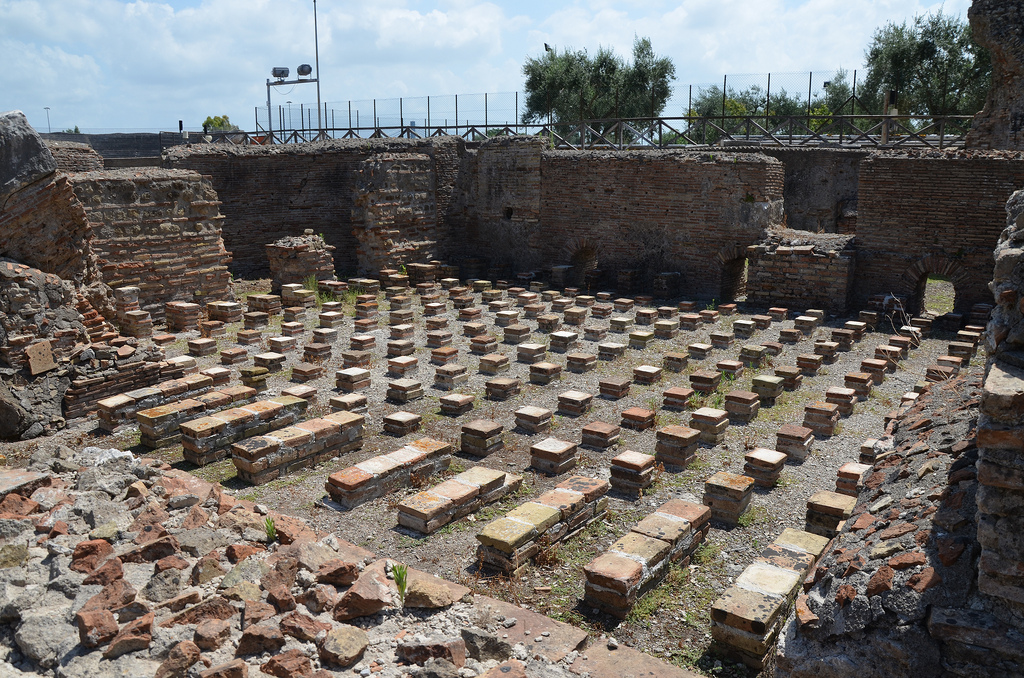
The tepidarium, the warm bathroom of the baths complex heated by a hypocaust (underfloor heating system), Minturnae, Minturno, Italy
The tepidarium, the warm bathroom of the baths complex heated by a hypocaust (underfloor heating system).
The ruins of the Hadrianic Basilica of the Imperial forum, Minturnae, Minturno, Italy
The ruins of the Hadrianic Basilica of the Imperial Forum.
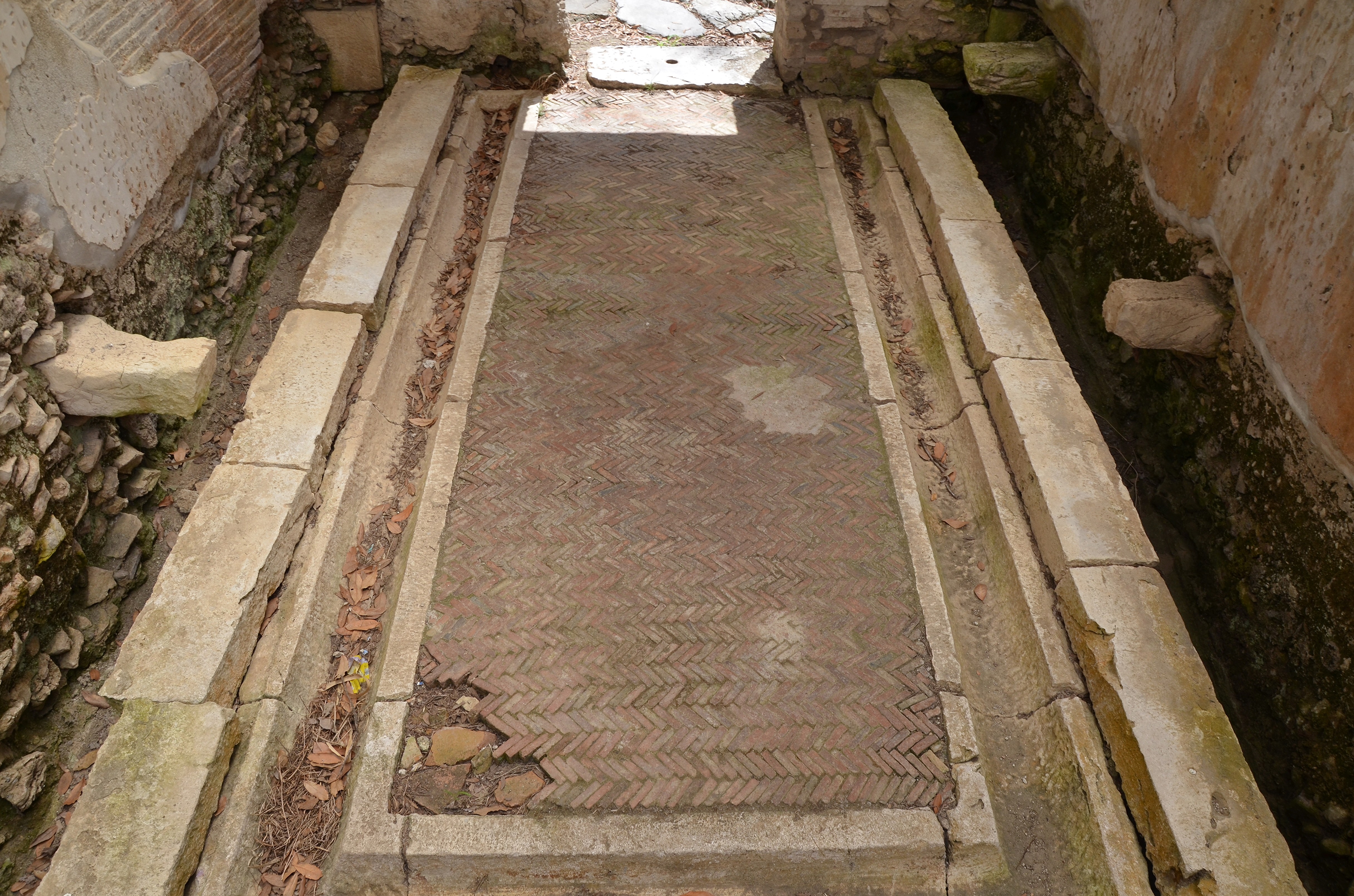
The latrines, located in the Imperial Forum.
Aqueduct near Minturnae, built between the end of the Republic and the beginning of the Empire, Minturno, Italy
The Aqueduct near Minturnae, built between the end of the Republic and the beginning of the Empire.
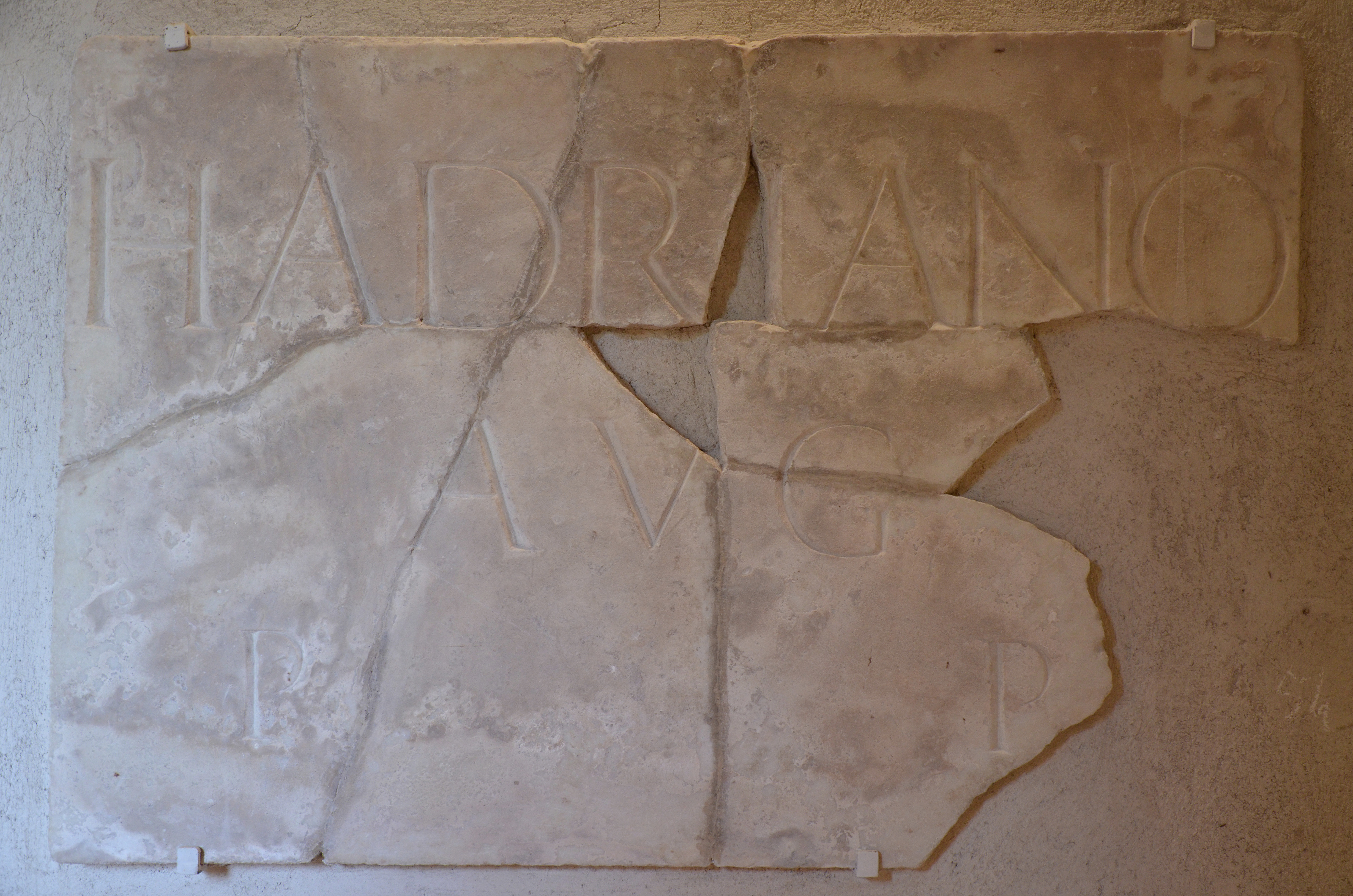
Epigraph dedicated to Hadrian as Augustus and Pater Patriae (Father of the Country), attributed to Hadrian in AD 128.
Antiquarium of Minturnae.

Links: