Lagina

Just a few kilometres away from Stratonicea lies the ancient cult site of Lagina, one of the most significant Carian sanctuaries. The establishment of the sanctuary at Lagina as a religious centre dates back to the Seleucid period, although evidence from the necropolis suggests that the settlement’s origins date back to the 7th century BC. An 11-kilometre-long road known as the Sacred Way connected these two sites.

Coordinates: 37° 22′ 42.83″ N, 28° 2′ 21.94″ E

The deity worshipped at the sanctuary was the goddess Hecate. She was the goddess of magic, witchcraft, the night, the moon, ghosts and necromancy. In statuary, Hecate was often depicted in triple form, with three bodies or three heads. She was also associated with crossroads and entranceways. Numerous festivals were celebrated at the site, during which a procession delivered the temple’s key from Lagina to the bouleuterion in Stratonicea, where the rules for the religious celebrations of Hecate were inscribed.

The sculptural decorations that once adorned the temple are now displayed in the Archaeology Museum in Istanbul. These decorations covered all four sides of the building. They depicted various scenes, including episodes from Zeus’s life, the battle of the gods and giants (Gigantomachy), the legendary conflict between the Ancient Greeks and the Amazons (Amazonomachy), and scenes from Carian mythology.

PORTFOLIO

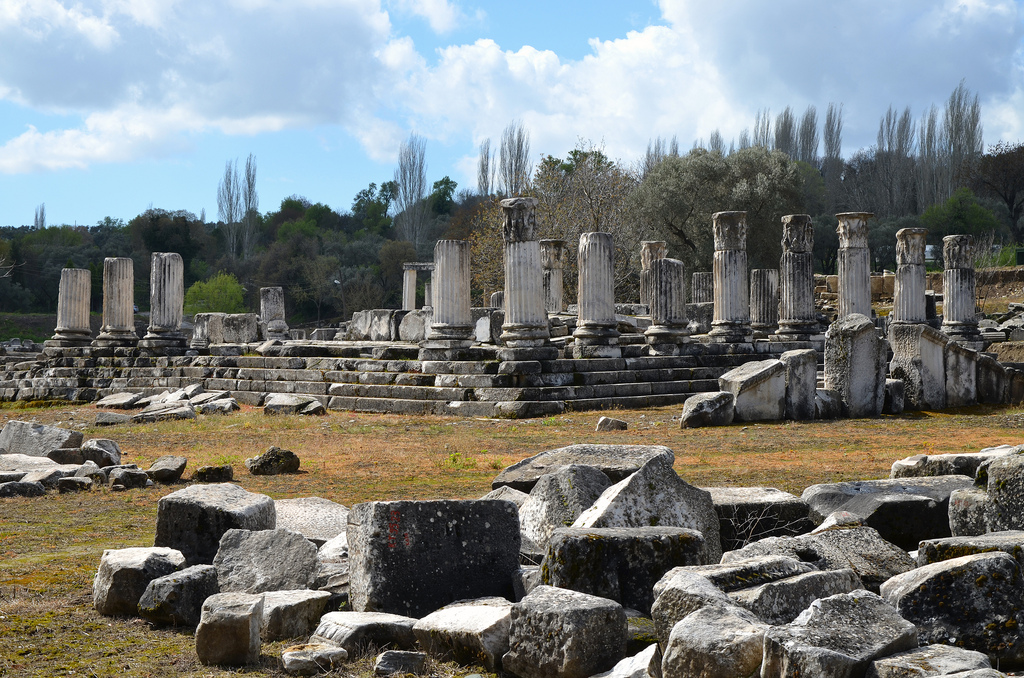
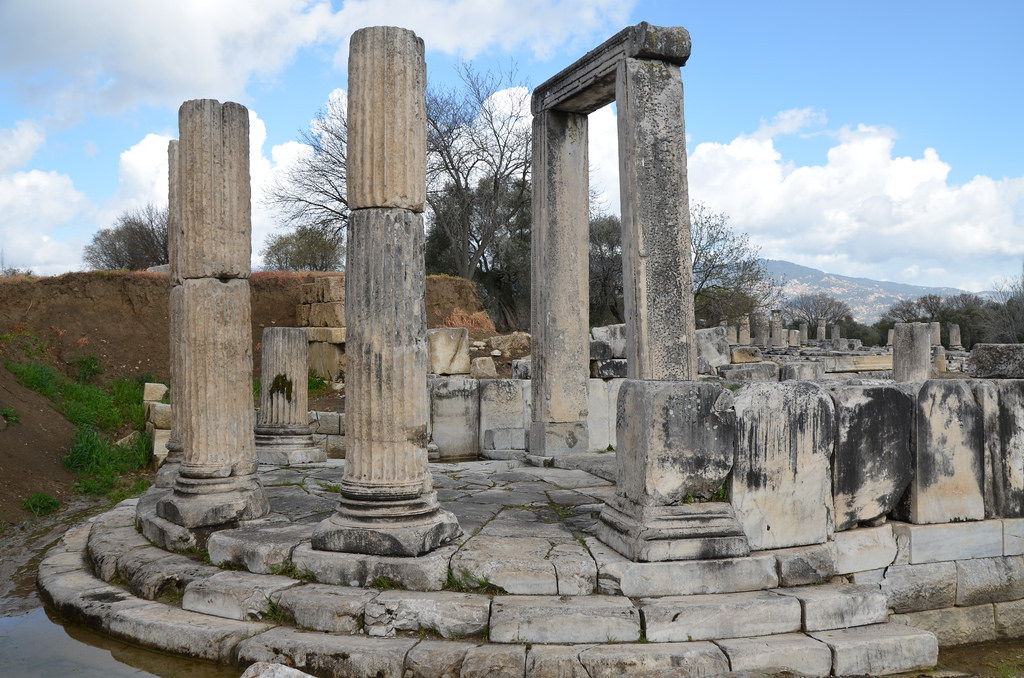
The Sanctuary of Hecate in Lagina, dated to the last quarter of the 2nd century BC, Caria, Turkey
The temple of Hecate stood in the centre of the sacred precinct. It was constructed in the 2nd century BC.
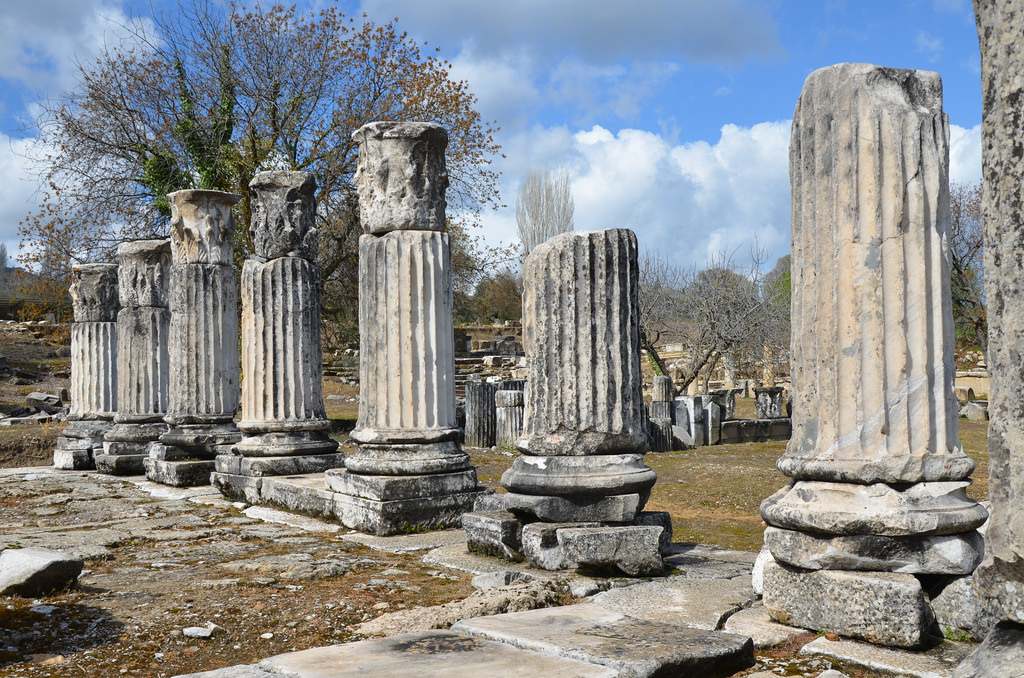
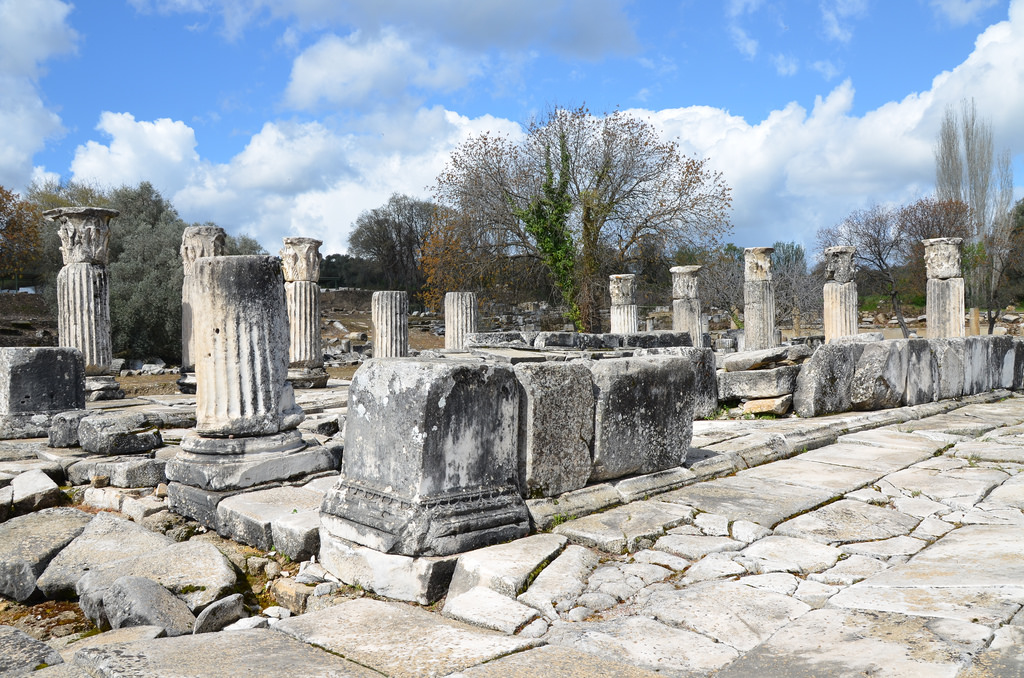
The architectural type of the Temple was pseudodipteral, in the Corinthian order, with a peristyle of 11 columns by 8.
The Corinthian columns of the Temple of Hecate.
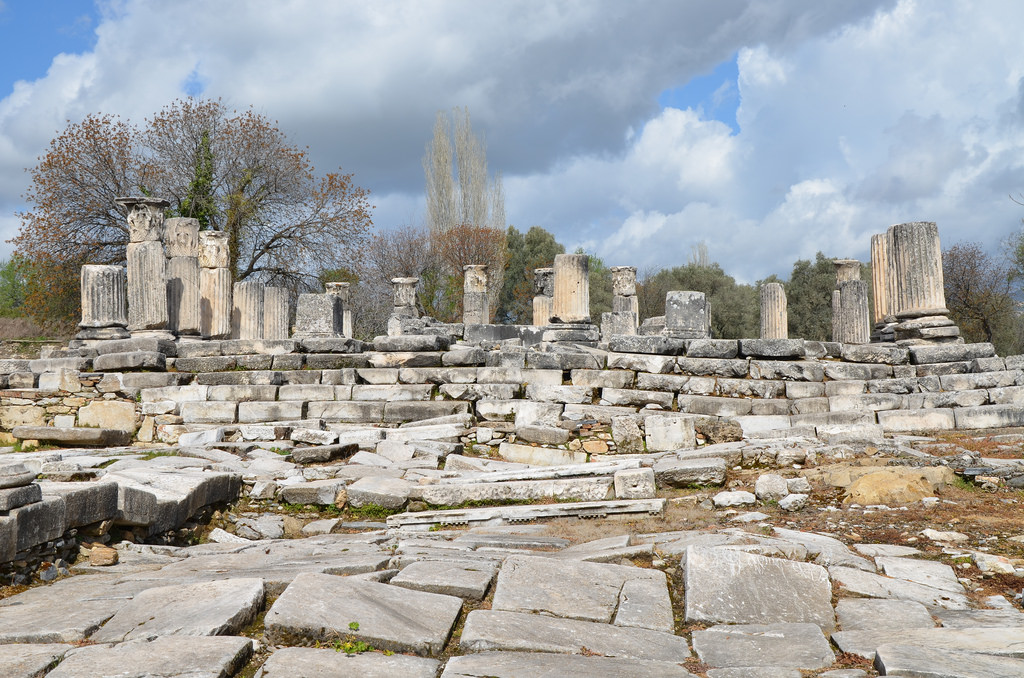
The Sanctuary of Hecate in Lagina, dated to the last quarter of the 2nd century BC, Caria, Turkey
The paving of the peristyle in front of the Temple.
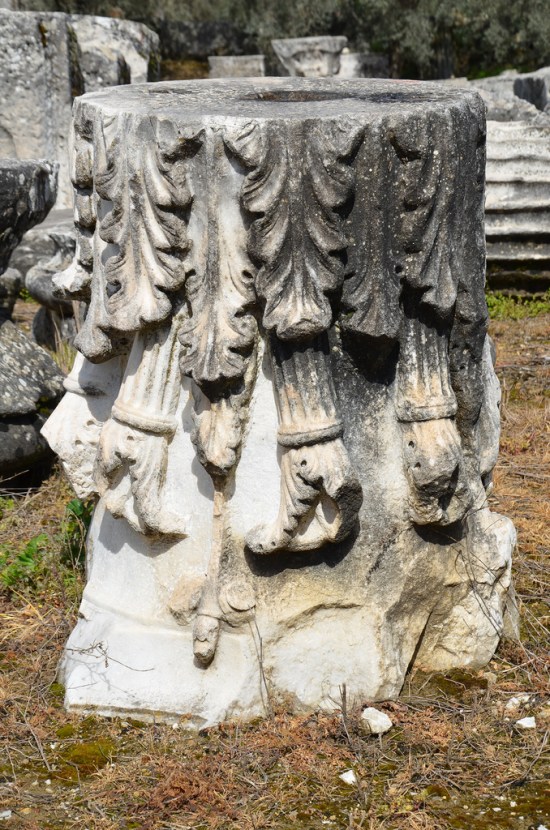
Corinthian column from the Temple of Hecate.
The Sanctuary of Hecate in Lagina, dated to the last quarter of the 2nd century BC, Caria, Turkey
The Sanctuary of Hecate.
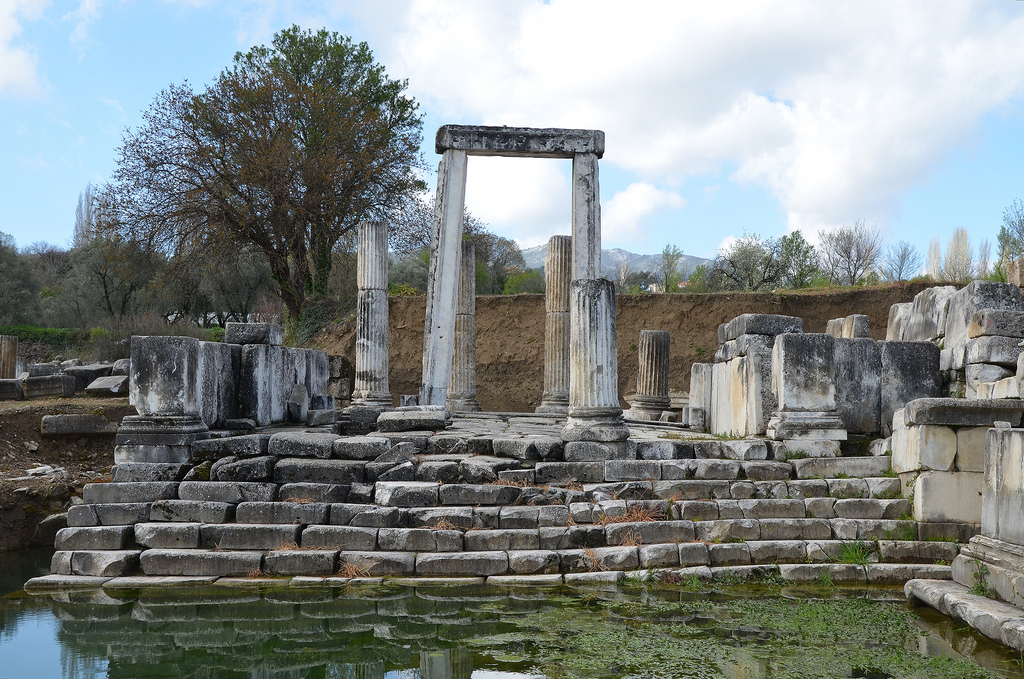
The propylaea (monumental gateway) with a semicircular colonnade at the front, Sanctuary of Hecate in Lagina, Caria, Turkey
The propylaea (monumental gateway) with a semicircular colonnade at the front.
The propylaea (monumental gateway) with a semicircular colonnade at the front, Sanctuary of Hecate in Lagina, Caria, Turkey
A stairway with ten steps led from the propylaea to a paved way and then to the altar.
The stairway with ten steps leading from the propylaea to the Temple.
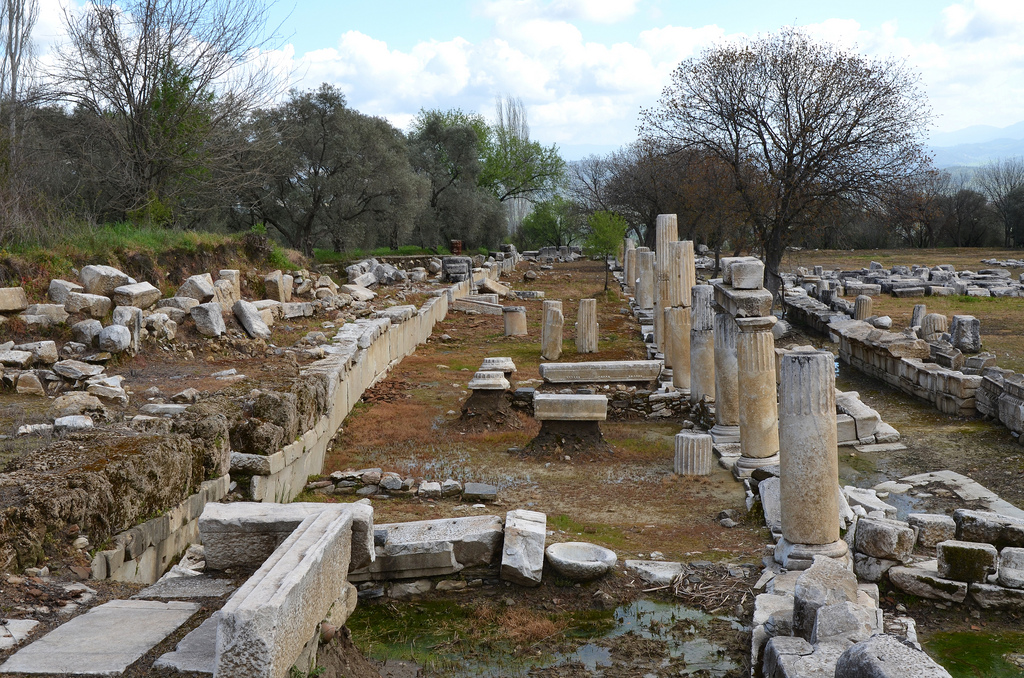
The precinct surrounding the temple was ca. 150 by 135 m. It was enclosed by a stoa in the Doric order, the S side of which was raised on a flight of 11 steps, with a staircase at the W end
The precinct surrounding the temple was ca. 150 by 135 m. It was enclosed by a stoa in the Doric order.
The south side of the Stoa was raised on a flight of 11 steps, with a staircase at the west end.
The temple of Hecate.

Links: