Lagina

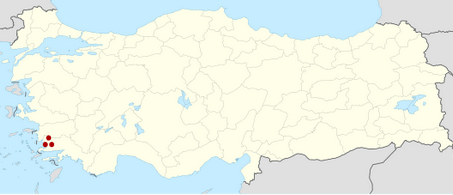
Just a few kilometres away from Stratonicea lies the ancient cult site of Lagina, one of the most significant Carian sanctuaries. The establishment of the sanctuary at Lagina as a religious centre dates back to the Seleucid period, although evidence from the necropolis suggests that the settlement’s origins date back to the 7th century BC. An 11-kilometre-long road known as the Sacred Way connected these two sites.

Coordinates: 37° 22′ 42.83″ N, 28° 2′ 21.94″ E

The deity worshipped at the sanctuary was the goddess Hecate. She was the goddess of magic, witchcraft, the night, the moon, ghosts and necromancy. In statuary, Hecate was often depicted in triple form, with three bodies or three heads. She was also associated with crossroads and entranceways. Numerous festivals were celebrated at the site, during which a procession delivered the temple’s key from Lagina to the bouleuterion in Stratonicea, where the rules for the religious celebrations of Hecate were inscribed.

The sculptural decorations that once adorned the temple are now displayed in the Archaeology Museum in Istanbul. These decorations covered all four sides of the building. They depicted various scenes, including episodes from Zeus’s life, the battle of the gods and giants (Gigantomachy), the legendary conflict between the Ancient Greeks and the Amazons (Amazonomachy), and scenes from Carian mythology.

PORTFOLIO

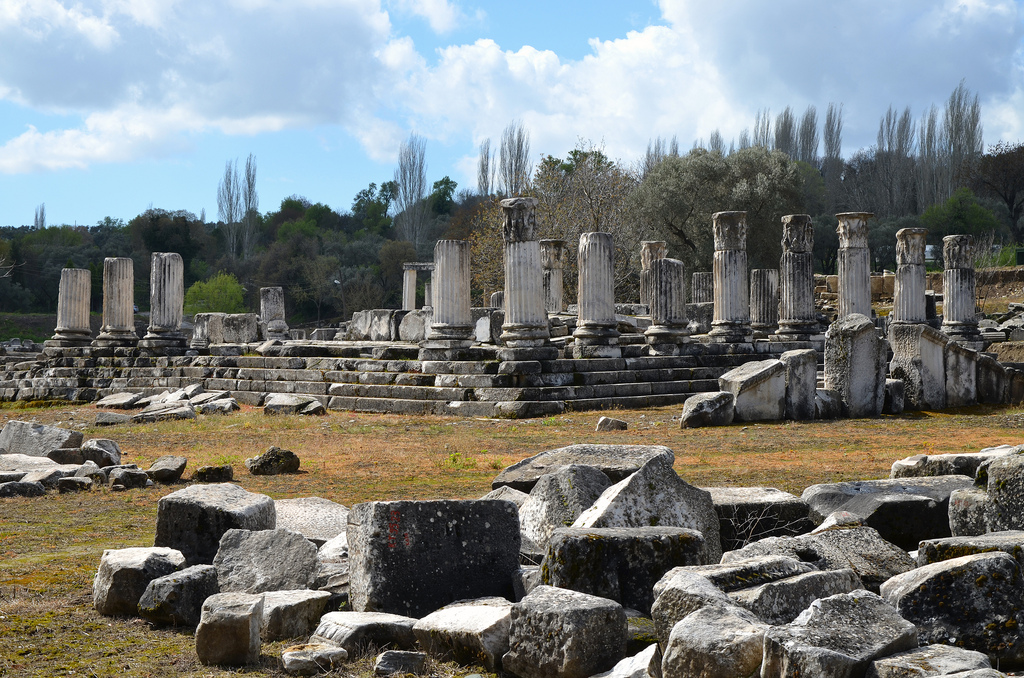
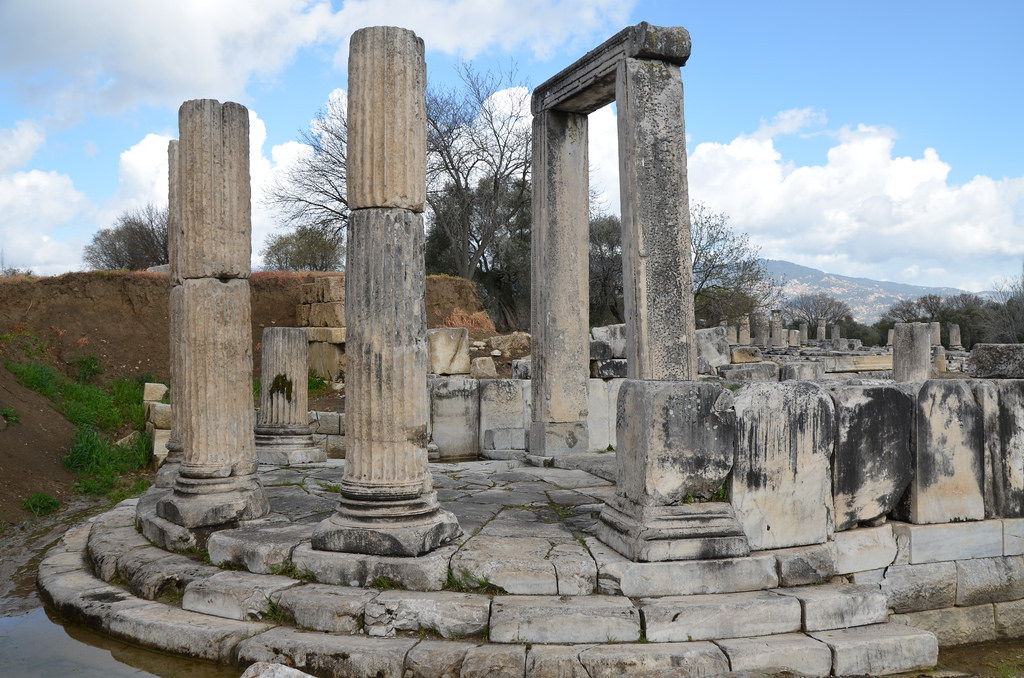
The Sanctuary of Hecate in Lagina, dated to the last quarter of the 2nd century BC, Caria, Turkey
The temple of Hecate stood in the centre of the sacred precinct. It was constructed in the 2nd century BC.
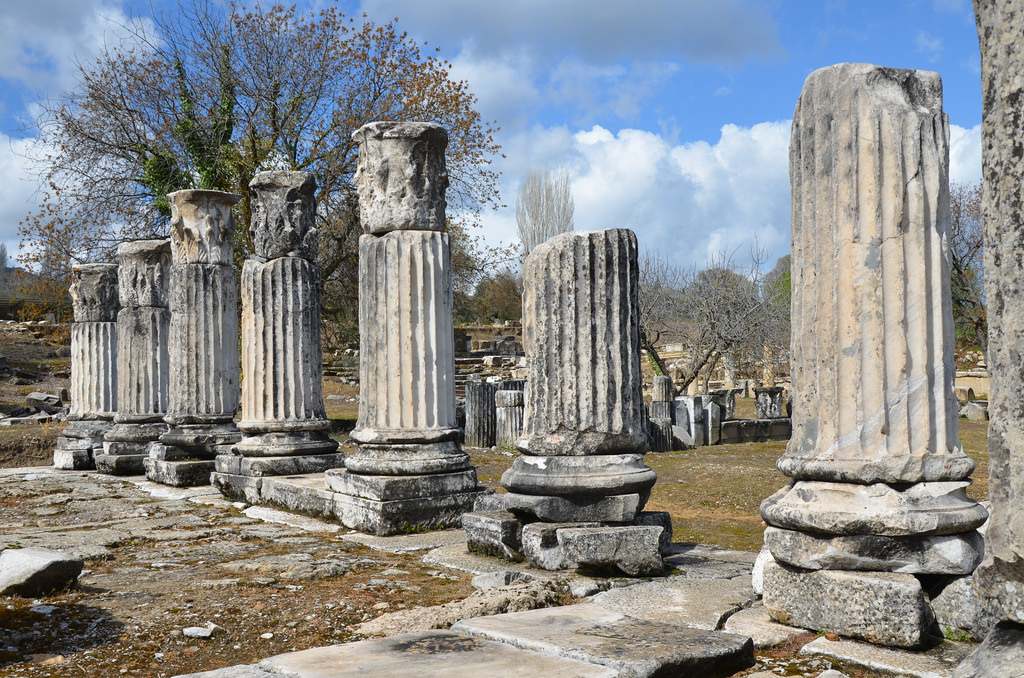
The architectural type of the Temple was pseudodipteral, in the Corinthian order, with a peristyle of 11 columns by 8.
The Corinthian columns of the Temple of Hecate.
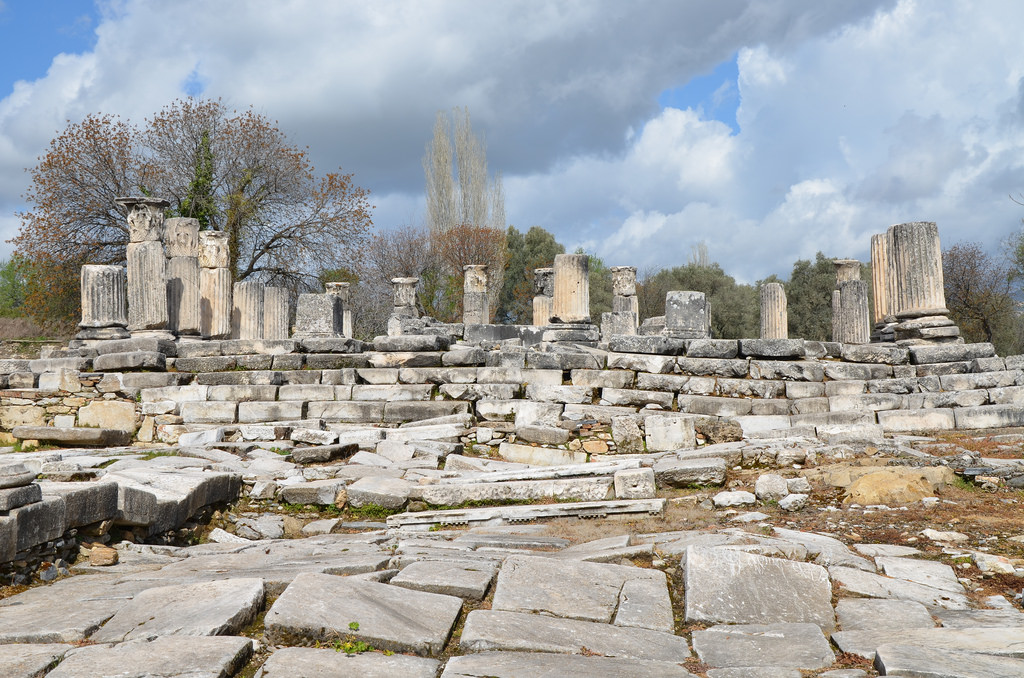
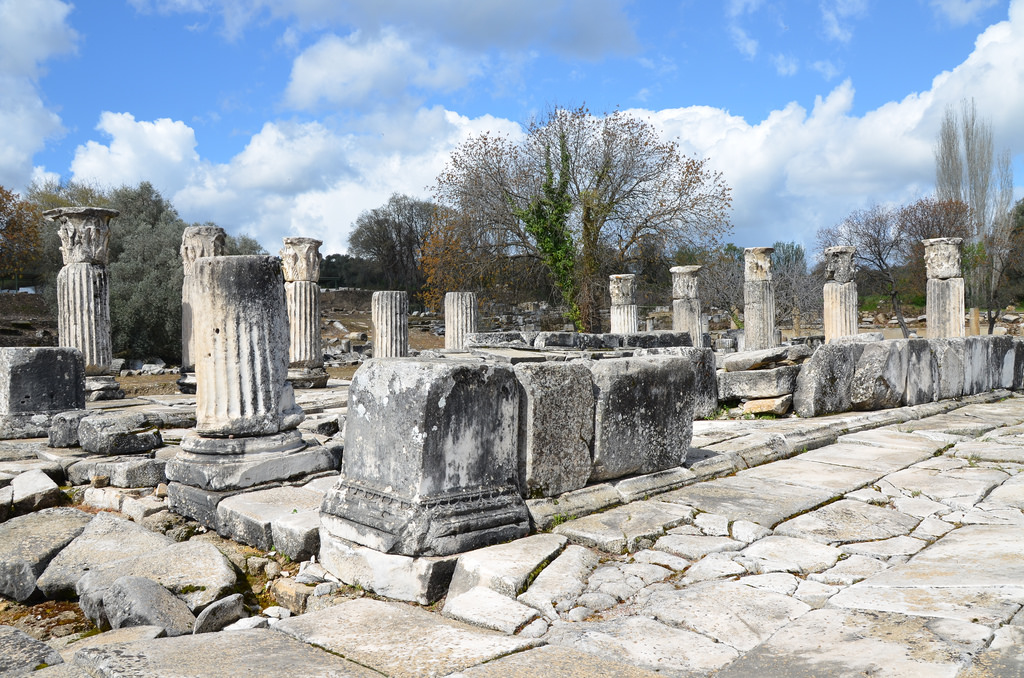
The Sanctuary of Hecate in Lagina, dated to the last quarter of the 2nd century BC, Caria, Turkey
The paving of the peristyle in front of the Temple.
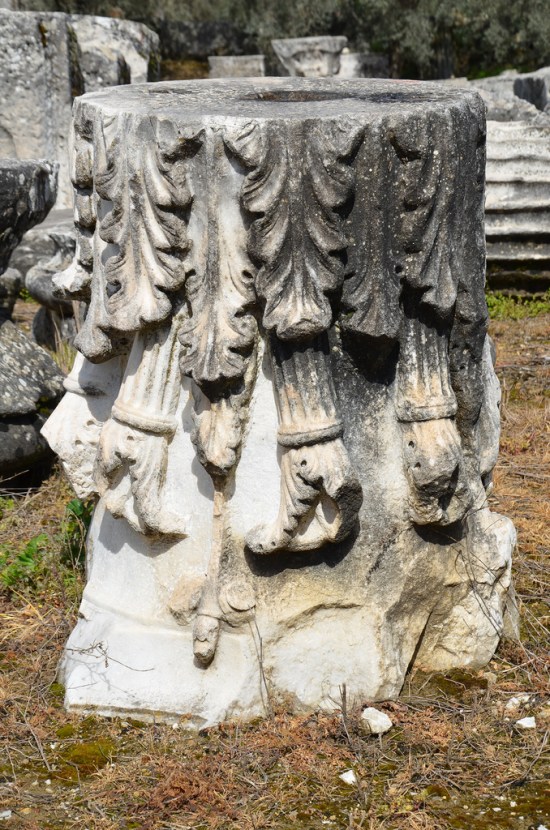
Corinthian column from the Temple of Hecate.
The Sanctuary of Hecate in Lagina, dated to the last quarter of the 2nd century BC, Caria, Turkey
The Sanctuary of Hecate.
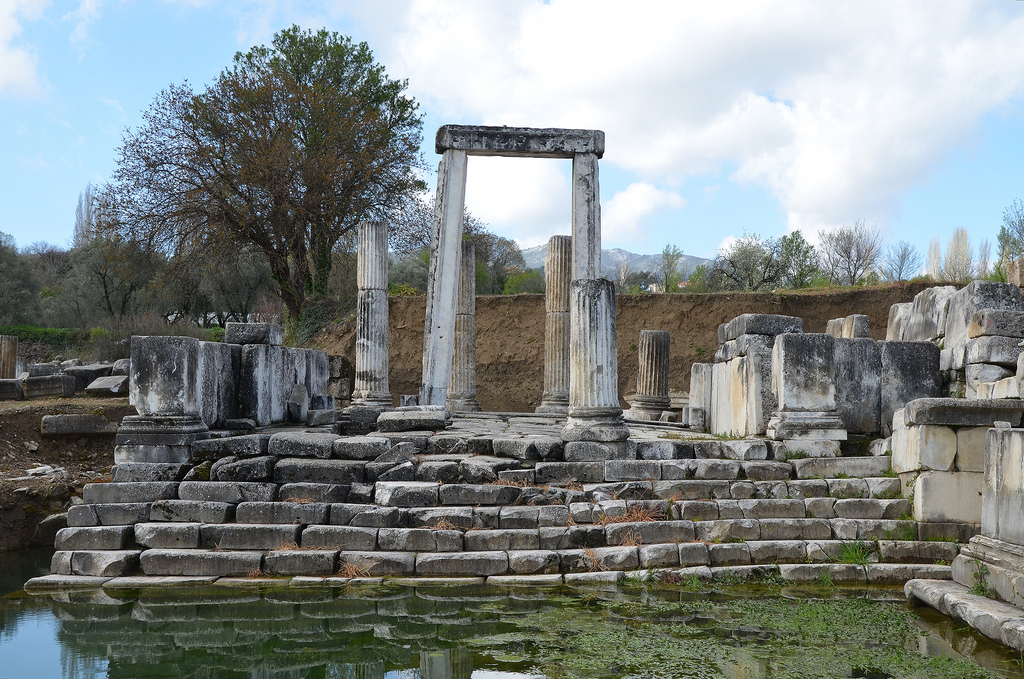
The propylaea (monumental gateway) with a semicircular colonnade at the front, Sanctuary of Hecate in Lagina, Caria, Turkey
The propylaea (monumental gateway) with a semicircular colonnade at the front.
The propylaea (monumental gateway) with a semicircular colonnade at the front, Sanctuary of Hecate in Lagina, Caria, Turkey
A stairway with ten steps led from the propylaea to a paved way and then to the altar.
The stairway with ten steps leading from the propylaea to the Temple.
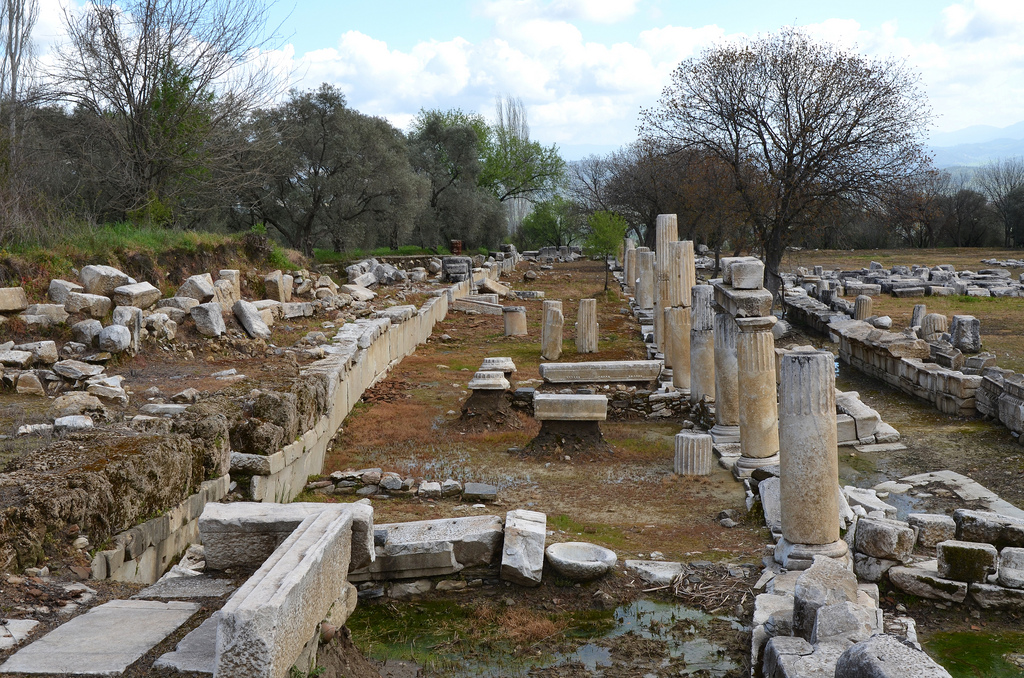
The precinct surrounding the temple was ca. 150 by 135 m. It was enclosed by a stoa in the Doric order, the S side of which was raised on a flight of 11 steps, with a staircase at the W end
The precinct surrounding the temple was ca. 150 by 135 m. It was enclosed by a stoa in the Doric order.
The south side of the Stoa was raised on a flight of 11 steps, with a staircase at the west end.
The temple of Hecate.

Links:

Euromos

Euromos was an ancient city located in the province of Caria. It was first mentioned in the 5th century BC when it was known as Kyromos. The city was subdued by nearby Mylasa during the reign of King Mausolus of Halicarnassus in the 4th century BC, but regained some autonomy during Roman rule. Its ruins are located approximately 4 km southeast of Selimiye and 12 km northwest of Milas in the Muğla Province of Turkey.

Coordinates: 37° 22′ 27″ N, 27° 40′ 31″ E

Euromos

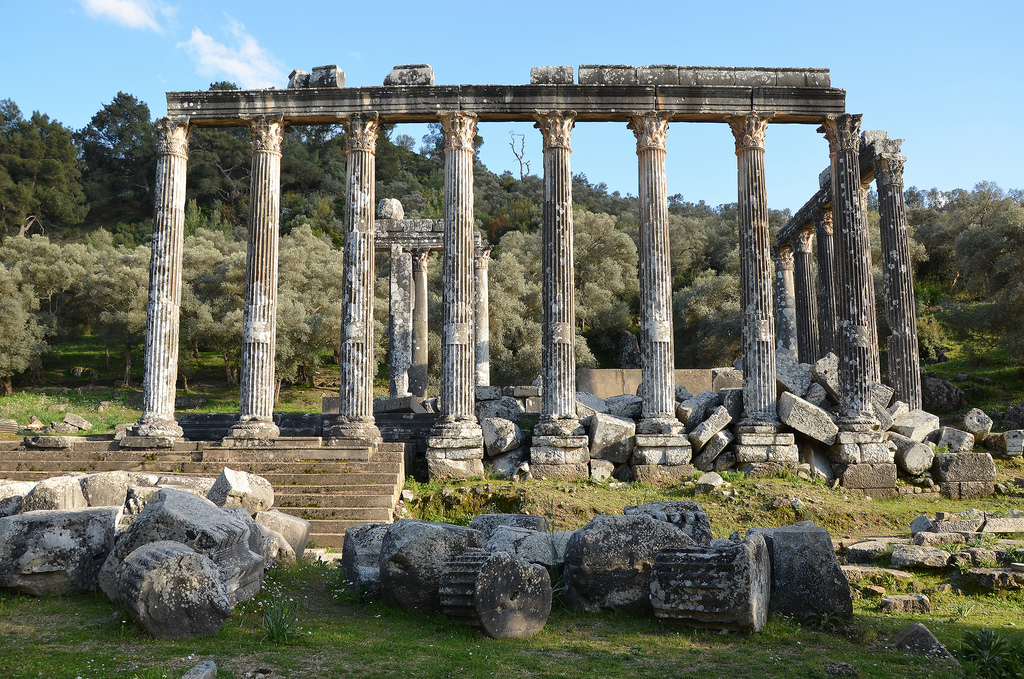
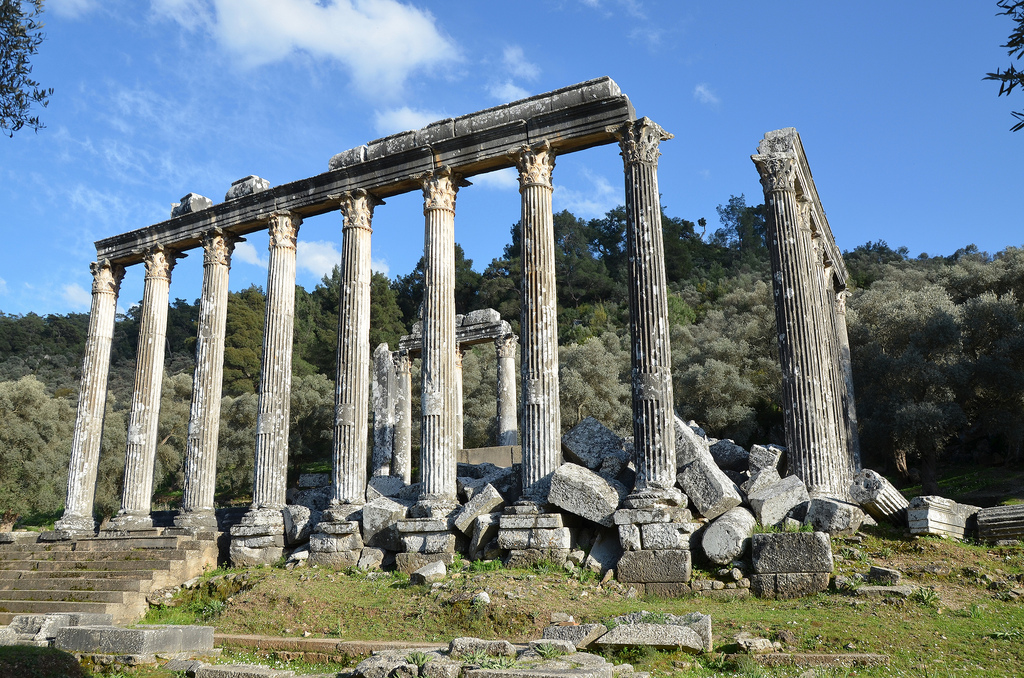
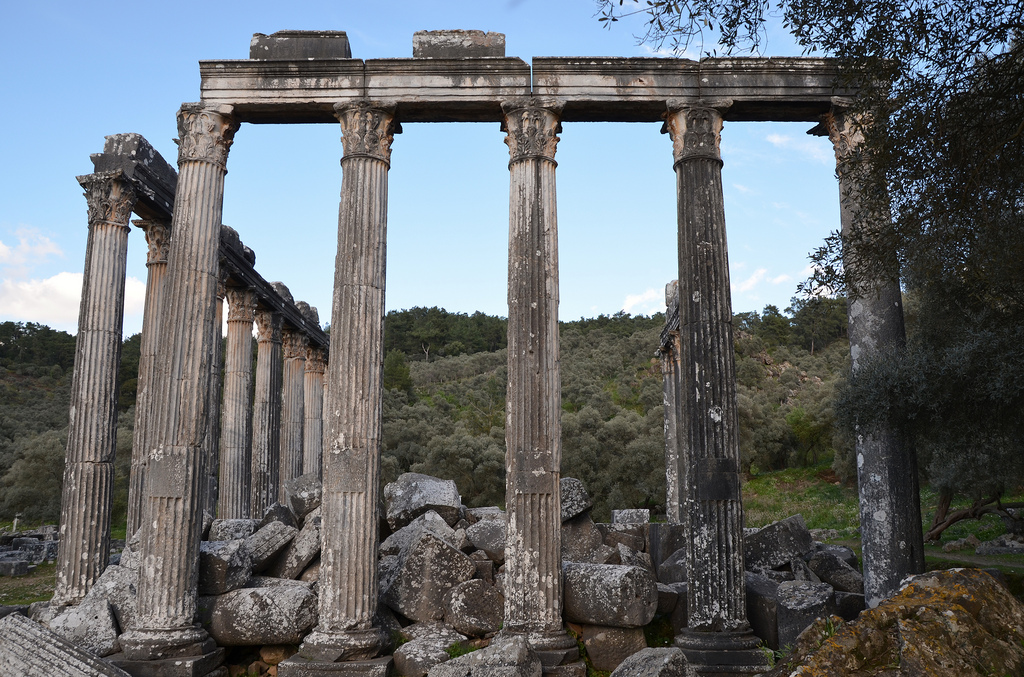
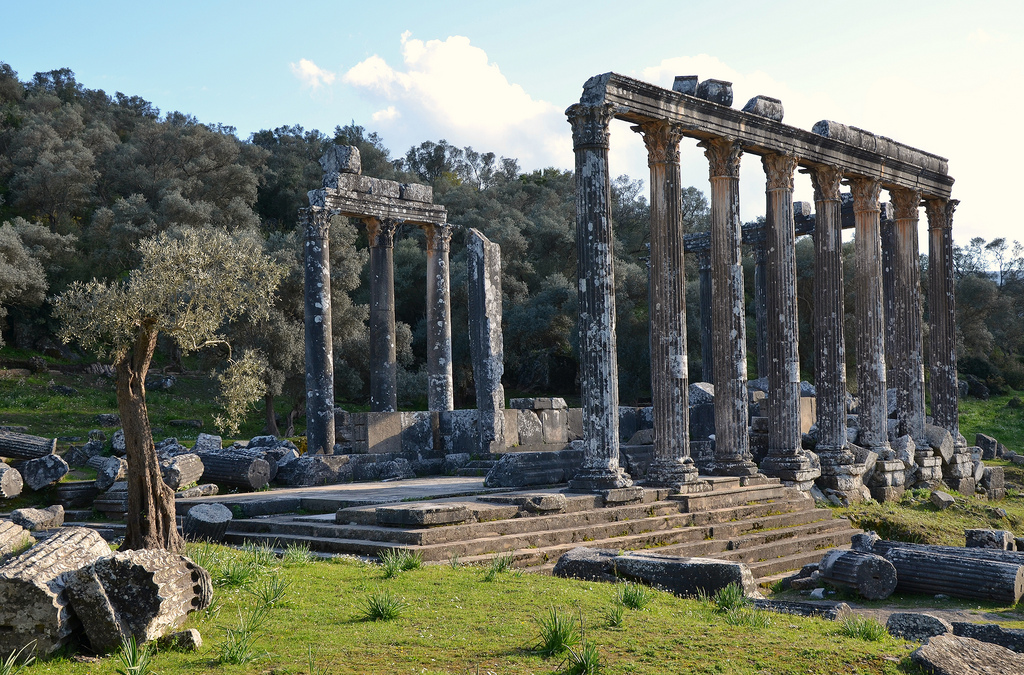
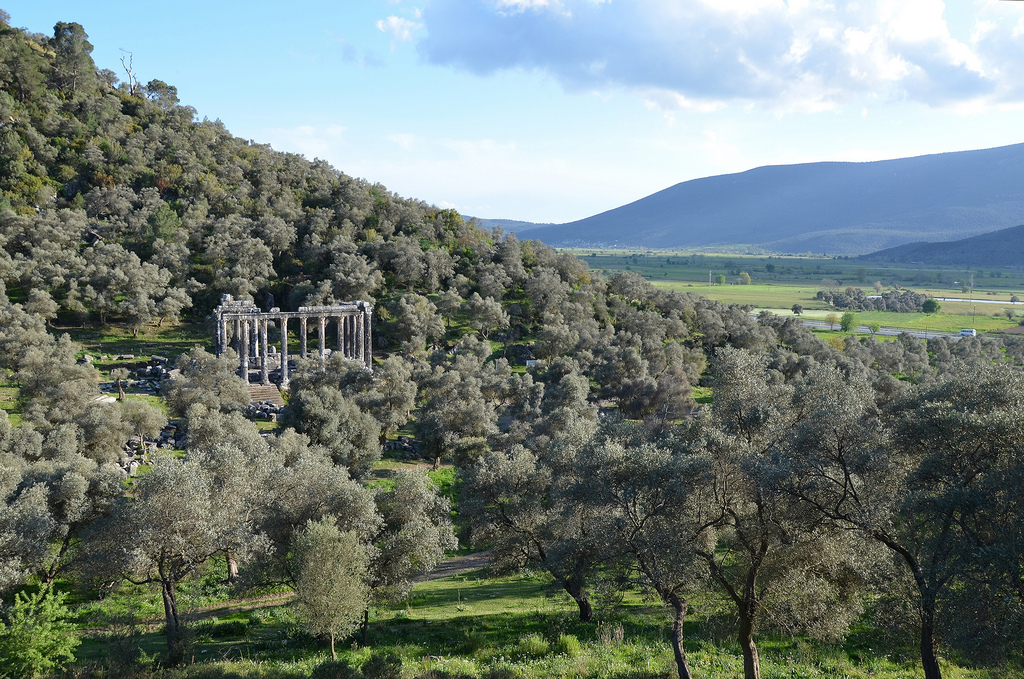
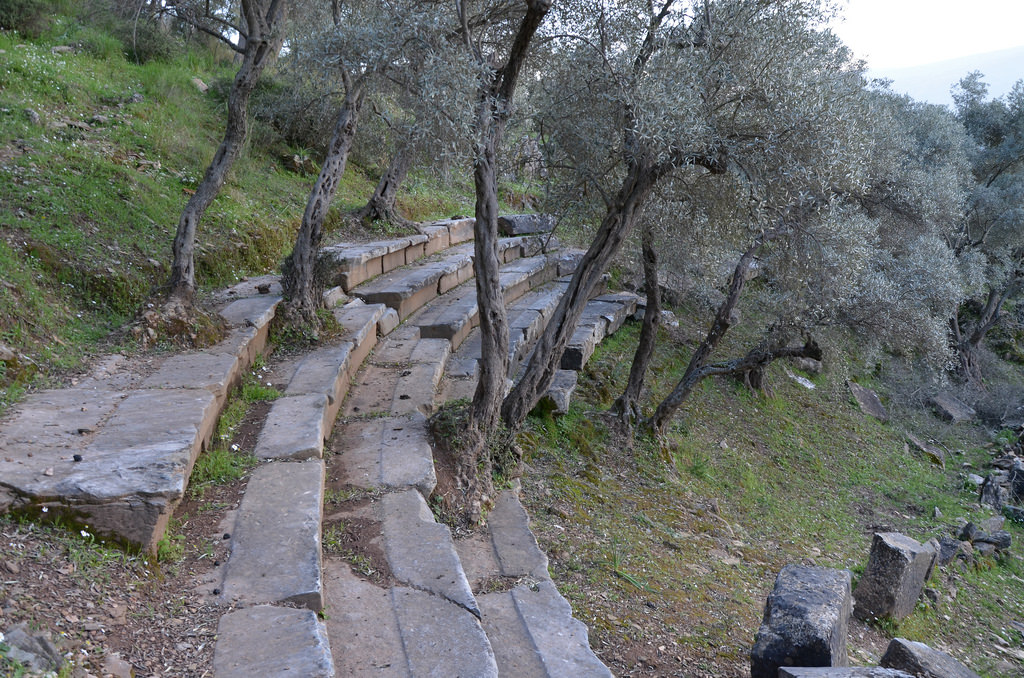
Euromos stood on flat ground, which did not provide a natural defence, so the city was protected by thick walls of ashlar masonry with towers at intervals. On the western slope of the hill are the remains of a small theatre facing west. Only a few rows of seats and some fragments of the stage building have been preserved. But the most striking monument is the Temple of Zeus Lepsinos, just outside the city wall, one of the best-preserved temples in Asia Minor.

The temple was built during the reign of Emperor Hadrian in the 2nd century AD on the site of an earlier Carian temple (the temenos itself dates back to the 6th century BC). However, the temple was never entirely completed (some standing columns were never fluted), probably due to the economic crisis that struck the ancient city 1,800 years ago. Wealthy citizens stepped forward with financial support and had their names engraved on plaques on some of the columns, but this support was insufficient. An inscription says that a physician named Menecrates donated five of the 32 columns of this temple, while another inscription mentions that a magistrate named Leo Quintus donated another seven.

Recent excavations have brought to light the remains of an altar and a Hellenistic decree, revealing that the temple was dedicated to Zeus Lepsynos and was not the first temple erected to him at Euromos.

PORTFOLIO

Temple of Zeus Lepsynus, built on the site of an earlier Carian temple, 2nd century AD (probably during the reign of the emperor Hadrian), Euromos, Turkey
The Temple of Zeus Lepsynos had a peristyle of 11 by 6 columns in the Corinthian order, 16 of which are standing, complete with architrave.
Not all the columns were fluted, so the construction of the temple was probably never completed.
Twelve columns have inscriptions indicating the donor who paid for their execution.
Inscription on a fluted columns of the Temple of Zeus Lepsynus.
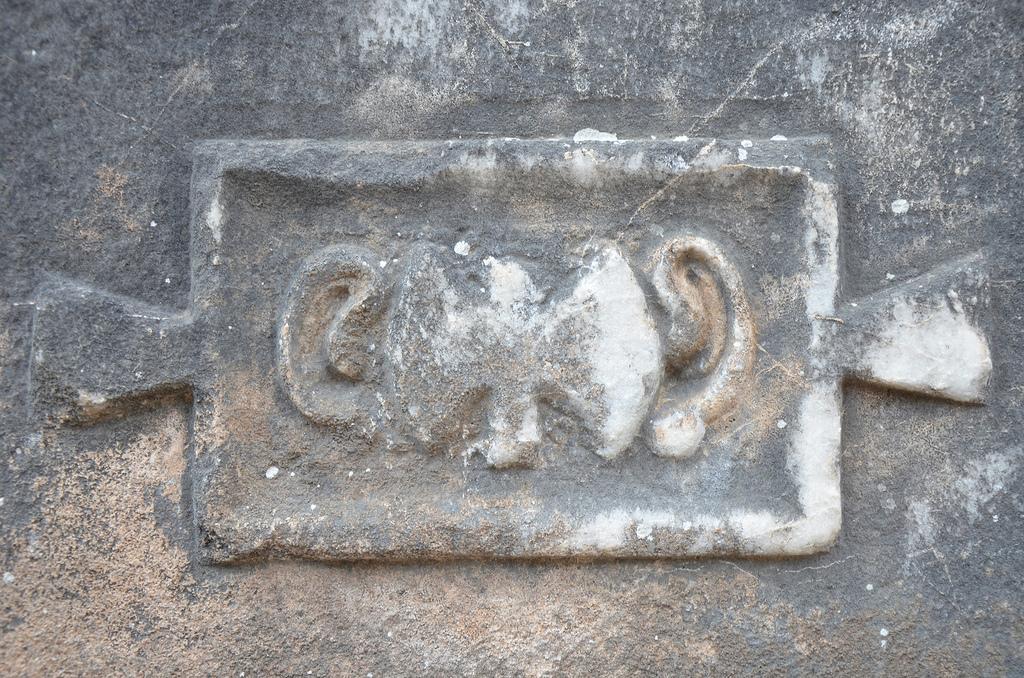
Carving of a labrys (double-bitted axe), Zeus’ symbol, flanked by two ears.

The Temple of Zeus Lepsynus.

The Theatre of Euromos.

Links: