Euromos

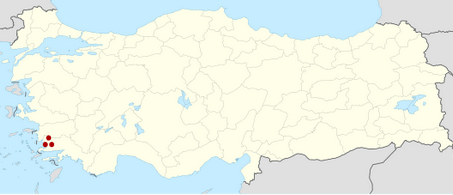
Euromos was an ancient city located in the province of Caria. It was first mentioned in the 5th century BC when it was known as Kyromos. The city was subdued by nearby Mylasa during the reign of King Mausolus of Halicarnassus in the 4th century BC but regained some autonomy during Roman rule. Its ruins are located approximately 4 km southeast of Selimiye and 12 km northwest of Milas in the Muğla Province of Turkey.

Coordinates: 37° 22′ 27″ N, 27° 40′ 31″ E
Euromos

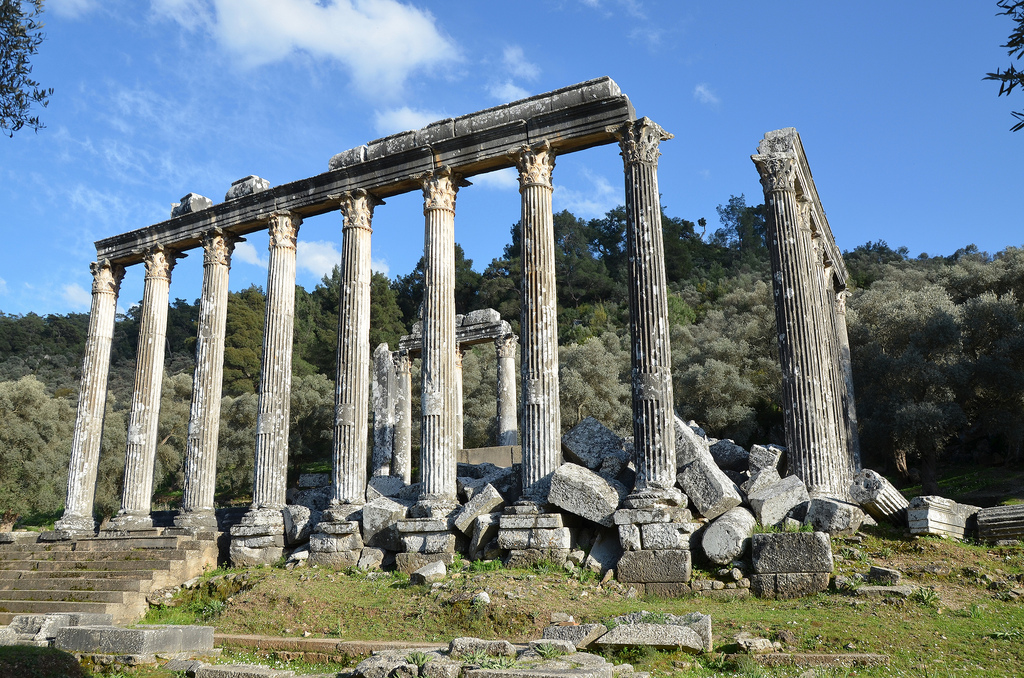
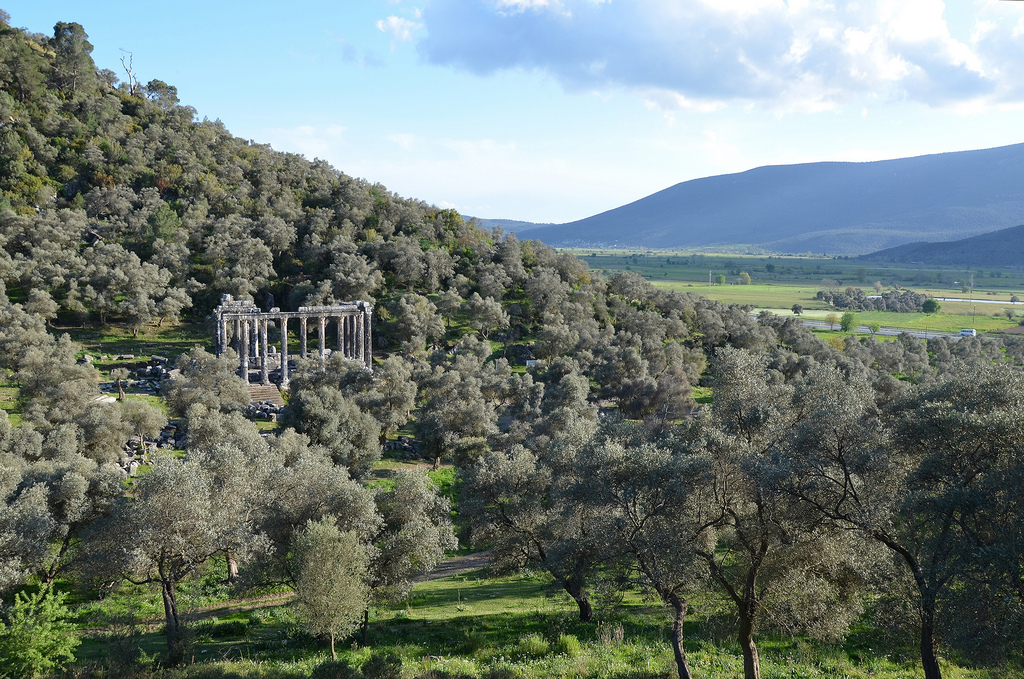
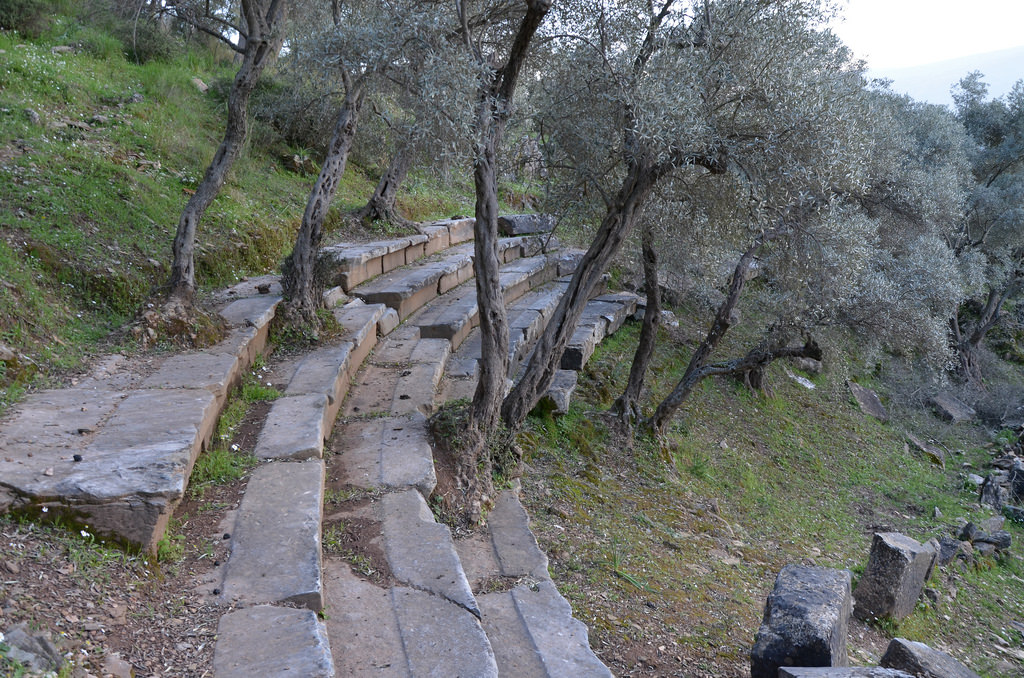
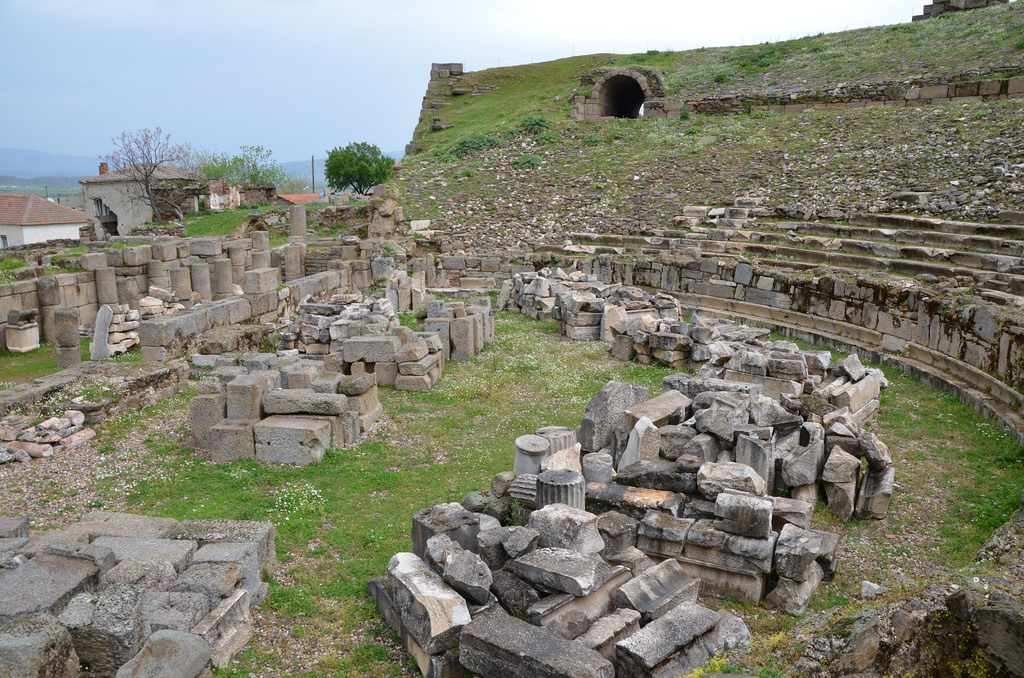
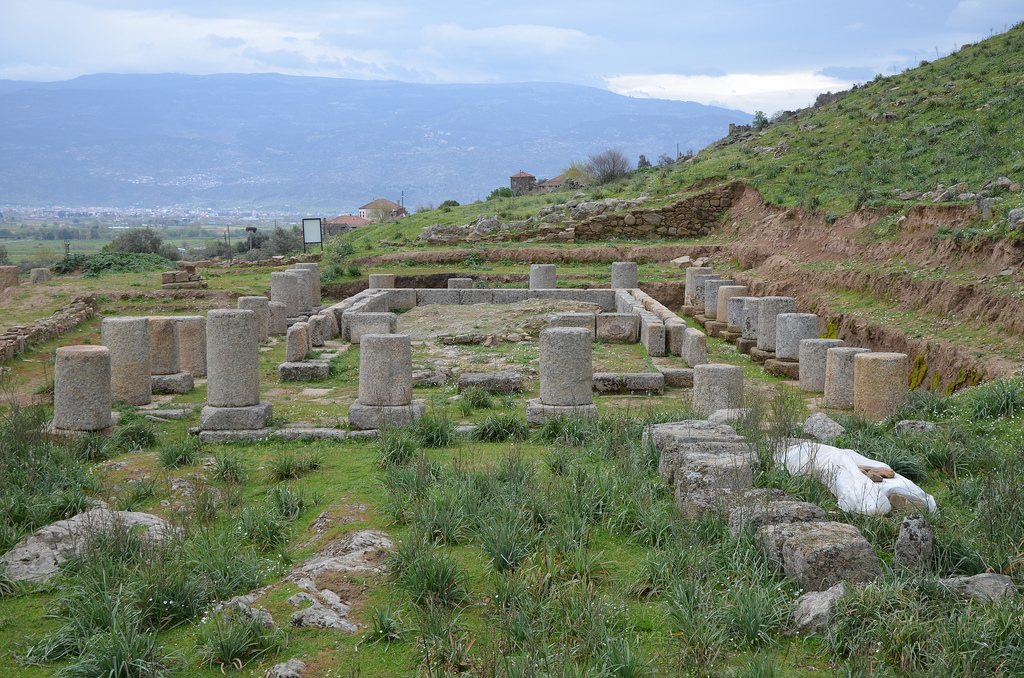
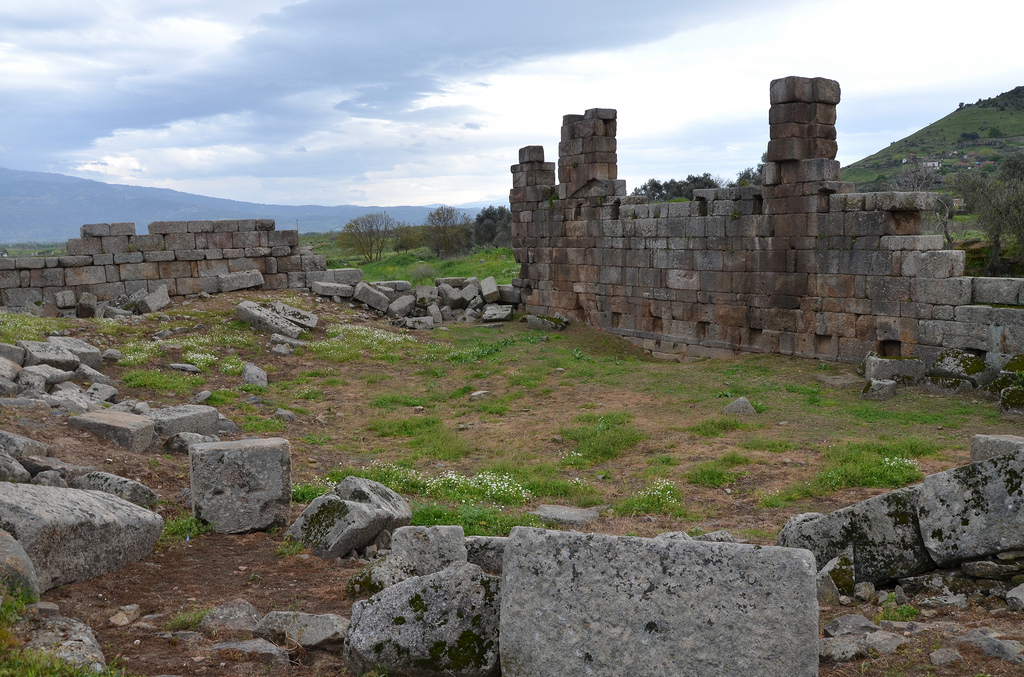
Euromos stood on flat ground, which did not provide a natural defence, so the city was protected by thick walls of ashlar masonry with towers at intervals. On the western slope of the hill are the remains of a small theatre facing west. Only a few rows of seats and some fragments of the stage building have been preserved. But the most striking monument is the Temple of Zeus Lepsinos, just outside the city wall, one of the best-preserved temples in Asia Minor.

The temple was built during the reign of Emperor Hadrian in the 2nd century AD on the site of an earlier Carian temple (the temenos itself dates back to the 6th century BC). However, the temple was never entirely completed (some standing columns were never fluted), probably due to the economic crisis that struck the ancient city 1,800 years ago. Wealthy citizens stepped forward with financial support and had their names engraved on plaques on some of the columns, but this support was insufficient. An inscription says that a physician named Menecrates donated five of the 32 columns of this temple, while another inscription mentions that a magistrate named Leo Quintus donated another seven.

Recent excavations have brought to light the remains of an altar and a Hellenistic decree, revealing that the temple was dedicated to Zeus Lepsynos and was not the first temple erected to him at Euromos.

PORTFOLIO
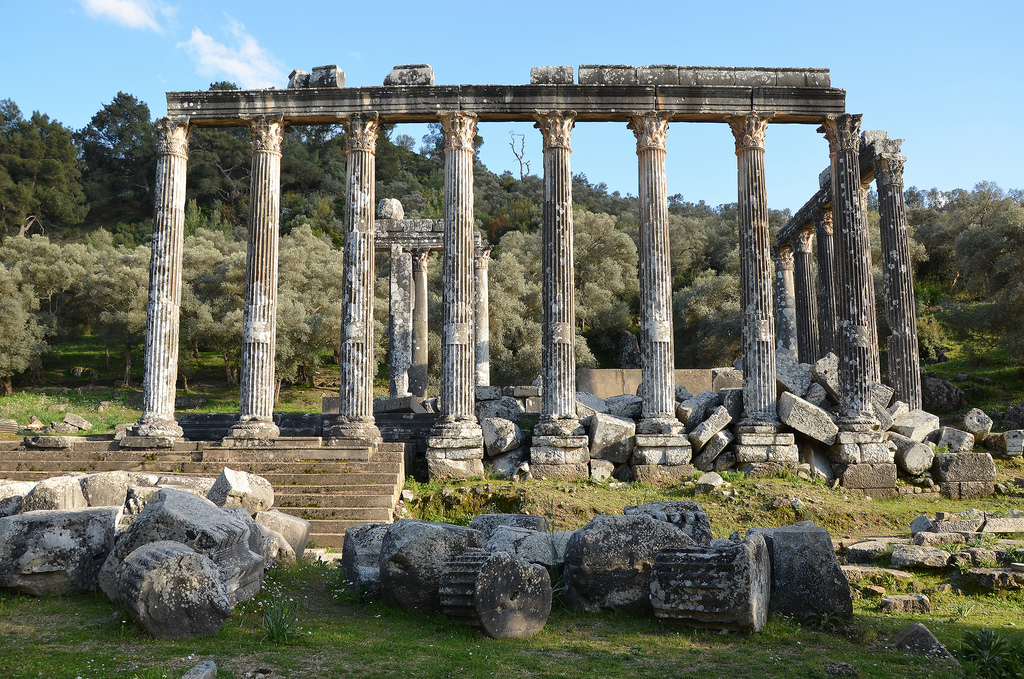
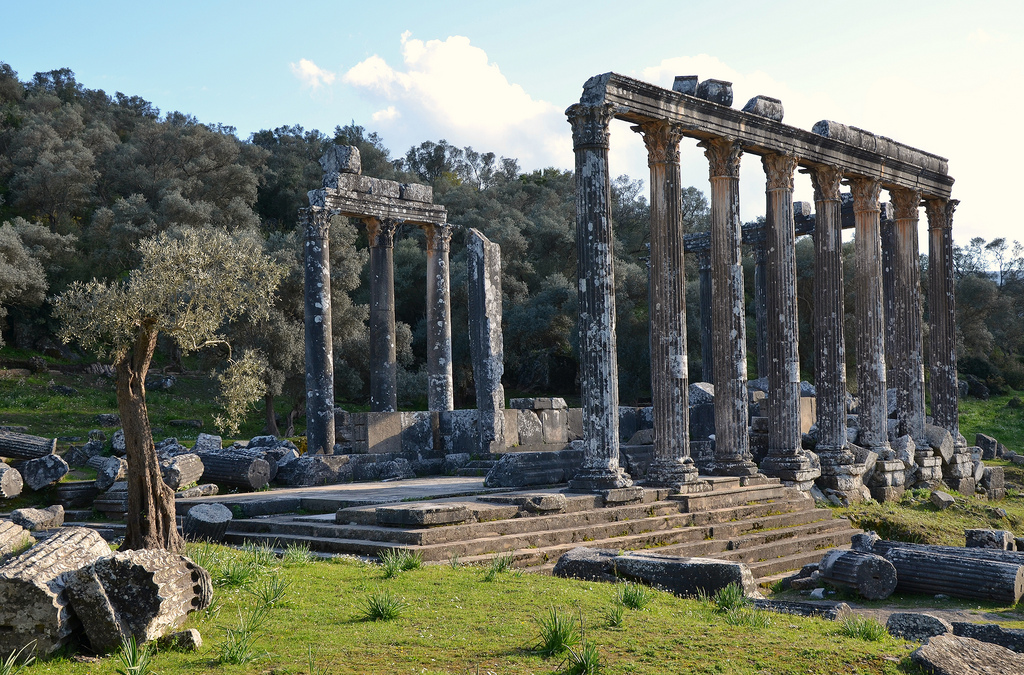
Temple of Zeus Lepsynus, built on the site of an earlier Carian temple, 2nd century AD (probably during the reign of the emperor Hadrian), Euromos, Turkey
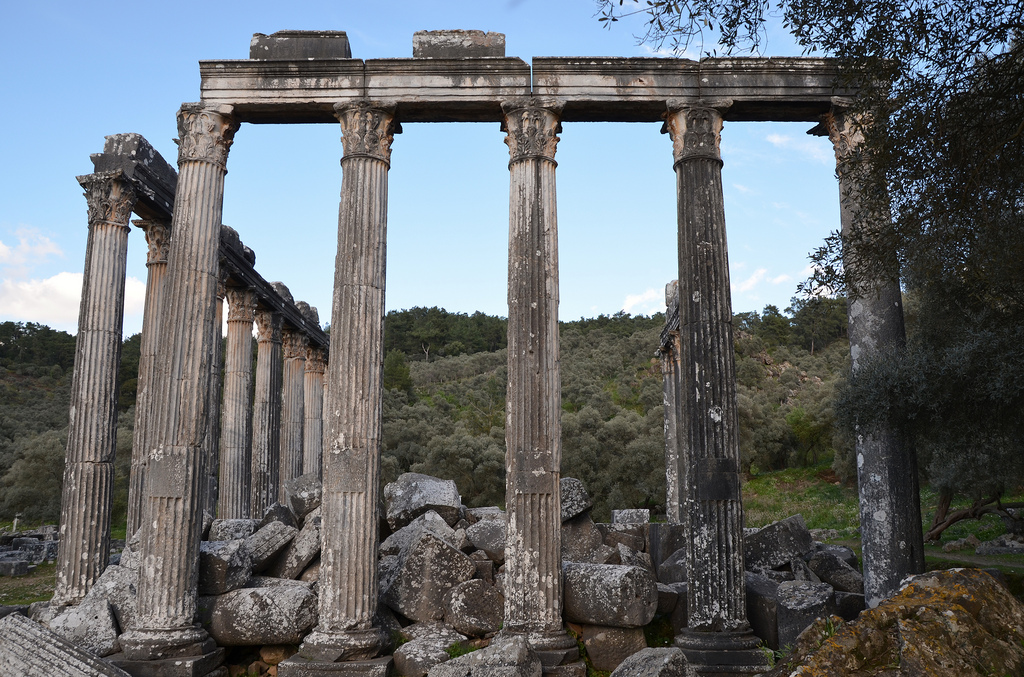
The Temple of Zeus Lepsynos had a peristyle of 11 by 6 columns in the Corinthian order, 16 of which are standing, complete with architrave.
Not all the columns were fluted, so the construction of the temple was probably never completed.
Twelve columns have inscriptions indicating the donor who paid for their execution.
Inscription on a fluted columns of the Temple of Zeus Lepsynus.
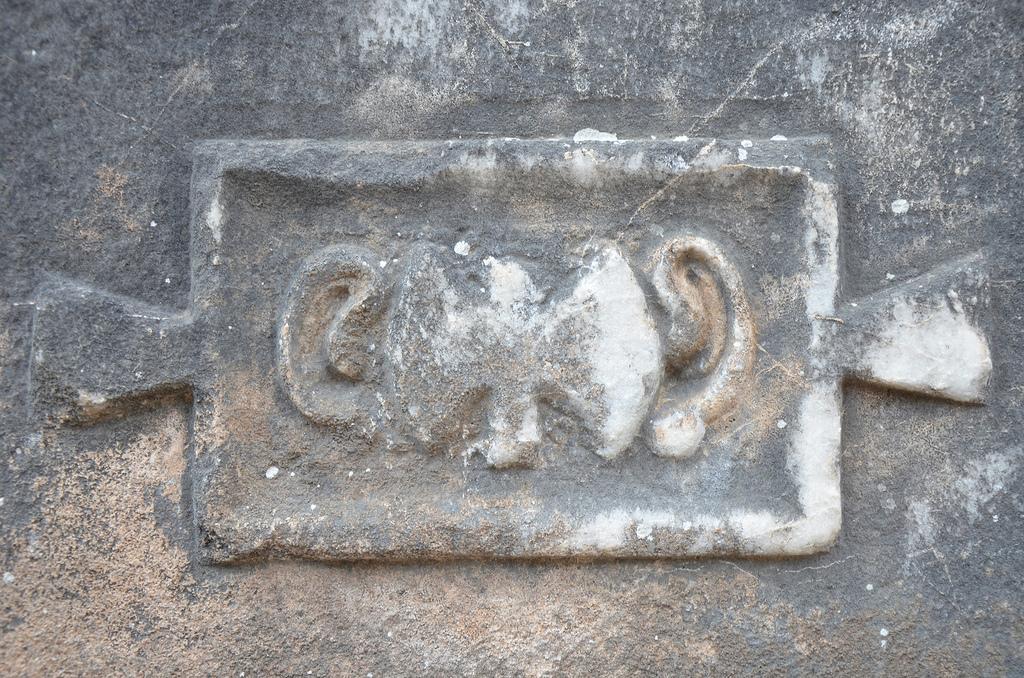
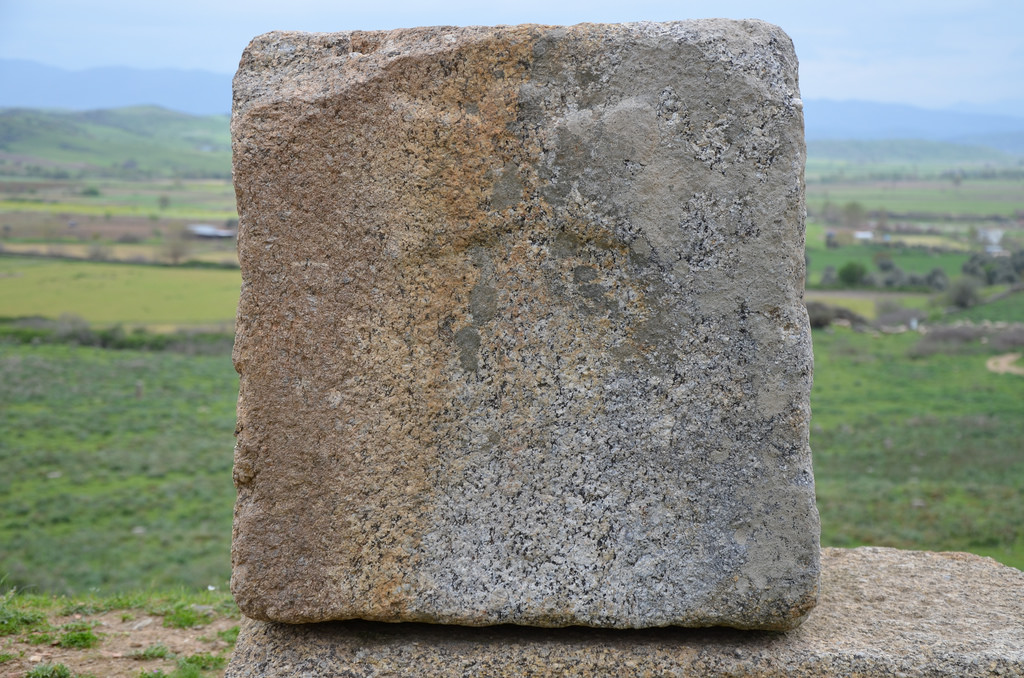
Carving of a labrys (double-bitted axe), Zeus’ symbol, flanked by two ears.

The Temple of Zeus Lepsynus.

The Theatre of Euromos.

Links:

Alabanda

Alabanda, located about 7 kilometres west of the present town of Çine in the Aydin province, was founded in the 4th century BC. The city was said to have been named after the hero Alabandus, who allegedly took his name after winning a horse race. Alabanda combines the Carian words ala (meaning ‘horse’) and banda (meaning ‘victory’).

Coordinates: 37° 35′ 30″ N, 27° 59′ 8″ E

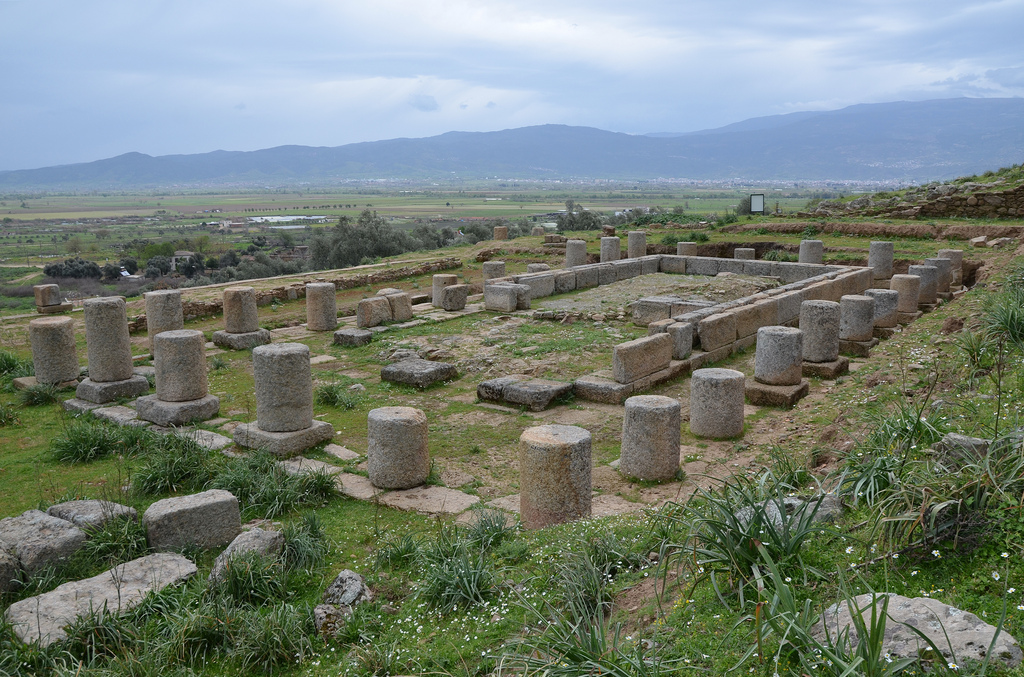
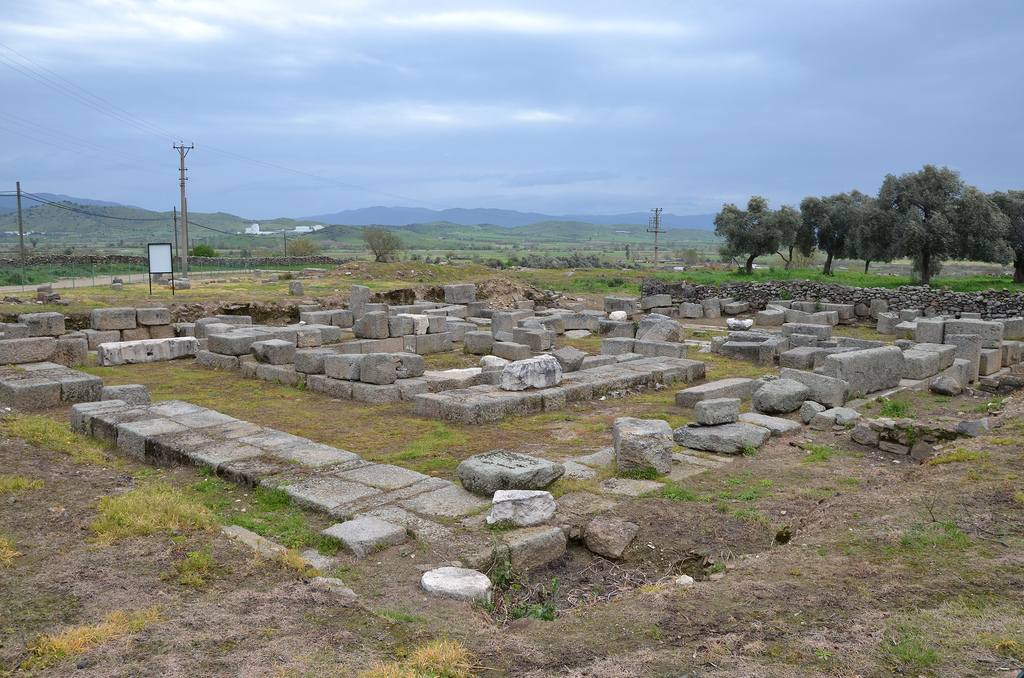
Excavations carried out in the 20th century have brought to light the foundations of two temples, a Hellenistic theatre, a rectangular bouleuterion and a gymnasium-bath complex. The first of these temples is the Temple of Apollo Isotimos. It was built in the 2nd century BC in the Ionic order, with thirteen white marble columns on each side and eight at the front and back. Four slabs of a frieze depicting a battle between the Greeks and the Amazons (Amazonomachy) were found at this site, along with an inscription indicating that the temple was rededicated to Apollo Isotimos and the Divine Emperors in Imperial times.

The second temple stood on the slope of the hill, a little above the plain. It was Doric in style, with six columns on its short sides and eleven on its long sides. It was commonly known as the Temple of Artemis after a figurine of Artemis-Hekate was found on the site, but in 2011, a group of excavators discovered an altar with a labrys (double-headed axe), an attribute of the Carian god Zeus Chrysaoreus (Zeus of the golden sword), which identifies the building as a temple dedicated to this god.

PORTFOLIO

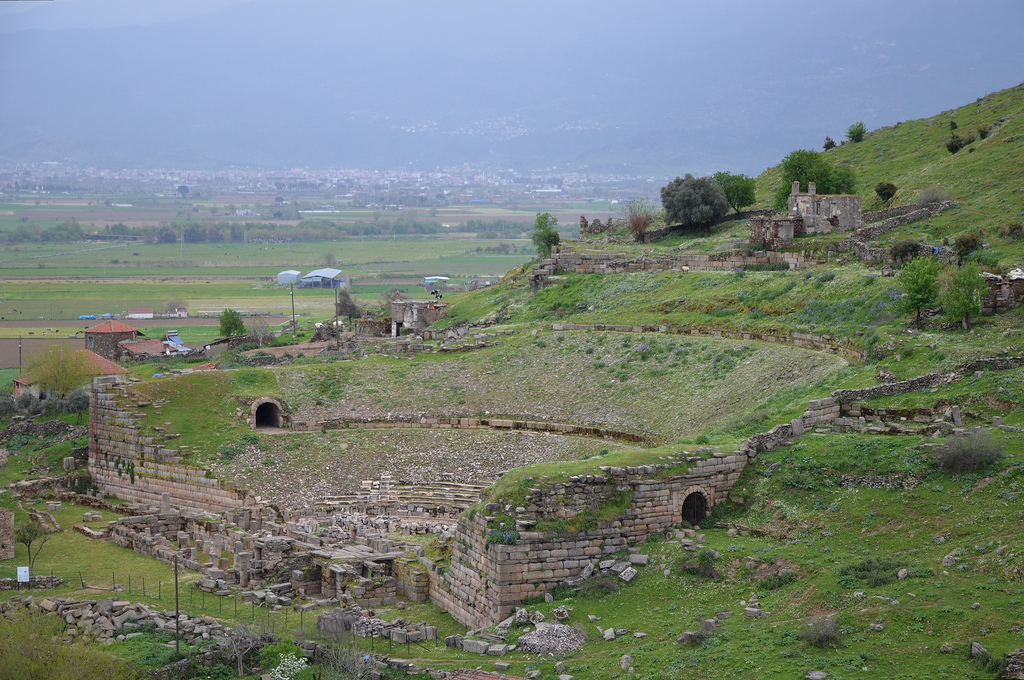
The Hellenistic theate, located on a natural south-facing hillside, in the 4th century AD repairs were made using block rocks from the Temple of Zeus Chrysaoreus, Alabanda, Caria, Turkey
The Hellenistic theatre is located on a natural south-facing hillside. Repairs were made in the 4th century AD using blocks of stone from the Temple of Zeus Chrysaoreus.
The Hellenistic theate, located on a natural south-facing hillside, in the 4th century AD repairs were made using block rocks from the Temple of Zeus Chrysaoreus, Alabanda, Caria, Turkey
The Hellenistic theatre.
16870365330_5138efcf62_b
The Doric Temple of Zeus Chrysaoreus, built in the 3rd century BC.
The Doric Temple of Zeus Chrysaoreus was built in the Doric style, with six columns on its short sides and eleven on its long sides.
Altar with a labrys (doubleheaded axe), an attribute of the Carian god Zeus Chrysaoreus (Zeus of the golden sword).
Altar with a labrys (double-headed axe), an attribute of the Carian god Zeus Chrysaoreus (Zeus of the golden sword).
The ruins of the Ionic Temple of Apollo Isotimos, built in the 2nd century BC, Alabanda (or Antiochia of the Chrysaorians), Caria, Turkey
The ruins of the Ionic Temple of Apollo Isotimos, built in the 2nd century BC.
The Late Hellenitic Bouleulerion (concil house), the interior of the building has a rectangular plan measuring 36x36 meters, Alabanda, Caria, Turkey
The Late Hellenistic Bouleuterion (council house). The interior of the building has a rectangular plan measuring 36 x 36 metres.
The Late Hellenitic Bouleulerion (concil house), the interior of the building has a rectangular plan measuring 36x36 meters, Alabanda, Caria, Turkey
The Late Hellenistic Bouleuterion (council house).

Links: