Temple of Antas

The Temple of Antas is an ancient Punico-Roman temple in the commune of Fluminimaggiore in southern Sardinia. After lying abandoned for centuries, the temple was discovered in 1838 and extensively restored in 1967. The present visible structure dates to the 3rd century AD on a floor plan from the Augustan age. Nestled in the middle of the Iglesiente mountains, the ruins of the temple offer visitors a truly majestic sight.

Coordinates: 39° 23′ 38.4″ N, 8° 30′ 0.72″ E

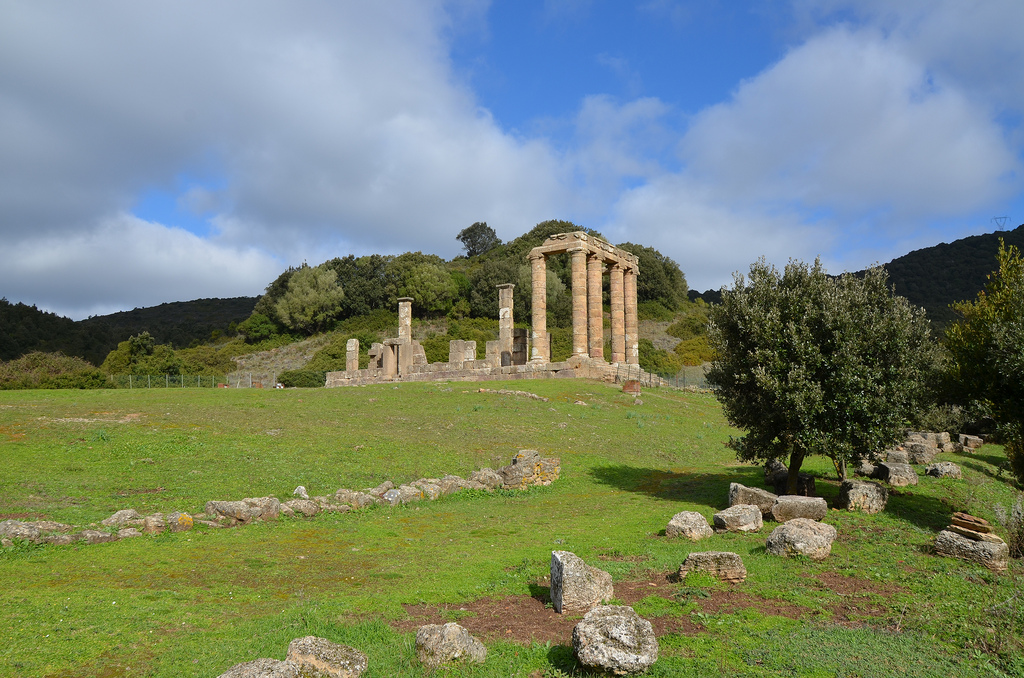
The area, rich in silver, lead and iron, was originally a Nuragic necropolis in use in the early Iron Age (9th-8th century BC) and was identified probably as a sanctuary. The god worshipped here was Babai, the main male divinity of the Nuragic civilisation. Attracted by its metal deposits, the Carthaginians colonised the area at the end of the 5th century BC. They built a temple in honour of the Punic deity Sid Addir, the god of warriors and hunters, who personified the indigenous god worshipped in the nearby Nuragic sanctuary. Its construction was divided into two phases: the more archaic dates back to 500 BC when the place of worship was made up of just a simple rectangular cella (sacred enclosure) where a rock served as a sacred altar. Later in approximately 300 BC, a series of transformations began. The area has produced numerous fragments of Punic sculptures and a large number of dedicatory inscriptions. Some remains of the Punic temple can be seen in front of the temple, which were covered in Roman times by a broad staircase.

The Roman temple was built on the site of its Punic predecessor, and the Romans, in turn, identified the Punic deity as Sardus Pater. Both Sallust and Pausanias record that Sardus was the son of Hercules, who migrated out of the land of Libya to settle on the island of Sardinia, which he called after himself. Under the Roman emperors, the cult of Sardus was encouraged because, in Rome, there was a temple dedicated to Hercules on the Forum Boarium, which made a strong connection between Sardus and Rome.

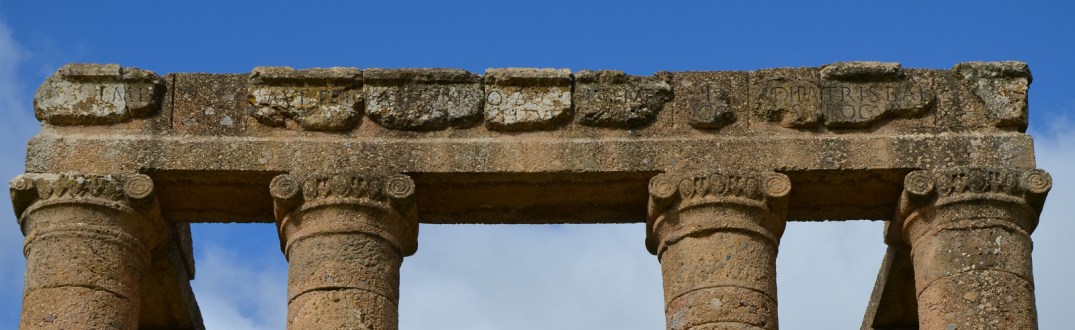
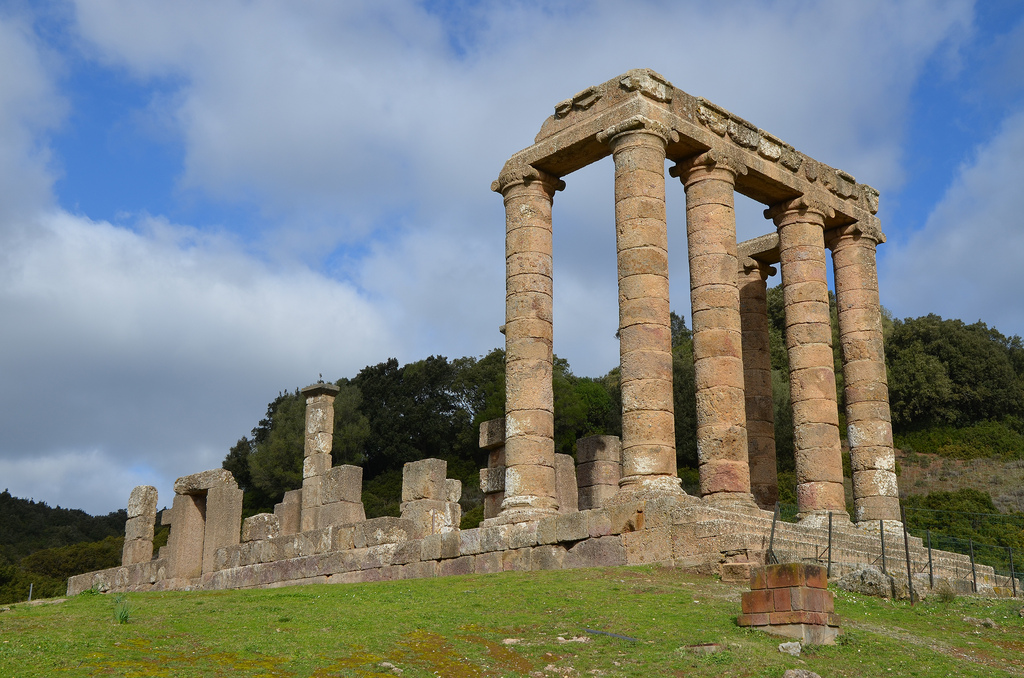
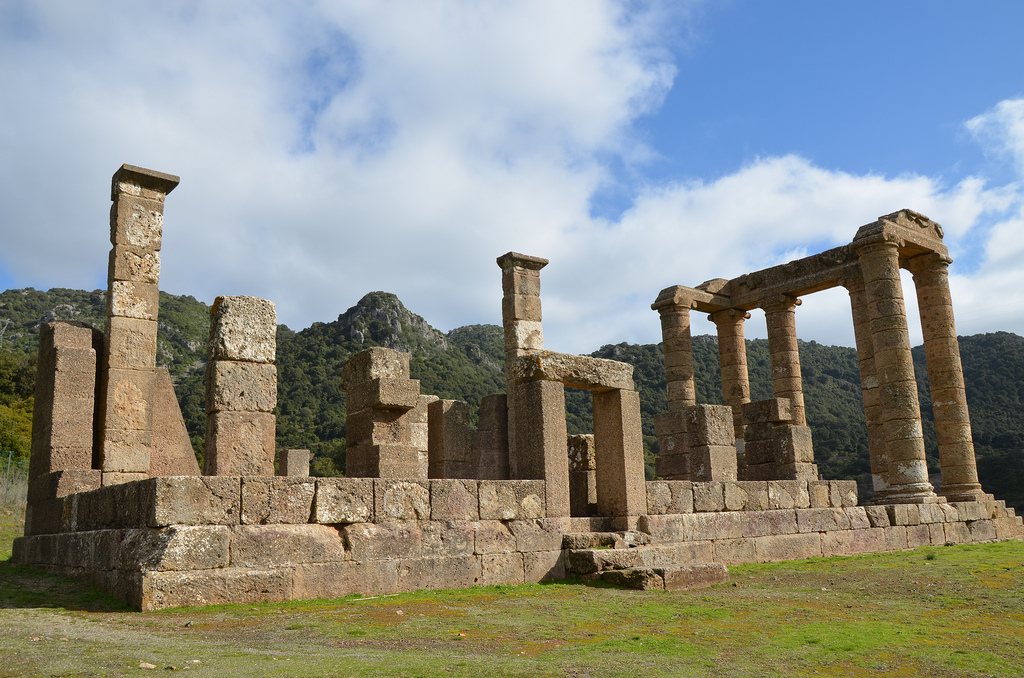
The temple was built on a podium accessible by a broad flight of steps on the front side consisting of various levels. On the fourth level stood the altar, where sacrifices were made according to Roman rituals. The podium was 20 m long and was divided into three parts; the pronaos, cella and adyton. The pronaos had four Ionic columns (tetrastyle) upholding the main beam that contained a Latin inscription: Imp(eratori) [Caes(ari) M.] Aurelio Antonino. Aug(usto) P(io) F(elici) temp[(lum) d]ei [Sa]rdi Patris Bab[i/vetustate c]on[lapsum] (?) [—] A[—] restitue[ndum] cur[avit] Q (?) Co[el]lius (or Co[cce]ius) Proculus

The inscription reveals that the temple was restored under the emperor Caracalla and dedicated to the god Sardus Pater Babi, the forefather of the Sards, by a man called Proculus. This dates the restoration phase to around 215 AD, but the Roman version of the temple could have been built as early as 27 BC under Augustus.

At approximately 1 km from the temple are the Roman quarries from which limestone boulders were extracted and used for the sanctuary’s construction. The work was carried out with a hammer and chisel, while the transport was probably made by carts pulled by oxen. The line cuts followed to extract the limestone blocks are still visible.

PORTFOLIO

In front of the temple are the excavated structures belonging to the Punic phase of the temple.
The columns of the pronaos had a height of approximately 8 meters and were built of local limestone with attic bases. They were surmounted by Ionic capitals.

The Latin inscription in honor of Caracalla.
The Latin inscription in honour of Caracalla.

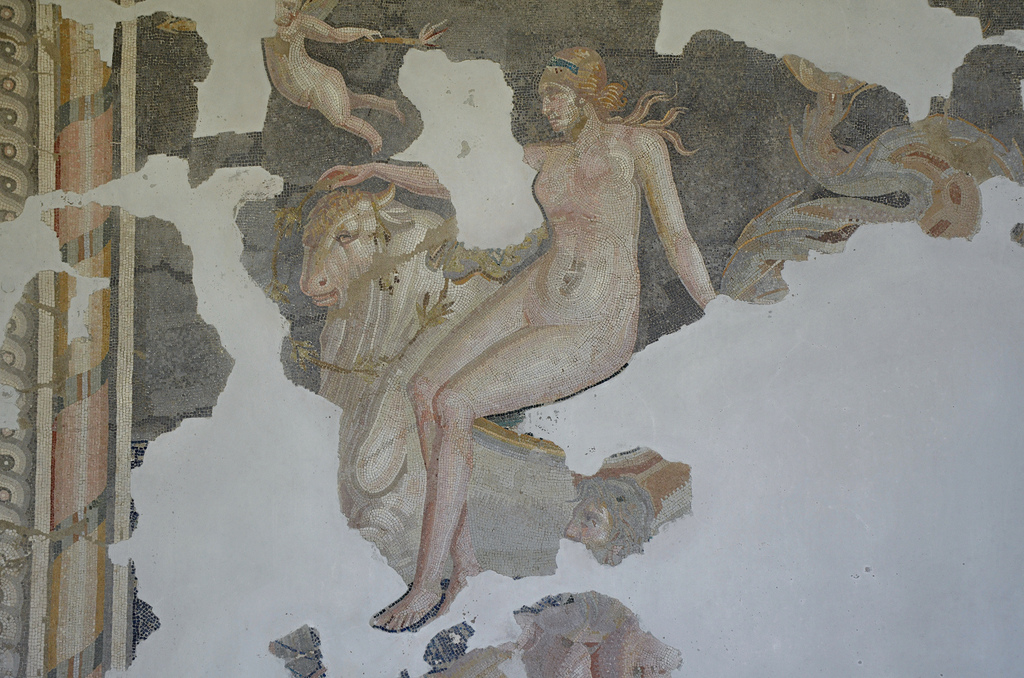
The cella, the central hall of the temple, had large pillars leaning against the perimeter walls supported by roof beams. Its floor was covered with a black and white mosaic of which only part has survived.
The cella, the central hall of the temple, had large pillars leaning against the perimeter walls supported by roof beams. Its floor was covered with a black and white mosaic of which only part survived.
At the back of the temple was the adyton. It was divided into two rooms, each with their own entrance and in front of their doorway two square water basins on the floor which contained holy water for purification ceremonies (ablution).
At the back of the temple was the adyton. It was divided into two rooms, each with its own entrance, and in front of their doorway were two square water basins on the floor containing holy water for purification ceremonies (ablution).

Roman quarry near the Temple of Antas.

The temple’s isolated position in a fertile valley makes it an enchanted place to visit and offers visitors incredible natural scenery. It is one of the island’s most impressive and exciting archaeological remains.

Opening times:
– from July to September, every day from 9.30 to 19.30
– from April to May and October from 9.30 to 17.30
– June from 9.30 to 18.30
– from November to March from 9.30 to 16.30 except Monday

Links:
Aquileia

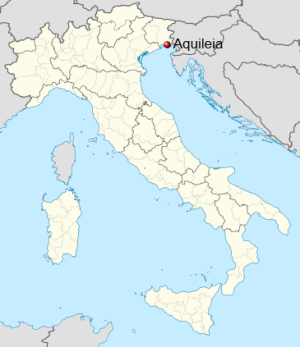
Aquileia is an ancient Roman city in Italy at the head of the Adriatic. Nowadays, the city is small (about 3,500 inhabitants), but in antiquity, it was the fourth Roman town in Italy and the ninth in the whole Empire. Aquileia is one of the main archaeological sites of Northern Italy and has been inscribed on the UNESCO World Heritage List since 1998 for its well-preserved remnants from the early Roman Empire and its Patriarchal Basilica.

Coordinates: 45° 46′ 11.01″ N, 13° 22′ 16.29″ E

Aquileia

Aquileia was founded as a colony by the Romans in 181 BC along the Natiso River. The town protected the territories that bordered areas subject to the influence of the Veneti (faithful allies of Rome) to the west, tribes of the Alpine Gauls to the north and the Histri to the east. In 90 BC, Aquileia obtained Roman citizenship and was used as a base for the military campaigns of Julius Caesar in Gaul and in Illyria. With the administrative reform of Augustus, Aquileia became the capital of the tenth region, “Venetia et Histria”. The town underwent a period of prosperity and soon became a centre of important trade exchanges thanks to the navigable river that crossed it and the efficient network of roads that linked the town to the Po Valley and Central Europe.

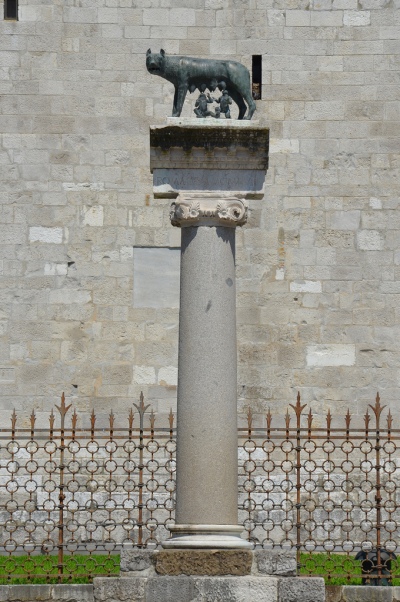
The Roman column in Piazza Capitolino, with the Capitoline She-Wolf donated by the city of Rome in 1919, twenty-one centuries since the foundation of Aquileia.
The Roman column in Piazza Capitolino, with the Capitoline She-Wolf donated by the city of Rome in 1919 to mark the twentieth centenary of the foundation of Aquileia. The She-Wolf stands on a section of architrave, a column shaft and a base (all ancient).
Destroyed by Attila in the mid-5th century, Aquileia rose again in the 6th century AD to become a powerful Episcopal seat with one of the most beautiful basilica complexes of Christianity. The Patriarchal Basilican Complex played a decisive role in the spread of Christianity into central Europe in the early Middle Ages.

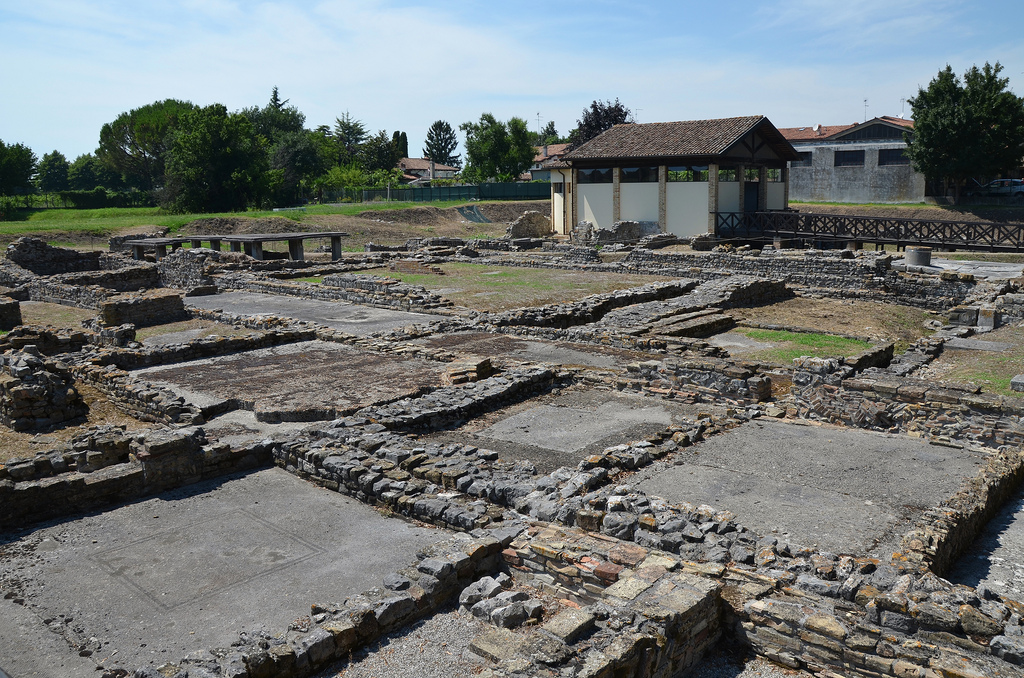
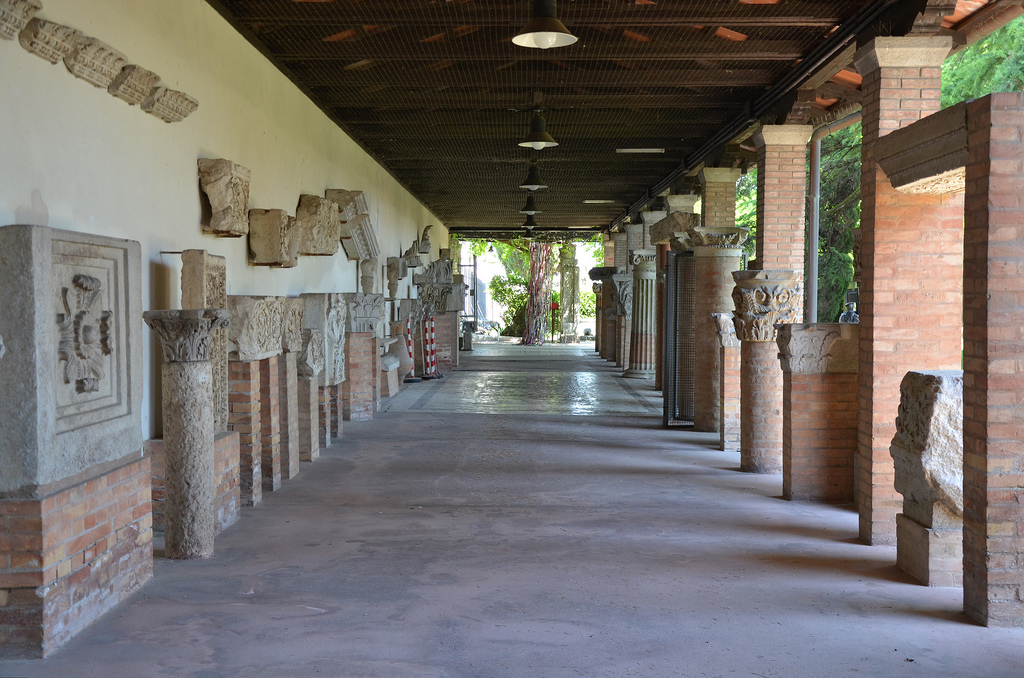
The site of Aquileia is believed to be the largest Roman city yet to be excavated. Excavations, however, have revealed some of the layouts of the Roman town, such as the remains of the Forum, a segment of the decumanus, some impressive funerary monuments, two luxurious residential complexes, baths as well as the former locations of an amphitheatre and of a circus. The most striking remains of the Roman city are those of the river port installations, a long row of warehouses and wharfs that stretched a long distance along the bank of the river. But the dominant feature of Aquileia is the Basilica with its magnificent 4th-century mosaics. The National Archaeological Museum and its lapidary galleries contain over 2,000 inscriptions, statues and other antiquities, mosaics, glasses of local production and a numismatics collection.

PORtFOLIO

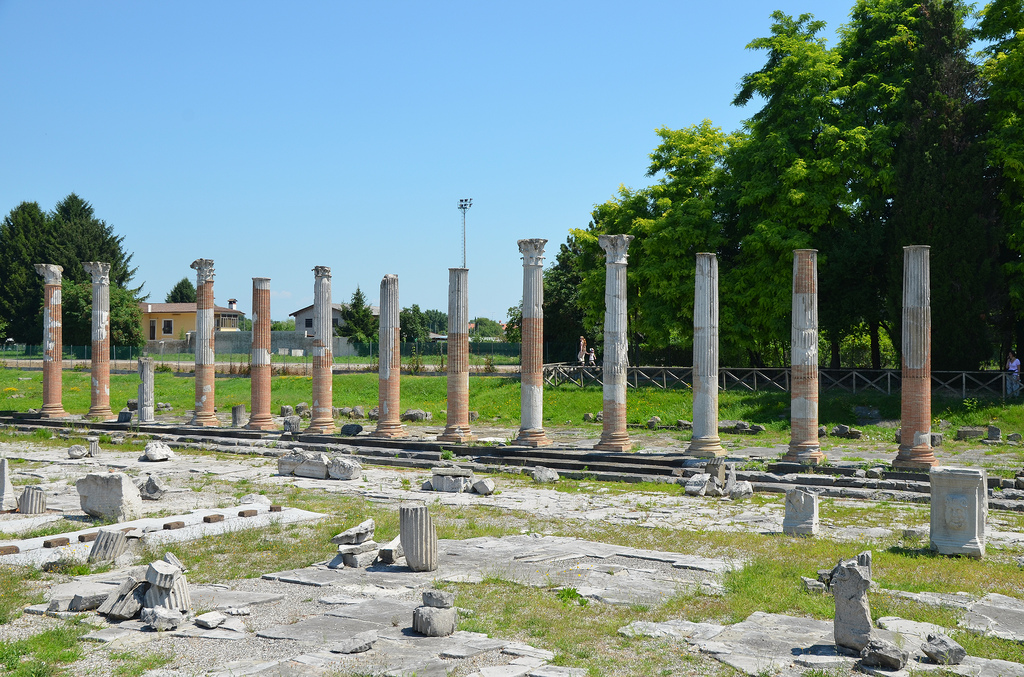
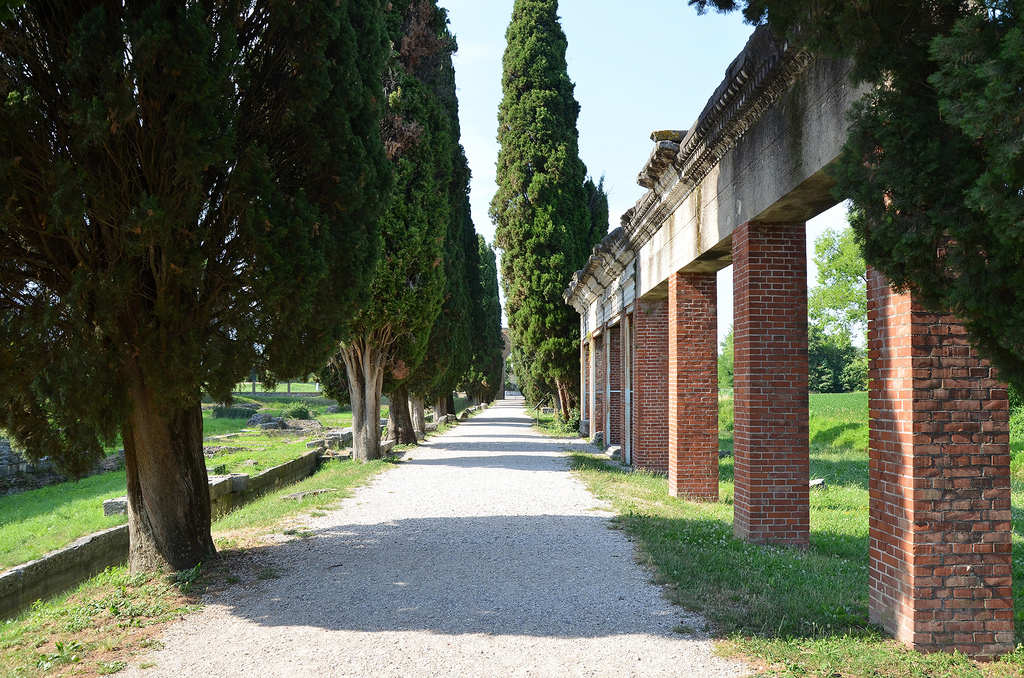
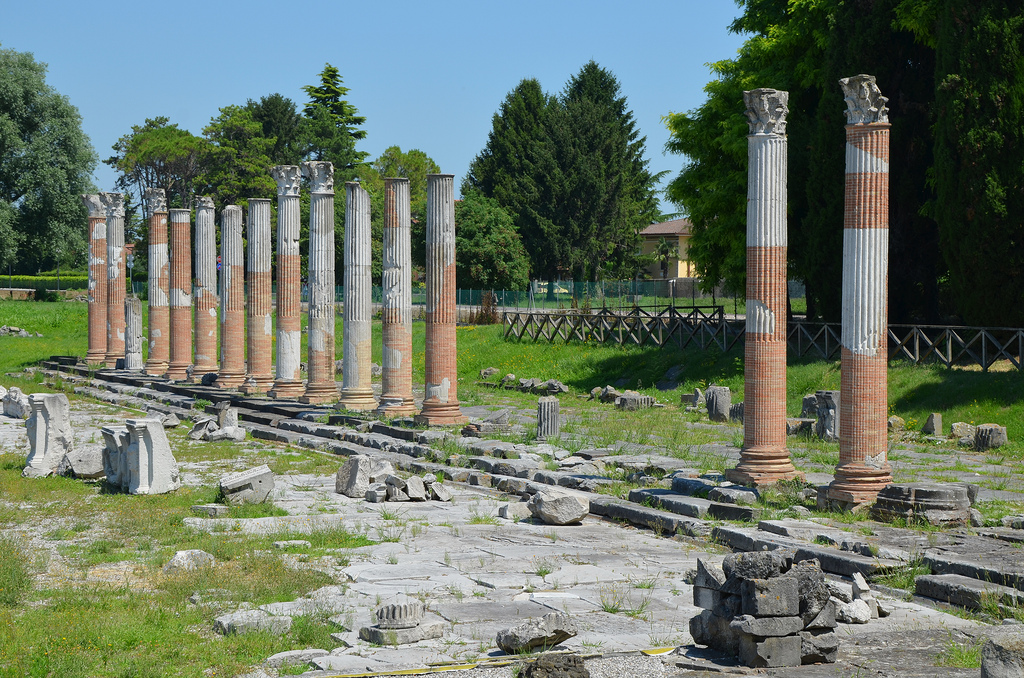
The imperial Forum of Aquileia, the colonnade of the eastern portico of the Forum was restored and partially reconstructed in 1936-1937, Aquileia, Italy
The imperial Forum of Aquileia, the colonnade of the eastern portico of the Forum, was restored and partially reconstructed in 1936-1937.
In the first half of the 1st century AD, the Forum was a large rectangular pedestrian area covered in Aurisina limestone and lined by porticoes that led to shops (tabernae) and the Civilian Basilica.
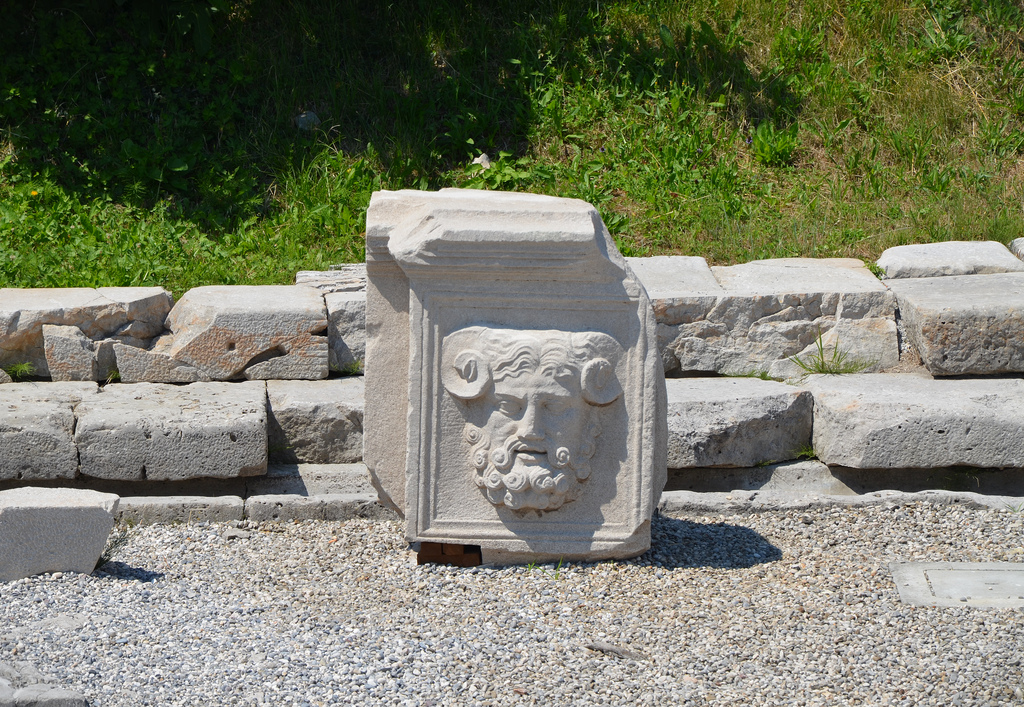
Plinth supporting a protome of Jupiter Ammon, it decorated attic of the Forum's portico.
Plinth supporting a protome of Jupiter Ammon, it decorated the attic of the Forum’s portico.
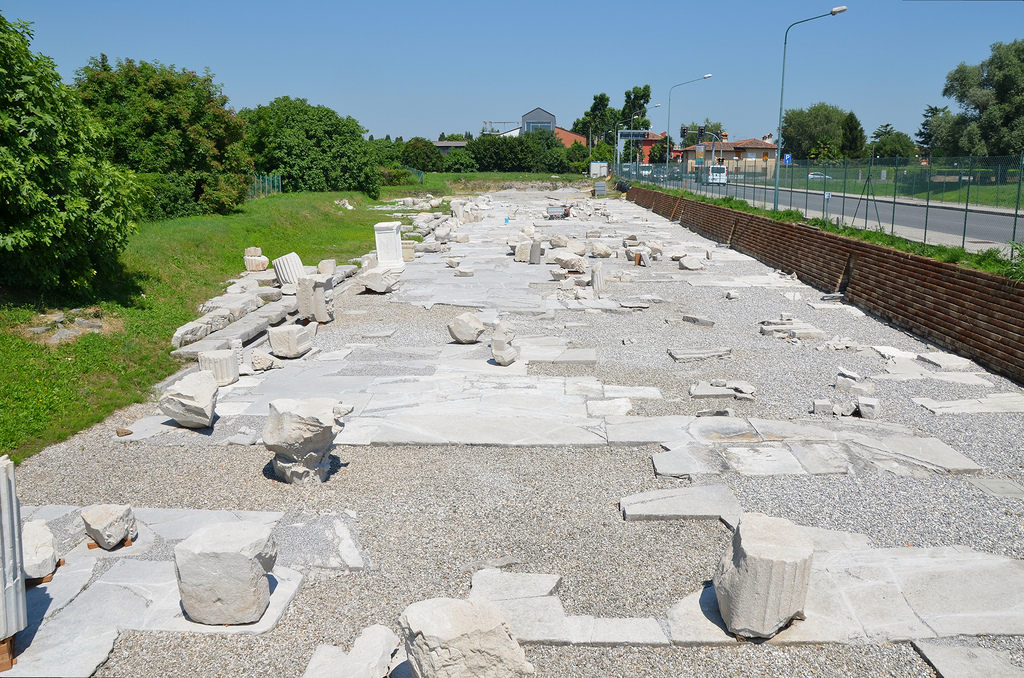
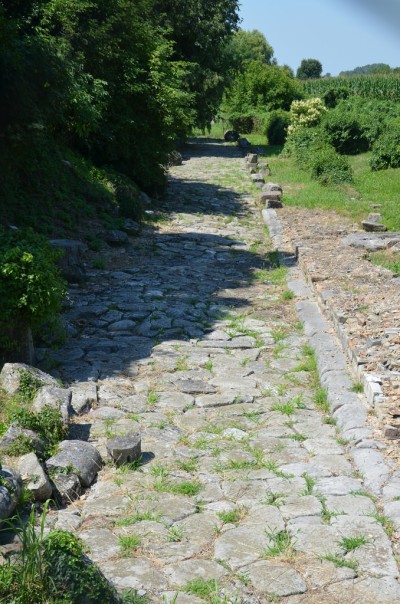
Stretch of the decumanus, the street going in an east-west direction south of the Forum, Aquileia, Italy
A stretch of the decumanus, the street goes south of the Forum in an east-west direction.
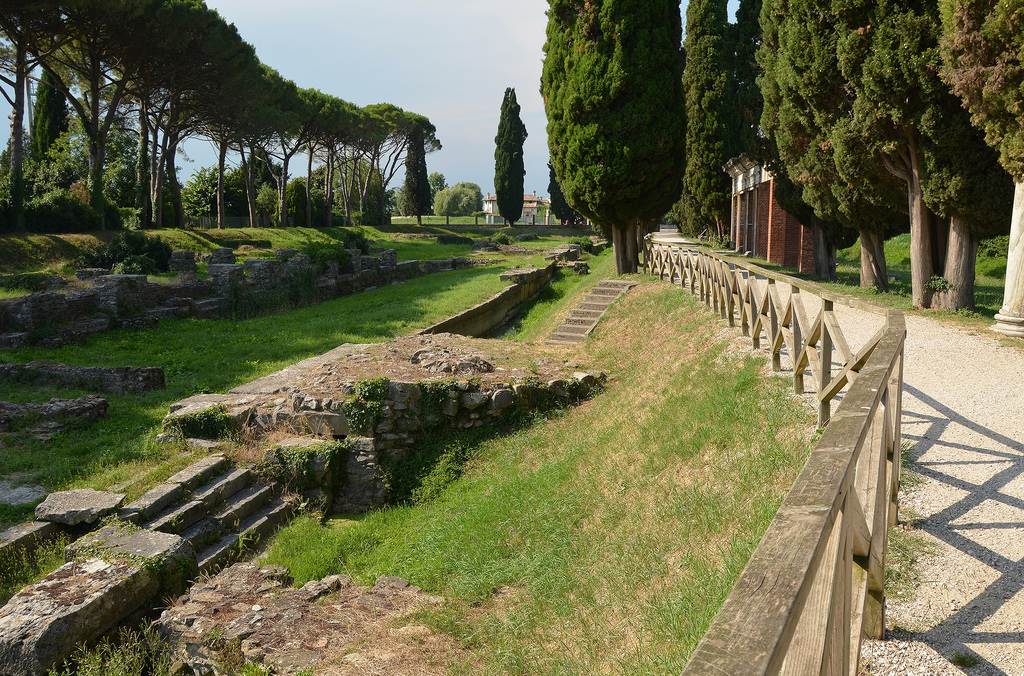
The western-side remains of the fluvial port of Aquileia, built in the Julio-Claudian age along the right side of the Natiso River along the Via Sacra (the Sacred Way), Italy
The western side remains of the fluvial port of Aquileia, one of the best-preserved surviving Roman ports. It was rebuilt entirely in the Julio-Claudian age over Republican foundations with a new complex of wharfs and a long warehouse behind that opened onto the river.
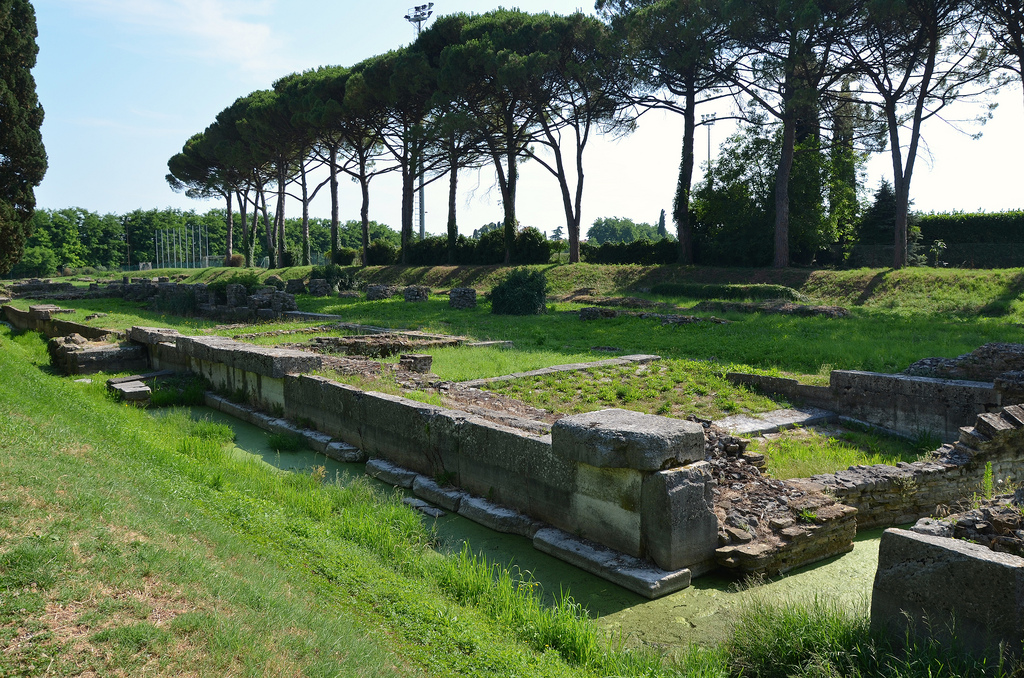
The western wharf of the river port with ramp leading up to the storerooms. The wharfs had three ramps that lead to port facilities and a long portico. Three paved roads stretched towards the market areas and were used to transport
The western wharf of the river port with a ramp leading up to the storerooms. The wharfs had three ramps that led to port facilities and a long portico. Three paved roads stretched towards the market areas and were used to transport goods.
The western-side remains of the fluvial port of Aquileia, built in the Julio-Claudian age along the right side of the Natiso River along the Via Sacra (the Sacred Way), Italy
Along the so-called Via Sacra set up in 1934 and which follows the ancient watercourse, remarkable architectural elements and decorations are on display; they belonged to various monuments in the town.
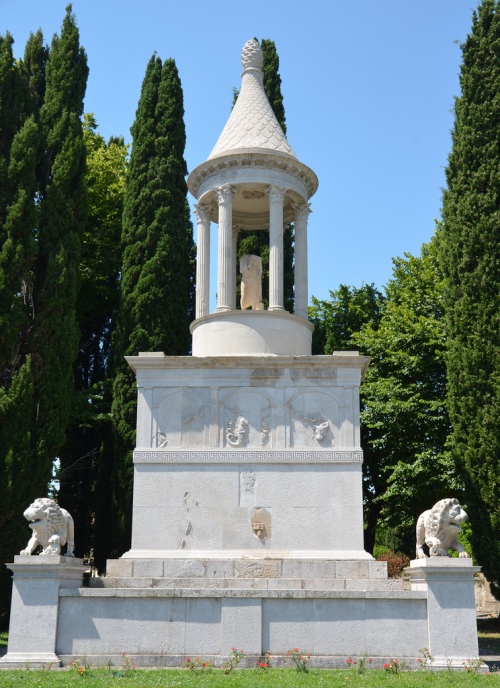
The so-called Grand Mausoleum dating back to the Augustan era, it was found on the edge of the town at the end of the 1800s and rebuilt in 1955 along Via Giulia.
The so-called Grand Mausoleum dates back to the Augustan era. It was found on the edge of the town at the end of the 1800s and rebuilt in 1955 (inappropriately) along Via Giulia. It comprises an enclosure protected by two lions, with a high base with relief decorations, surmounted by a circular, temple-like structure that guards the statue of the toga-clad deceased.
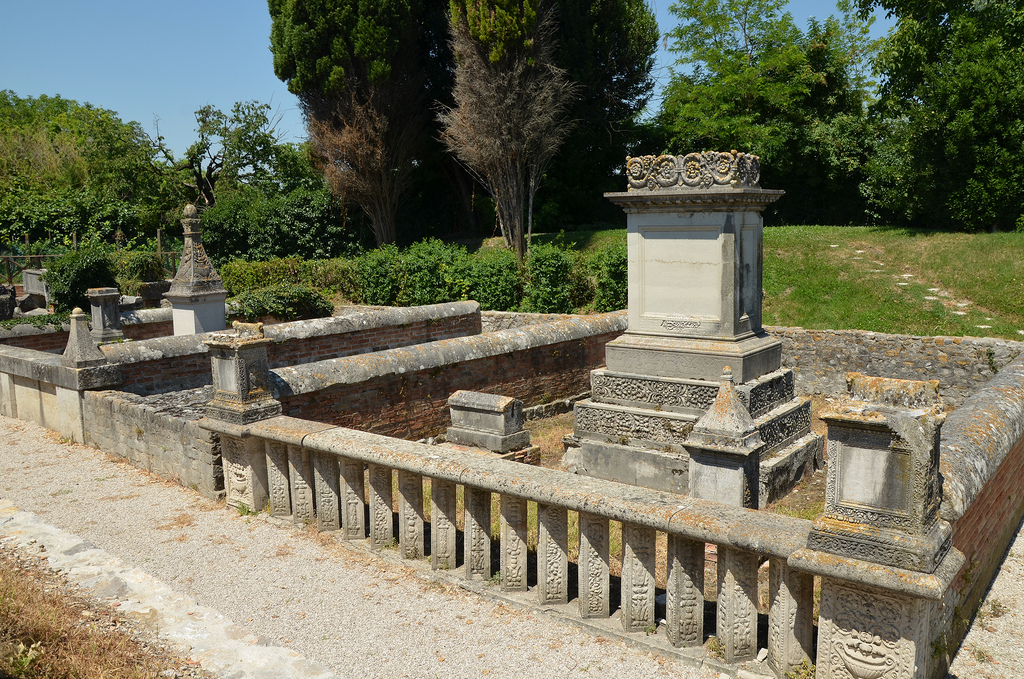
The Roman necropolis dating between the 1st and the 3rd century AD, it comprises of five burial enclosures containing numerous cremation and inhumation burials.
The Roman necropolis dates to between the 1st and the 3rd century AD. It comprises five burial enclosures of different lengths but equal depths containing numerous cremation and inhumation burials. They belonged to different Aquileian families (Stazius, anonymous, Julius, Trebius and Cestius).
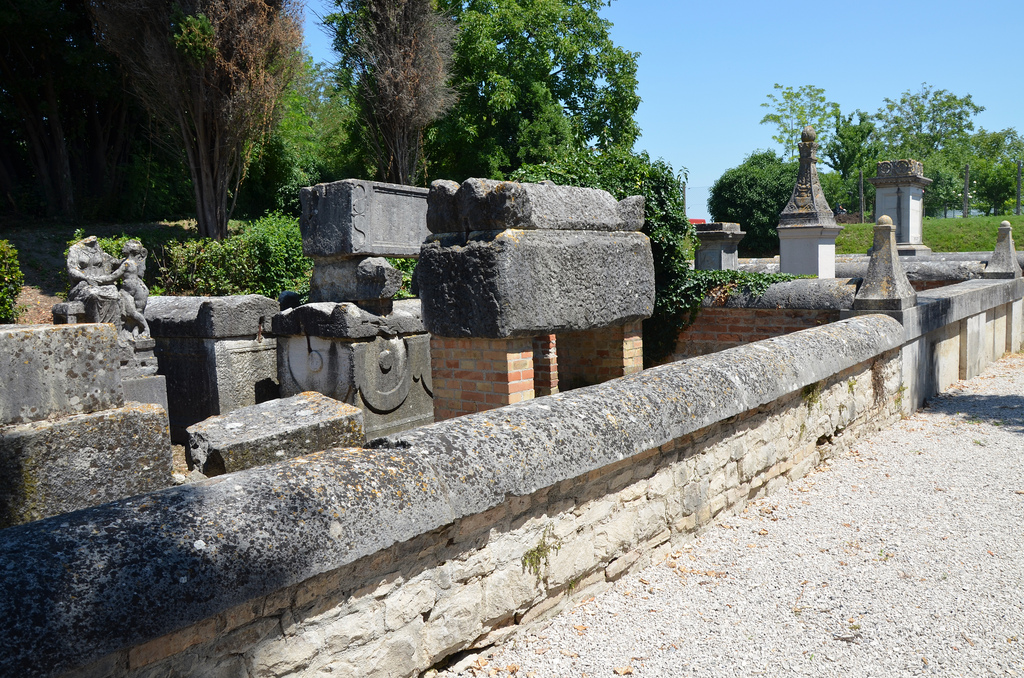
A small sculpture (original at the Archaeological Museum) portrays a (dead) woman being comforted by Psyche, a very young girl with wings who accompanied the dead to the underworld.
In the burial ground owned by the Trebii, a small sculpture (original in the Archaeological Museum) portrays a deceased woman being comforted by Psyche, a very young girl with wings who accompanied the dead to the underworld.
The archeological ruins of the Fondo Cal, one of Aquileia’s residential district.
The archaeological ruins of the Fondo Cal, one of Aquileia’s residential districts.
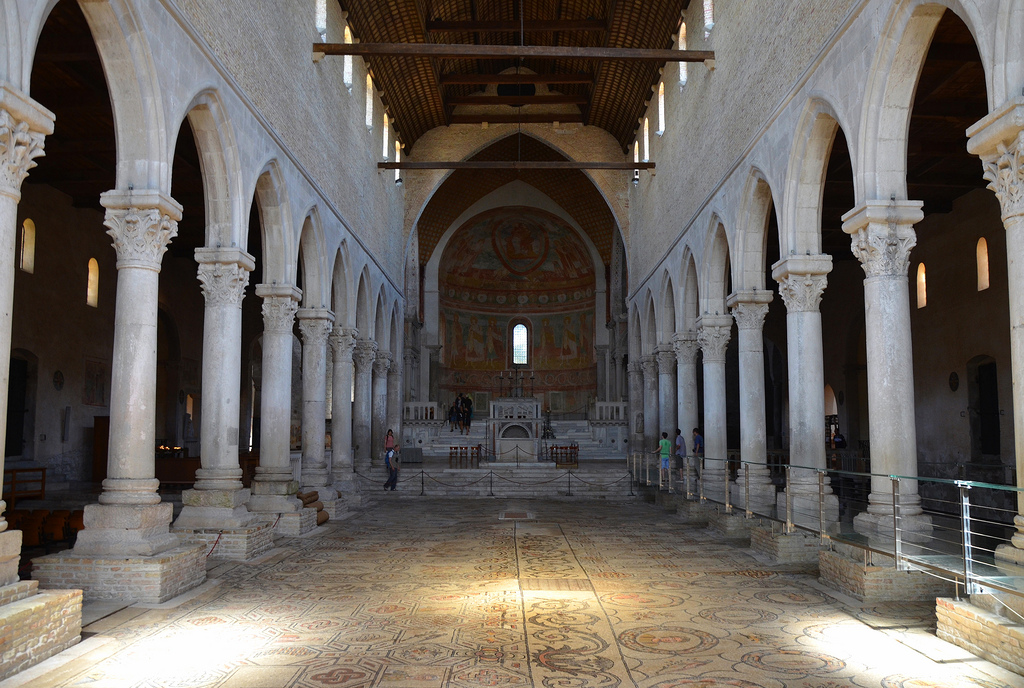
Inside view of the Basilica with the mosaic floor that was uncovered at the beginning of the 20th century, the mosaic dates back to the first stage of Christian construction of the basilica which started soon after the Edict of Toleration in 313 AD.
Inside view of the Basilica with the mosaic floor uncovered at the beginning of the 20th century. The mosaic dates back to the first stage of Christian construction of the Basilica, which started soon after the Edict of Milan in 313 AD. Over 760 square metres, The Bishop Theodore’s mosaic is the largest mosaic floor in the western Roman Empire.
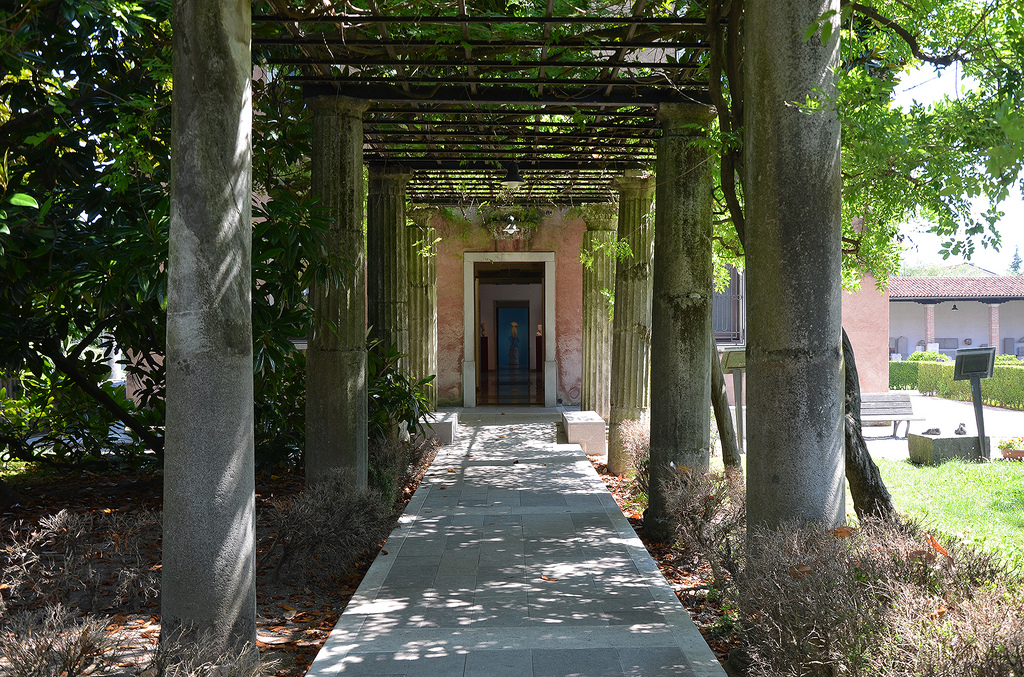
The Museo Archeologico Nazionale di Aquileia
The lapidarium of the Museo Archeologico Nazionale di Aquileia

See more images of Aquileia on Flickr

See more images of the Archaeological Museum of Aquileia on Flickr

Links: