Sepphoris/Diocaesarea

Sepphoris, also known as Diocaesarea, lies 289 metres above sea level on a hill in the heart of the Galilee province, about 5 kilometres west of Nazareth. Its history can be traced back to the Persian period (ca. 539-332 BC), but the city grew during the Hellenistic period. Herod the Great built a royal palace here, and after his death in 4 BC, his son, Herod Antipas, made Sepphoris the capital of his government. The city may have derived its name from the Hebrew word tzippori, a variant of tsippor, meaning “bird”. A passage in the Talmud seems to confirm this theory, as the city is described as “perched on the top of a mountain, like a bird”.

Coordinates: 32° 45′ 10.4″ N, 35° 16′ 46.2″ E

Flavius Josephus, the 1st-century AD Romano-Jewish historian, said that Sepphoris was the largest city in Galilee and stood as a powerful fortress during the First Jewish Revolt in AD 66. Sepphoris was one of the cities that remained loyal to Rome. It refused to take part in the revolt and was spared destruction. After the suppression of the revolt in AD 70, the city was transformed from a Galilean town into a Roman polis boasting governmental institutions and public buildings. Sepphoris even minted coins bearing the legend Eirenopolis, “City of Peace”, in honour of Vespasian.

Sepphoris reached its peak of 15,000-20,000 inhabitants in the 2nd century AD. Over the years, public and private dwellings embellished with colourful mosaics sprang throughout the Roman city, including a temple, a forum, bathhouses, a theatre and a large water reservoir. Hadrian renamed Sepphoris to Diocaesarea (city of Zeus and Caesar), probably in AD 120. He built a new road leading from Caparcotna and its military baseLegio, to Diocaesarea (as recorded on milestones dated to AD 120 and 130).

Diocaesarea continued to prosper in the following years, while the city’s population included pagans and Christians living alongside the Jewish population. Several churches were built in the Byzantine period, and Talmudic sources mention 18 synagogues (although only one, built at the beginning of the 5th century AD, has been discovered).

Diocaesarea retained its urban plan throughout late antiquity and continued to flourish until the decline in the Early Arab period in the 7th century AD. In Crusader times, sections of the city and the fortress were rebuilt. The town was renamed “Le Sephorie” to preserve its ancient name.

Sepphoris was first excavated in 1931 by Leroy Waterman of the University of Michigan, and major excavations were conducted from 1983 to 2003. Today, the ancient site is a National park (Zippori National Park) and, even in ruins, a highly recommended archaeological site.

PORTFOLIO

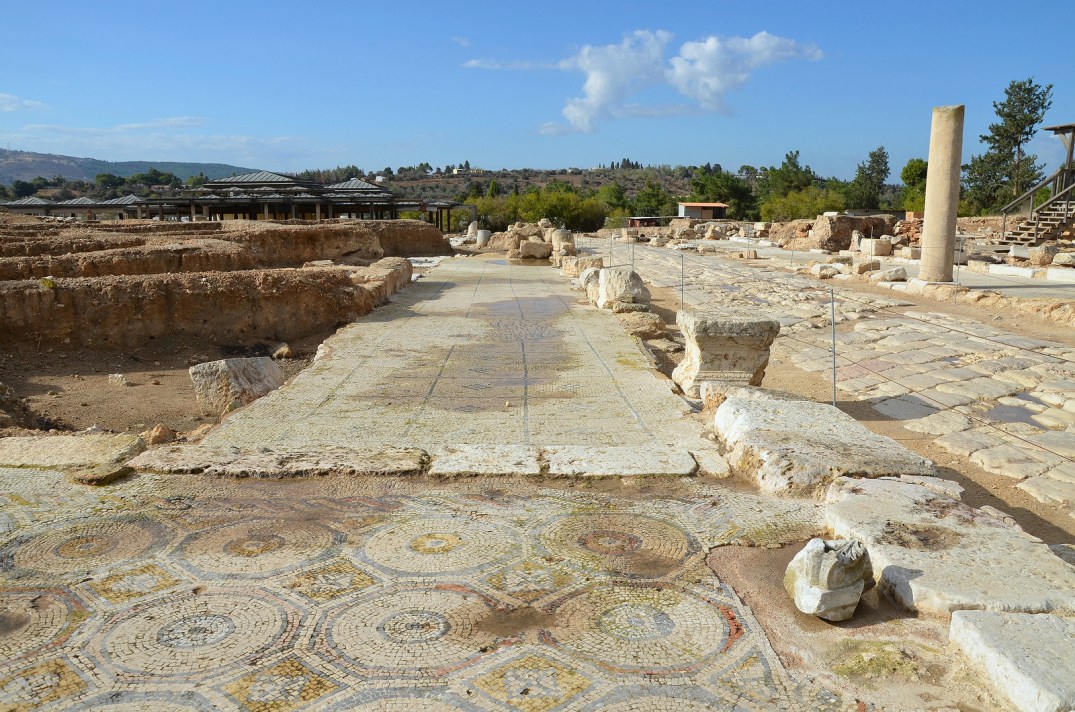
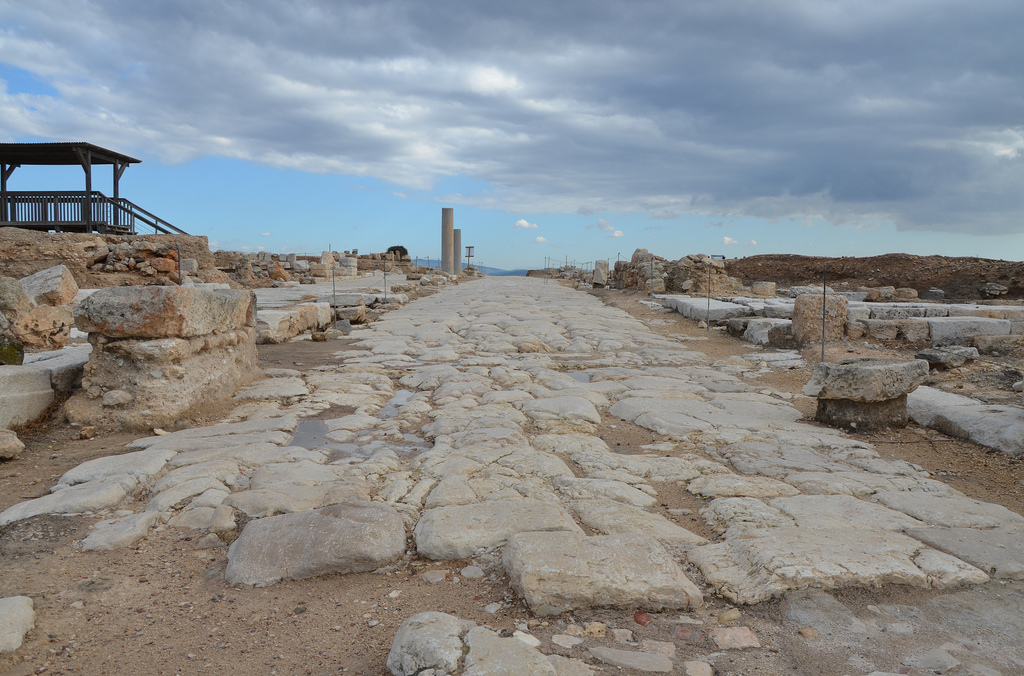
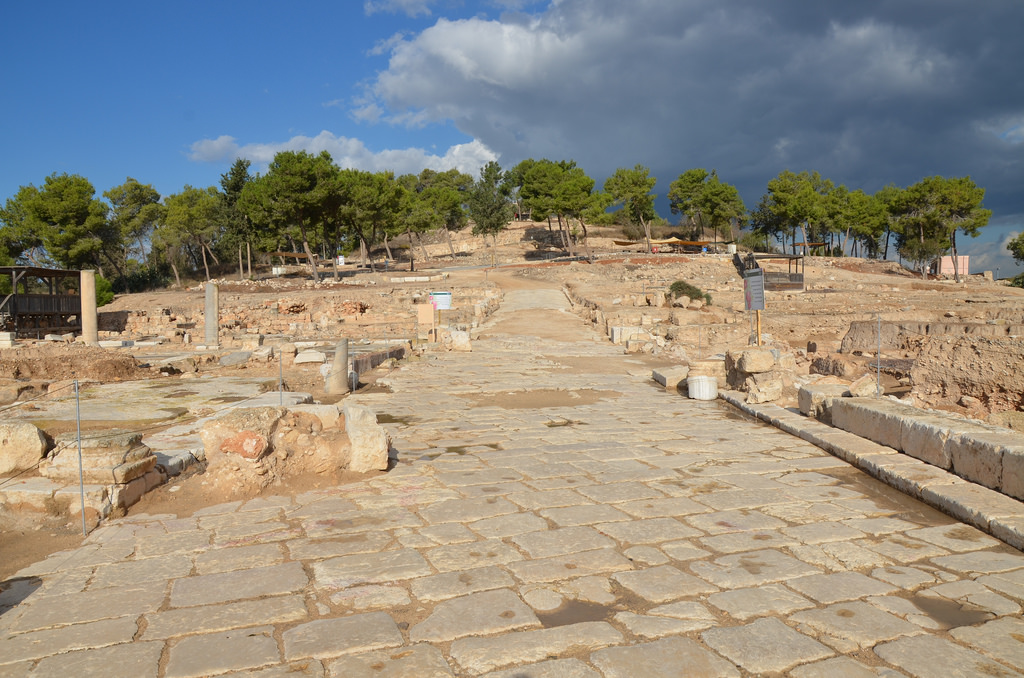
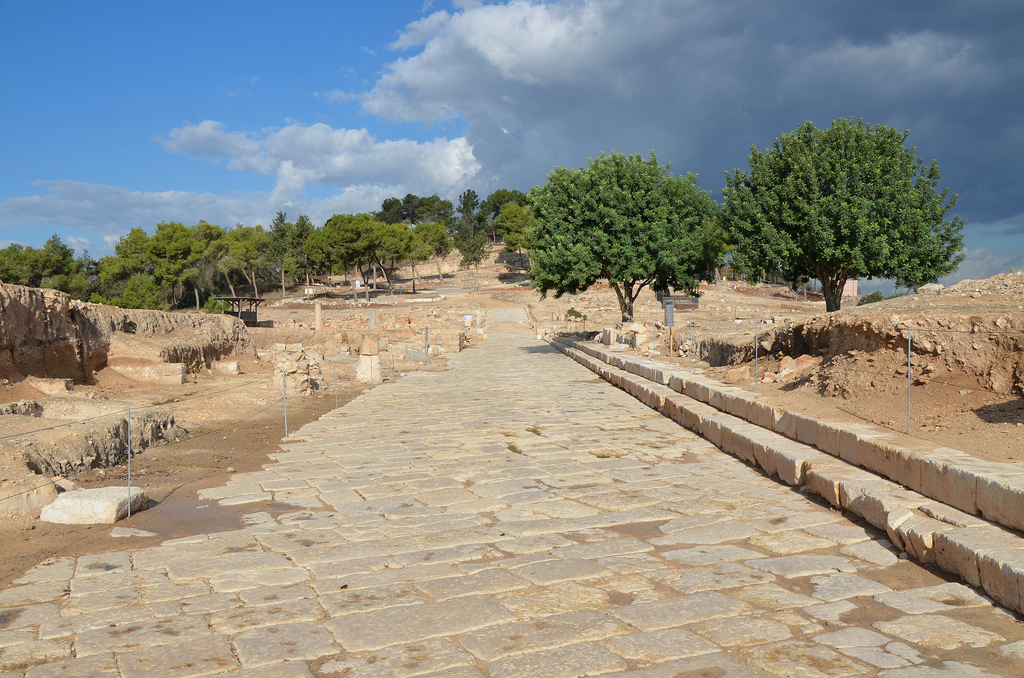
View of the Cardo marked with ruts made by carriage wheels, it was the main road of the city which runs north to south.
View of the Cardo marked with ruts made by carriage wheels. It was the main road to the city, which runs north to south.
View of the Cardo with porticoes along both sides adorned with geometrical mosaics.
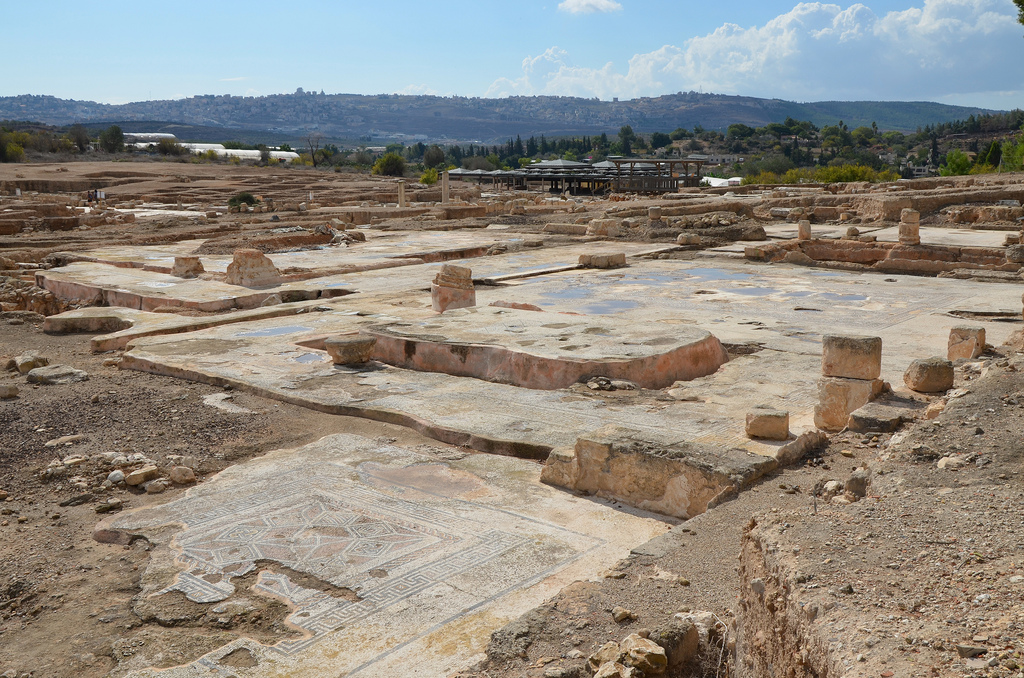
The Forum, a large public building constructed in the Severan era (ca. 200 AD), it containeda peristyle courtyard surrounded by rooms adorned with colourful mosaics.
The Forum was a large public building constructed in the Severan era (ca. AD 200). It contained a peristyle courtyard surrounded by rooms adorned with colourful mosaics.

The Forum, a large public building constructed in the Severan era (ca. 200 AD), it contained a peristyle courtyard surrounded by rooms adorned with colourful mosaics.
The floor of the large hall of the Forum was decorated with an overall geometric pattern of interlocking circles forming curvilinear squares, with a partially preserved square panel near the centre of the pavement. The entire mosaic features a variety of motifs, including birds, fish, a shallow basket filled with fruit, a hare nibbling grapes, and flowers and pomegranates.
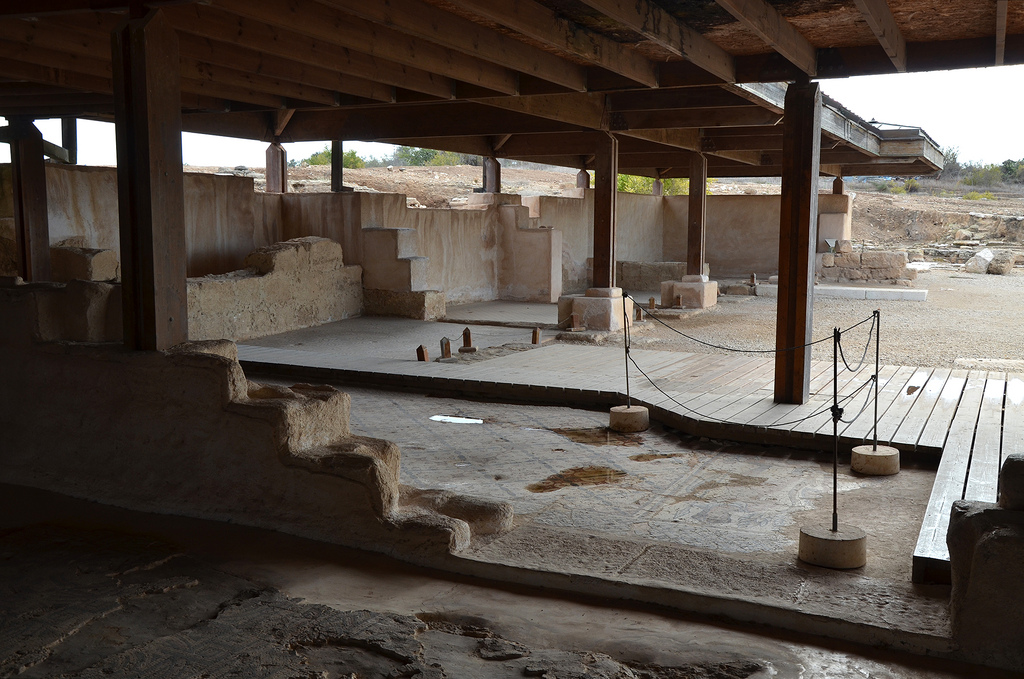
The Nile Festival House located on the south side of the city and east to the Cardo, it was built in the 5th century AD and the entire building is paved with mosaics.
The Nile Festival House, located on the city’s south side and east of the Cardo, was built in the 5th century AD, and the entire building was paved with mosaics.
The Nile Mosaic representing the celebration of the Nile, it is composed of a number of scenes, each of which depicting a different event, 5th century AD.
The Nile Mosaic, which depicts the Nile, is dated to the 5th century AD. It is composed of several scenes, each depicting a different event.
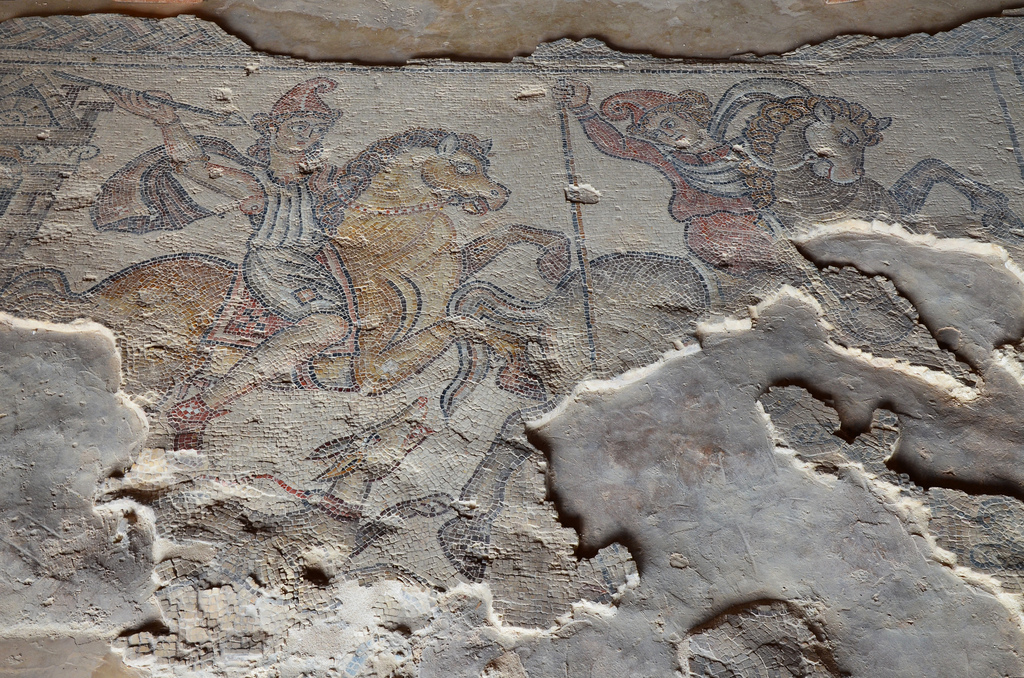
Mosaic pavement depicting hunting Amazons in the Nile Festival House, early 5th century AD.
Early 5th century AD mosaic pavement in the Nile Festival House depicting hunting Amazons.
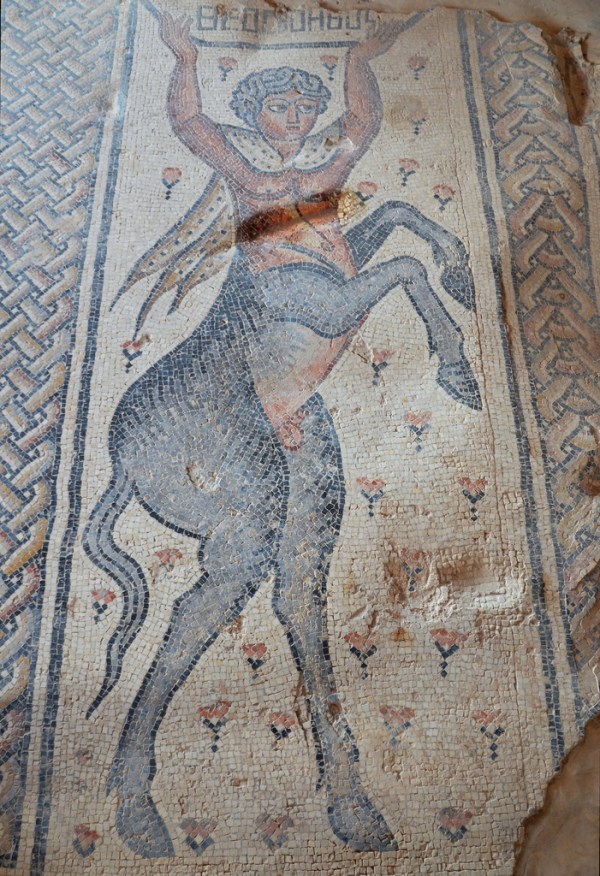
A rearing centaur draped in an animal-skin cloak and holding a bowl in his hands.
Mosaic pavement depicting a Centaur draped in an animal-skin cloak and holding a shield or a dish with the Greek inscription “Helpful God”.
Geometric mosaic in the Nile Festival House.
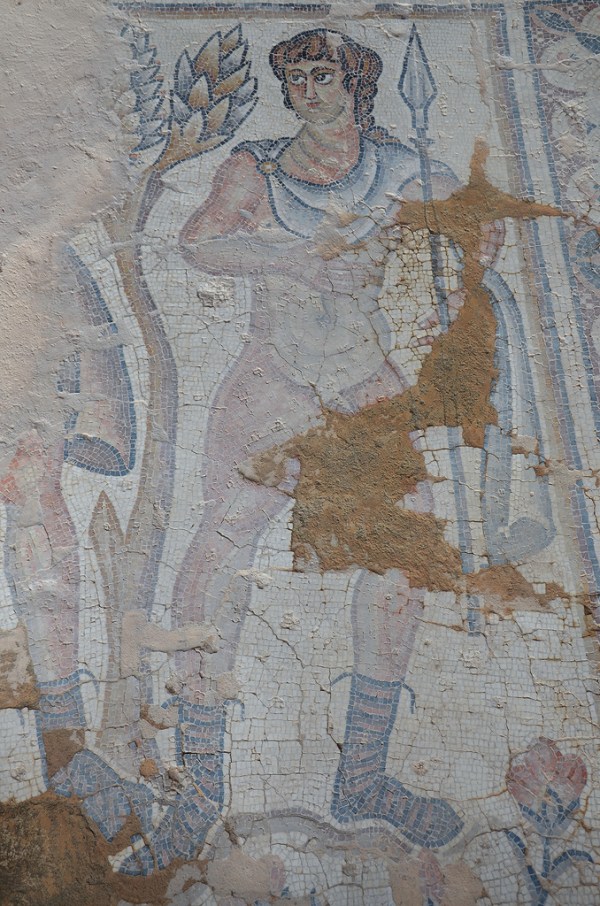
Mosaic pavement depicting a hunter holding a spear in the Nile Festival House, early 5th century AD.
Early 5th century AD mosaic pavement depicting a hunter holding a spear in the Nile Festival House.
View of the Cardo.
View of the Cardo.
T-shaped mosaic in the triclinium of The House of Orpheus containing four panels arranged for viewing from the south.
A T-shaped mosaic in The House of Orpheus triclinium contains four colourful panels. The larger panel depicts Orpheus, the divine musician, while the three others depict scenes from daily life: a banquet, two men embracing, and two men rolling dice.
The Roman Theatre built on the northen slope of the hill in the early 2nd century AD, it could seat 4,500 spectators.
The Roman Theatre was built in the early 2nd century AD on the hill’s northern slope. It could seat 4,500 spectators.
The stage building of the Roman Theatre and the stage itself are almost completely destroyed, yet its foundations remain.
The stage building of the Roman Theatre and the stage itself are almost entirely destroyed, yet its foundations remain.
View over the Theatre built on the northen slope of the hill in the early 2nd century AD.
View over the Theatre built on the northern slope of the hill in the early 2nd century AD.
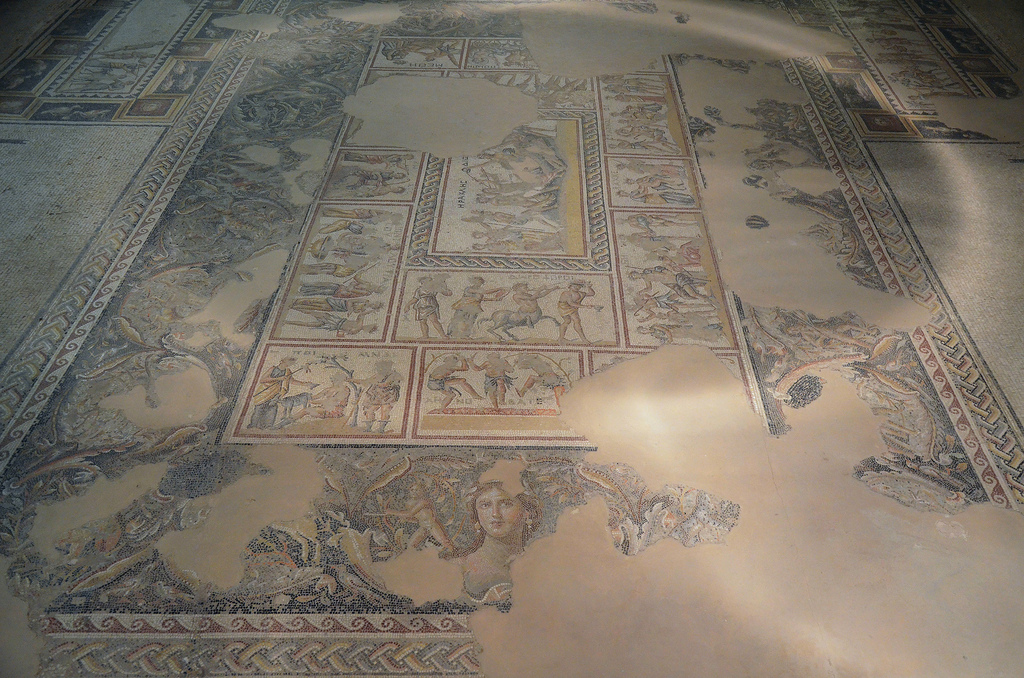
Dionysus Mosaic depicting scenes from the life of Dionysus and his cult, around 200 AD.
Dionysus Mosaic depicting scenes from the life of Dionysus and his cult, around AD 200.
The
The “Mona Lisa of the Galilee” (possibly Venus). Detail of the mosaic in the House of Dionysos depicting scenes from the life of Dionysos and his cult.
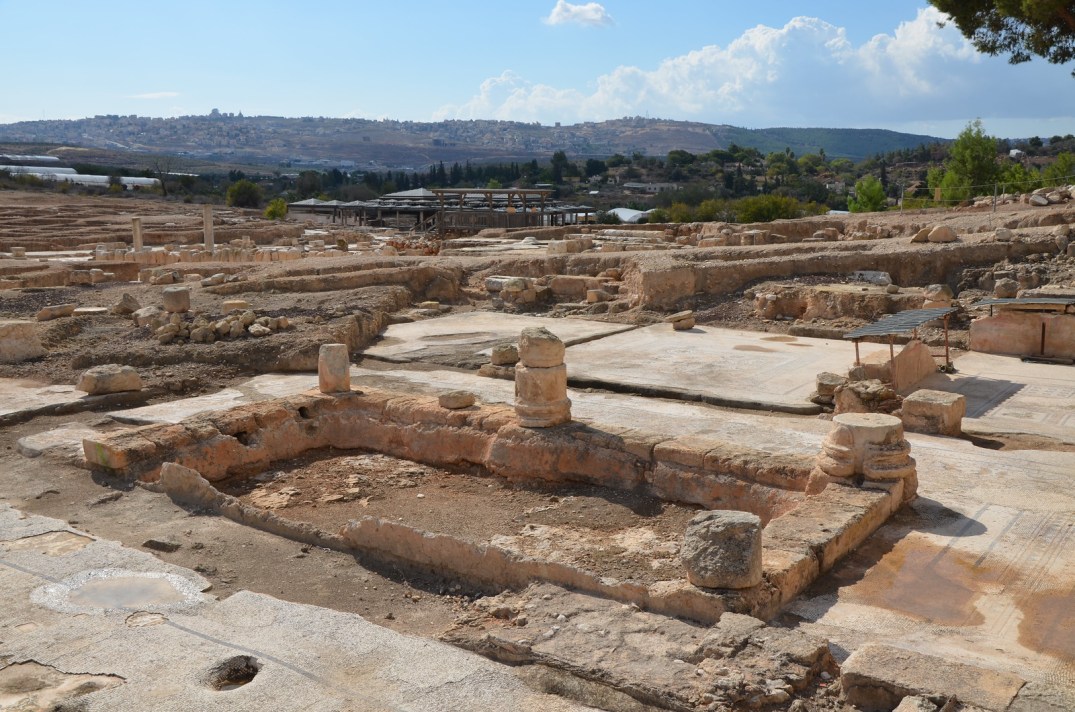
Residential houses around the Crusaders fortress, these are dwellings from the Hellenistic to Byzantine periods.
Residential houses around the Crusaders’ fortress. These are dwellings from the Hellenistic to Byzantine periods.
The subterranean water reservoir constructed in the 1st century AD, water entered the reservoir via a channel and lead pipe through wich the water flowed into a tunnel having six vertical shafts.
The subterranean water reservoir was constructed in the 1st century AD. Water entered the reservoir via a channel and a lead pipe through which the water flowed into a tunnel having six vertical shafts.
View of the Decumanus which functioned as the main artery by which one entered the city from the east.
View of the Decumanus, which functioned as the main artery by which one entered the city from the east.

Links:

Ephesos Museum (Vienna, Austria)

The Ephesos Museum in Vienna displays antiquities from the city of Ephesus in Turkey. In the late 19th century, under the auspices of the Institute of Classical Archaeology and conducted by the newly founded Austrian Archaeological Institute, Austrian scientists began conducting research in the ruins of Ephesus. Numerous objects of high quality were recovered and moved to Vienna. They can be seen today at the Ephesos Museum. The museum’s collection includes a selection of Roman sculptures and architectural elements that once decorated magnificent buildings such as the thermal baths and the Ephesian Great Theatre. The Ephesos Museum is an annex of the Kunsthistorisches Museum.

Lying on the Turkish Aegean coast, Ephesus was one of the largest cities of the ancient world and is now among the most popular tourist destinations in Turkey. The museum’s collection began when Sultan Abdul Hamid II donated some of the archaeological findings to the Emperor of Austria Franz Joseph I. The export of antiquities from Turkey was generally banned with the proclamation of the Turkish Antiquities Law of 1907 and no more artefacts was sent to Vienna after this date. Many other Ephesus artefacts are on display in the Ephesus Archaeological Museum near the site in Selçuk.

Alongside sculptures and architectural elements, a series of Roman reliefs unique in both its size and importance, the so-called Parthian Monument, forms a highlight of the collection.

selected masterpieces

Architecture

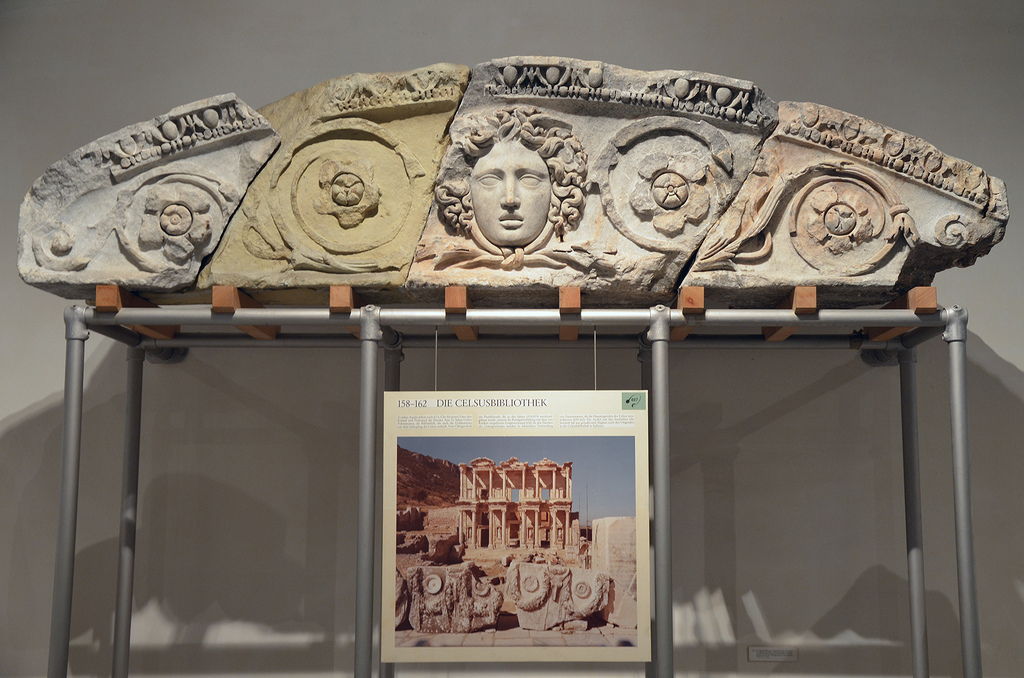
Pediment fragment from the Library of Celsus.
Facade pediment fragment from the Library of Celsus decorated with rosettes, garlands and the head of Medusa.
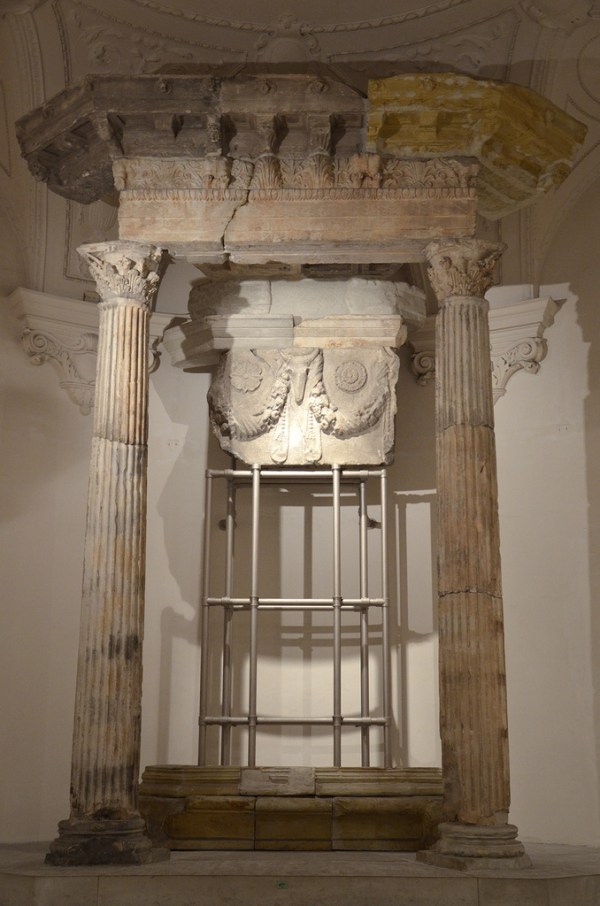
Architectural elements of the Octagon, the tomb of the Ptolemaic princess Arsioe IV half-sister of Cleopatra VII). The tomb was a vaulted burial chamber placed on a rectangular base and was located in the centre of Ephesus in front of the terrace houses.
Architectural elements of the Octagon, the tomb of the Ptolemaic princess Arsioe IV (half-sister of Cleopatra VII). The tomb was a vaulted burial chamber placed on a rectangular base and was located in the centre of Ephesus in front of the terrace houses.
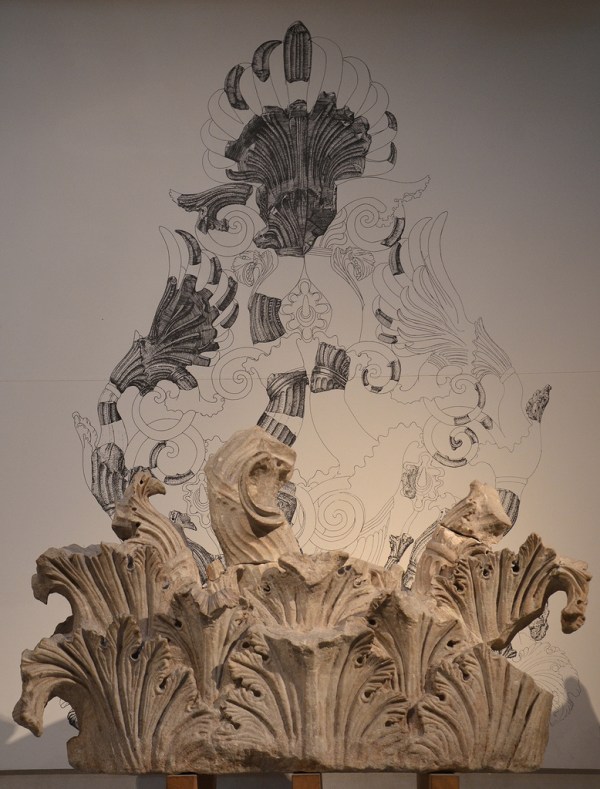
Acroterion in the shape of a palmette, Roman copy from the 1st half of 1st century AD of Hellenistic original.
Acroterion in the shape of a palmette, Roman copy from the 1st half of 1st century AD of a Hellenistic original.
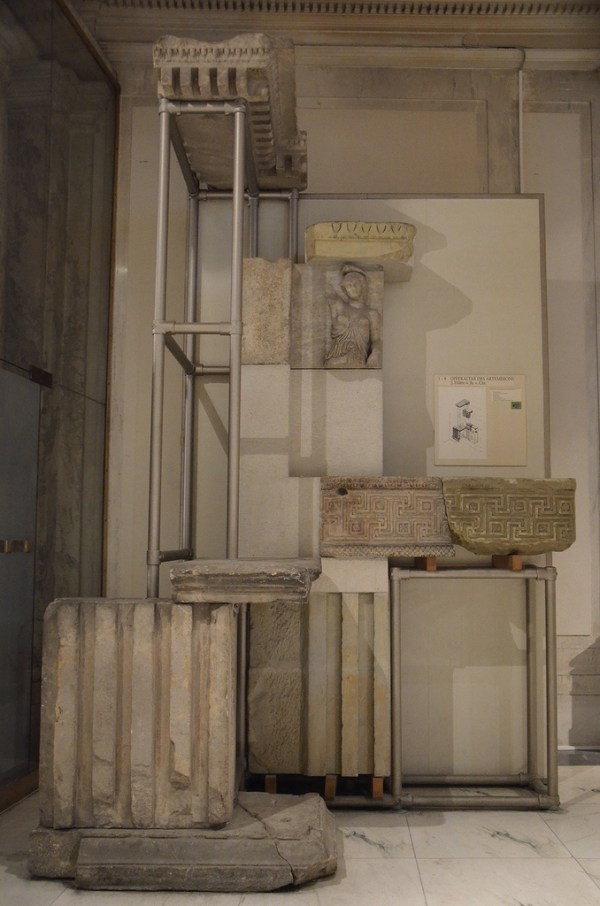
Architectural elements from the the Artemision Altar (one of the Seven Wonders of the World), including a fragment of a relief with a wounded Amazon stems, ca. 350 BC - 300 BC.
Architectural elements from the Artemision Altar (one of the Seven Wonders of the World), including a fragment of a relief with a wounded Amazon, ca. 350 BC – 300 BC.
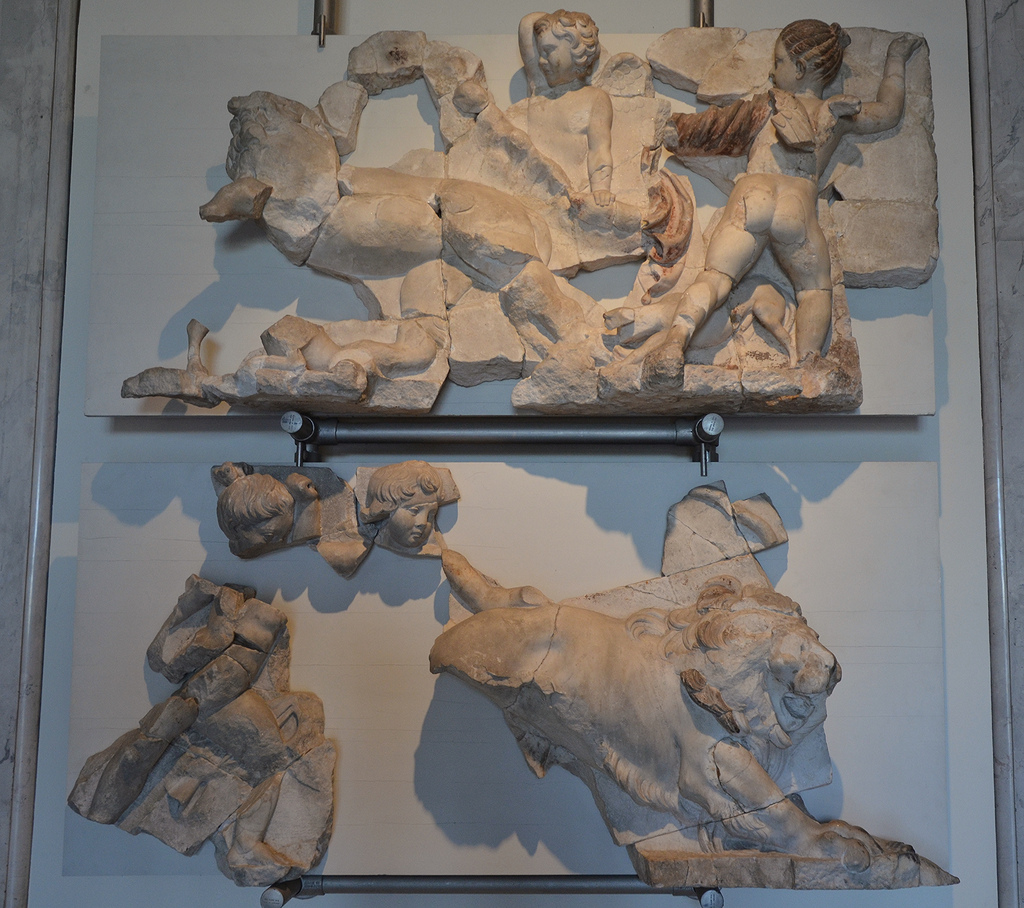
Two fragments of a frieze with hunting Cupids that decorated the stage building of the Great Theatre of Ephesus, 2nd half of 1st century AD.
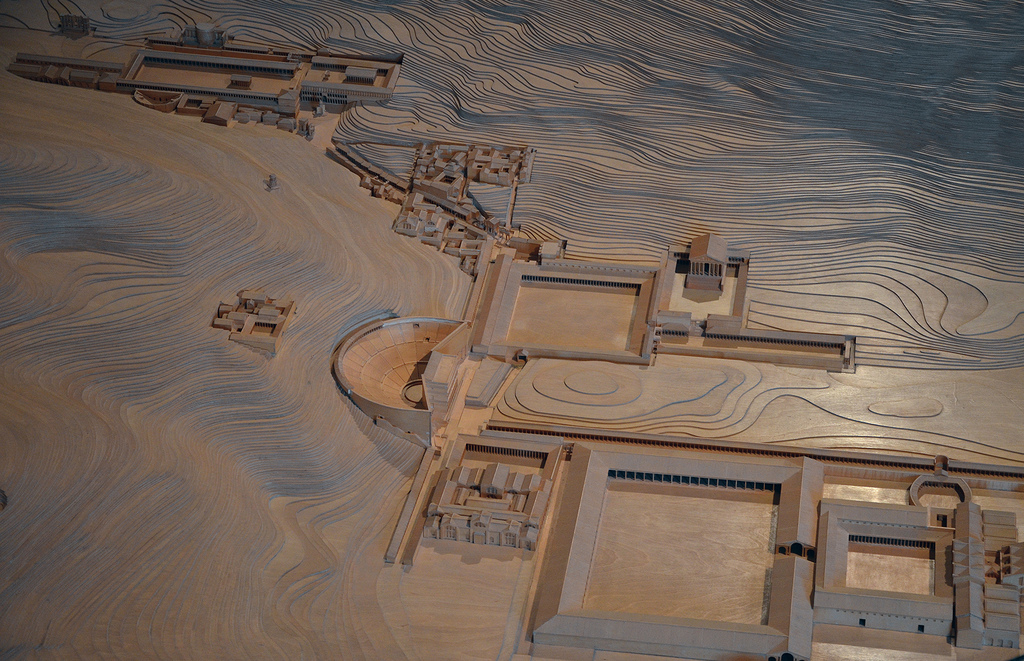
Model of Ephesus.
Model of Ephesus.

Statues and busts

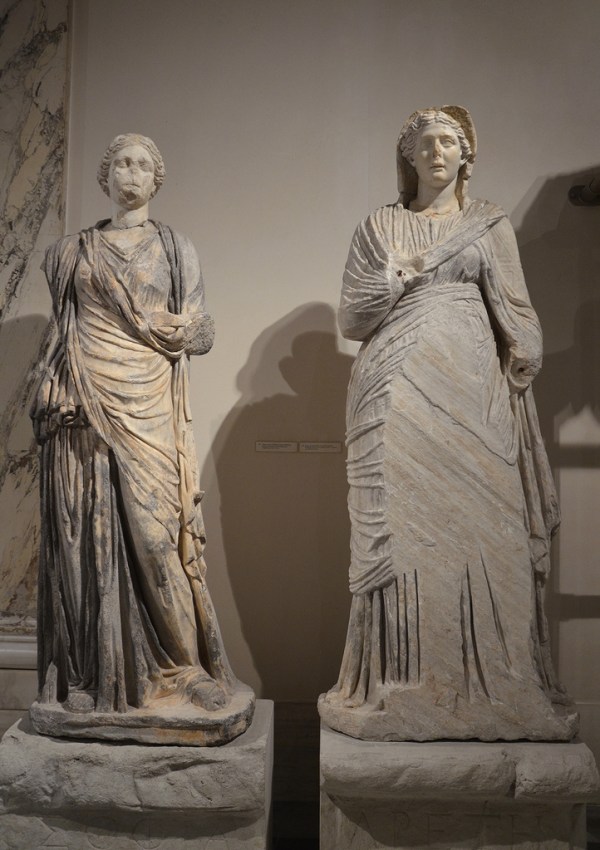
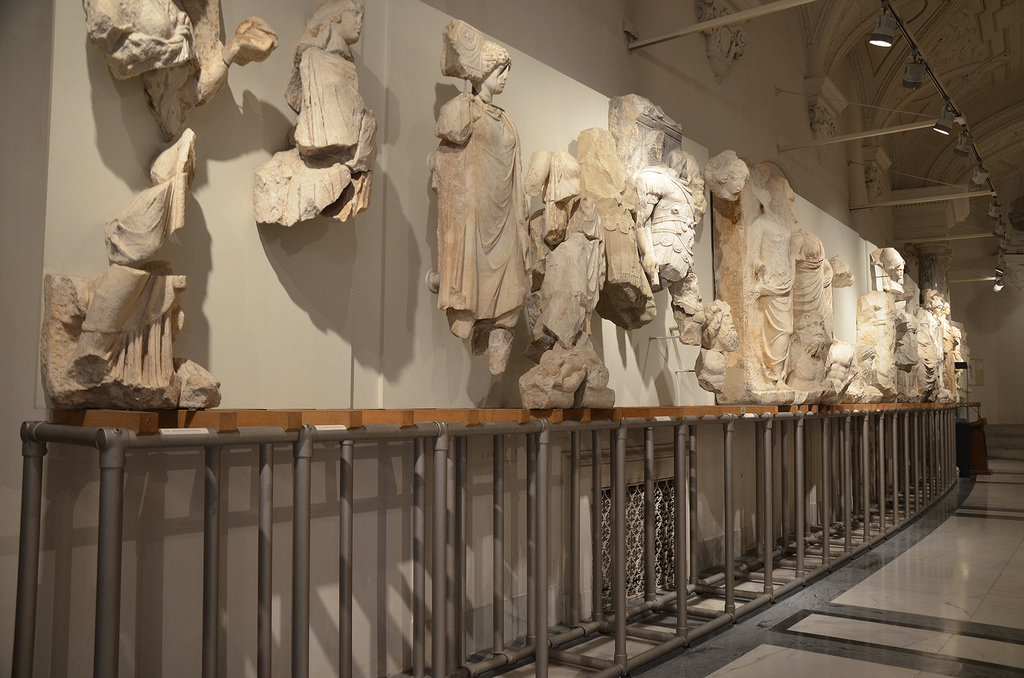
Female statues that decorated the niches of the Library of Celsus symbolizing wisdom (Sophia, left) and virtue (Arete, right).
Female statues that decorated the niches on the lower storey of the Library of Celsus symbolizing wisdom (Sophia, left) and virtue (Arete, right).
Head of Hadrian, of the so-called Chiaramonti 392 type, from Ephesus, found among the ruins of the The Gate of Mazeus and Mithridates.
Head of Hadrian, of the so-called Chiaramonti 392 type, found among the ruins of the Gate of Mazeus and Mithridates.
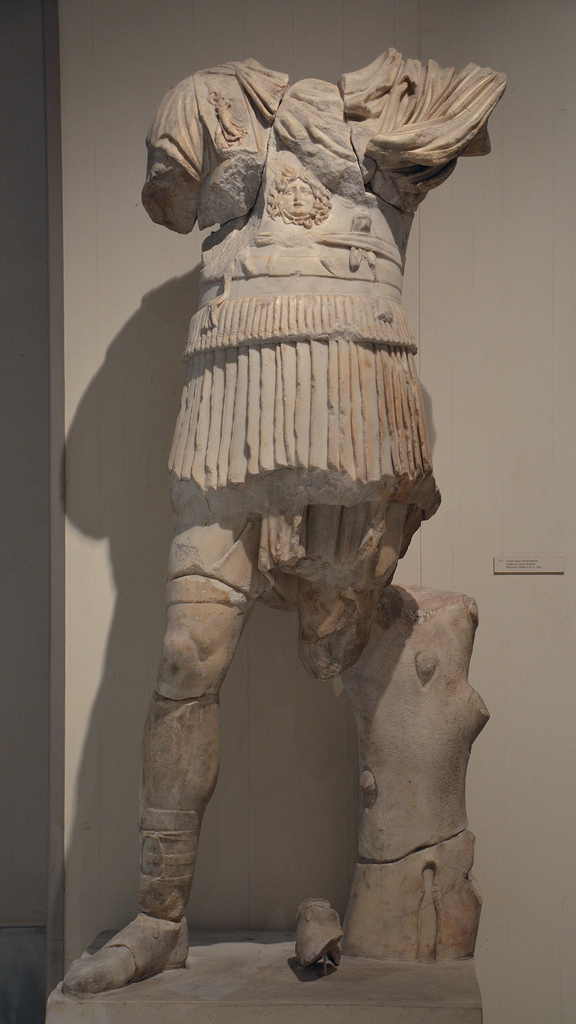
Statue of an emperor wearing the military cuirass, 2nd century AD.
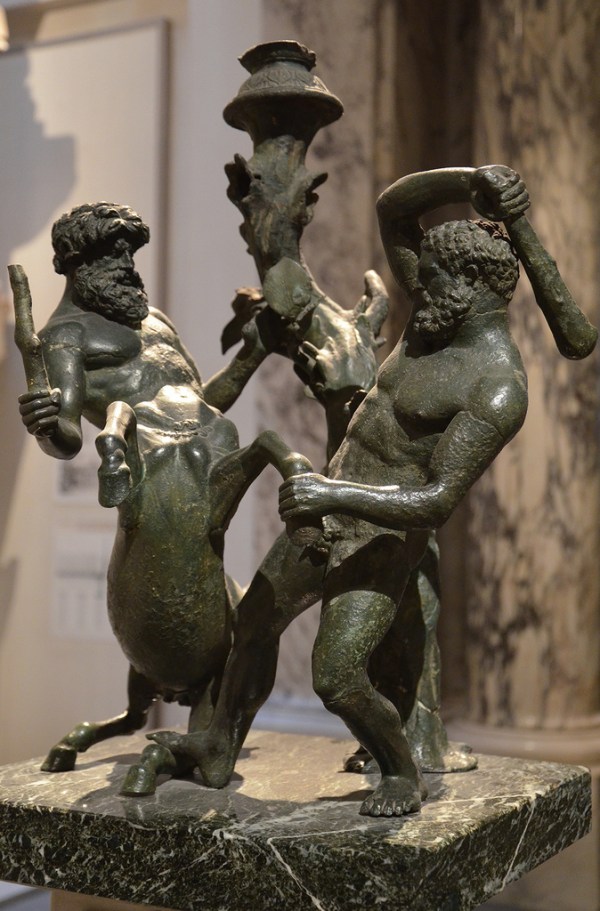
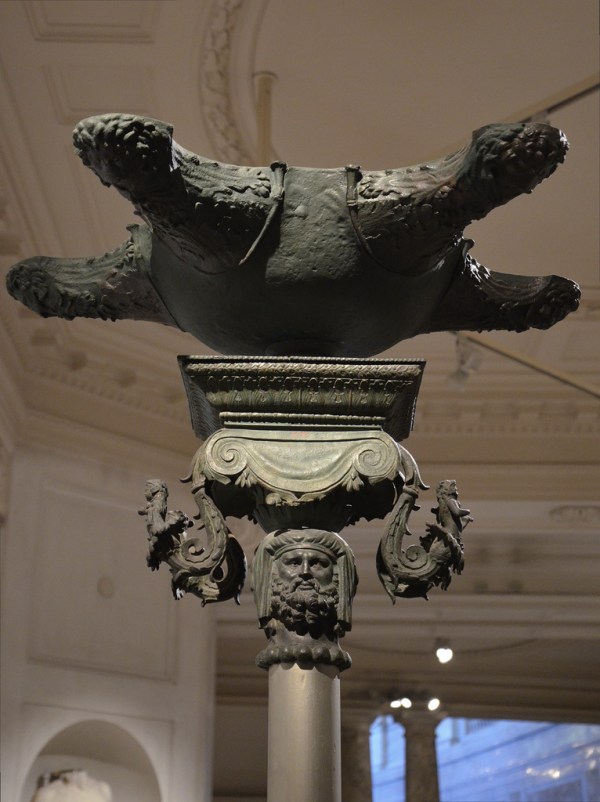
Bronze candelabra (table lamp) depicting Heracles fighting the Centaur Nessos, 2nd century BC.
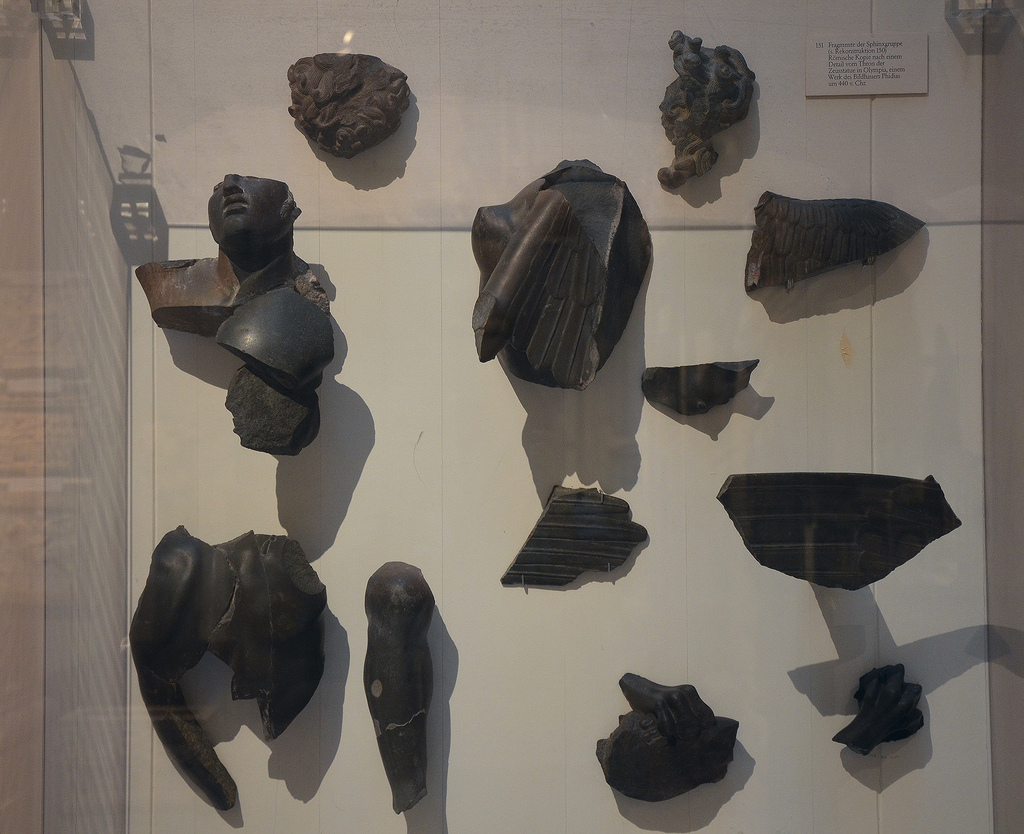
Fragments of a marble sphinx group, from a detail on the throne of the statue of Zeus by Phidias' at Olympia, Roman copy of Greek original (440 BC).
Fragments of a marble sphinx group, from a detail on the throne of the statue of Zeus by Phidias’ at Olympia, Roman copy of Greek original (440 BC).
Reconstruction from fragments of the marble sphinx group, from a detail on the throne of the statue of Zeus by Phidias' at Olympia, Roman copy of Greek original (440 BC).
Reconstruction from fragments of the marble sphinx group, from a detail on the throne of the statue of Zeus by Phidias’ at Olympia, Roman copy of Greek original (440 BC).
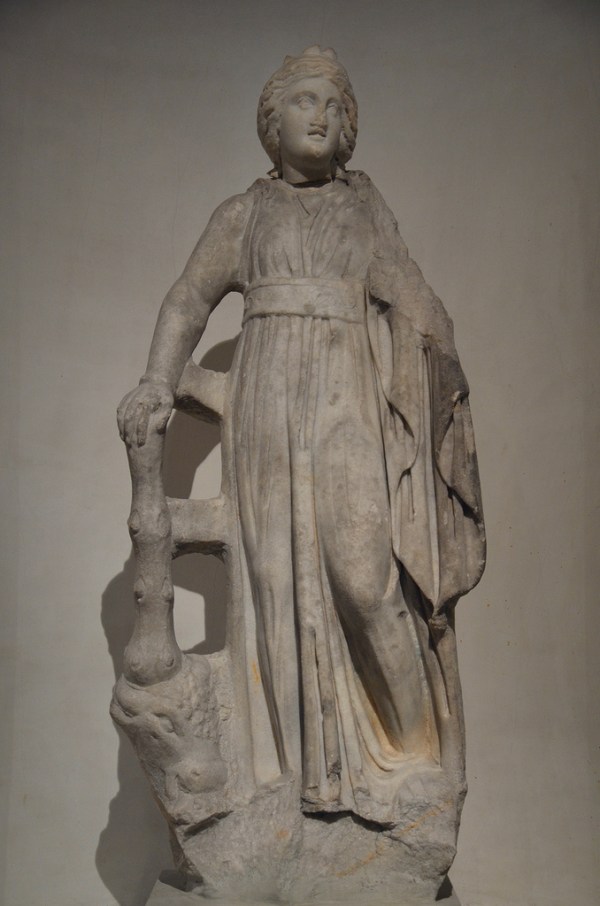
Statue of the Melpomene, Muse of tragedy, her right hand rests on a long club while her missing left hand must have been holding a tragic mask.
Statue of Melpomene, Muse of tragedy, her right hand rests on a long club while her missing left hand must have been holding a tragic mask.
Head of Hermes, the messenger of the gods, Roman copy from the middle of the 2nd century AD of a Greek bronze original dated to 430 BC, found in 1895 in the harbor baths.
Bronze oil lamp with ionic capital and decorated with two busts of Hercules and Omphale, Roman period.

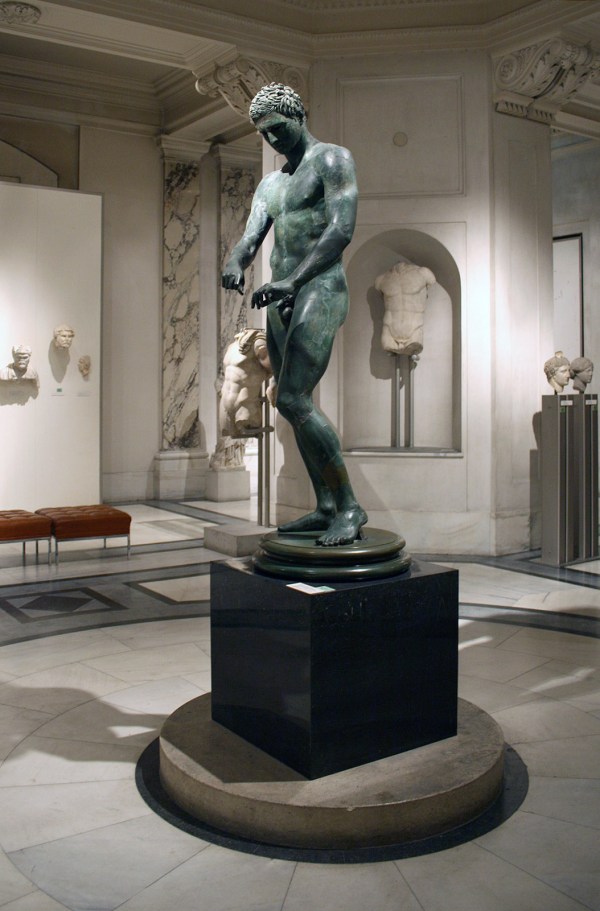
A bronze statue of an athlete (Apoxyomenos) dated to the 1st century AD and copied from a Greek original from the 4th century BC forms the centerpiece of the museum’s collection of Roman sculptures. It has been recreated from 234 fragments and shows a young athlete cleaning his strigil, an implement used to wash the body after a contest. Unfortunately, at the time of my visit in August 2015, the statue was on loan to the Power and Pathos: Bronze Sculpture of the Hellenistic World exhibition at the Paul Getty Museum in Los Angeles.

Bronze Statue of an Athlete "Ephesian Apoxyomenos", 1st century AD. Manfred Werner (Wikipedia CC BY-SA 3.0)
Bronze Statue of an Athlete “Ephesian Apoxyomenos”, 1st century AD.
Photo by Manfred Werner (Wikipedia CC BY-SA 3.0)

The Parthian Monument

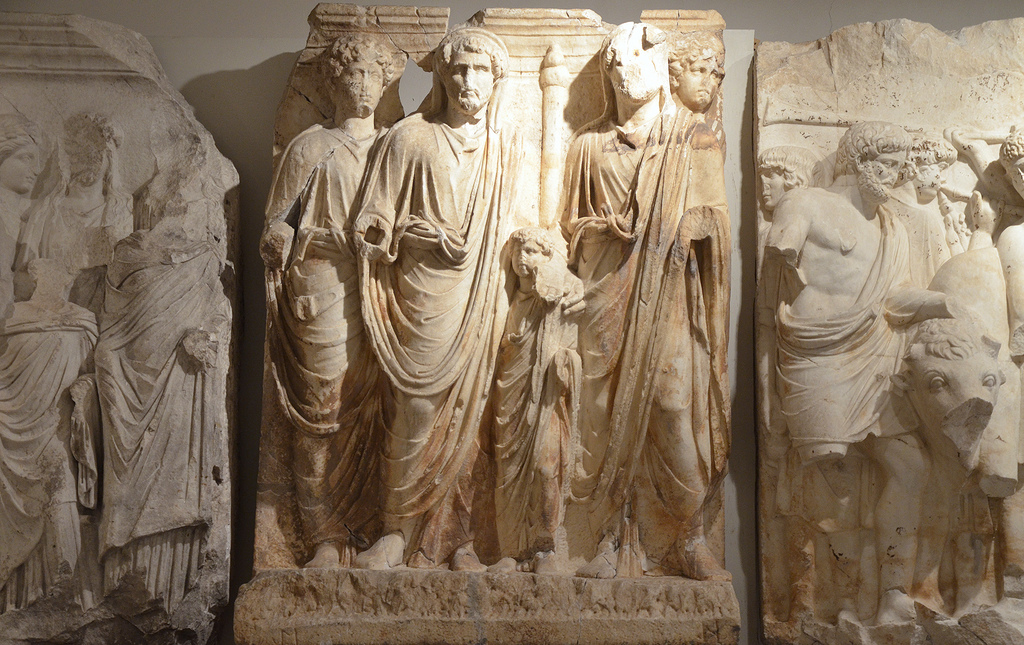
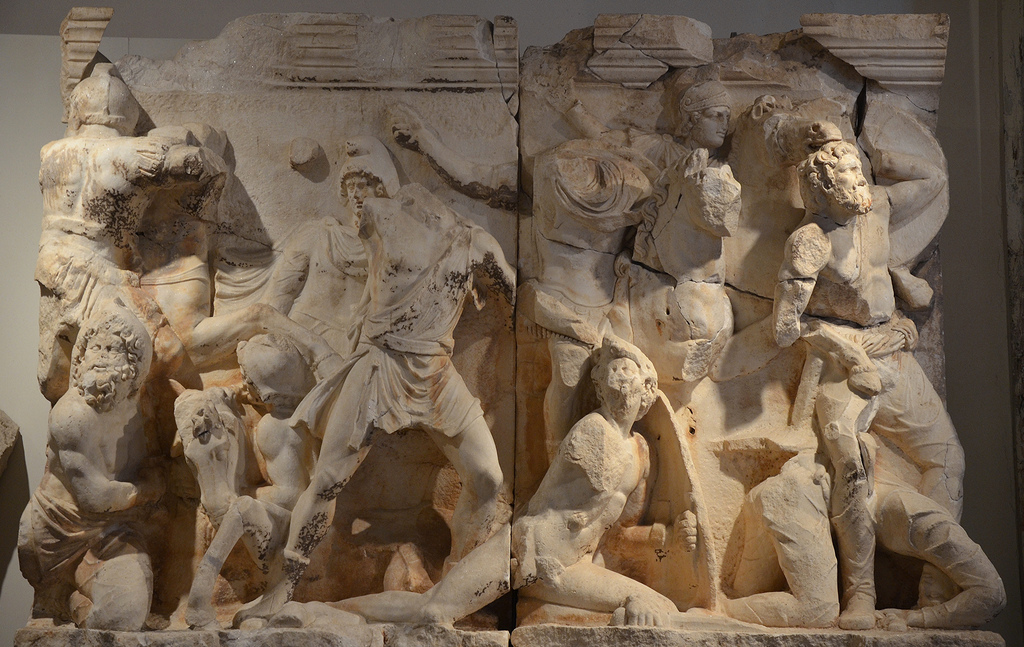
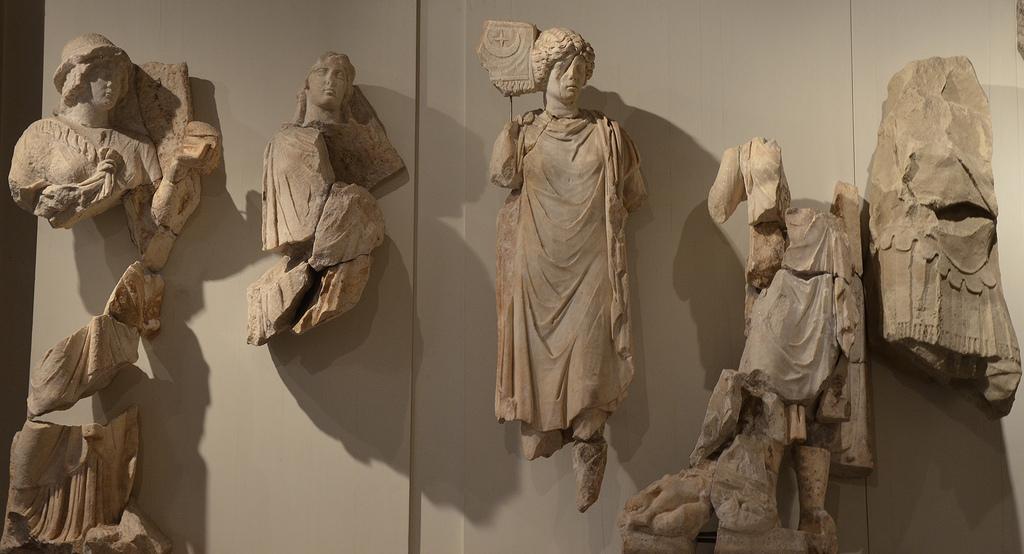
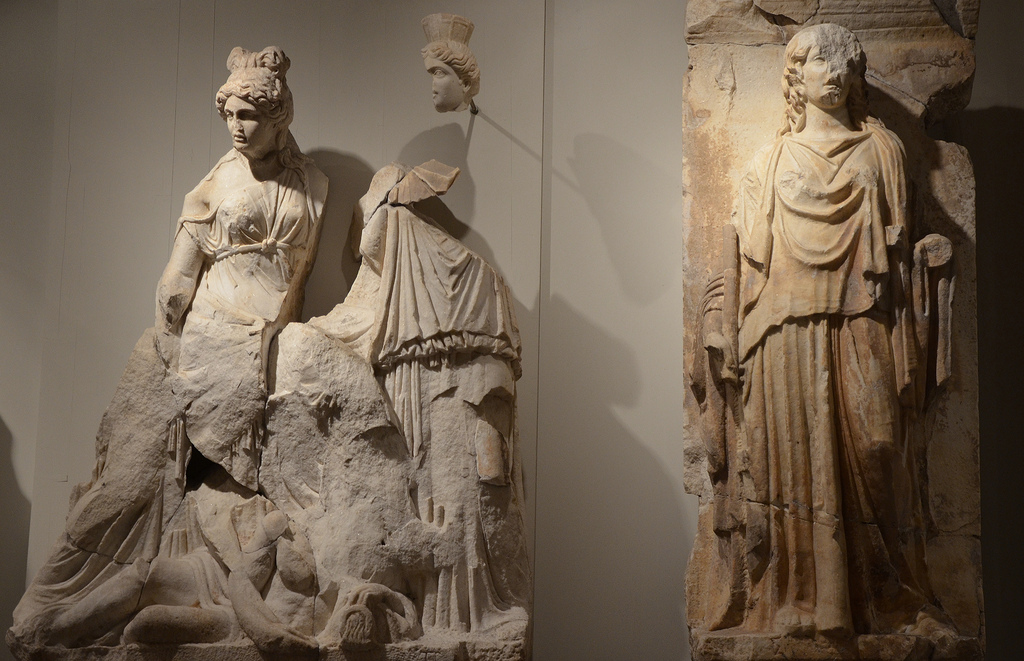
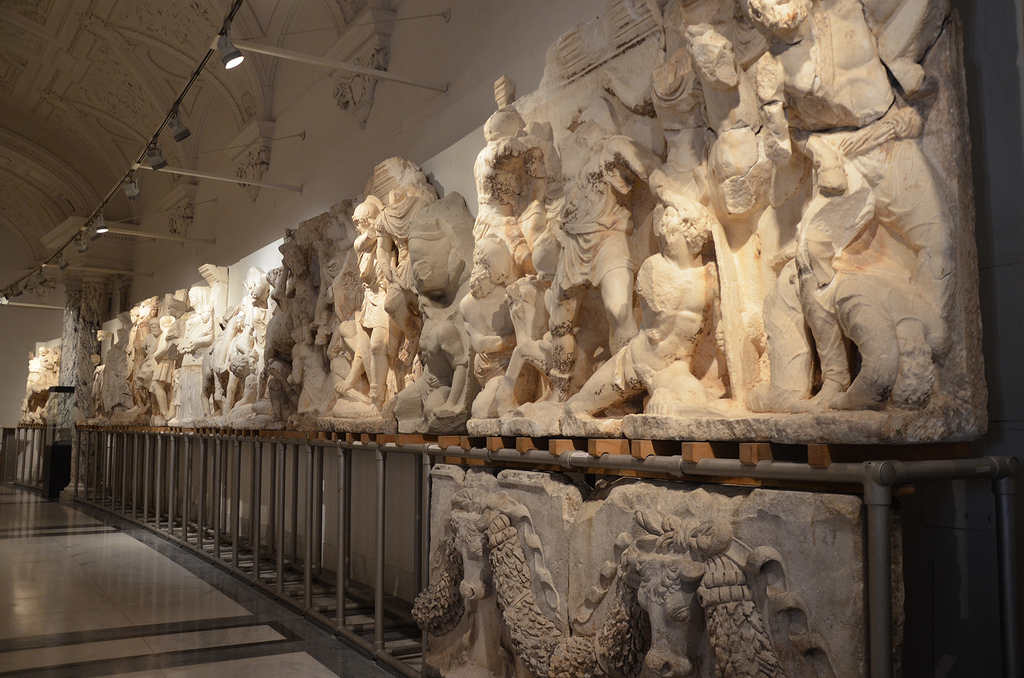
The Parthian Monument is one of the most important Roman-age reliefs from Asia Minor. In five thematic cycles it commemorates the Roman Emperor Lucius Verus who established a camp in Ephesus during his Parthian Campaign of 161-165 AD. These five thematic cycles are: 1. Adoption, 2. Parthian war, 3. Personifications of towns of the Empire, 4. “Apotheosis of Lucius Verus, 5. Meeting of the gods. The individual pieces were arranged in the form of a monumental altar with an U-shaped foundations. The friezes have a total length of about 70 metres, of which 40 metres are on display.

Relief frieze of the Parthian monument depicting the political act of adoption of Antoninus Pius and his successors, Marcus Aurelius and Lucius Verus by Hadrian which took place during the last year of his reign in 138 AD.
Relief frieze of the Parthian monument depicting the the Roman counter-attack against the Parthians which began in 162 and ended in 166 AD with the destruction of the Parthian capital Ctesiphon.
Relief frieze of the Parthian monument depicting the Personifications of cities which participated in the events of the Parthian war, in the middle Carrhae and Edessa with vexillum flag.
Relief frieze of the Parthian monument depicting Apotheosis of Lucius Verus, Lucius Verus is represented on Helios’ chariot being driven by Nike (Victory) who leads him by the hand.
Relief frieze of the Parthian monument depicting the Apotheosis of Lucius Verus. Lucius Verus is represented on Helios’ chariot being driven by Nike (Victory) who leads him by the hand.
Relief frieze of the Parthian monument depicting the Meeting of the gods.
Relief friezes of the Parthian monument.

Numismatic

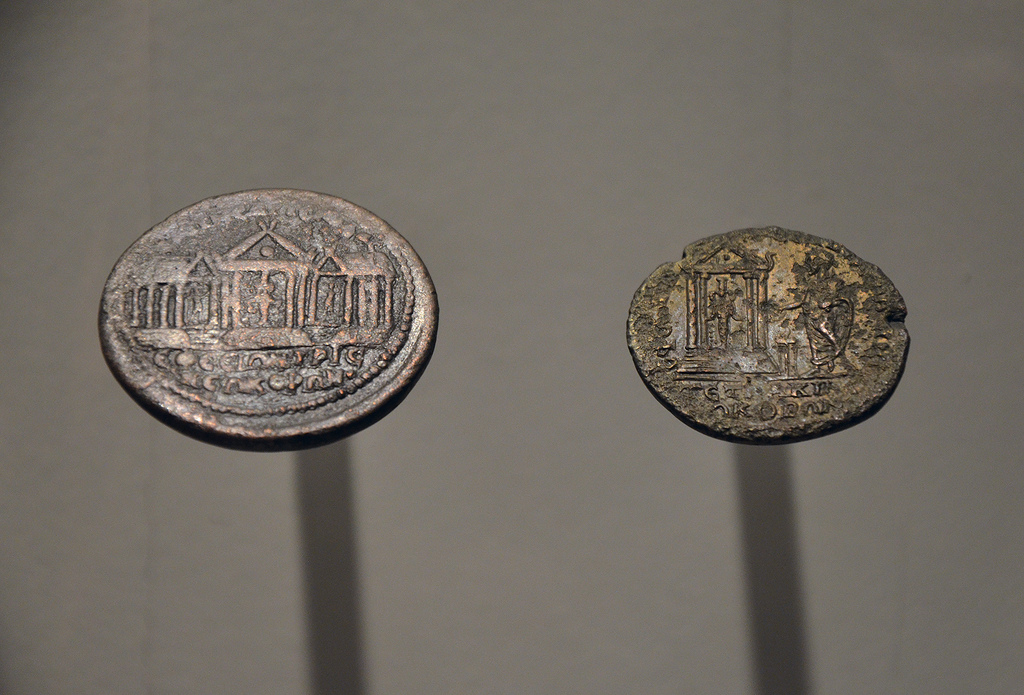
Medaillon with the Artemission and two temples (Ephesus twice Neokoros), and coin of Elagabalus with the Artemission on the reverse, 3rd century AD.

Links: