Carsulae is an ancient Roman town situated in the region of Umbria in central Italy, on a plateau crossed by the western branch of the Via Flaminia which path travelled through the town. Its urban development began in the 2nd century BC when indigenous communities moved and joined together, thereby facilitating the Romanisation of Umbria. The town became a Roman municipium of the tribus Clustumina in the middle of the 1st century BC when a number of major works were initiated, including the amphitheatre and most of the forum.
Carsulae was first mentioned in the surviving sources by Strabo in the late 1st century BC.
The cities this side the Apennine Mountains that are worthy of mention are: first, on the Flaminian Way itself: Ocricli, near the Tiber and theº Larolon, and Narna, through which the Nar River flows (it meets the Tiber a little above Ocricli, and is navigable, though only for small boats); then, Carsuli, and Mevania, past which flows the Teneas. Strabo Geography 5:2:10
Carsulae probably originated as a mansio, a rest stop and watering place for travellers, traders and soldiers along the Via Flaminia. The road was constructed for military purposes by the censor Gaius Flaminius in 220 BC. It ran from Rome to the Adriatic coast and then turned north towards the colony of Ariminum (Rimini). Its path travelled through Carsulae and became the cardo maximus, the north-south street of the town running between the forum and the amphitheatre and theatre.
3D reconstruction of the town.
During its golden age, Carsulae, supported by agricultural activity in the surrounding area, was prosperous and wealthy. Its bucolic setting, its large complex of thermal mineral baths and other public amenities, attracted wealthy and even middle class “tourists” from Rome.
Recovered inscriptions document the vibrant civic life of Carsuale until at least the reign of Emperor Vespasian who camped here in AD 69 as he prepared to march on Rome to secure the Imperial title for his master (Tac. Hist. 3. 60).
The city lost its importance when the western branch of Via Flaminia fell into disuse at the end of the 3rd century AD in favour of its faster east branch. Carsulae was abandoned in the middle of the 4th century AD, perhaps after an earthquake, and its people probably moved to nearby San Gemini. However, a church was built in the 11th century on the foundations of a Roman building many centuries after the site had been abandoned.
Excavations at the site unearthed a large number of monuments, buildings and inscriptions, forming a picture of a wealthy and politically active municipium. However, the town has still not been completely brought back to life and excavations are still underway. The excavations are conducted by Emerita Professor Jane Whitehead of Valdosta State University, USA.
PORTFOLIO
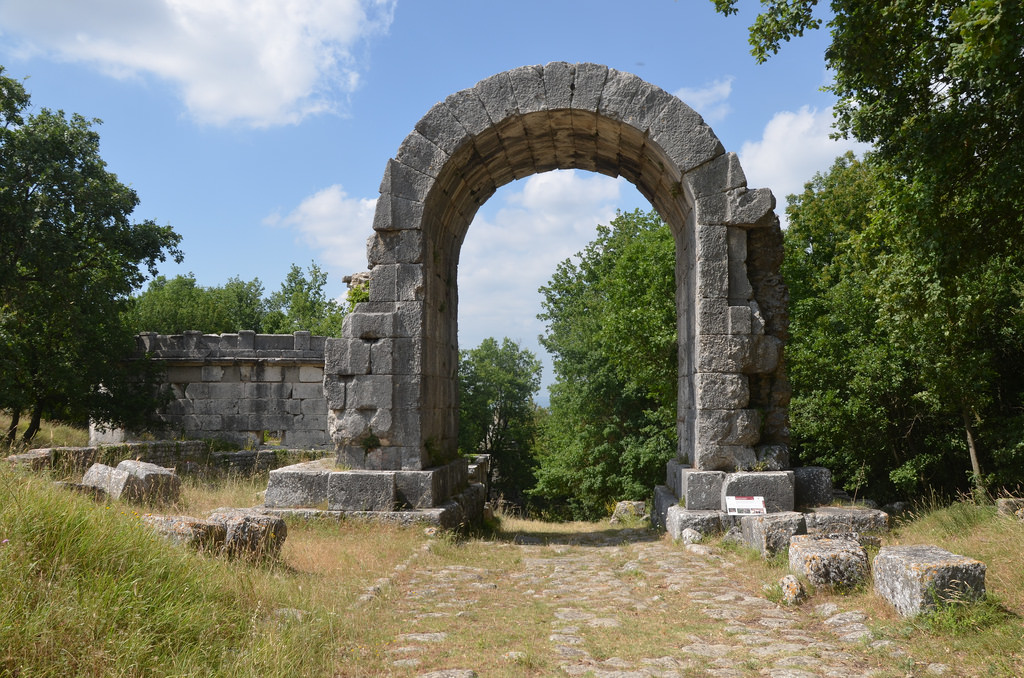
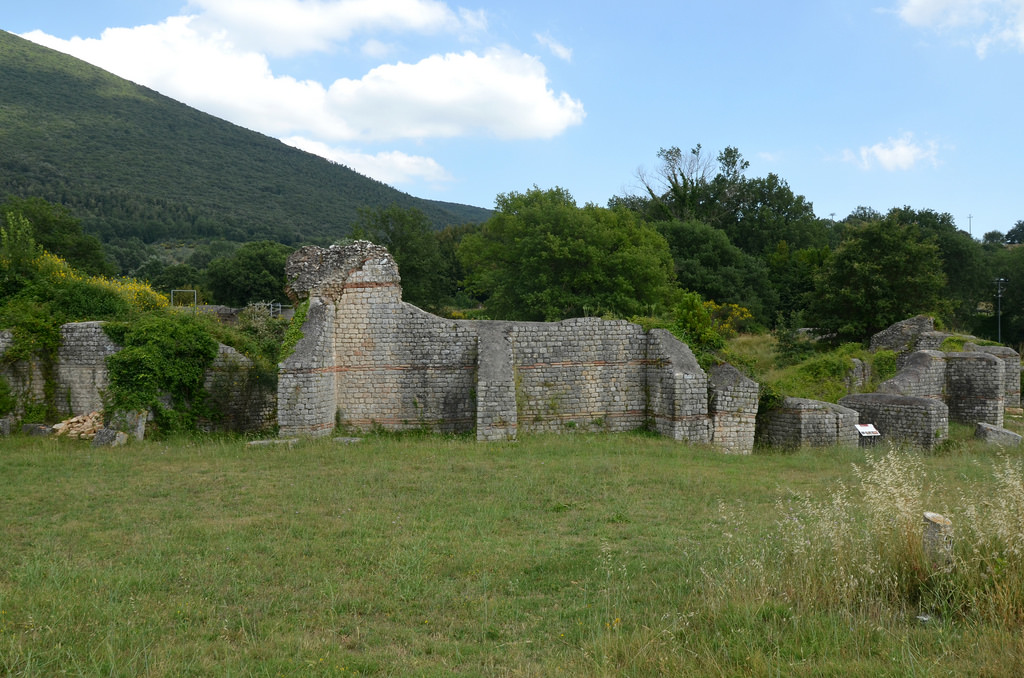
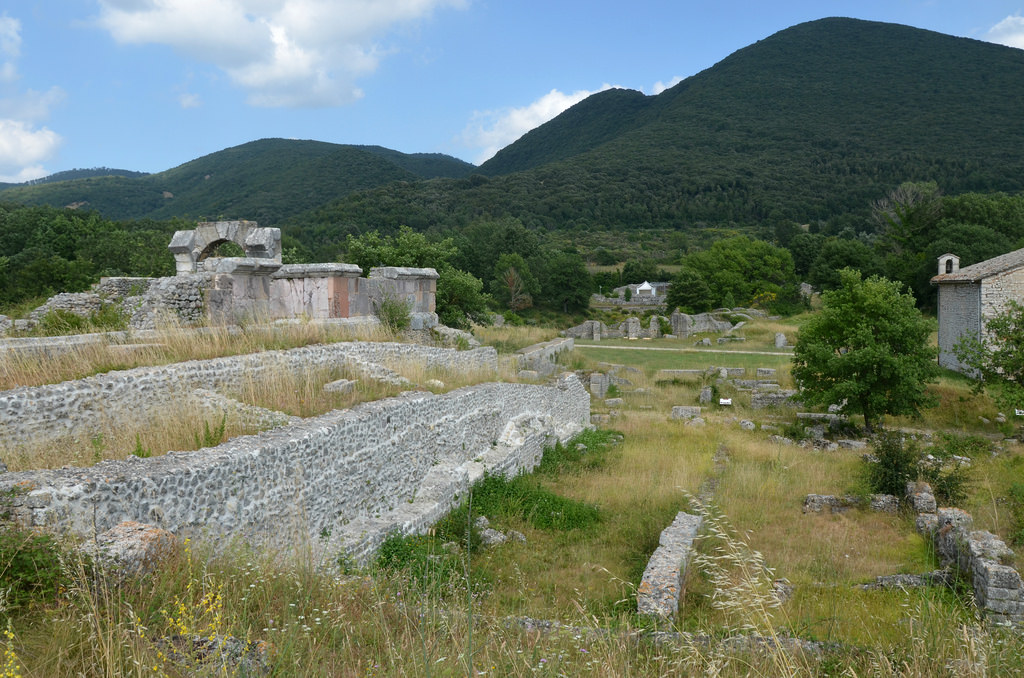
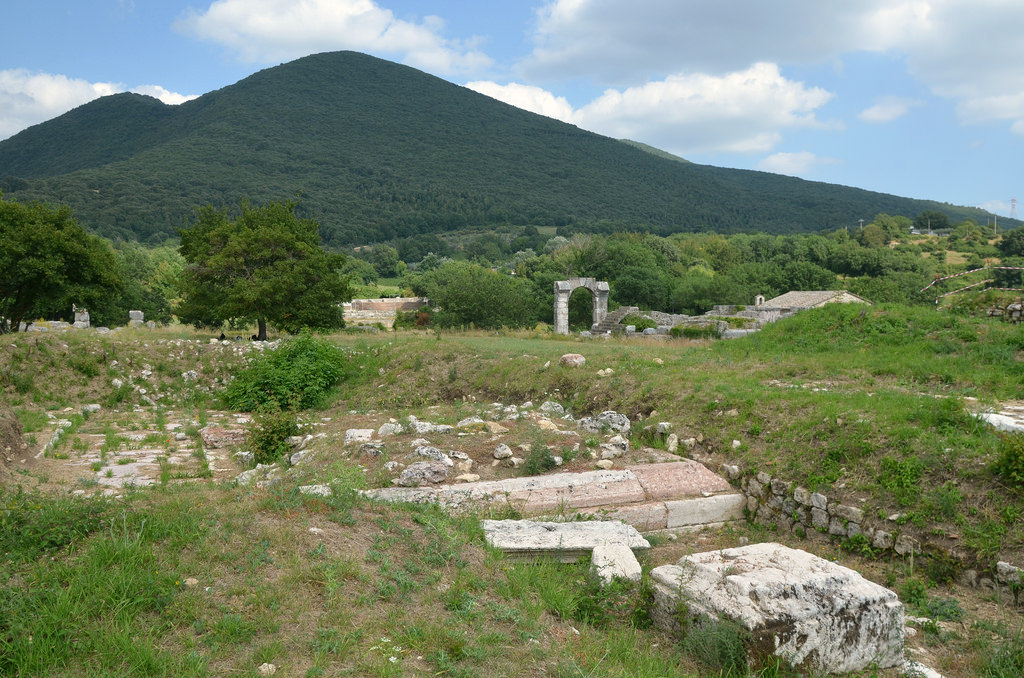
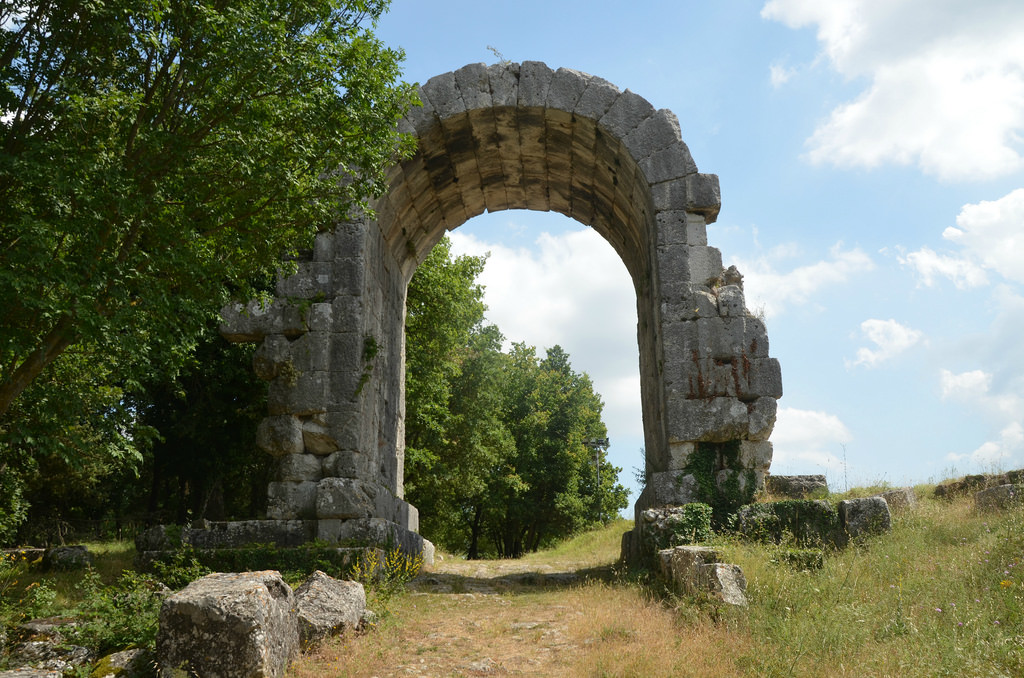
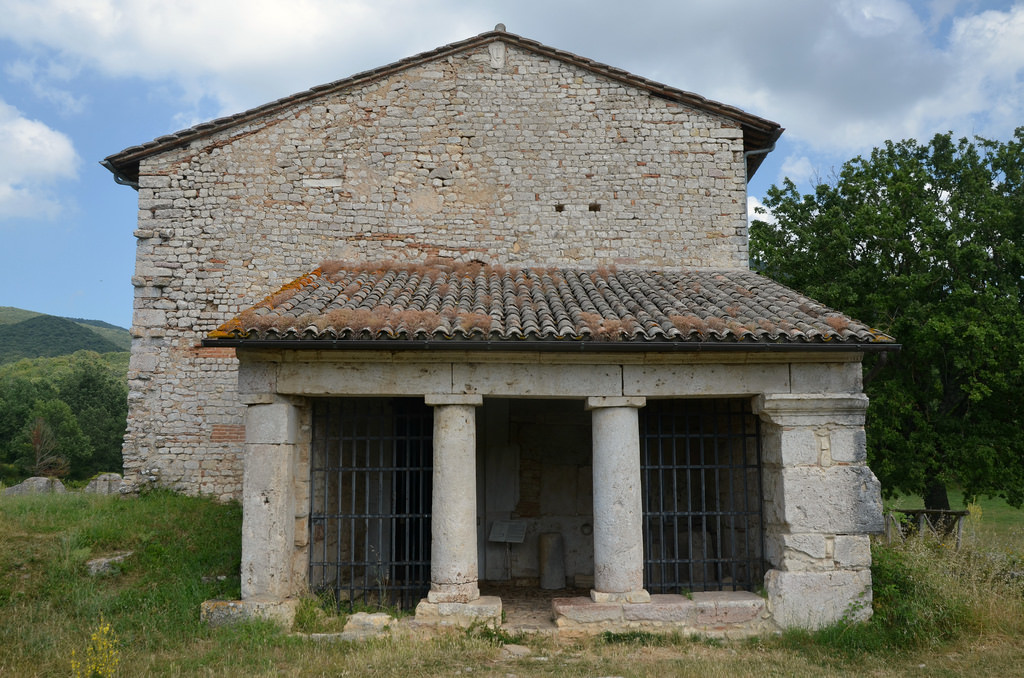
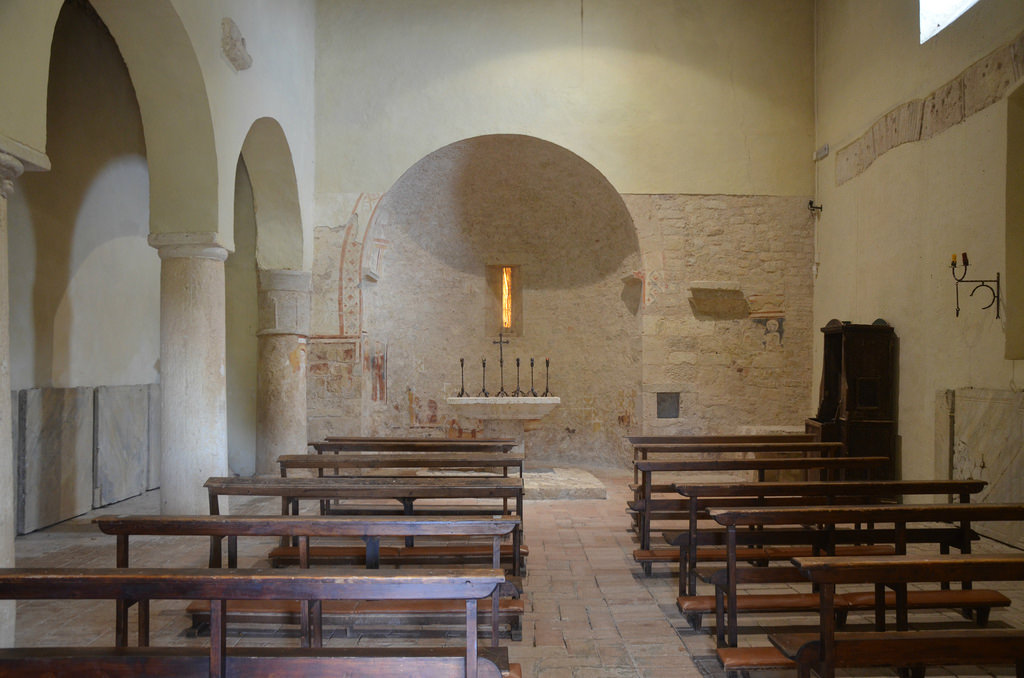
The amphitheatre and the theatre, located on the eastern side of the town.The amphitheatre was partially built into a natural cavity in the ground. It is thought to date back to the first century AD.The theatre was entirely reconstructed above the ground and was dated before the amphitheatre.The cavea of the theatre was supported by 15 vaulted rooms.The remains of the scaena of the theatre.There are four cisterns in Carsulae: two are in the north and upstream of the thermal system (one has now been transformed in Antiquarium). The others are in the north of the amphitheatre and in the south of the theatre.The cardo maximus, the main or central north–south-oriented street crossing the municipium. The arch on the left, which was recently reconstructed, marked the entrance to the forum.The northern four-sided arch (tetrapylon) marking the entrance to the Forum, it is located at the intersection of the main two roads (decumanus & cardo maximus), built in opus quadratum made in block of solid limestone.The Forum, facing the west side of the urban road route of the Via Flaminia with the so-called twin temples, of which only the podiums lined with pink stone slabs remain. The access of the temples was by a flight of steps partly reconstructed: the lack of ancient sources make difficult the identification of the divine couple.The northern side of the Forum consisted on four apsidal rectangular rooms: the largest one is identified with the Curia (the Seat of the municipal senate), the smallest ones were for the administrative and political activities. Marble decorations are visible.Overview of the Forum.As of 2017, the excavation at Carsulae is led by Massimiliano Gasperini and Luca Donnini, with the involvement of the Australian Carsulae Archaeology Project from Macquarie University in Sydney, Australia.The Forum.Fragments from a statue of Claudius (ca. 50 AD). This colossal statue (twice life-size) stood in the forum of Carsulae (Umbria, Italy). Only the head and a knee survive.The excavations of 2012 – 2014 brought to light a well-preserved paved floor as well as different wall structures commercial uses and a cistern. The first building phase is of the 2nd century BC with some modifications dated back to the Augustan Age.The Via Flaminia went through the town (north–south axis) and became the main road or the cardo maximus of which 400 metres are still visible.The so-called San Damiano Arch was build during the reign of Augustus. The arch was located at the northern entrance of the town. It was originally an arch with three fornices (the two lateral minor ones have collapsed).Three funeral monuments that belong to the prestigious Carsulae’s families stood outside the town boundaries. Two are restored and dated back between the 1st century BC and the 1stI century AD. The first is a drum shaped funeral tomb on a rectangular base.The second mausoleum is of tower type on a rectangular base. The cylindrical body has skylights and above a Doric frieze.The Church of S. Cosma and Damiano was built in the XI century using a pre-existent building whose function is uncertain and dated between the 1st and the 2nd century AD.The Church of S. Cosma and Damiano was built, like the portico, using many building materials of the Roman period.The interior of the Church of S. Cosma and Damiano.
Situated on the west coast of the Black Sea, about halfway between the mouth of the Danube and the present-day city of Constanţa, the ancient city of Histria (or Istros) has a long history dating back almost three thousand years and is Romania’s oldest urban settlement. The ancient Greeks arrived on the west shore of Pontus Euxinus (Black Sea) around the 7th century BC and founded their first colony to facilitate trade with the native Getae. Over the centuries, Histria became a key commercial port, lasting until the beginning of the 7th century AD and the invasion of the Avars. Its ruins were discovered and excavated in the late 19th and early 20th centuries.
Histria was established in the middle of the 7th century BC by Greek colonists from Miletus. According to Eusebius of Caesarea, a possible founding date could be 657 BC, during the 33rd Olympic Games, or during the last decades of the same century, according to Scymnus of Chios. Little is known from written sources about the settlement’s first two hundred years. Most information comes from the archaeological excavation that uncovered the so-called “sacred area” in the northeastern part of the city where the foundations of three temples were discovered, one of them was dedicated to Zeus Polieus (built in the 6th century BC and rebuilt in the first half of the 5th century BC), another to Aphrodite (Hellenistic Period) while the third and oldest one was dedicated to the main deity Apollo Iastros. Architectural fragments of a small Doric temple dedicated to Theos Megas (3d century BC) were also discovered.
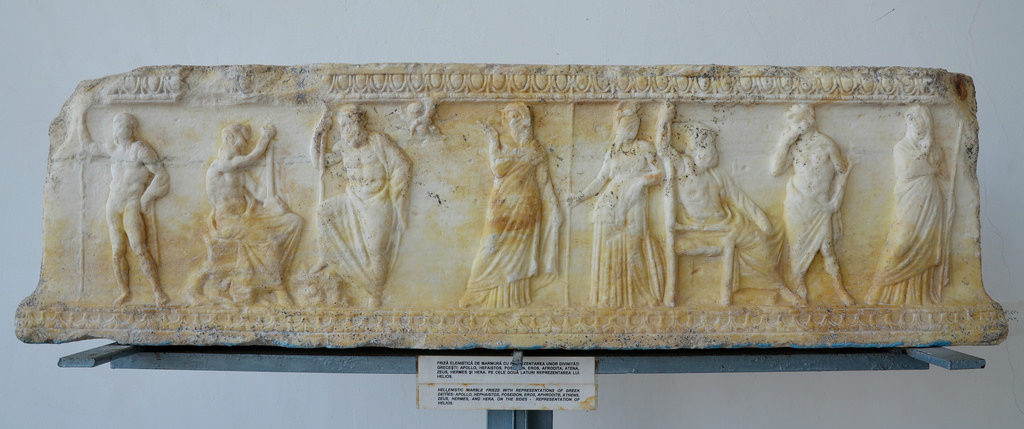
Hellenistic marble frieze with representations of Greek deities, Apollo, Hephaistos, Poseidon, Eros, Aphrodite, Athena, Zeus, Hermes and Hera. Museum of Histria.
In the course of its long history, Histria experienced periods of prosperity interrupted by crises that more than once imperilled its existence. Destroyed by the Scythians at the end of the 6th century BC, Histria was rebuilt but was again sacked at the end of the 4th century BC when a rebellion of Pontic towns took place. Other city destructions occurred during the 3rd and 2nd century BC due to regional conflicts involving other Greek colonies.
In the 1st century BC, Histria saw the arrival of the Roman armies under the command of M. Terentius Varro Lucullus, who conquered the Greek colonies on the west coast of the Black Sea that had been bases of Mithridates VI. Then the Dacian King Burebista occupied the site for a short period until his death. Under Roman rule, Histria enjoyed a period of relative prosperity when public, civil and religious buildings were built as well as baths, a macellum and a Mithraeum. Histria was then included in the imperial province of Moesia and, from Diocletian’s reign, in the new province of Scythia. Numerous bas-reliefs, honorary altars, dedications and inscriptions dedicated to the Emperors are signs of the city’s loyalty to Rome.
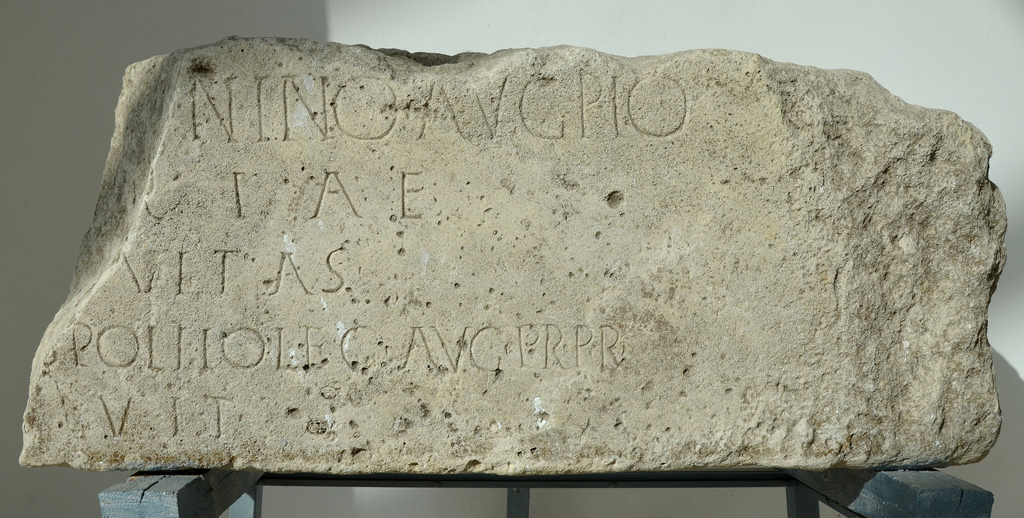
Dedicated to emperor Antoninus Pius by the governor of Moesia Inferior Titus Pomponius Proculus Vitrasius Pollio, 157-159 AD. Museum of Histria.
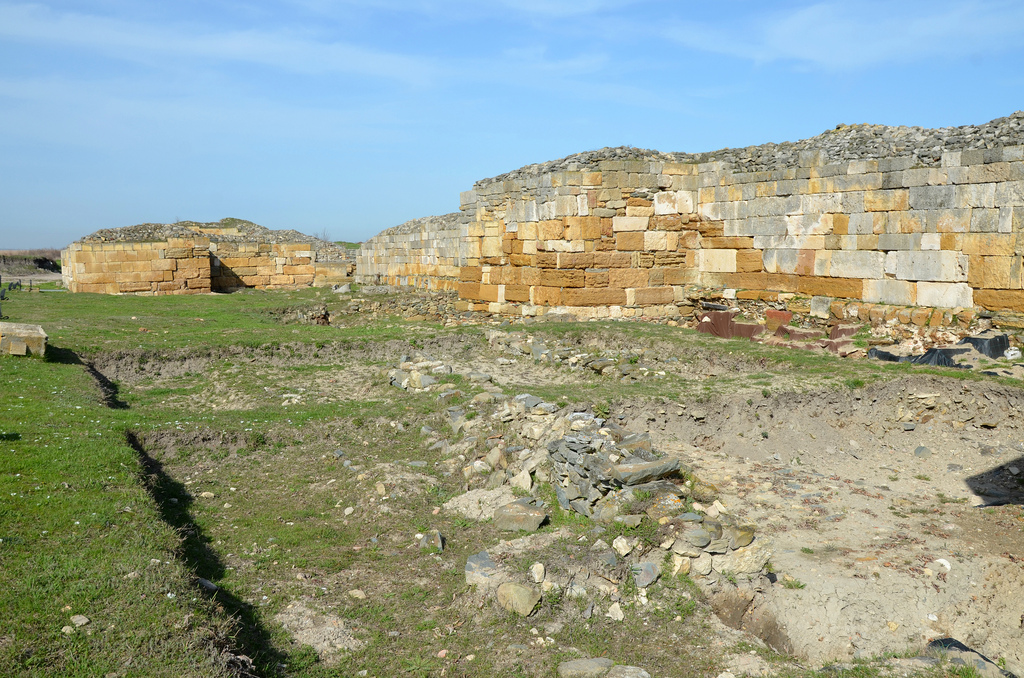
Histria was heavily destroyed by the invading Goths in the middle of the 3d century AD. It never fully recovered, but it was prosperous through the Byzantine times until the 7th century AD. Excavations have revealed the latest circuit walls, erected after the Goths had laid waste to the city. Most of the monuments excavated inside the late circuit wall to this last period of its existence.
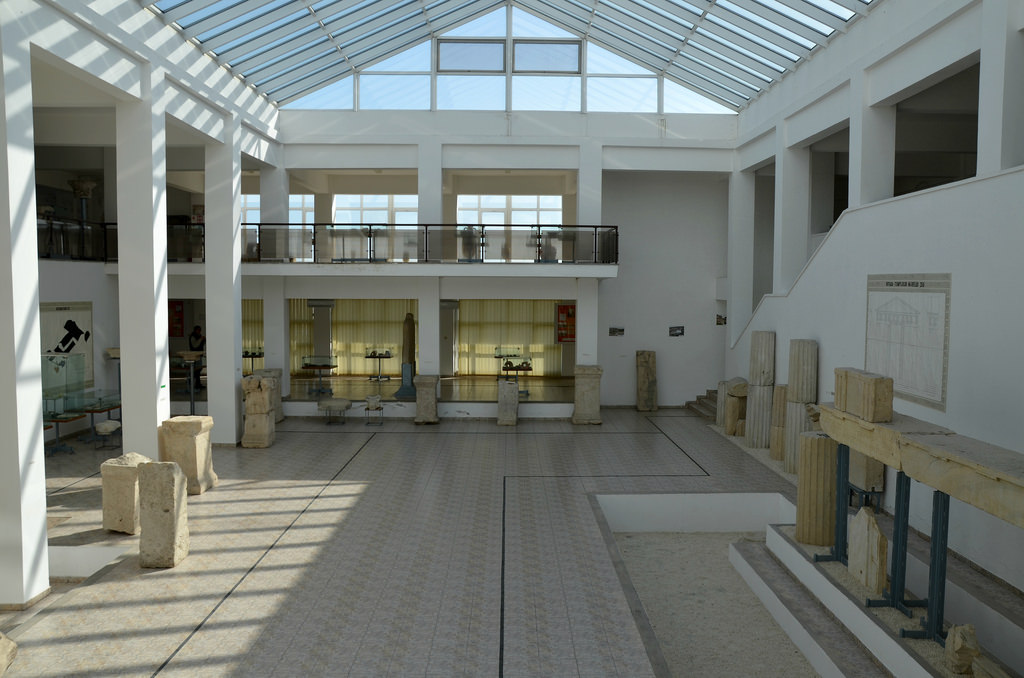
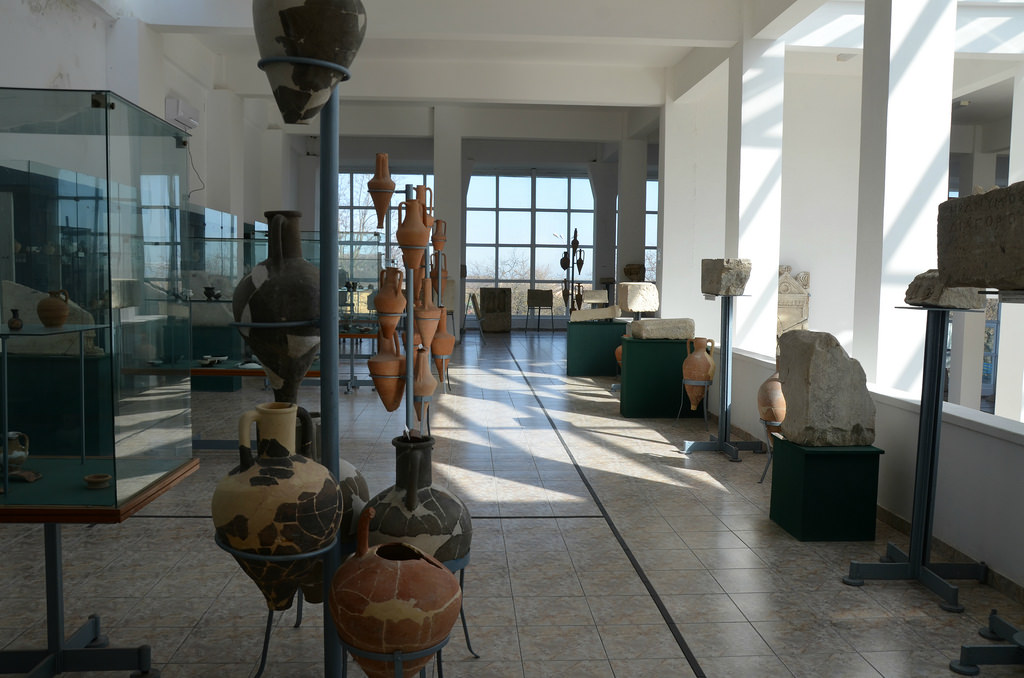
Histria’s ruins, some up to 7.5 metres tall, demonstrate the city’s importance. Archaeologists have discovered three layers of the Greek Archaic Period (630–500 BC), six layers of the Greek Classical Greek Period (500–350 BC), four Hellenistic layers (350–20 BC) and four Roman layers (30–250 AD). The rich collections of votives, funerary and decorative reliefs, Greek and Roman ceramics, and architectural elements are displayed in the local museum.
PORTFOLIO
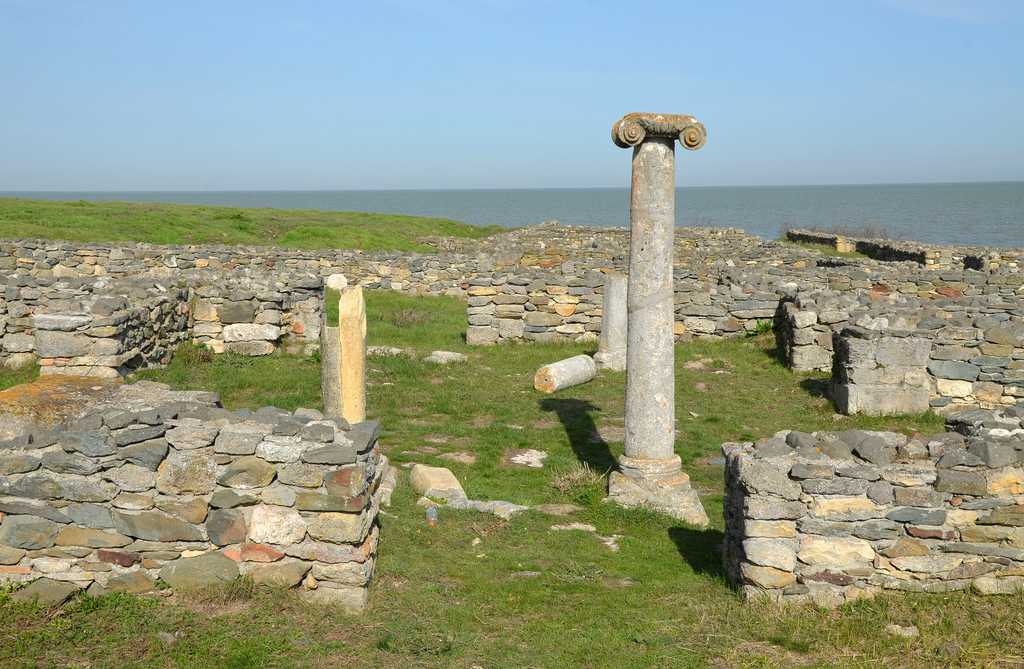
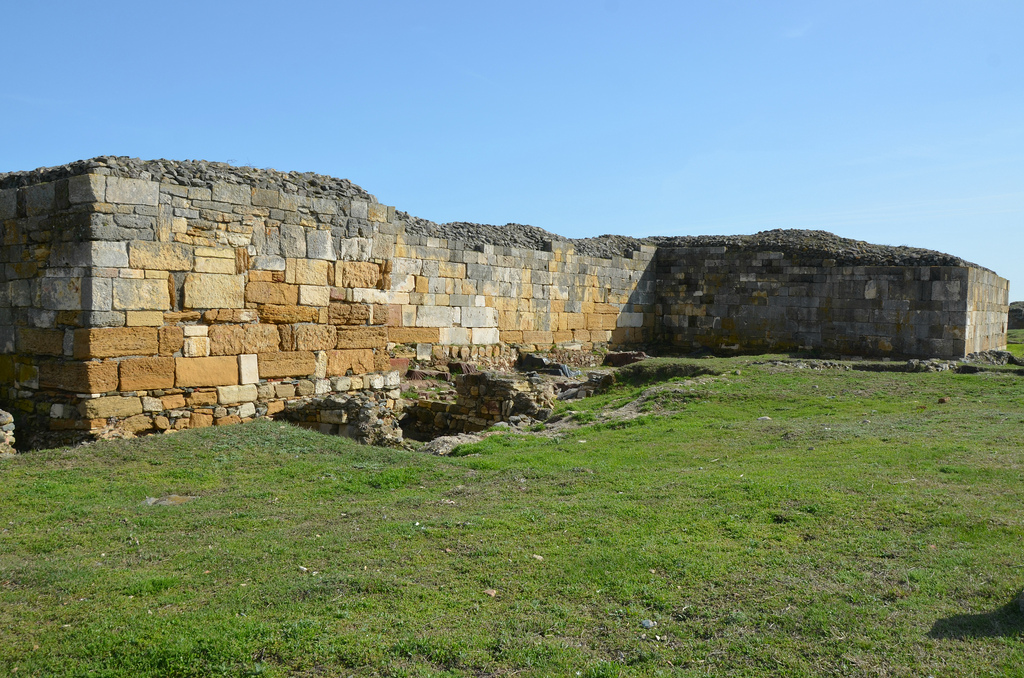
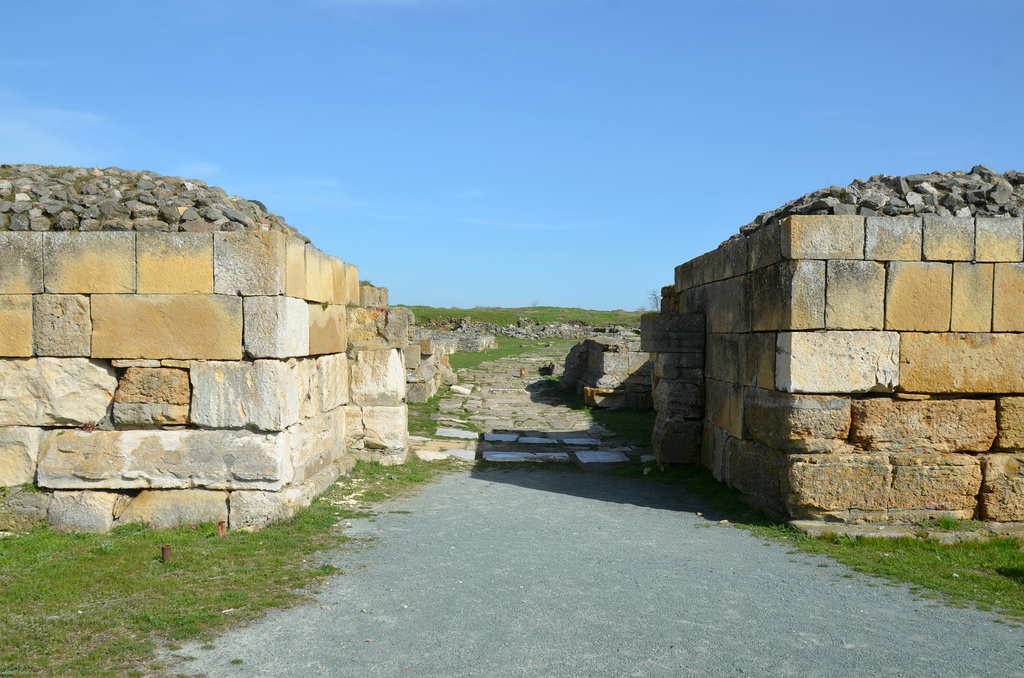
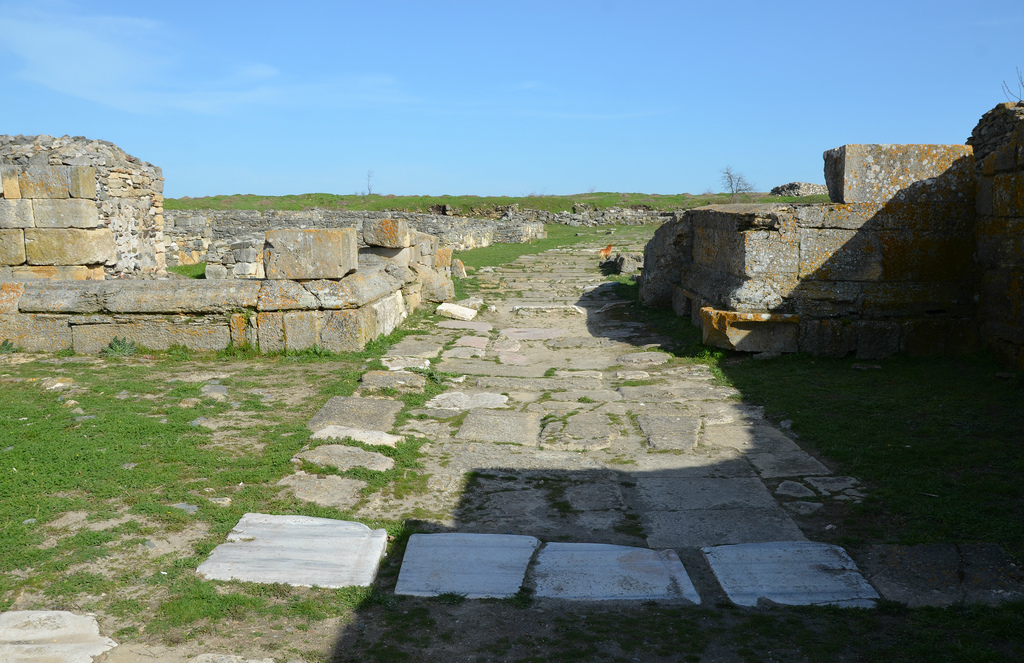
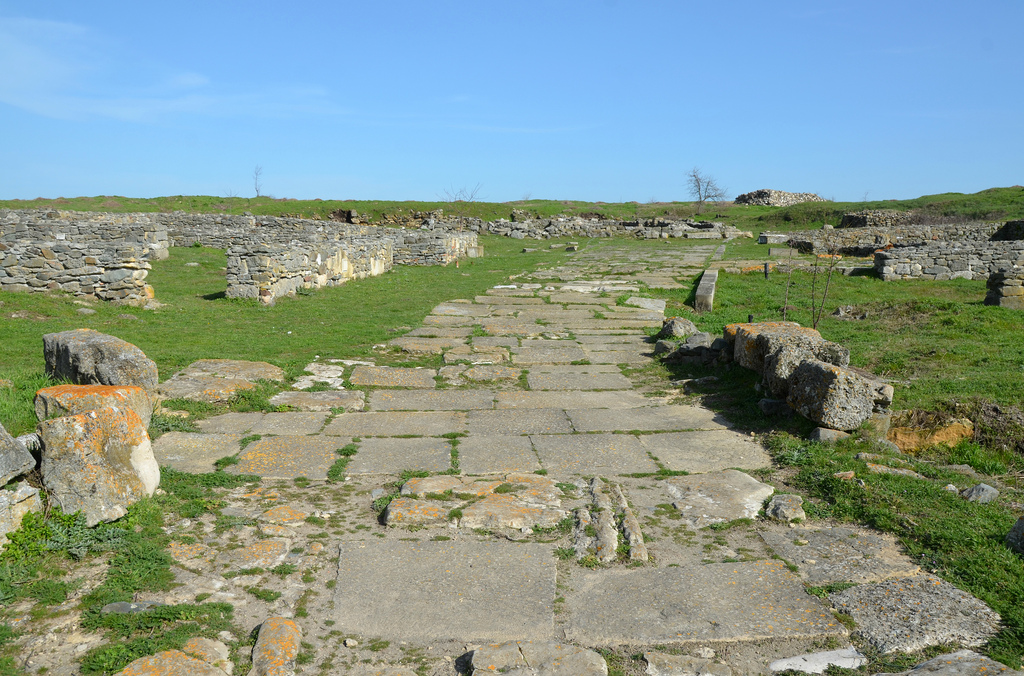
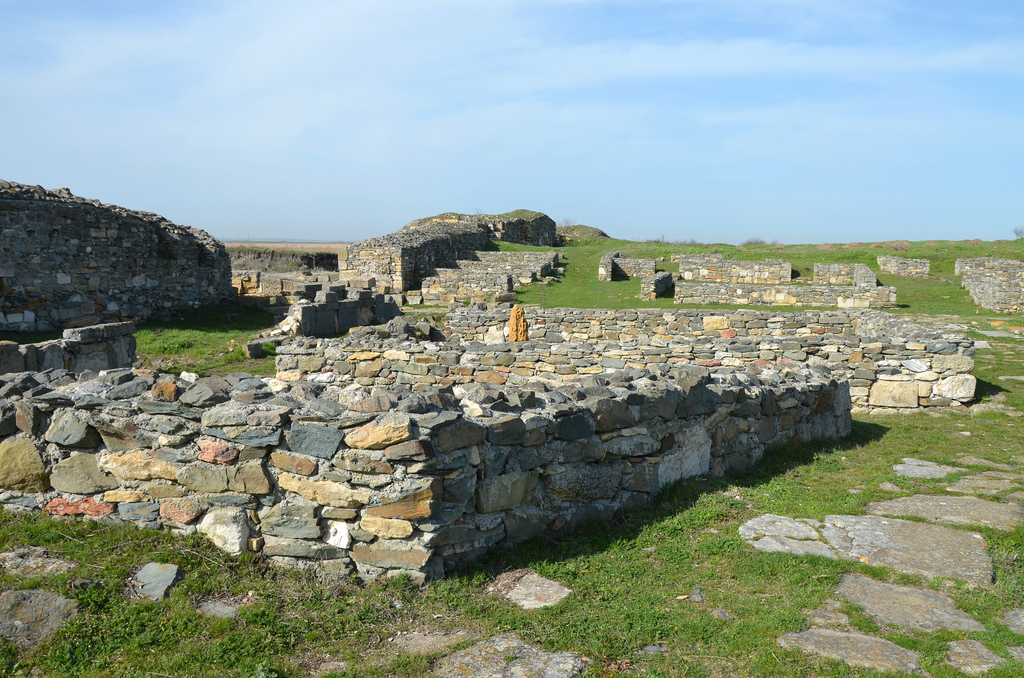
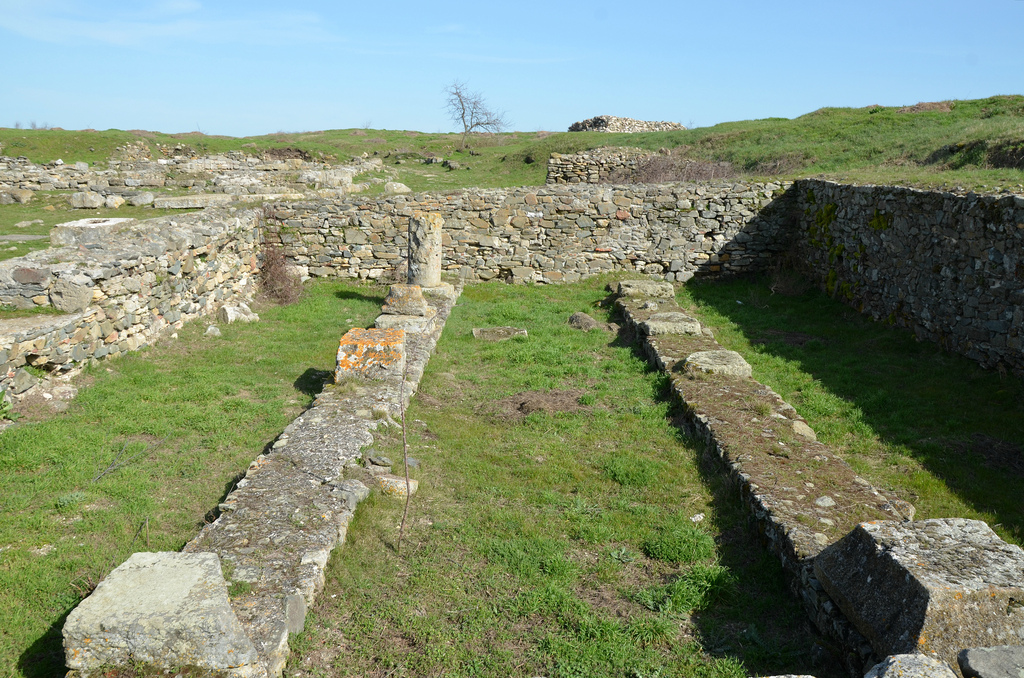
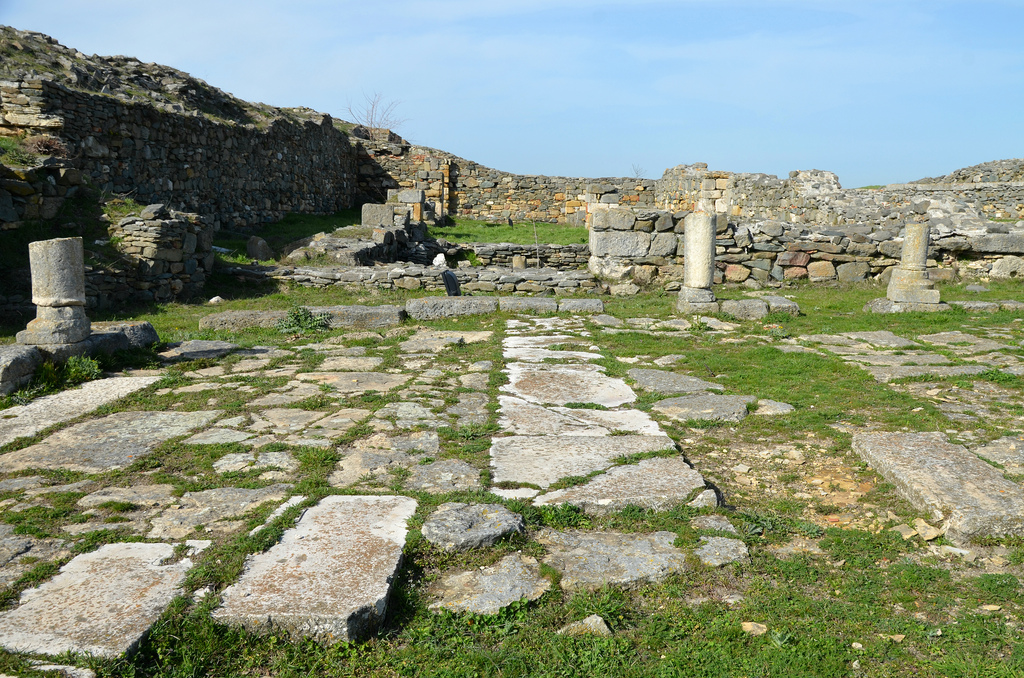
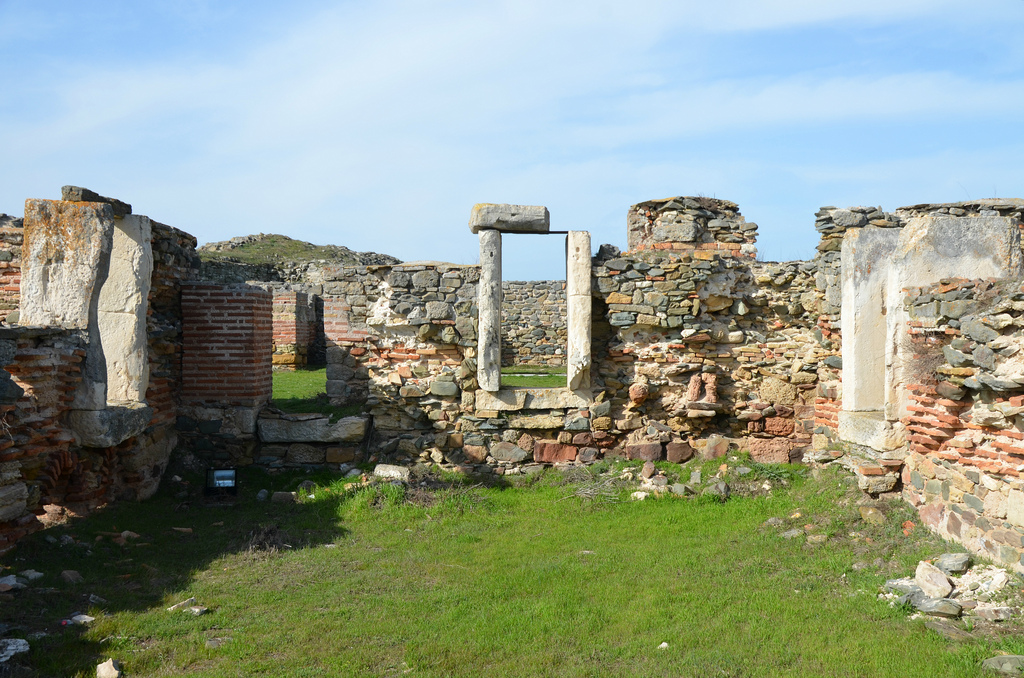
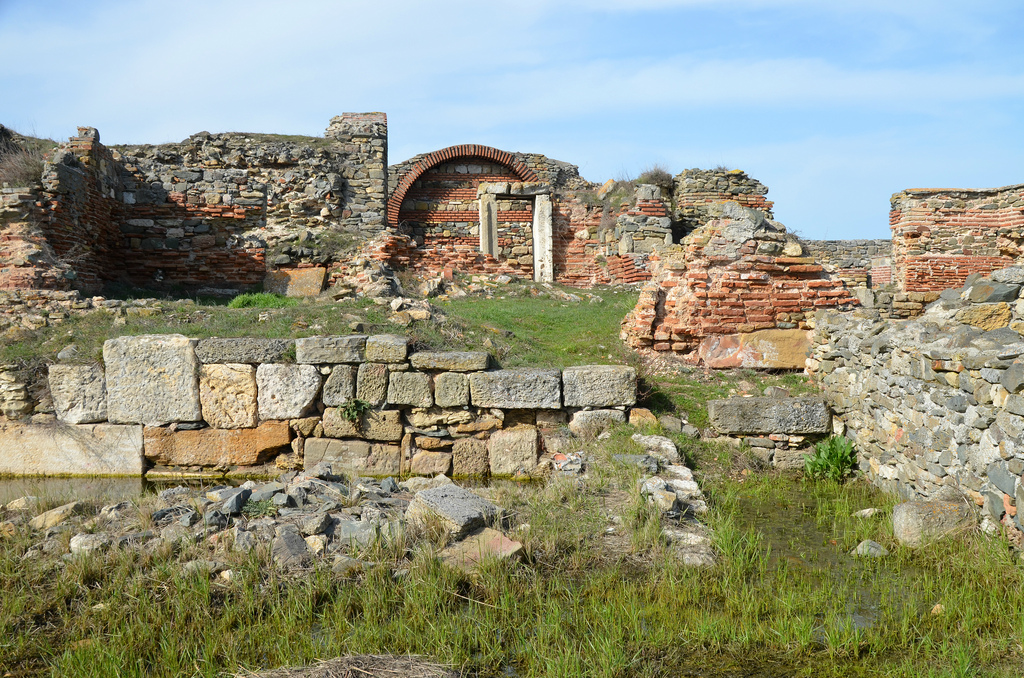
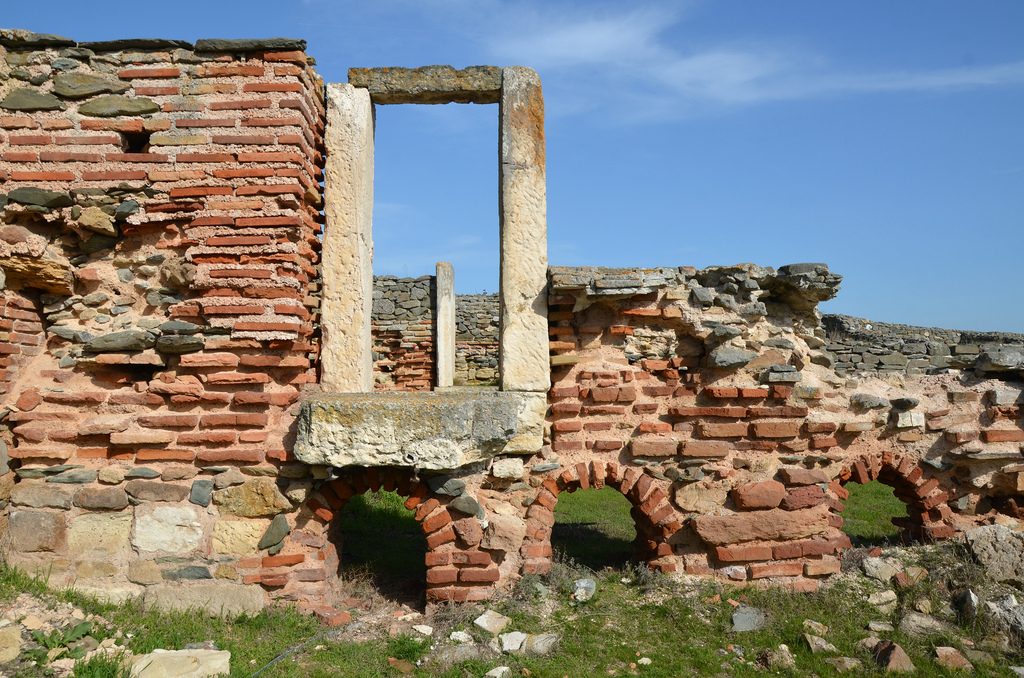
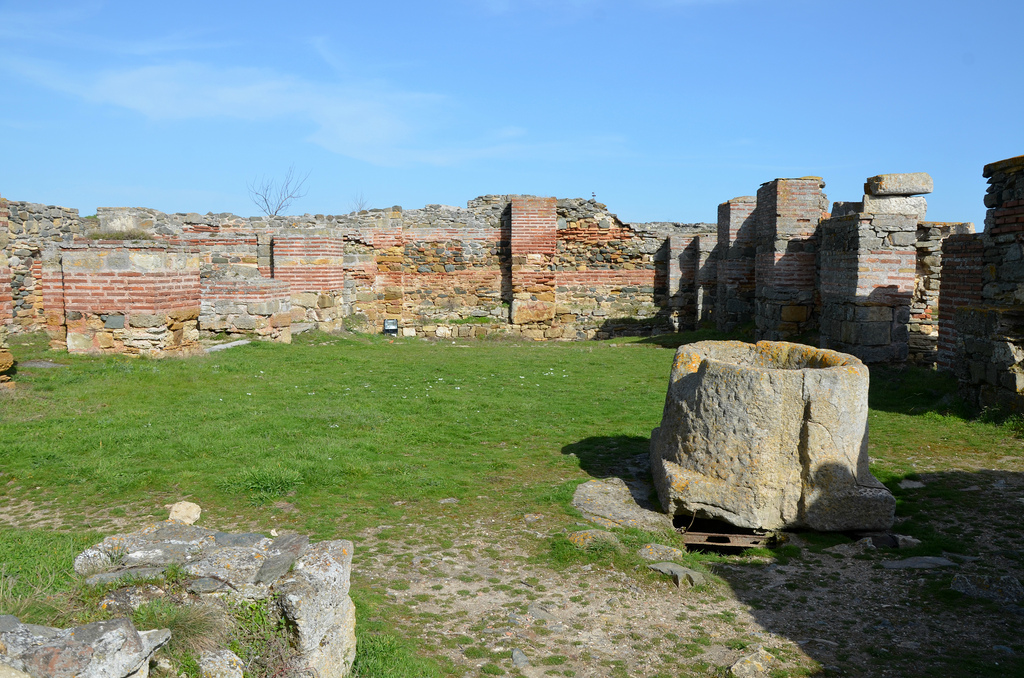
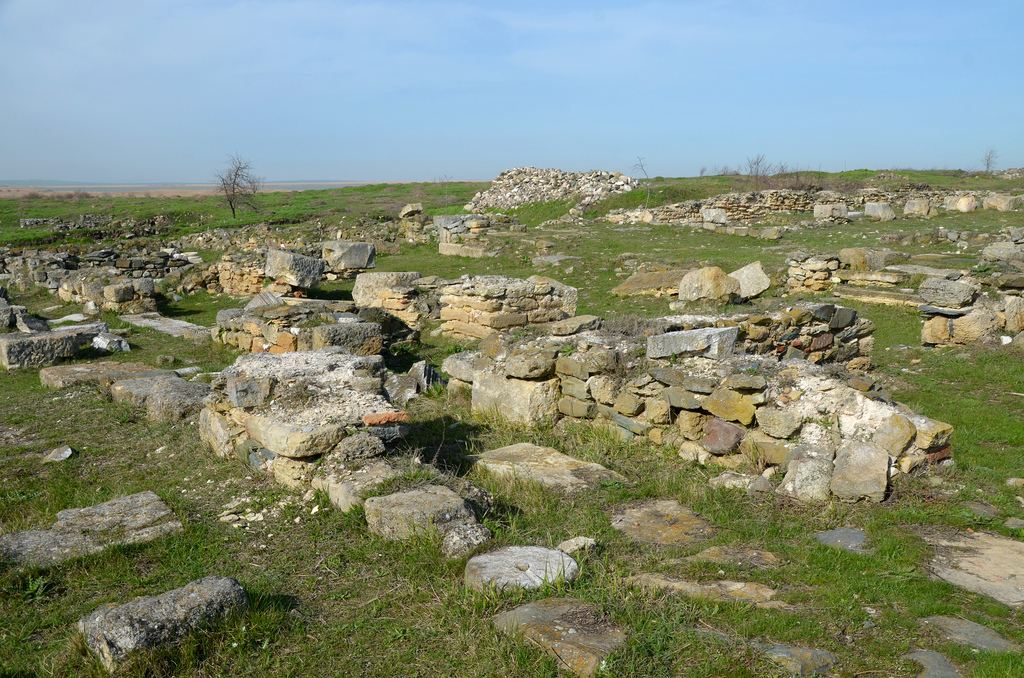
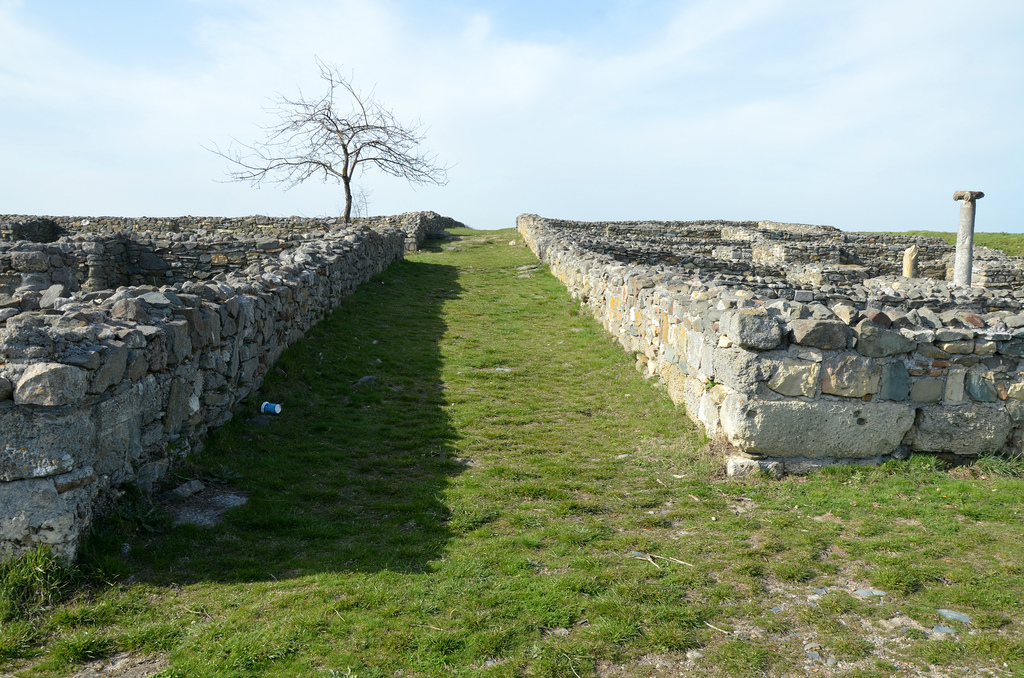
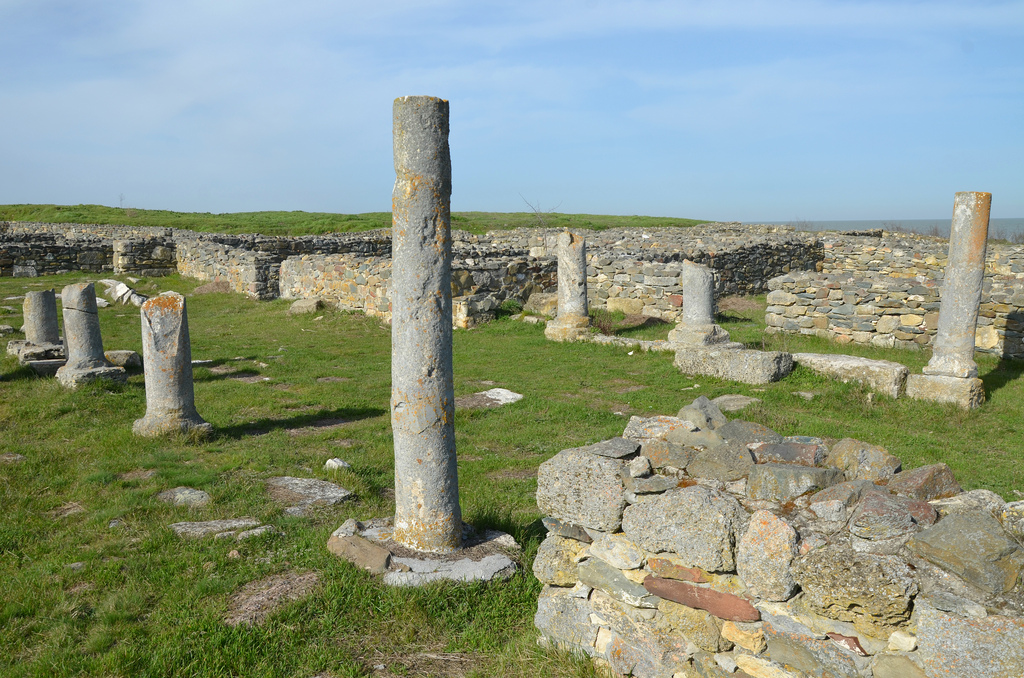
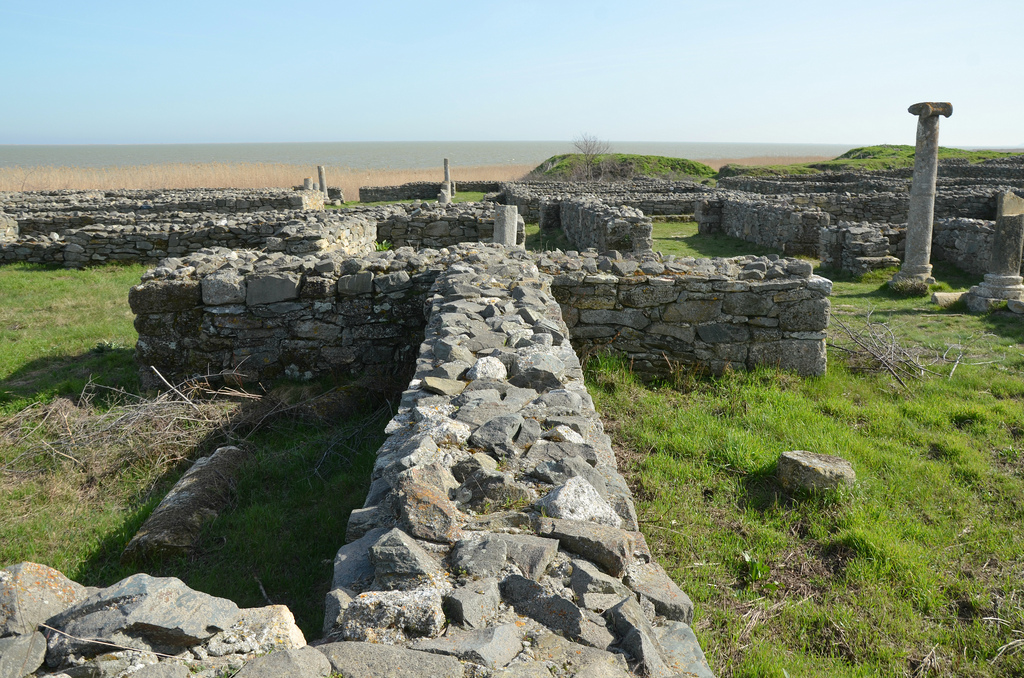
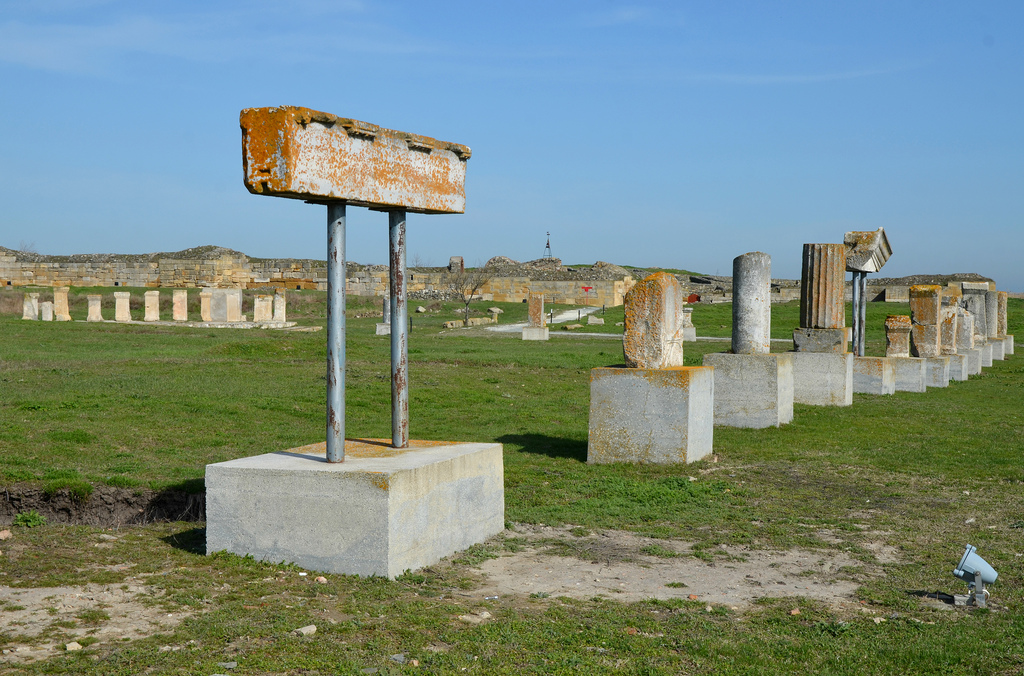
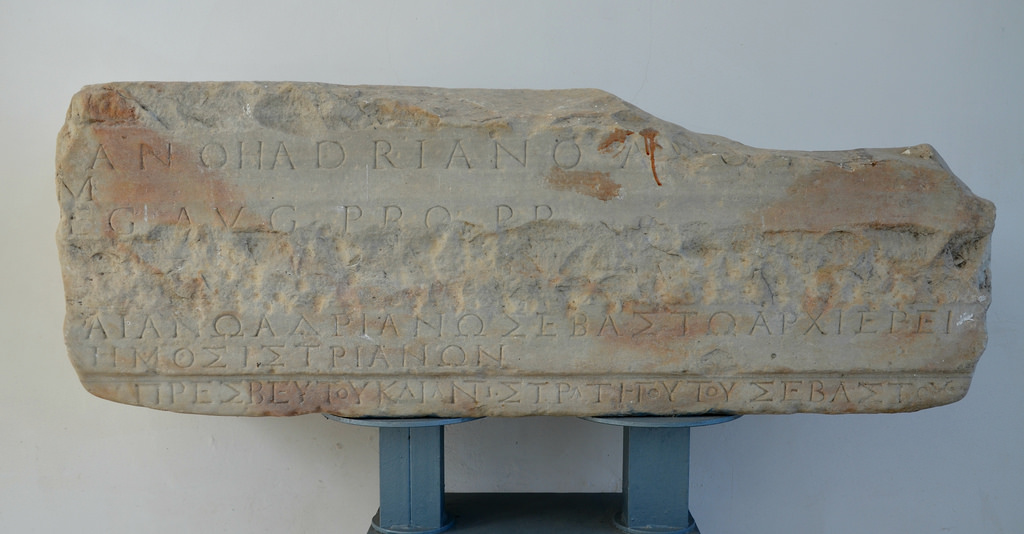
The Precincts Walls, the last limit of the city built shortly after the great destruction by the Goths in the 3rd century AD. Five main building phases have been identified, dated between the mid-3rd century and the late 6th century AD.In its final layout, the city wall had six gates, of which the most important was the so-called ‘Big Gate’ flanked by two large bastions and two towers. The precinct, built in opus quadratum, had two earthen walls and ditches as adjacent elements of fortification.The Big Gate is located in the middle of the west side of the precinct wall. It had four towers, two along the wall and two inside, built during the Constantinian restoration.The interior of the Big Gate with the paved street leading to the Large Square of the late Roman settlement.The Main Square is located immediately behind the Big Gate. It was paved with stone slabs and was bordered by public edifices and private buildings.The buildings behind the main gate.The civilian rectangular basilica was built and restored in the 3rd century AD. Two rows of columns separate the inner space.The trade district of the settlement with tabernae and a square paved with stone slabs.The Roman baths (thermae) were built in the 1st century AD and enlarged in the 2nd century AD.The Roman Baths were built next to the old Hellenistic precincts. In the foreground are remains of Hellenistic foundations. The frigidarium stands in the background.The door between the tepidarium and the caldarium.The palestra of the Roman baths.The foundations and architectural remains of the Episcopal Basilica consisted of an atrium with a portico, a narthex with limestone slabs and a naos. It was built in the first half of the 6th century AD on the location of a smaller basilica of the 4th century AD.The residential district is located on the eastern side of the town and dates from the late Roman period.The Domus 2 of the residential district. The rooms of the houses were placed around the inner court (atrium) with porticoes.The residential district.The residential district.Inscriptions and architectural elements from Histria.The central hall of the Museum of Histria, where architectural elements of the Greek temple of Theos Megas are exhibited.View of the upper floor of the museum dedicated to the Greek period of the city’s history.Bilingual inscription dedicated to emperor Hadrian, AD 117-128. Museum of Histria.











 following hadrian photography