The archaeological site of Tipasa is located on the Mediterranean coast of Algeria, approximately 70 kilometres west of the capital, Algiers. It is a UNESCO World Heritage Site that showcases an extraordinary mix of ancient cultures, including Punic, Roman, early Christian, and Byzantine influences. Tipasa was originally established as a Punic trading post and later grew into a prosperous Roman colony in the 2nd century AD, situated to the west of ancient Iol-Caesarea (modern-day Cherchell), the former capital of the Roman province of Mauretania Caesariensis. Like other coastal cities in Algeria, Tipasa adopted Christianity in the first half of the 4th century AD. However, following the Arab invasion, the city gradually declined from the 6th century AD onward.
Tipasa was a Punic trading post located along the sea route between Carthage and the Pillars of Hercules (Straits of Gibraltar). Very little remains of the early settlement, except for traces of a necropolis dating back to the 6th or 5th century BC. Rome conquered the city in the 1st century AD, and in AD 46, it was designated as a municipium with Latin rights under Emperor Claudius (Pliny NH 5.2.20). Later, it became a colonia under Emperor Hadrian, bearing the name Colonia Aelia Tipasensium (AE 1958, 129). In the 2nd and 3rd centuries AD, Tipasa enjoyed a time of great prosperity. This period saw the construction of a 2.3 km long enclosing wall that featured 31 towers. Tipasa’s prosperity was primarily driven by trade in the Mediterranean, particularly in oil and garum.
During the reign of the Severan dynasty in the middle of the 3rd century AD, Moorish rebels were held at bay, allowing the cities of Africa to enjoy their greatest period of prosperity. Many of the public buildings that are still visible today were likely constructed during this time. With the ascendance of Christianity in the 3rd and 4th centuries AD, the city’s physiognomy changed and reached a population of 20,000 inhabitants. The older buildings fell out of use or were demolished, and Christian basilicas were built. During the 5th century AD, the city faced challenges due to the Vandals’ annexation of Africa. However, it began to recover under Byzantine control one century later, leading to a modest renaissance characterised by repairs and expansions to several churches. At the end of the 7th century, the city was demolished by Umayyad forces and reduced to ruins.
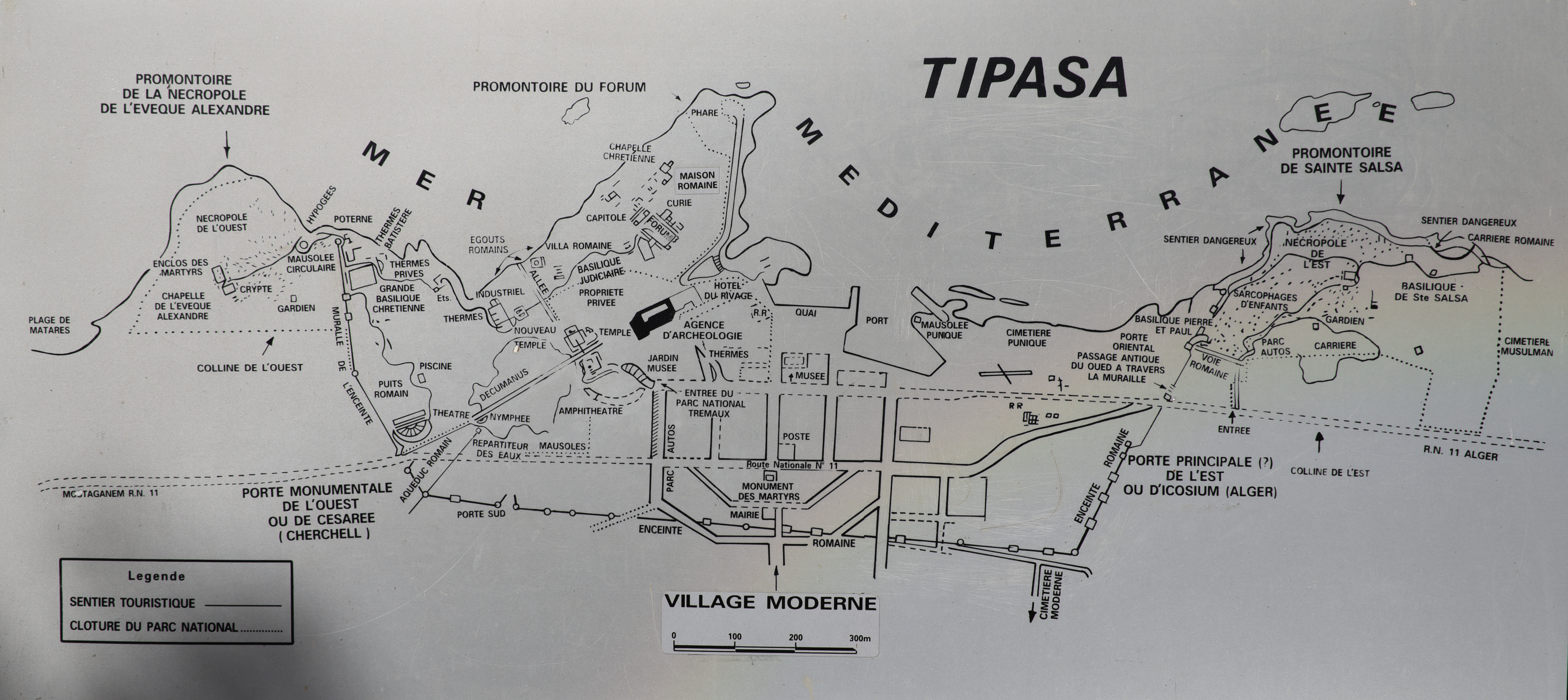
Map of Tipasa.
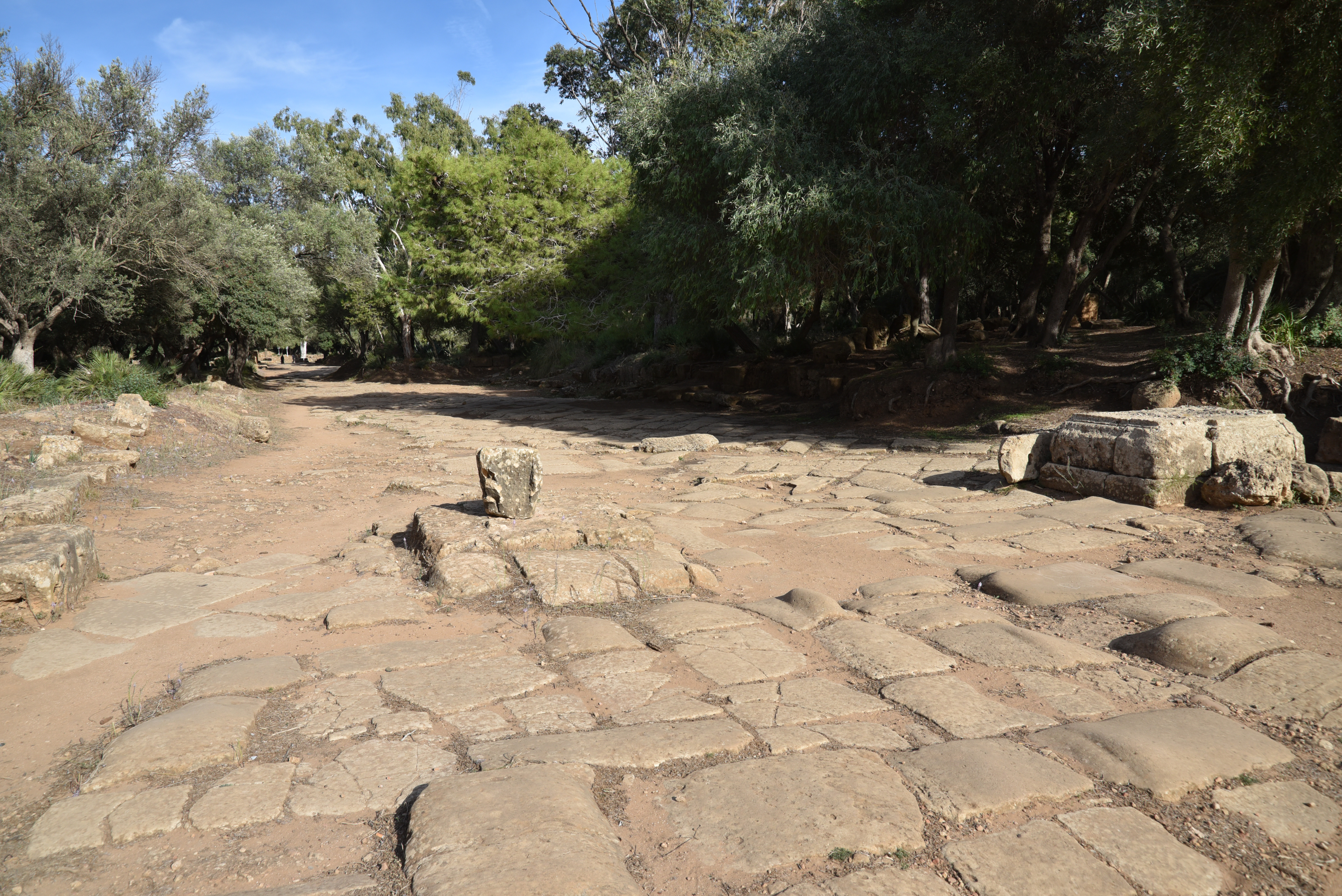
The main site of Tipasa is now a wooded archaeological park covering an area of 70 hectares. The entrance leads to an amphitheatre, and beyond it, a path guides visitors to the heart of the ancient town, where the two main streets, the paved cardo maximus and decumanus, intersect. To the east of the cardo lies the civic centre, including the Forum that originally featured porticoes on three sides, with the capitolium on the fourth side. This area also contains the curia (municipal assembly) and the civil basilica. Along the shoreline are several houses, including the so-called Villa of the Frescoes, a large residence measuring 1,000 square meters built in the mid-2nd century AD. The rooms of this villa open onto peristyles and are often decorated with mosaics and frescoes. Further inland is a theatre and a monumental semicircular fountain on the decumanus.
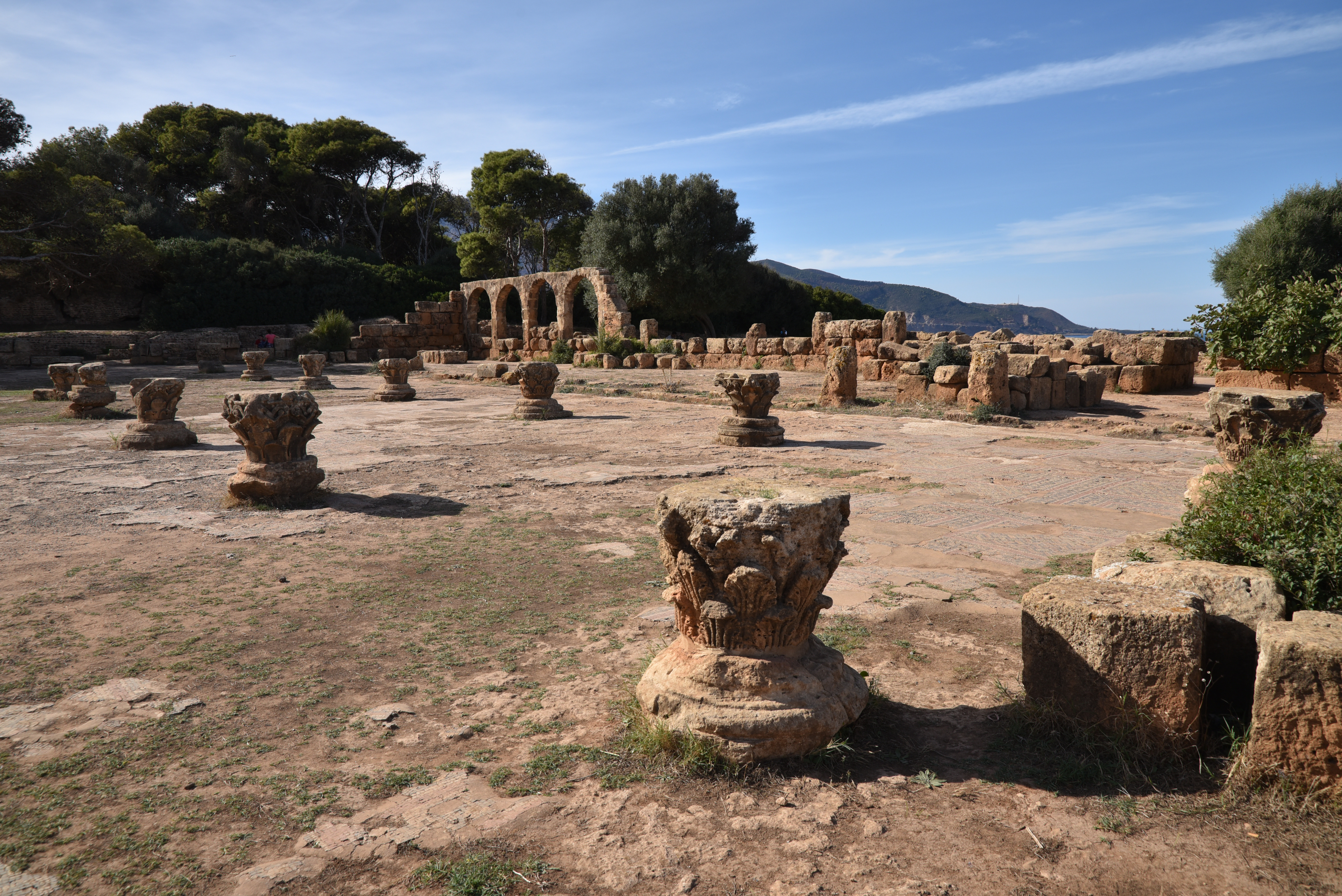
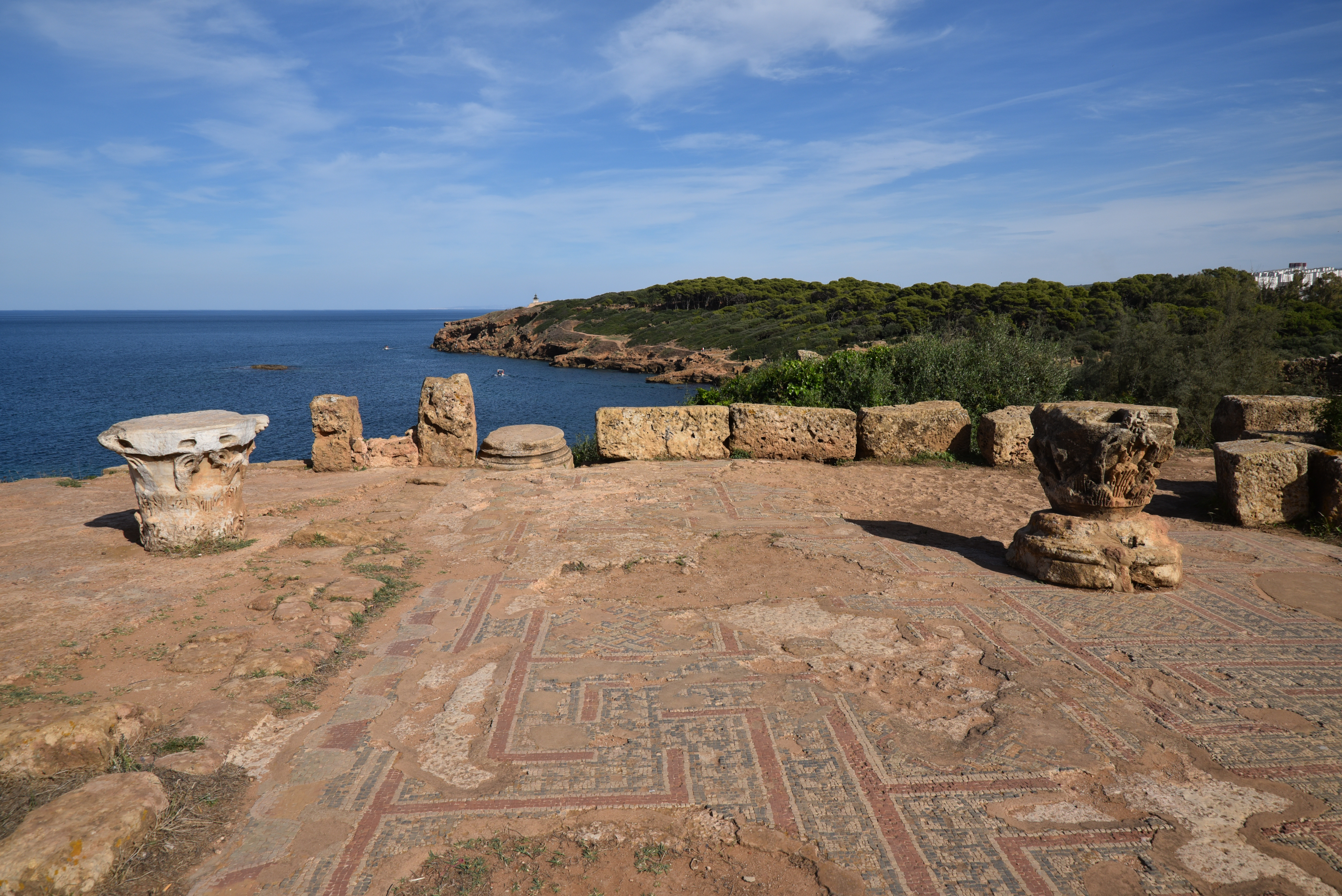
During Late Antiquity, Christians constructed various religious complexes, which included two basilicas, tombs, baths, and an impressive temple dedicated to the local martyr Saint Salsa. The Grand Basilica, featuring seven naves, was the largest Christian structure in North Africa upon its completion in the 4th century AD. The cemetery, adorned with carved tombs and inscriptions, provides valuable insight into the spread of Christianity throughout North Africa during this period.
The small museum outside the park showcases a variety of Punic and Christian funerary steles. It also features four tombstones dedicated to foreign cavalrymen who served in the auxiliary forces of the Roman army stationed at Tipasa. The museum also displays mosaics, including one depicting a captive family crouching with their hands bound.
PORTFOLIO
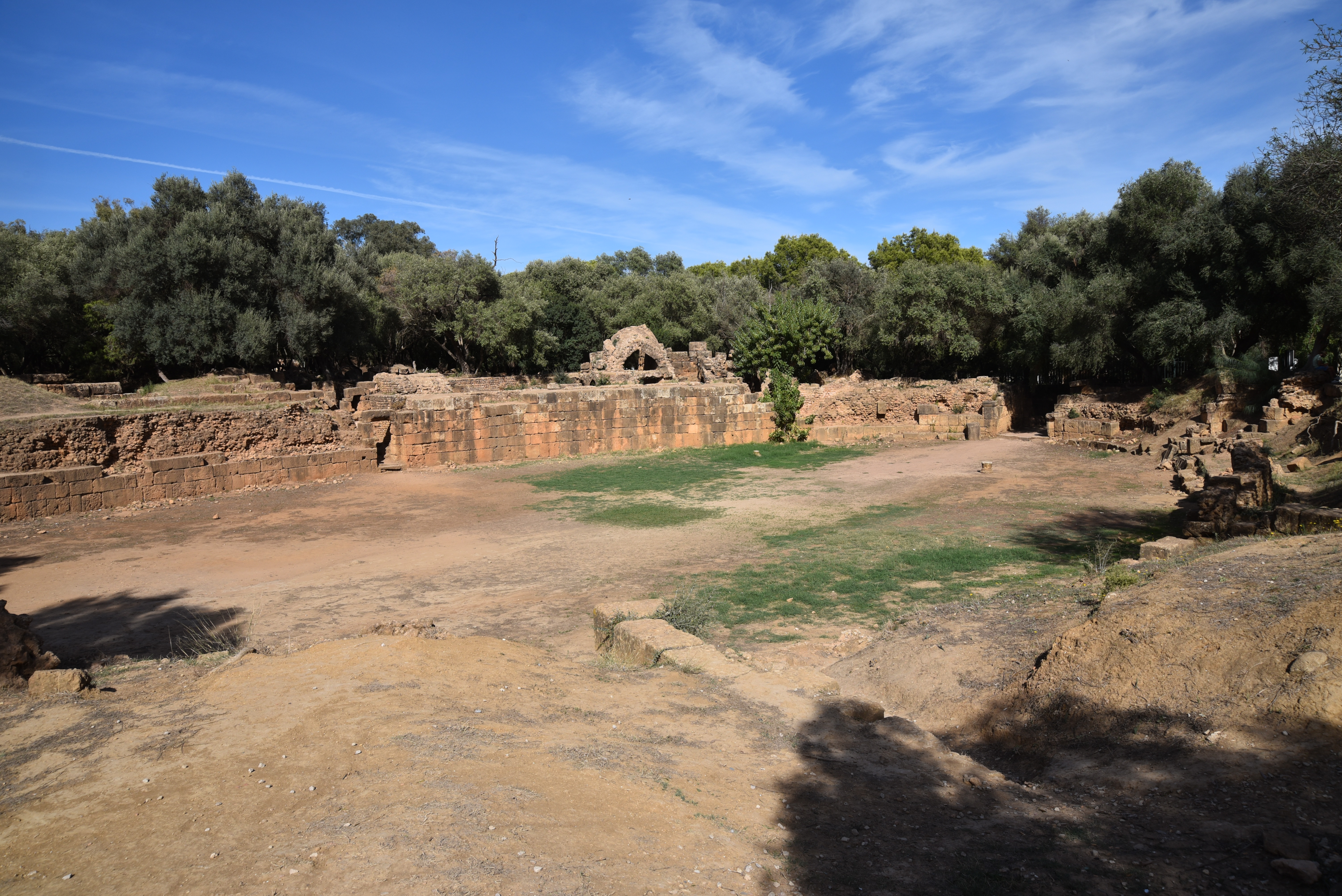
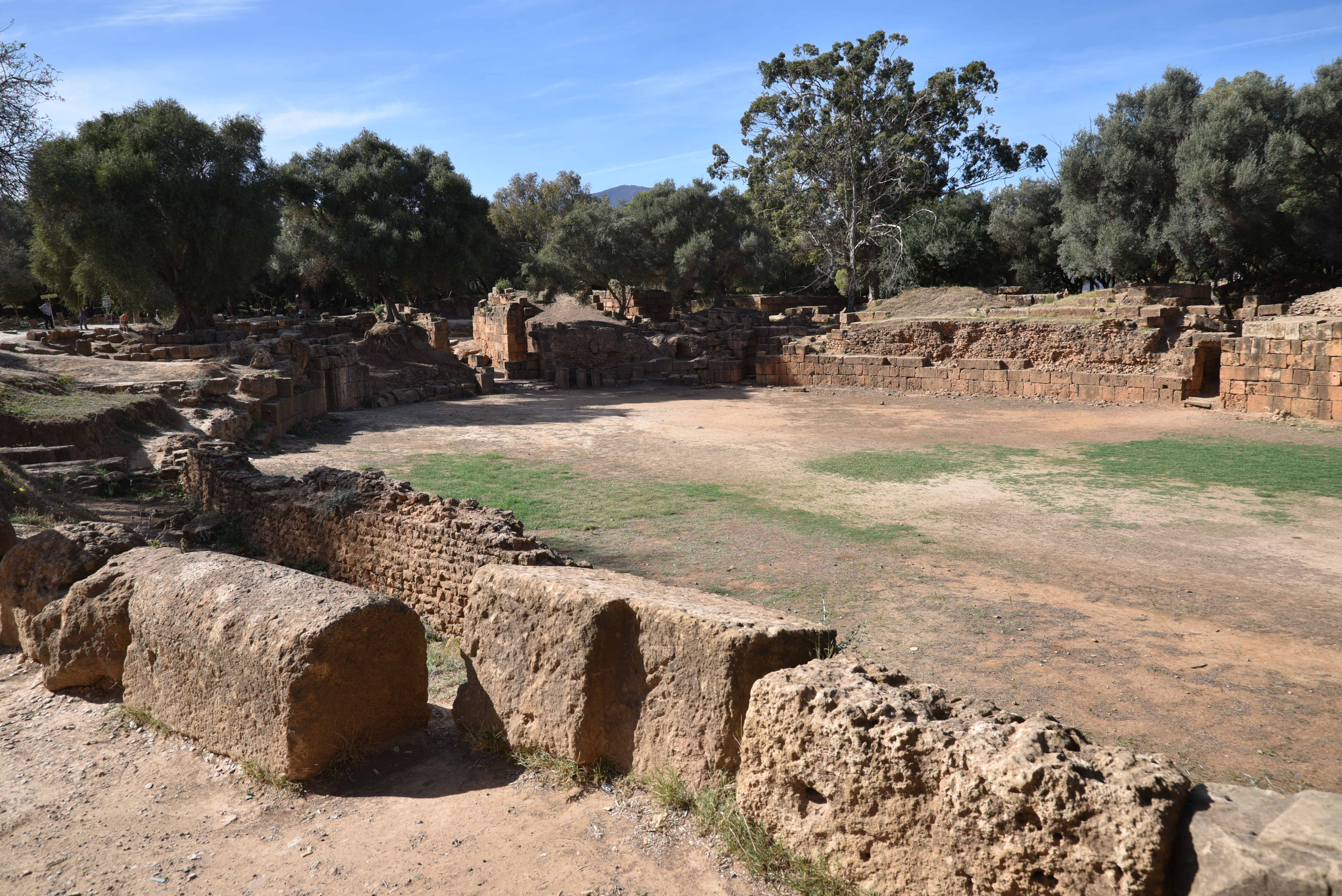
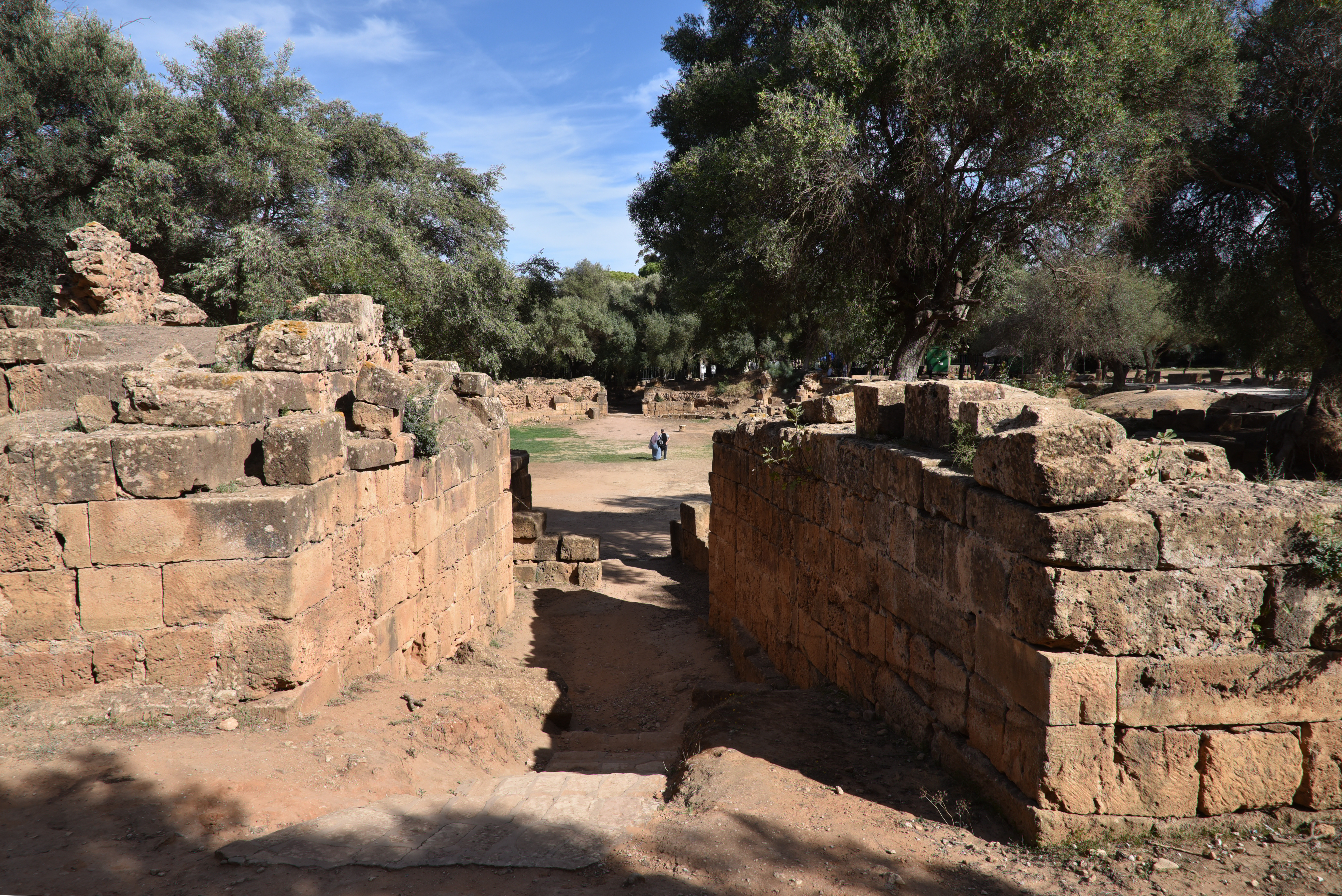
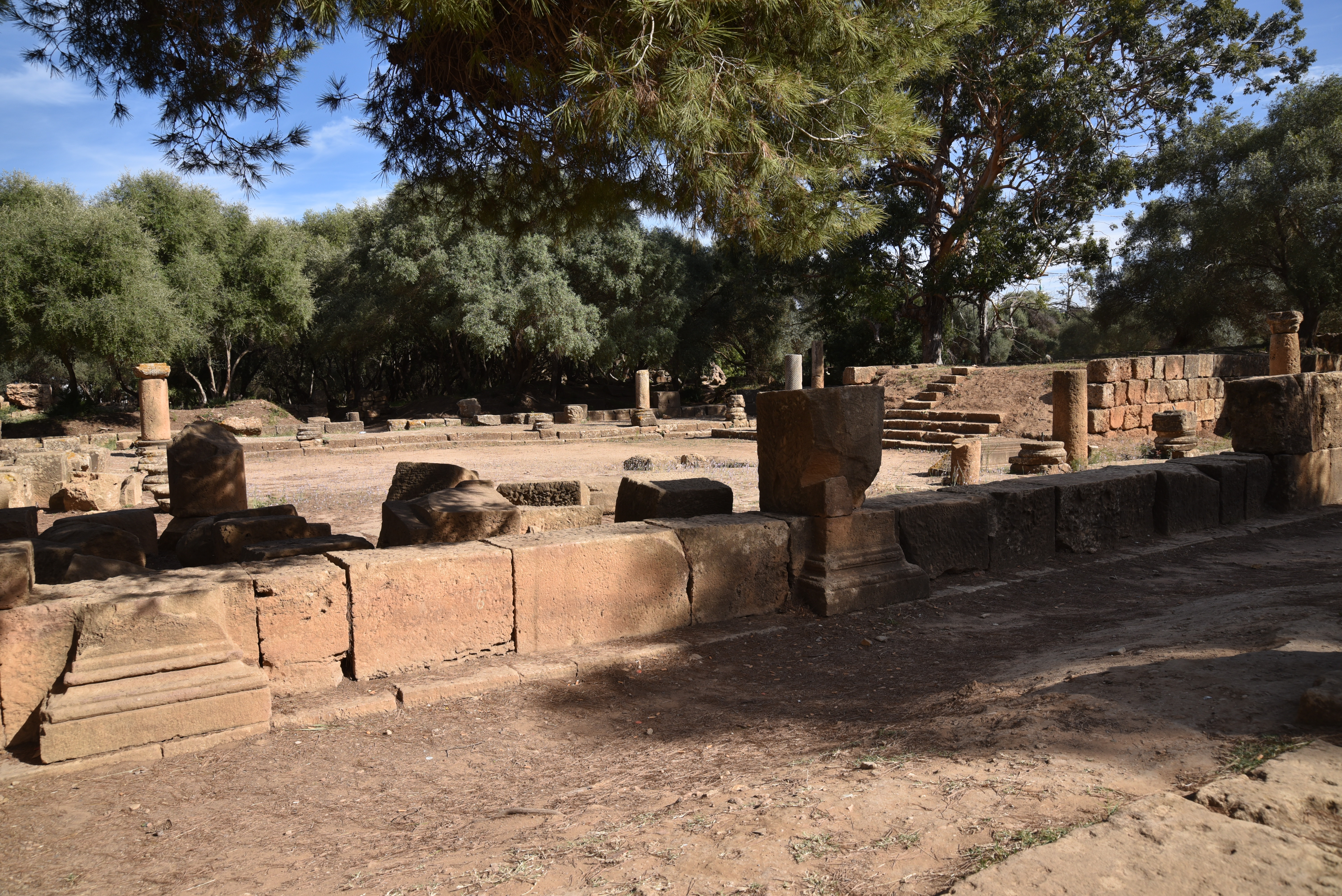
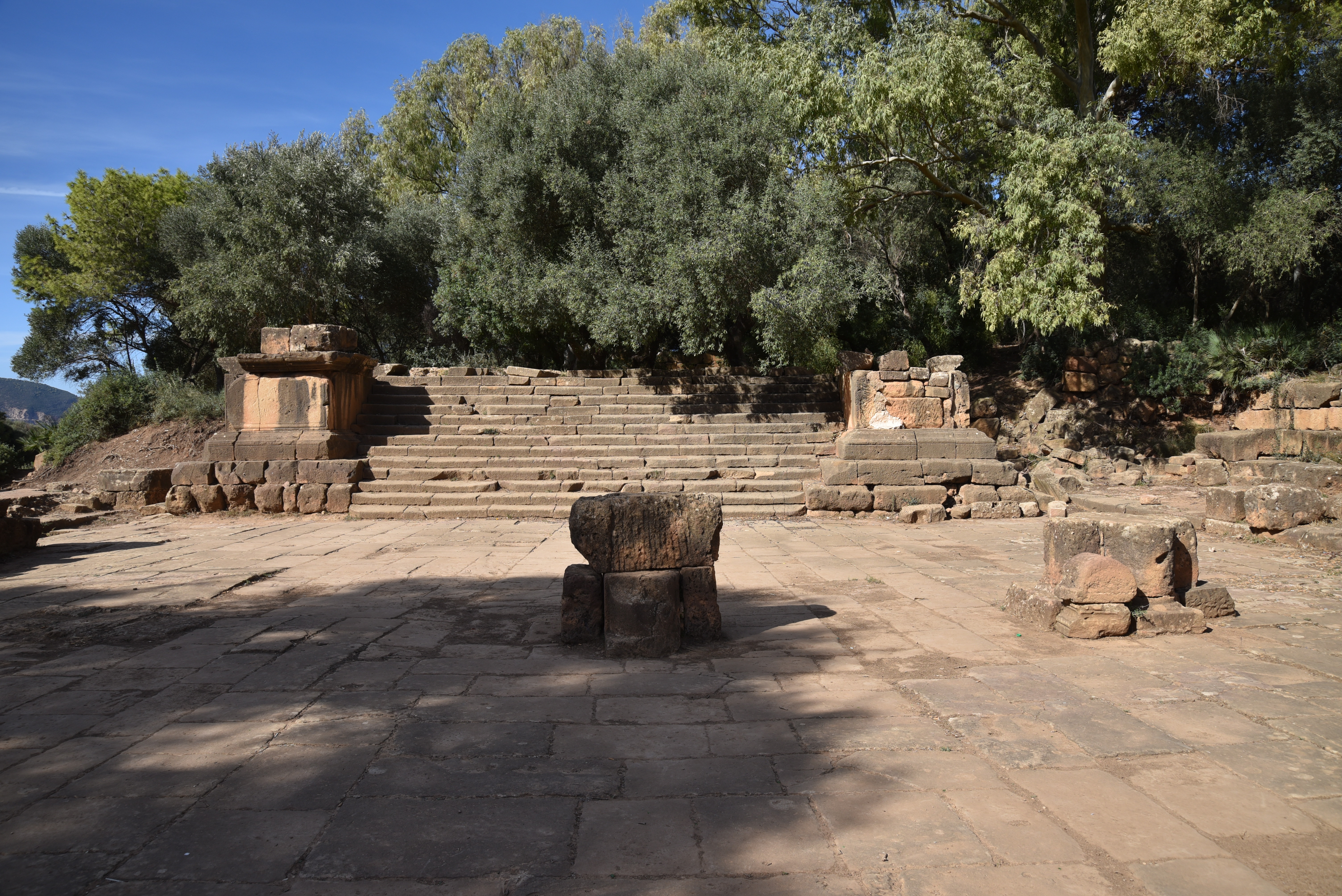
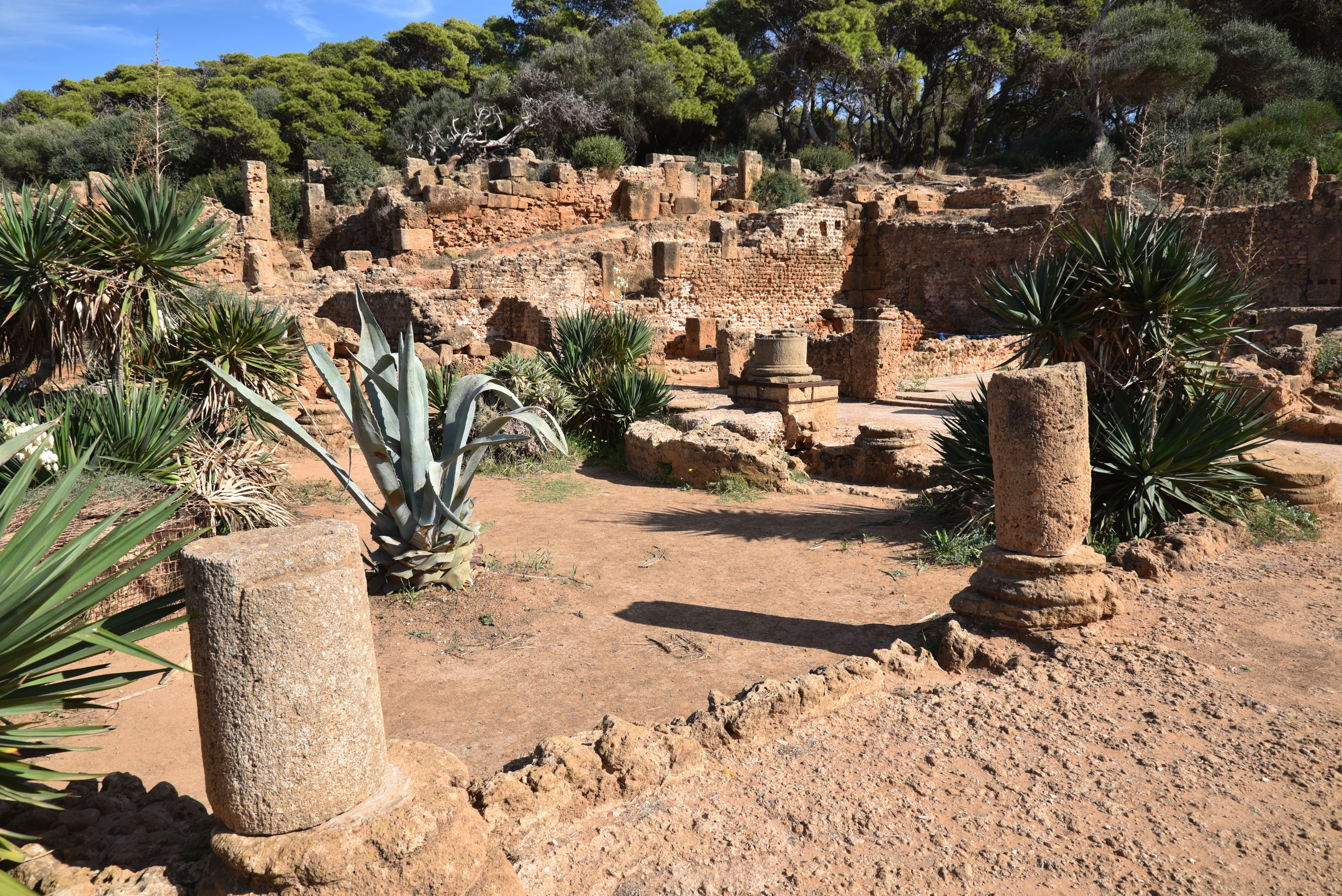
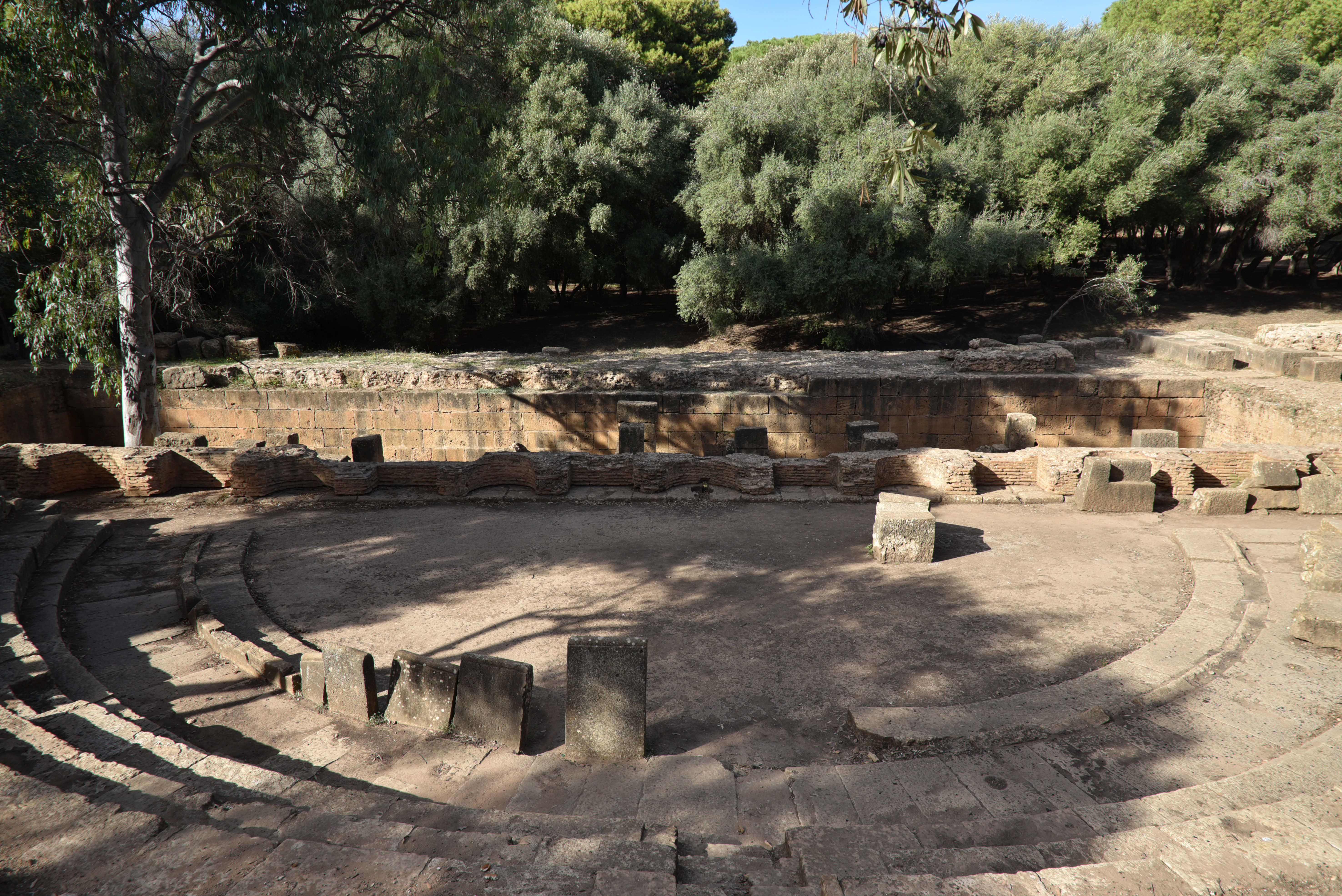
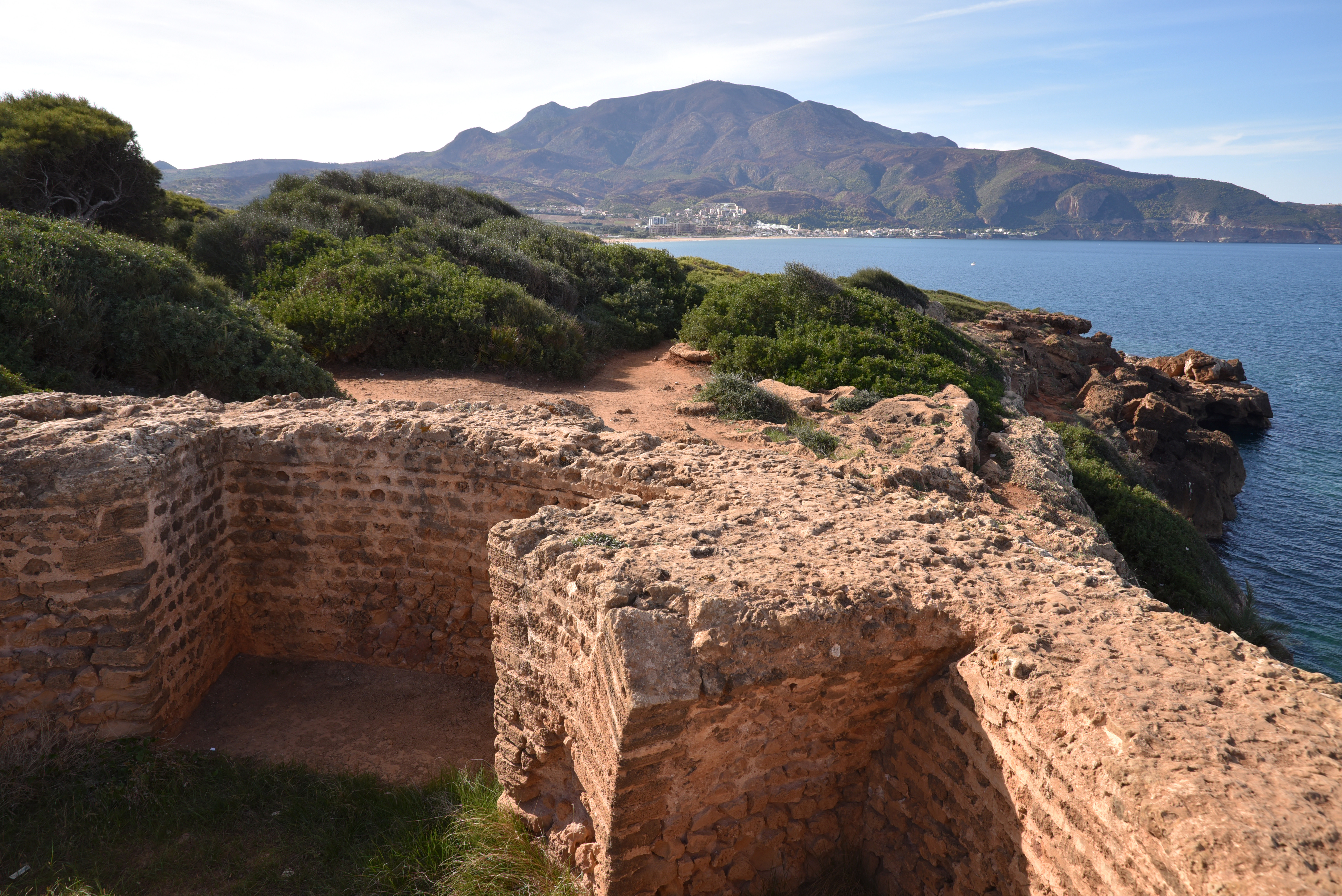
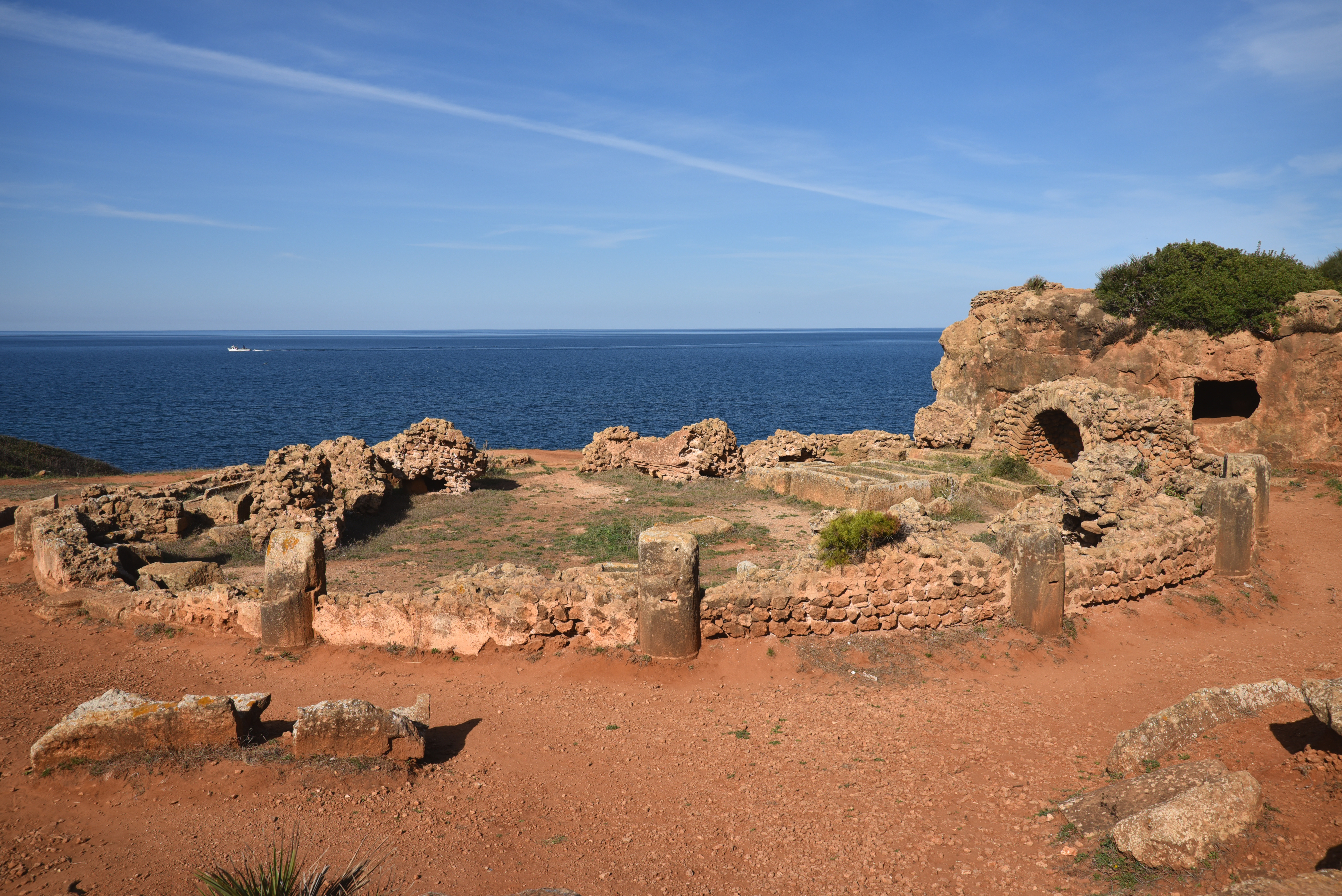
The amphitheatre with an elliptical arena measures 80 metres. It is dated to the Severan period. Only the podium wall and part of the vaulted substructures that once supported the seating remain.The amphitheatre was built using various re-used materials, including tombstones. One tombstone (now in the onsite museum) was of a cavalryman of the Ala I Ulpia Contariorum (see here). A water channel was perhaps used to flood the arena for mock sea battles (naumachiae).The eastern entrance to the amphitheatre.The Unidentified Temple dated to late 2nd century AD or the early 3rd century AD. Only the podium and the frontal stairway leading to the cella survive, as well as the foundations of the sacrificial altar.The Unidentified Temple stood within a precinct surrounded by a triple portico which opened onto the Decumanus Maximus.The Decumanus Maximus. The east–west-oriented road was 14 m wide and bordered by raised porticoes.The Decumanus Maximus.The New Temple. It is dated to the end of the 2nd century or beginning of the 3rd century AD and stood on a podium within a porticoed precinct.The Cardo Maximus extended towards the sea. The street was paved and bordered by porticoes supported by rows of piers.The Cardo Maximus.The Villa of the Frescoes, a wealthy townhouse of 1,000 sq.m built in the middle of the 2nd century AD.The Villa of the Frescoes is named for its once splendid wall decorations, of which fragments were discovered during excavation.Mosaic floor in one of the rooms of the Villa of the Frescoes.View of the Villa of the Frescoes from the west.Garum factory with four square tanks for macerating the fish. Garum was a sauce made up of small fish and the intestines of large ones, which were macerated with herbs. It was very popular in Rome and was one of the main exports of the African and Iberian provinces.The ruins of the Public Baths. They were most probably destroyed following an earthquake and were never repaired.The Public Baths.The industrial quarter with the public baths in the background.The Theatre at Tipasa was built on flat ground and raised upon vaults and piers. It was designed to accommodate 3,000 spectators.Unfortunately, the theatre has been largely reduced to its foundations. In 1847, the French military dismantled the stage and nearly all of the seating to construct a cholera hospital nearby in Marengo (now known as Hadjout).The Nymphaeum on the decumanus maximus, dated to between the end of the 3rd and the beginning of the 4th century AD. It was a monumental fountain dedicated to the Nymphs, adorned with statues between the columns.The Decumanus Maximus.The cross-section of the Cardo and the Decumanus.The Great Christian Basilica, built in the 4th century AD on the western hill using elements taken from the Capitolium.The central nave of the Great Christian Basilica was entirely paved with mosaics.The Great Christian Basilica of Tipasa is the largest Christian building excavated in Roman Africa. Particularly impressive, the basilica is 58 m long and 42 m wide and includes seven naves with some 700 sq.m of mosaic covering the basilica floor and decorating the central aisles.The baptistery of the Great Christian Basilica.The circular tower marking the northwest extremity of the defensive walls built in the middle of the 2nd century AD.View of Tipasa looking east from the northwest tower.The Circular Mausoleum, a funerary monument probably dedicated to the cult of a martyr (martyrium) with fourteen vaulted recesses which accommodated the sarcophagi.
MUSEUM
The main hall of Tipaza’s small museum.Mosaic of the Captives depicting a captive family (a Moorish tribal chief with his wife and son) crouching with their hands bound, surrounded by twelve portraits of Africans. It once occupied the apse of the Civil Basilica, ca. AD 200-300.The Pax et Concordia Mosaic, a stone mosaic mensa (banqueting table) cover from the Necropolis of Tipasa-Matares. Verse inscription (AE 1979, 682): In Chr(ist)o Deo/ pax et concordia sit/ convivio nostro (“In God (Christ), may peace and concord be on our banquet”).
Blas de Roblès, Jean-Marie; Sintes, Claude; Kenrick, Philip. Classical Antiquities of Algeria: A Selective Guide (p. 127). Society for Libyan Studies. pp. 120-163
Claros was an ancient Greek sanctuary situated on the coast of Ionia between Smyrna and Ephesus. It belonged to the city of Colophon and was a significant centre of prophecy, as in Delphi and Didyma. The sanctuary contained a temple and oracle of Apollo, who was worshipped here as Apollo Clarius. People from far and wide visited this place to seek guidance and prophecies until the end of the 4th century AD. Hadrian visited the sanctuary and contributed considerably to the temple’s reconstruction.
The cult centre at Claros was a complex devoted to multiple deities, including Artemis, Leto, Dionysus, and Apollo. It was part of the territory controlled by the Ionic city of Colophon, one of the oldest of the twelve cities of the Ionian League. The religious area was constructed around a freshwater spring during the Archaic Period, but there is evidence of a pre-Greek use of the site with a possible Hittite origin. The first known construction is a round altar that dates back to the second half of the 7th century. It was later replaced by a large rectangular altar measuring 14.85 × 6.05 m. In the middle of the 6th century AD, a marble temple was built for Apollo around the spring. Artemis also had her own precinct and a smaller altar measuring 3.50 × 150 m. Later, in the 3rd century AD, construction began on the new altar and the new temple of Apollo, which had a crypt-like adyton from where the oracle delivered his prophecies.
Claros, alongside Didyma, was one of the two major oracular centres in western Asia Minor during the Graeco-Roman period. However, the origins of cultic activity Claros is the oldest in the region. The earliest mention of Claros is in the Homeric Hymn to Apollo (see here) from the 7th century BC. During this period, several altars and a marble temple dedicated to Apollo were constructed near a sacred spring. Later, in the 3rd century BC, various significant structures and cult statues of Apollo, Artemis, and Leto, along with a larger Doric Temple of Apollo, were built.
Larger-than-life seated statue of Homer from the Sanctuary of Apollo at Claros. İzmir Art and Sculpture Museum.
During the 7th century BC, an ancient Sacred Way connected Claros with Colophon and Notion. This route was used for several centuries, at least until 294 BC. The road was decorated with Kouros and Kore statues on both sides. Near the main altar, an impressive array of statues honouring Roman officials lined the Sacred Way in Claros. Some of the individuals commemorated included Pompey, Cicero, and Octavian, who was likely honoured after his Actium victory. Other honorees were Sextus Appuleius II, the half-nephew of the Roman emperor Augustus, L. Valerius Flaccus, the governor of Asia in 61/2, his father (consul 86 BC), and his uncle C. Valerius Flaccus, who was Asia’s governor in the 90s.
Kouros statue from the Sacred Road that connected Claros with Colophon and Notion. Dated to the Archaic Period. Izmir Museum of History and Art.
The oldest piece of information about the function of the Temple of Apollo in Claros dates back to the Hellenistic Period. According to the Greek historian Pausanias, Alexander the Great had a dream in which he was directed to establish a new city at the base of Mt. Pagos (Smyrna). The Smyrnaeans asked for the interpretation of the dream from the Apollo oracle at Claros, and the oracle replied with a prophetic phrase: “Thrice and four times happy will those men be, who are going to inhabit Pagos beyond the sacred Meles.” As a result, New Smyrna was founded, becoming one of the most prosperous cities in Asia, while the old city of Smyrna was abandoned.
The oracular sanctuary of Apollo Clarius was a sacred place for devotees and visitors seeking divine wisdom and insight. According to inscriptions and literary texts, there were special nights on which consultations would occur, and people would gather at the temple of Apollo. During these nights, a procession of consultants would take place, sacrifices would be made, and hymns would be sung to seek answers from the divine. The Lesser and Greater Claria were two significant festivals that took place every fifth year in the Hellenistic Age, attracting visitors and generating substantial revenue for the sanctuary.
During the early days of the Roman Empire, the Clarian oracle became very popular, attracting a large number of visitors who sought its counsel. The prophecies were highly regarded by rulers, individuals and cities, and their fame was worldwide. For instance, some towns addressed famine and field infertility issues, others about coping with plagues or pirate and bandit attacks. Individuals and delegations from the entire Eastern Mediterranean and beyond sought the oracle’s guidance at Claros.
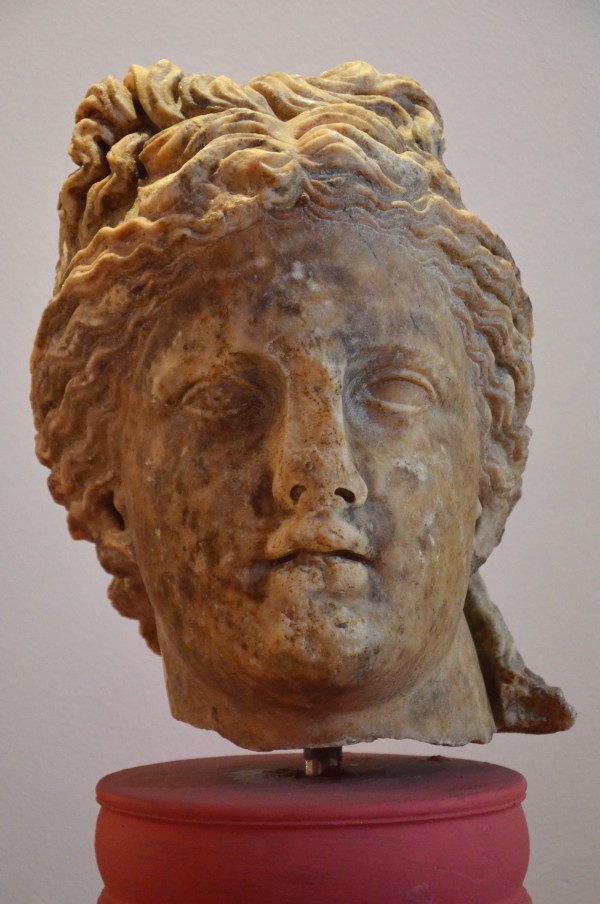
Head of Apollo from Claros. Dated to the Late Hellenistic Period. Izmir Museum of History and Art.
In AD 18, Germanicus visited the oracle during his travels in the East and received a shocking prediction. The seer predicted that he would soon meet his end. This prediction came true just a year later when he passed away in Syrian Antioch (Antakya) at the young age of 34. Tacitus, a Roman historian who had likely visited the same oracle himself ten years prior as proconsul of Asia, described the procedure for receiving an oracle. He was surprised to discover that, unlike Delphi, no priestess was present but a male priest who spoke on behalf of Apollo (Tac. Ann. 2.54).
The oracular sanctuary consisted of various buildings, such as the temple itself, an altar, treasuries, and other structures that were associated with the oracle’s activities. The temple was built between the 4th and 3rd centuries BC on the site of an earlier sacred building and was restored during the reign of Hadrian. The new temple was constructed on a five-stepped platform with dimensions of 26 × 46 m and had six columns on the narrow sides and eleven on the long sides.
Plan of the Temple of Apollo at Claros.
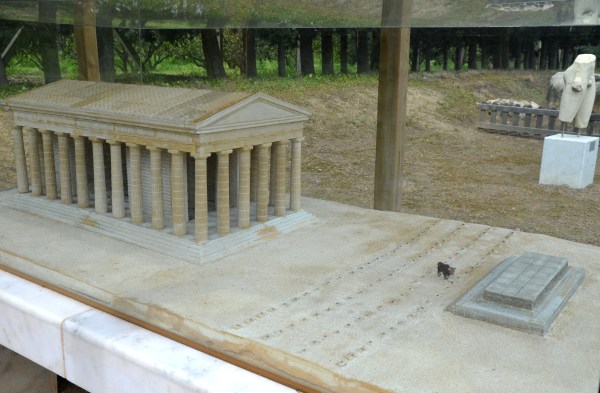
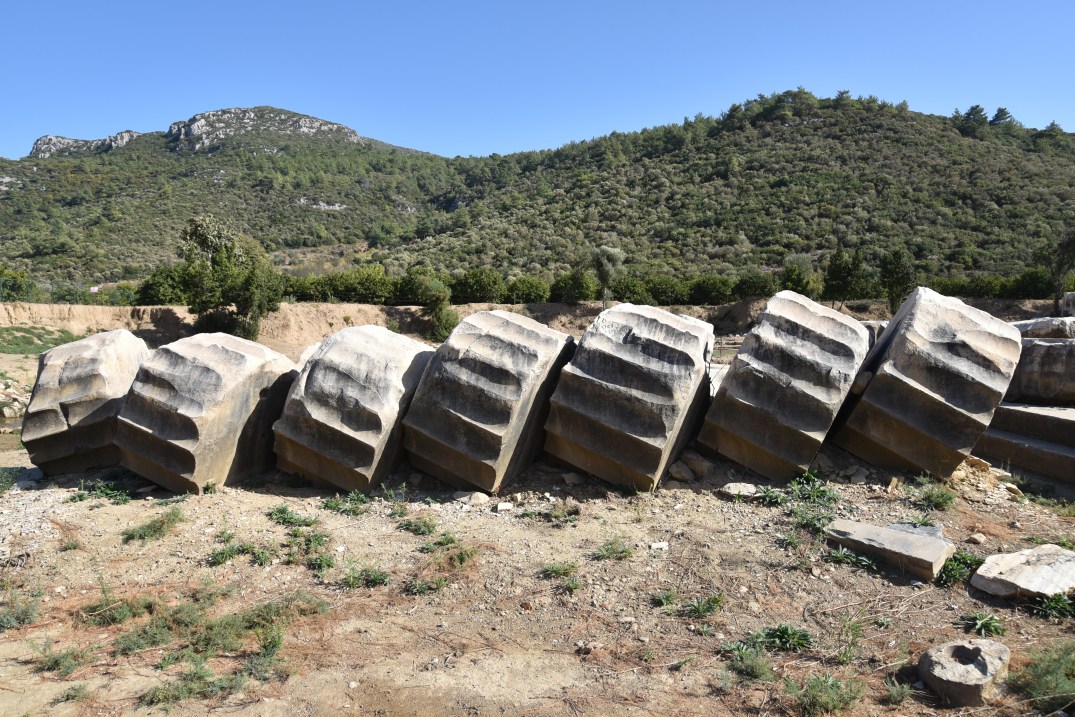
The rectangular-shaped temple had sides measuring 26 and 46 meters. There were 11 columns on the longer sides and six on the shorter ones, all in the Doric order. The diameter of the drums of these columns was up to 1.6 meters, and archaeologists have discovered seven capitals and around 150 drums. The temple complex included a sacred spring and a cave where the oracle would deliver prophecies in a trance-like state. After an oracle was pronounced, the believers wrote a votive and memorial text referencing the priests and praising Apollo. Over time, hundreds of inscriptions covered the temple’s columns, steps and walls, making it one of the largest corpus of surviving Greek inscriptions.
Model of the Temple of Apollo Clarius and the Altar.
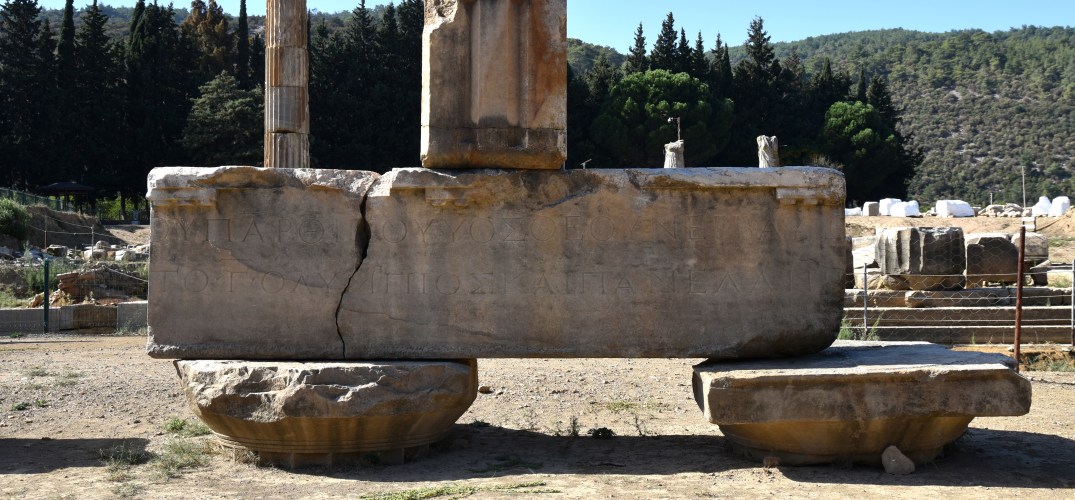
Numerous monuments were constructed during the Roman Period, and recent excavations have revealed that the sanctuary underwent significant modifications during the first half of the 2nd century AD. Hadrian played a vital role in restoring the temple. A fragmented dedication of the temple of Apollo mentions Hadrian as the dedicator. The emperor visited Ionia in AD 124 and 129. The decision to restore the temple at Claros was likely taken during one of these visits, while the terminus post quem for the restoration of the temple is December 135. However, the temple was still not completed thirty or forty years after Hadrian’s death. Pausanias (7.5.4) mentions that the sanctuary of Apollo at Claros, along with that of Didyma, were unfinished buildings.
Hadrian is known to have supported oracles, and during his reign, Delphi saw a short-lived revival via his patronage. Hadrian’s visit to Claros suggests his profound interest in religious and cultural sites. He likely participated in rituals, made offerings, and sought advice from Apollo’s oracle.
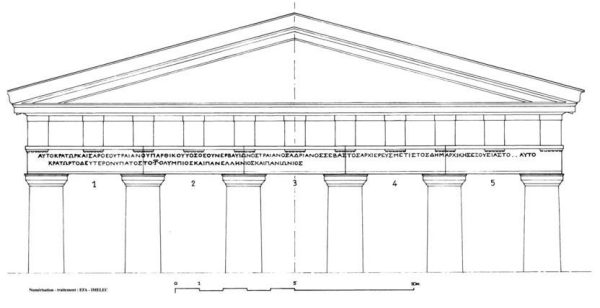
Restitution of the Hadrianic inscription. Αυτοκράτωρ Καΐσ[αρ θεού Τραιαν]οΰ Παρθικού ύός θεού Νέρβα υίω[νός Τραϊανός Αδριανός Σεβαστός, άρχιερεύς μέγιστος,] δημ[αρχικής εξουσίας το (–), αύ]το κράτωρ το δε[ύτερον, ύπατος] το (τρίτον), ‘Ολύμπιος και Πανελλήν[ιος και Πανιώνιος — ]The eponymous prytanis (local magistrate) of Colophon was responsible for the efficient functioning of the shrine and simultaneously served as the eponymous official of Claros. Two inscriptions evidence that Hadrian agreed to be the eponymous prytanis. Lucius Aelius Caesar, Hadrian’s first adopted son, also held the prytany.
Claros gained increased prominence after the Antonine Plague of AD 165-180 when many eastern cities consulted the oracle in response to the disease. The oracle, along with the other Greek oracles, must have been closed in AD 395, when the emperor Theodosius banned its operation. Later, a strong earthquake destroyed the temple and the remaining buildings.
The sanctuary was discovered in 1907 by a German scholar named C. Schuchhard. Excavations started in the 1950s under the direction of Louis Robert, who uncovered the oracular chamber below the temple and several inscriptions related to its operation. Today, the ruins of Claros offer a glimpse into the religious practices and beliefs of the ancient world, preserving the legacy of this once-thriving sanctuary dedicated to the god Apollo. Above the ground, one can see the foundations of the temple and fragments of the colossal sculptures of a seated Apollo, accompanied by Leto and Artemis, which were over seven meters in height.
PORTFOLIO
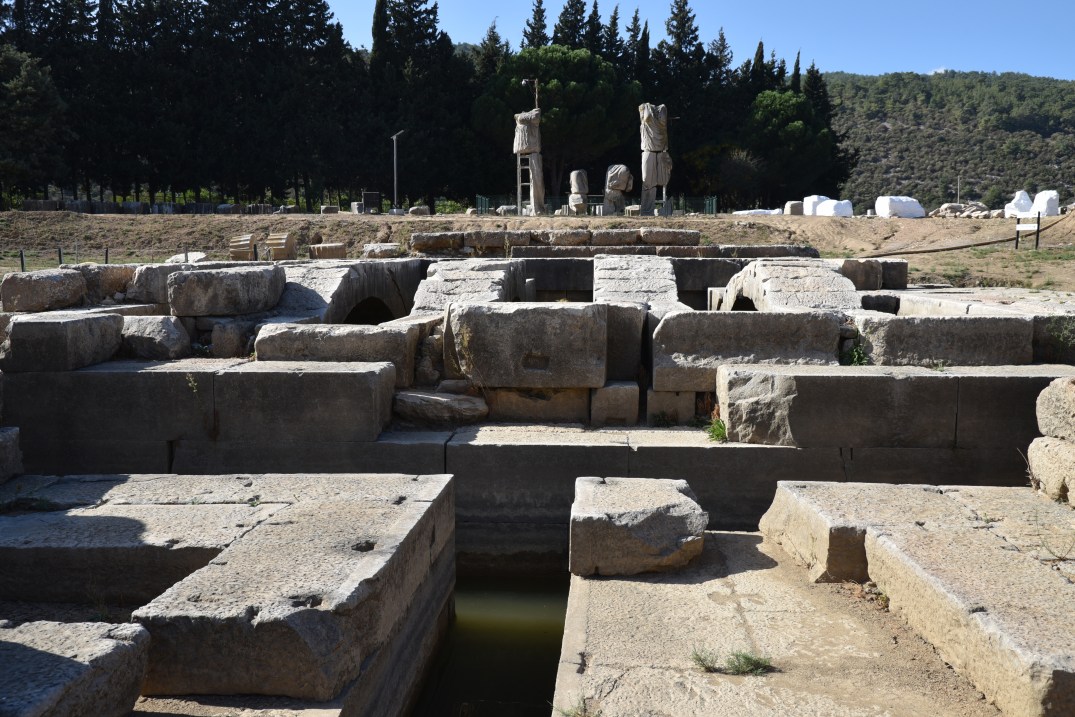
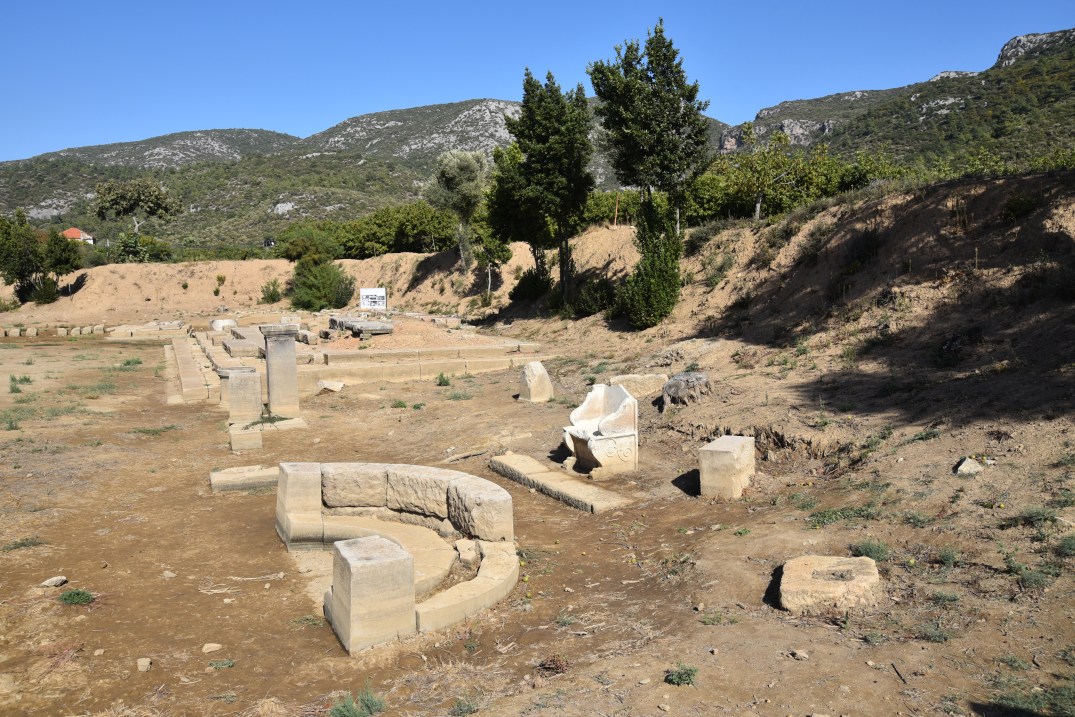
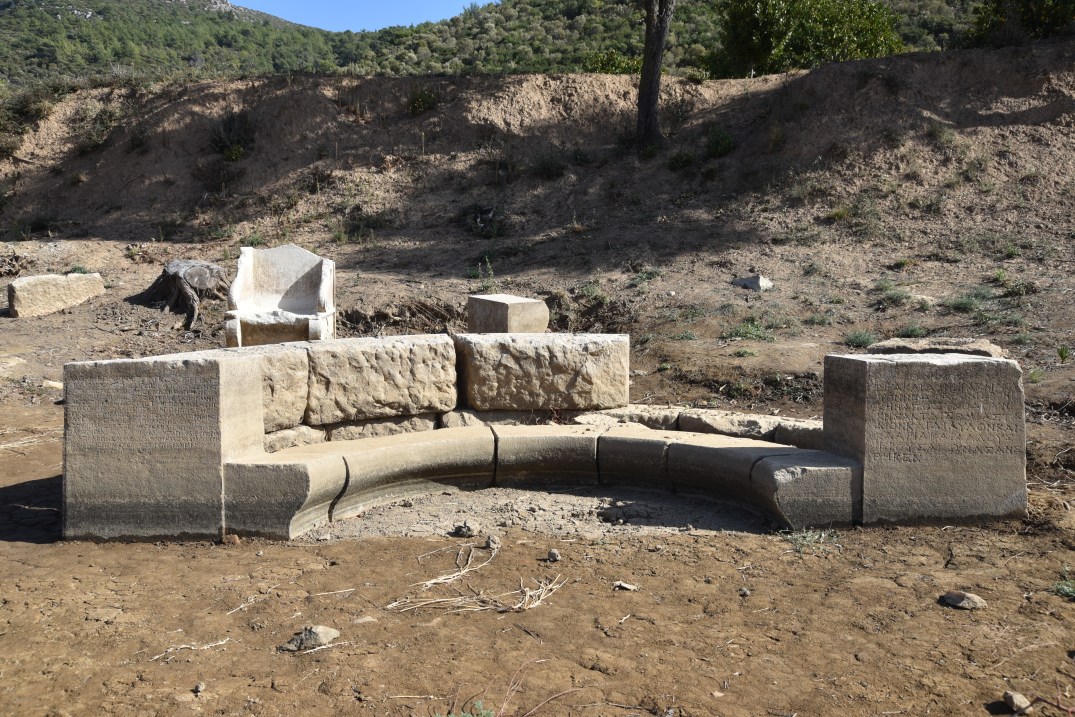
The Proplyon. The monumental gate that led into the sanctuary.The Katagogeion (hostel) is located south of the Sanctuary of Apollo. It contains twenty rooms, including a kitchen and a bathhouse. The Katagogeion was an inn for visitors who sought consultations with the oracle.A well-preserved exedra, a semicircular recess where visitors sat and conversed, with lion claw ornamentation.
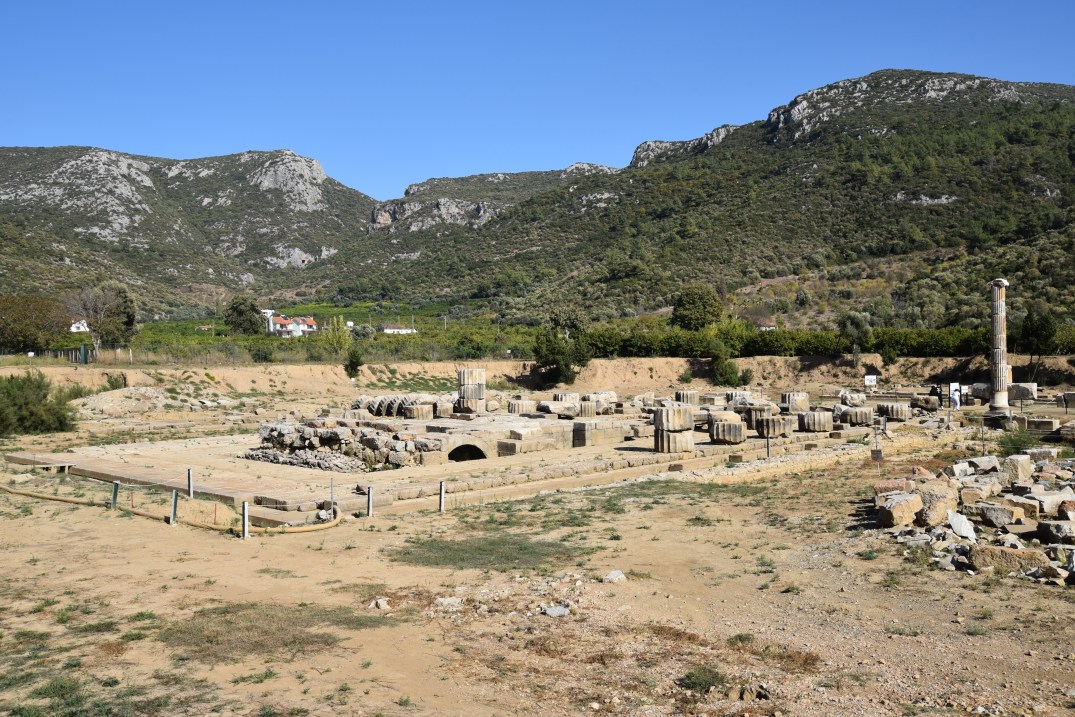
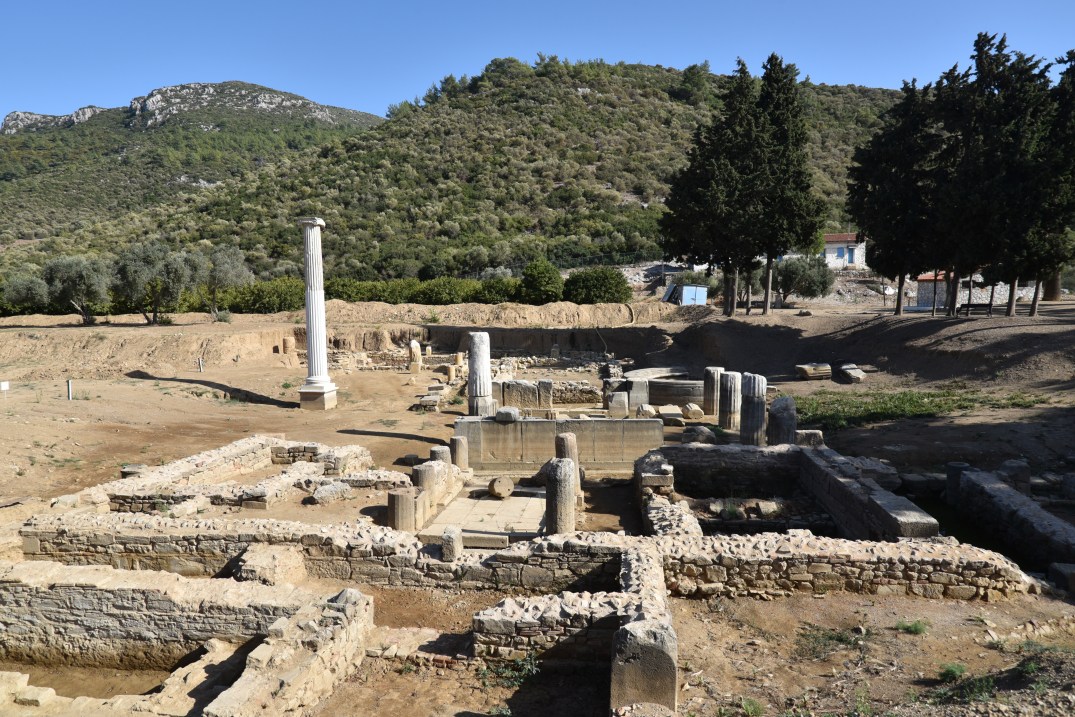
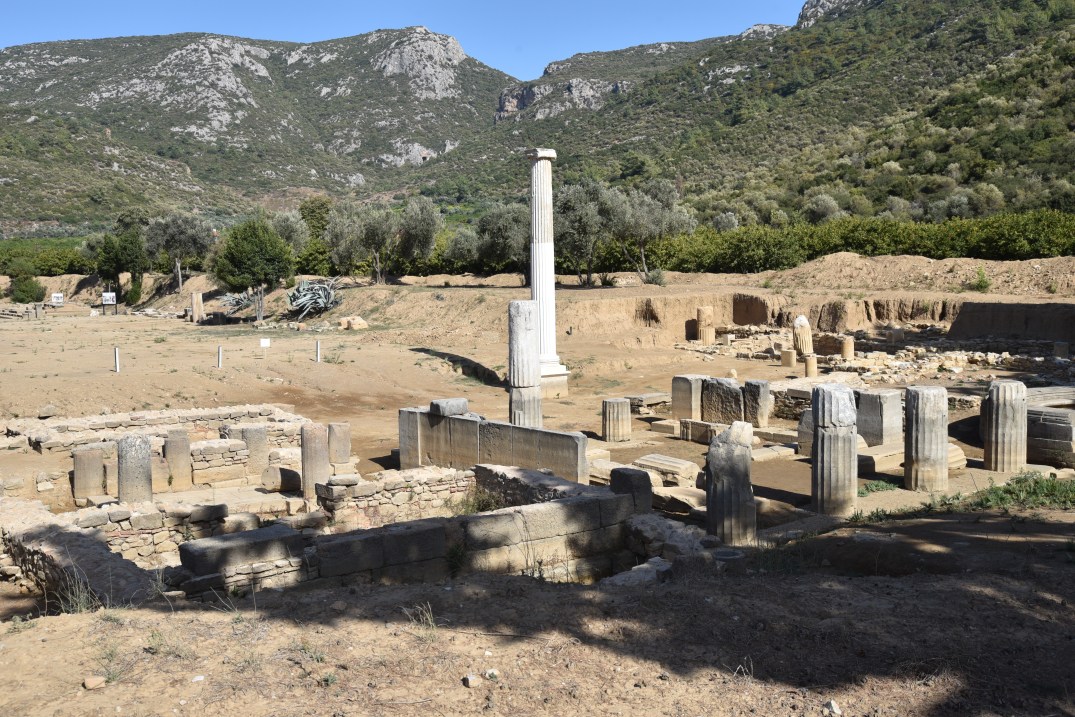
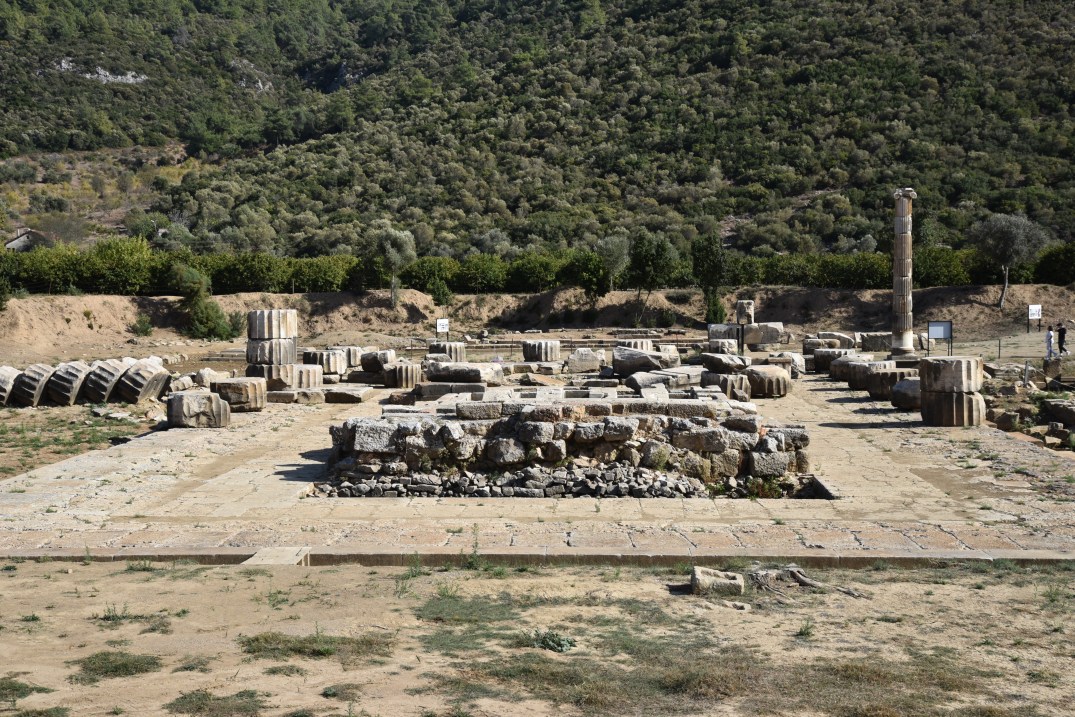
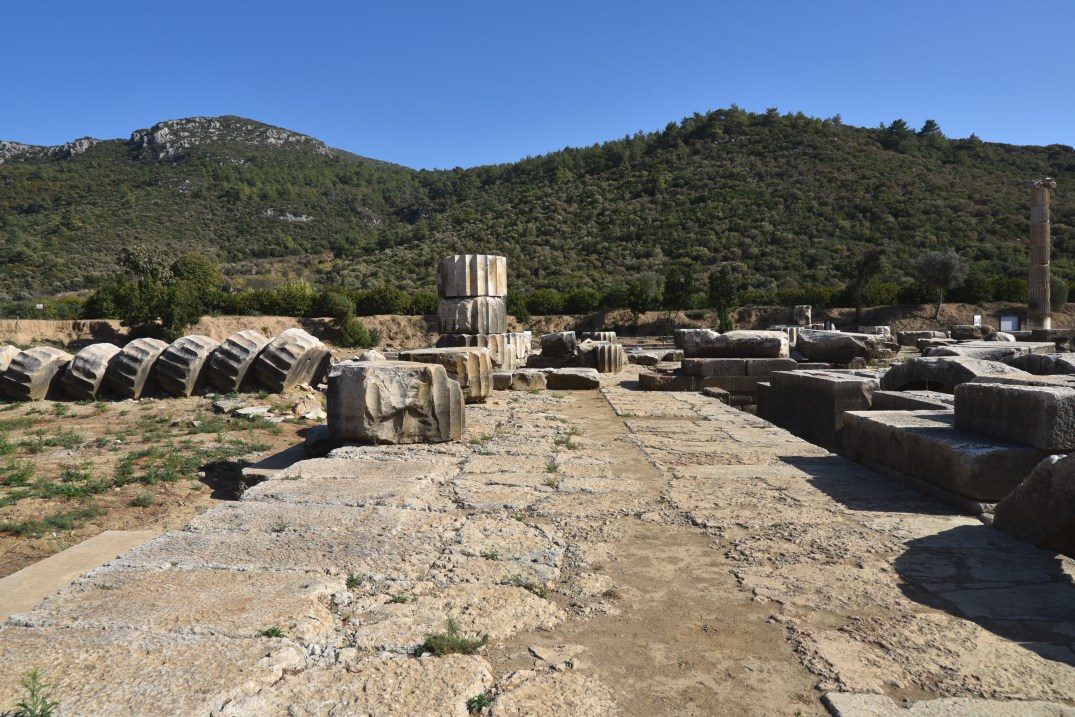
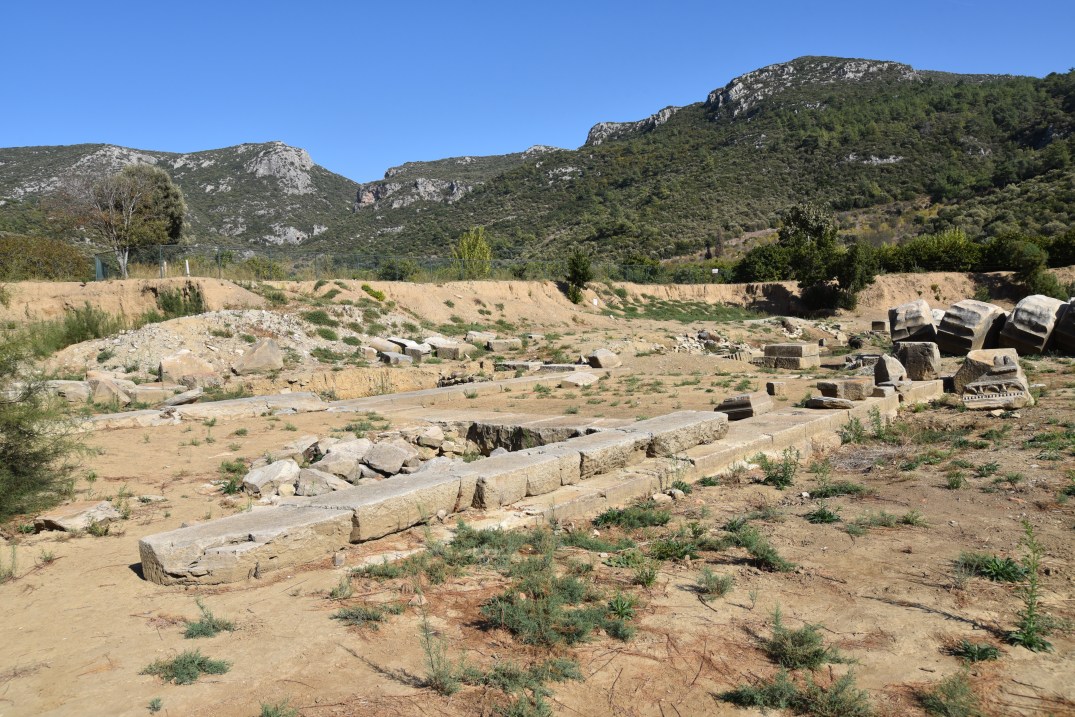
View of the ruins of the Doric Temple of Apollo from the south, with the base that held the colossal statues of Artemis, Apollo, and Leto in the foreground.View of the ruins of the Doric Temple of Apollo from the southwest.
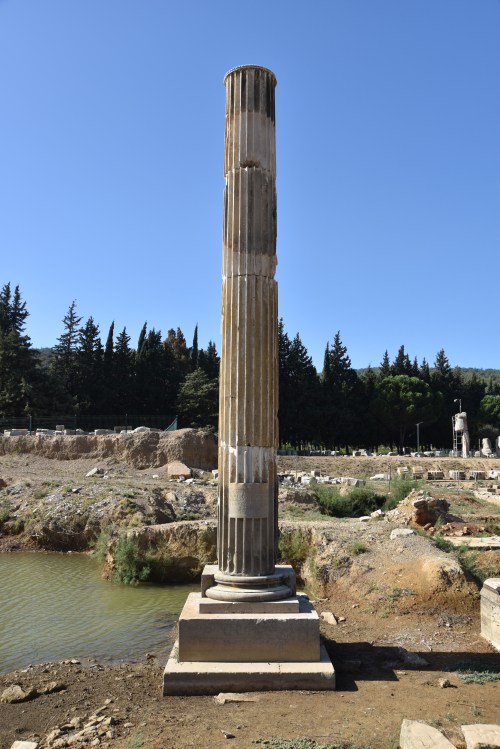
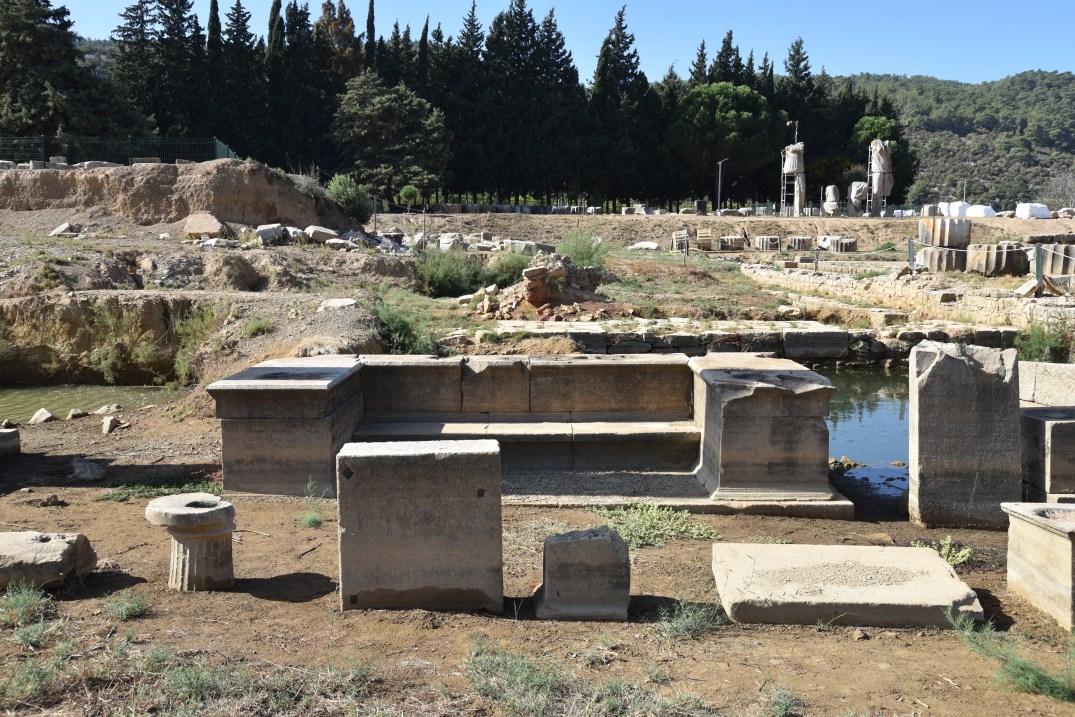
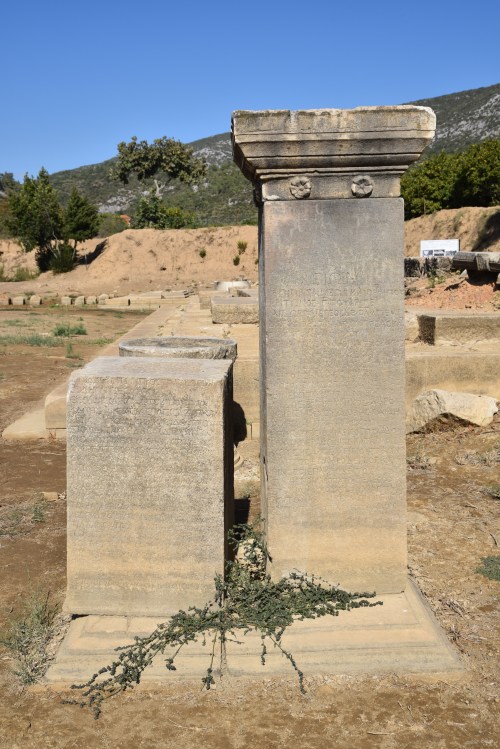
View of one of the two arched subterranean sacred rooms.View of one of the two arched subterranean sacred rooms with the colossal statues of Apollo, Artemis and Leto in the background.View of the ruins of the Doric Temple of Apollo from the southeast.Column drums of the Temple of Apollo.Part view of the ruins of the Doric Temple of Apollo.The Monumental Altar of Apollo.Hellenistic building dedicated to Artemis.The Hellenistic altar to Artemis.Three fragments from Hadrian’s dedication to the Temple of Apollo Clarios. Dated to between December 135 and December 136. ΑΥΤΟΚΑΤΩΡΚΑΙΣ ΚΡΑΤΩΡΤΟΔΕTwo fragments from Hadrian’s dedication to the Temple of Apollo Clarios. Dated to between December 135 and December 136. ΟΥΠΑΡΘΙΚΟΥΥΟΣΘΕΟΥΝΕΡΒΑΥΙΩ ΤΟ.Γ.ΟΛΥΜΠΙΟΣΚΑΙΠΑΝΕΛΛΗΝSquare honorary monuments of the Flaccus Family and L. Valerius Flaccus and honorary columns of Sextus Appuleius and Menippos.
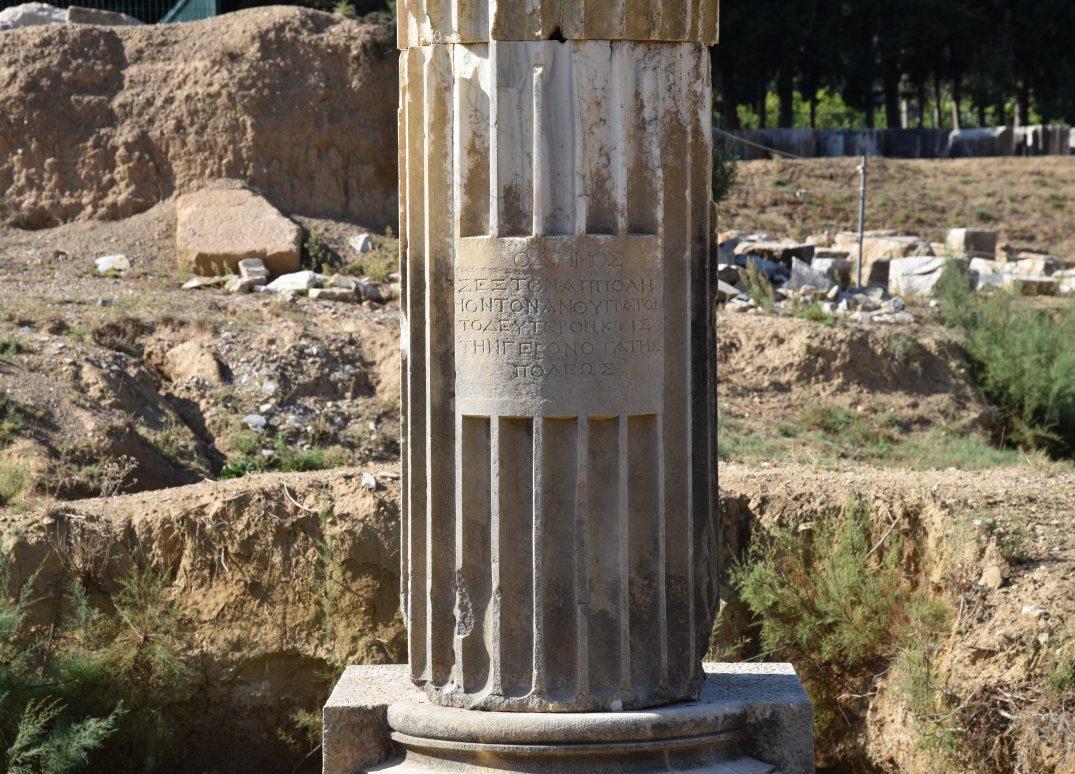
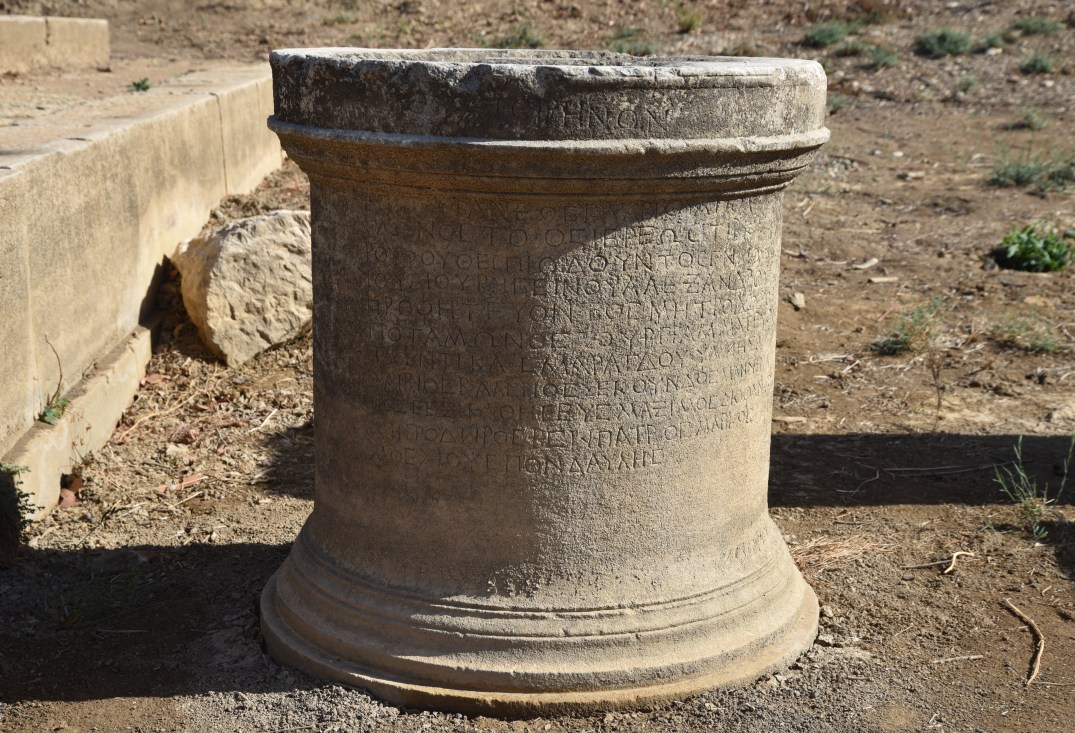
Corinthian column dedicated to Sextus Appuleius, son of Octavia, stepbrother to the emperor Augustus, and proconsul of Asia.Greek inscription dedicated to Sextus Appuleius. The inscription reads: ‘People honours Sextus Appuleius who is the founder of the city and is elected as proconsul for the second time.’ Ό δήμος Σέξτον Άππολή- ιον τον άνθύπατον το δεύτερον, κτίσ- την γεγονότα της πόλεως.The Exedra of Roman Magistrates.Hellenistic Sundial dedicated to Dionysus. The original is in the Izmir Archaeological Museum.
Small Exedra with two dedications.Dedications on stone pillars.Inscribed statue base.































 following hadrian photography