Labraunda

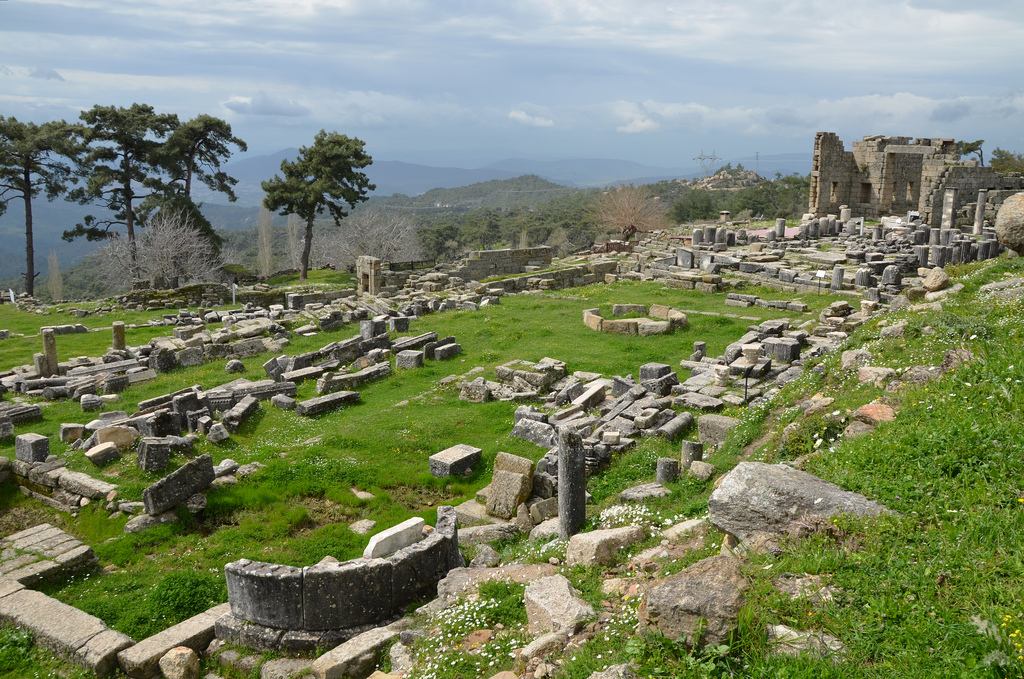
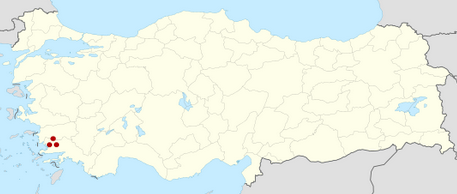
Labraunda is the site of the Sanctuary of Zeus Labraundos, situated in the mountains that overlook the Milas plain. It was one of the most significant sanctuaries in Caria, particularly during the 4th century BC when King Mausolus, the satrap of Caria, made Labraunda his family’s sanctuary.

Coordinates: 37° 25′ 8″ N, 27° 49′ 13″ E
Labraunda

The cult of Zeus Labraundos, known for its double-headed axe symbol, likely originated in the 7th century BC near a spring located just above the temple terrace. This site may have been selected as a sacred location due to the presence of a rock that appears to have been split in two by a thunderbolt.

Labraunda was located on a steep slope, which led to the construction of the buildings on a series of five artificial terraces. It was connected to the city of Mylasa (modern Milas) by a 7.5-meter-wide paved Sacred Way. Every year, a five-day sacrificial feast was celebrated at Labraunda.

The archaeological remains, dating from the 5th century BC to the 1st century AD, include the Temple of Zeus, two large andrones (ceremonial dining halls), two stoas, two Roman baths, several residences for priests, and a nymphaeum.

PORTFOLIO
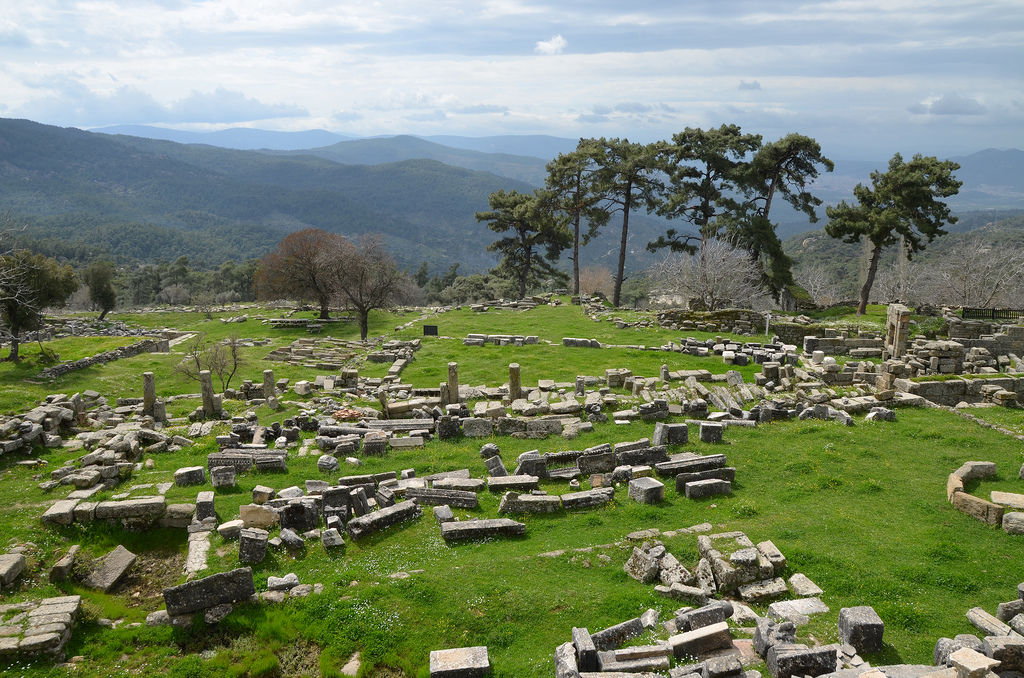
The Sanctuary of Zeus Labraundos, Labraunda, Caria, Turkey
The Sanctuary of Zeus Labraundos.
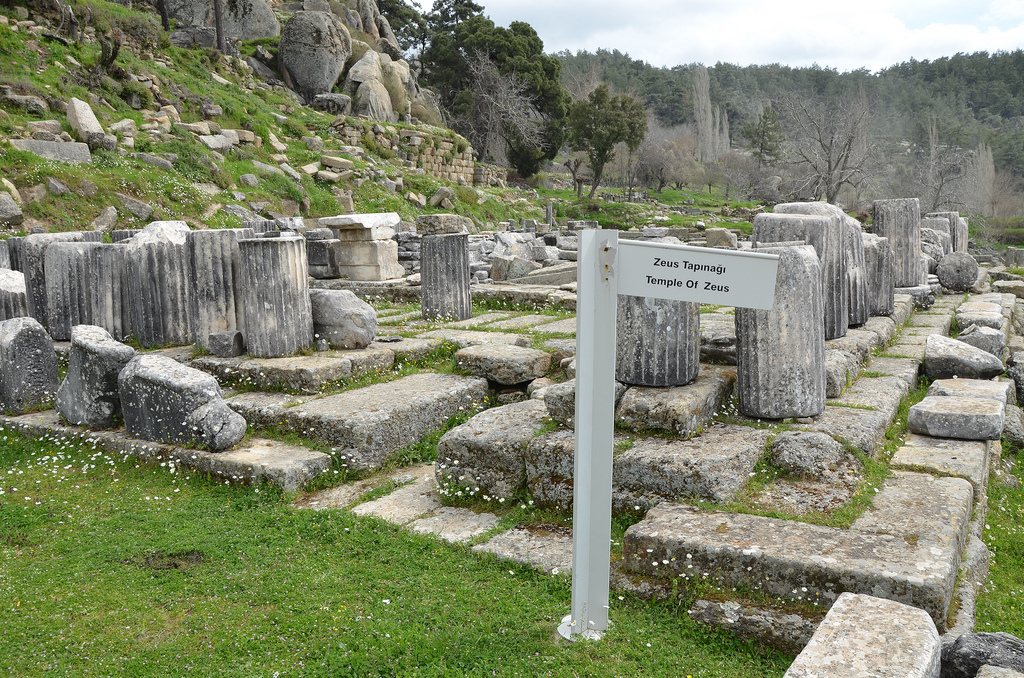
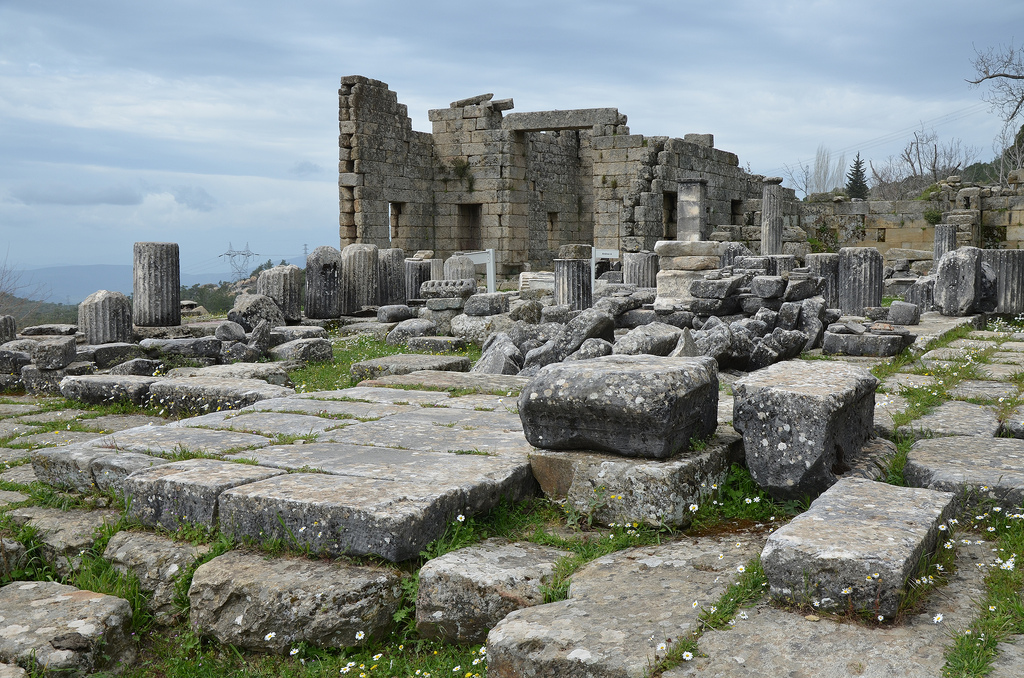
The ruins of the Temple of Zeus built in the 4th century BC.
The Temple of Zeus, built in the 4th century BC, Labraunda, Caria, Turkey
The Temple of Zeus, built in the 4th century BC.
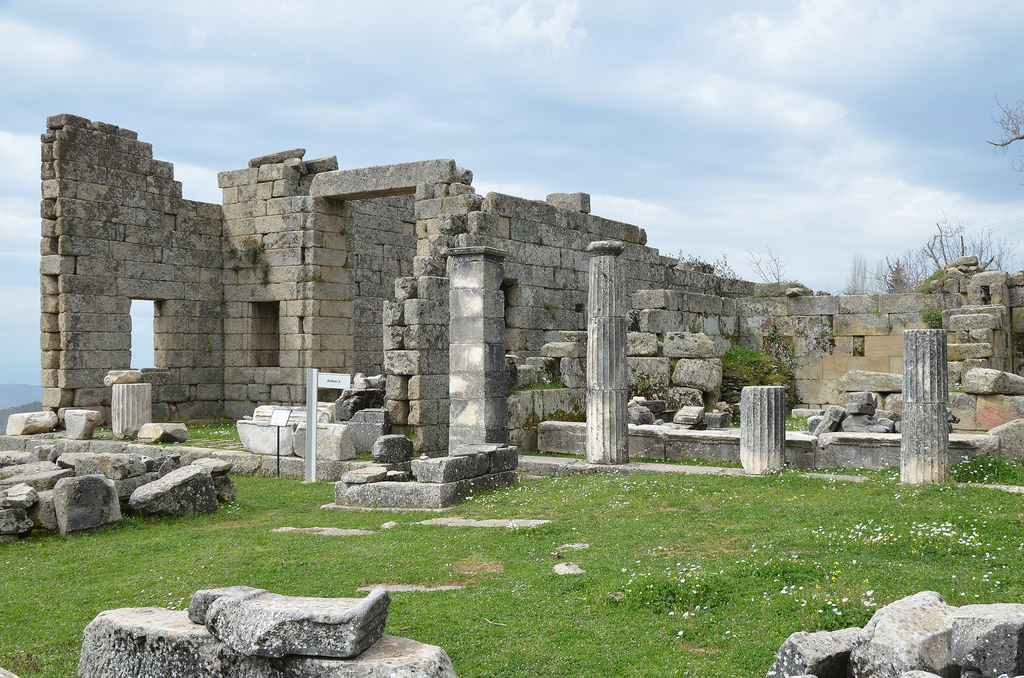
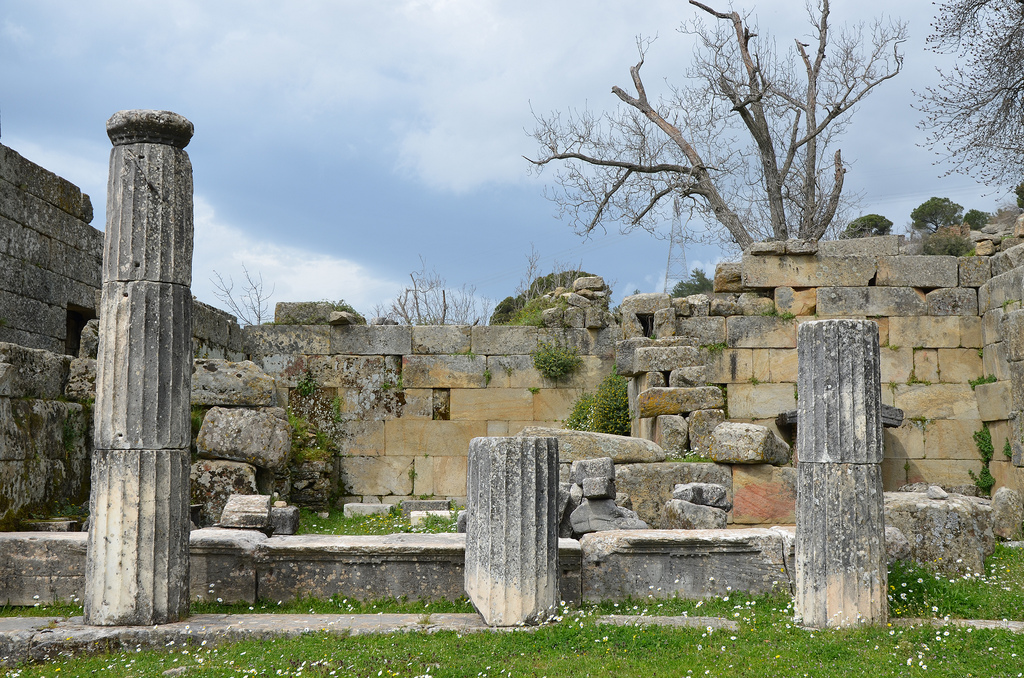
The ruins of Andron B erected by Mausollos (377-352 BC), it had two Ionic columns and a Doric frieze with triglyphs.
The ruins of Andron B (banqueting hall) erected by Mausollos (377-352 BC), it had two Ionic columns and a Doric frieze with triglyphs.
Andron B (banqueting hall).
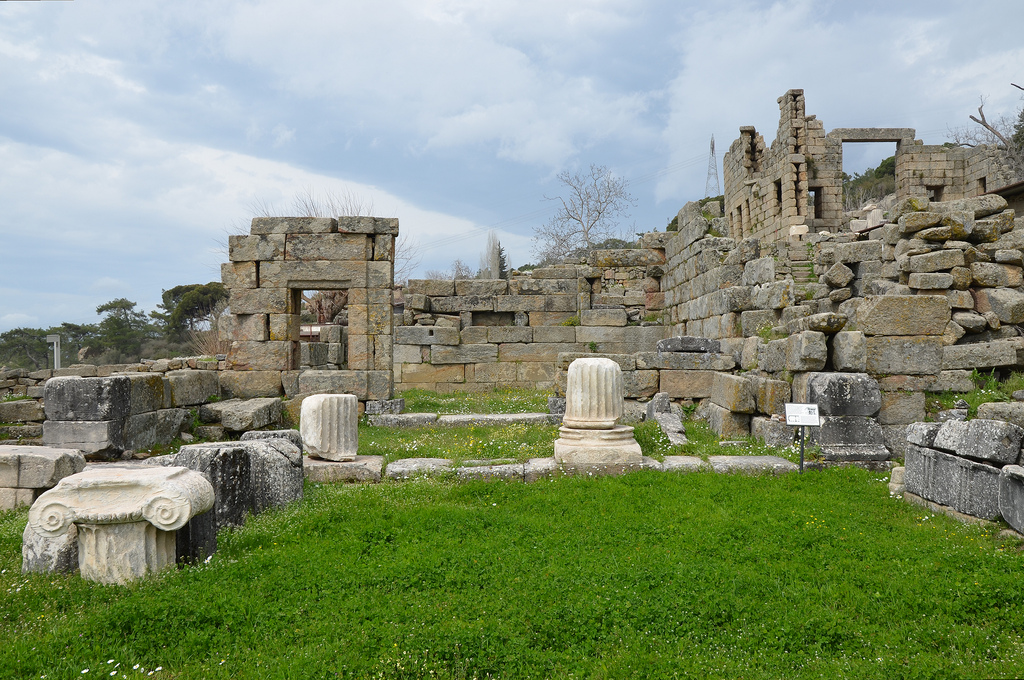
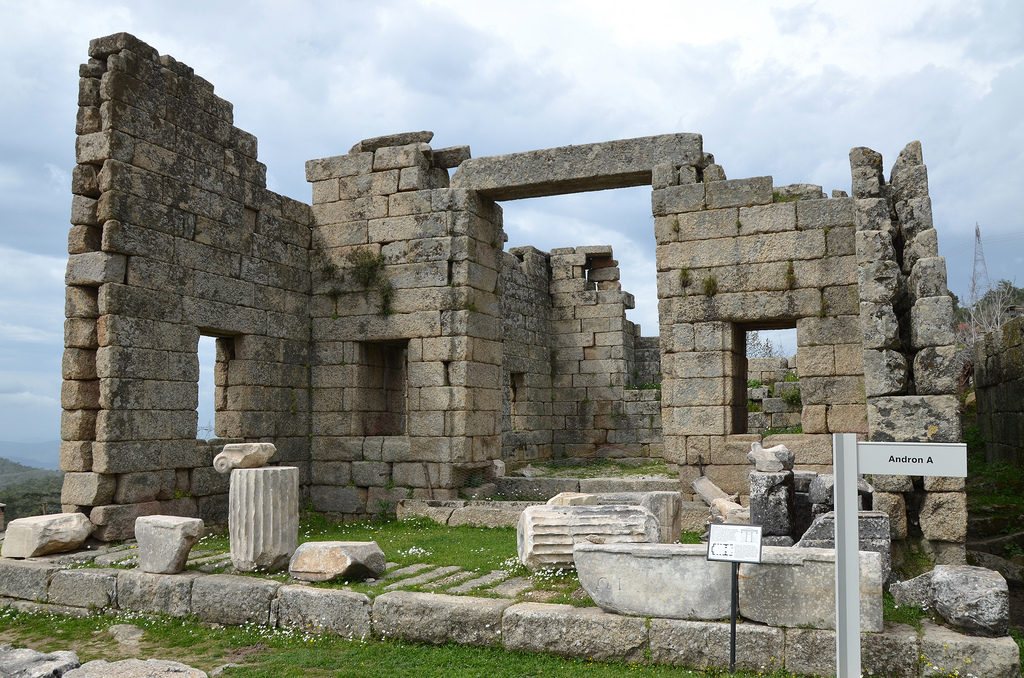
The second banqueting hall (the so-called Andron A), presumably built by Idrieus (351-344 BC).
Andron A.
Andron A (banqueting hall).

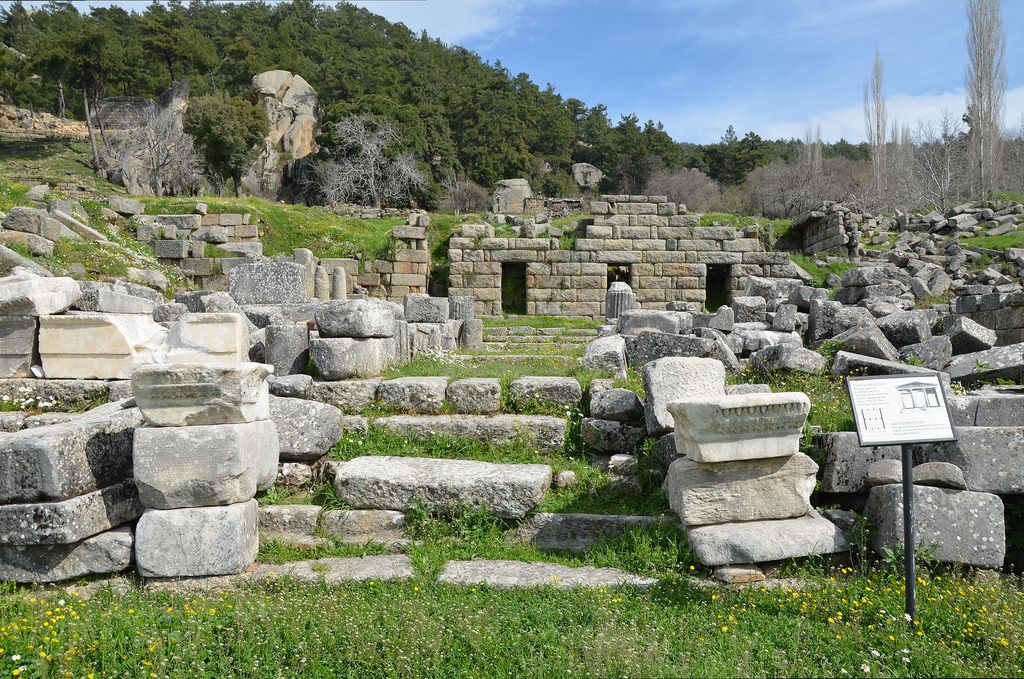
The North Wall of the Propylon area and the monumental staircase leading up from the entrance, Labraunda, Caria, Turkey
The North Wall of the Propylon area and the monumental staircase leading up from the entrance.
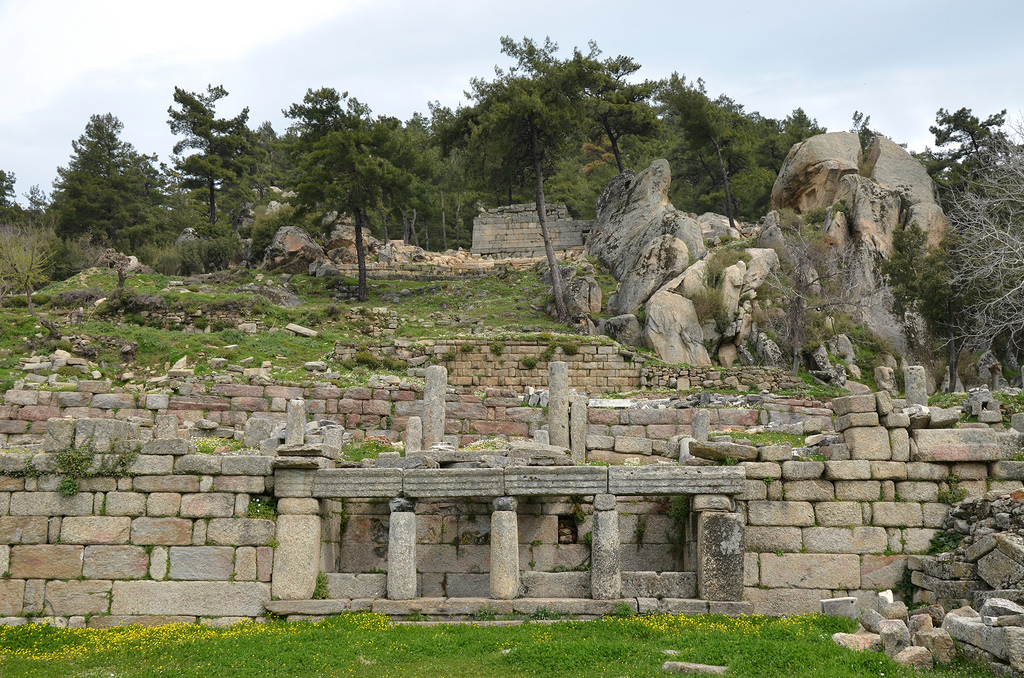
The Well-house with three low gneiss columns with simple Doric marble capitals, note the huge Split Rock in the background which may have been the inspiration for the establishment of the cult to the Carian sky god, Labraunda, Caria, Turkey
The Well-house with three low gneiss columns with simple Doric marble capitals, note the huge Split Rock in the background which may have been the inspiration for the establishment of the cult to the Carian sky god.
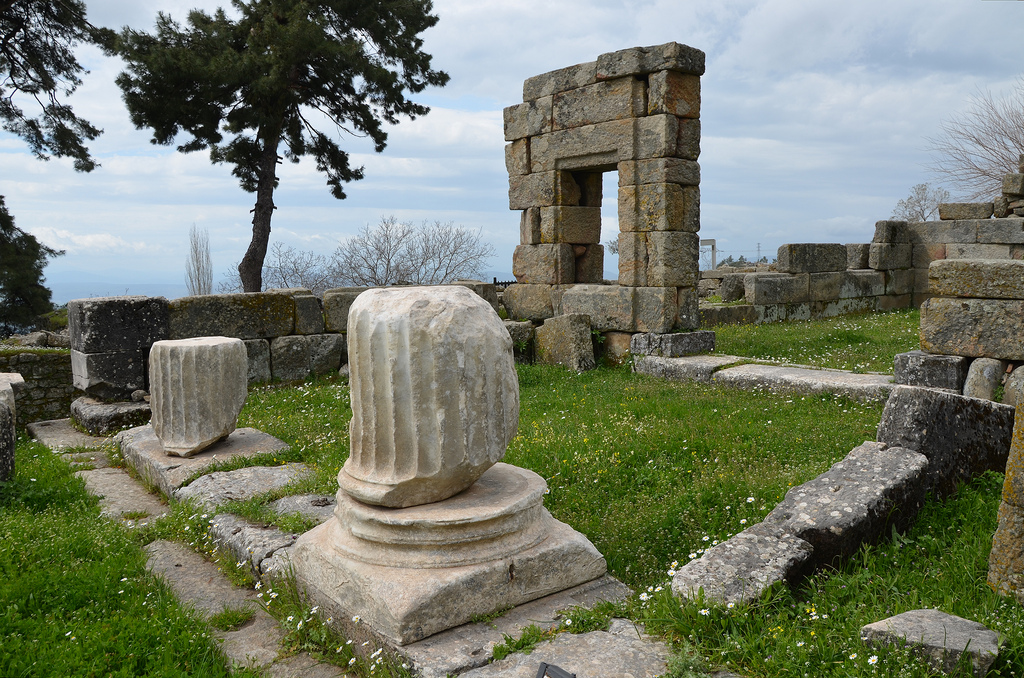
The ruins of the South Propylon, a gate building with high Ionic marble columns built by Idreus (351-344 BC).
The Oikoi Building built by Idrieus (351-344 BC), it possibly served as a Treasury, it had two rooms behind a marble portico with four doric columns.
The Temple Terrace, view from north-east, Sanctuary of Zeus Labraundos, Labraunda, Caria, Turkey
Overview of the Temple Terrace.

Links:

One thought on “Labraunda

  1. Thank you deeply.
    You took me home, where my father, and my father’s father was born, for hundreds of years, till our family was driven out by the Turks, who took over our homelands after the fall of the Eastern Roman empire, 1450’s C.E.
    I am a Greek, and came by accident to your photograph with the ruins left and right of a stone walk. I froze on my tracks. “I know this place”, I said to my self. So I visited you.
    I was both elated and sad, seeing and remembering…
    Elated of my past, proud of what the Greeks were once, and sad of what has become to most of them after they were brutally made into christian sheep.
    So much destruction, so much death.
    Thank you for the joy you brought to my heart through your travel, your efforts, and your breath-taking photographs.

    Like

Leave a comment

This site uses Akismet to reduce spam. Learn how your comment data is processed.