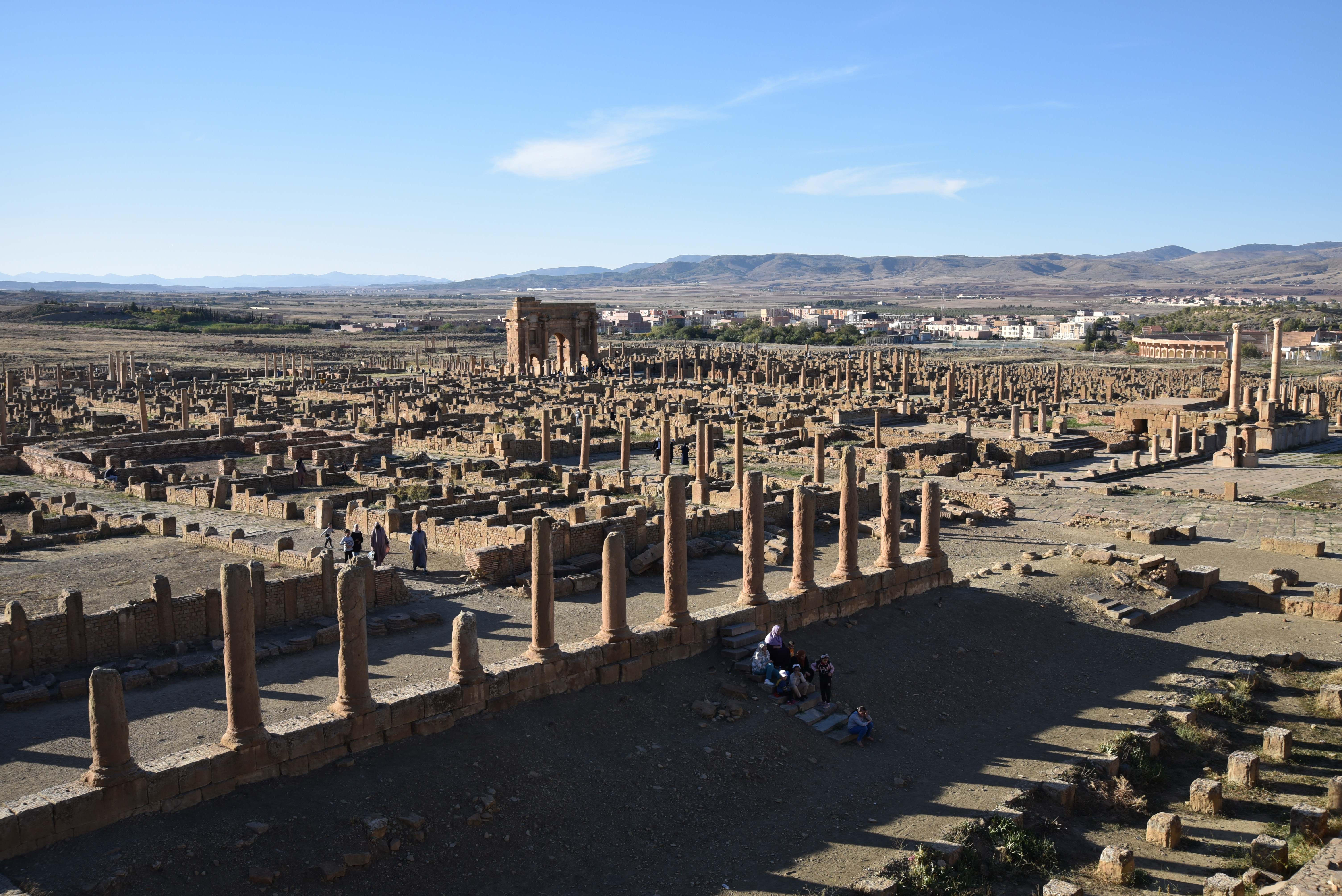
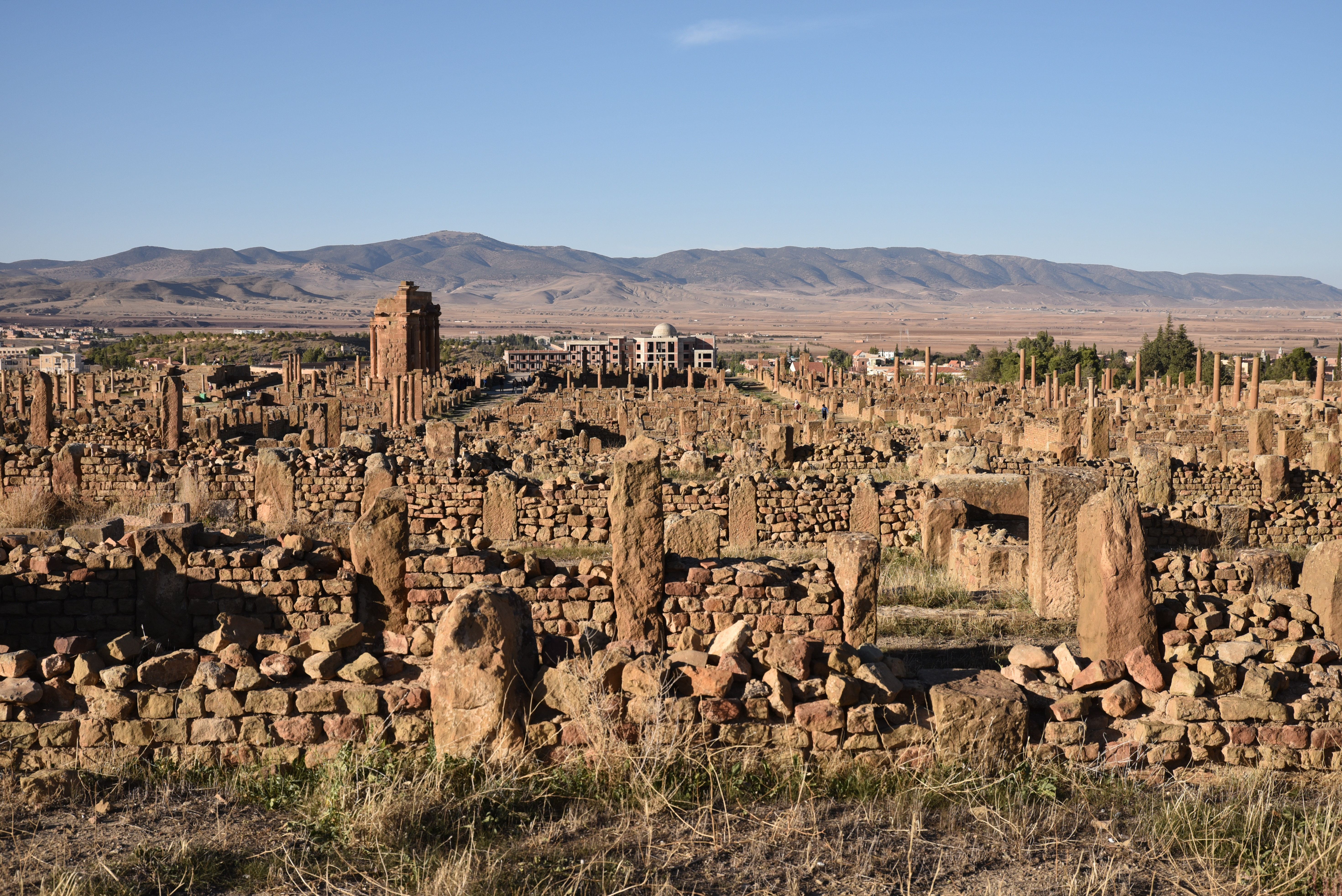
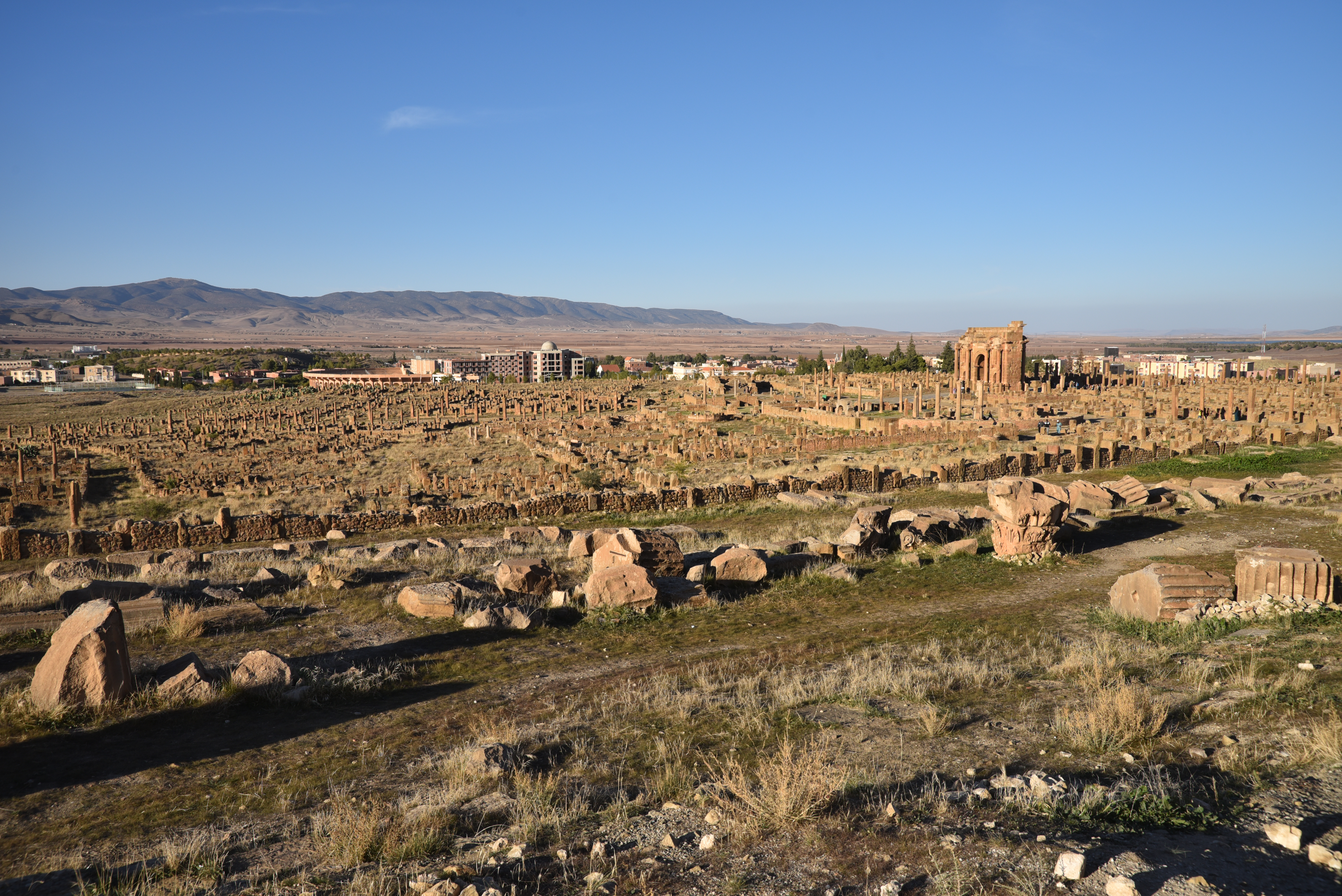
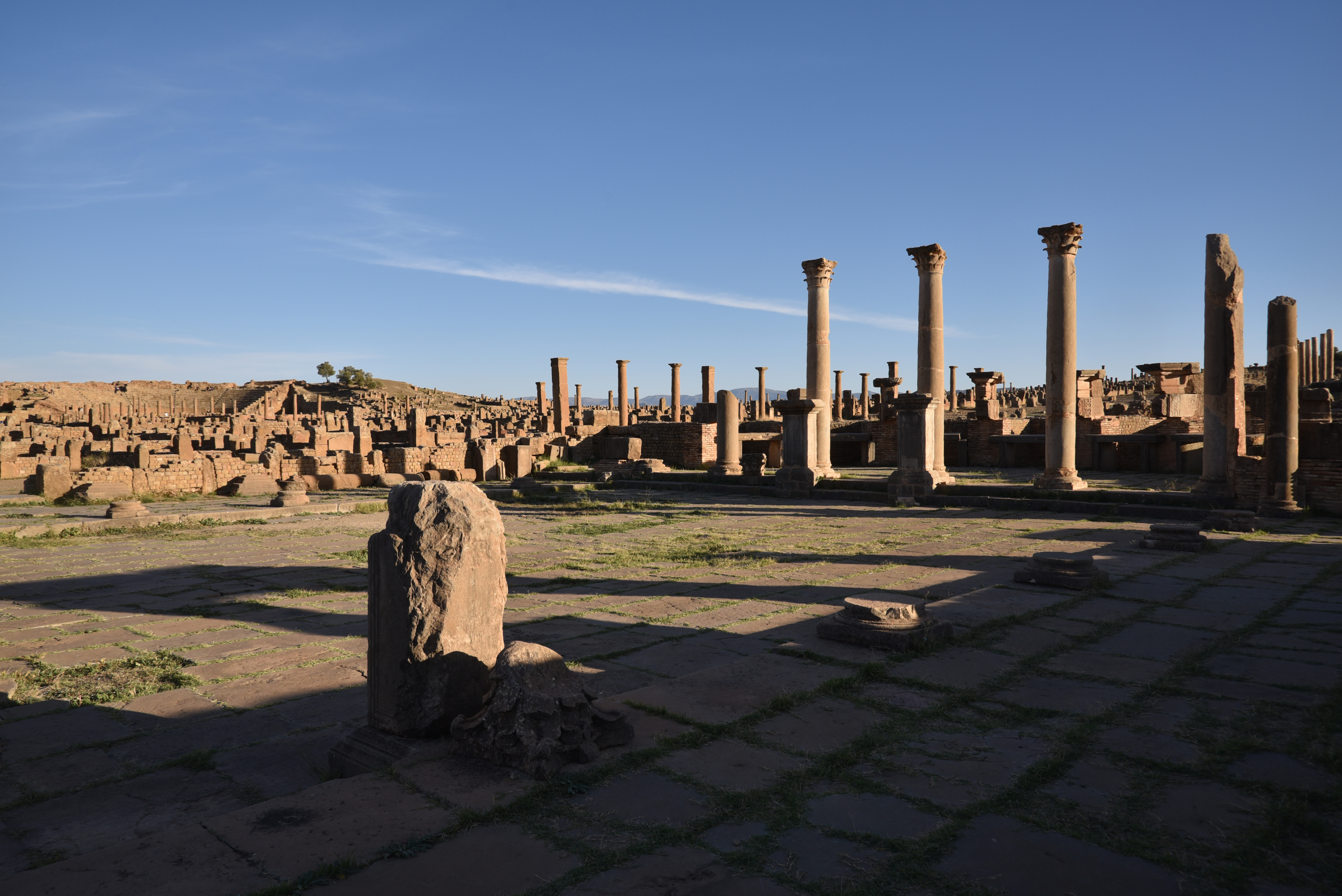
The remains of the ancient Roman city of Thamugadi, also known as Timgad, are located northeast of present-day Algeria, in the Batna province. Originally called Colonia Marciana Ulpia Traiana Thamugadi, it was founded as a Roman military colony around AD 100, during the reign of Emperor Trajan. Often described as Africa’s Pompeii, this UNESCO World Heritage Site is considered one of the best urban examples from Roman times, featuring all the elements of a large Roman town, including an orthogonal grid plan, two main oriented streets, a large forum, baths, markets, a library, a theatre, and an imposing Capitol.
The founding of Thamugadi was closely linked to the presence and activities of Legio III Augusta, which had been stationed at Lambaesis since AD 81. Under the command of the legatus augusti pro praetore Lucius Munatius Gallus, the Third Augustan Legion received orders from Trajan to establish a colony for its veterans. The new city lay on the road coming north from Cirta (Constantine), and on the west-east road stretching from Lambaesis to Theveste (Tébessa), then north-east to Ammaedara (Haïdra) and Carthage. The city was named after Trajan’s sister, Ulpia Marciana (AD 48-112), and the name Thamugadi likely originated from the Berber word for the location where the city was established.
The Emperor Caesar Nerva Trajan Augustus Germanicus, son of the Divine Nerva, High Pontiff, holding the Tribunician power for the fourth time, Consul for the third time, Father of the Country, founded the Colonia Marciana Trajana of Thamugadi, through the efforts of the Third Augustan Legion (under the command of) L. Munatius Gallus, Imperial Propraetorian Legate. Dedication marking the founding of the city, AD 100
Together with Lambaesis, Diana Veteranorum and Mascula, Thamugadi formed part of a network of military settlements responsible for monitoring and controlling the military routes through the mountains.
Roman Rule in North Africa (146 BCE to 395 CE). Hadrian ordered the soldiers of the Third Legion to pave the military road between Carthage and Theveste (CIL VIII 10081) and to construct a road from Rusicada to Cirta (CIL 08 10296). Map created by Simeon Netchev (link)
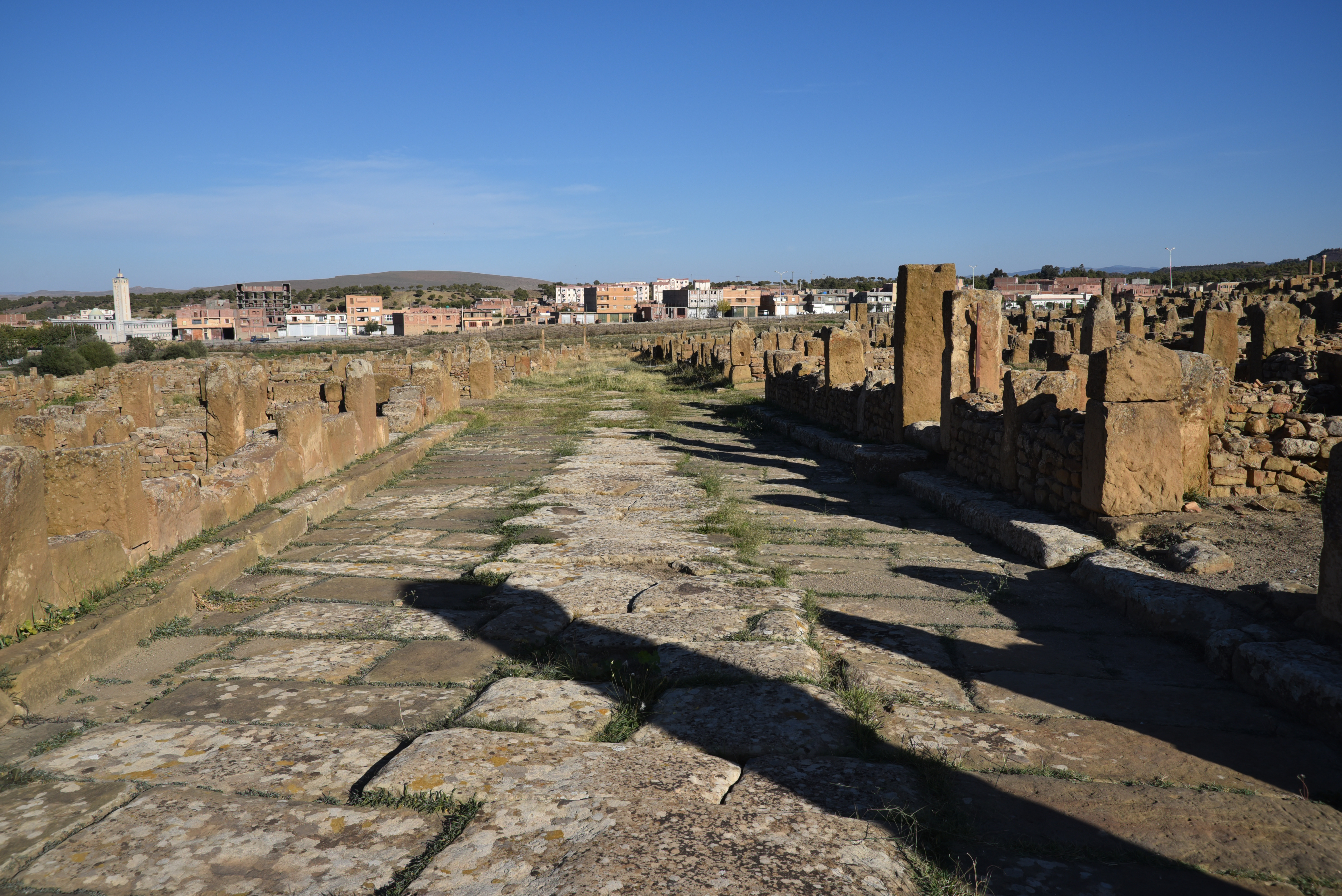
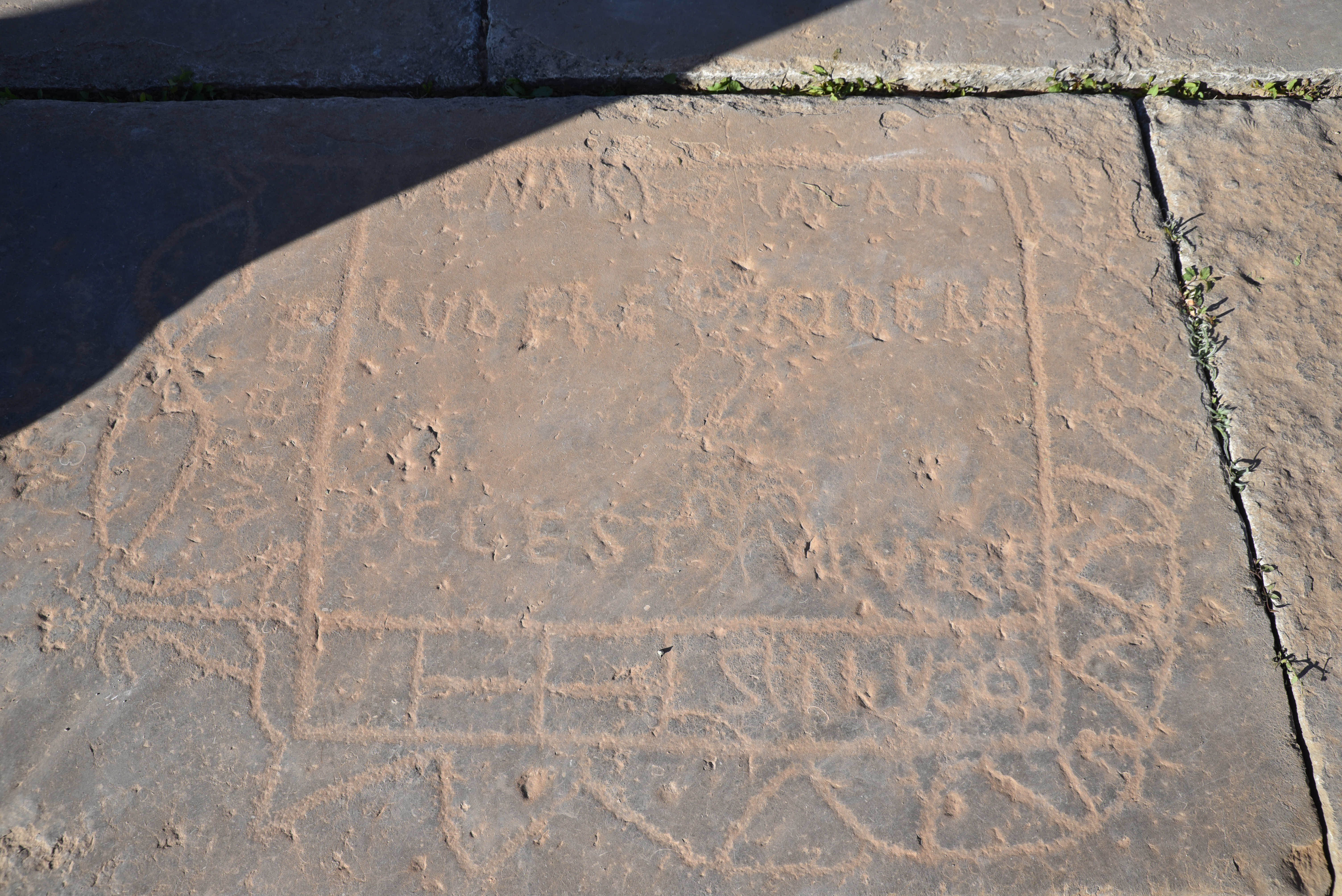
Initially, Thamugadi occupied an area of 12 hectares. Its regular grid, inscribed in a square with sides of 355 meters, was divided into four parts by two intersecting main streets that run north–south (cardo maximus) and east–west (decumanus maximus). Over the next 300 years, the city expanded beyond the original grid, increasing from 12 hectares to 50 hectares, and added new quarters, totalling 111 blocks (insulae), each measuring 20 meters square. At its peak, the city’s population reached 15,000. An inscription in the forum sums up life in Timgad: “venari lavari ludere ridere occ est vivere” (“to hunt, to go to the baths, to play, to laugh: this is to live”).
Christianity prevailed in Thamugadi in the 4th century AD, and it was one of the most prominent centres of the Donatist movement, a Christian sect that challenged the Catholic Church and the Roman Empire. The Vandals destroyed the city in 430. Some years later, in 484, it suffered attacks from the Mauri, causing the population to leave. The Byzantines recaptured and rebuilt the city, integrating it into Byzantine North Africa until the Arab invasion devastated the region. By the 8th century AD, Thamugadi had become uninhabited.
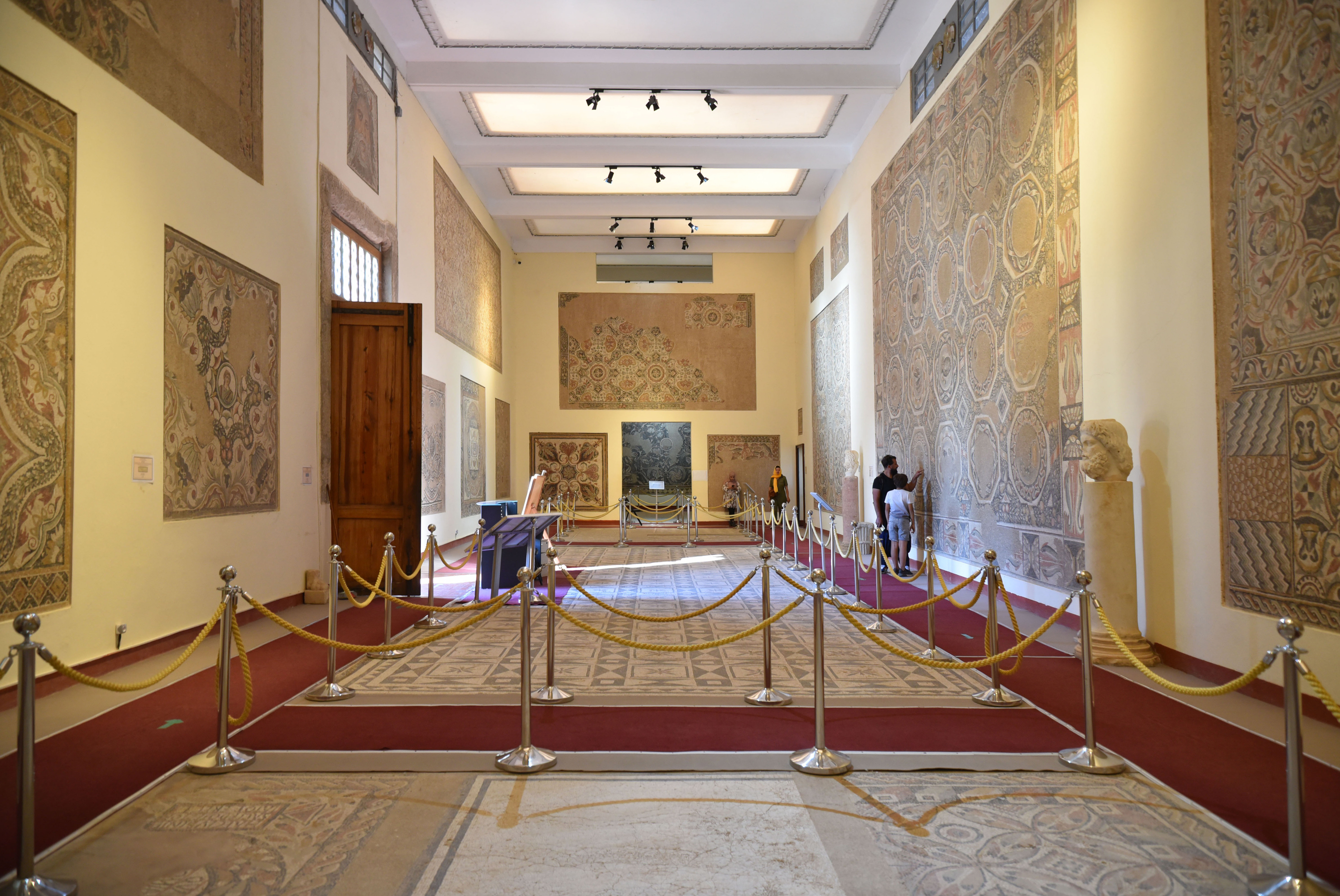
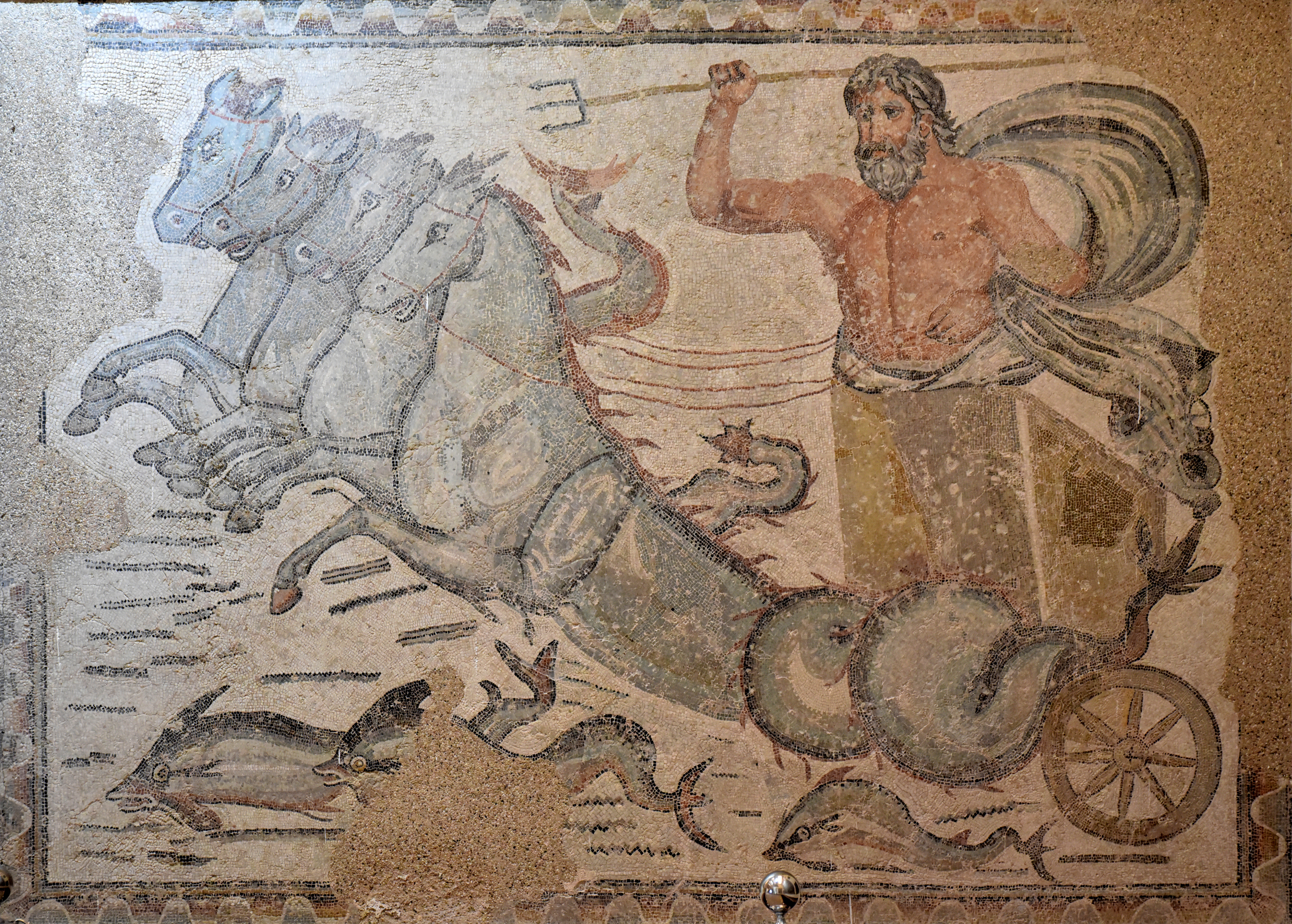
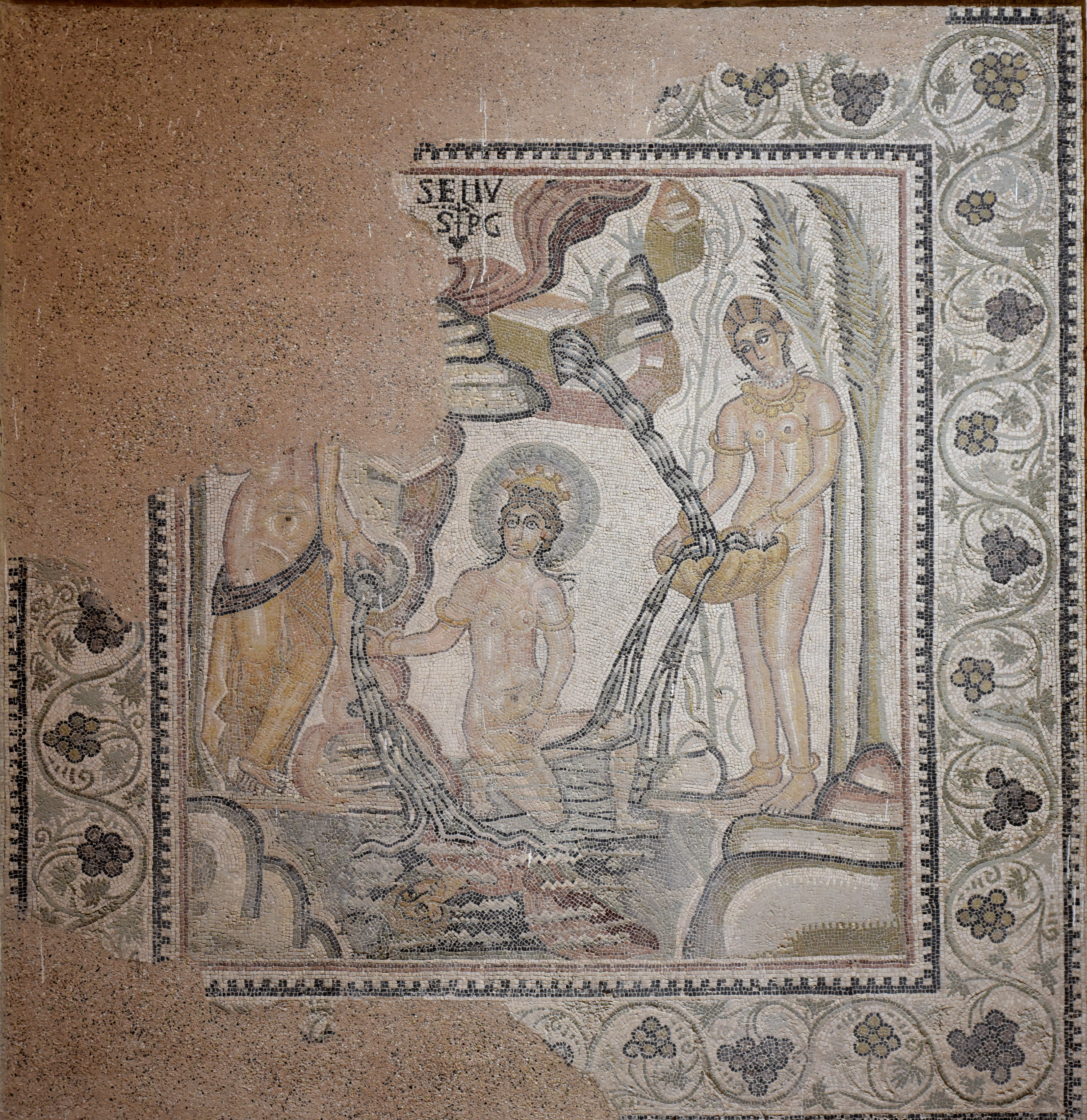
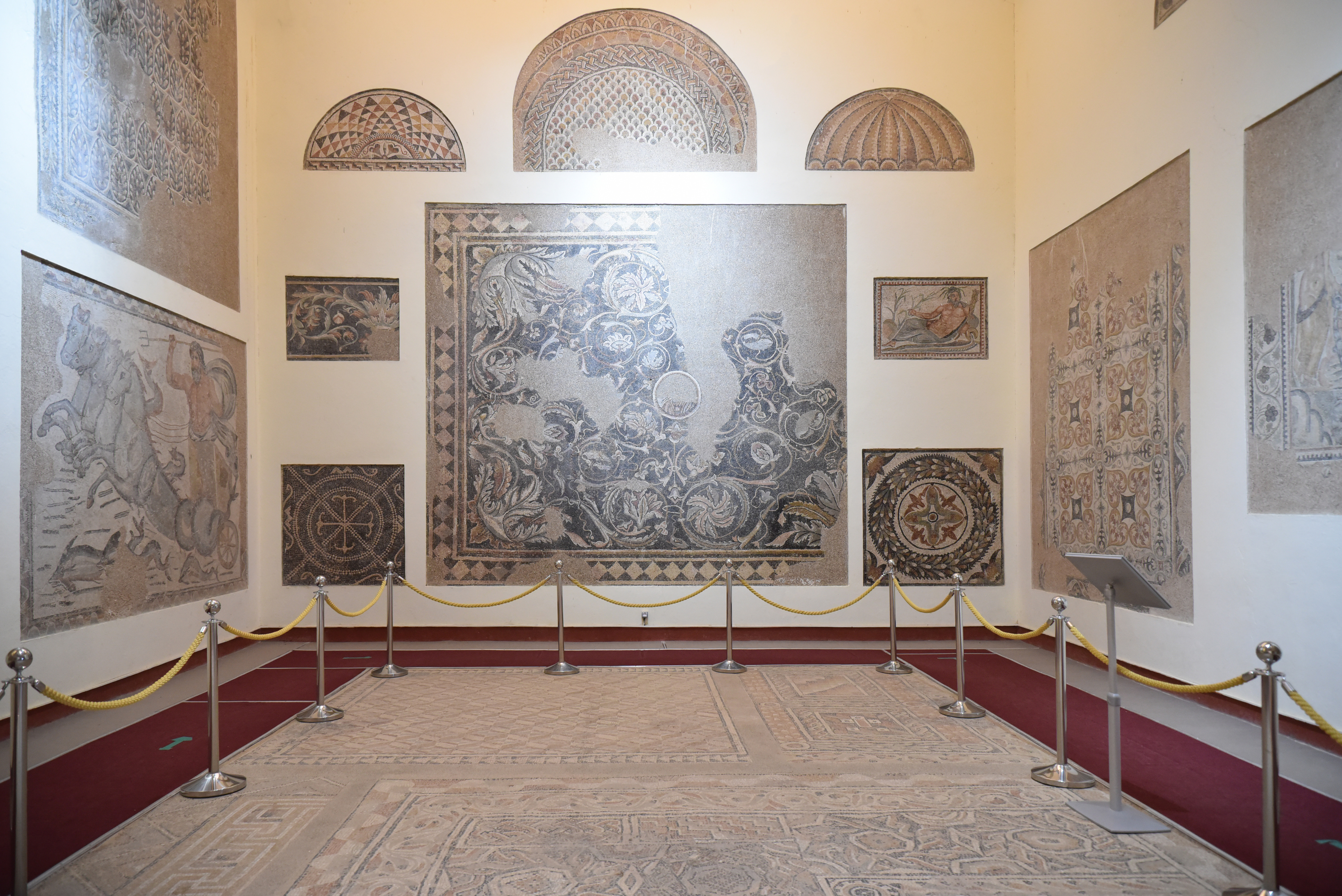
The museum, located at the site’s entrance, features a collection of over 80 mosaics, including the mosaic of Neptune on his chariot, Artemis and Actaeon, and Venus riding on the back of a marine centaur.
PORTFOLIO
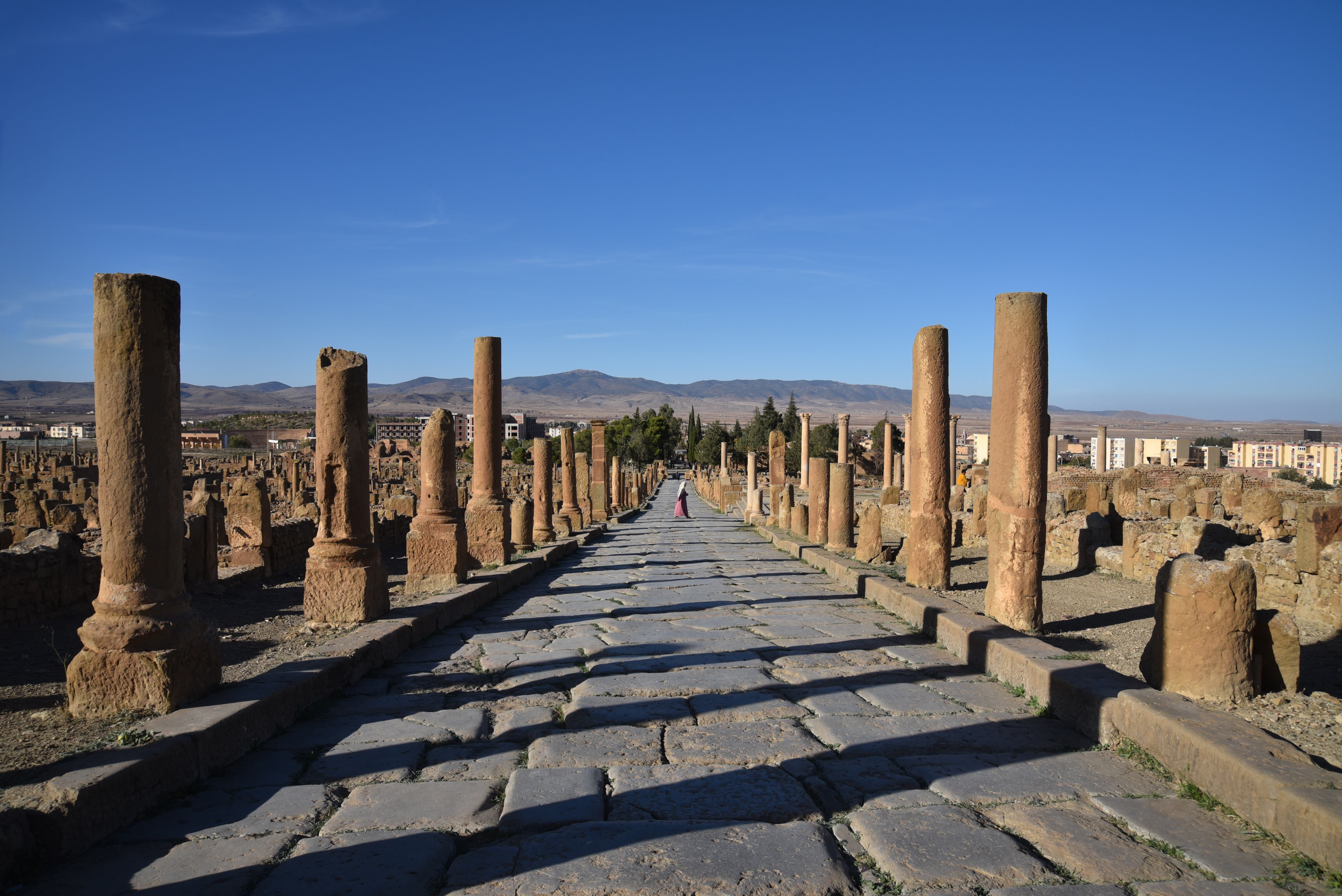
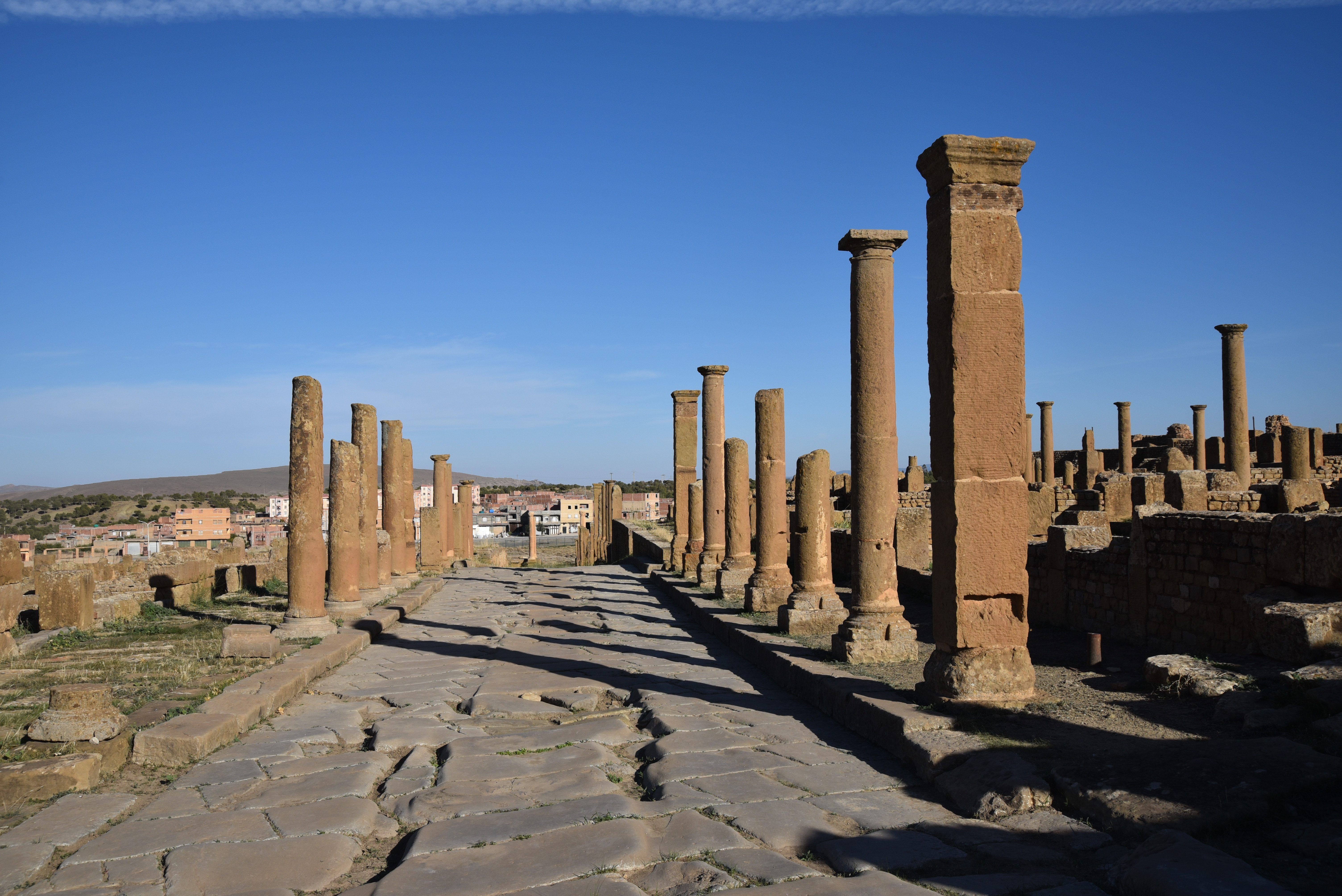
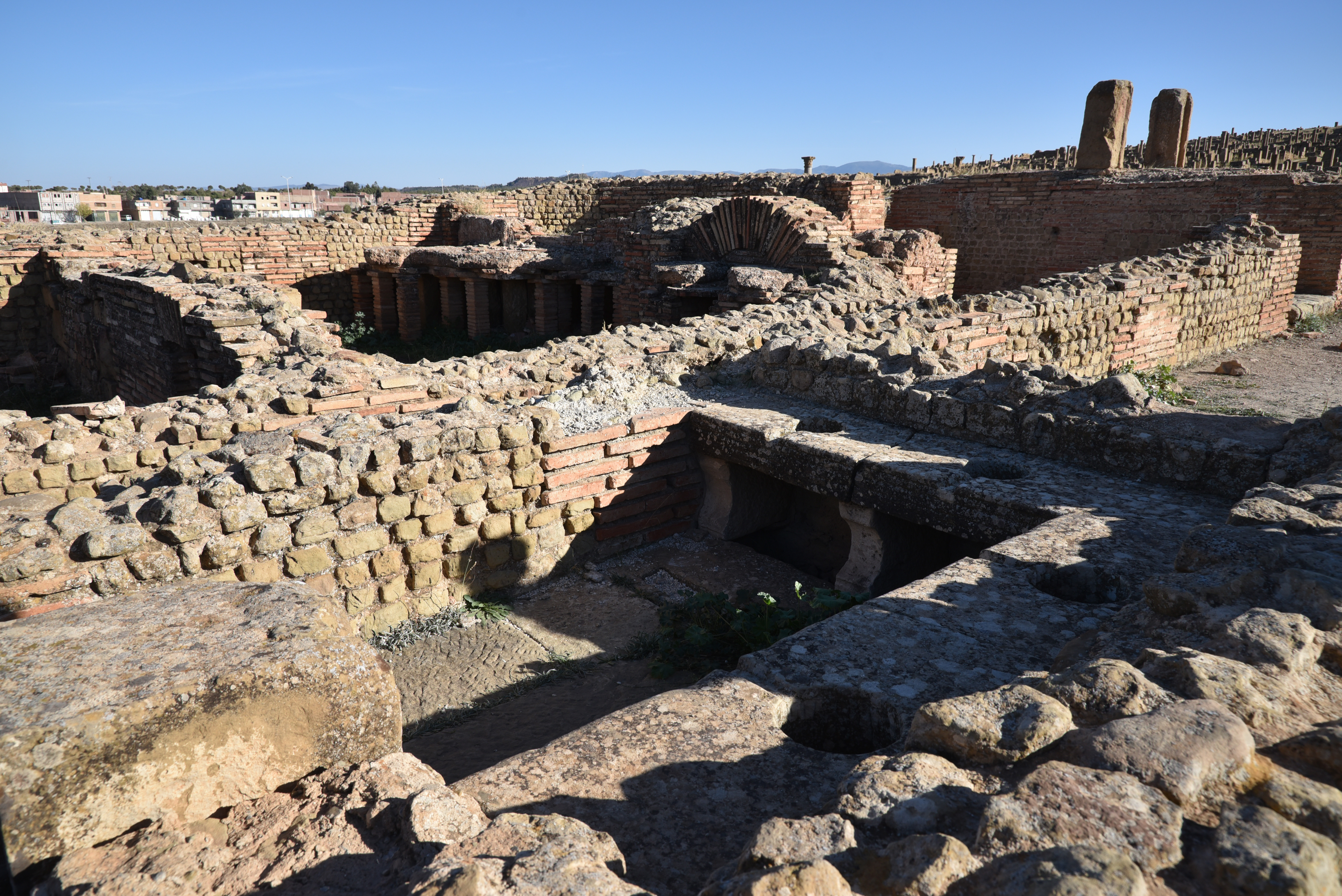
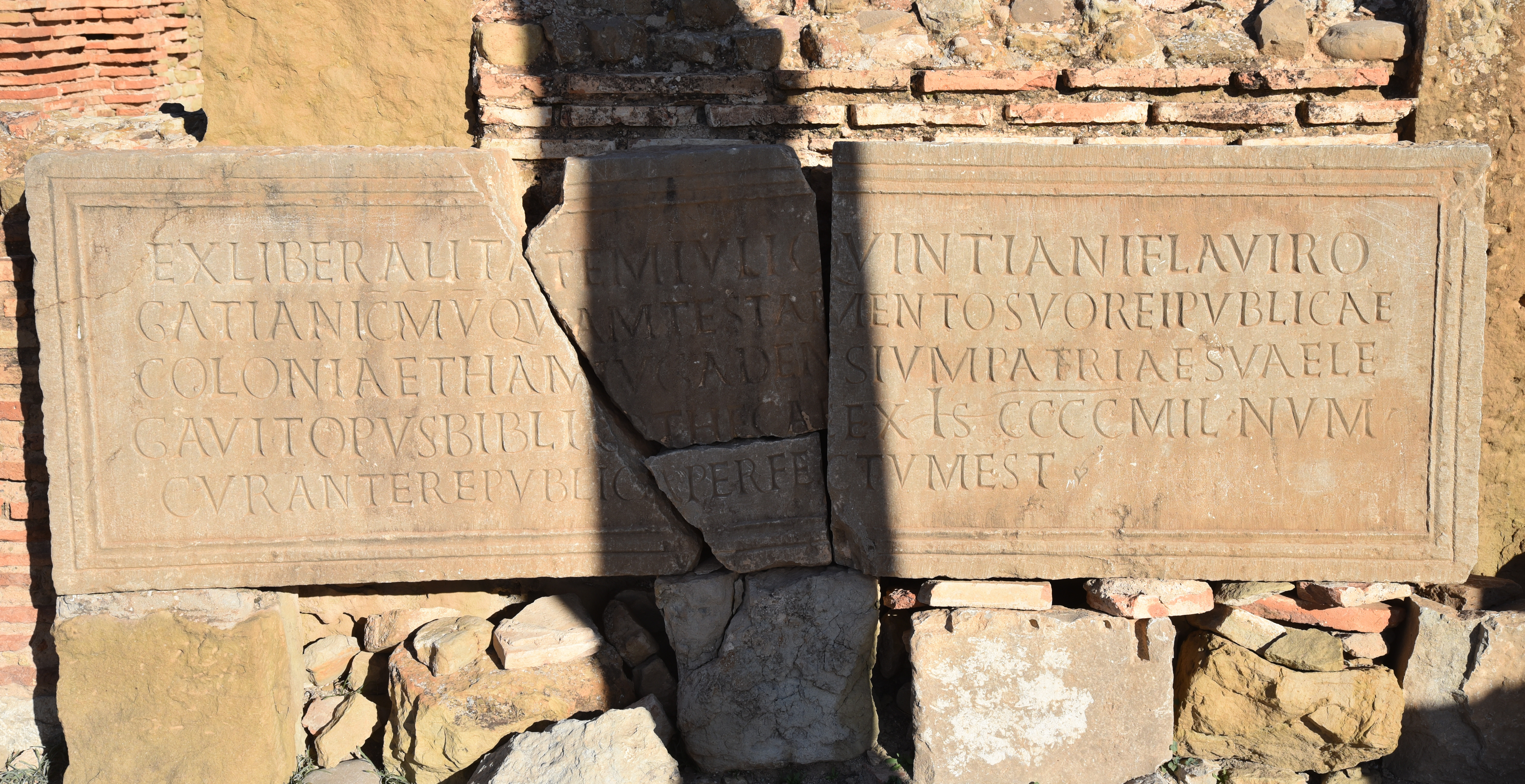
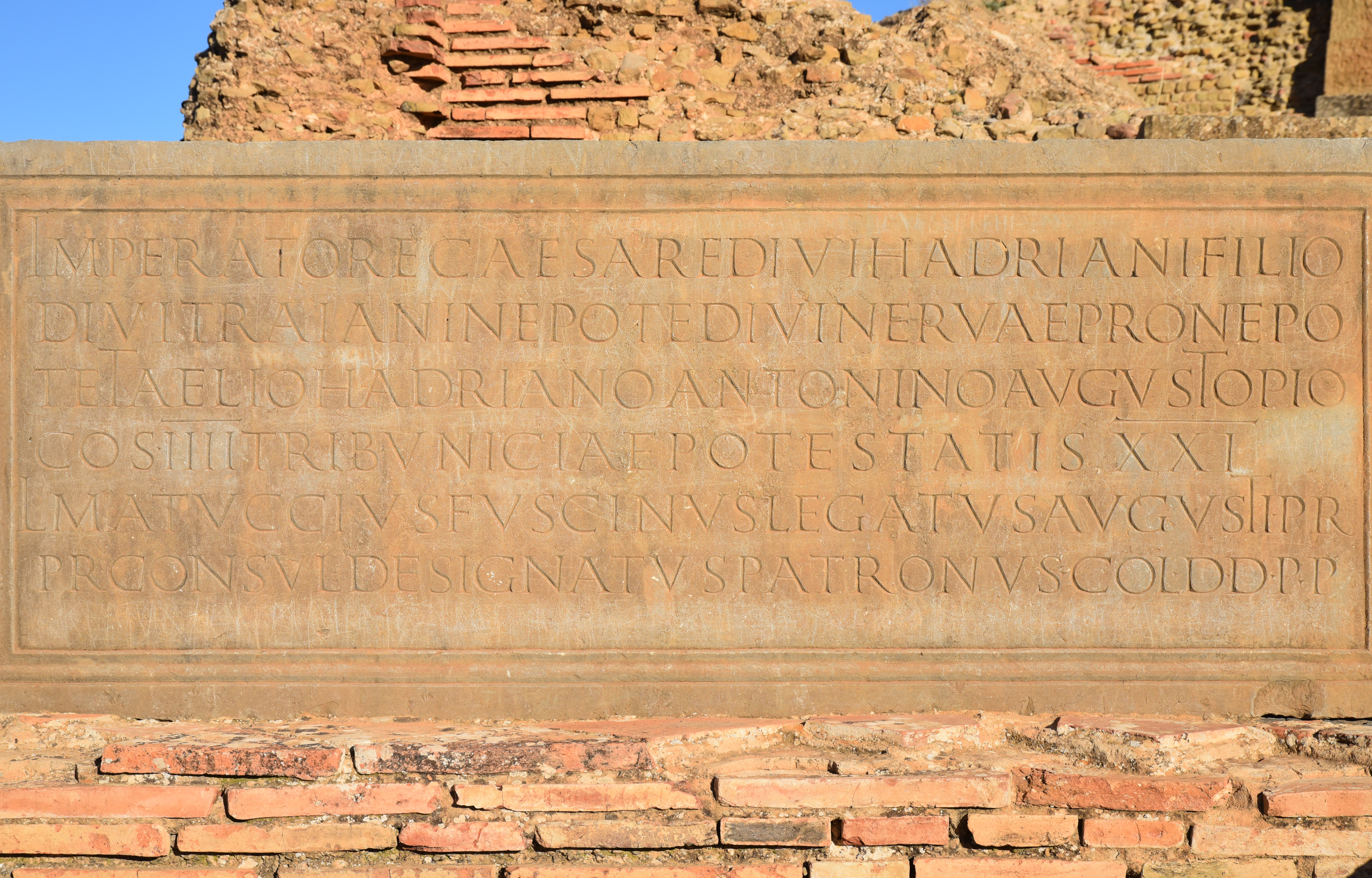
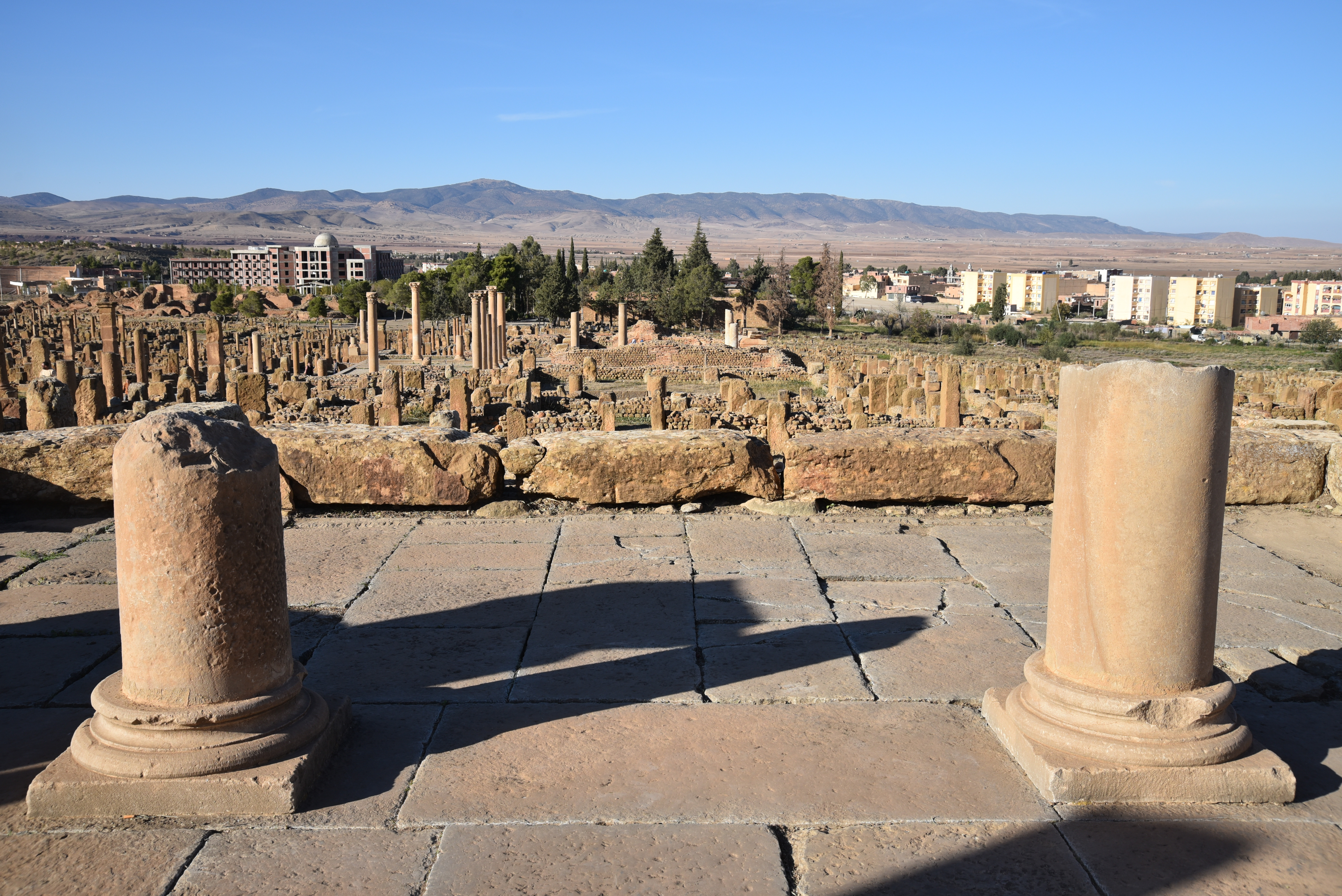
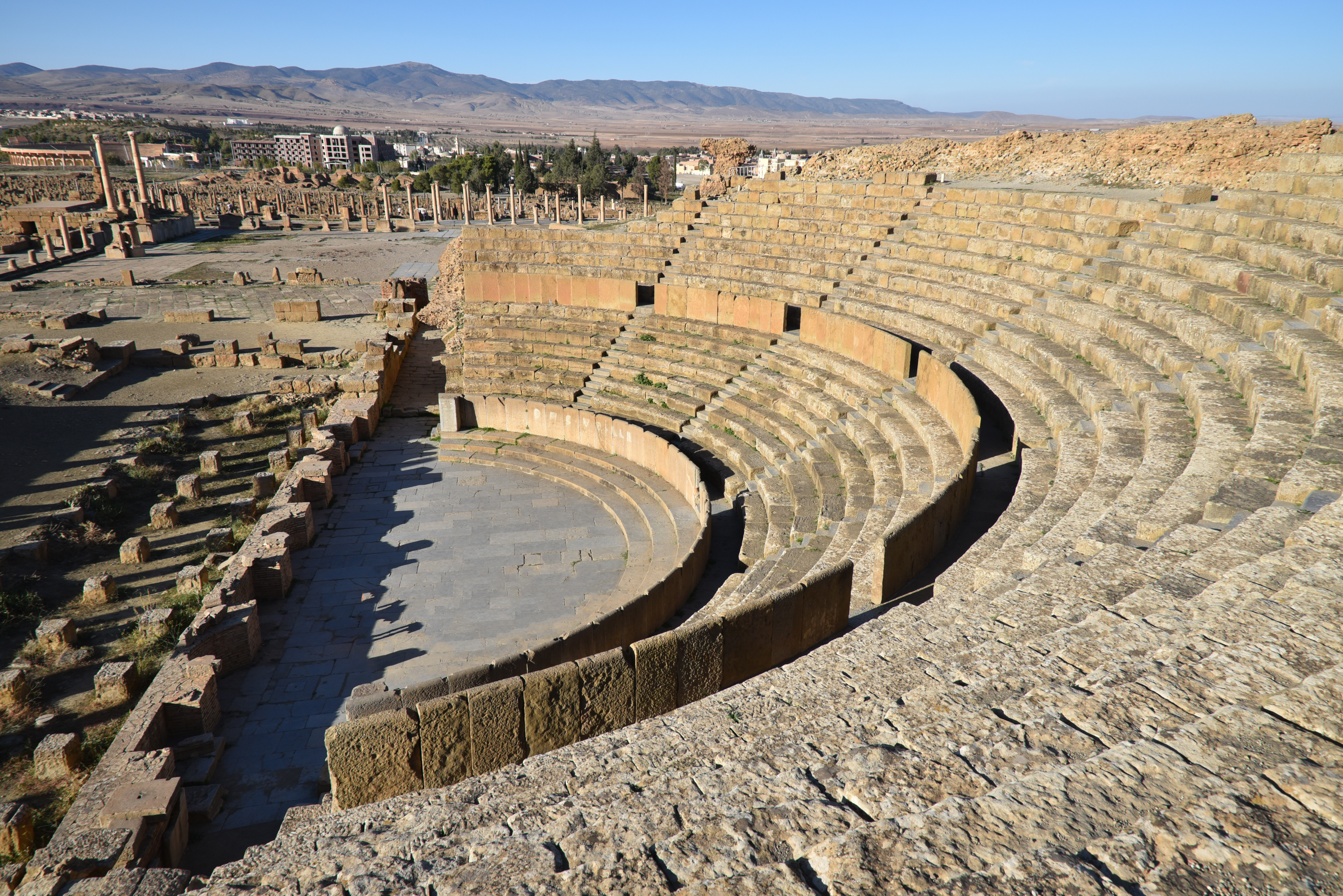
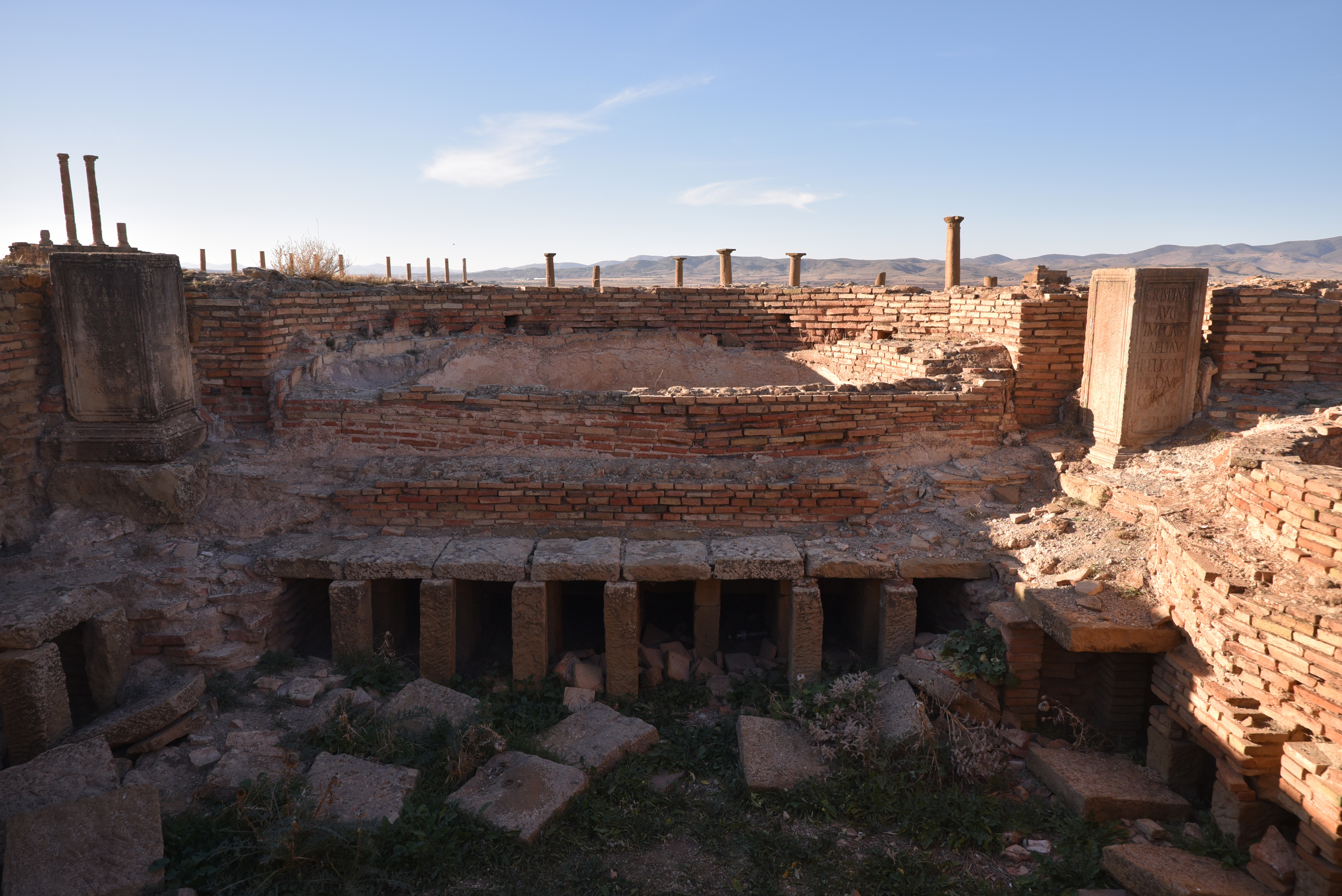
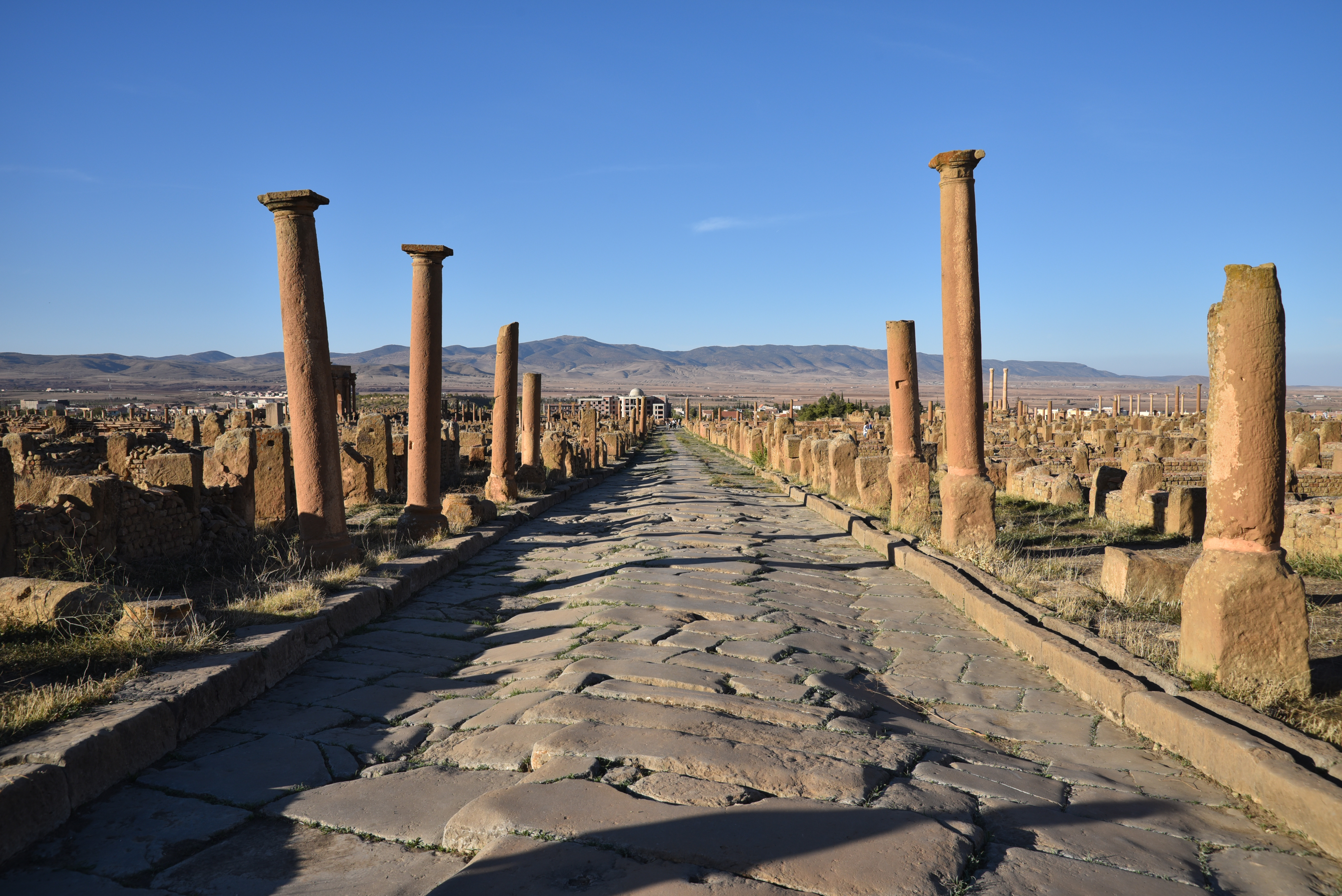
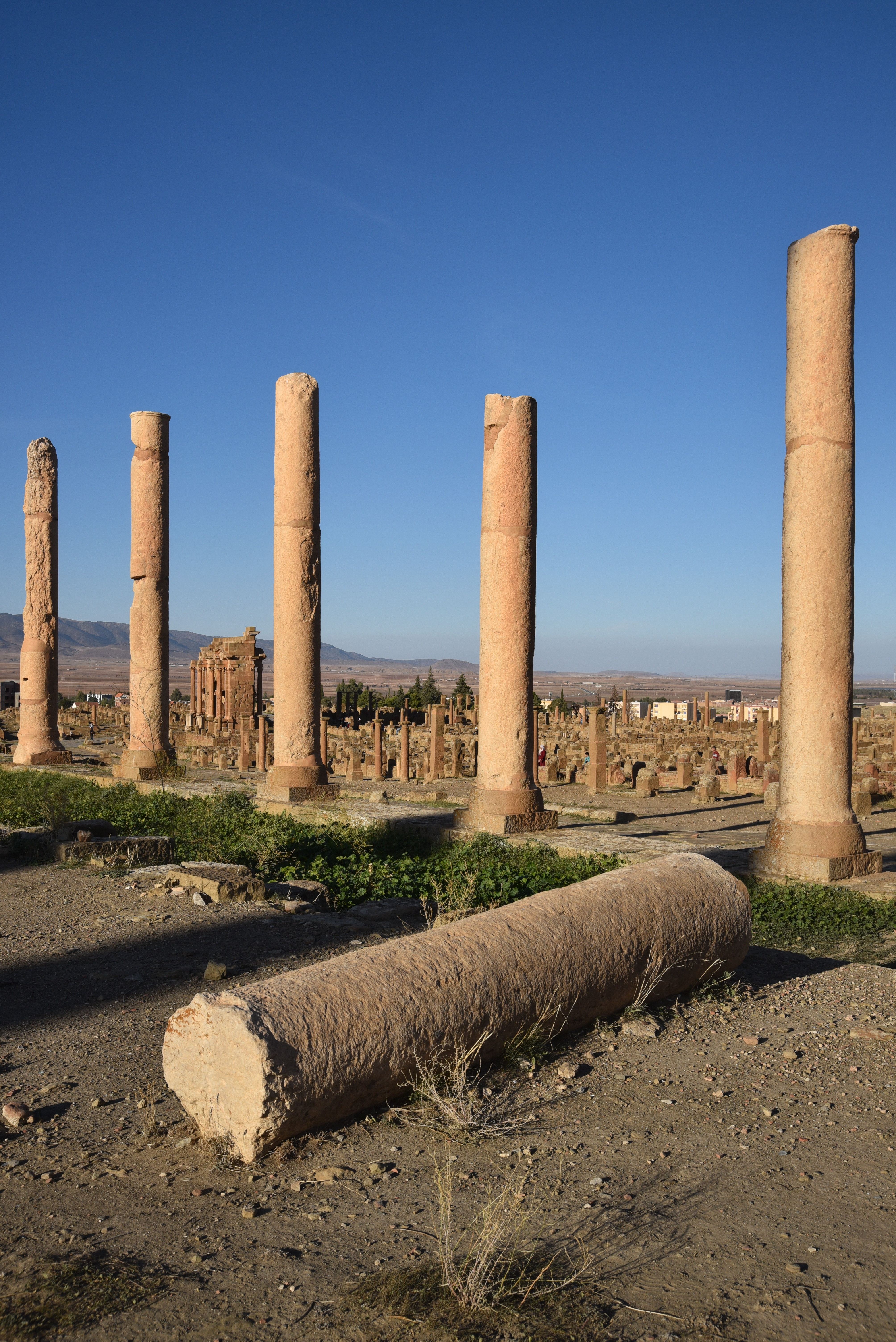
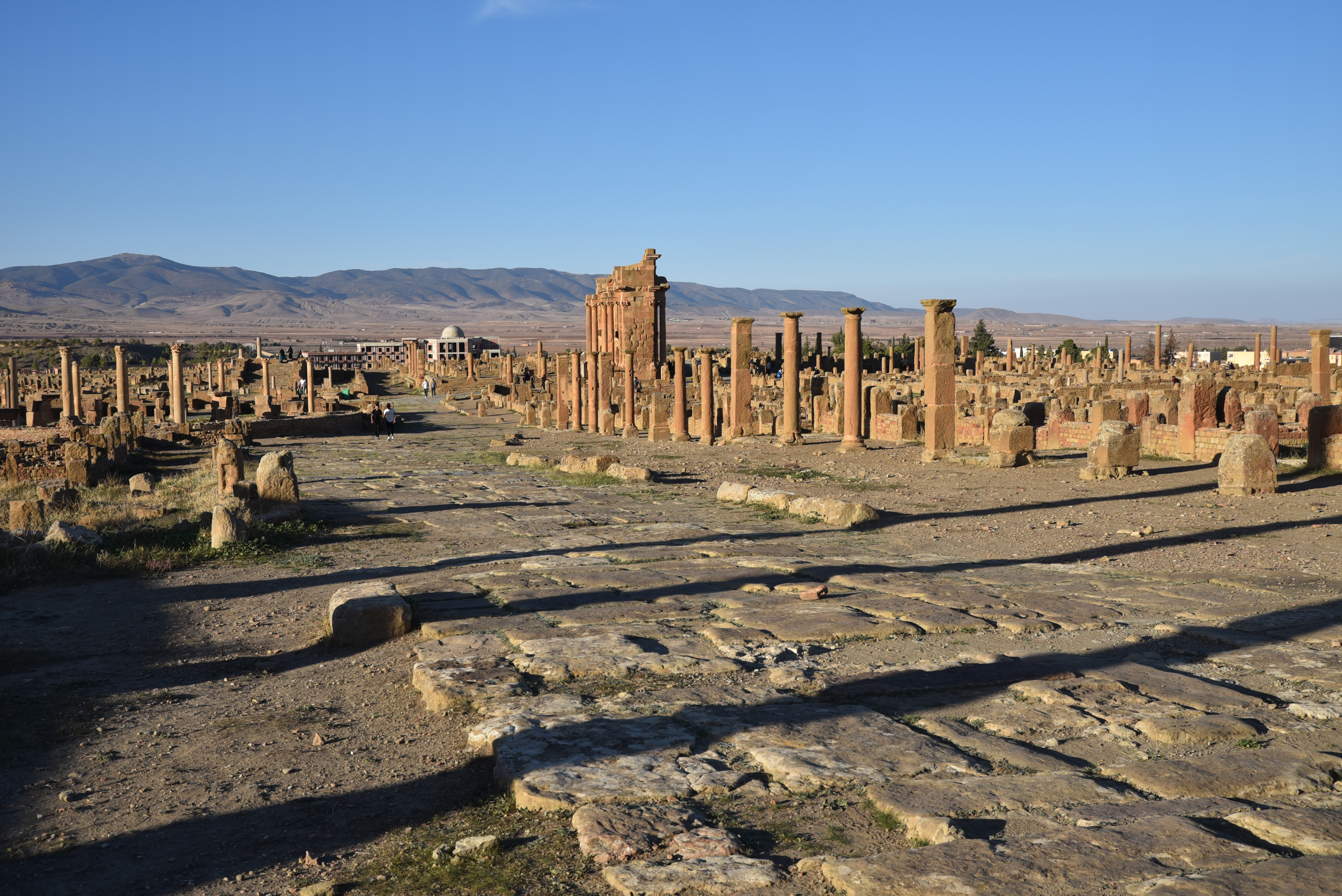
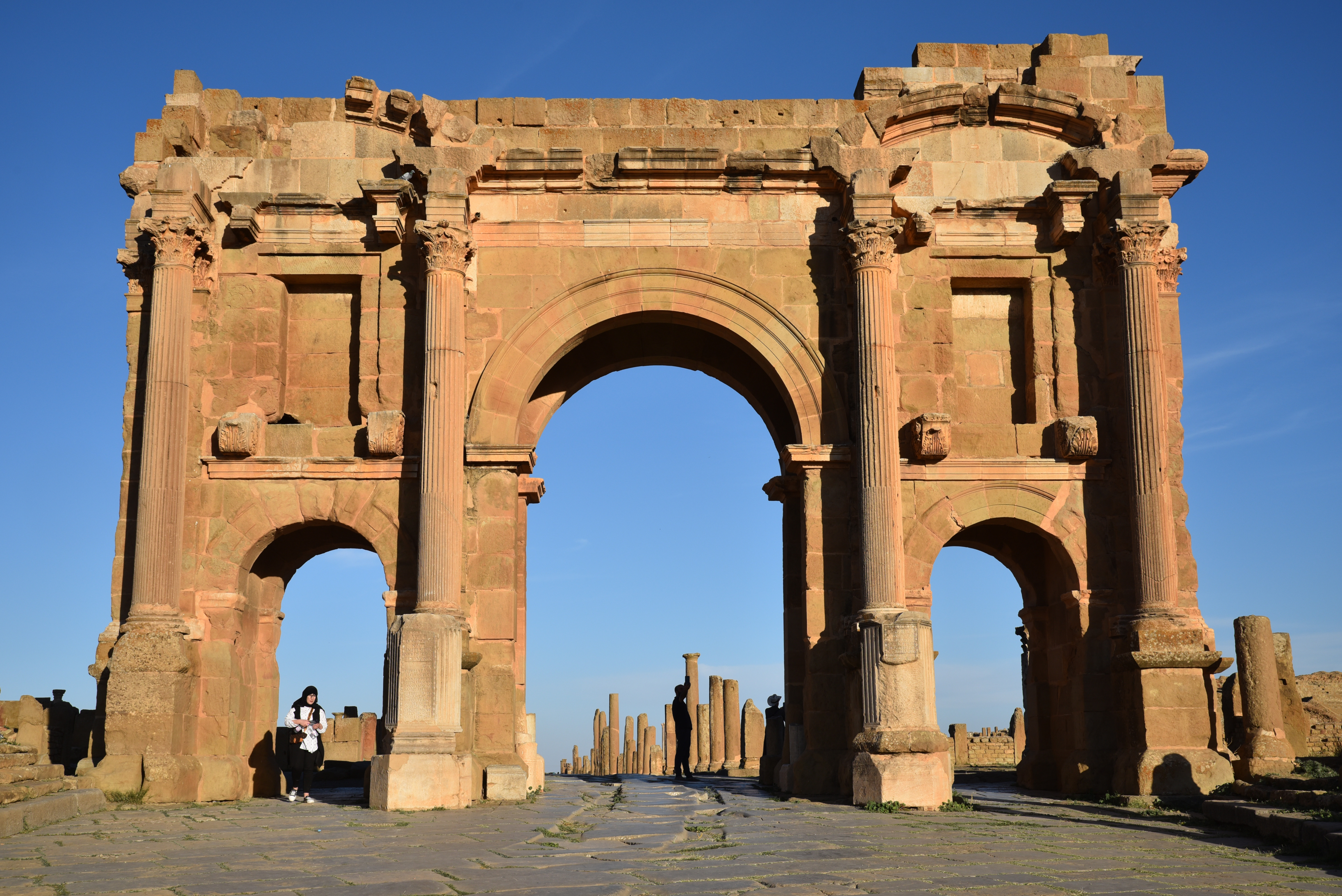
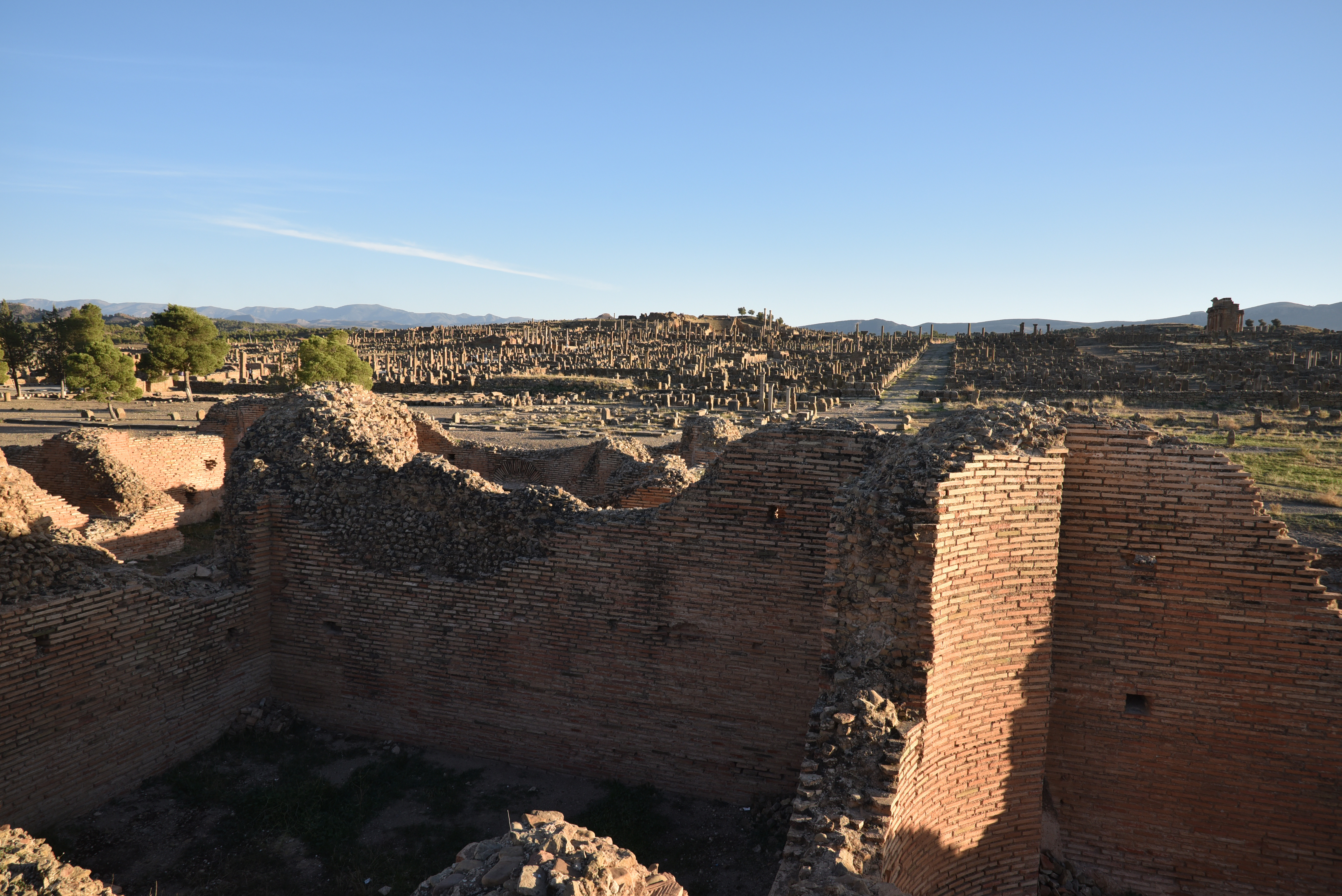
The Cardo Maximus (north–south-oriented street), looking towards the North Gate. The Cardo Maximus was 180 m long and 5 m wide. It was paved with slabs of bluish limestone and lined with porticoes.Side street with wheel ruts.The Small Northern Baths, one of the fourteen public bathing establishments which have been identified in the city.The Public Library, built in the late 3rd century or early 4th century AD on the site of a pre-existing private house.A certain Marcus Julius Quintianus Flavius Rogatianus donated 400,000 sesterces to his hometown to fund the Public Library.Inscription recording that M. Quintianus Flavius Rogatianus left the sum of 400,000 sesterces in his will for the construction of the Public Library. (AE 1908, 0012). The inscription, which once surmounted the entrance to this building, now lies against the rear wall of the courtyard.One of the small city blocks measuring 20 square metres.A secondary street separating two small city blocks near the Forum.A very well-preserved public latrine next to the Forum with seat armrests carved in the form of dolphins.The Forum, a vast square (50 × 43 m), paved with blue limestone and surrounded on all four sides by Corinthian colonnades raised two steps above the central area.Laid out when the colony was founded, the construction of the Forum took place progressively during the first half of the 2nd century AD. In the Forum were important buildings such as the curia, a basilica and a small tetrastyle temple dedicated to Victoria.Board game carved into the pavement with Latin inscription Venari, lavari, luderi, rideri, occ (=hoc) est vivere (to hunt, to bathe, to play, to laugh, that is life). CIL VIII 17938.The Forum was full of statues, of which a number of bases remain in position.Statues in the Forum included those of the gods Mercury, Marsyas, Fortuna Augusta, Victoria Augusta, Concord, as well as several statues of emperors, including those of Trajan, Antoninus Pius, Septimius Severus, and Caracalla.Building/dedicatory inscription in the Forum dedicated to Antoninus Pius and set up by consul designatus Lucius Matuccius Fuscinus, dated AD 158/9.The East Market lining the decumanus maximus with an internal courtyard featuring two intersecting semicircles, each adorned with its own portico.The peristyle, featuring Corinthian porticoes, of the House of the Raised Flower-Beds, which was accessed from the decumanus maximus adjacent to the Forum.View from the Forum looking south.The Theatre, located south of the Forum. Cut into the side of a natural hillock, it had a capacity of 3,500 to 4,000 spectators.The lower part of the cavea of the theatre is reasonably well preserved, as is the orchestra. Nothing, however, remains of the stage building (scaenafrons).View of the city from the theatre with the so-called Arch of Trajan in the background.One of the small city blocks with the Capitolium and the so-called Arch of Trajan in the background.The Great South Baths, founded in the 2nd century AD and enlarged in AD 198 by decree of the decurions.The caldarium of the Great South Baths with the remains of the hypocaust underfloor heating system. Twelve statues decorated the baths, including portraits of the emperors Valerian and Gallienus (left statue base) and Crispina, the wife of Commodus (right statue base).Semi-circular latrine in the Great South Baths. It had 28 seats and was originally paved with a fine mosaic of aquatic creatures.The Great South Baths, located at the intersection of four roads, featured a fountain at the corner where the southbound cardo curves to the west.One of the streets running parallel to the Cardo Maximus.View of Thamugadi looking north with the so-called Arch of Trajan on the west side.The road leading towards the Capitolium and the so-called Arch of Trajan.The ruins of the Capitolium, dedicated to the Capitoline triad of Jupiter, Juno and Minerva, built outside of the Forum in the mid-2nd century AD. The temple was not part of the original city layout.The Capitolium stood on a massive podium (53 × 23 m in plan and 6.7 m high) approached by a flight of 38 steps. The cella (17 × 11 m), of which only the foundations remain, was surrounded on three sides by columns 14 m high, on top of which were huge Corinthian capitals (in two parts) 1.6 m high.View of Thamugadi from the area of the Capitolium, looking north.Columns from the east portico of the Capitolium.View of Thamugadi from the area of the Capitolium, looking north.View of Thamugadi from the area of the Capitolium, looking northeast.Market of Sertius, built in the beginning of the 3rd century AD.The rectangular peristyle court of the Market of Sertius terminating in an apse. Three permanent stalls with stone counters stood on either side of the entrance at the north end, while nine more were arranged around the apse.Shop counters in the apse of the Market of Sertius. The roof of the apse was supported by the columns of the main portico, extending across the diameter and around the hemicycle, via engaged colonettes and architraves, which were in turn supported by elaborately carved console brackets.The rectangular peristyle court of the Market of Sertius with the theatre in the background.Temple dedicated to the Genius of the Colony, built in AD 169 under Marcus Aurelius.The so-called Arch of Trajan, a triple arch built on the Decumanus Maximus at the beginning of the 3rd century AD during the reign of Septimius Severus, on the site of the West Gate of the Trajanic colony. Its modern appellation is the result of an erroneous interpretation of an inscription at the beginning of the twentieth century.The so-called Arch of Trajan was 12 metres high and had three arches, with the central one used for wheeled traffic, while those on the side were for pedestrians.View from the Decumanus Maximus towards the Forum and the Theatre.The Great North Baths.View of the city from the Great North Baths.
Timgad Museum
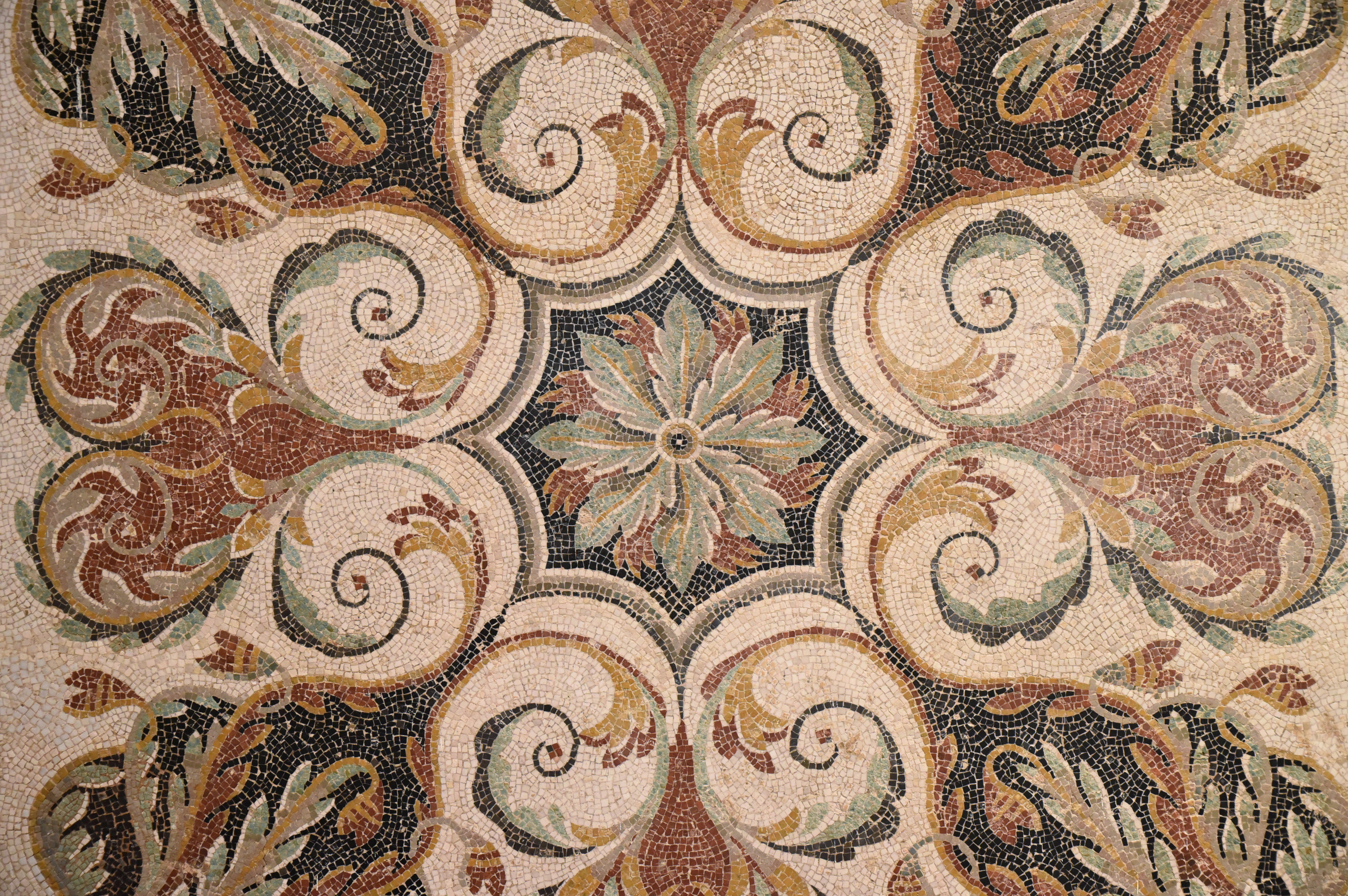
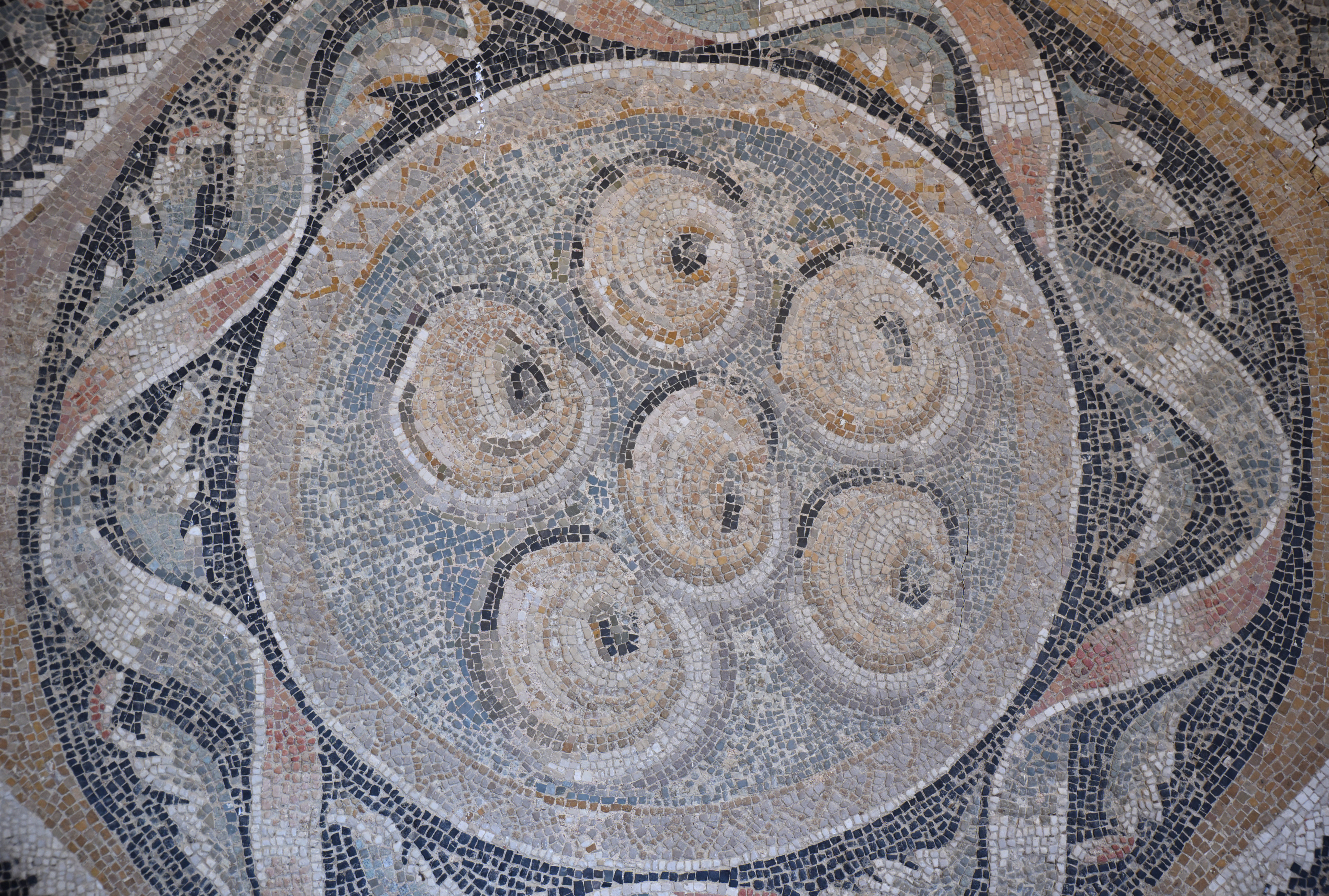
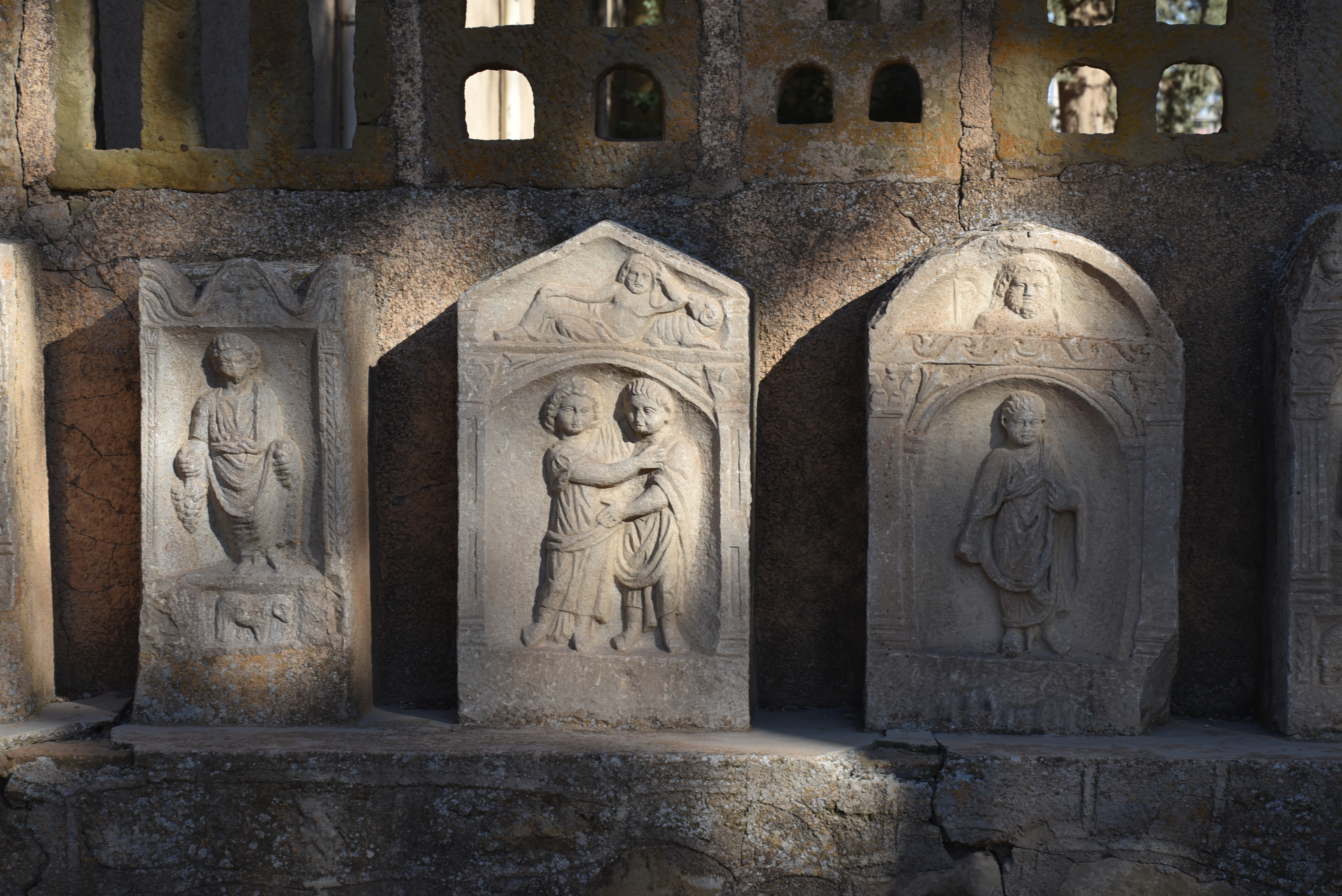
The museum of Timgad is located at the entrance of the site. It features a particularly impressive collection of over 80 mosaics and other significant artefacts discovered at the site.Mosaic of the Philadelphi. The central panel depicts the pursuit of Antiope (represented as a Maenad) by Zeus, disguised as a satyr, and bears the inscription “FILADELFIS VITA” (Long life to the Philadelphians). Dated early 3rd century AD.Neptune in his chariot, from the East Baths of Thamugadi. The god brandishes his trident as he stands in his chariot, which is drawn by four sea horses. Dated 3rd century AD.Artemis and Actaeon Mosaic, from a private house in Thamugadi. Dated 3rd century AD.Mosaic with vegetal and floral designs.Museum of Timgad.Marine Venus mosaic, depicting the goddess as naked, seated on the back of a marine centaur, accompanied by another sea centaur. From a private house in Thamugadi. Dated 3rd century AD.Mosaic with vegetal and floral designs.Mosaic with fruits.Funerary stelai dedicated to Saturn.Carved offering table from a stele dedicated to Saturn.
Blas de Roblès, Jean-Marie; Sintes, Claude; Kenrick, Philip. Classical Antiquities of Algeria: A Selective Guide (p. 127). Society for Libyan Studies. pp. 375-444
The original island of Philae was the site of an Egyptian temple complex in the Nile, now submerged beneath the waters of Lake Nasser south of Aswan, Egypt. It was originally located near the First Cataract of the Nile in Upper Egypt but was dismantled and moved to nearby Agilkia Island when the Aswan High Dam was built in the 1960s. This beautiful temple complex was the cult centre of Isis, who was venerated from the Pharaonic era until at least AD 550. Philae, together with Abu Simbel and other nearby ruins, was designated a UNESCO World Heritage site in 1979.
The island of Philae was an important sacred site dedicated to Isis and, by extension, to her husband-brother Osiris. The adjacent island of Bigeh was said to be one of the burial places of Osiris, and both islands formed a temple complex in which the ritual focus was the tomb of Osiris on Bigeh. Every tenth day and on festival days, the statue of Isis travelled, accompanied by priests, by boat or bark across from Philae to visit the tomb of Osiris.
Statuette of Isis nursing the young Horus, Nubian Museum.
The myth of Isis and Osiris dates back to the very beginning of pharaonic civilisation. It tells the story of Isis, the great goddess and wife of Osiris, and her journey throughout the country in search of the pieces of her husband’s body after he had been assassinated and dismembered by his brother Seth. She put Osiris’ body back together, mummified him and magically brought him back to life. She then copulated with him, conceiving their son, Horus. Rulers in Egypt and Nubia built temples dedicated primarily to Isis, and her temple at Philae was a religious centre for Egyptians and Nubians alike, where she was described as the protectress of the entire nation. Isis’ popularity increased over time, and her worship was greatest during the Graeco-Roman period, spreading to other parts of the Roman Empire.
Construction on the island of Philae began around 690 BC during the reign of Pharaoh Taharqa of the 25th Dynasty. The first religious building was likely a shrine, which was probably dedicated to Amun. The earliest known evidence of Isis worship was a small kiosk built by Psamtik II of the 26th Dynasty (595 BC – 589 BC), which was found dismantled and reused in the Ptolemaic structures. However, the oldest structure still standing dates from the time of Nectanebo I of the 30th Dynasty (circa 370 BC), who constructed the enclosure walls and a monumental gate. He also built a kiosk and began the construction of the Mammissi (the birth house).
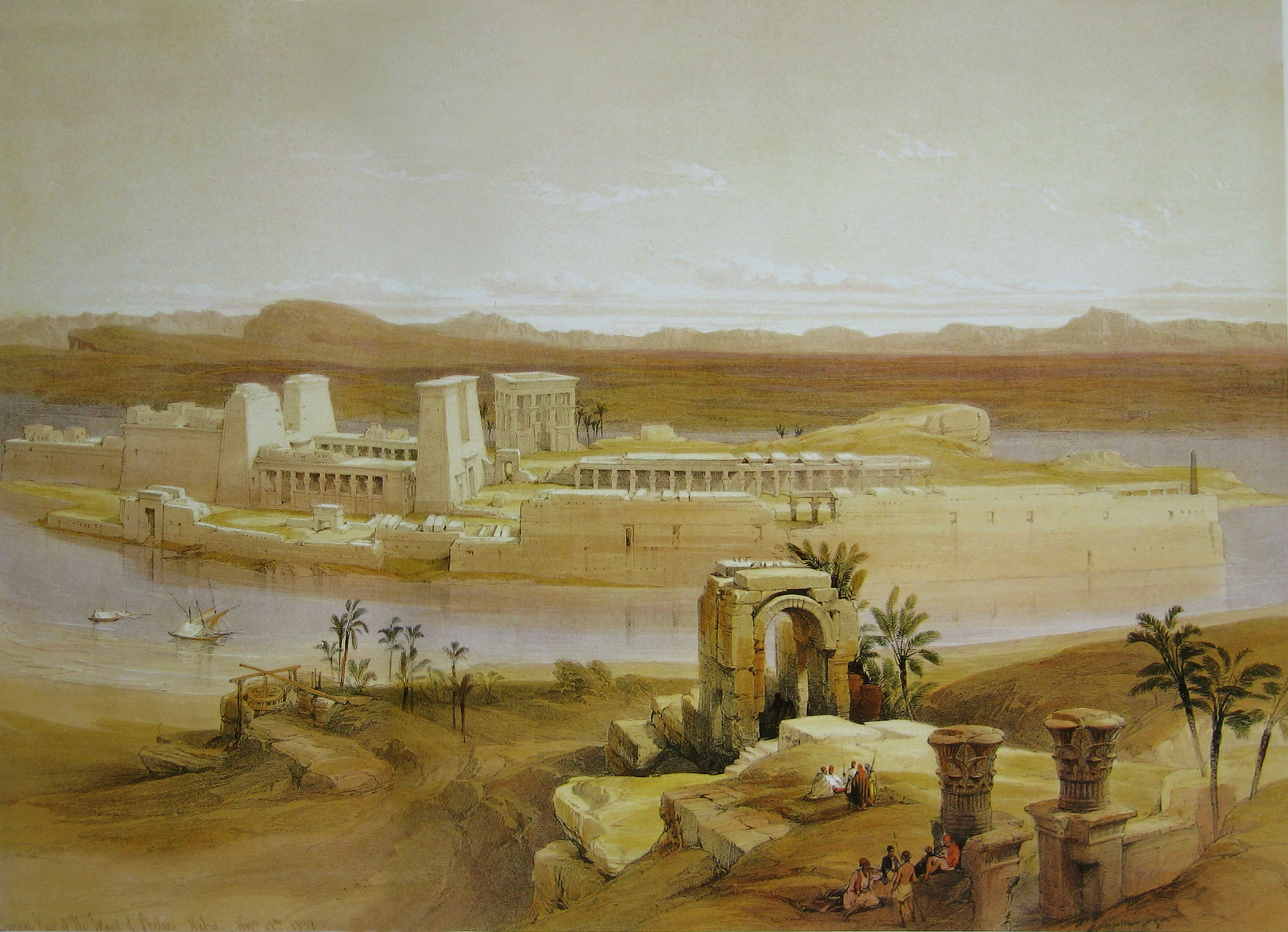
David Roberts’ watercolour view of the Island of Philae as it appeared in 1838, with Bigeh in the foreground.
The complex structures of the Temple of Isis were completed under the reigns of Ptolemy II Philadelphus, Ptolemy V Epiphanes, and Ptolemy VI Philometor (282-145 BC) and continued through the Roman period. Several Roman emperors made artistic and architectural contributions to Philae. While most of the architectural additions date to the Julio-Claudian dynasty, the island continued to receive contributions to its temples up to the time of Diocletian. Augustus built a temple at the northern end of Philae in 9 BC Tiberius and Nero added reliefs and inscriptions, and Hadrian added a gate west of the complex leading to the island of Bigeh.
The main building complex of Philae is the Great Temple of Isis, located in the centre of the island. It was erected during the third and second centuries BC and decorated from the time of Ptolemy II onward. There are also several smaller temples and shrines dedicated to other deities and Pharaohs, and at least two Nilomemters.
Philae is the site of the last known inscription in Egyptian hieroglyphs, written in AD 394, and the last known Demotic inscription, written in 452. So strong was the popularity of Isis on Philae that her cult continued there for centuries until at least AD 55,0 when the Byzantine emperor Justinian had the priests arrested and the statues taken to Constantinople. However, Philae was not destroyed; it was converted into a church, and two other Coptic churches were built.
As part of the UNESCO Nubia Campaign project, the whole temple complex was dismantled and moved from its original location on Philae Island to its new location on Agilkia Island after the flooding of Lake Nasser. The reconstruction at the current site painstakingly preserved the complex’s original appearance and layout and even landscaped the island to match its former location.
PORTFOLIO
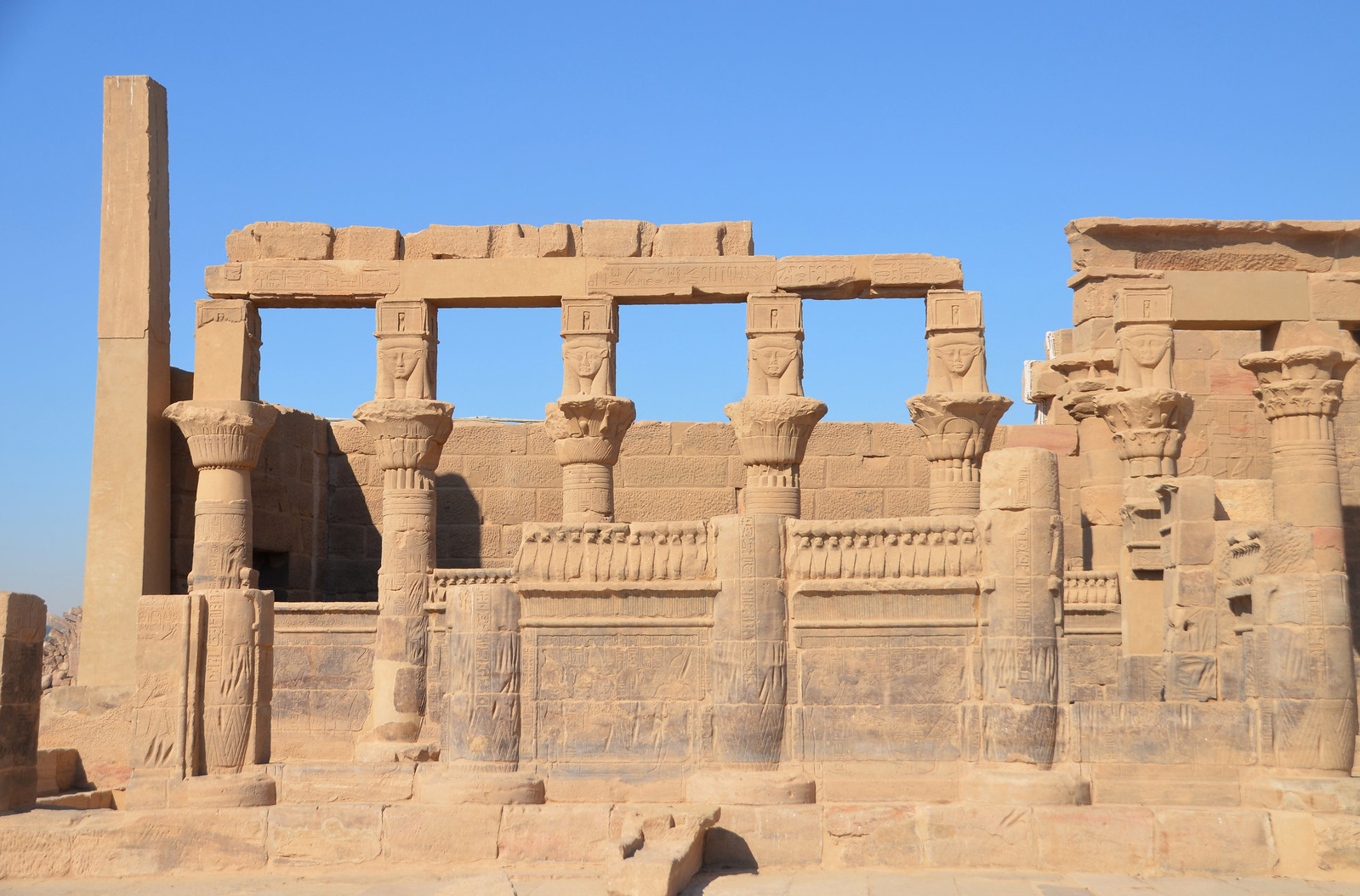
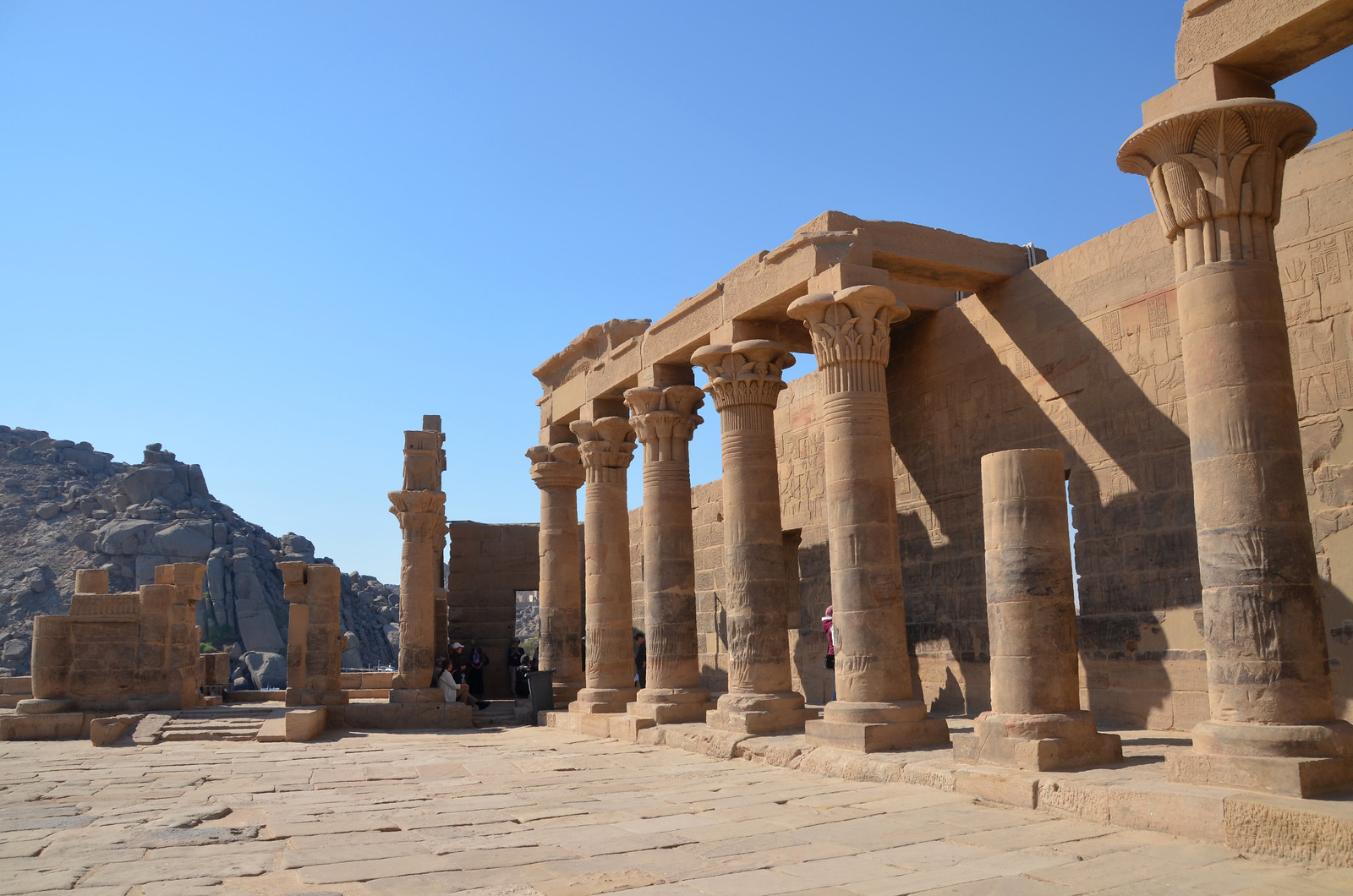
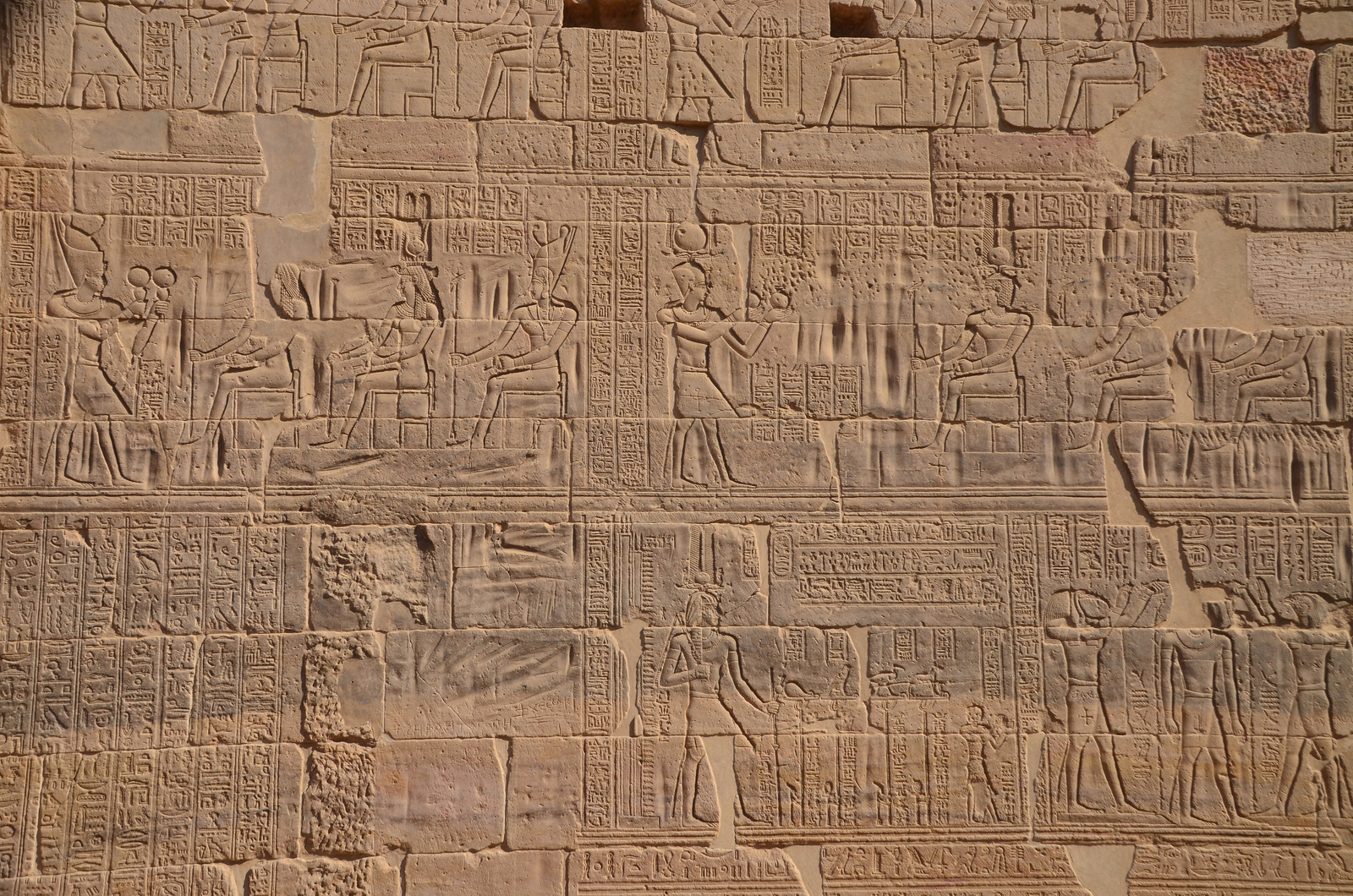
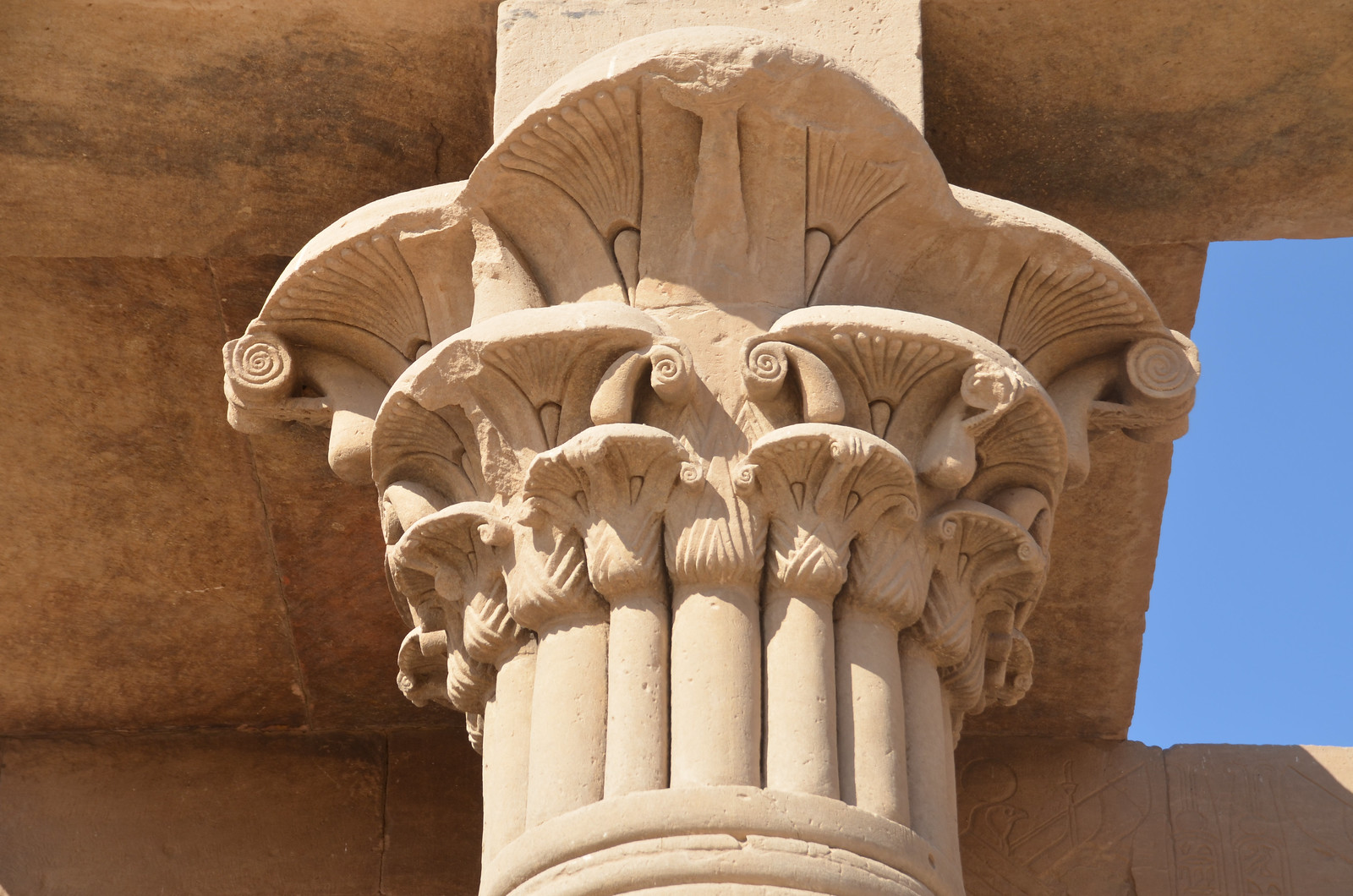
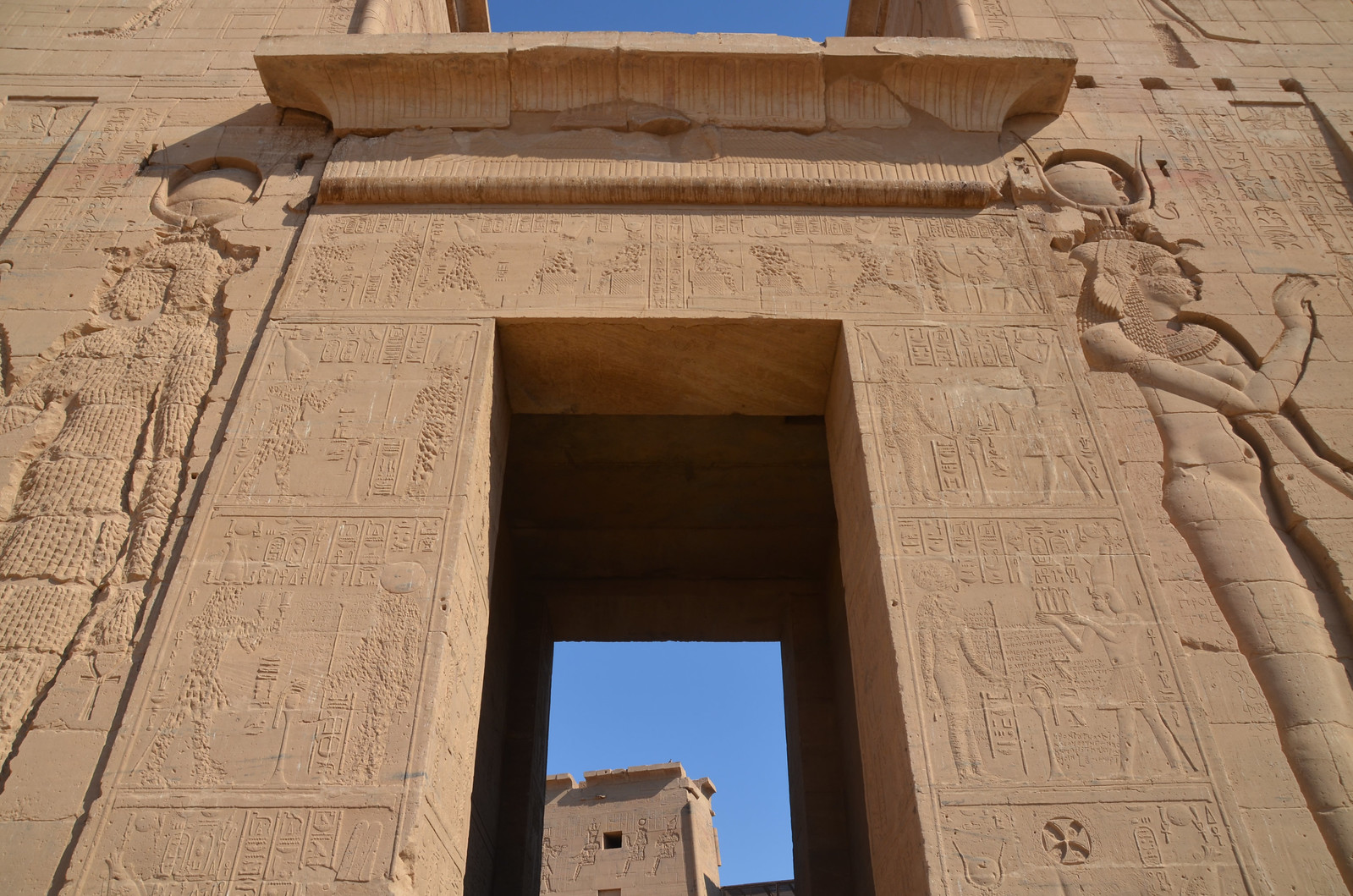
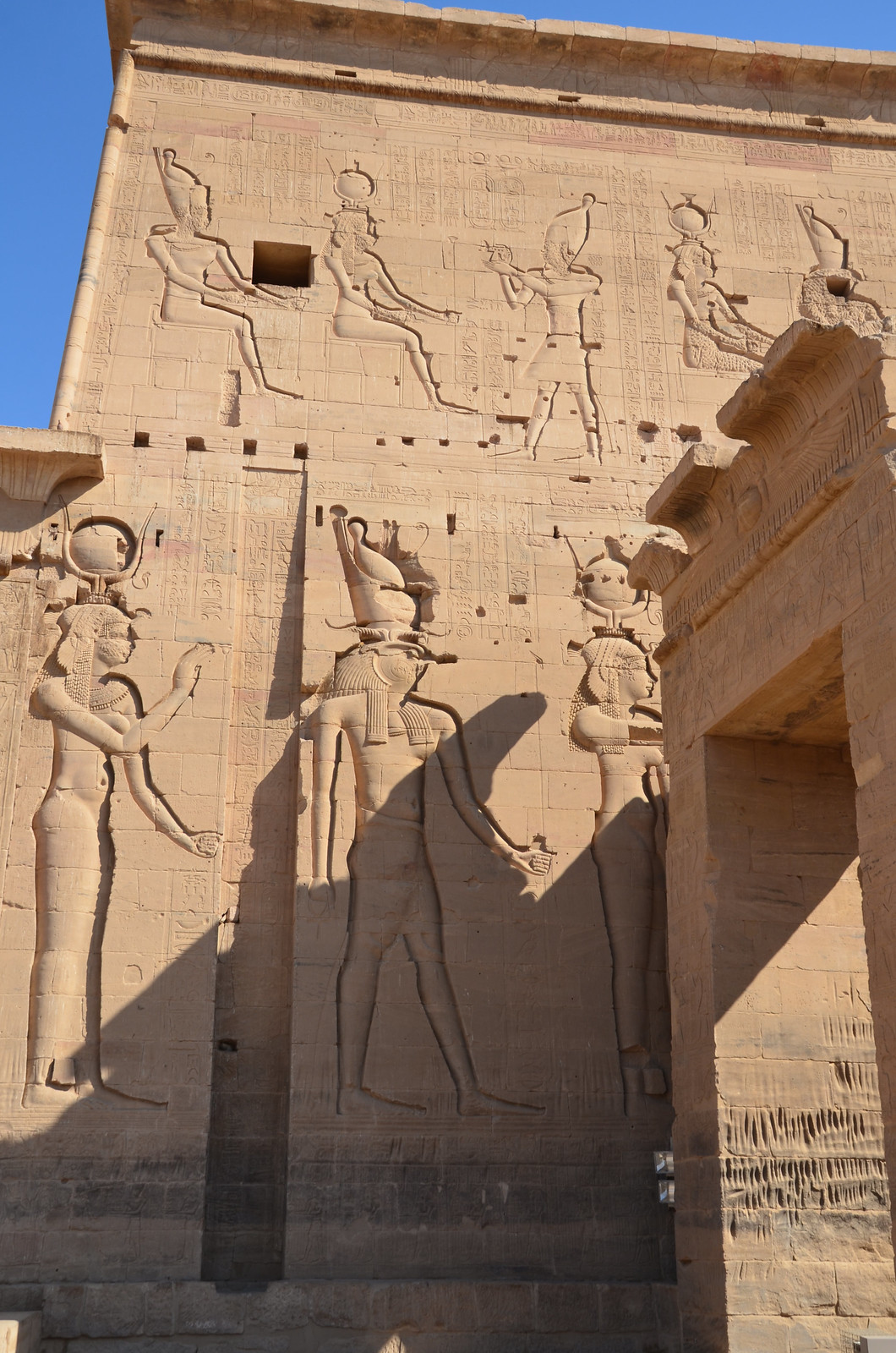
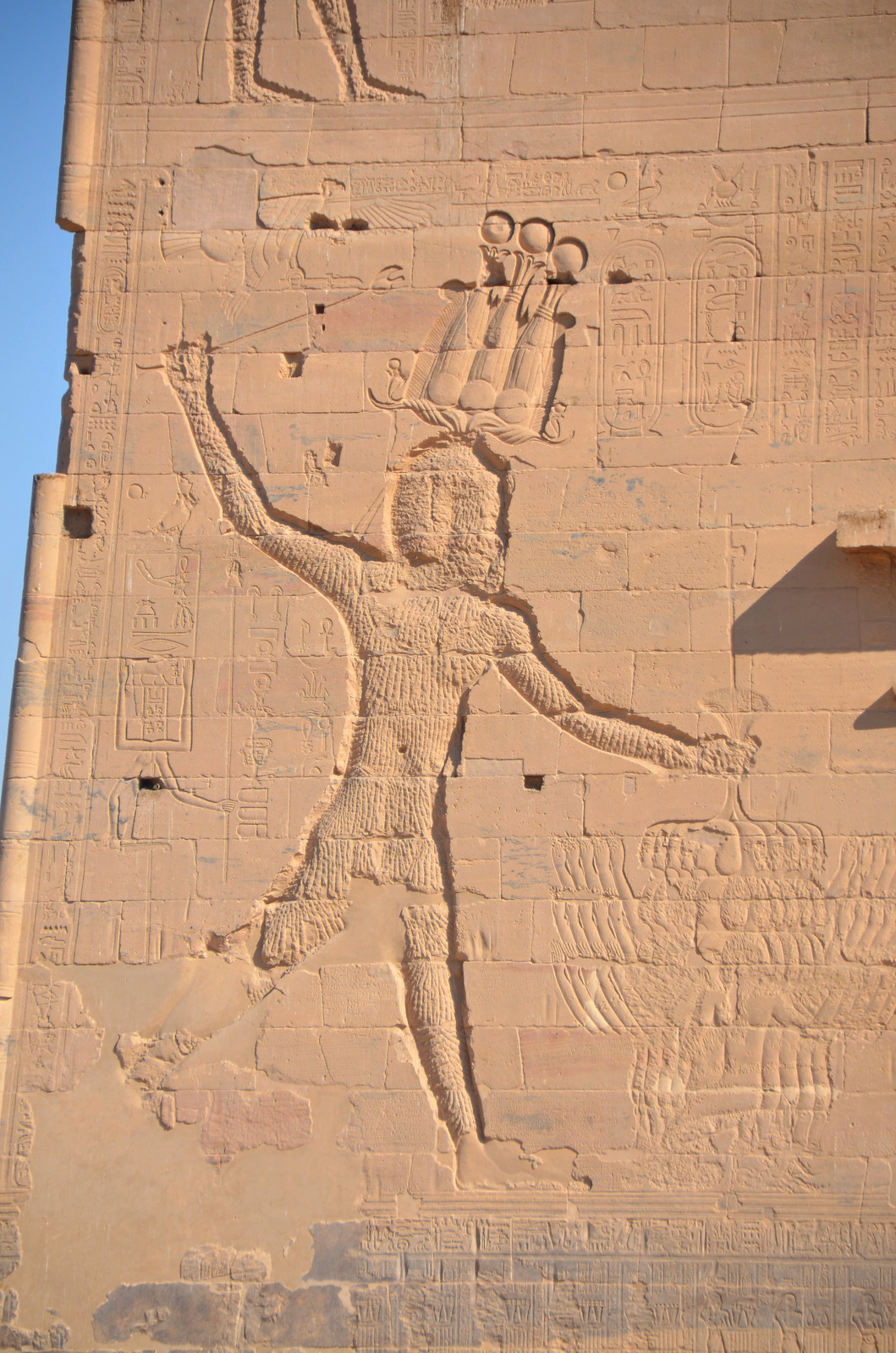
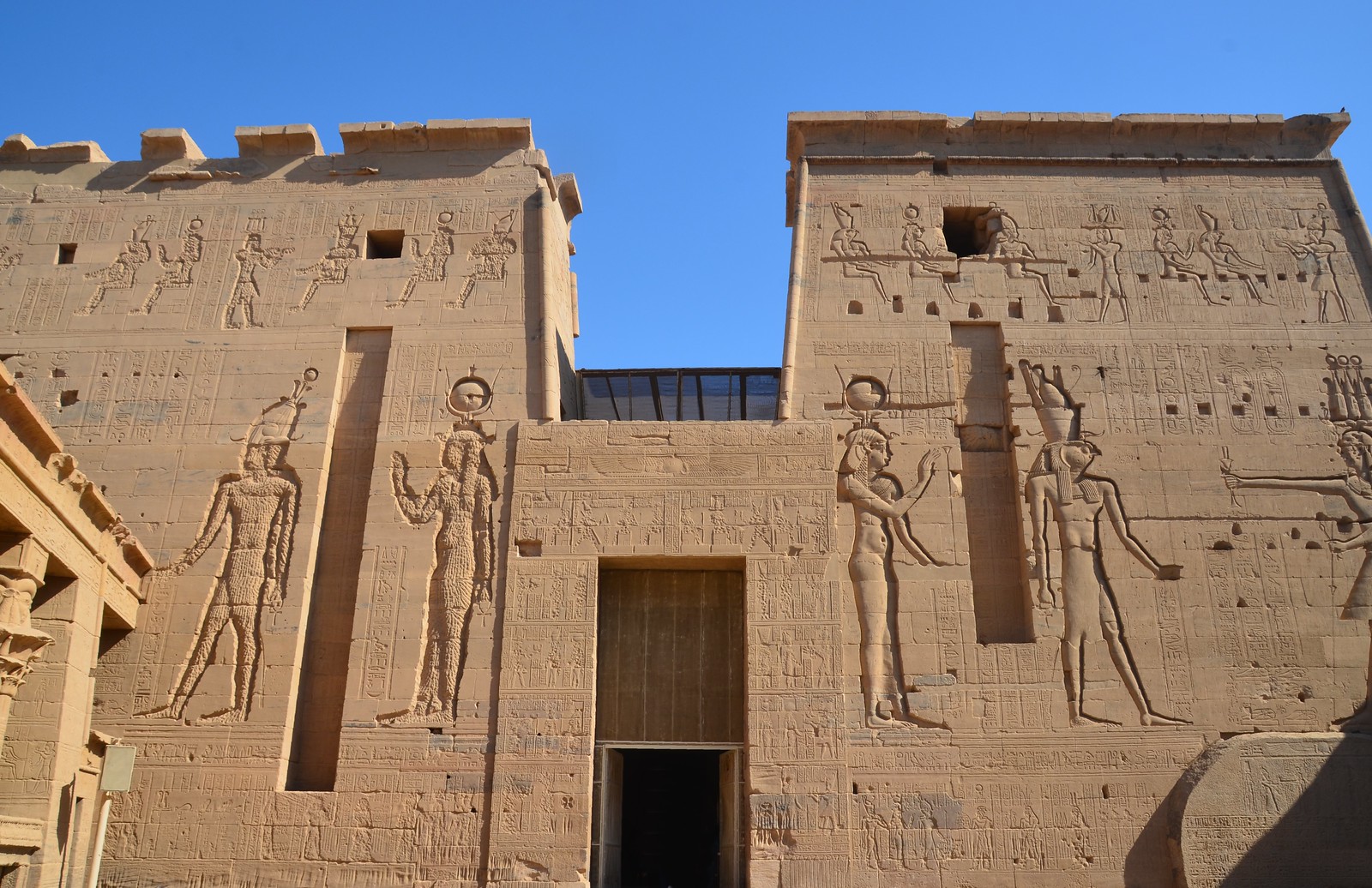
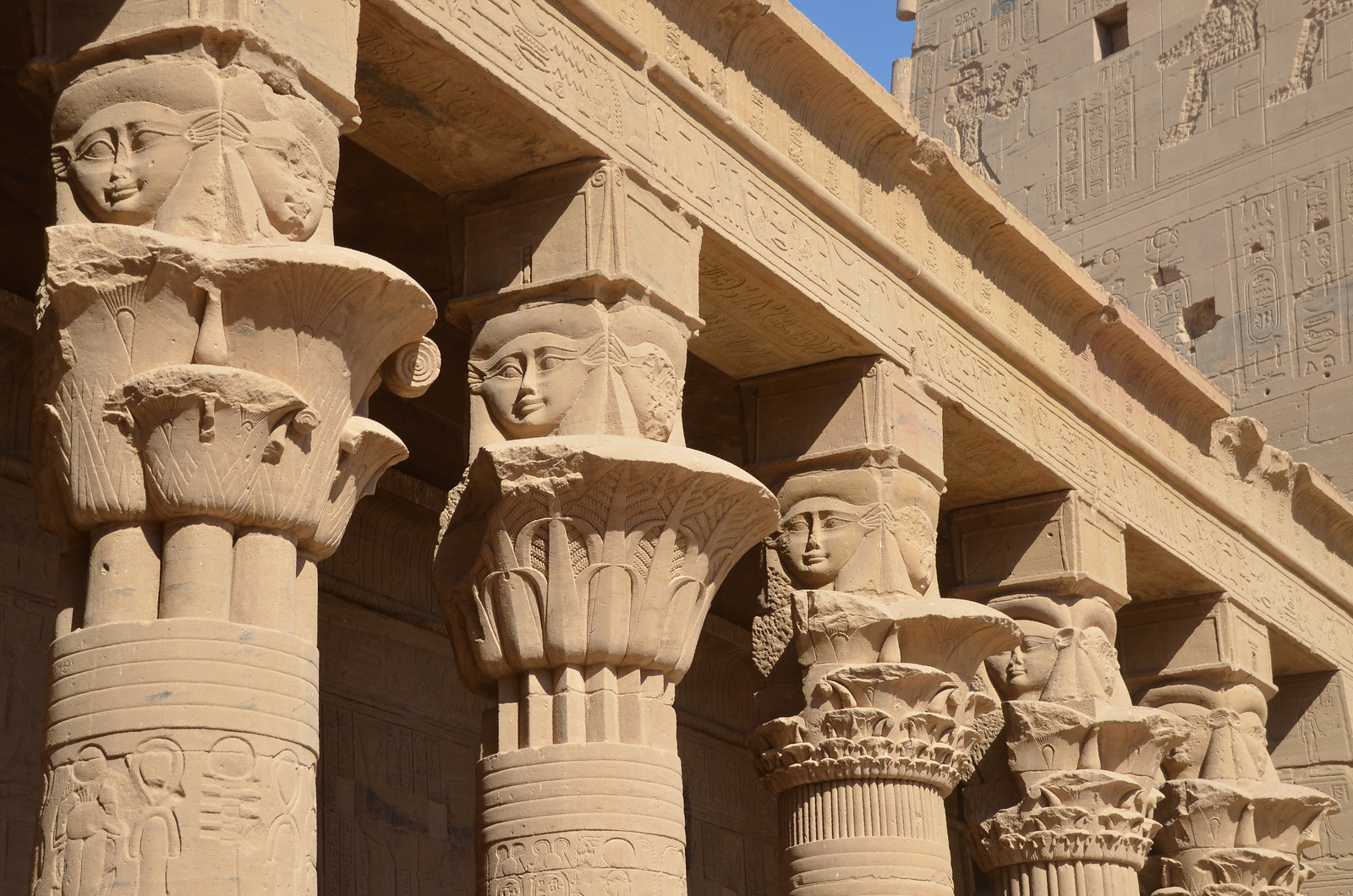
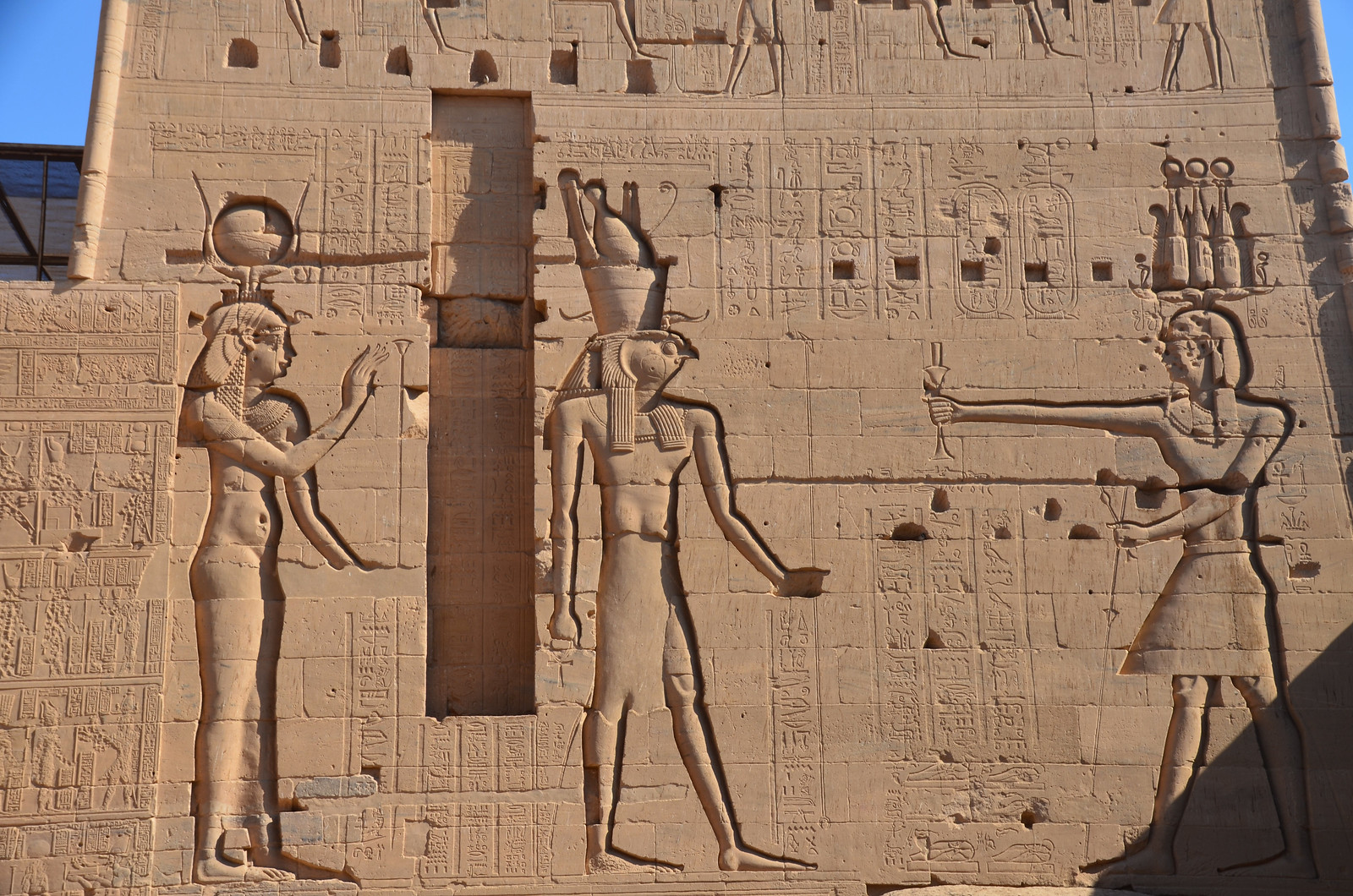
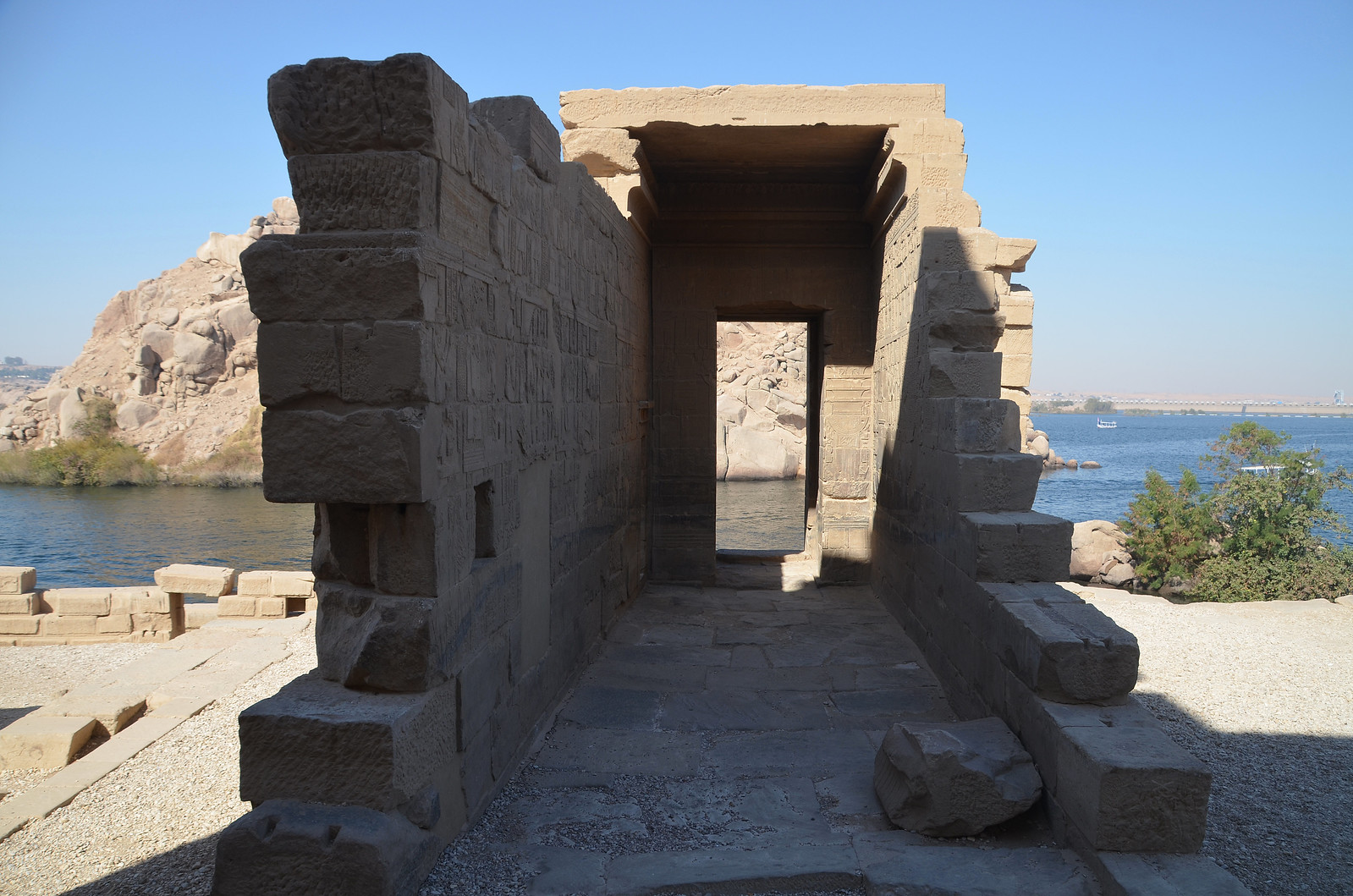
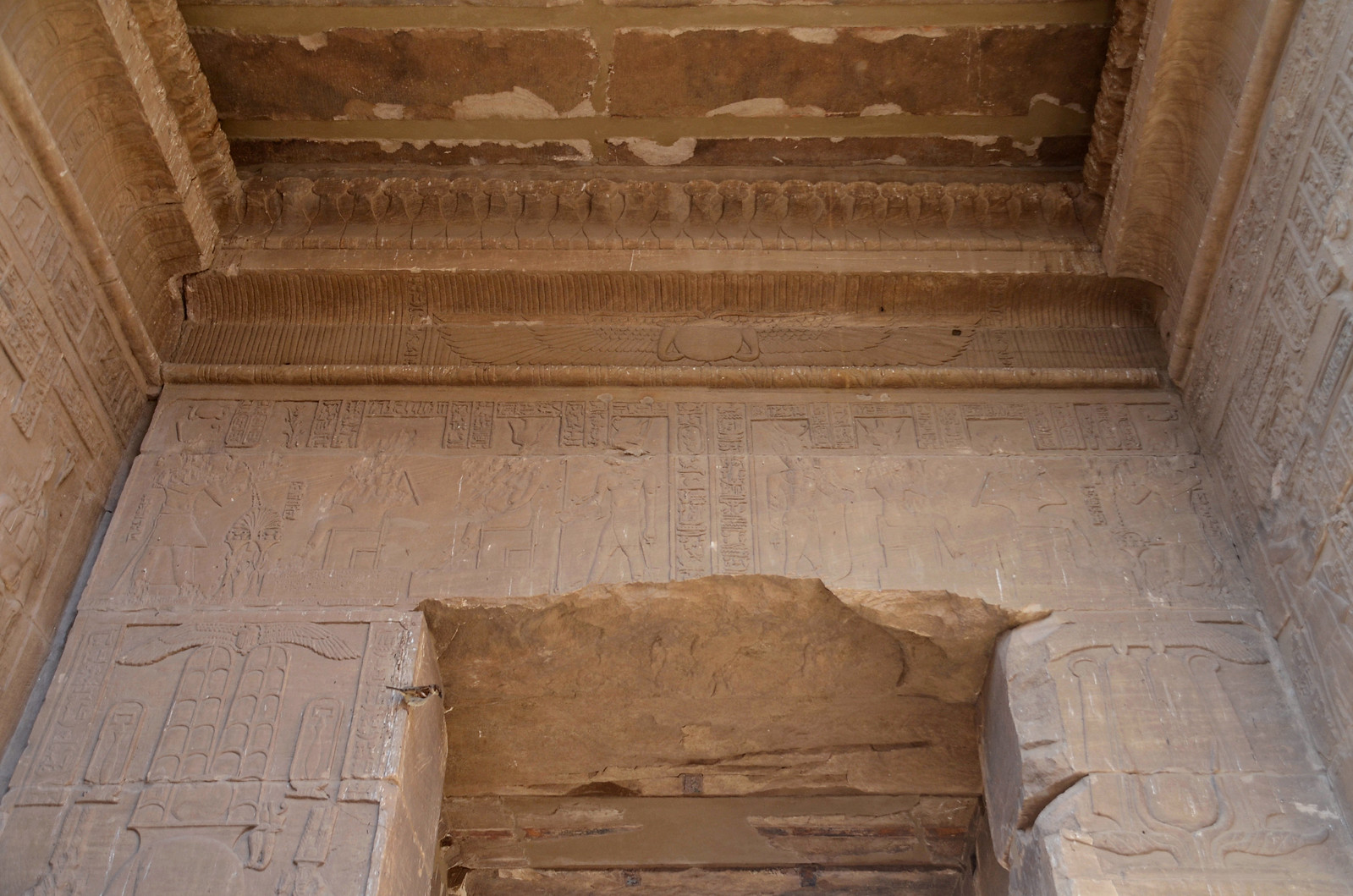
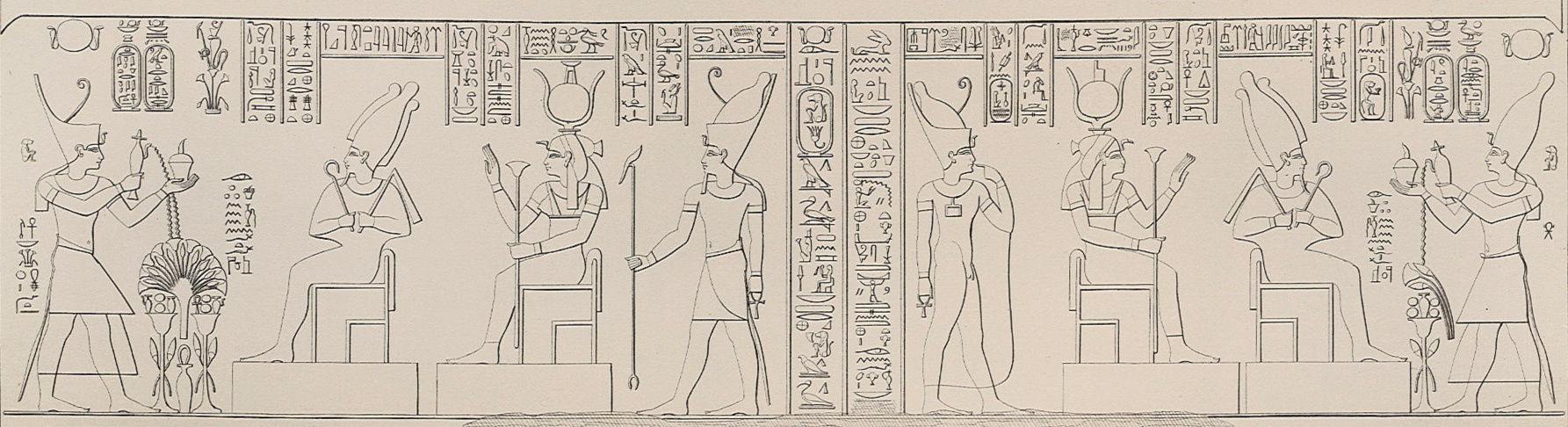
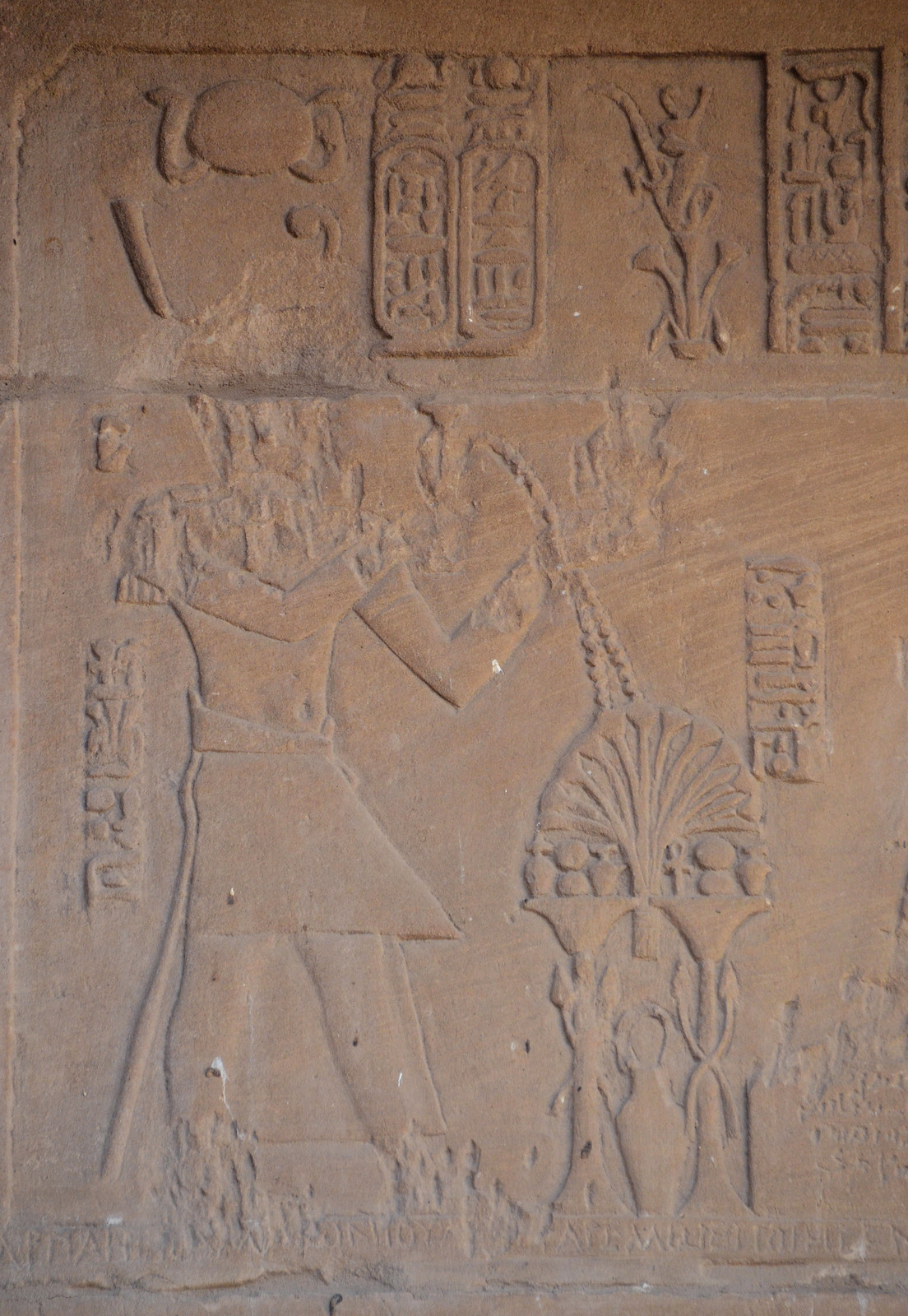
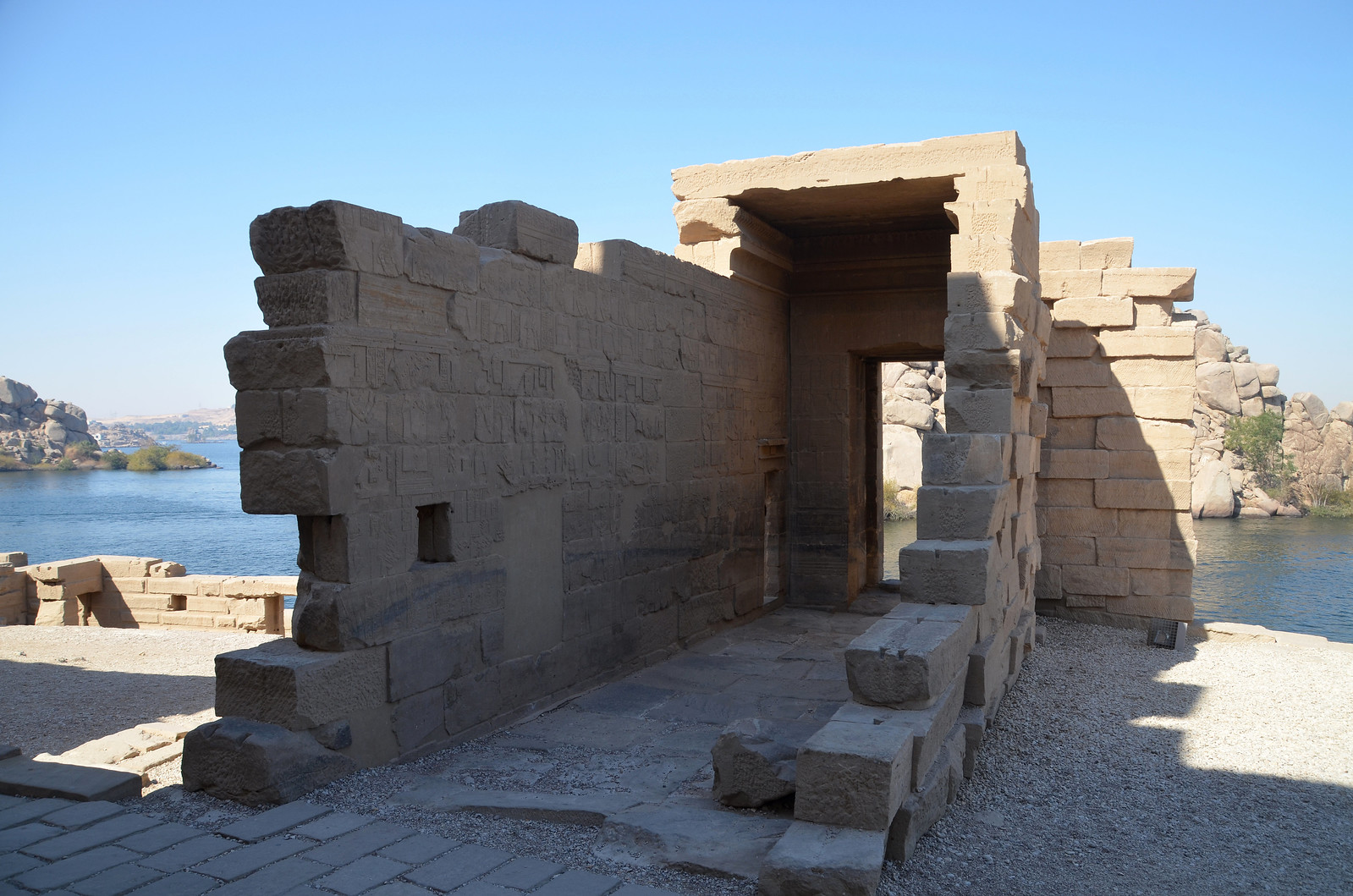
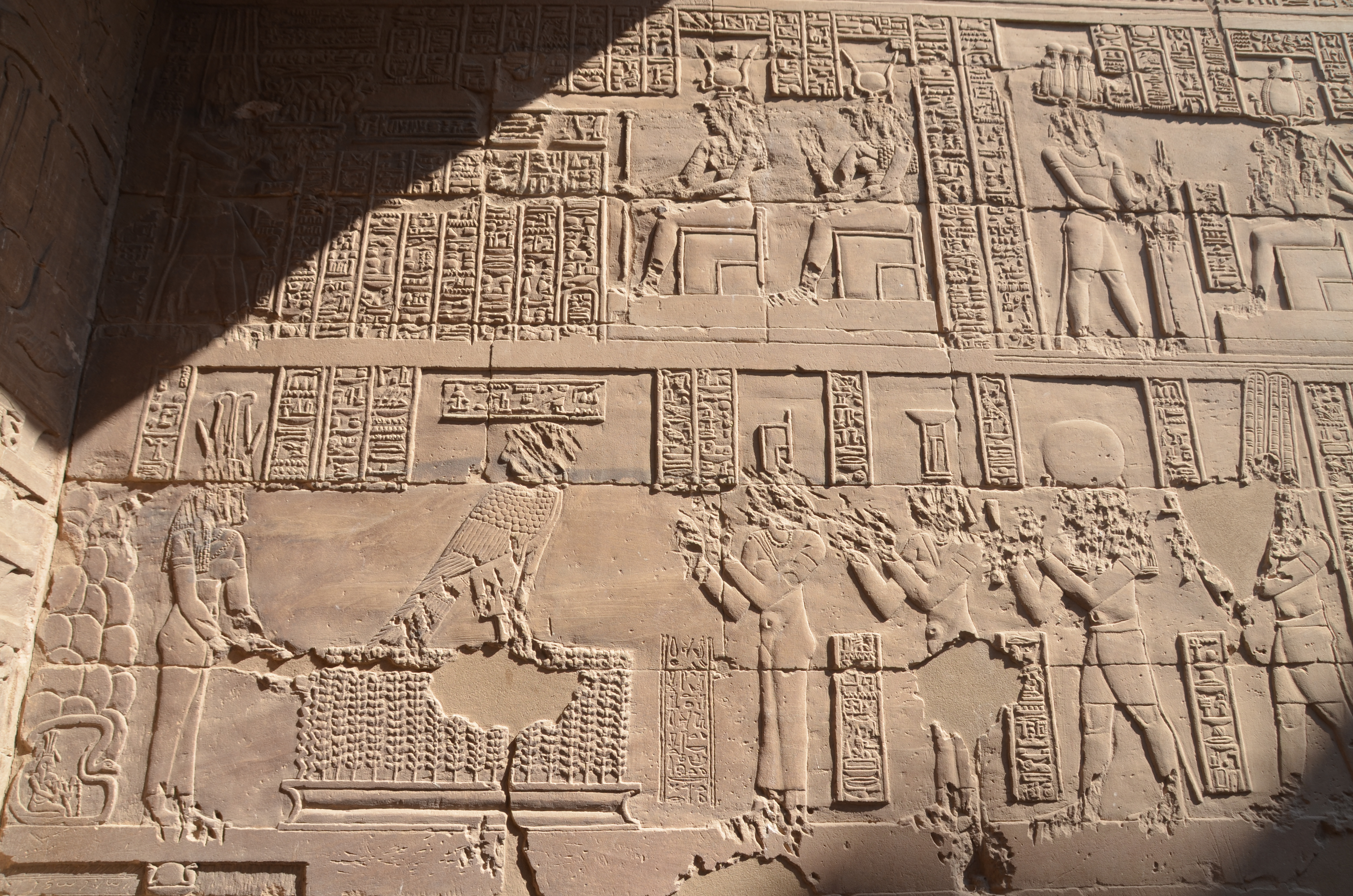
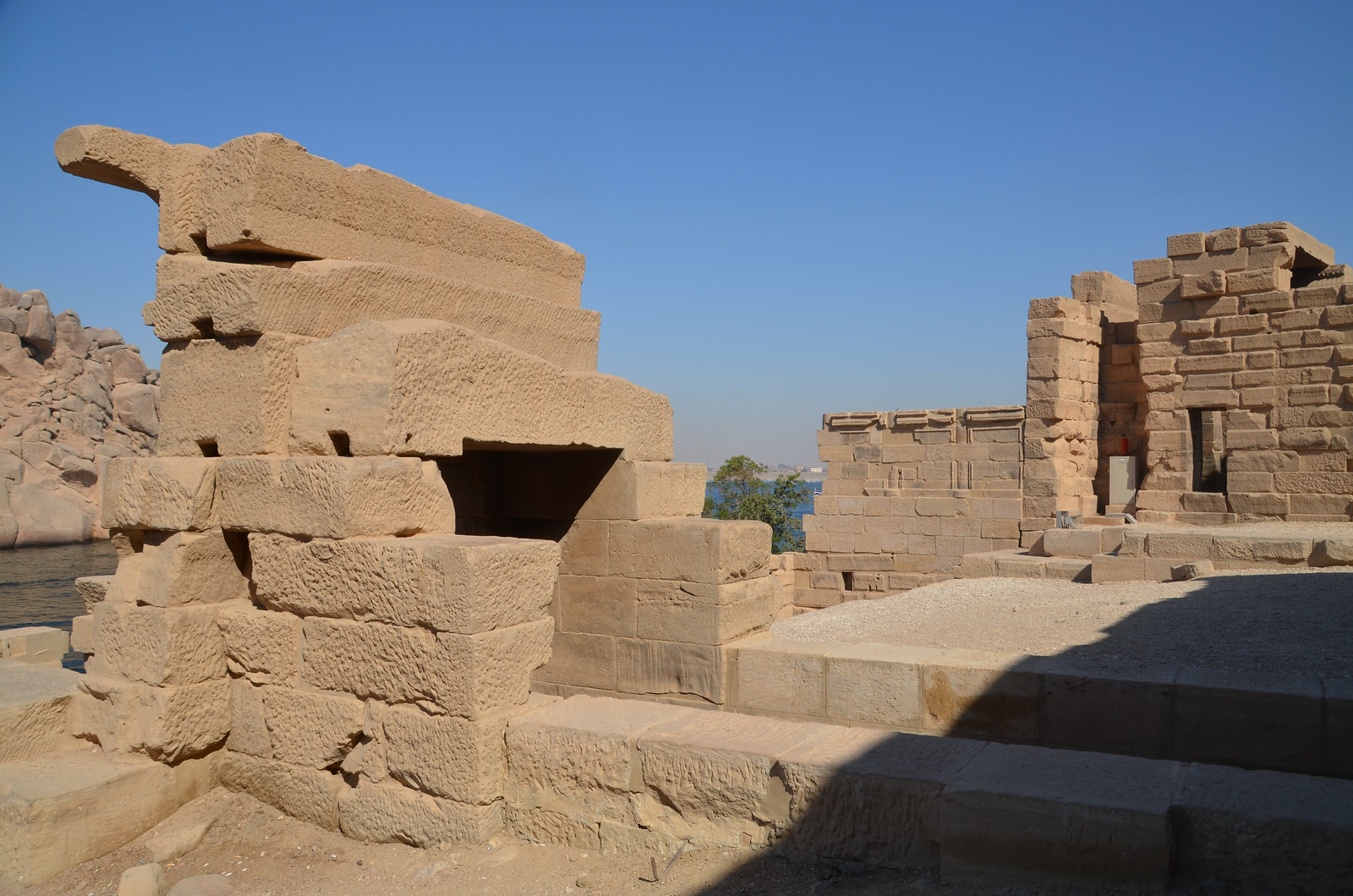
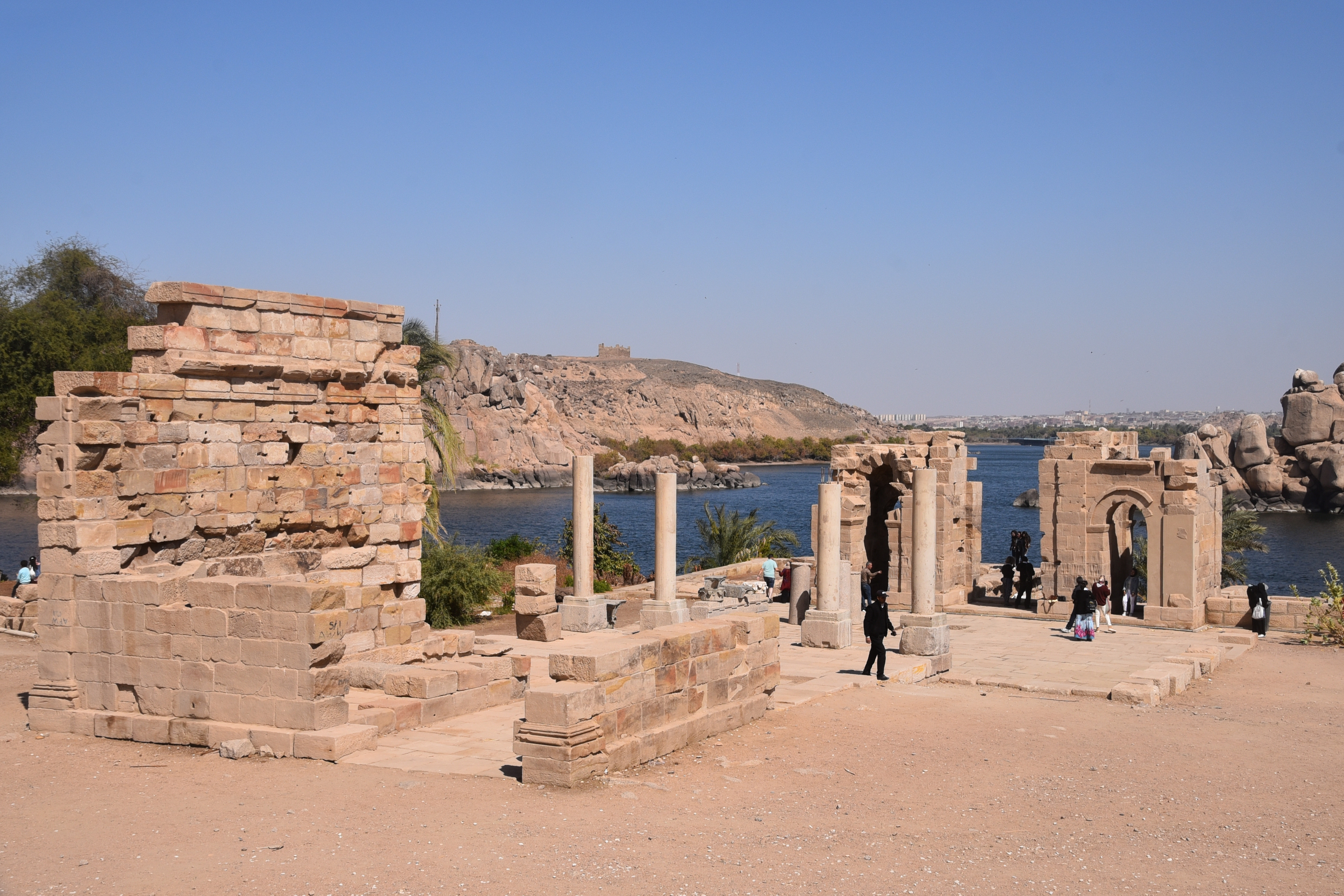
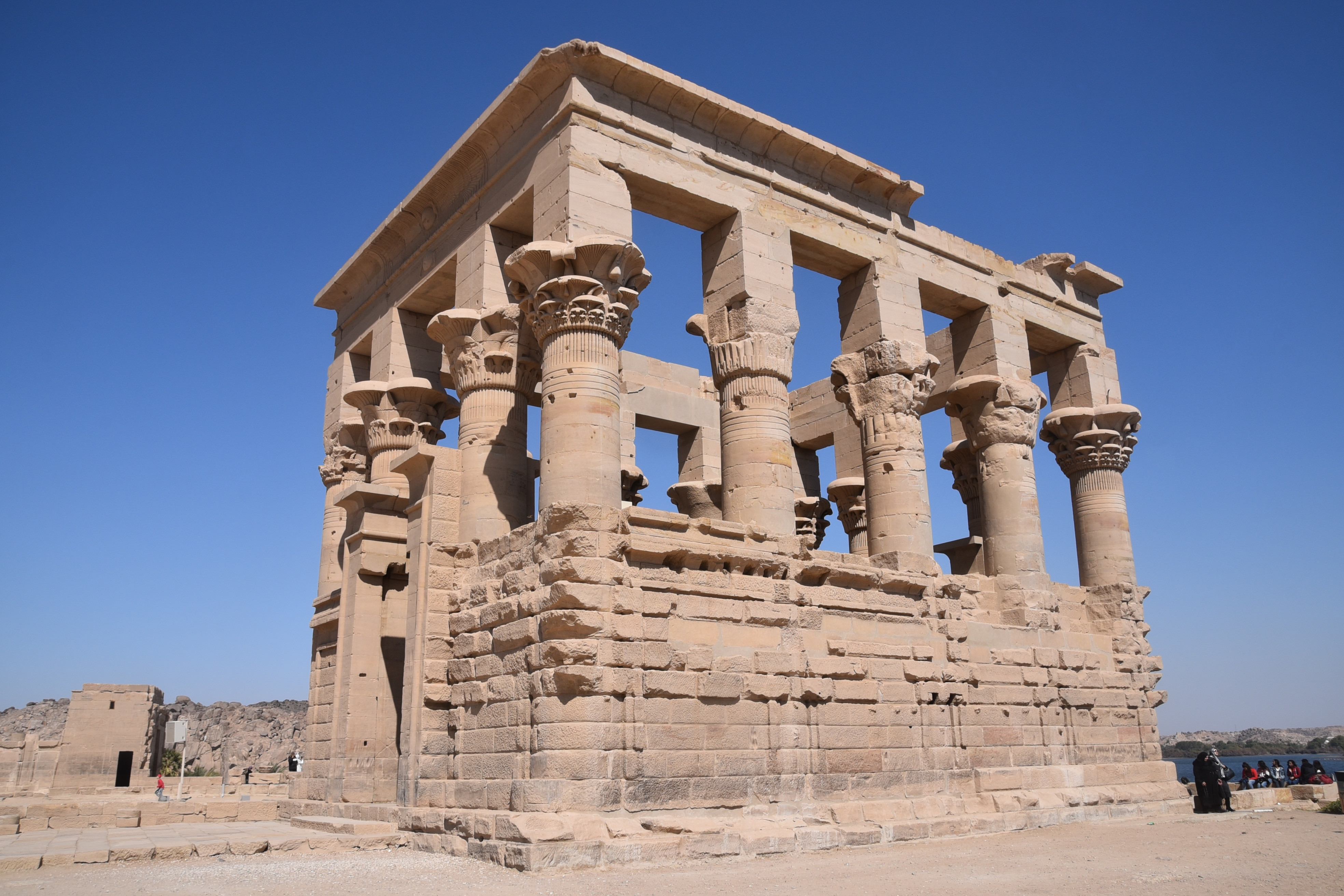
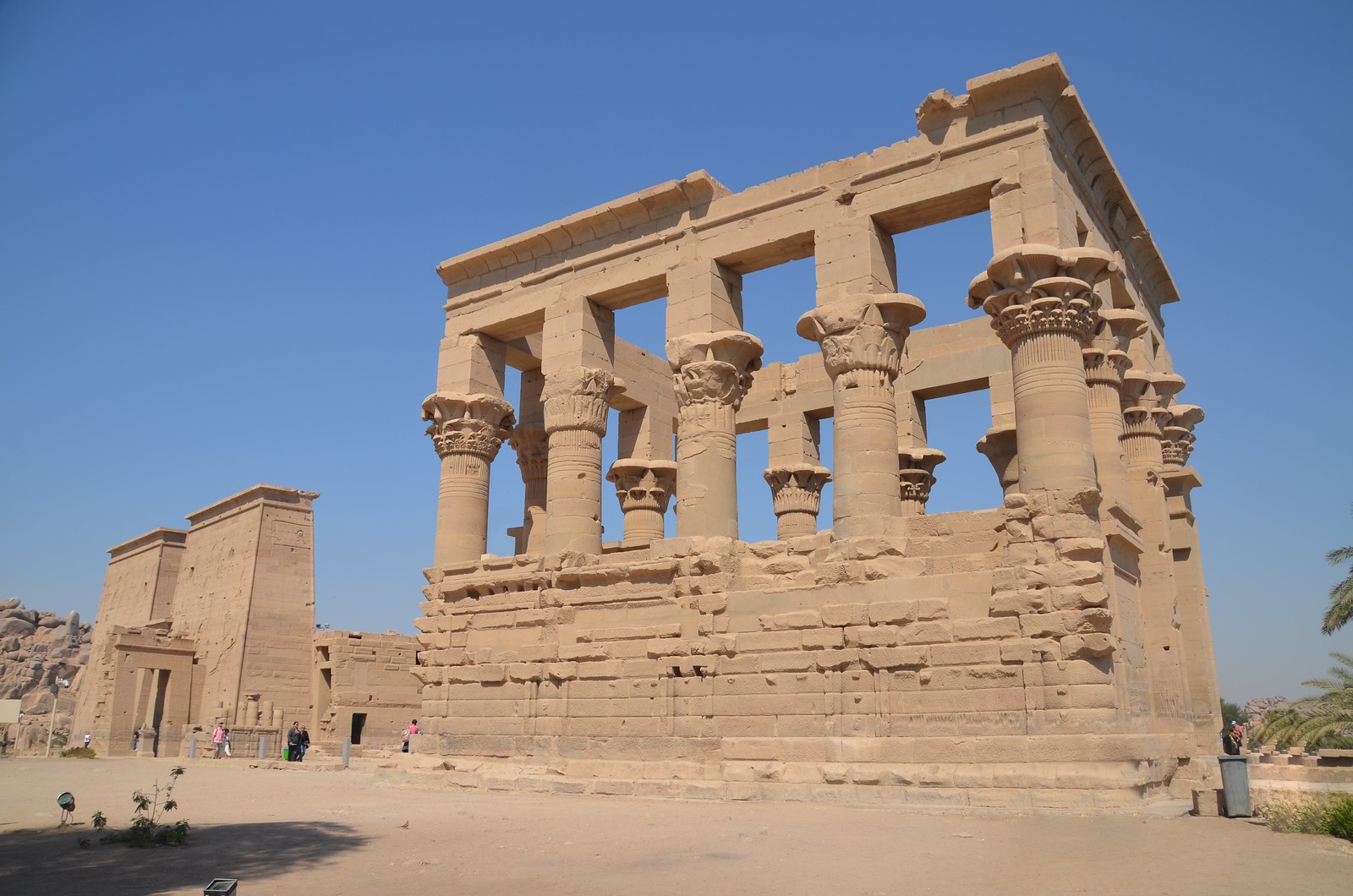
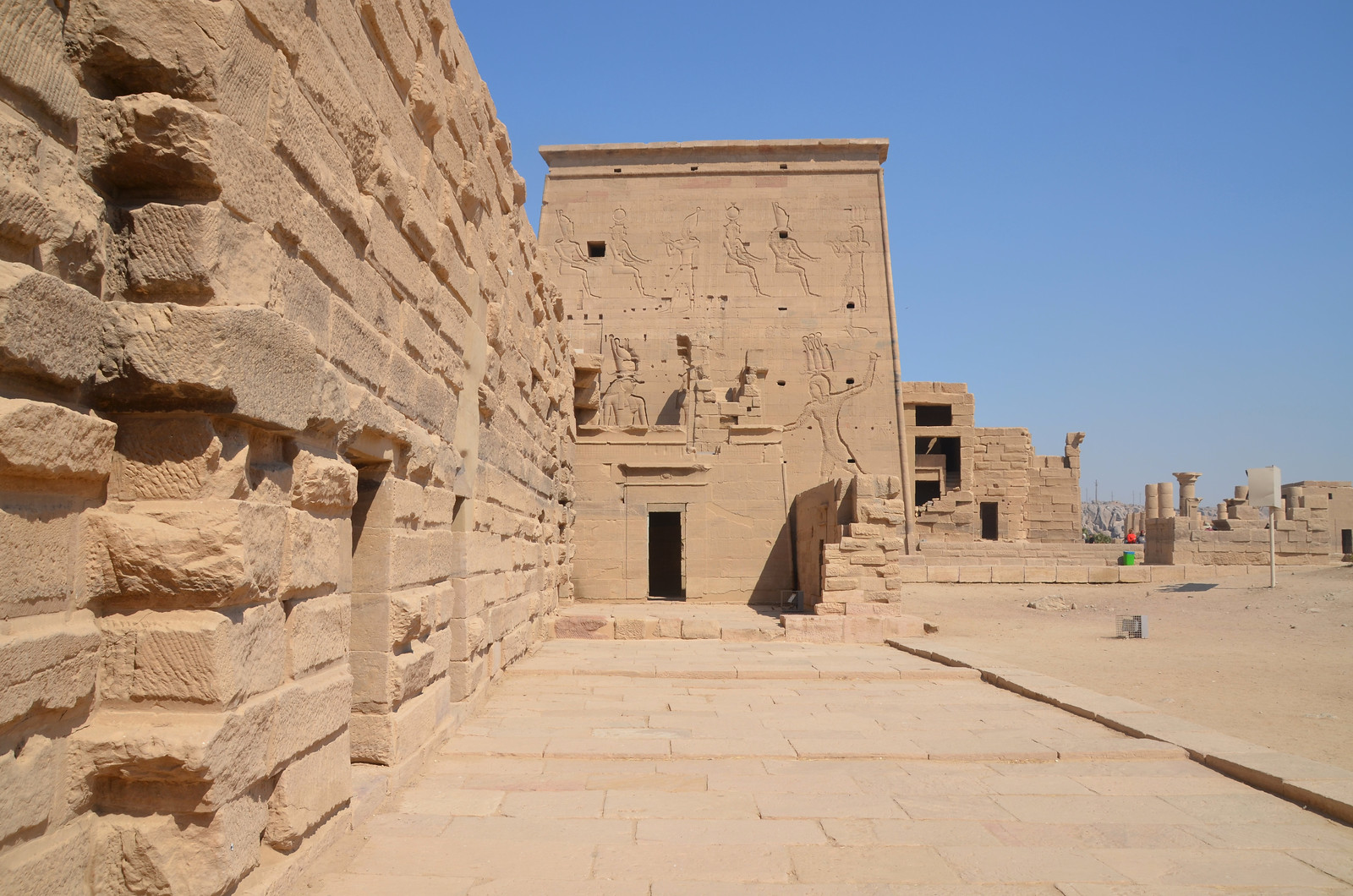
The Kiosk of Nectanebo I was built in the 30th dynasty to honour Isis. This pillared, roofless hall originally had fourteen Hathor-headed columns, of which only six remain. It is the oldest still-standing temple structure at Philae.The walls of the Kiosk of Nectanebo I are decorated with reliefs of the king sacrificing to the gods.The Kiosk of Nectanebo I and the western colonnade of the forecourt of the Temple of Isis.The Temple of Arensnuphis was built during the reign of Ptolemy IV Philopator, around 2250 BC, and was later extended by Ptolemy V Epiphanes. Arensnuphis was an anthropomorphic Nubian deity from the Kingdom of Kush.Reliefs on the walls of the Temple of Arensnuphis depicting Ptolemy IV Philopator and Ptolemy V Epiphanes offering gifts before Isis, Horus and other gods.The large, paved, trapezoidal forecourt of the Temple of Isis with the eastern colonnade and first pylon of Isis. Construction of the first pylon began under Ptolemy II Philadelphus and was completed by Ptolemy III Euergetes I, but decorations were also added by their successors.The forecourt of the Temple of Isis, with its western colonnade, was established in Augustan time.The 77 m-long western colonnade, with 32 columns and 12 openings in the rear wall, was decorated under Augustus, Tiberius, Claudius, and Nero. Most of the columns show carvings of Tiberius offering gifts to the gods.A column in the western colonnade of the forecourt with a bas-relief depicting Tiberius making offerings to the fertility god Min.A floral column capital with bundled papyrus stalks and volutes from the western colonnade of the forecourt of the Temple of Isis.View of the First Pylon of the Temple of Isis and the Gate of Ptolemy II Philadelphus. The first pylon consists of two 18 m high towers with a gate between them.The middle gate of the first pylon of the Temple of Isis with representations of Nektanebos I in front of Isis, Osiris-Onnophris, Nephthys and Hathor. On either side of the gate are large representations of the goddess Hathor.The right facade of the first pylon with reliefs showing King Ptolemy XII before Isis, Osiris, Horus and Hathor (upper register) and Horus between Hathor and Isis (lower register).The upper register of the western tower of the first pylon shows Ptolemy XII offering a mirror to the gods Osiris and Isis (left) and a menat to Isis and Horus (right).The lower register of the western tower of the first pylon shows Ptolemy XII beating a group of enemies of Egypt.The second pylon of the Temple of Isis.The colonnaded Mammisi (birth house) and left facade of the second pylon showing Ptolemy XII hidden by the back of the Mammisi in front of Osiris-Onnophris and Isis.The Hathor-headed columns of the Mammisi. The birth house occupies the western area of the second courtyard.The Mammisi at Philae was associated with the birth of Harpocrates (Horus the Child). The birth house was begun under the Ptolemies and improved upon by the Romans.The right facade of the second pylon with reliefs showing Ptolemy XII in front of Horus and Hathor. The vertical groove between Hathor and Horus was designed to hold a flagpole.The Dodekaschoinos stele of Ptolemy IV, which records the grant of tax revenues of the Dodekaschoinos region (“Land of the Twelve Schoinoi”) in 157 BC to the Temple.Behind the second pylon was the hypostyle hall of the Temple of Isis with several annexed chambers.Bas-relief with scenes of sacrifice inside the Temple of Isis.On the west side of Philae lies the Gate of Hadrian, a corridor-like passage with decorated side walls which served as a departure point for the ritual barge procession of Isis to the tomb of Osiris on the island of Bigeh.The Gate of Hadrian features several scenes from the famous Osirian myth, as well as reliefs commissioned by Roman emperors Hadrian, Marcus Aurelius, and Lucius Verus.On the lintel of the doorway, Hadrian is depicted making offerings to Osiris, Isis, and Horus (right) and to Osiris, Nephthys, and Harendotes (left).Hadrian making offerings to Osiris, Isis, and Harsiesis (right) and to Osiris, Nephthys, and Harendotes (left).Hadrian as a pharaoh making offerings to the gods.Hadrian making offerings to Osiris, Isis, and Harsiesis (Horus the child).The Gate of Hadrian.The Graffito of Esmet-Akhom is the last known inscription written in Egyptian hieroglyphs. It was inscribed on Hadrian’s Gate in AD 394. Translation: “Before Mandulis, son of Horus, by the hand of Esmet-Akhom, son of Esmet, the Second Priest of Isis, for all time and eternity. Words were spoken by Mandulis, Lord of the Abaton, great god.”North wall of the Gate of Hadrian with a representation of the Nile god Hapi crouched in his cave. This scene relates to the source of the Nile.The northwestern Nilometer is next to the Gate of Hadrian. It is reached via an underground staircase.The Temple of Harendotes (the name of the god Horus in his role as the avenger of his father, Osiris, who was slain by Seth). The temple, which was built under the emperors Claudius and Nero, had four front columns and stood on a platform with a central staircase.The Gate of Diocletian is a freestanding triumphal arch dedicated to Emperor Diocletian.The Temple of Augustus and the Gate of Diocletian.The Temple of Augustus was built by the prefect P. Rubrius Barbarus.The Temple of Hathor was decorated under Ptolemy VI, Ptolemy VIII, and Augustus. The cult of the temple focused on Hathor as the embodiment of the Sun’s Eye that was brought back from Nubia.The Kiosk of Trajan. This structure is a rectangular chamber surrounded by 14 columns with floral capitals, supporting a wooden roof. It is usually attributed to Trajan, but the actual building may date to the reign of Augustus.The Kiosk of Trajan.
The Kiosk of Trajan was never finished, as only the southern wall was decorated with two offering scenes depicting the emperor Trajan.Relief depicting Trajan offering wine to Isis and Horus.The Kiosk of Trajan.
The First Pylon (left) and the Kiosk of Trajan (right).The Temple of Imhotep was located behind the northern end of the rear wall of the first eastern colonnade. It was dedicated by Ptolemy V, possibly in gratitude for the birth of his son Ptolemy VI.The outer courtyard of the Temple of Philae.Philae.View of Philae from Lake Nasser.View of Philae from Lake Nasser.



















































 following hadrian photography