
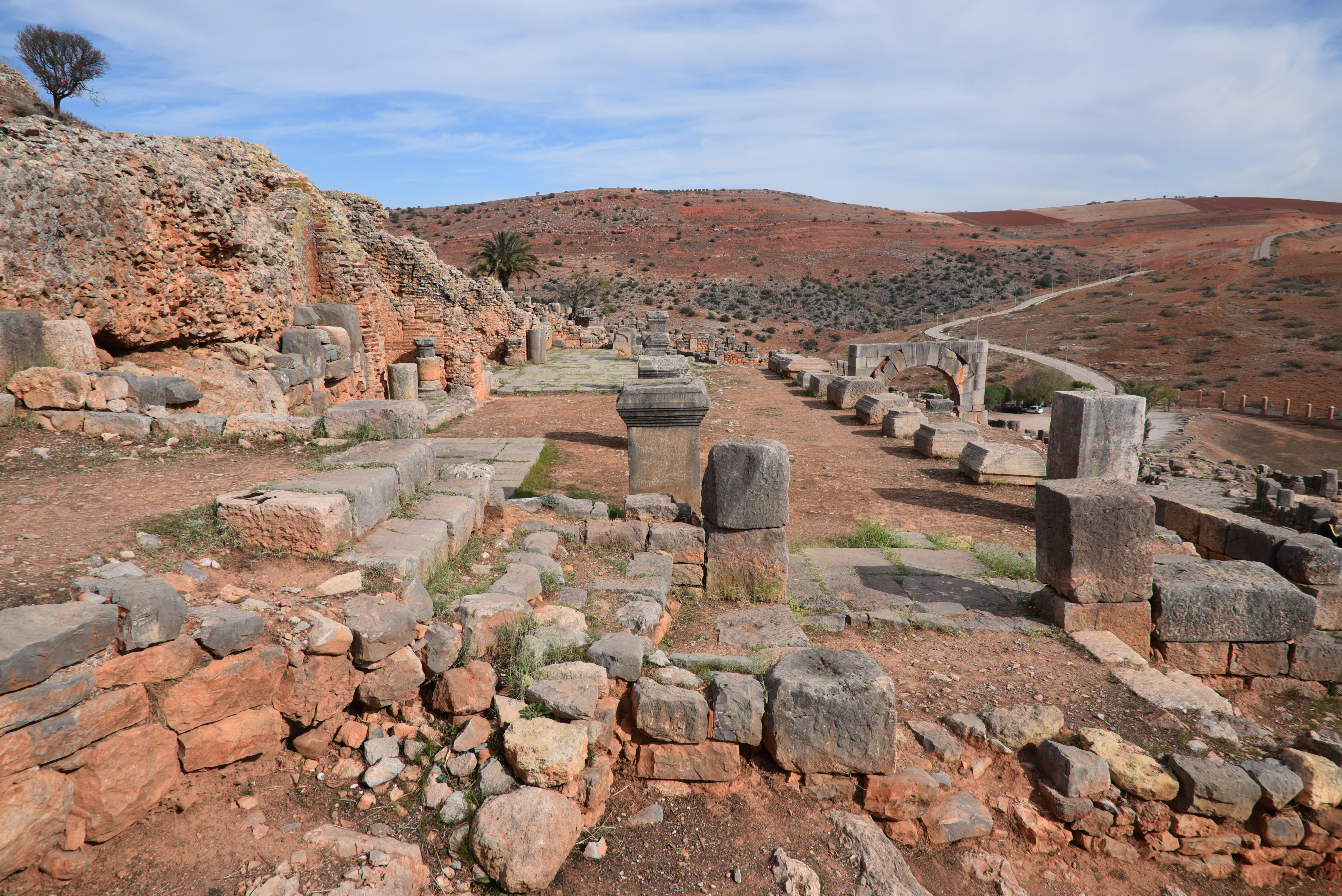
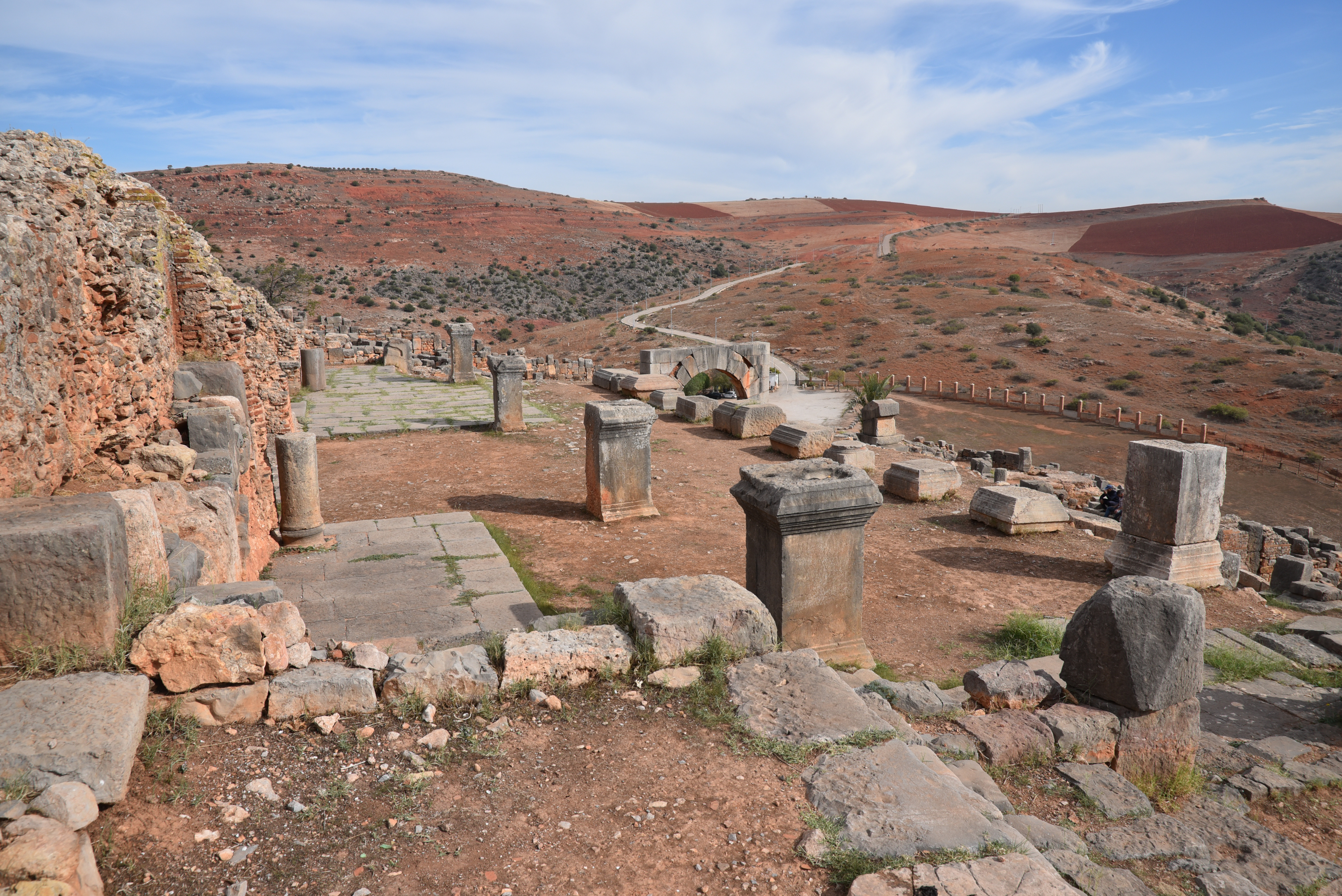
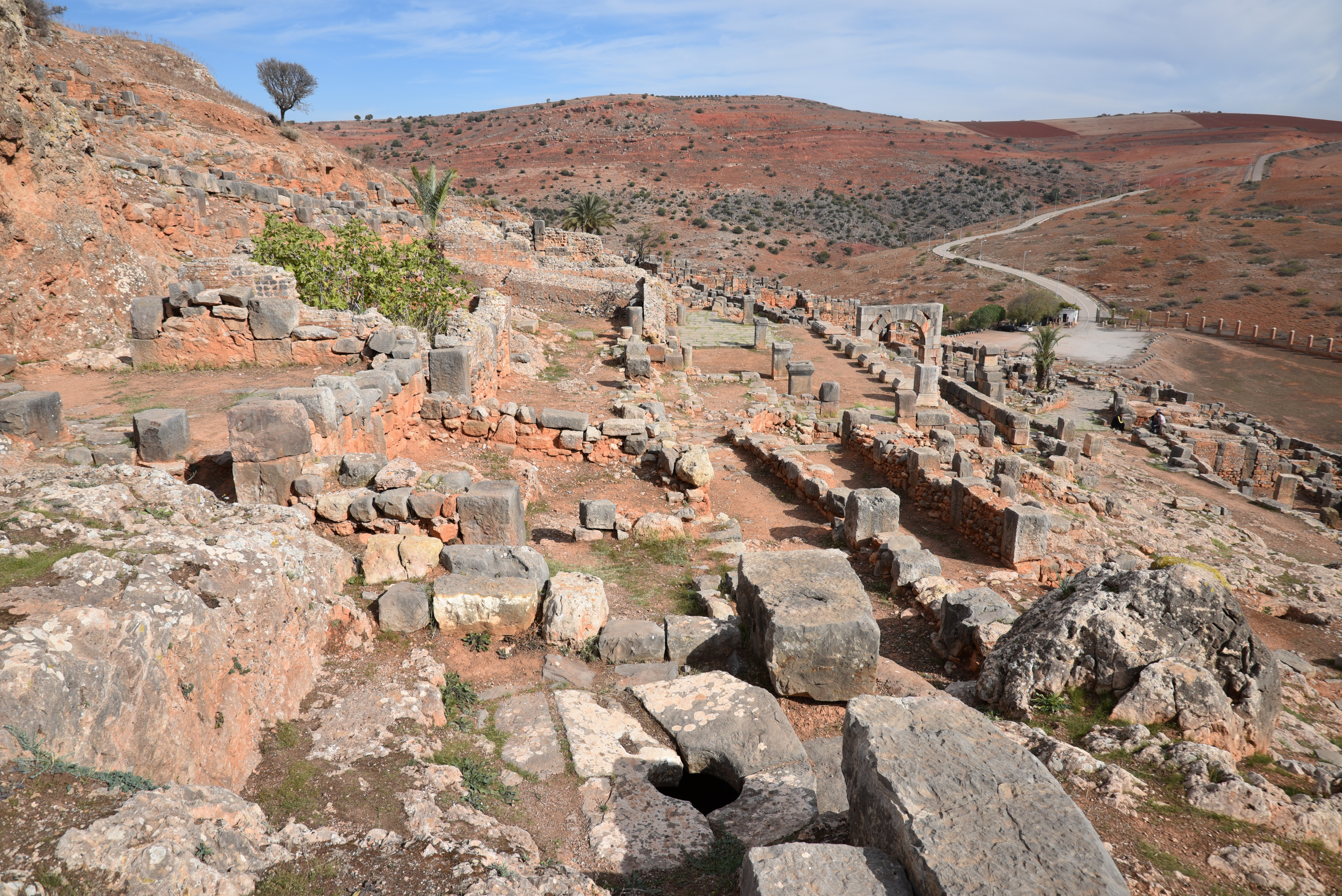
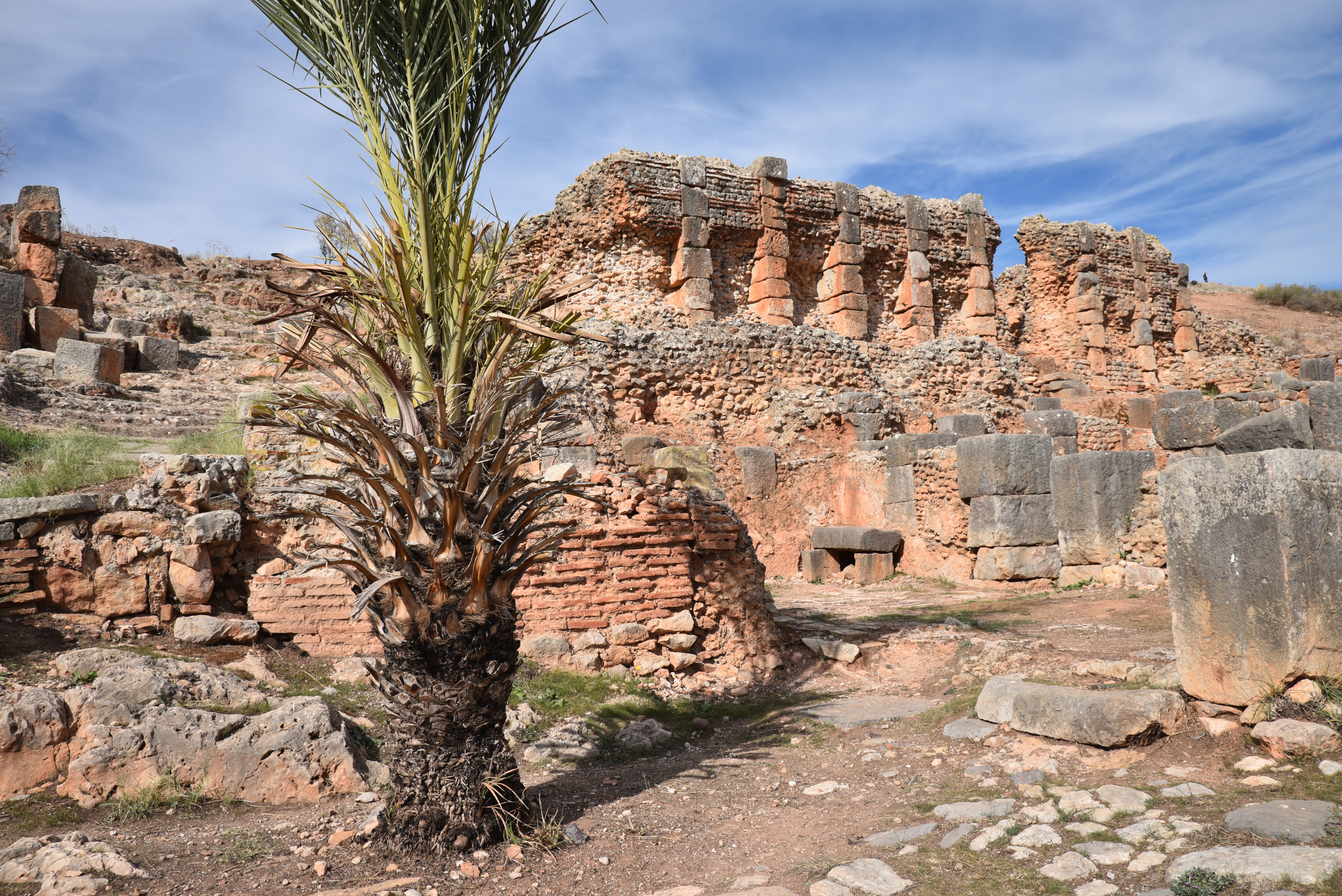
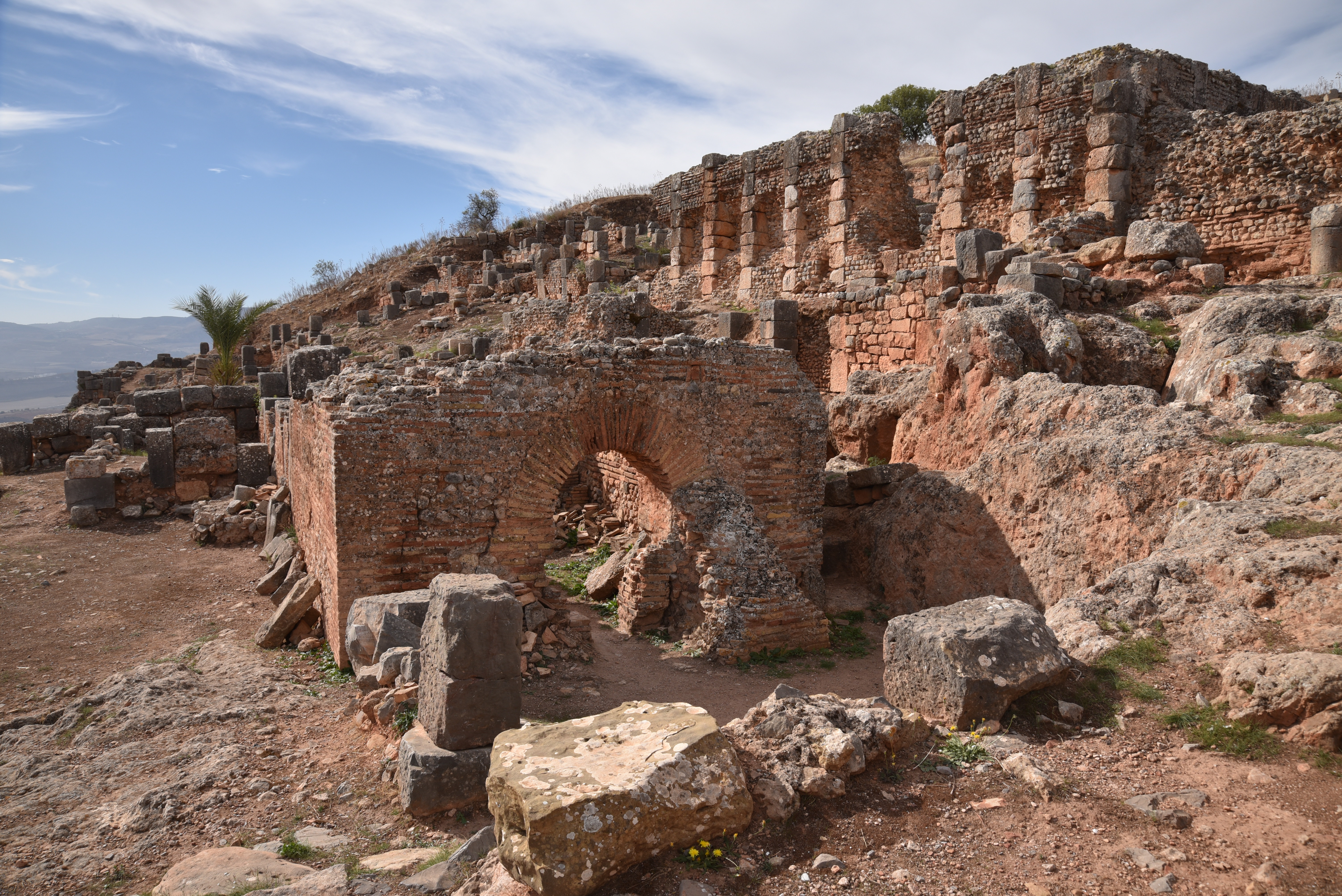
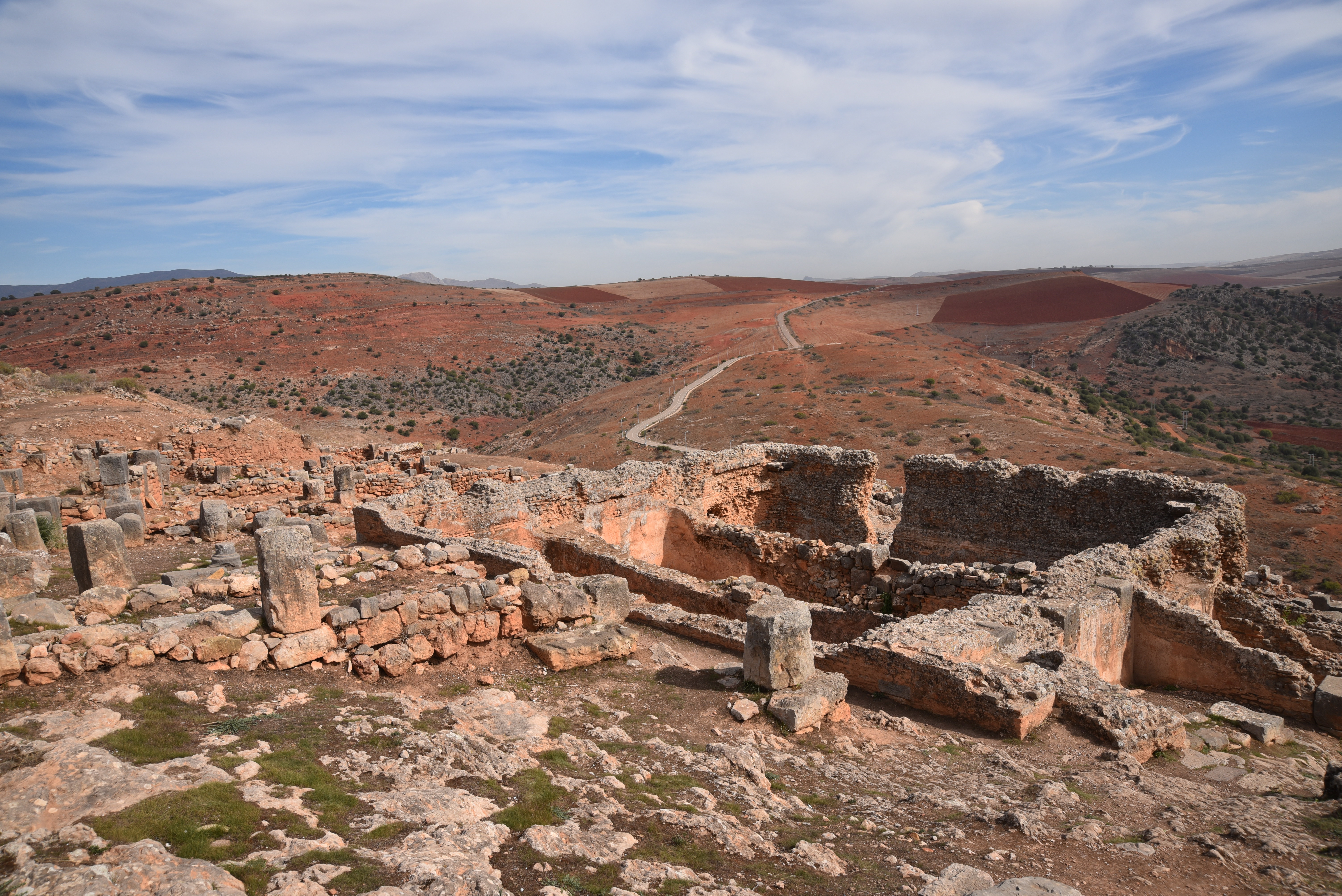
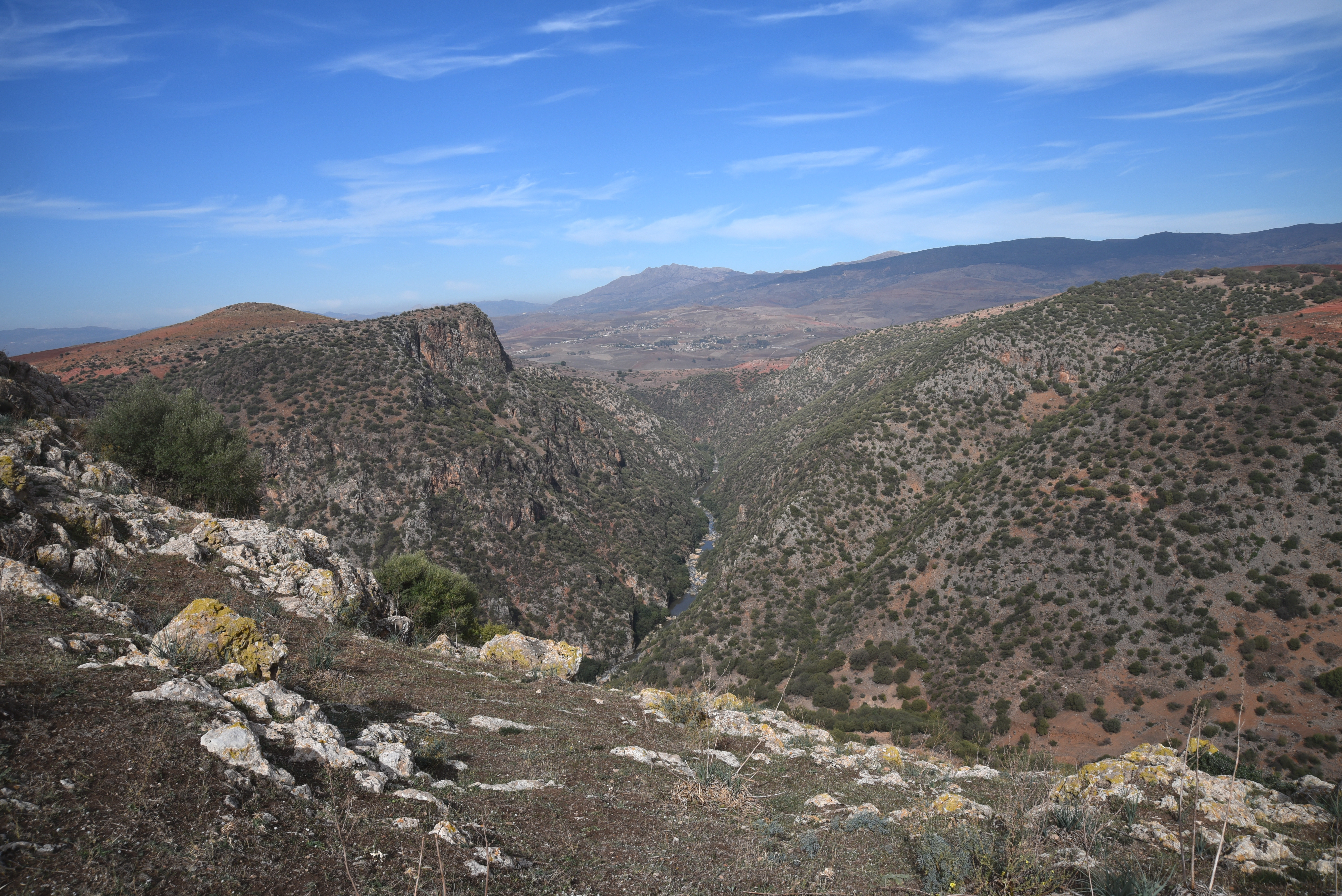
Castellum Tidditanorum (modern Tiddis in Algeria) was a Roman city in Numidia, established as a military settlement in Augustus’ time. Built on a steep hillside of red earth with commanding views over a deep canyon, the Romans adapted their rule of town planning to the sloping topography, with streets winding their way up to the summit. Castellum Tidditanorum had gates, a forum, thermal baths, industrial installations (fillers, oileries, and pottery workshops), religious buildings, and a sanctuary of Mithras.
Coordinates: 36° 27′ 48″ N, 6° 29′ 2″ E
Tiddis was built as a defensive castellum (small Roman fort), one of a series of fortified villages surrounding the larger settlement at Cirta (Constantine) and protecting its territory. There was a settlement on this site from early times, at least since the Neolithic Berbers, but the Romans developed the town.
The Roman military settlement established in Augustus’ time eventually grew civil, adapting their town planning rule to the sloping topography, with streets winding their way to the summit. Colonnades, a triumphal arch, a small forum, a Mithraeum, a Christian neighbourhood, and the cardo maximus are among the surviving remains of this imperial centre of Roman culture.
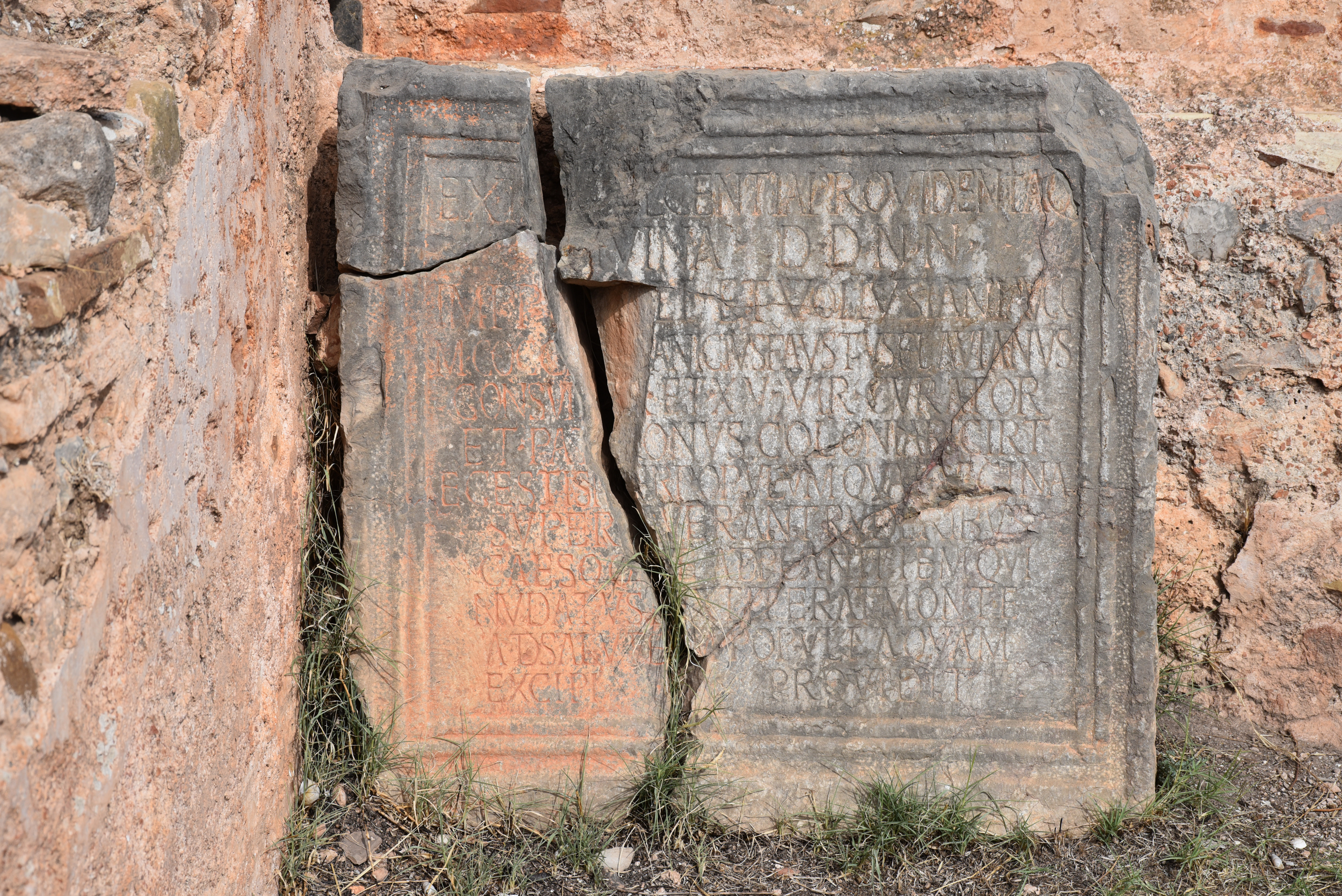
Tiddis was the home of Quintus Lollius Urbicus, son of a Numidian Berber landowner. Quintus fought with Legio XXII Primigenia in Germany and Legio X Gemina in Pannonia, participated in the Bar Kokhba Revolt in Judaea, and was appointed consul and then governor of Roman Britain between 139 and 142. Quintus erected a circular family mausoleum, still standing outside the town on what was most likely the family estate.
PORTFOLIO

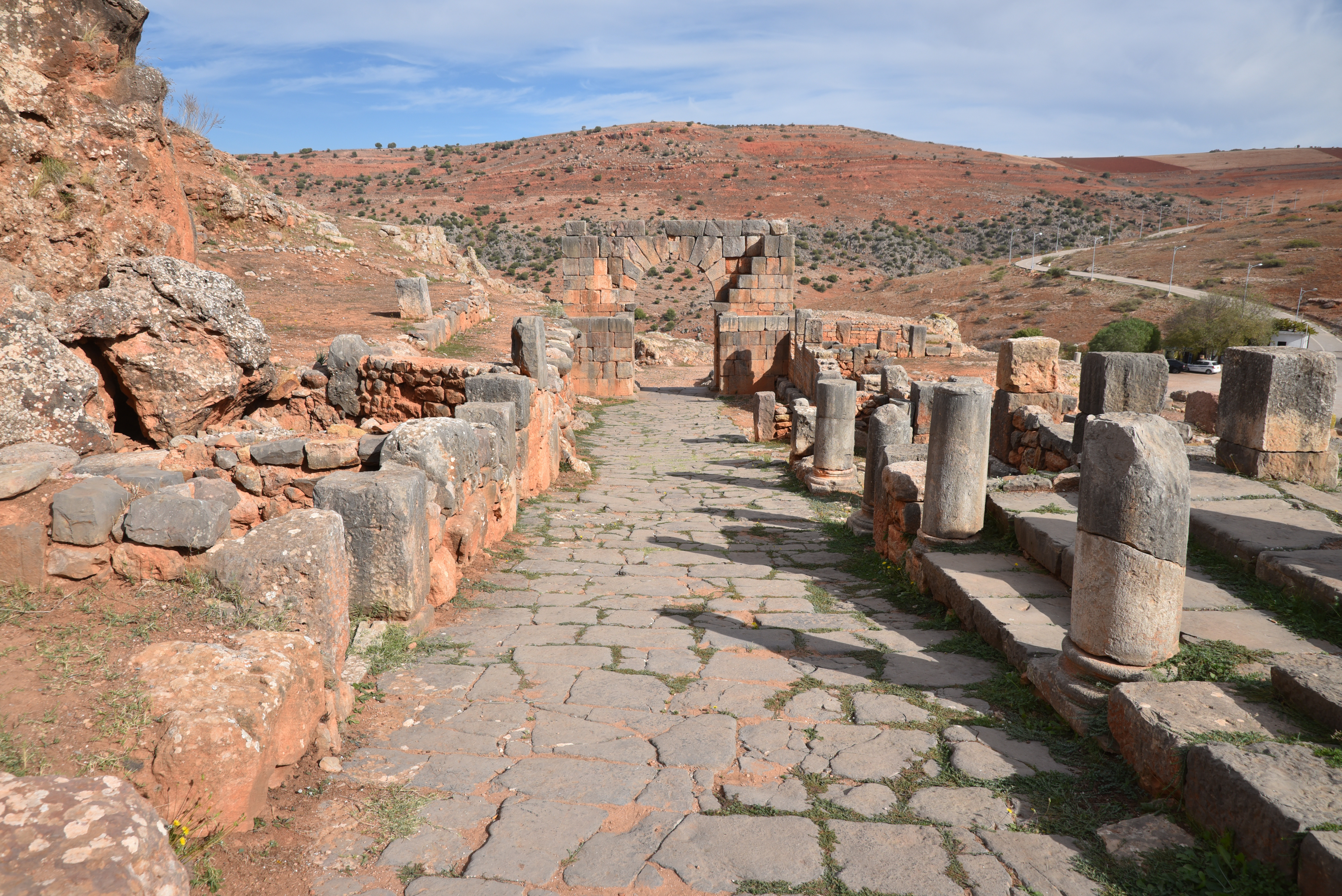


I(nvicto) M(ithrae) cultore/s de suo a s/olo // aedificarun[t]
To the unconquered Mithras, his devotees built this from their own funds.


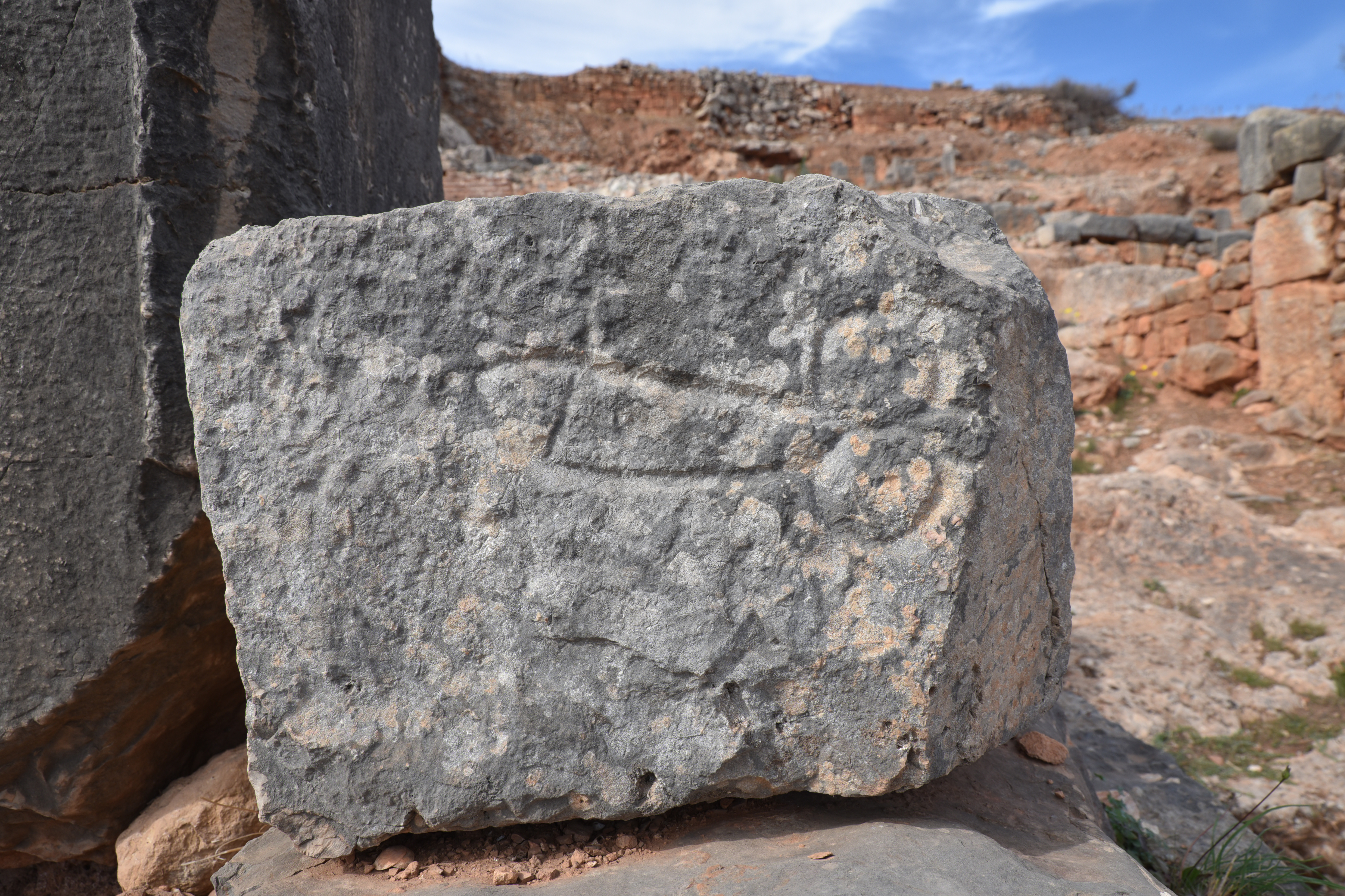


Left altar: Votive altar set up by Lucius Pescennius Sedatus in honour of his friend Quintus Voltius Maximus (ILAlg 2, 3615)
Right altar: Dedication to the Genius Populus by Q. Leptius Musteolus (ILAlg II.1, 3575)







References & links:
- The Splendours of Roman Algeria
- CASTELLUM TIDDITANORUM (Tiddis) Algeria – The Princeton Encyclopedia of Classical Sites
- Blas de Roblès, Jean-Marie; Sintes, Claude; Kenrick, Philip. Classical Antiquities of Algeria: A Selective Guide (p. 127). Society for Libyan Studies. pp. 280-306
 following hadrian photography