Sbeitla is a small town located in west-central Tunisia, near the modern city of Kasserine, and is home to the ancient Roman town of Sufetula. Initially established as a municipium, a self-governing city with partial Roman citizenship, it was later elevated to the status of a Roman colony within the province of Africa Proconsularis. By the 3rd century AD, Christianity had established a strong presence in the area, and many of the churches visible today date back to this period, especially after the city became part of the newly created province of Byzacena. The ruins of Sufetula are remarkably well-preserved and include an impressive forum, public baths, several churches, and a unique Capitolium complex composed of three separate temples dedicated to Juno, Jupiter, and Minerva.
Although the early history of Sufetula is not well-documented, it is generally believed to have been founded in the 1st century AD, possibly under Emperor Vespasian. The city’s name may derive from the term ‘sufetes’, a Punic title used for magistrates in Carthaginian towns. Sufetula rose to prominence as a Roman colonia during the reigns of Antoninus Pius and Marcus Aurelius, and later became an important Christian centre under Byzantine rule. Inscriptions suggest that the city remained prosperous well after the fall of the Western Roman Empire, thanks largely to its thriving agricultural economy, particularly olive oil production.
The town played a significant role in the history of Roman Africa and later became the site of a heroic struggle for dominance between Christians and Muslims in the region. During this period, Byzantine Africa played a crucial role in supplying Constantinople with corn and olive oil. Although Emperor Heraclius had successfully repelled the Sassanid Persian Empire in the east, a new challenge arose from the Arabian Peninsula, where the tribes had united under the banner of Islam.
Aerial view of Sufetula (Sbeïtla). Drawing by Jean-Claude Golvin. jeanclaudegolvin.com
In 647 AD, Sufetula was conquered by Muslim forces led by Abdullah ibn Sa‘ad during the early Islamic expansion into North Africa. Although the city never regained its former Roman and Byzantine stature, the Islamic conquest marked the beginning of the region’s gradual Arabization and Islamization. Sufetula’s importance waned thereafter, as newer urban centres emerged under Islamic rule.
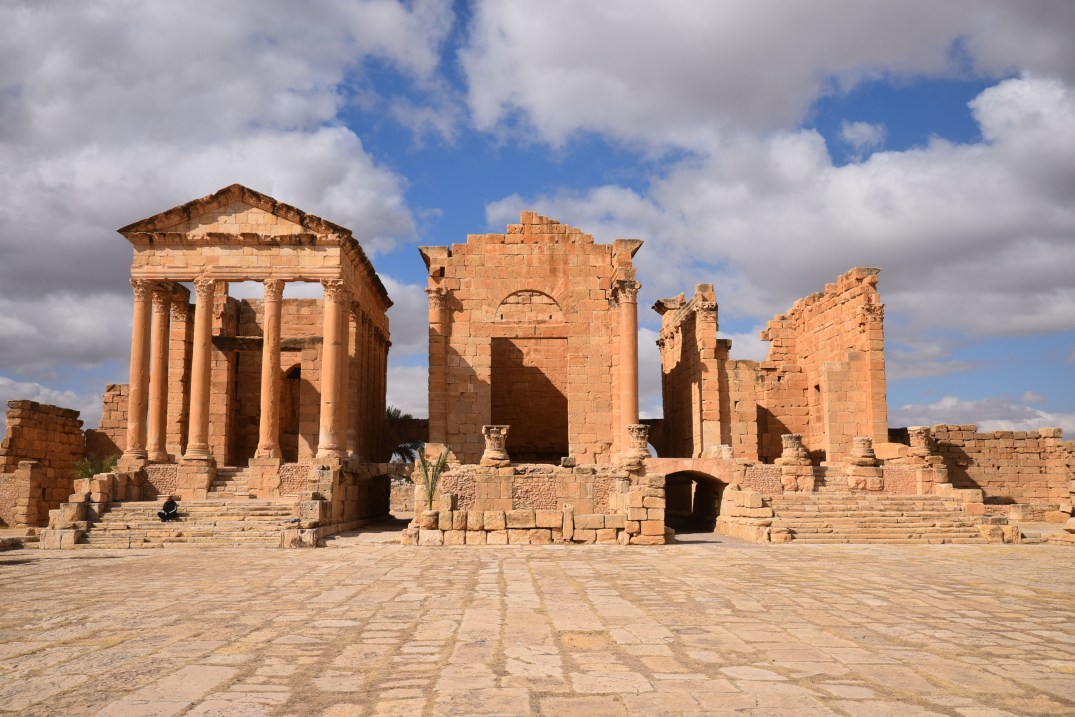
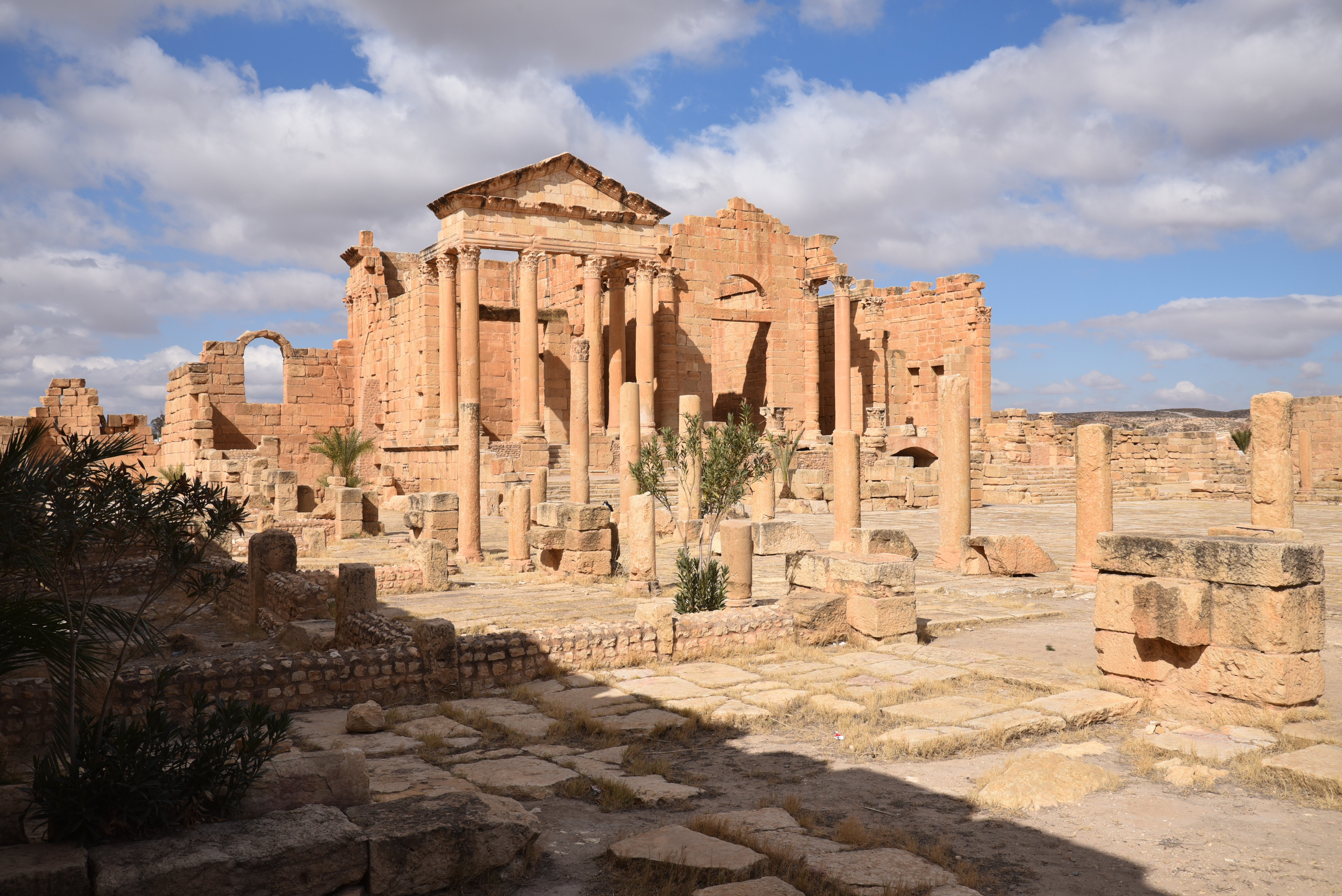
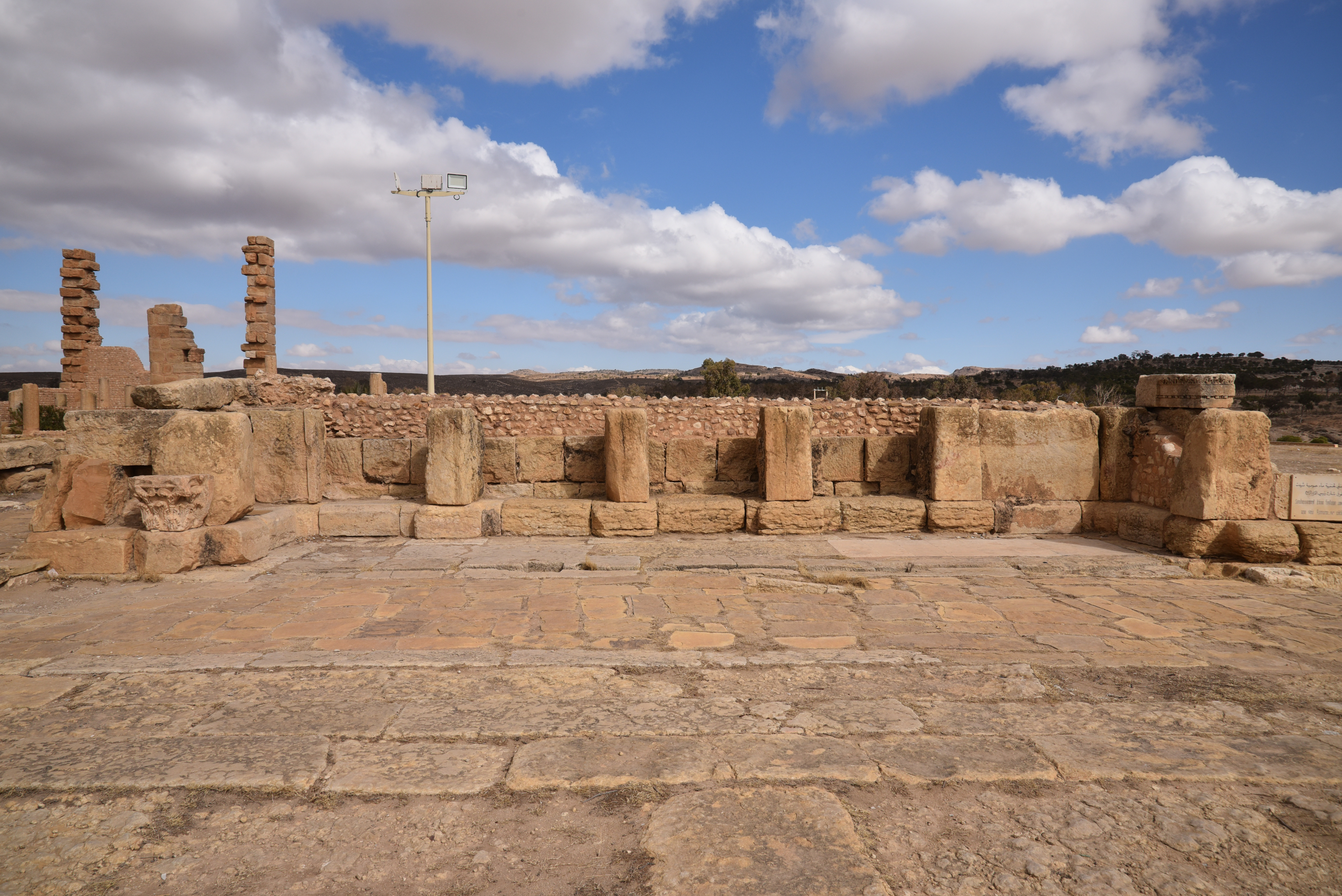
Because no modern settlement was built directly over ancient Sufetula, the Roman city plan remains exceptionally well-preserved, particularly the Forum, which is considered one of the best-preserved in the Roman world. This rectangular-walled enclosure measures approximately 72 by 60 meters (238 by 197 feet) with a monumental gateway at the centre of one side, and smaller entrances on the remaining three. Opposite the main entrance stand three imposing temples, believed to be dedicated (from right to left) to Juno, Jupiter, and Minerva. Opposite this gate, across the vast, almost square Forum, stand three massive temples that are believed to be dedicated (from right to left) to Juno, Jupiter, and Minerva.
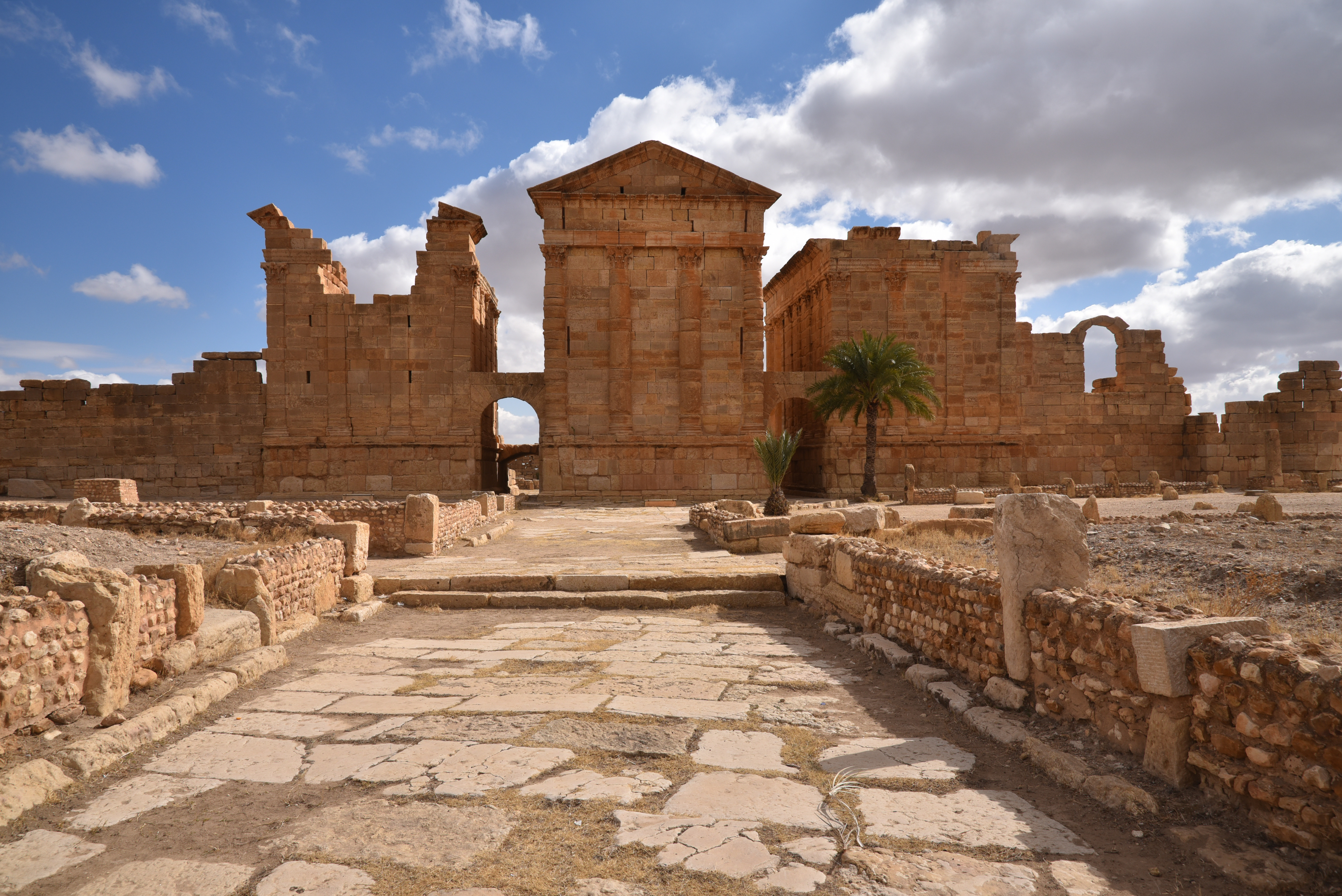
The entrance gateway was dedicated to Antoninus Pius, as recorded in an inscription in the frieze, though the lettering is heavily eroded and only partially legible today.
……IVI • HADRIANI • ANTONINI
. . . DIVI • NERVAE • PRONEP . . . . R
. . INO . . . PONT MAX • T . .II • P • P
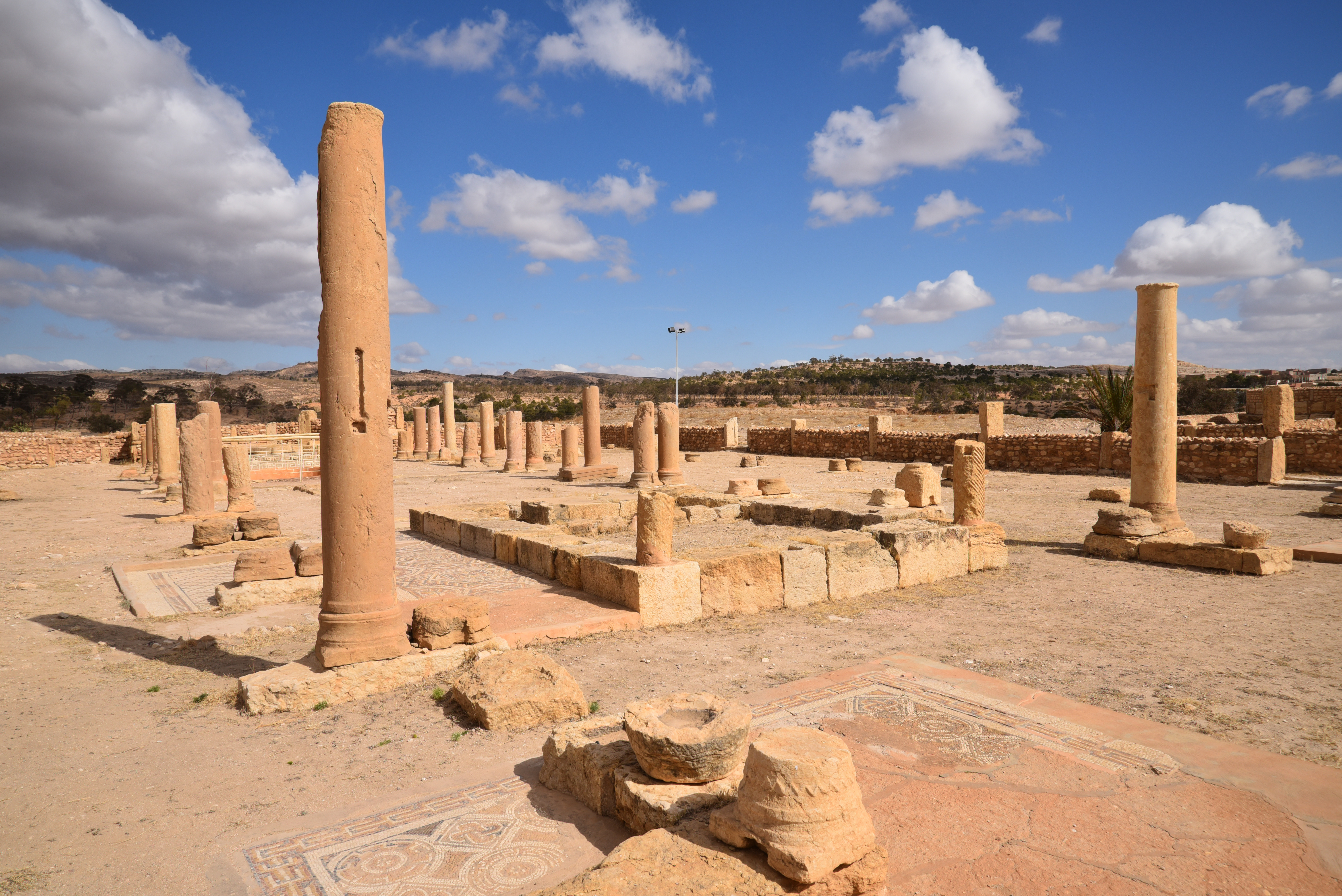
Beyond the Forum, visitors can explore numerous well-preserved structures that reflect the city’s rich history and vitality. These include public baths, a basilica, and a Byzantine church. The presence of Christian monuments, such as chapels and baptisteries, underscores Sufetula’s importance in the early Christian era. Additionally, remnants of homes, paved streets, and water systems offer a rare and vivid glimpse into daily life in a Roman provincial city.
PORTFOLIO
The Arch of Diocletian, built between AD 285 and 305.The Arch of Diocletian formed part of the old walls to the south of the site. It was likely built to commemorate either the Decennalia of Diocletian in AD 293 or his triumph with Maximian in AD 303-304. It is one of the best-preserved Roman triumphal arches in North Africa.The Roman Theatre, built in the 2nd century AD, had a seating capacity for over 3,500 spectators.The Roman Theatre.View of the Arch of Antoninus Pius and the Temples of the Roman Forum.The paved road leading to the Forum.The Arch of Antoninus Pius leading to the Forum and Capitolium. This gateway was built in the style of a triumphal arch and formed part of the ancient walls. It can be dated to AD 138–61 thanks to an inscription which refers to the Emperor Antonius Pius and his two adopted sons, Marcus Aurelius and Lucius Verus.At the heart of the city lies the forum, a rectangular walled plaza (72 × 60 meters) that served as the civic and religious centre. Accessed through a monumental gateway dedicated to Antoninus Pius, it is one of the best-preserved forums in the Roman world.The Forum, paved with huge stone slabs, was surrounded by porticoes on three sides and the Capitoline temples on the fourth.Dominating one end of the Forum is the Capitolium, a raised platform with three separate temples dedicated to Jupiter, Juno, and Minerva, an unusual arrangement compared to the single-temple Capitoliums of most Roman cities. Their high staircases, columned façades, and carved pediments remain strikingly intact.The central temple dedicated to Jupiter, accessible only by steps from the side, was the most opulent of the three temples, although the temple of Minerva has more elegant columns.Dedication to Venus Genetrix in the Forum. ILAfr 120 Veneri / Genetri/ci Aug(ustae) sac(rum) / C(aius) Caecili/us Maximi/nus IIvir fe/citIn the 6th century AD, the Forum was fortified by the Byzantines, who blocked the porticoes and passages between the temples.View of the Capitolium from the back.The Basilica of Servus, a Byzantine-era church built on a platform that was placed over the city’s main road, the decumanus maximus. Archaeologists believe that it was the Donatist cathedral of Sufetula.The Basilica of Vitalis, built in the 5th or early 6th century AD. It is a Byzantine church known for its well-preserved baptistery.The Basilica of Vitalis was a large structure, measuring about 50 meters long and 25 meters wide, and was accessible through four side doors.The richly decorated baptistery of the Basilica of Vitalis features a cross, florets, and a laurel garland.A basin near the Basilica of Vitalis decorated with a mosaic with Christian symbols.
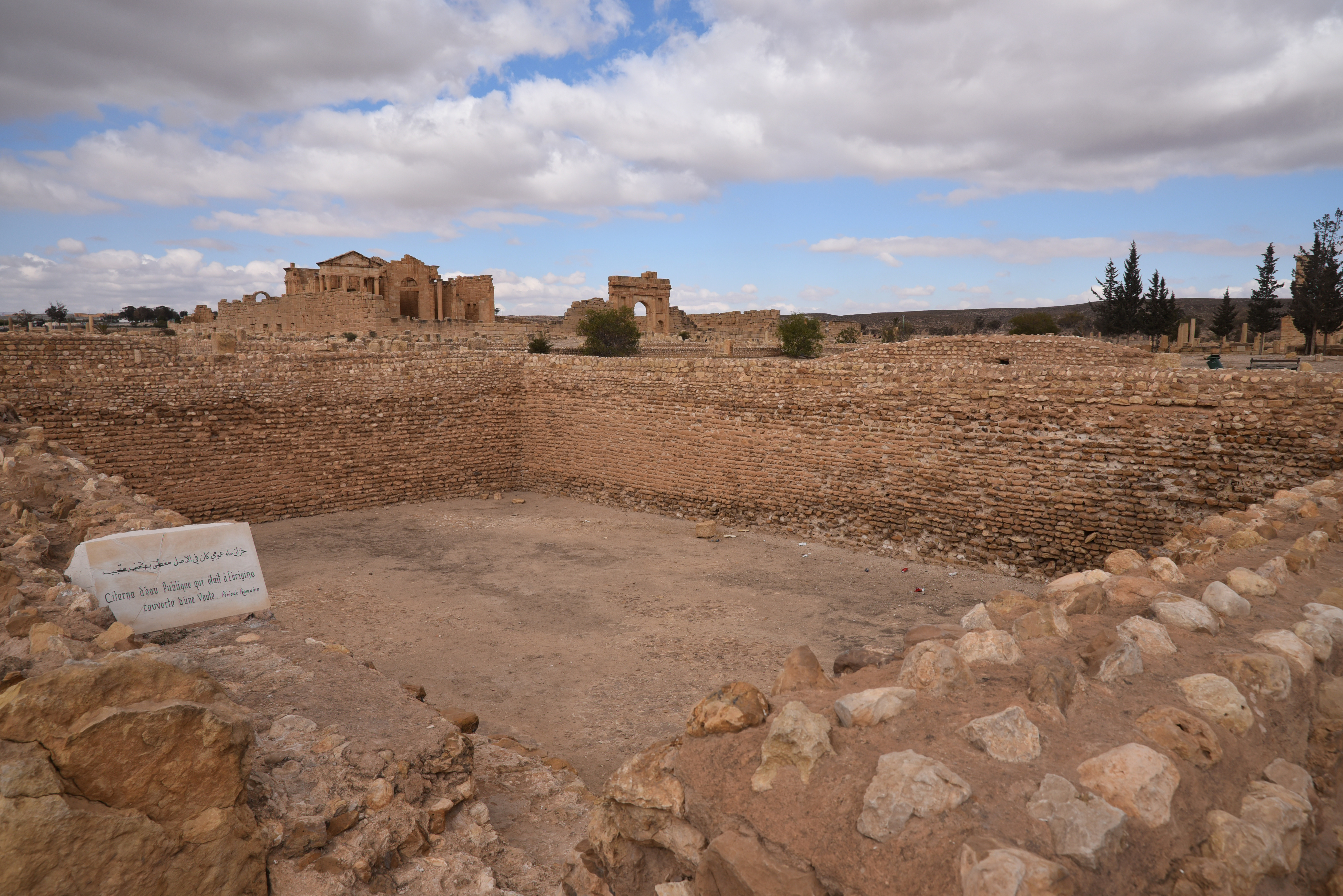
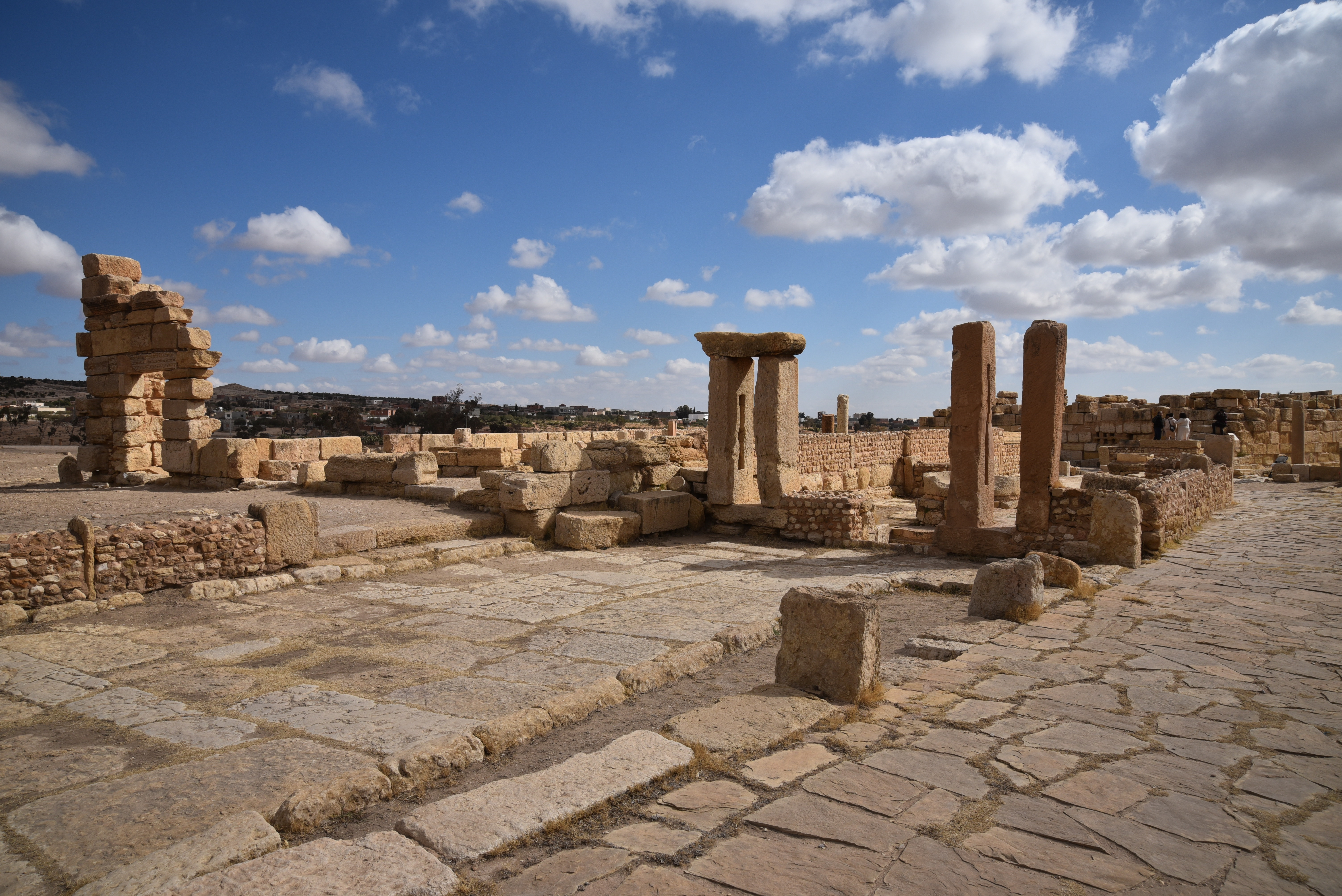
The Public Baths. The complex included frigidaria (cold rooms), tepidaria (warm rooms), and caldaria (hot rooms), along with hypocaust heating systems and water channels.The Public Baths with with hypocaust heating system.The room dedicated to exercise and decorated with a geometric mosaic.A basin in a private bath complex with a mosaic of fish and crustaceans.A large cistern that supplied water to the city, probably supplemented by an underground canal.A stone-paved street.
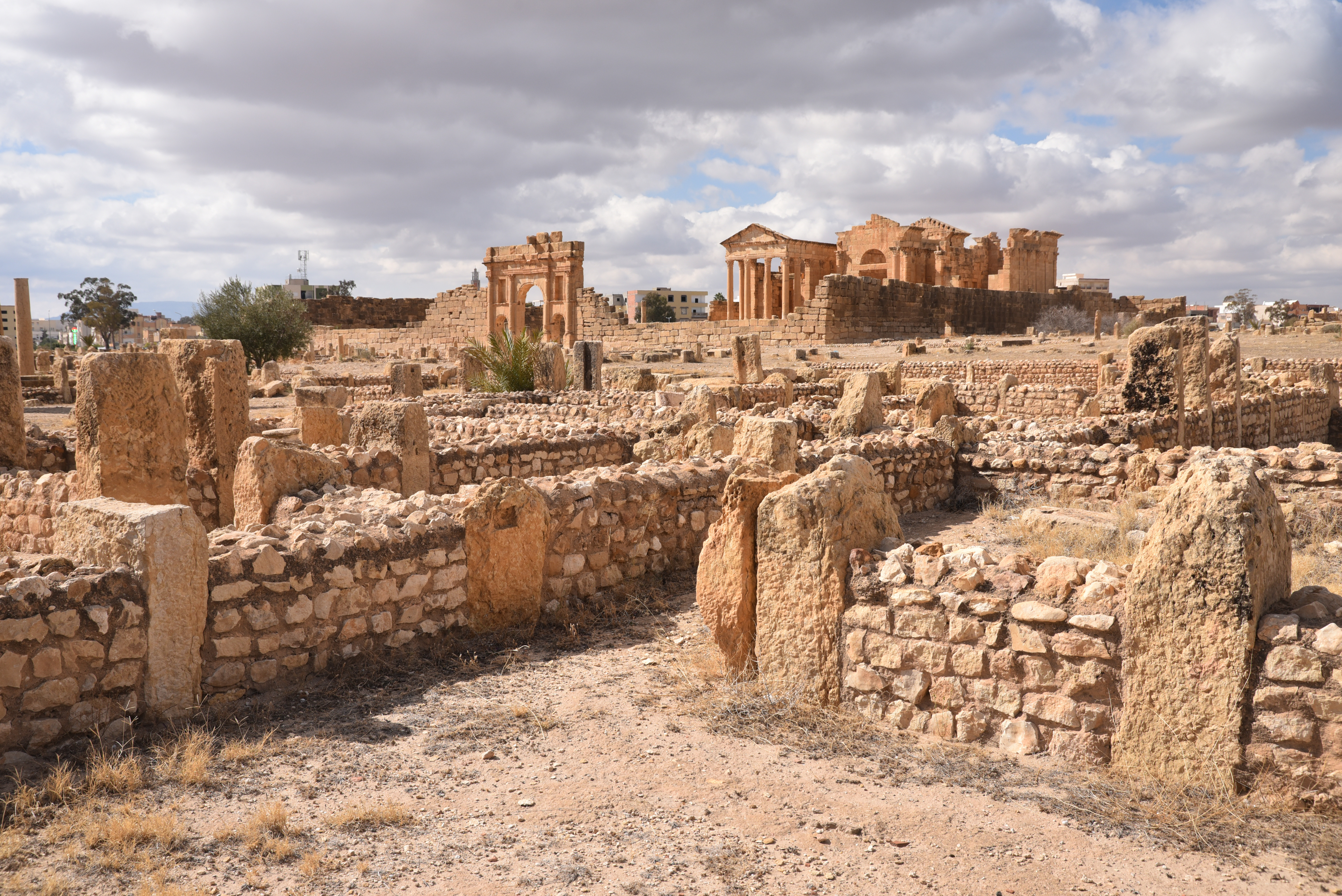
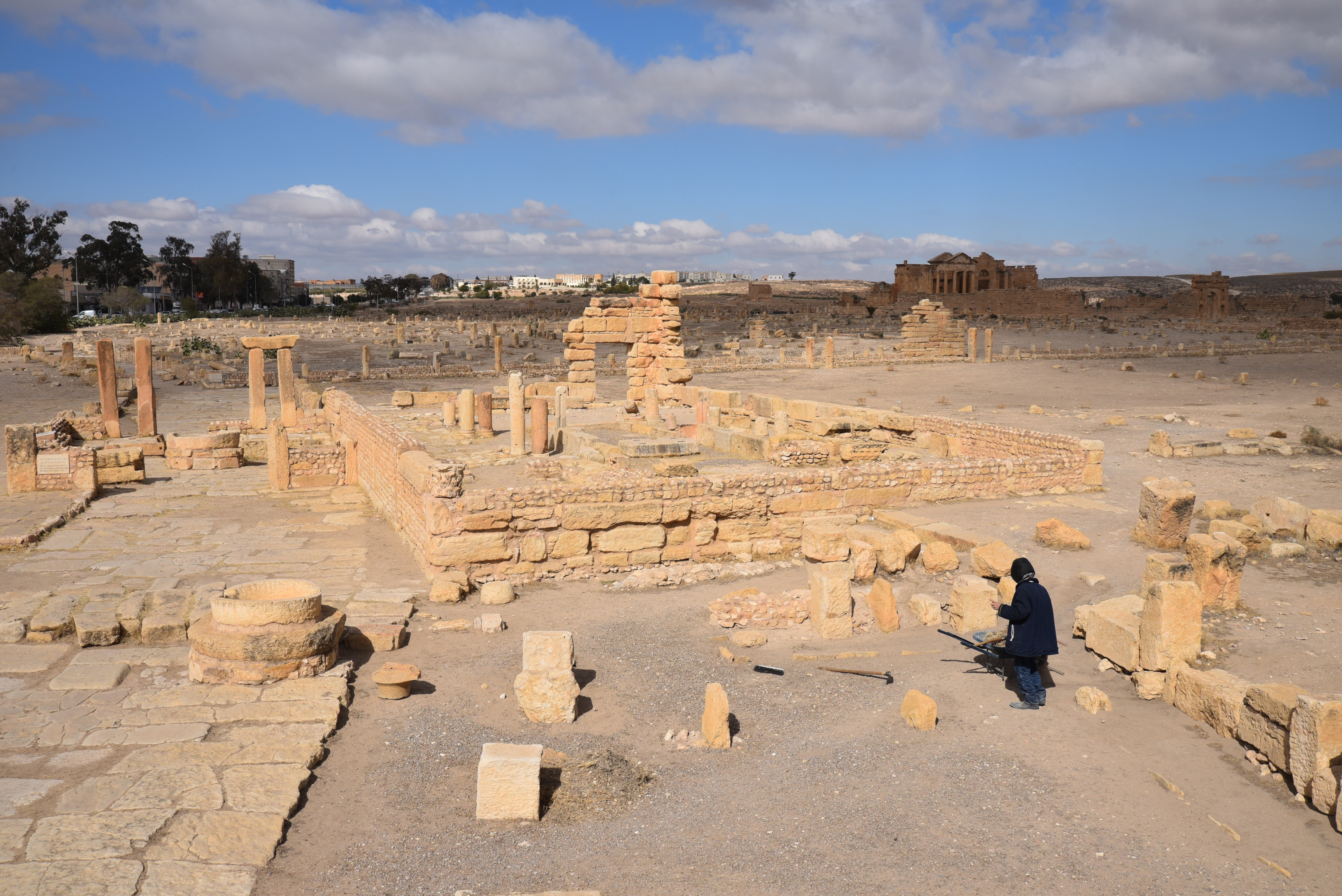
Overview of the northern part of the ruins of Sufetula, looking towards the Forum.An olive press for the production of olive oil, built after the abandonment of the city (perhaps 7th century AD), on top of the former main street of Sufetula.Sufetula is located in the interior of Central Tunisia, a region which was a great producer of olive oil at the time of the Roman Empire.The foundations of a fountain dating from the 4th century AD.The House of the Four Seasons, named after a mosaic depicting the Four Seasons, which was once part of the house but is now in the Bardo Museum in Tunis.The House of the Four Seasons is notable for its size and for being a primarily residential area, particularly in the Byzantine period, when it was enlarged by incorporating adjacent structures.An unidentified temple.The unexcavated Roman amphitheatre.Roman bridge over the Oued (River) Sbeitla.












 following hadrian photography