Louvre-Lens (France)

The Louvre-Lens is an art museum located in Lens at the heart of a coal mining area, approximately 200 kilometres north of Paris. It displays objects borrowed from the collections of the Musée du Louvre on a medium or long-term basis.

Its collections are displayed in a contemporary building designed by the Japanese architects Kazuyo Sejima and Ryue Nishizawa of SANAA, a multiple award-winning architectural firm based in Tokyo. Officially opened on the 4th December 2012, the museum now enjoys international acclaim as a unique must-see attraction.

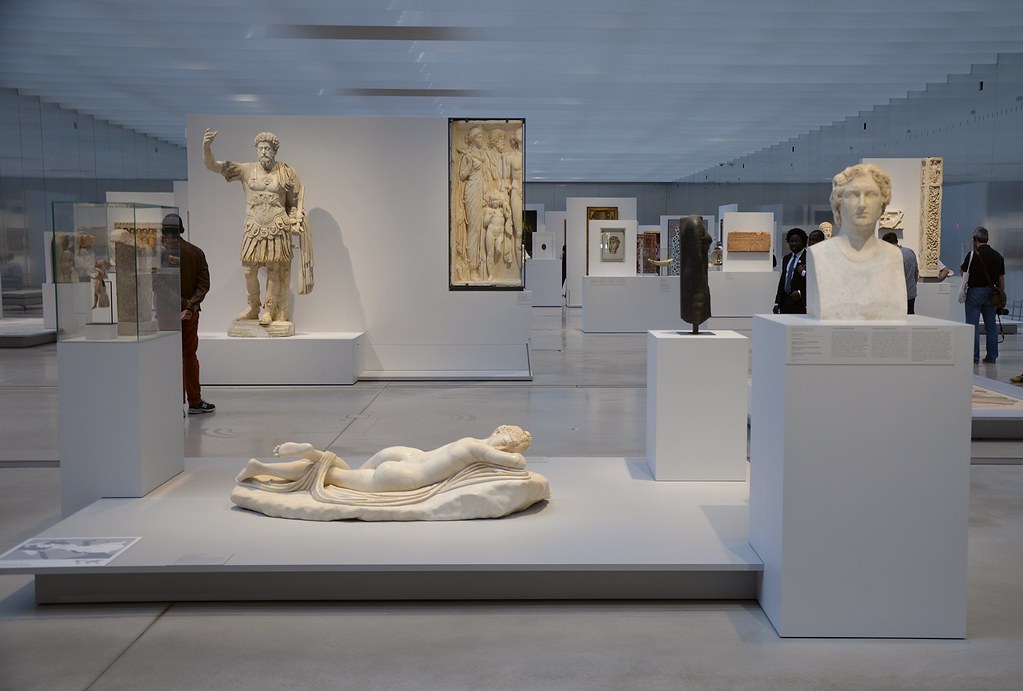
The Galerie du Temps (Gallery of Time), the main exhibition space and the heart of the Louvre-Lens, houses a selection of masterpieces arranged chronologically, starting with the birth of writing in 3500 BC and finishing with the year 1850. Each year, some art pieces return to the Louvre in Paris and are replaced by others.
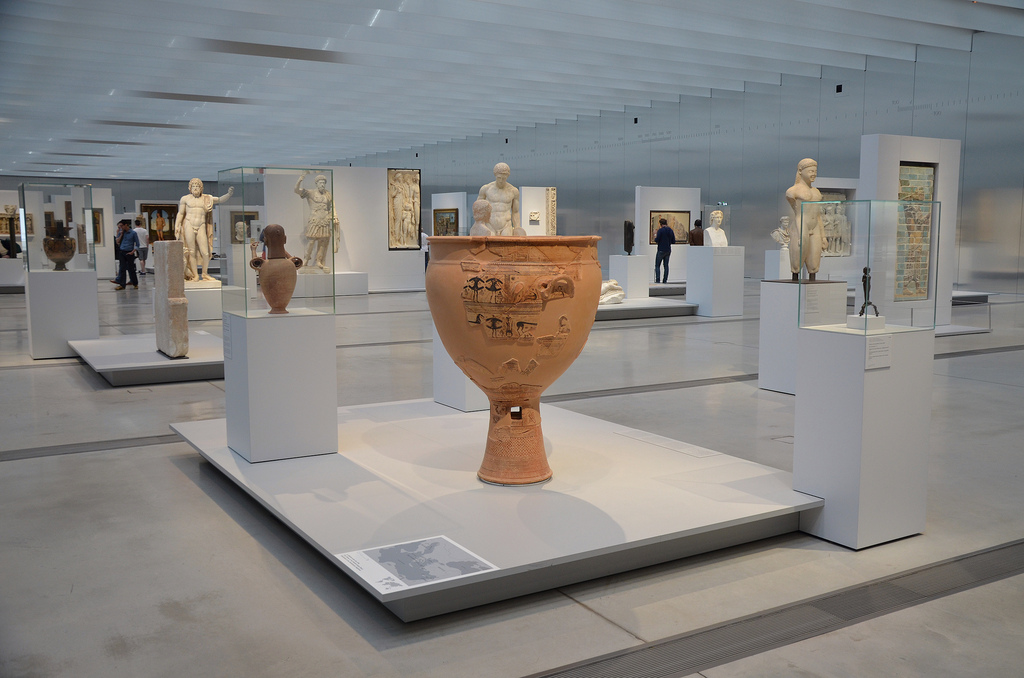
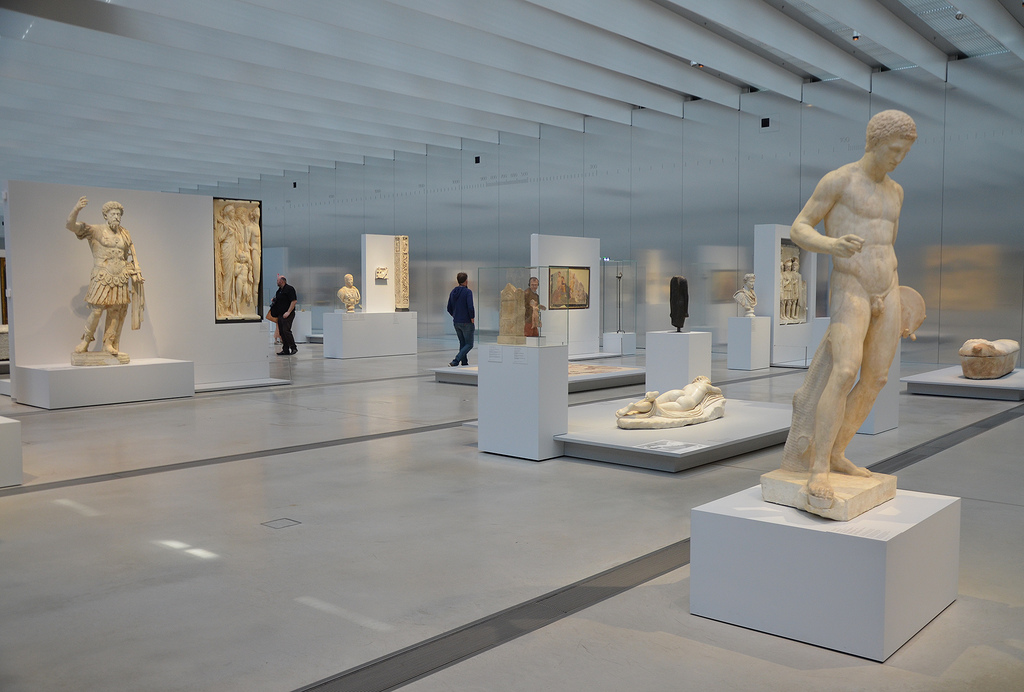
The 200 works originate from the Middle East, Egypt, Greece, Rome, the Islamic world and Europe. The Galerie du Temps is a wide open hall (125m long and 25m wide) where the objects are placed in the centre of the room in order to create a full 360° dialogue between them.


HIGHLIGHTS FROM THE ANTIQUE COLLECTION

Pre-cuneiform writing tablet noting food ratios, Archives from the Temple of the Sky God, from Uruk (Irak), Late Uruk Period, around 3300 BC, Louvre Lens
Pre-cuneiform writing tablet noting food ratios. Archives from the Temple of the Sky God
From Uruk (Irak)
Late Uruk Period, around 3300 BC.
The first documents written on clay tablets appeared in Uruk IV, around 3300 BC.
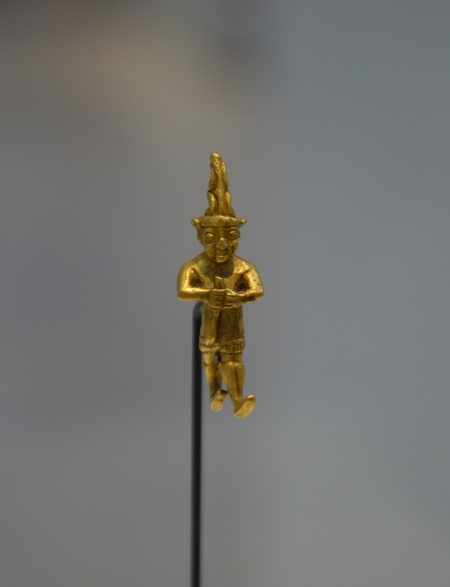
Gold amulet pendant, possibly depicting Teshub, the Hittite Storm God, around 1400-1200 BC, from Central Anatolia.
Gold amulet pendant, possibly depicting Teshub, the Hittite Storm God
From Yozgat, Central Anatolia (Turkey)
Around 1400-1200 BC.
Fragment of a painted limestone statue of a deceased couple, from Egypt, around 1391-1353 BC (reign of Amenophis III).
Fragment of a painted limestone statue of a deceased couple
Around 1391-1353 BC (reign of Amenophis III)
From Egypt.
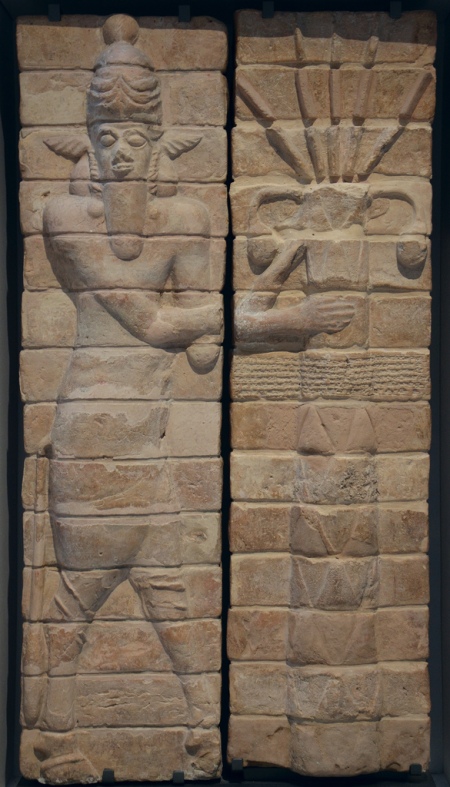
Fragments of decoration from the Temple of Inshushinak, tutelary god of Susa, depicting a bull man and palm tree, from Suse (Iran), around 1150 BC.
Fragments of decoration from the Temple of Inshushinak, tutelary god of Susa, depicting a bull man and palm tree
Around 1150 BC
From Suse (Iran).
Relief depicting a hunting scene in a chariot which decorated a wall in the palace of Maradesh, king of Melid, Neo-Hittite period, 9th century BC, from Malatya (Turkey).
Relief depicting a hunting scene in a chariot which decorated a wall in the palace of Maradesh, king of Melid
Neo-Hittite period, 9th century BC
From Malatya (Turkey).
Engraved cippus surmonted by a head representing the Egyptian deity Bes, protector of households, around 750-600 BC, from Larnaca (Cyprus).
Engraved cippus surmonted by a head representing the Egyptian deity Bes, protector of households
Around 750-600 BC
From Larnaca (Cyprus).
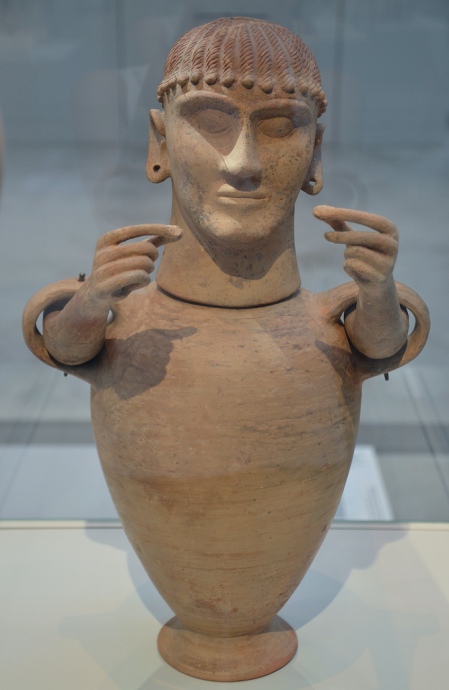
Etruscan cinerary urn with a female head and articulated arms, from Chiusi (Italy), around 550-500 BC.
Etruscan cinerary urn with a female head and articulated arms
From Chiusi (Italy)
Around 550-500 BC.
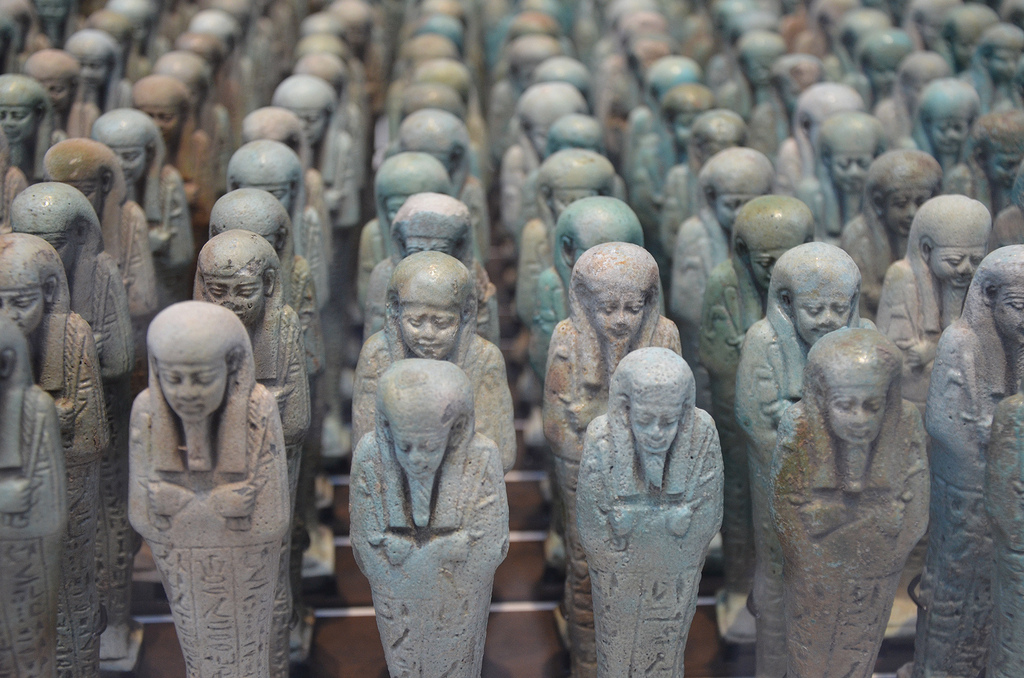
Troop of funerary servant figures (shabtis) in the name of Neferibreheb, around 500 BC, from Memphis (Egypt).
Troop of funerary servant figures (shabtis) in the name of Neferibreheb
Around 500 BC
From Memphis (Egypt).
Terracotta statuette of Nike, the personification of victory, from Myrina (Turkey), around 190 BC.
Terracotta statuette of Nike, the personification of victory
Around 190 BC
From Myrina (Turkey).
Fragment of a fresco depicting a woman beside a fawn (Bacchic cult scene?), from Pompeii, around 30-50 AD, Louvre Lens
Fragment of a fresco depicting a woman beside a fawn (Bacchic cult scene?)
From Pompeii
Around 30-50 AD.
The Praetorians Relief from the Arch of Claudius, once part of the Arch of Claudius erected in 51 AD to commemorate the conquest of Britain.
The Praetorians Relief from the Arch of Claudius, once part of the Arch of Claudius erected in 51 AD to commemorate the conquest of Britain
From Rome (Italy).
Statue of Hermaphroditus, Louvre Lens, son of Hermes and Aphrodite, around 130-150 AD, from Egypt, France
Statue of Hermaphroditus, Louvre Lens, son of Hermes and Aphrodite
Around 130-150 AD
From Egypt.
Tauroctony relief representing Mithras sacrificing the bull (CIMRM 415-416), around 100-200 AD, from the Capitoline Hill in Rome (Italy).
Tauroctony relief representing Mithras sacrificing the bull
Around 100-200 AD
From the Capitoline Hill in Rome (Italy).
Cuirassed statue of Marcus Aurelius, from Gabies (?), end of the 2nd century AD.
Cuirassed statue of Marcus Aurelius
From Gabies? (Italy)
End of the 2nd century AD.
Fragment of a mosaic floor depicting a preparation of a banquet, found in Carthage, around 180-190 AD, Louvre Lens
Fragment of a mosaic floor depicting a preparation of a banquet
Found in Carthage
Around 180-190 AD.
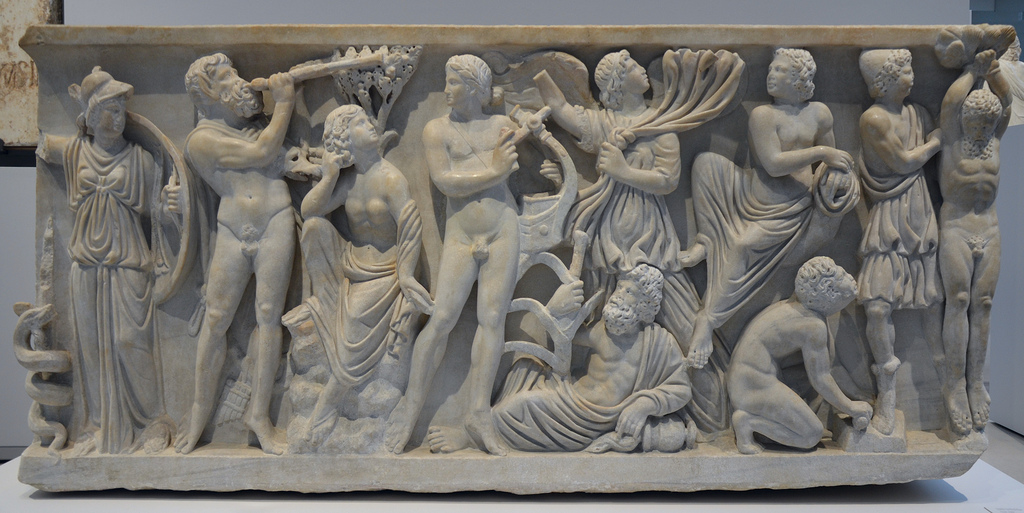
Sarcophagus depicting a musical context between the god Apollo and the satyr Marsyas, around 290-300 AD, from Cosa (Italy).
Sarcophagus depicting a musical context between the god Apollo and the satyr Marsyas
Around 290-300 AD
From Cosa (Italy).

See more images from the Louvre-Lens antique collections on Flickr

Links:
Ambrussum

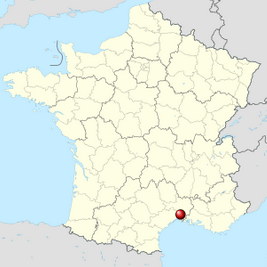
Ambrussum is a beautiful Gallo-Roman archaeological site which has revealed a great collection of buildings from the Gallic and Roman periods. It is close to the modern town of Lunel, located between Nîmes and Montpellier. The site is notable for its Iron Age settlement, its Roman staging post on the Via Domitia and its celebrated bridge spanning the Vidourle River, the Pont Ambroix.

Coordinates: 43° 43′ 12″ N, 4° 9′ 0″ E

Ambrussum

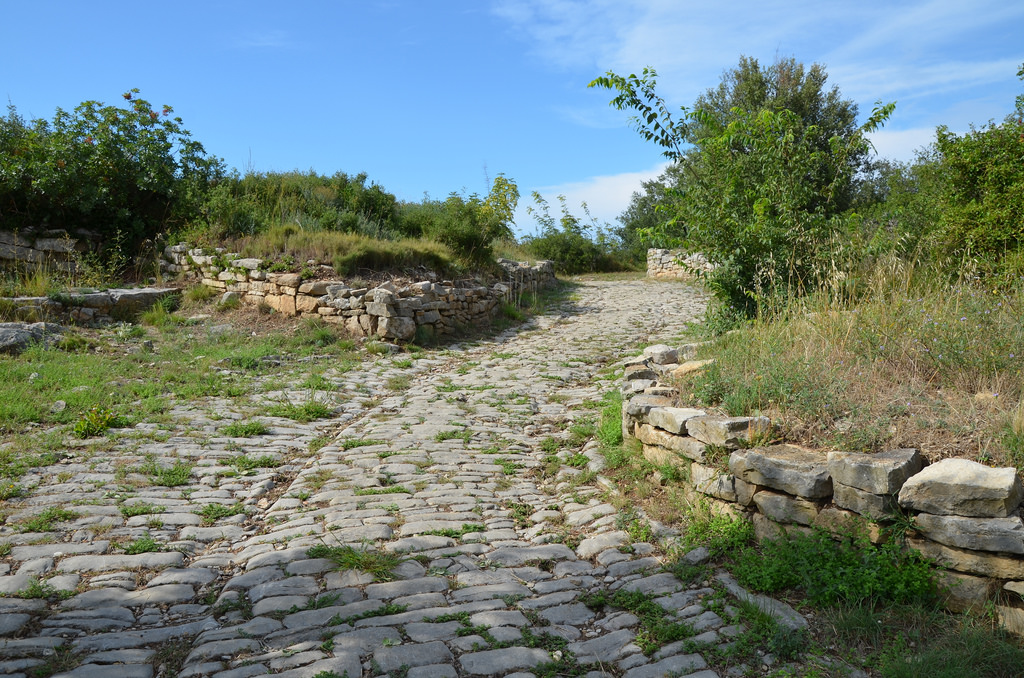
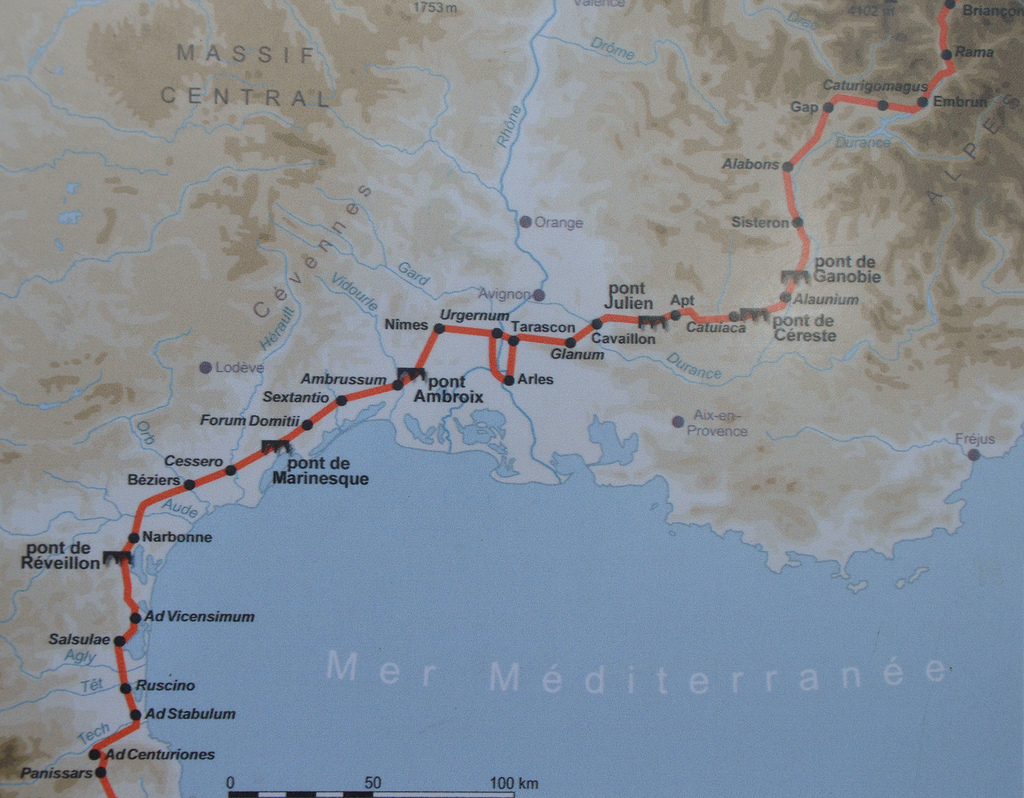
At the end of the fourth century BC a Gaulish tribe, the Volscians, settled and built a city surrounded by strong ramparts and towers (some of which can still be seen). The Romans conquered the area in 120 BC and the city grew rapidly. Thereafter, a new district was created next to the Vidourle River serving as a staging post for travelers (mansio). The Via Domitia, the oldest road built in France running from Alps to the Pyrenees, ran at the foot of the settlement. A paved road leading out of the settlement is visible along with the traces of Roman chariot tracks.

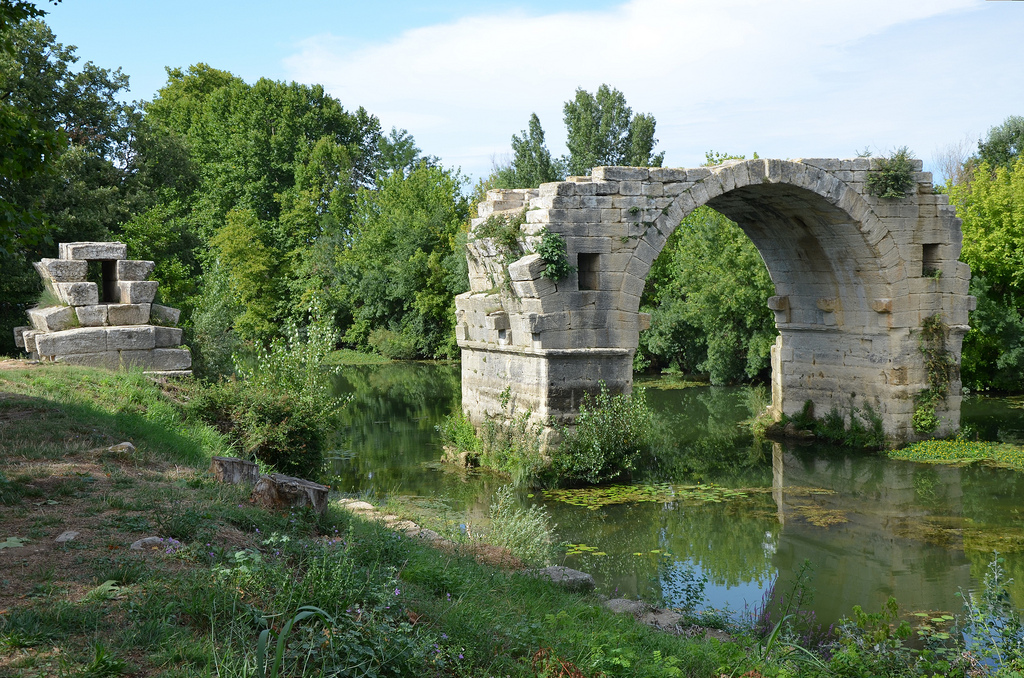
The Ambroix Bridge is unquestionably the most spectacular ruin of this ancient site. It is an impressive work of engineering, which allowed the Via Domitia to cross the Vidourle River. It is thought to have had 11 arches and to have been over 175 m (574 ft) in length. Unfortunately, the ravages of time and the numerous floods took out all but one arch. Two had stood as recently as 81 years ago — which are reflected in Gustave Courbet’s famous painting of the bridge — but a violent flood in 1933 left only one arch standing.

Portfolio

The remaining arch of Pont Ambroix, 1st century BC Roman bridge part of the Via Domitia.
A roadhouse along the Via Domitia dating back to around 30 BC, roadhouses were built every 10-15 kilometes along the Romans roads to allow travellers to rest.
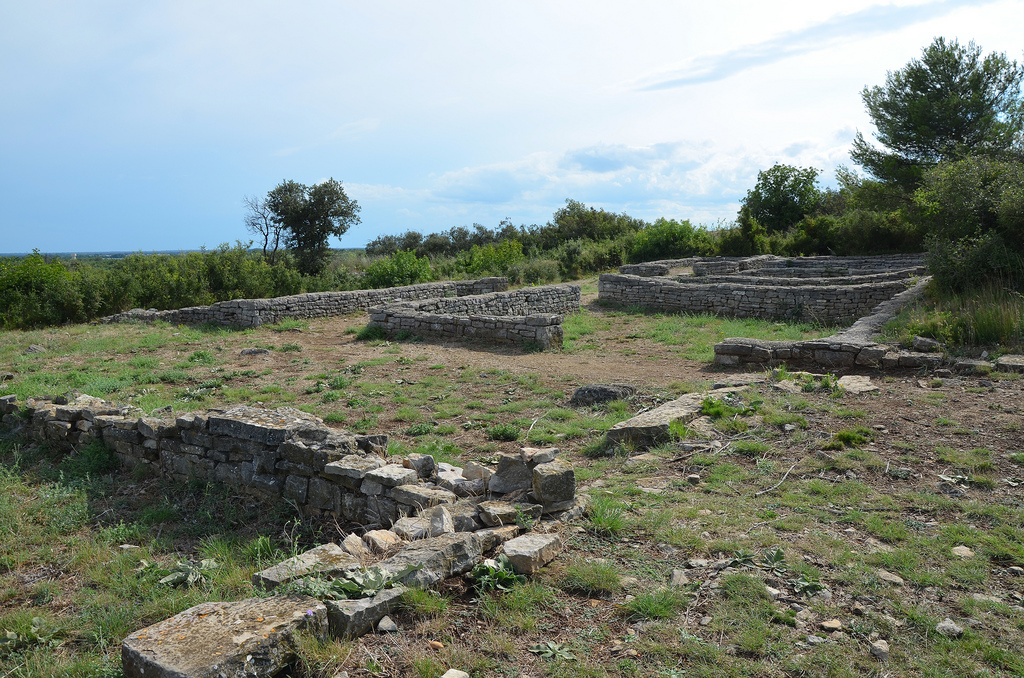
The ruins of a roadhouse along the Via Domitia dating back to around 30 BC. Roadhouses were built every 10-15 kilometres along the Romans roads to allow travellers to rest.
The ruins of a roadhouse along the Via Domitia dating back to around 30 BC, roadhouses were built every 10-15 kilometres along the Romans roads to allow travellers to rest.
The ruins of a roadhouse along the Via Domitia dating back to around 30 BC. It contained everything needed to accomodate travellers: a hotel, several inns and a dwelling equipped with a forge for repairing vehicles, a bathouse and a small shrine.
The Via Domitia, the oldest road built in Gaul.
The paved way, the main artery of the city of Ambrussum.
The main artery of the settlement of Ambrussum was a paved road, dug out from deep ruts. Buildings (houses and shops) were built all along the sides of the road. The traces of Roman chariot tracks can still be seen.
The main artery of the settlement was a paved road, dug out from deep ruts. Buildings (houses and shops) were built all along the sides of the road.
The paved way at the south gate. The gates were enclosed within the city walls and served as the entrance to the city.
The terraced house in the northern district built in the Roman period.
A terraced house in the northern district built in the Roman period. Domestic life was organised around a courtyard bordered with an arcade. Each room had tiles floors and the walls were covered with painted plaster.
Another terraced house in the northern district built in the Roman period.
The ramparts of Ambrussum built in the late 4th century BC and modified in the mid-3rd century BC, they are the oldest visible remains on the hill, Oppidum of Ambrussum.
The ramparts of Ambrussum were built in the late 4th century BC and modified in the mid-3rd century BC. They are the oldest visible remains of the Oppidum.
Route of the Via Domitia.

See more images of Ambrussum on Flickr

Links: