The archaeological site of Tipasa is located on the Mediterranean coast of Algeria, approximately 70 kilometres west of the capital, Algiers. It is a UNESCO World Heritage Site that showcases an extraordinary mix of ancient cultures, including Punic, Roman, early Christian, and Byzantine influences. Tipasa was originally established as a Punic trading post and later grew into a prosperous Roman colony in the 2nd century AD, situated to the west of ancient Iol-Caesarea (modern-day Cherchell), the former capital of the Roman province of Mauretania Caesariensis. Like other coastal cities in Algeria, Tipasa adopted Christianity in the first half of the 4th century AD. However, following the Arab invasion, the city gradually declined from the 6th century AD onward.
Tipasa was a Punic trading post located along the sea route between Carthage and the Pillars of Hercules (Straits of Gibraltar). Very little remains of the early settlement, except for traces of a necropolis dating back to the 6th or 5th century BC. Rome conquered the city in the 1st century AD, and in AD 46, it was designated as a municipium with Latin rights under Emperor Claudius (Pliny NH 5.2.20). Later, it became a colonia under Emperor Hadrian, bearing the name Colonia Aelia Tipasensium (AE 1958, 129). In the 2nd and 3rd centuries AD, Tipasa enjoyed a time of great prosperity. This period saw the construction of a 2.3 km long enclosing wall that featured 31 towers. Tipasa’s prosperity was primarily driven by trade in the Mediterranean, particularly in oil and garum.
During the reign of the Severan dynasty in the middle of the 3rd century AD, Moorish rebels were held at bay, allowing the cities of Africa to enjoy their greatest period of prosperity. Many of the public buildings that are still visible today were likely constructed during this time. With the ascendance of Christianity in the 3rd and 4th centuries AD, the city’s physiognomy changed and reached a population of 20,000 inhabitants. The older buildings fell out of use or were demolished, and Christian basilicas were built. During the 5th century AD, the city faced challenges due to the Vandals’ annexation of Africa. However, it began to recover under Byzantine control one century later, leading to a modest renaissance characterised by repairs and expansions to several churches. At the end of the 7th century, the city was demolished by Umayyad forces and reduced to ruins.
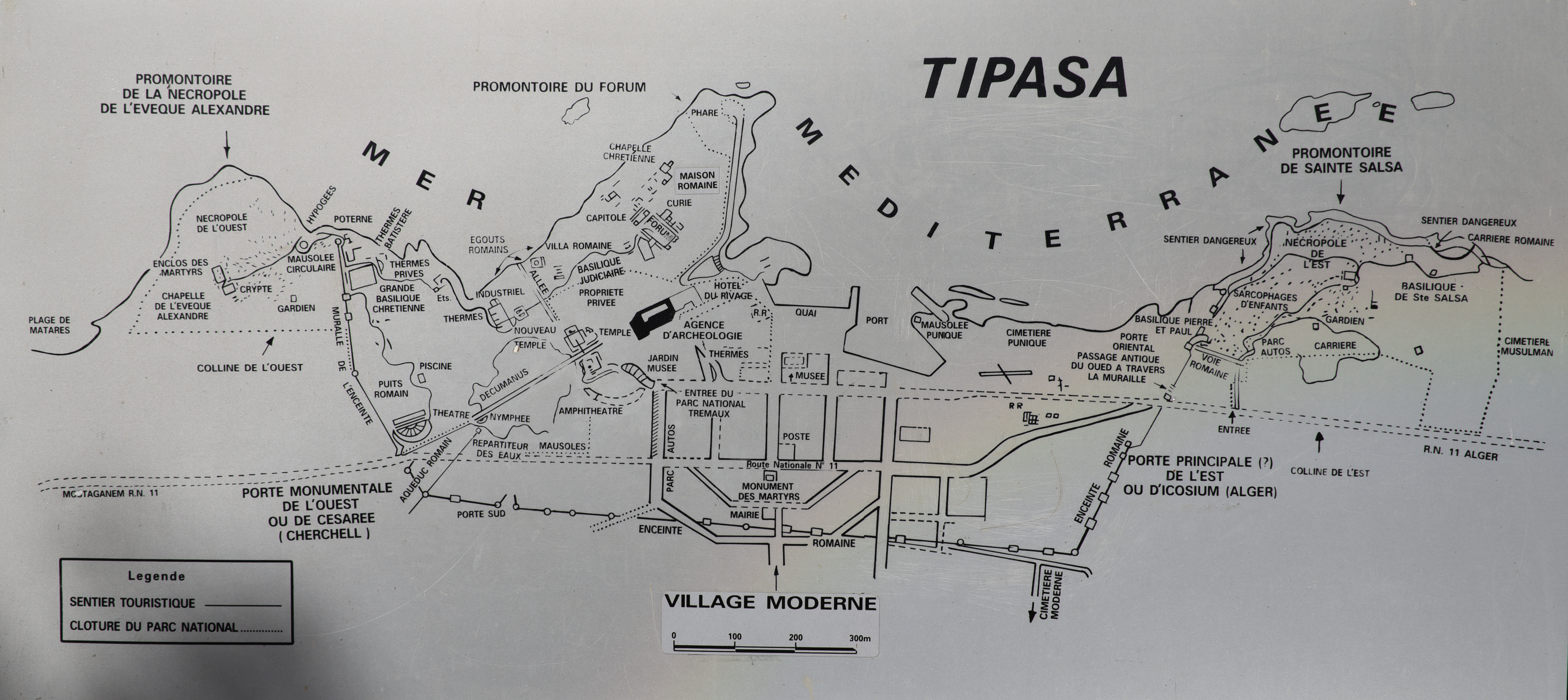
Map of Tipasa.
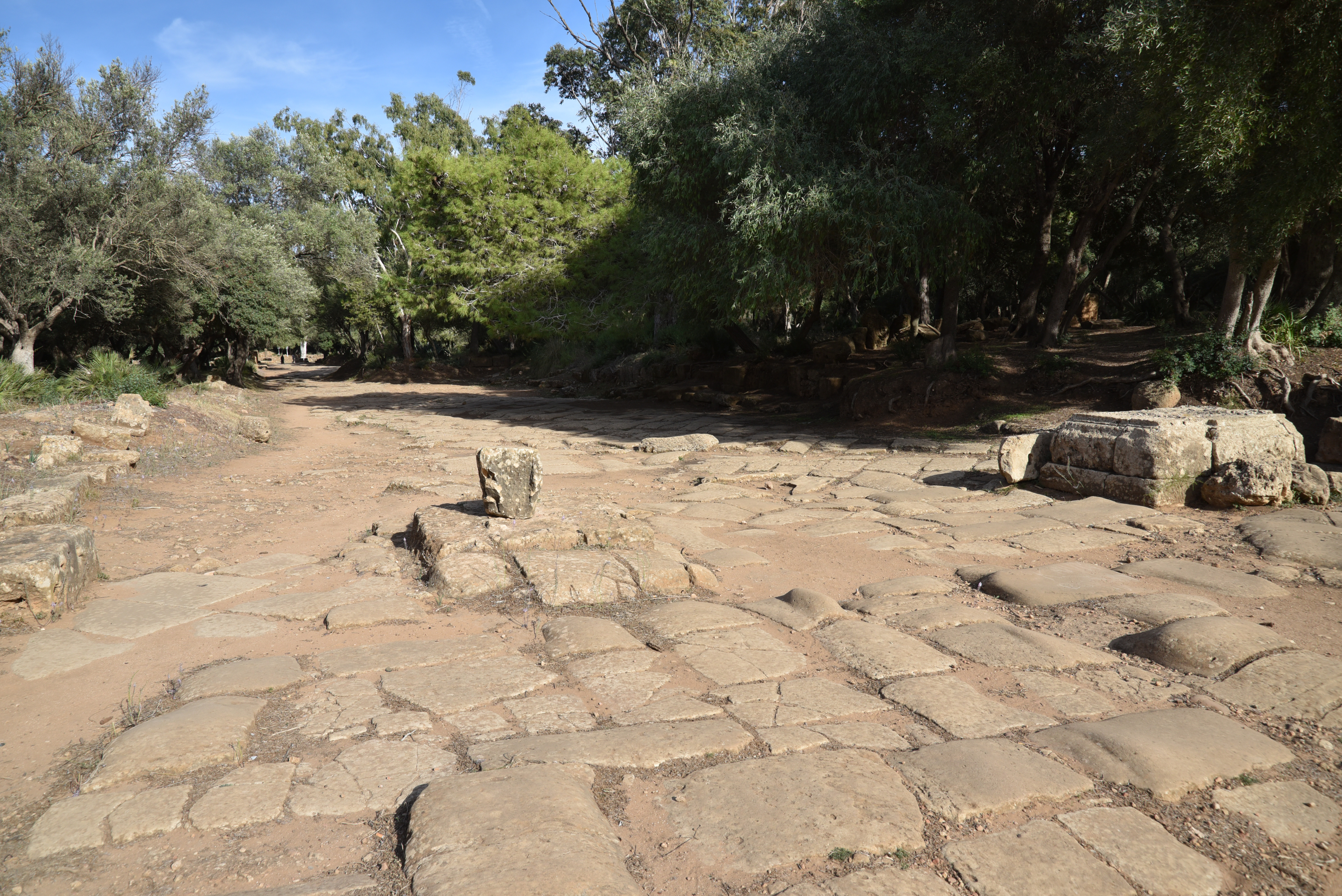
The main site of Tipasa is now a wooded archaeological park covering an area of 70 hectares. The entrance leads to an amphitheatre, and beyond it, a path guides visitors to the heart of the ancient town, where the two main streets, the paved cardo maximus and decumanus, intersect. To the east of the cardo lies the civic centre, including the Forum that originally featured porticoes on three sides, with the capitolium on the fourth side. This area also contains the curia (municipal assembly) and the civil basilica. Along the shoreline are several houses, including the so-called Villa of the Frescoes, a large residence measuring 1,000 square meters built in the mid-2nd century AD. The rooms of this villa open onto peristyles and are often decorated with mosaics and frescoes. Further inland is a theatre and a monumental semicircular fountain on the decumanus.
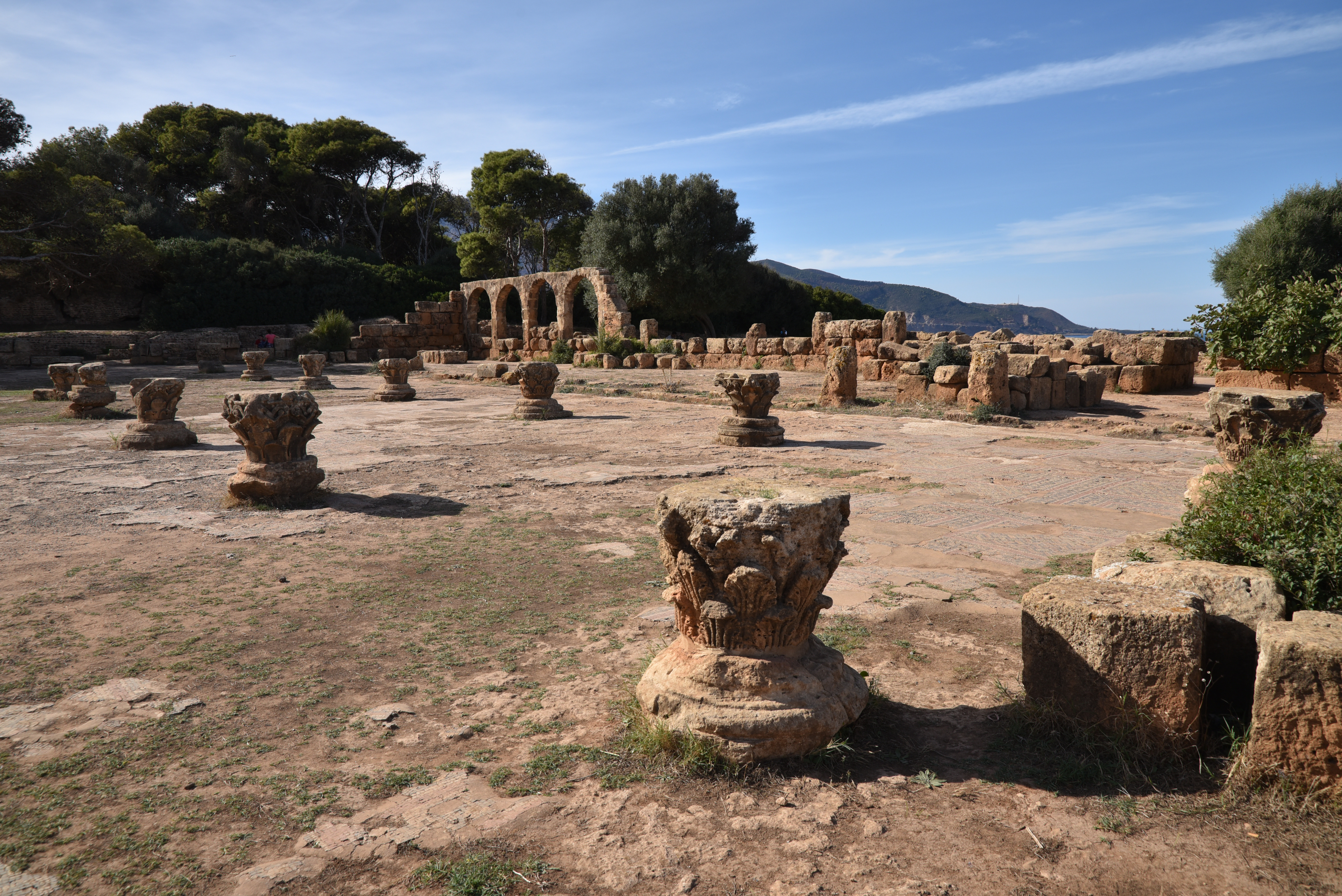
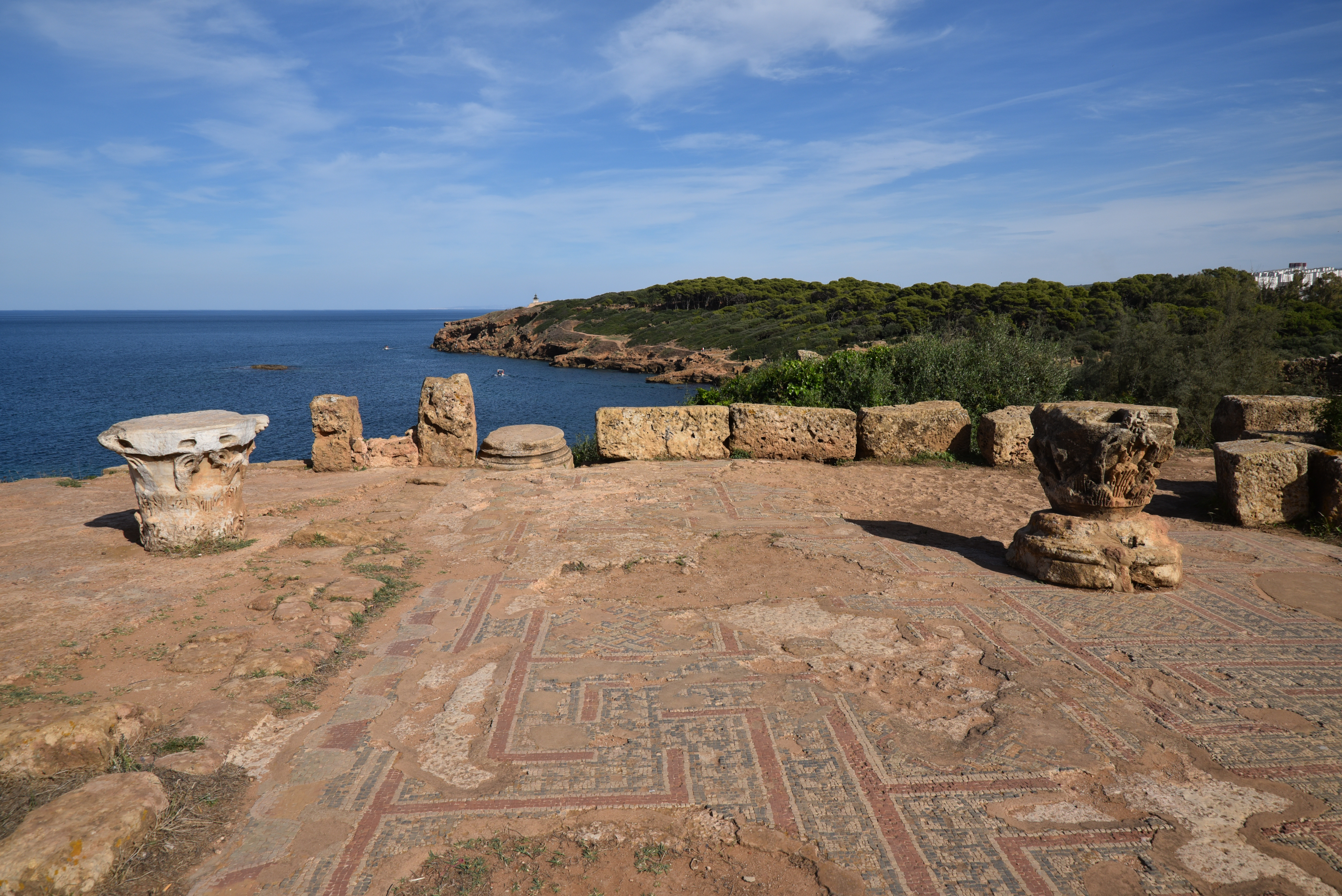
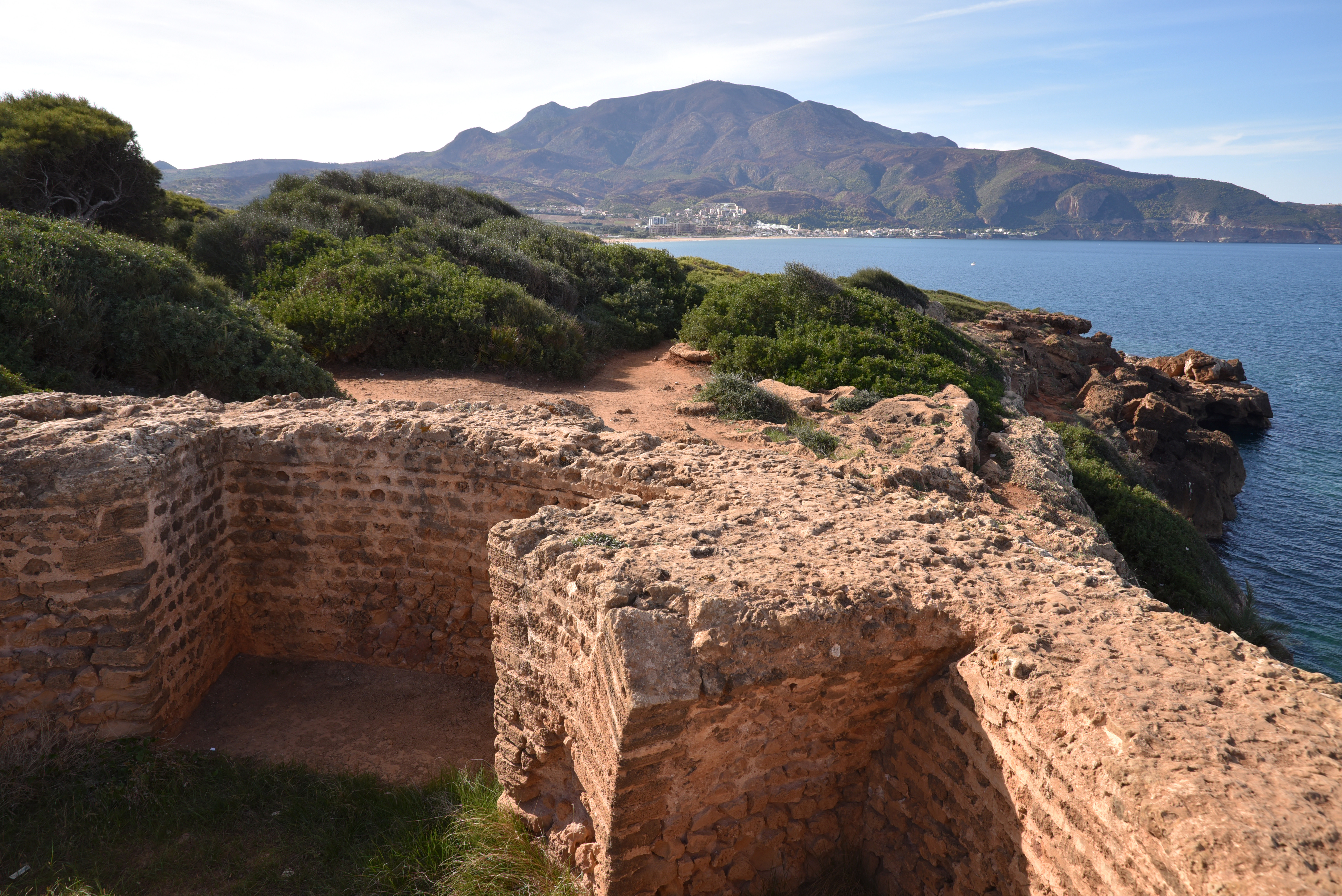
During Late Antiquity, Christians constructed various religious complexes, which included two basilicas, tombs, baths, and an impressive temple dedicated to the local martyr Saint Salsa. The Grand Basilica, featuring seven naves, was the largest Christian structure in North Africa upon its completion in the 4th century AD. The cemetery, adorned with carved tombs and inscriptions, provides valuable insight into the spread of Christianity throughout North Africa during this period.
The small museum outside the park showcases a variety of Punic and Christian funerary steles. It also features four tombstones dedicated to foreign cavalrymen who served in the auxiliary forces of the Roman army stationed at Tipasa. The museum also displays mosaics, including one depicting a captive family crouching with their hands bound.
PORTFOLIO
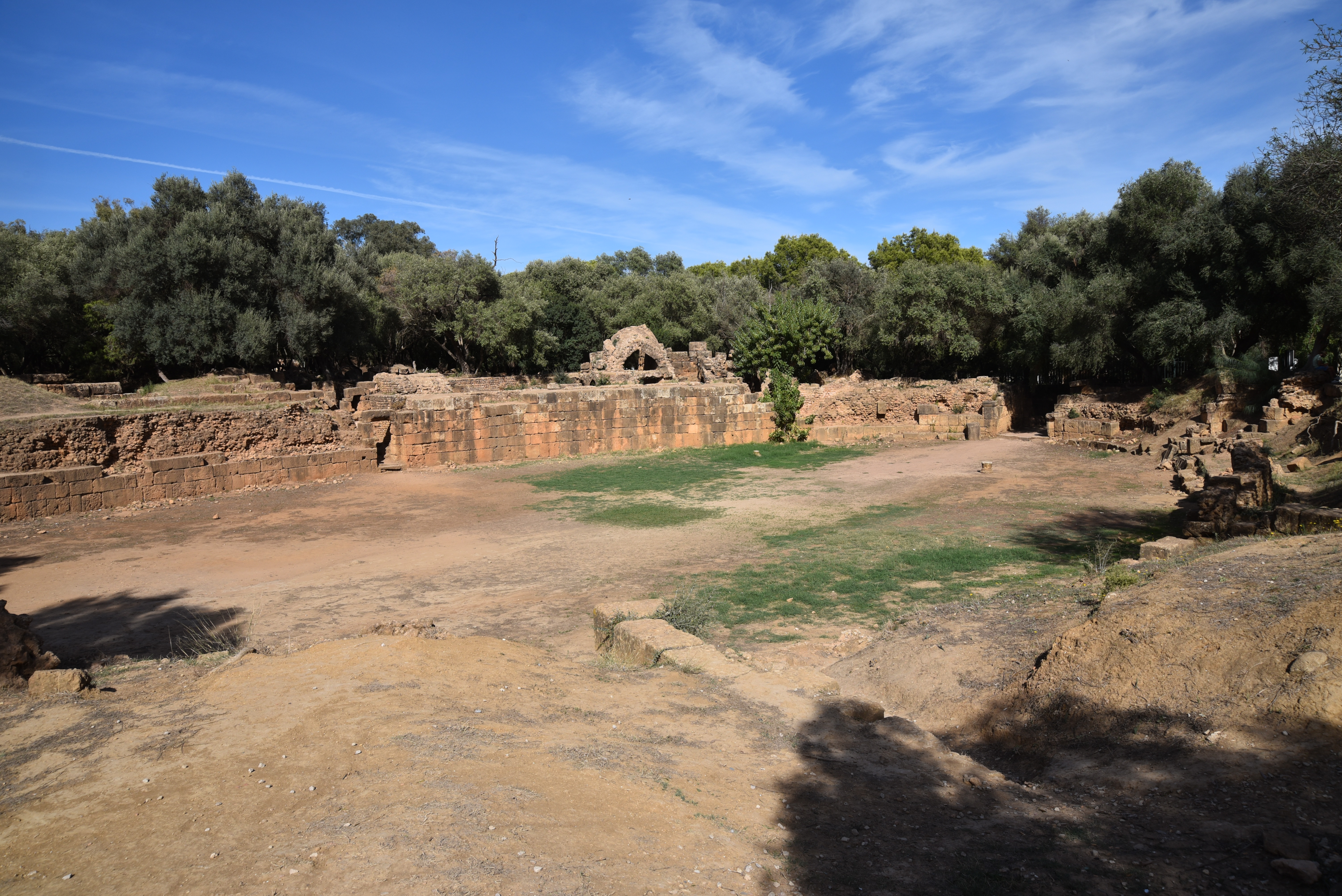
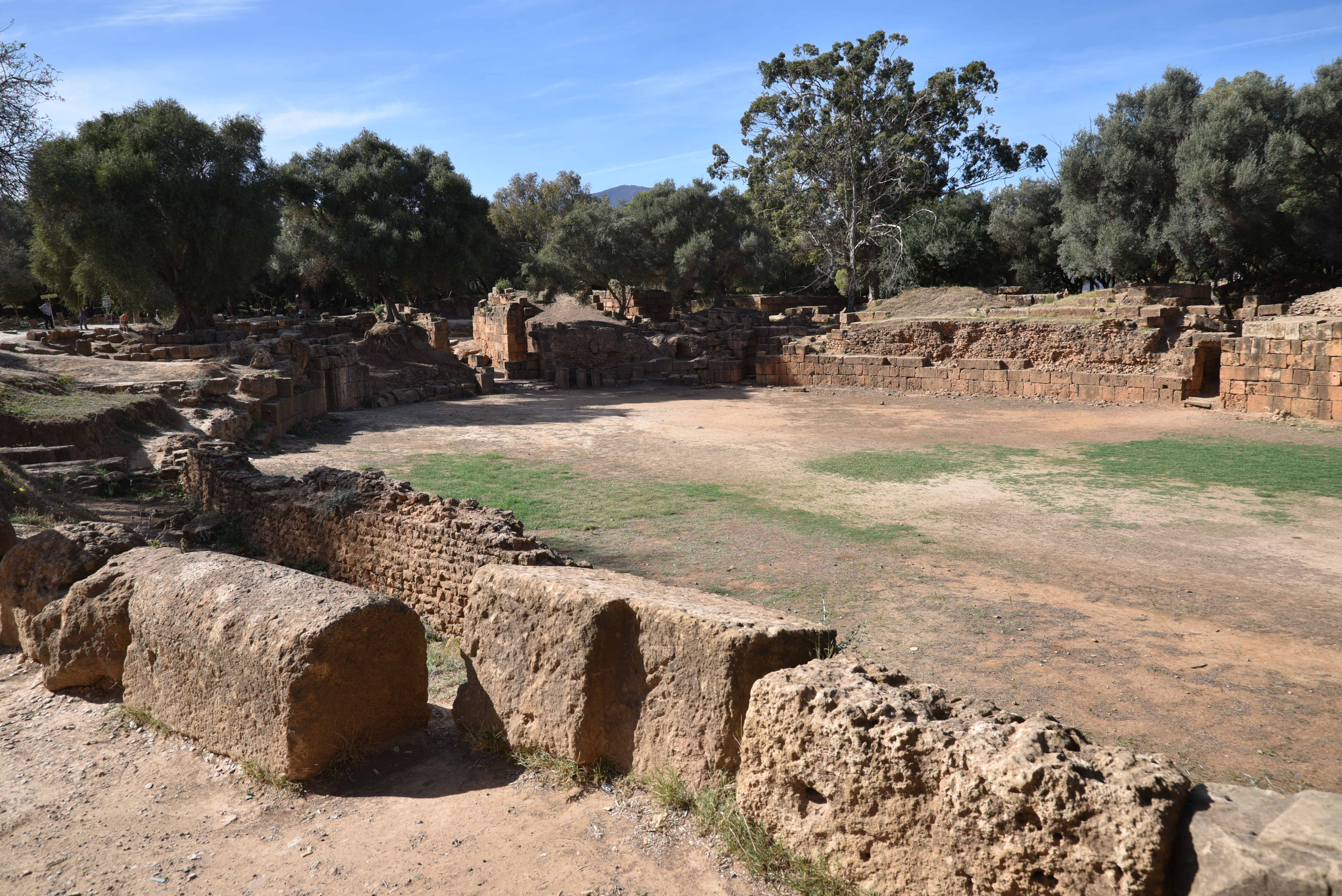
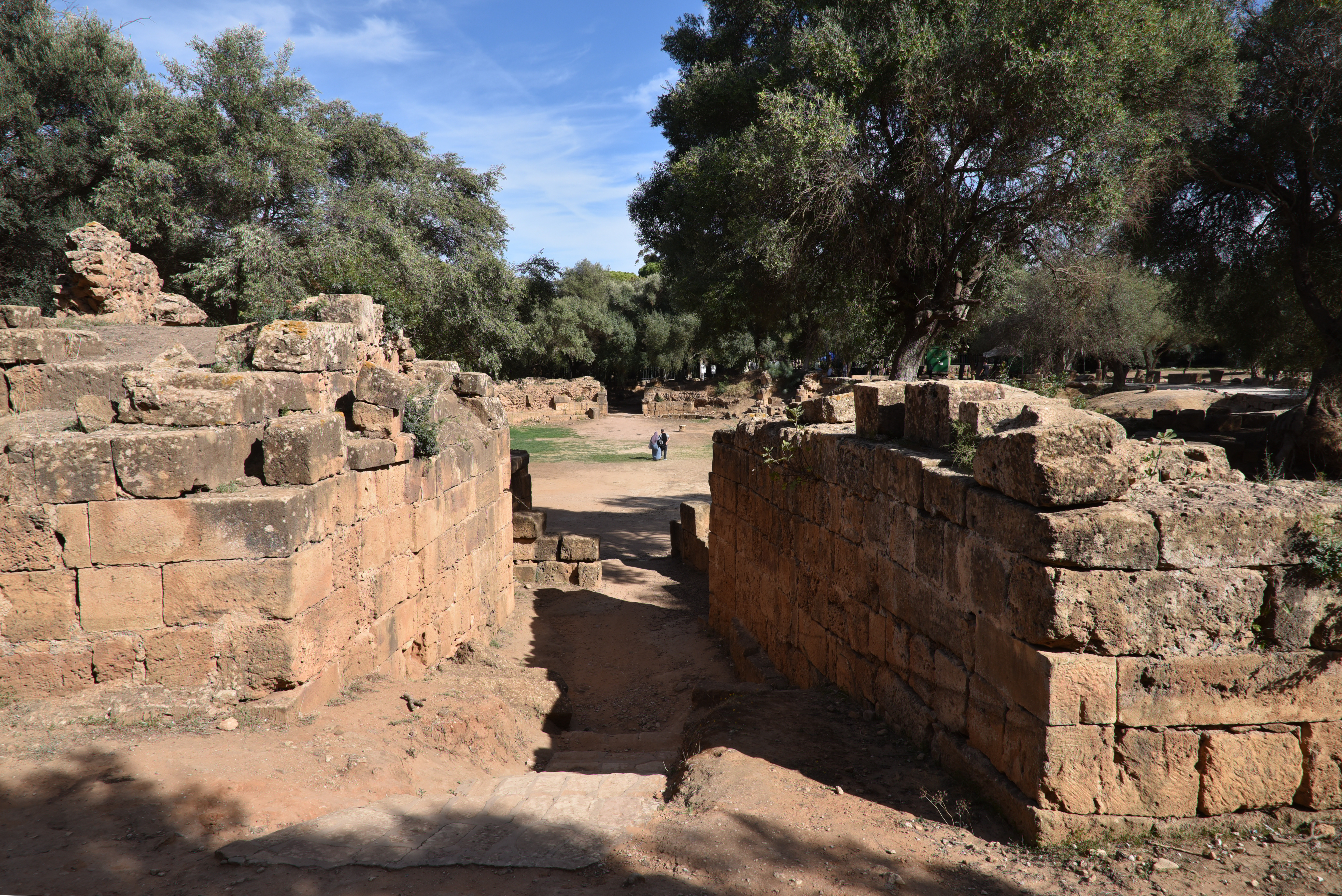
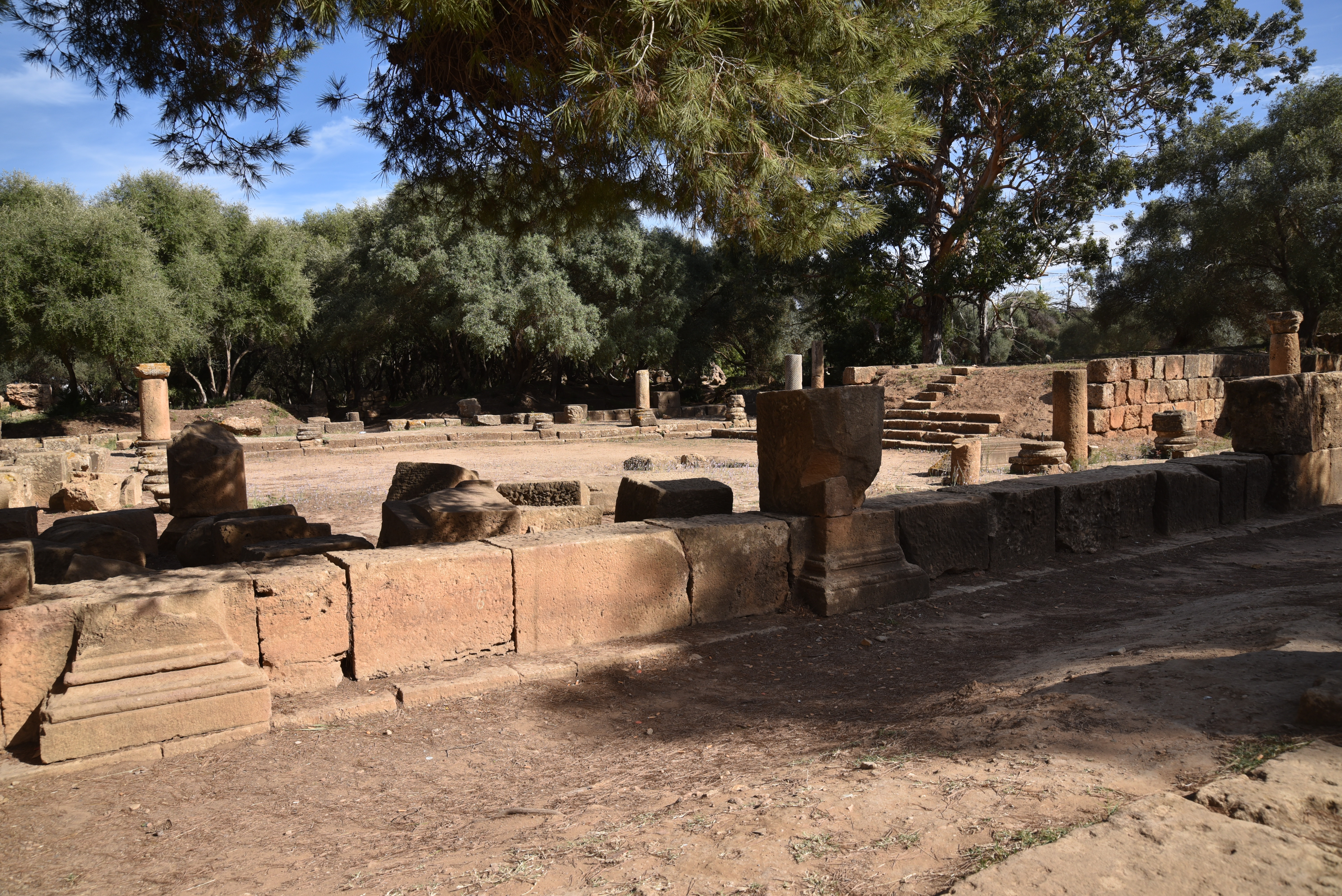
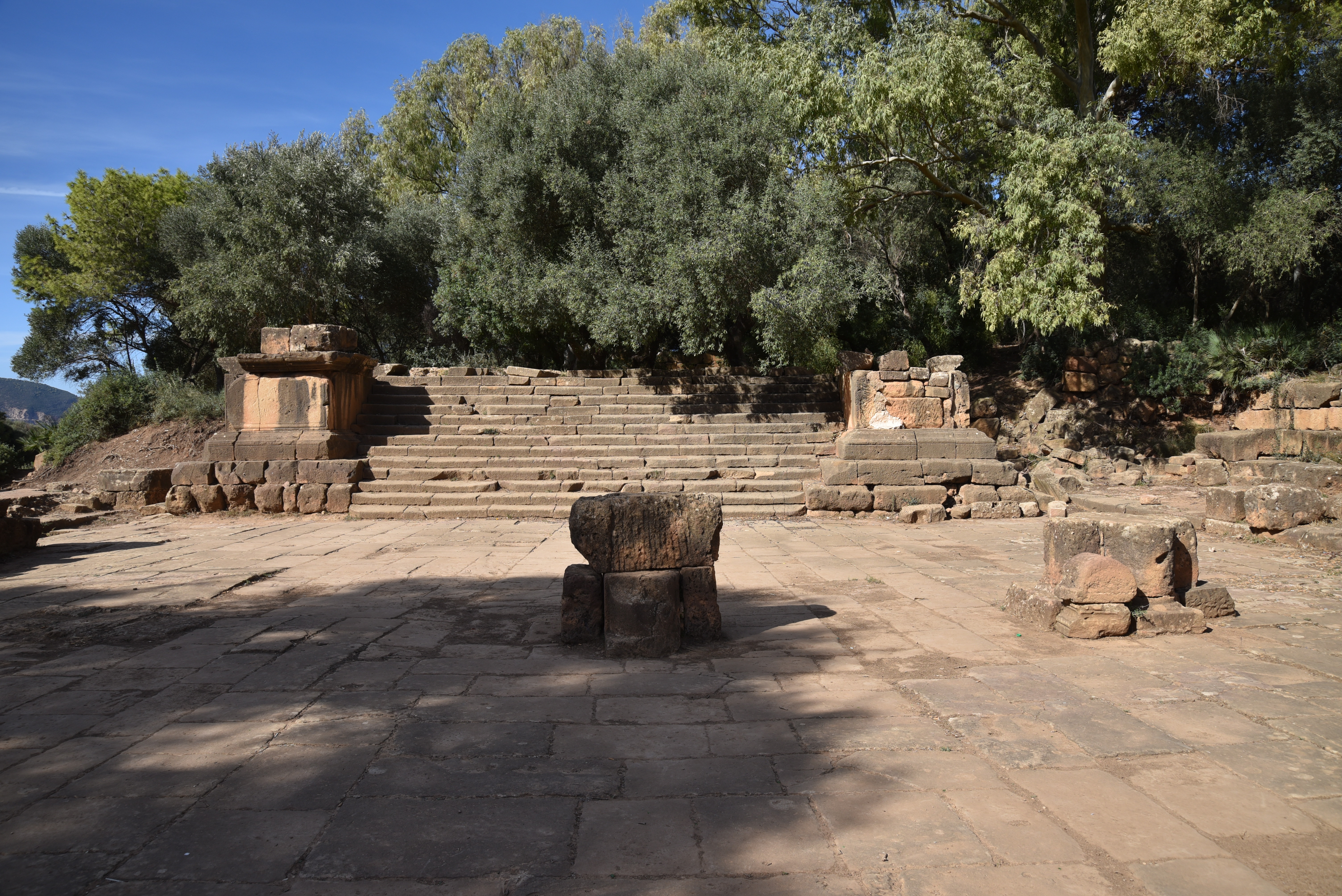
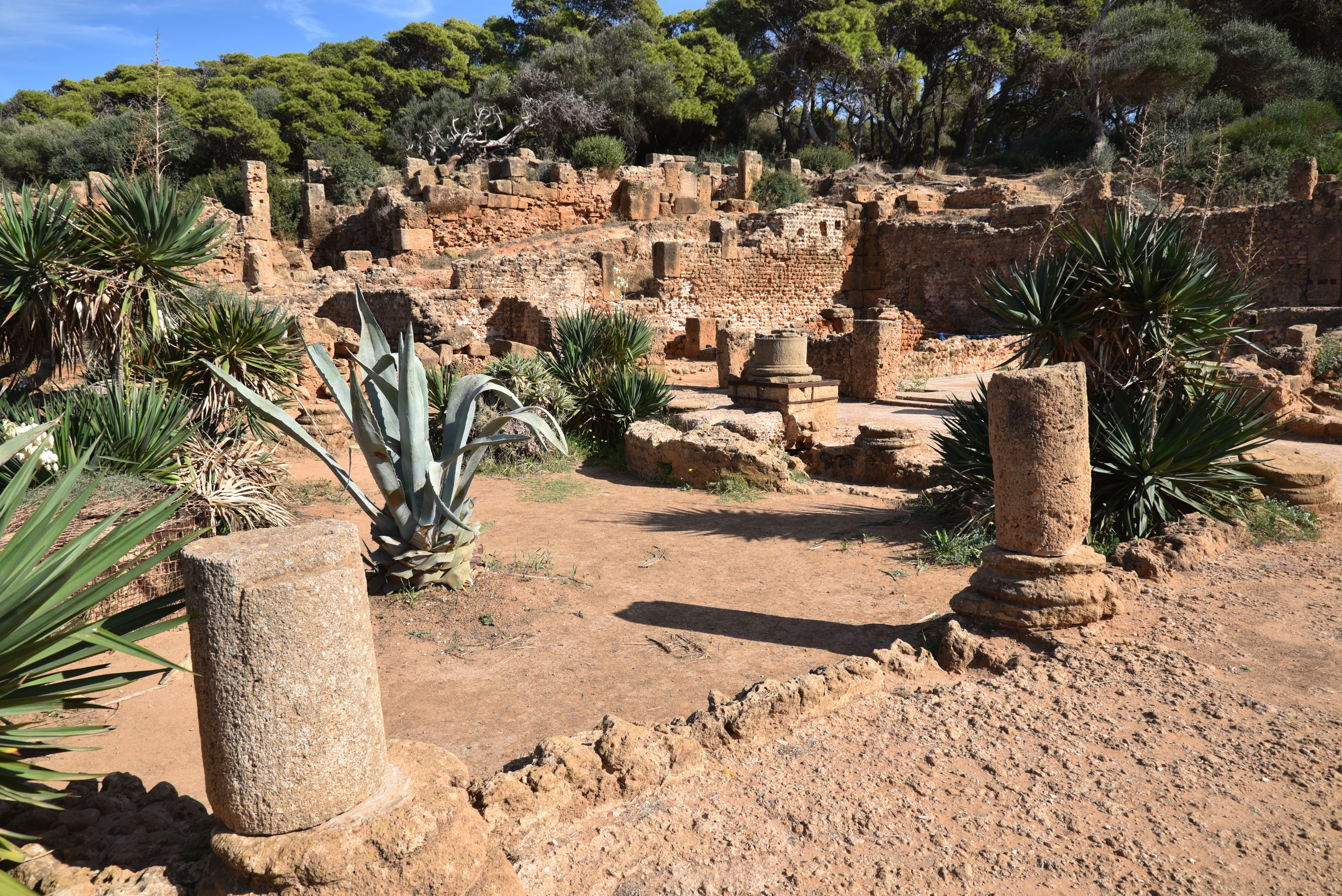
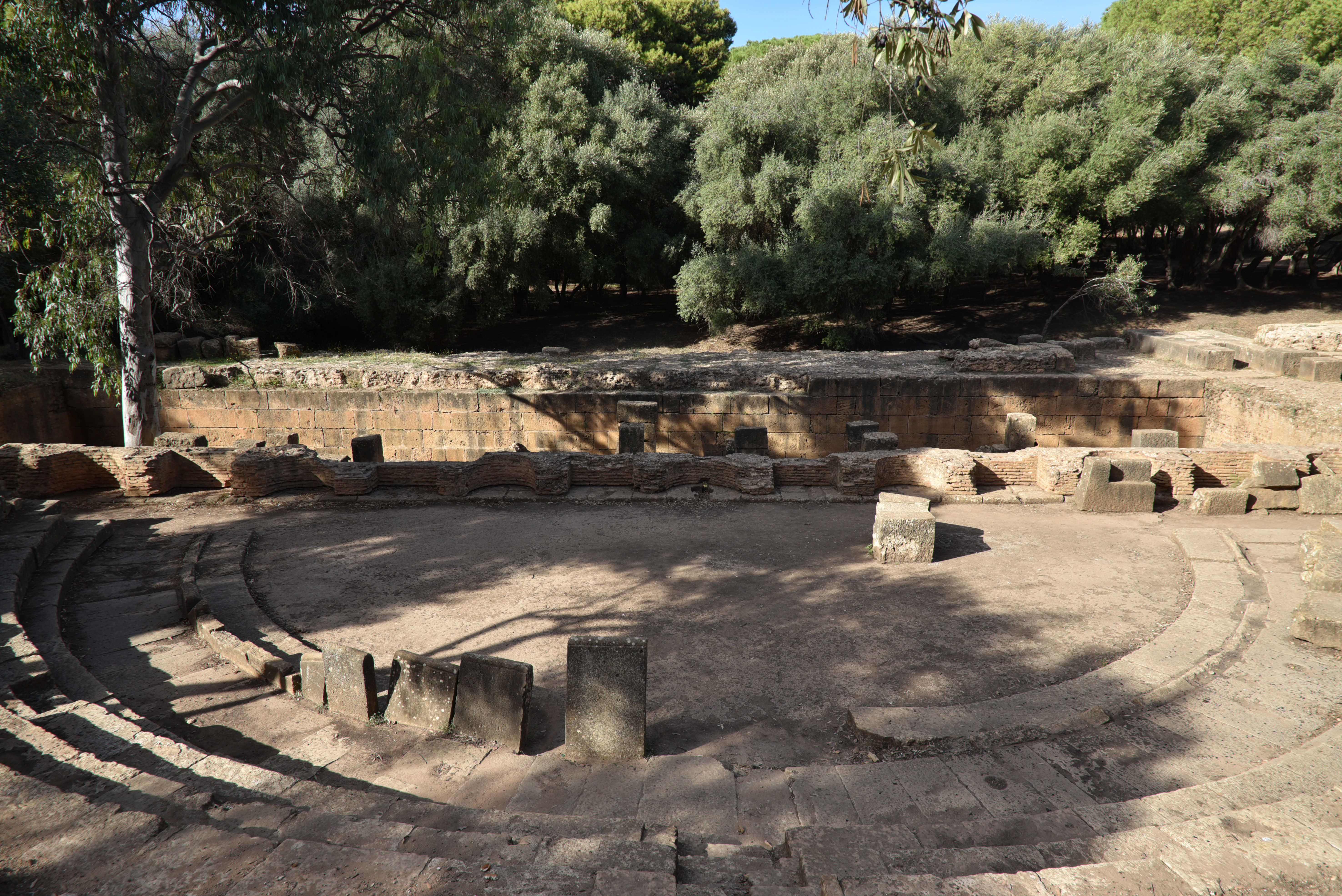
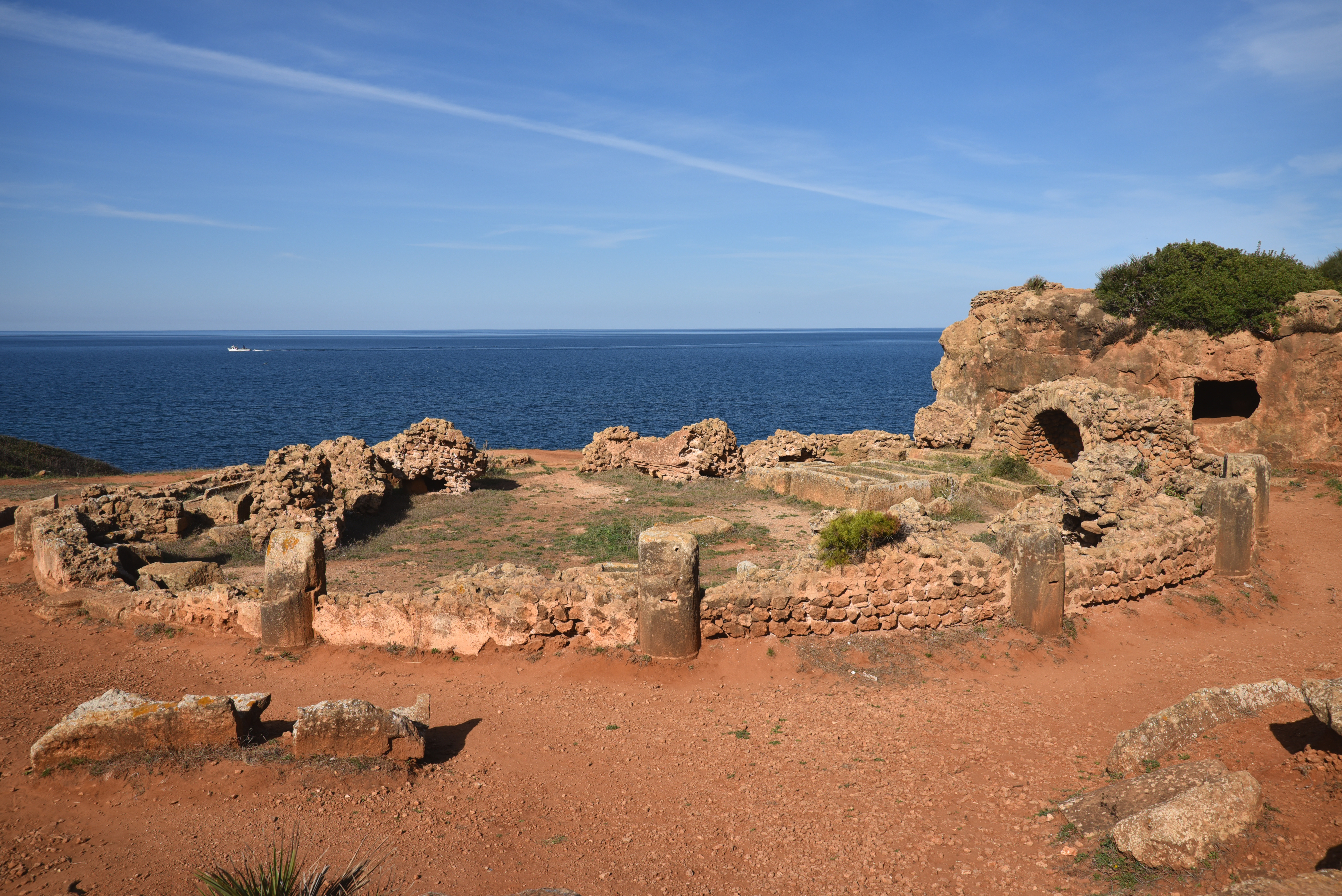
The amphitheatre with an elliptical arena measures 80 metres. It is dated to the Severan period. Only the podium wall and part of the vaulted substructures that once supported the seating remain.The amphitheatre was built using various re-used materials, including tombstones. One tombstone (now in the onsite museum) was of a cavalryman of the Ala I Ulpia Contariorum (see here). A water channel was perhaps used to flood the arena for mock sea battles (naumachiae).The eastern entrance to the amphitheatre.The Unidentified Temple dated to late 2nd century AD or the early 3rd century AD. Only the podium and the frontal stairway leading to the cella survive, as well as the foundations of the sacrificial altar.The Unidentified Temple stood within a precinct surrounded by a triple portico which opened onto the Decumanus Maximus.The Decumanus Maximus. The east–west-oriented road was 14 m wide and bordered by raised porticoes.The Decumanus Maximus.The New Temple. It is dated to the end of the 2nd century or beginning of the 3rd century AD and stood on a podium within a porticoed precinct.The Cardo Maximus extended towards the sea. The street was paved and bordered by porticoes supported by rows of piers.The Cardo Maximus.The Villa of the Frescoes, a wealthy townhouse of 1,000 sq.m built in the middle of the 2nd century AD.The Villa of the Frescoes is named for its once splendid wall decorations, of which fragments were discovered during excavation.Mosaic floor in one of the rooms of the Villa of the Frescoes.View of the Villa of the Frescoes from the west.Garum factory with four square tanks for macerating the fish. Garum was a sauce made up of small fish and the intestines of large ones, which were macerated with herbs. It was very popular in Rome and was one of the main exports of the African and Iberian provinces.The ruins of the Public Baths. They were most probably destroyed following an earthquake and were never repaired.The Public Baths.The industrial quarter with the public baths in the background.The Theatre at Tipasa was built on flat ground and raised upon vaults and piers. It was designed to accommodate 3,000 spectators.Unfortunately, the theatre has been largely reduced to its foundations. In 1847, the French military dismantled the stage and nearly all of the seating to construct a cholera hospital nearby in Marengo (now known as Hadjout).The Nymphaeum on the decumanus maximus, dated to between the end of the 3rd and the beginning of the 4th century AD. It was a monumental fountain dedicated to the Nymphs, adorned with statues between the columns.The Decumanus Maximus.The cross-section of the Cardo and the Decumanus.The Great Christian Basilica, built in the 4th century AD on the western hill using elements taken from the Capitolium.The central nave of the Great Christian Basilica was entirely paved with mosaics.The Great Christian Basilica of Tipasa is the largest Christian building excavated in Roman Africa. Particularly impressive, the basilica is 58 m long and 42 m wide and includes seven naves with some 700 sq.m of mosaic covering the basilica floor and decorating the central aisles.The baptistery of the Great Christian Basilica.The circular tower marking the northwest extremity of the defensive walls built in the middle of the 2nd century AD.View of Tipasa looking east from the northwest tower.The Circular Mausoleum, a funerary monument probably dedicated to the cult of a martyr (martyrium) with fourteen vaulted recesses which accommodated the sarcophagi.
MUSEUM
The main hall of Tipaza’s small museum.Mosaic of the Captives depicting a captive family (a Moorish tribal chief with his wife and son) crouching with their hands bound, surrounded by twelve portraits of Africans. It once occupied the apse of the Civil Basilica, ca. AD 200-300.The Pax et Concordia Mosaic, a stone mosaic mensa (banqueting table) cover from the Necropolis of Tipasa-Matares. Verse inscription (AE 1979, 682): In Chr(ist)o Deo/ pax et concordia sit/ convivio nostro (“In God (Christ), may peace and concord be on our banquet”).
Blas de Roblès, Jean-Marie; Sintes, Claude; Kenrick, Philip. Classical Antiquities of Algeria: A Selective Guide (p. 127). Society for Libyan Studies. pp. 120-163
Hierapolis is an ancient Phrygian city located in Pamukkale, within the provincial borders of Denizli in southwestern Turkey, about 10 km north of the ruins of Laodicea. The city was probably established by Eumenes II of Pergamon in 190 BC at a crossroads connecting the inner region of Anatolia to the Aegean Sea to the west. Founded at the site of an ancient cult, Hierapolis became a sacred city (hieron) and was dedicated to Apollo Lairbenos. Its chief religious festival was the Letoia, named after the goddess Leto. Hierapolis was renowned for its sacred hot springs, which were believed to be associated with Pluto, the god of the underworld. Designated a UNESCO World Heritage site in 1988, Hierapolis has become a popular tourist destination, celebrated for its extraordinary landscape shaped by calcite-rich waters.
Hierapolis is often said to have been founded by Eumenes II, the king of Pergamum. However, it is possible that the city was actually established earlier in the 3rd century BC by the Seleucid Dynasty. There are two theories regarding the origin of its name. The first theory, attributed to Stephanus of Byzantium, claims that the name Hierapolis, which means “holy city,” was chosen due to the religious traditions that developed in the area. The second theory suggests that the town was named after Hiera, the wife of Telephus, who was the mythical founder of Pergamum.
Perched on a terrace created by cascading white travertine pools, the hot springs of this city were believed to possess healing properties. People came from far and wide to bathe in the mineral-rich waters, seeking cures for various ailments. After being ceded to Rome in 133 BC, the original Hellenistic city transformed into a prosperous Roman town and became one of the wealthiest cities in Asia Minor. Although it was severely damaged by an earthquake in AD 60, the city was extensively rebuilt and later reached its peak of significance during the 2nd and 3rd centuries AD.
In the 1st century AD, Hierapolis experienced significant construction activity, primarily driven by the emperors of the Flavian Dynasty. By the 2nd century, notable structures such as the theatre and the monumental Agora were built. In AD 129, Hierapolis was likely visited by the emperor Hadrian, who had previously returned the aurum coronarium, a substantial amount of money given by the city to commemorate his accession to the throne. Under Emperor Septimius Severus, the city continued to prosper, and it was granted its first and only neocoria, a privilege allowing the construction of temples dedicated to the emperor, along with various administrative benefits, by Caracalla, who visited the city in AD 215.
Visualisation of Hierapolis in the 3rd century AD (Prof. Francesco D’Andria).
Hierapolis city had a significant Jewish population, particularly in the 2nd and 3rd centuries AD, which facilitated the early spread of Christianity. According to tradition, the apostle Philip’s martyrdom occurred in Hierapolis in AD 80, and a church dedicated to him was built in the 5th century. With its several churches, Hierapolis became an important religious centre in the Byzantine years.
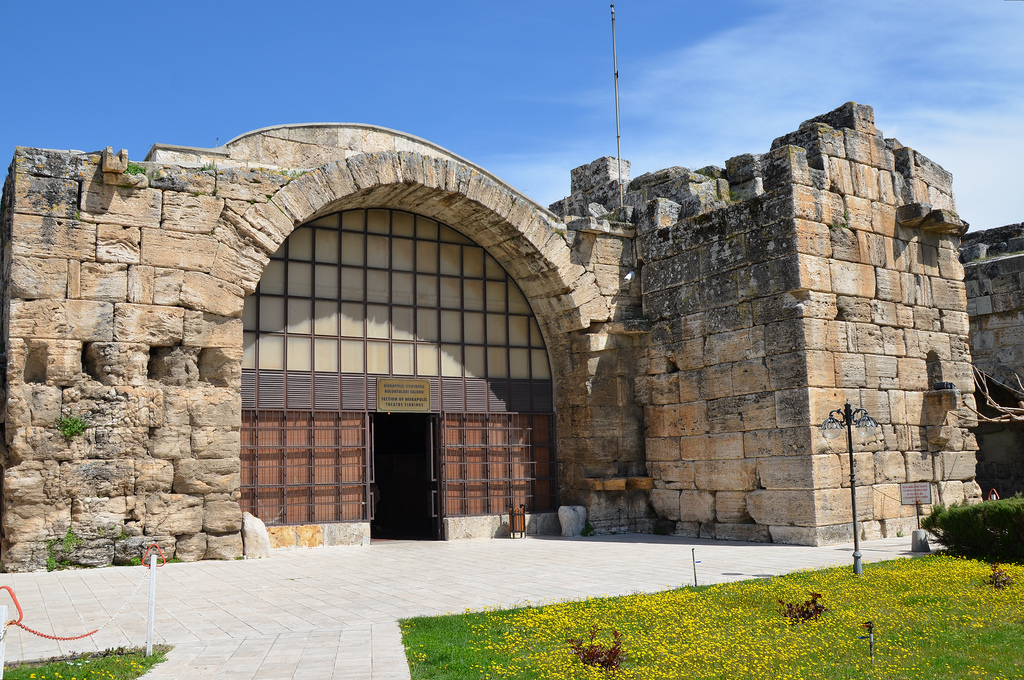
Hierapolis was first excavated in the late 19th century, with systematic excavations commencing in 1957 under the auspices of the Italian Archaeological Mission. This mission continues to conduct research, as well as maintenance and restoration work on the archaeological site. The Museum of Hierapolis opened in 1970, located in the Roman baths, to display its findings. The remains of Hierapolis cover a large area and are particularly impressive, featuring baths, temples, a monumental arch, nymphaea, necropolises, and a theatre.
PORTFOLIO
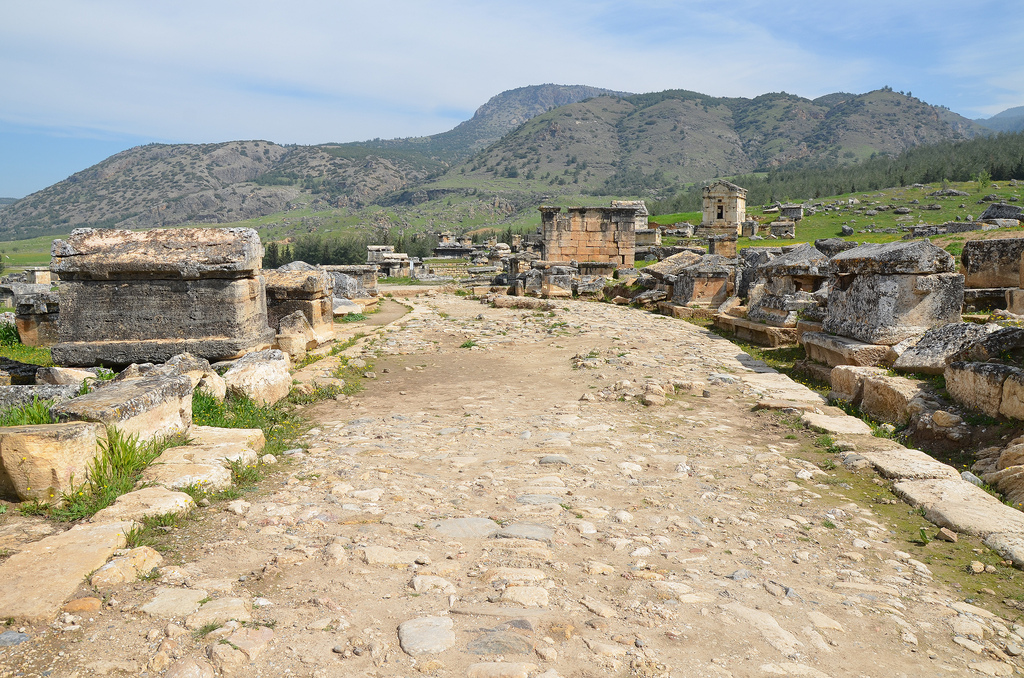
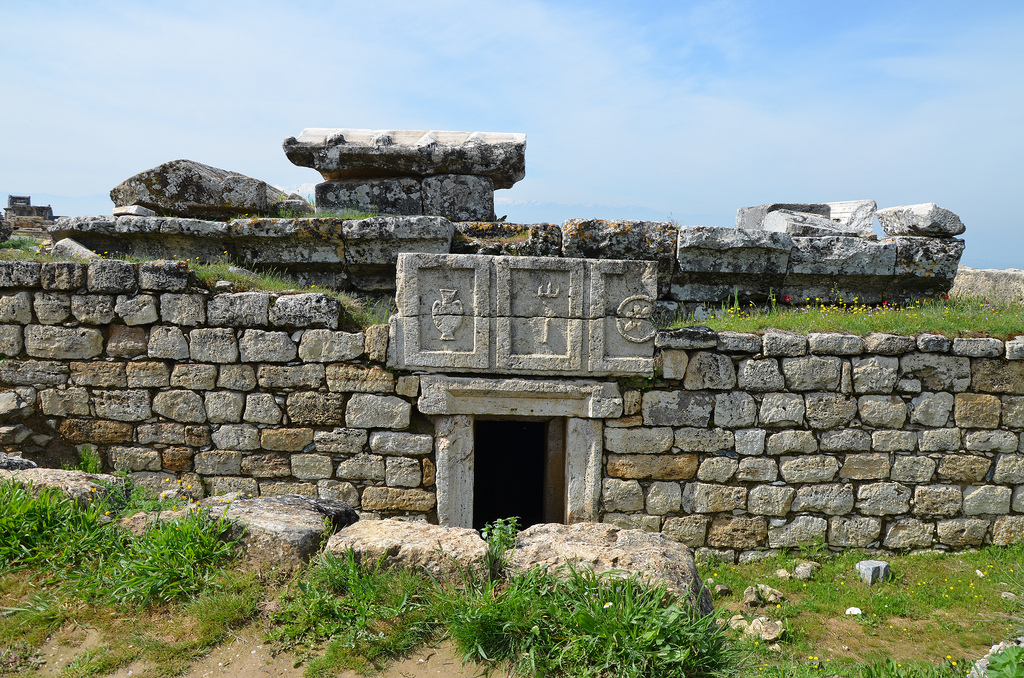
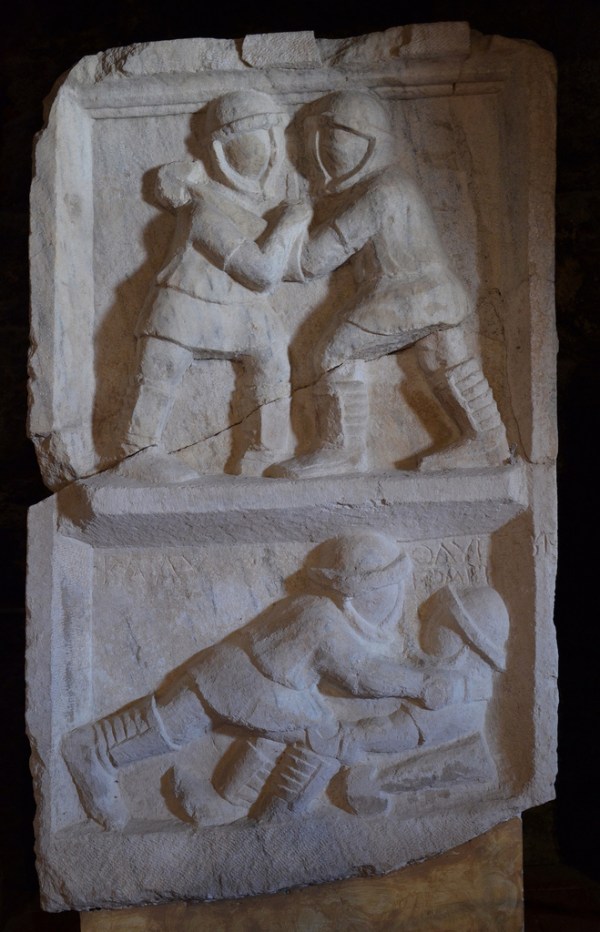
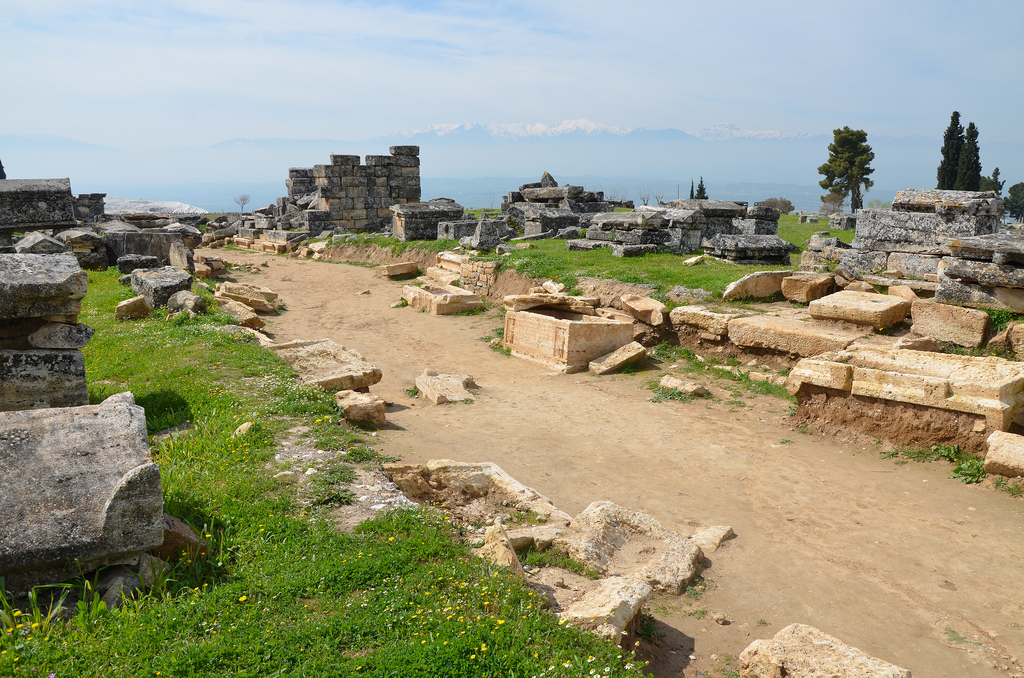
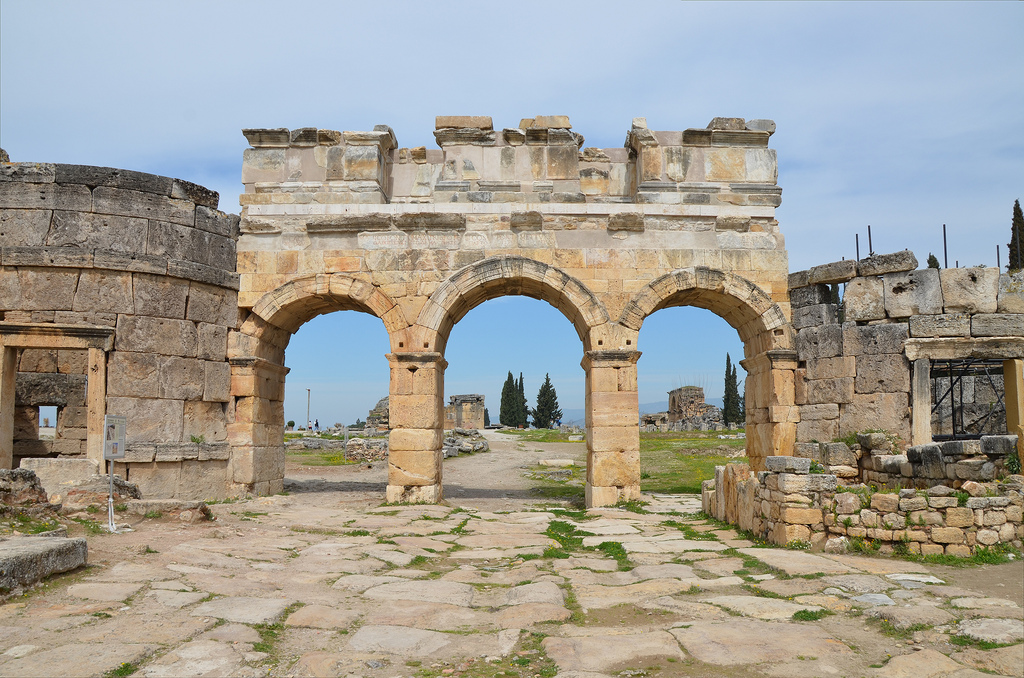
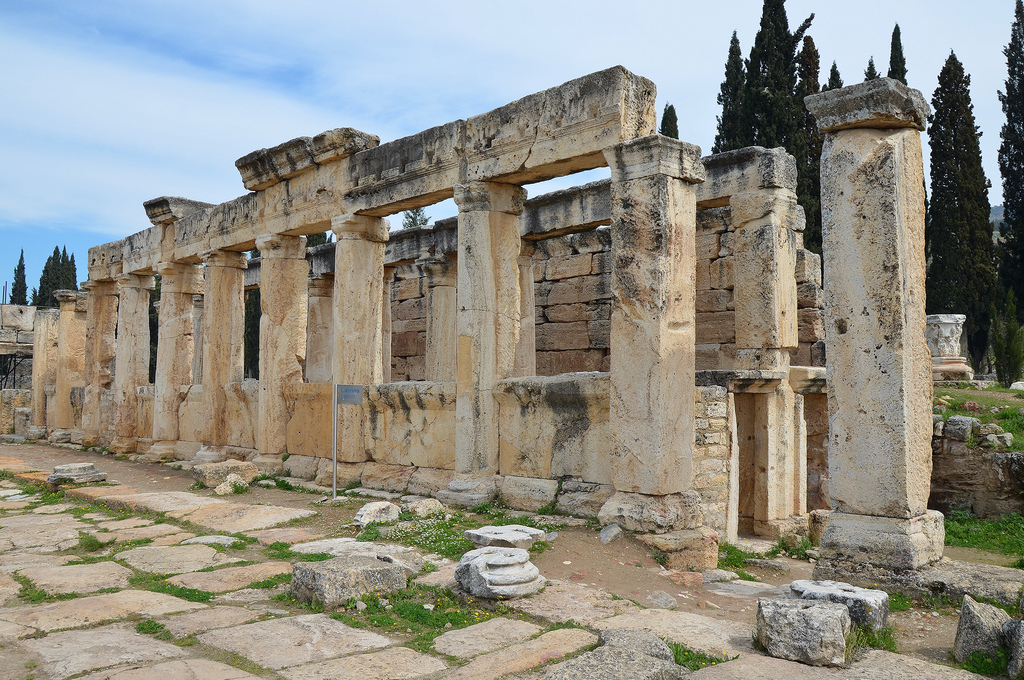
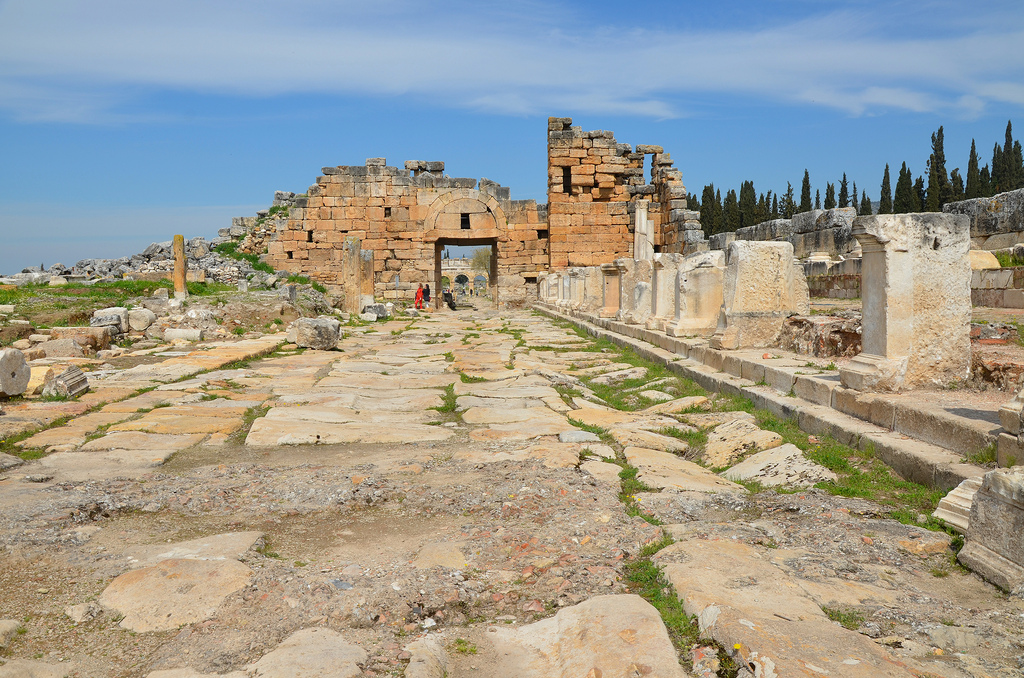
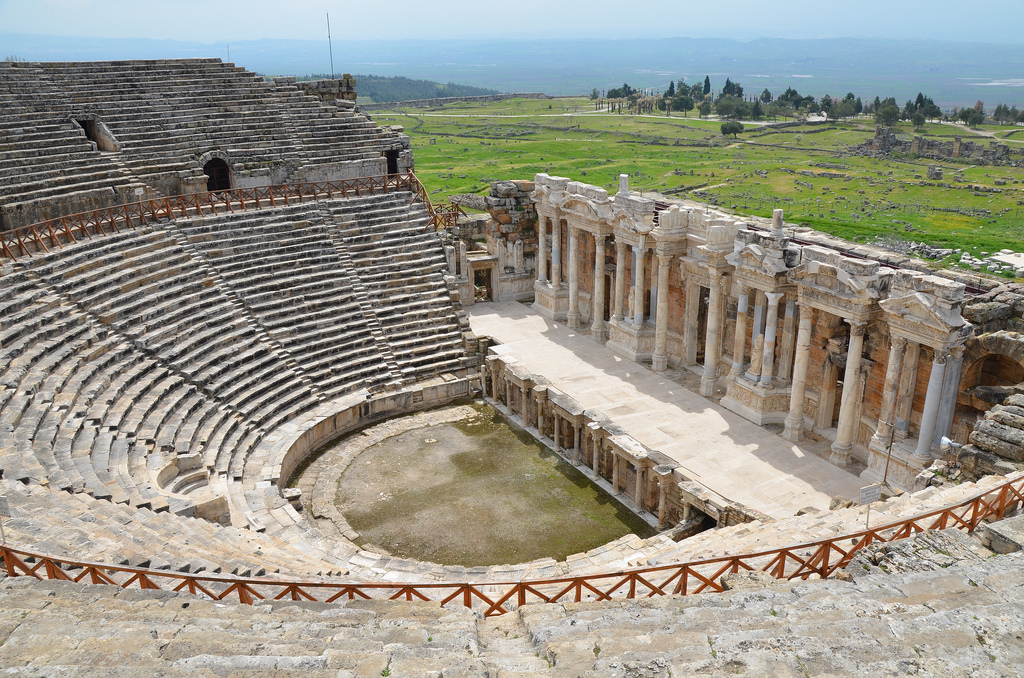
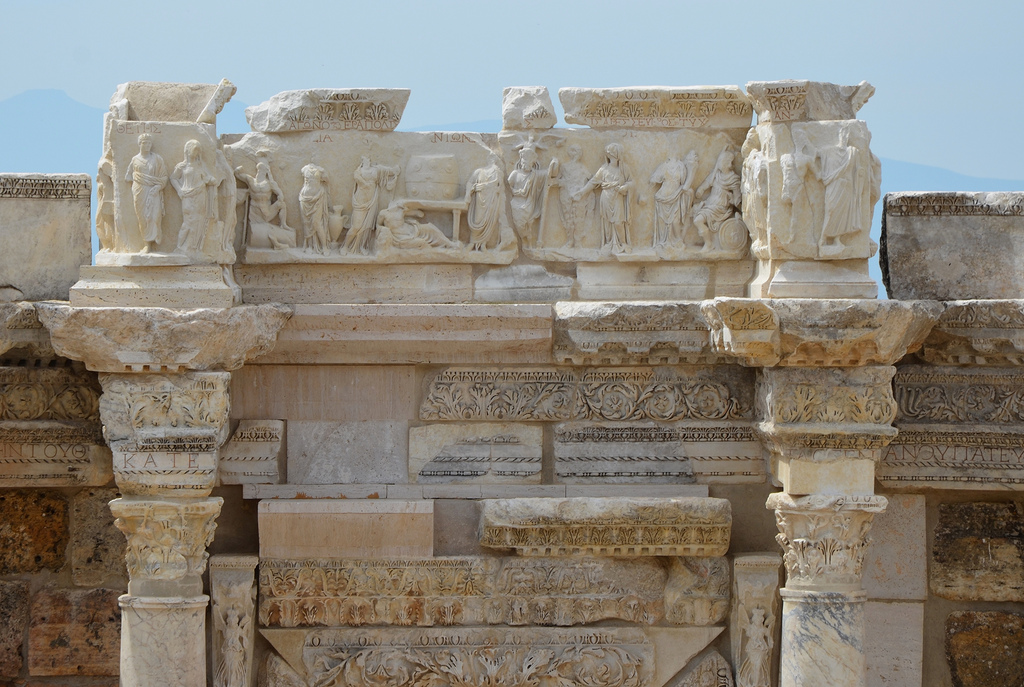
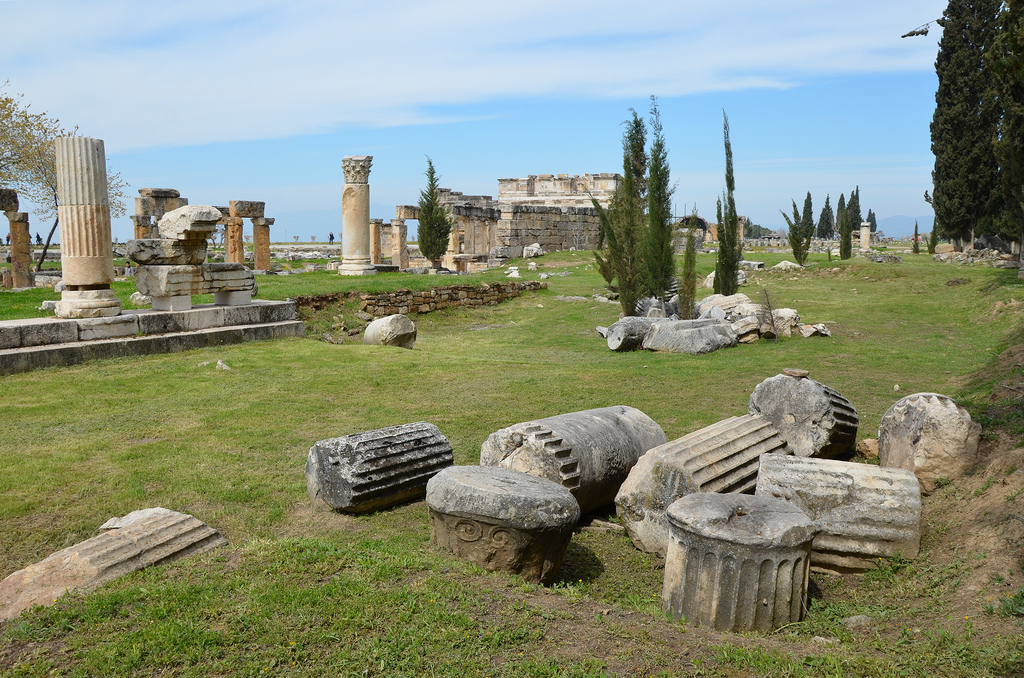
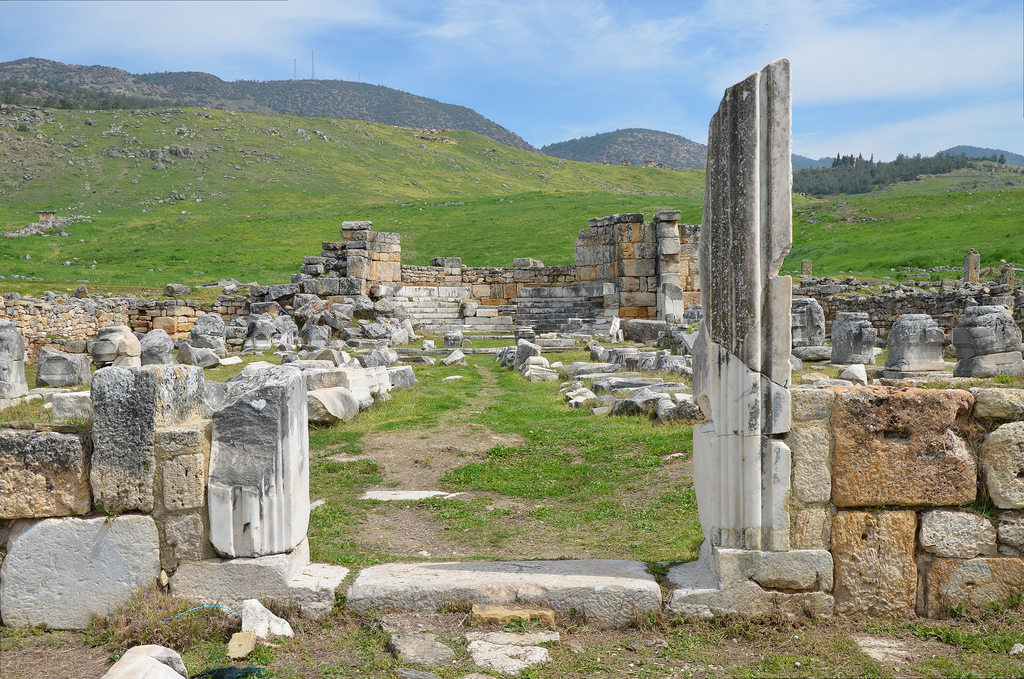
The Northern Necropolis of Hierapolis is one of the best-preserved necropolises of Asia Minor. It was also one of the biggest, with more than 1,200 graves excavated in an area larger than 2 km.The oldest tombs date from the Hellenistic period (1st-2nd century BC). They are tumuli whose vaulted burial chambers were founded on a circular wall with a roof covered in soil.The Northern Necropolis featured an exceptional variety of burial architecture, ranging from simple sarcophagi to mortuary chapels with gabled roofs, and even structures that imitated houses.Tomb No. 166 (Tomb of the Gladiators). The tomb takes its name from the travertine slab above the entrance, which bears images linked to gladiatorial combat: an amphora for the oil offered as a prize to the victor, a trident for combat, and a circular shield. (2nd-3rd centuries AD)Relief with gladiatorial scenes. Dated to the beginning of the 3rd century AD. From the Northern Necropolis. Hierapolis Archaeology Museum.The monumental tomb N°. A18 is set on a high staircase surrounded by buttresses. Dated to the Flavian era, it had two antechambers.The Northern Necropolis. Tomb No. 176 has a distinct facade that recalls the appearance of a house with a row of windows (2nd-3rd centuries AD).The Northern Necropolis beyond the city walls of Hierapolis.The Bath-Basilica, situated at the northern entrance to the city, was originally constructed as a bath complex in the 3rd century AD and later converted into a church in the 6th century AD.Frontinus Gate is the monumental entrance to the Roman city. It was constructed from travertine blocks and featured three arches and two circular towers, situated on its eastern and western sides.The gate, built in the late 1st century AD, features a marble inscription dedicated to Emperor Domitian by Sextus Julius Frontinus, who served as proconsul of Asia from AD 84 to 86.Frontinus Street extended in the north-south direction. It was the main axis of the city.Frontinus Street was a paved street 14 m wide with an elevated pavement. It was lined with a double Doric colonnade and shops.The public latrine along Frontinus Street. The room was divided longitudinally by a row of columns that supported a roof composed of travertine blocks.The latrine, dating back to the end of the 1st century AD, had two wings divided by a row of monolithic Doric columns that supported the roof.The monumental North Byzantine Gate was built in the late 4th and early 5th centuries AD. It formed part of the fortification system and the entrance to the Byzantine city.The Nymphaeum of the Tritons was a monumental fountain built during the reign of Alexander Severus (AD 222-235), as attested by the inscription on the architrave block.The Nymphaeum of the Tritons included a reservoir 70 m long. Excavations at the monument began in 1993 and revealed the marble architectural members and the figures of the relief decoration, including Tritons, Erotes, and dolphins.The Roman Theatre was built in the 2nd century AD under Hadrian during a period of extensive rebuilding following the devastating earthquake of AD 60. It was later renovated under Septimius Severus. The theatre underwent important restorations between 2004 and 2014.The theatre was 91 m wide and had forty-five rows of seats separated by two diazomata and a vomitorium on either side. A semicircular marble tribunalia reserved for priests, dignitaries and honoured guests dominates the centre of the lower cavea. The cavea could accommodate approximately 15,000 people.During the reign of Severus at the beginning of the 3rd century, the old scaenae frons was replaced by a new, more monumental one, organised on three storeys and flanked by two imposing side entry buildings. Sculptural reliefs displaying mythological subjects were placed on the different storeys, while dedicatory inscriptions ran along the entablatures.Emperor Septimius Severus is shown in a procession with his family and the gods. A dedicatory inscription running along the entablature mentions the emperor Severus, during whose reign the old scaenae frons was replaced by a new, more monumental one.Detail of the stage building with a statue placed between the niche and a frieze with reliefs depicting hunting scenes from the Artemis cycle.Statues of Artemis, Leto, and Apollo, from the Roman theatre, dating to the end of the 2nd century AD.The western side of the Agora was built in the 2nd century AD during the reign of Hadrian. It was the commercial centre of the city. The Agora was surrounded by marble porticoes with Ionic columns at the front and Corinthian columns in its interior.The eastern basilica-stoa of the Agora. It was a two-story structure with an Ionic facade.The Temple of Apollo was built in the 3rd century AD using stone blocks from the older temple. The temple’s front, approached by a flight of steps, stood on a podium approximately 2 meters high. It contained a pronaos and cella and had a row of columns, probably six, on the front only.Adjoining the Temple of Apollo is the Plutonium (Pluto’s Gate), a sacred cave believed to be an entrance to the underworld. It is the oldest local sanctuary, and the site was fully functional until the 4th century AD, but remained a place of sporadic visitation by visitors for the next two centuries.
“This space is full of a vapor so misty and dense that one can scarcely see the ground…[…] Any animal that passes inside meets instant death” Strabo (Geography 13.4.14)
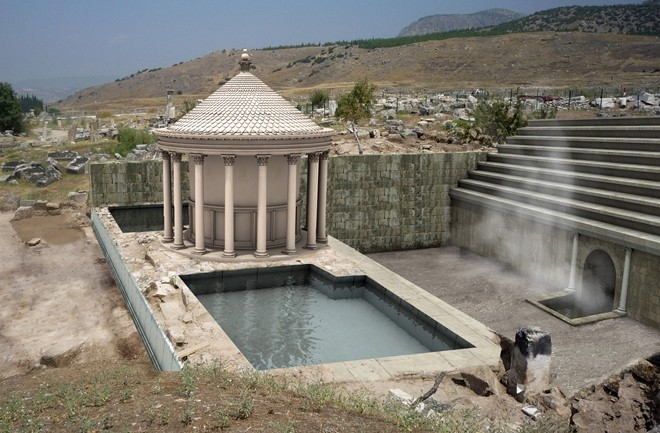
This digital reconstruction of the Plutonium shows the entire site. Credit: Francesco D’Andria The cave emitted poisonous vapours in ancient times and still does! Behind the 3 square metres (32 sq ft) roofed chamber is a deep cleft in the rock, through which fast-flowing hot water passes while releasing a sharp-smelling gas.The Temple Nymphaeum, built in the 3rd century AD, was a two-story fountain with a U-shaped plan, featuring two wings that enclosed a large basin. Statues filled the niches in the walls.The Cathedral was one of the principal buildings of the Christian city. It dates to the 1st half of the 6th century AD. The Cathedral consisted of three aisles, divided by two rows of columns surmounted by capitals.The bridge and flight of stairs were built in the late 4th century AD to access the hill of the Sanctuary of St. Philip.The Martyrium of St. Philip is a church with an octagonal core, built in the 5th century AD, on the summit of a hill outside the walls in the northern part of the city. Philip the Apostle is said to have been martyred in Hierapolis in AD 80 by being crucified upside-down or by being hung upside-down by his ankles from a tree.
Christian symbol over the arches of the Martyrium of St. Philip.
Christian symbol over the arches of the Martyrium of St. Philip.
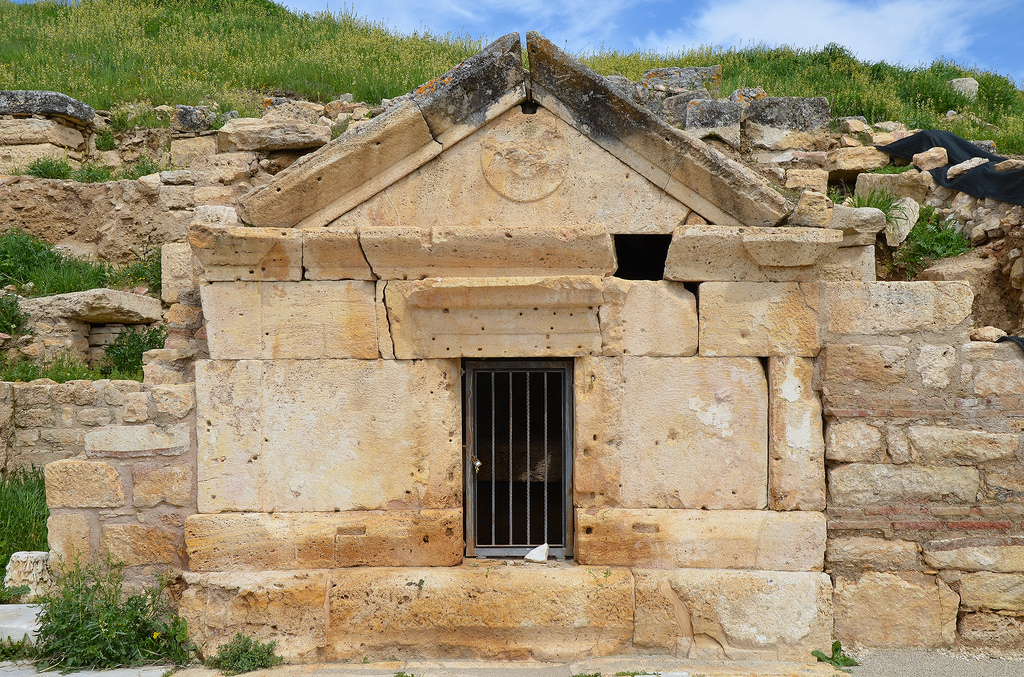
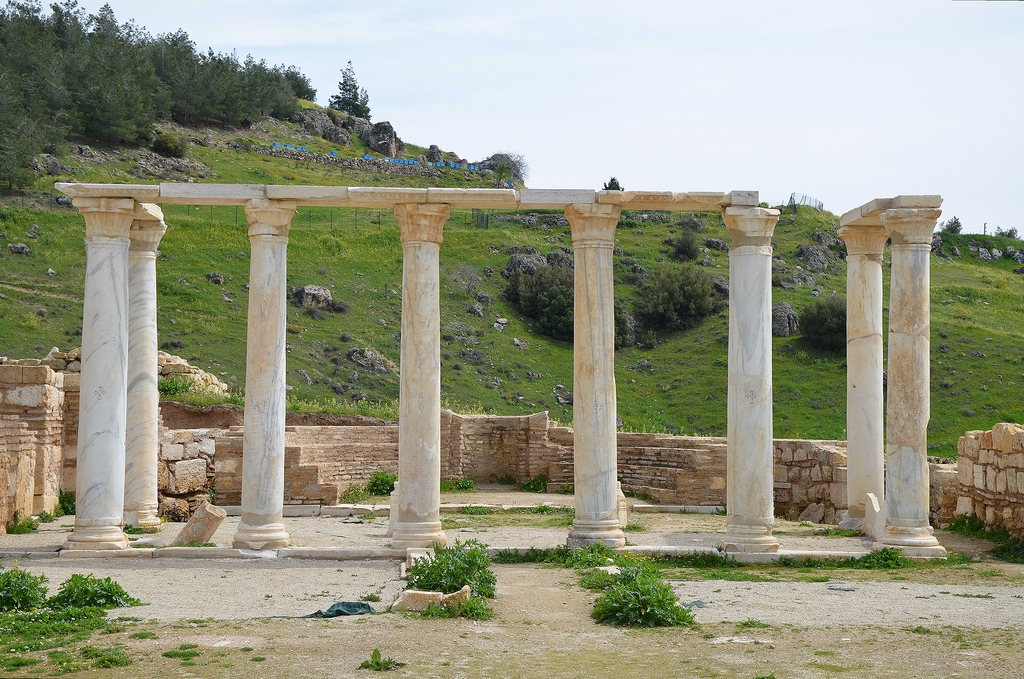
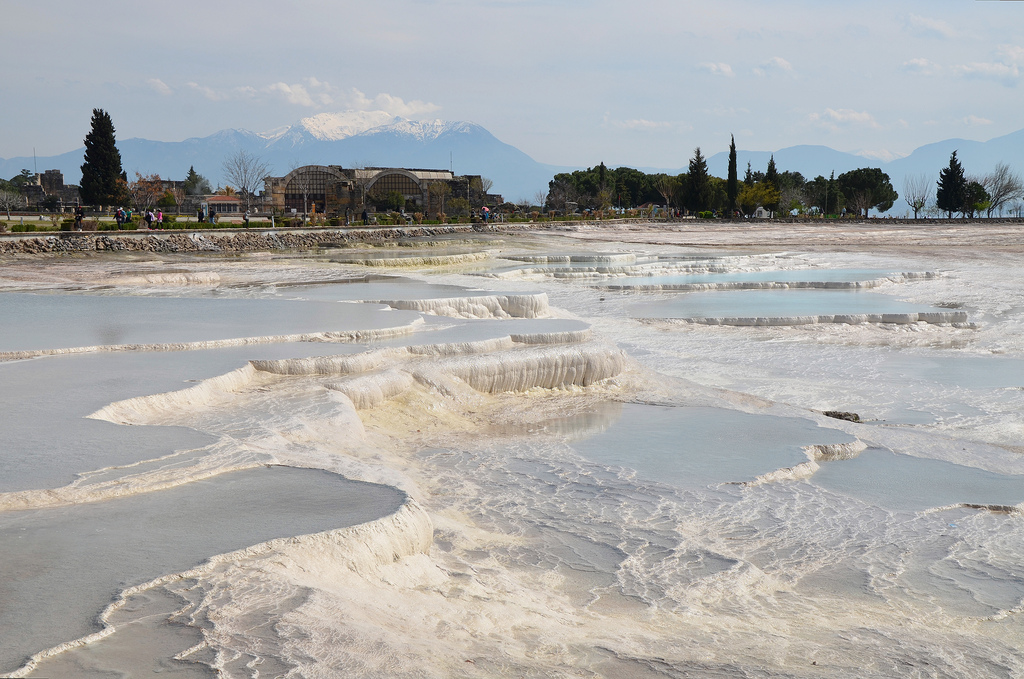
The Tomb of Philip the Apostle dates to the 1st century AD. It has a facade made of travertine blocks. However, the remains of the apostle Philip are no longer in the tomb.The remains of the Church of the Sepulchre, a three-nave church brought to light in 2011.The Roman Baths. The building has been used as the site of the Hierapolis Archaeology Museum since 1984.The hot springs and travertines are terraces of carbonate minerals left by the flowing water.



































 following hadrian photography