Hippo Regius

Hippo Regius was an ancient port located on the coast of North Africa, near the modern town of Annaba in northeastern Algeria. Its natural harbours and defences, proximity to fresh water, and fertile hinterland attracted the Phoenicians and ensured the city’s continuing prosperity. Throughout its history, various groups—including the Numidians, Romans, Vandals, Byzantines, Arabs, Ottomans, and French—have been drawn to the site. Hippo enjoyed great wealth and splendour, eventually emerging as one of the largest cities and most significant markets in Roman Africa.

Coordinates: 36° 52′ 57″ N7° 45′ 0″ E

Hippo Regius was originally a Phoenician settlement established in the 10th century BC. It later became a prosperous Punic city allied with Carthage and the Numidian metropolis of King Massinissa in the 3rd century BC. Following the defeat of Juba I, an ally of Pompey, in 46 BC, Hippo was not annexed to the Roman province of Africa Nova, created by Julius Caesar. Hippo Regius flourished most under the Romans, becoming a municipality under Augustus and elevated to a colony under Trajan. It developed into a vital commercial hub, exporting wheat that fed Rome.

In the 5th century AD, Hippo became the home of Christianity under the episcopate of St. Augustine, who was bishop of the town from 396 AD until his death in 430 AD. Hippo Regius later fell to the Vandals and became the capital city of the Vandal Kingdom from 435 to 439. Hippo Regius passed to the Byzantine emperor Justinian in 533, and about two centuries later, it was overcome by Arabs. The settlement was moved to its present site of Annaba.
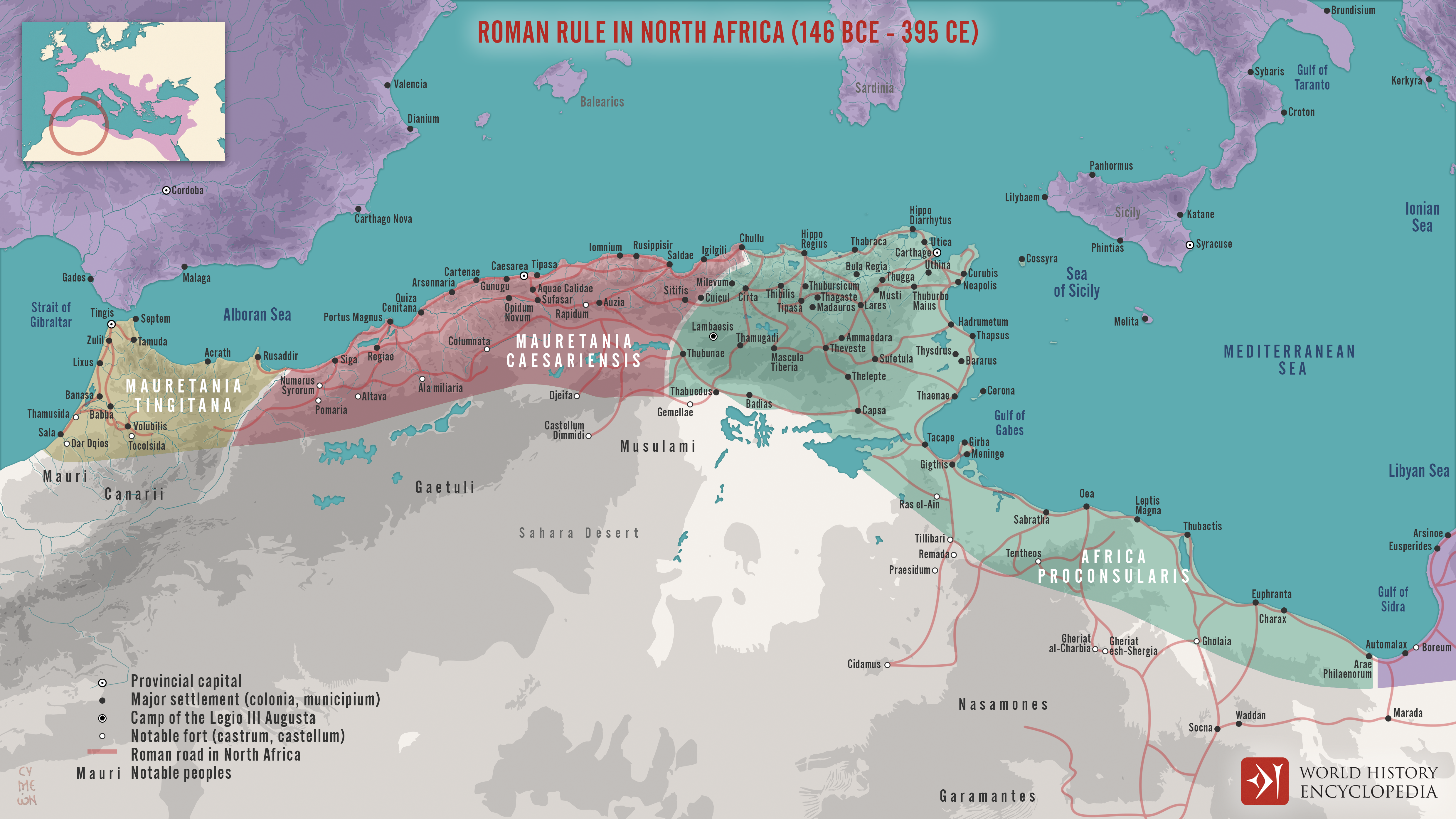
Roman rule in North Africa.
Map created by Simeon Netchev (CC BY-NC-SA 4.0).

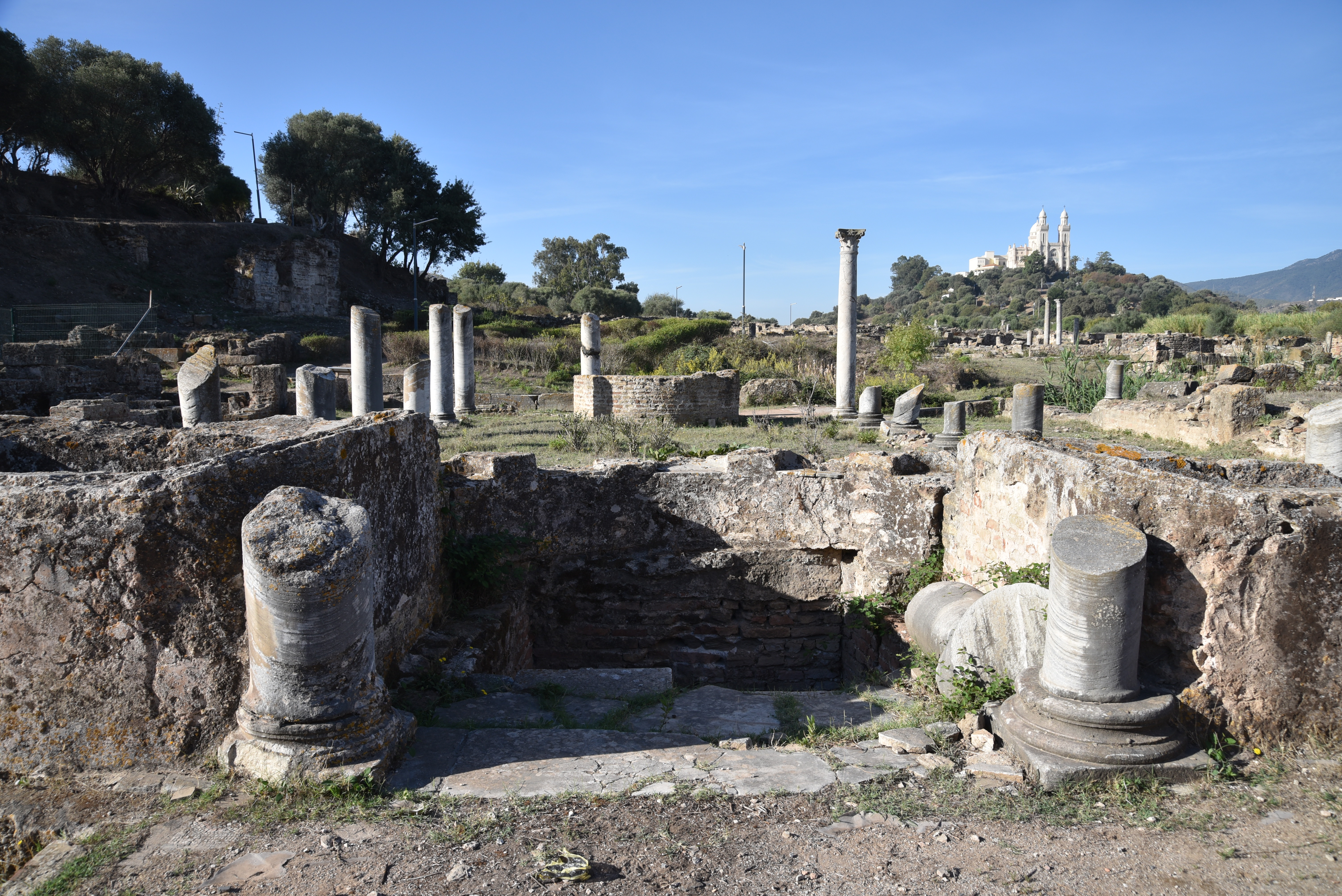
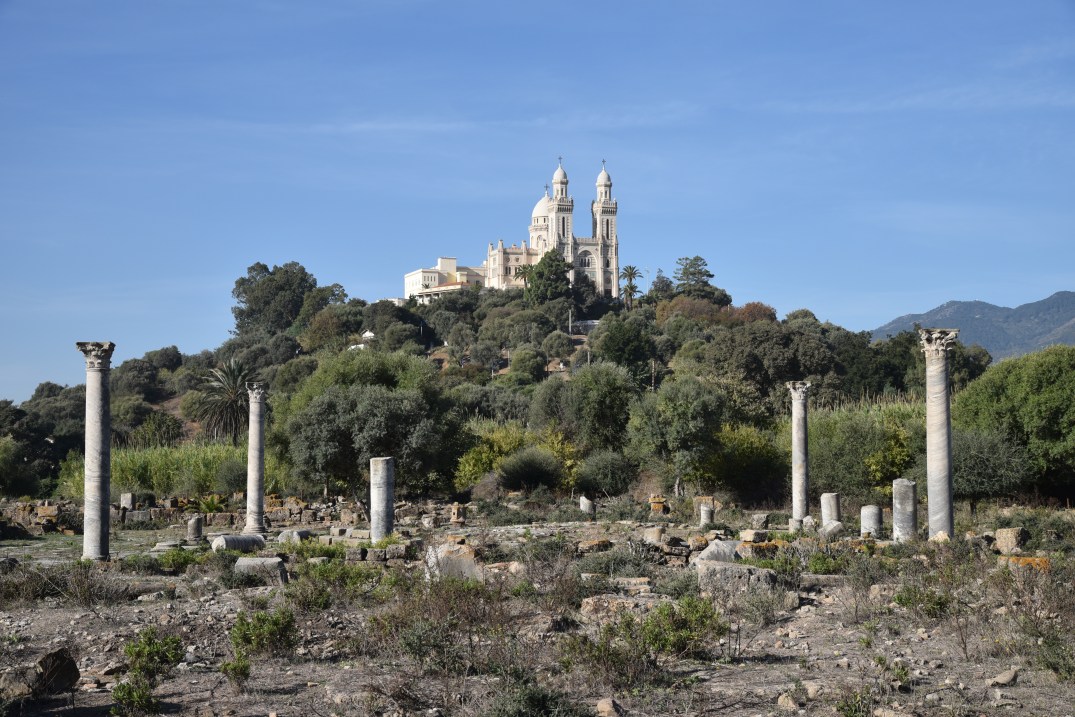
The ruins of Hippo Regius, overlooked by the imposing colonial-era Basilica of St. Augustine, are among the most evocative in Algeria. The forum is one of North Africa’s largest. It features an inscription extending over two lines across its entire width. In the Christian quarter stands a 42-metre-long (131-ft) basilica still covered with mosaics. This may have been the basilica where St. Augustine served as the renowned bishop.

The Musée d’Hippone is located on the hill of Gharf el-Atran, overlooking the archaeological site of Hippo. Built in 1968, the museum houses over 20,000 works from Roman antiquity and later periods. It includes ancient sculptures, ceramics, coins, jewellery, bronze and fired clay vases, statuettes of Numidian, Punic, and Roman goddesses, marble busts, pottery, and Roman mosaics. The centrepiece is a bronze trophy about two meters high, commemorating the victory of Julius Caesar over King Juba I. This representation of a breastplate on a trunk was discovered on the forum of Hippo Regius.

PORTFOLIO

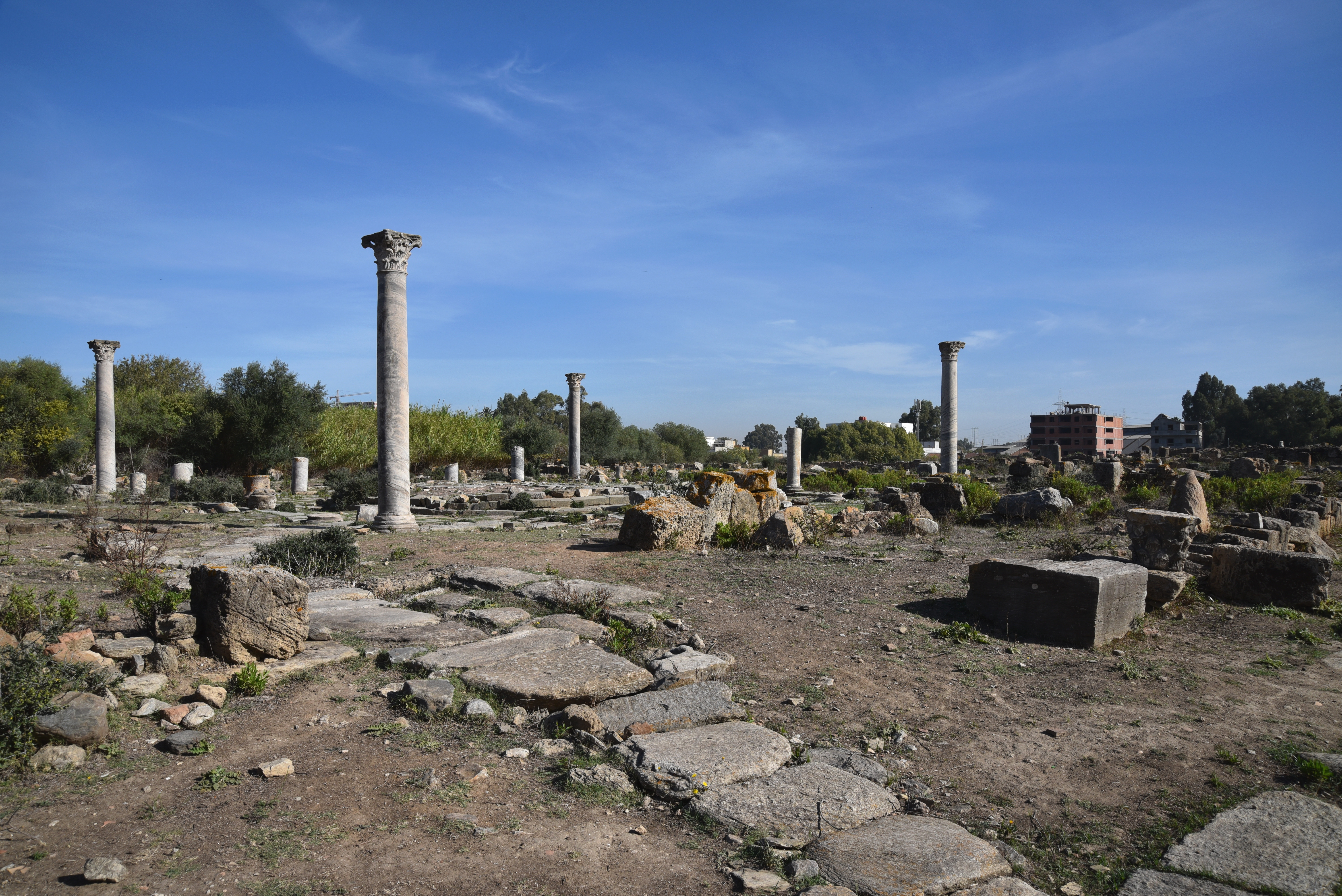
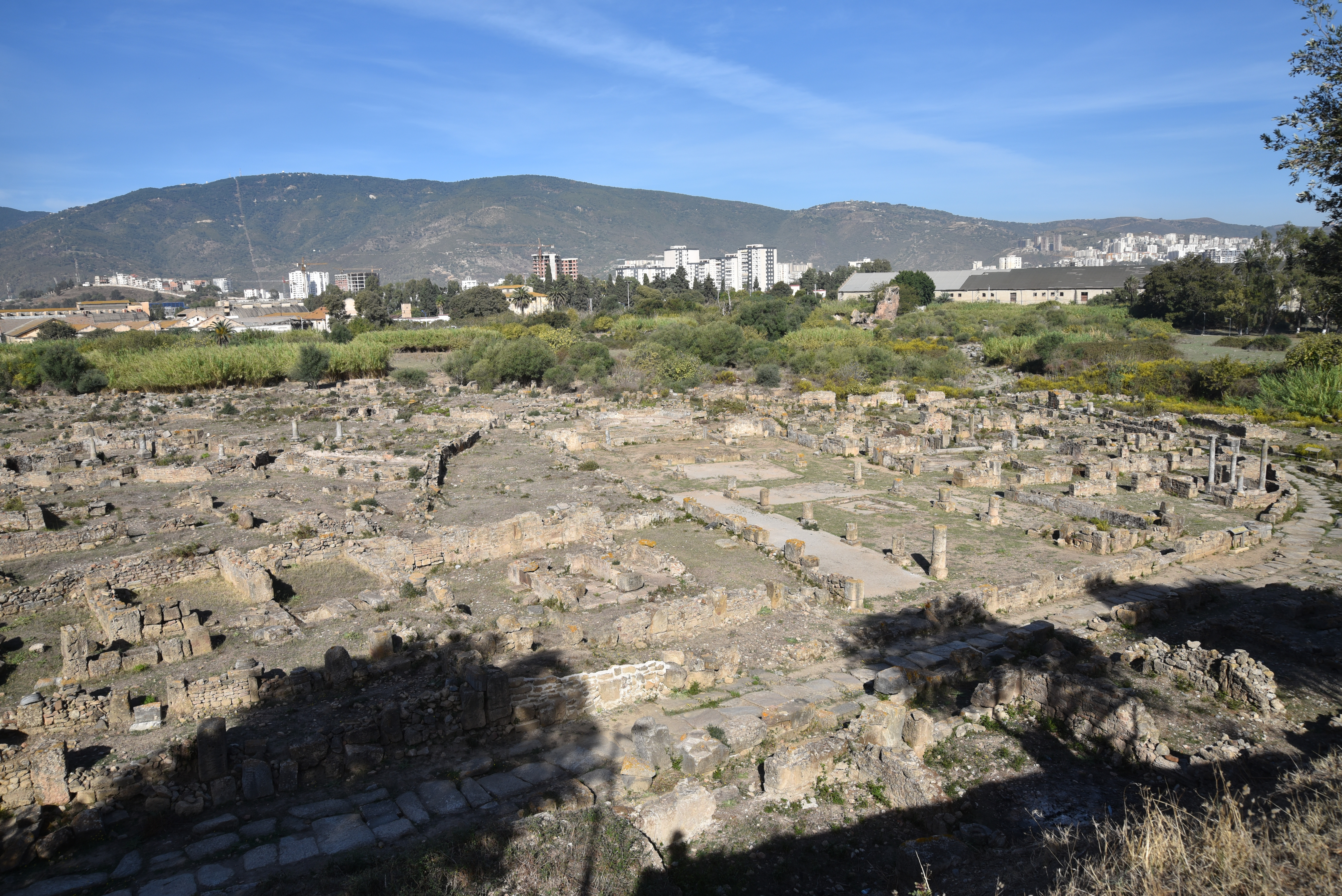
General view of the site.

Forum Quarter

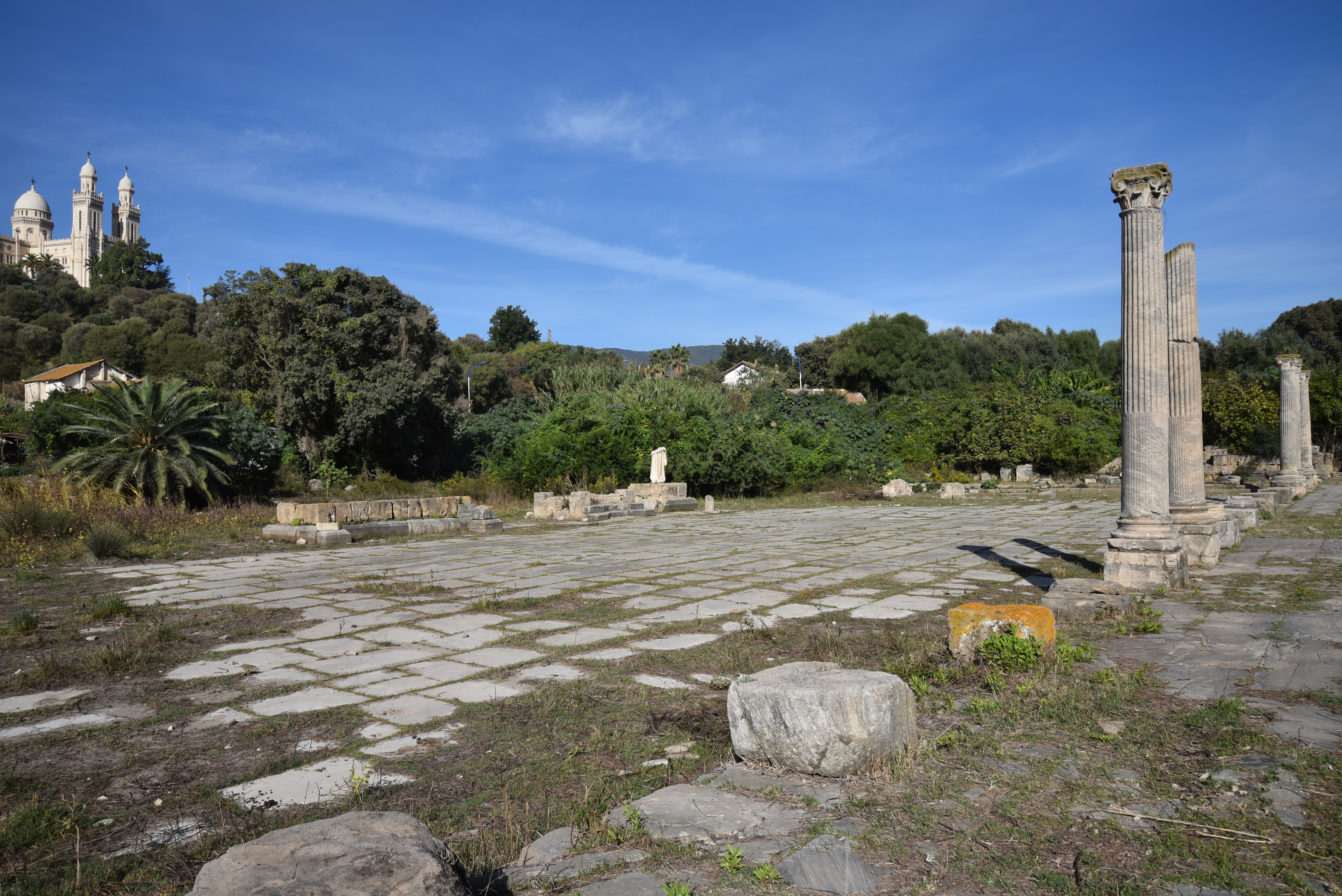
The paved Decumanus leading to the Forum.
The Forum of Hippo Regius, a rectangular paved area measuring 76 x 43 m, is one of the largest in North Africa.
The Forum was paved in marble and surrounded by Corinthian porticoes.
A long inscription, originally filled with bronze letters, extends across the entire width of the Forum. The text records that the paving was dedicated by Gaius Paccius Africanus, pontifex, consul, proconsul, and patron of the municipium of Hippo Regius.

AE 1949, 76 C(aius) Paccius Africanus pont(ifex) co(n)s(ul) proco(n)s(ul) patronus municipii dedic(avit) cura Q(uinti) S[ervili P]ude[ntis praetoris legati propraetoris patroni] / contulit L(ucius) Domitius Fuscus Chunnurio fla[men Augusti pe]r Ho[norem]

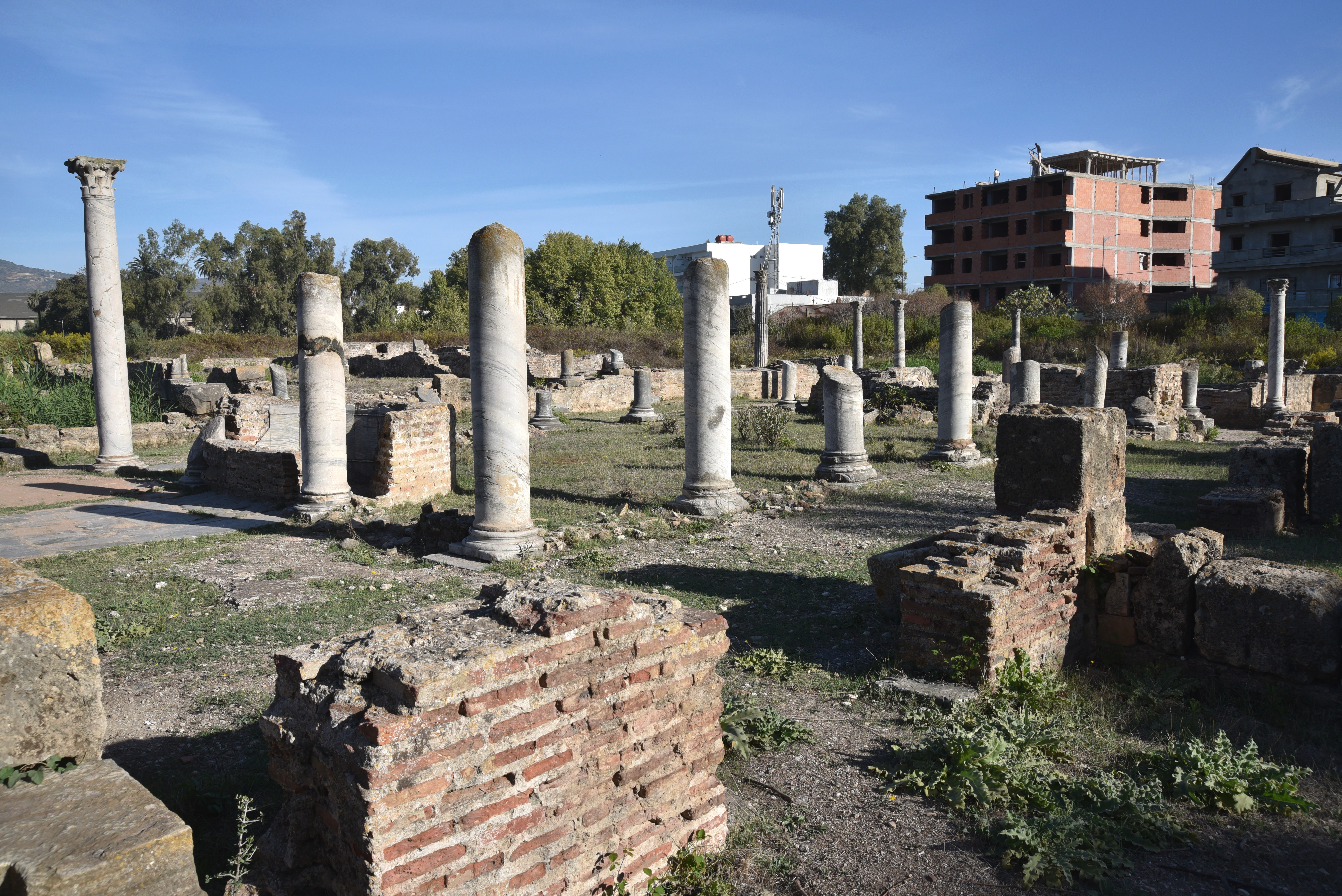
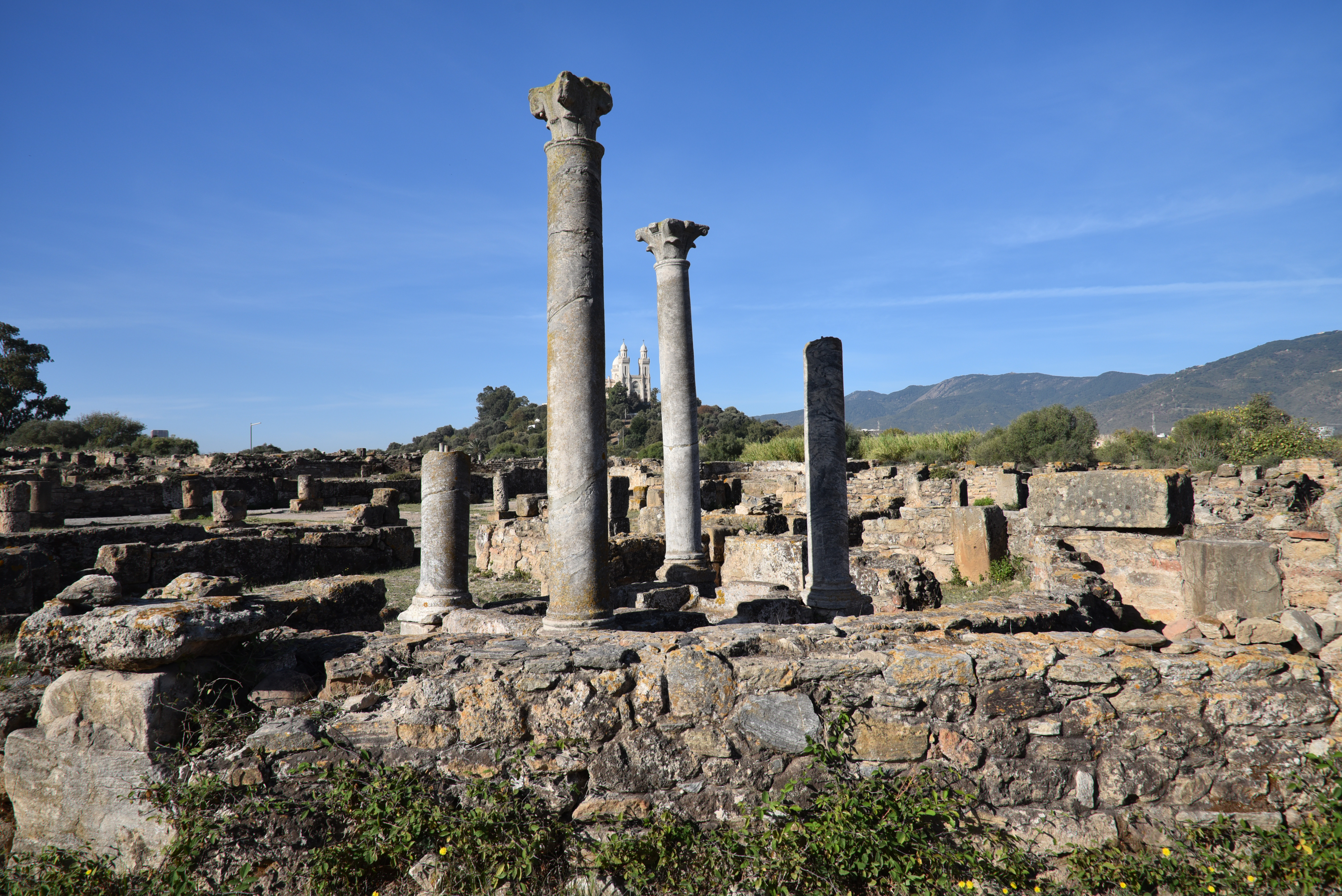
The Macellum (market). It consisted of a rectangular peristyle court (37 x 11 m) paved with black-and-white mosaics and a second court (16 x 16 m) with shops on three sides and a central tholos.
The building was constructed in the 1st century AD and refurbished in the 4th century AD.
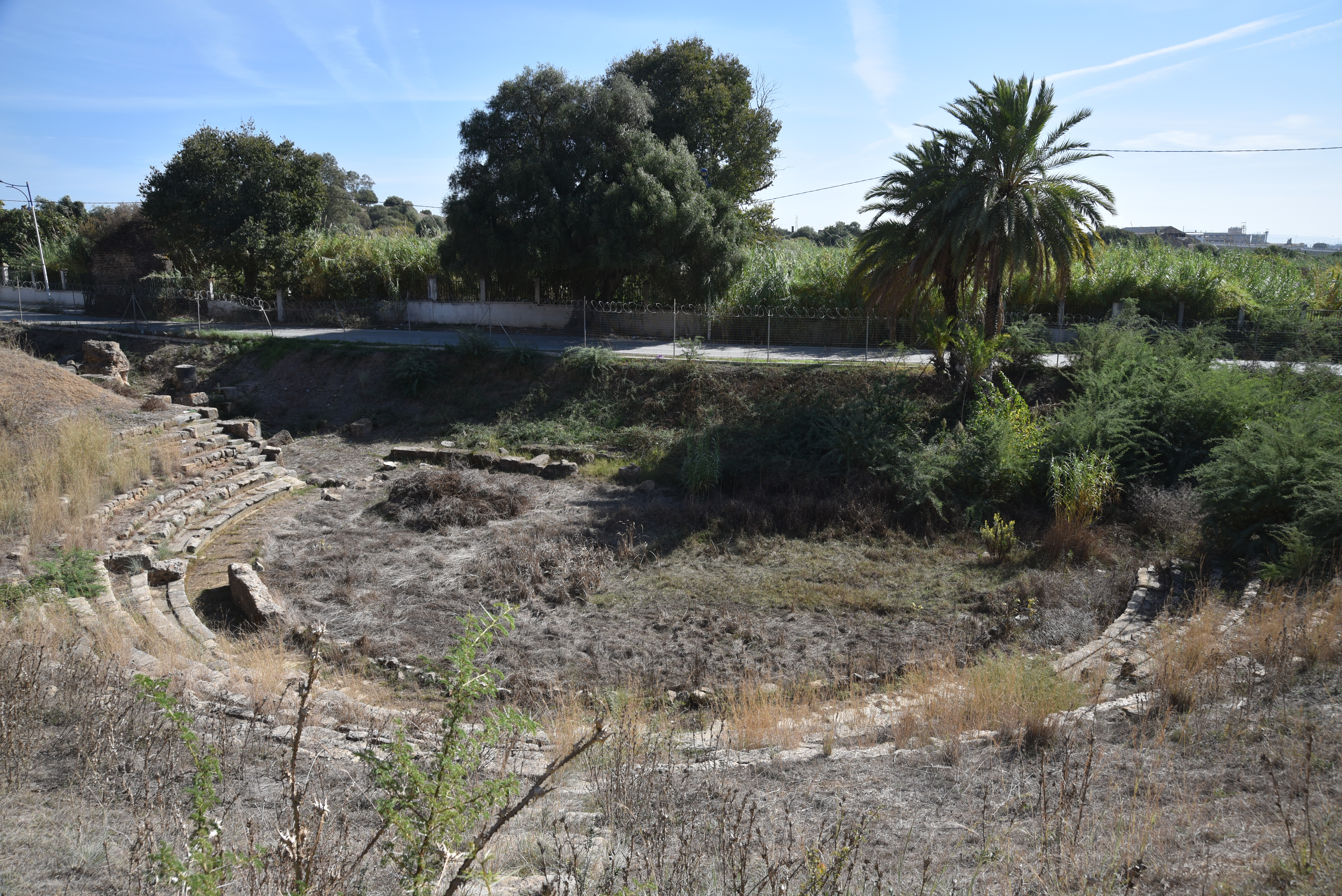
The Theatre, possibly built in the 1st century AD. Its stage building, at 40 × 14 m, was one of the largest in Africa.

Quarter of the Villas

The peristyle of the Villa of the Hunt with fountains.
The Villa of the Hunt.
Mosaic pavement in one of the houses of the Quarter of the Villas.

Christian Quarter

General view of the Christian Quarter.
View of the main Basilica. It measured 42x20m and was divided into a nave and two aisles by rows of columns on plain square bases. The basilica floor was covered with mosaics in its centre nave and aisles. This basilica is commonly known as the Basilica of Peace. During Augustine’s time, it was also referred to as the Church of Saint Stephen because he placed the relics of that martyr in it in the year 424.
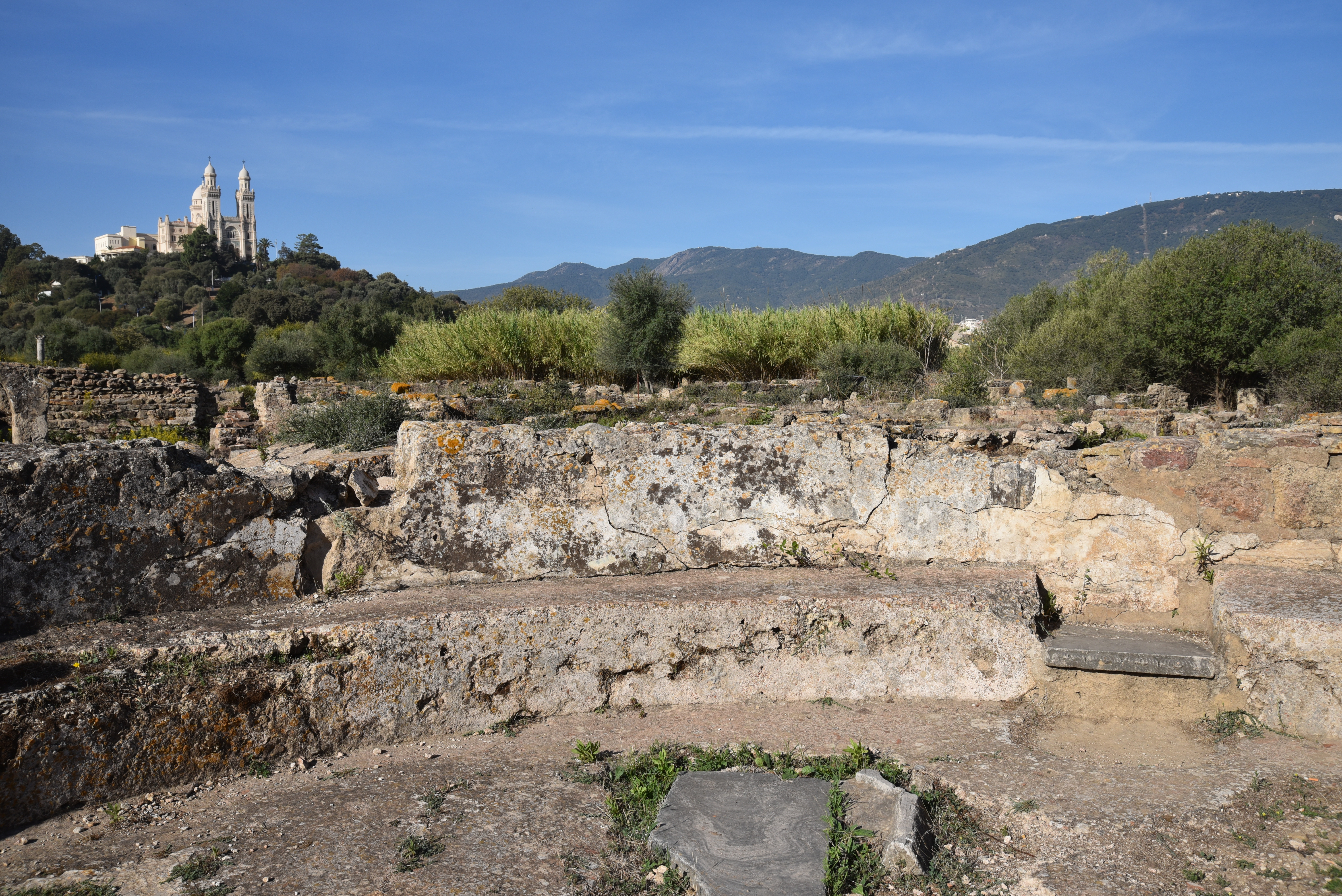
The apse of the main Basilica.
The apse of the main Basilica and seat of Augustine of Hippo (?) with the new Basilica in the background.
An apsed chapel, probably the consignatorium, associated with the adjoining baptistery.
The Baptistery.

The Museum

The room of the mosaics.
The Hunt Mosaic from the Quarter of the Villas. It depicts a hunting scene in which lions, leopards and antelopes are chased into a trap. The wild animals are being rounded up for transport to games in the arena. Dated to the early 4th century AD.
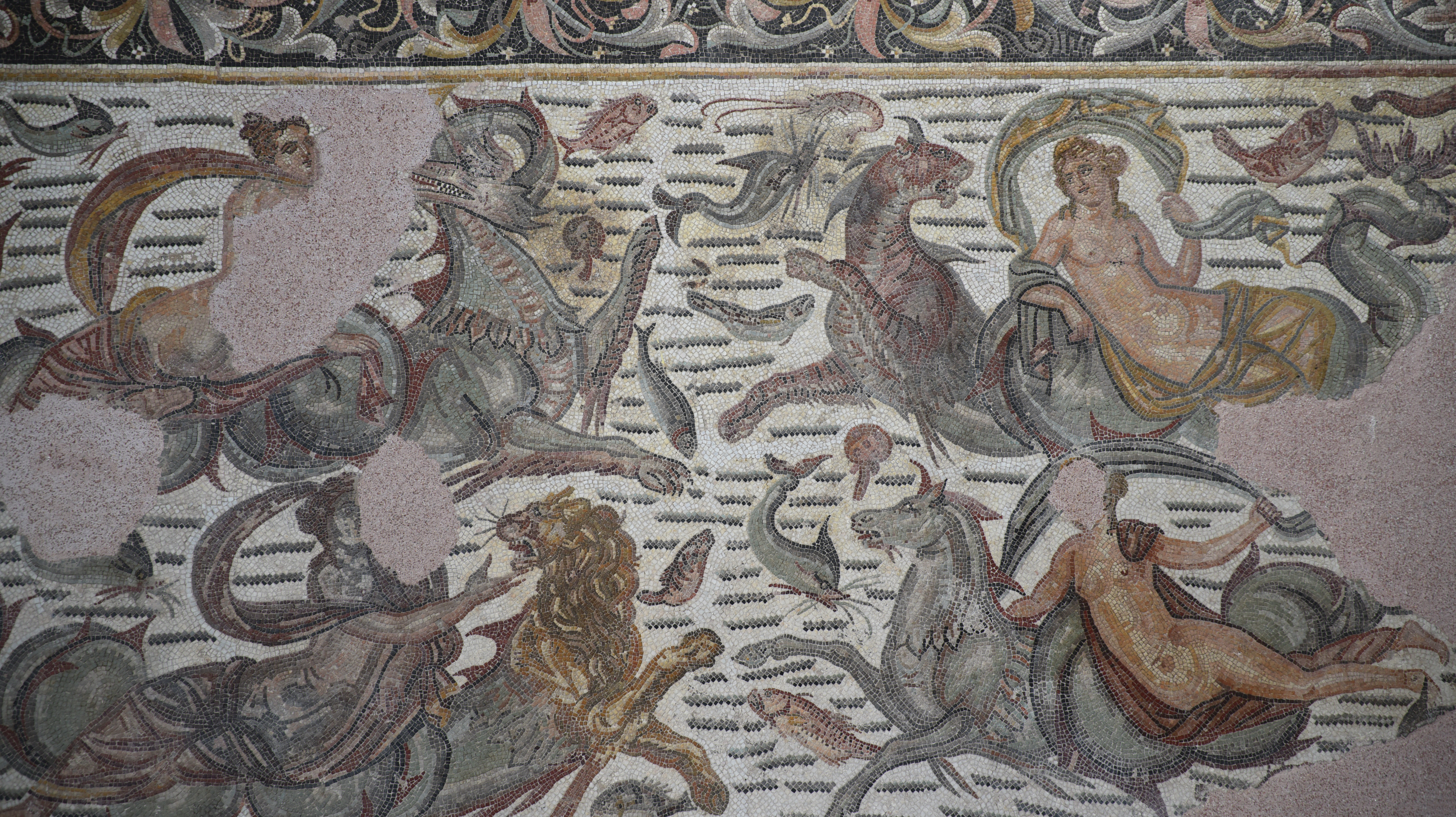
Mosaic of the Nereids. Four nereids are riding on various marine monsters. Dated to the first half of the 4th century AD.
Bronze Trophy (tropaeum), a military monument that may commemorate Caesar’s victory over Juba I at the battle of Tapsus in 46 BC. This trophy measures 2.44 metres high and weighs 240 kg. It depicts a tree trunk with a cape and military armour draped over it.

References & links:

  • The Splendours of Roman Algeria
  • Blas de Roblès, Jean-Marie; Sintes, Claude; Kenrick, Philip. Classical Antiquities of Algeria: A Selective Guide (p. 127). Society for Libyan Studies. pp. 232-521

Tiddis (Castellum Tidditanorum)

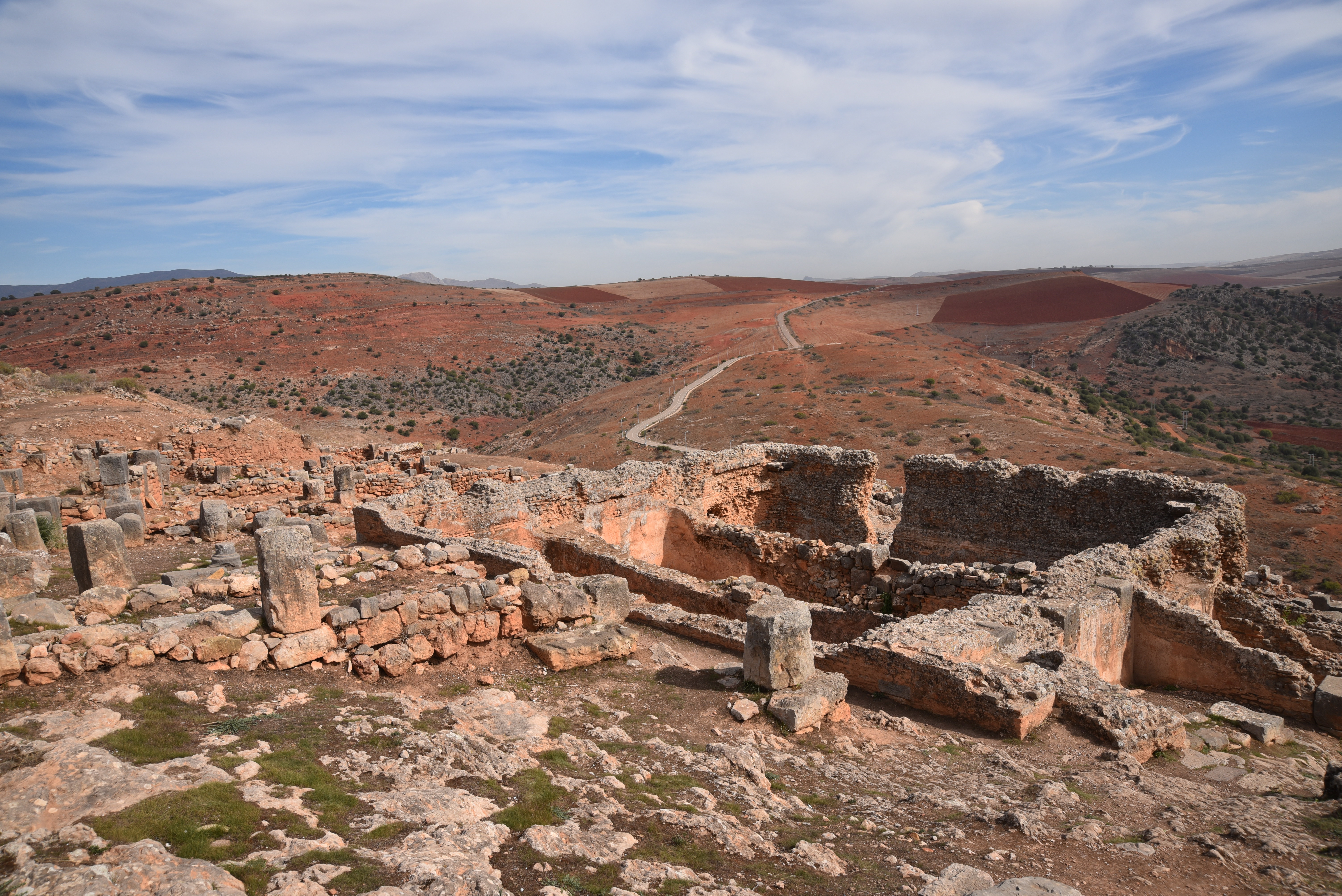
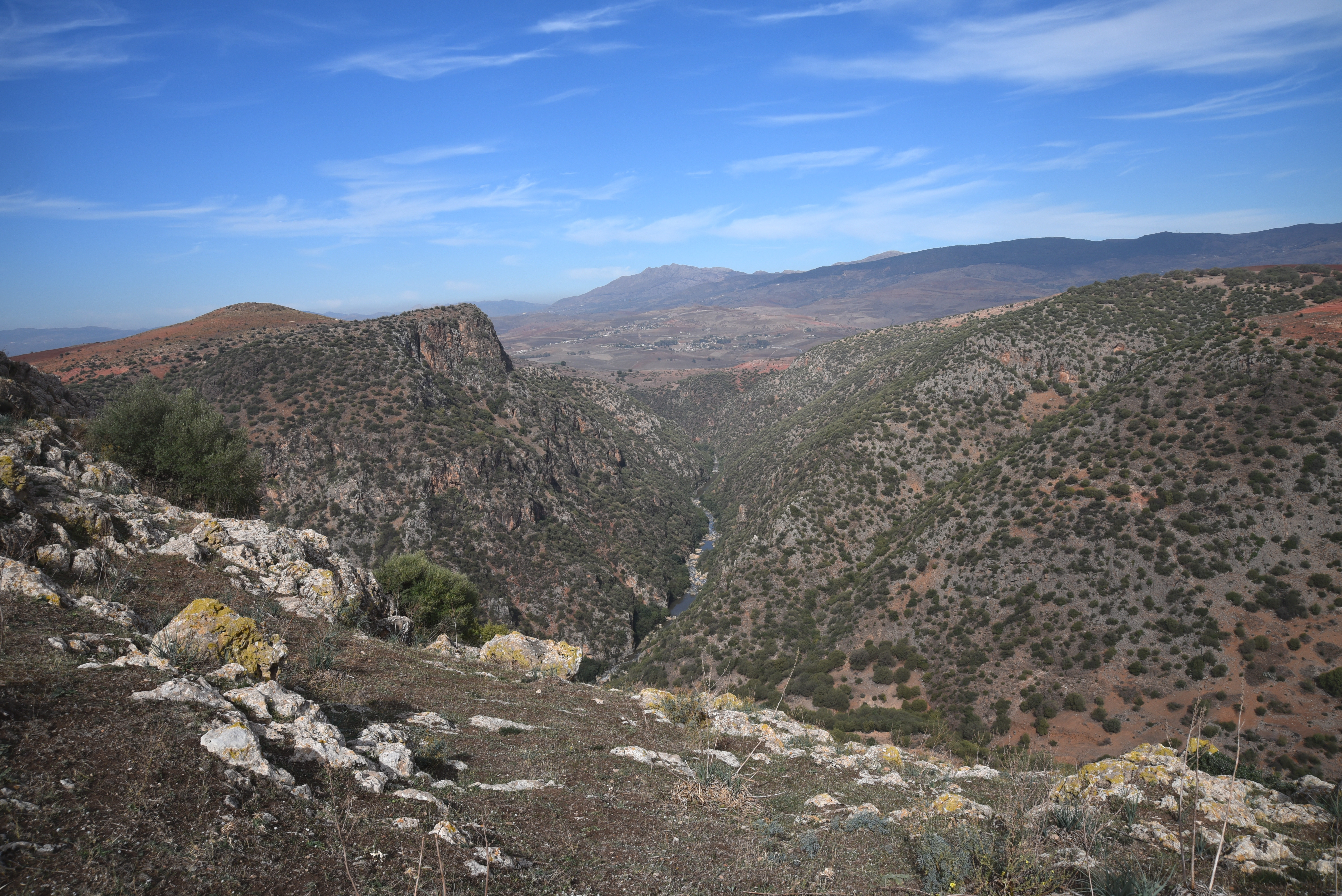
Castellum Tidditanorum (modern Tiddis in Algeria) was a Roman city in Numidia, established as a military settlement in Augustus’ time. Built on a steep hillside of red earth with commanding views over a deep canyon, the Romans adapted their rule of town planning to the sloping topography, with streets winding their way up to the summit. Castellum Tidditanorum had gates, a forum, thermal baths, industrial installations (fillers, oileries, and pottery workshops), religious buildings, and a sanctuary of Mithras.

Coordinates: 36° 27′ 48″ N6° 29′ 2″ E

Tiddis was built as a defensive castellum (small Roman fort), one of a series of fortified villages surrounding the larger settlement at Cirta (Constantine) and protecting its territory. There was a settlement on this site from early times, at least since the Neolithic Berbers, but the Romans developed the town.

The Roman military settlement established in Augustus’ time eventually grew civil, adapting their town planning rule to the sloping topography, with streets winding their way to the summit. Colonnades, a triumphal arch, a small forum, a Mithraeum, a Christian neighbourhood, and the cardo maximus are among the surviving remains of this imperial centre of Roman culture.

Tiddis was the home of Quintus Lollius Urbicus, son of a Numidian Berber landowner. Quintus fought with Legio XXII Primigenia in Germany and Legio X Gemina in Pannonia, participated in the Bar Kokhba Revolt in Judaea, and was appointed consul and then governor of Roman Britain between 139 and 142. Quintus erected a circular family mausoleum, still standing outside the town on what was most likely the family estate.

PORTFOLIO

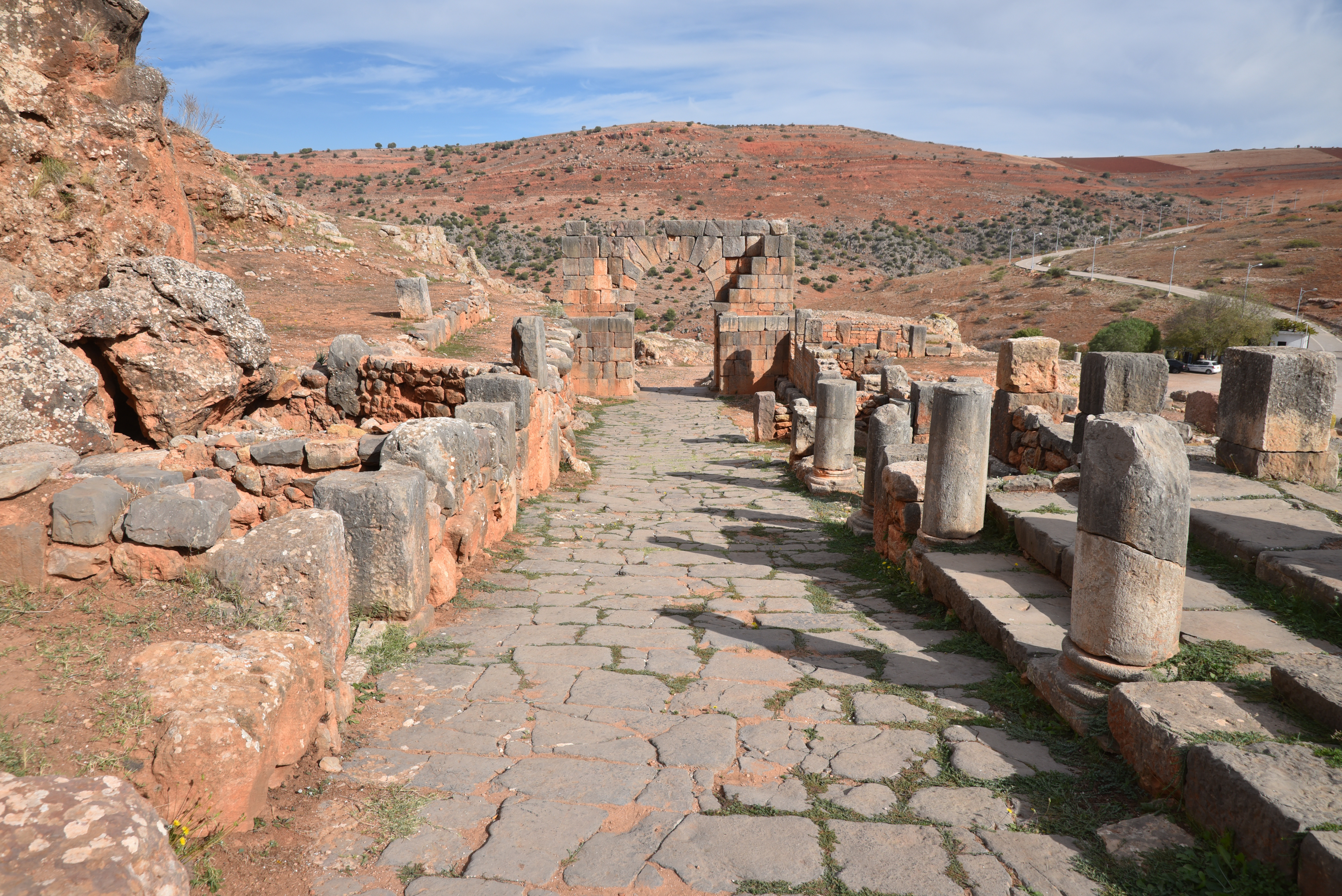
The North Gate, a single arch built in fine ashlar masonry in the 2nd century AD and marking the beginning of the Cardo Maximus. A dedicatory inscription (ILAlg 2, 3608) reveals that the gate was provided (sua pecunia) by Quintus Memmius Rogatus and that it was equipped with doors (cum valvis).
The Cardo Maximus and North Gate.
Large circular bazina close to the North Gate. These usually domed funerary monuments belong to the protohistory of North African Berber peoples. The bazinas were used as ossuaries. Inside, in the centre, is a chamber where the dead person was buried directly on the ground.
The Mithraeum, cut into the hillside. At the entrance are bullheads, a winged phallus in relief, and an inscription to the unconquered Mithras.
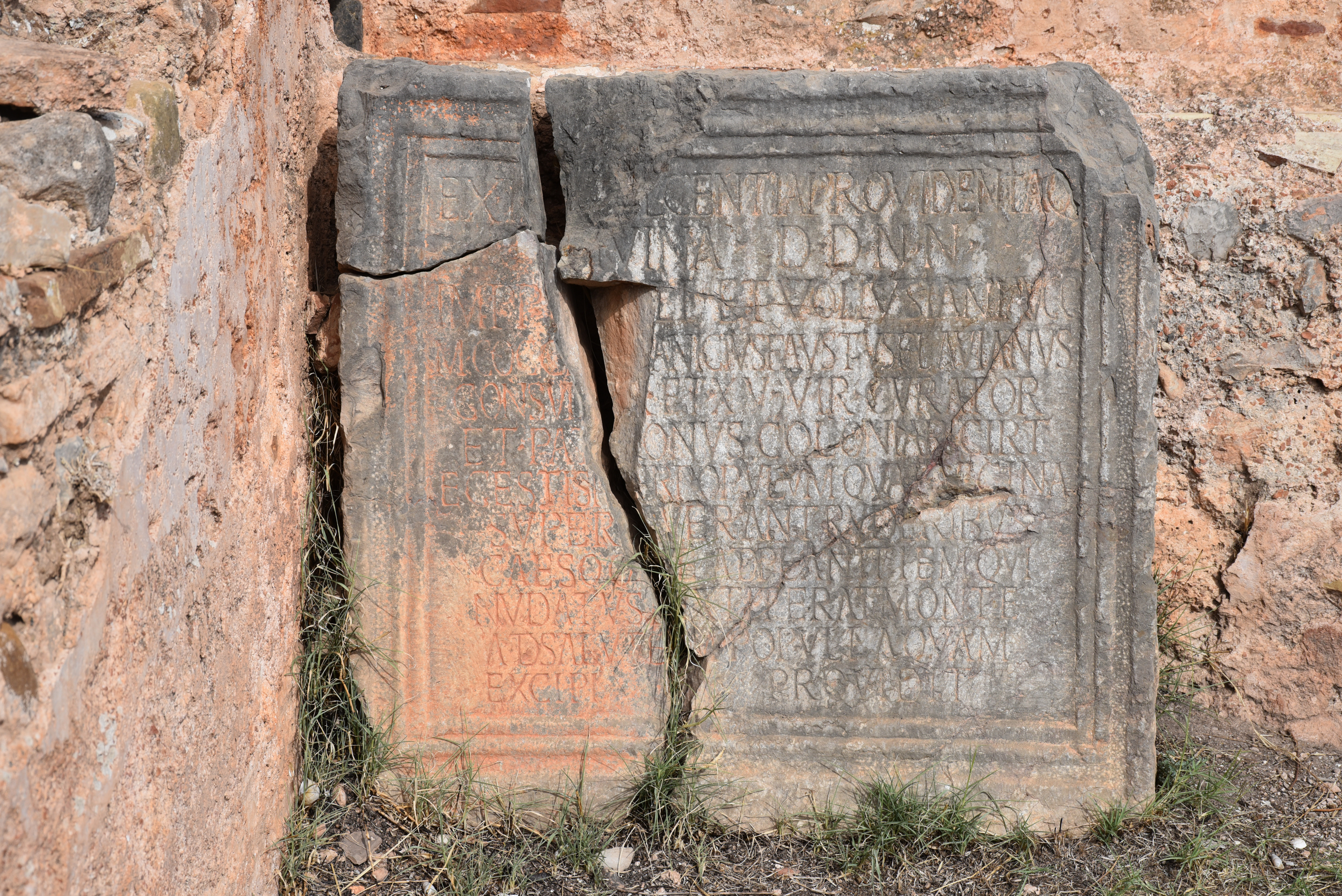
Inscription from the Mithraeum (CIMRM 162).
I(nvicto) M(ithrae) cultore/s de suo a s/olo // aedificarun[t]
To the unconquered Mithras, his devotees built this from their own funds.
Winged phallus carved on an entrance pier of the Mithraeum.
The Cardo Maximus was a paved road with two hairpin turns and ran under two arches set at right angles to each other.
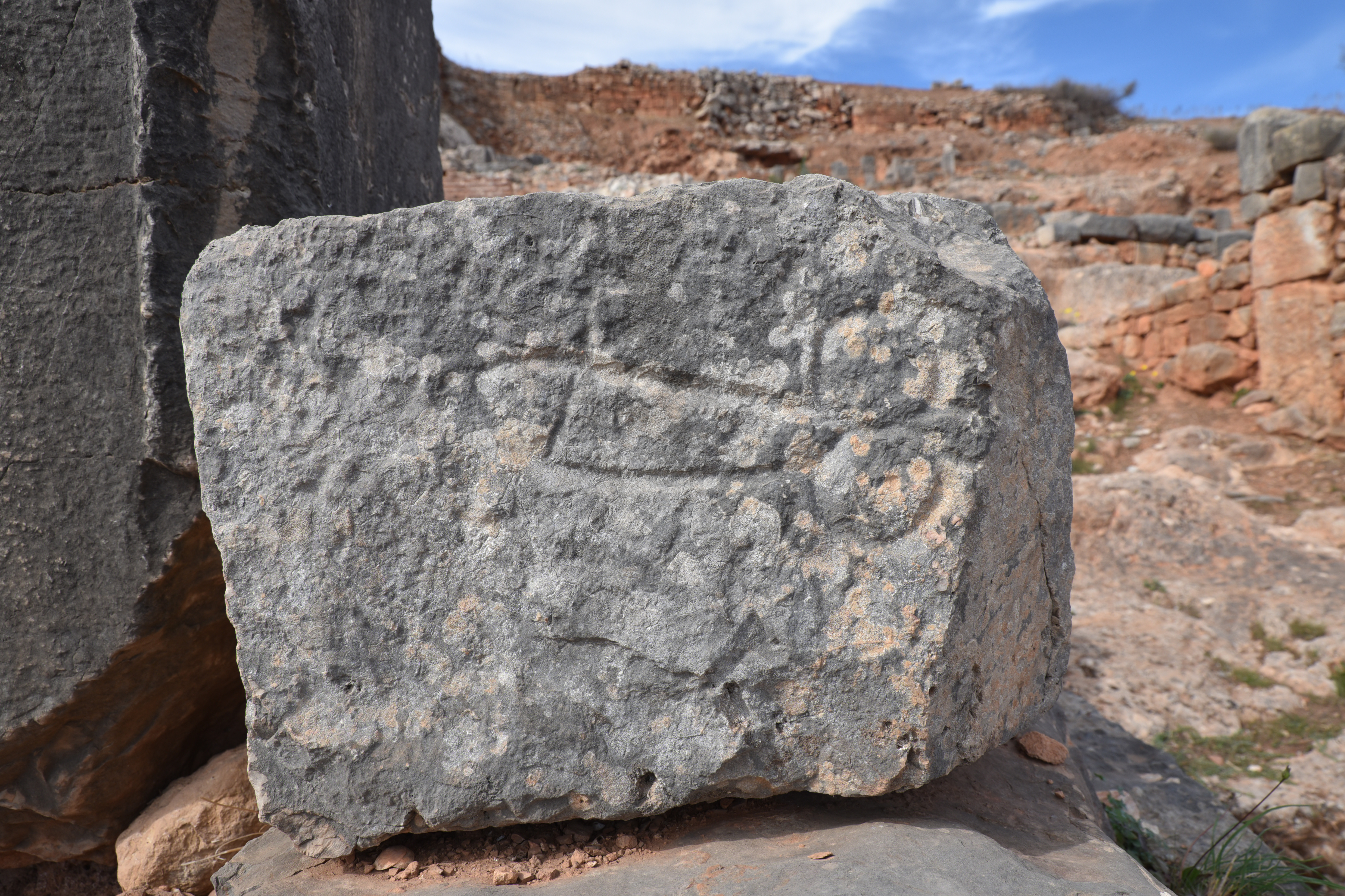
A carved phallus along the Cardo Maximus.
The second arch crossing the Cardo Maximus below the Forum.
Two votive altars on the side of the Cardo Maximus dated to the 3rd century AD.
Left altar: Votive altar set up by Lucius Pescennius Sedatus in honour of his friend Quintus Voltius Maximus (ILAlg 2, 3615)
Right altar: Dedication to the Genius Populus by Q. Leptius Musteolus (ILAlg II.1, 3575)
Circular basin supported by four columns, most probably a Christian Baptistery.
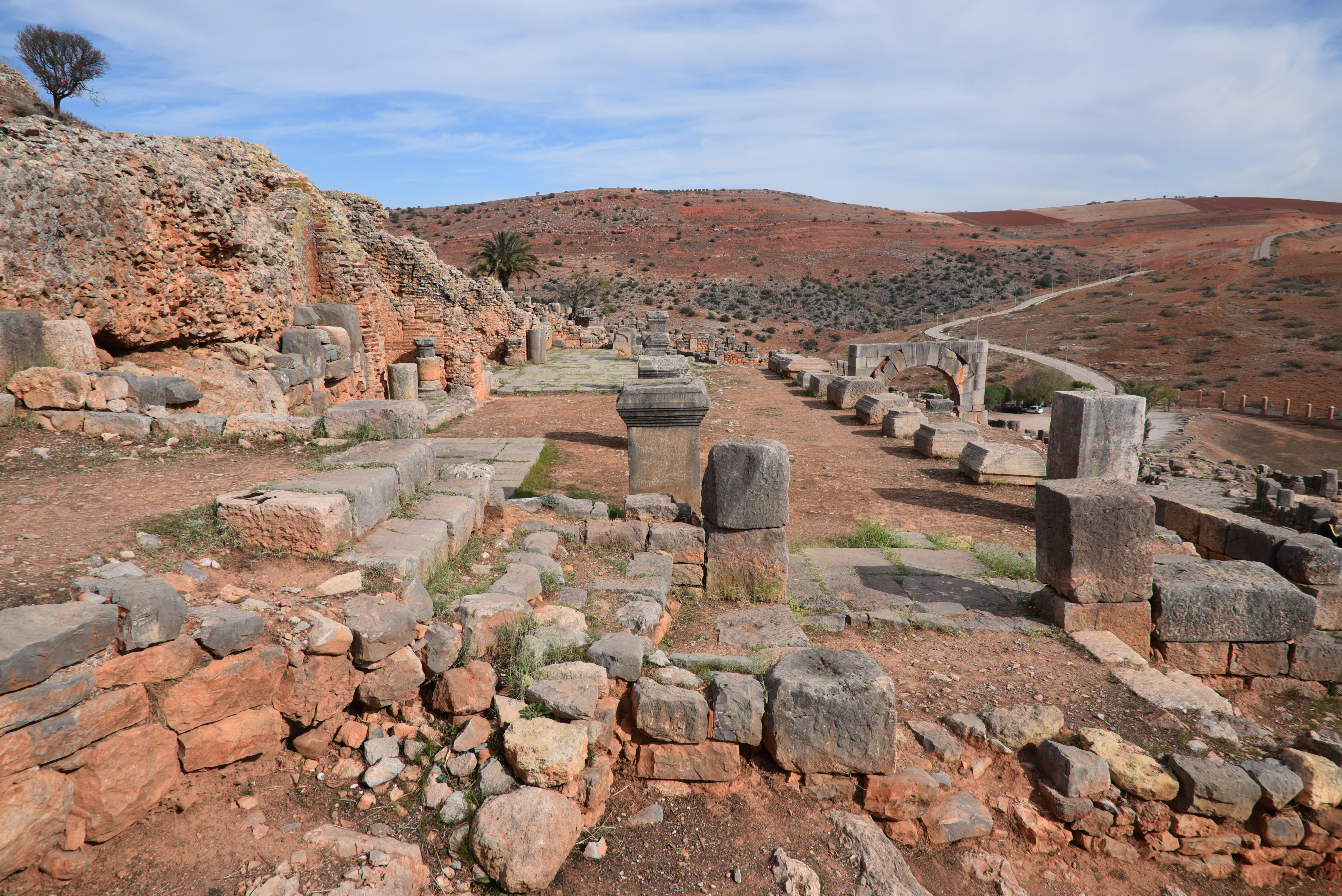
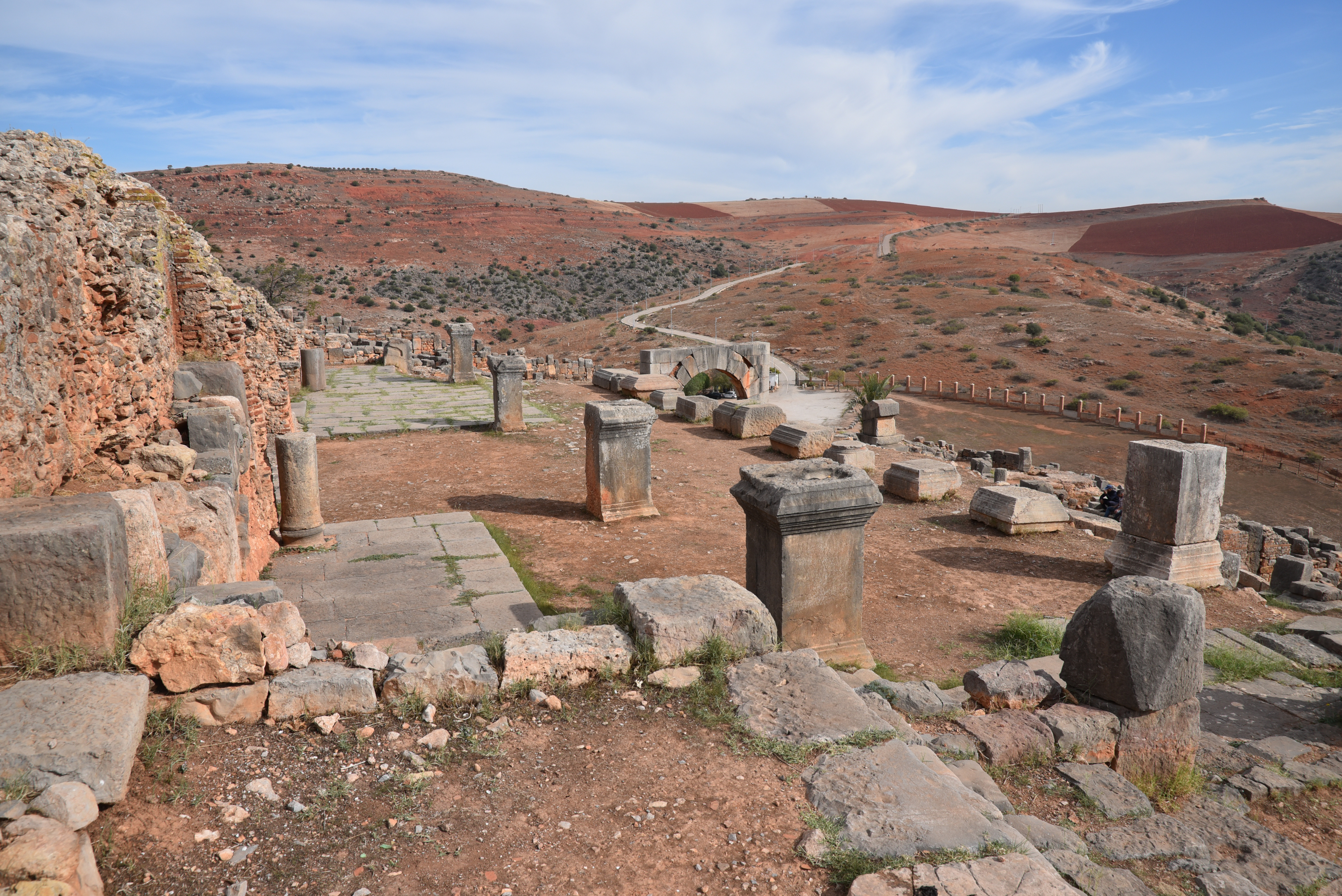
The Small Forum of Tiddis. It sits on a 10 × 30 m terrace, making it one of the smallest Roman fora.
The small Forum had three east-facing separate rooms cut into the slope and opening onto it. They may have served civic purposes with a curia. Inscribed pedestals stand as memorials to distinguished citizens.
One of the three east-facing separate rooms cut into the slope and opening onto the small Forum.
Pedestal for a statue of Julia Domna (wife of Septimius Severus) in the Forum (CIL 08, 06702).

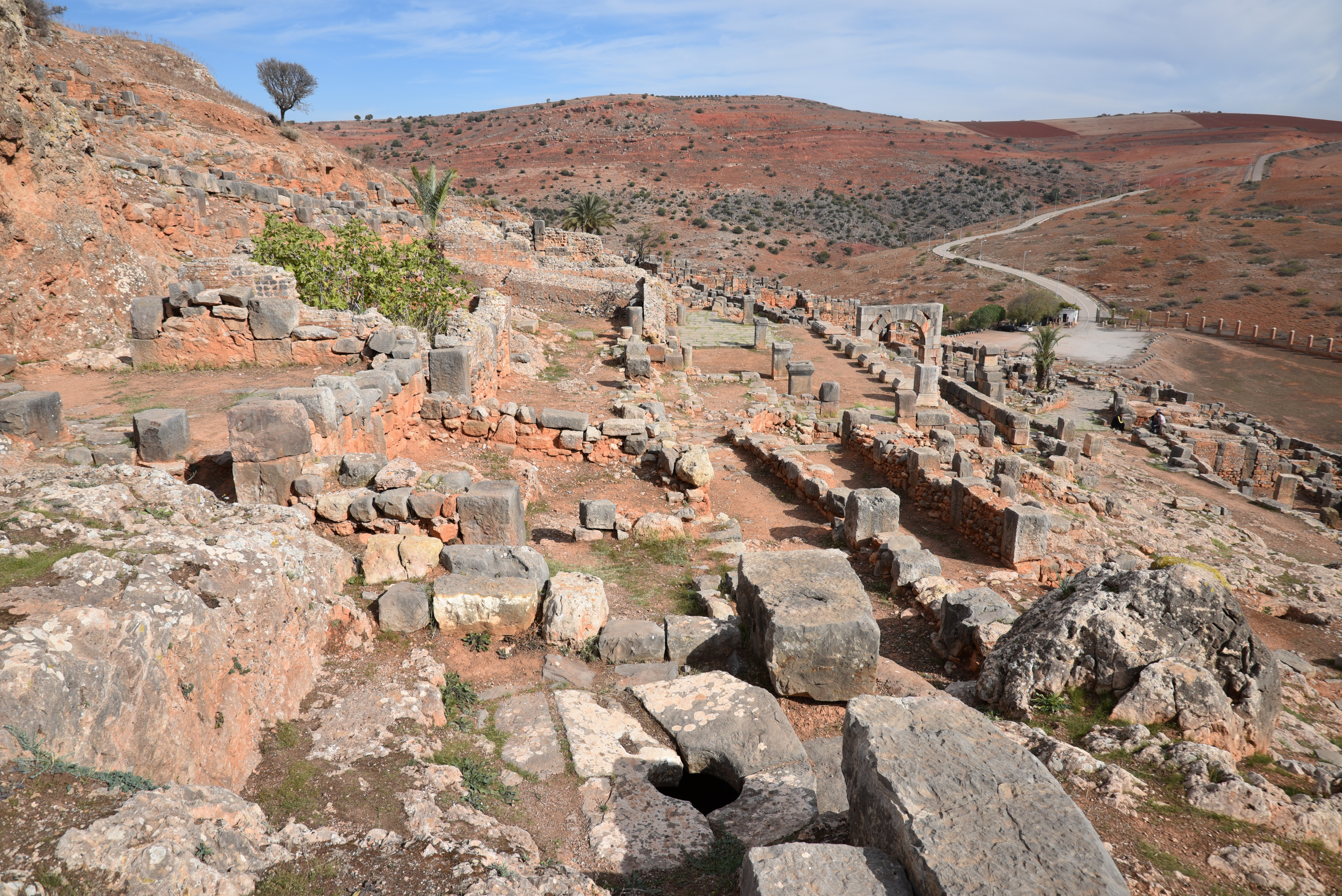
View over the Forum and Potter’s Quarter in the lower town.
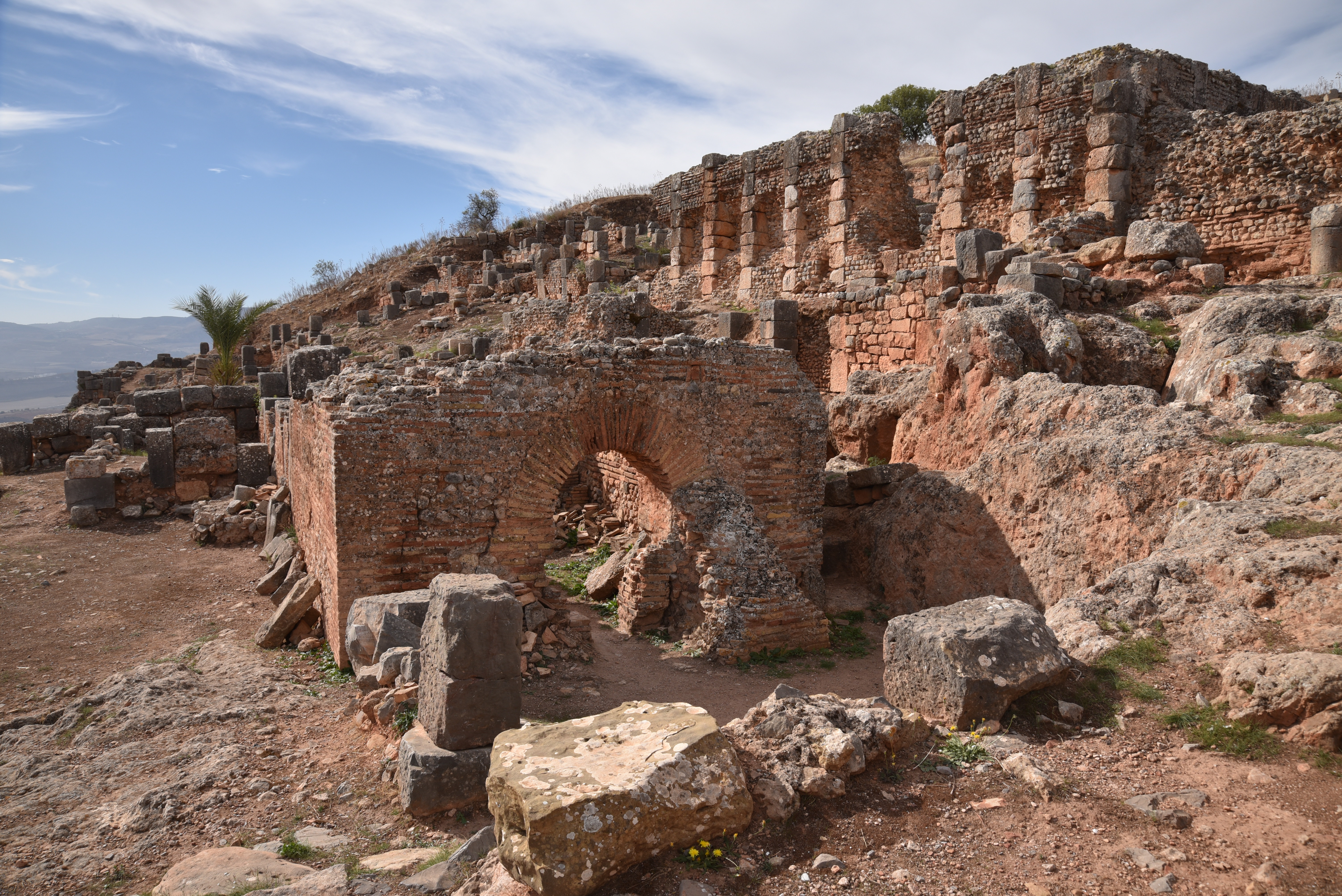
The Small Baths and the defences of the Byzantine period in the background.
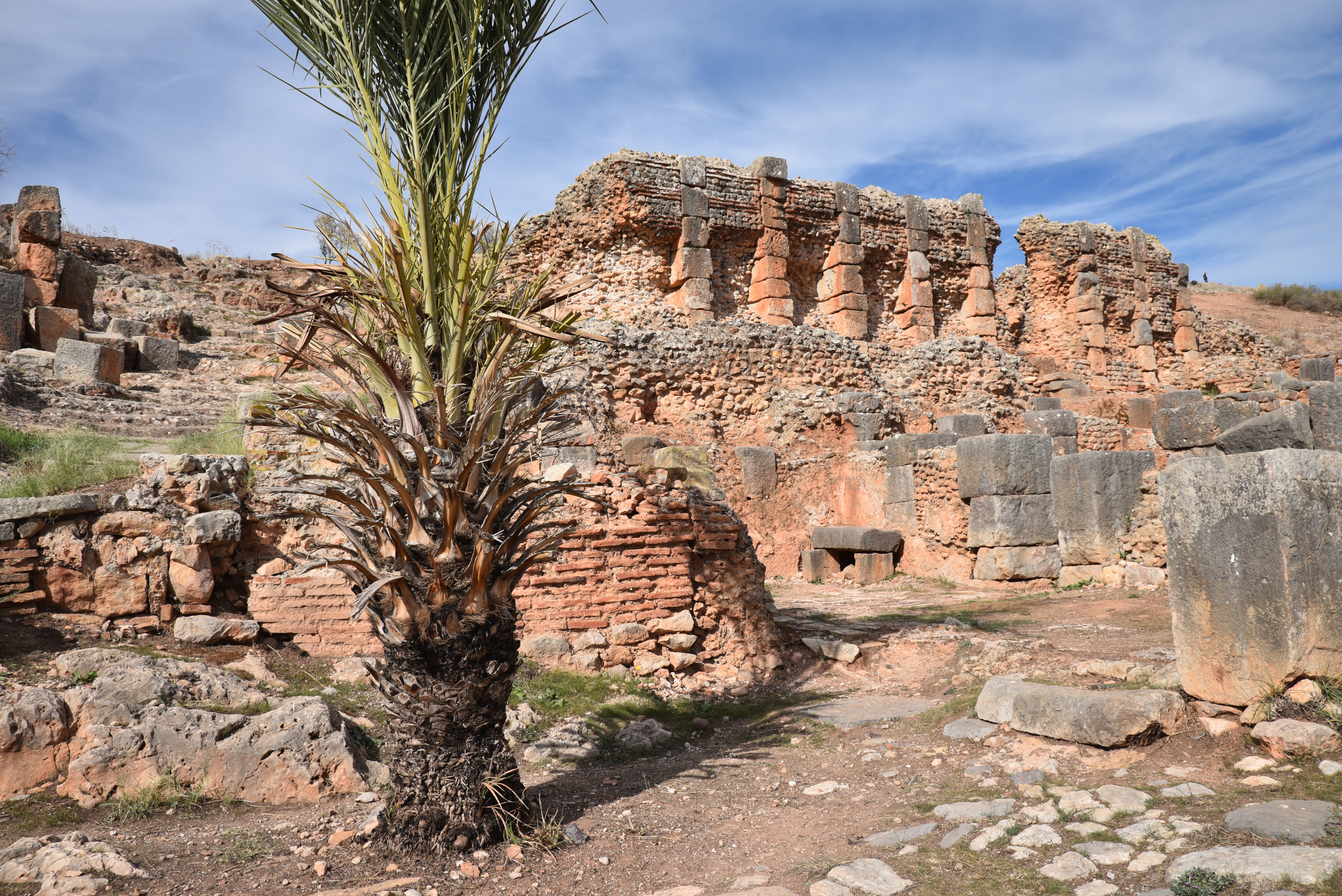
The small baths were equipped with a caldarium, a tepidarium, and a frigidarium containing a square bathtub.
The Small Baths and the defences of the Byzantine period in the background.
Inscription celebrating the construction of the Small Baths, dated to AD 251. ILAlg 2, 3596
The cistern supplied the Small Baths with rainwater falling on the hillside above through channel conduits. The three large basins could hold some 350,000 litres of water.

View over the Khreneg gorge carved by the Oued Rhumel.
View over the lower town with the Potter’s Quarter, large oilery and residential houses.

References & links: