Hippo Regius

Hippo Regius was an ancient port located on the coast of North Africa, near the modern town of Annaba in northeastern Algeria. Its natural harbours and defences, proximity to fresh water, and fertile hinterland attracted the Phoenicians and ensured the city’s continuing prosperity. Throughout its history, various groups—including the Numidians, Romans, Vandals, Byzantines, Arabs, Ottomans, and French—have been drawn to the site. Hippo enjoyed great wealth and splendour, eventually emerging as one of the largest cities and most significant markets in Roman Africa.

Coordinates: 36° 52′ 57″ N7° 45′ 0″ E

Hippo Regius was originally a Phoenician settlement established in the 10th century BC. It later became a prosperous Punic city allied with Carthage and the Numidian metropolis of King Massinissa in the 3rd century BC. Following the defeat of Juba I, an ally of Pompey, in 46 BC, Hippo was not annexed to the Roman province of Africa Nova, created by Julius Caesar. Hippo Regius flourished most under the Romans, becoming a municipality under Augustus and elevated to a colony under Trajan. It developed into a vital commercial hub, exporting wheat that fed Rome.

In the 5th century AD, Hippo became the home of Christianity under the episcopate of St. Augustine, who was bishop of the town from 396 AD until his death in 430 AD. Hippo Regius later fell to the Vandals and became the capital city of the Vandal Kingdom from 435 to 439. Hippo Regius passed to the Byzantine emperor Justinian in 533, and about two centuries later, it was overcome by Arabs. The settlement was moved to its present site of Annaba.
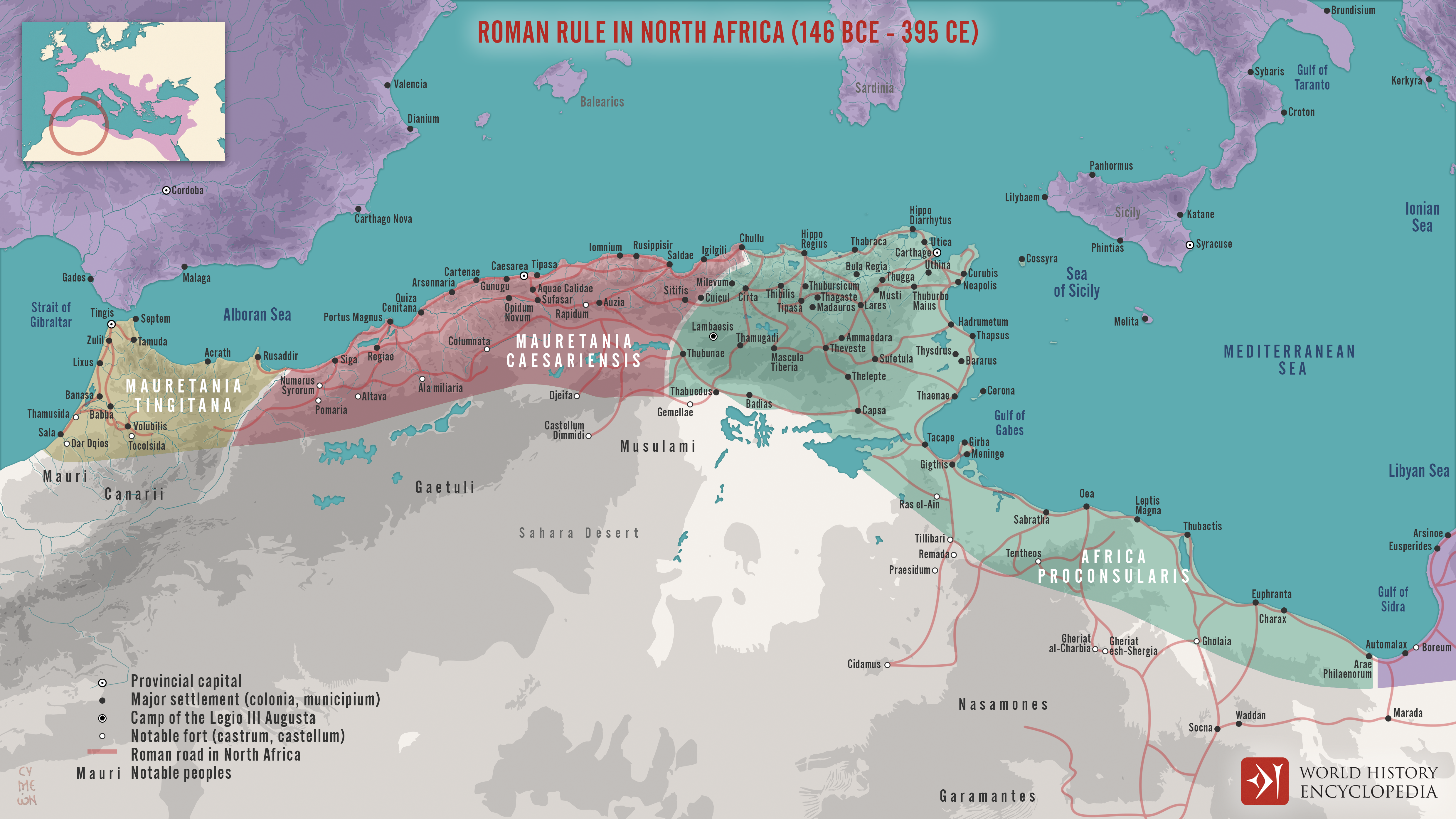
Roman rule in North Africa.
Map created by Simeon Netchev (CC BY-NC-SA 4.0).

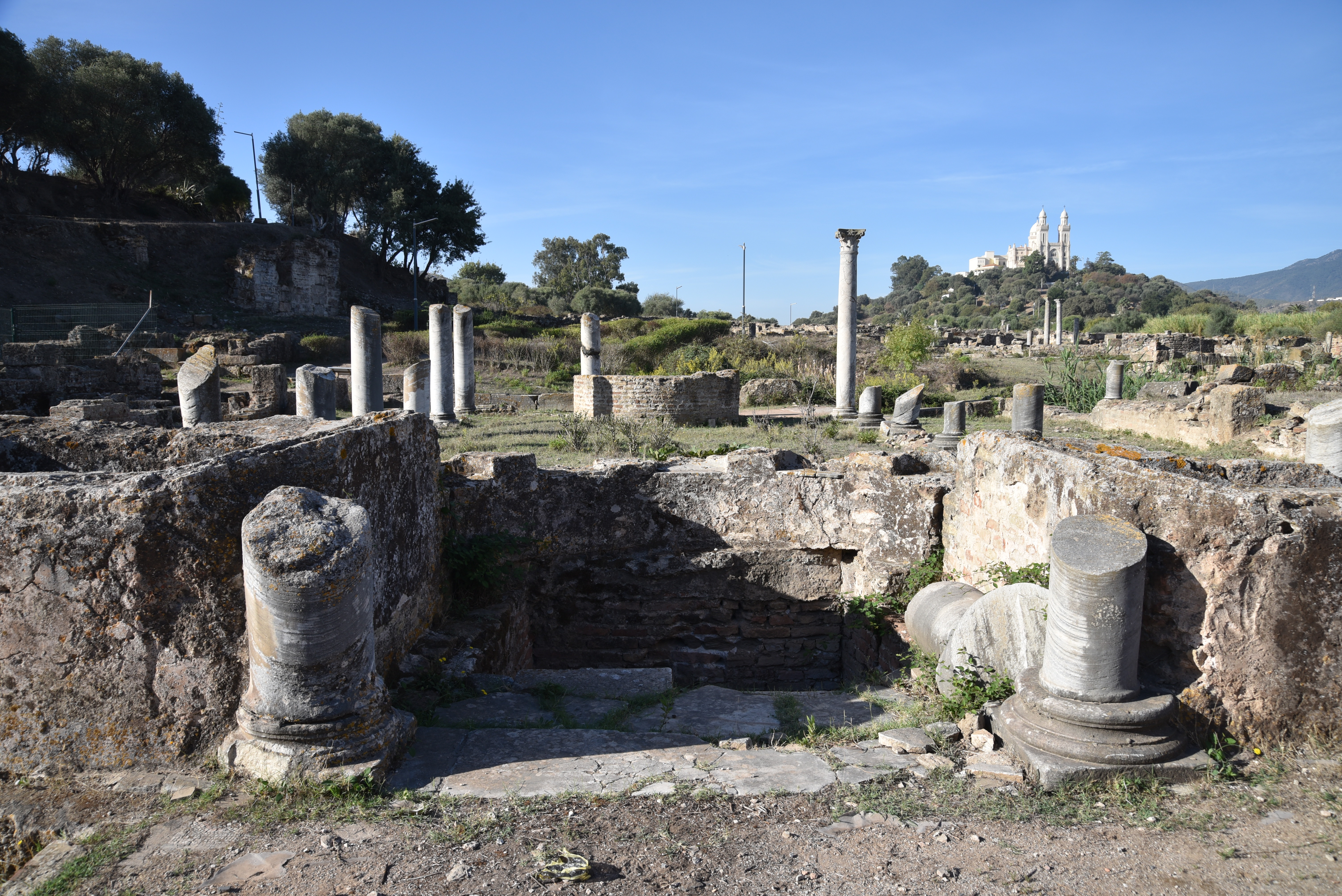
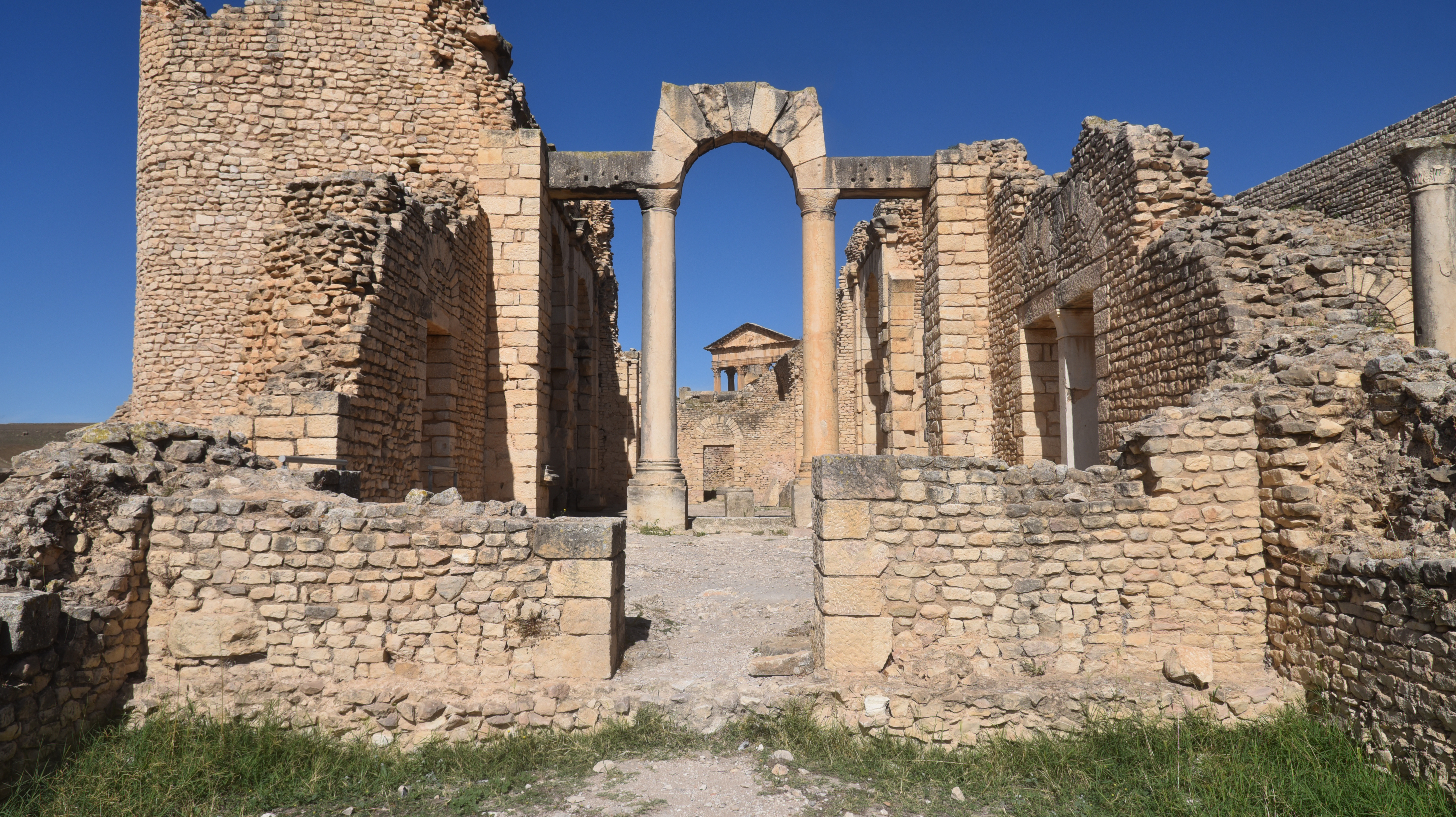
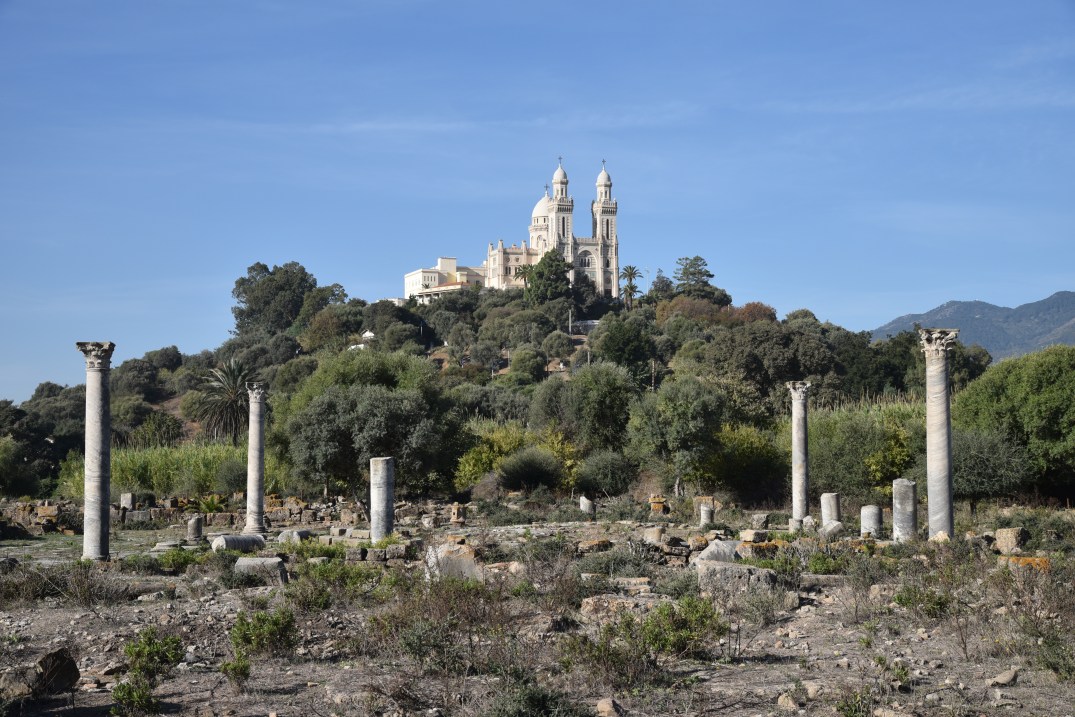
The ruins of Hippo Regius, overlooked by the imposing colonial-era Basilica of St. Augustine, are among the most evocative in Algeria. The forum is one of North Africa’s largest. It features an inscription extending over two lines across its entire width. In the Christian quarter stands a 42-metre-long (131-ft) basilica still covered with mosaics. This may have been the basilica where St. Augustine served as the renowned bishop.

The Musée d’Hippone is located on the hill of Gharf el-Atran, overlooking the archaeological site of Hippo. Built in 1968, the museum houses over 20,000 works from Roman antiquity and later periods. It includes ancient sculptures, ceramics, coins, jewellery, bronze and fired clay vases, statuettes of Numidian, Punic, and Roman goddesses, marble busts, pottery, and Roman mosaics. The centrepiece is a bronze trophy about two meters high, commemorating the victory of Julius Caesar over King Juba I. This representation of a breastplate on a trunk was discovered on the forum of Hippo Regius.

PORTFOLIO

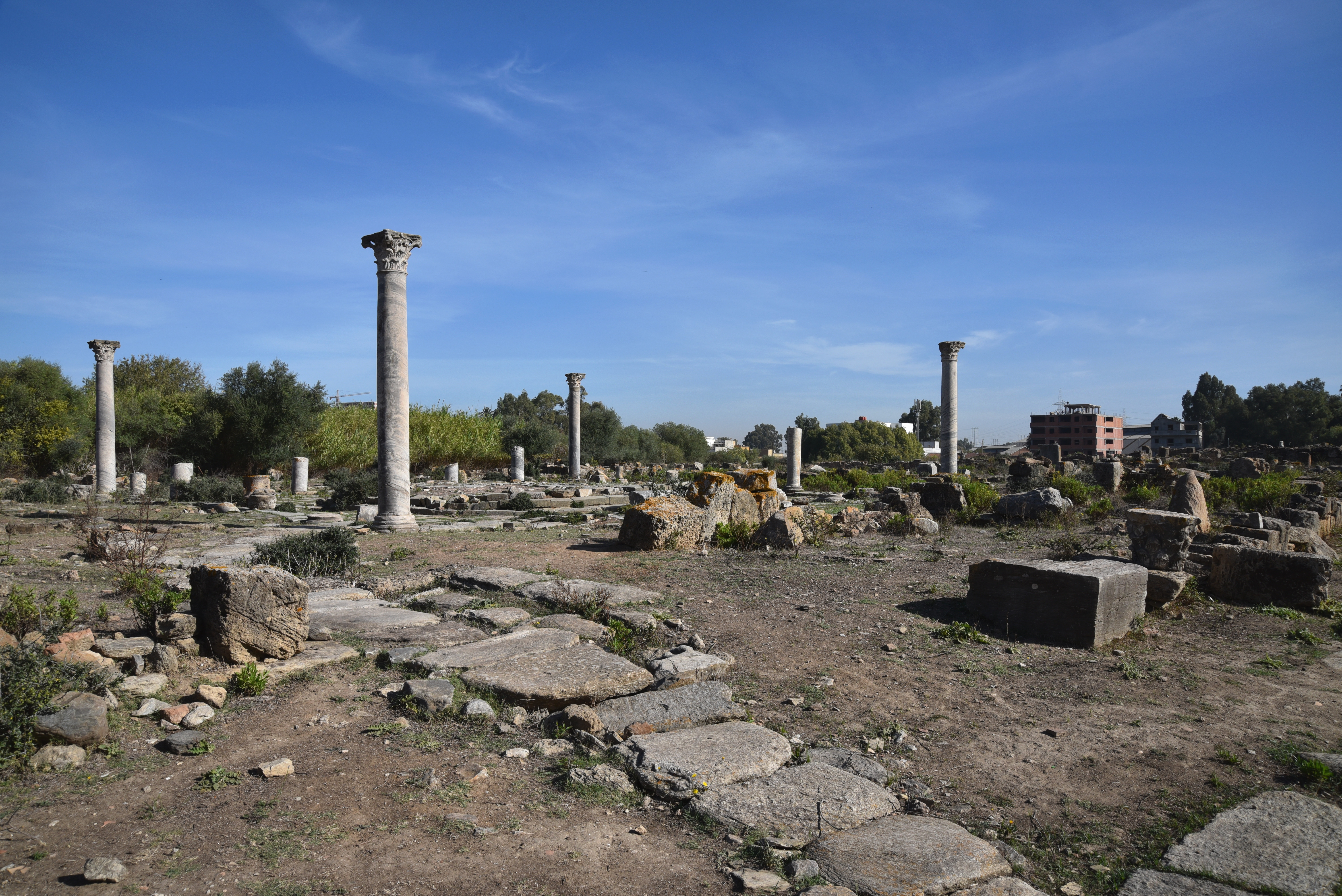
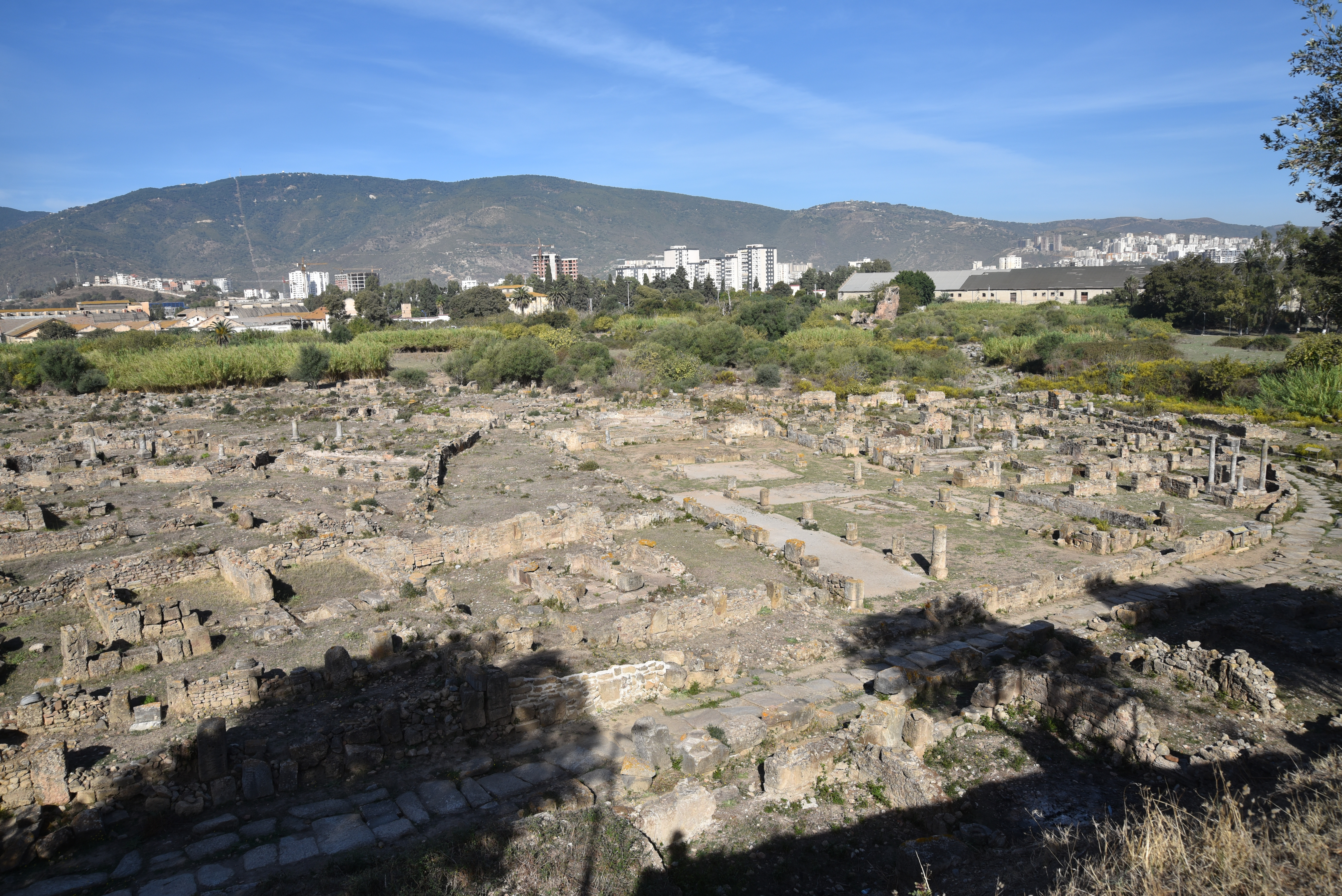
General view of the site.

Forum Quarter

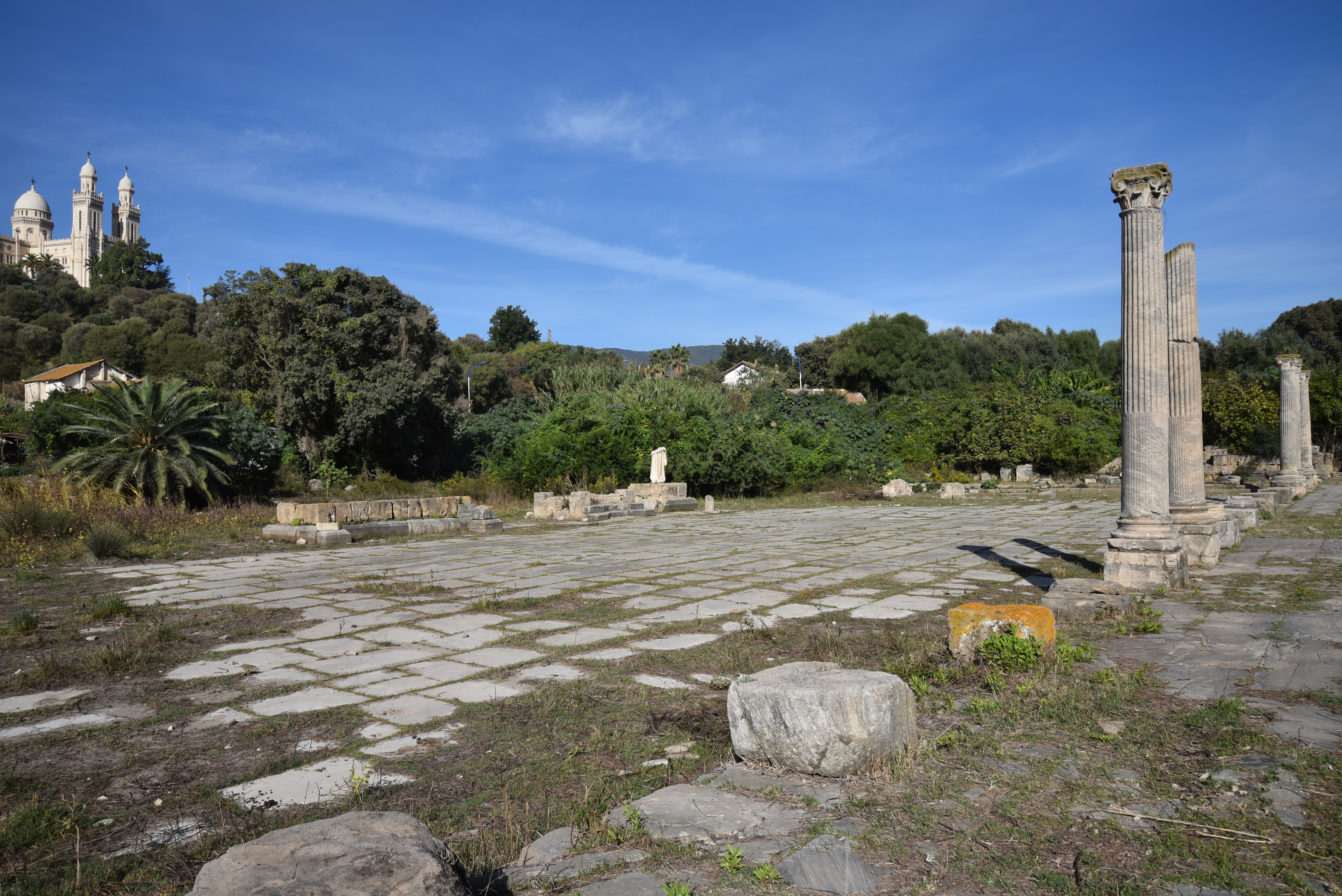
The paved Decumanus leading to the Forum.
The Forum of Hippo Regius, a rectangular paved area measuring 76 x 43 m, is one of the largest in North Africa.
The Forum was paved in marble and surrounded by Corinthian porticoes.
A long inscription, originally filled with bronze letters, extends across the entire width of the Forum. The text records that the paving was dedicated by Gaius Paccius Africanus, pontifex, consul, proconsul, and patron of the municipium of Hippo Regius.

AE 1949, 76 C(aius) Paccius Africanus pont(ifex) co(n)s(ul) proco(n)s(ul) patronus municipii dedic(avit) cura Q(uinti) S[ervili P]ude[ntis praetoris legati propraetoris patroni] / contulit L(ucius) Domitius Fuscus Chunnurio fla[men Augusti pe]r Ho[norem]

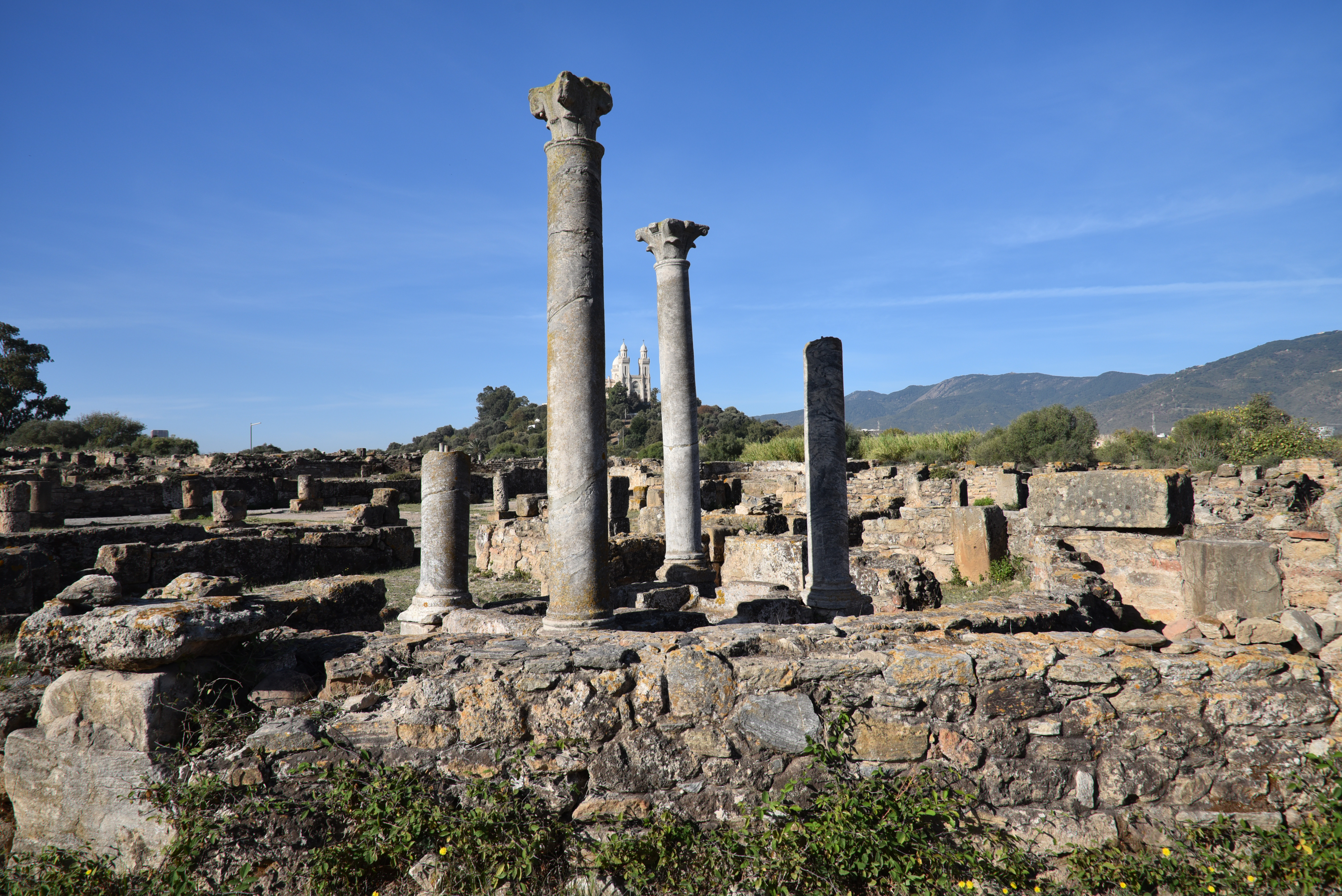
The Macellum (market). It consisted of a rectangular peristyle court (37 x 11 m) paved with black-and-white mosaics and a second court (16 x 16 m) with shops on three sides and a central tholos.
The building was constructed in the 1st century AD and refurbished in the 4th century AD.
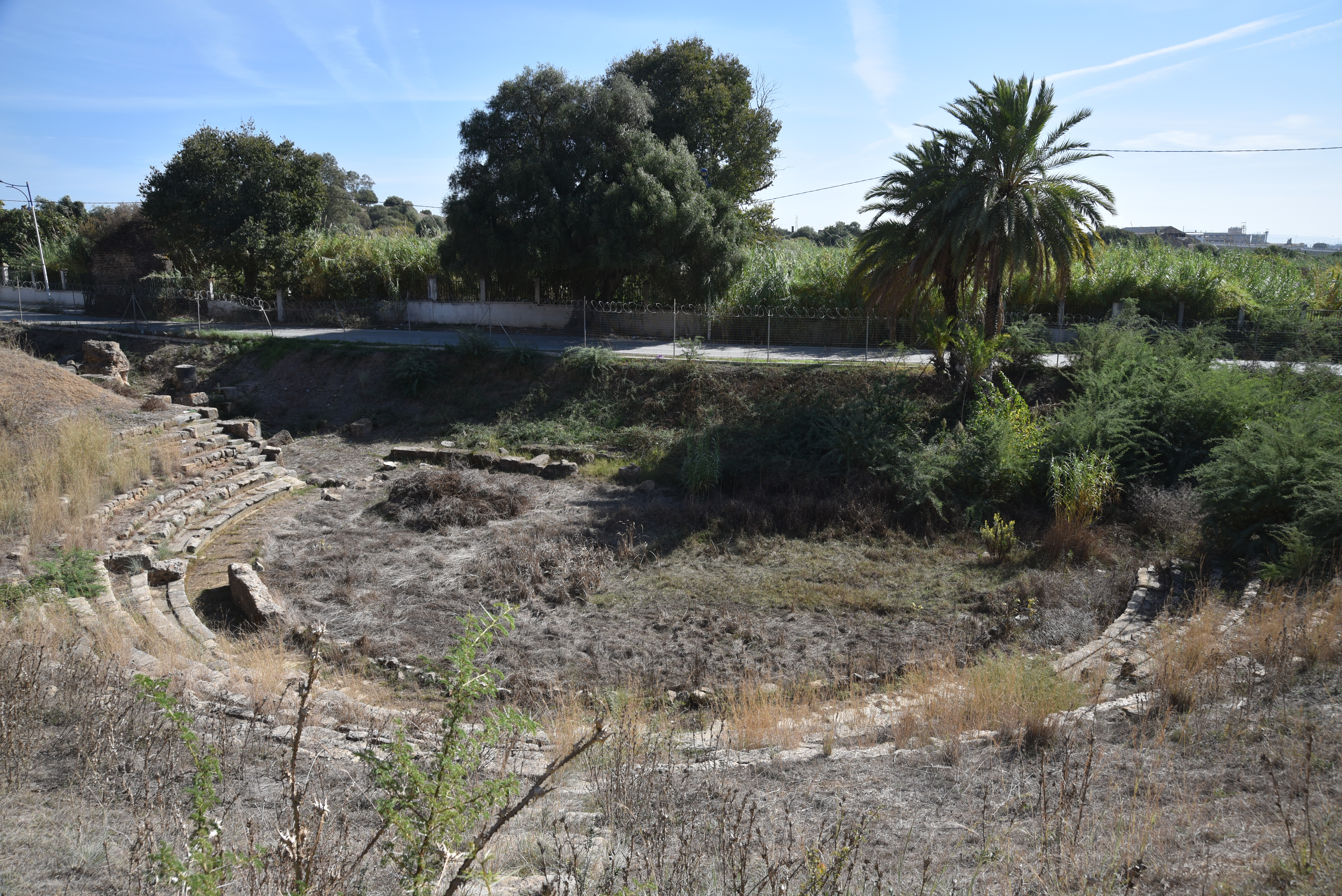
The Theatre, possibly built in the 1st century AD. Its stage building, at 40 × 14 m, was one of the largest in Africa.

Quarter of the Villas

The peristyle of the Villa of the Hunt with fountains.
The Villa of the Hunt.
Mosaic pavement in one of the houses of the Quarter of the Villas.

Christian Quarter

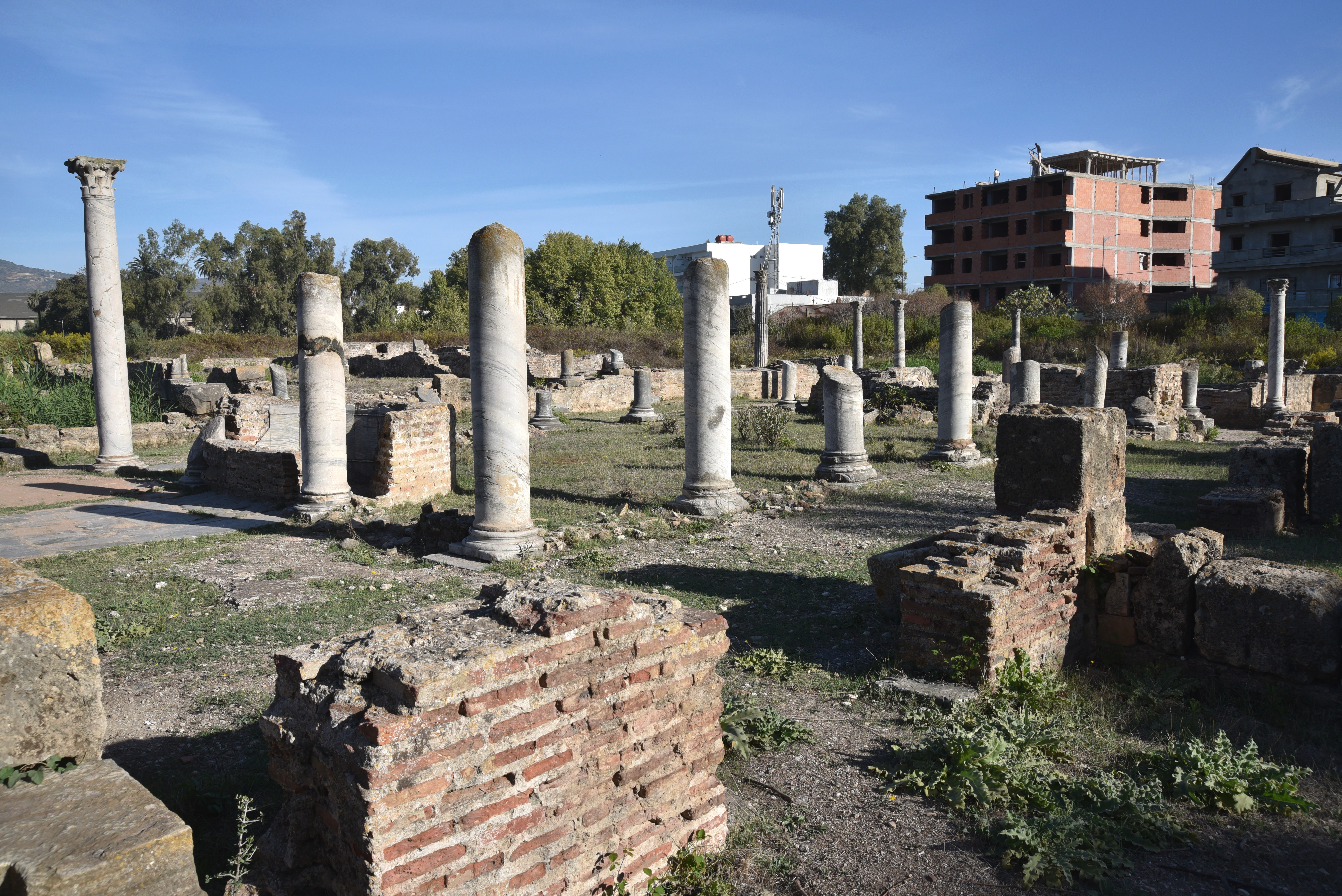
General view of the Christian Quarter.
View of the main Basilica. It measured 42x20m and was divided into a nave and two aisles by rows of columns on plain square bases. The basilica floor was covered with mosaics in its centre nave and aisles. This basilica is commonly known as the Basilica of Peace. During Augustine’s time, it was also referred to as the Church of Saint Stephen because he placed the relics of that martyr in it in the year 424.
The apse of the main Basilica.
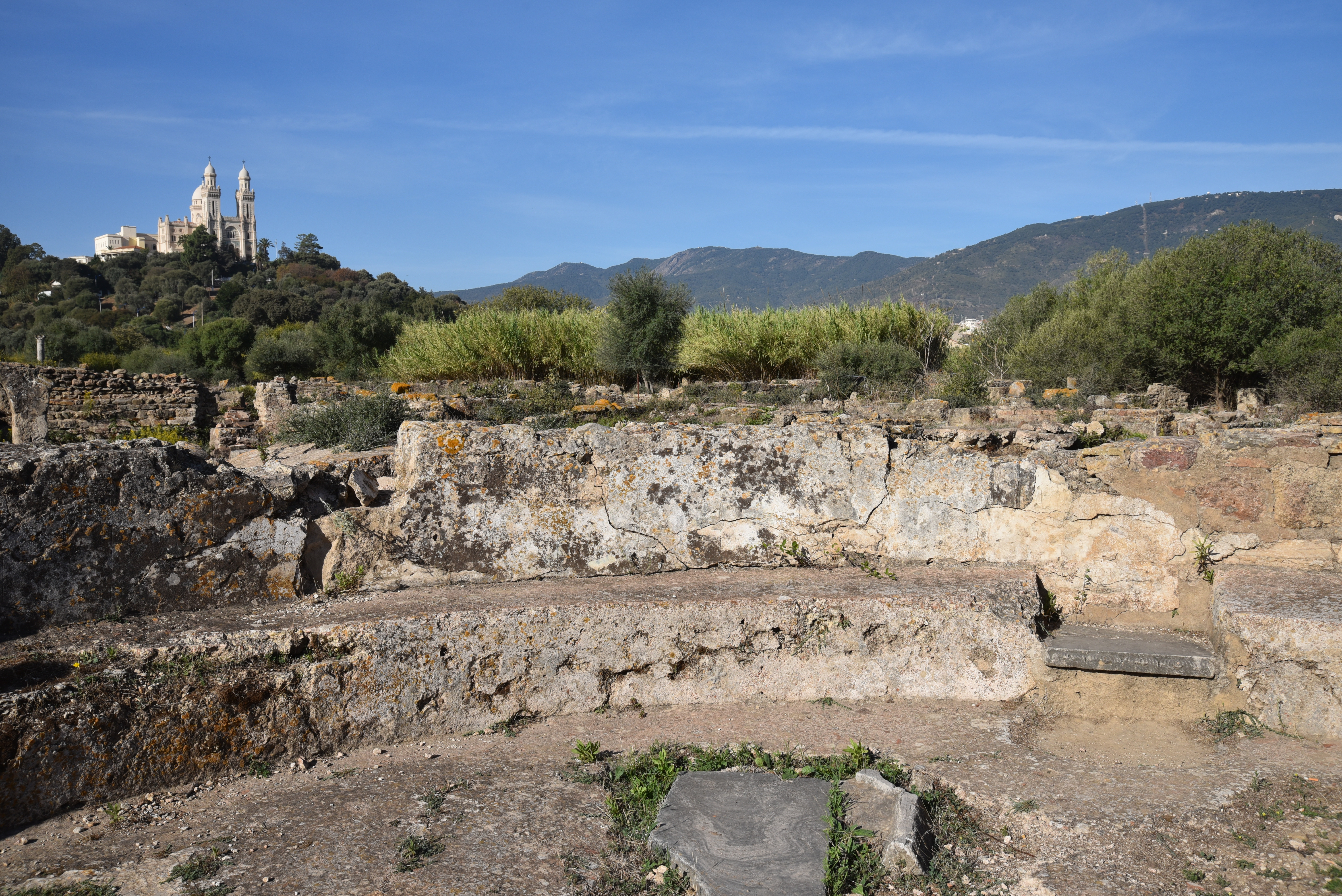
The apse of the main Basilica and seat of Augustine of Hippo (?) with the new Basilica in the background.
An apsed chapel, probably the consignatorium, associated with the adjoining baptistery.
The Baptistery.

The Museum

The room of the mosaics.
The Hunt Mosaic from the Quarter of the Villas. It depicts a hunting scene in which lions, leopards and antelopes are chased into a trap. The wild animals are being rounded up for transport to games in the arena. Dated to the early 4th century AD.
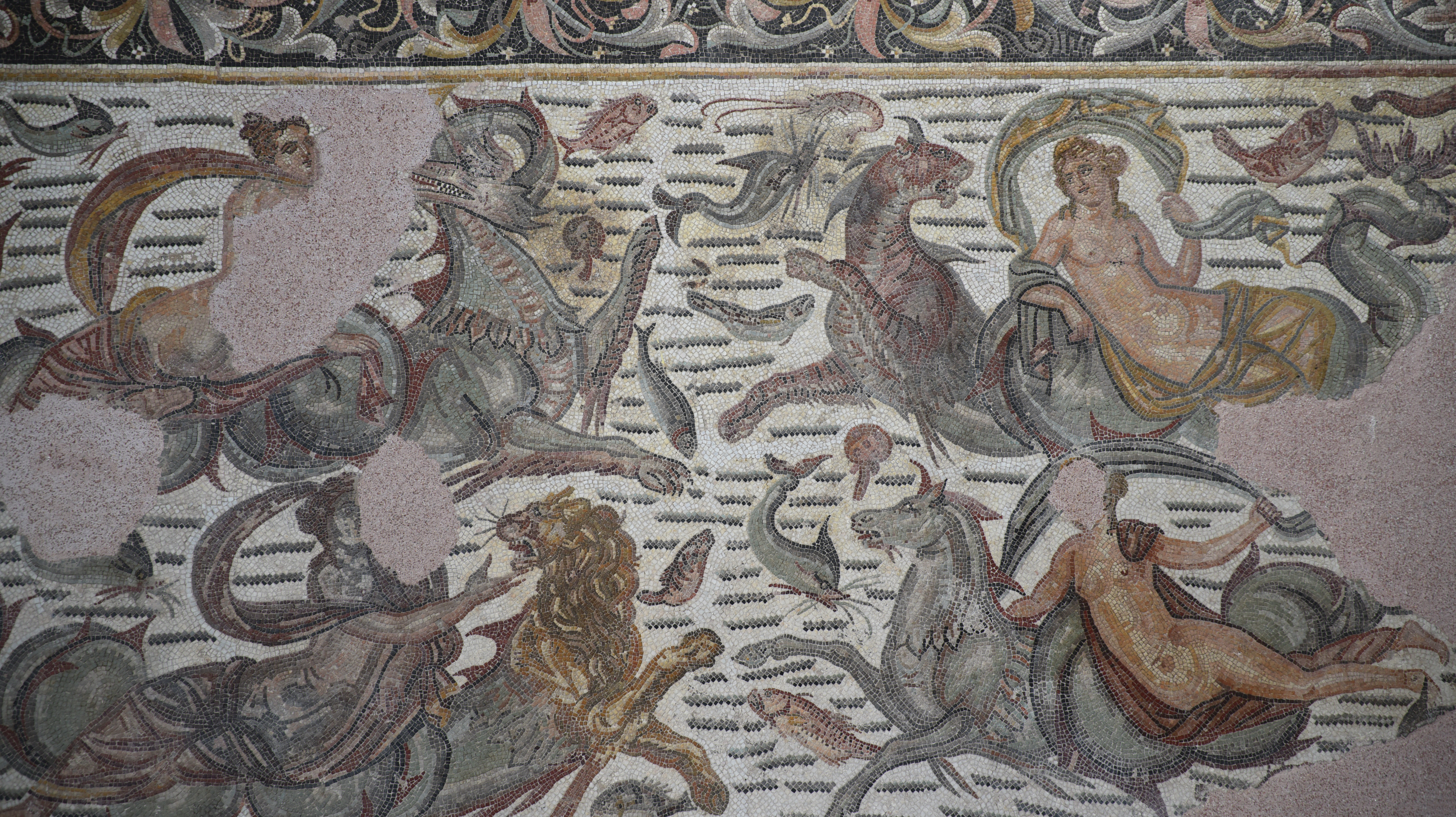
Mosaic of the Nereids. Four nereids are riding on various marine monsters. Dated to the first half of the 4th century AD.
Bronze Trophy (tropaeum), a military monument that may commemorate Caesar’s victory over Juba I at the battle of Tapsus in 46 BC. This trophy measures 2.44 metres high and weighs 240 kg. It depicts a tree trunk with a cape and military armour draped over it.

References & links:

  • The Splendours of Roman Algeria
  • Blas de Roblès, Jean-Marie; Sintes, Claude; Kenrick, Philip. Classical Antiquities of Algeria: A Selective Guide (p. 127). Society for Libyan Studies. pp. 232-521

Thugga (Dougga)

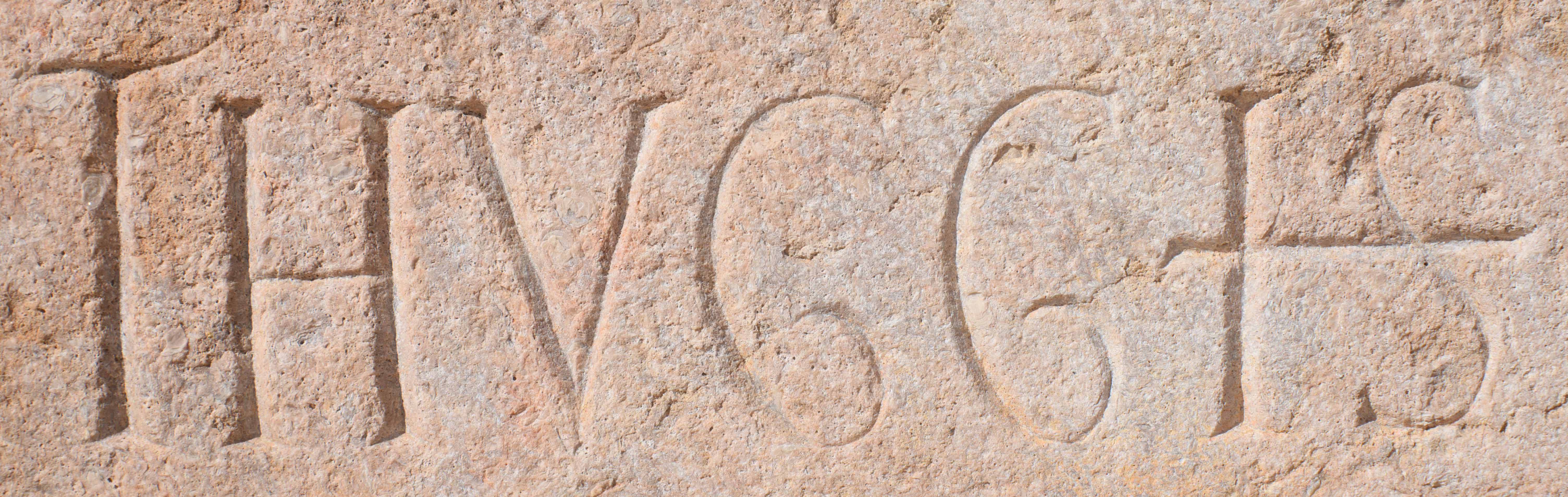
The archaeological site of Dougga (Latin: Thugga), located in northern Tunisia, is one of the best-preserved examples of a Roman town in North Africa. Spanning approximately 70 hectares, this UNESCO World Heritage Site provides a remarkable glimpse into the region’s urban planning, architecture, and daily life of ancient Roman and pre-Roman civilisations. Its hilltop location offers sweeping views and remarkably intact ruins, which make it one of the most significant and visually striking archaeological sites in the Mediterranean region. The site’s most famous monuments include the Libyco-Punic Mausoleum, the Capitolium, the Roman theatre, and the temples of Saturn and Juno Caelestis.

Coordinates: 36°25’20.0″N 9°13’06.0″E

The ancient city of Thugga was initially a Numidian settlement that became a Carthaginian town. Its strategic location on a hilltop provided natural defences and commanding views of the fertile surrounding plains, making it an ideal site for settlement. By the 2nd century BC, Dougga had become the capital of Numidian King Masinissa, who used it as a base to support the Romans in their war against Carthage during the Second Punic War. When the Romans annexed the region in 46 BC following the Battle of Thapsus, Dougga evolved into a thriving provincial city (civitas) that blended Roman and indigenous influences. The city became a municipium in AD 205 during the reign of Septimius Severus and was raised to the rank of a colonia in AD 261 under Gallien.
Thugga, like other cities in Roman Africa, saw a significant increase in the construction of public monuments during the 2nd century AD. The Roman builders adapted to the rocky terrain and existing structures, altering the typical layout of their settlements. During the Byzantine period, the area around the Forum was converted into a small fort, destroying several important buildings to obtain the materials needed for its construction.

The site is renowned for its good state of preservation and substantial remains. Among its most iconic structures is the Capitolium, a temple dedicated to the Roman gods Jupiter, Juno, and Minerva. Another highlight is the theatre, which could accommodate up to 3,500 spectators and is still used for performances today. There are also remains of public and private buildings, including baths, cisterns and houses. Finally, the Libyco-Punic Mausoleum, a towering structure that predates Roman rule, is a unique example of Numidian architecture and offers valuable insights into pre-Roman funerary traditions. Most of the mosaics and other artefacts from Thugga are on display at the Bardo Museum in Tunis.

PORTFOLIO

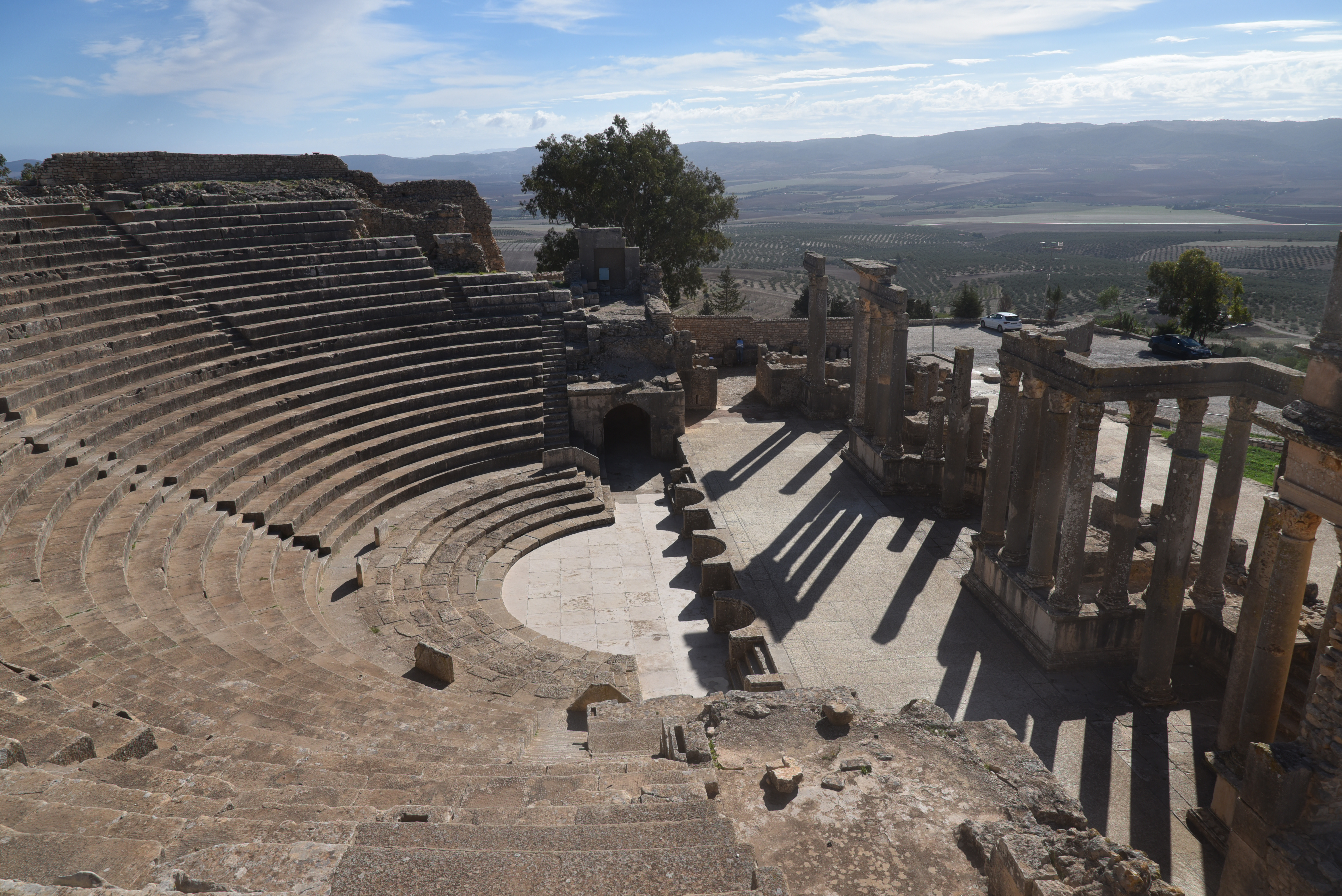
The Theatre of Dougga was completed around the year 166 under Antoninus Pius. It was paid for by Publius Marcius Quadratus, a member of one of the wealthiest families in the city.
Quite modest in size, the theatre could seat 3,500 people on its 19 semicircular tiers cut into the hill slope.
The theatre stage had a central semi-circular niche with square niches on either side.
The seating was divided into different areas by barriers and stairways and could be entered from the top or the sides.
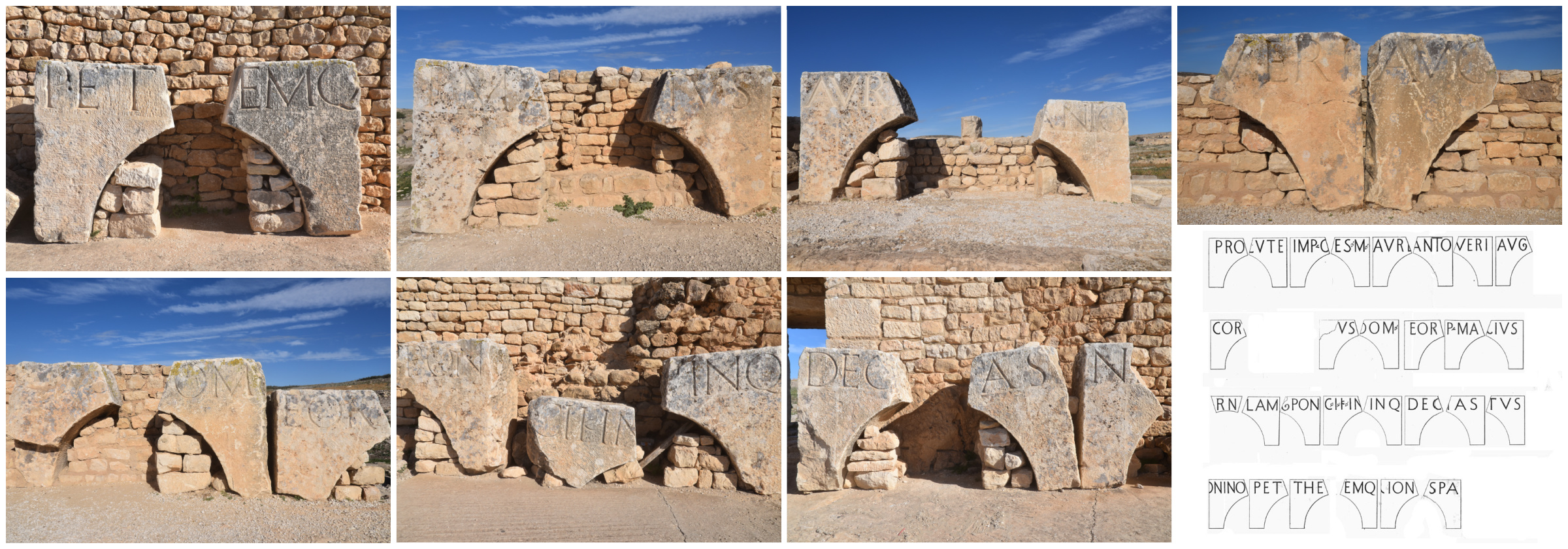
The inscription running along the summa cavea of the Theatre of Dougga (Tunisia) is dedicated to the salus of Marcus Aurelius and Lucius Verus and to Publius Marcus Quadratus, priest of the imperial cult, decurion, and the financier of the theatre. CIL 08, 26528

View of the theatre from the front with the inscription that stood across the frieze of the stage building. It commemorates the theatre donation by Publius Marcius Quadratus in AD 168-9. The inscription tells that he built the theatre with curtains and decorations when he became Flamen for life. He paid for these with his own money.
View of Dougga from the Theatre.
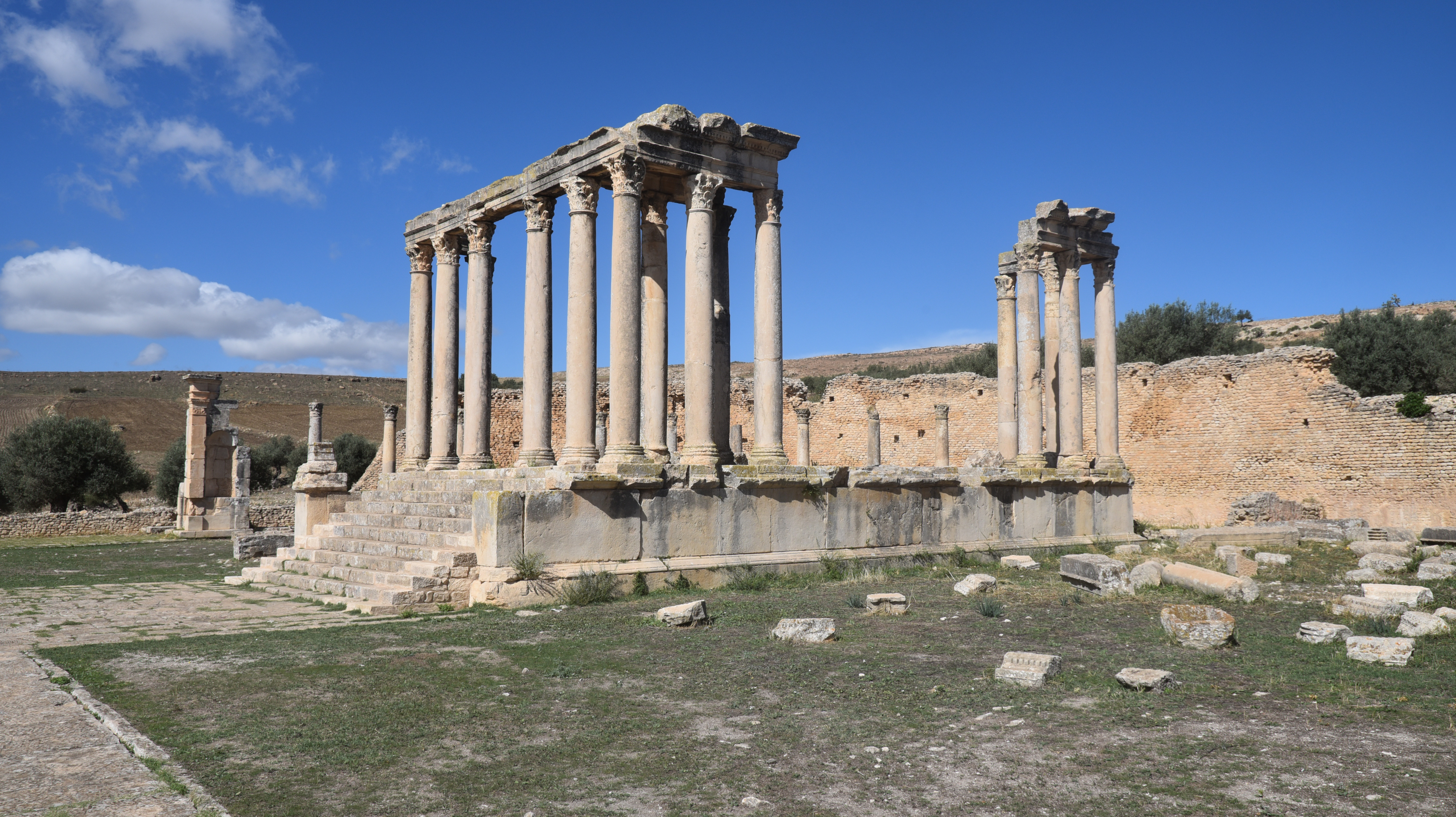
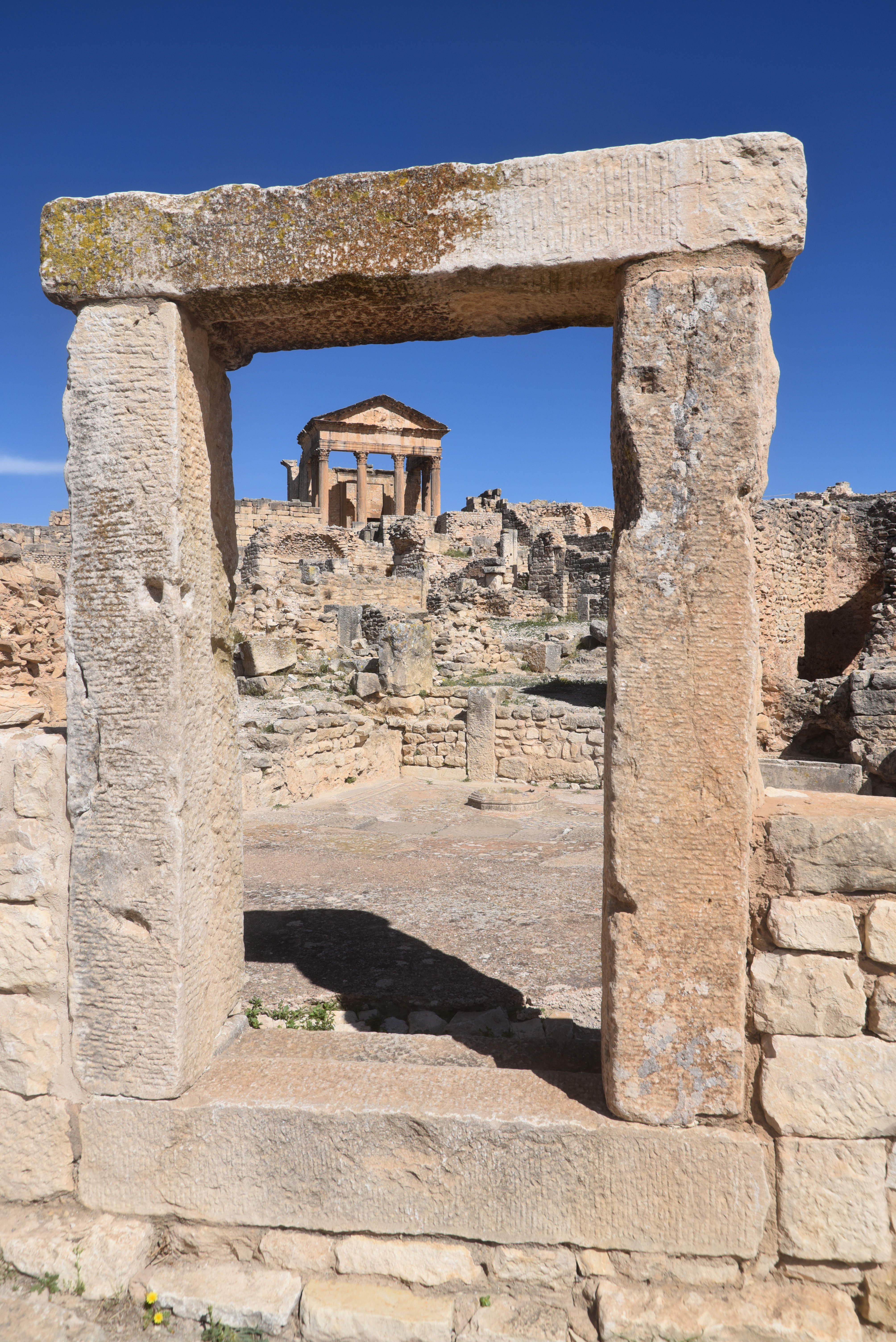
At the heart of Thugga was the Capitol, with the temples of Augustan Piety and Mercury, the Forum and the Macellum (market).
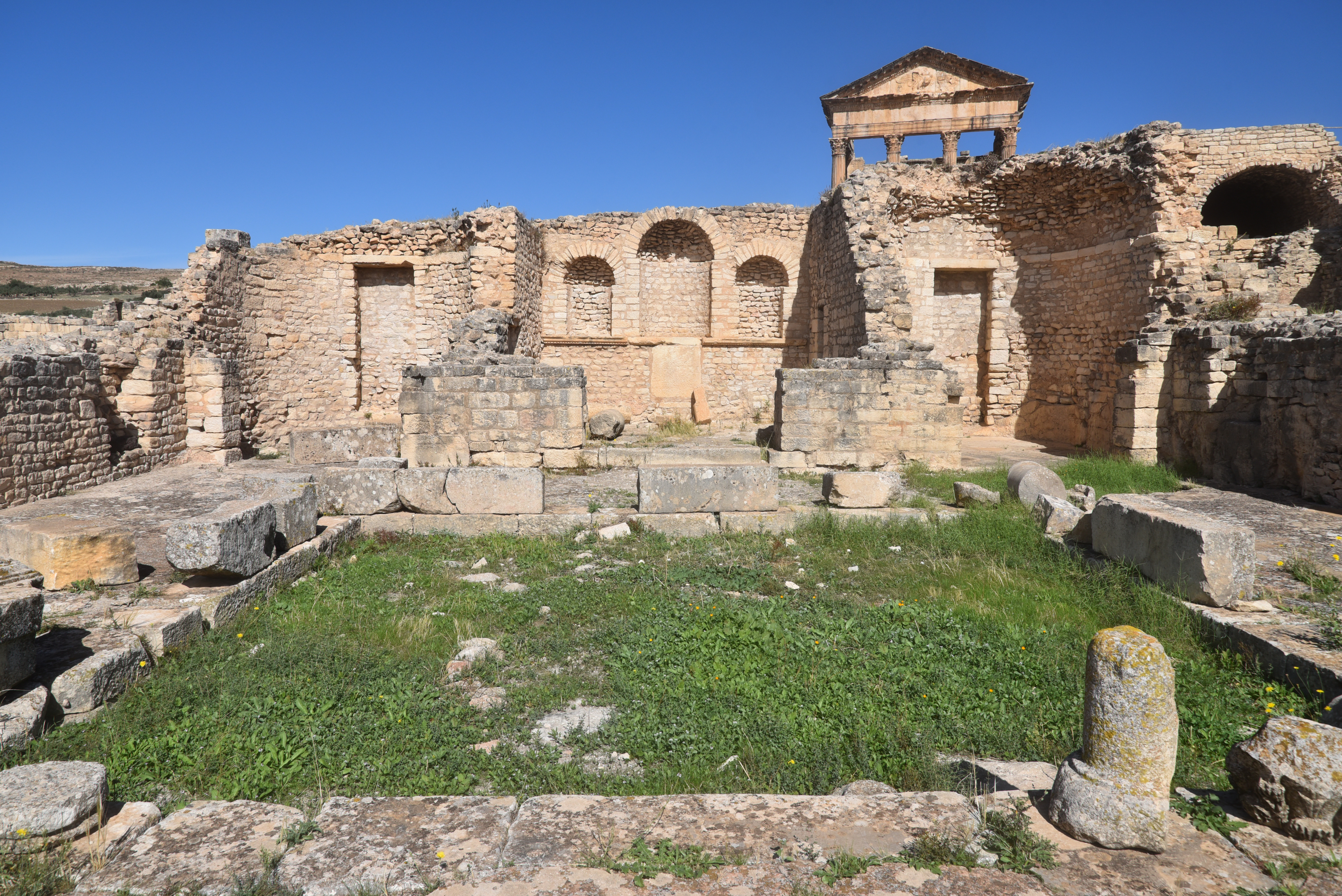
The small Temple of August Piety and the Capitol.
The small Temple of August Piety was probably built during the reign of Hadrian. It is composed of a semi-circular cella and a tetrastyle Corinthian portico. Seven steps of stairs provided access to the temple.
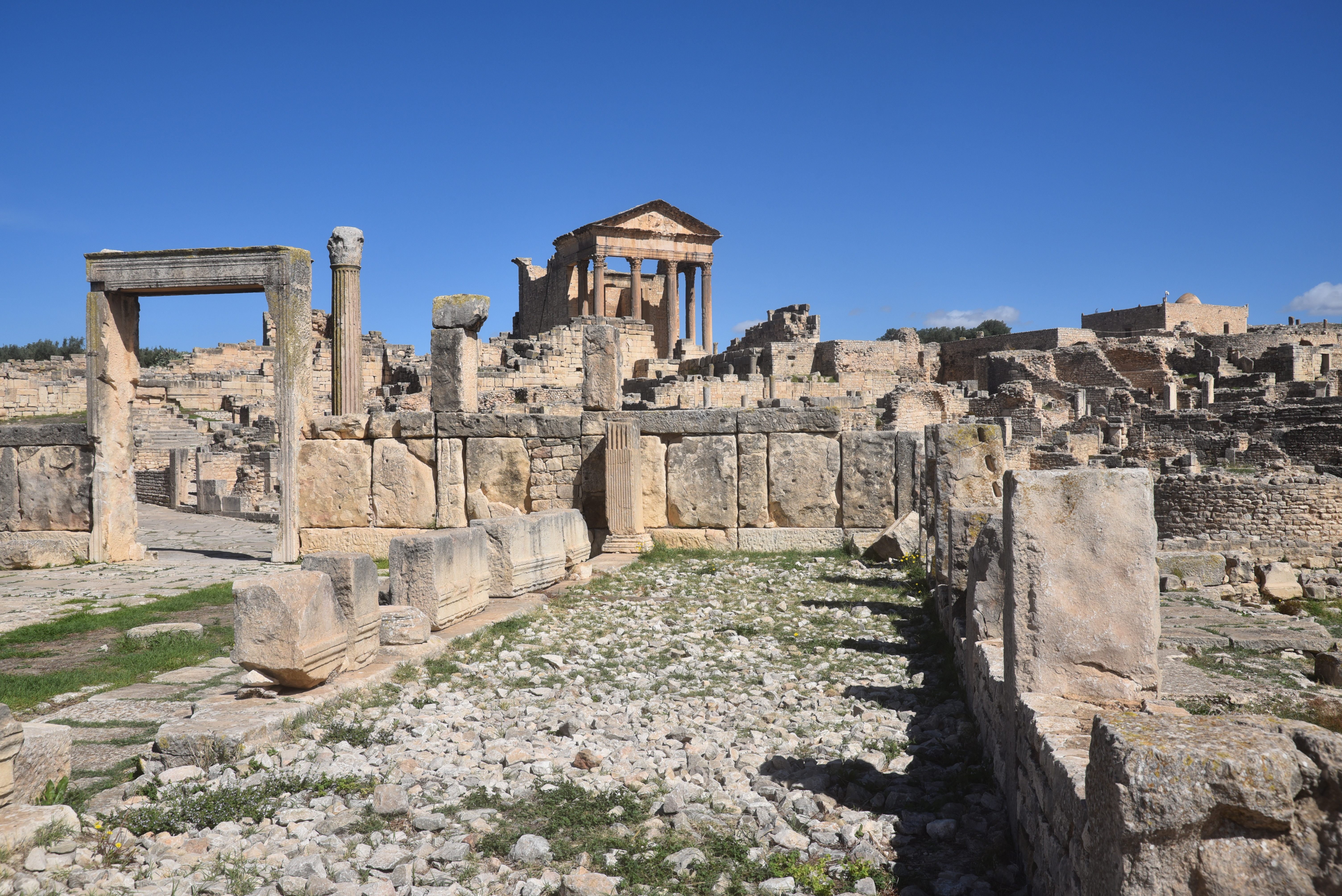
The Square of the Wind Rose and the Capitol.
The Square of the Wind Rose was built between AD 180 and 192. The semicircular square was named after a large compass engraving cut into the paving, naming the 12 winds. To the north stands the Temple of Mercury with its rectangular cella flanked by two exedrae.
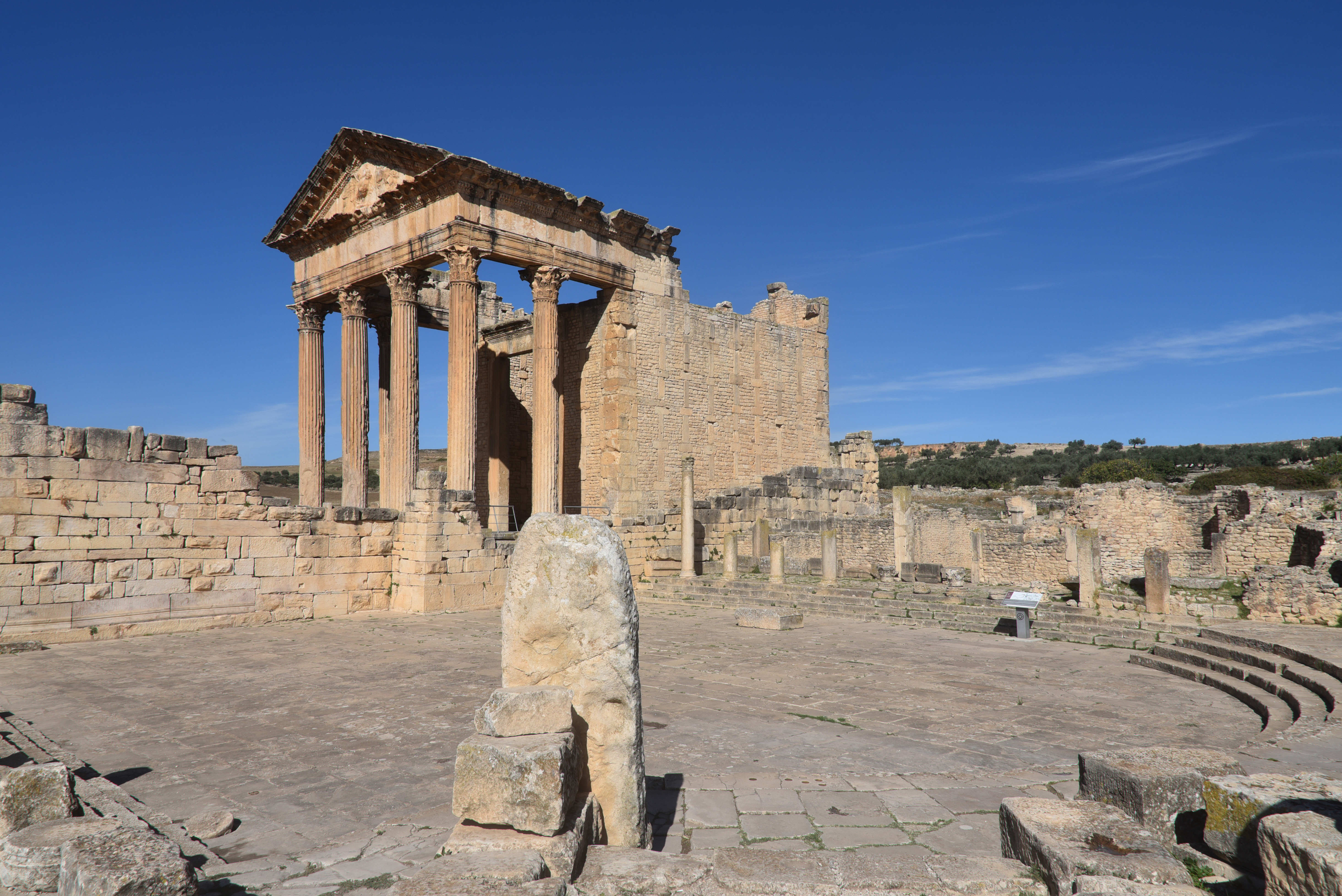
The Capitolium, dedicated to the Capitoline triad, Jupiter, Juno and Minerva, was built of local hard limestone in opus africanum during the joint reign of Marcus Aurelius and Lucius Verus in AD 166-167.
The Capitol’s tetrastyle façade is characterised by four fluted columns, 8 m high, on the facade and two on the side.
On the architrave of the Capitol, an engraved inscription commemorates the completion of the work and provides the names of the sponsors, Lucius Marcius Simplex and Lucius Marcius Simplex Regillianus. The temple is topped by a triangular pediment with a relief depicting the apotheosis of Antoninus Pius, raised to the skies by an eagle.

Statue base in the Forum dedicated to Marcus Aurelius by the late Nanneia Instania Fida, flaminica (priestess of the imperial cult) of Thugga, who promised two colossal statues of Marcus Aurelius and Lucius Verus costing 30,000 sesterces. Dated AD 173. AE 1914, 0176
The Macellum (market), a simple courtyard bordered by small shops on each side, was constructed in AD 54. The market ended in an apse to the south, where a statue of Mercury stood. Two doorways led out to separate stairways, which descended to rooms below.
Sanctuary from the time of Hadrian dedicated to Concordia, Frugifer, Liber Pater and Neptune. The complex consists of three parts: a temple (A), a courtyard (B) and a sacred theatre (C). A. Gabinius Datus (father) and M. Gabinius Bassus (son) donated the sanctuary to the city. The sum of 50,000 HS was initially promised and later increased. CIL 08, 01493
Complex B (courtyard) of the Hadrianic sanctuary dedicated to Concordia, Frugifer, Liber Pater and Neptune. The square courtyard is surrounded on its four sides by a colonnaded portico. The north side consists of a great central cella flanked by two lateral cellae. The central cella has a central raised apse where the statue of Libe Pater must have stood. CIL, VIII, 26470
Complex C (sacred theatre) of the Hadrianic sanctuary dedicated to Concordia, Frugifer, Liber Pater and Neptune. The theatre was built downhill to the south. It had no stage but a large orchestra closed to the southeast by a large wall preceded by a portico with six columns.
The small Temple of Tellus, the goddess of crop fertility, built in AD 261. The Temple comprises a courtyard and three cellae occupying the entire northern width of the building. A peristyle, a step higher in level, surrounds the courtyard. The galleries all around were paved with a white tessera mosaic.

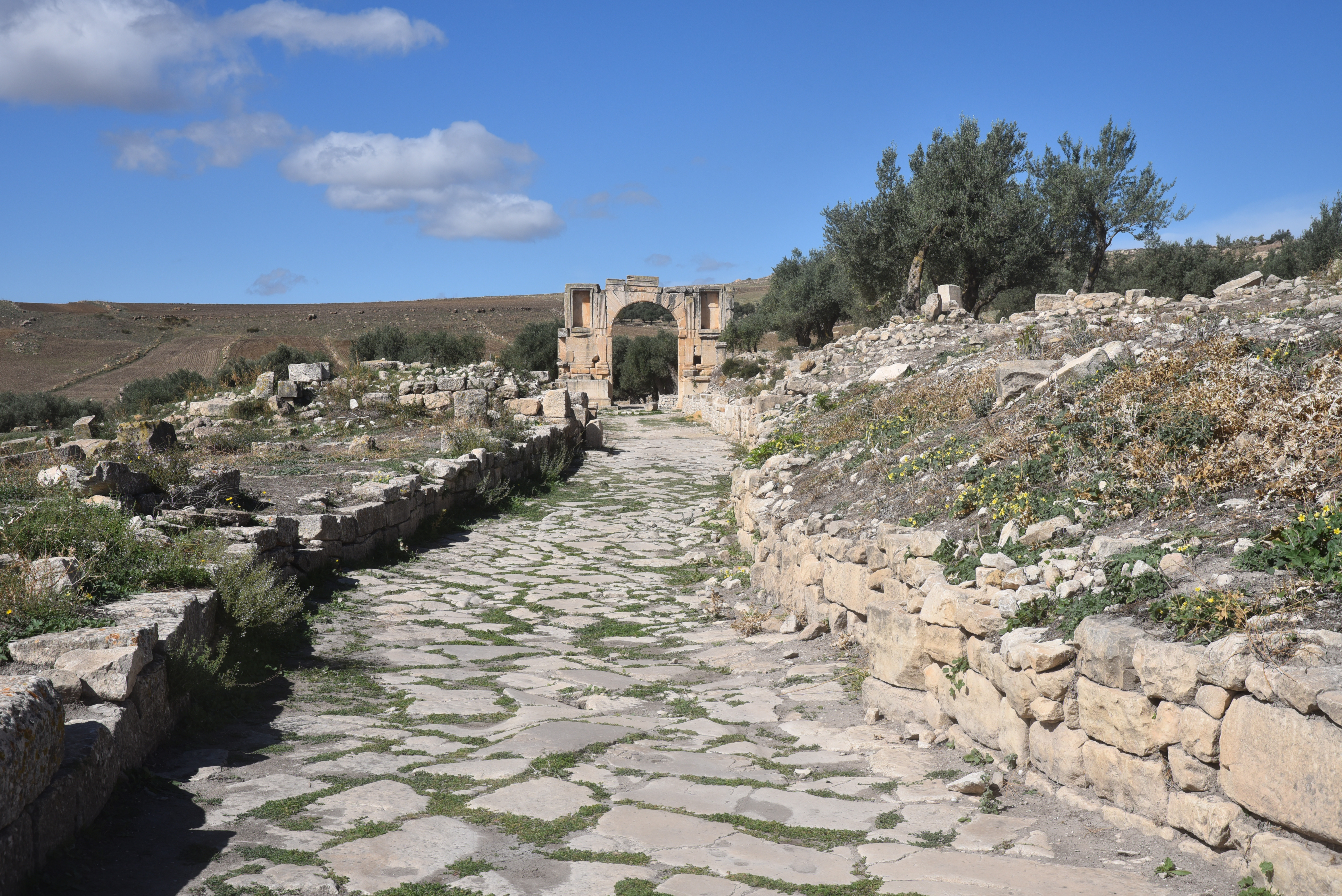
The road behind the Capitol leading west to the Arch of Alexander Severus.
The Arch of Alexander Severus, built in AD 232, is a 4m-wide arch that once spanned a road that would have led to the city from the west.
The Ain El Hammam Cisterns, which received water from an aqueduct. They had a total capacity of 6,000 m³ and were formed by five tanks measuring 34 x 5 meters each.
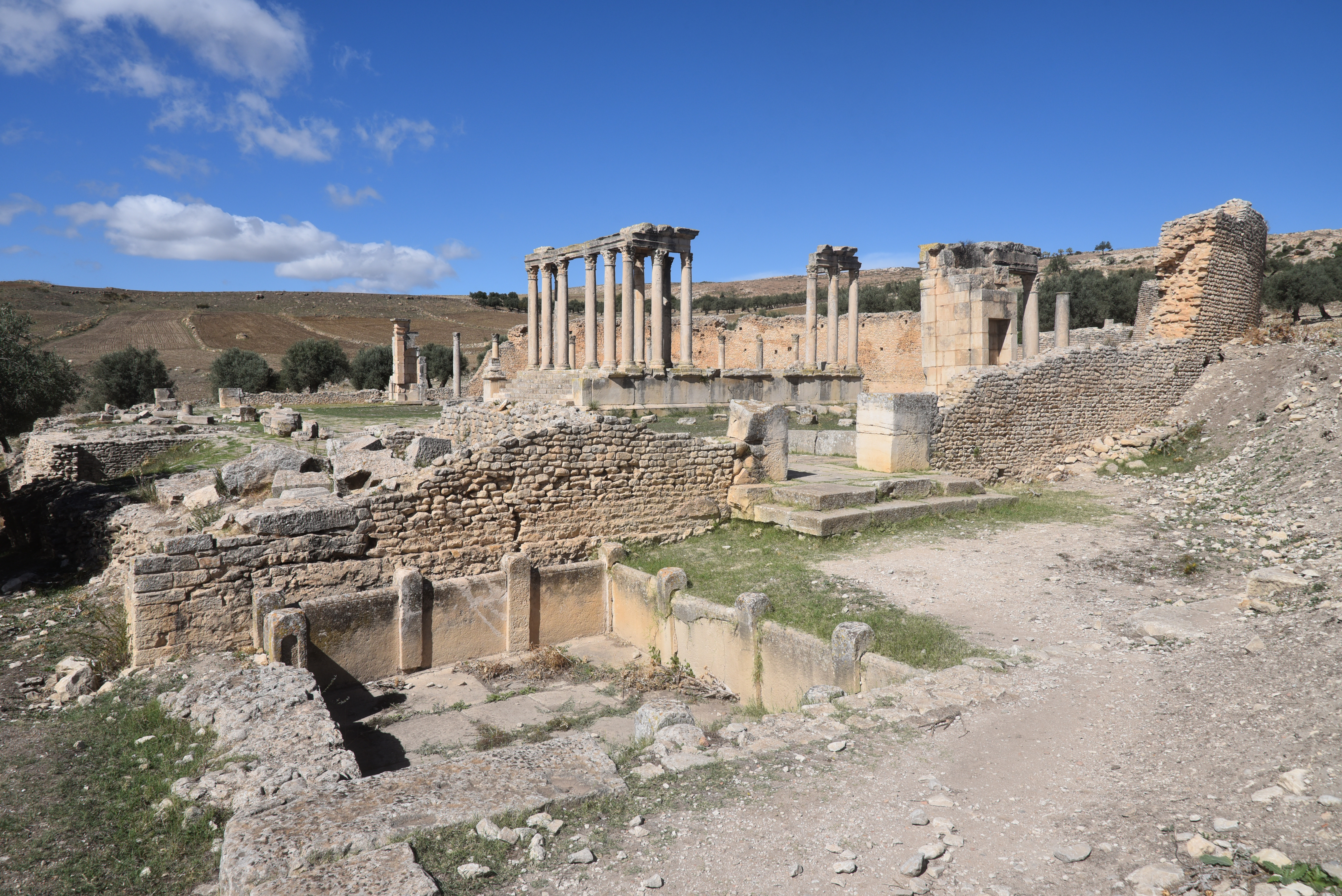
The Temple of Juno Caelestis is dedicated to the Roman goddess Juno (an evolution of the Punic Moon Goddess Tanit). It was constructed between AD 222 and 235 during Alexander Severus’s reign.
The Temple was built on the outer edges of the city. Its temenos is shaped like a crescent, a traditional symbol of Juno and Tanit.
Inscription from the external frieze of the Temple of Caelestis records that it was financed by several members of the Gabinii family. CIL 08, 01474
Translation: Dedicated to Caelestis Augustus, Quintus Gabinius Rufus Felix Beatianus, increased the generosity of his parents, he had (this sanctuary) built and made its dedication.
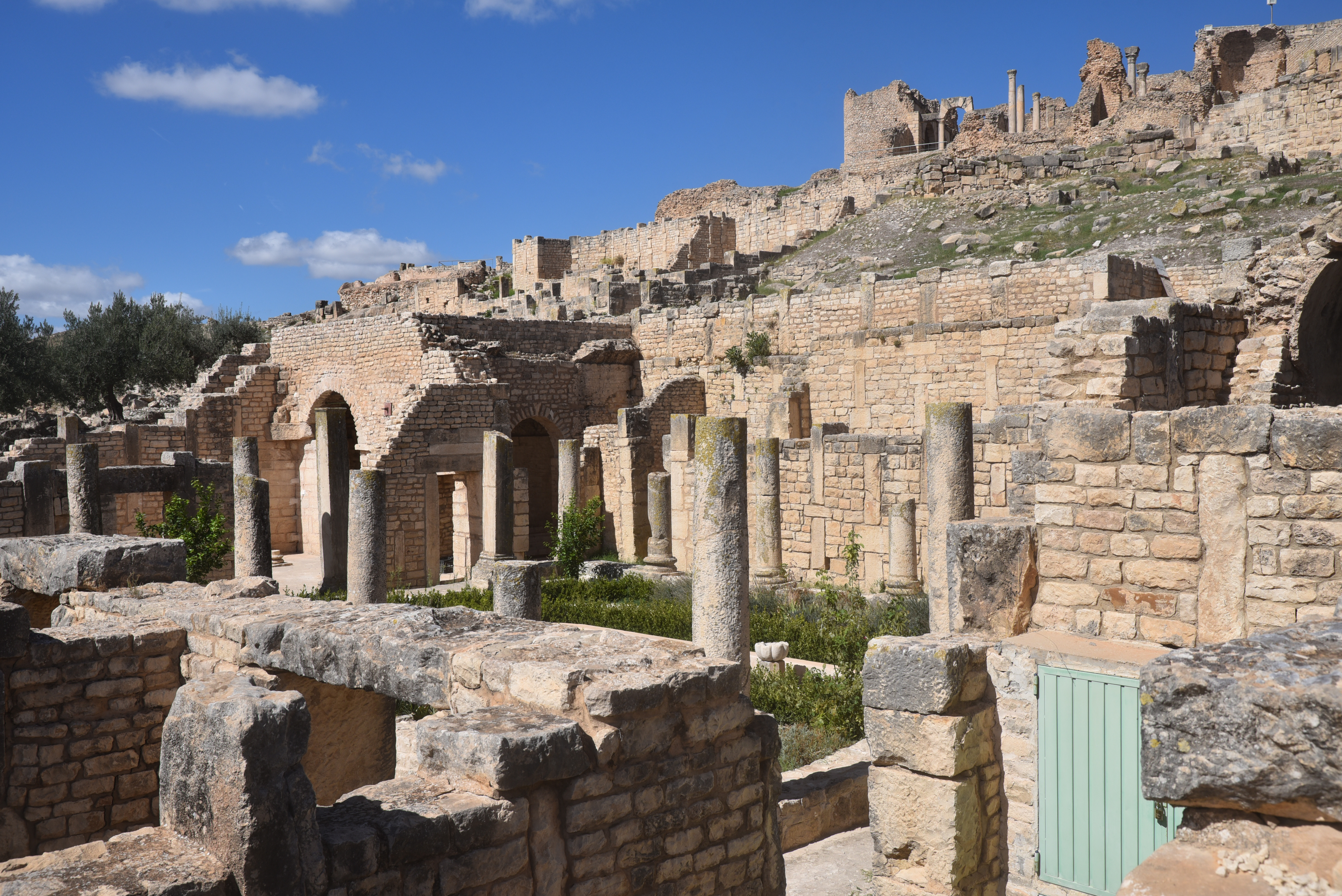
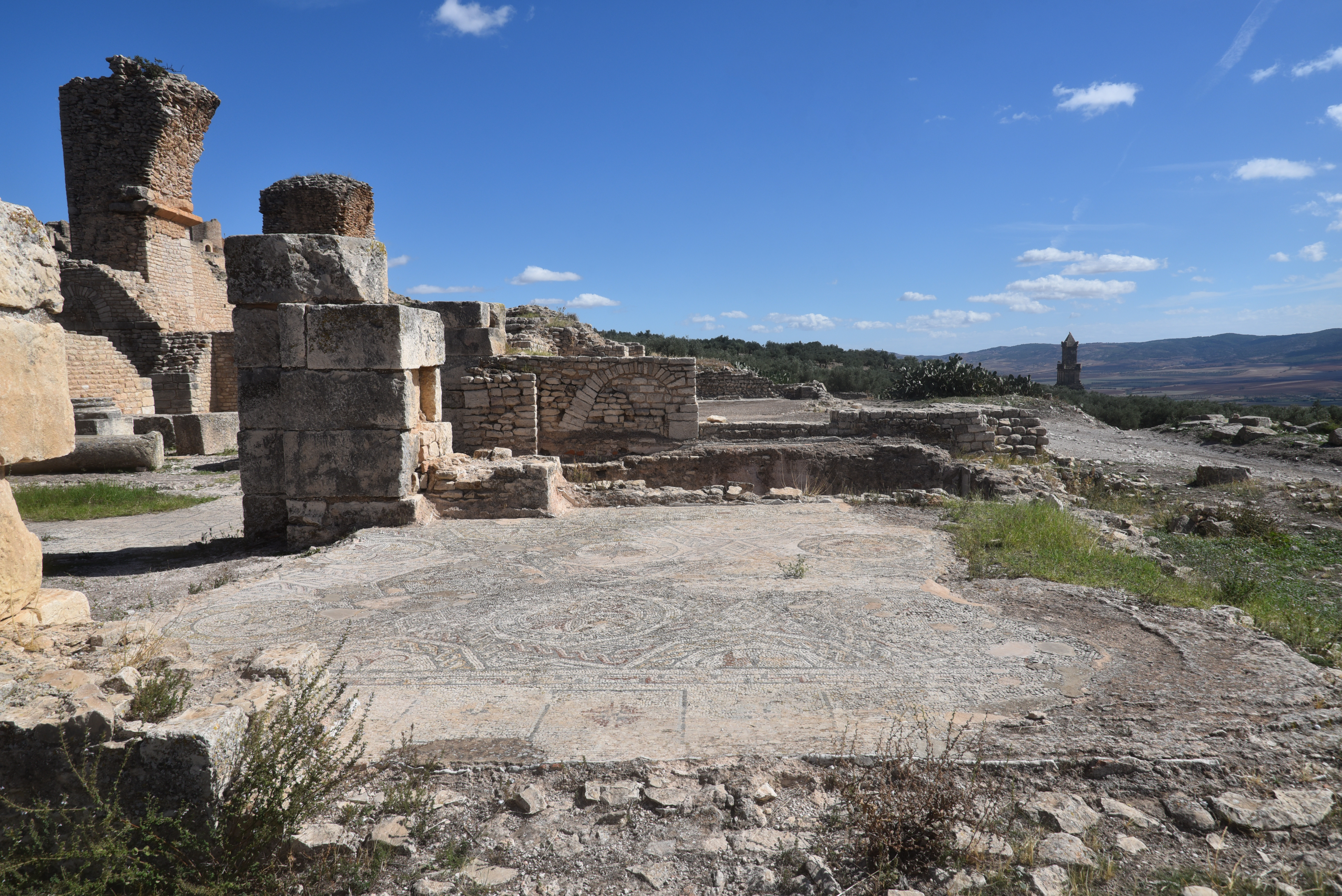
Thugga’s residential quarter. The layout of the homes is clearly visible.
The House of Dionysus and Ulysses was built during the second half of the 3rd century AD. This one-storey house had a stickling rich decoration largely inspired by the Dionysian myths and the episode of the Odyssey referring to Ulysses escaping the sirens’ song.
Odysseus and the Sirens, Mosaic from Dougga, 2nd century AD. Bardo National Museum, Tunis.
House of the Trifolium is the best-preserved and largest house discovered on the site. It dates from the 3rd century AD.
The house of Tripholium was built on two levels, with the entrance at street level and the rooms on the floor below. The rooms on the ground floor were arranged around a large court.
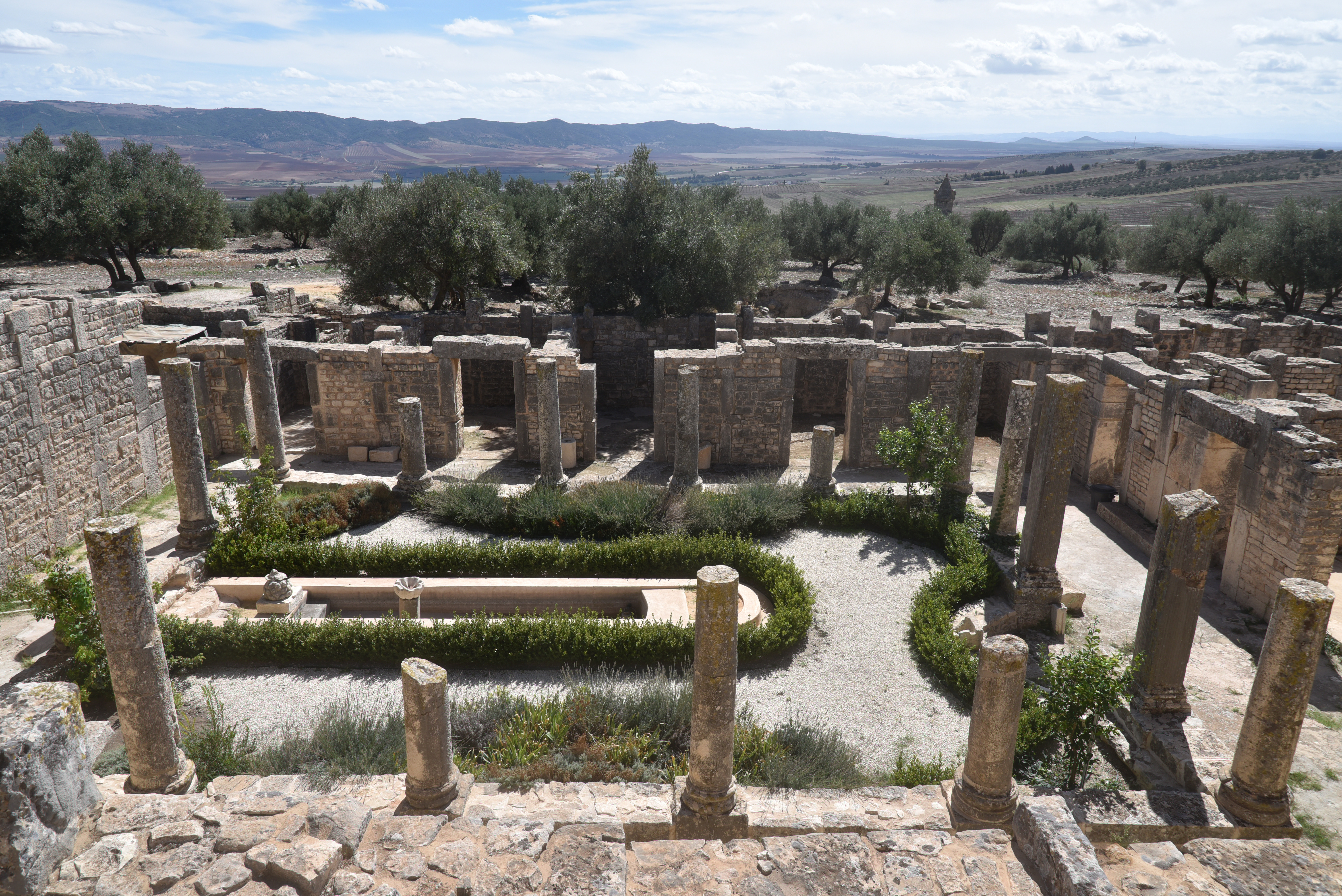
The ground floor of the House of Trifolium is composed of a courtyard with a garden, surrounded by a colonnaded portico.

The Aïn Doura Baths, built in either the early 2nd, late 3rd or 4th century AD.
The Aïn Doura Baths were constructed of opus africanum and rubble masonry in the Punic–North African style. The structure contained a number of different rooms – such as heated rooms and frigidarium – and latrines. The baths also contain mosaics depicting aquatic animals and Roman figures.
The Licinian Baths, donated to the city by the Licinii family in the 3rd century, during the reign of Caracalla, between 212 and 217.
The Arch of Septimius Severus was built in this emperor’s honour in AD 205 after Thugga was made a municipium at his command. The arch marked the eastern entrance to the city, and the 5m-wide road made of large limestone slabs was the main road to Carthage.
The Libyco-Punic Mausoleum is a remarkable 21-metre-high 2nd-century BC royal tomb. The monument is divided into three levels and showcases a blend of local and Hellenistic elements.
The lower level of the Libyco-Punic Mausoleum. According to the Punic-Libyan bilingual inscription on the podium, the mausoleum was dedicated to the Numidian Prince Ateban, son of Lepmatath.
The middle level of the Libyco-Punic Mausoleum.
The upper level of the Libyco-Punic Mausoleum.

References & links: