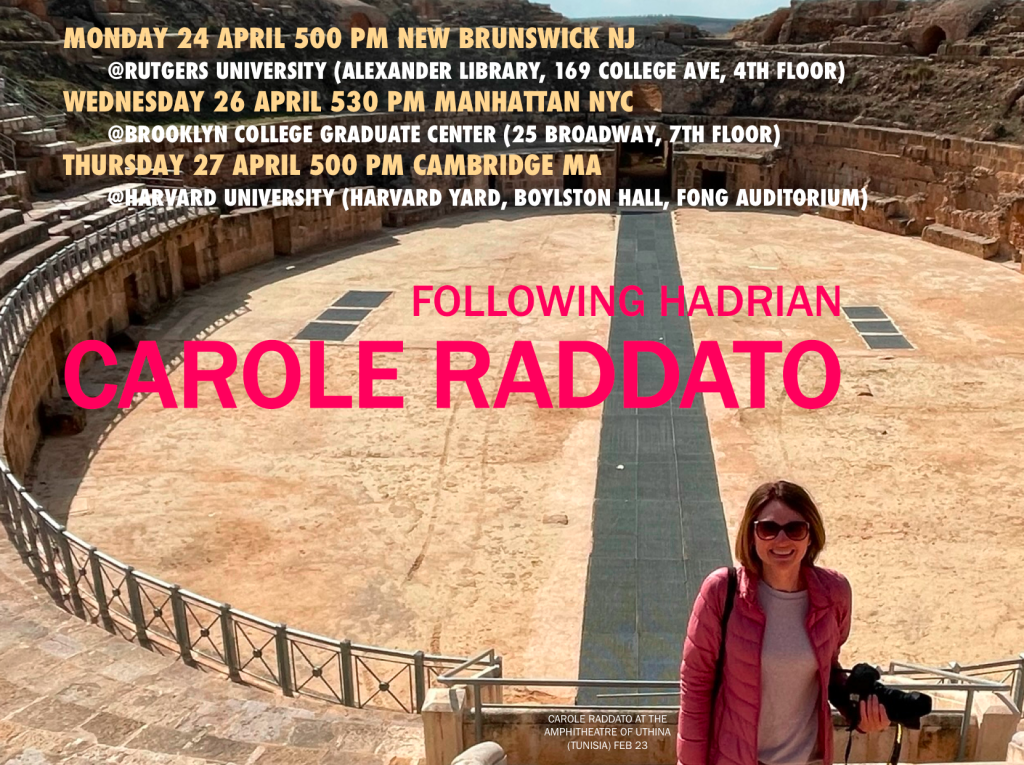
The world’s premier photographer of classical antiquity offers three lectures—her first in North America—on how she has planned, researched and is now realizing a 21-year project to document the wide-ranging journeys of the restless Roman emperor Hadrian (reigned 117-138), following in his footsteps precisely 1900 years later.
MONDAY 24 APRIL 500 PM NEW BRUNSWICK NJ @RUTGERS UNIVERSITY (ALEXANDER LIBRARY, 169 COLLEGE AVE, 4TH FLOOR)
With the collaboration of the Department of Classics, Rutgers University; Department of Classics, Brooklyn College; CUNY Greek/Latin Institute; Paideia Institute; Department of the Classics, Harvard University; Archaeological Institute of America (Boston Chapter); and the Library of the American Academy in Rome.
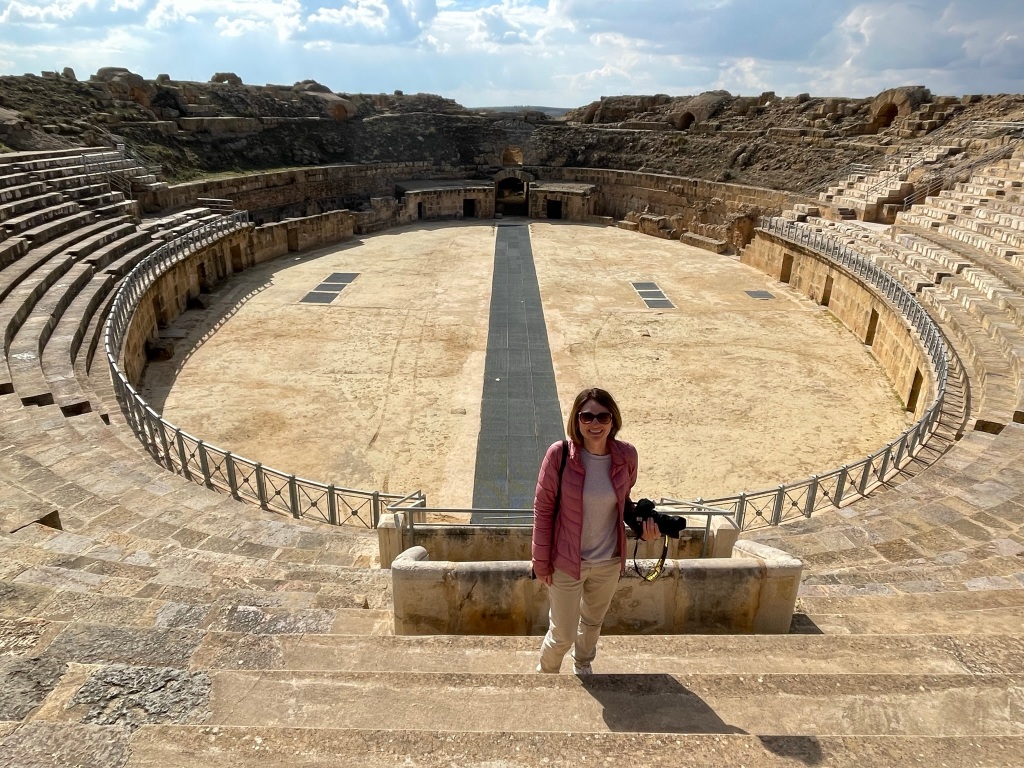
Carole Raddato at the amphitheatre in Uthina (Tunisia)…
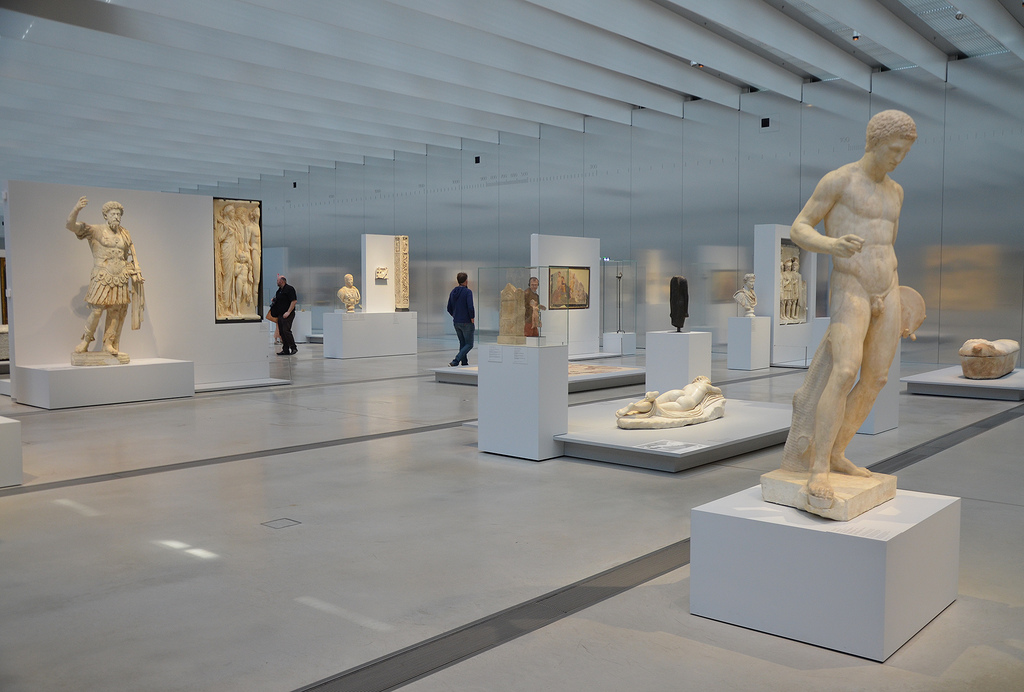
The Louvre-Lens is an art museum located in Lens at the heart of a coal mining area, approximately 200 kilometres north of Paris. It displays objects borrowed from the collections of the Musée du Louvre on a medium or long-term basis.
Its collections are displayed in a contemporary building designed by the Japanese architects Kazuyo Sejima and Ryue Nishizawa of SANAA, a multiple award-winning architectural firm based in Tokyo. Officially opened on the 4th December 2012, the museum now enjoys international acclaim as a unique must-see attraction.
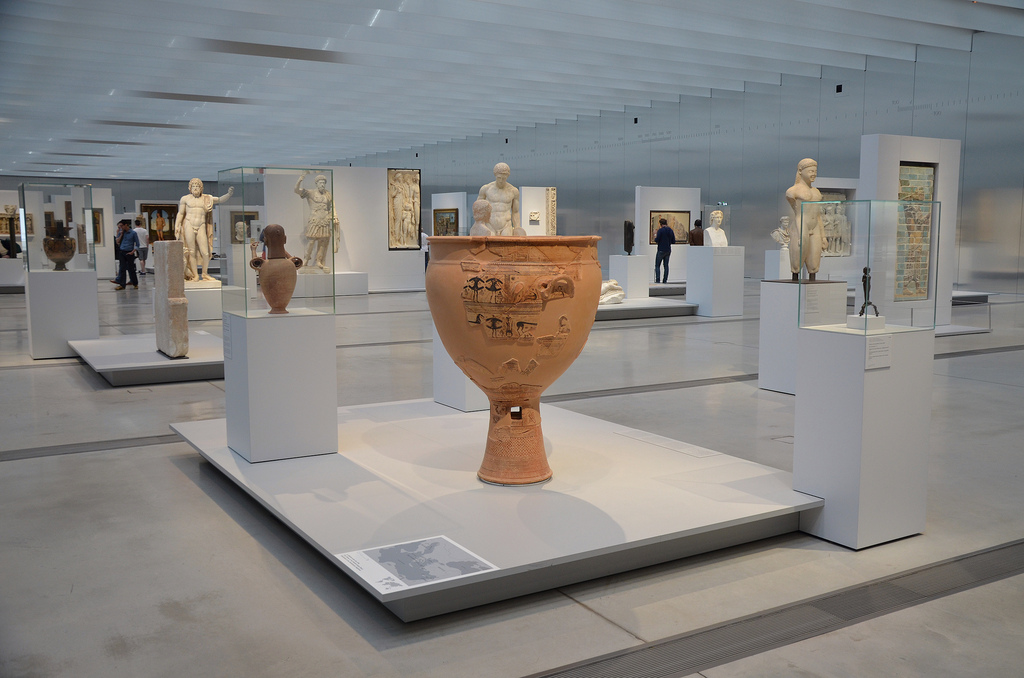
The Galerie du Temps (Gallery of Time), the main exhibition space and the heart of the Louvre-Lens, houses a selection of masterpieces arranged chronologically, starting with the birth of writing in 3500 BC and finishing with the year 1850. Each year, some art pieces return to the Louvre in Paris and are replaced by others.
The 200 works originate from the Middle East, Egypt, Greece, Rome, the Islamic world and Europe. The Galerie du Temps is a wide open hall (125m long and 25m wide) where the objects are placed in the centre of the room in order to create a full 360° dialogue between them.
HIGHLIGHTS FROM THE ANTIQUE COLLECTION
Pre-cuneiform writing tablet noting food ratios. Archives from the Temple of the Sky God From Uruk (Irak) Late Uruk Period, around 3300 BC. The first documents written on clay tablets appeared in Uruk IV, around 3300 BC.
Painted limestone statue of the Majordomo Keki, “head of the household”, civil servant of the Pharaoh From Giza, Egypt Around 2500-2350 BC (6th Dynasty).
Diorite statue of Gudea, prince of Lagash From Girsu (Irak) Around 2120 BC.
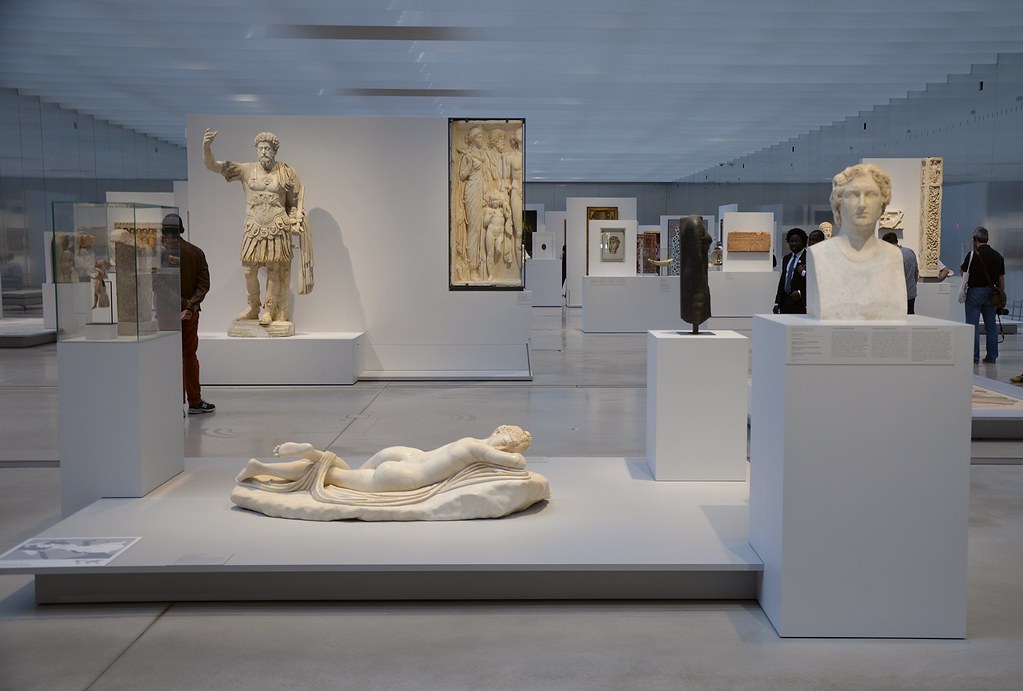
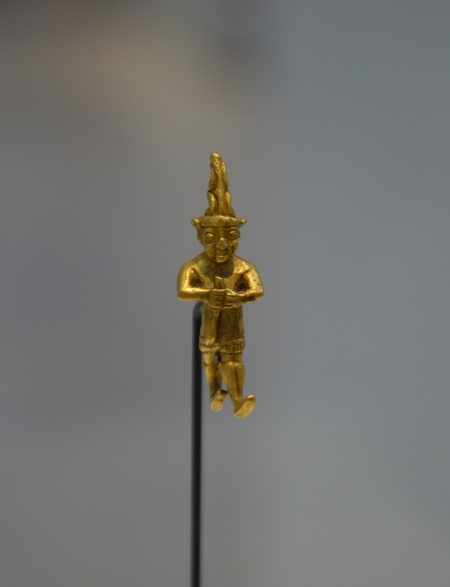
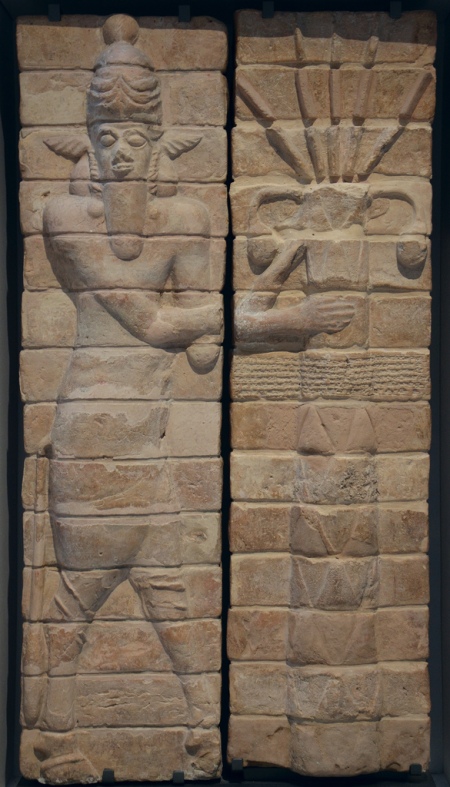
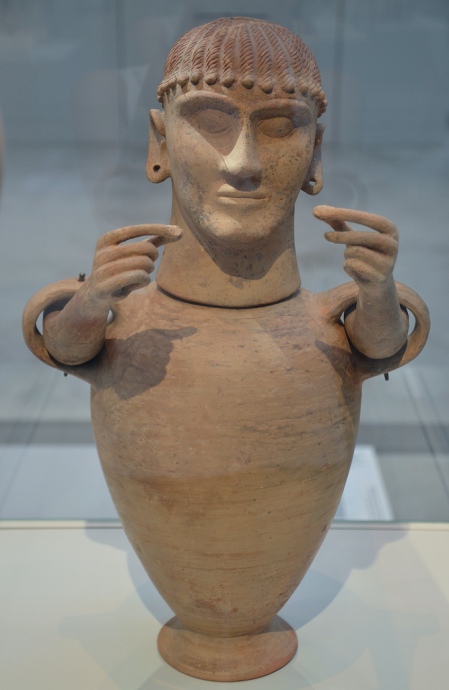
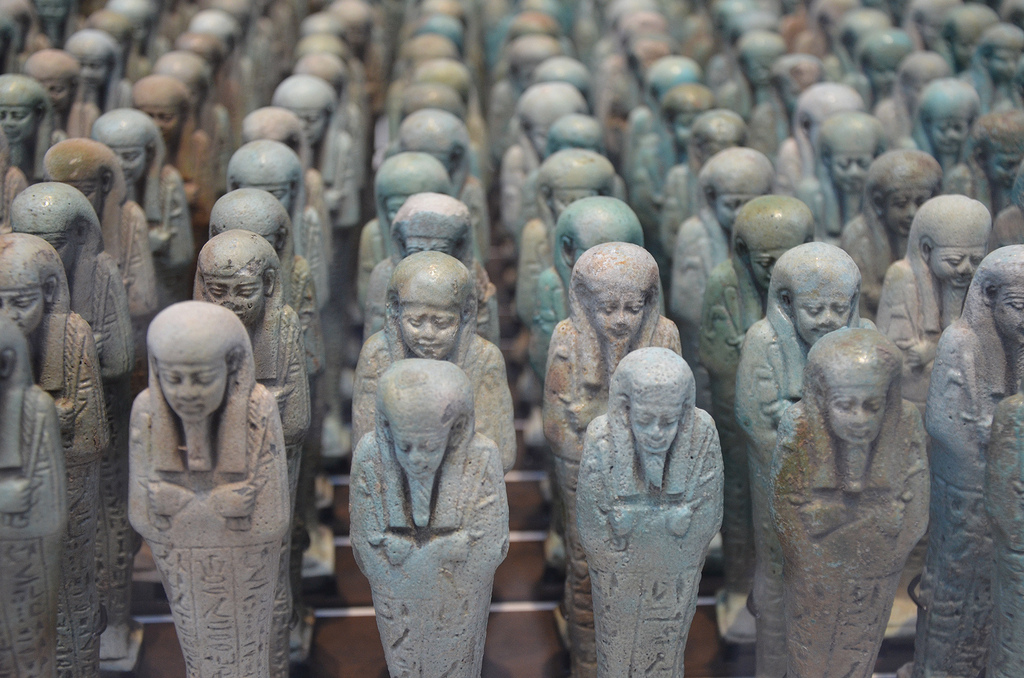
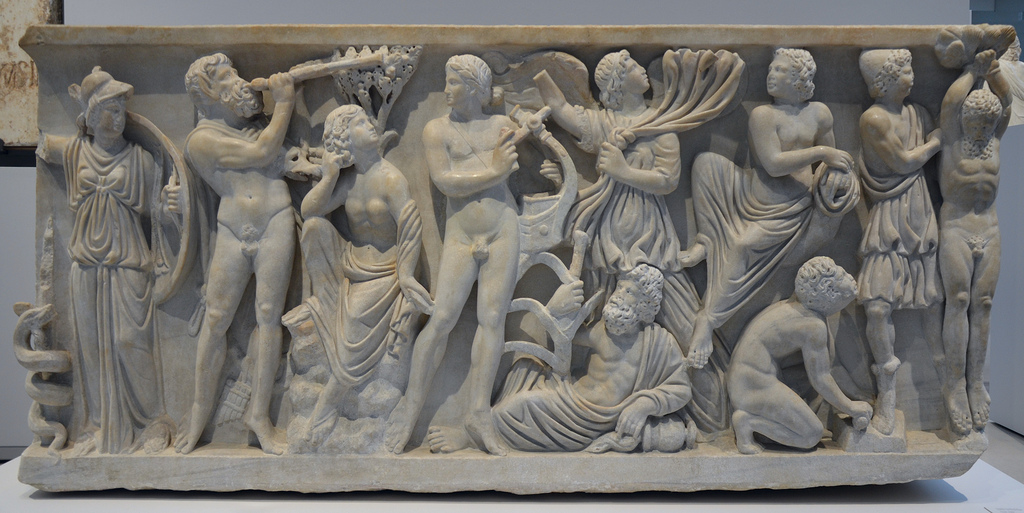
Gold amulet pendant, possibly depicting Teshub, the Hittite Storm God From Yozgat, Central Anatolia (Turkey) Around 1400-1200 BC.Fragment of a painted limestone statue of a deceased couple Around 1391-1353 BC (reign of Amenophis III) From Egypt.Fragments of decoration from the Temple of Inshushinak, tutelary god of Susa, depicting a bull man and palm tree Around 1150 BC From Suse (Iran).Relief depicting a hunting scene in a chariot which decorated a wall in the palace of Maradesh, king of Melid Neo-Hittite period, 9th century BC From Malatya (Turkey).Engraved cippus surmonted by a head representing the Egyptian deity Bes, protector of households Around 750-600 BC From Larnaca (Cyprus).Etruscan cinerary urn with a female head and articulated arms From Chiusi (Italy) Around 550-500 BC.Troop of funerary servant figures (shabtis) in the name of Neferibreheb Around 500 BC From Memphis (Egypt).Terracotta statuette of Nike, the personification of victory Around 190 BC From Myrina (Turkey).Fragment of a fresco depicting a woman beside a fawn (Bacchic cult scene?) From Pompeii Around 30-50 AD.The Praetorians Relief from the Arch of Claudius, once part of the Arch of Claudius erected in 51 AD to commemorate the conquest of Britain From Rome (Italy).Statue of Hermaphroditus, Louvre Lens, son of Hermes and Aphrodite Around 130-150 AD From Egypt.Tauroctony relief representing Mithras sacrificing the bull Around 100-200 AD From the Capitoline Hill in Rome (Italy).Cuirassed statue of Marcus Aurelius From Gabies? (Italy) End of the 2nd century AD.Fragment of a mosaic floor depicting a preparation of a banquet Found in Carthage Around 180-190 AD.Sarcophagus depicting a musical context between the god Apollo and the satyr Marsyas Around 290-300 AD From Cosa (Italy).
See more images from the Louvre-Lens antique collections on Flickr










 following hadrian photography