Soli/Pompeiopolis

Soli (later Pompeiopolis) is an ancient port city in Cilicia, 11 km west of Mersin in present-day Turkey. Founded in the 6th century BC by Rhodian colonists from Lindos, Soli developed into a prosperous city known for its cultural and intellectual achievements. It was renowned for its philosophers, including the famous Stoic philosopher Chrysippus and two distinguished poets, Philemon and Aratus. Soli was re-established in the 1st century BC by Pompey, who renamed the city of Pompeiopolis and used it as his naval base during his campaign against the Cilician pirates. The town served as a significant centre for trade and commerce due to its strategic location along the Cilician coast. Over time, Pompeiopolis experienced various cultural influences, reflecting the region’s diverse history. The city flourished during the Roman and Byzantine periods but eventually declined, like many ancient cities, due to economic shifts and invasions.

Coordinates: 36° 44′ 31″ N34° 32′ 24″ E

Soli was first mentioned by Xenophon as a maritime town of Cilicia between the mouths of the rivers Lamus and Pyramus, from each of which its distance was about 500 stadia. It was supposedly founded by Greek colonists from Lindos on Rhodes. Over time, this village grew into a significant city and became the province’s capital when the Persians ruled Asia Minor. Soli prospered under Achaemenid hegemony, minting coins to the Persian standard until Alexander the Great drove the Persians out of Cilicia in 333 BC. In Hellenistic times, under the rule of the Seleucid dynasty, Soli continued to grow and prosper until its destruction by Tigranes II (King of Armenia and the Seleucid Empire) in 83 BC.

In 67 BC, Pompey the Great restored the city and colonised it with survivors from his successful campaign against the Cilician pirates. He renamed the site Pompeiopolis. Pompeiopolis likely absorbed elements of the older Soli, contributing to the region’s continuous historical development. The city was then surrounded by new defensive walls, and many public buildings and roads were built.
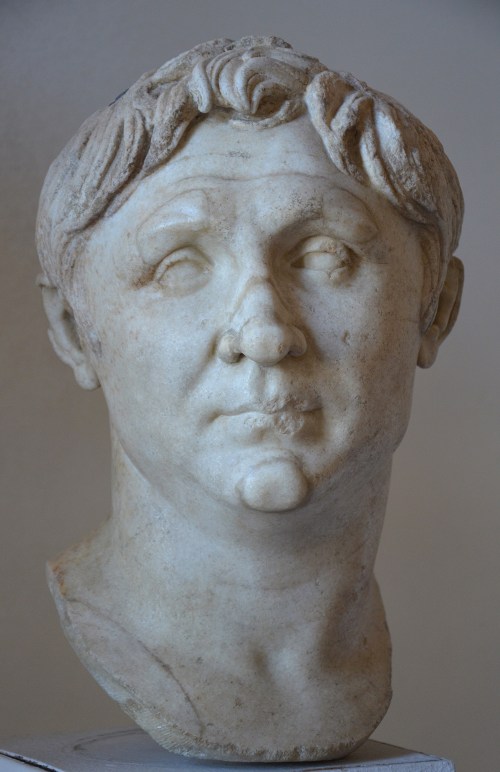
Pompey the Great, Augustan copy of a 70-60 BC original.
Venice Museo Archeologico Nazionale

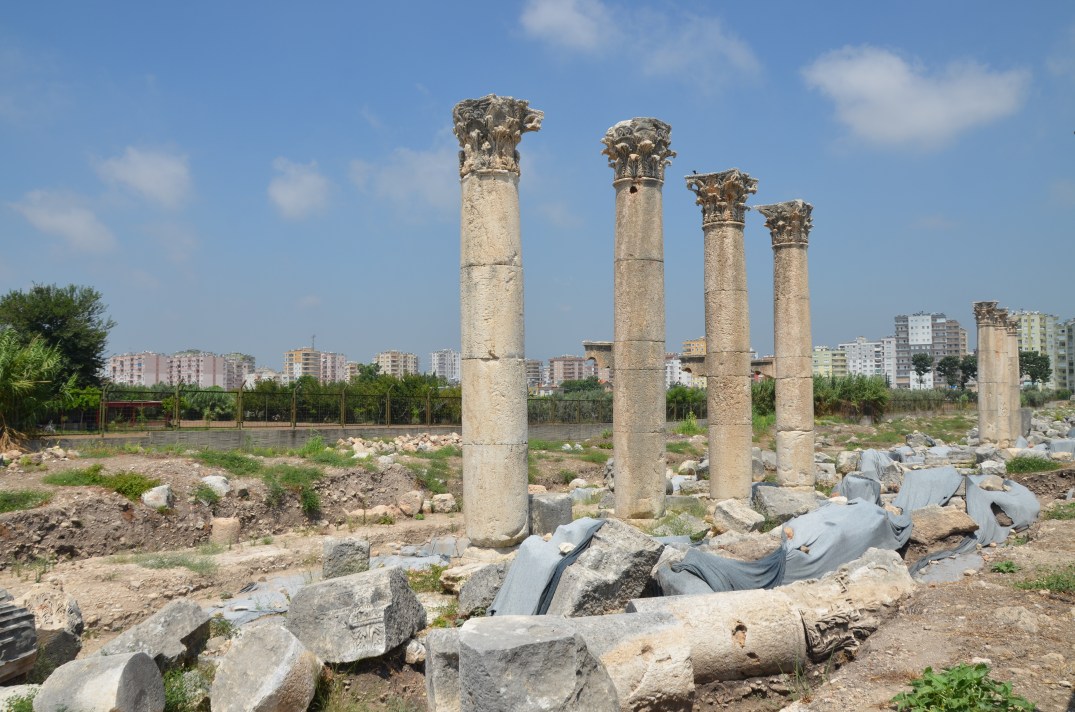
Only a few remains of ancient Pompeiopolis have survived, including the harbour basin and columns of a colonnade road that led from the northern gate of the city to the port. A theatre seen by travellers at the beginning of the 19th century is no longer visible. The harbour of Pompeiopolis played a crucial role in the city’s prosperity, serving as a hub for maritime trade and commerce. The harbour was strategically located along the Cilician coast, facilitating connections with other Mediterranean regions. The well-designed harbour infrastructure, including docks and loading facilities, contributed to the city’s economic growth.

In AD 129/30, the province of Cilicia was visited by Hadrian, who donated funds for the expansion of the port in Pompeiopolis, but the work was completed only in the reign of Antoninus Pius, his adopted son. The completion of the harbour renovations was celebrated on the coinage. The coin’s reverse depicts a two-storey harbour and a divine figure lying down within it, probably representing a local river god. A lighthouse is visible at the end of the western breakwater. On the roof of the harbour, jar-like objects are perched at regular intervals, and a torch is seen between the first two. These torches are thought to have been used to illuminate the harbour. In AD 525, Pompeiopolis was completely destroyed by a powerful earthquake and never regained its former importance.

The bronze coin of Antoninus Pius features the harbour of Pompeiopolis on the reverse. Dated AD 138 – AD 161. (RPC IV.3, 3581)
American Numismatic Society

In 2018, a 1,700-year-old portrait bust was uncovered, believed to be of a Roman aristocrat (see here).

PORTFOLIO

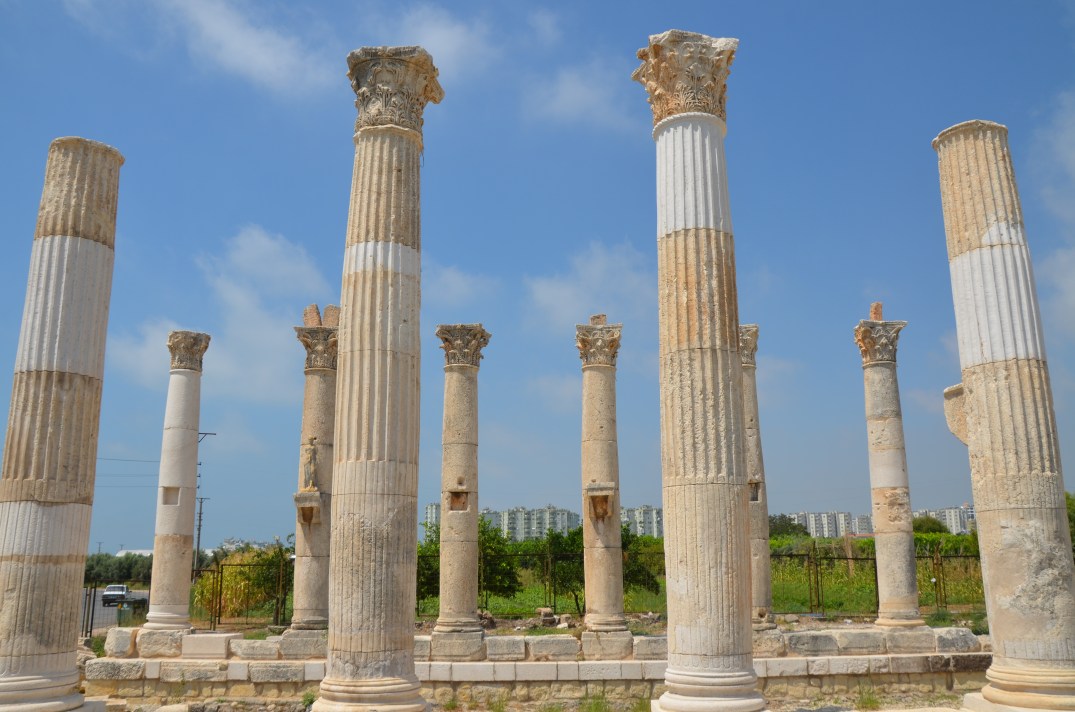
The restored southern end of the Colonnaded Street that led from the northern gate of the city to the harbour.
The 360 -metre-long boulevard was lined with a total of 200 columns. 41 columns are still standing, and as many as 33 of these columns have retained their capitals.
Column Console with a Statue of Nemesis. The consoles facing the colonnaded street have the busts of the Roman emperor Balbinus and various deities such as Asclepius, his daughter Hygieia, Zeus, Nemesis, Demeter and Dionysus.
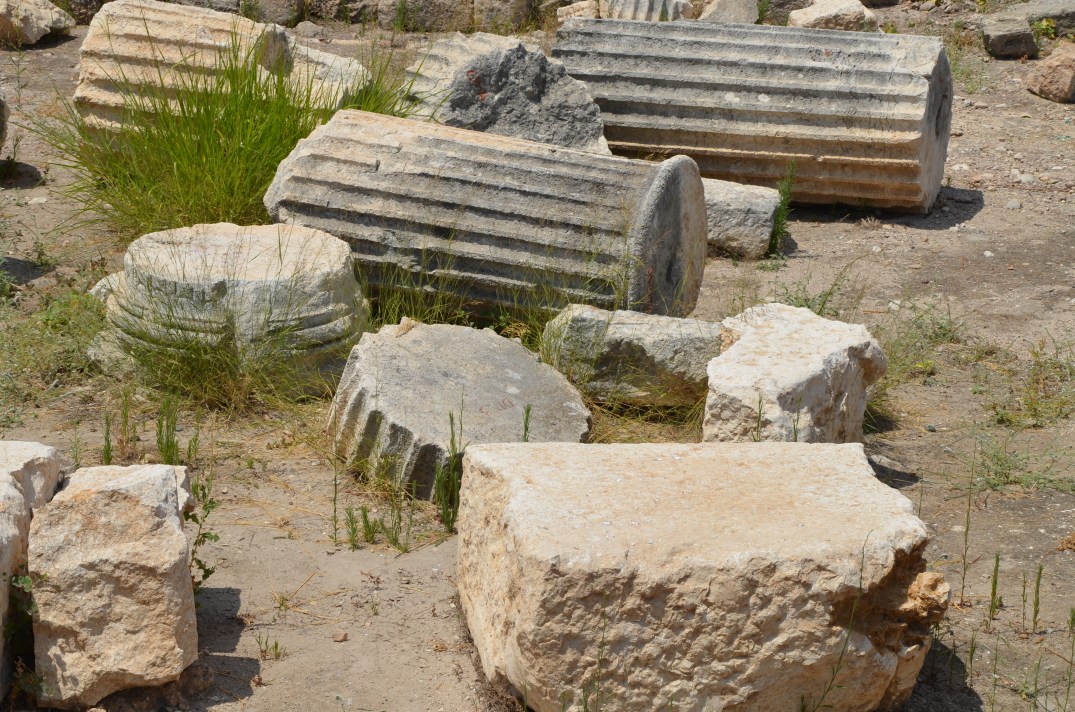
Fragments of Columns from the Colonnaded Street.
The restored southern end of the Colonnaded Street that led from the northern gate of the city to the harbour.

Corinthian Column and Capital.

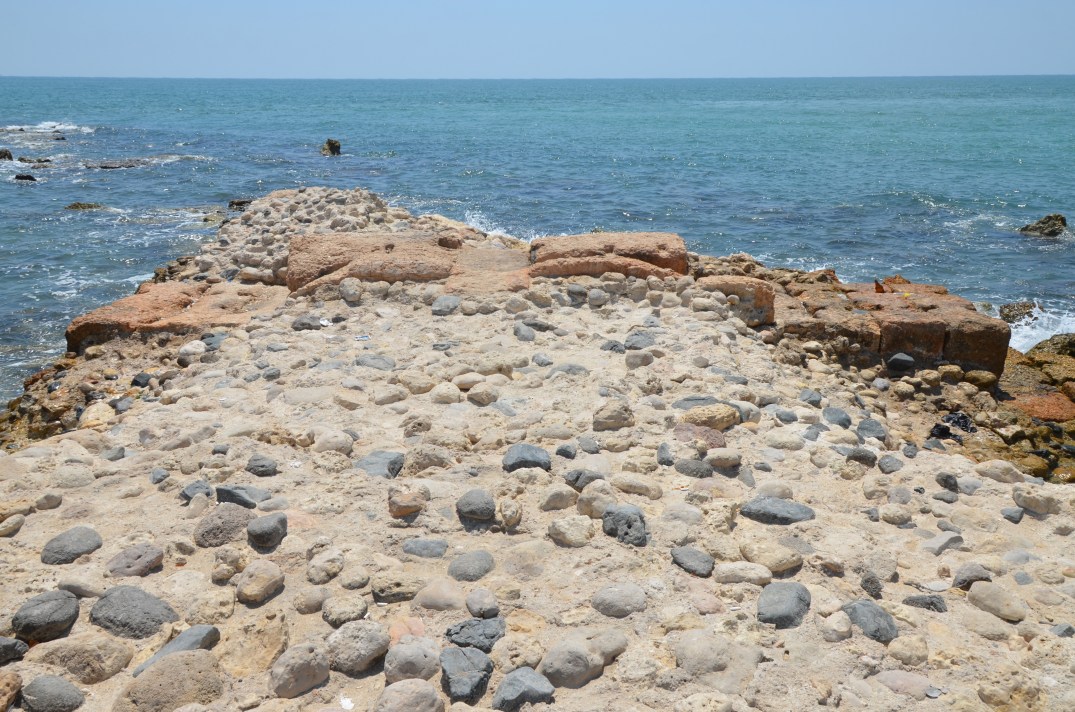
The western mole of the Hadrianic/Antonine harbour.
The western mole of the Hadrianic/Antonine harbour with ashlar wall.
The western mole of the Hadrianic/Antonine harbour.
Remains of the western mole of the Hadrianic/Antonine harbour.

Links:
Miletus

Miletus was an ancient Greek city on the western coast of Anatolia, now modern-day Turkey. It was one of the most important and prosperous cities in the Ionian League during the Archaic and Classical periods of Ancient Greece. Miletus was a centre of colonisation and flourished as a site of Greek thought and culture.

Coordinates: 37°31’49.3″N 27°16’45.9″E

Miletus was inhabited since the Neolithic age, but its early history as a significant city began in the early and middle Bronze Age when the settlement came under the Minoan influence (the word Miletus is of Cretan origin). An important Mycenaean colony existed at Miletus from the middle of the 2nd millennium BC before passing into Carian control by the end of the Late Bronze Age. Miletus was the only Ionian city mentioned by Homer, who records in the Iliad that the Carian-led Miletians fought against the Greeks at Troy.

Ionian Greek settlers, known for their skilled seafarers and explorers, arrived in Miletus from 1000 BC and, from about 650 BC onwards, established colonies in various parts of the Mediterranean, on the shores of the Black Sea, and as far as Egypt. Miletus became a leading centre of Greek thought and culture over the following centuries; most significantly, the Milesian School of Philosophy featured such great thinkers as Thales, Anaximander and Anaximenes.

Along with the other Greek cities of Anatolia, Miletus was later ruled by the Lydians and the Persians. About 499 BC, the Milesians participated in the Greco-Persian Wars and took an active part in the Ionian revolt of 500-494 BC and, in retaliation, the Persians captured and destroyed Miletus. After the Persian defeat by the Greeks in 479 BC, Miletus joined the Athenian-dominated Delian League. Its fortunes soon revived, and the Milesians set about rebuilding their city on a new grid plan following the urban development ideas described by Hippodamus, a native of Miletus.

Like the other coastal cities in the region, Miletus was taken in 334 BC by Alexander the Great, who ushered in the city’s golden age. The city reached its greatest extent during the Hellenistic period, occupying an area of approximately 90 hectares. It then passed under Roman control and received special attention from Augustus, who visited the city in 19 BC. The city was also visited by Trajan (114 AD), who inaugurated several new projects, including the Nymphaeum. It participated in the Panhellenion, the league of the Greek cities established by Hadrian. Numerous dedications for Trajan and Hadrian come from the South Agora.

Caligula and his wife were worshipped in Miletus, but the city quickly lost its title of neokoros (temple-warden) due to the damnatio memoriae of the emperor. However, Miletus recovered the title of neokoros during the reign of Commodus (AD 180-192). Elagabalus (AD 218-222) awarded the second official title of neokoros to the city, which Miletus lost again due to the damnatio memoriae of the emperor during the reign of Alexander Severus.

The main benefactor of the city was Annia Galeria Faustina, daughter of Antoninus Pius and wife of Marcus Aurelius, who visited the city and stayed there in AD 164. Among her donations were the construction of the magnificent baths named after her and the completion of the Roman theatre.

The city’s fortunes declined over the centuries due to political unrest and changing trade routes. Over time, the harbour silted up, leading to economic difficulties. The decline continued into the Byzantine era, and the city was eventually abandoned in the Middle Ages.

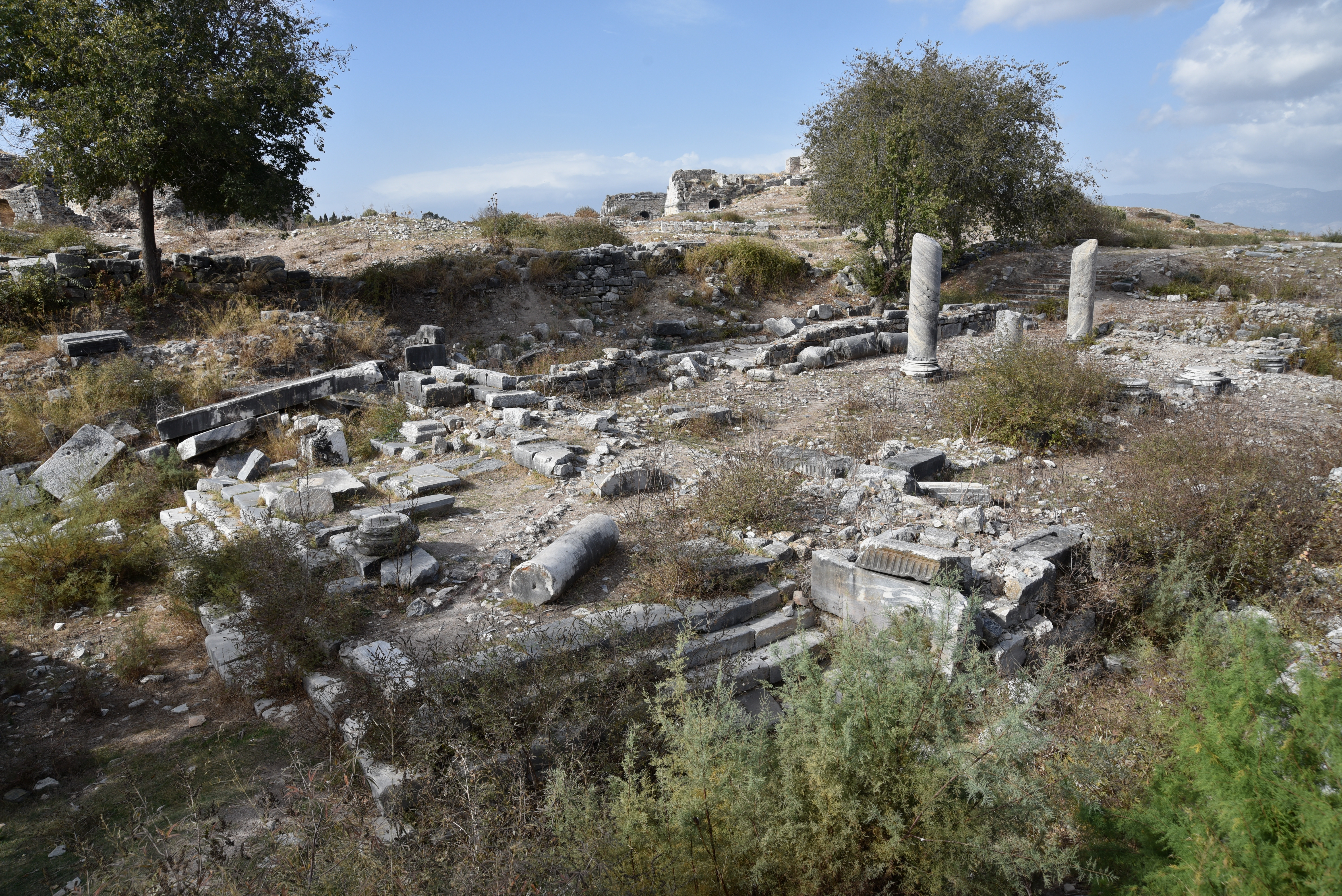
Today, Miletus is an archaeological site showcasing the ruins of this once-great city, including a well-preserved theatre, agora, and other structures that offer a glimpse into its ancient glory.

PORTFOLIO

Overview of Miletus.
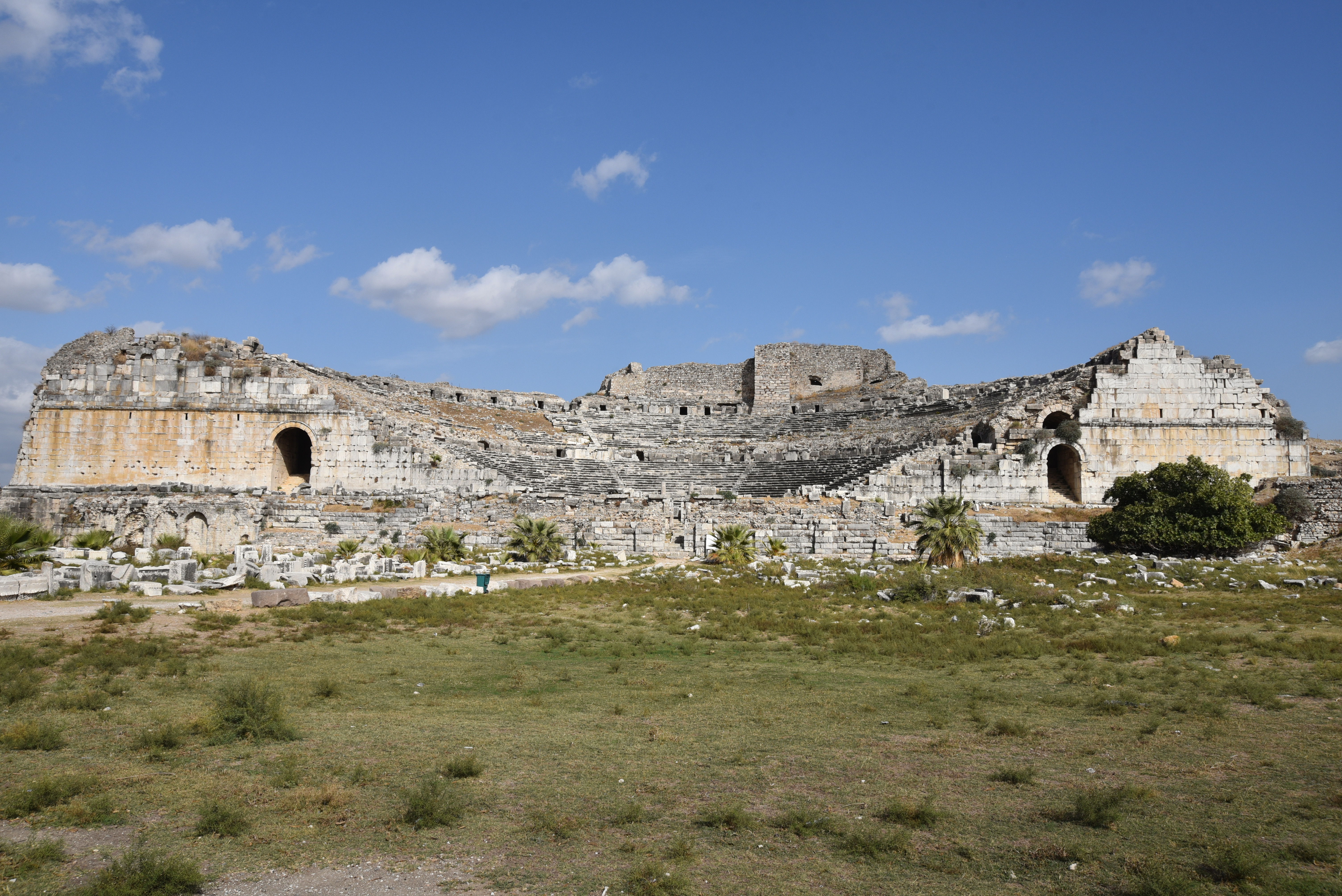
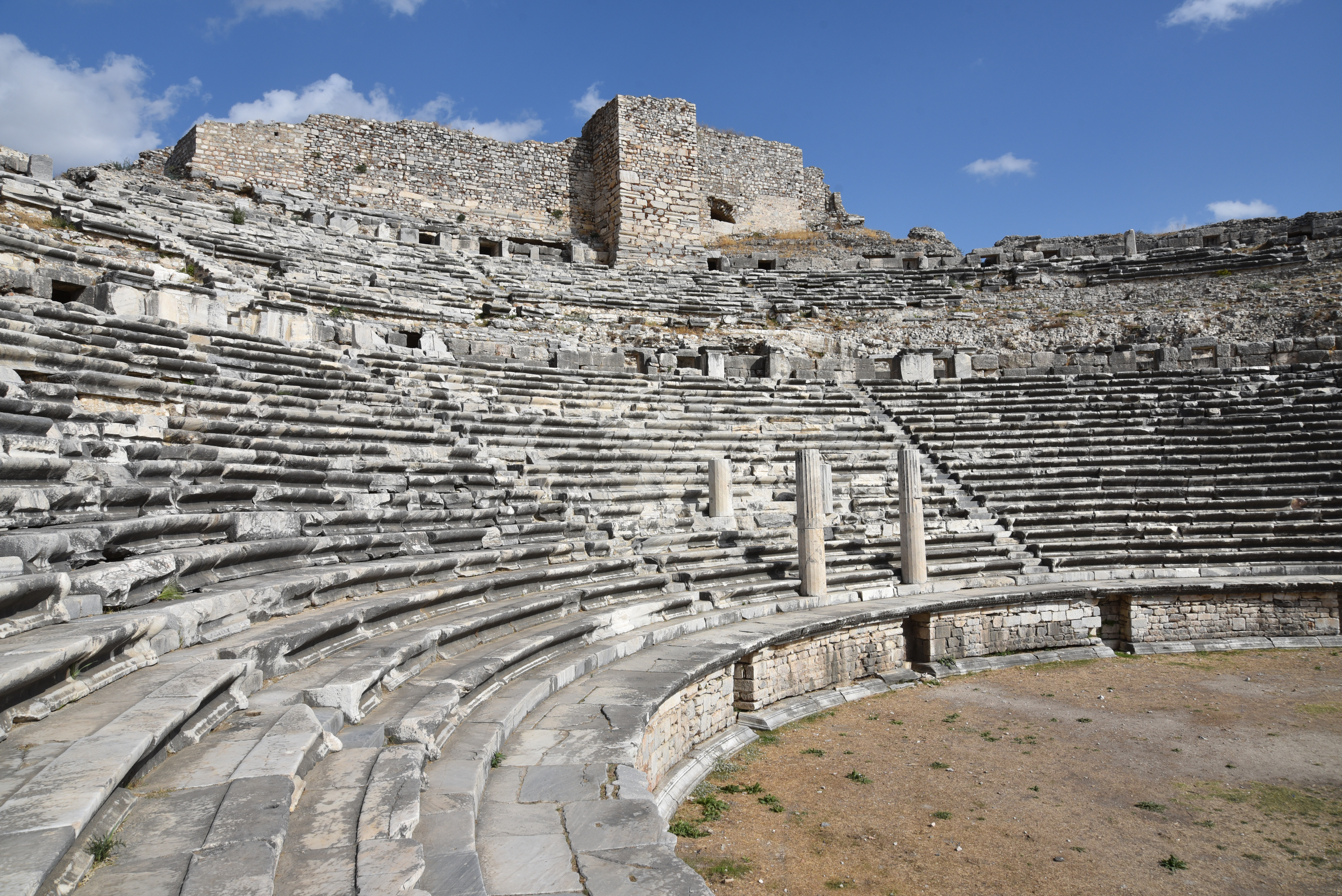
The Theatre at Miletus is one of the largest theatres in Anatolia
The Theatre was built into a hill in the Hellenistic period to seat 5,300 spectators and significantly enlarged during the Roman period to extend its seating capacity to ca. 15,000.
The front face of the theatre today is 140m in width, and the present-day auditorium reaches a height of 30m. In the Roman period, the auditorium was 40m high with three tiers of 20 rows each.
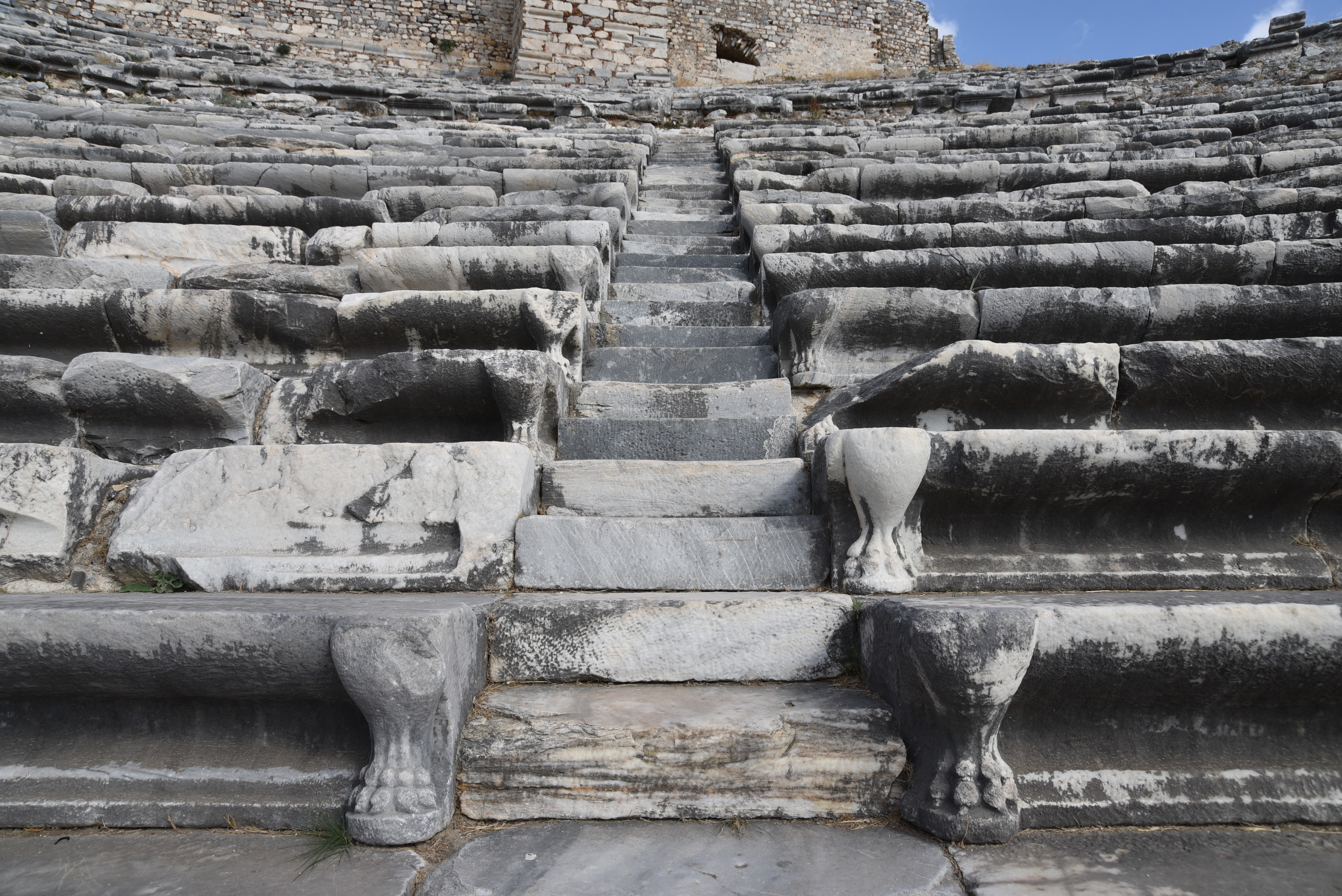
The theatre benches are decorated with lion paws along the aisles.
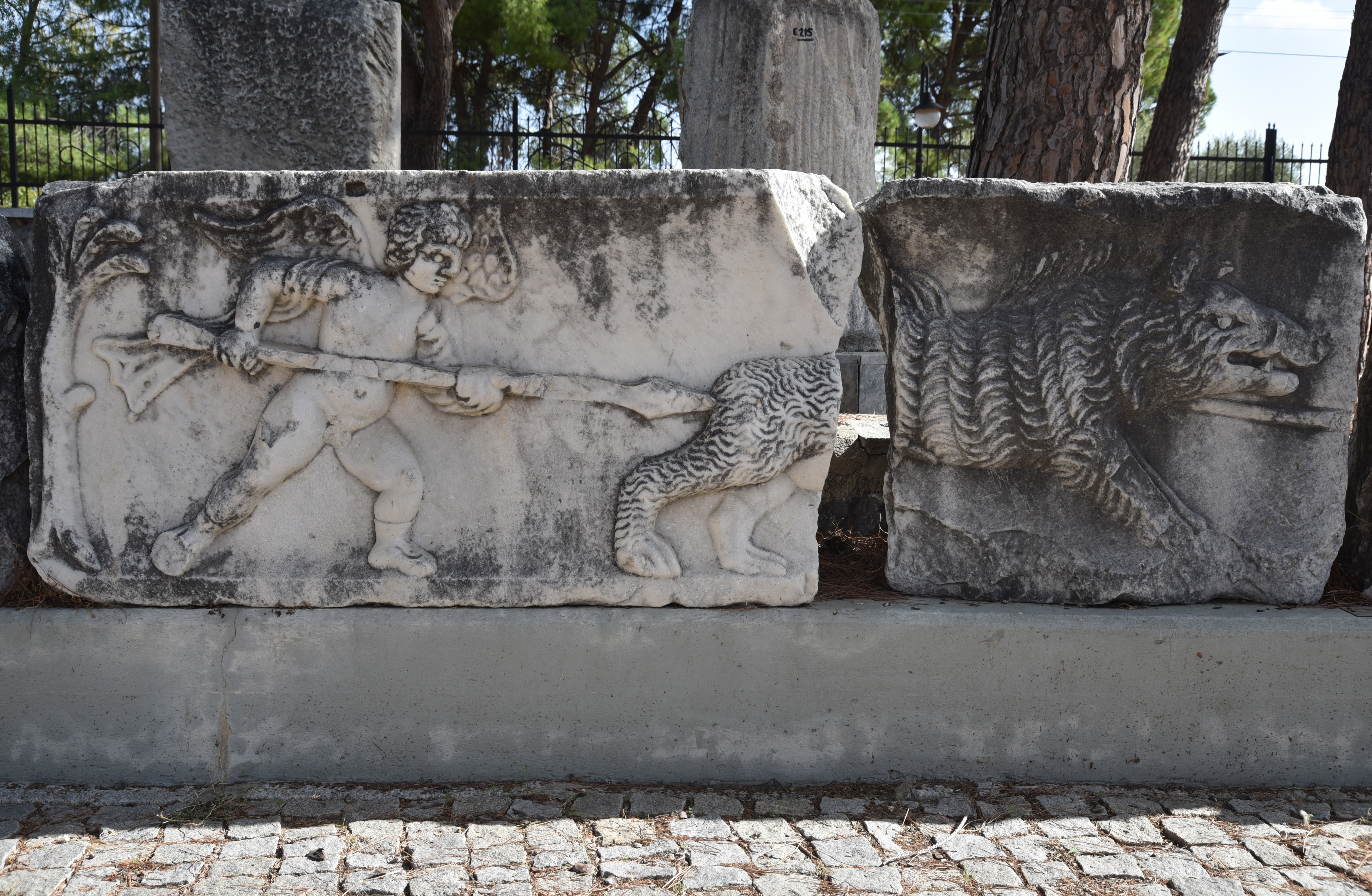
Decorative relief from the theatre depicting a cupid fighting a wild boar.
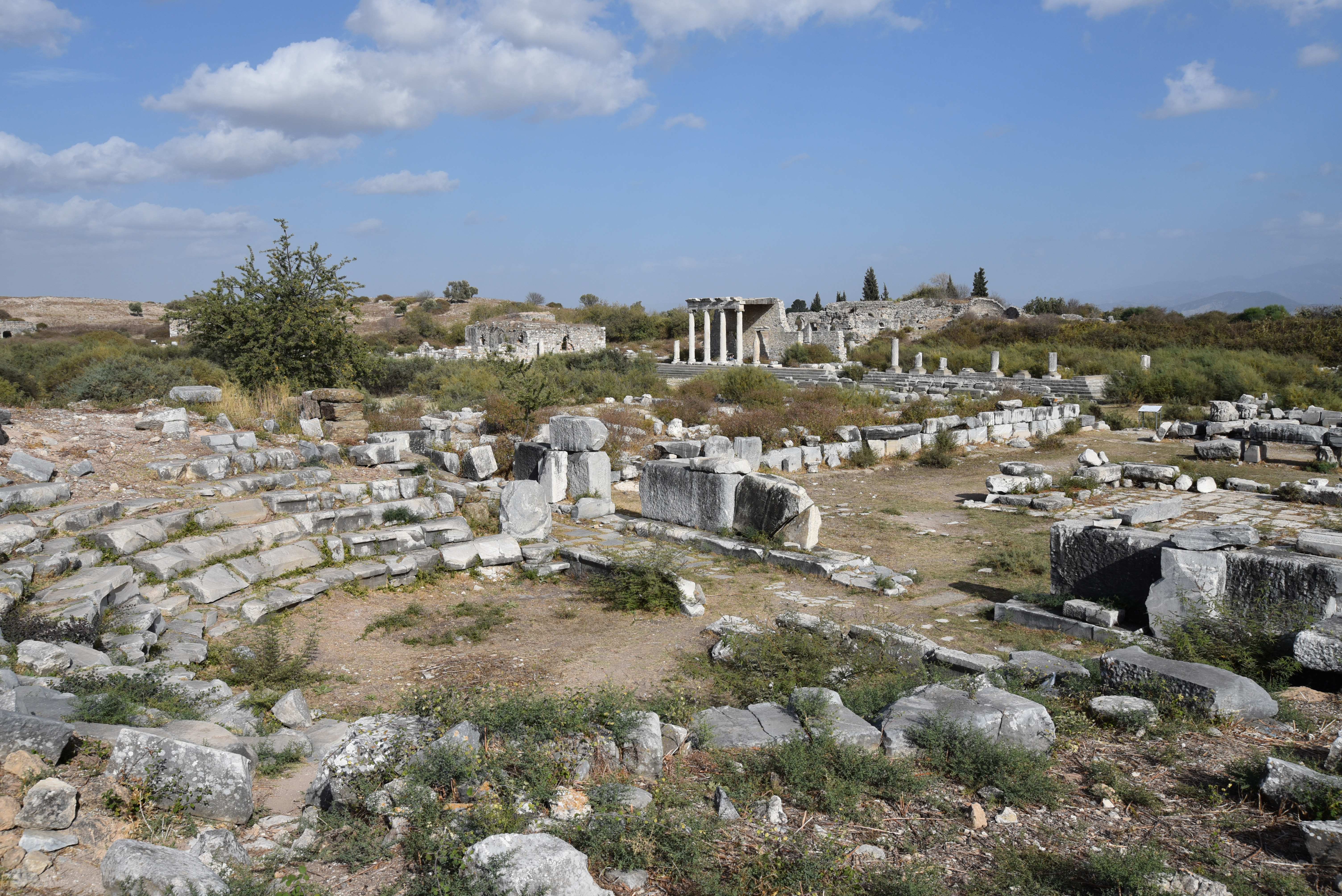
The North Agora, the main agora of Miletus, is the oldest of the three agoras, dating back to the 5th century BC.
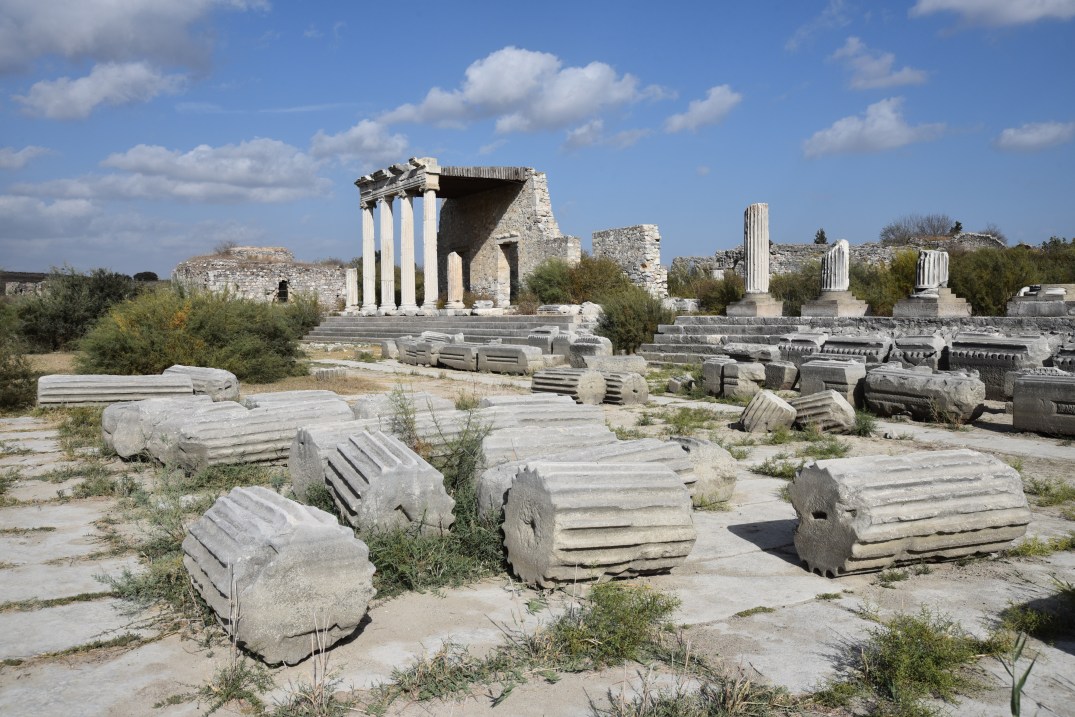
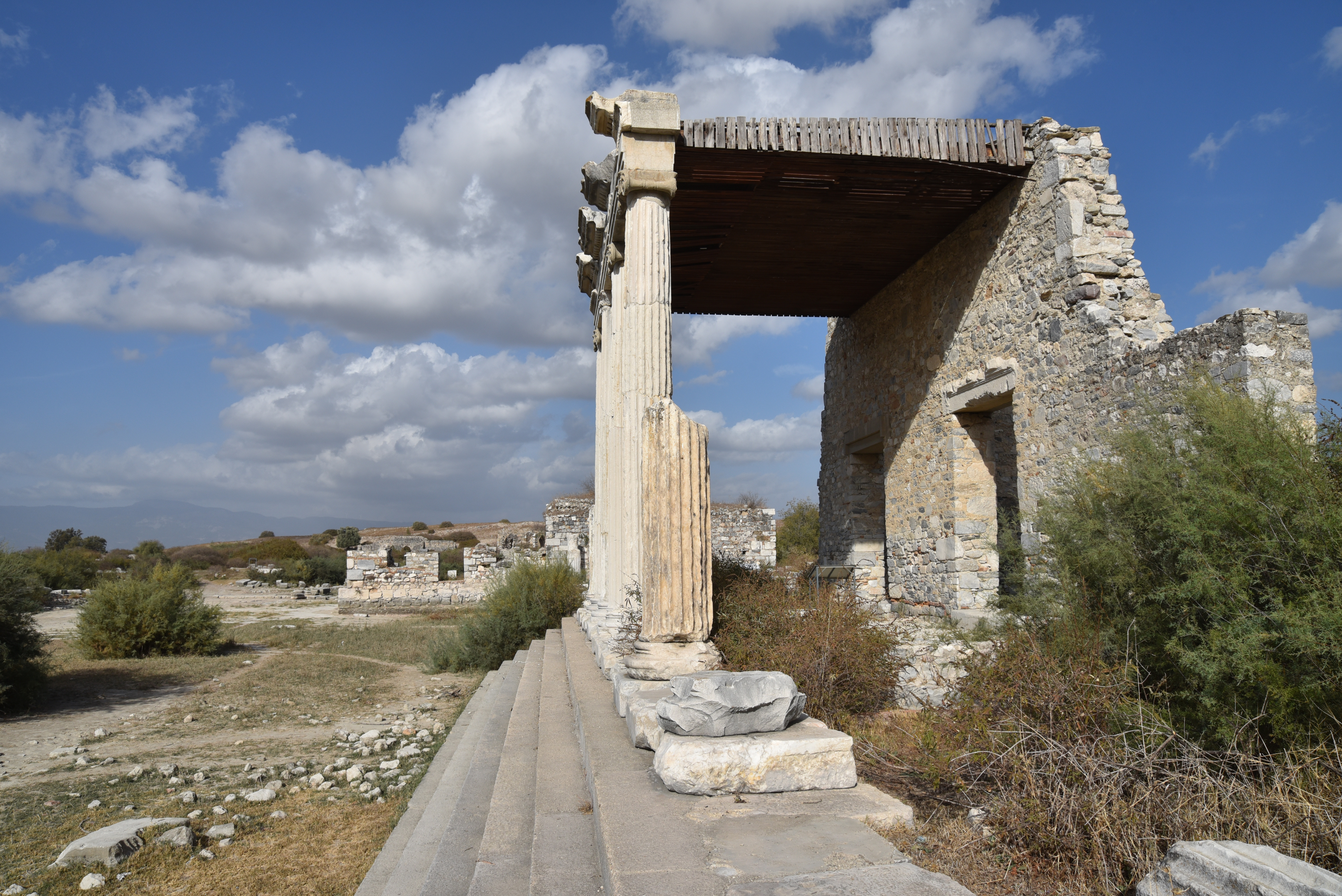
The re-erected Ionic colonnade on the eastern side of the Sacred Way. It originally included 35 columns.

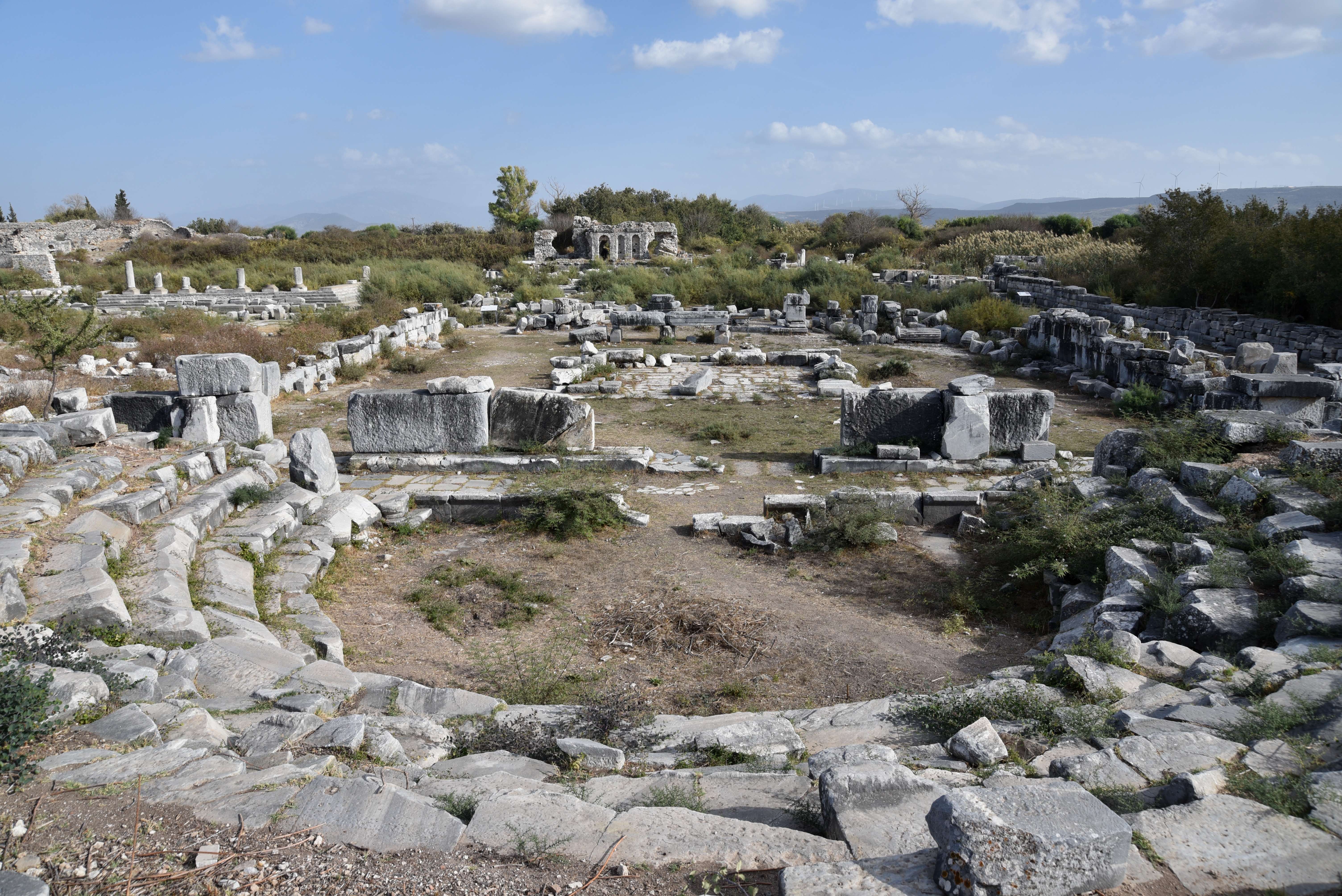
The Bouleuterion (Council House) situated on the west side of the Agora, it was built at the bequest of King Antiochus Epiphanes IV between 175 and 164 BC.
The Hellenistic Bouleuterion (Council House), featuring 18 rows of benches divided into three parts by two staircases, could accommodate 800 to 1200 people.
The courtyard of the Bouleuterion (Council House). At the centre of the courtyard stood an altar dedicated to the cult of Hadrian.
Dedication of an altar to the emperor Hadrian, Milet VI,3 1324, Hadrian is called Zeus Olympios, Savior and Founder (of the city). Miletus Museum.
Αὐτοκράτορι
Καίσαρι ∙
Τραιανῶι
Ἁδριανῶι
Σεβαστῶι
Σωτῆρι καὶ
Οἰκιστῆι.

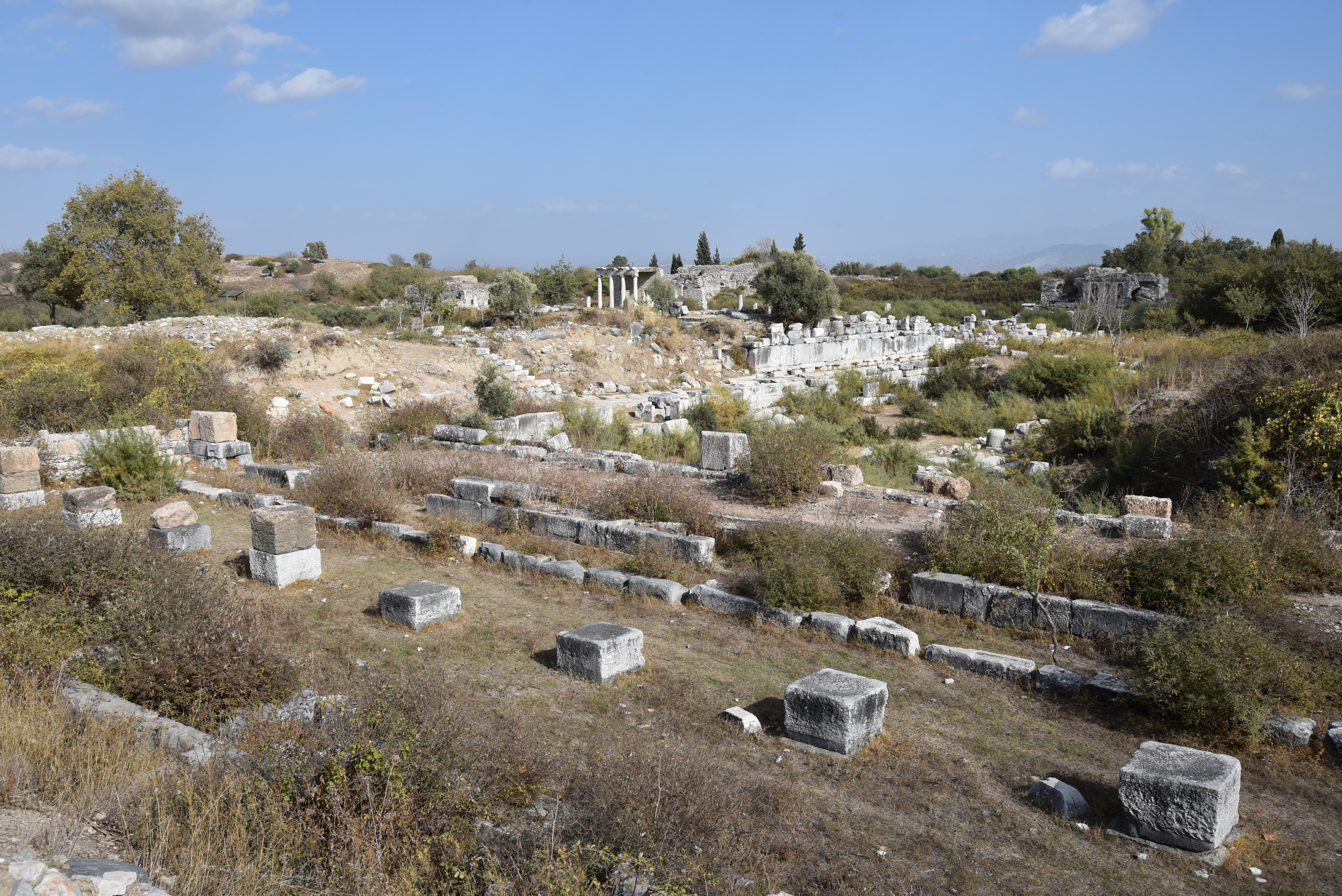
The Large Storehouse was built in the middle of the 2nd century BC along the western wing of the South Agora. The hall was 163 m long and 13 m wide and occupied three insulae. It was enclosed by walls on all four sides, and a series of forty-two marble pillars along its axis divided the building into two long sections.
The Delphinion, a sanctuary dedicated to Apollo Delphinios, patron of sailors and ships, was built in the 6th century BC and enlarged in the Hellenistic period.
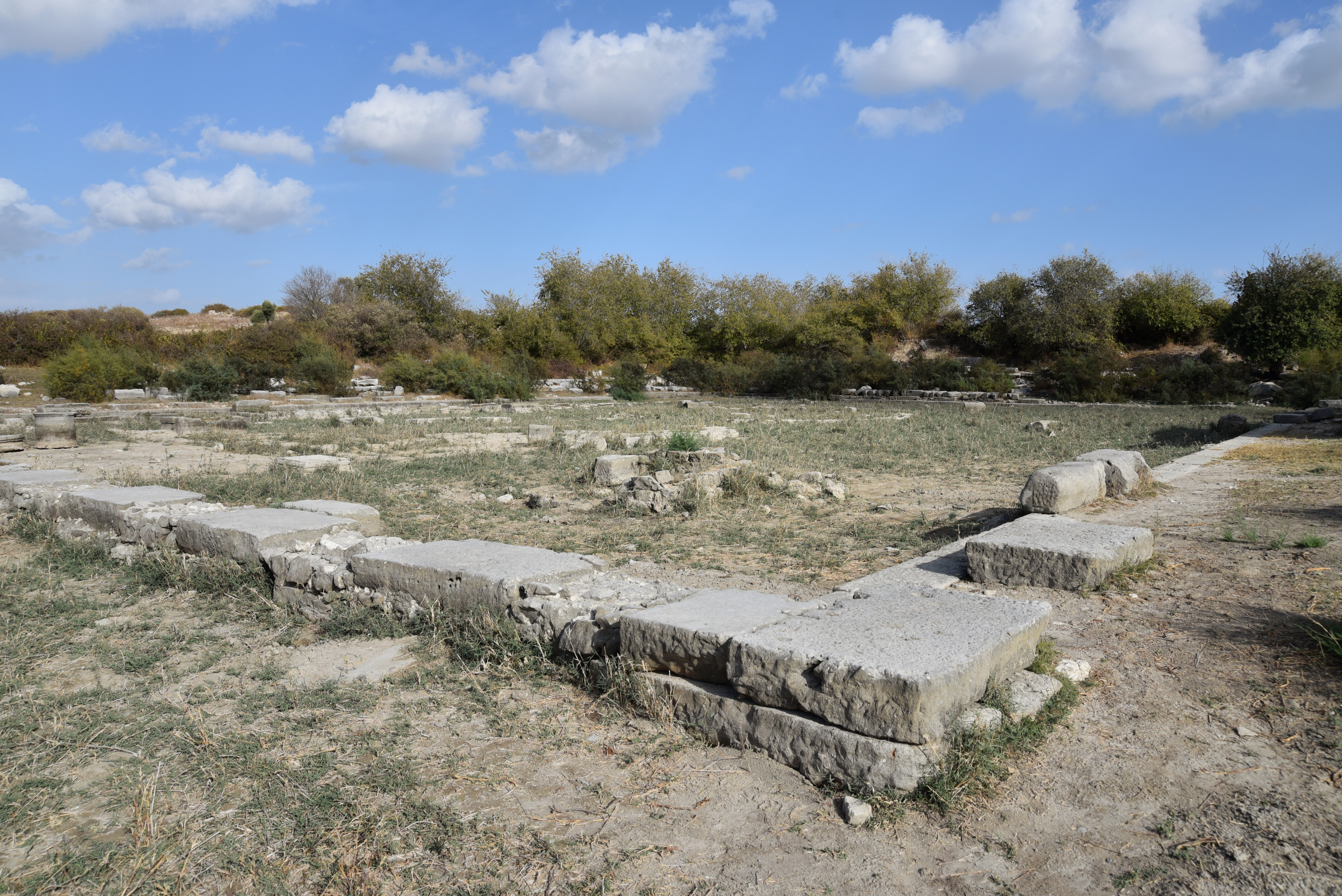
The Stoa of the Lion Harbour. A long L-shaped Doric stoa (32 m), was built in the Hellenistic period on the waterfront of the Lion Harbour, accommodated shops and storehouses.
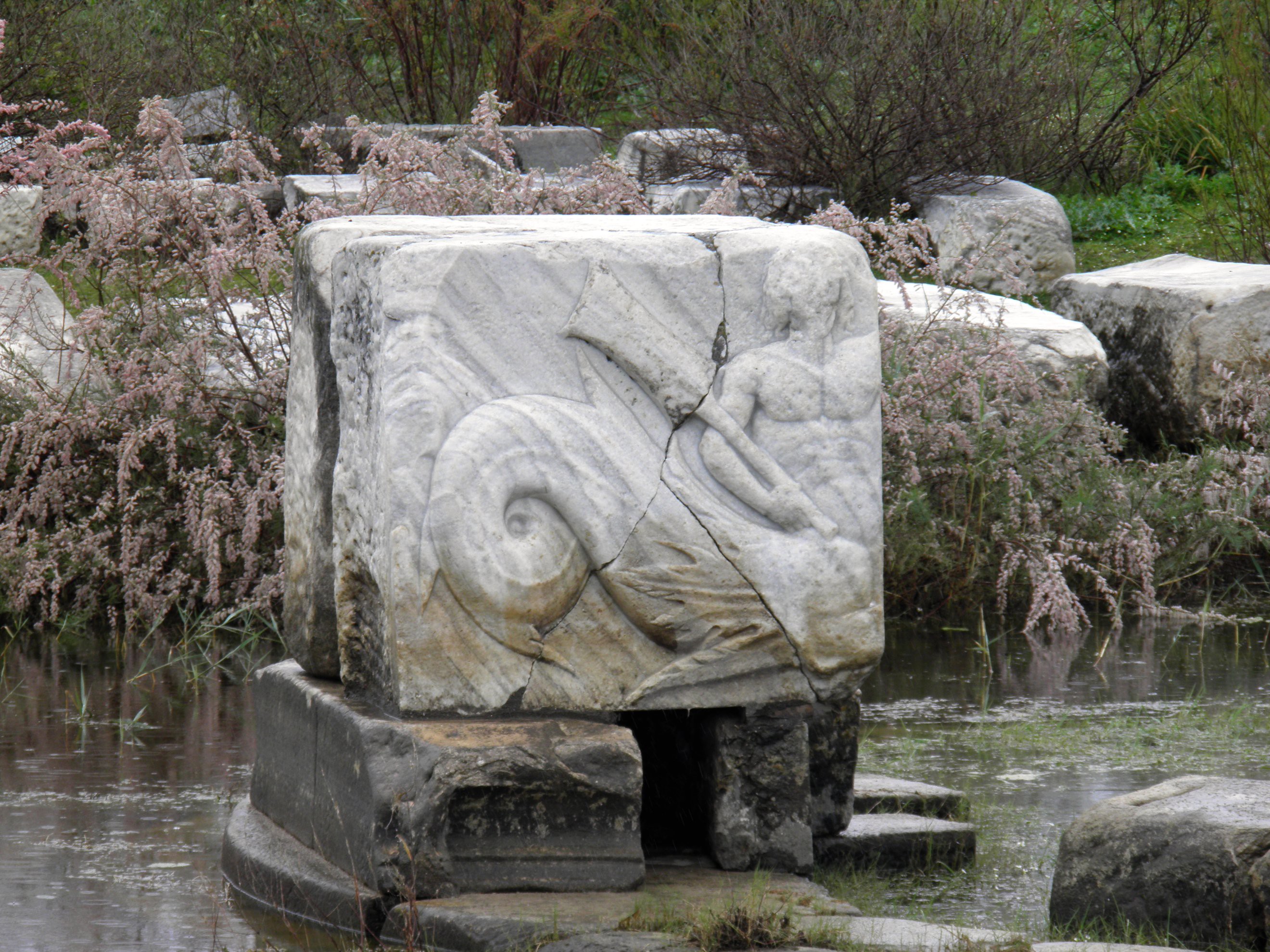
The Roman harbour monument with triton relief.
Paved street (dated to the time of Trajan) with Byzantine city walls.
The Faustina Baths, the largest baths of Miletus, were erected by Faustina the Younger (the wife of Marcus Aurelius).
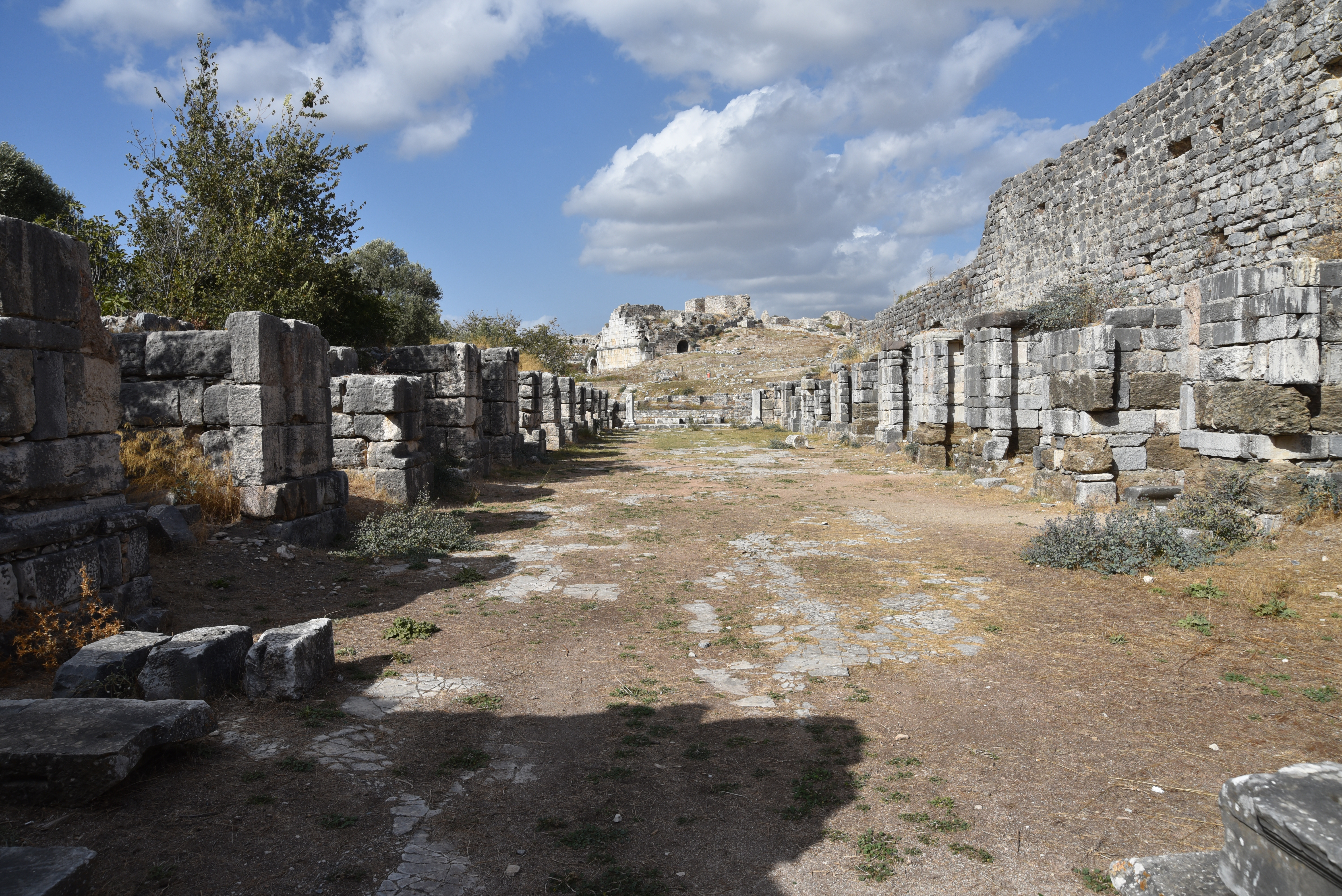
The Hall of the Muses and the Apodyterium (dressing room) of the Faustina Baths, a long hall leading off the palaestra. The statues of the Muses that occupied the niches of the apodyterium are now housed in the Istanbul Archaeological Museums.
The Apodyterium (dressing room) of the Faustina Baths.
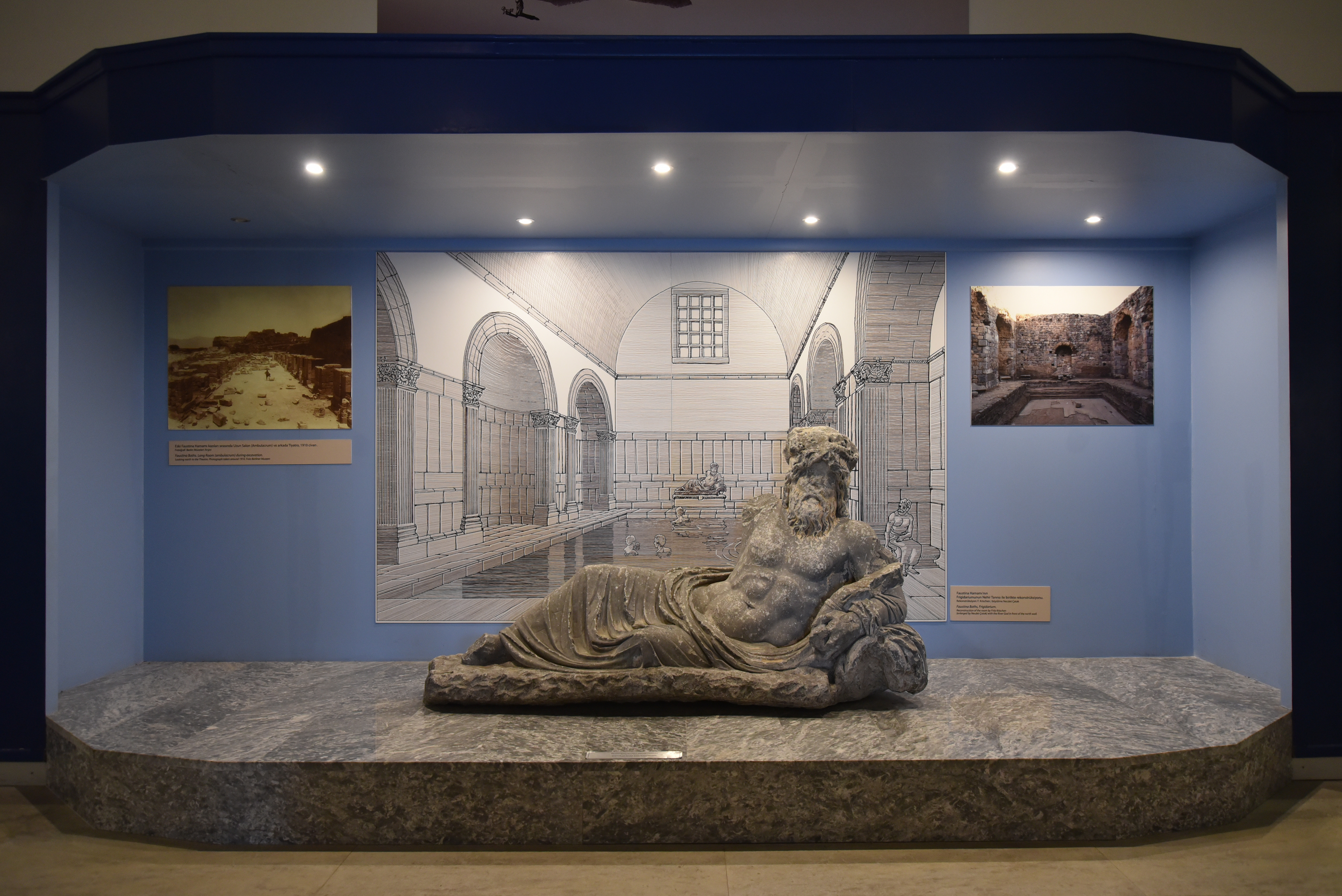
The Frigidarium (cold bath) of the Faustina Baths. Copies of the river god Maeander at the front side and the lion are placed in their original locations. The originals are in the Miletus Museum.
The statue of river god Maeander in the Miletus Museum.
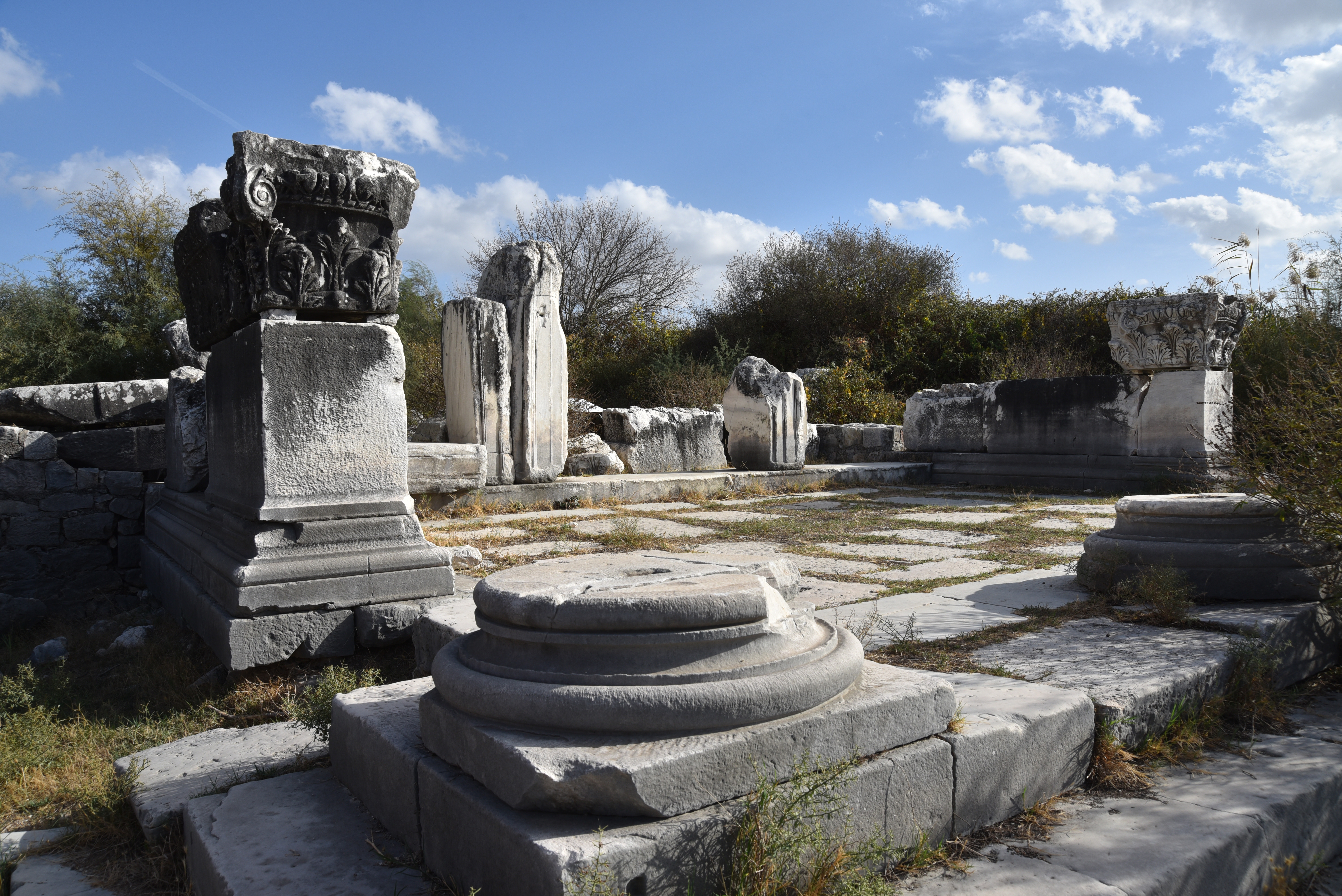
The Temple of Serapis (Serapeion), a temple dedicated to the Graeco-Egyptian God Serapis, with a nave flanked by two aisles and preceded by a four-columned propylon.
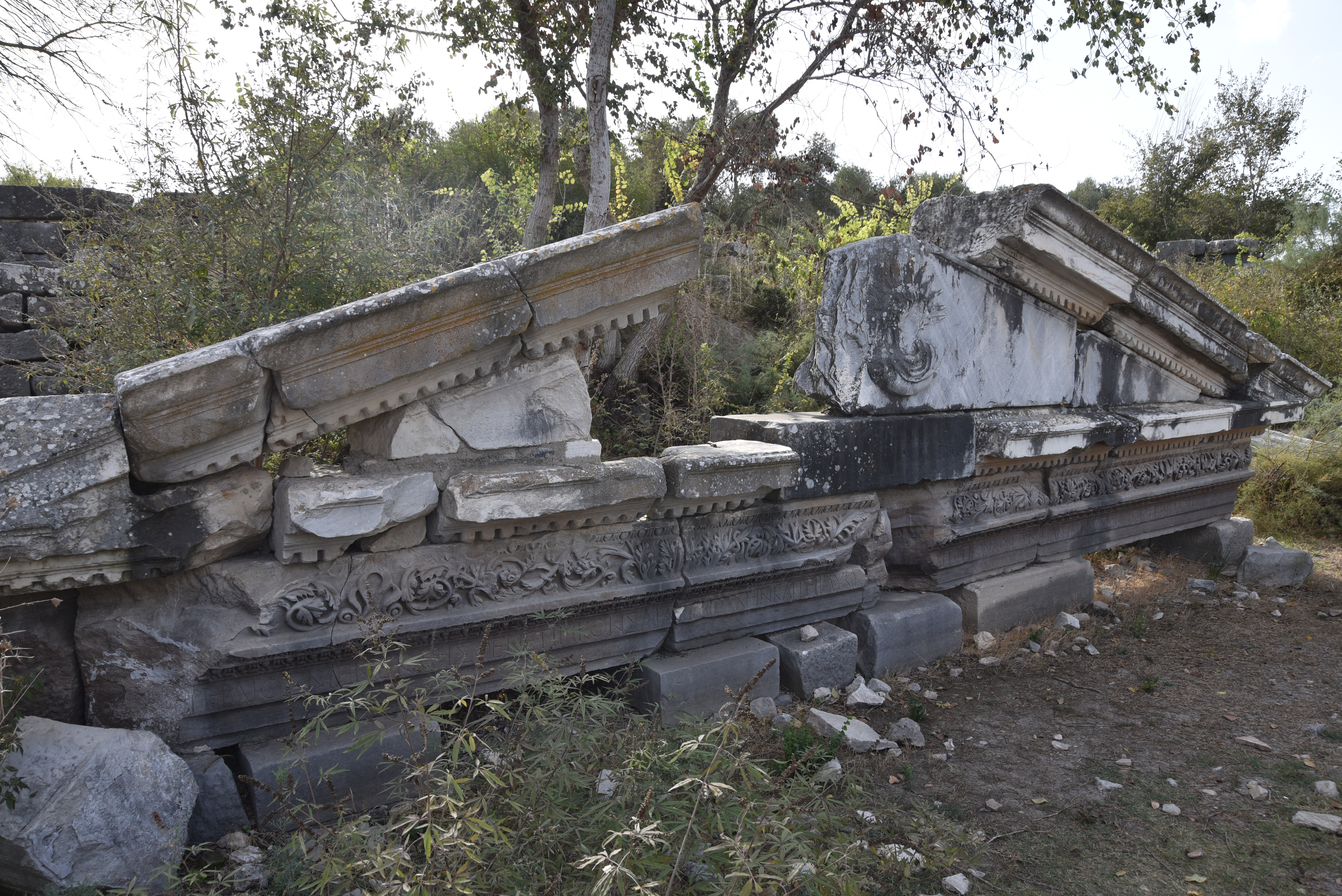
The pediment of the propylon of the Temple of Serapis (Serapeion) dates from the Severan period (early 3rd century AD). The pediment is decorated with a relief bust of Serapis with radiating beams of light.
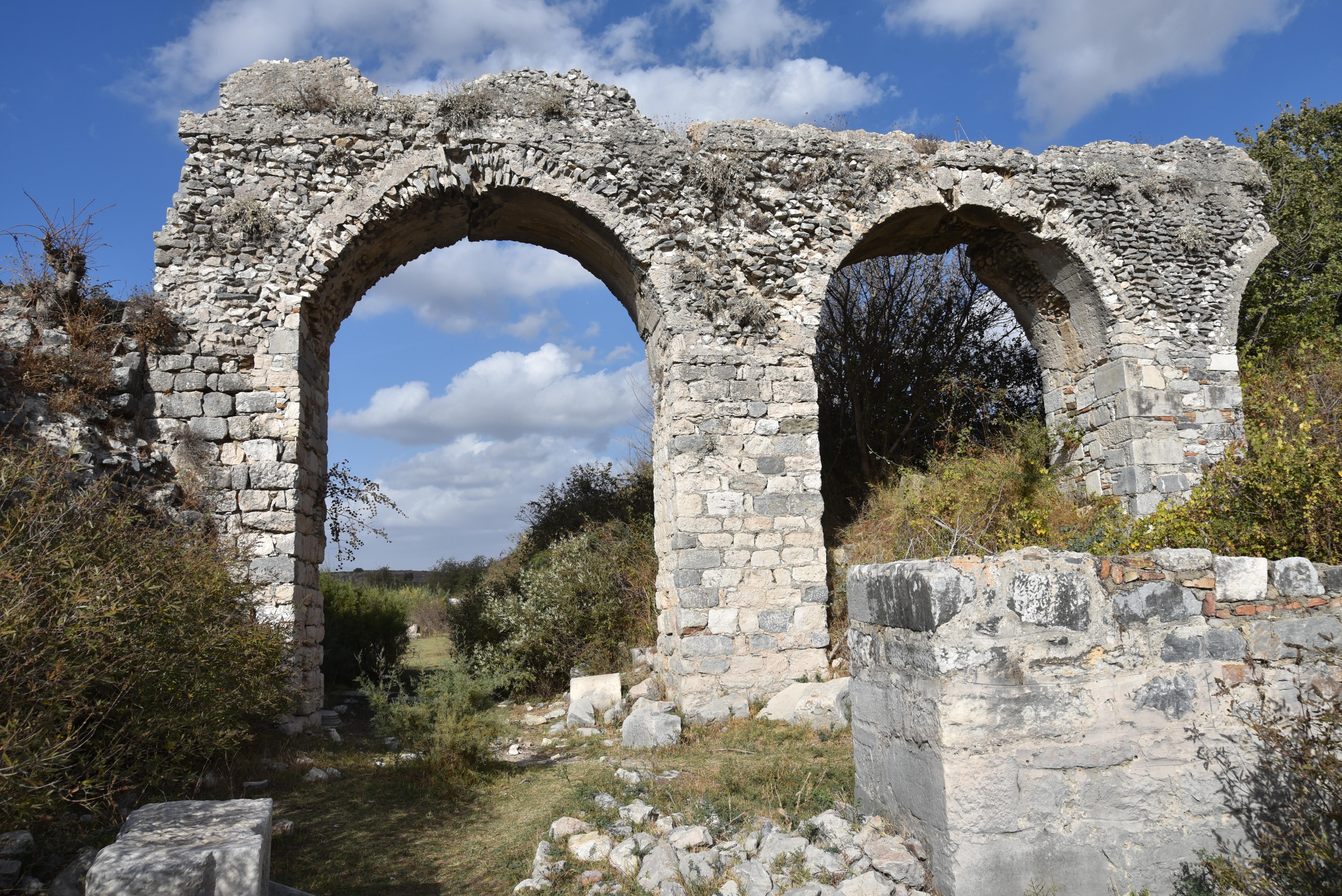
The Aqueduct.