Hattusa, the capital city of the Hittites in the late Bronze Age, is located in the Boğazkale District of the Çorum Province, 150 kilometres east of Ankara. It was the head of an empire that stretched across the broad lands of Anatolia and northern Syria, from the Aegean in the west to the Euphrates in the east. The ruins of the city walls, the gates, the temples and the palaces awaiting the visitors today provide a comprehensive picture of the Hittite capital in the 13th century BC.
The earliest traces of settlement on the site are from the 6th millennium BC. During the 19th and 18th centuries BC, the Hattians and the Assyrian Trade Colonies settled in the area. Hattusa, named Huttush at the time, was one of the Karu (trading posts) established by the merchant colonies of Assyria. Hattush came to an end around 1720 BC when Anitta, King of Kussara (of the dynasty that would form the Old Hittite Kingdom), sacked the city. A generation later, another king of Kussara decided to make the city his capital. A new town was planned and built on the ruins of the old one, and the Hittite language was introduced to the region. Hattush became the Hittite city of Hattusa, and the King took the name of Hattusili I, the “one from Hattusa”. Over the next few hundred years, Hattusa remained the capital of the Hittite empire.
At its peak, the population of Hattusa reached an estimated 40,000-50,000 inhabitants. The city was large, covering 1.8 km² with massive defensive walls over 6km long and huge watchtowers and secret tunnels.
The site was discovered on July 28 1834 by Charles Texier, but the first systematic excavations in Hattusa began in 1893-1894 under the guidance of Ernest Chantre, who published the first cuneiform tablets from Hattusa. Since 1907, the German Archaeological Institute has carried out archaeological work. The city consisted of two separate districts: the Lower City, the district of the Old City of the Hittites, where the main Temple was located, and the Upper City, a newer part of the city with a fortified palace complex surrounded by massive walls. The site also boasts a number of hieroglyphic inscriptions bearing traces of the so-called “Luwian” script.
The city was destroyed, together with the Hittite state itself, around 1200 BC as part of the collapse of the Late Bronze Age kingdoms. Excavations at the site determined that Hattusa was invaded and burned early in the 12th century BC after many of Hattusa’s residents had abandoned the city. The site was subsequently abandoned until 800 BC, when a modest Phrygian settlement appeared in the area. Today, the whole tour of the ancient city can be completed following the concrete path of 3-4 kilometres on foot or by car.
PORTFOLIO
The Lower City
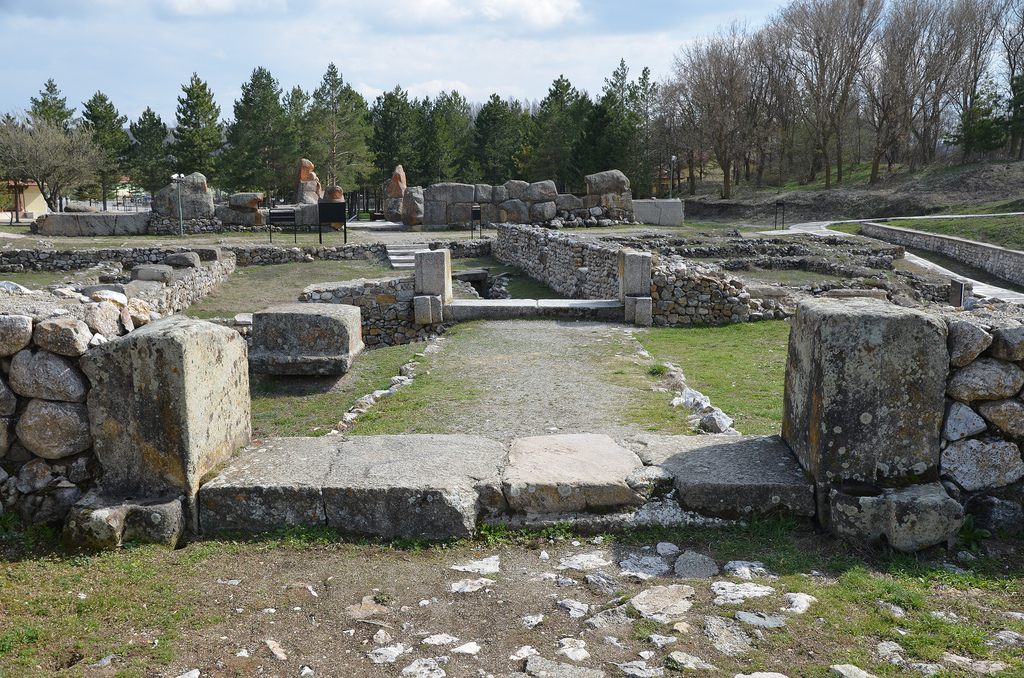
Modern reconstruction of a 65m long section of the city wall made of mud brick with defence towers built at 20-25 metres intervals. The reconstructed part rests on top of the original Hittite foundations. The inner city wall shielded the area of the Great Temple and adjacent settlements.Terracotta tower-shaped vessel fragment used as a cult vessel. Tower-shaped vessels were used as the model for the reconstruction of the Hittite city walls. Museum of Anatolian Civilizations, AnkaraResidential quarters from the Assyrian Trade Colonies (19-18th centuries BC) included ruins of houses and offices of Assyrian merchants.The gateway to the Temple complex. The complex consists of a massive precinct of some 14,000 square meters, with the Temple itself measuring 42×65 metres. The Temple may have been built by or on the order of the Great King Hattusili III, who ruled during the mid-13th century BC.The paved Street of the Temple surrounding the central temple building.The Great Temple’s main entrance was provided through a massive gate with three doors, sills, and small cubicles left and right. The Temple was built for the Hattian God of the Sky and the Sun Goddess Arinna. It was the largest Temple in the city.Reconstruction of the three main parts of the Great Temple complex: red: The Temple proper yellow: the storage rooms green: the southern district with the “House of Operations”The area of the Great Temple has storerooms surrounding the Temple proper.Storerooms along the northwest side of the Great Temple, some two-storey high. They housed equipment and offerings of cult practices, foodstuffs and archives of clay tablets inscribed in cuneiform. Massive clay vessels up to 2,000 litres in volume stored wine, oil and grain.Large monolithic thresholds marking the position of doorways between the storage rooms.The green stone lying in one of the storerooms of the Temple complex. It is a block of green nephrite-type stone common in the region’s geology. It may have played a role in some religious cults.The Lion Basin, originally 5.5m long, once featured crouching lions at all four corners. It probably had a role in cult rituals.
The Upper City
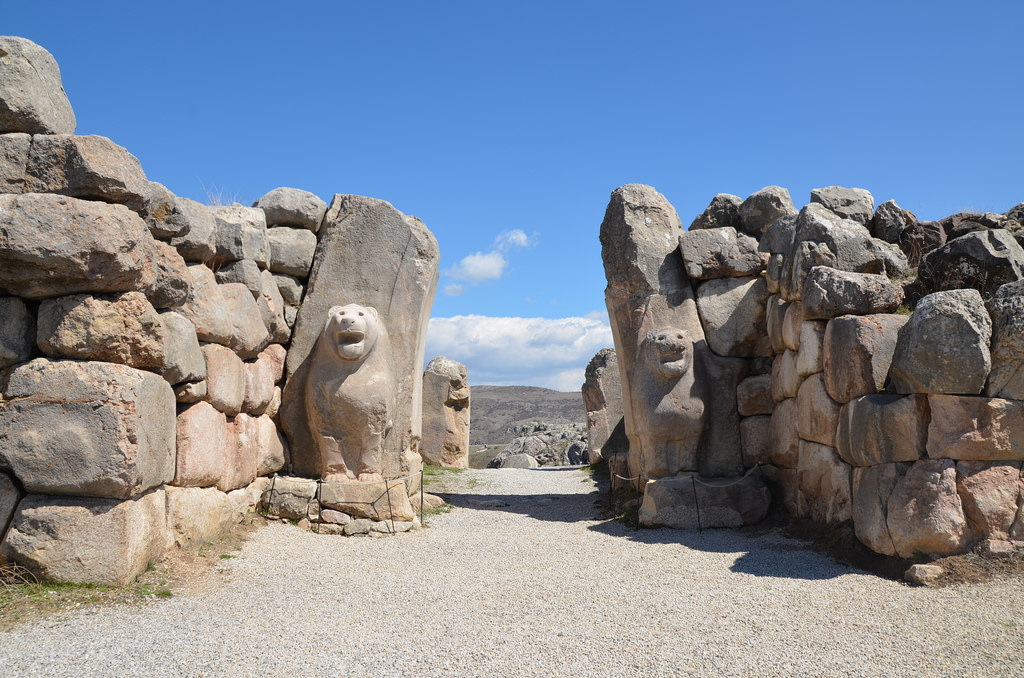
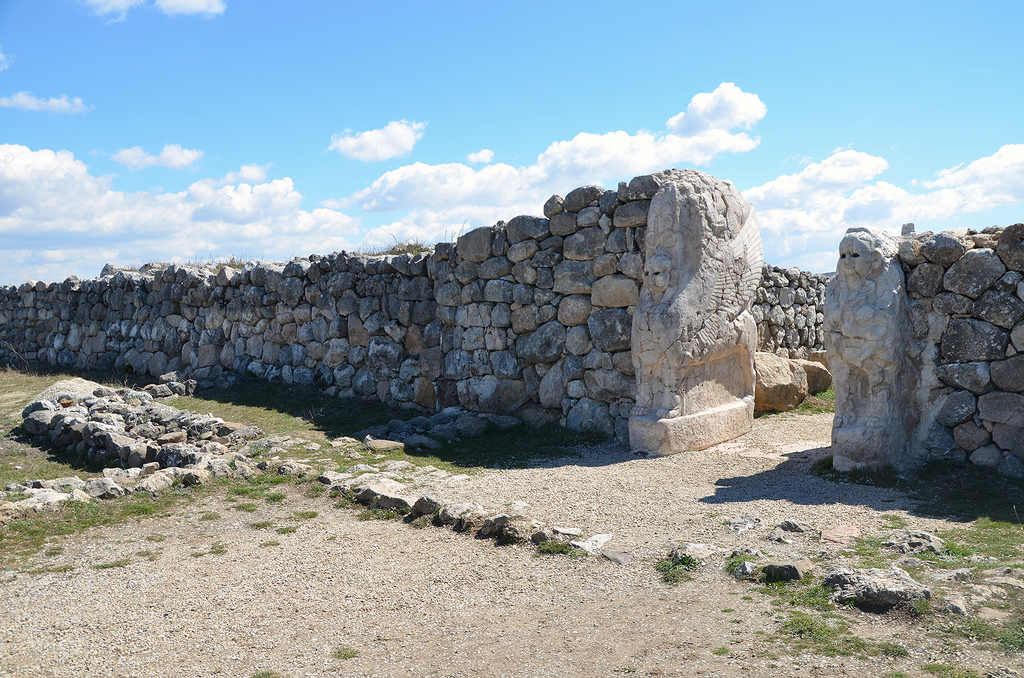
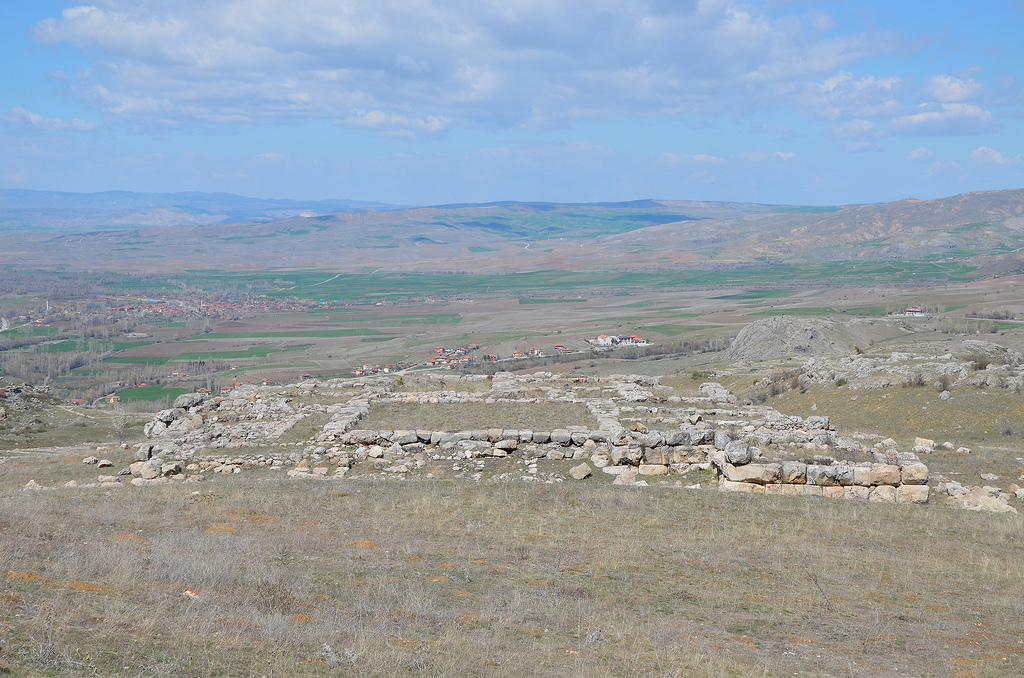
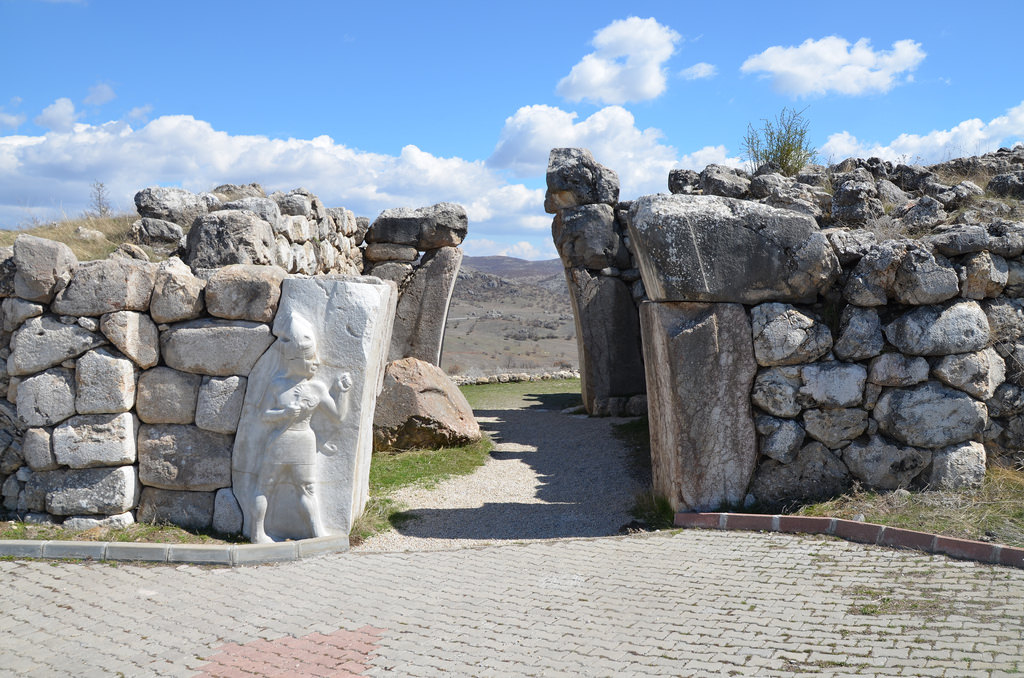
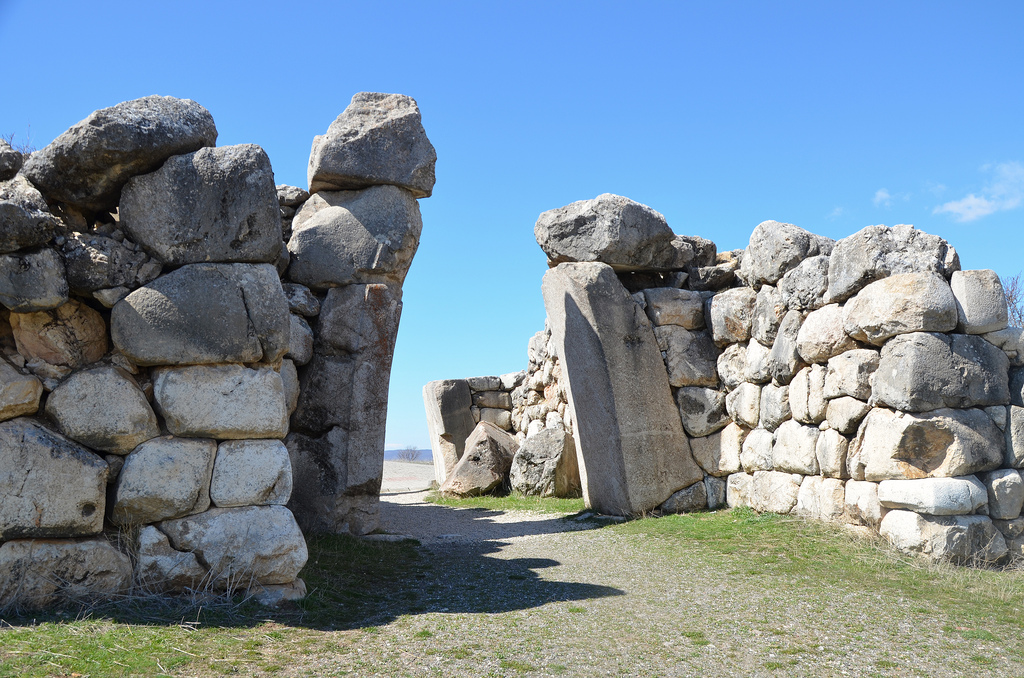
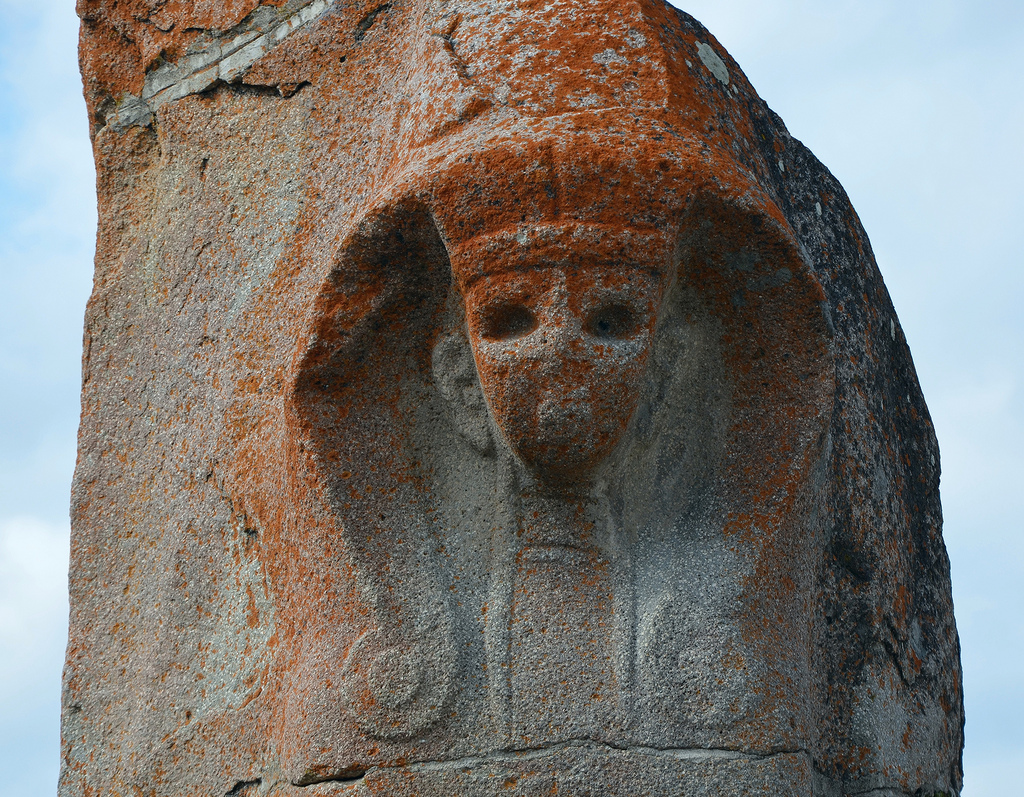
The asphalt road leading to the Upper City of Hattusa.The Lion Gate is one of the two grand entrances of the Upper City. It was flanked by two rectangular towers and had an inner and an outer doorway, both parabola-shaped and once furnished with pairs of wooden doors.Detail of the sculpted lion to the right of the gate showing the mastery of the carving. Lions were popular figures of protection and ornament at doorways throughout the Near East. Lions were put at the entrance of the city to ward off evil.The Lion Gate was built in polygonal masonry employing massive limestone blocks.The Yerkapi Rampart was an artificial rampart 80 metres wide,15 metres high, and 250 metres long, paved with limestone blocks.The entrance to the 70 m long tunnel running under the Yerkapi Rampart. It connected the city to the land outside.Inside the 70 m long tunnel running under the Yerkapi Rampart.The Sphinx Gate standing above the Yerkapi Rampart. Unlike the Lion Gate, the Sphinx Gate was not flanked by towers but led through a tower. All four door jambs bore representations of Sphinxes. Only one original sphinx remains in place, while two others are kept in the local museum.The Sphinx Gate showing the only original sphinx remaining in position. The Hittite must have adopted the sphinx from Egypt, where the sphinx represented the King.The Temple District in the Upper City. 24 different sacred buildings have been identified, varying greatly in dimensions.The ruins of one of the biggest temples of the Temple District.The King’s Gate is situated southeast of the city fortifications with a sculpture of the God of War in high relief measuring 2.25m. The original relief can be seen today in the Museum of Ancient Civilizations in Ankara.The exterior of the King’s Gate.The Hieroglyph Chamber perhaps representing a symbolic entrance to the Underworld. The chamber was adorned with reliefs depicting the Sun God and Suppiluliuma II, the last of the famous Great Kings of Hattusa.The six-line Luwian hieroglyph inscription was commissioned by the Great King Suppiluliuma II on the right-hand wall of the chamber. The text describes the invasions and successes of King Suppiluliuma II, mentioning that with the help of the gods, the King invaded several lands, including that of Tarhuntassa.The 8.5m long inscription in Luwian hieroglyphs on the side of the cliff has become badly weathered, and the content of the text has only been partly deciphered.The ruins of the Royal Castle, the residence of the Kings.Reconstruction of the palace complex.The ruins of the Royal Castle.The gate in the Postern Wall at the southwest of the Royal Castle.
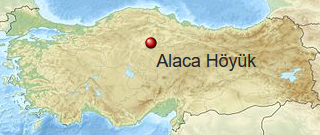
Alacahöyük is the site of an important Neolithic and Hittite settlement in central Turkey in the Çorum province, northeast of the ancient Hittite capital city of Hattusa. The mound (Turkish höyük) at Alacahöyük was inhabited since the Chalcolithic Period (4500 BC) and became the centre of the flourishing Hattianculture during the Bronze Age. It was later occupied by the Hittites, who used the city as their first capital before moving over to Hattusa.
Alacahöyük was discovered in 1835 by the English voyager W.G. Hamilton. The first excavations started in 1861 by French archaeologist George Perrot, but more extensive work was initiated by the Turkish Historical Association in 1935 and continued until 1948. Since 1997, the excavations have been carried out by Ankara University under the direction of Prof. Dr Aykut Çınaroğlu.
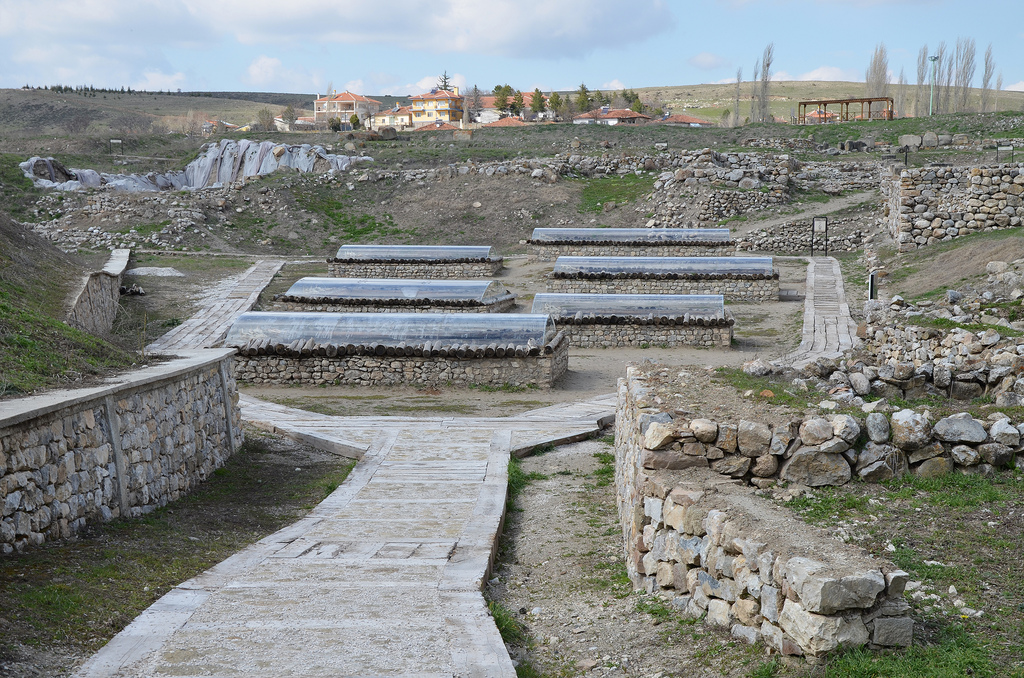
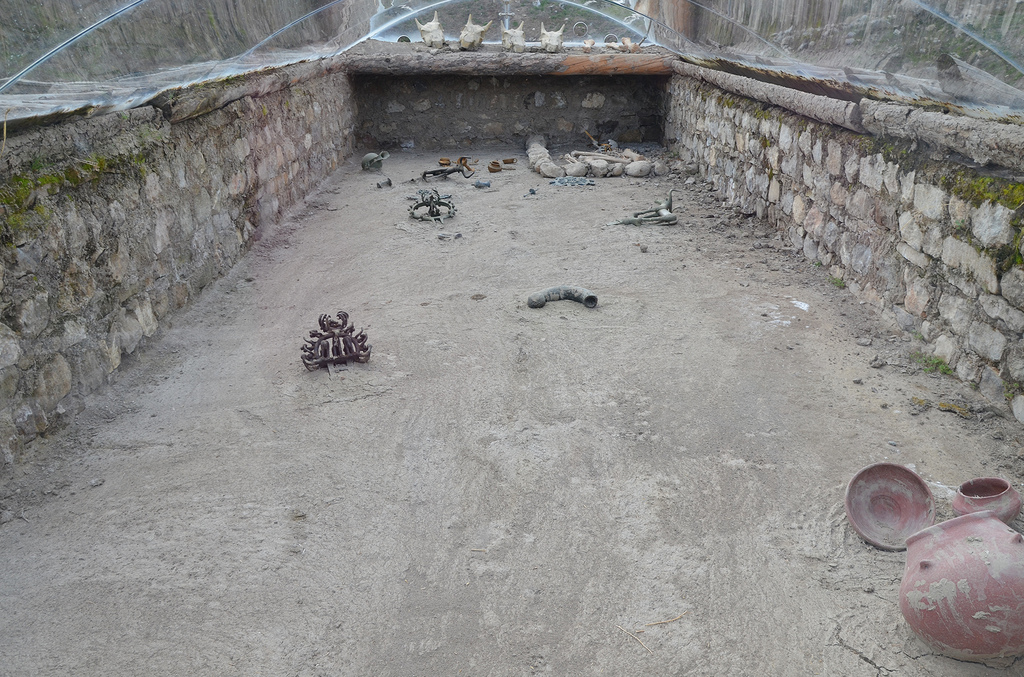
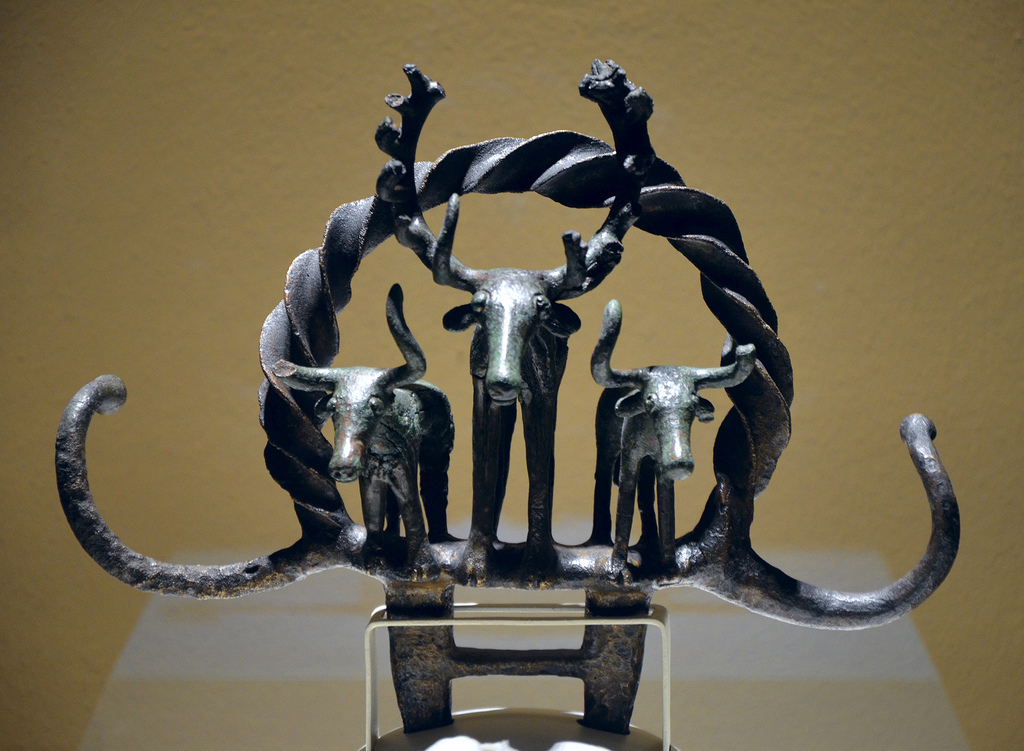
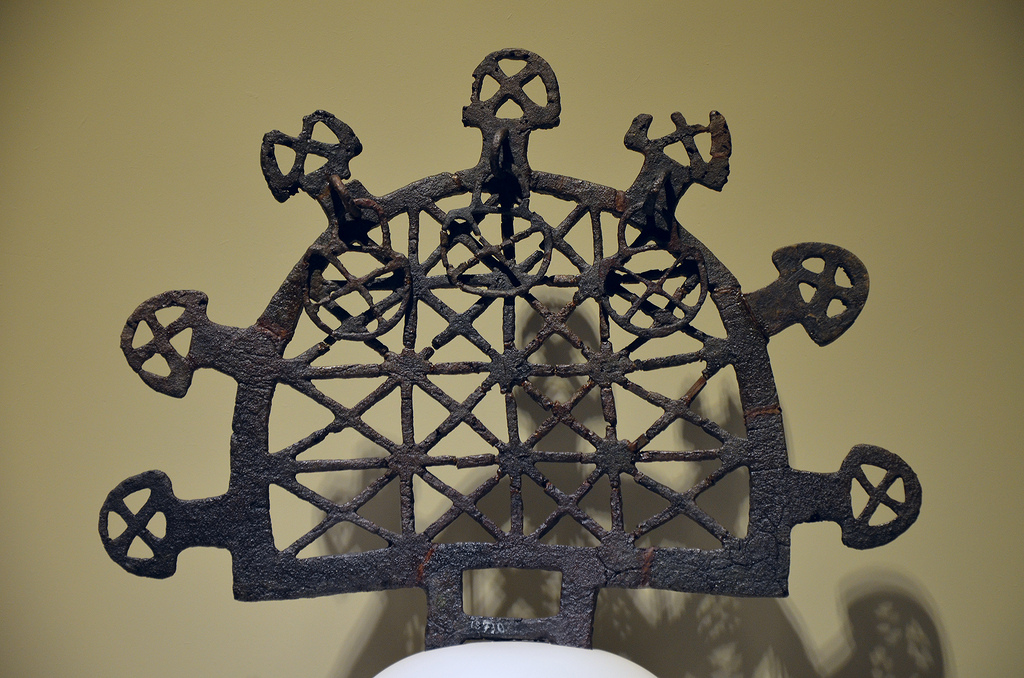
The excavations revealed fifteen layers of a settlement buried under the soil dating back to 5500 BC to 600 BC. The wealthiest and most important layer belongs to the Early Bronze Age. Many treasures have been excavated from the thirteen Hattian royal tombs dating to the 3rd millennium BC. Among these artefacts were bronze sculptures of bulls or deer, ceremonial symbols and sun disks. These artefacts are housed today in the Museum of Anatolian Civilizations in Ankara.
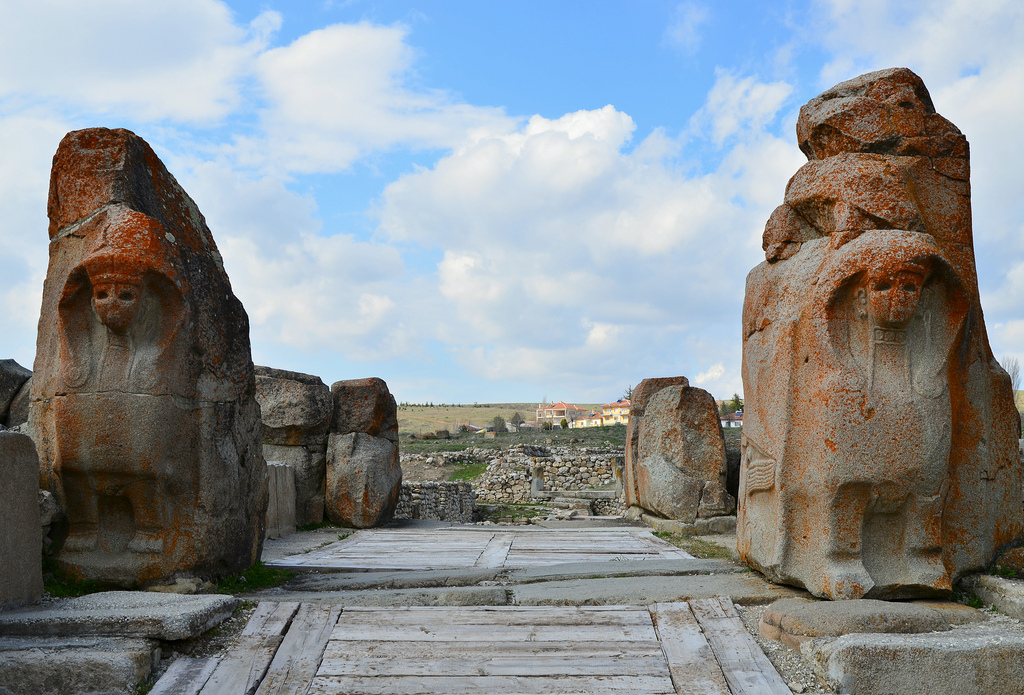
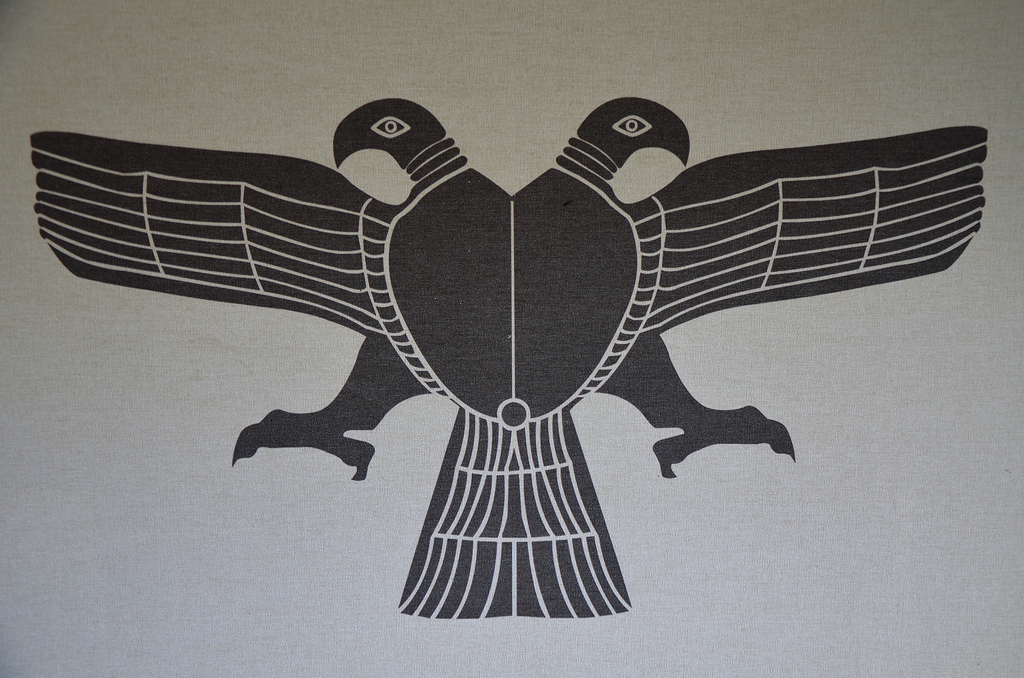
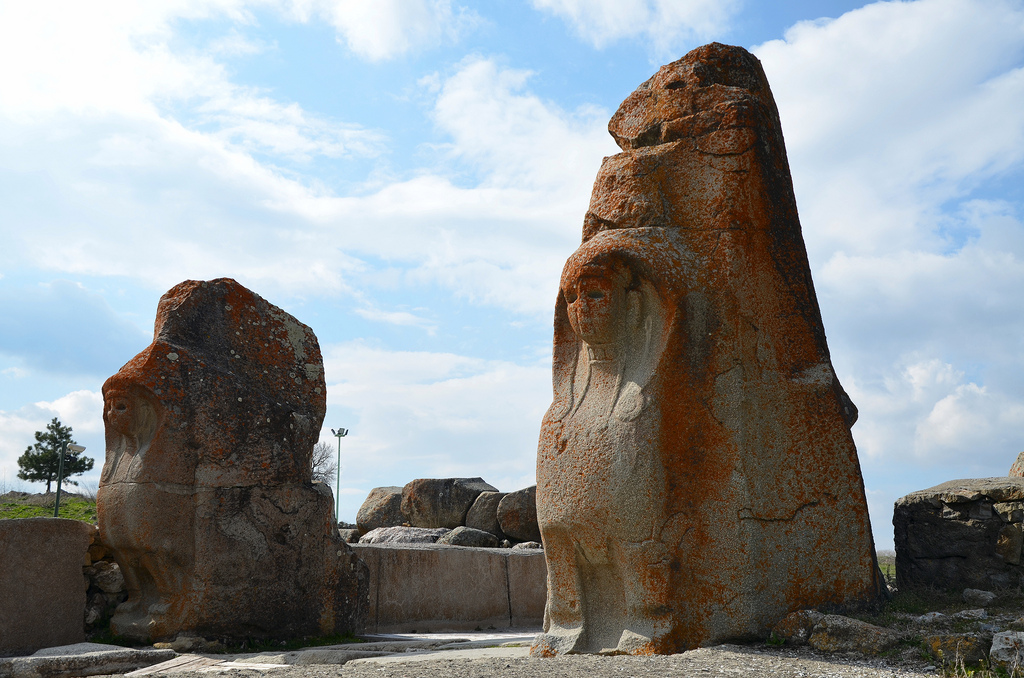
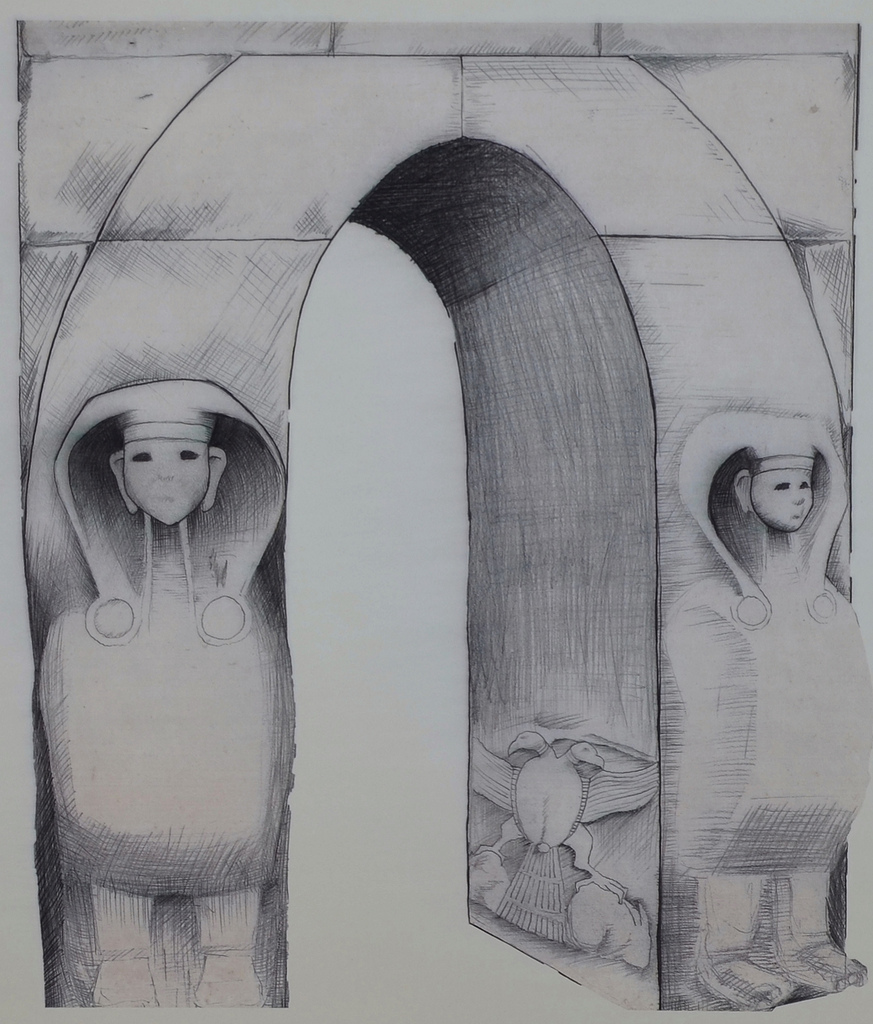
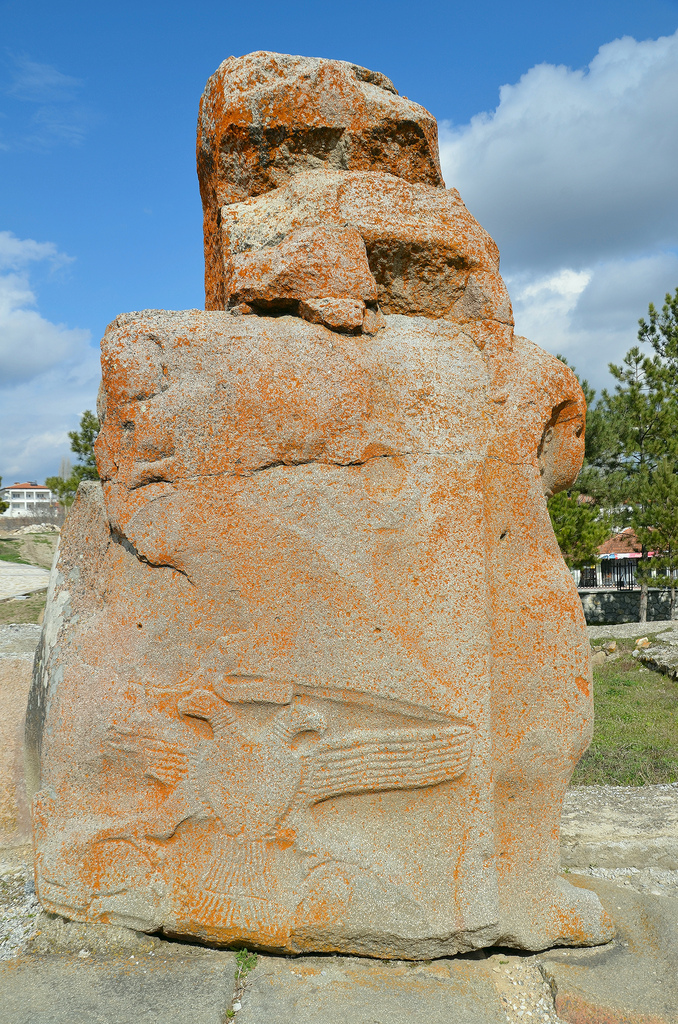
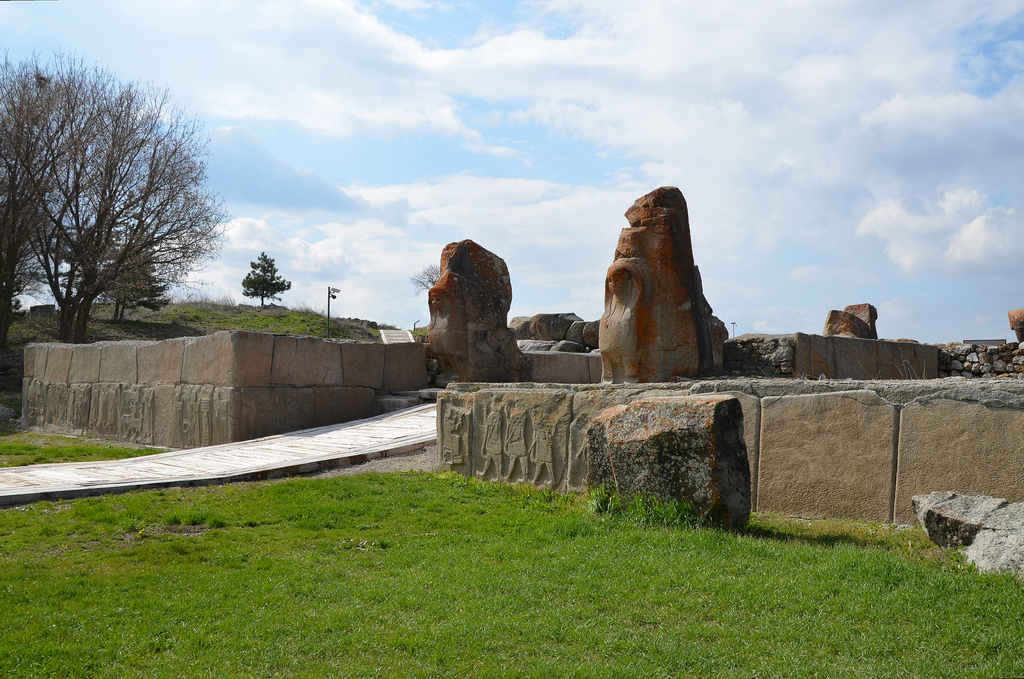
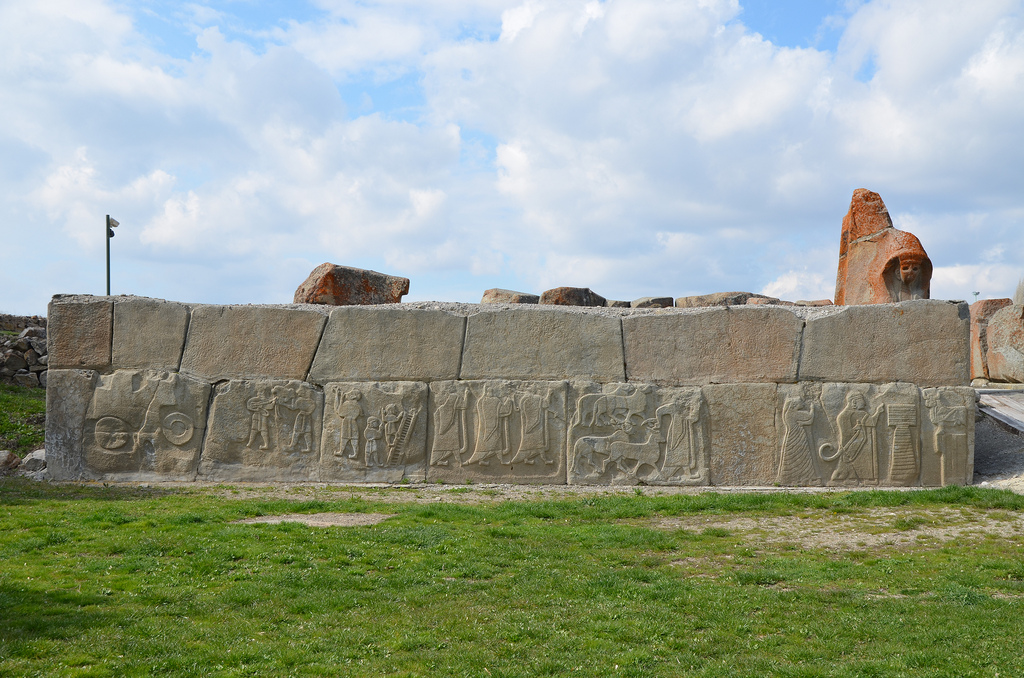
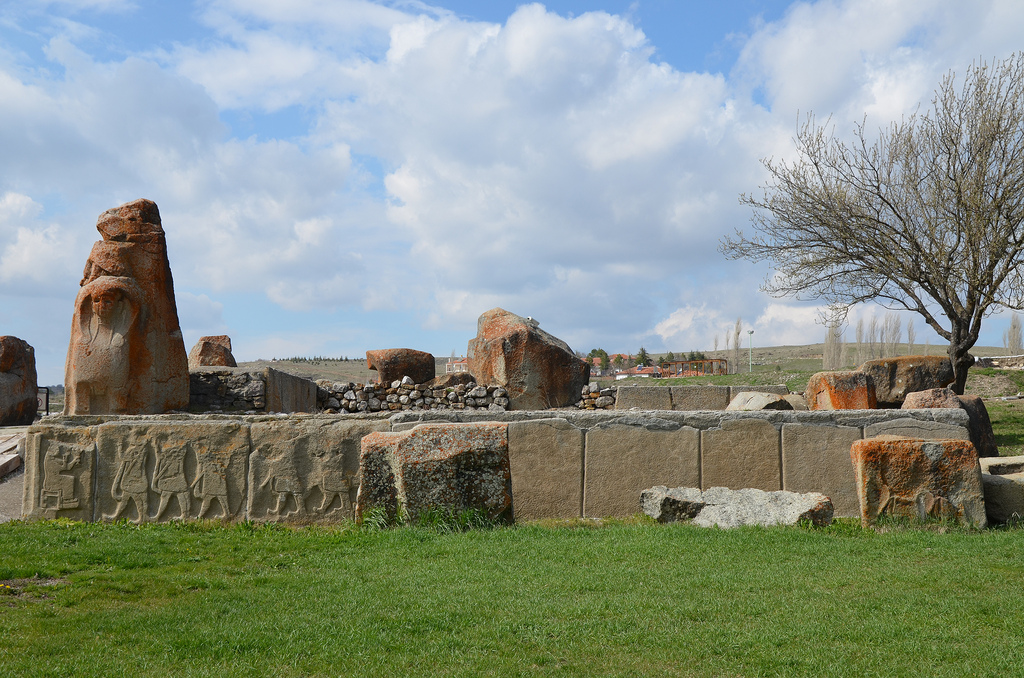
However, most of the standing remains at Alacahöyük, such as the “Sphinx Gate”, date from the Hittite period that followed the Hattians (1460-1200 BC). At that time, the city was surrounded by a mud brick wall with a stone base. The “Sphinx Gate”, fortified with towers, was the city’s main gate. It was flanked by two sphinx protomes with a relief in its inner parts depicting a double-eagle holding rabbits in its claws. These sphinxes were the protectors of the city.
The lower parts of the towers were decorated with orthostat reliefs depicting a religious ceremony, including a king and a queen praying to a bull before an altar, a lion hunt, sacrificed animals, jugglers, and acrobats. These depictions represented an entire ritual set of cult, libation, hunting and entertainment, including a religious ceremony in honour of the Storm God. The original reliefs are displayed in the Museum of Anatolian Civilizations in Ankara.
Model of Alacahöyük.
A dam dated to 1,240 BC has also survived 1.5 kilometres to the southeast of Alacahöyük. It was one of the numerous dams built against droughts on the order of King Tudhaliya IV in the name of the goddess Hebat. The dam holds about 15,000 cubic meters of water and is Anatolia’s oldest and largest dam. The Alacahöyük dam is still being used today to irrigate fields in the region.
PORTFOLIO
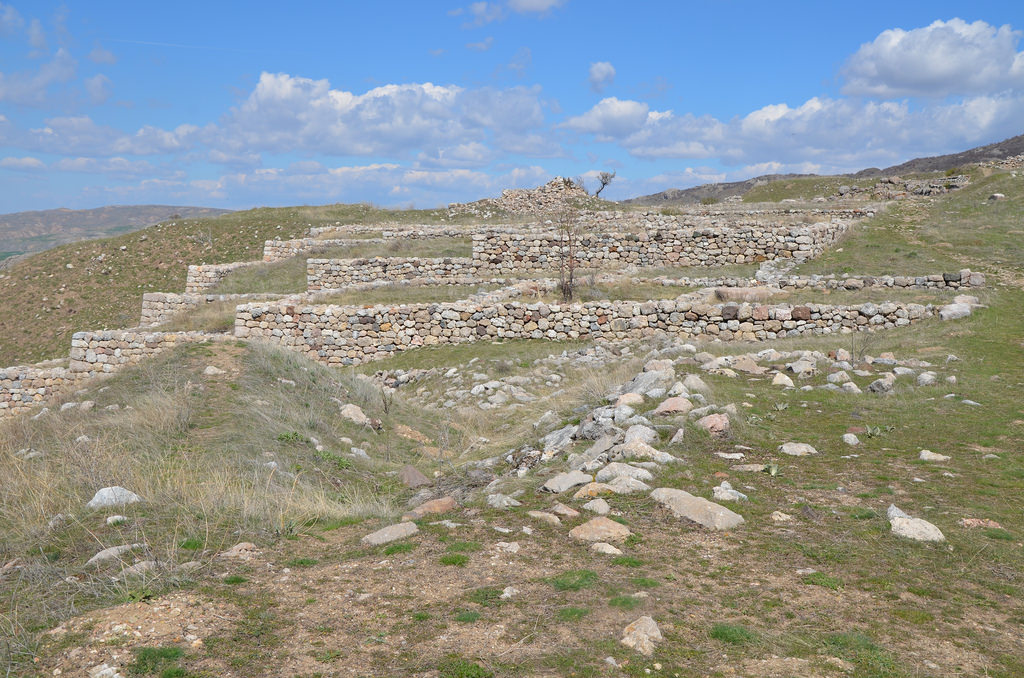
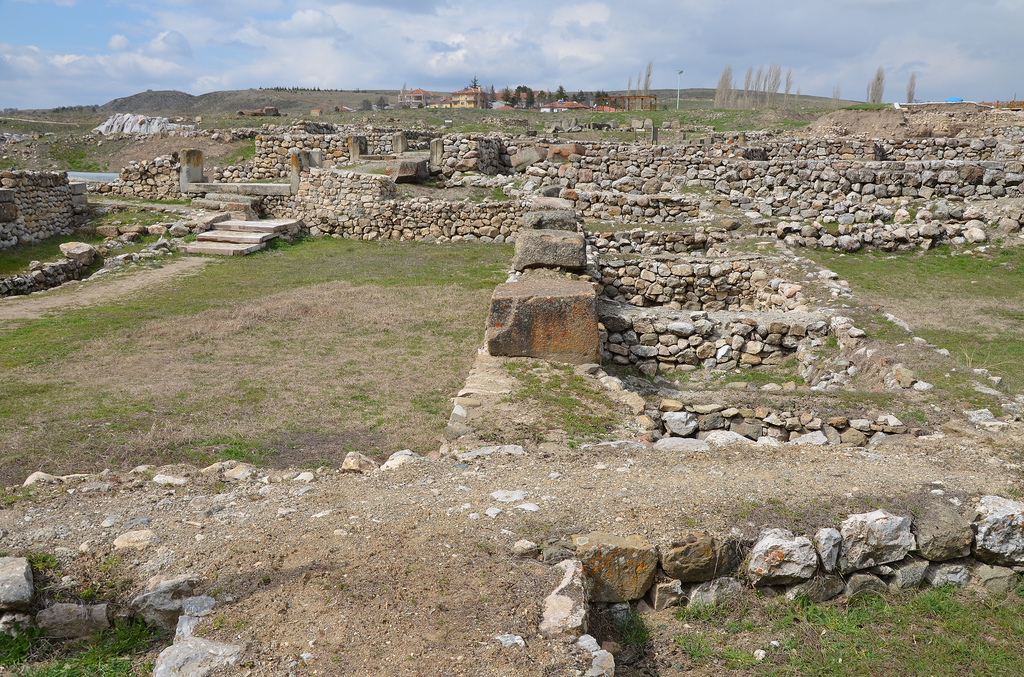
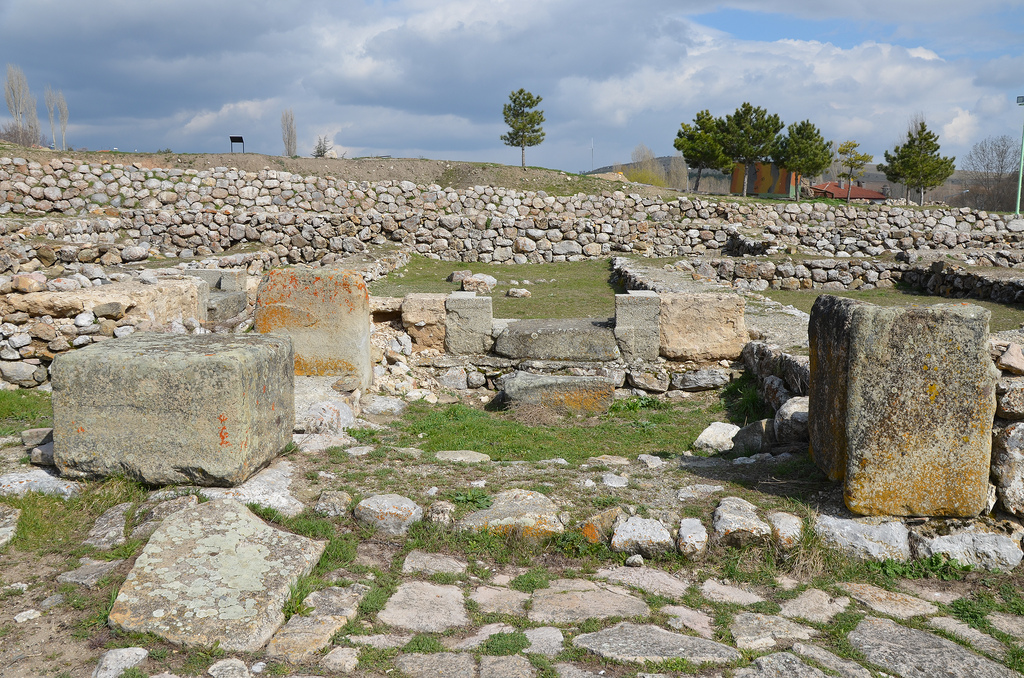
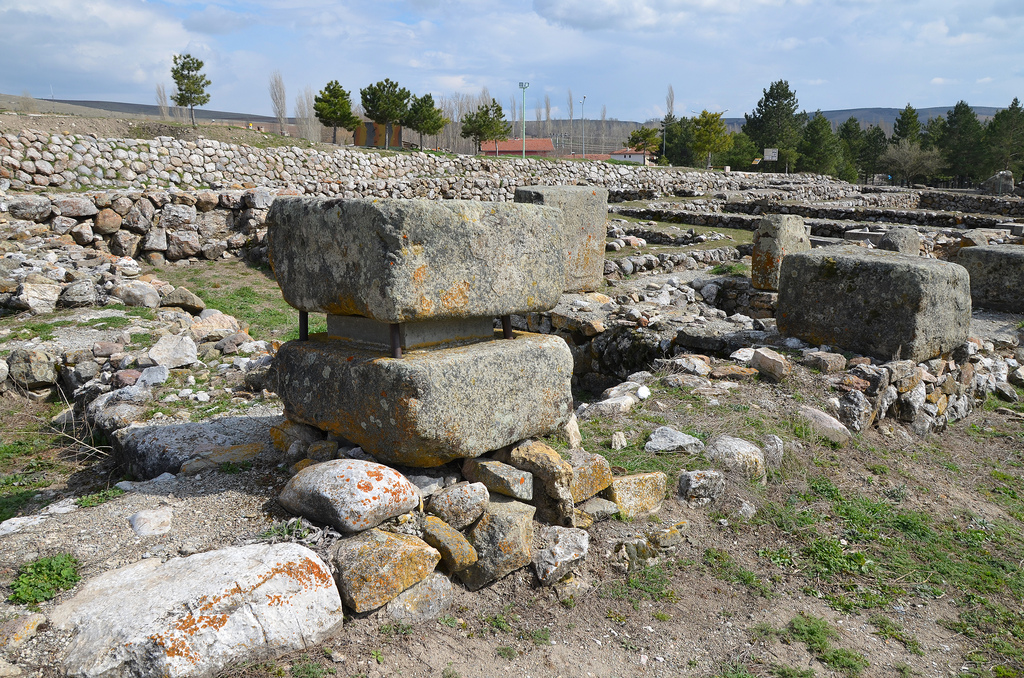
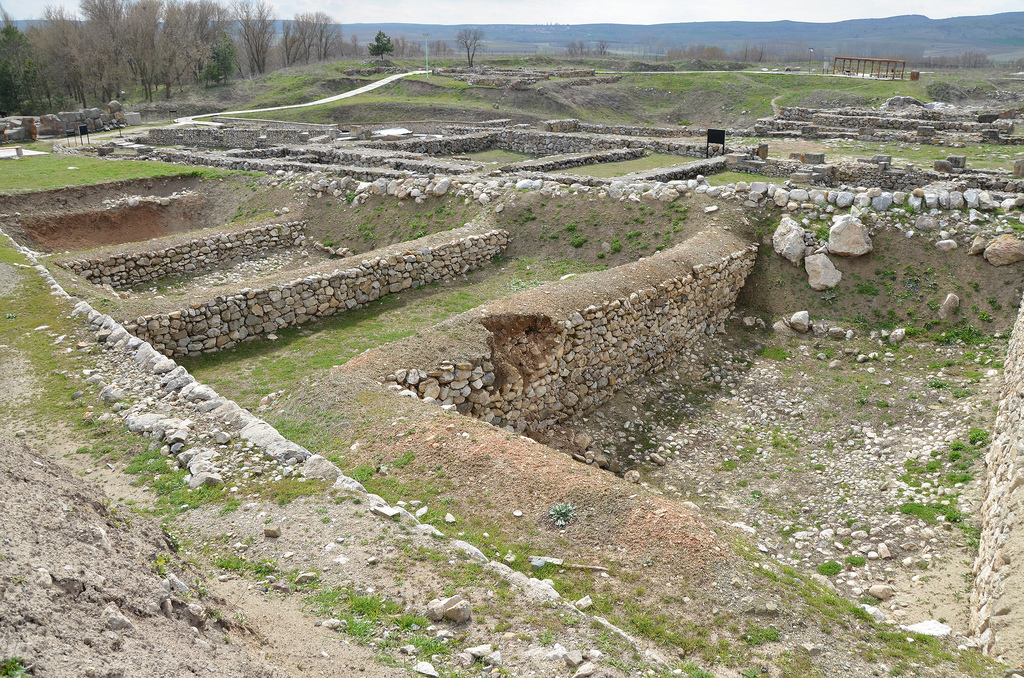
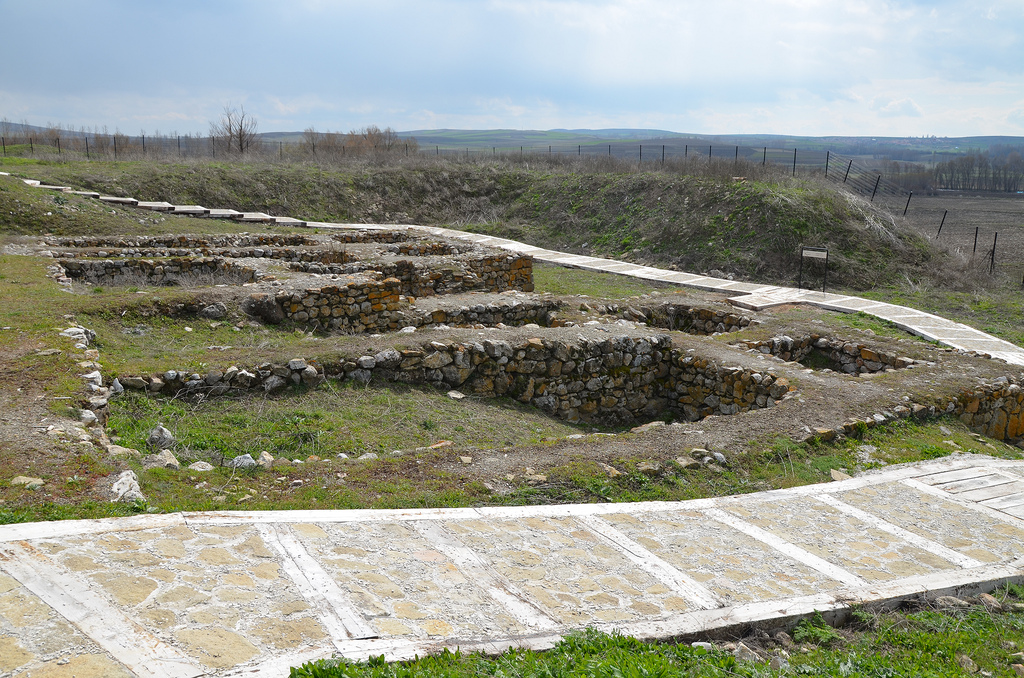
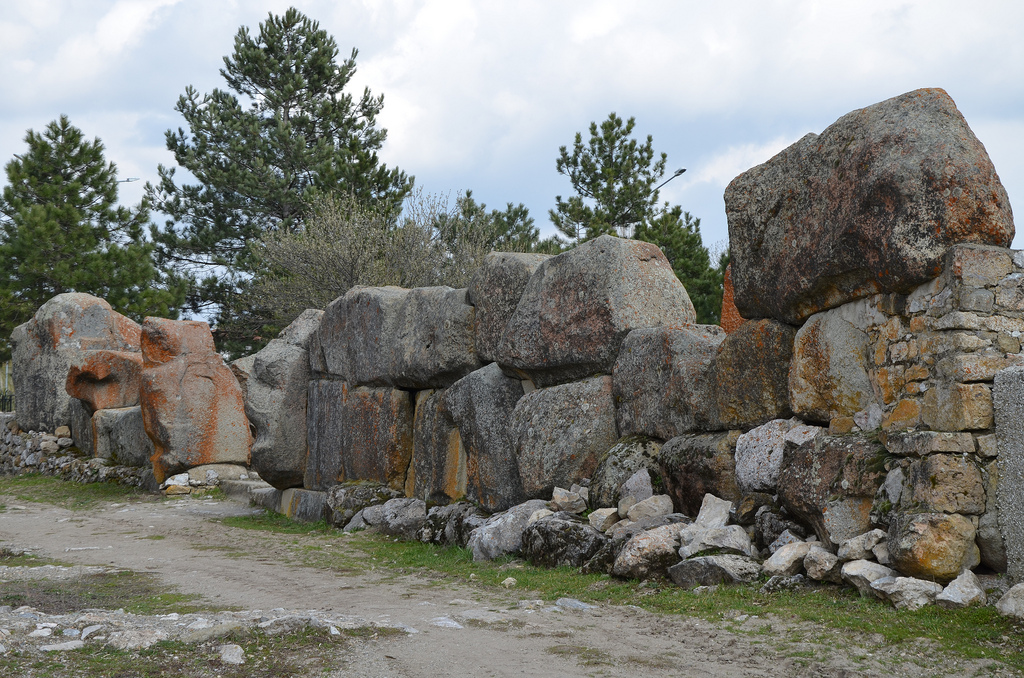
Overview of Alacahöyük.The Sphinx Gate, built in the 14th century BC, has a 10m width. The exterior faces of the large post blocks flanking the gate entrance were adorned with two-metre-tall sphinx protomes.Reconstruction drawing of the Sphinx Gate of Alacahöyük.The inner face of the eastern sphinx protome is decorated with a double-headed eagle holding rabbits in its claws engraved as a low relief. Over the eagle, the legs of a goddess walking towards the city can be seen.The internal and external facades of the towers in front of the Sphinx Gate were ornamented with relief-decorated orthostates. It is the only Hittite Imperial Period gate structure whose entrance is flanked by orthostat reliefs.The external facade of the western tower located in front of the Sphinx Gate is ornamented with relief-decorated orthostates depicting a religious ceremony in honour of the Storm God (original reliefs in the Museum of Anatolian Civilizations).The external facade of the eastern tower in front of the Sphinx Gate is ornamented with relief-decorated orthostates depicting a religious ceremony in honour of the Storm God (original reliefs in the Museum of Anatolian Civilizations).The Temple’s foundations are located north of the Sphinx Gate. It covered an area of 5000 square metres and consisted of galleries flanking a paved-stone courtyard, long narrow corridors, a large square hall, as well as rooms of various sizes.The area to the southwest of the Temple is characterised by massive buildings, private houses with front yards and block structures. Narrow but regularly planned streets and small squares delineated the structures.Subterranean silos are built to store great amounts of grains without contact with air. Wheat and barley were the most important grains produced in the Hittite lands.The Postern Gate consists of two towers, two doors and an entrance. The foundations of the gate structures were built of large blocks of calcareous rocks while their inner core was filled with soil.The postern gates were structures with vaulted tunnel-like passages constructed beneath the city walls.The Royal Tombs were built in the Early Bronze Age (2500-2000 BC). They had a major role in our understanding of the indigenous Hattian Civilization. Six out of thirteen intramural tombs have been reconstructed to their original appearance.The interior of one of the Royal Tombs. Grave goods consisted of jewellery made of gold and silver, weapons, metal and terracotta vessels, sun disks and bull & deer statuettes.Reconstruction drawing of a Hattian burial ceremony.Bronze sun disk encircled with bull and deer figures, the sacred animals of the Hattians.Bronze Sun Disk (ceremonial standard), the cult object found in pre-Hittite (Hatti) royal tombs.Cyclopean stone wall.Alacahöyük.The main drainage channel runs toward the Sphinx Gate. Water drained through a terracotta pipe into the drainage channel.A close-up of one of the sphinx protomes.


 The site was discovered on July 28 1834 by Charles Texier, but the first systematic excavations in Hattusa began in 1893-1894 under the guidance of Ernest Chantre, who published the first cuneiform tablets from Hattusa. Since 1907, the German Archaeological Institute has carried out archaeological work. The city consisted of two separate districts: the Lower City, the district of the Old City of the Hittites, where the main Temple was located, and the Upper City, a newer part of the city with a fortified palace complex surrounded by massive walls. The site also boasts a number of hieroglyphic inscriptions bearing traces of the so-called “Luwian” script.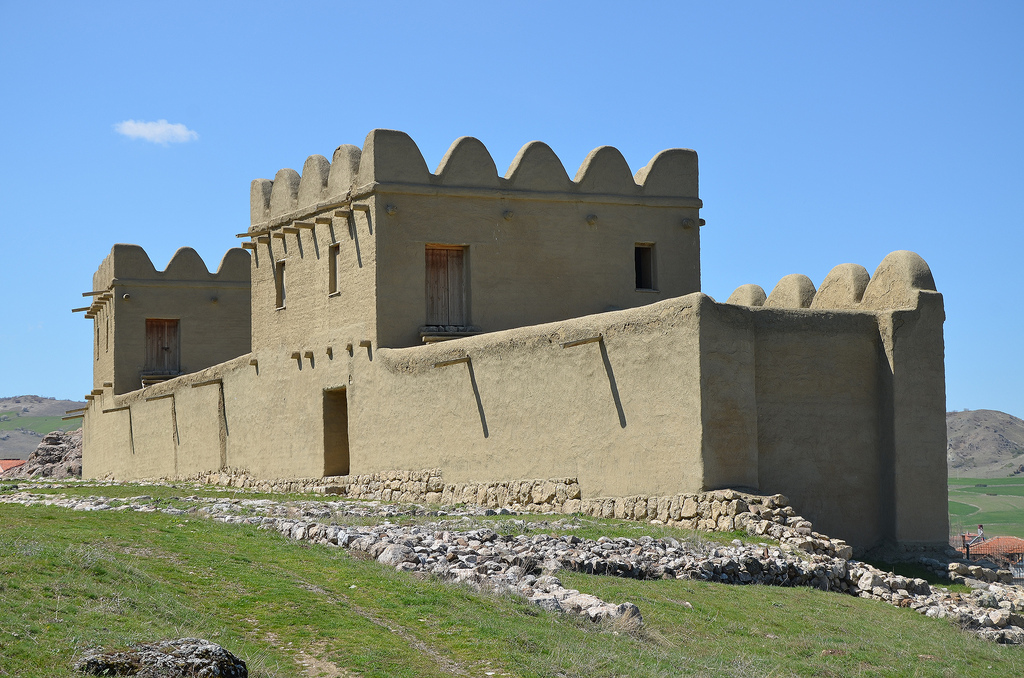










 However, most of the standing remains at Alacahöyük,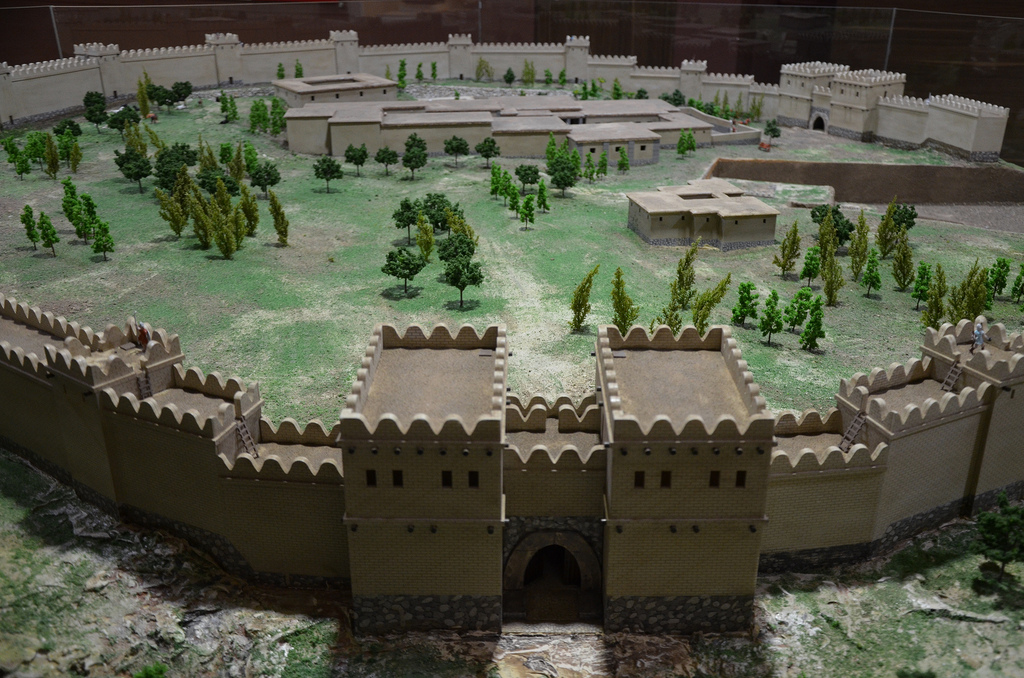



 following hadrian photography