The Ephesos Museum in Vienna displays antiquities from the city of Ephesus in Turkey. In the late 19th century, under the auspices of the Institute of Classical Archaeology and conducted by the newly founded Austrian Archaeological Institute, Austrian scientists began conducting research in the ruins of Ephesus. Numerous objects of high quality were recovered and moved to Vienna. They can be seen today at the Ephesos Museum. The museum’s collection includes a selection of Roman sculptures and architectural elements that once decorated magnificent buildings such as the thermal baths and the Ephesian Great Theatre. The Ephesos Museum is an annex of the Kunsthistorisches Museum.
Lying on the Turkish Aegean coast, Ephesus was one of the largest cities of the ancient world and is now among the most popular tourist destinations in Turkey. The museum’s collection began when Sultan Abdul Hamid II donated some of the archaeological findings to the Emperor of Austria Franz Joseph I. The export of antiquities from Turkey was generally banned with the proclamation of the Turkish Antiquities Law of 1907 and no more artefacts was sent to Vienna after this date. Many other Ephesus artefacts are on display in the Ephesus Archaeological Museum near the site in Selçuk.
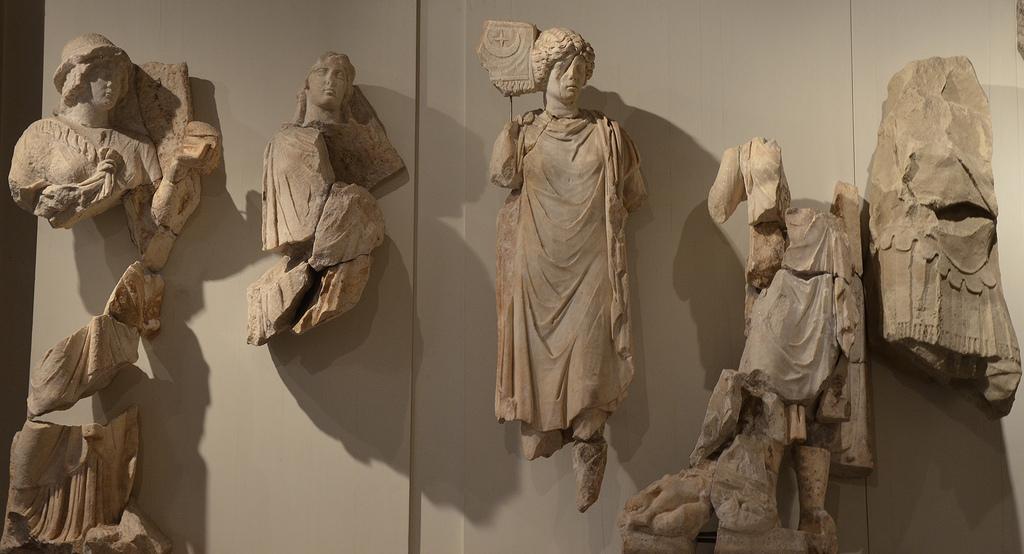
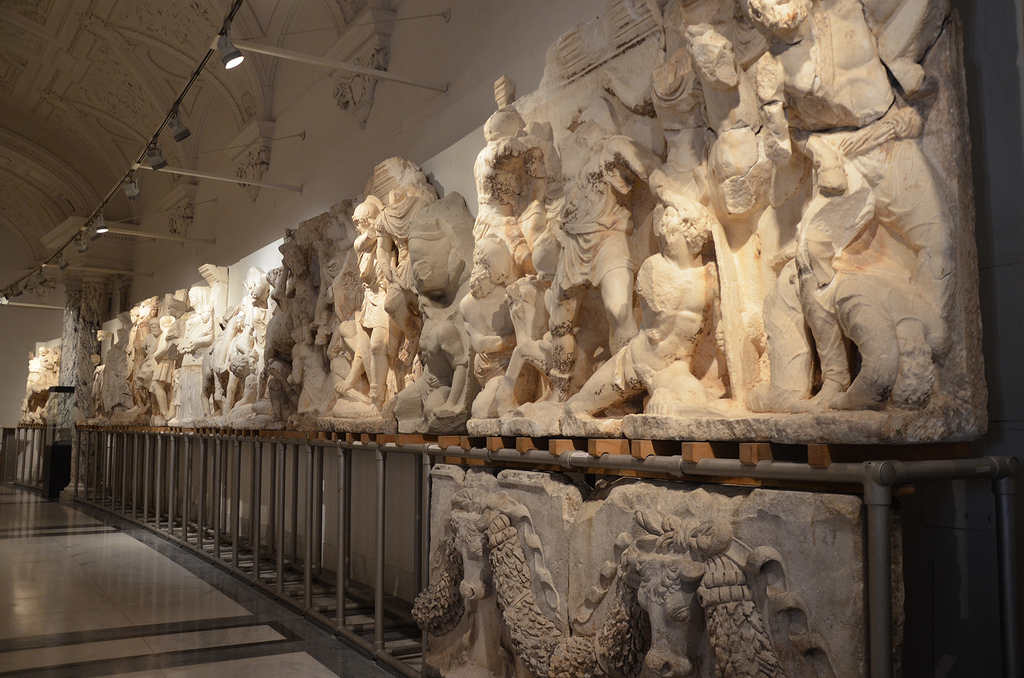
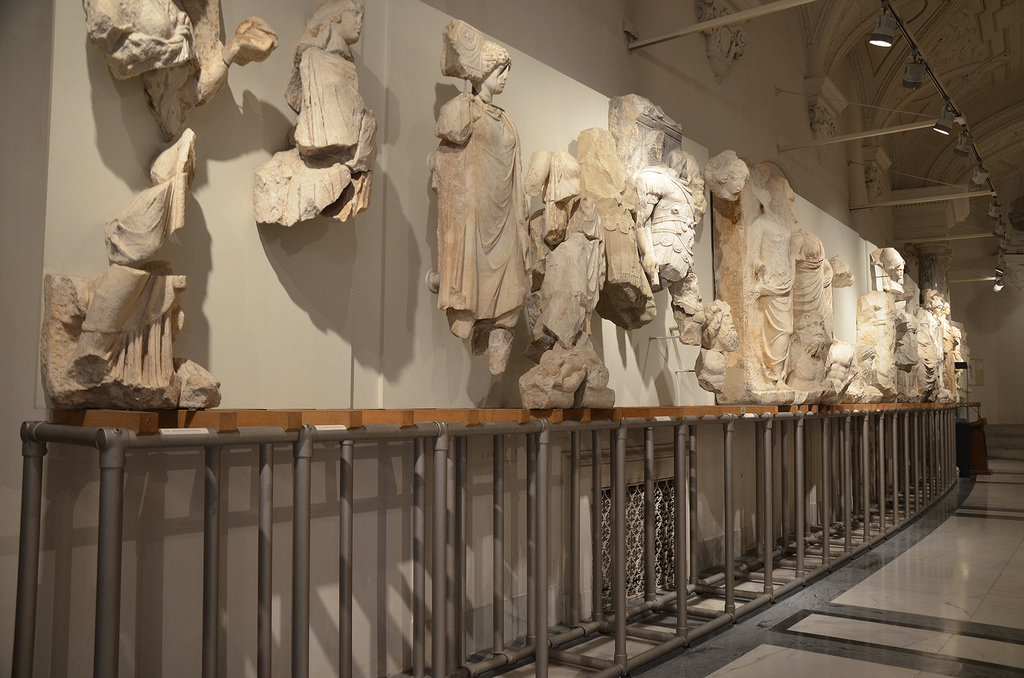
Alongside sculptures and architectural elements, a series of Roman reliefs unique in both its size and importance, the so-called Parthian Monument, forms a highlight of the collection.
selected masterpieces
Architecture
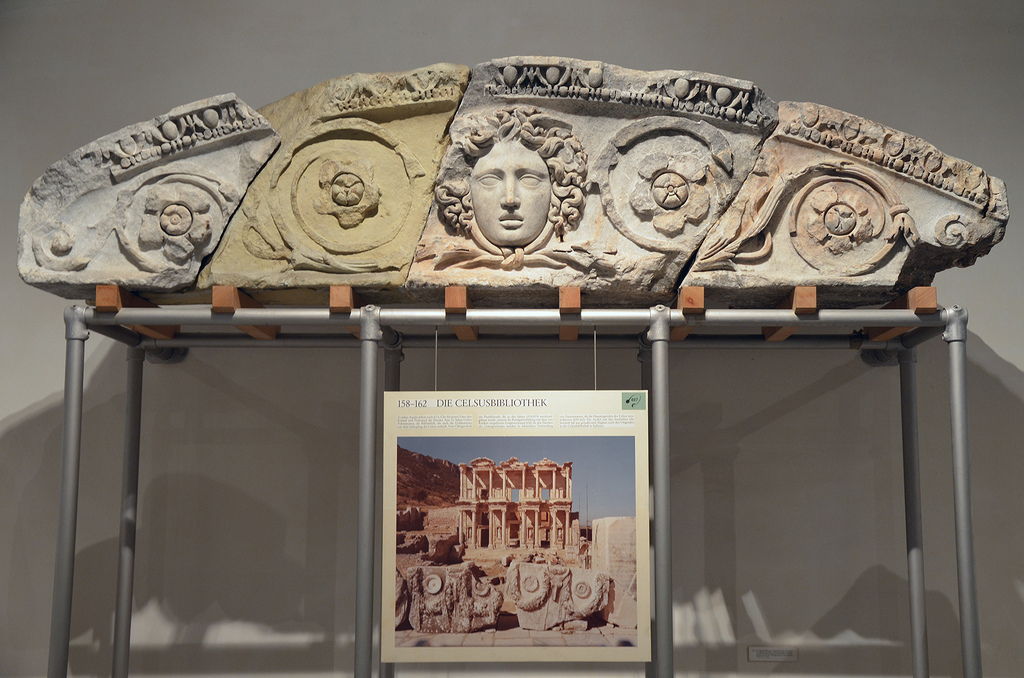
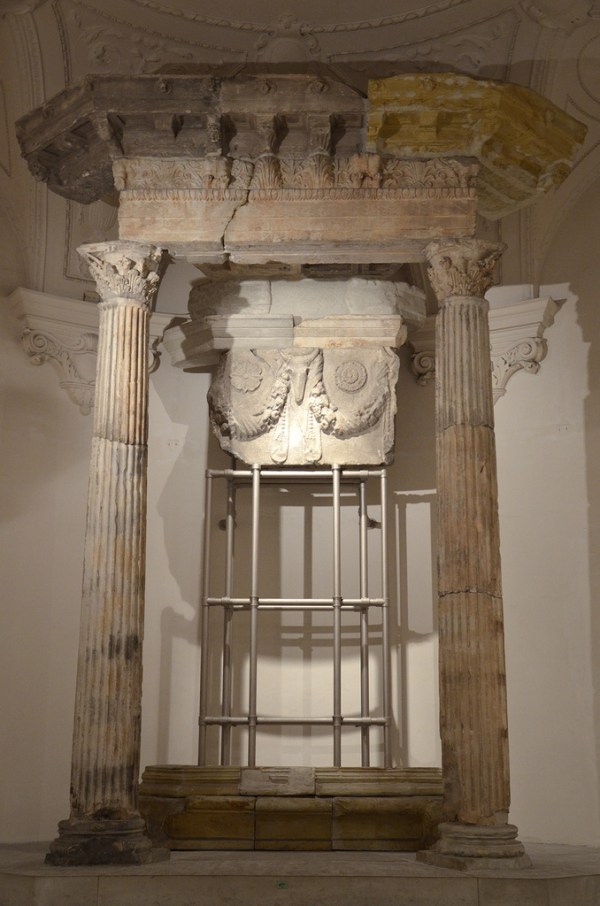
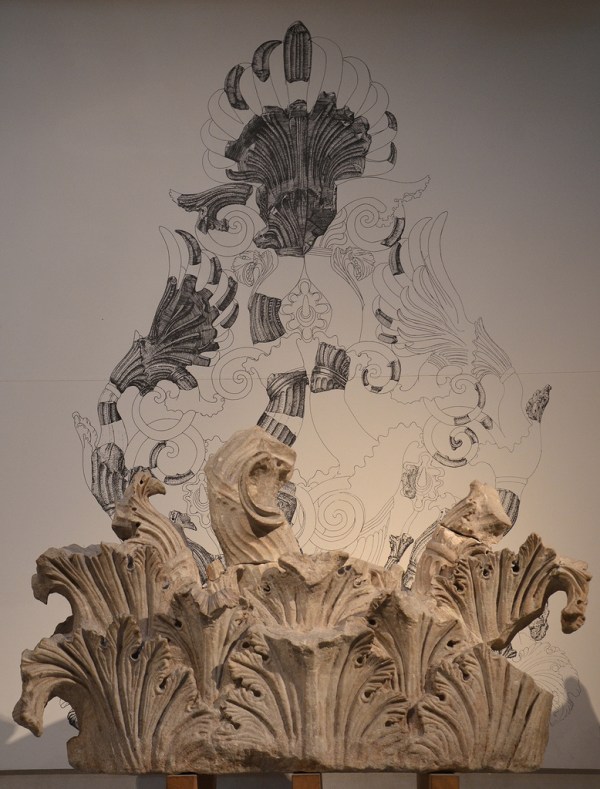
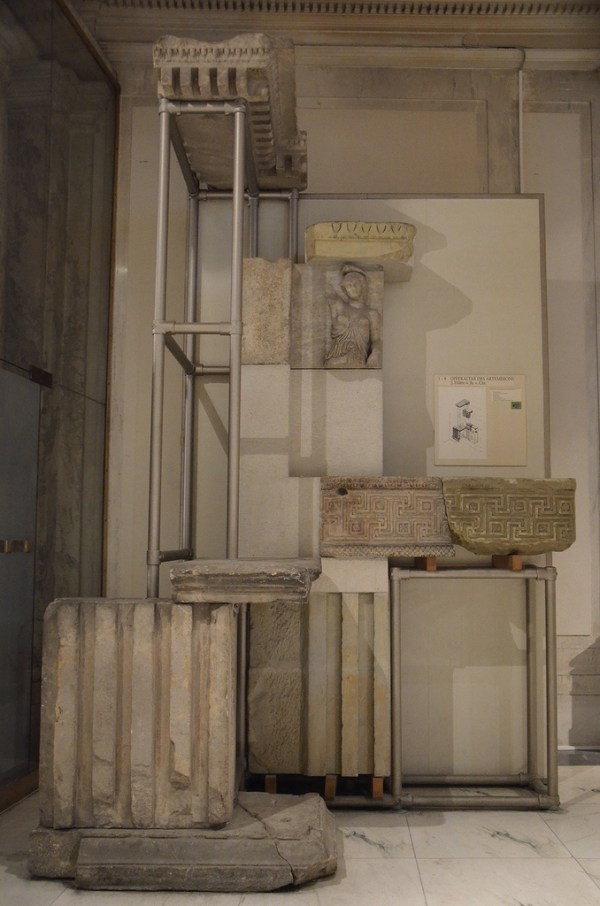
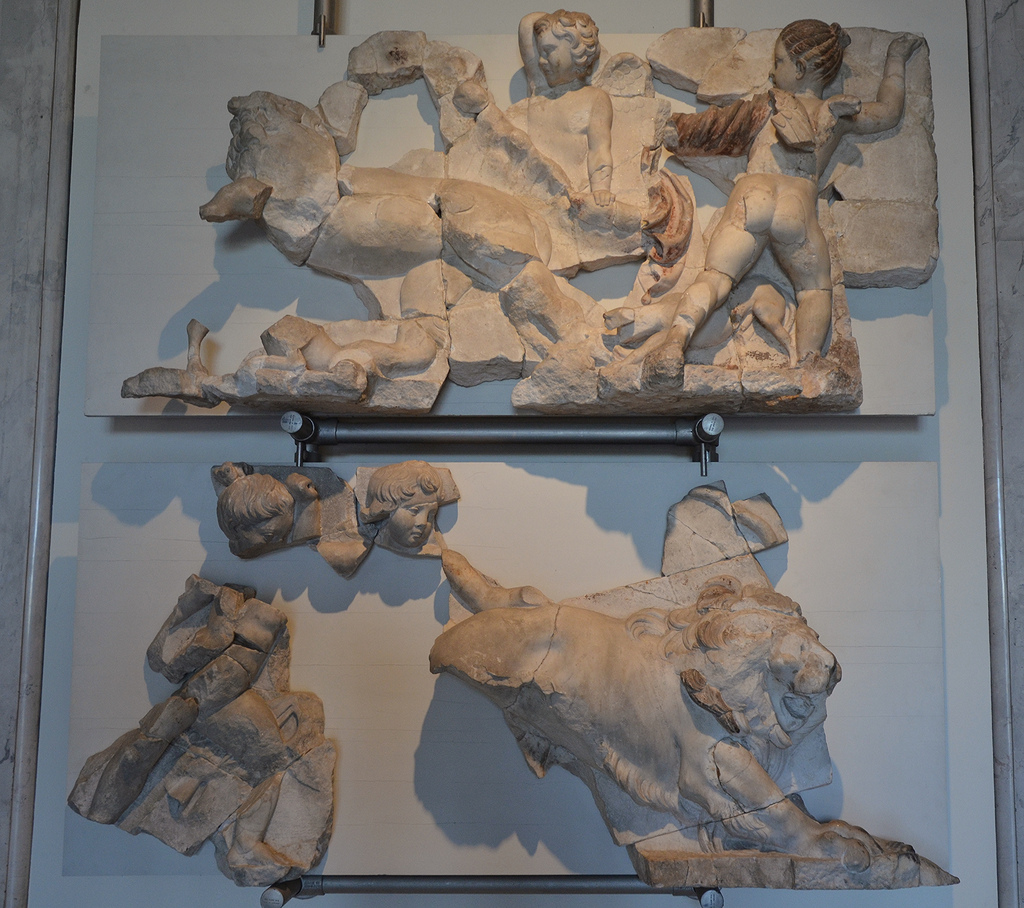
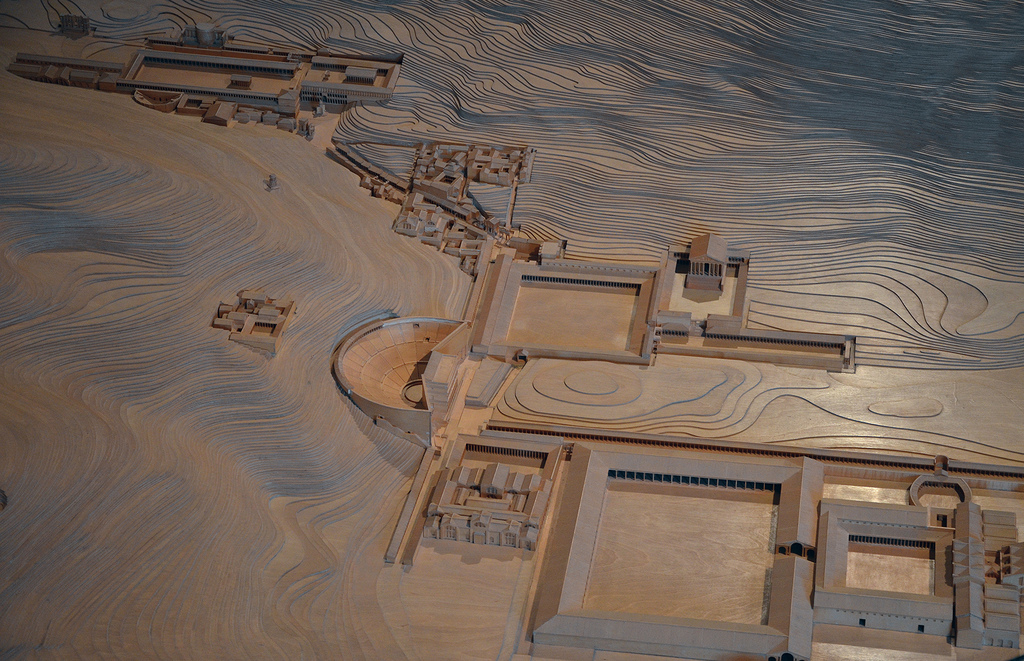
Facade pediment fragment from the Library of Celsus decorated with rosettes, garlands and the head of Medusa.Architectural elements of the Octagon, the tomb of the Ptolemaic princess Arsioe IV (half-sister of Cleopatra VII). The tomb was a vaulted burial chamber placed on a rectangular base and was located in the centre of Ephesus in front of the terrace houses.Acroterion in the shape of a palmette, Roman copy from the 1st half of 1st century AD of a Hellenistic original.Architectural elements from the Artemision Altar (one of the Seven Wonders of the World), including a fragment of a relief with a wounded Amazon, ca. 350 BC – 300 BC.Two fragments of a frieze with hunting Cupids that decorated the stage building of the Great Theatre of Ephesus, 2nd half of 1st century AD.Model of Ephesus.
Statues and busts
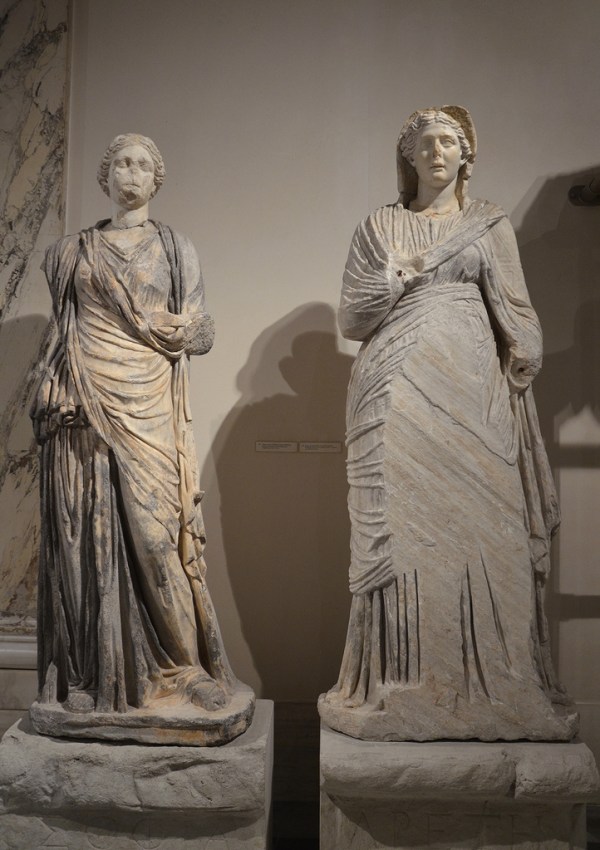
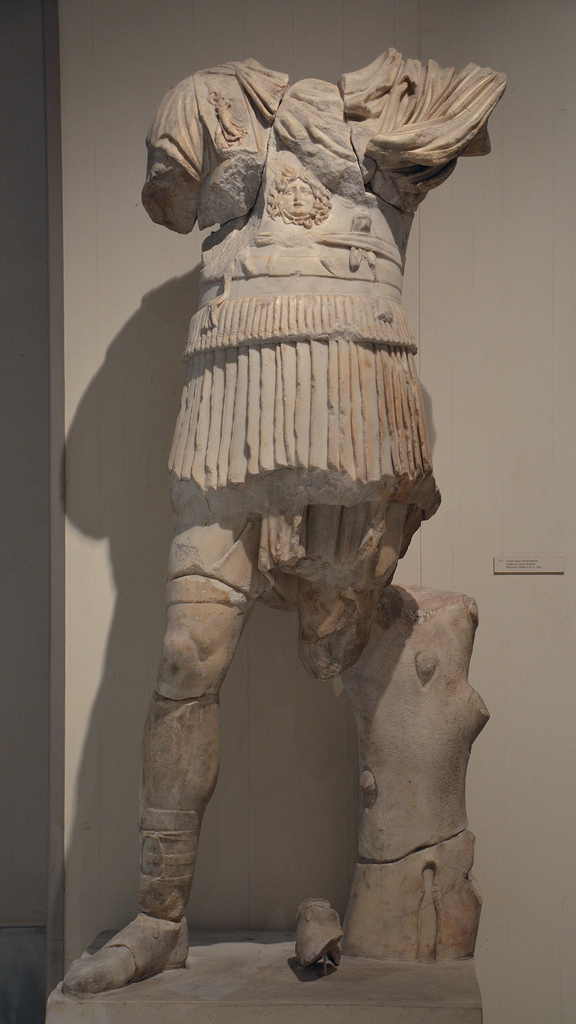
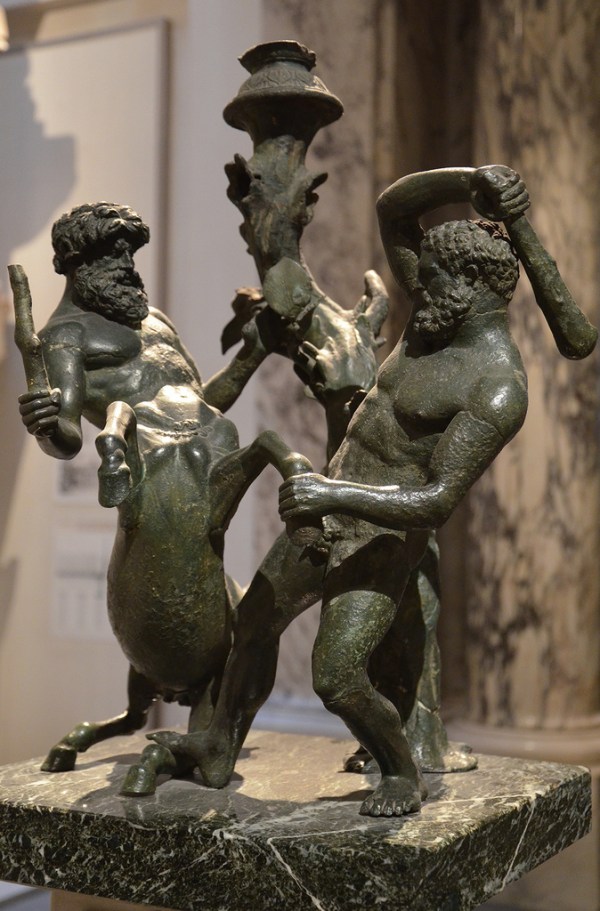
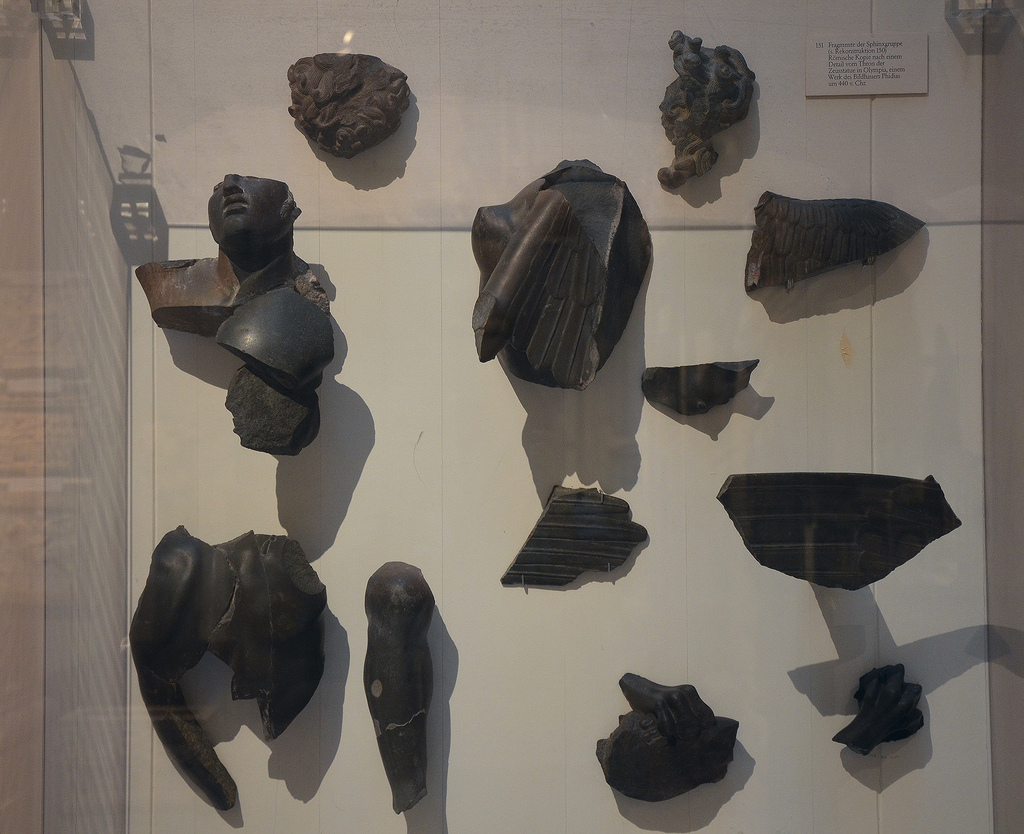
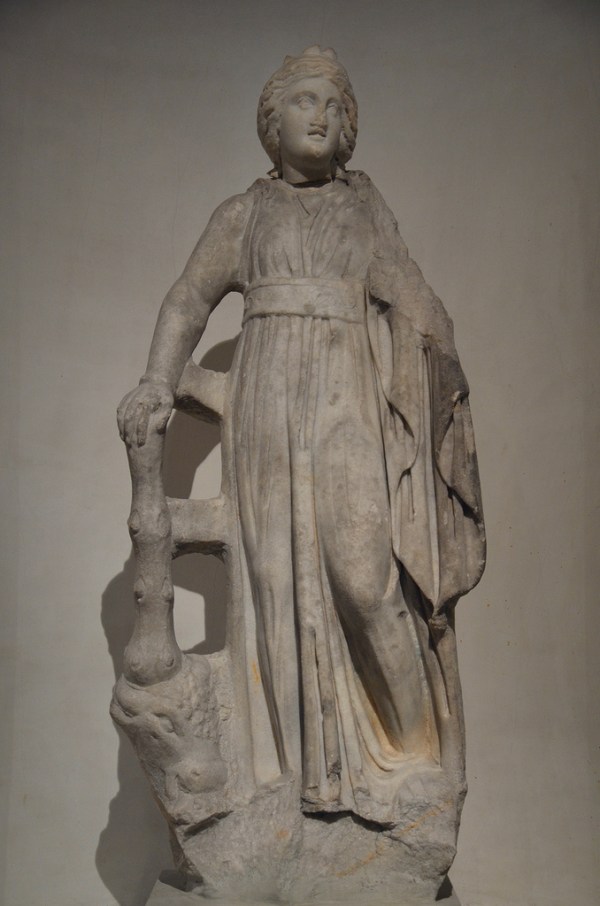
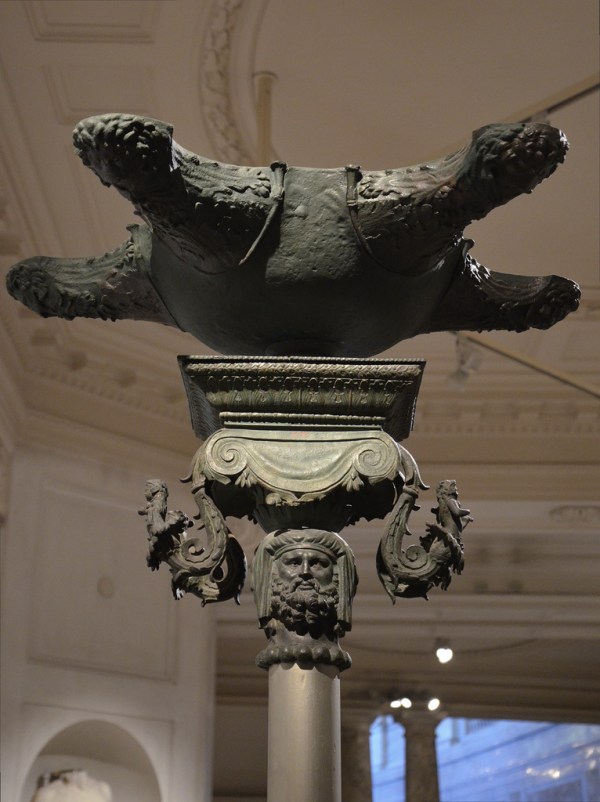
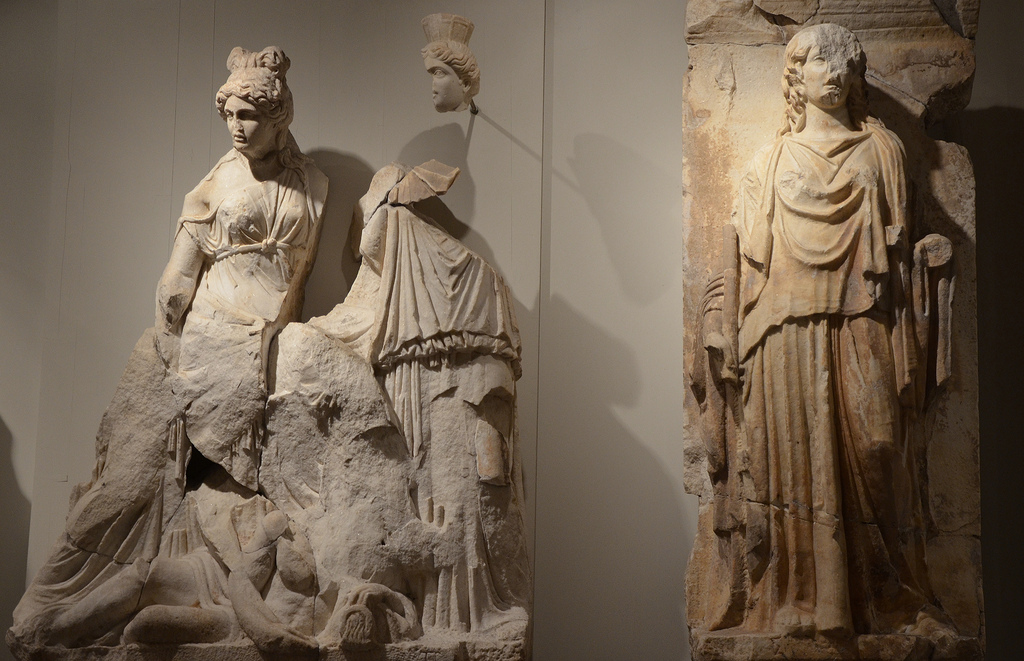
Female statues that decorated the niches on the lower storey of the Library of Celsus symbolizing wisdom (Sophia, left) and virtue (Arete, right).Head of Hadrian, of the so-called Chiaramonti 392 type, found among the ruins of the Gate of Mazeus and Mithridates.Statue of an emperor wearing the military cuirass, 2nd century AD.Bronze candelabra (table lamp) depicting Heracles fighting the Centaur Nessos, 2nd century BC.Fragments of a marble sphinx group, from a detail on the throne of the statue of Zeus by Phidias’ at Olympia, Roman copy of Greek original (440 BC).Reconstruction from fragments of the marble sphinx group, from a detail on the throne of the statue of Zeus by Phidias’ at Olympia, Roman copy of Greek original (440 BC).Statue of Melpomene, Muse of tragedy, her right hand rests on a long club while her missing left hand must have been holding a tragic mask.Head of Hermes, the messenger of the gods, Roman copy from the middle of the 2nd century AD of a Greek bronze original dated to 430 BC, found in 1895 in the harbor baths.Bronze oil lamp with ionic capital and decorated with two busts of Hercules and Omphale, Roman period.
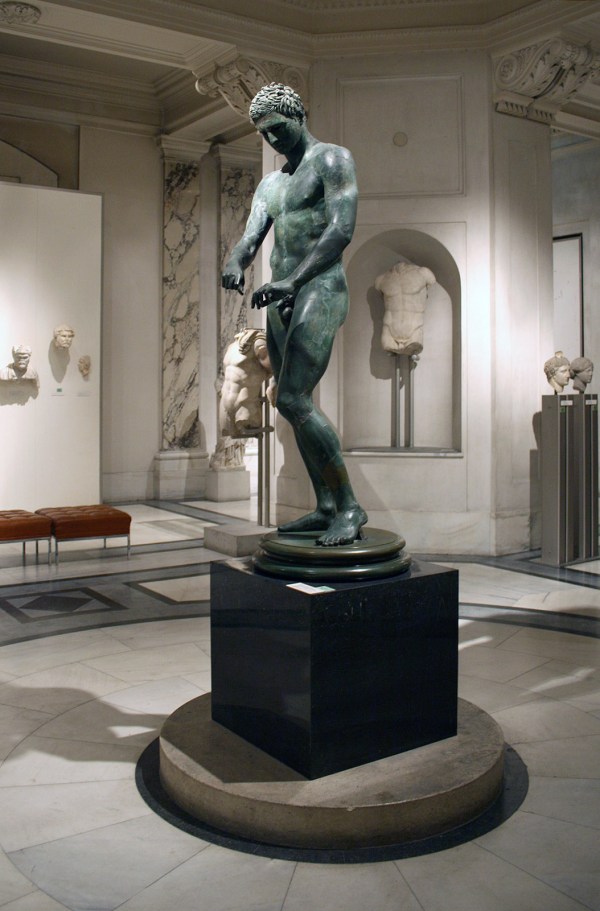
A bronze statue of an athlete (Apoxyomenos) dated to the 1st century AD and copied from a Greek original from the 4th century BC forms the centerpiece of the museum’s collection of Roman sculptures. It has been recreated from 234 fragments and shows a young athlete cleaning his strigil, an implement used to wash the body after a contest. Unfortunately, at the time of my visit in August 2015, the statue was on loan to the Power and Pathos: Bronze Sculpture of the Hellenistic World exhibition at the Paul Getty Museum in Los Angeles.
Bronze Statue of an Athlete “Ephesian Apoxyomenos”, 1st century AD. Photo by Manfred Werner (Wikipedia CC BY-SA 3.0)
The Parthian Monument
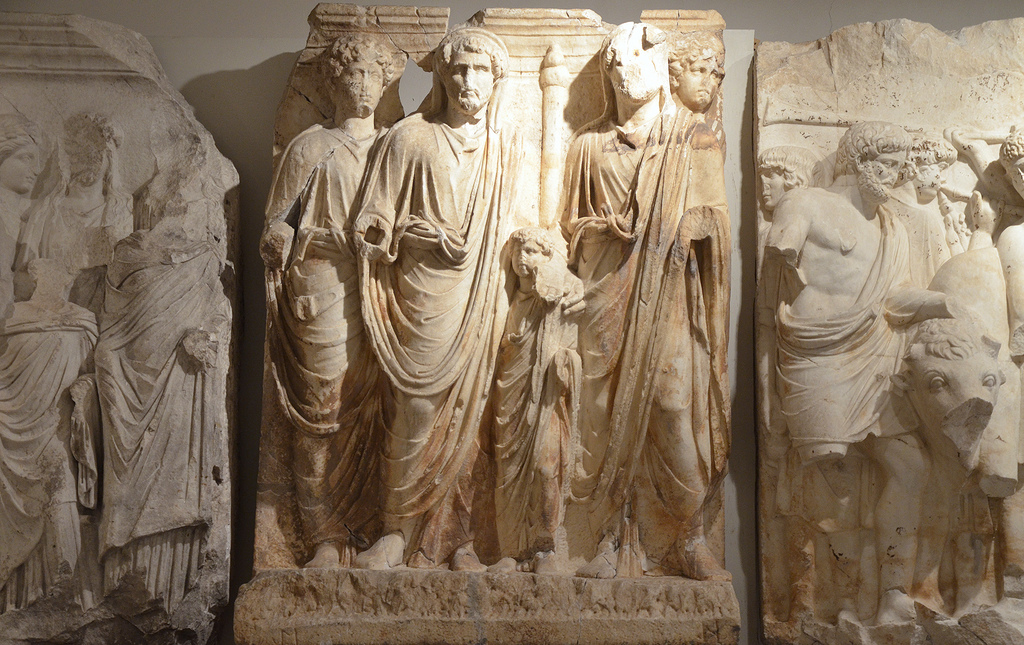
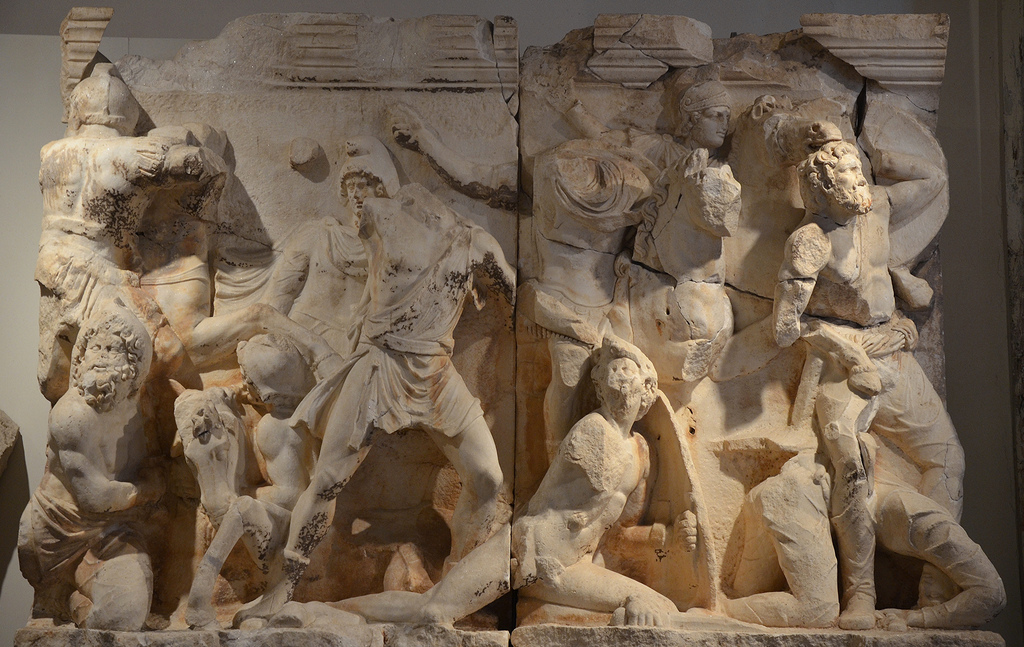
The Parthian Monument is one of the most important Roman-age reliefs from Asia Minor. In five thematic cycles it commemorates the Roman Emperor Lucius Verus who established a camp in Ephesus during his Parthian Campaign of 161-165 AD. These five thematic cycles are: 1. Adoption, 2. Parthian war, 3. Personifications of towns of the Empire, 4. “Apotheosis of Lucius Verus, 5. Meeting of the gods. The individual pieces were arranged in the form of a monumental altar with an U-shaped foundations. The friezes have a total length of about 70 metres, of which 40 metres are on display.
Relief frieze of the Parthian monument depicting the political act of adoption of Antoninus Pius and his successors, Marcus Aurelius and Lucius Verus by Hadrian which took place during the last year of his reign in 138 AD.Relief frieze of the Parthian monument depicting the the Roman counter-attack against the Parthians which began in 162 and ended in 166 AD with the destruction of the Parthian capital Ctesiphon.Relief frieze of the Parthian monument depicting the Personifications of cities which participated in the events of the Parthian war, in the middle Carrhae and Edessa with vexillum flag.Relief frieze of the Parthian monument depicting the Apotheosis of Lucius Verus. Lucius Verus is represented on Helios’ chariot being driven by Nike (Victory) who leads him by the hand.Relief frieze of the Parthian monument depicting the Meeting of the gods.Relief friezes of the Parthian monument.Relief friezes of the Parthian monument.
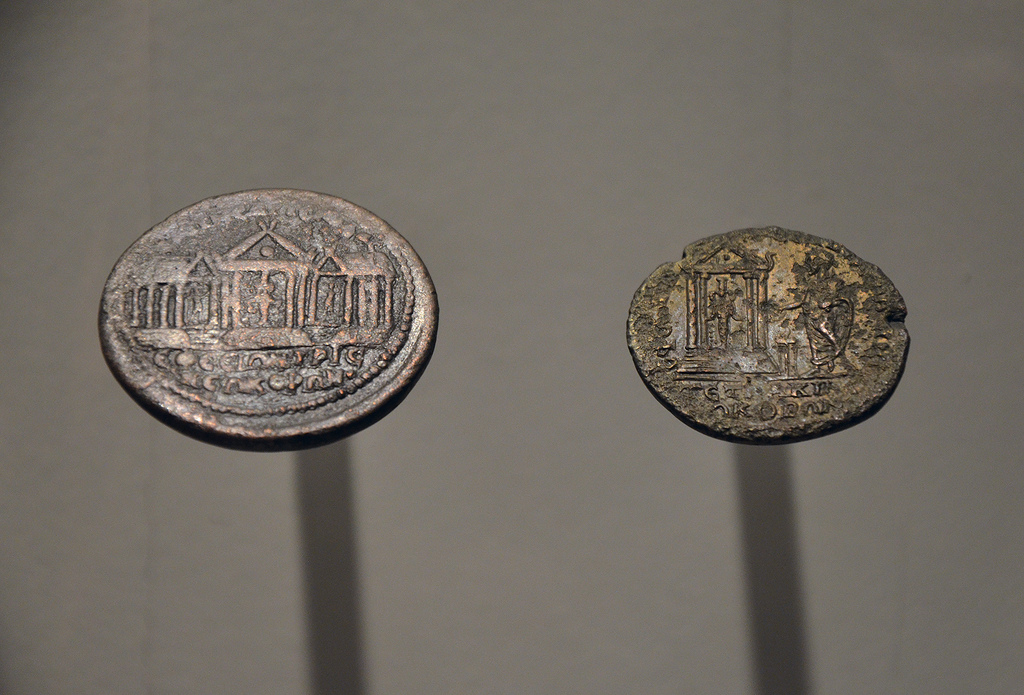
Numismatic
Medaillon with the Artemission and two temples (Ephesus twice Neokoros), and coin of Elagabalus with the Artemission on the reverse, 3rd century AD.
The Louvre-Lens is an art museum located in Lens at the heart of a coal mining area, approximately 200 kilometres north of Paris. It displays objects borrowed from the collections of the Musée du Louvre on a medium or long-term basis.
Its collections are displayed in a contemporary building designed by the Japanese architects Kazuyo Sejima and Ryue Nishizawa of SANAA, a multiple award-winning architectural firm based in Tokyo. Officially opened on the 4th December 2012, the museum now enjoys international acclaim as a unique must-see attraction.
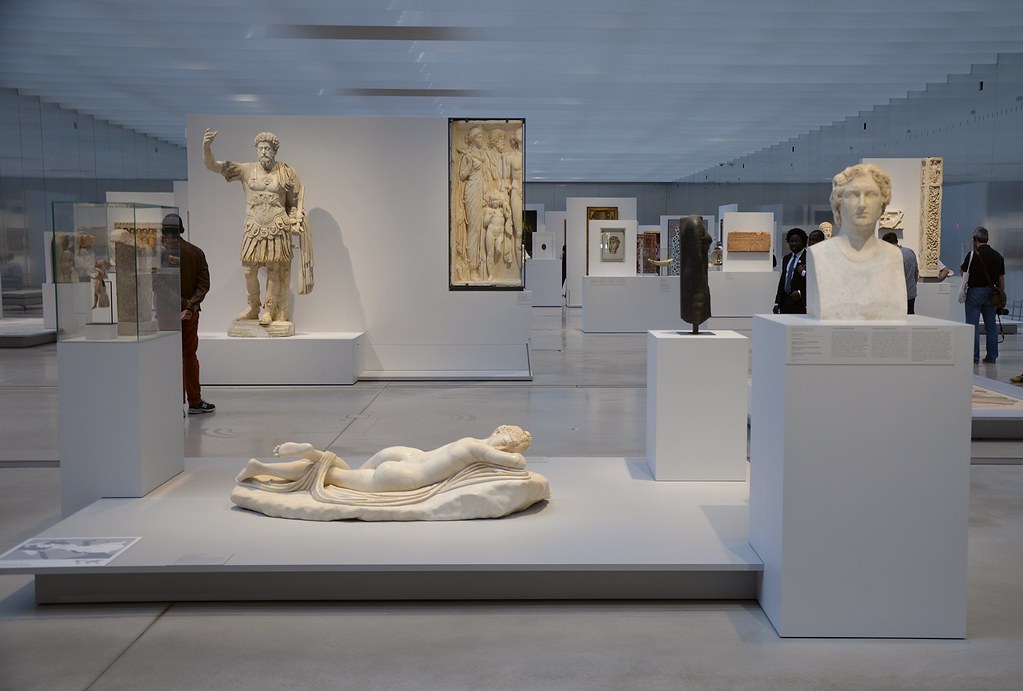
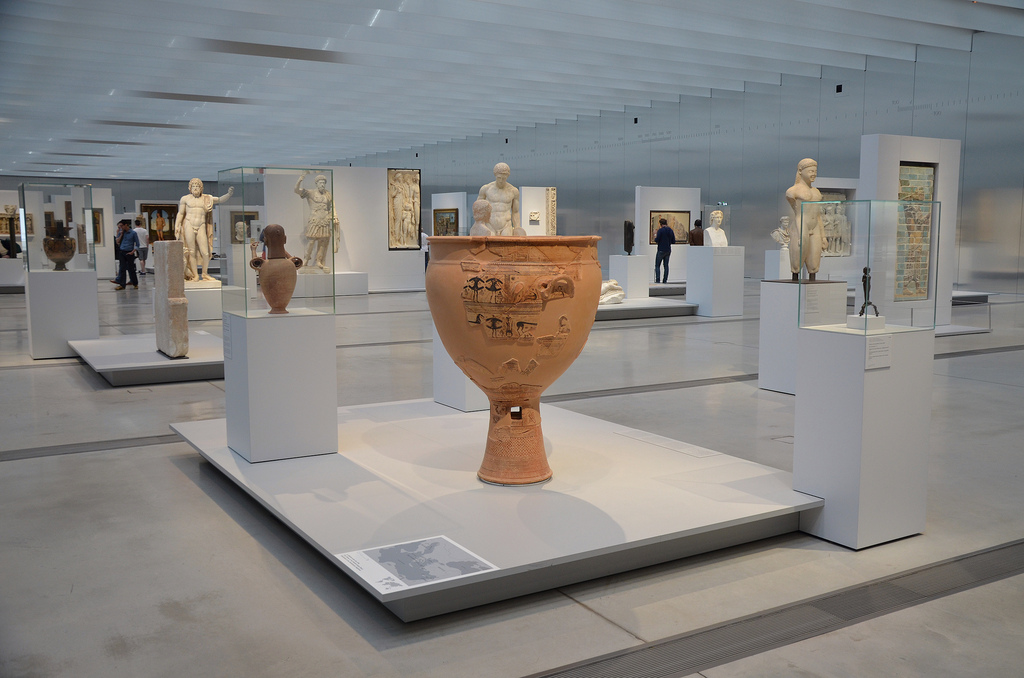
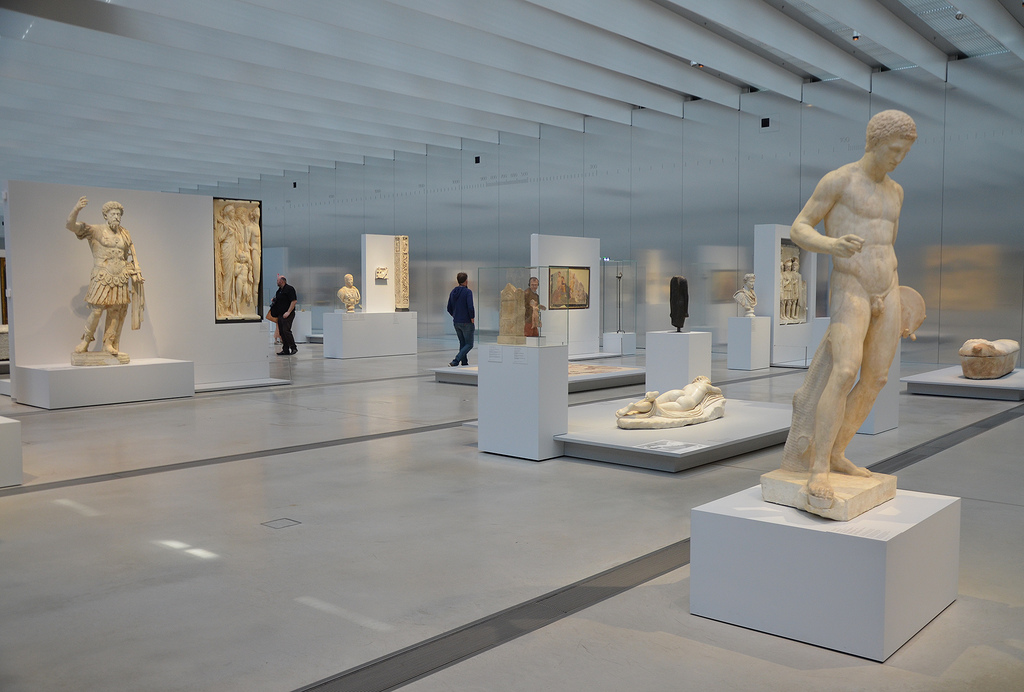
The Galerie du Temps (Gallery of Time), the main exhibition space and the heart of the Louvre-Lens, houses a selection of masterpieces arranged chronologically, starting with the birth of writing in 3500 BC and finishing with the year 1850. Each year, some art pieces return to the Louvre in Paris and are replaced by others.
The 200 works originate from the Middle East, Egypt, Greece, Rome, the Islamic world and Europe. The Galerie du Temps is a wide open hall (125m long and 25m wide) where the objects are placed in the centre of the room in order to create a full 360° dialogue between them.
HIGHLIGHTS FROM THE ANTIQUE COLLECTION
Pre-cuneiform writing tablet noting food ratios. Archives from the Temple of the Sky God From Uruk (Irak) Late Uruk Period, around 3300 BC. The first documents written on clay tablets appeared in Uruk IV, around 3300 BC.
Painted limestone statue of the Majordomo Keki, “head of the household”, civil servant of the Pharaoh From Giza, Egypt Around 2500-2350 BC (6th Dynasty).
Diorite statue of Gudea, prince of Lagash From Girsu (Irak) Around 2120 BC.
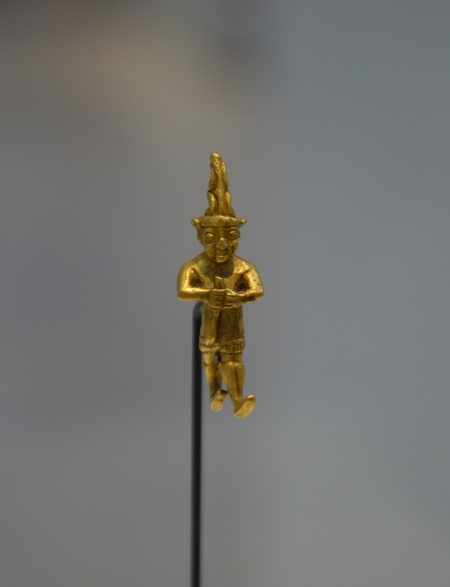
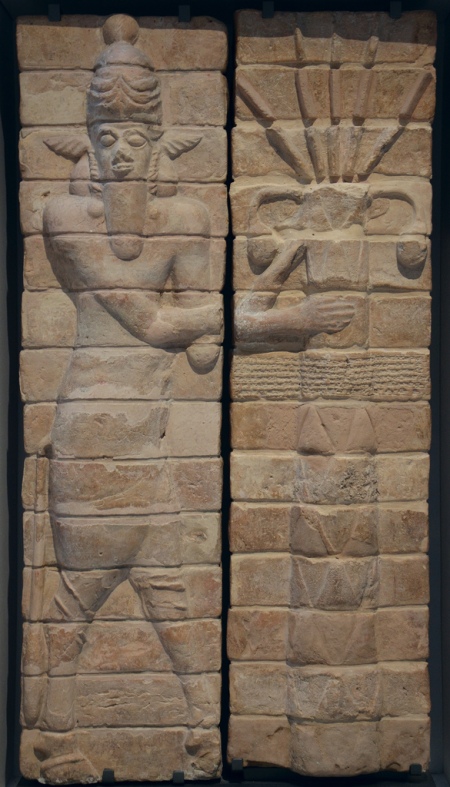
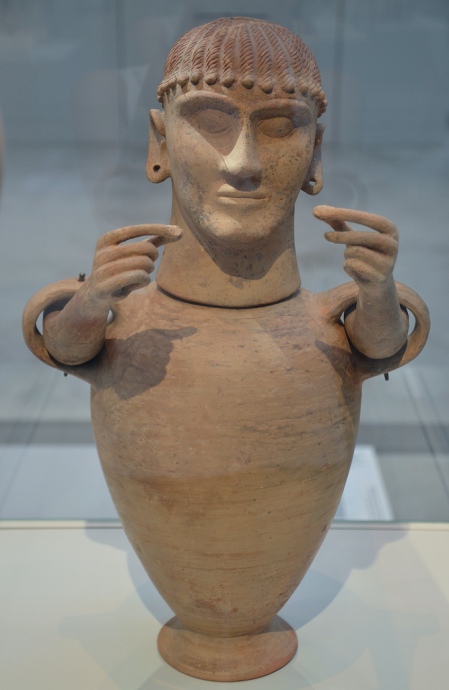
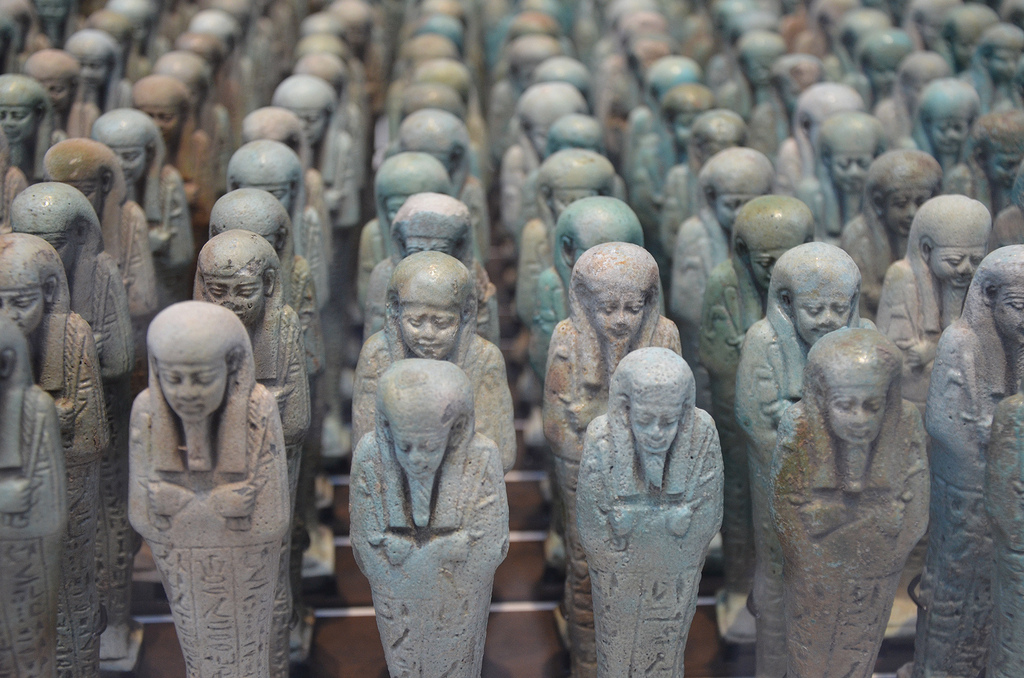
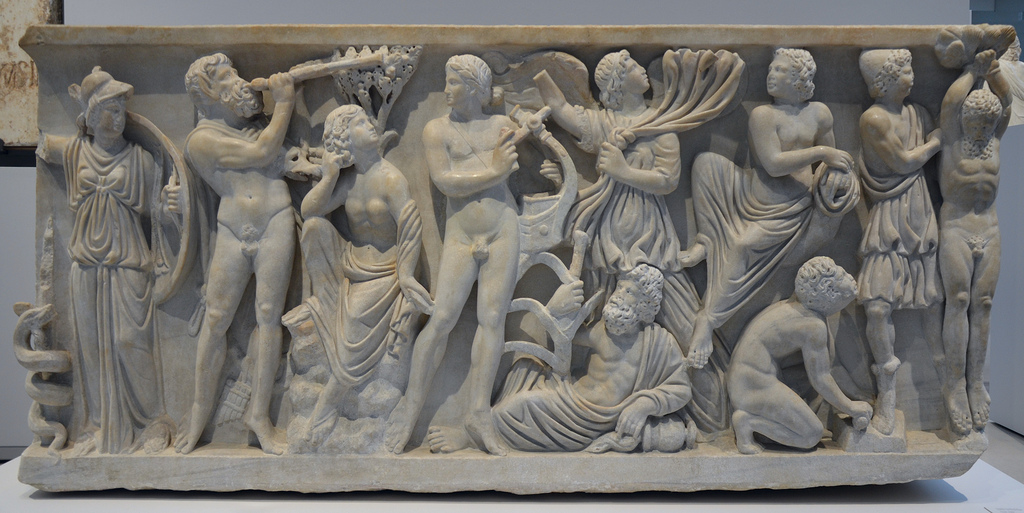
Gold amulet pendant, possibly depicting Teshub, the Hittite Storm God From Yozgat, Central Anatolia (Turkey) Around 1400-1200 BC.Fragment of a painted limestone statue of a deceased couple Around 1391-1353 BC (reign of Amenophis III) From Egypt.Fragments of decoration from the Temple of Inshushinak, tutelary god of Susa, depicting a bull man and palm tree Around 1150 BC From Suse (Iran).Relief depicting a hunting scene in a chariot which decorated a wall in the palace of Maradesh, king of Melid Neo-Hittite period, 9th century BC From Malatya (Turkey).Engraved cippus surmonted by a head representing the Egyptian deity Bes, protector of households Around 750-600 BC From Larnaca (Cyprus).Etruscan cinerary urn with a female head and articulated arms From Chiusi (Italy) Around 550-500 BC.Troop of funerary servant figures (shabtis) in the name of Neferibreheb Around 500 BC From Memphis (Egypt).Terracotta statuette of Nike, the personification of victory Around 190 BC From Myrina (Turkey).Fragment of a fresco depicting a woman beside a fawn (Bacchic cult scene?) From Pompeii Around 30-50 AD.The Praetorians Relief from the Arch of Claudius, once part of the Arch of Claudius erected in 51 AD to commemorate the conquest of Britain From Rome (Italy).Statue of Hermaphroditus, Louvre Lens, son of Hermes and Aphrodite Around 130-150 AD From Egypt.Tauroctony relief representing Mithras sacrificing the bull Around 100-200 AD From the Capitoline Hill in Rome (Italy).Cuirassed statue of Marcus Aurelius From Gabies? (Italy) End of the 2nd century AD.Fragment of a mosaic floor depicting a preparation of a banquet Found in Carthage Around 180-190 AD.Sarcophagus depicting a musical context between the god Apollo and the satyr Marsyas Around 290-300 AD From Cosa (Italy).
See more images from the Louvre-Lens antique collections on Flickr














 following hadrian photography