Bagacum

Bavay is a small village in the Nord-Pas-de-Calais region of northern France, less than an hour’s drive from Lille and Brussels. In the 1st century AD, Bagacum, as it was called back then, was the capital (civitas) of the Nervii, the most powerful Belgic tribe living in northern Gaul. Being located on the spot where seven major routes met, Bagacum was an important stopping-off point between the provinces of Germania and Britannia. This strategic emplacement allowed the city to become an important urban centre of Belgian Gaul. The future emperor Tiberius passed through Bagacum with his armies around AD 4 (an inscription attesting to his presence was found in 1716). Here the Romans built one of the largest forums in the Roman Empire.

Coordinates: 50° 17′ 53.16″ N, 3° 47′ 56.04″ E

From the Claudian period and later under the Flavians, the city of Bagacum expanded quite rapidly. Large monuments were built: a forum, thermal baths fed by an aqueduct and other buildings with a seemingly official nature adorned the city. Disproportionately big compared to the town’s size, the forum is the only entirely preserved example of a Roman forum in France. Its basilica is one of the largest known to have existed in the entire Roman Empire.

Trade and commerce flourished following the construction of the roads and the exploitation of the river network. The city became a major market centre for pottery, and workshops have been found there. Merchants sold sigillata, wickerwork, cloth, food and bread. An exceptional set of over 300 objects in bronze (the “Bronze Treasure”) was discovered in Bagacum. Current estimates suggest the town ultimately covered about 40ha and may have counted a population of 15,000.

The gradual decline of Bagacum started in the 3rd century AD, and a massive defensive wall was built at the turn of the 4th century AD. Today the fortifications are one of the most imposing elements of the archaeological site. Bagacum was destroyed during the barbarian invasions and never recovered its former influence. It would not be rediscovered until the eighteenth century.

The Museum is located right next to the archaeological site. It houses an important pottery and bronze collection. Two exhibition spaces are dedicated to the permanent collection. The first room presents the public areas of a Roman city; the second room concerns the private life of the inhabitants of Bagacum.

Portfolio
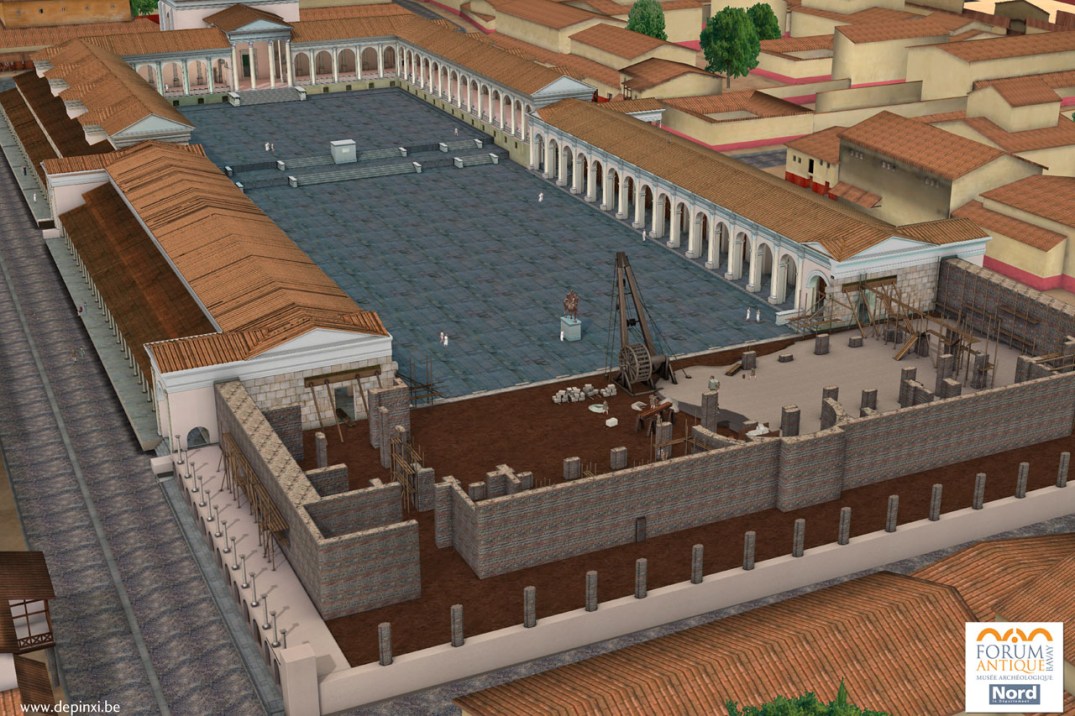
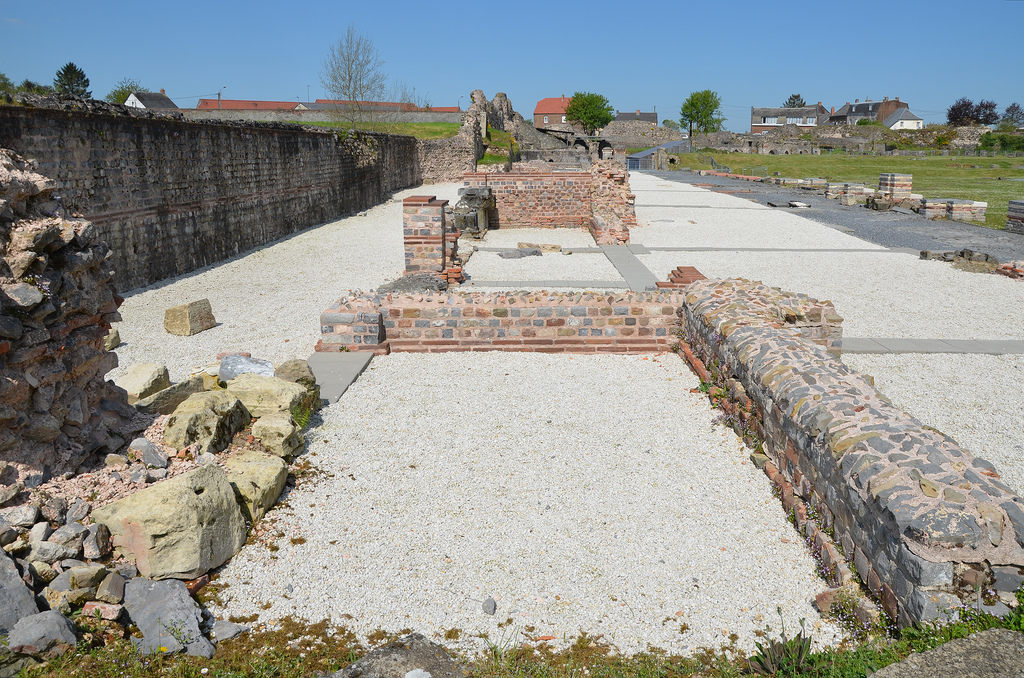
The Forum of Bagacum was 240 m long and nearly 110 m wide. It was one of a series of forums known as “tripartite forums”, which included three main parts: the esplanade, the basilica and the temple.
The esplanade was a large paved square in the centre of the forum, surrounded on the longer sides by porticoes.
The esplanade was a large paved square in the centre of the forum.
The Forum of Bagacum was surrounded on the longer sides by porticoes. A series of administrative offices were to be found under the porticoes. Citizens came to these offices to exchange money, use the weights and measures service (ponderarium) or consult a lawyer.
The Forum of Bagacum had a line of shops facing the street. Some forty shops offered a variety of products and services. Merchants sold pottery, wickerwork, cloth, food and bread.
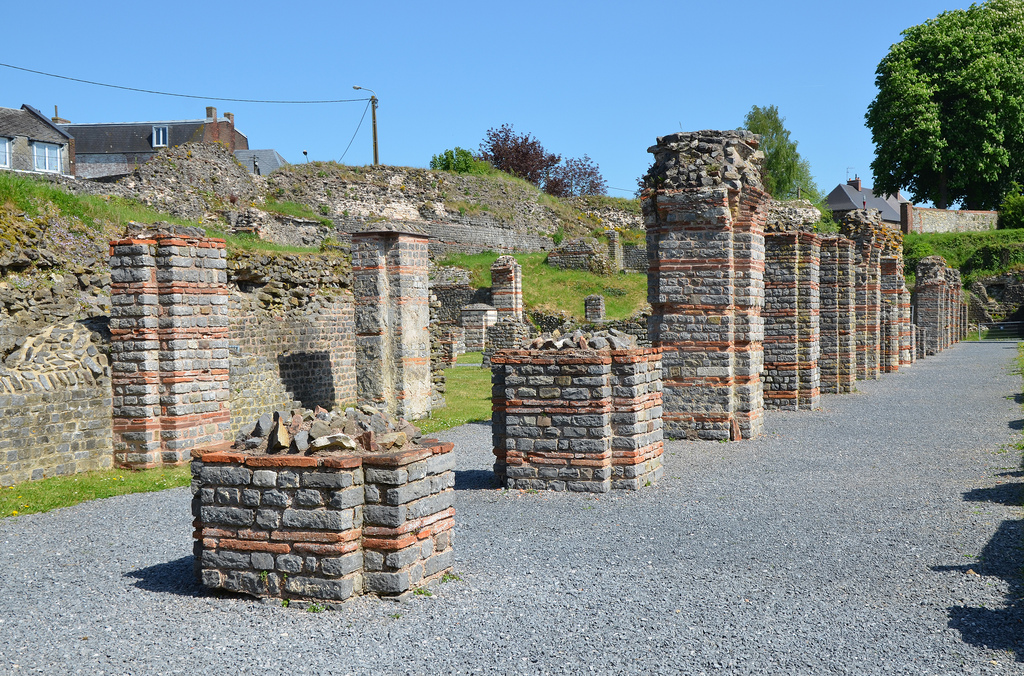
The remains of the semi-underground galleries known as the cryptoporticus. It was probably used as a walking area since the quality of the structure and its decoration are outstanding.
The remains of the semi-underground galleries, known as the cryptoporticus.
The remains of the semi-underground galleries known as the cryptoporticus.
The remains of the semi-underground galleries, known as the cryptoporticus.
The remains of the semi-underground galleries known as the cryptoporticus.
The remains of the semi-underground galleries, known as the cryptoporticus.
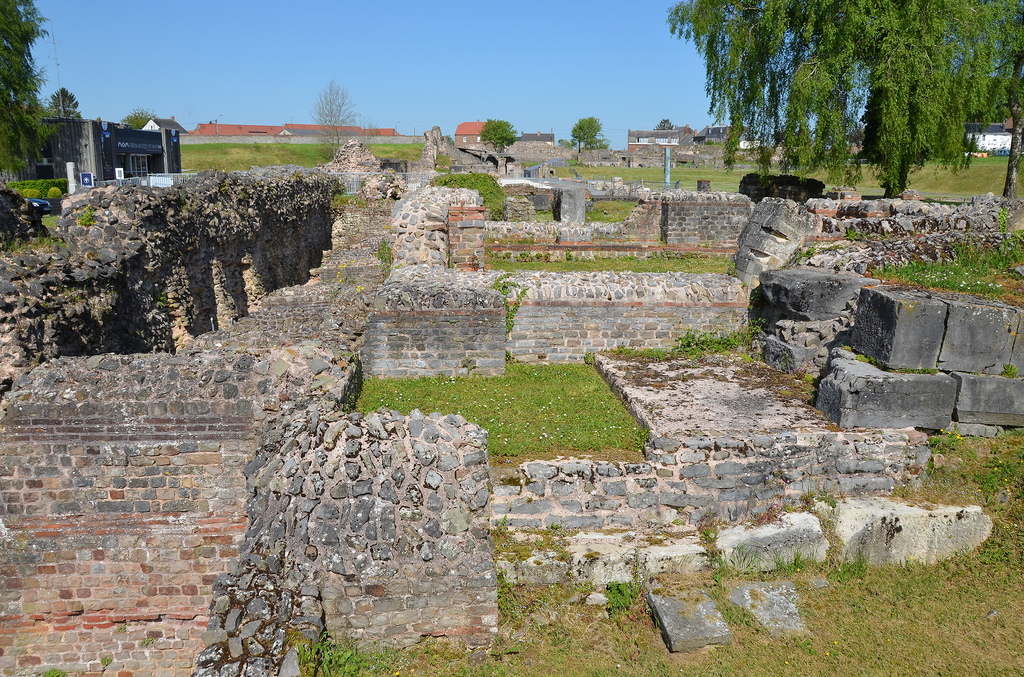
The sacred area is found on the west side of the esplanade and is smaller but on a higher level.
The sacred area of the forum is located on the west side of the esplanade on a higher level.
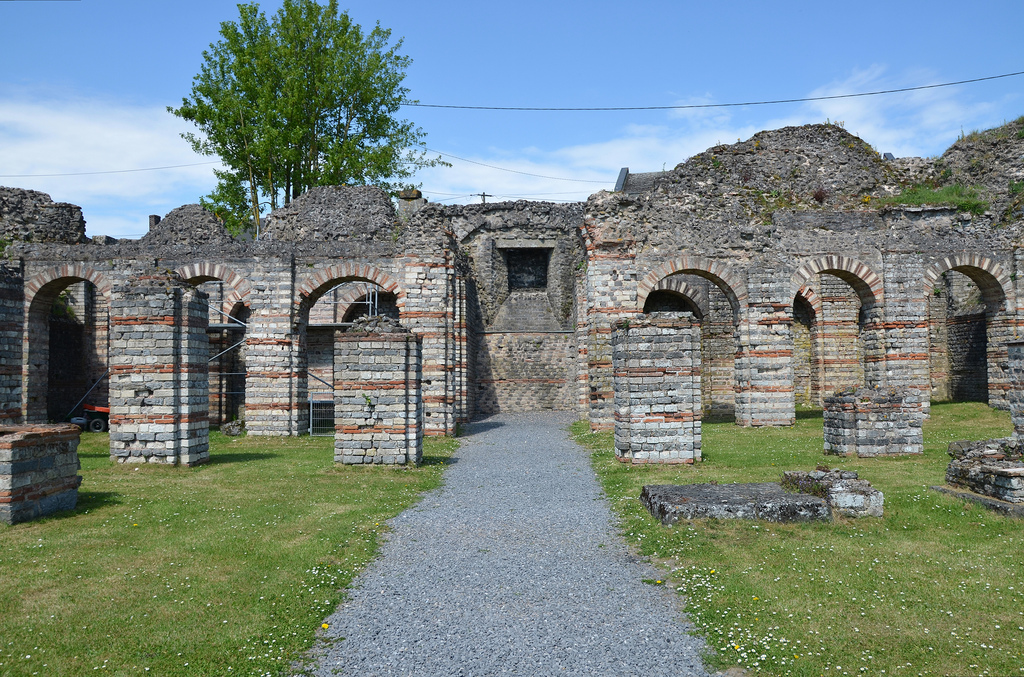
on the side of the esplanade are the ruins of a large building that was on a higher level than the esplanade: this was the basilica.
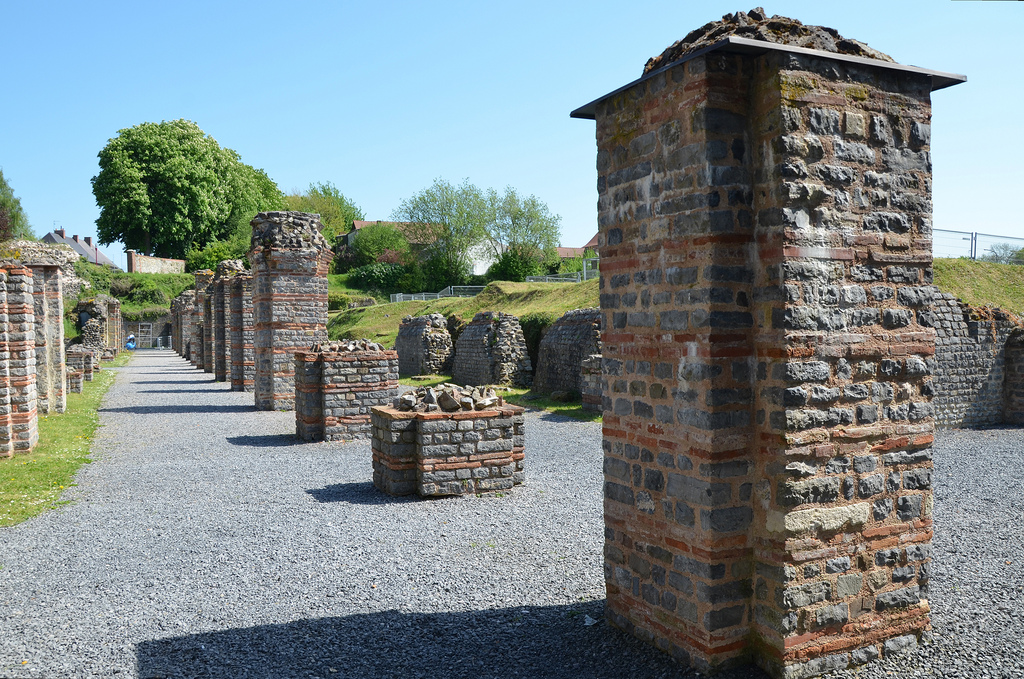
On the side of the esplanade are the ruins of a large basilica which was the centre of legal and political activity. The basilica of Bagacum was one of the largest in the Empire, measuring 98 m long.
The remains of the basilica.
The remarkably well preserved defensive wall built in the 4th century AD.
The remarkably well-preserved defensive wall was built in the 4th century AD.
The Archaeological Museum of Bavay.
The first exhibition space dedicated to the public areas of a Roman city. Some monumental architectural features allow visitors to appraise the size of the site. The finely worked pillars and capitals show the care taken by the Romans in constructing the forum of Bagacum, the capital city of the Nervian tribe. Some of these monumental pieces are on now show for the first time.
The first exhibition space is dedicated to the public areas of Bagacum. Some monumental architectural features allow visitors to appraise the size of the site. The finely worked pillars and capitals show the Romans’ care in constructing the city’s forum.
The second exhibition space presents the private life of the inhabitants of Bagacum.
The second exhibition space presents the private life of the inhabitants of Bagacum. On display are decorative items for the home, toilet implements or tools for working the land, all revealing aspects of everyday life and the different classes of people.

3D reconstruction of the Forum of Bagacum in the 2nd century AD

Links:
Louvre-Lens (France)

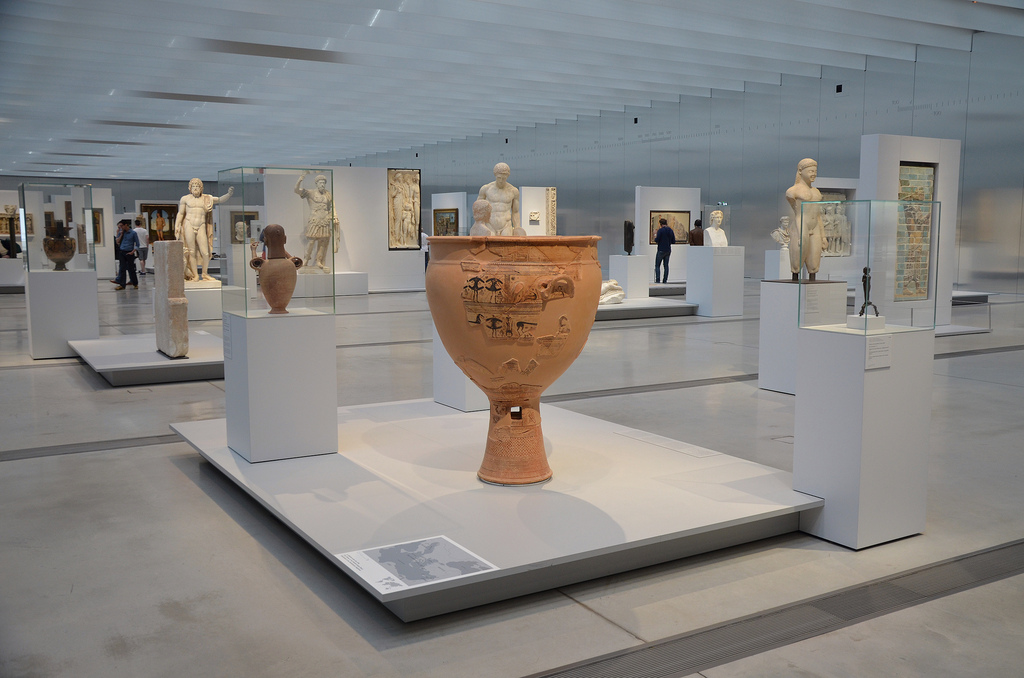
The Louvre-Lens is an art museum located in Lens at the heart of a coal mining area, approximately 200 kilometres north of Paris. It displays objects borrowed from the collections of the Musée du Louvre on a medium or long-term basis.

Its collections are displayed in a contemporary building designed by the Japanese architects Kazuyo Sejima and Ryue Nishizawa of SANAA, a multiple award-winning architectural firm based in Tokyo. Officially opened on the 4th December 2012, the museum now enjoys international acclaim as a unique must-see attraction.

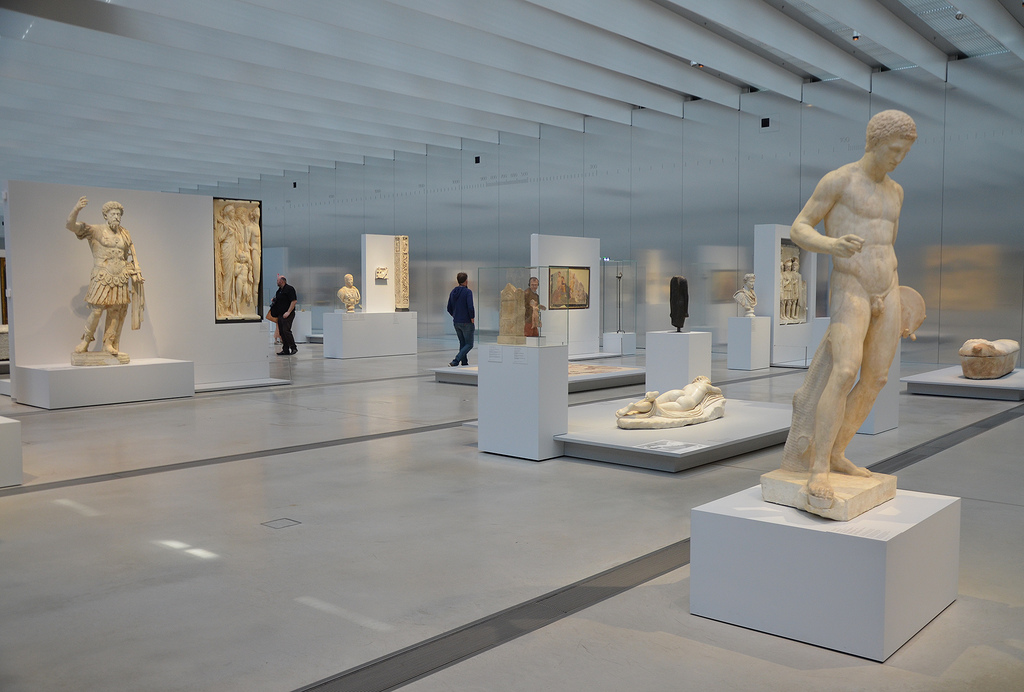
The Galerie du Temps (Gallery of Time), the main exhibition space and the heart of the Louvre-Lens, houses a selection of masterpieces arranged chronologically, starting with the birth of writing in 3500 BC and finishing with the year 1850. Each year, some art pieces return to the Louvre in Paris and are replaced by others.

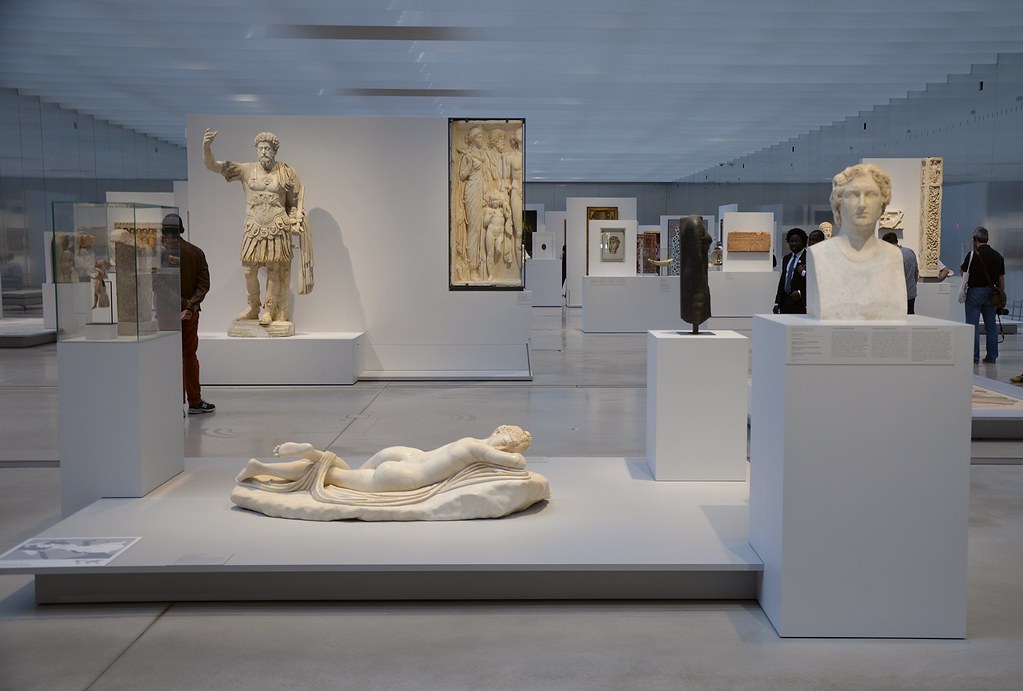
The 200 works originate from the Middle East, Egypt, Greece, Rome, the Islamic world and Europe. The Galerie du Temps is a wide open hall (125m long and 25m wide) where the objects are placed in the centre of the room in order to create a full 360° dialogue between them.


HIGHLIGHTS FROM THE ANTIQUE COLLECTION

Pre-cuneiform writing tablet noting food ratios, Archives from the Temple of the Sky God, from Uruk (Irak), Late Uruk Period, around 3300 BC, Louvre Lens
Pre-cuneiform writing tablet noting food ratios. Archives from the Temple of the Sky God
From Uruk (Irak)
Late Uruk Period, around 3300 BC.
The first documents written on clay tablets appeared in Uruk IV, around 3300 BC.
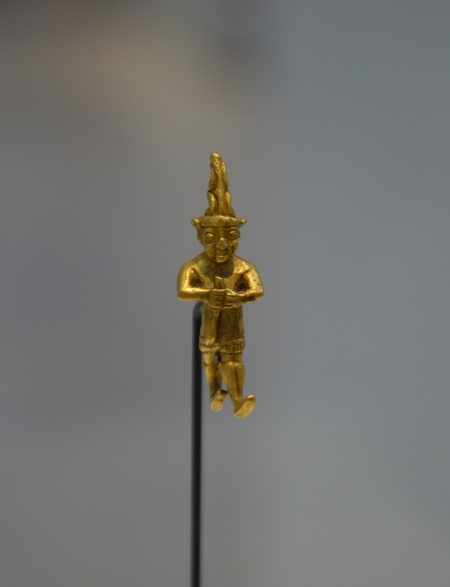
Gold amulet pendant, possibly depicting Teshub, the Hittite Storm God, around 1400-1200 BC, from Central Anatolia.
Gold amulet pendant, possibly depicting Teshub, the Hittite Storm God
From Yozgat, Central Anatolia (Turkey)
Around 1400-1200 BC.
Fragment of a painted limestone statue of a deceased couple, from Egypt, around 1391-1353 BC (reign of Amenophis III).
Fragment of a painted limestone statue of a deceased couple
Around 1391-1353 BC (reign of Amenophis III)
From Egypt.
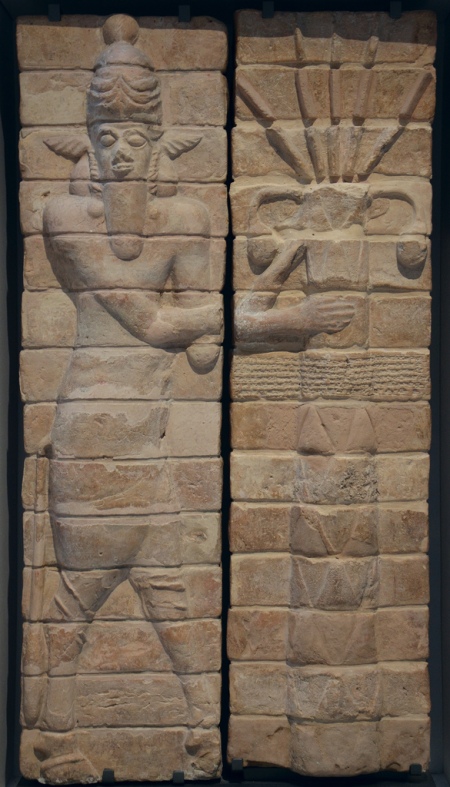
Fragments of decoration from the Temple of Inshushinak, tutelary god of Susa, depicting a bull man and palm tree, from Suse (Iran), around 1150 BC.
Fragments of decoration from the Temple of Inshushinak, tutelary god of Susa, depicting a bull man and palm tree
Around 1150 BC
From Suse (Iran).
Relief depicting a hunting scene in a chariot which decorated a wall in the palace of Maradesh, king of Melid, Neo-Hittite period, 9th century BC, from Malatya (Turkey).
Relief depicting a hunting scene in a chariot which decorated a wall in the palace of Maradesh, king of Melid
Neo-Hittite period, 9th century BC
From Malatya (Turkey).
Engraved cippus surmonted by a head representing the Egyptian deity Bes, protector of households, around 750-600 BC, from Larnaca (Cyprus).
Engraved cippus surmonted by a head representing the Egyptian deity Bes, protector of households
Around 750-600 BC
From Larnaca (Cyprus).
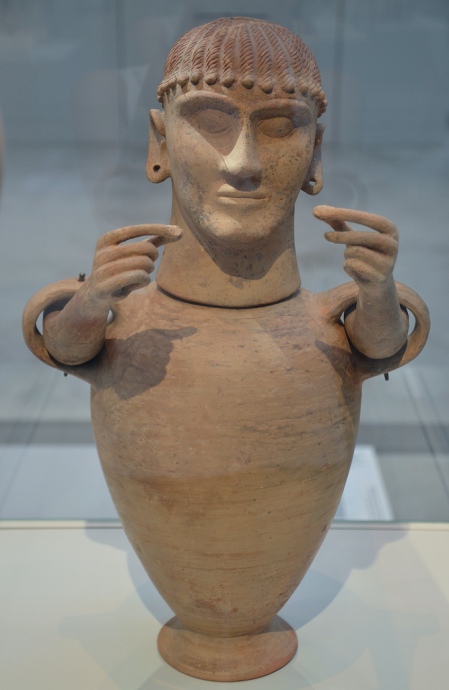
Etruscan cinerary urn with a female head and articulated arms, from Chiusi (Italy), around 550-500 BC.
Etruscan cinerary urn with a female head and articulated arms
From Chiusi (Italy)
Around 550-500 BC.
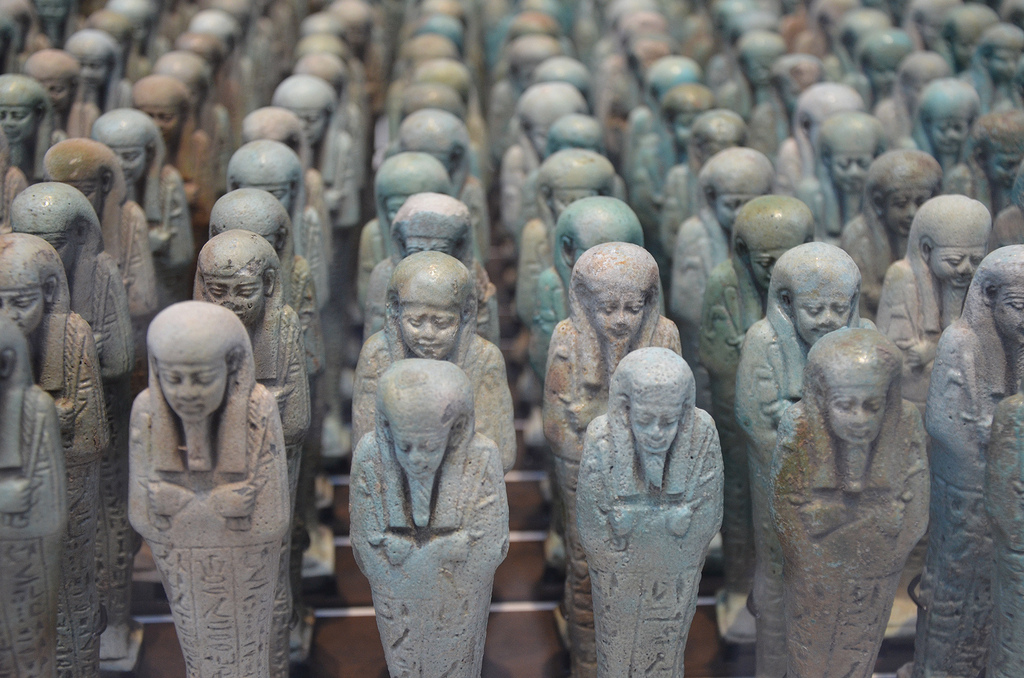
Troop of funerary servant figures (shabtis) in the name of Neferibreheb, around 500 BC, from Memphis (Egypt).
Troop of funerary servant figures (shabtis) in the name of Neferibreheb
Around 500 BC
From Memphis (Egypt).
Terracotta statuette of Nike, the personification of victory, from Myrina (Turkey), around 190 BC.
Terracotta statuette of Nike, the personification of victory
Around 190 BC
From Myrina (Turkey).
Fragment of a fresco depicting a woman beside a fawn (Bacchic cult scene?), from Pompeii, around 30-50 AD, Louvre Lens
Fragment of a fresco depicting a woman beside a fawn (Bacchic cult scene?)
From Pompeii
Around 30-50 AD.
The Praetorians Relief from the Arch of Claudius, once part of the Arch of Claudius erected in 51 AD to commemorate the conquest of Britain.
The Praetorians Relief from the Arch of Claudius, once part of the Arch of Claudius erected in 51 AD to commemorate the conquest of Britain
From Rome (Italy).
Statue of Hermaphroditus, Louvre Lens, son of Hermes and Aphrodite, around 130-150 AD, from Egypt, France
Statue of Hermaphroditus, Louvre Lens, son of Hermes and Aphrodite
Around 130-150 AD
From Egypt.
Tauroctony relief representing Mithras sacrificing the bull (CIMRM 415-416), around 100-200 AD, from the Capitoline Hill in Rome (Italy).
Tauroctony relief representing Mithras sacrificing the bull
Around 100-200 AD
From the Capitoline Hill in Rome (Italy).
Cuirassed statue of Marcus Aurelius, from Gabies (?), end of the 2nd century AD.
Cuirassed statue of Marcus Aurelius
From Gabies? (Italy)
End of the 2nd century AD.
Fragment of a mosaic floor depicting a preparation of a banquet, found in Carthage, around 180-190 AD, Louvre Lens
Fragment of a mosaic floor depicting a preparation of a banquet
Found in Carthage
Around 180-190 AD.
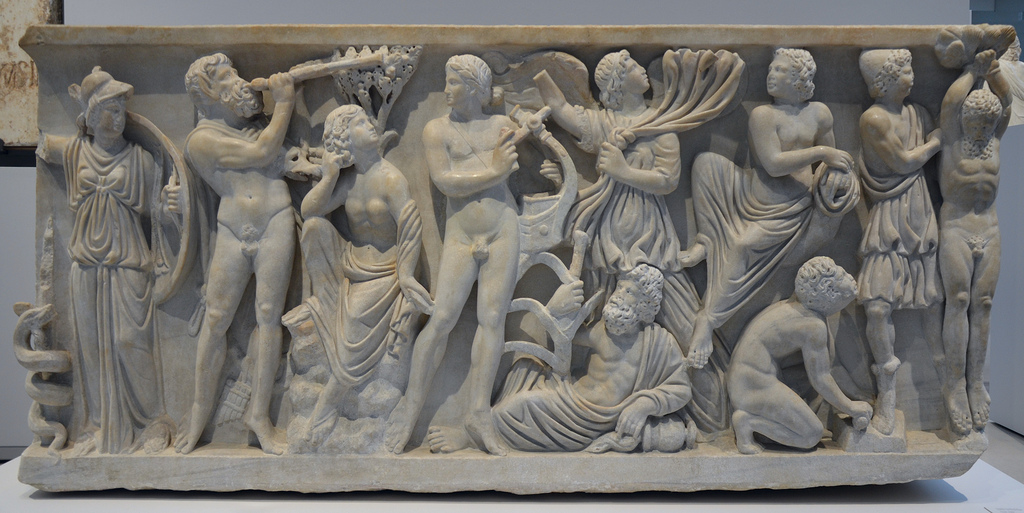
Sarcophagus depicting a musical context between the god Apollo and the satyr Marsyas, around 290-300 AD, from Cosa (Italy).
Sarcophagus depicting a musical context between the god Apollo and the satyr Marsyas
Around 290-300 AD
From Cosa (Italy).

See more images from the Louvre-Lens antique collections on Flickr

Links: