Madauros was an ancient Roman-Berber city and a former diocese of the Catholic Church, situated in the Roman province of Africa Proconsularis (formerly Numidia). It is located approximately 7 kilometres east of the modern village of M’Daourouch in present-day Algeria. Originally of Numidian origin, this settlement later became a Roman colony during the Flavian period. Among the visible monuments at Madauros are the Roman forum, theatre, two bath complexes, numerous houses, churches, a Byzantine fortress, and significant oil-pressing facilities.
Madauros was a Numidian city ruled successively by African kings Syphax (r. 215-203 BC) and Massinissa (r. 202-148 BC). During the Flavian period, a colony of veterans was established there, known as Colonia Flavia Augusta Veteranorum Madaurensium, as indicated by an inscription found in the forum (ILAlg. 2152).
The Platonist philosopher and rhetorician Lucius Apuleius (circa 124-170), best known for his work The Golden Ass, was born in Madauros. The city was a centre of learning in the region and was particularly famous for its educational institutions. Saint Augustine of Hippo studied at the “schola” at Madauros in the 4th century AD.
In the said marketplace [of Madauros], Mars is represented in two images, the one unarmed, the other armed, and a statue of a man placed over against these restrains with three extended fingers the fury of their demonship from the injuries which he would willingly inflict on the citizens.
Saint Augustine, Letter 17, tr. P. Schaff
Madauros became the see of a Christian diocese in the 4th century AD. Several notable bishops hailed from Madauros, including Antigonus, who presided over the 349 Council of Carthage, Placentius, and Pudentius, who was forced into exile alongside others present at the Synod of 484 due to the Vandal king Huneric.
PORTFOLIO
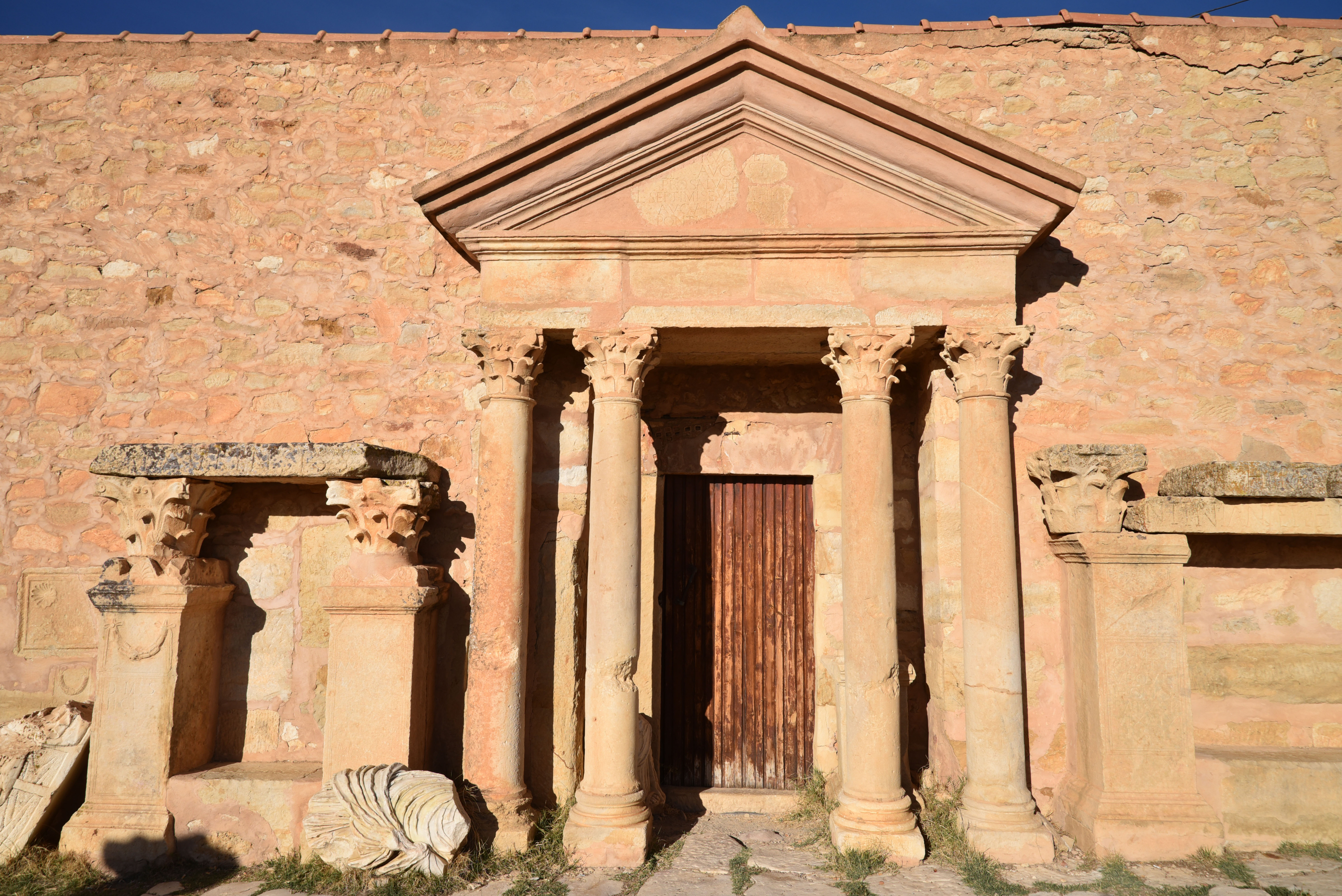
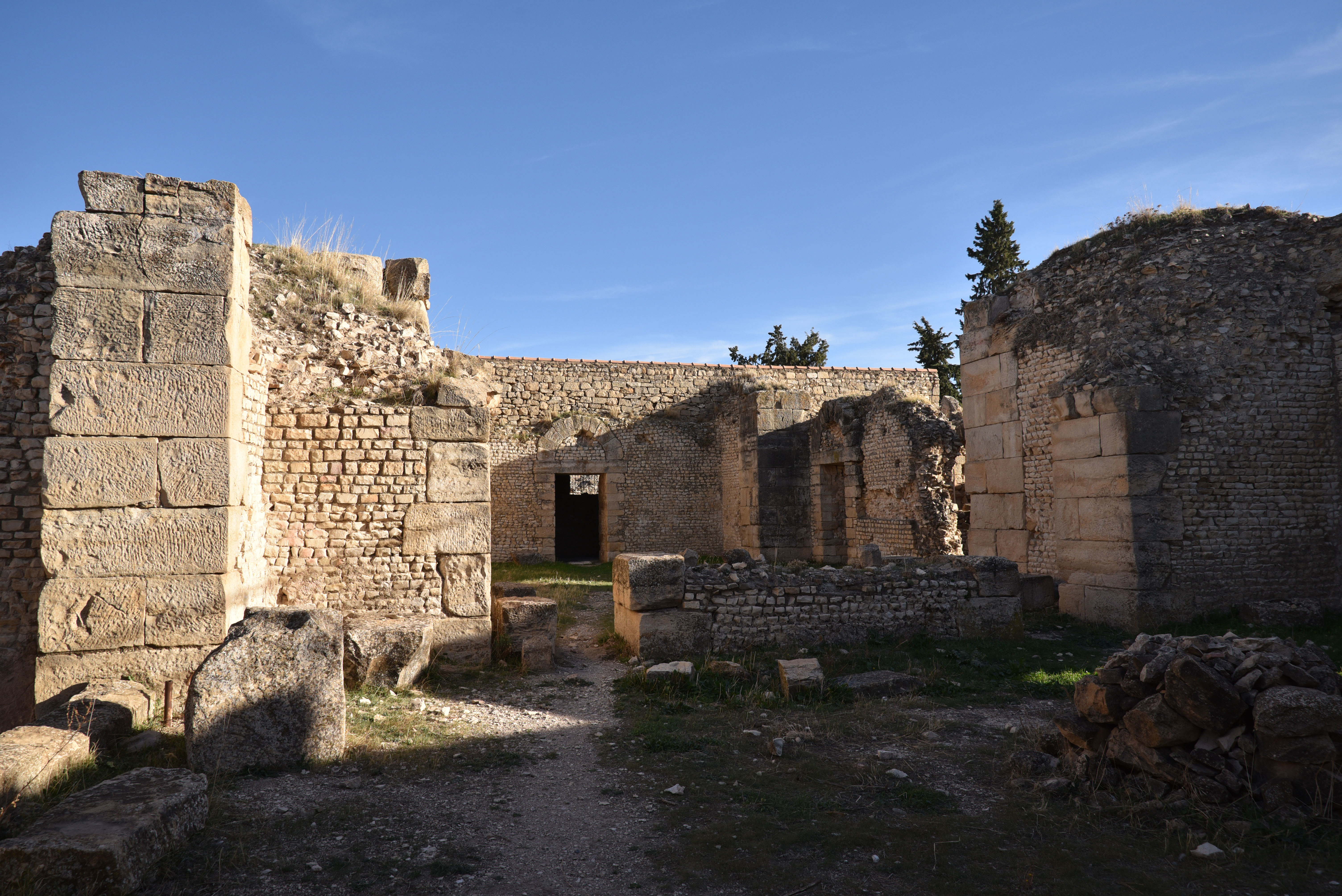
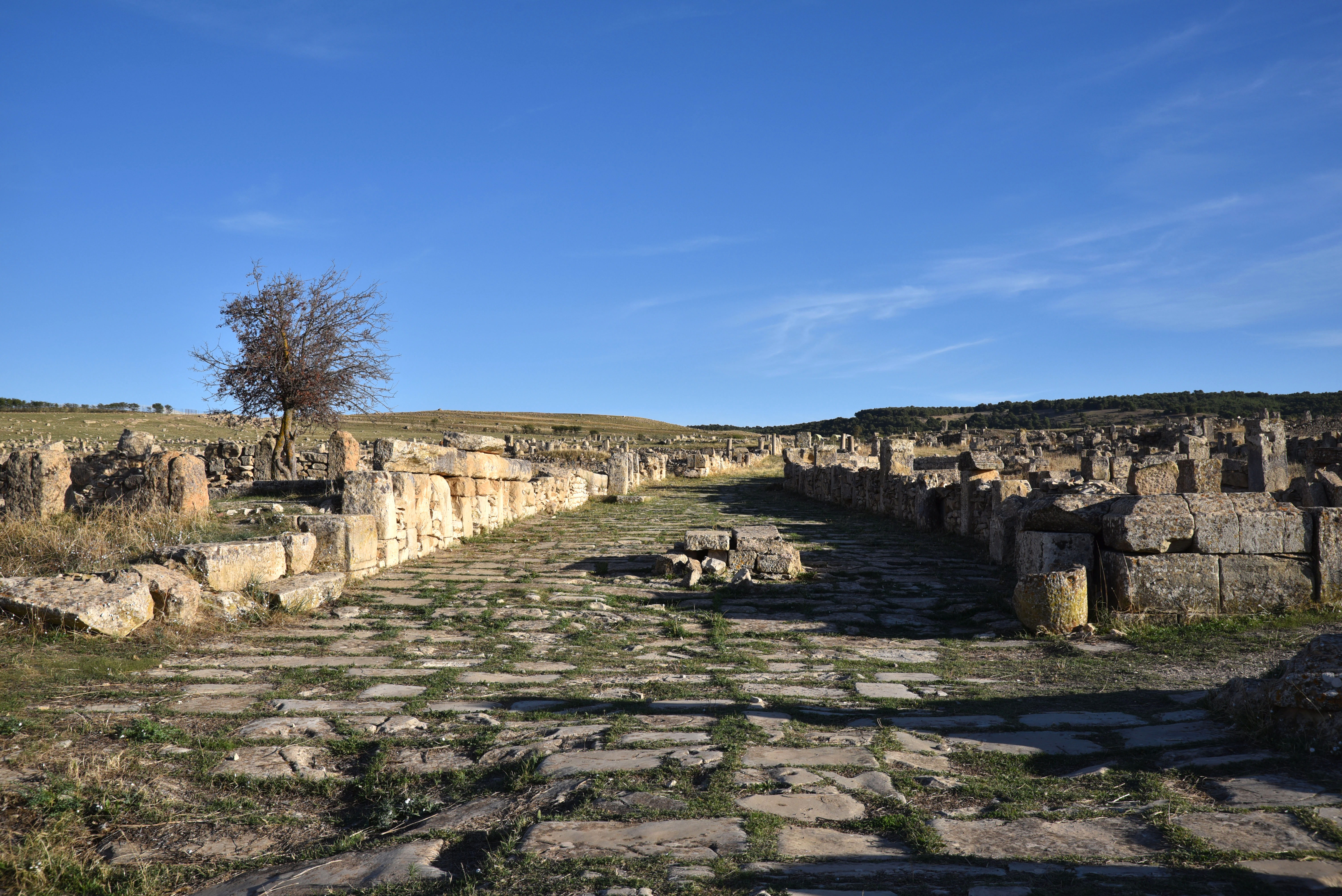
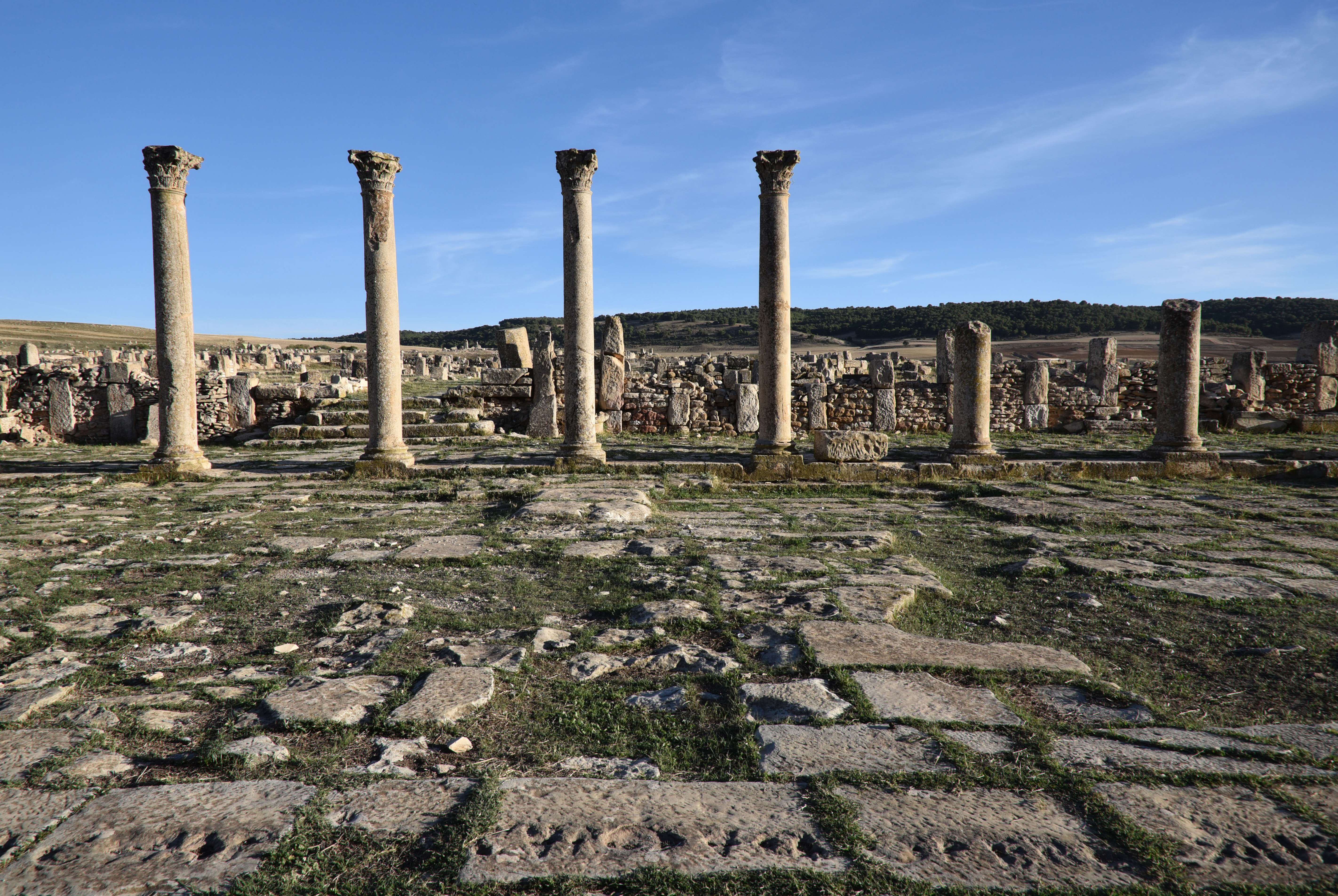
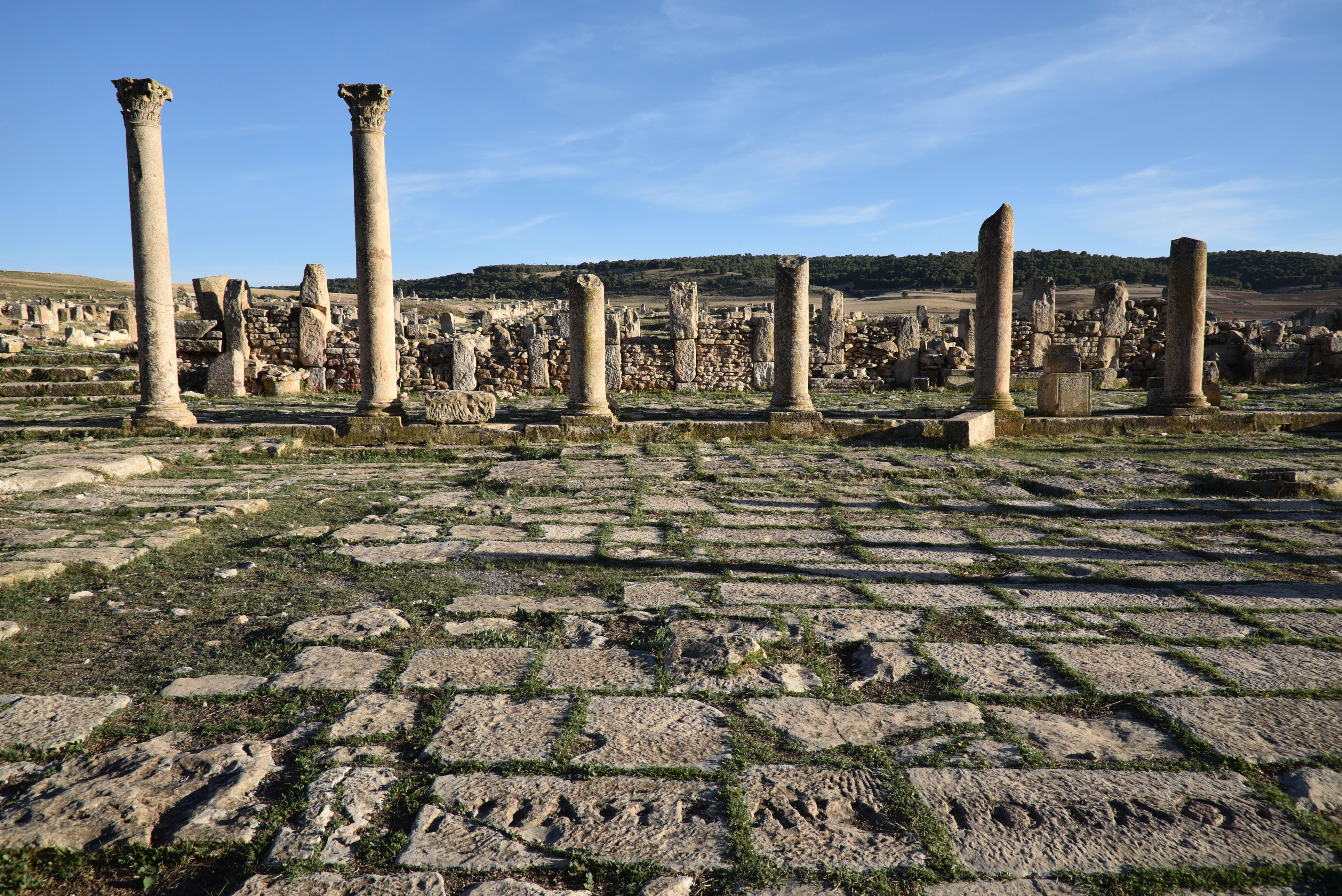
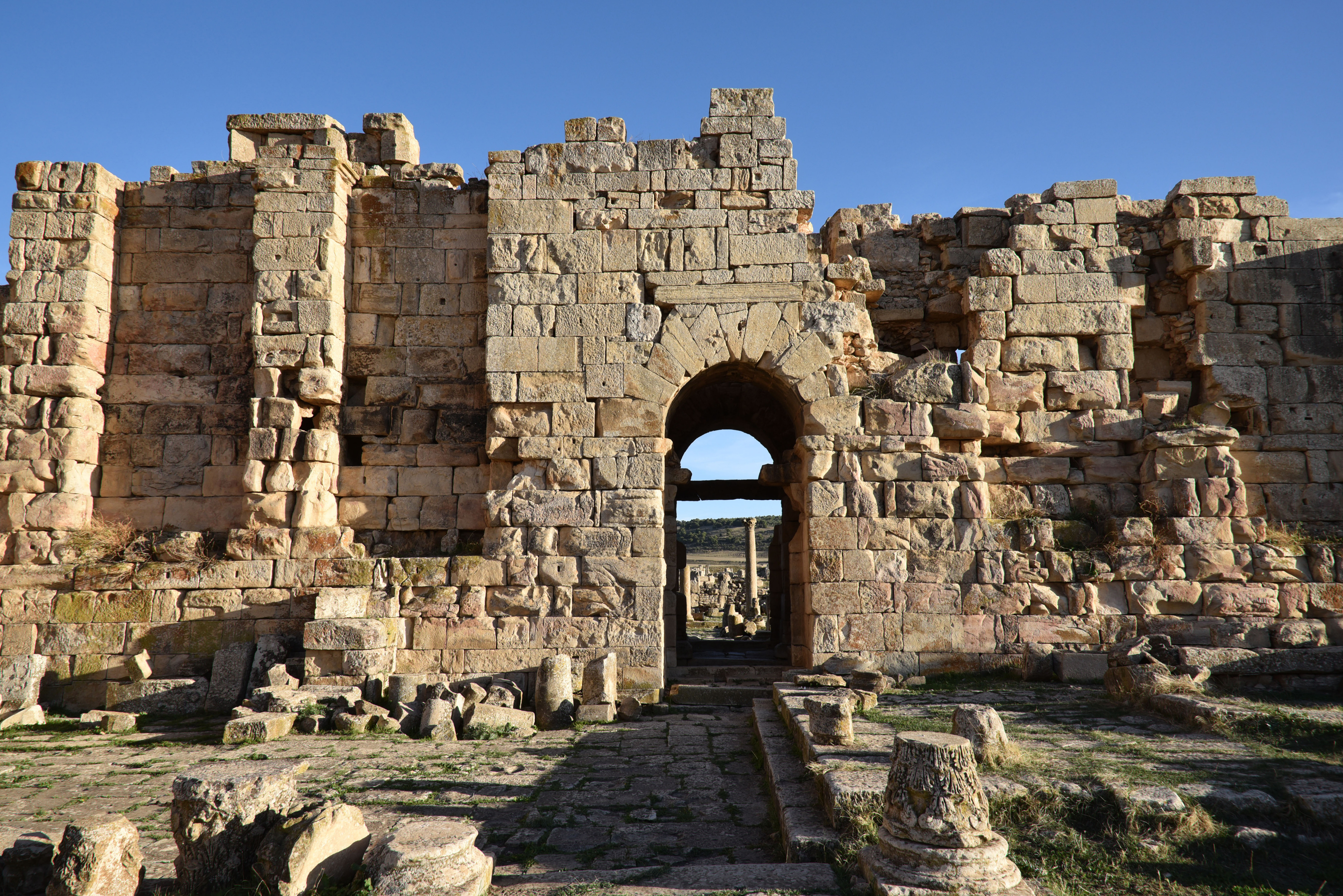
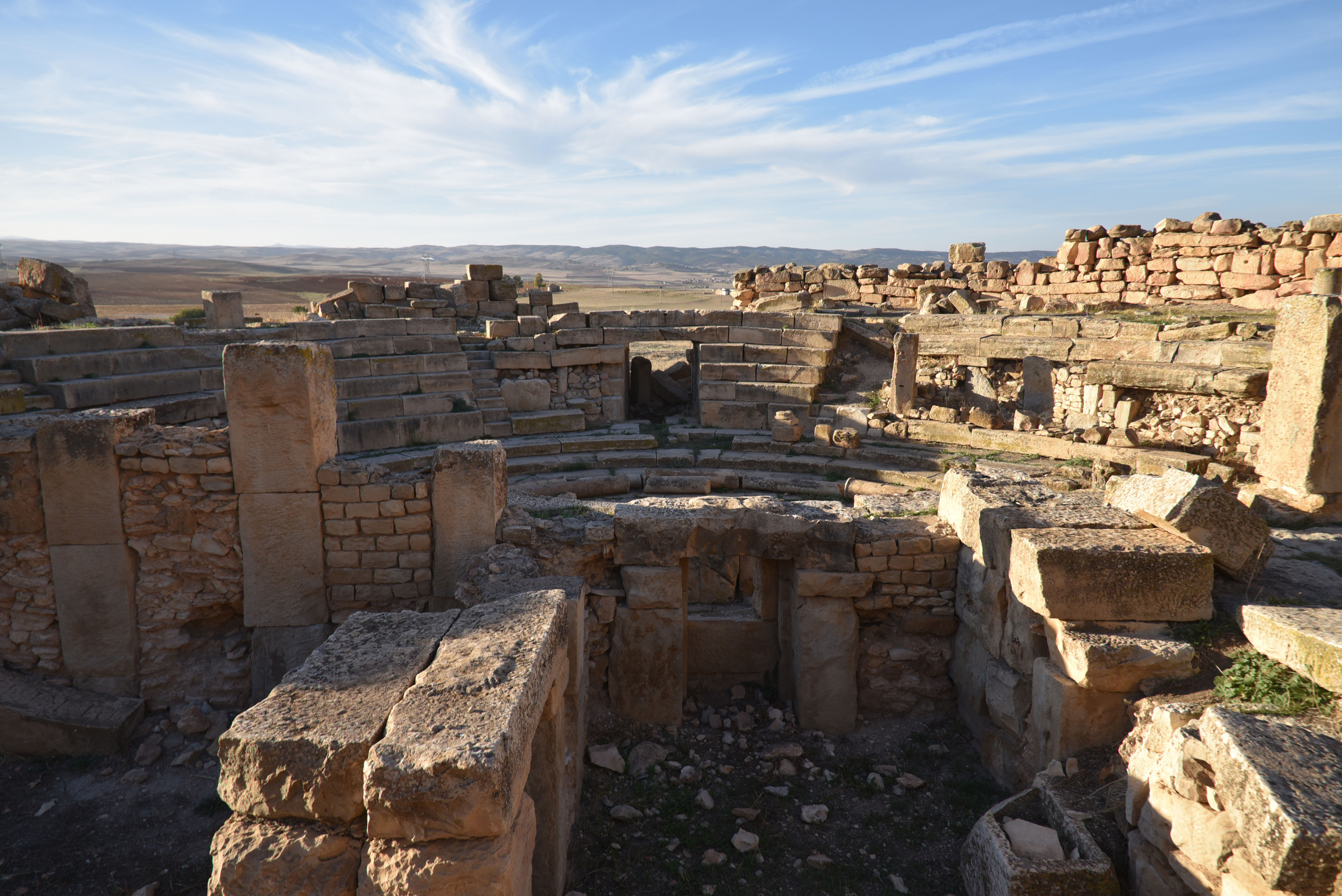
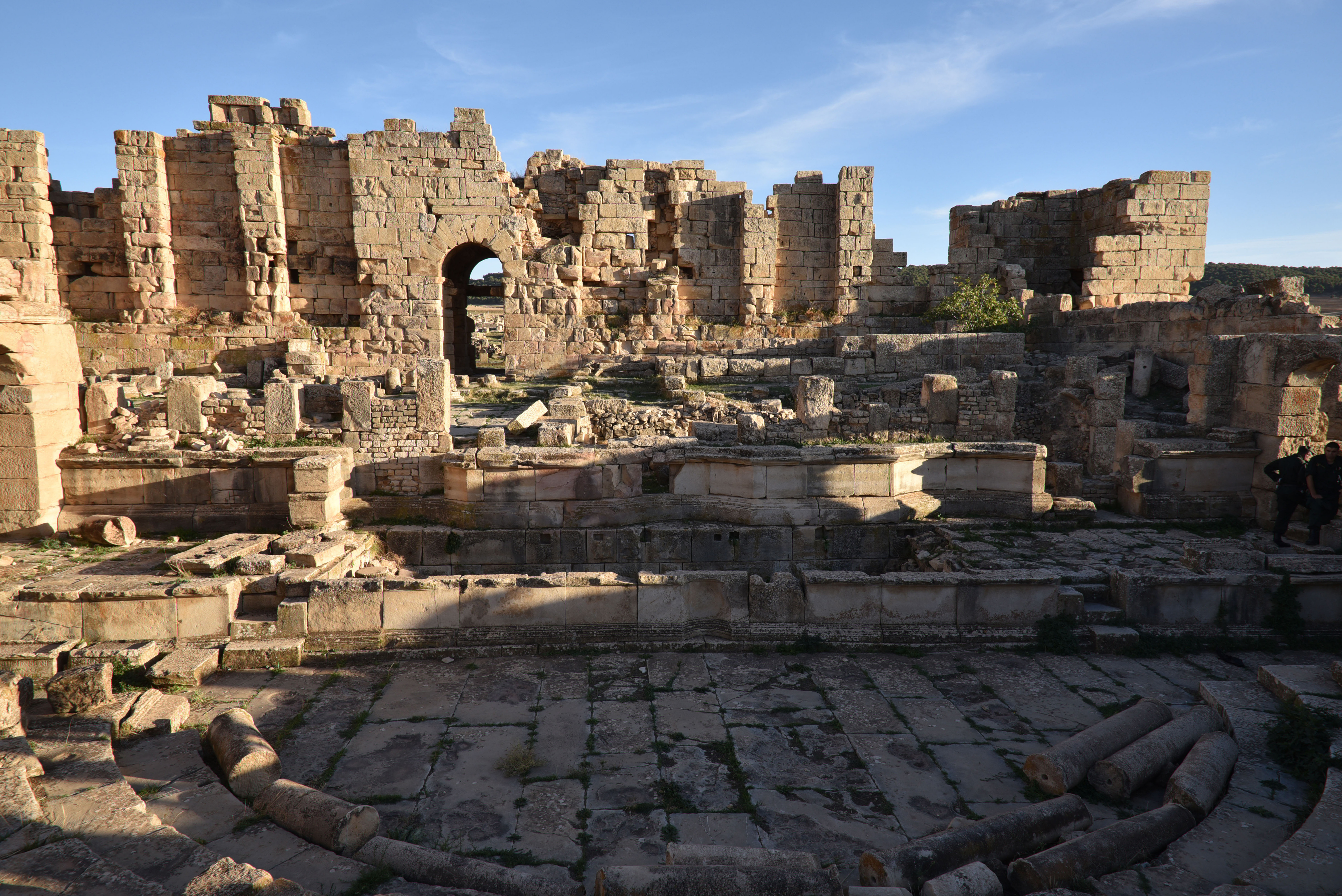
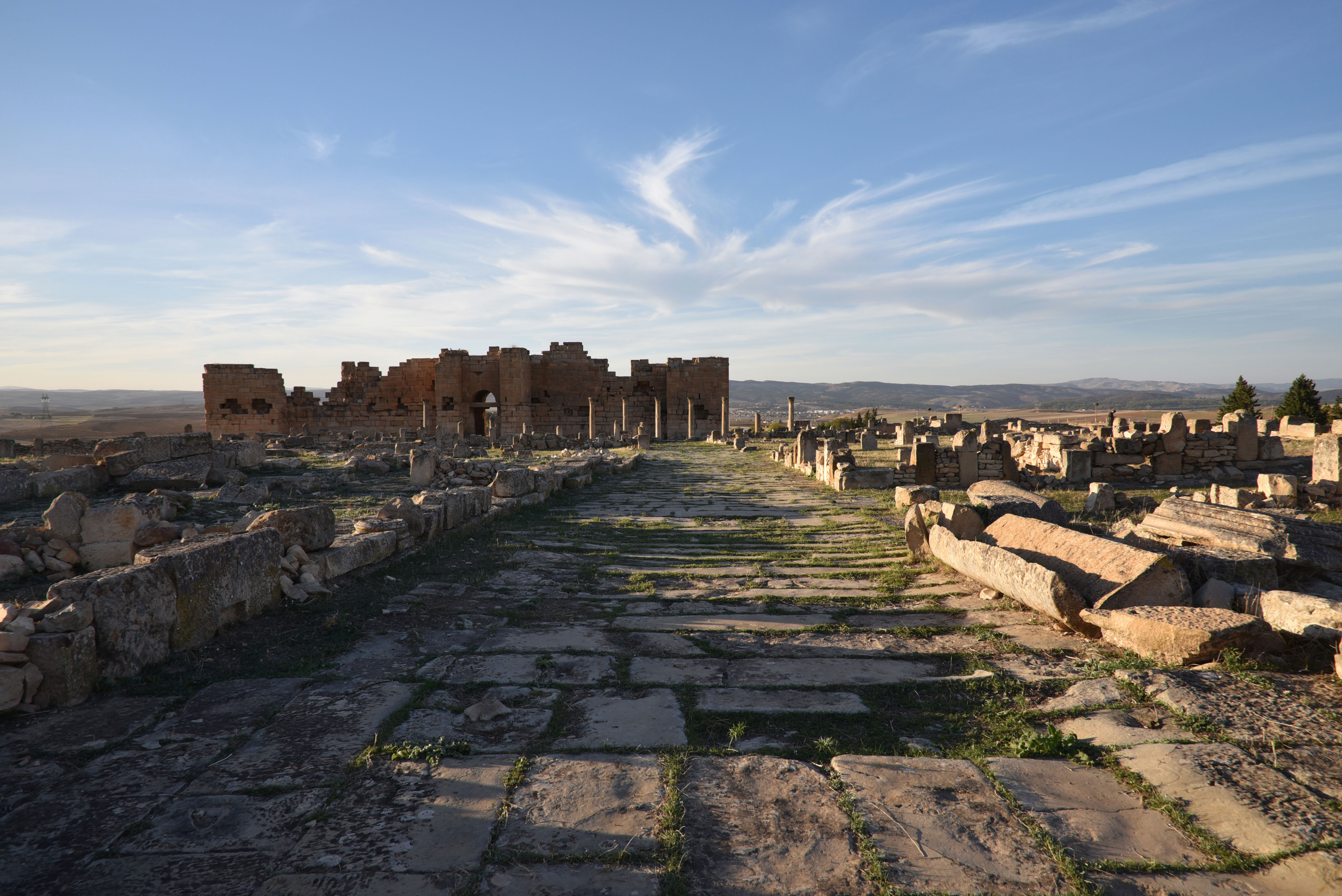
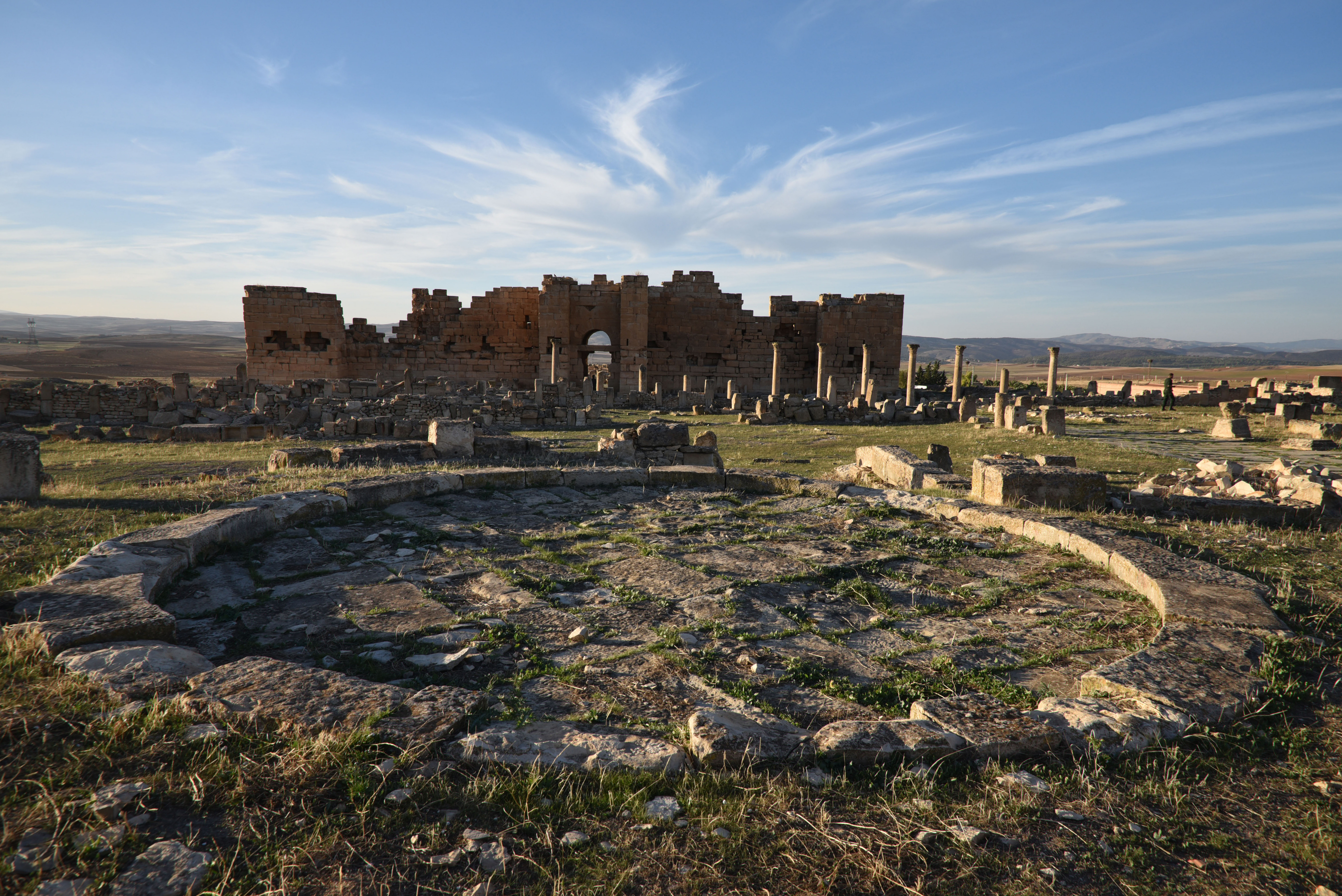
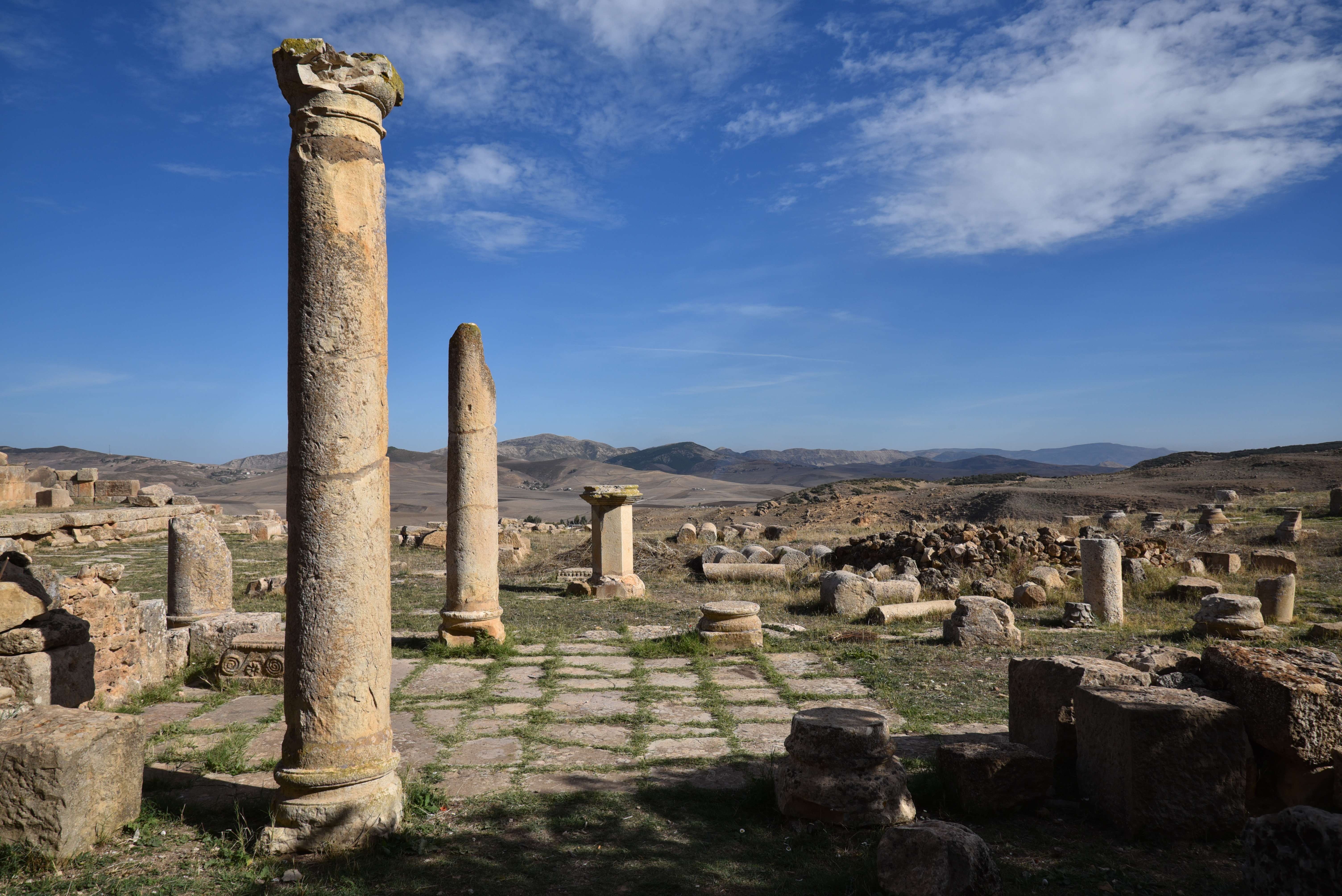
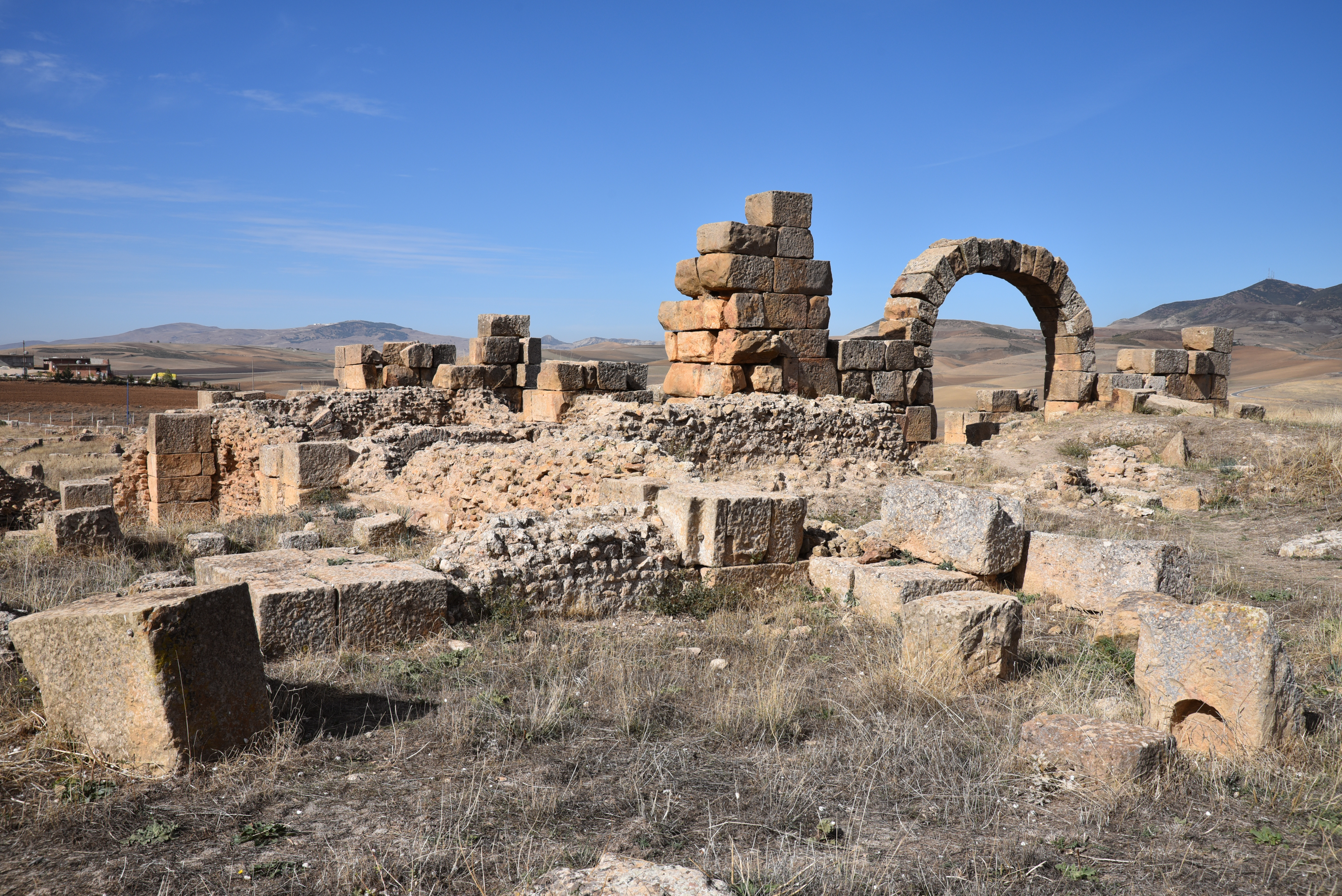
A paved street running north-south through the city.Architectural fragments lining the paved street leading from the baths.Architectural fragments lining the paved street leading from the baths.The Winter Baths of the 3rd century AD located at the north edge of the site.The larger Summer Baths (39 x 41 m) are set only 20 metres from the Winter Baths. They possess the usual sequence of cold and heated rooms, as well as a large, semi-circular latrine.A church dating to the second half of the 5th century AD, adapted from an earlier building.An oilery among the houses, featuring pressing stones and receiving tanks.Receiving tank for oil in one of the oileries.The southern section of the street leading from the baths.Overview of the ruins of Madauros in the southern part of the site.The paved Forum, built on a terrace and surrounded by porticoes. The forum is rectangular, almost square (32.4 x 27 and 28.5 m).A refurbishment of the Forum’s paved surface was marked by an inscription that ran across its width in bronze letters. These letters have since been removed, leaving corresponding hollows in the paving slabs. The work, which cost 200,000 sesterces, was funded by a certain M. Aurelius (not the emperor).The bases of statues found in the Forum remind us of those mentioned by Saint Augustine. One appears to have supported a statue of the writer Apuleius: “To the Platonic philosopher, their ornament, the citizens of Madauros set this up by decree of the decurions at public expense.”The walls of the Byzantine Fortress, constructed over the Forum in AD 535 as a rectangular building with square corner-towers and a central gate-tower.The small theatre was built during the Severan period, thanks to the generosity of the flamen M. Gabinius Sabinus, at a cost of 375,000 sesterces.The theatre was built in the immediate vicinity of the forum, against its west portico, and had a seating capacity of 1,000.View towards the Forum and the Byzantine Fortress.The Macellum (market), with the Forum and the Byzantine fortress in the background. This market had a circular, paved central space, surrounded by a portico sheltering radial market stalls.
Blas de Roblès, Jean-Marie; Sintes, Claude; Kenrick, Philip. Classical Antiquities of Algeria: A Selective Guide (p. 127). Society for Libyan Studies. pp. 527-537
Thubursicum Numidarum is the largest archaeological site in eastern Algeria, located at an altitude of 950 metres in a mountainous region near the source of the Medjerda River. The ruins of Thubursicum include a well-preserved Roman theatre, regarded as one of the most beautiful and best-preserved in North Africa. The site also features a spring complex, two forums, a town gate, and public baths.
Thubursicum Numidarum was originally a settlement of an indigenous Berber tribe of Numidia. Under Roman rule, the town became a municipality around AD 100, elevated by Trajan (Municipium Ulpium Traianum Augustum Thubursicu Numidarum), and its inhabitants enrolled in the Papiria tribe. It was later designated as a colony before AD 270.
Thubursicum became the seat of a bishopric, and Saint Augustine visited it on two occasions. The town became part of the Vandalic Kingdom of Carthage from 435 to 534. It was reconquered in the Vandalic War by the East Roman Empire (Byzantine Empire) in 534, who built a Byzantine-style chapel and small forts.
PORTFOLIO
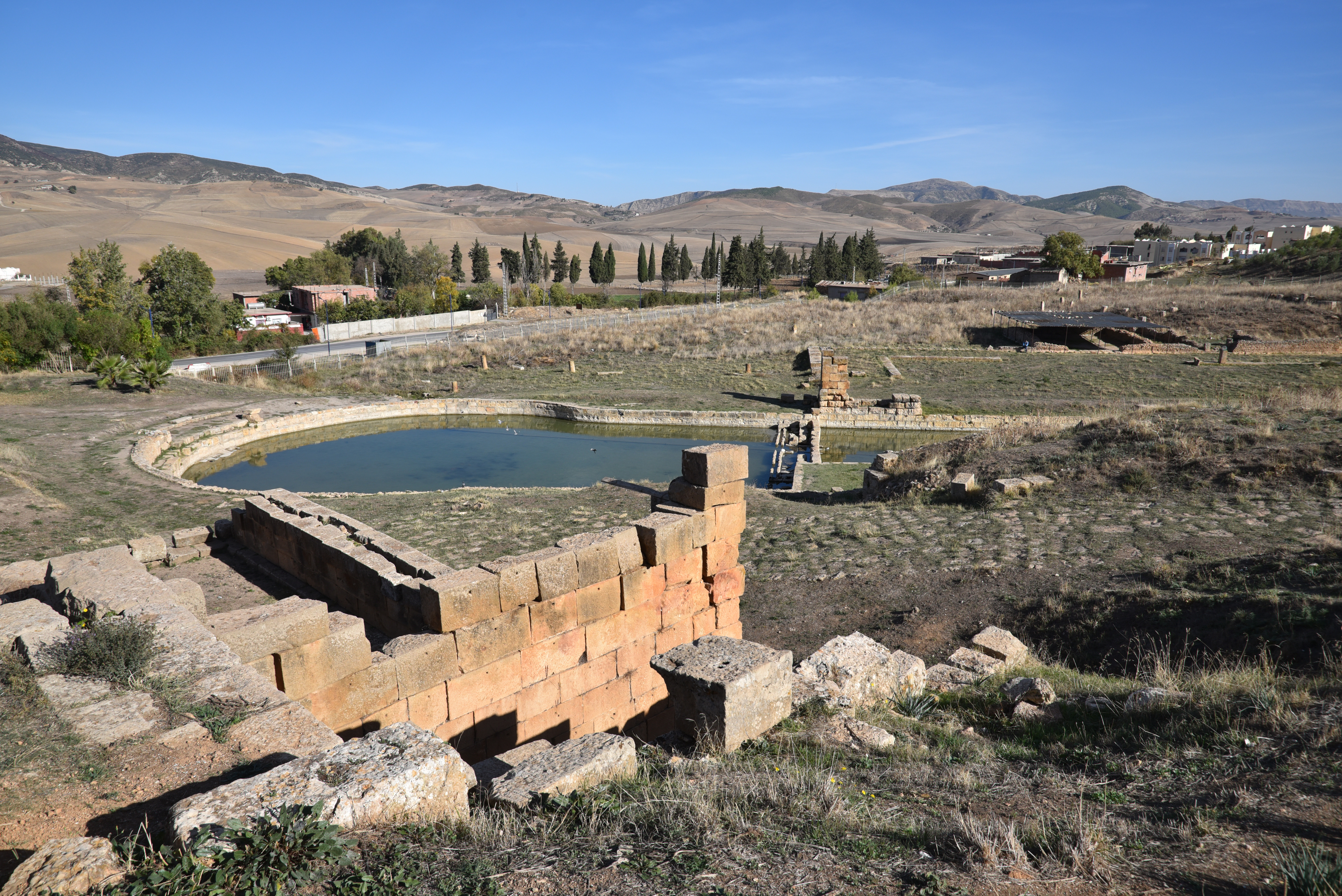
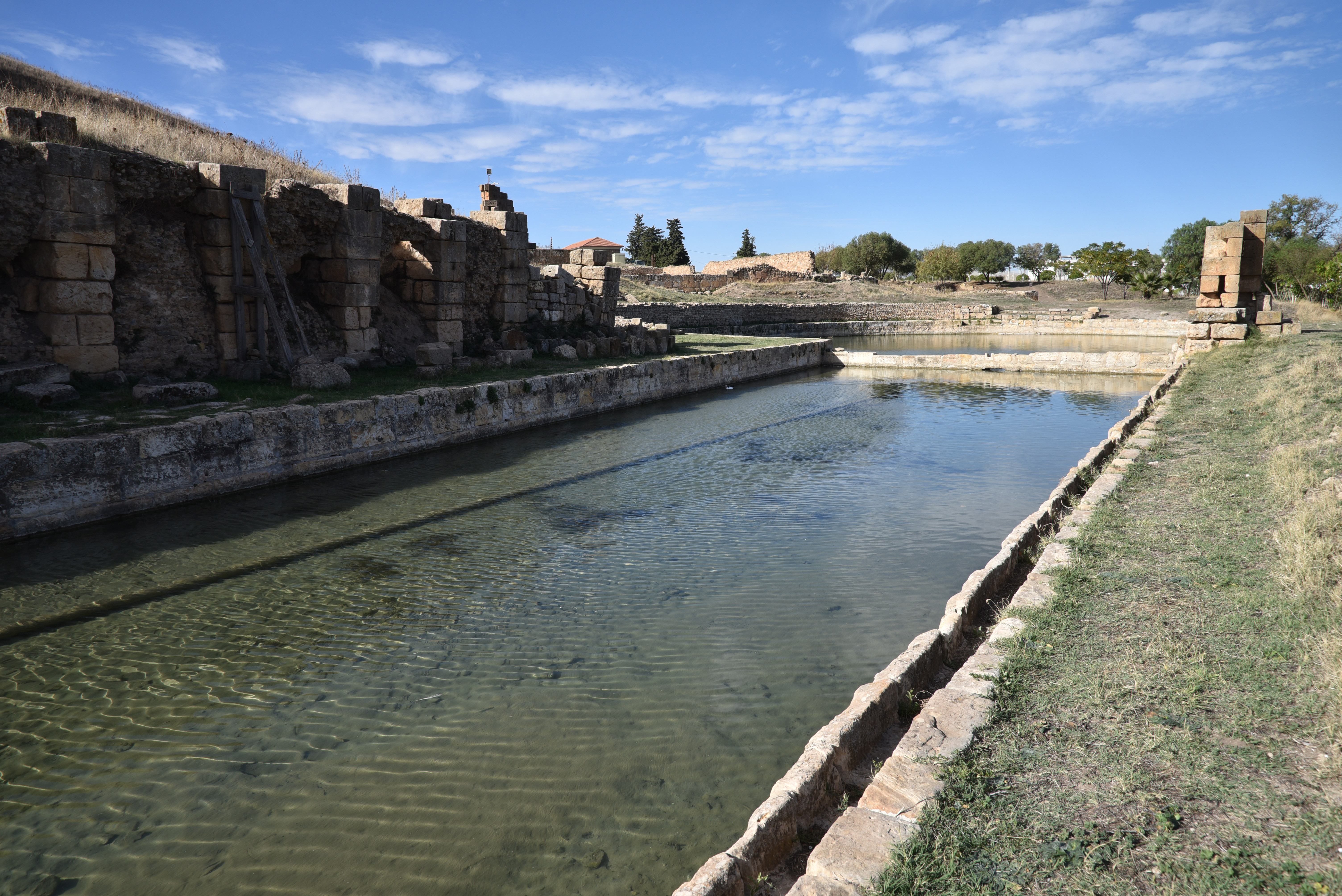
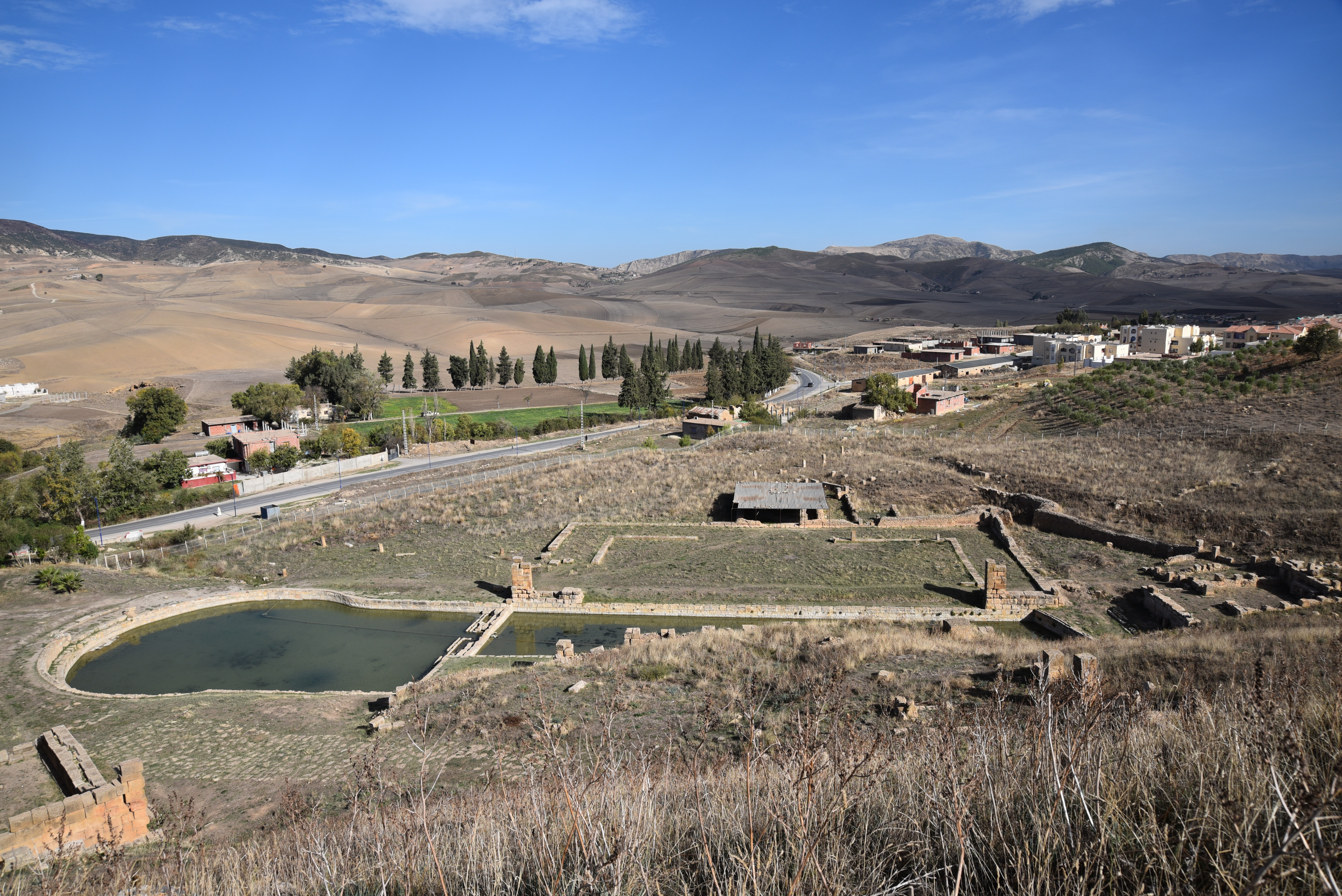
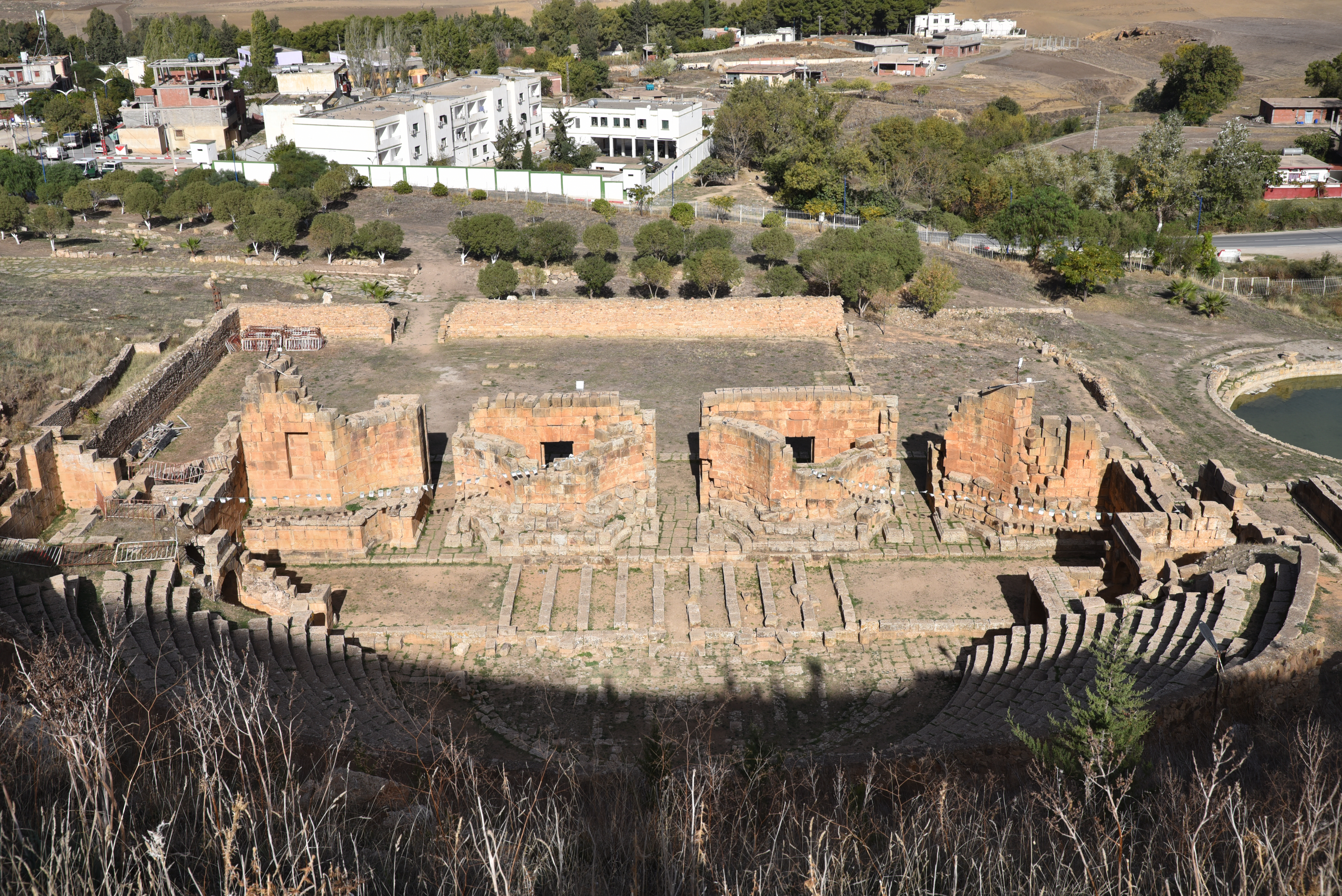
The Roman theatre, built on a natural slope in the 2nd or 3rd century AD (Trajanic to Severan).The Roman theatre of Thubursicum is considered one of the most beautiful and best-preserved ancient theatres in North Africa.The Roman theatre may not have been completed as intended due to the lack of traces of columns or elements of the entablature.Immediately to the NE of the theatre is the Spring Complex, a monumental sanctuary with two water basins built to celebrate a spring regarded in antiquity to have been the source of the Bagradas River, which flows into the Mediterranean Sea in Tunisia, between Utica and Carthage.On the north side of the Spring Complex was a colonnaded courtyard with a central temple containing a statue of Neptune (now in the Roman Theatre of Guelma).The Spring Complex.
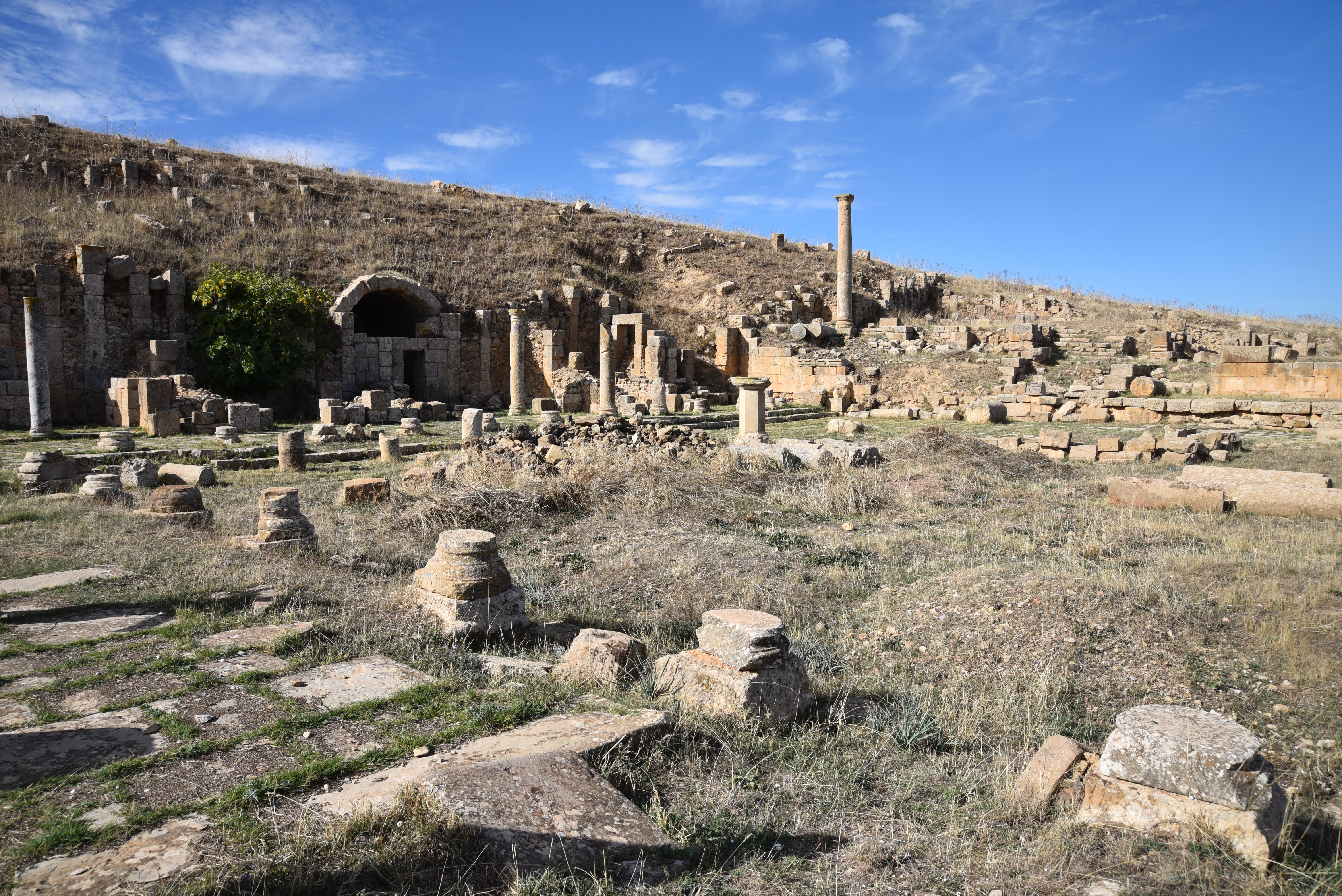
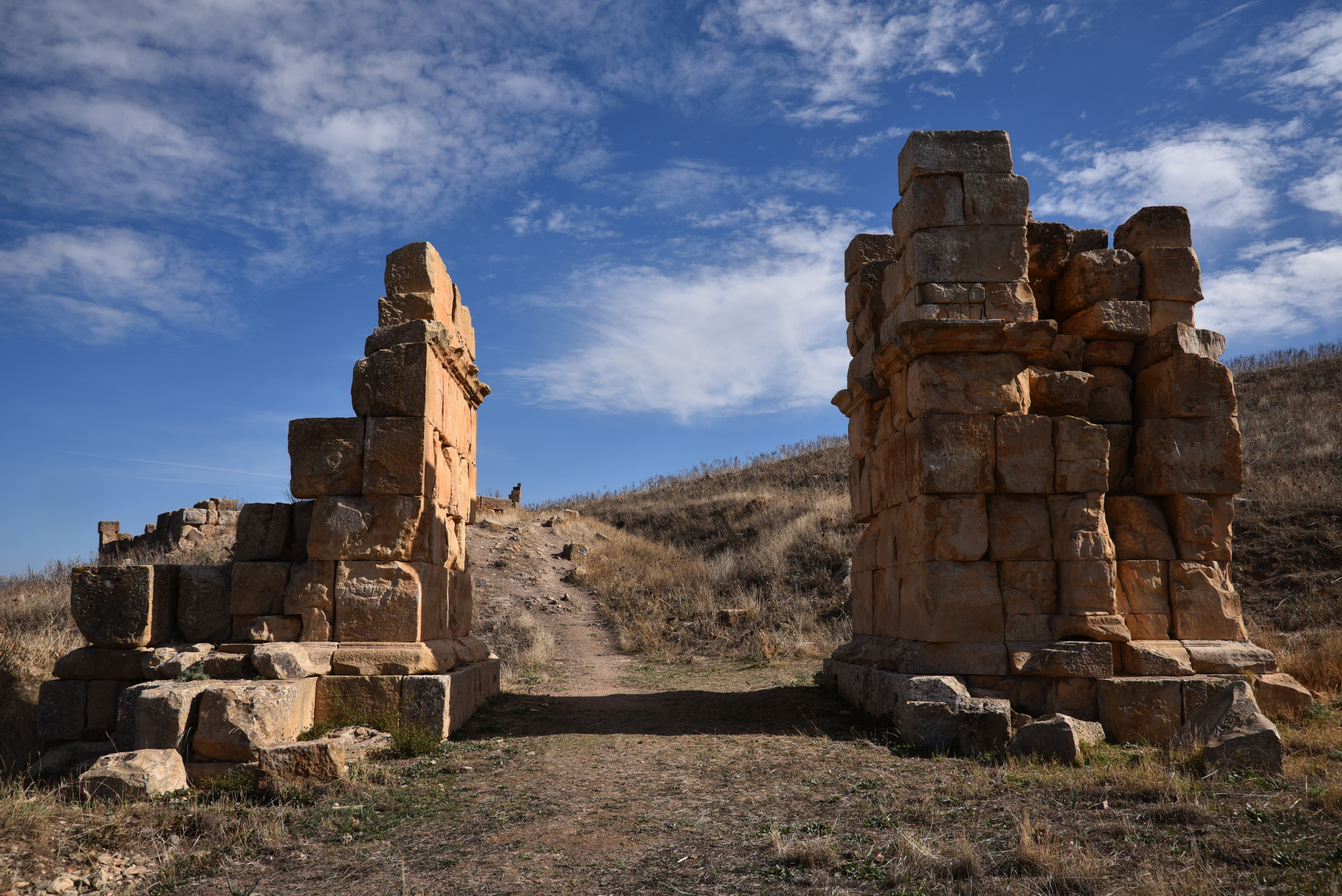
Overview of the Spring Complex.View over the Roman Theatre.View over the New Forum and Public Baths.The Old Forum, approximately 35 m square, features colonnades on three sides, shops, a temple dedicated to the Spirit of the Numidian People, a Capitolium, and a Basilica.The shops bordering the Old Forum.The Old Forum from the northeast, looking towards the temple dedicated to the Spirit of the Numidian People (Genius Gentis Numidiae).The Old Forum from the east, looking towards the Capitolium. The square measures 21.7 m on the east and west sides, 29.3 m on the south, and 20.8 m on the north.The paving of the Old Forum was repaired between 323 and 333. Only a generation later, the complex was superseded by a New Forum at the bottom of the hill.The single-bay monumental arch spanning the road leading from the Old Forum to the New Forum.View towards the New Forum and Public Baths.The remains of public baths.The remains of public baths.The cisterns that provided water to the two bathhouses in the vicinity. They are monumental water reservoirs with five parallel vaulted chambersView towards the New Forum, Public Baths, Macellum and Byzantine Fort.The sign of Tanit on a stone. The symbol of the Carthaginian goddess was a triangle representing the human body, surmounted by a circle representing the head, and separated by a horizontal line which represents the hands.The New Forum, a late antique forum constructed between AD 360 and 370 with a rectangular piazza and a Macellum.The Macellum of the New Forum, a rectangular market building with stalls around a colonnaded courtyard.The monumental public bath complex on the west side of the New Forum. It was later refurbished to be used as a Byzantine fort.
Blas de Roblès, Jean-Marie; Sintes, Claude; Kenrick, Philip. Classical Antiquities of Algeria: A Selective Guide (p. 127). Society for Libyan Studies. pp. 512-526
















 following hadrian photography