Bassae

Bassae is an archaeological site in Oichalia, a municipality in the northeastern part of Messenia, Greece. In classical antiquity, it was part of Arcadia. Bassae lies near the village of Skliros, northeast of Figaleia. It is famous for the well-preserved mid- to late-5th century BC Temple of Apollo Epikourios. Bassae was the first Greek site to be inscribed on the World Heritage List (1986).

The Temple of Apollo Epikourios (‘Apollo the Helper’) was built in a quiet and isolated site, high on a rocky ridge of Mount Kotylion (1,131 metres) at Bassae in south-west Arcadia. The mountain is scored with ravines (bassai or bessai in ancient Greek), which gave the place the name “Bassae”.

Coordinates: 37° 25′ 47″ N, 21° 54′ 1″ E

Archaeological researches have determined that the site was in continuous use since the archaic period, the existing temple being the last of four on the site. The classical temple is thought to have been built between 430 BC and 400 BC. It is made of local grey limestone, while parts of the roof, the capitals in the cella and the sculptured decoration are made of marble. Like several other temples of Arcadia, the temple is aligned north-south, instead of the usual east-west, probably due to some local tradition or to the limited space available on the steep slopes of the mountain.

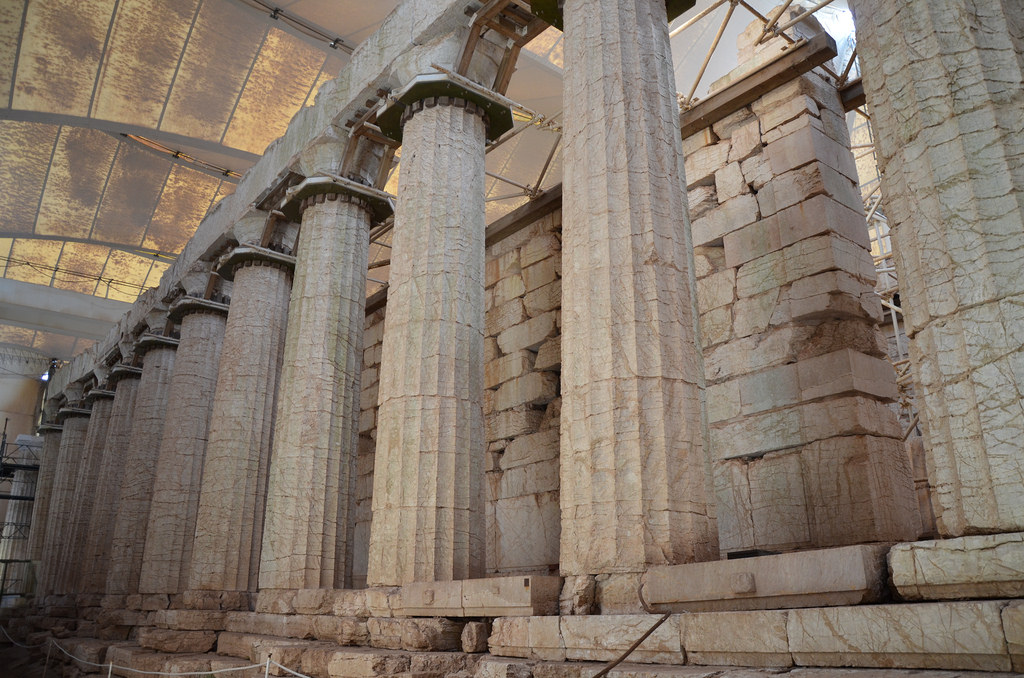
The temple is unique as it combines elements of the three architectural orders of antiquity (Doric, Ionic and Corinthian). Doric columns form the peristyle while Ionic columns support the porch and Corinthian columns feature in the interior. The Corinthian capital is the earliest example of the order found to date. The temple has six columns on the short side and fifteen on the long sides, instead of the period’s usual ratio 6 x 13. That feature gives the temple its characteristic elongated shape.

PORTFOLIO
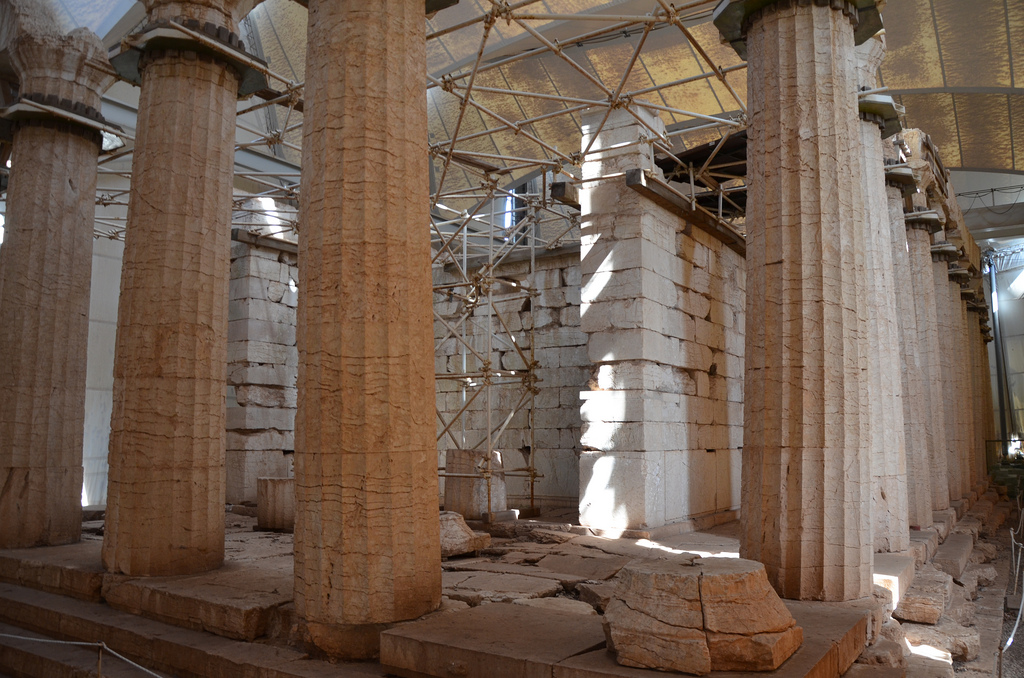
The Temple of Apollo Epikourios at Bassae, Opisthodomos and west colonnade, Arcadia, Greece
The Opisthodomos and west colonnade of the Temple of Apollo Epikourios.
The Temple of Apollo Epikourios at Bassae, Opisthodomos and west colonnade, Arcadia, Greece
The west colonnade.
The Temple of Apollo Epikourios at Bassae, Opisthodomos and west colonnade, Arcadia, Greece
The west colonnade.
The Temple of Apollo Epikourios at Bassae, Opisthodomos and west colonnade, Arcadia, Greece
The Opisthodomos, the back room of the Apollo Epikourios.

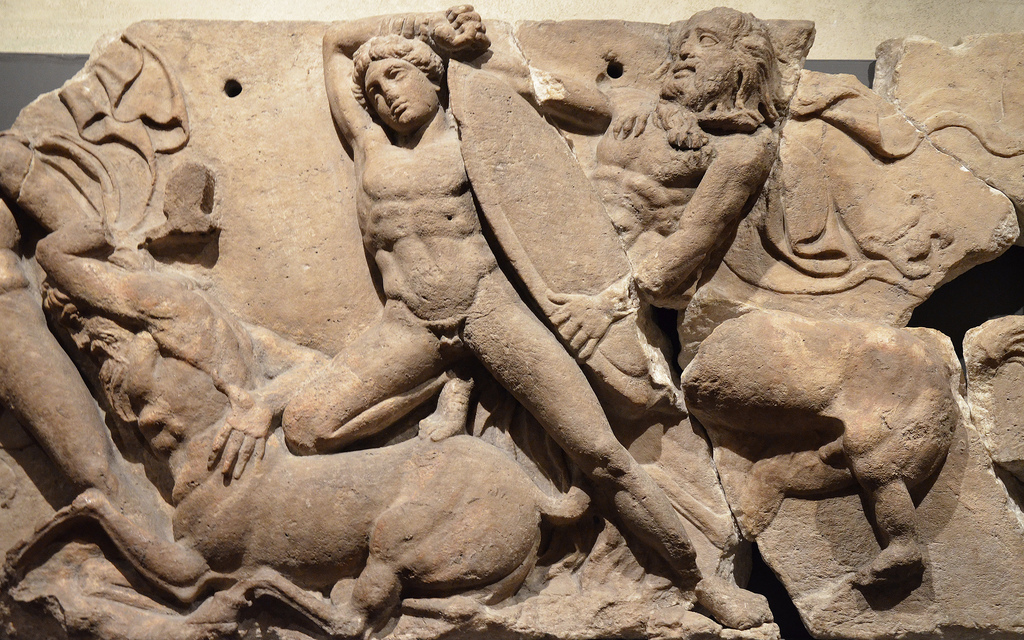
The most eminent decorative feature of the temple is the continuous Ionic frieze that run around the interior of the cella. On the south and south east sides of the frieze are arranged a series of slabs showing the battle fought by Herakles and the Greeks against the Amazons, the mythical race of warrior-women.
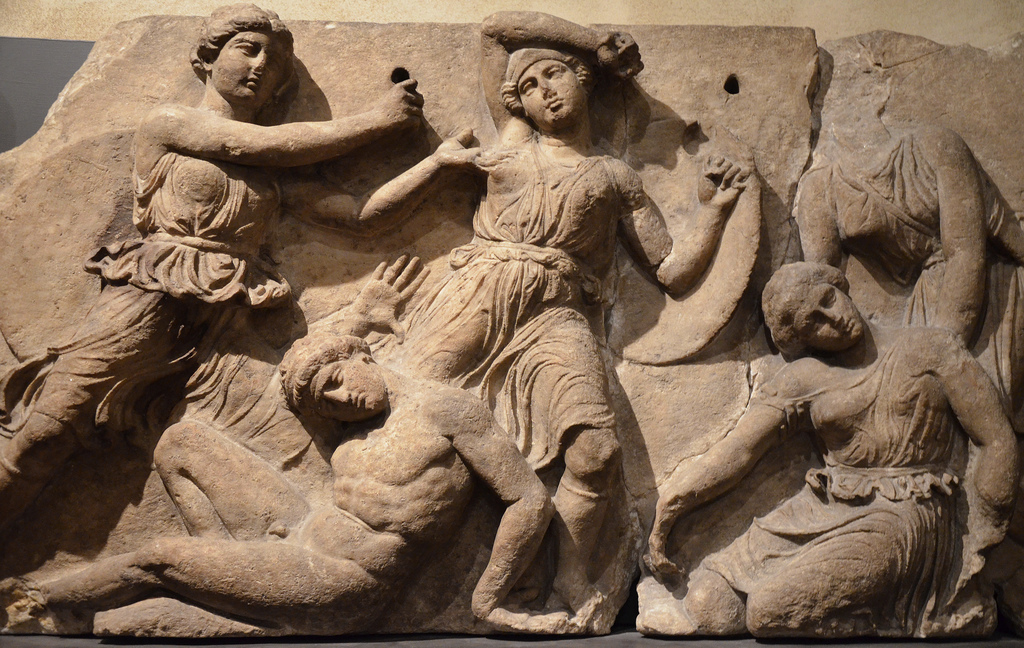
The Bassai sculptures, marble block from the frieze of the Temple of Apollo Epikourios at Bassae (Greece), Greeks fight Amazons, about 420-400 BC, British Museum
The Bassai sculptures, marble block from the frieze of the Temple of Apollo Epikourios at Bassae (Greece), Greeks fight Amazons, about 420-400 BC, British Museum.
The Bassai sculptures, marble block from the frieze of the Temple of Apollo Epikourios at Bassae (Greece), Lapiths fight Centaurs, about 420-400 BC, British Museum
The Bassai sculptures, marble block from the frieze of the Temple of Apollo Epikourios at Bassae (Greece), Lapiths fight Centaurs, about 420-400 BC, British Museum.

Links:

Sounion

Cape Sounion, with its famous temple dedicated to the god Poseidon, is one of Attica’s most beautiful natural areas and one of the most impressive archaeological sites in Greece. In ancient times it was called Sounias Akra and was connected with the legends of Athens and the Aegean. Cape Sounion is the spot where Aegeus, king of Athens, allegedly jumped off the cliff, thus giving his name to the Aegean Sea. It is also referred to as a sacred place in the Homeric epics. The site was chosen for its direct relationship with the sea since this was the last piece of land seen by ships departing from Athens and the first on returning from their voyage.

Coordinates: 37° 39′ 2.06″ N, 24° 1′ 28.51″ E

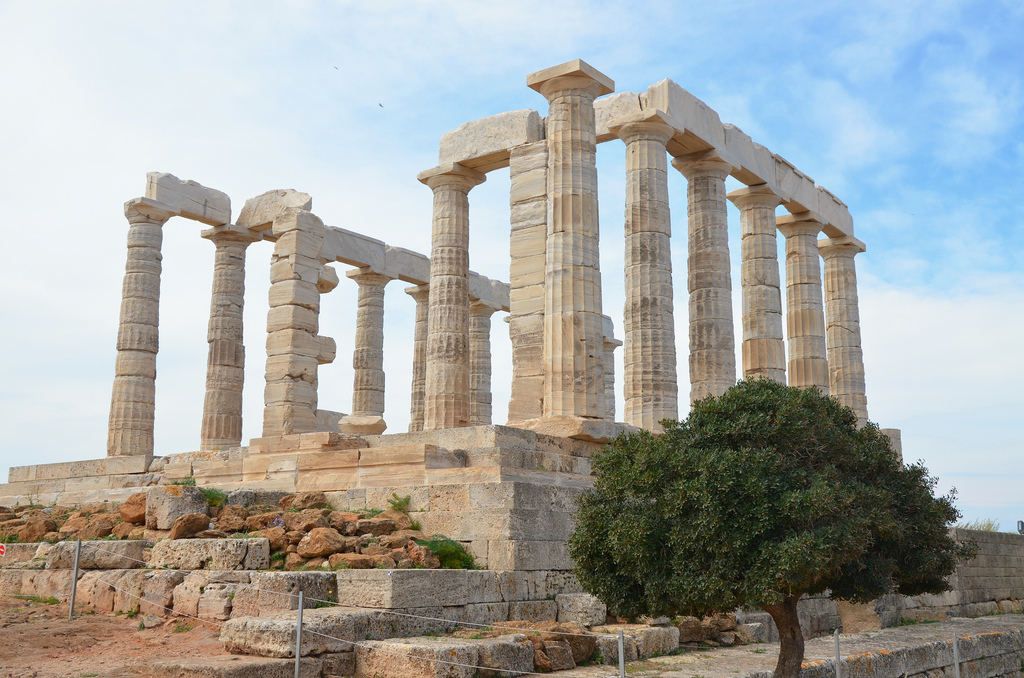
The site of Sounion has been inhabited since prehistoric times. From the 8th century BC, the cult of Poseidon and Athena started to develop. However, Persian troops destroyed the sanctuaries in 480 BC during Xerxes I’s invasion of Greece. In the mid-5th century BC, by order of Pericles, the Temple of Poseidon was rebuilt. The ruins now dominate the cape’s summit, with its 16 standing columns partly restored.

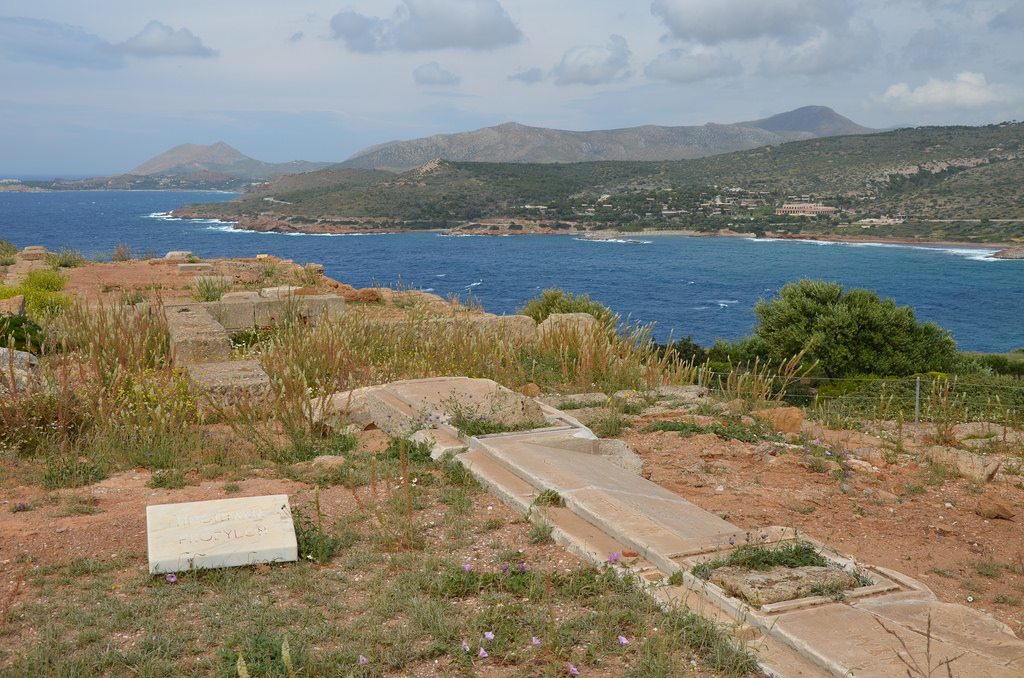
The sacred precinct (temenos) of Poseidon was entered through a monumental gateway of poros and marble to the north of the temple, the propylaea. Beyond, along the north side of the temenos, runs a stoa, some 40m long by 9m wide, divided into two aisles by an internal colonnade of six columns. A second smaller stoa occupied the west side of the precinct. The stoas served as accommodation for visitors to the sanctuary.

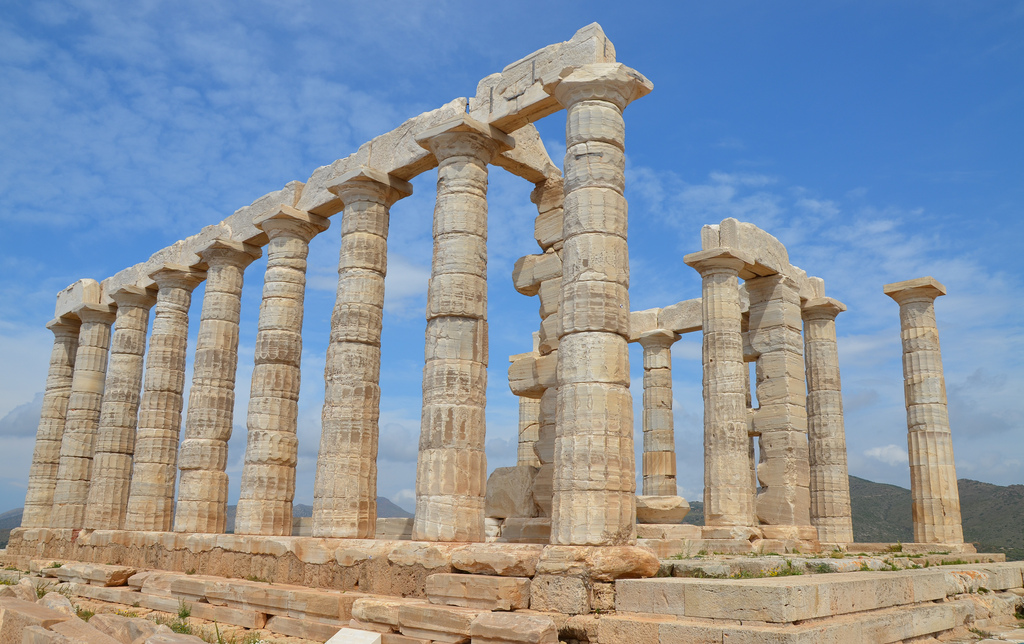
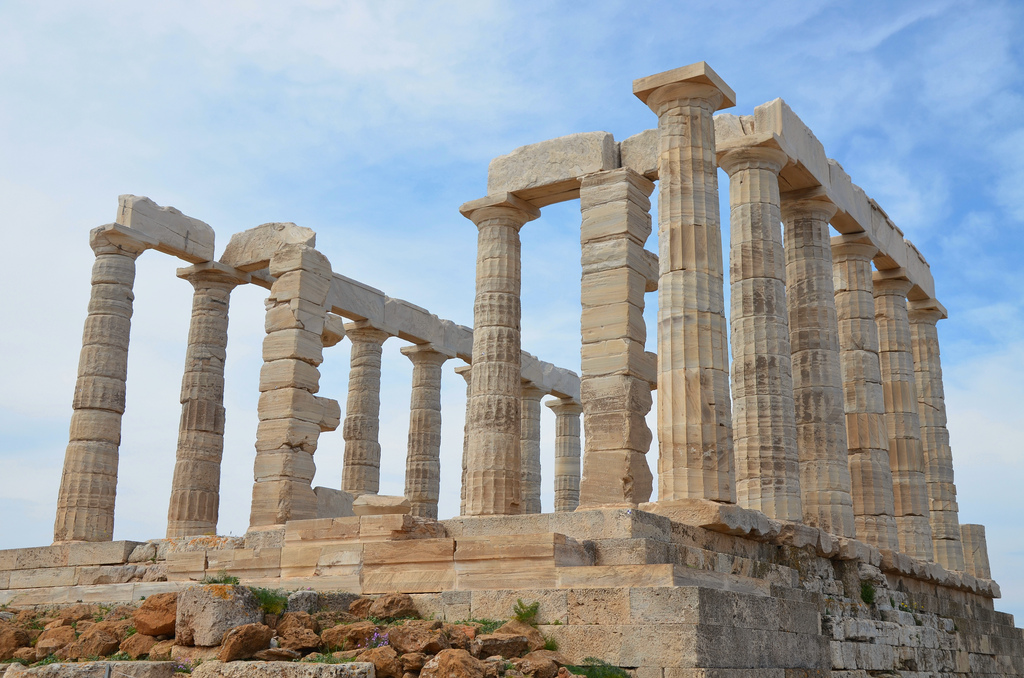
The temple of Poseidon is a Doric peripteral temple with six columns on the narrow sides and thirteen on the long ones, made of locally quarried white marble. At the centre of the temple would have been the hall of worship (naos), a windowless rectangular room similar to the partly intact hall at the Temple of Hephaistos in Athens (considered to be the work of the same architect). It would have housed a colossal bronze statue of Poseidon.

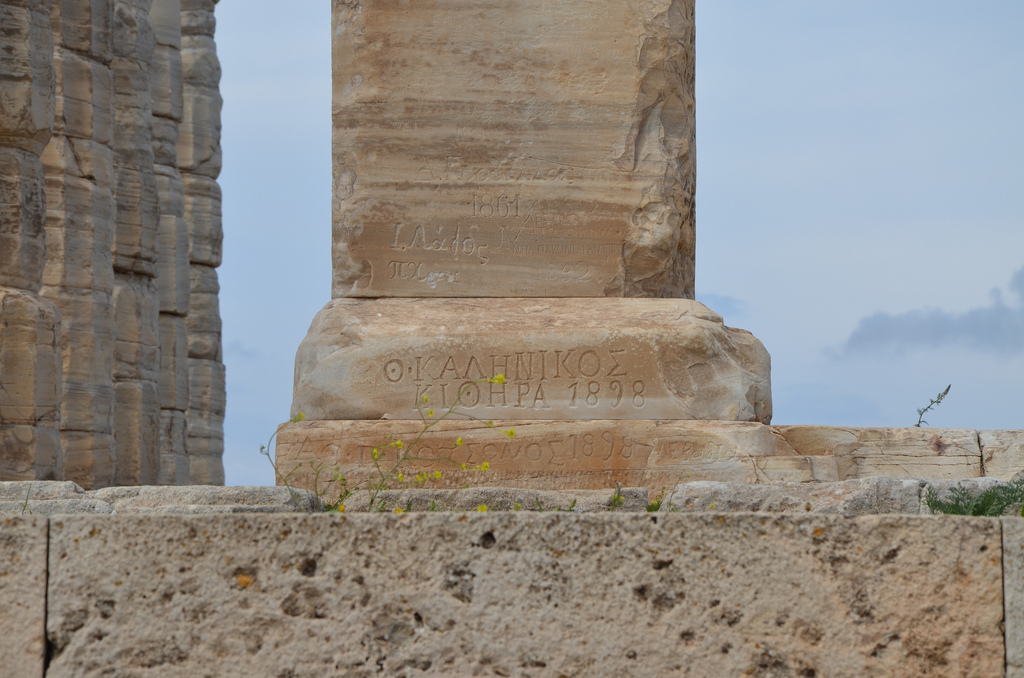
In the 19th century, Sounion was a popular destination for tourists, many of whom have engraved their names on the ruins of the temple of Poseidon. The most famous signature is that of the Romantic poet George Lord Byron.

PORTFOLIO

Temple of Poseidon, built around 444 – 440 BC, Cape Sounion
View of the Temple of Poseidon from the south.
The propylaea, a monumental gateway of poros and marble, to the north of the temple, through which the sacred precinct of Poseidon was entered, Cape Sounion, Greece
The propylaea, a monumental gateway of poros and marble, to the north of the temple, through which the sacred precinct of Poseidon was entered.
The temple of Poseidon at Cape Sounion from the northeast, (built circa 440 BC), Cape Sounion, Greece
The temple of Poseidon at Cape Sounion from the northeast.
The north stoa, 40 m. long by 9 m. wide, divided into two aisles by an internal colonnade of six smooth columns, Cape Sounion, Greece
An internal colonnade of six smooth columns divided the north stoa, 40m long by 9m wide, into two aisles.
The temple of Poseidon at Cape Sounion, north side colonnade, (built circa 440 BC), Cape Sounion, Greece
The temple of Poseidon at Cape Sounion, north side colonnade.

Temple of Poseidon, 19th century Graffiti on the left pillar, Cape Sounion, Greece
Temple of Poseidon, 19th-century Graffiti on the left pillar.

“Place me on Sunium’s marbled steep,
Where nothing, save the waves and I,
May hear our mutual murmurs sweep;
There, swanlike, let me sing and die:
A land of slaves shall ne’er be mine–
Dash down yon cup of Samian wine!”

The Isles of Greece by Lord Byron (1788-1824)

The temple of Poseidon at Cape Sounion from the north, (built circa 440 BC), Cape Sounion, Greece
View of the temple of Poseidon from the north.

Links: